Year: 2018

  • Indian American teen owned Nonprofit donates $50,000 to kids in India

    Indian American teen owned Nonprofit donates $50,000 to kids in India

    ALEXANDRIA, VA (TIP):STEM All Stars, a nonprofit founded by a 16-year old Indian American Sajni Vederey, a high school student at Thomas Jefferson High School for Science and Technology in Alexandria, VA, has made a donation of $50,000 to underprivileged kids in India.

    The nonprofit donated 25 digital boards and 100 computers to 21 underprivileged schools. Most of these schools (19) are in the state of Andhra Pradesh. One school is in the neighboring Telangana, and one is in Kerala, another southern state.

    The organization also constructed a new library in the village of Bhimavaram, Andhra Pradesh. It will stock the library with books in the fields of computer science, math, biology and other fields.

    The mission of STEM All Stars is to raise awareness about science, technology, engineering and math subjects, and empower girls around the world to pursue careers in these areas.

    Vederey was in India from March 29 to April 1 to facilitate delivery of the donations and the construction of the new library

    “As a girl, learning the magic of science, technology and math empowered me to dream big,” Vederey, 16, said in a press release. “It’s important for children to learn how to use emerging technologies, such as computers, phones and tablets. STEM All Stars believes that it is paramount for girls to receive STEM education to succeed in society.”

    Last December, STEM All Stars received a grant of $50,000 from Vetukuri Venkata Siva Rama Raju, a lawmaker from Andhra Pradesh, who donated the amount through a grant in the Corporate Social Responsibility program.

     “STEM All Stars is deeply grateful to the important support we have received from Mr. Siva Rama Raju,” Vederey said. “We will be able to directly invest in the futures of young children in Andhra Pradesh by strengthening the curriculum of the schools with more STEM education.”

    In less than three years, STEM All Stars has raised a total of $200,000, and impacted more than 15,000 girls worldwide. It provided supplies, books, computers, science lab equipment and digital boards to about 55 schools in India.

    The organization has hosted a number of events, including annual galas in the United States, public awareness events and STEM competitions.

    Vederey, who wants to be a lawyer, has authored a book, Roo and His New Habitat, a fictional work that about a group of students who builds a home for their new classroom pet bunny using STEM skills. The book, which she wrote while in 9th grade, is available on Amazon.

    Her Amazon author bio states that Vederey, who is “extremely passionate about literature and poetry,” started writing stories at the age of 6.

    Born in Dallas, Texas, to parents who emigrated from India, Vederey moved to the Washington, DC, area after finishing kindergarten.

  • Indian American Nipam Patel appointed director of the Marine Biological Laboratory at Wood Hole, MA

    Indian American Nipam Patel appointed director of the Marine Biological Laboratory at Wood Hole, MA

    BOSTON(TIP): Indian American Nipam Patel, a leading scholar in modern evolutionary and developmental biology at University of California, Berkeley, has been named director of the Marine Biological Laboratory.

    Patel currently holds the William V. Power Endowed Chair in Biology at the University of California, Berkeley, where he is professor and co-chair of the Department of Molecular and Cell Biology and professor in the Department of Integrative Biology.

    His appointment is effective September 4.

    For the past 17 years, Patel has been teaching a course on Embryology at the Marine Biological Laboratory.

    His prior engagement with the institution was in 2007 to 2011, when he was the co-director and from 1995 to 2003 serving as a professor in the Department of Organismal Biology and Anatomy.

     “From a pool of extraordinarily accomplished candidates, Nipam distinguished himself as particularly passionate about MBL’s rich history and even more so about its promising future,” said David Fithian, executive vice president of the University of Chicago, MBL trustee and co-chair of the search advisory committee. “He will be a compelling spokesperson for and determined leader of the MBL’s next chapter.”

    “It is an incredible honor to have the opportunity to lead the MBL, an institution that has had a remarkable influence on my own career through the teaching and research opportunities it has provided me over almost 20 years,” Patel said. “I am excited to build upon the MBL’s extraordinary history to elevate it to even greater prominence, and to partner with the University of Chicago in this endeavor. I look forward to working with all the dedicated MBL scientists and staff, as well as all those who come to visit and share in the magic of the MBL.”

    Patel received a bachelor’s degree in biology from Princeton University and a PhD in biological sciences from Stanford University. An early resident of Texas he joined the University of California, Berkeley in 2003, where he has held the Schubert Endowed Chair, and serves as faculty curator at the Essig Museum of Entomology.

    Patel has served as an investigator of the Howard Hughes Medical Institute and an adjunct professor at the National Institute of Genetics in Shizuoka, Japan. He began his career as a staff associate in the Department of Embryology at the Carnegie Institution in Baltimore, Maryland.

    The MBL in Woods Hole, Massachusetts, is a leading international center for investigation in the biological and ecological sciences. Founded in 1888, the laboratory convenes scientists from institutions around the world to collaborate in its resident and visiting research centers and to teach in its education division. University of Chicago and the MBL formed an affiliation in 2013.

  • Indian American Aakash Patel received endorsement of Florida lawmaker Burgess

    Indian American Aakash Patel received endorsement of Florida lawmaker Burgess

    FLORIDA (TIP): Indian American Aakash Patel, a Republican running for Hillsborough County Commission, received the endorsement of Danny Burgess, a member of the Florida House of Representatives.

    “I am honored to offer my support and endorsement to Aakash,” Burgess said. “He is a very successful businessman and I know he will take his strong drive and dedication to our community to the County Commission.  I am certain he will apply his conservative ideals and objectives to important issues in Hillsborough County and I look forward to working with him in that capacity.”

    Last week, Patel had received the endorsement of District 2 Commissioner Victor Crest.

    Last month, former Speaker of the Florida House of Representatives Will Weatherford endorsed him.

    The election is being held for the District 1 seat, which is being vacated by Sandy Murman, who is running for a four-year term from District 7.

    Patel said, “I am honored to have Rep. Burgess support and endorse me in this county commission race. I have known Danny for a long time and I truly respect the work he has done to bring conservative policies to all levels of government he has served. From Zephyrhills City Hall to the Florida State Capitol, I appreciate all that he does, and I look forward to working with him on important conservative issues when I am elected to the county commission.”

    Patel, who earned his bachelor’s degree in Political Science and English Literature from Florida State University, worked at The Tampa Bay Times’ Tallahassee Bureau.

    He is also a graduate of the Greater Tampa Chamber of Commerce’s Leadership Tampa (2012), FBI Citizen’s Academy (2012), Tampa Police Citizen’s Academy (2012), Tampa Bay Public Leadership Institute (2013) Leadership Tampa Bay (2011), and Tampa Connection (2010), and College Leadership Florida (2005).

    He is enrolled in City of Tampa’s Mayor’s Neighborhood University, according to his LinkedIn profile.


  • Indian American Aruna Miller wins Kennedy Townsend’s endorsement

    Indian American Aruna Miller wins Kennedy Townsend’s endorsement

    MARYLAND(TIP): Indian American Aruna Miller, who is running for Congress from Maryland’s open 6th district, has won a key endorsement from Former Lt. Gov. Kathleen Kennedy Townsend.

     “Aruna Miller devotes her enormous energies and talents to her constituents, rising early, staying up late, all the while focused on results,” Kennedy Townsend said in a statement. “She has strong values and is able to work across the aisle. She is just the leader we need right now in Congress. I am proud to endorse her.”

    Miller replied in gratitude to the former lieutenant governor.

    “I am honored to have the endorsement of Kathleen Kennedy Townsend, an outstanding public servant who left an indelible mark as Maryland’s first woman Lieutenant Governor,” she said. “Kathleen is one of my heroes and role models, and I am excited to have her support. Following her example, I will never stop trying to make Maryland, and the world, a better place.”

    Kennedy Townsend is the daughter of Sen. Robert Kennedy and Ethel Kennedy.

    Earlier on Saturday, Miller won a Western Maryland straw poll by securing 140 votes against 76 gained by her Democratic primary rival David Trone. Last month, she had won “Our Revolution” candidate forum straw poll.

    She wrote on her Facebook page: “A deep gratitude to Western Marylanders, the voters, the Gubernatorial and Congressional candidates, and to the organizers of the Summit.”

    She added that the straw poll results have been accurately predicting the primary winner for the last 14 years and the victory margin for the 6th Congressional District straw polls have never been this large.

    “Thank you to the miracles in my life; my family, friends, the priceless volunteers, and the dedicated staff who poured their heart and soul into the exciting day,” she wrote on the post.

    The primary is scheduled for June 26.

    Miller has raised more than $1 million campaign donations so far. Her campaign said more than 97 percent of the contributions have come from individuals and it has “far outpaced her rivals in both the number of contributions (1,723) and individual donors (1,402).”

    Miller, who came to the United States from India at age 7, is a civil engineer by profession. The issues she has focused include women’s rights, children’s safety, environmental protection, and transportation.


  • Indian Origin Woman Killed, Buried at UAE Home

    Indian Origin Woman Killed, Buried at UAE Home

    SHARJAH (TIP): According to a local media report, a 36-year-old Indian Origin woman’s decomposed body was found by the police at her house in UAE’s Sharjah city on April 26th.

    The woman’s body was hidden underneath the floor of her house and was only recovered after the police used sniffer dogs to help find the body. Police suspect the woman’s husband to have killed and buried her inside the house. The reports further said that the husband, who belongs to Kerala, had left the United Arab Emirates and returned to India leaving a ‘For Rent’ sign put up on the front door of the house.

    Initial investigations by the police revealed that the accused husband, who also had another wife, had sent his other wife to India with his two children before committing the crime.

    It was only after the woman’s brother could not find anybody at her house that the incident surfaced, according to Sharjah police.

    The woman’s brother used to speak to her every day, according to police officials. When she had stopped responding to her brother’s calls, he had come to Sharjah from India to look for the woman.

    He also filed a missing person complaint with the Sharjah police on April 9.

    “A missing person report was received from the woman’s brother, who told police that he used to speak to his sister daily but one day, she stopped answering her phone,” Commander-in-Chief of Sharjah Police, Major-General Saif Al Ziri Al Shamsi was quoted by Gulf News.

    It was further reported that the police acted on the complaint and sent a search team to the woman’s house in Sharjah’s Maysaloon area after receiving permission from the public prosecution.

    During the search, the police found a few tiles from the floor of a room missing. It was then that the police brought in sniffer dogs and uncovered the woman’s body from underneath.

    The woman’s body was sent to a forensic laboratory for an autopsy after the brother identified her.

    The police have also identified the woman’s husband through an iris scan and fingerprints they recovered from the house.

    An arrest warrant has been issued for the husband by Interpol, the police said.

  • Indian American lawmaker Pramila Jayapal welcomes court ruling on DACA

    Indian American lawmaker Pramila Jayapal welcomes court ruling on DACA

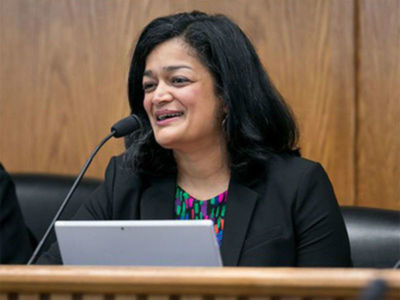
    WASHINGTON(TIP): Indian American Rep. Pramila Jayapal has applauded a ruling by US District Judge John Bates asking the Trump administration to continue accepting DACA applications without ending the program.

    “I’m thrilled that Judge Bares uphold the rule of law and force Trump administration to resume accepting DACA applications,” wrote Jayapal. “Donald Trump created this crisis. He single-handedly made DACA recipients deportable and rejected the bipartisan proposal that would have helped these young people.”

    The ruling of the federal judge is a blow to the Trump administrations, which decided to end the DACA program on April 24.

    In addition to overturning the move to end DACA, the judge also ruled that the government should accept new DACA applications.

    The DACA program allows those undocumented immigrants who were brought to the United States illegally as children by their parents to receive a renewable two-year period of deferred action from deportation.

    Urging Trump to stop trying to strip DACA recipients of their right to live in the United States, the Washington Democrat said she would continue to push for a clean Dream Act in Congress, so that these young people who know only the United States as their home can live without the fear of deportation.

    “Time and again courts have determined that the inhumane decision to end DACA was ‘arbitrary and capricious.’ We will continue to loudly say that immigrants are welcome here,” read Jayapal’s statement.

    Earlier, Trump had said that he will protect the DACA recipients and allow them to stay in the country if Congress approves his campaign promise to build the border wall and make changes to the immigration system.


  • Indian American Hiral Tipirneni loses a close race in Arizona special election

    Indian American Hiral Tipirneni loses a close race in Arizona special election

    ARIZONA(TIP): Indian American Tipirneni on April 24threceived more than 82,300 votes (47.4 percent), roughly 9,000 fewer than Lesko, who received nearly 91,400 (52.6 percent) .The Arizona Secretary of State’s websitereports that Democrat Hiral Tipirneni came within six percentage points of her Republican rival Debbie Lesko in special election to Arizona’s 8th Congressional District.

    The special election was warranted because Rep. Trent Franks, who represented the district for several terms, resigned in December after he was embroiled in a sexual misconduct scandal.

    Tipirneni wrote on twitter, “whatever happens tonight or tomorrow, we’re not giving up. Regardless of the outcome, we’re taking this to November.”

    That she came within 6 percentage point in a district that was carried by President Trump with more than 21 percentage points in the last presidential election should give Tipirneni a lot of momentum if she wins the Democratic Party nomination again.

    She did it without much of a support from the House Democratic campaign arm. On the other hand, Lesko received help from the GOP House campaign committee to the tune of $1 million. Trump also recorded robo calls urging voters to back Lesko.

    The narrow margin of Lesko’s victory leaves Republicans with much to ponder as they prepare for a tough midterm election in November.

    Tipirneni, a former emergency room physician, won her party’s nomination after defeating Brianna Westbrook in the primary.

    Tipirneni’s campaign had focused on issues such as affordable healthcare, strengthening the economy, retirement security, quality education, and government accountability.

    Tipirneni, born in India, came to the United States with her family at the age of three. According to her campaign website, she earned her medical degree through an accelerated, competitive program at Northeast Ohio Medical University. She chose to pursue emergency medicine because of the wide variety of challenges it presented, and it allowed her to be the first point of contact for patients.


  • Indian American Senate candidate Shiva Ayyadurai sues Cambridge, MA, for asking him to remove signage

    Indian American Senate candidate Shiva Ayyadurai sues Cambridge, MA, for asking him to remove signage

    CAMBRIDGE, MA(TIP): Indian American Shiva Ayyadurai, who is running for the US Senate from Massachusetts, has sued Cambridge city officials for sending him a notice to remove his campaign signs that called his Democratic opponent Sen. Elizabeth Warren a “fake Indian.”

    Ayyadurai is a staunch critic of the incumbent senator, has been attacking Warren for claiming Native American ancestry. He and GOP critics of Warren say the senator lied about her Native American heritage for securing jobs, including one as a Harvard law professor. Claiming that he is a real Indian from India, Ayyadurai terms Warren as a “fake Indian.”

    On April 22nd, he filed a suit against the City of Cambridge alleging that by asking him to take down the signage, the city is encroaching upon his constitutional right to free speech.

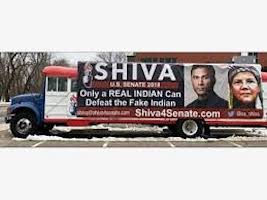
    Ayyadurai has a campaign bus with photos of himself and Warren with words juxtaposed saying “Only a REAL Indian Can Defeat the Fake Indian.”

    According to reports, the vehicle has been stationed for more than a month next to a building owned by Ayyadurai which also happens to be in the neighborhood of Warren.

    The Cambridge building inspector Branden Vigneault had earlier this month issued Ayyadurai a notice asking him to remove the inappropriate signage from the vicinity as it lacked prior “approvals and permits.”

    The Ayyadurai campaign said that the building inspector threatened to fine $300 per day and additional legal proceedings if the signs are not removed within a stipulated period.

    “We will not remove the slogan from our bus,” Ayyadurai told The Washington Times. “We will defend the First Amendment, and we will fight this egregious attack on the First Amendment, at any cost.”

    His campaign managers have told the media that building regulations don’t apply to the current circumstance as the signage is on a bus.

  • Weekly Horoscope for  April 30 – May 6, 2018

    Weekly Horoscope for April 30 – May 6, 2018

    By Astrologer Bejan Daruwalla
    Contact: +91 8141234275

    Aries: Ganesha says the period is action packed. Even the temperature starts sizzling and you are not left out of the furnace in your dealings. You slog away and make deep inroads into success. At many levels, it is a frantic, frenetic and hectic period. There will be scope for the creative expression of your personality and you examine life with vision, optimism and faith. Your thirst for knowledge gains momentum and you pore over whatever you can lay your hands on.

    Taurus:You look at bonds, connections, relationships, associations, marriages, engagements, concerts, get-togethers and everything to do with people. You will be in a frenzy of communication as people rally around you. You are in the limelight and much sought after. Your work is going as you want it to and you are super charged. You are a special invitee everywhere. You are in harmony and living and sharing love. There is a new-found finesse in whatever you do.

    Gemini: You are stricken by beautiful objects. There may be a whirlwind affair that catches you off balance, or you spend time and money decorating the home and office. You are oozing charm and feel virile / fertile. You get away from the pulls of work and loot at the other areas of your life which need refurnishing. You widen your horizons and increase your interactions and relationships. You reach out to people and places.

    Cancer:Your focus at work may suffer as a result of all your other interests and activities. You spend a lot of time with others and, once again, allow mood swings and a fickle temperament to take over your joys. You are very sensitive and emotional and can get buried in the hurts and unsavory episodes of the past. You get out of this soon, but it does take a toll. Watch out for undue stress and possible illness. You give a lot of yourself and are leached on my emotional vampires who find you rare game.

    Leo:The tide thankfully changes, and you enter a phase of hard work. You see the immediate rewards and are encouraged to work harder. You put in all that you have. With the work that you have started, and your mind seemingly occupied now, your health improves. You are filled with energy and are set to take off on an exciting, new trajectory. You dazzle with your creativity and charisma. There could also be an addition to the family.

    Virgo:Your life is like an unending celebration now. There is better rapport with colleagues, associates, peers and family. You party and entertain lavishly. You are optimistic and are able to fulfil all your obligations. There could be travel on work or a holiday with the family, but the portents are happy moments away from home. You enjoy the good things of life and the sun shines on you in more ways than one.

    Libra:You are not laidback or relaxed this period but are full of progressive, even daring ideas for future career advancement and financial success. There is a new intensity in all your dealings as you look for innovative methods to make money. There are new responsibilities at home and you are also looking at serious career advancement. This is a good time to embark on new projects. The stars shine on you.

    Scorpio:Watch out for your famed mood swings. This is a volatile period and could get tremendously emotional about some aspect of your life and it could get out of hand like a soap opera gone all wrong. Your family life is important, and it is essential that you work on it. There will be unnecessary misunderstandings and you could be pitch forked into bitter family feuds over inheritance and other issues.

    Sagittarius:This is an interesting phase with many contradictory forces at play. You are full of wisdom and caring, exceptionally creative, and, as always, willing to help the needy and downtrodden. On the other hand, you may also be rubbing shoulders with the top honchos of business and industry and signing big deals. Many facets of your personality come to the fore here. You don’t really care about money, but it comes to you nevertheless in bushels.

    Capricorn:The dust settles as it has to, and you are back to earth and to the cares, worries and duties of the world. You will be sorting out family issues and work-related problems. It will not be easy, and you will have to walk over burning coal before favorable decisions are arrived at. All issues will be finally resolved but it will take its tie and toll on you and the others. You are full of positive energy, work hard and achieve the desired results.

    Aquarius: You are moving ahead at a rapid pace now. There is joy in relationships and sustained progress at work. So, the major aspects of your life are doing well. Health is also good. This is a period marked by the return of old associated to the fold and there will be a lot of partying and merrymaking. You are on stable ground and zooming ahead without a care in the world.

    Pisces:The momentum and the pace continue unabated. You are making rapid progress and win laurels for it. There is a surge in your will power, optimism, vision and aspirations. You are expanding on all fronts and the luck of the draw favors you. Your kitty is full, and you can see quite clearly that you are on the right track. You are focused on the growth fast track, and engage yourself with money matters. You set the house in order which is essential to surge ahead. You also find the time to meet up with those who mean a lot to you.

  • The Tribeca Film Festival: TDIA Awards

    The Tribeca Film Festival: TDIA Awards

    By Mabel Pais

    The Tribeca Film Festival (TFF) is the leading cultural event that brings visionaries and diverse audiences together to celebrate storytelling in all its forms, including film, TV, VR, gaming, music, and online work. With strong roots in independent film, Tribeca is a platform for creative expression and immersive entertainment. The Festival champions emerging and established voices; discovers award-winning filmmakers and creators; curates innovative experiences; and introduces new technology and ideas through premieres, exhibitions, talks, and live performances.

    The Festival was founded by Robert De Niro, Jane Rosenthal and Craig Hatkoff in 2001 to spur the economic and cultural revitalization of lower Manhattan following the attacks on the World Trade Center. Now in its 17th year, the Festival has evolved into a destination for creativity that reimagines the cinematic experience and explores how art can unite communities. For more information, visit www.tribecafilm.com/festival

    The 9thAnnual Tribeca Disruptive Innovation Awards (TDIA) took place on April 24, 2018 at the Tribeca Festival Hub at Spring Studios, New York, through the continued collaboration of The Tribeca Film Festival’s (TFF’s) co-founder Craig Hatkoff, Disruptor Foundation and Professor Clayton Christensen.

    Photos / TFF-TDIA

    Craig Hatkoff, co-founder of TFF and Disruptor Foundation, introduced the event. It was hosted by award-winning journalist Tamron Hall.

    Honorees included Nobel Peace Prize laureate Beatrice Fihn, Atom bomb survivor Koko Kondo, #NeverAgain 11-year-old student-activists Naomi Wadler & Carter Anderson, Hip Hop founder DJ Kool Herc, Samasource & Lxmi’s Leila Janah, Columbia University Professor Howard W. Buffett, Columbia Care’s Nicholas Vita, John Bowne High School’s Steven Perry, multi-instrumentalist Questlove, Ethereum’s Joseph Lubin, Hashtag inventor Chris Messina, Hopeland’s Deborra-lee Furness, Sheila Nevins, Vice’s Elle Reeves, Literary Legend Michiko Kakutani, TransMedics’s Dr. Waleed Hassanein, Civil Rights activist Tarana Burke, innovator-entrepreneur Opher Brayer and Etty Ausch.

    About Tribeca Disruptor Awards:

    TDIA is a collaboration with Harvard Business School Professor Clayton M. Christensen and helmed by Tribeca co-founder Craig Hatkoff. Christensen’s original Disruptive Innovation Theory was immortalized in the Innovator’s Dilemma. Disruptive innovation explains how simpler, cheaper technologies, products, and services can decimate industry leaders almost overnight, for the betterment of society. TDIA showcases applications of disruptive innovation which has spread far beyond the original technological and industrial realms into the fields of healthcare, education, international development, politics and advocacy, media, and the arts and entertainment.

    TDIA unveiled the diverse field of disruptors, revolutionaries, and game-changers whose breakthroughs are creating radical solutions to some of the world’s most vexing problems.

    “Last October we held our first awards in Hiroshima, the City of Hope where we presented to the City of Hiroshima a 9-11 survivor tree sapling. In turn, the city of Hiroshima has entrusted us with seeds harvested from amongst its 150 survivor trees—the metaphor for resilience of the human spirit– that still stand and bloom 72 years after the atom bomb was dropped on their city. These seeds will be planted onstage by our honorees including a Nobel Peace Prize laureate, an atomic bomb survivor, an eleven-year-old activist, the father of hip hop, the inventor of the hashtag and many others,” said Craig Hatkoff.

    Hatkoff continued, “Over the past decade the awards have become a living laboratory on the frontiers of disruption and innovation. As a society we desperately need to understand and confront the great peril ahead emanating from the ever-widening techno-cultural divide. We are witnessing the unnerving limitations of our capacity to responsibly manage and deploy the infinite fruits of the human imagination in the era of algorithm. The holy grail is “man plus machine” rather than “man versus machine.”

    Michiko Kakutani received the Disruptor Award Book of the Year presented by the Harvard Business Review for his book, The Death of the Truth.

    Howard W. Buffett, Associate Professor and Research Scholar at Columbia University,received  the Adam Smith Prize, alsopresented by the Harvard Business Review.Buffett is co-author of Social Value InvestingA Management Framework for Effective Partnerships.  The book analyzes innovative collaboration across sectors and outlines a new methodology to measure social and environmental impact called Impact Rate of Return.

    Beatrice Fihn, Nobel Laureate, received the first-ever Hersey Prize, presented by the family of John Hersey, author of Hiroshima, for her campaign to prohibit and eliminate nuclear weapons.

    Etty Auschreceived the Fran Lebowitz prize for her work with vulnerable and underprivileged populations suffering from social ostracization.

    Opher Brayer received the award for his lifetime of work, Stages,in developing original methodologies to cultivate multi-talented ‘genius’ in young and old, rolled out to students across the Czech Republic. With a focus on evolving human ecosystems, STAGES aims to end global poverty by transforming entire regions through education, employment and the environment.

    Deborra-lee Furness, co-founder of Hopeland, most recently awarded the 2017 United Nations Women for Peace Leadership Award, is an internationally acclaimed actress and passionate advocate for vulnerable and abandoned children.

    Waleed Hassanein, M.D.,Egyptian-born, founded TransMedics, Inc. in 1998 to revolutionize the important field of organ transplantation for treatment of end-stage lung, heart, liver and kidney failure.  Through this invention, human organs can be kept alive and functioning outside of the human body.  Hassanein was named 2017 Finalist for the European Inventor Award by the The European Patent Office (EPO).

    DJ Kool Herc,raised in Jamaica, the founding father of Hip Hop, is a disruptive and innovative pioneer and creative force in the world of hip hop and rap music.  2018 marks the 45th Anniversary since the first ever hip hop party took place on August 11th, 1973 at 1520 Sedgwick Avenue in the Bronx, giving birth to the Hip Hop culture.

    Leila Janah is the Founder and CEO of Samasource and LXMI, two companies that go beyond charity to #givework to low-income people around the world using cutting-edge social enterprise models in technology and luxury skincare, respectively.

    Photos / TFF-TDIA

    Koko Kondo is a prominent atomic bomb survivor and internationally recognized peace advocate.Shewas eight months old when the U.S. dropped an atomic bomb on Hiroshima on August 6th, 1945.  Koko has spent her adult life working with various organizations to promote peace around the world. She tells stories about Hiroshima and gives lectures at schools for students from elementary to graduate school.

    Joseph Lubin is the co-founder of the blockchain platform, Ethereum, and founder of ConsenSys, one of the largest and fastest-growing blockchain companies in the world.

    Chris Messina is the inventor of the hashtag for social media.  This one simple symbol (#) is a sublime case of a disruptive innovation that has made mass communication simpler, cheaper and more accessible. Its universal usage and simplicity has empowered instantaneous social movements via social media such as #metoo#NeverAgain and #blacklivesmatter, to name a few.

    Sheila Nevins, having radically transformed the documentary film genre into a provocative and indispensable tool for understanding the human condition, Sheila Nevins is an executive producer and former President of HBO Documentary Films.

    Steven Perry is the Assistant Principal/Head of the Agriculture Department at John Bowne High School. As an alumnus, Steve accepted began teaching in the Agriculture Department in 1983. He has been instrumental in the 9/11 Memorial Survival Tree Seedling Program, which donates seedlings from the 9/11 survivor tree to 9/11 memorials and communities that have overcome tragedy. These seedlings are housed and cared for by his students in conjunction with Bartlett Tree Experts.

    Elle Reeve– Elle Reeve is a correspondent for the Emmy award-winning nightly newscast VICE News Tonighton HBO.  In August 2017, Reeve gained critical acclaim for her reporting on the white nationalist rally in Charlottesville, VA. for VICE News Tonight.

    Nicholas Vita is the Co-Founder and CEO of Columbia Care—the largest medical cannabis product development, manufacturing and dispensing operator in the US.  Ensuring the well-being of his mother and son, serve as the foundation for his passion and motivation to bring this novel treatment option to patients.

    Questlove is the unmistakable heartbeat of Philadelphia’s most influential hip-hop group. He co-produced the Grammy award-winning Original Broadway Cast Recording of Hamiltonand co-wrote a new original song It Ain’t Fairfor the critically acclaimed, Detroit.

    Photos / TFF-TDIA

    Tarana Burke is an African American civil rights activist. In 2006, Burke began using the phrase “Me Too”, to raise awareness of the pervasiveness of sexual abuse and assault in society.


    Naomi Wadler & Carter Anderson are 11-year-old student-activists from Alexandria, Virginia. Friends since Kindergarten, Naomi and Carter led a student walk out at her elementary school in Alexandria, Virginia one month after the senseless shooting at Marjory Stoneman High School in Parkland, Florida.  Her school walk out was 18 minutes long, 17 minutes for each student and teacher who lost their lives in Parkland, and one additional minute for Courtlin Arrrington, an African American student who was murdered shortly after the Parkland shooting in her Alabama high school.

    Ground Zero to Ground Zero: Hiroshima survivor tree seeds were planted on stage to initiate survivor-tree sapling exchange between New York City and Hiroshima; #seedthechange

    (Mabel Pais writes on The Arts and Entertainment, Social Issues, Health and Wellness, and Spirituality)


  • Former Indian Ambassador to US Jaishankar joins Tata Sons

    Former Indian Ambassador to US Jaishankar joins Tata Sons

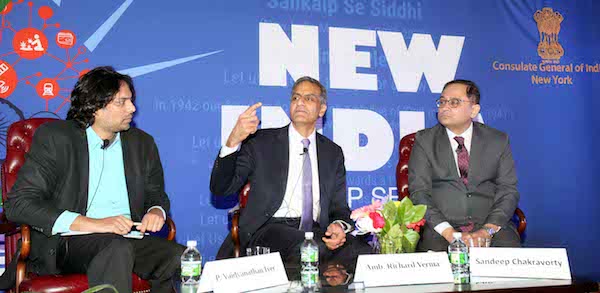
    NEW YORK(TIP): Subrahmanyam Jaishankar, a former Indian Ambassador to the United States and former foreign secretary of India, has joined Tata Sons. He will serve as the group’s Global Corporate Affairs head.

    Jaishankar, who served as the Indian Ambassador to the United States from 2013 to 2015, served as the Foreign Secretary of India till January this year.

    He joined Indian Foreign Service in 1977 and has held several key positions over four decades. He played a key role in the negotiation of the US-India Civil Nuclear agreement.

    Jaishankar also served as the High Commissioner to Singapore and Ambassador to China.

    In his new role, the former diplomat will be responsible for the Tata group’s global corporate affairs and international strategy development and Tata Sons’ international offices will report to him. He will work with Tata companies to help them strengthen their business presence and positioning in their respective geographies globally.

    “I am delighted to welcome Dr. Jaishankar to the Tata group,” Natarajan Chandrasekaran, chairman of Tata Sons, said. “His extensive experience and knowledge on international affairs will be very valuable to the group as we work to reinforce our brand and leadership globally.”

    Jaishankar said, “The Tata group is an iconic institution known for its value-based leadership as well as India’s most respected brand globally. I look forward to being part of the Tata group and working with key stakeholders to make an impact.”

    Jaishankar is a graduate of St Stephen’s College at the University of Delhi. He has an MA in political science and an MPhil. and Ph.D. in international relations from Jawaharlal Nehru University.

    Tata Sons is the promoter of the major operating Tata companies and hold significant shareholdings in these companies. Notably, Tata Sons is the parent company that owns Tata Consultancy Services, which is one of the top Indian IT outsourcing companies. TCS along provides Tata Sons with 70% of its dividend.


  • What makes India a great country

    What makes India a great country

    “If I were asked under what sky the human mind has most fully developed some of its choicest gifts, has most deeply pondered on the greatest problems of life, and has found solutions, I should point to India.”

    –Max Mueller

    The culture of India refers collectively to the thousands of distinct and unique cultures of all religions and communities present in India. India’s languages, religions, dance, music, architecture, food, and customs differ from place to place within the country. The Indian culture often labeled as an amalgamation of several cultures, spans across the Indian subcontinent and has been influenced by a history that is several millennia old. Many elements of India’s diverse cultures, such as Indian religions, Indian philosophy and Indian cuisine, have a profound impact across the world.

    Indian-origin religions include Hinduism and its offshoots Buddhism, Jainism and Sikhism, all of which are based on the concept of dharma and karma.

    Indian-origin religions have been persecuting by for centuries. Muslim rulers massacred Hindus and Buddhists while attacking temples and monasteries, while also forcing them to convert including on the battlefield. Most of the great temples in North India were destroyed during the Muslim rule. Consequently, between the years 1000 AD and 1500 AD, the population of the Indian subcontinent decreased from 200 to 125 million. Foreign-origin religion, including Abrahamic religions, such as Judaism, Christianity and Islam, are also present in India, as well as Zoroastrianism and Bahá’í Faith both escaping persecution by Islam have also found shelter in India over the centuries.

    India has 29 states with different culture and civilizations and one of the most populated countries in the world. The Indian culture, often labeled as an amalgamation of several various cultures, spans across the Indian subcontinent and has been influenced and shaped by a history that is several thousand years old. Throughout the history of India, Indian culture has been heavily influenced by Dharmic religions. They have been credited with shaping much of Indian philosophy, literature, architecture, art and music.

    Greater India was the historical extent of Indian culture beyond the Indian subcontinent. This particularly concerns the spread of Hinduism, Buddhism, architecture, administration and writing system from India to other parts of Asia through the Silk Road by the travelers and maritime traders during the early centuries of the Common Era. To the west, Greater India overlaps with Greater Persia in the Hindu Kush and Pamir Mountains. Over the centuries, there has been significant fusion of cultures between Buddhists, Hindus, Muslims, Jains, Sikhs and various tribal populations in India.

    India is the birthplace of Hinduism, Buddhism, Jainism, Sikhism, and other religions. They are collectively known as Indian religions. Indian religions are a major form of world religions along with Abrahamic ones. Today, Hinduism and Buddhism are the world’s third and fourth-largest religions respectively, with over 2 billion followers’ altogether, and possibly as many as 2.5 or 2.6 billion followers. Followers of Indian religions – Hindus, Sikhs, Jains and Buddhists make up around 80–82% population of India.

    India is one of the most religiously and ethnically diverse nations in the world, with some of the most deeply religious societies and cultures. Religion plays a central and definitive role in the life of many of its people. Although India is a secular Hindu-majority country, it has a large Muslim population. Except for Jammu and Kashmir, Punjab, Meghalaya, Manipur, Nagaland, Mizoram and Lakshadweep, Hindus form the predominant population in all 29 states and 7 union territories. Muslims are present throughout India, with large populations in Uttar Pradesh, Bihar, Maharashtra, Kerala, Telangana, West Bengal and Assam; while only Jammu and Kashmir and Lakshadweep have majority Muslim populations. Sikhs and Christians are other significant minorities of India.

    Ancient India

    The period between the 4th century and 6th century AD is known as the Golden Age of India because of the large achievements Indians made in the fields of mathematics, astronomy, sculpting and painting during the Gupta Empire. Significant contributions to the decimal numeral system, including the concept of zero happened during this period in India. The Golden Age in India came to an end when the Hunas invaded the Gupta Empire in the 6th century AD.

    The Gupta Empire saw a vast range of scientific and cultural achievements. To the chagrin of many high school math students, trigonometry and geometry got their start during this golden age. And Guptan mathematicians developed the concept of zero and the number system. Other major contributions from this era helped improve human health. Not only did scientists and doctors expand the alternative system of medicine called Ayurveda, but they also improved surgical practices and helped popularize vaccinations.

    But the Guptan Empire didn’t focus solely on science and math. Art and architecture were abundant during this time. In fact, the son of Chandragupta I, Samudragupta, was an avid art lover and commissioned works that can be found in museums to this day. The Gupta Empire is also responsible for a game still popular around the globe today: chess.

    Medieval India

    South India in the 10th and 11th century AD under the imperial Chola Dynasty has been called Golden Age as well. The period saw extensive achievements in architecture, literature, sculpture and bronze working, maritime conquests with extensive trade, and quasi-democratic reforms.

    INDIA’S HISTORY AND FUTURE MAKE IT GREAT
    • Indians invented Zero without which mathematics wouldn’t have existed.
    • Indian epics such as Ramayana and Mahabharata are voluminous, unlike other epics in the world.
    • Indians gave Yoga to the world.
    • Pearls, diamonds were sold on the streets of Vijayanagara Empire in India.
    • Until 18th century, India was the only source of diamonds in the entire world.
    • Kings from other countries looted wealth from India. (e.g. Somanatheshwara Temple in Gujarat was looted 17 times)
    • Ashoka the Great spread Buddhism all over Asia.
    • Ayurveda took its birth in India.
    • We have the largest English-speaking population in the world.
    • We believe in Unity in Diversity. Each and every state in India speaks a different language and still we are united and living together happily.
    • Indians discovered that there were 9 planets in the solar system 1000’s of years ago. (Navagraha)
    • Though British ruled India for over 300 odd years, we overtook them in terms of GDP and we lead them, they trail us.
    • We treat everything as God here, water as Ganga, food as Annapurna, money as Lakshmi, education as Saraswati and our country as our mother.
    • India is considered as the youngest nation in the world because of its young population.
    • India still follows agriculture as her primary occupation and became the fastest growing economy in the world.
    • Indians lead many top companies in the current corporate world.

    Google led by Sundar Pichai

    Microsoft led by Satya Nadella

    Berkshire Hathaway Insurance led by Ajit Jain

    Master Card led by Ajay Banga

    Adobe led by Shantanu Narayan

    Delloite led by Punit Renjen

    Pepsi led by Indra Nooyi.

    To add more, we are the largest democracy in the world, more than we need the world…the world needs us because we are the largest exporters of food crops, software, spices, milk etc.

    WORLD HERITAGE SITES IN INDIA

    There are 35 World Heritage Sites (27 cultural and 7 natural sites and 1 mixed) in India that are recognized by the United Nations Educational, Scientific and Cultural Organization (UNESCO) as on July 2016.

    These World Heritage Sites in India are considered to be of immense cultural and natural importance in the world.

    These sites are:

    Nalanda Mahavihara (Nalanda University), Bihar

    Khangchendzonga National Park, Sikkim

    Capitol Complex, Chandigarh

    Great Himalayan National Park, Himachal Pradesh

    Rani Ki Vav, Patan, Gujarat

    Group of Monuments at Hampi, Karnataka

    Group of Monuments at Pattadakal, Karnataka

    Khajuraho Group of Monuments, Madhya Pradesh

    Hill Forts of Rajasthan

    Mahabodhi Temple Complex at Bodh Gaya, Bihar

    Churches and Convents of Goa

    Buddhist Monuments at Sanchi, Madhya Pradesh

    Great Living Chola Temples, Tamil Nadu

    up of Monuments at Mahabalipuram, Tamil Nadu

    Rock Shelters of Bhimbetka, Madhya Pradesh

    Ajanta Caves, Maharashtra

    Ellora Caves, Maharashtra

    Elephanta Caves, Maharashtra

    Kaziranga Wild Life Sanctuary, Assam

    Manas Wild Life Sanctuary, Assam

    Keoladeo National Park, Bharatpur, Rajasthan

    Nanda Devi and Valley of Flowers National Parks, Uttarakhand

    Sundarbans National Park, West Bengal

    Western Ghats

    Humayun’s Tomb, New Delhi

    Red Fort Complex, Delhi

    Chhatrapati Shivaji Terminus (formerly Victoria Terminus), Maharashtra

    Sun Temple, Konark, Odisha

    Jantar Mantar, Jaipur, Rajasthan

    Agra Fort, Uttar Pradesh

    Fatehpur Sikri, Uttar Pradesh

    Taj Mahal, Agra, Uttar Pradesh

    Mountain Railways of India

    Qutab Minar and its Monuments, New Delhi

    Champaner-Pavagadh Archaeological Park, Gujarat

    CLASSICAL DANCE FORMS

    India has a very rich culture of dance and music including traditional, classical, folk and Tribal dances styles and music.

    In the Indian culture, classical dance has a lot of significance. Because it serves as a fabulous way to express the innate feelings of the heart.

    The Classical Dances of India includes Bharatanatyam, the oldest form of the classical dance in the country and one of the Most Popular Classical Dance in India also ancient in Natya Shastra.

    There are eight forms of famous Indian classical dance-Bharatanatyam, Kathak, Kathakali, Kuchipudi, Manipuri, Odissi, Sattriya, Mohiniyattam, Gaudiya Nritya.

    Coming to material progress India has made, India today is the fastest growing economy, at over 7%.


    So far, why India is great. But the question is how India can continue not only to remain great but acquire still higher greatness. Only one thing which can sustain the momentum of India’s greatness is the unity of people and commitment to the nation.

    All Indians, whether in India, or abroad need always to keep in mind that it is one Bharat which belongs to all equally and must always be loved, respected and protected at all costs.

    Vande Mataram!

    Sponsored by Arish Sahani, President, Indian American Intellectuals Forum, New York. Mr. Sahani can be reached at arish.sahani@gmail.com)


  • USCIS says administration plans to propose regulatory changes to end H-4 work permit program

    USCIS says administration plans to propose regulatory changes to end H-4 work permit program

    The Trump administration is moving forward with its plan to end an Obama-era program that allowed spouses of H-1B visa holders to work in the United States.

    WASHINGTON(TIP): In a letter sent to Sen. Chuck Grassley, a critic of the H-1B program, Lee Francis Cissna, the director of the US Citizenship and Immigration Services, signaled that the agency is going ahead with its plan to end the practice of providing Employment Authorization Documents (EAD) to H4 visa holders and an announcement will come later this summer.

    Whenever that happens, tens of thousands of H-4 spouses — a vast majority of them Indian nationals — will be jobless again. The Obama-era rule allowed spouses of H-1B visa holders that are awaiting Green Card approval to apply for employment authorization.

    According to USCIS data, there are currently 100,000 H-4 spouses who are benefiting from the rule.

    “With regards to regulations, our plans include proposing regulatory changes to remove H-4 dependent spouses from the class of aliens eligible for employment authorization, thereby reversing the 2015 final rule that granted such eligibility,” Cissna wrote in the letter, dated April 4, addressed to Grassley, chairman of the Senate Judiciary Committee.

    “We announced this intention earlier this year in the semiannual regulatory agenda of the department of homeland security (DHS),” Cissna added.

    The letter stated that the withdrawal of work authorization falls in line with “the Buy American Hire American Executive” order issued by President Trump, which had directed federal agencies including USCIS to come up with drastic changes to fix what it termed as a flawed immigration system.

    As with other revisions to regulations, the public will have an opportunity to provide feedback during a notice and comment period, Cissna said.

    Indian nationals on H4 visas have the most to lose by the move. Some 90 percent of H4 EAD program beneficiaries have been Indian nationals.

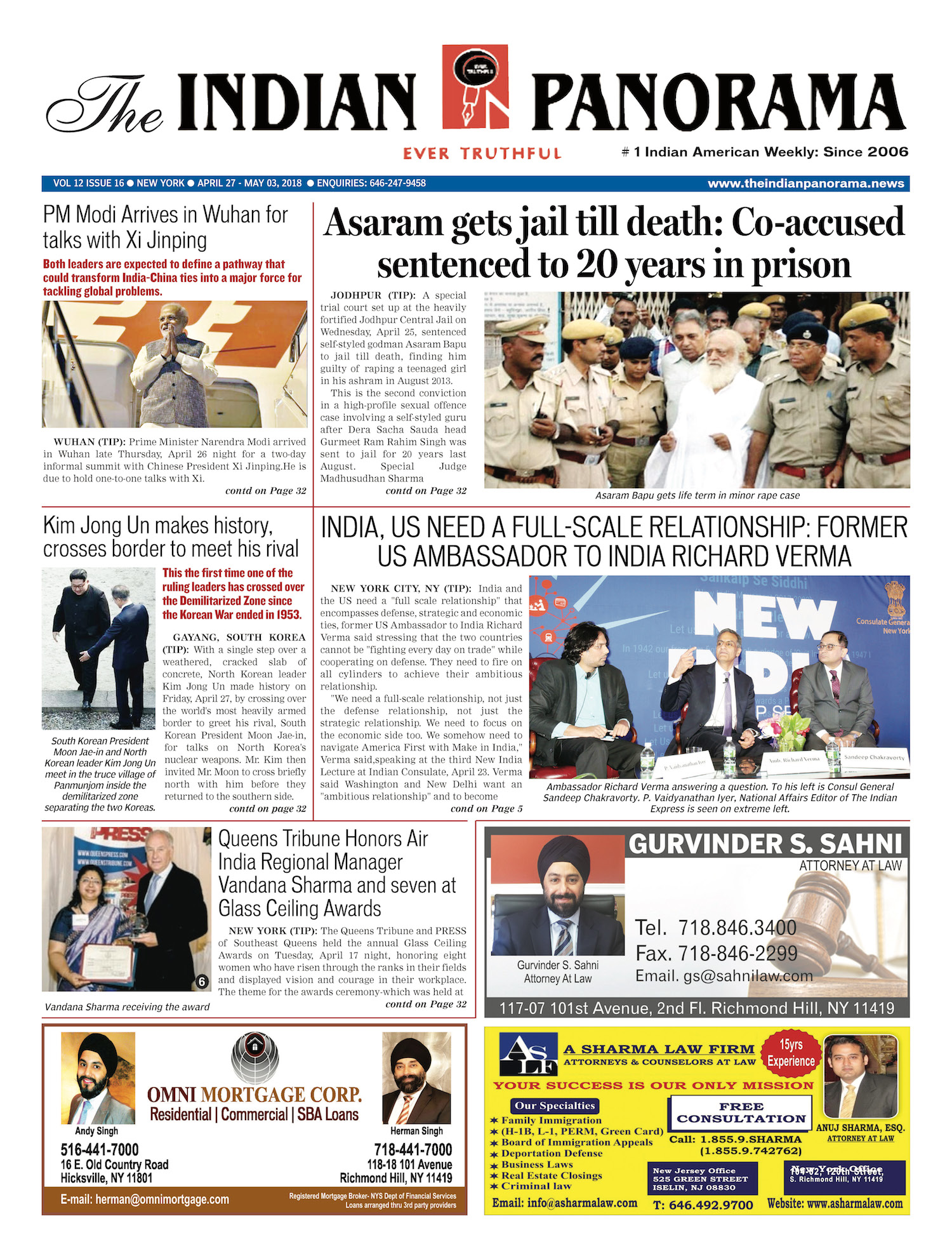
  • April 27 New York & Dallas Print Editions

    April 27 New York & Dallas Print Editions

    [vc_row][vc_column][vc_column_text]

    Print Replica ~ Digitally

    E-Editions

    [/vc_column_text][/vc_column][/vc_row][vc_row][vc_column width=”1/3″][vc_custom_heading text=”New York Edition” font_container=”tag:h2|text_align:center” google_fonts=”font_family:Istok%20Web%3Aregular%2Citalic%2C700%2C700italic|font_style:700%20bold%20regular%3A700%3Anormal” link=”url:https%3A%2F%2Fwww.theindianpanorama.news%2Fwp-content%2Fuploads%2F2018%2F04%2FTIP-April-27-NYC.pdf|||”][vc_single_image image=”92477″ img_size=”full” add_caption=”yes” alignment=”center” onclick=”custom_link” link=”https://www.theindianpanorama.news/wp-content/uploads/2018/04/TIP-April-27-NYC.pdf”][/vc_column][vc_column width=”1/3″][vc_custom_heading text=”Dallas, Texas Edition” font_container=”tag:h2|text_align:center” google_fonts=”font_family:Istok%20Web%3Aregular%2Citalic%2C700%2C700italic|font_style:700%20bold%20regular%3A700%3Anormal” link=”url:https%3A%2F%2Fwww.theindianpanorama.news%2Fwp-content%2Fuploads%2F2018%2F04%2FTIP-April-27-Dallas-TX.pdf|||”][vc_single_image image=”92476″ img_size=”full” add_caption=”yes” alignment=”center” onclick=”custom_link” link=”https://www.theindianpanorama.news/wp-content/uploads/2018/04/TIP-April-27-Dallas-TX.pdf”][/vc_column][vc_column width=”1/3″][vc_single_image image=”82828″ img_size=”medium” alignment=”center” onclick=”custom_link” link=”https://www.theindianpanorama.news/advertising-media-kit-portal-indian-panorama/”][vc_single_image image=”82829″ img_size=”medium” alignment=”center” onclick=”custom_link” link=”https://www.theindianpanorama.news/advertising-media-kit-portal-indian-panorama/”][/vc_column][/vc_row][vc_row][vc_column][td_block_ad_box spot_id=”custom_ad_3″ tdc_css=””][/vc_column][/vc_row][vc_row][vc_column width=”2/3″][vc_custom_heading text=”Lead Stories This Week” font_container=”tag:h2|text_align:center” google_fonts=”font_family:Istok%20Web%3Aregular%2Citalic%2C700%2C700italic|font_style:700%20bold%20regular%3A700%3Anormal” link=”url:https%3A%2F%2Fwww.theindianpanorama.news%2F|||”][td_block_5 separator=”” limit=”8″ tdc_css=””][/vc_column][vc_column width=”1/3″][vc_widget_sidebar sidebar_id=”td-default”][/vc_column][/vc_row]

  • Prime Minister Narendra Modi’s visit to China should be seen in the context of the flux of global geopolitics

    Prime Minister Narendra Modi’s visit to China should be seen in the context of the flux of global geopolitics

    By P.S. Raghavan
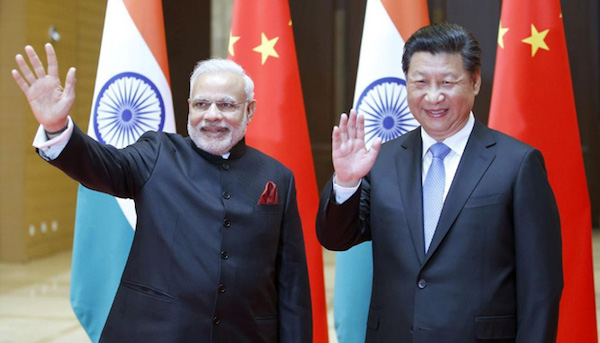
    Prime Minister Narendra Modi goes to China on April 27, against the background of turbulence in global geopolitics and some domestic disquiet about “softening” of India’s China policy.

    The international backdrop is worrying in many respects. The face-off between the U.S. (and its allies) and Russia is arguably worse than during the Cold War. They confront each other, through proxy forces, in three active conflict zones — Ukraine, Syria and Afghanistan. The recent U.S.-French-British missile strikes in Syria were a stark reminder. It now emerges that prior communication to the Russians had ensured that equipment, personnel and civilians had been evacuated in advance. However, such deconfliction arrangements seem to be episodic, and there is a lurking danger that miscalculation or brinkmanship might spark off a direct conflict at a local level.

    Edgy confrontation

    Sanctions — particularly the new U.S. legislation, CAATSA (Countering America’s Adversaries Through Sanctions Act), under which it can impose sanctions on any company which engages with Russia in the defense or energy sector — impart a sharper edge to the confrontation. This weapon was not wielded in anything like this form in the Cold War; its impact could be far more devastating in today’s globalized world. Recent American sanctions on major Russian multinationals, whose stocks are internationally traded, widened the target beyond Russian oligarchs to a larger body of shareholders within and outside Russia.

    As the U.S. ratchets up pressure on Russia, it has donned kid gloves in dealing with China, as indicated by U.S. President Donald Trump’s tweets. A recent tweet appreciates Chinese President Xi Jinping’s “kind words on tariffs and automobile barriers” and “his enlightenment on intellectual property and technology transfers”.

    Trade issues

    While India is being asked to address its trade surplus of about $25 billion with the U.S., Mr. Trump asked China (in a tweet last month) to reduce its massive trade surplus of about $375 billion with the U.S. by just $1 billion! He probably meant $100 billion, as has been suggested by his Administration, but it is worth noting that in 2017 alone, the U.S.’s trade imbalance rose by about $28 billion. America’s decision to withdraw from the Trans-Pacific Partnership (TPP), a free trade grouping excluding China, effectively benefited China.

    India itself, running a trade deficit of over $50 billion with China, is in difficult negotiations on the Regional Comprehensive Economic Partnership (RCEP), a free trade grouping that includes China, ASEAN (Association of Southeast Asian Nations), Japan, Korea, Australia and New Zealand.

    Unpredictable U.S.

    The unpredictability of U.S. foreign policy is driving even its closest allies to hedge their options. Japanese Prime Minister Shinzō Abe and Mr. Xi are to exchange visits in the near future — a significant breakthrough in relations between two strategic rivals, who were on the verge of a military confrontation about five years ago. Japan (like India) is concerned about China’s assertiveness in its neighborhood and the geopolitical implications of its Belt and Road Initiative (BRI).

    Yet, having failed to persuade Mr. Trump (with whom he claims excellent personal chemistry) to rethink U.S. withdrawal from the TPP and uncertain about the consistency of U.S. policy in the region, Mr. Abe sees benefit in sustaining a dialogue with China, whose positive response reflects its own desire to keep in touch with a U.S. ally, in the face of conflicting U.S. signals on trade and security policies.

    The sharpening of U.S.-Russia acrimony has complicated India’s relations with both countries. Besides pressure to address the India-U.S. trade imbalance, India has been warned that its defense and energy links with Russia could attract U.S. sanctions under CAATSA — a development which could have a major impact on our defense preparedness. Russia’s intensifying defense cooperation with China and its actions in Afghanistan and with Pakistan are areas on which serious and delicate high-level India-Russia dialogue is being pursued.

    Mutual interest in serenity

     This is the backdrop to the current “reset” in India-China relations. With a strengthening Russia-China axis and with the U.S. taking its eye off China to deal with Russia, it is prudent for India to maintain a harmonious dialogue with China, even as we deal with the wrinkles in our relations with the other two great powers. China’s motivation in extending the olive branch may be similar: to maintain serenity in relations while it deals with its other challenges.

    This is not to say that India should not stand firm on its core interests, political, economic or strategic. We cannot overlook Chinese designs in our neighborhood — from Doklam to the China-Pakistan Economic Corridor (CPEC), Nepal, Bangladesh, Sri Lanka and the Maldives — or ignore the larger geopolitical threat posed by the land and sea corridors of the BRI. It is just that circumstances may have opened up some space for furthering mutual interests, without compromising on our other interests.

    Countries do not publicly admit adverse asymmetries in relations, but their policymakers have to factor them into their policies and actions. Of course, even countries in adverse asymmetric relationships have levers which can and should be used to further their vital interests. In most cases, this is best done through quiet dialogue instead of public airing of differences, which hardens attitudes.

    Importance of messaging

    It is a valid point that the public messaging on this change in tone of the India-China relationship could have been better. The course of India-China relations in the past couple of years had created a public narrative of bilateral frictions over CPEC, Doklam, our Nuclear Suppliers Group membership and other issues, on which India had to take strong public positions. The transformation in the international environment, creating opportunities for non-confrontational dialogue, could perhaps have been better explained. Foreign policy can be pursued far more effectively when it is supported by public perceptions.

    The reality is that India has to maintain a pragmatic balance in its relations with the three major powers, remaining conscious of the fact that elements of these relations will be continuously impacted by the dynamic flux of today’s global geopolitics.

    The Prime Minister’s visit to China should be seen in this context.

    (The author, a former diplomat, is Convener of the National Security Advisory Board)

  • Can the 3 Ms save Iran deal?

    Can the 3 Ms save Iran deal?

    By Arun Kumar

    The Macron-Merkel-May trio hopes to bear upon Trump to keep pact

    Besides the Europeans, the looming May 12 deadline also has India worried, as since the end of sanctions, it has greatly strengthened its bilateral relations and economic partnership with Iran. During Rouhani’s visit, the two countries signed nine agreements, including a crucial one on connectivity via the strategic Chabahar Port. India has also committed itself to completing the Chabahar- Zahedan rail link to provide an alternative route to Afghanistan, completely bypassing Pakistan, say the author.

    French President Emmanuel Macron has just ended a glitzy visit with President Donald Trump. German Chancellor Angela Merkel came calling today and British Prime Minister Theresa May has been burning the phone across the Atlantic. Their mission: to persuade the mercurial occupant of the White House not to tear up the Obama era 2015 landmark Iran nuclear deal as he threatened on the campaign trail.

    The wily Donald is not telling anyone what he would do on May 12 when he must either sign a fresh waiver on Western sanctions against Iran or walk away from what Trump has decried as an “insane” and “ridiculous” deal signed by P5+1 — the US, Russia, China, UK, France and Germany — world powers with Tehran to end its nuclear weapons program.

    But swept off his feet by what the American media called “Le Bromance” unleashed by Trump at the first State dinner of his presidency, Macron ended up calling for a new “big deal” with the old one limiting Iran’s uranium enrichment for 15 years serving as one of its four pillars.

    Or did the suave Frenchman charm the Manhattan mogul into buying these side deals he Merkel and May have been working on to convince Trump to stay on in the Iran deal? European leaders are also said to be crafting a “Plan B” to continue without the US. But Iran is unlikely on come on board without the US.

    The three new pillars that Macron suggested in Washington would rework the sunset clause in the accord to ensure there is no nuclear activity by Iran in the long run, as feared by the critics who have accused Europeans, particularly Germany, of putting business before security.

    The Macron proposal would also seek to limit Tehran’s ballistic missile program and curb its “regional influence” by ceasing support for militant groups across the Middle East, particularly Yemen and Syria.

    Even as he declined to show his hand, Trump suggested: “I think we will have a great shot at doing a much bigger maybe deal, maybe not deal” built on solid foundations. In an escalating war of words, he also cautioned Iran against restarting its nuclear program, warning it may “have bigger problems than they have ever had before.”

    Iranian President Hassan Rouhani, who during his February visit to India — the first by an Iranian head of state in 10 years — had dismissed Trump as a “haggler”, was quick to heap fresh insults on “a tradesman” with no understanding of diplomacy. Western powers, he asserted, had no right to make changes in the deal now.

    Earlier in February, Iranian deputy foreign minister Abbas Araqchi had assured that Iran’s commitment to not seek nuclear weapons is permanent and that there was no sunset clause in the deal.

    Besides the Europeans, the looming May 12 deadline also has India worried, as since the end of sanctions, it has greatly strengthened its bilateral relations and economic partnership with Iran. During Rouhani’s visit, the two countries signed nine agreements, including a crucial one on connectivity via the strategic Chabahar Port. India has also committed itself to completing the Chabahar- Zahedan rail link to provide an alternative route to Afghanistan, completely bypassing Pakistan.

    Chabahar Port, Rouhani declared, can serve as a bridge connecting India to Afghanistan, Central Asia and Eastern Europe.

    India, which backs “full and effective implementation” of the Iran nuclear deal, could use Afghanistan as a bargaining chip at the next India-US two plus two dialogue between Trump’s incoming Secretary of State Mike Pompeo and Defense Secretary James Mattis and their Indian counterparts, Sushma Swaraj and Nirmala Sitharaman. The dialogue earlier set for April 18-19 in New Delhi was postponed with the unceremonious dismissal of Trump’s previous chief diplomat Rex Tillerson.

    Pompeo, currently CIA Director, who is set to join Trump’s equally hawkish new National Security Adviser John Bolton, assured the Congress during his confirmation hearings that he would work to fix the “terrible flaws” in the Iran nuclear deal even if Trump walks away from it.

    Unlike Tillerson, who favored a somewhat softer approach towards Pakistan, Pompeo, Bolton and Mattis are all for ramping up US pressure on Pakistan to roll up its terrorism infrastructure to allow India to engage in institution building in Afghanistan.

    Trump’s declaration of a virtual trade war against friends and foes alike has sent diplomats across the world scrambling for new options. India and China, too, are coming closer with Chinese foreign minister Wang Yi declaring that the upcoming informal summit between Indian PM Narendra Modi and Chinese President Xi Jinping would be a “new starting point in relationship.” The two have, for long, put their vexed boundary dispute on the back burner to let their trade relations bloom. China has emerged as India’s largest trading partner with an 18 per cent growth, taking bilateral trade to $84 billion.

    The fate of the Iran deal would certainly cast a shadow on the upcoming nuclear summit between Trump and North Korean leader Kim Jong-un. If Trump tears up the Iran accord, can Kim trust him to keep his word on a peace pact with Pyongyang?

    Would the author of “The Art of the Deal”, who looks at every issue as a transaction, risk a legacy building landmark accord with Kim after bringing him to the negotiating table with threats of “fire and fury”?

    Not likely, as after a secret preparatory visit by Pompeo, a la Henry Kissinger, the legendary architect of Richard Nixon’s opening to China, he now sees Kim whom he once dismissed as the “Little Rocket Man” as “very open and very honorable.”

    At their joint presser, Macron declared that “together US and France would defeat terrorism, curtail weapons of mass destruction in North Korea and Iran and act together on behalf of the planet.” The last bit was seen as a hint that Trump may be open to revisiting the Paris Climate accord too.

    Earlier in January, Trump declared that he would reconsider joining the “terrible” Trans Pacific Partnership if the US got a “substantially better deal.”

    At his presser with Macron, Trump declared in a conspiratorial tone: “Nobody knows what I am going to do on the 12th (of May), although Mr President, you have a pretty good idea.” Macron responded with just a wink.

    It would, indeed, be hazardous to guess what Trump would or would not do. But given that he is open to revisiting every “terrible” deal in search for a “better” one, it may be safe to presume that the Iran accord will live another day.

    (The author is an expert on international affairs)

  • Judgment day: on Asaram case verdict

    Judgment day: on Asaram case verdict

    Asaram’s rise and fall is reflective of the lives of some self-styled godmen of our times

    In sentencing Asaram Bapu to imprisonment for the rest of his natural life for the rape of a 16-year-old girl in 2013, a Special Court in Jodhpur has reinvigorated faith in the criminal justice system. Two aides who facilitated the crime have been sentenced to 20 years in prison. At a time when sexual offences against women and minor girls are being reported with benumbing regularity, a verdict of this sort reinforces public trust. Holding powerful and influential heads of religious institutions is not easy in this country, given the wide public support and political patronage they enjoy. Fortunately, neither the investigators nor the prosecutors in the case of the 77-year-old Asumal Harpalani, who named himself Asaram, seem to have been overawed by his large following or intimidated by his belligerent supporters. High-ranking police officers received letters and phone calls threatening them and their families with dire consequences, and witnesses were killed or attacked in the course of the investigation and trial. Against this backdrop, it took courage and determination for the victim and her family to seek justice. The facts are chilling. The victim’s parents, who were Asaram’s devotees, were asked to take her from the ashram’s residential school at Chhindwara to the godman’s home in Manai, near Jodhpur, ostensibly to exorcise ‘evil spirits’ that had possessed her. The parents were asked to leave, and the girl had to be alone with him. She was sexually assaulted and threatened against speaking out. Fortunately, her father

    It is also a sign of the times that every time the final verdict is set to be delivered in a criminal case involving a self-styled godman, the State concerned has to be on high alert and massive police deployment is required to quell possible trouble by followers. After the violence and mayhem that gripped Panchkula town in the immediate aftermath of the sentencing of Gurmeet Ram Rahim Singh last year in a rape case, this time the police took no chances, and the judgment was delivered in a makeshift courtroom in a prison. There is nothing more mortifying to the devout than witnessing jet-age godmen betraying the trust of their followers. Asaram fits into the template of the self-styled godman: graduating from running a liquor business to peddling spiritual succor, leading a lavish lifestyle, expanding into business and enjoying the patronage of the rich and powerful, and, ultimately, misusing his power to exploit his unquestioning devotees. Special Judge Madhusudan Sharma has underscored how the accused had broken the victim’s trust in him. Verdicts such as these are needed at a time when sections of society see tainted men as guardians of India’s age-old spiritual tradition.

    (The Hindu)

  • Senate approves Pompeo as US Secretary of State

    Senate approves Pompeo as US Secretary of State

    WASHINGTON(TIP): The US Senate voted on Thursday, April 26 to approve former CIA director Mike Pompeo as Secretary of State after a bruising battle by Democrats against President Donald Trump’s nominee.

    Pompeo, who was confirmed on a 57-42 vote, was sworn in early Thursday afternoon by Supreme Court Justice Samuel Alito, according to State Department spokesperson Heather Nauert.

    Trump applauded Pompeo’s confirmation, hailing him as a “patriot” with “immense talent, energy and intellect” who will be an asset for the United States.

    Pompeo, who has earned Trump’s confidence after a year at the CIA, was accused by Democrats as being too bellicose and harboring deep anti-Muslim and anti-LGBTQ sentiments.

    The approval came in time for Pompeo to arrange a summit between Trump and Kim in the coming months.

  • Kim Jong Un makes history, crosses border to meet his rival

    Kim Jong Un makes history, crosses border to meet his rival

    This the first time one of the ruling leaders has crossed over the Demilitarized Zone since the Korean War ended in 1953.

    GAYANG, SOUTH KOREA(TIP): With a single step over a weathered, cracked slab of concrete, North Korean leader Kim Jong Un made history on Friday, April 27, by crossing over the world’s most heavily armed border to greet his rival, South Korean President Moon Jae-in, for talks on North Korea’s nuclear weapons. Mr. Kim then invited Mr. Moon to cross briefly north with him before they returned to the southern side.

    It was all smiles as Mr. Moon grasped Mr. Kim’s hand and led him along a red carpet into South Korean territory, where school children placed flowers and an honor guard stood at attention for inspection.

    Mr. Kim’s news agency said that the leader would “open-heartedly” discuss “all the issues arising in improving inter-Korean relations and achieving peace, prosperity and reunification of the Korean peninsula” in a “historic” summit. It’s the first time one of the ruling leaders has crossed over to the southern side of the Demilitarized Zone since the Korean War ended in 1953.

    The greeting of the two leaders was planned to the last detail. Thousands of journalists were kept in a huge conference center well away from the summit, except for a small group of tightly-controlled pool reporters at the border. Mr. Moon stood near the Koreas’ dividing line, moving forward the moment he glimpsed Kim appearing in front of a building on the northern side. They shook hands with the border line between them. Mr. Moon then invited Mr. Kim to cross into the South; Mr. Kim invited Mr. Moon into the North, and they then took a ceremonial photo facing the North and then another photo facing the South.

    Two fifth-grade students from the Daesongdong Elementary School, the only South Korean school within the DMZ, greeted the leaders and gave them flowers. The leaders then saluted an honor guard and military band, and Mr. Kim was introduced to South Korean government officials. They were to take a photo inside the Peace House, where the summit was to take place, in front of a painting of South Korea’s Bukhan Mountain, which towers over the South Korean Blue House presidential mansion.

    Nuclear weapons will top the agenda, and Friday’s summit will be the clearest sign yet of whether it’s possible to peacefully negotiate those weapons away from a country that has spent decades doggedly building its bombs despite crippling sanctions and near-constant international opprobrium.

    Expectations are generally low, given that past so-called breakthroughs on North Korea’s weapons have collapsed amid acrimonious charges of cheating and bad faith.

    (Source: AP)

  • Queens Tribune Honors Air India Regional Manager Vandana Sharma and seven at Glass Ceiling Awards

    Queens Tribune Honors Air India Regional Manager Vandana Sharma and seven at Glass Ceiling Awards

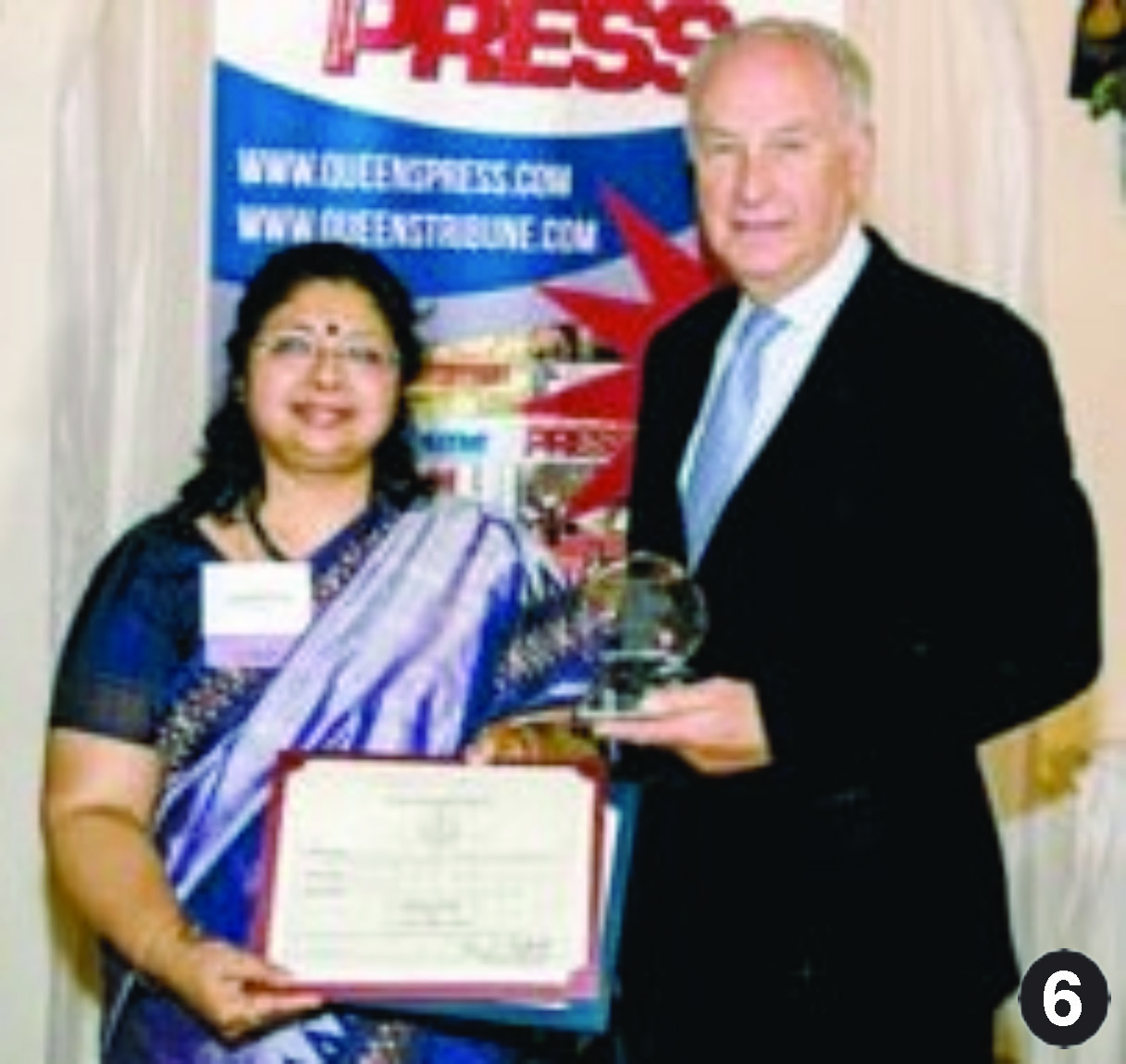
    NEW YORK(TIP): The Queens Tribune and PRESS of Southeast Queens held the annual Glass Ceiling Awards on Tuesday, April 17 night, honoring eight women who have risen through the ranks in their fields and displayed vision and courage in their workplace.

    The theme for the awards ceremony—which was held at Douglaston Manor—was enhancing women’s rights and promoting gender equality. Each of the event’s speakers and nominees spoke about the challenges that women have faced along the road toward equality and the next steps in that struggle.

    Honorees with organizers. Vandana Sharma is seen on extreme left

    The eight honorees included New York’s Lieutenant Gov. Kathy Hochul; Tonya Boyd, the deputy chief of the city’s Fire Department; Susan Browning, the executive di- rector of Long Island Jewish Forest Hills; Lidija Nikolic, CTP, the senior vice president of global commercial banking at Bank of America Merrill Lynch; Merle Hoffman, the president and CEO of Choices Medical Center for Women; Rhonda Nelson, the recorder for UFCW Local 1500; Lori Vavrinec, the di- rector of marketing for Fidelis Care New York; and Vandana Sharma, the regional manager for Americas, Air India.

    Hochul, who was also the evening’s keynote speaker, noted while women have made great strides in the workplace, citing New York as having closed the pay gap more so than any other state. However, she pointed out that white women in the Empire State still only make 89 cents for every $1 that a man makes, while African American women earn 66 cents and Latina women take home 54 cents. “There are obstacles; God there are obstacles,” Hochul said. “I wear a necklace with broken glass that reminds me of glass ceilings that have been broken, but also the ones that have yet to be crushed. I’m sick and tired of seeing statistics that today’s women don’t make what men do. In 100 years from now when people look back at us, I want our story to be just as powerful, bold and audacious as the suffragettes’. I want people to say, ‘They changed the world.’”

    Hochul told the Queens Tribune that she believed the election of President Donald Trump and the rise of the #MeToo movement have pushed women to take leadership roles. She also noted that there has been a rising tide of women in politics. “It’s stronger than it’s been in decades,” she said. “Their voices are sorely needed in the corridors of power.”

    Boyd said that while working in a predominantly male organization poses challenges, women in the FDNY “have a very prominent future.” “You need a tough skin. That’s the most important thing—and you need to be dedicated to your job,” Boyd said. “There is an enormous amount of room for growth. In five to 10 years, I see us having our first female commissioner.”

    Nelson said that in unions the leadership is still predominantly male, but that women are fighting for greater roles in such organizations.

    “Women are moving more and more into leadership positions,” she said. “When I came on 40 years ago, there were not that many women in leadership positions. We need more women in staff positions and a little more diversity. Women need to see role models they can look up to. “Browning said that her field— healthcare administration—is one in which women have made strides in recent years.

    “Northwell has set as a priority that we have diverse leadership and staff,” she said. “Having a diverse team brings to the table a diversity of thought. When we have that, we build stronger companies. At the executive level, there’s a recent turn of events that women are starting to be the majority in these positions.”

    Nikolic referenced a joke she had heard that if “Lehman Brothers had been Lehman Sisters, the financial crisis would have looked different.”

    “Despite that half of the professional positions in the financial industry are held by women, proving yourself is harder,” Nikolic said.  “If a woman looks at the top and never sees women, she wonders if she can succeed. I view it as my legacy to support women on their path to empowerment.”

    Hoffman noted that she believes the world is moving toward equality not just in the workplace, but “in every place,” but added that women should be prepared for a long fight. “It’s a struggle for women to have equality in all spheres,” she said. “I have been on the frontline for women’s reproductive rights for 47 years. I opened the first women’s abortion clinic in 1971 before Roe v. Wade. It’s even more in- tense now with you-know-who in the White House. I see an administration that is pushing back against women’s rights.”

    Vavrinec said that one sign of women’s growing equality in the workplace is that her young sons do not find it surprising to see women in positions of power. “They don’t know any differently,” she said. “They have female doctors and dentists and see that their mom is a female executive. For this current generation, it’s not an issue.

    The pay situation still needs to be addressed. In the healthcare industry, it’s gotten better.” Sharma said that the airline for which she works has long been a leader in gender equality. “At my company, there are the same opportunities for men and women,” she said. “Air India has the highest number of women pilots in the world, but also women in senior executive positions and women as engineers—in every position.” Queens Borough President Melinda Katz and Councilman Barry Grodenchik (D-Oakland Gardens) both dropped by the awards ceremony. Katz said she believed that the election of women in Queens is a sign that women can break the glass ceiling.

    “I’m the third woman in a row to be borough president in Queens— we like to elect women here,” she said. “If you want to serve the public, start in your communities, your neighborhoods. Look around you— there are role models to look up to.”


  • India, US need a full-scale relationship: former US Ambassador to India Richard Verma

    India, US need a full-scale relationship: former US Ambassador to India Richard Verma

    NEW YORK CITY, NY(TIP):  India and the US need a “full scale relationship” that encompasses defense, strategic and economic ties, former US Ambassador to India Richard Verma said stressing that the two countries cannot be “fighting every day on trade” while cooperating on defense. They need to fire on all cylinders to achieve their ambitious relationship.

    “We need a full-scale relationship, not just the defense relationship, not just the strategic relationship. We need to focus on the economic side too. We somehow need to navigate America First with Make in India,” Verma said, speaking at the third New India Lecture at Indian Consulate, April 23.

    Verma said Washington and New Delhi want an “ambitious relationship” and to become natural allies for that they need to be “firing on all cylinders”, including economic and military.

    “We can’t be fighting every day on trade, cooperating on defense and think we are just going to have a great relationship. We need to be firing on all cylinders, that means economic, that means military,” he said. He further stressed that the US needs to take its defense relationship with India to the next level. “That means we ought to be providing India with the most advanced technology, we ought to make sure that if India is in trouble they have the means to win, if they are challenged,” he said.

    Verma spoke at length on a wide range of topics pertaining to India-US relations, including H1B work visas, immigration as well as geo-political issues relating to China and Pakistan.

    Verma, Vice Chairman and Partner at the Asia Group and a board member of the US-India Strategic Partnership Forum (USISPF), said the India-US relationship has been a “slightly underperforming” one for decades. “We have got some history that weighs us down. We still have some trust issues and neither side wants to be in an alliance,” he said in his address on ‘US-India: Natural Allies — Absent the Alliance.’

    Responding to a question on concerns among Indian workers over H1B visas, Verma said last year about 1.1 million visas were issued to Indian nationals to come to the US in every category and out of these, about 50,000-60,000 were H1B visas. “A very small percentage of the visa pool is for H1 B visas,” he said.

    Verma, who had served as the US Ambassador to India from 2014 to 2017, said he had conveyed to Indian CEOs and software companies that they have to be aware of the “political realities” in the US. While they should pay their employees in the US competitive wages, they also need to be “sensitive” towards people’s fear of losing jobs in an era of globalization.

    “If your consultants are coming here and advising about downsizing or scaling back and then that operation or function ends up in India, people are not going to be necessarily happy,” he said.

    “You have to understand the political realities that people are facing here, fear about globalization. I think we are getting to a better understanding. I hope we don’t run into a huge fight on H1B,” he said.

    Verma, who has previously served as the Assistant Secretary of State for Legislative Affairs, noted that “some reforms are probably necessary”, adding that the H1B visas are an important but “small part” of the overall people-to-people relationship between India and the US.

    “I think US-India trade relationship is one relationship where you can get distinct wins on both sides,” he said.

    Highlighting the critical role of the diaspora in strengthening relations between India and the US, Verma said “we have to increase our people-to-people connections and we should be celebrating and standing up for the immigrants who come into this country and not looking at ways to shrink the pool of people coming here.”

    On the trajectory of India-US relations under the Trump administration, Verma said looking at Washington’s all other bilateral relations, the one with India is “still on a pretty good trajectory.”

    While things have been moving along on the strategic side, on the economic side there are some growing pains. However, he said he is “more concerned about how we treat people who may not necessarily look like and sound like the rest of middle America and that’s the part I keep the most eye out for in this environment.”

    Recalling the journey of his parents from India to the US, Verma said that immigrants and immigration have played a hugely important role in America. “It is not just one group of immigrants or immigrants who look a certain way but immigrants from all over the world and it’s really important that we stand up for that group of people.”

    On ties with Pakistan, Verma said the US has made the message quite clear to Pakistani leaders that “this continuing support and facilitation” of terrorist groups along the border to create a “perpetual state of conflict” with India is “not sustainable.

    “It’s not in their interest, and it’s not the way to have that goal of a functioning normal state in the international system,” he said.

    He stressed that the US can’t lose the connections to all the people and moderate voices in Pakistan that want peace with India and a better future for their children.

    “It’s a very difficult situation but we have to get there with a variety of economic and political tools,” he said.

    Responding to a question on relations with China, Verma said India and the US have remarkably similar situations with regard to China, including economic inter-dependencies, trade and commercial activities.

    “But we also have security concerns. We have concerns about what China is doing in the international systems, we have concerns about their failure to adhere to rules and norms, we have concerns about the Belt and Road Initiative and what they are doing in the South China Seas,” he said.

    Verma stressed on the need to be able to balance some of these concerns.

    “No one wants to see a conflict with China. But we also have to be able to stand up for our basic values,” he added.

    He further noted that in India-China and US-China relations, there is a lot of dialogue at all levels.

    However, “it is a very difficult, complicated and contentious relationship but I don’t think anyone wants to see the spark that leads to an actual conflict,” he said.

    Verma emphasized that there is need for an international system that reflects India’s role in the world today. He lamented that India is not on the UN Security Council, is not a member of the Asia-Pacific Economic Cooperation and doesn’t play the kind of role that it probably should on the G-20 bloc of nations or in other international Institutions.

    “The US needs to pave the way forward for India so that it actually has the seat at the table in this century, a seat that is appropriate for a country of the size and stature of India. We have to be working very hard for that,” he said.

    Ambassador Verma, Consul General Sandeep Chakravorty, Vaidyanathan Aiyer, and Air India Regional Manager Vandana Sharma pose for a photograph with the young students from Bangalore Engineering College
    Photos- Jay Mandal/On Assignment

    A group of students from a Bangalore Engineering College, who were on way to Boston to take part in an auto engineering fair also attended the lecture.

    Ambassador Verma, Consul General Sandeep Chakravorty, Vaidyanathan Aiyer, and Air India Regional Manager Vandana Sharma posed for a photograph with the young students.

    (With inputs from PTI)

  • PM Modi Arrives in Wuhan for talks with Xi Jinping

    PM Modi Arrives in Wuhan for talks with Xi Jinping

    Both leaders are expected to define a pathway that could transform India-China ties into a major force for tackling global problems.

    WUHAN(TIP): Prime Minister Narendra Modi arrived in Wuhan late Thursday, April 26 night for a two-day informal summit with Chinese President Xi Jinping. He is due to hold one-to-one talks with Xi.

    “A special moment past midnight as PM @narendramodi was warmly welcomed in Wuhan for the 1st Informal Summit with Chinese President Xi. The two leaders will review the developments in our bilateral relations from a strategic and long-term perspective,” External Affairs Ministry spokesperson Raveesh Kumar tweeted.

    Both leaders are expected to define a pathway that could transform India-China ties into a major force for tackling global problems.

    The ambitious undertaking hopes to realign the underlying premises of India-China ties, so that festering irritants are removed, and the two countries can work together to fulfill common global aspirations.

    They will meet in the famous villa, which was once Mao Zedong’s retreat. The property — a total of three buildings–at the bank of the East Lake of Wuchang– is set amid pine, bamboo and plum trees. A boat ride by the two principals or a walk among the pines is expected during the two-day event.

    In a statement released ahead of his departure to Wuhan, Mr. Modi underscored that both leaders, during their upcoming dialogue, would be looking at the big picture.

    Discussions on “a range of issues of bilateral and global importance,” would be shaped by the “visions and priorities for national development, particularly in the context of the current and future international situation,” the dense statement said.

    It also highlighted that during the talks, both countries would take a long view of their ties. “We will also review the developments in the India-China relations from a strategic and long-term perspective.”

    Diplomatic sources said that the two leaders, in their free-wheeling dialogue, would discuss the border row, and look for underlying principles to resolve it.

    “This time the two sides have decided to hold the informal summit between the two leaders. This is because both our countries attach great importance to each other on external strategy and not because of boundary question that still remains unresolved, and we need talk about it during the informal summit,” Chinese vice Foreign Minister Kong Xuanyou said during a media briefing on Tuesday.

    Analysts say that China may be gradually shifting its position from “managing” and shelving the border issue, to a fledgling stance of resolving the China-India border dispute. Such a position would align well with Prime Minister Modi’s approach of seeking a final resolution of the boundary dispute.

    (Source: PTI)

  • Asaram gets jail till death: Co-accused sentenced to 20 years in prison

    Asaram gets jail till death: Co-accused sentenced to 20 years in prison

    JODHPUR(TIP): A special trial court set up at the heavily fortified Jodhpur Central Jail on Wednesday, April 25, sentenced self-styled godman Asaram Bapu to jail till death, finding him guilty of raping a teenaged girl in his ashram in August 2013.

    This is the second conviction in a high-profile sexual offence case involving a self-styled guru after Dera Sacha Sauda head Gurmeet Ram Rahim Singh was sent to jail for 20 years last August.

    Special Judge Madhusudhan Sharma sentenced co-accused Shilpi and Sharad to 20 years’ jail each and acquitted two others, Prakash and Shiva. Besides, the court slapped a fine of Rs 1 lakh on Asaram and Rs 50,000 each on the other convicts, public prosecutor Pokhar Ram Vishnoi said.

    “Soon after the verdict, 77-year-old Asaram and other convicts broke down. The court considered Asaram’s act under the heinous crime category,” victim-family’s counsel Rajendra Singh told media persons.

    “A self-claimed spiritual guru has done the disgusting act of sexual exploitation with his teenaged disciple who had full faith on him. The convict should not be spared, and the maximum punishment be awarded, lifer to Asaram till natural life time, and 20 years each to his assistants who felicitated him in the act,” Singh said, quoting from the 453-page verdict.

    “We had complete faith in the judiciary and are happy that we got justice,” the victim’s father said, adding that the family had been living in constant fear and their business had been hit.

    Asaram sexually exploited a 16-year-old girl from UP’s Shahjahanpur in his Manal ashram near Jodhpur on the intervening night of August 15-16, 2013. The charge sheet against Asaram and the four co-accused was filed by the police on November 6, 2013, under various Sections of the POSCO (Prevention of Children from Sexual Offences) Act, Juvenile Justice Act and the Indian Penal Code.

    But rape is not the only charge against Asaram. He is also facing prosecution in a Rs 700-crore land grab case of 2000 in Madhya Pradesh. The case pertains to 200 acres of land in Ratlam, Madhya Pradesh.

    Arrested in Indore and brought to Jodhpur on September 1, 2013, Asaram was under judicial custody since September 2, 2013. He also faces a rape case in Surat in which the Supreme Court earlier this month gave five weeks to the prosecution to complete the trial.

    Asaram unsuccessfully moved 12 bail applications, of which six were rejected by the trial court, three each by the Rajasthan High Court and the Supreme Court in the last 56 months.

    The city of Jodhpur on Wednesday turned into a fortress with the deployment of the RAC, RPF and the state police in strength. Also, flag marches were held throughout the city, DCP-East Aman Deep Singh said.

    Several die-hard Asaram followers were detained early this morning from the railway station, bus terminals and in the vicinity of the jail. The Union Home Ministry had issued an advisory to Rajasthan, Gujarat and Haryana to remain alert.

    SAINT TO SINNER

    Aug 15, 2013: A 16-year-old girl accuses Asaram of raping her in his Jodhpur ashram

    Sept 1:Asaram brought to Jodhpur, remanded in custody

    October:Three women accuse Asaram and his son Narayan Sai of rape in Surat, Gujarat

    June 11:Surat case witness dies after being shot at in Rajkot hospital

    January 2015:Asaram’s cook Akhil Gupta, another witness, shot in Muzaffarnagar

    May 13:Mahendra Chawla, prime witness in case against Sai, shot at in Panipat

    March 14, 2016:Accused of killing Akhil Gupta, Asaram’s henchman Kartik Haldar held

    Nov 6: Charge sheet against Asaram and four co-accused

    March 19, 2017:Trial begins against Asaram in Jodhpur

    April 7, 2018:Special court hears final arguments

    April 17:Rajasthan High Court orders the special court to deliver verdict in Jodhpur Central Jail

    April 25:Special Judge Madhusudhan Sharma sentences co-accused Shilpi and Sharad to 20 years’ jail each and acquits two others, Prakash and Shiva. The court also slaps a fine of Rs 1 lakh on Asaram and Rs 50,000 each on the other convicts.


  • Chairman Crowley Urges MTA to Prioritize Expansion of Metro-North Railroad Service into the Bronx

    Chairman Crowley Urges MTA to Prioritize Expansion of Metro-North Railroad Service into the Bronx

    JACKSON HEIGHTS, NY(TIP): House Democratic Caucus Chairman Joe Crowley (D-Queens, the Bronx) is urging the MTA to prioritize expansion of the Metro-North Railroad into the East Bronx as part of the authority’s upcoming five-year plan.

    In a letter sent to MTA Chairman and CEO Joe Lhota, Chairman Crowley said bringing new transportation options to underserved communities in the East Bronx would significantly improve the lives of commuters and residents as they travel for work and leisure.

    As part of his Better Deal plan for Queens and the Bronx, Chairman Crowley has proposed a slate of policies designed to improve transportation options across his district. A major plank of Chairman Crowley’s Better Deal plan is working with the MTA and state lawmakers to establish an explicit timeline for Metro-North’s expansion into the easternmost section of the Bronx. As part of this effort, Chairman Crowley’s letter to MTA Chairman Lhota reiterates that residents in the East Bronx have been forced to settle for insufficient transit options for far too long.

    “Despite the many benefits of bringing Metro-North to the East Bronx, the project has languished for more than a decade,” wrote Chairman Crowley. “It is time to take concrete steps toward making this new service a reality. It’s continued inclusion in the MTA’s Capital Program is critical, as is an accelerated timeline for construction and completion. The residents of the Bronx have waited far too long.”

    For more than a decade, Chairman Crowley has been fighting to bring Metro-North to the East Bronx, which would vastly improve transportation options in the area and boost the local economy. The benefits of expanded service would be immense. Currently, residents can only access a single, overcrowded subway line with exceedingly long travel times. Demand for alternative transit options is on the rise in the Bronx, demonstrated by the fact that the borough saw an increase of nearly 800,000 subway riders between 2015 and 2016.

  • Amitabh-Rishi Starrer 102 Not Out in Theaters on May 4

    Amitabh-Rishi Starrer 102 Not Out in Theaters on May 4

    BADUMBAA IS OUT NOW! AMITABH BACHCHAN & RISHI KAPOOR SHOW OFF THEIR DANCE MOVES IN 102 NOT OUT’S LATEST SONG!

    NEW YORK CITY(TIP): Get ready to dance! The latest song from the upcoming film 102 Not Out has been released – the high energy number ‘Badumbaa’.

    The vibrant song is composed by the inimitable Amitabh Bachchan himself and sung by Bachchan and Rishi Kapoor. The video sees the energetic 102-year-old Dattatraya (Bachchan) dancing in the streets as a carnival takes place and encouraging his grumpy 75-year-old son Babulal (played by Kapoor) to join in the festivities.

    The quirky song is a fun filled ride full of music and dance, with the video featuring a dynamic collection of festival colors and grooving dance moves. Both Bachchan and Kapoor show that they are more than able to keep up with their animated surroundings.

    The song was launched at a special event which saw Bachchan and Kapoor joined by fellow 102 Not Out actor Jimit Trivedi and director Umlesh Shukla.

    102 Not Out is a comedy-drama produced by Treetop Entertainment and directed by Umesh Shukla. 102 years young Dattatraya Vakharia (Amitabh Bachchan) lives life to the fullest and wants to break the record of oldest living man- that’s held by a 118 years old Chinese. Dattatraya wants to live a stress-free life in order to become the oldest living man. However, there is only one hinderance- his 75-year-old son Babulal (Rishi Kapoor) who has resigned himself to a life of old age stuck in drudgery.

    Dattatraya now must find means and ways to change Babulal’s sad and grumpy demeanor so that he doesn’t become a deterrent in breaking the record.