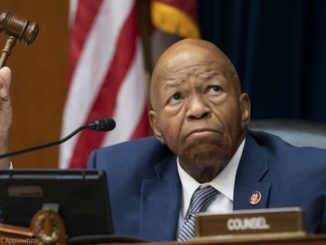
WASHINGTON (TIP): Representative Elijah E. Cummings, a son of sharecroppers who rose to become one of the most powerful Democrats in Congress and a central figure in the impeachment investigation of President Trump, died on Thursday, October 17 in Baltimore, New York Times reported. . He was 68.
His death was confirmed by a spokeswoman, Trudy Perkins, in a statement that said he died of “complications concerning longstanding health challenges.” No other details were given.
As chairman of the House Committee on Oversight and Reform, Mr. Cummings, of Maryland, had sweeping power to investigate Mr. Trump and his administration — and he used it.
A critical ally of Speaker Nancy Pelosi, Mr. Cummings spent his final months in Congress sparring with the president, calling Mr. Trump’s effort to block congressional lines of inquiry “far worse than Watergate.”
Mr. Cummings called the president’s stonewalling “far worse than Watergate.”
He was sued by Mr. Trump as the president tried to keep his business records secret.
Mr. Cummings was in his 13th term serving as a representative for Maryland. He had been absent from Capitol Hill in recent weeks because of his illness. But before that, he could often be found in the Speaker’s Lobby fielding reporter’s questions or quietly reading in the motorized wheelchair he used.
Senator Benjamin L. Cardin, Democrat of Maryland, who served with Mr. Cummings in the House, said his death left an “irreplaceable void.”
Hakeem Jeffries
✔
@RepJeffries
Deeply saddened by the passing of Chairman Elijah Cummings.
He spoke truth to power, defended the disenfranchised and represented West Baltimore with strength and dignity.
Congress has lost a Champion. Heaven has gained an Angel of Justice. May he forever #RestInPower.
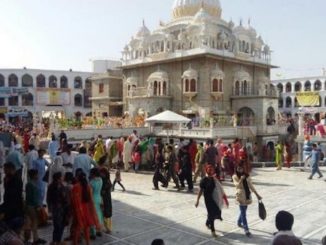
HASAN ABDAL, PAKISTAN(TIP): A fire broke out at the Gurdwara Panja Sahib in the Pakistani city of Hasan Abdal on Wednesday, October 16, Sajjad Azhar, a freelance journalist who has extensively covered the news of the place said.
The incident occurred on Wednesday evening when sparks from the ongoing welding work at the Gurudwara caused the blankets kept in the vicinity to catch fire, Adnan Anjum Raja, the Assistant Commissioner of Hasan Abdal, informed. The fire was soon put out and caused minor damage to the gurudwara. Construction work is underway at the Panja Sahib ahead of the opening of the Kartarpur corridor, when Sikhs from all across the world would visit the Gurdwara on the 550th birth anniversary of Guru Nanak Dev Ji.
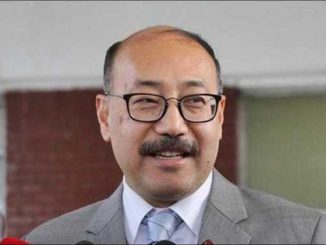
WASHINGTON(TIP): India’s ambassador to the US Harsh Vardhan Shringla on Wednesday, October 16, briefed lawmakers on the situation in Kashmir and the steps taken to maintain peace after Jammu and Kashmir’s special status was abrogated.
The briefing, first such by the top Indian diplomat for members of the House foreign affairs committee, comes as there has been an increasing voice of dissent and uneasiness among lawmakers on the curbs in Kashmir, several of which have been removed.
Since August 16, there was gradual removal of curbs and by September first week, most were removed, officials in Jammu and Kashmir had said. The most prominent being restoration of post-paid mobile phone services on October 14 for 40 lakh subscribers across networks.
Several Congressmen who were not members of the committee also attended the ambassadorial briefing and a majority of the lawmakers were from the opposition Democratic Party. Congressman Ami Bera was the only Indian American lawmaker present at the briefing.
Shringla and other diplomats from the Indian Embassy here and its consulates in New York, Chicago, Atlanta, Houston and San Francisco have reached out to hundreds of Congressmen and their aides after abrogation of the state’s special status.
Since August 5, the government besides restoring post-paid mobile phone services has opened the state for tourists. On August 17, partial fixed line telephony was resumed and on September 4, nearly 50,000 landlines were declared operational. Educational institutes are also open, but attendance has been slim.
The government has claimed that over 99 per cent of the area of the state has no restrictions on movement.
Indian American MIT Economist Abhijit Vinayak Banerjee Bags the Second Nobel Prize in Economics after Amartya Sen (1998)
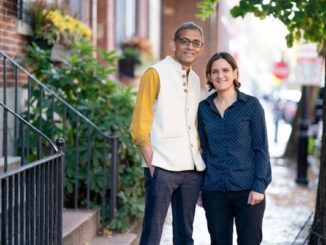
BOSTON(TIP): India got another Nobel laureate in Economics after Amartya Sen when Indian American MIT economist Abhijit Vinayak Banerjee was named the winner of the 2019 Sveriges Riksbank Prize in Economic Sciences in Memory of Alfred Nobel. His fellow MIT economist and wife Esther Duflo was named co-winner of the Nobel, along with another co-winner, Harvard University economist Michael Kremer. Duflo, 46, is the youngest economics laureate ever and the second woman to receive the prize in its half-century history.
Incidentally Amartya and Abhijit, both Bengalis, also share the same college, Presidency Kolkata. Banerjee is the sixth Indian with ‘Kolkata connection’ to win a Nobel after Rabindranath Tagore, Sir Ronald Ross, C V Raman, Mother Teresa and Amartya Sen.
In the statement announcing the awardees, the Royal Swedish Academy of Sciences, which grants the Nobel awards, noted that the work of Duflo, Banerjee, and Kremer has “dramatically improved our ability to fight poverty in practice” and cited their “new approach to obtaining reliable answers about the best ways to fight global poverty.”
The work of Duflo and Banerjee, which has long been intertwined with Kremer’s, has been highly innovative in the area of development economics, emphasizing the use of field experiments in research in order to realize the benefits of laboratory-style randomized, controlled trials and has helped transform antipoverty research and relief efforts.
Duflo and Banerjee have applied this new precision while studying a wide range of topics implicated in global poverty, including health care, education, agriculture, and gender issues, while developing new antipoverty programs based on their research.
Duflo and Banerjee also co-founded MIT’s Abdul Latif Jameel Poverty Action Lab (J-PAL) in 2003, along with a third co-founder, Sendhil Mullainathan, now of the University of Chicago. J-PAL, a global network of antipoverty researchers that conducts field experiments, has now become a major center of research, facilitating work across the world.
J-PAL also examines which kinds of local interventions have the greatest impact on social problems, and works to implement those programs more broadly, in cooperation with governments and NGOs. Among J-PAL’s notable interventions are deworming programs that have been adopted widely.
Duflo and Banerjee have published dozens of research papers, together and with other co-authors. They have also co-written two books together, “Poor Economics” (2011) and the forthcoming “Good Economics for Hard Times” (2019).
Modi can derive satisfaction from the fact that despite Chinese actions and Sino-Pakistan collusion, India has successfully ridden the storm of external pressures after the revocation of Article 370. New Delhi can now move ahead to fulfil its commitment to maintain the country’s strategic autonomy.
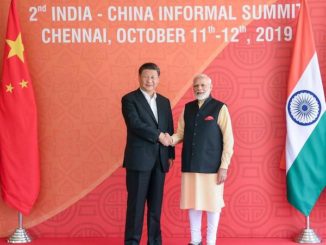
The Mamallapuram Summit between President Xi Jinping and PM Modi appears to have cleared the air for improving ties. This followed the less-than-friendly approach of China in international forums on the issue of J&K in recent days. India and China, however, now appear committed to enhancing mutually beneficial cooperation, bilaterally, regionally and internationally. One can look forward to closer cooperation in forums like BRICS, G20, East Asia Summit hosted by ASEAN, and even in the UN, on issues ranging from global trade to climate change. The Wuhan Summit, last year, had led to an agreement on de-escalation of tensions in the Doklam sector. India and China also agreed in Mamallapuram, to strengthen measures to ensure that tensions do not arise, or get out of hand, across our land borders.
China will, hopefully, take note of the fact that it damaged its own credibility by acting at the behest of Pakistan to internationalize the Kashmir issue. Beijing found itself isolated in the UNSC. Not a single member backed Beijing’s ill-advised move to involve the Security Council in the issue. The British, however, played their characteristically duplicitous role. Chinese efforts to back Pakistan on the Kashmir issue in the UNHRC met a similar fate. Merely three of the 193 members of the UNGA — China, Malaysia and Turkey — voiced their support for Pakistan.
The recent summit was cordial. There was agreement on the path for addressing differences, promoting cooperation in areas like trade and investment, and managing differences that arise periodically across the undemarcated border. There is, however, nothing to suggest that there is going to be any change in China’s efforts to undermine Indian influence across its land borders and in its immediate Indian Ocean neighborhood. China quietly, but continuously, interferes in the internal affairs of all of India’s neighbors, from the Maldives and Sri Lanka to Myanmar and Nepal. We will have to monitor how China behaves in the prelude to the presidential elections in Sri Lanka next month.
There should be no doubt about continuing military, economic and diplomatic Chinese support for Pakistan. The growing economic woes compel Islamabad to hold out its begging bowl to even distant lands and multilateral aid organizations across the globe. Militarily, however, its navy is set to receive the latest Chinese frigates and submarines.
What seems to be upsetting China presently is not so much India’s relationship with the US, but its blossoming relationship with Moscow. China did not anticipate that defying US sanctions, India would move ahead to acquire S400 air defense missile systems from Russia. Moreover, both Rawalpindi and Beijing did not expect that Russian foreign minister Sergei Lavrov would bluntly tell his bumptious Pakistani counterpart, Shah Mehmood Qureshi, that Moscow would resolutely oppose any move by Pakistan to raise the Kashmir issue in the UNSC. Modi’s visit to eastern Russia and his offer of $1 billion for Indian investment in this sensitive region bordering China, where the Soviet Union and China had a bloody conflict in 1969, has raised concerns in Beijing.
Referring to Modi’s visit to eastern Russia, Chinese government mouthpiece Global Times noted: ‘The advance of India-Russia ties will push the multi-polarization of international relations and reinforce India’s role in Asia. It will also add the leverage of Russia to counter western pressures on diplomacy and security, empower Russia to effectively resist western countries’ strategic blockade and defend its strategic and economic interests in South Asia. However, stronger Russia-India ties, especially their military-technical cooperation, would have a negative impact on China’s national security. Consolidating and developing ties with Russia implies India’s strategic intention to contain China’s rise. It would pile more geopolitical pressure on China and increase instability in China’s periphery.’
Both China and India have misgivings about many policies of the Trump administration. Beijing realizes that after getting a brief respite from Trump’s trade sanctions, there is little more they can expect by way of Trump easing the remaining sanctions he imposed earlier. New Delhi is also not taken in by Trump’s recent bravado in backing the Afghan government, while claiming he would not negotiate with the Taliban. He did this largely due to pressure from both the Pentagon and State Department to stand by the Afghan government. But shortly after the Taliban (obviously under pressure from Pakistan) indicated that it was ready to make peace in Afghanistan, Trump’s envoy Zalmay Khalilzad rushed to Islamabad to get the Taliban to observe a ceasefire and resume talks.
Trump is also appeasing anti-war sentiments in the US by withdrawing US forces from Syria. He hopes that Imran Khan will help him get a face-saving withdrawal by persuading the Taliban to agree to a ceasefire. He will then claim that he has pulled out US troops from all unproductive military engagements abroad by ensuring they are all safely home, well before the election day — November 3, 2020. How all this plays out, in the midst of impeachment proceedings that Trump is facing in the opposition-dominated House of Representatives, remains to be seen. If Imran Khan thinks that the US will be eternally grateful for helping them, he would be seriously mistaken.
Modi can derive satisfaction from the fact that despite Chinese actions and Sino-Pakistan collusion, India has successfully ridden the storm of external pressures after the revocation of Article 370. New Delhi can now move ahead to fulfil its commitment to maintain the country’s strategic autonomy. The recent measures for improving the daily lives of people in Kashmir by the restoration of telephone links will hopefully be suitably followed up by further measures to restore normalcy in the Valley.
(The author is Chancellor, Jammu Central University & former high commissioner to Pakistan)
The nomination of Sourav Ganguly, the former India captain, to be the next president of the Indian cricket board (BCCI) is a welcome development, though the ‘election’ process had several worrying aspects. One, the election was done through negotiations rather than voting — this means that there was a lot of give and take among the politicians, businessmen and powerbrokers who control BCCI. Two top officials were elected on the basis of their blood ties with ministers in the Union Government, not on the basis of their affinity with and services to cricket. Finally, Ganguly’s elevation could end up being ineffectual and merely symbolic because he would be president for less than one year before demitting office and undergoing a compulsory three-year cooling-off period.
Jay Shah, the son of Union Home Minister Amit Shah, is set to be BCCI secretary, while Arun Singh Dhumal, brother of Minister of State Anurag Thakur, will be the treasurer. These appointments are significant for they show that politicians have not lost interest in running cricket, and that cricketers might well be used as pawns in efforts to keep control of the influential and super-rich BCCI. As in old India, the inheritance of power remains hereditary in new India. The ideal of cricketers running BCCI by hiring professional managers — as is done in international golf or tennis, for instance — remains out of reach.
Yet, the symbolism of a former top cricketer, who led the Indian team with distinction, becoming BCCI president is very strong indeed. It’s a departure from the past when princes, businessmen and politicians held the position. Another very important development is the formation of a cricketers’ association and election of two of its members to the BCCI’s apex council. Thus, finally, player representatives will sit in BCCI meetings and have a say in how the game is run. If they remain united and committed to cricket rather than power and their personal interests, cricketers might well succeed in edging out politicians and businessmen, who would do well to focus on the much more critical job of running the country and its economy.
Modi succeeds but Foreign Office and diplomats fail to deliver
In Public Relations, P stands for Performance. R stands for Reporting. Though Prime Minister Modi performs at his highest levels, his diplomats and bureaucrats are failing India. Is there a brief fact sheet on Kashmir? If so, was it handed personally to each and every elected official ? Does the Indian Embassy’s P.R. wing provide the American and Indian American media with material on Indian issues? Is there a White Paper on Kashmir?
While Modi succeeds in his personal diplomacy, his diplomats fail in their duties, disappointing Modi, the Indian Diaspora and India. And Pakistan has capitalized on the failure of Indian foreign office and its diplomats.
Prime Minister Modi provides a refreshing contrast to International Relations during the Nehru dynasty era. Modi has mastered the art of high-level diplomacy. His diplomatic skills and personality have transformed India’s foreign policy fulfilling the self-interest of India. In building close relations with the heads of states , he has formulated his personal strategy to work with the leaders of the Indian diaspora in the USA, Canada, U.K., Japan, Singapore, Australia, South Africa and the Middle Eastern countries. Though the Indian diaspora are loyal to the countries they are settled in they have time and again displayed their love of India and its Prime Minister. The “Howdy Modi” spectacular event drawing 50,000 Indian Americans in Houston became an epoch-making event because Modi invited President Trump as his guest. The Indian diaspora organized rallies for Modi in various locations of the world and through their loyalty and political strength, Modi was able to create his own style of diplomacy. As a result, the diplomats in foreign embassies were just onlookers or honored guests at these Indian diaspora sponsored events.
We have seen how Prime Minister Modi has been highly successful in initiating, developing and nurturing personal relationships with the heads of states. The photographs showing the body language are a testament to his personality and likeability. Thus, he is creating not only his personal image but also reinforcing the image of India and the Indians through the Indian diaspora. What Modi has achieved is quite novel because this was never done before.
While Modi succeeds in his personal diplomacy, his diplomats fail in their duties, disappointing Modi, the Indian Diaspora and India. And Pakistan has capitalized on the failure of Indian foreign office and its diplomats. One may like to know how. Pakistan succeeded in planting an op ed column by Prime Minister Imran Khan of Pakistan in the New York Times, just a week before the U.N. General Assembly session in New York and the “Howdy Modi” event in Houston on September 22, 2019. This article was a propaganda piece condemning India based on misstatement of facts on Kashmir. When such a column appears, it is customary for the NYT to publish a counter column by India. Unfortunately no column was written and published by Prime Minister Modi or Foreign Minister Jayashankar or Indian Ambassador to the USA Shringla. I am sure if a counter column had been written and sent to the NYT, it would have published it.
It must be pointed out that Pakistan’s diplomacy and public relations are more efficient than India’s. Failure of Indian Foreign Office to follow up on the goodwill and friendship created by Prime Minister Modi has created opportunity for Pakistan to make propaganda against India. The Washington Post and the New York Times have been writing editorials and columns against India’s policies in Kashmir. These two important media keep on publishing dispatches from India against India’s policies in Kashmir. India has adequate resources to employ a topnotch Communications and Public Relations firm to handle its publicity. It is important they engage one immediately because the NYT and the Washington Post continue to publish anti-India articles on Kashmir. I recall Indian Ambassador Naresh Chandra was on all TV channels for several days consecutively to educate Americans on India’s testing of nuclear bomb in 1998.
Failure of Indian diplomacy and lobbying have resulted in anti-India resolution by the U.S. House of Representatives . It was reported that Foreign Minister Jayashankar stayed in Washington D.C. after the “Howdy Modi” event to attend India-US Strategic Partners meeting. Failure of Indian diplomats to convince Indian American Congressman Khanna of California made him join the Pakistan caucus in the Congress. Indian Americans are protesting. This is disgrace for India and very disappointing. Khanna along with Congresswoman Jayapal of Washington State ganged up and convinced the Congress to sponsor and adopt resolution against India on Kashmir. There are approximately 100 Indian diplomats in the USA working in Washington D.C and elsewhere in San Francisco, New York, Chicago, Houston, Atlanta and the Indian Mission to the U.N. These diplomats should be cultivating every elected official to the U.S. House of Representatives and the U.S. Senate. Dinners and cocktail parties are no substitutes to educating and tutoring India’s policies to the elected officials.
In Public Relations, P stands for Performance. R stands for Reporting. Though Prime Minister Modi performs at his highest levels, his diplomats and bureaucrats are failing India. Is there a brief fact sheet on Kashmir? If so, was it handed personally to each and every elected official ? Does the Indian Embassy’s P.R. wing provide the American and Indian American media with material on Indian issues? Is there a White Paper on Kashmir?
If the Indian Embassy headed by its Ambassador had provided better leadership in educating each and every elected official, I am sure the Congress would not have ventured into sponsoring an anti-India resolution. This is the first of its kind since I arrived here in 1954.
Modi is the conductor for his diplomatic orchestra and India can succeed only if all his foreign office officials and the diplomats play their instruments in unison. Modi’s personal diplomacy and foreign policy should be played like an orchestra. Now, of course, Prime Minister Modi has brought in the Indian diaspora. President Bush, Obama and Trump have credited the Indian Americans as an important factor in U.S.—India relations. The Indian American leadership has been making its contributions to foster Indo US relations to oppose military aid to Pakistan; to take action against Pakistani terrorists who attacked Mumbai and the Indian Parliament, and in support Civil Nuclear Deal, etc.
I was with the Permanent Mission of India to the U.N. from 1954 to 1964, first as Private Secretary to V. K. Krishna Menon, Defence Minister and Chairman of Indian Delegation to the U.N. and later as Adviser, Security Council, Economic and Social Council, and the General Assembly. I recall, Krishna Menon put the Indian Mission on a war footing for three days and all officials and the staff worked 24/7 to produce a 300-page document as annexure to his 7-hour speech on Kashmir in 1957. Pakistan had the political support and wanted a plebiscite in Kashmir in accordance with the U.N. resolution. Krishna Menon argued and reiterated that Kashmir’s accession to India is full, final and complete. He pointed out that the resolution on Kashmir had three operative paragraphs. Therefore, the first step in the process is for Pakistan to vacate its aggression in Kashmir. Unless and until Pakistan vacates its aggression and normal conditions of peace exist, no steps can be taken towards processing plebiscite. The Mission was lean and mean with three First Secretaries and an Ambassador, but everyone worked creatively and hard. The Indian Delegation was the most active delegation amongst 60 members at that time. India made huge contributions in solving major political issues – Korean War; Suez War; Decolonization of the world; creation of International Atomic Agency, etc.
India has highly qualified and experienced diplomats and I respect them. The purpose of this article is to serve as a reminder to Indian Foreign Minister Jayashankar and Indian Ambassador to the USA, Shringla that they have to make sure they educate all elected officials on major Indian issues, be it Kashmir or Investment or others. Failure of Indian diplomats to compete with Pakistan’s diplomats has resulted in an anti-India resolution in the Congress. All planning and steps should be taken to make sure such major mistakes are not repeated. I do not think there is any excuse for not planting an OPED column by Prime Minister Modi in the NYTimes immediately after Prime Minister Imran Khan published his.
(The author came to the USA in 1954 on Mrs.Vijayalakshmi Pandit Scholarship. He is a Senior Adviser to the Imagindia Institute, a think tank in New Delhi; Chairman, Asian American Republican Committee (founded in 1988); former President & CEO, First Asian Securities Corporation, NY. Lives in Scarsdale, NY. He can be reached at vpwaren@gmail.com)
Gala honors Turrell Fund President & CEO Curtland E. Fields
Xian Zhang conducts program pairing Holst’s “The Planets”with NASA imagery, Sarah Kirkland Snider’s “Hiraeth”with film by Mark DeChiazza
Women of Newark Voices return for Holst’s masterwork
Oct 11 and 13 at NJPAC in Newark
Oct 12 at Count Basie Center for the Arts in Red Bank
The New Jersey Symphony Orchestra(NJSO) and Music Director Xian Zhangopen the 2019–20 season with a program pairing music and visuals in Holst’s “The Planets,” with NASA imagery in HD, and the NJSO premiere of Sarah Kirkland Snider’s “Hiraeth,” with an accompanying film by Mark DeChiazza. Elgar’s “Pomp and Circumstance”March No. 1 opens the program.
Produced by scientist and filmmaker Duncan Copp, “The Planets—an HD Odyssey”projects high-definition satellite imagery as Zhang leads the Orchestra in Holst’s masterwork. The NJSO celebrates voices from its own communities as the “Women of Newark Voices”—a choir that debuted with Zhang and the NJSO on the 2018–19 season’s opening weekend—return to bring an ethereal element to “Neptune, the Mystic.”
New Jersey-based composer Sarah Kirkland Snider was inspired by the Welsh definition of nostalgia for her autobiographical work “Hiraeth”—music evoking her family’s history, commissioned alongside a film by Mark DeChiazza. Of the film, Snider has said, “We set about re-creating some of my father’s, uncle’s and my childhood experiences in North Carolina. The result is something hazy and atmospheric, somewhere between memory and dream.”
OPENING NIGHT CELEBRATION GALA
An Opening Night Celebration Gala on October 11 at NJPAC honors Turrell Fund President & CEO Curtland E. Fields and recognizes the significant contributions the fund has made to enrich the lives of children in the Greater Newark community with the experience of live symphonic music through the Orchestra’s education and community engagement programs. The Gala includes a pre-concert cocktail party and post-concert dinner.
The gala evening includes a pre-concert cocktail party with hors d’ oeuvres and an open bar at 5:30 pm; a post-concert dinner offers opportunities to meet and mingle with Zhang, musicians and special guests. Complimentary valet parking will be provided for all gala attendees.
COCKTAILS & CONCERT TICKET*per person (includes a tax-deductible contribution), pre-concert cocktail party, concert seating and valet parking.
COCKTAILS, CONCERT & DINNER TICKET*per person (includes a tax-deductible contribution), pre-concert cocktail party, concert seating, gala dinner and valet parking.
Student discounted tickets for the concert only are available.
For Tickets, visit njsymphony.orgor call 1.800.ALLEGRO (255.3476).
Sponsorship and Dinner Table packages are also available. For more information, please contact Laura Bessey, NJSO Manager of Special Events, at Lbessey@njsymphony.orgor 973.735.1729.
*Discounted tickets are available for patrons who already have tickets to the October 11 concert.
Curtland E. Fields
GALA HONOREE
Curtland E. Fields, Turrell Fund President & CEO
Fields was appointed President & CEO of the Turrell Fund in 2005, after a distinguished 31-year career with AT&T. Fields became a trustee of the Turrell Fund, a foundation serving children, in 1997. As a senior executive officer of AT&T, Fields served as president of the $2 billion Consumer Services Division, and prior to that as president of AT&T’s largest operating region, in the Midwest. His experience with the company included assignments of increasing responsibility in finance, operations and marketing, as well as key activities in the Office of the Chairman. He also served as a director of the ATC Technology Corporation until its acquisition in 2010 by privately held GENCO; Lucent Technologies, Inc., through its initial public offering; and the AT&T Universal Card, until its acquisition by Citigroup.
A native of Washington, DC, Fields holds an undergraduate degree in architecture and engineering, with high honors, from Princeton University. He also holds an MBA in finance and marketing, with honors, from the Wharton School at the University of Pennsylvania.
Fields serves on the Board of Directors of the Lincoln Center Theater in New York City and Caucus Educational Corporation, and he has a been an NJSO trustee for 16 years.
The Turrell Fund, is a foundation serving children. The fund’s mission is to give at-risk children the basic elements for success in life. For more than 25 years, the Turrell Fund has generously supported the New Jersey Symphony Orchestra’s education and community engagement programs in the greater Newark area, including NJSO Youth Orchestras, Concerts for Young People and the Preschool Program. These programs afford students an appreciation for the arts and the benefits of a quality music education, and they enliven our community with vibrant cultural opportunities.
Named “a vital, artistically significant musical organization” by “The Wall Street Journal,” the New Jersey Symphony Orchestra embodies that vitality through its statewide presence and critically acclaimed performances, education partnerships and unparalleled access to music and the Orchestra’s superb musicians.
Music Director Xian Zhang—a “dynamic podium presence” “The New York Times”has praised for her “technical abilities, musicianship and maturity”—continues her acclaimed leadership of the NJSO. The Orchestra presents classical, pops and family programs, as well as outdoor summer concerts and special events. Embracing its legacy as a statewide orchestra, the NJSO is the resident orchestra of the New Jersey Performing Arts Center in Newark and regularly performs at State Theatre New Jersey in New Brunswick, Count Basie Center for the Arts in Red Bank, Richardson Auditorium in Princeton, Mayo Performing Arts Center in Morristown and bergenPAC in Englewood. Partnerships with New Jersey arts organizations, universities and civic organizations remain a key element of the Orchestra’s statewide identity.
In addition to its lauded artistic programming, the NJSO presents a suite of education and community engagement programs that promote meaningful, lifelong engagement with live music. Programs include school-time Concerts for Young People and the NJSO Youth Orchestras family of student ensembles, led by José Luis Domínguez. NJSO musicians annually perform original chamber music programs at community events in a variety of settings statewide through the NJSO Community Partners program.
The Sheen Center for Thought And Culture presents two plays: “When It Happens To You” and “Unheard Voices” in October 2019.
When It Happens To You
“The first time I held my daughter after she was born I made a silent promise to her I would always protect her”
– Tawni O’Dell, playwright, author
“When It Happens to You,”a theatrical memoirby “New York Times” best-selling authorTawni O’Dell (“Back Roads,” “Angels Burning”), will play a seven-week limited engagement, October 2 – November 10, off-Broadway at The Sheen Center for Thought & Culture(18 Bleecker Street, corner of Elizabeth Street, NYC) in the Loreto Theater.
The world-premiere production is directed and co-conceived by two-time Tony-nominee Lynne Taylor-Corbett. The official opening is Sunday, October 13 at 7:30PM.
It doesn’t fade over time. It metastasizes. A sexual assault can last a matter of minutes, but the subsequent disintegration can last a lifetime. This is true for the victim and the family surrounding her. A mother. A brother. Even a pet. Based on her personal experience, Tawni O’Dell’s theatrical memoir, “When It Happens to You,” is about a mother’s struggle to help restore a sense of safety and wholeness to her family after her daughter was the victim of a brutal attack. It’s a journey that continues to this day, nearly five years since she received that middle of the night phone call every parent dreads.
“The first time I held my daughter after she was born I made a silent promise to her I would always protect her,” says Tawni O’Dell. “Then came a night in our future when that promise was shattered. I couldn’t protect her from the man who stalked her through the streets of her beloved New York City, broke into her home, and assaulted her,” says Tawni O’Dell. “During the next few years, her life fell apart and so did my own as I tried to help her deal with the fallout from this awful crime.As a way to help make sense of what we were going through, I did what writers do: I wrote about it. I didn’t know if I would ever share our story with the world, but I’m proud to say my daughter has decided that we should… in the hopes that we might be able to help other victims and their families. Rape touches just about every one of us. More women are sexually assaulted in this country than are affected by heart disease and breast cancer combined. To say it is an epidemic, is not hyperbole.”
InWhen It Happens to You, O’Dell is joined on stage by actors E. Clayton Cornelious, Connor Lawrence, and Kelly Swint. “When It Happens to You”features scenic design by Rob Bissinger and Anita LaScala, lighting design by Daisey Long, costume design by David Woolard.
Associate Producers of “When It Happens to You”are Joseph Parone, Sandra Maxwell Brooksand Kimberly JaJuan.
(front) Kelly Swint and Tawni O’Dell
TAWNI O’DELL
Tawni O’Dell is the “New York Times”bestselling author of six novels including “Back Roads”which was an Oprah Winfrey Book Club selection and was recently made into a film with a screenplay adapted by Tawni. She also wrote and co-produced the popular audio drama, “Rewrites.”Her novels have been published in over 40 countries. Tawni grew up in western Pennsylvania and is a graduate of Northwestern University. To learn more, visit tawniodell.com
(l-r) Connor Lawrence, Kelly Swint (seated), Tawni O’Dell (blazer), E. Clayton Cornelious Photos / Jeremy Daniel.
LISTINGS INFORMATION:“When It Happens to You”plays a seven-week limited engagement, October 2 – November 10 off-Broadway at The Sheen Center for Thought & Culture (18 Bleecker Street, corner of Elizabeth Street, NYC) in the Loreto Theater.
The official opening is Sunday, October 13 at 7:30PM.
For information on the Performance Schedule and Tickets, visit sheencenter.org/shows/happensor The Sheen Center box office, or call 212-925-2812. Regular and Premium tickets are available.
A scene from “Unheard Voices.”
Unheard Voices
“It is so important that we tell our own story. Those who do not remember the past are condemned to repeat it”
Judy Tate, ASP’s Producing Artistic Director
“History tends to record the words of the mighty; it’s often up to artists to imagine the thoughts and feelings of the powerless… The American Slavery Project conjures the realities and the dreams of individual lives that had been lost to the ages.” —Laurel Graeber, New York Times
“Unheard Voices” is a monologue play from the creators of last season’s sold out “Haunted Files” of The American Slavery Project, with traditional West African singing and drumming based on individual burials at the African Burial Ground in Lower Manhattan.
Shane Taylor Photos / Courtesy American Slavery Project
Conceived by Judy Tate, 17 playwrights were commissioned to study 17th and 18th century New York and the burial ground with 419 graves of anonymous men, women, and children who lived in and around the city in those days. There are no extant records of the free and enslaved men, women and children buried there. With “Unheard Voices,” writers have imagined the lives of some of the 30,000 African-descended people and given them voice.
“Some years ago I was meditating at the African Burial Ground. I had been down there when they discovered the graves in the mid-’90’s. I was sitting there, looking at the etchings in the stones, and the only things missing were the names. And I thought, wow, these people were buried without names. They need to be given voices. Who does that? Theater people do. We make people live,” says Judy Tate, American Slavery Project’s Producing Artistic Director. “This was a job for artists, for playwrights. So the American Slavery Project commissioned playwrights to study the burials, imagine the lives, and give voices to the men, women and children that history has made silent. It is so important that we tell our own story. Those who do not remember the past are condemned to repeat it.”
TALK BACK
Following performances of “Unheard Voices,” Judy Tate will moderate talkback discussions with audience members and the company. Supplemental educational materials are available for classroom use through American Slavery Project.
EXHIBITION
Selected pieces from the Gene Alexander Peters Collection of Rare and Historical African American Artifacts will be on display in the theater lobby, including documents of sale, runaway ads, shackles, and other physical artifacts from the era.
The two performances at 11AM are ideal for high school groups. Those
interested in bringing a student group to a performance, contact Elena Castello by email at elenacastello@sheencenter.orgor call 212-219-3132 x1383 between 9AM and 5PM, weekdays.
THE AMERICAN SLAVERY PROJECT
The American Slavery Project is a theatrical response to increasing revisionism in our nation’s discourse about slavery, the Civil War, and Jim Crow. ASP supports African-American playwrights who write about the era, creates conversation in the community, and provides educational workshops for students and adults. To learn more, visit americanslaveryproject.org
The Sheen Center for Thought & Culture is a New York City arts center of the Archdiocese of New York located in NoHo that presents a vibrant mix of theater, film, music, art and talk events. To learn more, visit sheencenter.org
(Mabel Paiswrites on Social Issues, Spirituality, the Arts and Entertainment, and Health & Wellness. She can be reached at mabelep1406@gmail.com)
Upon reaching India in 1959, the Rev. Dr. Martin Luther King Jr. remarked, “To other countries I may go as a tourist, but to India I come as a pilgrim.” He added, “Perhaps, above all, India is the land where the techniques of nonviolent social change were developed that my people have used in Montgomery, Alabama, and elsewhere throughout the American South. We have found them to be effective and sustaining — they work!”
The guiding light whose inspiration got Dr. King to India was Mohandas Karamchand Gandhi, the Mahatma, the Great Soul. On Wednesday, we observe his 150th birth anniversary. Gandhi Ji, or Bapu, continues to give courage to millions globally.
Gandhian methods of resistance ignited a spirit of hope among several African nations. Dr. King remarked: “When I was visiting in Ghana, West Africa, Prime Minister Nkrumah told me that he had read the works of Gandhi and felt that nonviolent resistance could be extended there. We recall that South Africa has had bus boycotts also.”
Nelson Mandela referred to Gandhi as “the Sacred Warrior” and wrote, “His strategy of noncooperation, his assertion that we can be dominated only if we cooperate with our dominators, and his nonviolent resistance inspired anticolonial and antiracist movements internationally in our century.”
For Mr. Mandela, Gandhi was Indian and South African. Gandhi would have approved. He had the unique ability to become a bridge between some of the greatest contradictions in human society.
In 1925, Gandhi wrote in “Young India”: “It is impossible for one to be internationalist without being a nationalist. Internationalism is possible only when nationalism becomes a fact, i.e., when peoples belonging to different countries have organized themselves and are able to act as one man.” He envisioned Indian nationalism as one that was never narrow or exclusive but one that worked for the service of humanity.
Mahatma Gandhi also epitomized trust among all sections of society. In 1917, Ahmedabad in Gujarat witnessed a huge textile strike. When the conflict between the mill workers and owners escalated to a point of no return, it was Gandhi who mediated an equitable settlement.
Gandhi formed the Majoor Mahajan Sangh, an association for workers’ rights. At first sight, it may seem just another name of an organization but it reveals how small steps created a large impact. During those days, “Mahajan” was used as a title of respect for elites. Gandhi inverted the social structure by attaching the name “Mahajan” to “Majoor,” or laborers. With that linguistic choice, Gandhi enhanced the pride of workers.
And Gandhi combined ordinary objects with mass politics. Who else could have used a charkha, a spinning wheel, and khadi, Indian homespun cloth, as symbols of economic self-reliance and empowerment for a nation?
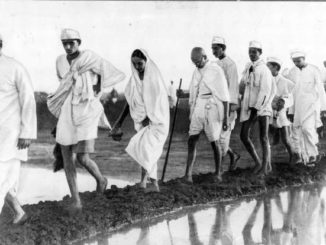
Who else could have created a mass agitation through a pinch of salt! During colonial rule, Salt Laws, which placed a new tax on Indian salt, had become a burden. Through the Dandi March in 1930, Gandhi challenged the Salt Laws. His picking up a small lump of natural salt from the Arabian Sea shore led to the historic civil disobedience movement.
There have been many mass movements in the world, many strands of the freedom struggle even in India, but what sets apart the Gandhian struggle and those inspired by him is the wide-scale public participation. He never held administrative or elected office. He was never tempted by power.
For him, independence was not absence of external rule. He saw a deep link between political independence and personal empowerment. He envisioned a world where every citizen has dignity and prosperity. When the world spoke about rights, Gandhi emphasized duties. He wrote in “Young India”: “The true source of rights is duty. If we all discharge our duties, rights will not be far to seek.” He wrote in the journal Harijan, “Rights accrue automatically to him who duly performs his duties.”
Gandhi gave us the doctrine of trusteeship, which emphasized the socio-economic welfare of the poor. Inspired by that, we should think about a spirit of ownership. We, as inheritors of the earth, are responsible for its well-being, including that of the flora and fauna with whom we share our planet.
In Gandhi, we have the best teacher to guide us. From uniting those who believe in humanity to furthering sustainable development and ensuring economic self-reliance, Gandhi offers solutions to every problem.
We in India are doing our bit. India is among the fastest when it comes to eliminating poverty. Our sanitation efforts have drawn global attention. India is also taking the lead in harnessing renewable resources through efforts like the International Solar Alliance, which has brought together several nations to leverage solar energy for a sustainable future. We want to do even more, with the world and for the world.
As a tribute to Gandhi, I propose what I call the Einstein Challenge. We know Albert Einstein’s famous words on Gandhi: “Generations to come will scarce believe that such a one as this ever in flesh and blood walked upon this earth.”
How do we ensure the ideals of Gandhi are remembered by future generations? I invite thinkers, entrepreneurs and tech leaders to be at the forefront of spreading Gandhi’s ideas through innovation.
Let us work shoulder to shoulder to make our world prosperous and free from hate, violence and suffering. That is when we will fulfill Mahatma Gandhi’s dream, summed up in his favorite hymn, “Vaishnava Jana To,” which says that a true human is one who feels the pain of others, removes misery and is never arrogant.
The Indian American leadership deserves credit and praise because this single event has transformed USA-India relations to a new high. It should not be forgotten that the Indian Americans played a key role in the Civil Nuclear Deal offered by President George W Bush. That deal lifted the 30-year sanctions against India. Contrast that with Trump’s offer of 100% transfer of all U.S. technologies to India.
First, I wish to congratulate the leadership of the Indian Americans who organized the Modi-Trump event in Houston attracting 50,000. This is the largest rally that Trump and Modi have attended in the U.S.A. When the audience chanted ‘USA-USA’ Trump was pleased and we showed our patriotism to the USA. The Indian American leadership deserves credit and praise because this single event has transformed USA-India relations to a new high. It should not be forgotten that the Indian Americans played a key role in the Civil Nuclear Deal offered by President George W Bush. That deal lifted the 30-year sanctions against India. Contrast that with Trump’s offer of 100% transfer of all U.S. technologies to India.
Prime Minister Modi and President Trump seized the opportunity. Inspired and motivated by the most disciplined and respected Indian Americans, they offered each other unstinted support. President Trump’s speech characterized India as “CLOSE ALLY” and offered cooperation in economy and defense. 4.6 million Indian Americans, though small in numbers, are the highest educated and the highest earners. In the 2010 census, Indian Americans ranked No.1 in education and income, making Jewish Americans the runners up. Both Modi and Trump are aware of the growing strength and unlimited potential of Indian Americans in all levels of society.
MODI DEMONSTRATED POLITICAL SKILLS AND LEADERSHIP
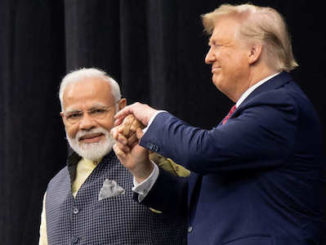
Modi has met Trump several times since he was elected Prime Minister in 2014. We were able to see only the photographs of all their previous meetings showing body language including embrace, handshake, handholding, smiles and facial expressions. But the meeting in Houston created opportunities for Modi and Trump to capitalize on their personality and leadership. Modi as a host to Trump in the USA felt highly confident and was enthusiastic to introduce Indian Americans as his family to Trump. Trump was no doubt excited and impressed with the love of the Indian Americans to Modi and Trump.
It is not easy to develop deep friendship with President Trump, who has had a rough going even with his close allies such as Canada, U.K., France, Germany and Australia. Trump demonstrated his respect and deep friendship to Modi and India. In international relations such personal relations will go a long way to fostering security and peace.
ISLAMIC TERRORISM AND BORDER SECURITY – MOST IMPORTANT FOR TRUMP
When President Trump spoke vehemently against Islamic terrorism and defending sovereignty and border security, the Indian Americans cheered enthusiastically. This is an indirect message to Pakistan and China. Pakistan should stop cross border terrorism. China must respect sovereignty of India and territorial integrity. USA and India have been signing several military deals that also include sharing in sophisticated communications and intelligence. India never enjoyed such a high trust since its independence in 1947.
MODI’S SKILLS IN STATECRAFT AND DIPLOMATIC RELATIONS SHOULD BE APPLAUDED
The big question is how Modi has been able to develop good relations with the USA without compromising his relations with others. Modi has developed excellent relations with Japan, France, Russia, Australia, Germany, Canada, and the countries in the Middle East. Modi has also excellent working relationship with China. Contrast this with the policy of Nehru dynasty that first practiced neutralism. Later, nonalignment, though aligned with the Soviet Union/Russia. Modi has made a big change of India in the world. Of course, Trump has also made a big change in America’s foreign policy in Asia. This is the first time the USA is using India to balance against China. China is now the second superpower racing for the first. Trump is calculating that if India can modernize fast, it may have better potential to compete with China. Therefore, it is possible that the leadership of the future world may belong to the oldest and the largest democracies – USA and India.
The world is watching.
(Ven Parameswaran, is Senior Adviser, Imagindia Institute, New Delhi; Chairman, Asian American Republican Committee; Former President & CEO, First Asian Securities Corporation, NYC. He can be reached at vpwaren@gmail.com)
Barmer in Rajasthan is a part of the Great Indian Thar Desert surrounded by Jaisalmer in the North, and neighbouring Pakistan on the West side. Barmer’s small railway station Munabao is famous forThar Express Link Trainthat used to run up to Zero Point of Khokhrapar in Pakistan. Unfortunately, due to an escalated tension between India and Pakistan after abrogation of article 370 and 35-A in Jammu and Kashmir, the international weekly train was suspended on August 16 by Indian Railways. Barmer’s Uttarlai is also very important IAF airbase on the International border along with entire BSF jawans deployed on high alerts in the hottest summer of up to 50 degree C and minus 2 degree Celsius in cold wave conditions.
In 2016 the Ministry of Panchayati Raj Institutionhas christened Barmer as one of the country’s 250 most backward districts (out of a total 640) and it was one of the 12 other districts getting the central funds from Backward Regions Grants Fund Programme(BRGF). Once in 2006, extreme rainfall of over 550 mm and flash flood in August month had caused to scores of casualties and a ten of villages inundated for months in Kawas area of Barmer.
CAIRN is expected to generate US $ 100 billion of revenues for India
Folk music and dance specially of Bhopas (priest singers) is a speciality of the desert terrain. Muslim Dholis (drummers), Langas and Manganiars are the some of these communities engaged in traditional music and songs. The district covering 28,387 square kilometres area after Jaisalmer and Bikaner district is also popular for its carved wooden furniture and hand block printing industry.
Oil is Well
Way back in previous century in 80s and 90s, the Geological Survey of India(GSI) and other Oil and Gas companies have predicted not only ancient flowing Sarswati River underneath the sand dunes but also indicated deposit of huge oil reserves in Sandy Thar Desertof Western Rajasthan. The story started in 1995 when Royal Dutch Shell had signed a pact with the GOI to explore oil block in Barmer. In 1998, CAIRN Energy, which owned 10 percent in the lease, acquired 27 percent of the project. In 2002, CAIRN has acquired 100 percent control.
The story of oil discovery was full of upheaval task as CAIRN Energy had faced failures in its initial attempts but got the success with the Mangladiscovery in 2004 after drilling its 16thwell. It was the breakthrough discovery in India in 30 years. In 2009, former Congress Prime Minister Dr Manmohan Singh has turned on the valve for symbolic start of production on August 29.
CAIRN is expected to generate US $ 100 billion of revenues for India
In 2010, World’s largest continuously heated and insulated pipeline covering 670 km made operational. In following years, Vedanat Groupacquired 58.5 percent stake in CAIRN Indiafor US $ 8.67 billion for faster production polymer injection at enhanced oil recovery (EOR) well starts on July 10 giving a major boost to the ongoing project. Sales commenced to IOCL Viramgamin January 2012; commercial production starts using Train on April 8, 2012. Gas sale had begun through AGI in April 2013 and the production crossed 200 million barrels on June 5, 2014.
Recently celebrating its one decade of crude oil production in Rajasthan, CAIRN India at Barmer is now contributing 30 percent of the total crude oil production of the country at 1.70 lakh barrels of oil per day (bopd), and it has planned to raise it to 3 lakh BOPD by 2021 fiscal year.
“As of now CAIRN has generated US$ 20 billion revenue to the GOI which included USD 5 billion as royalty to the government of Rajasthan from the crude oil production”, its CEO Ajay Dixit said on this occasion.
Being India’s key strategic assets, CAIRN is expected to generate US $ 100 billion of revenues for India, he claims.
“The region has been transformed with Barmer now second highest GDP in the state of Rajasthan behind capital Jaipur, and CAIRN has invested USD 9 billion in Barmer Basin”, Dixit underlined.
CAIRN is expected to generate US $ 100 billion of revenues for India
Cairn Energy invested more than US$6 billion, drilled more than 600 wells and made more than 40 discoveries. Crude oil discovery opened the multiple opportunities for the local entrepreneurs. There are so many ‘Rags to Riches’ stories in Barmer today where the local entrepreneurs started with thousand rupees, later developed their own business house earning billions and providing jobs to local youths.
Recently, the Director General of Hydrocarbons (DGH) as per the Open Acreage Licensing Policy (OALP) has allocated eight new blocks to the company. These blocks are situation in Barmer, Jaisalmer, Jalore and Bikaner districts. Seismic survey and exploratory drilling will start soon in these blocks to discover more oil reserves in Rajasthan. According to the Department of Geology at Jai Narayan University, the sedimentary deposits of Rajasthan have immense hydrocarbon potential. The story has just begun with the Barmer-Sanchore basin and more will be explored in near future.
Barmer district which used reel under drought (not famine), scarcity of water and electricity is giving prosperity and economic strength not only the state of Rajasthan but also the Centre in revenue collection. Though the backwardness in remote villages due to poor education facilities and roads does exist. However, through CSR activities CAIRN has brought cheers by educating the girls and providing the infrastructure facilities to the villagers in their area.
As a result, Barmer’s per capita income has risen by 650 percent in 10 years since CAIRN India started crude oil production, Chief Minister Ashok Gehlot told the audience at the celebration of the company’s achievement at Barmer on August 20. The state government has provided a medical college and announced to increase beds in Barmer district hospital from 300 to 500, Gehlot maintained. He also inaugurated an Ujjawal, a news scheme of Cairn Oil and Gas.
Refinery: Boom for investment
Upcoming Refinery and Petrochemical Complex at Pachpadra in Barmer district with a planned capacity of 9 MMPTA refining capacity and 2 MMTPA of Petrochemical Complex will made this district a destination for investment and creation of newer jobs for locals in the western Rajasthan. The refinery whose stone laying ceremony was laid by UPA Chairperson Sonia Gandhi in 2013 and later construction inauguration was started by Prime Minister Narendra Modi 2018 will be readied by 2022-23, if all goes well.
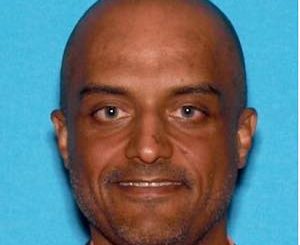
SANTA CRUZ(TIP): Indian American Tushar Atre, California’s Santa Cruz-based tech executive who was kidnapped from his home on Tuesday, October 1, has been found dead inside his BMW car.
Santa Cruz county sheriff’s office posted an update:
“Sadly, the body found yesterday has now been identified as 50-year-old Tushar Atre. This is still an ongoing investigation, but we have reason to believe the motive was robbery”
Earlier the sheriff’s office said, “We have some unfortunate news, we have found the car associated with this case along with a deceased person. That person has not been identified. Our detectives are still working on this case. KIDNAPPING: We need the public’s help in locating the victim of a kidnapping. The victim has been identified as 50-year-old Tushar Atre.
Around 3:00 a.m. this morning Tushar was taken from his home on the 3000 block of Pleasure Point Drive during a crime. He was last seen getting into his white 2008 BMW SUV license plate 7CUG581. If you have information on where the victim is or see the car, please call 911.”
Atre, the CEO of a Santa Cruz digital marketing firm called AtreNet Inc. and owner of a cannabis business, also had a website design company
NEW YORK(TIP): Indian American Historian Sunil Amrith’s “Unruly Waters: How Rains, Rivers, Coasts, and Seas Have Shaped Asia’s History,” has been shortlisted for the 2019 Cundill History Prize. The Cundill History Prize is a prestigious annual award valued at USD $75,000. The prize celebrates a recently published history bookthat displays both academic scholarship and literary merit.
The shortlist of five women and three men was revealed on 19 September by Pulitzer Prize-winning historian Alan Taylor, who chairs the prize, alongside a jury of world-class historians at an event in New York City. It includes books that tackle issues from climate change in Asia to Maoism as an international force.
In Unruly Waters: How Rains, Rivers, Coasts, and Seas Have Shaped Asia’s History, Harvard historian Sunil Amrith follows monsoons, mountain rivers, and ocean currents to trace the dramatic history of water in South Asia, providing a new perspective on the region and urgent input into how to address global climate risks.
Sunil Amrith is the Mehra Family Professor of South Asian Studies at Harvard University.His research is on the trans-regional movement of people, ideas, and institutions. Areas of particular interest include the history of public health and poverty, the history of migration, and environmental history. His most recent work has been on the Bay of Bengal as a region connecting South and Southeast Asia. He has a PhD in History (2005) from the University of Cambridge, where he was also a Research Fellow of Trinity College (2004-6).
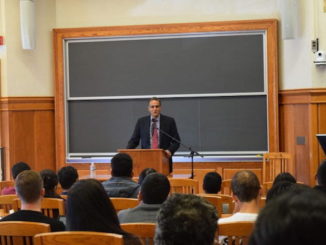
NEW YORK(TIP): On September 26, 2019, the Cornell India Law Center hosted Ambassador Richard Verma for the center’s inaugural distinguished lecture. Ambassador Verma, who previously served as the US Ambassador to India (2014-2017), gave a lecture titled “India and the United States: Overcoming the Hesitations of History.” As reported in the Cornell Daily Sun,the talk covered “India’s increasing relevance in international affairs, the evolution of U.S.-India ties and the importance of learning from the history between the two nations.”
According to Verma, by 2030 “India will lead the world in almost every category.” But while India’s strategic location and its position as a democracy “in a tough part of the world” make it an important ally, the country still faces many “risk factors” such as significant climate risks, governance issues across the country, and for many of its citizens, a lack of access to clean water and electricity.
“When you go to India, you can feel the excitement, you can feel the energy. People know that this is an exciting time.” Verma said. “We don’t spend enough time thinking about India.”
Verma also spoke on the historical connection between India and the U.S., and the critical importance of developing personal relationships between the major political figures of the two countries, which he said it’s important to avoid progressing into a solely transactional relationship.
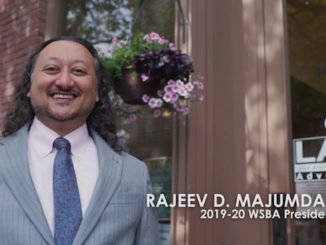
SEATTLE, WA(TIP): Indian origin Rajeev D. Majumdar has been sworn in as President of the Washington State Bar Association (WSBA) on Sept 26. Washington Supreme Court Justice Steven C. González administered the oath of office at a ceremony in Seattle. Majumdar is the first state bar president of South Asian descent in the United States.
“Our primary duty as officers of the court, and in service to the public, should be to ensure access to impartial justice for all people, and, as a leader of the Washington State Bar Association, to create an environment that empowers our members to create that access,” said Majumdar. “Part of championing access to justice involves diverse perspectives and experiences within our leadership.”
Majumdar serves the public as the prosecuting attorney for the City of Blaine, and as the special prosecuting attorney for the City of Bellingham’s Mental Health Diversion Court. He also maintains a private practice with The Law Offices of Roger Ellingson, P.S., in Blaine where he has worked since 2008. Majumdar has a long history of community service, volunteering with organizations such as the New Orleans Legal Assistance Corporation and the Pro Bono Project in New Orleans, where he helped victims of Hurricane Katrina. He served as a board member of Sun Community Services, which provides transitional housing for the mentally ill in Whatcom County, and has extensive history of another pro-bono work. He has held numerous volunteer leadership positions in the Washington State Bar Association. I
In 2015, Majumdar received the WSBA Local Hero Award for his work with indigent populations. A graduate of the University of Washington and Albertson College of Idaho, Majumdar holds a bachelor’s degree in biology and philosophy, and two masters’ degrees in international affairs and public administration. He graduated cum laude from Seattle University School of Law, where he was an editor of the law review. Majumdar is a member of the Lummi, Nooksack, and Tulalip Tribal Bars, and he also is an Eagle Scout. Majumdar’s term as president of the Bar runs through September 2020.
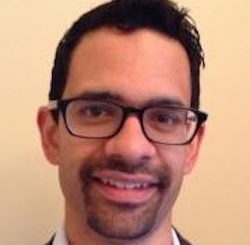
HOUSTON(TIP): Two Indian doctors from Northeast Ohio and two drug company salesmen were indicted in federal court for their roles in a kickback conspiracy in which the doctors allegedly received money and other things of value in exchange for writing prescriptions of Nuedexta for patients that did not have the condition.
Named in the 83-count indictment are: Deepak Raheja, 63, of Hudson; Bhupinder Sawhny, 70, of Gates Mills, Gregory Hayslette, 43, of Aurora; Frank Mazzucco, 41, of Dublin. All four are charged with conspiracy to solicit, receive, offer and pay health care kickbacks.
According to the indictment:
Raheja is a medical doctor who specialized in psychiatry and neurology whose primary practice location was 2307 West 14th Street in Cleveland. Sawhny is a medical doctor who specialized in neurosurgery whose primary practice location was 6731 Ridge Road in Parma.
Raheja and Sawhny wrote more Nuedexta prescriptions and caused the submission of billings to Medicare and Medicaid for Nuedexta prescriptions for patients that did not have PBA.
Raheja and Sawhny also submitted and caused the submission of materially false and fictitious prior authorizations to Medicaid MCOs that reflected diagnoses of PBA for patients that did not actually have PBA.
Raheja falsely diagnosed patients with PBA and recorded and caused the recording of false symptoms in patient records to support a diagnosis of PBA.
Sawhny also allegedly permitted unauthorized access to protected patient health information.
“We all trust our doctors to make decisions based on what is best for the patient, not based on which sales representative is paying them money on the side and springing for steak dinners,” U.S. Attorney Justin Herdman said. “Doctors and the pharmaceutical sales reps who don’t follow the rules will be held accountable for their actions.”
“These doctors will now answer to a court of law for financially benefitting from lucrative speaking engagements and writing questionable prescriptions for one medication,” FBI Special Agent in Charge Eric B. Smith said. “The FBI will continue collaborative efforts to root out healthcare fraud and hold those responsible accountable for their fraudulent, unethical behavior.”
“Kickbacks are to ethics like a magnet to a compass — you lose your direction,” Ohio Attorney General Dave Yost said. “Imagine trusting your doctor to do what’s right for your health and finding out he’s instead doing what’s right for his wallet. This is much more than a financial crime.”
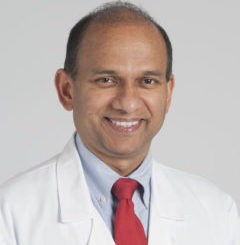
CLEVELAND(TIP): Jame Abraham, M.D., F.A.C.P., has been appointed the new chair of the Hematology/Medical Oncology Department at Cleveland Clinic. In this capacity, he will recruit and develop staff, and guide the department’s focus on patient access and a multidisciplinary approach to care.
Dr. Abraham currently serves as the director of the Breast Oncology Program at Taussig Cancer Institute and co-director of the Cleveland Clinic Comprehensive Breast Cancer Program. He is also a professor of medicine at Cleveland Clinic Lerner College of Medicine.
Dr. Abraham is a member of the National Comprehensive Cancer Network (NCCN) Breast Cancer Committee, vice chair of the Research Strategy Committee of NRG Oncology, and a member of the Breast Cancer Working Committee for NRG Oncology. He is the vice chair of the Research Review Committee for the National Surgical Adjuvant Breast and Bowel Project (NSABP).
As the national principal investigator of multiple breast cancer clinical trials, Dr. Abraham has published and presented more than 200 papers. He is also the founding editor of the Bethesda Handbook of Oncology (Wolter Kluwer).
“Successfully leading our Hematology/Medical Oncology Department requires a leader who excels at empathy, fosters a culture of teamwork, demonstrates emotional intelligence and believes in the vision of our institute,” said Brian Bolwell, M.D., chairman of Taussig Cancer Institute. “Dr. Abraham represents these qualities and has exhibited a passion for department and caregiver development and elevating our national reputation.”
“I look forward to building upon Cleveland Clinic Taussig Cancer Institute’s position as a leader in hematology and medical oncology, delivering outstanding, compassionate patient care and innovative research,” said Dr. Abraham. “I am honored to serve patients who choose Cleveland Clinic for advanced cancer treatment and to support the department’s committed and passionate caregivers.”
He completed his residency at the University of Connecticut School of Medicine, followed by a medical oncology fellowship from the National Cancer Institute (NCI) and hematology fellowship from the National Heart, Lung, and Blood Institute (NHLBI) of the National Institutes of Health. He earned his medical degree from Calicut Medical College in Kerala, India.
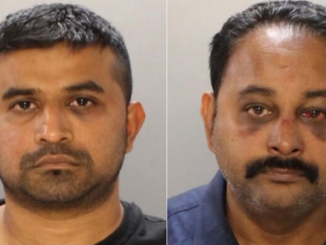
PHILADELPHIA(TIP): The Philadelphia Police arrested two Indian origin suspects following a Sept 25 night shooting in the Castor section of Northeast Philadelphia that left another Indian man dead.
Authorities say 34-year-old Prince Kunjappan-Joy and 51-year-old Abraham Thomas were arrested Sept 26 night in Chinatown and charged with the murder of 31-year-old Syambabu Thankappan.
Thankappan was rushed to Jefferson-Torresdale Hospital after being shot in the stomach but was pronounced dead hours later.
Kunjappan-Joy and Thomas were both charged with murder, criminal conspiracy, possessing instruments of crime, and recklessly endangering another person. The investigation is ongoing.
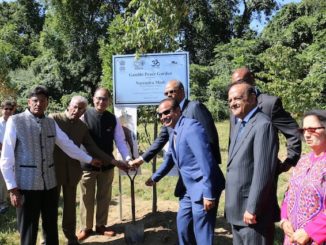
LONG ISLAND , NEW YORK(TIP): Plantation Ceremony of 150 trees at Gandhi Peace Garden at the State University of New York Old Westbury Campus took place on Oct 1.Prime Minister Narendra Modi had earlier on September 24declared open the “Gandhi Peace Garden” at a solemn event at United Nations commemorating Gandhi’s 150thbirth anniversary.
On Sept 24 Modi along with United Nation chief Antonio Guterres and other world leaders, inaugurated the Gandhi Peace Garden at the UN headquarters in New York. The inauguration was held during a special commemorative event that marked Mahatma Gandhi’s 150th birth anniversary.
Gandhi Peace Garden is an innovative initiative under which Consulate General of India (in New York), Shanti Fund (a Long Island-based NGO) and State University of New York- Old Westbury have entered into an agreement for planting 150 trees. It is a crowdsourced project, with people adopting trees in memory of their loved ones at the State University of New York-Old Westbury campus. The garden is in an open site within 600 acres campus of the University. The garden is dedicated in memory of Mahatma Gandhi and seeks to underline that his principles act as a moral compass as world grapples with challenges of climate change, terrorism and corruption.
India’s Consul General in New York Ambassador Sandeep Chakravorty inaugurated the plantation ceremony. Prominent community leaders and dignitaries graced the occasion.
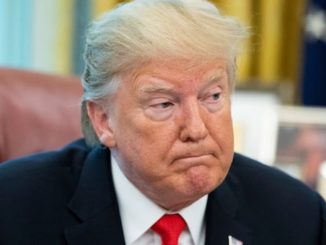
WASHINGTON(TIP): President Donald Trump on Thursday, October 3 called on China to probe former Vice President Joe Biden, further escalating the impeachment fight.
“China should start an investigation into the Bidens,” Trump said in remarks to reporters outside the White House. Trump said he hadn’t directly asked Chinese President Xi Jinping to investigate Biden and his son Hunter but said it’s “certainly something we could start thinking about.”
Trump’s requests for Ukrainian President Volodymyr Zelenskiy to dig up dirt on Biden, as well as Giuliani’s conduct, are at the center of an intelligence community whistleblower complaint that sparked the House Democratic impeachment probe last week.
The president’s reference to China came unprompted in an unrelated question about the July 25 Ukraine call and moments after he was asked about trade negotiations with China to end a year-long trade war that has been a drag on both nation’s economies.
“I have a lot of options on China, but if they don’t do what we want, we have tremendous, tremendous power,” Trump said.
He later alleged without evidence that China had a “sweetheart deal” on trade with the US because of the Bidens.
“You know what they call that,” Trump said. “They call that a payoff.” Trump’s comments came as he publicly acknowledged that his message to Ukrainian President Volodymyr Zelenskiy and other officials was to investigate the 2020 Democratic presidential contender. Trump’s accusations of impropriety are unsupported by evidence.
“It’s a very simple answer,” Trump said of his call with Zelensky. “They should investigate the Bidens.”
Trump has sought to implicate Biden and his son in the kind of corruption that has long plagued Ukraine. Hunter Biden served on the board of a Ukrainian gas company at the same time his father was leading the Obama administration’s diplomatic dealings with Kyiv.
Though the timing raised concerns among anti-corruption advocates, there has been no evidence of wrongdoing by either the former vice president or his son.
Adam Schiff, the Democrat leading the impeachment probe, said there was a “real sense of urgency” to press forward. Trump fought back with language that would once have been inconceivable for a president, including his claim late Tuesday, October 1 on Twitter that this is “not an impeachment, it is a COUP”. Trump insists that he did nothing wrong in a phone call with Ukrainian leader Volodymyr Zelensky and got support from Russia’s President Vladimir Putin, who said he saw “nothing compromising” in the conversation.
Nancy Pelosi attends commemorative event at the Library of Congress
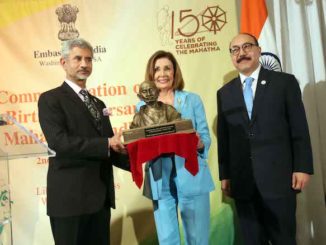
WASHINGTON(TIP): As part of the celebrations to mark the 150th birth anniversary of Mahatma Gandhi, the Indian Embassy here organized a commemorative event at the Library of Congress, October 2. A one-day exhibition on the life and teachings of Mahatma Gandhi was held at the Library of Congress.
The exhibition was followed by an event where the Speaker of the House, Nancy Pelosi was the Guest of Honor. External Affairs Minister Dr. S Jaishankar and Speaker Pelosi addressed the gathering. Mr. Jaishankar spoke about the influence of the Mahatma on India’s independence struggle and how his ideas had been the key factor in bringing about social change in India.
External Affairs Minister Jaishankar (left) presents a half-bust statue of Mahatma Gandhi to Nancy Patricia Pelosi, Speaker of the United States Congress, as Ambassador Harshvardhan Shringla (right) looks on, during the celebration of Mahatma Gandhi’s 150th Birth Anniversary at the US Capitol in Washington DC , October 2 Photo / Jay Mandal-on assignment
Mr. Jaishankar also spoke about the various flagship programs of the government of India and how they were based on the ideals of the Mahatma. The event was attended by senior officials from administration, media and business community.
Earlier in the day, External Affairs Minister Dr. S Jaishankar and Ambassador Harsh Vardhan Shringla offered floral tributes at the Statue of Mahatma Gandhi in front of the Embassy. Mr. Jaishankar briefly interacted with members of the Indian community at the event.
Signup to our Newsletter!
Don’t miss out on all the happenings around the world