Month: June 2020

  • Indian-American organization Indiaspora condemns racism, says will strive for just AmericaIndian-American organization Indiaspora condemns racism, says will strive for just America

    Indian-American organization Indiaspora condemns racism, says will strive for just AmericaIndian-American organization Indiaspora condemns racism, says will strive for just America

    WASHINGTON (TIP): An Indian-American organization has resolved to work together with the African-American and other minority communities for a more just America.

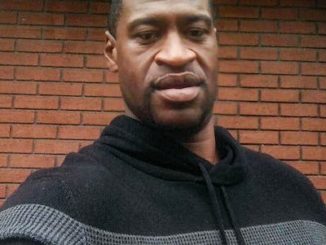
    This comes after 46-year-old George Floyd, an African-American, died in Minneapolis on May 25 when a white police officer pinned him to the ground and knelt on his neck while he gasped for breath.

    “At Indiaspora, we stand strongly and squarely with the African-American community, as we strive together for a more just America. Their struggle is ours too. Indeed, aided by allies from different communities, it needs to be our national purpose,” Indiaspora said in a statement, June 11.

    The Indian-American diaspora, it said, is mindful of the fact that had it not been for the civil rights movement and the Immigration and Naturalization Act of 1965, many of its members would not be in the US today.

    “But the letter of the law does not inevitably or automatically translate into the experience of the people. We, too, are not immune from racial persecution, as demonstrated by well-chronicled events that have occurred in the distant and recent past,” Indiaspora said.

    “So we have more work to do. More to do for Floyd’s six-year-old daughter, Gianna,” it said.

    “Therefore, we resolve to work together, hand in hand, with the African-American and other minority communities, until we can all be assured of successfully encashing our collective promissory note, set forth in America’s constitutional declaration that we are all created equal, in the bank of justice. Let us end systemic racism,” Indiaspora said.

    (Source: PTI)

  • Indian-American soil scientist Rattan Lal gets 2020 World Food Prize

    Indian-American soil scientist Rattan Lal gets 2020 World Food Prize

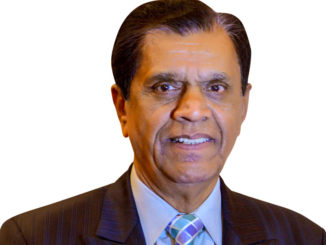
    NEW YORK (TIP): Eminent Indian-American soil scientist Rattan Lal was on Thursday, June 11  named this year’s recipient of the World Food Prize for developing and mainstreaming a soil-centric approach to increasing food production that conserves natural resources and mitigates climate change.

    Lal, a native of India and a citizen of the United States, will receive the USD 250,000 award that honors his contribution throughout his career spanning more than five decades and four continents to promote innovative soil-saving techniques that benefit the livelihoods of more than 500 million smallholder farmers, improve the food and nutritional security of more than two billion people and saves hundreds of millions of hectares of natural tropical ecosystems.

    Lal studied at Punjab Agricultural University (PAU) and the Indian Agricultural Research Institute in the 1960s. The septuagenarian is a recipient of the MS Swaminathan award and the Norman Borlaug award.

    “The unbound joy and excitement of receiving the 2020 World Food Prize reminds me about the gratitude, privilege and honor of working for farmers from around the world,” Lal said.

    “Yet, the urgent task of feeding humanity is not fulfilled until each and every person has access to an adequate amount of nutritious food grown on a healthy soil and in a clean environment.” Lal serves as Distinguished University Professor of Soil Science and founding Director of the Carbon Management & Sequestration Center at The Ohio State University (OSU).

    (Source: Agencies)


  • COVID-19 death toll in US could hit 2,00,000-mark by September: Indian-American professor

    COVID-19 death toll in US could hit 2,00,000-mark by September: Indian-American professor

    NEW YORK (TIP): The total death toll in the US from the novel coronavirus pandemic could hit the grim figure of 2,00,000 by September and expecting a dramatic decrease in COVID-19 cases in the country will be a “wishful thinking”, an eminent Indian-American professor has warned.

    Ashish Jha, the head of Harvard’s Global Health Institute, told CNN on Wednesday, June 10,  that he is not trying to “scare” people to stay at home rather urged everyone to wear masks, adhere to the social distancing rules and called for ramping up testing and tracing infrastructure.

    “Anybody who’s expecting a dramatic decrease in cases is almost surely engaging in wishful thinking. And if it (COVID numbers) stays just flat for the next three months, we’re going to hit 200,000 deaths sometime in September and that is just awful,” Jha said.

    Jha said the 200,000 death toll is “not just a guess”. Currently 800-1,000 people are dying daily in America from the virus and all data suggest that the situation is going to get worse.

    “We’re gonna have increases, but even if we assume that it’s going to be flat all summer, that nothing is going to get worse… even if we pick that low number of 800 a day, that is 25,000 (deaths) a month in three and a half months. We’re going to add another 88,000 people and we will hit 200,000 sometime in September,” Jha said.

    The United States is by far the hardest-hit country in the global pandemic, in terms of both confirmed infections and deaths.

    According to data by the Johns Hopkins University, the number of coronavirus cases in the US currently is nearly two million and about 112,900 people have died in the country, the most in the world.

    When asked about an improvement in states like New York, which had been the epicenter of the COVID19 pandemic in the US, Jha said while coronavirus cases are declining in New York, New Jersey, Connecticut and Massachusetts, the numbers are increasing in states such as Arizona, Florida, Texas, North and South Carolina while the country as a whole is “pretty flat.” He said people should take measures as that will help suppress the virus and ensure people could get back outside safely but he voiced concern that this was not the situation in reality.

    “We’re not doing that and so we’re going to unfortunately have another 25,000 deaths a month until September, and then it’ll keep going. It’s not going to magically disappear. We’ve got a turn around. This is not the future I want,” he said.

    Jha said he had expected the situation to improve in the summer months but on the contrary the numbers have continued to rise even in the warm weather.

    “Summer was supposed to be our better months–warmer weather, people outside, a little less transmission. This is not the time (summer) I was expecting a lot more cases. We’re seeing a lot more cases, especially in states like Arizona where the numbers look really scary,” he said.

    Jha added that he was “hopeful” that maybe the summer months would “give us more of a break. I think I may have been too optimistic on that.”

    (Source: PTI)

  • Air India  price gouging?

    Air India price gouging?

    COMMENT 

    Prof. I.S.Saluja

    The announcement with customary Indian pomposity of Vande Bharat Mission to repatriate Indians was received with great enthusiasm by  everyone looking to return to base. However, a number of hiccups took away the initial cheer of many of them. One was the restrictions on OCI card holders, which seems nearly resolved even though the recent reports coming in from Mumbai speak  of OCI card holders facing problems even now.

    The chief trouble spot is the fares charged by Air India. It is unforgivable that the Airline, and for that matter, the Civil Aviation ministry, decided to indulge in price gouging at a time when Indians stranded abroad and NRI’s stranded  in India were going through harrowing  times because of the pandemic.

    Imagine, Air India ticket from India to US costing more than Rs. 100,000. The fare used to be Rs. 53,000 in November 2019 and Rs. 61,555 in January 2020. In many cases, actual fares are even higher than those fixed by Air India.

    The Civil Aviation Minister Hardeep Singh Puri  who a few months ago declared the airline will be shut down  if no buyer was found by March, 2020 seems to have decided to let Air India make a little money at the cost of those who are already under strain and stress.  In fact, government of India should have been  sympathetic  and generous enough to repatriate  all without asking them to pay the air fare.  That would have been a gesture to be  admire and be proud of.

    The US laws are very clear on price gouging. The administration here has acted tough against those found price gouging. In fact, Air India, too, may be  charged with violating the US laws. A US citizen can jolly well file a complaint and have Air India in the docks.

  • FIA Chairman Ramesh Patel Cremated

    FIA Chairman Ramesh Patel Cremated

    Prof. I.S.Saluja

    NEW YORK  (TIP): Ramesh Patel, Chairman for life of Federation of Indian Associations NY/NJ/ CT (FIA), the organization which organizes India Day Parade in New York, to mark India’s Independence Day , who died  June 6, of coronavirus, was laid to rest today, June 11.

    A family only religious ceremony  for the dear departed  was performed  before a drive  through viewing in the afternoon. A large number of FIA officials and  community leaders arrived for the viewing. Later, Mr. Patel was cremated at Punarjanm Funeral Home in Watchung, New Jersey. 

    Ramesh was a colossal figure in the Indian American community who made immense impact on socio-cultural scene. One of the founders of FIA, as chairman of the organization for decades now, he led the organization from strength to strength. In fact, FIA got synonymous with Ramesh.

    His sad demise  has created a void in the Indian American community in the Tri-State area of New York, New Jersey and Connecticut. He will be deeply missed.

    On behalf of The Indian Panorama  and Opinio Media and their directors  and staff, I salute the great standard bearer of India, and pray for eternal rest to the departed soul.

    Describing Ramesh Patel as “The Iron Man”,  attorney Ravi Batra, in his tribute sent to The Indian Panorama, said:  “Ramesh Patel was a giant of a man, and a dear friend of Ranju & mine. We enjoyed his support at City Hall Steps rallies we organized for defending the honor of innocent Krittika Biswas, and later, for the falsely accused Amb. Prabhu Dayal. Ramesh Patel’s voice was always the loudest and strongest in support.

    “His lasting legacy is his unique humility-based public service by taming the unbridled ambitions of many in the Indian-American community for a fleeting photo-op and getting them all to work in support of his pride and joy, the India Day Parade in Manhattan, largest in the world – just as the Saint Patrick‘s Day Parade since 1762 is the largest. Indeed, he would shun the VIP-bus on the parade route to walk the Madison Avenue, and Ranju and I enjoyed walking with him. It falls on his family and the FIA team to carry on his legacy of Honor-by-service and the rest of us to help keep Ramesh Patel’s glorious life choices alive.

    “I called him the Iron Man in USA, as Sardar Patel was in India. He will be sorely missed, as will his big smile and hug that Ranju and I always got.”

  • Ambassador Taranjit Singh Sandhu to  have virtual interaction with Indian American Community of New York Consulate jurisdiction on June 12

    Ambassador Taranjit Singh Sandhu to have virtual interaction with Indian American Community of New York Consulate jurisdiction on June 12

    Prof. I.S.Saluja

    NEW YORK (TIP): An email sent to community leaders in New York Consulate jurisdiction, Consul General Sandeep Chakravorty  has announced that Ambassador Taranjit Singh Sandhu will have virtual interaction with the Indian American community leaders of New York Consulate jurisdiction on June 12.

    The meeting originally scheduled for June 11 was moved to June 12 in view of the preoccupation of many community leaders with the cremation of FIA chairman Ramesh Patel  on June 11 around the same time as that of the meeting.

    Mr. Chakravorty’s email reads: “Ambassador Taranjit Singh Sandhu assumed charge as Ambassador of India to the US in February 2020. Since he took over, while in one hand we have had a very successful visit of President Trump to India, on the other hand we all have been confronted by the challenge presented by COVID-19. In this scenario, normal interaction between Community leaders and Ambassador has not been possible. As the future looks uncertain with respect to travel and personal meetings, it has been decided to hold virtual interactions with Community leaders across USA. We are delighted that Ambassador Sandhu has agreed that the first meeting is held with Community leaders in our jurisdiction” .

    Ambassador Taranjit Singh Sandhu is not new to New York or Washington. He  served in the Indian Mission in Washington DC twice earlier. He was Deputy Chief of Mission at the Embassy of India in Washington DC from July 2013 to January 2017. Earlier, he was First Secretary (Political) at the Embassy of India, Washington, DC responsible for liaison with the United States Congress from 1997 to 2000. He has also been at the Permanent Mission of India to United Nations, New York from July 2005 to February 2009.

    Prior to his current assignment in Washington DC, Ambassador Sandhu was High Commissioner of India to Sri Lanka from January 2017 to January 2020. He had also served at the High Commission of India, Colombo earlier as the Head of the Political Wing from December 2000 to September 2004.

    Ambassador Sandhu was Consul General of India in Frankfurt from September 2011 to July 2013. He has worked in the Ministry of External Affairs in various capacities: as Joint Secretary (United Nations) from March 2009 to August 2011; and later as Joint Secretary (Administration) heading the Human Resource Division. He was Officer on Special Duty (Press Relations), Ministry of External Affairs from December 1995 to March 1997, and was responsible for liaison with foreign media in India.

    In a distinguished career spanning over thirty years in the Indian Foreign Service since 1988, Ambassador Sandhu started his diplomatic career from former Soviet Union (Russia) where he worked as Third Secretary (Political) / Second Secretary (Commercial) in the Indian Mission from 1990 to 1992. Following the breakup of Soviet Union, he was sent to open a new Embassy in Ukraine. He served as Head of Political and Administration Wings in Indian Embassy in Kiev from 1992 to 1994.

    Born on 23 January 1963 in a family of educationists, Ambassador Sandhu studied at The Lawrence School, Sanawar and graduated with History Honors from St. Stephens’ College, Delhi. He pursued a Master’s Degree in International Relations at the Jawaharlal Nehru University, New Delhi.

    Ambassador Sandhu is married to Mrs. Reenat Sandhu, who is Ambassador of India to Italy. They have two children. His interests include books, movies and outdoor sports.

    Ambassador Sandhu assumed charge as Ambassador to the United States on February 3, 2020.

    Ambassador Sandhu presented his credentials to the President of the United States of America,  Donald Trump at the Oval office of the White House on 6 February 2020.

  • FIA Chairman Ramesh Patel Passes Away

    FIA Chairman Ramesh Patel Passes Away

    EDISON, NJ (TIP): Ramesh Patel, Chairman for life of Federation of Indian Associations NY/NJ/ CT (FIA), the organization which organizes India Day Parade in New York, to mark India’s Independence Day , died today , June 6, of coronavirus. He has been battling for life for more than two months.

    Ramesh was a colossal figure in the Indian American community who made immense impact on socio-cultural scene. One of the founders of FIA, as chairman of the organization for decades now, he led the organization from strength to strength. In fact, FIA got synonymous with Ramesh.

    His sad demise  has created a void in the Indian American community in the Tri-State area of New York, New Jersey and Connecticut. He will be deeply missed.

    On behalf of The Indian Panorama  and Opinio Media and their directors  and staff, I salute the great standard bearer of India, and pray for eternal rest to the departed soul.

    Prof. Indrajit S Saluja

    Publisher/ Chief Editor

  • A chill in U.S.-China relations

    A chill in U.S.-China relations

    A binary choice between the U.S. and China is likely to test India’s capacity to maintain strategic and decisional autonomy

    By Vijay Gokhale
    Both sides are acutely aware how closely their economies are tied together: from farm to factory, the U.S. is heavily dependent on supply chains in China and the Chinese have been unable to break free of the dollar. If Mr. Trump’s wish is to disentangle China’s supply chains, Mr. Xi is equally determined to escape from the U.S. ‘chokehold’ on technology. To what extent the de-coupling is possible is yet to be determined, but one thing is inevitable, India will become part of the collateral damage.”

    A slew of recent announcements on China by U.S. President Donald Trump is a clear indication that the competition between the U.S. and China is likely to sharpen in the post-COVID world. On May 29, the Trump administration said it would revoke Hong Kong’s special trade status under U.S. law. The administration also passed an order limiting the entry of certain Chinese graduate students and researchers who may have ties to the People’s Liberation Army. The U.S. President has also ordered financial regulators to closely examine Chinese firms listed in U.S. stock markets, and warned those that do not comply with U.S. laws could be delisted.

    Complicit in China’s rise

    Americans have had a strange fascination for China ever since the early 1900s when Protestant missionaries decided that it was God’s work to bring salvation to the Chinese. Books like The Good Earth by Pearl S. Buck and Red Star Over China by Edgar Snow in the 1930s romanticized the country. Even after the Chinese communists seized power, the Americans hoped to cohabit with Mao Zedong in a world under U.S. hegemony. The Chinese allowed them to believe this and extracted their price. U.S. President Richard Nixon gave China the international acceptability it craved in return for being admitted to Mao’s presence in 1972; President Jimmy Carter terminated diplomatic relations with Taiwan in order to normalize relations with China in 1978; President George H.W. Bush washed away the sins of Tiananmen in 1989 for ephemeral geopolitical gain; and Bill Clinton, who as a presidential candidate had criticized Bush for indulging the Chinese, proceeded as President to usher the country into the World Trade Organization at the expense of American business. All American administrations since the 1960s have been complicit in China’s rise in the unrealized hope that it will become a ‘responsible stakeholder’ under Pax Americana.

    Disguising its real purpose

    The Chinese are hard-nosed and unsentimental about the U.S. They have always pursued America with a selfish purpose, albeit couched in high principle. They have spoken words that the Americans wanted to hear — anti-Soviet rhetoric during the Cold War and market principles thereafter — to disguise their real purpose of thwarting U.S. hegemony. Ever since Cold Warrior John Foster Dulles spoke in 1958 of weaning China and other “satellites” away from the Soviets through regime change, known as “peaceful evolution”, every Chinese leader from Chairman Mao to President Xi Jinping has been clear-eyed that the U.S. represents an existential threat to the continued supremacy of the communist regime. Mao put it best, when he told high-ranking leaders in November 1959, that the “U.S. is attempting to carry out its aggression and expansion with a much more deceptive tactic… In other words, it wants to keep its order and change our system.” (Memoirs, Chinese leader Bo Yibo). The collapse of the Soviet Union only reinforced this view and strengthened China’s resolve to resist by creating its own parallel universe. China is building an alternate trading system (the Belt and Road Initiative); a multilateral banking system under its control (Asian Infrastructure Investment Bank, New Development Bank); its own global positioning system (BeiDou); digital payment platforms (WeChat Pay and Alipay); a world-class digital network (Huawei 5G); cutting-edge technological processes in sunrise industries; and a modern military force. It is doing this under the noses of the Americans and some of it with the financial and technological resources of the West.

    Voices of caution have been few and far between, among them political scientist John Mearsheimer, who wrote in 2005 that the rise of China would not be peaceful at all, but the world chose to believe General Secretary of the Communist Party of China Hu Jintao’s assurances about “peaceful rise”. When satellite evidence showed that China was building military installations in the South China Sea, China’s Southeast Asian neighbors and the U.S. preferred to believe assurances to the contrary given by Mr. Xi on the lawns of the White House in 2015.

    It is only under Mr. Trump that the Americans are finally acknowledging the uneasy fact that the Chinese are not graven in their image. He has called China out on trade practices. He has called China out on 5G. It was Mr. Trump’s 2017 National Security Strategy document that, perhaps for the first time, clubbed China along with Russia as a challenge to American power, influence and interests. His recent China-specific restrictions on trade and legal migration are, possibly, only the beginning of a serious re-adjustment.

    A full-spectrum debate on China is now raging across the U.S. Former White House Chief of Staff Steve Bannon declared that the U.S. is already at war with China. Others like diplomat Richard  Haass and former president of the World Bank, Robert Zoellick, warn that a new Cold War will be a mistake. Scholar Julian Gewirtz, in his brilliant essay, ‘The Chinese Reassessment of Interdependence’, talks about a similar process under way in Beijing. Both sides are acutely aware how closely their economies are tied together: from farm to factory, the U.S. is heavily dependent on supply chains in China and the Chinese have been unable to break free of the dollar. If Mr. Trump’s wish is to disentangle China’s supply chains, Mr. Xi is equally determined to escape from the U.S. ‘chokehold’ on technology. To what extent the de-coupling is possible is yet to be determined, but one thing is inevitable, India will become part of the collateral damage.

    The Hong Kong question

    Will Hong Kong become a game-changer in the post-COVID world? China’s decision to enact the new national security law for Hong Kong has been condemned in unison by the U.S. and its Western allies as an assault on human freedoms. Why is this significant? The points of divergence, even dispute, between them have so far been in the material realm. With Hong Kong, the U.S.-China rivalry may, possibly, be entering the ideological domain. For some time now there are reports about Chinese interference in the internal affairs of democracies. Countries in the West have tackled this individually, always mindful of not jeopardizing their trade with China. Hong Kong may be different. It is not only a bastion for Western capitalism in the East, but more importantly the torchbearer of Western democratic ideals. Think of it as a sort of Statue of Liberty; it holds aloft the torch of freedom and democracy for all those who pass through Hong Kong en route to China. This is an assault on beliefs, so to speak.

    This comes on the back of not unreasonable demands that China should come clean on its errors of omission in the early days of COVID-19, when greater transparency and quicker action might have prevented, or at least mitigated, the pandemic. In the months ahead, more information may become public, from sources inside China itself, about the shortcomings of the regime, that will further fuel a debate on the superiority of the Chinese Model as an alternative to democracy. Will this form the ideological underpinning for the birth of a new Cold War? That will depend on who wins in Washington in November; on whether profit will again trump politics in Europe; and on how skillfully the Wolf Warriors of China can manipulate global public opinion. The lines are beginning to be drawn between the Americans on the one side and China on the other. A binary choice is likely to test to the limit India’s capacity to maintain strategic and decisional autonomy.

    (The author is a former Foreign Secretary of India and a former Ambassador to China)

  • Why India is not the first choice

    Why India is not the first choice

    The state of our infrastructure and logistics is way behind China’s

    By Subir Roy

    It is idle to think that global companies will shift out of China to India just on Donald Trump’s say-so. They will do so only if the state of India’s infrastructure and logistics is better than China’s. Right now, it is way behind, says the author.

    India’s economy has just received not one but several blows. First, in the just ended quarter (Q4 2019-20), GDP grew by a mere 3.1 per cent, the lowest in any quarter since 2004. Consequently, in the whole year, the economy grew by 4.2 per cent, down from 6.1 per cent in the previous year.

    The second blow is that this is not a freak quarter. The quarterly growth rate has been falling for over two years now, not having recovered from the twin blows dealt to it by the confusion resulting from demonetization and introduction of GST thereafter.

    It is crucial to ask why factories shifting out of China have till now been going to Vietnam, and, in the case of garments, Bangladesh.

    The third blow is that things are going to get much worse. The last quarter figures included just one week of lockdown. In the current quarter, at least two of three months have been totally washed out by the lockdown. It is only now being slowly relaxed and there is no knowing when or how fast the economy will pick up. The RBI has predicted that the economy will contract in the current year and Goldman Sachs has put a number on the contraction — 5 per cent.

    The only positive indication is that agriculture will hold out and grow by around the trend rate. Perhaps the best news is that the monsoon has hit Kerala right on time and look robust. The only two sectors that held forth in the last quarter were agriculture and government spending, and this is likely to be the pattern in the current year.

    Private consumption, which has been severely hit by loss of income because of the lockdown, will recover very slowly. It will be the same story with private investment, which will not be forthcoming unless demand picks up, and that will not happen unless the government spends more and banks lend more.

    The government can, and plans to, rev up public investment, which is the right thing to do. The US got its highway network, when in the 1930s, the government spent to get the economy out of the Great Depression. But the government is also in a great mood to disinvest and keen to use private initiative as the enabler of growth. Right now, it will be tough getting private investment into infrastructure, even on a PPP basis.

    Additionally, the government is obsessed with maintaining its fiscal deficit at conservative levels. This, when a cross-section of economists has been exhorting the government not just to spend (give quick help to small businesses) but actually give cash to migrant workers trudging across the country, so they do not starve. The high demand for MGNREGS work must be met and quickly paid for.

    But let us assume the best. The coronavirus pandemic will die down, with people maintaining social distancing, and hopefully, a vaccine will be ready by the year-end. That will take us back to where we were for the most part of last year.

    The key issue before us is how to get back to the high growth phase unleashed by the economic liberalization and briefly interrupted by the financial crisis of 2008. That helped reduce poverty rapidly and brought India into the middle-income group of countries.

    One positive development is the reforms that the government promised while delivering the stimulus package. Particularly noteworthy are the reforms for agriculture that have been described as Indian agriculture’s 1991 moment. If all goes well, agricultural efficiencies will go up, better marketing of agricultural produce will reduce the farm gate-to-fork markup and nutrition levels may well go up without people having to spend much more on food.

    But good agricultural performance will not be sustainable if water deficiency is not addressed. A fresh set of reforms is needed to change farm practices so that the outdated water and energy guzzling Green Revolution is discarded for a new model of sustainable agriculture.

    But there is no scope for being similarly optimistic about manufacturing. ‘Make in India’ is a good slogan but for higher domestic value addition in manufacturing, India has to go up the global competitiveness league table by reducing the cost of doing business and critically improving workers’ skills. It is necessary to ask why factories shifting out of China have till now been going to Vietnam, and, in the case of garments, Bangladesh.

    What will not help is upping tariff barriers which a nationalist-minded government has been doing in response to pressure from domestic business lobbies that are part of its constituency. You become competitive by having to survive against cheap and easy imports, not by keeping them out. It is idle to think that global companies will shift out of China to India just on Donald Trump’s say-so. They will do so only if the state of India’s infrastructure and logistics is better than China’s. Right now, it is way behind.

    That leaves us with services which account for around half of the value added in India’s GDP. The services sector rides on the rest of the economy and India’s services sector is already efficient. To get services to contribute more on their own, hope must rest on sectors like software doing even better. Plus, healthcare and education can, and should, grow much faster.

    It is difficult to see how the economy can get back to high growth even if coronavirus imposes only a one-time cost.

    (The author is a senior economic analyst)

  • G7 expansion

    G7 expansion

    Trump’s proposal a recognition of India’s growing influence

    Keen on a bigger league of nations to corner China over the coronavirus crisis, US President Donald Trump wants India, Russia, Australia and South Korea on board the expanded Group of Seven (G7). Desperate to put his re-election campaign back on track, Trump is under immense pressure — domestically as well as internationally — to turn the screw on China for its alleged mishandling of the pandemic that has ravaged America. The fact that he has picked India among the potential entrants shows that New Delhi, with its ever-growing clout in the global arena, has a key role to play in the post-pandemic world order. With China resorting to muscle-flexing along the Line of Actual Control, the US sees India as a ‘natural’ ally. But India can’t expect long-term gains if it is included in this comity of nations solely for the purpose of isolating China. New Delhi should watch its own interests first and insist on a mutually beneficial as well as sustainable engagement. It is vital for India to be recognized as a significant force not only by the US but also by the other G7 members — UK, France, Germany, Italy, Canada and Japan.

    Trump’s wish to bring Russia back in the group is consistent with his repeated acknowledgement of Moscow’s global strategic importance and an inclination to shed the Cold War baggage. Russia had been expelled from the then G8 in 2014 after it annexed the Crimea region from Ukraine. With the territory still under Russian control, America will find it tough to build consensus within G7 on the country’s readmission. As Sino-Russian ties are skewed in China’s favor, Washington senses an opportunity to mend fences with Moscow and possibly gain the upper hand in the current global tussle for supremacy.

    Whether India and Russia become part of the group or not, the two traditional friends — who are also China’s neighbors — should strengthen their relationship. It’s a cause for concern that India and Russia are emerging as the new Covid-19 hotspots in the world. This development makes it all the more imperative for both nations to enhance cooperation and help each other weather the storm.

    (Tribune, India)

  • Digital services taxes adopted by India and 10 countries  a  trade irritant with US

    Digital services taxes adopted by India and 10 countries a trade irritant with US

    The US has already scrapped zero duty preference on some Indian imports

    WASHINGTON (TIP): After the US scrapped zero duty preference on some Indian imports and arm-twisted India into purchasing shale oil, Washington has now started a probe into digital services taxes, either adopted or being considered by 10 countries including India.

    The United States Trade Representative (USTR) will conduct the probe under Section 301 of the Trade Act.

    India, however, will get the opportunity to defend the tax.

    India is no stranger to the USTR investigations, having been probed several times on various grounds.

    “US President Donald Trump is concerned that many of our trading partners are adopting tax schemes designed to unfairly target our companies. We are prepared to take all appropriate action to defend our businesses and workers against any such discrimination,” said USTR Robert Lighthizer in a statement.

    Four years back, India levied six per cent tax on for advertisements hosted on offshore businesses such as mobile phone apps, social media platforms and digital content streaming services.

    This was fine with the USTR, but it has opposed the latest Union Budget expanding the scope of the equalization levy (tax) to revenues generated by non-resident e-commerce firms operating in India.

    Though the levy is two just two per cent, the US is keen on a probe.

    (Agencies)

  • Mahatma Gandhi’s Statue outside Indian Embassy in DC Vandalized

    Mahatma Gandhi’s Statue outside Indian Embassy in DC Vandalized

    Bidisha Roy

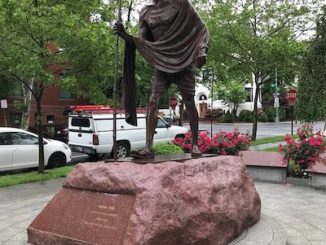
    NEW YORK (TIP): Mahatma Gandhi’s statue outside the Indian Embassy in Washington DC was desecrated by some miscreants. The statue was allegedly spray painted with expletives. Soon after the incident took place, the statue was covered with protective cloth and an investigation was launched by United States Park Police.

    The Indian embassy spokesperson, in response to queries from The Indian Panorama,  June 4,stated that “Mahatma Gandhi statue at the Mahatma Gandhi Memorial Plaza in front of the Embassy was vandalized with graffiti/spray paint by unknown persons during the late hours of Tuesday, 2 June 2020.

    The Embassy has taken up the matter with the US Department of State for early investigation into the matter, as also with the Metropolitan Police and National Park Service. The Embassy is working with the US Department of State, Metropolitan Police and National Park Service for expeditious restoration of the statue at the park”.

    Ken Juster, US Ambassador to India, has apologized for the incident. “So sorry to see the desecration of the Gandhi statue in Wash, DC. Please accept our sincere apologies. Appalled as well by the horrific death of George Floyd & the awful violence & vandalism. We stand against prejudice & discrimination of any type. We will recover & be better,” Juster said on Twitter.

    Soon after the incident took place, the statue was covered with protective cloth

    Indian Americans are outraged for the ‘profane desecration.’ “A Molotov cocktail of profanity and hatred, cooked by the tear-filled pages of sad history across humanity existence in every culture and eco-system, was splashed across Mahatma Gandhi’s statue during the Tsunami of George Floyd’s protest” said New York based eminent attorney Ravi Batra.

     “That the root of non-violent civil protest was desecrated speaks not of any disrespect, as Mahatma Gandhi is free of such temporal stain as the sun is free of clouds, but of the intertwined pain of age-old racism that humanity sadly enjoys, horrible economic destruction from the Wuhan Virus, and criminals who remain society’s recurring illness. Add to that the pain from the fact that the American Dream is beyond the reach of many. So, the George Floyd protests, necessary for proper societal recalibration, have included criminality and elements of the 1789 French Revolution and storming the Bastille to overthrow a feudalist society. It is this last fact, not the restoration of the Gandhi statue – a given – that is concerning. Having been involved with Yogesh Gandhi to get the Gandhi statue erected in Union Square decades ago, I’m certain Mahatma Gandhi remains unruffled by the profane desecration, and only wishes to comfort hearts that are burning with such hatred so as to save them from being in jail”, he added.

    One of the few statues of a foreign leader in Washington DC, the statue of Mahatma Gandhi was dedicated by the then Prime Minister Atal Behari Vajpayee, in the presence of the then US president Bill Clinton on September 16, 2000, during his state visit to the US.


  • George Floyd remembered at memorial service

    George Floyd remembered at memorial service

    MINNEAPOLIS, MN (TIP): Hundreds of mourners in Minneapolis on Thursday, June 4,  remembered George Floyd, the black man whose death in police custody set off a wave of nationwide protests that reached the doors of the White House and ignited a debate about race and justice.

    Philonise  Floyd, one of Floyd’s brothers, choking with emotion, told a memorial service at a chapel in the Minnesota city’s North Central University that their family was poor.

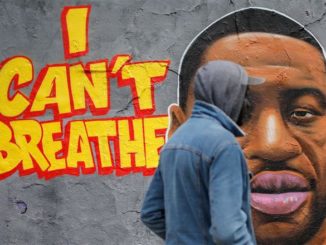
    “It’s crazy man, all these people came to see my brother, it’s amazing he touched so many hearts,” said the brother, wearing a dark suit and a badge with a photo of his brother and the words “I can’t breathe” on his lapel.

    Floyd’s death on May 25 has become the latest flashpoint for rage over police brutality against African Americans, propelling the issue of race to the top of the political agenda ahead of the U.S. presidential election on Nov. 3.

    Derek Chauvin, 44,  filmed in a widely circulated video kneeling on Floyd’s neck for nearly nine minutes as Floyd gasped for air and repeatedly groaned, ”Please, I can’t breathe.” was fired from the Minneapolis police force and charged with second-degree murder.

    Huge crowds have defied curfews and taken to the streets of cities across the country for nine nights in sometimes violent protests that prompted President Donald Trump to threaten to send in the military.

    The Reverend Al Sharpton, a television political commentator and civil rights activist was among those at the memorial service for George Floyd

    Ben Crump, a lawyer for Floyd’s family, told the memorial service that the police action that day was evil.

    “What we saw in that video was evil. So America, as we proclaim as we memorialize George Floyd, do not accept evil. Protest against evil. We cannot cooperate with evil. We cannot cooperate with torture,” Mr. Crump said.

    Prosecutors leveled new charges against four former Minneapolis police officers implicated in the killing on Wednesday, June 3. .

    However, on Thursday, June 4, the three officers charged with aiding and abetting the murder of Floyd made their first appearances in court, where bail was set at $1 million but would be lowered to $750,000 if they agreed to certain conditions, including forfeiting any personal firearms.

    In New York City, which has been hit by looting during the protests, thousands of people attended a memorial event in a Brooklyn park for Floyd.

    Many knelt in the grass in the afternoon sunshine in a symbol of protest against police behavior and chanted, “No Justice. No Peace.”

    U.S. Representative Hakeem Jeffries urged people to continue their protests, saying the tragedy has awakened a cross-section of people who would bring lasting change.

    “This time will be different, because the movement is being led by young African American sisters,” the New York Democrat told the crowd. “This time will be different because it’s not a top-down movement, it’s a bottom-up-movement.”

    Meanwhile, U.S. Attorney General William Barr said on Thursday, June 4,  there had been evidence that foreign interests and “extremist agitators” affiliated with left-wing movements like Antifa were taking over the protests. But he offered no details.

    The Reverend Al Sharpton, a television political commentator and civil rights activist, told the Minneapolis service that the overwhelming majority of protesters were peaceful.

    “There have been protests all over the world. Some have looted and done other things. None of us condone it – looting and violence,” Rev. Sharpton said. “But there is a difference between those calling for peace – and those calling for quiet. Some y’all don’t want peace, you just want quiet. You just want us to suffer in silence.”

    The protests against Floyd’s killing came close to the White House on Monday, June 1 night when baton-swinging police used heavy handed tactics to drive demonstrators away.

    Mr. Trump has threatened to send U.S. troops to stamp out civil unrest against the wishes of State governors. That alarmed current and former military officials.

    Mr. Trump’s former Defense Secretary Jim Mattis, after long refusing to explicitly criticize his former boss, denounced any militarization of the response to protests.

    “Donald Trump is the first president in my lifetime who does not try to unite the American people does not even pretend to try,” Mr. Mattis, who resigned as defense secretary in 2018, wrote in a statement published by The Atlantic.

    Services for Floyd are expected to stretch across six days and three States, including memorials in North Carolina and Houston. A funeral is planned for Tuesday, June  9.

    (Agencies)

  • US  Defense  Secretary  opposes Trump move on troops to quell protests

    US Defense Secretary opposes Trump move on troops to quell protests

    WASHINGTON (TIP): US Defense Secretary Mark Esper said on Wednesday he does not support invoking the Insurrection Act to deploy active-duty forces to quell civil unrest for now, despite President Donald Trump’s threats to militarize America’s response to mass protests.

    Trump said this week he could use military forces in states that fail to crack down on sometimes violent protests over the killing of George Floyd, an unarmed black man, at the hands of a white police officer in Minneapolis.

    “The option to use active-duty forces in a law enforcement role should only be used as a matter of last resort and only in the most urgent and dire of situations. We are not in one of those situations now,” Esper told a news briefing.

    “I do not support invoking the Insurrection Act.” Former Defense Secretary Jim Mattis, who had long refused to criticize a sitting president explicitly, on Wednesday accused Trump of trying to divide America and roundly denounced a militarization of the U.S. response to civil unrest.

    Esper’s news conference did not go over well with either the president or his top aides, an administration official said, speaking on the condition of anonymity.

    To deploy the military on US soil for law enforcement purposes, Trump would need to invoke the 1807 Insurrection Act — something last done in 1992 in response to the Rodney King riots in Los Angeles.

    The military has pre-positioned 1,600 active duty forces on the outskirts of Washington, D.C., to deploy if needed.

    A US official said that the Army on Wednesday, June 3,  had been told of a decision to send some of the active duty troops back to their home base, but Esper reversed course following a meeting at the White House and discussions at the Pentagon.

    Esper said he regretted using the term “battlespace” this week to describe areas gripped by protests.

    “In retrospect, I would use different wording so as not to distract from the more important matters at hand or allow some to suggest that we are militarizing the issue,” he said.

    Trump’s threats to deploy active duty troops—even in states that oppose its use to address civil unrest—has stirred alarm within the US military and in Congress, where a top Republican warned it could easily make troops “political pawns.”

    Esper said he was unaware that he would be part of Trump’s politically charged photo opportunity on Monday, when law enforcement forcibly cleared a park outside the White House of peaceful protesters so that the president could take a picture in front of a church holding a Bible.

    Mattis, a retired Marine general who denies political ambitions, also took a swipe at current U.S. military leadership for participating in the Monday photo-op and criticized use of the word “battlespace” by Esper and Army General Mark Milley, chairman of the Joint Chiefs of Staff.

    In his press conference earlier, Esper acknowledged the difficulty of deploying the military without entering the political fray.

    “I work very hard to keep the department out of politics, which is very hard these days as we move closer and closer to an election,” Esper said.

    Retired Navy Admiral Mike Mullen, the former chairman of the Joint Chiefs of Staff, said he was “sickened” to see how law enforcement—including the National Guard—had cleared the area and warned against over-use of the US military.

    “Our fellow citizens are not the enemy, and must never become so,” Mullen wrote.

    (With inputs from Reuters)


  • Black lives matter says Meghan, calls US events “devastating”

    Black lives matter says Meghan, calls US events “devastating”

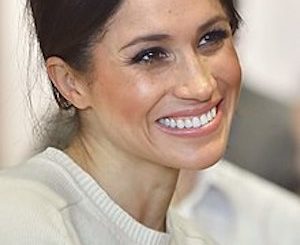
    LONDON (TIP): Meghan, Britain’s Duchess of Sussex, has spoken about events following the death of George Floyd saying she was sorry that children had to grow up in a world where racism still existed and that current events in the United States were “devastating”, according to a Reuters report.

    “I know you know that black lives matter,” Meghan said in a video she recorded for students graduating from her old high school in Los Angeles, which was aired on Wednesday, June 3.

    The death of Floyd has become the latest flashpoint for long-simmering rage over police brutality against African Americans and led to nationwide protests, some violent, with curfews imposed in some cities to quell the disorder.

    “For the past couple of weeks I’ve been planning on saying a few words to you for your graduation and as we’ve all seen over the last week what is happening in our country, and in our state and in our home town of LA is absolutely devastating,” said Meghan, whose mother is African American and father is white.

    “First thing I want to say to you is that I’m sorry, I’m so sorry that you have to grow up in a world where this is still present,” she said in her message to the girls at the Immaculate Heart High School.

    The duchess, a former U.S actress and wife of Queen Elizabeth’s grandson Prince Harry, said she wanted to say “the right thing” and was nervous her words would be “picked apart”.

    “The only wrong thing to say is to say nothing. Because George Floyd’s life mattered, and Breonna Taylor’s life mattered, and Philando Castile’s life mattered and Tamir Rice’s life mattered and so did so many other people whose names we know, and whose names we do not know,” she said.

    Britain’s royal family by tradition does not comment on political issues. However, Meghan and Harry stepped down from their official royal roles at the end of March and are now living in Los Angeles with their baby son Archie.

    In her message, the 38-year-old reflected on her own memories of the 1992 LA riots.

    “Those memories don’t go away and I can’t imagine that at 17 or 18 years old, which is how old you are now, that you would have to have a different version of that same type of experience,” she said.

    “That’s something you should have an understanding of, but an understanding of as a history lesson not as your reality. So I’m sorry that in a way we have not gotten the world to the place you deserve it to be.”

    (Source: Reuters)

  • Indian American Vivek Lall Named Chief of General Atomics Global Corporation

    Indian American Vivek Lall Named Chief of General Atomics Global Corporation

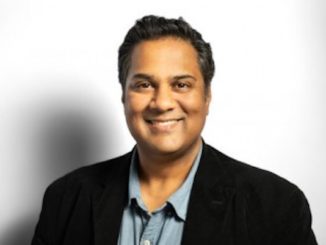
    SAN DIEGO (TIP): Dr. Vivek Lall, probably the most known face in the Indian aerospace and defense industry and the most prominent Indian-American who played key roles in some major Indo-US defense deals between India and the US, will be the chief of General Atomics Global Corporation, based in California.

    A formal statement from General Atomics said, “ with Dr Lall’s expertise, GA Global will expand its global footprint for managing sales, service, and international industrial collaboration in strategically important countries like Japan, Australia, the UAE, and others.”

    In his previous stint with the US major as chief executive of strategic development from Vivek Lall was instrumental in the drive to first market and then advance on the sales plan for missile-capable unmanned aerial vehicles (UAVs) to Indian armed forces. It may be recalled that GA ASI in June 2017 had informed that the US government had approved a $2 billion sale of 22 MQ-9B SeaGuardian UAVs to India for the Indian Navy.

    Dr. Vivek Lall has been the major force in concluding major Indian defense procurements including 24 MH-60R Multi-Role Helicopters from Lockheed Martin, 10 C17s worth $4 billion, P-8I Anti-submarine warfare aircrafts (eight and then four) worth $3 billion, 28 Apache helicopters and 15 Chinooks worth $5 billion, and 22 Harpoon missiles worth $200 million. An asset to both India and USA, Vivek has been influential in shaping US’s defenses exports and fulfilling India’s defiance needs. He was appointed to the US Federal Aviation Advisory Committee in 2018, where he represents the viewpoints of defenses technology organizations in the NextGen Advisory Committee of the Department of Transportation. The Aviation Advisory Committee provides information, advice, and recommendations to the Secretary of Transportation on ensuring the competitiveness of the U.S. aviation industry and its capability to address the evolving transportation needs, challenges, and opportunities of the global economy.

    Dr. Lall has been also recognized as one of the world’s top scientists of the twentieth century by Cambridge. He was also the President of the Mathematical Association of America. He was also affiliated with the United Nations in New York to advise on Broadband and Cyber Security issues for challenges within the global community and provide services that will help address them. In India he was appointed the Chairman of the Indo-US Strategic Dialogue by the Indo-American Chamber of Commerce in August 2011, was Distinguished Fellow at Observer Research Foundation and  also served as Chairman of the Defense Committee of The Association of Chambers of Commerce and Industry of India(ASSOCHAM).


  • Indian American   CEO of Google Sundar Pichai backs racial equality

    Indian American CEO of Google Sundar Pichai backs racial equality

    Google and YouTube put a black ribbon on their home page in the US

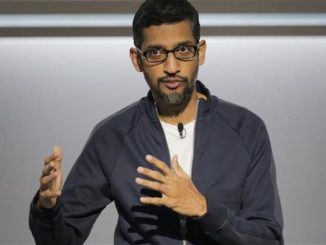
    NEW YORK (TIP): Google stands in support of racial equality, the tech giant’s Indian-American CEO Sunder Pichai has said, expressing solidarity with the African-American community in the US in wake of protests sparked by the death in police custody of African-American George Floyd.

    Google and YouTube on Sunday put a black ribbon on their home page in the US, showing solidarity for protests against the death of George Floyd, an unarmed black man, in police custody.

    “We stand in support of racial equality, and all those who search for it,” the message read on the Google home page.

    The same message was also placed on the US home page of Google-owned YouTube and Alphabet.

    “For those feeling grief, anger, sadness & fear, you are not alone,” Pichai said, sharing a screenshot of the Google search home page which said “we stand in support of racial equality, and all those who search for it,” read the tech-giant’s tweet.

  • Indian-origin doctor Rajesh Gupta on COVID-19 frontline found dead in UK hotel

    Indian-origin doctor Rajesh Gupta on COVID-19 frontline found dead in UK hotel

    LONDON (TIP): An Indian-origin doctor working on the frontline of the coronavirus pandemic at a UK hospital was found dead in the hotel he was staying in to isolate away from his family during the lockdown.

    Dr Rajesh Gupta, a consultant anesthetist at the National Health Service (NHS)-run Wexham Park Hospital in Berkshire, south-east England, was found dead earlier last week  and the cause of his death is yet to be established.

    “We are very sorry to pass on the sad news that our Frimley Health colleague Dr Rajesh Gupta has passed away,” Frimley Health NHS Foundation Trust said in a statement on Friday.

    “Rajesh, who worked as a consultant at Wexham Park Hospital, was found on Monday afternoon in the hotel where he had been staying to protect his family while he worked with us during the coronavirus pandemic. At this stage the cause of his death is not known,” the NHS Trust said.

    Gupta was described as a “popular and well-known figure” by the Trust, which said that colleagues saw him as an “outstanding clinician with a passion for pain medicine”.

    He had recently been appointed to an important post at Wexham Park Hospital after working for a period as a locum consultant at Frimley Park.

    “They (colleagues) also say he was a gifted poet, painter, photographer and cook who was known for his enthusiasm, good nature and kindness. He wrote several books and contributed to a number of publications. He will be greatly missed,” the Trust said.

    Gupta, who studied in Jammu before moving to the UK, is survived by his wife and a young son.

    The Frimley Health NHS Foundation Trust said that it is supporting his closest colleagues as the news of the sudden death has come as an “enormous shock” at his former workplace.

    (Source: PTI)

  • Indian American Rahul Dubey Hailed as ‘Hero’ after Sheltering Protesters in DC

    Indian American Rahul Dubey Hailed as ‘Hero’ after Sheltering Protesters in DC

    WASHINGTON (TIP): Indian American Rahul Dubey emerged as an overnight hero in the US after he opened doors to people, who were protesting against George Floyd death, after a tear gas attack by police in Washington D.C on June 1 night.

    According to a report by The New York Times, Dubey, who works in health care, opened the door as soon as he heard the flash bang and the thudding of shields and called for people to come in. A “tsunami” of demonstrators came barreling through his front door seeking shelter, he said, and protesters began scattering to all three floors of his home.

    Dubey told CNN affiliate WJLA that he was on his stoop and had let some of the protesters charge their phones inside and use his bathroom before police moved in. “There was a big bang and there was spray that my eyes started burning, screaming like I’ve never heard before, and I’ve described it as a ‘human tsunami’ is the best I could see for about a quarter of a block coming down the street,” he told WJLA.

    He said he was yelling “get in, get into the house” for about 10 minutes. Dubey told WJLA that about 70 protesters got inside and it was “pandemonium and mayhem” for about an hour and a half while they tried to settle in and help people who’d been pepper sprayed. The protesters left Dubey’s home when the district’s new curfew ended at 6 am.

    The incident has turned Dubey into a local hero with a massive outpouring of praise on social media. He, however, told The New York Times, he does not think what he did was anything special. “If it is, we have a ton of work to do in this country”, he said.


  • Indian American  Indra Nooyi Named Full-Term Member of MIT Board of Trustees

    Indian American Indra Nooyi Named Full-Term Member of MIT Board of Trustees

    BOSTON (TIP): PepsiCo’s former chairperson and CEO of Indian origin, Indra Nooyi is among nine full-term members of The MIT Corporation — the Institute’s board of trustees. Elected nine full-term members will each serve for five years, effective July 1.

    Nooyi received a bachelor’s degree from Madras Christian College in 1974, an MBA from the Indian Institute of Management in Calcutta in 1976, and a master’s degree in public and private management from Yale University in 1980. Nooyi served as the chairperson and CEO of PepsiCo from 2006 to 2019. In this role, Nooyi was the chief architect of Performance with Purpose, PepsiCo’s pledge to do what’s right for the business by being responsive to the needs of the world around us. She directed the company’s global strategy for more than a decade.

    Prior to becoming CEO, Nooyi served as president and chief financial officer beginning in 2001, when she was also named to PepsiCo’s board of directors. Before joining PepsiCo in 1994, Nooyi spent four years as senior vice president of strategy, planning and strategic marketing for Asea Brown Boveri, a Zurich-based industrials company.

  • Indian American Author Lilly Irani Wins Outstanding Book Award by International Communication Association

    Indian American Author Lilly Irani Wins Outstanding Book Award by International Communication Association

    SAN DIEGO (TIP): Lilly Irani, Associate Professor, UC San Diego has been honored with Outstanding Book Award by International Communication Association for her book Chasing Innovation: Making Entrepreneurial Citizens in Modern India.

    Lilly Irani is an Associate Professor of Communication & Science Studies at University of California, San Diego. She also serves as faculty in the Design Lab, Institute for Practical Ethics, the program in Critical Gender Studies, and sits on the Academic Advisory Board of AI Now (NYU). Her research examines the cultural politics of high-tech work and the counter-practices they generate, as both an ethnographer, a designer, and a former technology worker. She is a co-founder and maintainer of digital labor activism tool Turkopticon. Her work has appeared at ACM SIGCHI, New Media & Society, Science, Technology & Human Values, South Atlantic Quarterly, and other venues. She has a Ph.D. in Informatics from University of California, Irvine.

    Her book is described as “A richly detailed, multi-year ethnography of the ways in which social entrepreneurship, design, and innovation work underscore national and global chains of value and power. The book marshals history and political economy around stories of everyday people who invested in impossible dreams that if they are more creative, they will achieve upward social mobility. Instead, innovation and human-centered design projects most benefited those already with social and economic capital. Precarious Indian citizens remained so despite their passionate aspirations. Deconstructing these rationalities and identities of entrepreneurialism in the context of development and governance in India, the book charts a new theoretical frame for understanding the entrepreneur as a figure of exploitation and a tool of nation-building. Dr. Irani asks critically “Who modernizes whom, and towards what horizon?” As such, the book de-Westernizes the figure of entrepreneur as a hero of teleological progress.”

  • Indian Origin Film Director Krishnendu Majumdar Named Chair of BAFTA

    Indian Origin Film Director Krishnendu Majumdar Named Chair of BAFTA

    LONDON (TIP): The British Academy of Film and Television Arts (BAFTA) appointed Krishnendu Majumdar as its new Chair. In doing so, Majumdar becomes the first person of color to be appointed to the role in BAFTA’s 73-year history and the youngest chair in 35 years.

    Majumdar has been Deputy Chair for one year and his tenure as Chair will run for the next three years – the newly extended term for all future BAFTA chairs.

    Majumdar is an EMMY-winning and BAFTA-nominated television producer and director. He has been closely involved with BAFTA for 14 years, having been the Chair of the Learning and New Talent Committee (2006-2010), the Chair of the Television Committee (2015-2019) and a member of the Board of Trustees for nine years.

    Majumdar has actively supported BAFTA’s year-round program of learning and new talent initiatives, including BAFTA Breakthrough and BAFTA Elevate. Majumdar is also chairing BAFTA’s Awards Review, convened in response to the lack of diversity in this year’s Film Awards nominations. He has been a long-time supporter of greater diversity on and off screen throughout his career and has also been on the Board of Directors UK and the PACT Council.

    Krishnendu Majumdar said: “It is a tremendous honor to be elected Chair of BAFTA and I’m lucky to be following Pippa Harris’ outstanding tenure and I want to pay tribute to the resilient and dynamic leadership that Pippa has shown. This year has been a difficult and turbulent time for many in our industry, working with Pippa, BAFTA’s talented and committed staff and membership, I want BAFTA to be at the heart of rebuilding the industry post-Covid. It is vital to ensure that we support people of all backgrounds, races and genders. Diversity and inclusion are crucial for the lifeblood of BAFTA, and we will continue to be a leader for real change across our industry.

    Krishnendu Majumdar co-founded the independent production company Me + You Productions in 2012, alongside Richard Yee. Since then, Majumdar has produced the critically acclaimed Dominic Savage drama series I Am for Channel 4 and the International Emmy-winning comedy, Hoff The Record. He has executive produced two series of the comedy drama Sick Of It, as well as the documentary series The Moaning of Life. Majumdar was also a showrunner on the BAFTA-nominated global hit franchise, An Idiot Abroad.

    Before co-founding Me + You, Majumdar worked as a freelance producer and director. His previous credits include BAFTA-nominated polemical film Who You Callin’ A Nigger? for Channel 4 and the major political film Michael Howard: No More Mr Nasty for BBC Two.

    Majumdar entered the industry by being the first and only person ever to be trained on both the prestigious ITN News Trainee and BBC Production Trainee schemes working across both ITN and the BBC at the outset of his career.

    He was born in South Wales to Bengali parents who arrived in the UK from India in the 1960s. His father was a GP who worked for the NHS for over 40 years.


  • Indian American Led Researchers Develop Experimental Rapid COVID-19 Test

    Indian American Led Researchers Develop Experimental Rapid COVID-19 Test

    NEW YORK (TIP): Scientists from the University of Maryland School of Medicine (UMSOM) developed an experimental diagnostic test for COVID-19 that can visually detect the presence of the virus in 10 minutes. It uses a simple assay containing plasmonic gold nanoparticles to detect a color change when the virus is present. The test does not require the use of any advanced laboratory techniques, such as those commonly used to amplify DNA, for analysis. The authors published their work last week in the American Chemical Society’s nanotechnology journal ACS Nano.

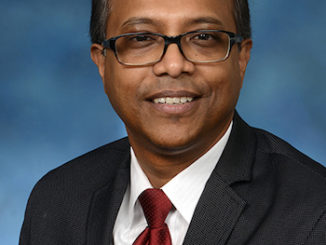
    “Based on our preliminary results, we believe this promising new test may detect RNA material from the virus as early as the first day of infection. Additional studies are needed, however, to confirm whether this is indeed the case,” said study leader Dipanjan Pan, Ph.D. Professor of Diagnostic Radiology and Nuclear Medicine and Pediatrics at the UMSOM.

    “The accuracy of any COVID-19 test is based on being able to reliably detect any virus. This means it does not give a false negative result if the virus actually is present, nor a false positive result if the virus is not present,” said Dr. Pan. “Many of the diagnostic tests currently on the market cannot detect the virus until several days after infection. For this reason, they have a significant rate of false negative results.”

    Dr. Pan created a company called VitruVian Bio to develop the test for commercial application. He plans to have a pre-submission meeting with the U.S. Food and Drug Administration (FDA) within the next month to discuss requirements for getting an emergency use authorization for the test. New FDA policy allows for the marketing of COVID-19 tests without requiring them to go through the usual approval or clearance process. These tests do, however, need to meet certain validation testing requirements to ensure that they provide reliable results.


  • Indian American SAP Vet Abdul Razack Hired by Google Cloud for New Tech Solutions Role

    Indian American SAP Vet Abdul Razack Hired by Google Cloud for New Tech Solutions Role

    NEW YORK (TIP): Former SAP chief product officer Abdul Razack has been hired by Google Cloud for a senior executive role with its solutions engineering team. He is named vice president of technology solutions, a newly created position.

    Razack is a technology leader known for his strategic vision and engineering expertise, with more than 25 years of experience in enterprise technology. In his new role, Razack will be responsible for Google Cloud’s solution strategy across its seven solution pillars, from infrastructure, to application modernization, to data analytics and cloud artificial intelligence (AI). He also will drive the application of the solutions among sellers and customer engineers helping customers digitally transform.

    “My goal is to help Google Cloud customers unlock significant value from our solutions, bringing resiliency and scale to businesses in these uncertain times, and also helping them build a technology foundation for their future,” Razack said in a statement. “I’m truly excited about the opportunity to leverage Google’s technology to develop open, flexible solutions that serve our customers’ most critical needs.”

    A 15-year SAP veteran, Razack served as chief product officer at SAP since March 2019, leading its cloud technology vision and efforts to build enterprise resource planning products.


  • Prayer Service  for Astrologer Bejan Daruwalla held in Ahmedabad , June 4

    Prayer Service for Astrologer Bejan Daruwalla held in Ahmedabad , June 4

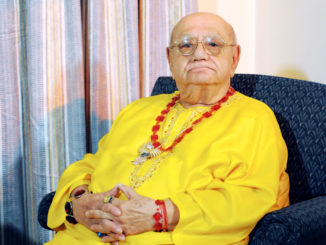
    AHMEDABAD (TIP): A Prayer service for the world-renowned astrologer Bejan Daruwalla  who passed away here on May 29,  at the age of 88, was organized by the family, June 4.

    Several political, industry and  community leaders attended the prayer meeting  and paid their tributes to one of the precious jewels of  India.

    A practicing Zoroastrian, Daruwalla was also a self-proclaimed Ganesha devotee.

    Bejan Daruwala was known to combine the principles of Vedic and Western astrology, I-Ching, Tarot, Numerology, the Kabalah and even Palmistry.

    He was a regular contributor to the astrology column of The Indian Panorama. We will miss him.