Tag: BJP

  • National imperatives in a complex world

    National imperatives in a complex world

    A well-thought-through response combining intelligence, the internal security apparatus and mature political initiatives are called for. The design and execution of a response that is successful will need to ensure that the response itself does not exacerbate the problem, as would appear to be the case so far. Use of a sledge hammer either leaves a crater or results in diffusion and dispersion even more difficult to address”, says the author.

    Adecisive electoral mandate provides just the opportunity required for a comprehensive review of the national security architecture long overdue. It gives the Prime Minister the freedom and authority to evaluate existing systems. Considered judgment will be needed on the efficacy of existing systems and structures, particularly of their cohesiveness and efficient functioning. Should the “review” so warrant, new systems capable of assessing threats and delivering appropriate responses to challenges to the nation’s security will need to be put in place early before existing systems are tested.

    New threats

    The nature of threats to national security is fast altering. These emerge inter alia from the changing nature of violence in troubled hotspots like Afghanistan, Yemen, from Syria and Iraq where there are deepening and exploding sectarian fault lines, from transnational organized crime like piracy and terrorism, weapons of mass destruction, cyber security and from instability in fragile states and cities. The BJP’s election manifesto acknowledges the comprehensive canvas of national security to include military security, economic security, cyber security, energy, food, water and health security and social cohesion and harmony.

    In the BJP’s view, the lack of strong and visionary leadership over the past decade, coupled with multiple power centers, has led to a chaotic situation. Clarity is required on the factors that have led to this. Revisiting the genesis of the national security architecture as it has evolved, including prior to 1998 when the first National Security Advisor (NSA), Brajesh Mishra assumed office is instructive. It was clear all along that crafting a national security architecture on a Cabinet Parliamentary model would pose difficulties.

    Members of the Cabinet, entrusted with responsibility for defense, external affairs, home and finance invariably are senior political figures. As members of the Cabinet Committee on Security (CCS), given their seniority and influence, there was anticipation they could operate as independent silos. Experience has shown there are in-built institutional constraints to correctly assess emerging threats in an evolving and fastchanging strategic landscape by functionaries within a silo. The institution of a National Security Adviser (NSA) has worked best in a Presidential system, such as in the United States, where the NSA draws authority from the President as the chief executive.

    This apprehension has been validated over the past decade and a half, variations in the personality of individuals notwithstanding. The strategic community, both within the country and outside has looked to the NSA to obtain the government’s line on issues central to the nation’s security. The ability to respond quickly, appropriately and, if necessary, decisively to threats to national security, imminent and real is of vital essence. This has, however, not always been the case.

    The “review” being proposed could catalogue the challenges to national security over the past decade and a half and critically examine them as case studies to evaluate the efficacy of our response. Caution needs to be exercised. Not always is the failure to respond appropriately due to institutional constraints. Weak political leadership in the past has also been an important factor.

    The attack by the Haqqani network on our Embassy in Kabul was anticipated by the CIA but could not be prevented. By the time its deputy director reached Islamabad, the terror machine had struck. No self-respecting nation can allow itself to be repeatedly wounded. Unless retribution is demonstrated, further attacks will follow.

    Bifurcation of two jobs

    The first NSA’s success was partly due to the fact that he doubled up as the Principal Secretary and was known to enjoy the full confidence of the Prime Minister. Healthy disagreements between the first NSA and the then External Affairs Minister, in spite of both being familiar with issues relating to defense, intelligence and diplomacy, the three components of national security, viewed holistically, was, however, an early pointer of the shape of things to come. The decision to bifurcate the two jobs for a short period under UPA-I is well documented for its shortcomings. Even Mani Dixit, the tallest professional of his generation, could not manage the pressures from the EAM and turf battles within the PMO.

    The performance of successors largely content “to push files”, succeeded or failed depending on how weak or strong the silos were in defense, external affairs and home. The NSA’s influence fluctuated particularly in relation to the incumbent in the Home Ministry. In the absence of full play in the areas of defense and home, even a talented professional ended up as no more than a foreign policy advisor. The portfolios of home, defense, finance and external affairs now have incumbents who, in terms of seniority within the BJP, have the benefit of several decades of association with the Prime Minister.

    This gives them clout which no civil servant can ever hope to acquire. Battles for turf are central to the functioning of any democracy. Weak political leadership in the Ministry of External Affairs (MEA) over the last decade, in spite of a first-rate Foreign Service has led to the relative weakening of the MEA. This weakness has been most manifest in relation to the conduct of our bilateral relationships in our immediate neighborhood which are in varying degrees of disrepair, as are our relations with China and the United States.

    The policy of acquiescence with China will need to be shed at the earliest and more clinical and realistic assessments put in place. Deep incursions into our territory cannot continue to be explained away in terms of an un-demarcated border. With the United States, the transactional nature of the relationship resulting from absence or insufficient attention in Washington has been more than matched by our own shortsightedness. It will be easier to deal with China, if our relations with the United States are perceived to be on the upswing.

    Focusing on Japan alone will place us in an untenable situation. The game changer will be the twin focus on US and China. In terms of military strength, there has been lack of clarity in what capability we are seeking. Most war games and doctrines are still addressing either 1971- type scenarios or a tactical nuclear weapons exchange. It is a sad reflection on the state of play that we are the biggest importers of conventional armaments, even after acquiring strategic capability.

    Rationalization of armed forces

    Every other country, including China and now the United States have “rationalized” their Armed Forces, a euphemism for reducing. On the other hand, we are seeking creation of three more Commands – Special Forces, Aerospace and Cyberspace. The Central Army and Southern Air force Commands have limited roles yet, we keep increasing our “tails and turf”. There is an urgent need to rationalize our defense thinking and structures as part of an overall national security review.

    In 1965, the Government of India had commissioned Arthur D. Little, an American consultancy firm to make recommendations on defense production in India. Many of their recommendations, including on the involvement of the Indian private sector, are still valid. It should not be difficult given the visible and available political will to break through the dependence on imports to modernize our own defense production structures using FDI and an infusion of technology. The present system is unsustainable.

    Resources are not only limited but the evolving situation in Iraq could place us in dire straits. Every dollar increase in the benchmark price of brent crude results in an additional liability of Rs 3,000 to 5,000 crore. The producers of oil are salivating at the prospect of oil prices touching new highs. This could spell gloom and even doom for importing countries, particularly those heavily dependent on imports, the price having gone up from $106 to $115 in just five days.

    Shoring up security
    ● In 1965, the Government of India had commissioned Arthur D. Little, an American consultancy firm to make recommendations on defense production in India. Many of their recommendations, including on the involvement of the Indian private sector, are still valid.
    ● Given the political will, it will be easy to break through the dependence on imports to modernize our own defense production structures using FDI and an infusion of technology.
    ● Along with an evaluation of existing systems, a comprehensive review of all security challenges emanating from developments outside our borders is imperative.
    ● We are the biggest importers of conventional armaments, even after acquiring strategic capability. Every other country, including China and now the United States have “rationalized” their Armed Forces The attack by the Haqqani network on our Embassy in Kabul was anticipated by the CIA but could not be prevented. Along with an evaluation of existing systems, a comprehensive review of all security challenges emanating from developments outside our borders is imperative.

    Entities known to be inimical to India’s interests, particularly those enjoying some form of support from agencies of the state, if not outright patronage, in a few countries in our immediate neighborhood would readily suggest themselves and constitute the relatively easier part of this exercise. The ability of these entities to make common cause with sections of our own population whose alienation quotient has been enhanced by internal mismanagement is easy to identify if not easy to counter.

    A well-thought-through response combining intelligence, the internal security apparatus and mature political initiatives are called for. The design and execution of a response that is successful will need to ensure that the response itself does not exacerbate the problem, as would appear to be the case so far. Use of a sledge hammer either leaves a crater or results in diffusion and dispersion even more difficult to address. The BJP’s election manifesto separately calls for a study of India’s nuclear doctrine and its updating to make it relevant to current challenges.

    (The author, a retired diplomat, was till early 2013 India’s Ambassador and Permanent Representative to the United Nations in New York. He is presently Non- Resident Senior Adviser, International Peace Institute, New York. He has recently joined the BJP).

  • Credibility at stake

    Credibility at stake

    Politics must not decide judicial appointments

    The BJP, which had often accused the UPA of weakening institutions like the CAG and the CBI, is doing exactly that being in power at the Centre. While its attempts to use the UGC to make Delhi University fall in line are a subject of media debate, former Solicitor General Gopal Subramanium has questioned the Modi government’s ability to “appreciate and respect the independence, integrity and glory of the judicial institution”. According to him, “a very carefully orchestrated drama” has been played and adverse reports have been planted in the media in recent weeks to scuttle his appointment as a Judge of the Supreme Court.

    Media reports have questioned his role in the 2G scam and alleged his links with corporate lobbyist Niira Radia. The government has reportedly asked the Supreme Court collegium to reconsider his case, while clearing the three other names. This has prompted Subramanium to withdraw his consent to be a Judge, alleging “my independence as a lawyer is causing apprehensions that I will not toe the line of the government”. What lends weight to the charge is the fact that as an amicus curiae Subramanium had brought Gujarat encounters under the Supreme Court scrutiny and forced the state government to prosecute guilty police officers.

    Secondly, had there been anything shady in Subramanimum’s past, why would the CBI engage him as its lead counsel in important cases for so many years? Let the government contest Subramanium’s charges and place in public domain reasons for stalling his appointment. There are two key takeaways from this unpleasant development. One, it is a dangerous trend to discredit public personalities by planting motivated stories in the media based on questionable IB/CBI reports.

    Two, the Modi government has exposed itself to the charge of working towards a committed judiciary. Incidentally, a Mumbai CBI Judge, who had pulled up BJP leader Amit Shah for failing to appear in a case, has been transferred. While the judiciary has to be proactive in guarding its independence, the Modi government has a lot to explain.

  • NAMO VICTORY CELEBRATIONS GALORE IN NEW YORK

    NAMO VICTORY CELEBRATIONS GALORE IN NEW YORK

    NEW YORK (TIP): Namo victory virus seems to have gripped a large number of Indian Americans in New York. Various groups claiming political affinity with BJP or a personal relationship with Narendra Modi , as also those who have had no truck with either BJP or Narendra Modi are found to be celebrating Modi’s victory.

    There is a widespread feeling bordering belief that India will get a facelift under Modi. Having said that, let us see how Namo’s victory has been celebrated in New York. Of the many celebrations, one is particularly noteworthy.

    It was held by the community at Hindu Temple in Flushing where a large number of people, around 1000 by liberal estimates, gathered on invitation from the Gujarat Foundation, India First Alliance, Friends of Namo New York, Gujarat Samaj of New York and the Jackson Heights Merchants’ Association.

    Purshottam Rupala, BJP National Vice President and Member of Rajya Sabha, and Rameshwar Prasad Chaurasia, one of the national secretaries of the BJP, were the star speakers In their address, both Rupala and Chaurasia lauded Modi for his abilities and noted that India is moving forward in a positive direction under his leadership.

    Organizers recognized prominent members of the community. Many community speakers were also invited to address the audience briefly. Chaurasia said Modi showed how a strong leader projects strength of a nation when he invited all SAARC heads to his swearing in and they fell over each other to attend. Other highlights included dance performances by Prashant Shah and a dinner.

    Guests were also given a packet of Modi Magic, a special snack prepared by Rajbhog Sweets to celebrate Modi’s epic win, an organizer said.

  • Sena declares Uddhav as CM candidate

    Sena declares Uddhav as CM candidate

    MUMBAI (TIP): The Shiv Sena on JUne 19 anointed Uddhav Thackeray as the saffron combine’s CM pick. The Sena president later told journalists he had to honour Shiv Sainiks’ collective wish. “The CM issue can be decided by discussions (with the BJP).

    We are not in a hurry,” Thackeray said, indicating, for the first time, that he didn’t intend to toe the hard line on the issue. Senior BJP leader Vinod Tawde said the CM issue will be decided by leaders of the Mahayuti, or grand (Sena- BJP) alliance. Earlier, Aditya Thackeray, Uddhav’s son and Yuva Sena president, cleared the decks for an impromptu endorsement of his father’s CM candidature from Shiv Sainiks. Addressing a party congregation at a Bandra auditorium, Aditya sought a voice vote on the issue.

    To his question as to who would be the CM of Maharashtra after the October assembly election, the party representatives replied, “Uddhav Thackeray”, in unison. “This is the Sena way of seeking ratification from party workers on a crucial policy issue,” a senior party leader said on the sidelines of the conclave. “Uddhavji was elected as the Sena’s executive president in 2002 in a similar manner.”

    Sanjay Raut, MP and executive editor of party mouthpiece Saamna, said there should be no glitches in Uddhav becoming CM after the assembly elections. “Just as the Sena has wholeheartedly accepted Narendra Modi as PM, the BJP should accept Uddhav Thackeray as Maharashtra’s CM,” said Raut.

  • MUNDE’S DAUGHTER TO BE INDUCTED IN ELITE BJP PANEL

    MUNDE’S DAUGHTER TO BE INDUCTED IN ELITE BJP PANEL

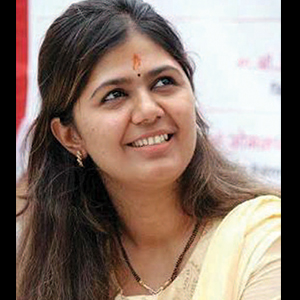
    MUMBAI (TIP): The BJP has cleared the decks for deceased leader Gopinath Munde’s daughter Pankaja’s induction in the party’s core committee. This was decided at a meeting of the party’s core committee in Mumbai on June 19. State BJP chief Devendra Fadnavis played a key role in getting Pankaja on board the high profile panel, sources said. “This is the party leadership’s signal that it accepts Pankaja as her father’s political heir,” said a senior BJP functionary.

    Munde, inducted as Union agriculture minister in PM Narendra Modi’s cabinet, died in a car accident in New Delhi on June 3. There are indications that Pankaja may be the BJP’s candidate for the Lok Sabha byelection in Beed following Munde’s death. There is a growing demand from state BJP workers that Pankaja should be inducted in the Union cabinet, said the BJP functionary. On Uddhav Thackeray’s anointment as the saffron combine’s CM nominee, Fadnavis said, “We will talk about it when the Shiv Sena formally communicates its decision to us.”

  • RAJNATH TO SIT NEXT TO PM IN LOK SABHA

    RAJNATH TO SIT NEXT TO PM IN LOK SABHA

    NEW DELHI (TIP): Home minister Rajnath Singh will sit next to Prime Minister Narendra Modi, occupying the seat left conspicuously vacant, when Parliament meets for the budget session on July 7. The seat allocation seems in keeping with the home portfolio being seen as next in seniority to the PM though there is no hard and fast rule to the effect. Singh’s seating does not necessarily reflect the “number 2” slot which many believe is largely irrelevant with Modi leading a BJP group that commands a clear majority in Lok Sabha.

    The seat next to Modi was occupied by BJP veteran L K Advani on the day the 16th Lok Sabha met on June 4 but remained vacant thereafter. In the UPA regimes, Pranab Mukherjee as defence, and later finance minister, was seen as number 2 before he became President. Thereafter, the slot informally went to former defence minister A K Antony. It was only in 2012 that a cabinet secretariat order said the cabinet committee on political affairs – under the senior-most minister – would consider any emergent situation in the PM’s absence.

    In fact, when former PM Manmohan Singh went for a cardiac bypass in 2009 just ahead of Republic Day, ceremonial duties were divided between Mukherjee and Antony. As per indications, with Rajnath Singh being allotted the seat, other seats on the NDA front bench will be allotted to external affairs minister Sushma Swaraj, food minister Ram Vilas Paswan and Advani. The front row in the second segment of seats on the treasury side can accommodate one more minister. It could be former BJP president and transport minister Nitin Gadkari.

  • US depends on India, Pakistan for stability after US pullout from Afghanistan

    US depends on India, Pakistan for stability after US pullout from Afghanistan

    WASHINGTON (TIP): As President Barack Obama announced plans for Afghanistan after ending US combat mission by year end, the US hoped India, Pakistan and Afghanistan would help provide greater stability and security in the region. India’s new Prime Minister Narendra Modi and his Pakistani counterpart Nawaz Sharif had set a “constructive tone from the very beginning,” a senior administration official told reporters Tuesday in a background briefing on Obama’s plans.

    Under Obama’s plan to “bring America’s longest war to its responsible end,” the US which currently has 32,000 troops in Afghanistan will keep 9,800 troops there after December 2014. The US will then gradually withdraw troops keeping only a small residual force by the end of 2016 — just three weeks before his presidency ends. Obama said Americans have learned it was harder to end a war than to start one. “We have to recognize Afghanistan will not be a perfect place, and it is not America’s responsibility to make it one.”

    The role of US troops in Afghanistan after this year will be aimed at “disrupting threats caused by Al Qaeda, supporting Afghan security forces and giving the Afghan people the opportunity to succeed as they stand on their own,” he said. However, the US plan depends on the Afghans signing a bilateral security agreement. While current Afghan President Hamid Karzai has refused to sign such an agreement, both the candidates in next month’s runoff presidential election have indicated a willingness to do so.

    “With respect to India, I think we’ve seen a constructive tone set from the very beginning by Prime Minister Modi and by Prime Minister Sharif, who was one of the first leaders to speak to” Modi after his election victory, the US official noted. Noting that Sharif had traveled to India for Modi’s swearing in and the two had met Tuesday, he said: “We always encourage India and Pakistan to pursue dialogue that can reduce tension.” “We believe that that is in the interest of the entire region.

    And so we’ll continue to encourage that.” “So with that new leadership in India, the new leadership in Pakistan, and the new president coming to office in Afghanistan this year, I think we have an opportunity to have that discussion about how all the countries in the region can provide for a greater stability and security,” the official said. “And that’s certainly something we’re going to pursue,” he said. People have been wondering how “the region is going to respond in kind as the international community draws down in Afghanistan,” the official said as “regional dynamics, particularly with regards to their proxies, matters considerably to future stability in Afghanistan.”

    “But in recent and operational terms, the attack against the Indian consulate in Herat raised that very question,” he said. However, the US was “hopeful that the initial indication between both Islamabad and New Delhi is a positive one” he said taking note of Sharif’s attendance at the swearing in. Sharif’s “first such visit in many years” was “reminiscent of the last time there was significant progress” between the two countries when the Bharatiya Janata Party (BJP) came to power during Sharif’s previous term as Prime Minister in the late ’90s, the official said. “They made progress along lines that looked very much like what we have now,” he said. “So we’re cautiously hopeful that that could be a positive indicator, but we’re also mindful that this will be very important to the dynamic going forward,” the official said.

  • GUJARATI SAMAJ of New York to hold CULTURAL FESTIVAL of Gujarat on August 8, 9, 10

    GUJARATI SAMAJ of New York to hold CULTURAL FESTIVAL of Gujarat on August 8, 9, 10

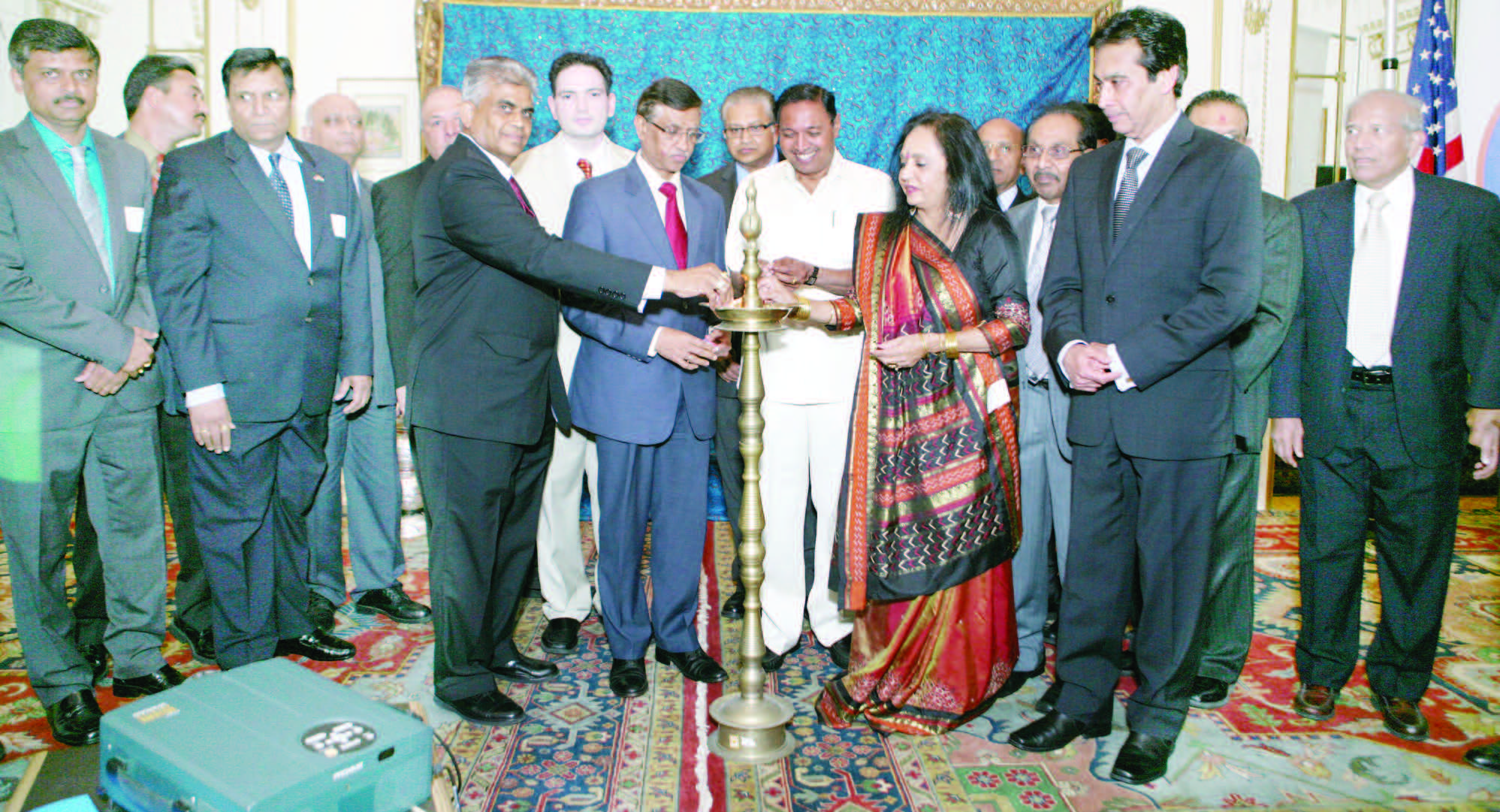
    NEW YORK (TIP): Gujarati Samaj of New York announced a CULTURAL FESTIVAL OF GUJARAT to mark the celebration of its 40th Anniversary. The festival will be held on August 8,9 & 10, 2014. Consul General Dyaneshwar Mulay inaugurated the kick off with traditional lighting of the lamp. Chamunda Swami chanted Shlokas from Hindu scripture to seek divine blessings for the success of the undertaking. Ambassador Mulay expressed the need to market India to the mainstream. He asked every member to invite friends from mainstream to events and educate them about richness of India and Indian culture. He wondered why India still does not have a permanent seat at the Security Council.

    He spoke of the Consulate’s initiative in hosting a series of events on India’s rich culture, lofty thought and diversity. He shared his conviction that India and USA are best partners to build the global economy. And every NRI should help make that happen. A spokesman for the Samaj said that Gujarati Samaj of New York was established in 1974, and has now a membership of more than 2400 families representing some of the most successful and affluent Gujarati Americans of Tri-state area. On the occasion of 40th Anniversary, Gujarati Samaj of New York is organizing a mega event for 3 days called “CULTURAL FESTIVAL OF GUJARAT” (CFG) showcasing the rich history, culture and heritage of State of Gujarat in India, the birth state of Global icon Mahatma Gandhi, Iron man Sardar Patel, religious Gurus including Pramukh Swami, business leaders Ratan Tata and Dhirubhai Ambani and the recently elected Prime Minister of India, Narendrabhai Modi among others. CULTURAL FESTIVAL OF GUJARAT (CFG) is to be held over three days in August on 8th, 9th and 10th in St. Anthony’s Conference Center in Melville, New York.

    The 3-day mega event will include programs such as Garbo from Gujarati Samaj, Bhavai by Shakuntal Arts, Kamlesh Patel Dance, Dayro by Sairam Dave & Group, Women Seminar by Kajal Oza, Group Bhajans by Hari Bharwad, comedy by Jagdish Trivedi, concert by Mauli Dave, Fashion Show by Sringar group, Archan Trivedi for drama, Bhanubhai Vora of Swarkinnary group from Bombay, Sanjay Oza and Party, Sahitya lecture, Auction of Arts and Award ceremony. R. D. Patel, Chairman of Board of Trustees said, “We are excited to present this mega event to the community to thank our predecessors who brought the Samaj reach this far. This institution has been the cornerstone for our community to continue to share our culture with generations over last 40 years and I promise to continue to build with help from each Trustee of the Board in coming years”.

    Harshad Patel, President of Gujarati Samaj of New York said, “I am fortunate to be the President in this historic year, and look forward to host an event of international standards with help from Dilip Chauhan, Minesh Patel and Bhupendra Patel, along with day to day contribution from my able committee members, Jatin Upadhyay, Chandrakant patel, Chimanbhai Patel, Anil Patel, Kiritbhai Patel and Divyesh Tripathi, to make this dream come true. I urge each of the community person of Indian origin to join us, and business community to help with support to make it a grand success”. Bharti Desai, Program manager and host of Gujarati Samaj of New York and launch event, said, “It has been a pleasant experience for me to host and organize multiple events at the Samaj in last few decades. It has helped me creatively to contribute in making each program a success. After having worked with several Presidents at the Samaj, now I look forward to handling this mega event and take the events presented by the Samaj to the next level in organizational excellence”. Samaj showcased “Garavi Gujarat” film on Gujarat’s riches and unfolded the video on CFG. The web site was inaugurated by Consul General. Attendees will enjoy traditional Gujarati food, enjoy very famous Gujarati movies like Jigaraneami, Akhand Saubhagyavati and Mahendi Rang Lagyo. Various booths will decorate the exhibition at the event with book stalls and handicrafts.

    Top Government officials, public persons, Business and community leaders, young professionals, achievers and VVIPs are expected to attend the mega event over 3-days to be attended by 5,000 on a day. Dr. Navin Mehta, Trustee and major supporter of Samaj thanked the attendees and community in helping Samaj in last 39 years. He was proud to see Narendrabhai Modi, a Gujarati lead the nation as PM. He saw a growing and prosperous India in the making. He fondly related his own association with Samaj since he was doing his residency in New York.

    Gujarati Samaj of New York which was established as non-profit organization by about one hundred first generation Gujarati families, today, has a life membership of over 2400. Over last 39 years the Samaj has conducted several activities to promote Gujarati and Indian religious and culture in New York area to community persons from all generations. In 1985, the Samaj acquired its own 12,000 sqft center located in Fresh Meadows, Queens, New York. The Center can accommodate up to 700 people.

    The center is used mainly for Samaj activities. In 2009-2010, the Center was refurbished. Several thousand members of the Tri-state area are now using the Center for family events. In addition several other ethnic organizations are taking benefit of the central location to conduct their events at the center. Today, Gujarati Samaj of New Yorkis one of the oldest and vibrant organization in the tri-state area serving the Gujarati and other communities with educational, religious, and social activities such as FOGANA, Health Awareness Expo, Medical and Yoga Camp, Holi Celebration, Navaratri Celebration, Diwali Celebration, Gujarati Dayro and Drama, Appreciation Dinner, Cultural Tours, Gujarat Day Celebration, Independence Day Celebration, Republican Day Celebration among others. Samaj of New York is planning to have blood bank and Matrimony section for community benefit. Samaj held 10th anniversary at Madison square Garden and 20th Anniversary at Jacob Javits Center.

    Gujarati Samaj of New York announced a raffle draw for a BMW car for the attendees. Earlier, before the formal program began, a minute’s silence was observed to pay homage to BJP leader Gopinath Munde who lost his life in an accident.

    9

    10

  • RSS NOT A REMOTE CONTROL, SAYS ITS CHIEF MOHAN BHAGWAT

    RSS NOT A REMOTE CONTROL, SAYS ITS CHIEF MOHAN BHAGWAT

    NAGPUR (TIP): The BJP’s ideological mentor, the Rashtriya Swayamsevak Sangh or the RSS, reiterated that the organisation does not act like a ‘remote control’ to the ruling party. Addressing cadres for the first time since the Lok Sabha elections, RSS chief Mohan Bhagwat in Nagpur said, “The RSS is not a remote control, we just awaken people.” Bhagwat, 64, without directly naming the BJP or Prime Minister Narendra Modi said that the “change people wanted has come and the change is good.” “People of India voted this time for who they thought deserved. People thanked us but all we said was vote for those who deserve… It has been only 15 days.

    We have to be hopeful that things will change,” Mr Bhagwat said at the convocation function for over 700 cadres who completed a 25 day course. “Swayamsevaks are always there to help the country… Leaders can’t make all changes, people have to also change,” the RSS chief added. BJP’s former general secretary Sanjay Joshi, spiritual guru Sri Sri Ravishankar, who was the chief guest, and the RSS’s Ram Madhav were also present at the convocation ceremony of the organisation.

    The RSS, it is believed, plays an important role in the BJP’s decisionmaking and also mediates during crises. Ahead of government formation, a long list of BJP leaders had visited the RSS office in Delhi, although the Sangh insists that it did not interfere in the cabinet process. Prime Minister Narendra Modi is the RSS’ most famous alumnus. Mr Modi, 63, was an active campaigner in the RSS into his 30s and RSS workers played a significant grassroots role in campaigning for him.

    However, he chose to make issues like the economy and development the main focus of his campaign rather than highlighting a “Hindutva” or Hindu nationalist agenda. The RSS wants a Ram temple built at the disputed site in Ayodhya where the Babri mosque was brought down by Hindu activists in 1992. The pledge to build a Ram temple is a part of the BJP’s election manifesto.

  • 3 RAJYA SABHA MPs BOOKED FOR ALLEGEDLY CLAIMING FAKE AIR TRAVEL BILLS

    3 RAJYA SABHA MPs BOOKED FOR ALLEGEDLY CLAIMING FAKE AIR TRAVEL BILLS

    NEW DELHI (TIP): The Central Bureau of Investigation or CBI has booked three sitting and three former Rajya Sabha MPs in connection what is being called the Leave Travel Concession or the LTC scam. The investigating agency alleges that the six MPs – D Bandhopadhyay of the TMC, Brajesh Pathak of the BSP, Lalhming Liana of the Mizo National Front and JPN Singh of the BJP, Mahmud Madni of the RLD and Renu Bala Pradhan of the BJD – claimed reimbursements for free air tickets that they got for their companions.

    Each MP allegedly claimed fake bills multiple times. Sources in the CBI say while they claimed amounts of up to one lakh rupee per journey, they only paid airport tax for their companions. The residences and offices of the six MPS and some travel agents are being searched in Delhi and Odisha today. “We are looking for documentation or any paperwork to establish that they claimed fake bills,” a senior CBI official said. Sources say the MPs could be questioned by the CBI soon.

  • Goa MLAs to ‘Study’ World Cup in Brazil, Congress Cries Foul

    Goa MLAs to ‘Study’ World Cup in Brazil, Congress Cries Foul

    PANAJI (TIP): Football fever is running high and the BJP government in Goa has scripted a controversy by sanctioning a Rs. 90 lakh junket for six MLAs, including the sports minister, to Brazil, where the FIFA World Cup began on June 12 night. It has been pegged as a “study tour.” The Congress has alleged that Chief Minister Manohar Parrikar is misusing public funds and has demanded that the trip be scrapped.

    “Yesterday Narendra Modi spoke in Parliament about sanitation, house, water for poor people and today his own government in Goa is investing 89 lakhs so that his MLAs can go and watch a football match,” said the party’s Rashid Alvi. A livid Goa Congress leader Durgadas Kamat called it an “utter loot of the state treasury.” Sources in the Goa government argued that the trip is a “study tour” for politicians of a state that regularly holds sporting events. They pointed out that no bureaucrats were being sent. Only politicians who “bring the vision.”

    “The decision has been taken in the interest of Goa, football is our state sport. Some MLAs on the team are exfootballers,” explained Chief Minister Manohar Parrikar. The delegation has no sportsman or anyone connected with football either, though the tiny state has given India some of its leading national football stars. Two of Goa’s former footballers, Bruno Coutinho, and Brahmanand Shankhwalkar, both Arjuna award winners, had reportedly asked if they could be sent to Brazil to watch the tournament.

    Bruno Coutinho a former India captain, said, “I am hurt, if MLAs can go, why not a sportsman. I am not just any footballer, am an Arjuna Awardee. I have captained the Indian football team.” Sources said Mr Coutinho’s name was on an initial list for the trip but was dropped. Apart from Goa sports minister Ramesh Tawadkar, two other ministers and three MLAs will now watch matches to be held at the end of this month. The final of the tournament will be played in Rio on July 13. India is ranked a poor 154 in world football, but lakhs of fans eagerly await the World Cup held every four years. The first match was played between Brazil and Croatia.

  • Much More than Rhetoric is needed for Good Governance

    Much More than Rhetoric is needed for Good Governance

    The Aam Aadmi Party made too many promises to be kept in too little a time and fell flat. From a rising star it turned in to a fallen star. One hopes, other political parties will take a lesson and not be in a hurry to promise suns, moons and stars to the people of the country.

    So long as the people are not taken in to a dream world they compromise with their conditions, howsoever unpleasant. But once, their desire to be transported in to that world is aroused, they are like hungry wolves. They must devour whatever comes their way. AAP knows it by now. One sincerely hopes the new government that has been emphasizing so much on “sushshan”- good governance- will not go in for populism beyond what the BJP has already done and let the people know they cannot expect a sea change overnight. Already, BJP has made too many commitments to 1.2 billion people that have given much hope for a change in their living conditions.

    One shudders to think what they will do if they feel cheated and betrayed. While nobody should doubt the sincere desire of the new government to bring in a perceptible change in the governance, it ought to be kept in mind that governance depends upon the conditions obtaining in the country.

    It is not always that governance changes the conditions. More often conditions decide the form and efficacy of governance. Take for example, the recent power shortage in Delhi. There may be nothing wrong with “governance” but there is nothing right with the conditions and situation. Despite the best intentions, government is not in a position to evidence its good governance. Similarly, the rising prices that affect most the masses whose smile, you never know when it will change in to a frown, once they conclude the government is inefficient. The measure of governance of a government is how far it is able to keep the masses satisfied. And, much more than rhetoric is needed to achieve that end.

  • NO ROOM FOR LK ADVANI IN PARLIAMENT HOUSE

    NO ROOM FOR LK ADVANI IN PARLIAMENT HOUSE

    NEW DELHI (TIP): When former deputy prime minister LK Advani reached his office in Parliament during the lunch-break, he was confronted with a humiliating situation. The plaque with his name at the door of the room allotted to him in the 15th Lok Sabha – which said that he is acting chairman of the National Democratic Alliance or the NDA – had been removed.

    The 86-year-old leader was forced to sit in the BJP’s parliamentary party office during the recess, in a room earmarked for the party’s deputy leader. Gopinath Munde, who was killed in an accident on Tuesday, held the post of deputy leader in the previous Lok Sabha, while his counterpart in the Rajya Sabha was Ravi Shankar Prasad, who is now a Cabinet Minister in the Narendra Modi government.

    The room that Mr Advani sat in for the last five years is the NDA chairman’s room. Former prime minister Atal Bihari Vajpayee, who has been ill and out of politics for many years now, continues to remain NDA chairman. Mr Advani was designated acting chairman of the alliance in 2004, after the alliance conceded power to the UPA. Advani’s name-plate, said sources, was removed yesterday, a move which is being viewed as a sure-fire signal that he will no longer hold the post of acting chairman of the NDA.

    The BJP leader had to shift to the room earmarked for Mr Vajpayee in 2009 after his party elevated Sushma Swaraj to the post of Leader of the Opposition in the Lok Sabha. Advani had also held that post since 2004. Advani was the BJP’s prime ministerial candidate in 2009. Last year, when the party decided to project Narendra Modi for PM, Mr Advani had staged public sulks in protest.

    In March, he told his party colleagues that he wanted to contest the Lok Sabha polls from Bhopal, and not Gandhinagar, a seat held by him five times in the past. He feared that the BJP’s Gujarat unit would punish him for opposing Mr Modi’s elevation as the party’s prime ministerial face. He was eventually persuaded to contest from Gandhinagar. Advani won the seat by a whopping margin of 4.83 lakh votes.

    LOK SABHA SETS RECORD AS 510 MEMBERS TAKE OATH ON A SINGLE DAY

    This is the first time that so many members have taken oath on a single day.

    Attired in spotless white kurta-pyjama, the Prime Minister was the first to take oath amid thumping of desks. He took the oath in Hindi in the name of God and he was followed by BJP veteran LK Advani and Congress president Sonia Gandhi.

    Then came the turn of panel of Chairmen- PA Sangma, BS Engti and Arjun Charan Sethi – senior members so that they could sit in the Speaker’s chair to conduct proceedings by turn to assist the Protem Speaker Kamal Nath. This was followed by oath-taking by the members of the council of ministers.

    The country’s unity in diversity was on full display as the House boasting of over 300 first timers, including Modi, saw a festive atmosphere. With many donning traditional dress and head gears, most members took oath in their mother tongue. Some ministers, including Sushma Swaraj, did it in Sanskrit.

    On June 4, the only member who had taken oath was Protem Speaker Kamal Nath before President Pranab Mukherjee in Rashtrapati Bhavan. With the results of Lok Sabha elections bringing in a new political era, it was a scene different from the one witnessed by the House in the last ten years.

    The BJP, which for the first time won a majority on its own with 282 members, occupied slightly more than half the House, accompanied by its allies which accounted for more than 50 members.

  • Shiv Sena warms up to BJP post-Munde

    Shiv Sena warms up to BJP post-Munde

    MUMBAI (TIP): The Shiv Sena may give up its recalcitrant stance vis-a-vis the state BJP, and work in cooperation with its poll ally to build a broad consensus within the six-party mahayuti, observers said on June 5 . Saamna, the Sena morninger, paid tributes to BJP leader Gopinath Munde, but said the party’s state unit will have to finalize his successor. “You can’t go looking for an heir. He has to emerge from the people.

    Munde’s heir too will come from a public crusade,” it said. A fresh round of popular struggle against the ruling Congress-NCP combine, it said, would help rejuvenate the mahayuti (saffron alliance) following Munde’s death. In an editorial, it described him as the state’s tallest leader and the Maharashtra BJP’s rallying point. Recalling Munde’s social engineering experiment, the newspaper pointed out that he guaranteed a splendid Lok Sabha tally for the mahayuti by sewing up a rainbow combination of castes and communities, including the Marathas, dhangars and other backward classes.

    “Maharashtra and the state BJP are in a state of shock because of Munde’s untimely and tragic death. A strong force which took on the ruling Congress-NCP combine has fallen. The combine could not topple him. Time pulled down the strong pillar. But, even those from the combine are mourning Munde’s death,” the Sena daily said.

  • ‘Am I not a citizen of India?’

    ‘Am I not a citizen of India?’

    An inner cry of a Dalit from the heartland of India

    Why I am asked about my caste when I go to the police? Am I not a citizen of India?” The father of one of the girls gang raped and brutally murdered asked the Samajawadi Party leader and Badaun Member of Parliament Dharmendra Yadav. It is time that this pertinent question needs to be answered not just by few politicians across the party lines but by the nation itself. What happened in Katra village in India’s northern state of Uttar Pradesh is a horrific crime of brutality against women.

    Millions of Indians everywhere must be feeling the shame of India in the news on the continuing assaults on women. However, it is more than just isolated incident of criminal wrong doings but rather emanating from an entrenched caste-driven mindset of these mad men who feel that they have the god-given right to them and are a privileged sect who can therefore get away with murder. According to press reports, in Badaun District, U.P, on the night of 28 May, two girls, cousins aged 14 and 15 years, stepped out of their house in Katra village to relieve themselves.

    When the father, a farm laborer went to police last week to report that his daughter and her cousin had gone missing, a constable slapped him in the face and sent him away. Hours later, he found the two girls hanging by their necks from a nearby mango tree. An autopsy revealed that they had been raped and strangled. The reaction from Akhilesh Yadav, the Chief Minister of the state while questioned on the brutality of this Taliban type of execution was nothing but a cold, callous and insensitive one as he chided the woman journalist who asked the question — ‘you aren’t in any danger are you?’.

    It is reminiscent of his father and the Samajawadi honcho Mulayam Singh Yadav’s statement in the past that ‘boys make mistakes, should we hang them for it? What is in it with these political leaders who have taken the oaths to uphold the law? Are they plain incompetent or willfully negligent in carrying out the responsibilities as elected representatives? His inaction during and after the Muzaffarnagar riots is on record that has already left a huge question mark on his leadership credentials as well as his impartiality in dealing with these human tragedies.

    This case has shocked the nation for a number of reasons; first and foremost, it once again shows the ugly truth about the age-old caste system which is not only thriving in India but exploited by various political parties. Mr. Shashi Tharoor, a former Congress Minister and Member of Parliament recently was quoted as saying ‘when India castes the votes in an election, it is voting the castes’.

    The family of the victims belongs to the Dalit community whereas the perpetrators of this heinous crime belonged to the higher caste Yadavs. If one looks at the history, the Dalits have been at the receiving end for centuries being discriminated against by the higher castes with impunity often being harassed and murdered without having a price to pay. Sadly, Uttar Pradesh is the epicenter of these crimes targeted at these helpless women who were taunted and raped at will, many times, just for the simple reason that they belong to the Dalit community.

    The recent election of Modi appeared to have given a boost to the upper caste majoritarian sentiment as evidenced in the current makeup of the Cabinet that consists two-thirds of the Ministers belonging to the RSS (Rashtriya Swayamsevak Samaj), a powerful ultranationalist grassroots movement raising serious doubt that whether an egalitarian shift would take place under this new Administration. At a rally in Muzaffarpur in March, BJP’s prime ministerial candidate Narendra Modi had stood beside Dalit leader Ram Vilas Paswan of the Lok Janshakti Party, and declared that the coming decade would be a “decade of dalits” and weaker sections of the country.

    Back in Gujarat however, over the last decade nearly Rs 3,689 crore of funds for targeted programs to uplift Dalits and economically and socially backward classes, went unutilized, according to Dalit group Navsarjan. The December 2012 gang rape in New Delhi, the country’s capital shook us all that prompted Congress-led UPA government to pass stricter laws. However, the rapes and abuse of women continue to occur unabated. Recent reports show that a rape is committed every 22 minutes though, the statistics and official records would never reveal the true picture as many of these cases go unreported.

    The social stigma attached to a rape often results in silencing the victim who might be ostracized or ridiculed publicly if they choose to go public. The law enforcement system is not geared to provide sympathetic ears, if anything, they impart fear. On that fateful night, the route these two girls took is familiar for the women of the village. It is probably the only time in the day when they step out alone, unaccompanied by the men of the family, in the dark. “Men go out in the day, so women can go only early in the morning or late at night” said one of the neighbors.

    This is a familiar, every day routine in rural India where the acute shortage of basic toilet facilities forces women and girls to venture out to open fields that makes them obvious targets for sexual violence. Nearly two months ago, four girls from Bhagna in Haryana who had stepped out to answer nature’s call were picked up from right outside their residence. They were raped and then dumped at the Bhatindia railway station in Punjab. It took the families an entire day to get the FIR registered and the medical examination took even longer. Five people were arrested in connection with that case, though the man alleged to be the main culprit, the village sarpanch continues to roam free.

    Most of that family fled the village fearing for their lives and they have been holding a protest at Jantar Mantar, for nearly two months. To those observers, the horrific crimes in both Badaun and Bhangana display the power politics as well as the prevalent caste and gender discrimination and there is no relief in sight with caste oriented policies of those who are in power. The National Campaign for Dalit Human Rights states that over one-sixth of India’s population, some 170 million people, live a precarious existence, shunned by much of Indian society because of their rank as “untouchables” or Dalits – literally meaning “broken” people – at the bottom pf India’s caste system.

    Dalits are discriminated against, denied access to land and basic resources, forced to work in degrading conditions, and routinely abused at the hands of police and dominant-caste groups that enjoy the state’s protection. Among the Dalit community and its supporters & sympathizers, Dr. Ambedkar’s statement resounds today more than ever; ‘My final words of advice to you are; educate, agitate and organize’ have faith in yourself. With justice on our side I do not see how we can lose our battle.

    The battle to me is a matter of joy. This battle is in the fullest sense spiritual. There is nothing material or social in it. For ours is a battle not for wealth or power. It is a battle for freedom. It is the battle of reclamation of human personality’. Are the NRIs only ashamed of the News itself or this entrenched system of enslavement? Will we ever show the courage to join this ‘ battle for freedom’ as Ambedkar called it for the sake of India?
    (The author is Chairman, Indian National Overseas Congress (I), USA)

  • Foreign ties will blossom under the new Modi government

    Foreign ties will blossom under the new Modi government

    For adversaries, habituated to passive and defensive responses to deliberate provocations, the likelihood of a less tolerant Indian response under a Modi-led government might induce rethinking on their part about the price they may have to pay for aggressive or assertive policies”, says the author.

    The BJP’s massive electoral victory brings us foreign policy gains. The prospect of a strong and stable government in India makes our external image more positive. Other countries could conclude that the new government will have a more self-confident foreign policy, and will defend the country’s interests with greater vigor. Since the BJP is widely characterized at home and abroad as a Hindu nationalist party, it will be assumed that the Modi-led government will be more “nationalistic” in its thinking and actions, and will pursue national goals more sturdily.

    Decisive

    Notwithstanding their rhetoric about India’s global role, big powers have for long seen us as a country too preoccupied by internal problems to be able to act on the international stage sufficiently energetically. Issues of poverty and managing our complex diversities apart, coalition politics in India has been seen by our external interlocutors as contributing to governmental delays in decision making and failures in implementation even in the foreign policy domain. Modi’s personality gives us cards to play externally with advantage. He is seen as a strong and decisive leader, committed to making India vibrant economically, and more secure. For those eyeing more economic engagement with India, Modi’s development agenda offers greater investment opportunities.

    For those seeking more engagement on security issues, Modi’s India will appear as a more confident partner. For adversaries, habituated to passive and defensive responses to deliberate provocations, the likelihood of a less tolerant Indian response under a Modi-led government might induce rethinking on their part about the price they may have to pay for aggressive or assertive policies. These real and psychological advantages that India obtains under Modi’s leadership should not be frittered away needlessly.

    Prudence and “responsible” conduct are often used as a cloak to cover diffidence and timidity. There will be those who would advise that having won such a massive mandate, with all the political strength that comes with it, a Modiled government, burdened by a negative ideological image that worries sections at home and abroad, should send re-assuring signals to all. There should be no requirement for this, as it is India that has been long sinned against. Sections of our political class, intellectuals and media personalities have done great disservice to the country by their incessant vilification and deionization of Modi, making untenable historical parallels with the rise of fascism in Europe and making egregious references to Hitler and abusively using words like “genocide” to castigate him.

    Initiatives
    That otherwise sensible people should have for so long lost all sense of proportion remains a puzzle.Maybe they felt their self-esteem rise in proportion to their revilement of Modi. This calumny of Modi has naturally colored outsiders’ views of him, which explains the negative commentaries on him in the liberal western press. Modi’s exceptional mandate, however, is derived from the masses of India, and they have chosen him for what he is and stands for, unbothered by the obloquy of his detractors. Questions are being asked as to what “initiatives” Modi could take on the foreign policy front now that he has got a strong mandate.

    This suggests it has become somehow incumbent on the new government to prove its credentials in some way to the international community. It also carries the nuance that India could not meet the expectations of select countries because his party hobbled the choices of the previous Prime Minister. A feeling also exists that the previous government missed opportunities and was too passive in its foreign policy, a situation that the new government should redress. The sub-text of most such criticism is that India failed to live up to US expectations and allowed the relationship to slip into a lower gear, besides not being able to push the then prime minister’s vision of peace with Pakistan.

    Assertiveness
    Not having engaged in any provocative act against either China or Pakistan, India would be right to wait for China and Pakistan to signal a change of thinking towards it. In reality, repeated provocations have come from their side, which the previous government preferred, in China’s case, either to downplay or not counter, or, in Pakistan’s case, avoid retaliation in order not to have to admit the failure of the policy of engagement despite terrorism and Pakistan’s enduring hostility towards us. China’s assertiveness on the border will have to be watched, especially because its conduct in the South China and East China Seas flashes red signals to us that at a time of its choosing its posture towards us can suddenly harden.

    The recent signals from Pakistan have been uniformly negative, whether on Kashmir, curbing anti-Indian religious extremists, trade and water, and these have been capped by the expulsion of two Indian journalists despite the much touted media role in improving relations as signified, for example, by the “Aman ki Asha” initiative. Nawaz Sharif’s congratulatory message to Modi should be taken as a routine diplomatic exercise, with the invitation to visit Pakistan as a way of making himself look good and win an easy diplomatic point. Our relationship with the US remains very important, but to reinvigorate it the US should not let short-term transactional considerations take precedence over the logic of the strategic relationship.

    Modi being the sole victim of the US legislation on religious freedom, the White House should be issuing an Executive Order to annul the State Department’s decision to blacklist Modi in the first place. While Obama’s gesture of telephoning Modi and alluding to a Washington visit by him can be appreciated, the fact that as Prime Minister he can now obtain an “A” category US visa does not erase the original insult.

  • Sumitra Mahajan is elected 16th Lok Sabha Speaker

    Sumitra Mahajan is elected 16th Lok Sabha Speaker

    NEW DELHI (TIP): The soft spoken “Tai” (elder sister) Sumitra Mahajan, an eight-time BJP MP, has been elected the 16th Lok Sabha Speaker. She is a battle hardened leader who has risen from the ranks to the top post. Interestingly, the official name of 71-year-old Mahajan, the eldest and senior-most among women Members of Parliament, in the 16th Lok Sabha MPs’ list is also mentioned as “Sumitra Mahajan (Tai)”.

    Mahajan will be the second woman after Meira Kumar to be elected to the august office of Lok Sabha Speaker. Starting her political life at the age of 39, Mahajan became the deputy mayor and then an MP from Indore in Madhya Pradesh. She was a Minister of State in the Atal Behari Vajpayee cabinet from 1999 to 2004, holding different portfolios of Human Resources, Communications and IT and Petroleum and Natural Gas.

    A lawyer-turned-politician, Mahajan is known for her trademark simplicity, honesty and clean image besides her impeccable winning record at the hustings. An active parliamentarian, she has not only headed important committees, but has also been a keen debater and avid questioner inside the House, often seen putting ministers on the mat with her calm but firm interventions. The mild-mannered Mahajan has over the years emerged as a force to reckon with in Indore where she never lost since she first became an MP in 1989 and a generation of opposition leaders have been waiting to trounce her.

    She, however, had lost the Indore Assembly election thrice before becoming an MP. Mahajan won her Lok Sabha seat for the eighth consecutive time in this election by an impressive margin of 4.67 lakh votes. Born on April 12, 1943 in Chiplun of Ratnagiri district in Maharashtra, Mahajan became a municipal corporator in 1982. Within the BJP, Mahajan has grown from being President of the BJP Mahila Morcha in Madhya Pradesh in 1990 to being the national general secretary in 1998.

  • Thousands gather outside Latur airport for glimpse of Gopinath Munde

    Thousands gather outside Latur airport for glimpse of Gopinath Munde

    LATUR, MAHARASHTRA (TIP): The body of Union minister Gopinath Munde was flown here from Mumbai en route to his native place in Beed district of Marathwada for cremation later on June 4. The body was kept at the BJP office in Mumbai overnight after being flown from Delhi last evening.

    The Indian Air Force aircraft carrying Munde’s body landed at Latur at around 10am. Senior BJP leaders including Rajiv Pratap Rudy were present at the Latur airport to receive the body, which will be later flown to Munde’s native place Parli, 70 kms from here. Thousands of Munde’s supporters gathered outside the Latur airport to have a last glimpse of their leader. In deference to the people’s wishes, the casket containing Munde’s body was kept on a raised platform outside the airport so that people could pay their last respects.

    Munde’s wife Pradnya and daughter Pankaja were at the airport and were consoled by his followers. Leaders of other parties, including Congress’s minister of state Amit Deshmukh and NCP’s cabinet minister Jitendra Awhad, were present at Latur airport. The body will be kept for “antim darshan” (last respects) at the Vaidyanath sugar factory premises near Parli and the funeral will take place after 2pm. The 64-year-old BJP veteran is survived by wife and three daughters. Munde died following a road accident in Delhi on Tuesday, a week after taking over as Union rural development minister in the Narendra Modi-cabinet.

  • Harsimrat says will act on Nanavati report, AAP disagrees

    Harsimrat says will act on Nanavati report, AAP disagrees

    NEW DELHI (TIP): Lawyer H S Phoolka wrote to Law Minister Ravi Shankar Prasad on May 29 asking him to make operational an SIT, which had been recommended by Arvind Kejriwal during his term as Delhi’s Chief Minister, to probe the 1984 anti-Sikh riots cases. Phoolka also expressed disappointment at the suggestion that the NDA government would implement the Nanavati Commission report, as the “commission had failed to do justice with the 1984 riots victims.”

    A statement issued by the AAP said, “The latest statement of Union Cabinet minister Harsimrat Kaur Badal that the Narendra Modi-led NDA government would implement the Nanavati Commission report on the 1984 anti-Sikh riots is highly surprising and the Aam Aadmi Party totally disagrees with her suggestion. This commission had failed to do justice with the 1984 riots victims and it is regrettable that the BJP-led NDA government, which has been consistently talking about providing justice to the families of nearly 3,000 innocent people who had lost their lives in those riots, is once again looking backwards and is not ready to heal the wounds of the victims’ families.” Phoolka said, “In this Report, Nanavati Commission had recommended registration of only four cases against Sajjan Kumar and Jagdish Tytler.

    All these four cases were registered and investigated by the CBI. Justice Nanavati mentioned in his report that 241 cases were closed by the Delhi Police and were never sent for trial to courts. But, unfortunately, it recommended reopening of only four cases. Justice Nanavati never recommended reopening of the other 237 cases. Riot victims can only get justice and the guilty would be punished only if these 237 cases are reopened.” In his letter to Ravi Shankar Prasad, Phoolka wrote, “When Mr Kejriwal’s government came to power in Delhi, it decided to constitute an SIT to reopen and reinvestigate these cases and also met Lt Governor for this purpose…

    The issue is still pending with the Lt- Governor because the previous Congress government was interested in shielding the guilty and not bringing them to the book. Sir, now you have taken over the very important portfolio of law and justice… therefore, I request you to get the SIT constituted and make it operational.” Phoolka also suggested that the Narendra Modi government “completely implement” a rehabilitation package that former prime minister Manmohan Singh had declared in 2006, which included jobs for the family of each victim.

  • The Simmering Siachen and Indo-Pak Ties

    The Simmering Siachen and Indo-Pak Ties

    “Given the magnitude of what the Army has achieved over the last thirty years in securing not just the Glacier but also the Saltoro, we need to bury the issue once and for all. If for nothing else, we owe it to the blood, shed by our valiant soldiers to accomplish this. Let them at least be secure in the faith that while they guard the ‘final’ frontier, the gates to the country shall not be opened from within!”, says the author.

    In May 2005, as Indian and Pakistani Track I negotiators were reaching a ‘settlement deal’ on the forbidden Siachen Glacier, the then Chief of the Army Staff Joginder Jaswant Singh made an unexpected public statement.

    A deal would only work, he said, when Pakistan agreed to authenticate the 110-km Actual Ground Position Line dividing the two armies. The deal was about the ‘demilitarisation’ of the glacier, a euphemism for India vacating this strategic battle-ground to appease Pakistan and some common alien masters.

    Obviously it fell through. In his Book ‘The Accidental Prime Minister’ Sanjaya Baru accuses General JJ Singh of playing double game: “In closed-door briefings, the General would say that a deal with Pakistan was doable, but in public he would back (AK) Antony when the Defence Minister chose not to back the PM.” JJ Singh, vehemently denies this, but considering the past manipulations of this General including the obnoxious doctrine of ‘Line of Succession’ a jury need to be put out! While so, on this simple revelation, Delhi is simmering even as temperature in Siachen glacier is hovering around -15 degree Celsius! Heat is such that BJP’s highly-visible prime ministerial candidate, Narendra Modi, has taken up this as a grave national security issue and has asked the non-visible Prime Minister to come clean, saying that this matter is going viral on social media. What is going around in the social media is a brief on the subsequent developments on Siachen under UPA II, when Baru was not there.

    In September 2012, the Ottawa based Atlantic Council, alleged to have links with Pakistan’s ISI, announced the signing of an agreement to demilitarize Siachen as part of Confidence Building Measure between India and Pakistan. This agreement was negotiated by a 22-member India-Pakistan Track II team, headed on the Indian side by former Air Chief Marshall SP Tyagi.

    The Pakistani side was led by General Jehangir Karamat, a former Pakistan Army Chief. Meetings were held at Bangkok, Dubai, USA and finally at Lahore. This was despite the clear stand adopted by the Army, Defence Ministry and Ministry of External Affairs against ‘demilitarization’ of the glacier that has huge strategic value for India. There was something sinister in the whole thing because Prime Minister Manmohan Singh has been under pressure from the US to pull back from Siachen as a sop to the Pakistan Army who has been threatening to lease out Baltistan/Gilgit to China.

    It was also known that despite having no actual presence on Siachen, Pakistan continues to claim the territory. As soon as details of the ‘Agreement’ were put up on the internet all hell broke loose. It went ballistic on the military (serving and veteran) email circuit in which I was also a part. Lt. General PC Katoch, a former commander of the Siachen Brigade fired the first salvo: “For decades, India has always distrusted the Atlantic Council, which is perceived to be in bed with the Pakistani military.

    In this arrangement Pakistan has grabbed the strategic opportunity to attain all its key goals. It is surmised that the PM is aiming for a Nobel Peace Prize to recover the legitimacy his Government has lost after a succession of scandals.” This was followed up by an article by me and Kunal Verma (Author, ‘The Long Road to Siachen: The Question Why) in Gfiles in August 2012.

    Otherwise there was no whimper. The just retired General VK Singh’s take on the issue was nuanced and candid: “Let us first be very clear as to who is asking for this socalled demilitarization. The Pakistanis are not on the Siachen Glacier, but are west of the Saltoro Range. Contrary to what they want their own people to believe, they have a zero presence in Siachen.

    I wonder if demilitarization will also result in Pakistan withdrawing from Baltistan, pulling back to the west towards the Karakoram Highway. It is ludicrous that in such circumstances we are talking of demilitarization and withdrawal.

    Our troops are well established and administratively well off so what is the rationale to pull them out of the area?”

    A set of twelve questions were posed by me to the Track II team:

    (i) Who appointed the Team and what are their credentials and service record in the Siachen area?

    (ii) Who all in the Government briefed the Team?

    (iii) Did the Team visit Siachen before inking the agreement?

    (iv) Was the decision of the Team unanimous?

    (v) Decision to demilitarize Siachen has grave military consequences.Were the three Service Chiefs consulted on this?

    (vi) This issue has serious strategic, deployment, logistics, demographic, displacement, cost and time implications for the Army.Was the matter discussed with the Northern Army Commander?

    (vii) After ‘demilitarization’ what additional measures will be required to check terrorist infiltration in Kashmir Valley?

    (viii) Is it merely a Track II initiative? If so why were the members briefed by Government officials before the Lahore meet? Were they not told that this team is “as good as Track I”? Does it not make it official?

    (ix) NSA is stated to have briefed the leader of the Team and one/two members separately? If so why? To firm up a secret deal?

    (x) The whole process, particularly signing of the Agreement was kept under wraps. Why this secrecy?

    (xi) On whose orders did some select members of the Team justify the agreement?

    (xii) Why was such a major decision not discussed in Parliament and President kept informed? None of the Track-II participants answered even a single question, perhaps secure in the knowledge that their actions will be protected by those on behest of whom they had been acting.

    But faced with intense heat from several quarters, including charges of treachery, the Indian co-chair of Track II, a former Air Chief Marshall confessed that they only acted on orders and there were bigger players including the PMO behind this.

    However three of the key players of Track II participated in the email exchanges. It included retired Brigadier Gurmeet Kanwal who authored the original demilitarization plan in 2005 along with a Pakistani Army officer under the aegis of a US think-tank.

    This is what he said: “We have different views on the issue of the demilitarisation of the Siachen Conflict zone…. My views are consistent since the summer of 2005 when I did some research into the subject in a US think tank along with a Pakistani colleague and realised how both the nations were wrong in continuing to occupy their positions…..”

    This was followed-up by the co-chair ACM Tyagi who clarified: “Brig Gurmeet Kanwal has already sent an email…The press release by the Atlantic Council was approved by me and General J Karamat…. Before its release we in India informed the Service Chiefs and many Very Senior Offrs in the establishment dealing with Indo Pak issues…

    There was “No Conspiracy”….We were not appointed by any Government Agency nor do we have anything do with the Govt of India. While it is true that we did meet several Government functionaries to keep us up to date, we take full responsibility for what we say and do…We hold no official post, have no authority and we voice our individual opinions.

    We did not suggest that we should give up Siachen now. All that we agreed upon was that should the two sides ever agree to demilitarise then this could possibly be a way.” Col. (Retd) Ajay Shukla who was PMO’s key facilitator in Track II was pontificating: “The crucial thing to understand about the Siachen Proposal is: it spells out the modalities for the demilitarization of Siachen, but does not say anything about when this demilitarization should be done.

    That vital question-i.e. whether to demilitarize Siachen at all-is a political issue that the two governments continue to discuss in the Track I Siachen dialogue. The modalities of demilitarization, naturally have relevance only after a full-fledged Siachen Accord between the two governments…. It is important to note that the much-vilified Track II dialogue is entirely in line with the Track I official dialogue with Pakistan.

    In that, India insists upon the authentication of ground positions as a prerequisite for demilitarization. The Track II Siachen Proposal explicitly specifies that “The present ground positions would be jointly recorded and the records exchanged.”

    The no-nonsence General VK Singh could not take this crap and retorted: “Shuklaji, what are you defending? A jaunt given by the government to work out an informal agreement that can then be sold to the Public? Your defence is in itself an indictment of the stupidity of the group which attempted this.”

    Forced to the corner Col Shukla turned abusive. He called us all ‘communal scums’ and pointing to me wrote: “Amongst those with the most dubious credentials in this group is you. An IAS officer turned moralizer! What a combination, Sir-ji.” This impotent outburst did not work and for the second time PMO beat a hasty retreat and Siachen lived for another day. But the questions still remain unanswered! Finding the answers is the task cut out for the new Government.

    The Siachen issue has multiple ramifications and in light of Sanjaya Baru’s revelations, it is perhaps vital that a detailed investigation is done.While it is possible that most of the Track II members were acting in good faith, the role of the three key members-Tyagi, Kanwal and Shukla-looks suspect.

    It is also imperative that General JJ Singh’s role is also looked at, because it involves the Institutional Integrity of the Armed Forces that has been sliding down hill. Senior commanders are in the habit of compromising national interest and tell the political bosses what they want to hear.

    This is not acceptable. Given the magnitude of what the Army has achieved over the last thirty years in securing not just the Glacier but also the Saltoro, we need to bury the issue once and for all. If for nothing else, we owe it to the blood, shed by our valiant soldiers to accomplish this. Let them at least be secure in the faith that while they guard the ‘final’ frontier, the gates to the country shall not be opened from within!

  • A new beginning to the peace chapter

    A new beginning to the peace chapter

    Despite reservations in some circles, most Pakistanis welcomed Prime Minister (PM) Nawaz Sharif’s decision to attend Mr Narendra Modi’s swearing-in as the new PM of India at the latter’s invitation.

    Although similar invitations were extended to the heads of state and government of all the SAARC countries, all eyes were focused on the interaction between the PMs of traditional rivals Pakistan and India. And the warm welcome PM Modi extended to Nawaz Sharif raised the hopes of the hopeful, comprising most Pakistanis, while the sceptics, including the Kashmiris, seemed unconvinced. The body language and atmospherics at the first meeting between the two PMs seemed excellent. It could be claimed with confidence therefore, that a good beginning had been made.

    At the glittering swearing-in ceremony at Rashtrapati Bhavan (President’s House) in New Delhi, the SAARC leaders in attendance were joined by a large invited crowd, including political and business leaders and celebrities from all segments of Indian society, including Bollywood’s well known figures.

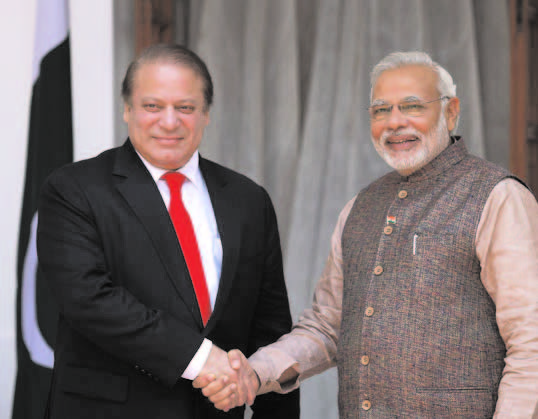
    Mr Modi’s vigorous welcoming handshake with Nawaz Sharif underlined the mutual desire of the two leaders to nudge their bilateral relationship towards normalisation. Apprehensions accompanying Modi’s rise to the apex office include the fears of the minorities in India, particularly Muslims, about the dark past of Mr Modi, especially in the Gujarat massacre of Muslims in 2002 when he was the chief minister.

    Perhaps aware of his polarising and divisive past, Mr Modi’s message after taking oath of office was to build an ‘inclusive’ India with a relatively lean cabinet, the latter reflecting his slogan: “Minimum Government, Maximum Governance”.

    This is intended to reinforce the election platform on which Mr Modi ran, emphasising good governance and economic development rather than the Hindutva agenda of the Bharatiya Janata Party (BJP) or the even more extreme stance of the BJP’s ‘mother’ movement, the Rashtriya Swayamsevak Sangh (RSS), which on the eve of the swearing-in ceremony and meeting with Nawaz Sharif, belligerently threatened that if Pakistan did not correct course vis-à-vis India, Mr Modi would be forced to press the nuclear button against it.

    On his part, PM Nawaz Sharif opened his innings in New Delhi with the statement that there existed a great chance to open a new chapter, starting from where he and former BJP PM Atal Bihari Vajpayee left off in 1999. He offered attractive investment opportunities to Indian businessmen, which no doubt went down well with the proven business-friendly Modi.

    It goes without saying that enhanced trade and business opportunities between Pakistan and India are to the mutual benefit of both despite the naysayers and sceptics in Pakistan. Trade between the two countries is officially at around $ 2.5 billion, with the balance heavily tilted towards India, whose exports account for $ 1.75 billion of the total.

    Around $ 3 billion trade is believed to be routed through Dubai, again tilted heavily in India’s favour and which deprives both countries of tax revenues. The issue of Most Favoured Nation (MFN) status, which India has long ago extended to Pakistan but has not been reciprocated, may now be revived under the new title of Non- Discriminatory Market Access (NDMA).

    While the positives of the warm welcome to PM Nawaz Sharif and the overwhelming run of opinion in Pakistan that it was the right decision to accept the invitation from Mr Modi are welcome, there are still many issues that remain to trouble relations between the two South Asian neighbours.

    Memories of 1999, when General Musharraf’s adventure in Kargil effectively sealed the fate of the Sharif- Vajpayee rapprochement, haunt the renewed process of normalisation. However, 2014 is a very changed scenario from 1999. Pakistan is beset with trouble on its western border, including a homegrown Taliban insurgency that has been described as an existential threat to Pakistan’s security rather than any external enemy.

    The military therefore appears, contrary to conspiracy theorists, to be on board regarding the critical need to normalise relations with India on the eastern border. That of course does not mean that long standing issues such as Kashmir and the Pakistan-India rivalry for influence in Afghanistan are about to disappear.

    They can cause tensions between Islamabad and New Delhi again as in the past. However, internally the fears of the minorities in India, particularly Muslims, at the rise to power of Modi have been underlined by a communal clash in his home province Gujarat on the very day he took oath. The underlying communal tensions lingering from 2002 burst forth into clashes between the Hindu and Muslim communities after an innocuous traffic accident.

    Reportedly, the first one-to-one meeting between PMs Nawaz Sharif and Narendra Modi yielded the expected positions of both sides. India raised the issue of terrorism and closure of the Mumbai attacks case. Pakistan seemed to agree on cooperation to overcome terrorism while emphasising the economic side of bilateral relations. Naturally, such summits are always followed up by experts and officials’ working out of the details of the vision of their leaders.

    Let us hope that that process will now proceed with dispatch, in contrast with the virtual halt during the Congress government’s later tenure. – The Daily Times

  • MAKING A FRESH START

    MAKING A FRESH START

    Photo caption: “We should remove fears and misgivings about each other……..We should rid the region of insecurity and instability”, said Nawaz Sharif .

    Nawaz Sharif’s India trip for the inauguration of Narendra Modi was in itself such a seismic event – the first time ever for a Pakistani leader – that it would have been unrealistic to expect any substantive breakthroughs. Instead, this was a battle for public relations and setting the ground for an improvement in relations further down the line.

    In this Nawaz excelled, particularly with the poignant touch of calling on former Indian prime minister Atal Behari Vajpayee at his residence. Vajpayee’s visit to Lahore to meet with Nawaz in 1997 is still fondly remembered as a rare high point in Pakistan-India relations and served as a reminder to Modi that there is a history of the BJP engaging Pakistan positively.

    The meeting between Nawaz and Modi hinted both at the prospects for peace and the likelihood of trouble in the months ahead. Nawaz focused, as he always has, on engagement but Modi spoke mostly of terrorism, particularly the Mumbai attacks of 2008.

    The way to work through these troubles, as Nawaz well understands, is by engaging in other issues first and broaching matters of disagreement once ties have improved. The Indian Foreign Secretary Sujatha Singh was more hopeful in her press briefing, expressing confidence that Pakistan would soon grant India Most Favoured Nation trading access, now rebranded as Non Discriminatory Market Access. She also said that Modi had accepted Nawaz’s offer of a return visit to Pakistan. In his own brief remarks to the press, Nawaz once again sung the song of peace.

    That the word “peace” can even be uttered with the hardline Modi in power is in itself a testament to the surprising developments of the past few days. A point to note was that the Indian side did bring up specific issues of concern but the Pakistani PM talked of our issues only in general diplomatic terms?

    While a measure of optimism is in order for this unexpected progress, we still need to be wary of likely challenges. Modi’s ideology remains what it is and any attack in India is still sure to be blamed on Pakistan, with the inevitable recriminations to follow. If Modi does indeed visit Pakistan, which could be a very distant prospect, we can also expect a lot of hostility stemming from his actions during the massacre of Muslims in Gujarat.

    The commitment of the military to peace with India is also in question. The two leaders have done what no one expected but the chances of reverting back to script still remain high. –

  • BJP leaders greet SAARC Presidents and Prime Ministers

    BJP leaders greet SAARC Presidents and Prime Ministers

    NEW DELHI (TIP): OFBJP Global Convener Vijay Jolly stated, May 28, that the visiting SAARC Presidents & Prime Ministers at the Indian Prime Minister Narendra Modi’s oath taking ceremony, were separately welcomed & greeted with courtesy calls by senior Bharatiya Janata Party leaders in New Delhi.

    BJP General Secretary (Organization) Ram Lal, BJP MP Vijay Goel, BJP Spokeswomen Meenakshi Lekhi (MP) & Nirmala Seetharaman (now Union State Minister), senior RSS Pracharak Indresh Kumar, OFBJP Co- Conveners Dr. Rajni Sarin & Amit Thakar accompanied by Vijay Jolly called on the visiting SAARC leaders in New Delhi recently.

    SAARC leaders President of Maldives Abdulla Yameen Abdul Gayoom, Prime Minister of Bhutan Tshering Tobgay, Prime Minister of Nepal Sushil Koirala, Speaker of Bangladesh Parliament Shirin Sharmin Chowdhury, Prime Minister of Pakistan Nawaz Sharif, Prime Minister of Mauritius Dr. Navin Ramgoolam, President of Sri Lanka Mahindra Rajapaksa & President of Afghanistan Hamid Karzai attended the oath taking ceremony of BJP & Prime Minister Mr. Narendra Modi govt.

    The BJP leaders conveyed to the visiting SAARC leaders the strong resolve of the party to strengthen ties with India’s neighboring friendly nations. The historic decision to invite all the SAARC leaders by Prime Minister Modi will promote friendship, understanding, businesscommerce & enhance regional ties in the region, stated OFBJP Convener.

    OFBJP leaders from 35 nations of the world attended the oath taking ceremony. Nearly 95 overseas delegates attended a specially convened meeting at the BJP headquarters to honor them. They were presented with “Ganesh statues” & “safron lotus scarfs”. BJP leaders Ram Lal and Vijay Jolly addressed & greeted them for their special efforts to visit India and witness the historic event of BJP govt. formation in New Delhi.

  • OFBJP Felicitates Kenya MP’s of Indian Origin

    OFBJP Felicitates Kenya MP’s of Indian Origin

    NEW DELHI (TIP): Vijay Jolly Global Convener OFBJP, May 29, met and welcomed the two visiting Kenya Parliamentarians at BJP central headquarters in New Delhi.Ms. Sunjeev Kaur Birdi & Irshad Sumra, Members of Kenya parliament were felicitated & honored at BJP headquarter in the presence of BJP Gen.

    Secretary Jagat Prakash Nadda (Rajya Sabha M.P.) & Shyam Parande, Vice President Antar Rashtriya Sahayog Parishad (ARSP), stated OFBJP Convener Vijay Jolly.The visiting Kenya M.P’s were in India to attend the oath ceremony of Narendra Modi at Rashtrapati Bhawan on 26th May 2014, at the invitation of OFBJP (Overseas Friends of BJP). Special emphasis on strengthening Indo-Kenya Friendship & understanding was stressed at the meeting.

    Establishing party to party relations between the political parties of Kenya with BJP were agreed between the two sides, stated the OFBJP leader. The Kenya MP’s fondly recalled the paramedic help provided by Narendra Modi in the devastating fire in Kenya a few years ago when he was the Chief Minister of Gujarat.

    The helpful role of Modi was hailed at the meeting.OFBJP Global Convener Vijay Jolly and his colleagues Rajni Sarin, Co-convenor, social media incharge Smt. Ritu Rathour,West Delhi M.P. Parvesh Verma, Impreet S.Bakshi & Yuva Morcha national executive member Ms. Nitika Sharma attended the program.

  • Meet the new Chief Minister of Gujarat

    Meet the new Chief Minister of Gujarat

    Anandiben Patel, the new Chief Minister of Gujarat, is a long-time confidante of her predecessor Narendra Modi, and is often described as Gujarat’s “Iron Lady”. The stern-faced Anandiben, regularly seen wearing colorful saris and a bindi (the dot many Hindu women wear as decoration on their forehead), has been a Gujarat government minister since 1998 and has built a reputation as a tough, no-nonsense taskmaster like Modi.

    The septuagenarian is not seen as a mass leader and many say she lacks charisma. Rajiv Shah, the former political editor at the Times of India newspaper in Ahmedabad, Gujarat’s largest city, who has met her several times, described Patel as “extremely curt”. But many agree she has evolved into an effective administrator credited for improving the state’s schools and playing a key role in infrastructure development.

    Patel first came to the attention of senior BJP party leaders in Gujarat in 1987 when she was given a bravery award for rescuing two female students from drowning. On her official website she described the episode as “a life changing event” which propelled her into the role of president of Gujarat BJP’s women’s wing. After three decades as a teacher, Patel was elected in 1994 as a member of the Rajya Sabha, the upper house of India’s parliament.

    Close relationship
    Four years later, she secured a seat in state assembly polls on a BJP ticket in her home state and was made minister of two departments – education and women and child welfare – by Gujarat’s former chief minister Keshubhai Patel. Under Modi, Patel’s responsibilities grew. Since 2001 when he became Gujarat’s Chief Minister, she has been in charge of a number of departments including revenue, roads and buildings, disaster management, and urban development and urban housing.

    For years now, she has been seen as the second in command. “When Modi is out of the state, she is the one virtually in charge,” The Indian Express newspaper wrote after featuring her for the first time this year in its annual list of the 100 most powerful Indians. The two leaders have a close relationship. “Those who cannot reach the CM [Modi], approach her for permissions and sanctions,” the Ahmedabad Mirror newspaper remarked in a 2012 article.

    Patel’s estranged husband, Mafatlal Patel, a former BJP member with whom she has two grown-up children, once complained about Modi’s influence over his wife in letters to the former Prime Minister Atal Bihari Vajpayee. “When she entered politics, she severed all ties with the family for no fault of ours. Her behavior has become deformed and Narendra Modi is responsible for it,” Patel was quoted as saying in a 2009 news article. Possibly the only other individual to enjoy as close a connection with India’s next Prime Minister is Amit Shah, a former Home Minister of Gujarat, who led the BJP’s successful poll campaign in Uttar Pradesh state.


    34

    Shah is also an accused in the extrajudicial killing of Sohrabuddin Sheikh, a Muslim civilian, and is still on bail. Patel, who was odds-on favorite to take over in Gandhinagar, Gujarat’s capital, has long had differences with Shah. Siddharth Varadarajan from the Delhibased Centre for Public Affairs and Critical Theory, has described the pair as Modi’s “acolytes” and says that is why they have been able to flourish politically.?

    Gender barriers
    From a young age, Patel broke gender barriers. Her parents enrolled her into a primary school where she was the only female student and it was the same story years later in 1960 when she entered college, according to the biography on her official website.As a politician, she has championed women’s issues.

    But as Gujarat’s first female Chief Minister, political commentators say it is unlikely she will prioritize issues like maternal mortality and female literacy despite a human development index report released by a government-appointed panel last year categorizing the state as “less developed”. ?Instead, they say, she will govern like her predecessor and portray herself as a business-friendly leader to ensure rapid economic growth in the state of 60 million people.