Tag: Canada

  • China-Canada joint military exercises called off after US raises concerns: Report

    China-Canada joint military exercises called off after US raises concerns: Report

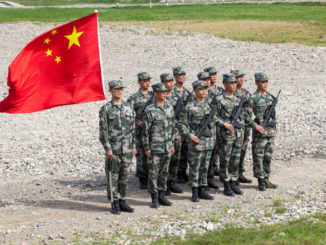
    Vancouver  (TIP): Canada and China were set to carry out military winter exercises in 2019, which were cancelled by the Canadian Chief of the Defence Staff, reported The Globe and Mail.

    General Jonathan Vance’s move alarmed Canada’s Global Affairs department which worried China would interpret the cancellation as retaliation for the arbitrary arrest of two Canadians.

    Vance had allegedly cancelled the exercises after the US urged it to do so, according to the paper.

    “Should Canada make any significant reductions in its military engagement with China, China will likely read this as a retaliatory move related to the Meng Wanzhou case,” a February, 2019, memo to Ian Shugart, then deputy minister of Foreign Affairs, outlining the case for a letter he would be sending to Jody Thomas, deputy minister of the Department of National Defence, The Globe reported.

    A pair of Canadians have been held for almost two years amid a dispute over the arrest of an executive of Chinese technology giant Huawei.

    The pair have been confined since December 2018, just days after Canada detained Huawei executive Meng Wanzhou, who is also the daughter of the company’s founder.

    No information has been released about where the Canadians are being detained or under what conditions.

    Canada accuses China of arbitrarily arresting the pair in order to pressure it into releasing Meng, who lives under a form of house arrest in Vancouver while she challenges a US extradition order to face fraud charges related to trade sanctions on Iran.—With PTI

  • Indian American Kash Patel named Chief of Staff to Acting US Defense Secretary 

    Indian American Kash Patel named Chief of Staff to Acting US Defense Secretary 

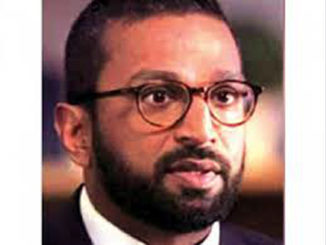
    WASHINGTON (TIP):  (TIP): Indian American Kash Patel has been named as the Chief of Staff to the Acting US Defense Secretary Chris Miller, the Pentagon has announced.

    The new appointment from the Pentagon comes a day after Donald Trump fired Defense Secretary Mark Esper and designated the National Counter Terrorism Center Director, Chris Miller, as the Acting Secretary of Defense. Chris Miller took over the functions and responsibilities of the new role on Monday, the Pentagon said on Tuesday.

    Kash Patel, currently on the National Security Council staff, has been named by Acting Secretary Chris Miller as his Chief of Staff, the Pentagon announced on Tuesday. He replaces Jen Stewart, who resigned earlier in the day. Acting Under Secretary of Defense for Policy Dr. James Anderson, Under Secretary of Defense for Intelligence and Security Joseph Kernan have submitted letters of resignation. Kashyap Pramod Patel, popularly known as Kash Patel, had previously served as senior counsel for counterterrorism at the House Permanent Select Committee.

    In June 2019, Patel, 39, was appointed as senior director of Counter-terrorism Directorate of the National Security Council (NSC) in the White House.

    New York-born Kash Patel has his roots in Gujarat. However, his parents are from East Africa mother from Tanzania and father from Uganda. They came to the US from Canada in 1970. The family moved to Queens in New York which is often called as Little India – in the late 70s.

    After his schooling in New York and college in Richmond, Virginia, and law school in New York, Kash Patel went to Florida where he was a state public defender for four years and then federal public defender for another four years.

    From Florida, he moved to Washington DC as a terrorism prosecutor at the Department of Justice. Here he was an international terrorism prosecutor for about three and a half years. During this period, he worked on cases all over the world, in America in East Africa as well as in Uganda and Kenya. While still employed by the Department of Justice, he went as a civilian to join Special Operations Command at the Department of Defense.

    At the Pentagon, he sat as the Department of Justice’s lawyer with Special Forces people and worked inter-agency collaborative targeting operations around the world.

    After a year in this sensitive position, Congressman Davin Nunes, Chairman of the House Permanent Select on Intelligence Committee, pulled him as senior counsel on counterterrorism.


  • PAYTEL APP for world financial connectivity Launched

    PAYTEL APP for world financial connectivity Launched

    NEW DELHI / NEW YORK (TIP): PAYTEL FINANCIAL TECHNOLOGY Private Limited is a FINTECH company, launched its PAYTEL App to Public in India on November 9, 2020 by its management team under the leadership of Mr. Rishi Vashisht, Mr. Arjun Vashisht and talented team of industry professionals including significant international partners. PAYTEL channelizes business through its network partners who are situated across India and aims to provide end-to-end banking services to all segments of the country. PAYTEL vision is to digitize the untapped segment of India through its partners and provide banking to those who have been deprived access to the advancing digital world. Team PAYTEL considers this as a serious economic and social responsibility and believe will bring the best financial services to the deprived population of India along with the mainstream community. PAYTEL platform is user friendly and is available as browser, mobile app-based technology. PAYTEL is in the process of expanding into domains of financial digitization with modules already developed in the areas of banking, payment gateway, IMT, e-wallet, POS and many other modules. These modules will be launched in coming months. PAYTEL’s goal is to become a one-stop financial service provider through their network partners and hope to generate over 1 million direct and indirect employment opportunities in India. With the historic pandemic COVID-19 it has affected all of us in the world and the way we do business in the year 2020 and going forward. While the world tries to find a cure for COVID 19 it has already brought a big change in how we do business in our everyday lives. PAYTEL’s team and partners have built the PAYTEL platform which allows users to manage the new normal. PAYTEL’s friendly platform will facilitate payments and manage finances through browser, mobile phone or any other portable devices without the need to rely on brick and mortar services. PAYTEL having been successfully launched in India will soon be launching its operations in USA, Canada, Mexico, Central America, South America, UK, Europe, Middle East, South-East Asia and African nations by 2021. PAYTEL has diversified and dedicated knowledgeable international board members like Dr. Bobby Kalotee who is an entrepreneur, chairman of Human Rights Commission in NY , former chair and current board member of NCNY , Leslie Greyling president of Golden Square Partners a multibillion dollar firm who own multiple gold mines across the globe, Nick von Schirnding, CEO of London Stock Exchange AIM Markets and many other significant industry leaders and entrepreneurs across the world. PAYTEL’s vision is connecting the world through PAYTEL APP.

  • Mysterious radio signal spotted in Milky Way for first time

    Mysterious radio signal spotted in Milky Way for first time

    Fast radio bursts (FRBs) are some of the most energetic — and most brief — blasts of light in the universe. These mysterious radio wave pulses flash through space a thousand times a day, occasionally brushing past Earth and its vigilant telescopes. FRBs appear and disappear in milliseconds, yet pack more energy than the sun unleashes in three days. Some FRBs repeat over days or months. Most travel hundreds of millions of light-years to reach Earth. And none have ever led back to a definitive source in the cosmos — until now.

    In a series of three papers published on  Nov. 4 in the journal Nature, researchers from the United States and Canada report the detection of an FRB that originates not in some far-flung galaxy, but 30,000 light-years away in the northern sky of the Milky Way. Not only is this the first FRB ever detected within our own galaxy, but also the first to originate from a known object in the universe — in this case, a highly-magnetized stellar corpse known as a magnetar.

    This burnt-out star — named SGR 1935+2154 — provides the first concrete evidence of the origins of FRBs after more than a decade of mystery, Daniele Michilli, a co-author of one of the new studies, told Live Science.

    “This is the most powerful radio burst ever detected in our galaxy, which is exciting on its own,” Michilli, an astrophysicist with the FRB-hunting Canadian Hydrogen Intensity Mapping Experiment (CHIME), said in an email. “But now we finally have evidence of at least one object that can produce FRBs. Magnetars were already one of the main candidates, so it is a nice confirmation of our theories.”

    Nestled in the bosom of a supernova remnant (the gassy graveyard left behind by a blown-apart star) in the constellation Vulpecula, SGR 1935+2154 first caught scientists’ attention in 2014 when it began flinging powerful X-ray and gamma-ray pulses in Earth’s direction. As the outbursts continued, astronomers identified the object as a magnetar.

    Magnetars are a type of neutron star — the collapsed core of a once-mighty star that packs about twice the mass of Earth’s sun into a ball no wider than a city. When those balls are surrounded by a particularly strong magnetic field — trillions of times stronger than Earth’s — scientists call them magnetars.

  • Canada quietly updates COVID guidelines on risk of airborne spread

    Canada quietly updates COVID guidelines on risk of airborne spread

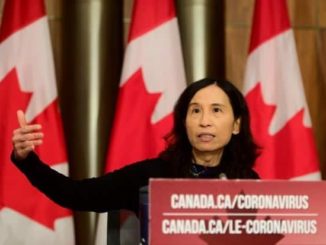
    Toronto (TIP): Canada has quietly revised its guidelines on how COVID-19 spreads to include the risk of aerosol transmission, weeks after other countries and international health organizations acknowledged the airborne threat of the coronavirus. The Public Health Agency of Canada (PHAC) updated its guidance without notice this week, making mention of the risk of transmission from aerosols — or microscopic airborne particles — for the first time. “SARS-CoV-2, the virus that causes COVID-19, spreads from an infected person to others through respiratory droplets and aerosols created when an infected person coughs, sneezes, sings, shouts, or talks,” the updated guidance said.

    “The droplets vary in size from large droplets that fall to the ground rapidly (within seconds or minutes) near the infected person, to smaller droplets, sometimes called aerosols, which linger in the air under some circumstances.” The federal agency’s guidelines previously said the virus spreads only through breathing in respiratory droplets, touching contaminated surfaces and common greetings like handshakes and hugs. “We are continually reviewing new evidence and research as it emerges during the pandemic, and this new evidence guides our response to Canadians,” a spokesperson for PHAC said in a statement to CBC News.

  • Global Covid-19 Cases top 48.5mn: Johns Hopkins

    Global Covid-19 Cases top 48.5mn: Johns Hopkins

    The overall number of global coronavirus cases has topped the 48.5 million mark, while the deaths have surged to more than 1,231,610, according to the Johns Hopkins University.

    As of Friday (Nov 6) morning, the total caseload and death toll stood at 48,590,825 and 1,231,616, respectively, the University’s Center for Systems Science and Engineering (CSSE) revealed in its latest update. The US is the worst-hit country with the world’s highest number of cases and deaths at 9,604,077 and 234,904, respectively, according to the CSSE. India comes in second place in terms of cases at 8,364,086, while the country’s death toll soared to 124,315.

    The other top 15 countries with the maximum amount of cases are Brazil (5,590,025), Russia (1,699,695), France (1,648,989), Spain (1,306,316), Argentina (1,217,028), the UK (1,126,469), Colombia (1,117,983), Mexico (943,630), Peru (911,787), Italy (824,879), South Africa (732,414), Iran (654,936), Germany (619,186), Chile (516,582), and Iraq (489,571), the CSSE figures showed.

    Brazil currently accounts for the second highest number of fatalities at 161,106.

    The countries with a death toll above 10,000 are Mexico (93,228), the UK (48,210), Italy (40,192), France (39,088), Spain (38,486), Iran (36,985), Peru (34,671), Argentina (32,766), Colombia (32,209), Russia (29,285), South Africa (19,677), Chile (14,404), Indonesia (14,348), Ecuador (12,730), Belgium (12,331), Iraq (11,175), Germany (11,006), Turkey (10,639) and Canada (10,432).

  • Indian-Origin MR Rangaswami gets Canada-India Business Council’s ‘Global Service Award’

    Indian-Origin MR Rangaswami gets Canada-India Business Council’s ‘Global Service Award’

    WASHINGTON (TIP): Indiaspora’s Founder, MR Rangaswami, has been recognized by the Canada-India Business Council with its new 2020 ‘Global Service Award’ for launching Indiaspora and connecting the Indian diaspora globally.

    The award was presented virtually on Thursday as part of the Canada-India Business Council’s virtual Diwali Awards from 5 pm – 6 pm EDT, according to media release.

    The inaugural award is given to an individual who demonstrates excellence, and a record of exceptional service for the betterment of others.

    The ‘Global Service Award’ recognizes selflessness, dedication, and a significant contribution to either Canada or India. “It’s an awesome privilege to accept this award from the prestigious Canada-India Business Council,” said Rangaswami, a Silicon Valley software executive, investor, and entrepreneur. “This award will give us momentum on our journey of connecting the Indian diaspora globally and making an impact,” he said. “We view Canada and Indo-Canadians as an integral partner in this mission.” “MR  has served in numerous ways throughout his life, with grace and humility. What he has done in eight short years through Indiaspora, by convening, mobilizing, and catalyzing key diaspora leaders in the United States and around the world, is nothing short of remarkable,” said Victor Thomas, President and CEO of Canada-India Business Council. “We are thrilled to recognize him with the Canada-India Business Council’s first-ever ‘Global Service Award.’”  “The 1.6 million strong Indian community — affluent, hard-working, peaceful and fully integrated into the Canadian ethos — is a living bridge fostering people to people ties between India and Canada,” said Apoorva Srivastava, Consul General of India in Toronto. “The community is making a significant contribution to the growth and prosperity of Canada, which is well recognized by Canadian society and the government.”

    “There are several organizations who are working tirelessly for the well-being of the community members,” said Srivastava,  one of the presenters at the Diwali Awards event.

    “Indiaspora is one such organization, which since its inception, has amplified the voice of the community and transformed it into a vibrant and dynamic force.”

    “I congratulate Rangaswami and the Indiaspora team for their stupendous work in the service of the community. Today’s award is a recognition of their efforts in helping the community to unite together for their common good,” said Srivastava.

    As part of its “Global Connect” program to lead high-level delegations of the Indian diaspora to different countries, Indiaspora organized a delegation of their members and prominent friends from the US to Canada to meet Canadian, Indian, and Indo-Canadian leaders in government, academia, philanthropy, the arts, finance, business and technology in October 2018.

    The “Track II” diplomacy meetings took place in Toronto and Ottawa in the wake of the United States-Mexico-Canada Agreement (USMCA) proposed earlier that month, as well as Prime Minister Trudeau’s trade trip to India earlier that year, the release said.

    “MR is a true example of how to provide selfless service while making a meaningful impact in the world through various initiatives, including as founder of Indiaspora,” said Sukesh Kumar, a Partner and National Leader of KPMG’s India Practice, and an Indiaspora Patron who has played a leading role in Indiaspora’s Canadian activities.

    “What makes him even more special is his humility and approaching every situation with a smile.”

    “I was delighted to be a part of Indiaspora’s high-level delegation to Canada led by MR Rangaswami. The enthusiasm to engage with our group, which was evident among Indo-Canadian leaders in diverse professions, was testament to his amazing relationship building and convening capacity,” said Arjun Divecha, a US-based investor who is head of Grantham, Mayo, Van Otterloo & Co’s Emerging Markets Equity team and an Indiaspora Founders Circle member who was part of Indiaspora’s delegation to Canada.

    “Under his dynamic, visionary leadership, Indiaspora is fast becoming a premier organization working to build meaningful relationships across Indian diaspora leaders globally, including of course in Canada.”

    Patricia Koval, Chair of the Canada-India Business Council will be introducing the ‘Global Service Award’ before Rangawami’s remarks.

    Other Canada-India Business Council honorees include: Paytm Canada CEO Harinder Takhar with the Member of the Year Award; G(irls)20 Acting-CEO Bailey Greenspon with the Roy MacLaren Humanitarian Award; and Teck Resources Limited President and CEO Donald Lindsay with the Thomas Bata Corporate of the Year Award.

  • 8 Indian Origin Winners in British Columbia Assembly Polls

    8 Indian Origin Winners in British Columbia Assembly Polls

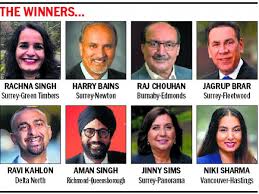
    OTTAWA (TIP): Eight Indo-Canadians, including a Sikh, have won elections in Canada’s British Columbia province as the ruling New Democratic Party (NDP) returned to power with a majority in the snap polls.The NDP led by Jagmeet Singh, the first Indo-Canadian to lead a major federal party in Canada, increased its 41-seat minority into a 55-seat majority in the 87-member assembly, according to preliminary results on Saturday October 24 night, which did not include more than 500,000 mail-in ballots.It is the largest NDP victory in British Columbia history, the Vancouver Sun newspaper reported.”While we wait for that final count to happen, I want to assure people that I’m going to keep the focus right where it belongs, on helping people get through this pandemic and making sure that they have the services that they need,” Premier John Horgan, who had called a snap election during the COVID-19 pandemic, said while addressing a victory rally in Vancouver.

    Aman Singh, a Sikh, defeated Jas Johal of the opposition Liberal Party in Richmond-Queensborough. “Thank you to the amazing residents of Richmond-Queensborough who I was able to connect with during this campaign. It has been a true honor to stand before you & hear about the issues impacting you & your families. I’m grateful to the team of volunteers who helped our team effort,” Mr Singh tweeted.

    Other prominent Indo-Canadian winners are Deputy Speaker Raj Chouhan, Labor Minister Harry Bains, Jagrup Brar and Ravi Kahlon. All are from the ruling party.

    Three Indo-Canadian women – former minister Jinny Sims, Niki Sharma and Rachna Singh – all from the ruling NDP – emerged winners in the polls.

    “I thank you to all the volunteers & everyone who have worked so hard to make my campaign possible. Thank you for your support, phone calls, donations & all the kind messages. I have met so many local residents – listening to many stories & learning about what matters to you,” tweeted Mr Chouhan, who secured victory in the Burnaby-Edmonds constituency.

    Bains, who won from Surrey Newton, also thanked people for his victory in the elections.

    “So incredibly grateful, humbled, and honored – thank you to the amazing constituents of Surrey-Newton for trusting me to be your MLA and to all of my friends & family for their unwavering support – we’ll keep BC moving forward for everyone!” he tweeted.

    Sims, who served as minister of citizens services in Horgan’s government but resigned in October 2019, defeated her fellow Punjabi Dr Gulzar Cheema. Sims, who emigrated to England from Punjab at the age of nine, and her husband moved to Canada in 1975.

    “Congratulations and thank you to all who ran for office and to all who voted. Special shout out to all our volunteers. My heartfelt thanks to my constituents in Surrey Panorama,” she tweeted.

    NDP leaders Kahlon and Brar won from Delta North and Surrey-Fleetwood constituency, respectively.

  • The India-U.S. defense partnership is deepening

    The India-U.S. defense partnership is deepening

    Blurb

    The optics around the 2+2 Dialogue

       By Rakesh Sood

    in Delhi are defining — the defense ties between the two countries have come of age

    Sidebar

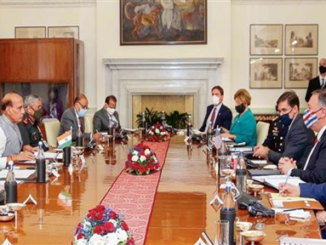
    The signing, last week, of the Basic Exchange and Cooperation Agreement (BECA) providing for the sharing of geospatial data is the last of the foundational agreements. The first, General Security Of Military Information Agreement (GSOMIA), relating to security of each other’s military information was signed in 2002. The Congress-led United Progressive Alliance government signed the End Use Monitoring Agreement (EUMA) in 2009. The India-United States defense partnership received a major boost earlier this week with the visit of U.S. Secretary of State Mike Pompeo and U.S. Defense Secretary Mark Esper for the third round of the 2+2 Dialogue with their Indian counterparts, External Affairs Minister S. Jaishankar and Defense Minister Rajnath Singh. The joint statement spells out the highlights but the optics are what define the visit. At a time when most ministerial engagements and even summits are taking place virtually, the significance of two senior U.S. officials travelling to Delhi a week before the U.S. goes to the polls conveys an unambiguous political message — the defense partnership has come of age.

    A long road

    It has been a long process, with many ups and downs since the first modest steps were taken with the end of the Cold War three decades ago. The 1991 Kicklighter proposals (Lt. Gen. Claude Kicklighter was the Army commander at the U.S. Pacific Command) suggested establishing contacts between the three Services to promote exchanges and explore areas of cooperation. An Agreed Minute on Defense Cooperation was concluded in 1995 instituting a dialogue at the Defense Secretary level together with the setting up of a Technology Group.

    The end of the Cold War had helped create this opening but the overhang of the nuclear issue continued to cast a shadow on the talks. There was little appreciation of each other’s threat perceptions and the differences came to a head when India undertook a series of nuclear tests in 1998. The U.S. responded angrily by imposing a whole slew of economic sanctions and leading the international condemnation campaign. An intensive engagement followed with 18 rounds of talks between the then External Affairs Minister, the late Jaswant Singh, and then U.S. Deputy Secretary of State Strobe Talbott spanning two years that helped bring about a shift in perceptions. Sanctions were gradually lifted and in 2005, a 10-year Framework for Defense Relationship established, followed by a Joint Declaration on Defense Cooperation in 2013. The Framework agreement was renewed in 2015 for another decade.

    The Framework laid out an institutional mechanism for areas of cooperation including joint exercises, intelligence exchanges, joint training for multinational operations including disaster relief and humanitarian assistance, technology transfer and a sharing of non-proliferation best practices. Initial movement was slow; it gathered momentum once the nuclear hurdle was overcome in 2008 with the India-U.S. civil nuclear deal.

    There were other factors at play too. Equally important was the progressive opening up of the Indian economy that was registering an impressive annual growth rate of over 7%. Bilateral trade in goods and services was $20 billion in 2000 and exceeded $140 billion in 2018. The four million-strong Indian diaspora in the U.S. has come of political age and its impact can be seen in the bipartisan composition of the India Caucus (in the House) and the Senate Friends of India group. From less than $400 million of defense acquisitions till 2005, the U.S. has since signed defense contracts of $18 billion.

    A bipartisan consensus

    A bipartisan consensus supporting the steady growth in India-U.S. ties in both New Delhi and Washington has been a critical supporting factor. The first baby steps in the form of the Kicklighter proposals came in 1991 from the Bush administration (Republican) when P.V. Narasimha Rao led a Congress coalition. Following the nuclear tests, Prime Minister Atal Bihari Vajpayee (Bharatiya Janata Party) welcomed President Bill Clinton (Democrat) to Delhi. The visit, taking place after 22 years — the previous one being U.S. President Jimmy Carter’s visit in 1978 — marked a shift from “estranged democracies” to “natural allies”. A Congress coalition led by Prime Minister Manmohan Singh carried the process forward with a Republican Bush administration. Heavy political lifting was needed to conclude the historic nuclear deal in 2008, removing the biggest legacy obstacle.

    The biggest push has come from Prime Minister Narendra Modi overcoming the “hesitations of history” and taking forward the relationship, first with a Democratic Obama administration by announcing a Joint Strategic Vision for the Asia-Pacific and Indian Ocean Region in 2015, followed by elevating the India-U.S. Strategic and Commercial Dialogue (launched in 2009 and the first round held in 2010) into the 2+2 dialogue in 2018 with the (Republican) Trump administration reflecting the ‘Comprehensive Global Strategic Partnership’. Mr Modi is not constrained (at least on the strategic side) unlike Dr. Singh during his second term who faced opposition within his party, had a Defense Minister who preferred to shy away from any decision, and often had to prod a reluctant bureaucracy.

    The signing, last week, of the Basic Exchange and Cooperation Agreement (BECA) providing for the sharing of geospatial data is the last of the foundational agreements. The first, General Security Of Military Information Agreement (GSOMIA), relating to security of each other’s military information was signed in 2002. The Congress-led United Progressive Alliance government signed the End Use Monitoring Agreement (EUMA) in 2009 but then dragged its feet on the others on the grounds that it would jeopardize India’s strategic autonomy. However, it was apparent that as military exercises with the U.S. expanded, both in scale and complexity, and U.S. military platforms were inducted, not signing these agreements was perceived as an obstacle to strengthening cooperation. Nearly 60 countries have signed BECA. In 2016, Logistics Exchange Memorandum of Agreement (LEMOA) relating to exchange of logistics support had been concluded, followed by Communications Compatibility and Security Agreement (COMCASA) in 2018 permitting encryption standards of communication systems. More than 100 countries have signed these agreements with the U.S. Equivalent agreements on logistics and mutual security of military communication have also been signed with France but without the political fuss.

    Breaking away from ‘labels’

    Developing the habit of working together has been a long process of building mutual respect and trust while accepting differences. The U.S. is used to dealing with allies (invariably junior partners in a U.S.-dominated alliance structure) and adversaries. India falls into neither category. Therefore, engaging as equal partners has been a learning experience for both India and the U.S. Recognizing this, the U.S. categorized India as “a Major Defense Partner” in 2016, a position unique to India that was formalized in the National Defense Authorization Act (2017) authorizing the Secretaries of State and Defense to take necessary measures. It has helped that India also joined the export control regimes (Australia Group, Missile Technology Control Regime and Wassenaar Arrangement) and has practices consistent with the Nuclear Suppliers Group where its membership was blocked by China spuriously linking it to Pakistan. In 2018, India was placed in Category I of the Strategic Trade Authorization, easing exports of sensitive technologies.

    In every relationship, there is a push factor and a pull factor; an alignment of the two is called the convergence of interests. An idea matures when the timing is right. After all, the Quad (Australia, India, Japan and the U.S.) was first mooted in 2007 but after one meeting, it petered out till its re-emergence now. Alongside the ministerial meeting in Tokyo earlier this month, India was invited for the first time to also attend the Five Eyes (a signals intelligence grouping set up in 1941 consisting of Australia, Canada, New Zealand, the United Kingdom and the U.S.) meeting.

    The policy debate in India is often caught up in ‘labels’. When Prime Minister Jawaharlal Nehru described non-alignment as the guiding principle of Indian foreign policy, it was designed to expand India’s diplomatic space. Yet, in 1971, when the Cold War directly impinged on India’s national security, a non-aligned India balanced the threat by signing the Treaty of Peace, Friendship and Cooperation between the Government of India and the Government of the Union of Soviet Socialist Republics. However, during the 1970s and 1980s, it was often hijacked by the Non-aligned Movement tying up policy in ideological knots. Such became the hold of the label that even after the Cold War, India defined strategic autonomy as Non-alignment 2.0! The Indian strategic community needs to appreciate that policies cannot become prisoners of labels. Ultimately, the policy objective has to enhance India’s strategic space and capability. That is the real symbolism of the in-person meeting in Delhi.

    (The author  is a former diplomat and presently Distinguished Fellow at the Observer Research Foundation)

    (Source: The Hindu)

  • NEVAKAR ANNOUNCES FDA APPROVAL FOR EPHEDRINE SULFATE INJECTION AS READY-TO-USE VIALS

    NEVAKAR ANNOUNCES FDA APPROVAL FOR EPHEDRINE SULFATE INJECTION AS READY-TO-USE VIALS

    BRIDGEWATER, NJ (TIP):  Nevakar Inc., a biopharmaceutical company developing multiple assets in the ophthalmic and injectable areas, announced , October 22, that it has  received approval from the U.S. Food and Drug Administration (FDA) to market Ephedrine Sulfate Injection in a ready- to-use 50mg/10 ml single use vial presentation. Under an exclusive licensing agreement with Endo International’s (NASDAQ: ENDP) subsidiary, Endo Ventures Limited, Par Pharmaceuticals’ Sterile Products division will launch and distribute the product. This is the first approval under the previously announced collaboration between Nevakar and Endo for the development of five differentiated, sterile injectable products in the U.S. and Canada. Under the terms of the agreement, Nevakar has responsibility to develop and obtain FDA approval for these products and Par Pharmaceuticals’ Sterile Products division will launch and distribute the products. “We are pleased to have received approval for this convenient, patent pending, ready-to-use form of a frequently used treatment for clinically important hypotension during anesthesia. We value our strong partnership with Endo, a respected pharmaceutical company with a significant and growing presence in sterile and critical care products as we pursue our mission to develop innovative pharmaceutical products that improve patient care and quality of life,” stated Navneet Puri, Ph.D., Founder, Chairman and Chief Executive Officer of Nevakar.

    About Nevakar Inc.

    Nevakar Inc. is growing as a fully integrated biopharmaceutical company with an extensive portfolio of products in the ophthalmic and injectable areas. Founded in 2015, and headquartered in Bridgewater New Jersey, the Company is focused on developing and commercializing innovative products to address unmet medical needs, thereby improving patient care and quality of life. Nevakar utilizes the 505(b)(2) regulatory pathway, along with its proven expertise in the development of novel and proprietary sterile pharmaceutical products to identify, develop, and obtain regulatory approval for its products. Additional information is available at www.nevakar.com.

  • Wedding Bells Ring in Harry and Manjeet Panaser’s  Family

    Wedding Bells Ring in Harry and Manjeet Panaser’s Family

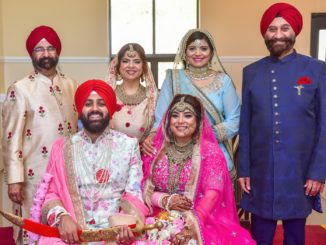
    MONROE, NJ (TIP): Mr. Harry Singh Panaser and Dr. Manjeet Kaur’s lovely daughter Ajooni Kaur got married to Harvind Singh Jassal son of Mr. Gurdeep Singh and Mrs. Hardeep Kaur of Canada, on October 17, 2020.
    The marriage ceremony was performed according to Sikh tradition, at Gurdwara Bridgewater, under COVID norms of social distancing and face covering. The wedding party of 14 came from Canada and were joined by their relations and friends in New Jersey. Mr. Tript P. Singh, Ajooni’s maternal uncle was at hand to organize the events, leading up to wedding, which included Bridal Shower, Sagan, Mehndi, and Haldi.
    The wedding guests were treated to lavish lunch post wedding ceremony, at Harry Panaser’s sprawling house in Monroe, NJ. Those present at the events included Consul General of India Mr. Randhir Bansal, Deputy Consul General Mr. Shatrughna Sinha, Senator Bob Menandez, Senator Cory Booker, NJ Senator Linda Greeenstien and Assemblyman Dan Benson, besides relations and friends.
    The Indian Panorama congratulates Panasers and Jassals, and wishes the newlyweds a long and happy married life.
    Incidentally, Mr. Harry S. Panaser is The Indian Panorama’s special correspondent at the United Nations.

  • Elections Canada 2019

    Elections Canada 2019

    Canada Elections 2019: Record number (50) of candidates of Indian origin in the fray

    By Prabhjot Singh

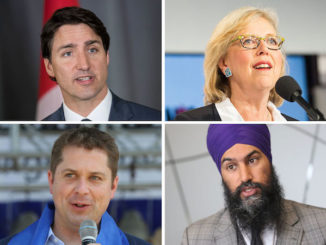
    Canada is all set to go for the Federal Elections 2019. On September 11, Prime Minister Justin Trudeau will go to the Governor-General’s office to recommend dissolution of the House of Commons. It will mark the start of campaign for the 2019 Elections that are mandated by law to be held on October 21. To form the next government, a party will need 170 seats in the new House of Commons. As of today the Liberals have 177 MPs in the 338-seat House of Commons, followed by the Conservatives with 95 MPs and the NDP with 39 MPs. Besides, there are 10 Bloc Québécois MPs, two Green MPs, one People’s Party of Canada MP, one Co-operative Commonwealth Federation MP, eight independents and five vacant seats. After meeting the Governor-General, the Prime Minister, Mr. Justin Trudeau will hold a rally shortly after the campaign launch and then take off on the Liberal plane. Conservative Leader Andrew Scheer will address party supporters in Trois-Rivières in Quebec on Wednesday morning before coming to the Ontario where he is expected to join meet and greet programme of party workers at a Woodbridge park. The NDP was first to launch its campaign last Sunday when the party leader Jagmeet Singh addressed a rally in Toronto before starting an aggressive campaign in the Greater Toronto Area and southwestern Ontario in his newly revealed campaign bus.The Green Party leader Elizabeth May too has her campaign plans ready that may take her more to Quebec expecting good response there.

    Indo-Canadians
    Canadian politicians of Indian origin are, as usual, in the limelight as campaigning for the 2019 Federal Elections gets under way.This time a record number of 50-odd candidates of Indian origin in general and Punjabi origin in particular, are in the fray. As of today, there are 18 candidates of Indian origin in the Liberal party’s list. They include Navdeep Bains, Harjit Singh Sajjan, Amarjeet Sohi, and Bardish Chagger. There are 17 candidates of Indian origin in the Conservatives list. NDP has nine candidates of Indian origin in ts list. Green Party, too, five candidates of Indian origin. There may be a couple of Independent candidates as well as two of original Liberal MPs – Darshan Singh Kang and Raj Grewal – had to leave the Caucus to stand clear of the charges made against them. Of the candidates of Indian origin, there are 12 women candidates, including Bardish Chagger, who became one of the the youngest leader of the Government in the House.
    At the time of dissolution of the present House of Commons, there are 20 MPs of Indian origin. One of the oldest sitting MPs of the Indian origin, Deepak Obhrai, died on August 2.
    The 2019 Federal Election will be unique in more than one ways. This time the campaigning time will be just six weeks compared to 11 weeks in the 2015 elections.
    Also, this is also for the first time that one of the three major political parties – Liberal, Conservatives and NDP – will be led into elections by a leader of Indian origin. Jagmeet Singh is heading the NDP. Though before his election as the NDP President, Jagmeet Singh was a Member of Ontario Assembly and later sought an election to House of Commons from Burnaby in British Columbia.
    Only other leader of Indian origin to have led a national party in Canada had been Mr Hardial Singh Bains, one of pioneers of the Communist movement in Canada.


  • Sikhs in London Protest the Blue Star Operation of 1984

    Sikhs in London Protest the Blue Star Operation of 1984

    LONDON (TIP): A demonstration and protest march, organized by Federation of Sikh Organisation UK, was held by thousands of the Sikhs in London Hyde Park and Trafalgar Square on Sunday, June 2, 2019, to protest against the Blue-Star Operation of 1984 by the then Indira Gandhi government.

    Beside Sikhs belonging to the London areas and Gurdwaras, Sikhs from 100-miles away cities like Birmingham, West Midlands,  Southampton, Gravesend, Bedford, Leicester reached there in trains, cars and in the buses arranged by the Gurdwaras and Sikh organizations   for their members. The speakers from the stage  were seen  shouting slogans ” Khalistan- Zindabad “, and the demonstrators were seen supporting and demanding “Khalistan”, by wearing T-Shirts with   “Khalistan” printed on  the front and back.

    Nirpal Shergill at Trafalgar Square, London

    The Sikhs have been protesting in India and  abroad against this Indian government army action for the last 35 years, since 10th June 1984, when there were protests and demonstrations all over the world e.g. Hyde Park corner London, Madison Square,  New York., Canberra, Toronto, Frankfurt etc.

    The first Sikhs demonstration, outside India, against the Blue Star Operation at Golden Temple Amritsar, I attended, and reported worldwide,  was at Robson Square Vancouver Canada on 10th June 1984, and  this London Trafalgar Square protest  was 36th demonstration  I attended since 1984.

    Southampton-based Amrik Singh Gill,  President of the Federation of Sikh Organisation, Gurmail Singh Malh, i President of Sri Guru Singh Sabha gurdwaras Southall and a  lot of Sikh community leaders , namely Lavshinder Singh Dallewal, Devinderjit Singh, Mangal Singh,Inder Singh Jammu Ex-Mayor, Gurdip Singh Sandhu, Balwinder Singh and many others addressed the gathering.

  • The historic victory and beyond

    The historic victory and beyond

    By Prof. I.S.Saluja

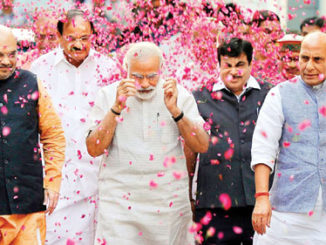
    It has been a glorious journey for BJP from 2 seats in Parliament in 1984 to 304, May 23, 2019, as I am writing this comment. Mr. Narendra Modi, the man who made it possible with the magic wand in his hand, recalled the tough journey in his address to the party workers at BJP Headquarters in New Delhi on May 23. And he proudly announced that during the long and tough struggle “we never felt tired, nor stopped, nor submitted”. It is the determination to go forward even in the face of the worst circumstances which finally embraces success. Mr. Modi and BJP must be congratulated for the historic victory.

    The election is over. And now is the time to fulfill promises made to people. It was all good to have made all kinds of tall claims of achievements to win votes. But now is the time to devote all energies to do the right service to “New India”.

    Mr. Modi will need to extend himself to achieve the goals he has spoken of in the past. He has admitted there is poverty and it needs to be eradicated. There is unemployment- record highest in 45 years. Mr. Modi has to create jobs for billions of unemployed youth.

    It is an achievement for Mr. Modi that rampant corruption seen a few years before is no more visible. But mere absence of corruption is no guarantee for a state of health for the nation and the people. They need jobs, bread and butter, education, healthcare, and above all, security, which unfortunately, is still elusive.

    The most important thing that Mr. Modi needs to do is to curb the feudal mindset. And the cleansing of the Augean stables has to begin from his tribe- the politicians. Not going into details in my comment, I will urge Mr. Modi to take a cue from the US and Canada with regard to the wages and the privileges of lawmakers.

    The whole nation is expecting Mr. Modi to bring about a qualitative and substantive change in the country. The world is looking at the largest democracy in the world to see if the minorities will be able to live in dignity under the BJP rule. Mr. Modi will have to take care to protect the interests of all Indians, whatever their color or creed.

    We wish Mr. Modi all the best as he prepares to begin his second five-year term as the Prime Minister of India.

    Jai Hind!


  • The New Deals: U.S.-Mexico-Canada Pact

    The New Deals: U.S.-Mexico-Canada Pact

    After more than a year of intense negotiation, the U.S., Canada and Mexico managed to arrive at a revised trade agreement on Sunday to replace the quarter-century-old North American Free Trade Agreement (NAFTA). Even though the deal does not do anything new to promote the cause of free trade among the North American nations, it achieves the objective of averting any significant damage to the international trade system. Sadly, this is the best anyone could possibly hope for in the midst of the global trade war that began this year. When it comes to the finer details, the U.S.-Mexico-Canada Agreement (USMCA) makes several changes to NAFTA, which U.S. President Donald Trump had promised to scrap. The most prominent changes are the tweaks to production quotas applied to Canada’s dairy industry, which were intended to help protect it by restricting supply. Under the new deal, Canada will have to allow American dairy producers to compete against locals, a move that will favor Canadian consumers. The U.S. agreed to retain Chapter 19 and Chapter 20 dispute-settlement mechanisms as a compromise. This will help Canada and Mexico deal with protectionist duties imposed by the U.S., often under the influence of domestic business lobbies, against their exports.

    Not all the amendments, however, are congenial to the prospects of free trade. Many are simply hard compromises that Canada and Mexico may have made just to defuse trade tensions with the U.S. And not unlike other free trade deals entered into by governments, the present one attempts to micromanage trade in a way that benefits specific interest groups at the cost of the overall economy. The new labor regulations and rules of origin will add to the cost of production of goods such as cars, thus making them uncompetitive in the global market. The USMCA mandates a minimum wage that is above the market wage on labor employed in Mexico, yet another move that will make North America a tough place to do business. Foreign investors may now have fewer protections from unfriendly local laws as the accord does away with resolutions through multilateral dispute panels for certain sectors. But it is its potential to end up as a double-edged sword for the U.S.’s major trading partners that Indian policymakers may find instructive. Announcing the USMCA, Mr. Trump signaled he would now extend his ‘all or nothing’ approach to resetting trade ties with the European Union, China, Japan and India. Terming India “the tariff king”, he said it had sought to start negotiations immediately, a move he reckoned as a bow to the power of tariffs that a protectionist U.S. could wield. In dealing with an emboldened Trump administration, India’s trade negotiators will now have their task cut out if they want to protect exporters’ access to one of the country’s largest markets for its services and merchandise.

    (The Hindu)

  • Indian Origin Canadian Entrepreneur Ken Singh Donates $20,000 for Kerala Flood Relief

    Indian Origin Canadian Entrepreneur Ken Singh Donates $20,000 for Kerala Flood Relief

    NEW YORK(TIP): The Indian Diaspora Council International (IDC) Life Member Ken (Kanhai) Singh of Toronto, Canada, has donated $20,000 CAN ($16,000 USD) towards Kerala Flood relief.

    The donation was made to the Vishnu Mandir to channel the desperately needed funds appropriately and for optimum reach and relief to those “affected by the recent devastating floods which that have caused numerous deaths, displacement, suffering, pain and anguish. Several local and international news reports have compared this flooding as the worst in Kerala in a century”.

    Ken Singh remarked that his “contribution is to help those in urgent need in Kerala, being of service to humanity at such times of massive despair and destruction”

    Ken Singh made the generous donation upon solicitation of Cliff Rajkumar, president of IC Canada, who conferred with IDC on the most efficient and expedient way for optimum effect.

    Guyana born Ken is President of Atlas Cargo, International Freight Transportation in Toronto with branches in Calgary, Edmonton Montreal and Vancouver. He was recently profiled in IDC JOURNAL Newsletter. http://www.indiandiasporacouncil.org/idc-journal-march-2018.php

    Excerpt from IDC profile: “Ken believes in giving back to society and he finds the time, amidst his busy schedule to actively assist in his local community and many other social causes worldwide.  The Life Illustrated magazine article states, “He volunteers with the CPPS, a catholic mission project that works on projects to provide health care and clean water in Africa.  The Central American arm of World Vision; Bosnian Children Cultural Heritage Center are all beneficiaries of his efforts to contribute to the various communities.”

    IDC commends Ken Singh on his generous contribution and continues to urge relief contributions online and desperately needed clothing, materials and non-perishable food via bona fide international relief agencies and community organizations.

    For more information contact: Ashook Ramsaran at AshookRamsaran@gmail.com

     Mobile (USA) +1 917 519 5783

    Indian Diaspora Council International (IDC), established in 1997, is an international non-profit organization with global affiliates and membership in 21 countries with the objective to embrace, engage and enhance the shared heritage, aspirations and interests of persons of Indian origin with optimum inclusivity.

    http://www.indiandiasporacouncil.org/news.php?id=86

  • Why These Trade Talks with Canada are getting so Tough

    Why These Trade Talks with Canada are getting so Tough

    By A.D. Amar

    By far, the biggest contributor to its export income has been the USA. Seventy-five percent of its exports are to America. Because of this enormity of its exports to America that bring in many billion dollars into the Canadian economy (about $50 billion just for selling cars to the USA), if American exports are interrupted, Canada will face huge economic and social problems. That is why, it is understandable that Canada is going to fight tooth and nail to keep its exports to America going unhindered, while not importing goods to protect its local producers and to preserve its cash. Ironically, American political and business leaders, because of Canada’s influence on American politics and business, want the status-quo to continue.

    Watching the currently going US-Canadian trade talks will make anyone understand why no US president in decades, spanning both political parties, dared to get into renegotiating America’s trade deals that had been sealed and practiced for so, so long ago, even though unfair.

    The deal with Canada, or NAFTA on a broader scale, is not an isolated case of a trade deal that is unfair to America. Almost all American trade deals are unfair, and that is why, American Presidents decided to stay away from them. They knew that the reopened trade talks will open tough issues that had been so negotiated that America had to open its borders to the other country such that it could export to America unabated, whatever and how much it wanted to export. However, when it came to importing from America, the other country, according to the deal, could engage in protectionism in whatever form it wanted. Take, for example, Canada’s imposition of a 300% tariff on all dairy products imported from America. And America tolerated this. In essence, basically, America always became the only free market in every deal. There was no laterality.

    Through the kind of trade deals described above, for the last more than seventy years, America has made the whole world wealthy, whether it had been the countries in Asia, Europe, or North America, including Germany, Japan, China, South Korea, Canada, and Mexico, to name just a few. The trade agreements that they signed legitimized the unfair trade practices against the USA. The outcome had been a constant outflow of wealth from the United States to other countries. Consequently, during the ensuing decades, America fell from holding the top position in almost every measurable economic or social indicator to the bottom of its heap. And, the previously named are the countries among those that replaced America. Since it had been going on for so long, these nations had gotten used to exporting to America to earn cash to pay for imports for their needs from other countries who sold them at the lower prices, or they did it to fulfill their obligations of the deals they signed with the other countries who traded with them. They treated their trade deal with the USA as an entitlement. Because of the effort needed to conduct these negotiations afresh, and the low probability of an outcome that would satisfy the populations involved had the American presidents maintain their status-quo.

    Let us, again, take the case of Canada. By rank, it is the 38th country in the world by population size, but 10th when it comes to exports, making it a very powerful, global exporter. Until 2007, it was America’s largest trading partner (lost that position to China). By far, the biggest contributor to its export income has been the USA. Seventy-five percent of its exports are to America. Because of this enormity of its exports to America that bring in many billion dollars into the Canadian economy (about $50 billion just for selling cars to the USA), if American exports are interrupted, Canada will face huge economic and social problems. That is why, it is understandable that Canada is going to fight tooth and nail to keep its exports to America going unhindered, while not importing goods to protect its local producers and to preserve its cash. Ironically, American political and business leaders, because of Canada’s influence on American politics and business, want the status-quo to continue.

    Now, let’s take the other side of Canadian foreign trade. While America takes in 75% of Canadian exports, America is not Canada’s largest trading partner. No surprise, it is China. And, do not wonder; that is the case in almost all America’s trading partners. That is how, America did not have well-paying jobs for its population, and had to fund its budgets by taking loans, mostly from its trading partners.

    The above given analysis provides us enough to accept that, in spite of exporting so much to America, mostly America’s trading partners do not import enough from the US to help balance the bilateral trade. Each of these countries uses its export dollars earned from America to buy more from China, European Union and other countries, leaving for America an annual trade deficit that was $566 billion in 2017. This is the problem that the Trump Administration is attempting to rectify through these, so called, the new NAFTA negotiations. The situation is exactly the same when we look at almost all of America’s major trade deals. The toughest and the largest one of them all is the trade deals with China. And only Trump has the understanding, desire and the stamina to take on these trade fights, simultaneously, to halt the outflow of these many, many billion American dollars every year that we could use to bring back to the top of the global ranks the standard-of-living and quality-of-life of our population.

    (The Author is Business Professor at Seton Hall University. His areas of expertise are strategy, knowledge, and operations. He can be reached at AD.Amar@shu.edu; Tel: (973) 761 9684)          

  • Cinema “The First Responder”

    Cinema “The First Responder”

    Rajan Gangahar packs his film on PTSD with emotion and drama

    A film on the life and experiences of EMS workers is shot in and around New York

    Essentially a loner and a voracious reader, US-based director-writer Rajan Gangahar, has just finished filming “The First Responder”, a short film in New York. Says Rajan,” When the Producer approached me to make a film on the life of EMS members’ life and experiences, I was not excited. To me, a film is about emotions not just visuals. I liked the perspective, but I wanted to add the most important dimension for a good film. Make it a human story, of a traumatic experience of the EMS worker”. Rajan has earlier written and made a feature film, “Khushiyan” in Punjabi, one of the most popular languages in India and won the Best Writer award for the film at PIFA in Toronto, a global film award mega event. “The film was about human relations and founded on emotions,” says Rajan.

    Gangahar trained as an actor and worked in theater circuit in India for several years. “Stage performances offered a direct connect with the audience and helped me learn the value of touching the audience’s heart. It was instant,” he says while talking about his stage experience. Gangahar traveled with a theater group all across Canada and USA for his play. And the response was universal. It connected with the audience everywhere. “I was clear. Any form of creative work will connect and be successful if we can touch the heart”.

    Whether it is a debate on India or the USA, Gangahar always tends to lean on the freedom of expression. Political or intellectual or creative or even religious subjects are deliberated with same zeal keeping the backdrop of human behavior. The Post Traumatic Stress Disorder (PTSD) in any profession, including EMS, is essentially due to some or the other form of guilt, which may be haunting the sufferer. And then the patient enters the state of denial. Whether it is the guilt or fear of facing it again or inability to confess, the person keeps running away from reality.

    Whether it is a play or story-screenplay-dialogues or directing, Gangahar has never tried to rush into anything in a quest to do a lot. It’s not about lust of fame but the satisfaction of doing good quality creative work that drives the Gangahar. It’s not about telling the family and world of friends about making a film but “telling” the story in the right manner on screen or stage or television that stimulates Gangahar.

    “When the producer of “The First Responder” shared the subject of the film which he had conceived as a documentary on the life of EMS workers, I was clear, it is a universal subject. Most amongst us have dealt with EMS as volunteers or when we sought their service or when one or other member in our family worked with EMS. We all know the essence of the EMS duty. But what interested me was to adapt it for a fiction short film yet depicting the life and trauma of an EMS staffer,” says Gangahar. And a short documentary was transformed into a docu-drama and then to a short film based on fiction, yet close to a real-life story.

    “The hero or protagonist of my film has similar trauma. He is suffering every day as his experience haunts him. Days and nights. But he denies and even refuses to take professional help. It reaches an extreme when he can’t even take assignment lest he fail again. He wants to pretend and show off machoism yet all around him observe his suffering. He even contemplates suicide,” says Gangahar.

    “A compassionate boss and a caring wife help him to take professional help. Finally, barriers are broken, and he hugs his wife in elevator while going back home after he completes the treatment,” he adds.

    “I have been studying cinema for quite some time. Learning from the West, I believe in doing complete homework. It is not about the scale of the subject or canvass. A detailed and thorough pre-production work helps,” says Gangahar. With about 16 persons in crew and 10 actors, the unit was small. The creative team could focus on meaningful output especially keeping in mind the limited resources.

    The filming has been completed in less than ten days while shooting all around in New York city. Gangahar expects to finish post-production work by end of August and then submit the film for festivals around the world.

      Interview with RAJAN GANGAHAR

     “Any story that deals with human emotions interests me”- Rajan

    Director Rajan Gangahar

    What attracted you to take on this project as a director?

    I would say it was the subject. It is a story of EMT workers and their exposure to traumatic circumstances. We see EMT workers all the time and expect them to be first responders. In worst of the circumstances, constant exposure to these traumatic situations can lead to PTSD (Post-Traumatic Stress Disorder). This medical condition effects everyone around you, the family, friends, colleagues. Unfortunately, there is a macho culture and one considers a weakness to seek medical help. It is a story of When Helping Hurts.

    Who wrote the story?

    Ron Basci, a friend of mine, has written the script about an EMT worker and silently suffered from PTSD.

    How did you select the cast and the crew?

    Casting was a complicated process. The original casting call attracted more than 600 actors. The team brought it down to 30. Final auditioning went on for a week. All the hard work paid off and we were able to ensemble a cast of 9 — probably the best from theater and films.

    How was the experience of working with an American unit including an American Producer? 

    It was an enriching experience since I was able to share my experience and also adopt to local technical crew. At the end of the day we have been able to create a believable human story.

    How is it different from making an Indian film?

    Internet has created a flat world for every field including in the field of film making. Though some ground realities will always influence working environment like availability of low-cost labor in Indian film industry. And that translates to multiple resources always available on call. On the contrary, the crew in America is comparatively smaller but better trained in latest technologies, though the gap is diminishing.

    You have been an actor yourself. Why did you not act in the film?

    It is always tempting but I avoid the temptation, especially when as a director the performance of the whole cast needs your undivided attention.

    How is a short film different from making a feature length film?

    Any film less than 50 minutes is considered a short film. The difference is less time to establish characters and still engaging the audience from conflict to resolution. The future of entertainment as predicted by experts would be shorter films because of shorter attention span of the younger generation.

    What is most important to you in making a film?

    Film making is a field of director, DOP Editor Maintaining a single, clear vision through communication before the shoot is the key. Since they all are telling same story in different languages with their respective tools. It is imperative for all of them to have single clear vision. Artistically, I am of the opinion in creating believable characters is the key and I am fascinated by the process of characterization. Acting is doing consciously what we do unconsciously in real life. Recreating that behavior is what creates a great performance.

    What kind of cinema do you like as a film maker?

    Any story that deals with human emotions interests me.

    Where do you see Indian cinema today and five years from now, especially with Netflix and Amazon redefining boundaries?

    With the availability of internet, we human are no longer confined by physical and imaginary boundaries. We are more aware of other cultures, there history, there struggles and sufferings and curious to listen to stories beyond barriers of language and culture. Corporates like Amazon, Netflix, Apple are trying to ride that wave by creating single international platform for everything from screening films to making films.

    Indian films have recently created history by making almost $300 million in China? What is the reason? Do you see similar possibilities for Indian cinema in USA?

    The present times are probably the best of times for the Indian film industry. India is producing realistic and sensitive cinema and global audience including in US, China, UK is accepting it. An era of films with universal issues that strike a chord with both foreign and domestic audience has commenced. Rest is a numbers game.

    Why are Indian Directors not making films in Hollywood? Even top Indian actors rarely do films in Hollywood. Why? Do you see this changing in near future?

    No one can live in isolation. There is so much to learn from experiences of each other. Both industries were catering to their own kind of audience, but it is changing. Hollywood studios are experimenting with adding in Indian actors in significant roles. Initially to get wider audience but with time they would be doing it for talent. Future is, both industries working with each other or for each other and launching joint ventures.

    In your view, is human interest story a universal subject? Can a film appeal to all or majority of audiences across the world?  

    Yes, there is no doubt in that. Perfect example would be the play “Death of a Salesman” by Arthur Miller — a story of a middle-class family struggle in 1950. This play was translated and performed in every country and almost every language. So, yes emotions and feelings are universal, dressed in local cultures.

    What is next for your short film? Do you see it appealing to all audiences across the world?

    Yes, I am positive it will, emotions like music are universal.

    What would you like to do next and in what capacity?

    There are stories to be explored and told. I would love to remain a storyteller in any format — a film, a Play or a book… as a director, an actor or a writer.

  • Indian–Origin Man gets $1.2 Million in Compensation for “Fake News” Article in Canada

    Indian–Origin Man gets $1.2 Million in Compensation for “Fake News” Article in Canada

    VANCOUVER, CANADA(TIP): An Indian-origin Canadian businessman has been awarded $1.2 million in damages after he was defamed in a series of fake news articles instigated by a prominent American blockchain investor.

    It is one of the biggest compensations of its kind in Canada. Vancouver-based Altaf Nazerali, who is originally from Bhuj, Gujarat, had sued Patrick Byrne, CEO of online retailer Overstock.com, for a campaign of lies aimed to tarnish the reputation of the NRI businessman.

    Last week, the Supreme Court of Canada rejected Patrick Byrne’s appeal against $1.2 million granted to the NRI businessman by the Supreme Court of British Columbia in 2016.

    The huge compensation for Altaf Nazerali comes after a seven-year legal battle to clear his name after a series of articles published in 2011, on an American website DeepCapture.com tried to depict the NRI businessman as a drug trafficker, arms dealer and gangster and a financial supporter of al-Qaida. The articles tried to show that he had links to Russian and Italian mafias.

    The articles were written by Mark Mitchell and published on the website – owned and published by Byrne- which reports on criminal financial conspiracies.

    In its 2016 judgment in favor of the NRI business, Justice Kenneth Affleck of Vancouver-based British Columbia Supreme Court had said: “Mitchell, Byrne and Deep Capture LLC engaged in a calculated and ruthless campaign to inflict as much damage on Nazerali”s reputation as they could achieve.

    “It is clear on the evidence that their intention was to conduct a vendetta in which the truth about Nazerali himself was of no consequence.”

    The American blockchain investor challenged the judgment in the Supreme Court of Canada which last week threw it out.

  • Indian Lawmakers Modern Day Princes

    Indian Lawmakers Modern Day Princes

    By Prof. I.S. Saluja

    I was going through a report on the security cover provided in India to thousands of designated VIPs and hundreds of thousands of lesser privileged people. One shudders to imagine the cost of providing security, and more than that, the dangerous consequences of the VIP culture for the country.

    It also reminds me of the princely living of Indian lawmakers. Imagine the cost per MP or MLA who is provided free housing, free travel (not only for himself but for the family and the staff), free transportation, free phones, and, on top, free security.

    I look at the lawmakers here in the US and in neighboring Canada and wonder why India which takes pride in adopting everything Western – economy, technology, fashion- can’t think of adopting the simple wage structure for lawmakers in the US and Canada.

    In 1998, I was visiting Canada for the first time at the invitation of Hon Gurbax Singh Malhi, then a Member of Canadian Parliament (he later became a federal minister). I was surprised to find that that he was not provided a free house, or a chauffeur driven car. There was no security guard. I learnt, members of parliament got salary; and a room and secretarial assistance in the Parliament House only, not at their residence.

    But look at our Indian princes whose number at the time of India’s partition may have been a couple of hundreds in around 500 princely states, has grown to a couple of thousands in the parliament (545 in Lok Sabha & 245 in Rajya Sabha); and in 29 legislative assemblies (the total will be roughly around 5000).

    A report published in The Hindu in March 2016 said government paid 2.7 lakh per month for a member of parliament. Travel and some other freebies are not included. And recently there have been upward revisions in salaries and allowances. I will leave it to readers to calculate the total financial burden on the people of India.

    If you feel concerned at this unjust self-aggrandizement by Indian lawmakers, share this note, for the sake of India and Indians.


  • 200% rise in invites to Indians for Canadian permanent residency

    200% rise in invites to Indians for Canadian permanent residency

    Canada has emerged as a coveted destination for India’s diaspora

    NEW YORK(TIP): Indians appear gung-ho about Canada’s Express Entry program which invites top ranked candidates — under the country’s point-based immigration system — to take up permanent residency. Express Entry is Canada’s flagship program for key economic migration.

    Under the scheme, out of the 86,022 invitations sent in 2017, nearly 42% (or 36,310) were to those holding Indian citizenship. The total number of invitations sent in 2017 was more than double the previous year — 33,782.

    In 2016, the number of invites sent to those having Indian citizenship in Canada was merely 11,037, showing an increase by more than 200% a year later.

    Wait for Green Card sends desis to Canada

    According to the Express Entry Year-end Report, 2017, issued recently by the Canadian government’s immigration division, a little over one lakh applications were received for permanent residency under the Express Entry program in 2017, 86,022 invitations were sent, and 65,401 permanent residents and their families were admitted into Canada.

    Nearly 40% of this total or 26,000-plus Indians became permanent residents in Canada.

    Among those applicants who had job offers and were admitted as permanent residents, occupations like information system analysts, software engineers and designers, computer programmers and university lecturers topped the charts.

    These statistics, showing an increase in number of Indians opting for Canadian permanent residency, strengthen the belief that many H-1B visa holders, tired of the backlog and infinite wait for a green card in the US—a green card grants permanent residency on American soil—are now heading towards Canada.

    Currently, more than three lakh Indians in the US are waiting for a green card, CATO Institute, a Washington-based think tank, states that given the green card backlog, the waiting period for Indians with an advanced degree (those in the EB-2 category) could be as much as 151 years.

  • President Trump to attend G7 Summit, in part

    President Trump to attend G7 Summit, in part

    The two-day meeting will be dominated by the possibility of a trade war – prompted by the US levies of 25 per cent on steel and 10 per cent on aluminum

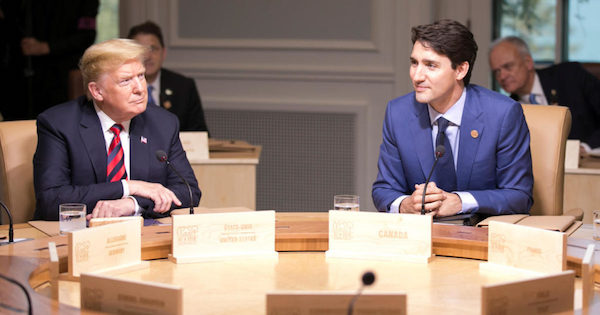
    WASHINGTON(TIP): After initial dithering, President Trump is heading for G7 Summit at Charlevoix, Canada on Friday, June 8. Following the session on Women’s Empowerment, Trump will travel directly to Singapore from Canada in anticipation of his upcoming meeting with North Korea’s leader Kim Jong Un, Tuesday, June 12.

    Deputy Assistant to the President for International Economic Affairs Everett Eissenstat will represent the United States for the remaining G7 sessions, White House Press Secretary Sarah Sanders said.

    The annual G7 (Group of Seven) summit kicks off in Charlevoix, Quebec on Friday, June 8 and the stage is set for a major showdown between the US and its allies.

    The leaders of the G7, an informal bloc of some of the world’s most powerful industrialized countries, including Germany, the UK, and Japan, get together every year to discuss collaboration on issues like global security, the international economy, and climate change.

    At the end of the summit, they aim to sign a joint statement detailing the policy positions and initiatives they agree on.

    But there’s a decent chance that might not happen this year.

    That’s because President Donald Trump has so badly rattled the other members with his recent heavy steel and aluminum tariffs and other divisive new policies that it might be impossible for the group to reach a consensus on any substantive issue.

    The two-day meeting will be dominated by the possibility of a trade war – prompted by the US levies of 25 per cent on steel and 10 per cent on aluminum.

    Angela Merkel, the German chancellor, has predicted a big fight at the summit, triggering suggestions it has become a “G6+1” – with the US president isolated and alone.

    The EU is poised to impose tariffs on US imports ranging from Harley-Davidson motorbikes and jeans to bourbon, peanut butter, cranberries and orange juice, from next month.

    Brussels is still finalizing the list it will submit to the World Trade Organisation (WTO), which will be on top of tit-for-tat tariffs on about £2.5bn of US steel.

    A French official told Bloomberg that French President Emmanuel Macron wants to make progress with President Trump on smoothing tensions over trade, the US’s withdrawal from the Iran nuclear deal, and climate policy — and if that doesn’t happen, France may refuse to sign.

    Then there’s the fact that Trump himself is reportedly contemplating not signing the joint statement to show that the US is perfectly happy to go its own way if the other members give it too much trouble during talks. The divide has become so stark that staffers and observers of the G7 have started to call it the “G6 plus one.”

    “What this G7 is going to show is that the United States are alone against everyone, and especially alone against their allies,” French Finance Minister Bruno Le Maire told reporters last week.

    The G7 summit is usually a boring meeting of broad consensus. Not anymore.

    The G7 summit, which includes Canada, France, Germany, Italy, Japan, and the United Kingdom, plus the European Union (which is not technically part of the G7 but participates), is typically a pretty straightforward affair.

    The official themes for this year’s summit include “investing in growth that works for everyone,” “preparing for the jobs of the future,” and “advancing gender equality.” Against the backdrop of these deliberately anodyne themes, world leaders can hobnob and try to move the ball forward on issues like a new free trade agreement or cooperative climate policy.

    But Trump has departed sharply from the G7 consensus on issues like these in the past by, for instance, pulling out of the Paris climate agreement and withdrawing from the Trans-Pacific Partnership.

    And White House officials say he is planning to strike a confrontational posture at the summit. “There are disagreements. He’s sticking to his guns, and he’s going to talk, talk to them,” National Economic Council Director Larry Kudlow told reporters on Wednesday. Trump is also reportedly considering implementing a fresh round of tariffs against Canada — the host of the summit.

    European countries could also shun the final statement. Their biggest priority is likely going to be getting Trump to consider some kind of compromise on his recent protectionist trade policies, the most controversial one being his imposition of sweeping tariffs on foreign steel and aluminum. Currently, those tariffs hit exports from every other member of the G7.

    Trump is also apparently not looking forward to what could be a tense and awkward meeting. According to the Washington Post, Trump has reportedly complained to advisers about having an “uneasy rapport” with German Chancellor Angela Merkel and sees British Prime Minister Theresa May as “too politically correct.”

    And Trump has apparently told advisers that he doesn’t want to be “lectured” by other world leaders, especially as he tries to prepare for an upcoming high-stakes summit with North Korea next week.

    If the final joint statement for the G7 is missing signatories this weekend when the summit wraps up, it won’t be the end of the world. It’s a symbolic show of unity, not a binding document with concrete policy effects. But it will be yet another sign of how far the US is drifting from many of its most trusted friends in the world.

    (With input from agencies)


  • Theater / Films

    Theater / Films

    Socially Relevant Film Festival 2018, NY

    By Mabel Pais

    “(This year) we have been able to incorporate films from more (countries) and have been able to hone in on specific social issues in more depth.”
    Nora Armani, SRFF’s Founder-Artistic Director

    Founder-Director Nora Armani interview on Red Carpet
    Photo/ SRFF ™
    (Top left) Apne Aap’s Ruchira Gupta with other panelists on Spotlight Panel
    Photo/ SRFF ™

    The SR Socially Relevant Film Festival™ 2018 New York (SRFF 2018) kicks off its Fifth Season at Cinema Village in downtown Manhattan, New York and neighboring venues such as SVA Social Documentary Film Campus and CRS (Center for Remembering and Sharing), March 16 – 22, 2018.

    What is SR?

    The SR Socially Relevant™ Film Festival New York was founded by award-winning actress Nora Armani. Its mission is to shine the spotlight on filmmakers who tell compelling, socially relevant™, human interest stories, across a broad range of social issues. The festival was created as a response to the proliferation of violence and violent forms of storytelling in media and entertainment. SR™ believes in the power of cinema in raising awareness towards social issues and promoting positive social change.

    Festival Founder and Artistic Director Nora Armani says, “SRFF 2018 is very happy with our fifth year’s selection. We have been able to incorporate films from more (countries) and have been able to hone in on specific social issues in more depth. This year’s festival goes back to basics: the filmmakers, the films, and the issues, with a number of interesting partners and sponsors accompanying us.”

    The Official Selection to be screened in the heart of Greenwich Village covers a diverse mix of five narrative features, 15 documentaries, 38 shorts, and more. There will also be a script-writing contest with readings from finalist scripts. The Festival includes expert panels on film industry and social issues. The films represent over 22 countries.

    Opening night will take place Friday, March 16, 2018, 7:00 PM with the narrative feature film Lou Andreas-Salomé: The Audacity to be Free (Germany). A stunning period piece on the 19th-century female novelist, poet, and essayist, the film follows Salomé as she shuns traditions in pursuit of intellectual perfection.

    Among the other selected narrative feature films are:

    Darcy (USA), Find Your Voice (Australia, New Zealand), Hot Country, Cold Winter (Armenia, The Netherlands, Germany).

    Highlights from the selected documentary features include Cause of Death: Unknown (Norway), Sands of Silence: Waves of Courage (Mexico, USA), Shiners (Canada, Japan, USA), Stitching Palestine (Lebanon), Talien (Italy), Tampon, Our Closest Enemy (France).

    Themes for selected short film groupings include Ageing Gracefully, Dreamers Having a Nightmare, Sustainable Communities, Where is Home? Whose Disability?

    Spotlight Panel: Women | Gender Equality | Human Trafficking

    Monday, March 19 features a keynote evening event celebrating women, in partnership with Apne Aap – an organization that rescues women and girls in India from sex-trafficking – including a series of films from India and elsewhere that promote empowering women and young girls. A panel discussion follows, lead by Ruchira Gupta.

    A number of workshops and panels complement the film screenings as the educational component of the festival, and these touch upon such topics as editing, distribution, pitching for film projects, filming in New York from the Governor’s Office for Film, Low Budget Film Production at SAG-AFTRA, Measuring the social impact of films, and others.

    The script writing competition features readings with actors, in the presence of the scriptwriters, from the seven finalist scripts. Other workshops and panels include industry forums, an engaged theatre workshop, a live music performance to silent films, and more.

    Presented with Gear VR provided by Samsung, the festival presents cutting-edge VR/360º experiences that push the boundaries of immersive storytelling. Among the six selected pieces is The Great – a VR Great White Shark Experience, which shows firsthand the grace and beauty of this misunderstood and endangered creature.

    The festival will close on the evening of March 22 with a glistening Awards Ceremony and screening of the winning films at Cinema Village, and party for the filmmakers at Doux Supperclub featuring appearances from NYC local filmmakers and industry veterans.

    The winners of each category are awarded special prizes in the form of trophies created by support from individuals and film industry and professional partners.

    Spokespersons and guests of SR Socially Relevant™ Film Festival NY include Amy Goodman of Democracy Now, Erin Brockovich, Martin Sheen, Pulitzer Prize and Tony award-winning writer Robert Schenkkan, prolific and best-selling French novelist Marc Levy, Academy Award Nominee and Emmy Award Winner Guy Davidi, American TV commentator and author Gretchen Carlson, and Liaison Officer of Tibet and the Dalai Lama, Kunga Tashi.

    Partner organizations and schools receive substantial discounts. Contact ratedsrfilms@gmail.com, if interested.

    For more information on the Film Festival, or to purchase tickets, visit www.ratedsrfilms.org.

    NJSO presents MOZART’S REQUIEM

    Xian Zhang conducts NJSO
    Photo/NJSO
    Montclair State University (MSU) Choir
    Photo/NJSO

    The New Jersey Symphony Orchestra (NJSO) and Music Director Xian Zhang present Mozart’s Requiem, March 15–18 in Newark, Princeton and Morristown. A trio of vocal pieces, including a pair of a cappella works performed by the Montclair State University Singers, open the program.

    Performances take place on Thursday, March 15, at 1:30 pm and Saturday, March 17, at 8 pm at the New Jersey Performing Arts Center (NJPAC) in Newark; Friday, March 16, at 8 pm at the Richardson Auditorium (RICHAUD) in Princeton; and Sunday, March 18, at 3 pm at Mayo Performing Arts Center (MPAC) in Morristown.

    Continuing a multi-year partnership with the Curtis Institute of Music to present its finest student musicians, the NJSO welcomes a quartet of vocal soloists from the Institute—soprano Emily Pogorelc, mezzo-soprano Kendra Broom, tenor Roy Hage and baritone Doğukan Kuran—for Mozart’s masterwork.

    The program opens with Mozart’s Ave verum corpus, followed by Joseph Rheinberger’s Abendlied and Ben Parry’s Flame—two a cappella works showcasing the Montclair State University Singers under the direction of Heather J. Buchanan.

    NJSO Accents include #ChoraleYou—a “sing in” in NJPAC’s lobby following the March 17 concert, when audience members will get to give their own performance of the NJSO concert’s opening piece—Mozart’s Ave verum corpus. Montclair State University’s Heather J. Buchanan will conduct a brief rehearsal and performance that is open to all ticket-holders. More information is available at www.njsymphony.org/choraleyou.

    The Orchestra hosts its annual food drive and will collect non-perishable food donations at all performances. More information is available at www.njsymphony.org/fooddrive.

    For more information on the concerts and to purchase tickets online, visit www.njsymphony.org, or call 1. 800.ALLEGRO (255.3476).

    (Mabel Pais writes on The Arts and Entertainment, Social Issues, Health and Wellness, and Spirituality)

  • Trudeau’s India visit mired in controversy over dinner invite to “convicted Khalistani terrorist”

    Trudeau’s India visit mired in controversy over dinner invite to “convicted Khalistani terrorist”

    NEW DELHI (TIP): Canadian Prime Minister Justin Trudeau’s India visit kicked off with rather a cold reception by government of India. Prime Minister Narendra Modi who has been very warm to visiting heads of state and government who he received warmly on arrival, sent in a junior minister to receive the visiting Prime Minister of Canada, ostensibly to convey the displeasure of his government for his assumed close proximity to Sikh separatists in Canada.  And, on February 22, Canadian Prime Minister’s maiden India visit plunged into yet another controversy over a dinner invitation to a convicted Khalistani terrorist Jaspal Atwal by the Canadian High Commissioner to India.

    Swiftly moving to control damage, High Commissioner Nadir Patel cancelled the invite for the dinner, hosted for Trudeau, while the external affairs ministry said it will “ascertain” how Atwal entered India.

    “The High Commission has rescinded Mr Atwal’s invitation. We do not comment of matters relating to the PM’s security,” the Canadian mission said in a statement.

    Reacting to the controversy, Trudeau told reporters “Obviously we take this situation extremely seriously. The individual in question never should have received an invitation and, as soon as we found out, we rescinded the invitation immediately… The member of Parliament who included this individual has, and will, assume full responsibility for his actions.”

    The Canadian PMO also said in a statement that Atwal was not part of Trudeau’s official delegation.

    Atwal was convicted for trying to kill the then Punjab minister Malkiat Singh Sidhu in Vancouver in 1986.

    When asked how Atwal got a visa, external affairs ministry spokesperson Raveesh Kumar said the government is “ascertaining” details how he got a visa to enter India.

    “There are two aspects of this. One is his presence at the event. I think this is something which should be addressed by the Canadian side. They have said that it was an oversight. And that is the reason the invitation for the reception tonight has been withdrawn.”

    “On the visa part, I cannot immediately say how that happened. There are different ways of people coming into India, whether you are an Indian national, or OCI card holder. We are ascertaining details from our mission. We will have to see how this happened,” Kumar told reporters.

    He also said that the fact the ministry issued a visa means that Atwal is not an Indian national.

    On whether Atwal can be arrested in India, Kumar said there were cases against him for which he has served his sentence. The ministry is not aware whether there are cases against him in India, that has to be checked with the law-enforcement agencies, he added.

    Union home ministry officials said Atwal no longer figured in the government’s blacklist of Sikh extremists.

    The invite cancellation comes at a time when Trudeau’s pro-Khalistan approach is being criticized by many including Punjab Chief Minister Amarinder Singh, who raised the issue with the Canadian prime minister during a meeting.

    On his part, Trudeau had assured Singh that his country does not support separatism in India or elsewhere.

    Reacting to the controversy involving him, Atwal told Canada’s Postmedia that he did not plan to attend the dinner as he was in Mumbai on business, The Vancouver Sun reported.

    He also said it was unfair to raise his criminal conviction for shooting a visiting Punjabi cabinet minister on Vancouver Island in 1986 given how long ago the crime occurred.

    (With inputs from PTI)


  • Indian Origin Canada’s Defense Minister Harjit Singh Sajjan Says He Faced Discrimination In Canadian Military

    Indian Origin Canada’s Defense Minister Harjit Singh Sajjan Says He Faced Discrimination In Canadian Military

    New Delhi (TIP): Indian origin Canada’s Defense Minister Harjit Singh Sajjan said he “faced discrimination” in that country’s military because he “looked different”.

    Sajjan, who moved to Canada as a young boy, said this in the presence of Sophie Gregoire Trudeau, wife of Prime Minister Justin Trudeau, currently on a week-long visit to India.

    “I was born in India and moved to Canada, when I was five… When I was 18 and joined the military there, I faced discrimination, even though I am a Canadian…because I looked different,” he said, during the Asia launch of the global campaign — ‘She Will Grow Into It’ here.

    Sajjan is travelling along with Trudeau and his wife, and they visited Amritsar and even offered ‘sewa‘ (volunteer service).

    “I hail from a small village and lived a very simple life, before migrating to Canada,” he said.

    Sajjan, who became the Defense minister in 2015, also shared an anecdote from his youth days to underline the message of equality.

    “I was 12, and I came across a girl in India, with round, beautiful eyes, who came towards me begging for money and I asked her to go away…Years later in Canada, when I faced discrimination, her face flashed in front of my eyes, and I realized she was begging because she was hungry,” he said.

    The Canadian minister said that then he realized how it felt to be treated unequal.

    “Sixty per cent of the world’s malnourished people are women, and this campaign seeks to fill the gap,” Sajjan said.

    During his interaction with young women from high schools, he described them as “powerful agents of change”.

    “Every child has a gift and endeavor to accomplish your inner potential and realize what you dream to become,” he said, adding, that “But, when you find you dream and success, go back and serve people”.

    The campaign, led by Canada-based non-profit organization Nutrition International, was launched globally in Ottawa on the International Day of the Girl Child.