Tag: Judiciary

  • Strengthening the long arm of the law

    Strengthening the long arm of the law

    One reason for widespread political and bureaucratic corruption is that the punishment for such offences is light and, therefore, it does not serve as a deterrent. Punishment for corruption must include confiscation of all illicit wealth and assets, and also a life sentence for those convicted of serious graft. There should be no discretion in this matter”, says the author.

    By Joginder Singh

    Iused to be a movie buff and would be easily moved by emotive scenes, songs and dialogues. The 1957 classic, Do Aankhen Barah Haath, remains one of my favourite films; Aye malik tere bandey hum, one of the most powerful songs from the film, still has an impact on me. The song exhorts the common man to do good deeds for India. But a friend sent me different connotation: Through the song, the common man is asking God about the sins that he may have committed as a result of which his country is now being governed by corrupt and dishonest leaders. Then, the common man pleads with God to contain, if not eliminate, all such corrupt people. When it comes to matters of integrity and governance, Indians are at the bottom of the list. It takes decades for our court cases to be taken to their logical ends; conviction takes even longer, so much so that by the time the court hands down the sentence, either victim or the perpetrator is no more. Take the latest matter against J Jayalalithaa, who was recently stripped of her position as Chief Minister of Tamil Nadu, after being convicted in a disproportionate assets case. The case was registered in 1996, the chargesheet filed in 1997, but the judgement came only on September 27 of this year. The special court in Bangalore, which was hearing the Rs 66.65-crore disproportionate assets case against Jayalalithaa and her three associates, N Sasikalaa, J Elavarasi and VN Sudhakaran, found all four guilty. They were convicted under Section 120(B) of the IPC (criminal conspiracy), Section 13(1) of the Prevention of Corruption Act (criminal misconduct by public servants) and Section 109 (abetment). The former Chief Minister has been sentenced to four years in jail and slapped with Rs 100 crore fine. Jayalalithaa’s case had been transferred by the Supreme Court to the Bangalore special court in 2003 after a petition was filed by a DMK leader and then Janata Party chief Subramanian Swamy. They had expressed doubts over the conduct of a fair trial in Tamil Nadu. The September 27 judgement effectively bans Jayalalithaa from the electoral arena for the next 10 years. According to the Representation of the People Act, 1951, a convicted person cannot contest any election for six years, from the date of completion of sentence. However, it is up to the courts to stay the sentence and conviction, pending the consideration of appeal. Previously, the accused had challenged the case with three writ petitions. But on October 1, 1997, the Madras High Court dismissed those petitions, including one challenging the sanction granted to the prosecution by the then Governor of the Tamil Nadu. By 2000, all but 10 witnesses had been examined. Yet, it took another 14 years for the remaining witnesses to testify. This only shows how the judicial system is twisted in favour of the accused while the victims – in this case, the general public defrauded by Jayalalithaa – continue to suffer. Yet, Jayalalithaa is not the only Chief Minister to have been put behind bars. Former Chief Ministers of Haryana, Jammu & Kashmir, Bihar and Jharkhand have also shared a similar fate. Similarly, a whole bunch of former Union Ministers and even one former Prime Minister have been hauled by the judiciary on corruption charges. One reason for widespread political and bureaucratic corruption is that the punishment for such offences is light and, therefore, it does not serve as a deterrent. Punishment for corruption must include confiscation of all illicit wealth and assets, and also a life sentence for those convicted of serious graft. There should be no discretion in this matter. Moreover, our lawmakers must seriously consider changing the rules so that the onus is on the accused to prove his or her innocence. It is ridiculous to expect that a common man will run around the courts for years to testify against powerful politicians. As for the investigating agencies, they have no magic wand with which they can produce evidence against the accused. The following statement by a judicial officer, confirmed repeatedly by the Supreme Court, should serve as a wake-up call to the Government: “The biggest single hurdle which inhibits the citizen from coming forward to help the police is the deplorable conditions prevailing in the courts of law. The lot of witnesses, appearing on behalf of the state against a criminal, is certainly pitiable. More often than not, the case in which he is to appear is adjourned, on one pretext or the other. When ultimately the evidence is recorded, the witness is browbeaten by an over-zealous defence counsel or declared hostile or unreliable by the prosecution. It is a wonder of wonder, that despite these handicaps, we have bold citizens who are willing to depose, at the cost of their life and property.” If India is to end corruption, it should consider the death penalty and life imprisonment for those convicted of graft. The system of appeals must be streamlined. Also, financially-sound people should be made to pay for the duration of their stay in jail. There is no rationale for wasting taxpayers money on them. Why should the common man pay for the boarding and lodging of criminals? But first, the Government must build up investigation and judicial infrastructure, so that no case drags on for more than a year or two. This is vital as no innocent should be allowed to suffer, for any reason whatsoever. This might appear to be a tall order but it is worth trying

    (The author is a former Director of India’s premier investigating agency Central Bureau of Investigation {CBI})

  • INDIA- US RELATIONS

    INDIA- US RELATIONS

    I.S. Saluja

    Prime Minister of India, Narendra Modiarrives in New York today, September 26, on afive day visit to USA. His visit, the first asPrime Minister, is being viewed as a powerful push to ensure the relationship between the two democracies of the world acquires genuine warmth, which, over the last few years, hasnoticeably been on the decline.

    Only for a brief period, during the Prime Ministership of Atal Behari Vajpayee, the relationship really warmed up but again, over the years, there have been many hiccups inspite of the loud protestations of “strategic relationship and partnership”.The question which every Indian Americanis asking is : “Will Modi’s visit bring about achange in the US perception of India and createconditions for a genuine friendly relationship,realizing equal partnership and based onmutual respect.In order to obtain a perspective, I spoke withone of the best known Indian Americans, asuccessful and eminent Attorney, Ravi Batra,who has considerable inroads in to the mainstream politics and is familiar with thethinking of US lawmakers, being friendly withquite a few of them.

    EXCERPTS:

    ” It would well serve India to make regulardeposits of goodwill in the generational Bank of Goodwill, such as the one that exists betweenUS and England. I wish to see India see UnitedStates as its inseparable nation-partner”.Another one.” Just remember that United States and India are destined to be joined at the geo-political and economic hip, even as ourpeople share the identical Dream.”Yet another. “Every relationship between living breathing people has irritants. Same istrue of nations. But to define the US-Indiarelationship from the irritant-lens is bothinaccurate and offensive. India and USA are “onthe same page” more often than not. But everyelection, here or elsewhere, gives a turbo-boostin a longstanding relationship, such that itexperiences a honeymoon period again andagain. It’s the Honeymoon period now.”And, finally, this. Be honorable and loyalCitizens of the United States, and continue toreach for the stars – and become worthy ofbeing included in pictures, rather than askingto be in one!

    Here is the full interview.

    Q. What factors have dominated andgoverned the relationship between India andUSA?

    USA?People and governments, and the near-law ofphysics when applied to geopolitics.You must remember that the Americanpeople have loved India all the way back toVasco Da Gama and Christopher Columbus – it’sin America’s soul at birth – this India-love thing.Then came Mahatma Gandhi – a love object ofall humanity, even as governments abhorredhim as a pain without equal. The recent post-Cold War relationship has been economicallydriven, rather than strategically, for Pakistanwas much better located as a buffer to the oldSoviets. The recent IT revolution, however, andIndia’s youthful citizenry has made India,previously known as a “Golden Sparrow” morelike a “Golden Falcon” to the great AmericanBald Eagle – I take some pleasure in that nameand description. Remember now that the young1.3 billion Indians can add value to everynation’s bottom line, even as they produce, andconsume goods and services from across theglobe.

    Q. How far the initial Socialistic character ofIndia in the first 40 years of IndependentIndia has been responsible for distancingbetween India and USA?

    Well, systems come and go, as do strategicalliances. Communism has been discreditedwithout doubt. Capitalism, while it has its faults,has been proven to be the best engine of growthand development. Now, the environmentalistswould argue that development and growth arethemselves the enemy – I disagree. Even to arrestclimate change, we need development of the”green” variety, flying on the wings ofcapitalism. But to answer your question directly,United States which pushed Britain to let Indiabecome free wasn’t happy with the old Soviet-India connection. Glad, that is over. Now, likePresident Obama in his GA speech onWednesday, I look forward to Russia, having”absorbed” Crimea, will return into the fold andbehave in a law-respectful way rather than a PacMan of others’ sovereignty. With Obamapresiding over the Security Council, Russiavoted with everyone to overcome the evil of ISIS.

    Q. In International politics, what have beenthe expectations of US from India and viceversa and how far have these been fulfilled?

    United States expects India to be one of ourcloset allies, without trying to get the best dealin every transaction every time. It would wellserve India to make regular deposits of goodwill in the generational Bank of Goodwill,such as the one that exists between US andEngland. I wish to see India see United States asits inseparable nation-partner.As for India, I am not qualified to answer.

    Q. What have been the significant convergingpoints in the relationship between the twocountries?

    Civilizations that value culture, education,family, education, hard work, and separation ofchurch and state. And then there was terror:9/11 and 26/11.We are joined at the hip in thefight against terror.

    Q. What have been the major discordant notesin the relationship?

    India has had to change its dance partnerafter the collapse of the Soviet Union, and riseof extremism. Sometimes, we in the UnitedStates have not treated India with sufficientrespect, such that it bordered on downrightinsult.

    Q. Can you identify some highs and lows in therelationship between the two countries,clearly analyzing the causes?

    President Bush gave India the Civil Nucleardeal, even as India bought its nuclear powerplants from France and Russia – not nice, nomatter the price differential.While clearly not as important, KrittikaBiswas and Devyani Khobragade to name twoevents. Obviously, had the Indian citizenry notgotten emotionally involved, these casesbelonged in the minor item category. Krittikawill be remembered for America setting thingsright, due to our great independent judiciary.Devyani has now been resolved – I happilypushed the nice Ambassador. Nancy Powellinto early retirement for her apparentobstruction of Indian laws. And PresidentObama has given us – all of us – the highesthonor of appointing an Indian-American asour ambassador to India; this exceedsappointing the now-legendary Preet Bharara asSDNY US Attorney and Sri Srinivasan as afederal Circuit Judge.Wow. This is the “feelgood” stuff. There is so much more on agovernment-to-government basis that securesIndia’s safety.Just remember that United States and Indiaare destined to be joined at the geo-political andeconomic hip, even as our people share theidentical Dream.

    Q. How far do you think the significantly largepresence of people of Indian origin serving inimportant areas like medical services and IThas influenced US attitude towards India?

    Well, being around hardworking people doinggood for many is always goodwill causing. Byand large, our Indian-American doctors havegreat bedside manners beyond their dedicationand smarts. Our folks in the IT section ofsociety have become a brand – that’s how cool itis. Being of Indian blood makes youautomatically IT brilliant.Well, I’m anexception now – for I need kids help to programanything.

    Q. Do you think US will give in to India’sdemands on H1 B visa and other concessionswith respect to immigration, desired by India?

    We should, for its good for the Americaneconomy. But, “immigration” is a near-Thirdrail of national politics, as many Americanshave not recovered from the Great Recessionand see immigrants, legal and illegal, as jobeating,when H1B are highly skilled andunavailable in United States.When emotionsget married with politics, don’t expect reason torule.Q. Another concern of India is US support toPakistan? Do you think US will do somethingto change its policy towards Pakistan, toplacate India?United States owes Pakistan for its loyaltyduring the 50 odd years of the Cold War. Thatwe need exit routes or entry routes, as the casemay be, for Afghanistan and such only serves toremind that Pakistan needs to be treated better.I think we should support Pakistan-India opentradeso that open people-exchange can followin a decade or so. It is not right that people whoshare near-identical culture have had wars andgovernments have sowed distrust when theoverwhelming commonality should be a jointasset.We need to improve everyday Pakistani’slife, if we want to ever live free of local terror.Then, we ought to do so world-wide, to be reallyfree of terror.We need everyone to be living theAmerican Dream, when merit rules, so peace isas durable as the Pax Romana was.

    Q. India’s overtures towards Japan and Chinaand its involvement in BRICS have beingviewed with suspicion by US . What can Indiado to remove this suspicion?

    BRICS were intended to cause suspicion, andhence, drive up the price for India and other BRICS nations. Of course, it was also a sort ofNAFTA across the air and sea among suchnations.

    Q. Do you think, US will act fast to acceleratethe process of reform of the Security Council,whereby seating India on the Council?

    The world order is based upon the P5 powersharing.That is the true geo-political axis that193 nations revolve around and exist with. It’sas real as the Sun in the sky. Yes, reforms areneeded, and Germany, Japan, India and SouthAfrica fantasize most about them. Ask me thisquestion in 25 years, and let’s see if it’s stillrelevant – as I suspect it will be.

    Q. Do you think Mr. Modi ‘s visit to US willgive new momentum to India- US relations ,given the fact that there are quite a fewirritants in their relationship?

    Every relationship between living breathingpeople has irritants. Same is true of nations.But to define the US-India relationship from theirritant-lens is both inaccurate and offensive.India and USA are “on the same page” moreoften than not. But every election, here orelsewhere, gives a turbo-boost in a longstandingrelationship, such that it experiences ahoneymoon period again and again. It’s theHoneymoon period now.

    Q . What would be your suggestions to the twocountries to strengthen their relations?

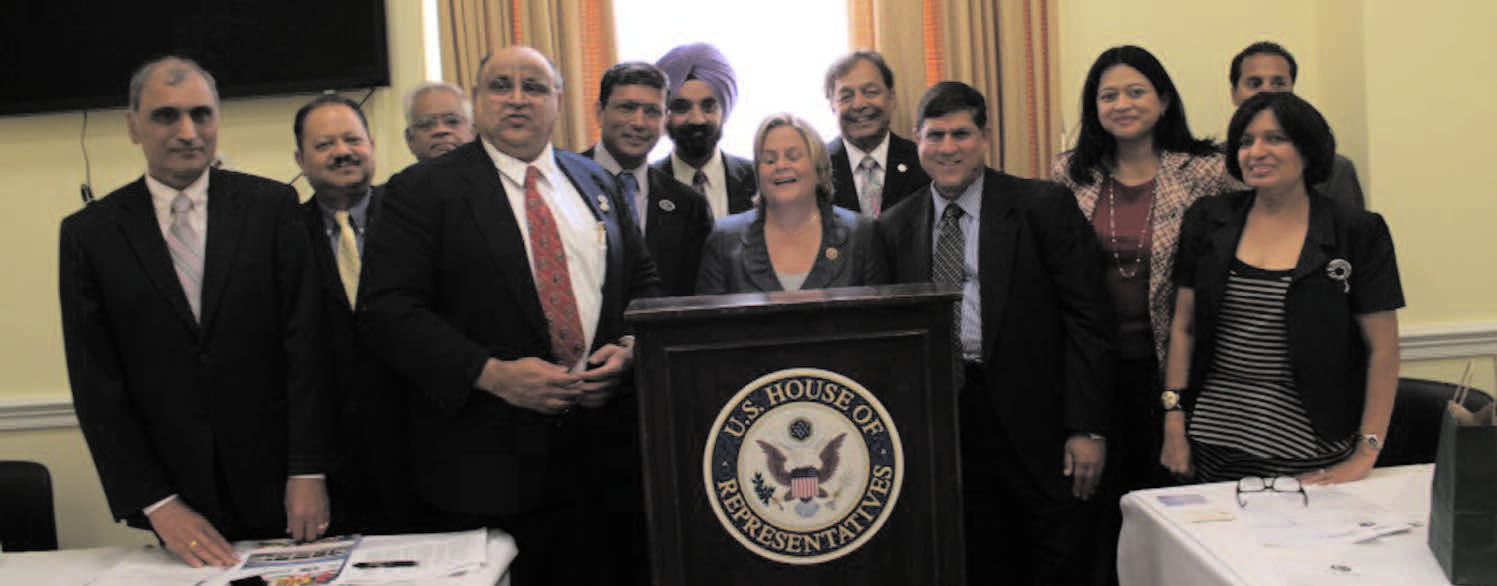
    Whatare the areas where the two can cooperate?Don’t do stupid stuff, like Devyani; for itmasks and overshadows tons of good stuffbetween the two nations that occur no matterwho governs in either capitol. Aside foravoiding an intended insult that Devyani was,avoid the unintended insult.During the official US/India RoundtableDiscussion in July 2014 held under theCongressional Dome to which my wife, Ranjuand I were independently invited to, I hadbluntly given my love potion: Respectful Reset,even as the “Reset,” between us and Russiadidn’t do so well. India and United States arenow a grown-up relationship, and discord needsnever to enter the public domain. Period.

    Q. What, do you think, the Indian Americancommunity should do to promote the processof strengthening of relations?

    Be honorable and loyal Citizens of the UnitedStates, and continue to reach for the stars – andbecome worthy of being included in pictures,rather than asking to be in one!
    Page 23

    Page 231

  • Senator Tony Avella- the man you can trust to be on your side

    Senator Tony Avella- the man you can trust to be on your side

    Remember to vote for Tony Avella on Tuesday, September 9

    Senator Tony Avella has dedicated his life to fighting for middle-class families and progressive Democratic values. Senator Avella’s distinguished public service career began over 30 years ago as an aide to New York City Council Member Peter Vallone, Sr. Senator Avella later served as an aide to Mayors Koch and Dinkins and as Chief of Staff to the late State Senator Leonard Stavisky and to State Senator Toby Stavisky. Prior to seeking public office, Senator Avella served in numerous capacities as a civic activist and was a member of Queens Community Board #7. In 1997, Senator Avella was awarded New York State’s Community Service Award for his numerous volunteer and civic endeavors on behalf of all New Yorkers.

    In 2001, Senator Avella won election to the New York City Council in the 19th District – Northeast Queens and was re-elected with an overwhelming majority in both the 2003 and 2005 elections. As a member of the City Council, Senator Avella served as Chair of the Zoning and Franchises Committee and was a member of five Council committees: Higher Education, Housing and Buildings, Fire and Criminal Justice Services, Land Use, and Veterans.

    Senator Avella was also the founder and Chair of the first Italian-American Caucus of the City Council. During his tenure on the Council, Senator Avella authored several important pieces of legislation. Signed into law in 2005, his “Demolition by Neglect” bill enabled the Landmarks Preservation Commission to prevent the willful destruction of our City’s treasured landmarks by unscrupulous property owners. Senator Avella’s legislation was strongly supported by 46 preservation and civic groups including the Landmarks Conservancy, the Historic Districts Council and the National Historic Trust.

    As a trusted public servant, Senator Avella has made fighting over-development and protecting our quality of life his top priorities. In the City Council, Senator Avella led the fight citywide against overdevelopment, the proliferation of McMansions, and other major abuses of the City’s building and zoning codes. In an effort to preserve the unique residential character and quality of life in neighborhoods throughout the City, Senator Avella helped create new zoning districts such as R2A, which prevents the construction of McMansions, rezoned major portions of his district as well as numerous other neighborhoods in the City, and enacted citywide amendments to the “Community Facilities” section.

    Senator Avella’s hard work resulted in the first real changes in the City’s zoning code in over 40 years. In addition to his efforts to stop out-ofcharacter construction, Senator Avella was at the forefront of the battle to reform the City’s Department of Buildings and the Board of Standards and Appeals. Senator Avella was also the acknowledged leader in the City Council for landmark preservation, animal welfare, good government, and Veterans’ issues and benefits. As a member of the City Council, Senator Avella refused the “lulu”; an additional taxpayer funded salary increase in return for loyalty to council leadership instead of taxpayers.

    Senator Avella fought against and subsequently refused the 25% City Council pay raise, which he considered unethical. Senator Avella was honored by numerous fraternal organizations, civic associations, sports and school/educational groups. Senator Avella has received such honors as the “Friend In High Places Award” from the Historic District Council, the Community Mayor’s Humanitarian Award, the coveted Lucy G. Moses Preservation Award from the New York Landmarks Conservancy, and the Benefactors’ Award from the Alley Pond Environmental Center.

    In 2009, Senator Avella received the “New York City Human Rights Award” for obtaining the highest score of elected officials in New York City on the Human Rights Project’s report cards. A city-wide human rights coalition with over 100 groups from all over the City, the Human Rights Project is the lead organization of the New York City Human Rights Initiative.

    First elected to the State Senate in 2010, Senator Avella, as a freshman senator, was appointed ranking member of the Cities and Environmental Conservation Committees, and has served on the Education, Aging, Banking, and Veterans, Homeland Security and Military Affairs Committees. His reputation as a staunch reformer has helped to bring real change to Albany.

    As a state Senator, he is proud of bringing ethics reform to New York’s Capitol, and has again refused any “lulus” for his committee positions. A strong advocate for reform and transparency in government, Senator Avella is fighting to transform the State Senate so that it works for the people once again. Senator Avella spent his first few years in Albany fighting for the people that elected him. He is proud to have voted for four on-time budgets without raising taxes. As ranking member of the Environmental Conservation Committee, he lead the fight in advocating for a ban on hydrofracking, an extremely dangerous drilling practice that poses a risk to local water supplies.

    He introduced and passed in the Senate legislation that would equalize co-op and condo property tax assessments with one-two and three family homes and help lower costs at the gas pump. Re-elected by an overwhelming majority in 2012, Senator Avella has continued his dedicated service to the people of the 11th Senatorial District. He has continued to fight for progressive legislation by working to increase the minimum wage, pass the SAFE Act – the toughest gun control laws in the nation, and implement Universal Pre-K. He has prioritized women’s rights by fighting for and co-sponsoring the Women’s Equality Act.

    He is an avid advocate for animal rights, having introduced multiple bills in support of the protection of animals, as well as sounded the alarm against animal rights violations. During this past legislative session, Senator Avella passed seventeen bills, four of which have been passed in the Assembly and two of which have been signed into law. He currently serves as the Chair of the Social Services Committee, Vice-Chair of the Environmental Conservation Committee, and is a member of the Transportation, Education, Codes, Housing, NYC Education, Insurance, Judiciary and Banks Committees. Senator Avella is a graduate of Hunter College of the City University of New York.

    He is a lifelong Queens resident and currently resides in Whitestone with his wife Judith. Avella has been endorsed by a number of Unions which include Local 246 , SEIU Automotive/Mechanical, Motor Vehicle Operations Union Local 983, 1199 SEIU, United Healthcare East, Communications Workers of America (CWA) District 1 Retail, Wholesale and Department Store Union (RWDSU), Plumbers Union Local 1, International Union of Elevator Constructors (IUEC), Uniformed Firefighters Association of New York (UFA-NYC), Uniformed EMTs, Paramedics & Fire Inspectors – Local 2507, FDNY, Fire Alarm Dispatchers Benevolent Association, FDNY, New York State Troopers, Council of Administrators and Supervisors, Nassau County Sheriff’s Correction Officer Benevolent Association, Correction Officers Benevolent Association (COBA), NYC Patrolmen’s Benevolent Association (PBA), Public Employees Federation (PEF), New York State Supreme Court Officers, New York State PBA, New York State Nurses Association, New York State Police Investigators Association. Mayor Bill de Blasio and Congressmember Steve Israel are among the elected officials who have endorsed Tony.

    The organizations which have endorsed him are League of Humane Voters; League of Conservation Voters, Empire State Pride Agenda, Citizens Union and Sierra Club.

  • COLLEGIUM CLEARS UDAY UMESH LALIT AS SC JUDGE

    COLLEGIUM CLEARS UDAY UMESH LALIT AS SC JUDGE

    NEW DELHI (TIP): The collegium headed by the Chief Justice of India has recommended to the Centre to appoint senior advocate Uday Umesh Lalit, a sought after criminal law practitioner, as a judge of the Supreme Court. Along with Lalit, the collegium also recommended the names of three chief justices of high courts – Justices Prafull Chandra Pant, Abhay Manohar Sapre and R Banumathi – to the Union government for appointment as judges of the apex court, official sources said. CJI R M Lodha, who has been advocating appointment of competent senior advocates directly to the Supreme Court, had last month recommended appointment of senior advocates R F Nariman and Gopal Subramanium as judges of the SC. But the government returned Subramanium’s name to the collegium for reconsideration citing adverse IB and CBI reports. The clearance for the appointment of Nariman and Justices Arun Kumar Mishra and Adarsh Goel while segregating Subramanium’s name did not go down well with both the CJI and Subramanium.

    In fact, both Nariman and Subramanium were designated as senior advocates by the Supreme Court on the same day nearly 21 years ago on December 15, 1993. A miffed Subramanium severely criticized the government and the judiciary before withdrawing his consent for judgeship and declared that he would not practice in Supreme Court till Justice Lodha’s retirement. The lawyer said he had been discriminated against because he, as amicus curiae, sought the prosecution of Amit Shah, now the BJP president, in the Sohrabuddin Sheikh ‘encounter’ case.

    Significantly, AAP leader Arvind Kejriwal sought to link the collegium’s choice of Lalit to Shah, saying he was the counsel of the ruling party chief in two cases. Justice Lodha had criticized the Centre’s unilateral decision to segregate Subramanium’s name while expressing shock over the way the lawyer went public with his unpleasant nine-page letter. The Supreme Court presently has 27 judges, four less than the sanctioned strength. If the government expeditiously clears the appointment of Lalit and Justices Pant, Sapre and Bhanumati, the apex court will have full working strength. But a vacancy will arise when Justice C K Prasad retires on July 14. Lalit was designated as senior advocate by the Supreme Court on April 29, 2004.

  • ATTACKING GOVT, GOPAL SUBRAMANIUM OPTS OUT OF JUDGESHIP

    ATTACKING GOVT, GOPAL SUBRAMANIUM OPTS OUT OF JUDGESHIP

    NEW DELHI (TIP): Accusing the government of ordering the CBI to dig up dirt on him and expressing disappointment with the judiciary for letting him down, former solicitor general Gopal Subramanium on JUne 25 withdrew his consent to be appointed as a judge of the Supreme Court. In a nine-page letter to Chief Justice R M Lodha, Subramanium said that his withdrawal followed media reports which made “malicious insinuations based on half-truths and appear to be a result of carefully planted leaks aimed at generating doubts in the minds of the collegium and of the public as to the suitability and propriety” of his appointment.

    Slamming the Narendra Modi government for blocking his appointment, he said that his “independence as a lawyer is causing apprehensions that I will not toe the line of the government. This factor has been decisive in refusing to appoint me.” Protesting what he called “a very carefully orchestrated drama to overcome a recommendation”, Subramanium drew attention to his role in the Sohrabuddin fake encounter case in which he had, as the Supreme Court’s amicus curiae, made recommendations that proved embarrassing to the Gujarat government under Narendra Modi.

    “It appears that I am now being targeted for this very independence and integrity,” he alleged. It was at his instance that the Gujarat police were forced to book a murder case in the matter and then when the prime witness, Tulsiram Prajapati, had been liquidated in suspicious circumstances, he had recommended the transfer of the case to the CBI. Significantly, Subramanium also admitted that it was on his suggestion that the Supreme Court, while granting bail to accused Amit Shah, had barred him from entering Gujarat.

    During the hearing of the bail plea, “I had said that his liberty should not be infringed and he may be allowed to be enlarged on bail but remain outside the state of Gujarat,” Subramanium said, adding, “This is only to indicate that I had no personal vengeance or any kind of grudge against Amit Shah.” Asserting that he did not want his elevation to be “the subject matter of any kind of politicization”, Subramanium said that “the events of the past few weeks have raised serious doubts in my mind as to the ability of the executive government to appreciate and respect the independence, integrity and glory of the judicial institution.

    ” He added, “I do not expect this attitude to improve with time.” Given that the law ministry cleared the other three persons who had been recommended along with him by the Supreme Court collegium, Subramanium said that the segregation had been carried out without the file being sent back to the collegium for reconsideration. “If I continue to be a judge in waiting, the validity of these appointments is bound to come under a cloud,” he said.

    Repudiating the allegations “inspired” by “constituents of high authority” from the side of the executive, Subramanium urged the chief justice to clear the air. “The court owes me in the very least, a clear statement of confidence, although my personal character is not dependent on the outcome of such willingness,” he said. “It is an act of closure, which a court of justice owes to its own members. By failing to do it, the court will sink into quicksand.” One of the allegations made against him is that, while he was dealing with the 2G scam as solicitor general, Subramanium had in his presence made CBI officers meet a lawyer representing accused minister A Raja.

    Denying that such a meeting had ever taken place, Subramanium said that he had in fact recommended to Prime Minister Manmohan Singh in writing that the case against Raja should not be closed. As for the allegation based on Niira Radia tapes that he had accepted free membership of swimming pool in Taj Mansingh hotel, Subramanium said that he had never got around to taking membership there.

    This was despite the fact that he had been offered paid membership there when he was looking for an alternative to Talkotara Stadium, which was under repair at the time. After sending his letter to the CJI, Subramanium appeared on TV channels to give his side of the story. “I am sorry that the Supreme Court did not stand up for me. Therefore, I have withdrawn and decided to fend for myself,” he said.

  • Credibility at stake

    Credibility at stake

    Politics must not decide judicial appointments

    The BJP, which had often accused the UPA of weakening institutions like the CAG and the CBI, is doing exactly that being in power at the Centre. While its attempts to use the UGC to make Delhi University fall in line are a subject of media debate, former Solicitor General Gopal Subramanium has questioned the Modi government’s ability to “appreciate and respect the independence, integrity and glory of the judicial institution”. According to him, “a very carefully orchestrated drama” has been played and adverse reports have been planted in the media in recent weeks to scuttle his appointment as a Judge of the Supreme Court.

    Media reports have questioned his role in the 2G scam and alleged his links with corporate lobbyist Niira Radia. The government has reportedly asked the Supreme Court collegium to reconsider his case, while clearing the three other names. This has prompted Subramanium to withdraw his consent to be a Judge, alleging “my independence as a lawyer is causing apprehensions that I will not toe the line of the government”. What lends weight to the charge is the fact that as an amicus curiae Subramanium had brought Gujarat encounters under the Supreme Court scrutiny and forced the state government to prosecute guilty police officers.

    Secondly, had there been anything shady in Subramanimum’s past, why would the CBI engage him as its lead counsel in important cases for so many years? Let the government contest Subramanium’s charges and place in public domain reasons for stalling his appointment. There are two key takeaways from this unpleasant development. One, it is a dangerous trend to discredit public personalities by planting motivated stories in the media based on questionable IB/CBI reports.

    Two, the Modi government has exposed itself to the charge of working towards a committed judiciary. Incidentally, a Mumbai CBI Judge, who had pulled up BJP leader Amit Shah for failing to appear in a case, has been transferred. While the judiciary has to be proactive in guarding its independence, the Modi government has a lot to explain.

  • Rupal Shah-Palanki becomes the first Indian American judge to be confirmed in Connecticut

    Rupal Shah-Palanki becomes the first Indian American judge to be confirmed in Connecticut

    NEW YORK: Connecticut Judge Rupal Shah-Palanki was confirmed to the Tolland District Superior Court recently, making her the first-ever Indian-origin Judge in the state of Connecticut to hold a Superior Court seat. Shah-Palanki was initially appointed by Governor Daniel Malloy on March 14, alongside 15 other Superior Court nominees, and her confirmation came just about a month and a half later.

    In a statement released at the time of her appointment, Shah-Palanki expressed her gratitude to Governor Malloy for selecting her for such a prestigious position. “I am deeply honored and humbled that Governor Malloy has nominated me to serve as a Superior Court Judge,” Shah-Palanki said. “I want to thank Governor Malloy for his belief in my abilities and character and his commitment to diversity in the judiciary.” “I also thank my family and friends for their constant support and the numerous mentors and colleagues I have been privileged to learn from and work with throughout my career.”

    she also said. “If I am confirmed, I promise to carry out this great responsibility with compassion, diligence, respect and fairness.” Shah-Palanki attended Massachusetts College of the Holy Cross for her undergraduate studies, graduating in 1995 with a B.A. in Political Science. She then attended the Georgetown University Law Center from 1996-1999 for her J.D., and was also involved with two prestigious organizations: the Policy International Law Society and the Georgetown Journal on Poverty Law.

    In taking up her new job, Shah-Palanki will be leaving her most recent position as an Assistant Attorney General with the Connecticut Attorney General’s Office, where she had been employed since 2003. Before that, she was an associate with two law firms: Bingham McCutcheon, located in Washington, DC; and Cohn, Birnbaum and Shea, in Hartford, Connecticut. Additionally, Shah-Palanki is an official with the Connecticut Asian Pacific American Affairs Commission.

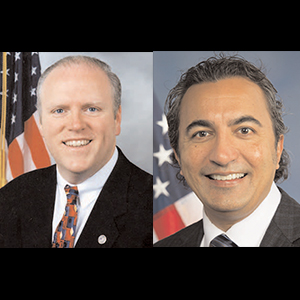
  • Reps. Joe Crowley (D-NY) and Ami Bera (D-Calif.) commend elections in India

    Reps. Joe Crowley (D-NY) and Ami Bera (D-Calif.) commend elections in India

    NEW YORK (TIP): Rep. Joe Crowley (D-NY)who has represented New York City Congressional districts since 1999 and Rep.Ami Bera (D-Calif.) who has represented California’s 7th Congressional District since 2013, have commended elections in India. “At a time when democracy is under pressure in many corners of the globe, officials are currently tallying votes in the largest exercise of democracy in the world: the elections in India.

    “The numbers are staggering. In an election that took place over several weeks, nearly 815 million voters were eligible to vote at 930,000 polling locations. Indians cast their ballots for control of the Lok Sabha, Parliament’s lower house and the body that chooses the country’s prime minister. “To put this in perspective, the number of eligible voters in the Indian election surpasses the entire population of Europe.

    The number of new voters alone in India exceeds 100 million – just shy of one third of the entire population of the United States. It’s extraordinary to see a country of more than one billion people that could be the world’s most populous nation within a decade, carrying out another election. The world is truly watching history being made. “India’s commitment to democracy is something the United States, as well as other nations, should remember, acknowledge and respect.

    That respect is returned by the Indian people — our country’s common values are one reason why a clear majority of Indians, from all generations and educational levels, hold high opinions of the U.S., according to a recent Pew Research Center Survey. “This dynamic of respect and a desire for greater mutual support is especially visible to those of us who have traveled to India to help strengthen ties between our two countries.

    For all of our differences, we are struck by the many similarities in our political systems: the competing parties, the vigorous debates, the vibrant media and the independent judiciary are signs of democracy in action. “Our ties, however, go far beyond similarities and respect. We have many common underlying interests: we share goals in standing up against terrorism, ensuring stability in South Asia and globally, in growing our economies, and increasing development.

    Indians have also faced many problems similar to our own – after all, it was only weeks after 9/11 that the Indian Parliament was attacked. “If the United States and India can move our relationship further ahead, it could benefit our own constituents, as well as people throughout the world. Working on a path for India’s ascension to the United Nations Security Council is one important way to take concrete steps forward.

    Deepening our technological, security, educational and economic ties in a way that creates more high-paying American jobs is another. Beyond these priorities, India and the United States can collaborate on countless individual initiatives, in areas like research, transportation or development. “One thing is certain: moving closer together will do more good for our two countries than moving apart.

    In many ways, this is already happening organically. With more than 3 million Indian-Americans in the United States, many of whom remain close to families still in India, our people- to-people ties are stronger than ever and expanding by the day. Most Americans interact daily with Indian-American community members, who are visible and active in all aspects of our national life, whether it is business, entertainment, public service, medicine, religion, education and more.

    “The elections in India are a good reminder about the importance of democracy, our countries’ shared histories, and the potential for future growth. But they are also an opportunity to review, renew and reinvigorate our ties with a natural friend and partner”.

  • US: House panels approve anti-surveillance bill

    US: House panels approve anti-surveillance bill

    WASHINGTON (TIP): US lawmakers on Thursday advanced a measure that reins in NSA surveillance, signaling final passage of reforms aimed at ending bulk data collection could come quicker than expected.

    Easing what was shaping up to be a showdown between reformers and hawkish National Security Agency reformers, the House Intelligence Committee abandoned its own surveillance bill and unanimously approved the measure that sailed through the House Judiciary Committee on May 7.

    The proposal could soon be brought to the House floor, although no date has been set. It would then go to the Senate, where committees have yet to agree on NSA reform measures. “We look forward to working with the Judiciary Committee, House and Senate leadership, and the White House to address outstanding operational concerns and enact the USA Freedom Act into law this year,” House Intelligence Committee Chairman Mike Rogers and the panel’s top Democrat Dutch Ruppersberger said in a statement.

    The bill would end the practice of scooping up Americans’ telephone metadata — including numbers dialed, duration and times of calls, but not content. The program was disclosed last year by fugitive NSA contractor Edward Snowden. The White House called the bill “a very good step” and hoped to see a House vote “in the near future.” Lawmakers are concerned that US intelligence agencies are also gathering the content of personal email messages, an issue Senator Ron Wyden wants addressed in the final legislation.

    The House measure would boost privacy safeguards by requiring a secret surveillance court to determine that there is “reasonable articulable suspicion” that a person has terror connections before intelligence agencies can pull his or her records from a phone company’s database.

    It would also increase transparency of the secret Foreign Intelligence Surveillance Court, create a panel of legal experts to ensure the FISA court adheres to privacy and constitutional rights and allow communications firms, such as those ordered by the government to hand over data, to release more information about such requests. The proposal is similar to plans laid out by President Barack Obama in March, when he called on Congress to act to end the federal government’s collection and storage of metadata.

  • US Senate confirms Indian- American Manish Shah as federal judge in Illinois

    US Senate confirms Indian- American Manish Shah as federal judge in Illinois

    WASHINGTON (TIP): Indian-American Manish Shah has been confirmed by the US Senate as a federal judge in Illinois, becoming the first South Asian federal judge in the 5th most populous state of America. Shah, 40, was confirmed by the Senate by 95-0 votes.

    “His experience as a prosecutor and in various leadership positions at Chicago’s US Attorney’s office will ensure Shah is a knowledgeable jurist who will provide a fair forum for the resolution of civil disputes and the prosecution of alleged crimes,” Illinois senator Mark Kirk said in a statement after the confirmation. An assistant US attorney in the northern district of Illinois since 2001, New York-born Shah currently serves as chief of the Criminal Division, having previously served as chief of criminal appeals from 2011 to 2012.

    Shah was also deputy chief of the Financial Crimes & Special Prosecutions Section from 2008 to 2011 and deputy chief of the General Crimes Section from 2007 to 2008. Speaking on the Senate floor, senator Dick Durbin, another Illinois senator, said Shah is an outstanding nominee. “He has the experience, qualifications and integrity to serve with distinction on the federal bench. Shah’s nomination is also a historic one. Upon confirmation, he will be the first Article III judge of South Asian descent to serve in the state of Illinois.

    In short, Shah is an excellent nominee and I hope my colleagues will join me in voting to confirm him,” Durbin said. Shah has won numerous awards and recognitions for his work in the US attorney’s office, including the FBI Director’s Award for outstanding criminal investigation. He is a graduate of Stanford University and the University of Chicago Law School. He clerked for two years for Judge James Zagel of the northern district of Illinois.

    Shah appeared before the Judiciary Committee last November. He was reported out of the Judiciary Committee on January 16 by a unanimous voice vote. “Shah’s confirmation as the first South Asian American federal judge in Illinois represents another significant milestone for our community.

  • Ready to be Lokpal if decision is unanimous: CJI Sathasivam

    Ready to be Lokpal if decision is unanimous: CJI Sathasivam

    NEW DELHI (TIP): Outgoing Chief Justice of India P Sathasivam does not mind being the first Lokpal or taking up any other post-retirement job if the decision is taken unanimously and without controversy. “If it (being made Lokpal) is a unanimous choice, then definitely I will accept it,” he said.

    Justice Sathasivam, who is demitting office tomorrow after nine months as the head of the judiciary, said he was not averse to accepting any position after his retirement like NHRC Chief or Lokpal but that has to be without any controversy and it should be “befitting” for an ex-CJI. Speaking about the system of appointment of judges, Justice Sathasivam favoured continuing with the present system of collegium for appointments to higher judiciary.

    “In the present system we appoint judges after proper consultation with the chief justices of respective high courts and also seek opinion of advocates general of the states whenever required. “If a person is included from outside the judiciary they may not be having the knowledge of judiciary and that will not be proper in the selection of judges,” he said.

  • Congress urges US court to respect India’s sovereignty

    Congress urges US court to respect India’s sovereignty

    NEW YORK/JALANDHAR/ (TIP): Strongly arguing to dismiss case filed against Congress party in a US court for serious human rights violations pertaining to November 1984 massacre of Sikhs, Congress counsel invoked issue of India’s sovereignty during the hearing in the case on March 19 and held that court should dismiss the case filed by Sikhs For Justice (SFJ).

    Its continuation would be an attack on India’s sovereignty, Congress argued. Congress counsel Ravi Batra had filed a motion to dismiss the case for lack of jurisdiction and on March 19 court of Judge Robert W. Sweet heard the arguments and reserved his ruling on the matter. Complaint by SFJ and two survivors of the massacre had accused Congress (I) of conspiring, aiding, abetting, organizing and carrying out attacks on the Sikhs after assassination of Prime Minister Indira Gandhi.

    Congress counsel argued that respecting India’s sovereignty US Court should decline to hear the Sikh Genocide case because whatever happened was on Indian soil and only Indians were involved in which lives were lost. Congress party is seeking dismissal of the 1984 Sikh rights violation lawsuit on the basis of lack of subject-matter jurisdiction; failure to state a claim; expiry of statute of limitation; and SJF’s legal standing to file the case. Congress counsel also argued that it was not a case of elimination of Sikhs as millions of Sikhs were living in the country and even the Prime Minister was a Sikh.

    ” While one innocent life lost in any nation is a wrong that cries out for relief, sovereignty serves the function of blocking every nation, except the host nation’s judiciary and political branches from remedying the alleged wrong,” Batra said. However SFJ strongly urged the judge to continue with 1984 case. Its attorney Michael Fitzgerald stated that in November 1984 Sikhs, a religious minority, was brutally attacked with intent to eliminate; 1984 was not an accident or coincidence; and was actually the plan to eliminate the Sikhs was hatched at Congress party headquarters.

    Challenging the Congress party’s argument that 1984 case is “”time barred”” under US Laws, attorney Fitzgerald pointed out that Sikh rights’ violation is a “”continuing offense”” because Congress party still provided impunity to perpetrators of 1984 and continues to threaten the plaintiffs in order to thwart victims’ attempt to seek justice. ‘We are not challenging the sovereignty of India but the case of immunity with impunity to perpetrators of massacre of a minority community, largest after 1947,” said SFJ legal advisor Gurpatwant Singh Pannun.

  • Physician Shortage Estimated to be over 130,000 by 2015

    Physician Shortage Estimated to be over 130,000 by 2015

    AAPI to advocate for more Residency slots during Legislative Day on Capitol Hill

    CHICAGO (TIP):With the beginning of the implementation of the Affordable Care Act (ACA), health insurance coverage is expected to expand to an additional 34 million people in the United States. The Association of American Medical Colleges (AAMC) projects that universal coverage will increase the use of physicians by 4%,while the Bureau of Health Professions projects a 5.2% increase.

    According to Census projections, the overall population will increase by 15.2% from 2010 to 2025, and the population aged older than 65 years will grow by 60%,while those aged younger than 18 years will increase by 13%. Accordingly, it’s been estimated that the total number of office visits to primary care physicians alone for the United States will increase from a base of 462 million in 2008 to 565 million in 2025.

    Because of aging, the average number of visits to primary care physicians will increase from 1.60 in 2008 to 1.66 in 2025. By age 65, about two-thirds of senior citizens have at least one chronic disease, and 20 percent of Americans older than 65 see 14 or more physicians and average 40 physician visits each year. In addition to these changes, is the age factor of the currently practicing physicians themselves. Every 1 in 3 practicing physicians in the U.S. is over the age of 55 and is close to retirement.

    The irony, however, is that the number of Medicare-sponsored residency slots has been capped since 1997, and the Medical school graduates may exceed the number of residency positions by 2015. Struggling to meet these higher demands and reduced supply of physicians, the nation is projected to be short by more than 90,000 physicians by 2020 and 130,000 physicians by 2025, according to projections by the Association of American Medical Colleges. Indian-Americans constitute less than one percent of the country’s population, but they account for nine percent of the American doctors and physicians. As Forbes magazine aptly summed up, “The overrepresentation of Indians in these fields (engineering, IT and medicine) is striking – in practical terms, one out of seven doctors is likely to be of Indian Heritage.”

    They provide medical care to over 40 million of US population. The annual Legislative Day & Congressional Reception organized by Association of American Physicians of Indian Origin (AAPI) on Capitol Hill on Wednesday, March 26th and Thursday, March 27th, 2014, with participation from dozens of key US Congressmen and Senators will be a perfect forum to advocate for more Residency Slots. “As you are aware, how important it is for us to be involved in the decision making on Bills that affect not only our patients but also us,” says Dr. Jayesh Shah, President of AAPI. “We’re pleased that bipartisan Members of Congress are joining us on Capitol Hill this month. Some of the important bills including SGR Repeal and increase in Residency Slots will be discussed during this session. Your presence on the Capitol Hill is more needed now than ever before.”


    20
    Dr. Ami Bera addressing AAPI delegates on Capitol Hill

    According to Dr. Shah, AAPI strongly supports the “Resident Physician Shortage Reduction Act of 2013,” introduced by U.S. Congressman Joe Crowley (D-NY) (H.R. 1180) and U.S. Senator Bill Nelson (D-FL) (S. 577),which would provide an additional 15,000 residency positions in Fiscal Years 2015-2019. “Increasing the size of medical school classes is not enough. There must be a simultaneous increase in the size of residency positions to train these future doctors,” he says. Dr. Ravi Jahagirdar, President-Elect of AAPI, says, “AAPI urges members of Congress to include physicians graduating from U.S. residency programs for Green Cards in the comprehensive immigration reform bill.

    “Physicians graduating from accredited U.S. residency programs should also receive similar treatment. Such a proposal would enable more physicians to be eligible for Green Cards and address the ongoing physician shortage,” he adds. As part of comprehensive immigration reform, a proposal may include international students graduating with degrees in science, technology, engineering and mathematics (STEM) being fast-tracked for Green Cards. This proposal enables highly-skilled workers to remain in the United States after receiving their higher education in America. “We are pleased to inform you that a bipartisan legislation was recently introduced in Congress to permanently repeal the Medicare Sustainable Growth Rate (SGR) Formula,” Dr. Harbhajan Ajrawat, Chair of AAPI Legislative Affairs Committee,while referring to “SGR Repeal and Medicare Provider Payment Modernization Act of 2014,” H.R. 4015, says. “AAPI will continue monitoring this vital legislation and will be asking members of Congress tough questions about the SGR during our Legislative Day on Capitol Hill.”

    AAPI supports Congress providing a permanent fix to the Medicare sustainable growth rate (SGR) formula. In January 2013, Congress passed a temporary patch to avert a 26.5 percent cut,which expires in 2014. AAPI urges members of the House to cosponsor H.R. 574 to bring certainty to the Medicare reimbursement system, Dr. Ajrawat adds. Dr. Sampat Shivangi, Co-Chair of AAPI Legislative Affairs Committee, says, “In our continued goals to reach out to US Congress, our annual Legislative Conference will focus on burning issues like Medicare SGR, Immigration reform, Combating Obesity, Implementation Affordable Care and of course on growing USIndia relations in spite of few recent setbacks.” He has urged “the AAPI community to be part of this exciting event and share their enthusiasm and experience on various issues which promises to be very exciting event.”

    In the 112th Congress, AAPI helped secure the introduction of the “Doctors for Underserved Areas in America Act,” (H.R. 2805), by U.S. Rep. Zoe Lofgren (D-CA),which would make the J-1 Visa Waiver Program permanent. The J-1 visa gives international medical graduates the opportunity to perform their medical training and residency in the United States. AAPI wants members of Congress to cosponsor legislation making the J-1 Visa Waiver Program permanent when it is reintroduced in the House and to cosponsor S. 616.In its efforts to maintain a healthy doctor-patient environment by curbing aggressive litigation targeting physicians, AAPI has been advocating for federal and state legislation that places effective caps on noneconomic damages, limits the use of joint-andseveral liability, provides physicians with flexibility to negotiate settlements with medical insurers and limits the statute of limitations for filing medical malpractice claims.

    “AAPI fully supports the nomination of Dr. Vivek H. Murthy as Surgeon General of the United States,” says Dr. Jayesh Shah,who along with his colleagues met with several key US Senators last month, seeking support for his confirmation. “Dr. Murthy has impeccable academic credentials and has been a longtime supporter of advancing health care across the United States. He has also worked tirelessly to support health care initiatives in rural India through his volunteerism and entrepreneurship.” AAPI’s Legislative Day Reception is scheduled on Wednesday, March 26, 2014 from 5 pm to 7 pm at B-340 Rayburn House Office Building. “Our legislative committee met more than six months ago and discussed in detail what type of reception we should host this year,” recalls Dr. Shah.

    “It came to light that in the late 1990’s, AAPI also hosted a well-attended dinner with congressional staff. Based on the feedback from committee members,we decided it would be best to go back to the feature of serving Indian food, as this past model was always well-received by Members of Congress and their staff.” The Indian Buffet Reception on Capitol Hill on March 26th will be addressed by: Rep. Alan Nunnelee (RMS); Rep. Zoe Lofgren (D-CA); Rep. Tom Price, MD (R-GA); Rep. Frank Pallone (D-NJ); Rep. Steny Hoyer (D-MD); Rep. Phil Gingrey, MD (RGA); Rep. Ed Royce (R-CA); Rep. Joe Heck, DO (RNV); Rep. Tammy Duckworth (D-IL); Rep. Gregg Harper (R-MS); and Rep. Mike Honda (D-CA). Ambassador Dr. S. Jaishankar will provide the keynote address during the Congressional reception.

    Among the many US lawmakers who have confirmed their participation addressing the AAPI delegates during the Legislative Conference on March 27th are: U.S. Congressmen Ed Royce (R-CA), Chairman – House Foreign Affairs Committee; Rep. Frank Pallone (D-NJ), Ranking member – Health Subcommittee, House Energy and Commerce Committee; Rep. Joe Crowley (D-NY), Co-chairman – Congressional Caucus on India and Indian Americans; Rep. Peter Roskam (R-IL), Co-chairman – Congressional Caucus on India and Indian Americans; and Rep. Zoe Lofgren (D-CA), Ranking member, Immigration Subcommittee and House Judiciary Committee.

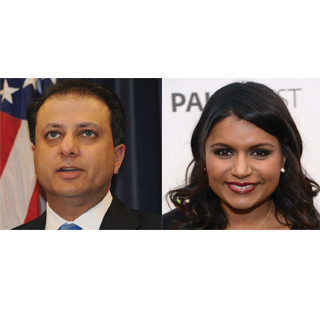
  • Indian Americans Preet Bharara & Mindy Kaling to speak at Harvard Class Day

    Indian Americans Preet Bharara & Mindy Kaling to speak at Harvard Class Day

    WASHINGTON (TIP): Indian Americans Preet Bharara and Mindy Kaling have been selected as speakers for this year’s Class Day ceremonies at Harvard Law School.

    Bharara is the US Attorney for the Southern District of New York, and has been in the news frequently for his crackdown on securities fraud on Wall Street and his initiation of legal proceedings against Devyani Khobragade, the former Indian Deputy Consul General in New York.

    Of late, his activities led to the arrest and subsequent conviction of Indian American hedge fund manager Mathew Martoma, and started a diplomatic feud between the US and India that still has not been fully resolved. Mindy Kaling, on the other hand, is involved in much lighter affairs. The comedienne is perhaps best known for her hit FOX TV sitcom, “The Mindy Project.”

    Additionally, she has had roles on TV shows such as NBC’s “The Office,” and has featured in hit movies like The 40 Year-Old Virgin and No Strings Attached, in which she played the best friend of Oscar-winner Natalie Portman’s character. Bharara is alum of Harvard, having graduated magna cum laude from Harvard College in 1990 before going on to Columbia University, where he earned his J.D. degree in 1993 and was a member of the Columbia Law Review.

    Before his current job, Bharara was chief counsel and staff director of the Senate Judiciary Committee’s Subcommittee on Administrative Oversight and the Courts, and also served as the Assistant U.S. Attorney in the Southern District of New York. Kaling is a native of Cambridge, Massachusetts, not far from where Harvard is located.

    She went to rival Ivy League school, Dartmouth College, graduating in 2001. She became an avid cartoonist and stand-up comedian during her time in school, eventually going on to break barriers for south Asian women in Hollywood. Class Day is part of the larger Commencement ceremonies at Harvard Law School; Bharara and Kaling will speak on Wednesday, May 28.

  • Stormy start to parliament’s last session before election

    Stormy start to parliament’s last session before election

    NEW DELHI (TIP): Congress party hopes of pushing through new laws to tackle corruption stalled on February 5 when the parliament’s last session before a general election was adjourned amid rowdy scenes over the proposed creation of Telangana.

    The session, which will go through to February 21, is seen as a final chance for Congress, which leads the ruling United Progressive Alliance (UPA) coalition, to convince voters it is taking action on graft and to showcase leader Rahul Gandhi. After 10 years in power, its popularity has sagged in large part over a series of graft scandals as well as its inability to halt a slide in the economy.

    The main opposition Bharatiya Janata Party (BJP) calls it a lame duck government that is merely making a last-ditch attempt to shore up support. It should leave decisions to the next government, BJP leaders say. On the eve of parliament’s reopening, Prime Minister Manmohan Singh appealed to all parties to help push through legislation. But Finance Minister P. Chidambaram acknowledged that might be a forlorn hope. “I doubt whether it will pass any law.

    We’ve to go through the ritual of attending parliament every day and coming back empty handed,” Chidambaram said in a speech to students. Congress will try to push through 39 bills, including six anti-corruption bills, to address public anger over graft. They address issues such as protection for whistleblowers and corruption in the judiciary. It will also try to pass an interim budget expected to contain some pre-election sops for voters.

    But shouting and protests over the creation of a new southern state derailed other matters when the session began, despite speaker Meira Kumar’s appeals for calm. The new state, Telangana, would be carved out of Andhra Pradesh and should generate vote-winning support for Congress. Members of parliament from Andhra Pradesh crowded around the rostrum of the chamber to denounce the proposed split, some carrying placards saying “Hail United Andhra Pradesh”.

    The turn of events was hardly a surprise and the same might happen again on Thursday. The Economic Times urged the opposition not to block the functioning of what it called the worst-performing House since independence from Britain in 1947. “The opposition should also agree to cooperate in passing other important pieces of economic legislation cleared by various standing committees,” it said in an editorial.

    The world’s largest democracy must hold a parliamentary election by May and the date is expected to be announced round about the close of the session. The bills due to come up for debate cover issues that Gandhi, the fourth generation member of the Nehru- Gandhi dynasty that leads Congress, has championed, including women’s empowerment and graft. It may be too little, too late. Opinion polls put the BJP, a conservative Hindu nationalist party spearheaded by Narendra Modi, ahead of Congress.

    The newly formed Aam Aadmi, or Common Man, Party (AAP), which campaigns against corruption and took power in the capital Delhi in local elections in December, could draw voters away from either one while a number of smaller parties are discussing the formation of a “Third Front”. Chandan Mitra, a BJP Rajya sabha member, said parliament should not be rushed into passing bills without due scrutiny. “There is no obligation on the part of the opposition to allow Mr Rahul Gandhi to get his agenda pushed though,” Mitra told Reuters before the session opened. “The government is trying to end this term on a high, but we don’t want to give them an easy ride.”

    UPHILL STRUGGLE
    Also on the slate is a bill on reserving a bloc of parliamentary seats for women – reflecting the growing prominence of women’s issues after a series of sexual assaults. Mitra said the interim budget was a priority. “The interim budget will be passed as no one wants a shutdown,” he said. Ajay Gudavarthy, a politics professor at Jawaharlal Nehru University, said Congress hoped to use the session to present itself and Gandhi as forces that can fight corruption.

    “The party is trying to build an image for Rahul Gandhi. He is a bit of a non-symbol now and that is a big problem,” he said. Mandira Kala, head of research at PRS Legislative Research, said the corruption issue should not distract attention from the economy. Once a star performer, India’s growth has slowed in recent years and it is now weathering a storm in emerging markets. “When you look at what the economy needs there are a lot of bills that are not being looked at,” said Kala, picking out a pending higher education bill and a mining bill as examples.”

  • CREED GUIDING MATURE REPUBLIC

    CREED GUIDING MATURE REPUBLIC

    Modern societies emerge out of their primitive forms. As India enters its 65th year as a republic, it is not what it used to be for the past several centuries: ruled by kings and nawabs, brutalised by Hindu orthodoxies of caste and sati, or dependent on agriculture.

    “India has changed more in last six decades than in six previous centuries,” said president Pranab Mukherjee on the eve of the Republic Day last year, adding: “It will change more in the next ten years than in the previous sixty.” The motor of change is democracy, or the republic’s politics reaffirmed every five years through the conscious act of voting.

    Democracy refers to demokratia—a political system that began in 5th to 4th centuries BC when the people (demos) of Athens revolted against the dynasties of tyrants and established their own kratos (rule). Over past decades, democracy in India has emerged as a revolt against caste and other social inequalities, empowering millions of dalits, minorities and women.


    19

    India still subjugates its women, but it will change as more than a million women, elected to political nurseries of panchayati raj, are about to alter the balance of gender relations. The Indian republic is a Greek city state in microcosm, whose citizens interact with philosophical concepts every day, acquiring new understandings of liberty and rationality. As it matures, it inculcates egalitarian ideals in its citizens who in turn guard demokratia, the republic’s dharma, or creed. The egalitarian Indian defends the order, defeating Indira Gandhi after the Emergency when democracy appeared to be failing, or producing an Aam Aadmi Party when corruption of an industrial scale emerged.

    The republic is nurtured from below. It just gave Kashmiri secessionists a recurring opportunity to prove their worth through the ballot option of NOTA, none of the above. In primitive societies, consensus emanated from similarities of beliefs and identities; in modern India consensus is derived from differences and moderated by media, political parties, voters, and the judiciary. The voter is the sane oracle, inaugurating an era of coalition politics in 1989 and shifting the polity towards federalism, in tune with the diversity of India. From the post-Emergency rise of anti-Congress parties to the AAP, the republic births new parties. It secures the confidence of minorities.

    According to a BJP research, India has seen the emergence of “smaller Muslim parties” that are determining outcomes in states from Assam to Kerala. Indian polity is ripe where any new party could transform into a countrywide behemoth by practising simple politics: electing leaders through organisational polls. There is space for all, as no party has got 50 per cent votes. In some way, parties are dying, or being obscured, eclipsed and forgotten. The Congress is forgotten in UP, Bihar, West Bengal, Delhi and many states; the BJP was reduced to irrelevance as a national opposition until Narendra Modi rose from below; the Rashtriya Janata Dal was dumped; and demokratia caught up with communists in West Bengal in 2011. It happens due to parties’ failure to abide by the republic’s dharma: more politics, more democracy. Politics has its own independent dignity.

    More parties could thrive if their funds were audited and if they held polls to elect party leaders or used secret ballot to elect chief ministers or Prime Minister. If the Congress practised politics, US-style primaries to elect party leaders could herald a revolution. Among democracies, some are religious states such as Britain whose societies are overwhelmingly secular; some are secular states like the US and India whose societies are predominantly religious. Religious neutrality, established first by Akbar, characterises the Indian state. The founders—Gandhi, Nehru and Ambedkar— wrote an array of liberties into the Constitution: equality of rights, multi-party elections, free press, individual freedoms, rule of law, independent judiciary, etcetera. Speaking at Oxford in 2005, Prime Minister Manmohan Singh noted that the founders were “greatly influenced by the ideas associated with the age of Enlightenment in Europe.”

    The political and religious freedoms Indians enjoy would not be possible if the British hadn’t arrived in India. Democracy is defined as the majority rule, but the majority is of the people, not of communities. For those who feed pessimism among minorities, the day is not far when India will see a Muslim prime minister, as religion will become irrelevant. For now, a Muslim politician is yet to be born who could read the republic’s political mind, the way Barack Obama read the American mind. There are reasons: Muslims must shed the fear of the BJP; the politics of secularism and reservation must be defeated by effective policing and through job creation by people. Primitive societies were dependent on agriculture.

    In a modern nation, while the agricultural output grows, its share in the gross domestic product must decline, accompanied by growth in knowledge sectors like biotechnology and financial services. Once seen by the West as the land of snake charmers, India is transformed into an information technology destination today. However, it is an inward-looking mystical civilisation, failing to grasp notions of power. India contemplated sending troops to Iraq in 2003, but succumbed to a perennial weakness to comprehend its place in the international state system. There were military roles in Bangladesh, Sri Lanka and Maldives that indicate India could exercise hard power abroad. Amid problems, the republic is maturing, aided by the Supreme Court which forced candidates to declare assets and criminal antecedents, disqualified elected representatives upon conviction in criminal cases, and enshrined negative voting through NOTA.

    If T N Seshan alone could retrieve autonomy of the election commission, it appears the Central Bureau of Investigation and other government institutions could cease being the ruling party’s mistress. At the heart of the country’s politics is the sane oracle, the voter: the elderly who walk to polling booths, tribesmen who defy Naxalites to vote, women who stand with men, youth who secure their aspirations in ballots. Of 790 million voters, 120 million are 18-23-yearolds, the first-time voters who must establish a relationship with people, not leaders, to secure the republic for their next generations. (The writer, Tufail Ahmad, is director of South Asia Studies Project at the Middle East Media Research Institute, Washington DC.)

  • Govt offers to bring Musharraf’s ailing mother to Pakistan

    Govt offers to bring Musharraf’s ailing mother to Pakistan

    ISLAMABAD (TIP):
    The Pakistan government on Friday offered to bring former military ruler Pervez Musharraf’s ailing mother from Dubai in a special aircraft as a humanitarian gesture so that the two could be reunited. The government would “provide all available medical facilities for the treatment” of Musharraf’s 95-year-old mother, said a statement from the Prime Minister’s Office. The government is ready to send a special plane or air ambulance to bring Musharraf’s mother to “Pakistan on humanitarian grounds so that she can get treatment in Pakistan and live with her son”, the statement said. Musharraf, who has a plethora of cases against him, is currently barred from travelling out of the country as he has been included in the interior ministry’s Exit Control List (ECL).

    His petition to remove his name from the ECL, so that he could travel to Dubai to visit his mother, has already been rejected by the Sindh High Court. Information Minister Pervaiz Rashid said the independent judiciary will decide Musharraf’s fate. The former army chief is set to appear in a special court on January 1 to face charges of high treason for imposing emergency in 2007. Reacting to the government’s offer, Musharraf’s spokesperson Aasia Ishaque said it was a good gesture but was done because the government realised that he is not going to run away. “My first reaction is the government has finally understood that Musharraf is not going to run away and that is why this good gesture.

    But (the mother’s) coming to Pakistan would depend on her health,” she said. “Even Musharraf wanted her to come to Pakistan but her health didn’t permit it.” Though Musharraf has been given bail in all the major cases against him, his name has not been removed from the ECL. He is the first general to face trial for treason. If convicted, he could get life imprisonment or the death penalty.

  • Judges’ appointment panel gets Constitutional status

    Judges’ appointment panel gets Constitutional status

    NEW DELHI (TIP): Amid demands by jurists and the Opposition led by the BJP, the government today gave a go-ahead to grant constitutional status to a proposed commission for appointment and transfer of judges to the higher judiciary. The clearance, which would ensure that its composition is not altered through an ordinary legislation, came at the meeting of the Union Cabinet chaired by Prime Minister Manmohan Singh here. Among other decisions, the Cabinet Committee on Economic Affairs also gave its clearance to the guidelines for financial assistance to the sugar industry for payment of cane price arrears.

    According to the proposal, while new Article 124-A of the Constitution will define the composition of Judicial Appointments Commission (JAC), Article 124-B will define its functions. The JAC Bill defines the establishment of the proposed body to recommend appointment and transfer of judges of the Supreme Court and high courts. At present, the composition of the proposed panel is defined in the JAC Bill, 2013, which was introduced with a separate constitutional amendment Bill in the Rajya Sabha during the monsoon session. There were demands that the composition and functions of the proposed Commission should be mentioned in the Constitution as a safeguard against future changes.

    A Parliamentary standing committee that examined the JAC Bill, 2013, had also made a similar recommendation. While the constitutional amendment Bill — an enabling Bill — was passed by the Upper House, the main bill — the JAC Bill, 2013 — was referred to the standing committee. The Cabinet also approved the proposal to provide interest subvention for financial assistance to the sugar industry for effecting cane price payments as per guidelines of the “Scheme for Extending Financial Assistance to Sugar Undertakings, 2013”. The scheme’s expenditure would be met by the Sugar Development Fund (SDF).

    Under the proposal, the central government will provide an interest subvention up to 12 per cent, at a simple rate of interest, for the additional working capital loans to the sugar undertakings, equivalent to last three sugar seasons excise duty, cess and surcharge on sugar, according to an official statement released after the Cabinet meeting here. “The sugar undertakings with loans classified as Non-Performing Assets (NPA) by the banks will also be eligible for loans, provided the state governments concerned guarantee their new loans,” the statement said. The interest subvention or subsidy would be for total loan duration of five years, including two-year moratorium period. “No interest subvention to be provided for the period of default in the principal repayments,” the statement added.

  • Over to Parliament Remove the stain on jurisprudence

    Over to Parliament Remove the stain on jurisprudence

    By upholding Section 377 of the IPC, the Supreme Court has put the brakes on the progressive march of human rights in India. The Delhi High Court decriminalized homosexuality in 2009, and had the support of the Union Government, which decided not to challenge the verdict. It helped society come out of the stigma of ‘shame’ attached to gay relationships. The two- judge bench led by Justice G S Singhvi reversed this decision on Wednesday by re-criminalizing oral and anal sex between two consenting adults.

    The regressive verdict puts 3 to 5 per cent population of the country in the category of criminals and takes away their fundamental right of equality promised under the Constitution on the mere basis of their sexual activity. To protect human rights, society needs support from the legislature, the executive and the judiciary. The verdict of the SC that only Parliament can change the law is baffling. By hiding behind the constitutional morality in this case, the court has lost the moral ground it gained on the basis of judicial activism in the recent past. It has dictated policies to the executive and questioned the administration for upholding the rights of the citizenry. By citing a flimsy logic that the harassment and humiliation meted out to homosexuals is at a miniscule level, the court has only made admission of its ignorance.

    Scores of gays and transgenders become victims of police brutality and social injustice under Section 377. No society can become progressive keeping double standards – enjoying fruits of financial equity brought through globalization and pushing a section of society back to the closet in the name of cultural and moral protection. Progress requires the acceptance of change. While the court has given up, Parliament should take up the challenge and erase this stain from the Indian jurisprudence by removing Section 377 that even the British have done away with. Getting a political consensus on such a sensitive issue is going to be an uphill task. Responses from a few young parliamentarians have come in support of removing the vintage law of 1860.

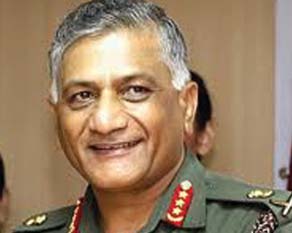
  • Gen VK Singh withdraws remarks on age row petition

    Gen VK Singh withdraws remarks on age row petition

    NEW DELHI (TIP): The Supreme Court on Wednesday closed contempt of court proceedings against former Army chief General V K Singh after he tendered an unconditional apology and retracted all comments made to the media against judges for alleged inappropriate handling of his age row petition. A bench of Justices R M Lodha and H L Gokhale was not satisfied with the affidavit tendering unconditional apology and at the same time faulting the media for misreporting.

    “Either you have said it or you have not. You cannot apologize and at the same time doubt the media reports,” the bench told him. Gen Singh’s counsel Ram Jethmalani said the former Army chief’s apology was unconditional and that he was ready to retract every statement he had made to the media which appeared to be an affront to the judiciary. In support of the former Army chief’s bona fide, Jethmalani said Gen Singh’s autobiography, written immediately after he had withdrawn his petition on the age row from the Supreme Court, had not said a single word against the judiciary or judges. The senior counsel wanted to present the judges with copies of the general’s autobiography ‘Courage And Conviction’.

    As Jethmalani was readying copies of the book to hand them over to the judges, the bench politely declined. “We will ask the Supreme Court library to purchase copies of the book. It is always enlightening to read the experiences of a general. At least the publisher will get his dues,” the bench said. When Gen Singh agreed to withdraw his remarks against the judges and the court made in an interview to a TV channel on September 21, the court pointed out that he had given two more interviews more or less of similar nature. Jethmalani said, “My client is withdrawing all earlier comments in addition to unconditional apology.”

    But an advocate wanted to intervene in the matter to point out the seriousness of contempt committed by the former Army chief. The court brushed aside his arguments and said, “It is a matter between the court and the contemnor. The attorney general is there to assist the court. We do not need any intervenor.” Attorney general G E Vahanvati too requested the court to close contempt proceedings against Gen Singh and the newspaper which published it, saying both had tendered apologies. Accepting the apology, the bench closed the contempt proceedings and said, “Repentance is a tool which condones all sorts of misdemeanours. Once the apology comes from the heart, the contempt need not be continued even for a second more.” The bench also said since the apologies appeared to be bona fide and came promptly without contesting the contempt notices issued by the court, it would drop the contempt proceedings.

  • Justice Scalia and Judge Scheindlin – Friendships and Relatedness

    Justice Scalia and Judge Scheindlin – Friendships and Relatedness

    What Judge Scheindlin is being subjected in the public square is both excessive and manifestly unfair – not just to her and her well-earned reputation, but to all judges upon which our Republic relies upon to keep America exceptional”, says the author

    No matter which side one may be on the NYPD Stop-and-Frisk debate, given the 1976 New York De Bour standard requiring “reasonable suspicion” and the now-over Mayoral election between Bill de Blasio and Joe Lhota, we are all on the side of the Constitution. Most even feel that the Constitution is not a suicide pact; especially, after 9/11 when we need to defend public safety from enemies foreign and domestic. But when politics is at play, law becomes a target by shooting at the judge. Hence, politics and law make bad bed fellows. Most are also on the side of judicial economy being a predicate for the related-case procedure, as the Second Circuit panel exemplified, as well as to avoid venue, and judge, shopping by litigants – hence, 1406 corrective-motions and “related case” questions in Civil Cover Sheet and Request for Judicial Intervention. All honest litigants are against a judge who pre-judges a case or judges a case on something other than the merits, defined by admissible evidence. Judicial independence, a/k/a judicial impartiality, is the core engine of American Exceptionalism rooted in our separation of powers regime. We owe ourselves and our children’s children an impartial judiciary. So the all important Third Branch, lacking executive “police power” or legislative “purse power,” relies only upon societal respect to be able to deliver on its vital Constitutional role: to decide a dispute, even a Constitutional one, with finality.

    Judicial respect then is equal to the aggregate of all judicial reputations. Furthermore, a judge’s reputation cannot be divorced from a judge’s ability to continue to judge a pending or future case. I recall the lesson taught us all by Associate Justice Nino Scalia, when thrust into a presidential political barbeque over the famous vice president Dick Cheney’s Duck Hunting trip in January 2004, he took the unprecedented step of lawfully issuing a 21-page official Memorandum to defend his honor, impartiality and integrity. Even a judge has some First Amendment rights allowed by the Code of Judicial Conduct. In that Memorandum, Justice Scalia argued that if a duck hunting trip would be enough to swing his vote, “the nation is in deeper trouble than I had imagined.” Justice Scalia argued that throughout history, justices have been friends with highranking government officials and that then-recently other justices had socialized with Mr. Cheney at the vice president’s home during Christmas 2003 – and yet, no recusal was demanded or warranted. Indeed, I have often cited President F. D. Roosevelt’s act of playing cards with the Justices on Sundays, and The Court holding his New Deal laws unconstitutional on Mondays as proof that there can be a separation between social friendship and intellectual impartiality in persons of honor and integrity.

    Justice Scalia further argued, perhaps, based upon the rule of necessity, that “[A] rule that required members of this court to remove themselves from cases in which the official actions of friends were at issue would be utterly disabling.” So, it’s fair to say that our Republic has survived many “ducks,” be they French, Peking or American. But how the bench and bar deal with one’s own, can both inform the public square into disrespectful hyperventilation as well as chill the adversarial system into a supplicant roll-over process. A judge, any judge, like Justice Scalia, must be free to speak so long as it is not a comment on the pending case or its trajectory. Of course, a judge’s right to speak is most robust, perhaps, even without limit, when doing so “on the record” hearing a case. Yet, whenever electoral politics is near any case, judges are at a serious disadvantage to the political harpooning they are subjected to, lacking the ability of a Clintonian “Rapid Response.” The “spine” of Bar Associations has weakened and the “decibel” lowered, perhaps, due to being overworked or enhanced fear of standing tall. Either way, society’s durable and deliberative guides, the bench and bar, are not what they used to be. What Judge Scheindlin is being subjected in the public square is both excessive and manifestly unfair – not just to her and her well-earned reputation, but to all judges upon which our Republic relies upon to keep America exceptional. The bench and bar must act to re-calibrate the public discourse, before we hurt the judicial-baby in the bath water and devalue judicial respect for all.

  • US Senate panel approves some limits on surveillance

    US Senate panel approves some limits on surveillance

    WASHINGTON (TIP): Leaders of a Senate panel that oversees US intelligence issues said on October 31, it has approved a plan to scale back how many American telephone records the National Security Agency can sweep up. But critics of US surveillance programmes and privacy rights experts said the bill does little, if anything, to end the daily collection of millions of records that has spurred widespread demands for reform. Legislation by the Senate Intelligence Committee, which was approved by an 11-4 vote, would increase congressional and judicial oversight of intelligence activities. It also would create 10-year prison sentences for people who access the classified material without authorization, according to a statement released by committee chairwoman Sen. Dianne Feinstein, a Democrat, and Sen. Saxby Chambliss, the panel’s top Republican. Just how far it would scale back the bulk collection of Americans’ telephone records was unclear. The statement said the plan would ban bulk collection of records “under specific procedures and restrictions.” Chambliss spokeswoman Lauren Claffey said some of the telephone metadata collection would continue, so long as intelligence officials followed rules for how it can be used. Only certain people would have access to the phone data, according to the bill. It also would bar the NSA from obtaining the content of the phone calls.

    The current programme only allows the NSA to collect phone numbers and times of calls and cannot listen in on phone calls without a warrant from a secret court. “The threats we face _ from terrorism, proliferation and cyberattack, among others _ are real, and they will continue,” Feinstein said in the statement. “Intelligence is necessary to protect our national and economic security, as well as to stop attacks against our friends and allies around the world.” She said “more can and should be done” to increase transparency of the surveillance and build public support for privacy protections. But Rep. Adam Schiff, a Democrat who sits on the House Intelligence Committee, said the legislation allows the bulk collection to continue under certain safeguards. He called the safeguards a positive first step but said the NSA should stop sweeping up Americans’ phone records and only obtain those that are connected to a specific terror plot. Privacy advocates who have long called for the end of broad government snooping objected to the bill, which they said would merely legalize the surveillance that the NSA has quietly undertaken since 2006.

    David Segal, executive director of advocacy group Demand Progress, said “Lawmakers must immediately recognize this legislation for the sham that it is _ and reject it outright.” The Senate intelligence bill rivals one put forward earlier this week, by House and Senate judiciary committees, that would eliminate the phone data collection program that was revealed earlier this year in classified documents that were released to the media by NSA leaker Edward Snowden. The dueling legislation means that Congress ultimately will have to decide how broadly the US government can conduct surveillance on its own citizens in the name of protecting Americans from terror threats. Polls indicate that Americans widely oppose the surveillance programme. Meanwhile, the NSA issued a more forceful statement rejecting reports that it illegally collected millions of records from communications links between Yahoo and Google data centers around the world.

  • Apply death penalty norms in dowry cases: SC

    Apply death penalty norms in dowry cases: SC

    NEW DELHI (TIP): In a fresh set of guidelines, the Supreme Court has asked trial courts and high courts to apply the principle of aggravating and mitigating factors — meant for commuting or upholding the death penalty — in dowry death cases which attract only imprisonment, ranging from a minimum of seven years to a maximum of life term under Section 304-B IPC. The guidelines are part of the effort to evolve standardised jurisprudential principles to replace the “highly individualised and judge-centric” sentencing, thereby minimising the “uncertainty” over the quantum of punishment, a Bench comprising Justices SJ Mukhopadhaya and Ranjan Gogoi explained. Applying the new principles, the Bench reduced the life sentence awarded to one Sunil Dutt Sharma in a case of dowry death which had happened in Delhi in May 1992 within two years of his marriage.

    Under the fresh guidelines, the Bench has advised the judiciary to first apply the principle of seven aggravating and five mitigating factors evolved by the Supreme Court over the years and culled out in a recent verdict — Shankar Kisanrao Khade vs State of Maharashtra. The Bench said it saw no reason as to why the principles of sentencing evolved by the Supreme Court in death penalty cases would not be applicable to cases involving lesser sentences extending from a single day to life term, particularly in the absence of sentencing guidelines in the statute. Unlike in some foreign jurisdictions where such principles were part the law, in India, it was left to the judiciary to evolve the principles, it noted. Second, the quantum of sentence should not be guided by the necessity to combat the menace of demand for dowry or to prevent atrocities on women and other social evils or to maintain the purity of social conscience as such factors were equally applicable to other crimes as well, the Supreme Court said. “The search for principles to satisfy the crime test in an offence under Section 304-B IPC must therefore lie elsewhere,” it explained.

  • IPL spot-fixing: Sree, Ankeet Chavan banned for life

    IPL spot-fixing: Sree, Ankeet Chavan banned for life

    NEW DELHI (TIP): Rajasthan Royals’ players S Sreesanth and Ankeet Chavan were on September 13 “banned for life” for their involvement in the IPL spotfixing scandal by the Disciplinary Committee of the Board of Control for Cricket in India (BCCI). “They have been banned for life from playing any representative cricket, or in any way being associated with the activities of the BCCI or its affiliates,” a statement issued by board secretary Sanjay Patel said. The BCCI disciplinary committee, comprising N Srinivasan, Arun Jaitley and Niranjan Shah, met here today to consider the report submitted by Ravi Sawant, appointed by the board to inquire into the scandal. Sawant has held Sreesanth, Chandila and Chavan guilty of conceding a “predetermined number of runs per over in exchange for bribes”.

    The committee took the decision “after considering the evidence on record, and hearing each of the players in person”. Cricketer-turned-bookie Amit Singh was banned for five years while his Royals teammate Siddharth Trivedi got one-year ban for not reporting that he was approached by bookies. The case against Harmeet Singh, 20, who was part of India’s under-19 World Cup winning team in 2012, has been “closed in the absence of evidence against him”. No decision was taken on Ajit Chandila, as his deposition was not complete. He got bail three days ago and would be asked to appear before Sawant for evidence. His case would come up before the disciplinary committee after that.

    Sreesanth was the last to be called in by the committee. The former India player said, “I have never cheated. I gave them my side of the story. I did not argue with anybody. Everybody was very cooperative. Since childhood, I only dreamt of playing for India. I will never cheat the game. I have faith in the judiciary and the BCCI. I hope to play again.” However, the BCCI did not trust his side of the story, and preferred to go by what Ravi Sawant had observed. A minor drama was played out in the Disciplinary Committee room as N Srinivasan reached the venue and chaired the meeting, though it was widely expected that Jaitley would steer the proceedings in the wake of Srinivasan “stepping aside” as the board president following alleged involvement of his son-in-law Raghunath Meiyappan in the fixing scandal. However, a reliable source said it had been decided at the working committee meeting that Srinivasan would discharge his constitutional duties, and, therefore, it was “mandatory” for him to chair today’s meeting.

  • Gallows for the Rapists, OK, but Rape too must die

    Gallows for the Rapists, OK, but Rape too must die

    The death sentence for the four accused in Nirbhaya rape case meets the expectations of all right thinking people. The sentence of death for four convicts in the December 16 Delhi rape case took nine months in the coming; a long period for what seemed an open-and-shut case. The award of capital punishment to all four accused in the Nirbhaya case does not come as a surprise. The fifth accused, a juvenile, has already been remanded to a juvenile home for a term of three years. Public outrage against the very brutality of the crime had been so overwhelming that only no judge could have imposed a lesser penalty. This is an instance in which public opinion has asserted itself, and rightly so.

    The defense may find fault with the judgment. But the evidence gathered and produced had been so clinical that, with or without media hype and visible public indignation, the verdict could not have been otherwise. The Supreme Court rider of ‘rarest of rare cases’ was more than established by the prosecution, though in the larger public perception there never was any doubt. To be sure, the police, the judiciary, and even the government were under immense pressure to ensure justice. No one could afford a slip-up, and a court has to base its ruling on facts, not emotions. Given the watertight case the investigators built, this was indeed a fast-track trial. No one, after all, would advocate bypassing the due process of the law. The family of the 23-year-old Nirbhaya, who was subjected to brutality that defies narration, has expressed satisfaction at the sentence. Justice, however, is rare for victims of rape or their families; satisfaction, ever rarer.

    In the same court that has pronounced death for the Delhi rape and murder, 20 out of the 23 rape cases heard this year ended in acquittal. In most cases it was because the complainant backed off. Even more than the criminal justice system, society is conditioned to remain silent on crimes against women ‘in their interest’! The December 16 case has served a cause to that extent. It has jolted society, the police, the judiciary, and even the legislature to bring about meaningful changes in the laws and procedures to protect women and children. So that the young life lost is not a complete waste, India has now to move on from the phase of debate to action. The nine months since the horrific night have thrown up an overwhelming range of ideas, including many opposing views. There, however, appears to be no decline in rapes being committed each day. Death is propounded as a deterrent to such heinous crimes. A greater deterrent would be the surety that culprits will be nabbed and sentenced.