Tag: Yoga

  • GUJARATI SAMAJ of New York to hold CULTURAL FESTIVAL of Gujarat on August 8, 9, 10

    GUJARATI SAMAJ of New York to hold CULTURAL FESTIVAL of Gujarat on August 8, 9, 10

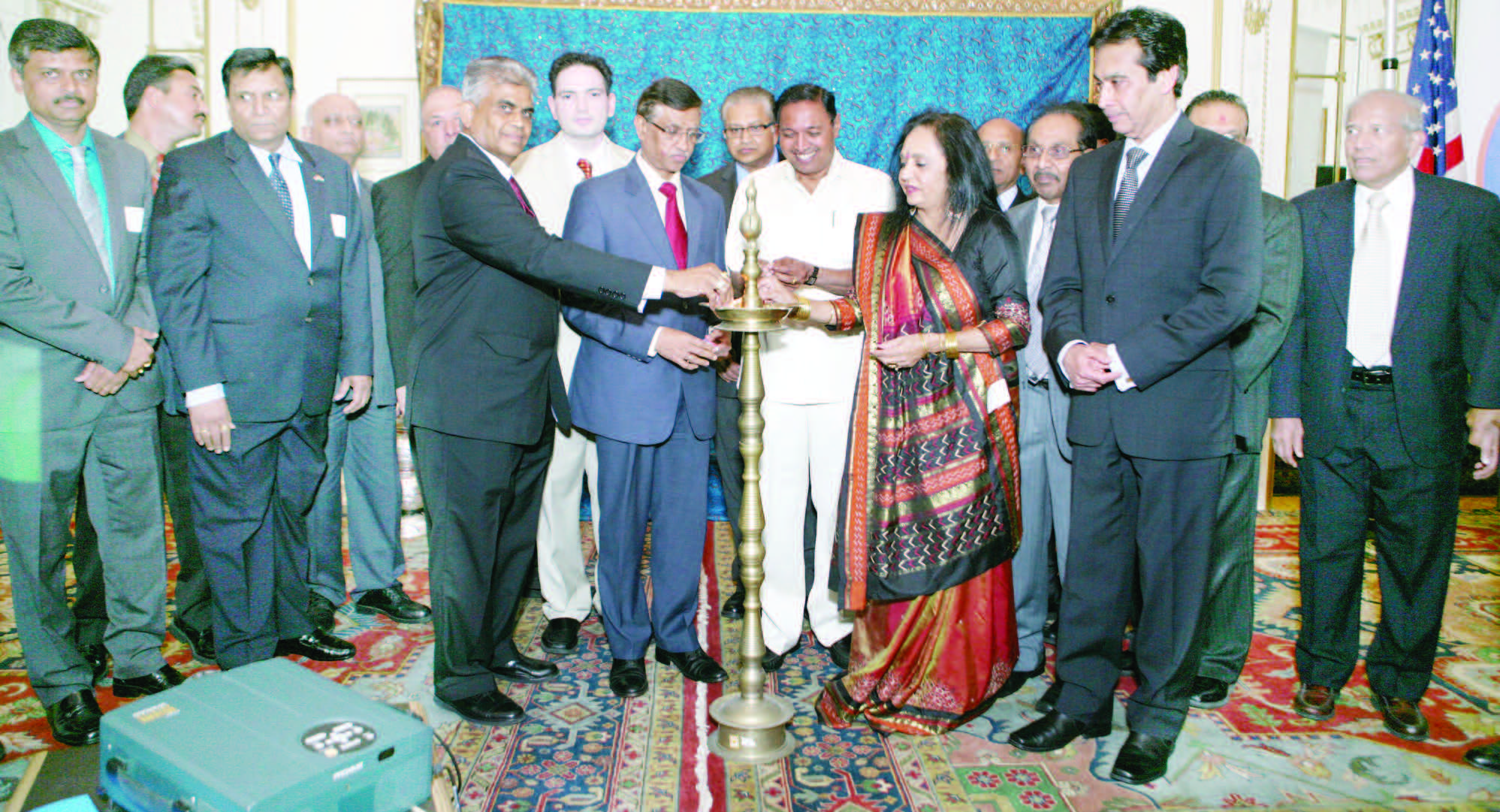
    NEW YORK (TIP): Gujarati Samaj of New York announced a CULTURAL FESTIVAL OF GUJARAT to mark the celebration of its 40th Anniversary. The festival will be held on August 8,9 & 10, 2014. Consul General Dyaneshwar Mulay inaugurated the kick off with traditional lighting of the lamp. Chamunda Swami chanted Shlokas from Hindu scripture to seek divine blessings for the success of the undertaking. Ambassador Mulay expressed the need to market India to the mainstream. He asked every member to invite friends from mainstream to events and educate them about richness of India and Indian culture. He wondered why India still does not have a permanent seat at the Security Council.

    He spoke of the Consulate’s initiative in hosting a series of events on India’s rich culture, lofty thought and diversity. He shared his conviction that India and USA are best partners to build the global economy. And every NRI should help make that happen. A spokesman for the Samaj said that Gujarati Samaj of New York was established in 1974, and has now a membership of more than 2400 families representing some of the most successful and affluent Gujarati Americans of Tri-state area. On the occasion of 40th Anniversary, Gujarati Samaj of New York is organizing a mega event for 3 days called “CULTURAL FESTIVAL OF GUJARAT” (CFG) showcasing the rich history, culture and heritage of State of Gujarat in India, the birth state of Global icon Mahatma Gandhi, Iron man Sardar Patel, religious Gurus including Pramukh Swami, business leaders Ratan Tata and Dhirubhai Ambani and the recently elected Prime Minister of India, Narendrabhai Modi among others. CULTURAL FESTIVAL OF GUJARAT (CFG) is to be held over three days in August on 8th, 9th and 10th in St. Anthony’s Conference Center in Melville, New York.

    The 3-day mega event will include programs such as Garbo from Gujarati Samaj, Bhavai by Shakuntal Arts, Kamlesh Patel Dance, Dayro by Sairam Dave & Group, Women Seminar by Kajal Oza, Group Bhajans by Hari Bharwad, comedy by Jagdish Trivedi, concert by Mauli Dave, Fashion Show by Sringar group, Archan Trivedi for drama, Bhanubhai Vora of Swarkinnary group from Bombay, Sanjay Oza and Party, Sahitya lecture, Auction of Arts and Award ceremony. R. D. Patel, Chairman of Board of Trustees said, “We are excited to present this mega event to the community to thank our predecessors who brought the Samaj reach this far. This institution has been the cornerstone for our community to continue to share our culture with generations over last 40 years and I promise to continue to build with help from each Trustee of the Board in coming years”.

    Harshad Patel, President of Gujarati Samaj of New York said, “I am fortunate to be the President in this historic year, and look forward to host an event of international standards with help from Dilip Chauhan, Minesh Patel and Bhupendra Patel, along with day to day contribution from my able committee members, Jatin Upadhyay, Chandrakant patel, Chimanbhai Patel, Anil Patel, Kiritbhai Patel and Divyesh Tripathi, to make this dream come true. I urge each of the community person of Indian origin to join us, and business community to help with support to make it a grand success”. Bharti Desai, Program manager and host of Gujarati Samaj of New York and launch event, said, “It has been a pleasant experience for me to host and organize multiple events at the Samaj in last few decades. It has helped me creatively to contribute in making each program a success. After having worked with several Presidents at the Samaj, now I look forward to handling this mega event and take the events presented by the Samaj to the next level in organizational excellence”. Samaj showcased “Garavi Gujarat” film on Gujarat’s riches and unfolded the video on CFG. The web site was inaugurated by Consul General. Attendees will enjoy traditional Gujarati food, enjoy very famous Gujarati movies like Jigaraneami, Akhand Saubhagyavati and Mahendi Rang Lagyo. Various booths will decorate the exhibition at the event with book stalls and handicrafts.

    Top Government officials, public persons, Business and community leaders, young professionals, achievers and VVIPs are expected to attend the mega event over 3-days to be attended by 5,000 on a day. Dr. Navin Mehta, Trustee and major supporter of Samaj thanked the attendees and community in helping Samaj in last 39 years. He was proud to see Narendrabhai Modi, a Gujarati lead the nation as PM. He saw a growing and prosperous India in the making. He fondly related his own association with Samaj since he was doing his residency in New York.

    Gujarati Samaj of New York which was established as non-profit organization by about one hundred first generation Gujarati families, today, has a life membership of over 2400. Over last 39 years the Samaj has conducted several activities to promote Gujarati and Indian religious and culture in New York area to community persons from all generations. In 1985, the Samaj acquired its own 12,000 sqft center located in Fresh Meadows, Queens, New York. The Center can accommodate up to 700 people.

    The center is used mainly for Samaj activities. In 2009-2010, the Center was refurbished. Several thousand members of the Tri-state area are now using the Center for family events. In addition several other ethnic organizations are taking benefit of the central location to conduct their events at the center. Today, Gujarati Samaj of New Yorkis one of the oldest and vibrant organization in the tri-state area serving the Gujarati and other communities with educational, religious, and social activities such as FOGANA, Health Awareness Expo, Medical and Yoga Camp, Holi Celebration, Navaratri Celebration, Diwali Celebration, Gujarati Dayro and Drama, Appreciation Dinner, Cultural Tours, Gujarat Day Celebration, Independence Day Celebration, Republican Day Celebration among others. Samaj of New York is planning to have blood bank and Matrimony section for community benefit. Samaj held 10th anniversary at Madison square Garden and 20th Anniversary at Jacob Javits Center.

    Gujarati Samaj of New York announced a raffle draw for a BMW car for the attendees. Earlier, before the formal program began, a minute’s silence was observed to pay homage to BJP leader Gopinath Munde who lost his life in an accident.

    9

    10

  • Lady Drinks New York hosts an event for women entrepreneurs

    Lady Drinks New York hosts an event for women entrepreneurs

    Kajol Bishnoi

    NEW YORK (TIP): Lady Drinks hosted another successful event for Tri-state women Entrepreneurs, in collaboration with Mayor’s office on “How to Raise Capital for Your Small Business?” The Event held on June 5 in New York City attracted a number of women entrepreneurs. Each month, Lady Drinks hosts a monthly networking event, so professional women can build business, adopt better practices and work synergies. Opening remarks were given by Joya Dass -News Anchor and Co-founder of Lady- Drinks. Jeff Hamer from Mayor’s office gave a presentation on NYC Business Solutions which is city’s initiative to help small businesses raise money for their enterprises. The presentation was followed by a Q and A round. Others who spoke included Lara Land, owner of Land Yoga, and celebrity baker Aliyyah Baylor, of MakeMyCake.

    These two women business owners have raised money through city’s program and because of their hard work and dedication, were named as successful entrepreneurs of New York. The three major messages from this edition of Lady Drinks were-

    1. NYC Business solutions is great in helping you drill down on your strategy for raising money, before you approach a traditional or alternative lender.
    2. Lean on organizations like http://www.score.org/ to get mentorship and free business advice from retired executives.
    3. To be taken seriously in business, women entrepreneurs have to dress formally and know their numbers/data inside out.

    Lady Drinks NY is a women’s networking initiative which holds meetings on the first Thursday of each month. It features workshops, panel discussions, and networking events/dinners geared towards the female entrepreneur. Joya Dass and Greta Knutzen, have been hosting this monthly event since July 2012. Over time, attendance has gone from 4o to 300 women. Lady Drinks had its roots in Toronto, where women in film or TV production came together on the first Thursday of each month to network and find jobs. Today, in its New York incarnation, it is a monthly networking initiative for women who either own their businesses or are contemplating starting one. Like any, a business relationship takes time to grow. The end goal for Lady Drinks is to become an accelerator for women-owned businesses.

  • INDIAN AMERICAN NIGHT DELIGHTS

    INDIAN AMERICAN NIGHT DELIGHTS

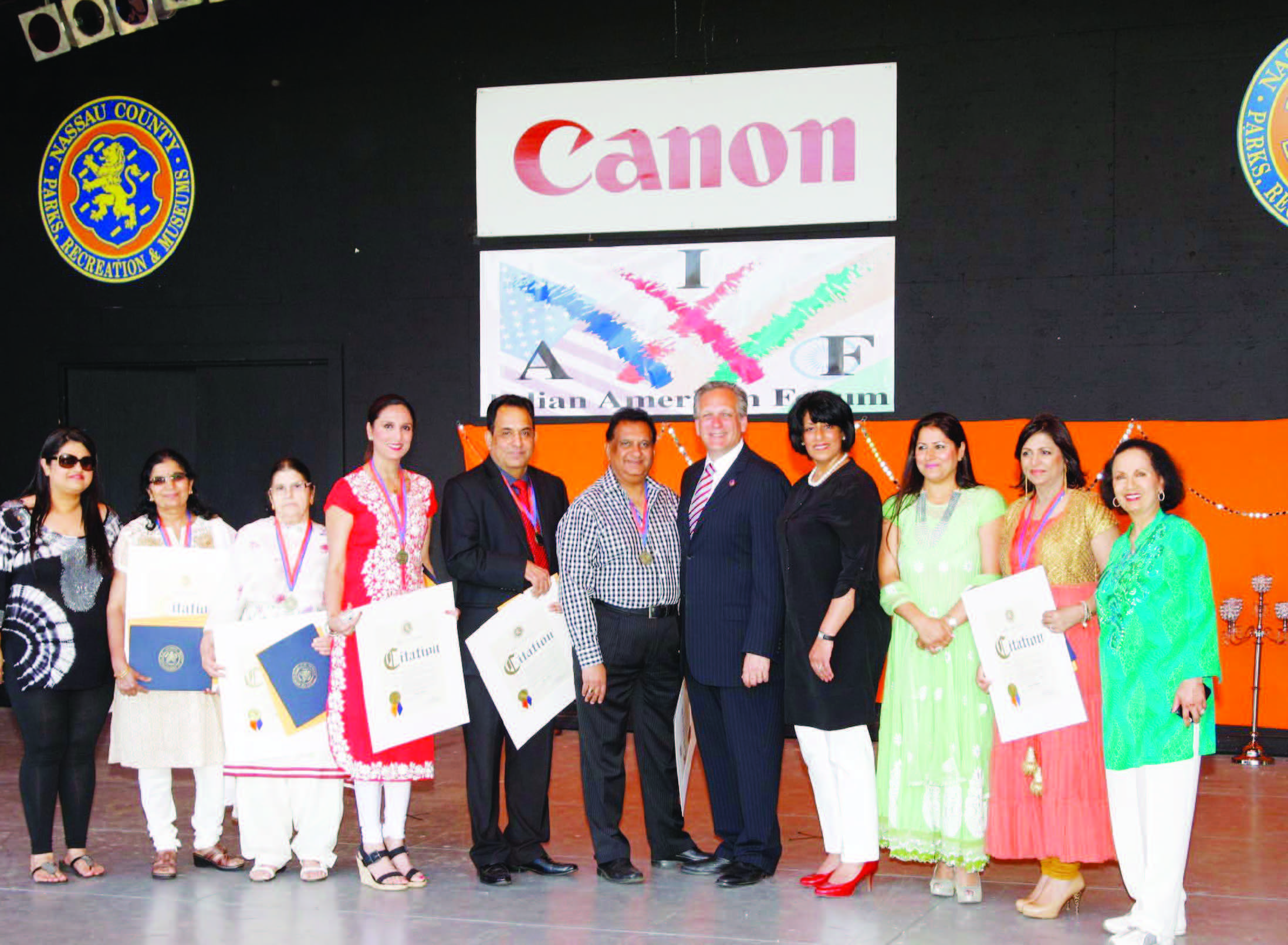
    LONG ISLAND, NY (TIP): Indian American Forum Inc. presented Indian American Night on Sunday June1, 2014 at Harry Chapin lakeside Theatre, Eisenhower Park, East Meadow. The delightful program included Yoga, kite flying, cultural presentation and awards presentation. Gobind Munjal was the event cochairperson for kite flying competitions while Jaya Bahadkar was Cultural chairperson. Students from local dance schools participated in the cultural presentation. Vocal performances were organized by Sunita Sadhnani of Glamorous event Planners the Melody Group from Tri state area consisting of 10-12 singers who entertained the audience with their melodious singing.


    9

    This program was a part of 2014 summer concert series sponsored by Nassau county Department of Parks, Recreation and Museums. Nassau County Executive Edward P Mangano, Nassau County Parks Commissioner Brian Nugent, Legislator Kevin Abrahms, Town of Hempstead Clerk Nasrin Ahmed, Councilwoman Dorothy Goosby and several other elected officials and community leaders graced the occasion. Edward P Mangano welcomed everyone and commended the Indian American Community for their outstanding achievements.


    11

    The members of Indian American community who were presented with Nassau County Awards included Dr. Surekha Patel, ARCH Foundation, Ajay Batra, IVS TV, Mrs. Bhupinder Kaur Thind, Noted Social worker in Punjab, Sonia Bawa, community worker and Occupational Therapist, Sunita Sadhnani, Glamorous Event Planners and Kirit Panchamia, Herricks Group. Indu Jaiswal chairperson of IAF thanked the gathering, the sponsors and the volunteers who together made the event a success.

  • BABA RAMDEV BATS FOR BJP, VOWS TO BRING BACK BLACK MONEY STASHED ABROAD

    BABA RAMDEV BATS FOR BJP, VOWS TO BRING BACK BLACK MONEY STASHED ABROAD

    BHUBANESWAR (TIP):
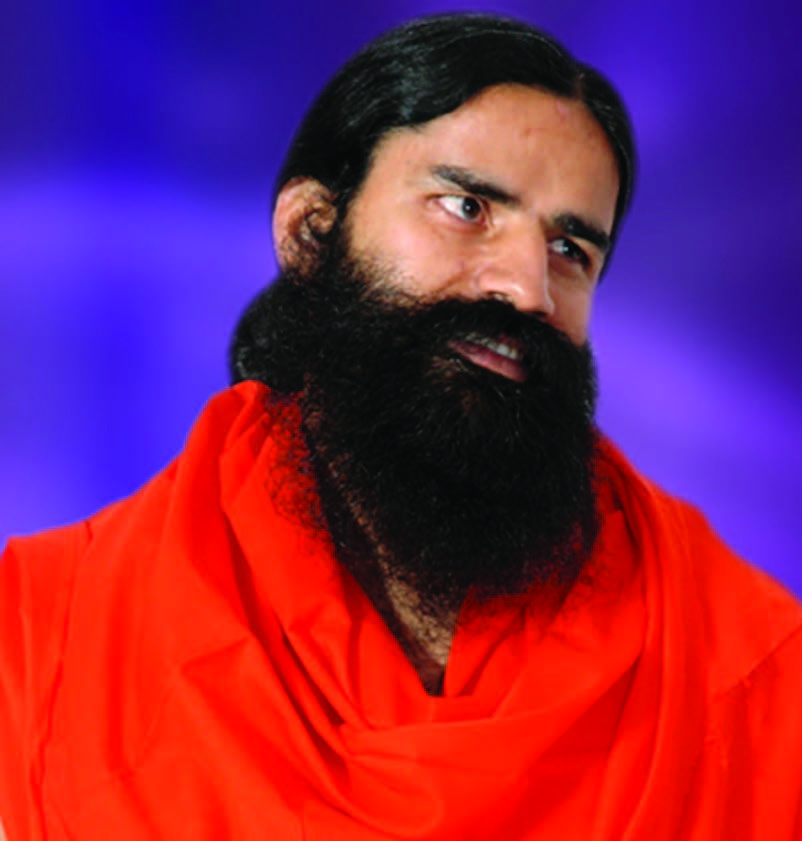
    Beating the drums for Bharatiya Janata Party (BJP) prime ministerial candidate Narendra Modi, yoga guru Baba Ramdev has again promised to bring back Indian currency stashed away in foreign banks within 100 days of the formation of the latter’s government in New Delhi. Baba Ramdev, who was in the temple city of Bhubaneswar, said: “I would commence the work for getting back the 100000 crores of Indian money within 100 days of Modi government.” Continuing his tirade against the ruling Congress, Baba Ramdev blamed the UPA Government for the lack of development in Odisha.

    “In the last sixty years, Congress has done an injustice with Odisha. Despite having sufficient financial resources at its disposal, the Centre has dealt with the state of Odisha poorly. This deprivation has made the state even poorer,” he claimed. Baba Ramdev is an avid supporter of Modi, and has been touring India to garner votes for the BJP after the party accepted his proposal to bring back black money stashed in foreign banks.

    Indian media often presents the parliamentary elections as a face-off between Congress vice president Rahul Gandhi and Narendra Modi. Polls have repeatedly indicated that although the BJP will emerge as the largest single party in parliament, it is unlikely to win an outright majority. Congress and its allies are battling to weaken Modi’s chances of building a coalition. Elections began on April 7. Polling will end on May 12. Already, 814 million people have registered to vote – a number exceeding the population of Europe and a world record. Results are due on May 16.

  • Success story or struggle? Portraying Indians in US

    Success story or struggle? Portraying Indians in US

    WASHINGTON (TIP): Indian-Americans have won plaudits for achievements in science and swept 11 of the last 15 national spelling bees, while others in the community have faced discrimination and even violence.

    As the Smithsonian, the US national complex of museums, portrays the Indian- American experience for the first time, organizers have faced hard questions about how to portray a diverse — and occasionally argumentative — community of nearly three million people.

    The exhibition, “Beyond Bollywood: Indian-Americans Shape the Nation,” opened February 27 at the National Museum of Natural History in Washington for a one-year run, with plans afterward for the project to tour the United States through 2020.

    The exhibition — which takes up everything from yoga to cuisine to hip-hop — features artifacts including the trophy of the first Indian-American spelling bee champion in 1985 and a gown worn by First Lady Michelle Obama that was designed by Indian- American Naeem Khan.

    Masum Momaya, the curator, said that planning for the exhibition involved intense debate among Indian-Americans on whether to showcase success stories or to delve into their struggles. “I think that, throughout, there was this seesaw in the community with some people saying, ‘No, take out anything that’s related to achievement,’ and others saying, ‘There’s so much stuff about discrimination; that seems so heavy and sad,’” Momaya said.

    “It was definitely an ongoing tension and I think this will be reflected in people’s reaction to it — and live beyond the exhibition,” she said. Momaya said that the debate often went along generational lines, with older Indian- Americans more eager to highlight achievements. Younger Indian Americans often had a different take, with some faulting the exhibition for reinforcing a stereotype of an overachieving model minority.

    Momaya said she tried to balance the two sides and also make an exhibition accessible to non-South Asian audiences visiting the museum, which receives more than eight million visitors a year. “I didn’t want this to be a ghettoized space in the museum where people say that this isn’t about me or my community,” she said.

    Through Indian-American eyes Setting the atmosphere, the exhibition’s entrance features a shoe rack, showing how South Asians traditionally walk barefoot at home. To Momaya’s surprise, a number of visitors — both of Indian descent and not — have slipped off their own footwear upon spotting the tray. The visitor immediately hears the music of Bollywood movies from the 1960s and 1970s, representing how many Indians — moving as the United States liberalized its immigration laws — brought with them records which they presumed they would not find.

    The exhibition invites guests to experience, in small ways, the life of an Indian immigrant. At one point, a visitor stands in the footsteps of an Indian motel owner, looking out on a lobby with all- American images such as a crucifix and a sign, “No Pets, No Checks, No Refunds.” Meanwhile, a table out of customers’ views is cluttered with images of Hindu deities and VHS videotapes of Indian movies.

    The exhibition does not shy away from discrimination against South Asians. It features a video interview of a Sikh taxi driver who shared his occasional fears of customers and also highlights South Asian activism on behalf of gay, lesbian and transgender Americans. In one of the most striking displays, the exhibition features the turban of Balbir Singh Sodhi, a Sikh gas station owner in Arizona killed days after the September 11, 2001 attacks. South Asians faced growing violence after the al-Qaida attacks, especially Sikh men — who wear turbans but have no connection to radical Islam.

    Momaya said she had just started to work on the exhibition in August 2012 when a white supremacist attacked a Sikh temple in Wisconsin, killing six worshippers. Momaya said she was struck how Sikhs, long part of the United States, felt obliged to defend themselves as patriotic. The attack led her to steep the exhibition in the “contemporary conversations on race and immigration.” “Who belongs? Who is an American? I think those are particularly poignant questions for an exhibition in Washington,” she said.

  • Spiritual Poetry Symposium (Ruhani Mushaira) Organized

    Spiritual Poetry Symposium (Ruhani Mushaira) Organized

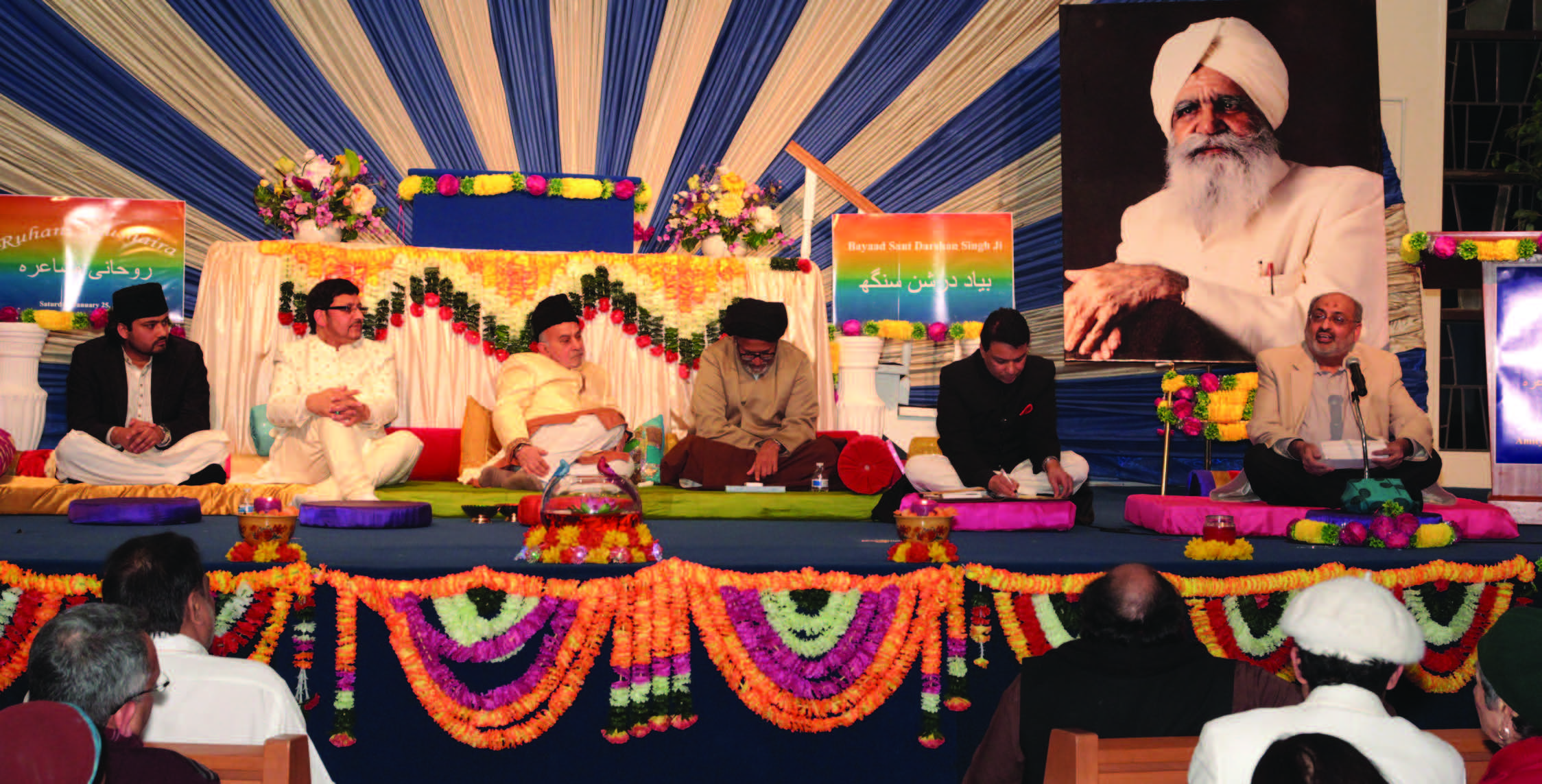
    NEW YORK (TIP): Spirituality is the soul of life’s poetry. Not often does one come across an event where these two are celebrated and relished. For the past few years Science of Spirituality in Amityville NY, has been hosting Spiritual Poetry Symposium, “Ruhani Mushaira”. This event is a celebration of the poetry of Darshan Singh (1921-1989), a beacon of spirituality in the 20th century.

    An acclaimed mystic poet, master of “Surat Shabd Yoga”, and spiritual teacher of “Sant Mat”, Darshan Singh was conferred with the prestigious Urdu Academy Award for two of his Urdu poetry collections. His various works not only continue to kindle the spirit of oneness among fellow humans but also herald the message of spiritual unity that ties all creation and its various manifestations.

    Despite the inclement weather, the event was well attended by renowned Urdu poets, enthusiasts of Urdu poetry and those who follow mystic poetry. “Ruhani Mushaira”, more than anything, was a platform that seeded positive vibes towards cultural understanding, human love and spiritual oneness. There were references to undoing the impact of historic follies that plague many parts of the world and building on the universal love and spiritual unity that binds all.

    Audience was enthralled by poets in attendance including Sadarat, Qaseem Bin Nasam Amrohvi, Maulana Rehan Naqvi, Tarlok Singh, Jori Kohli, Hasnain Raza, and Qaseem Bin Nasam Amrohvi. The evening saw the launch of soft-cover collection “Noore- Aqeedat” (Noor: Light, Splendor – Aqeedat: Faith), an anthology of select urdu mystic poetry by Darshan Singh. The book presents a powerhouse selection of Darshan Singh’s poetic gems in Urdu and Roman English.

    The spiritually charged evening had a heart-tugging message of universal love, peace and unity. The theme that underlined the whole event, and further accentuated the mystic message of oneness in God, was of tapping inside into the flame of love, living in loving remembrance, and passing through the ups and downs of life with a sense of equanimity. The core behind the teaching and poetry of Darshan Singh and Sant Mat is ethical living, selfless service and the practice of light and sound meditation.

    Celebration of Darshan Singh, his teachings and poetry, is an important initial step in ultimately practicing the principles of universal love, peace and unity. “Ruhani Mushaira” is proving to be a critical step to spread the message of love and in popularizing teachings and practices to attain oneness within and without. Science of Spirituality/Sawan Kirpal Ruhani Mission is a nonprofit, multi-faith organization that provides a forum for people to learn meditation, experience personal transformation, and bring about inner and outer peace and human unity. For more information about the Ruhani Mushaira, and other Science of Spirituality programming please call 516-901-6662; 631- 822-7979 or soshindisatsangny@yahoo.com; www.sos.org.

  • RAMDEV TWEAKS TAX PROPOSAL, SUGGESTS AMNESTY

    RAMDEV TWEAKS TAX PROPOSAL, SUGGESTS AMNESTY

    NEW DELHI (TIP): With mounting criticism over the proposal to introduce a tax on bank deposits and abolish all other levies, yoga guru Baba Ramdev, who is one of the key proponents of the new regime, on Thursday tweaked the plan and suggested separate slabs for salaried as well as industries, while suggesting a tax amnesty scheme as a pre-cursor. Suggesting that the reform proposal will take a year, “provided there is political will”, Ramdev said that in the first phase the government will need to develop banking infrastructure, do away with currency notes of Rs 500 and Rs 1000 and also introduce a tax amnesty scheme, something that the Supreme Court has frowned upon.

    Although he recognized that getting states on board may be a tough task, he suggested that states and the Centre should get 40% each of the mop up, while local bodies will have a share of 18-19% and the rest will go to banks that collect the tax. Ramdev said that his proposal is different from the one being pushed by ArthaKranti, a Pune-based think tank, which has suggested a 2% levy. “You need slabs for it to be successful and equitable. The tax rate can be 0.1 or 0.2% to 30%, with a higher levy on alcohol and tobacco and an exemption for farmers and labourers,” he said in a bid to deal with criticism from BJP leaders like Arun Jaitley. Some BJP leaders had initially backed the proposal to move to a new tax regime, but have now backed out saying that the proposal is flawed.

  • ABOUT DR. VIJAYPAL ARYA

    ABOUT DR. VIJAYPAL ARYA

    Dr. Vijaypal Arya, born in 1962 in Rajasthan, comes from a very academic oriented family; his mother Mrs. Sheelvati Devi, starting and serving at a Girls’ school for 55 years with active support of his father, Mr. Shanti Gupta. His grandfather Swami Satyanand founded Arya Mahila Vidyapeeth for girls’ education in Bharatpur district that is now a University. His parents, despite economic hardships, gave education top priority and excellence in education was the hallmark of the family. After completing his primary education, Dr. Arya commenced studies at Ravindranath Tagore Medical College of Rajasthan University. Dr. Arya came to the US in 1986 and joined as an intern at Wyckoff Heights Medical Center. He completed his internal medicine residency in 1991.

    To further pursue his interests, he joined the Gastroenterology fellowship program at Allegheny General Hospital and became a board certified gastroenterologist in 1993. He joined the Gastroenterology division of Wyckoff Heights Hospital as the Assistant director in 1994; became a fellow of American College of Physicians (1996), American College of Gastroenterology (1999) and American Gastroenterology association (2007). At Wyckoff Heights Medical Center, he is serving as the Chairman of Continuing Medical Education Committee and is the President of Medical Staff Society. In the past he served as President of Alumni Association. Teaching is his passion, which he believes he inherited from his mother. He has been honored by the Department of Medicine residents at Wyckoff Heights Medical Center for his teaching and guidance by various awards. Dr Arya has been serving as Clinical Assistant Professor at Weill – Cornell Medical College, Director of Endoscopy at Wyckoff, Attending Physician at North Shore LIJ Health System . Dr Arya is well recognized by his peers and was listed as America’s Top Physician in 2004 by Consumers Research Council of America for three consecutive years.

    In 2004, he started working to provide scientific evidence for the ancient Yoga method (Shankh Prakshalana) for Colon cleansing. This work received the Presidential Poster Award in 2009, American College of Gastroenterology, Annual Meeting. The research has been published in peer reviewed journals. He has given extensive lectures at various educational meetings. Dr Arya is an active member of various academic and honorary societies and organizations. He is also known for his generosity and humbleness by his selfless contributions to the people who are in need, for which he has established Vikalp Foundation. He lives in Old Brookeville, Long Island with his wife Dr Kalpana Arya-Gupta and four kids -Swarn, Simran, Sajel and Krishna.

  • Yuva Hindi Sansthan’s Hindi summer program Concludes in Pennsylvania

    Yuva Hindi Sansthan’s Hindi summer program Concludes in Pennsylvania

    HATFIELD, PA (TIP): Yuva Hindi Sansthan, a New Jersey based educational organization concluded a two-week summer Hindi program in Hatfield, PA on August 16. The program designed under the strict guidelines of STARTALK, a United States funded Foreign Language initiative, targeted 60 elementary and Middle School students, most of whom, born and raised in USA, belonged to Indian American families. Dr. Devyani Khobragade, Deputy Consul- General of India in New York, who attended the camp as the chief guest on August 16, the concluding day of the program, distributed completion certificates to students. She extended her support to such efforts for promoting Hindi. Dr. Khobragade said that the Government of India was making all efforts to introduce Hindi as a working language of the United Nations. She assured that her office was willing to help Hindi programs.

    Upendra Chivukula, New Jersey Assemblyman was also present on the occasion. He congratulated Yuva Hindi Sansthan for its consistent effort to teach Hindi to youngsters. Chivukula said that US administration fully realized the importance of teaching American kids one more language other than English. “United States recognized Hindi as a critical language for American students and businesses which were an encouraging step for the Indian American community”, he said. “The participating 8 to 12 years old students were placed in five different classes where our team of STARTALK trained teachers engaged them in performances based activities on topics related with ‘A trip to India’. “We used a variety of real life activities to make sure children were comfortably conversing in Hindi in meaningful and unrehearsed fashion”, said Rashmi Sudhir, who served as the lead instructor at the camp.

    “It was an intensive program for which all instructors prepared for months planning their lessons”, said Rashmi. “A typical day at the camp started with a 30 minute Yoga session followed by classroom instructions for three hours before breaking for lunch. The students were immersed in a variety of activities in art, culture and technology classes during the post-lunch period of the day which continued until 4.30 pm.We screened interesting Hindi movies during the lunch hour while students enjoyed authentic Indian meal. Each and every minute of the camp was designed for learning Hindi and experiencing the product and practices of Indian culture”, said Rashmi. “The program was hosted by North Penn School District which provided classrooms, gym, cafeteria, computer labs and auditorium for facilitating the two week long activities during the program”, said Ashok Ojha, program director, YHS STARTALK Hindi 2013 program.

    “The school district fully cooperated with us for managing the camp style program while a number of parents volunteered their time to support the program.” The campers were taken on a field trip during the camp to Philly Museum of Art where they learned about various ancient mythological characters, statues and icons, instructed by well known art historian from University of Pennsylvania Dr. Pushkar Sohoni, who also took them around the UPenn library where they walked around the aisles displaying tens of thousands of books in Indian language.

  • Shikshayatan celebrates 25th

    Shikshayatan celebrates 25th

    Committed to promotion of Indian Culture and Heritage

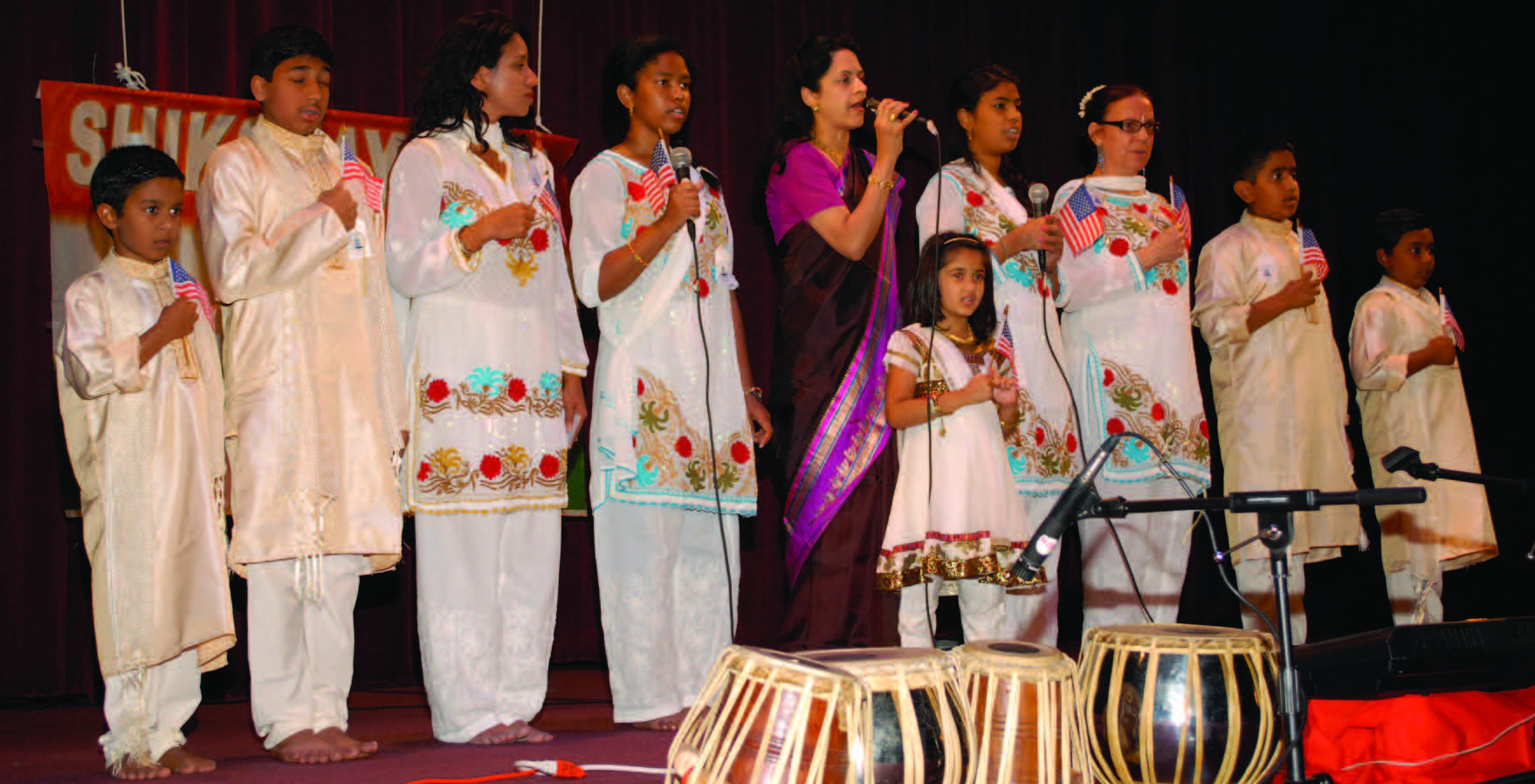
    Shikshayatan, a premier institute to promote Indian culture and heritage celebrated its 25th anniversary on July 20 and 21, in the benign presence of a great spiritual master, Satguru Yogiraj Gurunath Siddhanath who had specially come to New York to bless the students, teachers and the management.

    The institute was founded by Mrs. Purnima Desai on the auspicious day of Vijayadashmi- on Thursday, October 20,1988 – the day Lord Rama achieved victory over demon king Ravana. Vijaydashmi is also the day when many families start formal education of their kids. Purnima Desai is the Chief Editor and Publisher of “ABHYUDAYA” magazine in Hindi and English for young and adults – mouth piece of Shikshayatan to give opportunity for creative writing and to learn about India. Shikshayatan conducts regular and organized classes to impart knowledge about Indian culture, philosophy, languages such as Sanskrit, Hindi, and music -Classical and light, Vocal, Instrumental music (Harmonium, Keyboard, Tabla, Violin Sitar, Flute) and dance. Purnima herself is an adept vocalist.

    She is an excellent educator, a producer of music albums and a motivating teacher. She has run Shikshayatan successfully for the last 25 years and has touched the lives of many students. Her mission is to serve humanity and her vision is to have a full fledged institution to spread Indian art & culture. Pandit Kamal Mishra – music director, vocalist and violinist and a teacher has proved to be an asset to the center. Anand Ramanujam, a reputed tabla performer in Nagpur Doordarshan has recently joined Shikshayatan cultural center.

    Shikshayatan has opened its doors to all nationalities to come together for peace , harmony and team spirit. Shikshayatan has celebrated many Indian festivals, birthdays of saints, patriotic leaders and received blessings from spiritual masters like Amma, Sant Morari Bapu, Acharya Mridula Shashtri, Swami Buaji, dignitaries and diplomats – Hillary Clinton, Gary Ackeraman, Dr. Karan Singh etc. Purnima is a highly spiritual lady with a pure heart.

    Her strong desire is to seek the Lord, She developed a strong connection with Satguru Yogiraj Gurunath Siddhanath in whom she saw her God. Yogiraj was so impressed with her devotion that he accepted her invitation to come to Shikshayatan on its 25th anniversary celebration and bless the students and other attendees.

    On July 20th, 2013 the program started with Deep Prajvalan by Moksha Priya from Maha Mandaleshwar Maa Yog Shakti Durga Temple. The Cultural Program started with American National Anthem led by Kirti Shukla. Kavita and Sudipta sang Mata Saraswati bhajan “Veena Kar Dhavalaabara”. Shiv Panchaakshari stotram was sung in raag Bhimpalaasi by students Rosa Mori, Kavita and Sudipta. Shivani sang raag khamaj chhota khayaal. Kavita sang raag Tilak Kamod. Sudipta sang raag yaman. Rosa sang Krishna bhajan and Manali sang Meera bhajan.

    Little children from age of 6 to 14 years – Shiv Iyer, Sudeep Sureshbabu, Darshan and Ashwin played varieties of Taal from six beats to 16 beats on Tabla accompanied by Kavita Mahabir and Sudipta Sureshbabu on Keyboard. Audience was spell bound seeing children rendering such beautiful presentation.

    Renowned Pandit Sujan Rane sang two bhajans, one based on raag yaman and the second one based on raag desh, accompanied by illustrious tabla player Naren Budhakar. Renowned musician Pandit Kamal Mishra sang classical piece raag maalkonsh and won the hearts of many with his unique and melodious performance. His violin recital – raag vihaag- was also much appreciated which was accompanied by famous tabla performer Anand Ramanujam . Smt. Purnima sang Shiva bhajan “Bahati Ganga” with total devotion. This cultural program was followed by the auspicious presence and empowerment by Satguru Yogiraj Gurunath Siddhanath.

    Yogiraj Gurunath was born in Gwalior, India on May 10,1944, and is descended from the ancient family of Ikshavaku Rama of the Solar Dynasty. Though he belonged to a royal family, he was a born siddha and went into spontaneous enlightened state from the age of 3. During his long hours in meditation Yogiraj Gurunath has visions of Shiva, Krishna, Rama and Christ. Spiritually realized from a very young age, he cast away his educational responsibilities and fulfilled his calling as a Yogi. Yogiraj Gurunath spent his early years in the Himalayas with the great Nath Yogis in whose presence he was transformed, realizing the unity of all Yogas and religions. Yogiraj’s message to humanity is “EARTH PEACE THROUGH SELF PEACE” and spiritual evolution of consciousness through the divine science of Kundalini Kriya Yoga meditation.

    In conveying his message, Yogiraj goes beyond the limited reach of words and offers the grace of direct experience. Yogiraj Gurunath introduced his message to the audience. Every single person could feel his divine presence after performing the breathing exercise on Satguru’s instructions. Audience was allowed to take active part in discussions by asking questions. Guruji says that our true religion is humanity. He says,” Live your life like an incense stick, dissolve yourself to spread the spiritual aroma of peace and joy to others. Live your life like the Sun, explode yourself to give light and life to humanity.”


    img27

    Satguru was spreading his message of love and divinity and how the powers of a Satguru can heal the wounded souls and bodies. On Purnima’s request, Satgurunath blessed Shikshayatan students by giving “Saraswati” trophies to girls – Shivani, Sudipta, Kavita, Manali, Rosa and Nataraj trophies to boys – Darshan, Shiva, Sudeep, Ashwin. Also awarded were “Bhanu Mani” plaques with titles like Sur Samraat to Pandit Kamala Prasad Mishra, Sur Shiromani to Pandit Suja Rane, Hind Mani to Ramesh Kalicharan, Kaavya Mani to Nina Wahi, Sanchaalak Mani to Dr. Bindeshwari Agrawal, Saahitya Mani to Anjana Roy, Chitrakala Mani to Anand Patole, Taal Shiromani to Naren Budhakar and Anand Ramanujam. “Seva Mani” awards were presented to

  • OFBJP Organizes Public Reception For BJP President Rajnath Singh

    OFBJP Organizes Public Reception For BJP President Rajnath Singh

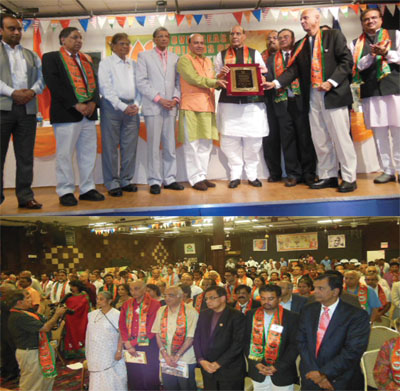
    EDISON, NJ (TIP): Indian American community of tri-state area (New Jersey, New York, and Connecticut) gave a rousing welcome to Rajnath Singh, President of Bharatiya Janata Party (BJP) and his BJP delegation Ananth Kumar, General Secretary; Sudhanshu Trivedi, National Spokesperson; and Vijay Jolly, Convener of Overseas Affairs and Overseas Friends of BJP (OFBJP) in TV Asia Studio Auditorium at Edison, NJ on Sunday July 21, 2013. The program was organized by OFBJP-USA as part of its community global outreach program.

    The program was broadcasted live on TV Asia across US reaching out to 1.5 million viewers. The program was also relayed live in India, Canada, UK, Europe and Middle East thru various channels. Addressing the jam-packed auditorium, Rajnath Singh said that he was elated by the warm welcome that had been accorded to him by the Indian Americans here in US. He said that trust and credibility have become a big problem in India and BJP is the only option. No party in India has grown bigger than Congress except the BJP.

    BJP is the only party that has not suffered a vertical split. Communists have lost relevance and Congress has no policy on any of the issues nor has any ideology. Since its inception in 1951 as Bharatiya Jan Sangh and later on as BJP, the party has been pursuing a policy of Nation first. He continued that Atal Behari Vajpayee led a 24 party coalition for 6 years and the NDA rule was far better than 55 years of Congress rule in every aspect.

    Corruption, Inflation and price rise are the signature of congress rule whereas NDA government controlled the inflation and price rise in spite of the prevailing severe drought and economic sanctions imposed by the entire West after Pokhran nuclear tests. NDA inherited a GDP growth of 4.8% and 10% inflation whereas BJP handed UPA a GDP of 8.4% and inflation 3.5% in 2004. Amidst applause from the audience he said that Pokhran test was a big step wherein the BJP led govt made India a nuclear power even though we knew economic sanctions were staring at us.

    Countries that are much smaller have become developed countries but India is still a backward country and not sure why 55 years of Congress rule did not change much. Congress has to answer as to how much time they need to make India better, to remove poverty. BJP invited FDI in telecom sector but encouraged Indian investors whereas Congress has opened up the telecom sector 100%, increased in the LIC sector from 26% to 49%. Foreign investors have pulled out $7.5 billion from India and no one is ready to invest.

    Even after 60 years of Independence we still have 67% of people who don’t get food and we need a food security bill. We need leaders with firm conviction and leaders with vision and when we come in power we will make India a super economic power in 10-15 years. National Highway development has seen tremendous growth during NDA rule. 50% of the highways that were built during 1980-2012 happened during 6 years of NDA rule and the other 50% were built during 26 years of non-BJP rule.

    Gujarat development has become a role model across the world. Madhya Pradesh agricultural growth (19%) is the highest in the world and very soon will be providing 24hrs of power supply. Chhattisgarh PDS system serves 90% of the population without any corruption and is a model for other states to emulate. Goa is the only state in India where Petrol is cheaper than Diesel. India has a GDP growth of 4.8% whereas BJP ruled states have 10% GDP growth. UPA government has no plan to tackle Naxalism or terrorism.

    Appeasement has become the state policy whereas BJP never links terrorism to any religion, caste or region. After Mumbai terror attack, Prime Minister made a statement that he will not talk to Pakistan until it gives an assurance that they will control terror activities and not support any groups that work against India but changed all that in a matter of few months. Our foreign policy is at its worst with no friendly neighbors around us. During NDA rule we maintained good relations with Russia and development excellent relations with US.

    We made US our strategic partner. He appealed to the US govt to lift the ban on visa to Narendra Modi, he said on one side US agencies rate Gujarat as the best state and Modiji as an excellent administrator and on the other hand they deny visa to him. It will be better if US takes a decision soon as they will be forced to take a decision anyway later. When BJP comes to power we will make India a power of Rishi and Krishi (knowledge and Prosperity), he said. Indian culture influenced the world for thousands of years.

    We never planned to dominate the world and even Swami Vivekananda came to Chicago on his own and had great influence on the world by his teachings. Citing the example of Newsweek columnist Lisa Miller who stated that by imbibing Yoga, Pranayam, Ayurveda and Organic farming people in the West are becoming Hindus whereas it is a crime in India if you say you are a Hindu.Talking on the recent controversy related to Narendra Modi statement that he is a Hindu and Nationalist, media created and pseudo secularists made a big fuss.

    Professing your Hindu culture became a communal word in India. He said that as per the Supreme Court, Hindutva is a way of a life. Hindutva teaches love not only for human beings but even for animals, plants, rivers, mountains etc. It is Hindutva that teaches us to serve milk to a snake and take care of animals like ants and birds. He called on the Indian American Community to support BJP to build a strong India.

    Shri Rajnath Singh was accorded standing ovation. Shri Rajnath Singh was honored by the OFBJP executive committee with a plaque for his contributions to the party and the country. Earlier, Ram Rakshpal Sood (Sr.Advisor, OFBJP) acting as the Emcee welcomed the audience, chief guests and the sponsors of the event. After the traditional lamp lighting ceremony amidst the chanting of Vedic mantras by Pandit Pravin Shastri and Chandrakant Trivedi and blowing of conch shell by Pravin Shashtri. Mrs. Vidya Labroo led the rendition of Vandemataram.

    Jayesh Patel (President, OFBJP) welcomed the distinguished guests and said that entire India is chanting Narendra Modi (NaMo) mantra and expressed hope that BJP will be able to get majority on its own merit in the next election. Ram Kamath (General Secretary, OFBJP) introduced Dr. Mahesh Mehta, National Coordinator of OFBJP-USA. Speaking on the occasion, Dr. Mehta said that mission 2014 is about transforming India into a global leader and Global Indians should contribute to be the part of this great movement that will eventually contribute to the development of India.

    Dr. Adapa Prasad (Immediate Past President) introduced Vijay Jolly, Convener of BJP Overseas Affairs and OFBJP, as a dynamic leader and former MLA who took on Delhi Chief Minister during the last election.

    In his electrifying speech, Vijay Jolly urged the audience to applaud for Rajnath Singh for honoring the feelings of the people by making NaMo as the chairman of the campaign committee. Stressing the fact the OFBJP is on a mission to develop leaders by inducting youth into the organization to dethrone the corrupt Congress regime in India. Stating that NRI’s have always made India proud, he said that OFBJP has setup its chapters in UK, Norway, Nepal, Kenya and other countries to work for the welfare of Indian diaspora.

    He got the past Presidents of OFBJP-USA honored by Rajnath Singh Introducing SudhanshuTrivedi, BJP National Spokesperson, Dr. Dinesh Agrawal (Former- President, OFBJP) said that as the national spokesperson, he is very active effective on TV channels spreading the message and its ideology of BJP. SudhanshuTrivedi reminded that July 21st the day of the program is a historical day when US astronauts landed on the moon. Edison town, the venue of the program, is also a historical town, named after the inventor of light bulb.

    Hence, he said that word Bharat stands for light and inspires us to take India to the pinnacle of glory. Stating that BJP is all set to form the next government is not based on hope but on facts. He concluded reciting a poem by A.B. Vajpayee. R.P. Singh (Org. Secretary, OFBJP) introduced Ananth Kumar, BJP general Secretary. Amidst thunderous applaud from the audience, Shri Ananth Kumar introduced himself as the Hanuman of South as Kishkinda, the birth place of Lord Hanuman is in Karnataka whereas Rajnath Singh is from U.P, the land of Ram. For Ram’s team to win we need Hanuman and he is there to lend services for the party and the country.

    India, he said is going through turbulent times and like A.B. Vajpayee model, we have Gujarat model of development under NaMo leadership and we will soon have NaMo model of governance. He said that BJP is already in battle mode, under NaMo and Rajnath Singh’s leadership we are all set to take on the corrupt congress government. Once in power, BJP will make India a global player not only in spirituality but in culture, strategic matters and will be a decisive player in the world. He urged the NRI’s to connect with their districts back home and work for BJP’s victory in 2014.

    Chandrakanth Patel introduced Rajnath Singh as a man of impeccable image in spite of being in political life for 40+ years. Born in a farmer’s family in Varanasi, he rose to be the president of BJYM. He was part of the J.P movement and became the Agricultural minister in A.B. Vajpayee’s government. He was the President of BJP between 2007-2009 and again became the President in January, 2013.

    Currently, he is a Member of Parliament from Ghaziabad, U.P. Earlier, the President of TV Asia and a well known community leader, Shri H.R.Shah addressed the gathering and said that TV Asia always supported India causes and he has been an admirer of Mahatma Gnadhi and Sardar Patel. He said he felt close to BJP principles and supported BJP. He wished that Narendra Modi would be elected as the Prime Minister. Krishna Reddy (Treasurer, OFBJP) presented the vote of Thanks.

  • I Will Encourage Dialogue: DNYANESHWAR MULAY

    I Will Encourage Dialogue: DNYANESHWAR MULAY

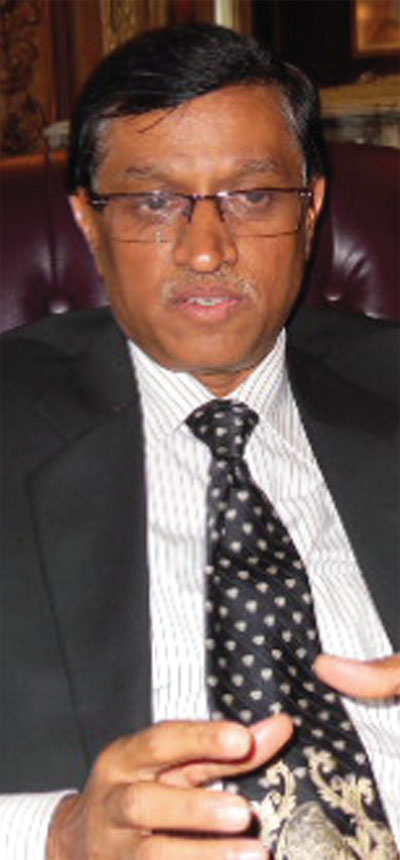
    Abrilliant career diplomat, a much honored multilingual prolific writer and a celebrity in his own right, Mr. Dnyaneshwar Mulay aroused a lot of expectations in USA even as his name surfaced as the Consul General of India in New York to succeed Mr. Prabhu Dayal early this year. Mr. Mulay was held back in Maldives where, as India’s High Commissioner, his presence was required to deal with a sensitive diplomatic situation in that country.

    The Indian American community, meanwhile, expectantly waited for him to arrive. And when Mr. Mulay came, he conquered the hearts of the Indian American community who have great admiration for his scholarship and friendly disposition towards the community. His reputation as an astute diplomat, a great writer and a perfect gentleman also helped in ready generation of admiration and warmth for him.

    At all the events that he went to he emphasized that he would work to “communicate more and better” and create “goodwill within the Indian American community and with local government”- views that endeared him further to the Indian American community in just a few weeks and a couple of appearances at social events. The Indian Panorama earlier this month spoke with Mr. Mulay to know his thoughts and views on a number of issues of importance to the Indian American community , India and USA.Mr. Mulay was extremely candid and forthcoming.

    Here are some excerpts from the interview. You are a prolific writer in at least three languages- Marathi, Hindi and English. I believe you have written around 15 books. Some of these have been translated in to many other languages. What are the subjects you like to write on? When did you start writing? And how has Foreign Service contributed to your writing prowess?
    Ans. I started writing much before I joined the Foreign Service. But Service broadened the horizon. Foreign service has provided me immense opportunity to look at various aspects of life in different milieu and environs. As a diplomat the opportunity we get to create the bridges is immense. I think we have a unique opportunity in the Foreign Service as a diplomat to reach out.

    It gave me immense amount of raw material, mines and mines of gold mines to write about. As a diplomat the canvass we get is huge. That way Foreign Service really enriches you. How you want to use that knowledge is up to an individual. I personally feel my observations as of today are important which must be shared with others. You can wait up to retirement to write. I write basically in all forms. Short prose, like essays.

    Long prose. Poetry. I have been writing columns also. When I write a column I take precaution not to write on a political or sensitive issue because I am in the Service. My intention is not to sensationalize but to inform and pass on the knowledge which I obtain as a privileged member of the Indian Foreign Service. There are enough topics and material outside politics to write about. There is a variety of people to write about.

    You have been here for some time now and have had the opportunity to come in contact and interact with a cross section of Indian American community. What is your impression of the Indian American community here?
    Ans. I must say, first, the community is fairly large in number which is really a positive thing because numbers are strength. Two, it has tremendous talent. Number three, it is hugely diversified. Even though Indians are known to be good in certain areas like academia and IT but they are seen across the board.

    I have seen them working with New York government, in City administration, in small businesses and various other professions. I have seen them involving themselves in interesting charity and promotional work. It is the number, the vibrancy, the quality and the diversity of the Indian American community that fascinates me. The community has contributed hugely. It contributed to the inking of the Indo-US Nuclear agreement.

    It has successfully lobbied for India and also for the United States. It has bridged communication gap between the two countries and successfully built bridges between the two countries. But I still feel there is a huge untapped energy within the diaspora which remains to be explored and exploited in the interest both of India and US; and in the end, to bridge the two countries and to make the relationship between the two more substantial. Since 1992 when the liberalization program started, there has been a kind of awakening among the diaspora.

    Indians abroad felt a new era has dawned and they began reconnecting with India and returning to the fold. More and more from the diaspora got involved. Realizing the importance of the vast diaspora, government of India in 2004 formed a separate ministry to address the issues of the diaspora. I must say the Ministry of Overseas Indian Affairs has done commendably well in a short span of time. It has brought the diaspora together. It has introduced a number of welfare measures, in particular for workers and women.

    Introduction of OCI and PIO cards are good examples of the right step in the right direction of attracting diaspora back in to fold. All this has created momentum for the next level- a much higher level of cooperation between India and US. Time has come when the two countries need upgrade their cooperation to a higher level in various fields like, transfer of knowledge, pharmaceuticals, agriculture, food processing, automobiles, etc. India needs new technologies in agriculture, food processing and various other sectors. Involvement of diaspora will certainly be helpful. I would emphasize equal opportunity for the diaspora to promote in US the traditional Indian technology, for example, in the field of healthcare, of which yoga, ayurveda and naturopathy are parts.

    Some organizations have submitted memoranda outlining the irritating issues, including the one relating to OCI cards. What is your comment on their concerns?
    Ans. Let me explain. Decision making is in the hands of New Delhi. We have forwarded the concern of diaspora. The issues raised concern various ministries. Ministry of Home Affairs, Law ministry and Ministry of Overseas Indian Affairs- all are involved in certain matters. It does sometime cause delays and at times, the procedures recommended prove to be cumbersome. However, the concern is to have a process that does not trouble people. I recognize the inconvenience caused with regard to certain procedures required for the OCI card.

    I have conveyed the concern of the diaspora and we are awaiting a response. I cannot give a time frame though. However, it will be wrong to presume that all problems perceived by the community will be solved. We work within parameters not necessarily set by us. I would like to be communicative. I would like to communicate more and communicate better with the community. I would bring in more efficiency, more transparency and communicate with the community so that the community knows we are working for it. I will have empathy for the community and a desire to solve its problems. There you will not find us wanting.

    How about communicating with various religious and community groups with a view to combating any false propaganda against India?
    Ans.As a representative of Government of India, it is my duty to promote peace and harmony. I will encourage dialogue to that end. We have to give a sense of belonging to everybody.

    How about having a periodic dialogue with media?
    Ans.We can do that. I would like to be communicative with each stakeholder.

    Are you going to allow use of Consulate premises for promotion of personal business?
    Ans.When it comes to selling wares by a businessman, no. We do not promote personal business. However, we have a promotional role when it comes to helping Indian businesses in USA. Economic diplomacy is as important as political diplomacy. In fact, it has become more important. We cannot be blind to this fact. We will promote exchange of knowledge, thoughts and ideas between Indian and US businesses. Ultimately, we have to reach out to the American society.

    Will you allow the use of Consulate premises for community events?
    Ans. Yes. Community events when India promotion is involved are welcome.

    Have you established any contact with local government?
    Ans. I am trying to work out issues and concerns. Once, it has been done I will get in touch with the concerned authorities. The idea is to bring substance to relationship. Promotion of interests and creating goodwill among communities is possible only through the power of communication and we will establish good working relationship with local government.

    What is your message to the Indian American community?
    Ans.We value the role you are playing both for India and USA and for the Indian American community here. The way you are living as a peaceful community in this country is commendable and does proud to India and Indians. But I feel there is a large untapped energy which needs to be explored and put to the right use. What we should have in mind is our community should live in peace and harmony. What we should have in mind is the relationship between India and USA should grow stronger. Consulate of India will be happy to take this cooperation between the two countries to a higher level.

  • ‘HOT YOGA’ Guru Accused of Rape in Two New Lawsuits

    ‘HOT YOGA’ Guru Accused of Rape in Two New Lawsuits

    LOS ANGELES (TIP): Millionaire yoga guru Bikram Choudhury has been charged with raping two female students attending his teacher training courses, in two separate lawsuits filed May 6 and 7 in Los Angeles, Calif., Superior Court. “Bikram is a sexual predator who violates the civil rights of women,” said one of the students in her court complaint.

    Both complainants said they were attacked during one of Choudhury’s teacher training courses, a nine-week, six days a week course which costs $13,000 to attend. In March, Choudhury was the subject of a similar lawsuit, in which former student Sarah Baughn, 20 at the time of her encounter with Choudhury, complained she had been sexually harassed by the Indian American “Hot Yoga” creator, a yoga technique popular with Hollywood celebrities.

    Last year, Choudhury was sued by former student Pandhora Williams, who claims the teacher demoralized her in class, calling her a “black bitch,” as he called for security to expel her from the class. Williams’ case was set to go to trial Apr. 29, but was presumably settled May 7 for an undisclosed amount, according to Los Angeles County Superior Court documents.

    In the latest case filed May 7 by Jane Doe 1 against Choudhury, the un-named former student alleged that after his personal assistant quit, Jane Doe 1 took on the unpaid role, serving as tea-maker and masseuse, among other duties. She alleged that Choudhury would verbally harass her, calling her “you idiot,” in front of a filled classroom. One morning, as she was tidying his room, Choudhury allegedly forced Doe 1 onto his bed, and started to take off her clothing, despite her objections, and forced himself into her, according to the court documents.

    Doe 1 escaped and tried to withdraw from the teacher training camp, but found herself trapped there, having no money to go elsewhere. At the evening lecture, Choudhury took on the topic of sex as “being just an exchange of energy,” she said in the court papers. Several days later, Choudhury caught her alone and once again raped her, she alleged in the lawsuit. Doe 1 left the teacher training camp with funds borrowed from her mother.

    Claming that she was a victim of human trafficking who deserves at least $500,000, Doe 1 is suing for an unspecified amount of compensation for emotional distress and lost earnings. Jane Doe 2 allegedly also caught Choudhury’s eye at a teacher training course in 2010. Characterized as a “small town girl, who only saw good in others,” Doe 2 alleged that praises on her work soon became unwanted sexual comments about her body during classes. Choudhury asked Doe 2 to stay behind after class one day and allegedly professed his love for her.

    “It’s something only my heart can explain,” Choudhury said, according to the court papers. Doe 2 brushed him off, saying she had a boyfriend she loved, but Choudhury persisted over several weeks. One day, the yoga teacher invited Doe 2 to his room, saying he wished to discuss a career opportunity. In the room, Choudhury pleaded, “I am all alone. I need someone to love me.”

    Then without warning, Choudhury pulled his student towards him and allegedly forcibly raped her, the lawsuit charges. After leaving the program Doe 2 said her life unraveled around her; she was severely depressed, suicidal, started drinking and taking drugs and cut off communication with everyone. She is suing Choudhury for an unspecified amount of compensation for post-traumatic stress disorder, emotional distress and lost wages. In a note on his Web site, Choudhury said he was “disappointed” by the earlier suit, but would offer no further comment.

  • Community Organizations Take Care of Community Health

    Community Organizations Take Care of Community Health

    LONG ISLAND, NEW YORK (TIP): “For the first time, the Indian Association of Long Island (IALI) partnered with six other prominent organizations to bring free health camp to community members”, said a proud IALI President Dr. Kishore Kuncham. India Association of Long Island (IALI) and North America Telugu Society (NATS) in partnership with the American Association of Physicians of Indian Origin, Queens- Long Island (AAPI QLI), Arya Samaj of Long Island, Asamai Temple, Hicksville, Telugu Literary & Cultural Association (TLCA) and Sant Baba Nidhan Singh Ji Cultural Society (SBSNCS), held a Health Camp at Asamai Temple on Sunday, March 24, 2013. The event was held from 12 Noon to 4 P.M. Over 80 community members took advantage of the free consultative services of 18 volunteer doctors, in the area of: Internal Medicine, Opthalmology, Neurology, Pulmonary & Critical Care, Gastroenterology, Nephrology, Endocrinology, Cardiology, OB/GYN, Dental, etc., There also was an EKG service available for those individuals who needed an EKG. Volunteers also were there with their glucose monitors and blood pressure monitors ready to provide services. In addition, Flushing Hospital was able to provide appointments for Mammography and Colon Cancer Screening to individuals in need.

    Also, many Committee Members of the sponsoring Organizations, along with their spouses and young children gave up their Sunday to provide their volunteering services so that the community members could be triaged appropriately and over 100 wellwishers and friends from various organizations came to support the event. The hall of Asamai Temple was spacious, comfortable and convenient. The sponsors also provided breakfast (courtesy Ras Raj) and lunch (courtesy Asamai Temple) for everyone present. Dr. Kishore Kuncham, President of India Association of Long Island who coordinated the health fair and brought several key organizations together profusely thanked doctors, volunteers, and leaders of various organizations for their time, expertise and services.

    He praised Dr. Madhu Korrapati, Vice Chairman, NATS who was instrumental in organizing all the doctors and free glucose monitors. He acknowledged the cooperation and recognized Dr. Tarun Wasil (AAPI QLI), Mr. Veer Mukhi (Arya Samaj), Mr. Gobind Bhatija (Asamai Temple), Mrs. Krishnasri Gandham (TLCA), Mr. Satnam Parhar (SBSNCS), and Mr. Harshad Patel (Gujarati Samaj). The program concluded with all the attendees taking part in Laughter Yoga. It was very heartwarming to see the various organizations coming together and proudly serving the community and there was a sense of pride and hope to bring more programs jointly. The community needs to focus on the health and care needs of the elderly. It is time to think of a home for the Indian American seniors where they can live a free and healthy life. Hope, the caring community leaders would realize it.

  • Cabinet Clears Lokpal Bill With Amendments, Keeps Parties Out Of Its Ambit

    Cabinet Clears Lokpal Bill With Amendments, Keeps Parties Out Of Its Ambit

    NEW DELHI (TIP): The Lokpal Billcleared by the Cabinet on January 31excludes political parties from itsjurisdiction and also rejects theproposal for the appointment of theCentral Bureau of Investigation chiefby a collegium comprising the PM,leader of opposition and the ChiefJustice of India.Minister of state for PMO VNarayanasamy informed the Cabinetthat political parties were being keptoutside the purview of the anti-graftombudsman as their functioning wascovered by the Representation ofPeople’s Act.The explanation is unlikely toconvince activist groups led by AnnaHazare and Arvind Kejriwal who feelthe bill falls well short of theirconcept of a strong and independentlokpal.

    The main opposition BJP isinsistent on a collegium deciding theappointment of the CBI chief ratherthan the consultative process set outin the bill that was examined by aselect committee of Parliament.Explaining the provision on theappointment of CBI chief,Narayanasamy claimed a clausealready existed in the Lokpal Billpassed by Lok Sabha. Asked why theselect committee made arecommendation which was alreadypart of the bill, he said, “Maybe thecommittee wanted to reaffirm itsstand on the issue.” However, the LokSabha version does not envisage acollegium.

    Bill may pass House test
    Official sources said the governmentis hopeful of the bill’s passage in theforthcoming budget session as the legislation will need a simple majoritythat the ruling coalition thinks it candrum up now that a controversialprescription for state lokayuktas hasbeen dropped.

    In the face of a strong publicsentiment in favor of accountabilityand opposition parties looking to putUPA-2 in the dock over corruptioncases, the government has travelled aconsiderable distance on the LokpalBill, conceding much more than it wasearlier willing to.The select committee’srecommendation to do away withmandatory sanctions required toproceed against senior officials hasbeen accepted with the caveat that theorganization or individual againstwhom an investigation report is filedwill be given an opportunity to presenthis case before a lokpal bench.

    This is a major concession as thebureaucracy has vociferously arguedthat this will strip officials ofprotection against motivatedcomplaints. However, the sanctionprocess has been used to delayprosecution, helping tainted officialsevade criminal proceedings aswitnesses are influenced and evidenceerased.The ombudsman will have aprosecution wing of its own but willnot have a say in the transfer ofofficials investigating a case taken upby it. The CBI will report to the lokpalwith regard to cases under lokpalscrutiny and the body will be able toask any relevant agency to take up aninvestigation.In all, the government accepted 14 of16 recommendations of the selectcommittee.

    On the committee’s view on lokpalapproval for transfer of CBI officersinvestigating cases referred by theanti-graft body, the government feltthis would affect smooth functioning ofthe investigating agency. The move is,however, seen as an attempt to keep ahold over officers of the agency.The bill excludes people “affiliated”with any political party from becomingmember of lokpal and keeps religiousand charitable organizations out of thepurview of the anti-graft body.Trusts like the one under yoga guruBaba Ramdev will, however, comeunder the purview of lokpal.Narayanasamy said, “Ramdev’s trust isnot a religious trust and therefore itwill definitely be under the lokpal.

    “The Rajya Sabha panel hadrecommended exclusion of bodies andinstitutions receiving donations fromthe public from the purview of lokpal.Since bodies receiving donations fromthe public were also covered in theoriginal Lokpal Bill, the governmentdid not accept the recommendation.However, at the same time, it decidedto exempt bodies or authoritiesestablished under a central or state Actproviding for administration of public,religious or charitable trustsregistered under the SocietiesRegistration Act.

    The approval of the officialamendments now paves the way forconsideration of the bill afresh by theRajya Sabha during the budget sessionexpected to begin towards the end ofFebruary.After getting a nod from the UpperHouse, the bill with amendments willgo back for fresh approval to LokSabha where it has already beenpassed.The government accepted therecommendation of the committee thatthe power to grant sanction forprosecution of public servants couldbe shifted to lokpal in place of thegovernment. It also agreed with therecommendation that lokpal may berequired to seek comments of thecompetent authority and the publicservant before taking such a decision.

  • India Tourism Woos Indian Diaspora; Incentives And A Conducive Environment Vital To Attract Investments

    India Tourism Woos Indian Diaspora; Incentives And A Conducive Environment Vital To Attract Investments

    KOCHI (TIP): Incentive investors and give them a conducive environment and smoothen the approval processes and witness the surge of investment in the tourism sector, both from overseas and domestic investors. This was the message that tourism professionals conveyed to the Government at a pre-PBD Seminar on Tourism on the occasion of the 11th Pravasi Bharatiya Divas. Mr. A P Anilkumar, Minister of Tourism, Government of Kerala, said that there are immense investment opportunities in the tourism sector and the Indian Diaspora can venture into building of resorts and hotels, destination development, adventure activities, MICE facilities and human resource development. He mentioned that measures must be taken to strengthen the tourism sector in India and assured that he would play an instrumental role in developing the sector.

    Mr. Amitabh Kant, CEO and MD, Delhi Mumbai Industrial Corridor Development Corporation, and former Tourism Secretary, Government of Kerala, said building brand India and putting India on the world tourism map would require focused attention on what he described as the 6Cs – civil aviation development, civic governance, capacity building, constant communication strategy, convergence with other sectors and community participation. Mr. Kant said that India needed to replicate the success of Indian-Americans who have collectively put up 21,000 hotels across America. “The Patels need to set up hotels in this country just as they have done so successfully in their host countries.” The multiplier effect of such investment in hotels in terms of creating jobs and other tourism-related infrastructure would be huge, he pointed out.

    Mr. Alkesh Patel, President, Asian American Hotel Owners Association (AAHOA), USA, underlined the need to tap the expertise of the members of AAHOA in setting up franchisee hotels in India. While commending India’s overseas tourism campaigns, Mr. Patel pointed out that such campaigns are not backed up by commensurate infrastructure, and India is thus unable to provide an experience to tourists that could be converted into a return visit. Mr. K Sudhakaran, Member of Parliament, stated that India is becoming a preferred destination for healthcare tourism as it has top-notch medical facilities with only one-fifth cost compared to the West. But there are some challenges such as poor management, lack of sound marketing strategies, communication gap, bad roads, gap between availability of manpower and supply which are hindering the growth of medical tourism.

    Mr. E M Najeeb, President, Confederation of Tourism Industry, Kerala and CMD, ATE Group, said, “Tourism promotion should be focused on the 30 million strong Indian Diaspora. A mere 5% materialization would change the dimension of Indian tourism. They are high spenders and respect the culture and environment of our country. So they are quality tourists.” He added, “The national carrier Air India should change the policy to focus and take care of the Indian travelers. That would make to the airline profitable. Special packages and programs should be tailor-made for the Indians abroad, particularly the second and third generation PIOs.”

    Mr. Najeeb suggested that tourism promotional campaigns should be aimed at them and called for appointing Indians as tourism brand ambassadors of Indian Tourism. According to a theme paper brought out on the occasion, the emerging new dimensions of tourism include Golf Tourism, Education Tourism, Domestic Tourism, Luxury Trains,Wedding, Eco- Tourism and Tea Tourism. The average growth of global tourism industry is expected to be four per cent during the next 10 years, but the increase is not dispersed equally. Emerging markets, primarily India, contributes a lion’s share of the expansion with an increase of eight per cent. Smaller cities are expected to lead air-traffic growth in the country; the Government is planning to build nearly 200 low-cost airports in the next 20 years in Tier II and III cities.

    This additional aviation infrastructure is likely to be developed through public-private partnership (PPP) model, paving the way for new business opportunities for infrastructure developers. The first phase of growth in the aviation sector was led by low-cost airlines, and the next phase would be driven by lowcost airports. The market size of the Indian medical tourism sector is likely to be more than double and reach USD 2.4 billion by 2015 from USD 1 billion at present. The inflow of medical tourists in India is also expected to cross 32 lakh by 2015 from the current number of 8.5 lakh. Medical travel, health and wellness tourism in India are projected as some of the most important avenues to improve tourism economy.

    The healthtravel industry is increasingly grounded in tourism. Currently, Indian healthcare market is growing at a rate of more than 30 per cent every year. India’s share in the global medical tourism industry is expected to climb to around 2.4 per cent by the end of 2012. India’s competitive edge in Healthcare Tourism is globally recognized with only one-fifth cost as compared to the West, far less or no waiting lines, super specialty hospitals and renowned medical practitioners. The top-notch healthcare facilities like cardiology, joint replacement, orthopedic surgery, transplants and urology are some of the key factors which make India a preferred destination in terms of medical tourism. The states like Andhra Pradesh, Karnataka, Kerala, Tamil Nadu, Maharashtra and Delhi are fast emerging as India’s best medical centers with several hospitals and specialty clinics.

    India is also offering other medical services such as yoga, meditation and ayurveda, which are increasingly becoming popular as alternate, nonsurgical treatments for various ailments. Large numbers of medical tourists visit India from the Middle East, USA, and Europe and also from neighboring countries like Bangladesh, Pakistan and Afghanistan to avail high quality and low cost medical facilities. India’s topmost cities will see an addition of around 50,000 new rooms in the next 5-6 years.

    About 14,800 new hotel rooms are expected to add by the end of 2012, of which 2,000 rooms have already entered the market. The demand has been strong from both foreign as well as domestic tourists.With a total supply of 17,500 rooms in the next five years, the national capital region is expected to see the highest hotel room supply. Mumbai with 10,200 rooms and Bangalore with 9,400 rooms will significantly add to the existing inventory. The addition of new inventory will largely be in the potential growth areas around airports, commercial growth corridors, industrial corridors and special economic zones.

  • Delhi Gang Rape Case The Beginning Of A Change In The Mindset— A Revolution

    Delhi Gang Rape Case The Beginning Of A Change In The Mindset— A Revolution

    A female physiotherapy intern was beaten and gang raped in Delhi on 16 December 2012, and died thirteen days later while undergoing emergency treatment in Singapore for brain and gastrointestinal damage from the assault. After watching a film in South Delhi in the early evening, she and a male companion boarded a bus being driven as a “joyride”, thinking it was a public bus.[2] The only other passengers were five men who were friends of the driver, who then assaulted the pair. She was taken to Safdarjang Hospital, received multiple surgeries, and was placed on mechanical ventilation. On 26 December, she was moved to Singapore for further treatment, where she died on 29 December. As of 21 December 2012, six men, including the bus driver, have been arrested. The incident has generated international coverage and was condemned by the United Nations Entity for Gender Equality and the Empowerment of Women, who called on the Government of India and the Government of Delhi “to do everything in their power to take up radical reforms, ensure justice and reach out with robust public services to make women’s lives more safe and secure”. Public protests took place in Delhi, where thousands of protesters clashed with security forces. Similar protests took place in major cities throughout the country.

    Incident

    The victims, a 23-year-old female physiotherapy intern and her male friend, were on their way home after watching a film in Saket in South Delhi. They boarded a chartered bus at Munirka for Dwarka that was being driven by joyriders at about 9:30 pm. The minor among the accused had called for passengers telling them that it was going towards their destination. The woman’s friend became suspicious when the bus deviated from its normal route and its doors were shut. When he objected, the group of six men already on board taunted the couple, asking what they were doing alone at such a late hour. When the victim’s friend tried to intervene, he was beaten, gagged and knocked unconscious with an iron rod. The men dragged the woman to the rear of the bus, beating her with the rod and raping her while the bus driver continued to drive.

    Medical reports later suggested that the woman suffered serious injuries to her abdomen, intestines and genitals due to the assault, and doctors say that the damage indicates that a blunt object (suspected to be the iron rod) may have been used for penetration. That rod was later described by police as being a rusted, L-shaped implement of the type used with a wheel jack. After the beatings and rape ended, the gang threw the two from the moving bus. Then the accused allegedly tried to drive the bus over the woman but she was pulled aside in the nick of time by her male friend. One of the perpetrators later cleaned the vehicle.

    Police impounded it the next day.[8][9] As she was pinned down and raped, the young woman put up a fight but was hopelessly outnumbered. She bit three of the men assaulting her. The bite marks on the three accused men are likely to be part of the Delhi Police’s evidence in their chargesheet. The woman and her companion were found by a passerby on the road, partially clothed and unconscious, around 11 pm. The passerby phoned the Delhi Police, who took the couple to a hospital, where the female victim was given emergency treatment and placed on mechanical ventilation. The victim was found with only 5% of her intestines left inside of her. A doctor at the hospital later said that the “rod was inserted into her and it was pulled out with so much force that the act brought out her intestines also. That is probably the only thing that explains such severe damage to her intestines.”

    Victims

    The female victim was born and raised in Delhi while her parents were from a small village in the Ballia district of Uttar Pradesh. Her father, who sold his agricultural land to educate her, works for a private company in Delhi. Pseudonyms have been used for her, including Jyoti (light), Jagruti (awareness), Amanat (after the Indian TV soap opera Amanat), Nirbhaya (fearless one), and Damini (after the 1993 Hindi film Damini), although some media commentators have raised questions on the judgement of using pseudonyms for her. The male victim is 28 years old, from Gorakhpur, Uttar Pradesh, and lives in Ber Sarai, New Delhi.

    Delhi police registered a criminal case against the editor of a Delhi based tabloid for disclosing the identity of the rape victim, as such disclosure is an offence under section 228(A) of Indian Penal Code. Shashi Tharoor, union minister, suggested that if parents have no objection, the identity of the victim may be made public, with a view to showing respect for the victim’s courageous response by naming future laws after her, but Tharoor’s remark created controversy.

    Treatment and death of rape victim
    On 19 December 2012, the damaged intestines of the victim were resected due to risk of gangrene, and she received intravenous nutrition and medication. On 21 December 2012, the government appointed a committee of physicians to ensure she received the best medical care. By 25 December 2012, she remained intubated, on life support and in critical condition. Doctors stated that the internal bleeding had been controlled to an extent, but her increased bilirubin level (suggesting hepatic dysfunction or hemolysis) was a “serious cause of concern”. At a cabinet meeting chaired by Manmohan Singh on 26 December, the decision was made to fly her to Mount Elizabeth Hospital in Singapore for further care. Mount Elizabeth is a multi-organ transplant specialty hospital. The decision to move the patient while she was still in critical condition has been criticised for being purely political. Doctors have questioned the need to transfer an ICU patient for organ transplants that were not scheduled for weeks or even months later. Government sources indicate that the Chief Minister of Delhi, Sheila Dikshit, was personally behind the decision. Hours earlier, Union Minister P. Chidambaram had stated that the woman was not in a condition to move.

    Some reports suggest that the decision to shift was taken when it was already clear that she would not survive the next 48 hours. During the six-hour flight by airambulance to Singapore, at 30,000 feet, the victim suddenly went into a near collapse. Her blood pressure dipped alarmingly, and doctors on the flight had to create an arterial line to stabilize her. That the doctors were able to perform this procedure in-flight was considered a medical feat.[30] However, the victim never regained consciousness in Singapore. On 28 December 2012, at 11 am (IST), her condition was “extremely critical” and the Chief Executive Officer of the Mount Elizabeth Hospital said that the woman suffered brain damage, pneumonia, abdominal infection, and that she was “fighting for her life.”Her condition continued to deteriorate, and she died at 4:45 am on 29 December, Singapore Standard Time (2:15 am, 29 December, IST; 8:45 pm, 28 December, UTC). Her body was cremated on 30 December at Delhi under high police security. The government denied access to the media and the public. The “fortification” of Delhi was criticised by many, including the main opposition party of India.

    Alleged perpetrators
    Police found and arrested some of suspects within 24 hours. From highway CCTV recordings, a description of the bus, a white privately operated charter bus with a name written on it, and details of the windows, blinds, and seats could be seen. Going to the bus stand where the victims boarded it, other operators identified it as being contracted by a south Delhi private school. They then traced it and found its driver, Ram Singh.

    Police had sketches of the assailants with the help of the male victim, and used a cell phone stolen from the pair to find one of them. Six men have been arrested in connection with the incident: Ram Singh, the bus driver, and his brother, Mukesh Singh, were both arrested in Rajasthan; Vinay Sharma, an assistant gym instructor, was arrested in Delhi, as was Pawan Gupta, a fruit seller; Muhammad Afroz aka Raju, a minor, and native of Uttar Pradesh was arrested by the police at Anand Vihar terminal in Delhi; and Akshay Thakur, a man who had gone from Bihar to Delhi seeking work, was arrested in Aurangabad in Bihar.

    The group had been eating and drinking together and “having a party” earlier that day. Raju had only met the others that day. Although the charter bus which Ram Singh drove on weekdays was not permitted to pick up public passengers or even to operate in Delhi because of its tinted windows, they decided to take it out “to have some fun”. With Mukesh Singh driving, they first picked up a carpenter who was charged Rs. 10 for a ticket and then robbed of Rs. 8,000 and dropped in South Delhi.[40] They then turned back and a half hour later, picked up the couple who were charged Rs. 10 each. Ram Singh was presented before the Metropolitan Magistrate on 18 December 2012. Mukesh Singh, who was placed in Tihar Jail after his arrest, was assaulted by other inmates and was kept in solitary confinement for his own protection.

    Ram and Mukesh Singh are from Ravi Dass Camp, a slum in South Delhi. Ram Singh suffers from a substantial disability in his right arm, sustained after a bus accident for which he had sought compensation. He refused to participate in an identification process. Shortly after the attacks, Gupta said he accepted his guilt and should be hanged

    Prosecution
    The male victim testified in court on 19 December. The female victim recorded her statement with a sub-divisional magistrate at the Safdarjung Hospital on 21 December 2012, in the presence of the Deputy Commissioner of police. The five adults accused will face murder charges and other charges under the Indian Penal Code. The juvenile suspect, Raju, may be subject to a separate legal process as a minor but Delhi Police are testing a bone marrow sample to determine his actual age. The police promised to file the charge sheet within one week, following public outrage and demand for a speedy trial and prosecution. At the suggestion of the Delhi Chief Minister, the Delhi High Court approved the creation of five fast-track courts to try rape and sexual assault cases.

    On 21 December 2012, the government promised to file the charge sheet “quickly” and seek the maximum penalty of life imprisonment for the perpetrators. The Union Parliament’s Standing Committee on Home Affairs met on 27 December 2012 to discuss the issue, and Union Home Secretary R. K. Singh and Delhi Police Commissioner Neeraj Kumar were summoned to appear. The first of the five approved fast track courts was inaugurated on 2 January 2013 by Chief Justice of India Altamas Kabir in Saket court complex in South Delhi. The fast track court will conduct the trial of the accused in gang rape. On 21 December 2012, the Delhi High Court reprimanded the Delhi police for being “evasive” in a probe status report providing details of officers on patrol duty in the area covered by the bus route. A further court hearing on the matter is scheduled for 9 January 2013.

    The following day, the Delhi Police initiated action against three Hauz Khas police station personnel for alleged inaction on an alleged robbery of the bus on which the gang rape and assault occurred. Just before the gang rape, the accused had robbed a carpenter, Ramadhar, after picking him up in their area. On 24 December 2012, two Assistant Commissioners of Police were suspended for failing to prevent the gang rape incident. On 29 December 2012, following the death of the victim, the accused were charged with murder by the police. Senior lawyer Dayan Krishnan has been appointed as the special public prosecutor and Delhi police is hoping to file the charge sheet by January 3, 2013.

    Public protests
    Public protests took place in New Delhi on 21 December 2012 at India Gate and Raisina Hill, the latter being the location of both the Parliament of India and Rashtrapati Bhavan, the official residence of the President of India. Thousands of protesters clashed with police, overturned cars, and battled Rapid Action Force units. Demonstrators were lathi charged, shot with water cannons and tear gas shells, and arrested.

    Yoga guru Baba Ramdev and former Army chief General Vijay Kumar Singh were among demonstrators who clashed with Delhi Police at Jantar Mantar. Police claimed that peaceful protests had been “hijacked” by hooligans and political activists. Similar protests have occurred throughout the country. More than 600 women belonging to various organisations demonstrated in Bangalore.

    Thousands of people silently marched in Kolkata. Protests have occurred online as well on the social networking sites Facebook and WhatsApp, with users replacing their profile images with a black dot symbol. Tens of thousands have signed an online petition protesting the incident.

    The Delhi Police has been accused of using excessive force against the protestors, causing more outrage. The Hindustan Times reported that 375 tear gas canisters were used at India Gate and elsewhere in Delhi to disperse the crowds. During a public protest, a policeman named Subhash Tomar collapsed and later died in hospital. Two witnesses claimed that Tomar collapsed without being hit by any protesters, while a third disputed this. Hospital doctors and the post-mortem gave contradictory reports: he died due to cardiac arrest, but it is not known if the heart attack was caused by blunt-force injuries that he suffered to his chest and neck. Some experts state that his chest injuries may have been a side effect of the administration of CPR.

    After the victim’s death
    Following the death of the victim on 29 December, large numbers of people staged protests near Jantar Mantar, New Delhi on 30 December. There were minor clashes between some groups of protesters and the police, the police then shifted some protesters from the spot. Certain group of protesters also observed one day hunger strike at Jantar Mantar. All roads leading to India Gate were closed by police and such areas where protesters gathered during previous week were out of bounds to public. Some of the protesters drew graffiti and slogans on papers spread on road, condemning the incident, demanding stricter laws and speedy judgement. The main opposition party of India, the BJP, renewed its demand for a special parliament session to discuss the case and to adopt stricter laws on crime against women. After the woman’s death, protests were staged all over India, including Chennai, Bangalore, Hyderabad, Thiruvananthapuram, Mumbai, etc.

    Many of the mourners carried candles, wore black dress and some pasted black cloth across their mouths. New year celebrations were scaled down to a large extent with the Indian armed forces, some clubs & hotels in Delhi cancelling their new year parties.

    Social context
    Segregation against women as well as Eve-teasing and rape are some issues threatening women in India. There are people who believe that though Indian law provides protection to women, certain local law enforcement personnel are reportedly negligent, downplay complaints and blame the victims for their clothing or imagination, and pressure victims of rapes, which can discourage registration of legal complaints. Cases of harassment and rape by police are cited. In cases of some registered legal complaints, lack of follow-up by suitable inquiries resulted in “do not prosecute”, which can further discourage rape reports by victims.

    This social context has been denounced as a cause for the widespread protests in India, with requests for police, societal, and legal reforms. Protestors also cited the sex crime rate statistics in New Delhi, which are among the highest among Indian cities; 92 percent of those accused of rape are known to their victims, and more than half are under the age of 25.