Year: 2018

  • Big thaw on the Korean peninsula

    Big thaw on the Korean peninsula

    By Rakesh Sood

    The big unknown is Mr. Trump’s idea of what is an acceptable ‘deal’. Will a process towards eventual denuclearization tempt him or will he reject it as ‘fake news’ and revert to relying on sanctions and military pressure as some of his advisers are inclined to? Major compromises will be needed for reconciling interests of all the key players for the high stakes summitry on the Korean peninsula to succeed, says the author.

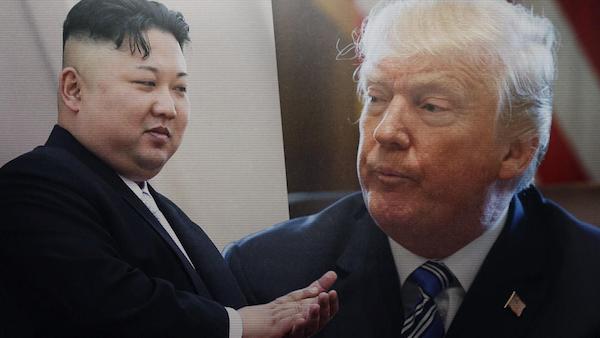
    An unusual charm offensive is under way on the Korean peninsula and the unlikely architect is none other than the North Korean Supreme Leader, Kim Jong-un. During the last three months, he has played a deft political hand, a far cry from his rhetorical exchanges with U.S. President Donald Trump. Last year, Mr. Trump was threatening the “Rocket Man” with “fire and fury like the world has never seen”; the North Korean leader described him as a “dotard” and his military called his statement “as a load of nonsense”. Now the two leaders are planning a summit in May which according to Mr. Trump could lead to “the greatest deal in the world”.

    Since 2011 when Mr. Kim took over, North Korea has conducted four nuclear tests; the first two were conducted in 2006 and 2009. The sixth test, last September, had a yield more than six times the Hiroshima bomb. He has accelerated the missile program, conducting nearly 80 tests, compared to an estimated 16 by his father Kim Jong-il between 1994 and 2011.

    In his New Year address, Mr. Kim conveyed two messages — that the entire U.S. was within range and the nuclear button was on his table, and that he was open to dialogue with Seoul and could send a team to participate in the Winter Olympics being hosted by South Korea in February. Mr. Trump responded by tweeting that his “nuclear button” was “much bigger & more powerful”. But South Korea responded positively and reaffirmed willingness to talk with North Korea at anytime and anywhere. Thereafter events gathered pace.

    Mr. Kim’s younger sister Kim Yo-jong attended the opening ceremony of the Winter Olympics, with the two Korean teams marching together. She conveyed her brother’s handwritten note to South Korean President Moon Jae-in even as she mesmerized South Korean audiences, and TV channels carried endless discussions about her clothes, hair style and whether she was pregnant.

    In early March, a South Korean delegation led by National Security Adviser Chung Eui-yong and intelligence chief Suh Hoon visited Pyongyang to explore the idea of talks. According to the officials, Mr. Kim indicated continuing restraint on nuclear and missile tests (last test was a Hwasong-15 in November with a range of 12,000 km), joking that Mr. Moon would not need to wake up early in the morning for emergency meetings, since North Korean missile tests were normally timed for dawn. According to the South Koreans, “the North Korean side clearly showed willingness on denuclearization in the Korean peninsula if military threats to North Korea decrease and regime safety is guaranteed”. An April summit between the two Korean leaders was announced and is now scheduled for April 27 at the Peace House in Panmunjom.

    The two South Korean officials travelled to Washington to brief Mr. Trump on March 8. It was announced that Mr. Trump had agreed to a summit with the North Korean leader in May.

    This will be the first summit meeting between the U.S. and North Korea. Jimmy Carter and Bill Clinton have travelled to Pyongyang in 1994 and 2009, respectively, to meet Mr. Kim’s grandfather and father, respectively, but after their terms as U.S. President ended. There have been two earlier summits between the Korean leaders, in 2000 and 2007, though the outcomes proved to be short-lived. Mr. Moon has also mooted the idea of a trilateral summit though there has been no reaction to it from Pyongyang or Washington. In another surprise move, the North Korean leader, accompanied by his wife Ri Sol-ju, travelled by train to Beijing on March 25. It was Mr. Kim’s first foreign trip since he took over in 2011. Though described as an unofficial visit, it had the trappings of a state visit, complete with a guard of honor and a banquet with Chinese President Xi Jinping and his wife Peng Liyuan at the Great Hall of the People. The North Korean leader assured Mr. Xi that if South Korea and the U.S. responded with goodwill and took phased, synchronized measures, the issue of denuclearization of the peninsula could reach resolution.

    China has long been North Korea’s political ally and economic lifeline, accounting for 90% of North Korea’s foreign trade. It has often resisted tightening of sanctions that could lead to the collapse of the regime. However, relations between the two countries have soured since 2013 when Jang Song Thaek, Mr. Kim’s uncle who was responsible for managing the China relationship, was purged. Missile tests when China was hosting the G20 summit in 2016 and the Belt and Road Forum in 2017 together with a nuclear test during the BRICS summit in 2017 were embarrassments for China. As sanctions tightened under successive UN Security Council resolutions, North Korea blamed China for ‘dancing to the tune’ of the U.S.

    However, Mr. Kim realizes that he needs help to handle U.S. pressure. His China visit acknowledges Mr. Xi’s extension in power beyond 2022; and for China, it reflects its pivotal role in any negotiations regarding North Korea. Mr. Xi has sent a personal message to Mr. Trump about his meeting with Mr. Kim while Politburo Member Yang Jiechi is being dispatched to Seoul. In Washington, recent appointments of John Bolton as National Security Adviser and Mike Pompeo as Secretary of State, both hardliners, raise the stakes for North Korea.

    Mr. Kim’s objectives are clear — securing regime legitimacy, regime security and sanctions relief. A summit with Mr. Trump provides legitimacy as long as it begins a dialogue process leading towards diplomatic recognition. In 1992, despite North Korean reservations, China recognized South Korea and today it is one of the South’s largest partners and a major investment source. How South Korea and the U.S. deal with the move towards recognition will demand political creativity.

    Having achieved a certain threshold in its nuclear and missile capabilities, North Korea can afford a pause in testing in return for sanctions relief but ‘denuclearization’ will only happen at the end of a long-drawn process which will involve discussions regarding the U.S. nuclear umbrella for South Korea, the presence of 23,500 American troops and converting the 1953 armistice into a peace treaty which will guarantee regime security.

    South Korea would like to ensure that it has a veto over U.S. decisions regarding North Korea and gaining operational control over its own military forces, both of which will require protracted negotiations. Meanwhile, Mr. Moon will do his utmost to maintain credibility in Washington and Pyongyang to keep his ‘sunshine policy’ on track. In Europe, the two Germanys recognized each other in 1972 (the U.S. recognized East Germany in 1974) as part of Willy Brandt’s ‘ostpolitik’, long before German unification was achieved in 1990.

    North Korea’s aggressive testing provided justification for the deployment of the THAAD missile defense system aggravating Chinese concerns. China would prefer lowering tensions though it is in no hurry to see Korean unification.

    The big unknown is Mr. Trump’s idea of what is an acceptable ‘deal’. Will a process towards eventual denuclearization tempt him or will he reject it as ‘fake news’ and revert to relying on sanctions and military pressure as some of his advisers are inclined to? Major compromises will be needed for reconciling interests of all the key players for the high stakes summitry on the Korean peninsula to succeed.

    (The author is a former diplomat and currently Distinguished Fellow at the Observer Research Foundation. He can be reached at rakeshsood2001@yahoo.com)


  • Deeper reasons behind Dalit anger

    Deeper reasons behind Dalit anger

    By SN Sahu
    In fact, Dalit anger can be best understood by understanding the neoliberal policies which has resulted in joblessness and job loss growth. The affirmative action taken to economically empower Dalits, subjected to centuries of exploitation and exclusion, is being weakened because of neo-liberalism, which marks the withdrawal of the State and the predominance of market and corresponding lessening of employment opportunities within the government for which the architecture of reservation policy is available. It is in the neoliberal era that a new system of employment in the form of contractual jobs has been created across the government departments and permanent jobs are shrinking at a rapid pace,says the author.

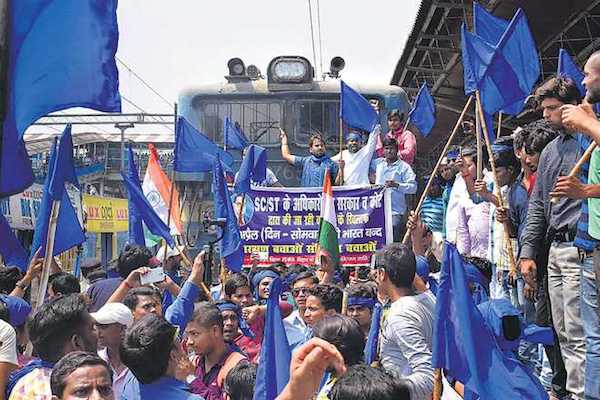
    There is widespread Dalit anger across the country (India) and it is mounting and spreading at an accelerated pace. It was manifested in the Bhima Koregaon incident a few months back. It arose out of the flogging of Dalit youths who were skinning dead cows in Gujarat. Now it is manifested in the Bharat bandh.

    However, it is wrong to locate this anger only in the context of the bandh and the resultant unfortunate killing of seven precious lives and large-scale damage and devastation of property. While the violence during the bandh has been highlighted and flashed in the media, the corresponding media coverage of the atrocities committed on a day-to-day basis against Dalits even on such trivial issues as a Dalit mounting a mare on the occasion of his marriage are not adequate and widespread.

    There are deeper and sensitive causes behind Dalit anger and it would not be fair to look at it merely in the context of the Bharat bandh called to protest against the dilution of the legislation designed to prevent atrocities on Scheduled Castes.

    In fact, Dalit anger can be best understood by understanding the neoliberal policies which has resulted in joblessness and job loss growth. The affirmative action taken to economically empower Dalits, subjected to centuries of exploitation and exclusion, is being weakened because of neo-liberalism, which marks the withdrawal of the State and the predominance of market and corresponding lessening of employment opportunities within the government for which the architecture of reservation policy is available. It is in the neoliberal era that a new system of employment in the form of contractual jobs has been created across the government departments and permanent jobs are shrinking at a rapid pace.

    Tragically, the policies of reservation are not applicable to such contractual jobs and, as a result, the Dalits, for whom the reservation policy enabled their access to jobs, have been denied employment in such contractual jobs which constitutes a mechanism to negate and dilute the affirmative action for Dalits. Both directly and indirectly, the system of contractual employment means de facto withdrawal of reservation of jobs for Dalits and other backward classes and sections of society. The job loss in the neoliberal economy is thus spelling troubles for the Dalits and stoking their anger. In fact, it constitutes the key reason behind the mounting Dalit anger in the country. It is rather unfortunate that this reason behind their anger has not been highlighted by the media.

    The neoliberal policies have made quality education very expensive as it is now available mostly in private educational institutions which exact a heavy cost from those seeking access to such education. While the Chaturvarna system created opportunities for high castes to monopolize education, the neoliberal policy is enabling the high castes and wealthy to monopolize it in the 21st century on account of its prohibitively high cost.

    Dr Ambedkar, while giving evidence before the Southborough Committee in 1919, had noted: “The growth of education, if it is confined to one class, will not necessarily lead to liberalism. It may lead to the justification and conservation of class interest; and instead of creating the liberators of the down-trodden, it may create champions of the past and the supporters of the status quo.” From his evidences, we find his interpretation that with the confinement of education to a few, a kind of nationalism would emerge which would produce a few men of sympathy.

    In the neoliberal era marked by the monopolization of education by a few based on caste and wealth, we have today a few men of sympathy, protagonists of class interest, more people wedded to values which negate liberalism and perpetuate status quo. In such a situation, the Dalit anger will get multiplied as Dalits will continue to get victimized by the protagonists of status quo. Unless we take remedial measures, the Dalit anger which has taken a pan-Indian shape will cause a huge crisis, overwhelming the society and body polity. However, Dalit anger will have to be channelized by adopting constitutional methods as any other method, in the words of Dr BR Ambedkar, would spell grammar of anarchy.

    Gandhi on Dalits

    As early as 1926, Mahatma Gandhi wrote an article, “Crime of caste”, when a Dalit in a highly devotional and ecstatic mood entered a temple in South India and was caught by some caste Hindus and given to the police for prosecution. He was tried and fined Rs 75 for having offended his own religion by entering the temple which was prohibited to him. Luckily, because of arguments of a man like C Rajagopalachari, who appeared on behalf of the man who appealed against the fine, the punishment was set aside as the prosecution had forgotten to prove the insult in the lower court. Gandhi then put several questions, “What place shall the ‘untouchables’ occupy in our scheme of swaraj? If they are to be free from all special restraints and disabilities under swaraj, why can we not declare their freedom now? And if we are powerless today, shall we be less powerless under swaraj? We may shut our eyes and stuff our ears to these questions. But they are of the highest importance…. ” After 70 years of Independence, we are still grappling with such questions. They are of the highest importance to address the rising Dalit anger.

    (The author is a Press secretary to former President, the late KR Narayanan)

  • Being Salman: Superstardom does not guarantee legal immunity

    Being Salman: Superstardom does not guarantee legal immunity

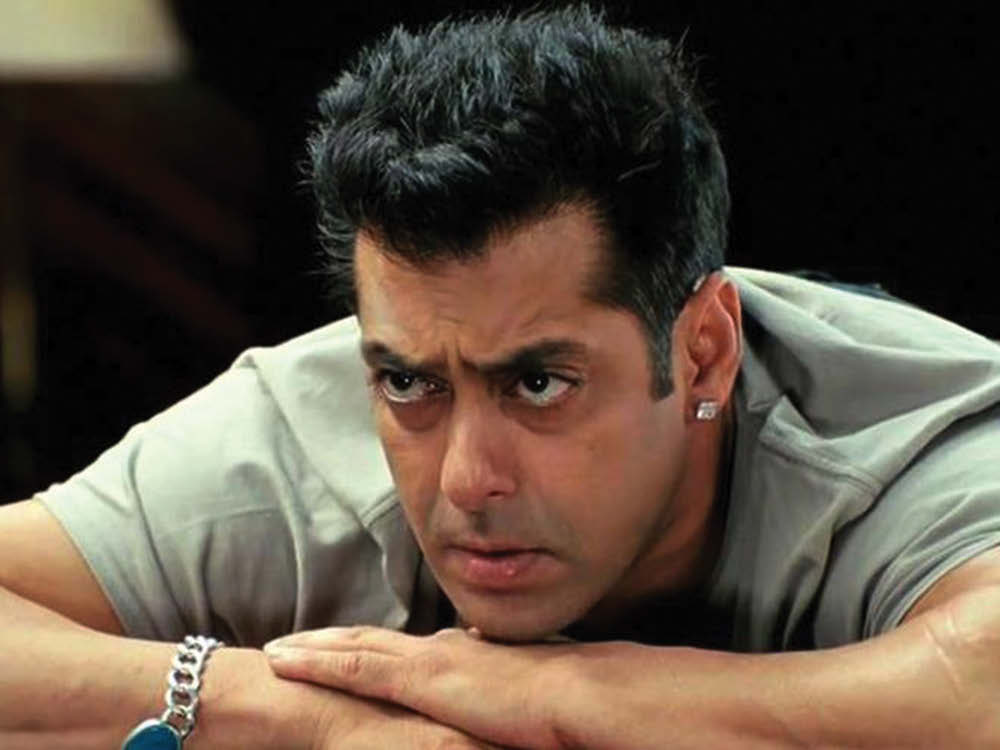
    Finally, the law has caught up with superstar Salman Khan. All those who felt his earlier acquittal by the Rajasthan High Court in the 1998 Jodhpur blackbuck and chinkara poaching cases was a travesty of justice can now breathe easy. A Jodhpur Trial Court has pronounced him guilty, thus sending out an unambiguous signal that not even a hugely famous star is above the law. For too long, an impression has been gaining ground that star power can sway court judgments. Salman did get away in a more serious charge of allegedly running over five persons, killing one. That verdict had lent further credence to the widespread belief that onscreen stars are invincible in real life too. The Jodhpur Court judgment puts things in the right perspective.

    As it is, the poaching case has been dragging for nearly two decades, reinstating once more how wheels of justice move tardily. And when it is perceived to be working for the privileged, it does little to elevate the judiciary’s image. The judgment establishes that Chief Judicial Magistrate Khatri meant business and could clearly delineate between Salman the person and the star. This difference is often blurred not just by frenzied fans, but those in power too. Not too long ago, perhaps taken in by Salman’s successful run at the box office and massive fan following, he became India’s Goodwill Ambassador for Rio Olympics. CJM Khatri, however, seemed suitably unimpressed by the entertainer’s mega stardom or his Samaritan acts off the silver screen.

    Salman is in the dock regarding the infamous hit-and-run case, whose verdict has already been challenged and an appeal by the Maharashtra Government admitted in the Supreme Court. Let it be said that the rule of law must prevail, and guilt must be proved beyond reasonable doubt. Let no one feel that Salman walked away scot-free or was hounded courtesy his mega-star status. Justice should not only be done but seen to be done. Star or no star, law cannot be leveraged to the advantage of a few, least of all the well-heeled.

    (Tribune, India)

  • NJSO presents Spring into Music Gala: performances by Broadway, Film & TV star Jason Alexander

    NJSO presents Spring into Music Gala: performances by Broadway, Film & TV star Jason Alexander

    By Mabel Pais

    “Alexander not only has an exceptional voice and a thoroughly honed gift for selling a song, but he can also be surprisingly light on his feet and work a room with an ease that any standup comedian would envy.” – Star Telegram

    The New Jersey Symphony Orchestra (NJSO) hosts its 2018 Spring into MusicGala. Tony Award-winning Broadway, film and television star Jason Alexander – world renowned as the iconic George Costanza on Seinfeld– headlines a performance of song and comedy at a gala event that includes cocktails, dinner and a silent auction.

    Jason Alexander, Broadway star
    Photo / Courtesy NJSO
    Jason Alexander on Seinfeld
    Photo / Courtesy NJSO

    The gala’s honoree is Merck & Co., Inc., Chairman of the Board and CEO Kenneth C. Frazier.

    Kenneth C. Frazier
    Photo / Courtesy NJSO

    The event on Saturday, April 14, at the New Jersey Performing Arts Center (NJPAC) in Newark, begins with a cocktail reception and silent auction at 4:30 pm, followed by a gala dinner at 6 pm.The evening concludes with Jason Alexander: The Broadway Boy– the NJSO’s 8 pmperformance.

    The award-winning Broadway song-and-dance man’s concert with the Orchestra brings a hilarious re-telling of his journey to and on the Broadway stage, featuring a program of great music from the theater along with comedy and audience interaction.

    Robert (Bob)Bernhardt
    Photo / WKTV Journal

    A highlight of the orchestral program is a medley of Bruce Springsteen hits that the NJSO debuted at parks concerts last summer.

    More information about the gala and silver and bronze event gala tickets is available at www.njsymphony.org/spring.

    More information about the concert program is available at www.njsymphony.org/jasonalexander.

    NJSO ACCENTS

    Prelude Performance—Sat, Apr 14 at 7 pmand Sun, Apr 15 at 2 pm
    Enjoy an entertaining pre-concert set from Casual Harmony, Rutgers University’s award-winning all-male a cappellagroup.

     CONCERT PROGRAM

    Jason Alexander: The Broadway Boy

    Sat, Apr 14, at 8 pm| NJPAC in Newark

    Sun, Apr 15, at 3 p.m. l State Theater New Jersey in New Brunswick

    Jason Alexander

    Bob Bernhardt, conductor

    New Jersey Symphony Orchestra

    Full concert information is available at www.njsymphony.org/jasonalexander.

    KENNETH C. FRAZIER

    Kenneth C. Frazier is Chairman of the Board and Chief Executive Officer of Merck & Co., Inc., one of the largest healthcare companies, worldwide. Under Frazier’s leadership, Merck has, besides increasing investment in medicines and vaccines and research including early research, led the formation of philanthropic and other initiatives that build on Merck’s 125-year-plus legacy.

    JASON ALEXANDER

    Though best known for his award-winning, nine-year stint as the now iconic George Costanza of television’s Seinfeld, Jason Alexander has achieved international recognition for a career noted for its extraordinary diversity. Aside from his performances on stage, screen and television, he has worked extensively as a writer, composer, director, producer and teacher of acting. In between all that, he has also become an award-winning magician, a notorious poker player and a respected advocate on social and political issues.

    Alexander began his professional career as a young teenager doing commercials for television and radio. While still in college, his desire to work as a stage actor in New York came to be with his debut in the original Broadway cast of the Hal Prince/Stephen Sondheim musical Merrily We Roll Along.He continued starring on Broadway in the original casts of Kander and Ebb’s The Rink, Neil Simon’s Broadway Bound, Rupert Holmes’ Accompliceand his Tony Award-winning performance in Jerome Robbin’s Broadway. Alexander also authored the libretto for that show which went on to win the Tony Award for Best Musical. After moving to LA, Alexander continued working in the theater, notably serving as the artistic director for the Reprise Theatre Company and starring in the hit West Coast production of Mel Brook’s The Producerswith Martin Short. In 2015, Alexander returned to Broadway to star in the Larry David comedy Fish in the Darkand recently appeared in John Patrick Shanley’s The Portuguese Kid at Manhattan Theatre Club.

    His many films include Pretty Woman, Jacob’s Ladder, Love Valor Compassion, Rocky and Bullwinkle, Dunston Checks In, The Hunchback of Notre Dameand Shallow Hal. In addition, he directed the feature films For Better or Worseand Just Looking. He is also a distinguished television director, overseeing episodes of Seinfeld, Til Death, Everybody Hates Chris, Mike and Molly, Criminal Minds and Franklin and Bash.He won the American Country Music Award for his direction of Brad Paisley’s video Online, and he has helmed a number of stage productions including The God of Hellat the Geffen Playhouse, Broadway Boundat the Odyssey, an updated revival of Damn Yankeesand The Fantasticks, as well as Sunday in the Park with George for Reprise and most recently the world premiere of Windfallby Scooter Pietsch for the Arkansas Repertory Theater.

    Aside from Seinfeld,Alexander has starred and guested in shows includingThe Grinder, Drunk History, Friends, Two and a Half Men, The New Adventures of Old Christine, Criminal Minds, Monk, Franklin and Bash, Curb Your Enthusiasm, Bob Patterson and Listen Up.He was recently seen in Hit the Road,a show he co-created, executive produced and starred in on DirecTV’s Audience network.

    He also starred in the television films of Bye Bye Birdie, Cinderella, A Christmas Carol and The Man Who Saved Xmas. Additionally, his voice has been heard most notably in Duckman, The Cleveland Show, American Dad, Tom and Jerryand the children’s animated series Kody Kapow.

    For his depiction of George on Seinfeld, Alexander garnered six Emmy nominations, four Golden Globe nominations, an American Television Award and two American Comedy Awards. He won two Screen Actors Guild Awards as the best actor in a television comedy despite playing a supporting role, and in 2012 he was honored to receive the Julie Harris Award for Lifetime Achievementfrom The Actors Fund.

    Alexander tours the country and the world performing his one-man show,As Long As You’re Asking, a Conversation with Jason Alexander,” which contains a mix of comedy, music and surprising conversation. He can also be seen in his much-heralded salute to Broadway musicals with some of the finest symphony orchestras throughout the United States. You can stay in touch with Alexander via Twitter (@IJasonAlexander).

    BOB BERNHARDT

    With 31 years of experience as a music director, 35 years as a pops conductor and 33 years in the opera pit, Bob Bernhardt brings a unique perspective and ability each time he is on the podium.

    (Mabel Pais writes on The Arts and Entertainment, Social Issues, Spirituality, and Health and Wellness).

  • Salman Khan sentenced to five-year imprisonment in blackbuck killing case

    Salman Khan sentenced to five-year imprisonment in blackbuck killing case

    Actors Saif Ali Khan, Tabu, Sonali Bendre and Neelam, and Jodhpur resident Dushyant Singh have been given the benefit of doubt and acquitted as co-accused

    JODHPUR, INDIA(TIP): Actor Salman Khan was on Thursday, April 5, sentenced to five years in jail after being convicted in a 19-year-old blackbuck poaching case by a court in Jodhpur.

    Chief Judicial Magistrate (Jodhpur Rural) also imposed a fine of Rs. 10,000 on Khan. The actor was taken to the Central Jail in Jodhpur from the court. He has the option of filing an appeal in the Sessions Court, reports our correspondent Mohammad Iqbal from Jodhpur. Unless the sentence is suspended, he will spend the night in jail.

    Khan is involved in four cases related to blackbuck/chinkara poaching. He has been accused of killing two chinkaras at Bhavad village in Rajasthan in September 1998, a chinkara at the Ghoda farms in the State the next month and two blackbuck near Kankani village in the State in the same month. In addition, he is also accused of using two firearms with alleged expired licenses.

    ‘Judgement came as a surprise’

    In an official statement, Mr. Khan’s lawyer Anand Desai said that the judgement came as a “surprise.”

    The statement reads:

    “We respect the decision of the Hon’ble Court. While we are studying the judgement it just came as a surprise, as the entire investigation, and facts of this case were the same as those for which Salman has been acquitted by the Hon’ble High Court of Rajasthan in two cases, and even by the Hon’ble CJM in the Arms Act matter for the alleged offence on the very same night as is the subject matter of the present case. Also, in the present case the Hon’ble Court has acquitted all the 5 co-accused which would imply that Salman was out hunting alone in the middle of the night in a remote area outside Jodhpur. We have preferred an appeal to the Hon’ble Sessions Court and applied for an urgent hearing today. The Hon’ble Sessions Court will hear the appeal for suspension of the sentence / bail at 1030 tomorrow.”

    Khan to spend the night in jail

    Salman Khan’s counsel has moved bail application in the court of Additional Sessions Judge. It will come up for hearing on Friday morning. The actor will spend the night in Central Jail of Jodhpur.

    Four actors, Jodhpur resident acquitted

    The co-accused, actors Saif Ali Khan, Tabu, Sonali Bendre and Neelam, and Jodhpur resident Dushyant Singh have been given the benefit of doubt and acquitted as the evidence against them was not strong enough.

    Public prosecutor Bhawani Singh said he would speak to the government on the acquittal of other actors and decide on filing appeals in the Sessions Court.

    Quantum of punishment

    Khan has been convicted under Section 9 and 51 of the Wildlife Protection Act. The maximum sentence under the law is six years.

    If the sentence is for three years or less, the magistrate’s court is likely to suspend the punishment, reports Mohammad Iqbal. If more, Khan will have to move the Sessions Court for bail.

    The charge against the other actors was under Section 149 (unlawful assembly) of the IPC. Their acquittal means the court has accepted that there is no sufficient evidence to prove this.

    A brief timeline of the cases:

    September-October 1998: Khan, along with his co-stars of Hum Saath Saath Hain, are accused of killing blackbuck/chinkaras during the shooting of the film.

    February 2006: Khan is convicted under the Wildlife Act and given a one-year jail term for killing two chinkaras at Bhavad in September 1998. This is overturned after an appeal.

    April 2006: A Jodhpur sessions court gives him a five-year-prison term in the second case, where he was accused of hunting a blackbuck in Ghoda farms. He spends three days in jail and gets bail.

    June 2006: A Jodhpur court frames charges against the actors in the third case. The charges were framed against Khan under Section 51 (hunting) of the Wildlife Protection Act and against Saif Ali Khan, Tabu, Sonali Bendre, Neelam and Dushyant Singh under Section 52 (abetment) of the Act.

    November 2013: The Rajasthan High Court suspends the five-year sentence.

    January 2015: The Supreme Court sets aside the High Court’s stay on the sentence.

    July 2016: The High Court acquits Khan in the two chinakara poaching cases.

    January 2017: A Jodhpur court acquits Khan in the Arms Case, where he was accused of possessing and weapons with an expired license during the hunt for chinkaras and blackbuck.

    Khan pleads ‘not guilty’

    Khan had pleaded “not guilty” in the case and claimed that only a forensic report saying that the endangered animal died of “natural cause” was true.

    “The rest of the evidence [against me] is false,” Khan said in the court of Chief Judicial Magistrate in Jodhpur while recording his statement in the 18-year-old case accusing him of hunting the animals.

    Khan killed the deer, says driver

    The man who was driving the jeep used by Khan reiterated in 2016 his claim that the actor shot the animal. The statement by Harish Dulani, who was reported to be “missing,” came two days after the 50-year-old actor was acquitted by the High Court in two poaching cases.

    (Source: The Hindu)

  • The world owes Martin Luther King Jr. a debt of gratitude

    The world owes Martin Luther King Jr. a debt of gratitude

    By Ashook Ramsaran

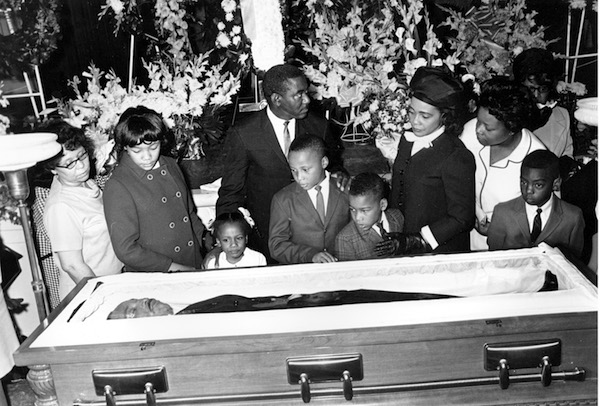
    Ashook Ramsaran pays a tribute to Martin Luther King Jr., American civil rights leader, on the 50th anniversary of his assassination which falls on April 4. King was fatally shot at the Lorraine Motel in Memphis, Tennessee, on April 4, 1968.

    The Indian Diaspora Council International (IDC) and its global affiliates join with other organizations, agencies, officials, groups, individuals and institutions worldwide in remembering Martin Luther King Jr. on the 50th anniversary of his assassination on April 4, 1968 in Memphis, Tennessee, USA.

    Martin Luther King Jr. lived an extraordinary life. At age 33, he was pressing the case of civil rights with US President John Kennedy. At age 34, he galvanized the nation with his famous “I Have a Dream” speech. At age 35, he won the Nobel Peace Prize. At the young age of 39, he was assassinated, but he left a legacy of hope and inspiration that continues today to confront the ugly vestiges of racial discrimination especially during these turbulent and alarming times.

    We pay special homage and grateful recognition of Martin Luther King Jr’s preeminent leadership of the modern American Civil Rights Movement, from 1955 to 1968, during which time African Americans achieved more genuine progress toward racial equality in America than the previous 3 centuries had produced. He championed equal rights which led to the 1965 US Civil Rights Act legally barring discrimination and segregation in all segments of American society.

    Martin Luther King Jr. was an American Baptist minister and activist who became the most visible spokesperson and leader in the civil rights movement. He was born on January 15, 1929 and assassinated on April 4, 1968. Martin Luther King Jr. believed that peaceful refusal to obey unjust law was the best way to bring about social change. His adherence of Gandhian non-violence teachings for peaceful protests to achieve freedom and social justice have inspired many to protest in peaceful ways against oppression, colonial rule, subjugation and violent discrimination in many countries.

    The life and legacy of Martin Luther King Jr. provide inspiration, challenges and reminders of the possibilities for good, as well as the role and responsibility of everyone to be supportive of advancing social justice in even small ways. One of his famous quotes: “Human progress is neither automatic nor inevitable. Every step toward the goal of justice requires sacrifice, suffering, and struggle; the tireless exertions and passionate concern of dedicated individuals”.

    The world owes Martin Luther King Jr. a debt of gratitude.

     (The author is President of Indian Diaspora Council International. He can be reached at  AshookRamsaran@gmail.com/    Mobile (USA) +1 917 519 5783)

  • “Hard Rock” sells “Hindu Pizza”, upsetting Hindus

    “Hard Rock” sells “Hindu Pizza”, upsetting Hindus

    NEW YORK (TIP): Hard Rock Hotel & Casino in Punta Cana (Dominican Republic) has a “Hindu” pizza on its menu containing “chicken tikka masala with yogurt, cilantro and mint”, which has upset the Hindus.

    Hindu statesman Rajan Zed, in a statement to The Indian Panorama from Nevada termed it as a trivialization of the oldest and third largest religion of the world with about 1.1 billion adherents and a rich philosophical thought.

    Zed, who is President of Universal Society of Hinduism, urged Orlando (Florida) headquartered Hard Rock International ((HRI), whose tagline is “Love All, Serve All”; to immediately rename the “Hindu” pizza, and its Chairman Jim Allen to offer a formal apology.

    Rajan Zed pointed out that Hindus were mostly vegetarian and selling a meat topped pizza in their name was highly inappropriate. No faith, larger or smaller, should be taken frivolously and mishandled for mercantile greed, Zed added.

    Zed suggested that HRI and other companies should send their senior executives for training in religious and cultural sensitivity so that they had an understanding of the feelings of customers and communities when introducing new products or launching advertising campaigns.

    “Hindu” pizza was available at the Pizzeto restaurant (in HRI’s largest property located in Punta Cana) which opens daily from 12pm to next day 7am and has a “Dress Code”.

    HRI, whose history goes back to 1971, owns-operates restaurants, hotels, live performance venues and casinos globally and sells collectible fashion and music-related merchandise. It claims: “no one does hospitality like us” and it recently launched “Rock Om”; “an in-room yoga experience, energizing the body and soul through the power of music.” It delivers “Rock Om yoga kit” to each hotel room free of charge. Select HRI hotels also reportedly offer live, on-site yoga classes.

  • India’s Reliance Sells Texas Shale Assets For $100MM

    India’s Reliance Sells Texas Shale Assets For $100MM

    MUMBAI (TIP): Reliance Industries Ltd said on Tuesday, March 27, its unit would sell some of its shale assets in the United States to privately held Sundance Energy Inc for $100 million, as the Indian oil-to-telecom conglomerate moves closer to exit U.S. shale investments.

    The sale includes Reliance’s interest in the assets in the Eagle Ford shale in Texas, it said in a statement.

    U.S.-based Pioneer Natural Resources Co, which was a partner in the asset, also exited the blocks.

    In November 2014, Reliance and Pioneer announced exiting their stake in shale oil and gas transportation and distribution joint venture, which analysts had said was a precursor to Reliance’s move to exit U.S. shale operations.

    The deal, which is expected to close in the first quarter of fiscal 2019, is the second such sale by the Mukesh Ambani-backed Reliance in the United States.

    In October, the Reliance sold a similar asset block in the Marcellus shale region in northeastern and central Pennsylvania.


  • Texas Gov. Abbott’s ‘historic’ talk with Indian prime minister includes defense, health care, energy

    Texas Gov. Abbott’s ‘historic’ talk with Indian prime minister includes defense, health care, energy

    NEW DELHI (TIP): Gov. Greg Abbott met with Indian Prime Minister Narendra Modi for an hour and five minutes on Wednesday at Modi’s official residence.

    Abbott later said the two leaders discussed numerous subjects, including defense, terrorism, energy, technology, trade and health care.

    The Republican governor called it a “historic meeting.”

    In Modi’s nearly four years in office, he had not met before Wednesday with a sitting U.S. governor, Abbott’s office has said.

    “I just got through with a historic meeting with Prime Minister Modi here in New Delhi, getting to visit about an array of topics,” Abbott said at a gaggle with his traveling press pool, conducted across the road from the spacious grounds of Modi’s residence. The complex was heavily fortified, and security was tight.

    “Frankly, the conversation was historic in the sense of the length of time,” Abbott said. “According to the diplomat in charge, it was the longest meeting that he’d had with a guest visitor from a foreign country like that.”

    He was referring to Marykay L. Carlson, deputy chief of mission at the U.S. Embassy in New Delhi.

    “I was shocked” that Modi carved out so much time, Abbott said.

    Until early this week, Abbott’s aides were unsure if the meeting would come off.

    “You have a busy man who has a lot to do,” Abbott said of Modi.

    He said the prime minister opened their talk by mentioning anxiety India felt for the people of Indian heritage who live in parts of Texas that were ravaged by Hurricane Harvey last August.

    Modi spoke of “gratitude that he had for Texans’ doing such a great job of helping the Indian-American community in the region respond to the challenges they were facing.”

    Abbott said he assured Modi, “We will take care of the Indian Americans.” In facing hardship, Texans and Indians exhibit “a similar resiliency,” he said.

    As he has throughout his entire nine-day, business-recruitment trip, Abbott touted how India and Texas are connected not only because many Indians have emigrated to the state but also because the two places share many traits.

    “We’re focused on the same concepts such as entrepreneurship … a vibrant, strong and growing economy … empowering the private sector … being democratic countries based on value systems,” Abbott said.


  • SPOTLIGHT: Women, Gender Equality & Human Trafficking

    SPOTLIGHT: Women, Gender Equality & Human Trafficking

    By Mabel Pais

    Human trafficking is the fastest growing criminal industry in the world. It is tied with arms trafficking as the second largest criminal industry in the world, after drug trafficking” – U.S. Department of Health and Human Services (HHS)

    The fifth annual rapidly-growing Socially Relevant Film Festival (SRFF) held March 15 to 22 at Manhattan’s Cinema Village Theater, hosted its spotlight program of 5 short films and a panel discussion on Women, Gender Equality & Human Trafficking.  This was presented in partnership with UN Media and Apne Aap Women Worldwide.

    The program began with a screening of a curated selection of short films in support of the UN Sustainable Development Goals and specifically SDG 5 (gender equality and the empowerment of women and girls).  Four films from the UN Media: India – Girls For Sale; Lebanon – Women Carve Their Destinies; Canada – A History Of Violence; Iraq – Saving Women’s Rights in Iraq; and, Dr. Ruchira Gupta’s Emmy award-winning movie, The Selling of Innocents, were screened.

    “Ruchira Gupta is one of the leading voices in the world on this subject (human trafficking)” – Ambassador Swanee Hunt

    The Spotlight Panel followed the screenings, moderated by Nora Armani, Festival founder-director and headed by Dr. Ruchira Gupta, founder-president of the anti-human-trafficking organization Apne Aap Women Worldwide.

    The other 4 panelists were Ambassador Swanee Hunt: Founding Director of the Women and Public Policy program, Harvard University’s Kennedy School of Government,

    Simone Monasebian: Director, New York United Nations Office on Drugs and Crime (UNODC), Felicia Greenfield: Actress-Activist (Films: Homeland, House of Cards), and

    Jessica Vale: Filmmaker-Activist-Documentarian (Film: Small Small Thing),

    Gupta’s own journey had begun 21 years ago in making the documentary film, The Selling of Innocents, as a journalist.  She confesses that as a journalist she had covered war, famine, hunger and conflict but she had never seen and felt so chilling an experience as human trafficking: the exploitation of one human being by another.  Today, 21 years later, she feels the same about prostitution.

    She said that based on current statistics – in India, there are 16 million victims of human trafficking now of which 10 million are victims of sexual exploitation.  The average age of a girl being pulled into prostitution in India is between 9 and 13 years.  In the US, she understands, the sexual exploitation is between 13 and 15.  So, there is not a very big difference!

    The average age of a woman who’s prostituted, dying, is between 30 and 35.  So one can imagine the trauma, the victimization, the brutality!  Today, this industry is packing in more and more girls today into prostitution.

    When she made the movie 21 years ago, there were no laws, no UN protocol of looking at prostitution as a form of trafficking. But today, we do have those laws, and protocol and framework.

    After the Selling of Innocents was screened in New York, 21 years ago, at which Ambassador Swanee Hunt was a member of the audience, the demand of Gupta and Hunt was that laws and protocol be created.

    Gupta, along with the support of Ambassador Hunt and the UNODC, emphasized that after 20 years of activism, they are moving onwards.

    But the perpetrators and are more organized than the anti-trafficking NGOs. So, the NGOs and the public need to work harder, faster and go to each last girl they can think of, every last girl to prevent her from being trafficked.

    Ambassador Hunt said most people think of trafficking outside the United States.  But in actuality, American women and girls too are trafficked.  In the US in fact, 1 in 5 men in a southern city, have admitted to have bought a woman or girl, online.  She believes that we have to get down to the whole prostitution segment in order to get to the trafficking part…. because it’s embedded there.

    Simone Monosebian said that in December 2013, owing to the efforts of the former US Ambassador to the UN, Samantha Power, under President Barack Obama, we have for the 1st time an actual Security Council Presidential Statement on human trafficking of persons.

    Monosebian pointed out that among other forms of human trafficking like forced labor and slavery, sex trafficking is the most public and exploitative form of human trafficking.

    Based on a bi-annual (every 2 years) UN Security Council Report on human trafficking the statistics was scary.  The last report of 2016 stated that in 40% of countries, 10 or less convictions in human trafficking were reported.  In 15% of the countries there were 0 convictions.

    She urged the audience to put pressure on her, then, the further she can go to put pressure on the UN Security Council to take action.When Felicia Greenfield was out one day with her 2-year-old daughter, she saw a brochure for a fundraiser for ECPAT-USA (the 1st US-based non-profit to work on the issue of commercial sexual exploitation of children).  Greenfield was shocked that this was happening in the USA!  Carol Smolenski, Director, ECPAT-USA, opened Greenfield’s eyes that human trafficking was happening everywhere, in all 50 States, in the big cities, in the suburban towns, in rural areas, in our own backyard.

    She is working on this subject with the film, Good Girls Gone that she wants to be honest, truthful and respectful.

    Jessica Vale, documentary film maker, was in Liberia for another reason.  But when she stumbled on the plight of Liberian young girls and mothers who had been raped and exploited, she and her co-producer set out to make the film “Small Small Thing” about the Liberian story, released in 2013.

    The movie opened up a conversation in schools, in universities, all over the US.  They also realized that it’s happening in the US just as much!

    Nora Armani, Founder-Artistic Director of the Festival ended the program on an upbeat note by awarding Dr. Ruchira Gupta with the Empowering Women and Girls Award in Memory of Vanya Exerjian.

    For more information on the Socially Relevant Film Festival or to get involved, visit www.ratedsrfilms.org.

    (Mabel Pais writes on Social Issues, The Arts and Entertainment, Health and Wellness and Spirituality)

  • Frisco Native American Museum & Natural History Center

    Frisco Native American Museum & Natural History Center

    By Surinder Dhillon
    By Surinder Dhillon
    In the museum there are many displays which show the way of life for Native Americans. Displays like; art work, pictures of animals, weapon and combat, natives and food, dresses, police and peace medals, pottery, code talkers, weaving, canoes and kayaks and much more. There is a gift shop in the museum which is called, Now Natural History Center. It features work from over 30 Native American artists and from where you can buy unique handmade crafts. They ship all over the world. There is a natural trail in the facility too.

    Frisco Native American Museum & History Center is a nonprofit educational foundation created for the purpose of preserving Native American artifacts, art, culture, and language.

    It can also teach people about native perspective and how to treat the Earth, said MS Ronnie Francisco, Assistant director of the museum. This Museum is located on Hatters Island on the Outer Banks of North Carolina.

    When you enter the museum, the message is on the wall in the shape of a poster entitled “The Earth on Turtle’s Back”. Many Native Americans refer to North America as Turtle Island,which comes from the belief that all of the Earth was water until a large

    turtle emerged to support plant and animal life on its back. This teaching tells us, “where Turtle goes, there is life and water is precious”. Since we are dependent upon the earth, we must treat our ‘Island’ home with respect and honor all of the beings in the natural world. As you walk among the exhibits, look for teachings from “Turtle Island “indicated by the turtle symbol.

    According to MS Ronnie, the museum had its beginning over seventy years ago. It started in the heart of museum founder, Carl Bornfriend,when he was just a young boy. When many people did not realize the importance of preserving native artifacts, Carl frequently saw beautiful items carelessly treated. Though his own resources were limited, he often made sacrifices to become a keeper of the heritage. When Carl moved to Hatters Island he met Joyce and they discovered a mutual love for historical preservation. They married in 1986, and they brought more than a half century of experience as educators to the task of creating the museum, MS Ronnie said. Carl was a full-time teacher; but, he used every spare moment developing exhibits. He opened the museum in 1987 as a non-profit educational foundation.

    MS Amber Roth of the museum said, “We have a lot of visitors that say we have a completely different feel. Instead of it being a very sterile, far away from you feel, the culture feels more alive.

    When you are here, you can reach out and feel that you are being embraced with it and from it. Rather than it just being distancing over here and not really there anymore.We bring more culture to life.”

    In the museum there are many displays which show the way of life for Native Americans. Displays like; art work, pictures of animals, weapon and combat, natives and food, dresses, police and peace medals, pottery, code talkers, weaving, canoes and kayaks and much more. There is a gift shop in the museum which is called, Now Natural History Center. It features work from over 30 Native American artists and from where you can buy unique handmade crafts. They ship all over the world. There is a natural trail in the facility too.

    The earlier inhabitants of the North Carolina Outer Banks were Hatters Indians tribe of Native Americans.

    (The author is Chesapeake VA based journalist. He can be reached at sdhillon@hotmail.com)

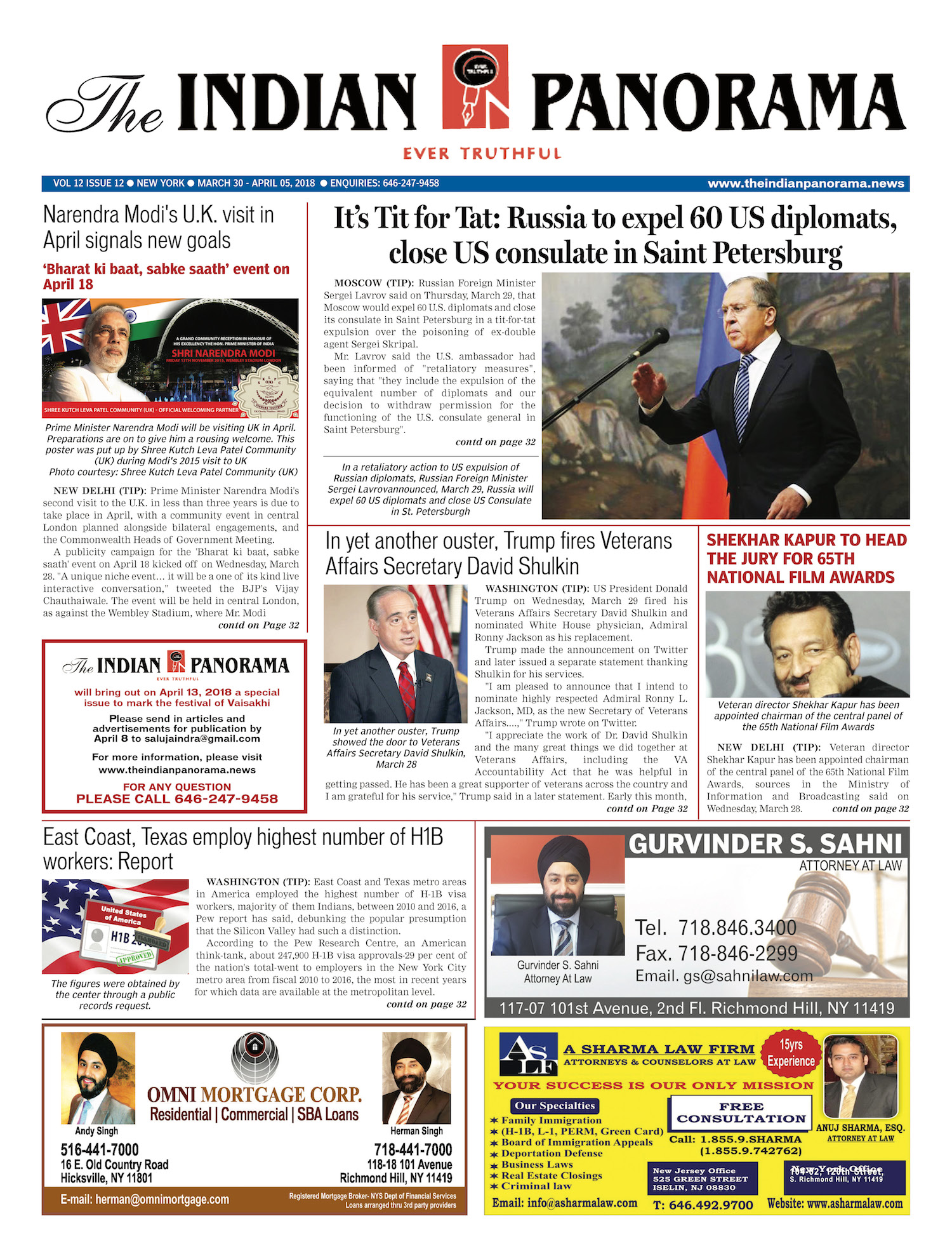
  • March 30 New York & Dallas Print Editions

    March 30 New York & Dallas Print Editions

    [vc_row][vc_column][vc_column_text]

    Print Replica ~ Digitally

    E-Editions

    [/vc_column_text][/vc_column][/vc_row][vc_row][vc_column width=”1/3″][vc_custom_heading text=”New York Edition” font_container=”tag:h2|text_align:center” google_fonts=”font_family:Istok%20Web%3Aregular%2Citalic%2C700%2C700italic|font_style:700%20bold%20regular%3A700%3Anormal” link=”url:https%3A%2F%2Fwww.theindianpanorama.news%2Fwp-content%2Fuploads%2F2018%2F03%2FTIP-March-30-NYC.pdf|||”][vc_single_image image=”92107″ img_size=”full” add_caption=”yes” alignment=”center” onclick=”custom_link” link=”https://www.theindianpanorama.news/wp-content/uploads/2018/03/TIP-March-30-NYC.pdf”][/vc_column][vc_column width=”1/3″][vc_custom_heading text=”Dallas, Texas Edition” font_container=”tag:h2|text_align:center” google_fonts=”font_family:Istok%20Web%3Aregular%2Citalic%2C700%2C700italic|font_style:700%20bold%20regular%3A700%3Anormal” link=”url:https%3A%2F%2Fwww.theindianpanorama.news%2Fwp-content%2Fuploads%2F2018%2F03%2FTIP-March-30-TX.pdf|||”][vc_single_image image=”92106″ img_size=”full” add_caption=”yes” alignment=”center” onclick=”custom_link” link=”https://www.theindianpanorama.news/wp-content/uploads/2018/03/TIP-March-30-TX.pdf”][/vc_column][vc_column width=”1/3″][vc_single_image image=”82828″ img_size=”medium” alignment=”center” onclick=”custom_link” link=”https://www.theindianpanorama.news/advertising-media-kit-portal-indian-panorama/”][vc_single_image image=”82829″ img_size=”medium” alignment=”center” onclick=”custom_link” link=”https://www.theindianpanorama.news/advertising-media-kit-portal-indian-panorama/”][/vc_column][/vc_row][vc_row][vc_column][td_block_ad_box spot_id=”custom_ad_3″ tdc_css=””][/vc_column][/vc_row][vc_row][vc_column width=”2/3″][vc_custom_heading text=”Lead Stories This week” font_container=”tag:h2|text_align:center” google_fonts=”font_family:Istok%20Web%3Aregular%2Citalic%2C700%2C700italic|font_style:700%20bold%20regular%3A700%3Anormal” link=”url:https%3A%2F%2Fwww.theindianpanorama.news%2F|||”][td_block_5 separator=”” limit=”8″ tdc_css=””][/vc_column][vc_column width=”1/3″][vc_widget_sidebar sidebar_id=”td-default”][/vc_column][/vc_row]

  • A Mesmerizing International Cultural Evening with Indian and Peruvian dance performances at the Indian Consulate

    A Mesmerizing International Cultural Evening with Indian and Peruvian dance performances at the Indian Consulate

    NEW YORK CITY, NY (TIP): Guests at the Indian Consulate in New York on March 27 were simply electrified to watch the Indian and Peruvian artists performing with superb finesse the dances of India and Peru.

    The stars of the evening- Nandini Chakravorty (left) with her Guru Ananga Manjari Malatesta Gonzalez of Peru
    Nandini (left) and Ananga gave a superb performance of Bharatnatyam, a classical dance of India
    Mudras and Bhangimas play a major role in Bharatnatyam. Ananga is seen here in two different mudras.

    The Peruvian dance was full of vigor and grace. The two female dancers simply bowled over the gathering with their performance. The artist who played trumpet cast a spell as did the drummers and the artist on guitar.

    Mudras and Bhangimas play a major role in Bharatnatyam. Ananga is seen here in two different mudras.
    A scintillating Peruvian dance performance had all spellbound

    However, the show was completely stolen by the duo of disciple and her teacher. Nandini Chakravorty who is daughter of Sandeep and Taruna Chakravorty, gave an outstanding performance with her Guru Ananga Manjari Malatesta Gonzalez of Peru. Ananga is one of the best known Bharatnatyam dancers and has very lovingly groomed Nandini. One does not come across such superb performance of Bharatnatyam, which is considered to be one of the most difficult dance forms. Bharatanatyam style is noted for its fixed upper torso, legs bent, or knees flexed out combined with spectacular footwork, a sophisticated vocabulary of sign language based on gestures of hands, eyes and face muscles.

    In his brief welcome note, Ambassador Sandeep Chakravorty, who grew nostalgic about his tenure as India’s ambassador to Peru underlined the importance of cultural exchanges between different people and nations. He thanked the Consul General of Peru Maria Teresa Merino de Hart for her cooperation in organizing an international cultural evening.

    Consul General of Peru Maria Teresa Merino de Hart said she was happy to be at the Indian Consulate for the cultural evening

    Ambassador Maria Teresa Merino de Hart said it was a great idea to have the artists of various countries coming together too exhibit their cultures. She said she was pleased to be at the Indian Consulate for the cultural evening, with Indian and Peruvian dancers performing.

    A view of the gathering. Seen in front 9right) is First Lady of the Indian Consulate Taruna Chakravorty with Consul General of Peru Maria Teresa Merino de Hart, to her right
    Consul General of India Sandeep Chakravorty, Consul General of Peru Maria Teresa Merino de Hart, and Taruna Chakravorty with performers. (L to R): Two Peruvian artists, Ambassador Sandeep Chakravorty, Nandita Chakravorty, Ananga Manjari Malatesta Gonzalez, Ambassador Maria Teresa Merino de Hart, and Taruna Chakravorty
    Photos / Jay Mandal on assignment


    Guests were treated to delectable Peruvian cocktails, beer and delicious Peruvian food.

  • The Indian American Impact Fund endorses Sri Preston Kulkarni and Hiral Tipirneni

    The Indian American Impact Fund endorses Sri Preston Kulkarni and Hiral Tipirneni

    DALLAS (TIP): The Indian American Impact Fund has endorsed Sri Preston Kulkarni and Dr. Haral Tipirneni, two Indian American Democrats running for the United States House of Representatives.

    Kulkarni, who finished first in the Democratic primary in Texas’s 22nd Congressional District with nearly 32 percent of the vote, will be facing fellow Democrat Letitia Plummer in the May 22 runoff. If he wins, he will challenge the incumbent Republican Pete Olson.

    A majority-minority district, the Texas 22nd also includes the Houston suburb of Sugar Land, which is home to a large Indian American community.

    Dr. Tipirneni, who won Arizona’s 8th Congressional District special primary election with 60% votes in February, is running to fill the seat vacated by former Rep. Trent Franks in the elections to be held on April 24th.

    Tipirneni is an emergency room physician, cancer research advocate, and community leader. Last month, she won her primary decisively with 60% of the vote.

    “In an incredibly competitive year for Congressional candidates, Sri and Hiral have demonstrated the passion, tenacity, and drive it takes to run, win, and lead,” said Raj Goyle, co-founder of Impact and a former member of the Kansas House of Representatives. “Now it’s up to all of us to help them across the finish line.”

    The Impact Fund had earlier endorsed two other Indian American candidates — Aftab Pureval in Ohio and Aruna Miller in Maryland.

    According to an official release from Impact Fund, it continues to closely monitor the campaigns of over 60 Indian Americans on the ballot in 2018 and will issue further endorsements in coming weeks.

    “As a community, we are extraordinarily proud of the four Indian Americans already serving in the House of Representatives,” said Deepak Raj, co-founder of Impact and chair of the Impact Fund. “By electing Sri and Hiral, in addition to Aftab and Aruna, we will double our ranks in Congress this November and send a powerful signal that the Indian American community has truly arrived.”

    A political action committee, Impact Fund works with experienced operatives, campaign strategists, and donors to endorse candidates based on their viability and commitment to advocating for the needs and values of the Indian American community.

    Last week, the Fund celebrated its first victory of the 2018 cycle when its endorsed candidate Ram Villivalam won his primary for the Illinois State Senate.


  • Indian Origin Man in UK Sentenced for 13-Years for Killing 3 Teenage Boys

    Indian Origin Man in UK Sentenced for 13-Years for Killing 3 Teenage Boys

    LONDON (TIP): Indian origin Jaynesh Chudasama, drunk-driver in the UK, who hit and killed three teenage boys as they walked to a birthday party in London, has been sentenced for a 13-year jail term. The victims’ parents, reacting to the sentencing, said the jail term was “an insult to the lives of their children”.

    Jaynesh Chudasama, 28, had admitted to driving at more than two-and-a-half times over the alcohol limit on January 26 when the fatal collision occurred near a bus stop at Hayes, West London.

    The court heard that traces of cannabis had also been found in his car hire worker’s system.

    Chudasama had pleaded guilty to charges of three counts of death by dangerous driving after the road collision that killed three teenage boys.

    Harry Rice, 17, George Wilkinson and Josh McGuinness, both 16, were instantly killed as they were hit by Chudasama’s speeding car.

    “It is obvious that nothing any court can do can measure the loss of Josh, Harry and George for the obvious reason that their loss is immeasurable,” said Judge Wendy Joseph, during the sentencing hearing.

    The judge also disqualified Chudasama from driving for 13 years and six months.

    The Crown Prosecution Service (CPS) said the drunk-driver had refused to say what he had been drinking but was estimated to have had a blood alcohol concentration of about 213 milligrams per 100 milliliters at the time of the crash.

    The legal limit for driving in the UK is 80 milligrams per 100 milliliters of blood.

    “The decision by Jaynesh Chudasama, to drink far in excess of the legal limit and then drive his car at such a speed, needlessly ended the lives of three young men,” said Sally-Anne Russell of the CPS.

    “Anyone who drives a motor vehicle whilst under the influence of excess alcohol should know they are putting not only their own lives at risk, but those of other motorists and pedestrians too. Chudasama faces the consequences of causing the fatal collision,” she said.

    Chudasama was driving at 71 mph in a 60 mph zone and ended up mounting the pavement in his car as he attempted a dangerous man oeuvre to overtake another vehicle, killing the three teenagers walking home with five other friends from a birthday party.

    The grieving families are planning online petitions to demand the conviction be reconsidered and a charge of murder applied to the dangerous driving charge, which would involve a tougher sentence.


  • Indian American restaurant chain Dharani expands to New Jersey and Virginia

    Indian American restaurant chain Dharani expands to New Jersey and Virginia

    WESTBOROUGH, MA (TIP): Indian American Dharani has opened two new outlets in New Jersey and Virginia, expanding its presence to seven states across the nation.

    Dharani opened its latest dine-in and takeout restaurant on Oak Tree Road in Edison, New Jersey on March 24, it said in a press release. Two more are scheduled to open in the coming days in Dayton and Spotswood, respectively.

    Dharani opened its Virginia location in Herndon last month.

    “My team is very excited for this opportunity to bring our time-tested recipes to New Jersey and Virginia,” said Bhasker Rednam, CEO of Westborough, MA-based Dharani. “We have successful operations in many locations in the northeast and with expected success in New Jersey and Virginia, we will expand our operations to other areas.”

    He added that the restaurant is “customer-focused” and “will remain customer-focused.”

    “We take on the challenge to cater to our customers’ needs with pride, to provide cuisine from any part of India,” he said.

    The press release said Dharani is one of the very few restaurants in the United States to have its own food research facility in Massachusetts, which has internationally acclaimed chefs creating dishes that are served across all Dharani chains.

    The restaurant partnered with local investors in New Jersey to open the locations in the state.

    The goal of Dharani is to provide high-quality Indian cuisine that is consistent every time, clean, flavorful and at a reasonable cost.

    According to the release, customers visiting the new branches of Dharani will receive a discount for the first four weeks.

    The other states where Dharani, which is headquartered in Westborough, MA, has operations in are Connecticut, Massachusetts, New York, North Carolina and Texas. Dharani restaurants offer both vegetarian and non-vegetarian food with a variety of dishes.

  • Indian American passengers allege discrimination by Aeroflot staff at Moscow airport

    Indian American passengers allege discrimination by Aeroflot staff at Moscow airport

    NEW YORK  (TIP): According to the complaint filed by Indian American passengers Marc Fernandes, Shahana Islam, Sabiha Islam, Bakiul Islam, and Anshul Agrawal, they were stranded during a stopover in Moscow when their connection Aeroflot flight to JFK got canceled due to heavy snowfall in New York. A complaint was filed on March 22 before the Department of Transportation Office of Aviation Enforcement and Proceedings in Washington, DC .

    They allege that while rest of the passengers — mostly White Americans — were transported to their destination in an alternate flight, approximately 20-25 South Asian passengers, many of them young children and babies, were asked to board a flight back to Delhi by an Aeroflot official, saying that they have no alternate arrangements.

    The complaint filed by the passengers says an Aeroflot representative named Mikhail, informed them that no seats were available on alternate flights and that the airline would not be issuing them transit visas, which means the travelers will have to leave Moscow within 24 hours.

    He instructed them to fly back to India on the next flight and threatened with deportation back to India if they fail to accept his terms.

    The complainants allege that despite them showing their American passports, the Aeroflot representative addressed them as Indians and threatened with civil and criminal sanctions, including forfeiture of their Aeroflot tickets if they don’t accept they are Indians.

    Another Aeroflot employee, who has been identified by the name tag “Kitora”, in the absence of Mikhail, told the Indian American passengers that other passengers who were stranded have been provided with an alternate route that would fly them to JFK in return flights via Europe. She also assured them that US citizens will not be deported to India and also assured that they will get priority on the next available flight. But, as she continued speaking with the passengers, Mikhail appeared and handed them their boarding passes to India.

    When they tried to reason with him he apparently got furious and rude to the passengers.

    Concerned about the situation, the passengers frantically called the United States embassy in Moscow but the Aeroflot employees refused to speak to them and yet again threatened them with deportation and a heavy fine.

    The embassy officials on the phone advised the passengers to take any step to avoid deportation as it could have serious legal ramifications.

    On landing in Delhi, the complaint says the passengers were not assisted by a single Aeroflot staff on what alternate arrangements have been made. On reaching the office of Aeroflot in Connaught Place, an employee told the passengers that Aeroflot would only refund half the cost of the tickets and that flights booked through non-Aeroflot airlines would not be reimbursed at all.

    As the next Aeroflot flight to Washington, DC, or New York was not available until January 15, passengers flew on another carrier, by paying close to $1,000 per ticket.

    The complaint questions Aeroflot’s actions stating that airline employees repeatedly and systematically targeted and discriminated against the South Asian travelers, in clear violation of federal law. It also requests the DOT to conduct a full and thorough investigation into Aeroflot’s actions to ensure that the airline be held accountable for its mistreatment of US citizens

    The complaint was filed by Muslim Advocates and Lewis Baach Kaufmann Middlemiss PLLC.

  • Defense outsourced

    Defense outsourced

     By Ajay Banerjee

    Despite various govts going slow on hi-tech defence acquisitions, it now emerges that India is the largest weapons importer. This is ‘inglorious’ in the face of stridency over ‘desi’ production. And as we struggle, our neighbors find ways to forge ahead with new defence partners, a fact we can ignore to our peril.

    Buying weapons to protect over 1.34 billion people and secure borders with seven nations — with a land frontier of over 15,000 km and a coastline extending to over 7,500 km — is a good idea. But the thought to be dependent on foreign defense supplies (India imports some 70 per cent of its equipment) is unsettling, self-defeating even.

    Accessing national data as to how we acquire the high-tech weapons and meet our defense needs could be a daunting task, given veils of secrecy. Yet an international resource on global security, the Stockholm International Peace Research Institute (SIPRI), regularly comes out with general figures indicating, among others, the scale to which our defense import has risen. On March 12, SIPRI released its data, reconfirming that India, yet again emerged as the biggest importer of weapons in the world. Clearly, there is a lack of ‘strategic autonomy’ ideally desired by a nuclear armed nation with the third largest armed forces.

    The SIPRI’s annual report ‘Trends in international arms transfers’ makes an assessment for a five-year block (2013-2017). It said: “India was the largest importer of major arms and accounted for 12 per cent of the global total.” SIPRI has been studying the conflict and arms sales for over 50 years. It compared this five-year block with the previous 2008-2012’s to conclude: “India’s imports increased by 24 per cent”.

    That means New Delhi was importing 24 per cent more military equipment, pointing at the sluggish ‘Make in India’ besides the failure to make its own cutting-edge weapons, equipment and war-fighting arsenal.

    For defense experts, that foreign component accretion over the decade is ‘inglorious.’ Amit Cowshish, former financial advisor, Ministry of Defense, says “It will keep on happening till India can have its own capacity to produce equipment.”

    Ambitious plans & realities

    On March 22, the Ministry of Defense laid out a draft defense production policy. It is ambitious at its best as it talks about making India among the top five countries in aerospace and defense industry.

    It also talks about self-reliance in key technologies by 2025 and puts India on the exporter-track. It sets a target of Rs 1,70,000-crore ($26 billion approx) turnover in defense goods and services involving additional investment of nearly Rs 70,000 crore (US $10 billion approx). It looks at achieving exports of Rs 35,000 crore (US $5 billion approx) by 2025. Commodore C Uday Bhaskar (retd), now director, Society for Policy Studies, terms this plan as “incongruous,” saying “India is living in a make-believe world.”

    Domestic defense production for 2016-17 stands at Rs 55, 894 crore, up from the Rs 43,746 crore in 2013-14. Efforts, so far, to make a military-industrial base have remained sluggish, hampered by budgets and a lack of cutting-edge technology. Lt Gen KJ Singh (retd), a former Western Army Commander avers: “It appears everyone has good intentions, sadly, that is not translating into action.”

    Successes & ironies – There are a few, take a look:

    Nuclear submarines of the Arihant class, made from scratch, in India; or the Scorpene class submarines made at Mazagon Docks Limited Mumbai.

    Supersonic BrahMos, Agni, Akash or the Prithvi missiles.

    Strangely, the country is struggling to produce a good rifle. Some 11 lakh of various types are needed for which Indian private companies have been allowed to have a tie-up with foreign partners and put up their proposals. Light combat aircraft Tejas faces delays and slow production rates (Only 6-8 planes are produced per annum, the need is for 16-20).

    Artillery guns produced jointly by the Defence Research and Development Organization and private companies — Tata Power SED and Bharat Forge — have been a success.

    The next version of the Arjun tank needs modifications, but the delay is due to the Army frequently changing the requirements.

    The Dhruv helicopter and its variants have finally been accepted as ‘superb’ machines.

    Budget pains

    In a report on March 13, a parliamentary panel said the defence budget for the year 2018-2019 was ‘inadequate’ and ‘barely enough’ to cater for inflation. Maj Gen BC Khanduri (retd), a BJP MP from Uttarakhand, heads the panel. “Capital budget allocation for the Army had dashed hopes as it was barely enough to cater to the rise in expenses on account of inflation, and did not even cater for the taxes,” the Vice Chief of the Army told the panel.

    For 2018-19, the Army projected a need for Rs 44,572 crore, it got Rs 26,815 crore. The Navy wanted Rs 35,695 crore but got only Rs 20,003 crore. The IAF is managing with Rs 35,770 crore against its need for Rs 77,694 crore.

    The Army today has 68 per cent of equipment in the ‘vintage category.’ Around 25 projects identified under Make in India may be foreclosed due to inadequate budget, the report said.

    “For a country that seeks strategic autonomy, the tag for being the largest importer of weapons and equipment is a contradiction,” says Commodore Bhaskar.

    The government has lined up a mix of private-public sectors. The hint lies in the numbers and the expansion of the nine defence public sector undertakings (DPSUs). In the financial year ending March 31, 2017 these companies collectively made a profit of Rs 5,482 crore. A report of the parliamentary panel says, “no budgetary support is being given to the DPSUs.” These nine companies are being modernized.

    “The best way to break the mould is to move away from the existing procedures of acquisition,” says Lt Gen KJ Singh

    Private sector potential

    To give a hint at the potential, the hull of the nuclear submarines series is being made by L&T. Amit Cowshish, former financial advisor, Ministry of Defence, has a word of caution: “The new draft production policy merely talks about private and public participation. In reality, it could take years for it to get rolling.”

    The Modi government has liberalized FDI and touted it as a major policy-shift to okay up to 49 per cent stake for foreign companies when partnering Indian companies. Now another tweak to the FDI is coming up. The Draft DPP-2018 says: “FDI regime in defence will be further liberalized. The FDI up to 74% under automatic route will be allowed in niche technology areas.”

    India needs…

    400 fighter jets

    1,700 tanks

    800 helicopters

    18 more

    Indigenously produced

    Tejas: HAL is making the first 40 Tejas. Upgraded 83 Tejas too will come. Another 201 Tejas Mark II are on the drawing board

    Artillery guns: The Dhanush gun is a copy of the Bofors gun, will go for final user trials in May. Both will fill the need for more than 2,700 guns over the next decade

    Copters: The biggest success story. Forces need some 800 copters. Some 200, Advance Light

    Helicopters, the Dhruv, are flying

    Arjun Mark-II: Two regiments of Arjun tanks were inducted. The Army wanted 93 improvements. Arjun Mark II is an improved version

    Aircraft carrier Vikrant: It is set to be commissioned 2020. The making of the ship takes the country into an exclusive league of nations

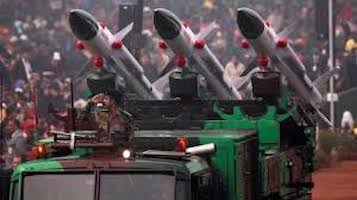
    BrahMos/Agni: The BrahMos is an Indo-Russian venture that adorns lead warships of the Navy. It’s deployed along Pak border. N-tipped Agni missiles have propelled India into the exclusive club of countries — US, UK, Russia, France & China.

  • Kim in Beijing: His visit strategically brings China into North Korea’s hectic diplomatic calendar

    Kim in Beijing: His visit strategically brings China into North Korea’s hectic diplomatic calendar

    The timing of North Korean leader Kim Jong-un’s visit to China, his first foreign trip after assuming power in 2011, is not lost on anyone. After travelling to Beijing this week in an armored train, he held talks with Chinese President Xi Jinping and re-emphasized his commitment to the “denuclearization” of the peninsula, weeks before his scheduled April 27 summit with South Korean President Moon Jae-in. In May, Mr. Kim and U.S. President Donald Trump are expected to meet for a historic summit. By visiting Beijing now, Mr. Kim is sending a clear message: that he is serious about his offer of talks. The visit has also helped repair relations between Pyongyang and Beijing, which had come under some strain. China was not particularly happy with the North’s nuclear tests. Mr. Xi was under pressure from the West to exercise influence on Mr. Kim’s regime. And Beijing’s support for stringent UN sanctions on North Korea that have cut its exports of coal, seafood and other goods to China has dealt a blow to its already isolated economy. Mr. Kim reportedly rejected overtures from Beijing and purged officials who had close ties with the Chinese. But now, both leaders appear to have decided to set aside their differences.

    China has historically played a role in inter-Korean relations. In 2000, Mr. Kim’s father and predecessor, Kim Jong-il, had visited China shortly before a summit with South Korea. In 2003, China launched the Six-Party Talks aimed at peacefully resolving the North Korean nuclear crisis, which eventually failed. Mr. Kim’s visit to Beijing has reinstated China’s central role in talks over the Korean crisis, which both countries see as mutually beneficial. For the Kim regime, China’s experience and guidance could come in handy when it is preparing to engage with two of its biggest rivals. China, for its part, would not like to be bypassed by the U.S. and the North in any diplomatic process. If the Kim regime’s fundamental objective is its own survival, China’s interest lies in a peaceful resolution to the crisis in a stable political environment in its neighborhood. This enables convergence of interest for both in the diplomatic process. But there is still much uncertainty over the peace process. Mr. Trump may have agreed to meet Mr. Kim. But since then he has inducted into his team two officials with hawkish views on North Korea — Mike Pompeo as Secretary of State and John Bolton as National Security Adviser. As of now, it is anybody’s guess what the U.S. would do next if the Trump-Kim summit fails to produce a breakthrough. In such a volatile context, robust multilateral intervention would be needed to stay the diplomatic course. The Xi-Kim meet could be a step in that direction if China agrees to be a balancing force and a facilitator of talks between the North and the U.S.

    (The Hindu)

  • India in Trumpland needs to cut Trade Deals with US to keep afloat

    India in Trumpland needs to cut Trade Deals with US to keep afloat

    By Arun Kumar

    The businessman-author of The Art of the Deal, who looks at every issue as a transaction, would also be in no hurry to tear up the Iran nuclear deal, Pompeo or no Pompeo. For him, threat is a negotiating tactic. So, India has little to lose sleep on this count”.

    Washington is said to be in turmoil sending shock waves across the world from New York to New Delhi, with a mercurial President Donald Trump firing aides left and right and courting controversy with his fiats.

    Will his new incoming hawkish National Security Adviser John Bolton, who has in the past advocated military strikes against both Iran and North Korea, push his boss into another war and upend the proposed summit between Trump and North Korean leader Kim Jong-un?

    Or would CIA director Mike Pompeo, another hardliner set to replace moderate Secretary of State Rex Tillerson, spur the President to make good on his campaign promise to tear up the “disastrous” Iran nuclear deal forcing nations like India into yet another balancing act?

    And would Trump’s imposition of steel and aluminum tariffs, essentially aimed at China, set off a trade war catching India in the crossfire?  Or perhaps the brash billionaire would implode in a clash of wills with special counsel Robert Mueller, former FBI director, probing alleged Russian interference in the 2016 presidential election and any collusion with the Trump campaign?

    Or maybe the juicy tales of alleged dalliances with a porn star and a Playmate would finally prove the undoing of “The Donald”, as the first wife of the thrice married former reality TV star lovingly called him?

    As pundits on either side of the political divide fill the airwaves with such kite flying, “There is no news anymore. It’s all Trump,” as noted TV host Larry King lamented ripping into TV channels going after eyeballs and newspapers savoring the circulation windfall.

    With Trump setting the agenda, there is hardly any attempt to look at the issues dispassionately and give the devil his due. For instance, when the President ordered the expulsion 60 Russian diplomats in response to nerve agent attack on a former Soviet spy in Britain, Los Angeles Times, among others, had a different take.

    “Trump quiet as US expels 60 suspected Russian spies,” read the Times’ headline, even as the liberal daily acknowledged lower down that it was the “most aggressive diplomatic slap down since the end of Cold War”.

    Thus, contrary to instant analysts’ fears there is little danger of Trump, who in 2004 described the Iraq war as a “big fat mistake”, leading the US into another conflagration as his “America First” policy leaves no room for “regime change” or “nation building” abroad.

    The businessman-author of The Art of the Deal, who looks at every issue as a transaction, would also be in no hurry to tear up the Iran nuclear deal, Pompeo or no Pompeo. For him, threat is a negotiating tactic. So, India has little to lose sleep on this count.

    North Korea too would likely be a different story. Trump has often been painted as getting his strategic advice from TV shows, particularly Fox News, and influenced by the last man he sees before making up his mind. But contrary to conventional wisdom, the President keeps his own counsel. Witness the number of men who have been shown the door. These include Steve Bannon, his former chief strategist, who was once portrayed by influential Time on its cover as “The Great Manipulator” and “The second most powerful man in the world”.

    Trump surprised the world by accepting an invitation for nuclear talks with Kim in May after trading childish barbs with the “little rocket man” about the size of their nuclear buttons as he threatened to respond with “fire and fury” to any provocations from Pyongyang.

    Ahead of the crucial summit that he agreed to despite telling Tillerson that “our wonderful Secretary of State was wasting his time trying to negotiate” with Kim, Trump has scored his first victory on the tariff issue with South Korea.

    Under the significant one-on-one deal, Seoul has agreed to limit its steel exports to the US and ease US auto imports. Pundits concede that Trump might well pull a rabbit out of his hat at the summit. Henry Kissinger, the legendary architect of Richard Nixon’s opening up to China, has endorsed the summit attributing it to Trump’s unique style. As he told the New York Times that it may not be what “we traditionalists would have recommended in the first place” but “it could restore a political initiative to us, and could compel a conversation with countries (who may not otherwise want one).”

    During the presidential campaign, Trump had vowed to be a “true friend” to and “best friends” with India.

    But that has not prevented him from slamming India’s “high” import duties on Harley-Davidson bikes. His administration has also taken India, which has a $24 billion trade surplus with the US, to the WTO, challenging export subsidies that benefit $7 billion Indian exports. But given Prime Minister Narendra Modi’s bonhomie with Trump, they too could well work out a deal like South Korea.

    Indians are also concerned about the Trump administration’s plans to restrict H-1B visas for professionals, which are largely cornered by Indians, and limiting visas to relatives to immediate family. But his plans to introduce a point-based merit system for immigration may well work to the advantage of Indians in the long run.

    Other than that, thanks to bipartisan political support, Trump has continued to consolidate ties with India that have been growing stronger under three previous Presidents — Bill Clinton, George Bush and Barack Obama. As he told Modi last June, “The relationship between India and the United States has never been stronger, never been better.”

    His national strategy unveiled last January also welcomes “India’s emergence as a leading power and stronger strategic and defense partner” as a counterbalance to China in the Indo-Pacific Region.

    With the fight against terrorism emerging as an important area of convergence, the Trump administration also did something unprecedented in suspending security assistance to Pakistan after several warnings to Islamabad to stop supporting terrorists fell on deaf ears.

    Indian interests may be safe in Trumpland, but the ongoing Russia probe has been hanging like a cloud on Trump with all his Russia-related actions viewed as suspect. He has been itching to fire Mueller to end what he deems as the “single greatest witch-hunt in American political history”.

    Republican leaders have cautioned him against sparking a constitutional crisis by firing Mueller with Lindsey Graham, former Republican presidential rival turned supporter, warning that it would be “the beginning of the end of his presidency”.

    But Trump being Trump, he may well do the unthinkable — and yet survive!

    (The author is an expert on India-US relations)

  • Shekhar Kapur to head the jury for 65th National Film Awards

    Shekhar Kapur to head the jury for 65th National Film Awards

    NEW DELHI (TIP): Veteran director Shekhar Kapur has been appointed chairman of the central panel of the 65th National Film Awards, sources in the Ministry of Information and Broadcasting said on Wednesday, March 28.

    The central panel comprises a chairperson and 10 other members, including five regional chairpersons who head the respective regional panels.

    Film writer Imtiaz Hussain, known for his works in films like Astitva (2000) and Parinda (1989) will be the regional chairperson of South I panel. Mehboob, who penned the lyrics for the Hindi (dubbed) version of 1995 Tamil romantic drama Bombay, has been appointed as the regional chairperson of South II panel, the sources said.

    Actor Gautami Tadimalla, who is known for her work in Tamil films, is the regional chairman of the North panel, while director Rahul Rawail known for films like Love Story (1981), Betaab (1983), Arjun (1985) and Jo Bole So Nihaal (2005), was chosen as the regional chairperson of the Western panel, they said.

    Director P. Sheshadri, a known name in Kannada cinema, is the regional chairperson of Eastern panel.

    Other members of the panel include Aniruddha Roy Chowdhury, a Bengali and Hindi film director; playwright Tripurari Sharma; dialogue and script writer Rumi Jaffery; Ranjit Das known for the critically acclaimed film Pratyavartan; and film writer, director and producer Rajesh Mapuskar, the sources added.

  • East Coast, Texas employ highest number of H1B workers: Report

    East Coast, Texas employ highest number of H1B workers: Report

    WASHINGTON (TIP): East Coast and Texas metro areas in America employed the highest number of H-1B visa workers, majority of them Indians, between 2010 and 2016, a Pew report has said, debunking the popular presumption that the Silicon Valley had such a distinction.

    According to the Pew Research Centre, an American think-tank, about 247,900 H-1B visa approvals–29 per cent of the nation’s total–went to employers in the New York City metro area from fiscal 2010 to 2016, the most in recent years for which data are available at the metropolitan level.

    “The employment of high-skilled foreign workers with H-1B visas has centered on large East Coast metropolitan areas for fiscal years 2010 to 2016. In addition, these foreign workers have made up a significant part of the workforces in several Texas metro areas,” it said in an analysis of the previously unpublished metro-level government data of H-1B visa approvals on Thursday.

    The figures were obtained by the center through a public records request.

    The Dallas and Washington metro areas got 74,000 and 64,800 approvals respectively, the next highest totals along with Boston’s 38,300 approvals.

    The data, obtained from US Citizenship and Immigration Services, include details of those approved for an H-1B visa.

    When looking at the footprint of high-skilled foreign workers by metro area, Texas’ College Station stands far above the rest, with about 32 H-1B approvals per 100 workers.

    According to report, more than 99 per cent of the metro area’s H-1B approvals went to employees of Cognizant Technology Solutions Corporation, whose US headquarters are in College Station.

    No other metro area had more than five H-1B approvals per 100 workers.

    “The San Jose, California metro area, home of Silicon Valley, trailed the leading metro area on these measures, despite being home to some of the world’s most famous technology companies. The San Jose metro area had 22,200 H-1B approvals from fiscal 2010 to 2016, which amounted to two approvals per 100 workers,” the report said.

    The US government approved more than 859,600 applications in fiscal 2010-2016.

    While nationwide, foreign workers approved for H-1B visas earned an average of USD 80,600 in fiscal 2010-2016, Bridgeport in Connecticut had the highest average salary of USD 100,200 of all metro area, followed by Seattle with USD 98,100 and Phoenix USD 97,100.

    In College Station, the Texas metro area with the greatest concentration of H-1B workers in its workforce, the average salary in 2010-2016 was USD 82,600, the report said.

    About half (49 per cent) of H-1B approvals in recent years have gone to foreign workers with an advanced degree (Master’s, professional or doctorate) earned either in the US or internationally, it said.

    The H1-B visa is a non-immigrant visa that allows US companies to employ foreign workers in specialty occupations that require theoretical or technical expertise.

    (Source: PTI)

  • It’s Tit for Tat: Russia to expel 60 US diplomats, close US consulate in Saint Petersburg

    It’s Tit for Tat: Russia to expel 60 US diplomats, close US consulate in Saint Petersburg

    MOSCOW (TIP): Russian Foreign Minister Sergei Lavrov said on Thursday, March 29, that Moscow would expel 60 U.S. diplomats and close its consulate in Saint Petersburg in a tit-for-tat expulsion over the poisoning of ex-double agent Sergei Skripal.

    Mr. Lavrov said the U.S. ambassador had been informed of “retaliatory measures”, saying that “they include the expulsion of the equivalent number of diplomats and our decision to withdraw permission for the functioning of the U.S. consulate general in Saint Petersburg”.

    Washington earlier ordered the expulsion of 60 diplomats and shut down the Russian consulate general in Seattle.

    Mr. Lavrov added that Russia would also issue tit-for-tat responses to the other countries that have expelled diplomats in a mass show of support for Britain which has blamed Moscow for the poisoning of ex-spy Sergei Skripal and his daughter Yulia with a nerve agent in the city of Salisbury.

    “As for the other countries it’s also all symmetrical measures as to the number of people who will be leaving Russia from diplomatic missions, and that’s all so far,” Mr. Lavrov said.

    He added that Russia was reacting to “absolutely unacceptable actions that are taken against us under very harsh pressure from the United States and Britain under the pretext of the so-called Skripal case.”

    He accused London of “forcing everyone to follow an anti-Russian course.”

    He said Britain had informed Moscow of the state of health of Yulia Skripal on Thursday and that Russia had asked again for access to her as a citizen.

    Mr. Lavrov vowed at the briefing in Moscow that “we want to establish the truth” over the poisoning and accused Britain of “making mockery of international law.”

    He said that Russia had asked for a meeting with the executive council of the Organisation for the Prohibition of Chemical Weapons on Tuesday to ask questions to “establish the truth.”

    “We are counting on our Western partners not evading an honest conversation,” Mr. Lavrov said.

    (Source: AFP)

  • In yet another ouster, Trump fires Veterans Affairs Secretary David Shulkin

    In yet another ouster, Trump fires Veterans Affairs Secretary David Shulkin

    WASHINGTON (TIP): US President Donald Trump on Wednesday, March 29 fired his Veterans Affairs Secretary David Shulkin and nominated White House physician, Admiral Ronny Jackson as his replacement.

    Trump made the announcement on Twitter and later issued a separate statement thanking Shulkin for his services.

    “I am pleased to announce that I intend to nominate highly respected Admiral Ronny L. Jackson, MD, as the new Secretary of Veterans Affairs….,” Trump wrote on Twitter.

    “I appreciate the work of Dr. David Shulkin and the many great things we did together at Veterans Affairs, including the VA Accountability Act that he was helpful in getting passed. He has been a great supporter of veterans across the country and I am grateful for his service,” Trump said in a later statement.

    Early this month, Trump had unceremoniously fired Secretary of State Rex Tillerson and nominated Mike Pompeo, the CIA Director, for the top diplomatic position in his cabinet.

    Both the cabinet positions need to be confirmed by the US Senate.

    “In the interim, Hon. Robert Wilkie of DOD will serve as Acting Secretary. I am thankful for Dr. David Shulkin’s service to our country and to our GREAT VETERANS!” Trump said in another tweet.

    Trump said Jackson was highly trained and qualified.

    “As a service member himself, he has seen firsthand the tremendous sacrifice our veterans make and has a deep appreciation for the debt our great country owes them,” he said in a separate statement.

    Wilkie, who will serve as the Acting Secretary for the department, is currently the Undersecretary of Defense for Personnel and Readiness at the Department of Defense and overseas health affairs, welfare and quality of life for military families.

    Jackson has served as the White House physician during the past three administrations of Presidents George W. Bush, Barack Obama and Donald Trump.

    Since arriving at the White House, he has directed the Executive Health Care for the President’s Cabinet and Senior Staff, served as physician supervisor for the Camp David Presidential Retreat, held the position of physician to the White House and led the White House Medical Unit as its director.

    A native of Texas, and a graduate from Texas A&M University with a Bachelor of Science in Marine Biology; Jackson began his active duty naval service in 1995 and went on to become the honor graduate of the Navy’s Undersea Medical Officer Program in Groton, Connecticut.

    The opposition Democratic Party expressed concern over the firing of Shulkin.

    Democratic leader Nancy Pelosi called Shulkin’s dismissal “a troubling step in the Trump Administration’s ultimate goal of VA (Veterans Affairs) privatization”.

    “From day one of this administration, the president has openly encouraged and embraced Koch Brothers-led forces as they work around Congress and behind closed doors to dismantle veterans’ health care,” Pelosi said.

    She urged the members of Congress to join hands against any effort to privatize VA.

    Senator Johnny Isakson, chairman of the Senate Committee on Veterans’ Affairs, said Shulkin had made a tremendous impact toward improving the lives of veterans during his time at the US Department of Veterans Affairs.

    “He has been instrumental in all that we have accomplished in the last year, and I thank Dr. Shulkin for his dedicated service to our country and our veterans,” he said.

    Concerned Veterans for America executive director Dan Caldwell said Shulkin made significant headway in reforming the department, but ultimately became a distraction from the important task of improving health care for the veterans.

    “The Trump administration has made great progress over the last year reforming and fixing the VA, however there is still much work to be done,” he said.

    (Source:  PTI)

  • Narendra Modi’s U.K. visit in April signals new goals

    Narendra Modi’s U.K. visit in April signals new goals

    ‘Bharat ki baat, sabke saath’ event on April 18

    NEW DELHI (TIP): Prime Minister Narendra Modi’s second visit to the U.K. in less than three years is due to take place in April, with a community event in central London planned alongside bilateral engagements, and the Commonwealth Heads of Government Meeting.

    A publicity campaign for the ‘Bharat ki baat, sabke saath’ event on April 18 kicked off on Wednesday, March 28. “A unique niche event… it will be a one of its kind live interactive conversation,” tweeted the BJP’s Vijay Chauthaiwale.

    The event will be held in central London, as against the Wembley Stadium, where Mr. Modi addressed a gathering of around 60,000 people, and will be a smaller affair, with around 1,500 to 2,000 people.

    Within the first hours of the website for free registration going live, the number of registrations had already exceeded this figure.

    The planned format highlights the different tone of the current visit and the audience Mr. Modi hopes to focus on — while the Wembley event was pitched very much as a “diaspora” event, with community performances — the April event is targeted at a more global audience, matching the aspirations of the visit, which is pegged around the ambitions of taking the Commonwealth to a new level. India’s active engagement is seen as key to the revival of the Commonwealth during the heads of government meeting on April 19 and 20, and the preceding Commonwealth Business Forum.

    Visiting London earlier this year, Suresh Prabhu touted the leadership role that India could adopt in the organization.

    However, others are hopeful the visit will also provide an opportunity for the U.K. government to express concerns over a number of developments in India. Earlier this month Foreign Office Minister Mark Field, responding to a debate in the House of Commons Westminster Hall, during which MPs expressed concerns, said the government would raise the issue of the treatment of Christian and Sikh minorities in India in the “appropriate manner” during CHOGM to ensure that Parliament’s voice was “properly heard.”

    “He will appreciate that diplomacy sometimes needs to be done behind closed doors, rather than with megaphones,” he told MPs.

    With the government of Theresa May touting a free trade deal with India as one of the ambitions of a “global” post-Brexit Britain, the visit will be a crucial, though sensitive one for the UK.

    Earlier this year Britain and India agreed to the terms of a memo on the swift return of Indian illegal immigrants from the U.K. – an issue that has repeatedly been raised by the British government and seen as an obstacle to immigration reform on the British side.

    India’s action will park the ball back in Britain’s court and strengthen calls for change from the U.K. when it comes to immigration and visa issues, particularly for business travelers, students and those in professional services.

    Protests and rallies are also expected to take place, as they did during Mr. Modi’s last visit. The Sikh Federation, U.K. said it expected large numbers to turn out for a protest rally during the visit. The protest will raise issues including the detention of U.K. citizen Jagtar Singh Johal by Indian authorities last year.

    (Source: The Hindu)