Month: April 2013

  • “GANG OF EIGHT” Senators formally file Immigration Bill -Border security is the cornerstone of immigration reform

    “GANG OF EIGHT” Senators formally file Immigration Bill -Border security is the cornerstone of immigration reform

    WASHINGTON (TIP): A bipartisan group of senators formally filed legislation early Wednesday, April 17 calling for border security as the cornerstone of immigration reform. The bill also would prevent undocumented immigrants from reaching full legal resident status until after the government takes steps to keep unauthorized workers from getting jobs in the United States, according to a summary released before the bill was filed. The measure drafted by the “Gang of Eight” senators says “high risk border sectors” — those with at least 30,000 illegal crossings a year — must be sealed off before most undocumented immigrants could start their journey to legal residency. It makes exceptions for law-abiding immigrants who arrived in the United States as children and completed high school. It also exempts some farm workers, according to the summary. Conservative senators have insisted on border security as a condition for the legislation. Some Democrats, whose party controls the chamber, have agreed.

    Quota-based border security
    The bipartisan bill lays down strict criteria for the creation of a secure border. It calls for $3 billion to beef up border security, which includes fortifying fences, staffing up patrols and acquiring surveillance technology from the Department of Defense — including drones and drone pilots, according to the summary. It also requires constant surveillance of high-risk border areas and demands that border officers turn back at least 90% of those who attempt illegal border crossings each year.

    The path to legal residency? Border security
    Only undocumented immigrants who arrived in the United States before December 31, 2011 would be eligible for legal residency, according to the bill summary. They also can’t have any felony convictions in U.S. or foreign courts. But smaller offenses can also block residency. The bill would block applicants with more than three misdemeanor convictions, including for offenses such as reckless driving, trespassing or vandalism. Voting illegally also triggers ineligibility and authorities can turn back applicants if they have certain infectious diseases or questionable “morality,” according to the summary.

    Time and money
    The bill would also require undocumented immigrants to pay a penalty of up to $500 for having come to the United States illegally and also pay any back taxes before receiving temporary approval to stay. But that approval — call registered provisional immigrant status — opens up most U.S. jobs and allows the applicant to travel outside the country and return legally. The status lasts for six years and can be extended for an additional $500 fee, if the applicant has not gotten into any trouble with the law. After 10 years as provisional residents, immigrants could become lawful permanent residents by following the same guidelines as immigrants who enter the country legally. That process includes a $1,000 fee.

    Blue card for Agricultural workers
    The proposal also calls for issuing agricultural workers a new type of legal status card: a blue card. Agricultural workers who are currently in the country illegally would be allowed to apply for the card if they have worked in the U.S. agriculture industry for at least 100 days in the two years prior to December 31, 2012. Applicants must also pay a $400 fee, show they have paid their taxes and have not committed a crime. The bill caps the blue cards at about 112,000 for the first five years. Blue card holders would be eligible for permanent legal residency in five years, half the time of other adult immigrants in the country illegally, according to the summary. The proposal would also set minimum wages across several categories of agricultural workers.

    Members of the Republican-led House of Representatives are working on their own immigration overhaul plan, which also includes border security measures. Authors of the newly released Senate immigration bill touted the package Thursday, April 18, as a “bipartisan breakthrough” in advance of a critical hearing, as opponents began to organize against the bill — claiming it doesn’t do enough to enforce existing immigration law. Sen. Marco Rubio, R-Fla., who has put his conservative reputation on the line with his involvement in writing the bill, took to the floor late Thursday afternoon to defend it.

    Though critics have homed in on the bill’s pathway to citizenship for illegal immigrants, Rubio said the package would also fix a “broken” legal immigration system so that foreign students trained in America would not be sent back home once they’ve learned their skills. “If there wasn’t a single illegal immigrant in the United States, we would still have to do immigration reform,” Rubio said. As for the path to citizenship, which would give up to 11 million illegal immigrants a shot at legal status, Rubio said “the alternative is to do nothing” — which he described as “amnesty.” Rubio and the seven other co-authors, who formally unveiled the legislation at a press conference Thursday, are hoping to avoid the fate of the 2007 immigration bill, which died amid heated criticism from both sides of the aisle.

    Republicans have bluntly professed an interest in courting Hispanic voters, and some prominent members, including Rubio, have lent their name to the effort.

  • Gun background check compromise, assault weapon ban fail in Senate

    Gun background check compromise, assault weapon ban fail in Senate

    WASHINGTON (TIP): The centerpiece proposal on background checks in the proposed changes to a gun control bill failed to win enough support in the Senate April 17. The vote on the so-called Manchin-Toomey amendment was 54 in favor, 46 against – failing to reach the 60-vote threshold needed to move ahead. Four Republicans supported it, and four Democrats voted no. A controversial Democratic plan to ban dozens of military-style assault weapons was also defeated by a vote of 40 to 60.

    The votes were a setback for President Obama, who angrily blasted Republicans for defeating the background check compromise, saying “the gun lobby and its allies willfully lied about the bill.” “All in all, this was a pretty shameful day for Washington,” Obama said, promising that “this effort is not over.” A number of other amendments also failed to earn the 60 votes necessary to pass: A GOP proposal including a number of changes, 52 to 48; a bipartisan amendment to stiffen penalties for “straw purchasers,” 58 to 42; a GOP-backed amendment that would have permitted “national reciprocity” of state-issued concealed carry permits, 57 to 43; and a GOP plan to extend gun rights for veterans, including those deemed unable to manage their financial affairs, 56-44.

    The raw emotion of the background check amendment defeat played out in the Senate gallery just after Vice President Biden read the vote count. “Shame on you!” at least two women were heard shouting. “We’re sick and tired of the death in this country and these legislators stand up there and think it’s a bunch of numbers,” said Haas, whose daughter, Emily, was wounded in the April 2007 shooting at Virginia Tech. “It’s a shame, it’s appalling, it’s disgusting,” she added. The chief architects of the plan to expand the national gun background check system, Sens. Joe Manchin III (D-W. Va.) and Patrick Toomey (R-Pa.), acknowledged in interviews early Wednesday, April 17 that their proposal lacked sufficient support. After the vote, Toomey expressed regret, but said that it was time to move on. “I did what I thought was the right thing for our country.

    I sought out a compromise position that I thought could move the ball forward on an important matter of public safety,” he said in a statement, adding later, “We have a lot of other very important issues to deal with such as getting the economy back on track, dealing with the debt ceiling and creating more jobs for Pennsylvanians.” Before the voting began, Biden, who is leading the Obama administration’s gun control effort, sounded quite frustrated with misinformation being spread by opponents to the bipartisan compromise Wednesday.

    Speaking during a “Google Hangout,” Biden reiterated that the proposal would not create or lead to the creation of a federal gun registry. “Nothing can be further from the truth,” he said. Biden also dismissed suggestions that the measures would infringe upon people’s constitutional right to bear arms. “There is no – zero – no infringement on the Second Amendment, not one single thing being proposed,” he said. In the hours before the vote, Senate Majority Leader Harry M. Reid (D-Nev.) also attempted to rally last-minute support for the bill by issuing an ominous warning to his colleagues. “If tragedy strikes again…if innocents are gunned down in a classroom, theater or restaurant, I would have trouble living with myself as a senator, as a husband, a father, or grandfather and friend, knowing that I didn’t do everything in my power to prevent that incident,” Reid said. Shortly before the vote, Sen.

    John McCain (R-Ariz.) said he would support the background check plan, saying that while he was a staunch defender of Second Amendment rights, the bipartisan proposal is “not overly burdensome or unconstitutional.” “Is this a perfect solution? No. will it prevent all future acts of gun violence? Of course not,” McCain said. “Would it have prevented the most recent acts of gun violence? In all likelihood, no. But it is reasonable, and it is my firm conviction that it is constitutional.” Meanwhile, only one day after suffering defeat, Senate Majority Leader Harry Reid on Thursday, April 18, set aside President Barack Obama’s plan to curb gun violence but promised to keep searching for a compromise.

    Reid said Democrats would keep negotiating on the proposals, even though the Senate rejected all the vital elements of the legislation prompted by the December massacre of 20 children and six adults at a school in Newtown, Connecticut.

  • Looking East, Looking West: U.S. Support for India’s Regional Leadership

    Looking East, Looking West: U.S. Support for India’s Regional Leadership

    Today, I’d like to talk about India’s growing influence, felt in the East through its “Look East” policy and in the west, particularly as we move toward the transition in Afghanistan. I’ll highlight how India’s engagement in these areas is crucial to U.S. foreign policy objectives and our pursuit of a stable, secure and prosperous region. India’s leadership has powerful implications that extend beyond its immediate neighborhood – as a beacon of democracy, stability, and growth. India has much to offer all of us, including communities right here in Cambridge. Harvard University’s increased engagement with India, through events like this, through its South Asia Institute, its research center in Mumbai, President Faust’s 2012 visit to India, through over 1,500 Harvard alumni in India, as well as a myriad of research projects, academic collaborations and student and faculty exchanges, testify to India’s growing prominence and our recognition of its increasing importance in the global arena. Massachusetts, likewise, has become a pioneer in forging closer relations with this key partner.

    The State Department strongly champions and supports state-to-state and cityto- city engagement,which is now a vital part of advancing our economic and people-to-people relationships. This year alone, at least eight American Governors are leading trade and other missions to India, not only to develop new markets but to attract job-boosting investments. Massachusetts was an early pioneer: back in 1995,when then-Governor Weld announced plans to forge an alliance with Karnataka, such engagement was a novel concept and a new approach. Governor Weld had the foresight to know that those who didn’t pursue ties with India would miss out on the many rewards this relationship has to offer. His delegation, consisting of 22 U.S. companies, paved the way for numerous U.S. firms to open in and around Bangalore. Today, Massachusetts is one of India’s top 25 trading partners in the world, and last year India received nearly $300 million of this state’s exports. But I hardly need to tell this audience how critical the U.S.-India relationship is.

    Those of you involved in collaborations with India, particularly in academia and research, are fully aware of the benefits. But our bilateral partnership benefits not only our two nations; it is of vital importance to a global vision for a future of shared prosperity. During his visit to India in 2010, President Barack Obama recognized the promise of our shared future and hailed the U.S.-India relationship as “one of the defining partnerships of the 21st century.” We and our Indian friends have taken significant steps to realize that vision. We established a Strategic Dialogue chaired by the Secretary of State and External Affairs Minister to give strategic direction to the wide range of bilateral dialogues between our two governments. We have expanded counterterrorism cooperation, intelligence sharing, and law enforcement exchanges that have helped make both of our countries safer, but clear-eyed about the threats that persist. Bilateral trade has grown by 50% from $66 billion to $93 billion in the last four years and is set to cross $100 billion this year.

    Indian foreign direct investment in the United States increased from $227 million a decade ago to almost $4.9 billion in 2011 – investments that have created and support thousands of U.S. jobs. Another growing component of our bilateral relationship with India is defense trade. Since 2000, sales to India have surpassed $8 billion, representing both an excellent commercial opportunity for U.S. companies but also advancing a vital component of our bilateral security relationship.We will continue to pursue defense trade cooperation with India, including a whole-of-government effort led by Deputy Secretary of Defense Ash Carter to reduce bureaucratic impediments, ease transactions between buyers and sellers, increase cooperative research, and focus on coproduction and co-development opportunities. We have grown our partnership with India on export controls and non-proliferation.We have worked closely with our companies to help them move deeper into India’s nuclear commercial markets, and we hope to announce more tangible commercial progress by the next Strategic Dialogue.

    We have increased our collaboration on clean energy through programs such as the U.S.-India Partnership to Advance Clean Energy (PACE). Since its creation, PACE has mobilized over $1.7 billion in renewable energy financing to India and has driven full-spectrum activity from basic research to development and commercialization in solar technology, advanced biofuels, and building efficiency. India is hosting the Fourth Clean Energy Ministerial (CEM) in New Delhi later this month. The CEM offers a tremendous opportunity for partnership on a range of clean energy technologies, particularly in buildings and appliance efficiency, that are among the world’s most ambitious. And we have witnessed an expansion of our already robust people-to-people ties, particularly in the educational arena,where there is great demand. India has about 600 million people under 25.

    The next generation can only fulfill their roles as economic drivers if equipped with the right training and skills. India aims to increase its higher education enrolment from under 20 percent to 30 percent by the end of the decade. That means it needs 50,000 more colleges and 1 million more faculty. Since the first iteration of the U.S. India Higher Education Dialogue last year,we have focused our efforts on such critical areas as skills training and workforce development by strengthening community college collaboration. We are preparing for another round of Obama Singh 21st Century Knowledge Initiatives awards,which will further partnerships and junior faculty development between U.S. and Indian higher education institutions in priority fields and we have sought to encourage more Americans to study in India and build American expertise about India and by ramping up our Passport to India initiative.

    With its strong democratic institutions, unprecedented demographic growth, economic promise and rising military capabilities, India is poised to play a critical leadership role both regionally and globally.With rising power comes greater global responsibility and in moving beyond its tradition of non-alignment, India has established its credentials as a responsible player in the global arena.We are committed to working together, along with others in the region, toward the evolution of an open, balanced, and inclusive architecture. India has long been an integral member of the Asia-Pacific region, sharing cultural and historical ties that have laid the foundation for its expanded engagement of today.With its “Look East” Policy, initiated in 1991, India began to work more closely with its Asian partners to engage the rest of the world, reflecting the belief that India’s future and economic interests are best served by greater integration with East and Southeast Asia.

    Today, India is forging closer and deeper economic ties with its eastern neighbors by expanding regional markets, and increasing both investments and industrial development from Burma to the Philippines. India is also seeking greater regional security and military cooperation with its neighbors through more intensive engagement with ASEAN and other near neighbors. This week, in fact, India and China held their annual counterterrorism dialogue and focused on pan-Islamic extremism in the backdrop of Afghanistan’s transition. Such interaction evinces Beijing and Delhi’s interest in coordinating to work together for stability in Kabul in 2014 and beyond. Trade, and by extension maritime security, are key components of our bilateral collaboration. The economic dynamism of South, Southeast and East Asia, along with improving relations between India and its neighbors to the East, has spurred the region’s interest in revitalizing and expanding road, air, and sea links between India, Bangladesh, Burma, and the rapidly expanding economies of ASEAN. From 2011 to 2012, trade between India and the countries of Southeast Asia increased by 37%.

    This emerging Indo-Pacific Economic Corridor, as we have come to call it, is a boon for the region and for the United States, providing our own economy with potential new markets. Linkages and infrastructure investments between the rapidly expanding economies of South Asia and those of Southeast Asia are a critical component to integrating regional markets to both accelerate economic development and strengthen regional stability,while helping unlock and expand markets for American goods and services. An India that is well-integrated into the Asia’s economic architecture, that pursues open market policies, and that has diverse and broad-based economic relationships across the East Asia region is not only good for India, but is good for the United States and the Asia- Pacific region as a whole.

    But trade can only prosper when maritime security is assured. Oceans are essential to India’s security and prosperity, as they are to ours. By volume, 90% of the goods India trades are carried by sea. India therefore has a strong interest in guaranteeing unhindered freedom of navigation in international waters, the free flow of commerce, and the peaceful resolution of maritime disputes. But beyond its own economic benefit, India realizes that the economic integration enabled by the improvements of connections across Asia, will lead to prosperity that benefits all nations. India’s growing naval capacity and modernization have enabled its strong presence across the Indian and Pacific Oceans and further bolstered its role as a net security provider in the maritime domain.

    Already in the Western Indian Ocean region, New Delhi is demonstrating its growing maritime capabilities with a robust counter-piracy approach that serves common regional interests and many of their own nationals held hostage in Somalia. As a founding member of the international Contact Group on Piracy off the Coast of Somalia, India has shown great leadership in the efforts to confront and combat piracy stemming from Somalia which threatens trade flows to and from Asia. Our shared vision for economic integration and the promotion of regional stability also extends westward. The United States and India are both strong supporters of a more economically integrated South and Central Asia, with Afghanistan at its heart — what we call the New Silk Road vision.

    At the core of this vision is an Afghanistan at peace and is firmly embedded in the economic life of the region. Such an integrated region will be better able to attract new investment, benefit from its resource potential, and provide increasing economic opportunity and hope for its citizens. Improving connections between South and Central Asia is made all the more urgent as Afghanistan moves through the transition process and puts its economy on a more sustainable private sector-led footing. The countries of the region have embraced a new vision for Afghanistan that places it at the center of a rejuvenated network of commerce, communications and energy transmission, a “land bridge” connecting the Middle East and central Asia to the dynamic markets of China, India and Southeast Asia. Its economic development and ultimate economic integration into the larger network of regional markets is yet another piece of the New Silk Road tapestry. As Afghanistan increasingly takes the lead in its own security, political, and economic situation,we also strongly support the constructive role that India is playing in Afghanistan’s ongoing development.We look to India to play an active part in ensuring that that stability and security endure and that the gains made in Afghanistan over the past 11 years are sustained. Indeed, great challenges lie ahead. But India is committed to our shared vision for a peaceful, stable and secure Afghanistan and has already proven its commitment to assume a greater role in enabling that vision to come to fruition. In 2011, India pledged through the signing of a wide-ranging strategic agreement to train and equip Afghan security forces.

    As the largest regional provider of humanitarian and reconstruction aid to Afghanistan, India has given some $2 billion in aid to the country. Indian public and private companies are building the infrastructure which will carry the nation forward. They have built highways from Kandahar to Kabul and a new parliament building in the capital, put transmission lines between Afghanistan and Uzbekistan and have plans to power Afghan cities through the Salma dam project and to help Afghanistan realize its mineral wealth through development of the Hajigak iron ore mines. On the soft power side, India’s Bureau of Parliamentary Studies and Training invited most senators in Afghanistan’s Upper House, the Meshrano Jirga, for a training session in legislative and budgetary processes in New Delhi, much as the JFK School of Government does for new lawmakers in Washington.

    There’s perhaps no better example of the potentially impact of the New Silk Road vision for Afghanistan and its region than the Turkmenistan-Afghanistan-Pakistan-India pipeline, or TAPI. By connecting abundant energy reserves in Turkmenistan with rapidly rising demand for that energy in South Asia and providing Afghanistan with much-needed transit revenue, TAPI can be transformative for the region. While there’s still much to be done to make this project a reality,we are closer today than anyone would have thought possible just a few years ago, thanks in no small part to Indian leadership. Beyond these infrastructure efforts, India has rallied the international community to encourage further development and to garner the support needed to enable Afghanistan’s successful transition.

    Last year New Delhi hosted a major summit on international investment in Afghanistan’s economy. As Afghanistan shifts the foundation of its economy from aid to trade in the coming years, India’s regional role as a driver of economic prosperity and anchor of democratic stability becomes even more important. Later this month in Almaty, the United States, India, and other countries of the region, will meet to discuss how we can best support a secure and prosperous Afghanistan, integrated into its region. This gathering is part of the Istanbul Process, in which neighbors and nearneighbors support Afghanistan through a range of initiatives that advance security and regional economic cooperation. India has already demonstrated a clear leadership role through its chairing of a working group focused on expanding cross-border commercial and business-to-business relations.

    In conclusion, in Afghanistan as in so many other areas, meeting the challenges of today and seizing the opportunities of tomorrow demand cooperative responses and lasting partnerships.We have found, in India, a strong partner in our shared quest for peace, stability, and prosperity in South Asia, the Asia-Pacific region, and beyond. As India continues to grow economically and extends its engagement outward,we see that our strategic investment in partnership with India is paying dividends that will last for generations.

    An India that is well-integrated into the Asia’s economic architecture, that pursues open market policies, and that has diverse and broad-based economic relationships across the East Asia region is not only good for India, but is good for the United States and the Asia-Pacific region as a whole”, says the author

  • China-Pakistan nuclear axis- India factor behind their game plan

    China-Pakistan nuclear axis- India factor behind their game plan

    Last month Beijing confirmed its plans to sell a new 1,000 megawatt nuclear reactor to Pakistan in a deal signed in February. This pact was secretly concluded between the China National Nuclear Corp (CNNC) and the Pakistan Atomic Energy Commission during the visit of Pakistani nuclear industry officials to Beijing from February 15 to 18. This sale would once again violate China’s commitment to the Nuclear Suppliers Group (NSG) and is in contravention to China’s promise in 2004 while joining the NSG not to sell additional reactors to Pakistan’s Chashma nuclear facility beyond the two reactors that began operation in 2000 and 2011.

    While this issue is likely to come up for discussion at the June meeting of the NSG in Prague, Beijing has already made it clear that nuclear cooperation between China and Pakistan “does not violate relevant principles of the Nuclear Suppliers Group.” This when the CNNC is not merely constructing civilian reactors in Chashma, it is also developing Pakistan’s nuclear fuel reprocessing capabilities and working to modernise Pakistan’s nuclear arsenal. At a time when concerns about Pakistan’s nuclear programme are causing jitters around the world, China has made its intentions clear to go all out in helping Pakistan’s nuclear development. At a time when many in India are contemplating a new bonhomie in Sino-Indian ties under the new Chinese leadership, China is busy trying its best to maintain nuclear parity between India and Pakistan. After all, this is what China has been doing for the last five decades. Based on their convergent interests vis-à-vis India, China and Pakistan reached a strategic understanding in mid-1950s, a bond that has only strengthened ever since.

    Sino- Pakistan ties gained particular momentum in the aftermath of the 1962 Sino-Indian war when the two states signed a boundary agreement recognising Chinese control over portions of the disputed Kashmir territory and since then the ties have been so strong that the Chinese President Hu Jintao has described the relationship as “higher than mountains and deeper than oceans.” Pakistan’s President, Asif Ali Zardari, has suggested that “No relationship between two sovereign states is as unique and durable as that between Pakistan and China.” Maintaining close ties with China has been a priority for Islamabad and Beijing has provided extensive economic, military and technical assistance to Pakistan over the years.

    It was Pakistan that in the early 1970s enabled China to cultivate its ties with the West and the US in particular, becoming the conduit for Henry Kissinger’s landmark secret visit to China in 1971 and has been instrumental in bringing China closer to the larger Muslim world. Over the years China emerged Pakistan’s largest defence supplier. Military cooperation between the two has deepened with joint projects producing armaments ranging from fighter jets to guided missile frigates.

    China is a steady source of military hardware to the resource-deficient Pakistani Army. It has not only given technology assistance to Pakistan but has also helped Pakistan set up mass weapons production factories. But what has been most significant is China’s major role in the development of Pakistan’s nuclear infrastructure, emerging as Pakistan’s benefactor at a time when increasingly stringent export controls in Western countries made it difficult for Pakistan to acquire materials and technology from elsewhere. The Pakistani nuclear weapons programme is essentially an extension of the Chinese one.

    Despite being a member of the NPT, China has supplied Pakistan with nuclear materials and expertise and has provided critical assistance in the construction of Pakistan’s nuclear facilities. Although China has long denied helping any nation attain a nuclear capability, the father of Pakistan’s nuclear weapons programme, Abdul Qadeer Khan, himself has acknowledged the crucial role China has played in his nation’s nuclear weaponisation by gifting 50 kilogrammes of weapon grade enriched uranium, drawing of the nuclear weapons and tonnes of uranium hexafluoride for Pakistan’s centrifuges. This is perhaps the only case where a nuclear weapon state has actually passed on weapons grade fissile material as well as a bomb design to a non-nuclear weapon state.

    India has been the main factor that has influenced China and Pakistan’s policies vis-à-vis each other. Whereas Pakistan wants to gain access to civilian and military resources from China to balance the Indian might in the subcontinent, China, viewing India as potential challenger in the strategic landscape of Asia, views Pakistan as its central instrument to counter Indian power in the region.

    The China-Pakistan partnership serves the interests of both by presenting India with a potential twofront theatre in the event of war with either country. In their own ways, each is using the other to balance India as India’s disputes with Pakistan keep India preoccupied failing to attain its potential as a major regional and global player. China meanwhile guarantees the security of Pakistan when it comes to its conflicts with India, thus preventing India from using its much superior conventional military strength against Pakistan. Not surprisingly, one of the central pillars of Pakistan’s strategic policies for the last more than four decades has been its steady and ever-growing military relationship with China. And preventing India’s dominance of South Asia by strengthening Pakistan has been a strategic priority for China.

    But with India’s ascent in global hierarchy and American attempts to carve out a strong partnership with India, China’s need for Pakistan is only likely to grow. A rising India makes Pakistan all the more important for Chinese strategy for the subcontinent. It’s highly unlikely that China will give up playing the Pakistan card vis-à-vis India anytime soon. Indian policy makers would be well advised to disabuse themselves of the notion of a Sino-Indian convergence in managing Pakistan. China doesn’t do sentimentality in foreign policy, and India should follow suit.
    “But with India’s ascent in global hierarchy and American attempts to carve out a strong partnership with India, China’s need for Pakistan is only likely to grow. A rising India makes Pakistan all the more important for Chinese strategy for the subcontinent. It’s highly unlikely that China will give up playing the Pakistan card vis-à-vis India anytime soon”, says the author.

  • Terror in Bangalore Learn from Boston

    Terror in Bangalore Learn from Boston

    April 17 blast in Bangalore and the Boston terror attack, which happened a day before, offer interesting parallels. While it was the first terror strike after 9/11 in the US, in India terrorism remains a persistent challenge. In the US there was no political blame game.

    President Barack Obama reacted cautiously: “We still do not know who did this and why, and people should not jump to conclusions before we have all the facts”. In India politicians often fail to exercise similar restraint. A Congress leader lost no time in tweeting about electoral gains accruing to the BJP following the blast. Karnataka assembly elections are scheduled for May 5. The BJP did not let go the silly comment but hit back at the rival contender for power even as the Congress tried to undo the damage.

    Without waiting for a clearer picture to emerge, the Karnataka Home Minister claimed the BJP leaders were the targets since the attack happened close to the party office. Why blame the state leader when the Union Home Ministry itself speculated that the incident could be the handiwork of the Indian Mujahideen. The media itself does not wait for the truth to come out and flashes whoever has anything to say, logical or illogical, in a game of one-upmanship. Be it a terror attack or a disaster like an earthquake, our response often tends to be inadequate or inappropriate.

    More than ordinary people, politicians, policemen and official spokesmen need to be told how to act in a responsible manner in a difficult situation and not to create panic or spread misinformation. Leaders should vow to depoliticize terror and show exemplary behavior during an hour of crisis. Media briefing must be done by an authorized expert. The immediate priority has to be the care of victims and TV talk shows can wait until facts are known. An insensitive handling of an act of terrorism can have serious consequences. The NSG (National Security Guard) and the NIC (National Information Centre) need to be strengthened so that issues like intelligence failure and lack of coordination are taken care of.

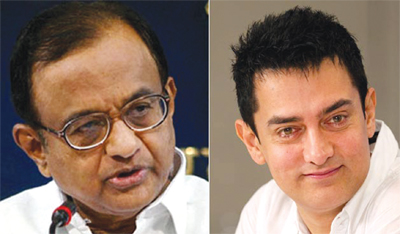
  • Chidambaram, Aamir In Time’s 100 Most Influential Global List

    Chidambaram, Aamir In Time’s 100 Most Influential Global List

    NEW YORK (TIP): Finance Minister P. Chidambaram and actor Aamir Khan have been named by Time magazine among the 100 most influential people in the world in its annual list of global achievers that also includes teenaged Pakistani activist Malala Yousafzai and US President Barack Obama. Describing Indian politicians as typically being “warm and fuzzy, chronically late and terribly imprecise”, Time says Chidambaram, 67, is “detailoriented, works from 8 to 8 and has a reputation for getting a lot done.” Noting that Chidambaram’s experience is unsurpassed, the magazine said, as Commerce Minister in the 1990s, he played an important role as India opened its economy while as Finance Minister, he presented a pathbreaking budget in 1997.

    In a profile of Khan written by Academy award-winning musician A R Rahman, the 48-year-old actor has been described as a “straightforward” man and a “man of his word” in a “world of false diplomacy and evasiveness.” Rahman said Khan’s movies are commercial successes but they also display a sense of social responsibility by tackling important themes like poverty and education. His TV show, ‘Satyamev Jayate’, is ‘part journalism and part talk show’ and confronted India’s deepest social ills, from sexual abuse to caste discrimination. ‘He uses his gifts as a charmer to give his audience the most bitter medicine. Hypnotised, we take it without complaint. That’s Aamir’s magic at work,’ Rahman said.Khan’s debut TV show was not intended to provide solutions but to ask hard questions that the society is often reluctant to address. ‘By showing the courage to ask those questions, Aamir has started a movement that will help change the world in which Indians live. Jai Ho,’ Rahman wrote. Also making it to the Time 100 list are US President Barack Obama and his wife Michelle.

    In her profile for Obama, former Secretary of State Hillary Clinton said when he was first elected, the world saw the realisation of the American Dream. ‘Today, they see a leader who delivers – whether its ending the war in Iraq, imposing crippling sanctions on Iran or reasserting our role as a Pacific power and building a world with more partners and fewer enemies.’ Others on the list are, Indianorigin Attorney General of California Kamala Harris, Indian human rights lawyer Vrinda Grover, North Korean leader Kim Jong Un, Myanmar’s pro-democracy icon Aung San Suu Kyi, US popstar Beyonce and Britain’s Duchess of Cambridge Kate Middleton.

    Activist Malala Yousafzai, 15, is the youngest to have made it to the list. Writing for Time, Chelsea Clinton, daughter of Hillary and former President Bill Clinton, wrote that the Taliban almost made Malala a martyr but they ‘succeeded in making her a symbol’. Yousafzai is now writing a memoir to raise awareness about the 61 million children around the world who are not in school. This ‘indicates she accepts that unasked-for responsibility as a synonym for courage and a champion for girls everywhere. However Malala concludes her book, her story so far is only just beginning,’ Clinton wrote.

  • New norms for sensitive treatment of rape victims

    New norms for sensitive treatment of rape victims

    MUMBAI (TIP): The comprehensive protocol on the examination of sexual assault victims has recommended doing away with the insensitive twofinger test and unscientific practices such as giving undue importance to the build of the victim. The protocol, drafted by a panel set up by the state public health department, will pave way for more sensitive treatment of rape victims, and lays down guidelines on the collection and preservation of samples.

    The absence of a specific protocol had come into sharp focus during the death of three minor sisters in Bhandara in February. The department’s report said the sisters were sexually assaulted and murdered, while forensic experts stated that they had drowned. The government ultimately had to accept the report of the forensic experts.

    In several other cases of sexual assault, too, the evidence submitted by the public health department was found to be grossly inadequate. Faced with criticism by the Nagpur bench of the Bombay high court, the department set up a five-member panel headed by forensic expert Sudhir Nanandkar to draft a new protocol. The court directive came after Nagpur-based social worker Ranjana Pardhi brought to the notice of the high court that there was absolutely no uniformity in the procedure followed in the examination of sexual assault victims, resulting in confusion over the reports submitted by medical officers.

    It was contended that by and large, the reports were casual and there was a lack of seriousness in examining the victims. Apart from Nanandkar, the panel comprised gynaecology professor Rekha Davar, associate professor A P Khandekar, medical officer Ashok Nandapurkar and police surgeon S M Patil. The committee’s report draws from the recommendations of the World Health Organisation, the report of the Justice J S Verma panel and the new criminal law. “It was assumed that if the victim’s build is strong, then the chances of sexual assault were low. The panel found that such a concept was unsound, since even if a woman is of strong build, she will not raise an alarm if she is terrorized,” a senior bureaucrat said.

  • Team Including Indian Develops Tamiflu Rival

    Team Including Indian Develops Tamiflu Rival

    NEW DELHI (TIP): An Indian researcher is part of a team led by a renowned Japanese scientist that has developed a new way of making the only known drug used for treating bird and swine flu. Presently, the drug oseltamivir, known by its brand name Tamiflu, is made solely by the Swiss pharma giant Roche through a costly and secretive process. Kaliyamoorthy Alagiri, the son of a farmer in Nagapattinam district of Tamil Nadu, joined Masakatsu Shibasaki, a renowned organic chemist at the Institute of Microbial Chemistry, Tokyo, last year as a post-doctoral researcher.

    The discovery of the new synthesis for tamiflu would shake up the pharma world and end the Roche patent monopoly. In 2009, Roche reportedly earned nearly $2 billion from tamiflu global sales as governments stockpiled the drug to fight swine flu. Roche is currently making tamiflu by two methods.

    One involves extraction from the fragrant spice star anise, grown primarily in China and the other is biofermentation. Professor Shibasaki’s team used an easily available natural substance called glutamic acid as the starting point and synthesized the flu-drug. “Our process involves simple synthetic methods with inexpensive chemicals and minimum number of costand time-consuming chromatographic purification,” Shibasaki said.

    The real question now is whether the process discovered by Shibasaki and his colleagues can be upscaled and commercialized. Alagiri is confident that it can be. “There is high possibility for industrial scale production of tamiflu using our latest protocol starting from L-glutamic acid. We are now collaborating with a pharmaceutical company,” Alagiri told TOI from his village Karuvazhakkarai where he has come to spend a few days with his parents. Alagiri elected to join the Shibasaki Lab because of the fame of the Japanese master. Professor Shibasaki has authored over 500 papers and several books and he is one of the leading chemists in the world, Alagiri said. “Working in Prof. Shibasaki’s lab is a great learning experience. He gives full freedom and encourages his students to give their inputs towards research,” he said.On his part, Professor Shibasaki is quietly appreciative of Alagiri. “Alagiri was one of the top candidates and I offered him a postdoctoral position supported by my research grant,” he said. There have been many attempts to synthesise tamiflu earlier including one by E.J.Corey, the Nobel winning Harvard chemist, and one by Shibasaki himself.

    Although laboratory level success has been achieved, upscaling to production levels has been difficult. The recent outbreak of a new H7N9 bird flu virus in China has again revived interest in drugs to deal with these mutating viruses.

    A Roche spokesperson claimed the new strain is sensitive to tamiflu “according to preliminary reviews”. Scientists around the world are racing to decipher the mutated H7N9 virus that has caused over 20 deaths in China. So, Roche’s assertion is still wishful thinking. Meanwhile, Alagiri wants to move on to “Europe or US” for more research, and then come back to India to work for a “premier research institute”.

  • ‘Baby Nobel’ for Delhi-born US economist Raj Chettyq

    ‘Baby Nobel’ for Delhi-born US economist Raj Chettyq

    WASHINGTON (TIP): A young Indian- American economist whose pioneering work on education was cited by President Obama in last year’s State of the Union address has won a prestigious award that is often called the “Baby Nobel.” New Delhi-born Raj Chetty, now a professor of economics at Harvard, has been named the 2013 winner of the John Bates Clark Medal, which the American Economic Association awards annually to an “American economist under the age of forty who is adjudged to have made a significant contribution to economic thought and knowledge.” Notable past winners of the prize include Paul Krugman, Paul Samuelson, Milton Friedman, Joseph Stiglitz — all Nobel laureates — besides Chetty’s mentor Martin Feldstein, Freakonomist Steven Levitt, and former Treasury Secretary and Harvard University President Larry Summers. In fact, one in three Clark winners has gone on to win the Nobel (12 out of 35), which is why the medal has been dubbed the Baby Nobel.

    Indeed, even by Clark medal standards, Chetty, who is only 33, is a relative novice. But as one of the youngest people in the history of Harvard’s economics department to be offered tenure (at 28), his work has been received with acclaim despite — or perhaps because of — its elegant simplicity, and his own youth. Among his oft-quoted research on education is a paper on whether kindergarten classrooms affect earning later in life, and “The Long-Term Impacts of Value-Added — Teacher and Student Outcomes in Adulthood,” which Obama referred to. “Raj Chetty is a remarkably productive economist whose contributions assimilate evidence using a variety of methodological perspectives to shed new light on important public policy questions,” the American Economic Association said in a statement outlining his work, adding, “He has established himself in a few short years as arguably the best applied microeconomist of his generation.” Chetty, whose parents moved to the U.S when he was nine, studied at University School in Milwaukee and Harvard University before becoming an assistant professor of economics at the University of Berkeley at only 23.

    He became a tenured professor at 27 before returning to his alma mater (at 29) where he is a professor of economics and director of the Lab for Economic Applications and Policy. No one seemed particularly surprised by the latest honor to the popular economist, whose work echoes the lucid integrity of Paul Krugman, a previous winner. The Economist listed Chetty as one of the top eight young economists in the world in 2008, and last year he won the MacArthur Foundation’s so-called “Genius award.” He is also the recipient of the 2012 Mahalanobis Memorial Medal of the Indian Econometric Society, attesting to the recognition he has received from his home country.

  • Indian-Americans, Muslims condemn Boston blasts

    Indian-Americans, Muslims condemn Boston blasts

    WASHINGTON (TIP): Indian- Americans and the Muslim community in the US joined their shocked countrymen in condemning the Boston bomb blasts that killed three persons and injured about 140. “We hope that the perpetrators will be caught promptly, unlike after the Atlanta Olympics bombing, and punished to the fullest extent of the law,” said Indian American Dr Shaik Ubaid, who is co-chair of the New York chapter of the Muslim Peace Coalition. “Indian-American community strongly condemned the bomb blast in Boston today.

    Terrorism has no religion, race, or nationality. Standing against terror should unite us all. Whoever the culprit, no religion justifies this act of violence. We must remain united against extremism” the North American Punjabi Association (NAPA) said in a statement.

    The Muslim Public Affairs Council also issued a statement condemning the blast. “This is a horrible crime, and we call on all of us as Americans to work together to bring those responsible to justice,” it said. To attack people on what is supposed to be a day of jubilation is criminal and inexcusable, the council said. “This is a time for us to show resilience and calmness, as we come together to help the American public recover from this heinous act,” said Salam Al-Marayati, MPAC president.

    The Council on American-Islamic Relations (CAIR), the largest Muslim civil rights and advocacy organisation, also condemned the bomb attacks. “American Muslims, like Americans of all backgrounds, condemn in the strongest possible terms today’s cowardly bomb attack on participants and spectators of the Boston Marathon,” said its national executive director Nihad Awad. “We urge people of all faiths to pray for the victims and their loved ones and for the speedy recovery of those injured.

  • Cherrapunjee Meghalaya’s Jewel Crest

    Cherrapunjee Meghalaya’s Jewel Crest

    There are many viewpoints that are located around the town and many visitors can be seen at these places. Undoubtedly, it continues to be the jewel crest of Meghalaya Cherrapunjee seems to be a place quite unknown in our country other than the fact that it is the wettest place on earth, and also the state it belongs to Meghalaya.

    Cherrapunjee is 56km in distance from Shillong. But during monsoon the clouds are thick and the drive is difficult. The sights to see here are the Khasi monoliths and Mawsmai falls during the day time and Limestone caves can be visited on the way back. However, it does not rain during the months of winter and becomes completely dry. There are numerous waterfalls that are located here as well and these are good places for picnics.

    Some of the falls that can be seen in the area are Dain Thelen Falls (5 km away), Noh Sngithiang Falls and Noh Kalikai Falls. These are located nearby and can be easily accessed from the town. There are a few caves that can be seen near the town as well and the main one is the Mawsmai Cave. There are a few places that one can see in and around the town and the main attractions in the place is the pristine views and pleasant climate.

    Cherrapunjee is a good place to unwind and get away from the hustle and bustle of the city life. There are many viewpoints that are located around the town and many visitors can be seen at these places. The natural beauty of the town is still relatively untouched and one can find a peaceful atmosphere here. Cherrapunji is also famous for its living bridges. Over hundreds of years the people in Cherrapunji have developed techniques for growing roots of trees into large bridges. The process takes 10-15 years and the bridges typically last hundreds of years, the oldest ones in use being over 500 years old. For long, Cherrapunjee has been considered the wettest place on earth.


    img22

    With time, of course, it has no longer been able to hold on to this sobriquet; the newest wettest place is Wai-ale-ale Crater in Kauai Islands in Hawaii. Nonetheless, in popular imagination, it continues to be the jewel crest of Meghalaya. The name of one of the wettest places on earth just got a bit shorter. Cherrapunjee, the old colonial name by which this quaint Meghalaya town attained international fame as the place with the highest recorded rainfall, will soon be known as, simply, ‘Sohra’.

    “Sohra has been the traditional seat of learning and Khasi literature. It has produced eminent poet Soso Tham and many other litterateurs,” Kynpham Sing Nongkynrih of the North Eastern Hills University (NEHU) said. “The change of name is welcome.” Nonkynrih himself is an established poet and a native of Sohra. Every year after monsoons, Sohra just dries up, making it difficult for people even to find drinking water. Experts blame largescale destruction of forests in the area for the disappearance of perennial springs in the hills there.

  • Ileana D’cruz Bags Bhansali’s Next Film

    Ileana D’cruz Bags Bhansali’s Next Film

    Ileana D’Cruz, who shot to fame with Barfi! has been roped in by Sanjay Leela Bhansali for his next film, Gabbar. The project is a remake of 2002 Tamil film Ramana and marks the Bollywood debut of south director Krish.

    Ileana will star opposite Akshay Kumar, who after the success of Rowdy Rathore, is working with Bhansali again. A source told TOI, “Ileana started getting numerous film offers after being noticed for her role in Barfi!. Ramesh Taurani signed her for Raj Kumar Santoshi’s Phata Poster… and now she has bagged Gabbar.” The film will go on floors by the end of the year after Akshay finishes filming Milan Luthria’s Once Upon a Time in Mumbaai…Again and Ashwin Varde’s Boss.

    Talking about the film, the source added, “Akshay and Ileana’s chemistry will be interesting to watch. It is quite an unlikely pairing, which Bhansali is trying to explore. Akshay plays the lead role in the film where he fights against corruption.”

  • Movie Review- Nautanki Saala!

    Movie Review- Nautanki Saala!

    Cast: Ayushmann Khurrana, Kunaal Roy Kapur, Pooja Salvi, Gaelyn Mendonca, Evelyn Sharma
    Direction: Rohan Sippy
    Genre: Romantic Comedy
    Duration: 2 hours 10 minutes

    STORY: All the world’s a stage for theatre actor Ram Parmar. In an effort to resurrect his chronic-depressive friend’s life, he upstages a real-life drama; to find himself enacting a part he’d never imagined.

    MOVIE REVIEW: Picture this: Ram dons Raavan’s avatar. Sita zips off on a scooty with ‘beary’ ‘good friend’ Hanuman. Laksman is out of sight. And a brand new Ramleela plays out; where even the mighty Raavan (with all ten heads) can’t crack his part. Gods must be crazy, alright, in this kalyug ki Ramayan. More comedy, less chastity. More drama, less dagabaaz. The stage is set and it’s showtime folks. All starting one night when theater actor/director Ram Parmar (Ayushmann) saves a lonely soul, Mandar Lele (Kunaal) from committing suicide.

    In a godly act, Ram takes on the sole responsibility (no divine intervention, please) of giving loser Lele a new lease of life. Ram trains him to enact (Lord) Ram in his play Raavan-Leela, while he also dramatizes a series of acts to reunite Lele with his estranged lovergal, Nandini (Pooja). Romeo-Juliet RIP! There’s more drama coming up. All hell (or is it heaven) break loose in Ram’s life when he crosses the lakshman rekha.

    The acts get mixed up, roles reversed; ironically his self-created Ram katha goes kaput, leading to a comedy of errors of ‘epic’ proportions. Call it Act of God if you wish! (Hey, Ram!) It’s time for curtain calls. Thou art Ayushmann, take a bow. This natural nautanki hits target once again. He role-plays with perfect comic timing and superb confidence. Ayushmann bhava! Kunaal is also effortlessly excellent, adding drama and hilarity. What’s best is the boys pitch the dramedy without much melodrama. Applause! Pooja looks too unrehearsed to get her act right and Gaelyn (as Ram’s girlfriend) manages to breeze through. Rohan Sippy plays his part well too. The story is refreshing; the theater-like treatment (sets, props, costumes) is dramatically different.

    The background score blends smoothly and the quirky humour comes alive in the irony of situations and performances (unlike the monotony of hammy slapstick). The second half slows down with predictable acts, and Ram’s godliness is too unreal, yet making you guffaw like Raavan on steroids.

    This is no Shakespearean act, but there’s enough drama, demons and devtaas to rival our desi phantoms of the operas.

  • Kangana Stopped By Dacoits In Chambal

    Kangana Stopped By Dacoits In Chambal

    Kangana Ranaut, who was shooting in the Chambal Valley for her next film, Revolver Rani, almost had an encounter with the dacoits that the area is (in) famous for. The actress was returning to Gwalior with the film’s director, Sai Kabir, and the crew in a convoy of about four-five cars and a police van, when they were stopped by about 12-15 men armed with guns and knives, says our source.

    We’re told that the dacoits wanted Kangana to pose for pictures with them and refused to let her car pass. However, Kabir managed to reason with them and succeeded.

    Kabir says, “I have lived in that area for over 15 years. So, while I was expecting trouble, we managed to get out of it smoothly. The place is famous for guns and dacoits fire them without any reason. There was a little argument with the dacoits, but Kangana didn’t meet or shoot pictures with them.

    We had a police van for our security and in this area, even a constable has a machine gun.” To avoid any further altercation with the dacoits, Kabir says he called his MLA friend Rakesh Chaudhary. “We waited for about half-an-hour at his place, before he and his security personnel escorted us to Gwalior,” recalls the director, adding, “We had strict instructions not to shoot after 5.30 pm and we would return to Gwalior daily. Even male actors would have reservations about shooting in Chambal, but Kangana didn’t have any apprehensions.”

  • Paltrow Most-Hated Celeb In Hollywood

    Paltrow Most-Hated Celeb In Hollywood

    Gwyneth Paltrow probably has plenty of fans, but it seems the blonde beauty has even more haters as she has topped the list of the 20 Most Hated Celebrities in Hollywood.

    The gorgeous and perfectly fit 40- year-old mother has earned her fair share of haters on the list – combined by Star magazine, the Fox News reported.

    The second place was bagged by Kristen Stewart, who obviously made the cut because she admitted to cheating on her heartthrob boyfriend Robert Pattinson with a married man last year.

    Chris Brown was ranked number 20, with stars like Jesse James and Angelina Jolie being listed farther towards the top of the list. Serial daters Taylor Swift and John Mayer were also said to be most hated.

    Others who made to the list included Kim Kardashian, her mom Kris Jenner, Anne Hathaway, Justin Bieber and Lindsay Lohan.
    Here are the top twenties:
    1. Gwyneth Paltrow
    2. Krsiten Stewart
    3. Jennifer Lopez
    4. John Mayer
    5. Katherine Heigl
    6. Matt Lauer
    7. Madonna
    8. Justin Bieber
    9. Anne Hathaway
    10. Kris Jenner
    11. Kim Kardashian
    12. LeAnn Rimes
    13. Ashton Kutcher
    14. Jay Leno
    15. Angelina Jolie
    16. Lindsay Lohan
    17. Shia LaBeouf
    18. Taylor Swift
    19. Jesse James
    20. Chris Brown

  • Kutcher’s Romantic Weekend With Kunis

    Kutcher’s Romantic Weekend With Kunis

    Ashton Kutcher and Mila Kunis shared a romantic getaway over the weekend as they toured Bruges and Belgium in a horse-drawn carriage. The former ‘That ’70s Show’ co-stars took in the sights of the cobblestone streets and ancient bridges. Christine Rohart, sales manager of the Hotel Montanus, told People magazine that the pair seemed very much in love during their trip. Rohart added that the two were seen holding hands and they were giving kisses to each other. A day prior, the duo, explored the city on foot, stopping into the local market and famous chocolate shops just before enjoying a meal at the triple-Michelin starred Carmelite restaurant.The source said that Kunis, 29, ate a local dish called Hoppescheuten, which she had never heard of but wanted to try.

    The source said that Kutcher, 35, ate a special seven course menu, which is a very famous menu, where the main dish is rabbit with prunes and it costs 210 euros.

  • Movie Review-Oblivion

    Movie Review-Oblivion

    Cast: Tom Cruise, Andrea Riseborough, Olga Kurylenko, Morgan Freeman
    Direction: Joseph Kosinski
    Genre: Sci-Fi
    Duration: 2 hours 5 minutes
    STORY: Earth is destroyed while repelling an alien invasion. 60 years later, Jack (Tom Cruise) a drone repairman, is assigned to a nuclear-ravaged earth to save humanity. He patrols the wrecked planet and kills alien scavengers. However, a few recurring dreams make him question his mission and identity.

    MOVIE Review: Assisting Jack is Vika ( Andrea Riseborough) who monitors his activities and sends help. The two hope to emigrate the humans left on earth to Titan (Saturn’s moon) for mankind to survive. However, random memory flashes of a woman ( Olga Kurylenko) in pre-war New York leave Jack pondering his past.

    Oblivion is not your video game-esque, fast-paced scifi action film which offers cheap thrills. It’s a profound, cerebral drama which focuses on Jack’s inner journey and his relentless search for identity.

    In spite of Joseph Kosinski’s unhurried approach towards the film’s buildup, he manages to keep you thoroughly engaged, thanks to brilliant production design and clever imagination. Spectacular images of planetary ruin, ravaged surfaces, barren landscapes, floating houses on the clouds, futuristic aircrafts, powerful drones and the strength of a complex restless mind, Oblivion manages to capture the beauty of it all with astounding reality. In terms of story-telling, the film stays unpredictable, thus convincing us to patiently wait as the mystery unfolds, even when it feels a tad directionless at times.

    Like a novel, the film stays unputdownable till the end. After Jack Reacher, ‘I-want-to-be-versatile’ Tom Cruise once again slips into a role which does not require his trademark charm or good looks and succeeds better this time as the role doesn’t require him to be stoic either. Cruise displays the inner turmoil of his character brilliantly, in spite of not having any memorable dialogues at his disposal. Unfortunately, Morgan Freeman is wasted.

    Oblivion is primarily a great visual experience. The mystifying sombreness of a post-apocalyptic earth has been captured brilliantly.

  • Gita-A Handy Manual Of Life

    Gita-A Handy Manual Of Life

    The Bhagwad Gita literally means ‘Song of God’. It begins with the word ‘dharma’ and ends with ‘mama’. Mama means ‘my’ and dharma means ‘essential Being’. Together they mean ‘my essential Being’ which is the theme of the Gita. The purpose of life is to realise one’s essential Being; to discover the supreme Self within and to attain spiritual enlightenment. The Gita forms the philosophical part of the great epic, Mahabharata that is the work of sage Vyasa. It contains nearly a hundred thousand verses.

    The central narrative speaks of the rivalry between two royal families, the cousins Pandavas and Kauravas. The Pandavas were five brothers, moral and virtuous. The Kauravas were a hundred brothers, immoral and vicious. Duryodhana, the eldest of the Kauravas, jealous of the wealth and renown of the Pandavas, continuously harasses them. He invites Yuddhisthira, the eldest of the Pandavas, to a game of dice and wins it by deceit. As his prize he strips the Pandava princes of all their possessions.

    He also stipulates that the five princes and their wife Draupadi live in exile in the forest for twelve years. At the end of twelve years they were to remain incognito for another year, undetected by the Kauravas. During these thirteen years Duryodhana would rule the kingdom. If the Pandavas served this exile and remained undiscovered in the thirteenth year, the kingdom would be restored to them. The Pandavas complied with all these terms and claim their kingdom at the end of the thirteenth year. But Duryodhana refuses to abide by the agreement. Elders of the kingdom try to negotiate a peaceful settlement. Regardless, the obstinate Duryodhana draws the Pandavas to battle.

    On the battlefront, Prince Arjuna, an outstanding warrior, asks Krishna, his charioteer, to drive the chariot between the two armies. There he sees his own guru Dronacharya, his grandsire Bhishma and a host of his dear friends and relatives — all arrayed on enemy lines. Overwhelmed by emotion, the distraught and shattered Arjuna becomes intellectually paralysed. He lays down his bow and arrow and appeals to Krishna for guidance. Krishna’s sermon to Arjuna at Kurukshetra is the Bhagwad Gita. Revived and recharged, Arjuna is charged with a higher vision.

    Towards the end of the last chapter Arjuna’s delusion vanishes. He proceeds to battle and emerges victorious. The Pandavas and the Kauravas represent the positive and the negative qualities of an individual. The Kauravas outnumbered the Pandavas – just as negative forces tend to outnumber the positive. Kurukshetra symbolises the conflict between the higher and lower natures in us. The goal of human existence is the realisation of the supreme Self within. For that you need to rise above your involvement with good and bad forces.

    This is illustrated with Arjuna receiving the sermon in the chariot between t he Pandava and the Kaurava armies. The Gita’s 701 verses are spread over eighteen chapters which in turn can be divided into three sets of six chapters, explaining Vedic aphorisms as follows: Tat Tvam Asi or That thou art. The first six chapters explain Tvam or Thou, the middle six Tat or That and the last six, Asi or Art.

    Tvam is the Self within. Tat, the supreme God. And Asi indicates that the Self in you and God are one. You art God. The Gita leads one to the ultimate state of spiritual enlightenment. Moreover, it offers a philosophy of life which can be translated into practical living in one’s social, official and domestic lives.

  • Face Says A Lot About Organs’ Health

    Face Says A Lot About Organs’ Health

    Your reflection reveals more about your health than you think. Ancient Chinese beliefs say that your face can tell you about the health of your inner organs…

    Acne on the forehead
    Your forehead is linked to the digestive system and the space between the brows is connected to your liver. When you eat too many foods that are rich and oily, or go on an alcohol bingeing spree, it results in a breakout in these areas. Improve your eating habits. Eat a nourishing diet and keep your body hydrated. Spots on the cheeks There could be many reasons for this. While dirty bed linen and hormonal imbalances could be a few, cheeks are linked to your lungs. So recurring spots indicate respiratory problems.

    Excessive body hair
    Excessive hair could point towards an underlying endocrine disorder — get yourself checked by a doctor. One of the symptoms of Polycystic Ovary Syndrome (PCOS) is excessive body apart from acne, infrequent periods and weight gain.

    Spots on the chin
    As women go through stages in their menstrual cycle, imbalances cause spots and breakouts on the chin and jaw line. However, persistent spots could be a hormone imbalance or an endocrine disorder like Polycystic Ovary Syndrome. Get your hormone levels checked.
    Dark circles
    While in some cases dark circles are hereditary, if you notice a dramatic increase or realise they’re getting worse, it may point to some problems. The area under your eyes is connected to your kidneys, so big changes indicate dehydration or accumulating toxins. Increase water intake and avoid excessive coffee, alcohol and salt. Other reasons include anaemia.
    Discoloured tongue
    If you have a lack of iron or vitamin B12), your tongue will get red and sore. If there is a blue discolouration, it could indicate a lack of oxygen in your blood stream. White lesions are a sign of oral thrush.

  • How To Improve Vision

    How To Improve Vision

    Staring at the monitor, TV screen and smart phones puts constant strain on the eyes. Not giving your eyes adequate rest and lack of required nutrients only hampers your vision.

    But there are other habits that you could be practicing unknowingly that could reduce your vision. Dr. Bharti, Medical Director of Bharti Group of Eye Hospitals reveals important tips to improve vision and what mistakes you should avoid making. Dr. Bharti admits there are ways you can boost vision, “It is something which is not very easy to achieve but it is possible that your eye sight will not deteriorate if you have a healthy and balanced diet including good protein, vitamin intake and minerals which are available in green vegetables and fruits.”

    Common mistakes for vision eye care
    There are few habits that strain the eyes and reduce vision. Dr. Bharti says, “One should not read in low light but should read in a good light. Watching TV lying down and in a dark room should be avoided.” “Most common mistake which people make is splashing water in their eyes without knowing the cleanliness of that water. This is the most common cause of infections,” explains the doctor.

    But he also gives you another option. If you have to splash water in your eyes, “The nature has provided a system where the eyes are cleaned by itself so we don’t need to clean it by washing it. But in case people want to wash it is recommended to use Filter/RO water which they use for drinking.” “Second most common mistake eople do is to drink a lot of water in the morning as it is written in a lot of books as well which cleans your system.

    But drinking a lot of water in the morning (like 1 liter) in one go can increase the eye pressure and doing it again and again can cause Glaucoma. Specifically people who have Glaucoma should not drink a lot of water in the morning and those who do not have it, they should also not drink water in one go but slowly.” “Thirdly, women use a lot of kajal for the eyes. Ideally women should not use kajal on the lid margin but use kajal outside the skin only since that is the biggest source of infection,” suggests the doctor

  • Sausages, bacon horrible for heart

    Sausages, bacon horrible for heart

    Regularly tucking into sausages, bacon, ready meals and pies dramatically increases the chances of developing heart disease and cancer, a new study has warned.

    People who live on processed meat increase their risk of dying by 44 percent, the Daily Express reported. Experts said that three percent of early deaths could be prevented each year if people ate under 20 grams of processed meat a day – less than a single rasher of bacon. But there was good news for those who enjoy a steak or a Sunday roast.

    A small amount of red meat such as beef, pork or lamb could be beneficial as an important source of vitamins and nutrients.

    The research by the University of Zurich, one of the largest studies of its kind, involved half a million men and women aged 35 to 70 with widely ranging diets from 10 European countries. They filled in questionnaires about the food they had eaten over the previous 12 months with meats grouped into red, white and processed. Red meat included pork, horse and goat as well as beef and lamb, while white meat included chicken, turkey, duck and rabbit. High consumption of processed meat was defined as 160 grams or more a day, the equivalent of around three sausages or six rashers of bacon.

  • Oily Fish Cuts Triple-Negative Breast Cancer Risk

    Oily Fish Cuts Triple-Negative Breast Cancer Risk

    Researchers from Fox Chase Cancer Center have found that omega-3 fatty acids and their metabolite products slow or stop the growth in the number of triple-negative breast cancer cells more effectively than cells from luminal types of the disease. The omega-3s worked against all types of cancerous cells, but the effect was observed to be stronger in triple-negative cell lines, reducing proliferation by as much as 90 per cent. Omega-3 fatty acids are found in oily fish like sardines and salmon, and also in oils derived from plants like hemp and flax. Previous studies suggest these compounds can negatively affect critical mechanisms in cancer cells, namely those responsible for proliferation and for apoptosis, or programmed cell death.

    Lead author on the study Thomas J. Pogash, a scientific technician in the Fox Chase Cancer Center lab of Jose Russo, MD, said that the new work underscores the important role common compounds found in food may play in keeping cancer at bay. “When you compare a western diet to a mediterranean diet, which has more omega-3s, you see less cancer in the mediterranean diet. They eat much more fish,” Pogash said. When a cancer cell digests omega-3s, the fatty acid is broken down into smaller molecules called metabolites.

    Russo, Pogash, and their colleagues tested the effect of large omega-3 parent molecules, as well as their smaller metabolic derivatives, on three luminal cell lines and seven lines that included basal-type triplenegative cells. Omega-3 and its metabolites were observed to inhibit proliferation in all cell lines, but the effect was dramatically more pronounced in the triple-negative cell lines. In addition, the metabolites of omega-3 reduced the motility, or ability to move, by 20-60 percent in the triple-negative basal cell lines.

  • Why Chocolate Facial Is Good

    Why Chocolate Facial Is Good

    If you thought eating a bar of chocolate can satisfy your mood swings, then you’re wrong.

    Chocolate facial, a new fad in the beauty circle will not only enhance your complexion but also ensure that your skin is healthy and glowing in the long run.

    Chocolate cream, paste, scrub etc – used for chocolate facial has a smooth and creamy texture with the fragrance of chocolate that ensures that your skin is detanned and glows. Chocolate helps in getting rid of the tan.

    Why is it good for your skin?
    -Chocolate is high in anti-oxidants and contains anti-ageing properties too.
    -Chocolate also imparts a healthy glow to your face.
    -It increases the production of collagen and lightens blemishes and acne marks.
    -It hydrates your skin and softens delaying the appearance of wrinkles and fine lines.
    -It suits all skin types and is known to be one of the best ways to relax and rejuvenate yourself after a tiring week at work.
    How to do a chocolate facial at home
    Start with cleansing your face. Use a cleanser of your choice – one with raw milk and turmeric or rose water and besan.
    Once you’ve cleansed your face, you can now opt for a home-made scrub. Grind brown sugar and coffee beans and apply this paste on your face for approximately 10 minutes. Once you’ve done scrubbing, use the chocolate paste as a massage cream. Clean your face and apply the chocolate pack for 20 minutes until you wash it off with cold water. Pat your face dry.

  • Awful Things You Can Say To A Guy

    Awful Things You Can Say To A Guy

    Things were going swimmingly well until your last outburst. He has suddenly gone into a shell and snapped all communication with you. You fear having meandered into a forbidden territory, and that things might never be the same again. But still can’t point at what exactly went wrong? One scathing remark is all it takes to shut him down, so even while you are in the middle of a serious fight, remember your vocabulary is key. Jesting about his mom, reminding him of an ex, are just some of the terrible things you can ever say to him. And in so doing create lasting scars in your relationship. We list six awful phrases that turn him red in the face, and need to be done away with … pronto.

    ‘Look how smart my brother is, you can never be like him’
    Comparisons drive men away! So, simply stop making them, even if they are genuine. Particularly comparisons with your brother, father or worst of all another guy friend can trigger resentment in him. Feels Santosh Krishna, a software engineer, “As long it is a fair argument, I am all for it. But the moment my wife brings her father or brother in the frame, I withdraw. It is extremely demeaning for a guy who is doing his two bit to make her happy.” Agreed, he may not have control over situations the way your father does and usually fidgets his way out, but never insult him by telling him so, even in the most deranged of moments.

    ‘I just know you can’t get over her’
    If you think this is the best way of getting back at him, then think again. Fine, you want to find out a few intimate details about his past life, but just watch out – never force your way through. He shall not take such an intrusion kindly. Furthermore, it’ll only distance you from him, and he might think of you as someone very insecure in relationships. It’s best to leave it at that and save him the discomfort. On many instances you end up reminding him fondly of an ex. So, simply steer clear of the subject. If it is out of bounds, so be it. Chips in Ashrita Reys doing her masters in English, “I had a bad fight with my boyfriend once and accused him of still loving an ex. He gave me a glowering look and offered to drop me back home. It was strange, hadn’t thought he would take serious offence.”

    ‘God, how much money do you blow on your friends!’
    Remember, they are ‘His’ friends, and he shall splurge on him as he desires. Your constant reminders can make him jerky, and one day he might simply stop sharing money matters with you. Guys hate to be told how to spend, especially on their friends. And if you are having trouble with his spending ways, tell him so in other words, but never accusingly. “My boyfriend always ends up paying up for dinner, drinks etc when he is out with his friends. Oddly, they never even offer and he is okay with it. But gets annoyed when I tell him not to do so,” says Sunaina Verma, a travel consultant. For him, money is one thing and friends another. He will take you as a friendship breaker if you attempted to blend the two together. So, save your lecture on managing finances for another occasion!

    ‘What’s with your mom, does she always have a poker face’
    He may have promised you the moon and the stars and to love you till the end of the world, but one snide remark directed at his mom can suddenly turn you into a villain. Yes, that is one relationship he jealously guards, and shall not let even you meddle with. His mom’s cold indifference or those long glances may have you squirming in discomfiture, but steer clear of voicing them to him. He will simply regard you as snooty and disrespectful towards elders. Sritapa Roy who recently got engaged to her long-time boyfriend has a say, “My would-be-mum-inlaw always makes me uncomfortable, she casts long, considering looks when I talk. I did try to broach the issue with my fiance but he turned it down calling me selfish and cynical.”

    ‘Not today, I am too sleepy’
    Using a line like this will not only turn him off, but also make him wonder if he is with the right girl. He might start considering that a life with you would be full of drab domestic chores, grocery shopping and winding up before the television by day end. By depriving him of any kind of bedroom thrill you might pass on the message, though inadvertently, that ‘sex with you is no longer pleasurable’. And wake up to a sea change in his mannerism. As a couple it is fair to talk it out, but to come up with banal excuses each time you don’t want to have sex is sacrilege.

  • Cipla launches first biosimilar for rheumatic disorders

    Cipla launches first biosimilar for rheumatic disorders

    MUMBAI (TIP): Drug maker Cipla has locally rolled out its first biosimilar, Etanercept, used to treat rheumatic disorders. Formed through a partnership alliance, the drug sold under the Etacept brandname will be manufactured by China-based Shanghai CP Guojian Pharmaceutical Co and marketed by Cipla in India, a note from Cipla said.

    Rheumatic disorders
    The introduction of Etacept now signals Cipla’s entry into the biologics segment offering an option to the patients suffering from rheumatic disorders at a lower cost.

    Rheumatic disorders are chronic inflammatory disorders affecting the joints, characterised by pain, redness, swelling and loss of function in several joints. It can lead to joint damage and deformities. If left undiagnosed and untreated, this could lead to permanent disability and at times could lead to mortality. However, rheumatic disorders can be controlled by early diagnosis and treatment, the note explained. Etacept is available as a powder to be given by subcutaneous injection, and is available with stockists across the country at Rs 6,150. Cipla’s Medical Director Dr Jaideep Gogtay said: “The higher cost of biologics has been a major hindrance, limiting its affordability and accessibility to millions of patients. We believe that introducing Etacept at a lower cost (30 per cent lesser compared to the innovator) will enable access of this drug to a greater number of patients in India. This can be enhanced further if we consider the results of a recent study that showed in patients, who were successfully treated with Etanercept for six months, a 50 per cent reduced dose worked just as well as continuing the current dose.”
    Anti-rheumatic drugs
    At present, there are diseasemodifying anti-rheumatic drugs which are considered to be the first line of treatment for rheumatic disorders. However, approximately 40 per cent of the patients are not controlled on these drugs. In such cases, biologics like Etanercept play a significant role in controlling the disease activity and make a positive difference in the lives of these patients, the company said.

    Inflammation, joint damage
    Etacept contains Etanercept, a biologic produced by recombinant DNA technology. Etacept (Etanercept) binds to TNF-a, a cytokine that plays a very important role in inflammation and joint damage in rheumatic disorders. It helps in modifying the course of the disease and prevents further damage to the joints. Etacept (Etanercept) is approved in the management of rheumatic disorders like Rheumatoid Arthritis, Ankylosing Spondylitis, Juvenile Idiopathic Rheumatoid Arthritis and Psoriatic Arthritis, the company said.

    Since its launch in 2006 in China by Shanghai CP Guojian Pharmaceutical Co, over 50,000 patients have been treated with Etanercept. Clinical efficacy and safety of the drug have also been well established in Indian patients, Cipa said.
    What is rheumatic disorder?
    Rheumatic disorders are chronic inflammatory disorders affecting the joints, characterised by pain, redness, swelling and loss of function in several joints.

    It can lead to joint damage and deformities. If left undiagnosed and untreated, this could lead to permanent disability and at times could lead to mortality. However, rheumatic disorders can be controlled by early diagnosis and treatment, the company explained. At present, there are disease modifying anti-rheumatic drugs which are considered to be the first line of treatment for the problem. However, approximately 40 per cent of the patients are not on these drugs. In such cases, biologics like Etanercept play a significant role in controlling the disease and make a positive difference in the lives of these patients.