Month: April 2013

  • Coca-Cola to set up Rs 600 crore plant near Dehradun

    Coca-Cola to set up Rs 600 crore plant near Dehradun

    DEHRADUN (TIP): Uttarakhand government on Wednesday oversaw the signing of a Memorandum Of Understanding between State Industrial and Infrastructure Development Corporation of Uttarakhand Ltd (SIDCUL) and Hindustan Coca-Cola Beverages Pvt Ltd (HCCBPL).

    The MOU was signed to set up Rs 600 crore manufacturing plant in Dehradun’s Vikas Nagar Tehsil. The manufacturing plant will be spread over 60 acres producing non-alcoholic carbonated beverages, juices, fruit-based drinks and packages of drinking water. The MOU was signed between SIDCUL’s managing director Rakesh Sharma and HCCBPL’s executive director Shukla Wasan. Chief minister Bahuguna was present at the event and said that the government has already allotted land for setting up the manufacturing plant.

    HCCBPL will invest Rs 6000 crore to establish the plant in two phases, he added. Bahuguna further added that this deal will attract more business houses and mega companies to invest in state. He said that the government launched SIDCULphase 2 to attract investment for development of Uttarakhand and that several there is considerable interest in the state as the crime rate is low. “We hope to attract more investment in state in the days to come,” he said. HCCBPL vice-president Patrick George handed over a check of Rs 1.60 crore as earnest money and processing charges to Bahuguna.

  • BMW to make MINI Countryman in Chennai

    BMW to make MINI Countryman in Chennai

    CHENNAI (TIP): BMW’s Chennai plant will soon become the first one outside Europe to manufacture the luxury car maker’s compact sports utility vehicle (SUV) the MINI Countryman. Production of the compact SUV will start next month and it will start hitting the roads by the end of the year, said Robert Frittrang, managing director, BMW India. The move to expand the company’s international production network is in response to the growing demand for premium MINI cars, BMW said in a statement. When the company starts production, MINI will be India’s first locally-manufactured premium small car. The firm expects significant growth over the mediumand long-term.

    According to the company, Chennaimanufactured MINI will fulfil the same quality standards that apply to BMW Group models worldwide. BMW also expects local production of MINI could improve its demand in India. “It is a very good product for Indian road condition, with high ground clearance. It is also a car in which five persons can travel comfortably,” Frittrang told reporters on the sidelines of the convocation ceremony of Indo- German Training Centre, Chennai. The locally-produced vehicle will be introduced in two diesel variants – MINI Cooper D Countryman and MINI Cooper D Countryman High. Another petrol variant, MINI One Countryman, will also be produced at Chennai. Since 2007, the company has invested around ^60 million in India.

    The other petrol variants – MINI Cooper S Countryman and MINI Cooper S Countryman High – will be imported in India as completely built-up units (CBUs). The price of the vehicles range from Rs 26.60 lakh to Rs 37.50 lakh. At present, the compact SUV is manufactured at Oxford in UK and in Austria. India is the 100th market in the global MINI sales network and has become increasingly significant for the BMW Group since establishing its presence in India from 2007. From January 2012, MINI has continued to grow its presence in India and has established five exclusive outlets across Delhi, Mumbai, Hyderabad and Bangalore

  • Commodity-Wise Freight Revenue By Railways Goes Up By 22.95% During Fiscal 2012-13

    Commodity-Wise Freight Revenue By Railways Goes Up By 22.95% During Fiscal 2012-13

    NEW DELHI (TIP): The Railways have generated Rs. 84791.06 crore of revenue earnings from commoditywise freight traffic during fiscal 2012- 13 as compared to Rs. 68965.44 crore during the corresponding period last year, registering an increase of 22.95 per cent.

    Railways carried 1009.83 million tonnes of commodity-wise freight traffic during financial year 2012-13 as compared to 969.78 million tonnes carried during the corresponding period last year, registering an increase of 4.13 per cent.

    Out of the total earnings of Rs. 7749.94 crore from commodity-wise freight traffic during the month of March 2013, Rs. 3608.30 crore came from transportation of 48.79 million tonnes of coal, followed by Rs. 738.58 crore from 10.35 million tonnes of iron ore for exports, steel plants and for other domestic user, Rs. 876.12 crore from 11.05 million tonnes of cement, Rs. 744.77 crore from 5.24 million tonnes of foodgrains, Rs. 409.49 crore from 3.55 million tonnes of petroleum oil and lubricant (POL), Rs. 506.98 crore from 3.37 million tonnes of Pig iron and finished steel from steel plants and other points, Rs. 313.09 crore from 3.10 million tonnes of fertilizers, Rs. 139.51 crore from 1.56 million tonnes of raw material for steel plants except iron ore, Rs. 393.70 crore from 3.85 million tonnes by container service and Rs. 630.04 crore from 7.46 million tonnes of other goods

  • Essar Energy joins UN corporate responsibility project

    Essar Energy joins UN corporate responsibility project

    MUMBAI (TIP): Essar Energy has announced that it has become a signatory to the United Nations Global Compact (UNGC), which is a voluntary corporate responsibility initiative, with over 10,000 corporate participants and other stakeholders from over 130 countries.

    The UNGC is also a strategic policy measure for businesses that are committed to aligning their operations and strategies with ten universally accepted principles in the areas of human rights, labour, environment and anticorruption. The company, in a press release, said that it is committed to adopting a globally recognised policy framework, for the development, implementation and disclosure of environmental, social and governance policies and practices.

  • Clinical Super Kings Thump Delhi

    Clinical Super Kings Thump Delhi

    NEW DELHI (TIP): In the school of Chennai Super Kings cricket, they swear by a formula. Ten times six plus ten times 10 equals a winning total on a slow pitch. The corollary is, ten times six often begets ten times ten. On April 17, Super Kings followed that formula like frontbenching geeks. They reached 60 for 1 in 10 overs, then switched gears to score 109 in the last 10 with Michael Hussey and MS Dhoni turning it on like only they can. The chase was killed by the time Virender Sehwag joined David Warner and Mahela Jayawardene back in the dugout. Delhi Daredevils have lost all of their six matches in this year’s IPL.

    It was an all too familiar sight with Hussey back in the side and Super Kings biding their time at the start of the match, sizing up their prey. Suresh Raina seemed to struggle to find his touch a bit, but they reached that preliminary 60 in 10 without much drama. Just like that Raina drove Umesh Yadav over cover in the 11th over, and Super Kings were on their way. In the next over, when Hussey pulled Ajit Agarkar over midwicket for a six, his strike rate finally crossed a run a ball. Despite Raina’s wicket, the five overs immediately after the 10th went for 9, 14, 11, 10 and 12. A bit of it had to do with Dhoni, who not only finally came out to bat at four, but came with the switch flicked on that told him he didn’t need to block at the start of the innings. The first ball Dhoni faced he pulled disdainfully through midwicket for four, and you knew bad things were going to happen to bowlers. And then, horror of horrors, Agarkar, one of the best fielders among Indian quicks, dropped him at long-off.

    Dhoni would have gone for 17 off 10 had it been taken. That was also a period when Daredevils were trying to play games with that formula of ten times 10. That Yadav over brought only seven, and in the next over Irfan Pathan conceded just four of the first five balls. Hussey, though, drilled the last one through long-off to reopen the flood gates. He went from 24 off 27 to 65 not out off 50. And Dhoni, by the time he played a dot ball he had reached 32 off 15, and would go on to add 12 off eight more.

    The thing with Daredevils, though, is you can’t count them out lest one of their big three has a crazy day with the bat. Haryana quick Mohit Sharma, coming back like Hussey, quickly put paid to that. First he got a bottom edge from Warner, and then had Sehwag holing out to deep midwicket. In between, Chris Morris got Jayawardene lbw. After that Dwayne Bravo kept taking catches and danced into the night.

  • Gavaskar, Not Sachin Tendulkar, In Dickie Bird’s Test Xi

    Gavaskar, Not Sachin Tendulkar, In Dickie Bird’s Test Xi

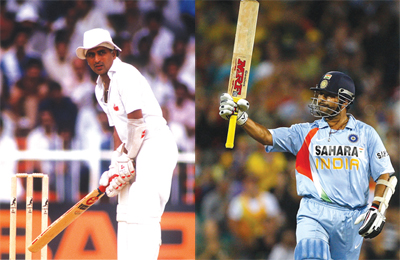
    BANGALORE (TIP): Umpiring legend Harold ‘Dickie’ Bird is someone who believes respect cannot be bought, but earned. While some of the cricketing world’s greatest stars like Sachin Tendulkar and Brian Lara surely have his respect, gaining entry into his all-time greatest Test XI is a tougher feat than they would have imagined. Picking the side for a British daily ahead of his 80th birthday on Friday, Bird suggested he has no issues leaving out Aussie legend Donald Bradman too. Curiously, the top-10 run makers in Tests don’t figure in Bird’s line-up. His team is captained by Pakistani pacer Imran Khan, whose knowledge of the game “was outstanding”.

    Sunil Gavaskar is the only Indian in the XI as he “was one of the two best opening bats I saw”. The list has South African batting great Barry Richards and his countryman Graeme Pollock, three Australians in Greg Chappell, Shane Warne and Dennis Lillee, as many West Indians in Garfield Sobers, Viv Richards and Lance Gibbs and a lone Englishman – wicketkeeper Alan Knott. Apparently, Bird gave Barry and Pollock the benefit of the doubt, stating that both careers were cruelly curtailed by the apartheid.

    Having said that, Barry’s stint with Hampshire in county cricket would have given Bird enough reason to pick him for his playing XI. That he has chosen to give the famed West Indies pace quartet – Michael Holding, Colin Croft, Joel Garner and Andy Roberts – the miss too, is interesting, as is his choice of captain at the expense of Clive Lloyd or his own countryman Mike Brearley. His spinners – Shane Warne and Lance Gibbs – are doubtless world class but then his picks may lead to furrowed brows among Indians as the spin quartet of the 70s – Bishan Bedi, BS Chandrashekar, EAS Prasanna and Venkataraghavan – had held the world in a thrall.

    Close to two decades after he hung up his famous white coat, the cricketing world can’t help but talk fondly of the Englishman who became the game’s first superstar umpire. His quirky antics as a “not-outer” and strong values while playing the “benefit of the doubt” card made Bird one of the most respected invigilators of the game’s laws. “You can’t buy respect, you have to earn it,” Bird was quoted as saying. “And I can honestly tell you I had not one problem with any professional cricketer. If I go to Pakistan, Imran Khan and Javed Miandad invite me round for a meal at their place. If I go to Australia the first man to ring me is Dennis Lillee. If I go to West Indies, the first man on the phone will be Garfield Sobers, the greatest that’s ever lived.

    You’ll never see another like him, not in your lifetime,” the newspaper quoted Bird as saying. A former batsman who made only two hundreds in 93 first-class appearances thanks to his anxiety issues, Bird always fancied himself as a player and compared his skills with that of Geoffrey Boycott. Bird lamented in the interview the end of cricket’s glory days with technological invasion putting paid to decisions going unchallenged and players not having a bit of a laugh on the ground. “The characters have gone out of all sports haven’t they?” he was quoted as saying. Bird, however, admitted that his heart still belonged to the game. “It’s still the greatest game in the world, cricket,” he said.

  • USIBC brings CEOs of Fortune 100 to meet with P. Chidambaram

    USIBC brings CEOs of Fortune 100 to meet with P. Chidambaram

    Blankfein, Nooyi, Kravis, McGraw, Kaye, Fishman, and Banga reconfirm U.S. industry’s commitment to India’s growth

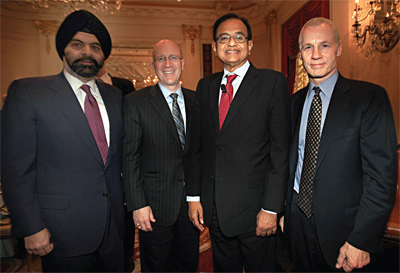
    NEW YORK (TIP): India’s Finance Minister, P. Chidambaram, met with investors, April 17, at a private interaction hosted by the U.S.-India Business Council (USIBC) as part of the Minister’s week-long North America investor “road show,” aimed at attracting foreign direct investment (FDI) at a time when the country needs it most. India currently holds a record high current account deficit and FDI could be the key to closing that gap. The off-the-record lunch meeting convened top
    global industry leaders to discuss with the Finance Minister the opportunities that exist in India and candidly addressed some of the challenges companies face in the market which affects investor sentiment. Topics of conversation included infrastructure, retail, agriculture, life sciences, financial services, legal services, and real estate. “Global industry wants India to succeed. India will succeed. I know this past year has caused a lot of concern, but this year is over and by elections we will achieve our ambitious economic agenda,” said Finance Minister Chidambaram. “We commend Minister Chidambaram for his leadership during these complex times.

    The American business community continues to look to India as a partner in the global economy ripe with investment opportunities. My colleagues and I remain committed to working collaboratively with Government of India and Indian industry to identify innovative solutions to India’s challenges,” said USIBC Chairman Ajay Banga, President & CEO, MasterCard. The intimate gathering reflected combined assets of more than $2 trillion.

    Participants included former USIBC Board Chairpersons: Indra Nooyi, CEO, PepsiCo Inc; Frank Wisner, Foreign Affairs Advisor, Patton Boggs, and former U.S. Ambassador to India; Chip Kaye, Co- President, Warburg Pincus; and Harold McGraw III, Chairman, President, and CEO, The McGraw Hill Companies. Also in attendance were Lloyd Blankfein, CEO, Goldman Sachs; Jay Fishman, CEO, The Travelers Companies; Doug DeVos, President, Amway; Olivier Brandicourt, President of Emerging Markets, Pfizer; John Hele, CFO, MetLife; Jacques Tapiero, President of Emerging Markets, Eli Lily; Peter Kellogg, CFO, Merck; and Henri Courpron, CEO, ILFC, among others.

    The U.S.-India Business Council was formed in 1975 at the request of the United States and Indian governments to advance two-way trade and deepen commercial ties. Today, USIBC is the premier business advocacy association comprised of nearly 400 of America’s and India’s top companies dedicated to enhancing the U.S.-India commercial relationship.

  • Pakistani police arrest Former Pakistan President Musharraf in Islamabad

    Pakistani police arrest Former Pakistan President Musharraf in Islamabad

    ISLAMABAD (TIP): Pakistani police have arrested former President Pervez Musharraf and presented him in court, April 19. TV images showed General Musharraf flanked by uniformed police officers at an Islamabad court. On Thursday, April 18, a court had ordered the former leader’s arrest over his attempt to impose house arrest on judges in March 2007. However, Musharraf had made good his escape from the court . His personal security helped him flee. Police officer Mohammed Khalid said Gen Musharraf was arrested overnight at his home on the outskirts of Islamabad.

    He said the former president was presented before a judge at Islamabad District Court, who will decide whether to hold Gen Musharraf in prison or return him home under house arrest. Last month Gen Musharraf returned from years of self-imposed exile hoping to lead his All Pakistan Muslim League (APML) party into the general election next month. But earlier this week his candidacy was rejected in Chitral, one of four seats he had applied to contest.

    Gen Musharraf had already failed in an attempt to stand in three other seats. The case for which he has been arrested relates to his controversial decision to dismiss judges – including Chief Justice Mohammad Iftikhar Chaudhry – when he imposed emergency rule in 2007. He also faces several other criminal cases – including treason charges – and had been trying to stave off arrest ever since he returned. The Pakistani Taliban have also vowed to assassinate the former president, who seized power in a 1999 coup.

  • Terror Revisits The Us

    Terror Revisits The Us

    BOSTON (TIP): Two bomb explosions that hit the Boston Marathon on Monday April 15th have brought back the US facing terror attacks all over again. The twin bombs killed 3 people and injured over a hundred. Latest reports say that more than 60 people remain hospitalized in Bostonarea medical centers, seven of them in critical condition, according to hospital sources. The officials are reported to have detonated a bigger explosion near ground zero promptly after the second explosion. The explosion went off about three hours after the winners had crossed the finish line of the marathon. Another explosion was heard a few seconds later.

    The injured were taken to a medical tent that was set up for marathon runners suffering from fatigue. Three hours after the bombings, President Barack Obama spoke at The White House and urged the nation to not jump to conclusions about those responsible for the attack. “We still don’t know who did this or why,” said the President. Although White House officials described the bombings as an ‘act of terror’ the President refrained from using the term.

    The President also ensured that every resource will be spent to investigate those responsible for the bombings. “I’ve also spoken with Governor Patrick and Mayor Menino, and made it clear that they have every single federal resource necessary to care for the victims and counsel the families. And above all, I made clear to them that all Americans stand with the people of Boston,” he added. Two of the dead have been named: Martin Richard, an eight-year-old boy from Boston’s Dorchester neighborhood, and Krystle Campbell, 29, who had been at the finish line to watch her boyfriend complete the race. The Chinese consulate in New York said that the third fatal victim was a Chinese citizen whose identity was not being made public at the request of their family. But early media reports state that her name was Lu Lingzi. On Wednesday April 17th, officials speculated that the bomb was planted inside a pressure cooker. Forensic examiners have recovered fragments of black nylon cloth they believe to have come from backpacks used to carry both bombs. They have also found fragments of nails that could have been contained in a pressure cooker. He added that he was talking about a basic household pressure cooker of the sort found in many kitchens.

    The investigators were combing through surveillance video dating to at least a week before the bombings to try to identify anyone who walked the finish-line route before the race. Authorities were working around-the-clock work to identify two men that seen not far from the race’s finish line, one of them lugging a black backpack. It was in such a backpack that investigators believe the bomber or bombers placed explosive devices that killed three and wounded more than 180 on Monday toward the end of the Boston Marathon. On Thursday April 18th President Obama and wife Michelle Obama visited the Boston service. “Everyone of us stands with you,” the president said at an interfaith service inside the Cathedral of the Holy Cross. “Boston may be your hometown, but we claim it, too,” said the President.

  • Sri Chinmoy: Dreamer of World Oneness

    Sri Chinmoy: Dreamer of World Oneness

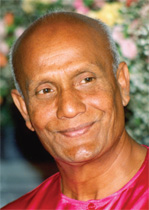
    On April 13, 1964 Sri Chinmoy came to New York. Since then he tirelessly dedicated his life for the world peace and to the fulfillment of the unlimited potential of the human spirit. A prolific author, poet, artist and musician, an avid athlete, a respected spiritual leader and a devoted humanitarian, Sri Chinmoy- who left is body in 2007- continues to inspire and encourage countless people around the world through his creative endeavors, through innovative peace activities, and through the example of his own life.

    In about 1600 books of essays, poetry, short stories and answers to the spiritual questions Sri Chinmoy conveys the richness and diversity of the quest for peace and selfdiscovery. Sri Chinmoy offered hundreds of inspiring talks at the world’s most prestigious universities. Sri Chinmoy composed more than 21,000 spiritual songs which in their lyrics and melodies explore the length and breadth of the aspiring human experience. In more than 700 Peace Concerts around the world he expressed humanities aspiration for inner and outer peace. Sri Chinmoy performed on a dozen or more instruments in concert.

    Sri Chinmoy created a vast outpouring of art. His paintings continues to give people joy and inspiration at galleries worldwide. He named it “Fountain Art” to signify the art flowing from the source. He also drew a very large number of peace-bird drawings which symbolize the peace and freedom of the soul.

    Through all his activities he was conveying the message of Oneness of humanity. Sri Chinmoy came from his native India to New York following an inner command. In the spring of 1970, at the invitation of then United Nation’s Secretary-General U Thant, Sri Chinmoy began conducting twice-weekly Peace Meditation for UN delegates and staff. Sri Chinmoy: The Peace Meditation at the United Nations, as the group is known. This group sponsors a series of programs, lectures and concerts to promote world peace. The aim of UN and the aim of spirituality are one and the same. That is “Oneness”.

    When UN was criticized for its ineffectiveness, Sri Chinmoy said, “Now it is a small plant, but in future it will grow into a big tree and protect the world. We expect everything from the child, but we forget that the child has to grow”. He was very optimistic about the future, he further said,” The United Nations is playing the most important role in seeking to establish world harmony, world peace, world oneness, world perfection and God satisfaction.” Coincidently April 13 is the Birth-day of America’s founding father Thomas Jefferson who was instrumental in writing the Declaration of Independence which is the guiding force to the American nation. Jefferson’s vision and divinity played a very important role in American and world history with its positive aspect and Sri Chinmoy has a great respect for Thomas Jefferson.

    Sri Chinmoy wanted to take the concept of the United States further to oneness world. At a time when inter-religious strife seems insurmountable, the simplicity and power of Sri Chinmoy’s message of oneness amongst the faiths is very relevant. Sri Chinmoy dedicated his life to building bridges among faiths. Sri Chinmoy’s dedication to fostering peace in the aspiring heart of humanity continues through the work of Sri Chinmoy Meditation Centers in more than 60 countries.

    These centers around the world are composed of individuals who seek to cultivate peace, harmony and goodwill. On April 13 many students from these centers come to New York for Meditation, Peace Concerts and other world peace related activities.

    Here is a quote from Sri Chinmoy:
    ” There shall come a time when this world of ours will be flooded with peace. Who is going to bring about this radical change? It will be you – you and your sisters and brothers, who are an extension of your reality existence. It will be you and your oneness-heart which is spread throughout the length and breadth of the world.

  • The Iron Lady of UK- Margaret Thatcher

    The Iron Lady of UK- Margaret Thatcher

    Margaret Thatcher’s political career has been one of the most remarkable of modern times. Born in October 1925 at Grantham, a small market town in eastern England, she rose to become the first (and for two decades the only) woman to lead a major Western democracy. She won three successive General Elections and served as British Prime Minister for more than eleven years (1979-90), a record unmatched in the twentieth century.

    During her term of office she reshaped almost every aspect of British politics, reviving the economy, reforming outdated institutions, and reinvigorating the nation’s foreign policy. She challenged and did much to overturn the psychology of decline which had become rooted in Britain since the Second World War, pursuing national recovery with striking energy and determination.

    In the process, Margaret Thatcher became one of the founders, with Ronald Reagan, of a school of conservative conviction politics, which has had a powerful and enduring impact on politics in Britain and the United States and earned her a higher international profile than any British politician since Winston Churchill.

    By successfully shifting British economic and foreign policy to the right, her governments helped to encourage wider international trends which broadened and deepened during the 1980s and 1990s, as the end of the Cold War, the spread of democracy, and the growth of free markets strengthened political and economic freedom in every continent. Margaret Thatcher became one of the world’s most influential and respected political leaders, as well as one of the most controversial, dynamic, and plain-spoken, a reference point for friends and enemies alike.

    After 1990 Lady Thatcher (as she became) remained a potent political figure. She wrote two best-selling volumes of memoirs – The Downing Street Years (1993) and The Path to Power (1995) – while continuing for a full decade to tour the world as a lecturer. A book of reflections on international politics – Statecraft – was published in 2002. During the period she made some important interventions in domestic British politics, notably over Bosnia and the Maastricht Treaty. In March 2002, following several small strokes, she announced an end to her career in public speaking. Denis Thatcher, her husband of more than fifty years, died in June 2003, receiving warm tributes from all sides. Margaret Thatcher remains an intensely controversial figure in Britain.

    Critics claim that her economic policies were divisive socially, that she was harsh or ‘uncaring’ in her politics, and hostile to the institutions of the British welfare state. Defenders point to a transformation in Britain’s economic performance over the course of the Thatcher Governments and those of her successors as Prime Minister. Trade union reforms, privatization, deregulation, a strong anti-inflationary stance, and control of tax and spending have created better economic prospects for Britain than seemed possible when she became Prime Minister in 1979.

    Her legacy remains the core of modern British politics: the world economic crisis since 2008 has revived many of the arguments of the 1980s, keeping her name at the centre of political debate in Britain. In her death on April 8, the world has lost a statesman.

  • Bank Of India Celebrates Holi

    Bank Of India Celebrates Holi

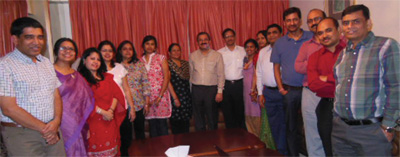
    NEW YORK, NY (TIP): Bank of India CEO for USA Bhuwan Joshi and his wife hosted a Holi Milan at their residence in midtown Manhattan for their friends and staff of Bank of India, April 6. The gathering at Joshis’ residence was akin to a gathering on this kind of an occasion in any Indian home. It was an evening of mirthful celebration of Holi, with a good bit of singing and narration of anecdotes at which Bhuwan Joshi, in particular, specializes.

  • America celebrates Holi

    America celebrates Holi

    Holi, one of the most popular and widely celebrated festivals of India, was celebrated in traditional style across USA.

    India Association of Long Island (IALI) celebrates Holi
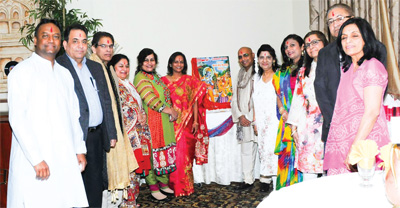
    LONG ISLAND, NY (TIP): India Association of Long Island celebrated Holi at Akbar Restaurant on Sunday, March 31, 2013. The colorful event was organized by its Sangeet Forum group, Chaired by Mrs. Jyoti Gupta and Co-Chair Mrs. Rashmi Mittle.


    img17

    The event which had an overwhelming turnout of more than 150 guests, was celebrated in a very traditional style, with lots of fun and gaiety. The guests were dressed up in traditional colorful clothing, men in Kurta/Pajamas , ladies in beautiful Sarees and Suits etc. As guests arrived, they were welcomed with Gulal Teeka, gajras and laddoos, followed by Thandai drink along with delicious snacks and lunch.

    The program was commenced by the IALI President, Dr. Kishore Kuncham with a beautiful reading of the tradition of Holi by his Holiness Sri Sri Ravi Shankar and unveiling of the new colorful banner by Mrs. Raji Kuncham and Mrs. Bina Sabapathy. Singing of popular movie songs on Holi by many talented IALI members followed the formal commencement of the program. . Dr. Krishna Jhaveri and Dr. Vijay Chhabra recited a few couplets. Dr. Kuncham’s rendition of two of Yesudas’s famous songs drew loud applause. Dr. Chopra sang a classic Dilip Kumar / Rafi song in his melodious voice – “Mere pairon me ghunghroo bandha de to phir meri chaal dekh le”. An exquisite Holi dance performance by Mrs. Gunjan Rastogi climaxed the program. Dr. Kishore Kuncham and Mrs. Gunjan Rastogi emceed the program ably supported by Mrs. Jyoti Gupta. An open mike session for the guests was thoroughly enjoyed by everybody. Sponsors who very generously contributed were gratefully acknowledged. They included Rajbhog Sweets, Artistic Affairs, Mr. and Mrs. Gobind Gupta, Madhuram Sweets. Dr. & Mrs. Chakote & Dr. Chandra & Mrs. Sushma Kaushik.


    img15

    img18

    The grand sponsor of the year, Mr. Salil Zaveri, who will be providing several educational seminars throughout the year was recognized. Also Media -Sahara One, TV Asia, IVS TV, The Indian Panorama and South Asian Times were thanked for the coverage of IALI Holi event.

  • Dev Ratnam-Integrity, Charity, Modesty Propel This Visionary

    Dev Ratnam-Integrity, Charity, Modesty Propel This Visionary

    I am passionate about doing well not only in career but also in my community. I won’t say it’s a passion but I am very keen on being an honorable member in our community. I believe in being a good representative of India. Whatever obligations I have with the government, banks, other financial institutions of US and other countries, I want to deal with them with honor. I never want to escape from that. I never want to fail India, or my state. Life will always force you to deal with breaks, be it good breaks or bad breaks. How you deal with it is your legacy.

    Dev Ratnam began his career as a scientist. But he never wanted to be master at just one trick. He wanted to explore all the opportunities around him before settling into one. He tells us, “In true spirit, I am an entrepreneur, so I try many businesses. Though my education and experience is as a scientist from Penn state in 1977, I still wanted to venture beyond my degrees.” Dev graduated from Indian Institute of Science, Bangalore in Engineering and completed Masters in Engineering from Queens University, Canada and got a Ph.D. in Solid State Science from Penn State University in 1971. Yet, his dream was to always go back to India and set up his own business there. He tried his true best to fulfill that dream. Dev explains, “I was planning to buy a factory from Australia. The agent from Melbourne belonged to a big family.


    img12

    He used to be the Governor of Maharashtra and his son was my partner. We wanted to buy that factory and bring it to Chennai and set it up in India. But somehow the politics played its part after I reached Melbourne. I realized that I would be a minority party. And I had to walk away from my dream of setting up business in India. Of course, I tried to buy a factory from here and take the technology and equipment to India, but that never materialized. But in that search for a factory, I found a company in Long Island called Poly Mag Ink.

    A couple of partners and me bought it, but unforeseen factors didn’t allow it to be a big company. It still exists and it does have big clients like GM, Kodak, etc. Perhaps the location in Long Island was a disadvantage.” While many would give up and try to move on to something else, Dev Ratnam never stopped believing in himself. He defines himself as an eternal optimist and does not think giving up is an option. “I just never wanted to give up. In my years of experience, I have come through all the time. Yes, I did not perhaps see bright successes all over.

    But I have seen spurts of success and it was good with me.” Never to give up, even Dev Ratnam had to let go his dream of establishing business in India. But the blame for that lies on the political system of India. “I don’t want to sound negative, but in 40 years I have never succeeded with one project in India. But in China, South Korea or United States, it is entirely different. That does not make India bad.

    But I cannot recall one fruitful project, be in charity or investment in India.” His passion is what perhaps distinguishes him the most. He is a firm believer in the thought that a successful man is only successful enough if he can give back to his community. Dev explains, “I am passionate about doing not only well in career but also in my community.

    I won’t say it’s a passion but I am very keen on being an honorable member in our community. I believe in being a good representative of India. Whatever obligations I have with the government, banks, other financial institutions of US and other countries, I want to deal with them with honor. I never want to escape from that. I never want to fail India, or my state. Life will always force you to deal with breaks, be it good breaks or bad breaks. How you deal with it, is your legacy.” Dev Ratnam’s dreams and ambitions are just as extraordinary. His dream of helping others has paved the way for success in many people’s lives. He is on the Board of Interfaith Nutrition Network since 1995; had been a voice on the board on behalf of Indian community.

    He charts out a few of his projects. “I just want to do good things in life at this point. I have seen a couple of charitable programs that I want to take up. There is one in particular called Shri Chakra, which is an organization that concentrates on providing electricity through bicycle pedaling. It is on hold for now, due to some real-estate issues, but it’s a temporary hold. I want to provide electricity to rural parts of countries such as India, Afghanistan, Nepal, etc.

    That is my dream for sure. I am working with many major organizations. I am also working on some projects in my village in India too. My daughter is running for the marathon in Rwanda to commemorate the victims of the Rwandan massacre. I am helping her in this project through Rotary Hicksville. So I have a couple of such projects that I am extremely involved in.” Dev Ratnam was born in West Godavari in a small village in Andhra Pradesh and was the eldest son in his family. His father was the biggest influence on his life.


    img13

    Dev explains, “My father’s upbringing had a great impact on me. When he was 14, he had bought a car for marriage. He was a socialist. He too was involved in many ventures. He moved to Chennai with us and I completed my education there. I got a scholarship and went to Canada. From there, I moved here to the US and finished my PhD at Penn State. My father also had a tremendous passion to help people. He never had a formal education.

    Yet he went to Chennai and learnt English and began helping people in many ways. When he came to the US, he hand-drew the map of the US with all the 50 states and began learning about each state. Even before he came here, he knew about Edgar Allan Poe, an American writer and poet most Indians living here now don’t know about.

    But his thinking is what inspired me. Besides being a Socialist, he was able to understand the land of opportunity that United States really is.” Dev Ratnam’s biggest passion after social causes is perhaps traveling. His wife and he share a common interest in visiting and paying homage to the ancient civilizations of the world. “I am a citizen of the world. My wife and I love to travel. We have explored civilizations in Turkey, Greece, Cambodia and other places. We love to go to those places.

    Recently we went to Greece for a vacation. It was astounding to see the civilization there. We stood there and marveled at how the human culture evolved. We paid homage to all these cultures.” Dev admits that his ventures have not been a continual forerunner in their field. He only wishes that he had done his due diligence before beginning the investments. “Do I regret anything I have done? Well, maybe I was not too thorough. My son is 25 and he works for a venture cap holding. And when I see his company work, the immaculate attention to detail, I believe I did not do my due diligence. I guess that is my only regret. But on the other hand, almost all the real estate companies and other companies did just as bad since 2006. So I don’t know if it was just my choices.” He has a lot of praise for our community and believes that there is just as much misconduct in our community as in any other.

    But he commends our community’s foresight and achievements too. “They all belong to different strata. The ones who came in 70s came through education. They got good jobs and earned very well. So they are well adjusted in US. The ones who came in 80s came as immigrants, who basically were brought into the country by mainly extended relatives. They began setting up businesses. Now the people who belong to this group are becoming the core Indian community. They are aggressive, motivated and passionate about their ventures and see them succeeding. I believe they are easily the more successful than any other group of Indian community. So I would say this for our community, that we have an impeccable foresight. We know what can make us prosperous.” Dev Ratnam has an outstanding family too. His wife Prof.

    Runi Mukerji Ratnam is a dynamic leader in academics at SUNY in the entire New York State and a leader in several professional and social organizations. His daughter Romola Ratnam is an NYU graduate and is well known in the sports marketing field in Manhattan. She has also initiated several charity programs much like her father. His son Basudev graduated from Brown University and is an excellent tennis player. Dev Ratnam had ambitions to make his son a national level tennis player but unfortunately Basudev suffered a few injuries that dissuaded him from playing on national levels.

    At present, Basudev is working with a private equity company in Manhattan. Before I take leave, I ask him if he still has plans to move to India and realize his long lost dream. And to that he replies. “No it’s too late now. This is our home now.” From all the readers of The Indian Panorama we wish Mr. Dev Ratnam success in all his professional and social ventures.

  • Indian Canadian Student Gives Boost To Cancer Treatment

    Indian Canadian Student Gives Boost To Cancer Treatment

    OTTAWA (TIP): A Canadian high school student has improved an ineffective experimental cancer therapy with a simple tweak — pairing it with antibiotics — earning accolades pn Tuesday from a panel of eminent scientists. Cancer “photothermal therapy” — or PTT — involves injecting a patient with gold nanoparticles. These then accumulate in tumors and, when heated using light, attack the cancer cells.

    The idea has shown promise but is not very effective because the cancer cells fight back, producing heat-shock proteins to protect themselves. India-born high school student Arjun Nair, 16, showed how an antibiotic (17-AAG) may overcome the defenses deployed by cancer cells and make the treatment more effective.

    The discovery earned Nair the top prize in the 20th Sanofi BioGENEius Challenge Canada, after he spent two years working on his idea at the University of Calgary’s Nanoscience Labs in Alberta. “Proof-of-concepts were developed and tested in order to demonstrate the viability of PTT,” Nair said in a statement. “Moreover, after analyzing the literature a mathematical model was developed to evaluate a theoretical synergetic treatment.” In an interview with AFP, Nair said he began looking into this after his grandmother was diagnosed with cancer. “She suffered a lot through therapy, so I was looking at cancer in general and read a lot about treatments,” he said. At the same time, Nair noticed cancer projects had become staples of science fairs across Canada, and so decided to take on the challenge himself.

    A total of 208 high school students collaborating on 123 projects, all mentored in professional labs over several months, took part in the annual competition.

  • Two Indian-Origin Persons Jailed In Us

    Two Indian-Origin Persons Jailed In Us

    NEW YORK (TIP): Two Indian-origin persons have been sentenced to jail in the US for conspiring to commit wire fraud under which they used a call centre in India to defraud hundreds of individuals across America. California residents 47-year-old Baljit Singh and 36-yearold Sharanjit Kaur were sentenced by US District Judge Lawrence O’Neill for conspiring to commit mail and wire fraud.

    Singh was sentenced to four years while Kaur would spend over three years in jail. O’Neill also ordered the forfeiture of a property in New York owned by Kaur with more than USD 100,000 in equity and over USD 26,000 from two bank accounts held by the two.

    According to court documents, Kaur and Singh owned and operated several companies based in California for the sole purpose of defrauding at least 180 customers throughout the US. Kaur and Singh told consumers their companies provided debt consolidation services. The two falsely promised customers that they could obtain low-interest loans, assist in avoiding lawsuits, lower mortgage payments and correct errors in credit reports. The two utilised a call center in India from which individuals would call customers under fake identities.

    After luring customers into using these services, they and their agents instructed customers to send in monthly payments of over USD 500. In order to mislead customers, forged letters from creditors were sent indicating that loan modifications had been approved and when customers would contact the debt repair companies about late-payment or default notices they had received from their creditors, the defendants and their agents would hang up on customers. The funds received from customers were used for the defendants’ own benefit or wired to an individual located in Kolkata.

  • Indian toddler’s life could have been saved, UK court hears

    Indian toddler’s life could have been saved, UK court hears

    LONDON (TIP): An Indian toddler who bled to death at a hospital in Sheffield, could have been saved if he had been treated at any other children’s hospital in the UK, a court heard. The damning verdict of independent expert Dr David Crabbe came at the conclusion of a hearing into the death of two-year-old Tharun Umashankar.

    According to The Star daily, Sheffield Coroner Christopher Dorries ordered a report of the findings to be issued under Rule 43 of his court, urging action to prevent further deaths.

    Tharun was admitted to Barnsley Hospital and transferred to Sheffield Children’s Hospital on July 10, 2010, suffering from a severe bleed and died in the early hours of the following morning.

    An eight-day inquest held at Sheffield’s Medico Legal Centre in March heard the youngster had been admitted to hospital vomiting blood twice in the fortnight leading up to his death, thought to be caused by an intolerance to milk. When he was admitted to Sheffield Children’s Hospital a third time, consultant paediatric gastro-enterologist Dr David Campbell ordered an endoscopy to be carried out the next day.

    Tharun’s mother Sentamil, aged 38, broke down as Dorries said his life might have been saved if the procedure was carried out straight away. Dorries said, “The independent expert Dr Crabbe is critical that once Tharun’s admission was known there wasn’t a clear plan formed between seniors of gastroenterology and surgery, with a fall-back plan if there was a re-bleed.” “He feels that it was an error of judgement not to have proceeded to endoscopy that afternoon by the surgeons with, he says, the likely result of an overall bleed being recognised,” he said.

  • Baisakhi

    Baisakhi

    Baisakhi or Vaisakhi Festival is celebrated as the Sikh New Year and the founding of the Khalsa Panth. History of Baisakhi traces its origin from the Baisakhi Day celebrations of 1699 organized by the Tenth Sikh Guru, Guru Gobind Singh to form Khalsa – Brotherhood of Saint Soldiers to fight against tyranny and oppression.

    Story of Baisakhi
    The story of Baisakhi Festival began with the martyrdom of Guru Teg Bahadur, the ninth Sikh Guru who was publicly beheaded by the Aurungzeb, the Mughal ruler. Aurungzeb wanted to spread Islam in India and Guru Tegh Bahadur stood up for the rights of Hindus and Sikhs and the Mughals therefore saw him as a threat. After the death of Guru Teg Bahadur, his son, Guru Gobind Singh became the next Guru of the Sikhs. Guru Gobind Singh wished to instill courage and strength to sacrifice among his fellow men.

    To fulfil his dream, Guru Gobind Singh called on the historic Baisakhi Day congregation of Sikhs at Keshgarh Sahib near Anandpur on March 30, 1699. When thousands of people assembled for Guru’s blessing, Guru Gobind Singh came out of the tent carrying an unsheathed sword. He gave a powerful speech to infuse courage amongst fellowmen.

    At the end of the speech he said that every great deed was preceded by equally great sacrifice and demanded that anyone prepared to give his life come forward. On the Guru’s third call, a young man offered himself. The Guru took the man inside a tent and reappeared alone with a bloodied sword. Guru Gobind Singh asked for another volunteer. This was repeated another four times until a total of five Sikhs had gone into the tent with the Guru. Everyone present was worried and though that Guru Gobind Singh has killed five Sikhs. At this point Guru presented all the five men before the people.

    Every one present was surprised to see all five men alive and wearing turbans and saffron-coloured garments. These five men were called Panj Piara or ‘Beloved Five’ by the Guru. The Guru blessed them with a Pahul ceremony. In an iron vessel, the Guru stirred with a sword called Khanda Sahib, the batasha that his wife, Mata Sundari Ji had put into water. The congregation recited verses from scriptures as the Guru performed the sacred ceremony. The water was now considered the sacred nectar of immortality called amrit. It was first given to the five volunteers, then drunk by the guru and later distributed amongst the crowd. With this ceremony, all those present, irrespective of caste or creed, became members of the Khalsa Pantha (the Order of the Pure Ones).

    The Guru regarded the Panch Piaras as the first members of the Khalsa and the embodiment of the Guru himself. With the constitution of the Panj Pyare the high and low castes were amalgamated into one as among the original Panj Pyare, there was one Khatri, shopkeeper; one Jat, farmer; one Chhimba, calico printer; one Ghumar, water-carrier; and one Nai, a barber. The Guru gave the surname of Singh (Lion) to every Sikh and also took the name for himself. From Guru Gobind Rai he became Guru Gobind Singh. This was seen as a great step in national integration because society at that time was divided on the basis of religion, caste and social status.

    Guru Gobind Singh also bestowed on Khalsa, the unique Sikh identity. He directed Sikhs to wear five K’s: Kesh or long hair, Kangha or comb, Kripan or dagger, Kachha or shorts and a Kara or bracelet. Guru Gobind Singh also discontinued the tradition of Gurus and asked all Sikhs to accept the Grantha Sahib as their eternal guide. He urged them to come to him with their hair and beard unshorn to get baptized by the sword.

    Legends of Baisakhi
    There are various legends associated with the colourful and vibrant festival of Baisakhi. A study of these interesting legends of Baisakhi reveal that the day of Baisakhi is significant not just for Sikhs but also for Hindus and Buddhists alike. Besides, it is joyous to note that as a harvest festival, people of all communities in Punjab celebrate Baisakhi in a harmonious manner.

    Harvest Festival

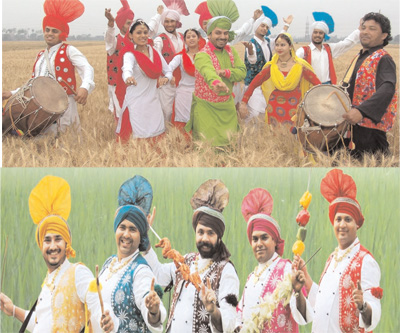
    Baisakhi Festival marks the time for the harvest of Rabi crops and is therefore celebrated with utmost joy and enthusiasm in the state of Punjab where agriculture is the predominant occupation of the people. To celebrate the occasion, people dress themselves gaily and perform the joyful bhangra and giddha dance on the tune of the dhol. Farmers in Punjab celebrate Baisakhi Festival to hilt by feasting and merrymaking before they hit on tiring but joyful task of harvesting from the next day. As a harvest festival, Baisakhi is also celebrated by different names and with different rituals in several regions of India. Regional celebrations of Baisakhi are marked as Rongali Bihu in Assam, Naba Barsha in Bengal, Puthandu in Tamil Nadu, Vishu in Kerala and Vaishakha in Bihar.

    Birth of Khalsa
    The day of Baisakhi marks the birth of Khalsa Panth and therefore holds tremendous significance for the Sikhs. It was on the Baisakhi Day meeting organized at Anandpur Sahib, in 1699, that the tenth Guru of Sikhs, Guru Gobind Sigh laid the foundation of Khalsa Panth and called on the Sikhs to sacrifice themselves for their community. Besides, it was on the Baisakhi Day that Guru Gobind Singh administered amrit (nectar) to his first batch of five disciples, the Panj Piaras making them Singhs, a martial community. After the Baisakhi Day in 1699 the tradition of gurus was discontinued, and the Granth Sahib – the Holy book of the Sikhs was declared the eternal guide of the Sikhs.

    Day to Receive Guru’s Blessings for Sikhs
    According to a popular legend in Sikhism, it was on the day of Baisakhi in 1567 that Guru Amar Das had first institutionalized Baisakhi as one of the special days when all Sikhs would gather to receive the guru’s blessings at Goindwal.

    Foundation of Arya Samaj
    The day of Baisakhi Festival is also important for the Hindus as it on this day in 1875 that Swami Dayanand Saraswati founded the Arya Samaj – a reformed sect of Hindus who are devoted to the Vedas for spiritual guidance and have discarded idol worship.

    Attainment of Nirvana by Gautam Buddha
    For the Buddhist, the day of Baisakhi Festival is significant, as according to a popular legend it was on this auspicious day that Gautam Buddha attained enlightenment or Nirvana under the Mahabodhi tree in the town of Gaya. For this reason, the day of Baisakhi is celebrated as Buddha Purnima is several parts of the country.

  • Confusion over charges on Italian marines; case may be given to CBI

    Confusion over charges on Italian marines; case may be given to CBI

    NEW DELHI (TIP): Confusion prevails over the laws under which the Italian marine duo, accused of killing two Kerala fishermen, are to be prosecuted amid indications that the high-profile case may be handed over to CBI from NIA. Government sources said as per the assurance given by India to Italy, the marines will not be given death sentence and hence the stringent Suppression of Unlawful Acts Against Safety of Maritime Navigation and Fixed Platforms on Continental Shelf Act, 2002 slapped against the duo will be dropped.

    Under this Act, offence of murder is punishable only with death sentence. However, if Massimiliano Lattore and Salvatore Girone are not prosecuted under this law, the National Investigation Agency, which has been assigned to investigate the case, cannot probe it as the agency is mandated to investigate only scheduled offences.

    Therefore, sources said, if the stringent law is dropped, the NIA will have to give away the case and the case has to be handed over to another federal investigating agency – most probably CBI – for prosecuting the duo under IPC and CrPC. Sources said no decision has been taken on it yet as both Home Minister Sushilkumar Shinde and Home Secretary R K Singh are away in Russia on a bilateral visit.

    A decision on the issue is expected only after April 16 when the Centre will give its submission on the case before Supreme Court. On March 22, after the return of the marines from Italy, External Affairs Minister Salman Khurshid had told Parliament that India has given an assurance to that country that the two will not face death penalty nor will they be liable for arrest if they return by the deadline set by the Supreme Court.

  • Delhi gangrape accused deny being in the bus on December 16

    Delhi gangrape accused deny being in the bus on December 16

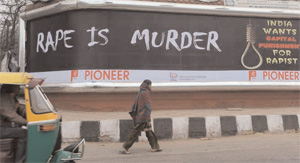
    NEW DELHI (TIP): Two of the accused in the Delhi gangrape case on April 11 claimed before a Special court that they were not in the bus in which a 23-year-old girl was brutally assaulted and raped by six persons on December 16 night. Accused Vinay Sharma in his application before Additional Sessions Judge Yogesh Khanna claimed he, along with co-accused Pawan Gupta, were not present in the bus in which the alleged incident took place. Vinay, who filed the application through his counsel A P Singh, said he has been falsely implicated in the case.

    The lawyer told the judge that the application was moved after Vinay informed him that his mobile has a videoclip, which allegedly shows that the two went to a music function in south Delhi. “Accused Vinay’s mobile contains a video recording and photos which can establish that he and Pawan were not in the bus on the night of incident,” he told the judge, while seeking permission to make a CD of the video. The court, however, said that they can make a CD out of the video recording as the matter was between the defence counsel and the accused, but, at present, it has nothing to do with the case. “It is very important defence for the accused, as the mobile contains some exclusive information, which can prove the innocence of my client,” the lawyer submitted before the court.

    He also said that now the police cannot state that the video was being planted as the said mobile phone was in police custody since the accused’ arrest in the case. ‘He (Vinay) has not played any role in the commission of the offence, as he was not in the bus nor was he part of the alleged incident. The police have falsely implicated Vinay in the case,’ Singh told the court. The counsel also said Vinay and Pawan went along with their friend to the music function at district park near R K Khanna Tennis Stadium in south Delhi. He said the friend of the two accused could be a crucial witness to prove their innocence in the case. Meanwhile, the court today directed counsel M L Sharma, appearing for accused Mukesh, to remain present before it tomorrow so that he can cross-examine the prosecution witnesses. Special Public Prosecutor Dayan Krishnan today raised objection over Sharma’s absence from the court, even after being specifically asked to come. Krishnan said that defence counsel (Sharma) is trying to completely derail the proceedings and is making a ‘deliberate attempt to delay the trial’.

    The judge said, ‘I am also concerned about it. Lets see from tomorrow.’ Till date 65 of the prosecution witnesses have deposed in the court. Initially, five accused in the case were facing trial for allegedly gangraping and assaulting the girl, who died in a Singapore hospital on December 29. With the proceedings against the main accused Ram Singh having abated after his death on March 11, the remaining four adult accused–Mukesh, Vinay, Akshay Singh and Pawan–are facing trial in the case for rape and murder of the girl. The sixth accused in the case is a juvenile who is facing trial before the Juvenile Justice Board here.

  • Hunger stalks villagers in drought-hit Maharashtra

    Hunger stalks villagers in drought-hit Maharashtra

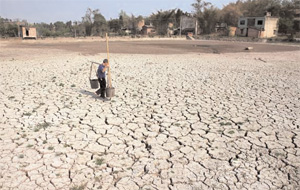
    NEW DELHI (TIP): Millions of people in Maharashtra are at serious risk of hunger after two years of low rainfall, coupled with poor management of water resources, have left dams empty, farmland parched and cattle emaciated, aid agencies warned yesterday. Maharashtra – one of the country’s biggest producers of sugar, pulses, cotton and soybeans – is reeling from the worst drought in more than four decades after receiving less than 50 percent of the average rainfall during the last two monsoon seasons.

    As a result, millions of people from mainly farming communities across 15 districts are facing severe shortages of drinking water, and are unable to grow crops and provide fodder for their livestock, aid workers say. “Drinking water is a serious problem as the normal supply systems such as wells and piped water from the dams (reservoirs) have completely collapsed. People are resorting to tankered drinking water, but it is not enough,” said KV Thomas, chief zonal officer for Church’s Auxiliary for Social Action (CASA), a Church-backed relief organisation. “I think hunger is likely to become a critical issue in the coming weeks as farmers have no income and their backup resources are now depleting. People will have no way to feed their families soon.

    Over the last 40 years we have seen many droughts, but nothing like this.” Almost one-fifth of Maharashtra, India’s third largest state, has been declared drought-hit, and some 12,000 villages across districts such as Solapur, Ahmednagar, Satara, Beed, Nashik, Latur and Nanded need help. CATTLE CAMPS, TANKER TRUCKS Last month the government approved spending of 12 billion rupees on relief. It has brought in around 2,500 tanker trucks to supply drinking water and set up ‘cattle camps’ where farmers can bring their livestock for fodder.

    But aid workers say the state response has been inadequate, erratic and ineffective, with many villages unable to reach the services being provided. ‘It’s a very sad situation on the ground. People have no work and are just sitting idle or walking around with water-collecting utensils in these villages which are bone-dry,’ says Rekha Shetty, director of disaster management for Catholic Relief Services.

    Charities say the problem is partly climatic, but also due partly to poor management of water resources, so that dams once used to irrigate farmland are increasingly being diverted to service the state’s rapid industrialisation. As a result, more water from the dams is going to sugar factories and newly built luxury residential areas complete with golf courses, while farmers are losing out on water for crop irrigation and relying more on erratic monsoons, they say.

    Aid groups say increasing numbers of people are also now migrating to urban centres in Maharashtra in search of work. ‘This is one of the worst droughts and has triggered distress-migration to urban centres,’ said an alert issued by the Act Alliance, a coalition of 130 civil society organisations.

  • Liu Proposes People’s Budget

    Liu Proposes People’s Budget

    Time to Stop the Music and End the Annual Budget Dance;Offers Plan to Fund Education, Public Safety, and Restore ‘The NYC Dream’
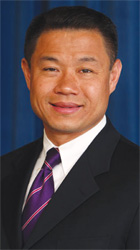
    NEW YORK, NY (TIP): City Comptroller John C. Liu , April 9, unveiled his plan to revamp the City’s budget process and put an end to the annual song and dance of threatened cuts and restorations that distract from the real issues that New Yorkers care about – good schools, safe streets, and reliable jobs. Comptroller Liu presented the highlights of his proposal in a speech before the Association for a Better New York. “Every year New Yorkers are subjected to an orchestrated song and dance that their libraries or fire companies or childcare programs are going to be cut, and while they’re distracted, the Mayor quietly pushes through the other 99 percent of the budget.And every year, when the music stops, the threatened services are miraculously restored,” Comptroller Liu said. “It’s time to stop dancing and create a budget that is of the people, by the people, and for the people – a budget that reflects the people’s dream for better schools, safer neighborhoods, and solid jobs.

    The way things are right now, The New York City Dream is under attack.” The People’s Budget, a comprehensive four-year plan, includes revenue generation and cost savings proposals that produce nearly $15 billion in new resources that can be redirected toward tax relief and new investments.

    The investments in communities, schools, and housing would also create a significant economic benefit in the form of more than 35,000 jobs.

    People and Community Priorities

    -Provide universal pre-school and prekindergarten for 3-4 year olds
    -Hire 5,000 uniformed police officers, to bring ranks to 40,000
    -Create 100,000 units of affordable housing
    -Keep libraries open 7 days a week, with extended hours Offer housing vouchers to homeless families
    -Expand after school programs
    Tax Relief

    -Personal Income Tax reform to lower taxes for 99% of New York City filers
    -Eliminate the General Corporation Tax for 240,000 businesses with an annual tax bill of less than $5,000
    -Eliminate the Unincorporated Business Tax for 25,000 businesses that make less than $250,000 in annual income
    Annual Revenue Generation (FY2014)

    -Personal Income Tax reform would bring in more than $1.2 billion from the City’s top 1 percent of filers making more than $500,000
    -Tolls for non-New York City residents on the East and Harlem River bridges would raise $410 million
    -Eliminating the insurance industry’s exemption from the General Corporation Tax would raise $310 million
    Annual Cost Savings (FY2014)

    -Bring IT work in-house to save the City $73 million
    -Collect $150 million more in Medicaid reimbursements
    -Charge charter schools to use City facilities, yielding $80 million

    The details of Comptroller Liu’s People’s Budget can be downloaded here: www.comptroller.nyc.gov

  • US Senate agrees to debate gun bill

    US Senate agrees to debate gun bill

    WASHINGTON (TIP): The US Senate voted Thursday to debate the nation’s most ambitious gun safety legislation in almost two decades, after a bipartisan group of lawmakers agreed on expanding background checks.With relatives of the 20 children killed in the Newtown massacre watching from the visitors’ galleries, years of Senate refusal to address gun laws in the United States, and Republican obstruction, was swept aside.

    Some 16 Republicans joined the Democrats, setting up crucial votes next week on amendments to a bill that would tighten checks for firearms buyers, stiffen penalties for gun trafficking and boost school safety measures. “The hard work starts now,” top Democrat Harry Reid told his Senate colleagues moments after the 68-31 vote.

    White House spokesman Jay Carney said the “bipartisan progress” was encouraging, but stressed Thursday’s vote was just the “first stage in an effort to get sensible, common-sense legislation.” President Barack Obama, who has leaned heavily on Congress to adopt his proposals after the tragedy in Connecticut in December, called families of the Sandy Hook school shooting victims to congratulate them on the vote result and pledge his continued support in the fight.

    Jillian Soto, sister of slain Newtown firstgrade teacher Victoria Soto and who spent days pressing lawmakers on Capitol Hill to enact tighter gun laws, said she had hoped for a tougher background check amendment, but “I’m happy that we are getting somewhere.” The key ingredient in the complex gun control recipe is the compromise on background checks reached by Democrat Joe Manchin and Republican Pat Toomey.

    The deal waters down the universal background check system sought by Obama, which was opposed by scores of lawmakers including some Democrats who hail from conservative-leaning, pro-gun states. But it strengthens existing legislation, which only requires background checks for firearm purchases at licensed gun dealers, to require checks for sales at gun shows and on the Internet.

    It would still allow gun sales between relatives and friends to continue without such safeguards, however. The big question now is whether the legislation, in parts or as a whole, can pass the Senate and head to the House, where an even tougher vote is expected. Republican Mark Kirk of Illinois helped craft the compromise and is likely on board. And another moderate in the party, Susan Collins, has expressed her initial support, although she said she wants to study the bill’s language.

  • Shahnaz Hussain to speak at MIT on Woman Empowerment

    Shahnaz Hussain to speak at MIT on Woman Empowerment

    NEW YORK (TIP): Shahnaz Hussain, one of India’s leading woman entrepreneurs and best known celebrities will be speaking at Massachusetts Institute of Technology (MIT) later this month. She will be speaking on women empowerment and also share her journey from one herbal salon to a global network of franchise ventures. Shahnaz has dedicated her career to organic beauty and health care, based on the ancient herbal healing system of Ayurveda, taking the Indian herbal heritage worldwide with a crusader’s zeal. In fact, through her work, she has opened the windows of the world to nature and her healing powers. Today, the entire beauty world has recognized Indian plant power.

    Pioneering the concept of “herbal care and cure,” she has established a global network of franchise salons and other ventures over the last four decades. Today, Ayurvedic beauty care has acquired a global presence and Shahnaz is the only Indian brand to be present at Lloyds Pharmacy, at Selfridges, the famous London store.

    The sales have transcended all expectations and broken records. She has been invited to speak at the Harvard Business School, USA on how she established an international brand without commercial advertising and recently, she spoke at Oxford University on woman entrepreneurship in India and the London School of Economics on India’s rising global economic influence. Later this month, she will be speaking at MIT. Shahnaz told The Indian Panorama, “Woman empowerment is my mission. Early in my career, I started a unique system of networking, by encouraging ordinary housewives to start salons in their own homes.

    I trained them and gave them the Shahnaz franchise, so that they could be financially independent and self-reliant. I believe that education, vocational training and financial independence are important aspects of woman empowerment. I have also been committed to social causes for over three decades through my free beauty training courses for physically challenged girls, thus opening career avenues for them and helping them achieve financial independence.”

  • Sikhs For Justice to promote ‘Sadda Haq’ worldwide

    Sikhs For Justice to promote ‘Sadda Haq’ worldwide

    NEW YORK (TIP): After Punjab government banned the Punjabi movie “Sadda Haq” which has generated a lot of controversy, rights group Sikhs for Justice (SFJ) has said that it would not only promote the movie but would also sponsor a movie on similar lines in English for world wide release. “In the past SFJ and All India Sikh Students Federation prepared a few documentaries on 1984 massacre of Sikhs in Delhi and the next movie would be more comprehensive to have documentation of systematic and organized killing of Sikhs, use of “Black cats” to kill and defame, and will have human rights violations as its theme, said SFJ legal advisor Gurpatwant Singh Pannun. He revealed that they were already campaigning with people to watch ‘Sadda Haq’ and the group also participated in radio and TV talk shows, etc to oppose the ban and to promote the movie.

    It may be mentioned here that after the controversy generated by the ban, there are expectations that the film would find more craze abroad among the Punjabis diaspora. “The ban on the movie is imposed on the grounds of creating “communal disharmony”, but actually the movie is a perfect example of “communal harmony” between the communities as the producer is a Sikh while the director and financer is a Hindu. “The ban on the movie also reflected double standards of Shiromani Akali Dal and its leader Parkash Singh Badal as SAD controlled SGPC supported the movie but the government banned it,” he said. “If SAD (Badal) would not have been in power today then its activists would have been holding a statewide protest for the release of the movie,” added Pannun. “CM Badal has a history of supporting only such Sikh issues that collide with the Central government in order to show that government is following anti-Sikh policies and to gain the Sikh votes in the state of Punjab.

    CM Parkash Singh Badal has previously rejected Article 25 of the Indian Constitution, supported the struggle for independent Sikh state and currently supports the commutation of Balwant Singh Rajoana and Prof Devinder Pal Singh’s death sentences”, SFJ said while pointing out the inconsistencies in Badal’s politics.