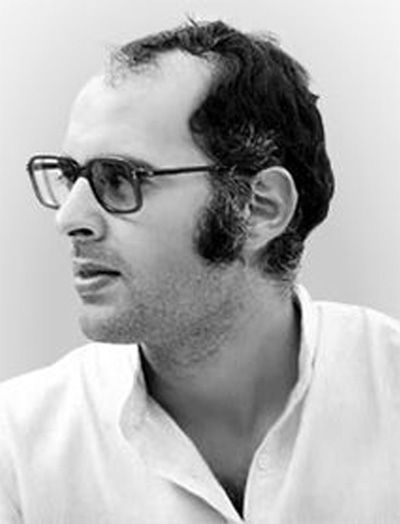
Month: April 2013

  • Three attempts were made to kill Sanjay Gandhi: WikiLeaks

    Three attempts were made to kill Sanjay Gandhi: WikiLeaks

    NEW DELHI (TIP): There were three assassination attempts on Sanjay Gandhi, a key figure during the Emergency, including one where a high powered rifle was used when the leader was visiting UttarPradesh, a US cable outed by WikiLeaks has claimed. In a September 1976 dispatch, the US embassy reported the then prime minister Indira Gandhi’s younger son was targeted by an unknown assailant in a “well planned assassination attempt” which failed. The date suggests the incident occurred during the Emergency. “Indira Gandhi’s son Sanjay was shot three times on August 30 or 31 by an unknown assailant,” the cable says, attributing the information to a clandestine source. The report says Sanjay escaped and was not critically injured.

    If Sanjay did suffer injuries, their nature is not specified but interestingly the cable bases its information on information provided by Indian intelligence sources. “According to Indian intelligence, this is the third attempt on the younger Gandhi’s life,” the cable states and goes on to surmise that the attack will eventually be blamed on revolutionary elements sponsored by outside powers. As is now evident, no word was let out on the UP incident or any of the other alleged assassination attempts.

    It is now unclear whether the intelligence sources quoted in the capable were impeccable, but Sanjay’s authoritarian image did earn him powerful enemies. Opposition to Emergency and the Gandhi family came from conventional political sources as well as radical elements of both right and left wing persuasion.

    Other US cables have noted that Sanjay and Indira’s private secretary R K Dhawan were “non-ideological” authoritarian figures behind the Emergency who worked to ensure the PM’s power remained unchallenged. A telegraphic summary provided by US intelligence to the state department on September 6, 1976 says of the UP incident, “The information concerning the incident is under tight control at present, but the attack will eventually be blamed on revolutionary elements sponsored by outside powers.” The excesses of the Emergency led to Congress suffering a decisive defeat in the 1977 election that were held after Indira Gandhi lifted the curbs on fundamental rights. Janata Party swept to power but in all investigations that followed, there was no mention of any attempts to kill Sanjay. Sanjay was killed in a plane crash in the Capital on June 23, 1980 soon after Congress came back to power after internal bickering consumed the Janata Party. He was 33 and a rising star in the Congress clearly seen as successor to his mother.

    His early death brought his elder brother Rajiv into politics who till then was a commercial pilot with Indian Airlines. Rajiv eventually became prime minister after the assassination of his mother and then prime minister Indira Gandhi in 1984.

  • Supreme Court Rejects Bhullar’s Mercy Plea

    Supreme Court Rejects Bhullar’s Mercy Plea

    NEW DELHI (TIP): The Supreme Court on April 12 rejected the mercy petition of Khalistan Liberation Force (KLF) terrorist Devinderpal Singh Bhullar, who was seeking commutation of his death sentence to life term because of inordinate delay in his execution. Delivering the verdict, the apex court said there was no merit in Bhullar’s mercy plea. The Bench had reserved its order on April 19 last year on a petition by the family of Khalistan Liberation Force (KLF) terrorist Devinderpal Singh Bhullar.

    The verdict is now likely to have a bearing on several others pleas, including those of convicts in the Rajiv Gandhi assasination case and four aides of sandalwood smuggler Veerappan, and also the eight convicts whose mercy pleas had been rejected last week, since most of these had been on the death row for years together, awaiting decisions of their mercy petitions. Bhullar was awarded death penalty for triggering a bomb blast in September, 1993, here killing nine people. The Supreme Court had on March 26, 2002, dismissed Bhullar’s appeal against the death sentence awarded by trial court and endorsed by the Delhi High Court. He had filed a review petition which was also dismissed on December 17, 2002.

    Bhullar had then moved a curative petition, which too had been rejected by the apex court on March 12, 2003. Bhullar, meanwhile, had filed a mercy petition before the President on January 14, 2003. The President, after a lapse of over eight years, dismissed his mercy plea on May 25 last year.

  • Reopen 1984 riots case against Jagdish Tytler: Court

    Reopen 1984 riots case against Jagdish Tytler: Court

    NEW DELHI (TIP): The ghost of the 1984 anti-Sikh riots has returned yet again to haunt Congress leader JagdishTytler. A sessions court on Wednesday ordered reopening of the case against him despite CBI giving him the clean chit twice. The former Union minister is accused of instigating a mob on November 1, 1984, whose actions led to the death of three persons taking shelter in a gurdwara.

    Setting aside the order of a magisterial court, which had accepted the CBI’s closure report in 2010, the court directed the agency to record the statements of purported witnesses. “CBI is directed to conduct further investigation…and to record statements of witnesses, who it had come to know during the investigation itself, are claiming to be eyewitnesses of the incident,” additional sessions judge Anuradha Shukla Bhardwaj said. “Let the law take its own course,” Tytler said, putting up a brave front. “CBI has nothing on me and I will come out clean. Today, the court has asked CBI to further investigate and has said nothing against me. This matter is purely between CBI and Lakhwinder Kaur (complainant). I am not in the picture,” the veteran Congress leader said.

    The court’s order came on a plea challenging the magisterial court’s order that accepted CBI’s closure report. Appearing for the riot victims and Lakhwinder Kaur, whose husband Badal Singh was one of the victims, senior advocate H S Phoolka had sought the court’s direction for further investigations. Phoolka had alleged that the agency disregarded the statement of material witnesses. Kaur in her plea had claimed there are four persons, Resham Singh, Chanchal Singh, Alam Singh and Santosh Singh, who witnessed the incident.

    The CBI had sought dismissal of the Kaur’s plea saying the probe had made it clear that Tytler was not present on November 1, 1984 at Gurudwara Pulbangash in north Delhi, where three people were killed during the riots. He was at Teen Murti Bhawan, where Indira Gandhi’s body lay in state, on that day, the agency had said. While the CBI has given a clean chit to Tytler twice in the past citing the witnesses as “non reliable”, Wednesday’s order left the investigating agency red-faced as the court found fault with the probe for not examining all available witnesses. “We understand that the CBI reserves its right to conclude that these witnesses were planted and not truthworthy and thus to file a closure report giving its opinion on the issue, however, it did not have any right to have not recorded the statements of these witnesses and thus to have prevented the court from forming its own opinion regarding reliability of these witnesses,” it said in its 12-page order. The CBI had contended that the statements of eyewitness Surinder Singh, who had died, were contradictory and could not be relied upon.

    The court, however, cited a Supreme Court judgment in another 1984 riots case against Sajjan Kumar, in which it was held that contradictions in the statements of witnesses were a matter to decided during the trial and could not be considered earlier. “Going by the law laid down by the Supreme Court, the contradictions in the statements of witness Surinder Singh given at different points of time could not be analysed and read for or against any party at the stage of summoning,” it said.

  • India has More to Offer than Meets the Eye-GSF Accelerator Founder Rajesh Sawhney

    India has More to Offer than Meets the Eye-GSF Accelerator Founder Rajesh Sawhney

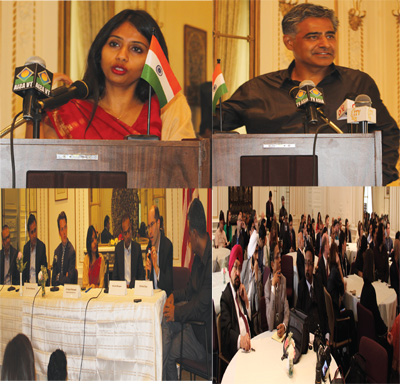
    NEW YORK, NY (TIP):Leading startup accelerator GSF India arrived in New York as part of its multi-city World Expedition. This unique cross-border event is targeted at providing entrepreneurs direct access to one of the most vibrant and growing accelerators in India. The expedition that was here April 9, had an interactive talk session on “Technology Entrepreneurship in India and Beyond: A Cross-Border Dialogue”, and is scheduled to tour London, Berlin, Boston, San Francisco and Palo Alto.

    The Acting Consul General Dr. Devyani Khobragade welcomed the delegates and spoke about the importance of enhancing the influx of investments in the country. She said, “The FM and the government are concentrating mainly on fiscal prudence and measuring ways to turn around the slump we are facing.We have already brought the fiscal deficit to 5.2 and we have targets to better that number.” She commended the efforts made by GSF in accelerating the many startups. “I was extremely happy to read about the startups and this is precisely what we need. Especially, while providing access to technology-based entrepreneurship. Technology has been the game changer for us. And I would urge investors to look beyond the red-tape bureaucracy that India is accused of fashioning and see that India always survives and thrives,” she added. Rajesh Sawhney, founder of GSF Accelerator, repeated that India has more than meets the eye. “I urge everyone to not give up on India.

    The kind of growth that you see in India cannot be measured or compared to other countries. It has been an absorbent of technology of any kind, be it DTH, 4G or any other venture. India’s technological foresight cannot be matched against,” said Mr. Sawhney. He also led a panel discussion with delegates that included Shantanu Surpure, Anish Malhotra, Andrew Montgomery, Samir Bhangara and David Teten. David Teten, a New York based venture capitalist and author described the startup-thriving ecosystem that New York is. “New York is the center of media hubs and that’s always good news for startups. Besides that most other spurts that we have seen in other fields such as fashion and films began and center around New York. So New York does provide that kind of an atmosphere for startups to thrive. So despite our own bureaucracy that we face, New York is still a far more desirable city to base your start up in,” said David.

    Founder of Indiagames, Samir Bhangara admitted to the difficulties in starting up ventures in India. “Sure it takes a long time to process everything. The procedure is slow and taxing too. But it’s about how far you want to look ahead. Either stop at the taxing procedures or look beyond and see what you can get once your initial set up is done,” he added. Brij Bhasin, Entrepreneur-in- Residence (Bangalore, India), also clarified the process of setting up ventures in India. “It is a long process.We admit that. The tax models in India are different too. And it can be a long procedure. But then again, after the initial set up, the primary positive of such ventures is that there is not a lot of government interference. Additionally, if you prepare an excellent business model, then you have lesser worries at hand,” said Bhasin.

    GSF Accelerator is India’s largest and most successful tech accelerator, founded by Rajesh Sawhney, and backed by 20 iconic Indian Digital Founders and 5 leading funds from across the World. It is a 9-week program designed to foster innovation in India’s fast-growing digital economy

  • The Sikh Temple of North Texas,Garland Organizes Sports Mela

    The Sikh Temple of North Texas,Garland Organizes Sports Mela

    DALLAS (TIP): Despite bad weather conditions, the Sports Mela organized by the Sikh Temple of North Texas, Garland, March 30th, attracted a large number of sportspersons and sports lovers. It was the 13th annual sports event organized by the Temple management with the tremendous support of the 400 families strong congregation. The organizers had expected some 400 participants in about a dozen events. But weather played foul and held back some of them. However, hundreds of men, women and children participated in the events.

    Hundreds cheered the participants. Women seemed to be more enthusiastic and were seen constantly cheering up the participants, particularly, if the participants were members of their family. The sports included races, basket ball, skipping, volleyball, soccer, tug-o-war etc.

    The organizers had very thoughtfully created age groups for participants. It was sheer joy to see the participants vying for honors in the true spirit of sportsmanship. Among the more interesting sports were the three legged race and spoon in mouth carrying a ball. Kids really enjoyed the fun a lot. The prize winners were surely on the ninth cloud but their relations and friends were no less delighted. They were seen rushing to congratulate and hug the prize winners. Prizes were given away by senior citizens. Gurjit Kaur, a senior citizen, has been coming every year in the last 13 years to watch the sports.

    Her daughter Rashpal Kaur and her grand daughter Raman Kaur who is 8 were with her. They said they enjoyed the event immensely. Jarnail Singh, 40, had his three kids participating. His 15 year old daughter Charanpreet Kaur who participated in a race won 2nd position. Navjot Johl, 11 years old, won 2nd position in Jumps. His third daughter, 9 year old Pritpal Johal got a 3rd position. Jarnail Singh was very pleased and said to this reporter that it was worth the while to bring the kids for sports events. However, he had some suggestions for the organizers. First, he said, the organizers should have a time schedule for each sporting event. Second, there should be some entertainment also.

    It should be in the form of dances, like Bhangra and songs. A community event, it had full community support, according to Manjit Singh Sahota, President of Garland Sikh Temple. He gave credit for the success of the sports mela to the community and his colleagues on the managing committee. He had special word of appreciation and gratitude for the sponsors. He mentioned to me that almost every food item and medals for prize winners were sponsored. Nat Family sponsored medals in the memory of Jasjeet Singh Nat. Langar was sponsored by Noni Toor, Sodhi Toor and Toor family. Water and soft drinks were sponsored by Davinder Singh Toor.

    The much liked Kulfi was sponsored by S. Haripritam Singh of Karinas Kulfi and the delectable Jalebi by Lalli Sandhu. Others recognized included donors and senior citizens who were kind enough to come and give away the prizes. Mr. Sahota also recognized Vijay Handa for his services.

    The most appreciation was reserved for the sports committee that organized the sports mela. It included Noni Singh Toor, Avtaar Singh Parvagga,Mandhir Singh Bal, Balkar Singh, Rakesh Saini, Harjit Singh Randhawa, Shera Punjab Singh Randhawa, Jeeta Randhawa,Sodhi Singh Toor, Gurshant Singh,Paramjit Sodhi, and Manjinder Kaur Banipal. The managing committee members who call themselves sevadars, are Manjit Singh Sahota, Balbir Singh Dhillon, Manmohan Singh, Amrik Singh Grewal , Dyal Singh Saini, Mukhtar Singh, Gobind Dhiman, Rupinder Singh, Langar Sevadar Santokh Singh Nijjar, Ranbir Singh Bunti, Bahadhar Singh Sahota, Parpal Singh Malhi and Tajinder Singh Teji. Gurjeet Kaur (first from right), Rashpal Kaur (first from left) and Raman

  • The Sikh Temple Of North Texas, Garland Organizes Sports Mela

    The Sikh Temple Of North Texas, Garland Organizes Sports Mela

    The Sikh Temple Of North Texas,Garland Organizes Sports Mela Prize Winners

  • JD(U) Mocks Modi’s ‘National’ Ambitions

    JD(U) Mocks Modi’s ‘National’ Ambitions

    NEW DELHI (TIP): Continuing to rile Narendra Modi, JD(U) on April 5 mocked Gujarat CM for his comment that after having served Gujarat he was ready to pay his debt to the country. A day after Modi’s comment at a book launch event in Ahmedabad was widely interpreted as his desire to take a shy at prime ministership, JD(U) MP Shivanand Tiwari said that Modi’s expression of gratitude to the country was just a cloak for his ambition to move to national stage. The outspoken JD(U) leader rubbed it in by saying that Modi’s ambitions may go unfulfilled. “What does he mean? Isn’t serving Gujarat same as serving India? If a man serves his village, he serves India. Nitish Kumar is serving Bihar and by that virtue alone he is serving the country.When a political leader says that, it only reflects his national ambitions.

    But only 2014 will decide who will sit in Delhi?” said Tiwari. He added, “It is the duty of every child to repay the debt he owes to Mother India. Not only Modi, every child and citizen owes a debt to Mother India…it is his duty to repay the debt whenever an opportunity arises.” Significantly, BJP did not react to the attack even though all available indications point to the party fast coming around to let Modi play the central role in its campaign for 2014 polls.

    This was the second provocation from JD(U). The NDA partner, which has been chaffing at the prospect of BJP projecting Modi as its PM candidate, had earlier attacked him for the Lokayukta Bill. Tiwari’s colleague Ali Anwar has called the Gujarat legislation on ombudsman “toothless”, echoing the criticism of Modi’s arch rival, Congress. The BJP had ignored previous anti- Modi swipe as well. JD(U), which is eyeing the sizeable Muslim vote in Bihar, has consistently expressed its reservations about Modi’s elevation in BJP’s scheme of things for 2014, and has threatened to walk out of the NDA if its views were not heeded by the saffron outfit.

  • President Confers Padma Awards

    President Confers Padma Awards

    NEW DELHI (TIP): President PranabMukherjee on April 5 conferred Padma Awards, the country’s highest civilian awards, to 108 personalities. The awards comprise 4 PadmaVibhushan, 24 PadmaBhushan and 80 PadmaShri Awards on Friday. 24 of the awardees are women and the list also includes 11 people in the category of foreigners, NRIs, PIOs and posthumous awardees. Noted physicist Yash Pal and space scientist Roddam Narasimha were chosen the second highest civilian honour Padma Vibhushan. Batting great Rahul Dravid and Olympic bronze medallist MC Mary Kom and late Bollywood actor Rajesh Khanna were named for the prestigious Padma Bhushan award, the third highest civilian award of the country. Renowned sculptor Raghunath Mohapatra and painter S Haider Raza were chosen for Padma Vibhushan.

    The list of 108 Padma awardees for this year also includes actress Sridevi, actors Nana Patekar and Malayalam star Madhu of Chemmeen fame and Olympians Yogeshwar Dutt and Vijay Kumar. Nobody was named for Bharat Ratna for this year too. The last awardee was late Bhimsen Joshi in 2008. Satirist Jaspal Bhatti, who died in a road accident last year, film maker D Rama Naidu, noted South Indian playback singer S Janaki, Bharatnatyam dancer Saroja Vaidyanathan, missile scientist Dr A Sivathanu Pillai of BrahMos programme, Industrialist Adi Godrej and R Tyagarajan, former bureaucrat M K Bhan were among the 24 Padma Bhushan awardees. In all four personalities were awarded Padma Vibhushan, 24 for Padma Bhushan and 80 Padma Shri. Of the awardees 24 are women, 11 belong to the category of foreigners, NRI, PIOs and posthumous.

    Padma Awards, the country’s highest civilian awards, are conferred in three categories, namely Padma Vibhushan, Padma Bhushan and Padma Shri.

    PADMA VIBHUSHAN
    Raghunath Mohapatra, Art, Orissa
    S Haider Raza, Art, Delhi
    Prof Yash Pal, Science and Engineering, Uttar Pradesh
    Prof Roddam Narasimha, Science and Engineering,Karnataka

    PADMA BHUSHAN
    Dr Ramanaidu Daggubati, Art, Andhra Pradesh
    Sreeramamurthy Janaki, Art, Tamil Nadu
    Dr (Smt) Kanak Rele, Art, Maharashtra
    Sharmila Tagore, Art, Delhi
    Dr (Smt) Saroja Vaidyanathan, Art, Delhi
    Abdul Rashid Khan, Art, West Bengal
    Late Rajesh Khanna, Art, Maharashtra
    Late Jaspal Singh Bhatti, Art, Punjab
    Shivajirao Girdhar Patil, Public Affairs, Maharashtra
    Dr Apathukatha Sivathanu Pillai, Science, Engineering,Delhi
    Dr Vijay Kumar Saraswat, Science and Engineering,Delhi
    Dr Ashoke Sen Science and Engineering,Uttar Pradesh
    B N Suresh, Science and Engineering, Karnataka
    Prof Satya N Atluri, Science and Engineering, USA
    Prof Jogesh Chandra Pati, Science and Engineering,USA
    Ramamurthy Thyagarajan, Trade and Industry,Tamil Nadu
    Adi Burjor Godrej, Trade and Industry, Maharashtra
    Dr Nandkishore Shamrao Laud, Medicine,Maharashtra
    Mangesh Padgaonkar, Literature and Education,Maharashtra
    Prof Gayatri Chakravorty Spivak, Literature & Education USA
    Hemendra Singh Panwar, Civil Service,Madhya Pradesh
    Maharaj Kishan Bhan, Civil Service, Delhi
    Rahul Dravid, Sports, Karnataka
    H Mangte Chungneijang Mary Kom, Sports, Manipur

    PADMA SHRI
    Gajam Anjaiah, Art, Andhra Pradesh
    Swami G C D Bharti alias Bharati Bandhu, Art,Chhattisgarh
    B Jayashree, Art, Karnataka
    Sridevi Kapoor, Art, Maharashtra
    Kailash Chandra Meher, Art, Orissa
    Brahmdeo Ram Pandit, Art, Maharashtra
    Vishwanath D Patekar alias Nana Patekar, Art,Maharashtra
    R Nageswara Rao alias Surabhi Babji, Art, Andhra Pradesh
    Lakshmi Narayana Sathiraju, Art, Tamil Nadu
    Jaymala Shiledar, Art, Maharashtra
    Suresh Dattatray Talwalkar, Art, Maharashtra
    P Madhavan Nair alias Madhu, Art, Kerala
    Apurba Kishore Bir, Art, Maharashtra
    Ghanakanta Bora Borbayan, Art, Assam
    Hilda Mit Lepcha, Art, Sikkim
    Sudha Malhotra, Art, Maharashtra
    Ghulam Mohammad Saznawaz, Art,Jammu and Kashmir
    Ramesh Gopaldas Sippy, Art, Maharashtra
    Mahrukh Tarapor, Art, Maharashtra
    Balwant Thakur, Art, Jammu and Kashmir
    Puran Das Baul, Art, West Bengal
    Rajendra Tikku, Art, Jammu and Kashmir
    Pablo Bartholomew, Art, Delhi
    Shri S Shakir Ali, Art, Rajasthan
    S K M Maeilanandhan, Social Work, Tamil Nadu
    Nileema Mishra, Social Work, Maharashtra
    Reema Nanavati, Social Work, Gujarat
    Jharna Dhara Chowdhury, Social Work, Bangladesh
    Late Dr Ram Krishan, Social Work, Uttar Pradesh
    Late Manju Bharat Ram, Social Work, Delhi
    Prof Mustansir Barma, Science and Engineering,Maharashtra
    Avinash Chander, Science and Engineering, Delhi
    Sanjay Govind Dhande, Science and Engineering,Uttar Pradesh
    Prof (Dr) Sankar Kumar Pal, Science, Engineering,West Bengal
    Deepak B Phatak, Science and Engineering,Maharashtra
    Dr Mudundi Ramakrishna Raju, Science and Engg,Andhra Pradesh
    Prof Ajay K Sood, Science and Engineering, Karnataka
    Prof Krishnaswamy Vijayraghavan, Science & Engg,Karnataka
    Dr Manindra Agrawal, Science and Engineering,Uttar Pradesh
    Dr Jayaraman Gowrishankar, Science & Engineering,Andhra Pradesh
    Prof Sharad Pandurang Kale, Science & Engineering,Maharashtra
    Vandana Luthra, Trade and Industry, Delhi
    Rajshree Pathy, Trade and Industry, Tamil Nadu
    Hemendra Prasad Barooah, Trade and Industry,Assam.
    Milind Kamble, Trade and Industry, Maharashtra
    Kalpana Saroj, Trade and Industry, Maharashtra
    Dr Sudarshan K Aggarwal, Medicine, Delhi
    Dr C Venkata S Ram alias Chitta, Venkata Sundara Ram, Medicine, Andhra Pradesh
    Dr Rajendra Achyut Badwe, Medicine, Maharashtra
    Dr Taraprasad Das, Medicine, Orissa
    Prof (Dr) T V Devarajan, Medicine, Tamil Nadu
    Prof (Dr) Saroj Chooramani Gopal, Medicine,Uttar Pradesh
    Dr Pramod Kumar Julka, Medicine, Delhi
    Dr Gulshan Rai Khatri, Medicine, Delhi
    Dr Ganesh Kumar Mani, Medicine, Delhi
    Dr Amit Prabhakar Maydeo, Medicine, Maharashtra
    Dr Sundaram Natarajan, Medicine, Maharashtra
    Prof Krishna Chandra Chunekar, Medicine,Uttar Pradesh
    Dr Vishwa Kumar Gupta, Medicine, Delhi
    Prof (Capt) Dr M Sharaf-eAlam, Literature & Education, Bihar
    Dr Radhika Herzberger, Literature & Education,Andhra Pradesh
    J Malsawma, Literature and Education, Mizoram
    Devendra Patel, Literature & Education, Gujarat
    Dr Rama Kant Shukla, Literature & Education, Delhi
    Prof Akhtarul Wasey, Literature & Education, Delhi
    Prof Anvita Abbi, Literature & Education, Delhi
    Nida Fazli, Literature & Education, Madhya Pradesh
    Surender Kumar Sharma, Literature & Education,Delhi
    Dr Jagdish Prasad Singh, Literature & Education,Bihar
    Late Shaukat Riaz Kapoor Alias Salik Lakhnawi,
    Literature & Education, West Bengal.
    Prof Noboru Karashima, Literature & Education, Japan
    Christopher Pinney, Literature & Education, UK
    Premlata Agrawal, Sports, Jharkhand
    Yogeshwar Dutt, Sports, Haryana
    Hosanagara Nagarajegowda Girisha, Sports,Karnataka
    Subedar Major Vijay Kumar, Sports, Himachal Pradesh
    Ngangom Dingko Singh, Sports, Maharashtra
    Naib Subedar Bajrang Lal Takhar, Sports, Rajasthan
    Ritu Kumar, Fashion Designing, Delhi
    Dr Ravindra Singh Bisht, Archaeology, Uttar Pradesh.

  • Haryana IAS officer Khemka transferred again

    Haryana IAS officer Khemka transferred again

    CHANDIGARH (TIP): Senior IAS officer Ashok Khemka, who had ordered a scrutiny of land deals of United Progressive Alliance chairperson Sonia Gandhi’s son-in-law Robert Vadra last year, was Thursday shunted by the Haryana government to an inconsequential post. Khemka, presently managing director of the Haryana Seeds Development Corporation (HSDC), will now be posted as the secretary of Haryana Archives, which is responsible for preserving public and private records in the state. The latest transfer came after Khemka highlighted irregularities in the HSDC, leaving the Bhupinder Singh Hooda government embarrassed. Khemka has been transferred almost 45 times in his two-decade-long career as an Indian Administrative Service (IAS) officer.

    He had hit national headlines October last year when he controversially cancelled a mutation of a multi-crorerupee land deal between Vadra’s company, Sky Light Hospitality, and realty giant DLF. The officer had even ordered a probe into all land deals done by Vadra and his companies in Haryana’s Gurgaon, Faridabad, Mewat and Palwal districts since 2005. After Khemka’s action Oct 8, the Hooda government went into overdrive to undo it. Within days, the district authorities of four districts in the national capital region (NCR) gave a ‘clean chit’ to the land deals done by Vadra and his companies.

    The Hooda government set up a committee of top bureaucrats to look into the action taken by Khemka. In its report, the committee held that Khemka’s actions as director-general of land consolidation were not in accordance with laid down procedures. Khemka, however, questioned the rationale of the committee in submitting its report without even seeking his views on the action taken in the land deals. An unfazed Khemka also claimed that action taken by him as director general of consolidation could only be reviewed by the high court and the state government did not have the jurisdiction to undo it.

    Khemka was removed from his post Oct 11 by the Hooda government which sought to project it as a routine transfer. Vadra and his companies had made land purchases of nearly 170 acres in Gurgaon, Palwal, Mewat and Faridabad districts since 2005.

  • Fighting with govt can put you in jail: Mulayam

    Fighting with govt can put you in jail: Mulayam

    LUCKNOW (TIP): Raking up the issue of misuse of CBI, Samajwadi Party supremo Mulayam Singh Yadav said fighting with the government is not easy as it can use CBI and put one in jail. “Sarkar se ladna asan nahi hai. Sarkar ke hazaron haath hote hain. CBI ka upyog kar sakti hai…jail me dal sakti hai” (It’s not easy to fight with the government. It has thousands of hand and can use CBI and put one in jail),” he told reporters here in reply to a question.

    Yadav had earlier also attacked Congress-led UPA government blaming misuse of CBI by it. “Congress used to take support by threatening. I supported the UPA government in bad times but Congress has put CBI after me,” the SP chief had told reporters here on March 29. Asked about socialist leader Ram Manohar Lohia’s praise by BJP leader L K Advani in Chitrakoot, Yadav said that it is good if he has done so. “A lot of hue and cry was raised in the media when I appreciated Advani… Those who had done or are doing good should be appreciated. Should one who is doing good be abused ?” Yadav said after a meeting with his party’s district presidents. During the closeddoor meeting, Yadav asked the district presidents to remain prepared for Lok Sabha polls, according to sources.

    He told the party functionaries to work in their districts to redress the grievances of the common man and stressed on the need for strengthening booth committees. Yadav also asked them to remain cautious about the Opposition parties in Uttar Pradesh which have been making allegations against the government. “Promises made in the party’s manifesto in 2012 Assembly polls are being fulfilled and a number of schemes including distribution of laptops have already started…The message that the SP government was working for the people should reach them,” he said.

  • Will welcome Rahul Gandhi as PM anytime: Manmohan

    Will welcome Rahul Gandhi as PM anytime: Manmohan

    NEW DELHI (TIP)Prime Minister Manmohan Singh on April 5 said that he would welcome Rahul Gandhi as PM anyday. Talking to reporters at the sidelines of a function at Rashtrapati Bhawan to give away Padma awards, Dr Singh, in a reply to a question on whether he welcomed Mr Gandhi as prime minister, said oh yes anyday. Gandhi, who was appointed as vicepresident of Congress in January, has been reluctant to join the government. Even yesterday he dubbed as “irrelevant” the questions over whether he would become the Prime Minister.

    The Prime Minister was also asked to comment on Rahul Gandhi’s speech at the CII yesterday to which he remarked, “excellent”. Manmohan also dismissed as a “useless” the debate over two power centres even as he did not rule out his accepting the third term. “This is the creation of the media. It is a useless debate,” he told reporters here when asked about the issue of two power centres coming into focus after senior Congress leader Digvijaya Singh raked it up recently. Digvijaya Singh had said the two power centres — one the Congress President Sonia Gandhi and another the Prime Minister — had not worked well and should not be repeated. Congress officially rejected this contention of Digvijaya Singh and said it was an “ideal model” for future also. When asked whether he would accept the third term as Prime Minister, Manmohan Singh said, “it is a hypothetical question… We are yet to complete this term.” The current term of the government will end in May next year. Asked whether he was ruling himself out, he said, “I am not ruling it in, I am not ruling it out.”

  • NIA slap murder charges on marines; Italian PM talks to Salman Khurshid

    NIA slap murder charges on marines; Italian PM talks to Salman Khurshid

    NEW DELHI (TIP): Concerned over NIA slapping murder charges against two Italian marines, Italy’s Prime Minister Mario Monti on April 5 called up External Affairs Minister Salman Khurshid, who apprised him of the recent developments in the case. The call by Monti followed a meeting between Khurshid and Italian Deputy Foreign Minister Staffan de Mistura who asked India to keep his government posted on the developments in the matter.

    The meeting comes in the backdrop of NIA registering murder case against the two Italian Marines for allegedly killing two Indian fishermen off Kerala coast last year. The charge entails maximum punishment of death penalty. However, Khurshid, in Parliament last month, had ruled out that case will attract death penalty. “…according to well settled Indian jurisprudence, this case would not fall in the category of matters which attract the death penalty, that is to say the rarest of rare cases. Therefore, there need not be any apprehension in this regard,” Khurshid had said while informing Parliament about Italy reversing its initial decision of not sending the marines back. Khurshid provided Mistura an update of the developments since their meeting last month, including the lifting of travel restriction on the Italian envoy by the Supreme Court, official sources said. He also informed the Minister of the steps being taken in compliance with the Supreme Court directions at the last hearing and intentions of the government to inform the apex court on April 16 of the efforts made to constitute a Special Court, the sources added.

    Following the meeting, Italian Prime Minister, who is also holding charge of Foreign Ministry, had a telephonic conversation with Khurshid on the same subject, the sources said. The Supreme Court had on April 2 vacated its order restraining Italian Ambassador Daniele Mancini from leaving India following the return of the two Italian marines to face trial here as per his commitment to the court. A bench headed by Chief Justice Altamas Kabir vacated its March 14 order by which it had restrained the Ambassador from leaving the country after the Italian government had refused to send back the marines.

  • Dutch tourist arrested for raping, murdering British woman in Srinagar

    Dutch tourist arrested for raping, murdering British woman in Srinagar

    SRINAGAR (TIP): A British woman tourist was found dead inside a houseboat in the Dal Lake in Srinagar on April 6, allegedly murdered by a Dutch tourist who was staying in a separate room in the houseboat. The 24-year-old Sara Elizabeth was found in a pool of blood inside her room in the houseboat. The suspect was arrested near Banihal tunnel, 100 Km from Srinagar, this morning while he was reportedly trying to flee. The police have registered a case of murder against the foreign tourist. They suspect that the victim might be raped before being killed as her clothes were torn.

    A team of FSL experts is at the spot and the body of the woman has been sent for postmortem.

  • UN tourism conference to be held in Hyderabad

    UN tourism conference to be held in Hyderabad

    NEW DELHI (TIP): United Nations World Tourism Organisation (UNWTO) commission’s conference on sustainable tourism development and 25th joint meeting of the UNWTO commission for East Asia, Pacific and South Asia will be held in Hyderabad from April 12. Announcing this, Union Tourism Minister K. Chiranjeevi said the need of the hour is not the tourism growth alone but development of tourism in a sustainable manner. He said in this meeting international experts, delegates from the member countries of the UNWTO Commissions for South Asia and East Asia and Pacific, UNWTO, various state governments of India and tourism industry will participate.

    During the conference exchange of ideas will take place on the way forward to develop tourism in a sustainable manner. Asserting that India has been working with UNWTO closely for the cause of developing nations, Chiranjeevi said: “Our initiative at the international level to host the two events, no doubt, will go a long way in highlighting India’s role in promoting global and regional tourism in sustainable manner for the economic growth, employment generation and social integration”. He further said South Asian region has rich and varied tourism products to attract visitors from the world over – with heritage and culture dating back to thousands of years, architectural and natural marvels, an unmatched bio-diversity and home to almost all the world religions. ‘In spite of rich heritage, the market share of South Asia in World Tourist Arrivals is only 1.3 percent – which is a cause of concern. On a positive note the average annual growth in international tourist arrivals to the region during the period 2005 to 2011 has been 7.2 percent as compared to the world annual average growth of 3.5 percent during the same period,’ he added. Chiranjeevi further said the 25th meeting of the UNWTO Joint Commission will bring together tourism authorities from 27 member countries and two associate members and give them an opportunity to review the tourism performance of the two regions and deliberate upon measures and policies to be adopted for future.

  • WORLD’S FIRST SOLAR PLANE TO FLY ACROSS US

    WORLD’S FIRST SOLAR PLANE TO FLY ACROSS US

    HOUSTON (TIP): A first of its kind ultra-lightweight plane powered completely by the sun is set to fly coast-to-coast this spring. The Solar Impulse plane will stop in Dallas city in Texas during its historic cross-country journey that begins on May 1, its creators announced today. The plane, which requires zero fuel and relies solely on solar panels and battery power, would be the world’s first plane powered purely by solar energy. The two Swiss pilots of the plane, Bertrand Piccard and Andre Borschberg, want to complete a flight from Moffett Field to New York City, after spending 10 years designing it. It is expected to arrive in the Big Apple by early July and will stop in Phoenix (Arizona), Dallas-Ft. Worth, Washington DC and either Nashville (Tennessee), Atlanta (Georgia) or St. Louis along the way. “It carries only one pilot and no passengers, but it carries a lot of message,” Piccard said. “Today we can’t imagine having a solar plane with 200 passengers.

    But in 1903 it was exactly the same,” he said, noting the sense of impossibility that surrounded the first airplane flight that took place that year. “We don’t know what’s going to happen in the future, but we have to start and see where technology takes us,” he said. The US flight is the latest step towards the ultimate goal of Solar Impulse team; that of making a flight around the world by 2015. The plane uses creative engineering and physics to harness the sun’s energy for power even after the sun sets.

    It has a wingspan equivalent to a 747 jetliner, the weight of a stationwagon, and the power needs of a small scooter. The solar panels across its wings harness power from the sun during the day and lithium-polymer batteries store that energy for overnight trips. A carbon-fibre material formed in a honeycomb structure makes up the bulk of the plane, which allows for its feather-weight. In 2010, the Solar Impulse plane completed a 26-hour overnight flight and in 2012 flew from Switzerland to Morocco without any fuel. To fly around the world, the team needs to fly for five days continuously, which the current plane isn’t equipped for.

    They would also need to find more efficient batteries and motors, as well as improve the plane’s reliability, Borschberg said. “You have no time to do maintenance and no possibility to change parts,” he said of an aroundthe- world trip. Piccard is also known for his flying adventures: in 1999 he travelled around the world in a hot air balloon. In its current form, however, the Solar Impulse is far from having any major practical application. The plane travels at a leisurely cruising speed that is lower than the highway speed limit in the United States and can hold just one passenger in a cramped cockpit.

  • 3D PRINTING GIVES UK MAN A ‘NEW’ FACE

    3D PRINTING GIVES UK MAN A ‘NEW’ FACE

    LONDON (TIP): In a first-of-its kind procedure in the UK, doctors have employed a pioneering threedimensional printing technology to create a prosthetic face for a man who had the entire left side of his face removed after suffering from cancer. Restaurant manager Eric Moger, 60, lost almost the entire left side of his face during an emergency surgery to remove the cancer, including his eye, his cheek bone and most of his jaw, leaving a gaping hole where his features used to be. After taking scans of Moger’s left-over skull and using computers to visualize how his face would look like, doctors were able to use a new type of printer that builds up layer upon layer of nylon plastic to produce the exact components needed in the facelift.

    The procedure has transformed the father-of-two’s life, allowing him to drink his first glass of water and taste food for the first time since he underwent the surgery to remove the tumour. Until now he was given food and drink through a tube leading directly into his stomach. “I was amazed at the way it looks,” said Moger, who lives in Essex. “When I had it in my hand, it was like looking at myself in my hands. When I first put it up to my face, I couldn’t believe how good it looked,” Moger said. The three-dimensional printers were first developed by the manufacturing industry to help rapidly produce prototype components. Andrew Dawood, dental surgeon and implant expert, began using 3D printing a couple of years ago to help produce replicas of his patient’s jaw bones so that he could practise various surgical procedures. Moger was referred to him by surgeon Nicholas Kalavresos at University College London Hospital after carrying out the surgery to remove the tumour. Attempts to use plastic surgery to rebuild Moger’s face had failed due to the chemotherapy and radiotherapy he was receiving.

  • Now, your iPhone can double up as a hearing aid

    Now, your iPhone can double up as a hearing aid

    MUMBAI (TIP): Move over bionic ears and hearing devices, i-ears are here. A team from the University of Essex has developed a free mobile application that can turn the iPhone or iPod into a hearing aid. The free-to-download app, the BioAid app can be used by anyone without the need for specific tests. At present, hearing impaired persons have to take up expensives hearing aids or cochlear implants that are very expensive.

    The i-ears are, however, available free for iPhone\Pod users. The Essex university team said that while standard hearing aids amplified some frequencies more than others, their app could compress the loud sounds that can make social situations like going to the pub, cinema or a birthday party intolerable. In a release, the university said that people with hearing impairment often withdrew from public life. Even if they have a hearing aid, the technology is not sophisticated enough to offer a tailor-made solution to their impairment and in many cases people simply stop using them,” it said. The researchers believe that their app will help change the future of hearing devices. “It’s not inconceivable that we’ll wear phones on our wrist in the near future, or even as tiny devices behind the ear. With the BioAid algorithm and wi-fi technology, we could see dispensers able to remotely adjust the settings on a phone-based aid and even monitor use to ensure the user is getting the most out of it,” the researchers said.

  • Now, Contact Lenses To Restore Near Vision

    Now, Contact Lenses To Restore Near Vision

    WASHINGTON (TIP): Scientists claim to have developed new contact lenses that can restore age-related loss of near vision when worn by the user every night. Most people have age-related declines in near vision (presbyopia) requiring bifocals or reading glasses.

    The emerging technique called hyperopic orthokeratology (OK) may provide a new alternative for restoring near vision without the need for glasses, according to a study, For middle-aged patients with presbyopia, wearing OK contact lenses overnight can restore up-close vision in one eye, according to the study by Paul Gifford and Helen A Swarbrick from the University of New South Wales, Sydney. The study included 16 middle-aged patients (43 to 59 years) with agerelated loss of near vision, or presbyopia. Orthokeratology is a clinical technique to correct vision using specially designed rigid contact lenses to manipulate the shape of the cornea. Gifford and Swarbick evaluated a “monocular” technique, with patients wearing a custom-made OK lens in one eye overnight for one week. To preserve normal distance vision, the other eye was left untreated. In all patients, the monocular OK technique was successful in restoring near vision in the treated eye. The improvement was apparent on the first day after overnight OK lens wear, and increased further during the treatment week.

    Eye examination confirmed that the OK lenses altered the shape of the cornea, as they were designed to do. Vision in the untreated eye was unaffected, and all patients retained normal distance vision with that eye, essentially this gives the patient the dequivalent of ‘monovision’ that is usually done with contact lenses or surgery. To retain the correction in near vision, patients had to continue wearing their OK lenses every night. As expected, when patients stopped wearing their OK lens after the treatment week, presbyopia rapidly returned. By about age 45 to 50, most people need bifocals or some other form of vision correction to restore vision for reading and other up-close tasks, according to the study published in the journal Optometry and Vision Science. The new study suggests that overnight OK lenses are a feasible alternative for correction of presbyopia, “sufficient to provide functional near vision correction white retaining good distance visual acuity,” researchers said.

  • The Sikh Temple Of North Texas, Garland Organizes Sports Mela

    The Sikh Temple Of North Texas, Garland Organizes Sports Mela

    DALLAS (TIP): Despite bad weather conditions, the Sports Mela organized by the Sikh Temple of North Texas, Garland, March 30th, attracted a large number of sportspersons and sports lovers. It was the 13th annual sports event organized by the Temple management with the tremendous support of the 400 families strong congregation. The organizers had expected some 400 participants in about a dozen events. But weather played foul and held back some of them. However, hundreds of men, women and children participated in the events.

    Hundreds cheered the participants. Women seemed to be more enthusiastic and were seen constantly cheering up the participants, particularly, if the participants were members of their family. The sports included races, basket ball, skipping, volleyball, soccer, tug-o-war etc. The organizers had very thoughtfully created age groups for participants. It was sheer joy to see the participants vying for honors in the true spirit of sportsmanship. Among the more interesting sports were the three legged race and spoon in mouth carrying a ball. Kids really enjoyed the fun a lot. The prize winners were surely on the ninth cloud but their relations and friends were no less delighted. They were seen rushing to congratulate and hug the prize winners. Prizes were given away by senior citizens. Gurjit Kaur, a senior citizen, has been coming every year in the last 13 years to watch the sports.

    Her daughter Rashpal Kaur and her grand daughter Raman Kaur who is 8 were with her. They said they enjoyed the event immensely. Jarnail Singh, 40, had his three kids participating. His 15 year old daughter Charanpreet Kaur who participated in a race won 2nd position. Navjot Johl, 11 years old, won 2nd position in Jumps. His third daughter, 9 year old Pritpal Johal got a 3rd position. Jarnail Singh was very pleased and said to this reporter that it was worth the while to bring the kids for sports events. However, he had some suggestions for the organizers. First, he said, the organizers should have a time schedule for each sporting event. Second, there should be some entertainment also. It should be in the form of dances, like Bhangra and songs. A community event, it had full community support, according to Manjit Singh Sahota, President of Garland Sikh Temple. He gave credit for the success of the sports mela to the community and his colleagues on the managing committee.

    He had special word of appreciation and gratitude for the sponsors. He mentioned to me that almost every food item and medals for prize winners were sponsored. Nat Family sponsored medals in the memory of Jasjeet Singh Nat. Langar was sponsored by Noni Toor, Sodhi Toor and Toor family. Water and soft drinks were sponsored by Davinder Singh Toor. The much liked Kulfi was sponsored by S. Haripritam Singh of Karinas Kulfi and the delectable Jalebi by Lalli Sandhu. Others recognized included donors and senior citizens who were kind enough to come and give away the prizes. Mr. Sahota also recognized Vijay Handa for his services.

    The most appreciation was reserved for the sports committee that organized the sports mela. It included Noni Singh Toor, Avtaar Singh Parvagga,Mandhir Singh Bal, Balkar Singh, Rakesh Saini, Harjit Singh Randhawa, Shera Punjab Singh Randhawa, Jeeta Randhawa,Sodhi Singh Toor, Gurshant Singh,Paramjit Sodhi, and Manjinder Kaur Banipal. The managing committee members who call themselves sevadars, are Manjit Singh Sahota, Balbir Singh Dhillon, Manmohan Singh, Amrik Singh Grewal , Dyal Singh Saini, Mukhtar Singh, Gobind Dhiman, Rupinder Singh, Langar Sevadar Santokh Singh Nijjar, Ranbir Singh Bunti, Bahadhar Singh Sahota, Parpal Singh Malhi and Tajinder Singh Teji.

  • Pervez Musharraf barred from one Pakistani election constituency

    Pervez Musharraf barred from one Pakistani election constituency

    ISLAMABAD (TIP): Pakistan’s election board barred on Friday former President Pervez Musharraf from contesting polls in one constituency and the Supreme Court agreed to look into a treason complaint against him, hurting his efforts to win back influence. The former army chief returned last month after nearly four years of self-imposed exile to contest a May 11 general election despite the possibility of arrest on various charges and death threats from the Pakistani Taliban. The Election Commission barred Musharraf from the polls in Kasur in Punjab province because of court cases against him, commission officials said. He could also face disqualification in the three other constituencies where he plans to run.

    The officials, who declined to be identified, also said the decision was based on a clause in the constitution which requires candidates to be of good character and the fact that he had not declared all of his assets. “Musharraf has been disqualified under articles 62 and 63 of the constitution, among other reasons,” an election commission official said, referring to clauses that require a candidate to be “of good character”, among other things. Neither Musharraf nor a spokesman for him were available for comment.

    Musharraf faces charges of failing to provide adequate security to former prime minister Benazir Bhutto before her assassination in 2007. He also faces accusations in connection with the death of a separatist leader in the southwestern province of Baluchistan. He denies any wrongdoing. A petition which will be heard by the Supreme Court on Monday accuses Musharraf of committing treason when he sacked senior judges and declared emergency rule while in power.

    The current chief justice, Iftikhar Chaudhry, was embroiled in a confrontation with Musharraf, who removed him from office in 2007 after he opposed plans to extend the general’s term in office. He was later reinstated. Musharraf had hoped to compete in the election. Former Prime Minister Nawaz Sharif, the man Musharraf ousted in a coup in 1999, is seen as the front runner. Musharraf, a former commando, has been far removed from Pakistan’s troubles during his exile in London and Dubai, where he lived in a posh part of the Gulf Arab emirate.

    Pakistan’s military has ruled the nation for more than half of its 66- year history, through coups and from behind the scenes. It sets foreign and security policy, even when civilian administrations are in power. But current commanders have meddled far less in politics than during Musharraf’s era, preferring instead to let civilian governments take the heat for the country’s failures.

  • Terrorist attacks kill 2,050 people in Pak last year: Report

    Terrorist attacks kill 2,050 people in Pak last year: Report

    ISLAMABAD (TIP): A total of 2,050 people were killed and another 3,822 injured in over 1,500 terrorist attacks across Pakistan last year, according to a report issued by a leading rights body on Thursday. The Human Rights Commission of Pakistan’s annual State of Human Rights report said over 100 Shia Hazaras were killed in Balochistan province alone during 2012. At least 2,284 people died in ethnic, sectarian and political violence in Pakistan’s largest city of Karachi during the period. A total of 87 people were listed as “missing” or detained without charge by security agencies. Of them, 72 people were subsequently traced or released by authorities, the report said. “At least 72 bodies were found in Balochistan of individuals who had gone missing in previous months,” HRCP co-chairperson Kamran Arif told a meeting at which the report was released. The report also noted that there had been a decrease in US drone attacks on Pakistan’s restive tribal areas, with the number of missile strikes falling from 74 in 2011 to 48 in 2012.

    “Estimates of casualties varied between 240 and 400,” the report said. Referring to major terrorist attacks, the report said hundreds of militants blew up the gates of a central prison in Bannu in March last year and succeeded in releasing 384 prisoners.

    The report said a total of 583 people were killed and 853 injured in 213 incidents of sectarian attacks by terrorists or sectarian clashes. In Karachi, at least six churches were attacked, two of them within a period of 10 days in October, it said. The report also highlighted the condition of jails across the country.

  • The Dragon Covets the Arctic

    The Dragon Covets the Arctic

    China’s lust for oil, minerals, rare earths, fish and desire for an alternative northern sea route boils the Arctic Geopolitics!
    Iceland is a small, sparsely populated island nation with a population of only 320,000 and area of 40,000 square miles. It is the only member of the NATO that does not have an army of its own. Icelandic banks were part of the 2008 global financial crisis and meltdown when they exposed the Icelandic government of huge financial risks by indulging in risky loans and speculative foreign currency transactions without having enough liquidity and capital reserves. The fiscal crisis led to a former Icelandic prime minister losing his job and being hauled to court of law for not supervising the banks enough. In an international capitalistic, mercantile system, if Iceland were a company, it was “sitting duck” for outright purchase and acquisition. Fortunately, foreigners are not allowed to buy any property or real estate in Iceland and need a special permit. And here comes the Peoples’ Republic of China, rich with $ 3.4 trillion in foreign exchange reserves in its kitty.

    It has built a palatial embassy in Reykjavik, Iceland worth $250 million with only 7 accredited diplomats. China is negotiating a free trade area with Iceland, the first with any European nation. Former Chinese Prime Minister Wen Jiabao even paid a state visit to Iceland for two full days in 2012. Other Chinese ministers and officials have also been very active in Iceland with bilateral visits and cultural events. In 2010, Huang Nubo, a “poetry loving” Chinese billionaire and former communist party official visited Iceland to meet his former classmate Hjorleifur Sveinbjornsson, a Chinese translator with whom he had shared a room in 1970s in the Peking University. He expressed his intense love for poetry and put up $ one million to finance Iceland-China Cultural Fund and organized two poetry summits, the first one in Reykjavik in 2010 and the second one in Beijing in 2011.

    Last year (2012), Huang Nubo and his Beijing based company, the Zhongkun group offered to buy 300 sq km of Icelandic land ostensibly to develop a holiday resort with a golf course. This Chinese billionaire wanted to pay $7million to an Icelandic sheep farmer to take over the land and build a $100 million 100-room five star resort hotel, luxury villas, an eco-golf course and an airstrip with 10 aircrafts.

    A state owned Chinese bank reportedly offered the Zhongkun group a soft loan of $ 800 million for this project. The deal was blocked by the Icelandic Interior Minister who asked many pertinent questions but reportedly got no answers. Huang would not take no for an answer and has submitted a revised bid for leasing the land for $ one million instead of outright purchase. He makes an unbelievable assertion that there is a market demand for peace and solitude: “Rich Chinese people are so fed up of pollution that they would like to enjoy the fresh air and solitude of the snowy Iceland”. The current Icelandic government, a leftof- center coalition has given this proposal a cold shoulder.

    But, with elections due in April 2013 in Iceland, China is hoping for a more sympathetic government to approve the project. Iceland looks like an easy bird of prey for the wily red Dragon with insatiable appetite. China is showing generosity to another poor and sparsely populated, self-governing island of Greenland by offering investments in mining industry with proposal to import Chinese crews for construction and mining operations. Greenland is rich in mineral deposits and rare earth metals. China wants Greenland to provide exclusive rights to its rare earth metals in lieu of the fiscal investments. Under one such proposal, China would invest $2.5 billion in an iron mine and would bring 5000 Chinese construction and mining workers whereas the population of the capital of Greenland, Nuuk is only 15000.

    Arctic Council Membership:
    There are eight members of the Arctic Council that includes Canada, Denmark (including Greenland), Finland, Iceland, Norway, Russia, Sweden and the USA. All these eight countries have geographic territories within the Arctic Circle. It was constituted in 1996 as an intergovernmental body but has evolved gradually from a dialogue forum to a geo-political club and a decision making body. There are continuing territorial disputes in Arctic Circle. Ownership of the Arctic is governed by the United Nations Convention of the Law of the Sea, which gives the Arctic nations an exclusive economic zone that extends 200 nautical miles from the land. Member countries signed their first treaty on joint search and rescue missions in 2011. A second treaty on cleaning up oil spills is being negotiated. The group established its permanent secretariat at Tromso, Norway in January 2013.

    Arctic Melting and Opening of Newer Sea Lanes:
    With global warming becoming a reality, the Arctic ice has started to melt rapidly opening the northern sea-lanes that were frozen earlier. In summer of 2012, 46 ships sailed through the Arctic Waters carrying 1.2 million tonnes of cargo. There are legal questions about the international status of the northern sea lanes.

    China’s Lust for Arctic Resources:
    The Arctic has 13% of the world’s undiscovered oil and 30% of gas according to the US Geological Survey. Greenland alone contains approximately one tenth of the world’s deposits of rare earth minerals. China which already has a monopoly on world’s rare earth metal trade wants to continue controlling this global trade. China piously claims that the Arctic resources are the heritage of the entire mankind while insisting that the South China sea is its exclusive sovereign territory. In 2004, China set up its first and the only Arctic scientific research station, curiously named “Yellow River Station” on the Svalbard Island of Norway.

    China, so far, has sent 6 arctic expeditions. China plans to build more research bases. In 2012, the 170- meters long ice-breaker “Snow Dragon” (MV Xue Long) became the first Chinese Arctic expedition to sail along the Northern Sea Route into the Barente Sea. Incidentally, as early as 1999, this 21000 metric ton research ice-breaker Xue Long had docked in the Canadian North-Western territory unexpectedly. China is building another 120-meter long ice-breaker with the help of Finland while the Polar Research institute in Shanghai trains scientists and other personnel for Arctic expeditions.

    China’s Previous Use of Deception:
    There is no mandarin character for word transparency. China has been known to use duplicity and deception since the Art of War was written by Sun Tzu. China’s rhetoric of “peaceful and harmonious rise” and hegemonic behavior are predictably diametrically opposite to each other. China’s use of deception to camouflage its intentions in geopolitical matters is not surprising. While China joined the NPT in 1991, it provided 50 kg of highly enriched uranium to Pakistan, provided that country with a nuclear weapon design and supervised Pakistan’s first nuclear test at the Chinese nuclear testing site of Lop Nur.

    China purchased in 1998 an unfinished aircraft carrier from Ukraine after the break-up of Soviet Union ostensibly for developing a floating casino. The same “floating casino” is now China’s first aircraft carrier projecting Chinese naval and maritime power in the South China Sea. China’s Application in Arctic Council Membership: China currently has an ad hoc observer status with Arctic Council. China’s application for permanent observer-ship was denied by Norway in 2012 owing to bilateral dispute over awarding of Nobel peace prize to China’s Liu Xiabo in 2010. China still has a pending application to be decided in May 2013 Arctic Council summit in Sweden when Canada takes over the chair for the next two years. With a permanent observer status, China would get full access to all Arctic Council meetings. Permanent observers do not have voting rights in the council but can participate in deliberations.

    China is trying to distinguish itself from the rest of the applicants as a “Near Arctic State” on the perniciously clever but fallacious grounds that the northernmost part of China in the province of Manchuria (the Amur river) is only one thousand miles south to the Arctic circle. The fallacy is that Manchuria was a separate, independent country that was annexed by China after the Communist take-over. Manchus had ruled over China for centuries during the reign of Manchu dynasty and last Chinese Emperor Pu Yi was actually the last Manchu emperor. Chinese ownership and annexation of Manchuria (Manchu-Kuo) is still not settled. A disputed territory cannot be used by China to make a geo-political claim for being a “Near Arctic State”.

    Other Pending Applications:
    Other countries or non-state actors with pending applications for permanent observer-ship status include Japan, South Korea, India, Singapore, European Union, and non-state actors like Greenpeace and the International Association of Oil and Gas Producers. All these applications will be decided one way or the other in May 2013. The vote has to be unanimous for acceptance and how the US and Russia will vote is the crucial issue. In the past, Norway had vetoed China’s membership application. Some of the Arctic Council members may not approve European Union’s application because of EU’s penchant for restrictive and narrow rulings. Whereas Sweden, Canada, Iceland and Denmark may support China’s application, there are doubts about Norway, Russia and the US. Russia is currently the most vociferous member of Arctic Council that has serious reservations in expanding the Arctic club.

    Strategic Issues:
    China has voracious appetite for new territories and has been seeking new frontiers for the last three hundred years with Inner Mongolia, Manchuria, Xinjiang and Tibet. China’s list of “core issues” is ever-expanding, starting with Taiwan and Tibet. China has included the whole the South China Sea and its islands as a core issue. China is aggressively claiming sovereignty on these islands based on historical maps and manufactured mythological evidence. China has now a license from the UN for deep sea bed mining for minerals in the Indian Ocean and has developed naval bases in Indian Ocean and Arabian Sea ports. If China manages to get a toehold in Arctic Circle, its behavior will become as belligerent in Arctic as it is in the South China Sea. It might claim sovereignty over the whole of the Northern route sea lanes based on “historical evidence”. If in 22nd century, China decides that the Arctic Circle is its core national issue, one would be seeing Chinese aircraft carriers in the Arctic Sea and Chinese nuclear powered submarines in the Barente Sea along with military bases with “Chinese characteristics” in the Iceland and Greenland.

  • Obama faces choice on morning-after pill limits

    Obama faces choice on morning-after pill limits

    WASHINGTON (TIP): President Barack Obama supports requiring girls younger than 17 to see a doctor before buying the morning-after pill to help prevent unwanted pregnancies. But fighting that battle in court, after a new decision makes the pill available without a prescription, comes with its own set of risks. A federal judge on Friday ordered the US Food and Drug Administration to lift age restrictions on the sale of emergency contraception, ending the current requirement that buyers show proof they’re 17 or older if they want to buy it without a prescription. The ruling accused the Obama administration of letting the president’s pending re-election in 2012 cloud its judgment when it set the age limits in 2011. “The motivation for the secretary’s action was obviously political,” US District Judge Edward Korman wrote in reference to Health and Human Services Secretary Kathleen Sebelius, who made the decision. The FDA had been poised to allow over-thecounter sales with no age limits when Sebelius took the unprecedented step of overruling the agency. If the Obama administration appeals the ruling, it could re-ignite a simmering cultural battle over women’s reproductive health, sidetracking Obama just as he’s trying to keep Congress and the public focused on gun control, immigration and resolving the nation’s budget problems. “There’s no political advantage whatsoever,” said Democratic strategist Hank Sheinkopf. “It’s a side issue he doesn’t need to deal with right now. The best idea is to leave it alone.” Still, Obama has made clear in the past that he feels strongly about the limits.. “As the father of two daughters, I think it is important for us to make sure that we apply some common sense to various rules when it comes to over-the-counter medicine,” Obama said in 2011 when he endorsed Sebelius’ decision. The Justice Department said it is evaluating whether to appeal. The White House said Obama’s view on the issue hasn’t changed since 2011. “He supports that decision today. He believes it was the right common-sense approach to this issue,” White House spokesman Jay Carney said Friday. Half the nation’s pregnancies every year are unintended. Doctors’ groups say more access to morning-after pills, by putting them near the condoms and spermicides so people can learn about them and buy them quickly, could cut those numbers. Appealing the decision could anger liberal groups and parts of Obama’s political base that are already upset with his forthcoming budget, which includes cuts to long-protected programs like Medicare health aid for the aging and Social Security pensions.

    But currying favor with conservatives who want the ruling to stand also is unlikely to do much to help Obama make progress on his second-term priorities. Also weighing on Obama is the unpleasant memory of previous battles over contraception, including an electionyear fight over an element of Obama’s health care overhaul law that required most employers to cover birth control free of charge to female workers as a preventive service.

    That controversy led to a wave of lawsuits and anger from Catholic and other faith-based groups. When Obama offered to soften the rule last year, religious groups said it wasn’t enough.

    Obama proposed another compromise on the rule in February, to mixed response. If the court order issued Friday stands, Plan B One-Step and its generic versions could move from behind pharmacy counters out to drugstore shelves, ending a decade-plus struggle by women’s groups for easier access to these pills. Women’s health specialists hailed the judge’s ruling, dismissing concerns that it could encourage underage people to have sex.

    But social conservatives, in a rare show of support for Obama’s approach to social policy, said the ruling removes commonsense protections and denies parents and medical professionals the opportunity to be a safeguard for vulnerable young girls. “The court’s action undermines parents’ ability to protect their daughters from such exploitation and from the adverse effects of the drug itself,” Deirdre McQuade, spokeswoman for the US Conference of Catholic Bishops. Absent an appeal or a government request for more time to prepare one, the ruling will take effect in 30 days, meaning that over-the-counter sales could start then.

  • Punjab Government needs to discipline Punjab Police

    Punjab Government needs to discipline Punjab Police

    Punjab Police have never been known to be decent. At best, it has been indifferent to people, to situations and to the state. However, strangely, no people’s government of Punjab has ever acted to discipline the obviously undisciplined force. In the recent case of police assault on a woman who had wanted to register a complaint at a police station in Tarn Taran, Punjab government seems to be dragging its feet.

    The assault was videotaped and Indian TV channels showed it time and again. Obviously, if the whole of India got to know how brutally the woman was assaulted, it is unimaginable that the Chief Minister or the Deputy Chief Minister who holds the Home portfolio was ignorant about the incident. The Tribune, Chandigarh has rightly said that the Punjab government seems to be bent upon embarrassing itself in the case of assault by the Tarn Taran police on a woman. All apparently out of a misplaced sense of solidarity with policemen who have plainly been seen behaving outrageously with a defenseless woman. Beginning with denial of any wrongdoing, to minimizing the loss of image, to obfuscating the matter with statements like there was another woman, the police have attempted to protect and then delay action against the guilty. The drivers involved in the fracas have conveniently been able to evade arrest.

    The woman has been accused of attacking the police. That begs a simple question: Why would a woman and her father, out attending a wedding, assault policemen in uniform without reason?

    The Supreme Court, which has taken up the matter suo motu and trashed a magisterial inquiry report submitted in this regard as a cover-up, has raised a pertinent question – were the woman and her father armed? Whatever wrong they may have committed, a whole bunch of policemen definitely did not need to assault them with sticks in public.

    The police has even claimed the father has submitted an apology for his mistake. In today’s world of media activism and public awareness, to even attempt this seems farcical on the part of the police. However, it must be admitted, the matter would never have become an issue had the assault not been recorded on camera, or the courts not intervened. What defies answer is why the police top brass and the government are trying to defend the indefensible. Perhaps they sincerely believe that the policemen were not wrong in acting the way they did because there was indeed instigation from the woman. This view is also evident from the inquiry report that has pointed out that such action is required for law and order. This assessment comes from a certain attitude that has its roots in the centuries of British rule and an even longer feudal approach to the masses, previously ‘subjects’. That attitude needs to change as India prepares for a global stature – development is not just expressways.

  • The ‘Epidemic’ of Sexual Harassmentand Rape-in Morsi’s Egypt

    The ‘Epidemic’ of Sexual Harassmentand Rape-in Morsi’s Egypt

    Since the “Arab Spring” came to Egypt and the Muslim Brotherhood assumed power, sexual harassment, abuse, and rape of women has skyrocketed. This graph, which shows an enormous jump in sexual harassment beginning around January 2011, when the Tahrir revolts began, certainly demonstrates as much. Its findings are supported by any number of reports appearing in both Arabic and Western media, and from both Egyptian and foreign women. Hundreds of Egyptian women recently took to the streets of Tahrir Square to protest the nonstop harassment they must endure whenever they emerge from their homes and onto the streets. They held slogans like “Silence is unacceptable, my anger will be heard,” and “A safe square for all; Down with sexual harassment.” “Marchers also shouted chants against President Mohamed Morsi and the Muslim Brotherhood group from which he hails,” wrote Al Ahram Online.

    The response? More sexual harassment and rapes.
    One woman recently appeared on Egyptian TV recounting her horrific experiences. On the program, she appeared shaded, to conceal her identity-less because she felt personal shame or guilt at what happened and more to protect her and her family from further abuses. She recounted how she saw a Facebook notice that Egyptian women were going to protest the unsafe conditions for women on the Egyptian street and decided to join them on their scheduled march in Tahrir Square on January 25, the anniversary of the revolution. “I did not realize I would become the victim,” she lamented. When it started to get dark, her group heard that “strange looking men” were appearing and that it was best to leave the area. During some chaos she was lost from her group. One man told her “this way,” pretending to help her to safety-“I was so naïve to believe him!”-only to lead her to a large group of men, she estimated around 50, who proceeded to encircle and rape her. “This was the first time someone touched me” quietly recounted the former virgin: “Each one of them attacked a part of my body.” Several pinned her down while others pulled off her pants and stripped her naked, gang-raping her for approximately 20 minutes.

    She explained how she truly thought she was going to die, and kept screaming “I’m dying!” In response, one of her rapists whispered in her ears: “Don’t worry. Take it,” even as the rest called her derogatory names she would not recite on the air. Considering that in late November last year, when many Egyptians were protesting President Morsi’s Shariaheavy constitution and the Muslim Brotherhood responded by paying gangs and thugs to rape protesting women in the streets, anecdotes like the above are becoming commonplace. Indeed, to appreciate the regularization of sexual harassment and rape in Egypt, consider the words of popular Salafi preacher Abu Islam, who openly, and very sarcastically, blamed the victims: “They tell you women are a red line.

    They tell you that naked woman-who are going to Tahrir Square because they want to be raped-are a red line! And they ask Mursi and the Brotherhood to leave power!” Abu Islam added that these women activists are going to Tahrir Square not to protest but to be sexually abused because they had wanted to be raped. “They have no shame, no fear and not even feminism. Practice your feminism, sheikha! It is a legitimate right for you to be a woman,” he said. “And by the way, 90 percent of them are crusaders [i.e. Christian Copts] and the remaining 10 percent are widows who have no one to control them. You see women talking like monsters,” he added. No doubt some will argue that Abu Islam is just a “radical” who speaks for himself. Yet many more formal bodies made similar observations, including the new Egyptian parliament’s Shura Council’s “human rights committee,” whose members said that women taking part in protests bear the responsibility of being sexually harassed, describing what happens in some demonstrators’ tents as “prostitution.” Major General Adel Afify, member of the committee representing the Salafi Asala Party, criticized female protesters, saying that they “know they are among thugs.

    They should protect themselves before requesting that the Interior Ministry does so. By getting herself involved in such circumstances, the woman has 100 percent responsibility.” These sentiments are widely shared in Egypt. A study by the Egyptian Center for Women’s Rights said that 98% of foreign female visitors and 83% of Egyptian women have experienced sexual harassment. Sixty-two percent of men admitted to harassing women, while 53% blame women for “bringing it on.” Even non-Egyptian women are becoming increasingly familiar with this phenomenon. After describing her own personal experiences with sexual harassment in Egypt, Sarah A. Topol asserts that “Sexual harassment – actually, let’s call it what it is: assault – in Egypt is not just common. It’s an epidemic. It inhabits every space in this society, from back alleys to the birthplace of the newest chapter of Egyptian history.… For the 18 days of protest last year, for me, Tahrir Square was a harassment-free zone. I noticed it, everyone did. But as soon as President Hosni Mubarak stepped down, the unity ended and the harassment returned.”

    Journalists Sophia Jones and Erin Banco also elaborated on the epidemic of sexual harassment in Egypt:
    It’s difficult to write about sexual harassment and assault in Egypt without sounding like Angry White Girls. But as journalists, it is not merely our job to report in such an environment, it is an everyday psychological and sometimes even physical battle.We open our closets in the morning and debate what to wear to lessen the harassment-as if this would help. Even fully veiled women are harassed on Cairo’s streets. As one young Cairo-based female reporter recently remarked, “it’s a f-ked-up reality that we will be touched.”…. Like hundreds of other countries around the world, sexual harassment and assault happens every day in Egypt. It happens to both Egyptian women, and to foreign women. It happens at all times of the day, despite what some may think, at the hands of men-young boys, grown men, police officers, military officers, and almost everyone in between.

    The journalists then offer an all too familiar story:
    Nor is this merely limited to sexual harassment, but it often, under the right circumstances-few witnesses, the availability of dark allies-culminates into full-blown gang rape. For example, Natasha Smith a young British journalist covering Tahrir Square, was dragged from her male companion into a frenzied mob in the hundreds. “Men began to rip off my clothes,” she wrote on her blog. They “pulled my limbs apart and threw me around. They were scratching and clenching my breasts and forcing their fingers inside me in every possible way … All I could see was leering faces, more and more faces sneering and jeering as I was tossed around like fresh meat among starving lions.” All this is yet one more example of the true nature of the Obamasupported “Arab Spring.”