Month: May 2013

  • Nawaz Sharif seeks civil nuclear technology from China

    Nawaz Sharif seeks civil nuclear technology from China

    ISLAMABAD (TIP): Prime Ministerdesignate Nawaz Sharif on Thursday sought civil nuclear technology to overcome Pakistan’s energy crisis during a meeting with Chinese Premier Li Keqiang. Sharif called on Li at a hotel here this morning and discussed ways to strengthen bilateral relations in different fields.

    He focussed on civil nuclear technology, trade and foreign investment during his talks with Li, Geo News channel quoted its sources as saying. The PML-N chief said China had invested in Pakistani nuclear projects in the past and should provide more cooperation to help the country overcome its energy crisis, the channel reported. Premier Li, who is here on a two-day official visit to Pakistan as part of a four-nation trip, congratulated Sharif on his party’s victory in the general election.

    He expressed good wishes for the new government of Pakistan. Sharif expressed the hope that the two countries will continue working together for the mutual benefit of their people. The meeting was attended by former Punjab chief minister Shahbaz Sharif, PML-N leaders Chaudhry Nisar Ali Khan and Ishaq Dar, and foreign secretary Jalil Abbas Jilani.

  • India’s Cultural Ambassador: MALINI SHAH

    India’s Cultural Ambassador: MALINI SHAH

    Entrepreneur, community representative, teacher, cultural advisor, mother. These are a few tags that go with Malini Shah. A woman of very high repute, Malini Shah tells Pooja Premchandran of The Indian Panorama about her ventures to date and the adventures she wishes to take upon in the future

    When it comes to seeking advice or expertise in the matter of Indian culture, one would rarely think of anyone else besides Malini Shah in New York. She possesses an encyclopedic information about the Indian heritage and cultural systems that were gathered and learned from her experiences in the field for decades. Serving as a cultural ambassador to many organizations across the globe, Malini helps in educating the world about the rich and multi-faceted Indian culture.

    Such relentless pursuit of widening people’s knowledge about Indian culture takes sheer determination and continual motivation. Shah attributes her success in the field to her immense love for the Indian culture. Since childhood, she worked at being a representative who promotes culture. On studying Indian traditional dance forms she began discovering her love for India’s heritage. She has traveled across India and the globe extensively on behalf of the Indian government and began learning the subcultures of India.

    She has been a teacher for over 30 years, one of the schools being Modern School, a prestigious school situated in Delhi. Through this journey Shah realized the wealth of information about Indian culture that needed to be learned and shared. As a pioneer in promoting Indian culture and heritage in the United States and abroad, her travels via New York since 1978 and other parts of the world led to her inevitable success in escalating the awareness of the diverse cultural history of India.

    She then decided to settle down in New York in 1992, Malini has strived to promote Indian culture in the USA. And it began by the formation of Nritya Kala Kendra, a cultural association that has been in New York for the past 20 years. She is also the President of her Diamond company Difference Inc. and Chair of the Diamond Council of INOC (Indian National Overseas Congress). When it comes to promoting our vast culture, Malini does not merely scratch the surface of our heritage unlike many others in her field.

    “India is a world by itself”, different states, different languages, different cultures, the arts, music and dance, temples architect and history. It is so vast.” But the journey, she admits, has not been free of challenges and risks. Not one to accept defeat, Malini fought through the mires to be where she is today. She tells us that such dedication requires an immensely motivating force that helps in fighting the challenges. Malini attributes her fascination and love for Indian culture as the main motivator to keep her rooted to her path.

    Her love for culture and preservation of the same was developed at a young age. Malini’s mother was a Principal who upheld the ideals of Indian culture and heritage. Malini grew up with the same values and sought to explore the avenue even further. But to necessitate this, she believes education is the solution. She explains that she loves her job of being a teacher or an educator, stressing once again how important education is for her.

    Education, according to Malini is not just what we achieve from schooling but it is also the wealth of information that we receive from books. An avid reader herself, Malini developed the habit of devouring books by the page since childhood. She recognizes that in order to understand and develop someone’s potential education must be first achieved. Education, she says, is the key to success. Malini is not unfamiliar with success.

    Today she is perhaps best known as the representative of Indian culture in the world. She stands as an advisor to many international forums and also presides many cultural communities in the United States. But she does not stop there. She realizes that as the torchbearer for Indian culture, she must pass on her wisdom to the youth . To achieve that, she takes up the role of being a teacher and guides students belonging to various age groups and teaches them about what she knows about Indian heritage.

    “I share and direct them about the cultural heritage of India.” Currently, the not-for -profit organization she founded Nritya Kala Kendra is doing several pilot programs at Public School 163Q at Flushing in Queens. Malini juggles with her multiple roles everyday and yet comes out being a success at whatever she attempts. Her fierce confidence comes from Late Prime Minister Mrs. Indira Gandhi, who Malini explains is her role model.

    Indira Gandhi herself was known for stressing on the upholding of Indian cultural values and she also opened several cultural centers across the globe. Malini tries everyday to fulfill Mrs. Gandhi’s dream of preservation of Indian cultural heritage. Besides preserving and promoting our culture, Malini has other personal ambitions too. But being a strictly private person, Malini explains her reservations about sharing her goals with the world.

    “I am not the kind of person who wants the world to know about my ambitions and goals. I’d rather complete my tasks and ambitions and tell the world that I did it,” she says. Malini has just completed assisting with Year of India which was held from August 2012 to April 2013 at Queens College. She says that her association with such big institutions helps her in achieving a sense of fulfillment.

    Her main role in the event was to advise and guide the kinds of cultural programs that need to be included in the calendar and also in bringing eminent artists from India and other countries to New York to perform. Malini sees herself as the connecting factor between other communities and the Indian community. Year of India, she explains, was an ideal opportunity for anyone to get a taste of what India offers. Usually, such events are scattered in different parts of the country.

    But as per Malini’s instructions, everything under the sun about India was available at Queens College New York. Malini has interest in a variety of activities and is associated with multiple organizations. She has worked with the Museum of Natural History on Meeting God. Through this event she was able to explain to people about how Indians connect with gods from different geographical places and as different individuals. She also worked with many American schools and taught students about India and its culture.

    She has been hosting children’s Day at the Indian Consulate in New York for many years now. She has worked with Universities and Colleges like NYU, Columbia University, Pace University and Queens College to promote Indian culture. And as she sowed, so she reaped. Malini has been the benefactor of many prestigious awards for her outstanding contributions and work done in her field.

    She was recently awarded with the “Exceptional Woman Award” for community service and philanthropy from South Asian American Women’s Alliance on May 19, 2013. Some other awards she received include the ‘Indo- Image Award’ from Queens Borough Community College, a Citation from New York City Council member Peter A. Koo for recognition and honor for years of service to the community, the “Outstanding Mother Award” by CAPSC (Chinese American Parent Student Council), the Hind Rattan Award for outstanding services achievement and contribution in London by NRI Welfare of India, the Distinguished Leadership in the Arts and Culture Award from Assemblyman Nick Perry in New York.

    She also has received many prestigious awards from India including the Award of Sahitya Kala Parishad. With such immense experiences in her way, we wonder if she has ever faced any excruciatingly difficult challenges in her way. But Malini does not see such obstacles as being capable of stunting her success. “My mantra has always been simple. I made my path and I made sure that I never made any changes,” she says. Malini elaborates that if you stay focused then success will absolutely come to you. She believes that everything is possible in this world.

    The ideals that Malini believes in helps her return home everyday satisfied with her professional duties. While she promotes Indian culture heavily, she does not limit herself from imbibing other values from different cultures. On being questioned about how Indian conduct themselves in the United States, Malini firmly replies that we must learn to gain from things America offers . She believes that while keeping Indian culture at heart, we must learn to strike a balance especially when living in another country.

    She explains, “We must learn to gain all the good things from the American culture.We are in a land of opportunity.We are in a country which is renowned for being a ‘melting pot’ of cultures from around the world.” To everything that she has achieved so far, she attributes all the success to her loving children and husband. Family, she explains is the most important relation of all. She first learnt about culture from her parents and now she is passing it on to her children and the world. And she hopes that in the days to come, she is able to explore the vastness of Indian culture in its entirety and share everything she knows and help the world in understanding India better.

  • Two more arrested as London terror probe expands

    Two more arrested as London terror probe expands

    LONDON (TIP): British police have made two further arrests and searched multiple properties as they widened their investigation into May 22 fatal hacking to death of a British soldier in broad daylight on a busy London street by two Muslim terrorists, a Fox news report says. The two arrests, of a man and a woman — both 29 — on suspicion of conspiracy to murder, raises the possibility that the gruesome attack was not a so-called “lone wolf” killing as once thought.

    Earlier it had been reported that the attackers were known to UK authorities and one had ties to a radical jihadist group well before the shocking attack that has stunned the United Kingdom and risked inflaming tensions between communities. The two men, who were captured on cellphone video covered in blood and spouting jihadist rhetoric moments after the attack, have not yet been named, although Scotland Yard confirmed that they remained hospitalized in stable condition after being shot by armed police at the scene.

    But the killers, who wielded a machete and a cleaver and were dubbed “sickening individuals” by an incensed Prime Minister David Cameron, were already on the radar of security services, according to the BBC. And Anjem Choudary, the leader of radical Islamist organization al- Muhajiroun — a group banned under antiterrorism laws in the UK — has told Reuters that he knows one of the reported suspects.

    Michael Adebolajo, a Muslim convert from Christianity named by the BBC as one of the attackers, attended a number of the organization’s demonstrations, lectures and activities according to Choudary, although he claimed not to have seen him for about two years. The Ministry of Defense has named the slain soldier as 25-year-old Drummer Lee Rigby, of 2nd Battalion The Royal Regiment of Fusiliers.

    In a statement made outside his Downing Street office after having chaired a meeting of the British government’s COBRA (Cabinet Office Briefing Room A) emergency committee, British Prime Minister David Cameron refused to comment about whether security forces had prior knowledge of the suspects. However, he firmly condemned the attack in Churchillian terms, stating: “We will never give in to terror, or terrorism, in any of its forms.”

    Additionally, the Conservative Prime Minister emphasized that “there is nothing in Islam that justifies this truly dreadful act,” and that the fault lay solely with the attackers. He also noted that more Muslim lives have been lost in terrorist acts than any other religion. President Obama, in a statement May 23 afternoon, condemned the attack in strong terms, and reaffirmed the relationship between the US and the UK, stating: “The United States stands resolute with the United Kingdom, our ally and friend, against violent extremism and terror.

    ” Prime Minister Cameron also praised the bravery of Ingrid Loyau-Kennett, a cub scout leader and mother of two, who got off a bus and tried to reason with the attackers after she tried to help the victim lying on the street. The 48-year-old tried to keep talking to the two attackers before police arrived at the scene near the Royal Artillery Barracks in the neighborhood of Woolwich.

    The British government’s COBRA emergency committee met Thursday after Prime Minister David Cameron said there were “strong indications” it was an act of terrorism, and two other officials said there were signs the attack was motivated by radical Islam. One of the attackers went on video to explain the crime — shouting political statements, gesturing with bloodied hands and waving a meat cleaver.

    Images from the scene showed a blue car that appeared to have been used in the attack, its hood crushed and rammed into a signpost on a sidewalk that was smeared with blood. A number of weapons — including butchers’ knives, a machete and a meat cleaver — were strewn on the street. Footage — obtained by ITV news and The Sun newspaper — showed a man in a dark jacket and knit cap walking toward a camera, clutching a meat cleaver and a knife.

    Speaking in English with a British accent, he apologized that female passers-by “have had to witness this” barbarity, saying that “in our land our women have to see the same.” He gave no indication what that land was as he urged people to tell the government to “bring our troops back.” British troops are deployed in Afghanistan and recently supported the French-led intervention in Mali. “We swear by almighty Allah we will never stop fighting you,” the man declared. “We must fight them as they fight us.”

    The camera then panned away to show a body lying on the ground. Scotland Yard confirmed that counterterrorism officers were leading an investigation into the attack. Commissioner Sir Bernard Hogan-Howe said the two men had been arrested and urged Londoners to remain calm. Both men were hospitalized, one in serious condition. Late Wednesday, riot police fanned out in Woolwich as about 50 men waving the flag of the far-right English Defense League gathered, singing nationalistic songs and shouting obscenities about the Quran.

  • Dhaka building collapse probe finds many failings

    Dhaka building collapse probe finds many failings

    DHAKA (TIP): The defects and errors that led to the world’s deadliest garment-industry accident extend from the swampy ground the doomed Rana Plaza was built on, to “extremely poor quality” construction materials, to the massive, vibrating equipment operating when the eight-story building collapsed, a committee appointed by Bangladesh’s government concluded.

    The committee recommended life prison sentences for the owners of the building and the five garment factories that operated there, though the charges they currently face carry a maximum seven-year term. Their report, submitted to the government Wednesday, says nothing about the role that an inadequate regulatory system played in the April 24 collapse, which left more than 1,100 people dead.

    The disaster highlighted the hazardous working conditions in Bangladesh’s $20 billion garment industry and the lack of safety for millions of workers who are paid as low as $38 a month. The 1,127 killed at Rana Plaza in the Dhaka suburb of Savar are among at least 1,800 Bangladesh garment-industry workers killed in fires or building collapses since 2005. The investigating committee, appointed by the interior ministry, found that the ground Rana Plaza was built on was unfit for a multi-story building.

    “A portion of the building was constructed on land which had been a body of water before and was filled with rubbish,” committee head Khandker Mainuddin Ahmed said. He said the land had been swampy with shallow water. Building owner Sohel Rana also “used extremely poor quality iron rods and cement,” Ahmed told The Associated Press on Thursday. “There were a series of irregularities.” The report found that Rana had permission to build a six-story structure and added two floors illegally so he could rent them out to garment factories.

    Past statements from authorities said the owner had permission for a five-story structure and added three floors illegally. The report also said the building was not built for industrial use, and that the weight of the heavy garment factory machinery and their vibrations contributed to the building collapse. Some elements of the report, including problems with building materials and heavy equipment, were previously mentioned by investigators.

    Rana Plaza was shut down briefly after workers spotted cracks in its walls and pillars a day before the collapse. But the garment factory workers were called back to work, many of them forcefully, hours before the building fell. The committee recommended that Rana and the owners of the garment factories be sentenced to life in jail if they are found guilty of violating building codes. Rana, three engineers and four factory owners have been arrested, but the building-code charges they face carry a maximum sentence of seven years behind bars.

    The committee also urged the government to ensure that all those injured at Rana Plaza receive free medical treatment. More than 2,500 people were rescued shortly after the disaster. Labor activists are among those who have blamed not just the owners but the government for the disaster. Government inspections of garment factories are infrequent and easily subverted by corruption, and the garment industry, by far Bangladesh’s biggest exporter, is highly influential in government.

    The owner of a Bangladesh garment factory where 112 people died in a fire last year has not been charged, though his factory had three illegal floors and no emergency exits. After three anthropologists filed a petition claiming that the November 24 fire resulted from Tazreen Fashions Ltd. owner Delwar Hossain’s negligence, Bangladesh’s high court asked authorities to bring Hossain before the court on May 30, and to bar him from leaving the country.

    Since the disaster, many international clothing retailers have signed on to a five-year, legally binding contract that requires them to help pay for fire safety and building improvements in Bangladesh. Most American brands have not; the National Retail Federation is leading a coalition of North American retail and apparel groups to develop an alternative broader proposal that would go beyond Bangladesh.

  • 5 climbers feared dead on world’s 3rd highest peak

    5 climbers feared dead on world’s 3rd highest peak

    KATHMANDU, NEPAL (TIP): A Nepalese official says five climbers are missing and feared dead on the world’s third highest mountain. The five disappeared on Monday on Mount Kanchenjunga, and bad weather was preventing a rescue helicopter from reaching the base camp.

    Mountaineering Department official Dipendra Poudel said Friday the climbers were descending from the summit when they were believed to have slipped at 7,900 meters (25,900 feet) altitude. Two climbers are Hungarian, two are Nepalese and another is Korean. Kanchenjunga is 8,586 meters (28,162 feet) high.

  • China doesn’t rule out investing in POK

    China doesn’t rule out investing in POK

    BEIJING (TIP): China on Thursday refused to give any guarantees that its investments in Pakistan Occupied Kashmir would not go up merely out of respect for Indian sensibilities. The signal came from the Chinese foreign ministry in midst of premier Li Keqiang’s visit to Pakistan after spending three days in India. “It’s for India and Pakistan to sort out their differences concerning Kashmir,” the foreign ministry spokesman said in reply to specific questions about why China was making investments in POK, which is claimed by India.

    Premier Li has signed an agreement with Pakistan about building an economic corridor that would pass through POK. “On the issue of Kashmir, China’s position is clear and consistent. We hope India and Pakistan can should the relevant issue through dialogue,” said Hong Lei, the foreign ministry spokesman, in reply to a question about a border management agreement between China and Pakistan.

    China’s border with Pakistan is really the POK region, and the border management programme between the two countries would prove to be a major stumbling block in India’s quest to reacquire the area, sources said. “The two sides should map out a plan for China- Pakistan economic corridor and make steady efforts to promote construction of the corridor so as to promote common development of the two countries,” Hong said.

    Speaking on Li’s India visit, Hong said it resulted in an important agreement under which the two countries “agreed to make consensus the dominant element of their relations”. China and India have agreed to treat each other as partners instead of rivals, he said. Li did not avoid discussing difficult issues like the border, cross-border rivers and trade imbalance but requested India to properly manage differences in the larger interest of the two countries, the spokesman said.

  • Hamid Karzai gives India military equipment ‘wish list’

    Hamid Karzai gives India military equipment ‘wish list’

    NEW DELHI (TIP): Afghan President Hamid Karzai said on Wednesday he had given a “wish list” of military equipment to India during his visit this week, presenting a conundrum for New Delhi as it weighs whether arming the Afghan army is in its interests. India wants to stabilize Afghanistan and is concerned about the resurgence of militant groups after foreign combat troops leave in 2014.

    However, arming Afghanistan would alarm Pakistan. It takes issue with the influence of its old rival in Afghanistan. India does not want to get drawn into a proxy war with Pakistan, which has ties to the Taliban. India and Afghanistan signed a strategic partnership agreement in 2011 under which New Delhi agreed to assist in the training and equipping of Afghan security forces. India has trained Afghan security force personnel in its military academies, but it has provided little military equipment, according to Indian officials.

    India’s Afghan strategy has centred on boosting its influence through economic reconstruction projects. “We have a wish list that we have put before the government of India,” Karzai told reporters, adding that it was up to India to decide how much help it was prepared to give Afghanistan. Karzai would not say what was on the list, but firstpost.com website said it included 105mm artillery, medium-lift aircraft, bridgelaying equipment and trucks. The Indian government had no immediate comment on Karzai’s statement.

    Karzai’s spokesman said both countries had agreed not to discuss the contents of the shopping list. An Indian government official said earlier that India had already provided some military equipment to Afghanistan but he declined to give details. He said he was surprised that Afghanistan was speaking openly about a weapons request. India is not a major weapons exporter, and suffers chronic shortages of defence equipment itself, including artillery.

    Contested border
    Afghanistan’s request for military equipment comes as its relations with Pakistan, which have been difficult for decades, are again at a low. This month, Pakistan border guards and Afghan police clashed over a contested border area.

  • US Boy Scouts to allow gay youths, not leaders

    US Boy Scouts to allow gay youths, not leaders

    GRAPEVINE, TEXAS (TIP): The Boy Scouts of America threw open its ranks on Thursday to gay Scouts but not gay Scout leaders – a fiercely contested compromise that some warned could fracture the organization and lead to mass defections of members and donors. Of the roughly 1,400 voting members of the BSA’s National Council who cast ballots, 61 percent supported the proposal drafted by the governing Executive Committee.

    The policy change takes effect on January 1. “This has been a challenging chapter in our history,” the BSA chief executive, Wayne Brock, said after the vote. “While people have differing opinions on this policy, kids are better off when they’re in Scouting.” However, the outcome will not end the bitter debate over the Scouts’ membership policy. Liberal Scout leaders – while supporting the proposal to accept gay youth – have made clear they want the ban on gay adults lifted as well.

    In contrast, conservatives with the Scouts – including some churches that sponsor Scout units – wanted to continue excluding gay youths, in some cases threatening to defect if the ban were lifted. “We are deeply saddened,” said Frank Page, president of the Southern Baptist Convention’s executive committee after learning of the result. “Homosexual behavior is incompatible with the principles enshrined in the Scout oath and Scout law.”

    The Assemblies of God, another conservative denomination, said the policy change “will lead to a mass exodus from the Boy Scout program.” It also warned that the change would make the BSA vulnerable to lawsuits seeking to end the ban on gay adults. Texas Gov. Rick Perry also expressed dismay. “While I will always cherish my time as a Scout and the life lessons I learned, I am greatly disappointed with this decision,” he said.

    The result was welcomed by many liberal members of the Scouting community and by gay-rights activists, though most of the praise was coupled with calls for ending the ban on gay adults. “I’m so proud of how far we’ve come, but until there’s a place for everyone in Scouting, my work will continue,” said Jennifer Tyrrell, whose ouster as a Cub Scout den leader in Ohio because she is lesbian launched a national protest movement. Pascal Tessier, a 16-year-old Boy Scout from Maryland, was elated by the outcome.

    Tessier, who is openly gay, is on track to earn his Eagle Scout award and was concerned that his goal would be thwarted if the proposed change had been rejected. “I was thinking that today could be my last day as a Boy Scout,” Tessier said. “Obviously, for gay Scouts like me, this vote is life-changing.” The vote followed what the BSA described as “the most comprehensive listening exercise in Scouting’s history” to gauge opinions. Back in January, the BSA executive committee had suggested a plan to give sponsors of local Scout units the option of admitting gays as both youth members and adult leaders or continuing to exclude them.

    However, the plan won little praise, and the BSA changed course after assessing responses to surveys sent out starting in February to members of the Scouting community. Of the more than 200,000 leaders, parents and youth members who responded, 61 percent supported the current policy of excluding gays, while 34 percent opposed it. Most parents of young Scouts, as well as youth members themselves, opposed the ban.

    The proposal approved Thursday was seen as a compromise, and the Scouts stressed that they would not condone sexual conduct by any Scout – gay or straight. “The Boy Scouts of America will not sacrifice its mission, or the youth served by the movement, by allowing the organization to be consumed by a single, divisive and unresolved societal issue,” the BSA said in a statement.

    Since the executive committee just completed a lengthy review process, there were “no plans for further review on this matter,” the group added, indicating it would not be revisiting the ban on gay adults anytime soon. Among those voting for the proposal to accept openly gay youth was Thomas Roberts, of Dawsonville, Ga., who serves on the board of a Scout council in northeast Georgia.

    “It was a very hard decision for this organization,” he said. “I think ultimately it will be viewed as the right thing.” The BSA’s overall “traditional youth membership” – Cub Scouts, Boy Scouts and Venturers – is now about 2.6 million, compared with more than 4 million in peak years of the past. It also has about 1 million adult leaders and volunteers. aThose include liberal churches opposed to any ban on gays, but some of the largest sponsors are relatively conservative denominations that have previously supported the broad ban – notably the Roman Catholic Church, the Church of Jesus Christ of Latter-day Saints and Southern Baptist churches.

    While the Southern Baptists were clearly upset by the vote to accept openly gay youth, the Mormon church reacted positively. “We trust that BSA will implement and administer the approved policy in an appropriate and effective manner,” an official LDS statement said. The National Catholic Committee on Scouting responded cautiously, saying it would assess the possible impact of the change on Catholicsponsored Scout units.

    The BSA, which celebrated its 100th anniversary in 2010, has long excluded both gays and atheists. Protests over the no-gays policy gained momentum in 2000, when the US Supreme Court upheld the BSA’s right to exclude gays. Scout units lost sponsorships by public schools and other entities that adhered to nondiscrimination policies, and several local Scout councils made public their displeasure with the policy.

  • Australia mulls allowing Sikhs to wear turban at work

    Australia mulls allowing Sikhs to wear turban at work

    SYDNEY (TIP): Australian Prime Minister Julia Gillard has said that she would look into the issue of allowing Sikhs in her country to wear the turban while at work and also while riding motorcycles. “We will work with your community to help make the necessary changes requested on cultural and religious grounds,” the Blacktown Sun quoted her as saying Thursday during a visit to Gurdwara Sahib in the Sydney suburb of Glenwood.

    She said this during a closed door meeting with officebearers of the Australian Sikh Association. The Sikhs also asked Gillard to allow members of their community to wear the six-inch sword, called the kirpan, to official government functions and to differentiate Sikh students from other students in schools. Gurdwara spokesman Balvinder Singh Chahal was quoted as drawing the attention of Gillard to the fact that countries like Canada and Britain already allow Sikh civil engineers to wear the turban instead of the hard hat at work sites and while riding motorcycles.

    “I also would like to point out that the Punjabi language and Sikh religion were the fastest growing language and faith group – at the rate of 205 percent from 2006 to 2011, according to recent census,” he said. He also sought the inclusion of Punjabi language and Sikh history in the curriculum of schools, especially in western Sydney.

  • North Korea town opens to Western tourists: Travel agents

    North Korea town opens to Western tourists: Travel agents

    BEIJING (TIP): North Korea’s authorities have opened the border town of Sinuiju to Western tourists, Chinesebased travel agencies said, despite international tensions over Pyongyang’s nuclear test in February. The move opens up the possibility of foreign tourists being able to make day tours to the secretive state, a considerably cheaper option than the more expensive multi-day trips currently on offer.

    The country is largely sealed off from outsiders, with Western travellers allowed in only on strictly controlled tours. After heightening its rhetoric in past weeks in response to international sanctions, Pyongyang has sent mixed messages in recent days, both firing short-range missiles and sending a top envoy to China who pledged to promote peace. Simon Cockerell, co-founder of Beijing-based Koryo Tours, which specialises in trips to North Korea, said it had been seeking permission to add Sinuiju, opposite the Chinese city of Dandong, to its itineraries for years.

    Now that it had been granted, his company hopes to begin offering day trips for 1,200 to 2,000 yuan ($200 to $330) from next month. “There’s a different feeling there, as it’s a major area for trade with China. They have a lot of Chinese goods. And every day you can see Dandong, so much richer, on the other bank,” he said. On a planning visit earlier this week he was greeted with an electric sign reading: “Warmly welcome Simon Cockerell David”.

    It is the main crossing between the two countries, and Sinuiju was previously open to Chinese visitors. Gareth Johnson, director of Young Pioneer Tours, said Sinuiju would provide a lower-cost way to see North Korea as it could be done in a day. “To go on a tour, it’s three days minimum. We are the cheapest, but it is still too expensive for some people.”

    The North remains a niche tourist destination, with the five main agencies arranging trips to the country sharing 4,000 to 5,000 Western tourists per year. “Of course, it is not mass tourism. My clients are people who are interested in politics, social matters, and discovering different things,” Cockerell said. “You don’t go there to relax beside a swimming pool.”

  • Barack Obama sees narrower terror threat, defends drone strikes

    Barack Obama sees narrower terror threat, defends drone strikes

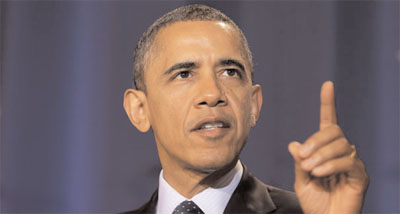
    WASHINGTON (TIP): President Barack Obama sought on Thursday to advance the US beyond the unrelenting war effort of the past dozen years, defining a narrower terror threat from smaller networks and homegrown extremists rather than the grandiose plots of Osama bin Laden’s al-Qaida.

    In a lengthy address at the National Defense University, Obama defended his controversial drone-strikes program as a linchpin of the US response to the evolving dangers. He also argued that changing threats require changes to the nation’s counterterrorism policies. Obama implored Congress to close the much-maligned Guantanamo Bay detention center in Cuba and pledged to allow greater oversight of the drone program.

    But he plans to keep the most lethal efforts with the unmanned aircraft under the control of the CIA. He offered his most vigorous public defense yet of drone strikes as legal, effective and necessary as terror threats progress. “Neither I, nor any president, can promise the total defeat of terror,” Obama told his audience of students, national security and human rights experts and counterterror officials. “What we can do – what we must do – is dismantle networks that pose a direct danger, and make it less likely for new groups to gain a foothold, all while maintaining the freedoms and ideals that we defend.

    ” Obama’s address came amid increased pressure from Congress on both the drone program and the status of the Guantanamo prison. A rare coalition of bipartisan lawmakers has pressed for more openness and more oversight of the highly secretive targeted strikes, while liberal lawmakers have pointed to a hunger strike at Guantanamo in pressing Obama to renew his stalled efforts to close the detention center.

    The president cast the drone program as crucial in a counterterror effort that will rely less on the widespread deployment of US troops as the war in Afghanistan winds down. But he acknowledged the targeted strikes are no “cure-all” and said he is deeply troubled by the civilians unintentionally killed. “For me, and those in my chain of command, these deaths will haunt us as long as we live,” he said. Before any strike, he said, “there must be near-certainty that no civilians will be killed or injured – the highest standard we can set.

    ” In Pakistan alone, up to 3,336 people have been killed by the unmanned aircraft since 2003, according to the New America Foundation which maintains a database of the strikes. However, the secrecy surrounding the drone program makes it impossible for the public to know for sure how many people have been killed in in strikes, and of those, how many were intended targets. In an attempt to lift the veil somewhat, the Justice Department revealed for the first time Wednesday that four Americans had been killed in US drone strikes abroad.

    Just one was an intended target – Anwar al-Awlaki, who officials say had ties to at least three attacks planned or carried out on US soil. The other three Americans, including al-Awlaki’s 16-year-old son, were unintended victims. Drones aside, some Republicans criticized Obama as underestimating the strength of al- Qaida in his speech and for proposing to repeal the president’s broad authorization to use military force against the nation’s enemies – powers granted to George W Bush after the Sept. 11, 2001, attacks.

    “I believe we are still in a long, drawn-out conflict with al-Qaida,” Sen. John McCain, RAriz., told reporters after the speech. “To somehow argue that al-Qaida is on the run comes from a degree of unreality that to me is really incredible. Al-Qaida is expanding all over the Middle East, from Mali to Yemen and all places in between.” Obama announced new “presidential policy guidelines” on the standards his administration uses when deciding to launch drone strikes.

    According to an unclassified summary of the guidelines, the US will not strike if a target can be captured, either by the US or a foreign government; a strike can be launched only against a target posing an “imminent” threat, and the US has a preference for military control of the drone program. However, the CIA will continue to work with the military on the program in Yemen, and control it in Pakistan, given the concern that al-Qaida may return in greater numbers as US troops leave Afghanistan.

    The military and the CIA currently work side by side in Yemen, with the CIA flying its drones over the northern region out of a covert base in Saudi Arabia and the military flying its unmanned aerial vehicles from Djibouti. Obama’s advisers said the new guidelines would effectively limit the number of drone strikes in terror zones and pointed to a future decline of attacks against extremists in Afghanistan as the war ebbs.

    But strikes elsewhere will continue. The guidelines will apply to strikes against both foreigners and US citizens abroad. Though Obama sought to give more transparency to the drone program, the strikes will largely remain highly secret for the public. Congress has been briefed on every strike that US drones have made outside Afghanistan and Iraq, Obama said, but those briefings are largely classified and held privately.

    The president said he was open to additional measures to further regulate the drone program, including creating a special court system to regulate strikes, similar to one that signs off on government surveillance in espionage and terror cases. Congress is already considering whether to set up a court to decide when drones overseas can target US citizens linked to al-Qaida. While civil rights groups welcomed some of Obama’s steps, they appeared largely unappeased.

    “The president still claims broad authority to carry out target killings far from any battlefield, and there is still insufficient transparency,” said Anthony D Romero, executive director of the American Civil Liberties Union. “We continue to disagree fundamentally with the idea that due process requirements can be satisfied without any form of judicial oversight by regular federal courts.” Obama was interrupted three times by a woman from the anti-war group Code Pink, who appeared to be protesting both the drone program and the Guantanamo prison.

    The president said at one point that he was willing to “cut the young lady some slack” because the issues he was addressing were worth being passionate about. In seeking to close Guantanamo, Obama faces many of the same roadblocks that stymied his efforts to shut the prison when he first took office. Many Republican lawmakers oppose Obama’s efforts to bring some of the detainees to the US to face trial and be held in maximum security American prisons.

    But a new hunger strike by prisoners protesting their conditions and indefinite confinement has refocused Obama on efforts to close the detention center. He tried to jumpstart that process Thursday by announcing a fresh push to transfer approved detainees to their home countries and lift a ban on transfers to Yemen. The end of the Yemen restrictions is key, given that 30 of the 56 prisoners eligible for transfer are Yemeni. Obama halted all transfers to the poor Middle Eastern nation in 2010, after a man trained in Yemen was convicted in a failed bombing attempt of an airliner over Detroit.

    In a statement from its embassy in Washington, the Yemeni government said it welcomed the administration’s decision and pledged to “work with the United States to take all necessary steps to ensure the safe return of its detainees.” Obama acknowledged that the politics of closing Guantanamo are difficult, but he said, “History will cast a harsh judgment on this aspect of our fight against terrorism and those who fail to end it.”

    The president said he planned to appoint a special envoy to oversee the prisoner transfers and other efforts to close the prison. McCain, a leading voice among Republicans, has long advocated closing Guantanamo and pledged Thursday to urge his colleagues to work with Obama to shut the facility. But Rep. Howard P. “Buck” McKeon, the Republican chairman of the House Armed Services Committee, said he was open to a proposal from Obama on the future of Guantanamo Bay. But that plan has to consist of more than political talking points, he said.

    “This speech was only necessary due to a deeply inconsistent counterterrorism policy, one that maintains it is more humane to kill a terrorist with a drone than detain and interrogate him at Guantanamo Bay,” McKeon said This week, the Pentagon asked Congress for more than $450 million for maintaining and upgrading the Guantanamo prison. More than 100 of the prisoners are involved in the hunger strike, and the military earlier this month was force-feeding 32 of them to keep them from starving.

  • MEMORIAL DAY Honoring the ‘Forgotten’ Dead

    MEMORIAL DAY Honoring the ‘Forgotten’ Dead

    “So to the indifferent inquirer who asks why Memorial Day is still kept up we may answer, it celebrates and solemnly reaffirms from year to year a national act of enthusiasm and faith. It embodies in the most impressive form our belief that to act with enthusiasm and faith is the condition of acting greatly. To fight out a war, you must believe something and want something with all your might. So must you do to carry anything else to an end worth reaching.”– Oliver Wendell Holmes, Jr. at an address delivered for Memorial Day, May 30, 1884, at Keene, NH.

    By Darren Smith Each year, on the last Monday in May, our nation celebrates Memorial Day. For many, this day carries no special meaning except perhaps an extra day off from work, a beach barbecue, the start of the summer travel season, or for merchants, the opportunity to hold their annual Memorial Day Weekend sale. In reality, the holiday is observed in honor of our nation’s armed service personnel who were killed in wartime.

    The custom of honoring the graves of the war dead began prior to the end of the Civil War, but the national Memorial Day holiday (or “Decoration Day,” as it was originally named) was first observed on May 30, 1868, on the order of General John Alexander Logan for the purpose of decorating the graves of the American Civil War dead. With the passage of time, Memorial Day was extended to honor all those who died in service to the nation, from the Revolutionary War to the present.

    It continued to be observed on May 30th until 1971, when most states changed to a newly established federal schedule of holiday observance. Confederate Memorial Day, once a legal holiday in many southern states, is still observed on the fourth Monday in April in Alabama, and the last Monday in April in Mississippi and Georgia. A National Moment of Remembrance May of 1997 saw the start of what is becoming an American tradition recognized by the President and Members of Congress — to put the “memorial” back in Memorial Day.

    The idea of a National Moment of Remembrance was born a year earlier when children touring Lafayette Park in Washington, DC were asked what Memorial Day meant and they responded, “That’s the day the pools open!” The “Moment” was initiated by No Greater Love, a Washington, DC-based national humanitarian organization. For the first time in U.S. history, on Memorial Day 1997 “Taps” was played at 3 p.m. in many locations and at events throughout America. This effort was repeated again in subsequent years.

    The objective of the “Moment” is to raise Americans’ awareness of the honorable contributions made by those who died while defending our nation and to encourage all Americans to honor those who died as a result of service to this nation by pausing for one minute at 3:00 p.m. (local time) on Memorial Day. The National Park Service While we choose to celebrate Memorial Day only once a year, there are a number of U.S. national parks that are 365-day-a-year memorials and testaments to Americans killed in battle throughout our nation’s history.

    Among the many national parks that commemorate the American Revolution are places like Minute Man National Historical Park, Cowpens National Battlefield, and Fort Stanwix National Monument. The Civil War is remembered through places like Fort Sumter National Monument, Antietam National Battlefield, and Vicksburg National Military Park. Memorials to more recent wars include the Korean War Veterans Memorial, the Vietnam Veterans Memorial, the Vietnam Women’s Memorial, and the National World War II Memorial.

    Each year at national park sites throughout the country, Memorial Day weekend is traditionally observed with parades, memorial speeches, reenactments and living history demonstrations, and the decoration of graves with flowers and flags.

  • LEELA SAMSON’S BHARATA NATYAM TROUPE CAPTURES THE ESSENCE OF MOVEMENT

    LEELA SAMSON’S BHARATA NATYAM TROUPE CAPTURES THE ESSENCE OF MOVEMENT

    CHICAGO, IL (TIP): Renowned dancerchoreographer Leela Samson led a Bharata Natyam troupe of eight talented dancers from Kalakshetra (Chennai) in presenting Spanda (Vibration) on Saturday, May 4, 2013 at the Metea Valley High School in Aurora, Ill. Hosted by the Natya Dance Theater (NDT), the performance aimed to distill the essence of movement as described through the elements of pure dance by the Natya Shastra, which is the foundational treatise on theater and aesthetics in India.

    Spanda seeks to establish a more relevant dialogue between dance, music, and stagecraft. Leela Samson is an alumnus of Kalakshetra. Her seemingly understated delineation conceals a powerful and inspired inner source, which gradually unfolds before the viewer. She is a virtuoso performer and a sensitive interpreter of the nuances of Bharata Natyam.

    Two significant documentary films have been made on Samson – ‘Sanchari’ by Arun Khopkar and ‘The Flowering Tree’ by Ein Lall. Leela is the recipient of the Sanskriti Award in 1982, Padmashri Award in 1990, Nritya Choodamani Award in 1997, and Sangeet Natak Akademi Award in 2000. She served as Director of the Kalakshetra Foundation from 2005 to 2012. She is Chairman of the Central Sangeet Natak Akademi and the Central Government appointed her as Chairperson of the Central Board of Film Certification.

    The other dancers were Bragha Bessel, Bilva Raman, Jin Shanshan (Eesha), Satyapriya Iyer, Christopher Gurusamy, K.V. Arun, Harikrishnan Nair, and Sai Santosh Radhakrishnan. Raman, and Eesha (from Beijing University) are students of Samson, while Iyer, Gurusamy, and Arun are members of the Kalakshetra Repertory. A visiting Indologist and dancer at Jawaharlal Nehru University, Eesha is from Beijing University. Bessel, a senior student of Adya K. Lakshman and Kalanidhi Narayanan, is renowned for her gestural representation (abhinaya) of the varied sentiments and is a consummate artiste and teacher in her own right.

    The evening’s repertoire owes its name to the extended sequences in the first part that attempt to capture the origin and essence of cosmic movement through pure dance (nritta). Spanda refers not only to external movement but also to the inner vibration (naada) that animates all the rhythms of our universe.

    Various devices were explored: three dancers in single undulating file, rising and falling in alternation while pulsating through expanding and contracting hand gestures; a human chain stretched through tension in opposing directions, recalling the polarization of positive and negative forces at the churning of the primordial ocean; or a whirlpool sucked into its vortex only to be thrown out again.

    Spanda incorporates the philosophical concept of Earth as navel and source of energy and equates it with the womb as the origin of energy in the human body. An entire school of Shaivism revolved around Spanda, and Shaiva devotees imitated Nataraja’s cosmic dance to tap into and retrace this primordial vibration back to its divine source. The challenge for the longtime director and reviver of the prestigious Kalakshetra Foundation (Chennai) is to rediscover the basic movements of Bharata Natyam and reinterpret its traditional vocabulary in more universally applicable terms.

    Renowned for consummate expression of the varied emotions (abhinaya), Bragha Bessel had ample leeway to improvise on their subtle nuances through two lyrical compositions (padam) by the Telugu Kshetrayya (1600-1680), who reveled in the sweetness of the erotic sentiment as an approach to Krishna. The first padam in raagam Punnaagavaraali of a ‘heroine’ (naayikaa) pining for her (divine) lover, enacted almost entirely seated on a chair to minimize the distraction of rhythmic movement, came as a counterpoint to the preceding Spanda.

    She returned subsequently with another padam in a garland of raagas, where she rendered the same love lyrics through the successive characters of a naïvely infatuated (mugdhaa), middling (madhyamaa), and haughtily experienced (pragalbhaa) heroine. Torn between vivid recollections of past pleasures and indignation at recent infidelity, Samson too depicted, but though a javali (more rapid than the also moody padam and full of lilting rhythm), the jealousy consuming the betrayed (khanditaa) heroine towards her rival.

    On Saturday, May 3, Samson had conducted an abhinaya workshop hosted by the Kalapriya Center for the Performing Arts and Soham Dance Space at the American Rhythm Center Studios in downtown Chicago. The unusual theme of the terrifying Bhairava as praised by the octet (kaalabhairavaashtakam) attributed to Shankaracharya, set to raga Hamsadhvani, allowed Samson to depict the furious (raudra) sentiment.

    For, as she recounted beforehand, the impetuous god had sprung forth to decapitate the creator Brahma before being elevated to protector of Varanasi, holy city of the Hindus. Pure dance was interspersed with sculpturesque poses that highlighted his beauty as the embodiment and conferrer of liberation (moksha). The concluding item was a medley of three thillanas (brisk nritta set to rhythmic syllables) in raagas Revati, Madhuvanti, and Kalyaana Vasantam, each composed by the great violinist Lalgudi G. Jayaraman.

    This medley was intended as homage in celebration of his 80th birthday, but he passed away this April 22 even as the troupe began its tour. The audience, many of whom were parents, and their children who had performed earlier the same afternoon in the NDT showcase at the same venue, showered the Spanda troupe with applause as the NDT Director Hema Rajagopalan presented each dancer with a bouquet.

  • Prominent Indian American neurosurgeon sentenced to probation for unreported offshore bank accounts

    Prominent Indian American neurosurgeon sentenced to probation for unreported offshore bank accounts

    MILWAUKI (TIP): On February 1, 2013, the U.S. District Court for the Eastern District of Wisconsin sentenced Arvind Ahuja, a Milwaukee neurosurgeon, to serve three years of probation and to pay a fine of $350,000 following his conviction by a federal jury of one felony count of willful failure to file a Report of Foreign Bank Account (“FBAR”) and one felony count of filing a false federal income tax return.

    According to the evidence presented at Ahuja’s August 2012 trial, Ahuja transferred millions of dollars from bank accounts in the United States to undeclared bank accounts located in India at HSBC bank. Ahuja invested the funds in these accounts in certificates of deposit, which earned more than $2.7 million in interest income during the years 2005 through 2009.

    Ahuja also maintained an HSBC bank account in the Bailiwick of Jersey, a British Crown dependency located in the Channel Islands off the coast of Normandy, France. Ahuja used credit and debit cards linked to this account to pay personal expenses while on trips to London. Ahuja managed his offshore accounts with the assistance of bankers who worked at an HSBC India representative office in New York.

    Ahuja’s sentencing is only the latest in a string of taxenforcement news that affects Americans with undeclared offshore bank accounts generally and Indian Americans with unreported non-resident Indian or “NRI” bank accounts specifically. Banks with operations in India offer high interest rates on NRI accounts, usually 9-10%. Unsuspecting account holders may not realize that although the interest income from NRI accounts is typically not taxable in India, it is taxable in the U.S.

    In addition to reporting the interest income and the existence of the account on a U.S. tax return, the account holder must separately disclose the foreign account by filing a FBAR. In December 2010, Vaibhav Dahake of New Jersey pleaded guilty to conspiring to defraud the United States. Sanjay Sethi, also of New Jersey, pleaded guilty on January 7, 2013 to the same charge. Californian Ashvin Desai faces trial on July 23, 2013 for tax evasion, aiding in the preparation of false tax returns, and willful failure to file FBARs.

    All of these Indian Americans are alleged to have maintained undeclared accounts at HSBC India. According to a court filing by the U.S. Department of Justice, there are 9,000 U.S. residents of Indian origin who have $100,000-minimum-balance accounts at HSBC India alone. Undoubtedly, there are many more whose account balances total less than $100,000. According to the DOJ, however, for calendar year 2009, the most recent year for which information is available, there were only 1,391 FBARs filed disclosing 1,921 accounts at HSBC India.

    On April 7, 2011, the U.S. District Court for the Northern District of California granted the IRS and DOJ’s request for a “John Doe summons” to force HSBC India to turn over the names of U.S. taxpayers “who at any time during the years ended December 31, 2002 through December 31, 2010, directly or indirectly had interests in or signature or other authority (including authority to withdraw funds; trade or give instructions or receive account statements, confirmations, or other information, advice or solicitations) with respect to any financial accounts maintained at, monitored by, or managed through The Hongkong and Shanghai Banking Corporation Limited in India (HSBC India).”

  • India’s Home Minister Shinde holds talks with US Officials

    India’s Home Minister Shinde holds talks with US Officials

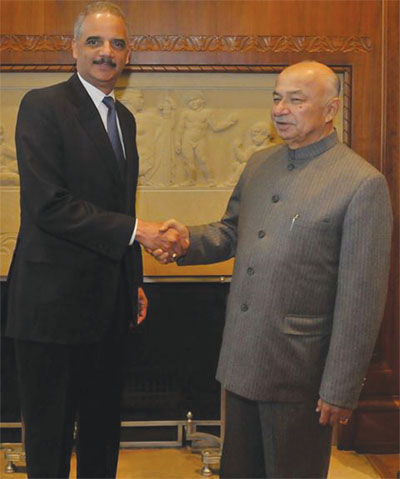
    WASHINGTON (TIP): India’s Home Minister Sushil Kumar Shinde, on an official visit to the United States, continued dialogue in to another day on May 21 with senior US Government leaders including Secretary for Homeland Security Janet Napolitano, Attorney General Eric Holder and FBI Director Robert Muller, a press release issued by Embassy of India in Washington said. Minister Shinde and Secretary Napolitano convened the second round of the Homeland Security Dialogue, which last met in New Delhi in May 2011.

    The two leaders emphasized that cooperation between India and the United States in securing the two nations was a key pillar of the India-US Global Strategic Partnership. They recognized that such cooperation was imperative, in view of commonality of the threats that confront the two countries. They welcomed progress made over the recent past in developing practical steps to enhance the security of the citizens of the two countries, and to prevent the misuse of increasinglyinterconnected global financial, transportation and communication systems.

    They agreed to enhance cooperation in capacity building programs and to identify technologies and equipment which may be useful for Indian law enforcement agencies to source in the United States. Minister Shinde and Secretary Napolitano received reports from the six sub-groups that constitute the Homeland Security Dialogue, and welcomed the fact that progress was being achieved in substantive terms.

    They applauded the fact that specific cooperation programs were identified and emphasized the need for results from the Homeland Security Dialogue. Minister Shinde invited Secretary Napolitano to visit India in 2014 to co- Chair the next round of the Dialogue, and the two sides agreed to carry out a review of the process a few months before that, under the stewardship of India’s Home Secretary and the US Deputy Secretary of the Department of Homeland Security. In the afternoon of May 21, Minister Shinde had a meeting with Attorney General Eric Holder.

    The two leaders recognized the compelling reasons for closer cooperation between India and the United States based on the larger strategic objective underlined by President Barack Obama and Prime Minister Manmohan Singh during the President’s State Visit to India in November 2010.

    Minister Shinde and Attorney General Holder agreed that the Ministry of Home Affairs and the Department of Justice should work together institutionally, so as to ensure the best possible outcomes within the laws of the two countries, to address pending issues relating to extradition, execution of Letters Rogatory and Red Corner Notices, as well as other areas of cooperation in law enforcement, counter terrorism and judicial processes.

    In the Home Minister’s meeting with FBI Director Muller, the two sides reviewed areas of cooperation and issues of interest. The FBI and Indian agencies have remained in close contact, and it was agreed that the process of inter-agency cooperation would be developed further, in this context. After the completion of his official meetings, Home Minister Shinde and senior members of his delegation left for a day-visit to Boston to have a detailed briefing of the investigations that resulted in the successful investigation of the April 15 Boston Marathon bombing. Later, after a day’s sojourn in New York, the Minister was to leave for India.

  • India’s Dayamani Barla Selected for Cultural Survival’s Ellen L. Lutz Indigenous Rights Award

    India’s Dayamani Barla Selected for Cultural Survival’s Ellen L. Lutz Indigenous Rights Award

    CAMBRIDGE, MA (TIP): Grassroots Indigenous rights heroes too often go unrecognized. Yet their efforts to promote the rights of their peoples and protect their traditions, languages, and resources are critical to cultural survival. On April 23, 2013 in recognition of her work with Adivasi (Indigenous) communities in India, Dayamani Barla was chosen by Cultural Survival, an Indigenous Peoples rights organization, as the winner of the 2013 Ellen L. Lutz Indigenous Rights Award.

    “Cultural Survival is honored to present Dayamani Barla, an Indigenous human rights activist and journalist from the Munda tribe in the Indian state of Jharkhand, with the 2013 Ellen L. Lutz (ELL) Indigenous Rights Award,” says Cultural Survival Executive Director Suzanne Benally.

    Barla has been on the forefront of people’s movements against corporate and government-led land grabs and other injustices that threaten the survival, dignity, and livelihoods of Indigenous Peoples. “This prize is presented in recognition of outstanding human rights work, dedicated leadership for Indigenous Peoples rights, and a deep life commitment to protecting, sustaining, and revitalizing Indigenous cultures, lands, and languages,” says Benally.

    Barla was chosen from close to 60 nominees by a distinguished panel of Indigenous leaders. The prize honors the memory of the late Ellen L. Lutz (1955-2010), who was a renowned human rights lawyer and former executive director of Cultural Survival (2004-2010).

    Ellen transformed Cultural Survival by strongly emphasizing human rights and advocacy. Coming from a humble background where she worked as a domestic servant to fund her education, Barla is the first tribal journalist from her state and is considered as the “voice of Jharkhand” for her powerful storytelling, community organizing, and writings. “Barla has been a trailblazer on many fronts, charting new waters as an Indigenous woman to ensure the voices and perspectives of Adivasi people are heard by the larger mainstream society,” says her nominator Terry Odendahl, executive director and CEO of Global Greengrants Fund.

    As one of the first female Adivasi journalists in India, she has won many awards, including the Counter Media Award for Rural Journalism and the National Foundation for India Fellowship. Barla’s writings and activism shed light on the ways in which the deep cultural, spiritual, and traditional knowledge heritage of Adivasi communities are intertwined with their jal, jungle, and zameen (water, forests, and land).

    She is an outspoken critic against the racism and persecution that Adivasi communities face. Together with her colleagues from the Adivasi Moolvasi Astitva Raksha Manch (Platform of Indigenous Adivasi People to Defend their Existence), Barla has prevented ArcelorMittal, a global mining giant, from plundering the rich natural resources of Jharkhand. The proposed steel plant, a $9 billion planned investment, would have seized 12,000 acres of land and displaced 40 villages, additionally harming the surrounding ecosystems and by extension the livelihoods and survival of Indigenous communities.

    Loha nahi anaj chahiye! (“We want grains, not iron!”) was a rallying cry of Indigenous communities protesting this project. “We will not allow the ArcelorMittal Company to enter into the villages because one cannot be rehabilitated once displaced. The lands which we cultivate belong to our ancestors; therefore we will not leave it,” Barla said in an article published by Adivasi journalist Gladson Dungdung.

    According to the Working Group on Human Rights, 60 to 65 million people in India have been displaced from their homelands due to development projects since India’s independence, making it the highest number of people uprooted in the world in the name of progress. Forty percent of those displaced are Adivasi communities. Barla has also been involved in people’s mobilizations against the Koel Karo dam project.

    This struggle is considered one of the longest and most successful anti-dam movements in India, and is rooted in the highly mobilized Munda Indigenous community. Located in the Chhota Nagpur Plateau, Jharkhand is blessed with rich biodiversity from its evergreen forests and is bestowed with tremendous mineral wealth. However, an unequal process of industrialization, urbanization, and corporate globalization has led to immense human rights violations and displacement of Indigenous peoples from dams and mining activities in the region.

    Barla’s steadfast commitment to the people’s democratic and constitutional rights to assemble and dissent has attracted the wrath of corrupt government and corporate actors, who are pushing for rapid industrialization and economic globalization that disenfranchises Indigenous communities. From October 18 to December 21, 2012 she was jailed by the Jharkhand government under a litany of charges ranging from leading peaceful protests against fertile farmland acquisition in Nagri to demanding job cards for rural poor in Angada block under a national employment guarantee scheme.

    “Dayamani’s jailing was a reminder to civil rights activists across the nation of the unfriendly role the Jharkhand state is taking towards drivers of democratic change,” says Odendahl. Recently she has been leading anti-land acquisition struggles, along with farmers of Nagdi, whose precious fertile agricultural land has been allocated for the construction of business, law, and information technology schools in Jharkhand.

    In a letter written from her jail cell, Barla reflected that the “looters of the state have become wellwishers in the eyes of the government.” The selection of the ELL Award recipient is based on the following criteria: the Indigenous activist’s work is primarily at the grassroots level directly in Indigenous communities, and/or expands from there into advocacy at the state and international level; leadership is recognized by the communities that it represents; the activist works towards promoting and advancing Indigenous/human rights and this work reflects his or her compassion, dedication, and personal sacrifice to his or her people, communities, and Indigenous Peoples; and the award will raise the profile of the recipient’s work, advancing the activist’s efforts and helping to safeguard his or her well-being.

    “Dayamani is an example of a selfless and courageous activist, who powerfully demonstrates how Indigenous women play a crucial role in safeguarding the rights of their communities, while also protecting the rights of nature,” says Odendahl. The Award recognizes individuals for sustained and significant efforts to protect and advance the rights of Indigenous Peoples, often at great personal risk.

    The ELL Award views “grassroots” leaders as those rooted in local efforts, where positive change is created through community or citizen participation in the issues that affect them. Through recognizing these individual leaders, the Award seeks to inspire other Indigenous people to take extraordinary actions to protect the world’s cultural diversity. This year’s ELL Award, which comes with a $10,000 cash prize, brings critical attention to the undemocratic attitude of the Jharkhand state towards social activists, as well as honoring and celebrating the critical work of an Indigenous human rights defender who has fought brave struggles for the greater good of Adivasi communities in the state of Jharkhand and beyond.

    Barla will be presented with the award at a ceremony on May 23 at the Museum of the American Indian in New York. Cultural Survival is a global leader in the fight to protect Indigenous lands, languages, and cultures around the world. In partnership with Indigenous Peoples, we advocate for Native communities whose rights, cultures, and dignity are under threat.

  • No First Use Nuclear Doctrine with ‘Chinese Characteristics’

    No First Use Nuclear Doctrine with ‘Chinese Characteristics’

    The writing is on the wall as China does not have good track record of strategic comfort and reliability vis-a-vis India. The current incidence of Chinese incursion into Indian territory in Daulat Beg Oldie region in the Ladakh sector should be an eye-opener. While India must focus on its economic, infrastructure and social development and must not waste her meager fiscal resources in a costly nuclear race, she needs to be prepared for all strategic options. Given the aggressive behavior of China in recent years appropriate and credible policies need to be adopted including having a re-look at evolving nuclear posture of China”, says the author.

    Like a chameleon, the dragon, very predictably is changing its colors with regards to its often stated nuclear doctrine of “no first use” (NFU). Since 1964 when China conducted its first nuclear weapon test, China has repeatedly and vociferously insisted that it would not be the first nuclear power to use a tactical or strategic nuclear weapon in pursuit of its strategic objectives. This NFU pledge was explicitly and unconditionally included in each of China’s defense white papers from the first in 1998 through the seventh one in 2011.

    Recently, there is some international debate about possible changes in China’s NFU doctrine following publication of China’s biannual 2013 Defense White Paper. However, it appears that China may have moved beyond its socalled NFU doctrine and its duplicitous pledges do not hold any sincere meaning. Strategic deception has been an important part of China’s military DNA since the times of Sun Tzu who wrote in his treatise the Art of War: “All warfare is based on deception. Hence, when we are able to attack, we must seem unable; when using our forces, we must seem inactive; when we are near, we must make the enemy believe we are far away.

    Since achieving a great economic success and flush with $ 3.4 trillion foreign exchange reserves, China has increased its list of core national issues and has adopted a more belligerent strategic posture and hegemonic attitude towards international community in general and its neighbors in particular. Disregarding the Deng’s advice of lying low and bidding your time, the current (5th) generation of China’s leaders are adopting aggressive postures militarily though the transformation into visibly hardened strategic claims started really during the reign of the 4th generation leaders (Hu Jintao, Wen Jiabao and Wu Bangguo).

    The last time a Chinese paramount leader reaffirmed the so-called NFU pledge was on March 27th 2012 in Seoul Nuclear Conference when Hu Jintao mentioned it in his address. However, in December 2012, the new 5th generation Chinese paramount leader Xi Jinping failed to mention about the so-called no first use pledge in a speech given to Second Artillery Force of the PLA which manages China’s land-based nuclear weapons. Apparently, he also stated that nuclear weapons create strategic support for China’s status as a major world power.

    This is a significant departure from the previously stated public positions citing Mao Zedong’s ideas about the use of nuclear weapons as a taboo and labeling the nuclear weapons essentially as “paper tigers”.

    Fundamentals of NFU Commitment
    Out of the nine countries that possess nuclear weapons currently, only two, China and India had explicitly stated “No First Use” as the guiding principle of their strategic nuclear doctrine.

    An absolute and unconditional NFU commitment would have four following components:
    1. Not to use nuclear weapons first against countries that possess nuclear weapons
    2. Not to threaten use nuclear weapons first against countries that possess nuclear weapons
    3. Not to use nuclear weapons first against countries that do not possess nuclear weapons
    4. Not to threaten to use nuclear weapons first against countries that do not possess nuclear weapons
    NFU policy has been a core feature of the Chinese defense policy having been decided apparently by Chairman Mao himself in 1964. Critics of the Chinese NFU commitment claim that it is completely unverifiable and is mere rhetoric. Selfdescribed “China hawks” in the West have derisively dismissed the Chinese NFU pledge as pure propaganda for the last five decades. Chinese strategists have debated the merits of dropping or altering the NFU policy. This debate was reportedly very intense from mid to late 2000s.

    There are assertions from Chinese officials that Chinese NFU commitment is not applicable to perceived claims on territories. China has territorial disputes with multiple neighbors including India. Presumably since China continues to claim that Arunachal Pradesh is its own territory, in a hypothetical scenario, it may use tactical nuclear weapons in a war with India in eastern sector because China will consider this use not against any other country but in its own perceived territory. Similarly, China will not be bound by its

    NFU if the US were to intervene in Taiwan in case of a Sino-Taiwanese war as it considers Taiwan as a renegade province. Chinese NFU is not applicable if it apprehends annihilation of its top leadership by conventional means. Similarly, a conventional attack on strategic target like the Three Gorges Dam would be an exception to the NFU pledge. More recently, Chinese have discussed other possible exceptions from their NFU commitment including a massive precision guided conventional attack on their intercontinental ballistic missile silos or their strategic facilities. As China moves away from minimal credible deterrence to “limited deterrence”, a more sophisticated delivery mechanism and an exponential increase in its nuclear stockpile, it has also moved towards greater flexibility and continued opacity in its nuclear operational doctrine. It is pertinent to say that the socalled Chinese NFU commitment has never been taken seriously by both the US and Russia at any time in their policy matrix.

    Chinese Nuclear Arsenal
    China can be considered the largest nuclear power after the US and Russia. China’s nuclear capability is apparently stronger than those of the next six nuclear states combined. According to Russian estimates, since early 1960s China has generated 40 tons of enriched weapons grade uranium and 10 tons of plutonium which would be enough to produce 3,600 nuclear war-heads. It is probable that half of this fissile material is kept in stocks whereas the rest half has been used up to produce 1500-1800 warheads, half of which may be in storage. This would leave 800-900 warheads that could be available for operational deployment on various types of delivery vehicles. Therefore, the real motives for China’s complete secrecy about its nuclear forces lie not in their “weakness” and “small size” but in much larger strength of China’s actual nuclear arsenal that is much higher than the commonly cited number of 300-400 warheads by the western analysts. There is also a great degree of international uncertainty about the hundreds of tunnels being built in China as their purpose has not yet been officially explained.

    Chinese Nuclear Posture and Track II Interactions

    Personal interactions with various Chinese academicians and officials during policy conferences suggest that China will continue to add to its nuclear arsenal and will not participate in any nuclear disarmament program till it reaches a certain level. This analyst has interacted with Professor Shen Dingli, Associate Dean of the Institute of International Studies from Fudan University, Shanghai over the last four years with very consistent and candid answers regarding Chinese national nuclear posture.

    Professor Shen Dingli claims to have independent (but sometimes more hawkish views) from those of the Chinese Government. In 2009 Carnegie Nuclear Policy Conference in Washington, DC, he expressed absolute ignorance about Chinese proliferation activities and the fact that Chinese weapons designs were turned in by Libya to the International Atomic energy Agency (IAEA) when Libya folded up their clandestine nuclear program.

    He was totally unaware of China’s both vertical and horizontal proliferation activities as late as April 2009. During the 2009 Carnegie International Nonproliferation Conference, Washington, DC, he agreed that Chinese government will continue to increase its number of nuclear war-heads.

    In a more recent Carnegie Endowment meeting on India-China dialogue in Washington DC on January 10th 2013, he again reiterated that China will continue to modernize its nuclear arsenals and the delivery systems till a perceived parity is achieved with the two great powers (US and Russia). China will certainly not agree to cut the number of nuclear arsenals as it wants both the US and Russia to implement further reductions in their respective nuclear arsenals.

    Interactions with another Chinese academician Dr. Shulong Chu, Professor of Political Science and International Relations at the School of Public Policy and Management and the Deputy Director of the Institute of International Strategic and Development Studies at Tsinghua University in Beijing, China in a session on China-US Strategic Stability on 4/6/2009 during the Carnegie International Nonproliferation Conference, Washington DC revealed very interesting Chinese perspectives.

    Chu explicitly stated that since China has accepted US supremacy, analogously both India and Japan should accept Chinese supremacy in the Asiapacific region. China is a bigger country than Japan and India. It has bigger military requirements. Japan, India and other Asian countries should understand that and should be willing to accept China’s ongoing modernization of its military and strategic (read nuclear) assets. Chu further went on saying: “Russia and the US have too many nuclear war-heads. They can afford to have deep cuts. China cannot do that because China has too few. China wants more and its agenda is to have more nuclear weapons”.

  • A Colossal Human Tragedy

    A Colossal Human Tragedy

    The devastating tornado that ripped through Moore, Oklahoma, killing at least 24 people including eight children, is one of the worst human tragedies in America in recent years . When disaster strikes, sometimes you can’t help but wonder how God can allow such pain and suffering.

    In tornadoravaged Oklahoma, many are likely asking that very question. But more than the hand of God, it is now the tongue of the politicians that is causing anguish. The global warming activists in Congress have begun exploiting the grief and pain of a devastated community to tell an idiotic tale of global warming causing tornadoes. Will the wily politicians stop politicking for once, in the face of the grim tragedy and come forward and extend a loving hand to the devastated community?

  • NAWAZ SHARIF’S RETURN TO POWER BRINGS PAKISTAN’S CHALLENGES IN FOCUS

    NAWAZ SHARIF’S RETURN TO POWER BRINGS PAKISTAN’S CHALLENGES IN FOCUS

    Sharif will face three major challenges when he comes to power. He will have to restore electricity and boost the economy. He will have to deal with domestic terrorism. And he will have to work with the U.S., trying to strike a balance between managing relations with Washington while assuaging anti- American sentiment at home”, says the author.
    In 1999, Nawaz Sharif was overthrown in a military coup. His vanquisher, Gen. Pervez Musharraf, was broadly welcomed in Pakistan, and later, by the international community. Sharif was first thrown in jail, and later dispatched into exile for seven years.

    In his absence, some claimed that Sharif’s party – and his political career – was finished. Now, in an astonishing turn of history, Sharif is set to become Pakistan’s first-ever third-time Prime Minister, while his once powerful nemesis Musharraf is under arrest and possibly facing trial.

    Sharif beat expectations, cruising toward a convincing victory that will allow his Pakistan Muslim League-Nawaz party to have a majority in the national parliament and a two-thirds majority in the provincial parliament of Punjab, Pakistan’s wealthiest and most populous province. As the results became apparent in the early hours of Sunday morning, Sharif supporters spilled out into the streets of Lahore, the capital of Punjab, cheering.

    Young men whizzed through the streets, their speed lending a flutter to party flags attached at the back. “Look, look who has come? The tiger has come, the tiger has come!” they chanted, referring to Sharif’s election symbol. If the election could be boiled down to one issue, it was electricity. Throughout the country, voters listed a litany of their disappointments.

    They dreaded the neardaily terrorist attacks they suffer, not least during the campaign. At least 130 people were killed during the bloody election campaign, mainly supporters of Pakistan’s secular parties, in attacks on candidates, election rallies and campaign offices. The tales of legendary greed also repulsed Pakistanis that members of the outgoing cabinet are alleged to have committed.

    All former ministers of President Asif Ali Zardari’s Pakistan People’s Party (PPP) were voted out in the majority Punjab province. But for many voters, their principal concern was the crippling power shortages they endure – sometimes for up to 20 hours a day – and the effect it has on the economy. Economists estimate that Pakistan’s energy crisis shaves off up to 5% growth each year. In big industrial towns like Faisalabad, where Sharif’s party won many seats, factories have been forced to shut down and tens of thousands of workers laid off. If the next government can diminish power cuts substantially, it may be enough to win the next election.

    If they fail, they could suffer the fate of their predecessors. Sharif appealed to voters, particularly in his native Punjab, as a plodding businessman who has experience of governance and may be able to lift Pakistan’s economy out of its current misery. In a country shifting toward a more conservative direction, Sharif’s social conservatism and religiosity was a plus.

    In 1997, when he last won an election, Sharif told academic Vali Nasr, he wanted to be “both the [Turkish moderate Islamist leader Necmettin] Erbakan and the [economically modern former Malaysian prime minister] Mahathir of Pakistan.” It was a disappointing night for former cricket legend Imran Khan, who was mounting an aggressive and high profile campaign as the candidate for “change”. Despite a flood of publicity, claims of a solid youth vote behind him, and a wellfinanced party infrastructure, he failed to secure the breakthrough he craved, winning around 35 out of 242 seats in parliament.

    Khan came second in a vast number of seats, but failed to catch up to Sharif’s galloping tiger. Still, Khan will remain a force in Pakistani politics, and could become the Leader of the Opposition in parliament while his party, which swept the northwest militancywracked province of Khyber- Pakhtunkhwa, will form a provincial government there. On Sunday, Khan accepted defeat but said that his party was a victim of polling day rigging. Several Khan supporters have pointed out incidents of shady electoral practices at polling booths across Lahore.

    The PPP is licking its wounds, suffering its secondworst defeat ever, but holding on to its stronghold in Sindh province. Sharif will face three major challenges when he comes to power. He will have to restore electricity and boost the economy. He will have to deal with domestic terrorism. And he will have to work with the U.S., trying to strike a balance between managing relations with Washington while assuaging anti- American sentiment at home. Sharif’s aides say that he is best placed to boost the economy, thanks to his free-market approach.

    “The best way to deal with the electricity problem is to privatize the energy sector and give the business community a stake in it,” said Khawaja Muhammad Asif, a leading PML-N member. When it comes to the Pakistani Taliban, Sharif is less clear. In recent years, he has preferred to remain mostly quiet on the threat, as he did during the election campaign. While secular anti-Taliban politicians braved bomb attacks, Sharif and Khan were able to campaign mostly in peace.

    Sharif has said that he would like to negotiate with the Pakistani Taliban, an approach that is popular among conflict-weary Pakistanis but controversial. Critics point out that all peace deals with the Pakistani Taliban have failed and yielded them more space. In 2010, Sharif’s younger brother, Shahbaz Sharif, who was Chief Minister of Punjab made a controversial appeal to the Pakistani Taliban to spare his province because, like them, his party is “anti-U.S.”

    The statement was denounced as a dangerous capitulation by a party that is losing touch with the rest of the country. Under the younger Sharif’s rule of Punjab, he has also been criticized for not doing enough for religious minorities. The Ahmadi Muslim sect suffered its worst ever attack in 2010. And the province’s Christians have faced two tragedies, earlier this year and in 2009, when a mob of attackers torched clustered colonies in Lahore and Gojra as the police stood by.

    Many observers are nervous about this trend continuing. Sharif’s religious conservatism is what made the Bush administration wary of him during the Musharraf years. The general’s self-styled “enlightened moderation” was more to their liking than Sharif, who during his second term in power, attempted to crown himself “commander of the faithful”. But in meetings with U.S. officials, Sharif has said he is “pro- American” and keen to work with the U.S.

    In a meeting with former U.S. Ambassador Anne Patterson in 2007, according to a leaked State Department cable, Sharif’s ministers were “disappointed” and “hurt” to read that President Bush said he didn’t know Sharif. They also, according to the cable, “went to great pains to defend Nawaz’s pro-U.S., ‘anti-Mullah’ history.” Now, Sharif aides and U.S. officials say both sides are willing to work with each other.

    Sharif will also try to establish a new relationship with Pakistan’s powerful generals. Although he emerged as a protégé of Gen. Muhammad Zia-ul-Haq, Pakistan’s longest serving dictator, he ended up clashing with five successive army chiefs until he was ultimately ousted by Musharraf. Sharif was sharply critical of the army’s role in politics during Musharraf’s final years, but has cooled his rhetoric since.

    “I think the army will want to work with Nawaz Sharif,” said retired lieutenant general Talat Masood, an analyst. The relationship has been repaired over recent years with Sharif’s top aides often meeting Army Chief Gen. Ashfaq Parvez Kayani. During his last stint in power, Sharif was capable of destructive confrontations with not just the army, but also rival politicians and critical journalists, who were hurled into dark cells. Masood said that Sharif has matured over the years.

    “The time in exile has given him time to reflect and learn,” said Masood. Surveying the staggering election victory many Pakistanis hope that is true.

  • 12 YEAR INDIAN AMERICAN BOY WINS GEOGRAPHY BEE

    12 YEAR INDIAN AMERICAN BOY WINS GEOGRAPHY BEE

    WASHINGTON (TIP): Passion for geography runs deep in Sathwik Karnik’s family. When he was about 6, his mother began challenging Sathwik and his older brother, Karthik, to her version of hide-and-seek – using an atlas. The boys would comb through the book, trying to be the first to find a city or landmark. The games paid off when Karthik, 15, made the finals of the National Geographic Bee in 2011 and 2012.

    But it was 12-year-old Sathwik, of Plainville, Mass., who finished the job, calmly answering questions about obscure island chains, bodies of water, global trade and culture to win the 25th annual geography bee may 22. The clinching question? “Because Earth bulges at the equator, the point that is farthest from Earth’s center is the summit of a peak in Ecuador. Name this peak.” Sathwik nailed it: Chimborazo.

    Runner-up Conrad Oberhaus, 13, of Lincolnshire, Ill., knew the answer, but Sathwik got all five questions correct in their one-on-one duel. Earlier, Conrad couldn’t name Baotou as the largest city in China’s Inner Mongolian Autonomous Region, home to one of the world’s largest deposits of rare-earth elements. While Conrad didn’t stumble again, Sathwik never relinquished the lead.

    Sathwik and his brother said the victory was a team effort. Ten participants made the finals, culled from a field of 54 state-level winners in Monday’s preliminary round. Sathwik won a $25,000 scholarship, a trip to the Galapagos Islands and a lifetime membership in the National Geographic Society. The finals will be televised Thursday night on the National Geographic Channel and Nat Geo WILD. Conrad, the runner-up, won a $15,000 scholarship. Also represented in the finals were California, Michigan, Colorado, New Hampshire, Oregon and Wisconsin.

  • Highway bridge collapses between Seattle and Vancouver in US; no deaths reported

    Highway bridge collapses between Seattle and Vancouver in US; no deaths reported

    WASHINGTON (TIP): The major highway bridge linking Seattle with Canada and the rest of the Pacific Northwest region collapsed Thursday evening, dumping at least a handful of vehicles and people into a river, the Washington State Patrol said. There were no immediate reports of deaths, and three people were taken to hospitals.

    The fourlane Interstate 5 bridge more than half a century old collapsed about halfway between Seattle and Vancouver, British Columbia, Trooper Mark Francis said. Francis said he did not know what caused the collapse, which came at the start of one of the country’s busiest holiday weekends of the year. Xavier Grospe, who lives near the river, said he could see three partially submerged cars, and the apparent drivers were sitting either on top of the vehicles or on the edge of open windows.

    “It doesn’t look like anybody’s in danger right now,” Grospe said. The collapse came before sundown on a clear day. Helicopter footage aired by KOMO-TV in Seattle showed one rescue boat leaving the scene with one person strapped into a stretcher. A damaged red car and a damaged pickup truck were visible in the water, which appeared so shallow it barely reached the top of the car’s hood.

    Kari Ranten, a spokeswoman for Skagit Valley Hospital, said two people who were injured in the collapse were en route to the facility. She said another person was being taken to a different area hospital. A man told the local Skagit Valley Herald newspaper he felt a vibration and looked in his rear view mirror to see that the part of bridge he had just crossed was no longer behind him.

    “I thought something was wrong with my car at first,” he said. The collapse will raise questions about the state of the nation’s infrastructure, which has been a popular issue with President Barack Obama, who earlier this year warned against “raggedy” roads and wants to focus more money on rebuilding to improve the economy.

  • Cell phone charging in 20 Secs device invented by Indian-American teen S

    Cell phone charging in 20 Secs device invented by Indian-American teen S

    SARATOGA, CA (TIP): An 18-year-old Indian-American girl has invented a super-capacitor device that could potentially charge a cell phone in less than 20 seconds. Eesha Khare from Saratoga in California was awarded the Young Scientist Award by the Intel Foundation after developing the tiny device that fits inside mobile phone batteries that could allow them to charge within 20-30 seconds.

    The so-called super-capacitor, a gizmo that can pack a lot of energy into a tiny space, charges quickly and holds its charge for a long time, NBC News reported. Ms Khare has been awarded $50,000 for developing the tiny device. She has also attracted the attention of tech giant Google for her potentially revolutionary invention. According to the teenager, her device can last for 10,000 charge-recharge cycles, compared to 1,000 cycles for conventional rechargeable batteries.

    “My cell phone battery always dies,” she said, when asked about what inspired her to work on the energystorage technology. Super-capacitors allowed her to focus on her interest in nanochemistry – “really working at the nanoscale to make significant advances in many different fields.” The gadget has, so far, only been tested on an LED light, but the good news is that it has a good chance of working successfully in other devices, like mobile phones, the report said.

    Ms Khare sees it fitting inside cell phones and the other portable electronic devices proliferating in today’s world. “It is also flexible, so it can be used in rollup displays and clothing and fabric. It has a lot of different applications and advantages over batteries in that sense,” she added.

  • FRIENDS IN ADOPTION TO HOST FREE ADOPTION INFORMATION MEETINGS ACROSS NY STATE

    FRIENDS IN ADOPTION TO HOST FREE ADOPTION INFORMATION MEETINGS ACROSS NY STATE

    NEW YORK (TIP): Friends in Adoption (FIA), a licensed, not-forprofit domestic infant adoption agency with a 30 plus year history, is holding a number of free adoption information meetings throughout New York State, to educate prospective adoptive parents about adoption. The events will be held in Syracuse, Saratoga Springs (near Albany), and Vestal (near Binghamton).

    Additional information can be found at www.friendsinadoption.org/events. In Syracuse: the Adoption Information Meeting will be held on Tuesday, May 28, 2013 from 7:00-8:30 pm at the DeWitt Community Library, Buckland Room, Shoppingtown Mall, Syracuse, NY. In Saratoga Springs (near Albany, NY): The Adoption Information Meeting will be held on Tuesday, June 4, 2013 from 6:30-8:30 pm at the Inn at Saratoga, 231 Broadway, Saratoga Springs, NY.

    In Vestal (near Binghamton, NY): The Adoption Information Meeting will be held on Wednesday, June 12, 2013 from 6:30-8:00 pm at the Vestal Public Library, Lecture Room, 320 Vestal Pkwy E, Vestal, NY. One of the pioneers of open adoption, FIA advocates keeping adoption plans focused on the needs of the baby, and respecting the unique needs of all individuals involved in the adoption plan.

    “Please join Friends in Adoption for one of these free adoption information meetings, which presents a unique educational opportunity for anyone considering adopting a child,” said Nan Pasquarello, Senior Case Manager at FIA, and one of the meeting presenters. If you are interested in attending an adoption information meeting, you can register by calling Beth at 800-982-3678 or by sending a confirmation email to beth@friendsinadoption.org.

    Registration is required to ensure enough materials and refreshments are on hand for each attendee. Friends in Adoption is a licensed, not-for profit adoption agency founded in 1982 by an adoptive mother, Dawn Smith-Pliner, who saw that the many needs of adoptive families and birth parents were not being met in adoption situations. From its inception, FIA has been committed to compassionate treatment for all parties involved in an adoption plan.

    Smith-Pliner recognized the importance of educating both adoptive and birth families about adoption and then supporting their freedom to choose the type of adoption that works best for them. These same fundamental concepts still guide this unique, non-traditional adoption agency today. Currently, FIA is a fullservice agency placing an average of 40-50 infants (primarily newborns) annually.

    FIA works with pregnant women/couples all over the United States and places children of all races. To adoptive parents, FIA offers introductions to prospective birth parents, support resources, home study referrals and post placement services and counseling. Friends in Adoption welcomes all families and respects all choices made by pregnant women/couples.

  • 21 lawmakers back Chandigarh-born Srikanth ‘Sri’ Srinivasan as top US judge

    21 lawmakers back Chandigarh-born Srikanth ‘Sri’ Srinivasan as top US judge

    WASHINGTON (TIP): A many as 21 lawmakers have lent their support to the Chandigarh-born Indian-American legal luminary Srikanth ‘Sri’ Srinivasan to a top US court, ahead of an expected Senate vote on the nomination. Srinivasan, 46, currently principal deputy solicitor general of the US last week won unanimous approval from the Senate Judiciary Committee for his nomination as a judge on the US Court of Appeals for the American capital.

    “Sri Srinivasan would be an outstanding judge for the Court of Appeals,” wrote the lawmakers, including Ami Bera, the lone Indian-American House member, in a letter to Senate Majority Leader Harry Reid. If confirmed by the full Senate, which appears all but certain given unanimous support for him in the judicial panel, Srinivasan, who last August succeeded another Indian American, Neal Kumar Katyal, in his current job would be the first South Asian judge on the powerful appeals court, often called the nation’s second-highest court.

    “He has worked in the US Solicitor General’s office three times – for both Republican and Democratic administrations – and argued 24 cases before the Supreme Court,” the lawmakers wrote. “As members of Congress, we value the importance of having diversity on the court. Representation of Indian Americans within our judicial system is overdue,” they added. Srinivasan was born in Chandigarh and grew up in Lawrence, Kansas.

    He received his BA with honors and distinction in 1989 from Stanford University and his JD with distinction in 1995 from Stanford Law School, where he was elected to Order of the Coif and served as an editor of the Stanford Law Review.

    He also holds an MBA from the Stanford Graduate School of Business, which he received along with his JD in 1995. He received the Attorney General’s Award for Excellence in Furthering US National Security in 2003 and the Office of the Secretary of Defense Award for Excellence in 2005.

  • Albany Corruption has cost New York Taxpayers at least $ 49,710,630.64!

    Albany Corruption has cost New York Taxpayers at least $ 49,710,630.64!

    THE GALLERY OF CROOKS AND ROGUES
    NEW YORK (TIP): Shady politicians and their backroom deals cost taxpayers at least $49,710,630.64 – enough cash to build two schools, bankroll the New York Islanders or pay for 100 new fire trucks – according to a Post analysis of documents relating to 15 city and state officials who’ve been jailed, indicted, censured or lost re-election bids under a cloud of suspicion since 2006, says a New York Post report.

    The rogues gallery is led by former state Comptroller Alan Hevesi, who cost the state $36 million in pension-fund management fees after taking nearly $1 million in illegal gifts; ex-state Sen. Pedro Espada, who funneled $7 million to himself and family members through a Medicare-funded nonprofit; and Assemblyman Vito Lopez, who cost taxpayers $103,000 in secret settlements after staffers accused him of sexual harassment.

    The nearly $50 million tally doesn’t include bribes accepted or money embezzled from private entities, such as the $440,000 that state Sen. John Sampson allegedly raided from foreclosure escrow accounts he was appointed to oversee. It also doesn’t count taxpayer money that was promised but never doled out, such as the $80,000 in discretionary funds City Councilman Dan Halloran allegedly said he’d allocate to a dummy company in exchange for a bribe.

    Other porkers caught with their snouts in the public trough include:
    * Former City Councilman Miguel Martinez, who funneled $400,000 in public money to a nonprofit partially controlled by his sister; stole $106,000 in government funding meant for a Washington Heights nonprofit; and OK’d $51,000 in fake billing invoices to his council office. He was sentenced to five years in December 2009. * Former state Sen.

    Hiram Monserrate, who steered $300,000 in discretionary funds to the nonprofit Libre, which he helped lead. He was sentenced to prison in December 2012 for using some of that money to pay for a state Senate campaign. * Ex-state Sen. Shirley Huntley, who stole $87,700 from a taxpayerfunded charity she controlled. She pleaded guilty to embezzlement in January. * Former City Councilman Larry Seabrook, who diverted $1.5 million to himself, his family and his mistress – and notoriously submitted a $177.64 bagel receipt to the city for reimbursement.

    He was convicted of mail and wire fraud and conspiracy in July 2012. * Ex-state Sen. Carl Kruger, who directed $900,000 to several nonprofits in exchange for bribes. He was sentenced to prison on federal corruption charges in April 2012. Also, Assemblyman William Boyland Jr., is facing a fraud indictment for allegedly chiseling $67,500 in bogus travel expenses from the state. He’s also looking at other criminal counts for allegedly soliciting more than $250,000 in bribes to influence business deals, including the sale of a hospital for $8 million.