Month: May 2013

  • Tecpro signs pact with Japanese major for better thermal power tech

    Tecpro signs pact with Japanese major for better thermal power tech

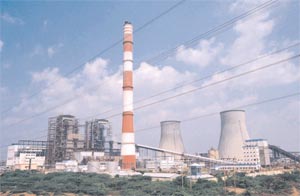
    CHENNAI (TIP): Chennaiheadquartered Tecpro Systems Ltd has entered into an agreement with Mitsubishi Heavy Industries Mechatronics Systems Ltd (MHI) of Japan for technology for manufacturing electro-static precipitators (ESPs) for thermal power projects. With MHI technology, Tecpro will make the ESPs at its Rs 25-crore plant that is coming up in the Sri City industrial estate near Chennai. The tie-up could potentially result in business prospects of about Rs 500 crore a year, Tecpro Systems’ Chairman and Managing Director, Ajay Kumar Bishnoi, told Business Line today.

    Electrostatic precipitators are nothing new in India —all coal-based thermal power projects here are equipped with them. These are needed to trap and remove particulate matter from the exhaust gases from boilers. So what makes MHI technology any different? Arvind Bishnoi, Director at Tecpro, observed that there were two major advantages to MHI technology. Typically, an ESP system costs Rs 50 crore. With MHI, the costs would be significantly lower and the size of the equipment much smaller. Second, emissions from their ESP systems will be contained well within the 30 mg/cubic nm norm. Tecpro mainly offers coal and ash handling systems for thermal power projects. It also provides full ‘balance of plant’ solutions on turnkey basis. In 2012-13, the company was able to book orders worth Rs 2,552 crore.

    It has orders on hand of around Rs 4,000 crore. The Sri City plant would be production-ready in a few months and Tecpro Systems has started offering its products from here. It has, for instance, participated in an NTPC tender for two plants of 800 MW each in the Garadwara project. This is, incidentally, the second tie-up that the Japanese major has entered into with an Indian company recently. Last month, MHI signed a similar technology agreement with public sector power equipment major BHEL for imparting know-how to make flue-gas desulphurisation systems for power projects.

  • In FY13, NRI deposits climb 19%

    In FY13, NRI deposits climb 19%

    MUMBAI (TIP): Lured by higher returns offered by banks in their homeland, non-resident Indians (NRIs) placed deposits aggregating $14.18 billion in the financial year ended March 2013, an increase of 19 per cent over the previous year. In the previous year, NRIs parked deposits aggregating $11.92 billion with banks in India. NRIs placed deposits predominantly in non-resident (external) rupee account or NRE account. NRE deposits with the banking system jumped 85 per cent (rising by $15.81 billion in FY13 compared to $8.53 billion in FY12), according to Reserve Bank of India data. The attractiveness of NRE deposits lies in the fact that banks quote the same interest rate on these as on domestic deposits.

    For example, State Bank of India is quoting 8.75 per cent on NRE deposits of one- to 10-year duration. Also, the principal and interest are fully repatriable and the interest earned is exempt from Indian income-tax. “The rising trend in NRE deposits is an indication that the NRIs expect the rupee to appreciate down the line. So, the NRIs are not only gaining by way of interest rate but also on account of favourable exchange rate conversion factor,” said a banker. In FY13, the banking system’s NRO (non-resident ordinary deposits) shrunk by $1.8 billion (against an accretion of $4 billion). Since NRO deposits are nonrepatriable and require submission of tax-residency certificate and self-declaration, bankers say these deposits have become unattractive.

  • Paraguay keen on partnering India

    Paraguay keen on partnering India

    CHENNAI (TIP): Paraguay hopes to partner with India on a diverse range of industries including natural resources, agriculture and education said the Ambassador of Paraguay to India, Genaro Vicente Pappalardo.Addressing a meeting organised by the Southern India Chamber of Commerce and Industry, he said the cost of living in Asuncion, the country’s capital, is the lowest among capital cities in the world. Paraguay has also business-friendly policies and easy to settle in.

    Education is an important area with its young population going out to study in Europe and the US. Also in the last three decades, Paraguay has set up more than 50 universities.R. Thandavan, Vice-Chancellor, University of Madras, said the institution set up in 1857 has tie-ups with over 200 universities across the globe and is keen to partner with its counterparts in Paraguay. Student and faculty exchange and research collaborations could be explored, he said.

  • Upgradation Of Existing Facility And Creation Of New Facility At Visakhapatnam Port Trust For Iron Ore Handling

    Upgradation Of Existing Facility And Creation Of New Facility At Visakhapatnam Port Trust For Iron Ore Handling

    NEW DELHI (TIP): The Cabinet Committee on Economic Affairs has approved the project for upgradation of existing facility and creation of a new facility at Visakhapatnam Port Trust for iron ore handling in two phases on Design, Build, Finance, Operate and Transfer (DBFOT) basis at an estimated cost of Rs. 845.41 crore. The project will be taken up for implementation under Private Public Partnership (PPP) mode on DBFOT basis, that is, the entire investment on the project will be made by the concessionaire.

    The project is envisaged to be implemented in two phases. In Phase-l, upgradation of existing mechanized iron ore handling facility at Outer Harbour will be taken up at an estimated cost of Rs.580.89 crore. This will involve capacity addition of 16.2 MTPA. In Phase II, creation of new mechanized facility at West Quay-1 (WQ-1) berth in inner harbour at an estimated cost of Rs. 264.52 crore involving capacity addition of 6.8 MTPA will be taken up. Phase-ll facility at Inner Harbour would be taken up after attaining the threshold limit of 12.5 million tonnes of cargo handling at Outer Harbour or two million tonnes of cargo handling at Inner Harbour, whichever is earlier. However, there is no bar on the operator to commence Phase – II on the date of award of concession. Phase I of the project will be completed by June 2015 and Phase II, within two years of its commencement. This project will create additional employment opportunities and lead to the socio-economic development of the region.

  • Manipal Health Enterprises acquires Ankur Healthcare

    Manipal Health Enterprises acquires Ankur Healthcare

    BANGALORE (TIP): Manipal Health Enterprises (MHE) has forayed into andrology and reproductive medicine services by acquiring Ankur Healthcare. Ankur Healthcare is a speciality centre focusing in the areas of reproductive medicine – In Vitro Fertilisation, andrology and men’s Health.MHE has invested Rs 40 crore so far in this speciality healthcare outfit founded by Vasan S. S., Uro Andrologist, and Bina Vasan, specialist in reproductive medicine, a decade ago. Further, MHE has also committed Rs 3 crore to strengthen its medical infrastructure and plans to bring in Rs 100 crore for expansion in the next three to four years.“This investment marks the beginning of Manipal’s foray into allied healthcare delivery formats in partnership with established players in specified clinical areas,” said Rajen Padukone, Managing Director and Chief Executive Officer, Manipal Health Enterprises. The new entity will be called Manipal- Ankur Andrology & Reproductive Services and called so even after Manipal Hospital’s investment

  • In the Air

    In the Air

    How ethical it is for an administration employee to organize fund raisers for the boss?
    Being discussed these days in Nassau County is an issue that relates to fundraising which has become a favorite pastime of the South Asian community here. Employees with towns and County seem to be vying with each other to organize fundraisers for their bosses. Obviously, to be on the right side and to get favors.

    The question being raised is whether or not this amounts to corruption. And whether or not it is unethical, to say the least.

    May be the New York State Governor and the Attorney General need look in to the issue.

  • India urges Lanka to honour transfer of power to provinces

    India urges Lanka to honour transfer of power to provinces

    NEW DELHI (TIP): Ahead of the crucial Northern Provincial Council elections in neighbouring Sri Lanka, India has explicitly warned the government there not to take any step which undermines its own commitment to the 13th Amendment and the island nation’s “expressed intention to build upon it”. Alarmed by reports that a key ally of President Mahinda Rajapaksa, JHU or the Heritage Party, was about to move a proposal in Parliament for abolishing the 13th Amendment, foreign minister Salman Khurshid called up his counterpart G L Peiris to expresses concern over the development. A product of the 1987 India-Sri Lanka Accord, the 13th Amendment is seen as key to devolution of power to the provinces and ongoing reconciliation process in the country. The JHU has demanded that provincial councils in the country be scrapped.

    Official sources said Khurshid took up with Peiris reports suggesting Lanka was considering doing away with land and police powers from provinces prior to polls. “The foreign minister told his Lankan counterpart that if this happens, India will view it as a retrograde step which is not in the interest of relations between the two countries,” said a source. In an interview to TOI last year, Rajapaksa had said, “There is no justification for any consideration that our commitment to the 13th Amendment is wavering.

    At least officially until now, Lanka has concurred with India that “building upon the 13th Amendment, would create conditions for genuine reconciliation”. The upcoming elections in the Northern Province are seen not just by India but also the international community as crucial to Lanka’s commitment to achieving reconciliation with local Tamils. Khurshid also referred to some reports about army acquiring private land in the Northern Province for high security zones. “He emphasized that this would not be in accordance with the LLRC recommendations and such a move would not be helpful,” said a source. The Lessons Learnt and Reconciliation Commission (LLRC) was set up by Rajapaksa’s government to look into allegations of war crimes from 2002 to until the time the war ended in 2009.

    While India believes that close to 70% of Lankan forces are still deployed in northern part of the country, Lanka has dismissed it has LTTE propaganda. Colombo denies the alleged continuing militarization of the region saying that while the troop strength was 27,000 in Jaffna in December 2009, the figure had come down to 15,000 in June, 2012.

  • Police book Honey Singh for singing lewd songs

    Police book Honey Singh for singing lewd songs

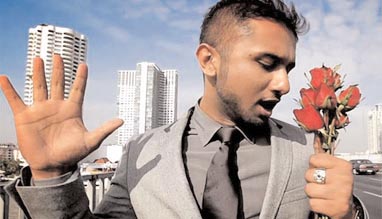
    NAWANSHAHR (TIP): Three days after Punjab and Haryana high court rapped Punjab government for not taking action against controversial singer Honey Singh, Punjab police on Friday registered an FIR against him at the Nawanshahr police station.

    The singer has been booked under Section 294 of the IPC (obscene acts and songs) for crooning vulgar songs, one of which is titled ‘Main Hoon Balatkari’ (I’m a rapist). The high court on May 14 had pulled up the Punjab government and asked it to get tough with the Hoshiarpur-born singer, who already has a similar police case registered against him in Lucknow.

    “We have started collecting evidence against the singer regarding the case and our next course of action will depend entirely on what we lay our hands on,” said Nawanshahr SSP Dhanpreet Kaur. Police registered the case on the complaint of Parvinder Singh Kitna, a local resident, who also heads an NGO. The complaint was filed in January but at that time, the police had refused to register a case, prompting Kitna to move the HC seeking ban on playing and sale of vulgar songs in the state. According to the FIR, Honey’s songs were crossing all barriers of decency and his one particular song – ‘Mein Hoon Balatkari’ — even provoked sexual violence against women.

    Honey and some of his songs had come under the spotlight in the wake of Nirbhaya gang rape case for use of sexist lyrics and commodifying women. The singer had faced flak from various quarters. Some of his programmes were forcibly cancelled when the entire nation was shocked over Nirbhaya’s plight. Conviction under Section 294 of the IPC can lead to imprisonment, which may extend up to three years. Meanwhile, the high court has also directed Honey to appear before it on July 4, when the case will come up for hearing again.

  • Barack Obama invites Manmohan Singh, visit likely this year

    Barack Obama invites Manmohan Singh, visit likely this year

    NEW DELHI (TIP): At a time when Indo-US ties appeared to be losing steam, President Barack Obama has invited PM Manmohan Singh for a bilateral meeting this year. Confirming the development, sources in Washington told that Singh has accepted the invitation and the dates were being worked. India has proposed that the meeting happen when Singh visits the US for the UNGA but sources said that both sides are looking for a mutually convenient time between September and December.

    The invitation to Singh comes when there has been a stalemate over civil nuclear cooperation owing to India’s nuclear liability law. US Deputy Secretary of State William Burns first spoke to Indian authorities about Obama’s desire for a meeting with Singh during his recent visit to Delhi. Then a formal invite was extended.

    Sources said that the leaders will review all key bilateral issues between the two countries including civil nuclear initiative, counter terrorism, Afghanistan, defence, space collaboration and education.Afghanistan is an issue where India has certain reservations about US policies ahead of the pullout next year. US has repeatedly praised India for facilitating regional economic integration and ensuring private sector investment in the country but New Delhi has been watching with reservations the US move to engage the Afghan Taliban in the reconciliation process.

    Sources said that Singh will also strongly take up the issue of a controversial immigration bill, proposed by a bipartisan group of Senators (Gang of 8), which proposes to tighten H1-B regulations further against the interest of Indian IT companies. In an interview to TOI, foreign minister Salam Khurshid said that the draft bill wasn’t good for bilateral ties. This will be Obama’s first bilateral meeting in his second term with Singh, whom he looks upon as a friend. While the US president has expressed his fondness for Singh on several occasions, the fact that he chose not to meet him on the sidelines of UNGA in New York in 2011, and also did not invite him to Washington during that trip, was seen as a let down.Obama may have more than made up for it by inviting Singh at a time when the government led by the Indian PM is plagued by domestic crises.

    Singh was the first state guest of President Obama when he visited Washington in November 2009. The visit was used by the two leaders to reaffirm the global strategic partnership between the two countries. The meeting will also earn India some diplomatic bragging rights in that it will ensure Singh’s engagements with leaders of all P5 countries in 2013. While French President Francois Hollande and British PM David Cameron have already visited India, Chinese Premier Li Keqiang is arriving in New Delhi on Sunday. Singh is also expected to visit Russia this year

  • UPA should declare its PM candidate first: BJP

    UPA should declare its PM candidate first: BJP

    JAMMU (TIP): BJP said, the Congress-led UPA should declare its Prime Ministerial candidate first and whether Rahul Gandhi is a stakeholder for the top job or not. While insisting that BJP Parliamentary Board will take a decision regarding its PM candidate at an appropriate time BJP national general secretary and former Gujarat Home Minister Amit Shah said, since UPA was in power, it should first take a decision in this regard. “I am a BJP worker. I don’t have any individual thinking. BJP Parliamentary Board will take a decision at the right time,” Shah said when asked whether the party will project Narendra Modi as its PM candidate. “UPA is in power, let them first decide whether their prince (Rahul Gandhi) is a stakeholder for the top job or he will be the Prime Minister. Let UPA first decide, after that the Opposition’s case comes in question,” he said.

  • CNG, LPG kits for cars to now come with ‘guarantee’

    CNG, LPG kits for cars to now come with ‘guarantee’

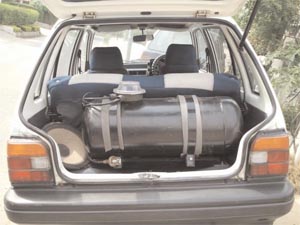
    NEW DELHI (TIP): Manufacturers of CNG and LPG retrofitting kits will now have to provide “guarantee” or “warranty” for their products. The decision was taken on Thursday by the road transport and highways ministry in consultation with manufacturers with the intent to make CNG retrofitted vehicles safer and less accidentprone.

    The move will also rid the market of fly-by-night manufacturers selling substandard kits. Safety issues relating to CNG kits have come into focus following increasing cases of fire and other defects in CNG-fueled vehicles. No manufacturer provides guarantee or warranty for their products, a ministry source said. “Though there was hesitation from the manufacturers’ side, we pushed for this as a mandatory provision.

    In the next 2-3 months, we will come out with a notification on this and manufacturers failing to meet this condition won’t be allowed to sell their products,” a top ministry official said. He added that since manufacturers would need time to comply with this norm, the ministry plans to implement it all over the country in the next one year. Some car manufacturers sell factory-fitted CNG variants of its vehicles.

    In case of almost all other petrolfueled cars, the owners get CNG or LPG kits installed from the open market. In recent years, more and more car owners have converted their petrol vehicles into CNG-fueled ones considering the lower fuel cost. Delhi and its suburbs, which account for a large part of the country’s cars, have witnessed a rising trend towards CNG in the past few years. This has been seen in other parts of the country also where CNG is available.

    S P Singh of IRTFT, an independent transport research body, said the government had woken up late. “How come government allowed CNG kits to be sold in the market when these didn’t comply with standards? How could government realize the safety of vehicles with such substandard kits so late? It’s a positive step but it has come late after several accidents have happened and lives have been lost,” he said.

  • Tri-service commands for space, cyber warfare

    Tri-service commands for space, cyber warfare

    NEW DELHI (TIP): The armed forces are now finalizing the plan for creation of three new tri-Service commands to handle space, cyber and special forces, which will be “critical” in deploying capabilities for conventional as well asymmetric warfare in a unified manner. Contours of the Cyber, Aerospace and Special Operations Commands (SOC), after “a lot of spadework” over the past several months, are now being fine-tuned to ensure the “formal joint plan” can be presented to the government by end-July, say sources. “The Aerospace Command, for instance, can be based at Hyderabad because of the presence of ISRO, DRDO there.

    Similarly, the SOC can come up at Delhi since the C-130J `Super Hercules’ aircraft, which are customized for special operations, are based at Hindon airbase,” said a source. The chiefs of staff committee — headed by Air Chief Marshal N A K Browne and including General Bikram Singh and Admiral D K Joshi — as well as other forums of the top military brass have been mulling over the plan since last year, as was first reported by TOI. Though the “urgent need” for Army, Navy and IAF to “synergise” their efforts in tackling challenges in the domains of space, cyber and special forces is well-acknowledged, especially with China furiously developing counter-space and cyber weapons, there has been no final decision on who will “mother” which command.

    The experience of India’s only theatre command at Andaman and Nicobar islands (ANC), with its commander-in-chief (a three-star officer like Lt-General, Vice-Admiral or Air Marshal) being rotated among the three Services, has not been successful. “Turf wars ensure the Services are not very keen to part with their assets for ANC,” said the source. At present, each Service gets to head the three unified commands — ANC, Strategic Forces Command (SFC) and Integrated Defence Staff (IDS) — by rotation.

    “But it is felt one particular service should have stake in a specific command that can draw assets and manpower from all three but is steered by that Service,” he said. So, a view that has emerged is that while SFC, IDS and Cyber Command can continue to be “rotated”, ANC should be headed by Navy, Aerospace Command by IAF, and SOC by Army. “This fits in with the domain expertise of each Service. The government will of course have to take the final call on the new commands,” he said. India has floundered for long in setting up effective and unified structures to deal with threats in space and cyberspace as well as in strengthening its clandestine and “unconventional” warfare capabilities.

    The Aerospace Command, for instance, has been demanded by the armed forces in the past also but the government has kept it in cold storage despite China having an expansive military space programme that extends to advanced ASAT (antisatellite) capabilities with “directascent” missiles, hit-to-kill “kinetic” and directed-energy laser weapons. Cyber-warfare, too, is a frontline military priority for China. Cyberweapons can cripple an adversary’s strategic networks and energy grids, banking and communication, and even sabotage a country’s nuclear programme like Iran learnt after the Stuxnet software “worm” destroyed a thousand of its centrifuges a couple of years ago.

  • Need to reset moral compass of society: President

    Need to reset moral compass of society: President

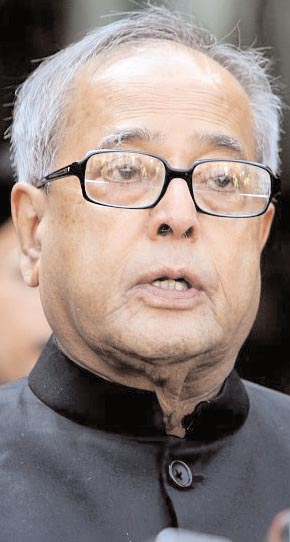
    GUWAHATI/KOHIMA (TIP): Women’s empowerment is on top of President Pranab Mukherjee’s agenda. During his visit to Assam and Nagaland, Mukherjee made the point by repeatedly mentioning the Nirbhaya incident and underlining the need to ponder and “reset the moral compass” of society.

    The Delhi gang-rape had shaken the conscience of the nation, he said, adding that universities and academic institutions could play an important role in checking moral decline. “We are living in a difficult time. I am not only talking about the difficult time from the political perspective but mainly from the social perspective. Is it not high time for all of us, irrespective of where we are and what we are, to think and ponder over? Being social beings, being the product of social investment, are we not going to ponder over and reset our moral compass,” he said at an award function in Guwahati. While addressing university students in Nagaland, Mukherjee said these “unfortunate incidents” underscored the urgency to introspect the erosion of values and to devise effective measures for the safety and security of women and children.

    “There is a need to identify the causes of moral decline in our society and our universities and academic institutions must take the lead to meet the moral challenge of our times and ensure that our civilisational values are fully entrenched in young minds,” he said. Quality education, innovation and research were other areas which the President said needed more focus. Mukherjee said education should stand on the three pillars of accessibility, availability and affordability. “The objective of education should be qualitative expansion over physical expansion. Only 0.4% of the budget allocation for education is spent on research.

    This has to increase,” he said, emphasizing that there was a gap in terms of “quantity and quality”. He underlined the fact that not a single university or institute of technology of India found a place in the list of top 200 universities of the world.

  • Infiltration bid foiled along LoC, JCO killed

    Infiltration bid foiled along LoC, JCO killed

    SRINAGAR (TIP): A Junior Commissioned Officer was killed while a soldier was injured as Army on Saturday foiled an infiltration bid by militants in Macchil sector along the Line of Control in north Kashmir’s Kupwara district. Troops of 56 Rashtriya Rifles noticed some suspicious movement of two to four persons along the LoC in Macchil sector at around 3.00am and challenged them, an Army spokesman said. The militants, who were trying to sneak into the Valley from Pakistan occupied Kashmir, opened fire on the army positions including on Dingeri Post, which was retaliated. In the ensuing gunfight, a JCO identified as Arun Kumar was killed while a soldier Solanki Raju was injured. The militants fled in view of the stiff challenge posed by the army troops, the spokesman said. The ultras left behind two assault rifles and some war-like stores before crossing back into PoK territory, he said.

  • East Meets West at the Indian Consulate Courtesy Charlotte White’s Salon De Virtuosi

    East Meets West at the Indian Consulate Courtesy Charlotte White’s Salon De Virtuosi

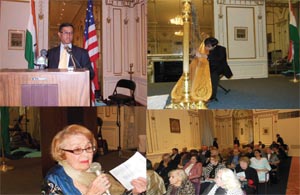
    NEW YORK, NY (TIP): It was a treat for the ear and the eye. Once again, after almost a year, East met West in a musical extravaganza on May 13. Charlotte White’s Salon De Virtuosi organized the grand musical event for the twentieth year in a row. The 99 year old Charlotte White, the Founder and Director of the Salon De Virtuosi, has over the past few decades discovered and promoted some “extraordinarily gifted international emerging musicians”. The musical extravaganza on Monday, May 13 at the Indian Consulate brought together Sivan Magen, a Harpist from the West, and Sameer Chatterjee on Tabla and K.V. Mahabala on Sitar from the East to give to the music lovers an evening of great music to remember.

    Another attraction of the evening was a Kathak dance performance by Somwya Viswanath, a student of Janaki Patrik, Artistic Director of The Kathak Ensemble & Friends/Caravan, Inc. The Consul General of India in New York, Dnyaneshwar Mulay, in his opening remarks quoted from the ancient Indian literature to dwell on the glory of music. He complimented Charlotte White for bringing together the music of the East and the West. Charlotte White spoke of her long association with India and the Indian Consulate in New York and thanked the Consul General for his kind words and collaboration with Salon De Virtuosi.

  • Meet Karnataka’s new shepherd K Siddaramaiah

    Meet Karnataka’s new shepherd K Siddaramaiah

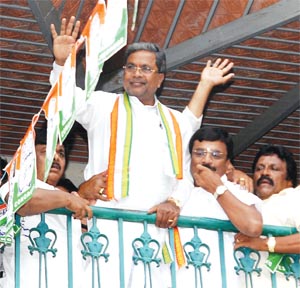
    KSiddaramaiah is a popular name in the political scenario of Karnataka. Siddaramaiah won a seat to the Karnataka State Assembly for the first time in 1983. He served as the Deputy Chief Minister of Karnataka twice – in 1996 and 2004. He is primarily known for his financial sharpness and mass following among the backward classes. He held the portfolio of finance minister of Karnataka for seven times. Siddaramaiah took oath as Chief Minister of Karnataka on May 13, 2013 in Kanteerva Stadium in Bangalore. May 13, 2013 is considered a very auspicious day because of Akashya Tritiya.

    Early Life
    Siddaramaiah was born in a remote village called Siddaramanahundi situated in Varuna Hobli of Mysore district and at a distance of 23 km from Mysore. He was born to a farmer family and is the second amongst the five siblings. He did not attend school till he was ten years of age and started his education from the fifth standard. But this late entry did not stop him from topping the state board examination. He went on complete B.Sc. and then Bachelor of Law from Mysore University. He was the first graduate from his village. He became a teacher for a short period at Vidyavardhaka Law College in Mysore before beginning his political career.

    Political Career
    He began his political career in 1983 after winning from Chamundeshwari constituency in Mysore on a Bharatiya Lok Dal ticket. He later joined the ruling Janata Dal. He held various portfolios as a minister in the Janata Dal governments headed by Ramakrishna Hegde, H.D. Deve Gowda and J.H. Patel. He first suffered defeat in the Assembly elections of 1989.

    He served as the Secretary General of Janata Dal in 1992. Among the portfolios handled by Siddaramaiah as a minister of the Janata Dal government are: Deputy Chief Minister of Karnataka Minister for Finance Minister for Animal Husbandry and Veterinary Services Minister for Sericulture Minister for Transport As a finance minister Siddaramaiah is one of the most experienced and widely respected figures in the state. He presented five successive budgets from 1994. He was appointed a finance minister in the Congress-Janata Dal-Secular government in Karnataka in 2004-2006. He presented the budget twice as finance minister during that period. He came close to becoming the chief minister of Karnataka twice – in 1996 and 2004. In 2004 Siddaramaiah was in JD(S) when he was tipped to be the chief minister.

    But former Prime Minister HD Deve Gowda promised Congress the Karnataka chief minister’s post in the coalition government. So, Siddaramaiah had to let go of his chance to become the chief minister of the state. Dharam Singh went on to occupy the CM’s post and Siddaramaiah was offered the designation of deputy chief minister. Inspite of all the ups and downs of a political life, Siddaramaiah never shied away from expressing his views. This is one of the reasons that led to his resignation from the JD(S) after he claimed that the former PM Deve Gowda was promoting his family members in the party. Though he was close to the former PM at that time and was even considered as a lieutenant to him, yet he did not let that affect his opinions. Siddaramaiah joined Congress in 2006.

    Even after missing the chance of becoming the chief minister twice, he did not lose hope. During this month’s election, the politician had publicly declared that this was his final attempt at electoral politics. Finally this year he was elected for the portfolio of the Chief Minister in Karnataka by the members of the Congress Legislature Party (CLP), who chose him as the CLP leader. This is Siddaramaiah’s 30th year in active politics. He is to be sworn in as the 28th Chief Minister of Karnataka on 13th May, 2013 at the Sri Kanteerava Stadium.

    Trivia about Siddaramaiah
    Siddaramaiah’s father did not remember when he was born. So, when Siddaramaiah went to school one of the teachers entered a birth date for the sake of school records. That particular date remains his official birth date till now and the date is August 12, 1948. Siddaramaiah is always dressed in white kurta and panche, a kind of lungi. He carries an angavastra which he frequently shifts from one shoulder to another. At an age of about 64 years, this man with grey streaked hair is hundred per cent loyal towards his home constituency. He has no problem in being labeled as a rustic. He takes pride in the fact that he has come this far in his political career after starting from a humble background. He is one of the few politicians in Karnataka who maintain a private home front. His wife Parvathi is rarely seen in public. The couple has two sons. The elder son Rakesh helps Siddaramaiah in his political life while the younger son Yatindra is pursuing a medical degree.

  • History of Karnataka

    History of Karnataka

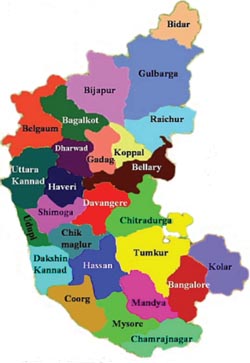
    Legend has it that the history of Karnataka dates back to the happenings in the Epic, Ramayana. Moreover, the history of Karnataka also has a bearing to the period when people from the western countries came here in search of a market. But the ancient history of Karnataka apparently starts with the Mauryas. After the Mauryas, the history of Karnataka witnessed the rule of Satavahanas who ruled Karnataka for nearly 300 years. The Satavahanas, in their turn, were replaced by Kadambas and the Pallavas, the Gangadikaras, the Chalukyas of Badami, the Rashtrakutas, the Kalacharis, the Hoysalas, the Yadavas, the Kakaiyas and so on.

    Moreover, with the rise of the Malik Kafur, the history of Karnataka saw the emergence of the Muslim rulers. Yet in 1336 a Hindu kingdom was established at Vijaynagar by the Harihara (Hakka) and Bukka. This period of wealth and property and the economy of Karnataka shot up vigorously, under these rulers. But all good things come to an end and so did this kingdom; it was replaced by the Bahamanis in 1337. The Bhamanis gave way to the Vijayanagar empire, which in its turn, lost to the Sultans of the Deccan at the famous battle of Talikota. Subsequently, with the emergence of the British in the political scenario of India, the local administrators of India had to yield to the expansionist policy of the Britishers. Karnataka went under the charge of the Britishers in 1799 and it remained a princely state with a presiding puppet king as its head till 1947 when India got its independence. Ultimately, in 1973 Karnataka became an independent state of the Indian Union.

    Ancient Karnataka
    Ancient Karnataka, as the legend says, is associated with the happenings in the Ramayana. In fact, legend affirms that the ancient Karnataka was associated with the kingdom of grandfathers of Bhagirath and also with Lord Shiva. Moreover, Karnataka had long been the interest of the foreign traders, who came to India in search of its material wealth and also for its spices which had a great demand in the western market. Further, ancient Karnataka dates back to the period when Chandragupta Maurya ascended the throne of Karnataka.

    Chandragupta Maurya, one of the great rulers of ancient Karnataka, exercised his control over the region till his death. Under the Mauryas, the territory of Karnataka flourished like the Garden of Eden with tremendous wealth within its realms. But the Mauryans could not have held the throne till eternity; therefore it passed on to the Satavahanas. Karnataka ancient history confirms that the Satavahanas ruled Karnataka for nearly 300 years. The Satavahans, as the ancient history of Karnataka has it, were followed by the Kadambas and Pallavas. After the Kadambas and Pallavas, rose the Gangadikaras who ruled in the region till the 11th century. The Chalukyas of Badami, the Rashtrakutas, the Kalacharis, the Hoysalas, the Yadavs, the Kakatiyas, etc, followed the Gangadikaras in Karnataka. Moreover, Karnataka also saw the genesis of a Muslim kingdom which began with the Malik Kafur’s accession to the throne of Karnataka. But this Muslim kingdom could not hold on for long and in 1336, Harihara (Hakka) and Bukka established a Hindu kingdom at Vijayanagar.

    Medieval Karnataka
    The medieval Karnataka deals with the Chalukyas, Rahstrakutas, Western Chalukyas, Hoysalas, Gangas and the Vijaynagar empire. These kingdom as a whole constitute the medieval Karnataka or the medieval history of Karnataka, as we call it. The medieval Karnataka starts with the emergence of the Hoysalas during the first millennium. During the reign of the Hoysalas, as the medieval Karnataka has it, art and architecture flourished tremendously in Karnataka. Throughout the entire region we find temples and structures adhering to the Vesara style of architecture that was prevalent at that point time. Under the Hoysalas, the kingdom of Karnataka also included parts of Andhra Pradesh and Tamil Nadu. Subsequently, the Vijaynagar empire rose in Karnataka in the 14th century AD. The Vijaynagar empire was established by the joint efforts of Harihara I and Bukka Raya, who according to the medieval Karnataka were the commanders of the last Hoysala king, Veer Ballala III. Further speaking about medieval Karnataka, it can be said that the Bahamani Sultans of Bidar were the actual competitors of the Vijaynagar kings. It is after the fall of the Vijaynagar kingdom in the Battle of Talikota in 1565, that the Bijapur Sultanate under the Sultans of Bahamani, rose to power.

    Modern Karnataka
    Modern Karnataka holds an account of events that took place after the decline of the Mughal empire. It goes like this that the Wodeyars took Karnataka on lease from the Mughal king Aurangzeb in the 15th century. As per the history of modern Karnataka, the Wodeyars came to power in Mysore in 1399 AD. Wodeyars made Mysore a small principality with Srirangapatnam as their capital. But, the Wodeyars were overthrown by Hyder Ali. After the death of Krishnaraja Wodeyar II, Hyder Ali, the commander-inchief of the Mysore Army, came to the throne of Karnataka. Hyder Ali was an efficient king in the history of modern Karnataka. After the departure of Hyder Ali, it was his son Tipu Sultan who assumed the control of Karnataka. Tipu Sultan, known as the Tiger of Mysore, is one of the most powerful rulers of modern Karnataka.

    There were the wars fought between Tipu Sultan and the British, who had assumed great power in the other regions of India. The four Anglo-Mysore Wars are very crucial in the history of modern Karnataka. In fact, it were these battles that paved the way for British supremacy in southern India. Moreover, it was in the last Anglo-Mysore War that Tipu Sultan lost his life, fighting for the cause of his territory.

  • Cong Back In Driving Seat In Karnataka

    Cong Back In Driving Seat In Karnataka

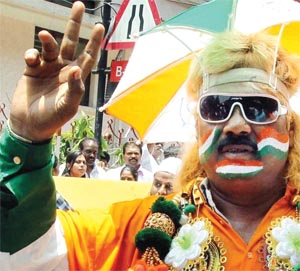
    The Congress recaptured power in Karnataka after seven years, crushing the BJP in the assembly elections – a victory that might boost the morale of the party facing a relentless opposition onslaught over massive corruption scandals.
    Congress stormed back to power in Karnataka in a spectacular fashion after seven years in its old southern bastion decimating the ruling BJP whose fate was sealed by a fractious split and corruption charges. BJP, which was wrecked by a split forced by former Chief Minister B S Yeddyurappa on top of a series of corruption cases, tied for the second place with JD(S) with both securing 40 seats each. The Yeddyurappa-led Karnataka Janata Paksha (KJP), which spoiled BJP’s party, could not do much for itself as it bagged only six seats. The BSR-Congress, led by former BJP Minister Sriramulu, considered close to the Bellary brothers, also chipped away BJP votes and ended up with four seats.

    The rout of BJP, whose rule saw ugly infights, three Chief Ministers and several ministers tainted by corruption charges, was complete as it was clobbered by the electorate who pushed it to a pathetic position of sharing the second place with JDS of former Prime Minister H D Deve Gowda. Both BJP and JDS secured 40 seats each. A three-way split in its voter base put paid to BJP’s hopes of securing a renewed mandate, bringing down its only citadel in the South. Yeddyurappa’s twin agenda of decimating BJP and emerging a kingmaker remained half-complete as he succeeded in one but failed to make an impressive debut through his nascent outfit securing only six seats out of 216 it contested.

    Several heavyweights, including Chief Minister Jagdish Shettar (Hubli-Dharwad Central), Yeddyurappa (Shikharipura), Siddaramaiah (Varuna) and H D Kumaraswamy (Ramnagaram) , won from their constituencies but Parameshwara (Koratagere) lost heavily. Kumaraswamy’s wife Anita and Yeddyurappa’s confidant Shobha Karandlaje suffered defeats from Channapatna and Rajaji Nagar respectively. Twelve ministers of the Shettar Cabinet, including Deputy Chief Minister K S Eshwarappa, fell by the wayside, rubbing salt into the wounds of the vanquished BJP. C P Yogeeshwara, who quit the Jagadish Shettar Ministry, towards the end of the tenure of the Government and contested on Samajwadi Party ticket, won from Channapata, defeating Anitha Kumaraswamy (JDS) by nearly 6,500 votes. For the BJP, the worst was in store in its heartland in the coastal districts of Dakshina Kannada and Udupi, while it failed miserably to keep its base in tact in Bombay Karnataka and Hyderabad-Karnataka regions that gave electoral muscle.

    As expected, JDS maintained its hold in the Vokkaliga belt while making some gains beyond its traditional support base that fetched it 12 more seats than 28 it won in the last elections. With a clear cut verdict, JDS’ hopes of playing the role of a kingmaker have also been dashed. Polling was held in 223 segments, with the one in Periyapatna in Mysore district put off to May 28 following death of BJP candidate. BJP’s performance in its own strongholds was pathetic, reflected in the coastal districts of Dakshina Kannada and Udupi where its defeat was near complete as also in Yeddyurappa’s home district of Shimoga and Bellary. Eshwarappa’s loss in Shimoga is all the more significant as he was a former state unit President of the party and also held the key portfolios of Rural Development and Panchayat Raj and Revenue.

    He was in the “hit-list” of Yeddyurappa, who now had the “sweet revenge”. Another big gun to lose was Industries Minister Murugesh R Nirani, who spearheaded two global investors meet, and was in two minds till the last minute whether to join forces with the KJP but eventually continued to be in the BJP, in Bilgi. Congress candidate and former Union Civil Aviation Minister C M Ibrahim was pushed to third position in Bhadrawati. In the 2008 polls, the BJP had secured 110 seats, Congress 80, JDS 28 and Independents six. Falling short of numbers, the BJP had formed government with the support of independents and wooed Opposition MLAs who were made to resign and recontest on the BJP ticket that gave it stability of numbers.

  • Politics In Karnataka

    Politics In Karnataka

    Karnataka is among states that rank high on the education and development index but its track record is rather poor as far as political stability is concerned. Tomorrow’s election will once again focus attention on the latter aspect. Ever since the nation attained independence in 1947, the state has seen 22 chief ministers being sworn in. However, only one of them, namely D. Devraj Urs, managed to serve his full five-year term in office. Barring K. Chengalaraya Reddy, who served as chief minister of the erstwhile Mysore state in a provisional capacity from 1947 until the first assembly elections were held, the state has seen chief ministers replaced at frequent intervals.

    The Congress party changed chief ministers thrice after it won the first assembly elections in 1952. K. Hanumanthaiah served as chief minister of the then Mysore state for 4 years and 142 days before Kadidal Manjappa replaced him. Manjappa lasted in office for only 73 days before S. Nijalingappa stepped in and stayed on until the next elections were held in 1957. Nijalingappa helped the party retain power and was retained as the chief minister in the second assembly, but only for a brief period before the Congress party opted to replace him with B.D. Jatti, who served out the remaining period of 3 years and 297 days till the next polls were held in 1962. The Congress party retained power, but the same couldn’t be said for Jatti. S.R. Kanthi became the chief minister, but for only 98 days.

    Nijalingappa was back for his second term on June 21, 1962 while Kanthi served as the education minister in his place. Nijalingappa served out the remaining term and led the Congress party in the 1967 polls and retained his post at the chief minister. He, however, had to pay the price for being part of the camp opposed to the then prime minister Indira Gandhi. The Congress party split and Nijalingappa was removed from the post on August 28, 1968. Though he served as the chief minister in his second innings for 5 years and 342 days, that stint was spread over the terms of the third and fourth assemblies.

    Emergency implications Devraj Urs remained in the chair for more than 5 years since elections were delayed in the entire country during the period of internal emergency imposed by the Indira Gandhi regime. The assembly was dissolved as soon as the first non-Congress government was formed in the country under the Janata Party leader Morarji Desai. Urs led the Congress party back to power after fresh elections were held following a brief spell of president’s rule.

    He lasted in office for a mere 1 year and 313 days before R. Gundu Rao replaced him. The latter served for just 17 days less than five years but his time spanned the sixth and seventh assemblies. In 1985, Ramakrishna Hegde formed the first non-Congress government in Karnataka. Since then the state has seen formation of as many as 14 governments under 13 different chief ministers.

  • Zardari Agrees To Restore Cj To Office

    Zardari Agrees To Restore Cj To Office

    In March 2009, growing demonstrations led Zardari to agree to restore the chief justice to office; the government also subsequently announced it would appeal the banning of Sharif and his brother from politics. The supreme court overturned the ban in May, and in July it ruled that Musharraf’s emergency rule had been unconstitutional and illegal. In April, the government received pledges of .2 billion in foreign aid (over two years) to help finance social programs.

    As government forces moved to restore control over areas near Swat, the situation in Swat deteriorated, and in May the military mounted a major offensive against the militants there. In subsequent weeks Islamic militants in response mounted a number of suicide bomb attacks in Pakistani cities, and fighting also intensified in S and N Waziristan and other areas.

    Some 2 million people were displaced by the fighting. The fighting in Swat was declared largely over by late July and by September four fifths of the residents had returned to Swat. Militant attacks continued in Pakistani cities, however, and in Oct., 2009, the military launched a major offensive against militants based in S Waziristan; after some two weeks of fighting militants largely pulled back, ceding most of their main bases to the military by mid-November. In Mar., 2010, an offensive was launched in Orakzai agency in the Tribal Areas, against militants believed to have fled there from S Waziristan; some 200,000 people were displaced by the fighting.

    Fighting continued also in Bajaur and other parts of the Tribal Areas. In Dec., 2009, the supreme court ruled illegal a 2007 Musharraf decree that had declared an amnesty on corruption cases. Benazir Bhutto and the PPP had sought the amnesty in order to end prosecutions begun under Prime Minister Sharif that they asserted were politically motivated, but some 8,000 government officials, politicians, and others were ultimately absolved by the decree.

    The court also called for any case that was derailed by the decree to be reopened. Pakistan and India resumed talks in Feb., 2010; it was the first meeting since the 2008 Mumbai attacks, and agreed a year later to restart formal peace talks. In Apr., 2010, Pakistan adopted constitutional changes that reduced the powers of the president and increased those of the prime minister and parliament, making the president a largely ceremonial head of state; the powers of the provinces were also increased, and the North-West Frontier Province was renamed Khyber Pakhtunkhwa.

    Beginning in late July, the monsoon season resulted in devastating floods of unprecedented proportions along the Indus and its tributaries that impacted, to a greater or lesser degree, all of the country’s provinces and submerged roughly one fifth of its land area. Some 20 million people, the vast majority of them farmers, were affected by the floods, which continued in some areas through September. Some 1,800 died, and the damage was estimated at .7 billion.

    Zadari, who left the country during the crisis, was increasingly unpopular as a result, and the scale of the disaster overwhelmed the government’s ability to respond. Pakistan’s government, which was in financial difficulties before the floods, was faced with estimated rebuilding and recovery costs of billion. By December the financial difficulties threatened the government when the Muttahida Qaumi Movement (MQM) withdrew from the governing coalition over an impending fuel price increase.

    Prime Minister Gilani was forced to roll back the increase in early January in order to regain MQM’s support, and a sales tax overhaul—a condition imposed by the IMF for the release of additional loans—was postponed. The first week of January also saw the assassination of the governor of Punjab because of his support for reforms to Pakistan’s blasphemy laws; in March the minorities minister was similarly killed. In May, 2011, Osama bin Laden, who was in hiding in Abbottabad, Pakistan, was killed there by U.S. commandos, leading to tense relations between Pakistan and the United States; in July the U.S. government announced significant cuts in U.S. aid to Pakistan.

    In Sept., 2011, severe monsoon flooding again hit the country, mainly in Sind. Relations with the United States were further strained in November after U.S. forces, under unclear circumstances during nighttime operations, launched deadly air attacks on Pakistani forces by the Afghanistan border.

    In early 2012 the Pakistani supreme court sought to force the prime minister to ask Swiss officials to reopen a corruption case against President Zadari; the case was among those affected by the 2007 amnesty that the court overturned in 2009. Prime Minister Gilani refused, arguing that the president had immunity, leading the court to convict Gilani of contempt in Apr., 2012. The court then disqualified Gilani as a member of parliament and prime minister in June. Raja Pervez Ashraf, the minister for water and power and a PPP member, subsequently succeeded Gilani as prime minister; Ashraf subsequently also refused to ask the Swiss to reopen the Zadari corruption case.

    Ashraf’s arrest, on corruption charges relating to his previous post, was ordered by the supreme court in Jan., 2013, but anticorruption officials called the charges questionable and refused to arrest him.

    Historic elections
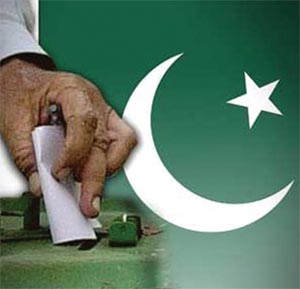
    May 11, 2003, saw historic elections in Pakistan. Despite the violence in the run-up to the elections, which saw regular bomb blasts and the kidnapping of the son of a former prime minister, May 11 votes marked the first time the country has transitioned from one democratically elected government to another. Former Prime Minister Nawaz Sharif is expected to be the new prime minister, based on preliminary results.

    KEY EVENTS IN PAKISTAN’S POLITICAL HISTORY
    -Aug. 14, 1947: Pakistan is founded when British rule over the region ends and the Asian subcontinent is partitioned into Islamic Pakistan, divided into East and West, and predominantly Hindu India.
    -Sept. 11, 1948: Pakistan founder Muhammad Ali Jinnah dies.
    -Oct. 16, 1951: Pakistan’s first prime minister, Liaquat Ali Khan, assassinated in gun attack, triggering political instability.
    -Oct. 27, 1958: Pakistani army chief Mohammed Ayub Khan seizes power.
    -March 25, 1969: After months of opposition rioting in West and East Pakistan, Mohammed Ayub Khan hands over power to army chief Gen. Yahya Khan.
    -Dec. 7, 1970: East Pakistan-based Awami League wins general elections. In response, Yahya Khan suspends the government, triggering widespread rioting in East Pakistan. Civil war breaks out in the wake of army action.
    -Dec. 16, 1971: Pakistan troops surrender in East Pakistan after India’s intervention in the civil war. East Pakistan becomes independent Bangladesh.
    -Dec. 20, 1971: Yahya Khan resigns, Zulfikar Ali Bhutto becomes president. A parliamentary system of government is adopted later, and Bhutto becomes prime minister.
    -July 5, 1977: Pakistani army chief Gen. Mohammed Zia ul-Haq seizes power.
    – April 4, 1979: Bhutto hanged after Supreme Court upholds his death sentence on charges of conspiracy to murder and Zia rejects his mercy petition.
    -Aug. 17, 1988: Zia dies in a mysterious plane crash.
    -December 2, 1988: Bhutto’s daughter Benazir becomes Pakistan’s first woman prime minister.
    -Aug. 6, 1990: Ms. Bhutto’s government dismissed amid charges of corruption and mismanagement.
    – Nov. 1, 1990: Nawaz Sharif becomes prime minister following election.
    -April 18, 1993: President Ghulam Ishaq Khan dismisses Sharif’s government on corruption charges but the Supreme Court revokes the order and reinstates Sharif.
    -July 18, 1993: Due to serious differences between President Khan and Prime Minister Sharif, then-army chief Gen. Waheed Kakar forces both to resign.

  • Musharraf’s Political Troubles

    Musharraf’s Political Troubles

    In March 2007, President Musharraf suspended Chief Justice Iftakar Mohammed Chaudhry, accusing him of abuse of power and nepotism. Supporters of Chaudhry took the streets in protest, claiming the move was politically motivated. In May, 39 people were killed in Karachi when dueling rallies—those in support of Chaudhry and others of the government—turned violent. Justice Chaudhry had agreed to hear cases involving disappearances of people believed to have been detained by intelligence agencies and constitutional challenges involving Musharraf ’s continued rule as president and head of the military.

    Chaudhry challenged his suspension in court, and in July, Pakistan’s Supreme Court ruled that President Musharraf acted illegally when he suspended Chaudhry. The court reinstated him. Radical Islamist clerics and students at Islamabad’s Red Mosque, who have been using kidnappings and violence in their campaign for the imposition of Shariah, or Islamic law, in Pakistan, exchanged gunfire with government troops in July 2007. After the initial violence, the military laid seige to the mosque, which held nearly 2,000 students. Several students escaped or surrendered to officials. The mosque’s senior cleric, Maulana Abdul Aziz was caught by officials when attempting to escape. After negotiations between government officials and mosque leaders failed, troops stormed the compound and killed Abdul Rashid Ghazi, who took over as chief of the mosque after the capture of Aziz, his brother.

    More than 80 people died in the violence. Violence in remote tribal areas intensified after the raid. In addition, the Taliban rescinded the cease-fire signed in Sept. 2006, and a series of suicide bombings and attacks followed. Musharraf’s political troubles intensified in the late summer. In August, the Supreme Court ruled that former prime minister Nawaz Sharif could return to Pakistan from exile in Saudi Arabia. Both Sharif and Benazir Bhutto, also a former prime minister, had sought to challenge Musharraf’s role as military leader and president. Days after the ruling, Bhutto revealed that Musharraf had agreed to a power-sharing agreement, in which he would step down as army chief and run for reelection as president.

    In exchange, Bhutto, who had been living in self-imposed exile for eight years, would be allowed to return to Pakistan and run for prime minister. Aides to Musharraf, however, denied that an agreement was reached. Shortly after, however, Musharraf said that if elected to a second term as president, he will step down from his post as army chief before taking the oath of office. Some opposition leaders, however, questioned whether he would follow through on his promise.

    In September, Sharif was arrested and deported hours after he returned to Pakistan. On Oct. 6, Musharraf was easily reelected to a third term by the country’s national and provincial assemblies. The opposition boycotted the vote, however, and only representatives from the governing party participated in the election. In addition, the Supreme Court said the results will not be formalized until it rules whether Musharraf was constitutionally eligible to run for president while still head of the military.

    The Return of Benazir Bhutto
    Bhutto returned to Pakistan on Oct. 18 amid much fanfare and jubilation from her supporters. The triumphant mood gave way to panic when a suicide bomber attacked her convoy, killing as many as 135 people. Bhutto survived the attack. On Nov. 3, Musharraf declared a state of emergency, suspended Pakistan’s constitution, and fired Chief Justice Iftakar Mohammed Chaudhry and the other judges on the Supreme Court. In addition, police arrested at least 500 opposition figures. Political opponents said Musharraf had in effect declared martial law. Analysts suggested that Musharraf was trying to preempt an upcoming ruling by the Supreme Court, which was expected to declare he could not constitutionally run for president while head of the military. Musharraf, however, said he acted to stem a rising Islamist insurgency and to “preserve the democratic transition.” On Nov. 5, thousands of lawyers took to the streets to protest the emergency rule.

    Many clashed with baton-wielding police. As many as 700 lawyers were arrested, including Chaudhry, who was placed under house arrest. Under pressure from U.S. officials, Musharraf said parliamentary elections would take place in Jan. 2008. On Nov. 9, thousands of police officers barricaded the city of Rawalpindi, the site of a protest planned by Bhutto. She was later placed under house arrest. On Nov. 15, the day that Parliament’s five-year term ended, Musharraf swore in a caretaker government, with Mohammedmian Soomro, the chairman of Pakistan’s senate, as prime minister. He also lifted Bhutto’s house arrest. Later that month, the Supreme Court, stacked with judges loyal to Musharraf, dismissed the case challenging the constitutionality of Musharraf being elected president while head of the military.

    Former prime minister Nawaz Sharif returned to Pakistan on Nov. 25 after eight years in exile and demanded that Musharraf lift the emergency rule and reinstate the Supreme Court justices that were dismissed on Nov. 3. Sharif, who has refused to share power with Musharraf, poses a formidable political threat to Musharraf. Musharraf stepped down as military chief on Nov. 28, the day before being sworn in as a civilian president. Gen. Ashfaq Parvez Kayani, the former head of Pakistan’s intelligence agency, Inter- Services Intelligence, took over as army chief.

    Since he no longer controls the military, Musharraf’s power over Pakistan has been significantly diminished. Musharraf ended emergency rule on Dec. 14 and restored the constitution. At the same time, however, he issued several executive orders and constitutional amendments that precluded any legal challenges related to his actions during and after emergency rule and barred the judges whom he fired from resuming their positions. “Today I am feeling very happy that all the promises that I have made to the people, to the country, have been fulfilled,” he said.

    Bhutto’s Assassination and Successor
    Benazir Bhutto was assassinated in a suicide attack on Dec. 27, 2007, at a campaign rally in Rawalpindi. President Pervez Musharraf blamed al Qaeda for the attack, which killed 23 other people. Bhutto’s supporters, however, accused Musharraf’s government of orchestrating the combination bombing and shooting. Rioting throughout the country followed the attack, and the government shut down nearly all the country’s services to thwart further violence. Bhutto had criticized the government for failing to control militants who have been unleashing terrorist attacks throughout Pakistan. In the wake of the assassination, Musharraf postponed parliamentary elections, which had been scheduled for Jan. 8, 2008, until Feb. 18. Scotland Yard investigators reported in February 2008 that Bhutto died of an injury to her skull. They said she hit her head when the force of a suicide bomb tossed her. Bhutto’s supporters, however, insist she died of a bullet wound. Also in February, two Islamic militants who had been arrested in connection to the assassination admitted that they armed the attacker with a suicide vest and a pistol.

    A New Government
    In the parliamentary elections in February, Musharraf’s party, the Pakistan Muslim League-Q, which has been in power for five years, suffered a stunning defeat, losing most of its seats. The opposition Pakistan Peoples Party, which was led by Bhutto until her assassination and is now headed by her widow, Asif Ali Zardari, won 80 of the 242 contested seats. The Pakistan Muslim League-N, led by Sharif, took 66 seats. Musharraf party’s won just 40. His defeat was considered a protest of his attempts to rein in militants, his coziness with President Bush, and his dismissal of Supreme Court Chief Justice Iftikhar Muhammad Chaudhry. The Pakistan People’s Party and the Pakistan Muslim League-N formed a coalition government.

    In March, Parliament elected Fahmida Mirza as speaker. She is the first woman in Pakistan elected to the position. In March, Zardari selected Yousaf Raza Gillani, who served as speaker of Parliament in the 1990s under Benazir Bhutto, as prime minister. One of Gillani’s first moves as prime minister was to release the Supreme Court justices that Musharraf ousted and detained in late 2007.

    The new government signaled a change of course with the announcement that it would negotiate with militants who live and train in Pakistan’s remote tribal areas. The policy met resistance from the United States, which, with approval from Musharraaf, has stepped up its attacks against the militants.

    In May, the coalition government reached a compromise agreement to reinstate the Supreme Court justices who were dismissed in Nov. 2007 by Musharraf. The agreement fell apart days later, when the Pakistan Muslim League- N said it would withdraw from the cabinet because the Pakistan Peoples Party insisted on retaining the judges who replaced those who were dismissed by Musharraf. In addition, the two parties disagreed on how to reinstate the justices. Sharif wanted the judges immediately reinstated by executive order; Asif Ali Zardari, the leader of the Pakistan People’s Party preferred it be done through Parliament, a process that may be protracted.

  • Political History Of Pakistan

    Political History Of Pakistan

    Pakistan was one of the two original successor states to British India, which was partitioned along religious lines in 1947. For almost 25 years following independence, it consisted of two separate regions, East and West Pakistan, but now it is made up only of the western sector. Both India and Pakistan have laid claim to the Kashmir region; this territorial dispute led to war in 1949, 1965, 1971, 1999, and remains unresolved today. What is now Pakistan was in prehistoric times the Indus Valley civilization (c. 2500–1700 BC).

    A series of invaders—Aryans, Persians, Greeks, Arabs, Turks, and others— controlled the region for the next several thousand years. Islam, the principal religion, was introduced in 711. In 1526, the land became part of the Mogul Empire, which ruled most of the Indian subcontinent from the 16th to the mid-18th century. By 1857, the British became the dominant power in the region.With Hindus holding most of the economic, social, and political advantages, the Muslim minority’s dissatisfaction grew, leading to the formation of the nationalist Muslim League in 1906 by Mohammed Ali Jinnah (1876–1949).

    The league supported Britain in the Second World War while the Hindu nationalist leaders, Nehru and Gandhi, refused. In return for the league’s support of Britain, Jinnah expected British backing for Muslim autonomy. Britain agreed to the formation of Pakistan as a separate dominion within the Commonwealth in Aug. 1947, a bitter disappointment to India’s dream of a unified subcontinent. Jinnah became governorgeneral. The partition of Pakistan and India along religious lines resulted in the largest migration in human history, with 17 million people fleeing across the borders in both directions to escape the accompanying sectarian violence.

    The New Republic
    Pakistan became a republic on March 23, 1956, with Maj. Gen. Iskander Mirza as the first president. Military rule prevailed for the next two decades. Tensions between East and West Pakistan existed from the outset. Separated by more than a thousand miles, the two regions shared few cultural and social traditions other than religion. To the growing resentment of East Pakistan,West Pakistan monopolized the country’s political and economic power. In 1970, East Pakistan’s Awami League, led by the Bengali leader Sheik Mujibur Rahman, secured a majority of the seats in the national assembly.

    President Yahya Khan postponed the opening of the national assembly to skirt East Pakistan’s demand for greater autonomy, provoking civil war. The independent state of Bangladesh, or Bengali nation, was proclaimed on March 26, 1971. Indian troops entered the war in its last weeks, fighting on the side of the new state. Pakistan was defeated on Dec. 16, 1971, and President Yahya Khan stepped down. Zulfikar Ali Bhutto took over Pakistan and accepted Bangladesh as an independent entity.

    In 1976, formal relations between India and Pakistan resumed. Pakistan’s first elections under civilian rule took place in March 1977, and the overwhelming victory of Bhutto’s Pakistan People’s Party (PPP) was denounced as fraudulent. A rising tide of violent protest and political deadlock led to a military takeover on July 5 by Gen. Mohammed Zia ul-Haq. Bhutto was tried and convicted for the 1974 murder of a political opponent, and despite worldwide protests he was executed on April 4, 1979, touching off riots by his supporters. Zia declared himself president on Sept. 16, 1978, and ruled by martial law until Dec. 30, 1985, when a measure of representative government was restored. On Aug. 19, 1988, Zia was killed in a midair explosion of a Pakistani Air Force plane. Elections at the end of 1988 brought longtime Zia opponent Benazir Bhutto, daughter of Zulfikar Bhutto, into office as prime minister.

    A Shaky Government
    In the 1990s, Pakistan saw a shaky succession of governments—Benazir Bhutto was prime minister twice and deposed twice and Nawaz Sharif three times, until he was deposed in a coup on Oct. 12, 1999, by Gen. Pervez Musharraf. The Pakistani public, familiar with military rule for 25 of the nation’s 52-year history, generally viewed the coup as a positive step and hoped it would bring a badly needed economic upswing. To the surprise of much of the world, two new nuclear powers emerged in May 1998 when India, followed by Pakistan just weeks later, conducted nuclear tests. Fighting with India again broke out in the disputed territory of Kashmir in May 1999. Close ties with Afghanistan’s Taliban government thrust Pakistan into a difficult position following the Sept. 11 terrorist attacks. Under U.S. pressure, Pakistan broke with its neighbor to become the United States’ chief ally in the region. In return, President Bush ended sanctions (instituted after Pakistan’s testing of nuclear weapons in 1998), rescheduled its debt, and helped to bolster the legitimacy of the rule of Pervez Musharraf, who appointed himself president in 2001. On Dec. 13, 2001, suicide bombers attacked the Indian parliament, killing 14 people. Indian officials blamed the attack on Islamic militants supported by Pakistan. Both sides assembled hundreds of thousands of troops along their common border, bringing the two nuclear powers to the brink of war.

    Musharraf Extends Power
    In 2002, voters overwhelmingly approved a referendum to extend Musharraf’s presidency another five years. The vote, however, outraged opposing political parties and human rights groups who said the process was rigged. In August, Musharraf unveiled 29 constitutional amendments that strengthened his grip on the country. Pakistani officials dealt a heavy blow to al- Qaeda in March 2003, arresting Khalid Shaikh Mohammed, the top aide to Osama bin Laden, who organized the 2001 terrorist attacks against the U.S. The search for bin Laden intensified in northern Pakistan following Mohammed’s arrest.

    In Nov. 2003, Pakistan and India declared the first formal cease-fire in Kashmir in 14 years. In April 2005, a bus service began between the two capitals of Kashmir— Srinagar on the Indian side and Pakistan’s Muzaffarabad—uniting families that had been separated by the Line of Control since 1947. Abdul Qadeer Khan, the father of Pakistan’s nuclear bomb, was exposed in Feb. 2004 for having sold nuclear secrets to North Korea, Iran, and Libya. Musharraf had him apologize publicly, and then pardoned him. While much of the world reviled him for this unconscionable act of nuclear proliferation, the scientist remains a national hero in Pakistan. Khan claimed that he alone and not Pakistan’s military or government was involved in the selling of these ultraclassified secrets; few in the international community have accepted this explanation.

    Relationship with Taliban
    Pakistan has launched major efforts to combat al-Qaeda and Taliban militants, deploying 80,000 troops to its remote and mountainous border with Afghanistan, a haven for terrorist groups. More than 800 soldiers have died in these campaigns. Yet the country remains a breeding ground for Islamic militancy, with its estimated 10,000–40,000 religious schools, or madrassas. In late 2006 and into 2007, members of the Taliban crossed into eastern Afghanistan from Pakistan’s tribal areas.

    The Pakistani government denied that its intelligence agency has supported the Islamic militants, despite contradictory reports from Western diplomats and the media. In Sept. 2006, President Musharraf signed a controversial peace agreement with seven militant groups, who call themselves the “Pakistan Taliban.” Pakistan’s army agreed to withdraw from the area and allow the Taliban to govern themselves, as long as they promise no incursions into Afghanistan or against Pakistani troops.

    Critics said the deal hands terrorists a secure base of operations; supporters counter that a military solution against the Taliban is futile and will only spawn more militants, contending that containment is the only practical policy. That agreement came under fire in the U.S. in July 2007 with the release of a National Intelligence Estimate. The report concluded that al-Qaeda has gained strength in the past two years and that the United States faces “a persistent and evolving terrorist threat over the next three years.” The report also said the deal has allowed al-Qaeda to flourish. An earthquake with a magnitude of 7.6 struck Pakistani-controlled Kashmir on Oct. 8, 2005. More than 81,000 people were killed and 3 million left homeless. About half of the region’s capital city, Muzaffarabad, was destroyed. The disaster hit at the onset of the Himalayan winter. Many rural villages were too remote for aid workers to reach, leaving thousands vulnerable to the elements.

  • Return Of The Tiger

    Return Of The Tiger

    NAWAZ SHARIF IS PAKISTAN’S NEW CAPTAIN
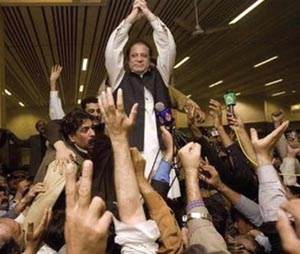
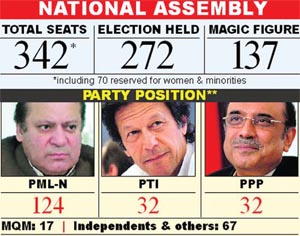
    ISLAMABAD (TIP): The Pakistan Muslim League-Nawaz (PML-N) is all set to form government in Islamabad as it has acquired majority in the National Assembly after as many as 17 independent winners of NA seats joined the Nawaz Sharif-led party. The News quoted sources as saying that a party meeting would be convened during the next two days to discuss formation of Cabinet. Nawaz’s brother Shahbaz Sharif met Jamiat Ulema-i-Islam-Fazl chief Maulana Fazlur Rehman and invited him to join the government in Islamabad. However, Fazl sought time to seek consent of his party’s central committee.

    The sources said that Fazl failed in convincing Sharif to form coalition government in Khyber Pakhtunkhwa, where Imran Khan’s Pakistan Tehreek Insaf (PTI) emerged as the largest party in May 11 polls. Toppled in a 1999 military coup, jailed and exiled, Pakistan’s Nawaz Sharif has made a triumphant election comeback and is certain to become the Prime Minister for a third time. The Pakistan Muslim League- Nawaz (PML-N) has taken an unassailable lead in the landmark elections with its main rivals — former cricketer Imran Khan’s Tehrik-i-Insaf (PTI) and the Pakistan People’s Party (PPP) — trailing far behind.

    To win a simple majority, a party or coalition would have to bag 137 of the 272 National Assembly seats for which polls were held. Another 70 seats in the 342- member National Assembly are reserved for women and minorities. Sharif is set to return to power at a time when Pakistan is facing several major challenges, including growing extremism, a strong Taliban presence in the country’s northwest, rampant corruption, uneasy relations with the US ahead of the withdrawal of foreign forces from war-torn Afghanistan and an economy that has virtually been in free fall for the past few years. Sharif ’s party is also set to form the government in the Punjab province where it was leading in 204 seats out of 304. The PTI was unexpectedly trailing far behind in Punjab though it was bracing for forming government in that province.

    Sharif won reminding people of the path of progress on which the country was moving under his rule in 1990s and five years of good governance under his brother Shahbaz Sharif in Punjab after the 2008 polls. During his rallies, Sharif blamed the PPP for crippling power outages that hit Punjab most, paralysing its industry, disrupting social and economic life and rendering millions of factory workers unemployed. Amid wave that he will be the next premier, influential politicians who had been shifting parties in the past, moved in a big way to join the PML-N giving it a major victory.

    img21

    The PML-N also got the backing of business houses, the middle class, factory workers and rural poor. Imran fascinated and motivated millions of youth, and educated middle class which turned up to vote in large numbers. Imran, who pledged to eliminate corruption, devolve power to lowest level in villages, recast relations with US, collect taxes from rich and run clean austere government, won on three seats — Peshawar, Rawalpindi and home district Mianwali — of the four he contested. He, however, lost to his former party loyalist Ayaz Sadiq of PML-N in Lahore.

    Sharif and Shahbaz Sharif won handily on two seats each and so did PTI’s president Javed Hashmi while its chairman Shah Mahmood Qureshi lost on both seats he contested. The PPP was routed in Punjab and was the case of its ally, ANP in Khyber Pakhtunkhawa, where its president Asfandyar Wali Khan also lost. Rudderless and leaderless, it failed to conduct any election campaign in the country. The Bhutto name, however, won for it Sindh province. It newly appointed presidents Manzoor Wattoo in Punjab and Anwar Saifullah in KP lost. The party could win only one National Assembly seat in Punjab. Former Prime Minister Raja Pervez Ashraf was also demolished badly. Individually, former minister Shaikh Rashid won in Rawalpindi with the PTI help and Ejazul Haq, son of ex-military dictator Ziaul Haq, won in Bahawalnagar.

  • Good Relations With Pak Vital For Resolving Tricky Issues, Says Shinde

    Good Relations With Pak Vital For Resolving Tricky Issues, Says Shinde

    NEW DELHI (TIP): Close on the heels of Nawaz Sharif — who is certain to be the new Pakistan Premier after his emphatic election win —seeking warmer ties with India, Union Home Minister Sushil Kumar Shinde said good relations with Islamabad were vital for resolving tricky issues between the two countries. “When Nawaz Sharif’s party was leading in majority of seats, Prime Minister Manmohan Singh had congratulated him and in return Sharif had invited the Prime Minister to attend his swearing-in. It’s a good initiative. Such initiatives can greatly help in resolving tricky issues,” Shinde told reporters. On being asked if government agencies have made an assessment of the situation in Pakistan after elections, Shinde said: “It was too early to make a review”.

  • Sharif for warmer ties with India

    Sharif for warmer ties with India

    Says tackling terror and economic revival top priorities for the PML-N govt
    ISLAMABAD (TIP): Nawaz Sharif, poised for a record third term as Pakistan Prime Minister after his party’s emphatic victory in the landmark General Election, has sought “warmer ties” with India and said his government would devise a national policy to tackle the problem of terrorism. “We will contact every party for the purpose of forming our policy on terrorism,” Sharif said during an interaction with a group of foreign journalists at his farmhouse on the outskirts of Lahore on Monday. Referring to the attack on PML-N leader Sanaullah Zehri in Balochistan, Sharif said it would be wrong to say that terrorism had not affected PML-N. He said the PML-N government would respect the mandate given to parties by the people from the areas where they have won. Claiming that Pakistan will become the Asian tiger under his leadership, Sharif said economic revival was a top priority for the PML-N government.

    Sharif was greeted by world leaders, including the Saudi royal family and the British premier. Sharif expressed resolve to have cordial ties with all neighbors, including Iran, Afghanistan, China and India. Sharif called upon Pakistan Tehreek-e- Insaf to respect the mandate of the people and accept the results of the elections. Sharif said he would be “very happy” to invite Prime Minister Manmohan Singh to Pakistan for his oath-taking ceremony as the new Premier. “We will be very happy to invite him. I got a call from him (Singh) yesterday. We had a long chat on the phone and then he extended an invitation to me and I extended an invitation to him,” said Sharif. He said it would be an honour if Manmohan Singh was present at the swearing-in. He further said he hoped to meet the Indian Prime Minister as soon as possible as he was keen on forging good relations between the two countries.

    The PML-N chief had earlier said he is keen on resuming the India-Pakistan peace process that was interrupted in 1999 by then Army chief Pervez Musharraf, who ousted Sharif’s government in a military coup. Prime Minister Singh had yesterday lost no time in congratulating Sharif on his election victory. Responding to questions on the drone strikes, Sharif said he would discuss the issue with the US leadership. Meanwhile, President Asif Ali Zardari on Monday telephoned Pakistan Muslim League-Nawaz (PML-N) leader Nawaz Sharif and congratulated him on winning the historic polls, according to dawn.com. Zardari expressed hope that Sharif would be able to strengthen the democratic process during his political tenure.