Month: May 2013

  • 1984 ANTI-SIKH RIOTS: THREE SENTENCED TO LIFE IMPRISONMENT

    1984 ANTI-SIKH RIOTS: THREE SENTENCED TO LIFE IMPRISONMENT

    NEW DELHI (TIP): A Delhi court on May 9 awarded life imprisonment to three of the five convicts in a 29- year-old case relating to 1984 anti-Sikh riots. District and sessions judge JR Aryan pronounced the punishment to Balwan Khokkar, Girdhari Lal and Captain Bhagmal who were held guilty of murdering five Sikhs during the riots that had broken out after the assassination of then Prime Minister Indira Gandhi on October 31, 1984.

    Two other convicts — an ex-councillor Mahender Yadav and ex-MLA Kishan Khokkar, who were held guilty of rioting, were awarded three-year imprisonment. Both Yadav and Khokkar were, however, granted bail by the court. The judge also imposed a fine of Rs 1,000 each on all the five convicts. The case, in which the five people were held guilty pertains to killing of five Sikhs — Kehar Singh, Gurpreet Singh, Raghuvender Singh, Narender Pal Singh and Kuldeep Singh — by the mob in Raj Nagar area in Delhi Cantonment.

    The victims were members of the same family. Congress leader Sajjan Kumar was also an accused in the case but acquitted by the court on April 30 as it held that Kumar deserved “benefit of doubt” since one of the victims and key witness Jagdish Kaur did not name him as an accused in her statement recorded by the Justice Ranganath Mishra panel in 1985. Earlier, during the arguments on quantum of sentence, CBI has sought death sentence for Balwan Khokkar, Girdhari Lal and Captain Bhagmal saying they were engaged in “planned communal riot” and “religious cleansing”.

    “It was a planned communal riot in which the victims were isolated. It was religious cleansing … The victims were totally innocent and they had not instigated anyone,” CBI prosecutor RS Cheema had submitted.

  • SUNRISERS BOWLED POORLY: WAQAR YOUNIS

    SUNRISERS BOWLED POORLY: WAQAR YOUNIS

    HYDERABAD (TIP): Sunrisers Hyderabad bowling coach Waqar Younis said his bowlers performed “quite poorly” in the IPL match against Chennai Super Kings, who won the game by 77 runs on May 8. With the team still stuck on the fifth position on the points table, Younis believes the bowlers will have to put their act together. “Bad day at the office. It didn’t get the way we planned.

    We bowled pretty ordinary. We made a plan but I don’t think we executed that. We bowled quite poorly and it was all over the place. We have to fix it soon,” said Younis. “I think the most important part is to bowl straight. I don’t think we bowled straight enough.We bowled all over the place.

    We gave them the width to hit and they are all international players. If you bowl bad deliveries to them, they will pound. They have shown it today by scoring 77 runs in four-odd overs. You can’t afford to bowl like that,” he said. Defending the decision to field first, Younis said under the little overcast and humid conditions they thought it might swing around a bit but that didn’t happen. “We have chased also in last few matches.

    There are a few things which we have to really look into it and we thought there is little bit in the pitch. Ishant Sharma bowled very well in the last game and suddenly he couldn’t get it right. Both left-handers Hussey and Raina are in great form. They cashed in.” Ishant Sharma conceded 66 runs in four overs, the highest by any bowler in the IPL. The former Pakistani speedster feels there was nothing he could have done.

    “This is the worst part of coaching. You can’t do anything about it. You have to sit out and wait till the end to talk and tell them what to do in the next game. 20-20 is so fast, it doesn’t give you opportunity to send the message.” On Dale Steyn, who bowled very well in the match with figures of 4- 1-17-0,Waqar said it was very difficult to compare anyone with Steyn. “Look at his record at international level.

    His class is written all over him. The way he bowled not only this game but most of the games he played he spearheaded and he proved it again and again. He brings lot of energy to the team.” On local bowling talent in the IPL, Younis pointed out that there are lots of bowlers in this IPL with some new faces.

    He believes IPL offers a great opportunity to young bowlers to learn. “Vinay Kumar is coming back. You have Bhuvaneswar Kumar bowling very well. You also have Amit Mishra coming back. I think it is a great platform. You see lot of talent. Umesh Yadav, I think, has good talent.”

  • KOHLI, UNADKAT HELP RCB KEEP PACE

    KOHLI, UNADKAT HELP RCB KEEP PACE

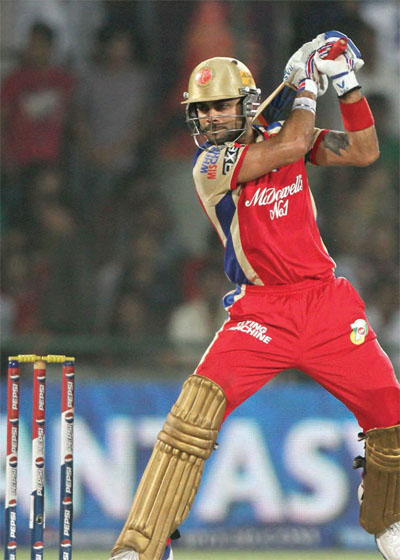
    BANGALORE (TIP): After 16 overs of their innings, Royal Challengers Bangalore were 106 for 3, and Virat Kohli was 47 off 43. When Kohli was run out while attempting the second off the last ball of the innings, he had reached 99 off 58, and Royal Challengers had finished on 183. Not many teams recover from such an onslaught.

    Delhi Daredevils tried hard to recover, but lost out to a limping Jaydev Unadkat’s five-for and crashed to their 10th loss out of 13 matches. Royal Challengers moved to 16 points from 13 matches, staying in touch with the other three contenders for three open spots in the playoffs. Those four overs, when Kohli and AB de Villiers hit six sixes and seven fours to loot 77 runs, took the game away from the hosts, but until then they had bowled pretty well on a slow surface.

    The same couldn’t be said of their fielding and field placements. The fashionable wide slip, a simple drop by Virender Sehwag and a noball by inches all cost them wickets after they had got the better of Chris Gayle. Finally given the first over the innings, Morne Morkel grew a leg and bowled fast, accurate and extracted movement. He had Kohli edging through even before he had scored, but had overstepped by an inch.

    Sehwag soon dropped Kohli when he was 14. However, despite those blemishes they kept the lid on until Kohli and de Villiers unleashed towards the end. De Villers began the onslaught, attacking his South Africa team-mate and the best Daredevils bower, Morkel. With 18 runs off the 17th over, including a ramp over fine leg, de Villiers might just have freed Kohli up a bit too. He had been anchoring the innings until then, but he now got stuck into his India team-mate, Umesh Yadav. Twenty-four came off that over, and it only got worse for Daredevils.

    Kohli didn’t go crazy with the hitting, but with the strike staying with him, he trusted his trademark shots to punish Yadav some more in the final over of the innings. One of them was a four through wide long-on, and the other a drive through extra cover. He was now 86 with three balls to go. Then came two straight sixes. The run-out of the final ball kept the damage down to 23, but enough had been done. Ravi Rampaul sconed Sehwag twice early in the second innings, and with Sehwag struggling Mahela Jayawardene fell in search of quick runs.

    ZUnadkat then took out the softened Sehwag with a slower ball, and Daredvils were 49 for 1 in the sixth over. Around those events, though, Unmukt Chand survived despite a loud edge through to the keeper, and Unadkat injured himself fielding in the deep. With nothing to lose, Daredevils kept going after the total, and stayed in the hunt, but Unadkat once again split the game open when brought back in the 17th over. Daredevils were 129 for 4 then. Soon to be 133 for 6 by the end of that over. It did become a bit interesting with slightly poor bowling over the next two overs, and even poorer umpiring.

    In the 19th over, Rampaul was no-balled with half his foot behind the line, and the third umpire didn’t intervene. He got his own back with a dot-ball yorker, but conceded a six off the last ball, leaving Unadkat 18 to defend in the last over. Both Morkel and Irfan Pathan hit him for a four each before Unadkat came back with a yorker to send back Morkel and seal the win.

  • Gilani’s son got threats from LeJ, Sipah-e-Sahaba

    Gilani’s son got threats from LeJ, Sipah-e-Sahaba

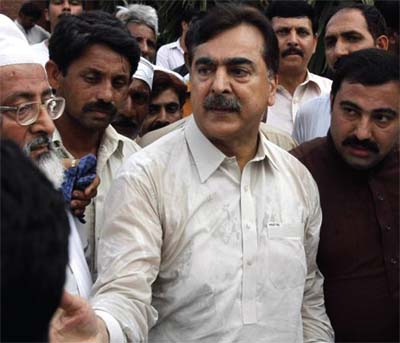
    MULTAN (TIP): Former Pakistan Prime Minister Yousuf Raza Gilani’s son Ali Haider, kidnapped by gunmen while campaigning for Pakistan’s landmark elections, had received threats from the banned Lashkar-e-Jhangvi (LeJ) and Sipah-e-Sahaba. Though no group has claimed responsibility for the abduction, Mr. Gilani and other members of his family told The Express Tribune that Mr. Ali Haider had been receiving “death and kidnapping threats” from the LeJ and Sipah-e-Sahaba. Mr. Ali Haider, 27, was kidnapped on Thursday while campaigning for the May 11 polls in his hometown of Multan, often considered a stronghold of the Mr. Gilani family.

    The gunmen shot and killed Mr. Ali Haider’s personal secretary and a bodyguard when they resisted. Police arrested five suspects in Multan and officials claimed two of them had “important information” about the kidnapping. While there was no official word on the interrogation of the suspects, the Tribune quoted its sources as saying that Mr. Ali Haider had been taken by his abductors to Kabeerwaala, considered a stronghold of the LeJ. The banned Tehrik-e-Taliban Pakistan refused to comment on the abduction. “I do not want to comment (on the incident).

    We do not know as to who has kidnapped him, and why and how he was kidnapped,” said Taliban spokesman Ihsanullah Ihsan. Sources in Punjab Police told PTI on Thursday that they believed Mr. Ali Haider was kidnapped by a faction of the Punjabi Taliban based in Mian Chanu, 80 km from Multan district. The Punjabi Taliban largely comprises members of the LeJ, which also has links with al-Qaeda. The LeJ has been linked to a series of high-profile terrorist acts, including the 2009 attack on the Sri Lankan cricket team in Lahore and two deadly bomb attacks in Quetta earlier this year that killed nearly 200 people, a majority of them Hazara Shias.

  • Siddaramaiah elected 28th CM of Karnataka

    Siddaramaiah elected 28th CM of Karnataka

    To be sworn in on Monday, May 12
    BENGALURU (TIP): K. Siddaramaiah, 65, was on May 10, elected the new chief minister of Karnataka. He will be sworn in as the 28th chief minister of the state on Monday, May 12 at 11.15 A.M. Union Defence Minister and All India Congress Committee observer A K Antony announced his name as the new leader of the Congress Legislature Party after the CLP meeting unanimously elected him.

    Karnataka Pradesh Congress Committee president G Parameshwar, other AICC observers Luizinho Faleiro and Madhusudan Mistry, and Union Ministers Veerappa Moily and Jitendra Singh attended. Addressing a press conference, Siddaramaiah said, “I have been unanimously elected as the new chief minister after the AICC observers elicited the views of all newly-elected legislators personally. After discussing with AICC president Sonia Gandhi, and as directed by her, A K Antony declared my name as the new leader of the CLP.

    ” When the CLP meeting was convened earlier on 10 May morning, Siddaramaiah moved a resolution requesting that the CLP leadership be left to Sonia Gandhi. H K Patil, Roshan Baig, Shyamanur Shivashankarappa, and D K Shivakumar seconded it. However, the AICC observers asked the legislators to express their choice, in a secret ballot. It is said around 80 members suggested Siddaramaiah’s name, while the rest left it to the party high command.

    Union Labour and Employment Minister Mallikarjun Kharge was the other contender for the post. The decision to make Siddaramaiah the CM was taken after Antony finished consultations with MLAs and telephoned General Secretary Ahmad Patel, seeking the Congress president’s opinion. Although a majority of the MLAs said they did want Siddaramaiah, Antony conveyed to Patel that a large number was also apprehensive: that one community should not be pacified at the cost of another – that is, Kurubas at the cost of Dalits.

    Antony asked if he should stay in Bangalore or return for more consultations. He was asked to stay and the Congress president would revert to him. He was also told the decision would be announced on Friday, May 10 at 6 pm and that there would be no postponement. Separately, Kharge told his supporters that the party had asked him to report back to Delhi and that he would be made railway minister. Antony also conveyed to Parameshwar that his contribution to the Karnataka victory would not be overlooked and he would be made a junior minister at the Centre.

    Should Parameshwar move to Delhi, the question is who will become PCC chief. It is known that both D K Shivakumar and R V Deshpande are eyeing the job. The Congress got 28 per cent of the Lingayat votes and 32 per cent of the Vokkaliga votes. It would not like to lose the goodwill of these two castes. Soon after the announcement, Parameshwar accompanied by Madhusudan Mistry, rushed to Raj Bhavan and handed over the letter of Siddaramaiah’s election as CLP leader to governor H R Bhardwaj.

    They asked the governor to give his permission to form the next government. Talking to reporters, Parameshwar said to begin with, only Siddaramaiah would be sworn in on Monday and the council of ministers will be decided after consulting the party high command at Delhi. “I and Siddaramaiah will go to Delhi to discuss with the high command and finalize the list of council of ministers after the swearing-in of chief the minister on Monday,” he said. Earlier this week, the Congress secured a comfortable majority of 121 MLAs in the 224-member house. The voting was held on Sunday, May 5 and votes were counted on Thursday, May 9.

  • Finally, PM sacks Ashwani Kumar, Pawan Bansal

    Finally, PM sacks Ashwani Kumar, Pawan Bansal

    NEW DELHI (TIP) : Prime Minister Manmohan Singh axed scam-tainted ministers Pawan Kumar Bansal and Ashwani Kumar, two cabinet members seen to be close to him, late on Friday and hours after Congress president Sonia Gandhi expressed her displeasure at their continuance in office. In a meeting with Singh, Sonia is understood to have conveyed the party’s unease at growing public anger against the government for not acting against railways minister Bansal and law minister Kumar, who have made headlines for all the wrong reasons.

    Labour minister Mallikarjun Kharge is likely to be given additional charge of railways and telecom minister Kapil Sibal or petroleum minister Veerappa Moily may look after the law ministry, sources said. Bansal’s continuation had become untenable after his nephew was arrested by the CBI last week for accepting a R90-lakh bribe for fixing a high-level appointment in the railway board and subsequent investigations showed the scam was leading right up to the minister’s door.

    Kumar came in the line of fire for having interfered in the ongoing CBI probe into Coalgate, which led to the washout of the second half of the budget session with the Opposition demanding the PM’s resignation and the sacking of the law minister. Though Bansal’s resignation was a foregone conclusion given the incriminating evidence mounting against him, Kumar’s exit appeared uncertain due to the PM’s continued support, until Sonia stepped in.

    Her political secretary Ahmed Patel was present when the PM summoned Bansal and Kumar to seek their resignations and draw a line under the controversy that had even deflated some of the euphoria over the Congress’ win in Karnataka. Kumar’s continuation had given rise to strong speculation about a divide between the party leadership and the PM, since Singh was learnt to be of the view that Supreme Court had not made any adverse comments against Kumar and a case for ousting him was not made out.

    First signs that the Congress had decided to dump both the controversial ministers came during the party’s briefing earlier in the day, when its spokesperson stressed a zero tolerance policy for corruption and any kind of manipulation. “Congress is not going to tolerate any corruption.

    It will not spare anybody mired in corruption…If anybody is involved in manipulation, that cannot be spared,” said party spokesperson Bhakta Charan Das. The resignations of two key Congress ministers, coming less than a fortnight before celebrations to mark the UPA’s ninth year in office, gave the Opposition a chance to attack it yet again. Sushma Swaraj, leader of the Opposition in the Lok Sabha, tweeted that the government could have prevented a washout of the budget session had it accepted the BJP’s demand to sack the two ministers.

    The session was adjourned on Wednesday, two days ahead of scheduled, and the passage of key bills was rendered impossible

  • Pakistani Prisoner Sanaullah Ranjay Loses Battle For Life, Body Sent Back To Pakistan

    Pakistani Prisoner Sanaullah Ranjay Loses Battle For Life, Body Sent Back To Pakistan

    CHANDIGARH (TIP): Six days after he was attacked by a fellow inmate in a Jammu jail, Pakistani prisoner Sanaullah Ranjay, 52, died at the PGIMER hospital in Chandigarh on Thursday morning. Doctors said he died at 6:56 am due to “multiple organ failure”. The body was handed over to officials of the Pakistan High Commission after completion of post-mortem and various other formalities.

    By evening, the body was flown back to Pakistan by a special PIA plane. His two relatives, brother-in-law Mohammed Shehzaad and nephew Mohammed Asif, who arrived in India on Tuesday, also left by the same plane. “Kehne ko kuch raha nahi, sab khatam ho gaya,” said Shehzad.

    Sanaullah suffered serious head injuries when he was attacked by a fellow prisoner on May 3, a day after Indian prisoner Sarabjit Singh died in Pakistan. “The brutal manner in which Sanaullah was attacked in jail is most unfortunate and a matter of deep concern for the government of Pakistan,” said Pakistan’s foreign office spokesman Aizaz Ahmad Chaudhry.

    “We have conveyed our concern to the government of India in this regard and demanded that an investigation into the incident be held and perpetrators of this heinous crime be brought to justice,” he said. In Delhi, MEA spokesperson Syed Akbaruddin said “there is an urgent need to examine the recommendations that have been submitted by the India-Pakistan joint judicial committee that visited Pakistani jails from April 26 to May 1, 2013.”

    He said “both sides also need to take stock of the measures currently in place for ensuring safety, security and humane treatment of prisoners in each other’s jails. We would like to reiterate the offer made by us on May 3, calling for a meeting with the relevant Pakistani authorities to take immediate steps to enhance the safety, security and humane treatment of Indian prisoners in Pakistani jails.” Sanaullah was serving a life term after being convicted of involvement in terrorist activities in 1999.

  • 2013 New York Indian Film Festival Awards Announced

    2013 New York Indian Film Festival Awards Announced

    SHAHID, ANUMATI, and COLOR OF SKY Win Top Awards
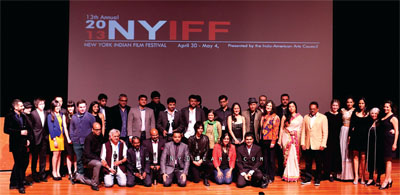
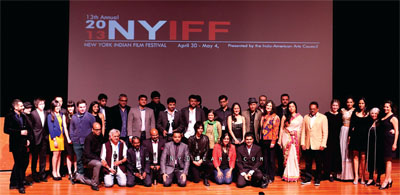
    NEW YORK, NY (TIP): The New York Indian Film Festival (NYIFF) announced May 6, the winners of its competition categories at a ceremony at the prestigious Skirball Center, in the final event for the monumental festival, which ran April 30 – May 4. The winners were chosen from 18 narrative, 10 documentaries (feature length or shorter) and 8 shorts from the Indian subcontinent and its diaspora.

    Top honors were awarded to Anumati directed by Gajendra Ahire, for Best Feature Film as well as Best Actor in a Feature Film for Vikram Gokhale’s impressive turn as a desperate husband, Ratnakar, on a mission to save his dying wife.The award for Best Feature Film was jointly presented by Consul General of India, Ambassador Mulay and Ambassador Manjeev Puri. Top Chef judge Padma Lakshmi presented the Best Actor award.

    Director Hansal Mehta took home the Best Director of a Feature Film award for his compelling film Shahid, which traces the true story of slain human rights activist lawyer Shahid Azmi. The director, in addition to receiving an award, presented an award that night, alongside Farooque Sheikh, to the Best Young Actor in a Feature Film. Suraj Negi was honored for his role as the titular character in Hansa.

    Deepti Naval was also honored in her role as Leela Krishnamoorthy, a middle aged widow, in debut filmmaker Avinash Kumar Singh’s Listen Amaya. This film reunited Farooque Sheikh and Deepti Naval as a romantic screen pair after over two decades. The award was fittingly presented by renown actor Aasif Mandvi and beloved actress Sarita Choudhury. Respected Malayalam cinema filmmaker/writer Dr. Biju was awarded for Best Screenplay by presenter Monica Dogra for his vision in Kashathinte Niram (Color of Sky), and the Best Documentary award went to The Only Real Game, directed by Mirra Bank, with the award presented by Sujata Thakur, Incredible India.

    Best Short Film went to Khaana, directed by Cary Sawhney. The award was presented by House of Cards actress Sakina Jaffrey. This year the Festival also had an award for the one-minute cell phone Bollywood short film. Created under the supervision of Professor Karl Bardosh, NYU students were tasked with creating Music Videos to popular Bollywood sound tracks, culminating in an impressive batch of viral mobile films, all in consideration for the esteemed award. Yi Su was presented with the prize, by Professor Karl Bardosh himself, for his one-minute Gangnam/Bollywood mashup.

    “We are so happy to honor these talented filmmakers for their achievements,” said Aroon Shivdasani, IAAC founder. “These films left me thinking about its themes and subjects well after the screening itself,” commented NYIFF’s film festival director Aseem Chhabra. “This year’s line-up made it difficult to choose just one award winner per category.”

    The jurors who were challenged to select the award recipients for each category were comprised of today’s most revered filmmakers, scholars, and industry leaders, including La Frances Hui, Claus Mueller, Muriel (Mike) Peters, Zenobia Shroff, Parag Amladi, Ashish Avikunthak, Tejaswini Ganti, Udayan Gupta, Joseph Mathew, Myrna Moncayo-Iyengar, Jaideep Punjabi, and Nilita Vachani. The voting process was audited by the respected firm, KPMG. A star-studded after party, which included presenters, winners, jurors, and guests, immediately followed the awards ceremony.

    Below is the full list of winners as well as the presenters who honored the recipients with an award: BEST FEATURE FILM Narrative Anumati, directed by Gajendra Ahire. The award was jointly presented by Consul General of India, Ambassador Mulay and Ambassador Manjeev Puri.

    BEST DIRECTOR OF A FEATURE FILM (Narrative)
    Hansal Mehta for Shahid. The award was presented to the director by Feroz Khan and Avinash Kumar Singh. BEST ACTOR IN A FEATURE FILM Vikram Gokhale as Ratnakar in Anumati, winner of Best Feature Film, directed by Gajendra Ahire. The award was presented by Padma Lakshmi.

    BEST ACTRESS IN A FEATURE FILM
    Deepti Naval as Leela Krishnamoorthy, a middle aged widow, in debut filmmaker Avinash Kumar Singh’s Listen Amaya. This award was presented by actor Aasif Mandvi & actress Sarita Choudhury

    BEST YOUNG ACTOR IN A FEATURE FILM
    Suraj Negi in Hansa. The award was presented by Hansal Mehta and Farooque Sheikh. BEST SCREENPLAY Dr. Biju for Kashathinte Niram (Color of Sky). The award was presented by Monica Dogra.

    BEST DOCUMENTARY FILM
    The Only Real Game, directed by Mirra Bank. The award was presented by Sujata Thakur, Incredible India. BEST SHORT FILM Khaana, directed by Cary Sawhney. The award was presented by Sakina Jaffrey.

    BEST ONE MINUTE CELL PHONE FILM
    Bollywood Style directed by Yi Su. The award was presented by Professor Karl Bardosh. About the New York Indian Film Festival (NYIFF): The New York Indian Film Festival is the oldest, most prestigious Indian film festival in the United States. It is dedicated to showcasing, promoting and building an awareness of Independent, art house, alternate and diaspora films from/about/connected to the Indian subcontinent.

    Our mission is to encourage filmmakers to tell their stories, to educate North America about them and their talent and to facilitate the making and distribution of these films. NYIFF boasts five days of premiere screenings of feature, documentary & short films, industry panels, special events, retrospectives, red carpet galas, an award ceremony, packed audiences and amazing media coverage. About the Indo- American Arts Council (IAAC): The Indo-American Arts Council is a registered 501(c)3 notfor- profit, secular service and resource arts organization charged with the mission of promoting and building the awareness, creation, production, exhibition, publication and performance of Indian and crosscultural art forms in North America.

    The IAAC supports all artistic disciplines in the classical, fusion, folk and innovative forms influenced by the arts of India. We work cooperatively with colleagues around the United States to broaden our collective audiences and to create a network for shared information, resources and funding. Our focus is to work with artists and arts organizations in North America as well as to facilitate artists and arts organizations from India to exhibit, perform and produce their works here.

  • Obama Administration Launches Competition For Three New Manufacturing Innovation Institutes

    Obama Administration Launches Competition For Three New Manufacturing Innovation Institutes

    WASHINGTON, DC (TIP): The Obama Administration announced May 9 that it is launching competitions to create three new manufacturing innovation institutes with a Federal commitment of $200 million across five Federal agencies – Defense, Energy, Commerce, NASA, and the National Science Foundation. To build off the initial success of a pilot institute headquartered in Youngstown, Ohio, the President announced in the State of the Union that his Administration would move forward and launch three new manufacturing innovation institutes this year.

    The President will continue to call on Congress to act on his proposal for a one-time $1 billion investment to create a network of 15 manufacturing innovation institutes across the country. President Obama is committed to making America a magnet for jobs and manufacturing so we continue to build things the rest of the world buys. After shedding jobs for a decade, our manufacturers have added about 500,000 over the past three years.

    Manufacturing production has grown since the end of the recession at its fastest pace in over a decade. To build on this momentum, the President has outlined a concrete and comprehensive agenda to invest in American manufacturing. The President’s manufacturing agenda starts with his vision for a National Network for Manufacturing Innovation (NNMI). The President’s FY14 Budget includes a $1 billion investment at the Department of Commerce to create the NNMI, a model based on approaches that that other countries have successfully deployed.

    Each institute would serve as a regional hub designed to bridge the gap between basic research and product development, bringing together companies, universities and community colleges, and Federal agencies to co-invest in technology areas that encourage investment and production in the U.S. This type of innovation infrastructure provides a unique ‘teaching factory’ that allows for education and training of students and workers at all levels, while providing the shared assets to help companies, most importantly small manufacturers, access the cutting-edge capabilities and equipment to design, test, and pilot new products and manufacturing processes.

    The Department of Defense will lead two of the new Institutes, focused on “Digital Manufacturing and Design Innovation” and “Lightweight and Modern Metals Manufacturing”, and the Department of Energy will be leading one new institute on “Next Generation Power Electronics Manufacturing”. All three institutes will be selected through an open, competitive process, led by the Departments of Energy and Defense, with review from a multi-agency team of technical experts. Winning teams will be selected and announced later this year.

    Federal funds will be matched by industry co-investment, support from state and local governments, and other sources. Like the pilot institute, these Institutes are expected to become financially selfsustaining, and the plan to achieve this objective will be a critical evaluation criterion in the selection process. DOD and DOE are opening the competition for the three new institutes immediately.

  • Indian American Kiran Patel Wins US Business Chamber Award

    Indian American Kiran Patel Wins US Business Chamber Award

    NEW YORK (TIP): An Indian American businessman has been awarded by a US business chamber as its 2013 Ambassador of the Year. Kiran Patel was named as the 2013 Ambassador of the Year by the Henderson Chamber of Commerce in the city of Henderson in the US state of Kentucky, thegleaner.com reported Thursday, May 9.

    “Like previous winners of the Ambassador of the Year Award, (Patel) puts in several hours every day at their job and is very active in the chamber: attending ribbon cuttings, Brown Bag lunch events and other chamber events held throughout the year,” the report quoted award presenter Janet Hortin as saying.

    After moving to Henderson with his family in 1994, Patel bought a motel and in 2011 bought the Henderson Hotel building, renovating it into what is now The Gilmore Inn in the city. Stating that the award was the best thing to have happened to him, Patel said, “I wish more people would work as ambassadors and board members.”

  • Indian-American Woman Running For US City Council

    Indian-American Woman Running For US City Council

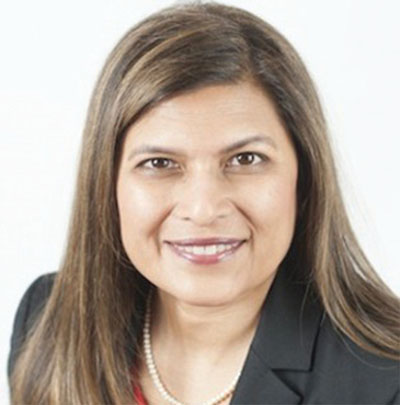
    Indian-American woman running for US city council NEW YORK (TIP): An Indian- American woman is running for a city council in the US state of Washington, according to a media report. Clinical pharmacist Vandana Slatter is running for the Bellevue City Council and challenging the incumbent, Don Davidson, the Northwest Asian Weekly reported on Monday, May 6.

    Ms Slatter works as a senior regional medical sciences liaison official at American biopharmaceutical company Amgen and is also a public leader, her campaign website said. She graduated from the University of Washington with a doctorate in pharmacy and earned a Master’s degree in public administration from Evans School of Public Affairs in the University of British Columbia.

    Ms Slatter served as an executive intern to US Senator Maria Cantwell, and was appointed to the Washington State Board of Pharmacy by then governor Christine Gregoire in 2007. According to the report, she is currently first in fund-raising, having raised around 55,000 dollars.

  • Tlca Ugadi 2013 Program Held

    Tlca Ugadi 2013 Program Held

    NEW YORK (TIP): Telugu Literary and Cultural Association Ugadi 2013 program held on April 27th, 2013, was a thunderous success, the organizers claimed. The attendance from the Tristate, New York, New Jersey and Connecticut was overwhelming. The hall was packed even after making additional seating arrangement in the balcony. More than 1000 members witnessed the breathtaking program. The tri-state children presented various items like classical dances, songs and some never before items like Veena recital.

    Children of various ages have rendered various items with utmost precision. TLCA conducted TLCA’s Got Talent competition to encourage kids to showcase their talent in this program. Kids have participated in the program very enthusiastically. The winners were announced and prizes were distributed by the cine artists Sri Lakshmi, Hama Chandra and Ankita. The Guests relished the delicious dinner which is always a key for the success of the program.

    Authentic Ugadi pachchadi and Bobbatlu were offered along with the dinner. The post-dinner session had an auspicious start with our generous event donors Mallareddy garu and Mohan Badhey garu lighting the candles. TLCA offered Shradhanjali to the bereaved families of the pastpresidents and members of TLCA. All the members stood in silence praying for peace to the departed souls. State Senator Tony Avella graced the occasion and appreciated the programs conducted by TLCA. He was honored by the event sponsor donors. Edward P. Mangano, Nassau county Executive could not attend the function but sent his greetings.

    The Senator commended the donors for their generosity and presented mementos to the donors for their unstinted support to TLCA. Ticket to India, a dance ballet was presented as a part of TLCA encouragement to the youth. The kids performed excellent and the crowd cheered the performers and choreographers by standing ovation for presenting a wonderful ballet. TLCA’s Annual Souvenir was released by the Senator and the donors. The beautifully designed souvenir received every ones acclamation Later in the program the Stars rocked.

    Comedian Sri Lakshmi, Singers Hema Chandra and Sumangali and Actress Ankita entertained everyone with their performances. The songs, dances by the artists enthralled the audience. A lucky draw was taken and a 40″ LED TV sponsored by Maddipatla Foundation, was presented to the winner. President Krishnasri Gandham thanked all the donors that this would not have been possible without the generous donations from the event sponsors and all the other donors. She also thanked the entire Executive Committee and Board of Trustees for their help and support in organizing the event.

  • Miss India Worldwide 2013

    Miss India Worldwide 2013

    Nehal Bhogaita of the United Kingdom won the title of Miss India Worldwide on April 27, 2013 in Kuala Lumpur, Malaysia. The pageant was organized by Dharmatma Saran of IFC. Nehal made history by being the first deaf contestant and now first deaf Miss India Worldwide. Nehal aspires to be a role model for the speech and hearing impaired.

    For her talent, Nehal performed a Bollywood dance routine that highlights her own conviction of never giving up. While she is unable to hear the music, she dances using the vibrations of the beats. Nehal is also the current title holder for Miss India UK where she won among nineteen other contestants in the pageant held at Oxford, England.

    The First Runner-Up was Jasveer Kaur Sandhu of Malaysia and Second Runner- Up was Surbhi Sachdev of Oman. The other two finalists in the top 5 were Geetanjali Kelath of UAE and Ayushi Chhabra of Nigeria.

  • Ami Bera Joins Sikh Congressional Caucus

    Ami Bera Joins Sikh Congressional Caucus

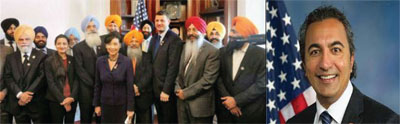
    WASHINGTON (TIP): The newly formed American Sikh Congressional Caucus, which is under a cloud over alleged backing from some pro- Khalistan elements, got a shot in the arm as Ami Bera, the only Indian American in US Congress, signed up for the caucus. The caucus, which was inaugurated on April 24, aims to tackle problems faced by the community such as hate crimes, school bullying, and discrimination in enlisting due to a ban on turban.

    Bera, a California Democrat whose family came from Gujarat, was being claimed by both sides, especially after his name was not there on the list of members announced at the launch. The pro-Sikh caucus group claimed that he was one of the 30 lawmakers who had signed up. The other side, including Indian officials, were confident he hadn’t. Bera’s family came here from Gujarat, and, was seen as a deal in the bag by those who had pointed out the Khalistan connection of some of the prime backers of the caucus. But he clearly wasn’t.

    “The memory of the tragedy at Oak Creek is still fresh, and in my own community of Elk Grove, two Sikh men were murdered in 2011 in a probable hate crime,” Bera said in a statement to media. “Violence and discrimination against the Sikh American community is a real and important civil rights issue in the US. That’s why I co-sponsored strong anti-hate crimes legislation earlier this year and joined the American Sikh Congressional Caucus,” he said.

    That’s pretty much in line with the stated objectives of the caucus, as laid out by its co-founders representatives Judy Chu and David Valadao at its launch.

  • Indian-American Students Shine In California Science Fair

    Indian-American Students Shine In California Science Fair

    LOS ANGELES (TIP): Indian- American students shone in this year’s California State Science Fair, grabbing the top award, six first place honors and various other awards. Eesha Khare, a 12th grade student of Lynbrook High School in San Jose, California, won the top award for ‘Project of the Year’ in the senior grade at the fair held earlier this year, India-West reported on Saturday. Khare won a $5,000 for her project, ‘Design and Synthesis of Hydrogenated TiO2-Polyaniline Nanorods for Flexible High- Performance Supercapacitors’.

    “My project this year created a cost effective, environmentally friendly, and energy efficient water purification filter, using photoactivated Nano-TiO2,” she told India- West.”I developed a filter, and a prototype design, which can be applied in rural and modern settings all around the world.” Last summer, Khare had completed an internship with Water and Sanitation Management Organization, which has a mandate to provide clean drinking water to 18,000 villages in the Gujarat.

    Stating that it was an eye-opening experience for her, she said: “After coming back to the US, I visited the Rinconada Water Treatment plant in Santa Clara County, which provides 80 million gallons of clean drinking water to the Silicon Valley every day, where I saw the Silicon Valley water treatment method. It was truly fascinating to see, and it allowed me to gain insight on water purification on a large scale.

    “The five Indian- American students who won first place honors winners in the junior category are Mythri Ambatipudi of Stratford Middle School, San Jose, Venkat N Sankar, of The Harker School, San Jose, Ashwath M Radhachandran, of Thurgood Middle School, San Diego, and Shashank H Dholakia and Shishir H Dholakia, of Marion A Peterson Middle School, Sunnyvale.This year, 1,037 students from all over California participated in the fair that was held at the California Science Centre in Los Angeles.

  • Indian-American Scientists Help Pharma Companies Stay Ahead In Export Race

    Indian-American Scientists Help Pharma Companies Stay Ahead In Export Race

    WASHINGTON (TIP): With the U.S. Food and Drug Administration (FDA) adhering to tougher import norms, a group of U.S.-based Indian-American scientists is now helping Indian pharmaceutical companies sharpen their knowledge and maintain competitiveness. These scientists include Dr. Vinod Shah, a veteran of three decades at the U.S. FDA; Dr. Umesh Banakar, President, Banakar Consulting Services; Dr Kailas Thakker, Co-founder and President, Tergus Pharma, and Dr. Vatsala Naageshwaran, Associate Director, Scientific Operations, Absorption Systems.

    This group, along with other top scientists, was here last week to share their knowledge on the latest in dissolution science with over 200 Indian pharma scientists. Dissolution science is about establishing whether a medicine gets dissolved in the body and works after being taken by a patient. Dissolution testing is a crucial part in meeting the stringent guidelines on export of generic and branded drugs to the U.S. and Europe.

    “Indian pharma companies are well advanced (in dissolution science), but we (India) need to be careful. We are leading in product development but China is coming right behind us. It may overtake India. Until now we had the language advantage but that is no more, ” said Dr. Shah, who has become a pharmaceutical consultant after retirement. “We need to be cautious. Some Indian companies are known for cutting corners, after the product gets approved, to make it cheaper.

    That is a problem and the product gets recalled. Through such lectures I am educating Indian companies,” Dr. Shah said. In 1976 only six tablets were mandated by the FDA to pass the dissolution test, but today all pharma products including tablets, capsules, stents, cream and patches need to qualify. “Dissolution testing along with permeability and solubility testing provides a way to obtain biowaivers for generic drugs and bypass expensive and time consuming human bio studies.

    “Absorption Systems is the world leader in biopharmaceuticals classification system (BCS) and our focus is to work with companies in India and other emerging markets to apply the BCS and BCSbased biowaivers to avoid clinical bioequivalence testing through a more ethical and definitive in vitro test system whenever possible,” said Dr. Vatsala Naageshwaran. She said that while there is tremendous institutional knowledge and expertise available in India , an improved awareness and understanding of the in vitro approach can help to bring better quality low cost generic medicines.

    Seventy per cent of medicine produced globally undergoes the dissolution test before being released. Eighty per cent of pharma exports to the U.S. are classified as generic drugs. “Dissolution methods and its applications are kept so confidential by companies that they are not easily available for others. We at the Society for Pharmaceutical Dissolution Science (SPDS) are channelising our efforts towards updating pharma scientists and analytical chemists to improve the quality of pharma products.

    Currently, every fourth tablet consumed in the U.S. and Europe is from India, our target is make it third in some time,” said Dr. Lakshmanan Ramaswami, Managing Director, Sotax India, and General Secretary, SPDS. In the past, some Indian companies were banned by U.S. FDA for exporting drugs which had failed dissolution tests. In 2008, the FDA had banned 30 generic drugs produced by Ranbaxy for gross violation of approved manufacturing norms.

  • Should The Mandarin Speaking National Security Advisor Resign?

    Should The Mandarin Speaking National Security Advisor Resign?

    “We are facing again a situation analogous to both 1999 Kargil fiasco as well as 1962 Chinese war against India in regards to the recent Chinese intrusion in the Daulat Beg Oldi sector in the Ladakh district of J&K. There were ample warnings about multiple Chinese intrusions into Indian territory across the Line of Actual Control during the last few years. All branches of the PLA (army, air-force and navy) have repeatedly intruded into Indian territory during the last few years. In fact the former Chief of Army retired General VK Singh had amply warned the Government of India about lack of military preparedness on our northern border against a very hostile adversary. Our security establishment as well as the government of the day minimized these brazen incidents’, rues the author who is an expert on security strategy.
    There was a Pakistani intrusion into Indian territory in 1999 in Kargil in J&K. It was considered as an intelligence failure of Himalayan proportions. Post- Kargil, an expert committee was appointed by the then Prime Minister Atal Behari Vajpayee under the chairmanship of Late Shri K. Subramanian, former Defense Secretary and a respected strategy and security expert that made a number of recommendations. One of the suggestions was to establish the office of the National Security Advisor who would render overall advice to the Government of India (read PMO) on security matters so as to avoid the kind of intelligence failure we saw during the Kargil fiasco.

    India’s current National Security Advisor, Shiv Shankar Menon is a Mandarin speaking former foreign secretary who has held the office of NSA since 17th January 2010. He has been a former Indian Ambassador to China who has generally a good image as a diplomat having succeeded in getting NSG approval for the US-India Civil Nuclear Energy Deal. He comes from a family of accomplished diplomats; his father Parappil Narayana Menon served as the ambassador to Yugoslavia in his last days.

    His grandfather K. P. S. Menon (senior) was India’s first Foreign Secretary, while his uncle K. P. S. Menon (junior) was the former Indian ambassador to China. From these impeccable credentials it appears that diplomacy runs in his genes. It also seems that being the foreign secretary to the Government of India as well as being the ambassador to China runs in his genes from the paternal side of his family. He has generally taken a very conciliatory stance towards China in his public pronouncements.

    We are facing again a situation analogous to both 1999 Kargil fiasco as well as 1962 Chinese war against India in regards to the recent Chinese intrusion in the Daulat Beg Oldi sector in the Ladakh district of J&K. There were ample warnings about multiple Chinese intrusions into Indian territory across the Line of Actual Control during the last few years. All branches of the PLA (army, air-force and navy) have repeatedly intruded into Indian territory during the last few years. In fact the former Chief of Army retired General VK Singh had amply warned the Government of India about lack of military preparedness on our northern border against a very hostile adversary.

    Our security establishment as well as the government of the day minimized these brazen incidents. False and dastardly malicious rumors were spread about the possibility of an army coup being staged by the retired General VK Singh. Certainly, it appears that the current NSA has failed miserably in properly advising the Government of India about the magnitude of the threat perception from China though he has been in office for more than three years. There has been a serious failure of overall threat assessment as well as of threat perception from China by the office of NSA.

    It would be honorable for the NSA Shiv Shankar Menon to submit his resignation and own up the moral responsibility for the dismal failure of his office. One wonders whether he was reading the Chinese (Mandarin) press at all during the last three years? This brings us to two more pertinent issues regarding management of India’s security establishment. First has to do with the credentials for appointment to the post of National Security Advisor.

    Why it is that only retired IFS officers are deemed worthy and capable enough of leading the office of the NSA? Why does not the Government of the day rely on security and strategic expertise outside the “clubby” community of retired civil servants. Why can we not have a retired defense officer appointed as the National Security Advisor? Second relevant issue is about the non-implementation of the K Subramanian Committee’s recommendation about the appointment of a Chief of Defense Staff (CDS). When will the Government of India consider appointing a CDS? Perhaps after the PLA reaches New Delhi? George Santayana once famously said: “Those who fail to learn from the lessons of history are condemned to repeat it!”

  • Riot victims still nurse their wounds

    Riot victims still nurse their wounds

    The manner in which the cases relating to the 1984 anti-Sikh riots in Delhi have been dealt with and people’s reaction to that has, yet again, shown that justice delayed is justice denied. The killings were a blot on the nation. A minority community was singled out and attacked in a series of planned attacks. A large number of innocent citizens were murdered in the Capital and in other cities, lawlessness prevailed in the days that followed the assassination of the then Prime Minister Indira Gandhi.

    Even as people tried to rebuild their shattered lives, they had to contend with the fact that various attempts to bring the perpetrators of violence to book were thwarted by powerful vested interests and only a few cases were registered against those who had inflicted the violence and murdered people. Only recently, three persons have been convicted for their role in the killing of five members of a family -Kehar Singh, Gurpreet Singh, Raghuvender Singh, Narender Pal Singh and Kuldeep Singh -in the Raj Nagar area of Delhi Cantonment 29 years ago.

    They have been awarded a life sentence by a Delhi court. The main accused, Congress leader Sajjan Kumar, was acquitted by the same court which gave him the benefit of the doubt. The verdict had sparked off protests in various parts of Delhi, as has the sentencing. A sense of hurt still evidently persists in the people who had to suffer the violence, especially those who lost their family members. The country pays a terrible price every time there is a riot.

    Lack of swift judicial recourse leads to festering resentment among the victims and prevents wounds from healing. It is simply unacceptable that mass violence should be allowed to happen in the largest democracy in the world, one that has a record of people of diverse backgrounds living together. The feeling of impunity that people who commit such ghastly crimes can often be traced to political machinations. Only if the police and the judiciary act to deliver justice can such blots on the nation be prevented in the future.

  • Shaheed Nanak Singh Lecture Delivered

    Shaheed Nanak Singh Lecture Delivered

    “India’s unity and diversity are like the colours of a rainbow. If one were removed, its charm and beauty would be diminished”. – SHAHEED NANAK SINGH.
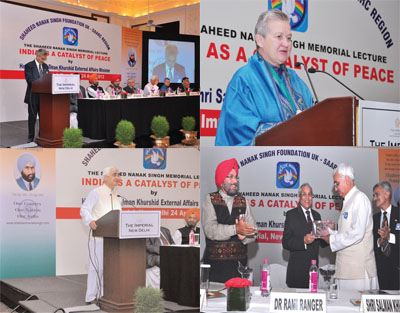
    NEW DELHI (TIP): The 6th Shaheed Nanak Singh Memorial Lecture was delivered by Salman Khurshid Minister for External Affairs Govt. of India, on 24th April at The Imperial Hotel, New Delhi, India. This year’s lecture was attended by over 200 elite guests including H.E. Ms. Nancy J Powell, US Ambassador to India, H.E. Gen JJ Singh, Governor of Arunachal Pradesh, H.E. Laimonas Talat-Kelpsa, Ambassador of Lithuania, H.E. Borislav Kostov, Ambassador of Bulgaria, H.E. Daniele Mancini, Ambassador of Italy, H.E. Prof. Piotr Klodkowski, Ambassador of Poland, H.E. Piotr Opalinski, Minister Counsellor, Deputy Head of Mission, Poland, H.E. Raimund Magis, Ambassador for Austria, H.E. Mark Reynhardt, Counsellor for South African High Commission, H.E. Tariq A Karim, High Commissioner of Bangladesh, the representatives from Belgium and Honorary Consuls of Samoa and Moldova.

    Also attending were Ambassador Rajesh Prasad, Ambassador Shri Nalin Suri, former Indian High Commissioner to the UK, Shri. Tarlochan Singh, Former Head of Minority Commission and member of parliament, General SK Sinha, Former Vice Chief of the Indian Army and Governor J&K, Shri Vivek Tankha, Former Additional Solicitor General to the Govt. of India, Vice Chief of Indian Navy, Admiral Robin Dhowan, Mr Jassi Khangura MLA, Punjab and Mr Surinder Singla former Finance Minister, Punjab. Mr Mukesh Anand, Chairman of the Foundation, paid tribute to Sardar Shaheed Nanak Singh Ji (www.shaheednanaksingh.com) who was born on 11th September 1903 in Kuntrila, Rawalpindi District, now in Pakistan.

    He was a great freedom fighter who dedicated his entire life for freedom, communal harmony and the unity of India. He strongly opposed the partition of India as he could foresee the consequences of breaking up India on the basis of religion. He delivered his last public speech on 4th March 1947 at Kup Mandi, Multan City, Pakistan along with Dr Saifudin Kichlew, President of the Punjab Congress.

    Sadly he fell the very next day, a martyr at the young age of 43, while trying to save 600 students of D.A.V School, Multan who were caught up in communal riots. He left behind a young widow of 35 and 8 young children, the oldest being 14 years old. Whilst delivering the Shaheed Nanak Singh Memorial lecture, Shri Salman Khurshid paid tribute to a great son of India who laid down his life for the principal of upholding India’s unity.

    He was particularly pleased to see that the Shaheed’s message was being carried forward by his Foundation. He praised the Shaheed’s youngest son Dr. Rami Ranger MBE for living up to the ideals of his illustrious father. In his impressive and memorable lecture, the Hon. Minister spoke about the necessity for peace in the world in order to progress. He said India has always been a catalyst for peace.

    India’s foreign policy was to foster a good relationship with its neighbours for the greater good of mankind. He said India was often accused of being weak in her resolve. However, he said it was easy to become violent but very difficult to be peaceful and India would never opt for the easy option. H.E. Gen JJ Singh the former Army Chief and now Governor of Arunachal also paid tribute to a man whose love for his motherland proved greater than self or his family.

    The Shaheed’s message of unity is as important today as the day he fell while saving innocent lives. He paid tribute to India’s rich civilization and felt proud to be an Indian. He said that whilst we promote peace, we must also be prepared to defend ourselves.With the absence of strength, our peace could be threatened. H.E. US Ambassador Ms Nancy J Powell thanked the organisers for inviting her to this important event.

    She praised India for being a land of ideas and that peace in the world is yet another good idea. Her own country, America, valued India’s friendship in this endeavour. The cooperation of India and the US would not only further peace in the region but also in the world. She was looking forward to working together for peace and prosperity in the world. Mr Tarlochan Singh, former Head of the Minority Commission and member of parliament also paid tribute to Shaheed Nanak Singh who tried desperately to stop the breakup of India.

    Just before his death, he called a peace conference and made a case to remain united. He further pleaded that a temporary gain for a few would become a permanent loss to the nation. He thanked Dr. Rami Ranger for coming each year to pay tribute to his father and to remind us in India of the need for unity between religions, races and castes. Mr Vivek Tankha the former Additional Solicitor General of India said it was not often that he got the opportunity to speak about a real patriot.

    He spoke about a family who for generations had dreamt and thought for Mother India, never flinched to offer the supreme sacrifice yet had never claimed credits or brownie points for what they did. He saluted such personalities and said that good people had to meet to ensure the bad did not takeover. He said we had no choice but to be together for the good of our country. He ended by stating that he was proud to be a part of this mission. Gen SK Sinha, former Vice Chief of Indian Army and Governor of J&K, said he had lived through the holocaust in 1947 as a young Major. He saw suffering on an unparalled scale.

    Over a million were killed and many millions uprooted and became refugees in a land where they were born. He fondly recalled the Shaheed Nanak Singh Lecture he delivered himself at the Punjabi University, Patiala a few years back. He said during this time he came to know more about the Shaheed and his son Dr Rami Ranger and became inspired by their lives. Dr. Rami Ranger, the youngest son of Shaheed Nanak Singh, summed up his father’s vision and foresight in an evocative vote of thanks.

    He thanked all the speakers, the trustees (Gp Capt DV Arora VSM & CA Alok Goel ) and Ms Shivani Mohan for conducting the proceedings most effectively and eloquently. He pointed out that India’s soul was its secular and democratic constitution where equality for all was enshrined regardless of race, religion or gender. Each year with the Shaheed Nanak Singh Memorial Lecture we reminded ourselves of the sacrifices people had paid for our freedom.

    He emphasized that it was imperative that we be proactive in pursuing peace and that if we did nothing, then we would achieve nothing and as a result we must promote and celebrate unity. He concluded by saying that if Shaheed Nanak’s Singh’s legacy could unite India, then his father would not have died in vain and together we could make India great. Dr Rami Ranger, on behalf of the Shaheed Nanak Singh Foundation, presented the Hon.

    Minister Shri Salman Khurshid ji with the “Soul of India” Award for his Services to Mother India and then to complete the occasion a sumptuous dinner was served to the guests.

  • Transition In Afghanistan: A War Of Perceptions

    Transition In Afghanistan: A War Of Perceptions

    CONTD FROM PREVIOUS ISSUE
    Abstract A decade after the military intervention that dislodged the Taliban-Al Qaeda combine, peace and stability continues to elude Afghanistan. There is still no consensus in Western capitals on what constitutes the ‘end-state’ in Afghanistan. The Western public’s frustration with a long-drawn war has coalesced with the global economic slowdown, the Euro crisis and the pressures of electoral campaign politics in the United States – thereby complicating the efforts for the long-term stabilization of Afghanistan.Premature announcements of exit and dwindling financial assistance have added to the Afghan anxieties of being ‘abandoned’ once again. This paper brings to light the divergent perceptions among the key stakeholders in Afghanistan and in the international community (IC) on the trajectory of the ‘inteqal’ (transition) process. The paper argues that the war in Afghanistan is essentially a war of perceptions on progress made thus far. This widening gap in perceptions is bound to complicate the transition and long term stabilization process.

    According to Fawzia Koofi, a potential presidential contender and Member of Parliament (MP) from Badkshan, the main issue facing post-conflict societies is the construction of a politically stable and democratic state that has both the institutions and legitimacy to remain viable in the long run.

    Afghan observers point out that the first and second Bonn conferences did not address the need for political reform. The 2004 Constitution, which is sourced mostly from the 1964 Constitution when Afghanistan was a monarchy, has established one of the most highly centralized governments in the world.

    A gradual political reform towards a less centralized government is a necessary step. Amending the 2004 Constitution to establish different forms of government based on decentralization, while preserving the unity of Afghanistan, remains the only viable option. This would help build consensus among Afghans and lay the foundations of durable peace as the international military foot print recedes in 2014.

    If Afghanistan is to achieve some degree of stability after 2014, a concerted effort must be exerted towards political reform through checks and balances. Two rounds of elections in Afghanistan have identified the ineffectiveness of the current electoral system. The Afghan Constitution has shown limitations in providing answers to disputes arising from power relations of three branches of the government and jurisdictions of institutions over governing elections.

    Despite a decade-long international commitment to rebuilding Afghanistan, not much has been done for institution-building, improving governance and establishing the rule of law. The nascent democratic government led by President Karzai is perceived as weak, corrupt and ineffective by the international community and the local population. The fraud-marred parliamentary elections of September 2011 further strengthened this perception.

    Moreover, the reliance on local power brokers and warlords in the security operations and aid-delivery has undermined the development of effective state institutions and the rule of law. Consequently, the government now lacks credible institutional and political muscle to offset the influence of local power brokers and their deeply entrenched patronage systems.

    This has resulted in corruption that permeates and impedes not only governance but also the political and economic sectors and has become a major obstacle in achieving security and development. Problems in the political sector have been exacerbated by a corresponding governance deficit. The near absence of an effective and independent Afghan civil service is another area of concern The Afghan government runs almost entirely on ‘contract employment’ and most of the better-qualified government employees are getting their pay from donor-financed project.

    This effectively means that when the donors leave with their funds, most of these government officials would also leave with them, leaving the country with an even poorer prospect of establishing service-delivery mechanisms. The lack of effective governance, anticorruption measures and the absence of more inclusive politics would impede effective transition. Despite repeated attempts, the international community has been unable to convince President Karzai to permit political parties to assume a more direct role in the election process.

    This combined with a peculiar voting system of Single Non Transferable Vote (SNTV) has contributed to the country’s fragmented politics and often immobilized legislative process. Analysts forewarn that the international community’s leverage with Afghan government in pressing for political sector reforms would decline as its presence in the country reduces.

    The presidential elections are scheduled to be held in 2014, coinciding with the pullout of international troops. In the absence of large scale political sector and electoral reform, the danger of repeat of previous instances of electoral malpractices at a crucial time of transition remains a cause for widespread concern. The Afghan Constitution does not allow President Karzai to run for a third term.

    A smooth transition of power to a new elected president and an expansion of the political basis of the government will have a positive impact on the stabilization of the country. On the contrary, any attempts by the present-day government to delay the elections as part of a power-sharing deal with the Taliban or to introduce measures such as convening a ‘Loya Jirga’ to rubber stamp an unconstitutional move to stay in power or appoint a ‘successor’, or resort to a la Putin technique could see the country slide back into renewed civil strife.

    Peace Talks, Reconciliation and Reintegration
    The ambiguity of the peace processes, reconciliation, reintegration, talks and negotiations with the insurgents has complicated the search for the ‘political solution’ to end the long war in Afghanistan. As individual countries are involved in unilateral and parallel efforts of negotiations, setting up office and contacts outside Afghanistan, this has further reinforced the notion that the West is willing to cut a deal with the insurgents and leave.

    Such secretive and uncoordinated attempts have also raised concerns among the women and human rights groups and ethnic minorities. According to a survey conducted by Asia Foundation, ‘most Afghans want their girls educated, they want women to be able to go to the marketplace freely, they want them to be in public freely, they don’t agree with what the Taliban had done in the 1990s’. However, in the present discourse on transition, not just the gender narrative has taken a back seat, there are impending fears that the achievements made in the last decade with regard to women’s rights could be lost.

    The indigenous peace-building efforts like the High Peace Council (HPC) and the Afghan Peace and Reintegration Program (APRP) appear to be casualty in the process, of both the insurgent onslaught and the international community’s strategy of omission. Even with the long-standing focus on negotiation with the high-ranking Taliban leaders, it is unclear if the international community has moved beyond a phase of opportunistic negotiation, i.e. negotiating with whosoever is available and willing rather than with insurgents of consequence and insurgents enjoying the sanction of top leaders in the insurgent hierarchy.

    It is still not clear whether the process involves the Taliban leadership based in Quetta ( Quetta Shura Taliban). Or, is it simply trying to rope in people who have grown irrelevant to the insurgent movement, sometimes even getting duped by impostors who pose as interlocutors or representatives of the Taliban. While the lack of credible information on the identity of the interlocutors is a lesser problem, , several critical hurdles remain for the parties involved to make any significant headway.

    The most important is the demand of the US that it would retain bases within Afghanistan beyond 2014. President Karzai has down played the talk of permanent presence of US troops, stating that it would be an impediment for negotiations with the Taliban who demanded complete withdrawal of foreign forces as a precondition for talks. Some moves were made to release imprisoned Taliban commanders from the detention centre at Guantanamo Bay, the failure to do so prompted the Taliban to suspend the peace talks in March 2012.

    Efforts, however, continued to keep the fledgling negotiation process going, both by the US and its allies. Lack of a Pakistani endorsement, rooted in the country’s fear of being sidelined from the end-game in Afghanistan, has also played spoiler. In 2009, the negotiation prospect with the Taliban made some progress through a Taliban commander Mullah Baradar, second in command to Mullah Omar, the leader of the Taliban. However, Pakistani establishment stepped in and arrested Baradar in early 2010, derailing the entire process.

    The same process resumed in 2012. Some other sources identified Tayyeb Agha, head of the political committee of the Taliban as another key interlocutor for the back channel talks. Tayyeb, too, was rumored to have been arrested by Pakistan in 2010 along with some other Taliban leaders. The control of the Pakistani military and intelligence on the ‘strategic assets’, the Taliban leadership, would make any meaningful Afghan-led reconciliation process an arduous task.

    The US desire to talk to the insurgents from a position of strength continues to be a pipe dream.With the beginning of drawdown of international forces, the Taliban perceive themselves to be winning. In addition, by launching a successful campaign of violent retribution and targeted assassinations, the Taliban managed to create a power vacuum of sorts in southern Afghanistan. Three major assassinations in 2011 – Ahmed Wali Karzai, half brother of President Karzai, and presidential aide Jan Mohammed Khan, both powerful warlords and the Mayor of Kandahar, Ghulam Haider Hamidi – created a power vacuum in the south with consequent erosion of President Karzai’s support base among the Pushtuns.

    As the contours of the negotiations remain unclear, the high-profile killings in the north and systematic elimination by the insurgents of those who oppose the negotiations process have raised fears among other ethnic and women groups. It has also led to polarization of among other ethnic groups with whispers of civil war gaining momentum. The talk of the early withdrawal of international forces and the ongoing negotiations with the Taliban have not only raised the levels of anxiety but have also been exploited by various actors as they position and jockey for power and influence in post-2014 Afghanistan.

  • Prince Harry Pays Tribute To Us War Dead

    Prince Harry Pays Tribute To Us War Dead

    WASHINGTON (TIP) Prince Harry, in the dress uniform of his British army regiment, paid tribute Friday to US soldiers killed in Iraq and Afghanistan on day two of a US tour dedicated in good part to war veterans. With white-gloved hands behind his back, he strolled alone through rows of white headstones in a section of the sun-kissed Arlington National Cemetery reserved for those who died in America’s most recent wars.

    He wore the dark blue uniform of the Blues and Royals cavalry regiment, which he joined in 2006, together with a powder blue beret representing his role as an Apache attack helicopter pilot in the British army’s air wing.

    On a floral arrangement, the 28-year-old captain — who has twice deployed in Afghanistan — left a signed handwritten note: “To my comrades-in-arms of the United States of America, who have paid the ultimate sacrifice in the cause of freedom,” it said. Harry also laid a wreath at the Tomb of the Unknown Soldier at Arlington, watched by a youthful crowd of T-shirted tourists kept at a distance behind a metal barricade, and paused at the grave of president John F Kennedy, assassinated 50 years ago this November.

    Later in the day, he crossed town to the Walter Reed National Military Medical Center to mingle with US soldiers undergoing physical therapy and get a private briefing on the latest breakthroughs in prosthetics. On the weekend, Harry will be in Colorado for the Warrior Games, where 200- plus wounded servicemen and women will compete in such sports as archery, cycling, swimming, track and field, and wheelchair basketball. Harry, who last visited Washington a year ago, is on his best behavior after cellphone naked photos of him partying in a Las Vegas hotel suite spilled onto the Internet last August.

    Like his father Prince Charles and older brother Prince William, he is assuming a bigger share of royal duties on behalf of his grandmother Queen Elizabeth II, who turned 87 last month.

  • Grand Celebration Marks Birth Anniversary Of Bhagwan Mahavir In Chicago

    Grand Celebration Marks Birth Anniversary Of Bhagwan Mahavir In Chicago

    BARTLETT, IL (TIP): The Jain Society of Metropolitan Chicago’s (JSMC) Bartlett, Illinois temple celebrated a weeklong festivity on the occasion of Birth Anniversary of Bhagwan Mahavir. The celebration started in a very spiritual manner where discourses by Shrenikbhai Shah from Mumbai, India were arranged. Shrenik Bhai is connected with various Religious, Jivdaya (Saving Life) and many other such spiritual organizations back in India.

    Mahavir Janma Kalyanak (Jayanti) is celebrated across the world as birth anniversary of Bhagwan Mahavir, the 24th Tirthankar (enlightened one) of Jain Philosophy. He was born in 599 BC and this year marks the 2,614 years since the birth of the apostle of peace. His message of Ahimsha (Non-Violence), Aparigraha (Non- Possessiveness) and Anekantvad (Non- Absolutism) are universal in nature and has been the guiding force for generations of Jains and many cultures in the Indus Valley Civilization.

    He was the son of King Siddhartha and Queen Trishala. On the night of conception his mother, Trishala, had a dream depicting 14 different auspicious things. The Astrologers interpreted the auspicious dreams and predicted that the child would be either an emperor or a Tirthankar. This year JSMC is celebrating its 20th Anniversary and, it being the first major event of the year, the Chairman of JSMC, Arvind Shah and Board of Trustees, presented the state of the JSMC.

    Committee also presented important information on the current and future initiatives undertaken by the managing team and shared the financial health of the society. JSMC President, Tejas Shah, said that the entire Jain community throughout the Chicago land area, Indiana, and Wisconsin celebrated Mahavir Jayanti here at the Bartlett Jain Temple. The entire facility was beautifully decorated including the Pratimaji (Idol) of Mahavir Swami.

    Mahavir Swami is the Main Deity at the Jain Temple of JSMC. Secretary, Vipul Shah thanked all the Volunteers for their Dedication and unconditional Support to make this event a memorable one. This is also an auspicious time of Ayambil Oli. Ayambil is a penance where the observer eats only once a day where a completely boiled Jain VEGAN menu is served. The Ayambil Oli is observed over a course of 9 days and this year it is in parallel to the Mahavir Jayanti celebrations.

    About 65 members observed penance for the entire 9 days and many more did it for a day or two. On Saturday April 20th, a grand poojan of Sri Panch Parmesthi was organized in the main Prayer Hall. Almost 50 families simultaneously performed the poojan. The evening started with the most sought after event, The MJ Cultural Night. The cultural team put together an electrifying show.

    It was attended by more than 2,000 people in the evening. About 250 kids and youths, from 3 yrs to 50 yrs in age, participated in this cultural show and presented a variety of artistic dance, garaba and skit. The morning of Sunday April 21st, started in a very spiritual way. A Digambar Mahavir Janma Jayanti Pooja was organized making sure that Jains from all walks of life were able to attend and take part in this spiritual journey.

    The Digambar Pooja was performed by almost 30 families and around 100 people attended the poojan. In the afternoon the 15th annual declamation contest for various age groups was organized. About 72 students and members participated. Group1, Age 8 to 9, topic: “My favorite Moral Story”, winners are 1) Labdhi Jain, 2) Om Gandhi & 3) Riya Jain.

    Group 2, Age 10 to 13, topic: “If you were granted three boons, what would you ask for”, winners 1) Siddhi Jain, 2) Sneha Shah & 3) Priya Shah. Group 3, Age 14 to 18, topic: “Practicing Jainism- Cultural and generation gap”, winners 1) Vinita Choradia, 2) Anand Shah & 3) Satej Shah. Group 4, Age 19 and above, topic: “Anekantvad in daily life”, 1) Sejal Jain, 2) Navita Choradia & 3) Vaishali Jain.

    Bhagawan Mahavir was a great teacher, his philosophies and teachings taught mankind the true path of happiness. His teachings on non-violence and importance of austerity have shown us the path to achieve salvation and spirituality. For further information and detailed program schedule, please visit www.jsmconline.org. Piyush Gandhi, Membership Secretary.

    About Jain Society of Metropolitan Chicago: Founded in 1970, the Jain Society of Metropolitan Chicago (JSMC) is a nonprofit, tax exempt organization registered in the State of Illinois and operates under IRC Title 26 U.S.C. §501(c)(3) status. Gifts and donations to JSMC are tax deductible to the extent allowed. JSMC has a membership of about 1,500 families, the largest membership representation of all Jain Centers in North America.

    JSMC is a proud member of the Federation of Jain Associations in North America (JAINA) and has the distinct honor of building the first significant Jain Temple of North America in 1992 on a 15.4 acre property it owns in Bartlett, Illinois. Jainism is a religion and a way of life for Jains around the world. The primary mission of the JSMC is to provide a temple for religious services and a community center for religious, social, cultural, and educational needs of the Jain community.

    Other objectives of JSMC are to increase the awareness of the principles of Jainism, achieve the unity of all Jains, provide a platform to project the voice of Jain religion, promote the feeling of amity and brotherhood among Jains, promote interfaith understanding, to establish communications between scholars of Jain philosophy and members of the Society, and celebrate Jain festivals and holidays.

  • DNA Shows US Kidnapping Suspect Fathered Girl

    DNA Shows US Kidnapping Suspect Fathered Girl

    CLEVELAND (TIP): A DNA test confirmed another dark twist in the story of three women imprisoned in a house for about a decade: Kidnapping and rape suspect Ariel Castro is the father of a 6-year-old girl who escaped from the house along with the women, a prosecutor om May 10. As the investigation into the women’s ordeal continued, the FBI also said no human remains were among more than 200 pieces of evidence collected from the house.

    Two of the women, including the one who gave birth to the girl, returned to relatives’ houses earlier this week. The third woman, Michelle Knight, was released from a hospital Friday with a request that her privacy be respected. “Michelle Knight is in good spirits and would like the community to know that she is extremely grateful for the outpouring of flowers and gifts,” the statement said.

    No information would be provided about Knight’s next steps, said MetroHealth Medical Center spokeswoman Phyllis Marino. Castro remained in jail under a suicide watch on $8 million bond while prosecutors weighed what charges they might bring against him, including the possibility of charges carrying a death penalty. He currently is charged with rape and kidnapping. Castro was represented at Thursday’s hearing by public defender Kathleen Demetz, who said she is acting as Castro’s adviser if needed until he’s appointed a full-time attorney once he’s charged by a grand jury.

    She said Friday she can’t speak to his guilt or innocence and said only that she advised him not to give any media interviews that might jeopardize his case. Family members have portrayed Castro as a “monster” who terrorized the mother of his children, frequently beating her, playing twisted psychological games and locking her indoors.

    The stories, repeated in separate interviews by members of Castro’s extended family, have surprised people who knew him as a musician who played bass in several bands around Cleveland the last two decades. Miguel Quinones, manager of a group Castro played with twice as a backup bass player about five years ago, said Thursday he had nothing bad to say about Castro based on his own experiences.

    A police report alleged that Castro impregnated one of his captives at least five times and made her miscarry by starving her and punching her in the stomach. The report also said another one of the women, Amanda Berry, was forced to give birth in a plastic kiddie pool. Tests by the state attorney general’s office on a sample of Castro’s DNA confirmed that he is the father of Berry’s 6-year-old daughter, who was rescued from his house, the office said Friday. After her release, the girl returned home with Berry, 27.

    Officials also were entering the DNA profile into a national database to see if it links him to other crimes. The three women said Castro chained them up in the basement but eventually let them live on the home’s second floor. Each woman told a similar story about being abducted after accepting a ride from him.

    The FBI has not recovered human remains in its search of the house, spokeswoman Vicki Anderson said Friday. Agents removed more than 200 pieces of evidence, she added, lining to say what was found.

  • US: Remove Online 3D Gun Designs

    US: Remove Online 3D Gun Designs

    WASHINGTON (TIP): The US has ordered the removal of controversial online files which allowed users to 3Dprint their own unregistered plastic handgun at home. The order from the state department to Defence Distributed to remove the blueprints for the plastic gun comes after they were downloaded more than 100,000 times.

    The department sent a three-page cease and desist letter dated on Wednesday to Cody Wilson, Defense Distributed’s 25-year-old founder, demanding that the group remove instructions for printing a handgun with a 3D printer from its website. Earlier this week Wilson posted a video online showing a single shot being fired from “The Liberator,” a plastic handgun that was assembled from parts made with a 3D printer

  • US University To Create World Class Pathology Lab In Hyderabad

    US University To Create World Class Pathology Lab In Hyderabad

    WASHINGTON (TIP): An eminent American university has signed an agreement to create a world class clinical pathology laboratory in the south Indian city of Hyderabad, as part of its effort to raise the health care standards in the country to the highest levels. The University of Pittsburgh Medical Center, in a statement yesterday, said it is collaborating with the Citizens Hospital to establish a clinical pathology laboratory on the 10.5-acre campus in Hyderabad, to serve the population of more than seven million people in the metropolis.

    Operating under the name AmPath, the lab initially is serving the Citizens Healthcare Campus, which has opened its first phase in August, including a dedicated oncology facility. When fully operational in 2015, the hospital will include more than 650 patient rooms and offer the entire spectrum of health care services, the university said. UPMC will help the lab expand its capabilities, including the addition of increasingly complex molecular diagnostic testing modalities.

    The facility is expected to become a reference lab serving patients throughout all of India, as well as the Middle East and Southeast Asia, the statement said. “Advisory Services provides our clinical partners with access to a wide-ranging portfolio of UPMC’s expertise, based on its position as one of the nation’s most acclaimed and technologically sophisticated health care networks,” said David Russell, who is leading the new group.

    UPMC’s international footprint already includes operations or services in Italy, Ireland, China, Singapore and Japan.