Month: May 2013

  • High Import Charges Hike Prices Of Indian Mangoes In US

    High Import Charges Hike Prices Of Indian Mangoes In US

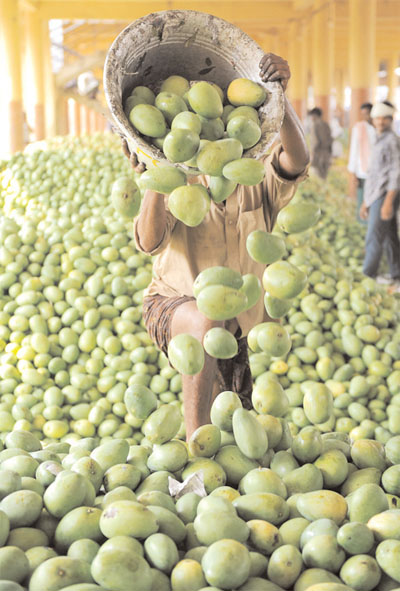
    WASHINGTON (TIP): Consumers in the United States are finding it difficult to buy Indian mangoes due to the high prices as compared to the ones imported from South American countries, a study has found out. According to a study report released by the US department of agriculture, the rise in the price is attributed to high shipping charges and profit margins kept by traders, and not the costs of meeting US health and food safety requirements for imports, an argument being put forth so far by major mango traders.

    In fact Indian mangoes – considered to be the best in the world, costs five to six times higher in the US than the prices of varieties imported from Mexico and Brazil sold at $1 per pound, the study said. “Many attribute the high prices of such products to the costs of meeting US health and food safety requirements for imports,” the report said.

    “Despite recent regulatory changes designed to ease access of US imports of certain speciality crops, concerns remain that regulatory and treatment costs inhibit growth of developing country exports,” it added. An analysis carried out by the Economic Research Service – or ERS which is the research wing of the federal agricultural agency — however, finds that in the case of Indian mangoes, “shipping and wholesale markups” are in fact the biggest factor behind the high prices.

    Through their research, the ERS broke down the price structure of Indian mangoes which averages $ 4.20 per pound in the US. This includes Indian farm cost (29 cents per pound), irradiation costs (14 cents per pound), inspection costs (35 cents per pound), air freight costs ($1.24 per pound), and US wholesaler costs and margins ($1.88 per pound). “Costs associated with the regulation and treatment of Indian mangoes account for a much smaller share of total costs than air freight or wholesale costs and markups.

    Severe reductions in the regulatory and treatment costs associated with Indian mango imports would bring less downward pressure on prices than innovations in shipping or changes in market structure that would reduce markups,” the ERS report said. After several decades the previous Bush Administration allowed import of Indian mangoes with the first shipment arriving in 2006. Persistently high prices of Indian mangoes from 2006 to 2011, however, suggest that some other structural factors kept prices high.

    “Irradiation did add to costs, and these costs might be reduced with further regulatory liberalization. But the period was also marked by high shipping costs and high wholesale markups associated with the still small volume of trade,” the report added.

  • Bangladesh Garment Factory Collapse Death Toll Hits 1,021

    Bangladesh Garment Factory Collapse Death Toll Hits 1,021

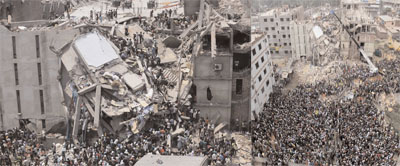
    DHAKA (TIP): The death toll from a garment factory building that collapsed more than two weeks ago outside the Bangladeshi capital soared past 1,000 on May 10, while the list of the dead from a fresh fire at a sweater manufacturer showed the entanglement of the industry and top Bangladeshi officials. Officials said 1,021 bodies have been recovered from the rubble of the fallen factory building as of Friday morning.

    There was no sign of where the toll might finally settle as more bodies were being found, but it is already the world’s deadliest garment industry disaster and one of the worst industrial accidents. The disaster has raised alarm about the often deadly working conditions in Bangladesh’s $20 billion garment industry, which provides clothing for major retailers around the globe.

    Unlike the collapse at the Rana Plaza building, which was blamed on shoddy construction and disregard for safety regulations, the fire at the Tung Hai Sweater factory appeared to have conformed to building codes. A top fire official said the deaths in Wednesday night’s fire – including a senior police officer, a Bangladeshi politician and a top clothing industry official – were caused by panic and bad luck. “They are really unfortunate,” Mamun Mahmud, deputy director of the fire service, said on Thursday.

    The fire engulfed the lower floors of the 11-story factory, which had closed for the day. The smoldering acrylic products produced immense amounts of smoke and poison gas and the victims suffocated as they ran down the stairs, Mahmud said. The building appeared on first inspection to have been properly built, though fire inspectors would conduct further checks, he said.

    It had two stairwells in the front and an emergency exit in the back, he said. Those inside probably panicked when they saw smoke and ran into one of the front stairwells, he said. Had they used the emergency stairwell, they would have survived, he said. “Apparently they tried to flee the building through the stairwell in fear that the fire had engulfed the whole building,” he said. They also would have likely survived the slow-spreading fire had they stayed on the upper floors, he said.

    “We found the roof open, but we did not find there anybody after the fire broke out. We recovered all of them on the stairwell on the ninth floor,” he said. The dead included the factory’s managing director, Mahbubur Rahman, who was also on the board of directors of the powerful Bangladesh Garment Manufacturers and Exporters Association. Along with him was senior police official Z.A. Morshed and Sohel Mostafa Swapan, head of a local branch of the ruling party’s youth league.

    Independent TV, a local station, reported that Rahman had plans to contest next year’s parliamentary elections as a candidate for the ruling party and had been meeting friends to discuss his future when the fire broke out. It was not immediately clear what caused the fire, which began soon after the factory workers went home for the day and took three hours to bring under control.

    Mahmud speculated it might have originated in the factory’s ironing section. Officials originally said the building also housed several floors of apartments, but later said it was just a factory. The Facebook page of the Tung Hai Group claimed it was a sprawling enterprise with a total of 7,000 employees at its two factories and the capacity to produce well over 6 million sweaters, shirts, pants and pajamas every month. The group claimed it did business with major retailers in Europe and North America.

    The country’s powerful garment industry has been plagued by a series of disasters in recent months, including a November fire at the Tazreen factory that killed 112 and the building collapse. More than two weeks after the building in the suburb of Savar collapsed, workers with cranes and other heavy equipment were still pulling apart the rubble and finding more bodies. On Friday, authorities said the death toll had risen to 1,021 and it was unclear how many more people remained missing. More than 2,500 people were rescued alive after the April 24 accident.

    Maj. Ohiduzzaman, an army official who uses only one name, said 100 decomposing bodies have been kept at a makeshift morgue at a school and were to be sent to hospitals in Dhaka for DNA testing to identify them. A total of 648 bodies have so far been handed over to the families, he said. Some of those who authorities have been unable to identify have been buried by the government.

    Bangladeshi Nobel Peace Prize laureate Muhammad Yunus said in an article published in Bangladeshi newspapers Thursday that the tragedy was a “symbol of our failure as a nation.” “The crack in Rana Plaza that caused the collapse of the building has only shown us that if we don’t face up to the cracks in our state systems, we as a nation will get lost in the debris of the collapse,” he said, urging the government and citizens to work together for reforms.

    He also urged global brands not to abandon the country, saying that the workers in the factories – which often subcontract from the well-known brands – should be seen as de facto employees of those companies. The European Union’s delegation to Bangladesh urged the government on Wednesday to “act immediately” to improve working conditions in the country’s garment industry.

    Abdul Latif Siddiqui, head of special Cabinet committee to inspect garment factories that was formed days after the Rana Plaza collapse, said the government has closed 18 garment factories in recent days for failing to meet work and safety standards. He did not say whether the closures were temporary or permanent.

    Officials say the owner of Rana Plaza illegally added three floors and allowed the garment factories to install heavy machines and generators, even though the structure was not designed to support such equipment. The owner and eight other people, including the owners of the garment factories, have been detained.

  • No Boots On Ground, No Military Base In Maldives: Us

    No Boots On Ground, No Military Base In Maldives: Us

    WASHINGTON (TIP): Ruling out establishing a military base or having permanent boots on the ground in Maldives, a top Obama administration official has said that the US has consulted India on the Status of Forces Agreement (SOFA) which it is currently negotiating with the island nation.

    “We do not have any plans to have a military presence in Maldives,” assistant secretary of state for South and Central Asia Robert Blake told PTI in an interview, adding that Status of Forces Agreement (SOFA) is an effort to provide a framework to the ongoing joint military exercises that the US has with Maldives.

    “I want to reassure everybody that this SOFA does not imply some new uptick in military co-operation or certainly does not apply any new military presence. It would just be to support our ongoing activities,” Blake said when asked about the concerns being raised in both India and Sri Lanka after a Maldivian news website reported about it and posted an alleged leaked copy of the draft SOFA agreement running into eight pages.Blake, could not verify the authenticity of the alleged draft of the SOFA agreement posted by a Maldivian news website.

    “I haven’t seen the draft agreement. So I can’t comment. But we are in the process of negotiating one now. These are standard text round the world, nothing very secret about them,” he said. “I do not foresee that this (SOFA) is going to be difficult negotiations (with Maldives). These are the things we do with partners around the world,” he said, adding that it might be very well should be able to signed very soon.

    According to unverified draft copy of the SOFA agreement, Maldives would allow US forces access to ship bunkering facilities, as well as sea ports and other facilities in the Indian Ocean island nation. “I would like to reassure all our friends in India, what it is and what it isn’t. We have status of forces agreements with more than 100 nations around the world. And these are basically agreements we have with partners where we have significant military activities, typically exercises,” he said. “So for example, with Maldives we have coconut grove, which is an annual marine exercise.

    So the status of forces agreement helps to provides framework for those kinds of cooperative activities. “And they are desirable things to have. But it does not in any way signify an expansion of our military presence or some major new development in the US-Maldivian military co-operation. It’s simply more of a framework to provide for (ongoing) cooperation,” Blake said.

  • Prepaid Debit Cards A Weak Link In Bank Security

    Prepaid Debit Cards A Weak Link In Bank Security

    NEW YORK (TIP): A brazen gang of cyber criminals, who stole $45 million from bank ATMs in 27 countries, exposes an Achilles heel in the global financial industry: prepaid debit cards. Cyber security experts and industry analysts say the burgeoning use of prepaid debit cards for everything from gift certificates to disaster relief handouts is making it easier for hackers to withdraw large amounts of money before detection.

    Prepaid cards have fewer controls on them than on regular credit and debit cards issued by banks. Each prepaid card issued is like a blank slate: anonymous, new, and lacking any credit history or individual behavior pattern against which bankers and payment processors can measure activity to look for red flags.

    They are also easier to hack. Raising a withdrawal limit on a prepaid card involves hacking into a system at a third-party payment processor, a company that is generally smaller than a bank and, if based outside the United States, potentially subject to looser cyber security standards. “It’s usually prepaid debit cards. That’s the card of choice in this.

    The bad guys know the system and they have been able to exploit it,” said Joe Petro, a managing director at Promontory Financial Group, who worked for 20 years as the head of fraud prevention and investigations for Citigroup Inc. “The vulnerability stems from third-party processors, who may not have the same level of security systems that banks are able to have,” he added.

    Petro was speaking generally and said he did not have direct knowledge of the $45 million heist. In a globally coordinated campaign, hackers broke into two unidentified payment processing companies that handled the prepaid debit cards for two Middle Eastern banks, US prosecutors said on Thursday. Once inside the computer networks, they increased the available balance and withdrawal limits on prepaid MasterCard debit cards issued by Bank of Muscat of Oman and National Bank of Ras Al Khaimah PSC of the United Arab Emirates.

    The criminal ring’s operatives then fanned out around the world and used fraudulent prepaid cards to withdraw money from thousands of ATMs. The global scope and speed of the theft was unprecedented, cyber investigators said. In the case of Bank of Muscat, $40 million was stolen in just over 10 hours. Experts said the use of prepaid debit cards, instead of credit cards, was not accidental.

    Credit cards are attached to individuals whose spending habits over time give banks and credit card companies clear patterns they can use when trying to identify unusual or illicit activity. A thief moving from ATM to ATM with a personal credit card would likely quickly raise alarms, because his or her behavior would look out of place compared to the credit card user’s normal activity.

    “The banks are using state-of-the art defenses, but the more sophisticated actors are able to breach their networks,” said Shawn Henry, the former head of cyber crime investigations at the FBI, now president of professional services at security firm CrowdStrike. While the $45 million swindle is one of the largest ever, security experts say banks deal with similar, albeit smaller, thefts regularly – they are just rarely disclosed. By 2013, the amount of money that was placed onto reloadable prepaid cards reached about $201.9 billion from $28.6 billion in 2009, according to a report published by Mercator Advisory Group.

    “Of all the types of cards that are there, prepaid cards is the fastest growing category,” said Scott Valentin, analyst with FBR Capital Markets & Co. “With cash payments slowing and an increase in mobile payment and online commerce, the importance of these cards is only going to increase,” Valentin said. “With credit cards you need to be credit worthy and with debit cards you need a bank account.

    Prepaid cards gets you past these two issues and as a result are extremely popular.” That has raised concerns about the need for better security around prepaid cards, and the card processing companies that service them. For more than a decade, banks have been required by U.S. law to ensure their electronic systems and those used by their outside contractors meet certain safety requirement. U.S. banks using payment processors must have a contractual agreement that states the payment processor is meeting the same security standards the bank does.

    The problem, said Doug Johnson, vice president for risk management policy at the American Bankers Association in Washington, is that U.S.-based banks, don’t always find it easy to ensure that what is agreed in the contract with an overseas payment processor is really being implemented.

    “I fully anticipate that regulatory agencies are going to spend increased time looking at third-party providers,” Johnson said. In the case of the two Middle Eastern banks, one used a U.S.-based credit card processor, while the other used one in India. The U.S.-based company’s breach shows even third-party processors close to home can make banks vulnerable.

    The hackers likely used some of the most sophisticated software available, said George Tubin, a senior security strategist for Trusteer, a Boston-based cyber security firm. Emails and other communications can bring malware into a corporate computer system. Employees opening email attachments unwittingly download spy software without even realizing it, Tubin said.

    The software then collects and transmits information back to the hackers who created it. “Once they gain access to the right corporate network and figure out how to get the right privileges, they can do whatever they want,” Tubin said.

  • Taliban Threats Force Tight Security Measures

    Taliban Threats Force Tight Security Measures

    ISLAMABAD (TIP): Over 600,000 army and paramilitary forces have been deployed across Pakistan amid Taliban threats to disrupt the polls on Saturday. The Taliban on Friday warned voters to boycott polling to save their lives as the campaigning concluded a day earlier. They have singled out the Pakistan People’s Party (PPP) and its allies that were in power for the last five years and killed over 100 people in attacks since April.

    Ex-prime minister and PPP leader Yousuf Raza Gilani’s 27-year-old son, Ali Haider Gilani, was kidnapped and his two aides killed in Multan on Thursday while he was campaigning. The kidnapping further heightened fears ahead of the polls. The ex-PM sought ISI’s help to locate his son as police were yet to make any breakthrough in their efforts to trace Ali Haider. “We have not yet received any call from the kidnappers.

    I ask the ISI to help the police trace my son.” A Taliban faction is suspected to have kidnapped the 27-year-old, who had received threats from the banned Lashkar-e-Jhangvi and Sipah-e-Sahaba. Gilani said Ali Haider had been receiving “death and kidnapping threats” from the two outfits. But he appealed for clam. “We should create a conducive atmosphere for the elections, so that polls look fair and transparent.”

  • India Hopes Pakistan Election Throws Up Clear Winner

    India Hopes Pakistan Election Throws Up Clear Winner

    NEW DELHI (TIP): As Pakistan takes baby steps into democracy, India is looking on with apprehension at the plethora of violence that may prevent the new government after Saturday’s election from being the kind that India would like to see. “Our best bet in Pakistan is a strong civilian government that can change the India narrative to something we can work with,” high level sources said.

    At this point, the dominant narrative is driven by the India-obsessed Pakistan army-ISI combine, which gives oxygen to jihadi groups like Lashkar-e-Taiba and its affiliates. Support to terrorism against India therefore has official sanction. The most important challenge for Pakistanis — candidates and voters alike — is that these elections have been dominated more by terror attacks than anything else. Indians hoping for a free election have been dismayed at the relentless violence that threatens to keep many indoors on polling day.

    India is hoping against hope that the election throws up a clear mandate for one of the mainstream parties. All signs point to the fact that Asif Zardari’s PPP might fall prey to antiincumbency and Nawaz Sharif appears the front-runner. Many believe that Sharif, who was last tossed out by General Pervez Musharraf’s coup, will not be particularly enamoured of the Pakistan army. But Sharif is accommodating of many of the Islamist groups.

    That bothers the west, but India appears more resigned to it. For India, its important that the new government takes the right economic and trade decisions for a start. That would put energy into the bilateral relationship even if other indices are more difficult to fulfil. Pakistan analyst Mosharraf Zaidi said in Foreign Policy, “This is not to say that Pakistanis embrace their neighbour. They are still smart about India’s role in separating Pakistan from Bangladesh, and still view with acrimony India’s administration over large parts of Kashmir.

    Yet, for all the bitterness and baggage, even the juiciest volleys from India are now returned with a disengaged ‘meh’. This will likely remain the status quo for a while. As long as it does, the doors remain open for India to tap into an unprecedented national appetite for normalcy.” A Pew survey tellingly found most Pakistanis deeply sceptical of Taliban and America alike.

    The study said, “About 80% think the Pakistani military, which for decades has been an important player in the country’s politics, is having a positive influence on the nation. Solid majorities say religious leaders (69%), the media (68%) and the courts (58%) are having a good impact on the country.” This doesn’t hold out much hope for the kind of government India wants in Pakistan.

    Sharif faces a challenge from Imran Khan and his Tehreek-e-Insaaf, which is seeing a bounce in the election campaigns largely due to his “outsider” tag; while the Sharifs are playing the governance card, they are also seen as the same old political class that has let Pakistan down.

  • Hopes And Fears Ahead Of Pakistan Polls

    Hopes And Fears Ahead Of Pakistan Polls

    LAHORE (TIP): All was quiet on the streets of Lahore on Friday as people geared up for the elections. The provincial government announced a holiday across Punjab around noon on Thursday, shutting down local businesses and giving people one extra day to get home to their villages to cast their vote in what appears to be the first historic elections since Zulfiquar Bhutto’s party, the PPP won the elections in 1977 by a wide margin. There are more than 200 parties in the electoral process, 86 million voters and 5,000 candidates.

    Yet across the country there are only two names being bandied about: Imran Khan and Nawaz Sharif. The third hidden voice of the PPP’s Asif Ali Zardari is expected to emerge with news of the election results. Across social media, in cafes and on the roadside, there is a sense that Imran Khan – whether or not you support him – has roused election fever in everyone, not just the youth. The young, the middle aged and the youth are repeating the mantra “This is the first time I’m going to vote”.

    Even those cynical about the elections process admit that the energy on ground is palpable. “Benazir Bhutto was the last charismatic leader we had,” said Shahvaar Ali Khan, a musician whose ad company, Farigh Four launched PTI’s media campaign for change with the slogan, “Naya Pakistan’ or a New Pakistan. “Now (the leader) is Imran despite his simplistic, yet sincere and honest political analysis.”

    Indeed, in the urban centres of Pakistan many people, across the age spectrum are expressing their support for this reality. Some have read the PTI’s manifesto, many haven’t. But they’re hoping that Imran Khan will deliver guidance in governance, just as he did on the cricket field. This means that Sharif is finding a deep challenge in his stomping grounds. Across Lahore there is evidence that longtime former supporters of the PML-N aren’t going to vote for him. “I’m going to vote for Imran Khan,” said a businessman who didn’t want to be named.

    “But I’m going to walk into my polling station announcing that I’m voting for Nawaz Sharif.” In Lahore on Thursday evening, the last day for rallying before today’s elections, people thronged on Mall Road, and around Liberty Market, the city’s commercial areas. Mothers came with their children dressed in their preferred party colours, many of them showing off the PTI’s red, white and green.

    “I’m so excited. It was so much fun to see so many people all looking forward to a change,” said Moosa Baksh, a 21-year-old architecture student who joined the Liberty Market crowd with his friends. Asked what he’d feel if Imran Khan didn’t win. “I’ll be really sad,” he said. There is also a sense that Imran Khan’s superstar status is helping get women out of their homes and into the polling stations.

    “In a lot of our families many of the husbands are voting for Nawaz Sharif and our wives are voting for Imran Khan,” said Mian Raza Mansha, a prominent Pakistani businessman. “I’ve heard a lot of men saying they’re going to try and prevent their wives from going to the polling stations,” he laughed. With so much focus on Pakistan’s big cities, it is unclear what the mood in Pakistan’s rural areas is, where a majority of the electorate lives.

    Voters tied as serfs to their landowners have traditionally voted for their caste and biradari. PTI, with no links to the biradari system has promised to break that hold. In the cities there a sense of a newly mobilized voting class that has long been enfranchised to vote but has not felt compelled to make it to a polling station on elections day. Outside a polling station where workers were setting up the booths, three men sat outside discussing the potential election results.

    “It’s going to be a hung parliament,” said Omar Farooq, 48, an electrician. “I’ve been listening to the radio all morning. ” “Nonsense,” said his friend, Asif Ali, 36. “It’s going to be an Imran Khan sweep. He’s going to take the entire country.”

  • 3rd Jamaat Leader To Hang For War Crimes

    3rd Jamaat Leader To Hang For War Crimes

    DHAKA (TIP): Bangladesh battled a fresh outbreak of street violence on Thursday after senior Jamaat-e-Islami leader Mohammad Kamaruzzaman was sentenced to death for mass murder and crimes against humanity during the 1971 liberation war. Clashes were reported in Dhaka, Rajshahi, Chittagong and other major Bangladeshi cities as Jamaat activists rioted and hurled crude bombs. One of the cases in which Kamaruzzaman was convicted was that of collaborating in the mass murder of 164 unarmed civilians in Sohagpur on July 25, 1971.

    He is the third Jamaat leader to be sentenced to death by the International War Crimes Tribunal (ICT) set up by the Sheikh Hasina government after Abdul Kalam Azad alias Bacchu Razakar and Delawar Hossain Sayeedi. The verdicts had sparked off nationwide violence earlier this year and revealed a split in Bangladeshi society as Jamaat activists, backed by Khaleda Zia’s BNP, went on the rampage and the civil society gathered at Shahbag Square to demand death for all war criminals.

    The Shahbag movement began on February 5 in protest against the life term awarded to another war criminal, Abdul Qader Mollah, and eventually took the shape of an anti-fundamentalist movement as the Jamaat tried to terrorize people through an orgy of street violence that has so far claimed at least 200 lives. The trial of war criminals allegedly responsible for the murder of at least three million Bangladeshis has been a long-standing demand of the Bengladeshi civil society.

    Kamaruzzaman, the assistant general secretary Of Jamaat, was produced before the ICT around 11am on Thursday. In his verdict, chief justice Obaidul Hasan held him guilty in five cases of mass murder and crimes against humanity. In two cases, he was sentenced to death. Kamaruzzaman opposed the verdict in court and his counsel Abdur Razzak said he would appeal in the SC. Imran H Sarkar, convener of different mass organizations at Shahbag, welcomed the verdict. Shahbag activists took out a victory rally.

    “Today’s verdict is the victory of people. We will continue our movement until all war criminals get highest punishment,” said Sarkar, adding that the movement demanding the ban of the Jamaat would continue. The Jamaat called a nationwide shutdown on Sunday in protest.

  • Pakistan Votes In Landmark Election, Coalition Govt Likely

    Pakistan Votes In Landmark Election, Coalition Govt Likely

    ISLAMABAD (TIP): Despite a bloody campaign marred by Taliban attacks, Pakistan was holding historic elections on Saturday pitting a former cricket star against a two-time prime minister once exiled by the army and an incumbent blamed for power blackouts and inflation. Polls opened on Saturday morning across the nation in what is a closely watched race to determine the fate of this nuclear-armed country crucial to stability in the region.

    The vote marks the first time in Pakistan’s 65-year history that a civilian government has completed its full term and handed over power in democratic elections. Previous governments have been toppled by military coups or sacked by presidents allied with the powerful army. Deadly violence struck again on Friday, with a pair of bombings against election offices in northwest Pakistan that killed three people and a shooting that killed a candidate in the southern city of Karachi.

    More than 130 people have been killed in the run-up to the vote, mostly secular party candidates and workers. Most attacks have been traced to Taliban militants, who have vowed to disrupt a democratic process they say runs counter to Islam. The vote is being watched closely by Washington since the US relies on the country of 180 million people for help in fighting Islamic militants and negotiating an end to the war in neighboring Afghanistan.

    The rise of former cricket star Imran Khan, who has almost mythical status in Pakistan, has challenged the dominance of the country’s two main political parties, making the outcome of the election very hard to call. “I think it is the most unpredictable election Pakistan has ever had,” said Moeed Yusuf, South Asia adviser at the United States Institute of Peace.

    “The two-party dominance has broken down, and now you have a real third force challenging these parties.” The election of both the national and provincial assemblies comes at a time of widespread despair in Pakistan, as the country suffers from weak economic growth, rampant electricity and gas shortages, and a deadly Taliban insurgency. The bombings that killed three people on Friday occurred in Miran Shah, the main town in the North Waziristan tribal area, a major sanctuary for the Pakistani Taliban.

    The blasts also wounded 15 people, said intelligence officials, speaking on condition of anonymity because they were not authorized to talk to the media. The candidate who was gunned down in Karachi, Shakil Ahmed, was running as an independent for the provincial assembly, said police officer Mirza Ahmed Baig.

    There is concern that the violence could benefit Islamist parties and those who take a softer line toward the militants, including Khan and former Prime Minister Nawaz Sharif, because they were able to campaign more freely. The government said it would deploy 600,000 security personnel on election day.

    After more than a decade in the political wilderness, the Oxford-educated Khan has emerged as a force in the last two years with the simple message of “change.” He has tapped into the frustrations of millions of Pakistanis – especially urban middle class youth – who believe the traditional politicians have been more interested in enriching themselves through corruption than governing.

    The two main parties that have dominated politics – the Pakistan People’s Party, which led the most recent government, and Sharif’s Pakistan Muslim League-N – have ruled the country a total of five times in the past 25 years. Khan has also struck a chord by criticizing Pakistan’s unpopular alliance with the US and controversial American drone attacks against Islamic militants in the country’s northwest tribal region.

    “I am happy to vote for the person of my choice,” said Mohammed Ayub, who was the first man to vote at a polling station in Islamabad. “I am voting for Imran as he is a strong voice against wrongs.” Support for the 60-year-old Khan may have increased out of sympathy following a freak accident this week at a political rally in which he fell 15 feet (4.5 meters) off a forklift, fracturing three vertebrae and a rib. He is expected to make a full recovery and seems to be making the most of the accident.

    The party has repeatedly aired an interview he did from his hospital bed hours after the fall as a paid advertisement on TV. Nobody is sure how effective he will be in translating his widespread popularity into votes, especially considering he boycotted the 2008 election and only got one seat in 2002. Turnout will be critical, especially among the youth.

    Almost half of Pakistan’s more than 80 million registered voters are under the age of 35, but young people have often stayed away from the polls in the past. Khan faces a stiff challenge from the two main parties, which have spent decades honing vote-getting systems based on feudal ties and political patronage, such as granting supporters government jobs. Because of the strength of this old-style politics and unhappiness with the outgoing government, many analysts see the Pakistan Muslim League-N as the front-runner in the election.

    Sharif has twice served as prime minister and is best known for testing Pakistan’s first nuclear weapon in 1998. Sharif was toppled in a military coup by then-army chief General Pervez Musharraf in 1999 and spent years in exile in Saudi Arabia before returning to the country in 2007. His party, known for its pro-business policies, came in second in the 2008 elections and is seen as more religiously conservative than the Pakistan People’s Party

  • MOTHER’S DAY

    MOTHER’S DAY

    Origin of Mother’s Day goes back to the era of ancient Greek and Romans. But the roots of Mother’s Day history can also be traced in UK where a Mothering Sunday was celebrated much before the festival saw the light of the day in US. However, the celebration of the festival as it is seen today is a recent phenomenon and not even a hundred years old. Thanks to the hard work of the pioneering women of their times, Julia Ward Howe and Anna Jarvis that the day came into existence.

    Today the festival of Mothers day is celebrated across 46 countries (though on different dates) and is a hugely popular affair. Millions of people across the globe take the day as an opportunity to honor their mothers, thank them for their efforts in giving them life, raising them and being their constant support and well wisher. The story of Mothers Day is a long one. It is neither a recent phenomenon as many people believe it to be. Nor it is the creation of card and gift marketers syndicate as assumed by cynics of Mothers Day festival.

    To the surprise of lot many people Mothers Day celebrations are first said to have taken place in the time of ancient Greeks and Romans hundreds of years ago. Even Mothers Day celebrations in UK began much before the tradition saw the light of the day in US. In US the efforts of Ms Julia Ward Howe and Ms Anna Jarvis are greatly recognised for starting the tradition of Mothers Day but several other women too made remarkable contribution to further the cause of Mothers Day holiday.

    Today Mothers Day is celebrated in more than 46 countries around the world though at different times in the month of May and in some countries it is celebrated in entirely different times of the year. In the present time Mothers Day has come to be internationally recognized as the day to honor all mothers and thank them for the services they impart for the benefit of their individual child and consequently to the development of mankind. Please read on and click on the links to know more about the related Mothers Day stories.

    Celebrations in the time of Greeks and Romans
    The tradition of Mothers Day started with the ancient Greeks who celebrated their annual spring festival in honor of Rhea, the mother of many Gods and Goddesses in the Greek mythology. Ancient Romans too celebrated a spring festival by the name of Hilaria in honor of Cybele, a mother goddess, some 250 years before Christ was born.

    Celebrations in UK
    In UK, Mothers Day celebrations started by the name of Mothering Sunday, several years before the tradition found its roots in UK.Mothering Sunday came to be celebrated following the practice in UK of 17th century wherein children of poor families were send to work as apprentice and domestic servants with the rich. These children were allowed to visit their ‘Mother Church’ or the Cathedral of their home town annually in the middle of the fasting month of Lent.

    Children met their mothers after visiting the church and presented them with flowers and special ‘Mothering Cakes’. The custom received a set back with the advent of Industrial Revolution when the lifestyles changes. American soldiers contributed in the revival of the tradition after the World War II.

    Genesis of the Festival in US
    The story of Mothers Day in US began with the efforts of a dynamic writer and poetess, Julia Ward Howe in 1872.An activist to the core Julia utilized her potentials to further the cause of Mothers Day. She wrote a powerful Mothers Day Proclamation in Boston in 1870 and demanded declaration of official holiday and celebrations on Mothers Day. Her idea gained popularity but she could not get the idea implemented. Julia is also credited for penning words for Civil War song, “Battle Hymn of the Republic”.

    Struggle of Anna Jarvis
    A loving daughter from West Virginia, Anna Jarvis is recognised as a ‘Founder of Mothers Day’ and ‘Mother of Mothers Day’.Anna kept the word of her activist mother, Mrs Ann Marie Reeves Jarvis who once expressed a wish that someone should strive to provide mothers their due recognition. After her mothers death in 1905, Anna’s determination became strong and she along with several supporters started lobbying for the official holiday on Mothers Day by writing letters to the people in power.

    To celebrate Mothers Day, Anna began to send her mothers favorite flowers, carnations in her local church requesting people to wear them in honor of their mothers. The idea gained immense popularity over the years and in 1910, West Virginia became the first state to recognize Mothers Day holiday. On May 8, 1914 President Woodrow Wilson signed a Joint Resolution designating the second Sunday in May as Mother’s Day.

  • Hindus, Sikhs A Small Percentage Of Canada’s Population: Surveyra

    Hindus, Sikhs A Small Percentage Of Canada’s Population: Surveyra

    TORONTO (TIP): Hindus comprise 1.5 per cent, Sikhs 1.4 per cent and Muslims 3.2 per cent of Canada’s population of around 35 million, according to the 2011 National Household Survey conducted by Statistics Canada. Of the immigrants who arrived to this country between 2001 and 2011 Hindus, Muslims Sikhs and Buddhists account for 33 per cent, the new data released on Wednesday revealed, which is changing the religious makeup of this North American country.

    Over 22.1 million people identified themselves as belonging to a Christian group, Roman Catholics accounting for 12.7 million and United Church two million. The Muslim population is growing at the fastest rate in the country, even exceeding people who say they follow no religion. 17.4 per cent of the immigrants who arrived between 2001 and 2011 were Muslims.

    Hindus comprised 6.6 per cent, Sikhs 4.8 per cent, Buddhists 2.8 per cent, Jews 0.9 per cent and Christians 47.5 percent in the same period. “We have been experiencing this kind of steady increase for a while,” the Calgary Herald quoted Amin Elshorbagy, president of the Canadian Islamic Congress, as saying. “We can see this in terms of the need to expand our infrastructure. Most of our Islamic centres are becoming very crowded.

    ” South Asians, Chinese and blacks formed 61.3 per cent of the minority population. They were followed by Filipinos, Latin Americans, Arabs, southeast Asians, west Asians, Koreans and Japanese. However, the survey, which replaced the long-form census that was cancelled in 2010, warned that the data may not be completely accurate, given its voluntary nature.

    Indian-American to run for city council in US
    WASHINGTON (TIP): Vandana Slatter, an Indian-American clinical pharmacist has announced her candidacy for a city council seat in the US state of Washington.

    Announcing her decision to stand for Bellevue City Council, Slatter said in a statement on her website: “I chose to run in this race because I believe, at this time, I am uniquely qualified to bring leadership and a fresh perspective to Bellevue City Council.” “After careful consideration, I am pleased to announce I am running for City Council Position 06, currently held by incumbent Don Davidson,” the statement added.

  • US Honours Two Indian-Americans As ‘Champions Of Change’

    US Honours Two Indian-Americans As ‘Champions Of Change’

    WASHINGTON (TIP): The US has honoured 15 Asian American and Pacific Islander (AAPI) women, including two Indian-Americans, as “champions of change” in recognition of their significant contribution to the community. The two Indian American women — Aparna Bhattacharyya from Atlanta and Pramila Jayapal from Washington State — were recognised at a White House event yesterday.

    A passionate advocate for immigrant survivors of family and sexual violence and ensuring they have access to safety, justice and healing, Bhattacharyya is the Executive Director of ‘Raksha’, in Atlanta, Georgia. She has worked to ensure that attorneys, law enforcement, and service providers are culturally competent to serve immigrant survivors.

    Bhattacharyya is currently a board member for the Georgia Coalition Against Domestic Violence, VIDA Legal Assistance and the National Immigrant Women’s Advocacy Project.In the aftermath of 9/11, Jayapal founded the nonprofit organization ‘OneAmerica’, now the largest immigrant advocacy organisation in Washington State. She has worked to advance immigration reform in the state as well as nationally, and served in leadership roles for the Fair Immigration Reform Movement and the Rights Working Group.

    She continues to advocate for immigration reform as the Co-Chair of ‘We Belong Together: Women for Common- Sense Immigration Reform campaign’. Jayapal is currently the Distinguished Taconic Fellow at Center for Community Change and a Distinguished Fellow at the University of Washington Law School.

    The ‘Champions of Change’ programme was created as an opportunity for the White house to feature groups of Americans, individuals, businesses and organisations, who are doing extraordinary things to empower and inspire members of their communities.

  • HSBC Fears’significant’ Penalty In NRI Tax Evasion Probe

    HSBC Fears’significant’ Penalty In NRI Tax Evasion Probe

    LONDON (TIP): Global banking major HSBC has said it may face “significant” penalties from the US authorities with regard to an ongoing probe into suspected tax evasion by the US-based clients of its Indian unit, among other cases. The US tax department is investigating possible evasion of federal income taxes by the American residents of Indian origin through use of their accounts with HSBC India.

    HSBC said in a regulatory filing last night that it is cooperating with the US Department of Justice and the Internal Revenue System (IRS) in their probes into whether certain HSBC companies and employees acted appropriately in relation to certain customers with US tax reporting requirements. The disclosure was made by UKbased HSBC as part of an update of the ongoing “regulatory and law enforcement investigations”, along with the bank’s first quarter results.

    About the case involving its Indian unit, the banking giant said that HSBC Bank USA in April 2011 had received a ‘John Doe’ summons from the IRS, directing it to produce records with respect to US-based clients of an HSBC Group company in India. “We have cooperated fully by providing responsive documents in our possession in the US to the IRS,” it added.

    In the US tax parlance, the ‘John Doe’ summons is one issued by the Internal Revenue Service to a third party to provide information on an unnamed, unknown taxpayer with potential tax liability. The unnamed person is addressed as ‘Jon Doe’ in such summons. About another case, HSBC said it had also received in April 2011 a subpoena from the US markets regulator SEC, directing HSBC Bank USA to produce records related to HSBC Private Bank Suisse SA’s crossborder policies and procedures and adherence to US broker-dealer and investment adviser rules and regulations when dealing with US resident clients.

    “HSBC Bank USA continues to cooperate with SEC,” it said. HSBC said that “based on the facts currently known in respect of each of these investigations, it is not practicable at this time for us to determine the terms on which these ongoing investigations will be resolved or the timing of such resolution or for us to estimate reliably the amounts, or range of possible amounts, of any fines and/or penalties.

    “As matters progress, it is possible that any fines and/or penalties could be significant,” HSBC added. Way back in 2011, the US Justice Department had said that the IRS was demanding from HSBC Bank USA about the US residents who may be using accounts at HSBC India “to evade federal income taxes”. Through the John Doe summons, IRS had asked HSBC USA to produce records identifying US taxpayers with accounts at HSBC India, many of whom were believed by the government to have hidden their accounts from the IRS.

  • Saraswati: Goddess of Knowledge & Arts

    Saraswati: Goddess of Knowledge & Arts

    The literal meaning of the name Sarasvati is the one who gives the essential knowledge (Sara) of our own Self (Sva). The goddess Sarasvati is also considered the Goddess of Learning, or of education, intelligence, crafts, arts, and skills. As she is the consort of Brahma, who is considered the source of all knowledge, Sarasvati is knowledge itself. Thus, many students or even scholars may worship her for her blessings.

    She is, therefore, depicted as white in complexion, and quite beautiful and graceful. She is often depicted sitting on a lotus, which symbolizes that she is founded in the experience of the Absolute Truth. Thus, she not only has the knowledge but also the experience of the Highest Reality.

    She holds in her four hands a vina instrument, an akshamala (prayer beads) in the right hand, and a pustaka (book) in the left, which represents the knowledge of all sciences. Holding the book or scriptures in one hand also indicates that this knowledge alone can bring us to the Truth. The vina shows the beauty of learning the fine arts.

    Playing her vina, she tunes the mind and intellect with her knowledge, and thus the seeker can be in harmony with the universe. The prayer beads represent all spiritual sciences, like meditation and japa (chanting the holy names of God), and, being held in the right hand, that it is more important than the secular knowledge contained in the book in her left hand. Her four arms represent her unrestricted power in the four directions.

    She also represents creativity, or the combination of power and intelligence, the basis of creativity. Her name literally means the one who flows, which can be applied to thoughts, words, or the flow of a river. She is the deity of a river in the Rig-veda. Her other names include Sarada (giver of essence), Brahmi (wife of Brahma), Mahavidya (holder of supreme knowledge), Bharati (eloquence), Maha-vidya (transcendent knowledge), Arya (noble one), Maha-vani (the transcendent word), Kamadhenu (like the wish-fulfilling cow), Dhaneshvari (the divinity of wealth), and Vagishvari (mistress of speech).

    It is through speech that knowledge manifests in action. It is through her that language and writing is revealed. She is also occasionally shown with five faces and eight hands, representing her additional powers. Other objects that she may hold include the pasha (noose), ankusha (goad), chakra (disc), padma (lotus), trishula (trident), and shankha (conch).

    Sometimes she is also seen riding on a swan, the carrier of her spouse, Brahma. At other times she is seen riding on a peacock or sitting with one nearby. The peacock represents the worldly beauty, which can distract the spiritual aspirant. The swan signifies the acquisition of wisdom and knowledge because of its ability to separate milk from water when eating, and thus acquire only the milk.

    Sarasvati is also the shakti or power and consort of Brahma, the secondary creator of the universe. Thus, she is also considered a mother of the universe. In this way, she is also connected with fertility.

  • ARDHANARISHVARAR

    ARDHANARISHVARAR

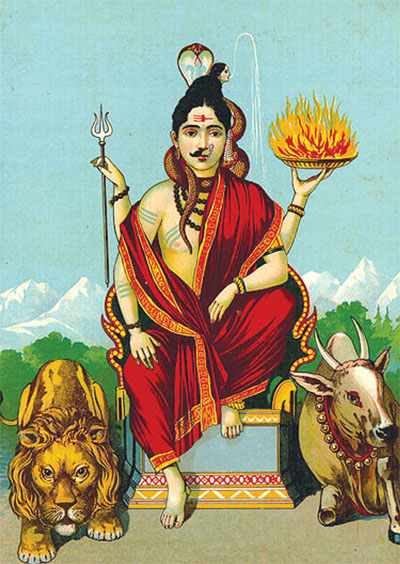
    In the form of male and female, matted hair with moon, axe, smeared in red (aruNa), wearing snakes and the skin of tiger, embracing the bull and with a bent leg, this the right half, and the left black in color, hand holding a (lily) flower close to the chest, with a silk like lotus foot, wearing gold ornaments, salutations to the Half female God.

    PURANA OF THE DEITY
    SAGE BRINGI is one of the ardent devotees of Lord shiva. He used to worship only Lord shiva and not shakti. Goddess shakti, being the power as the name indicate, pulled out the energy from bRingi mahaRishi’s body. Now he was even unable to stand. He pleaded to God. God shiva provided him with a stick.

    On its support he stood and still worshipped Lord shiva alone. Goddess shakti wanted to become an inseparable part of Lord shiva’s form. She oberved the kEdhAra mahA vrata (1) austerity, which is now known as deepAvaLi. Pleased with her austerity, Lord shiva granted her the boon of being part of His form. So the Lord now appeared male on the right side and female on the left side and hence became ardhanArIshvara.

    Significance of this form
    This is one of the very important form of God, Hindus worship. This is a muchhailed form in scriptures of various languages. Hindus do not say that the God is only male. God is male – female and neuter too ! Since God is conceptually beyond sex, though gets referred as He/She many times, it is more appropriate to refer as It, especially at Its intrinsic condition, as do many hindu scriptures.

    Philosophically, this form is quite associated with the Grace of God. shiva and shakti are one and the same Supreme. The formless God is called parashiva. On Its own free-will for the benefit of pashus (souls), which are drowned in pAsha (bondage), It thinks to create the worlds. Its dynamism of creation thus springs out of It, which is called shakti. Now shiva and Its power shakti create everything.

    This is the form of their togetherness that springs out of Lord shiva. Because of this the form is associated with the grace of God. shiva and shakti though the same may also act independently. They are associated like the person and the action of the person.

    They are one and the same like the ice and the water – one becomes the other. For this reason scriptures describe that shakti to shiva is a wife (they are together), mother (shakti becomes shiva – so shiva comes out of shakti) and daughter (shiva become shakti). Poet kAlidAsa hails them as inseparable like the word and its meaning, the letter and pronunciation !!

  • FOR SMOOTH, ITCH-FREE ARMPITS IN SUMMER

    FOR SMOOTH, ITCH-FREE ARMPITS IN SUMMER

    We suggest some ways to keep your armpits smooth and free from itchy rashes. There are some parts of our body, which are sensitive to a lot of things, especially areas where hair removal is a common practise, including armpits and private areas.

    Certain people get rashes when they use a deodorant near their armpit because of the chemicals. Here are certain tips for sensitive armpits that can keep you comfortable and irritation free.

    Razor
    If you are a regular user of razors then pay a little more attention to the blades. Try and get the best ones. Disposable razors or blades work best for people who are sensitive. When you use a normal razor hair and soap gets stuck in the blade and become a breeding ground for bacteria. So it’s advisable to change the blade every week.

    Wax
    Waxing is the best method for people who have sensitive armpits. Since you only have to wax every four to six weeks, you will not be irritating the skin in the armpit between sessions.

    Deodorant
    Chemicals from deodorants and antiperspirants can further irritate sensitive armpits. If you know that deos do not suit you, consult a doctor. Otherwise, using a talcum is the best option.

    Fungus
    Sweating leaves the armpits moist and warm, which may result in fungal growth in that area. You should dry your armpits well after showering and try not to keep them wet to avoid any infection.

  • ARE YOUR HIGH HEELS KILLING YOU?

    ARE YOUR HIGH HEELS KILLING YOU?

    Fashion to the extremes often causes problems. One such example is that of sky high heels. With more and more women sporting high heels, health experts are increasingly concerned about the long-term damage these shoes are doing to their feet. Recent research suggests that up to a third of women suffer permanent problems as a result of their prolonged wearing of ‘killer heels’.

    Ailments include hammer toes, bunions and damage to leg tendons. Many of these problems are caused by the increased pressure high heels put on the ball of the foot. In fact, experts say that the higher the heel, the greater the pressure. The knee and back can also be affected. Orthopaedics say that every woman must pay attention to her foot health.

    When a shoe causes blisters or soreness, do not ignore it. Suffering from painful corns is not easy and this should not be unnoticed. These are again one of the common and minor problems caused by wearing high heels. If you must wear high heels then pay attention to the comfort level. Most women can avoid this by sticking to heels no higher than 1.5 inches. Of course, one doesn’t have to be wearing high heels every day, limit them as occasion wear.

  • FOODS THAT KEEP YOU HYDRATED

    FOODS THAT KEEP YOU HYDRATED

    You’re supposed to drink 8 glasses of water a day but how many of us actually do that? Here are some ways you can eat your water content and deliciously hydrate your body by eating certain foods When you exercise or workout, you usually tend to lose a lot of water through sweat leading to your electrolyte levels going below normal. A wise move for replenishing your hydration levels is to drink electrolyte-rich fresh juices and eat hydration-promoting foods, such as fruits and vegetables. Also, drinking too much water can actually cause a critical loss of vitamins and minerals as they get whooshed out of the body with every trip to the bathroom. When you start ‘eating’ water, you don’t need to count your glasses. You can replace at least one glass of water a day with one serving of raw fruits or vegetables and you will be able to stay hydrated significantly longer. Moreover, you’ll get the added boost of fiber, antioxidants and other healthpromoting phytonutrients. In fact, by sticking to a healthy diet, you’ll end up ‘eating’ most of the water needed each day to stay hydrated.

    Hydrating foods to eat every day
    Our body is constantly replacing damaged cells, so it is imperative that we eat and drink to promote our cellular health. The best way to do this is to keep the body flooded with cell-protecting antioxidants and the building blocks of stronger cell membranes. Here are foods that contain high levels of nutrients and ‘structured water’.

    Mangoes
    If your skin frequently feels parched, just eat a mango! Mangoes are bursting with vitamins and minerals, especially vitamin A. Vitamin A normalises the production and life cycle of skin cells. Mangoes also improve your skin if you suffer from acne. In skin with acne, there is an overproduction of cells in the stratum corneum, which is the outermost layer of the skin and is composed of biologically ‘dead’ cells. These excess dead cells combine with sebum (the skin’s own natural oil) to form comedones – the pore plugs that are the defining element of acne. Taken as a dietary supplement, vitamin A helps to prevent overproduction of skin cells in the stratum corneum. You can add 3 to 4 slices of mango to every meal as a refreshing and hydrating naturally sweet treat.

    Pomegranates
    Pomegranates are a wonderfully hydrating source of antioxidants. They may be the world’s most prolific source of polyphenols. The unique combination of elements in pomegranates increases the protective abilities of sunscreens, which can help prevent sun damage. Add pomegranates to your morning cereal or yogurt, fresh green or fruit salads for a refreshing snack or breakfast.

    Avocado
    The buttery-fleshed avocado may not seem like a hydrating food, but these healthy gems replenish potassium and contain healthy fats and fiber, which help your body hold on to water. As a bonus, the monosaturated fats in avocados contain oleic acid, which has been found to improve fat levels in the body and help control diabetes and cholesterol. Layer your sandwiches with avocado slices, toss diced avocado into your salads or simply scoop avocado out of its peel as a snack.

    Cucumber
    Not only are cucumbers delightfully crunchy and low in calories, they are composed mostly of water, which will keep you feeling hydrated longer. In addition, cucumbers are an excellent source of silica, a trace mineral that contributes to the strength of connective tissue. Do not peel the cucumber skin! It is a good source of vitamins A, C and folic acid. You can add diced cucumber to green and grain salads or fan sliced cucumber on the side of your plate as a refreshing side dish. You can also cut cucumber into batons for an afternoon snack.

    Broccoli
    Your mom was right when she said to eat your greens. Broccoli and other green foods, such as spinach, are a great source of alpha lipoic acid which is a potent fatand water-soluble antioxidant and an anti-inflammatory. Toss raw broccoli into your salads or simply snack on this hardy vegetable all by itself.

  • People With Restless Legs Syndrome Can’t Sleep

    People With Restless Legs Syndrome Can’t Sleep

    Johns Hopkins researchers believe they may have solved the mystery behind sleepless nights associated with restless legs syndrome (RLS), a symptom that persists even when the disruptive, overwhelming nocturnal urge to move the legs is treated successfully with medication. Neurologists have long believed RLS is related to a dysfunction in the way the brain uses the neurotransmitter dopamine, a chemical used by brain cells to communicate and produce smooth, purposeful muscle activity and movement. Disruption of these neurochemical signals, characteristic of Parkinson`s disease, frequently results in involuntary movements.

    Drugs that increase dopamine levels are mainstay treatments for RLS, but studies have shown they don`t significantly improve sleep. The small new study, headed by Richard P. Allen, Ph.D., an associate professor of neurology at the Johns Hopkins University School of Medicine, used MRI to image the brain and found glutamate — a neurotransmitter involved in arousal — in abnormally high levels in people with RLS.

    The more glutamate the researchers found in the brains of those with RLS, the worse their sleep. “We may have solved the mystery of why getting rid of patients` urge to move their legs doesn`t improve their sleep. We may have been looking at the wrong thing all along, or we may find that both dopamine and glutamate pathways play a role in RLS,” Allen said. For the study, Allen and his colleagues examined MRI images and recorded glutamate activity in the thalamus, the part of the brain involved with the regulation of consciousness, sleep and alertness.

    They looked at images of 28 people with RLS and 20 people without. The RLS patients included in the study had symptoms six to seven nights a week persisting for at least six months, with an average of 20 involuntary movements a night or more. The researchers then conducted two-day sleep studies in the same individuals to measure how much rest each person was getting.

    In those with RLS, they found that the higher the glutamate level in the thalamus, the less sleep the subject got. They found no such association in the control group without RLS. Previous studies have shown that even though RLS patients average less than 5.5 hours of sleep per night, they rarely report problems with excessive daytime sleepiness.

    Allen said the lack of daytime sleepiness is likely related to the role of glutamate, too much of which can put the brain in a state of hyperarousal — day or night. If confirmed, the study`s results may change the way RLS is treated, Allen said, potentially erasing the sleepless nights that are the worst side effect of the condition.

    Dopamine-related drugs currently used in RLS do work, but many patients eventually lose the drug benefit and require ever higher doses. When the doses get too high, the medication actually can make the symptoms much worse than before treatment. As more is understood about this neurobiology, the findings may not only apply to RLS, he said, but also to some forms of insomnia.

  • Bipasha Wants To Attain Fit Body For ‘Creature’star

    Bipasha Wants To Attain Fit Body For ‘Creature’star

    Actress Bipasha Basu, who will next feature in an athletic avatar in Vikram Bhatt’s “Creature”, has taken to the TRX Rip trainer, a portable training tool, to develop a toned physique for the film. TRX Rip trainer is a huge fad in Singapore and the 34-year-old feels that the tool will help her in attaining a “leaner and toned” body.

    “I saw TRX Rip training in Singapore and I bought it. I will start shooting for my thriller ‘Creature’ from June and I need a particular kind of body for the film. I have to be much leaner and toned. I had put on a little weight for my last film ‘Aatma’ and need to lose that,” Bipasha said in a statement. “Rip Training utilizes a lever bar and resistance cord that challenges the body in all three planes of motion – reps, sets and workout.

    It utilizes the same asymmetrical loading we encounter every day, like carrying groceries, picking up your child, throwing a ball, or performing athletic movements such as swimming, running, and biking,” she added. The actress also feels that “‘Creature’ requires a lot of physical work hence she needs to be fit”. “I need another couple of weeks to get to the shape I want to achieve,”

  • CLAUDIA GAME FOR MORE ‘BALMA’

    CLAUDIA GAME FOR MORE ‘BALMA’

    Mumbai German modelactress Claudia Ciesla, who featured in hit item number “Balma” in Akshay Kumarstarrer “Khiladi 786”, is open to do more such songs, but on a condition. Released in December last year, action-comedy “Khiladi 786” was directed by Ashish R. Mohan and Asin Thottumkal played the female lead in it.

    “I don’t mind doing item songs. After ‘Balma’, which got really popular and became a super hit, I got a lot of offers for item songs and Bollywood roles. But I will do item songs once I am really convinced. It should not be less than ‘Balma’, in which I danced with Akshay,” she said here during a photo shoot. “If I will get excited about a project…then I really won’t mind doing an item song,” she added.

    Making her entry into Indian showbiz with third season of reality show “Bigg Boss”, Claudia was recently seen doing stand-up comedy in Sony TV’s show “Comedy Circus”.

  • MOVIE REVIEW – Aashiqui 2

    MOVIE REVIEW – Aashiqui 2

    Cast: Aditya Roy Kapur, Shraddha Kapoor
    Direction: Mohit Suri
    Genre: Romance
    Duration: 2 hours 13 minutes

    STORY: A fading singing sensation finds new purpose in life when he falls in love with a talented singing aspirant. But the blitzkrieg of stardom makes, breaks and shakes their love story.

    MOVIE REVIEW: He sings. She sings. He, for his stardom. She, for her supper. And the twain meet. In a restrobar, where she croons and he swoons. And Aashiqui is born. Again! Retelling the celebrity story that stardom ain’t an easy ride. It sometimes vrooms and then goes sputter, the fuel of celebdom often running out. Like Rahul Jaykar (Aditya) discovers; once basking in a ‘rockstar’ like status, but soon losing it to alcohol, addiction and self-deprecation.

    But when he meets budding singer Aarohi (Shraddha), his heart finds a new beat and his crumbling life finds a cause. He trains her to become the Nightingale of India; she shines while he stays her shadow; sometimes sober, mostly stoned. The real lyric of this story is their romance, pulsating with passion and intensity – on high notes and ‘higher spirits’.

    Suri’s musical love story doesn’t bear much semblance to the original ‘Aashiqui’; instead it finds its own rhythm. He pitches the story with old-world romance, high-drama and well-crafted heart-breaking moments. Aarohi’s character is endearing and Rahul stays ‘bottled’ (like ‘Devdas’ with a cause), with sudden outbursts.

    The story slows down in parts and the climax might seem unreal to many, but maybe a ‘fix’ for die-hard aashiqs. Aditya is likeable in mushy moments, he shows intensity in flashes but sometimes loses grip. A mature role like this demands a lot, nonetheless, it’s a good effort. Shraddha looks innocently beautiful. Letting her emotions play out brilliantly in high-strung scenes with supreme confidence.

    This is a talent to look out for. The jodi’s palpable chemistry heightens the drama. The music is the strongest supporting cast, with captivating tunes like Tum Hi Ho (Arijit Singh), Sunn Raha Hai (Ankit Tiwari) and Bhula Dena (Mustafa Zahid) pouring more passion in to the story. This could be good soup for the lovers’ soul – with a dash of old-world flavour.

  • MOVIE REVIEW – MUD

    MOVIE REVIEW – MUD

    Cast: Matthew McConaughey, Reese Witherspoon, Tye
    Sheridan, Jacob Lofland
    Direction: Jeff Nichols
    Genre: Drama
    Duration: 2 hours 10 minutes

    STORY: Two friends meet a man hiding out in the woods who’s on the run. They help him try and escape to freedom and to reunite with his lady love.

    MOVIE REVIEW: Ellis ( Tye Sheridan) and his best friend Neckbone ( Jacob Lofland) are a 21st century Huckleberry Finn-style duo. They ride scooters, fish, sail, know every inch of their Arkansas hometown and even find a secret hideaway on an island – a boat stuck atop a tree! But their island idyll and the boat have an inhabitant. His name is Mud. Tattooed, superstitious, dishevelled and packing a .45 calibre, Mud (McConaughey) tells the boys that he’s a fugitive, dodging bounty-hunting assassins. He’s also trying to trace his girl Juniper (Witherspoon, oozing sex appeal) who’s a hoochie gal with a soft heart for bad boys.

    Mud makes a deal with the two – he offers Neck his .45 in return for food. Intrigued and charmed in equal measure, the boys agree. But is Mud a man worth helping? Is he a good guy caught between a rock and a hard place or a scoundrel with no scruples, who plays the sympathy card well? A grizzled Sam Shephard – a deadshot with a sniper rifle – knows Mud since childhood and warns the kids about him. But Ellis, who’d like to see Mud and Juniper reunite, and Neck, the deadpan-delivery voice of reason, pay no heed.

    A coming-of-age story with more than a few moments of menace, the film’s languid pace matches the humid atmosphere of the Mississippi delta setting. The visuals are amazing, with a tinge of surrealism. The cinematography is lush and the dialogues deftly delivered. The Southern folks embody values like trust, a good work ethic, honesty and loyalty. Ellis is, however, the true hero of this film.

  • MEGAN FOX IN B-WOOD FILM?

    MEGAN FOX IN B-WOOD FILM?

    Megan Fox, if things go well, will act in a B-wood film. She’s been approached by director Rajeev Jhaveri for Fever, a suspense thriller. Apparently, Jhaveri contacted Fox’s agents, and shared the script with them. “It’s been received well by Fox and her team.

    Nothing is confirmed yet, but she has expressed her eagerness to associate herself with this project, and her agent has asked the director for an official letter for proceeding further,” says a source close to the project.

  • KEIRA KNIGHTLEY LIKELY TO STAR IN ‘LAGGIES’

    KEIRA KNIGHTLEY LIKELY TO STAR IN ‘LAGGIES’

    Actress Keira Knightley is in talks to star in “Laggies”, for which Anne Hathaway had been in negotiations. Knightley, 28, is reportedly set to take on the lead role alongside Sam Rockwell and Chloe Moretz in the film, reports femalefirst.co.uk.

    “Laggies” follows a young woman, who is stuck in permanent adolescence. She reacts badly to her boyfriend’s marriage proposal and tells him she is off on a business retreat, but instead hides out with her new friend, 16-yearold Annika. “Laggies” has been written by Andrea Seigel and will be directed by “Your Sister’s Sister” fame Lynn Shelton.