Month: June 2013

  • Obama Heads To South Africa With Mandela On His Mind

    Obama Heads To South Africa With Mandela On His Mind

    DAKAR (TIP): US President Barack Obama heads to South Africa on June 28 hoping to see ailing icon Nelson Mandela, after wrapping up a visit to Senegal that focused on improving food security and promoting democratic institutions. Obama is in the middle of a three-country tour of Africa that the White House hopes will compensate for what some view as years of neglect by the administration of America’s first black president.

    Before departing Dakar, Obama was scheduled to meet with farmers and local entrepreneurs to discuss new technologies that are helping farmers and their families in West Africa, one of the world’s poorest and most drought-prone regions. But it was Mandela, the 94-year-old former South African president who is clinging to life in a Pretoria hospital, who will dominate the president’s day even before he arrives in Johannesburg.

    Asked on June 27 whether Obama would be able to pay Mandela a visit, the White House said that was up to the family. “We are going to completely defer to the wishes of the Mandela family and work with the South African government as relates to our visit,” deputy national security adviser Ben Rhodes told reporters in Senegal. “Whatever the Mandela family deems appropriate, that’s what we’re focused on doing in terms of our interaction with them.”

    Obama sees Mandela, also known as Madiba, as a hero. Whether they are able to meet or not, officials said his trip would serve largely as a tribute to the anti-apartheid leader. “I’ve had the privilege of meeting Madiba and speaking to him. And he’s a personal hero, but I don’t think I’m unique in that regard,” Obama said on Thursday. “If and when he passes from this place, one thing I think we’ll all know is that his legacy is one that will linger on throughout the ages.”

    The president arrives in South Africa on Friday evening and has no public events scheduled. He could go to the hospital then.Obama is scheduled to visit Robben Island, where Mandela spent years in prison, later during his trip. On June 28 morning, Obama will take part in a “Feed the Future” event on food security. That issue, along with anti-corruption measures and trade opportunities for US companies, are topics the White House wants to highlight on Obama’s tour. Obama, who has been in office since 2009, has only visited Africa once in his presidential tenure: a short trip to Ghana at the beginning of his first term.

    While acknowledging that Obama has not spent as much time in Africa as people hoped, the administration is eager to highlight what it has done, in part to end unflattering comparisons to accomplishments of predecessors George W Bush and Bill Clinton.Food security and public aid are two of the issues the Obama team believes are success stories.”Africa has seen a steady and consistent increase in our overall resource investment each year that we’ve been in office,” said Raj Shah, head of USAID.

  • Obama Recasts Chase For Snowden As Unexceptional

    Obama Recasts Chase For Snowden As Unexceptional

    WASHINGTON (TIP): The last thing President Barack Obama wants to do is turn Edward Snowden into a grand enemy of the state or a hero who speaks truth to power. In the shifting narrative of the Obama administration, the man whose leaks of top-secret material about government surveillance programs have tied the national security apparatus in knots and brought charges under the Espionage Act has now been demoted to a common fugitive unworthy of international intrigue or extraordinary pursuit by the US government.

    A “29-year-old hacker,” in the words of Obama; fodder for a made-for-TV movie, perhaps, but not much more. “This is not exceptional from a legal perspective,” the president said on Thursday of Snowden’s efforts to avoid capture by hopscotching from Hawaii to Hong Kong to Russia. “I’m not going to have one case of a suspect who we’re trying to extradite suddenly being elevated to the point where I’ve got to start doing wheeling and dealing and trading on a whole host of other issues simply to get a guy extradited,” the president told reporters in Senegal.

    It was the second time in a week that the administration had toned down its rhetoric as Snowden remained out of reach and first China and then Russia refused to send him back. Just Monday, Secretary of State John Kerry was talking tough against China and calling Snowden a traitor whose actions are “despicable and beyond description.” By Tuesday, Kerry was calling for “calm and reasonableness” on the matter, and adding, “We’re not looking for a confrontation.

    We are not ordering anybody.” There are plenty of reasons for Obama to pull back, beyond his professed desire to avoid international horse-trading for the leaker. The president, in his own words, has “a whole lot of business to do with China and Russia.” Why increase tensions in an already uneasy relationship when Obama is looking for Russia’s cooperation in finding a path to peace in Syria, for example? In addition, less-heated dialogue could make it easier to broker Snowden’s return because, despite the latest shrugs, US officials very much want him.

    “There’s a lot of signaling going on,” said Steve Aftergood, director of the Project on Government Secrecy for the Federation of American Scientists. “If the White House were issuing ultimatums, then Russia might feel obliged not to cooperate. But if it’s merely one request among many others, that might make it easier to advance to a resolution.” The president also may have a US audience in mind for his comments.

    Obama’s Democratic base includes plenty of defenders of civil liberties who are sympathetic to Snowden’s professed goal of making government more transparent. Benjamin Pauker, managing editor of Foreign Policy magazine, said the president was loath to elevate Snowden to a state enemy or “an Ellsberg-type truth-teller,” referring to the 1971 leaker of the Pentagon Papers, which showed the U.S. government had misled the public about the war in Vietnam.

    Daniel Ellsberg himself recently called Snowden’s revelations the most significant disclosures in US history. The administration, though, would rather marginalize Snowden, a former National Security Agency systems analyst who is thought to have custody of more classified documents. “Calling him a hacker, as opposed to a government contractor or an NSA employee, brings him down a notch to someone who’s an irritant, as opposed to someone who has access to integral intelligence files,” Pauker said. “To externalize him and brand him with a black-hat hacker tag distances him from the government.”

  • Myanmar Gives Official Blessing To Anti-Muslim Monks

    Myanmar Gives Official Blessing To Anti-Muslim Monks

    YANGON (TIP): The Buddhist extremist movement in Myanmar, known as 969, portrays itself as a grassroots creed. Its chief proponent, a monk named Wirathu, was once jailed by the former military junta for anti-Muslim violence and once called himself the ” Burmese bin Laden.” But a Reuters examination traces 969’s origins to an official in the dictatorship that once ran Myanmar, and which is the direct predecessor of today’s reformist government.

    The 969 movement now enjoys support from senior government officials, establishment monks and even some members of the opposition National League for Democracy (NLD), the political party of Nobel peace laureate Aung San Suu Kyi. Wirathu urges Buddhists to boycott Muslim shops and shun interfaith marriages. He calls mosques “enemy bases.” Among his admirers: Myanmar’s minister of religious affairs. “Wirathu’s sermons are about promoting love and understanding between religions,” Sann Sint, minister of religious affairs, told Reuters in his first interview with the international media.

    “It is impossible he is inciting religious violence.” Sann Sint, a former lieutenant general in Myanmar’s army, also sees nothing wrong with the boycott of Muslim businesses being led by the 969 monks. “We are now practicing market economics,” he said. “Nobody can stop that. It is up to the consumers.” President Thein Sein is signaling a benign view of 969, too. His office declined to comment for this story.

    But in response to growing controversy over the movement, it issued a statement Sunday, saying 969 “is just a symbol of peace” and Wirathu is “a son of Lord Buddha.” Wirathu and other monks have been closely linked to the sectarian violence spreading across Myanmar, formerly known as Burma. Anti-Muslim unrest simmered under the junta that ran the country for nearly half a century. But the worst fighting has occurred since the quasi-civilian government took power in March 2011.

    Two outbursts in Rakhine State last year killed at least 192 people and left 140,000 homeless, mostly stateless Rohingya Muslims. A Reuters investigation found that organized attacks on Muslims last October were led by Rakhine nationalists incited by Buddhist monks and sometimes abetted by local security forces. In March this year, at least 44 people died and 13,000 were displaced — again, mostly Muslims — during riots in Meikhtila, a city in central Myanmar.

    Reuters documented in April that the killings happened after monks led Buddhist mobs on a rampage. In May, Buddhists mobs burned and terrorized Muslim neighborhoods in the northern city of Lashio. Reports of unrest have since spread nationwide. The numbers 969, innocuous in themselves, refer to attributes of the Buddha, his teachings and the monkhood. But 969 monks have been providing the moral justification for a wave of anti- Muslim bloodshed that could scuttle Myanmar’s nascent reform program.

    Another prominent 969 monk, Wimala Biwuntha, likens Muslims to a tiger who enters an ill-defended house to snatch away its occupants. “Without discipline, we’ll lose our religion and our race,” he said in a recent sermon. “We might even lose our country.” Officially, Myanmar has no state religion, but its rulers have long put Buddhism first. Muslims make up an estimated 4 percent of the populace. Buddhism is followed by 90 percent of the country’s 60 million people and is promoted by a special department within the ministry of religion created during the junta.

    Easy scapegoats
    Monks play a complex part in Burmese politics. They took a central role in prodemocracy “Saffron Revolution” uprisings against military rule in 2007. The generals — who included current President Thein Sein and most senior members of his government — suppressed them. Now, Thein Sein’s ambitious program of reforms has ushered in new freedoms of speech and assembly, liberating the country’s roughly 500,000 monks. They can travel at will to spread Buddhist teachings, including 969 doctrine.

    In Burma’s nascent democracy, the monks have emerged as a political force in the runup to a general election scheduled for 2015. Their new potency has given rise to a conspiracy theory here: The 969 movement is controlled by disgruntled hardliners from the previous junta, who are fomenting unrest to derail the reforms and foil an election landslide by Suu Kyi’s NLD. No evidence has emerged to support this belief.

    But some in the government say there is possibly truth to it. “Some people are very eager to reform, some people don’t want to reform,” Soe Thein, one of President Thein Sein’s two closest advisors, told Reuters. “So, regarding the sectarian violence, some people may be that side — the anti-reform side.” Even if 969 isn’t controlled by powerful hardliners, it has broad support, both in high places and at the grass roots, where it is a genuine and growing movement.

    Officials offer tacit backing, said Wimala, the 969 monk. “By letting us give speeches to protect our religion and race, I assume they are supporting us,” he said. The Yangon representative of the Burmese Muslim Association agreed. “The anti-Muslim movement is growing and the government isn’t stopping it,” said Myo Win, a Muslim teacher. Myo Win likened 969 to the Ku Klux Klan. The religion minister, Sann Sint, said the movement doesn’t have official state backing.

    But he defended Wirathu and other monks espousing the creed. “I don’t think they are preaching to make problems,” he said. Local authorities, too, have lent the movement some backing. Its logo — now one of Myanmar’s most recognizable — bears the Burmese numerals 969, a chakra wheel and four Asiatic lions representing the ancient Buddhist emperor Ashoka. Stickers with the logo are handed out free at speeches.

    They adorn shops, homes, taxis and souvenir stalls at the nation’s most revered Buddhist pagoda, the Shwedagon. They are a common sight in areas plagued by unrest. Some authorities treat the symbol with reverence. A court in Bago, a region near Yangon hit by anti-Muslim violence this year, jailed a Muslim man for two years in April after he removed a 969 sticker from a betel-nut shop. He was sentenced under a section of Burma’s colonial-era Penal Code, which outlaws “deliberate and malicious acts intended to outrage religious feelings”.

    Quasi-official origins

    The 969 movement’s ties to the state date back to the creed’s origins. Wimala, Wirathu and other 969 preachers credit its creation to the late Kyaw Lwin, an ex-monk, government official and prolific writer, now largely forgotten outside religious circles. Myanmar’s former dictators handpicked Kyaw Lwin to promote Buddhism after the brutal suppression of the 1988 democracy uprising.

    Thousands were killed or injured after soldiers opened fire on unarmed protesters, including monks. Later, to signal their disgust, monks refused to accept alms from military families for three months, a potent gesture in devoutly Buddhist Myanmar. Afterwards, the military set about coopting Buddhism in an effort to tame rebellious monks and repair its image. Monks were registered and their movements restricted. State-run media ran almost daily reports of generals overseeing temple renovations or donating alms to abbots.

    In 1991, the junta created a Department for the Promotion and Propagation of the Sasana (DPPS), a unit within the Religion Ministry, and appointed Kyaw Lwin as its head. Sasana means “religion” in Pali, the liturgical language of Theravada Buddhism; in Burma, the word is synonymous with Buddhism itself. The following year, the DPPS published “How To Live As A Good Buddhist,” a distillation of Kyaw Lwin’s writings. It was republished in 2000 as “The Best Buddhist,” its cover bearing an early version of the 969 logo. Kyaw Lwin stepped down in 1992.

    The current head is Khine Aung, a former military officer. Kyaw Lwin’s widow and son still live in his modest home in central Yangon. Its living room walls are lined with shelves of Kyaw Lwin’s books and framed photos of him as a monk and meditation master. Another photo shows Kyaw Lwin sharing a joke with Lieutenant General Khin Nyunt, then chief of military intelligence and one of Myanmar’s most feared men.

    Kyaw Lwin enjoyed close relations with other junta leaders, said his son, Aung Lwin Tun, 38, a car importer. He was personally instructed to write “The Best Buddhist” by the late Saw Maung, then Myanmar’s senior-most general. He met “often” to discuss religion with ex-dictator Than Shwe, who retired in March 2011 and has been out of the public eye since then. “The Best Buddhist” is out of print, but Aung Lwin Tun plans to republish it. “Many people are asking for it now,” he said. He supports today’s 969 movement, including its anti-Muslim boycott. “It’s like building a fence to protect our religion,” he said.

    Also supporting 969 is Kyaw Lwin’s widow, 65, whose name was withheld at the family’s request. She claimed that Buddhists who marry Muslims are forced at their weddings to tread on an image of Buddha, and that the ritual slaughter of animals by Shi’ite Muslims makes it easier for them to kill humans. Among the monks Kyaw Lwin met during his time as DPPS chief was Wiseitta Biwuntha, who hailed from the town of Kyaukse, near the northern cultural capital of Mandalay. Better known as Wirathu, he is today one of the 969’s most incendiary leaders.

  • NELSON MANDELA’S health is showing great improvement, says ex-wife

    NELSON MANDELA’S health is showing great improvement, says ex-wife

    ORLANDO (TIP: South Africa’s ailing anti-apartheid icon Nelson Mandela is showing “great improvement”, his former wife said on June 28 as his countrymen continued to pray for the speedy recovery of the 94-year-old former president. “I’m not a doctor but I can say that from what he was a few days ago there is great improvement,” Winnie Madikizela-Mandela told reporters outside his former home in Orlando, Soweto. Madikizela-Mandela called on the media not to “get carried away” in their reporting on her former husband’s illness.

    “Please understand the sensitivities and the feeling of the family,” she said. “It can also happen that you have crossed the boundaries.” The medical condition of Mandela, South Africa’s first black president, has improved slightly from an earlier “critical” state, the country’s Presidency said yesterday. Mandela, who turns 95 on July 18, has been admitted to a hospital here on June 8 with a recurring lung infection.

    Well wishers are continuing to gather outside the hospital where Mandela, regarded the founding father of South Africa’s multiracial democracy, was admitted 21 days ago. They have been singing and saying prayers outside the hospital and at Soweto former home of Mandela, who is revered across the globe as a symbol of resistance against injustice. South African children released 94 balloons – one for every year of Mandela’s life – into the air in his honour.

    US President Barack Obama also arrived in South Africa, the second stop in his three-country tour of Africa. But he is not expected to meet the globally admired statesman. Mandela had a long history of lung problems, dating back to the time when he was a political prisoner on Robben Island during apartheid. While in jail he contracted tuberculosis. Mandela is revered for leading the fight against white minority rule in the African country and then preaching reconciliation despite being imprisoned for 27 years.

    Mandela served as the country’s first black president from 1994 to 1999.He left power after five years as president. Mandela was awarded the Nobel Peace Prize in 1993. He retired from public life in 2004 and has not been seen in public since the football World Cup finals in in 2010. Meanwhile, South Africans protested against Obama’s visit to the country. Trade union activists, students and South African Communist Party cadres staged the demonstration to protest Obama’s “arrogant, selfish and oppressive” foreign policy.

  • Japan To End Missile Alert As North Korea Fears Subside

    Japan To End Missile Alert As North Korea Fears Subside

    TOKYO (TIP): Japan is expected to pull missile units deployed around its capital off of alert status because it believes the threat of a launch from North Korea has subsided. Media reports said the units were to be taken off alert status as early as Friday, but officials refused to comment.

    Japan, South Korea and US troops have been taking special measures to counter North Korean threats that it might launch a long-range missile or some kind of a retaliatory strike if provoked. The tensions reached their peak in April, as the United States and South Korea held large-scale joint military maneuvers, but have since calmed down. Japan deployed PAC-3 anti-missile defense units at three locations in and around Tokyo, which is within range of North Korea’s ballistic missiles, in early April.

  • Chinese Female Student Pictures Cause University Website To Crash

    Chinese Female Student Pictures Cause University Website To Crash

    BEIJING (TIP): An attractive Chinese female student’s graduation pictures have proved so popular that they caused her university website to crash after being uploaded onto the homepage. The website of one of China’s top universities crashed after it had an unprecedented number of visitors who apparently logged in to check out the uploaded photos of the young female graduate.

    In the pictures, the girl named Kang Kang is seen flaunting her graduation robes and holding a mortarboard hat, in a variety of poses on and around the university campus. The incident occurred at the Renmin University of China and many people suspect the pictures are one of the ways the university uses to attract new students, ‘South China Morning Post’ reported. The decision to put up the pictures — which is unusual for conservative Chinese universities — not only drew countless clicks on its website, but also excited people’s curiosity as to who the student was.

    According to Beijing News, the girl is the university’s arts school graduate majoring in the double bass. Her photo was shot by a professional photographer Mao Yanzheng. “It’s unbelievable that it takes only one photo to make a person famous,” Mao said. Mao shot over 300 photos and chose two he thought were the best for the university’s website. He said he only did it as a favour. The varsity’s decision to use the photo sparked different views online. Some netizens praised the picture for capturing the beauty of youth during graduation time.

    “This student embodies the elegant, fresh look of our graduates,” a Renmin University graduate commented online. Some admirers even dubbed the attractive graduate a ” RenminU goddess” — a term very popular among young people in China to refer to pretty women whom they find unattainable. However, others did not approve of the photo on the website, saying it was a deviation from the university’s fundamental principles.

  • If Pakistan Cannot Try 26/11 Culprits, Turn Them Over To International Criminal Court: ED ROYCE

    If Pakistan Cannot Try 26/11 Culprits, Turn Them Over To International Criminal Court: ED ROYCE

    WASHINGTON (TIP): Disappointed over Pakistan’s slow pace of trial in Mumbai terror attack case, a top US lawmaker has demanded that the seven suspects, including LeT operational commander Zakiur Rehman Lakhvi, be handed over to the International Criminal Court to bring them to justice, says a PTI report. “There are seven individuals that need to be brought to justice (for their role in the 26/11 attack case),” said Congressman Ed Royce, Chairman of the powerful House Foreign Relations Committee.

    “If Pakistan cannot try them, turn them over to international criminal court for crimes against humanity, for what they did in their collusion, in their culpability for what happened,” he said on Thursday. The seven Pakistani suspects have been charged with planning, financing and executing the attacks that killed 166 people in Mumbai in November 2008.

    A Rawalpindi-based anti-terrorism court had been handling the case since 2009 though the judge has been changed five times. Addressing a select group of Indian-Americans at a Congressional reception at the Capitol Hill organized by the American India Public Affairs Committee, Royce said both India and the United States are facing challenges from terrorism. Royce said some USD 100 million has been traced going from the Gulf States to Pakistan’s 600 Deobandi schools; which, according to him, are factories of radicalism.

    “Ethnic cleansing is going out in Pakistan today those who are speaking against it,” he said, alleging that the population of Hindus in Pakistan has now dropped to 1.5 %, against 25 % at the time of independence. Jagdish Sewhani, president of the American India Public Affairs Committee, said that the issue of pulling out USA and its allied forces from Afghanistan by the end of 2013 has created a sort of anxiety in the region. “There is a fear in the region that Taliban, supported by radicalized Pakistani army may make a forceful bid to take over Afghanistan and establish Sharia.

    This could trigger tension in the region,” he said. Royce said there are rouge elements in the ISI, who would use the opportunity of any instability in Afghanistan to go back to the Taliban era. Indian-American Congressman Ami Bera reiterated his commitment to strengthen ties between India and the US.

  • Lawmakers demand honor for first Indian- American Congressman, Dalip Singh Saund

    Lawmakers demand honor for first Indian- American Congressman, Dalip Singh Saund

    WASHINGTON (TIP): A group of 14 lawmakers has requested the State of California to induct Dalip Singh Saund, the first Indian to be elected to Congress, into the California Hall of Fame. The group led by Ami Bera sent a letter to California Governor Jerry Brown describing Congressman Saund as “a trailblazer for human and civil rights and for the Asian- American community”.

    “As we continue to work towards comprehensive immigration reform, the contributions that California Congressman Dalip Singh Saund made should be recognized by enshrining him in the California Hall of Fame,” lawmakers said in the letter. Dalip Singh Saund was the first Asian-American elected to Congress, serving in the 85th, 86th, and 87th Congresses. “He was the first Indian-American to serve in Congress and the first member of a non-Abrahamic faith to be elected to the House,” the lawmakers wrote. “Dalip Singh Saund was born in a small village in India.

    After immigrating to the United States in 1920 to study at the University of California, Berkeley Saund earned an M A and a Ph D in mathematics,” said the letter. “Upon graduating, he remained in the United States and became a farmer-growing lettuce in California’s Imperial Valley of California,” it said. “In 1953, Saund became a distributor of chemical fertilizer in Westmoreland,” said the letter. “Saund’s political career began in 1942 when he was elected President of India Association of America.

    In this role, Saund raised funds to lobby for Congresswoman Claire Booth Luce’s bill for citizenship rights and to allow individuals of South Asian descent to become naturalized citizens,” it added. “After the passage of the Luce- Celler Act, Saund applied for and became a citizen in 1949. One year later he successful ran for election as a Justice of the Peace for Westmoreland Township,” the letter said. “In 1956 Saund successfully ran for the House of Representatives,” it said.

    “Saund served a total of three terms in the House (January 3, 1957 – January 3, 1963), fighting for local and national interests,” the lawmakers wrote in the letter. The letter added that Congressman Saund had opposed the closing of Corona Naval Hospital and championed a number of projects important to California including flood control, supplemental water for Southern California, and water rights for Imperial County farmers.`

  • Hagel Apologizes For Joking About Indian-American Being Taliban

    Hagel Apologizes For Joking About Indian-American Being Taliban

    WASHINGTON (TIP) US Defense Secretary Chuck Hagel expressed regret to an Indian-American college professor on Friday, June 21 after jokingly asking him if he was Taliban during a question-answer session following an event at the University of Nebraska. Hagel was taking questions after a speech when he called on an audience member.

    While the microphone was being relayed to the questioner, Hagel, who had been in a chatty, jokey mood through the one-hour speaking engagement at his alma mater, inexplicably quipped, “you’re not a member of the Taliban, are you?”

  • Gold Drives Our Traditional Economy, Must Not Be Curbed

    Gold Drives Our Traditional Economy, Must Not Be Curbed

    An insightful note on the potential adverse effects of current policies on gold trade in India.

    India is one of the largest buyers of gold in the world. More than 90 per cent of this is for jeweler purposes. Indian demand is around 25 per cent of global consumption. Recently, the attraction of smuggling has come down due to liberalized import policy. Incidentally, domestic production of gold is very negligible, running into a few tons.

    The purchases made in Saudi Arabia and Gulf states is also mostly by people of Indian origin and to that extent the demand by ‘Indians’ is much larger. What is bought in Gulf states this year by the NRIs (non-resident Indians) will reach here may be in a year or so. At an average price of, say, Rs 30000 for 10 grams, we can estimate that more than Rs 258000 crore has been spent in buying gold last year by Indian households, which is much larger than the aggregate capital raised from the stock market.

    The purchase of gold by households is not treated as savings in our statistics. It is treated, as consumption by a household which is curious as households treat purchase of gold as ‘investments’ whatever the economists in the Government may think. The ‘experts’ are more or less unanimous that households, particularly women, are doing ‘unproductive’ investments in gold jewelry.

    They would rather households invested in Government bonds which can be used to pay salaries for Government employees (the most ‘productive’ activity). But why do households invest in gold? It is not for the return but for security. Gold is the major social security for large number of Indian households which do not have any social security at all. The OASIS (Dave Committee) report indicates that nearly 90 per cent of the India’s workforce, particularly the self-employed, is not covered by any retirement scheme that enables savings for economic security during old age.

    Transfer of ownership is also very easy. In the case of gold ornaments one can say that possession is ownership. In other words, if a mother removes her chain and gives it to her daughter then it belongs to the latter by tradition. One can get loan against gold by pledging it with a moneylender any time of the day or night, seven days of the week. In other words, gold represents the most liquid form of asset in India.

    One can also say that gold is the most politically correct metal which can be owned. In traditional Indian families, sometimes, shares or fixed deposits are disposed without the knowledge of the housewife. But gold is always sold with the concurrence of the housewife. The so-called superstition pertaining to not removing the Mangal Sutra till the death of the husband is an insurance protection to the woman against rapacious relatives and children.

    It is assumed that the gold ornaments will work as social security for her in case of major emergency or after the death of the head of the household. More importantly, gold is used as collateral in small businesses like retail trade and transport restaurant’s etc. the role of gold is not that of an idle asset as assumed by our central banker and Government economists. We find that the credit availability to small entrepreneurs in construction/trade/restaurant’s etc. has declined over period of time and more money goes to only big businesses.

    Actually small businesses are engines of our growth. One of the major reasons for the increased demand for gold more in the form of Coins and bars is the scarcity of credit from banking sector for small and tiny businesses. Actually coins and bars constituted more than 300 tons out of 864 tons consumed in 2012.As of today Gold alone is acceptable collateral for these enterprises for getting credit from money lenders.

    Unfortunately the role of gold as a social security and collateral for business is not understood by our Government economists and central bankers. On the one side, credit availability from organized banking sector to small and tiny businesses is declining and on the other hand every effort is made by RBI to make gold costlier and scarce for these tiny entrepreneurs. The increase in demand for gold and the resultant crisis in the current account deficit are linked to denial of credit to the growth engines in service and manufacturing sector.

    These are mostly proprietorship and partnership firm’s whose only collateral to money lenders is in the form of Gold ornaments or coins and bar. Further curbs on availability of gold will only encourage D company to become active in the smuggling of gold and do we want it again?

  • Shine A Light On Political Dark Money

    Shine A Light On Political Dark Money

    Attorney General Eric Schneiderman makes the case for shining a light on the “dark money” in state politics, proposing new regulations for nonprofits to disclose their political spending

    The scandal embroiling the Internal Revenue Service – involving impropriety and outright abuse of power in its regulation of nonprofits – goes beyond targeting conservative-leaning groups based on crude word searches. It runs counter to the law for the IRS to allow any “social welfare” organization – right, left or center – to spend funds for partisan political purposes, at all.

    How did we get here? And how do we stop the proliferation of shadowy, taxexempt groups that serve as vehicles for unlimited and anonymous election spending? In 2010, the Supreme Court’s decision in Citizens United struck down any limits on outside spending in elections. The one saving grace of this otherwise disastrous ruling was its emphasis that full disclosure of contributions and expenditures was essential to allow voters to make informed choices.

    In the aftermath of that decision, however, lawyers in my office’s Charities Bureau, which regulates all nonprofit organizations doing business in New York, noticed a troubling pattern. Dozens of groups formed under section 501(c)(4) of the Internal Revenue Code were spending substantial sums on political campaigns. And 501(c)(4)s, unlike traditional “Super PACs,” are not required to publicly disclose detailed information on political contributions and expenditures.

    The only reason for a wealthy individual or corporation to spend money on elections through a nonprofit front group, instead of a Super PAC, is to take advantage of the fact that nonprofits can conceal their donors. But these groups are not supposed to play politics at all. In fact, the Internal Revenue Code requires that 501(c)(4)s operate “exclusively” for the “promotion of social welfare.” The IRS, however, issued regulations that misinterpreted “exclusively” to mean “primarily,” a fuzzy standard that gave these groups a wide berth to spend in elections.

    Because the IRS never defined the meaning of “primarily,” this also created chaos for the IRS staff. Their absurd, and possibly discriminatory word searches and intrusive requests for detailed information were a direct consequence of the incoherent standard they sought to enforce. The IRS should simply follow the Tax Code and require 501(c)(4)s to operate exclusively for social welfare purposes, just as the Internal Revenue Code directs.

    Hardly a radical notion, this would force those seeking to influence elections to do so through political committees that are subject to disclosure requirements. Closing this loophole would be a logical and rational response to the present controversy. Unfortunately, logic and rationality are not the watchwords of Washington these days. In the meantime, we need to shine some light on the flood of so-called “dark money” in state politics.

    After seeing the growth of 501(c)(4) political spending in New York, my office proposed new regulations to require nonprofits that spend more than $10,000 on state and local elections to disclose who funds these efforts and how they spend the money. After a lengthy review process, the new rules went into effect last week in New York. Many other states – including a number of key electoral battlegrounds – have laws on the books that give regulators the authority to enact similar disclosure requirements. Others can and should follow suit.

    While we cannot control spending in federal campaigns we can, for example, ensure that New Yorkers will know who is paying for attack ads in this year’s mayoral campaign and next year’s race for governor. State action will also expose the scope of the problem of dark money in campaigns, adding to pressure on Congress and the IRS to take action. Ideally, the IRS would enact a simple reform that would solve the problem in one fell swoop. But while we wait, state officials must do everything possible to ensure full disclosure of the secret campaign expenditures that the IRS’ gross misconduct has allowed.

  • Right Step Towards Title Guarantee

    Right Step Towards Title Guarantee

    Real estate prices crucial for economy
    “As land prices are generally a significant component of house prices, reforms in this sector help in safety and stability of the financial system. After all, housing accounted for nearly 8 per cent of total banking credit or about 4 per cent of the GDP as of March 2012. And real estate prices are crucial for the economy as illustrated by the experience of the US”, say the authors.

    Recently two important bills relating to real estate were cleared by the Union Cabinet. While the Real Estate Regulatory Bill, 2012, garnered much attention, the amendments to the Registration Act, 1908, (RA) have been barely mentioned. In fact, RA has important implications for the monetary policy, through improved price discovery for asset prices, and through higher collection of stamp duty and capital gains.

    The objective of this amendment is to have better, more transparent, and highly digitized land market records which, according to earlier estimates by McKinsey (2001), could lead to an increase in India’s GDP by about 1.3 per cent. First, the present status, under which all transactions in immovable property in India have to be registered with the Department of Stamps and Registrations, and the registration deed is the only document indicating ownership rights.

    The Registrar, on the sale of property, collects requisite stamp duty, but does not assess or certify whether the sellers were genuinely the owners. The current registration system is, therefore, not a registration of title, but a registration of deed, primarily for the purpose of revenue collection. In the present arrangements, even the state cannot be held liable for incorrect registration records. The onus of due diligence to ascertain title rests on the buyer.

    Therefore, title is inferred from lack of contention rather than through a positive, documented identification of ownership. The current system of recordkeeping on immovable property is outof- date and unreliable, resulting in an opaque system prone to easy manipulation and festering corruption. In some cases, sale happens through the execution of power of attorney (POA) documents. Frauds abound, and a single property could be sold to multiple buyers in the absence of proper records.

    To avoid high stamp duty, often as high as 5 to 9 per cent of property value, mortgages/leases are not always registered; sometimes documents are registered to reflect lower transaction values. Also, when property changes hands multiple times before final purchase, counter-parties enter into unregistered sale agreements rather than registering sale deeds, to save on stamp duty. As is well-known, land records are incomplete, and land surveys are outdated: in some states last land surveys were undertaken in the pre-Independence period.

    The National Land Record Modernization program, 2008, has been rolled out to digitize all paperbased land records, but without any attempt to verify or update them. Land being a state subject, existing paper-based records follow a different pattern of maintenance and are in different languages which need to be standardized across the country. All these issues in registration make it impossible to ascertain the ownership of a property.

    The lack of ownership data is acute in the urban areas and, therefore, urban planning and governance are directly impacted. A number of infrastructure projects are delayed because of disputes in land titling. Inadequate management of land records results in protracted litigation putting pressure on the judiciary, and over 70 per cent of the land-related litigation relates to ownership titles, according to some estimates. In the private sector, many industrial projects are held up due to litigation over titles and inability to ascertain the correct market value of land.

    This implies both a loss of jobs and tax revenues. The government is mulling over the Land Titling Bill, 2011 (LTB), where titles to property will be guaranteed conclusively by the state, based on the Torren’s system. In the LTB land title guarantee would rest on the land register reflecting the complete rights and interest in a parcel of land, with an assured compensation by the government if errors are made by the Registrar of Titles.

    A robust registration process is, therefore, a prerequisite for a complete, up-to-date ownership records which can then be used to guarantee title. To enable this, record-keeping on immovable properties needs to be technologyenabled, updated real-time, with online search retrieval facilities, and digitally stored with backups. The recent amendments to the Registration Act (RA), 1908, propose to do just that.

    The current amendment to the RA allows for electronic registration of land sale deeds, making record-maintenance easier and increasing the transparency of land markets in the long term. The amendment has also expanded the categories of instruments for which registration is mandatory. States are also expected to frame rules for electronic presentation and registration of deeds. However, in some states, like Maharashtra, reforms on similar lines had been initiated earlier.

    These changes to the RA are expected to provide a single-window view to all types of encumbrances pertaining to land records, be it sale, lease or mortgages. This takes us a step forward towards the objectives of the Act, where “all manner of agreements relating to land or property need to be registered if they are to be considered as evidence in a court of law”. But there are challenges to implementing the amendment and achieving the desired results.

    Maintaining comprehensive land information is key and integrating land survey records with registration data using cadastral level mapping with unique property ID numbers would need to be considered. Reducing stamp duty at the same time as guaranteeing title will go a long way in encouraging the registration of land transactions. To stem the misuse of power of attorney (PoA) in transactions related to immovable property, a time limit on the currency of PoA agreements may have to be explored.

    Further, there may be a need to amend laws related to transfer of property and implementation of contract. As land prices are generally a significant component of house prices, reforms in this sector help in safety and stability of the financial system. After all, housing accounted for nearly 8 per cent of total banking credit or about 4 per cent of the GDP as of March 2012. And real estate prices are crucial for the economy as illustrated by the experience of the US.

  • One barefoot step, a giant administrative leap

    One barefoot step, a giant administrative leap

    As the world observed U.N. Public Service Day on June 23, it was hard to miss the perfect storm brewing across the globe. Disenchantment with public service delivery has engulfed Brazil, Greece, Turkey and South Africa. Closer home, the disaster in Uttarakhand has highlighted the potential of public service to make or mar thousands of lives. Critically, public management is seen as failing the disadvantaged, especially those who have no choice but to resign to its inadequacies.

    In response to trenchant criticism, the global development discourse has focused on devising numerous policies, structures and strategies. But, inevitably, the front line, institutional mechanism has not received the kind of analytical attention it warrants. Across the world, public organizations are typically characterized by rigid weberian structures with minimal space for individual innovation or creativity. Governance frameworks exhibit command and control characterized by top-down leadership and delegation upwards.

    Employees are adept at both overly respecting and exercising power, suppressing values of self in deference to those of the system. Not surprisingly, World Bank studies show that public service reform programs are the most intractable. The recurrent challenge is to bring about changes in people and system performance.

    Harvard’s Frauke de Weijer associates these failures with treating such socio-human resource challenges as mere technical ones to be tamed by procedures and bureaucratic structures. Essentially, preoccupations with form need to be replaced by an understanding that development is predicated on an uninhibited rejection of the status quo – that is, understanding development as a change endeavor focused on facilitating those at the bottom of the pyramid towards higher satisfaction levels.

    What this means is that change should necessarily begin at the bottom, the site of frequent interaction between citizens and the monolithic state. It is the experience of this interface that determines the quality of the service and how citizens subsequently view the state. This front line actuality epitomizes the concept of Barefoot Bureaucracy – a construct that is bureaucratic in its regulatory behavior yet barefoot in its proximity with the citizen and their shared socio-cultural and economic milieu.

    Barefoot bureaucracies reflect this personality paradox in the wide gamut of their choice, ranging from the whimsical bureaucratic gatekeeping in routine implementation, to yeoman barefoot service during disasters. In a world of scarce resources, who is granted access to free medicines, the water tap or the destitute pension? These are the many moral judgments they make everyday. Yet, there is potential in this paradox.

    Research has shown that successful public organizations are characterized by unusual dedication of ground-level employees to their jobs, with a strong sense of mission, purpose and the capacity to build relationships based on trust and ownership with communities. Globally, public services are under intense pressure to improve performance. While many structural reforms have been tried, barefoot bureaucracy has been consistently bypassed.

    Undeniably, sustained development can only be achieved by triggering the value creating potential at the bottom of the public service environment. Global policymakers should repose faith in these subalterns and reap the benefit of silent evolutionary change. With just mundane means they can generate spectacular ends. The tiger will change its stripes.

  • Indian-American Gurpreet Singh Gosal Convicted Of Murder In US

    Indian-American Gurpreet Singh Gosal Convicted Of Murder In US

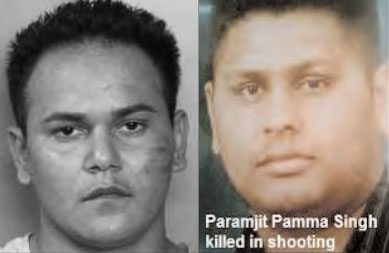
    SACRAMENTO, CA (TIP): 28-yearold Indian-American Gurpreet Singh Gosal has been convicted of murder of another person from the community outside a gurdwara in Sacramento. Gurpreet Singh Gosal was convicted of killing Parmjit Pamma Singh, 26, outside the Bradshaw gurdwara in Sacramento during a Sikh sports festival on August 31, 2008. Gosal is facing a possible sentence of 35 years to life in prison after a jury at the Sacramento Superior Court convicted him of second-degree murder June 22.

    “I think the jury did a good job,” said Deputy District Attorney Anthony Ortiz, who had asked the panel for a first-degree conviction on Gosal under an aiding and abetting theory, the Sacramento Bee reported today. “The case had some major issues and they worked through them, and I think they came to a just verdict.” The jurors, however, found that Gosal fired a weapon but did not hit anybody during a confrontation that broke out between a friend of his and the victim.

    Witnesses said it was the friend, identified as Amandeep Singh Dhami, who killed Singh as a result of a longsimmering dispute between the two. Dhami fled with the help of some people who came to his assistance after the shooting, and he is believed to be living in India, authorities said. Rick Fender, one of the members of the jury, said the panel was badly split at the beginning of its deliberations, with the votes ranging from firstdegree murder to involuntary manslaughter.

    “There was going to have to be some compromise in this case,” Fender said. Although an aider and abettor can be considered just as guilty as the shooter, Fender said “there was softness in people’s judgment” of Gosal because he didn’t actually shoot anybody. And time has passed,” Fender said. “He looked like an upstanding young man, dressed for court and his family here. All of that kind of weighs on people.” Gosal’s sentencing has been scheduled for August 9.

  • Pew Survey On Attitudes Towards Homosexuality Released

    Pew Survey On Attitudes Towards Homosexuality Released

    UNITED NATIONS (TIP): “Should Society Accept Homosexuality?” A global Pew Research Centre survey was released June 4, finding a wide variety of regional opinion on the question. Pew found that generally more positive attitudes were observed amongst younger people, and that in countries where a gender gap was observed, women tended to be more accepting than men. The survey polled nearly forty thousand people in 39 countries, asking questions about religion, age and gender.

    Senior Researcher at Pew Global Attitudes Juliana Menasce Horowitz observed, “What is surprising is the level of global polarization that we see on this subject. We have been collecting public opinion data all over the world on various issues, and I can’t think of any questions or subjects where we see such large percentages on one side in a group of countries and equally high percentages on the other side in other parts of the world.” The most tolerant responses to the question were predominantly secular and affluent, and either Latin American and Western.

    The least tolerant were found to be the 13 Middle Eastern and African nations polled. The strongest support came from Spain where 88 per cent of respondents answered “Yes” to the question. The study found a strong relationship between a country’s religiosity and its opinion on homosexuality. In countries where religiosity was low, attitudes were mostly positive. This was measured by three factors; whether they believe faith in god to be a necessity for morality; whether or not they say that religion is important in their lives; and whether they pray every day.

    This trend excluded Russia and China where religiosity was found to be low, but only around 20 percent answered “Yes” on the question of whether homosexuality should be accepted in society. In 2012, Russia’s top court upheld a ban on gay pride marches for the next 100 years in Moscow. On the other hand religiosity was measured to be high in the Philippines and attitudes were positive, with 73 per cent of respondents answering “Yes.”

    The results of the survey have been published at a time when many countries are debating same-sex marriage, France in particular having conducted its first official ceremony last week, and the UK preparing to pass a law soon. There are currently fifteen countries worldwide in which there is legal recognition of same-sex marriages.

  • Embassy Of India In USA Appoints New Service Provider From July 1

    Embassy Of India In USA Appoints New Service Provider From July 1

    WASHINGTON (TIP): The Embassy of India in the USA has awarded the new contract to the BLS International Services Limited for providing Visa/OCI/PIO/Renunciation of Indian Citizenship Certificate application support services, to be operational from July 1, 2013. The current Service Provider, Travisa Outsourcing, will be closing its services on June 28 at all Embassy and Consulate locations. Applications in person will be accepted by Travisa Outsourcing only up to June 27.

    Only Emergency Visas will be entertained by Travisa Outsourcing on June 28. All applications sent through mail will be accepted by the Travisa Outsourcing up to June 21. Applicants, who propose to send their applications by mail thereafter, may send them, so as to reach offices of the BLS International Services Limited at jurisdictional locations on July 1 or thereafter. It may also be noted that Banker’s checks accompanying these applications are drawn in favor of the BLS International Services Limited. Applicants, who have already submitted their applications to Travisa, may check status of their applications from Travisa till June 28.

    Pending cases, thereafter, will be transferred to the BLS and can be tracked from their website for status and delivery.

    The Central Call Center details of the BLS International Services Limited are as follows:
    Toll Free Nos. Jurisdictional BLS Offices 8886837830 – BLS- Washington/ New York/ Atlanta 8886837831 – BLSChicago/ Houston 8886837832 – BLS- San Francisco The Website of BLS International Services Limited is: http://www.visa.blsindia-usa.com It will be operational on June 25.

    The addresses of the BLS offices at different locations are as follows:
    Washington, DC : 220 Eye Street NE, Washington, DC 20002 New York : 13 East, 37th Street, Between 5th and Madison, NY 10001 Chicago: 55 West, Van Buren, Chicago, IL 60607 Houston: Suite 515, Level 5, 1235, North Loop West, Houston, Texas 77060 San Francisco : 4239 Geary Street , SFO CA – 94118 Atlanta : 5775, Glenridge Drive, Building B, Suite 380, Atlanta, Ga 30328 Due to some technical reasons, Visa services at Atlanta Consulate jurisdiction would begin from July 18.

    Visa applicants from the states under the Atlanta jurisdiction may continue to submit applications as per the current Visa jurisdictions until July 17. However, OCI/PIO/Renunciation services would begin at Atlanta Consulate jurisdiction location from July 1.

  • Liu criticizes Mayor’s stop and frisk remarks

    Liu criticizes Mayor’s stop and frisk remarks

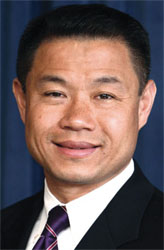
    NEW YORK, NY(TIP): New York City Comptroller John Liu took exception to Mayor Bloomberg’s June 28 statement on stop and frisk. Mayor Bloomberg said it could be argued that the Police Department stops white people too many times and non-whites too little. The comments – made one day after the City Council passed two bills to rein in the controversial police tactic – touched off a firestorm of criticism.

    \In a statement released to the media, Liu said, “Mayor Bloomberg has once again demonstrated how far out of touch he is with the majority of New Yorkers. His most recent comments on stopand- frisk from this morning are insensitive, outrageous, and just plain weird. He just doesn’t get it. He needs to realize that stop-and-frisk must be ended not mended.”

  • Senate Passes Comprehensive Immigration Reform

    Senate Passes Comprehensive Immigration Reform

    Obama applauds Congressman Garamendi Urges Swift Action in House John Liu, Saujani welcome passage of the Bill

    WASHINGTON, DC (TIP): The U.S. Senate passed a sweeping immigration bill Thursday, June 27 that would allow the nation’s 11 million unauthorized immigrants to become U.S. citizens, overhaul the country’s immigration system and spend billions to secure the southwest border with Mexico. After years of failed attempts, 14 Republicans joined all Democrats in the Senate to pass the bill on a 68-32 vote. The bill, drafted by a bipartisan group of senators known as the Gang of Eight, would represent the biggest change in immigration laws since 1986. In a statement Thursday, June 27 President Obama applauded the Senate for passing the bill. “The bipartisan bill that passed today was a compromise,” Obama said. “By definition, nobody got everything they wanted. Not Democrats. Not Republicans. Not me. But the Senate bill is consistent with the key principles for commonsense reform that I – and many others – have repeatedly laid out.” Obama also urged the House to pass the bill. “Now is the time when opponents will try their hardest to pull this bipartisan effort apart so they can stop commonsense reform from becoming a reality. We cannot let that happen,” he said.

    Congressman John Garamendi (D-Fairfield, CA) called on the House of Representatives leadership to immediately take whatever action is needed to allow the House to vote on comprehensive immigration reform this year. “The bipartisan comprehensive immigration reform bill that passed the Senate today is far from perfect, but it is a tough compromise that brings us a lot closer to a rational immigration policy in America. I call on House leadership to take the necessary steps to allow an up-or-down vote on comprehensive immigration reform this year,” said Congressman Garamendi. Garamendi added, “We have a broken and unrealistic immigration system in America today, and that’s why a comprehensive approach is needed. We need to bring our country’s 11 million undocumented workers out of the shadows and create a pathway to earned citizenship. We need to recognize the unique needs of farmers and agricultural workers. We need to keep families together. We need to encourage the immigrant entrepreneurs who create jobs for all Americans. We need to be a welcoming place for the world’s best and brightest minds. We need to aggressively enforce laws that protect wages and workplace safety. We need to deport the small group of undocumented immigrants who are violent criminals. We need to improve security along our borders, both land and sea. We need to recognize that an influx of young immigrants into the Social Security System will help extend its solvency. Above all else, we need to recognize that the status quo is unacceptable. I look forward to forging the bipartisan coalition necessary to make comprehensive immigration reform a reality in America.” Congressman Garamendi is a 4th generation Basque, Irish, and Italian American whose family came to California during the gold rush and established a successful ranching business. He believes America is at its strongest when it is a welcoming place for hardworking immigrants and when it lives up to its commitment to diversity and inclusion. Four in ten Fortune 500 companies were founded by first generation immigrants or their children. 44% of Silicon Valley startups founded in the last seven years had at least one key founder who was an immigrant. The Office of the Chief Actuary of the Social Security Administration estimated that an earlier version of the Senate bill would create 3.22 million new jobs by 2024 and boost U.S. GDP by an additional 1.63%. They also “anticipate that the net effect of this bill” on the Social Security System “on the long range … will be positive.” The nonpartisan Congressional Budget Office (CBO) estimates that the Senate’s comprehensive immigration reform bill would reduce the deficit by $157 over the first decade and by $700 over the next decade.

    John Liu, Comptroller of City of New York and a Mayoral hopeful has welcomed the passage of the S744, The Border Security, Economic Opportunity, and Immigration Modernization Act of 2013 in Senate characterizing it as an important step toward giving an estimated 500,000 undocumented immigrants living in New York City the opportunity to participate fully in American society and to pursue citizenship if they so choose.

    In a statement released to the media June 27, Liu said, ” “This represents an important step toward giving an estimated 500,000 undocumented immigrants living in New York City the opportunity to participate fully in American society and to pursue citizenship if they so choose. The Senate immigration reform legislation is not perfect, but it would be a vast improvement over the current state of immigration law, which keeps so many hard-working New Yorkers at a disadvantage in the labor market and in the educational system.

    “It is now up to the House of Representatives to match the Senate’s display of bipartisan leadership and pass a bill that will provide a pathway for undocumented immigrants to attain legal residence and eventual citizenship.” Immigrant rights advocate and Democratic Candidate for NYC Public Advocate Reshma Saujani said, “As the daughter of immigrants fortunate enough to be granted refuge in the United States under dire circumstances, I am thrilled that the US Senate has taken this long overdue first step in providing real reform for millions of people hoping for their opportunity to take part in the American Dream.

    We are a nation of immigrants, yet politicians in City Hall, Albany and Washington have repeatedly shoved the interests of the immigrant community to the periphery. Even with this bill, Washington had to cater to some of the most extreme and virulent anti-immigrant forces, making it a legislative compromise. I am committed to results and have proven this by not waiting for politicians to debate a problem. Instead, I created a program to send undocumented students to college with the DREAM Fellowship program.

    With immigrants and their children comprising two out of three New Yorkers, our City needs to be a progressive leader on this vital national issue, and as Public Advocate I will never stop working to deliver real results for immigrants and their families. “The President and the Senate have shown the leadership our country needs; the House must now do their part to restore the American Dream by passing this groundbreaking legislation, welcoming millions of families and all they can offer to our nation.”

    However, Senate passage of a comprehensive immigration overhaul sparked no excitement in the GOPcontrolled House, where Republican leaders continue to oppose the Senate bill in favor of a piecemeal approach to addressing the nation’s immigration system. “The House is not going to take up and vote on whatever the Senate passes. We’re going to do our own bill through regular order, and it’ll be legislation that reflects the will of our majority and the will of the American people,” said House Speaker John Boehner, R-Ohio. “And for any legislation, including a (final bill), to pass the House, it’s going to have to be a bill that has the support of the majority of our members.”

    House Republicans will hold a special closed-door meeting July 10 to discuss the way forward on immigration, but leading lawmakers have made clear that there is broad opposition to the Senate’s comprehensive approach and little GOP interest in a bill that includes a pathway to citizenship for the 11 million undocumented immigrants until the U.S.-Mexican border is secured.

  • Indian-American Pleads Guilty To Bribing Officials For Contract

    Indian-American Pleads Guilty To Bribing Officials For Contract

    JERSEY CITY, NEW JERSEY (TIP): An Indian American contractor has pleaded guilty to the charges of bribing government officials for bagging a contract, the Department of Justice has said. 42-year-old Hitesh Desai, a resident of Jersey City in New Jersey, faces a maximum penalty of 15 years in prison and fine of USD 2,50,000. Sentencing is scheduled for October 2. In his guilty plea, Desai conceded to offer a bribe of USD 5,000 to a government official in New Jersey to bag a contract.

    Desai was a contractor, who worked on various construction projects for the Department of Veterans Affairs. In 2012, Desai became affiliated with two businesses that were applying to be placed on a VA list known as the Multiple Award Task Order Contract (MATOC).

    “Between October 2012 and February 2013, Desai offered and promised to make a USD 5,000 bribe payment to an official who worked at the VA, who Desai understood to be responsible for serving on a committee that would determine which contractors were placed on the MATOC list,” federal prosecutors said June 28. On October 18, 2012, and December 6, Desai made two cash payments, totaling USD 1,000, to the official in exchange for his assistance in placing his businesses on the VA’s MATOC list.

  • US Sikh Group Offers $10,000 To Deliver Summons To Badal

    US Sikh Group Offers $10,000 To Deliver Summons To Badal

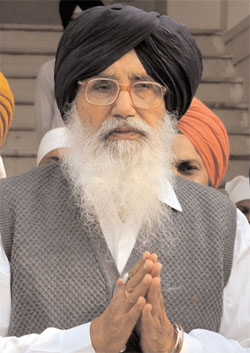
    MILWAUKEE (TIP): Punjab chief minister Parkash Singh Badal is expected to visit Wisconsin next week, and a Sikh group accusing him of human-rights violations is offering $10,000 to anyone who serves him with a federal summons while he’s here. The New York-based advocacy group Sikhs for Justice has filed two federal lawsuits in Milwaukee against Badal. The first lawsuit was thrown out in May over conflicting reports about whether the person served with court papers was actually Badal.

    The group plans to be far more diligent this time. Badal is expected to be in Milwaukee on July 5 for a wedding, and the group has hired three agencies of professional servers to deliver the papers. The servers plan to stake out airports in Milwaukee and Chicago. They’ll try to track him down at the wedding venue, and they’ll look for him at all points in between. Their goal is to deliver a court summons, which can be handed to him or even dropped at his feet. “We are not taking any chances this time,” said Gurpatwant Pannun, legal adviser for Sikhs for Justice.

    “We want to have a photograph and, if possible, video” of Badal being served. Pannun said the chief minister commands a police force that has terrorized and tortured countless people, including the lawsuit’s three plaintiffs. The lawsuit also names Badal’s son, Sukhbir, as a defendant. Sukhbir is Punjab’s deputy chief minister, in which capacity he also oversaw and condoned the detainment and torture of political prisoners, the suit contends.

    Harcharan Bains, who is Badal’s media adviser, would not confirm whether his client will be in the US next week. “We will give a legal response to the summons” if papers are served, Bains said. “The case against Badal is politically motivated but our response will be strictly in accordance with the law.” Badal was represented in the first lawsuit by former federal prosecutor Steven Biskupic, who did not immediately return a message seeking comment.

    Even if papers are served, the Badals could return to India and refuse to attend any US hearings. But Pannun said it wouldn’t bother him if the defendants were convicted in absentia. “That’s fine,” Pannun said. “This will expose them,” he said. Sikhs for Justice will pay separate $10,000 rewards for serving each of the defendants. Anyone _ not only professional servers _ can claim the bonus. The group planned to post a copy of the one-page summons online so anyone could download it and serve one or both defendants.

    The bonus will go to whichever person’s service is considered valid by the federal court in Milwaukee. The civil lawsuit lays out allegations by three Sikhs who say they were detained in Punjab for days without charges and subjected to beatings by a police force overseen by the Badals. All three plaintiffs now live in Fresno, California. Jeet Singh said he was detained four times between 2001 and 2009 for a total of 48 days. He claimed he was waterboarded and beaten with leather belts and that wooden rollers were applied on his legs and thighs.

    His wife, Gurdeep Kaur, said she was detained for 30 days in 2001, during which time male and female officers slapped her and banged her head against a wall. Jagtar Singh alleged he was given electric shocks on his ears, laid on an ice slab and doused in cold water. He also said he was beaten with wooden sticks and leather belts and tied in a wooden trap for extended periods. The lawsuit says the Badals not only condoned the acts but rewarded some of the officers involved.

    Sikhs for Justice initially tried to serve Badal when he visited suburban Milwaukee last year. He was in town following a shooting rampage in which a white supremacist opened fire at a Sikh temple, killing six people. But a man who said he was at the event as an interpreter testified that the papers were handed to him, not to Badal. A judge concluded that the process servers who believed they served Badal made an “honest mistake”.

  • Columbia University Conference To Celebrate South Asian Civil Rights Icon Dr. B. R. Ambedkar

    Columbia University Conference To Celebrate South Asian Civil Rights Icon Dr. B. R. Ambedkar

    NEW YORK (TIP): Dr. Bhim Rao Ambedkar was inspired to devote his life in service to emancipation for the Untouchables of India after discovering black liberation struggles in the USA, say organizers of a centenary conference at Columbia University. The conference, “Ambedkar’s Century: 100 Years From the USA”, occurs on June 29, exactly 100 years to the day since Bhim Rao Ambedkar arrived in New York City in 1913 to begin studies at Columbia University.

    While in the USA, he encountered American civil rights movements and saw strong parallels between the plights of blacks and Untouchables. Mohan Ram Paul, a conference panelist and the protégé of civil rights leader Kanshi Ram, said, “Generations of oppression by Brahminism has divided the Mulnivasi people into 6,000 subcastes which are disunited. Our conference in New York City will unite people from many castes, many religions, and many nations in an alliance for the liberty of all.”

    Dr. Amrik Singh, centennial conference coordinator and a South Asian public affairs expert, remarked, “Before Dr. Ambedkarji returned to India to demand liberation of the oppressed people of South Asia, he was first molded by American freedom movements while gaining an education at Columbia University. In the USA, he saw blacks enduring the same mental and physical tortures inflicted upon Untouchables for no cause save heredity.”

    “The USA has its first black president and, although troubles still abound, the liberties of African Americans are no longer in much greater danger than those of any other American citizen,” said Bhajan Singh Bhinder, a director of Bhim Rao Ambedkar Sikh Foundation, the group organizing the conference. “Slavery is history, racism is dissipating, but caste survives. Changed laws have not changed hearts and minds in India, where a Dalit is the victim of a hate crime every 18 minutes. This conference is a spark for the modern civil rights movement as we examine how Dr. Ambedkarji’s legacy agitates us to action.”

    The conference begins with a Recognition Ceremony at 12pm on Saturday, June 29 outside Lerner Hall on the Columbia University campus. General session will occur in Lerner Hall from 1pm to 6pm. Six students of Dr. Ambedkar’s life will spend those hours delving into his legacy to explain his devotion to the principles of liberty, equality, and fraternity.

    Six topics to be addressed are:
    1. “Betrayal of Dr. Ambedkar, the Indian Constitution, and the Hindu Code Bill” by Mohan Ram Paul of Bhim Rao Ambedkar Sikh Foundation;
    2. “Dr. B. R. Ambedkar’s Critique of Hindu Scriptures and The Model for Reconstruction of the Society” by Dr. Manisha Bangar of Backward and Minority Community Employees’ Federation;
    3. “Anti-Moolnivasi Attempts to Reconcile Ambedkar and Gandhi” by Pieter Singh of Sikh Information Centre;
    4. “Babasaheb Ambedkar, Poona Pact, and the Cultural Politics of Brahminism” by Dr. P. D. Satyapal of Andhra University;
    5. “Subaltern Counter-Memory” by Dr. Angana Chatterji of UC Berkeley;
    6. “The Importance of Dr. B. R. Ambedkar’s Life and Mission,, Guru Nanak Khalsa College, and Hindu Mahasabha” by Dr. Amrik Singh of California State University, Sacramento. Avtar Singh Adampuri, also a director of BRASF, stated: “This conference is a cause for celebration, but it is also an offensive against the root cause of the suffering of South Asia’s downtrodden people, which is the Brahmanical ordering of society.

    We hope every person who believes in ending oppression will accept our hospitality to attend this conference and be inspired by the example of Dr. Ambedkar.”

  • Indian Parliamentary Delegation In USA

    Indian Parliamentary Delegation In USA

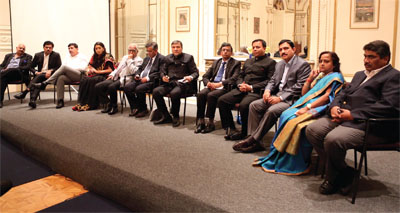
    Consul General of India in New York Ambassador Dnyaneshwar M. Mulay hosted a reception for the visiting Indian Parliamentary delegation at the Indian Consulate General in New York on June 27, 2013. The delegation was in US to interact with faculty at the Yale University on a number of subjects and issues.

  • Indian American Appeals For Help To Uttarakhand

    Indian American Appeals For Help To Uttarakhand

    JERSEY CITY, NJ (TIP): A local businessman and community leader Atma Singh who is also the President of Indian Congress Party, USA, has appealed to Indian American organizations and individuals to generously donate for relief work in flood ravaged Uttarakhand. He has, in particular, appealed to the Federation of Indian Associations and other organizations in New Jersey and New York states that organize India Day Parade to cut down on their expenses on Parades and divert the funds to Uttarakhand which needs huge sums to provide immediate succor to hundreds of thousands of its residents.

    The recent floods in the northern state of India caused massive damage to a large number of villages and resulted in the loss of nearly 10,00 lives, with more than 4600 people still missing. Damage to bridges and roads left over 70,000 pilgrims and tourists trapped in various places in inclement weather and without food and water for days together. Many said after their rescue they were unsure of whether or not they will survive. As of 28 June 2013, hundreds are said to be still stranded.

    The Indian Air Force, the Army and paramilitary troops have evacuated more than 1,00,000 people from the flood hit areas in the last 12 days or so. The destruction caused by the unprecedented floods in Uttarakhand has been massive and widespread. It will take long, given the difficult terrain, to rebuild the damaged infrastructure and to rehabilitate the displaced people.

  • Uttarakhand Floods: Rescue Op In Last Leg; 2000 Still Stuck

    Uttarakhand Floods: Rescue Op In Last Leg; 2000 Still Stuck

    DEHRADUN (TIP): Rescue operations in Uttarakhand have reached final stages and the government hopes to complete all evacuations by June 30. But the challenge remains. There are still 2000 people who are stranded in the upper reaches of the state. Many pilgrims in Badrinath are being rescued by a newly constructed foot track in Govindghat valley. “Only the Army has been helping. It has been such a difficult journey. Now with the new foot walk, finally it looks like there is hope,” said one of the stranded people.

    Officials said constructing roads will take some more time, primarily because of bad weather. “Jindal Group has sent three helicopters and we are rescuing people in Joshimath. The most difficult obstacle is the weather, when we have to wait for it to settle down before flying out. I have rescued more than a thousand people here,” said SK Jana, a civil pilot. The road from Joshimath to Govindghat has also been restored and pilgrims are being evacuated on foot.

    In Kedarnath, mass cremation of bodies is still continuing. But food supplies are quickly running out in some villages that are completely cut off. After rescuing all stranded pilgrims and tourists, the challenge will be to rebuild many of the areas and the Rural Development Ministry has doubled the allocation of housing units in Uttarakhand Indira Awas Yojna by adding another 14,000 units. While they rush to complete the rescue operations, authorities are also worried about the rising levels of the Bhagirathi river.

    Worried residents of Uttarkashi are being evacuated and many can often be seen standing on roof tops of their houses as they watch the fierce river gush into their properties. Local officials said they are keeping a close watch on the water level. “We are calling workers to set up stones to control water inflow. It seems that the small temple on the way is reducing the pace of water. Nearby houses have been evacuated. We will see what else can be done to control these floods,” said KK Singh, Sub-Divisional Magistrate, Uttarkashi.

    But with 2,000 people left to be evacuated from places including Badrinath and Harsil, the defence forces have deployed around 50 helicopters and over 8,000 troops in flood-hit Uttarakhand. The IAF has deployed 37 choppers along with 13 helicopters of the Army. Together, they have flown 84 sorties in the last 24 hours for evacuating the stranded pilgrims in the state, a Defence Ministry release said. The armed forces have been successful in bringing out over 650 people from the pilgrimage town of Badrinath and Harsil in the last 24 hours, it said.

    In the operations which started on June 17, the two forces have deployed over 60 choppers which have flown 2,518 sorties and overall evacuated around 46,000 people from the higher reaches of the state. Meanwhile, IAF Chief Air Chief Marshal NAK Browne received the bodies of the five IAF personnel who were killed in a helicopter crash on Tuesday. The Air Force also carried out a mission using its ALH Dhruv choppers in Gaurikund to bring the bodies from the crash site for postmortem and for DNA analysis at Dehradun.

    Wing Commander Daryll Castellino, Flight Lieutenants Tapan Kapoor and K Praveen, Junior Warrant Officer AK Singh and Sergeant Sudhakar Yadav were among the 20 people who lost their lives in the chopper crash. The mortal remains of Wing Commander Castelino arrived in Mumbai on Saturday. The Indian Air Force will also fly the remains of Flight Lieutenant Praveen, Junior Warrant Officer Singh and Sargent Yadav to Madurai, Fursatganj and Gorakhpur respectively.

  • Ecuador Yet To Decide On Snowden Asylum: Correa

    Ecuador Yet To Decide On Snowden Asylum: Correa

    QUITO (TIP): Ecuador’s president said on June 27 he had yet to consider letting US intelligence leaker Edward Snowden enter his country as tensions with the United States rose, with Washington warning Quito against granting the fugitive asylum. The Ecuadoran leftist government defiantly pulled out of a trade pact with the United States, claiming it had become an instrument of “blackmail” as Quito considers Snowden’s asylum bid.

    But despite voicing support for Snowden, the Andean nation denied reports that it authorized a “safepass” travel document for the former National Security Agency contractor and said it would not be able to process his asylum bid until he enters Ecuadoran territory. “Would he be allowed to arrive on Ecuadoran territory? This is something that, in principle, we haven’t considered,” President Rafael Correa told a news conference.

    “We would probably examine it, but for now he is in Russia,” he said, adding that Ecuador’s ambassador to Russia met Snowden just once on Monday in the transit area of Moscow’s Sheremetyevo airport and that no more contact had been made. WikiLeaks founder Julian Assange, whose anti-secrecy website has assisted Snowden, said on Monday that Quito had given Snowden a “refugee document of passage” that would allow him to travel here.

    The US Spanish-language television network Univision published on its website what appeared to be a “safepass” document with the letterhead of Quito’s consulate in London, asking authorities in transit countries to “give the appropriate help” as the bearer travels to Ecuador. “You request asylum when you are on a country’s territory. Snowden is not on Ecuadoran territory, so technically we cannot even process the asylum request,” Correa said.

    The United States revoked Snowden’s passport after he revealed a massive US surveillance program, and the 30-year-old computer specialist has been holed up at the Moscow airport’s terminal since arriving there from Hong Kong on Sunday. In Washington, US State Department deputy spokesman Patrick Ventrell warned that giving Snowden asylum would create “grave difficulties for our bilateral relationship.”

    “If they take that step, that would have very negative repercussions,” Ventrell said. But a US official also denied that a bilateral trade pact was being used as “blackmail” in the case, insisting that Washington wanted to maintain a good economic relationship with Quito. Ecuador’s communications minister Fernando Alvarado announced earlier that the country “unilaterally and irrevocably renounces these preferential customs tariff rights.”

    “Ecuador does not accept pressure or threats from anyone, and does not trade on principles or make them contingent on commercial interests, even if those interests are important,” he said. Correa’s government said that while it had received the preferential rights in exchange for its cooperation in the war on drugs, they had become a “new instrument of blackmail.” But the US State Department said the trade program was granted by Congress and Quito could not withdraw unilaterally. The pact, which covers key Ecuadoran exports such as fresh-cut roses, fruits, vegetables and tuna, is set to expire on July 31 unless the US Congress renews it.

    The arrangement, which dates back to the early 1990s, originally benefited four Andean nations, and Ecuador was the last country still participating in it. Analysts have warned that Washington may refuse to renew it if Quito grants asylum to Snowden. The United States is Ecuador’s main trade partner, buying 40 percent of Quito’s exports, or the equivalent of $9 billion per year. The Ecuadoran business community disapproved of the government’s decision.

    “It’s a hasty and wrong decision because there was no formal US government announcement threatening to remove us from the ATPDEA (Andean Trade Promotion and Drug Eradication Act) over the Snowden case,” Roberto Aspiazu, head of the Ecuadoran Business Committee, said. Ecuador has said it could take as little as one day or as long as two months to decide whether to grant asylum to Snowden. An online publication of the Ecuadoran presidency said Washington has put “explicit and implicit” pressure on Quito over Snowden’s asylum petition as well as its decision to shelter Assange at its London embassy and its ties with “nations considered ‘enemies’ of the United States.”