Month: June 2013

  • NRI Doctor In Bid To Solve Water Problem In Kerala

    NRI Doctor In Bid To Solve Water Problem In Kerala

    DUBAI: A Dubai-based NRI doctor who is also an entrepreneur has initiated a campaign in his native state to promote preservation of water using a cheap rain harvesting device made by a local Keralite, amid acute drinking water crisis in Kerala during summers. Azad Moopen, who heads the DM Healthcare, a leading healthcare conglomerate in the Middle East, believes that the current water shortage in Kerala can easily be solved even if a small section of the population preserves the rain water that goes into the Arabian Sea due to the peculiar slanting topography of the state, the Khaleej Times report said.

    Moopen decided to test it out in his home village of Kalpakanchery, where the wells and ponds dry by January every year. People in the village have been sourcing water from far off places in tankers paying Rs 600 for 2,000 litres. Moopen found a cheaper solution in an indigenous rain harvesting device, developed by Perumalparampil Jaleel, that seeks to harvest rain water from rooftops. Under the system, rain water from the roof is sourced to a plastic drum through PVC pipes. The drum acts as a filter as it is filled with pure river sand, charcoal and baby metal.

    After filtering, the harvested rain water is driven to the well through another PVC pipe. In most cases, the water stored in the well is enough to meet the dry season demand. Moopen’s campaign to propagate the device has evoked massive response from the villagers, who are now queuing up to install the device in their homes, the report said, adding that 4-5 well recharging filters were being installed on a daily basis now. Kerala’s acute drinking water crisis is surprising to many because the state, with 50,000 million cubic metres of fresh water in 44 rivulets, 19 lakes, more than 900 ponds, and 300cm rainfall for 120 days in a year in normal conditions, is considered as the wettest state in the country.

  • CBI Looking Into Allegations Of Modi Hand In 2003 Encounter

    CBI Looking Into Allegations Of Modi Hand In 2003 Encounter

    AHMEDABAD (TIP): The CBI has for the first time submitted before a court that it is investigating “relevant points” of the allegations about the role allegedly played by chief minister Narendra Modi, former minister Amit Shah and top IB police officer Rajinder Kumar in the Sadiq Jamal Mehtar fake encounter case. Sadiq was killed near Galaxy cinema in Naroda in January 2003. After the encounter, the city crime branch had dubbed him a terrorist out on a mission to kill Modi and other saffron leaders to avenge the 2002 Gujarat riots.

    On Thursday the probe agency also submitted before a special CBI court that it was looking into the conduct of officers of the subsidiary Intelligence Bureau in Mumbai and those who had projected the Bhavnagar youth as a Lashkar-e-Taiba operative. The CBI said it was probing further into the conduct of Mumbai-based journalist Ketan Tirodkar and ‘encounter specialist’ police officer Daya Nayak. The agency made these submissions in response to the special court’s notice over the demand for further investigation made by Shabbir, Sadiq’s brother.

    Shabbir had claimed the CBI had gone silent after chargesheeting eight policemen last December, though the probe report showed the murder was part of a larger conspiracy and various agencies were involved in it. Shabbir’s application said the roles of top police officers such as D G Vanzara and P P Pande had not been investigated yet.

    He had demanded a probe into “the role played by then home minister and the chief minister in the entire conspiracy and (directions to) the CBI to file a supplementary chargesheet and take such further necessary actions required under the law.” Special CBI judge V K Vyas posted the case for further hearing on July 3. Justice M R Shah of the Gujarat high court had handed over the investigation of the case to the CBI in 2011.

  • CBI, I-T Dept Find No Proof To Nail Niira Radia

    CBI, I-T Dept Find No Proof To Nail Niira Radia

    NEW DELHI (TIP): In a big relief to former corporate lobbyist Niira Radia, CBI and income tax department will shortly tell the Supreme Court that they have found no element of “criminality” in the transcripts of her taped conversations. The two agencies have jointly transcribed the conversations, recorded in connection with the 2G scam, over a period of three months.

    A top official said: “We have completed the work of transcribing 5,800 tapes of tapped conversations of corporate lobbyist Niira Radia, as directed by the Supreme Court.” The six-member team of CBI and IT department began its work of examining the tapes of Radia with politicians, corporate honchos and others in April. The team, headed by a deputy inspector general-rank officer, had started the process of going through the tapes and its transcripts running into 49 volumes as per the directions of Supreme Court in February.

    An apex court bench comprising Justices G S Singhvi and S J Mukhopadhaya, while directing formation of the team on February 22, had given four months for it to submit its report. The team’s job was to scrutinize the tapes to ascertain if there were any elements of ‘criminality’ in them. Sources said they limited themselves to those conversations which pertained to criminal element and relating to interest of justice. A few tapes, which found its way to media houses, triggered a political storm as some of the conversations showed the nature of corporate lobbying and its purported impact on politics.

    The income tax department had placed transcripts of 5,800 tapped telephone conversations in sealed envelopes in the court. They were recorded as part of surveillance of Radia’s phones on a complaint to the finance minister on November 16, 2007 alleging that within a span of nine years, she had built up a business empire worth over Rs 300 crore. The I-T department had recorded 180 days of Radia’s conversations — first from August 20, 2008 onwards for 60 days and then from October 19 for another 60 days. Later, on May 11, 2009, her phone was again put on surveillance for another 60 days following a fresh order given on May 8.

  • Nitish Wins Confidence Vote, Dismisses ‘Modi Wave’

    Nitish Wins Confidence Vote, Dismisses ‘Modi Wave’

    PATNA (TIP): After dumping ally BJP, Bihar Chief Minister Nitish Kumar comfortably won a vote of confidence in the Bihar Assembly amid signals of a new political alignment as the Congress backed the motion. Nitish also dismissed the so-called wave in favour of Narendra Modi as one created by corporate houses.

    A total of 126 votes, including four of the Congress and one of the CPI,were cast in favour of the confidence motion while 24, including 22 of Lalu Prasad-led RJD, voted against the motion as BJP members staged a walkout before the vote. Those who voted in favour of the motion included ruling JD(U)’s 117 and four Independents. The RJD’s 22 MLAs, two Independents also opposed the motion. Significantly, the Congress support for the government comes two days after Prime Minister Manmohan Singh described Kumar as secular and indicated that his party could do business with the JD(U).

    The Central Government had already enhanced development assistance to Bihar as a backward state recently, setting off speculation that the two parties could come together in future elections. In his speech in the Assembly, Kumar without taking the name of Modi said the main reason for breaking the alliance with the BJP was the elevation of the Gujarat Chief Minister in his party. He said the slogan shouting by BJP MLAs hailing Modi went to buttress JD(U)’s point, an apparent reference to the possibility of the BJP making him the PM candidate.

  • Couples Who Have Premarital Sex To Be Considered ‘Married’: Madras High Court

    Couples Who Have Premarital Sex To Be Considered ‘Married’: Madras High Court

    CHENNAI (TIP): In what can be seen as a new twist to the concept of premarital sex, the Madras High Court has in a judgement said if any unmarried couple of the right legal age “indulge in sexual gratification,” this will be considered a valid marriage and they could be termed “husband and wife. The court said that if a bachelor has completed 21 years of age and an unmarried woman 18 years, they have acquired the freedom of choice guaranteed by the Constitution.

    “Consequently, if any couple choose to consummate their sexual cravings, then that act becomes a total commitment with adherence to all consequences that may follow, except on certain exceptional considerations. The court said marriage formalities as per various religious customs such as the tying of a mangalsutra, the exchange of garlands and rings or the registering of a marriage were only to comply with religious customs for the satisfaction of society.

    The court further said if necessary either party to a relationship could approach a Family Court for a declaration of marital status by supplying documentary proof for a sexual relationship. Once such a declaration was obtained, a woman could establish herself as the man’s wife in government records. The court also said if after having a sexual relationship, the couple decided to separate due to difference of opinion, the ‘husband’ could not marry without getting a decree of divorce from the ‘wife’.

    Justice C.S. Karnan passed the order yesterday while modifying an April 2006 judgment of a Coimbatore family court in a maintenance case involving a couple, The Hindu reports. The lower court had ordered the man to pay monthly maintenance of R500 to the couple’s two children and Rs1000 as litigation expenses. The lower court observed that the woman’s wedding with the man had not been proved by documentary evidence. Hence, she was not entitled to maintenance. In her appeal to the High Court, the woman’s counsel contended that she was legally married and had two children in wedlock.

  • Uttarakhand: Netas, Babus Try To Get Kin Rescued First

    Uttarakhand: Netas, Babus Try To Get Kin Rescued First

    NEW DELHI: Apart from bad weather and difficult terrain, rescue teams in Uttarakhand are also troubled by calls from influential people to rescue their kin first. Sources in the agencies engaged in rescue work said on an average, over 50 such calls were received every day from politicians, bureaucrats and other government officials even though their kin were not caught in an emergency situation. “Most of these people are trapped in Badrinath, Yamunotri and Gangotri where hardly any damage has happened.

    These places have merely been cut off but there are enough supplies and people can survive for days,” an officer overseeing rescue work in Uttarakhand said. Being peak pilgrimage season, families of several politicians and bureaucrats too have been on a visit to the Char Dham and have been trapped at various places. As they have connections and can reach senior officials in the home department or directly in the forces, there is pressure to rescue them first.

    “We are receiving messages that such and such person is staying in a particular room in a certain hotel at Badrinath or Yamunotri and needs to rescued urgently. If you are in a hotel room, getting food and sleep, why do you need to be rescued urgently? We can understand the panic among family members caught in such situations, but there are people dying in Kedarnath valley with no food, water or shelter. They are our priority,” the officer said. Sources said rescue agencies have been politely declining many, trying to make them understand the situation.

    “While many understand, others try to pull strings but we are dealing with it,” another officer said, adding that kin of certain politicians had to be evacuated on priority basis due to pressure from above. Forces say they are trying to help whoever they can if they come to know of their trouble. “This is not to say that people from influential families must not approach us if they are really in trouble.

    But if I have a request of looking for an 80-year-old woman who can’t walk and has been separated from her family competing with that of a person living in a hotel, where should I direct my resources,” the officer asked. He added that calls from influential people were adding to the stress of personnel engaged in rescue work.

  • Oppn Creating Hurdles In Food Bill Passage: Sonia

    Oppn Creating Hurdles In Food Bill Passage: Sonia

    SURATGARH (TIP): Slamming Opposition parties for creating hurdles in passing of the Food Security bill, Congress President Sonia Gandhi accused them of creating instability in the country to grab power at any cost. “I would like to tell you that a few political parties are conspiring to create instability. These kind of political forces have nothing to do with progress….they are only eyeing the chair and they want it at any cost.

    There is a need to be vigilant against such powers”, she said addressing a rally here. In a veiled attack on the BJP, she said the party tried to create hurdles in the passing of the Food Security bill. “We (UPA) want that no one sleeps hungry. For that we wanted to bring a bill on food security but our ‘virodhi’ (rival) created hurdles. Had the Opposition allowed the Bill in Parliament, we would have passed the Food Security Act long ago.

    “But this is very sad that these Opposition parties are always opposing our public interest plans and programmes. It is now their habit to oppose every work that Congress wants to initiate and do”, she charged. Accusing some political parties of conspiring to create instability, she said whenever there is instability, it affects progress and development and indirectly aggravates the woes of the poor

  • CBI Conducts Polygraph Test On Raja Bhaiya

    CBI Conducts Polygraph Test On Raja Bhaiya

    NEW DELHI (TIP): The CBI today conducted liedetection test on former UP Cabinet Minister Raghuraj Pratap Singh, alias Raja Bhaiya, on charges of his alleged involvement in the murder of DSP Zia-ul-Haque. He reached CBI headquarters for the test and remained there for a few hours. When he came out, he was satisfied, sources said. A few days back, he had appeared before a special CBI court in Lucknow and agreed to undergo the test.

    According to the CBI, Raja Bhaiya was a suspect in the murder of the DSP from the very beginning of the investigation into the case. The lie-detection test may provide evidence against him, the sources said. Haq was shot dead in Balipur village in Kunda area of Pratapgarh district where he had gone to probe the murder of village head Nanhe Yadav. The deceased police officer’s wife Parveen Azad had accused Raja Bhaiya of hatching a conspiracy after which he had to resign from the Cabinet on March 4.

  • Hazare Threatens Fast Over Lokpal

    Hazare Threatens Fast Over Lokpal

    MUMBAI (TIP): Veteran social activist Anna Hazare accused the UPA Government of stabbing in his back on the issue of Lokpal Bill and once again threatened hunger strike from October 2 to press for a strong anticorruption law. Expressing disappointment over the Centre’s failure to secure the passage of the “Jan Lokpal Bill” in Parliament, the 75-year-old activist said the Government has “stabbed him in his back” over the issue, on which he has undertaken multiple fasts in Delhi and Mumbai since 2011.

    “I will once again sit on a fast from October 2 at the Ramlila Ground in Delhi,” the anti-corruption crusader told reporters on the sidelines of a programme here. In the past, Hazare has repeatedly assailed the Congress-led Government over its failure to pass a strong Lokpal Bill as promised in 2011. A few weeks ago, he shot off a letter tothe PM expressing his disappointment over the Government’s inability to enact a strong legislation to check graft in public institutions.

  • Cong-JMM Exploring Govt Formation In Jharkhand

    Cong-JMM Exploring Govt Formation In Jharkhand

    NEW DELHI (TIP): The Congress and JMM appear to be inching closer towards forming an alternative government in Jharkhand which has been under President’s Rule — imposed after the fall of the Arjun Munda government on January 8. Newly-appointed Congress general secretary in-charge of the state BK Hariprasad will hold talks in this regard with state leaders of the Congress and JMM tomorrow in Ranchi.

    Shibu Soren’s party, which is supporting UPA-II from outside, has been keen on forming an alternative government in the state in alliance with the Congress ever since it broke up with the BJP leading to the imposition of President’s Rule there on January 18. While a large number of Congress leaders in the state are in favour of forming a government with JMM’s support as 18 months are still left for the current state Assembly’s term to get over, the top brass of the party was initially reluctant towards any such move.

    The JMM and Congress, which have 18 and 13 MLAs, need the support of 11 more legislators to form a government in the 81-member state Assembly. The Congress had supported an Independent Madhu Koda-led government in the state and had to face criticism later as Koda got embroiled in serious corruption cases. Besides, there are cases pending against some JMM leaders even now.

    Hence, the party leadership was wary of any such tie-up in the state. There, however, appears to have been a re-think over the issue of alliances now. JVM(P), which had forged an alliance with the Congress for the 2009 Assembly elections, parted ways with it in April last year over the FDI issue. The Congress now appears to be veering around to the view that it has to tie up with some party for the next Lok Sabha elections there.

    Out of the 14 Lok Sabha seats in Jharkhand, the Congress has one MP Subodh Kant Sahay, while JMM has two members. They had fought the last General Election separately. In 2004 Lok Sabha elections, when both parties had fought in alliance, the Congress had won six and JMM four seats respectively bringing 10 seats in the UPA kitty. There are indications that the formation of government with JMM will depend on an amicable seat-sharing agreement between the two parties for the next General Election.

    Another talk in political circles is that Assembly elections in Jharkhand could be held along with those in Rajasthan, Chhattisgarh, Madhya Pradesh and Delhi if the JMM and Congress fail to reach an agreement on the issue. Central rule in Jharkhand will expire on July 18 and a decision has to be taken before that. JMM MLAs Vishnu Prasad Bhaiya and Paulus Surin had a few days back issued threats of resigning from the House membership if the Congress failed to take a decision on government formation before June 16.

    Announcing his intent to lend unconditional support to the JMM and Congress if they joined hands for government formation, senior RJD leader and MLA Janardhan Paswan had earlier said that the Congress must come forward to give a new alternative to the people who have given a mandate for five years. The BJP, Jharkhand Vikas Morcha (Prajatantric) and AJSU Party have been demanding dissolution of the House to seek a new mandate. Congress president Sonia Gandhi had on June 10 held consultations with senior party leaders, including AK Antony, Sushilkumar Shinde, Jairam Ramesh and vice-president Rahul Gandhi, on the way forward in Jharkhand.

  • Pakistan, Afghanistan Trade Accusations At UN Over Extremist Havens

    Pakistan, Afghanistan Trade Accusations At UN Over Extremist Havens

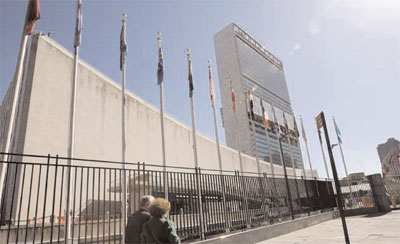
    UNITED NATIONS (TIP): Afghanistan and Pakistan traded accusations in the UN Security Council on June 20 over the whereabouts of Islamist extremists on their porous border as the United Nations described increased tensions between the neighbors as “unfortunate and dangerous.” Afghanistan’s UN envoy, Zahir Tanin, told a council debate on the situation in Afghanistan that “terrorist sanctuaries continue to exist on Pakistan’s soil and some elements continue to use terrorism as an instrument of foreign policy.”

    Pakistan’s UN ambassador, Masood Khan, said “terrorists operate on both sides of the porous border” and many attacks against Pakistan were planned on Afghan soil. He said aggressive policing and border surveillance were needed. “I reject most emphatically Ambassador Tanin’s argument – root, trunk and branch – that terrorist sanctuaries exist in Pakistan and some elements continue to use terrorism as an instrument of foreign policy,” Khan told the council.

    He told Reuters in an interview afterward that Tanin had been “ill-advised” to raise the border issues at the Security Council as Kabul and Islamabad were already talking through other channels. Khan blamed Afghan President Hamid Karzai for stoking tensions. “When President Karzai meets our leadership, he’s most gracious, engaging, he’s a statesman. But when he talks to the media, he says things which inflame sentiment and that’s most unhelpful and destabilizing,” Khan said.

    “We have given very restrained responses.” Pakistan’s role in the 12-year-old war in Afghanistan has been ambiguous – it is a US ally but has a long history of supporting the Taliban in Afghanistan in a bid to counter the influence of its regional rival India. Pakistan’s military played a key role in convincing Afghan Taliban leaders to hold talks with the United States, US and Pakistani officials said, but Afghan anger at fanfare over the opening of the Taliban’s Qatar office this week has since delayed preliminary discussions.

    “We were talking to multiple interlocutors behind the scenes and we have been asking them to participate in these talks, (telling them) that we think the war should come to an end,” Khan told Reuters. ‘Succeed or fail together’ US-backed Afghan forces toppled the Taliban in late 2001 for refusing to hand over al-Qaida leader Osama bin Laden after the Sept. 11, 2001, attacks on the United States. Pakistan helped the Taliban take power in Afghanistan in the 1990s and is facing a Taliban insurgency itself.

    The Pakistani Taliban, known as the Tehreek-e-Taliban, is a separate entity from the Afghan Taliban, though allied with them. “Stability and sanctity of Pakistan- Afghanistan border is a shared responsibility. Robust deployment of Pakistani troops on our side is meant to interdict terrorists and criminals,” Khan told the council. “This must be matched from the other side.” A spate of cross-border shelling incidents by the Pakistani military, who said they were targeting Taliban insurgents, has killed dozens of Afghan civilians in the past couple of years.

    “We are very concerned with ongoing border shelling,” Tanin told the council. “This constitutes a serious threat to Afghan sovereignty and the prospect of friendly relations between the two countries.” UN special envoy to Afghanistan, Jan Kubis, told the Security Council that the heightened tensions between Afghanistan and Pakistan were a serious concern, especially at this stage of Afghanistan’s development.

    “Such tensions are unfortunate and dangerous,” he said. The NATO command in Kabul on Tuesday handed over lead security responsibility to Afghan government forces across the country and most foreign troops are due to withdraw from the country by the end of 2014.

  • Economic Issues Likely To Dominate Kerry’s Visit To India

    Economic Issues Likely To Dominate Kerry’s Visit To India

    WASHINGTON (TIP): Economic issues like intellectual property protection, local content restrictions and a continued cap on FDI are likely to be on top of his agenda when US Secretary of State John Kerry travels to India next week for the strategic dialogue between two countries. “First and the foremost from our perspective will be economic piece of this (dialogue). There has been lot of concern on part of American business community about what they see as growing obstacles to trade and investment,” Assistant Secretary of State for South and Central Asia, Robert Blake, told an audience here.

    Both Kerry and President Barack Obama have been receiving letters from the US business community, advocacy groups, Senators and Congressmen on the trade policies of India, which they claim is harming American businesses. “Intellectual property protection, local content restrictions, continued restrictions on FDI in different sectors. This is certainly going to be our focus,” Blake said, adding that one of the goals is to reinvigorate the bilateral investment treaty talks and conclude them as soon as possible.

    Likewise, the US wants to reinvigorate the trade policy forum, and will also push for continued progress on the civil nuclear side, he added. Responding to questions, Blake said the US is not looking at any deliverables during the strategic dialogue, except to making sure that they understand each other on these issues. “India has its own concerns on comprehensive immigration reform. Obviously we need to hear from that.

    The purpose of the dialogue is to hear each other out in a very open and friendly manner and then figure out who is going to take charge of fixing these,” he said. As a result of the three rounds of strategic dialogue so far, Blake said there has been significantly quite convergence of strategic growth between the United States and India. Referring to the various bilateral and trilateral dialogues between the two countries, Blake said: “All of these collectively really enabled us to have an extremely good dialogue on issues that were previously very difficult.”

    “Things like Afghanistan, Iran, Burma and Middle East were areas of quite sharp differences. Now we have a remarkable degree of convergence, which has been a very welcome to see. Non-proliferation, food security, scientific and academic co-operation, climate change, defence trade, and regional issues like Afghanistan and Pakistan will also figure prominently during Kerry’s visit, Blake noted. Responding to questions, Blake said India is one of the highest strategic priorities for the US.

  • Wild Weather Hits Flights Across New Zealand

    Wild Weather Hits Flights Across New Zealand

    WELLINGTON (TIP): Air transport across New Zealand was disrupted on Friday as gale force winds lashed much of the country, uprooting trees, causing power blackouts and closing roads. Air New Zealand cancelled all flights to and from the capital Wellington for much of the day after wind gusts of 200 kilometres per hour (124 mph), the strongest in decades, were recorded after the storm moved in. The airline also briefly suspended services at Dunedin in the South Island.

    It said limited flights had resumed nationwide late on Friday but passengers around the country could expect delays, even though conditions had eased. A thick blanket of snow covered parts of the South Island, making alpine roads impassable and cutting off some communities. In the North Island, about 30,000 homes were without power in Wellington, where schools were forced to close, rail services were cancelled and landslips shut suburban roads.

    “The wind was just roaring all night, it felt like the house was going to blow away,” Wellington resident Kylie Goodman said. Civil defence minister Nikki Kaye said a clean-up was underway but it would take time. “The extent of the damage in many areas is such that it might take some time for normal services to be resumed,” she said. Despite the wild weather, only minor injuries were reported and Kaye praised the efforts of emergency workers. “No states of emergency have been declared anywhere in the country at this stage, but people should heed advice from local authorities and civil defence emergency management groups,” she said.

  • 4 Shot, 3 Dead At Kentucky Condo Shooting

    4 Shot, 3 Dead At Kentucky Condo Shooting

    LOUISVILLE, KENTUCKY (TIP): Gunfire erupted on Wednesday in a Louisville condominium building, leaving three people dead and a fourth person seriously injured, authorities said. The fourth person was hospitalized with what appeared to be life-threatening injuries after the shootings, reported shortly before 4:30pm on Wednesday, police spokesman Dwight Mitchell said.

    Mitchell said officers believed everyone involved was accounted for but wouldn’t say whether the shooter was among those shot. “We believe there’s not anyone on the loose,” he said. Mitchell said the shootings took place inside an apartment but declined to say whether there were other people inside at the time at the building on the outskirts of the Highlands neighborhood. He did not release the ages of the victims and said the investigation was just beginning.

    The condominium complex lies in a neighborhood filled with upper-middle-class homes with manicured lawns near private Bellarmine University. Molly Hoekstra said she has lived in the condo complex for nearly two years but returned home Wednesday to find the building blocked off by police tape. “Nothing like this has ever happened,” she said. “It’s always been really safe and neighborly. It’s like the most quiet place there is.”

  • Greek Political Impasse Deepens After Coalition Talks Fail

    Greek Political Impasse Deepens After Coalition Talks Fail

    ATHENS (TIP): Greece’s coalition leaders failed to agree to on how to resume state television broadcasts during their third round of talks this week, deepening a nine-day impasse that has renewed fears of political instability in the country. Prime Minister Antonis Samaras had appeared close to a compromise earlier this week with his two leftist coalition partners over the sudden closure of the ERT state broadcaster, until the three party talks collapsed again on June 20.

    The leader of the smallest party in the coalition, Fotis Kouvelis of the Democratic Left, attacked Samaras for failing to comply with a court ruling ordering ERT back on air and rejecting his proposal for a reformed broadcaster. “No common ground was reached at the political leaders’ meeting with regards to the issue of ERT,” Kouvelis said. Democratic Left party officials were due to meet on Friday morning to discuss their stance on the issue, officials said.

    The leader of the other junior coalition partner, Evangelos Venizelos, warned the country’s ruling coalition was in trouble and called on Kouvelis to stay in the government.”The situation for the country, the economy and its citizens is especially grave,” said Venizelos, who heads PASOK, the second-biggest party in the government.”We want the government to continue as a threeparty government and we are asking Democratic Left to participate in re-establishing cooperation.”Centre-right leader Samaras has ruled in fragile coalition with the two centre-left parties since coming to power a year ago.

    The latest crisis was sparked by Samaras abruptly yanking ERT off air last week, triggering an outcry from his allies, unions and journalists. ERT remains off air despite a court ruling on Monday ordering it back on. Samaras wants a transitional broadcaster run by only a few staff that will air a few ready-made programmes while his allies want ERT to reopen exactly as it was before until the smaller version is launched. Venizelos said Samaras had accepted a proposal to resume public broadcasts and re-hire about 2,000 workers, but that the junior partners were not satisfied. “There have been steps to repair this but we are not fully satisfied,” he said.

  • India Wary As Haqqanis May Join Peace Process

    India Wary As Haqqanis May Join Peace Process

    A prospective Afghan political deal crafted by US secretary of state John Kerry and Pakistan army chief Ashfaq Kayani threatens to sink Afghan president Hamid Karzai. As the Taliban set up an office in Doha to start peace talks with the US, dressed up in their old flag and named the Islamic emirate of Afghanistan, in one fell swoop, the gesture marginalized Karzai, presaged a future Taliban role in Afghan government and revived Pakistan’s political fortunes with the US.

    The new situation has profoundly negative implications for India’s security, particularly if the Haqqani network is added to the talks as Pakistan desires. India has promised to take up the issue with Kerry during the strategic dialogue to be held here next week. In Baghdad, foreign minister Salman Khurshid said, “We have from time to time reminded all stakeholders about the red lines that were drawn by the world community and certainly, by the participants (these) should not be touched, should not be erased and should not be violated.”

    The ‘red lines’ included a renunciation of Taliban’s links with al-Qaida and an acceptance of the Afghan constitution. However, its been a couple of years since the US has abandoned all preconditions for talks with Taliban. India is one of the largest donors to Afghanistan’s stabilization, but it has a minimal role in the political chess-game currently under way, which will minimize India’s security concerns in the larger transition. Officials in Kabul said despite repeated assurances to Karzai by the US, the Taliban went ahead to set themselves up almost as a government in exile.

    Their initial statement said, as an afterthought, that they could even talk to “Afghans”, but not the government.With the Taliban also opening talks with Iran as well as with the former Northern Alliance, the US, helped by Pakistan, could be preparing the way to bring the Taliban back into government in Kabul, a decade after they were removed from power by the US invasion.

    For the present, the Taliban in Doha, with the blessings of the US and Qatar, is more than an Afghan insurgent group. Just by the very fact that they are not in Afghanistan, its very easy for them to scale up their international profile to position themselves as a challenger or alternative Afghan government.

  • Taliban Offer To Free US Soldier

    Taliban Offer To Free US Soldier

    ISLAMABAD (TIP): The Afghan Taliban are ready to free a US soldier held captive since 2009 in exchange for five of their senior operatives imprisoned at Guantanamo Bay as a conciliatory gesture, a senior spokesman for the group said on June 20 The offer follows this week’s official opening of a Taliban political office in Doha, the capital of the Gulf state of Qatar. The only known American soldier held captive from the Afghan war is US Army Sgt.

    Bowe Bergdahl of Hailey, Idaho. He disappeared from his base in southeastern Afghanistan on June 30, 2009, and is believed held in Pakistan. In an exclusive telephone interview with The Associated Press from his Doha office, Taliban spokesman Shaheen Suhail said on Thursday that Bergdahl “is, as far as I know, in good condition.” Suhail did not elaborate on Bergdahl’s current whereabouts.

    Among the five prisoners the Taliban have consistently requested are Khairullah Khairkhwa, a former Taliban governor of Herat, and Mullah Mohammed Fazl, a former top Taliban military commander, both of whom have been held for more than a decade. Bergdahl’s parents earlier this month received a letter from their son who turned 27 on March 28 through the International Committee of the Red Cross. They did not release details of the letter but renewed their plea for his release.

    The soldier’s captivity has been marked by only sporadic releases of videos and information about his whereabouts. The prisoner exchange is the first item on the Taliban’s agenda before even opening peace talks, saidn Suhail, who is a top Taliban figure and served as first secretary at the Afghan Embassy in the Pakistani capital of Islamabad before the Taliban government’s ouster in 2001.

  • BRAZIL PROTESTS RAMP UP, WITH 800,000 IN STREETS

    BRAZIL PROTESTS RAMP UP, WITH 800,000 IN STREETS

    RIO DE JANEIRO (TIP): Hundreds of thousands of people rallied across Brazil on June 20, as a protest movement over the quality of public services and the high cost of staging the World Cup gathered steam. The mounting pressure on the government of President Dilma Rousseff in the face of the biggest street protests the South American country has seen in 20 years prompted her to cancel a trip to Japan planned for next week.

    Police fired tear gas in Rio de Janeiro, scene of the biggest protest where 300,000 people demonstrated near City Hall, while in the capital Brasilia, security forces blocked protesters trying to break into the foreign ministry. About 800,000 people marched in rallies across the country of 194 million people, according to an AFP tally — an intensification of a movement sparked two weeks ago by public anger about a hike in public transport fares.

    The protests have spiraled into a wider call for an end to government corruption in the world’s seventh largest economy, a call fueled by resentment over the $15 billion cost of hosting the Confederations Cup and the World Cup. In Rio, police fired tear gas to disperse a small group of stone-throwing protesters. At least one person was injured in the clashes, which sparked panic in the crowd. “Don’t run, don’t run,” some shouted as they ran through the clouds of tear gas.

    Demonstrators meanwhile set ablaze a vehicle owned by the SBT television station. On Wednesday, protesters had scored a major victory when authorities in Rio and Sao Paulo, Brazil’s two biggest cities, canceled the controversial transit fare hikes, but that was not enough to placate the demonstrators. In Sao Paulo, an estimated 110,000 people flooded the main avenida Paulista to celebrate the fare rollback and keep the pressure on Rousseff’s leftist government to increase social spending.

    But clashes erupted between a group of ultra-leftists marching behind their red banners and a majority of demonstrators who objected to the presence of political parties. “This is a social movement, not a political movement. This has nothing to do with ideology,” 28-year-old protester Maria Vidal told AFP. “We don’t want parties in the demonstration.” One of the leftists was hit in the head by a projectile and blamed a member of the ruling Workers Party.

    Police were forced to intervene to put an end to the clashes. Protesters say they want higher funding for education and health and a cut in salaries of public officials. They are also railing against what they viewed as rampant corruption within the political class. In the capital Brasilia, security forces pushed back demonstrators who tried to break in the foreign ministry and were throwing burning objects, an AFP reporter saw. Military police threw a security cordon around the building.

    Some 15,000 people, most of them in their 20s, meanwhile gathered just before dusk on the Alfonso Pena thoroughfare in Belo Horizonte, but a prompt police response of rubber bullets sent them scuttling for cover. “Brazil, country of corruption,” “We want a serious economic policy,” “Enough, it’s time to speak” and “Brazil is waking up,” were just some of the slogans marchers held aloft as they wound their way through the city center. “I know that in principle staging the Cups is good for Brazil.

    This should bring development and money. But for decades, the governments we have had have just wasted money,” explained Thiago, a 28-year old medical student. Thousands more marched in Salvador, the capital of Bahia state, and Recife. As the protests heated up in the evening, Rousseff’s office announced that she would not travel to Japan on June 26-28 as planned for talks with Prime Minister Shinzo Abe. “She has ultimately decided to postpone this trip, which would have involved several days of travel. She has decided to stay in Brazil due to current events,” a source in her office told AFP.

    Social media networks have been key to the organization of the mass protests, with demonstrators using the slogan “It’s more than just 20 cents” — a reference to the bus fare hikes — to rally people to their cause. The movement has no political coloration and no clearly identified leadership. Those opposing the hosting of the World Cup are planning a mammoth march to Rio’s iconic Maracana stadium on June 30, the day of the Confederations Cup final. In Belo Horizonte, some marchers predicted the wave of protests could have far-reaching consequences. “I think they could even bring down the government,” said Nancy Borges, a 26-yearold pharmacist.

  • Rare Jain Text Declared World Heritage Document

    Rare Jain Text Declared World Heritage Document

    LONDON (TIP): One of the most important documents of the Jain community has been declared a global treasure by Unesco. Shantinatha Charitra – a text written in Sanskrit, that describes the life and times of Shantinatha, the 16th Jain Tirthankara has been included in the most prestigious list of the world’s greatest documents. Unesco’s world heritage body on Wednesday included the Indian entry in the Memory of the World Register 2013 and said “the story is of lasting value to humankind”.

    The manuscript talks about peace, nonviolence and brotherhood and was composed and written in the late 14th century. It contains 10 images of scenes from the life of Shantinatha in the style of Jain paintings from Gujarat. Unesco said the document is an universal message of friendship, global peace and unity with integrity. “It also describes historical facts and professes high moral and cultural values. The Illustrations found in this manuscript are oldest specimens of miniature painting.

    These illustrations are beautifully drawn in multi-colour and are examples of a highly evolved style of painting. As these illustrations are rarest of rare, their preservation and protection is necessary for humanity. These are the best and oldest examples of miniature paintings while the story itself is of lasting value to humankind,” Unesco added. India in its application to Unesco said the rare document is an example of the finest expression in the art of miniature paintings in manuscripts.

    The ink used in the manuscript is gum lampblack and white paint made from mineral silver. The manuscripts are owned by Lalbhai Dalpatbhai Institute of Indology. It was donated by late Muni Punyavijayji who had inherited it through family. The application said, “Such hereditary manuscripts are genuine especially if they belong to Jain monks…Muni Shri Punyavijayji was a Jain monk highly revered in his community and thus the authenticity of the manuscript is beyond doubt.

    The paper and ink of the document are a proof of its authenticity”. “This is the oldest (1397 CE) example of Jain miniature painting available in a text,” the application added. The Lalbhai Dalpatbhai Institute of Indology has a rich collection of nearly 75,000 rare manuscripts including a substantial number received as gifts for preservation and custody. Many of these manuscripts are written on palm leaf, birch-bark (bhojpatra) and handmade paper. Some of the manuscripts are written in gold and silver inks and are full of multicolour miniatures while some others are in black and white.

  • China rejects US report on human trafficking

    China rejects US report on human trafficking

    BEIJING (TIP): China has rejected a US move to downgrade it in the ranking of nations making significant efforts to control human trafficking, saying Washington’s assessment lacked objectivity. Chinese foreign ministry spokeswoman Hua Chunying said her country attached “great importance to fighting all crimes of trafficking”.

    “We believe that the US side should take an objective and impartial view of China’s efforts and stop making unilateral or arbitrary judgements of China,” she said. In its report on human trafficking, the US drew attention to continuing cases of child and adult forced labour, and sex trafficking of women and girls.

    But it acknowledged China had taken steps to raise awareness and work with international organizations. “Despite these modest signs of interest in anti-trafficking reforms, the Chinese government did not demonstrate significant efforts to comprehensively prohibit and punish all forms of trafficking and to prosecute traffickers,” the US report said.

  • Flooding May Force 100,000 From West Canada Homes

    Flooding May Force 100,000 From West Canada Homes

    HIGHWOOD RIVER (TIP): As many as 100,000 people could be forced from their homes by heavy flooding in western Canada, Calgary city officials said, while mudslides forced the closure of the Trans-Canada Highway, isolating the mountain resort towns of Banff and Canmore. Torrential rains and widespread flooding throughout southern Alberta on June 23 washed out roads and bridges, left at least one person missing and caused cars, couches and refrigerators to float away. Communities were hit hard just south of Calgary, a city of more than a million people that hosted the 1988 Winter Olympics.

    Officials said the evacuation would take place in stages over the next few days. The province reported that 12 communities were under states of emergency. One woman who had been stranded on top of a trailer was missing after it was swept away, STARS air ambulance spokesman Cam Heke said. Motorists who were trapped overnight Wednesday by water spilling over Canada’s main western highway had to be rescued by helicopter, Town of Canmore spokeswoman Sally Caudill said.

    “I woke up at about three o’clock in morning to the sound of this kind of rumbling, and it was the creek,” said Wade Graham, a resident of Canmore. “At first it was just intense, pretty powerful, amazing thing to watch. As daylight came, it just got bigger and bigger and wider and wider, and it’s still getting bigger and bigger and wider and wider.” He added, “I watched a refrigerator go by, I watched a shed go by, I watched couches go by. It’s insane.”

    Bruce Burrell, director of the Calgary Emergency Management Agency, said water levels on the Bow River aren’t expected to subside until Saturday afternoon. The Bow River Basin already has been battered with up to 100 mm (3.9 inches) of rain. “Depending on the extent of flooding we experience overnight, there may be areas of the city where people are not going to be able to get into until the weekend,” he told a news conference.

    In High River, Mounties asked people with motorboats to help rescue at least a dozen stranded homeowners. “We have people on their rooftops who were unable to evacuate fast enough,” said RCMP Sgt. Patricia Neely. Environment Canada issued a rainfall warning for the affected areas, estimating as much as 100 millimetres more rain could fall in the next two days.

  • Wikileaks Plane ‘Ready’ To Bring Snowden To Iceland

    Wikileaks Plane ‘Ready’ To Bring Snowden To Iceland

    A chartered private jet is ready to bring US intelligence leaker Edward Snowden to Iceland from Hong Kong, a businessman connected to whistleblowing website WikiLeaks said on June 23. “Everything is ready on our side and the plane could take off tomorrow,” Icelandic businessman Olafur Sigurvinsson, head of WikiLeaks partner firm DataCell, told Channel2 television. “We have really done all we can do. We have a plane and all the logistics in place.

    Now we are only awaiting a response from the (Icelandic) government,” added the boss of Datacell, which handles donations to WikiLeaks. The private jet belongs to a Chinese firm and has been chartered at a cost of more than $240,000 thanks to individual contributions received by Datacell, he said. WikiLeaks founder Julian Assange said on June 22, he had been in contact with representatives of Snowden to discuss his possible bid for asylum in Iceland following his disclosure of US surveillance programmes.

    Former US government contractor Snowden, who turns 30 on June 24, fled to Hong Kong on May 20. The United States has yet to file any formal extradition request after his bombshell leak of the National Security Agency programmes. Iceland has said it held informal talks with an intermediary of Snowden over the possibility of seeking political asylum, but that he must present himself on Icelandic soil. Snowden has expressed an interest in taking refuge in Iceland, saying it is a country that stands up for internet freedoms.

    However, observers say Iceland’s new centre-right coalition may be less willing to anger the United States than its leftist predecessor. Interior Minister Hanna Kristjansdottir said Tuesday that the government did not feel bound by a 2010 resolution by parliament seeking to make the country a safe haven for journalists and whistleblowers from around the globe. “The resolution is not a part of the laws that apply to asylum seekers,” she told public broadcaster RUV. Sigurvinsson said it was unlikely that Snowden would travel to Iceland without receiving a green light from the government in Reykjavik.

    “It would be stupid to come here only to be extradited to the United States. In that case he’d be better off where he is,” the businessman said. Snowden has gone to ground in Hong Kong, surfacing to conduct media interviews from undisclosed locations. Assange this week marked a year in refuge at the Ecuadoran embassy in London. Sweden wants to put him on trial for rape, but the WikiLeaks founder says the prosecution is politically motivated.

  • Victim’s Blink Sends Shooter To 36 Years’ Jail

    Victim’s Blink Sends Shooter To 36 Years’ Jail

    A man convicted in a murder trial that hinged on a paralysed victim blinking his eyes to identify his shooter was sentenced today to 36 years to life in prison. A jury last month convicted Ricardo Woods, 35, of murder and felonious assault in the death of David Chandler, who was shot in the head and neck on October 28, 2010, as he sat in a car.

    Police interviewed Chandler in the hospital, and he was only able to communicate with his eyes. Chandler died about two weeks later. During the trial, jurors viewed the videotaped police interview that prosecutors say showed Chandler blinked three times for ” yes” to identify a photo of Woods as his shooter. The defence had tried to block the video, saying Chandler’s blinks were inconsistent and unreliable. A doctor who treated Chandler testified that Chandler was able to communicate clearly about his condition.

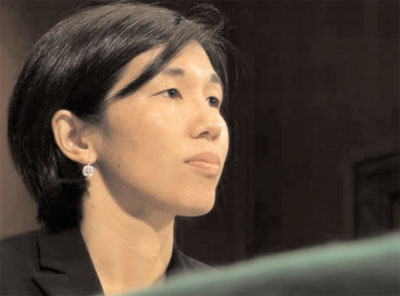
  • Twitter Lawyer Nicole Wong Appointed To Senior White House Technology Role

    Twitter Lawyer Nicole Wong Appointed To Senior White House Technology Role

    WASHINGTON (TIP): The Obama administration has appointed Twitter lawyer Nicole Wong to a new senior advisory position to focus on internet and privacy policy, a White House official said on June 20. Wong will work with federal chief technology officer Todd Park, and will join the White House as Obama focuses more attention and resources on fighting hackers.

    Her appointment comes as the Obama administration grapples with issues that arose from the US government’s surveillance of internet and phone communications in its antiterrorism effort. Rick Weiss, a spokesman for the White House Office of Science and Technology, said Wong is joining as deputy US chief technology officer and will work with Park on internet, privacy and technology issues. “She has tremendous expertise in these domains and an unrivaled reputation for fairness, and we look forward to having her on our team,” Weiss said.

    Congress and the White House have been arguing about how best to address cybersecurity for more than a year. Last month, the House of Representatives passed a new cybersecurity bill which will next be considered by the Senate. It is designed to help companies and the government share information on cyber threats, though concerns linger about the amount of protection it offers for private information. Wong, who was legal director at Twitter, has testified before Congress about her concerns about internet censorship in countries around the world.

    In 2010, when she was Google’s vicepresident and deputy general counsel, Wong told a Senate Judiciary Committee hearing that the US government should make internet freedom a key part of foreign policy. At Google, Wong was nicknamed “the Decider,” author and law professor Jeffrey Rosen has written, because part of her job was deciding whether to remove content from YouTube and links from Google that governments objected to.

  • Obama To Nominate Jim Comey As Next FBI Chief On Friday

    Obama To Nominate Jim Comey As Next FBI Chief On Friday

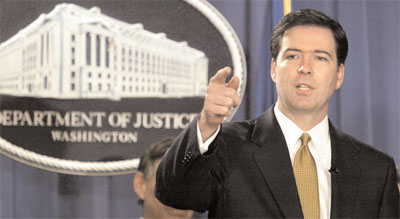
    WASHINGTON (TIP): President Barack Obama will nominate Jim Comey to be the next FBI director on Friday, picking a former Justice Department official who has deep experience in the US battle against terrorism, a White House official said on June 20. If confirmed by the Senate, Comey, a Republican, would replace FBI director Robert Mueller, who has led the agency since just before the September 11, 2001, attacks. Mueller is expected to step down this fall.

    A White House official said Obama would make the announcement about Comey on Friday afternoon. “In more than two decades as a prosecutor and national security professional, Jim has demonstrated unwavering toughness, integrity, and principle in defending both our security and our values,” the official said. Comey, 52, served as deputy US attorney general for President George W Bush. He had previously been the US attorney for the Southern District of New York.

    As assistant US attorney for the Eastern District of Virginia, Comey had handled the Khobar Towers bombing case that arose out of an attack on a US military facility in Saudi Arabia in 1996. Seventeen US military members died in the attack. Comey gained notoriety for refusing in 2004 to certify the legal aspects of National Security Agency domestic surveillance during a stint as acting attorney general while John Ashcroft was hospitalized with pancreatitis.

    That refusal prompted two senior White House officials – counsel Alberto Gonzales and chief of staff Andrew Card – to try to persuade Ashcroft to sign the certification. Comey, who was in the room, said Ashcroft refused. Comey later told the Senate Judiciary Committee at a 2007 hearing that the situation was “probably the most difficult night of my professional life.” His actions endeared him to many Democrats opposed to Bush’s domestic surveillance program.

    The surveillance program resurfaced as a major bone of contention this month when it was revealed that the US government maintained an expansive surveillance program targeting internet and phone communications. Obama has staunchly defended the program. Comey, after leaving the Justice Department in 2005, became general counsel to aerospace giant Lockheed Martin Corp until 2010.

    He most recently joined Columbia University’s law school as a senior research scholar after working for Bridgewater Associates, an investment fund, from 2010 to 2013. The Washington, DC-based Federal Bureau of Investigation serves as both a federal criminal investigative agency and a domestic intelligence body.