Month: July 2013

  • 9 THINGS YOU MAY NOT KNOW ABOUT THE DECLARATION OF INDEPENDENCE

    9 THINGS YOU MAY NOT KNOW ABOUT THE DECLARATION OF INDEPENDENCE

    Independence Day, or the Fourth of July, celebrates the adoption by the Continental Congress of the Declaration of Independence on July 4, 1776. On the 236th birthday of the United States, explore nine surprising facts about one of America’s most important founding documents.

    1. The Declaration of Independence wasn’t signed on July 4, 1776.
    On July 1, 1776, the Second Continental Congress met in Philadelphia, and on the following day 12 of the 13 colonies voted in favor of Richard Henry Lee’s motion for independence. The delegates then spent the next two days debating and revising the language of a statement drafted by Thomas Jefferson. On July 4, Congress officially adopted the Declaration of Independence, and as a result the date is celebrated as Independence Day. Nearly a month would go by, however, before the actual signing of the document took place. First, New York’s delegates didn’t officially give their support until July 9 because their home assembly hadn’t yet authorized them to vote in favor of independence. Next, it took two weeks for the Declaration to be “engrossed”-written on parchment in a clear hand. Most of the delegates signed on August 2, but several-Elbridge Gerry, Oliver Wolcott, Lewis Morris, Thomas McKean and Matthew Thornton-signed on a later date. (Two others, John Dickinson and Robert R. Livingston, never signed at all.) The signed parchment copy now resides at the National Archives in the Rotunda for the Charters of Freedom, alongside the Constitution and the Bill of Rights.

    2. More than one copy exists.
    After the adoption of the Declaration of Independence, the “Committee of Five”- Thomas Jefferson, John Adams, Benjamin Franklin, Roger Sherman and Robert R. Livingston-was charged with overseeing the reproduction of the approved text. This was completed at the shop of Philadelphia printer John Dunlap. On July 5, Dunlap’s copies were dispatched across the 13 colonies to newspapers, local officials and the commanders of the Continental troops. These rare documents, known as “Dunlap broadsides,” predate the engrossed version signed by the delegates. Of the hundreds thought to have been printed on the night of July 4, only 26 copies survive. Most are held in museum and library collections, but three are privately owned.

    3. When news of the Declaration of Independence reached New York City, it started a riot.
    By July 9, 1776, a copy of the Declaration of Independence had reached New York City. With hundreds of British naval ships occupying New York Harbor, revolutionary spirit and military tensions were running high. George Washington, commander of the Continental forces in New York, read the document aloud in front of City Hall. A raucous crowd cheered the inspiring words, and later that day tore down a nearby statue of George III. The statue was subsequently melted down and shaped into more than 42,000 musket balls for the fledgling American army.

    4. Eight of the 56 signers of the Declaration of Independence were born in Britain.
    While the majority of the members of the Second Continental Congress were native-born Americans, eight of the men voting for independence from Britain were born there. Gwinnett Button and Robert Morris were born in England, Francis Lewis was born in Wales, James Wilson and John Witherspoon were born in Scotland, George Taylor and Matthew Thornton were born in Ireland and James Smith hailed from Northern Ireland.

    5. One signer later recanted.
    Richard Stockton, a lawyer from Princeton, New Jersey, became the only signer of the Declaration of Independence to recant his support of the revolution. On November 30, 1776, the hapless delegate was captured by the British and thrown in jail. After months of harsh treatment and meager rations, Stockton repudiated his signature on the Declaration of Independence and swore his allegiance to King George III. A broken man when he regained his freedom, he took a new oath of loyalty to the state of New Jersey in December 1777.

    6. There was a 44-year age difference between the youngest and oldest signers.
    The oldest signer was Benjamin Franklin, 70 years old when he scrawled his name on the parchment. The youngest was Edward Rutledge, a lawyer from South Carolina who was only 26 at the time. Rutledge narrowly beat out fellow South Carolinian Thomas Lynch Jr., just four months his senior, for the title.

    7. Two additional copies have been found in the last 25 years.
    In 1989, a Philadelphia man found an original Dunlap Broadside hidden in the back of a picture frame he bought at a flea market for $4. One of the few surviving copies from the official first printing of the Declaration, it was in excellent condition and sold for $8.1 million in 2000. A 26th known Dunlap broadside emerged at the British National Archives in 2009, hidden for centuries in a box of papers captured from American colonists during the Revolutionary War. One of three Dunlap broadsides at the National Archives, the copy remains there to this day.

    8. The Declaration of Independence spent World War II in Fort Knox.
    On December 23, 1941, just over two weeks after the Japanese attack on Pearl Harbor, the signed Declaration, together with the Constitution, was removed from public display and prepared for evacuation out of Washington, D.C. Under the supervision of armed guards, the founding document was packed in a specially designed container, latched with padlocks, sealed with lead and placed in a larger box. All told, 150 pounds of protective gear surrounded the parchment. On December 26 and 27, accompanied by Secret Service agents, it traveled by train to Louisville, Kentucky, where a cavalry troop of the 13th Armored Division escorted it to Fort Knox. The Declaration was returned to Washington, D.C., in 1944.

    9. There is something written on the back of the Declaration of Independence
    In the movie “National Treasure,” Nicholas Cage’s character claims that the back of the Declaration contains a treasure map with encrypted instructions from the founding fathers, written in invisible ink. Unfortunately, this is not the case. There is, however, a simpler message, written upsidedown across the bottom of the signed document: “Original Declaration of Independence dated 4th July 1776.” No one knows who exactly wrote this or when, but during the Revolutionary War years the parchment was frequently rolled up for transport. It’s thought that the text was added as a label.

  • THE BIRTH OF AMERICAN INDEPENDENCE

    THE BIRTH OF AMERICAN INDEPENDENCE

    On July 2nd, 1776 the Continental Congress meeting in Philadelphia, Pennsylvania, adopted the Declaration of Independence,which proclaims the independence of the United States of America from Great Britain and its king. The declaration came 442 days after the first volleys of the American Revolution were fired at Lexington and Concord in Massachusetts and marked an ideological expansion of the conflict that would eventually encourage France’s intervention on behalf of the Patriots.

    The first major American opposition to British policy came in 1765 after Parliament passed the Stamp Act, a taxation measure to raise revenues for a standing British army in America. Under the banner of “no taxation without representation,” colonists convened the Stamp Act Congress in October 1765 to vocalize their opposition to the tax.With its enactment in November, most colonists called for a boycott of British goods, and some organized attacks on the customhouses and homes of tax collectors. After months of protest in the colonies, Parliament voted to repeal the Stamp Act in March 1766.

    Most colonists continued to quietly accept British rule until Parliament’s enactment of the Tea Act in 1773, a bill designed to save the faltering East India Company by greatly lowering its tea tax and granting it a monopoly on the American tea trade.

    The low tax allowed the East India Company to undercut even tea smuggled into America by Dutch traders, and many colonists viewed the act as another example of taxation tyranny. In response, militant Patriots in Massachusetts organized the “Boston Tea Party,” which saw British tea valued at some 18,000 pounds dumped into Boston Harbor.

    Parliament, outraged by the Boston Tea Party and other blatant acts of destruction of British property, enacted the Coercive Acts, also known as the Intolerable Acts, in 1774. The Coercive Acts closed Boston to merchant shipping, established formal British military rule in Massachusetts, made British officials immune to criminal prosecution in America, and required colonists to quarter British troops.

    The colonists subsequently called the first Continental Congress to consider a united American resistance to the British. With the other colonies watching intently, Massachusetts led the resistance to the British, forming a shadow revolutionary government and establishing militias to resist the increasing British military presence across the colony. In April 1775, Thomas Gage, the British governor of Massachusetts, ordered British troops to march to Concord, Massachusetts, where a Patriot arsenal was known to be located.

    On April 19, 1775, the British regulars encountered a group of American militiamen at Lexington, and the first shots of the American Revolution were fired. Initially, both the Americans and the British saw the conflict as a kind of civil war within the British Empire: To King George III it was a colonial rebellion, and to the Americans it was a struggle for their rights as British citizens. However, Parliament remained unwilling to negotiate with the American rebels and instead purchased German mercenaries to help the British army crush the rebellion. In response to Britain’s continued opposition to reform, the Continental Congress began to pass measures abolishing British authority in the colonies.

    In January 1776, Thomas Paine published Common Sense, an influential political pamphlet that convincingly argued for American independence and sold more than 500,000 copies in a few months. In the spring of 1776, support for independence swept the colonies, the Continental Congress called for states to form their own governments, and a five-man committee was assigned to draft a declaration. The Declaration of Independence was largely the work of Virginian Thomas Jefferson. In justifying American independence, Jefferson drew generously from the political philosophy of John Locke, an advocate of natural rights, and from the work of other English theorists.

    The first section features the famous lines, “We hold these truths to be self-evident, that all men are created equal, that they are endowed by their Creator with certain unalienable Rights, that among these are Life, Liberty and the pursuit of Happiness.” The second part presents a long list of grievances that provided the rationale for rebellion. On July 2, 1776, the Continental Congress voted to approve a Virginia motion calling for separation from Britain. The dramatic words of this resolution were added to the closing of the Declaration of Independence. Two days later, on July 4, the declaration was formally adopted by 12 colonies after minor revision.

    New York approved it on July 19. On August 2, the declaration was signed. The American War for Independence would last for five more years. Yet to come were the Patriot triumphs at Saratoga, the bitter winter at Valley Forge, the intervention of the French, and the final victory at Yorktown in 1781. In 1783, with the signing of the Treaty of Paris with Britain, the United States formally became a free and independent nation.

  • HISTORY OF THE AMERICAN NATIONAL ANTHEM

    HISTORY OF THE AMERICAN NATIONAL ANTHEM

    The American National Anthem memorializes one of the key moments in American history which took place in Baltimore during the War of 1812. When Francis Scott Key saw the American flag flying above Fort McHenry amidst the cannon fire during the Battle of Baltimore, he was inspired to write the historic poem “Defence of Fort McHenry” that would be put to music to become “The Star-Spangled Banner”. The song would become the official American National Anthem on March 3, 1931.

    Fort McHenry and the War of 1812
    During one of the War of 1812’s most significant battles, the Battle of Baltimore, the British mounted land and sea attacks on Baltimore after the Burning of Washington in an attempt to capture the Port of Baltimore. Held at bay by militia on land at North Point, the British Navy then unleashed a barrage of cannons upon Fort McHenry for 25 hours straight through the night of September 13-14, 1814, with the goal of breaking through and taking Baltimore Harbor. The city of Baltimore was dark, with all of its lights put out for the battle, but for the lights of the cannon shells which were exploding in the darkness and casting a glow on the 30-foot flag with fifteen stars and fifteen stripes that was flying high above Fort McHenry, proving the fort was still standing. The flag was crafted by local Baltimore flag maker Mary Pickersgill and her 13-year-old daughter. After failing to seize the fort, the British retreated, marking a major turning point in the War of 1812.

    Francis Scott Key Writes “Defence of Fort McHenry”
    Positioned on a British truce ship, the HMS Tonnant, on the Patapsco River while the attack on Fort McHenry was waged, Francis Scott Key, a 35-year-old American lawyer and amateur poet, watched in awe as British cannons failed to do any significant damage to the fort. He was on the British ship to negotiate the release of one of its prisoners, Dr.William Beanes, a resident of Upper Marlboro, Maryland. Key’s roots in Maryland ran deep as the son of an officer in the Maryland Rifle Company (and later the Frederick County Company of Cavalry) of the Continental Army during the American Revolution. Francis Scott was born in Frederick County (the site of his birthplace is now within the borders of Carroll County), and he went to law school at St. John’s College in Annapolis, Maryland. His far-reaching impact on American history would begin to take shape as soon as the smoke cleared on the morning of September 14, 1814. He penned his experience of that fateful night on the back of a letter in the form of a poem he entitled “Defence of Fort McHenry,” which was published in the Patriot and then widely distributed in pamphlet and sheet music form.

    The Star-Spangled Banner becomes the American National Anthem
    The American National Anthem memorializes one of the key moments in American history which took place in Baltimore during the War of 1812. When Francis Scott Key saw the American flag flying above Fort McHenry amidst the cannon fire during the Battle of Baltimore, he was inspired to write the historic poem “Defence of Fort McHenry” that would be put to music to become “The Star-Spangled Banner”. The song would become the official American National Anthem on March 3, 1931.

    THE NATIONAL ANTHEM OF THE UNITED STATES
    O say can you see, by the dawn’s early light,
    What so proudly we hail’d at the twilight’s last gleaming,
    Whose broad stripes and bright stars through the perilous fight
    O’er the ramparts we watch’d were so gallantly streaming?
    And the rocket’s red glare, the bomb bursting in air,
    Gave proof through the night that our flag was still there,
    O say does that star-spangled banner yet wave
    O’er the land of the free and the home of the brave?
    On the shore dimly seen through the mists of the deep
    Where the foe’s haughty host in dread silence reposes,
    What is that which the breeze, o’er the towering steep,
    As it fitfully blows, half conceals, half discloses?
    Now it catches the gleam of the morning’s first beam,
    In full glory reflected now shines in the stream,
    ‘Tis the star-spangled banner – O long may it wave
    O’er the land of the free and the home of the brave!
    And where is that band who so vauntingly swore,
    That the havoc of war and the battle’s confusion
    A home and a Country should leave us no more?
    Their blood has wash’d out their foul footstep’s pollution.
    No refuge could save the hireling and slave
    From the terror of flight or the gloom of the grave,
    And the star-spangled banner in triumph doth wave
    O’er the land of the free and the home of the brave.
    O thus be it ever when freemen shall stand
    Between their lov’d home and the war’s desolation!
    Blest with vict’ry and peace may the heav’n rescued land
    Praise the power that hath made and preserv’d us a nation!
    Then conquer we must, when our cause it is just,
    And this be our motto – “In God is our trust,”
    And the star-spangled banner in triumph shall wave
    O’er the land of the free and the home of the brave.

  • MOVIE REVIEW HUMMINGBIRD

    MOVIE REVIEW HUMMINGBIRD

    Cast: Jason Statham, Vicky McClure, Benedict Wong, Agata Buzek
    Direction: Steven Knight
    Genre: Action
    Duration: 1 hour 40 minutes

    STORY: Back from Afghanistan, a homeless former Royal Marine gets an opportunity to change his identity. It is a decision that alters his life.

    MOVIE REVIEW: A glance at the film poster might suggest that Jason Statham (playing Joey Jones) with his thousand-yard stare has just done what he usually does in movies – busting skulls and breaking bones from beginning to end. Not so here. Hummingbird has him on the biggest tangent of his career. A bum on the mean streets of back-alley London, fate (or God, as he puts it) lands him in the vacant house of someone really loaded. Jones realises that this is his chance at getting his life together again. He decides to assume the identity of the apartment’s owner. What he doesn’t realise is that slipping into a second skin can only go that far.

    Jones soon slides into London’s dark underworld, populated by the Chinese and Russian mafia, using his combat training for cash. Suffering from guilt-ridden hallucinations, he uses vodka to allay his post-combat demons. He tries to redeem himself by using the illgotten money to buy good food for the homeless and nice things for a nun called Cristina ( Agata Buzek) who runs a makeshift soup kitchen. An urban Robin Hood? No, not quite. Cristina is his ‘angel’. She is the epitome of empathy and represents all that is good to him – the better person that he knows he can never again become. She senses his turmoil and is not put off. They are both damaged and in a city that is a sea of strangers, their stories are irrevocably intertwined. Dialogues are sparse and minimal, thankfully so. The score (Dario Marianelli) elegantly fills in the silences, speaking volumes. It is intense, but thanks to the editing, steers away from being drippy. Statham’s stony visage tries to emote, often successfully. If this film marks a new direction for Statham’s career, he’s on the right track.

  • ALCOHOL ABUSE: FARRAH ENTERS REHAB

    ALCOHOL ABUSE: FARRAH ENTERS REHAB

    Teen Mom’ star Farrah Abraham has checked into a rehab facility for alcohol abuse, in Florida. The reality-star-turned-pornstar confirmed to RadarOnline that she entered an outpatient program on Sunday to deal with her alcohol abuse and to focus on getting sober. The single mom told the gossip site that she needs to stay focused on the positive to get through the entire negative that a DUI has caused in her life. Abraham is all set to undergo intensive counseling over the next 10 days at The Lukens Institute in Palm Beach.

  • KEIRA KNIGHTLEY TO PRODUCE THE OTHER TYPIST

    KEIRA KNIGHTLEY TO PRODUCE THE OTHER TYPIST

    Actress Keira Knightley is confirmed to be involved in Fox Searchlight’s latest project ‘The Other Typist’. Knightley, 29, is set to produce and star in film which is the feature version of Suzanne Rindells’ debut novel of the same title, reported Ace showbiz. The novel centers on Rose, an aloof typist in a police precinct who builds a friendship with a beautiful yet mysterious co-worker who later introduces her to the glamorous and forbidden underworld of 1920s New York. Knightley recently starred in ‘Anna Karenina’, director Joe Wright’s big-screen adaptation of Leo Tolstoy’s 1877 novel. Her performance as the titular character earned her a nomination for Best Actress at People’s Choice Awards and Satellite Award. Knightley is currently filming drama ‘Laggies’, in which she acts opposite Chloe Moretz.

  • GHANCHAKKAR

    GHANCHAKKAR

    Cast: Emraan Hashmi, Vidya Balan, Rajesh Sharma, Namit Das
    Direction: Raj Kumar Gupta
    Genre: Thriller
    Duration: 2 hours 19 minutes

    STORY: A Maharashtrian thief married to an aggressive Punjabi woman carries out a bank heist. Before he can spend the loot, he meets with an accident. Will his memory and money come back to his use?

    MOVIE REVIEW: Director Raj Kumar Gupta is an ‘inspired’ writer/ filmmaker. He draws liberally either from other cinematic material or from headlines. His first film Aamir had many similarities to the Filipino film Cavite. His No One Killed Jessica was quite obviously taken from the Jessica Lal murder case. In his third movie outing Ghanchakkar, the director, is ‘inspired’ by innumerable Hollywood and UK black humour flicks. The film has an interesting premise. Sanjay Atre ( Emraan Hashmi) and his Punjabi wife Neetu ( Vidya Balan) have a humdrum existence. The colour in their lives comes from the loud clothes Vidya wears. Life promises change for them when Sanjay, who is an expert lock picker hooks up with small-time crooks Pandit ( Rajesh Sharma) and Idris ( Namit Das). The trio rob a bank. However, they cannot spend the money till the heat is off. So they give to Emraan for safe-keep. Three months later when it’s time to enjoy their loot, they find themselves stranded because Emraan has suffered a partial memory loss. For the viewer, part of the fun begins here. One scene that is hilarious is when Emraan and Vidya start to make love but need to break it up because Emraan, who has a bout of amnesia, forgets where he put the condoms. The constant sparring between the couple and the bickering between the three thieves is also funny.There is an unusual climax to look forward to. The music by Amit Trivedi deserves a mention. Lazy Lad, Allah Meherban and the title track have what it takes to get you in the mood. Of the talent-Emraan gets his bewildered expression correct. And for fear of losing it, he keeps it going for the most part. Vidya provides a few laughs trying to ape the Punjabi stereotype. However, her act doesn’t qualify for the real thing.

  • AISHWARYA TO BE BACK ON SCREEN

    AISHWARYA TO BE BACK ON SCREEN

    Aishwarya Rai Bachchan who has been on a selfimposed sabbatical from films ever since she delivered a baby girl, is all set to be back on the screen. The pretty actress who has been attending film festivals and making a lot of international appearances has finally green lit a few projects. The actress in recent times has shed all her post-pregnancy flab and has been working out to get back in shape. Sources close to her say that she has been looking at scripts and has finally zeroed down on a couple of them. Until the producers make an announcement, she isn’t allowed to talk about them though there have been talks about Karan Johar and Sanjay Leela Bhansali having approached her for their next projects. Over the past few months, the actress has been making quite a few international appearances but her daughter has been constantly travelling with her. She also had her mother for company but right now, Ash seems to be getting ready to get back into the limelight. Aaradhya is a year old and this is probably the right time for Ash to make her much awaited comeback on sorts on the big screen.

  • STUPID TO THINK ABOUT BANNING SONGS: SONAM

    STUPID TO THINK ABOUT BANNING SONGS: SONAM

    Sonam Kapoor, who is known for her honest opinions claims that men need to change their outlook towards women, and the idea about banning item numbers is stupid. On being asked about her opinion on banning item numbers in films or requesting girls to dress in a certain way to avoid crime rates, Sonam says, “I think it’s so stupid to think about banning songs. So what if we wear certain type of clothes or do certain things? We are not doing anything wrong. Men have to look at us differently.” “If you see our Ajanta Ellora Caves, you will understand that we are the land of Kamasutra. We can’t cover ourselves from head to toe. We can’t run around in burkha; that’s not our culture. It’s unfortunate when people say you can’t wear skirts or do item numbers or a girl can’t dress in a certain way. Are we going back to dark ages?” Sonam asks. “I am trying to be a girl who is real and has an opinion. Might say stupid things but not scared of men and for me that’s important,” concludes Sonam.

  • 60 BILLION PLANETS IN MILKY WAY COULD SUPPORT LIFE

    60 BILLION PLANETS IN MILKY WAY COULD SUPPORT LIFE

    WASHINGTON (TIP): Scientists have discovered that there are 60 billion potentially habitable planets in the Milky Way alone, twice the number previously thought. These planets in the habitable zone of a parent star may have the ability to sustain liquid water on their surface, researchers say. A new study that calculates the influence of cloud behaviour on climate doubles the number of potentially habitable planets orbiting red dwarfs, the most common type of stars in the universe. This finding means that in the Milky Way galaxy alone, 60 billion planets may be orbiting red dwarf stars in the habitable zone, researchers say. Researchers at the University of Chicago and Northwestern University based their study on rigorous computer simulations of cloud behaviour on alien planets.

    This cloud behaviour dramatically expanded the estimated habitable zone of red dwarfs, which are much smaller and fainter than stars like the Sun. Current data from NASA’s Kepler Mission suggest there is approximately one Earth-size planet in the habitable zone of each red dwarf. The study roughly doubles that estimate. It also suggests new ways for astronomers to test whether planets orbiting red dwarfs have cloud cover. “Most of the planets in the Milky Way orbit red dwarfs,” said Nicolas Cowan, a postdoctoral fellow at Northwestern’s Center for Interdisciplinary Exploration and Research in Astrophysics. “A thermostat that makes such planets more clement means we don’t have to look as far to find a habitable planet,” said Cowan. Cowan, Dorian Abbot and Jun Yang, co-authors on the study provided astronomers with a means of verifying their conclusions with the James Webb Space Telescope. The habitable zone refers to the space around a star where orbiting planets can maintain liquid water at their surface.

    The formula for calculating that zone has remained much the same for decades. But that approach largely neglects clouds, which exert a major climatic influence. “Clouds cause warming, and they cause cooling on Earth,” said Abbot, an assistant professor in geophysical sciences. “They reflect sunlight to cool things off, and they absorb infrared radiation from the surface to make a greenhouse effect. That’s part of what keeps the planet warm enough to sustain life,” said Abbot. A planet orbiting a star like the sun would have to complete an orbit approximately once a year to be far enough away to maintain water on its surface. If you’re orbiting around a low-mass or dwarf star, you have to orbit about once a month, once every two months to receive the same amount of sunlight that we receive from the sun,” Cowan said.

  • NOW, A FLASHLIGHT POWERED BY HEAT FROM YOUR HAND

    NOW, A FLASHLIGHT POWERED BY HEAT FROM YOUR HAND

    WASHINGTON (TIP): A 15-year-old girl in Canada has invented a flashlight that produces light just by using the warmth of your hand. Ann Makosinski, from British Columbia , invented the thermoelectric ‘Hollow Flashlight’ that works via the thermoelectric effect. The thermoelectric effect is the direct conversion of temperature differences to electric voltage and vice-versa . “I’m sure we’ve all had that annoying experience when we desperately need a flashlight, we find one, and the batteries are out,” she told NBC News. “Imagine how much money we would save and the amount of toxins leached into the soil etc reduced if we didn’t use any batteries in flashlights!” she said.

    To create the flashlight, Makosinski measured how much electricity could be generated from the heat of a palm — about 57 milliwatts — and how much she needed to light the LED — about half a milliwatt. Next, she got several Peltier tiles which when warm on one side and cool on the other could generate electricity, and a few other bits necessary to make the current usable by a normal LED. Finally, she mounted the tiles and circuitry onto a hollow aluminum tube; air inside the tube would cool the Peltier tiles, while the warmth of a hand would heat the other side. With a little tweaking of voltages and other components, the invention worked. The light generated is modest, but enough to find your keys or light the page of a book. It worked for around half an hour in her tests at an ambient temperature of about 10°C.

  • Human head transplant is possible

    Human head transplant is possible

    Human head transplants could now be possible using currently available medical techniques, according to an Italian neurosurgeon who thinks he has worked out how it could be done. In a project proposal published by the medical journal Surgical Neurology International , Dr Sergio Canavero outlines his method for the ” Head Anastomosis Venture” — or HEAVEN. The procedure would involve severing the heads of two human patients simultaneously using an “ultra-sharp blade” , cooling and flushing out the “recipient” head before attaching its new body with an advanced polymer “glue” . Dr Canavero suggests that the realigning of head and body could also be achieved using “electrofusion” , in an approach not entirely unlike that of Mary Shelley’s Dr Frankenstein.

    But the Italian, who works for the Turin Advanced Neuromodulation Group and has previously published research on whole-eye transplants , says that his project is no fiction, and bases it on a similar experiment on Rhesus monkeys in the 1970s in which the patient survived for eight days.A few years after this first test 40 years ago, its protagonist Dr Robert White noted that: “What has been accomplished in the animal model — prolonged hypothermic preservation and cephalic transplantation, is fully accomplishable in the human sphere.”In laying out what he says is “the groundwork for the first successful human head transplant” , Dr Canavero admits that his polymer gel reattachment method (known as GEMINI) would not be perfect . But he notes that: “as little as 10% of descending spinal tracts are sufficient for some voluntary control of locomotion in man.”

  • STEM-CELL THERAPY WIPES OUT HIV

    STEM-CELL THERAPY WIPES OUT HIV

    LONDON (TIP): Two HIV-positive patients in the US who underwent bone marrow transplants for cancer have stopped anti-retroviral therapy and still show no detectable sign of the HIV virus, researchers said. The Harvard University researchers stressed it was too early to say the men have been cured, but said it was an encouraging sign that the virus hasn’t rebounded in their blood months after drug treatment ended. The first person reported to be cured of HIV, American Timothy Ray Brown, underwent a stem cell transplant in 2007 to treat his leukemia. He was reported by his German doctors to have been cured of HIV two years later. Brown’s doctors used a donor who had a rare genetic mutation that provides resistance against HIV.

    So far, no one has observed similar results using ordinary donor cells such as those given to the two patients by the Harvard University researchers. The researchers, Timothy Henrich and Daniel Kuritzkes of the Harvard-affiliated Brigham and Women’s Hospital in Boston, announced last year that blood samples taken from the men — who both had blood cancers — showed no traces of the HIV virus eight months after they received bone marrow transplants to replace cancerous blood cells with healthy donor cells.

    The men were still on anti-HIV drugs at the time. The men have both since stopped anti-retroviral therapy — one 15 weeks ago and the other seven weeks ago — and show no signs of the virus, Henrich told an international AIDS conference in Malaysia on Wednesday. “They are doing very well,” Henrich said. “While these results are exciting, they do not yet indicate that the men have been cured. Only time will tell.” The HIV virus may be hiding in other organs such as the liver, spleen or brain and could return months later, he warned. Further testing of the men’s cells, plasma and tissue for at least a year will help give a clearer picture on the full impact of the transplant on HIV persistence, he said. Kuritzkes said the patients will be put back on the drugs if there is a viral rebound.

  • MAOISTS STRIKE AGAIN, KILL TOP COP, 5 POLICEMEN IN JHARKHAND

    MAOISTS STRIKE AGAIN, KILL TOP COP, 5 POLICEMEN IN JHARKHAND

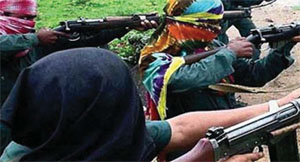
    RANCHI (TIP): Armed Maoists on July 3 ambushed a police convoy killing a superintendent of police and five others near the West Bengal- Jharkhand border. The attack took place in a jungle stretch between Kathikund and Gopikanar in Dumka, around 350 km from Ranchi. The SP, known for his tough stance against the Red rebels, was returning to Pakur from Dumka after attending a meeting when the attack took place. “Pakur SP Amarjit Balihar and five policemen were killed in an ambush by Maoist guerrillas,” said Jharkhand Director General of Police Rajiv Kumar. The guerrillas first triggered a landmine blast and later fired indiscriminately on the convoy. The Maoists fired over 150 bullets at the policemen, who did not get a chance to retaliate, DIG (Dumka) Priya Dubey said, adding the rebels also looted the weapons of the policemen.

    Two other policemen who were injured have been admitted to a hospital, Dumka Deputy Commissioner Harsh Mangala said. Their condition is stated to be critical. Balihar, an IPS officer of 2003 batch, had been the commandant of the Jharkhand Armed Police. He was a target of the Maoists due to his tough stand against them ever since his posting at Pakur, sources said. He is the second SP to fall to the rebels’ bullets in the region. On October 4, 2000, the ultras of the People’s War Group, now merged with the CPI (Maoist), had killed Lohardaga SP Ajay Kumar Singh in undivided Bihar. Lohardaga later became part of Jharkhand.

    At least 200 Central paramilitary personnel have been rushed to the spot to nab the extremists who were involved in the attack. Police sources said the Maoists were trying to execute a big strike like the May 25 deadly attack on a Congress convoy in Chhattisgarh’s Bastar district. Many Congress leaders, including former Union Minister VC Shukla, were killed in the attack. After the attack, West Bengal Chief Minister Mamata Banerjee held meeting with senior police officials and reviewed the situation. Security has been beefed up in vulnerable areas of the state. Bengal DGP N Mukherjee spoke to his Jharkhand counterpart and discussed a strategy for combating the Maoist menace. He stressed on the need for launching massive joint operations in the border areas.

  • Rescue operation over in Badrinath

    Rescue operation over in Badrinath

    Dehradun (TIP): The mammoth multi-agency rescue operations to evacuate all stranded pilgrims and tourists in the flood-ravaged Uttarakhand concluded on July 3 with a group of 155 persons being evacuated from Badrinath. In all, around 1.1 lakh people — stranded due to flash floods and landslides after monsoon rains pounded the hill state on June 15 — were evacuated by joint teams of the Army, Indian Air Force, Indo-Tibetan Border Police (ITBP) and National Disaster Response Force (NDRF). “A total of 155 persons were evacuated today from Badrinath. Now for all intent and purpose, the evacuation of stranded pilgrims and tourists in Badrinath is complete. Now some locals remain there and they would be airlifted tomorrow,” said Chief Secretary Subash Kumar. Kumar said the state government has intensified operations to air-drop food packets in the areas that still remain cut off. “In Rudraprayag, copters made 31 sorties and 1,100 food packets were dropped,” he said. The Chief Secretary said sorties were undertaken in Munsiyari and Dharchula districts of Pithoragarh for air-lifting stranded locals.

  • Sujatha Singh is new Foreign Secy

    Sujatha Singh is new Foreign Secy

    NEW DELHI (TIP): Adhering to the seniority principle, the government on July 3 named Indian Ambassador to Germany Sujatha Singh as the next Foreign Secretary to succeed Ranjan Mathai on his retirement on July 31. An IFS officer of the 1976 batch, Sujatha will be the third woman to navigate India’s foreign policy as the country’s top diplomat. Earlier, Chokila Iyer and Nirupama Rao have held the coveted post. Sujatha, who was due to retire in July next year, will now have a two-year term from August 1. Though she has not done any diplomatic posting in India’s neighbourhood, clearly an added qualification for any Foreign Secretary, she was Undersecretary in the External Affairs Ministry looking after Nepal in early 80s. Apart from Sujatha, there were four contenders for the Foreign Secretary’s post. They were S Jaishankar, India’s Ambassador to China, Jaimini Bhagwati, Indian High Commissioner to Britain, Sudhir Vyas, Secretary (West) in the External Affairs Ministry, and Pinak Ranjan Chakravarty, Secretary (Economic Relations) in the ministry.

  • Bansal named CBI witness

    Bansal named CBI witness

    NEW DELHI (TIP): Former Union Railway Minister Pawan Kumar Bansal, whose nephew Vijay Singla and nine others have been chargesheeted by the CBI in the Rs 10 crore cash-for-post bribery case, has been named as a prosecution witness. The CBI chargesheet filed in a special court some days back mentioned that Bansal would be a prosecution witness, a source said. Now that he has been made a prosecution witness, it is understood that he has been given a clean chit. He was questioned only once at Jam Nagar House while the other accused were grilled at the CBI headquarters. The agency has also named Railway Board exchairman Vinay Mittal, joint secretary (confidential) P Rajeshkaran and joint director Vigilance (Int) R Vijayan Nair as witnesses. The agency had registered the case on May 3 and arrested Mahesh Kumar, Vijay Singla and other middlemen. In its FIR, the CBI has alleged middleman Sandeep Goyal had promised Kumar that he would arrange the post of Member (Electrical) in the Railway Board for him and allegedly demanded Rs 10 crore for it.

  • China hosts Antony, Sharif

    China hosts Antony, Sharif

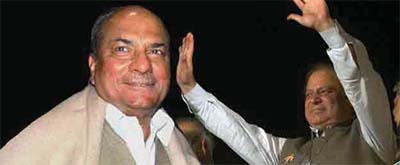
    China hosts Antony, SharifNEW DELHI (TIP): Desperate to play ‘peace-broker’ in India-Pakistan ties, China on July 4 hosted Defence Minister AK Antony and Pakistani Prime Minister Nawaz Sharif separately, but projected it as a rare diplomatic event. As Sharif and Antony arrived in Beijing, the country’s State-television said China was setting off a new phase of cordial ties between the two nations by hosting top leaders from both the countries – . “Both India and Pakistan are very important countries in our neighbourhood,” Wang Shida, a researcher with the China Institute of Contemporary Relations, told CCTV news. “China-India have established strategic cooperative partnership since 2005. Meanwhile, China and Pakistan enjoyed an all-weather partnership for half a century. “It means both India and Pakistan are important diplomatically to China.

    Premier Li Keqiang’s visit to both the countries last month sets a very good example,” he said. Though their visits were a coincidence, Sharif and Antony were not expected to cross paths. Antony, who is the first Indian Defence Minister to visit China in seven years, is in Beijing on a four-day visit. The recent border incursion by Chinese troops, finalisation of the Border Defence Coordination Agreement (BDSA) to maintain peace at the disputed borders as well as resumption of bilateral Military exercises top Antony’s agenda for talks with the Chinese leadership. Hours before AK Antony arrived in Beijing for high-level talks on Thursday, a hawkish Chinese General warned India against provoking ‘new trouble’ by increasing its Military deployment at the border.

    Don’t provoke China with new trouble: PLA General warns India “There is no denying that there are tensions and problems between China and India particularly at the border areas,” Major General Luo Yuan, executive vice president and secretary general of China Strategy Culture Promotion Association, said. “The Indian side should not provoke new problems and increase the Military deployment at the border areas and start new trouble,” General Luo, known for his hawkish and extreme views on China’s strategic and military relations with its neighbours and the US, said. Sharif, who arrived in Beijing on his first foreign visit after returning to power, met Chinese President Xi Jinping and sought assistance in energy, transport and infrastructure projects. During his meeting, Sharif spoke about the numerous challenges that Pakistan was faced with, including pulling the economy out from its current difficulties.

  • THE BIRTH OF GANESHA

    THE BIRTH OF GANESHA

    One day Goddess Parvati was at home on Mt.Kailash preparing for a bath. As she didn’t want to be disturbed, she told Nandi, her husband Shiva’s Bull, to guard the door and let no one pass. Nandi faithfully took his post, intending to carry out Parvati’s wishes. But, when Shiva came home and naturally wanted to come inside, Nandi had to let him pass, being loyal first to Shiva. Parvati was angry at this slight, but even more than this, at the fact that she had no one as loyal to Herself as Nandi was to Shiva. So, taking the turmeric paste (for bathing) from her body and breathing life into it, she created Ganesha, declaring him to be her own loyal son. The next time Parvati wished to bathe, she posted Ganesha on guard duty at the door.

    In due course, Shiva came home, only to find this strange boy telling him he couldn’t enter his own house! Furious, Shiva ordered his army to destroy the boy, but they all failed! Such power did Ganesha possess, being the son of Devi Herself ! This surprised Shiva. Seeing that this was no ordinary boy, the usually peaceful Shiva decided he would have to fight him, and in his divine fury severed Ganesha’s head, killing him instantly. When Parvati learned of this, she was so enraged and insulted that she decided to destroy the entire Creation! Lord Brahma, being the Creator, naturally had his issues with this, and pleaded that she reconsider her drastic plan.

    She said she would, but only if two conditions were met: one, that Ganesha be brought back to life, and two, that he be forever worshipped before all the other gods. Shiva, having cooled down by this time, and realizing his mistake, agreed to Parvati’s conditions. He sent Brahma out with orders to bring back the head of the first creature he crosses that is laying with its head facing North. Brahma soon returned with the head of a strong and powerful elephant, which Shiva placed onto Ganesha’s body. Breathing new life into him, he declared Ganesha to be his own son as well, and gave him the status of being foremost among the gods, and leader of all the ganas (classes of beings), Ganapati.

    28 www.theindianpanorama.news THE INDIAN PANORAMA FRIDAY, JULY 5, 2013 RELIGION This page is sponsored by Arish Sahani, New York Life Insurance Agent, Phone 718-271-0453.

  • RAMAYANA – THE STORY OF YOUNG RAMA AND SAGE VISHWAMITRA

    RAMAYANA – THE STORY OF YOUNG RAMA AND SAGE VISHWAMITRA

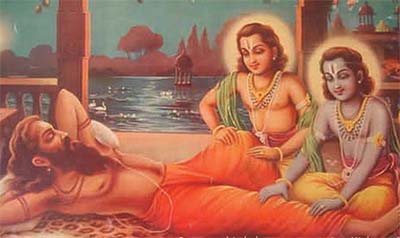
    Rama and his three brothers received a very privileged upbringing, as deemed fit for princes. They received extensive training in warfare and became scholars in Vedic knowledge. They were valiant and at the same time interested in the welfare of the world and its people. Right from childhood, Rama & Lakshmana developed a close bond and became inseparable. Time passed by fast as the princes grew up together, delighting King Dasharatha. When Rama was about 16 years old, sage Vishwamitra came to visit Dasharatha in search of help against rakshsas (demons), who were disturbing his Vedic rituals.

    He asked King Dasharatha to send Rama for protection against two powerful demons called Maareecha and Subaahu. Considering Rama’s age, King Dasharatha became very upset at the sage’s request and refused to send him. Sage Vishwamitra became very angry but was finally pacified by the intervention of Vasishtha. He convinced Dasharatha to send Rama with Vishwamitra, ensuring him that Vishwamitra’s powers and Rama’s own capabilities would make him successful. Finally, Dasharatha agreed, and Rama and Lakshmana were dispatched with Vishwamitra. In their course of travel, Vishwamitra imparted a secret knowledge to the young princes called ‘Bala Atibala Vidya’, the practice of which would always keep them vigorous and full of vitality. Rama also received many weapons, after successfully killing the demoness Tataka on the orders of Sage Vishwamitra.

    Finally, they reached the place where Vishwamitra was to perform his sacred ritual. The young princes safeguarded the ritual for six days and nights. On the last night, the demons Maareecha and Subaahu appeared to foil the ritual. But Rama deftly hit Mareecha, banishing him, and killed Subaahu. After that, the ritual was completed successfully without any problems. With the completion of the ritual, Sage Vishwamitra traveled to the kingdom of Mithila to attend a ritual and also to see the auspicious bow of Shiva that was being worshipped in the palace of King Janaka from ages. Rama and Lakshmana accompanied Vishwamitra on this journey.

    Upon reaching the precincts of Mithila, they visited the hermitage of Sage Gautama. Vishwamitra told them about the legend of Ahalya, Gautama’s wife. According to the legend, Indra was infatuated with Ahalya and desired a union with her. She complied with Indra’s desire but Sage Gautama caught them unawares and cursed them both. Ahalya was relegated to a lonely life in the hermitage where she would remain unseen and invisible. Only when Rama entered the hermitage, she was freed from her curse and emerged back into her divine form. After Ahalya’s redemption, Sage Vishwamitra, along with Rama and Lakshmana reached Mithila and entered the court of King Janaka.

  • SRI GURU GRANTH SAHIB

    SRI GURU GRANTH SAHIB

    CONTD FROM Vol 7 ISSUE 31 || 1 || O bride of natural beauty, offer your loving prayers to the Lord. The Lord is pleasing to my mind and body; I am intoxicated in my Lord God’s Company. Imbued with the Love of God, I pray to the Lord, and through the Lord’s Name, I abide in peace. If you recognize His Glorious Virtues, then you shall come to know God; thus virtue shall dwell in you, and sin shall run away.

    Without You, I cannot survive, even for an instant; by merely talking and listening about You, I am not satisfied. Nanak proclaims, “O Beloved, O Beloved!” His tongue and mind are drenched with the Lord’s sublime essence. || 2 || O my companions and friends, my Husband Lord is the merchant. I have purchased the Lord’s Name; its sweetness and value are unlimited. His value is invaluable; the Beloved dwells in His true home. If it is pleasing to God, then He blesses His bride.

    Some enjoy sweet pleasures with the Lord, while I stand crying at His door. The Creator, the Cause of causes, the Allpowerful Lord Himself arranges our affairs. O Nanak, blessed is the soul-bride, upon whom He casts His Glance of Grace; she enshrines the Word of the Shabad in her heart. || 3 || In my home, the true songs of rejoicing resound; the Lord God, my Friend, has come to me.

    He enjoys me, and imbued with His Love, I have captivated His heart, and given mine to Him. I gave my mind, and obtained the Lord as my Husband; as it pleases His Will, He enjoys me. I have placed my body and mind before my Husband Lord, and through the Shabad, I have been blessed. Within the home of my own self, I have obtained the ambrosial fruit. He is not obtained by intellectual recitation or great cleverness; only by love does the mind obtain Him. O Nanak, the Lord Master is my Best Friend; I am not an ordinary person.

    || 4 || 1 || AASAA, FIRST MEHL: The unstruck melody of the sound current resounds with the vibrations of the celestial instruments. My mind, my mind is imbued with the Love of my Darling Beloved. Night and day, my detached mind remains absorbed in the Lord, and I obtain my home in the profound trance of the celestial void. The True Guru has revealed to me the Primal Lord, the Infinite, my Beloved, the Unseen.

    The Lord’s posture and His seat are permanent; my mind is absorbed in reflective contemplation upon Him. O Nanak, the detached ones are imbued with His Name, the unstruck melody, and the celestial vibrations. || 1 || Tell me, how can I reach that unreachable, that unreachable city? By practicing truthfulness and self-restraint, by contemplating His Glorious Virtues, and living the Word of the Guru’s Shabad.

    Practicing the True Word of the Shabad, one comes to the home of his own inner being, and obtains the treasure of virtue. He has no stems, roots, leaves or branches, but He is the Supreme Lord over the heads of all. Practicing intensive meditation, chanting and self-discipline, people have grown weary; stubbornly practicing these rituals, they still have not found Him. O Nanak, through spiritual wisdom, the Lord, the Life of the world, is met; the True Guru imparts this understanding.

    || 2 || The Guru is the ocean, the mountain of jewels, overflowing with jewels. Take your bath in the seven seas, O my mind, and become pure. One bathes in the water of purity when it is pleasing to God, and obtains the five virtues by reflective meditation. Renouncing sexual desire, anger, deceit and corruption, he enshrines the True Name in his heart. When the waves of ego, greed and avarice subside, he finds the Lord Master, Merciful to the meek. O Nanak, there is no place of pilgrimage comparable to the Guru; the True Guru is the Lord of the world.

    || 3 || I have searched the jungles and forests, and looked upon all the fields. You created the three worlds, the entire universe, everything. You created everything; You alone are permanent. Nothing is equal to You. You are the Giver – all are Your beggars; without You, who should we praise? You bestow Your gifts, even when we do not ask for them, O Great Giver; devotion to You is a treasure over-flowing.Without the Lord’s Name, there is no liberation; so says Nanak, the meek.

    || 4 || 2 || AASAA, FIRST MEHL: My mind, my mind is attuned to the Love of my Beloved Lord. The True Lord Master, the Primal Being, the Infinite One, is the Support of the earth. He is unfathomable, unapproachable, infinite and incomparable. He is the Supreme Lord God, the Lord above all. He is the Lord, from the beginning, throughout the ages, now and forevermore; know that all else is false.

    If one does not appreciate the value of good deeds and Dharmic faith, how can one obtain clarity of consciousness and liberation? O Nanak, the Gurmukh realizes the Word of the Shabad; night and day, he meditates on the Naam, the Name of the Lord. || 1 || My mind, my mind has come to accept, that the Naam is our only Friend. Egotism, worldly attachment, and the lures of Maya shall not go with you. Mother, father, famliy, children, cleverness, property and spouses – none of these shall go with you.

    I have renounced Maya, the daughter of the ocean; reflecting upon reality, I have trampled it under my feet. The Primal Lord has revealed this wondrous show; wherever I look, there I see Him. O Nanak, I shall not forsake the Lord’s devotional worship; in the natural course, what shall be, shall be. || 2 || My mind, my mind has become immaculately pure, contemplating the True Lord. I have dispelled my vices, and now I walk in the company of the virtuous.

    Discarding my vices, I do good deeds, and in the True Court, I am judged as true. My coming and going has come to an end; as Gurmukh, I reflect upon the nature of reality. O my Dear Friend, You are my all-knowing companion; grant me the glory of Your True Name. O Nanak, the jewel of the Naam has been revealed to me; such are the Teachings I have received from the Guru.

    || 3 || I have carefully applied the healing ointment to my eyes, and I am attuned to the Immaculate Lord. He is permeating my mind and body, the Life of the world, the Lord, the Great Giver. My mind is imbued with the Lord, the Great Giver, the Life of the world; I have merged and blended with Him, with intuitive ease. In the Company of the Holy, and the Saints’ Society, by God’s Grace, peace is obtained. The renunciates remain absorbed in devotional worship to the Lord; they are rid of emotional attachment and desire. O Nanak, how rare is that unattached servant, who conquers his ego, and remains pleased with the Lord.

    || 4 || 3 || 4 || 3 || RAAG AASAA, FIRST MEHL, CHHANT, SECOND HOUSE: ONE UNIVERSAL CREATOR GOD. BY THE GRACE OF THE TRUE GURU: You are everywhere, wherever I go, O True Creator Lord. You are the Giver of all, the Architect of Destiny, the Dispeller of distress. The Lord Master is the Dispeller of distress; all that happens is by His doing. Millions upon millions of sins, He destroys in an instant. He calls a swan a swan, and a crane a crane; He contemplates each and every heart. You are everywhere, wherever I go, O True Creator Lord.

    || 1 || Those who meditate on Him single-mindedly obtain peace; how rare are they in this world. The Messenger of Death does not draw near those who live the Guru’s Teachings; they never return defeated. Those who appreciate the Glorious Praises of the Lord, Har, Har, never suffer defeat; the Messenger of Death does not even approach them. Birth and death are ended for those who are attached to the feet of the Lord. Through the Guru’s Teachings, they obtain the sublime essence of the Lord, and the fruit of the Lord; they enshrine the Name of the Lord, Har, Har, in their hearts.

    Those who meditate on Him single-mindedly obtain peace; how rare are they in this world. || 2 || He who created the world and assigned all to their tasks – unto Him I am a sacrifice. So serve Him, and gather profit, and you shall obtain honor in the Court of the Lord. That humble being, who recognizes the One Lord alone, obtains honor in the Court of the Lord. One who meditates on the Lord, through the Guru’s Teachings, obtains the nine treasures; he chants and repeats continually the Glorious Praises of the Lord.

    Day and night, take the Naam, the Name of the Lord, the most sublime Primal Being. The One who created the world and assigned all to their tasks – I am a sacrifice to Him. || 3 || Those who chant the Naam look beautiful; they obtain the fruit of peace. Those who believe in the Name win the game of life. Their blessings are not exhausted, if it pleases the Lord, even though numerous ages may pass. Even though numerous ages may pass, O Lord Master, their blessings are not exhausted.

    They do not age, they do not die and fall into hell, if they meditate on the Naam, the Name of the Lord. Those who chant the Lord’s Name, Har, Har, do not wither, O Nanak; they are not afflicted by pain. Those who chant the Naam look beautiful; they obtain the fruit of peace. Those who believe in the Name win the game of life. || 4 || 1 || 4 || ONE UNIVERSAL CREATOR GOD. BY THE GRACE OF THE TRUE GURU: AASAA, FIRST MEHL, CHHANT, THIRD HOUSE: Listen, O black deer: why are you so attached to the orchard of passion? The fruit of sin is sweet for only a few days, and then it grows hot and bitter.

    That fruit which intoxicated you has now become bitter and painful, without the Naam. It is temporary, like the waves on the sea, and the flash of lightning.Without the Lord, there is no other protector, but you have forgotten Him. Nanak speaks the Truth. Reflect upon it, O mind; you shall die, O black deer. || 1 || O bumble bee, you wander among the flowers, but terrible pain awaits you.

    I have asked my Guru for true understanding. I have asked my True Guru for understanding about the bumble bee, who is so involved with the flowers of the garden. When the sun rises, the body will fall, and it will be cooked in hot oil. You shall be bound and beaten on the road of Death, without the Word of the Shabad, O madman. Nanak speaks the Truth. Reflect upon it, O mind; you shall die, O bumble bee.

    || 2 || O my stranger soul, why do you fall into entanglements? The True Lord abides within your mind; why are you trapped by the noose of Death? The fish leaves the water with tearful eyes, when the fisherman casts his net. The love of Maya is sweet to the world, but in the end, this delusion is dispelled. So perform devotional worship, link your consciousness to the Lord, and dispel anxiety from your mind. Nanak speaks the Truth; focus your consciousness on the Lord, O my stranger soul.

  • Superstar Salman Khan to Face Homicide Charge

    Superstar Salman Khan to Face Homicide Charge

    MUMBAI (TIP): A Mumbai court has ruled that Bollywood movie star Salman Khan will be tried for homicide for his alleged involvement in a fatal road accident more than 10 years ago. One man was killed and another three were injured when Khan allegedly rammed his car into a group of homeless people sleeping on a Mumbai sidewalk in September 2002. The trial will begin July 19. If convicted he faces up to 10 years in jail. The actor was earlier being tried for the lesser offense of causing death by negligence, which carries a maximum punishment of two years in jail. The June 24 court decision is a blow for one of Bollywood’s biggest stars. Khan has starred in about 90 Hindi-language films in his 25-year career.

  • Narayana Murthy recalled from Retirement to lead Infosys again

    Narayana Murthy recalled from Retirement to lead Infosys again

    BENGALURU (TIP): : Struggling IT major Infosys has recalled its founder N.R. Narayana Murthy and returned control of the company that has disappointed investors with poor earnings in the last nine quarters and losing ground to smaller rivals. Murthy, who had shed executive role seven years ago and finally retired as head of Infosys in August 2011, has been appointed Executive Chairman, replacing K.V. Kamath during whose tenure the company shares slumped 15 per cent. The current executive co-chairman S. Gopalakrishnan will be redesignated executive vice-chairman while S.D. Shibulal, who was one of the seven engineers to launch the company in 1981 by pooling together USD 250, will continue as Chief Executive Officer (CEO). Billionaire Murthy accepted a five-year term, over which period he will earn a salary of one-rupee per year and will have his son, Rohan, as his executive assistant. Both Gopalakrishnan and Shibulal have requested that they too draw an annual compensation of 1 and the Board has accepted their requests, subject to necessary shareholder and government approvals. Describing his return as ‘very unusual’, Murthy, who will turn 67 in August, said the company was facing challenging times and his job would be to add value to Shibulal’s job with ideas. “The board has taken this step keeping in mind the challenges that the technology industry and the company faces,” Kamath said acknowledging calls from shareholders to strengthen executive leadership of the company. Under Murthy’s 19-year tenure as CEO until 2002, Infosys became the first Indian company to list on Nasdaq and grew to become an over 40,000 crore (USD 7.3 billion) enterprise. He is returning at a time when Infosys has performed below market expectations and has struggled to retain clients in North America and Europe. The firm has over past two years losts its IT bellwether status to Tata Consultancy Services, the country’s largest software services exporter. In FY13, revenues lagged its own forecast and projected lower growth in earnings than industry during the current year.

  • China hosts Antony, Sharif

    China hosts Antony, Sharif

    NEW DELHI (TIP): Desperate to play ‘peace-broker’ in India-Pakistan ties, China on July 4 hosted Defence Minister AK Antony and Pakistani Prime Minister Nawaz Sharif separately, but projected it as a rare diplomatic event. As Sharif and Antony arrived in Beijing, the country’s State-television said China was setting off a new phase of cordial ties between the two nations by hosting top leaders from both the countries – .

    “Both India and Pakistan are very important countries in our neighbourhood,” Wang Shida, a researcher with the China Institute of Contemporary Relations, told CCTV news. “China-India have established strategic cooperative partnership since 2005. Meanwhile, China and Pakistan enjoyed an all-weather partnership for half a century.

    “It means both India and Pakistan are important diplomatically to China. Premier Li Keqiang’s visit to both the countries last month sets a very good example,” he said. Though their visits were a coincidence, Sharif and Antony were not expected to cross paths. Antony, who is the first Indian Defence Minister to visit China in seven years, is in Beijing on a four-day visit. The recent border incursion by Chinese troops, finalisation of the Border Defence Coordination Agreement (BDSA) to maintain peace at the disputed borders as well as resumption of bilateral Military exercises top Antony’s agenda for talks with the Chinese leadership. Hours before AK Antony arrived in Beijing for high-level talks on Thursday, a hawkish Chinese General warned India against provoking ‘new trouble’ by increasing its Military deployment at the border.

    Don’t provoke China with new trouble: PLA General warns India
    “There is no denying that there are tensions and problems between China and India particularly at the border areas,” Major General Luo Yuan, executive vice president and secretary general of China Strategy Culture Promotion Association, said. “The Indian side should not provoke new problems and increase the Military deployment at the border areas and start new trouble,” General Luo, known for his hawkish and extreme views on China’s strategic and military relations with its neighbours and the US, said.

    Sharif, who arrived in Beijing on his first foreign visit after returning to power, met Chinese President Xi Jinping and sought assistance in energy, transport and infrastructure projects. During his meeting, Sharif spoke about the numerous challenges that Pakistan was faced with, including pulling the economy out from its current difficulties.

  • MAOISTS STRIKE AGAIN, KILL TOP COP, 5 POLICEMEN IN JHARKHAND

    MAOISTS STRIKE AGAIN, KILL TOP COP, 5 POLICEMEN IN JHARKHAND

    RANCHI (TIP): Armed Maoists on July 3 ambushed a police convoy killing a superintendent of police and five others near the West Bengal- Jharkhand border. The attack took place in a jungle stretch between Kathikund and Gopikanar in Dumka, around 350 km from Ranchi. The SP, known for his tough stance against the Red rebels, was returning to Pakur from Dumka after attending a meeting when the attack took place. “Pakur SP Amarjit Balihar and five policemen were killed in an ambush by Maoist guerrillas,” said Jharkhand Director General of Police Rajiv Kumar. The guerrillas first triggered a landmine blast and later fired indiscriminately on the convoy.

    The Maoists fired over 150 bullets at the policemen, who did not get a chance to retaliate, DIG (Dumka) Priya Dubey said, adding the rebels also looted the weapons of the policemen. Two other policemen who were injured have been admitted to a hospital, Dumka Deputy Commissioner Harsh Mangala said. Their condition is stated to be critical.

    Balihar, an IPS officer of 2003 batch, had been the commandant of the Jharkhand Armed Police. He was a target of the Maoists due to his tough stand against them ever since his posting at Pakur, sources said. He is the second SP to fall to the rebels’ bullets in the region. On October 4, 2000, the ultras of the People’s War Group, now merged with the CPI (Maoist), had killed Lohardaga SP Ajay Kumar Singh in undivided Bihar.

    Lohardaga later became part of Jharkhand. At least 200 Central paramilitary personnel have been rushed to the spot to nab the extremists who were involved in the attack. Police sources said the Maoists were trying to execute a big strike like the May 25 deadly attack on a Congress convoy in Chhattisgarh’s Bastar district. Many Congress leaders, including former Union Minister VC Shukla, were killed in the attack. After the attack, West Bengal Chief Minister Mamata Banerjee held meeting with senior police officials and reviewed the situation. Security has been beefed up in vulnerable areas of the state. Bengal DGP N Mukherjee spoke to his Jharkhand counterpart and discussed a strategy for combating the Maoist menace. He stressed on the need for launching massive joint operations in the border areas.