Month: August 2013

  • Obama makes case for Syria strike, British house votes no

    Obama makes case for Syria strike, British house votes no

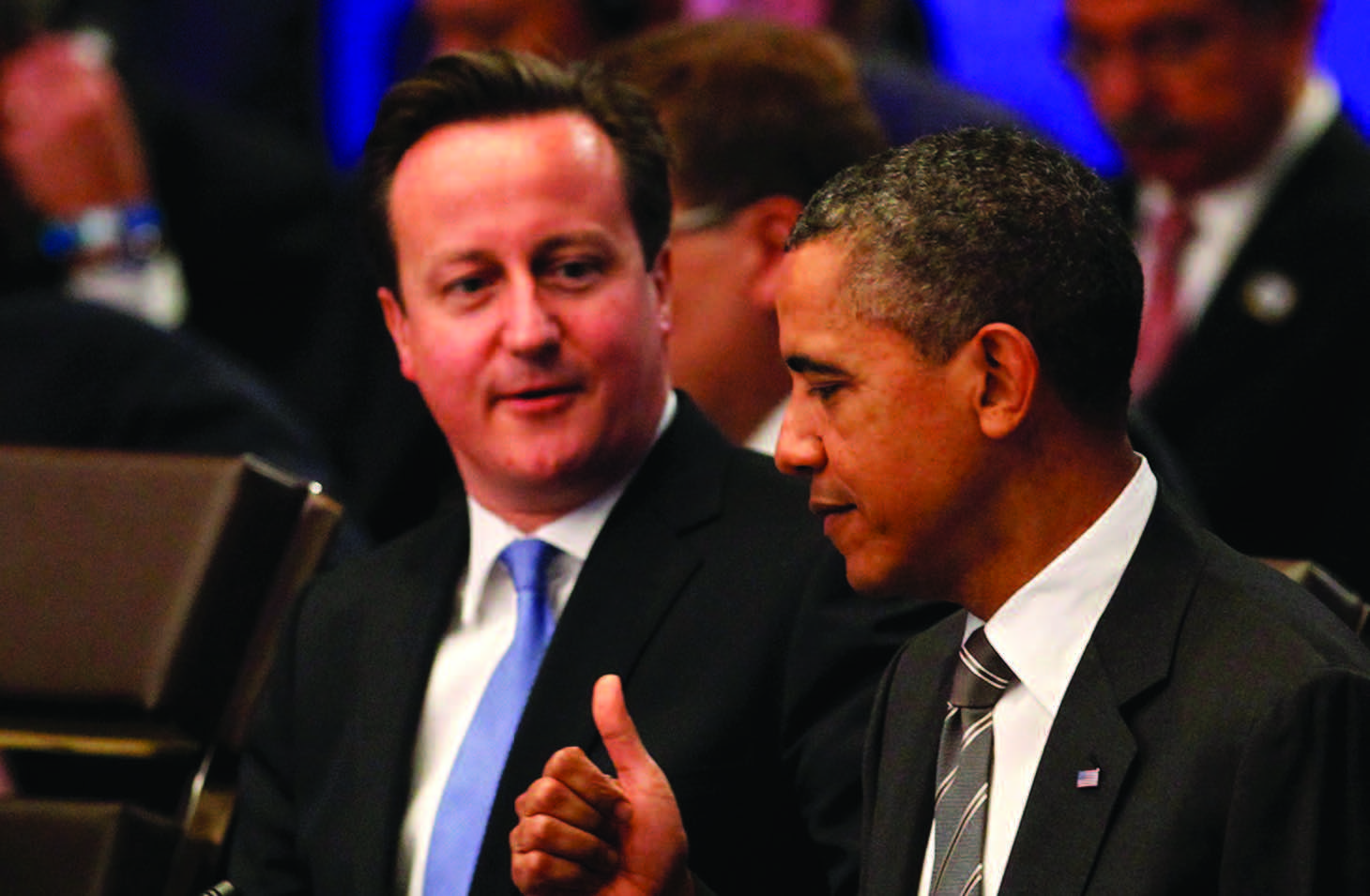
    WASHINGTON/BEIRUT (TIP): The British parliament on August 29 rejected a motion supporting military action in Syria, reflecting deep divisions about using force to punish President Bashar al- Assad for what Western governments believe was his use of chemical weapons against civilians. U.S. officials conceded on August 29 that they lacked conclusive evidence that Assad personally ordered last week’s poison gas attack, and some allies have warned that military action without U.N. Security Council authorization risks making the situation worse. President Barack Obama’s top national security officials were due to brief Congress on Syria later on Thursday, but any intervention looked set to be delayed at least until U.N. investigators report back after leaving Syria on Saturday.

    The British parliament’s rejection of the largely symbolic motion proposed by Prime Minister David Cameron, which would have given authorization in principle for action subject to a second vote, was a setback for Obama’s efforts to build a coalition for action. Cameron said afterward he would not override the will of parliament and approve such action, saying it was clear that parliament did not want to see a military strike on Syria to punish it for chemical weapons use and that he would act accordingly. White House spokesman Josh Earnest suggested before the British vote that the United States might be willing to act on its own. “When the president reaches a determination about the appropriate response … and a legal justification is required to substantiate or to back up that decision, we’ll produce one on our own,” Earnest said.

    Syrian opposition sources said Assad’s forces had removed several Scud missiles and dozens of launchers from a base north of Damascus, possibly to protect them from a Western attack, and Russia was reported to be moving ships into the region. But expectations of imminent turmoil eased as the diplomatic process was seen playing out into next week, and the White House emphasized that any action would be “very discrete and limited,” and in no way comparable to the Iraq war. The United States and its allies have “no smoking gun” proving Assad personally ordered the attack on a rebel-held Damascus neighbourhood in which hundreds of people were killed, U.S. national security officials said. In secret intelligence assessments and a still-unreleased report summarizing U.S. intelligence on the alleged gas attack on August 21, U.S. agencies expressed high confidence that Syrian government forces carried out the attack, and that Assad’s government therefore bears responsibility, U.S. national security officials said. Syria denies blame for the gas attacks and says they were perpetrated by rebels. Washington and its allies say the denial is not credible. Secretary of State John Kerry and Secretary of Defense Chuck Hagel were among senior U.S. officials expected to brief congressional leaders later on Thursday. Some lawmakers complained they had not been properly consulted. While U.N. chemical weapons inspectors spent a third day combing the rebel-held area where the attack took place, traffic moved normally elsewhere in Damascus, with some extra army presence but little indication of any high alert.

    An extended parliamentary debate in London revealed deep misgivings stemming from the 2003 invasion of Iraq. After pressure from lawmakers, the British government – a key player in any proposed air assault on Syria – had promised parliament that even if it voted in favor, there would be a second decisive vote once the U.N. weapons inspectors report their findings. Even that motion was defeated by 285 to 272 votes. ‘MONSTROUS CRIME’ The United Nations said its team of inspectors would leave Syria on Saturday and report to Secretary-General Ban Ki-moon. France and Germany urged the world body to pass its report on to the decision-making Security Council as soon as possible “so that it can fulfil its responsibility with regards to this monstrous crime.” The United States, Britain and France say they can act with or without a U.N. Security Council resolution, which would likely be vetoed by Russia, a close ally of Assad. But some countries are more cautious: Italy said it would not join any military operation without Security Council authorization. Western diplomats say they are seeking a vote in the 15-member Council to isolate Moscow and demonstrate that other countries are behind air strikes.

    A report from Moscow that Russia is sending two warships to the eastern Mediterranean underscored the complications surrounding even a limited military strike, although Russia has said it will not be drawn into military conflict. The ambassadors of the five veto-wielding permanent U.N. Security Council members appeared to have made no progress at a meeting on Thursday, a council diplomat said. The five – the United States, Russia, China, Britain and France – had held an inconclusive meeting on Wednesday to discuss a draft Security Council resolution that would authorize “all necessary force” in response to the alleged gas attack. Cameron told Britain’s parliament it would be “unthinkable” to proceed if there was overwhelming opposition in the Security Council. But he published legal advice given to the government under which military action would be lawful for humanitarian reasons even if a Security Council resolution were blocked by a veto. The International Committee of the Red Cross joined a chorus of international voices urging caution. “Further escalation will likely trigger more displacement and add to humanitarian needs, which are already immense,” said Magne Barth, head of the ICRC delegation in Syria. Increasing expectations that any action will be delayed ended a three-day selloff on world share markets on Thursday, although investors were still on edge over fears of future turmoil in the Middle East.

    ‘SHOT ACROSS THE BOW’ Obama sought to win over a war-weary American public on Wednesday evening by saying intervention in Syria, where more than 100,000 people have been killed in 2 1/2 years of civil war, would serve U.S. national security interests. “If we are saying in a clear and decisive but very limited way, we send a shot across the bow saying, ‘Stop doing this,’ this can have a positive impact on our national security over the long term,” he told “PBS Newshour” in a televised interview. According to the U.S. national security officials, evidence that forces loyal to Assad were responsible goes beyond the circumstantial to include electronic intercepts and some tentative scientific samples from the site. “This was not a rogue operation,” one U.S. official said. Western leaders are expected in Russia next Thursday for a meeting of the Group of 20 big economies, an event that could influence the timing of any strikes. The hosts have made clear their view that Western leaders are using human rights as a pretext to impose their will on other sovereign states. A spokesman for the main Syrian opposition umbrella group, the Syrian National Coalition, said the opposition was confident Western leaders were prepared to act.

    SNC leader Ahmed Jarba met French President Francois Hollande. An SNC spokesman said they discussed a two-wave intervention to first target installations used to launch chemical weapons and then hit other government bases in Syria. “We are very happy. France and its partners are quite decided to punish the Syrian regime,” SNC envoy Monzer Makhous told Reuters after the talks. “Then there will be military aid to help the opposition to change the balance of power.” Hollande urged Jarba to create a credible military force, highlighting Western concern that the mainstream opposition is unable to control al Qaeda-linked militias on the ground in Syria. Syrian officials say the West is playing into the hands of its al Qaeda enemies. In Damascus, residents and opposition forces said Assad’s forces appeared to have evacuated most personnel from army and security command headquarters in the centre in preparation for Western military action. People unable to decide whether to leave for neighboring Lebanon said the border was already jammed. “We’re hearing people are spending hours – like 12 or 14 hours – waiting in line at the border,” said Nabil, who was considering leaving town for Beirut with his wife and young daughter, “just until the strike is over.”

    Diplomats based in the Middle East told Reuters the removal of some of Assad’s Scud missiles and launchers from the foothills of the Qalamoun mountains, one of Syria’s most heavily militarized districts, appeared to be part of a precautionary but limited redeployment of armaments. Despite opinion polls showing most Americans oppose deeper involvement in the Syrian conflict, Obama has been under pressure to enforce a “red line” against chemical weapons use, which he declared just over a year ago. “I have no interest in any open-ended conflict in Syria, but we do have to make sure that when countries break international norms on weapons like chemical weapons that could threaten us, that they are held accountable,” Obama said. The likeliest option, U.S. officials say, would be to launch cruise missiles from U.S. ships in the Mediterranean in a campaign that would last days. A fifth U.S. destroyer, the USS Stout, was headed toward the coast off Syria, according to one defense official. That would bring the total of U.S. destroyers in the eastern Mediterranean to five, although the Stout is likely to relieve the USS Mahan, which had been due to return to its U.S. base but stayed in the region due to the situation in Syria. Still the decision to replace the Mahan with another destroyer means the United States will be maintaining an expanded presence in the region.

  • Landmark Land Acquisition Bill gets LS nod

    Landmark Land Acquisition Bill gets LS nod

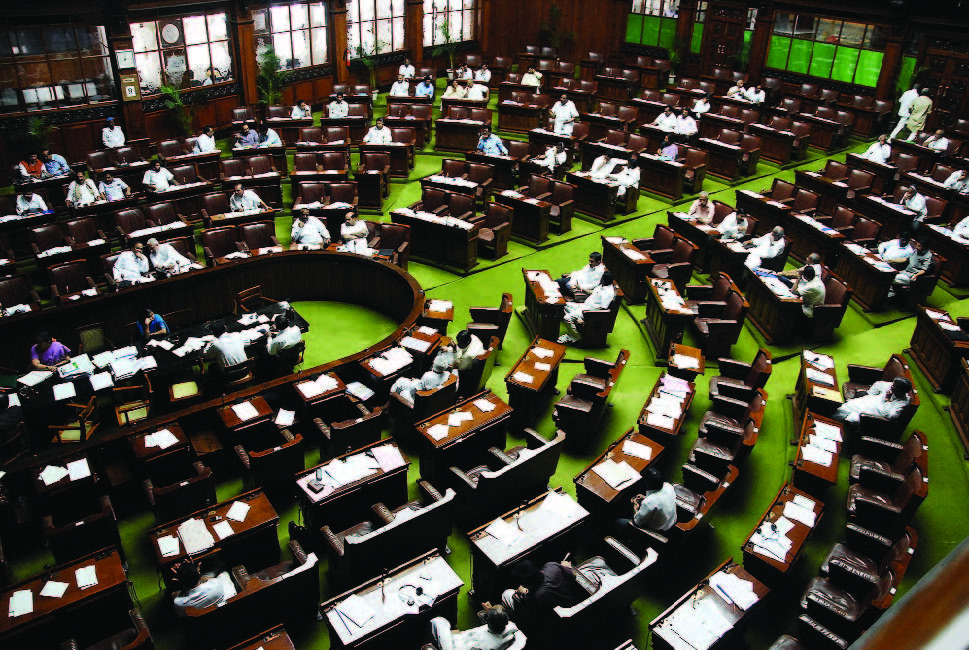
    NEW DELHI (TIP): After Food Security Bill, the pathbreaking Land Acquisition Bill that aims to give a fair deal to farmers for their land for industrial use was passed by the Lok Sabha on August 29 giving a push to Sonia Gandhi’s another pet project ahead of General Elections. The key land legislation of the UPA championed by Rahul Gandhi was approved by an overwhelming majority after an acrimonious debate. The Bill, which seeks to provide just and fair compensation to farmers while also ensuring that no land can be aquired forcibly, will replace the archaic Act of 1894, “The Right to Fair Compensation and Transparency in Land Acquisition, Rehabilitation and Resettlement Bill, 2012” stipulates mandatory consent of at least 70 per cent for acquiring land for Public Private Partnership (PPP) projects and 80 per cent for acquiring land for private companies. Both the Food Security Bill, that was passed on Monday, and the Land Acqusition Bill, will now have to be passed by the Rajya Sabha. The bill proposes compensation that is up to four times the market value in rural areas and two times the market value in urban areas. It was passed with 216 votes in favour and 19 against. Left parties, AIADMK and BJD members staged a walkout.

    Trinamool Congress voted against the bill while main Opposition BJP as also SP and BSP supported the legislation. “There will be no forceful acquisition of land under this law. This legislation will provide lawful right of the farmers over their land and no right of forceful acquisition to government,” Rural Development Minister Jairam Ramesh said while winding up the day-long discussion on the Bill. Asserting that the new law will address “historical injustice”, the minister said this law is being enacted under the Concurrent list and the states can bring their own law on the subject without derogating from the central law. Sonia and Home Minister and Leader of the House Sushilkumar Shinde, apparently unwell, did not participate in the voting as they left when amendments were being moved. The National Advisory Council(NAC) headed by the Congress President had given a vigorous push for the land bill. India Inc has expressed fears that the land reforms could push up property purchase costs making industrial projects financially unviable while the Food Security Bill will have a deleterious effect on public finances. 381 amendments were moved to the bill, of which 166 were official ones. Of the Opposition amendments, some were withdrawn and others defeated during voting.

  • Yasin Bhatkal, founder of Indian Mujahideen, arrested

    Yasin Bhatkal, founder of Indian Mujahideen, arrested

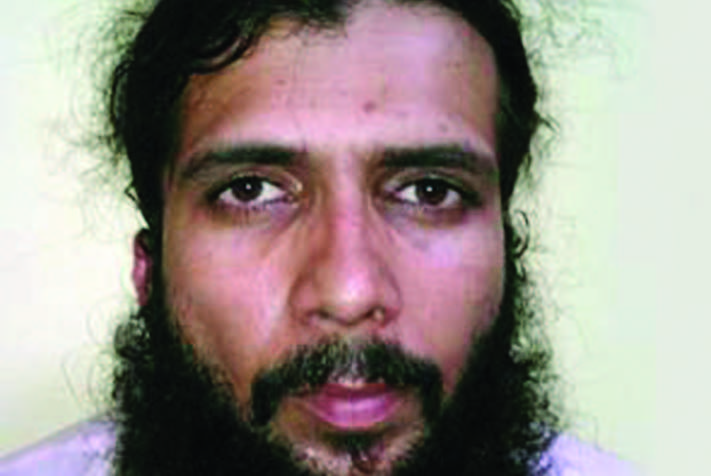
    NEW DELHI (TIP): Yasin Bhatkal, the Indian Mujahideen mastermind and a key suspect in several terror blasts since 2008, has been arrested in a joint operation by the central intelligence agencies and the Bihar Police. “Yasin Bhatkal has been traced and detained at the India-Nepal border in Bihar. He is presently in the custody of Bihar Police. His interrogation is going on,” Union home minister Sushilkumar Shinde told newspersons here on August 29 morning. The Bihar Police are interrogating Yasin Bhatkal and will later produce him in a court for transit remand. The arrest of Yasin alias Ahmed Siddibappa alias Shahrukh is being seen as a major breakthrough in the agencies’ protracted efforts to break the back of the Indian Mujahideen, the Lashker-e-Taibabackedindigenous jihadi outfit behind the Mumbai, Delhi, Hyderabad, Bangalore, Ahmedabad, Pune and Jaipur blasts. “This is the biggest success after the Batla House operation, following which the IM was forced to slow down its activities,” said an intelligence official.

    Yasin Bhatkal, along with Riyaz Bhatkal, is a co-founder of the IM. Both hail from Bhatkal village in Karnataka. Yasin carried a Rs 10 lakh National Investigation Agency (NIA) reward on his head. Another IM operative, AsadullahAkhtar aliasHaddi, is reported to have been detained along with him. Bhatkal’s arrest comes close on the heels of key LeT man Abdul KarimTunda’s deportation from Nepal. NIA will seek Yasin Bhatkal’s custody. Sources said a joint team comprising central intelligence agencies and the Bihar Police had been camping in Darbhanga in Bihar for his arrest. The Research and Analysis Wing (RAW) and theIntelligence Bureau (IB) played a crucial role in tracing his whereabouts. Delhi Police special cell teams were stationed too on Bihar-Nepal border for last one week. Sources said Indian intelligence agencies and international agencies negotiated Yasin Bhatkal’s custody at Sanauli Border of Nepal near Gorakhpur.

    Though Yasin was earlier arrested by the West Bengal police in 2008, he managed to get bail due to a goof by the police officers who had apprehended him. The officers were unaware of his terror background. Yasin has since been operating from within India, unlike most IM brass who sought a safe haven in Pakistan. He is suspected to have planted the bomb in German Bakery blasts in Pune, where he was allegedly captured on CCTV footage, and this year’s Dilsukhnagar blasts in Hyderabad. The IM co-founder managed to give the intelligence and law enforcement agencies the slip many a times, by employing carefullychosen communication methods, such as always calling from a PCO and using chat services like Nimbus and Yahoo to pass instructions to the IM cadres.He even lived in the national Capital’s Shaheen Bagh in 2010 and married a local girl whose father operated an illegal weapons and ordnance factory in Meer Vihar. National security adviser Shivshankar Menon briefed Prime Minister this morning on Yasin Bhatkal’s arrest.

  • PepsiCo’s Indra Nooyi to be honored by Indian-American women

    PepsiCo’s Indra Nooyi to be honored by Indian-American women

    NEW YORK (TIP): A statement from the US-based NGO- Children’s Hope India (CHI) said Nooyi would be felicitated with the Special Impact Award at their annual gala to be held at Pier Sixty in Manhattan on October 13. Born in Chennai, Nooyi had studied business management from the premier Indian Institute of Management, Kolkata. Founded in 1992 by a group of Indian American women professionals, CHI sponsors health, education and vocational programs for thousands of children in India. They support over 20 projects reaching out to over 20,000 children per year in Delhi, Mumbai, Kolkata, Bangalore, Bhuj, Pune, Jabalpur and several villages in Rajasthan and Tamil Nadu. In addition to Nooyi’s award, CHI will also honor human rights activist Mallika Dutt, who founded the human rights group ‘Breakthrough’, with the ‘Making a Difference’ Award. Sundaram Tagore, noted gallerist and descendant of the Tagore family, Trinamool Congress MP Derek O’Brien and fashion designer Rachel Roy will receive ‘Spirit of Bengal’ Awards. Through this year’s theme ‘Viva Calcutta!’, the auditorium at Manhattan’s Pier Sixty would pay a sparkling tribute to the city of Kolkata and its riches of art, culture, fashion and cuisine. Over 500 guests from near and far, including Ambassador Dnyaneshwar M Mulay, Consul General of India, have been invited for the gala, the release said.

  • Cuomo: School-business partnership to offer free 2-year degrees

    Cuomo: School-business partnership to offer free 2-year degrees

    ALBANY (TIP): Sixteen schools across the state will be part of a partnership with colleges and private businesses, giving students the opportunity to obtain an associate degree at no cost, Gov. Andrew Cuomo’s office announced Wednesday, August 28. The Pathways in Technologies Early College High School Program, known as P-TECH, extends schooling for students through grade 14, with graduates receiving a high-school diploma, a two-year college degree and a promise of being “first in line” for a job with a partnering private company. About $4 million was included in the state budget earlier this year to expand the program, which started in New York City in 2011, across the state. The schools will be open to about 6,000 students and will be located throughout the state, while each individual program will come up with an enrollment procedure for students, according to Cuomo’s office.

    “This groundbreaking program will give students across the state the opportunity to earn a college degree without taking on significant debt from student loans while also starting on a pathway to a good-paying job when they graduate,” Cuomo said in a statement. The P-TECH program first launched in Brooklyn in 2011 as a partnership between Computer giant IBM, New York City public schools and the City University of New York system. Now, the program will expand to 16 sites across the state with businesses such as Wegmans Food Markets partnering with Rochester schools, Lockheed Martin pairing with Binghamton and architectural firm Fuller and D’Angelo P.C. working with Yonkers schools. Rockland BOCES applied to work with all eight Rockland districts, about 10 Westchester districts, five businesses and both Westchester and Rockland community colleges to devise new ways for teaching math, science and technology. All parties involved plan to spend the next year creating a program geared toward students who might otherwise not succeed in these areas, said Charlene Jordan, assistant superintendent for Rockland BOCES

  • Indian American attorney Sheila Murthy honored

    Indian American attorney Sheila Murthy honored

    NEW YORK (TIP): Indian-American attorney Sheela Murthy has been recognized as one of the world’s top international corporate immigration lawyers in the 2013 edition of Corporate Immigration, a prestigious directory of leading advocates in her field. The directory is published by Law Business Research, London-based strategic research partner of the American Bar Association’s Section of International Law, and the official research partner of the International Bar Association. Murthy serves on boards for a number of organizations, including the Cancer Treatment Centers of America, Eastern Region in Philadelphia, Stevenson University, The Indus Entrepreneurs (TiE) DC and as the vice chairwoman for the Maryland State Chamber of Commerce. She previously was chairwoman of the United Way Worldwide’s Leadership Council of India. Also on the Board of the United Way of Central Maryland, she was recognized her as the 2009 Philanthropist of the Year. Murthy helps lead the MurthyNayak Foundation, a nonprofit nongovernmental organization that seeks to help with women’s basic needs and protection from abuse, children’s education, support programs that assist immigrants, and causes that help to educate and advocate for immigrants in the US.

  • New York police department designates mosques as terrorism organizations

    New York police department designates mosques as terrorism organizations

    NEW YORK (TIP): The New York police department (NYPD) has secretly labeled entire mosques as terrorism organizations. The designation has allowed police to use informants to record sermons and spy on imams, often without specific evidence of criminal wrongdoing. Since the 9/11 attacks, the NYPD has opened at least a dozen “terrorism enterprise investigations” into mosques. The TEI is a police tool intended to help investigate terrorist cells. Designating an entire mosque as a terrorism enterprise means that anyone who attends prayer services is a potential subject of the investigation and fair game for surveillance. The NYPD declined to comment.

  • ENCYCLOPEDIA OF HINDUISM LAUNCHED

    ENCYCLOPEDIA OF HINDUISM LAUNCHED

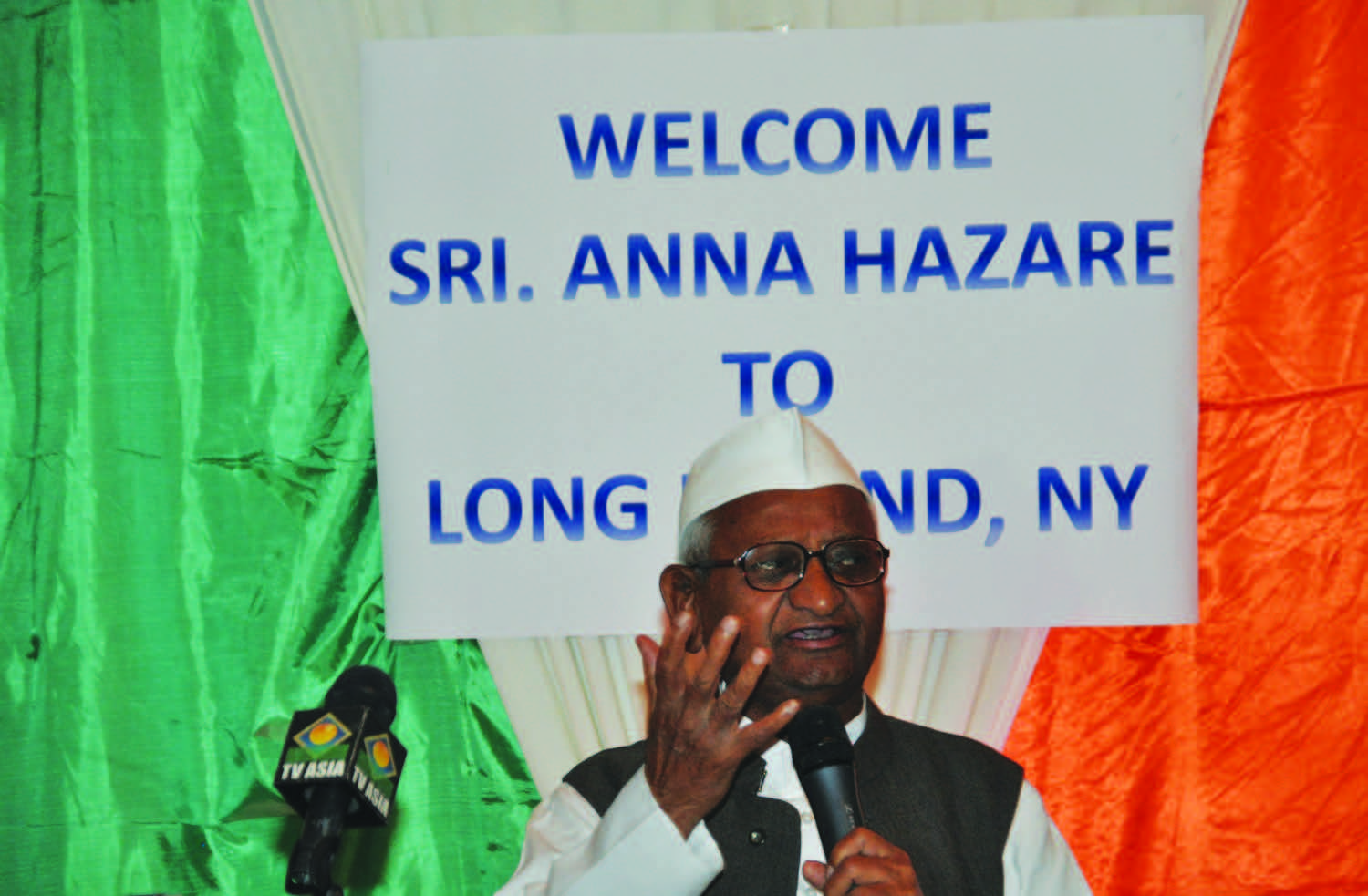
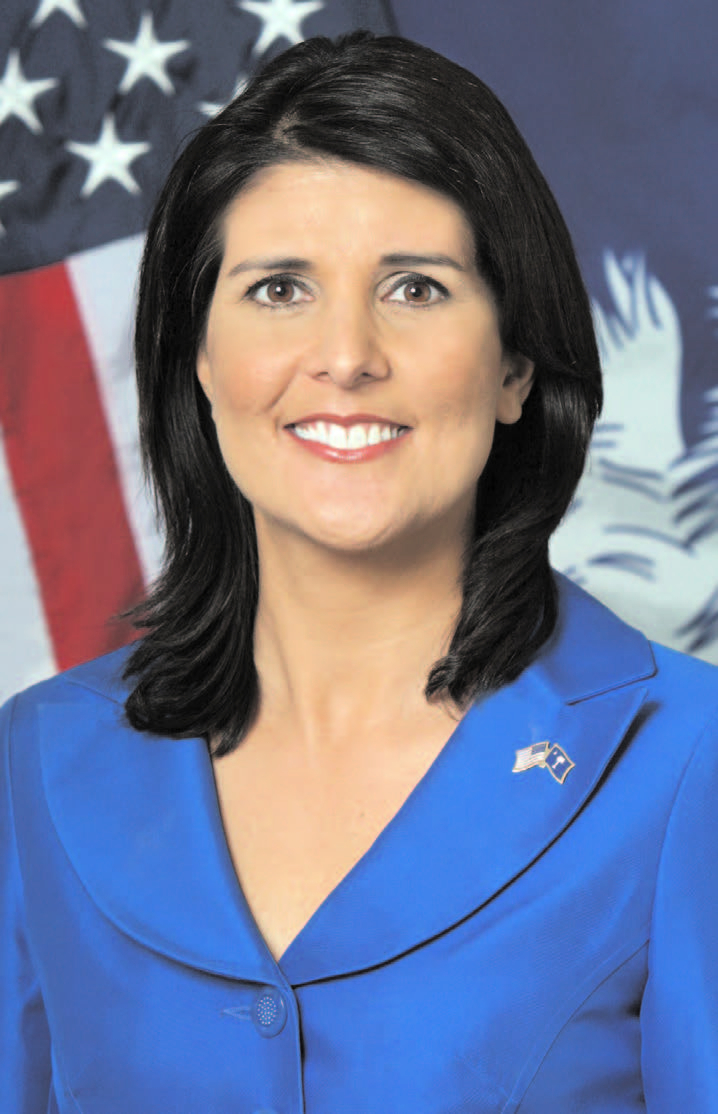
    CHARLOTTE (TIP): South Carolina Governor Nikki Haley launched the Encyclopedia of Hinduism at the University of Southern California campus in the presence of Gandhian Anna Hazare and Indian Consul General in Atlanta Ajit Kumar. Hundreds of scholars, dignitaries, Hindu leaders, students and the public converged on the university’s campus to witness the release of the much anticipated and definitive 11- volume guide conceived, compiled and produced by the India Heritage Research Foundation and published by Mandala Publishing in California. The meet coinciding with the release featured some of most prominent Indian scholars who discussed the significance of the encyclopedia and the richness and diversity of Indian culture that binds more than one billion people worldwide. The event is the launch of the international edition of the Encyclopedia of Hinduism.

    His Holiness the Dalai Lama launched the Indian edition in April 2010 in Rishikesh. Dr. Harris Pastides, President of University of South Carolina (USC) said that he was humbled to see the encyclopedia being launched in his campus. “It is a deep honor to be participating in the American release of the Encyclopedia of Hinduism. This is a remarkable work of scholarship and research. I hope that many in academia and in everyday life will turn to it as a resource to better understand the characters, the tenets, and the impact that Hinduism has had, and is having in the world.” Consul General Ajit Kumar said India and Hindus all over the world are grateful to the University of South Carolina for the launch of the monumental work. The Comprehensive encyclopedia of one of the world’s major religions has 11-volume work covers Hindu spiritual beliefs, practices and philosophy, and is the culmination of a 25-year academic effort.

    The encyclopedia is written in English and includes about 7,000 articles on Hinduism and its practices. The work also deals with Indian history, languages, art, music, dance, architecture, medicine, and women’s issues. The entire encyclopedia contains more than 1,000 illustrations and photographs. Brightly colored images of Hinduism’s deities fill entire pages, with foot-noted explanations of the forms and powers God can take in the religion. “The goal was to have something pretty definitive – not just about Hinduism, but about the whole South Asian tradition,” said University of South Carolina professor Hal French, who met a small group of scholars in 1987 to offer academic support for the project. “This hadn’t really been attempted before,” said French an octogenarian distinguished professor emeritus of religious studies at the school and an associate editor. “It is a milestone of research that brought together both Eastern and Western scholarship.” French, who specializes in the religions of Asia and served as an associate editor of the encyclopedia, said the primary inspiration is one of India’s most revered spiritual leaders, Swami Chidanand Saraswati.

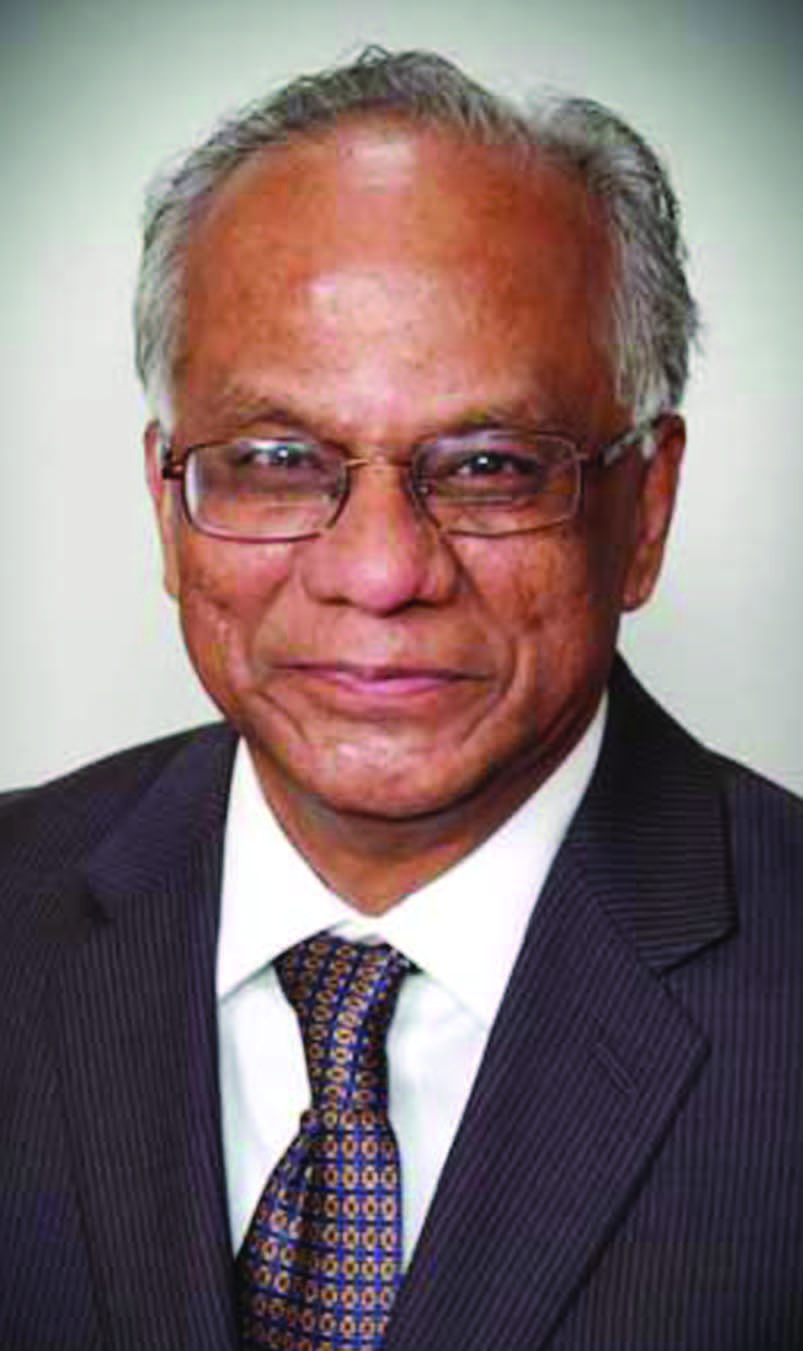
    The encyclopedia’s volumes run from 600 to more than 700 pages. Some 3,000 copies are being issued in the first printing and will be of interest to libraries, religious institutions, and those studying Indian culture around the world, French said. Board of Editors -Dr. Subhash Kak, Regents Professor of Computer Science, Oklahoma State University, Dr. V.V. Raman, emeritus professor of physics and humanities, Rochester Institute of Technology and senior fellow at Metanenexus Institute, Dr. Rama Rao Pappu, senior professor of philosophy at Miami University in Ohio and Dr. Ratna Lahiri, senior fellow, Encyclopedia of Hinduism spoke on the project dedicated to humanity. The encyclopedia is the brain child of Swami Chidanand Saraswati president of Parmarth Niketan Ashram in Hrishikesh and founder of the India Heritage Research Foundation. Swami Chidanand Saraswati said the idea of the encyclopedia was not to convert anyone to Hinduism but help others becoming a good citizen. It presents Hinduism as a living religion with application to modern times and contains over six million words and 10,000 original entries. “It’s for the parents who have no answers to the queries of their inquisitive children about Hinduism and gods and also to educate themselves on their own religion,” he said. Some of the subjects covered include art, architecture, iconography, painting, history, philosophy, language and literature, polity, spirituality, sciences, social institutions and spiritual disciplines.

  • Anna Hazare says neither Modi nor Rahul Gandhi fit to become PM

    Anna Hazare says neither Modi nor Rahul Gandhi fit to become PM

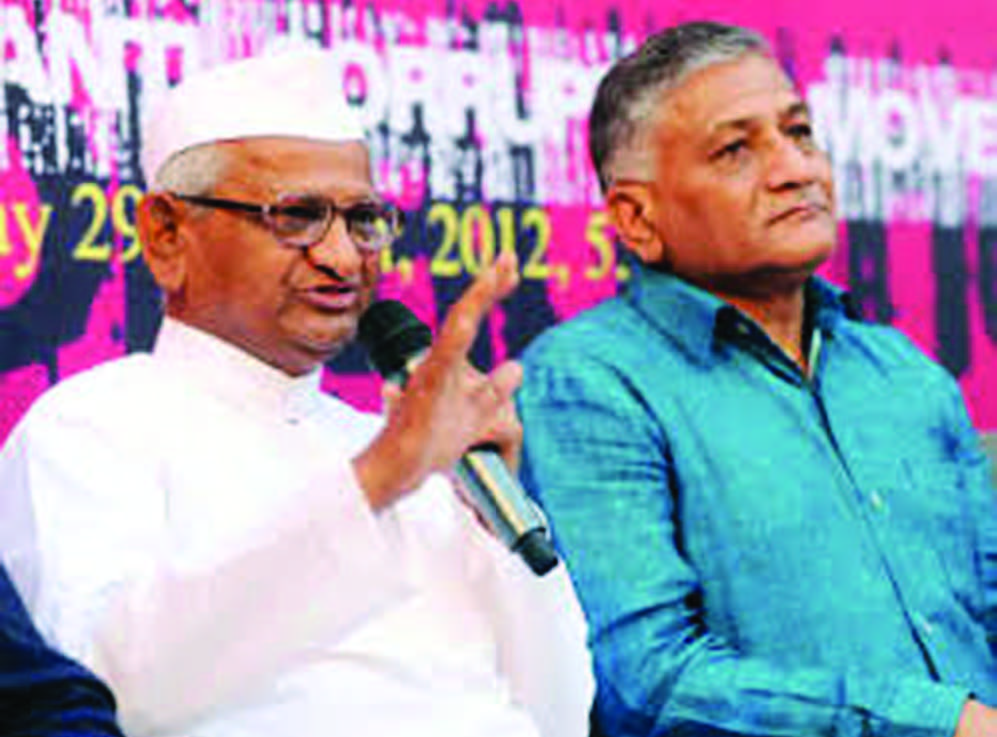
    WASHINGTON (TIP): Anna Hazare, described by some as second Gandhi, was recently on a two-week tour of the US when he met a cross section of Indian Americans at various locations. One of his notable comments was that neither Narendra Modi nor Rahul Gandhi are fit to become the prime minister of India. Anna also favored direct election of prime minister and doing away with party-based political system, which he claimed has destroyed not only democracy, but also “usurped” the constitution. “India’s constitution does not recognize political parties. Both Rahul Gandhi and Narendra Modi represent political parties. Therefore being representatives of political parties, we would not permit them (to become the Prime Minister),” 76-year-old Hazare told a group of Indian students at University of Maryland August 22 evening. “Our faith is in the Indian constitution. These political parties run against the basic spirit of the constitution.

    It is now important to raise awareness among the people of India. If the country needs a Prime Minister, or a President, the entire country should elect him – centralized,” he said. “The country would get a good Prime Minister if the people of the entire country get an opportunity to select. As long as political parties dominate the electoral set up, the country is unlikely to get a good Prime Minister,” Hazare said at the event organized by DESI (Develop Empower Synergy India), an organization of Indian students. Earlier in the day at a Congressional reception hosted in his honor at the Capitol Hill, Hazare said that he would go back to agitation at Ramlila Maidan on the first day of the winter session of the Parliament, if the Union Government does not bring the Lokpal in the current session. Hazare said after returning to India from the US, he would resume his nationwide tour from Bihar, during which he would urge people to fight for achieving the goal of true democracy. Gen (retd) V K Singh, who is accompanying Hazare, said the country is at the brink of a disaster, if immediate steps are not taken to change the way things are happening now. “It is time for action,” Singh said as he urged the Indian youth to come forward and join hands with Anna to achieve the goal of systematic change in the country.

  • Sam Kannappan elected to NCEES

    Sam Kannappan elected to NCEES

    HOUSTON (TIP): The 92nd Annual Meeting of National Council of Examiners for Engineering and Surveying (NCEES) held in San Antonio, Texas recently has elected Sam Kannappan, a noted Indian-American community activist of Houston, Texas as its zonal Secretary/ treasurer, a press release said. Sockalingam Sam Kannappan, Chairman of Enforcement Committee, of Texas P.E. Board was elected Secretary and Treasurer of Southern Zone (SZ). South Zone has 18 boards under its control. NCEES is the American National Professional Engineers (PE) Board coordinating 50 national P.E. Boards, Puerto Rico and Virgin Islands. Engineering organizations from Canada, Mexico, Japan and other countries work with NCEES. Members of each state PE Board are appointed by their respective state governors. The requirements to receive a license to practice engineering such as education, examination and experience are decided by the Board.

    NCEES conducts examination for fundamental (FE) and Professional Examination (PE) through four zones. Kannapan was also recently made a board member of Texas Onsite Wastewater Treatment Research Council by Texas Governor Rick Perry. Kannappan is a registered Professional Engineer in Texas with 25 years of experience in design, analysis, and software development for the petrochemical, refinery, and pipeline industries. He graduated with Masters Degree in Mechanical Engineering from the University of Texas at Austin. He is a leading consultant in pipe design especially in designing piping under very high temperatures and pressures. He specializes in Finite Element Analysis and Fracture Mechanics methods to determine remaining life of a pressure component. He is author of text book “Introduction to Pipe Stress Analysis”. Kannappan, a native of Nattarasankottai in Sivaganga district of Tamil Nadu is the founder of Sri Meenakshi temple in Houston, Texas.

  • US university launches yearlong celebration of India

    US university launches yearlong celebration of India

    WASHINGTON (TIP): The University of South Carolina launched year-long, a year-long celebration of India, as it unveiled the international edition of the Encyclopaedia of Hinduism at a conference on one of the world’s oldest major religions. Hundreds of Hindu families travelled to Columbia in South Carolina, to watch Indian social activist Anna Hazare, Hindu spiritual leader Swami Chidanand Saraswati and university President Harris Pastides unveil the 11-volume encyclopaedia Monday. Culmination of a 25-year academic effort, the definitive guide is conceived, compiled and produced by the India Heritage Research Foundation and published by Mandala Publishing, according to the university.”This is a remarkable work of scholarship and research. I hope that many in academia and in everyday life will turn to it as a resource to better understand the characters, the tenets and the impact that Hinduism has had, and is having in the world,” said Pastides.Hal French, professor emeritus of religious studies, who served as associate editor of the encyclopaedia since its inception in 1987, called the 25-year quest to document Hinduism a privilege.

    The conference also marked the beginning of CarolIndia, a yearlong celebration of India as part of the university’ expanding internationalization programme that would focus on a single country every year. Robert Cox, director of the university’s Walker Institute for International and Area Studies, said the university chose India for its first year because of the university’s and state’s increasing ties with the country and for its importance as the world’s largest democracy and rising economic power. Cox said his greatest hope is that university students come to think of India as familiar place, not an exotic one. CarolIndia will feature film festival, lectures, concerts and exhibits. Among the many visitors to campus will be filmmaker Mira Nair. Students also will have the opportunity to engage with faculty with Indian research and teaching interests.More than 1,000 scholars have contributed to the seminal work documenting one of the world’s oldest living traditions. Encompassing more than 7,000 articles with over 1,000 colour illustrations and photographs, the encyclopaedia also covers Indian history, civilisation, language and philosophy; architecture, art, music and dance; medicine, sciences and social institutions; and religion, spirituality and the role of Hindu women.

  • Anna Proposes; Kiran disposes

    Anna Proposes; Kiran disposes

    No reason for Anna Hazare to go back to Ramlila Maidan: Kiran Bedi

    NEW YORK (TIP): While Anna has been proposing a return to Ram Lila Maidan to relaunch his agitation for the Jan Lokpal Bill on the first day of the winter session of Parliament if the government of India failed to bring one by that time, his colleague and one time close confidante Magsaysay Award winner Kiran Bedi believes that there is no reason for the anti-corruption crusader to go back to Ramlila grounds to re-launch his movement till the matter is pending before the Supreme Court. Asserting that this does not reflect “any differences” with Hazare, the former police officer said that she and other close associates of the anti-corruption crusader are trying their best to convince him not to go back to Ramlila Maidan. His health is another reason for such an approach, Bedi said. “Once the matter is before the Supreme Court, I do not see a reason for going back to the Ramlila Ground at the moment, because the Indian Parliament could say we are already responding to the Supreme Court, why do not we wait for the Supreme Court verdict,” Bedi told media in New Delhi. This is quite contrary to the views of Hazare.


    img27
    His colleague and one time close confidant Magsaysay Award winner Kiran Bedi does not agree with his view and says there is no reason for Anna to go back to Ramlila grounds to re-launch his movement till the matter is pending before the Supreme Court

    At a New York reception hosted in his honor on August 27, Hazare had said that he would go back to agitation at Ramlila grounds on the first day of the winter session of Parliament, if the Union Government does not bring the Lokpal in the current session. “While he continues to have the determination he has, but all his wellwishers including people from his own village are telling Anna, we can’t risk your health anymore, because you are more precious. He had long term consequences of 10 day fast,” Bedi insisted. “It is not difference of opinion. It is again back to him to say Anna we can’t do this; you can’t continue to sacrifice like this. Even his village people are continuing to persuade him that you can’t do this now, let’s wait for the Supreme Court decision. “I have personally told Anna, this is not the right time, we need to wait for the decision of the Supreme Court. You can’t risk your health now. It is not difference of opinion. It is two approaches. One approach is concern for Anna’s health and secondly waiting correctly till the Supreme Court decides on it, we need not come in. But if still Anna insists, we all would be behind him,” Bedi said

  • Nikki Haley wants Indian companies to open shops in S Carolina

    Nikki Haley wants Indian companies to open shops in S Carolina

    CHARLOTTE (TIP): South Carolina Governor Nikki Haley said she is keen on working with Indian private sector to help set up manufacturing facilities in her home state. She said India has made great strides in manufacturing and technology and would welcome Indian industrialists to set up facilities that would help create more jobs. “I am in touch with Indian Ambassador to the US Nirupama Rao in this connection and hopefully very soon something would turn out,” she said. Haley encouraged fellow Indian- Americans to run for elected office in large numbers to make a better America and give it back to the nation that helped shaped their destiny. She is seeking another term as governor and has announced that she is contesting again.

    The contribution of Indian-Americans in the field of medicine, law, academics, science and technology was phenomenal and now its time for them to serve the nation entering politics, she added. “We have to see how much our parents have sacrificed in this country and how much our parents went through in the formative years. Its only our generation could push beyond what they did and make our voices heard as well in the right corridors of power.” Answering questions on the large number of Indian-Americans in fray in different states at different levels including three Indian-Americans running for office in Nassau County near New York City, Haley said the contribution of Indian- Americans She was born Nimrata Nikki Randhawa in Bamberg, South Carolina on Jan 20, 1972, to an Indian Sikh family – Dr. Ajit Singh Randhawa and Raj Kaur Randhawa who immigrated from Amritsar district in Punjab.

    Haley is the first woman to serve as Governor of South Carolina. At the age of 41, Haley is the youngest current governor in the United States. She is one of two sitting Indian- American governors in the US, the other being fellow Republican Bobby Jindal of Louisiana. She is also the third person of color elected as governor of a Southern state, after Viriginia’s L. Douglas Wilder and Louisiana’s Jindal She was later joined on Monday by Wisconsin Governor Scott Walker, Louisiana Governor Bobby Jindal and Texas Gov. Rick Perry in her re-election campaign at Greenville, South Carolina. Nikki Haley rose from obscurity after winning a crowded Republican primary in 2010. She won by less than 5 percent of the vote in the Nov 2010 general election Political experts expect her to face the same Democrat she defeated in 2010. She is also one of the national Republican Party’s most promising rising stars. She is smart and serious about policy and a charismatic campaigner who dresses stylishly and can deliver barbed attacks with a smile.

  • ‘Rogue’ acts on LoC

    ‘Rogue’ acts on LoC

    Raise the cost for Pakistan army’s proxy war
    In recent months the Pakistan army has been behaving in a rather aggressive manner on the Line of Control (LoC) in Jammu and Kashmir in blatant violation of the mutually observed ceasefire. Its rogue actions have included the beheading of an Indian soldier in January 2013 and an ambush on the Indian side of the LoC, which resulted in the death of five Indian soldiers in the Poonch sector. Since then, there have been daily incidents of trans-LoC firing, including in the relatively quiet Kargil sector.

    The Indian army has responded appropriately to this unprovoked firing. The Pakistan army has denied that its personnel were involved in the ambush on August 6 and that so-called Kashmiri terrorists may have sneaked across the LoC and ambushed the Indian patrol. This preposterous denial lacks credibility as every military professional familiar with the LoC environment knows that incidents of this nature can occur only with the direct involvement, wholehearted operational planning and full logistics support of the Pakistan army. Complex operations by Border Action Teams (BATs) are invariably led by personnel of the Special Services Group (SSG, Pakistan’s Special Forces) and include specially selected regular soldiers.A large-sized terrorist group simply cannot get through the Pakistan army’s wellcoordinated forward defenses, navigate the anti-personnel minefields and then come back safely after several rounds of firing have taken place and plenty of noise has been generated. In short, explicit connivance is an inescapable prerequisite for a trans-LoC raid to succeed. Why did the Pakistan army orchestrate such an incident at a time when the Nawaz Sharif government wishes to reach out to India? General Kayani has himself admitted that India is not Pakistan’s number one national security threat and that the danger lies within. Quite obviously, the Pakistan army is not in sync with Prime Minister Sharif regarding his policy of normalizing relations with India and would like to keep the pot simmering in Kashmir.

    Though it has carefully calibrated the number of incidents of violence and the targets to be attacked, the army considers it necessary to keep the machinery created for terrorism and insurgency well-oiled so that the so-called Jihad can be ratcheted up when needed. Perhaps the Pakistan army is of the view that the Jihad in Kashmir is flagging and needs to be revived through a series of spectacular incidents designed to raise the morale of terrorists. Lt Gen Gurmit Singh, GOC, 15 Corps, has said that 28 hard core terrorists have been eliminated since June 24. Of these, 18 were killed while attempting to infiltrate. Approximately 500 terrorists now remain, including sleeper cells, and about 2,000 are waiting in Pakistan and PoK to be inducted.

    The Indian army is making it difficult for them due to sustained counter-infiltration operations. This summer has seen a major increase in the number of attempts that are being made to infiltrate newly trained terrorists. According to a statement made by Defense Minister A. K. Antony in Parliament, there have been 57 violations of the ceasefire agreement so far this year compared with 93 in 2012. Most such violations are of small arms fire to aid and facilitate infiltration across the LoC. On another plane, there could be a connection with the situation in Afghanistan. The incident on the LoC has come close on the heels of the ISIsponsored attack on India’s consulate in Jalalabad. Is the Pakistan army sending a message to India to reduce its involvement in Afghanistan, particularly its military aid and training support to the Afghan National Army? It is well known that the Pakistan army is deeply concerned with the support India enjoys in Afghanistan and India’s continuing commitment to Afghan reconstruction and would like to limit India’s influence.

    The real question to be asked is whether the Pakistan army can ever have a genuine change of heart about the futility of prolonged hostility towards India. The answer is very simple. Pakistan’s recent overtures towards India are a tactical ploy to tide over the army’s current difficulties, rather than a paradigm shift in the grand strategy and should not be seen as a change of heart at the strategic level. What should be India’s response? Should India continue to engage Pakistan and discuss peace and stability? Even during war it is always advisable to keep a channel of communication open with the adversary. In the case of India and Pakistan this is even more important as the two nuclear-armed nations have a long history of conflict and have come close to war at least twice in the last decade.

    Hence, it is important to continue the dialogue process, but after first giving a befitting response for the Pakistan army’s grave provocations on the LoC. Edward N Luttwak, a well-known military strategist, said a few days ago, “Be good to Nawaz Sharif, be harsh with the army.” This advice is appropriate under the circumstances. The aim of the peace talks should be to get Pakistan to end terrorism directed against India from its soil, bring the perpetrators of the Mumbai terror attacks to justice and stop the army’s ‘rogue’ acts on the LoC. The Indian army has been given a free hand to retaliate punitively at one or more places of its choosing on the LoC. The aim should be to cause maximum damage to the forward posts of the Pakistan army, particularly those through which recent attacks have been launched. This will raise the cost for the army and the ISI to continue to wage their proxy war. The selected instrument should be the firepower of the artillery – guns, mortars, multi-barrel rocket launchers – supplemented by infantry weapons like medium machine guns. Every single bunker visible on the targeted Pakistani post should be razed to the ground. Planning for these ‘fire assaults’ should be carefully undertaken so that collateral damage is avoided and civilians are not hurt. Every time acts of similar provocation are repeated in future, the quantum of punitive retaliation must be correspondingly enhanced. Fire assaults should be repeated as often as necessary. Quite soon, when it bleeds and hurts, the Pakistan army will get the message that wanton acts of violence do not pay.

  • International Raise the cost for Pakistan army’s proxy war order be damned

    International Raise the cost for Pakistan army’s proxy war order be damned

    The West’s attempt to ride roughshod over the United Nations Security Council with a hastily drafted proposal to authorize the use of force in Syria sets the stage for its second military intervention in West Asia and North Africa in as many years. The resolution, drafted by the United Kingdom and backed by the United States and France, seeks two things from the Council: one, a condemnation of President Bashar al-Assad for using chemical weapons on his people and two, its blessings to deploy “all necessary measures” to protect Syrians. If the first asks the U.N. for a leap of faith on a premature claim, the second requires it to turn a blind eye to history.

    While acknowledging there exists no “smoking gun” to establish Mr. Assad’s culpability, the West has tried its best to impede the working of the U.N.’s team in Syria investigating claims if chemical weapons were used at all. The charade now unfolding before the UNSC reflects the West’s desperation to have its way with a military intervention that has few takers. If the Arab League, including key members and U.S. allies like Egypt, has expressed its reluctance to support the imminent assault, public opinion in the U.S., Britain and France too is overwhelmingly opposed to a new war. After the disastrous 2011 NATO bombing of Libya, which began with the objective of protecting civilians but ended up being a full-blown attack on the Muammar Qadhafi regime, the Security Council is rightly wary of the Anglo-American plans for a “limited” intervention in Syria. Expecting the world to believe a military attack will destroy Mr. Assad’s chemical weapons arsenal without inflicting unacceptable civilian casualties is silly.

    If anything, a targeted attack is not so much a guarantee of minimal damage, but an attempt to fulfill President Barack Obama’s vain promise to punish the Assad regime if it used chemical weapons. After proffering sketchy evidence in support of this grave allegation, the President is now being forced to walk his talk by the liberal interventionists who populate his administration and by a trigger-happy British Prime Minister. One senior U.S. official let slip that the planned assault will be “just muscular enough not to get mocked,” revealing how this issue is now entirely about American “credibility,” as opposed to the humanitarian tragedy in Syria. The Council’s likely rejection of the draft resolution will be portrayed as Russian and Chinese intransigence. The fact remains, however, that influential powers like India, Brazil and South Africa too are against military intervention pending a complete investigation of WMD claims. The West’s failure to act through the U.N. not only betrays the Syrian people but also reflects its contempt for the international order.

  • STRIKE A BALANCE BETWEEN GROWTH AND REDISTRIBUTION

    STRIKE A BALANCE BETWEEN GROWTH AND REDISTRIBUTION

    THE National Food Security Bill, just passed by the Rajya Sabha, constitutes a shift from the welfarebased approach to a rights-based approach. It gives a ground to the right holder to claim a defined quantity of food as his legal entitlement, and in case of denial, take recourse to courts for its enforcement. This makes India probably the only country to recognise that ensuring food security to citizens is not only moral and ethical but also a legal imperative as well. The Bill has generated a vociferous debate amongst political classes, economists and industrialists.

    The debate has raised certain valid concerns which need to be addressed to make the right effective such as restructuring of the Public Distribution System (PDS), identifying genuinely those for whom the law is meant and putting measures for ensuring proper and adequate funding with an effective monitoring of the system. In this regard the advocates of the Bill may draw lessons from Tamil Nadu, Andhra Pradesh and Himachal Pradesh, which have been quite efficient in running the PDS, as also from states like Chhattisgarh, Bihar and Orissa, which have seen an enhanced percentage of the population accessing cereals from the PDS along with a reduction in leakages. These states have achieved these results by largely using simple technological fixes such as computerisation, doorstep delivery and a global positioning system to track foodgrain movement and improve transparency in the system. Experience of these states can help in dispelling the notion that the food security proposal is impracticable.

    However, some of the arguments against the move are weak and misplaced. An argument especially made in political circles is about the timing and intention of the government in introducing the Bill after dithering or choosing to wait after four years of promising it. The introduction of the Bill at this stage is seen as a ‘game-changer’ for reaping electoral fortunes and for hoodwinking people and diverting public attention from inconvenient issues. Even if these arguments are assumed valid the question that remains is about their relevance in the working of democratic politics. It is undisputed that winning power is an integral aspect of democratic politics. The fundamental question is what vision, policy choices and priorities and how convincingly does a political party incorporate them in its pursuit for winning power. A piece of legislation that yields political capital can also be pro-people.

    MNREGA is an example that admittedly brought political dividend to the party and it simultaneously gave relief to a vast number of poor people. What matters is the political wisdom and acumen of a political party to assess how people would respond to its policy choices and the timing of its implementation. Another issue raised concerns the Bill’s financial burden. Some have described the Bill as a ‘nightmare’, while others as a ‘money-guzzling measure’. There may be some rationale behind these charges but a realistic assessment by many experts reveals an ‘exaggerated nature of these charges’. India at present spends about 0.9 per cent of its GDP on food subsidies. If the right to food as envisaged is accepted, the cost would rise to 1.25 per cent, entailing only an additional expenditure of 0.35 per cent of the GDP. Calling such a marginal enhancement a ‘nightmare’ or a ‘moneyguzzling’ step does not sound convincing, especially when India’s spending on social welfare entitlements is much lower than other countries in the South Asian region.

    According to the latest report of the Asian Development Bank, India spends only half the average social protection expenditure (as a proportion of the GDP) of what the lower middle income countries in Asia spend. The report gives India a score of 0.051, below most of its South-Asian peers. Enhancing social spending by just 0.35 per cent of the GDP should not cause any nightmares. It is significant to note that almost every political party has extended its support, in principle, to the Bill but at the same time insisted on the acceptance of its amendments as a precondition for the passage of the Bill. These amendments range from proposing the enhancement of the quantity of food entitlement, offering subsidised pulses in addition to wheat and rice, extending the coverage of the Bill from 67 per cent as presently suggested to 75 per cent of the population and some even asking for a universal coverage. Keen to ensure the passage of the Bill, the government has accepted some of the proposed amendments, at least partially if not fully.

    It is widely reported that the government is considering to undo a provision contained in the Ordinance that introduced a cut in the annual allocation of foodgrains in case of 18 states like Tamil Nadu which now will get extra grains (but at the existing APL rate of Rs. 8.30 a kg for rice and Rs.6.10 a kg for wheat). The move will cost an additional Rs 5,000 crore. It is obvious that such actions on the part of the government will put an additional burden on the treasury. What puzzles and hurts a common citizen who believes in and values the importance of parliamentary democracy is the doublespeak and a hypocritical position of various political parties. Should we describe such a development as ‘paradoxes of democracy’ (to sound charitable) or ‘vandalisation of democracy’? On the one side parties are vying with one another to demand that the government should take immediate and serious fiscal and economic decisions, removing policy paralysis to contain the rising fiscal deficient, food price inflation and the steep fall in rupee value; on the other, the same parties are proposing several amendments to the Bill as a precondition for its passage even if the acceptance of these amendments would put an ‘astronomical additional burden on the exchequer’. What is the ‘mystique’ behind parties taking such a ‘self-contradicting’ position? One does not need to guess too much.

    The continuous disruption of Parliament sometimes creates doubts in the mind of the common public about motives of both sides in the game. The attitude of the government equally sounds baffling. While on the one hand we see the government announcing day in and day out one or the other measure claiming them to be aimed at checking the developing economic crisis, restoring the climate of confidence for investment, clearing long-pending mega projects that were hampering the cause of growth; on the other hand it displays a desire to compromise its own economic prudence and principles of effective governance by moving at least 10 amendments to the Bill that incorporate major suggestions of opposition parties and supporting its allies to get the Bill passed. Suggestions contained in most of these amendments were strongly rejected by the same government earlier. If the country is convinced that growth has to be ensured and that it has to be inclusive and that the same should have the common man’s face and that its fruits, instead of remaining confined to the few, must trickle down to the bottom, then the answer lies in striking a balance between growth and redistribution.

  • Friend of Boston Marathon bombing suspect indicted for misleading probe

    Friend of Boston Marathon bombing suspect indicted for misleading probe

    BOSTON (TIP): A friend of the surviving Boston Marathon bombing suspect was indicted on Aug 29 for allegedly making false statements to authorities. Prosecutors said Robel Phillipos faces up to 16 years in prison in connection with two federal criminal counts. But attorneys for the 19-year-old say he will continue to fight the allegations against him. “In time, it will be clear that this prosecution should not have been brought in the first place,” lawyers Derege Demissie and Susan Church said in a statement. Following Phillipos’ May arrest on one count of lying to authorities, a judge ordered him released on $100,000 bond, putting him on home confinement and electronic monitoring. Phillipos met 20-year-old bombing suspect Dzhokhar Tsarnaev while they were students at University of Massachusetts Dartmouth.

    In arguing for bail in May, Phillipos’ lawyers portrayed him as a frightened and confused young man “who was subjected to intense questioning and interrogation, without the benefit of counsel, and in the context of one of the worst attacks against the nation.” Friends and relatives have described him in court documents as a considerate and thoughtful person who was the son of a single mother who emigrated from Ethiopia to the United States. The April 15 bombing killed three people and injured more than 260 others near the race’s finish line. Dias Kadyrbayev and Azamat Tazhayakov, two other friends of Tsarnaev’s, already have pleaded not guilty to allegations they conspired to obstruct justice by agreeing to destroy and conceal some of his belongings as he evaded authorities after the attack.

    Authorities have alleged Phillipos was with Kadyrbayev and Tazhayakov in Tsarnaev’s dorm room on April 18, and the three left with items including Tsarnaev’s laptop and a backpack with fireworks. They claim Phillipos concealed that the three went to the dorm room and took Tsarnaev’s backpack, and that he repeatedly lied to investigators during interviews. But Phillipos’ lawyers said Thursday it’s clear that he had nothing to do with taking the backpack or destroying potential evidence.

  • US treasury grants wide tax recognition to same-sex couples

    US treasury grants wide tax recognition to same-sex couples

    WASHINGTON (TIP): The US government on Thursday announced that legally married gay couples will be treated the same as married couples for federal tax purposes. The decision applies to legally married same-sex couples whether they live in a state that recognizes the marriage or not, the US Treasury Department and the Internal Revenue Service said in a statement. “Today’s ruling provides certainty and clear, coherent tax filing guidance for all legally married same-sex couples nationwide. It provides access to benefits, responsibilities and protections under federal tax law that all Americans deserve,” said treasury secretary Jacob Lew said in the statement.

    “This ruling also assures legally married same-sex couples that they can move freely throughout the country knowing that their federal filing status will not change.” Those couples will have the same treatment under federal tax law provisions where marriage is a factor, including their filing status personal and dependency exemptions that they can claim, and other tax benefits that heterosexual couples currently enjoy. The ruling comes after the US Supreme Court, in a landmark decision on June 26, struck down the Defense of Marriage Act (DOMA), which denied federal benefits to married gay and lesbian couples by strictly defining marriage as a union between a man and a woman. As a result the federal government was allowed to recognize same sex couples in all federal matters, such as sharing pension benefits — the issue that brought the case to the highest court.

  • OBAMA AT 50TH ANNIVERSARY EMBODIES KING’S DREAM

    OBAMA AT 50TH ANNIVERSARY EMBODIES KING’S DREAM

    WASHINGTON (TIP): President Barack Obama was set to lead civil rights pioneers on Aug 28 in a ceremony for the 50th anniversary of the March on Washington, where Dr Martin Luther King’s “I Have a Dream” speech roused the 250,000 people who rallied there decades ago for racial equality. Large crowds gathered at the Lincoln Memorial, where the first black US president was expected to speak just after 1900 GMT _ the time when King delivered his spellbinding speech early in the turbulent 1960s.

    The landmark Civil Rights Act and Voting Rights Act to outlaw discrimination were signed into law in the next two years. Obama has said King is one of two people he admires “more than anybody in American history.” The other is Abraham Lincoln. Obama will be joined by former Presidents Jimmy Carter and Bill Clinton, with thousands of people expected to attend. Obama will offer his personal reflections on the civil rights movement, King’s speech, the progress achieved in the past 50 years and the challenges that demand attention from the next generation. International commemorations will be held at London’s Trafalgar Square, as well as in the nations of Japan, Switzerland, Nepal and Liberia. London Mayor Boris Johnson has said King’s speech resonates around the world and continues to inspire people as one of the great pieces of oratory.

    On Aug. 28, 1963, as King was ending his speech, he quoted from the patriotic song, “My Country `tis of Thee” and urged his audience to “let freedom ring.” “When we allow freedom to ring _ when we let it ring from every city and every hamlet, from every state and every city, we will be able to speed up that day when all of God’s children, black men and white men, Jews and Gentiles, Protestants and Catholics, will be able to join hands and sing in the words of the old Negro spiritual, `Free at last, free at last, great God almighty, we are free at last,” King said. The civil rights leader was assassinated five years later. The Rev Bernice King opened the celebration Wednesday at an interfaith service.

    King said that her father is often remembered as a freedom fighter for equal rights and human rights, but he was most importantly a man of faith. Obama considers the 1963 march part of his generation’s “formative memory.” A halfcentury after the march, he said, is a good time to reflect on how far the country has come and how far it still has to go, particularly after the recent acquittal of George Zimmerman in the fatal shooting of Trayvon Martin, an unarmed black teenager. Race isn’t a subject Obama likes to talk about in public, but the Martin case is one time he has done so. In an interview Tuesday on Tom Joyner’s radio show, Obama said he imagines that King “would be amazed in many ways about the progress that we’ve made.” He listed advances such as equal rights before the law, an accessible judicial system, thousands of African-American elected officials, African- American CEOs and the doors that the civil rights movement opened for Latinos, women and gays. “I think he would say it was a glorious thing,” he said.

    But Obama noted that King’s speech was also about jobs and justice. “When it comes to the economy, when it comes to inequality, when it comes to wealth, when it comes to the challenges that inner cities experience, he would say that we have not made as much progress as the civil and social progress that we’ve made, and that it’s not enough just to have a black president, it’s not enough just to have a black syndicated radio show host,” Obama said.

  • ‘Star Wars’ cinematographer Gilbert Taylor dies at 99

    ‘Star Wars’ cinematographer Gilbert Taylor dies at 99

    LONDON (TIP): Gilbert Taylor was a master of black and white and a master of different universes. Taylor, the influential “Star Wars” cinematographer who worked on a number of stellar films alongside some of the world’s most famous directors, died on august 30 at the age of 99, according to the British Society of Cinematographers. Dee Taylor, his wife, told the BBC News that her husband died at their home on the Isle of Wight off the south coast of England. Born in Bushey Heath, a small town 20 miles (32 kilometers) north of London, Taylor entered the British film industry as a teenager against the wishes of his father, who warned him that the movie business was full of ne’er-do-wells, according to a 2006 biographical sketch posted to the American Society of Cinematographers’ website.

    Taylor joined the movie industry at the tail end of the silent film era, running errands and occasionally acting.Within a year, Taylor said he was hooked,” captivated by the magic smells of film stock, acetone, and makeup.” He spent the next few years doing stints behind the camera before joining the war effort in 1930s, putting his film skills to use by capturing footage of nighttime bombing raids over Germany – films which he said were sent directly to Winston Churchill’s No. 10 Downing Street office. After the allies invaded France, Taylor followed with a unit of cameramen, filming the liberation of Nazi concentration camps and the signing of the armistice. “You may ask how these experiences helped to prepare me for my film career,” he was quoted as saying in the sketch. “Well, they certainly made me tougher.”

    Taylor caught his break while working for John and Roy Boulting – the brothers were a powerful force in postwar British cinema – and went on to make seven more features for the pair, including “Seven Hours to Noon,” a thriller whose atomic age paranoia would prefigure his work on Stanley Kubrick’s “Dr. Strangelove, or: How I Learned to Stop Worrying and Love the Bomb.” He was the director of photography on several distinctive black-and-white classics, including Richard Lester’s Beatlemania chronicle “A Hard Day’s Night,” and had dozens of credits to his name, working with a range of directors, including George Lucas, Alfred Hitchcock and Roman Polanski. He also worked on television series, including the very popular “The Avengers.” In a comment cited in the sketch, Taylor said he was “most happy to be remembered as the man who set the look for Star Wars.” That wasn’t easy. The sketch alludes to clashes with George Lucas and a black-and-white set design that left little room for lighting of any kind.

  • Diana wanted to leave royal family with her sons: Book

    Diana wanted to leave royal family with her sons: Book

    LONDON (TIP): A royal expert has claimed in his new book that the Princess of Wales wanted to take her young sons, William and Harry away from the royal family to start a new life abroad. The man in question, Alan Power, believes that Princess Diana spoke about leaving the UK and shifting to the US or France, the Daily Express reported. In “The Princess Diana Conspiracy: The Evidence of Murder” book Power wrote that Diana’s relationship with beau Dodi Fayed was fast becoming known to the world and people now began to realize that their romance was not just a summer fling.

    He said that the possibility that Diana might marry Fayed and leave the country was a real one. Power alleges that Diana’s sons were already urging her to live abroad to be less in the public eye. Power, however, asserted that the chance of moving away from UK was repudiated by Queen Elizabeth, who ordered a new statement to be issued, disclaiming this possibility. He added that having the second and third in line to the throne living abroad, without the level of protection afforded by British security, was not an idea relished by the monarchy.

  • Pak military official in Beijing for advice on top appointments?

    Pak military official in Beijing for advice on top appointments?

    BEIJING (TIP): General Khalid Shameem Wynne, chairman of Pakistan’s Joint Chiefs of Staff Committee (JCSC), met Chinese vicepremier Zhang Gaoli in Beijing on Aug 29. The meeting came just days before Pakistan is expected to make two important appointments in its armed forces: the next army chief and JCSC chairman. Wynne, one of the top two military officers of Pakistan, is believed to have consulted Beijing on the new appointments and assured it of Pakistan’s continued friendship.

    China is particularly worried about the upcoming retirement of Ashraf Parvez Kayani, the Pakistan Army chief, who is seen as having ensured that Taliban militants do not spill over the border into its restive Xinjiang province. Wynne is due to retire on October 6 and Kayani on November 28. Pakistani prime minister Nawaz Sharif has said he will not give an extension to Kayani and will choose the next army chief on the basis of merit. The Wynne-Zhang meeting also came days before Chinese and Pakistani air forces begin a joint drill (from September 2 to 22) in the Xinjiang Uygur Autonomous Region. The drill, codenamed ‘Shaheen-2’, comes after the first joint drill in Pakistan in March 2011. “Maintaining and deepening strategic cooperation between China and Pakistan is in the fundamental interests of the two countries and is also the common aspiration of the two peoples,” a Chinese government spokesman said

  • Karzai stresses need for Pakistani help in Taliban peace process

    Karzai stresses need for Pakistani help in Taliban peace process

    ISLAMABAD (TIP): Afghan President Hamid Karzai on Aug 25 stressed the need for Pakistan’s help in arranging peace talks with the Taliban in a meeting with Pakistani Prime Minister Nawaz Sharif who assured him of his support. Pakistan backed the Taliban’s rise to power in Afghanistan in the mid- 1990s and is seen as a crucial gatekeeper in attempts by the US and Afghan governments to contact insurgent leaders who fled to Pakistan after the group’s 2001 ouster. But Afghanistan has long accused Pakistan of playing a double game in the 12-year-old war, saying its neighbour, facing a Taliban insurgency of its own, makes pronouncements about peace, but allows elements of its military to play a spoiling role. Pakistan is keen to limit the influence of its old rival, India, in Afghanistan.

    Karzai, who has close ties with India, said he had “primarily and with emphasis” asked the Pakistanis to help with reconciliation as most foreign troops prepare to leave Afghanistan by the end of next year. He wants Pakistan to help arrange contacts between the Taliban and the Afghan High Peace Council, the government body tasked with reconciliation, or release highranking Taliban prisoners who might act as interlocutors. Sharif, who appeared with Karzai to deliver statements after their talks in the Pakistani capital, did not specifically address those requests. It is unclear whether the Afghan Taliban, in power from 1996 and 2001, will have a role in the next government.

    The Taliban, fighting to expel foreign forces and impose Islamist rule, have refused to talk to Karzai, accusing him of being an American puppet. “For the two countries, the primary concern is lack of security for their citizens and the continued menace of terrorism,” said Karzai. “It is this area that needs to have primary and focused attention from both governments.” ‘Strong, sincere support’ Sharif assured him of support and closed his address by listing economic deals the two countries had struck. “Pakistan (has) strong and sincere support for peace and reconciliation in Afghanistan. We fully agreed that this process has to be inclusive, Afghan-owned and Afghan-led,” Sharif said. The Taliban in June set up an office in Doha, touted as a conduit for peace talks with the United States, but the office infuriated Karzai the day it opened by displaying a flag bearing symbols from the time the Taliban ruled Afghanistan. Karzai accused the Taliban of running an embassy rather than an office.

    The office has now closed. Karzai has made 19 trips to Pakistan but this was his first meeting with Sharif since Sharif’s landslide election win in May. An Afghan-based analyst said people there might be disappointed that Karzai and Sharif had not show more solidarity on the question of the Taliban insurgency. “The two leaders were not on the same page,” said Barhan Osman of the Afghanistan Analysts Network think-tank. “One was talking about the peace process as the top issue and one was talking about trade as the top issue … it was not what the Afghans were looking for.” Even if Sharif wanted to persuade the Taliban to talk to Karzai, it was unclear how much influence he had, Osman said. Security and foreign policy in Pakistan is overseen by the military. Ever since Muslim Pakistan was carved out of British-ruled India in 1947, the military has seen India as Pakistan’s greatest threat.

  • Pakistan overturns jail term of doctor who helped find Osama bin Laden

    Pakistan overturns jail term of doctor who helped find Osama bin Laden

    PESHAWAR, PAKISTAN (TIP): Pakistan on August 29 overturned a 33-year jail term handed down to a doctor who helped CIA agents find al-Qaida leader Osama bin Laden, a decision which may result in a new trial. Shakil Afridi, hailed as a hero by US officials, was arrested after US special forces killed bin Laden in May 2011 in the town of Abbottabad in a secret raid that outraged Pakistan and strained relations between the strategic allies. Afridi’s conviction in 2012 further soured the atmosphere. US senators withheld $33 million in aid in retaliation.

    Pakistani officials initially said Afridi was charged with treason for helping the United States, but court documents showed he was jailed for being a member of a militant group, Lashkar-e-Islam. On Thursday, senior judicial official Sahibzada Mohammad Anees overturned the ruling on the grounds that another official had exceeded his authority when handing down last year’s sentence. “The assistant political agent … did not have the authority to award 33 years’ imprisonment to Dr. Shakil Afridi,” said a written judgment. “The assistant political agent played the role of a magistrate for which he was not authorised.” Afridi was not present at Thursday’s hearing in the city of Peshawar and remains in custody. A political agent and his assistant are representatives of the Pakistani government in the semiautonomous tribal areas, which are not covered by the country’s judicial system. Afridi was accused of running a fake vaccination campaign, in which he collected DNA samples, that is believed to have helped the American intelligence agency track down bin Laden.

    LINGERING TENSION
    Relations between Pakistan and the United States have since slowly improved but residual distrust lingers. A new trial would raise the prospect of his release but if he were freed, Afridi would probably have to leave Pakistan. Militant groups have long threatened to kill him, and Pakistani authorities have said they fear for his life even in jail. Lawyer Samiullah Afridi said Afridi planned to submit an application for an early hearing. He will also be allowed to use lawyers in the next trial, a legal privilege he was previously denied. Afridi has denied the charges against him and a spokesman for the group said they had no ties with him. “Shakil was himself kidnapped by militants,” Afridi’s lawyer told Reuters. “He had to pay a lot of money for his release.

    There is no question that a person like him would treat militants or give them funds.” The review of Afridi’s case will be conducted under the auspices of the political agent of Khyber Agency who is trained as a judge, Anees said in his statement. It will be up to the agent to decide whether a new trial is needed. Anees is a commissioner with responsibility for law in Pakistan’s tribal areas, which are governed by colonial-era legislation known as the Frontier Crimes Regulation. “An order for a re-trial implies a judgment on the quality of the earlier order, not just on the authority of the officer who gave the order,” said lawyer Ahmer Bilal Soofi, an expert in the Frontier Crimes Regulation. “The judicial official could have reduced his sentence, if that was the problem. But he did not. He overturned the entire order.”

  • Doctor who helped trace Osama bin Laden to face fresh trial

    Doctor who helped trace Osama bin Laden to face fresh trial

    ISLAMABAD (TIP): The 33-year jail term given to Shakeel Afridi, the Pakistani doctor who helped the CIA track Osama Bin Laden, was on Aug 29 overturned by an official who ordered a fresh trial. Frontier crimes regulation commissioner Sahibzada Mohammad Anees ruled that a judge in the tribal belt had exceeded his authority when he handed down the sentence last year and ordered a fresh trial. Anees also handed over Afridi’s case to the political agent of Khyber Agency. He said Afridi could be released only on the orders of the political agent. Afridi, in his forties, was sentenced to 33 years in jail on May 24, 2012 on a charge of aiding the banned Lashkar-e-Islam militant group.

    The verdict was issued by the assistant political agent, who has judicial powers. He was also accused of conducting a fake vaccination campaign on behalf of the CIA in Abbottabad as part of efforts to trace Bin Laden. The al-Qaida chief was killed in a unilateral US military raid in the garrison town in May 2011, sending bilateral relations into a tailspin and embarrassing Pakistan’s powerful military. A tribal court in the semi-autonomous Khyber Agency had sentenced Afridi, who is currently being held at the central prison in Peshawar. Legal experts and rights activists had challenged the verdict.The US has been pressuring Pakistan to release Afridi and the matter is said to have been raised during Secretary of State John Kerry’s recent visit to Islamabad.