Month: August 2013

  • Bat Used By Donald Bradman Up For Auction

    Bat Used By Donald Bradman Up For Auction

    SYDNEY (TIP): A cricket bat used by Australian great Donald Bradman and signed by his 1948 ‘Invincible’ team is expected to fetch up to Aus$20,000 ($17,900) at auction this month, an auctioneer said. Charles Leski, whose company is selling the item, said Bradman used the Sykes bat to score 115 in his final first-class innings at home before the team travelled to England in 1948. The Invincibles went on to become – and remain – the only Australian side to go through an entire Ashes tour unbeaten.

    The item, which spent 20 years on display at the Western Australian Cricket Association (WACA) from 1984, will be auctioned on August 15 in Melbourne. “Few items of cricketing memorabilia overshadow those belonging to Sir Donald Bradman,” Leski said. “Of these, his bats are among the most prized possessions because they were his ultimate stock in trade.” “Together with his baggy green caps, they represent his unique talent that has yet to be matched.”

    The legendary Australia batsman, who died aged 92 in 2001, played his last match in England in 1948 and retired with a yetto- be-topped Test batting average of 99.94 despite scoring a duck in his final innings.

  • ALL-TOO-EASY VICTORY FOR INDIA

    ALL-TOO-EASY VICTORY FOR INDIA

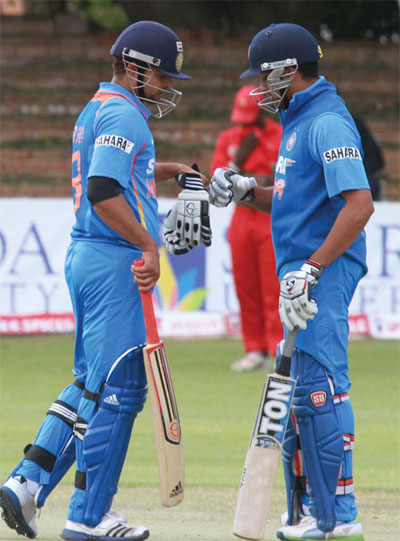
    BULAWAYO (TIP): India have had little to complain about on this tour. The series was sealed at the earliest possible opportunity, and their other target of trying out some fringe players is also working well. Ambati Rayudu made a big contribution on his debut, another new face Jaydev Unadkat was the bowling star in the second ODI and the third India player to debut this series, Mohit Sharma, turned in an impressive performance as Zimbabwe were rolled over for 144 in the fourth ODI.

    One of their minor gripes could be that Cheteshwar Pujara’s much-awaited bow in limited-overs cricket didn’t go to plan, with Pujara inside-edging Tendai Chatara for 13. They would have also liked this secondstring squad to have been tested more by Zimbabwe, who have been disappointingly limp, rarely putting India under pressure. In Harare, Zimbabwe’s batsmen could at least fall back on the excuse that the new balls curved around extravagantly in the first hour but even against the easier conditions in Bulawayo they came up short.

    Zimbabwe’s troubles were highlighted by the first ball itself, as Mohit served up a beauty that beat Vusi Sibanda and zipped perilously close to the top of the stumps. Mohit has played only six domestic onedayers so far, but he showed no nerves in his opening over as he delivered an inswinger, outswinger and a bouncer, all with superb control. He beat the inside-edge and the outside-edge regularly in his opening spell, and even showed off the back-of-the-hand slower ball which served him so well in his spotlight-grabbing IPL season this year.

    As ever, Zimbabwe’s openers were cagey at the start, with Sibanda taking 16 deliveries to get off the mark. Mohit, with the experience of only six domestic onedayers, showed no nerves as he maintained a tight line and length with the new ball, before his persistent probing was rewarded with the wicket of Sikandar Raza, nicking through to the keeper. Zimbabwe then began to be more adventurous despite the disciplined bowling, with Hamilton Masakadza effortlessly whipping Mohammed Shami over square leg for six.

    Just as the partnership was developing, Ravindra Jadeja’s accurate arm struck again, with a bullet throw to the stumps that left Masakadza repenting attempting a quick single. The introduction of spin hampered Zimbabwe further, as Jadeja extended Brendan Taylor’s horror run. Taylor hasn’t been in form this year, and was mortified to be adjudged lbw for a duck to a delivery that was clearly sliding down. In the next over, Jaydev Unadkat knocked over Sean Williams’ off stump after the batsman missed a straight one.

    When Jadeja removed the opener Sibanda in the 16th over, Zimbabwe were in serious trouble and India’s most dangerous bowler of the series, Amit Mishra, hadn’t come on to bowl yet. Elton Chigumbura has been Zimbabwe’s most successful batsman this series, and once again he was called on to right things after the specialist batsmen floundered. With the help of Malcolm Waller, he defied India for over 20 overs, generally playing it safe though there were some eye-catching strokes like the powerful loft over Mishra’s head for four.

    Waller also took his time before latching on to the loose deliveries on offer, like a flighted full toss from Mishra that was swatted for four. With the batting Powerplay taken, Waller swung a shortish ball from Shami for six and Zimbabwe looked for a late flourish. There was no late flourish, however, as Mohit returned to break the 80-run stand, getting Waller to edge behind. The innings didn’t last too long after that as Zimbabwe’s tail was clueless against Mishra, but it lasted long enough for Chigumbura to complete a well-made half-century.

    Zimbabwe’s 144 was never going to be much of a challenge for India, who took their time in completing the win. Pujara departed early, and the team management wisely decided against sending in the inform Virat Kohli, giving Suresh Raina the chance to spend some time in the middle. Rohit Sharma has also had a lean run in this series, and he cashed in at a venue which must rank among his favourites – his only two previous innings for India at the Queens Sports Club were centuries.

    He added an unbeaten 64 to that, and Raina too helped himself to a half-century as the pair put on 122 to complete another all-too-easy victory for India.

  • ANDHRA PRADESH

    ANDHRA PRADESH

    Andhra Pradesh Tourism has always been the frontrunner in attracting greatest number of tourists, inland and foreign, as it boasts of a naturally, ecologically, culturally and religiously rich and diverse variety of tourist destinations that are treasures of visual treat where one can continuously explore new experiences of visitor gratification and delight. The state of Andhra Pradesh having the longest eastern coastline and with a trail of Buddha Period glory, houses and holds many heritage sites adorned with pristine splendor, the forts, citadels and architectural masterpieces built by the past Royal hegemony and its noble Emperors.

    The magnificent palaces and places, monuments, memorials, tombs and stately structures built by them reflect the art and craftsmanship, architecture and culture that originated on this land. There are beautiful dams, valleys, hills and ridges with the scenic dale, tranquil lake waters, swirling beach waves, meadows, resorts, hill stations, caves, virgin forests, sanctuaries and national parks which a visitor can enjoy to his heart’s content.

    Temples and shrines of pilgrimage are the important destinations of tourist traffic and are a big source of revenue flow. Museums and archaeological treasure houses with different galleries showcase historic and amazing collections of antiques, artifacts, weaponry and a wide range of objects that symbolize the history and culture and marvels of the territory.

    Charminar
    The Charminar, built in 1591 AD, is as much the signature of Hyderabad as the Taj Mahal is of Agra or the Eiffel Tower is of Paris. The English name is a transliteration and combination of the Urdu words Char and Minar, translating to “Four Towers”; the eponymous towers are ornate minarets attached and supported by four grand arches. The landmark has become a global icon of Hyderabad, listed among the most recognized structures of India.

    The Charminar is on the east bank of Musi river. To the northeast lies the Laad Bazaar and in the west end lies the granite-made richly ornamented Makkah Masjid. Charminar has the signature style of Islamic architecture. This great tribute to aesthetics looks sturdy and solid from a distance and, as one moves closer, it emerges as an elegant and romantic edifice proclaiming its architectural eminence in all its detail and dignity. Charminar is a beautiful and impressive square monument.

    History
    Sultan Muhammad Quli Qutb Shah, the fifth ruler of the Qutb Shahi dynasty built Charminar in 1591 AD, shortly after he had shifted his capital from Golkonda to what is now known as Hyderabad. He built this famous structure to commemorate the elimination of a plague epidemic from this city. He is said to have prayed for the end of a plague that was ravaging his city and vowed to build a masjid (Islamic mosque) at the very place where he was praying. It is said that, during the Mughal Governorship between Qutb Shahi and Asaf Jahi rule, the south western minaret “fell to pieces” after being struck by lightning and “was forthwith repaired” at a cost of Rs 60,000. In 1824, the monument was replastered at a cost of Rs 100,000.

    Structure
    The Charminar is a square edifice with each side 20 meters (approximately 66 feet) long, with four grand arches each facing a cardinal point that open into four streets. At each corner stands an exquisitely shaped minaret, 56 meters (approximately 184 feet) high with a double balcony. Each minaret is crowned by a bulbous dome with dainty petal like designs at the base.

    A beautiful mosque is located at the western end of the open roof and the remaining part of the roof served as a court during the Qutb Shahi times. There are 149 winding steps to reach the upper floor. Once atop, the solitude and serenity of the beautiful interior is refreshing. The space in the upper floor between the minarets was meant for Friday prayers. There are forty-five prayer spaces.

    The structure is made of granite, limestone, mortar and pulverised marble. Initially the monument with its four arches was so proportionately planned that when the fort was opened one could catch a glimpse of the bustling Hyderabad city as these Charminar arches were facing the most active royal ancestral streets. There is also a legend of an underground tunnel connecting the Golkonda to Charminar, possibly intended as an escape route for the Qutb Shahi rulers in case of a siege, though the location of the tunnel is unknown.

    Surroundings
    In its heyday, the Charminar market had some 15,000 shops. Today the famous markets known as Laad Baazar and Pather Gatti, near the Charminar, are a favour, of tourists and locals alike for jewellery, especially known for exquisite bangles and pearls respectively. The Traditional Food, like Biryani, Haleem, Mirchi ka salan, Double Ka Meetha etc. is available around Charminar. The area is also famous for its variety of shops. During the season of Sankranthi, the area is completely crowded with vendors selling kites. In 2007, Hyderabadi Muslims living in Pakistan constructed a small-scaled quasi replica of the Charminar at the main crossing of the Bahadurabad neighborhood in Karachi.

    Tirupati Temple
    The world famous Tirumala Temple is located in the hill town of Tirumala in Tirupati, Chittoor District. Tirupati is famous for Sri Venkateswara Swamy temple dedicated to Lord Venkateswara. It is around 600 km (370 mi) from Hyderabad, 138 km (86 mi) from Chennai and 291 km (181 mi) from Bangalore. Tiru means ‘Holy’ or ‘Sacred’ and mala means hills/mountain in Dravidian languages. Therefore it translates as Holy mountains. The Tirumala Hill is 853m above sea level and is about 10.33 square miles (27 km2) in area.

    It comprises seven peaks, representing the seven heads of Adisesha, thus earning the name Seshachalam. The seven peaks are called Seshadri, Neeladri, Garudadri, Anjanadri, Vrushabhadri, Narayanadri, and Venkatadri. The temple is on Venkatadri (also known as Venkatachala or Venkata Hill), the seventh peak, and is also known as the “Temple of Seven Hills”. The presiding deity of the temple is Lord Venkateswara, a form of the Hindu god Vishnu. Venkateswara is known by other names: Balaji, Govinda, and Srinivasa. The temple lies on the southern banks of Sri Swami Pushkarini, a holy water tank.

    The temple complex comprises a traditional temple building, with a number of modern queue aand pilgrim lodging sites. The temple is the richest pilgrimage center, after the Sree Padmanabhaswamy Temple in Thiruvananthapuram, Kerala, of any faith (at more than INR 50,000 crore) and the most-visited place of worship in the world. The temple is visited by about 50,000 to 100,000 pilgrims daily (30 to 40 million people annually on average), while on special occasions and festivals, like the annual Brahmotsavam, the number of pilgrims shoots up to 500,000, making it the most-visited holy place in the world. There are several legends associated with the manifestation of the Lord in Tirumala. According to one legend, the temple has a murti (deity) of Lord Venkateswara, which it is believed shall remain here for the entire duration of the present Kali Yuga.

    Medieval history
    Tirumala was under the rule of the Vijayanagara emperors, during which time the temple’s assets were accumulated. Coronation ceremonies of the emperors were also held at Tirupati. In 1517 Krishnadevaraya, on one of his many visits to the temple, donated gold and jewels. It enabled the Vimana (inner shrine) and the roofing to be plated with gold. The Maratha general Raghoji Bhonsle set up a permanent administration for the conduct of worship in the temple. The rulers of Mysore and Gadwal endowed large gifts to the temple.

    The Pallavas of Kanchipuram (9th century AD), the Cholas of Tanjore (10th century), and Vijayanagara pradhans (14th and 15th centuries) were committed devotees of Lord Venkateswara. During the invasion of Srirangam by Malik Kafur in 1310-11 AD, the Ranga Mandapam of the temple served as the shelter for the presiding deity of Srirangam, Ranganatha Swamy. Later, under the rule of the Vijayanagara emperors, was when the temple gained most of its current wealth and size, with the donation of diamonds and gold.

    In 1517 Vijayanagara ruler Sri Krishna Deva Raya, on one of his many visits to the temple, donated gold and jewels, enabling the Vimana (inner shrine) roofing to be gilded. Statues of Sri Krishna Deva Raya and his spouse stand in the premises of the temple. After the decline of Vijayanagara Empire, kings from states such as Mysore and Gadwal worshiped as pilgrims and gave ornaments and valuables to the temple.

    Maratha general Raghoji I Bhonsle (died 1755) visited the temple and set up a permanent administration for the conduct of worship in the temple. There is an idol of Raja Todar Mal who was the revenue minister of Akbar, greeting pilgrims in the premises of the temple.

  • Middle Class At Mercy Of Market Forces

    Middle Class At Mercy Of Market Forces

    KOLKATA (TIP): The lower interest rate cycle in India, which began in April last year, has probably lasted as long as the recent Australian first innings at Lords. As the rupee crumbles and a desperate government lurches from one crisis to another, the middle-class’ hopes of cheaper home and auto loans have quietly been snuffed out, leaving thousands of lower and middle-income households at the mercy of relentless market forces that are beyond control.

    YES Bank raised its base lending rate by 25 basis points to 10.75% and fixed deposit rates by 25-50 basis points, effective August 1. And Axis Bank, the third-largest private lender, raised deposit rates by up to 400 basis points for select maturities. Smaller banks such as Development Credit Bank and Ratnakar Bank have also raised deposit rates. 100 basis points equals 1 percentage point. YES Bank has led the sectoral reversal at a time lenders are battling high cost of short-term funds.

    For years, they binged on short-term money, taking advantage of benign rates. Unlike their bigger private and public sector peers, these banks did not have big branch networks that could attract cheap retail deposit money. But now the party is over. After the central bank squeezed liquidity and raised short-term rates last week, lenders have been forced to do what was considered unthinkable three months ago: Raise deposit rates to attract retail money. A recent report of India Ratings & Research said the Indian banking system’s dependence on short-term liabilities has grown to a point where refinancing pressures could hurt margins, unless rebalanced.

    It said deposits maturing in less than one year formed over 45% of total deposits in 2013, up from 33% in 2002. A significant part of these deposits had maturities less than six months and, for some banks, included a growing share of wholesale money market borrowings. “Banks that largely rely on wholesale and shortterm funding are affected the most and are forced to raise interest rates. Many of them have increased rates to attract retail depositors,” India Ratings & Research Senior Director Ananda Bhowmik said.

    YES Bank’s Deputy CFO & Group President for financial management Jaideep Iyer said the rate hike decision is in sync with the market, but denied dependence on short-term funding. “More than 86% of deposits come from individuals with ticket size of less than 0.2% of our deposit base. We have a lot of granularity and a sustainable funding profile. We do not have a strategy of relying on shortterm funding.” The bank said short-term corporate deposits constitute less than 10% of its total deposits and less than 6% of funding.

    Its current and savings account share is 20.2% as of June while public sector banks, which have extensive branch networks, typically enjoy a higher CASA ratio. Current and savings bank deposits are less costly for banks and hence a higher ratio means better profitability. An Axis Bank spokesperson was more guarded, but direct. “This increase in interest rates on term deposits has been carried out to take into account current money market conditions and to align it to prevailing market rates.”

  • INDIA CLOSE TO LOSING $1 TRILLION MARK-CAP TAG

    INDIA CLOSE TO LOSING $1 TRILLION MARK-CAP TAG

    MUMBAI (TIP): Thanks to the weakness of the rupee and the slide in the stock market for six consecutive sessions, India is on the brink of losing the elite tag of a trillion-dollar stock market. As the Indian rupee traded near its all-time low of 61.20 and the sensex was down over 150 points, BSE’s market capitalization was almost close to breaking below the $1-trillion mark.

    At close, however, as the rupee recovered sharply and the sensex too rebounded from its intra-day low to close at 19,346, down just 3 points, the country’s market value ended the session at $1.03 trillion — just managing to keep its membership of the trillion-dollar market cap club intact. One of the main reasons for this slide is the sharp depreciation of the rupee in recent months. From about 54.5 to a dollar at the start of the year, the Indian currency has depreciated about 12.7% to its current level.

    And since the stock market has remained almost stagnant during this period, India’s market value in dollar terms has eroded substantially, market analysts said. Led by a $20-trillion plus market value, US leads the pack of 11 countries which are currently in this elite group, Bloomberg data showed. Along with the US, Japan and UK complete the top three slots. The table, however, considers Hong Kong ($3.2 trillion) and China ($3 trillion) as separate markets. In case the two are combined, they would replace Japan from its second slot with a combined market value of $6.2 trillion.

    At number 11, India is behind Australia, which has a market cap of $1.3 trillion. From the BRICS bloc, only China and India are the two countries present in this 11-nation league. The last time India’s marketcap was below the 12-figure mark was exactly four years ago, in mid-July of 2009. Since then, although the rupee has depreciated, a steady gain in the stock market ensured that India remained in the elite group.

  • Luxury Goods May Cost More

    Luxury Goods May Cost More

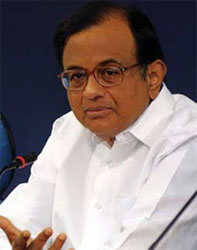
    NEW DELHI (TIP): Finance minister P Chidambaram indicated that the government may increase customs duty on luxury goods as well as those that can be manufactured locally as part of a fresh assault against non-essential imports to rein in the current account deficit (CAD). “There is no specific proposal. We have only done gold. We are looking at some more import compression and at various scenarios on how CAD will play out… We have to look at goods which we can produce and therefore need not import in such large quantities or goods which are clearly non-essential, which some may call luxuries,” the minister, who completes a year of his return to the finance ministry, said in an interview.

    Chidambaram did not elaborate on the products on which duties will be raised, but the move will leave a bigger dent on your pocket. The government has been grappling with a sharp economic slowdown, rising prices, a weak currency and a downbeat mood in industry. While it has announced measures to revive growth, which slowed to a decade’s low of 5%, global economic uncertainty and the sharp swings in the rupee have added to its headache. The finance minister also blamed US Federal Reserve chairman Ben Bernanke for the rupee’s volatility and there were some harsh words for former comptroller and auditor general Vinod Rai as well.

    Asked if judicial activism and the CAG’s reports had contributed to the overall pessimism, the minister said, “To a considerable extent. The former CAG did grave damage to the system. He exceeded his jurisdiction and exceeded his mandate.” At the same time, Chidambaram said he was not happy with the way the government responded to the CAG’s reports at that point in time.

    “I was not happy with the way the government responded to the CAG reports. But then, responses are formulated by the ministry or department concerned. I think we should have made a distinction between policy and the implementation of policy. These policies are not even UPA inspired policies. These policies go back to a date before the UPA,” he said. Despite the economic gloom, Chidambaram said he was confident of the Congress leading a new coalition — UPA-3 — after the 2014 general elections. “Nobody votes on one issue.

    Ultimately, people vote for a set of parties which will gravitate towards the Congress and there is a very good chance UPA-3 will be formed under the leadership of Congress. The pre-poll allies and the postpoll allies will make up UPA-3. UPA-3 need not mirror UPA-2. Like UPA-2 was a reconstituted UPA-1. Who will be in UPA-3 will become apparent as the months roll on,” he said. But when it comes to a swift economic recovery, Chidambaram said there are no quick fixes. “The world economy is challenged, so is India’s economy.

    We will have to rebuild the economy brick by brick. We have got a pretty good idea of how to fix the fiscal deficit. We are trying to find ways to finance the current account deficit and the most obvious way to address issue of consumer price inflation is to improve the production of goods and services.

    I think if we do the right things, say even by the text book, we will get the results over a period of time.” Chidambaram ruled out any discussion or even the possibility of approaching the International Monetary Fund to help bolster reserves through a lending window but he said other options such as a sovereign bond or a quasi-sovereign bond were on the table.

  • THE PRINCIPAL UPANISHADS

    THE PRINCIPAL UPANISHADS

    In the Upanishads we can study the graceful conflict of thought with thought, the emergence of more satisfactory thought and the rejection of inadequate ideas. Hypotheses were advanced and rejected on the touchstone of experience and not at the dictate of a creed. Thus thought forged ahead to unravel the mystery of the world in which we live. Let’s have a quick look at the 13 principal Upanishads:

    Chandogya Upanishad
    The Chandogya Upanishad is the Upanishad that belongs to the followers of the Sama Veda. It is actually the last eight chapters of the ten-chapter Chandogya Brahmana, and it emphasizes the importance of chanting the sacred Aum, and recommends a religious life, which constitutes sacrifice, austerity, charity, and the study of the Vedas, while living in the house of a guru.
    This Upanishad contains the doctrine of reincarnation as an ethical consequence of karma. It also lists and explains the value of human attributes like speech, will, thought, meditation, understanding, strength memory and hope.

    Kena Upanishad
    The Kena Upanishad derives its name from the word ‘Kena’, meaning ‘by whom’. It has four sections, the first two in verse and the other two in prose. The metrical portion deals with the Supreme Unqualified Brahman, the absolute principle underlying the world of phenomenon, and the prose part deals with the Supreme as God, ‘Isvara’. The Kena Upanishad concludes, as Sandersen Beck puts it, that austerity, restraint, and work are the foundation of the mystical doctrine; the Vedas are its limbs, and truth is its home. The one who knows it strikes off evil and becomes established in the most excellent, infinite, heavenly world.

    Aitareya Upanishad
    The Aitareya Upanishad belongs to the Rig Veda. It is the purpose of this Upanishad to lead the mind of the sacrificer away from the outer ceremonial to its inner meaning. It deals with the genesis of the universe and the creation of life, the senses, the organs and the organisms. It also tries to delve into the identity of the intelligence that allows us to see, speak, smell, hear and know.

    Kaushitaki Upanishad
    The Kaushitaki Upanishad explores the question whether there is an end to the cycle of reincarnation, and upholds the supremacy of the soul (‘atman’), which is ultimately responsible for everything it experiences.

    Katha Upanishad
    Katha Upanishad, which belongs to the Yajur Veda, consists of two chapters, each of which has three sections. It employs an ancient story from the Rig Veda about a father who gives his son to death (Yama), while bringing out some of the highest teachings of mystical spirituality. There are some passages common to the Gita and Katha Upanishad. Psychology is explained here by using the analogy of a chariot.

    The soul is the lord of the chariot, which is the body; the intuition is the chariot-driver, the mind the reins, the senses the horses, and the objects of the senses the paths. Those whose minds are undisciplined never reach their goal, and go on to reincarnate. The wise and the disciplined, it says, obtain their goal and are freed from the cycle of rebirth.

    Mundaka Upanishad
    The Mundaka Upanishad belongs to the Atharva Veda and has three chapters, each of which has two sections. The name is derived from the root ‘mund’ (to shave) as he that comprehends the teaching of the Upanishad is shaved or liberated from error and ignorance. The Upanishad clearly states the distinction between the higher knowledge of the Supreme Brahman and the lower knowledge of the empirical world — the six ‘Vedangas’ of phonetics, ritual, grammar, definition, metrics, and astrology.

    It is by this higher wisdom and not by sacrifices or worship, which are here considered ‘unsafe boats’, that one can reach the Brahman. Like the Katha, the Mundaka Upanishad warns against “the ignorance of thinking oneself learned and going around deluded like the blind leading the blind”. Only an ascetic (‘sanyasi’) who has given up everything can obtain the highest knowledge.

    Taittiriya Upanishad
    The Taittiriya Upanishad is also part of the Yajur Veda. It is divided into three sections: The first deals with the science of phonetics and pronunciation, the second and the third deal with the knowledge of the Supreme Self (‘Paramatmajnana’). Once again, here, Aum is emphasized as peace of the soul, and the prayers end with Aum and the chanting of peace (‘Shanti’) thrice, often preceded by the thought, “May we never hate.”

    There is a debate regarding the relative importance of seeking the truth, going through austerity and studying the Vedas. One teacher says truth is first, another austerity, and a third claims that study and teaching of the Veda is first, because it includes austerity and discipline. Finally, it says that the highest goal is to know the Brahman, for that is truth. The Brihadaranyaka Upanishad, Svetasvatara Upanishad, Isavasya Upanishad, Prashna Upanishad, Mandukya Upanishad and the Maitri Upanishad are the other important and well known books of the Upanishads.

    Brihadaranyaka Upanishad
    The Brihadaranyaka Upanishad, which is generally recognized to be the most important of the Upanishads, consists of three sections (‘Kandas’), the Madhu Kanda which expounds the teachings of the basic identity of the individual and the Universal Self, the Muni Kanda which provides the philosophical justification of the teaching and the Khila Kanda, which deals with certain modes of worship and meditation, (‘upasana’), hearing the ‘upadesha’ or the teaching (‘sravana’), logical reflection (‘manana’), and contemplative meditation (‘nididhyasana’). TS Eliot’s landmark work The Waste Land ends with the reiteration of the three cardinal virtues from this Upanishad: ‘Damyata’ (restraint), ‘Datta’ (charity) and ‘Dayadhvam’ (compassion) followed by the blessing ‘Shantih shantih shantih’, that Eliot himself translated as “the peace that passeth understanding.”

    Svetasvatara Upanishad
    The Svetasvatara Upanishad derives its name from the sage who taught it. It is theistic in character and identifies the Supreme Brahman with Rudra (Shiva) who is conceived as the author of the world, its protector and guide. The emphasis is not on Brahman the Absolute, whose complete perfection does not admit of any change or evolution, but on the personal ‘Isvara’, omniscient and omnipotent who is the manifested Brahma. This Upanishad teaches the unity of the souls and world in the one Supreme Reality. It is an attempt to reconcile the different philosophical and religious views, which prevailed at the time of its composition.

    Isavasya Upanishad
    The Isavasya Upanishad derives its name from the opening word of the text ‘Isavasya’ or ‘Isa’, meaning ‘Lord’ that encloses all that moves in the world. Greatly revered, this short Upanishad is often put at the beginning of the Upanishads, and marks the trend toward monotheism in the Upanishads. Its main purpose is to teach the essential unity of God and the world, being and becoming. It is interested not so much in the Absolute in itself (‘Parabrahman’) as in the Absolute in relation to the world (‘Paramesvara’). It says that renouncing the world and not coveting the possessions of others can bring joy. The Isha Upanishad concludes with a prayer to Surya (sun) and Agni (fire).

    Prasna Upanishad
    The Prashna Upanishad belongs to the Atharva Veda and has six sections dealing with six questions or ‘Prashna’ put to a sage by his disciples. The questions are: From where are all the creatures born? How many angels support and illumine a creature and which is supreme? What is the relationship between the life-breath and the soul? What are sleep, waking, and dreams? What is the result of meditating on the word Aum? What are the sixteen parts of the Spirit? This Upanishad answers all these six vital questions. ]

    Mandukya Upanishad
    The Mandukya Upanishad belongs to the Atharva Veda and is an exposition of the principle of Aum as consisting of three elements, a, u, m, which may be used to experience the soul itself. It contains twelve verses that delineate four levels of consciousness: waking, dreaming, deep sleep, and a fourth mystical state of being one with the soul. This Upanishad by itself, it is said, is enough to lead one to liberation.

    Maitri Upanishad
    The Maitri Upanishad is the last of what are known as the principal Upanishads. It recommends meditation upon the soul (‘atman’) and life (‘prana’). It says that the body is like a chariot without intelligence but it is driven by an intelligent being, who is pure, tranquil, breathless, selfless, undying, unborn, steadfast, independent and endless.

    The charioteer is the mind, the reins are the five organs of perception, the horses are the organs of action, and the soul is unmanifest, imperceptible, incomprehensible, selfless, steadfast, stainless and self-abiding. It also tells the story of a king, Brihadratha, who realized that his body is not eternal, and went into the forest to practice austerity, and sought liberation from reincarnating existence.

  • Flowers At Home Make You Compassionate

    Flowers At Home Make You Compassionate

    Having flowers at home not only adds colour but also has health benefits. Why wait till you’re gifted a bouquet of flowers to put them up — having floral arrangements at home not only makes your abode look more vibrant but is also known to improve mood. A behavioural research study reveals that people feel more compassionate toward others, have less worry and anxiety, and feel less depressed and agitated when freshcut flowers are present in the house. Flowers have an immediate impact on happiness, say experts. Participants of the study expressed delight and gratitude while receiving flowers — a reaction that was universal, across all age groups.

    You can place flowers in your kitchen, dining room, living room or balcony— essentially areas where you spend a lot of time when you’re at home. Living with flowers can also provide a boost of energy, happiness and enthusiasm at work. The study added that people were more likely to feel happier and more enthusiastic and energetic at work when flowers were present in their home. When you start the day in a positive mood, one is more likely to transfer that happy feeling to others.

    The aroma of roses is supposed to aid in elevating mood while marigold or genda have antiseptic and stimulant properties. Magnolia blossoms, lilac, gardenia, lily, jasmine, lavender, chamomile, evening primrose, hibiscus and several other flowers are available at local, neighbourhood florists — choose whichever appeals most to your senses! The vase you choose is based on the size and shape of the flowers you want to display.

    For long-stemmed flowers (roses or sunflower) use a tall, slender vase. For short-stemmed flowers with round, full blossoms (gardenias) use a smaller, spherical vase to accentuate the shape. When you have a large arrangement of a variety of flowers, use a vase that has a wide, heavy base for extra support. Individual flowers simply need a narrow vase of medium height.

  • TREAT YOUR HAIR TO NATURAL OILS

    TREAT YOUR HAIR TO NATURAL OILS

    Getting that natural lustre and gloss on your hair without leaving a dent in your wallet or going to snazzy salons is what most women crave for. Oiling your hair is that one secret that has been passed on from generation to generation. Be it the hot oil treatment or the various hair masks your granny recommended, natural oils have always been a friend to a woman’s hair.

    Here are some natural oils for various hair types:
    Thin hair
    Using rosemary oil for thin hair is a folk remedy. As thin hair attracts more dirt and impurities, this oil helps in cleansing the scalp. Used to prevent hair loss, rosemary oil is an aromatic oil that helps stimulate hair follicles. It is also known that this oil prevents premature graying. Being high on calcium, vitamin B and iron, this oil also helps the hair with conditions of the scalp like dandruff, oily scalp and brittle or frizzy hair.

    Thick hair
    If you have thick, coarse, unmanageable hair, olive oil is the best remedy. This oil has a high level of mono-unsaturated fat, which in turn helps dry and damaged hair. Olive oil also helps in strengthening and moisturising the hair.

    Fine hair
    Pomegranate Seed Oil is known to revitalise dull and dry strands of hair because of the content of punicic acid it has in it. Another advantage of this oil is that it protects the hair from chemicals and environmental impurities. Wavy Hair Sweet almond oil has been a natural remedy for hair for ages. Massaging the scalp with this oil stimulates blood circulation allowing oxygen in the hair follicles. It also helps add shine and lustre to ones hair.

  • Brushing Teeth Regularly Helps Prevent Dementia

    Brushing Teeth Regularly Helps Prevent Dementia

    Brushing your teeth not only helps you keep a dazzling smile, but it could also stave off dementia, a new study has revealed. In a recent research, brain tissue from people suffering from Alzheimer was found to be infected with a type of bug that causes gum disease, the Mirror reported. Dentistry Professor Stjohn Crean told the publication that people should pay particular attention to brushing teeth and visiting the dentist to reduce bugs in their mouths.

    The presence of ‘Porphyromonas gingivalis’ was found in the tissue of 10 dementia sufferers. The study conducted by the University of Central Lancashire found that the bug triggers a response in the brain that destroys neurons and brings on symptoms such as memory loss and confusion. Dr Alison Cook, of the Alzheimer’s Society, told the publication that the best way to reduce your risk of dementia is to lead a healthy lifestyle and enjoying a balanced diet.

  • TREATING COMMON COLD THE NATURAL WAY

    TREATING COMMON COLD THE NATURAL WAY

    There is no reason or no weather to get a common cold. Wheezing, cough, runny nose and an aching body are the symptoms and it’s horrid, even popping in medicines doesn’t help. What does help is a DIY detox bath which is really effective. What all you need? A bath tub, hot water, hydrogen peroxide (3 per cent) and about 50 gram grounded sugar. Run a hot bath, it opens up all the pores and prepares the body for cleansing.

    Add 1.5 litres (or three pints) hydrogen peroxide (3 per cent) in the hot water. This oxygenates the body and helps purge toxins. It’s also antibacterial and antiviral. Add the grounded sugar, a natural anti-inflammatory that increases blood circulation and helps promote the elimination of toxins. Mind you, you will sweat, a lot. Soak in this for about 30-40 minutes. The more you sweat, the better as the sweat detoxes the body.

    Try it on if you have a cold or a cough. Also, after this detox programme, drink a lot of water as your body needs all the fluids back. However, some people might be allergic to hydrogen peroxide, in case you have a sensitive skin, consult a physician before this DIY bath

  • FOODS FOR QUICK WEIGHT LOSS

    FOODS FOR QUICK WEIGHT LOSS

    No matter how healthy your daily routine might be, sometimes, the sudden need for quick weight loss manages to creep in unannounced. Whatever the reason – a school reunion or your 30th birthday – none of us are above the need to lose weight and lose it fast. And here’s some good news: Coupled with the right exercise and healthy nutrient intake you can lose weight quickly and surely by consuming these best foods for quick weight loss. Remember the first tenet of a healthy diet is portion control, and you’re on your way to quick weight loss success…

    Lean protein
    A recent study from Purdue University has proved yet again that lean protein enables weight loss through appropriate appetite control. While non-vegetarians can get lean proteing from lean meat and egg white, vegetarians should look to include these protein foods in their daily diet: Chickpeas, soyabeans, kidney beans, tofu, other beans and pulses, and dairy. Even peanut butter is a good substitute as an appetite controller here.

    Fruits and vegetables
    This is a best practise followed by people who lose permanent weight successfully. Even if you love meat, including at least 2-3 whole fruits and a side serving of vegetables with each meal goes a long way in curbing your appetite and enabling quick weight loss. So leave those diet pills, exotic foods that you buy just once and never eat again, and step over to the neighbourhood grocery store. Your best bet with quick weight loss lies within these humble, yet extremely healthy, fruits and vegetables.

    Broth-based soups
    Pureed and chunky broth (not cream) based hot soups tend to satisfy a range of food cravings, while filling you up on low-calorie healthy foods. Additionally, making these soups at home is quite simple. Just buy some vegetables, puree the pulpy ones, chop the hard ones, start with a steam or stir fry and slowly add water with stock for volume. Don’t forget the seasoning. Quick weight loss largely depends on how you control your appetite with healthy substitutes to unhealthy, high-fat and creamy foods.

    Whole grain
    A list of best foods for quick weight loss can never be complete without whole grains. Even without changing other areas of your daily diet, just a shift from processed to whole grain will work wonders for quick weight loss. Whole grains are nutrient-packed powerhouses and are excellent appetite controllers.

    Low-salt and low-starch foods Cutting back on sodium and high-starch foods results in a kind of cheat weight loss, which – if properly maintained can lead to permanent weight loss. In the short run, this strategy leads to low fluid retention and what you lose initially is ‘water weight’. This is why most weight loss diets that promise quick weight loss begin with a no-carb, no-salt shock phase. You can do this cleverly by cutting down reasonably and continuing a daily exercise routine to maintain healthy appetite and calorie burn.

  • Condoms Are Great For Vagina

    Condoms Are Great For Vagina

    Apart from preventing unwanted pregnancies and spread of sexually transmitted diseases, condoms may help good bacteria in the vagina flourish, a new study has found. Sexually active women in the study who used condoms had larger colonies of beneficial microbes in their vaginas compared with women who used other forms of birth control, the researchers at Beijing Friendship Hospital found. The scientists focused on lactobacillus, a group of bacteria that dominates the natural flora of the vagina for many women.

    The microbes, which produce lactic acid and hydrogen peroxide, help the vagina maintain an average pH of 4.5, comparable to the acidity of beer or tomato juice, the Huffington Post reported. This “acidic buffer system,” as the researchers called it, is thought to block harmful bacteria from taking up residence and causing infections.

    Though there may not be a “normal” microbiome for a healthy vagina, the presence of lactobacillus is thought to help prevent bacterial vaginosis, which is an imbalance of vaginal bacteria that causes itching, unusual discharge and unpleasant odor. Beneficial bacteria have even been linked to a decreased risk of human immunodeficiency virus (HIV) infection.

  • DIANE LANE TO PLAY HILLARY IN NEW TV SERIES

    DIANE LANE TO PLAY HILLARY IN NEW TV SERIES

    Diane Lane is set to play Hillary Clinton in a fourhour miniseries titled ‘Hillary’, it has been revealed. NBC announced on Saturday at the 2013 Summer Press Tour that the actress will portray the former Secretary of State and First Lady, Us magazine reported. According to USA Today, NBC’s entertainment chairman Bob Greenblatt said the miniseries will likely air before Clinton is rumored to declare herself as a presidential candidate for the 2016 race.

    The series will look at Clinton’s life as “a wife, mother, politician and cabinet member from 1998 to the present,” NBC said. The actor who will play Clinton’s husband, former president Bill Clinton has not yet been cast.

  • PENELOPE CRUZ DIRECTS AD CAMPAIGN FOR LINGERIE BRAND

    PENELOPE CRUZ DIRECTS AD CAMPAIGN FOR LINGERIE BRAND

    Spanish actress-model Penelope Cruz has directed an advertisement campaign for designer lingerie brand – Agent Provocateur. The 39-year-old will showcase a new collection called L’Agent, which she has created for the lingerie brand in collaboration with her sister M’nica Cruz. “It was very personal and important for me, a very interesting experience. They gave me all the freedom and I was able to tell the story I wanted to tell,” femalefirst.co.uk quoted Cruz as saying.

    “I used women of all shapes and sizes, as it was important for me to let women know that this brand is for everyone,” she added. Cruz cast model Irina Shayk in the video, alongside her husband Javier Bardem and Monica. The project was a family affair since her younger brother Eduardo was in charge of composing the music and her mother, Encarna Sanchez, helped on the set.

    Cruz, who also worked for Agent Provocateur, Autumn-Winter 2012 campaign, said: “I chose Irina, as she is such a vivacious woman, and with all the beautiful women in the campaign, I really needed someone who would keep the audience’s attention.” The collection will be on sale from Aug 1.

  • MOVIE REVIEW – The Wolverine

    MOVIE REVIEW – The Wolverine

    Cast: Hugh Jackman, Tao Okamoto, Famke Janssen,
    Hiroyuki Sanada, Rila Fukushima, Hal Yamanouchi,
    Svetlana Khodchenkova, Will Yun Lee
    Direction: James Mangold
    Genre: Adventure
    Duration: 2 hours 17 minutes

    STORY: The Wolverine/Logan is summoned to Japan to meet an old friend whose life he had saved in Nagasaki, during World War 2. On his deathbed, the man (now a billionaire industrialist) wants to return the favor to Logan. However, the latter is drawn into a conflict that is as much about confronting his demons as it is a fight for survival. MOVIE REVIEW: Some of the Wolverine’s (Jackman) instinctual qualities include being able to sniff out danger. So, when Yukio (Fukushima) tracks down Logan and brings him to Yashida (Yamanouchi), Logan senses something wrong. He is angered by the deal Yashida suggests and plans to leave Japan.

    But then, he encounters Yashida’s sexy granddaughter Mariko ( Tao Okamoto) who immediately appeals to another set of Logan’s instincts. Yashida’s death leads to a battle for his fortune and various bad guys make a beeline to kill Mariko because she has been appointed sole heiress. The Wolverine becomes her guardian (and more) and Yukio (Mariko’s childhood pal) becomes Wolverine’s ‘bodyguard’. This is when director Mangold takes a deep dip into various Japanese themes. Ninjas, modern-day Yakuza, themes of loyalty, honour and even Shinto references are visited here.

    The Japanese setting – bright lights, big city as well as rural outskirts – is delightful. On the run, Wolverine is attracted to Mariko’s unflappable calm and strength as much as she is to his bravery and courage. He sometimes hallucinates about Jean Grey (Janssen) who was the love of his life, even while in bed with Mariko. So, you have old love versus new love too.

    Also after them is the venom-spitting Viper (Khodchenkova) in a green bodysuit who takes the femme fatale bit too far. There are superhero movies with better gags and then there are superhero films with more effects. Eschewing any of those in excess, what this film also offers is soul, pathos and a pretty good look at the multifaceted character that is The Wolverine.

  • DEEPIKA BAGS ‘HAPPY NEW YEAR’ OPPOSITE SRK

    DEEPIKA BAGS ‘HAPPY NEW YEAR’ OPPOSITE SRK

    After endless speculation as to who will be the leading lady in Shah Rukh Khan’s home production, ‘Happy New Year’, we hear his ‘Chennai Express’ heroine Deepika Padukone is the final choice. The film, directed by Farah Khan, is slated to go on floors in September 2014. A lot of speculation happened because several contestants who were vying for the role, kept giving out unofficial, ‘I’m the chosen one’ stories at regular intervals.

    Though Deepika was always the front-runner, she remained silent because her dates were being worked out. Even now, she has refrained from commenting. Deepika shares a special relationship with Farah and SRK. They are the ones who were instrumental in giving Dippy her big break with Om Shanti Om (2007), a film that holds the record of being one of the highest grossers overseas.

  • JACQUELINE TO GAIN 10 KGS TO WORK WITH SALMAN

    JACQUELINE TO GAIN 10 KGS TO WORK WITH SALMAN

    From junk food to delicious desserts, Bollywood actress Jacqueline Fernandez is allegedly on an eating spree. No she is not nursing a broken heart but preparing for her next role. It is reported that the pretty actress has been asked to put on 10 kgs for her next movie.

    Hence, she has stopped working out or following a diet but is often seen gorging on food like never before. She is also allegedly sporting deglamorised look to prepare for the role. This is Jacky’s big film as she will star opposite Salman Khan. Hence, she is leaving no stone unturned to impress the superstar.

  • MOVIE REVIEW – Issaq

    MOVIE REVIEW – Issaq

    Cast: Prateik, Amrya Dastur
    Direction: Manish Tiwary
    Genre: Romance
    Duration: 2 hours 28 minutes

    Story: A love story adapted from Shakespeare’s Romeo and Juliet, set against the backdrop of sand mafia, political power games and Naxalites in Banaras.

    MOVIE REVIEW: Welcome to the holy city of Banaras – replete with ‘spesal’ paan, levitating smoked-up (on herbs) saadhus, Banarasi babus high on bhaang and others’ biwis on un-Holi celebrations. And amidst this colourful backdrop, an age-old feud simmers between two powerful families – The Mishras and the Kashyaps. Mishra son, Rahul (Prateik) – a romantic at heart, (chooses girls over guns); falling madly in love with Kashyap girl Bachchi (Amrya). One tight-chumma is all it takes to win her over (shortcut Romeo, haan?).

    While the city bleeds with rivalry, enraged Naxals (led by Prashant Narayanan) and political powerplay – the starcrossed lovers defy all rules of bloody war and bravely take on the world. A band of characters add to this drama – Rahul’s gori ex-girl (Evelyn Sharma); Teeta (Ravi Kissen – best of the pack) as Bachchi’s vicious mamu; sadhu baba (Makarand Deshpande) high on crack; Mishra’s lusty doosri biwi (Rajeshwari Sachdev – impressive act), and Rahul’s homeboys (Amit Sial and Vineet Kumar Singh – lending strong support).

    Prateik doesn’t quite fit the part of a Banarasi boy in this tangled love tragedy. His accent doesn’t blend in. He air-dives and leaps from terraces and ‘Spidermans’ his way across walls. His range of emotions remain untapped and inconsistent throughout. Debutante Amrya, as a demure damsel (while unabashedly declaring, ‘hum virgin hain’ – Holy Mother!), lacks the charisma for her part and ends up looking like a pretty bahu from a tele soap opera. Manish Tiwary’s ‘Issaq’ lacks vibe, soul or depth needed for a classic love story.

    With incoherent narrative, unsketched characters, wispy (sometimes embarrassing) dialogues, one good melody in the whole ditty (Issaq tera); pointless shooting (mostly in the dark), gold-plated bandooks and bombs galore – Tiwary misses every target. There are movies beautifully adapted from Shakespeare’s works in the past, but none that tragically assault your creative, poetic or cinematic senses.

  • Centre May Skip Andhra Pradesh Assembly Resolution On Telangana

    Centre May Skip Andhra Pradesh Assembly Resolution On Telangana

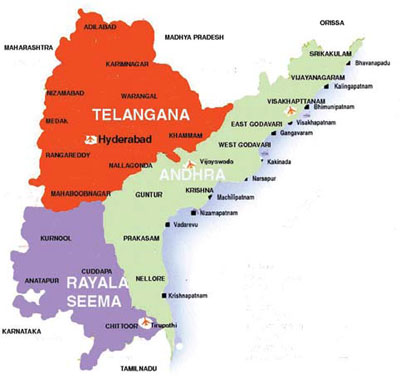
    HYDERABAD (TIP): The Congress bosses are on the horns of a dilemma: They can’t decide whether to ask the state government to sponsor and get a resolution passed in favour of Telangana in the state assembly. The thinking is that although Kiran Reddy has been assuaged and been convinced to stay, his ability to ensure safe passage of the resolution in the House is in doubt. Faced with the situation, the leadership is now mulling a proposal to skip the resolution from the T process.

    The party’s dilemma became clear when Union home minister Sushilkumar Shinde on Thursday told the media in Delhi that the “Telangana issue had already been discussed in the AP assembly. Stating that a prior resolution from the state assembly was not mandatory, Shinde said the alternate route — of a direct in-principle Cabinet nod and constitution of a Group of Ministers (GoM) to work out the modalities of AP ‘s bifurcation — was faster and in keeping with the procedure prescribed under the Constitution.

    Answering a query whether the Centre was bypassing the normal practice of the state assembly adopting a resolution for creating a separate state, the home minister said the Centre wanted to complete the process within six months as against the normal time of eight to 10 months. Shinde, however, said it may not be possible to introduce the Telangana Bill in Parliament during the Monsoon session and will be tabled during the Winter session. Sources said the Centre might bank on a statement made by late chief minister YS Rajasekhara Reddy on the floor of the House on February 12, 2009 promising steps for formation of Telangana.

    The assembly had a detailed debate on the issue and expressed a unanimous view. Now, that Congress high command plans to harp on the YSR’s statement to take the process forward and at the same time fix YSR Congress, which is gaining strength in Seemandhra after the T announcement. Two days ago the Congress high command had decided to send the T resolution to the state assembly after the approval of Union cabinet in the first or second week of August.

    AICC general secretary Digvijay Singh disclosed to media while announcing the decision on Telangana that the process of formation of the new state would start by asking the state assembly to pass a resolution in this regard. “Everybody knows that this would be a numbers game and the number of MLAs from Seemandhra region, are more compared to that from Telangana. In this situation, no chief minister will be able to ensure a safe passage of resolution and he cannot be blamed for this,” said a minister who is in the inside track.

    The Congress high command now wants to go ahead with formation of Group of Ministers to resolve the contentious issues once the Cabinet recommends the President to take steps to create India’s 29th state. “If the resolution gets defeated even before it is being presented to the President, it would send wrong signals and may attract litigation stating that the state is not in favour of the division,” said Congress sources. To avoid this embarrassment, the Congress high command held discussions with some legal experts and is now examining the proposal to appoint GoM without obtaining the view of the State government.

    Kiran Reddy is in a fix as he cannot assure safe passage of resolution and at the same time cannot afford to sit silently when the entire process is being expedited by the party high command. If the high command decides against sending the resolution to the state assembly, it would be even more embarrassing to the chief minister who then might face allegations that he did not even give opportunity to people’s representatives on a crucial issue like division of the state.

  • Advani Praises Narendra Modi, Shivraj Singh Chouhan

    Advani Praises Narendra Modi, Shivraj Singh Chouhan

    NEW DELHI (TIP): BJP leader L K Advani praised Narendra Modi and Shivraj Singh Chouhan in the same breath saying the two Chief Ministers have provided good governance in Gujarat and Madhya Pradesh. The remarks were significant as Advani, who is not on the best of terms with Modi and had even resigned from all party posts after he was made the poll campaign head, on Thursday skipped a crucial meeting of party with RSS in the national capital though the BJP said it was because of his prior commitments.

    The BJP leader said states where BJP was in power, be it the Narendra Modi-led government in Gujarat or Shivraj Singh Chouhan in Madhya Pradesh–were doing good. He said the party will go the people in the coming Lok Sabha polls on the plank of good governance. Advani said be it Modi government or Shivraj Singh Chouhan’s or Raman Singh’s, they were giving good governance. He asked the people to compare all the goverments and think who can give honest governance and people oriented and efficient governance.

    “The six-year NDA rule will outbeat UPA hands down,” he claimed. Moreover, there is no comparision to the governments of Modi and Chouhan, who were doing good job, he said. Advani said he was keenly following the UPA rule for the last three years and since the Commonwealth games, two issues have come to the fore that of inflation and corruption. The party will go to the people and ask them to compare the NDA rule and BJP-led governments in the states with UPA govt in the coming elections, he said.

    Advani was participating in a condolence meeting for the party’s Tamil Nadu BJP general secretary V Ramesh who was murdered on July 19. He said he looked forward to a spectacular results in the coming assembly elections and Lok Sabha polls in hundred days and 200 days respectively. Advani had on Thursday skipped a crucial meeting of RSS and BJP leaders in Delhi post his public fall-out over elevation of Modi as head of party campaign committee for the 2014 polls.

    BJP President Rajnath Singh said Advani was not present at the Delhi meeting due to prior commitments. Earlier, Advani, who was received by party’s Tamil Nadu leaders Ela Ganesan and Pon Radhakrishnan, visited Ramesh’s house at Maravaneri and consoled his wife, brother and son. He paid floral tributes at the photo of the leader. Police had made tight security arrangements in view of his visit.

  • 30 Children Ill After Drinking Water In Bihar Schools

    30 Children Ill After Drinking Water In Bihar Schools

    PATNA (TIP): Thirty children were taken ill after drinking water from handpumps at two separate schools in Bihar’s Saran and Gopalganj districts, officials said. Expressing concern over the incidents, Chief Minister Nitish Kumar said: “I am really worried as after the contaminated mid-day meal tragedy, now reports of poison being mixed in handpumps at schools are coming in from various places.”

    Last month, 23 school children lost their lives after consuming poisonous mid-day meal in Saran district. The chief minister added that Director General of Police Abhayanand has been directed to initiate a probe into Thursday’s incidents involving 24 children from the government middle school in Maulanapur village under Parsa block in Saran and six children from a primary school in Gopalganj district. All the children have been hospitalised for treatment. “After initial treatment at a nearby primary health facility, all children except two were referred to PMCH (Patna Medical College and Hospital) for treatment following an order from the chief minister.

    The two children were admitted to the Sadar hospital in district headquarters town of Saran,” an Saran district official said. In Gopalganj, all the six children were admitted to a government hospital. According to officials, the children complained of pain in the stomach and started vomiting soon after drinking water from the handpump. As the news of the children having taken ill after drinking handpump water spread, hundreds of villagers from Maulanapur staged protests by blocking roads and damaging government vehicles, the police officer said.

    Saran District Magistrate Abhijit Sinha, who rushed to the village after being informed about the incident, had to face the protesters’ ire as they forced him to return without visiting the school.

  • HONESTY PUNISHED

    HONESTY PUNISHED

    How sand mafia framed IAS officer Durga

    NEW DELHI (TIP): Indian Administrative Service office Durga Shakti Nagpal was suspended for demolishing a mosque, thereby “disturbing” communal harmony “Arrey, Madamji, who gives their own land to build a mandir, masjid or gurdwara? Of course, they are built on government land, which is grabbed for this purpose…” a criminal lawyer in the Noida district court says laughingly when quizzed about the alleged action of razing a wall purportedly belonging to a mosque on government land that got Sub- Divisional Magistrate Durga Shakti Nagpal suspended and put in the doghouse.

    At 28, the 2009 batch IAS officer who was 20th on the merit list and who got her cadre changed from Punjab to Uttar Pradesh to be closer to her husband Akhilesh, also an IAS officer, might have been naiive enough to believe that she was sincerely upholding the law. But her seniors in the district say that she may have contributed to creating a law and order problem when she ordered the demolition of a structure coming up illegally on public land. They probably knew that if they did not comply with the verbal orders emanating from the chief minister’s secretariat, the same fate that has befallen Nagpal may have been reserved for them.

    The way the state government works is as follows: if there is misconduct on the part of a junior officer, the senior officer’s report is sought. Then action is taken. It would be interesting to know what Gautam Budh Nagar District Magistrate Ravi Kumar Singh wrote in his report about Nagpal’s action. Locals say it is not clear whether he tried to defend her. This much is certain: ever since builders descended on Noida and Greater Noida, sand mining along the Yamuna has become big business.

    The government gives out contracts for sand mining, but enormous amount of illegal mining goes on alongside. Hundreds of dumpers transport sand from the Yamuna riverbed every day and money in lakhs changes hands. Locals say regardless of the nature or colour of the government, miners who have the protection of the local representatives carry on their trade unabashedly; governments come and go but the ‘rate’ doesn’t change.

    Nagpal was an impediment to this high-level complicity. She took on the sand mafia, ordered the seizure of dumpers and got many offenders arrested last month. Besides, she also deployed a flying squad to rein in the menace. The sand mafia was obviously annoyed and was waiting to even the score. The opportunity came in the socalled demolition of a religious structure.

    Locals also say an illegal wall on government land was built in a village near Dankaur in Greater Noida. Some say the wall even had a plaque saying Narendra Singh Bhati, the local MLA and minister in the UP government, had laid the foundation stone of the mosque. Others say nobody even knew it was a mosque, it was just a wall. At any rate, Nagpal told residents that it was illegal to build a structure on government land, and it was demolished by residents voluntarily.

    But her intervention in preventing the sand mafia from its trade has had unintended consequences, for it brought into spotlight, the activities of people who are politically powerful. What’s more, the political subtext and rivalries came spilling out. While Chief Minister Akhilesh Yadav’s uncle Shivpal said the officer needed to be suspended for fomenting religious tension, his other uncle, Ram Gopal, suggested an enquiry be started and the officer be reinstated. For another ‘uncle’, Azam Khan, who is a close associate of Samajwadi Party chief Mulayam Singh Yadav, it was an opportunity to vent out his dislike for Akhilesh.

    “Ram Raj mein loot machi hai, loot sake to loot (there is mayhem in paradise, make the most of it if you can),” he said. It is the world’s worse kept secret that Azam Khan was extremely critical of Akhilesh being made the chief minister of UP and virtually revolted at the time. All this usually happens when there is a combined deficit of political authority and administrative competence. Surrounded by family, Akhilesh is as hamstrung as Arjun was when he saw all his brothers and uncles standing across him in the battlefield.

    An enquiry is going on against the contractors Akhilesh’s uncle Shivpal appointed for road building in Etawah and Mainpuri. His half brother Prateek wants to join politics and contest the Lok Sabha seat of Azamgarh, but another Yadav, Balram Singh, already represents the seat. Akhilesh is caught in the vortex of all these crosscurrents. It can’t help that frequently father and son appear not to be on the same page.

    The UP IAS Association, an extremely powerful body, has taken on the chief minister and has petitioned the government of India against the suspension of Durga Shakti Nagpal. The Lucknow bench of the Allahabad High Court is hearing a petition on her suspension on Friday. UP is under the scanner again.

  • Pay A Fee To Visit Rashtrapati Bhavan

    Pay A Fee To Visit Rashtrapati Bhavan

    NEW DELHI (TIP) Visitors to Rashtrapati Bhavan will have to pay a fee from September 1 to enjoy the tour. The President’s office has introduced a “registration charge” of Rs 25 per person per visit for individuals and groups of people below 30. A group of 30 visitors will be charged Rs 600 while more than 30 people will be charged Rs 600 and an additional Rs 25 for every extra person. Children below the age of 12 years are exempt from charges. School groups aged above 12 years are likely to be adversely impacted by the introduction of this fee.

    The charges, according to a statement from the President’s office, can be made through an e-payment gateway that was launched on Thursday by secretary to the President Omita Paul. An online booking system for tours of Rashtrapati Bhavan was started on January 1. Since then, over 47,000 persons have visited Rashtrapati Bhavan using the system. Bookings for tours are opened one month in advance and have met with enthusiastic public response. The charges are expected to enable Rashtrapati Bhavan maintain and improve services to the public.

  • India To Help Build World’s Most Powerful Telescope

    India To Help Build World’s Most Powerful Telescope

    MUMBAI (TIP): India has signed a master partnership agreement to become a full-fledged partner of the $1.5-billion five-member international Thirty Metre Telescope (TMT) project. On completion, the Hawaii-situated TMT is said to “become the most advanced and powerful optical telescope on Earth”. Following the agreement signed on July 26, India will now be moving from its current observer status to becoming a full-fledged partner of the project with a 10% share.

    This implies a financial commitment of around Rs 1,000 crores, the department of science and technology said on Thursday. The department, along with the department of Atomic energy, will fund the Indian component. Set to become operational in 2022, the project has four other countries as partners, namely Canada, China, Japan and the US. TMT is promoted mainly by Caltech, the University of California and the Association of Canadian Universities for Research and Astronomy. The in-principle approval of India’s participation was accorded in 2010.

    However, the go-ahead from the legal section of the external affairs ministry came on July 24. Besides the Indian Institute of Astrophysics, the other participating institutions are the Inter-University Centre for Astronomy and Astrophysics, Pune, and the Aryabhatta Research Institute of Observational Sciences, Nainital. Much of India’s contribution will be in-kind, with Indian institutes and industry collaborating to build most of the telescope’s control systems. India will also be contributing the mirror coating systems of the telescope.