Month: August 2013

  • CBI Gives Clean Chit To Raja Bhaiya In DSP Murder Case

    CBI Gives Clean Chit To Raja Bhaiya In DSP Murder Case

    NEW DELHI: The CBI has given a clean chit to former UP Minister Raghuraj Pratap Singh alias Raja Bhaiya in the murder of Kunda DSP Zia-ul-Haq as it has not found any anomaly in the lie detector test conducted on him. CBI sources said the agency has not found sufficient evidence to prosecute Raja Bhaiya. The sources said the agency will seek merging of the FIR filed by Haq’s wife Parveen Azad, in which Raja Bhaiya has been named as accused, with the one filed by Uttar Pradesh Police in connection with the violence and murders, as two cases for the same crime are “not sustainable.”

    The agency has filed its charge sheet in connection with the murder, but did not name Raja Bhaiya as accused. The former Food and Civil Supplies Minister was questioned by the CBI on May 15 and 16. He was also subjected to a polygraph test on June 20 at the Central Forensic Laboratory here. Haq was shot dead on March 2 in Balipur village in Kunda area of Pratapgarh district where he had gone to probe murder of village head Nanhe Yadav. Haq’s wife Parveen Azad had accused Raja Bhaiya of being involved in his murder, after which the former Minister had to resign from the Cabinet on March 4.

  • Urine Could Help Regrow Lost Teeth

    Urine Could Help Regrow Lost Teeth

    LONDON (TIP): Stem cells obtained from urine could one day allow humans to regrow lost teeth, scientists claim. Chinese scientists used stem cells from urine to create tiny ‘tooth buds’ that when transplanted into mice grew into tooth-like structures. Stem cells — cells which can grow into any type of tissue — are popular among researchers looking for ways to grow new teeth to replace those lost with age and poor dental hygiene.

    The group at the Guangzhou Institutes of Biomedicine and Health used urine as the starting point, BBC News reported. Cells which are normally passed from the body, such as those from the lining of the body’s waterworks, are harvested in the laboratory. These collected cells are then coaxed into becoming stem cells. In the study, a mix of these cells and other material from a mouse was implanted into the animals. The researchers said that after three weeks the bundle of cells started to resemble a tooth: “The tooth-like structure contained dental pulp, dentin, enamel space and enamel organ.” However, the “teeth” were not as hard as natural teeth.

    The tooth is out there Scientists used stem cells from urine to create tiny ‘tooth buds’ Cells which are normally passed from the body, such as those from the lining of the body’s waterworks, were harvested in a laboratory When transplanted These collected cells However, the “teeth” into mice, they grew into were then coaxed into were not as hard as tooth-like structures becoming stem cells natural teeth

  • Moon Mission To Test Laser Spacecraft Communications

    Moon Mission To Test Laser Spacecraft Communications

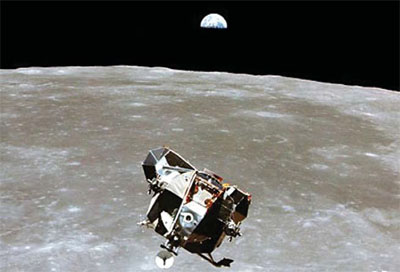
    LONDON (TIP): An advanced laser system offering incredibly faster data speeds to link with spacecraft beyond the Earth has successfully passed a crucial ground test, scientists say. European Space Agency ESA’s observatory in Spain will use the laser to communicate with a Nasa Moon orbiter later this year. The laboratory testing paves the way for a live space demonstration in October, once Nasa’s Lunar Atmosphere and Dust Environment Explorer (LADEE) begins orbiting the Moon. LADEE carries a terminal that can transmit and receive pulses of laser light.

    ESA’s Optical Ground Station on Tenerife will relay data at unprecedented rates using infrared light beams at a wavelength similar to that used in fiber-optic cables on Earth. “The testing went as planned, and while we identified a number of issues, we’ll be ready for LADEE’s mid-September launch,” said Zoran Sodnik, manager for ESA’s Lunar Optical Communication Link project.

    “Our ground station will join two NASA stations communicating with the LADEE Moon mission, and we aim to demonstrate the readiness of optical communication for future missions to Mars or anywhere else in the Solar System,” Sodnik said. The testing took place in July at a Zurich, Switzerland, facility owned by ESA’s industrial partner RUAG and made use of a new detector and decoding system, a ranging system and a transmitter.

    A Nasa team brought over their laser terminal simulator, while ESA together with RUAG and Axcon of Denmark set up the European equipment to test compatibility between the two sets of hardware. “This interagency optical compatibility test was the first of its kind, and it established the uplink, downlink and the ranging measurement,” said ESA’s Klaus- Juergen Schulz, responsible for ground station systems at the European Space Operations Centre, Darmstadt.

    Laser communications at nearinfrared wavelengths may be the way of the future when it comes to downloading massive amounts of data from spacecraft orbiting Earth, Mars or even more distant planets, researchers said. These units are lighter, smaller and need less power than today’s radio systems, promising to cut mission costs and provide opportunities for new science payloads.

  • World’s Fastest Switch Created

    World’s Fastest Switch Created

    LONDON: US department of energy’s (DOE) SLAC National Accelerator Laboratory have clocked the fastest-possible electrical switching in magnetite, a naturally magnetic mineral. Their results could drive innovations in the tiny transistors that control the flow of electricity across silicon chips, enabling faster , more powerful computing devices. Scientists using SLAC’s Linac Coherent Light Source (LCLS) X-ray laser found that it takes only 1 trillionth of a second to flip the on-off electrical switch in samples of magnetite, which is thousands of times faster than in transistors being used now.

    While magnetite’s basic magnetic properties have been known for thousands of years, the experiment shows how much still can be learned about the electronic properties of magnetite. “This breakthrough research reveals for the first time the speed limit for electrical switching in this material,” said Roopali Kukreja, a materials science researcher at SLAC and Stanford University, who is a lead author of the study.The study shows how such conducting and nonconducting states can co-exist and create electrical pathways in next-generation transistors.

    Scientists first hit each sample with a visiblelight laser, which fragmented the material’s electronic structure at an atomic scale, rearranging it to form the islands. The laser blast was followed closely by an ultra bright, ultra short X-ray pulse that allowed researchers to study, for the first time, the timing and details of changes in the sample excited by the initial laser strike. By slightly adjusting the interval of the X-ray pulses, they precisely measured how long it took the material to shift from a non-conducting to an electrically conducting state, and observed the structural changes during this switch.

  • Quakes Add To Global Warming

    Quakes Add To Global Warming

    BERLIN (TIP): Earthquakes may contribute to global warming by releasing methane, a highly potent greenhouse gas, from the ocean floor, according to a new study. An international team of scientists investigated the aftermath of a magnitude 8.1 earthquake that took place in the Northern Arabian Sea in 1945. They postulated that this event caused the release of about 7.4 million cubic metres methane, into the ocean. In 2007, during a research cruise off the coast of Pakistan, the scientists obtained several sediment cores.

    One of these cores contained methane hydrates, a solid ice-like structure of methane and water, just 1.6 metres below the sea floor. Investigations of these enabled the scientists to relate the 1945 earthquake to the concomitant release of methane , researchers said. Scientists from the MARUM Institute at the University of Bremen, the Alfred Wegener Institute Helmholtz Centre for Polar and Marine Research in Bremerhaven , and the ETH Zurich investigated hydrocarbon cold seeps at the Pakistani continental margin. During their expedition with the research vessel METEOR , the researchers extracted sediment core samples , which they closely investigated in the lab.

    “Based on several indicators , we postulated that the earthquake led to a fracturing of the sediments, releasing the gas that had been trapped below the hydrates into the ocean,” said first author Dr David Fischer The conservative estimate of the methane released since the earthquake, not taking into account how much was discharged directly after the quake, is equivalent to roughly 7.4 cubic metres of methane gas at standard conditions at the earth’s surface, which equals 10 large gas tankers.

  • 2G: Supreme Court Slams I-T Dept, CBI For Not Acting On Radia Tape Information

    2G: Supreme Court Slams I-T Dept, CBI For Not Acting On Radia Tape Information

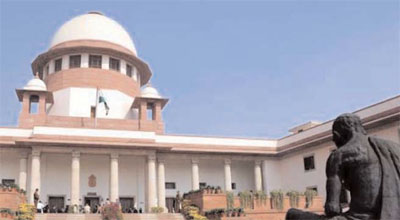
    NEW DELHI (TIP): The Supreme Court pulled up the Income Tax department and Central Bureau of Investigation (CBI) for not taking action in the last five years on information gathered from tapped phone conversations of Niira Radia with corporate honchos, politicians and others, saying it is “not a happy situation”. A bench of Justices G S Singhvi and V Gopala Gowda said the conversations were tapped five years back but government authorities remained idle and questioned whether they were waiting for the court’s order to act.

    “The tapping was done five years ago, what have they (government authorities) done so far? Were they waiting for court’s order?,”the bench asked. “It is not a happy situation that action will be taken only after court’s order,” the bench said. It asked the IT department to place before the bench all original records pertaining to authorisation of tapping of Radia’s phones. The court directed the IT department, which had tapped Radia’s phones, to apprise it whether the officers entrusted with the task of tapping had informed their seniors about the contents of the recording and whether CBI was informed about criminality with regard to matters referred to in the conversations.

    The bench directed the IT department to comply with its order by August 6 when the matter will be taken up for further hearing. The conversations were recorded as part of surveillance of Radia’s phone on a complaint to the Finance Minister on November 16, 2007 alleging that within a span of nine years she had built up a business empire worth Rs 300 crore.

    The government had recorded 180 days of Radia’s conversations – first from August 20, 2008 onwards for 60 days and then from October 19 for another 60 days. Later, on May 11, 2009, her phone was again put on surveillance for another 60 days following a fresh order given on May 8.

  • NCP Supports Demand For Vidarbha , Suggests States Reorganization Commission Be Set Up

    NCP Supports Demand For Vidarbha , Suggests States Reorganization Commission Be Set Up

    NEW DELHI (TIP): A day after the historical decision to carve out Telangana as a separate state from Andhra Pradesh, National Congress Party (NCP) leader Praful Patel said his party supported the formation of Vidarbha so long as the people want it. e also suggested that a states reorganization commission is set up to address the rising demands for new states in the country. “As far as Vidarbha is concerned, it has been a long-pending demand for statehood. There have been, in the 1950’s and 1960’s, big agitations for Vidarbha.

    I am sure people were waiting to see what will happen to Telangana. Now that this decision has been taken, as NCP, I can say we are fully in support of the demand so long as the people of Vidarbha are keen to have it—that has been our stand not only now but even earlier and we stand by it,” Patel said. “I represent Vidarbha. My stance and my party’s stance has been very clear—If the people want, we will support,” Patel added. Commenting on the increasing number of demands for new states, Patel said that they should be considered. “I think such kind of demands will come and have been coming in the past from many regions in the country.

    So, it would not be a bad idea to have a second states reorganization commission set up to look at all these issues,” Patel suggested here. Noting that in the past smaller states have led to development in those regions, Patel said “There is no issue of states being big or small. The question is whether they are justified and viable and I think the states reorganization commission will look into it.” Patel’s remarks come after Congress Member of Parliament Vilas Muttemwar revived the demand to carve out Vidarbha from Maharashtra.

    “The demand of statehood for Vidarbha is stronger and older than Telangana,’ said Muttemwar, who is also a member of the Congress Working Committee (CWC) that finalised the decision to carve out Telangana from Andhra Pradesh. Vidarbha is the eastern region of Maharashtra and is made up of the Nagpur Division and the Amravati Division. Its former name is Berar. It occupies 31.6 percent of total area and holds 21.3 percent of total population of Maharashtra. It borders the state of Madhya Pradesh to the north, Chhattisgarh to the east, Andhra Pradesh to the south and Marathwada and Khandesh regions of Maharashtra to the west.

  • Punjab Govt Appoints Sarabjit Singh’s Daughter As Naib Tehsildar

    Punjab Govt Appoints Sarabjit Singh’s Daughter As Naib Tehsildar

    CHANDIGARH (TIP): Fulfilling the promise made to the family of Sarabjit Singh, who had died after a deadly attack in a Pakistan jail, Punjab Chief Minister Parkash Singh Badal today appointed his daughter Swapandeep Kaur as Naib Tehsildar. Handing over the letter to Swapandeep Kaur at Jalandhar after her appointment as the revenue official, the Chief Minister said that Sarabjit Singh was a “national martyr as he had suffered endless agonies in the Pakistani jail for being an Indian”.

    Badal, according to an official release, said that the appointment of Swapandeep Kaur as Naib Tehsildar was a humble tribute from the state government “in recognition to Sarabjit’s supreme sacrifice for the national cause”. “We have fulfilled our moral duty as it was a basic responsibility of every government to respect the heroes who had laid down their life for the national cause,” he added. Extending his best wishes to Swapandeep Kaur, the Chief Minister hoped that she would perform her duty with utmost sincerity and dedication.

    The Chief Minister had announced to offer government job to Swapandeep Kaur at a prayer function held in memory of Sarabjit Singh and subsequently the Cabinet had given approval for it on May 28 this year. 49-year-old Sarabjit died of cardiac arrest in a Pakistani hospital on May 2 after being comatose for nearly a week following a brutal assault by fellow inmates in a high- security jail.

  • ‘Metro Man’ Sreedharan Gets Lokmanya Tilak Award

    ‘Metro Man’ Sreedharan Gets Lokmanya Tilak Award

    PUNE (TIP): “Metro Man” E Sreedharan has emphasised integrity, punctuality and professional competence are vital factors for undertaking any major infrastructure project to avoid cost overruns. Sreedharan, who was conferred the ‘Lokmanya Tilak Award’ for 2013 at a function in Pune on Thursday night for outstanding contribution to society, said, “In infrastructure projects, time is money.” Professional competence marked the development of the Delhi Metro project, which was a technical marvel and also a sustainable model, said Sreedharan, considered as the architect of the ambitious Delhi Metro project.

    “It needs to be ensured that the project causes minimum problems to people with minimum dislocation and disruption in traffic flow in the city,” he pointed out. Referring to the proposed Pune Metro project, he said “valuable time” of about five years had been lost in the execution of it which could result in cost escalation. Deepak Tilak, chairman of the Lokmanya Tilak Trust presented the award – which carried a Rs. 1 lakh cash amount and a citation – to the Padmashree laureate, who is also credited with pulling off the Konkan Railway projects.

  • Why Does India Dither On Bringing Dawood To Justice?

    Why Does India Dither On Bringing Dawood To Justice?

    NEW DELHI (TIP): Early this week, the Delhi police filed a charge sheet that stated Dawood Ibrahim masterminded the IPL match-fixing scam. This seems a civil effort on the part of the Delhi police when compared to the two attempts that the Research and Analysis Wing (R&AW) made on his life in 1994. Though the killing mission had been worked to the minutest detail, they were aborted at the last minute as the highest police authorities balked at it.

    The first plan was to send a team of highly-trained assassins to Karachi where Dawood lives in a palatial house in upmarket Clifton area close to the beach. A team of four assassins was provided extensive training in the use of sophisticated arms and explosives and also briefed about the geography of the Clifton neighbourhood. A getaway plan was also worked out. The government gave preliminary approval for the plan following which the hit squad was flown to Kathmandu, given fake Nepalese passports and despatched to Karachi.

    The arms and ammunition were sent across to a safe house in Karachi by using the route used by smugglers. The area was closely recced. Even as the assassins, who were all hardcore members of the Chhota Rajan gang, were making last-minute preparations to go for the kill, the central government, led by the then Prime Minister P V Narasimha Rao, asked that the plan be put on hold

  • US Drone Strikes In Pakistan Will End ‘Very Soon’: JOHN KERRY

    US Drone Strikes In Pakistan Will End ‘Very Soon’: JOHN KERRY

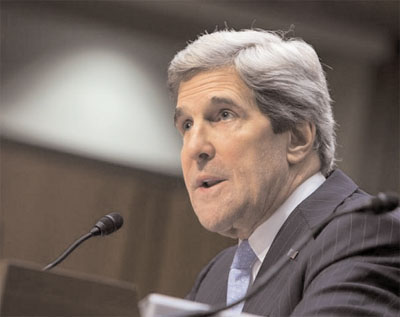
    ISLAMABAD (TIP): US secretary of state John Kerry told Pakistanis on August 1 that Washington planned to end drone strikes in their country soon – a message aimed at removing a major source of anti-American resentment in the strategically important country. After meeting Prime Minister Nawaz Sharif, Kerry said they had agreed to reestablish a “full partnership”, hoping to end years of acrimony over the drone strikes and other grievances including the US raid that killed Osama bin Laden.

    In a television interview later, Kerry said of the drone strikes: “I think the program will end as we have eliminated most of the threat and continue to eliminate it.” “I think the president has a very real timeline and we hope it’s going to be very, very soon,” he told Pakistan Television, when asked whether the US had a timeline for ending drone strikes, aimed at militants in Pakistan. US drone missiles have targeted areas near the Afghan border including North Waziristan, the main stronghold for various militant groups aligned with al-Qaida and the Taliban, since 2004.

    Pakistanis have been angered by reports of civilian casualties and what they see as an abuse of their sovereignty. It is unclear if, in their face-to-face talks, Sharif asked Kerry to halt the drone attacks. But when asked at a news conference whether Pakistan wanted the US to curtail the strikes, his foreign affairs adviser, Sartaj Aziz, replied: “We are asking them to stop it, not just curtail it.”

    Besides the drones and the killing of bin Laden in 2011, relations have been strained by Pakistan’s support for Taliban insurgents fighting Western troops in Afghanistan as well as a NATO air attack in which 24 Pakistani soldiers were killed. “I want to emphasize the relationship is not defined simply by the threats we face, it is not only a relationship about combating terrorism, it is about supporting the people of Pakistan, particularly helping at this critical moment for Pakistan’s economic revival,” Kerry told reporters.

    A new government in Pakistan and a new secretary of state in Washington have increased hopes the two sides can settle their grievances – something both hope to gain from, with Pakistan’s economy badly needing support and the United States aiming to withdraw the bulk of its troops from Afghanistan next year. Speaking after talks with Sharif in Islamabad, Kerry – who as a senator sponsored legislation to provide $7 billion in assistance to Pakistan over 5 years – said he had invited Sharif to visit the United States, Pakistan’s biggest donor, for talks with President Barack Obama.

    “What was important today was that there was a determination … to move this relationship to the full partnership that it ought to be, and to find the ways to deal with individual issues that have been irritants over the course of the past years,” he said. “And I believe that the Prime Minister is serious about doing that. And I know that President Obama is also.”

  • US, Pak Agree To Resume Stalled Strategic Dialogue

    US, Pak Agree To Resume Stalled Strategic Dialogue

    ISLAMABAD (TIP): Glossing over strained bilateral ties for over two years, the United States and Pakistan on August 1 agreed to resume the stalled strategic dialogue while Washington played down Islamabad’s concerns over continuing American drone strikes in its lawless northwestern tribal regions to take out Taliban militants. “We are here to speak honestly with each other, openly about any gaps that may exist and we want to bridge,” US secretary of state John Kerry said during his longanticipated visit to Islamabad, the first high-level contact after the Nawaz Sharif government took charge.

    “Our people deserve that we talk directly,” he said. Bilateral ties hit an all-time low in 2011 when US air strikes killed 24 Pakistani soldiers in the tribal region, bordering Afghanistan, and after al Qaeda chief Osama bin Laden was killed in the garrison town of Abbottabad in a daring secret raid by helicopter-borne US commandos. Pakistanis by CIA contractor Raymond Davis in Lahore.

  • Chicken Supply Banned In Kathmandu Over Flu Spread

    Chicken Supply Banned In Kathmandu Over Flu Spread

    KATHMANDU (TIP): The spread of bird flu over the past 15 days has forced the Nepalese government to ban the movement of poultry products in the Kathmandu valley. The ban, which came into effect on Thursday, will last for a week and the situation will be further assessed after that, according to Dr Vijay Kanta Jha of the Directorate of Animal Health. “So far 33,300 chickens have been culled in the Kathmandu valley,” Dr Jha said, adding that the spread of the H5N1 virus was yet to be brought under control.

    For the past two weeks, chickens have been culled each day in 21 poultry farms on the city’s outskirts. The ban essentially means no poultry products will be available for sale in the capital, since there will be no supply. No similar restriction has been placed in the rest of the country.

  • Japan’s Deputy PM Aso Says He Won’t Resign Over Nazi Comments

    Japan’s Deputy PM Aso Says He Won’t Resign Over Nazi Comments

    TOKYO (TIP): Japan’s deputy Prime Minister Taro Aso said on Friday he has no intention of resigning over comments he made, but were later retracted, that were interpreted as praise for Germany’s Nazi regime and Adolf Hitler’s rise to power. The comments by Aso, who is also finance minister and a former premier, drew criticism from a US-based Jewish rights group as well as in media in South Korea, where bitter memories of Japan’s World War 2 militarism run deep.

    The gaffe could complicate foreign policy for Prime Minister Shinzo Abe because there are lingering worries that Abe is shifting Japan to the right by pushing for a bigger role for the military and a less apologetic view of Japan’s wartime history. “I have no intention of resigning,” Aso told reporters after a cabinet meeting on Friday. Aso’s original remarks were made while he was discussing constitutional reform in a speech to a conservative group on Monday. “Germany’s Weimar constitution was changed before anyone realised,” Aso said, according to Japanese media accounts.

    “It was altered before anyone was aware. Why don’t we learn from that technique?” Aso said. “I don’t want us to decide (on the constitution) amid commotion and excitement. We should carry this out after a calm public debate.” On Thursday, Aso said he had meant to seek a calm and indepth debate on the constitution. He said he wanted to avoid the kind of turmoil that he said helped Hitler change the democratic constitution established by Germany’s Weimar government after World War One, under which the dictator had taken power.

    Abe wants to revise Japan’s constitution, drafted by the United States after World War Two, to formalise the country’s right to have a military. Critics say his plan could return Japan to a socially conservative, authoritarian past.

  • One Protester Killed In Shooting By Sri Lankan Military

    One Protester Killed In Shooting By Sri Lankan Military

    COLOMBO (TIP): One person was killed and about 15 were wounded when Sri Lanka’s military shot at a protest demanding clean drinking water. At least 4,000 protesters had gathered on Thursday in Weliweriya, some 12 miles (20 kilometers) northeast of the capital, Colombo. A protester who spoke on condition of anonymity, fearing reprisals, said chemical emissions from a factory into water sources has polluted drinking water in about 15 area villages.

    Residents have been demanding for more than a month that authorities close down the factory but to no avail, the protester said. He said police used tear gas to break up the protest, but when protesters clashed with police, the army shot at them. He said soldiers shot at some protesters who were running away. Reporters said soldiers beat up several reporters and photographers who were covering the incident and smashed their cameras. Kanchana Dissanayake, editor of Sinhala-language “Ada” (Today) newspaper, said that his photographer was admitted to a hospital after being beaten by soldiers.

    He claimed the soldiers said that “media dogs” should not cover the protest and smashed his camera. Another female reporter said on condition of anonymity fearing reprisals that soldiers first targeted journalists because they wanted the media away before turning on the protesters. Many reporters were hiding for many hours into the night, she said. Police spokesman Buddika Siriwardene said one person died and 15 were hospitalized but declined to comment on the nature of the injuries. Siriwardene said the situation arose because protesters continued to block a main road, obstructing traffic, despite agreeing with the defense ministry to call off demonstrations until investigations are complete.

  • India Born Mamnoon Hussain Is Pak’s 12th President

    India Born Mamnoon Hussain Is Pak’s 12th President

    ISLAMABAD (TIP): India-born Mamnoon Hussain, a close aide of Prime Minister Nawaz Sharif, was on August 1 elected as the 12th President of Pakistan and will replace incumbent Asif Ali Zardari in September. Hussain emerged as a clear winner in the one-sided contest with ex-judge Wajihuddin Ahmad of Pakistan Tehreek-i-Insaf party, state media reported. Pakistan People’s Party withdrew its candidate Raza Rabbani and boycotted the election in protest to the date of polls being changed.

    The polling started at 10.00am amidst tight security arrangements. Born in the historic city of Agra, Hussain, who belongs to an Urduspeaking ethnic group that migrated from India during partition in 1947, was the candidate of ruling PML-N government. Over 1,000 members of the national parliament and four provincial assemblies cast their ballots to elect largely ceremonial head of the state.

    The office of the president is ceremonial in Pakistan but he is still the constitutional chief of the armed forces but cannot order deployments. He also appoints the services chiefs at the recommendation of the prime minister. Pakistan so far had 11 presidents, out of which five were military generals. Four of them seized powers through coups, whereas first president Major Sikandar Mirza was elected in 1956 after the first constitution was adopted.

  • Biased’ UK Visa Bond To Face Legal Challenge?

    Biased’ UK Visa Bond To Face Legal Challenge?

    LONDON (TIP): The controversial cash bonds for Indians could soon end up in the European Court of Human Rights with a top London lawyer Sarosh Zaiwalla saying the visa bonds “amount to discrimination against Indians” which would be unlawful under the European Convention of Human Rights (ECHR) law. Zaiwalla is the first Asian to set up an Indian law firm in London and has earlier defended high profile clients like Sonia Gandhi, Al Shirawi Group, the Tata and Godrej groups as well as the Dalai Lama. He told TOI, “it should be possible to challenge the visa bond requirements for Indian visa applicants before the European Court of Human Rights in Strasburg as such a requirement from a few select countries will in my view amount to discrimination against Indians.”

    Mr Zaiwalla said, “The bonds have not yet come into existence and needs to be approved in parliament. But it’s a clear case of discrimination on the basis of race and country.” According to him, immigration can be controlled by having in place a strict policy like the one which Margaret Thatcher government had which was “if you are good for the country you are welcome to come to UK but not if you are not good for the country”.

    According to Zaiwalla, the bonds might alienate small Indian businesses from working with UK as these businesses will require to put up security for travel of their staff members to UK which in turn will affect their cash flow. Many of the staff members travel to UK on visitor’s visa where the security will now be required.

  • Indian ‘Cigarette Snatcher’ Dies In Dubai

    Indian ‘Cigarette Snatcher’ Dies In Dubai

    DUBAI (TIP): An Indian cancer patient, who campaigned against smoking in unusual ways such as confronting strangers in public places and pleading with them to quit smoking, succumbed to lung cancer in a Dubai hospital. Abraham Samuel, 53, popularly known as ‘cigarette snatcher’ died on July 28 evening. Samuel is survived by his wife and two daughters aged 22 and 20. He smoked two packets a day for 35 years and was diagnosed with lung cancer in 2010.

    It was then that he turned to approaching strangers in public places and pleading with them to quit smoking earning the title of “cigarette snatcher”, the Gulf News report said. Samuel’s method of taking upon himself to “convert” smokers around him instead of indulging in self-pity had its effect on a lot of people who chose to stop smoking. “When I see someone smoking, I simply walk up to them and ask them to give it up. People don’t always like it, but I don’t stop myself. Sometime I even open my shirt and show them my radiation marks – so they understand the severity of my condition.

    “I don’t know how much time I have left in this world, but I will do as much as I can to tell people to give up smoking,” Samuel had told a newspaper few months back. Several people apparently quit the smoking after listening about his woes, the report said. “After reading about Abraham, I’ve decided to throw my cigarette packet away. God gave us a healthy body, why should we damage it?,” an erstwhile smoker was quoted by the newspaper as saying.

  • Britain Appoints Indian-Origin Kumar Iyer As UKTI India Head

    Britain Appoints Indian-Origin Kumar Iyer As UKTI India Head

    NEW DELHI (TIP): The British government on August 1 appointed Kumar Iyer, an Indian-origin official, as director general for UK Trade and Investment (UKTI) in India. This is a new top level post and has been created to reflect the increasing importance of business ties between the two countries. As UKTI director general, India, Iyer will have overall responsibility for the bilateral commercial and trade relationship. Iyer will also be British deputy high commissioner for western India. He will take up both positions, based in Mumbai, Aug 5.

    “I am very excited at the prospect of living and working in India, it’s a country of boundless energy, talent and potential. Having lived and studied in India whilst growing up, I am equally keen to play my part in promoting the academic, cultural and social links between our two countries,” Iyer said, looking forward to his posting. Iyer has an MPhil in Economics from Cambridge University where he was a Bank of England scholar and an undergraduate tutor in Microeconomics. He was also a Kennedy Scholar and Teaching Fellow in International Capital Markets at Harvard University. Since 2008, Iyer has been a high-ranking official at the British Treasury and the Prime Minister’s Strategy Unit.

  • US Senate Approves Samantha Power As New UN Ambassador

    US Senate Approves Samantha Power As New UN Ambassador

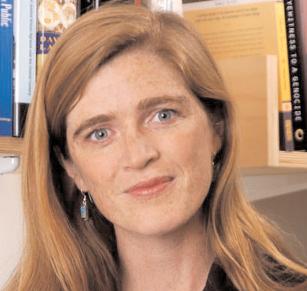
    WASHINGTON (TIP): The US Senate easily confirmed President Barack Obama’s selection for ambassador to the United Nations on August 1. The Irish-born Samantha Power, a former Obama foreign policy adviser and outspoken human rights advocate, moves into the job formerly held by Susan Rice, who is now Obama’s national security adviser. “As a long-time champion of human rights and dignity, she will be a fierce advocate for universal rights, fundamental freedoms and US national interests,” Obama said in a statement.

    Power, a one-time journalist who has a Harvard Law School degree, has reported from many of the world’s trouble spots. She won a 2003 Pulitzer Prize for a book on the meek US response to many 20th century atrocities, including those in Rwanda and Bosnia in the 1990s. She has long backed intervention — including military force — to halt human rights violations. Power’s past outspokenness has included her 2002 call for a “mammoth protection force” to prevent Middle East violence, from which she has distanced herself.

    Two weeks ago, Venezuela said it was calling off efforts to restore normal relations with the US after Power said at her Senate confirmation hearing that the South American country was guilty of a “crackdown on civil society.” She also called the UN’s inaction to end the large-scale killing in Syria’s civil war “a disgrace that history will judge harshly.” In 2008, she resigned as an adviser to Obama’s presidential campaign after calling then-rival Hillary Rodham Clinton a “monster.”

  • Man Forgotten In United States Prison To Get $4m In Damages

    Man Forgotten In United States Prison To Get $4m In Damages

    SAN DIEGO (TIP): A 25-year old college student has reached a $4.1 million settlement with the US government after he was abandoned in a windowless Drug Enforcement Administration (DEA) cell for more than four days without food or water, his attorneys said on July 31. The DEA introduced national detention standards as a result of the ordeal involving Daniel Chong, including daily inspections and a requirement for cameras in cells, said Julia Yoo, one of his lawyers.

    Chong said he drank his own urine to stay alive, hallucinated that agents were trying to poison him with gases through the vents, and tried to carve a farewell message to his mother in his arm. It remained unclear how the situation occurred, and no one has been disciplined, said Eugene Iredale, another attorney for Chong. The justice department’s inspector general is investigating.

    “It sounded like it was an accident – a really, really bad, horrible accident,” Chong said. Chong was taken into custody during a drug raid and placed in the cell in April 2012 by a San Diego police officer authorized to perform DEA work on a task force. The officer told Chong he would not be charged and said, “Hang tight, we’ll come get you in a minute,” Iredale said.

  • Michael Jackson’s Security Chief Details Drug Concerns

    Michael Jackson’s Security Chief Details Drug Concerns

    LOS ANGELES (TIP): A former security worker for Michael Jackson says he was concerned the singer would overdose on prescription medications in the early 2000s. Michael La Perruque told jurors Thursday that he occasionally went into the singer’s hotel room to make sure he was breathing, and he saw Jackson attend a few meetings when he appeared impaired.

    But La Perruque says he didn’t see similar behavior when he worked for Jackson in late 2007. He also told jurors he saw Jackson two weeks before the singer’s death and he looked fine, but he was skinnier than usual. La Perruque was called to testify by lawyers for concert promoter AEG Live LLC. The company is being sued by Jackson’s mother but denies it is liable for Jackson’s June 2009 death.

  • Priest’s Son Sees Father For The First Time At Funeral

    Priest’s Son Sees Father For The First Time At Funeral

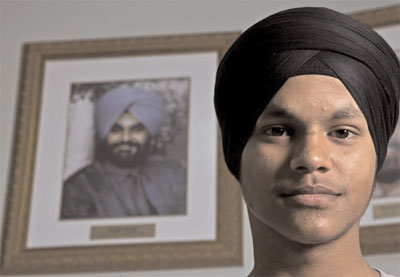
    Wisconsin Sikh temple shooting:
    OAK CREEK, WISCONSIN (TIP): Gurvinder Singh approached his father’s open coffin with one thought: “Please, god, it’s not my dad.” As he stepped closer, he realized the man was indeed the father he knew only from photographs. The 14-yearold stood numbly, not crying until officials wheeled the coffin toward a hearse. Then Gurvinder collapsed in tears, inconsolable, telling his mother he wanted to die in the same flames that would cremate his father. Ranjit Singh left his family behind in India in 1997, to work as a priest at the Sikh Temple of Wisconsin.

    He always planned to visit Gurvinder, his only son, whom he last saw as a 7- month-old. But last August, two months before the father was to go home for the first time in nearly 14 years, Singh and five others were fatally shot by a white supremacist at the temple. The gunman’s motive still eludes police. With the anniversary of that day approaching, Gurvinder recently sat in the same temple, down the hallway from where his father was killed, and recounted the few memories he has of the man he knew only from daily but brief phone calls.

    “I’ve never seen my dad. I just saw him dead,” Gurvinder said softly, shaking his head. “Whenever I look at someone’s dad holding him I can’t see that. It’s hard to see.” Gurvinder, now 15, is quiet and softspoken. But he’s quick to smile at people he’s meeting for the first time. He’s also eager to help out at the Oak Creek temple, carrying in boxes of groceries and keeping common areas clean. He spends nearly every day at the temple. Wherever he goes he’s reminded of the father he never met, from memorial portraits of all six victims that now adorn the lobby, to the bedroom his father called home.

    He also has a tattoo on the back of his left hand _ the same tattoo his father had _ of Punjabi characters that say, “One god.” But he pauses daily at one place: a single bullet hole, about the size of a dime, in the door jamb leading to the main temple. Temple officials left the hole unrepaired as an eternal reminder, affixing a tiny plaque below it with the date of the shooting and the words, “We Are One.” Gurvinder said it’s not difficult to spend so much time around where his father died. He said death can come at any time to any person, and he leaves it to God to take him or anyone else whenever it’s time.

    Still there’s angst _ especially about the shooter who eventually killed himself after he was wounded by a police sniper the morning of Aug. 5, 2012. Gurvinder understands that as a Sikh, his religion teaches forgiveness and peace. But if the gunman were alive, “I would kill him. I don’t speak anything to him _ I just shoot him,” Gurvinder said. He added that a therapist he’s been seeing for a year has helped him deal with his anger.

    Gurvinder was sitting at home in New Delhi last year when a cousin told him there had been a shooting at the Wisconsin temple where his father worked. Even as he phoned his mother and two sisters, Gurvinder refused to believe his father was hurt. “I wasn’t really believing it,” he said. “I kept telling my mother, `No, that’s not him.”‘ Then the victims’ identities were confirmed. With the FBI easing the visa process, Gurvinder and his family rushed to the U.S. to attend the funeral.

    When they arrived one of the first things Gurvinder saw was the pair of black shoes he had asked his father to send him in India. A few days later he saw his father lying in the coffin. Ranjit Singh appeared to be sleeping, and he looked exactly as he did in the photographs he frequently sent back home. Gurvinder gazed at his father in silence for 10 to 15 minutes before he felt his legs give way. He and his family had packed for a two-month trip to America, but once they arrived, Sikh friends advised them to stay.

    The U.S. Department of Justice has helped extend their visas, and Gurvinder has been attending public school. He just finished ninth grade. He hopes to stay in the U.S. permanently, going to college and eventually opening up his own business.Gurvinder and his father spoke by phone daily for about five minutes. They would talk about their lives, and occasionally Ranjit Singh would ask what his son wanted from the U.S. Gurvinder would reply that all he wanted was for his father to come home. Singh would apologize and make vague promises about coming home.

    But last year he promised to return in October for Diwali, the Indian festival of lights. Gurvinder had just one goal: to take his father to a secluded place and ask why he left. But it never happened.Despite the pain the memory of his father inspires him. He says he wants to grow up to be such a good person that people say, ” Yes, that’s Ranjit Singh’s son.”

  • Obama Calls Netanyahu And Abbas On Resumption Of Peace Talks

    Obama Calls Netanyahu And Abbas On Resumption Of Peace Talks

    WASHINGTON (TIP): US President Barack Obama called on Israeli Prime Minister Benjamin Netanyahu and Palestinian President Mahmoud Abbas, on this week’s resumption of the final status negotiation of the peace talks, the White House said. “The president reaffirmed that the United States stands ready to support the parties in achieving a just and lasting peace based on the two state solutions, and will continue to work closely with the Palestinian Authority to achieve this goal,” a statement released by the White House has said.

    “The president underscored that while the parties have much work to do in the days and months ahead, the United States will support them fully in their efforts to achieve peace,” it added

  • US To Close Some Embassies On Sunday Over Threat

    US To Close Some Embassies On Sunday Over Threat

    WASHINGTON (TIP): US embassies that would normally be open this Sunday – including those in Abu Dhabi, Baghdad and Cairo – will be closed that day because of unspecified security concerns, the US State Department said on August 1. CBS News reported that the embassy closings were tied to US intelligence about an al-Qaida plot against US diplomatic posts in the Middle East and other Muslim countries.

    CBS said the intelligence did not mention a specific location. “The Department of State has instructed certain US embassies and consulates to remain closed or to suspend operations on Sunday, August 4th,” State Department spokeswoman Marie Harf told reporters at her daily briefing. “Security considerations have led us to take this precautionary step.” Harf declined to detail the “security considerations” or name the embassies and consulates that would be closed, but a senior State Department official told reporters later they were those that would normally have been open on Sunday.

    A quick search of the State Department website showed that those included several US missions in the Muslim world, including the embassies in Abu Dhabi, Baghdad and Cairo. CBS News said US embassies would also be closed in Bahrain, Israel, Jordan, Kuwait, Libya, Oman, Qatar, Saudi Arabia, Yemen, Afghanistan and Bangladesh. “The department has been apprised of information that, out of an abundance of caution and care for our employees and others who may be visiting our installations … indicates we should institute these precautionary steps,” Harf said. “The department, when conditions warrant, takes steps like this to balance our continued operations with security and safety.”