COLOMBO (TIP): A Sri Lankan cabinet minister has questioned the impartiality of visiting United Nations human rights chief Navi Pillay, accusing her of supporting ethnic Tamil separatists because of her own Tamil background. Pillay is a South African of Indian Tamil origin. She is visiting Sri Lanka to review its progress in investigating alleged abuses during a civil war between government troops and Tamil rebels. Housing minister Wimal Weerawansa said Pillay would prepare an “extremist and unjust report” that is unfair to Sri Lanka because of her ethnicity. He accused Pillay of holding secret meetings with activist groups outside her official schedule. Pillay’s spokesman said she is conducting her mission as she would in any country. Pillay is to present her findings to the UN Human Rights Council next month.
Month: August 2013
-

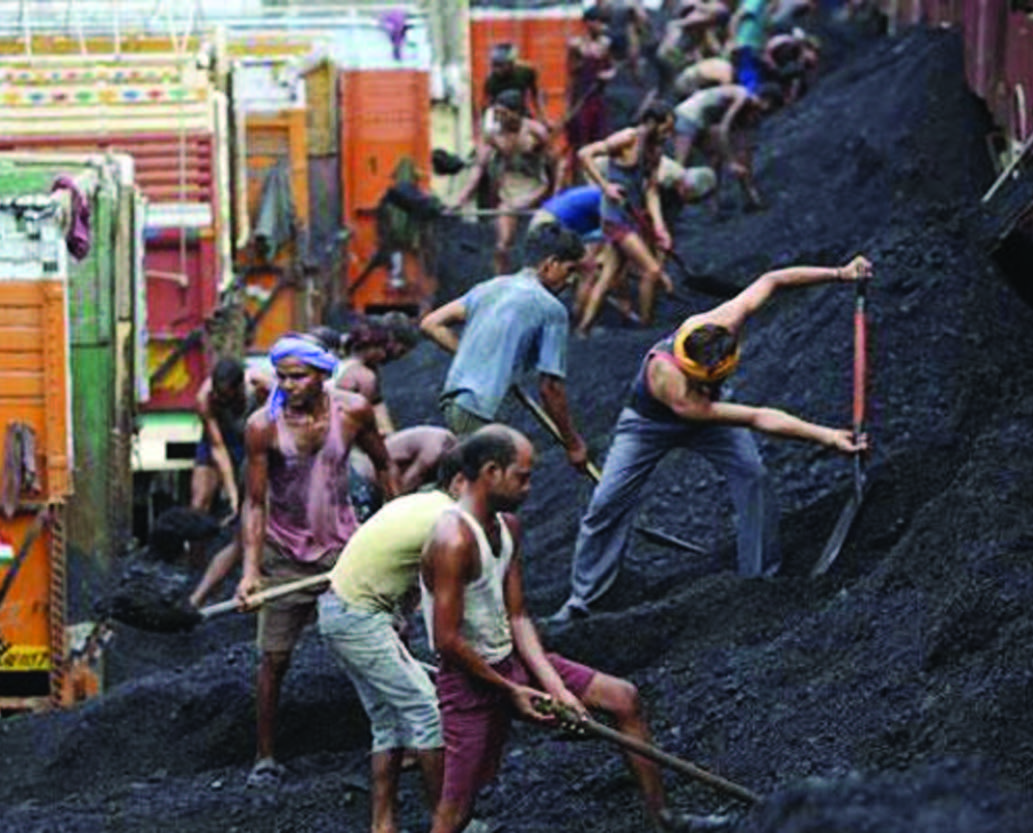
Trace missing coal files in 26 days or face CBI probe: SC
NEW DELHI (TIP): Taking a serious view of the missing files and documents relating to coal block allocations, the Supreme Court on August 29 directed the Centre to trace these within 26 days or face a CBI probe. A three-member Bench headed by Justice RM Lodha asked the CBI to provide within five days the list of files and documents still awaited from the Union Coal Ministry to Attorney General GE Vahanvati who would forward it to the Centre. The agency is probing the alleged irregularities in the allocations.
Pointing out that the documents sought by the CBI were vital for taking the agency’s probe to its logical conclusion, the Bench asked the Ministry to submit all the available papers to the agency within two weeks thereafter. Within a week thereafter, the ministry would have to submit a report to the CBI listing the untraceable documents “for an investigation.” The Bench noted that the missing documents were very important for carrying forward the CBI probe as these contained crucial information relating to the companies that were allocated coal blocks for mining. The details included the companies’ eligibility/ ineligibility for seeking coal blocks and their financial status. The missing papers also included some of the letters written by the Prime Minister’s Office (PMO) while forwarding to the Coal Ministry the recommendations received from politicians for allocation of coal blocks to specific companies, the Bench noted while reading out portions of the CBI’s latest status report on its investigations.
During the hearing that lasted more than 2.5 hours, the Bench grilled the Centre as to why it was taking “months and months” for locating the missing documents. The CBI had registered the case about 15 months ago. Since the movement of government files was tracked on the computer, these could not go missing like this, it said. The Bench, which included Justices MB Lokur and Kurian Joeph, also asked the government as to why it had not filed an FIR so far about the missing documents. Only a probe would show whether the files had been stolen or destroyed. “You can’t sit on CBI’s request for files like this. You are not dealing with a private litigant to behave like this.” The apex court also found fault with the CBI for the slow progress in its probe. CBI’s investigations had covered only 37 of the 169 companies involved in the alleged scam, leaving the remaining 132 “untouched.
You are still driving in the first gear. When will you pick up speed?” it asked the three top CBI officials who were present in the court. The officials who are leading the probe assured the Bench that the agency would complete the investigations by the end of this year. The Centre had filed an affidavit in the SC on August 27, listing the missing documents and assuring the court that efforts were on to trace these within a month. The Bench is monitoring the CBI probe on PILs complaining that the CBI was deliberately going slow on the case at the instance of the Centre.
-

EFFORTS ON FOR MANMOHAN-SHARIF MEETING IN NY
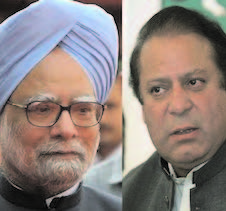
New Delhi (TIP): Pakistan is in touch with India to explore the possibility of a possible meeting between the Prime Ministers of the two countries on the margins of the UN General Assembly in New York next month. It is learnt that the Special Envoys of the two countries — SK Lambah (India) and Shaharyar Khan (Pakistan) — have been asked to initiate back-channel diplomacy to see how tension could be brought down and a meeting between Prime Minister Manmohan Singh and his Pakistani counterpart Nawaz Sharif could take place. Lambah is likely to meet Khan in Dubai away from the media glare to hold free and frank discussions.
Though Indian officials were tightlipped on ‘Track II’ diplomacy, Pakistan Foreign Ministry spokesman Aizaz Chaudhry confirmed in Islamabad that the two pointsmen for back-channel diplomacy were in touch with each other. “As for the meeting in New York, it has been the position of the government of Pakistan that should an opportunity arise, we believe that such a contact between the leadership of the two countries will be a useful occasion to discuss the steps required to improve relations,’’ he said. Pakistan has proposed a meeting between the two PMs on September 29. New Delhi has, however, remained ambiguous on the possibility of the meeting between the two PMs since the flare-up on the Line of Control (LOC) earlier this month. At the same time, it has reiterated time and again in recent days that Pakistan must ensure that its territory was not allowed to be used for terrorist activities against India so as to create an atmosphere for talks between the two nations. Hours after IM founder Yasin Batkal’s arrest was announced this morning, External Affairs Minister Salman Khurshid hoped that the thinking in Pakistan would change and it would hand over to New Delhi all those fugitives from the Indian law who have taken shelter in the neighbouring country.
-

SHARAD, MULAYAM SEEK LAW TO CURB RUNAWAY
NEW DELHI (TIP): Backward satraps Mulayam Singh Yadav and Sharad Yadav made a strong pitch for a law to control population, turning the infamous Emergency on its head when “socialists” were at the forefront of opposing the coercive measures authored by Sanjay Gandhi. JD(U) president Sharad Yadav told Lok Sabha that no matter how many laws are made, they would be nonstarter till a strong law is brought to rein in population. He even demanded a special session of Parliament to discuss the issue.
The Bihar MP found strong support from Samajwadi Party chief Mulayam who said there was a law on population but was not being respected. “You say that jobs should not be given to people who have more than two children. Everything will fall into place on its own,” Mulayam said. The issue came up for a brief but animated discussion in Lok Sabha during the debate on land acquisition bill. Mulayam warned that continued acquisition of agricultural land could lead to food scarcity in future, adding that farm land was decreasing by 3% annually while population was increasing. No sooner did he make the remark that Sharad Yadav interjected to say “a law should be brought to control population”. The advocacy to curb the growing numbers, even through a law, surprised observers who said the political journey of the backward satraps had come a full circle.The socialist bloc that the Yadav duo hails from had opposed coercive population control pushed by Sanjay Gandhi during the Emergency. The forced sterilization on men to stop births were condemned as totalitarian approach modeled on the China formula. Later, even supporters of the move in Congress had acknowledged it was a mistake
-

SC orders transcription of more Radia tapes
NEW DELHI (TIP): The Supreme Court on August 29 widened the scrutiny to trace criminality in Radia tapes by ordering transcription of some more intercepts of conversations between former corporate lobbyist Niira Radia and others for their analysis by a CBI team. During the nearly two-hour in-camera proceedings, a bench of Justices G S Singhvi and V Gopala Gowda kept the heat on the income tax department and the CBI for not investigating the ‘criminality’ reflected in some intercepts, which concerned national security and cross-border transactions. Additional solicitors general L Nageswar Rao and Paras Kuhad, appearing for the Union government and the CBI respectively, were asked several questions relating to the progress of investigation, if any, on the issues which raised eyebrows because of its bearing on national security.
The bench came across a cache of intercepts, possibly from the first round of interception in 2009 when 14 of Radia’s personal and office telephones were kept on surveillance, which had not yet been transcribed. Till now, the I-T department has transcribed 5,831 calls intercepted in three tranches, which ran into more than 100 hours. The transcripts have been submitted to the court in 51 volumes in sealed cover. The court directed the I-T department to reduce the non-transcribed tranche of intercepts into writing and give the transcripts to the team of CBI officers which had analyzed the transcripts of 5,831 calls and pointed out 10 categories of possible illegalities in the conversations. The court fixed further hearing on the issue on October 1 and wanted the CBI team to analyze it and give a report. During the hearing, only the ASGs and their juniors along with CBI’s 2G spectrum investigating officers and I-T department officials were allowed to be present inside the court room. The entry to court room No. 2 was heavily guarded by Delhi Police constables, who prevented other lawyers and litigants from entering.
-

India’s first defence satellite GSAT-7 launched successfully
New Delhi (TIP): India’s first exclusive satellite for Navy, GSAT-7, was successfully launched by European space consortium Arianespace’s Ariane 5 rocket from Kourou spaceport in French Guiana. GSAT-7 is India’s first dedicated spacecraft for defence applications. “It has frequency bands that will help marine communications”, an official of Bangalore-headquartered Indian Space Research Organisation, which built the satellite, said. “It has coverage over India landmass as well as surrounding seas. It’s important from security and surveillance points of view”, the official said on condition of anonymity. A senior space scientist in the know said: “So far, Navy had limitation from line of sight and ionospheric effects etc.
It was thought essential to have an integrated platform for their exclusive use. Earlier, satellite communication in ships was through Inmarsat (a major provider of global mobile satellite communications services). Now, India will have its own set up” The Rs 185 crore state-of-the-art satellite carries payloads operating in UHF, S, C and Ku bands. GSAT-7 has a lift-off mass of 2625 kg and is based on ISRO’s 2500 kg satellite bus with some new technological elements, including the antennae. Its solar arrays generate 2900 W of electrical power. A108 Ampere-Hour Lithium-Ion battery enables the satellite to function during the eclipse period. The propulsion subsystem has a 440 Newton Liquid Apogee Motor (LAM) and thrusters. The launch cost for ISRO is around Rs 470 crore, including insurance. ISRO can’t launch heavy satellites like GSAT-7 as its home-grown GSLV rocket, with indigenous cryogenic stage, is still at works and needs two successful flights before it’s declared operational.
-

Political conspiracy to defame me: Asaram Bapu
BHOPAL (TIP): Spiritual guru Asaram Bapu on August said the sexual assault charge against him was politically motivated. “I am not against any political party but people are telling me that ‘madam’ and her son are behind the conspiracy,” said Asaram Bapu, referring to Congress president Sonia Gandhi and her son Rahul Gandhi, the party vice president. “I am not personally blaming anyone. I am telling you what I have heard because you (media) have been compelling me to speak on the issue,” he added. Some Bharatiya Janata Party leaders, including Uma Bharti, have come out in support of the seer, alleging that he was being targeted for his anti-Congress views. Asked whether he was being supported by the BJP, the seer snapped at the media persons. “No party is defending me. This is wrong. You are trying to harass me,” said a livid Asaram Bapu. A 16-year-old girl had last week alleged that Asaram Bapu had raped her during one of her stays at the seer’s ashram. A case has been filed by Rajasthan Police and Asaram Bapu has been served summons to present himself Aug 30. However, citing prior engagements, Asaram Bapu has sought more time to appear before police.
-

UP ORDERS FRESH PROBE IN DURGA NAGPAL CASE
Lucknow (TIP): he Uttar Pradesh government has ordered a fresh probe as it was not satisfied with the written reply given by suspended IAS official Durga Shakti Nagpal to the chargesheet served on her. Chief Minister Akhilesh Yadav late Thursday night appointed Principal Secretary (home) R.M. Srivastava as the inquiry officer in the case and called for a report within the next 15 days. Another official of the home department will assist him. Officials said in her response, submitted last week to the government, Nagpal had stuck to her earlier stand that she had done no wrong. In her reply, Nagpal had also said that the boundary wall of the under-construction mosque at Kadalpur village in Gautam Budh Nagar was being built on Gram Sabha land and not on private land. Officials said that authorities concerned had studied Nagpal’s response after which the chief minister decided to order a fresh probe to “get to the bottom of the episode”. Nagpal was suspended as sub-divisional magistrate (SDM) July 27, attached with the state revenue board and served a charge sheet Aug 4. The UP government in the charge sheet had accused her of taking a hasty administrative decision that lacked foresight and imperiled communal harmony in the region.
-

RBI to sell dollars to oil companies to shore up rupee
MUMBAI (TIP): The Reserve Bank of India will provide dollars directly to state oil companies in its latest attempt to shore up a currency that has slumped to a record low, reflecting the stiff economic challenges facing the country in an uncertain global environment. The Reserve Bank of India announced a special window “with immediate effect” to sell dollars through a designated bank to Indian Oil Corp Ltd, Hindustan Petroleum Corp, and Bharat Petroleum Corp “until further notice”.
The RBI last opened such a window during the 2008 global financial crisis, although it had been widely expected to re-implement the measures after last month telling oil companies to buy dollars from a single bank. State-run companies are the biggest source of dollar demand in markets – worth $400 million to $500 million daily – and directing them to a special window is meant to reduce pressure on the rupee, which fell as much as 3.7 percent to an all-time low of 68.85 on Wednesday, recording its biggest oneday fall in 18 years. Rupees traded in markets outside of India recovered after the measures, with one-month forward contracts dealt at 68.30 from levels of around 70 rupees before the announcement. “Immediately it should help the spot market and improve sentiment,” said A. Prasanna, an economist at ICICI Securities Primary Dealership in Mumbai. “But then we have to see how global markets move because some of fall in the last few days is also because of global developments.”
The rupee fell on Wednesday on worries that foreign investors will continue to sell out of a country in the midst of domestic woes and a global environment marked by fears of a possible U.S.-led military strike against Syria and the looming end to the Federal Reserve’s period of cheap money. Officials familiar with RBI thinking told Reuters the dollar sales for state-run oil companies would be offset by positions in forward markets. That means that although the RBI would need to dip into its currency reserves, it had the prospect of replenishing the lost dollars at a future date by redeeming the forward contracts from oil companies when the rupee stabilises. The offsetting positions would essentially make these dollar loans, designed to reduce concerns about reserves that at $279 billion, cover only about seven months of imports. The action further cements the role the central bank is taking to combat the fall in the rupee, as the government has yet to unveil steps that can convince markets it can stabilise the rupee and attract foreign investment. India badly needs this capital as it struggles with a record high current account deficit, growing fiscal pressures and an economy growing at the slowest in a decade.
LACKING CONFIDENCE
The failure to address India’s economic challenges is becoming an increasing source of tension at a time when rising domestic bond yields threaten to raise borrowing costs across the already slowing economy, while global prices of oil and gold – the country’s two biggest imports – have surged this week. Foreign investors have sold almost $1 billion of Indian shares in the eight sessions through Tuesday – a worrisome prospect given stocks had been India’s one sturdy source of capital inflows with net purchases so far this year still totalling nearly $12 billion. India’s main National Stock Exchange index fell as much as 3.2 percent on Wednesday, although suspected buying by state-run insurer Life Insurance Corporation – often the buyer of last resort – led the index to recover by the close. In bond markets, foreign investors have sold more heavily, with outflows reaching nearly $4.6 billion so far this year. -

KAREENA USED TO BUNK SCHOOL
She was so much in love with the arc-lights, movie sets and camera that Kareena Kapoor used to bunk school to visit her sister and actress Karisma on the sets of her film. When asked to share a lesson that she learned at school and would want to pass on, the actress jokingly said: “I don’t remember any lesson. I used to bunk school a lot.” And when director Prakash Jha asked her where did you go after bunking school, the 32-year-old actress said: “I used to visit my sister on the sets of her film.” Kareena went to Welhams Girl’s School in Dehradun, Uttarakhand as well as Jamnabai Narsee School in Mumbai. The actress made her Bollywood debut in 2000 with Refugee opposite actor Abhishek Bachchan. In 13 years, she has been part of over 40 films including big hits like Jab We Met.
-

THE LIGHT: SWAMI VIVEKANANDA
STORY: On the occasion of his 150th birth anniversary, the film attempts to pay a tribute to Swami Vivekananda, one of the most revered philosophers and Hindu monks of India. REVIEW: The film attempts to capture the life, ideals and beliefs of the much revered Swami Vivekananda. His take on caste, religion, God, family, marriage, social work and well-being of his country and people forms the story. His devotion for Swami Ramakrishna is also an integral part of the film. Biopics are generally exaggerated or incomplete. They either glorify the lead character or underplay his or her brilliance. Either way, they often make for an interesting watch as it’s intriguing to see iconic events unfold in front of your eyes as they may have happened years back.
The Light: Swami Vivekananda doesn’t belong to either category. It’s a kind of biopic that makes its influential subject look so uninteresting that even a believer might turn agnostic. For starters, the film is loaded with umpteen unmelodious songs. The songs are probably more in number than dialogues. The dialogues have their own tragedy. The actors are extremely loud and speak in slow motion, making you wonder if they were instructed to do so, since the film is set in the 19th century. Whatever the reason, the effect is unbearable. Barring the lead actor Deep Bhattacharya, the supporting cast overacts, making the film look unintentionally funny.
Deep Bhattacharya is probably the only saving grace of this film, which becomes somewhat tolerable in the second half. He acts well and looks the part. He tries his best to salvage the situation but too many things go wrong in this project. We also like the last scene of the film, where we see the silhouette of Swamiji after he took the Samadhi. Made on a modest budget, the film has been rarely shot in real locations. This further degrades the credibility of this biopic. You don’t even get to see his rock memorial. Worst of all, the screenplay is so boring that it can put you to sleep. Whether you are or are not a follower of the legendary Swami Vivekananda, this is one film you must avoid watching for neither does it inspire you, nor does it make you want to know more about him. You’d rather visit the Vivekananda Kendra in Kanyakumari to seek spiritual happiness.
-

LINK UP RUMOURS UPSET PARINEETI
Link-up rumours are unavoidable in showbiz, but bubbly actress Parineeti Chopra is not taking reports of an alleged romance with director Maneesh Sharma lightly. “Earlier, I used to take it lightly, but when people started writing too many stuff, I got angry, especially about Maneesh,” said Parineeti, who was introduced to filmdom by Maneesh with his directorial venture Ladies vs Ricky Bahl. She is also playing the female lead in his next – Shuddh Desi Romance – coming out Sep 6. “I am an actress because of him and my feelings toward Maneesh is like too much love and respect for him because he changed my life,” said the actress. “I feel very bad when people say she got a break because they are in a relationship.
It’s like linking me with my mentor. Maneesh is my friend, so I can call him and say it’s a crap article and we laugh over it. Even my family laughs over it as they know me very well.” So far, she has teamed up with Ranvir Singh in Ladies vs Ricky Bahl and Arjun Kapoor in Ishaqzaade while Sushant Singh Rajput is her co-star in Shuddh Desi Romance.
-

LIZ HURLEY PASSIONATE ABOUT FRENCH PARENTING
Liz Hurley has admitted that she is passionate about French parenting, as she is currently reading a book titled ‘French Parents Don’t Give In – 100 parenting tips from Paris’. The 48-year-old actress, who is engaged to former Australian cricketer Shane Warne took to Twitter, saying that if there was a planet where family mealtimes are pleasant, kids eat the same food as their parents and few kids get fat, then it would be France, the Daily Express reported.
-

KATHERINE KELLY MARRIES BOXER BOYFRIEND SECRETLY IN VEGAS
Former Coronation Street star Katherine Kelly reportedly got married to her Australian boyfriend Ryan Clark in a secret ceremony at the Little Church of the West in Las Vegas. The ‘Mr Selfridge’ actress told Hello! Magazine that she loves going to other people’s weddings but never desired a big white wedding for herself and was never under the pressure, the Mirror reported. The 33-year old actress, who told her family she was going on holiday with her amateur boxer boyfriend, revealed that the secret wedding was exactly the way she hoped for as they wanted to enjoy the day without the usual planning and pressure. Kelly admitted that her wedding was “awesome” and she will “never forget that moment” for the rest of her life. The pair had been dating for the last two years.
-

JOBS
STORY: The film traces Steve Jobs’ meteoric rise from a Northern California hippie to the co-founder of Apple Inc, one of the most iconic innovators of our times. REVIEW: The opening scene is riveting. The year is 2001. Clad in his famous black turtleneck and blue jeans uniform, you see Jobs (Ashton Kutcher) introducing an Ipod in a staff meeting. Soon after, flashbacks follow and you are transported to his early life at college, visit to India and how he brought about the personal computer revolution. To make a biopic on Steve Jobs (the man revered across the world for revolutionising technology) with Ashton Kutcher (former model who has Punk’d celebs, acted goofy in most films) playing the lead was always a tough one to pull off. While Ashton may not be in the league of Hollywood’s celebrated method actors, much to our surprise, he not only resembles Jobs but is competent and sincere in his attempt at portraying the ground-breaking entrepreneur.
It’s the forgettable background score, unimaginative story-telling and a dreary screenplay that makes the film look tedious. While it’s unfair to expect the filmmaker to include almost every aspect of Jobs’ turbulent life in his 120- minute feature film, we wish he’d have invested more in offering us a deeper insight into the man behind Apple and his associates. Instead, we are made to skim through Jobs’ work history in an episodic manner with disjointed scenes that fail to arouse emotion. The film draws a lot from The Social Network, especially when it comes to portraying Jobs as the ‘flawed human being’, equation with board members or fallout with friends. What worked for the Facebook film however was Aaron Sorkin’s solid screenplay. It all moves at a sluggish pace here, making the plot seem ambiguous. Jobs also goes on to state the obvious, which exposes the fact that a little more research was required. We already know about Jobs’ passion for innovation, habit of randomly firing employees or how it’s always lonely at the top. His rivalry with Bill Gates is mentioned way too casually, while the rest, personal life, marriage, Pixar, health issues, management mottos, the launch of Iphone, are all left out. Jobs is an ambitious but an incomplete effort. It’s ‘not bad’ but that’s certainly not what Steve Jobs stood for.