Month: August 2013

  • The Scintillating and illuminous power of Jupiter

    The Scintillating and illuminous power of Jupiter

    All my life I have been fascinated by the powers of Jupiter as Jupiter is fat and roly – poly like myself ! Also, it is a planet of good luck and I call it the Santa Claus of the zodiac. I look like a Santa Claus! In addition Jupiter is the planet of wisdom, knowledge and surprisingly enough luxury, riches, beautiful items of art and paintings. Let me introduce you to Prince Lakshyaraj Singh Mewar, my adopted son. He exemplifies the power of Jupiter.

    One illustration is worth a thousand words. Prince Lakshyaraj Singh Mewar of Udaipur has Jupiter in his 7th house in his Indian horoscope and the 7th house stands for inheritance of intelligence, innovative ideas and doing his duty diligently to look after and maintain beautifully such huge and divine property such as Jag Mandir Island Palace and here all come with great hope and go with a happy and contented heart as the property is significantly used for big fat weddings and by weddings I mean a new cycle of life for the individual or birthday celebrations or engagement ceremonies and it finally brings new hope, joy, a glimpse of better tomorrow for the person. Prince Lakshyaraj has Pluto the atom bomb power planet in Scorpio by Western Astrology. This gives him magnetism, dynamism and brilliant ideas.

    From July 2013 to July 2014 Jupiter will be in the sign Cancer by Western Astrology. Jupiter will make a fine trine or powerful formation with Pluto. Ganesha says it will be a grand time for dashing and kind Prince Lakshyaraj Singh and his City Palace which gives livelihood to so many people and that gives me great happiness. Please wait I have reserved the final stroke of grandeur for the end. Venus the planet of beauty, arts, weddings, birthdays, celebrations, rituals, in short hope and happiness is in Pisces by Western Astrology. Venus in Pisces is at peerless perfection and opulence and magnificence. Yes Venus gives the finishing touch to both Prince Lakshyaraj Singh Mewar and City Palace. That is the real reason why the City Palace is truly world famous. For you dear readers I have two mighty mantras for Jupiter / Guru. They are: 1). OM GURUVEY NAMAH 2). OM JHRAM JHREEM SA GURUVEY NAMAH. For Venus / Shukra the mantra will be OM DHRAM DHREEM DHROOM SA SUKRAYA NAMAH.

    These mantras will help you in life. On a strictly personal note I must say that I was thrilled to be the Chief Guest at the Annual prize giving ceremony of Maharana Mewar Educational Institution, Udaipur. As a former professor of English, a host of memories swelled in me and I was for once overwhelmed with the response of the students. The students of India represent the mighty destiny of Bharat Mata. Yes that is my deep and abiding conviction and faith. All of it was a truly memorable occasion for me and I am now in my 83rd year as we Indians say! To me Maharana Mewar Educational Institution is most meaningful as it shows the generosity and philanthropy of Prince Lakshyaraj Singh Mewar. He is both, a good man and a noble son. May Ganesha always be with Prince Lakshyaraj Singh Mewar and his royal and divine family by the grace of the planet Jupiter which is the planet of wisdom so that they carry the royal tradition of Mewar flying high with pride and honor.

  • TULSI (HOLY BASIL )

    TULSI (HOLY BASIL )

    Tirupathi, has established that the TULSI Plant exhales Ozone, the molecules of which contain three atoms of oxygen in place of ordinary atmospheric oxygen which has only two atoms in each molecule. According to reports published by the Vallabhbhai Patel Vriksha Sansthan, Delhi, an oily substance found in TULSI actively destroys Tuberculosis bacilli. TULSI is said to contain about 27 minerals and is used extensively in the preparation of more than 300 Ayurvedic and Homoeopathic medicines.

    It destroys disease-carrying germs and is used in the treatment of several ailments including Asthma, Tuberculosis, Leprosy etc. It also purifies blood and improves digestive system. Things exposed to the aroma of TULSI or placed near a TULSI Plant will not deteriorate or get spoiled quickly. A dead body too does not decay rapidly if placed among TULSI Plants. Perhaps the ritual of putting TULSI leaves in the mouth of a dying person or keeping a TULSI Plant near a dead body originated on the basis of this fact. There is also a tradition of placing TULSI leaves in foods and drinks that have to be stored during solar and lunar eclipses.

    The bacteriocidal properties and electrical energy of the leaves protect the stored victuals from the adverse effects of the rays of the eclipsed luminaries. TULSI has a salutary effect not only on the body, but also on the thoughts, tendencies and inclinations of the mind. It is stated in the Padma Purana, Uttara Khanda, that wherever the aroma of TULSI is carried by the wind, it purifies the atmosphere and frees all animals from all baser tendencies. TULSI helps not only in curing physical ailments but also in promoting purity, sanctity and spiritual progress. A TULSI Plant is sure to act as a centre for spreading positive and ennobling thoughts. In view A Tulsi Plant (Holy Basil) at the doorstep of the house or in its vicinity keeps the atmosphere pure, supplies oxygen in greater quantities, ensures the health of its occupants and keeps it free from poisonous insects. The contribution of the TULSI Plant to the purification of polluted air is unrivalled. It possesses bacteriocidal properties. The emanations from TULSI Plants are in fact fatal to mosquitoes. Even snakes cannot tolerate the aroma of TULSI and keep away from it.

  • SCIENTISTS GROW HUMAN BRAIN TISSUE FROM STEM CELLS

    SCIENTISTS GROW HUMAN BRAIN TISSUE FROM STEM CELLS

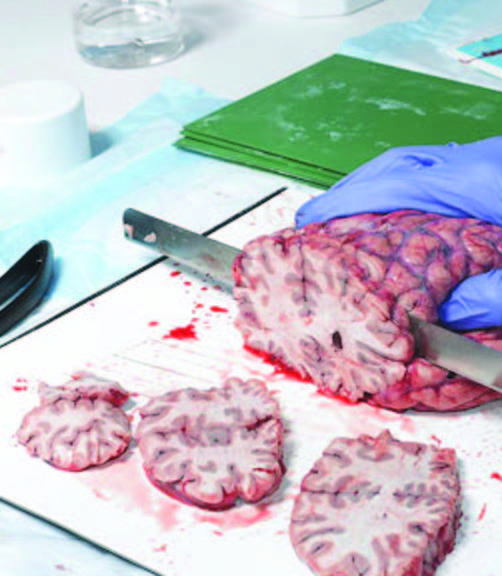
    PARIS (TIP): Scientists said on August 28 they had used stem cells to grow primitive human brain tissue for use in studying disorders and early development of this most complex of organs. They used the cells to grow what they dubbed “cerebral organoids” — pea-sized blobs of 3D brain tissue in a Petri dish, with characteristics of early embryonic brain tissue. The feat may reduce scientists’ reliance on the mouse brain, which is a poor model for research into human diseases and treatment, the team wrote in the journal Nature. “Development of the human brain is very different from development, for example, of the mouse brain,” study coordinator Juergen Knoblich of the Austrian Academy of Sciences told a telephone press conference.

    The technology should help biologists study “human-specific” features of human brain development and disease, he said. It was also hoped the method would allow researchers to “test drugs directly in a human setting and thereby avoid animal experiments and get more informed results that are more easily transferrable to human patients,” said Knoblich. Stem cell researchers have made progress to create 3D tissue of other human organs, including the heart and liver, but the brain has remained elusive. Knoblich’s team used pluripotent stem cells, which can be prompted to develop into any kind of cell of the body, to create neural cells that “selforganized” into organoids up to four millimetres (0.15 inches) big. They survived for several months in a spinning bioreactor. “The 3D culture system… develops a variety of brain regions that are capable of influencing one another,” said a summary of the study. “The tissues form in layers and display an organisation similar to the developing human brain at early stages.” The neural cells were “active”, according to Knoblich.

    “These structures are not just peculiar lab artefacts,” said Oliver Bruestle of the University of Bonn’s Life and Brain Centre in a comment on the study. “The organoids recreate early steps in the formation of the human brain’s cerebral cortex, and so lend themselves to studies of brain development and neurodevelopmental disorders.” But despite the fascinating potential, he said the scientific dream of creating a “brain in a dish” remained out of reach. The organoids mimicking different brain regions were randomly distributed and lacked the shape and overall spatial organisation of the human brain. As they had no circulatory system, the supply of nutrients and oxygen was restricted, meaning the organoids could grow to only a few millimetres in size. “Even then, their core represents a dead zone of cells starved of oxygen and nutrients,” said Bruestle. Knoblich said the method was never meant to be used to grow replacement parts for a damaged human brain, and expressed doubt it could ever be used as such, given the organ’s structural complexity.

  • MAGMATIC WATER DETECTED ON LUNAR SURFACE

    MAGMATIC WATER DETECTED ON LUNAR SURFACE

    MUMBAI (TIP): Scientists have detected magmatic water — water that originates from deep within the Moon’s interior — on the surface of the Moon. These findings, published in the August 25 issue of Nature Geoscience, represent the first such remote detection of this type of lunar water, and were arrived at using data from Nasa’s Moon Mineralogy Mapper (M3), according to a press release issued by the Johns Hopkins University Applied Physics Laboratory on Tuesday night.

    The M3 was one of the instruments on board India’s maiden mission to the moon, Chandrayaan-1 which was launched on October 22, 2008. Though it was a two-year mission, it stopped communicating on August 29, 2009. The discovery represents an exciting contribution to the rapidly changing understanding of lunar water, said Rachel Klima, a planetary geologist at the laboratory and lead author of the paper, “Remote detection of magmatic water in Bullialdus Crater on the Moon”

  • MARS MISSION SPACECRAFT CLEARS KEY TEST

    MARS MISSION SPACECRAFT CLEARS KEY TEST

    MUMBAI (TIP): In a major boost to India’s muchawaited mars mission, the red planet-bound spacecraft cleared a crucial 15-day test at the Bangalore satellite centre. The 1,350kg spacecraft, which Isro plans to launch after October 21, cleared the thermo-vacuum test with all five payloads on August 27 night. The test was conducted to verify the spacecraft’s performance in a simulated space environment with temperatures beyond those expected in the orbit. “The test went off flawlessly. There were no problems either with the payloads or the spacecraft,” an Isro official said.

    In the next phase, the spacecraft will be subjected to an acoustic and vibration test to assess its response again in a simulated launch environment. “Once this is completed, the spacecraft will be moved to Sriharikota sometime in the middle of September,” the official said.

  • Indian scientist performs world’s first human-to-human brain interface

    Indian scientist performs world’s first human-to-human brain interface

    LONDON (TIP): An Indian scientist at the University of Washington has performed the world’s first ever noninvasive human-to-human brain interface, in which one researcher was able to send a brain signal via the internet to control the hand motions of a fellow researcher. This comes after researchers at Duke University in the US demonstrated brain-to-brain communication between two rats and Harvard scientists have demonstrated it between a human and a rat. The university announced that researcher Rajesh Rao used Electroencephalography or EEG — routinely used to record brain activity non-invasively from the scalp — to play a computer game with his mind.

    Across campus, researcher Andrea Stocco wore a magnetic stimulation coil. Stocco’s right index finger moved involuntarily to hit the “fire” button as part of the first human brain-to-brain interface demonstration — the thought that was transmitted by Rao. Rao, a professor of computer science and engineering who has been working on brain-computer interfacing for more than a decade, said, “It was both exciting and eerie to watch an imagined action from my brain get translated into actual action by another brain. This was basically a one-way flow of information from my brain to his. The next step is having a more equitable two-way conversation directly between the two brains.” “The internet was a way to connect computers, and now it can be a way to connect brains,” Stocco said. “We want to take the knowledge of a brain and transmit it directly from brain-to-brain,” Stocco added.

    On August 12, Rao sat in his lab wearing a cap with electrodes hooked up to an EEG machine, to read electrical activity in the brain. Stocco wore a purple swim cap marked with the stimulation site for the transcranial magnetic stimulation coil that was placed directly over his left motor cortex — which controls hand movement. The team had a Skype connection set up, so the two labs could coordinate though neither Rao nor Stocco could see the Skype screens. Rao looked at a computer screen and a simple video game with his mind. When he was supposed to fire a cannon at a target, he imagined moving his right hand (being careful not to actually move his hand), causing a cursor to hit the “fire” button. Almost instantaneously, Stocco who wore noisecancelling ear buds and wasn’t looking at a computer screen involuntarily moved his right index finger to push the spacebar on the keyboard in front of him, as if firing the cannon. Stocco said the feeling of his hand moving involuntarily was that of a nervous tic.

    Transcranial magnetic stimulation is a non-invasive way of delivering stimulation to the brain to elicit a response. Its effect depends on where the coil is placed; in this case, it was placed directly over the brain region that controls a person’s right hand. By activating these neurons, the stimulation convinced the brain that it needed to move the right hand, the university said. Rao cautions that this technology at present only reads certain kinds of simple brain signals, not a person’s thoughts. And it doesn’t give anyone the ability to control your actions against your will.

  • Bolt made to work for 100m win at Weltklasse

    Bolt made to work for 100m win at Weltklasse

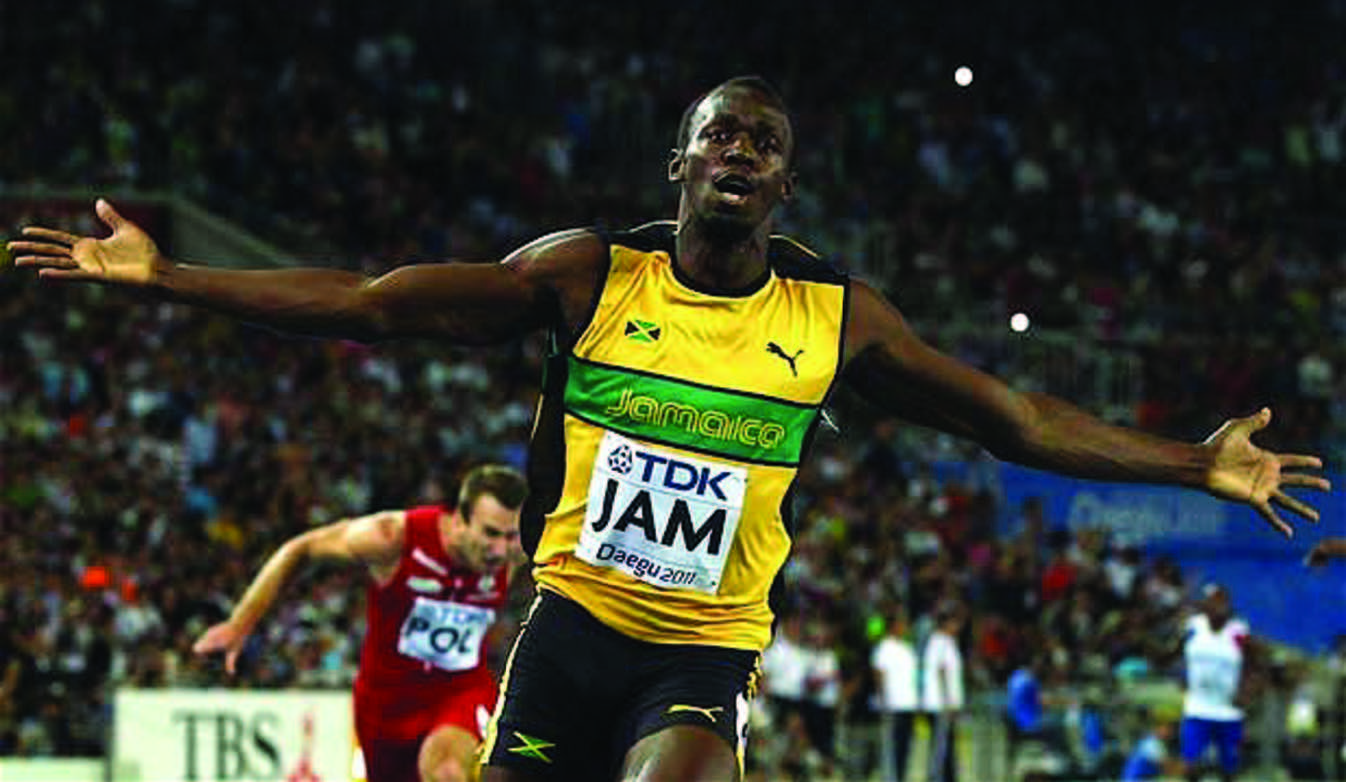
    ZURICH (TIP): Usain Bolt considered it his worst race of the season, yet he still won the 100 meters at the Weltklasse Diamond League meeting in 9.90 seconds. The world and Olympic champion had the slowest reaction out of the starting blocks, and was led deep into the race on August 29 (Thursday) by fellow Jamaican Nickel Ashmeade. Bolt got down to work and muscled through the slight headwind to hit the front at the 85-meter mark. Ashmeade clocked 9.94 for second place, and Justin Gatlin of the United States was third in 9.96 “That was the worst race of the season,” said Bolt, who timed 9.95 when losing to Gatlin in Rome in June.

    “The longer the season goes, the worse my style gets. This race, it was really hard. I was a little sore. It’s time to get home now.” With a parade of new world champions in action, the sold-out Zurich stadium fell silent to watch Ukrainian high jumper Bohdan Bondarenko’s latest attempt to break the 20-year-old world record of 2.45 meters set by Javier Sotomayor of Cuba. But Bondarenko crashed through the bar at 2.46. He’d earlier won the event with a clearance at 2.33. In a stirring women’s 5,000 meters duel between Ethiopian greats, Meseret Defar surged past Tirunesh Dibaba in the final straight. Still, Bolt was the main attraction as usual and put on a typical pre-race act for the crowd, taking center stage seconds after Bondarenko’s record attempt.

    The sprinting superstar pressed his hands together in a prayer-like pose, head bowed before breaking into karate-style moves. He bowed again as the camera moved along the line. On a cool evening, Bolt labored at the start and a rare defeat seemed possible at halfway. “The more I run, the worse my reaction time gets,” Bolt acknowledged. “My coach (Glen Mills) knows that when it comes to the end of the season, I am not the perfect athlete.” Yet Bolt allowed himself a smile on crossing the finish, looking across to Ashmeade two lanes on his left and world silver medalist Gatlin two to his right. Like Bolt, Shelly-Ann Fraser- Pryce of Jamaica completed the sprint gold triple of 100, 200 and 4×100 relay this month at the world championships in Moscow. She won a low-key 200 in 22.40 on Thursday. For once, distance runners took the spotlight with a rare Defar vs.

    Dibaba clash outside a major championship. Dibaba, the world and Olympic champion at 10,000, forced a frontrunning pace at the bell, with world and Olympic 5,000 champion Defar poised on her shoulder entering the final straight. Defar passed her great rival with 70 meters to go and extended her lead all the way to the finish, crossing in 14 minutes 32.83 seconds. Dibaba timed 14:34.82. “On the last 100 meters, I am going to 100 percent,” Defar said. The stellar lineup helped pull American Jenny Simpson through to a personal best time of 14:56.26 in seventh place. Americans David Oliver, LaShawn Merritt and Nick Symmonds ran to victories in the 110-meter hurdles, 400 and 800, respectively. World champion Oliver was a clear winner in 13.12 in the hurdles, and Symmonds clocked 1:43.57 in the 800, just two-hundredths outside his season’s best set when taking silver in Moscow. Merritt timed 44.13 to win after holding off a strong challenge from Olympic champion Kirani James of Grenada.

    In the 1,500, world champion Asbel Kiprop placed only sixth, with Kenya compatriot Silas Kiplagat winning in 3:30.97. World champions Eunice Jepkoech Sum of Kenya and Zuzana Hejnova of the Czech Republic sustained their winning form: Jepkoech Sum clocked 1:58.82 in the women’s 800 and Hejnova took the 400 hurdles in 53.32 and completed her Diamond League season unbeaten. Caster Semenya of South Africa, the 2009 world champion, was a distant seventh though ran her season’s best time of 2:01.83. The surprise long jump winner was Zarck Visser of South Africa, only weeks after failing to qualify for the final in Moscow. He won with a personal best leap of 8.32, and world champion Aleksandr Menkov of Russia was sixth, at 7.94. Dwight Phillips, the 2004 Athens Olympics gold medalist and four-time world champion, leaped 7.53 to place eighth in his final event before retiring. “Hopefully I left a great legacy like other big long jumpers like Carl Lewis,” the 35-year-old Phillips said. In shot put events staged Wednesday at Zurich’s central rail station, world and Olympic champion Valerie Adams of New Zealand set a world-leading mark of 20.98 meters to win the women’s event. With a winning mark of 22.03, Ryan Whiting of the US also earned the diamond on offer as season-long champion.

  • Rafael Nadal eases into US Open third round

    Rafael Nadal eases into US Open third round

    NEW YORK (TIP): Second seed Rafael Nadal moved comfortably into the US Open third round on Thursday with a 6-2, 6- 1, 6-0 win over Brazilian journeyman Rogerio Dutra Silva. The victory took the second-seeded Spaniard’s 2013 record to 55 wins against just three losses and edged him closer to a potential quarter-final clash with old rival Roger Federer. “I was solid with the serve which is always important,” said Nadal, whose hardcourt record this year now stands at 17-0 thanks to his 92-minute triumph on Arthur Ashe Stadium. “I played better as the match developed.

    It was great to be back on court in the night session for the first time in two years. It’s amazing, it’s a great court.” Dutra Silva, the world number 134, had come through qualifying and saved seven match points in his opening round victory over Vasek Pospisil, which was also the 29-year-old Brazilian’s first win on the main tour this year. It was not the sort of form which was going to trouble the world number two. Nadal, with nine titles under his belt since his return from a seven-month injury lay-off in February, swept to victory courtesy of eight breaks of serve and 30 winners. The 2010 US Open winner and 12-time Grand Slam champion next faces Croatia’s Ivan Dodig, the world number 38, who surprisingly beat him the last time they met on hardcourt in Montreal in 2011. “Dodig is a tough player. I lost to him the last time in a tough, close match. He has had two good wins here over Fernando Verdasco and Nikolay Davydenko. He’s very dangerous,” said Nadal.

  • HYDERABAD HOTSHOTS IN INDIAN BADMINTON LEAGUE FINAL

    HYDERABAD HOTSHOTS IN INDIAN BADMINTON LEAGUE FINAL

    HYDERABAD (TIP): Hosts Hyderabad stormed into the final of the inaugural Indian Badminton League with a thumping 3-0 win against Pune Pistons in the semifinals at the Gachibowli Indoor Stadium. Ajay Jayaram gave his team rollicking start and Saina Nehwal pulled off a hard-fought victory to put Hyderabad in the driver’s seat. While Jayaram stunned world No. 5 Tien Minh Nguyen 21-17, 21-11, Saina sneaked past Juliane Schenk 21-10, 19-21, 11-8. Later, the men’s doubles duo of Goh V Shem and Wah Lim Khim downed Joachim Fischer Nielsen and Sanave Thomas 16-21, 21-14, 11-7 to steer Hyderabad into the summit clash.

    Jayaram, who was suffering from a minor injury, came up with a spirited performance. Trailing 9-13 in the first game, Jayaram tested his rival with long rallies and succeeded in disturbing the rhythm of his opponent. At 13-14, Tien argued with the umpire on a couple of line calls, even though the shuttle had kissed the line. He lost his cool and committed a few unforced errors. Jayaram seized the initiative and powered ahead to 19-15 before closing at 21-17. Buoyed by the unexpected win in the first game, Jayaram was off in a flash in the second game. He opened with a 5-0 lead and never looked back.

  • 12 MPs suspended after ruckus in LS over Telangana

    12 MPs suspended after ruckus in LS over Telangana

    12 MPs suspended after ruckus in LS over Telangana NEW DELHI (TIP): Daily disruptions since Parliament’s monsoon session began on August 5 finally led to the suspension of eight Congress MPs in Lok Sabha – the House was treated to the unprecedented sight of ruling party members being named – along with four TDP MPs. A move to take similar action against MPs protesting the Telangana decision in RajyaSabha was held back as deputy chairperson P JKurien sought the consent of opposition parties, most of whom refused to back the proposal.

    The din prevented Prime Minister Manmohan Singh from making a statement on missingCoalgate files as demanded by the opposition led by BJP. In Lok Sabha, Speaker Meira Kumar read out names of the MPs, holding them guilty of “grave disorder” before adjourning proceedings till Saturday morning. The MPs remained in the House till around 4.30 pm when the vacated the premises. Most Parliament watchers could not recall an instance where ruling party MPs were suspended in such circumstances. “I cannot remember such an event. It is quite unprecedented,” said A Surya Prakash, author of ‘What Ails Indian Parliament’. The Speaker’s action followed a meeting in her chamber where the government suggested that it will not press a motion seeking suspension of the MPs as Kumar could initiate disciplinary proceedings from the chair.

    Interestingly, when finance minister P Chidambaram specifically asked party leaders if they consented with such a course of action, regional parties like BJD, AIADMK, DMK and Shiv Senarefused to voice their views. The regional outfits said they were not required to concur in advance, a stance driven by reluctance to endorse a tough option that they apprehend might be used against them in the future. BJP leaders, on the other hand, indicated that they would not walk out of the House if the Speaker were to announce a decision on the agitating MPs, resolving a major roadblock for the government. Of the 12suspended MPs, Nimalla Kristappa, Modugula Venugopala Reddy, Konakalla Narayan Rao and Nirmalalli Sivaprasad are from the TDP. Savarshri A Sai Prathap, Anantha Venkatrami Reddy, L Raja Gopal, Magunta Sreenivasulu Reddy, V Aruna Kumar, G V Harsha Kumar, Bapi Raju Kanumuru and Sabbam Hari belong to the Congress.

    The decision to exclude 12 MPs from five sittings of the House – effectively the rest of the session – is a fairly desperate measure for the government that has been at its wits end to ensure passage of bills like food security and pension reforms. Instances of friction between parliamentary affairs minister Kamal Nath and the opposition have added to the deadlock. Nath said he was hopeful that the food security bill will be discussed on Monday. On Saturday, some relatively less important legislation is slated for discussion. Rajya Sabha, meanwhile, was adjourned for the day amid an uproar over Telangana. Deputy chairman P J Kurien threatened to act against two TDP MPs “for holding the House to ransom” but could not do so as AIADMK and TMC opposed the move. Kurien referred to BJP in particular when he said those who wanted the PM’s reply on missing Coalgate files were not supporting action against errant members. Kurien said he would invoke rule 225 and ask for the support of the House on it. Amid noisy scenes, the coal minister made a statement on the missing Coalgate files. But uproar for united Andhra continued, forcing the chair to adjourn the House for the day.

  • Hague: Syria Massacre ‘Was A Chemical Attack’

    Hague: Syria Massacre ‘Was A Chemical Attack’

    DAMASCUS (TIP): Foreign Secretary William Hague has said for the first time that the “atrocity” in Syria “was a chemical attack” carried out by Assad forces. Hague said that the chances of the attack being a conspiracy by opposition forces was “vanishingly small” and that the only “plausible explanation” for the mass deaths was an attack by the regime. He said it was essential to get UN inspectors already in the country to the site outside Damascus and that “time was of the essence”. If inspectors were not allowed in, the evidence, he said, would deteriorate. Syria’s opposition said it was “critical that the UN inspectors [get to the site] within 48 hours”.

    Forces loyal to President Bashar al Assad have been carrying out air strikes on the area, which could already have considerably damaged any proof of the use of nerve gas. And Hague warned the Assad regime that if they did not comply with the UN request to carry out inspections at the scene of the attack then Britain would be prepared to go back to the UN Security Council for a mandate “for the world to speak more forcefully about this”. He stressed that inspectors were just 20 minutes away from the site where 1,300, including scores of children, are said to have perished on Tuesday.

    Hague said: “The only possible explanation of what we have been able to see is that it was a chemical attack and clearly many, many hundreds of people have been killed, some of the estimates are well over 1,000.”There is no other plausible explanation for casualties so intense in such a small area on this scale. “I know some people in the world would like to say this is some kind of conspiracy brought about by the opposition in Syria – I think the chances of that are vanishingly small. “So we do believe this is a chemical attack by the Assad regime on a large scale but we would like the United Nations to be able to assess that so those who don’t believe that, those who doubt that, the evidence can be gathered.

    “But that is certainly our opinion.” He said it “seems the Assad regime has something to hide” and questioned why it had refused to allow the UN inspectors, who are staying in a hotel in Damascus, to investigate. Footage and images released by the opposition has showed scores of children lying dead, some seemingly gassed as they slept in their beds. Other pictures appear to show adults foaming at the mouths from the effects of gas and row upon row of corpses, some being loaded into vans.

    The images, Hague said, were “something that a humane or civilised world cannot ignore”. UN chemical weapons inspectors have been in the country since Sunday on a mission to investigate sites where previous gas attacks are alleged to have been carried out.Activists said on Friday they were smuggling body tissue samples from victims to the UN inspectors in their hotel but that it had been a struggle because they were heavily guarded by government forces.One activist, Abu Nidal, said: “The UN team spoke with us and since then we prepared samples of hair, skin and blood and smuggled them back to Damascus with trusted couriers.”

  • Chinese troops intrude into Arunachal

    Chinese troops intrude into Arunachal

    NEW DELHI (TIP): In yet another face-off with Indian soldiers, Chinese troops had come more than 20 kilometres inside Indian territory in Chaglagam area of Arunachal Pradesh on August 13 and stayed there for over two days. However, the Army Headquarters sought to play down the incursion, saying the Chinese troops have gone back to their areas and such incidents keep taking place as both sides enter areas claimed by the other side while patrolling the disputed Line of Actual Control (LAC).

    People’s Liberation Army (PLA) troops had come over 20 kms inside Indian-claimed territory in Chaglagam area of Arunachal Pradesh and after they were stopped by the Indian troops, the two sides showed banners to each other to leave the area, sources said here.

    However, the two sides held to their positions and the Chinese soldiers left after staying put for two-three days, they said. The area falls under the 2 Division of the Army and the deputy commander of the formation had also intervened to resolve the issue, they said. The sources said paramilitary force Indo- Tibetan Border Police is also present in the area to guard the LAC there.

    In April, Chinese troops had entered 19 kms deep inside the Indian Territory and pitched their tents in Depsang plains in Ladakh. They returned after a three-week stand-off and several rounds of hectic parleys between the top officials of the two countries. In the last eight months, Army sources said there have been over 150 incursions by the Chinese side and that Indian troops also enter areas claimed by them during patrolling.

  • NYC Pools Pose Threats

    NYC Pools Pose Threats

    NEW YORK, NY (TIP):Audit Discovers Trip Dangers, Moldy Locker Rooms, and Little Evidence Water Quality Was Properly Tested at Park Facilities

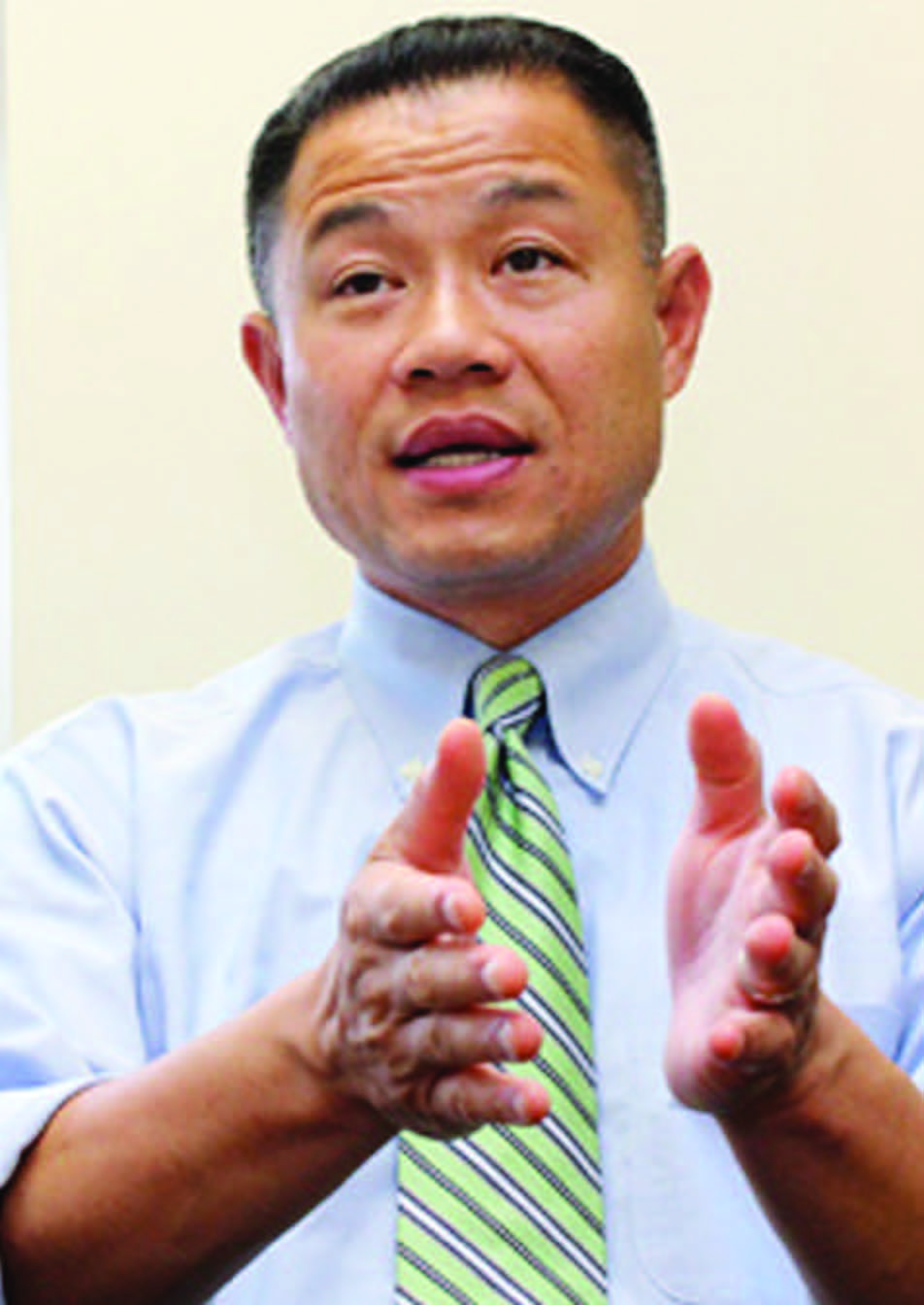
    New York City Comptroller John C. Liu announced August 23 that a new audit has found the Parks Department is not doing enough to remove hazards and ensure safe water conditions at the City’s public pools. “Our kids shouldn’t be swimming at their own risk,” Comptroller Liu said. “The Parks Department was already aware of many of the pool hazards we found in this audit but was far too slow to fix them. The agency needs to ensure we have clean and safe pools for our children.”

    Surprise Inspections Find Problems

    In July and August 2012, Comptroller Liu’s auditors made surprise visits to 39 pools in the five boroughs and found dozens of problems at 29 of them. The hazards included slip or trip dangers such as exposed metal sticking up from poolside decks, loose pool ladders, latches missing from gates to children’s wading pools, moldy locker rooms, and, in one case, an unsecured gate leading to an empty abandoned pool with a diving platform. When the auditors returned in July 2013 to follow up on 38 of the most serious problems, they found that many remained unrepaired, including a missing latch on the gate to the Dry Dock children’s pool in Manhattan. The Department of Health and Mental Hygiene had previously issued violations to the agency for the missing latch in 2011 and 2012. But instead of fixing the broken gate, which created a hazard for small children, the Parks Department assigned a lifeguard to stand by the gate.

    Water Quality Tests

    The Parks Department doesn’t keep records noting whether water quality tests are done as required, particularly for children’s pools. The agency requires hourly water tests, increasing to every halfhour when the air temperature rises above 80 degrees. Supervisors must sign off on the tests to verify that proper water quality testing was conducted. However, when auditors asked for water quality records for 10 days at 30 sampled pools, the agency came up short. There should have been 2,288 signatures documenting water quality tests on the daily reports, but 43 percent of them were missing. Children’s pools lacked the most. Of the 736 signatures that should have been on the daily reports at 10 children’s pools, 98 percent were missing. At five of the 10 kids’ pools, there were no signatures. In one instance, at Wagner pool in Manhattan, auditors saw a worker trying to test chlorine levels in the children’s wading pool using water from the intermediate pool. Auditors asked him to redo the test and found high chlorine levels in the wading pool. Staff then evacuated children from the pool, which was closed for the remainder of the auditors’ visit. The Parks Department oversees 93 pools at 66 facilities. Before the start of each season, the agency must inspect pools and correct any hazardous conditions it finds.

  • A South Asian American Community Fundraiser for Adam Haber

    A South Asian American Community Fundraiser for Adam Haber

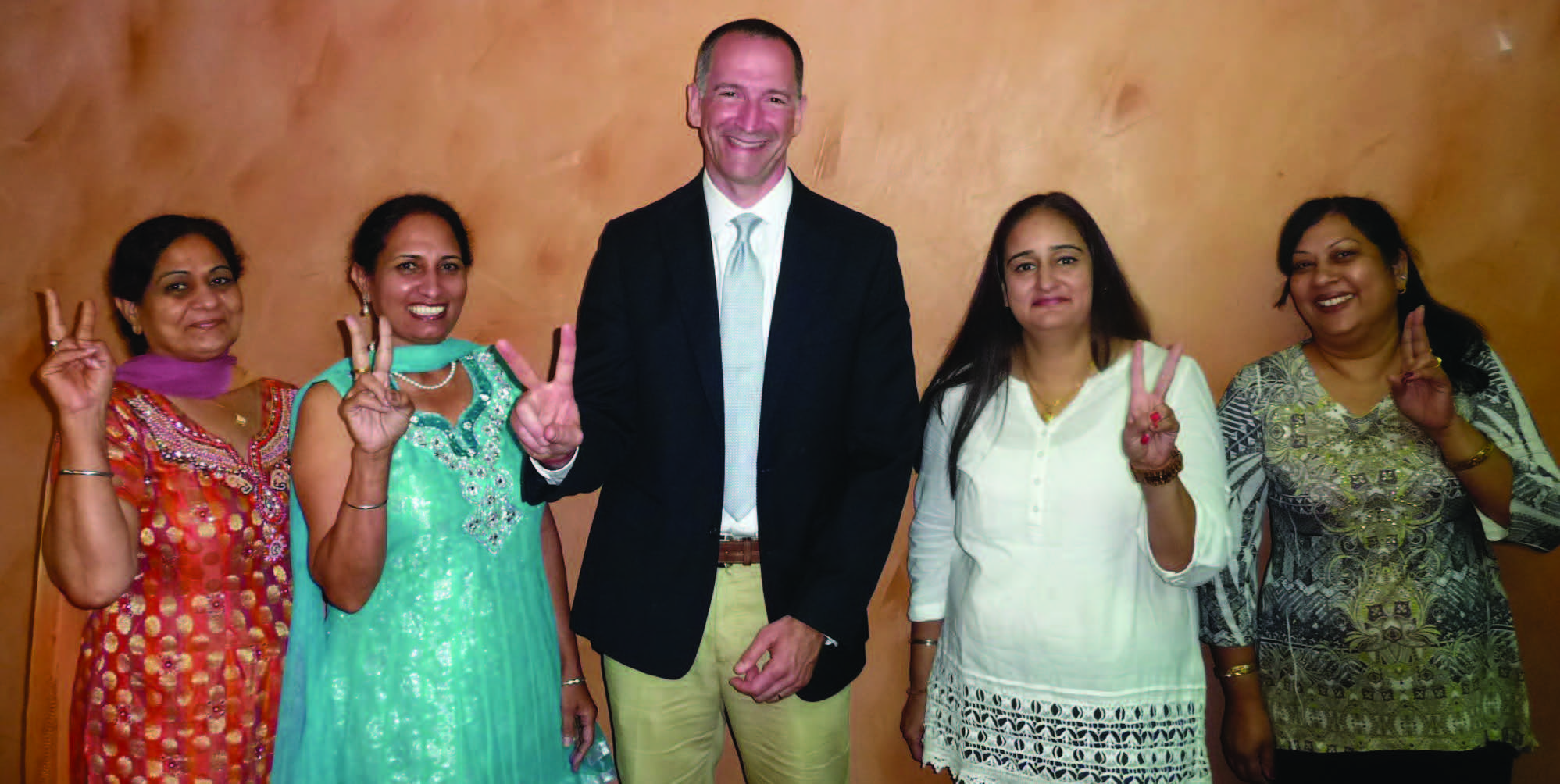
    HICKSVILLE, NY (TIP): Adam Haber found himself surrounded by a group of warmhearted South Asian Americans at a fundraiser for him at a Hicksville Restaurant on August 18. Speaking on the occasion Haber said he valued the support of the South Asian American community, in particular, the Indian American community. He said he knew if he could get 70% votes of the South Asian community, he will win.

    He called upon the gathered community leaders to support him. He said he was aware of the needs of the community, and, if elected, he would be very happy to address their concerns, including the one about having an India House in Nassau County. Explaining why he was running for County Executive’s position, he said, “I’m running for County Executive because we can do better than the status quo and make county government work again for Nassau families. As a Democrat I know that our government can serve our community efficiently and effectively.” “I’m running in the September 10th Democratic Primary for Nassau County Executive because our community deserves better. New ideas. New solutions”, he added. Haber has spent his career making smart investments in the private sector.

    He says about himself, “After graduating Cum Laude from SUNY Albany where I studied Business and Economics, I built a successful career trading commodities. I was also Managing Director of the commercial real estate firm SKB in Portland, OR, and have recently competed my Masters Degree in Political Science at LIU Post. I now own two restaurants, the critically acclaimed Aldea in Manhattan, as well as the newly opened Lula in Mineola, NY. “I am dedicated to common sense government, the expansion of business and industry in Nassau County, and providing essential services to its citizens. Please visit the website I created, NassauSuggestionBox.com, that encourages the public to propose problem-solving ideas, and to discuss and vote on the issues that matter most in Nassau. By harnessing the intellectual capital of concerned citizens, we can find ideas that save real money for all taxpayers.” Those who spoke on the occasion included Garry Brar, Bittoo Sidhu and Sanjeev Jindal. They pledged the group’s support to Haber and expressed their gratitude to all but in particular to Jarnail Singh of Atlantic Cash & Carry, Lakhwinder Singh Pappy and Ramesh Saini.

  • The Good Samaritans

    The Good Samaritans

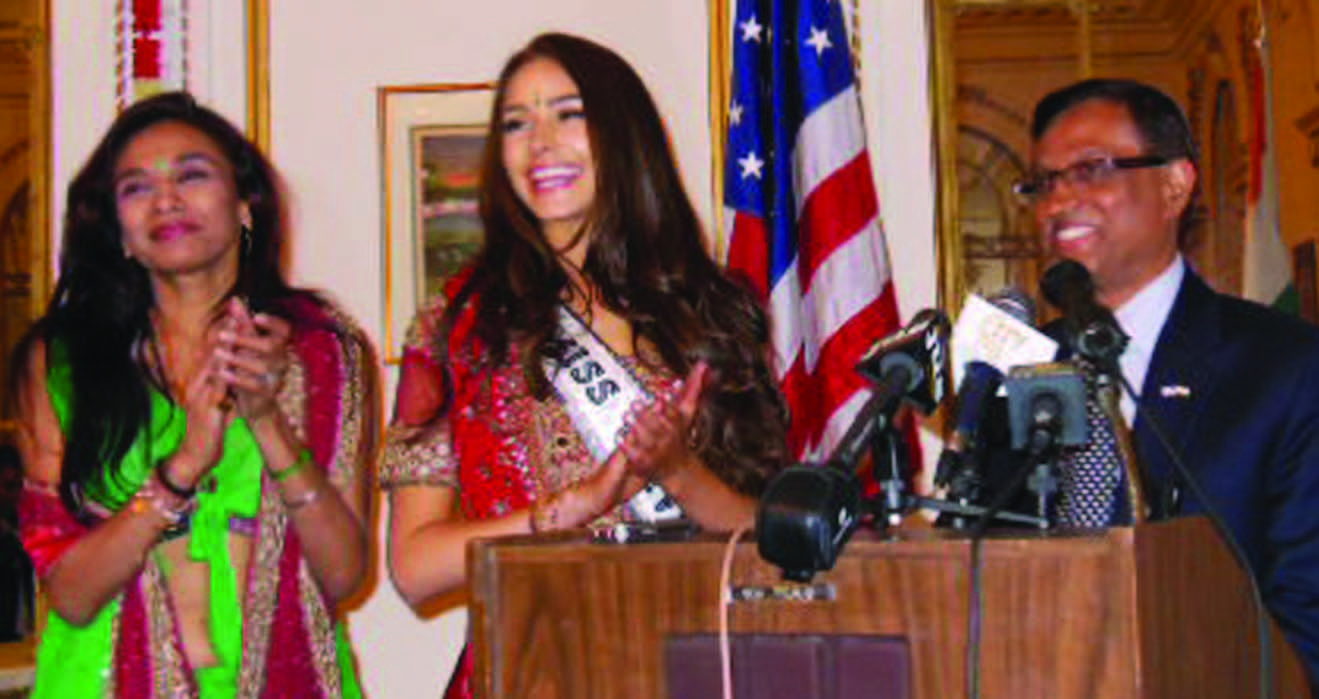
    NEW YORK, NY (TIP): Consul General of India, Ambassador Dnyaneshwar M. Mulay announced, August 21, the Sanjana Jon Tour to India with Olivia Culpo, the current Miss Universe from the 27th of September to the 6th of October. Mr. Mulay emphasized on the importance of cultural ambassadors and cultural tours to build closer ties between the two countries and globally The tour will be to the capital New Delhi, Mumbai, Agra and several key cities in India to promote and propagate “Celebrate the Girl Child”, Women Empowerment and AIDS Awareness. Actress Manisha Koirala joined and supported the initiative.

    The focus would be to eradicate female feticide especially in states like Punjab, Haryana, Rajasthan where the incidence is very high. The awareness tour initiated by Sanjana Jon in 2004 with the then Miss Universe Jennifer Hawkins has grown monumentally as an amazing positive movement and currently is the 6th Sanjana Jon Tour to India with Miss Universe for charity. The Tour has been supported by Salman Khan to highlight the different causes and several other celebrities like Sohail Khan, Sajid- Wajid Khan, Suhasini-ManiRatnam, Venkatesh, Padmabhushan Padmashri Dr KJ Yesudas, Padmashri Shobana, Usha Uthup, to name a few.

    “This time the tour will effectively reach out to the masses and try to bring more creative constructive support on the whole by creating “Community of Love n Light” a movement to ‘Share n Care’,” said Sanjana. Sanjana Jon started her career working with her brother Anand Jon in New York and they created a jewelry line together which was highly appreciated by Iman, David Bowie, Barbara Hershey while supporting AMFAR. Then they worked on the mens collection which was highlighted by Bruce Springsteen, Backstreet Boys, Prince, Collective Soul, Matchbox 20 to name a few. Her acclaimed debut was at Cannes for the Film Festival was supported by Prince Albert of Monaco, Princess Sorayya, Princess Sara Al Saud, Princess Olivia de Borbon and more. This led to the New York Fashion Week debut and Vancouver Fashion Week where she won International Rising Star award. Fashion with heart has been propagated by her where at every show or event she supports a charity or cause.

    Sanjana Jon has been a socially motivated person since her school and college days with her brother Anand Jon used to provide food and clothing to the underprivileged kids and read for the blind students. A special sanctuary was set for more than a 100 tigers in Florida and special campaign was organized with Anand Jon & Michelle Rodriegez to save tigers and animals globally. Paws for style where celebs walked with their pets was again highlighted and supported by Sanjana and Anand Jon to create love for animals. She has been creating awareness about various issues such as AIDS Awareness and HIV testing , Save the Girl Child ,Human and Animal Rights by involving celebrities like Bollywood stars, more than 10 Miss Universe over the years. She tied up with United Nations and held a press conference in the New York headquarters. In India, she worked with CARE International in hopes of a united front to combat the increasing pandemic of AIDS. Fashion to Sanjana is not the end but the means to the end which is to make the world a better place filled with love and light.

    The Sanjana Jon AIDS Awareness Tour toured most major Indian cities. She has also organized events to fight for Truth and Justice against racism with various models and celebrities and initiated several promotional campaigns in NY and LA against racism. She organized protests against racism in Bombay and Delhi and put together a show for Save the Girl Child against female infanticide with 16 celebrity siblings including Salman Khan, Sohail Khan, Sushmita Sen, Riya and Raima Sen, Sajid and Wajid Khan. Recently, she organized a Sanjana Jon Creative Tihar show and project in Tihar with inmates- for the inmates, by the inmates and of the inmates and tried to create a constructive creative training program to make the inmates a more resourceful progressive part of the community. Currently working on Pride of India Show by Sanjana Jon an attempt to break the Guinness Book of Work Records with more than 500 models in a show also promoting and highlighting traditional and cultural wear of every state in India and with celebrities representing the pride of every state and highlighting and propagating the Celebration of the Girl Child and in support of Global Human Rights. Winner of innumerable awards including Karamveer Puraskar, Paramveer Award, Indira Gandhi Award, Rajiv Gandhi Excellence awards to name a few, Sanjana has miles to go and not sleep.

  • Indians now the third largest immigrant group in the US

    Indians now the third largest immigrant group in the US

    NEW YORK (TIP): Mexicans and Chinese alone are ahead of India when it comes to considering the presence of immigrant groups in the US. Indians have emerged as the third largest immigrant group in the United States with their numbers touching 1.9 million as of 2011. The Indian-born population in America has grown by over 150 times in size since 1960, says a new study from the Washington-based Migration Policy Institute. Back in 1960, America had just about 12,000 Indianborn immigrants, accounting for less than 0.5 per cent of the total immigrant population of 9.7 million immigrants at that time.

    Now, the US immigrant population stands at 40.4 million, with Indians representing almost 5 per cent of the total. “As a group, immigrants from India are better educated, more likely to have strong English language skills and arrive on employment-based visas, and are less likely to live below the federal poverty line than the overall foreign-born population,” says the study. In 2011, India was the second most common country of origin for international students at US institutions of higher learning, after China. Although the Indian immigrants are scattered all over America, more than one-quarter of them live in just three metropolitan areas: Greater New York, Chicago and San Jose in California’s Silicon Valley. Nearly one-third of the community resides in just two states: California and New Jersey.

    California alone accounts for 21 per cent of the Indian population, followed by New Jersey (11 per cent), Texas (9 per cent); New York (8 per cent), and Illinois (7 per cent). According to the figures cited by the study, more than 29 per cent of employed Indian-born men worked in information technology occupations, while 19 per cent of employed Indian-born women worked in management, business and finance. In 2012, more than 66,000 Indian-born immigrants were granted US legal permanent residency or green cards, the study says, noting that compared to other immigrant groups, Indians have made it largely through the employment-based channel. About 43,000 Indian immigrants became naturalized US citizens in 2012. The share of Indian immigrants who have naturalized (47 per cent) is said to be slightly greater than that of the overall foreign-born population (45 per cent).

  • UN Women Executive Director Phumzile Mlambo-Ngcuka sworn in

    UN Women Executive Director Phumzile Mlambo-Ngcuka sworn in

    UNITED NATIONS (TIP): Ms. Phumzile Mlambo-Ngcuka took the oath of office as the Executive Director of UN Women during a ceremony on August 19 at UN Headquarters, presided over by Secretary-General Ban Ki-moon. She is the second Executive Director of the organization created in 2010 to lead the UN’s work on advancing gender equality and women’s empowerment. Ms. Mlambo-Ngcuka’s appointment was announced by the Secretary-General on 10 July 2013. A South African national, Ms. Mlambo-Ngcuka brings to her new position a wealth of experience.

    She was the first woman to hold the position of Deputy President of South Africa from 2005 to 2008. She became a Member of Parliament in 1994, chairing the Public Service Portfolio Committee. She was Deputy Minister in the Department of Trade and Industry (1996-1999), Minister of Minerals and Energy (1999-2005) and briefly served as acting Minister of Arts, Culture, Science and Technology in 2004. Mlambo-Ngcuka was Young Women’s Coordinator for the World Young Women’s Christian Organization in Geneva (1984 – 1986) and served as the first President of the Natal Organization of Women, an affiliate of the United Democratic Front, when it was formed in December 1983. She established the Umlambo Foundation in 2008 to provide support to schools in impoverished areas in South Africa through mentorship and coaching for teachers and in Malawi through school improvements with local partners. She holds a Master’s degree in Philosophy in Educational Planning and Policy from the University of Cape Town (2003) and a BA in Education from the University of Lesotho (1980).

  • US forces move closer to Syria as military options weighed

    US forces move closer to Syria as military options weighed

    WASHINGTON (TIP): US naval forces are moving closer to Syria as President Barack Obama considers military options for responding to the alleged use of chemical weapons by the Assad government. The US president emphasized that a quick intervention in the Syrian civil war was problematic, given the international considerations that should precede a military strike.

    US defense secretary Chuck Hagel declined to discuss any specific force movements while saying that Obama had asked the Pentagon to prepare military options for Syria. US defense officials told The Associated Press that the Navy had sent a fourth warship armed with ballistic missiles into the eastern Mediterranean Sea but without immediate orders for any missile launch into Syria. US Navy ships are capable of a variety of military action, including launching Tomahawk cruise missiles, as they did against Libya in 2011 as part of an international action that led to the overthrow of the Libyan government.

    “The Defense Department has a responsibility to provide the president with options for contingencies, and that requires positioning our forces, positioning our assets, to be able to carry out different options – whatever options the president might choose,” Hagel told reporters traveling with him to Asia.Hagel said the US is coordinating with the international community to determine “what exactly did happen” near Damascus earlier this week. According to reports, a chemical attack in a suburb of the capital killed at least 100 people. It would be the most heinous use of chemical weapons since Iraqi leader Saddam Hussein gassed thousands of Kurds in the town of Halabja in 1988. Obama remained cautious about getting involved in a war that has killed more than 100,000 people and now includes Hezbollah and al-Qaida. He made no mention of the “red line” of chemical weapons use that he marked out for Syrian President Bashar Assad a year ago and that U.S. intelligence says has been breached at least on a small scale several times since.

  • U.S. to extend help to India in facing new security challenges

    U.S. to extend help to India in facing new security challenges

    WASHINGTON (TIP): Three months after the U.S.-India Homeland Security Dialogue in Washington, India is all set to send its officers to various agencies across American federal organizations to sharpen their skills and acquire new ones to fight terrorism. Indian officials and security officers would soon be visiting the U.S. for training in an array of courses – from cyber security, megacity policing and forensics, to critical infrastructure protection, financial terrorism and anti-terrorism intelligence.

    The U.S. government has agreed to give Indian officers access to its specialized agencies under the Department of Homeland Security, particularly the Georgia-headquartered Federal Law Enforcement Training Centers (FLETC), to help them deal with the changing face of international terrorism. “The dialogue between Union Home Minister Sushilkumar Shinde and U.S. Secretary of Homeland Security Janet Napolitano in Washington in May this year paved the way for this cooperation… Through these specialized training programs, India will gradually build an army of experts who can handle new technologies and mechanism to deal with various kinds of terrorism and antinational activities,” a senior Home Ministry official told The Hindu.

    The U.S. Department of Homeland Security, created after the 9/11 terror attack, along with the FLETC has fashioned several advanced courses. “We have identified around a dozen departments and organizations whose officials would take part in these programs… The U.S. has also agreed to help us in creating specialized training institutions to develop skills in various anti-terrorism measures. Sharing of technology for technical surveillance, capacity building and technology development will also be a part of the U.S.- India cooperation,” the official said. Broadly, the U.S. programs will deal with four aspects of terrorism – ‘Global supply chain, transportation, port, border and maritime security,’ ‘Megacity policing and sharing of information among federal, State and local partners,’ ‘Illicit finance, smuggling of cash, financial fraud and counterfeiting,’ and ‘Cyber security and critical infrastructure protection.’

    Indian officials who will participate in these programs will be drawn from various law enforcement agencies and government departments, including the National Security Council Secretariat, the National Investigation Agency, the Intelligence Bureau, the National Technical Research Organization, the Central Bureau of Investigation, the paramilitary and State police forces, the Customs, the Narcotics Control Bureau (NCB), the Enforcement Directorate, the Directorate of Revenue Intelligence (DRI), the Ministry of Telecom and Information Technology, the Coast Guard and the Bureau of Civil Aviation Security. “The list of training programs include ‘Land Transportation Anti-terrorism’; ‘Weapons of Mass Destruction’; ‘Seaport Security’; ‘International Border Interdiction Training’ and ‘International Sea Interdiction Training’ to check smuggling and trafficking; ‘Handling of equipment for screening men against radiological, chemical and explosive materials’ and ‘Handling of intrusive detection at airports and seaports.’ The NCB and the DRI officials will be trained on detection of narcotic drugs, currency, arms and ammunition and other contraband through canine squads. There is also a plan to set up a Customs Canine Training Academy,” the official said.

    Megacity policing With the growing population in cities and increasing threat perception, the U.S. has also offered India to help develop the concept of megacity policing, a step it has been promoting since the 9/11 attacks. “An advance course in surveillance, control room design and its operation by various security agencies and police authorities are key elements of this concept. A high-level workshop is being planned for senior police and intelligence officers from both sides in megacity policing. Similarly, various agencies involved in emergency services will also be trained on public safety and crisis management, while specialized Operation Security for Public Safety Agencies Counter Terrorism Training Program and Critical Incident Response Training Program jointly by the FLETC and the U.S. Border and Custom Protection are also being planned,” the official said.

    Another area of focus would be in cyber security and critical infrastructure protection, where training modules would comprise best practices in cyber security and cyber forensics, advance course in technical surveillance counter measures, control systems security program for endto- end network and systems security for servers, routers, switches, transmission and all information and communication technology (ICT) hubs and facilities. An ambitious collaboration plan for setting up an advance institute for master trainers in the area of encryption/decryption was also in the pipeline. For critical infrastructure protection, the programs planned are for sectors like ICT; oil and energy; telecom; banking and financial services; civil aviation and transport where technocrats and officials from concerned ministries will be trained.

  • Consulate General of India Celebrates the 66th Anniversary of India’s Independence

    Consulate General of India Celebrates the 66th Anniversary of India’s Independence

    NEW YORK, NY (TIP): The Consul General of India in New York Ambassador Dnyaneshwar Mulay hosted on August 15, a Reception at the Consulate to celebrate the 66th anniversary of India’s Independence. About 250 guests that included prominent members of the Indian-American community and local dignitaries attended the celebrations.


    img149

    Former US Ambassador to India, Frank Wisner, Ambassador Asoke Mukerji, Permanent Representative of India to the United Nations, Ambassador Manjeev Singh Puri, Deputy Permanent Representative of India to the United Nations also graced the occasion. Warmly greeting and welcoming the guests, Ambassador Mulay underlined the important contribution of the Indian Diaspora worldwide towards growth and development of India.


    img150

    He said that the vibrant Indian community in the US has been contributing immensely to the friendship between India and the US. He also outlined the efforts that the Consulate has been taking towards improving its services, particularly streamlining various Consular procedures and expanding the outreach activities in various states under its jurisdiction.


    img151

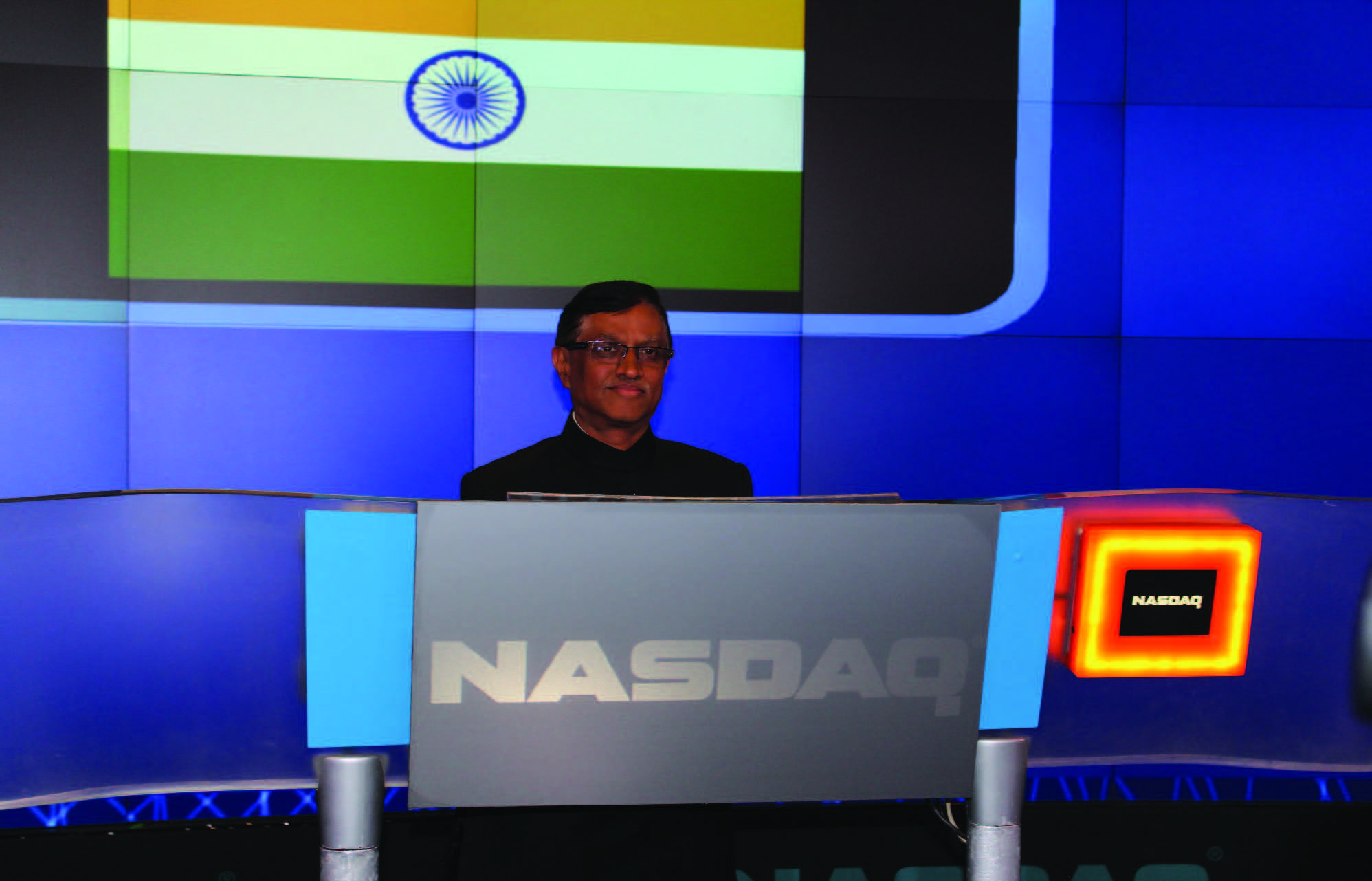
    During the function Ambassador Mulay recognized the significant contribution by the Indian community towards US$5 million endowment to India Studies Chair at the Stony Brooks University making it the largest gift ever made to a US public university for India Studies. Mr. Nirmal Mattoo and Mr. SN Sridhar were felicitated as major contributors to the endowment. Ambassador Mulay, along with the dignitaries cut the cake in celebration of the joyous occasion. Earlier, in the morning, Ambassador Mulay rang the opening bell at the Nasdaq, an annual ritual to mark India’s Independence Day

  • US-India ties hit a Plateau

    US-India ties hit a Plateau

    It has now been confirmed that before going to New York to participate in the UN General Assembly deliberations in New York, Prime Minister Manmohan Singh will be visiting Washington in September for his second bilateral engagement with US President Barack Obama. Though New Delhi was very keen on the visit and the US President had extended an invitation to Manmohan Singh earlier this year, it’s not entirely clear what a lame-duck Prime Minister is likely to achieve during this visit.

    That US-India ties have hit a plateau has been evident from the lackluster engagements between the two sides in recent months. It was the turn of US Vice President Joseph – a month after Secretary of State John Kerry’s visit — to India to reassure New Delhi how Washington remains keen on a robust partnership with India. Biden’s four-day visit to India last month, first for a US Vice President in three decades, was aimed at laying the groundwork for the Indian Prime Minister’s visit to the US in September. Though it was clear from the very beginning that Biden’s trip will not result in any ‘deliverables’, it also remains a mystery as to what an Indian Prime Minister at the fag-end of his term and with hardly any political capital left will be able to do to galvanize this very important relationship with a perfunctory visit to the US.

    These are difficult times for the USIndia bilateral relationship which has been flagging for quite some time now and there is little likelihood of it gaining momentum anytime soon. The growing differences between the two today are not limited to one or two areas but are spread across most areas of bilateral concern. These include market access issues, the problems in implementing the US-India civil nuclear accord, the US immigration changes, changing US posture towards Afghanistan, defense cooperation and trade. Biden’s visit was specifically focused on trying to give a push to economic ties, enhancing cooperation on defense issues, pushing India for a greater role in the Asia-Pacific and addressing climate change. That the US is clearly concerned about Indian economic slowdown was reflected in Biden’s comments.

    He exhorted New Delhi to try to take bilateral trade with the US to $500 billion by removing trade barriers and inconsistencies in the tax regime. He recommended more measures like recent relaxation in the FDI rules by underlining “caps in FDI, inconsistent tax system, barriers to market access, civil nuclear cooperation, bilateral investment treaty and policies protecting investment.” Investor confidence in the Indian economy, Asia’s third largest, is at an all-time low with growth slowing down to its lowest level in a decade. Foreign direct investment slid about 21 per cent to $36.9 billion last fiscal year compared with 2011-12. The US is keen to see India remove investment caps in sectors like finance, retail and insurance. The US corporate sector has been up in arms in recent months about India’s trade policies, complaining that American firms are being discriminated against and the US intellectual property rights are being undermined by India.

    Sporadic outbursts of reform measures from New Delhi have not been enough to restore investor confidence in India even as Indian policymakers are now busy trying to secure their votes for the next elections. Policy-making in India remains paralyzed and haphazard with Washington getting increasingly frustrated with the Indian government’s lackadaisical public policy. For his part, Biden went out of his way to assuage the concerns of the Indian corporate sector by suggesting that Washington plans to increase the number of temporary visas and green cards to highly skilled workers from India. The concerns, however, continue to persist because the US Senate has already cleared the much talked-about immigration Bill that will significantly restrict Indian IT companies in the US. If the House of Representatives ends up endorsing it, then the Obama Administration will have to do some heavy lifting to mollify India. Meanwhile, the civil nuclear deal is floundering as the US companies remain wary of Indian laws on compensation claims in the event of a nuclear accident. India’s nuclear liability law is aimed at ensuring that foreign companies operating in Indian nuclear sector assume nearly unlimited liability for accidents, a condition that all but precludes the participation of US firms. After all the political and diplomatic investment that Washington made in making the nuclear deal happen, there is a pervading sense in the US that the returns have not been at all impressive.

    On climate change where the Obama Administration is focusing significantly, Biden pushed India to work with the US to reduce the flow of hydroflurocarbons and provide opportunities to the scientific establishment to work on green technology options. The US is already working with China on a joint effort to curb greenhouse gases. Biden also tried to ease Indian concerns on Afghanistan by underlining that the Taliban would have to give up ties with Al Qaeda and accept the Afghan constitution as part of the reconciliation process. New Delhi remains concerned about the impact of US withdrawal from Afghanistan for Indian security. The recent bombing outside the Indian consulate in Jalalabad merely highlights the challenges India faces in Afghanistan. According to Biden, “there are no obvious places where Indian interests and American interests diverge worldwide, regionally or domestically.” That may well be true but in the absence of a big idea to push the relationship forward strategically, the tactical issues where there are significant differences between Washington and New Delhi continue to shape the trajectory of the US-India bilateral ties. The relationship stands at a serious inflection point.

    The two sides need to start thinking seriously about bringing it back on track. New Delhi, in particular, needs to acknowledge the importance of what Biden suggested when he said that “there is no contradiction between strategic autonomy and strategic partnership.” In the name of ‘strategic autonomy’ New Delhi has become quite adept at scuttling its own rise. At this moment of significant geostrategic flux in the Indo-Pacific, India and the US need each other like no other time in the past. Biden’s visit has underlined India’s importance in US strategic calculus. It is now for India to decide what role it sees for the US in its foreign policy matrix and as a corollary what role it sees for itself in the rapidly changing global order.

  • Mike Bloomberg’s Legacy: Greek God Zeus

    Mike Bloomberg’s Legacy: Greek God Zeus

    How can anyone not love Mayor Mike? I do. He has tried his best to make NYC the very best it can be, and make the life of every New Yorker the very best possible. Indeed, he sought mayoral control of the schools, which I happily supported in Albany and helped get it for him, because I believe that Mike is genuinely passionate about what he believes in: be it wanting to do the right thing or to punish those who disagree with him. He loves New York, and has spent nearly a billion dollars, out of his pocket in campaign and charity dollars, to be the 108th Mayor.

    Frankly, I wish he had run for president, as he promised, at Eliot Spitzer’s swearing-in as governor in Albany. Imagine, how America would improve with President Bloomberg curbing “K Street.” Politics, media and money-to-spend makes a power-trifecta. Nobody is perfect, and neither is Bloomberg – but his heart, passion and pocket are all lined up in his effort, as he sees as “doing the right thing,” with some not “so right people” he has to deal with. The issue, however, maybe that his “baseline” for context in all things may, well, not be in sync with those he wishes to help. His view is more akin to the Greek God Zeus. And, it is recalled that Greece gave us benevolent dictators. All good efforts: No smoking, no transfats, no soda, no salt, and soon to come in a 4th term with a Quinn and Vito Lopez: 2000 caloric intake a day, no alcohol, and no separation of powers, and no judges – who are banned if they disagree with him.

  • India, the Land Columbus Set out to Find

    India, the Land Columbus Set out to Find

    What is it about India, that its tryst with destiny is still on-going? Why does India keep moving forward despite the doers and the naysayers, the empire builders and the colonized? The answer, I submit, lies in the glorious amalgam of history and hope, glory and defeat, education and renunciation, family and loneliness, accomplishment and worthlessness, ego and doubt, government and the governed, “East” and “West,” nuclear energy and organic linen; in short, India is a living contradiction – old and young, religious and secular, Eastern and Western, proud and humble, poor and rich, stranger and friend. On India’s Independence Day, one cannot but thank the British empire for all of its managerial excellence and vision, for it is they who did what no maharaja was able to do short of Ashoka the Great: create a Greater India, a unified India.


    img145

    That there was a Great Partition, with untold stories of misery and heroism, courage and slaughter, so that a few “Royals,” domestic and foreign, could uproot so much humanity for mapmakers’ joy rather than compel sovereign governments to give equal protection to the governed, remains an irksome lesson for would-be nation-makers. Arab Spring’s lessons are both forward-looking, as they are rear-view looking, and given the world being conquered, as a whole, by the unstoppable digital binary code, the great denominator, the world has indeed gone “flat,” and time “instantaneous”: lost are the curves of the globe and the hands of time on the alter of digital transparency – more controlled by multinational corporations than by analogue sovereign governments desperately seeking to harness the binary code to defend against “enemies, foreign and domestic.” What is to become of India, one may ask. Beware, I say to all who thought that China would counter-balance the Soviets.

    Like China’s core greatness lay sub-rosa unseen by the likes of Henry Kissinger, so, I fear is true of India, albeit, mercifully, only in part. In part, I say, because India’s investment in democracy’s warts is full-throttle and every citizen, poor and rich alike, sees themselves as the master of the public trust. Just ask The New York Times’ columnist Thomas Friedman as to why he is so in love with India, and why India, a Hindu-majority nation, effortlessly and confidently rests its position in the comity of nations in the gentle, strong and erudite hands of Salman Khurshid.


    img147

    It is as if Ashoka the Great, Akbar the Great, Guru Nanak, and Mother Teresa, not just Gandhi, Jinnah and Nehru, wrought this continuing tryst with destiny. For us in the United States, where each of the 50 states are a laboratory of policy for the nation to embrace or reject, India, I submit, given its diverse religious content and in the main peaceful co-existence, economic growth that defies the weight of regulations, may well be a laboratory to the world – for there, East and West, greed and charity, ambition and detachment live in substantial harmony. Since Secretary John Kerry is working overtime to seize the moment decreed by destiny, as he races to the Middle East to jumpstart the cob-webbed peace process between Israel and Palestine, no matter the profit of the status quoers, and harder yet, to re-order the Afgan-Subcontinent equation, each of the affected nations and citizenry, in the exercise of their enlightened selfinterest, owe a good faith response – for destiny awaits, in an infinite variety of shades and colors, the outstretched-hand’s state of loneliness or girth, given the many amalgamated hands reaching for the same sweet spot of history. Moreover, the dynamic of Israel’s meddlesome Thomas Dewey-like preference in last year’s presidential elections when Barack Obama won the “imperial term” in a resounding Harry Truman-like fashion, presents the Middle East a better shot than ever before.

    However, multi-lateral frustration infecting the Afgan- Subcontinent recalibrated process requires a critical mass of trilateral leadership, which ignores the interlopers’ inflammatory excesses, so as to bring the blessings of liberty and prosperity to their populace, unhappily aware of their common ancestry and uncommon present. For them I recall the example of the European Union’s birth, when jealous pride of many a nation, that claimed the world as its own, was overcome – surely those in the sub-continent can bequeath to their childrens’ children a gentle neighborhood where all are free to worship as they see fit and prosper per individual effort, as they have the benefit of cross-pride “across the border.” It may well be that the United Nations, created with the ink of World War II victory and a subsequent switcheroo a la ROC with PRC, needs the reforms that many have pushed for, including, Prime Minister Manmohan Singh, and his then-Permanent Representative Hardeep Singh Puri, after winning an unprecedented near-unanimous electoral victory to a rotational seat on the Security Council.

    It may well be that the “bubbling” South China Sea needs to bubble less, even as it starts the Kabuki dance of a future theater of avoid-able war and remilitarization. India’s attention, then, must be Eastward, Upward, and Westward. As an American, I can only hope that the land Columbus set out to find, India, and the nation he caused to be born, the United States, find in each other a common soul, aided by the rule of law and abetted by a democratic republic, such that Jefferson’s Declaration of Independence, “When in the Course of human events, it becomes necessary for one people to dissolve the political bands which have connected them with another, and to assume among the powers of the earth, the separate and equal station to which the Laws of Nature and of Nature’s God entitle them, a decent respect to the opinions of mankind requires that they should declare the causes which impel them to the separation. We hold these truths to be self-evident, that all men are created equal, that they are endowed by their Creator with certain unalienable Rights, that among these are Life, Liberty and the pursuit of Happiness.–

    That to secure these rights, Governments are instituted among Men, deriving their just powers from the consent of the governed, — That whenever any Form of Government becomes destructive of these ends, it is the Right of the People to alter or to abolish it, and to institute new Government, laying its foundation on such principles and organizing its powers in such form, as to them shall seem most likely to effect their Safety and Happiness. …” and Jawaharlal Nehru’s “Tryst with Destiny” speech loudly resonates to this day: “Long years ago we made a tryst with destiny, and now the time comes when we shall redeem our pledge, not wholly or in full measure, but very substantially. At the stroke of the midnight hour, when the world sleeps, India will awake to life and freedom. A moment comes, which comes but rarely in history, when we step out from the old to the new, when an age ends, and when the soul of a nation, long suppressed, finds utterance. It is fitting that at this solemn moment we take the pledge of dedication to the service of India and her people and to the still larger cause of humanity. At the dawn of history India started on her unending quest, and trackless centuries are filled with her striving and the grandeur of her success and her failures.

    Through good and ill fortune alike she has never lost sight of that quest or forgotten the ideals which gave her strength. We end today a period of ill fortune and India discovers herself again. The achievement we celebrate today is but a step, an opening of opportunity, to the greater triumphs and achievements that await us. Are we brave enough and wise enough to grasp this opportunity and accept the challenge of the future?” The world is better that Columbus lived, dreamed and strove. For we are here, dear Cristoforo Columbo, to prove you were never map-lost.

  • Enthusiastic Response to India Day Parade in NY

    Enthusiastic Response to India Day Parade in NY

    NEW YORK, NY (TIP):Vidya Balan, Anna Hazare, Gen. V.K. Singh, Sarath Kumar, Radikaa Sarath Kumar, Jaishree Chandrasekhar lend attraction

    Local political and social leaders also join

    The 33rd India Day Parade in New York City on Sunday, August 18 drew thousands to Midtown Manhattan. The entire area from 38th Street to 26th Street on Madison Avenue was submerged with Indian Americans and the Indian national tricolor flags atop floats and in the hands of the people marching in or just watching the parade from both sides of the Avenue. The number at the Parade, according to liberal estimates, was close to a hundred thousand while many claimed that it was anywhere between 50,000 to 70,000. Numbers apart, the enthusiasm of the people was the most noticeable aspect of the parade.

    Indian social activist Anna Hazare and Bollywood star Vidya Balan led the parade in which a number of celebrities participated. They included former Chief of Army Staff General (Retd.) V.K. Singh who was the chief Guest, and Guests of Honor actor Sarath Kumar and Radikaa Sarath Kumar.


    img_c_1

    The parade drew elected officials and political candidates, including New York City Council Speaker Christine Quinn, City Comptroller John Liu, Assemblyman David Weprin, Reshma Saujani, a Democratic candidate for public advocate and Joe Lhota, a Republican mayoral candidate. “I think our voice is getting more politically powerful,” said Ms Saujani, who would be New York City’s first Indian- American politician, if elected. “It’s important for the community to be out recognizing that.” “New York City’s diversity is one of its greatest strengths,” said Mr. Lhota. “What we’re really doing here is celebrating coming to America.” said he.


    img_c_2

    Bollywood star Vidya Balan, who was the Grand Marshal, drew huge crowds as people on both sides of the Madison Avenue cheered her. Consul General of India in New York Dnyaneshwar Mulay was seen on the same float as Vidya. Gen V K Singh, former Chief of Indian Army Staff was perched on another float and his colleague in crusade against corruption, Anna Hazare rode in a separate car. The Prime Minister of Antigua and Barbuda Winston Baldwin Spencer who rode in a Lamborghini car wore a kurta and a pyjama and instantly connected with the Indian-Americans with his namaste. South Indian actors – R Sarath Kumar, Radikaa Sarath Kumar and Jaishree Chandrasekhar – traveled in the American Tamil Sangam float that had a huge banner of Statue of Liberty draped in a sari.


    img_c_3

    There were more than 40 floats representing institutions such as State Bank of India, Bank of Baroda, Yes Bank, Indus American Bank, India Tourism, Air India, MoneyGram, and New York Life. Also represented were some organizations, like the Society of Indian American Engineers and Architects (SIAEA).


    img_c_4

    Some religious, social and political organizations too had their floats. And then there were some who did not have floats but marched as distinct groups in the parade. One such group was the Agrawal Samaj. Times Now that beamed the program live had an independent float. The parade over, the crowd thronged the cultural programs arena and the booth area where a replica of Red Fort was built in 80 feet x 10 feet.

    Sidelights & Impressions:

    1. Anna Hazare was escorted to the parade by Sudhir Vaishnav, Executive Vice President of FIA and some other FIA officials. Security guards surrounded him and did not let anyone come near him. Anna walked a little, acknowledged the greetings of the by standers and then got in to a car.

    2. General (Retd.) V.K. Singh was spotted on the Air India float. He was accompanied by his wife. He did not seem to have any security protection. He shook hands with me and was pleased to receive a copy of The Indian Panorama.

    3. Christine Quinn, the New York City Council Speaker was amongst the first few to arrive. She appeared as cheerful as she always is and met people warmly. I handed her a copy of The Indian Panorama which she gladly took and handed it over to one of her aides.

    4. Reshma Saujani who is a hopeful for the office of Public Advocate was seen going round and meeting people. I said to her in a lighter vein that I would like to see her win and then be known as Millionjani. A compliment she well received. 4. Joe Lhota, a former MTA Chairman, and now a Republican hopeful for Mayor of New York wondered why there should be such disorganization. In the first place, parade was not started on time. Secondly, nobody seemed to be taking charge of the affairs at the starting point. It was free for all.

    5. A gentleman wearing a sash that said Committee member came and asked me to move away as he did nit recognize me as a member of media since I did not have the sash that said media. I politely told him I did not want to be recognized by FIA. I had better recognition from State Department and that it was a public parade not a private function.

    6. A Trustee and Vice Chairman of FIA, Yash Paul Soi lost his cool when I was presenting a copy of The Indian Panorama to Christine Quinn. He snatched the newspaper from my hands and threw it on the ground prompting me to tell him he had no right to do so. A shocked Christine Quinn backed a step or two fearing a quarrel. However, Soi kept quiet, probably realizing he had done wrong. Meanwhile, Steven C Feder, Coordinator from Speaker Christine Quinn’s office who was accompanying Quinn stepped forward to ask me to “calm down”. In fact, my good friend Dilip Chauhan wanted to take a photograph of Christine receiving a copy of The Indian Panorama. May be, Soi did not want her to get the newspaper because it carried an article critical of FIA. Soi may face a law suit for obstructing a journalist from performing his duty.

    7. Grand Marshal Vidya Balan packed brevity in her address. All she said did was raise slogans of Jai Hind, Bharat Mata Ki Jai, and praised New York.

    8. Ambassador Dnyaneshwar Mulay, while greeting the Indian American community on the occasion of celebration of the 66th anniversary of India’s Independence, urged them to work for better relations between the US and India. He eulogized the community for its great contribution to the US and India.

    9. Air India Regional Director Riwo Norbhu found himself being treated by Air India staff to his birthday party. He said to me he did not know anything about it until a cake was brought to be cut by him. So, we know now Riwo’s birthday falls on August 18.

    10. The parade provided business houses, organizations and institutions to make their appearances as families. Families of the staff of Air India, State Bank of India, Bank of Baroda, and India Tourism were seen on the floats. So it was with Society of Indian American Engineers and Architects (SIAEA).

  • Upbeat Moneydart plans to operate in 50 states of United States by 2014

    Upbeat Moneydart plans to operate in 50 states of United States by 2014

    WOODBRIDGE , NJ (TIP): UAE Exchange, an Abu Dhabi based financial services company,which operates its money transfer business in USA under its wholly owned subsidiary Moneydart Global Services, is aggressively pushing forward to expanding its operations in all 50 states of USA by the next year. Moneydart Global Services Chief Operating Officer Y. Sudhir Kumar Shetty and Promoth Manghat, its Global Operations Vice-President,who are currently visiting USA to study the market, told media persons here that Moneydart made impressive gains in spite of recession in United States and downturn in world economy. “We are a trusted name in the world market of fund remittance in major currencies of the world”, he claimed.

    Addressing media persons at company’s US headquarters in Woodbridge, NJ, Shetty unveiled Moneydart App,which can be easily uploaded on Android and other Smartphone operating systems. “The new App will meet the needs of our customers who preferred to complete their transaction using their mobile phones twenty four hours a day without visiting a branch”, said Shetty. According to Promoth Manghat, Moneydart is the only money transfer company,which acquired a SWIFT membership,which is normally given to banks. “Using our SWIFT membership we plan to launch our Business 2 Business product in North America. This service will benefit businesses that require wire transfer in more than one currency. He said that Moneydart’s online portal money2anywhere.com facilitated moneytransfer to a bank account and allows beneficiaries to pick up from our branches. He added that Moneydart’s ‘FLASHremit’ service was helping customers in India, Pakistan, Philippines, Bangladesh, Indonesia and Sri Lanka for money transfer within minutes. Moneydart’s Regional Head for Americas, Ajit Paul said his company was committed to various community activities and helping a number of community organizations conducting cultural and social activities