Month: August 2013

  • GET RID OF BODY ODOR

    GET RID OF BODY ODOR

    While everyone perspires, only some of us sweat excessively and that is when it becomes a problem. Excessive sweating, also known as hyperhidrosis, may be hereditary. It could also be caused due to hormonal imbalance, high emotional excitement, spicy foods, exercise, or stress. Here are a few things you could follow to ease out the problem.

    Flush out toxins with water

    You may have heard this many times before, but water not only cleanses your body, it also prevents underarm odor. In addition, having at least two showers is hygienic and will help combat excessive sweating and get rid of the offensive odor.

    Wear the right clothes

    Wearing cotton clothes helps your skin to breathe and you can deal better with excessive sweating. Avoid fabrics that are likely to create irritation and heat up the skin, causing excessive sweating.

    Lime and lemony

    Lime helps you reduce sweating, prevent body odor and bleach your under arm. You could rub one half of a lime (not too ripe) on your armpits. You may feel mild irritation. However, if you are suffering from rashes, avoid using lime.

    Spray on some freshness

    Cans of antiperspirants and deodorants do help to some extent in keeping body odor at bay, but it may not hold true for everyone. Antiperspirants usually work by clogging the pores, which stops sweat from reaching the surface of your skin. Though they help get rid of perspiration almost immediately, the chemicals in them could cause side-effects like irritation and discolored skin.

    Lose weight and minimize sweating

    Start eating healthy and lose weight as excess weight leads to excessive sweating. If your weight is already normal, you need to include more fibre to your diet and avoid spices. This will help you to flush away all the toxins from your body.

    Try vinegar to combat the problem

    You may be surprised, but apply vinegar on your armpits before sleeping at night and let it dry naturally. Wash it off the next morning. Applying apple cider on your armpits can also help solve the problem of excessive sweating gradually..

  • HEALTH BENEFITS OF CORIANDER

    HEALTH BENEFITS OF CORIANDER

    Coriander or dhanya as it is called in India is an essential herb that is added to a lot of Indian dishes and also used for garnishing. Apart from its sweet, tangy and a slightly citrus flavour, this herb has a number of health benefits to offer. So read ahead and try adding a pinch of coriander leaves or coriander powder to your dishes as often as possible. It lowers blood sugar levels Coriander helps in digestion; helps settle an upset stomach and prevent flatulence Coriander shields you against the Salmonella bacteria Coriander being an anti- inflammatory helps in easing symptoms of arthritis

    It protects against urinary tract infections Coriander avoids nausea Coriander alleviates intestinal gas Coriander lowers bad cholesterol (LDL) and raises good cholesterol (HDL) It is a great source of dietary fibre, iron and magnesium Coriander is rich in phytonutrients and flavonoids In case of women suffering from a heavy menstrual flow, boil six grams of coriander seed or dhanya in 500 ml water, add a tbsp of sugar and consume while warm. Arthritis patients can boil coriander seeds in water and drink the concoction. Use a paste of coriander and turmeric juice treat pimples and blackheads. Coriander is also used in detox diet.

  • MEN MORE PRONE TO SKIN CANCER

    MEN MORE PRONE TO SKIN CANCER

    Anew study has found that asthma sufferers, who are frequently exposed to heavy traffic pollution or smoke from wood fire heaters, experience a significant worsening of symptoms. The University of Melbourne led study is the first of its kind to assess the impact of traffic pollution and wood smoke from heaters on middle-aged adults with asthma. The results revealed adults who suffer asthma and were exposed to heavy traffic pollution experienced an 80 per cent increase in symptoms and those exposed to wood smoke from wood fires experienced an 11 per cent increase in symptoms.

    Asthma affects more than 300 million people worldwide and is one of the most chronic health conditions. Dr John Burgess of the School of Population Health at the University of Melbourne and a co-author on the study said “it is now recommended that adults who suffer asthma should not live on busy roads and that the use of old wood heaters should be upgraded to newer heaters, to ensure their health does not worsen.” Traffic exhaust is thought to exacerbate asthma through airway inflammation. Particles from heavy vehicles exhaust have been shown to enhance allergic inflammatory responses in sensitised people who suffer asthma.

  • BEAT THAT BELLY BULGE

    BEAT THAT BELLY BULGE

    Eat asparagus

    It’s rich in potassium, which helps regulate the fluid balance in your body, keeping bloat at bay. High-potassium foods include bananas, cantaloupe, mangoes, spinach, tomatoes and nuts. But asparagus also contains an amino acid called asparagine that acts as a diuretic to flush excess liquid out of your system.

    Slow down!

    Eat slowly and chew carefully. This will stimulate all your digestive juices. When food isn’t broken down sufficiently, it can ferment in the gut, causing bloating. Also, never eat on the run or while standing up. Sit down, but straighten your spine – slumping makes it harder for blood to reach your digestive organs. Avoid large or late-night meals. Go for a walk after dinner to help digestion.

    No drinking while eating

    Leave a 20-minute gap – before and after – between eating and drinking fluids. Liquid can dilute the stomach acid needed to break down food. This can lead to poorly digested food fermenting and causing bloating. Many herbal teas can help. Try fennel or spearmint.

    Eat real bread

    Most (95 per cent) commercial breads are products of industrial process. Many people are sensitive to the enzymes and flour-improving agents used in these kinds of bread. Unfortunately, these don’t have to be listed because they are classified as ‘processing aids’. If you suffer bloating after eating bread, opt for organic, artisan or sourdough bread.

    Beware of artificial sugar

    Some people have difficulty digesting artificial sweeteners (especially sorbitol, found in many sugar-free sweets and gums), which can cause gas and diarrhoea. Because sorbitol isn’t actually digested, it remains in your digestive system where bacteria effectively ‘picnic’ on it. One waste product of this feeding frenzy is hydrogen gas, which causes flatulence, stomach aches and bloating.

    No fizzy drinks

    Carbonated drinks (including diet ones) can cause gas to get trapped in your stomach. The fizz is due to carbon dioxide gas bubbled into the drink. As an alternative, drink water flavoured with lemon, lime, or cucumber. If you’re feeling gassy and bloated, avoid tea and coffee as caffeine can cause indigestion. Opt for ginger, peppermint and fennel teas.

    Watch your salt intake

    Too much salt – often contained in highly processed foods and ready meals – adds extra sodium to body fluids, stalling the mechanism that pushes water out of your cells. Consequently, the cells plump up with water, causing the stomach to feel full. Most adults need 1,600mg of sodium a day – the equivalent of about 4 grams of salt, less than a level teaspoon. Replace salt in cooking with pepper, herbs, lemon and balsamic vinegar.

    Try probiotics

    Taking a probiotic supplement can reduce bloating. Choose a supplement over probiotic drinks or yoghurts as these often contain a lot of sugar. Look for one that contains at least 5-10 billion active organisms and includes lactobacillus and bifidobacterium cultures. Include probiotic foods in your diet to help feed the good bacteria in your gut. Try Jerusalem artichoke, chicory root, garlic, leek, onions, sauerkraut, asparagus, banana, oats, apples and barley.

    Don’t have fruit for dessert

    When eaten at the end of a meal, fruit can cause bloating. It’s best eaten separately. Certain fruits have a beneficial effect on the gut. Fresh papaya and pineapple have natural digestive enzymes – papain and bromelain, respectively – that aid digestion and alleviate wind.

    Try a little TLC

    Aromatherapy oils can counter water retention. It is particularly useful for ‘bloated’ conditions and can be added to a warm bath (approximately 10 drops).

    What to avoid

    – Sugar (check labels for added sugars) – Yeast and anything containing it – bread, beer, wine – Malted products, such as those found in breakfast cereals – Alcohol, vinegar, especially balsamic vinegar, pickled onions and gherkins, soy sauce – All fruits, except green apples, dried fruits, fruit juices – Moulds, such as mushrooms, hard and blue cheese

    What to eat

    – All grains, including rice and quinoa, and unsalted fresh nuts – Fish and meat, including smoked or cured, but not salami – Rice, oat cakes and eggs – Puffed rice, oats and wholegrain wheat cereals that have no added malt – Natural bio yoghurt, soft cheese – Fresh vegetables, regular and sweet potatoes, tomatoes

  • SRI GURU GRANTH SAHIB

    SRI GURU GRANTH SAHIB

    CONTD FROM Vol 7 ISSUE 32 || 3 || The rivers and streams which separate may sometime be united again. In age after age, that which is sweet, is full of poison; how rare is the Yogi who understands this. That rare person who centers his consciousness on the True Guru, knows intuitively and realizes the Lord.Without the Naam, the Name of the Lord, the thoughtless fools wander in doubt, and are ruined. Those whose hearts are not touched by devotional worship and the Name of the True Lord, shall weep and wail loudly in the end. Nanak speaks the Truth; through the True Word of the Shabad, those long separated from the Lord, are united once again. || 4 || 1 || 5 || ONE UNIVERSAL CREATOR GOD. BY THE GRACE OF THE TRUE GURU: AASAA, THIRD MEHL, CHHANT, FIRST HOUSE: Within my home, the true wedding songs of rejoicing are sung; my home is adorned with the True Word of the Shabad.

    The soul-bride has met her Husband Lord; God Himself has consummated this union. God Himself has consummated this union; the soulbride enshrines Truth within her mind, intoxicated with peaceful poise. Embellished with the Word of the Guru’s Shabad, and beautified with Truth, she enjoys her Beloved forever, imbued with His Love. Eradicating her ego, she obtains her Husband Lord, and then, the sublime essence of the Lord dwells within her mind. Says Nanak, fruitful and prosperous is her entire life; she is embellished with the Word of the Guru’s Shabad. || 1 || The soul-bride who has been led astray by duality and doubt, does not attain her Husband Lord.

    That soulbride has no virtue, and she wastes her life in vain. The self-willed, ignorant and disgraceful manmukh wastes her life in vain, and in the end, she comes to grief. But when she serves her True Guru, she obtains peace, and then she meets her Husband Lord, face to face. Beholding her Husband Lord, she blossoms forth; her heart is delighted, and she is beautified by the True Word of the Shabad. O Nanak, without the Name, the soul-bride wanders around, deluded by doubt. Meeting her Beloved, she obtains peace. || 2 || The soul-bride knows that her Husband Lord is with her; the Guru unites her in this union.Within her heart, she is merged with the Shabad, and the fire of her desire is easily extinguished.

    The Shabad has quenched the fire of desire, and within her heart, peace and tranquility have come; she tastes the Lord’s essence with intuitive ease. Meeting her Beloved, she enjoys His Love continually, and her speech rings with the True Shabad. Reading and studying continually, the Pandits, the religious scholars, and the silent sages have grown weary; wearing religious robes, liberation is not obtained. O Nanak, without devotional worship, the world has gone insane; through the True Word of the Shabad, one meets the Lord. || 3 || Bliss permeates the mind of the soul-bride, who meets her Beloved Lord. The soul-bride is enraptured with the sublime essence of the Lord, through the incomparable Word of the Guru’s Shabad. Through the incomparable Word of the Guru’s Shabad, she meets her Beloved; she continually contemplates and enshrines His Glorious Virtues in her mind. Her bed was adorned when she enjoyed her Husband Lord; meeting with her Beloved, her demerits were erased.

    That house, within which the Lord’s Name is continually meditated upon, resounds with the wedding songs of rejoicing, throughout the four ages. O Nanak, imbued with the Naam, we are in bliss forever; meeting the Lord, our affairs are resolved. || 4 || 1 || 6 || ONE UNIVERSAL CREATOR GOD. BY THE GRACE OF THE TRUE GURU: AASAA, THIRD MEHL, CHHANT, THIRD HOUSE: O my beloved friend, dedicate yourself to the devotional worship of your Husband Lord. Serve your Guru constantly, and obtain the wealth of the Naam. Dedicate yourself to the worship of your Husband Lord; this is pleasing to your Beloved Husband.

    If you walk in accordance with your own will, then your Husband Lord will not be pleased with you. This path of loving devotional worship is very difficult; how rare are those who find it, through the Gurdwara, the Guru’s Gate. Says Nanak, that one, upon whom the Lord casts His Glance of Grace, links his consciousness to the worship of the Lord. || 1 || O my detached mind, unto whom do you show your detachment? Those who sing the Glorious Praises of the Lord live in the joy of the Lord, forever and ever. So become detached, and renounce hypocrisy; Your Husband Lord knows everything. The One Lord is pervading the water, the land and the sky; the Gurmukh realizes the Command of His Will. One who realizes the Lord’s Command, obtains all peace and comforts. Thus says Nanak: such a detached soul remains absorbed in the Lord’s Love, day and night. || 2 || Wherever you wander, O my mind, the Lord is there with you. Renounce your cleverness, O my mind, and reflect upon the Word of the Guru’s Shabad. Your Husband Lord is always with you, if you remember the Lord’s Name, even for an instant.

    The sinful residues of countless incarnations shall be washed away, and in the end, you shall obtain the supreme status. You shall be linked to the True Lord, and as Gurmukh, remember Him forever. Thus says Nanak: wherever you go, O my mind, the Lord is there with you. || 3 || Meeting the True Guru, the wandering mind is held steady; it comes to abide in its own home. It purchases the Naam, chants the Naam, and remains absorbed in the Naam. The outgoing, wandering soul, upon meeting the True Guru, opens the Tenth Gate. There, Ambrosial Nectar is food and the celestial music resounds; the world is held spell-bound by the music of the Word. The many strains of the unstruck melody resound there, as one merges in Truth. Thus says Nanak: by meeting the True Guru, the wandering soul becomes steady, and comes to dwell in the home of its own self. || 4 || O my mind, you are the embodiment of the Divine Light – recognize your own origin. O my mind, the Dear Lord is with you; through the Guru’s Teachings, enjoy His Love.

    Acknowledge your origin, and then you shall know your Husband Lord, and so understand death and birth. By Guru’s Grace, know the One; then, you shall not love any other. Peace comes to the mind, and gladness resounds; then, you shall be acclaimed. Thus says Nanak: O my mind, you are the very image of the Luminous Lord; recognize the true origin of your self. || 5 || O mind, you are so full of pride; loaded with pride, you shall depart. The fascinating Maya has fascinated you, over and over again, and lured you into reincarnation. Clinging to pride, you shall depart, O foolish mind, and in the end, you shall regret and repent. You are afflicted with the diseases of ego and desire, and you are wasting your life away in vain. The foolish self-willed manmukh does not remember the Lord, and shall regret and repent hereafter. Thus says Nanak: O mind, you are full of pride; loaded with pride, you shall depart. || 6 || O mind, don’t be so proud of yourself, as if you know it all; the Gurmukh is humble and modest.Within the intellect are ignorance and ego; through the True Word of the Shabad, this filth is washed off. So be humble, and surrender to the True Guru; do not attach your identity to your ego.

    The world is consumed by ego and self-identity; see this, lest you lose your own self as well. Make yourself follow the Sweet Will of the True Guru; remain attached to His Sweet Will. Thus says Nanak: renounce your ego and self-conceit, and obtain peace; let your mind abide in humility. || 7 || Blessed is that time, when I met the True Guru, and my Husband Lord came into my consciousness. I became so very blissful, and my mind and body found such a natural peace. My Husband Lord came into my consciousness; I enshrined Him within my mind, and I renounced all vice. When it pleased Him, virtues appeared in me, and the True Guru Himself adorned me.

    Those humble beings become acceptable, who cling to the One Name and renounce the love of duality. Thus says Nanak: blessed is the time when I met the True Guru, and my Husband Lord came into my consciousness. || 8 || Some people wander around, deluded by doubt; their Husband Lord Himself has misled them. They wander around in the love of duality, and they do their deeds in ego. Their Husband Lord Himself has misled them, and put them on the path of evil. Nothing lies in their power. You alone know their ups and downs, You, who created the creation. The Command of Your Will is very strict; how rare is the Gurmukh who understands. Thus says Nanak: what can the poor creatures do, when You mislead them into doubt? || 9 || O My True Lord Master, True is Your glorious greatness. You are the Supreme Lord God, the Infinite Lord and Master. Your creative power cannot be described. True is Your glorious greatness; when You enshrine it within the mind, one sings Your Glorious Praises forever. He sings Your Glorious Praises, when it is pleasing to You, O True Lord; he centers his consciousness on You.

    One whom You unite with Yourself, as Gurmukh, remains absorbed in You. Thus says Nanak: O my True Lord Master, True is Your Glorious Greatness. || 10 || 2 || 7 || 5 || 2 || 7 || RAAG AASAA, CHHANT, FOURTH MEHL, FIRST HOUSE: ONE UNIVERSAL CREATOR GOD. BY THE GRACE OF THE TRUE GURU: Life – I have found real life, as Gurmukh, through His Love. The Lord’s Name – He has given me the Lord’s Name, and enshrined it within my breath of life. He has enshrined the Name of the Lord, Har, Har within my breath of lfe, and all my doubts and sorrows have departed. I have meditated on the invisible and unapproachable Lord, through the Guru’s Word, and I have obtained the pure, supreme status.

    The unstruck melody resounds, and the instruments ever vibrate, singing the Bani of the True Guru. O Nanak, God the Great Giver has given me a gift; He has blended my light into the Light. || 1 || The self-willed manmukhs die in their self-willed stubbornness, declaring that the wealth of Maya is theirs. They attach their consciousness to the foul-smelling pile of filth, which comes for a moment, and departs in an instant. They attach their consciousness to the foul-smelling pile of filth, which is transitory, like the fading color of the safflower. One moment, they are facing east, and the next instant, they are facing west; they continue spinning around, like the potter’s wheel. In sorrow, they eat, and in sorrow, they gather things and try to enjoy them, but they only increase their stores of sorrow. O Nanak, one easily crosses over the terrifying world-ocean, when he comes to the Sanctuary of the Guru.

  • Krishna Janmashtami

    Krishna Janmashtami

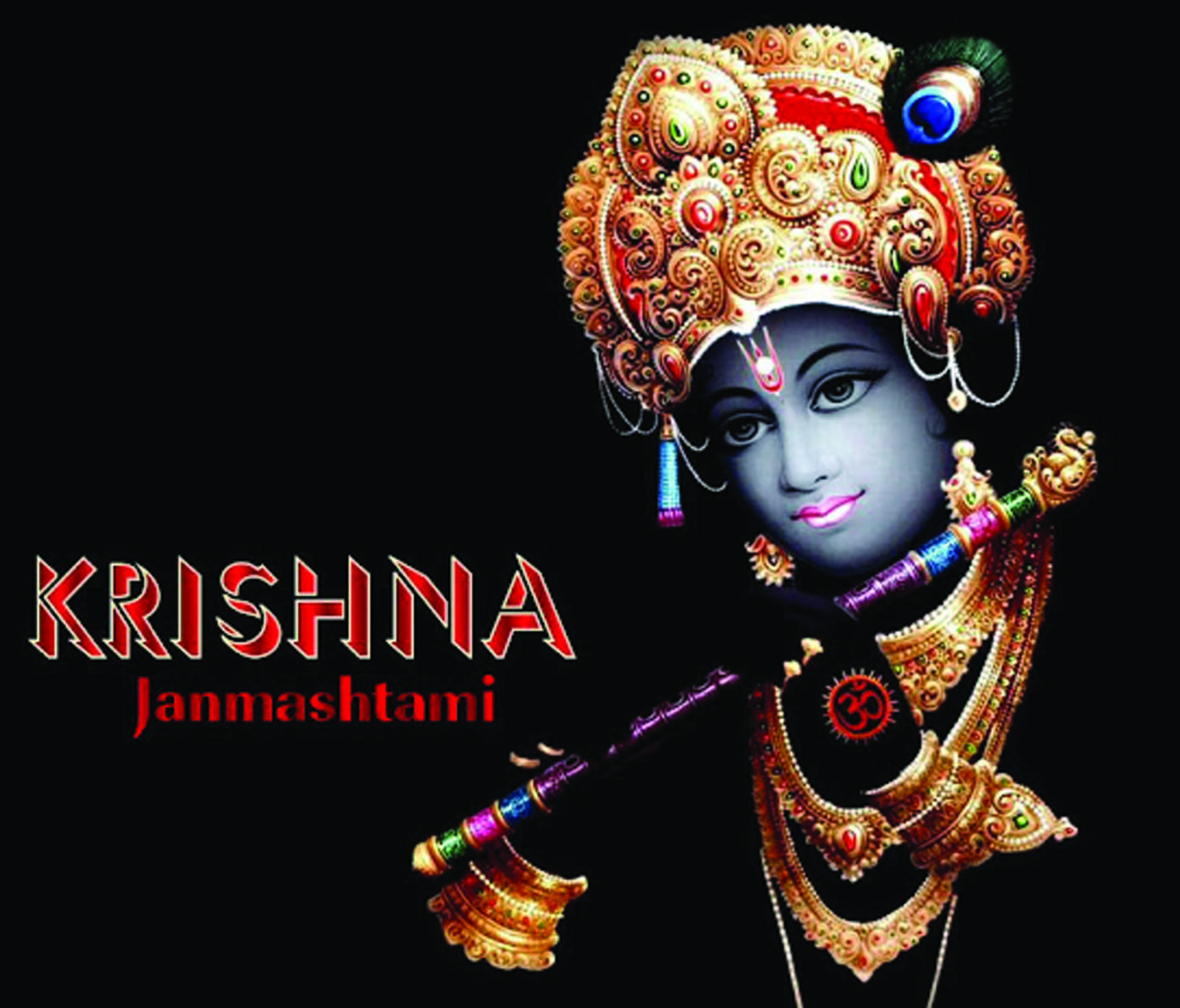
    Krishna Janmashtami is the celebration of the birth of Lord Shri Krishna, the incarnation of Lord Vishnu, who is believed to have been born about five thousand years ago in Mathura in ‘Dwapar Yuga’. Krishna Janmashtami is also known as Ashtami Rohini, Srikrishna Jayanti, Krishnashtami, Saatam Aatham, Gokulashtami and sometimes simply as Janmashtami. It is essentially a Hindu festival.

    The festival is generally observed on Ashtami tithi, the eighth day of the dark half or Krishna Paksha of the month of Bhadrapada in the Hindu calendar, when the Rohini Nakshatra is ascendant. This is usually in the months of August and September in the Gregorian calendar. The festival is celebrated with great enthusiasm and vigor by Hindus all over India and abroad. People observe fast the whole day, sing hymns and conduct prayers at midnight to rejoice the birth of Lord. Ras lila, dramatic enactments of the life of Krishna, are a special feature that is showcased in every part of the country, as it re-creates the flirtatious aspects of Krishna’s youthful days.

    Another interesting aspect of Krishna Janmashtami is the practice of Dahi-Handi. This game portrays the playful and mischievous side of Krishna, where teams of young men form human pyramids to reach a high-hanging pot of butter and break it.

    History

    According to the Puranas Krishna took birth on the 8th lunar day (Ashtami) of the waning moon of the month of Smvana at midnight, upon the moon’s entrance into Rohini asterism. This day is marked as Janmashtami. Krishna is one of the most worshipped Gods in India and belongs to the Hindu Trinity. He is believed to be one of the eight incarnations of Lord Vishnu.

    The story of birth of Krishna is an intriguing one. The story goes like this: One day Mother Earth was appalled by the number of sins that were being committed on her surface. She went to Brahma that God of the Gods and appealed to him for help. Brahma, after listening to her, appealed to Lord Vishnu who said that He would take birth on earth and His avatar will destroy every kind of sin that was being committed on earth then. During that time, Mathura was in miserable state as Kansa, brother of Devki, had put his father, King Ugrasen in prison and declared himself the new king.

    To put an end to his evil rule, Lord Vishnu decided to take birth in the human form. As such, at the wedding ceremony of Devki and Vasudev, there was a divine prophecy which proclaimed that Vasudeva’s eighth son would kill Kansa. To protect himself, Kansa rushed to kill his sister but gave up the idea of killing after being assured by Vasudev that he will hand over all his children to Kansa. Kansa put his brother-in-law and sister in prison. Kansa killed all the six infants as soon as they were born.

    The seventh child (Balram) was saved due to divine intervention, when he was transferred from Devki’s womb to that of Rohini’s (other wife of Vasudev). As Devki conceived the eighth child, everything around was imbued with benevolence and majestic beauty. Lord Krishna was born in the divine form with lotus like eyes, his palms bearing the signs of a lotus, while his sole has a swastika sign. He was adorned with jewels and was wearing a crown. Just as he was born at midnight, a chain of events astonished Vasudev, when he saw the gates of the cell flow open and all the guards fast asleep.

    He immediately thought of Nand, his close friend in Gokul and decided to hand over his child to him in order to save him from the clutch of Kansa. Crossing the River Yamuna, Vasudev reached Nand’s residence and exchanged his son with Nand’s daughter. Upon reaching the prison, the door got locked behind him and he was chained again as if nothing happened in between.

    The guards also woke up and after hearing the cry of the baby, informed Kansa about the birth of the eighth child. Just as Kansa rushed to kill the baby, it slipped out of his hand and flew towards the sky, proclaiming that the annihilator of Kansa was born and was safe.

    Celebrations

    Hindus all over India observe fast on this day and recite the life story and teachings of Sri Krishna noted in the form of ‘shlokas’ in Bhagwad Gita. Temples of Lord Krishna are decorated most beautifully and children are adorned as Lord Krishna and Radhika, his spiritual beloved. Krishna Leela or the plays depicting scenes from Krishna’s life, especially childhood, are performed.

    At midnight, when Lord Krishna was believed to have taken birth, an ‘aarti’ is performed and people break their fasts by feasting on sweets and delicious dishes prepared especially for the occasion. In many parts, the idol of baby Krishna is installed in a swing and offered sumptuous food, especially ‘Makkhan’ (butter) and ‘Mishri’ (sugar cubes).

    Popular Places

    Janmashtami is one such festival that is celebrated equally in North and South India. Preparations for the same start weeks in advance. Different parts of the country celebrate the festival differently. In South India, the celebrations are most prevalent in Karnataka and Tamil Nadu. In both the places, the idol of Lord Krishna is placed in a decorated mantapa. Bhakshanam (snacks and sweets in Sanskrit), are specially prepared for the festival, and offered to Lord Krishna.


    img10

    Along with it, fruits that are his favorites are also offered. In some parts of Karnataka, chakli, avalakki and bellada panaka are prepared especially for the festival. In North India, celebrations are no less than being called extravagant and splendid. While Gokul and Vridnavan (Lord’s birth and growing up place) witness flocks of visitors coming to the place to celebrate the festival at Krishna janamabhoomi, the other parts organize different events and practice different rituals to mark the occasion. In the cities of Mumbai and Pune, dahi-handi is organized wherein a group of men form human pyramid to reach a high-hanging pot of butter and break it.

    In the city of Dwarka in Gujarat and the eastern states of Orissa and West Bengal, people celebrate it with fasting and doing puja at midnight. Though the rituals practiced vary from one region to the other, the spirit and devotion to the Lord is same everywhere. Thus, it wouldn’t be wrong to say that Krishna is the most loved and celebrated God in India.Janmashtami is one such festival that is celebrated equally in North and South India. Preparations for the same start weeks in advance.

    Different parts of the country celebrate the festival differently. In South India, the celebrations are most prevalent in Karnataka and Tamil Nadu. In both the places, the idol of Lord Krishna is placed in a decorated mantapa. Bhakshanam (snacks and sweets in Sanskrit), are specially prepared for the festival, and offered to Lord Krishna. Along with it, fruits that are his favorites are also offered. In some parts of Karnataka, chakli, avalakki and bellada panaka are prepared especially for the festival. In North India, celebrations are no less than being called extravagant and splendid.

    While Gokul and Vridnavan (Lord’s birth and growing up place) witness flocks of visitors coming to the place to celebrate the festival at Krishna janamabhoomi, the other parts organize different events and practice different rituals to mark the occasion. In the cities of Mumbai and Pune, dahi-handi is organized wherein a group of men form human pyramid to reach a high-hanging pot of butter and break it. In the city of Dwarka in Gujarat and the eastern states of Orissa and West Bengal, people celebrate it with fasting and doing puja at midnight. Though the rituals practiced vary from one region to the other, the spirit and devotion to the Lord is same everywhere. Thus, it wouldn’t be wrong to say that Krishna is the most loved and celebrated God in India.

  • Medical Tourism to India: The Next Services Industry Revolution

    Medical Tourism to India: The Next Services Industry Revolution

    India ranked third in the world in medical tourism in 2012, with Thailand leading and Hungary in the second position. The hallmark of medical tourism in India is care. The author underscores this aspect: “India is still a caring society – though this is fast going.

    As many patients, both American and European have noted, this adds a subtle and intangible value added factor to the quality of medical care in India.” “Man does not live by bread alone. We have had in recent years super specialty hospitals rise where cutting-edge care is given at a pittance to the indigent. These are largely staffed by disciples of the leading gurus of India with a strong spiritual bent. For them medicine is now more a calling rather than a vocation”, says the author.


    img6

    Starting sometime in the early 1990s the IT revolution took off in India which has revolutionized many aspects of Indian industry. It led to the rise of Indian global IT giants and world class firms Infosys, Tata Consultants,Wipro and a host of others. Now in the 21st century it is the turn of the global medical industry to take advantage of world class quality and ultra-competitiveness of Indian medical services. There are estimates of 20% to 25% compounded annual growth in medical tourism to India for at least the foreseeable future.


    img7

    The first wave from SAARC (South Asian Association for Regional Cooperation) commenced some time ago. The second wave from the advanced European countries began not too long ago. With the rise of Obamacare it will now be the turn of the medical tourism rush from the US and Canada. In some ways it should be easier for the medical tourism industry to draw clients from the US since many of India’s leading doctors of today trained in the US and are intimately familiar with the culture, procedures and standards in the US. They dominate in several medical fields in the US at the leading research institutions. That apart there is a subtle factor.

    India is still a caring society – though this is fast going. As many patients, both American and European, have noted this adds a subtle and intangible value added factor to the quality of medical care in India. Plus there is the image of Indians in the US as being the most advanced and affluent immigrant community. In math, science, medicine, R&D and the teaching professions the reputation of Indians is unrivalled. More important Indians are not viewed as a hegemonistic / imperialistic threat anywhere in the world – our excessive non-violence (ahimsa) fetish has some use after all, vis a vis for example the Chinese.


    img8

    The other great civilization out of Asia is viewed with deep suspicion as monolithic, mercantilistic, hegemonistic all over the world. Now to speak in a larger context. Whether this medical tourism boom and the resulting affluence of the medical sector will lead to the improvement of general medical care for the vast impoverished masses of India is the real issue. One hopes that it will. The second factor is whether it will lead to the growth of cutting edge medical R&D establishments in India which will advance the frontiers of medical care. Once some 2000+ years ago in the time of Charaka and Susruta, c.f. Charaka Samhita and Ashtanga Hridayam, India nee Bharatavarsha led the world in the sophistication of its medical AND SURGICAL care theory and practice.

    With the wholesale destruction of the native culture through the millennia of Islamic conquest, rapine and genocide much of this vanished. Then it was the turn of the English for about 200 years. There has to be pride in one’s cultural heritage and a resolve / samkalpa to bring about a cultural renaissance where such services and arts will rise to the top again. We have been successful in the IT industry; it is true. But some 25 years after the boom began we have still not advanced as far as we could / should have to rise above the cyber coolie image.

    There is not as much real cutting edge IT innovation and research taking place in India as would have been possible. The cutting edge work is still being done in the US and Israel. As someone who worked in the consulting industry in a senior capacity, I have seen that the level of professionalism and training in even the best Indian IT firms is far below what it is at the elite global consulting firms out of the US / UK / France. The low level work was taken up by India / Indians.

    Now that India is being priced out the work is moving to Vietnam, Laos, Bangladesh and elsewhere. One hopes there will be more thoughtful and professional planning and assistance at the central government level for the medical services industry. There is an inherent advantage here which was not there in the case of the IT industry. Many of the medical professionals involved are wealthy to start with having been for decades in the US. They have the top level socio-political contacts. The issue is how much of a pro bono orientation will guide their actions. Man does not live by bread alone.

    We have had in recent years super specialty hospitals rise where cutting-edge care is given at a pittance to the indigent. These are largely staffed by disciples of the leading gurus of India with a strong spiritual bent. For them medicine is now more a calling rather than a vocation. With the rampant growth of materialism and conspicuous consumption aping the West, will much / any of the old values which made Indian Hindu society a survivor for some 5,000 years continue? That is the real question. Let us hope and pray and all do our bit to ensure that the age old values flourish in the India of today and the future. (The author is based in New York and can be reached at nagendrasrao@gmail.com)

  • SUN UNLEASHES FLARES AT EARTH @3.3M KM/HR

    SUN UNLEASHES FLARES AT EARTH @3.3M KM/HR

    WASHINGTON (TIP): The Sun has unleashed a powerful storm, sending an enormous cloud of superheated particles rocketing towards Earth at a mind-boggling speed of 3.3 million kilometre per hour. On August 20, the Sun erupted with an Earth-directed coronal mass ejection or CME, a solar phenomenon which can send billions of tons of particles into space that can reach Earth one to three days later.

    “These particles cannot travel through the atmosphere to harm humans on Earth, but they can affect electronic systems in satellites and on the ground,” Nasa said. Experimental Nasa research models, based on observations from Nasa’s Solar Terrestrial Relations Observatory show that the CME left the Sun at speeds of around 570 miles per second or 3.3 million km/h, which is a fairly typical speed for CMEs. Earth-directed CMEs can cause a space weather phenomenon called a geomagnetic storm, which occurs when they funnel energy into Earth’s magnetic envelope , the magnetosphere, for an extended period of time. The CME’s magnetic fields peel back the outermost layers of Earth’s fields changing their very shape. “In the past, geomagnetic storms caused by CMEs of this strength have usually been mild,” Nasa said. Nasa warned the magnetic storms can degrade communication signals and cause unexpected electrical surges in power grids.

  • THIS CLOCK SHOWS MOST ACCURATE TIME

    THIS CLOCK SHOWS MOST ACCURATE TIME

    WASHINGTON (TIP): Scientists claim to have developed the world’s most precise clock made from the element ytterbium, whose ticking rate varies less than two parts in one quintillion – ten times better than any other device. A pair of experimental atomic clocks based on ytterbium atoms has set a new record for stability, researchers said. The clocks act like 21st century pendulums or metronomes that could swing back and forth with perfect timing for a period comparable to the age of the universe.

    Physicists at the National Institute of Standards and Technology said that the ytterbium clocks’ tick is more stable than any other atomic clock. Stability can be thought of as how precisely the duration of each tick matches every other tick. The ytterbium clock ticks are stable to within less than two parts in 1 quintillion (1 followed by 18 zeros), roughly 10 times better than the previous best published results for other atomic clocks, experts said.

    This has the potential for significant impacts not only on timekeeping, but also on a broad range of sensors measuring quantities that have tiny effects on ticking rate of atomic clocks, like gravity, magnetic fields, and temperature.

  • FEMALE SPERM & MALE EGGS A POSSIBILITY

    FEMALE SPERM & MALE EGGS A POSSIBILITY

    LONDON (TIP): Researchers have suggested that it may be possible in the future to create sperm from women and eggs from men – a feat, that if achieved, could revolutionize infertility treatments. Katsuhiko Hayashi of Kyoto University in Japan and his senior professor Mitinori Saitou used skin cells from mice to create primordial germ cells or PGCs.

    PGCs are the common precursor of both male and female sex cells. These cells were then developed into both sperm and eggs. Scientists used these to create live-births via invitro fertilization. The technique offers numerous possibilities for reproductive medicine. It may allow infertile women to have babies by creating eggs from their skin cells, and also make it possible for sperm and eggs cells to be created from either males or females, ‘The Independent’ reported. In the technique, pluripotent stem cells were extracted from early-stage embryos and somatic cells, and were then converted into PGCs using signalling molecules.

    These germ cells were transplanted into the ovaries and testes of living mice to develop. Once these cells were mature they were extracted and used to fertilise one another in vitro. The initial research took place in October last year, with researchers claiming that the live-births were merely a ‘side effect’ of the research to demonstrate that the creation of PGCs had been successful.

    Other researchers have replicated the production of PGCs but could not succeed in producing live births. The scientists involved also have many other hurdles to overcome including the production of ‘fragile’ and ‘misshapen’ eggs, wrote David Cyranoski in ‘Scientific American’. The Japanese team is now working on monkey embryos and believe they could repeat the mouse work in monkeys within 5-10 years, with the creation of human PGCs following shortly after.

    While making PGCs for infertility treatment will be a huge jump, many scientists are urging caution as embryonic stem cells frequently pick up chromosomal abnormalities, genetic mutations and epigenetic irregularities during culture. Hayashi has also said that a viable infertility treatment could be 10 or even 50 years in the future. “My impression is that it is very far away. I don’t want to give people unfeasible hope,” he said.

  • Blood test can tell if you are suicidal

    Blood test can tell if you are suicidal

    LONDON: A simple blood test can now identify people most prone to committing suicide. Scientists from Indiana University School of Medicine researchers have found a series of RNA biomarkers in blood that may help identify who is at risk for taking their on life.

    Researchers said the biomarkers were found at significantly higher levels in the blood of both bipolar disorder patients with thoughts of suicide as well in a group of people who had committed suicide. Researchers now believe the results provide a first “proof of principle” for a test that could provide an early warning of somebody being at higher risk for an impulsive suicide act. “Suicide is a big problem in psychiatry. It’s a big problem in the civilian realm, it’s a big problem in the military realm and there are no objective markers.

    There are people who will not reveal they are having suicidal thoughts when you ask them, who then commit it and there’s nothing you can do about it. We need better ways to identify, intervene and prevent these tragic cases,” said investigator Dr Alexander B Niculescu, director of the Laboratory of Neurophenomics at the Institute of Psychiatric Research at the IU School of Medicine. Over three years, Niculescu and his colleagues followed a large group of patients diagnosed with bipolar disorder, completing interviews and taking blood samples every three to six months.

    The researchers conducted a variety of analyses of the blood of a subset of participants who reported a dramatic shift from no suicidal thoughts to strong suicidal ideation. They identified differences in gene expression between the “low” and “high” states of suicidal thoughts and subjected those findings to a system of genetic and genomic analysis called Convergent Functional Genomics that identified and prioritized the best markers by cross-validation with other lines of evidence.

    The researchers found that the marker SAT1 and a series of other markers provided the strongest biological “signal” associated with suicidal thoughts. Next, to validate their findings, working with the local coroner’s office, they analyzed blood samples from suicide victims and found that some of same top markers were significantly elevated.

  • NASA TO CRASH COPTER TO MAKE FLIGHTS SAFER

    NASA TO CRASH COPTER TO MAKE FLIGHTS SAFER

    WASHINGTON (TIP): Nasa researchers will drop a 45-foot-long helicopter fuselage from a height of about 30 feet to test improved seat belts and seats and advance experimental techniques and crashworthiness data. The ultimate goal of the crash is to help make helicopters and other vertical take-off and landing vehicles more serviceable — able to carry more passengers and cargo — quicker, quieter, safer and greener, Nasa said.

    Improved designs might allow helicopters to be used more extensively in the airspace system. “We have instrumented a former Marine helicopter airframe with cameras and accelerometers,” said lead test engineer Martin Annett. “Almost 40 cameras inside and outside the helicopter will record how 13 crash test dummies react before , during and after impact ,” said Annet.

    During the test, onboard computers will record more than 350 channels of data as the helicopter is swung by cables , like a pendulum, into a bed of soil. Just before impact, pyrotechnic devices release the suspension cables from the helicopter to allow free flight. For the first time ever in any test, technicians installed a video game motion sensor in the helicopter. The helicopter will hit the ground at about 48.2kph. “We want to see if it is useful as an additional way to track the movements of the dummies,” said test engineer Justin Littell.

  • INDIA, CHINA TO SIGN COOPERATION PACT IN ROAD SECTOR

    INDIA, CHINA TO SIGN COOPERATION PACT IN ROAD SECTOR

    NEW DELHI (TIP): India and China are set to sign an agreement for cooperation in the road and transport sector when Prime Minister Manmohan Singh visits Beijing in October. One of the areas would be cooperation in sharing of information on transport infrastructure. Government sources said the transport ministries of both sides have approved the details of the proposed agreement.

    Sources said the identified areas of cooperation include sharing best practices in road and bridge building technologies, policies, intelligent traffic system besides road-related issues. China has taken huge strides in building world class highways, and has built over 60,000 km of expressways. Plans are afoot to build around 18,000 km of expressways in India. China has also made a mark in speedy implementation of infrastructure projects, particularly road and rail. “Once we have technology sharing, it will help us push the pace of construction. They have also improved their record in reducing road deaths in the past sixseven years.

    Cooperation will open a window of opportunity for both the countries,” an official said. Around half-a-dozen road projects are being built with participation of Chinese companies. Sources said all these projects were bagged by private entities in which Chinese firms had a share. Sources said no project has been identified that can be taken up under this cooperation. “This is just a beginning. As we progress, projects will be identified,” the official said. The other major area of cooperation will in the electronic mode of collecting toll (ETC).

    China is way ahead of India in this sector. India also plans to bring all toll plazas on national highways under ETC so that people can pass through all plazas using a single smart card. India and China will also cooperate in the field of intelligent traffic system, vehicle specifications and their certification. While India is likely to benefit from Chinese sharing of information and knowledge, China will learn from India’s success in implementing public-private-partnership projects.

    Last year, former highways minister C P Joshi had reached out to Chinese infrastructure companies to invest in the road sector. He had said around 40 road construction projects were being undertaken by companies from China, Russia, the UK, Dubai, Singapore, Italy, South Korea, Malaysia, Spain and Thailand.

  • AP PREFERRED FOR UK INVESTMENTS

    AP PREFERRED FOR UK INVESTMENTS

    HYDERABAD (TIP): For UK companies Andhra Pradesh continues to be one of the preferred states in India for investments. An action plan for exchange of delegations in the select sectors would soon be worked out in consultation with the UK Trade and Investment Office in Hyderabad so that British companies can find appropriate partners and locations in Andhra Pradesh for investments.

    This emerged after a meeting between the Director- General of UK Trade and Investment Department and State industry department officials. Areas of life sciences, aviation, defence and high-tech manufacturing, green technologies, gas and energy, IT hardware and food processing were identified as potential sectors for mutual cooperation. Kumar Iyer, Deputy High Commissioner and Director-General of UK Trade and Investment accompanied by Andrew McAllister, British Deputy High Commissioner in Hyderabad met K. Pradeep Chandra, Principal Secretary, Industries and Commerce Department in the Secretariat today.

    Kumar Iyer informed that the British Government has identified Andhra Pradesh as one of the preferred states in India for investments. In turn, the State officials explained the advantages of Andhra Pradesh as an investment destination with a natural resource base and industrial parks spread all over the State.

  • Zydus to invest Rs 100 crore in Vadodara unit, expand hospital business

    Zydus to invest Rs 100 crore in Vadodara unit, expand hospital business

    AHMEDABAD (TIP): Zydus Cadila will set up an injectible facility at Vadodara at an investment of Rs 100 crore by 2015, a senior company official said, adding that land has been acquired. The Ahmedabad-based company also plans to expand its hospital business across Gujarat in the next three years. “We are coming up with a USFDA-approved injectible facility at Vadodara to cater to the high-value US market.

    Regulated markets like Brazil and Europe would be the next focus,” chief operating officer Ganesh Nayak of the Rs 6,300-crore company said on the sidelines of Nirma University’s marketing conclave, Ayatana-2013. The new facility would be commenced by 2015 and it is meant only for therapeutic segments other than oncology. Zydus Cadila already has a joint venture with US-based Hospira for manufacturing anti-oncology injectibles at Matoda SEZ plant, near Ahmedabad, where the company has another joint venture with Bharat Serum and Vaccine.

    Zydus Hospitals & Healthcare Research recently started its first hospital operations at Anand, better known as Amul’s hometown. “We would add four hospitals in the next three years at Surat, Vadodara, Ahmedabad and Rajkot,” says Mr Nayak. The second hospital would come up at Ahmedabad and have a helipad on the rooftop for air-ambulance services. However, Mr Nayak declined to disclose the quantum of investment for the hospitals’ expansion. Apart from the two new projects, Zydus is also looking at co-marketing or in-licensing of patented drugs for domestic markets.

    “A drug company has three ways to sustain its growth trajectory – own patent products, off patent (generic products) and the third way is through comarketing or in-licensing.” Elaborating on co-marketing or in-licensing strategy, Nayak says that the company has three co-marketing patented products-pantoprazole ( Nycomed Pharma, now acquired by Takeda Pharma), xarelto (Bayer Healthcare) and nexavar (Bayer Healthcare). Zydus has joint venture units with the patent holder companies and produces locally. “We are further seeking new co-marketing or in-licensing of patented products for our future growth,” added Mr Nayak.

  • PRIVATE EQUITY FLOWS INTO WATER SECTOR

    PRIVATE EQUITY FLOWS INTO WATER SECTOR

    MUMBAI (TIP): Private equity funds are eyeing investments in the country’s water sector. Singaporebased CLSA Capital Partners invested $9.2 million (Rs 55 crore) in Gurgaonbased Luminous Water Technologies in end-July, through its two funds. Last year, the alternative asset management firm had invested $15 million in Delhi-based Earth Water Group,

    which is into water and wastewater treatment projects. Similarly, Capvent AG, a Switzerland-based private equity (PE) fund, picked up 51 per cent stake for Rs 12 crore in Morf India Ltd, a Chennai-based water engineering company. Earlier this month, Organica Water, which is into treatment and recycling of wastewater, completed a Series B round of financing.

    Led by the International Finance Corporation and WLR China Energy Infrastructure Fund, existing investors RNK Capital and Gamma Capital Partners also participated in the funding. The Hungarian firm has offices in New Delhi, and has signed contracts with several Indian water companies for design and equipment supply of water treatment plants. Currently pegged at Rs 3,500 crore, analysts estimate by 2015, private equity investment in the water sector is set to touch Rs 7,500 crore.

    A report by TechSci Research has noted that India’s water purifiers market is expected to grow at a compounded annual growth rate of 24 per cent between 2013-18. Approximately 70 per cent of the country’s water purifier market is dominated by organised players such as Eureka Forbes, Hindustan Unilever, Tata Chemicals and Kent. With the level of water contamination considerably higher in Rajasthan, Andhra Pradesh, and Odisha, the report said the demand for water purifiers was bound to increase there. Kent, the largest water purifier manufacturer in the Reverse Osmosis (RO) segment, is not looking at raising funds through the PE route, for now. However, Managing Director Mahesh Gupta said that of late, there has been a lot of activity in the water space, with many new players entering the segment.

    Hot property

    “We have been approached by several players (for a stake), but we are not looking at it right now. But I am not totally against the idea too,” Gupta told Business Line, adding that some 30-40 companies in Ahmedabad and Delhi dealing in water, were indeed looking for funds.

    Gupta said PEs would not provide any technical expertise to these companies, but help them expand faster. An IDFC official told Business Line that foreign PE consider India’s water sector as “hot property” and many Indian water and wastewater companies have raised funds to fuel their expansion activities.

  • YUVRAJ SINGH READY TO FIRE AGAIN

    YUVRAJ SINGH READY TO FIRE AGAIN

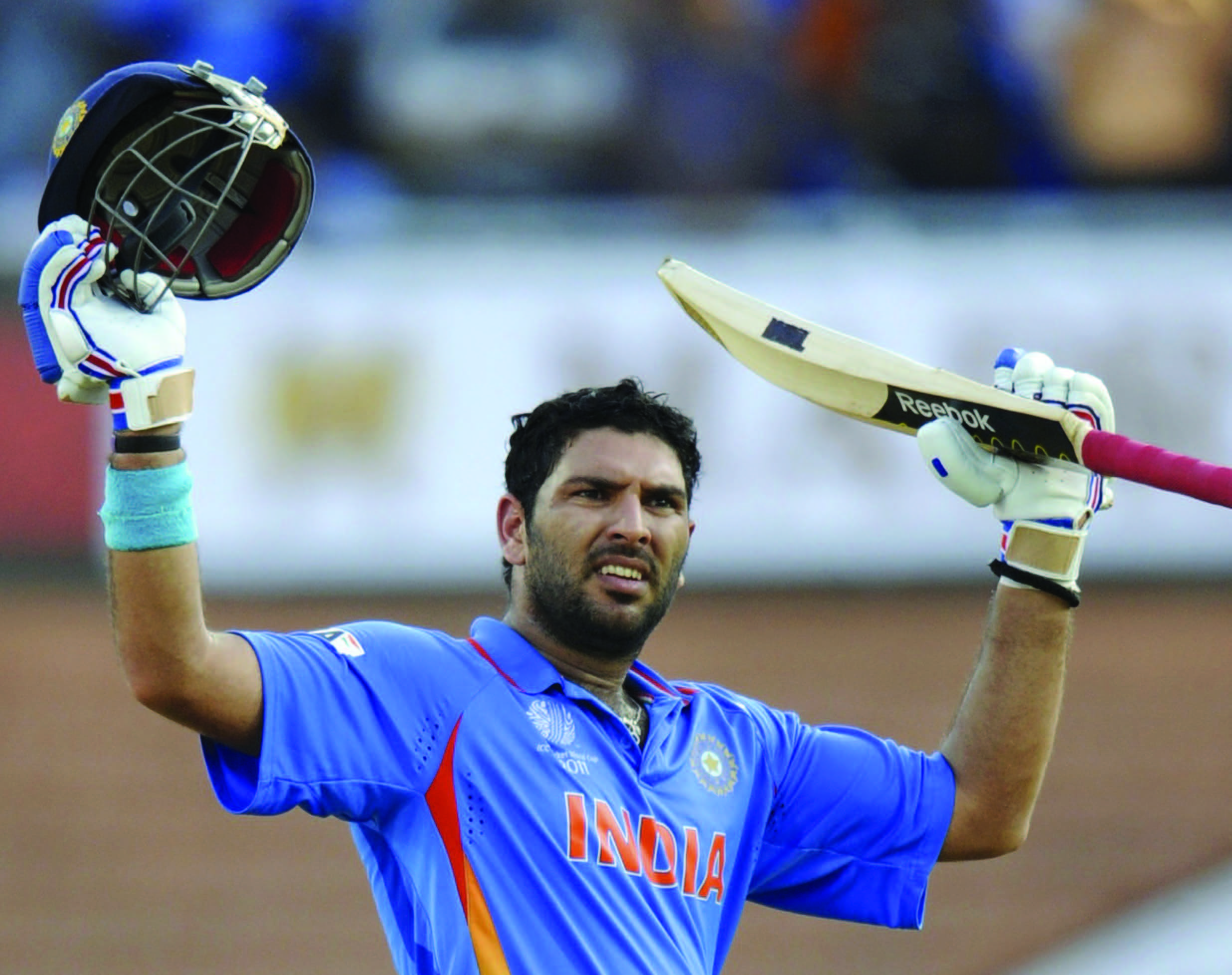
    NEW DELHI (TIP): A fitter and slimmer Yuvraj Singh is back from his six-week long fitness camp, along with Zaheer Khan, in Brive la Gaillarde in France and is raring for a crack at Team India again. He is deriving his confidence from skipper MS Dhoni’s recent remark that his team was reserved not only for youngsters.

    “Dhoni must have thought about the 2015 World Cup. I am happy that youngsters are doing well but a right balance, with seniors too, is needed. The most important thing is to have the best team for the country,” said Yuvraj, on his first public appearance since returning from France. The mainstay of the Indian middle order in the limited-overs format till very recently doesn’t mind talking about his past record. “While one’s past records should not be the criterion for selection, you can’t forget the contribution made by them either,” Yuvraj said at a promotional event.

    There has been extra emphasis on agility and fitness in Dhoni’s scheme of things. And the veteran of 282 ODIs is well aware of that. “I have never doubted my ability and won’t doubt it ever. The focus is to look sharp and agile in the field. My priority has always been to play for my country,” he stated. Both, he and Zaheer, decided to undertake a different regimen over the one available at the National Cricket Academy in Bangalore mainly to avoid people speculating about them. “I had trained hard at the NCA after I recovered from cancer but I just wanted to get away because of frequent distractions. Here, something is invariably cropping up every day about what I am doing.

    I also wanted to train in higher altitudes and play different sports, eat a different kind of food and have time to discuss my game with my father (former Test cricketer Yograj Singh). In France, I could stay focused on what I was doing.” Coming out of that regime, he definitely looked more refreshed and fitter. But what about Zaheer? “Zaheer has been extremely disciplined and he worked as hard as I did. He has lost nearly six kilograms and looks in great shape. We started playing for India together and we gel really well.

    Working in tandem has helped each other. He has really pushed himself and am sure he will make a comeback soon,” Yuvraj said. Yuvraj is itching to get back to the pitch but hasn’t got to play any of the pre-season domestic tournaments like the Buchi Babu. “I could only play Buchi Babu or Moin-ud Dowla if my state team is playing in the tournament,” he clarified. Asked about a recent photograph which showed him along with Sachin Tendulkar’s son Arjun, Yuvraj recalled, “Some time back (Sachin) Tendulkar told me that his son bats like me. When I watched Arjun, he did remind me of my younger days in Chandigarh.”

  • 1ST T20I: PAKISTAN BEAT ZIMBABWE BY 25 RUNS

    1ST T20I: PAKISTAN BEAT ZIMBABWE BY 25 RUNS

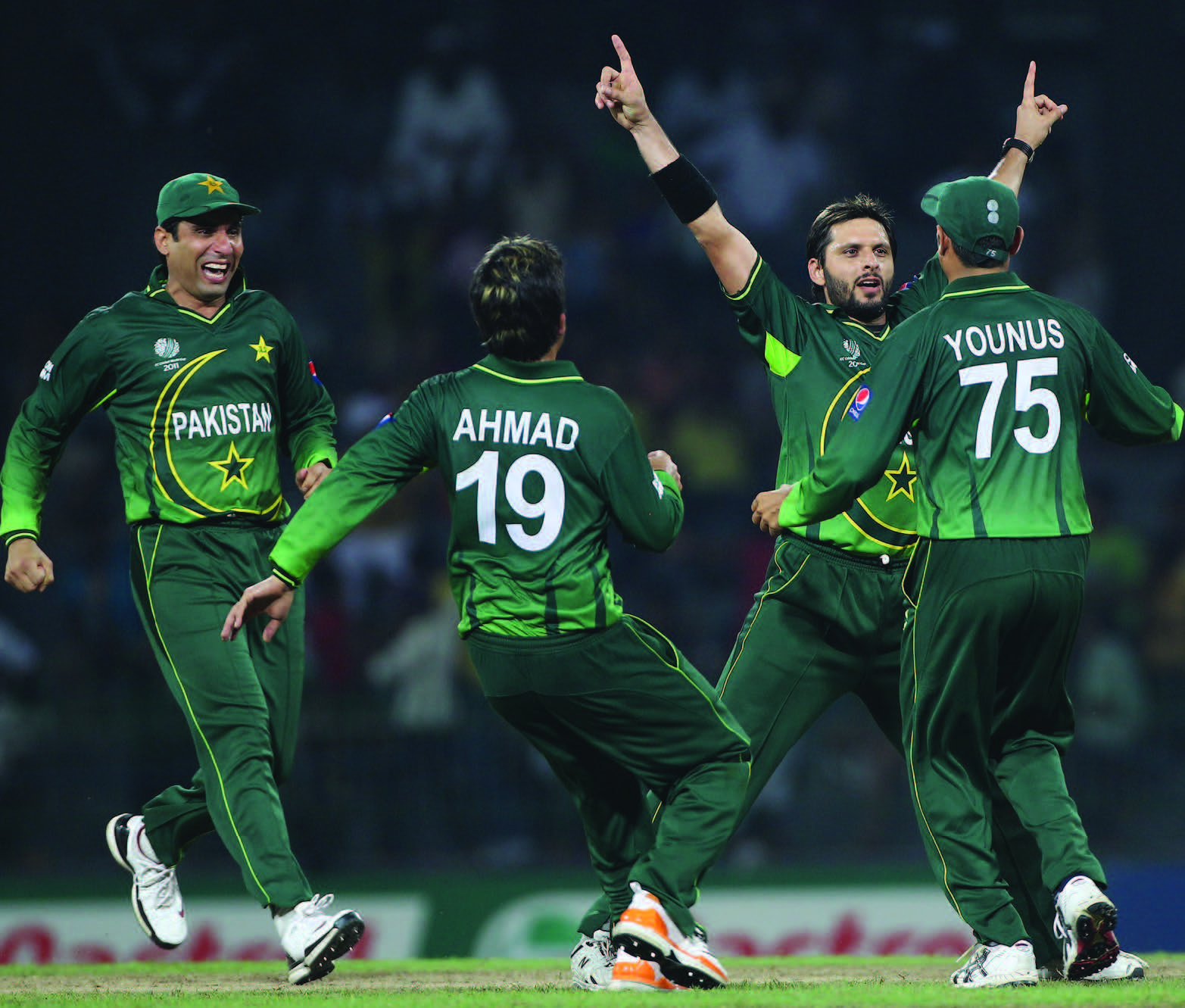
    HARARE (TIP): Ahmed Shehzad shone with the bat and Shahid Afridi struck with the ball as Pakistan opened their tour of Zimbabwe with a comfortable victory in the first Twenty20 international August 23.

    Shehzad’s measured 70 allowed Pakistan to post a strong total of 161 for five, before Afridi snubbed out Zimbabwean resistance with three wickets to secure a 25-run victory. Although Zimbabwe were much improved from the side that lost a recent one-day series against India 5-0, they let things slip in the field midway through the Pakistan innings and also lost their way after a promising start with the bat.

    Shehzad’s patience up front proved key to the match as he saw out a tricky opening period when Pakistan lost Nasir Jamshed and captain Mohammad Hafeez to Tendai Chatara, before slowly taking control against Zimbabwe’s other seamers. “Early on it was doing a bit. They bowled a good channel and that’s why they picked up a couple of wickets, but after six overs the ball was coming on nicely and I was able to manoeuvre the ball,” Shehzad said. The opener took 17 runs off Elton Chigumbura’s first over to put the pressure back on Zimbabwe, and shared in a 55-run stand with debutant Sohaib Maqsood. Shehzad struck six fours and a six in his 50-ball innings before he was eventually caught on the boundary off the bowling of Shingirai Masakadza. Afridi ensured that Pakistan finished strongly, hitting 23 not out from 16 deliveries, and then made key breakthroughs in the Zimbabwean innings in claiming figures of 3 for 25.

    The home side started brightly with a 53- run opening stand between Hamilton Masakadza and Vusi Sibanda, but their inability to accelerate from a solid base meant that they never really threatened to achieve their target. Afridi picked up the wickets of Sibanda and Timycen Maruma after laboured innings by both batsmen, and also dismissed the dangerous Chigumbura cheaply. Although Zimbabwe captain Brendan Taylor came in at number three and finished unbeaten, he was often starved of the strike as he faced just 30 balls in topscoring with 32. Malcolm Waller’s late salvo saw him take a six and a four off Saeed Ajmal’s final over, but with too much to do Zimbabwe finished well short of the line. “We always know that once we score 150- plus, it will be tough for the opposition to score the runs with our good bowling side,” Hafeez said.

  • ADVANI Wants India To Unlock Unlimited Potential

    ADVANI Wants India To Unlock Unlimited Potential

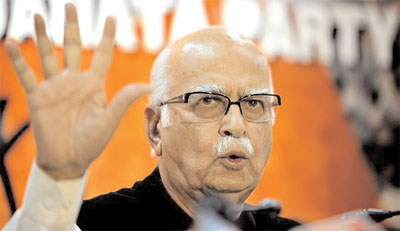
    NEW DELHI (TIP): On a day when Gujarat chief minister Narendra Modi took on Prime Minister Manmohan Singh in his Independence Day speech, senior BJP leader L K Advani struck an optimistic note, saying “India has unlimited potential for the future”. In his address after hoisting the national flag at his residence, Advani said, “This past decade, which, as the prime minister said today, will get over in 2014.

    He has enumerated the achievements and the shortcomings of this decade. We should now be concerned about making the decade starting from 2014 an unprecedented one in India’s history. We should give it the best performance we can.” Striking a positive note, the BJP veteran said no one should be critical of each other on this occasion, rather each one should try to put in their best to ensure that India’s potential to shine in the 21st century is exploited.

    Since Advani was speaking moments after Modi’s speech in Gujarat, there was speculation that he was being critical of the Gujarat CM. However, the BJP veteran is learnt to have been unaware of the contents of Modi’s speech. Since the function at Advani’s residence was soon after the Red Fort event, which he attended, he was not aware of what Modi had said about the PM in his speech, it is learnt.

    Talking about a book on black money, which he is currently reading, Advani said, “The theme of the book is that though capitalism is good, if ethics and morality are set aside and people indulge in corruption, then it gives capitalism a bad name.” Leader of opposition in Lok Sabha Sushma Swaraj took a dig at the PM for not mentioning the name of his immediate predecessor and BJP veteran Atal Bihari Vajpayee while lauding the work of earlier prime ministers.

    “Dr Manmohan Singh referred to four prime ministers who contributed to the making of India — all from the Congress party. He forgot even Lal Bahadur Shastri there. The contribution of Morarji Desai and Atal Bihari Vajpayee has been no less. This partisan approach does not go with the solemnity of this great occasion,” Swaraj said on Twitter.

    Later, BJP described the PM’s speech as “lacklustre and an outright disappointment” but hoped that the coming year — in which general elections are due — will usher in a new decade of growth. Party general secretary Rajiv Pratap Rudy described the PM’s speech as “an outright disappointment”. “The country had large expectations from the prime minister on his parting Independence Day speech which was full of hollow claims.

    Country would have the PM to express his stand on issues of national security, especially in the backdrop of Pakistan attacking Indian soldiers and China intruding into Indian territory,” Rudy said. BJP president Rajnath Singh said if voted to power his party will tackle internal and external security challenges facing the country. He described the recent communal violence in Kishtwar as a “challenge to democracy”.

  • UP Accounts For Over 80% Of Illegal Arrests In India

    UP Accounts For Over 80% Of Illegal Arrests In India

    NEW DELHI (TIP): Uttar Pradesh’s high-handedness is not just reflected in the arbitrary transfer of officers such as Durga Sakthi Nagpal and slapping of bogus cases against dissenters (as in the case of Dalit scholar Kanwal Bharti), it can also be seen in the massive number of illegal arrests made by the UP police.

    According to National Human Rights Commission data, UP records an overwhelming majority of illegal arrests in the country, accounting for more than 80% of all such cases. In fact, it tips its nearest competitor, Delhi, by over 3,000% almost year after year. In the past three years (April 2010 to July 2013), UP accounted for 3,397 illegal arrests out of 3,950 such cases recorded across India by NHRC.

    The count for the rest of the 27 states and seven union territories put together was just 553. “What do you expect from a state where many politicians themselves are criminals? How do you expect them to have any respect for law and order or human rights?” says Colin Gonsalves of Human Rights Law Network.

    From April 2012 to March 2013, NHRC recorded 703 cases of illegal arrests in all. As many as 589 of these were against the UP police. UP accounts for 161 of 192 illegal arrests in ’13 Its closest rivals in this dubious distinction, Uttarakhand and Delhi, were way behind with 14 cases each. Data for this period shows only two other states where the number of illegal arrests had crossed double figures — Karnataka (12) and Andhra Pradesh (10).

    In 2013 too (April 1 to July 20), UP accounted for 161 such cases of the total of 192 recorded by NHRC in the entire country. Its closest rival, Delhi, was again was behind with only five cases.

  • 2 TV Channels Fined

    2 TV Channels Fined

    2 TV Channels Fined For Programme Code Breach

    NEW DELHI (TIP): Industry body Broadcasting Content Complaint Council (BCCC) has asked television channels for greater sensitivity while dealing with content depicting acid attacks on women and resist stereotyping of minorities. In an advisory issued to all channels, the BCCC has said that it had received several complaints relating to TV content depicting acid attacks, in most cases on women and girls.

    The council said acid attacks are among the most heinous of crimes with traumatic, irreversible physical and psychological consequences to the victim. BCCC chairperson AP Shah advised channels to be “extremely sensitive to the excruciating physical and psychological agony of acid attack victims”.

    The BCCC issued another advisory regarding portrayal of content about minorities in various TV programmes. “Due diligence should be adopted to ensure that an entire community is not projected as fanatic, intolerant or criminal,” the BCCC has said. Channels should approach content regarding minorities with caution and, when necessary, ensure that any such depiction is preceded by a declaration that it is a work of fiction and bears no resemblance to any community, caste or creed, the advisory said.

    The council has also imposed Rs 10 lakh fine on Big CBS Love and Rs 2.5 lakh penalty on Big CBS Spark for screening content that was obscene and in violation of the programme code adopted by the Indian Broadcasting Foundation (IBF). The channels have also been asked to run apology scrolls.

    This is for the first time that the BCCC has imposed penalty on TV channels. On July 19, the Indian Broadcasting Foundation had conferred powers on the BCCC to levy financial penalty up to Rs 30 lakh on channels.

  • SC Dismisses PIL – IAS Durga Case

    SC Dismisses PIL – IAS Durga Case

    SC Dismisses PIL Against Suspension Of UP IAS Officer Durga Nagpal

    NEW DELHI (TIP): The Supreme Court on August 16 refused to entertain a PIL for reinstatement of suspended UP IAS officer Durga Sakthi Nagpal. A PIL was filed on August 6 in the Supreme Court seeking to quash all proceedings against Durga Sakthi Nagpal. The UP government and the Centre had been made respondents in the petition filed by advocate M L Sharma.

    Contending that the action taken against Nagpal was arbitrary, unconstitutional and malafide, the PIL had sought quashing of all proceedings against the 2010 batch IAS officer who had clamped down on the mining mafia in Gautam Budh Nagar area of UP. The 28-year-old sub-divisional magistrate was suspended on July 27 ostensibly for ordering the demolition of the wall of an under-construction mosque in a village in Noida without following the due process.

    The UP government had on August 4 served a chargesheet on the officer, asking her to submit an explanation for her conduct. Coming out in support of Nagpal, Congress president and the chairperson of National Advisory Council (NAC) Sonia Gandhi has written a letter to the Prime Minister, saying that she should not be “unfairly treated”. The Prime Minister had on August 5 said the Centre was in touch with the state authorities on the issue and laid down rules will be followed.

  • Ghadar Centennial Celebrated In Washington

    Ghadar Centennial Celebrated In Washington

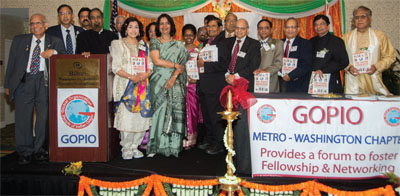
    WASHINGTON (TIP): “The Ghadar Movement was like a spark of fire, which lit up the whole forest,” said Ambassador of India Nirupama Rao addressing the audience of over 200 at the centennial celebration of Ghadar Party Movement for India’s independence. “It is the spirit of sacrifice, the spirit of courage that was exemplified by ghadarites who were inspired by the call of freedom,” Rao added.

    She said that this ghadarites movement was similar to the Irish independence movement, who also gained their freedom from the British after a long and turbulent struggle and many sacrifices. She enumerated the steps being taken by the Indian government, including release of a postage stamp by the Prime Minister early this year, to recognize the significant contribution of the movement in India’s freedom struggle.

    She mentioned that the Indian government has taken upon the project to convert the Ghadar Memorial Hall in San Francisco into a museum and a functional library. The ambassador said that the Indian Diaspora, who lit the torch for the freedom movement hundred years ago, are now making significant contributions in many fields in USA. The ambassador also recognized services of octogenarian Ghulam Yazdani Siddiqui, who was imprisoned in India by the British government, for his participation in freedom movement during his student days.

    The day-long program was arranged by the Metropolitan Washington Global Organization of People of Indian Origin (GOPIO) in cooperation with national GOPIO and Indian community organizations of Metro Washington on Sunday, 28th July at Rockville Hilton in Maryland.

    It consisted of seminars, banquet and entertainment. Seminar speakers talked about the formation of Ghadar Party and its initial members that included Lala Hardayal, Maulvi Barkatullah, Kartar Singh Bhakna, Sohan Singh Bhakna, and others. Inder Singh, chairman of the international GOPIO said that the current generation of Indian-Americans knows very little about the history of Indians in US. “To pass on to the next generation the legacy of the pioneers rests solely on us and particularly on our community leaders,” he said.

    Surender Pal Singh, 76, grandson of Bhagwan Singh-one of the eminent Ghadarites-said there is a need to recognize the contributions of the Ghadar Movement and its leaders in the freedom struggle. Singh, who had come from Atlanta for the occasion added that time has come to make Ghadar Party Movement a part of history text books.

    Professor Harbans Lal who came from Dallas, Texas said that the movement, which started in the West Coast of northern America with a small group of people from diverse religious groups, impacted India thousands of miles away with full force. Dr. Joy Cherian and Dr. Sambhu Banik talked about life and contribution of heroes of Ghadarite Movement. Sandip Mallick of South-Asian American Digital Archive (SAADA) gave a power point presentation of archival material.

    SAADA is helping preserve Ghadarite movement history. Ambassador Subhas Mungra of Republic of Surinam, Ambassador Islam Siddiqui, Chief Agricultural Negotiator US, Deputy Secretary of Maryland State Dr. Rajan Natarajan, Maryland State Attorney- General Mr. Douglas Gansler, Montgomery County Executive Ike Leggett, and Maryland State Delegate Aruna Miller also expressed their appreciation for the event celebrating 100 years of the Ghadarite independence movement.

    Welcoming the guests and audience, Washington GOPIO president Dr. Zafar Iqbal mentioned that the program for the year-long celebration of the centennial was launched at the Embassy of India on 3rd November 2012 by Ambassador Rao. He elaborated that tonight’s event was organized to honor the ultimate sacrifices of Ghadar Party Movement heroes, who preached and practiced the motto, Sar Kata Sakte Hain; Sar Juka Sakte Nahin (We can have our heads cut off, we cannot bow our heads to anyone).

    Event chairperson Dr. Renuka Misra highlighted the significance of the movement that had cooperation of major communities that included Sikhs, Muslims, and Hindus. She elaborated that tonight’s function also had participation of diverse ethnic and cultural organizations. Misra also performed the task of master of ceremony. Sumptuous dinner was followed by a variety of entertainment program that included lively Bhangra dance. Dr. Satish Misra and Nitin Gupta thanked the guests, supporters, and participants in making the event a success.

  • Modi Targets PM In I-Day Speech, Talks Of Taking Along All Indians

    Modi Targets PM In I-Day Speech, Talks Of Taking Along All Indians

    BHUJ (GUJARAT) (TIP): Even as BJP dithers on when to declare him as its PM candidate, Gujarat CM Narendra Modi on Thursday staked claim to the top job by delivering an Independence Day speech aimed at rivalling incumbent Manmohan Singh’s address from Delhi’s Red Fort and softening a hardline saffron image. Breaking the restraint that political opponents have traditionally exercised in critiquing the PM’s August 15 address, Modi had no qualms in turning the grounds of Lalan College here into a parallel pulpit as he attacked Singh’s speech, daring the PM to a debate on development.

    The speech, populist as well as partisan, reflected the Modi camp’s desire to turn the 2014 Lok Sabha elections into a presidential race, with the Gujarat CM fully harnessing his oratorical skills. He looked to exploit UPA’s weaknesses — inflation, corruption, gloom over the economy as well as an alleged weak stance towards Pakistan and China. Modi used his advantage of rhetoric also to play to his strengths: perception of having delivered on development front as a decisive leader and being tough on national security, and the fact that he has not been tested on the national arena.

    August 14 speech was strongly defined by an ambitious attempt by Modi to desectarianize himself. “Governments should have one religion, that of putting India first. They should follow the Constitution as their only scripture, while treating the entire population of 1.25 billion as their strength. They should take all 1.25 billion Indians along and earn their trust as a matter of faith,” Modi said.

    The chief minister was careful to avoid any references such as “burqa of secularism” that had given his critics an opportunity to reiterate their misgivings over him being a divisive leader. The 50-minute speech saw Modi savaging the PM and Congress, projecting himself a man who has the vision which departs from weather-beaten and worn out approaches and can help the country actualize its potential and help the youth realize their aspirations.

    “We need freedom from the status quoist mindset, We need to have a new vision and a fresh enthusiasm,” Modi said, the punch line echoing the “nayi soch, nayi umang” theme that BJP has unveiled to mark his pre-eminence. Emphasizing Congress has run out of ideas, Modi said, “The PM has listed the same problems that the first prime minister Pandit Nehru would enumerate in his Independence Day speeches. This shows we have not achieved much and underscores the need for us to liberate ourselves from old ways of doing things.”

  • Curfew Continues In Kishtwar,  Home Secretary Arrives

    Curfew Continues In Kishtwar, Home Secretary Arrives

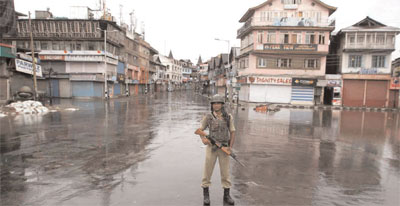
    JAMMU (TIP): Curfew continued for the eighth day on Friday in Jammu and Kashmir’s Kishtwar town as Union home secretary Anil Goswami arrived here to review the law and order situation. The home secretary will also take stock of the situation on the international border. District magistrate of Kishtwar Basheer Ahmad Khan said that curfew was relaxed for a while on Thursday during Independence Day celebrations, but later re-imposed.

    Curfew was imposed following largescale communal violence on August 9, in which three people were killed. Private and public properties worth millions of rupees were destroyed by rioting mobs. Curfew was on Thursday lifted from all the other seven districts of Jammu region — Jammu, Kathua, Samba, Reasi, Udhampur, Doda and Rajouri where it was imposed on Aug 10 as a precautionary measure. Authorities have decided that educational institutions in Jammu and other districts would re-open on Monday. Union home secretary Anil Goswami arrived early on Friday in Jammu along with a team of officials.

    The home secretary went straight to R S Pura in Jammu district to get a first-hand experience of the situation on the international border (IB). He is set to visit the headquarters of the Border Security Force (BSF) in Paloura in Jammu Friday to interact with senior officials about the ground realities. The home secretary will review the law and order situation in Jammu region at a high-level meeting of state and central government officials in winter capital Jammu.

    The international border in Jammu and Kashmir is guarded by the BSF, while the Line of Control (LoC) is manned by the Army. Tensions have been running high on the international border and the LoC following repeated violations of the November 2003 ceasefire by the Pakistan army. A bilateral ceasefire was signed by India and Pakistan in November 2003 which had been holding for all these years. A modicum of peace had returned because of the bilateral ceasefire in the lives of thousands of people.