Month: August 2013

  • Iran Politician ‘Too Pretty’ For City Council Seat

    Iran Politician ‘Too Pretty’ For City Council Seat

    An electoral candidate who won a place on a city council in Iran has reportedly been barred from taking up the seat because she is too attractive. During the polls in the city of Qazvin, 27-year-old Nina Siahkali Moradi received 10,000 votes, placing her 14th out of 163 candidates . She was named as an “alternate member of the Council” — in effect, the first reserve.

    But when one of those ranked above her was selected as mayor and gave up his seat, Moradi was disqualified and prevented from filling the vacancy. A senior official in Qazvin was quoted in the Times to have explained the decision by saying: “We don’t want a catwalk model on the council.” Moradi is a graduate student of architecture, and with the help of friends ran a visually impressive and high profile election campaign . The International Campaign for Human Rights in Iran said that the disqualification was apparently because of her “nonobservance of Islamic codes” , and reported suggestions that her election campaign posters were the basis for complaints from conservative rivals.

    “Almost 10,000 people voted for me and based on that I should be the first alternate member of the City Council,” Moradi told local media. The electoral review board, comprised of elder conservatives, disagreed. Seyed Reza Hossaini, Qazvin’s representative in Parliament and a review board member, told the news agency IranWire: “Her votes have been nullified due to her disqualification, as the review board didn’t approve her credentials. We have told her the reason for her disqualification .”

  • 18 Dead, 280 Hurt In Beirut Car Bomb Blast: NEWS AGENCY

    18 Dead, 280 Hurt In Beirut Car Bomb Blast: NEWS AGENCY

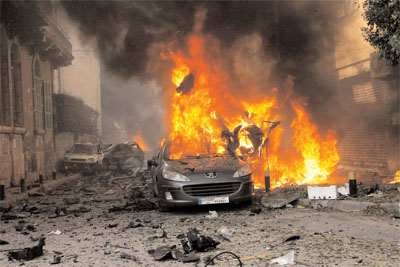
    BEIRUT: BEIRUT (TIP): A powerful car bomb tore through a bustling south Beirut neighborhood that is a stronghold of Hezbollah on August 15, killing at least 18 and trapping dozens of others in an inferno of burning cars and buildings in the bloodiest attack yet on Lebanese civilians linked to Syria’s civil war. The blast is the second in just over a month to hit one of the Shiite militant group’s bastions of support in years, and the deadliest in decades.

    It raises the specter of a sharply divided Lebanon being pulled further into the conflict next door, which is being fought on increasingly sectarian lines pitting Sunnis against Shiites. Syria-based Sunni rebels and militant Islamist groups fighting to topple Syria’s President Bashar Assad have threatened to target Hezbollah strongholds in Lebanon in retaliation for intervening on behalf of his regime in the conflict.

    August 15 explosion ripped through a crowded, overwhelmingly Shiite area tightly controlled by Hezbollah, turning streets lined with vegetable markets, bakeries and shops into scenes of destruction and burning cars. Dozens of ambulances rushed to the scene of the explosion and fire fighters used cranes and ladders in trying to evacuate dozens of residents from burning buildings. Some terrified residents fled to the rooftops of buildings and civil defense workers were still struggling to bring them down to safety several hours after the explosion.

    The blast appeared to be an attempt to sow fear among the group’s civilian supporters and did not target any known Hezbollah facility or personality. Hezbollah’s Al Manar TV and Red Cross official George Kattaneh said the death toll was at least 18 and said more than 280 were wounded. The army, in a statement, said the explosion was caused by a car bomb. It called on residents to cooperate with security forces trying to evacuated people trapped in their homes. Syria’s conflict has spilled across the border into its neighbor on multiple occasions in the past two years.

    Fire from Syria has hit border villages, while clashes between Lebanese factions backing different sides have left scores dead. But direct attacks against civilian targets were rare until Hezbollah stepped up its role in Syria. Since then, its support bases in southern Beirut have been targeted. Since May, rockets have been fired at suburbs controlled by the group on two occasions, wounding four people.

    On July 9, a car bomb exploded in the nearby Beir al- Abed district, wounding more than 50 people. However Thursday’s explosion was much deadlier than those, the bloodiest single attack in south Beirut since a 1985 truck bomb assassination attempt targeting top Shiite cleric Mohammed Hussein Fadlallah in Beir al-Abed left 80 people dead. It came despite rigorous security measure taken in the past few weeks by Hezbollah around its strongholds, setting up checkpoints, searching cars and sometimes using sniffer dogs to search for bombs.

    It also came a day before Hezbollah leader’s was scheduled to give a major speech marking the end of the month-long 2006 war with Israel. The explosion occurred on a commercial and residential main street in the Rweiss district, about 100 meters (yards) away from the Sayyed al-Shuhada complex where Hezbollah usually holds rallies. Hezbollah leader Sheikh Hassan Nasrallah, who has lived in hiding since his group’s 2006 month-long war with Israel, made a rare public appearance at the complex on Aug. 2, where he addressed hundreds of supporters.

    He was to speak again on Friday from a location in southern Lebanon, but his speeches by satellite are often transmitted to followers at the complex. Panicked Hezbollah fighters fired in the air to clear the area and roughed up photographers, smashing and confiscating some of their cameras following the explosion. Sunni-Shiite tensions have risen sharply in Lebanon, particularly since Hezbollah raised its profile by openly fighting alongside Assad’s forces. Lebanese Sunnis support the rebels fighting to topple Assad, a member of a Shiite offshoot sect.

    The group’s fighters played a key role in a recent regime victory in the town of Qusair near the Lebanese border, and Syrian activists say they are now aiding a regime offensive in the besieged city of Homs. A previously unheard-of group calling itself Aisha the Mother of Believers Brigades claimed responsibility for the attack in a video posted on YouTube, saying it is the second “message” they sent since last month’s blast in the area. The authenticity of the claim could not be independently verified.

    Our second message was strong and astounding,” said a masked man who read the statement, flanked by two other armed and masked men. He called on civilians to stay away from Hezbollah strongholds in the future, saying the militant group is “an agent for Iran and Israel.” Hezbollah lawmaker Ali Ammar called the blast a “terrorist” attack and called for restraint among the group’s supporters. He suggested the group’s political rivals in Lebanon were responsible for creating an atmosphere that encourages such attacks.

    Politicians within Lebanon’s Westernbacked coalition have slammed the group for its involvement in Syria and called for its disarmament. The U.S. Ambassador to Lebanon Maura Connelly strongly condemned the bombing. In comments posted on the embassy’s Facebook page, Connelly called for all parties to exercise calm and restraint. The British Foreign Office official in charge of Middle East policy, Alistair Burt, also condemned the attack.

    Terrorism and extremism have no place in Lebanon. I call for the Lebanese state to investigate this urgently and bring the perpetrators to justice,” he said in a statement. Outgoing Lebanese Prime Minister Najib Mikati declared Friday a day of mourning for the victims of the attack.

  • UN Calls For $98 Million In Emergency Aid For North Korea

    UN Calls For $98 Million In Emergency Aid For North Korea

    UNITED NATIONS (TIP): The United Nations is in urgent need of $98 million to finance emergency aid for the people of North Korea, the UN coordinator for the impoverished country said on August 15. Of the $150 million required to maintain food, health and sanitation programs by five UN agencies in the country for 2013, $98 million is still needed, the world body said. “External assistance continues to play a vital role in safeguarding the lives of millions,” UN resident coordinator Ghulam Isaczai said in a statement.

    North Korea faces chronic food shortages and suffered from famine in the mid-1990s that resulted in hundreds of thousands of deaths. “Without sustained humanitarian support, the gains made in the past 10 years in improving food security and the overall health and nutrition of the most vulnerable” could be reversed, Isaczai said. International aid, particularly from the United States and South Korea, has dried up in recent years amid tension over Pyongyang’s nuclear program. Nearly 2.4 million North Koreans need regular food assistance and 28 percent of children under five suffer chronic malnutrition.

    “While the overall humanitarian situation has improved slightly over the last 12 months, the structural causes of people’s vulnerability persist,” Isaczai said. UN Secretary General Ban Ki-moon, in a separate statement issued by his spokesman, called on donors to come forward to “respond to this serious situation.” Ban, who hails from South Korea, said he appreciated Seoul’s decision to provide humanitarian aid to Pyongyang via UNICEF, and said he hoped other countries would follow suit.

  • Indians Across World Celebrate Independence Day With Gusto

    Indians Across World Celebrate Independence Day With Gusto

    BEIJING/MELBOURNE (TIP): Indians across the globe on August 15 donned patriotic colours as they celebrated the country’s 67th Independence Day, unfurling the national flag and organising cultural events to mark the occasion. India’s ambassador to China S Jaishankar hoisted the tri-colour at the embassy premises in Beijing to celebrate the Independence Day.

    A large gathering of Indian expatriates working in Beijing attended the ceremony. Jaishankar read out President Pranab Mukharjee’s national address and later hosted a reception on the occasion. The national tricolour also fluttered proudly across southeast Asia, as Indians and friends of India thronged to witness the unfurling of the flag by Indian envoys in the region to mark India’s 67th Independence Day. In Bangkok, India’s ambassador to Thailand Anil Wadhwa unfurled the flag and read out the President’s speech.

    School children sang patriotic songs while 14 dancers from Arunachal Pradesh’s Tawang district performed the Snow Lion dance much to the delight of hundreds of Indians present at the Embassy. The tricolour was also unfurled by Indian envoys in neighbouring Myanmar, Singapore, Laos, Indonesia, Malaysia, the Philippines, Cambodia and Vietnam. In Tokyo, India’s ambassador to Japan Deepa Wadhwa unfurled the national flag. About 300 Indians and friends of India attended the function. Patriotic songs were sung by school children from two Indian schools in Tokyo.

    In Singapore, India’s high commissioner Vijay Thakur Singh led more than 500-strong Indian community in celebrating the Independence Day. Singh read out the President’s message which was followed by three hours of cultural performances and singing of patriotic songs. Students from Indian schools in Singapore also performed during the cultural events. Singh hosted a morning reception for the Indian community and businessmen in Singapore.

    In Australia, Indian diaspora celebrated the 67th Independence Day by organising flag hoisting ceremonies across the country followed by gala dinners and events. Speaking on the occasion, India’s high commissioner to Australia Biren Nanda extended greetings to Indian nationals and persons of Indian origin in the country. He said India’s relations with Australia have grown from strength to strength since the establishment of a strategic partnership between the two countries in 2009. “Our bilateral trade has reached $20 billion. There has been a very significant growth in two-way investment.

    Indian companies have invested significantly in the resources sector and have propelled our economic relationship to the strategic level,” he said. Nanda further took note of Indian companies which have established joint ventures in Australia in the manufacturing sector in areas like auto components, aircraft manufacture, the manufacture of tractors and refining of vegetable oils. “The Free Trade Agreement that we are now negotiating will diversify and deepen our economic engagement,” Nanda said.

    Indian government is organising Regional Pravasi Diwas this year in Sydney which is expected to be attended by over 1000 participants across the region. In the southern Chinese city of Guangzhou, consul general K Nagaraj Naidu hoisted the tricolour and read the President’s address to the nation at the Indian Consulate.

  • 1 Killed, Dozens Hurt In Bangladesh Party Protests

    1 Killed, Dozens Hurt In Bangladesh Party Protests

    DHAKA (TIP): Clashes between Bangladeshi police and opposition activists left one man dead and injured about 20 on August 14 in the second day of a nationwide general strike, television stations reported. Police used night sticks and tear gas as dozens of protesters tried to march into the streets of Dhaka’s southern Jatrabari suburb, according to Dhaka’s private Somoy TV and RTV.

    Police officials could not be immediately reached for comment. On August 13, opposition activists exploded crude bombs, blocked roads and burned vehicles to enforce a 48- hour nationwide general strike, injuring dozens of people. Bangladesh’s largest Islamic party, Jamaat-e-Islami, called the strike to denounce a court decision that its registration with the Election Commission is invalid. A High Court panel ruled Aug. 1 that the party’s regulations violate the constitutional provision of secularism by saying it wants to impose Shariah, or Islamic law.

    Because of the court decision, the party could be barred from taking part in the next elections. At least 20 people were injured Tuesday after police fired rubber bullets to disperse dozens of protesters who tried to block a highway in Meherpur district, 176 kilometers (110 miles) west of Dhaka, the capital, the private television station ETV reported. Another 30 people were injured as homemade bombs went off in Dhaka and elsewhere in the country, the station said. The ruling against Jamaat came amid calls to ban the party for opposing the country’s 1971 independence war against Pakistan.

  • US Urges Calm, Dialogue In Cambodia Vote Feud

    US Urges Calm, Dialogue In Cambodia Vote Feud

    WASHINGTON (TIP): The United States called Thursday on Cambodia’s political parties to negotiate their differences peacefully after election results handed a narrow victory to longtime ruler Hun Sen. The opposition has alleged widespread fraud in the July 28 election and is contesting the tally announced by election authorities. “We urge the leaders of Cambodia’s political parties to return to the negotiating table and to work together for an outcome that serves the best interests of the Cambodian people,” US State Department spokeswoman Jen Psaki said.

    She called on all sides to “act in a peaceful manner” and “seek resolution of electoral disputes through dialogue rather than resorting to threats, intimidation, repression or violent civil unrest.” Psaki repeated that the United States was concerned by “reports of serious irregularities” in voting and supported a “full and transparent investigation.” Election results gave 3.2 million votes to Hun Sen’s Cambodian People’s Party, with 2.9 million people casting ballots for the opposition.

    Even with the lead for the ruling party, the results were closer than many outside observers expected as Hun Sen has managed to stay in power for 28 years. Shortly ahead of the vote, Cambodia issued a pardon that allowed the return of opposition leader Sam Rainsy from self-imposed exile. Hun Sen had faced threats from several US lawmakers to cut off assistance in the event of irregularities in the election.

  • Pakistan Gun-Toting Man Arrested Alive After Six-Hour Ordeal

    Pakistan Gun-Toting Man Arrested Alive After Six-Hour Ordeal

    ISLAMABAD (TIP): A gun-toting man brought the Pakistani capital to a standstill for six hours on August 15 after he started firing near parliament, with the drama ending shortly before midnight when police arrested him. Sikandar Hayat, who was carrying two locally made automatic weapons, was firing in the air at short intervals after parking his black Toyota Corolla car at about 5 pm at Jinnah Avenue near parliament.

    He had his wife and two children with him, using them as human shield against any police action. Zamurd Khan of Pakistan People’s Party went to the man as a sympathiser but suddenly jumped at him but could not overpower him. However, police commandoes already in position nearby opened fire and shot him in the leg. He first raised his arms and then fell down and was arrested. His wife and two children were safely released, as the high drama ended after about six hours. The man, who belongs to Hafizabad area of Punjab province, made several demands, including the imposition of Shariah or Islamic law and removal of the government before his arrest.

    He said he should be given safe passage to leave the area. He was also heard saying that he wanted to negotiate with the Prime Minister. Interior Minister Chaudhry Nisar Ali Khan earlier asked police to try to capture the man alive without harming his wife and children. The media quoted police as saying that the man had a history of drug and alcohol abuse and was not mentally sound.

    Some reports said he was violent to his wife and children. Analysts said the incident raised serious questions about security in the heart of Islamabad. Noting that the man was engaged in a standoff with police less than a kilometre from key buildings like the presidency and parliament, they questioned how the man had been able to enter Islamabad’s “Red Zone” with weapons. The incident also raised serious question about the PML-N government to handle such situations, analysts said.

  • Female Afghan MP Taken Hostage: Officials

    Female Afghan MP Taken Hostage: Officials

    GHAZNI, AFGHANISTAN (TIP): An unknown gang has kidnapped a female Afghan member of parliament, officials said August 14, in the latest example of prominent women being targeted in the country. Fariba Ahmadi Kakar and her three children were taken at gunpoint on August 10 in the central province of Ghazni on the main highway from Kandahar city to Kabul.

    “The security forces released her children (two girls, one boy) in an operation on Monday. But she has been kept in another location, we are still searching for her,” Mohammad Ali Ahmadi, deputy provincial governor of Ghazni, told AFP. “The town elders are also involved in talks with the kidnappers to secure her release,” he added, giving no further details about the identity of the kidnap gang. Several other officials in Ghazni and Kandahar confirmed the kidnapping, and dismissed interior ministry reports that Kakar was on a trip to Turkey.

    Kakar’s family earlier denied she had been taken hostage, with some relatives telling AFP she was in hospital. Taliban spokesman Zabihullah Mujahid told AFP that he was not aware of the kidnapping. Hostages in Afghanistan are often taken by local criminal gangs, and can be sold on to insurgent groups who then demand cash ransoms or prisoner exchanges for their release. Women who take on public roles in Afghanistan are constantly under threat, with many conservative Muslims against women working outside the home and building independent careers.

    Last month, gunmen shot dead one of the country’s most high-profile female police officers. Lieutenant Islam Bibi, a well-known face of female advancement, was killed by unknown assailants when she was being driven to work by her son in the southern province of Helmand. Women’s rights are a key focus of international efforts in Afghanistan, with foreign diplomats often pointing to more female school children and greater freedom for women as signs of progress. But donor nations have also raised fears that such advances are at risk as 87,000 Nato troops withdraw next year and Islamist groups lobby for more influence.

  • Prove I Am A Terrorist: Hafiz Saeed Tells India

    Prove I Am A Terrorist: Hafiz Saeed Tells India

    ISLAMABAD (TIP): Jamaat-ud-Dawa chief Hafiz Mohammad Saeed, who is wanted in India for the 26/11 Mumbai terror attack, has said he was not a terrorist, and asked for an independent probe by judges from India and Pakistan to find out whether he was guilty.

    “You (India) are continuously calling me a terrorist. But I am not a terrorist, and if you are not satisfied, an independent judicial commission comprising senior lawyers and judges from India and Pakistan should investigate whether I am guilty,” the Dawn quoted Saeed as saying. “Whatever verdict the commission announces I will accept that,” he said. Saeed addressed a meeting in Lahore on Pakistan’s Independence Day on Aug 14, where he rejected India’s demand to Pakistan to hand him over The daily said participants at the rally raised slogans against India. “You (India) look to be very eager to get me.

    Don’t worry, I myself will visit India,” Saeed said. He said everyone in India called him a terrorist, but they should see his party’s relief work for flood-hit people. “Hafiz Saeed doesn’t threaten you but he is only exposing you before the world. You (India) are the country that ruined us through releasing floodwater into Pakistan every year,” he said. “You are generating electricity by using our water unlawfully. You are the people who are behind bomb blasts in Pakistan, mainly in Balochistan.

    You are killing innocent Kashmiris in occupied Kashmir,” he alleged. Saeed said the firing along the Line of Control (LoC) in Jammu and Kashmir was a “trick” to force Prime Minister Nawaz Sharif to hand him over to India. He urged Sharif not to make India a friend. “We are ready to make you friend, but prior to that you must avoid firing, shelling at the LoC, killing innocent freedom fighters in Kashmir, interfering in the affairs of Balochistan and releasing floodwater into Pakistan,” Saeed said.

  • Pakistan Monsoon Flood Death Toll Rises To 96

    Pakistan Monsoon Flood Death Toll Rises To 96

    ISLAMABAD (TIP): Floods triggered by monsoon rains have killed 96 people across Pakistan in the past two weeks and affected nearly 90,000 others, officials said on August 15. “Up to 96 people have been killed so far and 99 others have been injured during the monsoon rains and floods so far,” an official in the National Disaster Management Authority (NDMA), told AFP. “A population of 89,439 have been affected and 2372 houses were destroyed. Other 1909 houses were partially damaged by the rains and floods,” Rima Zuberi, a spokeswoman of NDMA, said.

    Officials in the most populous province of Punjab, which has been hit hard this week by particularly heavy rains, said that they were still collecting damage reports from different districts. Pakistan has suffered monsoon floods for the last three years and been criticised for not doing more to mitigate against the dangers posed by seasonal rains washing away homes and farmland.

    In 2010, the worst floods in the country’s history killed almost 1,800 people and affected 21 million. Streets in all major cities including Karachi, Lahore and Islamabad suffered intermittent flooding due to downpours over the last two weeks, damaging roads, buildings and houses.

  • Pakistan Army Says Civilian Killed On Loc

    Pakistan Army Says Civilian Killed On Loc

    ISLAMABAD (TIP): Pakistan on August 14 claimed a civilian was killed and his daughter injured due to “unprovoked” firing by Indian troops across the LoC. A senior military official, who did not want to be named, said the latest death occurred in Khairni Rakkar village of Rawalakot district in Battal sector of the Line of Control (LoC). “Sakhi Muhammad, 60, was killed and his daughter Nabeela was seriously injured due to unprovoked shelling last night,” the official said.

    This was the second civilian death reported from the Pakistani side of the LoC. A youth died when a mortar shell hit his house in another village of the same district on Monday. The latest death coincided with UN chief Ban Kimoon’s two-day visit to Pakistan. Ban has avoided direct comment on the border skirmishes between the two sides but said yesterday that nations should settle their disputes.

    He also called for “reaching out and building bridges with one’s neighbours”. Relations between India and Pakistan soured last week after the killing of five Indian soldiers in an attack on the LoC. The government said “specialist troops” of the Pakistan Army were involved in the attack.

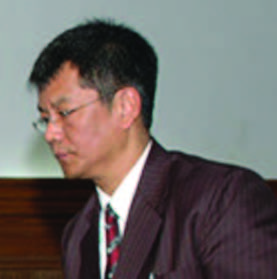
  • Dhimant Trivedi, Chief Executive (US Operations)

    Dhimant Trivedi, Chief Executive (US Operations)

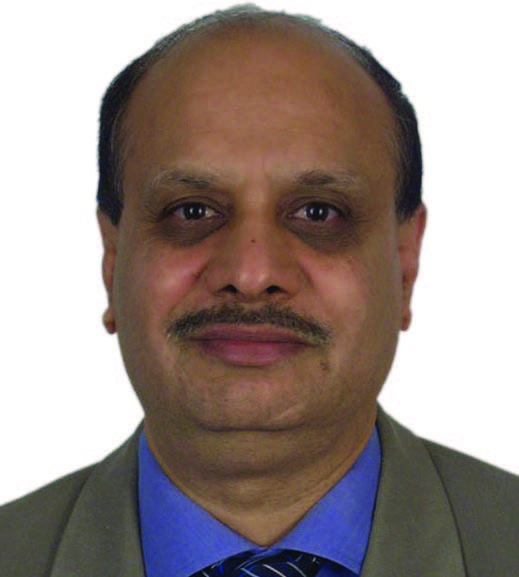
    On the occasion of 67th Independence Day of India, on behalf of Bank of Baroda, I wish a very happy Independence Day to all. Let us resolve that we follow the right values and principles so that the true independence reaches to the entire mass of humanity.

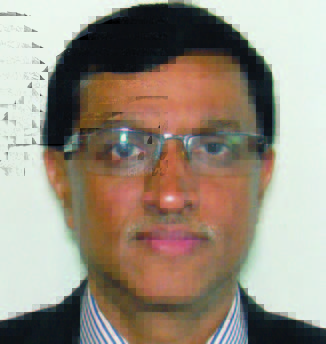
  • Saleem Iqbal, President & CEO

    Saleem Iqbal, President & CEO

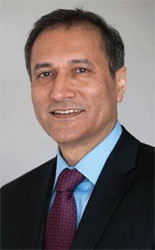
    On behalf of HAB BANK, I would like to extend our Independence Day greetings to Indian American community in the tri-state area. As we celebrate India Day this year, we can take pride in our achievements as a community despite the challenges that lie ahead. We have, in a short span of time, been able to establish ourselves as a community engaged at so many levels, culturally and economically, and determined to pursue our American dream of achieving success in our adopted homeland.

    HAB BANK, since is inception in 1983 as a New York State chartered bank, has played a vital role in nurturing communities through its network of branches in New York, New Jersey, and California. We are proud to be first bank in the U.S. solely focused on meeting and serving the banking needs of South Asian community working and living in the Tri-State and greater Los Angeles areas. We are honored to join in celebrating India’s independence celebration and reaffirm our Bank’s commitment to South Asian community in the U.S.

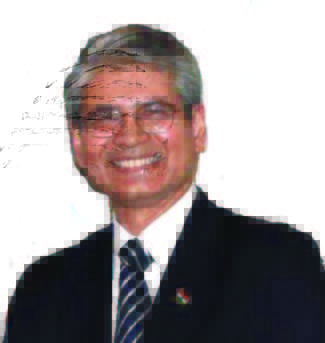
  • Ranju Batra Former President, AIA, New York

    Ranju Batra Former President, AIA, New York

    As Americans proud of our Indian ancestry, we congratulate everyone on India’s Independence Day celebration. Jawaharlal Nehru’s “Tryst with Destiny” speech is as valid today and it was on August 14, 1947 looking towards “the midnight hour.” India today is strong and confident, led by a Sikh Prime Minister, the noble Sushil Kumar Shinde, and a Moslem Foreign Minister. India’s promise is being honored in the main, even as it deals with the natural warts of the human dynamic and representative form of government.

    While imperfect, there is none better short of God. In the United States we have Ami Bera and Tulsi Gabbard in Congress to harness the separated powers for all Americans, including, Indian-Americans, who have to-date been well represented by the likes of Gary Ackerman, Eliot Engel, Carolyn Maloney, Greg Meeks, Grace Meng and the King of Queens, Joe Crowley. Our future is tied to America’s, as it should, but it may well be that America’s is tied to India in a “special relationship.” Happy Independence Day, India!

  • Riwo Norbhu, Regional Manager, Americas, New York

    Riwo Norbhu, Regional Manager, Americas, New York

    Iwish my fellow Indians a very happy and successful India Day Celebrations. Let me take this opportunity to congratulate all members of the Indian American Community on the occasion of the 66th anniversary of India’s independence. I would like to commend them for their dual contribution to their country of adoption and their country of origin.

    The efforts of the Indian American Community in promoting a sense of cultural identity and pride amongst the Indian Community deserve both our appreciation and support and have been a source of encouragement for the wider Indian American community in the US. Air India has been a proud partner of Indians abroad in their ventures to promote India and Indianness. On behalf of the national carrier of India, Air India, that has been serving with distinction billions of Indians and people from all across the world, I extend my heartiest greetings to readers of The Indian Panorama on the momentous occasion of India’s 67th Independence Day.

  • Consul General of India, New York

    Consul General of India, New York

    Dynaeshwar M.Mulay,
    On the occasion of the 66th anniversary of Independece of India, i extend congratulation and best wishes to the readers of the Indian Panorama! India today represents a unique model of development in the world. India’s journey as a vibrant democracy, its model of democrative governance together with its economic strength, resilience and dynamism of its people have shaped India’s significat role on the global stage today.

    Our strategic relations with the United States have matured to a very significat bilateral visits at the level of President Barack Obama and Primie Minister Manmohan Singh. our economic and commercial relations have reached new heights crossing the hundred billion dollar mark. The cooperation between the two countries in the fields of Science & Technology, Educaion and Culture is very strong. We have more than three million strong Indian Diaspora in the United States, which was contributed significaly towards these strong relations.

    The Consulate Geneat of India, new York, has been working in the region towards strengthening the relations between the two countries particularly in terms of rendering large number of cunsular services, faciliating trade and investment in both the countries and organising various public outreach activities towards promoting India in the region. The India Diaspora in the region has been immensely helpful, positive and complementary towards our efforts in the region.

    My Independence Day massage to the readers of the Indian Panorama is “Let us work together towards making the India-US relations stronger and better, with our indivisual and collective efforts. We need to create a new vision that would make our democrative destinies mutually beneficial.

  • Ambassdor, Permanant Representative of India to the United States

    Ambassdor, Permanant Representative of India to the United States

    Asoke K Mukerji,
    Iam delighted to learn that the Indian Panorama is bringing out a special publication to mark India’s independence Day. On this occassion it would be fitting to recall te unique contribution of Mahatma Gandhi and his colleagues in India’s freedom struggle, which culminated on 15th August 1947 in India’s first independence Day. The task of nation building that we have embarked upon since 1947 has been one of the most ambitious in human history.

    Through a parliamentary democracy, based on the provision of the Constitution of India, we have moulded the India of the 21st century, which is already among the top five economics of the world, and has a special role to play as a knowledge based power. The values bequeathed to us by our culture and civilization have played a major role in ensuring that our focus remain on equitable socio-economic growth, which is sustainable and inclusive. On this occassion, I extend to all readers of the India Panorama my best wishes.

  • INDIA CELEBRATES 66TH ANNIVERSARY OF INDEPENDENCE

    INDIA CELEBRATES 66TH ANNIVERSARY OF INDEPENDENCE

    Independent India is 66 years old today, as is Pakistan. Both countries got their Independence from British rule on August 14/15, 1947. Pakistan celebrates August 14 as its Independence Day. Mohammed Ali Jinnah was Pakistan’s first Governor- General and the main driving force for the formation of that country. Jawaharlal Nehru was India’s first Prime Minister but Mahatma Gandhi is considered the father of the nation.

    Both Jinnah and Gandhi died soon after their countries’ independence, but Nehru remained to guide India. In Pakistan, an elected government has recently given way to another democratically-elected, an unprecedented devolution for Pakistan, bedeviled as it has been with coups and long bouts of military rule. Indeed, a disastrous army dictatorship, that of the bumbling General Yahya Khan, led to a humiliating defeat at the hands of India, the break-up of Pakistan and the creation of Bangladesh.

    Fortunately, India has not broken up, though the doomsayers predicted that it would, since it was much more diverse than Pakistan, with more languages, communities and faiths that threatened to pull it apart. Pakistan imagined that religion was the glue that would bind it together. It was wrong. India’s democracy proved to be a much stronger binding force than religion. First, there was the revolt of the Nagas in the northeast who wanted an independent Nagaland.

    Despite the continuing unrest in the region, many former rebels have become elected leaders. Similarly, in Tamil Nadu, in the south, there was a powerful separatist movement, the demands of which were much more radical than those of the Bengalis in East Pakistan. Yet, the Tamil separatists moderated their demands once they were elected to power – and got them – whereas East Pakistan was forced to rise up in revolt when it was denied its representative rights.

    Democracy has kept India united; the lack of it broke up Pakistan. India has, of course, had other serious divisive threats, mainly in Punjab and the State of Jammu and Kashmir. In Punjab, Indira Gandhi made a fatal error by sending in troops into Amritsar’s Golden Temple, the holiest shrine of the Sikhs. Her advisers told her that the army would clear the Sikh militants, who were holed up in the shrine, in no time at all with little loss of life.

    And she would be seen as upholding the unity of the country against terrorists. Her advisers were grievously wrong. It took the army two days and nights to defeat the heavily-armed and well-trained terrorists. Hundreds of Sikh militants, soldiers and innocent pilgrims (who were caught in the crossfire) were killed in the fighting (the exact toll has never been released by the Indian authorities). Indira Gandhi paid for the blunder with her life, when two of her Sikh bodyguards gunned her down in her garden.

    Eventually, the traumatized Sikh community returned to the mainstream, the election of a Sikh, the gentle and upright Dr Manmohan Singh, as Prime Minister being symbolic of the change. Again, democracy had provided the healing touch and rescued India. Meanwhile, Kashmir had also gone up in flames, thanks partly due to a rigged election and corrupt misgovernance. Kashmir remains one of India’s major unresolved problems and the main sticking point in better ties between India and Pakistan.

    So, is India’s glass half full, or half empty? The empty part relates to insufficient progress in two main areas: Education and health. India’s literacy rate is still only a little over 70 per cent, which means that over 300 million Indians, mostly girls, cannot read or write. And the expectancy of life – the surest indicator of health – is still less than 70 years. Countries like China, Indonesia and even Sri Lanka, which were behind India in these social parameters six decades ago, have done better than India.

    Where the glass is half full is in the rapid economic growth India has made in the past two decades, next only to China’s, creating a middle class of around 300 million Indians. India has become a giant in the information and technology (IT) areas and a major base for outsourcing jobs and skills for major western multinational companies. Indian companies like the Tatas and Birlas have also successfully ventured abroad. A quarter century ago, India did not figure among the nations that mattered in the world.

    It now matters and Indians can justifiably be proud of that. Major challenges remain, but they can hold their heads up high, in India and abroad. The same, sadly, cannot be said for Pakistan. However, with a stable democratic government in power and the army in the background, it may be about to finally turn the corner. On August 15, 1947, Jawaharlal Nehru made perhaps his most eloquent speech. He spoke about his nation stepping out “from the old to the new” and of India’s “tryst with destiny”. That tryst still needs to be fulfilled.

  • A PICTORIAL HISTORY OF INDEPENDENT INDIA

    A PICTORIAL HISTORY OF INDEPENDENT INDIA

    A chronology of key events
    India has been home to several ancient civilisations and empires, some dating back to more than 2,000 BC. Culture and religions have flourished over the millennia, and foreign influence has ebbed and flowed. 1947 – End of British rule and partition of sub-continent into mainly Hindu India and Muslim-majority state of Pakistan.

    1947-48 – Hundreds of thousands die in widespread communal bloodshed after partition.
    1948 – Mahatma Gandhi assassinated by Hindu extremist.
    1948 – War with Pakistan over disputed territory of Kashmir.
    1951-52 – Congress Party wins first general elections under leadership of Jawaharlal Nehru. Regional tensions 1962 – India loses brief border war with China.
    1964 – Death of Prime Minister Jawaharlal Nehru.
    1965 – Second war with Pakistan over Kashmir.
    1966 – Nehru’s daughter Indira Gandhi becomes prime minister.
    1971 – Third war with Pakistan over creation of Bangladesh, formerly East Pakistan.
    1971 – Twenty-year treaty of friendship signed with Soviet Union.
    1974 – India explodes first nuclear device in underground test. Democratic strains
    1975 – Indira Gandhi declares state of emergency after being found guilty of electoral malpractice.
    1975-1977 – Nearly 1,000 political opponents imprisoned and programme of compulsory birth control introduced. 1977 – Indira Gandhi’s Congress Party loses general elections. 1980 – Indira Gandhi returns to power heading Congress party splinter group, Congress (Indira).
    1984 – Troops storm Golden Temple – Sikhs’ most holy shrine – to flush out Sikh militants pressing for self-rule.
    1984 – Indira Gandhi assassinated by Sikh bodyguards, following which her son, Rajiv, takes over.
    1984 December – Gas leak at Union Carbide pesticides plant in Bhopal. Thousands are killed immediately, many more subsequently die or are left disabled.
    1987 – India deploys troops for peacekeeping operation in Sri Lanka’s ethnic conflict.
    1989 – Falling public support leads to Congress defeat in general election.
    1990 – Indian troops withdrawn from Sri Lanka.
    1990 – Muslim separatist groups begin campaign of violence in Kashmir.
    1991 – Rajiv Gandhi assassinated by suicide bomber sympathetic to Sri Lanka’s Tamil Tigers.
    1991 – Economic reform programme begun by Prime Minister PV Narasimha Rao.
    1992 – Hindu extremists demolish mosque in Ayodhya, triggering widespread Hindu-Muslim violence. BJP to the fore
    1996 – Congress suffers worst ever electoral defeat as Hindu nationalist BJP emerges as largest single party. 1998 – BJP forms coalition government under Prime Minister Atal Behari Vajpayee.
    1998 – India carries out nuclear tests, leading to widespread international condemnation.
    1999 February – Vajpayee makes historic bus trip to Pakistan to meet Premier Nawaz Sharif and to sign bilateral Lahore peace declaration.
    1999 May – Tension in Kashmir leads to brief war with Pakistan-backed forces in the icy heights around Kargil in Indian-held Kashmir.
    1999 October – Cyclone devastates eastern state of Orissa, leaving at least 10,000 dead.
    2000 May – India marks the birth of its billionth citizen.
    2000 – US President Bill Clinton makes a groundbreaking visit to improve ties.
    2001 January – Massive earthquakes hit the western state of Gujarat, leaving at least 30,000 dead. 2001 April – 16 Indian and three Bangladeshi soldiers are killed in border clashes. A high-powered rocket is launched, propelling India into the club of countries able to fire big satellites deep into space.
    2001 July – Vajpayee meets Pakistani President Pervez Musharraf in the first summit between the two neighbours in more than two years. It ends without a breakthrough because of differences over Kashmir.

    2001 September – US lifts sanctions which it imposed against India and Pakistan after they staged nuclear tests in 1998. The move is seen as a reward for their support for the US-led anti-terror campaign. Kashmir tensions rise
    2001 October – India fires on Pakistani military posts in 1984 – Indira Gandhi assassinated by Sikh bodyguards, following which her son, Rajiv, takes over.

    1984 December – Gas leak at Union Carbide pesticides plant in Bhopal. Thousands are killed immediately, many more subsequently die or are left disabled.
    1987 – India deploys troops for peacekeeping operation in Sri Lanka’s ethnic conflict.
    1989 – Falling public support leads to Congress defeat in general election.
    1990 – Indian troops withdrawn from Sri Lanka.
    1990 – Muslim separatist groups begin campaign of violence in Kashmir.
    1991 – Rajiv Gandhi assassinated by suicide bomber sympathetic to Sri Lanka’s Tamil Tigers.
    1991 – Economic reform programme begun by Prime Minister PV Narasimha Rao.
    1992 – Hindu extremists demolish mosque in Ayodhya, triggering widespread Hindu- Muslim violence. BJP to the fore
    1996 – Congress suffers worst ever electoral defeat as Hindu nationalist BJP emerges as largest single party. 1998 – BJP forms coalition government under Prime Minister Atal Behari Vajpayee.
    1998 – India carries out nuclear tests, leading to widespread international condemnation. 1999 February –

    Vajpayee makes historic bus trip to Pakistan to meet Premier Nawaz Sharif and to sign bilateral Lahore peace declaration.
    1999 May – Tension in Kashmir leads to brief war with Pakistan-backed forces in the icy heights around Kargil in Indian-held Kashmir.
    1999 October – Cyclone devastates eastern state of Orissa, leaving at least 10,000 dead. 2000 May – India marks the birth of its billionth citizen.
    2000 – US President Bill Clinton makes a groundbreaking visit to improve ties. 2001 January – Massive earthquakes hit the western state of Gujarat, leaving at least 30,000 dead.
    2001 April – 16 Indian and three Bangladeshi soldiers are killed in border clashes. A high-powered rocket is launched, propelling India into the club of countries able to fire big satellites deep into space.
    2001 July – Vajpayee meets Pakistani President Pervez Musharraf in the first summit between the two neighbours in more than two years. It ends without a breakthrough because of differences over Kashmir.
    2001 September – US lifts sanctions which it imposed against India and Pakistan after they staged nuclear tests in 1998. The move is seen as a reward for their support for the US-led anti-terror campaign.

    Kashmir tensions rise
    2001 October – India fires on Pakistani military posts in the heaviest firing along the dividing line of control in Kashmir for almost a year.
    2001 December – Suicide squad attacks parliament in New Delhi, killing several police. The five gunmen die in the assault.
    2001 December – India imposes sanctions against Pakistan, to force it to take action against two Kashmir militant groups blamed for the suicide attack on parliament. Pakistan retaliates with similar sanctions, and bans the groups in January.
    2001 December – India, Pakistan mass troops on common border amid mounting fears of a looming war.
    2002 January – India successfully test-fires a nuclear-capable ballistic missile – the Agni – off its eastern coast.
    2002 February – Inter-religious bloodshed breaks out after 59 Hindu pilgrims returning from Ayodhya are killed in a train fire in Godhra, Gujarat. More than 1,000 people, mainly Muslims, die in subsequent violence. Police and officials blamed the fire on a Muslim mob, but a 2005 government investigation said it was an accident. In 2012 a court convicts 32 people over the Naroda Patiya riots in Ahmedabad. 2002 May – Pakistan test-fires three medium-range surface-to-surface Ghauri missiles, which are capable of carrying nuclear warheads.War of words between Indian and Pakistani leaders intensifies. Actual war seems imminent.

    2002 June – UK, US urge their citizens to leave India and Pakistan, while maintaining diplomatic offensive to avert war.
    2002 July – Retired scientist and architect of India’s missile programme APJ Abdul Kalam is elected president.
    2003 August – At least 50 people are killed in two simultaneous bomb blasts in Bombay. Kashmir ceasefire 2003 November – India matches Pakistan’s declaration of a Kashmir ceasefire. 2003 December – India, Pakistan agree to resume direct air links and to allow overflights.
    2004 January – Groundbreaking meeting held between government and moderate Kashmir separatists.
    2004 May – Surprise victory for Congress Party in general elections. Manmohan Singh is sworn in as prime minister.
    2004 September – India, along with Brazil, Germany and Japan, launches an application for a permanent seat on the UN Security Council.

    2005 7 April – Bus services, the first in 60 years, operate between Srinagar in Indianadministered Kashmir and Muzaffarabad in Pakistani-administered Kashmir.
    2006 February – India’s largest-ever rural jobs scheme is launched, aimed at lifting around 60 million families out of poverty. Nuclear deal 2006 March – US and India sign a nuclear agreement during a visit by US President George W Bush.

    The US gives India access to civilian nuclear technology while India agrees to greater scrutiny for its nuclear programme.
    2006 November – Hu Jintao makes the first visit to India by a Chinese president in a decade.
    2006 December – US President George W Bush approves a controversial law allowing India to buy US nuclear reactors and fuel for the first time in 30 years.
    2007 March – Maoist rebels in Chhattisgarh state kill more than 50 policemen in a dawn attack.
    2007 April – India’s first commercial space rocket is launched, carrying an Italian satellite.
    2007 May – At least nine people are killed in a bomb explosion at the main mosque in Hyderabad. Several others are killed in subsequent rioting.
    2007 May – Government announces its strongest economic growth figures for 20 years – 9.4% in the year to March. First woman president 2007 July – Pratibha Patil becomes first woman to be elected president of India. 2008 July – Congress-led coalition survives vote of confidence brought after left-wing parties withdraw their support over controversial nuclear cooperation deal with US. After the vote, several left-wing and regional parties form new alliance to oppose government, saying it has been tainted by corruption. India successfully launches its first mission to the moon, the unmanned lunar probe Chandrayaan-1. Mumbai attacks

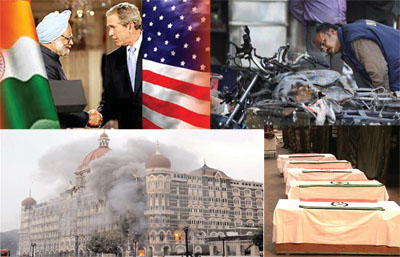
    2008 November – Nearly 200 people are killed and hundreds injured in a series of coordinated attacks by gunmen on the main tourist and business area of India’s financial capital Mumbai. India blames militants from Pakistan for the attacks and demands that Islamabad act against those responsible.
    2009 May – Resounding general election victory gives governing Congress-led alliance of PM Manmohan Singh an enhanced position in parliament, only 11 seats short of an absolute majority.
    2009 December – The government says it will allow a new state, Telangana, to be carved out of part of the southern state of Andhra Pradesh. Violent protests for and against break out.
    2010 May – The solve surviving gunman of the 2008 Mumbai attacks, Ajmal Amir Qasab, is convicted of murder, waging war on India and possessing explosives. 2010 June – A court in Bhopal sentences eight Indians to two years each in jail for “death by negligence” over the 1984 Union Carbide gas plant leak. Thousands died in this, the world’s worst industrial accident.
    Ayodha ruling 2010 September – Allahabad High Court rules that disputed holy site of Ayodhya should be divided between Hindus and Muslims; the destruction of a mosque on the site by Hindu extremists in 1992 led to rioting in which about 2,000 people died.
    2011 March – Results of 2011 census put India’s population at 1.21bn, an increase of 181 million over ten years.
    2011 August – Prominent social activist Anna Hazare stages 12-day hunger strike in Delhi in protest at state corruption.
    2011 November – Fourteen people including a government minister go on trial in one of India’s biggest ever corruption scandals – a telecoms deal alleged to have involved the selling of mobile phone licenses at knock-down prices in exchange for bribes.
    2012 May – Manmohan Singh pays first official visit to Burma by an Indian prime minister since 1987. He signs agreements aimed at providing border area development and an Indian credit line. 2012 June – Police in Delhi arrest a key figure allegedly involved in planning the 2008 Mumbai attacks. They say Abu Hamza, also known as Syed Zabiuddin, was the “handler” of the 10 gunmen. 2012 July – Pranab Mukherjee from the ruling Congress party is elected as president, comfortably beating his rival P.A. Sangma.

    2012 August – Court convicts 32 people over the 2002 religious riots in Gujarat and acquits 29 others. Among those convicted in the Naroda Patiya killings in Ahmedabad are former state minister Maya Kodnani and Babu Bajrangi, a former leader of the militant Hindu group Bajrang Dal.

    2012 December – The rape and murder of a young woman in Delhi triggers nationwide protests and a debate about sexual violence.
    2013 February – Two explosions in crowded Dilsukhnagar area of central Hyderabad kill 16 people. Police suspect the Indian Mujahideen Islamist armed group.
    2013 March – Five policemen are killed in a militant assault in Indian-administered Kashmir – the first major attack in the region in three years
    2013 August – In a deadly instance of firing on Indian Army troops on the Line of Control from Pakistan-occupied Kashmir, five Indian soldiers died in Poonch sector in Jammu and Kashmir.

  • INDIA’S JOURNEY TO BECOMING AN ECONOMIC SUPERPOWER

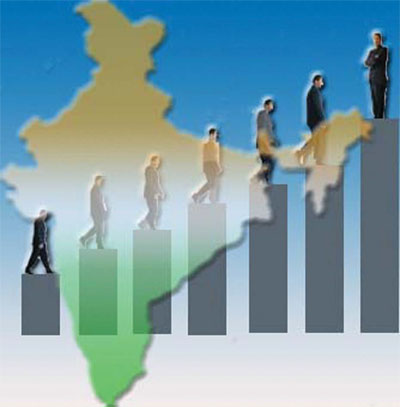
    INDIA’S JOURNEY TO BECOMING AN ECONOMIC SUPERPOWER

    The economic development in India followed socialist-inspired policies for most of its independent history, including state-ownership of many sectors; India’s per capita income increased at only around 1% annualised rate in the three decades after Independence. Since the mid-1980s, India has slowly opened up its markets through economic liberalisation.

    After more fundamental reforms since 1991 and their renewal in the 2000s, India has progressed towards a free market economy. In the late 2000s, India’s growth reached 7.5%, which will double the average income in a decade. Analysts] say that if India pushed more fundamental market reforms, it could sustain the rate and even reach the government’s 2011 target of 10%. States have large responsibilities over their economies.

    The annualised 1999-2008 growth rates for Tamil Nadu (9.8), Gujarat (9.6%),Haryana (9.1%), or Delhi (8.9%) were significantly higher than for Bihar (5.1%), Uttar Pradesh (4.4%), or Madhya Pradesh (6.5%). India is the tenth-largest economy in the world and the third largest by purchasing power parity adjusted exchange rates (PPP). On per capita basis, it ranks 140th in the world or 129th by PPP. The economic growth has been driven by the expansion of services that have been growing consistently faster than other sectors.

    It is argued that the pattern of Indian development has been a specific one and that the country may be able to skip the intermediate industrialisationled phase in the transformation of its economic structure. Serious concerns have been raised about the jobless nature of the economic growth. Favourable macroeconomic performance has been a necessary but not sufficient condition for the significant reduction of poverty amongst the Indian population.

    The rate of poverty decline has not been higher in the post-reform period (since 1991). The improvements in some other non-economic dimensions of social development have been even less favourable. The most pronounced example is an exceptionally high and persistent level of child malnutrition (46% in 2005-6). The progress of economic reforms in India is followed closely. The World Bank suggests that the most important priorities are public sector reform, infrastructure, agricultural and rural development, removal of labour regulations, reforms in lagging states, and HIV/AIDS.

    [5] For 2012, India ranked 132nd in Ease of Doing Business Index, which is setback as compared with China 91st and Brazil 126th. According to Index of Economic Freedom World Ranking an annual survey on economic freedom of the nations, India ranks 123rd as compared with China and Russia which ranks 138th and 144th respectively in 2012. India ranks second worldwide in farm output.

    Agriculture and allied sectors like forestry, logging and fishing accounted for 18.6% of the GDP in 2005, employed 60% of the total workforce and despite a steady decline of its share in the GDP, is still the largest economic sector and plays a significant role in the overall socioeconomic development of India. Yields per unit area of all crops have grown since 1950, due to the special emphasis placed on agriculture in the five-year plans and steady improvements in irrigation, technology, application of modern agricultural practices and provision of agricultural credit and subsidies since the green revolution.

    India is the largest producer in the world of milk, cashew nuts, coconuts, tea, ginger, turmeric and black pepper. It also has the world’s largest cattle population (193 million). It is the second largest producer of wheat, rice, sugar, groundnut and inland fish. It is the third largest producer of tobacco. India accounts for 10% of the world fruit production with first rank in the production of banana and sapota. The required level of investment for the development of marketing, storage and cold storage infrastructure is estimated to be huge.

    The government has implemented various schemes to raise investment in marketing infrastructure. Amongst these schemes are Construction of Rural Go downs, Market Research and Information Network, and Development / Strengthening of Agricultural Marketing Infrastructure, Grading and Standardisation.

    Main problems in the agricultural sector, as listed by the World Bank, are:

  • AGRICULTURE AND RURAL DEVELOPMENT IN INDIA SINCE 1947

    AGRICULTURE AND RURAL DEVELOPMENT IN INDIA SINCE 1947

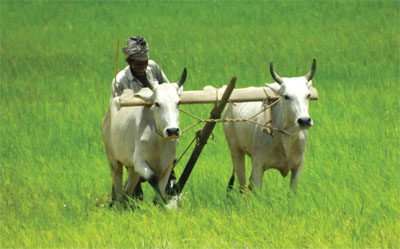
    Agriculture is the dominant sector of Indian economy, which determines the growth and sustainability. About 65 per cent of the population still relies on agriculture for employment and livelihood. India is the first in the world in the production of milk, pulses, jute and jute-like fibres; second in rice, wheat, sugarcane, groundnut, vegetables, fruits and cotton production; and is a leading producer of spices and plantation crops as well as livestock, fisheries and poultry.

    In the past few years, Indian agriculture has done remarkably well in terms of output growth. The 11th Five Year Plan (2007-12) witnessed an average annual growth of 3.6 per cent in the gross domestic product (GDP) from agriculture and allied sector. The growth target for agriculture in the 12th Five Year Plan is estimated to be 4 per cent. Indian agriculture is benefitting huge from rising external demand and the sector’s wider participation in the global economy.

    In order to boost investments in the sector, the Government of India has allowed 100 per cent foreign direct investment (FDI) under automatic route in storage and warehousing including cold storages. The government has also allowed 100 per cent FDI under the automatic route for the development of seeds. Department of Agriculture and Cooperation under the Ministry of Agriculture is the nodal organisation responsible for development of the agriculture sector in India.

    The organisation is responsible for formulation and implementation of national policies and programmes aimed at achieving rapid agricultural growth through optimum utilisation of land, water, soil and plant resources of the country. arket Dynamics Backed by policy impetus by the Government of India, the country ranks 10th in global agricultural and food exports, as per Economic Survey 2012-13. Agriculture accounts for about 10 per cent of the total export earnings and provides raw material to a large number of industries.

    “Exports of agricultural products are expected to cross US$ 22 billion mark by 2014 and account for 5 per cent of the world’s agriculture exports,” according to the Agricultural and Processed Food Products Export Development Authority (APEDA). Total exports of Indian agri and processed food products from April 2012 to February 2013 stood at Rs 11,254,275.51 lakh (US$ 20.74 billion) as compared to Rs 7,186,784.33 lakh (US$ 13.24 billion) during the same period last year, according to the data provided by APEDA.

    As of March 1, 2013, India has wheat stocks of around 27.1 million tonnes (MT), as against a requirement of mere 7 MT, while total food grains stocks in the central pool (including rice) is estimated to be almost 63 MT, as against a requirement of 21.2 MT. Wheat exports from India are expected to grow by 23 per cent to 8 MT in the financial year 2013-14, on the back of strong global prices and surplus domestic supply. Exports of rice are also expected to cross 10 MT from 7.3 MT during previous year due to robust demand from West Asia, Africa and South-East Asian countries.

    Major Developments and Investments The total planned expenditure for the Ministry of Agriculture has increased considerably to Rs 27,049 crore (US$ 4.98 billion) in the Union Budget 2013-14. The outlay is 22 per cent over the revised estimates of the year 2012-13. Further, the amount of Rs 1,000 crore (US$ 184.32 million) has been allocated to continue support to the new green revolution in Eastern States like Assam, Bihar, Chhattisgarh and West Bengal to increase the rice production.

    An outlay of Rs 500 crore (US$ 92.17 million) is also proposed for starting a programme of crop diversification that would promote technological innovation and encourage farmers to choose crop alternatives in the original green revolution States. Under the Rashtriya Krishi Vikas Yojana, an outlay of Rs 9954 crore (US$ 1.83 billion) and Rs 2250 crore (US$ 414.64 million) have been proposed for mobilizing higher investment in agriculture and the National Food Security Mission respectively.

    A memorandum of understanding (MoU) has been signed between Indian Council of Agricultural Research (ICAR) and Ramakrishna Mission Vivekananda University (RKMVU) for establishment of 632nd Krishi Vigyan Kendra (KVK) in South 24 Parganas district,West Bengal. The ICAR and the World Bank have been implementing a joint National Agricultural Innovation Project (NAIP) in the country to accelerate the collaborative development and application of agricultural innovations.

    Till date, an amount of Rs 727.93 crore (US$ 134.13 million) has been released by the World Bank for the project. The Chennai based Indian Overseas Bank (IOB) keeping its thrust on agricultural lending under priority sector area has proposed to open 15 special agricultural credit branches in Karnataka and Maharashtra. The bank intends to lend about Rs 500 crore (US$ 92.17 million) through these branches.

    Government Initiatives Some of the major initiatives taken by the Government of India are: The Union cabinet has approved the proposal of the department of agricultural research and education under the Ministry of Agriculture for the establishment of the National Institute of Biotic Stress Management (NIBSM) at Raipur, Chhattisgarh during the 12th Five Year Plan at an estimated cost of Rs 121.10 crore (US$ 22.31 million).

    The institute will address the impact of biotic stress and harness potentials of emerging tools of biotechnology in agriculture To provide relief to small and marginal farmers especially in drought prone and ecologically-stressed regions, the allocation for the Integrated Watershed Programme has been increased to Rs 5387 crore (US$ 992.79 million) from Rs 3050 crore (US$ 562.12 million) The National Livestock Mission will be launched in 2013-14 to attract investment and to enhance productivity of livestock, taking into account local agro-climatic conditions.

    Rs 307 crore (US$ 56.58 million) have been provided for the Mission In addition, Government has substantially improved the availability of farm credit and increased minimum Support Price to improve investment in the farm sector. The annual agriculture credit target for the financial year 2013-14 has been fixed at Rs 7,00,000 crore (US$ 128.98 billion) against the target of Rs 5,75,000 crore (US$ 105.95 billion) in 2012-13 The Government of India plans to set up a Regional Rural Bank (RRB) Credit Refinance Fund with a capital of US$ 2.1 billion to disburse short term crop loans to small and marginal farmers Road Ahead The Indian agriculture sector is now moving towards another green revolution.

    The transformations in the sector are being induced by factors like newfound interest of the organised sector, new and improved technologies, mechanised farming, rapid growth of contract farming, easy credit facilities, etc. The Ministry of Agriculture is promoting a new strategy for farm mechanization through its various schemes and programmes.

    A dedicated Sub-Mission on Agricultural Mechanization has been proposed for the 12th Plan which includes custom-hiring facilities for agricultural machinery as one of its major components. In the 12th Five Year Plan, the Government intends to increase the share of expenditure on agricultural research and development (R&D). The Government will focus on strengthening the Agricultural Technology Management Agencies (ATMA) concept through improved integration with Krishi Vikas Kendras (KVKs).

  • CHALLENGES BEFORE INDIA, THE POTENTIAL ECONOMIC SUPERPOWER OF THE 21st CENTURY

    CHALLENGES BEFORE INDIA, THE POTENTIAL ECONOMIC SUPERPOWER OF THE 21st CENTURY

    Twenty first century belongs to Asia and India is potentially one of strongest contender for emerging as an economic superpower. This opportunity window is there for the asking but will it happen or not is the question, the entire Indian citizenry is holding its breath for. Happening of this miracle depends totally on the wisdom, vision, far sight and honesty of purpose of the Indian leadership.

    There is no doubt about the wisdom of the men at the top but sadly majority of their actions are guided by their baser instincts like lust for gaining power and sticking to it by fair means or foul. This more often than not results in their actions leading simply to vote catching rhetoric in stead of furthering the cause of India’s march to prosperity and status of economic superpower.

    The economic superpowers/giants of today are at that position not by a stroke of luck but because of the ability of their leaders to guide the destiny of those nations in the right manner.Mind you at the turn of the 20th century these countries were economically perhaps worse off than where India is today. This does not imply that it should take India something like five or six decades to realize this potential of economic superpower.

    As a matter of fact, India should be galloping on the road to prosperity because it does not have to tread on the same beaten path of science,engineering and technology evolution unless and until it is foolish enough to experience reinventing of wheel all by itself. There is many a slip between the cup and the lip. There are many pitfalls on the road to becoming an economic giant.

    India must learn from the experience of others and try to nip these pitfalls at the earliest. The challenges that need to be looked into and overcome for realizing what is there for the asking. The first and foremost is curbing the menace of corruption and black money. In fact it is corruption and corruption alone which is blowing away Indian dream of getting prosperous. The country must understand that corruption and black money is the biggest drag on its economy and is eating into all the good work being attempted by governments in a very big way.

    There cannot be a substitute for corruption mitigation and good governance – the biggest growth engines for Indian economy. The present economic downturn and melt down in global economy is a result of overdoing of social welfare by those countries and if they could not sustain with excesses of social welfare schemes there is no way the Indian economy in its very infancy can pull off this miracle. In fact social welfare schemes have been the bane of many advanced economies of the world and these include allowances to jobless, pensionary benefits, health insurance etc. to name a few.

    There is no doubt that these are a must for any concerned government but all these benefits must be granted in a manner that they are self sustaining and in no case, at any point of time be a drag on the economy. India must learn from the horrid experiences of the western world and imbibe remedial measures to keep its date with the status of an economic superpower of 21st century. Reigning in population growth should be the topmost agenda of all Indian governments.

    In late fifties and early sixties of last century, everyone was engrossed in the debate ‘ Is India Overpopulated ‘ and invariably one would come to the conclusion that India was certainly not overpopulated in the true economic sense as the land/mineral resources could certainly more than suffice for a population density of about 270 persons per sq. mile. Can we say the same with the present population density of about 750/ sq. mile.

    India is definitely on the verge of getting overpopulated if not already overpopulated. Today we talk of the demographic dividend but after a couple of decades this dividend is going to become a curse with more and more persons joining the ranks of pensioners and enjoying these benefits for very long periods because of increasing life expectancy as a result of good medical care and facilities provided by the Indian government. While the western world grew old after becoming rich, there is every likelihood that India will grow old before getting rich if the long term impacts of population numbers and demography are not taken care of now.

    Proper and out of the box management of water resources of India. comprising of perennial rivers, plenty of rainfall and underground water table. All civilizations and all prosperous geographies on our globe owe their very existence to the abundance of available water resource in their areas. Though India has been gifted by nature with a huge and well distributed water resource comprising of perennial rivers, plenty of rainfall and underground water table but the nation has not bothered to maintain it properly.

    This is amply seen in the snowline moving higher and higher and the groundwater table going deeper and deeper. This being a direct result of shoddy policies of the government emanating from quest for energy security through use of fossil fuels, deforestation because of pressures of growth in population and failure to harness any substantial amount of river water, in fact a major portion of this water is allowed to go to sea.

    Infrastructure is the core of all economic growth and index of a common man’s comfort and conveniences and its importance is very well understood by the planners and economists. But simply raising the rhetoric is not enough. The nation is eagerly looking forward to some concrete action which is getting sacrificed at the altar of good governance. In fact India is plagued by bad governance in road and infrastructure sector.

    Energy security : If infrastructure is the core, energy security is the mother of all economic growth and much to the chagrin of all well meaning citizens of India is not only prey to bad governance but the path taken by the rulers and planners is directionless and not in sync with the futuristic realities of energy security scene all over the globe. India must draw strength from the fact that the oil rich countries have simply transformed their economies by getting the best out of their abundantly available energy source i.e. oil.

    Luckily for India, it has abundant solar, wind and hydro resources and in fact many times more than the country’s likely requirements by the turn of the century. The thrust in researches and technology development should logically come from India whose needs during the next decade or two for additional power are may be 5 times its present power production. With the pluses of resource availability, massive demand and almost nothing to loose because of obsolescence of high value investments in research, technology and manufacturing infrastructure for any other power production mode, India must seize this opportunity which can be the biggest catalyst in India’s march to the status of a global superpower.

    All human beings are inherently wedded to the philosophy of getting short term gains, the gains that bring reward to the person in quickest possible time. The short term solution or patchwork may appear to be lucrative for the run of the mill polity but the long term fixes are a must for India, the potential superpower of the 21st century.

    Statesmen think of next generation and create opportunities, Leaders Seize opportunities that come their way, while Politicians think of next elections and fritter away these opportunities and dirty politicians simply mess up everything and this is what separates wise men from men, men from boys and boys from impudent louts in the realm of changing fate of a nation.

  • President Pranab Mukherjee Addresses The Nation

    President Pranab Mukherjee Addresses The Nation

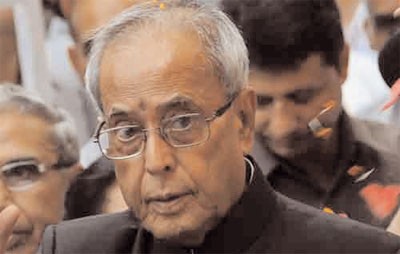
    In his address to the nation on the eve of 67th Independence Day, President Pranab Mukherjee expressed serious concern over the way Parliament and legislatures function and said corruption has become a major challenge. Noting the “widespread cynicism and disillusionment” with governance and functioning of institutions, the President said elections next year is an opportunity to elect a stable government that will ensure security and economic development.

    Following is the text of the President of India, Shri Pranab Mukherjee’s address to the Nation on the eve of the 67th Independence Day: “Fellow citizens: On the eve of the 66th anniversary of our Independence, I extend warm greetings to you and to all Indians around the world. My thoughts turn first towards the Father of our Nation, Mahatma Gandhi, who shaped our liberation struggle and the martyrs who made supreme sacrifice for the freedom of our country and great patriots whose relentless struggle liberated our motherland from the colonial rule of nearly two hundred years.

    Gandhiji sought freedom from both foreign rule as well as the indigenous social chains that had imprisoned our society for long. He launched every Indian on a path of selfbelief and hope for a better future. Gandhiji promised Swaraj- self-rule based on tolerance and self-restraint. He promised freedom from want and deprivation. For nearly seven decades now we have been masters of our destiny.

    This is then the moment to ask: are we heading in the right direction? Gandhiji’s vision cannot be turned into reality if we spurn the very values that were compulsory to his cause: sincerity of effort, honesty of purpose and sacrifice for the larger good. Our founding fathers created the first oasis in the desert of a colonized world nourished by democracy.

    Democracy is much more than the right to vote every five years; its essence is the aspirations of the masses; its spirit must influence the responsibilities of the leaders and duties of the citizens every day. Democracy breathes through a vibrant Parliament, an independent judiciary, a responsible media, a vigilant civil society, and a bureaucracy committed to integrity and hard work. It survives through accountability, not profligacy. And yet we have allowed unbridled personal enrichment, selfindulgence, intolerance, discourtesy in behavior and disrespect for authority to erode our work culture.

    The biggest impact of the decay in the moral fiber of our society is on the hopes and aspirations of the young and the poor. Mahatma Gandhi had advised us to avoid, and I quote, “politics without principles, wealth without work, pleasure without conscience, knowledge without character, commerce without morality, science without humanity, and worship without sacrifice”, (unquote). We have to pay heed to his advice as we work towards building a modern democracy.

    The ideals of patriotism, compassion, tolerance, selfrestraint, honesty, discipline and respect for women have to be converted into a living force. Fellow citizens: Institutions are a mirror of national character. Today we see widespread cynicism and disillusionment with the governance and functioning of institutions in our country. Our legislatures look more like combat arenas, rather than fora that legislate. Corruption has become a major challenge.

    The precious resources of the nation are being wasted through indolence and indifference. It is sapping the dynamism of our society. We need to correct this regression. Our Constitution provides a delicate balance of power between various institutions of the State. This balance has to be maintained. We need a Parliament that debates, discusses and decides. We need a judiciary that gives justice without delays. We need leadership that is committed to the nation and those values that made us a great civilization.

    We need a state that inspires confidence among people in its ability to surmount challenges before us. We need a media and citizens who, even as they claim their rights, are equally committed to their responsibilities. Fellow citizens: A re-ordering of the society can be brought about through the educational system. We cannot aspire to be a world class power without a single world class university. History records that we were the cynosure of the world once.

    Takshashila, Nalanda, Vikramashila, Valabhi, Somapura and Odantapuri comprised the ancient university system that dominated the world for eighteen hundred years beginning Sixth Century BC. They were a magnet for the finest minds and scholars in the world. We must seek to regain that space. A university is the banyan tree whose roots lie in basic education, in a vast network of schools that build the intellectual prowess of our communities; we have to invest in every part of this knowledge tree, from seed, root and branch to the highest leaf.

    Fellow Citizens: There is a direct relationship between a successful democracy and a successful economy, for we are a people-driven nation. People serve their interests best when they participate in decision- making at the level of panchayat and other forms of local government. We have to rapidly empower the local bodies with functions, functionaries and finances to improve their performance. Faster growth has given us the resources, but larger outlays have not translated into better outcomes. Without inclusive governance, we cannot achieve inclusive growth.

    For a developing country of more than 1.2 billion people, the debate between growth and redistribution is vital. While growth builds the scope for redistribution, redistribution sustains growth over time. Both are equally important. A disproportionate emphasis on any one, at the expense of the other, can have adverse consequences for the nation. Fellow citizens: At the dawn of our Independence, we lit the glowing lamp of modernity and equitable economic growth.

    To keep this lamp aflame, our highest priority has to be the elimination of poverty. Though a declining trend in the poverty rate is clearly visible, our fight against this scourge is far from over. India has the talent, ability and the resources to overcome this challenge. Reforms that have enabled us to come this far have to be pursued at all levels of governance. Favorable demographic changes over the next two decades can pay us handsome dividends.

    It requires industrial transformation and rapid creation of employment opportunities. It also requires an orderly urbanization process. Several initiatives taken by the Government in the recent past including the New Manufacturing Policy, the renewal of urban infrastructure and the ambitious skill training programme will need close monitoring in the coming years. We have given our citizens entitlements backed by legal guarantees in terms of right to employment, education, food and information.

    We now have to ensure that these entitlements lead to real empowerment for the people. We need robust delivery mechanisms to make these legislations work. New benchmarks of efficient public service delivery and accountability have to be established. The Direct Benefits Transfer Scheme, launched earlier this year, will bring in greater transparency, enhance efficiency and eliminate wastage of precious resources. Fellow citizens: 13. In our race for development, we must be careful not to disturb the balance between man and nature. The consequences of such imbalance can be disastrous.

    My heartfelt condolences to the many who lost their lives, and the innumerable who suffered in Uttarakhand; and my salutations to those brave personnel of our security and armed forces, government and NGOs who did so much to alleviate suffering. This tragedy owes as much to the avarice of human nature as to the rage of Mother Nature. This was nature’s wake-up call. And it is time to wake up. Fellow citizens: We have seen in the recent past grave challenges to our security, internal as well as external. The barbaric face of Maoist violence in Chhattisgarh led to a loss of many innocent lives.

    Despite India’s consistent efforts to build friendly relations with neighbours, there have been tensions on the border and repeated violations of the Ceasefire on the Line of Control, leading to tragic loss of lives. Our commitment to peace is unfailing but even our patience has limits. All steps necessary to ensure internal security and protect the territorial integrity of the nation will be taken. I applaud the courage and heroism of our security and armed forces who maintain eternal vigilance and pay homage to those who have made the supreme sacrifice of the most precious gift of life in the service of the motherland.

    There will be a general election in our country before I have the privilege of addressing you again on the eve of our next independence day. This great festival of democracy, is an opportunity for us to elect a stable government which will ensure security and economic development. Every election must become a crucial milestone in our nation’s journey towards greater social harmony, peace and prosperity.

    Let me conclude by quoting from the great classic Bhagvad Gita where the Teacher propounds his views and then says, and I quote, “ÿatha icchasi tatha kuru” “even as you choose, so you do. I do not wish to impose my views on you. I have presented to you what I think is right. Now it is for your conscience, for your judgment, for your mind to decide what is right.” (unquote) On your decisions rests the future of our democracy.

  • INDIA’S HIGHS AND THE LOWS

    INDIA’S HIGHS AND THE LOWS

    The transition of India from a British colony to a sovereign, secular, and democratic nation was indeed historical. It was a long journey of around two decades that started with the conceptualisation of the dream in 1930 to its actual realization in 1950. A look into the journey that led to the birth of Indian Republic will make our celebrations more meaningful.

    Lahore Session of the Indian National Congress The seeds of a republican nation were sowed at the Lahore session of the Indian National Congress at the midnight of 31st December 1929. The session was held under the presidency of Pt. Jawarhar Lal Nehru. Those present in the meeting took a pledge to mark January 26 as “Independence Day” in order to march towards realizing the dream of complete independence from the British. The Lahore Session paved way to the Civil Disobedience movement.

    It was decided that January 26, 1930 would be observed as the Purna Swaraj (complete Independence) Day. Many Indian political parties and Indian revolutionaries from all over the country united to observe the day with honour and pride.

    Indian Constituent Assembly Meetings
    The Indian Constituent Assembly, which was constituted as a result of the negotiations between the Indian leaders and members of the British Cabinet Mission, had its first meeting on December 9, 1946.The Objective of the Assembly was to give India a constitution, which would serve a lasting purpose and hence appointed a number of committees to thoroughly research the various aspects of the proposed constitution. The recommendations were discussed, debated and revised many times before the Indian Constitution was finalized and officially adopted three years later on November 26, 1949.

    Constitution came into force
    Though India became a free nation on August 15, 1947, it enjoyed the true spirit of Independence on January 26, 1950 when the Constitution of India finally came into force. The Constitution gave the citizens of India the power to govern themselves by choosing their own government. Dr. Rajendra Prasad, took oath as the first President of India at the Durbar Hall in the Government House and this was followed by the Presidential drive along a five-mile route to the Irwin Stadium, where he unfurled the National Flag.

    Ever since the historic day, January 26 is celebrated with festivities and patriotic fervor all around the country. The day owes its importance to the constitution of India that was adopted on this day. On this Republic Day, read what the great Constitution of India, that propounds liberal democracy, has in its store. Let’s also feel proud in pronouncing what the Preamble to our Constitution (External website that opens in a new window) says.

    1971 Indo Pak War As in the 1965 Indo-Pak War, the main battles in 1971 between armoured formations was relegated to Chamb and Shakargarh sectors – located in the Western Theatre. Sporadic tank battles took place in the East Theatre, but these were one-sided battles weighed heavily in India’s favour. No action had taken place in the Punjab sector, but the South-Western sector in Rajasthan did see much activity. An offensive by the Pakistanis was blunted here solely on the use of air power.

    The Indian Army had two armoured regiments and three independent armoured squadrons supporting Lieutenant General Jagjit Singh Aurora’s Eastern Command’s thrust into East Pakistan. India had one T-55 tank regiment in the northern sector supporting the XXXIII Corps’ offensive in the Hilli-Bogra area, with one PT-76 regiment in the western area supporting the II Corps’ thrust.

    Finally three independent armoured squadrons (one PT-76, one AMX- 13 and one Ferret armoured car) were supporting the IV Corps’ offensive from the east. Opposing them were a Pakistani armoured force of a regiment of M-24 Chafees in the Bogra area, countering India’s T-55 regiment and two squadrons of Chafeee tanks supporting the west and Dacca sectors.

    When full scale hostilities began, half the tanks were either knocked out or captured by the time the Indian troops were on the outskirts of Dacca. After which the rest of the tanks were finally accounted for, as part of the surrender deal. In it’s offensive, Indian losses were heavy. At least thirty PT-76 tanks were destroyed or damaged, another four T-55s had their tracks blown up over mines.

    The high loss rate among the PT-76 tanks was due to the fact that this type of tank had very thin armour plating to help assist its amphibious capabilities and was an easy target for mines. However all, but eleven, of the PT-76s were repaired after the war. The AMX-13s did not see much action and the Ferrets had no battle casualties. One very interesting situation, had the tank squadron of the 7th Light Cavalry recovering one of their own tanks lost to the Pakistan Army during the 1965 War, which was displayed at the East Bengal Regimental Center as a war trophy.

    The tank was then handed to the Army Ordnance Corps, which in turn handed it back to the East Bengal Regimental Center! The Battle of Basantar took place during the 1 Corps’ offensive in the Shakargarh Sector. India employed two armoured brigades to support its offensive by three infantry divisions and the Pakistani reaction was swift. On December 16th and 17th, when Indian infantry captured certain villages at the River Basantar, Pakistan sent in an armoured brigade.

    The 17 Poona Horse equipped with the Centurion tank, blunted the Pakistani armoured offensive. One particular action at Barapind saw one lone tank troop (three tanks) of the 17 Poona Horse – Indian Army take on an entire squadron of Pattons of the 13th Cavalry – Pakistan Army. When one of the tanks was hit & disabled and another tank’s gun was jammed, the troop commander, Captain V Malhotra gave the order for the last remaining tank to withdraw.

    But this tank led by Second Lieutenant Arun Khetarpal, stuck to its position and kept firing at the Pattons till the last moment when Second Lieutenant Khetarpal was hit and killed. These three tanks accounted for more than the ten tanks out of the squadron. So impressed were the Pakistanis with this action, that the Squadron Commander of Pakistan’s 13 Cavalry – Major Nissar came over to the Indian lines after the ceasefire to talk to the tank commanders who had blunted his offensive.

    At the end of which, 66 Pakistani tanks were claimed as destroyed. Indian casualties were about 23 tanks, however the efforts of the EME (Electrical & Mechanical Engineers) saw to that all, but 10 of the tanks, were back on the road again.

    Period of Liberalization
    The arrival of the East India Company in India caused a huge strain to the Indian economy and there was a twoway depletion of resources.The British would buy raw materials from India at cheaper rates and the finished goods were sold at higher than normal price in Indian markets. During this phase India’s share of world income declined from 22.3% in 1700 AD to 3.8% in 1952. Post Colonial Indian Economy: After India got independence from colonial rule in 1947, the process of rebuilding the economy started. For this various policies and schemes were formulated. First five year plan for the development of Indian economy came into implementation in 1952.

    These Five Year Plans, started by Indian government, focused on the needs of the Indian economy. If on one hand agriculture received the immediate attention on the other hand the industrial sector was developed at a fast pace to provide employment opportunities to the growing population and to keep pace with the developments in the world. Since then the Indian economy has come a long way.

    The Gross Domestic Product (GDP) at factor cost, which was 2.3 % in 1951-52 reached 6.5 in the financial year 2011-2012 Trade liberalization, financial liberalization, tax reforms and opening up to foreign investments were some of the important steps, which helped Indian economy to gain momentum. The Economic Liberalization introduced by Man Mohan Singh in 1991, then Finance Minister in the government of P V Narsimha Rao, proved to be the stepping-stone for Indian economic reform movements.

    To maintain its current status and to achieve the target GDP of 10% for financial year 2006-07, the Indian economy has to overcome many challenges. Challenges before Indian economy: Population explosion:The rising population is eating into the success of India. According to 2011 census of India, the population of India has crossed one billion and isgrowing at a rate of 2.11% approx. Such a vast population puts lots of stress on economic infrastructure of the nation.

    Thus India has to control its burgeoning population. Poverty:As per records of National Planning Commission, 36 crore people are living below the poverty line in India in 2012. Unemployment:The increasing population is pressing hard on economic resources as well as job opportunities. Indian government has started various schemes such as Jawahar Rozgar Yojna, and Self Employment Scheme for Educated Unemployed Youth (SEEUY). But these are proving to be a drop in an ocean. Rural Urban Divide:It is said that India lies in villages, even today when there is lots of talk going about migration to cities, 70% of the Indian population still lives in villages.

    There is a very stark difference in pace of rural and urban growth. Unless there isn’t a balanced development Indian economy cannot grow. These challenges can be overcome by the sustained and planned economic reforms. These include: Maintaining fiscal discipline Orientation of public expenditure towards sectors in which India is faring badly such as health and education. Introduction of reforms in labour laws to generate more employment opportunities for the growing population of India. Reorganization of agricultural sector, introduction of new technology, reducing agriculture’s dependence on monsoon by developing means of irrigation. Introduction of financial reforms including privatization of some public sector banks.

    Scams That Rocked India
    Ever since India has achieved her freedom, she has also been known as a corrupted land. The extend of corruption has increased to such an extend that, any person joining political parties does have an intention of making easy and fast money within the shortest period of time. If all the amounts that have been disclosed, for every scam till date is pooled up, I guess , India is most richest country and the power and strength She holds could not be compared with any other.

    However, since people are getting more and more selforiented, when it comes to progress and wiping away poverty, nobody is least bothered. A few of the top scams that have taken place since the year 1947 is discussed here, just to bring to the notice of the public where we stand and how things are working. Let us get from the latest to the oldest.
    1. The Indian Coal Allocation Scam: This is one among the latest scams that has occurred concerning the Indian government’s allocation of the nation’s coal deposits to public sector entries and private companies. According to the CAG (Comptroller and Auditor General of India), the Indian Government was accused of allocating coal blocks, in an in-efficient manner during the period 2004-2009.

    The reason for this allegation was because, the Government had the authority to check on the allocation of coal blocks by a process of competitive bidding, but they failed to do so, resulting in lower payment by the public sector enterprises and the private firms. According to the CAG report, an amount of near to Rs. 185,591 crore (USD $ 35.08 billion) was lost to the government because of this improper screening in procedures, which might have happened due to bribery is what studies says. Whatever it may be, loosing such a huge amount by the Government is a fall from the Governments side.
    2. The 2G Spectrum Scam: This scam was one which involved the politicians and government officials equally. The scam involved in issuing frequency allocation licenses by the telephone companies in re-creating 2G subscriptions for cell phones. When valued by the Comptroller and Auditor General ( CAG ) of India about the money composed from the 2G licenses , the defeat for the exchequer was Rs. 176,369 crore ( USD $ 39.16 billion ). The issuing of licenses began in 2008; however it came to public attention when the Indian Income tax Department conducted an investigation on the political campaigner Niira Radia.

    The Supreme Court on February 2012 declared cancellation of all licenses issued in 2008 during the tenure of A. Raja, who was the minister of telecom then. There were about 122 licenses that were cancelled. The actual plan for awarding the licenses was on a first come first served policy. However, A. Raja manipulated the rules and instead pf the first who applied for the licenses, it was first who tipped Raja got the license. 3.

    Commonwealth Games Scam:
    This was a scam that was harshly criticized by several well-known social activists and politicians as billions of dollars were being spent on sporting event, although the fact that we have the leading concentration of poor people. Some of the other major problems that was being highlighted was grave corruption by the games organizing committee, delay in the erection of the main Games venues, and infrastructural compromise. Indian businessman Azim Premji called the Commonwealth games a “drain on the public funds” and also said that hosting such an expensive game event was not the priority for India, and India had other priorities to look into like education, public health and infrastructure.

    4. Satyam Scam:
    In the history of the corporate, Satyam Computer Services Scandal is biggest ever and the chairman, Ramalinga Raju confessed that the company’s accounts were falsified. For near to a decade, Raju kept the accounts details in the dark by pumping up revenues and earning up figures of Satyam. He confessed that , as per the balance sheet of 30th September 2008, the company had exaggerated figures for cash and bank balances of Rs. 5040 crore ( USD $ 1.12 billion ) as next to Rs. 5361 Crore ( USD $ 1.19 billion ) in the book thus acquiring an interest of Rs. 376 Crore , which was not existing.This scam was in tune of near to Rs. 14000 Crore.

    5. Bofors Scam:
    This scandal is also known as the hallmark of Indian Corruption. This was a most important corruption during the 1980`s where the then Prime Minister Rajiv Gandhi and quite a few others which also includes a powerful NRI family named the Hindujas were accused of receiving bribe from Bofors AB for engaging a proposal to supply India’s 155 mm field howitzer. The scale of the corruption was so worse that it led to the crush of Gandhi’s ruling in the Indian national Congress party.

    It was hypnotized that the level of the scandal was tuned to be about Rs. 400 million. The middle man who was associated with this scandal was an Italian businessman named Ottavio Quattrocchi and who also represented the petrochemicals firm, Snamprogetti. Quattrocchi was very intimate to the family and emerged as a influential broker in the 1980`s between big business and the Government of India. Despite the controversy, the Bofor gun was used extensively during the Kargil War with Pakistan and gave India ‘an edge’ over Pakistan according to battlefield comrades.

    6. The Fodder Scam:
    This scam involved the misappropriation of about Rs. 950 crore (USD $ 179.55 million) from the government treasury, of Bihar. The scheme involved the manufacture of ‘vast herds of invented stock’ for which food, medicines and animal husbandry equipment was apparently acquired. In this scam even the Chief Minister of Bihar, Laloo Prasad Yadav was included then which finally led to his resignation. The scam had its origins in small scale by some government employees by submitting false expense reports, which grew in magnitude and drew additional elements over a period of time which ultimately led to the forming of a mafia. This scam still continues to be exposed by the media due to the widespread links between tenured bureaucrats, elected politicians and businesspeople involved.

    7. The Hawala Scandal:
    This was an Indian political scandal, which involved payments allegedly acknowledged by politicians through four hawala brokers, mostly the Jain brothers. It was about $ 18 million bribery humiliation. In an arrest linked to the militants in Kashmir is what gave way to the raid of the hawala brokers and the scandal through them, which revealed large scale payments to national politicians.

    8. The IPL Scam:
    Cricket is a game where lot of commotions occur and there hare many hurdles to cross over and the IPL (Indian Premier League) is no better at it. The BCCI (Board of Control for Crocket in India) has found itself in the middle of many conflicts with the coming of IPL. The IPL had set forth many terms at many occasions, which were not accepted and had to be terminated. There were conflicts with the Cricket Club of India, with the England and Wales Cricket board, with Cricket Australia and many more. The IPL chairman Lalit Modi was suspended in 2010 for alleged act of individual transgression by the BCCI. There was also spot fixing among the players during the IPL in 2012.

    9. Harshad Mehta Scam:
    Mehta was a famous stockbroker of his time. He was well known for his high record breaking profits from the stock market and trading and later was involved in the scandal worth Rs. 5000 crore ( USD $ 945 million) in Bombay Stock Exchange. He had a great way in convincing the public that through the banking system he could finance his buying. Two small and little known banks helped him in this and he made a great fraudulent price hikes in the stock markets. By the time the scandal came to limelight, many banks were left blank and in fact Managers from two reputed banks committed suicide.

    10. Kinetic Finance Limited Scam:
    In this scam, various banks lost about Rs. 200 crore (USD $ 37.8 million). The promoters of kinetic finance limited borrowed about Rs. 145 crore from an association of banks led by SBI, and Bank of Baroda. After borrowing the money, they used it for other purposes of the Kinetic group and eventually the promoters resigned and the firm was renamed in another name. A special Investigation Audit was conducted and based on the report it was found that about five banks filed criminal cases against the promoters.

    11. Adarsh Housing Scam
    In this scam, land was allotted to the war widows of Kargil war and also for the retired personal of The continued on page 48 Defense Services. Over a period of 10 years, the top politicians and bureaucrats bend several rules and commit various acts of commission and omission to have the building in order and finally they got themselves allotted with flats at the premium locality at a much cheaper cost. This scam is noticeable as it took keen planning and almost 10 years to execute this kind of brutality to the poor and left alone in the defense.

    12. Citibank Fraud:
    This was a fraudulent done by the bank employee by promoting false promises to the customers. Shivraj Puri, the Relationship manager of Gurgaon branch had convinced his customers to invest in a fake scheme that gave high interests. He made forged circulars from SEBI. He opened joint accounts in several names and made customers deposit into those accounts and he invested in places of his interests. This was bought to lime light when customers started complaining about being asked to invest in a scheme that was not available to the bank.

    13. Madhu Koda Scandal:
    Madhu Koda is the ex-chief Minister of Jharkhad. He was bought to limelight by the IT department by charging for laundering money for about Rs. 4000 crore and other disproportionate income. Almost five currency counting machines were seized from his residence. The amount was used to purchase hotels, mines, and companies, in foreign countries like Thailand, Liberia, Dubai and many other places. With this kind of laundering and investments, he builds an empire, but bigger to the most successful businessmen within a short period of time.

    14. Barak Missile Scandal:
    This is a case of alleged defense corruption which was related to the purchase of Barak 1 Missile Systems by India from Israel. The contracts have been signed by the Indian government to procure seven Barak systems at a total cost of Rs. 199.50 million. This was done despite objections raised by several groups, including members of the team that had actually visited Israel to observe the performance of the missile.

    15. Kargil Coffin Scam:
    This is one of a kind of scam, where even the coffins for the soldiers who died in the Indo-Pak war, were bought for low quality and at higher price. The government had paid about $2500 per coffin, which was earlier purchased for $172 per coffin. And moreover the quality was very poor. This led to range among the public and led to the resignation of the defense minister.

    16. Mining Scam in India:
    This scam is related to the ore-rich states of India and has generated controversies in India which spans encroachment of forest areas, underpayment of government royalties, and conflict with tribal regarding land-rights.

    17. Sukh Ram Telecom Scam:
    Sukh Ram is a former union communication minister in Indian National Congress Government. He was the telecom Minister during the P.V. Narasimha Rao`s cabinet. He was caught with allegations regarding irregularities in awarding a telecom contract. The CBI seized around Rs. 3.6 crores from his residence. He has been imprisoned for the fraud that he has done.

    18. SNC Lavalian Scam:
    This is a financial scam related to the government with a Canadian company. A loss of about Rs. 374.50 crores, for the renovation and modernization of the hydroelectric power stations at Pallivasal, Sengulam, and Panniar (The PSP Project as it is called) at the Idduki district in Kerala.

    19. Belekeri Port Scam:
    This scam relates to about 3.5 million of sequester iron ore that was exported illegally from Belekeri Port in Karnataka. This scam is said to be worth about Rs. 60,000 crore (USD $ 12 billion). The iron ore was illegally mined after giving a minimal pay to the government.

    20. Telgi Scandal: The Telgi scandal is after the great Abdul Karim Telgi who issued counterfeit stamp papers. Had appointed about 300 people as agents to sell these counterfeit stamp papers to bulk purchasers like banks, insurance companies, and share broking firms. The size of the scam is about 20,000 crores (USD $3.78 billion). In this scam, many high ranked governmental officials were also recorded.

  • MOVERS & SHAKERS

    MOVERS & SHAKERS

    Famous Indian nuclear physicist Homi Jehangir Bhabha was born on 30 October 1909 in Mumbai. Bhabha played a key role in the development of the Indian atomic energy program. Widely referred to as the father of India’s nuclear weapons program, Bhabha had his education at the Elphinstone College and the Royal Institute of Science before obtaining his doctorate from the University of Cambridge in 1934.

    He was influenced greatly by the legendary Paul Dirac. Bhabha was a research scientist at the Cavendish Laboratories at Cambridge. When he was stranded in India as a result of the Second World War, he set up the Cosmic Ray Research Unit at the Indian Institute of Science, Bangalore under Nobel Laureate C. V. Raman in 1939. Dr. Bhabha is credited with establishing the Tata Institute of Fundamental Research(TIFR) with the help of eminent industrialist J. R. D. Tata.

    After India won independence from the British, Bhabha established the Atomic Energy Commission of India in 1948. He represented India in various international forums including the United Nations and his tenure represented a high in terms of the progress of India’s atomic energy programme. The climax of this programme came on May 18, 1974 when India exploded a nuclear device at Pokhran, Rajasthan joining a select club of nations.

    Ratan Tata
    Ratan Tata is one of the most well-known and respected Indian businessman. He served as the Chairman of the Tata Group from 1991 till 2012. As a Mumbaibased conglomerate, he is also a member of the prominent Tata family of Indian industrialists and philanthropists. Ratan Tata was born on December 28, 1937 in Mumbai. When he was a child his parents separated and he was brought up by his grandmother Lady Navajbai.

    He went to Campion School in Bombay, Bishop Cotton School in Shimla and finished his schooling from Cathedral and John Connon School in Mumbai. He graduated with a degree in Architecture and Structural Engineering from Cornell University in 1962 and also did the Advanced Management Program from Harvard Business School in 1975. He is also a member of the Alpha Sigma Phi fraternity of Yale University, United States. In 1962, Ratan Tata began his career in the Tata group.

    At first he used to work on the shop floor of Tata Steel, shoveling limestone and handling blast furnace. In 1991, JRD Tata stepped down as the chairman of Tata Industries and named Ratan Tata as his successor. Under Ratan’s stewardship, Tata Tea attained Tetley, Tata motors attained Jaguar Land Rover and Tata Steel attained Corus. These triumphs turned Tata from a large India-centric company into a global business with 65% revenues from abroad. He also contributed in the development of Indica and Nano.

    Ratan Tata has also served in various organizations in India and abroad. He is a member of the Prime Minister’s Council on Trade and Industry and he is also on the board of governors of the East-West Center, which is the advisory board of RAND’s Center for Asia Pacific Policy. He also serves on the program board of the Bill & Melinda Gates Foundation’s India AIDS initiative. He was awarded the Padma Bhushan by the Government of India in January 2000.

    He serves on the boards of several leading organizations, both in the public as well as the private sector in India. He is a member of the International Investment Council set up by the President of South Africa and serves on the programme board of the Bill & Melinda Gates Foundation’s India AIDS initiative. Ratan Tata is credited for leading Tatas’ successful bid for Corus, an Anglo-Dutch steel and aluminum producer, which was acquired for an estimated £6.7 billion by Tata Sons.

    N.R. Narayanamurthy
    N.R. Narayana Murthy, the founder of Infosys Technologies is one of the most famous personalities in India’s I-T sector. Born on August 20, 1946, he obtained a degree in electrical engineering from the National Institute of Engineering under University of Mysore in 1967 and went on to do his Masters from IIT Kanpur in 1969. He joined Patni Computer Systems in Pune. While at Pune, he met his wife Sudha Murty.

    In 1981, he founded Infosys alongwith with six otherpeople. He served as president of the National Association of Software and Service Companies, India from 1992 to 1994. Murthy was the CEO of Infosys for twenty years, and was succeeded by Nandan Nilekani in March 2002. He functioned as the Executive Chairman of the Board and Chief Mentor from 2002 to 2006.

    Dhirubhai Ambani
    Dhirajlal Hirachand Ambani was born on 28 December 1932, at Chorwad, Junagadh in Gujarat, When he was 16 years old, he moved to Aden,Yemen. Initially, Dhirubhai worked as a dispatch clerk with A. Besse & Co. Married to Kokilaben. Dhirubhai also worked in Dubai for sometime. He returned to India and founded the Reliance Commercial Corporation with an initial capital of Rs 15000.

    Dhirubhai set up the business in partnership with Champaklal Damani from whom he parted ways in 1965. Dhirubhai started his first textile mill at Naroda, near Ahmedabad in 1966 and started the brand “Vimal”. Dhirubhai Ambani is credited with having started the equity cult in India.With the passage of time, Dhirubhai diversified into petrochemicals and sectors like telecommunications, information technology, energy, power, retail, textiles, infrastructure services, capital markets, and logistics.

    Lakshmi Nivas Mittal
    Lakshmi Nivas Mittal was born on June 15, 1950 in Sadulpur, Rajasthan, India and is presently the CEO & Chairman of Arcelor Mittal. Lakshmi Nivas Mittal was listed in the Forbes List of Billionaires in 2006 as the the richest Indian and the fifth richest man in the world with an estimated wealth around of $25.0 billion and is the richest man in the United Kingdom. Young Lakshmi Nivas Mittal spent his first years in Sadulpur, before his father moved to Kolkata. Lakshmi graduated from St. Xavier’s College, Calcutta. He founded Mittal Steel in 1976, which soon became a global steel producer with operations on 14 countries. His success mantra lies in the identification, acquisition and turnaround of many loss making steel companies all across the world.

    Dr. A.P.J. Abdul Kalam
    Dr. A.P.J. Abdul Kalam, former President of India, graduated in aeronautical engineering from the Madras Institute of Technology in 1958 and joined the Defense Research and Development Organization (DRDO). In 1962, Kalam joined the Indian Space Research Organization (ISRO). In 1982, he rejoined DRDO as the Chief Executive of Integrated Guided Missile Development Programme (IGMDP). Dr. Kalam is credited with the development and operationalization of India’s Agni and Prithvi missiles.

    He worked as the Scientific Adviser to the Defence Minister and Secretary, Department of Defence Research & Development from 1992 to 1999. During this period, the Pokhran-II nuclear tests were conducted. Dr. Kalam held the office of the Principal Scientific Advisor to the Government of India from November 1999 to November 2001. Dr. Kalam has received a host of awards both in India and abroad. He was awarded the Padma Bhushan in 1981, Padma Vibhushan 1990 and the Bharat Ratna in 1997.

    He is of the view that we should work wholeheartedly to make India a developed nation by 2020. Besides being a bachelor, Kalam is a strict disciplinarian, a complete vegetarian and teetotaler. Among the many firsts to his credit, he became India’s first President to undertake an undersea journey when he boarded the INS Sindhurakshak, a submarine, from Visakhapatnam. He also became the first president to undertake a sortie in a fighter aircraft, a Sukhoi-30 MKI.

    Khushwant Singh
    One of the most prominent novelists and journalists of India, Khushwant Singh was born on 2 February 1915 in Hadali, presently in Pakistan. He writes a weekly column, “With Malice towards One and All”, published in several leading newspapers all over the country. He graduated from Government College, Lahore before studying law at King’s College, London. He has been the editor of Yojana, The Illustrated Weekly of India, The National Herald and the Hindustan Times.

    He also served as a member of the Rajya Sabha. Though he was awarded the Padma Bhushan in 1974, he returned it in 1984 to protest the siege of the Golden Temple by the Indian Army. He was awarded the Padma Vibhushan in 2007. Some of his notable works include: The Sikhs; Train to Pakistan; The Sikhs Today; Ranjit Singh: The Maharajah of the Punjab; Delhi: A Novel; Sex, Scotch and Scholarship: Selected Writings; Not a Nice Man to Know: The Best of Khushwant Singh; Paradise and Other Stories; Death at My Doorstep; The Illustrated History of the Sikhs etc.

    Amartya Sen
    Nobel Prize winner Amartya Sen was born on 3 November 1933 in Santiniketan, West Bengal. Besides being a worldrenowned economist, Amartya Sen is also a philosopher. He served as a Master at the Trinity College at Cambridge University, the first Asian academic to head an Oxbridge college. Currently the Lamont University Professor at Harvard University, Amartya Sen traces his roots to an illustrious lineage. His father, Ashutosh Sen, taught chemistry at the Dhaka University.

    Amartya completed his high-school education from Dhaka in Bangladesh in 1941. After his family migrated to India in 1947, Sen studied at the Presidency College, Kolkata and at the Delhi School of Economics before moving over to the United Kingdom to complete his higher studies. He earned his doctorate from the Trinity College, Cambridge in 1959. He has taught at various reputed Universities including the University of Calcutta, Jadavpur University, Oxford, London School of Economics, Harvard and many others. His works helped to develop the theory of social choice.

    In 1981, he published his famous work Poverty and Famines: An Essay on Entitlement and Deprivation, where he showed that famine occurs not only due to shortage of food, but from inequalities in the mechanisms for distributing food. He had personally witnessed the Bengal famine of 1943. He has done valuable work in the field of development economics, which has had a tremendous influence on the formulation of the United Nations Development Programme’s Human Development Report.

    Sabeer Bhatia
    Sabeer Bhatia-co-founder of Hotmail, is one among select group of people who have made it big in America’s Silicon Valley. Born in Chandigarh, Sabeer Bhatia did his schooling from St. Joseph’s Boys’ High School, Bangalore. He graduated from Caltech and went to Stanford to pursue his MS in Electrical Engineering. Sabeer attended many lectures by famous like Steve Jobs and was determined to make it big. After completing his Masters, he joined Apple computers. He left Apple soon after.

    He teamed up with his partner to create a web-based e-mail system Microsoft bought Hotmail on December 30th, 1997, for a reported sum of $400M. After the success of Hotmail, Bhatia in April 1999, he started another venture, Arzoo Inc, which however had to be shut down. In 2006, Arzoo was relaunched. Bhatia has won many awards. Among the notable ones include the “Entrepreneur of the Year” awarded by the venture capital firm Draper Fisher Jurvetson in 1997, the “TR100” award, presented by MIT to 100 young innovators expected to have the greatest impact on technology in the next few years. Besides, he was named by TIME magazine as one of the “People to Watch” in International Business in 2002.

    Indra Nooyi
    Indra Nooyi is the president and chief executive officer of PepsiCo and is the highest-ranking Indian-born woman in corporate America. She helped to start PepsiCo’s fast-food chains in 1997. After a Bachelor’s degree from Madras Christian College and a Post Graduate Diploma in Management from the Indian Institute of Management Kolkata, she moved on to the Yale School of Management.

    She started her career with The Boston Consulting Group (BCG), moving on to companies like Motorola and Asea Brown Boveri.She serves on the board of directors of several organizations. In August 2006, she succeeded Steve Reinemund as chief executive officer of PepsiCo. She has been named the Most Powerful Woman in Business in 2006 by Fortune Magazine. Her name was included in the Wall Street Journal’s list of 50 women to watch in 2005.

    Kiran Bedi
    The first woman to join the coveted Indian Police Service (IPS) in 1972, Kiran Bedi was born on 9 June 1949 in Amritsar, Punjab. Recently appointed as Director General of India’s Bureau of Police Research and Development, Kiran Bedi has had an illustrious career, earning widespread adulation for her no-nonsense attitude and devotion to work. She served as Police Advisor in the United Nations peacekeeping department and was honored with the UN medal for outstanding service. She earned the nickname ‘Crane Bedi’ for towing away the then Indian PM Indira Gandhi’s car for parking violation.

    Kiran Bedi graduated in English before securing a Master’s degree in Political Science from Punjab University, Chandigarh. This gutsy police officer went on to secure an LL.B degree in 1988 from Delhi University and a Ph.D. from the Indian Institute of Technology, New Delhi, even while she was in service. She was good at sports too, having been an all- India and all-Asian tennis champion.

    She has served creditably in a host of appointments ranging from Deputy Inspector General of Police, Mizoram, Advisor to the Lieutanent Governor of Chandigarh, Director General of Narcotics Control Bureau and many others.

    Rakesh Sharma
    The first Indian to fly into space, Rakesh Sharma was born on January 13, 1949 in Patiala, Punjab. He was a squadron leader with the Indian Air Force, when he flew into space in 1984 as part of a joint programme between the Indian Space Research Organisation (ISRO) and the Soviet Intercosmos space program.

    He spent eight days in space on board the Salyut 7 space station. He joined two other Soviet cosmonauts aboard the Soyuz T- 11 spacecraft which blasted off on April 2, 1984. He was awarded the Hero of Soviet Union award on his return from space. The Government of India honoured him with the Ashok Chakra. He retired with the rank of Wing Commander. He joined the Hindustan Aeronautics Limited in 1987 and served as Chief Test Pilot in the HAL Nashik Division until 1992, before moving on to Bangalore to work as the Chief Test Pilot of HAL. He retired from test flying in 2001.

    Dr. Verghese Kurien
    The “father of the white revolution” in India, Dr. Verghese Kurien is acknowledged worldwide as the brain behind the success of the largest dairy development programme in the world by the name of Operation Flood. Also known as the “Milkman of India”, he was the chairman of the Gujarat Co-operative Milk Marketing Federation Ltd. (GCMMF) and his name became synonymous with the Amul brand. Born on November 26, 1921 in Kozhikode, Kerala, he graduated in Physics from Loyola College, Madras in 1940 and pursued a B.E.(Mechanical) course from the Madras University. He was instrumental in the success story of AMUL.