Month: August 2013

  • INDIA’S RELATIONS WITH NEIGHBOURING COUNTRIES

    INDIA’S RELATIONS WITH NEIGHBOURING COUNTRIES

    India has formal diplomatic relations with most nations; it is the world’s second most populous country, the world’s most-populous democracy and one of the fastest growing major economies. With the world’s seventh largest military expenditure, ninth largest economy by nominal rates and third largest by purchasing power parity, India is a regional power, a nascent great power and a potential superpower. India’s growing international influence gives it a prominent voice in global affairs.

    The Economist magazine argues, however, that underinvestment in diplomacy and a lack of strategic vision have minimised India’s influence in the world. India is a newly industrialised country, it has a long history of collaboration with several countries and is considered one of the leaders of the developing world along with China, Brazil, Russia and South Africa (the BRICS countries). India was one of the founding members of several international organisations, most notably the United Nations, the Asian Development Bank, G20 industrial nations and the founder of the Nonaligned movement.

    India has also played an important and influential role in other international organisations like East Asia Summit, World Trade Organisation, International Monetary Fund (IMF), G8+5 and IBSA Dialogue Forum. Regionally, India is a part of SAARC and BIMSTEC. India has taken part in several UN peacekeeping missions and in 2007, it was the secondlargest troop contributor to the United Nations. India is currently seeking a permanent seat in the UN Security Council, along with the G4 nations.

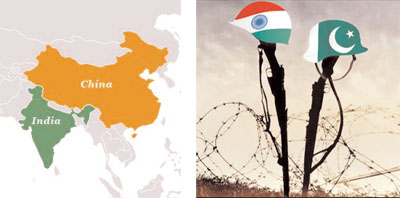
    Relations with PakistanDespite historical, cultural and ethnic links between them, relations between India and Pakistan have been plagued by years of mistrust and suspicion ever since the partition of India in 1947. The principal source of contention between India and its western neighbor has been the Kashmir conflict. After an invasion by Pashtun tribesmen and Pakistani paramilitary forces, the Hindu Maharaja of the Dogra Kingdom of Jammu and Kashmir, Hari Singh, and its Muslim Prime Minister, Sheikh Abdullah, signed an Instrument of Accession with New Delhi.

    The First Kashmir War started after the Indian Army entered Srinagar, the capital of the state, to secure the area from the invading forces. The war ended in December 1948 with the Line of Control dividing the erstwhile princely state into territories administered by Pakistan (northern and western areas) and India (southern, central and northeastern areas). Pakistan contested the legality of the Instrument of Accession since the Dogra Kingdom has signed a standstill agreement with it.

    The Indo-Pakistani War of 1965 started following the failure of Pakistan’s Operation Gibraltar, which was designed to infiltrate forces into Jammu and Kashmir to precipitate an insurgency against rule by India. The five-week war caused thousands of casualties on both sides. It ended in a United Nations (UN) mandated ceasefire and the subsequent issuance of the Tashkent Declaration. India and Pakistan went to war again in 1971, this time the conflict being over East Pakistan.

    The large-scale atrocities committed there by the Pakistan army led to millions of Bengali refugees pouring over into India. India, along with the Mukti Bahini, defeated Pakistan and the Pakistani forces surrendered on the eastern front. The war resulted in the creation of Bangladesh. In 1998, India carried out the Pokhran-II nuclear tests which was followed by Pakistan’s Chagai-I tests. Following the Lahore Declaration in February 1999, relations briefly improved. A few months later however,Pakistani paramilitary forces and Pakistani Army, infiltrated in large numbers into the Kargil district of Indian Kashmir.

    This initiated the Kargil conflict after India moved in thousands of troops to successfully flush out the infiltrators. Although the conflict did not result in a full-scale war between India and Pakistan, relations between the two reached all-time low which worsened even further following the involvement of Pakistan-based terrorists in the hijacking of the Indian Airlines IC814 plane in December 1999. Attempts to normalise relations, such as the Agra summit held in July 2001, failed.

    An attack on the Indian Parliament in December 2001, which was blamed on Pakistan, which had condemned the attack[105] caused a military standoff between the two countries which lasted for nearly a year raising fears of a nuclear conflict. However, a peace process, initiated in 2003, led to improved relations in the following years. Since the initiation of the peace process, several confidence-buildingmeasures (CBMs) between India and Pakistan have taken shape. The Samjhauta Express and Delhi–Lahore Bus service are two of these successful measures which have played a crucial role in expanding people-to-people contact between the two countries.

    [106] The initiation of Srinagar–Muzaffarabad Bus service in 2005 and opening of a historic trade route across the Line of Control in 2008 further reflects increasing eagerness between the two sides to improve relations. Although bilateral trade between India and Pakistan was a modest US$1.7 billion in March 2007, it is expected to cross US$10 billion by 2010. After the Kashmir earthquake in 2005, India sent aid to affected areas in Pakistani Kashmir & Punjab as well as Indian Kashmir.

    The 2008 Mumbai attacks seriously undermined the relations between the two countries. India alleged Pakistan of harboring militants on their soil, while Pakistan vehemently denies such claims. Relations are currently hampered since India has sent a list of 40 alleged fugitive in various terror strikes to Pakistan, expecting them to be handed over to India. Pakistan, on the other hand, has declared that it has no intentions whatsoever of carrying out their extradition. The August 2013 attack by the Pak army on the LoC killed five Indian army men,which further strained the relations between the two nations.

    China Despite lingering suspicions remaining from the 1962 Sino-Indian War and continuing boundary disputes over Aksai Chin and Arunachal Pradesh, Sino-Indian relations have improved gradually since 1988. Both countries have sought to reduce tensions along the frontier, expand trade and cultural ties, and normalise relations. A series of high-level visits between the two nations have helped improve relations. In December 1996, PRC President Jiang Zemin visited India during a tour of South Asia.

    While in New Delhi, he signed with the Indian Prime Minister a series of confidence-building measures for the disputed borders. Sino-Indian relations suffered a brief setback in May 1998 when the Indian Defence minister justified the country’s nuclear tests by citing potential threats from the PRC. However, in June 1999, during the Kargil crisis, then-External Affairs Minister Jaswant Singh visited Beijing and stated that India did not consider China a threat. By 2001, relations between India and the PRC were on the mend, and the two sides handled the move from Tibet to India of the 17th Karmapa in January 2000 with delicacy and tact.

    In 2003, India formally recognised Tibet as a part of China, and China recognised Sikkim as a formal part of India in 2004. Since 2004, the economic rise of both China and India has also helped forge closer relations between the two. Sino-Indian trade reached US$36 billion in 2007, making China the single largest trading partner of India. The increasing economic reliance between India and China has also bought the two nations closer politically, with both India and China eager to resolve their boundary dispute.

    They have also collaborated on several issues ranging from WTO’s Doha round in 2008 to regional free trade agreement. Similar to Indo-US nuclear deal, India and China have also agreed to cooperate in the field of civilian nuclear energy. However, China’s economic interests have clashed with those of India. Both the countries are the largest Asian investors in Africa and have competed for control over its large natural resources. India and China agreed to take bilateral trade up to US$100 billion on a recent visit by Wen Jiabao to India.

  • ASHWAGANDHA GETS US PATENT FOR VACCINE ADJUVANT

    ASHWAGANDHA GETS US PATENT FOR VACCINE ADJUVANT

    MUMBAI (TIP): A group of researchers from Pune University and Serum Institute have received a patent on the use of Ashwagandha as a vaccine adjuvant, or component that helps improve its efficacy. A medicinal herb, Ashwagandha is also referred to as Indian Gensing. In a project supported by the Department of Science and Technology, the research was part of a project to develop “botanical immunomodulators” as adjuvants to improve vaccine efficacy, said a researcher from Serum.

    In the past, the industry used aluminium salts as an adjuvant, but as newer vaccines are developed, industry is also looking for alternatives, he added. In fact, the finding would be used in new vaccines such as the pentavalent vaccine targeting meningitis, or those against dengue and pneumococcal diseases, said Serum Executive Director Suresh Jadhav. About nine herbs were studied, before research found the required property in ashwagandha (Withania somnifera) and more work was done to understand in what ratio it could be used in a vaccine, a researcher said. Unlike earlier instances where companies tried to patent turmeric, for example, the researcher clarified, the patent here was in an area not claimed by ayurveda.

    VACCINE APPLICATIONS
    Further, he said, that all known claims on herbs have been digitised and a patent would not have been granted in the US, if the latest claim was similar to existing knowledge in India or China. The adjuvant showed properties where it could be used with other licensed adjuvants in T-cell dependent antigens such as diphtheria, tetanus and pertusssis group of vaccines.

    The project was supported by DST and Serum Institute of India with total financial outlay of Rs 90 lakh spread over 3 years. The research project was completed in 2007, but development work continued at Serum Institute. Patents were filed in India and in the US. The researchers receive their patent in India in 2007, but the US patent was granted on August 6.

  • Inflation Jumps To 5-Month High

    Inflation Jumps To 5-Month High

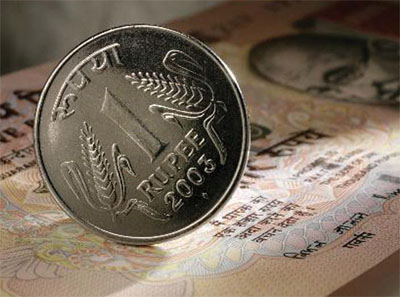
    NEW DELHI (TIP): Rising vegetable prices and the impact of a weak rupee pushed inflation to a five-month high of 5.79% in July, posing yet another challenge for Asia’s third-largest economy battling to defend the rupee and boost growth. Official data released on Wednesday showed inflation, as measured by the wholesale price index, jumped to 5.79% in July from the previous month’s 4.86%. Easing wholesale price inflation had fuelled expectations of a moderation in tight monetary policy but the slide of the rupee against the dollar has dashed those hopes for now.

    Food inflation shot up to double-digit in July as onion prices spurted nearly 144.94% year-on-year, while overall vegetable prices rose an annual 46.59%. Cereal prices rose an annual 17.66% in July sustaining the pressure but prices of pulses declined 7.39%. Some relief was visible in softening milk and fruits prices.

    Retail inflation is hovering around double digits and FM P Chidambaram has acknowledged that consumer price inflation is a problem and supplies need to be raised to tackle the situation. Policymakers said they expect a good monsoon to moderate food prices.

  • Govt Imposes $650 Per Tonne Mep On Onion

    Govt Imposes $650 Per Tonne Mep On Onion

    NEW DELHI (TIP): Government on August 14 imposed a minimum export price (MEP) of $650 per tonne on onion to curb shipments and control rising prices. In May last year, the government had scrapped fixing MEP, which is a benchmark price below which onion cannot be exported. The decision regarding $650 per tonne MEP was taken in an inter-ministerial meeting. “MEP on onion was fixed at $650 per tonne at free on board,” a commerce ministry official said. Onion prices have soared to Rs 80 per kg in the major cities of the country.

    Wholesale price of onion have increased in the Lasalgaon market in Nasik by Rs 1 per kg to Rs 46 and by Rs 5 to Rs 50-55 per kg in Delhi’s Azadpur mandi. India has exported 6.39 lakh tonnes during April-July period of this fiscal compared with 6.94 lakh tonnes in the year-ago period. Production stood at 16.6 million tonnes in 2012-13. Maharashtra, Karnataka and Gujarat are the main producing regions of onions.

  • British Iconic Motorcycle Brand Triumph Set To Enter India In November

    British Iconic Motorcycle Brand Triumph Set To Enter India In November

    MUMBAI (TIP): After almost a year of delay, the iconic British Motorcycle brand, Triumph is all set to enter India this November. Announcing its entry into India on Wednesday, the company also declared the appointment of Vimal Sumbly as the managing director of the company to lead its charge in India. The company is likely to begin with a portfolio of Bonneville, Daytona 675 and Rocket in India and it will eventually add more models to build its portfolio.

    Some of these models will be assembled at the company’s CKD (completely knocked down) units in Manesar which is nearing completion. It is currently looking for dealer partners across strategic locations, said the company Emphasising the significance India plays in the global strategy, Paul Stroud – director sales & marketing (global) said ‘2013 is a very crucial year for Triumph Motorcycles in India and as a company, we are confident about the timing of our market entry.

    In the past few months, we have carefully assessed the market landscape and will be making well-honed efforts to provide our discerning customers with a complete brand experience.’ Prior to joining Triumph, Sumbly was GM Sales at Bajaj AutoBSE -0.66 % Ltd and comes with close to 16 years of experience in the automobile space. An ardent biker himself, Sumbly will spearhead the sales development and growth of Triumph in India.

    Established in 1902, Triumph Motorcycles completed 110 years of its operation in 2012. For more than two decades, Triumph Motorcycles has been based in Hinckley, Leicestershire, and has produced iconic bikes, known for its design, character and performance. Triumph is the largest British motorcycle manufacturer selling over 50,000 bikes in a year and has more than 750 dealers across the world.

  • Cabinet Approves Setting Up Of Tax Administration Commission

    Cabinet Approves Setting Up Of Tax Administration Commission

    NEW DELHI (TIP): The Union Cabinet approved the proposal for setting up of the Tax Administration Reform Commission (TARC). Finance Minister P. Chidambaram in his Budget Speech 2013-14 had announced a proposal to set up the Commission. The Commission will consist of a Chairman, two fulltime members and four part-time members, of which at least will be from the private sector. The Chairman will be an eminent person having wide experience of tax administration and policy making.

    The two full-time members will be with a background in revenue service pertaining to Income Tax and Central Excise and Customs respectively. The term of the Commission will be 18 months. The Commission will review the application of tax policies and tax laws in India in the context of global best practices and recommend measures to strengthen the capacity of the tax system in India that would reflect best global practices. The Commission will help in removing ambiguity in application of tax policy and tax laws, thereby establishing a stable tax regime and a non-adversarial tax administration.

    The Commission will facilitate an efficient tax administrative system that would enhance the tax base as well as tax payer base. The Union Cabinet also approved a proposal for exemption of prior approval of Cabinet for disposal/auction of immovable properties acquired by the Union Government under the provisions of Chapter XX-C of the Income Tax Act 1961.

  • In Search Of Form, Gautam Gambhir Heads To England

    In Search Of Form, Gautam Gambhir Heads To England

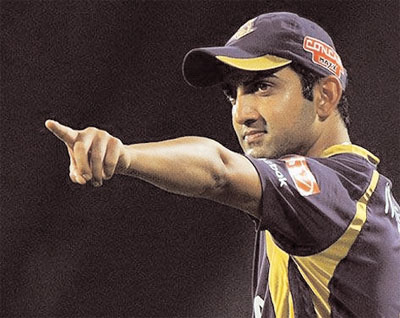
    MUMBAI (TIP): The Indian cricket board’s loss of camaraderie with the England and Wales Cricket Board (ECB) notwithstanding, left-handed opener Gautam Gambhir has been allowed to fly to Essex, north-east of London, to play with the first division county for the remaining season. The BCCI, in the recent past, had been reluctant to allow Indian cricketers to play in English counties following the ECB’s snub more than a year ago in refusing to let Indian Premier League (IPL) teams play in Ireland and Scotland.

    However, that stand may now restrict only to Twenty20 and not the longer formats of the game as Gambhir – looking to make a comeback to the national team – has been granted a NOC from the BCCI to replace Kiwi opener Hamish Rutherford at Essex. The batsman will look to find some runs for himself while he helps the county gun for the championship.

    Gambhir’s arrival should come as a huge shot in the arm for Essex. But more importantly, from India and Gambhir’s point of view, it will allow him to keep himself busy at a time when there’s no domestic cricket being played in the country and give national selectors a good reason to keep an eye on his performance. To allow Gambhir to fly to England is a decision that seems to have been taken keeping several factors including the views of the national selection committee – in mind.

    Besides Rohit Sharma, who has continuously failed to show a larger appetite for runs, there’s no other experienced batsman available to partner the in-form Shikhar Dhawan at the top of the order. With South Africa coming up as the next big test this winter and the rising expectation of a five-Test duel in England in 2014, the selectors may have started looking at the options available.

  • Sachin Tendulkar Likely To Retire After 200th Test: Ghavri

    Sachin Tendulkar Likely To Retire After 200th Test: Ghavri

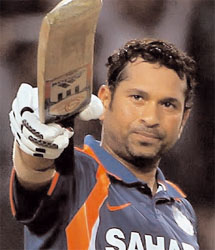
    KOLKATA (TIP): With Sachin Tendulkar set to play his 200th Test Match during the upcoming Indian tour of South Africa, the batting maestro may bid goodbye to the game after the landmark match, former Test pacer Karsan Ghavri said. “He already has all the records and we all surely would love to see him getting to another landmark — his 200th Test Match. I think he has been waiting for the right time and as soon as he plays the 200th game he will retire,” Gahvri said.

    In the city to participate in an Independence Day celebration, Ghavri described Tendulkar as the country’s greatest sporting ambassador. Tendulkar is just two short of achieving the landmark of having played in 200 Tests. “It’s not that after retiring he will be out of the game. He is such a great name, he will always be associated with cricket. All his records are almost impossible to be broken and the landmark of 200 Test matches is just unbelievable,” added Gahvri. India’s tour to South Africa, beginning November this year, is slated to comprise two T20 Internationals, seven One Day Internationals and three Tests.

  • Bresnan Out For Season With Back Injury

    Bresnan Out For Season With Back Injury

    LONDON (TIP): Tim Bresnan has been ruled out of the remainder of the international season with a stress fracture in his lower back. His absence creates a space in England’s bowling attack for the fifth Investec Ashes Test, which begins on August 21. Bresnan was preferred to Steven Finn for the second Test at Lord’s and has performed well in the series with 10 wickets and two crucial contributions in the closelyfought fourth Test at Chester-le- Street.

    Bresnan made 45 in England’s second-innings to boost his side’s lead before making a breakthrough with the wicket of David Warner when Australia were on course to chase 299 for victory. England went on to win comfortably and clinch the series. But now Bresnan will be unable to help England attempt to win their fourth Test of the series at The Oval. Bresnan will begin a recovery and rehabilitation programme and a date for his return to cricket will be determined in due course.

    The injury is the latest setback for Bresnan who needed elbow surgery for the second time in February which ruled him out of England’s tour of New Zealand. His absence is a blow to England’s one-day plans. He has been a feature in limited-overs cricket and helped England reach the final of the Champions Trophy in June. England take on Australia in two T20s on August 29 and 31 before a five-match ODI series starting on September 6.

    Before then, England will need to draft another bowler into their attack for The Oval Test match. Finn was selected for the first Test at Trent Bridge but, having been left out for the Lord’s Test, has not featured in England’s squad for the third or fourth Tests. Chris Tremlett was included in the 13 for Old Trafford and Durham without being included in the XI but could get an opportunity on his home ground.

  • Universal Dengue Vaccine Closer To Reality

    Universal Dengue Vaccine Closer To Reality

    WASHINGTON (TIP): A new strategy has been developed that cripples the ability of the dengue virus to escape the host immune system. STAR’s Singapore Immunology Network (SIgN) made the breakthrough, which has opened the door of hope to what may become the world’s first universal dengue vaccine candidate that can give full protection from all four serotypes of the dreadful virus.

    This research done in collaboration with Singapore’s Novartis Institute of Tropical Diseases (NITD) and Beijing Institute of Microbiology and is also supported by Singapore STOP Dengue Translational and Clinical Research (TCR) Programme grant. Early studies have shown that a sufficiently weakened virus that is still strong enough to generate protective immune response offers the best hope for an effective vaccine.

    However, over the years of vaccine development, scientists have learnt that the path to finding a virus of appropriate strength is fraught with challenges. This hurdle is compounded by the complexity of the dengue virus. Even though there are only four different serotypes, the fairly high rates of mutation means the virus evolve constantly, and this contributes to the great diversity of the dengue viruses circulating globally.

    Furthermore, in some cases, the immune response developed following infection by one of the four dengue viruses appears to increase the risk of severe dengue when the same individual is infected with any of the remaining three viruses. The new strategy uncovered in this study overcomes the prevailing challenges of vaccine development by tackling the virus’ ability to ‘hide’ from the host immune system. Dengue virus requires the enzyme called MTase (also known as 2′-Omethyltransferase) to chemically modify its genetic material to escape detection.

    In this study, the researchers discovered that by introducing a genetic mutation to deactivate the MTase enzyme of the virus, initial cells infected by the weakened MTase mutant virus is immediately recognised as foreign. As a result, the desired outcome of a strong protective immune response is triggered yet at the same time the mutant virus hardly has a chance to spread in the host. Animal models immunised with the weakened MTase mutant virus were fully protected from a challenge with the normal dengue virus.

    The researchers went on to demonstrate that the MTase mutant dengue virus cannot infect Aedes mosquitoes. This means that the mutated virus is unable to replicate in the mosquito, and will not be able to spread through mosquitoes into our natural environment. Taken together, the results confirmed that MTase mutant dengue virus is potentially a safe vaccine approach for developing a universal dengue vaccine that protects from all four serotypes.

    The team leader, Dr Katja Fink from SIgN said that there is still no clinically approved vaccine or specific treatment available for dengue, so we are very encouraged by the positive results with this novel vaccine strategy.

  • New Stem Cell Technique May Provide Cancer Cure

    New Stem Cell Technique May Provide Cancer Cure

    LONDON (TIP): Scientists have developed a new stem cell technique which they believe could lead to a quicker treatment for cancer and reduce reliance on chemotherapy. The method would also be more effective at stopping the disease from returning by reprogramming cancerfighting cells, researchers said. The technique takes white blood cells and transforms them into stem cells before being reprogrammed to fight the patient’s cancer, the ‘Daily Express’ reported.

    “This is very specific to the cancer cells themselves. This means fewer side effects and secondly, because they stay in the body, they are ‘living drugs’ and once present move around and stop recurrences,” said lead researcher Dr Michel Sadelain, of the Memorial Sloan-Kettering Cancer Center in New York. The research has been tested on mice, but Sadelain expects it to be tested on humans and developed as a treatment only by 2020.

    “It looks pretty exciting. It’s effectively using the body’s own immune system and harnessing its power to attack the cancer cells,” Dr Emma Smith, senior science information officer at Cancer Research UK, said.

  • Get, Set And Fly: Jetpacks Ready For Manned Flights

    Get, Set And Fly: Jetpacks Ready For Manned Flights

    WELLINGTON (TIP): The New Zealand developers of a personalized jetpack said on Tuesday that aviation regulators have issued the device with a flying permit, allowing for manned test flights. Martin Aircraft chief executive Peter Coker said the certification was a significant milestone in the development of the jetpack, which the company hopes to begin selling next year.

    “For us it’s a very important step because it moves it out of what I call a dream into something which I believe we’re now in a position to commercialize and take forward very quickly,” Coker said. The jetpack is the brainchild of inventor Glenn Martin , who began working on it in his Christchurch garage more than 30 years ago. Inspired by childhood television shows such as “Thunderbirds” and “Lost in Space” , Martin set out in the early 1980s to create a jetpack suitable for everyday use by ordinary people with no specialist pilot training.

    His jetpack consists of a pair of cylinders containing propulsion fans attached to a free-standing carbon-fibre frame. The pilot backs into the frame, straps himself in and controls the wingless jetpack with two joysticks. While the jetpack’s concept is simple enough, Time magazine likened it to two enormous leaf blowers welded together, fine-tuning it into an aircraft that is safe and easy to use has been a lengthy process.

    Coker said the latest prototype, the P12, incorporated huge design improvements over earlier versions. “Changing the position of the jetpack’s ducts has resulted in a quantum leap in performance over the previous prototype,” he said.

  • GENELIA DESPERATE TO GET FILMS POST MARRIAGE

    GENELIA DESPERATE TO GET FILMS POST MARRIAGE

    Marriage sounds the death knell for an actresses’ career. And Genelia D’Souza Deshmukh is currently facing this harsh reality. Post getting hitched to Riteish Deshmukh, film offers have dried up for the chirpy actor in Tollywood. A lil’ birdie tells us that the actress recently hosted a cocktail party in the city for all her friends and acquaintances in Tollywood.

    This move was a desperate bid from the actor to get back to doing films in Tollywood. But unfortunately, no one in the Telugu film industry showed the remotest interest in casting Genny in their films. Sad, but true.

  • WILL NARGIS FAKHRI GIVE UP BOLLYWOOD?

    WILL NARGIS FAKHRI GIVE UP BOLLYWOOD?

    Nargis Fakhri, who is enjoying stardom in India reveals that she never planned to be in glam world and aspires to be a farmer in her life. Nargis grabbed attention with her hot and ultra sexy image with her Bollywood debut in Rockstar. Now, the actress will be seen sharing screen with hot and handsome John Abraham in Madras Cafe. However, the actress wishes to own a farm and live close to nature.

    “I have a working visa in India and I came here as I got offer for Rockstar. Then life was calling me for films. May be I would like to be a farmer one day and I want to own a farm one day. I might just go away from films,” said Nargis. If not an actress then Nargis had different plans and about the same, she claimed, “I would have been a doctor or psychologist.

    I love to help others and I think its nice and beautiful thing about being a celebrity to have a voice and stand.” “Everyone’s goal is different in life, but when it comes to me I do what I feel as I am a free spirit. So, till the time I am enjoying acting will do or else change my career,” concluded Nargis. It will be interesting to see whether the actress will be able to give up the glamour of B’town to chase her dream.

  • MOVIE REVIEW – Chennai Express

    MOVIE REVIEW – Chennai Express

    Cast: Shah Rukh Khan, Deepika Padukone, Sathyaraj
    Direction: Rohit Shetty
    Genre: Action
    Duration: 2 hours 23 minutes

    STORY:
    A 40-year-old Punjabi man is on a mission to immerse his grandfather’s ashes down South. Enroute he meets a young Tamilian girl who has eloped. Their lives entwine and his journey takes an altogether different route. REVIEW: In an ode to his own cinema-read Golmaal series, Bol Bachchan, Rohit Shetty ishstyle, the director, who has grossers in Bollywood’s 100-crore club, ups the scale for his Eid offering. Chennai Express (CE) is a magnificently mounted film.

    Never having been strong in the story department, CE too has a guillible plot line. Rahul ( Shah Rukh Khan) is asked by his dadi (Kamini Kaushal) to drop his granddad’s ashes in Rameswaram, the southern-most tip of India. He boards the Chennai Express to hoodwink granny but has secretly planned a getaway with his guy friends to Goa. Alas, in Dilwale Dulhaniya Le Jayenge fashion, a damsel in distress, Meena ( Deepika Padukone) asks for his outstretched hand as he stands on the footboard.

    And his Samaritan act changes his destiny. He discovers she’s the daughter of a Don from a South-side village and her accompanying cousins (hulks in pony tails) want her to return home. Her father wants Meena to marry another hulk (Niketan Dheer) from a nearby village, so he can then rule two villages. Meena resists and insists to her father (Sathyaraj) that it is Rahul who has her fancy.

    The father relents but the other hulks resist. From here on, Rahul constantly tries to outsmart the South Indian mob. And as expected in Indian mainstream cinema, he breaks into song-and-dance, gets drunk, blows up jeeps and does a Jim Carryish over-thetop act to get guffaws from a captive audience. For what is primarily a Hindi film, there’s too much spoken Tamil.

    There are cleverly written lines that ask you not to underestimate the south because it even plays a crucial role in the coalition government, but for the rest of India, a lot of the dialogue is lost in translation. Subtitles would be in order. After Cocktail and Yeh Jaawani Hai Deeewani, Deepika is once again in superlative form. Shah Rukh’s attempts at comedy go from convincing to convoluted. But, for the most part, he lights up the screen with his effervescence.

  • ANISTON THROWS BIRTHDAY BASH FOR JUSTIN THEROUX

    ANISTON THROWS BIRTHDAY BASH FOR JUSTIN THEROUX

    Jennifer Aniston recently threw a starstudded 42nd birthday party for her fiance, Justin Theroux, at their Bel Air mansion. An eyewitness told Us Magazine that several of Theroux’s pals spent the afternoon by the house’s pool with him. The insider said that it was a relaxed afternoon and the guests were all seated in the cabana area, while having drinks and listening to Kanye West and ‘The Kinks’ tracks.

    The catering team at the party prepared an outdoor barbecue buffet, when the pair began to greet the rest of their guests at around 7pm and made a point to hug everyone that arrived. While the actress chatted with her gal pals, Isla Fisher and Jen Meyer, the birthday boy, who received gifts from Cartier and Barney’s, spent a majority of the night with Shepard and Kimmel. Hollywood celebs like Kirsten Bell, Dax Shepard, Jason Bateman, Tobey Maguire and many more attended the birthday bash.

  • OLIVIA WILDE WARNS WOMEN AGAINST COSMETIC SURGERY

    OLIVIA WILDE WARNS WOMEN AGAINST COSMETIC SURGERY

    Actress Olivia Wilde feels “saddened and grossed out” by young women who undergo cosmetic surgery to improve their looks. The 29-year-old has urged girls to eat a healthy diet and indulge in exercise, instead of resorting to drastic measures to change their appearance. “Don’t cut your face. I am so saddened and grossed out by young women who look like creepy, old aliens because of their new Barbie noses and lips.

    Is that a smile or a grimace? Did you melt hot wax on your face, or is that your skin?,” femalefirst.co.uk quoted Wilde as saying. “A better approach, take care of yourself now that you’re old enough to know how. Drink water, sleep eight hours, and don’t go within 400 feet of a tanning booth or I’ll slap you hard,” she added. The actress also insists that she is looking forward to turning 30 in March 2014. “I’m hitting a major milestone 30, or as I like to call it, the ‘cut the bulls**t and go be awesome’ stage,” said Wilde.

    The “Tron: Legacy” star also advices other women, who are turning 30. “Now you get to live with that knowledge (you gained in your 20s) under your belt. Also, make it a nice belt. You’re 30. Stop dressing like a hobo. And don’t be bogged down by your past. “Consider your baggage (bad boyfriends, job setbacks, body issues) lost by the airline of life, leaving you emptyhanded

  • MOVIE REVIEW – The Conjuring

    MOVIE REVIEW – The Conjuring

    Cast: Vera Farmiga, Patrick Wilson, Lili Taylor
    Direction: James Wan
    Genre: Horror
    Duration: 1 hour 53 minutes

    STORY: Carolyn (Lily Taylor) and Roger Perron (Ron Livingston) with their five daughters move into a secluded Rhode Island farmhouse. Strange things start happening in and around the house at night. Turns out, it’s not just fear that’s playing hide-and-seek with their minds.

    REVIEW:
    Alarmed with the rise in horrific events taking place, Carolyn requests noted Paranormal investigators Ed ( Patrick Wilson) and Lorraine Warren (Vera Farminga) to look into the case. What surfaces will make you think twice before being intrigued by old and abandoned mysterious houses, antiques and musical toys. Most horror films claim to be ‘based on real life incidents’. While they rarely live up to the hype around them, The Conjuring is an exception.

    The atmosphere build-up begins even before the film does, as a disclaimer is flashed before the opening credits, warning you that you might seek psychological help after watching the movie. The strategy works, as the film can scare the living daylights out of you. While we didn’t feel the need to undergo any counselling, unsettling it certainly was.

    With haunted houses, creepy cellars, possessed dolls, cold and lonely nights, paranormal occurrences and exorcism, concept-wise, The Conjuring is not earthshatteringly ‘different’. While the setting and story are familiar, it’s the no-nonsense execution that makes the difference. Much to our satisfaction, filmmaker James Wan’s (Saw, Insidious) direction defies the done-to-death horror movie cliches that have so far caused most people to disregard the genre.

    There are no cheap thrills, no over-the-top sound effects, no annoying camera angles (found footage style), overindulgence in gore or visual grossness and no aping horror’s cult classic The Exorcist. Wan does not succumb to sensationalising the story either. It’s the subtle and steady build-up of suspense and psychological tension, coupled with sudden spinechilling scares and dramatic silences that make you go numb with fear.

    Above all, other than demons, evil spirits, ghosts and darkness, the film has a soul, where you feel for the characters. Not many horror films manage to achieve this. Performances are understated, yet effective. Vera Farminga plays psychic Lorraine Warren with utmost conviction. Lily Taylor’s performance as the vulnerable mother is noteworthy. James Wan pulls all the right strings to create an atmosphere so tense and unnerving that if evil spirits feed on your fear, so does the film.

  • FINDING MR. RIGHT POST 30

    FINDING MR. RIGHT POST 30

    Call it ambition, financial stability or plain indifference, today’s career woman believes that there’s more to life than marriage. That said, most of them are not ready to go the husband-kitchen-babies way until their early 30s. Good enough, we say! But the point is what happens when they set out on a mission to find Mr. Right after crossing 30 years of age? With more and more women putting off marriage thanks to busy careers in their 20s, they find it extremely difficult to meet someone once they are ready to take the plunge.

    By their early 30s, these women are typically independent with a sound bank balance, and have a fair idea about what to expect from marriage. As relationship counsellor Seema Hingoranny rightly puts it, “Women in their 30s usually have too many expectations from their life partners. So when they set out looking for a man, they sometimes tend to become irrational.

    They don’t want to settle for anything less, and therefore start forming rigid opinions about them.” In the quest for someone who is absolutely perfect, many women are rendered helpless and feeling guilty at a later stage of their lives. Also after a point, these women don’t want to deal with just monetary expectations (read: salary). Reports suggest that today’s women, those with exceptionally successful careers, find themselves in a tricky situation while hunting for a soulmate.

    The going gets tough when they encounter men who get intimated by their hefty pay packages. Sushmita Ganguly, an entrepreneur, who is 33 years old, is yet to come across a man who earns more than her. “I may have missed the boat, but then I wouldn’t have had this life if I had not worked hard. Today, my parents want to see me settled with a man who can match up to my standards.

    The problem is that none of the guys I meet these days want a woman who earns more than them!” There are several others who are most unlikely to get hitched with a man just for his bank balance. Popular filmmaker Zoya Akhtar, 39 in an interview said that she doesn’t need a man to take care of her needs. “For me a guy must be passionate and ambitious about his profession.

    His hefty pay package is not that crucial for me.” Also, a sense of achievement sometimes comes in the way of women who are in search of the perfect guy for themselves. “Being successful also means that you are in a comfortable zone where you can experience the very best of life. In a situation like this, you tend to get choosy about who your future husband is going to be. At 35, my fear is whether I will get to meet the right guy.

    And with divorce cases on the rise, it only gets worse,” says Karishma Agrawal, an entrepreneur. She feels that it is in our country that people tend to equate marriage to social status; Karishma is however optimistic about the fact that Indian society will change for good.

    Tips for Finding Mr Right After 30
    Be reasonable while chalking out your criteria for ‘the one’. Be willing to compromise on one or two of the not so important criteria. Have rational expectations from your future husband. Expect a human being, and not someone without flaws. Hear your parents out (you don’t necessarily have to accept everything they say). They come with experience for a reason. Don’t rush. Being desperate doesn’t help.

  • GET A FLAT BELLY

    GET A FLAT BELLY

    In everyday life we don’t fret about some loose stomach fat hanging over our waistbands, but festivities, weddings, and seaside vacations leave you staring at the mirror. The frustrating reality is that the midsection is one of the trickiest areas to lose fat from.

    Many believe that one can lose stomach fat by simply doing a few ab crunches every day. But that’s not the truth. In reality, achieving a flat stomach is a combination of a range of factors like diet, exercise, rest, hydration, and so on. Read on for some great tips on how to lose stomach fat… Understand the science behind six pack abs for a flat belly.The simple science behind six pack abs is that they exist in everybody. It’s just when you start putting on more body fat that these abs disappear.

    A combination of two major muscles transversus abdominis and rectus abdominis muscles make up what we consider to be our ‘abs’ zone. These muscles are buried under the front and side of torso mucles and exist around your midsection like a girdle. Now, if you ate a healthy diet comprising of lean proteins, balanced carbs and less, yet good, fats, you would enter a zone with minimal superficial body fat, and your muscles would become visible, resulting in six pack abs.

    Tip #1
    Importance of eating lean proteins for a flat belly. First and most important is to understand that lean proteins are proteins from sources that supply little or almost negligible amount of fat. The Harvard School of Public Health notes that lean sources of protein aid in keeping the saturated fat intake at a healthy level. When you are on sources of proteins such as chicken, beans you find yourself losing body fat and at the same time giving shape to your body.

    You get most of the vitamins from these sources which improve your health as well.Importance of fiber in your diet for a flat belly. Fiber is one of the most important constituents of our diet. The main function of fiber is to clean our system deep within, help propel our bowel movements and thus form the basis of detoxification of our body. Most astonishing is the fact that when we consume fiber, our body burns ample calories in the digestion process of fiber. Also fiber itself has very few calories. In short, eating lots of fiber in the form of fruits, salads and bran helps our belly to run slim with ease.

    Tip #2
    Importance of staying away from fruit juices, alcohol and fruit punches for a flat belly. In general juices, alcohol and fruit punches are calorie dense and often disturb the blood sugar levels in our body. Where moderate and controlled alcohol consumption has certain beneficial effects too, fruits are best taken in their natural fiber form rather than taking them in the form of juices. Juices give your body less essential fiber, and the concentrated sugar is not the best thing for you if you are aiming for a flat belly. Eating fresh should be the mantra of healthy living.

    Tip #3
    Importance of nutrient dense and good fat foods for a flat belly. Nutrient dense and good fat foods are those that have essential fatty acids and other vital nutrients in rich quantity with less calories and saturated fats. First would be something like a grilled fish. With certain essential fatty acids, proteins and less saturated oil, this is a perfect example of a nutrient dense good fat food.

    Now consider a pastry. It is more than 200 calories, with a lot of saturated fat and a few essential nutrients to offer. This is something you must take very sparingly. Thus, picking items such as grilled fish or soyabean chaat will help one supply the body with essential fats, improve cardiac health and at the same time keep your body fat low to give you a perfect belly. A nutrientdense diet won’t leave you feeling hungry so aiming at a flatter belly is much easier with nutrient dense food.

    Tip #4
    Importance of cardio exercises and strength training for a flat belly. All types of cardio exercise routines elevate your heart rate and keep it in the same way for extended periods of time. This results in increased consumption of oxygen, which leads to fat loss. Fat loss and stamina building are equally important. If you eat healthy and workout, your chances of achieving a flatter belly increases.

    Tip #5
    Importance of water in your diet for a flat belly.Water constitutes 70% of our body. Most of our metabolic process takes place in the presence of water in our body. Thus, when we are well hydrated the basal metabolic rate of our body goes up. This would mean that our body is able to digest the food we eat in a proper manner, the food is used to burn sufficient calories required by the body and thus you end up with a nice flat belly to improve your figure

    Tip #6
    Push ups. Place yourself face down with the palms on the floor. Place the palms wider than the shoulder-width, arms extended, legs straight and feet together or slightly apart. Keep the neck, back & hips aligned and abdominals contracted. Do not arch the back downwards or upwards. Keep it flat like a table top. Bend the elbows outwards and bring the chest close to the floor. This is the initial position. Push back upwards till the arms extend completely and feel the contraction in the chest muscles.

  • Top Signs Of Alcohol Addiction

    Top Signs Of Alcohol Addiction

    Several corporates are choosing to deal with the tension of workplace by heading to pubs on a more than regular basis. Friday nights have turned to drinking nights for office goers and grabbing a beer on weekdays is not a big deal. Sound familiar? It is important to recognize the signs of alcohol addition and pull the plug before it turns into a full blown addiction.

    Top signs of alcohol addiction
    1. You need a drink every time and the time of day does not matter. You have no power over how much alcohol you consume.
    2. You wake up looking for a drink. It may seem unrealistic but alcoholics will have and prefer to have a drink in the morning.
    3. You drink to get back to the feeling of high. This feeling makes you forget reality but eventually you need to realise you can’t run from your problems.
    4. You experience withdrawal symptoms associated with addiction like sweating, shivering, loss of taste and you experience frustration.
    5. Your dependence on alcohol cuts you out from daily activities and socializing.
    6. It’s an addiction when people who love you can see your fall from glory. When your friends see the road to destruction or your friends isolate you, then you need to step back and ascertain the course your life has taken.
    7. You will also experience weight loss and digestive problems. Alcohol addiction has destroyed families and even lead to bankruptcy. But there is no harm in having alcohol occasionally if you know your limit and remember to drink responsibly.

  • Build Your Immunity System

    Build Your Immunity System

    Sometimes we may wonder why we fall sick more or less often than your relatives, friends, colleagues or neighbours. Well, not all immune systems function alike. A number of factors affect immune system health. There are a number of ways you can repair your immune system.

    Here go a few of those:
    1. Those self-righteous diets high in fruits, vegetables and nuts promote immune health as they’re rich in nutrients the immune system requires. Adequate protein intake is also important.
    2. Avoid stress as it raises the risk for the common cold and other viruses. It can aggravate conditions such as allergies, asthma. Try stressreducing activities such as meditation, massage, spa, listening to soothing music, etc.
    3. Light to moderate exercise discharges tension and stress and enhances immune function as a result there is less likelihood of catching cold and flu.
    4. Sleep soundly because sleep deprivation activates the stress response and depresses immune function. Chronic sleep deprivation raises the risk of the common cold. People who habitually sleep less than six hours a night were almost three times more likely to develop a cold than those who slept seven hours or more.
    5. Socialize more: People with rich social lives enjoy better health than the loners. Researchers have proved that the social butterflies were less susceptible to developing cold as compared to the lone wolves.
    6. Vitamin D plays a major role in promoting normal immune function. Severe deficiency of Vitamin D can cause various kinds of infections.

  • RAKHI: THE THREAD OF LOVE

    RAKHI: THE THREAD OF LOVE

    Raksha Bandhan falls on August 21
    The chaste bond of love between a brother and a sister is one of the deepest and noblest of human emotions. ‘Raksha Bandhan’ or ‘Rakhi’ is a special occasion to celebrate this emotional bonding by tying a holy thread around the wrist. This thread, which pulsates with sisterly love and sublime sentiments, is rightly called the ‘Rakhi’. It means ‘a bond of protection’, and Raksha Bandhan signifies that the strong must protect the weak from all that’s evil. The ritual is observed on the full moon day of the Hindu month of Shravan, on which sisters tie the sacred Rakhi string on their brothers’ right wrists, and pray for their long life. Rakhis are ideally made of silk with gold and silver threads, beautifully crafted embroidered sequins, and studded with semi precious stones.

    The Social Binding
    This ritual not only strengthens the bond of love between brothers and sisters, but also transcends the confines of the family. When a Rakhi is tied on the wrists of close friends and neighbors, it underscores the need for a harmonious social life, where every individual co-exist peacefully as brothers and sisters. All members of the community commit to protect each other and the society in such congregational Rakhi Utsavs, popularized by the Nobel laureate Bengali poet Rabindranath Tagore.

    The Friendly Knot
    It won’t be wrong to say the fashionable friendship band in vogue today is an extension of the Rakhi custom. When a girl feels a friend of the opposite sex has developed a kind of love too strong for her to reciprocate, she sends the guy a Rakhi and turns the relationship into a sisterly one. This is one way of saying, “let’s just be friends”, without hurting the other person’s soft feelings for her.

    The Auspicious Full Moon
    In Northern India, Rakhi Purnima is also called Kajri Purnima or Kajri Navami, when wheat or barley is sown, and goddess Bhagwati is worshipped. In Western states, the festival is called Nariyal Purnima or the Coconut Full Moon. In Southern India, Shravan Purnima is an important religious occasion, especially for the Brahmins. Raksha Bandhan is known by various names: Vish Tarak – the destroyer of venom, Punya Pradayak – the bestower of boons, and Pap Nashak – the destroyer of sins.

    Rakhi in History
    The strong bond represented by Rakhi has resulted in innumerable political ties among kingdoms and princely states. The pages of Indian history testify that the Rajput and Maratha queens have sent Rakhis even to Mughal kings who, despite their differences, have assuaged their Rakhi-sisters by offering help and protection at critical moments and honoured the fraternal bond. Even matrimonial alliances have been established between kingdoms through the exchange of Rakhis.

    History has it that the great Hindu King Porus refrained from striking Alexander, the Great because the latter’s wife had approached this mighty adversary and tied a Rakhi on his hand, prior to the battle, urging him not to hurt her husband.

    Rakhi Myths & Legends
    According to one mythological allusion, Rakhi was intended to be the worship of the sea-god Varuna. Hence, offerings of coconut to Varuna, ceremonial bathing and fairs at waterfronts accompany this festival. There are also myths that describe the ritual as observed by Indrani and Yamuna for their respective brothers Indra and Yama. Once, Lord Indra stood almost vanquished in a longdrawn battle against the demons. Full of remorse, he sought the advice of Guru Brihaspati, who suggested for his sortie the auspicious day of Shravan Purnima (fullmoon day of the month of Shravan).

    On that day, Indra’s wife and Brihaspati tied a sacred thread on the wrist of Indra, who then attacked the demon with renewed force and routed him. Thus the Raksha Bhandhan symbolizes all aspects of protection of the good from evil forces. Even in the great epic Mahabharata, we find Krishna advising Yudhishtthir to tie the puissant Rakhi to guard himself against impending evils. In the ancient Puranik scriptures, it is said that King Bali’s stronghold had been the Raakhi.

    Hence while tying the rakhi this couplet is usually recited: Yena baddho Balee raajaa daanavendro mahaabalah tena twaam anubadhnaami rakshe maa chala maa chala “I am tying a Rakhi on you, like the one on mighty demon king Bali. Be firm, O Rakhi, do not falter.”

    Why Rakhi? Rituals like Rakhi, there is no doubt, help ease out various societal strains, induce fellow-feeling, open up channels of expression, give us an opportunity to rework on our role as human beings and, most importantly, bring joy in our mundane lives. “May all be happy May all be free from ills May all behold only the good May none be in distress.” This has always been the idea of an ideal Hindu society.

  • NAGALAND

    NAGALAND

    Nagaland lies in the northeast corner of India and has beautiful steep hills, lush green valleys and exotic tribes. The tourist attractions in Nagaland are very few as it is serene land with an untouched environment that still remains natural. Displaying a strange relationship of myths, history and mystery, Nagaland is a place where valiant people lead a vibrant life steeped in their own customs and heritage. Nagaland contains a multitude of flora and fauna in its dense woodland.

    Tourist Places
    The Tribes A variety of attractions in Nagaland are among its people, folklores and festivals. The strongly built martial tribes with spears and head-gears display an amazing look. As many as 16 tribes live here which differ from one another in their attires, traditions and cultural heritage.

    Kohima
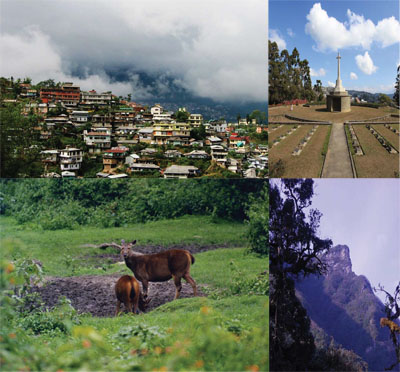
    The capital of Nagaland is the land of the Angami Naga Tribe. Kohima has a ceremonial gateway that reflects typical tribal architecture and handicrafts in its houses. The impressive gateway is adorned with designs and patterns of weapons, warriors and folk prosperity-symbols.

    World War II Cemetery
    During the World War II, the combined troop of the British and Indians stopped the Japanese troop in Kohima. It was known as the “Battle of Kohima”. The martyrs lie buried here on the slopes of Garrison Hill. An epitaph placed over there reads: “When you go home, tell them of us and say for your tomorrow, we gave our today”.

    Shangnyu Village
    An 8 ft high and 12 ft wide wooden monument stands in this village and is believed that heavenly angels constructed it. The village is ruled by Angh- the hereditary chief; there are other memorial stones in front of the Angh’s palace.

    Japfu Peak
    The second highest peak in the state boasts of the tallest Rhododendron which measure over 130 ft. in height and the girth at the base of around 11 ft. It was featured in the Guinness Book of World Records. The peak fascinates tourists with its breathtaking views of the Himalayan peaks beyond the extensive Kohima town.

    Nagaland State Museum
    The museum is situated in Kohima and is among the major attractions of Nagaland. The museum exhibits the evolution of Naga culture and offers a look into various tribal habitats existing in the eastern territories of India. The museum contains rare artifacts of the 16 tribes of Nagaland, the Naga Morung hut models, musical instruments made of bamboo and buffalo horns.

    Dzukou Valley
    Located at a distance of around 25 km from Kohima, the Valley is one of the prime attractions in Nagaland and is famous for its trekking trails. At an altitude of 2,438 m, the dense valley of bamboo bush is decorated with Euphorbia, Aconitum, Lilies, and Rhododendrons.

    Dimapur
    Dimapur is the largest city of Nagaland and is well-known for the Rangapahar Reserve Forest, the Diezephe Craft Village and mediaeval ruins of Kachari Kingdom. Several edifices can be found here dating back to the 13th century. The Dimapur Green Park is also located here and has lakes with facilities for boating.

    Intanki Wildlife Sanctuary
    The Intanki Wildlife Sanctuary is located at a distance of approximately 37 km from Dimapur and is popular forest reserves in Nagaland. This sanctuary is inhabited with baboons, elephants, wild buffaloes, barking deer, flying squirrels, tigers, wild dogs, sloth bears, hornbills and many more species of fauna. Facilities for safari are also provided in the sanctuary.

  • INS Sindhurakshak Tragedy: Bodies Of Three Navy Men Recovered

    INS Sindhurakshak Tragedy: Bodies Of Three Navy Men Recovered

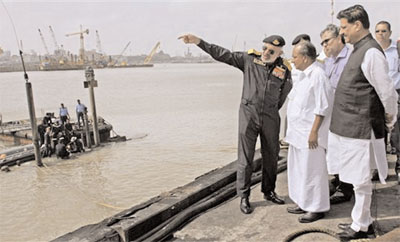
    MUMBAI/NEW DELHI (TIP): Naval divers on Friday found bodies of three naval personnel from ill-fated submarine INS Sindhurakshak which exploded and sank at the Mumbai dockyard early on august 14. “Three bodies have been recovered from the submarine by our divers but their identity has not yet been ascertained,” Navy sources said. There were 18 personnel, including three officers, who had got trapped inside the 2,300 tonne Russian-made submarine and all are feared dead.

    The Navy had on Thursday released the names of the three officers and 15 sailors who were in the 16-year-old warship. The three officers are Lieutenant Commanders Nikhilesh Pal, Alok Kumar and R Venkitaraj. The sailors stuck inside the Kilo class vessel are Sanjeev Kumar, KC Upadhya, Timothy Sinha, Kewal Singh, Sunil Kumar Dasari Prasad, Liju Lawrence, Rajesh Tootika, Amit K Singh, Atul Sharma, Vikas E Naruttam Deuri, Malay Haldar, Vishnu V and Seetaram Badapalli.

    The diving efforts have been hampered by poor visibility inside the submarine which is filled with water, extremely restricted access and displacement of most equipment from their original location. The Navy is also planning to seek help from a Dutch company to salvage the sunken warship. In one of the worst disasters to have struck the Navy, a series of explosions rocked INS Sindhurakshak at the Mumbai dockyard sinking it partially in the shallow sea.

    “We are deeply pained that we lost the submarine, INS Sindurakshak in an accident yesterday. Eighteen brave sailors are feared to have lost their lives,” Prime Minister Manmohan Singh had said on Aug 15. “The accident is all the more painful because the Navy had recently achieved two major successes in the form of its first nuclear submarine, INS Arihant and the aircraft carrier, INS Vikrant,” he had said in his Independence Day speech.