Month: October 2013

  • Rahul Gandhi still has to prove mettle: Sharad Pawar

    Rahul Gandhi still has to prove mettle: Sharad Pawar

    NEW DELHI (TIP): Agriculture minister Sharad Pawar on October 24 said Congress vice-president Rahul Gandhi has to prove his mettle before taking up a bigger role after the 2014 Lok Sabha polls. “One has to prove his mettle in administration. Rahul Gandhi should have joined the Manmohan Singh government. He did not join,” the NCP chief told a TV channel. “I would have preferred if he had joined the Manmohan Singh government… definitely it would have been beneficial for him,” he added. However, Pawar refused to elaborate on the issue saying he was not opposed to Rahul’s candidature for the post of prime minister. When asked whether he would be uncomfortable working under Rahul, Pawar said, “Here, there is no question of working together. There is a generation gap.” The NCP boss maintained that the two major political parties — Congress and BJP — may be short of the magic number to form government.

    “BJP might get some more seats. Congress might lose some. But the numbers may not add up,” he said. Reiterating his support for the Congress irrespective of election results, the Maratha strongman argued that that UPA had a better prospect of getting support of regional allies. “I am with Congress. My association will be with Congress. Tomorrow, if situation comes, I will stand with Congress and UPA and will help to get likeminded forces to form the government,” he said, adding that Congress must work with allies. Pawar clarified that he was not going to contest in the next Lok Sabha elections, dismissing rumours that he was in the race for the post of prime minister. He rejected the view that there was a Narendra Modi wave in some parts of the country. Reacting to a question on Modi, Pawar said, “I have contested 14 elections so far. In my experience of electioneering, those who begin much earlier will be disappointed.”

  • Heavy rain batters Andhra Pradesh, thousands evacuated

    Heavy rain batters Andhra Pradesh, thousands evacuated

    HYDERABAD (TIP): Heavy rain triggered by northeast monsoon and a low pressure area over Bay of Bengal lashed several parts of Andhra Pradesh for the fourth consecutive day on Friday, prompting authorities to evacuate thousands of people from low-lying areas. Low lying areas continued to remain under water in number of towns and villages, particularly in coastal Andhra and Rayalaseema. Hundreds of houses have been damaged due to the rainfall, rendering many people homeless.Thousands of people have been evacuated from their homes and shifted to emergency relief camps. The rain has claimed over ten lives and crops over a vast area of land has been destroyed. “The situation is very grim as the entire delta area is completely inundated. Drains and tanks are overflowing and there is a threat of breaches occurring at some places because of the nonstop rain,” Guntur district collector S Suresh Kumar said. In Guntur district, 36 relief camps have been opened for 11,000 people who were evacuated from rainravaged villages, he said.

    Six lift-irrigation scheme workers, who were stuck in flood at Chilakaluripet and Yedlapadu since Thursday, were rescued on Friday with the help of National Disaster Response Force personnel, the collector said. River Krishna is in spate with a heavy inflow of floodwater. Consequently, 70 crest gates were lifted at Prakasam Barrage in Vijayawada to discharge 1.18 lakh cusecs of water into the Bay of Bengal. In Srikakulam district in north coastal Andhra, more than 45,000 people have been shifted to relief camps as heavy rain continues to lash the district. Several rivers including Vamsasadhara and Bahuda in north coastal Andhra and rivulets were in spate at many other places. The rain has disrupted buses and train services in north coastal Andhra. Hyderabad and various parts of Telangana also received heavy rainfall for the last few days, which led to water logging on roads and also several residential colonies. The heavy downpour and waterlogging resulted in massive traffic jams making it difficult for vehicle drivers to find their way through. As the railway track at Golantri remained under a sheet of two-feet of water, train services between Visakhapatnam and Bhubaneswar were cancelled.

    In East Godavari district, headquarters town Kakinada remained submerged, throwing life out of gear. Incessant rain have also left Hyderabad-Secunderabad twin cities battered. Chief Minister N Kiran Kumar Reddy spoke to the collectors of Srikakulam, Prakasam, Guntur and others districts late on Thursday night and directed them to give top priority to rescue operations, shifting people to safer places and organizing other relief measures, official sources said. He directed the officials to help the farmers and take steps to strengthen bunds of tanks and other water bodies. The CM also asked the chief secretary to coordinate with the National Disaster Response Force (NDRF) police, fire and other emergency personnel in rescue and relief operations.

  • PMO denies access to NSA’s note

    PMO denies access to NSA’s note

    NEW DELHI (TIP): The Prime Minister’s Office has denied an RTI plea to access a note written by national security adviser (NSA) Shivshankar Menon reportedly calling for a new strategy to get access to data that governments in advanced countries collect by monitoring the use of websites by Indians. The government said disclosure would prejudicially impact India’s foreign relations with countries. The internal note reportedly written by the NSA — “cyber security challenges that India is facing and the way forward” — outlines a strategy on how countries use data and the legal basis for acquiring such data from service providers. The note is also reported to have called for developing standard operating procedures for security cooperation in cyberspace with major IT powers around the globe. The denial was in response to an RTI application by Commonwealth Human Rights Initiative’s Venkatesh Nayak. In its reply, the PMO said, “Your request for a copy of the note reportedly authored by Shivshankar Menon, NSA on the matter of ‘cyber security challenges facing India’ was considered in the PMO.

    The CPIO, PMO held that disclosure of the information sought would prejudicially affect the security and strategic interests of the state and relations with foreign states. As such, exemption from disclosure was claimed under section 8(1)(a) of the RTI Act.” Upholding the PIO’s order, the appellate authority said the CIC had in a previous order (Nusli Wadia vs ministry of external affairs) said that it was “within the exclusive domain of the ministry to decide and determine as to whether such disclosure is likely to have any impact on India’s relations with a foreign state or not. We may only determine whether the public authority in question has arrived at this conclusion after the exercise of due diligence”.’ CHRI’s Nayak said, “While the government is worried about getting access to data about how we use the Internet under the pretext of being prepared to fight terrorism, a very legitimate concern no doubt, in the age of the RTI Act, the government does not believe in taking its own people into confidence to explain what it is doing on this issue.” He has filed an appeal with the Central Information Commission arguing that since the strategy deals with monitoring a common citizen’s internet usage and, in turn his privacy, the issue must be discussed in the public domain.

  • India gets 101st rank on global gender gap index

    India gets 101st rank on global gender gap index

    NEW DELHI/GENEVA (TIP): Indicating a poor state of affairs on gender parity front, India was today ranked at a low 101st position on a global Gender Gap Index despite an improvement by four places since last year. The index, compiled by Geneva-based World Economic Forum (WEF), has ranked 136 countries on how well resources and opportunities are divided between men and women in four broad areas of economy, education, politics, education and health. While India has been ranked very high at 9th place globally for political empowerment, it has got second-lowest position (135th) for health and survival. Its rankings for economic participation and opportunity are also low at 124th and for educational attainment at 120th. The high rank for political empowerment is mostly because of India getting the top-most score in terms of number of years with a female head of state (President), as its political scores is not very good for factors like number of women in Parliament and women in ministerial positions. While India has moved up four positions from its 105th position in 2012, it still remains lowest-ranked among the five BRICS nations.

    Top-four positions on the global have been retained by Iceland, Finland, Norway and Sweden. Philippines has moved up to 5th place, while Ireland has slipped one position to sixth rank. They are followed by New Zealand, Denmark, Switzerland and Nicaragua in the top ten. Other major countries on the list include Germany at 14th, South Africa at 17th, UK at 23rd, Russia at 61st, Brazil at 62nd and China at 69th. Those ranked lowest include Pakistan at 135th and Yemen at 136th. The countries that are ranked below India also include Japan (105th), UAE (109th), Republic of Korea (111th), Bahrain (112th) and Qatar (115th). About India, WEF said that India continues to struggle to demonstrate solid progress towards gender parity. Its economic participation and opportunity score has actually gone down in the past twelve months, although it has done well on political empowerment front. “This is largely down to the number of years it has had a female head of state and for the other two indicators — women in parliament and women in ministerial positions — it ranks 106 and 100 respectively,” it said. While no country has reached parity in terms of years with a female head of state, India has managed to get top rank for this indicator, whereas 65 per cent of countries have never had a female head of state over the past 50 years.

    India’s ninth position on political empowerment front is also its best-ever rank for this sub-index, where it was ranked 17th in 2012 and its lowest score was 25th in 2008. The overall ranking of 101st is also its highest in the past seven years. India had ranked better at 98th position in the WEF’s inaugural Gender Gap Index in 2006. WEF said that increased political participation has helped narrow the global gender gap across the world. A total of 86 countries have improved their rankings since last year, while Iceland has maintained narrowest gender gap for fifth year running. Globally, progress is being made in narrowing the gender gap for economic equality, but women’s presence is economic leadership positions is still limited in both developing and developed countries alike. “Countries will need to start thinking of human capital very differently ? including how they integrate women into leadership roles. This shift in mindset and practice is not a goal for the future, it is an imperative today,” WEF founder and executive chairman Klaus Schwab said. “Both within countries and between countries are two distinct tracks to economic gender equality, with education serving as the accelerator,” said Saadia Zahidi, co-author of the Report and Head of the Women Leaders and Gender Parity Programme at WEF. “For countries that provide this basic investment, women’s integration in the workforce is the next frontier of change. For those that have not invested in women’s education, addressing this obstacle is critical to women’s lives as well as the strength of economies,” Zahidi added.

  • JSPL TO INVEST RS 2,000 CRORE IN TWO NEW REBAR UNITS

    JSPL TO INVEST RS 2,000 CRORE IN TWO NEW REBAR UNITS

    KOLKATA (TIP): Jindal Steel and Power Ltd (JSPL) is planning to invest close to Rs 2,000 crore in setting up two new bar mills. The new mills, each with a capacity of around 1.4 million (mt) tonne, are slated to come up at JSPL’s existing steel making facilities at Angul in Odisha and at Oman. “We have a 1.6 million tonne capacity at present. In three years, we hope to expand capacity to 4.5 mt by setting up two new bar mills. Each of these units is likely to require an investsment of around Rs 900 to Rs 1,000 crore,” V K Mehta, JSPL’s director (marketing) said. Mr Mehta was speaking to reporters at a press meet in the city on the company’s retail plans. “While the bar mill at Oman is due to come up in next 18 months, the one at Angul is likely to come up in 27 months,” he added. The TMT rebar is being produced at the TMT Rebar mill at Patratu in Jharkhand. It has a production capacity of one million tonne per annum (mtpa) and uses Siemens rebar production technology from the US. JSPL announced its foray into steel retail segment in August this year with the launch of a new retail brand. The first product to be launched under this is ‘Jindal Panther TMT Rebars’, a steel product used in building construction. The product will be supported by JSPL’s channel network of 40 distributors and over 1,000 dealers. JSPL is also investing Rs 125 crore in setting up head hardening facilities at its rail making facility at Raigarh in Chhattisgarh The facility is part of JSPL’s move to get ino high value product categories and is expected to be completed by January 2014.

  • Indo-French Technology Summit witnesses 11 MoUs

    Indo-French Technology Summit witnesses 11 MoUs

    NEW DELHI (TIP): The India- France Technology Summit, organized by Department of Science and Technology, Confederation of Indian Industry (CII) and French Embassy today witnessed 11 Memorandum of Understandings (MOUs) between India and France in the field of Science and Technology and Education. The MOUs were signed in the presence of Mr S Jaipal Reddy, Minister of Science and Technology and Earth Sciences. Signature of MOU between Department of Science and Technology and Institut National de Recherche en Informatique et en Automatique (INRIA), on Joint Targeted Program in Information and Communication Science and Technology. Signature MOU between Department of Biotechnology (DBT) and CNRSfor establishing an International Associated Laboratory in the area of Systems Immunology and Genetics of Infectious Diseases, LIA SIGID. MOU between SGRI and CEFIPRA for Habitat in hot and humid climate. Signature Letter of Intent to launch “The EADS-CEFIPRA Aerospace Program” between European Aeronautic Defense and Space Company (EADS) and The Indo French Centre for the Promotion of Advanced Research.

    Signature of MOU to set up an International Associated Laboratory on Transcriptomics and Metabolomics for Liver Diseases between the French National Institute for Health and Medical Research, INSERM and the Institute of Liver and Bilary Sciences, ILBS. Signature of MOU for International Joint Laboratory on Neuosciences, LIA PROTECT between IISc and INSERM. Statement of intent between Safran-Morpho (SMPL) and Gujarat Forensic Sciences University for Training, Research and Development (GFSU), to explore the possibility of establishing cooperation through the program. MOU “ASTech-Systematic India Hub between ASTech Cluster, Systematic Cluster, Paris Region CCI, India Desk and IFCCI. MOU for an institutional partnership between Sciences Po Paris and Ashoka University, covering undergraduate and postgraduate student exchange program and faculty exchange. MOU for a partnership awarding a double Master’s Degree between DTU, India and N+! Engineering Network, France. MOU for a partnership for Last Semester of Bachelor or Master as an international experience in France/India between BITS Pilani and N+1 Engineering Network, France.

  • Henkel opens first innovation centre in India

    Henkel opens first innovation centre in India

    PUNE (TIP): Henkel Adhesive Technologies India, a subsidiary of Henkel AG & Co, has set up its first Innovation Centre in India, marking the German company’s most important investment in the region. The centre will focus on technologies and solutions for customers across the automotive and transportation industry in South Asia, West Asia and Africa. Located in the Pune auto hub, it is designed to be a one-stop solution provider to Henkel’s customer base in the region, and around 800 automotive suppliers and 20 manufacturing companies will directly benefit from it. Jeremy Hunter, President, Henkel India, said: “By 2016, Henkel expects to grow sales to 20 billion (around Rs 1.7 lakh crore today), of which, 10 billion is expected from emerging markets such as India. This innovation centre will nurture a strong mix of global expertise and local know-how to benefit customers across the region.”

    The centre is equipped with customer component testing facilities, dispensing systems, application training, product development and engineering facilities, which will provide customers comprehensive adhesive solutions. For the automobile and metal industry portfolio, the laboratory is well-equipped with a simulated environment for automotive acoustic structures. The centre also has customised training assistance programmes and interactive sessions for customers. As a world leader in adhesives, sealants and functional coatings, Henkel operates in three business areas of laundry and home care, beauty care and adhesive technologies, and has research and development centres across the world. The India centre will contribute significantly towards Henkel’s strategy 2016, which seeks higher sales from emerging markets.

  • TCS, Infosys, Wipro, HCL profits confirm IT sector turnaround

    TCS, Infosys, Wipro, HCL profits confirm IT sector turnaround

    NEW DELHI (TIP): If the first quarter of 2013-14 had set the pace, the second quarter results from July to September brought back confidence for Indian IT majors as the big four — Tata Consultancy Services (TCS), Infosys, Wipro and HCL Tech exceeded market expectations with their quarterly incomes. Analysts tracking the sector believe that the revenue stream will remain healthy as discretionary IT spends is back for US-based companies in the banking, financial services and insurance sectors. The discretionary IT spends offer a good barometre for a client firm’s IT spends pattern such that it ultimately translates into more number of outsourcing deals. This is important as US-based banking, financial services and insurance firms still account for more than half of revenues for Indian IT firms. “Apart from the US, the demand environment (for IT outsourcing deals) is looking positive in Europe as well,” said Ankita Somani, IT analyst at brokerage firm Angel Broking. An increase in discretionary IT spends augurs well for Indian IT firms, Somani added.

    Wipro chairman Azim Premji said there are positive indicators on the global economy that coupled with the client confidence is reflecting on the company’s performance. “We see the discretionary spend getting better every day. The market looks good and demand is robust and we feel that we have good opportunity,” said N. Chandrasekaran, CEO, TCS. Anant Gupta, chief executive officer, HCL Tech, said deals from both the US and Europe are very strong and well balanced. “We see good momentum across financial and manufacturing sectors in the US and Europe… and this continues to reflect in our portfolio.” Even Wipro and Infosys that had been struggling offlate managed to beat market expectations, wherein Wirpo reported its best profit growth in the last seven quarters and Infosys raised its revenue outlook by a notch. India’s largest software exporter, TCS, proved once again that fast growth is possible with a huge base as well. At `4,702 crore, the company’s net income rose 34% during the July-September quarter. And this high growth is expected to reflect on the hiring front as well. TCS has already announced that it would hire 5,000 more than its original plan. Infosys, Wipro and HCL Tech did not give specific numbers but said that hiring will be in sync with the demand environment.

  • Luminous to start inverter plant at Hosur in Nov

    Luminous to start inverter plant at Hosur in Nov

    CHENNAI (TIP): Luminous Power Technologies will commission an inverter battery manufacturing unit in Hosur next month. It will start with an initial production capacity of about 2 lakh units a year. In the next couple of years, it will triple its output. The company’s present output is “in excess of 10 times the Hosur plant’s initial capacity,” said Manish Pant, Managing Director. The company will invest over Rs 50 crore in the 2.5 hectare factory at Hosur, which is its eighth production unit. The others are in Himachal Pradesh and Pune. Luminous, which makes a range of electrical appliances for homes and inverters, including for solar power application, and batteries under the Luminous brand, will concentrate on the fast-growing southern markets, Pant said. The southern markets account for about 20 per cent of the market for inverters, estimated at Rs 2,000 crore a year.

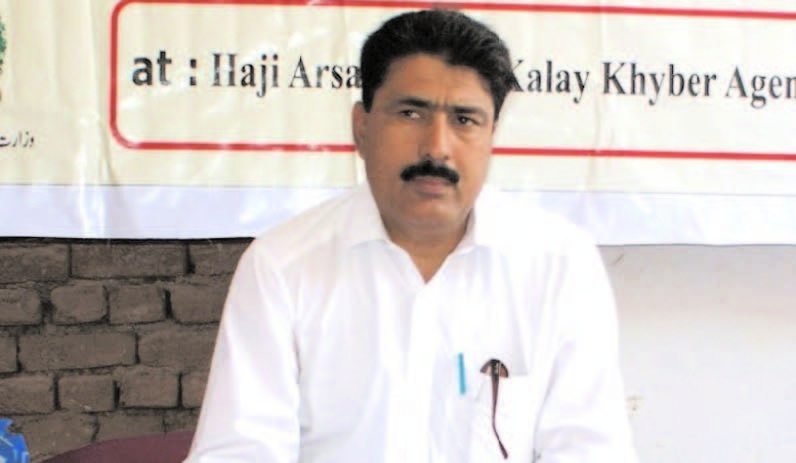
  • Doctor who helped track Osama bin Laden ‘not a hero’: Pakistan

    Doctor who helped track Osama bin Laden ‘not a hero’: Pakistan

    ISLAMABAD (TIP): Pakistan has told the US that Shakil Afridi, the jailed doctor who helped the CIA track al-Qaida chief Osama bin Laden, is not a hero and his fate will be decided by the courts. Foreign secretary Jalil Abbas Jilani said Pakistan had told the US that Afridi was involved in “criminal activities” that violated the laws of the land. Addressing a news briefing in Washington on Prime Minister Nawaz Sharif’s ongoing visit to the US, Jilani said the doctor was “not a hero and was facing cases in courts”. Pakistan also told the US that the Lashkar-e-Taiba had been banned and action could be taken against its founder, Hafiz Mohammad Saeed, if substantial evidence is made available, he said. Responding to questions after the US house committee on foreign affairs demanded the release of Afridi, Jilani said that the Pakistani courts would decide his fate.

    The demand for Afridi’s release was raised during a meeting between the US house committee and a Pakistani delegation that included finance minister Ishaq Dar, Jilani and Sartaj Aziz, the premier’s adviser on foreign affairs and national security. The two sides discussed matters related to the war on terror, militant groups like the LeT, civil nuclear programme, drone strikes, energy crisis, educational reforms, regional stability and trade, Dawn newspaper reported. Afridi was arrested shortly after the May 2, 2011 raid by US commandos that killed bin Laden. He was subsequently convicted by a court in the tribal belt on a charge of treason for alleged ties to the Lashkar-e-Islam militant group. On August 29, a judicial official overturned the 33-year jail term given to Afridi and ruled that the judge in the tribal areas had exceeded his authority when he handed down the sentence last year. The official also ordered a fresh trial. The US has been pressing Pakistan to release Afridi, who ran a fake vaccination campaign in Abbottabad to gain access to bin Laden’s compound.

  • China making N-reactor copies to sell to Pakistan

    China making N-reactor copies to sell to Pakistan

    ISLAMABAD (TIP): China will be able to sidestep global nuclear commerce rules when it sells its third generation nuclear reactors to Pakistan, making its sale a win-win deal for both countries. China has reverse-engineered Westinghouse’s AP-1000 reactor to build an indigenous reactor, which, officials said, is a clever copy of the original. With Pakistani nuclear officials travelling several times this year to China as they work on a contract, the “indigenized” Chinese reactor will help Beijing overcome a key objection by the Nuclear Suppliers Group (NSG) that forbids sale of nuclear reactors or components to third countries without NSG approval and without an NPT signature. The Chinese reactors in Pakistan will be under IAEA safeguards that make them safer and lesser cause for worry in India. But Indian officials are much more concerned about nuclear weapons and missiles that China is reportedly helping Pakistan with. That, senior Indian officials say, is a greater cause for concern. China has not yet tested the design of its indigenized reactor but this is the one that will be sold to Pakistan, scheduled to be installed in Karachi.

    According to sources here, China National Nuclear Corporation (CNNC) has claimed it has indigenously designed and developed a thirdgeneration nuclear power reactor which they have named as the Advanced China Pressurised (ACP)- 1000. China has reportedly indigenized most of the reactor components, which will be sold to Pakistan bypassing NSG requirements, under a grandfathering clause. Reports say Beijing is planning to install the first Chinese reactor in Fujian province. China was helped in this when Westinghouse sold its first reactor to China in 2007, China insisted on transfer of technology. According to a leaked cable by the US Consul General in Shanghai, “Chinese government made it very clear that failure to transfer AP1000 technology would have been a deal-breaker, and Westinghouse would have lost the contract.” The US official quotes a Westinghouse official as saying, “Westinghouse expressed the pragmatic view that, “If people are going to reverse engineer or copy nuclear technology, Westinghouse would prefer that people copy Westinghouse technology.” The Chinese contract was the biggest ever at $8 billion.

    India is negotiating the purchase of two AP1000 reactors from Westinghouse — a pre-early works agreement was signed during PM Manmohan Singh’s recent visit to the US. But it is not clear that India would be getting any technology transfer of the variety that the Chinese have received from the American company. China’s indigenization programme is aimed at being able to provide more nuclear reactors to other customers in the world. There has been little Western protest against Chinese decision to sell such reactors to Pakistan. When China does begin building nuclear reactors in Pakistan, experts reckon, Beijing will still need to import a fair number of components from other industrialized nations. This would be seriously flouting NSG rules. Indian officials say China helps the Pakistan nuclear programme in a myriad different ways. For example, China sends its nuclear experts under the IAEA umbrella to undertake safety missions in Pakistan that Western officials avoid due to security problems.

  • Pakistan military blames India for truce violations

    Pakistan military blames India for truce violations

    ISLAMABAD (TIP): Faced with India’s charges of continued ceasefire violations, Pakistan’s military on October 23 blamed Indian troops of targeting its forward posts in the past two days. “Indian troops have intensified violations and carried out unprovoked firing in Pukhlian, Chaprar, Harpal and Charwah Sectors near Sialkot, and targeted civilian areas,” Pak’s military spokesperson, Major General Asim Saleem Bajwa, said in a statement. It comes a day after a BSF head constable was killed and seven personnel injured in heavy firing by Pakistani troops, prompting Indian home minister Sushilkumar Shinde to call for a befitting reply. The Pak military had described the shelling and firing on Indian positions as a “retaliation”. The military spokesperson said Indian’s border security force (BSF) had targeted 27 Pakistani posts along the border in last two days. “Pakistani troops have effectively responded to Indian firing. During the last 2 weeks, due to Indian shelling, a Ranger’s soldier and two civilians were killed while 26 people were injured along the IB and LoC,” he said.

  • At least six killed as bomb hits Pakistan passenger train: Officials

    At least six killed as bomb hits Pakistan passenger train: Officials

    QUETTA, PAKISTAN (TIP): A bomb hit a passenger train in Pakistan’s restive southwest on October 20 killing at least six people and wounding more than 17 others, officials said. The device, apparently planted on the railway track, exploded when the train approached a station in Naseer Abad district of the insurgency hit southwestern Baluchistan province. “It was a bomb blast, the target was the passenger train. At least six people have been killed,” Asad Gilani, provincial home secretary said, adding that more than 17 others were wounded in the blast.

  • Former Pakistan PM, officials deny US drone collusion

    Former Pakistan PM, officials deny US drone collusion

    ISLAMABAD (TIP): Pakistani officials and former prime minister Yousuf Raza Gilani on October 23 denied a report that they had approved US drone strikes on the country’s soil.Washington Post on october 21 quoted leaked secret documents as saying Pakistan had been regularly briefed on strikes up till late 2011 and in some cases had helped choose targets.The purported evidence of Islamabad’s involvement came as Prime Minister Nawaz Sharif met US President Barack Obama at the White House and urged him to end the attacks, which are widely unpopular with the Pakistani public.A Pakistani foreign ministry spokesman said the anti-drone stance of the Sharif government, elected in May, was clear and any past agreements no longer applied. Pakistani security officials claimed the story was a US attempt to undermine Sharif’s position and reduce criticism of the drone campaign, days after an Amnesty International report warned some of the strikes could constitute war crimes.Washington Post’s revelations concerned strikes in a four-year period from late 2007, when military ruler Pervez Musharraf was in power, to late 2011 when a civilian government had taken over. Gilani, prime minister from 2008 until June last year, vehemently denied giving any approval for drone strikes. “We have never allowed Americans to carry out drone attacks in the tribal areas,” Gilani told AFP. “From the very beginning we are against drone strikes and we have conveyed it to Americans at all forums,” he added. Islamabad routinely condemns the strikes targeting suspected Taliban and Al-Qaeda militants in its northwest tribal areas. But evidence of collusion or tacit approval has leaked out in recent years.

  • US monitored the phone calls of 35 world leaders: Report

    US monitored the phone calls of 35 world leaders: Report

    LONDON (TIP): The United States monitored the phone conversations of 35 world leaders according to classified documents leaked by fugitive whistleblower Edward Snowden, Britain’s Guardian newspaper said on Oct 24. Phone numbers were passed on to the US National Security Agency (NSA) by an official in another government department, according to the documents, the Guardian said on its website. It added that staff in the White House, state department and the Pentagon was urged to share the contact details of foreign politicians. The revelations come after Germany demanded answers from Washington over allegations chancellor Angela Merkel’s phone was bugged, the worst spat between the two countries in a decade. The White House did not deny the bugging, saying only it would not happen in future. “In one recent case, a US official provided NSA with 200 phone numbers to 35 world leaders,” reads an excerpt from a confidential memo dated October 2006 which was quoted by the Guardian. The identities of the politicians in question were not revealed. The revelations in the centre-left Guardian suggested that the bugging of world leaders could be more widespread than originally thought, with the issue set to overshadow an EU summit in Brussels. No immediate comment on the report was available from the NSA.

  • Immigration reform tops Obama menu

    Immigration reform tops Obama menu

    WASHINGTON (TIP): US President Obama on October 24 asked the Republican-majority House of Representatives to pass by the year end a stalled immigration bill over which India has expressed concern. “Let’s see if we can get it done this year. Let’s not wait. It doesn’t get easier to just put it off. Let’s do it now. Let’s not delay. Now it’s up to Republicans in the House to decide whether reform becomes a reality or not,” Obama said in a White House speech.If enacted into law the bill will pave the way for citizenship of 11 million undocumented people and accelerate immigration of science and technology professionals from India and China. Prime Minister Manmohan Singh has expressed India’s concern over the comprehensive immigration bill, already passed by the Senate. Certain provisions of the bill, in particular those related to H-1B and L1 visas, will adversely impact top Indian IT companies doing business in the US. Obama said the current immigration system is broken. “It’s not smart; it’s not fair; it doesn’t make sense. We have kicked this particular can down the road for too long,” he said.

    “It’s not smart to invite some of the brightest minds from around the world to study here and then not let them start businesses here. We’ve sent them back to their home countries to start businesses and create jobs and invent new products someplace else,” he said. The Senate passed the bill in June. The plan, crafted and approved with Senate Republican support, would strengthen the border with Mexico and reorganise the visa system to give priority to high-demand fields, including engineers and farm workers.Meanwhile, the US-India Business Council (USIBC) is keeping a close eye on the bill on the House version of the bill to protect the interest of the Indian companies. PTIand US businesses with ties with India. “USIBC plans on being absolutely vigilant in the coming weeks and months with its Coalition for Jobs and Growth, with Patton Boggs leading the lobby effort, to ensure that when the Immigration Reform Bill reawakens and begins to gain traction that we are in front of it and doing our best to educate lawmakers to make certain the discriminatory provisions are excised from any final Bill,” USIBC president Ron Somers said. “We will continue to sensitise the Senate as to these harmful provisions, while working with the House to ensure a clean bill, so that when legislation goes to conference we will have champions in both chambers to ensure a clean outcome,” Somers said.

  • John Kerry warns that another budget gridlock will damage US leadership

    John Kerry warns that another budget gridlock will damage US leadership

    WASHINGTON (TIP): America’s top diplomat warned on October 23 that the United States could suffer more lasting damage to its influence abroad if the next round of budget talks in a few months lead to another breakdown. Secretary of State John Kerry said the recent 16-day shutdown had raised questions among key allies about whether Washington can be counted on to lead – whether it is in talks with Iran, Middle East peace negotiations or completing an Asia- Pacific trade deal. “What we do in Washington matters deeply to them, and that is why a selfinflicted wound like the shutdown that we just endured can never happen again,” Kerry told the Center of American Progress policy think tank. “The simple fact is that the shutdown created temporary but real consequences in our ability to work with our partners and pursue our interests abroad,” Kerry added. Kerry’s warning about future U.S. credibility was more forceful at home than abroad. In Asia recently where he stood in for President Barack Obama at summits in Indonesia, Brunei and Malaysia, Kerry dismissed the protracted budget negotiation in Washington as a “moment in politics” and assured countries it would not hurt U.S. commitments to the region.

    But back in Washington on Thursday after several weeks of non-stop travel in Asia and Europe, Kerry said the shutdown had affected confidence in the United States abroad. “This political moment was far more than just symbolism, far more than just a local fight. It matters deeply to our power and to our example,” he said. “While this chapter is temporarily over, we’ve got another date looming, and the experience has to serve as a stern warning to all.” “Make no mistake, the greatest danger to America doesn’t come from a rising rival,” Kerry said, “It comes from the damage that we’re capable of doing by our own dysfunction and the risks that will arise in a world that may see restrained or limited American leadership as a result.” U.S. lawmakers reached a last-minute deal earlier in October to break the fiscal impasse and avert a crippling debt default, but it promises another budget battle in a few months. Under the deal, a House-Senate negotiating committing will be formed to examine a broader budget agreement, with a deadline of Dec. 13. The deal funds the government until Jan. 15 and raises the debt ceiling to Feb. 7. Kerry said America’s allies were watching the budgets talks closely.

  • Violence against Muslims threatening Myanmar reforms: UN envoy

    Violence against Muslims threatening Myanmar reforms: UN envoy

    UNITED NATIONS (TIP): Violence against a Muslim minority in Myanmar is feeding a wider anti-Muslim feeling that poses a serious threat to the country’s dramatic economic and political reforms as it emerges from half a century of military rule, a UN envoy said on october 23. The government says at least 192 people were killed in June and October 2012 clashes between ethnic Rakhine Buddhists and Rohingya Muslims, most of whom Myanmar deem illegal immigrants from Bangladesh, despite roots going back generations. The clashes led to unrest elsewhere in the country, where other groups of Muslims have been targeted, including Kamans, who are of different ethnicity from Rohingyas. An estimated 5 percent of Myanmar’s population of about 60 million is Muslim. “The president (Thein Sein) has made some commendable public speeches in which he has emphasized the need for trust, respect and compassion between people of different faiths and ethnic groups in Myanmar,” said Tomas Ojea Quintana, U.N.

    special rapporteur on the situation in human rights in Myanmar. “However, more needs to be done by the government to tackle the spread of discriminatory views and to protect vulnerable minority communities,” he told the U.N. General Assembly’s Third Committee, which deals with human rights issues. Thein Sein heads a quasi-civilian government installed in 2011 after Myanmar’s military stepped aside. Under his reforms, opposition leader and Nobel peace prize laureate Aung San Suu Kyi, who spent 15 years under house arrest, has been allowed back into politics and has made a number of visits abroad. “In our view the recent dramatic democratic changes in Myanmar were a clear demonstration of the changes of mindset in the government,” a representative of the Myanmar U.N. mission told the Third Committee. Myanmar is also known as Burma. “At the critical time of democratic transition no country is immune from challenges. Myanmar went through unfortunate communal violence in Rakhine state sparked by a brutal crime. We very much regret loss of life and property caused to both communities,” he said.The violence in northern Rakhine State, one of Myanmar’s poorest regions that is home to 1 million mostly stateless Rohingya Muslims, has continued this year. Dozens more have been killed and 140,000, mostly Rohingya, have been left homeless. “The situation in Rakhine State has fed a wider anti- Muslim narrative in Myanmar, which is posing one of the most serious threats to the reform process,” Quintana said. “Rakhine State remains in a situation of profound crisis.”

  • Boy who killed Nazi dad at age 10 to be sentenced

    Boy who killed Nazi dad at age 10 to be sentenced

    SANTA ANA, CALIFORNIA (TIP): The blond boy was 10 when he put a gun to the head of his sleeping neo-Nazi father and pulled the trigger. It was over in an instant for Jeff Hall, but sorting out the fate of his troubled son has been a 2{-year journey that approaches its final stage Friday in a hearing to determine where he’ll spend his teens and, possibly, his early adult years. The judge hearing the case must decide not how to punish a child for seconddegree murder, but how to rehabilitate someone who grew up in an abusive home, attacked his school teachers and was indoctrinated in the beliefs of white supremacy. Attorneys have sparred for months over what is best for the boy. He has been living in the county’s juvenile hall since the killing but spent about three months at a state youth detention center where he was evaluated to see whether a placement there could serve his needs. Several people from the state are expected to testify at the hearing. In the meantime, the small child who scribbled on a notepad and looked bored during his trial as prosecutors displayed photos of his father’s blood-splattered body has grown into a gangly teenager who is more focused than ever before.

    He attends class, gets regular therapy and has made progress in controlling the violent outbursts that got him kicked out of almost every school he attended. He has even, with time, won the affection of the prosecutor who got him convicted. “I have grown attached to him in an odd way. I enjoy watching him grow and change but I am convinced he has done better in a quasi-military penal environment,” said Deputy District Attorney Michael Soccio. “He seems to like it, he knows what the rules are and what is expected and he is treated with dignity.” That’s why Soccio believes the boy, now 13, would do best in the state’s juvenile justice system, where he would go to school and live in a dorm-like setting at a high-security facility for young offenders, possibly until age 23. Defense attorneys, however, say the teen has serious emotional disabilities that the state isn’t equipped to handle. They want to see him placed in a residential treatment center, where security would be lighter and the therapy would be more intense. Punam Patel Grewal, the boy’s defense attorney, said he would also be at risk in a state facility because of his father’s neo- Nazi beliefs. “It is a very dangerous place for him. He’s got a lot of vulnerability here,” she said. “When he comes out at 23, we’ve got a huge problem.”

    Murders by defendants as young as the one in Riverside are extremely rare and usually involve children who have mental health issues and have lived through extreme physical and psychological trauma, said Sarah Bryer, director of the National Juvenile Justice Network. “If the end goal is rehabilitation, then that youth’s mental health concerns are going to have to be front and center,” she said. “I think the judge has to ask the question, when this kid walks out, and this kid will walk out eventually, how is this kid going to be better?” Hall’s killing attracted national attention when it happened on May 1, 2011, and not just because of the defendant’s age. Hall, an out-of-work plumber, was also a regional leader of the National Socialist Movement who organized neo-Nazi rallies at synagogues and day labor sites and had hosted a meeting for the group at his house the day before he died. Hall, 32, ran unsuccessfully for a water board in 2010 and alarmed voters with his white supremacist rhetoric. Prosecutors said the boy shot his father behind the ear at point-blank range as he slept on the sofa after coming home from a night of drinking.

    The child took the .357- Magnum from his parents’ bedroom and later told police he was afraid he would have to choose between living with his father and his stepmother, who had been fighting and were headed for a divorce. The boy’s stepmother initially told police she had killed her husband, but later recanted and said she was trying to protect her stepson. His sister testified that he told her of his plan the day before, while they were playing on a swing set. During trial, the boy’s defense attorney portrayed him as a victim of both his father’s racist beliefs and of his violent upbringing. The boy’s stepmother told authorities that Hall had hit, kicked and yelled at his son for being too loud or getting in the way. Hall and the boy’s biological mother had each accused the other of child abuse multiple times during a protracted custody dispute. Social service workers visited 20 times but never removed the boy or his siblings from Hall’s custody. The child also had a history of being expelled from school for violent outbursts, starting at age 5 when he stabbed a teacher with a pencil on the first day of kindergarten. He also tried to strangle a teacher with a telephone cord.

  • Clintons to get public health awards from Harvard

    Clintons to get public health awards from Harvard

    BOSTON (TIP): Former President Bill Clinton and daughter Chelsea Clinton are being honored during the Harvard School of Public Health’s centennial celebration. At Thursday’s ceremony in Boston, the former president will receive a Centennial Medal along with two world health leaders. Also being honored are Dr Jim Yong Kim, president of the World Bank Group and co-founder of Partners in Health, and Dr Gro Harlem Brundtland, former prime minister of Norway and director-general of the World Health Organization. Chelsea Clinton will receive the Next Generation Award. The Centennial Medals honor people whose leadership has had a significant global impact, improving the health and well-being of people around the world. The Next Generation Award honors someone under 40 whose commitment to health inspires young people to make “health for all” a global priority.

  • Automatic budget cuts could hit Pentagon harder this year

    Automatic budget cuts could hit Pentagon harder this year

    WASHINGTON (TIP): Months after the US military was hit with a $37 billion budget cut that threw it into turmoil and confusion, the Pentagon is headed into the new fiscal year facing a similar threat that could have even more devastating consequences, officials say. The budget deal that ended the government shutdown this month let the Pentagon continue spending at an annualized level of $496 billion in the 2014 fiscal year that began on October 1. That is about $31 billion below what President Barack Obama requested for 2014, but about $21 billion above the caps set by the Budget Control Act of 2011, meaning the Pentagon faces another acrossthe- board cut unless Congress reaches a new spending deal that changes the law by mid-January. And the situation could get worse. Under the 2011 budget act, defense spending is expected to begin growing again in 2015. But a top defense budget analyst said on Thursday that based on historical trends from previous military cutbacks, Pentagon spending could shrink to as low as $415 billion.

    Todd Harrison, an analyst at the Center for Strategic and Budgetary Assessments think tank, said a drop of that magnitude would force a huge cut in the size of the military, cause the cancellation of many weapons programs and lead many defense companies to go out of business. “This would be, you know, catastrophic, if you will, for a lot of procurement programs. There would be a lot of glass on the floor at the end of this. You’d break a lot of things,” he told reporters at a briefing on the 2014 defense budget. Harrison said he was not predicting that scenario would actually take place, but looking at what could happen if the current defense drawdown followed the pattern of cutbacks after the end of the Cold War, the Vietnam war and the Korean war. Defense officials paint a grim picture of the impact the budget uncertainty is having on their ability to ensure the military is prepared for action in the future.

    FEWER HELICOPTERS
    Army assistant secretary Heidi Shyu told a panel in the House of Representatives on Wednesday that more automatic budget cuts this year could force the Army to buy 12 fewer Apache helicopters and 11 fewer Chinooks helicopters and delay upgrades to the Abrams tank and Bradley Fighting Vehicle. William LaPlante, a principal deputy Air Force secretary, said the Air Force might have to drop plans to buy four or five of the 19 F-35 Joint Strike Fighters it was scheduled to purchase. Navy officials told the panel they would have to cancel much of their planned maintenance for ships and aircraft. “What we’ve been experiencing over the last one-and-a-half to two years, frankly, has been extraordinarily destabilizing,” said Sean Stackley, a Navy assistant secretary, noting that the uncertainty was unraveling efforts to cut contracting costs. Automatic budget cuts under a mechanism known as sequestration, which reduces spending across all accounts regardless of their strategic importance, is causing “a steady decline” in military preparedness and ultimately national security, he said.

    Harrison said the budget cuts that went into effect in March prompted the military to reduce spending for weapons programs and development. The Pentagon shifted some of that funding to current operations and training, essentially trading future preparedness to maintain the present force. But even with that shift in funding for present operations, only two Army brigades are fully trained for combat in the event of a crisis, General Ray Odierno, the top Army officer, said this week. Harrison urged the Pentagon to acknowledge that Congress, after two years of discord, is unlikely to reach a deal to lift the budget caps it set in 2011. He said by submitting budget plans that recognize the caps, the Pentagon could avoid the uncertainty of across-the-board cuts and plan more effectively.

  • Detroit operating on ‘razor’s edge’’ before bankruptcy

    Detroit operating on ‘razor’s edge’’ before bankruptcy

    DETROIT (TIP): Detroit was operating on a “razor’s edge” and had no options to avoid running out of cash and filing bankruptcy, the city’s top adviser testified on Thursday in a trial to determine whether the city is eligible to file the largest municipal bankruptcy in US history. Kenneth Buckfire, the city’s top outside financial adviser, said the city tried to avoid filing bankruptcy in July by cutting expenses and looking at city assets that might be sold to raise cash. The case is being closely watched for the precedents it could set for other US cities facing huge healthcare and pension obligations amid declining revenue. Unions, pension funds and others who would face large financial losses if Detroit is granted bankruptcy protection are arguing that the city does not qualify and is rushing into bankruptcy as an effort to avoid meeting its financial obligations. Buckfire, an investment banker hired by the city in January to advise on its financial restructuring, described in his testimony the city’s search for cash in the weeks before the state-appointed emergency manager, Kevyn Orr, determined a bankruptcy filing was Detroit’s best option.

    Detroit’s best source of revenue was its three casinos, which brought in about $180 million a year, or 20 percent of the city’s budget, Buckfire testified. But those funds have been locked up since they were pledged as collateral to interest-rate swap contracts agreed to in 2009. And the city now hopes to use them as collateral on $350 million of debtor in possession financing to end the unfavorable swap deals. To raise cash, Detroit considered selling everything from masterpieces at the Detroit Institute of Arts to city infrastructure. But no deals could be closed before the July 18 bankruptcy filing, he said. The city’s Coleman Young Municipal Airport is “effectively worth nothing,” Buckfire testified. The city can’t sell its portion of the Detroit-Windsor tunnel until at least 2020, and the works of the Detroit Institute of Arts are currently being appraised by Christie’s auction house, Buckfire testified. The city also is looking to lease the Detroit Water and Sewerage Department to a regional authority. Detroit Emergency Manager Kevyn Orr proposed the deal in June, and negotiations are ongoing. But Buckfire testified that several private equity firms were potentially interested in purchasing the department if they could charge higher water rates.

    Buckfire’s testimony was part of Detroit’s efforts to convince Judge Steven Rhodes that Detroit meets the legal requirements of municipal bankruptcy. Lawyers representing unions, retirees and pension funds who oppose the bankruptcy will be able to question Buckfire, the third of five witnesses the city is expected to call, when the trial resumes Friday morning. Gaurav Malhotra, a financial analyst who has advised the city since 2011, testified earlier Thursday that Detroit could improve its cash flow only by restructuring its pension and health benefits, not by selling assets or deferring payments to its pension funds. Even if the city could sell some assets, the proceeds would do little to close the more than $18 billion in liabilities the city faces, he said. The city expects to wrap up its case on Friday. Michigan governor Rick Snyder, who appointed emergency manager Orr, is expected to testify on Monday. The trial could wrap up as early as next Tuesday. Rhodes is not expected to make a ruling on eligibility until at least mid-November.

  • Pak’s list of grouses grow, US unmoved

    Pak’s list of grouses grow, US unmoved

    WASHINGTON (TIP): Pakistan’s Prime Minister Nawaz Sharif trooped into the White House on October 21 for a meeting with President Obama in the face of multiple repudiations from the United States over Islamabad’s pet peeves: Drone strikes on Pakistan, its gripes against India over the Kashmir issue, and pleas that Washington treat it on par with New Delhi by accepting it as a nuclear equal. The meeting with the U.S President was going on at the time of writing and there was no readout yet, but the Obama administration made it clear on Tuesday that it did not particularly share Pakistan’s perception on any of these issues, starting with its handwringing over drone attacks on its lawless territory, accentuated by a well-timed Amnesty report highlighting some civilian casualties.White House spokesman Jay Carney set the stage for a rejection of Pakistan’s plea to stop drone strikes, saying U.S counterterrorism operations are precise, lawful, and effective, and they in fact minimize civilian casualties that would be greater if other conventional means were adopted to eliminate terrorists.

    “The United States does not take lethal strikes when we or our partners have the ability to capture individual terrorists. Our preference is always to detain, interrogate, and prosecute.We take extraordinary care to make sure that our counterterrorism actions are in accordance with all applicable domestic and international law and that they are consistent with US values and US policy,” Carney said, adding, “Before we take any counterterrorism strike outside areas of active hostilities, there must be near certainty that no civilians will be killed or injured, and that is the highest standard we can set,” he said. However, both sides are expected to project language that will minimize differences on this subject, with Washington promising to ease off the strikes as more and more suspected terrorists are eliminated, and praising Pakistan’s fight against terrorism despite its dubious credentials on this count. The U.S media was already predicting the pitch would be taking spin, with a headline in one newspaper reading, ”drones? What drones? Obama and Pakistan’s Sharif to accentuate the positive.”

    Various agreements, including one on science and technology cooperation, are being wheeled out to cover the tracks of disagreements, including over India’s role in Afghanistan, and more broadly the growing regional and global heft that Washington is helping New Delhi develop. Earlier this week, the Obama administration snubbed Sharif over his plea that Washington should mediate between India and Pakistan over the Kashmir issue, saying it was for the two sides to take care of this issue. In fact, despite the controversy over Sharif ’s reported putdown of Prime Minister Manmohan Singh (that he brings his complaints against Pakistan to Washington), it is Pakistan that has kept up an incessant reference to India, making it very much part of its gripe list. The Obama administration has entertained this only in the sense of trying to wean Pakistan out of its New Delhi complex of constantly seeking parity with it.Washington, US officials indicated ahead of the meeting, wants to have strong ties with Pakistan on its own without sharing its prejudice against India. The White House has not scheduled a media interaction at the Obama-Sharif meeting, much less an extended news conference, fearful of awkward questions.

    Even at a think-tank event on Tuesday, where Sharif made a speech, only the host former National Security Advisor Stephen Hadley posed three softball question before closing the meeting, keeping audience out of it. But it is not hard to discern that Sharif has had a torrid visit so far. There have been protocol putdowns, including him being entertained by Secretary of State John Kerry for dinner after he arrived on Sunday (while Obama was out playing golf with White House staffers), cooling his heels on Monday and Tuesday while the Obama dealt with other issues, and on Wednesday, having to breakfast with vicepresident Joe Biden (who, according to the White House schedule, then proceeded to have lunch with Obama) before the U.S President deigned to see him in the afternoon. The charitable explanation for all this is the Sharif is Pakistan’s Prime Minister, not President, but that brings to attention the extraordinary deference Obama has shown to Prime Minister Manmohan Singh. Sharif also faced a rough time on the Hill on Tuesday when he was questioned closely by the House Foreign Relations Committee over the continued incarceration of Dr Shakil Afridi, who helped the U.S nail Osama bin Laden, and Pakistan’s continued patronage of Lashkar-etaiba. “I specifically pressed the Prime Minister to release Dr. Shakil Afridi and encouraged him to ensure that his nation is in fact a responsible and effective partner in countering terrorism, proliferation and violent extremism in the region,” Committee chairman Ed Royce said later. His ranking colleague Eliot Engel was equally unsparing.

  • US cops shoot boy carrying toy gun

    US cops shoot boy carrying toy gun

    (CALIFORNIA) TIP): A 13-yearold California boy carrying a replica of an assault rifle to a friend’s house was shot and killed by a sheriff’s deputy who believed the gun was real, authorities said. The incident took place in Santa Rosa, Northern California, on October 21, a day after a 12- year-old boy killed a teacher at a Nevada middle school with a gun he also used to take his own life. The Santa Rosa boy’s father said his son, Andy Lopez Cruz, a middle schooler who played the saxophone and liked basketball, was shot while on his way to a friend’s house with a pellet gun . “It’s not right what they did to my son,” said the father, Rodrigo Lopez as he sat with family and friends outside Santa Rosa City Hall in a quiet protest. The incident took place against a backdrop of growing concern about officer-involved shootings in California, where a spate of such incidents prompted protests in 2012.

  • Myanmar’s Suu Kyi collects 1990 prize at last

    Myanmar’s Suu Kyi collects 1990 prize at last

    STRASBOURG (France): Aung San Suu Kyi, Myanmar’s Nobel Peace Prize laureate and long-time political prisoner, has finally collected the European Union’s 1990 Sakharov prize for human rights. In October 21 stirring ceremony, European Parliament President Martin Schulz said that “23 years later, we welcome you here and it is a great moment.” Suu Kyi has persevered for decades in promoting democracy. She and her National League for Democracy party were frozen out of politics by the military regime that governed until 2011, and last year she and several dozen party members won parliamentary seats. However, a clause in the army-dictated constitution disqualifies her from becoming president. She is now seeking the constitutional changes that would allow her to seek the presidency.