Month: October 2013

  • Bangladesh factory tragedy orphans vent grief

    Bangladesh factory tragedy orphans vent grief

    SAVAR, BANGLADESH (TIP): Orphans who lost their parents when a garment factory complex collapsed in Bangladesh vented their grief and anger at leading western retailers on Thursday as the country marks 6 months of the disaster. Relatives of the 1,135 people who lost their lives when the Rana Plaza complex collapsed on April 24 also said they had still to receive any compensation for their loss as they rallied at the site of the tragedy. “We lost our parents for your work: Walmart, Carrefour, Benetton …,” read a banner held by a group of orphans, listing some of the retailers whose clothing was made at Rana Plaza before it collapsed. Although some retailers have promised to pay into a compensation fund, activists complained that money was not reaching those in need. “If you talk about legal compensation, none of the 3,629 workers working in the Rana Plaza at the time of the disaster has been paid a single cent,” said Roy Ramesh, Bangladesh head of the IndustriALL global union, which is negotiating with retailers for compensation.

    “The government donated some money from its charity fund and British retailer Primark paid 30,000 taka ($375) to each of the victims,” he said, adding factory owners and the rest of the 28 retailers who were making clothing at the Rana Plaza factories have paid nothing. Rezaul Karim, 32, was one of the injured workers who joined the protest in front of the Rana Plaza ruins, demanding more money to treat his broken spinal cord and a monthly pension to maintain a decent life. “Since the collapse, I’ve got only the 30,000 taka given by Primark. I am now reduced to begging,” he said, clutching the hand of his eight-year-old son. “The government has paid for some of my treatment but more treatment is needed and it’ll cost a huge amount. “My son cannot go to school and there are days we don’t have enough food,” he said, adding he now depends on charity from relatives and neighbours. A report by British charity ActionAid published on the anniversary also highlighted a failure by the authorities and the retailers to compensate the Rana Plaza victims and their families. The charity surveyed 2,297 people — nearly two thirds of survivors and families of those who died — and found that 94 per cent reported they have not received any legal benefits from their employers since April, including sick pay or compensation. The Bangladesh government has paid some funds to 777 people — around a third of the victims and their family members — but no long-term compensation package has been agreed, it said.

  • Army deployed for Nepal poll security

    Army deployed for Nepal poll security

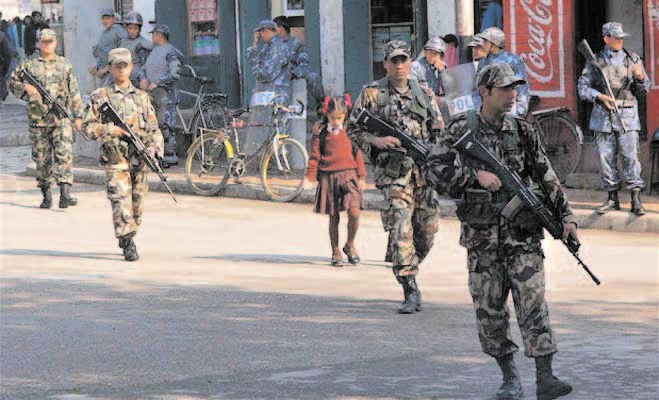
    KATHMANDU (TIP): The Nepal Army was deployed in the country on October 20 to ensure that the November 19 polls happen smoothly. According to army spokesman Brigadier General Jagdish Chandra Pokhrel, the army has been deployed as per the constitutional directive and will work together with other security forces. Two thirds of the 95,000 strong army will be deployed in 240 constituencies in 75 districts. The breakaway Maoist faction said that it will urge the people to boycott the elections. In pamphlets stuck in Kathmandu it said that since no party will win a majority, it will be allow India to interfere. The pro-monarchy Rastriya Prajatantra Party of Nepal is fighting the election on a nationalistic platform. It has called for referendum on status of monarchy and wants Nepal to again be a Hindu country. On the issue of federalism which was the sticking point the last time round, the Maoists have stuck to its ethnicity based provinces and an executive president directly elected by the people. The Nepali Congress wants a parliamentary system. Meanwhile the Communist Party of Nepal ( UML) has given a party ticket to Najma Khatun, the widow of Mohammed Alam who died of gunshot wounds earlier this month. Alam had been shot by men on a motorcycle with Indian number plates in southern Nepal.

  • OPPOSITION TO REJECT POLLS UNDER HASINA: KHALEDA ZIA

    OPPOSITION TO REJECT POLLS UNDER HASINA: KHALEDA ZIA

    DHAKA (TIP): Rejecting Premier Sheikh Hasina’s proposal for an allparty government to oversee Bangladesh’s next general election, opposition leader Khaleda Zia said her BNP party would not participate in the poll process without a nonparty neutral caretaker administration. “If we go to the election (with Hasina remaining as the premier), BNP would be affected…you have lost credibility among the people,” she told a convention of proopposition professionals here amid tight security. Zia said her party would only go to election under a “non-party neutral government”. BNP plans to stage a grand rally on October 25 to mount pressure on the Awami League-led government to accept its demand for polls under a non-party caretaker government. Bangladesh is scheduled to hold next general election anytime between October 25 and January 25, 2014.

    The constitution states that the election must be held within 90 days of the end of the tenure of the parliament. The term of the current parliament will end on October 25 and polls must be held by January 25, 2014. Awami League had scrapped the caretaker system amending the constitution with its three fourths majority in parliament two years ago in line with a Supreme Court judgement.The opposition in subsequent months staged violent street protests leaving scores of people dead. The opposition said elections under the party government would not be fair. But Awami League insisted the caretaker system proved counter productive as it was abused and it failed to protect democracy. League said the system rather allowed installation of an army backed regime to rule the country for two years, proclaiming Emergency Rules during 2007-2008, sending Hasina, Zia and many leaders of their parties to jail.

  • Afghan election candidates warned over phone bombs

    Afghan election candidates warned over phone bombs

    KABUL (TIP): Afghanistan’s intelligence service on October 21 warned candidates in the 2014 presidential election that mobile phones, computers and cameras given to them as gifts could contain hidden bombs. More than 20 candidates have registered in the race to succeed President Hamid Karzai, and the April election will pose a major security challenge as insurgents try to disrupt the US-backed process. The National Directorate of Security (NDS) said it had “intelligence information showing that the enemies of Afghanistan are planning to use new terrorist methods to disrupt the elections”. “Avoid accepting gifts such as mobile phones, computers, cameras and other packages before they are checked by your security personnel,” it advised. The Taliban last week claimed responsibility for a bomb hidden in a microphone that killed the governor of Logar province as he made a speech at a mosque after Eid prayers. Last year NDS chief Asadullah Khalid was badly injured by a suicide bomber who had explosives hidden in his underwear. Senior politician Burhanuddin Rabbani was assassinated by a bomber with explosives in his turban in 2011, while anti-Taliban commander Ahmed Shah Massoud was killed in 2001 by explosives inside a video camera.

  • Somdet Phra Nyanasamvara, Thai Buddhism’s supreme patriarch, dies at 100

    Somdet Phra Nyanasamvara, Thai Buddhism’s supreme patriarch, dies at 100

    BANGKOK (TIP): Thai doctors say the supreme patriarch, the head of the country’s Buddhist monks, has died. He was 100. Chulalongkorn hospital doctors say Somdet Phra Nyanasamvara died on October 23 from an infection in his blood vessels. He was the 19th supreme patriarch of Thailand and led the nation’s monks since 1989. The patriarch had battled health problems and had been hospitalized since 2002. He had undergone surgery earlier this month. His inability to perform his duties in recent years has led to speculation about his successor. A senior Buddhist monk who worked on his behalf since 2004 also died this year. Thailand is the world’s most heavily Buddhist country. More than 90 per cent of its 67 million people are members of the religion.

  • India ends eightyear- old ban, starts supplying arms to Nepal

    India ends eightyear- old ban, starts supplying arms to Nepal

    KATHMANDU (TIP): Ending an eight-year-old ban on military supplies, India has handed over some of the equipment, including vehicles and arms, it had pledged to provide to Nepal ahead of crucial polls to be held next month. Over 360 vehicles, including 25 mine-protected vehicles, have already arrived while arms and ammunition, which are in the pipeline, will come soon, sources in the Nepalese army headquarters said on October 22. This is the first time that military equipment is being provided to Nepal by India after ending a ban on the supply of such gear, including lethal arms, that was imposed when former King Gyanendra seized executive powers in February 2005, said a statement issued by army headquarters. Nepal has said the equipment is needed by 62,000 troops who will provide security for the constituent assembly elections to be held on November 19. The country recently amended its constitution to allow the army to be mobilized to ensure free and fair polls. The equipment provided by India so far includes 216 light vehicles, 154 heavy vehicles and some arms. Among the heavy vehicles are 58 trucks with a capacity of 7.5 tonnes, four ambulances and 25 mine-protected vehicles, sources said. The assistance will help smoothen regular operations of the Nepal Army, modernize the force and increase its efficiency for military operations, the official statement said. “This will also help in strengthening and further deepening Nepal-India mutual cooperation,” it said. India had agreed to provide the equipment during the tenth meeting of the Bilateral Consultative Group on Security Issues in April.

  • The Obama Doctrine

    The Obama Doctrine

    Is the US president veering toward isolationism? Or will he proudly carry the banner of exceptionalism?

    The recent Obama-Putin tiff over American exceptionalism reignited an ongoing debate over the Obama Doctrine: Is the president veering toward isolationism? Or will he proudly carry the banner of exceptionalism? The debate is narrower than it may seem. There is considerable common ground between the two positions, as was expressed clearly by Hans Morgenthau, the founder of the now dominant no-sentimentality “realist” school of international relations. Throughout his work, Morgenthau describes America as unique among all powers past and present in that it has a “transcendent purpose” that it “must defend and promote” throughout the world: “the establishment of equality in freedom.” The competing concepts “exceptionalism” and “isolationism” both accept this doctrine and its various elaborations but differ with regard to its application. One extreme was vigorously defended by President Obama in his Sept. 10 address to the nation: “What makes America different,” he declared, “what makes us exceptional,” is that we are dedicated to act, “with humility, but with resolve,” when we detect violations somewhere. “For nearly seven decades the United States has been the anchor of global security,” a role that “has meant more than forging international agreements; it has meant enforcing them.”

    The competing doctrine, isolationism, holds that we can no longer afford to carry out the noble mission of racing to put out the fires lit by others. It takes seriously a cautionary note sounded 20 years ago by the New York Times columnist Thomas Friedman that “granting idealism a near exclusive hold on our foreign policy” may lead us to neglect our own interests in our devotion to the needs of others. Between these extremes, the debate over foreign policy rages. At the fringes, some observers reject the shared assumptions, bringing up the historical record: for example, the fact that “for nearly seven decades” the United States has led the world in aggression and subversion – overthrowing elected governments and imposing vicious dictatorships, supporting horrendous crimes, undermining international agreements and leaving trails of blood, destruction and misery. To these misguided creatures, Morgenthau provided an answer. A serious scholar, he recognized that America has consistently violated its “transcendent purpose.” But to bring up this objection, he explains, is to commit “the error of atheism, which denies the validity of religion on similar grounds.” It is the transcendent purpose of America that is “reality”; the actual historical record is merely “the abuse of reality.”

    In short, “American exceptionalism” and “isolationism” are generally understood to be tactical variants of a secular religion, with a grip that is quite extraordinary, going beyond normal religious orthodoxy in that it can barely even be perceived. Since no alternative is thinkable, this faith is adopted reflexively. Others express the doctrine more crudely. One of President Reagan’s U.N. ambassadors, Jeane Kirkpatrick, devised a new method to deflect criticism of state crimes. Those unwilling to dismiss them as mere “blunders” or “innocent naivete” can be charged with “moral equivalence” – of claiming that the U.S. is no different from Nazi Germany, or whoever the current demon may be. The device has since been widely used to protect power from scrutiny. Even serious scholarship conforms. Thus in the current issue of the journal Diplomatic History, scholar Jeffrey A. Engel reflects on the significance of history for policy makers. Engel cites Vietnam, where, “depending on one’s political persuasion,” the lesson is either “avoidance of the quicksand of escalating intervention [isolationism] or the need to provide military commanders free rein to operate devoid of political pressure” – as we carried out our mission to bring stability, equality and freedom by destroying three countries and leaving millions of corpses.

    The Vietnam death toll continues to mount into the present because of the chemical warfare that President Kennedy initiated there – even as he escalated American support for a murderous dictatorship to all-out attack, the worst case of aggression during Obama’s “seven decades.” Another “political persuasion” is imaginable: the outrage Americans adopt when Russia invades Afghanistan or Saddam Hussein invades Kuwait. But the secular religion bars us from seeing ourselves through a similar lens. One mechanism of self-protection is to lament the consequences of our failure to act. Thus New York Times columnist David Brooks, ruminating on the drift of Syria to “Rwanda-like” horror, concludes that the deeper issue is the Sunni-Shiite violence tearing the region asunder. That violence is a testimony to the failure “of the recent American strategy of lightfootprint withdrawal” and the loss of what former Foreign Service officer Gary Grappo calls the “moderating influence of American forces.” Those still deluded by “abuse of reality” – that is, fact – might recall that the Sunni- Shiite violence resulted from the worst crime of aggression of the new millennium, the U.S. invasion of Iraq. And those burdened with richer memories might recall that the Nuremberg Trials sentenced Nazi criminals to hanging because, according to the Tribunal’s judgment, aggression is “the supreme international crime differing only from other war crimes in that it contains within itself the accumulated evil of the whole.”

    The same lament is the topic of a celebrated study by Samantha Power, the new U.S. ambassador to the United Nations. In “A Problem from Hell: America in the Age of Genocide,” Power writes about the crimes of others and our inadequate response. She devotes a sentence to one of the few cases during the seven decades that might truly rank as genocide: the Indonesian invasion of East Timor in 1975. Tragically, the United States “looked away,” Power reports. Daniel Patrick Moynihan, her predecessor as U.N. ambassador at the time of the invasion, saw the matter differently. In his book “A Dangerous Place,” he described with great pride how he rendered the U.N. “utterly ineffective in whatever measures it undertook” to end the aggression, because “the United States wished things to turn out as they did.” And indeed, far from looking away, Washington gave a green light to the Indonesian invaders and immediately provided them with lethal military equipment. The U.S. prevented the U.N. Security Council from acting and continued to lend firm support to the aggressors and their genocidal actions, including the atrocities of 1999, until President Clinton called a halt – as could have happened anytime during the previous 25 years. But that is mere abuse of reality. It is all too easy to continue, but also pointless. Brooks is right to insist that we should go beyond the terrible events before our eyes and reflect about the deeper processes and their lessons. Among these, no task is more urgent than to free ourselves from the religious doctrines that consign the actual events of history to oblivion and thereby reinforce our basis for further “abuses of reality.”

  • China – Pak Nuclear Deal Vs Sino- Indian ‘Strategic Partnership’

    China – Pak Nuclear Deal Vs Sino- Indian ‘Strategic Partnership’

    With India’s ascent in global hierarchy and American attempts to carve out a strong partnership with India, China’s need for Pakistan is only likely to grow. A rising India makes Pakistan all the more important for the Chinese strategy for the subcontinent. It’s highly unlikely that China will give up playing the Pakistan card vis-à-vis India anytime soon. Indian policymakers would be well advised to disabuse themselves of the notion of a Sino-Indian ‘strategic partnership.’ China doesn’t do sentimentality in foreign policy, India should follow suit”, says the author.

    When Prime Minister Manmohan Singh was getting ready to leave for his trip to China, news emerged of China- Pakistan nuclear cooperation. In what will be the first foreign sale of its indigenous 1,100 MW nuclear reactor, ACP 1000, China is all set to sell two more nuclear reactors to Pakistan in direct contravention of its own global commitments as a member of the NPT and the NSG. India has been reduced to protesting ever since the details of a potential Sino-Pak deal came to light some months back. New Delhi, we are told, has made its reservations known to Beijing through diplomatic channels. But should it really come as a surprise that China is trying its best to maintain nuclear parity between India and Pakistan? After all, this is what China has been doing for the last five decades. Based on their convergent interests vis-à-vis India, China and Pakistan reached a strategic understanding in the mid-1950s, a bond that has only strengthened ever since. Sino- Pakistan ties gained particular momentum in the aftermath of the 1962 Sino-Indian war when the two states signed a boundary agreement recognizing Chinese control over portions of the disputed Kashmir territory and since then the ties have been so strong that Chinese President Hu Jintao has described the relationship as “higher than mountains and deeper than oceans.”

    Pakistan’s President, Asif Ali Zardari, has suggested that “No relationship between two sovereign states is as unique and durable as that between Pakistan and China.” Maintaining close ties with China has been a priority for Islamabad and Beijing has provided extensive economic, military and technical assistance to Pakistan over the years. It was Pakistan that in early 1970s enabled China to cultivate its ties with the West and the US in particular, becoming the conduit for Henry Kissinger’s landmark secret visit to China in 1971 and has been instrumental in bringing China closer to the larger Muslim world. Over the years China emerged Pakistan’s largest defense supplier. Military cooperation between the two has deepened with joint projects producing armaments ranging from fighter jets to guided missile frigates. China is a steady source of military hardware to the resource-deficient Pakistani Army. It has not only given technology assistance to Pakistan but has also helped Pakistan to set up mass weapons production factories. Pakistan’s military modernization process remains dependent on Chinese largesse. In the last two decades, the two states have been actively involved in a range of joint ventures, including JF-17 Thunder fighter aircraft, K-8 Karakorum advance training aircraft, and Babur cruise missile the dimensions of which exactly replicate the Hong Niao Chinese cruise missile.

    The JF-17 venture is particularly significant, given its utility in delivering nuclear weapons. In a major move for China’s indigenous defense industry, China is also supplying its most advanced home-made combat aircraft, the thirdgeneration J-10 fighter jets to Pakistan, in a deal worth around $6 billion. Beijing is helping Pakistan build and launch satellites for remote sensing and communication even as Pakistan is reportedly already hosting a Chinese space communication facility at Karachi. China has played a major role in the development of Pakistan’s nuclear infrastructure and emerged Pakistan’s benefactor at a time when increasingly stringent export controls in Western countries made it difficult for Pakistan to acquire materials and technology from elsewhere. The Pakistani nuclear weapons program is essentially an extension of the Chinese one. Despite being a member of the NPT, China has supplied Pakistan with nuclear materials and expertise and has provided critical assistance in the construction of Pakistan’s nuclear facilities. It has been aptly noted by non-proliferation expert Gary Milhollin, “If you subtract China’s help from Pakistan’s nuclear program, there is no nuclear program.” Although China has long denied helping any nation attain a nuclear capability, the father of Pakistan’s nuclear weapons program, Abdul Qadeer Khan, himself has acknowledged the crucial role China has played in his nation’s nuclear weaponization by gifting 50 kg of weapon-grade enriched uranium, drawing of the nuclear weapons and tons of uranium hexafluoride for Pakistan’s centrifuges.

    This is perhaps the only case where a nuclear weapon state has actually passed on weapons grade fissile material as well as a bomb design to a non-nuclear weapon state. India has been the main factor that has influenced China’s and Pakistan’s policies vis-à-vis each other. Whereas Pakistan wants to gain access to civilian and military resources from China to balance the Indian might in the subcontinent, China, viewing India as potential challenger in the strategic landscape of Asia, views Pakistan as it central instrument to counter Indian power in the region. The China-Pakistan partnership serves the interests of both by presenting India with a potential twofront theatre in the event of war with either country. In its own way each is using the other to balance India as India’s disputes with Pakistan keep India preoccupied, failing to attain its potential as a major regional and global player. China, meanwhile, guarantees the security of Pakistan when it comes to its conflicts with India, thus preventing India from using its much superior conventional military strength against Pakistan. Not surprisingly, one of the central pillars of Pakistan’s strategic policies for the last more than four decades has been its steady and ever-growing military relationship with China. And preventing India’s dominance of South Asia by strengthening Pakistan has been a strategic priority for China. But with India’s ascent in global hierarchy and American attempts to carve out a strong partnership with India, China’s need for Pakistan is only likely to grow. A rising India makes Pakistan all the more important for the Chinese strategy for the subcontinent. It’s highly unlikely that China will give up playing the Pakistan card vis-à-vis India anytime soon. Indian policymakers would be well advised to disabuse themselves of the notion of a Sino-Indian ‘strategic partnership.’ China doesn’t do sentimentality in foreign policy, India should follow suit.

  • Beyond the border

    Beyond the border

    The Border Defense Cooperation Agreement signed during Prime Minister Manmohan Singh’s visit to China is without doubt a constructive step towards resolving the boundary dispute. The BDCA itself is not a gamechanger: it simply reinforces the basic international norm that countries ought to settle differences through peaceful means. Specifically, the Agreement adds to the existing layer of confidence-building measures through flag meetings, joint military patrols, and periodic highlevel interaction. The BDCA nevertheless indicates both New Delhi and Beijing have accorded high priority to preventing hostile incidents along the Line of Actual Control. That Chinese Premier Li Keqiang and Dr. Singh have exchanged visits within six months of the incident reflects this fact. The Chinese intrusion and subsequent withdrawal from the Depsang plain earlier this year provided the impetus to BDCA negotiations, and prompted serious introspection on the effectiveness of the Working Mechanism on Border Affairs. By opting for a tempered Agreement though, Dr. Singh has chosen to play his hand cautiously in an election year.

    The BJP, which facetiously claimed the government has ceded territory to China, would do well to acknowledge the spirit with which former Prime Minister Atal Behari Vajpayee established the Special Representative mechanism on border talks during his 2003 Beijing visit. The ultimate objective of finalizing an LAC acceptable to both countries is still some distance away.With no clear understanding of how the other perceives the Line, and China preferring “status quo” along the boundary, the onus will be on India to seize the initiative. Preparing the framework for a lasting settlement is important: that said, India-China ties cannot be hostage to the boundary dispute. It is unfortunate – but entirely predictable – that plans to usher in a liberal visa regime were shelved owing to the controversy over China handing out stapled visas to two athletes from Arunachal Pradesh. The stapled visa issue has assumed dangerous proportions. It cannot be allowed to eclipse the need for greater cooperation, particularly in the fields of trade and tourism. While making the case for robust engagement at the Strategic Economic Dialogue scheduled for next month, India must also ensure our exporters gain a stronger foothold in the Chinese market. Whether it is on the strategic or the commercial side, both governments can only reap the benefits of cooperation through constant dialogue. In snuffing out “old theories of alliance and containment,” Dr. Singh has rightly emphasized a workmanlike approach to dealing with this important relationship.

  • Obama asks Sharif why trial of 26/11 accused has not started

    Obama asks Sharif why trial of 26/11 accused has not started

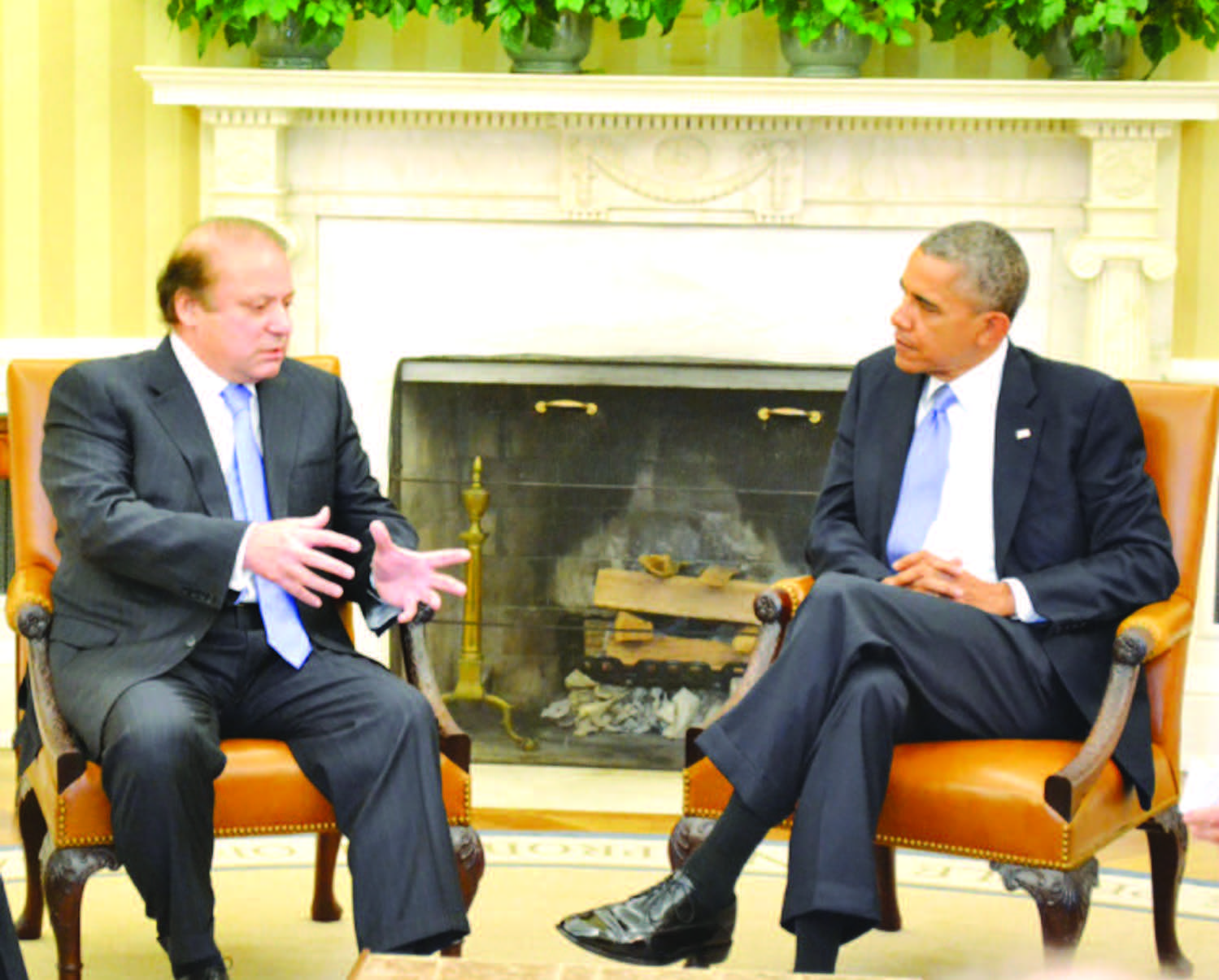
    WASHINGTON (TIP): Backing India’s concerns over the slow pace of progress in the 26/11 case in Pakistan, US President Barack Obama, October 24, asked the visiting Pakistan Prime Minister Nawaz Sharif why the trial of Mumbai attackers has not started. “He (Obama) asked, why the trial of the (Mumbai) terrorist attack in India has not started yet,” Sharif told reporters immediately after his over two-hour meeting with Obama at the Oval Office of the White House. During the meeting, the US President also raised the issue of Jamaat-ud-Dawa (JuD), cross border terrorism and Dr Shakil Afridi, the Pakistani doctor who helped the CIA track down al-Qaeda chief Osama bin Laden and has been imprisoned, Sharif said. “He (Obama) has raised the issue of (Dr Shakil) Afridi. He spoke about cross-border movement. He also talked about Jamaat-ud- Dawa,” the Pakistan Prime Minister said, without giving details. Speaking in chaste Urdu, Sharif told reporters that Pakistan’s relationship with India was discussed at length, including Kashmir, but did not give details of what aspect of Kashmir issue he raised; nor did he talk about the response from Obama on this issue.

    Obama, after the meeting with Sharif, said that the Pakistan Prime Minister was taking a “wise path” in exploring how decades of tension between India and Pakistan can be reduced. “I think he (Sharif) is taking a very wise path in exploring how decades of tension between India and Pakistan can be reduced, because, as he points out, billions of dollars have been spent on an arms race in response to these tensions and those resources could be much more profitably invested in education, social welfare programs on both sides of the border between India and Pakistan, and would be good for the entire subcontinent, and good for the world,” Obama told reporters in a joint media appearance with Sharif. In a joint statement issued after the meeting, Obama welcomed recent engagements between Sharif and Singh and expressed hope that this would mark the beginning of a sustained dialogue process between the two neighbors, aimed at building lasting peace in South Asia and resolving all outstanding territorial and other disputes through peaceful means. Obama said the two leaders had an opportunity to discuss India after the meeting of the Prime Ministers of India and Pakistan in New York on the sidelines of the UN General Assembly.

    Describing his meeting with Obama “a most cordial and comprehensive exchange of views” on matters of bilateral interest and issues of regional concern, Sharif said he told the US President about his sincere commitment to build a cordial and cooperative relationship with India. He also talked about “efforts to peacefully resolve all our outstanding issues, including Kashmir.” Sharif said that terrorism constitutes a common threat. “It is as much a concern to us as it is for India. We need to allay our respective concerns through serious and sincere efforts without indulging in any blame game. I also assured the President that as a responsible nuclear state, Pakistan will continue to act with maximum restraint and work toward strengthening strategic stability in South Asia,” Sharif said. In the joint statement, Obama and Sharif stressed that improvement in Pakistan- India bilateral relations would greatly enhance prospects for lasting regional peace, stability, and prosperity, as it would significantly benefit the lives of citizens on both sides of the border. “Obama welcomed steps taken by Pakistan and India to improve their economic relations, including by exploring electricity and gas supply agreements, developing a reciprocal visa regime, and expanding bilateral trade,” it said.

    Conceding that Pakistan is in the current situation today because of the action and deed of its own leaders in the past, Sharif said: “We need to keep our house in order. We have not taken care of our own house. As a result of which, the entire nation is suffering. We have to take Pakistan out of this situation.” He sought the support of the media, the civil society and people of Pakistan in this regard. “Both of us discussed strengthening and deepening of bilateral relationship. We had wide ranging discussions on issues including economy, Pakistan’s energy, education, extremism in Pakistan. We talked about Afghanistan; we talked about relationship with India. This included Kashmir. We talked on drones. We talked about Aafia Siddiqui,” Sharif said. Obama asked as to what the US can do for Pakistan, to which Sharif sought the policy of trade not aid. “When he (Obama) asked what we (US) can do for Pakistan, I said, I do not need any aid from you. We want to increase our economic relationship. Please open your market for Pakistani products. This is more than enough for us,” Sharif said. “He asked what we can do to address your energy issue. I said you should encourage your people, the private sector to come to Pakistan and invest in the energy sector. Pakistan is providing very good opportunities for them,” Sharif said. “We are trying to establish peace and stability in Pakistan. We hope that peace would be established in Karachi, a commercial hub. After lot of thought and determination, we have started operation there (in Karachi),” the Pakistan Prime Minister said. Sharif said he also appraised Obama on the peace talks with the Tehrik-e-Taliban Pakistan (TTP). Sharif left for Pakistan after the talks, concluding his four-day visit to the US, the first by a Pakistani head of State in more than five years.

  • Indian-American Emily Shah crowned Miss New Jersey USA

    Indian-American Emily Shah crowned Miss New Jersey USA

    WASHINGTON (TIP): 18-year-old Indian-American Emily Shah has won Miss New Jersey USA 2014 title, following in the footsteps of Nina Davuluri, who was crowned Miss America recently. Emily would now compete for the Miss America and Miss Universe titles. Davuluri had won the coveted beauty pageant in September. Emily was the youngest among more than 130 contestants for the New Jersey pageant held over the weekend.Shuffling between India and America, Emily has dabbled in cinema having acted in both Bollywood and ollywood films. She featured in Hollywood movies like ‘The Great New Wonderful’ with Naseeruddin Shah and Bollywood films such as ‘Out of Control’ alongside Riteish Deshmukh, ‘Ta Ra Rum Pum’ and ‘Jaaneman’ among others.She is daughter of LA-based Prashant Shah, who has been associated with several Bollywood production houses including big names such as Karan Johar, Rakesh Roshan and Shahrukh Khan, in various capacities. Emily plans to work in action films and is currently working as an assistant of stunt team of Hollywood movie ‘Run All Night’ starring Liam Neeson and Ed Harris.

  • US Congress set to celebrate Diwali

    US Congress set to celebrate Diwali

    WASHINGTON (TIP): Thanks to the initiative of bipartisan Congressional Caucus on India and Indian- Americans, US lawmakers are set to have their first-ever Diwali reception to celebrate the Indian festival of lights. An invitation to lawmakers for the reception next Tuesday has gone out from old India friend and Democratic caucus co-chairman Joseph Crowley, according to the gossip blog of Roll Call, an influential publication focusing on Congressional affairs. “We’re setting a major precedent that will hopefully last for years and decades to come,” he wrote asking fellow lawmakers to share the mysteries of the “festival of lights.” Crowley praised Tulsi Gabbard, first Hindu-American lawmaker and Ami Bera, the lone Indian-American politician in the US House, for helping to plan the event and “stirring up interest amongst our members.” “I think it is a testament to the growth of the Indian-American community,” Crowley, who has participated in Diwali festivals in the Indo-American enclave of the Jackson Heights section of Queens in New York, told the Roll Call.

    “According to spiritual tradition, Diwali is observed as the victory of light over darkness, truth over untruth and righteousness over wrong, and as a time of spiritual renewal,” Gabbard was quoted as saying “This message has great relevance at a time when politics and partisanship seem to overshadow compassion and concern for the greater good.” Crowley, according to Roll Call has placed the menu planning in the hands of the Sri Siva Vishnu Temple in Lanham, Maryland, a local house of worship he’s consulted with in the past – “So, we know it will be authentic.” Urging fellow lawmakers to “consider attending this exciting event,” he tempted them by saying, “Traditional Indian refreshments will be served.” “This event is an essential opportunity to come together not only to celebrate but to help increase understanding and tolerance amongst all Americans,” he wrote. “It’s going to set a precedent for Congressional Diwali celebrations for decades to come.”

  • Three Indian-Americans elected to US Institute of Medicine

    Three Indian-Americans elected to US Institute of Medicine

    WASHINGTON (TIP): Three Indian-Americans have been elected members of the prestigious Institute of Medicine (IOM), including Subra Suresh, who has become the only current university president to be elected to all three US national academies. Currently president of Pittsburgh, Pennsylvania-based Carnegie Mellon University, Suresh is one of only 16 living Americans to be elected to all three national academies- IOM, the National Academy of Sciences and the National Academy of Engineering. Besides Suresh, two other Indian-Americans have also been elected as members of IOM, among 70 new members and 10 foreign associates, during its 43rd annual meeting. They are Ashish K Jha, professor, health policy and management, Harvard School of Public Health, Boston, and Nirav Ramesh Shah, commissioner, New York State Department of Health, Albany. Election to the IOM is considered one of the highest honours in the fields of health and medicine and recognises individuals who have demonstrated outstanding professional achievement and commitment to service. “It is an honour to welcome our highly distinguished colleagues to the Institute of Medicine,” said IOM President Harvey V. Fineberg. “These individuals have inspired us through their achievements in research, teaching, clinical work and other contributions to the medical field. Their knowledge and skills will deeply enrich the IOM.” Suresh earlier served as director of National Science Foundation (NSF), a $7-billion independent government science agency charged with advancing all fields of fundamental science, engineering research and education. The IOM recognised Suresh for advancing health and medicine through his research into cell mechanics related to malaria, blood diseases and certain types of cancer.

  • NRI couple arrested in Saudi Arabia on black magic charges

    NRI couple arrested in Saudi Arabia on black magic charges

    KENDRAPARA, ODISHA (TIP): An NRI couple has been arrested in Saudi Arabia on charges of practising black magic, official sources said here on October 22. Seikh Nizam and Noor Jehan, originally from Odisha’s Kendrapara township, had shifted to Turba city of Saudi Arabia few years ago where they claimed to be a healer and mystic. The couple was arrested last month after authorities reportedly found a variety of occult items in their possession, including herbs, consulate general office of India office in Jeddah said. Raj Kumar, the community welfare officer of the consulate in Jeddah told over phone, “The couple had allegedly resorted to black magic and a complaint in this regard had been lodged by their Saudi employer Mohammad Safi in Turba town near Jeddah”. He said they are lodged in a jail and are facing trial as per Saudi law. If found guilty, they may have undergo minimum of two years of rigorous imprisonment. After the couple was arrested, their six children were left alone in their rented house and had to undergo harrowing ordeal in the alien country for three weeks.

    They were flown back to their hometown here last week by the Indian consulate after some expatriates raised the issue. The children, eldest hardly 12-year-old and youngest hardly of 18 months, are now staying in their paternal uncle’s house here. “Some locals had taken care of the children and had informed us regarding their plight. The consulate office then shifted them to safety. They were flown back to Delhi from consulate office cost. Flight tickets were also booked for them from Delhi to Bhubaneswar. Competent authorities in India were informed of the children return journey to ensure their safe return to their home as they had no elders to accompany,” Kumar added. Abdul Rehman, eldest son of the couple said, “I know nothing of the crime committed by my father and mother. They are innocent. They have been arrested on false charges. I am shocked. I am feeling absence of dear parents. The Saudi police had badly beaten up my parents. I had met them in jail. I saw injury-induced scars on their bodies. Seeing me, they cried like a child. I feel I am orphaned”.

  • Sikh organization given 450k pounds to fund research

    Sikh organization given 450k pounds to fund research

    LONDON (TIP): A lottery fund in Britain has provided 450,000 pounds to a Sikh organization to fund research into regimental histories of Sikh soldiers in the British Indian Army during World War I. The United Kingdom Punjab Heritage Association (UKPHA) has been given 450,000 pounds by the Heritage Lottery Fund, a body which distributes a share of its income from the national lottery to projects aimed at preserving and making accessible the nation’s heritage — to fund research into regimental histories, dispatches, correspondence and interviews with descendants of soldiers. Though Sikhs made up only two per cent of the population of British India, they formed 20 per cent of the British Indian Army. “Yet the role of Sikhs in World War I (WWI) is a largely unknown aspect of the Allied war effort and, indeed, of the British story,” a press release issued by the United Kingdom Punjab Heritage Association (UKPHA) said. The UKPHA has embarked on an ambitious and wideranging project on World War I to reveal these men’s untold stories. It will shed much needed light on both Sikh solders’ sacrifices and the contribution of all the non-white Allied forces of the British Empire.

  • US Gujarati association’s extreasurer charged with theft

    US Gujarati association’s extreasurer charged with theft

    NEW YORK (TIP): A former treasurer of a Gujarati community non-profit association in the US has been charged with stealing $85,844 from its bank accounts. Girishcha Patel, 58, a resident of Franklin Township of Somerset county in New Jersey and a former treasurer of the Federation of Gujarati Associations in North America (FOGANA) was charged with theft related misappropriation of the funds from the bank accounts of the association, Star Ledger reported on Tuesday. FOGANA lodged a complaint with the Somerset prosecutor’s office special investigations unit in January this year that Patel had misappropriated funds from the cultural organisation’s bank accounts when he was treasurer from 2004 through 2012. Without the organization’s permission, Patel withdrew more than $75,000 in funds from the FOGANA bank accounts between January 2006 and March 2012 while he was treasurer and had sole access to the accounts, Somerset county prosecutor Geoffrey D Soriano said.

  • NY Mayoral Contest: It’s Bill de Blasio all the way

    NY Mayoral Contest: It’s Bill de Blasio all the way

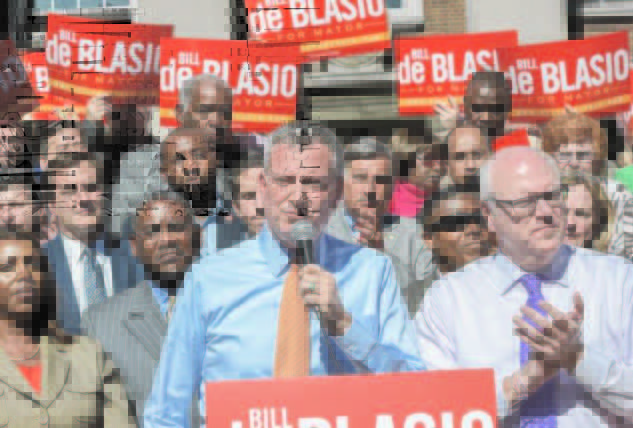
    NEW YORK, NY (TIP): A Newsday report published October 23 gives Bill de Blasio a 3 to 1 ratio in New York City Mayoral election. It says New York City voters are poised to choose Bill de Blasio as their next mayor by a landslide ratio of almost 3 to 1 amid broad consensus that he is the best choice to improve schools, create affordable housing and give the middle class and poor a better break than they’ve had in the Bloomberg years. Democrat de Blasio leads Republican Joe Lhota 64 percent to 23 percent, with 4 percent choosing other candidates and 8 percent undecided. But not all voters siding with de Blasio give across-the-board support to his agenda, and many aren’t confident he can fulfill a key campaign vow, according to the survey conducted by polling firm Penn Schoen Berland. “New Yorkers’ expectations for de Blasio as a change agent are quite high. Despite the fact that New Yorkers like him so much, they have concerns that he won’t be able to get done what he has promised,” pollster Mike Berland said. By 65 percent to 30 percent, voters favor de Blasio’s proposal to hike taxes on New Yorkers earning more than $500,000 to fund universal prekindergarten and after-school programs over Lhota’s pledge not to raise taxes.

    But de Blasio’s plan would require approval in Albany, and by 49 percent to 38 percent, the poll respondents don’t believe he would win that fight. “I do support taxation, although whether it will be able to pass is a whole ‘nother question,” said poll respondent Leta Weintraub, 71, a retired Manhattan social worker. “It depends on how capable de Blasio is once he gets into that position.” De Blasio maintains the tax hike could pass by the legislature if public opinion supports it. According to the poll, de Blasio’s plan to limit the growth of charter schools is favored by only 47 percent, while 40 percent echo Lhota’s position that the city needs more charter schools. But New Yorkers like de Blasio. He enjoys a 71 percent to 23 percent favorability rating. Lhota’s unfavorable rating, 41 percent, exceeds his favorable rating of 39 percent. “De Blasio is smooth and articulate, which gives New Yorkers confidence,” Berland said. “He makes Lhota look, by contrast, small, mean and feisty, which is not what New Yorkers want right now.” The sample of 801 likely New York City voters conducted Oct. 15-19 had a margin of error of plus or minus 3.46 percentage points. Among its findings: Voters ranked the economy and jobs, public education and affordable housing as the top three issues. Among the voters with those priorities, large majorities favored de Blasio.

    Lhota was a closer second for those who cared most about the fourth-ranked issue, crime and safety. He argues de Blasio’s plans would cause crime to surge. A 58 percent majority of voters want the NYPD’s stop-and-frisk policy modified but kept as a tool — a stance de Blasio backs — while 19 percent would leave it as it is, as Lhota urges. 70 percent thought it was time for a change from Mayor Michael Bloomberg’s policies, even as 60 percent approved of the job he’s done. Among those who want a change from the Bloomberg agenda, de Blasio is preferred 74 percent to 13 percent. After 12 years under Bloomberg, majorities wanted city government to provide fewer incentives and favorable policies for corporations and developers while doing more for small business and workers. More than twothirds believed that under Bloomberg city government paid too much attention to the rich and not enough to the middle class and poor. “To some degree, they admire what Bloomberg has done, but at the same time, they’re tired of it,” said Alan Chartock, University at Albany professor emeritus of political science. For de Blasio, “it comes down to the assurance that ‘I can make your life better.’ ” Sean Johnsen, 39, a Staten Island Republican, said he voted three times for Bloomberg but now leans to de Blasio.

    “I think he’s more of a people person,” said Johnsen, an unemployed IT worker. “We definitely need a change in New York.” As for Lhota, Johnsen said, “I think he’s going to go for the rich.” De Blasio admits there are limits on what the city’s mayor can accomplish in combating the gap between rich and poor, even as he argued a significant dent can be made. Asked by the amNewYork editorial board Monday whether the mayor can affect income inequality, the candidate said, “Affect? Yes, they can. Solve every element of inequality? I never said we could, never said we could solve it all from the position of New York City mayor’s office.” A mayor can work, he said, to “foster job creation, to push up wages and benefits, to improve the education that will give people access to better incomes going forth.” Poll respondent David Lansner, 66, of Park Slope, supports de Blasio but is critical of him on some points, including what he called pandering to unions. But Lansner said there’s still reason to keep faith in much of de Blasio’s agenda and his tax plan. “Sometimes you do get unrealistic things through, so it’s worth pushing and talking about what some of our problems and the solutions are,” said Lanser, a Democrat and child welfare and civil rights attorney.

  • Sikhs For Justice to present 1984 Genocide Petition to UNHR Commission on November 1

    Sikhs For Justice to present 1984 Genocide Petition to UNHR Commission on November 1

    NEW YORK (TIP): The Sikhs For Justice, a Human Rights Organization based in New York has claimed that on the occasion of 29th anniversary of 1984 anti-Sikh riots in Delhi, a petition signed by around a million Sikhs throughout world, will be filed with the United Nations in Geneva on November 1 2013. The Sikh Genocide Petition will be handed to Navi Pillay, UN human rights chief by a delegation of rights group “Sikhs for Justice” (SFJ), All India Sikh Students Federation (AISSF) and Gurudwara representatives from Europe and North America. Titled “1984 Yes its Genocide”, the petition will be filed with UNHCR under 1503 procedure of the United Nations. SFJ legal adviser Gurpatwant Singh Pannun said, “Under 1503 procedure, UNHCR refers these petitions to the sub-commission on Promotion and Protection of Human Rights which examines complaints regarding gross human rights violations and impunity, as in the case of November 1984 Sikh genocide.”

    The petition requests the United Nations to investigate the systematic, intentional and deliberate killing of Sikhs carried out throughout India during the first week of November 1984 and recognize the killings as “genocide” under UN Convention on Genocide. The complaint invokes UN Convention against Genocide which declares any intentional and deliberate attack on any religious minority to be a “crime” liable to be prosecuted and punished. The evidence of November 1984 killing of Sikhs clearly shows that Sikhs were deliberately attacked in a planned manner throughout India on behest of ruling Congress party. Justifying the UN intervention on the issue of Sikh Genocide, All India Sikh Students Federation President Karnail Singh Peermohamd who spearheaded the campaign for getting signatures on the petition in India and managed to get a few lakh signatures from Punjab and other states, said that they were constrained to move the UN after failing to get justice in India. “The justice delivery system of our country has failed the hapless victims of largest massacre of people after 1947 and till date the perpetrators of the mass murders are roaming free and rather enjoying power,” he said.

    “We have been knocking at every door here to get justice but the establishment failed all attempts to allow justice to the victims,” he added. Meanwhile attorney Pannun said, “Rights group will present to the UN evidence and documents regarding use of local administration and government resources by the Congress leaders to organize genocidal attacks on Sikhs during November 1984.” “A Justice Rally will also be held outside UN in Geneva on November 1 to remind the world that even after 29 years, organizers and perpetrators of November 1984 have not been convicted by the Government of India. More than 10,000 Sikhs from across Europe and North America are expected to attend the Justice Rally in Geneva,” Pannun and Peermohammad said.

  • Manna Dey, legendary playback singer, passes away

    Manna Dey, legendary playback singer, passes away

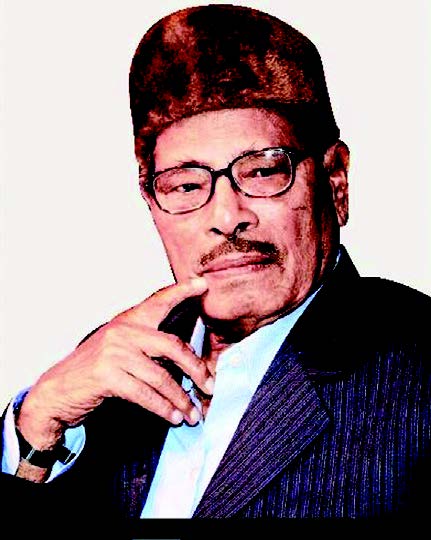
    BANGALORE (TIP): Legendary playback singer Manna Dey died at a city hospital early on October 23 morning, after prolonged illness. Dey, 94, who was admitted to Narayana Hrudayalaya five months ago for respiratory problems, died of cardiac arrest at 3.50am, a senior doctor at the hospital said. The Dadasaheb Phalke Award winner singer had given several hits songs during his several decades long career which include ‘Puchho na kaise maine rain bitayee’, ‘Ay mere pyare watan, ay mere bichhade chaman’ and ‘Laga chunari main daag’, to name a few. His daughter Shumita Deb and his sonin- law Jnanranjan Deb were by his bedside when the end came, his family said. Dey is survived by two daughters, one of whom is based in the US. “We are saddened by his loss, but he died peacefully. His last rites will be performed later in the day,” his son-inlaw said.

  • GERMANY SUMMONS US AMBASSADOR OVER CLAIM NSA BUGGED MERKEL’S PHONE

    GERMANY SUMMONS US AMBASSADOR OVER CLAIM NSA BUGGED MERKEL’S PHONE

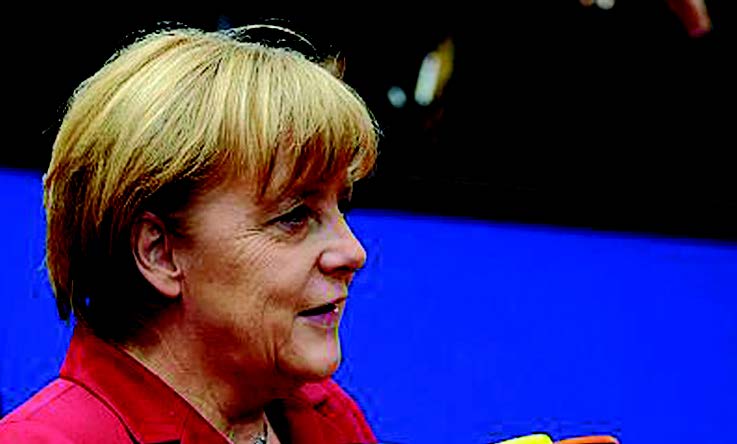
    BERLIN (TIP): Germany’s foreign minister, Guido Westerwelle, has called the US ambassador to a personal meeting to discuss allegations that US secret services bugged Angela Merkel’s mobile phone, reports The Guardian. The decision to call in John B Emerson, who has only been the US representative in Berlin since mid- August, is an unusually drastic measure. During previous upheavals in relations, such as over the Syrian crisis, conversations have taken place between diplomats. Allegations that the US government’s spying had reached the highest level were met with outrage and disappointment in Germany on Thursday, October 24. The country’s defense minister, Thomas de Maiziere, told ARD television it would be bad if the reports turned out to be true. Washington and Berlin could not return to business as usual, he said. Informed sources in Germany said Merkel was livid about the reports that the NSA had bugged her phone and was convinced, on the basis of a German intelligence investigation, that the reports were utterly substantiated. The German news weekly, Der Spiegel, reported an investigation by German intelligence, prompted by research from the magazine, that produced plausible information that the chancellor’s mobile was targeted by the US eavesdropping agency.

    She found the evidence substantial enough to call the White House and demand clarification. The outrage in Berlin came days after the French president, François Hollande, called the White House to confront Barack Obama with reports that the NSA was targeting the private phone calls and text messages of millions of French people. While European leaders have generally been keen to play down the impact of the whistleblowing disclosures in recent months, events in the EU’s two biggest countries this week threatened an increasing lack of trust in transatlantic relations. On Wednesday Merkel’s spokesman, Steffen Seibert, made plain that the chancellor upbraided Obama unusually sharply and also voiced exasperation at the slowness of the Americans to respond to detailed questions about the NSA scandal since the Snowden revelations first appeared in the Guardian in June. Merkel told Obama that “she unmistakably disapproves of and views as completely unacceptable such practices, if the indications are authenticated”, Seifert said. “This would be a serious breach of confidence. Such practices have to be halted immediately.” The sharpness of the German complaint direct to a US president strongly suggested that Berlin had no doubt about the grounds for protest. Seibert voiced irritation that Berlin had waited for months for proper answers from Washington on the NSA operations.

    On Thursday Süddeutsche Zeitung conveyed a strong sense of the depth of disillusionment with the US president in Germany when it wrote that “Barack Obama is not a Nobel peace prize winner, he is a troublemaker”. In a comment piece in the German broadsheet, Robert Rossmann wrote that during his last visit to Germany, “the American president had flamboyantly promised more trusting collaboration between the countries. Even Merkel seems to have lost faith in that promise by now. One doesn’t dare imagine how Obama’s secret services deal with enemy states, when we see how they treat their closest allies.” Die Zeit wrote that Obama’s “half-hearted denial” of the allegations raised more questions than it answered. “Was Merkel’s mobile the target of NSA surveillance in the past? … It is time for Obama and the US Congress to be ruthlessly transparent about the macabre practices of the NSA and restrain them strongly. They promised it months ago, but until recently very little has happened. With each revelation trust is eroded further. If America wants to stop annoying its friends and allies, it only has one option. Get on the front foot and be open.” Criticism was not focused solely on Obama, but was extended to Merkel, whose chief of staff only recently declared that the NSA scandal was finished.

    Many feel Merkel failed to react appropriately to the Snowden revelations, and was only stepping up the rhetoric now that she had been personally affected. Germany’s data protection commissioner, Peter Schaar, said that the reports showed “the absurdity of politicians trying to draw to a close the debate about surveillance of everyday communication here”. He said it had been irresponsible of politicians not to be more upfront in calling for the US to clear up the matter. Anke Domscheit-Berg, of the German Pirate party, told the Guardian: “In the past few months, Chancellor Merkel did very little to make the US government answer all those questions that should have had highest political priority. Now she gets a taste of what it feels like when foreign secret services spy on all your communication. We have stopped trusting empty promises and so should Angela Merkel. It is about time to get all dirty secrets on the table.” The debate in the coming days is likely to focus on how the allegations will affect new data protection regulation at the European level, with some MEPs calling for a Europeonly data cloud. In Frankfurter Allgemeine Zeitung, Georg Mascolo and Ben Scott warned of the creation of a “digital Maginot line” between Europe and the US, and instead called for a “no-spy treaty” between European countries. “Storing data and surveillance would only be allowed for previously agreed goals – the fight against terrorism, the proliferation of weapons of mass destruction as well as grave acts of crime. All forms of political and economic espionage would be banned. The privacy of every EU citizen has to be respected by each EU secret service as if they were their own.”

  • Judge Cogan denies grant of mandatory Default Judgment against Sonia Gandhi

    Judge Cogan denies grant of mandatory Default Judgment against Sonia Gandhi

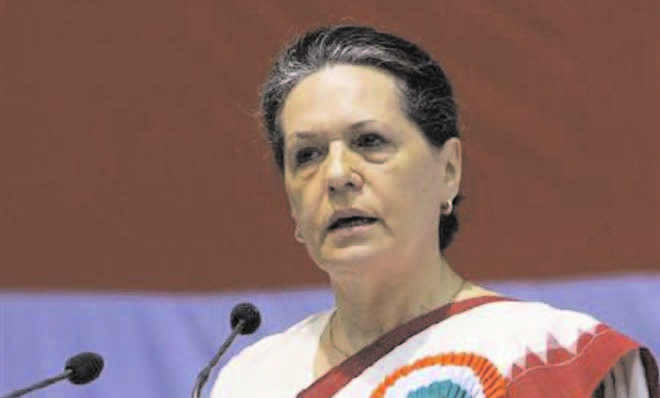
    NEW YORK, NY (TIP): Sonia Gandhi’s attorney Ravi Batra submitted to the court of Judge Brian M. Cogan, October 21 that Mrs. Gandhi was at a hospital for treatment of an undisclosed medical condition and was not served with summons and also contested that the court had no jurisdiction over the matter. However SFJ filed a service affidavit claiming alternate service to Mrs. Gandhi on September 9, 2013 through the staff of the Memorial Sloan-Kettering Cancer Center in New York, where she had gone for her treatment. The summons were issued by the US court on September 3. The SFJ affidavit also claimed that a security agent was also handed over the summons as the court had allowed service of summons through hospital staff or security agents including those of the US Secret Service and the FBI. While Judge Brian M Cogan did not allow plaintiffs’ request for issuance of certificate of default against Gandhi, which was sought on the ground that Gandhi, after being served, had failed to answer the allegations of human rights violation within the time allowed by the federal rules of civil procedure, the plaintiffs got four weeks time to submit an amended plaint.

    Sonia Gandhi’s counsel Ravi Batra said in a statement to The Indian Panorama, “October 22, 2013, at about 3 pm, plaintiffs filed a serviceaffidavit claiming alternate service on Mrs. Gandhi on 9/9/13 between 7-8pm, via Sloan receptionist, nurse supervisor and security employees. Plaintiffs also requested at 3 pm, the court clerk to issue a mandatory Default Judgment against Mrs. Gandhi. At 3:18 pm, Judge Cogan, aware of our denial of service contained in our notice of appearance, denied the grant of mandatory Default Judgment. “Later, at the Rule 16 court conference, which went overtime till almost 6pm, J. Cogan granted plaintiffs’ counsel 4 weeks to amend the complaint, given the legal infirmities pointed out by Supreme Court precedents on Alien Tort Statute and the Torture Victim Protection Act and relied upon by us to question the court’s subject matter jurisdiction. “We will then move to inter alia, dismiss the case with finality, seek an anti-suit injunction against SFJ, and other appropriate relief to remedy provable bad faith and/or vexatious litigation by plaintiff. “As always, the noble judiciary stands guard to provide a merit-based dispute resolution venue to society, but can never be used as mere fodder for publicity stunts.”

  • Indian American Couple Donates $ 12 Million to University of Dallas

    Indian American Couple Donates $ 12 Million to University of Dallas

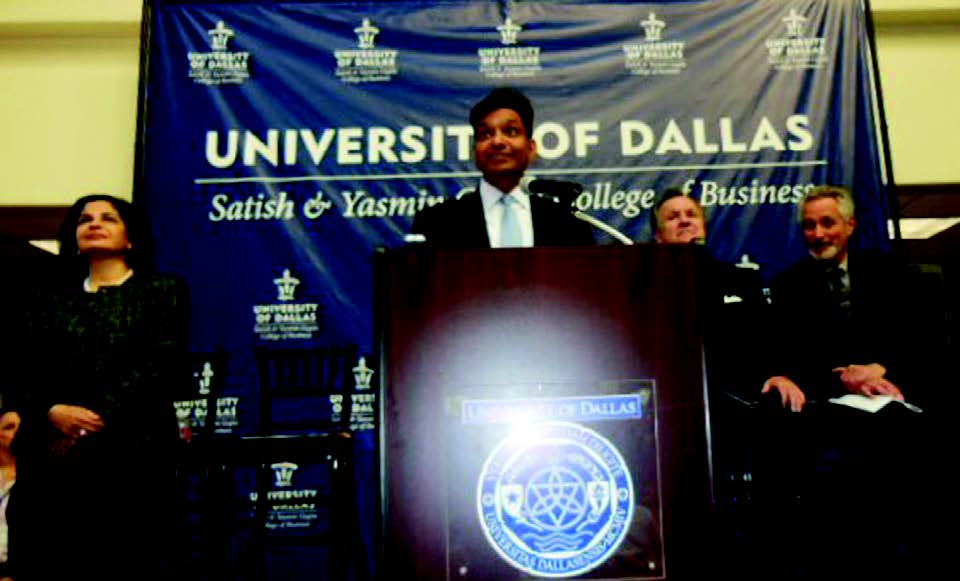
    DALLAS (TIP): Dallas based Indian American entrepreneurs Satish and Yasmin Gupta have made a $ 12 million donation to University of Dallas. The gift, the single largest in the 57 year old history of the University, will fund construction of a building that will house the Satish and Yasmin Gupta College of Business. The announcement of donation was made October 24, by the University of Dallas President Thomas W. Keefe in the presence of the donors, their relations and friends, faculty and students. Both, Satish and his wife Yasmin, are graduates of University’s MBA Program. Speaking on the occasion, Satish Gupta said, “The University of Dallas inspired not only our careers, but our lives, and we hope this new college of business will inspire business students who come to the University of Dallas from all over the world.” Yasmin Gupta, who shares with her husband a similar vision said, “Our dream is for the College of Business to become global meeting ground for diversity and understanding among all cultures. We hope it empowers students to become leaders who go forth into the world and build stronger communities”.

    University of Dallas President Thomas W. Keefe, in appreciation of the generous donors said, “The Guptas set a tremendous example for our business students both in the drive and ingenuity they personify as entrepreneurs, and in their commitment to philanthropy and social responsibility.” The new building, SB Hall, will be a 50,000-square foot, three storey structure atop the highest point in the UD campus from where Downtown will be clearly visible. According to information provided by Chat Ganesh, Vice President Business Development, SB International, Inc. and a close associate of Satish Gupta, the building is expected to be completed by the end of July 2015 and should be ready for the Fall 2015 Semester opening. Satish and Yasmin Gupta are philanthropists and civic leaders besides being business executives. The two serve Dallas/Fort Worth through various organizations related to cultural organization and outreach, including the Gupta Agarwal Charitable Foundation of which Satish Gupta is the Founder.

    They also support the Primary Care Clinic of North Texas and Greater Dallas Arya Samaj Cancer Clinic, a system of non-profit healthcare facilities providing medical care to local uninsured adults. Perhaps the most popular Indian American cultural event in Dallas is the Diwali Mela organized by Dallas Fort Worth Indian Cultural Society founded by Satish Gupta. Every year, in October/November, this popular event to celebrate “spirit of India” as Satish prefers to call the event, attracts 40,000 to 50,000 people who get glimpses of the rich Indian culture at play. Satish says he has combined Dussehra and Diwali and therefore, there is a Ram Lila and Ravan Dahan, signifying victory of good over evil, followed by fireworks to celebrate the victory. The mela provides a variety of entertainment for all age groups. There is a special kids corner. There are elephant and camel rides. There are the more modern laser shows. Community performances and Bollywood entertainment are integral parts of the mela And, of course, a variety of food in a specially carved out Food Court. The Diwali Mela 2013, the 8th in a row, is being held on November 2 at Cotton Bowl Stadium in Dallas where Bollywood artists Monali Thakur and Arijit Singh will enthrall the audiences.

  • Big endorsements in race for Nassau County Executive

    Big endorsements in race for Nassau County Executive

    Bill Clinton for Tom Suozzi: Rudy Giuliani for Mangano

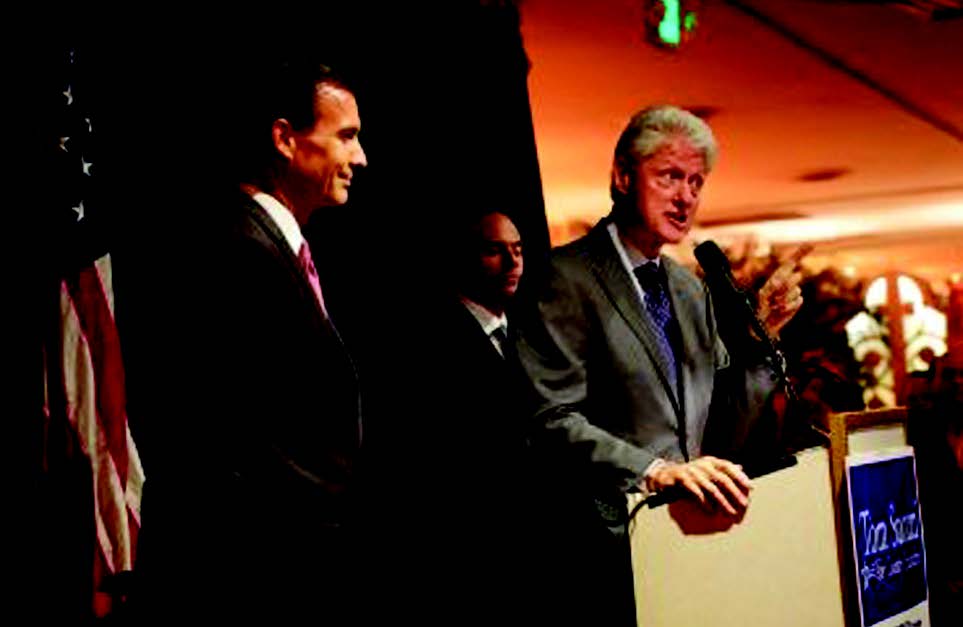
    LONG ISLAND, NY (TIP): Nassau County Executive election has reached an all time high feverish pitch. Both Mangano and Suozzi are leaving nothing to chance. If Tom loses, it will mean not only an end to his political career but also beginning of end to any power that Democrats ever had in the County. To Mangano, on a personal level, loss of election may only mean being out of power but the Republican Party will certainly get a painful kick Tom Suozzi received the nod from former President Bill Clinton at a fundraiser in Great Neck October 23 night. Clinton told supporters, numbering around 500, the candidate has “the only credible plan to get young people back here and to get jobs back here.” Clinton stressed that he “likes, admires and personally supports Tom Suozzi,” and that Suozzi was able to straighten out Nassau County’s finances through bold decision making. In his remarks, Suozzi touted his record and said Mangano “drove the county into a ditch” with his fiscal policies.


    img7
    Rudy Giuliani endorses Mangano

    “We can make this the greatest place in the country — the model for a new suburbia,” Suozzi said. Suozzi has also been endorsed by New York’s two Democratic senators, Charles Schumer and Kirsten Gillibrand, and by Democrats in Long Island’s House delegation. While Gov. Andrew M. Cuomo has not endorsed Suozzi by name, on Sunday he told state Democratic leaders in Rye Brook that he is “supporting Democrats across the board statewide in county executive and mayoral races,” Cuomo spokesman Rich Azzopardi said Wednesday, October 23. Former New York City Mayor Rudy Giuliani endorsed Nassau County Executive Edward Mangano’s reelection bid at campaign events in Bethpage and Syosset on Thursday, October 24. Mangano, a Republican who is running against former two-term Democratic county executive Thomas Suozzi, has focused his campaign message on not having raised taxes. “I’m honored to receive the endorsement of America’s Mayor, Rudy Giuliani, for my record of freezing property taxes, creating jobs and reducing crime by 10% since 2010,” Mr. Mangano said.

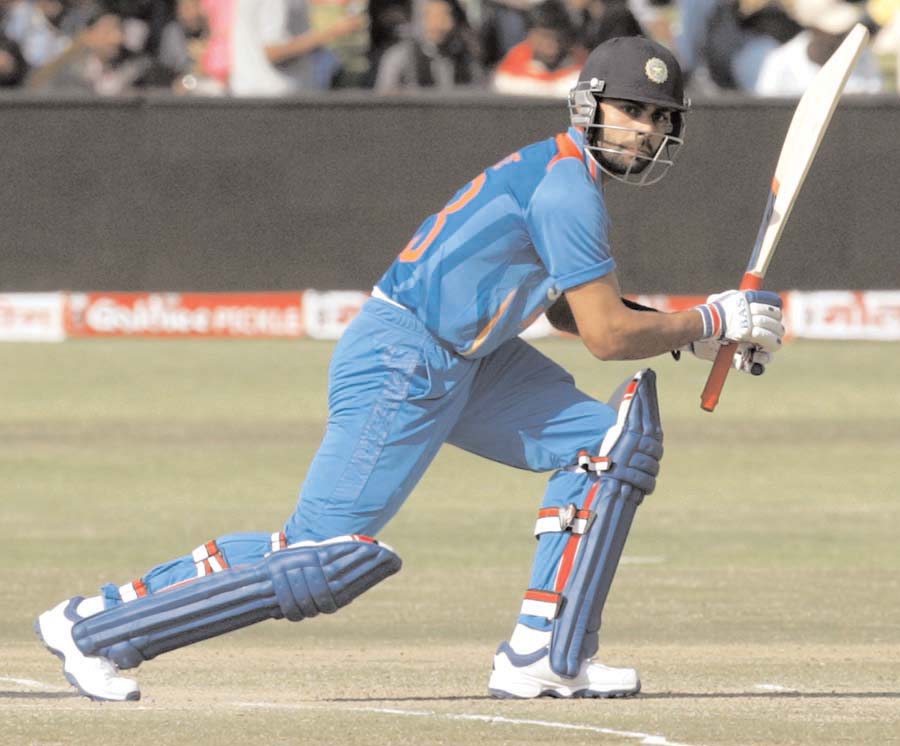
  • VIRAT KOHLI & ROHIT SHARMA STAR IN INDIA’S RECORD-BREAKING ODI WIN

    VIRAT KOHLI & ROHIT SHARMA STAR IN INDIA’S RECORD-BREAKING ODI WIN

    JAIPUR (TIP): An inspired India pulled off an incredible nine-wicket victory over Australia in the second cricket onedayer on Wednesday, achieving the second highest ever run chase in ODI history. Chasing an mammoth victory target of 360 on a belter of a track at the Sawai Man Singh Stadium, India crossed the line with 40 balls to spare as records tumbled like nine pins. This is also India’s highest ever successful run chase as the hosts restored parity 1-1 in the seven-match series. Rohit Sharma (141 not out), Virat Kohli (100 not out) and Shikhar Dhawan (95) were the main contributors for India. This is his 16th ODI century in 115 matches. His innings had eight fours and seven sixes. Rohit Sharma (141 not out from 123 balls) got a well-deserved third ODI century while Shikhar Dhawan (95) again showed love for anything Australian but was unlucky to miss out on a ton. It was a match where the Australians created a world record with their five top batsmen scoring half-centuries but the Indian batsmen proved they were better on the night.


    img45

    The Australians now have the ignominy of ending second best in two highest run-chases having faced similar fate against Herschelle Gibbs’ South Africa seven years back, when they failed to defend a mammoth score of 434. Indian batting’s ‘Gen-Next’ troika showed why they are not afraid of any target and reasserted India’s supremacy in the 50-over format. While bowling continues to be a worrying factor for skipper Mahendra Singh Dhoni, he should at least feel happy that Kohli along with Rohit and Shikhar are ready to take the legacy of Indian batting forward in the next decade. The victory was built on two partnerships. An opening stand of 174 between Dhawan and Rohit followed by another 186 runs scored in only 17.2 overs between Rohit and Kohli. The duo put on 100 runs in only 62 balls. The chase practically started in the ninth over when Dhawan, in his bid to break the shackles, hit Shane Watson for three successive boundaries. In the next over from Clint McKay, Rohit got a couple of boundaries more as 26 runs came off these two overs. While Dhawan repeatedly charged out to the pacers piercing the off-side cordon, Rohit used field restrictions to good effect by lofting the deliveries over in-field.

    Rohit hit Glenn Maxwell for a six over deep mid-wicket to bring up the team’s 100 and then got his half century with a tickle down leg-side off Xavier Doherty. If Dhawan muscled the deliveries, Rohit found a way to caress them to the boundary. However, after reaching his 50, Dhawan upped the ante with some sizzling strokeplay before James Faulkner got him to edge one trying to hit one shot too many. His 86-ball stay had 14 sweetly timed boundaries as he missed out on what would have been a well-deserved hundred. Kohli did not take time to settle down as he raced to a half-century in only 27 balls with four huge sixes. Whether hitting Faulkner over long-off or smashing Watson over deep mid-wicket, each shot came out of the top drawer as India steadily inched towards victory with minimum fuss. Earlier, Australian batsmen yet again took the Indian bowling attack to the cleaners as they scored a massive 359 for five, equaling their highest ever total against India. Led from the front by their skipper George Bailey (92 not out), the Australian batsmen made merry of a listless Indian attack on a good track. This incidentally is Australia’s highest total on Indian soil surpassing their previous best of 350 for four in Hyderabad in 2009. This total also equalled their highest ever total of 359 for two against India made during 2003 World Cup final in South Africa as well as 359 for four in a VB Series match in Sydney back in 2004.

    Phil Hughes (83), Aaron Finch (50), Shane Watson (59) set up the platform for skipper Bailey and Glenn Maxwell (53) to finish the innings with a flourish. Indian bowlers conceded 122 runs in the last 10 overs of the innings as Bailey and Maxwell sent the Indian attack on a leather-hunt putting on a staggering 96 runs in only 8.3 overs for the fourth wicket. Bailey bludgeoned the Indian bowling as he faced only 50 balls in his unbeaten innings, hitting eight fours and five sixes. Both Ishant Sharma (0/70 in 9 overs) and Bhuvneshwar Kumar (0/54 in 10 overs) lacked penetration as both Finch and Hughes negotiated the duo with ease. The third seamer R Vinay Kumar was guilty of bowling either too short or only slower deliveries and it only added to skipper Mahendra Singh Dhoni’s woes. Vinay (2/73 in 9 overs) had the worst figures among the pacers. The worst among the Indian bowlers was though left-arm spinners Ravindra Jadeja (0/72 from 10 overs) and Yuvraj Singh (0/35 from four overs) and the duo gave away 107 runs in 11 overs between them. Ravichandran Ashwin (1/50 from eight overs) fared marginally better. While Finch, as usual, was at his attacking best, Hughes complemented him by playing the second fiddle to perfection. Any width outside the off-stump was dealt with severity by Finch, who also pulled a slow bouncer from Vinay Kumar for a six to complete his second successive halfcentury of the series.

  • ‘SCREEN X’ TECHNOLOGY OFFERS 3D EFFECT WITHOUT SPECIAL GLASSES

    ‘SCREEN X’ TECHNOLOGY OFFERS 3D EFFECT WITHOUT SPECIAL GLASSES

    BUSAN (TIP): A new format that gives movie-goers a panoramic 270 degree view will be rolled out by South Korea’s biggest cinema chain this month, using the walls of theatres as additional screens. Screen X, developed by cinema chain CJ CGV, was on show at the Busan International Film Festival last week in the premiere of a 30-minute spy thriller “The X” , directed by Kim Jee-Woon , a film commissioned to showcase the expanded three-screen format. Kim, who directed this year’s Arnold Schwarzenegger action adventure “The Last Stand” , said the technology brought a more immersive experience to the cinema. He likened it to a “horizontal” version of IMAX, a format that offers greater size and resolution than conventional film. Screen X requires filmmakers to use three cameras to shoot the same scene simultaneously from different angles to create the wider “surround” effect. “The space in front of you is filled up completely,” said Kim.

    “It provides a new depth for viewers.” “The X” showed off the capabilities of the format in a chase sequence and a dream sequence that seemed to envelop the cinema. Audiences at Busan watching “The X” seemed at first confused whether to look left, right or straight ahead before settling in to the experience. “It was really fun. I personally don’t like 3D or 4D films but this made me feel like I was inside the film,” 19- year-old student Jung Gwang-Soo said. CJ CGV, which also has interests in China, Hong Kong and the United States, has been testing the technology on advertisements, but has remained tight-lipped on installation costs — reportedly between $139,300 and $185,800 per screening room, according to Dow Jones Newswires. Installation will not be without logistical challenges, given that the effect is lessened in seats positioned to the sides of the cinema. By the end of October the system will be available in 31 cinemas around South Korea in readiness for a series of planned featurelength productions to be rolled out over the next 12 months.

    While Kim said he was excited to be able to explore the possibilities of the new technology — and freely admitted he was more concerned with effects than plot in his first production with it — other directors showcased technology they believe allows the audience to focus more on the stories they are telling. The Israeli-French production “Ana Arabia” , which looks at life in a Jewish-Arabic community, was one of a number of new films screening in Busan that used advanced steadycameras to enable directors to shoot in one single take. In “Ana Arabia’s” case, that was for 74 constant minutes while the Iranian film “Fish & Cat” managed to a single take of 134 minutes. “Ana Arabia’s” veteran director Amos Gitai said the technology helped filmmakers engage with their audiences through providing a sense of intimacy not available when using multiple cameras and edits.