Month: October 2013

  • Pakistan rejects allegations about detention of Mullah Baradar

    Pakistan rejects allegations about detention of Mullah Baradar

    ISLAMABAD (TIP): The Afghan Taliban on October 9 claimed their former deputy chief Mullah Abdul Ghani Baradar has not been freed by authorities, prompting a denial from Pakistani officials who said he was free to “meet and contact anyone”. Pakistan had announced on September 21 that Baradar, arrested in Karachi in 2010, had been released to help the peace process in war-torn Afghanistan. However, Afghan Taliban spokesman Zabihullah Mujahid said, “It is very sad that Mullah Abdul Ghani Baradar is still spending days and nights behind bars in Pakistan and we are deeply concerned about his health condition which is deteriorating by the day.” In a statement in Pashto posted on the group’s website, he added, “The Islamic Emirate of Afghanistan, Baradar’s family and his sympathisers consider freedom as Baradar’s right and we want his immediate release on Islamic and humanitarian grounds.” Rejecting the allegations, foreign office spokesman Aizaz Chaudhry told PTI: “Pakistan has released Taliban detainees to facilitate the reconciliation process in Afghanistan. “Mullah Baradar has been similarly freed. As far as we are concerned, he is free to meet and contact anyone to advance the cause of reconciliation.” Afghan leaders are not fully convinced by Pakistan’s announcements about his release. President Hamid Karzai said on Monday that Baradar still does not enjoy complete freedom and expressed hope that Pakistan will give him an opportunity to play a role for peace in Afghanistan. According to media reports, Baradar has been released from Pakistani custody but continues to remain under watch by security agencies.

  • Bangladesh garment factory fire kills at least 9

    Bangladesh garment factory fire kills at least 9

    DHAKA (TIP): A fire on October 08, at a garment factory outside Bangladesh’s capital has killed at least nine people, an official said. Fire official Zafar Ahmed said nine bodies were found inside the fourstorey building housing the Aswad garment factory in Gazipur outside Dhaka. Local journalist Iqbal Ahmed said from the scene that the fire occurred when the factory was closed for the day, but some employees were still inside working overtime. Harsh and often unsafe working conditions in Bangladesh’s garment industry drew global attention after the collapse of an eight-story factory building in April killed more than 1,100 people. The industry has experienced numerous fires, including one last November that killed 112 workers. Bangladesh earns $20 billion a year from garment exports, mainly to the United States and Europe. The sector employs about 4 million workers, mostly women. Authorities in Bangladesh and global clothing companies have pledged to improve safety standards.

  • Nepalese election contestant dies days after attack

    Nepalese election contestant dies days after attack

    KATHMANDU (TIP): A Nepalese constituent assembly election contestant died on Thursday a week after he was shot at in southern Nepal district of Bara adjoining Bihar. A pillion rider on a motorcycle with an Indian license plate had shot Mohammed Alam in his head while he was talking on phone last Friday outside a flour mill near the border town of Birgunjon. He had been unconscious and his survival chances were slim, doctors treating him at a Kathmandu hospital said The motorcycle used for the attack had skidded while the attackers were escaping from the scene. The attackers fired in the air after a witnesses tried to catch them. The motorcycle was later recovered within the Nepali territory. Following the shooting, other candidates from southern Nepal district have asked for additional security ahead of the November 19 election. Preliminary investigations have revealed “an international criminal group” was behind the shooting. Nepali media reports said Alam was allegedly associated with the Dawood Ibrahim gang and Pakistan’s ISI and was a target for the Chota Rajan gang Some Indian media had claimed his association with Yashin Batkal, arrested from the tourist town of Pokhara and taken to India last month.

  • Bangladesh war crimes tribunal gives life sentence to senior opposition member

    Bangladesh war crimes tribunal gives life sentence to senior opposition member

    DHAKA (TIP): A special Bangladesh tribunal has found a senior member of the opposition guilty of crimes against humanity stemming from the nation’s 1971 independence war and sentenced him to life imprisonment. The prosecution says 83-year-old Abdul Alim of the main opposition Bangladesh Nationalist Party was found guilty on Wednesday of involvement in the killing of at least 600 people during the war. It is the eighth verdict delivered by the tribunal since Prime Minister Sheikh Hasina’s government ordered it formed in 2010 to prosecute war crimes. Last week the tribunal sentenced another senior party member, Salahuddin Quader Chowdhury, to death for crimes against humanity. Bangladesh gained independence from Pakistan in 1971 after a nine-month war in which 3 million people were killed and at least 200,000 women were raped.

  • Maldives: New presidential poll on Oct 19

    Maldives: New presidential poll on Oct 19

    MALE (TIP): The Maldives will hold a new presidential election on October 19, the election commission announced on October 09, after the Supreme Court annulled a September 7 poll citing voter fraud. International election observers, including delegations from the Commonwealth, the United Nations, the European Union and India, had declared the September 7 election free and fair. The tropical Indian Ocean resort archipelago will face a constitutional crisis if there is no president elected by November 11, according to a deadline set in 2008. Former President Mohamed Nasheed, ousted from power 20 months ago in disputed circumstances amid a mutiny by police, won the first round on September 7 with 45.45 percent of the vote, but fell short of the 50 percent needed for outright victory. The run-off, scheduled for September 28, had been expected to help end months of political turmoil triggered by the removal of Nasheed.

  • US firm to launch outcomebased learning in India

    US firm to launch outcomebased learning in India

    CLEVELAND (TIP): People Educating Society (PES) in Karnataka, an educational conglomerate with universities, colleges and high schools has chosen USA Cleveland-based Club VA Social Enterprise Platform to implement outcome-based learning methodology and also to link faculty, students, industry and alumna under one web based platform. The platform will assist in assessment of students and teachers, evaluation and recruitment of students for jobs to enable the group to become a leader in the education field, said Sudhir Achar CEO of Vantage Agora in Cleveland, Ohio. To help achieve this target PES has engaged with Vantage Agora (VA) and the programs will be implemented in the Club VA platform for all their campuses. Ajoy Kumar COO, PES Educations said, “We have a vision to become the top educational and research institution. To enable this we need a collaborative and contextual platform to control and execute our vision. We believe the new entity PES Chronicles will enable us to get there.

    The goal is to use Club VA and create a new way of thinking based on outcome-based learning.” PES Chronicles (Club VA) will be the system of control that will help management, faculty, students, alumni, industry all be on the same platform to share and collaborate information in a way that has never been done before in the industry anywhere in the world, said Sudhir Achar. In 1972, PES was founded with just over 40 students in a rented gymnasium at Bangalore. Today, PES has more than 8,000 students spread across three different campuses. Club VA is a secure informationcentric platform architected to accelerate operational excellence through corporate social collaboration, helping companies become a learning organization. Club VA offers integrated communication harnessing the power of controlled social networking and uses consumer software like Facebook and Twitter, but is designed for company collaboration, file sharing, and knowledge exchange and team efficiency, Achar said. In the high-octane world of modern business, the idea is simple enough by implementing practices that help employees feel confident, capable, and in control of the outcome of their work, they feel empowered to do that work effectively and without excessive oversight or micromanagement. Ideally, this ensures commitment to the company’s core mission and vision, which results in greater productivity over the long term, Achar said.

  • Pentagon No. 2 to step down after four years in top defense jobs

    Pentagon No. 2 to step down after four years in top defense jobs

    WASHINGTON (TIP): Deputy defense secretary Ashton Carter, known for his deep knowledge of US defense spending and the defense industry, said on Thursday he was stepping down in December after four years in top Pentagon jobs. Defense secretary Chuck Hagel said he “reluctantly accepted” Carter’s decision to leave the post. Carter brought fresh analytical rigor to the job, but also helped reopen lines of communication with the defense industry, said Brett Lambert, who worked closely with Carter before retiring in August as the Pentagon’s head of industrial policy. But Carter’s main legacy was his “unwavering, untiring and overwhelming” commitment to making sure that US troops had the equipment to do their jobs, Lambert told Reuters. Over the years, that meant researching and sending in an array of unusual equipment – from explosive-sniffing dogs to surveillance blimps and mine-resistant trucks that could climb the mountainous roads in Afghanistan. “I truly believe he saved lives over there,” Lambert said. It was unclear who might replace Carter, although several names surfaced late Thursday as possible successors: Navy secretary Ray Mabus, former Air Force secretary Michael Donley and the Pentagon’s former policy chief, Michele Flournoy. Another possible contender might be Linda Hudson, a veteran defense industry executive who has announced plans to retire early next year as chief executive of BAE Systems Inc, the US unit of Britain’s BAE Plc. As deputy defense secretary over the past two years, Carter helped ensure a smooth hand-off from then defense secretary Leon Panetta to Hagel.

  • Snowden honored by U.S. whistleblowers in Moscow

    Snowden honored by U.S. whistleblowers in Moscow

    MOSCOW (TIP): Edward Snowden who had not been in news for quite some time, burst back into the limelight Thursday, October 10 after four whistleblowing advocates from the United States reported meeting him to give him an award, and after his father arrived for the first time since his son received asylum. Through it all, the fugitive remained hidden, said a report in The Washington Post. The four activists, who said they met him Wednesday, gave Snowden a truth-telling award on behalf of the Sam Adams Associates for Integrity in Intelligence, an organization of former national security officials. They ridiculed U.S. government assertions that Snowden has caused grave damage to national security. The United States has charged Snowden under the Espionage Act for revealing secrets he acquired as a contractor for the National Security Agency. “Integrity must trump blind loyalty,” countered Coleen Rowley, a former FBI agent who was at the meeting, Snowden’s first with visitors.

    The four Americans told their story Thursday in a 15-minute program on the RT channel, which is financed by the Kremlin and broadcasts its point of view. Snowden’s father, Lon, met reporters in the company of Anatoly Kucherena, Snowden’s Kremlin-connected lawyer, and sped from the airport to an appearance on the main Russian television channel, also controlled by the Kremlin. “I’m Mr. Kucherena’s guest,” Lon Snowden said, “and I’m very thankful for his hospitality, and I’m going to follow Mr. Kucherena’s advice and that will determine where my day leads.” Lon Snowden acknowledged that Julian Assange and anti-secrecy group WikiLeaks had helped arrange his travel here, and the four Americans said Sarah Harrison, an Assange aide, remained with Snowden in refuge. Kucherena declined to reveal any details about a meeting between father and son, saying security concerns were paramount and suggesting the United States might somehow take action if it knew Edward Snowden’s whereabouts.

    “We need to understand he is America’s most wanted man,” the lawyer said. The Sam Adams award was announced in July but presented in person Wednesday, honoring Snowden as a whistleblower, a description the United States describes as wrong. U.S. officials contend that whistleblowers reveal information after efforts to go through official channels are ignored. Snowden, they say, made no such efforts before leaking secrets, forfeiting whistleblower protections. Thomas Drake, a former NSA executive who became a critic of the agency, praised Snowden for speaking truth to power. “Russia, to its credit, recognized international law and granted him asylum,” he said, asserting that U.S. officials drove Snowden into Russia’s arms by making him stateless. The United States points out that Snowden remains a citizen even though his passport was revoked and that he should return home to answer the charges against him. “This is an extraordinary person,” said Ray McGovern, a former CIA analyst. “He’s convinced what he did was right.” “I thought he looked great,” said Jesselyn Radack, who once accused the FBI of ethics violations and now defends whistleblowers for the Government Accountability Project.

    She said the United States has presented no evidence that Snowden harmed national security and was acting vengefully. “We weren’t worried about coming into your country,” she told a Russian TV host. “We’re worried about getting back into ours.” Rowley, who has testified to the Senate Judiciary Committee about problems facing the agency and the broader intelligence community, said the Sept. 11, 2001, attacks had taught Americans that national security was harmed when agencies failed to share information with one another and the public. “He’s remarkably centered,” she said of Snowden. Snowden, they said, has no regrets about what he did. He has been on the run since May, leaving his home in Hawaii and turning up in Hong Kong, then fleeing to Moscow on June 23, spending five weeks hiding in the airport where his father arrived Thursday. “I’ve had no direct contact with my son despite previous reports,” Lon Snowden told reporters gathered outside the airport. “If the opportunity presents itself, I certainly hope I’ll be able to meet my son.” Kucherena told reporters that the son was running out of money.

    “What he really needs to do today is find a job and I hope he can do that in the nearest future,” he said. “He could get a job in IT or maybe human rights. But we haven’t decided yet.” He said it was natural that Snowden has not been seen. “This is because he is being persecuted by a huge power, the U.S. government,” he said. “This anger persists, and we understand this very well.” Speculation has been rife about why he has remained in Russia. Authorities here say he could not travel onward because the United States revoked his passport, although Russia could have provided him with travel documents if it had so desired. “I’m here to learn more about my son’s situation,” Lon Snowden said, “and I’m thankful, extremely thankful, to the Russian people, President Vladimir Putin and Mr. Kucherena and his staff for their help in keeping my son safe and secure.” He said he doubted his son would return to the United States but said it was up to him. “I’m his father,” he said. “I love my son.”

  • ‘Big lender’ China urges US to avoid bankruptcy

    ‘Big lender’ China urges US to avoid bankruptcy

    WASHINGTON (TIP): As the Government shutdown in the US enters its second week, the country is just 8 days away from default, and the country’s main creditor China has urged Washington to take decisive steps to avoid bankruptcy and ensure safety of Chinese investments. China, the US government’s largest foreign creditor, is “naturally concerned about developments in the US fiscal cliff”, as Reuters quoted Vice Finance Minister Zhu Guangyao giving the Chinese government’s first public response to the Oct 17 US deadline for raising the debt ceiling. China currently holds 22.85 percent of the US $16.7trln debt, which makes it the biggest US creditor, followed by Japan which holds 2.31 percent. Treasury Secretary Jacob Lew calculated the US would run out of money by October 17 and have less than $30 billion cash in hand if Congress fails to agree on its spending plans. “We ask that the United States earnestly takes steps to resolve in a timely way before October 17 the political (issues) around the debt ceiling and prevent a US debt default to ensure safety of Chinese investment in the United States and the global economic recovery,” Zhu said.

    In 2011 a similar budget deadlock cost the US its triple-A rating, with Standard & Poors downgrading the country to AA+. “We hope the United States fully understands the lessons of history,” Zhu said. The debt ceiling debate of 2011 resolved with a last minute decision following tough warnings over the economic catastrophe from the looming default. This time around alarm bells are ringing again, with Treasury Secretary Jack Lew warning that the budget brinkmanship was “playing with fire” and imploring the Congress to pass legislation to re-open the government as well as increase the nation’s debt limit. The lack of accord in the US Congress could cost the US a default – the first in history – which would send the global economy into a financial crisis similar to 2008 or worse. The 2008 financial crisis plunged the country into the worst recession since the Great Depression of the 1930s.

    Raising the debt ceiling is vital for the US itself and the global economy, but Republican House Speaker John Boehner insists the increase of the maximum allowed borrowing limit should come with terms. Boehner vowed on Sunday that there was “no way” Republican lawmakers would agree to a measure to raise the debt ceiling unless it included conditions to rein in deficit spending. “The votes are not in the House to pass a clean debt limit, and the President is risking default by not having a conversation with us,” Boehner said. The shutdown has put hundreds of thousands of workers off the job, closed national parks and museums and stopped an array of government services. The one bright spot in a Washington deadlock is a significant chunk of the furloughed federal workforce is headed back to work. Defense Secretary Chuck Hagel ordered nearly 350,000 back on the job, basing his decision on a Pentagon interpretation of a law called the Pay Our Military Act. Those who remain at home or are working without paychecks are a step closer to getting back pay once the partial government shutdown ends. The Senate could act this week on the measure that passed the House unanimously on Saturday.

  • Chinese mistresses bringing down officials by exposing them

    Chinese mistresses bringing down officials by exposing them

    BEIJING (TIP): A 26-year-old mistress has put up videos and photographs of her paramour, a senior Chinese official, now sacked and facing official investigation. This is part of a rising trend of official probes spurred by revelations by former mistresses of officials. The pictures put up by Ji Yingnan, the mistress, showed her in a cinch with a senior official of the state bureau of archives, Fan Yue. She also revealed photographs of the couple on expensive shopping spree and splashing in private swimming pool. This follows the sacking of an energy official, Liu Tienan, in May, after his former mistress revealed details about how he defrauded banks of $200 million. Another official, Lei Zhengfu, landed in jail after sex tapes involving him and several girls were distributed over the internet last year. The government’s anti-corruption authorities have been encouraging mistresses of officials to come out with their secrets, and have often acknowledged their contribution. In the latest case involving Fan, the mistress said he was giving her $1000 a day for pocket expenses, and a luxury car. Ji told the media that she had initially approached anti-graft officials but got no reply. This is why she posted videos and photos of Fan on the internet. “I had no idea he was such a liar,” Ji, the TV presenter, told the Beijingbased Global Times. “He always promised to marry me and I always thought he would be my fiance, or even husband.”

  • Chemical weapons inspectors visit three sites in Syria

    Chemical weapons inspectors visit three sites in Syria

    BEIRUT (TIP): International inspectors have so far visited three sites linked to Syria’s chemical weapons program, a spokesman said on Thursday, as the team races to destroy the country’s stockpile and delivery systems amid a raging civil war. Underscoring the complexity of the mission, a regime warplane bombed the rebel-held town of Safira, an activist group said. A regimecontrolled military complex believed to include chemical weapons facilities is located near the town. The inspectors are to visit more than 20 sites around the country as part of the disarmament mission. The facilities they inspected in the past 10 days have been in government-held areas, making them fairly easy to reach, said Michael Luhan, spokesman for the Organization for the Prohibition of Chemical Weapons. Operating on rare consensus, the UN has mandated the OPCW to rid Syria of its stockpile by mid-2014 — the tightest deadline ever given to the OPCW.

    It’s also the first conducted amid ongoing fighting. Syria’s conflict, which erupted in March 2011, pits disorganized armed rebels against forces loyal to the regime of Bashar Assad. At some point, the 27-member team may have to cross rebel-held territory to reach other locations linked to Syria’s chemical weapons program. The UN hopes to organize ceasefires between rebels and government forces to ensure safe passage. Shifting front lines crisscross the country, divided into a patchwork of rebel- and regime-held areas. The UN security council met late on Thursday to discuss detailed recommendations made by secretarygeneral Ban Ki-moon on how to destroy Syria’s chemical weapons. France’s UN ambassador Gerard Araud and Russia’s UN ambassador Vitaly Churkin said after the closed consultations that the 15 council members decided to authorize the plan proposed by Ban in a letter — not a resolution. In his 11-page letter to the council on Monday, Ban proposed that a joint mission be established by the UN and the OPCW, with a total staff of approximately 100, to carry out what he described as a dangerous and unprecedented operation. A US-Russia agreement launched a flurry of diplomatic moves leading to the security council resolution ordering the destruction of Syria’s chemical weapons, precursors, and the equipment to produce the deadly agents.

    A regime warplane struck the town of Safira, killing at least 16 people, according to the Britain-based Syrian Observatory for Human Rights, which obtains its information through a network of activists on the ground. The group did not know what was hit. Amateur video said to show the aftermath of the Safira airstrike was posted online later on Thursday. The video showed men and boys hauling a blanket filled with body parts onto a jeep where another two charred bodies already lay. “Who is this?” one man can be heard asking. “By God, we don’t know brother,” another responded. The video also showed twisted metal, blood splattered on the floor and smashed concrete in the area of the strike. Safira is southeast of the heavily contested city of Aleppo, Syria’s largest. The military complex near the town is believed to include an underground facility for chemical weapons production and storage, said Amy Smithson, a chemical weapons expert at the Center for Nonproliferation Studies, a US-based thinktank. The Observatory said six people were killed in another airstrike, near the town of Manbij, also in the area. In Aleppo, six people were killed by rebel fire, the official Syrian news agency SANA said. Clashes also broke out between al- Qaida fighters from a group calling itself the Islamic State in Iraq and the Levant and Kurdish rebels in the northern border town of Azaz, the Observatory reported.

  • China to train 250,000 journalists before they get work passes

    China to train 250,000 journalists before they get work passes

    BEIJING (TIP): About 250,000 Chinese journalists will be given on-the-job training under a specially designed program by the government’s media agency, which also implements laws on censoring and “guiding” the media. The move suggests greater government control over media and flies in the face of expectations that it was allowing greater freedom. The State General Administration of Press, Publication, Radio, Film and Television on Thursday said the program will cover all reporting staff with newspapers, news agencies, TV stations and other press organizations in the country. The training is mandatory. It will last for three months until the end of 2013. Chinese media training involves courses on patriotism and journalists in the program are required to wear military uniforms on certain days. Currently, media organizations have separate training program for their staff. Now, the government has created a unified training program, which will be provided free. Journalist need to pass a post training examination to obtain press card or accreditation. The training will focus on six subjects, including theories on socialism with Chinese characteristics, the Marxist view on journalism, journalistic ethics, laws and regulations, norms in news gathering and editing, and content on preventing false information.

  • Britain, Iran in talks to reopen embassies

    Britain, Iran in talks to reopen embassies

    Britain has decided to revive the bridge of diplomacy with Iran. The foreign secretaries of Britain and Iran have reached a consensus to appoint their respective non-resident charge d’affaires tasked with implementing the building of relations, including interim steps on the way towards the eventual reopening of their respective embassies in Tehran and London. Diplomatic relations between London and Tehran had suffered a severe setback after the British embassy’s compounds in Tehran were overrun in 2011. The Iranian parliament later voted to downgrade relations with the UK. Foreign ministry officials from both countries will meet in Geneva next week to discuss “numbers of and conditions for locally-engaged staff in the embassy premises of each country and visits to inspect these premises”.

    According to British foreign secretary William Hague, progress would take place on a “step-by-step reciprocal basis”. “We are open to more direct contact,” he said, adding the coming months “may be unusually significant” in British-Iranian relations. “It is clear that the new president and ministers in Iran are presenting themselves and their country in a much more positive way than in the recent past,” Hague told MPs in the House of Commons. “There is no doubt that the tone of the meetings with them is different. We must test the Iranian government’s sincerity to the full, and it is important that our channels of communication are open for that.” Hague said he had had detailed discussions with Iranian foreign minister Mohammad Javad Zarif on how to improve the functioning of the UK-Iran bilateral relationship. “It is understood on both sides that given this history, progress in our bilateral relationship needs to proceed on a step-by-step and reciprocal basis,” Hague said. “The foreign minister and I agreed our officials would meet to discuss this. The first such meeting has already taken place, and will be followed by a further meeting in Geneva next week. I’ve made very clear to Mr Zarif that we are open to more direct contact and further improvements in our bilateral relationship.”

  • THE POLITICS OF THE GOVERNMENT SHUTDOWN

    THE POLITICS OF THE GOVERNMENT SHUTDOWN

    With the government having lurched into its first shutdown since the 1990s, many commentators are focusing on the potential ill effects that it might have for Republicans. Almost all of these analyses use the shutdowns of 1995- 1996 as their starting point. While I don’t think this development will be great for Republicans, many of the concerns are likely overwrought. Here are four points to ponder:
    1. While the GOP’s tactics are similar to those employed in the mid-’90s, the goals are different.
    The earlier budget debates were broad in nature and dealt with the scope of government. The 104th Congress, led by Newt Gingrich, believed that they were the culmination of the realignment supposedly begun by Ronald Reagan, that Bill Clinton’s election was a fluke caused by Ross Perot’s candidacy, and that they had been elected with a mandate to shrink the size and scope of government dramatically. They entered the shutdown believing that the public would rally to their side, that Clinton’s job approval would fall in the wake of the shutdown, and that he would ultimately cave on their demands. Despite the lore that has since sprung up, this wasn’t a completely harebrained view of the underlying politics: An earlier shutdown, in 1990, did play an important role in persuading George H.W. Bush to abandon his famous “no new taxes” pledge a few weeks later. Of course, that isn’t how it played out at all in 1995 and 1996; Bill Clinton was widely viewed as having held the line against the Republican onslaught, although he actually did give substantial ground on taxes and a number of other issues.

    The budget fight became the focal point of Democrats’ attempt to take back the House and Senate in the 1996 elections. But the Democrats didn’t actually use the shutdown itself as their main line of attack on Republicans. It was part of it, but the real attacks came over the Republicans’ motivation for the shutdown. Because of the expansive nature of the GOP’s cuts, the Democrats were able to focus on several unpopular portions of the GOP budget: the so-called M2E2 strategy. They commenced a mantra-like repetition of their opposition to Republican attempts to gut “Medicare, Medicaid, Education and the Environment” in favor of a “risky tax scheme” that benefited the rich. In other words, in evaluating 1996 as an illustration of what will happen to the GOP today, we probably have to separate the tactic of a shutdown from the substance of what motivates it. And today, the GOP is focused on defunding Obamacare, a law that isn’t particularly popular. For the analogy to 1995-96 to really stick, the GOP will probably have had to try something along the lines of shutting down government to implement the Paul Ryan balance-budget plan. While public opinion might be against the shutdown tactic, there probably won’t be the same level of outrage against the underlying policy motivation, which is what 1995-96 was mostly about. If Obamacare turns out to be the train wreck some conservatives predict (I have no clue whether it will or won’t), the tactic itself might be viewed as less of a negative.

    2. John Boehner is not Newt Gingrich, and Barack Obama is not Bill Clinton.
    This is a fairly minor point, but Gingrich’s public persona did play a part in bringing the shutdown to an unhappy end for the GOP. He was polarizing from the start, and the media didn’t bend over backwards to help him out. Case in point: The Daily News cover depicting him as a crybaby who shut down the government because he had to sit in the back of Air Force One. Boehner, on the other hand, has kept a much lower profile, and while he isn’t all that popular, he isn’t a lightening rod either (although Ted Cruz seems to be inching toward filling Gingrich’s shoes in that regard). At the same time, Obama is not really Clinton. The current president’s ability to present himself as a cautious centrist in political face-offs with Republicans to date have been mixed at best; his strength has always been energizing the liberal base for elections rather than tacking to the center. Clinton might be the most successful president of my lifetime when it comes to publicly framing a debate in a way favorable to his side (see, for example, the M2E2 strategy above). There are actually few examples, if any, of Obama rallying the public to his side in the various battles he’s fought; there are plenty of failures, with the fight over sequestration being the most recent case in point.

    3. The net effect of the shutdown was small in the 1990s.
    For all the talk of the sustained damage the Republicans suffered, the actual evidence for this is pretty weak. In 1994, Republicans won 230 seats in Congress. Five party switches and a special election victory later, they entered the 1996 elections with 236 seats. They emerged from those elections with 228 seats, for a loss of eight total (including the open seat of one of the Democratic Party switchers). So while Republicans lost seats, it ended up being something of an empty victory for Democrats: Americans elected a Republican Congress back-to-back for the first time since the 1920s. Republican candidates won the popular vote for the House, albeit very narrowly (Democrats won the vote only if you split up votes cast for candidates running on multiple party lines, e.g., a Republican also running on the Conservative Party line in New York). Republicans even gained a seat in a special election held in a Democraticleaning district in between government shutdowns, and only narrowly lost a Senate seat in Democratic-leaning Oregon immediately after the shutdown (Republicans proceeded to win another open Senate seat in the same state by four points in November). Those Republican House losses weren’t terribly surprising.

    Republicans were overexposed as a result of the 1994 “wave election” that swept a number of weak members into swing-to-Democratic-leaning districts. Losing representatives like Andrea Seastrand, Michael Flanagan and Fred Heineman was more a part of regression-to-the-mean than any wholesale rejection of Republicans. Of the 21 House seats that Democrats claimed from Republicans in 1996 (it was actually 22, but I don’t have presidential data for Louisiana’s 7th District), Clinton had carried 18 in 1992. The other four seats were all something of special cases: Bob Dornan in California, Gary Franks in Connecticut, David Funderburk in North Carolina, and Toby Roth’s open House seat in Wisconsin. This presents a problem for Democrats hoping to capitalize on the 2013 shutdown: The seats are much better sorted these days. Going into the 1996 elections, 79 Republicans occupied seats that had voted for Clinton in 1992. In other words, they lost 23 percent of their caucus from “Clinton seats.” Today, only 17 Republicans come from “Obama seats” to begin with. If Republicans suffered losses in unfriendly territory at the same rate as they did in 1996, they’d lose only four seats, before we start looking at the effect on Democrats from “Romney seats.” Perhaps Republicans would have fared better had they not attempted to shut down the government in the first place.

    Republicans picked up 10 open House seats and defeated three Democratic incumbents in 1996; absent the shutdown, perhaps they might have gained seats. In the Senate, Republicans narrowly lost open Democratic seats in Louisiana and Georgia, while missing good opportunities to defeat Tom Harkin in Iowa and Max Baucus in Montana. But as Harry Enten has ably demonstrated, Republicans did about as well in the House and in presidential elections as we would have expected given the performance of the economy, especially when you consider that exit polls showed Ross Perot pulling votes disproportionately from Republicans (unlike 1992, when he pulled evenly from both parties). Clinton’s comeback was likely due more to the flurry of good economic news in the run-up to the election than to anything else. Indeed, while Clinton’s job approval improved over the course of the shutdown, it had also improved in the months leading up to the shutdown at a similar rate. Senate losses in Louisiana and Georgia look bad today, but in 1996 both states were more Democratic; Clinton had carried both states in 1992 and only narrowly lost Georgia in 1996 while winning Louisiana by 12 points. Republicans had only won two narrow Senate elections in Georgia before 1996 (and hadn’t won the governorship since Reconstruction), while Republicans had never won a Senate election in Louisiana and were burdened by a controversial candidate in Woody Jenkins. Republicans were unable to defeat Harkin, Baucus or Mary Landrieu in the good GOP year of 2002.

    4. What happens to red state Senate Democrats?
    Of course, the real action for 2014 is not the House, where the GOP will continue to control the agenda except in the unlikely event that it loses 17 seats. The real fight is for control of the Senate, which in turn revolves around races in eight states: West Virginia, Arkansas, Kentucky, South Dakota, Louisiana, Alaska, Montana and North Carolina. Obama lost those states by, respectively, 27, 24, 23, 18, 17, 14, 14 and two points, respectively. The politics of a shutdown in these states are very different than in the nation as a whole. We can try to estimate the popularity of a shutdown by taking as a national baseline CNN’s recent finding that 46 percent of voters would blame Republicans for a shutdown vs. the 36 percent that would blame Obama. If we adjust these numbers according to the results of the presidential election in 2012, we would estimate that the president would shoulder the blame for a shutdown in each of those states save for North Carolina, and that outright majorities would blame the president in West Virginia, Arkansas and Kentucky. The last thing Democratic candidates in these states want is a public spat over a piece of legislation that is highly controversial, that might have a problematic rollout in the coming weeks and months, and that places them on the side of an unpopular president.

    If there’s an upside for the GOP, this is probably it. Even after the 1995-96 shutdowns, the GOP managed to gain Senate seats, largely by making gains in reddish states. Of course, none of this should be read as advocating the shutdown, or predicting that it could not possibly have any negative consequences for the GOP. For starters, a government shutdown is essentially lighting a fuse without knowing exactly where it will go. This is something that could easily get out of control if the shutdown stretches out for weeks and bleeds into the debt ceiling battle, which could be potentially catastrophic for the county. Moreover, it could give Democrats an issue to rally around. Unlike 1996, the economy is weak; the president’s job approval has suffered in recent months as a result of his perceived failure to move the Democratic agenda forward, and the aborted intervention in Syria. Many of these losses have come as a result of Democrats becoming dissatisfied with the president. If the election were held with the president’s job approval at its present level, Democrats would probably lose another 10 House seats or so, giving Republicans their largest House majority since 1946 (and possibly 1928). A dustup with congressional Republicans would probably help bring these Democrats back into the fold, especially if the president emerges victorious from the fight, helping to limit Democratic losses. Finally, we should also remember that the current weak recovery has been ongoing now for 52 months.

    It’s already longer than six of the 11 recoveries in the post-War era. By this time next year, it will be longer than seven of them. By 2016, only the booms of the mid-’60s, mid-’80s, and mid-’90s will have lasted longer. And, well, this recovery doesn’t much resemble those recoveries so far. In other words, there’s a decent chance that we’ll encounter a downturn in the economy in the next year, and a very good chance that we’ll encounter one in the next three years. Obama is probably reaching the end of the time period where his predecessor can be blamed for the state of the economy. But a lengthy shutdown could conceivably give Democrats ammunition to place the blame back on Republicans. The bottom line is this: The shutdown will probably not be a good thing for the GOP, and there’s a good chance Republicans won’t achieve their intended goal of limiting Obamacare’s reach. But at the same time, a lot of the prophecies of doom for Republicans are heavily overwrought. Unless things get too far out of control, the predictions of heavy GOP losses from a shutdown are likely overstated.

  • The Pivot under Pressure

    The Pivot under Pressure

    It’s not just the canceled trip. Other factors are limiting the ability of the U.S. to focus on the Asia-Pacific.

    Senior U.S. administration officials have been at pains in recent weeks to demonstrate how Washington’s strategic focus is shifting from the military quagmires of the greater Middle East to the dynamism of Asia. It’s a tough sell, and there is reason to doubt that America’s allies and friends in the region are buying it. Even before the cancellation of President Barack Obama’s Asia trip, which would have included the APEC and East Asia summits, doubts about U.S. focus were rising. Take Obama’s address before the UN General Assembly earlier this month. Its core takeaway is that the manifold problems of the Middle East have once more re-asserted their claim on Washington’s attention. Unveiled with much fanfare (here and here) two years ago, the so-called Asia pivot is all about shoring up the U.S. presence in a vital region that is increasingly under the sway of an ascendant China.

    Obama dubbed himself “America’s first Pacific president” and declared that Asia is where “the action’s going to be.” Vowing that the future would be “America’s Pacific Century,” his lieutenants rolled out two specific initiatives: 1.) A buildup of military forces that is plainly directed against China; and 2.) An ambitious set of trade and investment negotiations known as the “Trans-Pacific Partnership” (TPP) that would contest Beijing’s economic hegemony in East Asia. But the pivot – or the “strategic rebalance,” as administration officials now prefer to call it – was birthed with two congenital defects: It was unveiled just as the convulsions of the Arab Spring began tearing apart the decades-old political order in the Middle East, and just as an era of severe austerity in U.S. defense budgeting was taking shape. Until a few weeks ago, Obama gave every appearance of a man wishing the problems of the Middle East would just go away. But much like the Glenn Close character in Fatal Attraction, the region refuses to be ignored. For all the talk about turning the page on years of military and diplomatic activism in the region, Obama keeps having to take notice.

    Indeed, he was forcefully reminded of its combustibility when the outbreak of fighting in Gaza between Israel and Palestinian militants intruded on his last trip to Asia a year ago. And despite his stubborn determination to steer clear of it, he now finds himself sucked into Syria’s maelstrom. The president’s General Assembly address underscores the power of this gravitational pull. In it, Mr. Obama affirmed: “We will be engaged in the region for the long haul,” and outlined the security interests that he is prepared to use military action to protect. He reiterated his intention to see through the uncertain prospect of Syria’s chemical disarmament and then staked his prestige on two longshot projects: stopping Iran’s nuclear weapons program and brokering an Israeli-Palestinian peace accord. He also pledged renewed focus on sectarian conflicts and humanitarian tragedies like the Syrian civil war. This marks quite an evolution in Obama’s thinking from earlier in the year when he justified his Hamlet-like ambivalence on Syria by pondering: “And how do I weigh tens of thousands who’ve been killed in Syria versus the tens of thousands who are currently being killed in the Congo?” In all, Obama’s remarks last month mark a noticeable change in his foreign policy agenda.

    As the New York Times noted: “For a president who has sought to refocus American foreign policy on Asia, it was a significant concession that the Middle East is likely to remain a major preoccupation for the rest of his term, if not that of his successor. Mr. Obama mentioned Asia only once, as an exemplar of the kind of economic development that has eluded the Arab world.” This shift will only renew the multiplying doubts in the region about his commitment to the pivot. So too will the fiscal policy drama currently being played out in Washington, which regardless of its precise outcome, looks certain to end up codifying the sequestration’s deep budget cuts that have disproportionally affected defense spending. Already the drama in Washington has prompted him to cancel his Asia visit. Meanwhile, many in Asia are questioning whether the administration has the fiscal wherewithal to undertake its promised Asia pivot, including the military aspect. The budget squeeze is already cutting into military readiness. The U.S. Navy is slated to play a central part in the buildup, but two thirds of its non-deployed ships and aviation units reportedly don’t meet readiness goals, and the frequency of naval deployments has been noticeably pared back. The Air Force has grounded a third of its fighter squadrons and “Red Flag,” its premier combat training exercise, was canceled for the fiscal year that just ended. Deep reductions in Army and Marine Corps ground forces are in the offing, and joint exercises involving U.S. forces and their Asian counterparts have been scaled back.

    Moreover, a senior officer working on strategic planning for the Pentagon’s Joint Staff recently acknowledged the difficulty of militarily disengaging from the Middle East and re-directing forces to Asia. As Defense News reported: “‘We’ve been consumed by that arc of instability from Morocco to Pakistan for the last 10 years,’ Rear Adm. Robert Thomas said. And while the senior staffs at the Pentagon are dutifully discussing how they are rebalancing to the Pacific, ‘I suspect, though, for the next five years, just as the last 10 years, we will have this constant pull into the’ Middle East.” “Over the next several years, he continued, ‘I think that you’re going to continue to talk about a rebalance to Asia, and you’re going to do some preparatory work in the environment, but the lion’s share of the emphasis will still be in that arc of instability.’” Thomas also predicted a constant tug for resources between the U.S. military commands responsible for Asia and the Middle East. This strain may explain why the Pentagon has yet to develop a comprehensive game plan for the military buildup in Asia. Likewise in doubt is U.S. resolve on the TTP, which involves 12 Pacific Rim countries that together account for a third of the world’s trade.

    The Obama administration, having already missed the initial November 2011 deadline it set for completion, was hoping to have a basic agreement in place in time for the Asia Pacific Economic Cooperation (APEC) summit that convened in Indonesia on the weekend. But there has been slow progress in the negotiations (see here, here and here for background), and even the revised deadline looks likely to slip. Moreover, the White House has not even moved to formally request socalled “trade promotion authority,” a traditional indicator of serious intent because it puts trade deals on a quick path to Congressional approval. The administration announced more than a year ago that it would request this authority from Congress but Michael Froman, the new U.S. Trade Representative, recently stated there is “no particular deadline in mind.” Nor has the White House used its political capital to address rising domestic opposition (here and here) to the trade deal. Washington will continue to proclaim the Obama administration’s steadfastness to the Asia pivot. But U.S. allies and friends now have even more reason to think otherwise.

  • Babadom in India

    Babadom in India

    The arrest of “Sant Sri Asaram Ji Bapu” on charges of rape has provoked strong reactions. The majority has condemned the conduct of Asaram and his son, Narayan Sain. But then there are Baba’s devotees who refuse to believe Baba could ever do anything wrong, much less commit the heinous crime of raping. They see all kinds of conspiracy to defame Baba who they look at as the manifestation of God Himself. Then we have the sadhus and sants who do not wish to be perceived as practitioners of immorality, coming forward to defend Asaram. Again, there are some more so called Babas, like Baba Ramdev, who are more in to politics than into any semblance of spirituality, who must cry foul against a government, not to their liking, when it initiates any action against an erring “godman”. Baba Ramdev was in New York a couple of days ago, attending the Hindu Unity Day celebrations. He was categorical in claiming that the Congress led UPA government harassed Sadhus and Sants and that it was being unfair to Asaram. One would like to know from Baba Ramdev if the evidence that has surfaced till now against Asaram and his son Narayan Sain is not enough to warrant a legal action against them.

    Is the evidence not enough to provoke the wrath of people against Asaram and his son, in particular, and Babas, in general? Is the evidence not enough to embarrass the class of Sadhus worth the name? If Baba Ramdev is an honest and right thinking man, he should demand the strictest possible penalty for the man who has violated with impunity the laws of the land, betrayed the trust of hundreds and thousands of believing followers and brought a bad name to all shades of spiritual leaders whether they are called Sants, Sadhus or Babas. Since the arrest of Asaram, several other cases of corruption in his ashrams have come to light. Many complaints from local residents have surfaced. Charges have been laid against his ashrams for embezzling huge sums of government funds and annexing government land. There are also reports of illegal activities being carried out in the ashrams. But these scams were not exposed earlier because most godmen have political backing. When BJP leader Uma Bharti was the Chief Minister of Madhya Pradesh, she had organized a sermon of Asaram in the state legislature. The entire cabinet and the MLAs of the ruling party attended the meet. The government even prepared the press note for the event and published it in newspapers across the state. Such support from political leaders is responsible for the widespread influence of godmen. Babas also spread their empire by selling merchandise – a multi-crore business. Their products include medicines, cosmetics and clothes and have a ready-made market among their followers. They are also sold on the pretext of encouraging indigenous products instead of foreign brands. Babadom prevails in India.

  • Pakistan’s new envoy to US was once expelled from India

    Pakistan’s new envoy to US was once expelled from India

    WASHINGTON (TIP): Pakistan has appointed as its ambassador to the United States an envoy who was once expelled from New Delhi for “indulging in activities incompatible with his official status.” Typically, that’s officialese for spying, but in that 2003 episode, Jalil Abbas Jilani was packed off from New Delhi for allegedly supplying cash to the Hurriyat leadership. Jilani, currently Pakistan’s foreign secretary, has been named by the Nawaz Sharif government as the country’s ambassador to Washington, filling a high-profile post that has remained vacant for several months after the resignation of Sherry Rehman, who was appointed by the Zardari-Bhutto’s PPP and who quit when the new Sharif’s PML came to power. Jilani’s appointment comes just ahead of Sharif’s visit to the White House on October 23 on an invitation from President Barack Obama as the two countries attempt to revive a relationship that has gone into steep decline in recent years.

    Pakistan is clearly out of favor in Washington DC because of its inability or unwillingness to act against terrorism that it has engendered as a state policy. Even its most ardent supporters and apologists in the administration, on the Hill, and in the think-tank circuit, seem to have a bleak view of the country and its future. A typical Pakistan-related event based on one of the many dismal, negative themes and books on the country will take place next week when Council of Foreign Relations’ Senior Fellow Daniel Markey will launch his new work “No Exit from Pakistan: America’s Tortured Relationship with Islamabad.” While a few well-wishers on both sides keep up the fiction of an alliance, Markey sees it as a dead-end relationship in which American and Pakistani policy makers have been condemned to agony in the same way as the sinners in John Paul Sartre’s play No Exit discover their hell is a room where they antagonize one another forever. “Like Sartre’s sinners, the United States and Pakistan have tormented each other for decades, if in very different ways,” Markey writes. “Both sides believe they have been sinned against. Even at high points in the relationship there were still underlying irritations and disagreements that got in the way of building any sort of strong, sustainable cooperation.”

    But like many other Washington pundits, he too believes the United States has important national security interests in Pakistan, and “both countries will have to cooperate even as the relationship evolves.” The Sharif-Jilani combine will have an uphill task of changing the discourse, which depends on how free they are from the stranglehold of the country’s military. For a change though, it will be the first time in nearly a decade that Pakistan has posted a career foreign service official as its ambassador to Washington. Jahangir Ashraf Qazi (2002-2004) was the last career diplomat who served as ambassador. He was succeeded by General Jehangir Karamat and Gen. Mahmud Ali Durrani, followed by Hussain Haqqani and Sherry Rehman, both PPP political appointees. Jilani meantime has kissed and made up with New Delhi, where he counts many friends despite the 2003 contretemps. He has visited India many times since then and has even met BJP leader, L KAdvani, who was the home minister when Jilani was expelled. In fact, it is a measure of New Delhi’s inconsistent approach to Pakistan that Jilani was even allowed to meet the Hurriyat leadership some years after he was expelled for bankrolling them.

  • Scott Carpenter, 4th American in space, dies at 88

    Scott Carpenter, 4th American in space, dies at 88

    DENVER (TIP): Scott Carpenter, who in 1962 became the fourth US astronaut in space and second American to orbit the Earth, died on Thursday in Colorado at age 88 of complications from a stroke, his wife Patty Carpenter said. She said her husband died in a Denver hospice he had entered a number of days ago. In 1959, NASA chose Carpenter and six other pilots to be astronauts in response to the Soviet Union’s space program. The only surviving member of that Mercury 7 team is John Glenn, 92, who went on to serve as a US Senator from Ohio for more than two decades. Glenn was the first American to orbit the earth, and Carpenter was his backup on that mission. Later that year, Carpenter made only one spaceflight, taking the Aurora 7 spacecraft on three laps around Earth on May 24, 1962, a few weeks after his 37th birthday.

    It was a flight of less than five hours and made him the fourth American in space and the second, after Glenn, to orbit Earth. Carpenter, unlike his Mercury colleagues, had never been in a fighter squadron during the Korean War, instead flying mostly surveillance planes. Much of his flight time had been in multi-engine propeller planes, rather than jets. “Scott was the only one with a touch of the poet about him in the sense that the idea of going into space stirred his imagination,” Tom Wolfe wrote in “The Right Stuff,” his bestselling book about the first astronauts.

  • Obama, Republicans continue talks after White House meeting

    Obama, Republicans continue talks after White House meeting

    WASHINGTON (TIP): Republicans offered a plan to President Barack Obama on Thursday that would postpone a possible US default in a sign the two sides may be moving to end the standoff that has shuttered large parts of the government and thrown America’s future creditworthiness into question. No deal emerged from a 90-minute meeting at the White House, but the two sides said they would continue to talk. It was the first sign of a thaw in a political crisis that has weighed on financial markets and knocked hundreds of thousands of federal employees out of work. “It was a very adult conversation,” said Republican Representative Hal Rogers, who attended the meeting. “Both sides said they were there in good faith.” The Republican offer would extend the government’s borrowing authority for several weeks, staving off a default that could come as soon as October 17.

    It would not necessarily reopen government operations that have been shuttered since October 1, but a Republican aide said that was part of the discussion as well. Significantly, Republicans seemed to be steering clear of the restrictions on Obama’s healthcare reforms and spending that prompted the crisis in the first place. The two sides instead are negotiating how far to extend the debt limit and how much funding they would provide the government when it opens, a Republican aide said. Both sides were expected to continue talks into the night. “The President looks forward to making continued progress with members on both sides of the aisle,” the White House said in a statement. Conflicting reports of the outcome of the meeting sent immediate ripples through financial markets. US equity index futures tracking the S&P 500 index dropped after a report that Obama had rejected the Republican offer, but rose when details of the meeting trickled out. Major US equity indexes closed 2 per cent higher earlier on Thursday on hopes of a deal.

    Shift by Republicans
    The proposal is a significant shift for Republicans, who had hoped to use the threat of a shutdown and a default to undermine Obama’s healthcare law and win further spending cuts. Those goals remain, but the Republican offer would at least push off the threat of default from October 17 until possibly the middle or end of November. That would give Republicans more time to seek spending cuts, a repeal of a medical-device tax, or other measures they say are needed to keep the national debt at a manageable level. The crisis began in late September when Republicans tied continued government funding to measures that would undercut the Affordable Care Act, Obama’s signature legislative accomplishment.

  • IALI Women’s Forum celebrates Navratri

    IALI Women’s Forum celebrates Navratri

    LONG ISLAND, NY (TIP): The India Association of Long Island (IALI) recently celebrated through its Women’s Forum its monthly event for October. It was a burst of riotous color and sound as the festive season of DIWALI was being heralded, jump starting with ‘Navaratri’ in full swing. Dozens of ladies colorfully attired in a variety of sarees, lehngas worn mostly in Gujarati style, suits and skirts thronged the floor of a restaurant in Garden City, prepared for the Dandiya Raas and Garba. DJ Amrit Daswani had all rocking on the dance floor in no time at all, and it was merriment, fun and laughter all the way. The usual delicious birthdays and anniversaries cake was cut and a sparkler-candle lit in honor of all present who were celebrating theirs. In another corner a special shopping arcade of fashionable clothes and jewelry tailored for the festive season was set up by Sai, where business was brisk. Women’s Forum Chair Veena Lamba welcomed and thanked all including her Team and Committee Members for the success of the event, remarking on the significance of Navaratri in India and the world over. Emcee and Host Rekha Valliappan made the introductions and various announcements. Two special guests Mr. Shaker Nelanuthala and Ms. Mili Makhijani standing for local positions in the Town of Oyster Bay in the upcoming elections said a few words.

  • Hindu Center Benefit Musical Evening Organized

    Hindu Center Benefit Musical Evening Organized

    NEW YORK (TIP): Hindu Center, Flushing organized a wonderful musical evening, mesmerizing performance by a great artist Falguni Shah and her husband Dr. Gaurav Shah, on September 29th, 2013 at Hindu Temple auditorium in Flushing. Event was held for Construction and extension of temple for more space and activities for our community. Hindu Center started in a house in June 1966 and today has a large three level grand Temple and have bought two nearby buildings-we have a lot of activities Temple opens every day and have four priests who perform all the religious activities at temple and go outside. Langer Prasad is offered every Tuesday and Sunday, Religious leaders and scholars visit regularly and have presentation by them for religion and cultural discourses, said a spokesman of the temple. He further said that elder group meetings are held regularly, Hindi language classes are run regularly.


    img18

    Classical and folk dance classes are run by professionals on regular basis as well. We have a youth group who are participating in learning our culture. We need more space for more activities for the growing needs of our community. With new construction, we will have a large dining hall and auditorium with capacity of 500 will be at ground level. Hindu Center plans to have library, meeting places and canteen to mention few. We have two million dollar project and were able to raise more than $250,000 by generous donation of our devotees The Musical evening was attended by our elected officials that included Congresswoman Grace Meng, State Assemblyman David Weprin and District Leader Uma Sengupta, who are supporting our cause and community. Hindu Center honored Dr. Ajay Lodha, Dr. Swarn Gupta, Mr.Pramod Jain and Young Community leader Mr.Sumit Sharma for their valuable contribution to Community activities. We have seven new trustees and eleven Life members on board. All the executive Committee members participated actively along with Chairman Dr Bijoy Mehta, Co-Presidents Roshan Gera and Surinder Kathuria This event was organized by Fund Raising committee Chair Dr.Ravindra Goyal-Vice President Co-Chair and Trustee Dr. Neeta Jain and committee member Dr. Swarn Gupta.

  • Launch of pioneering nonformal curriculum to end violence against women and girls

    Launch of pioneering nonformal curriculum to end violence against women and girls

    UN Women and World Association of Girl Guides and Girl Scoutsput youth at the center of efforts

    NEW YORK, NY (TIP): On the occasion of the International Day of the Girl Child, UN Women and the World Association of Girl Guides and Girl Scouts (WAGGGS) launch “Voices against Violence”, a new nonformal education curriculum on ending violence against women and girls, putting young people at the heart of prevention efforts. A first of its kind, the “Voices against Violence” is a coeducational curriculum designed for various age groups ranging from 5 to 25 years. It provides girls, boys, young women and young men with tools and expertise to understand the root causes of violence in their communities, to educate and involve their peers and communities to prevent such violence, and to learn about where to access support if they experience violence. Working with youth organizations, UN partners and governments, UN Women and WAGGGS will roll out the curriculum to young people around the world.

    It will be adapted to national context, translated into local languages, and reach an estimated five million children and young people by 2020. “We need to expand quality education that empowers girls, breaks gender stereotypes, and achieves real social change. Education can play a key role in ending violence against women and girls and partnerships are critical to move this forward,” said Phumzile Mlambo-Ngcuka, Under-Secretary-General and UN Women Executive Director. “We are very excited about our partnership with the World Association of Girl Guides and Girl Scouts on this pioneering effort to prevent violence against women and girls worldwide,” she added. With 1 in 3 women and girls experiencing abuse in their lifetime, violence against women and girls is the most pervasive human rights violation. Gender-based violence starts early, and girls and young women are particularly vulnerable. Over 50 percent of sexual assaults are committed against girls under 16 years. Globally, one in three girls are married before the age of 18, and one in nine before they turn 15.

    “When we reached out to girls and young women around the world and asked what was important to them, they told us that they wanted to take a lead on tackling violence against girls and young women and that they wanted the World Association to work alongside them to do this”, said Mary Mc Phail, Chief Executive of the World Association of Girl Guides and Girl Scouts. “As part of our Stop the Violence campaign, Voices against Violence is our first response; and with this programme we aim to go from a whisper of resistance to a shout of outrage, to stop the violence.” The new curriculum stems from the understanding that prevention should start early in life, when values and norms around gender equality are formed, by educating girls and boys about respectful relationships and gender equality. Effective prevention efforts entail a cross-generational approach, working within schools and communities, and providing young people the tools they need to challenge gender stereotypes, discrimination and violence. Members of the Girl Guiding and Girl Scouting Movement can earn a ‘badge’ by completing a set of six age-appropriate sessions from the curriculum.

    Sessions can range from the youngest groups starting out with storytelling and games that prompt them to think about gender bias and stereotypes, while older age groups might organize poster competitions, visit and volunteer with local shelters, or develop local community-based campaigns and projects to address specific forms of violence against girls and women. For more information on Voices against Violence, visit http://www.unwomen.org/en/what-we-do/endingviolence- against-women/prevention#WAGGGS UN Women is the UN organization dedicated to gender equality and the empowerment of women. A global champion for women and girls, UN Women was established to accelerate progress on meeting their needs worldwide. For more information, visit www.unwomen.org. UN Women, 220 East 42nd Street, New York, NY 10017, New York. Tel: +1 646 781-4400. Fax: +1 646 781-4496.

  • Former Liu associates sentenced for Fund-Raising Scheme

    Former Liu associates sentenced for Fund-Raising Scheme

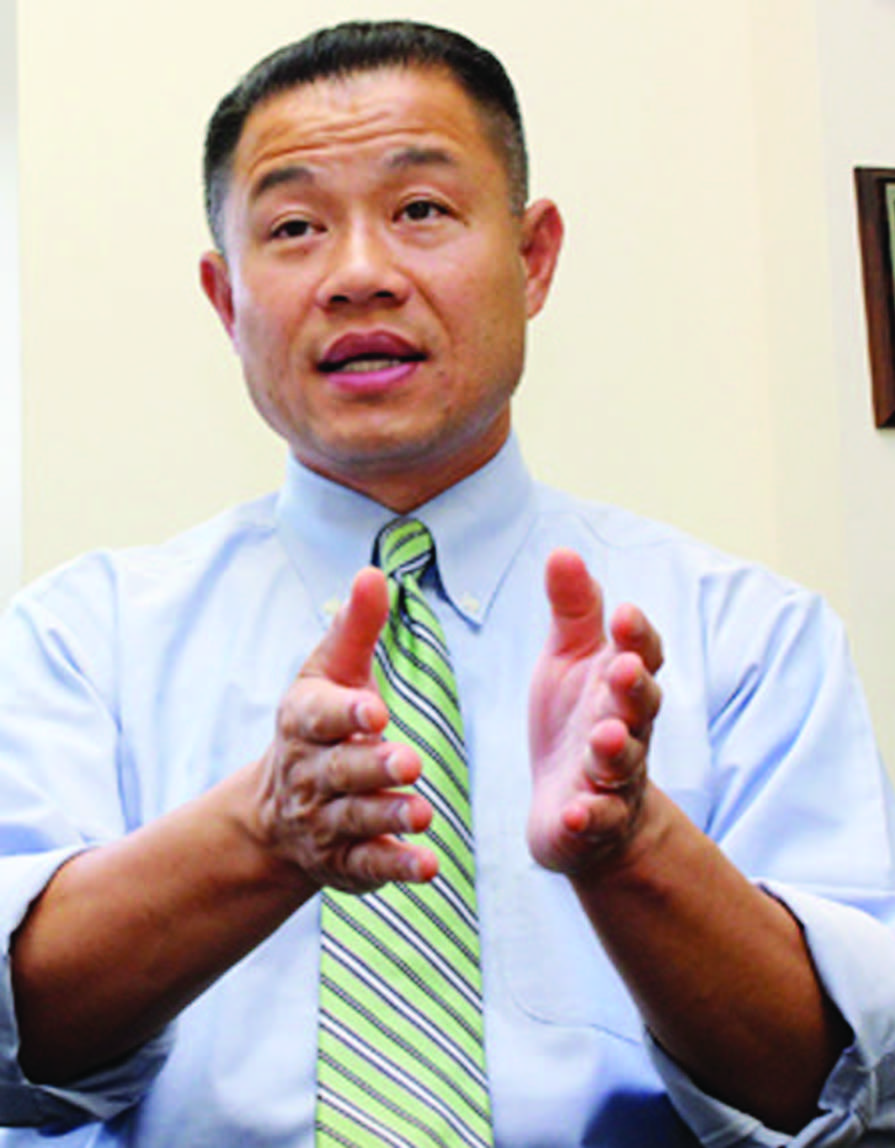
    NEW YORK, NY (TIP): Two former associates of John C. Liu, the New York City comptroller, managed to avoid lengthy prison sentences on Thursday, October 10, for their roles in attempting to funnel money to Mr. Liu’s mayoral campaign through an illegal fundraising scheme, reported The New York Times. Although Jia Hou, a former Liu campaign treasurer, and Xing Wu Pan, a fund-raiser, each faced a maximum sentence of 20 years, it was widely expected that the actual sentence would be far less severe: Both defendants’ lawyers had asked that their clients avoid prison, and prosecutors had asked for no more than 30 months for Ms. Hou, and half that for Mr. Pan. But in a Manhattan courtroom filled with the defendants’ supporters, the judge, Richard J. Sullivan of Federal District Court, sentenced Ms. Hou to 10 months and Mr. Pan to four.

    Afterward, Mr. Liu, who was not charged in the federal investigation into his campaign finances, which dated to 2009, sharply criticized the office of Preet Bharara, the United States attorney in Manhattan, for prosecuting Ms. Hou, 27, who goes by the name Jenny, and Mr. Pan, who is known as Oliver and is in his 40s. “For reasons I may never fully understand,” Mr. Liu said, “the U.S. attorney’s office set out to destroy me with what has been described as an extraordinarily intrusive and exhaustive investigation.” He added: “Failing to find that I had done anything wrong, they proceeded to set up a weak man and a wonderful young woman. Jenny Hou does not deserve this ordeal and injustice she has been put through.” Mr. Bharara’s office declined to comment on Mr.

    Liu’s statement. Prosecutors had charged that Ms. Hou and Mr. Pan relied on so-called straw donors – people whose contributions are reimbursed by others – to raise money with the goal of obtaining city matching funds. Ms. Hou was acquitted of conspiracy but was convicted for her role in the straw-donor scheme. She was also found guilty of lying to federal agents and of obstruction of justice. Mr. Pan was found guilty of conspiracy to commit wire fraud and of attempted wire fraud in relation to a straw-donor scheme. Mr. Liu was not in court Thursday. He commented, “I am very sad but even more angry at what has occurred,” he said. “The U.S. attorney’s office was wrong and should not be proud of its conduct.”

  • Mangano for rooting out Medicaid Waste, Fraud & Abuse; Seeks wider opportunities for Investigation

    Mangano for rooting out Medicaid Waste, Fraud & Abuse; Seeks wider opportunities for Investigation

    MINEOLA, NY (TIP): While the New York State Office of the Medicaid Inspector General (OMIG) currently limits the types of Medicaid investigations permitted by the County to medical transportation, pharmacy and durable medical equipment only, Nassau County Executive Edward P. Mangano has asked the New York State Medicaid Inspector General for expansion of the County’s investigation functions to include reviews of nursing homes, assisted living and other long-term care facilities. County Executive Mangano anticipates that as the population throughout Nassau County continues to age, more people will be in need of long term care, thereby increasing the possibility for abuse of taxpayer funds. In a recent letter to the Medicaid Inspector General, County Executive Mangano highlighted the need to ensure that the facilities are appropriately and responsibly meeting the needs of older adults. “With a rapidly expanding aging population on Long Island and the increasing prevalence of nursing homes, assisted living and other long-term care facilities, we undoubtedly and confidently believe that the savings to our taxpayers through the uncovering of waste, fraud and abuse in those institutions will be significantly enhanced far in excess of our current productivity,” said County Executive Mangano. Thus far, the savings in uncovering Medicaid waste, fraud and abuse in Nassau County has exceeded $51 million. “Nassau County welcomes the opportunity to expand its investigation program in order to protect taxpayers,” added Mangano. “I am hopeful the Medicaid Inspector General will agree and approve our proposed expansion.”

  • Odisha man is Chief Executive of Bank of India’s US Operations

    Odisha man is Chief Executive of Bank of India’s US Operations

    NEW YORK, NY (TIP): Weeks after Bank of India Chief Executive of US operations B.B. Joshi who was transferred as Executive Director of Bank of Baroda in Mumbai, the new incumbent has finally taken over. He is P.K. Pattanaik from Odisha. Speaking about his priorities, he said he would address core issues to improve the profitability of operations. “Profitability of banks has come under severe strain following the global slowdown and there is a crying need to address the core customer base”, said Pattanaik. He would strive hard to improve and enforce systems and procedures for strict regulatory compliances. He said the bank has an independent compliance department with more than half a dozen officers and all efforts would be made to strengthen the department. Bank of India, New York branch and San Francisco Agency have been operating in the US since December 1978 and December 1977 respectively and are familiar, confident and comfortable doing business the American way.

    Bank of India has global assets of $ 39 Billion and has a network of over 2884 branches spread over the length and breadth of India. The bank which was set up in 1906 also has branches in international commercial centers like London, Tokyo, Singapore, Hong Kong, Paris, Antwerp, ShenZen (China) to name a few and is wellversed in international trade. Bank of India, New York and San Francisco has a team of banking professionals who have come from different parts of India and are well versed in Indiarelated trade and have good rapport with key personnel in the banking sector in India. In view of this, unlike any other bank, Bank of India is in a position to move things in India, should there be roadblocks. Pattanaik started his career as a probationary officer in the bank in 1981 and rose up to the level of General Manager. He served in various capacities in branches in his home state Odisha and also in Mumbai Metro as Chief Manager besides working in the corporate office in Mumbai. A postgraduate in agriculture from Orissa institute of Agriculture, he also worked as General Manager of the bank’s Nagpur Zone. A former chairman of Aryabhatt Grameen Bank in Lucknow, Pattanaik have intensive experience in priority sector credit and compliances. He also served as General Manager of Human Resources of Financial Inclusions in bank’s head office in Mumbai prior to his posting in New York.