Year: 2013

  • Why Narendra Modi? Why no protest on US visits of Netanyahu?

    Why Narendra Modi? Why no protest on US visits of Netanyahu?

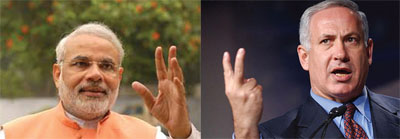
    People have double standards in America especially the Muslims; if they really care about human rights of Muslims why no one has never protested for the on going genocide of Palestinian Muslim by Israeli Leaders and Military. They should have protested on numerous visits of Israeli Prime Ministers like Olmert & Netanyahu to USA who gets a Hero’s welcome in both houses of US Congress.

    It is a universal truth all Israeli Prime Ministers including Netanyahu is directly responsible for giving orders to Israeli Military to kill unarmed Palestinian children, women, aged and young every day in their own country. I am not an admirer of Modi or BJP; slave to Zionist/Israeli’s and have mortgaged their integrity and brains to them. But Modi is not involved in killing of any minority on day to day basis.

    2002 was an unfortunate year for both Muslims and Hindus of Gujarat and unfortunately there were more Muslim casualties. To blame Modi directly for that is not right because he never ordered like Netanyahu or Prime Ministers before him to kill Muslims. More over after this incident no incident of similar nature has taken place under Modi as Chief Minister of Gujarat .

    Modi is democratically elected Leader of Gujarat and represents more than 60 million people and Muslims account for more then 6 million which is more than the 1.85 million Muslim population of Israel. If Israeli Leaders like Netanyahu responsible for killing Palestinian Muslims on day to day basis can visit USA freely why can’t Modi who is not killing any one on day to basis; can visit USA or be a key note speaker in a University via Satellite? People should know USA use all kind of leaders to their advantage.

    It was President Reagan who introduced Mujahedin’s in White House Lawns to the Media by saying, “Gentlemen these are the moral equivalent of our founding fathers.” Later when Russians were thrown out of Afghanistan by Mujahideen forces America turned against them. If American’s can give Hero’s welcome to mass murderers like Netanyahu involved in state sponsored Terrorism then no one should have any objections to the US visit of Gujarat Chief Minister Narendra Modi or his being a key note speaker via satellite in a US University.

  • Rbi Questions 3 Banks On Money Laundering Allegations

    Rbi Questions 3 Banks On Money Laundering Allegations

    MUMBAI (TIP): The Reserve Bank of India on March 14 asked ICICI Bank, HDFC Bank and Axis Bank for information on allegations that they were helping customers convert black money into white as a standard service. Earlier in the day, investigative website Cobrapost, which made this sensational charge, said such illegal conversions, called money laundering, are being done with the full knowledge of the senior managements of the three banks. RBI deputy governor Urjit Patel said: “We have been in touch with the banks and have asked for information on the matter.” The apex bank is expected to follow this up with a formal notice soon.

    Reacting to the allegations, the three banks announced their own investigations into the matter. “ICICI Group conducts its business with the highest level of compliance to legal and regulatory requirements. All employees of the group are trained and required to adhere strictly to the group code of conduct, including anti-money laundering and know your customer norms.” the ICICI Bank spokesperson said. HDFC Bank and Axis Bank also issued similar statements. The Cobrapost report said its undercover correspondent approached executives of the three banks across the country over five months – in many cases as a walk-in customer – pretending to work for a fictitious politician who wanted to launder money. All the methods suggested by the executives were in violation of RBI guidelines.

    Reacting to the news, shares of these banks fell sharply on Thursday morning but soon regained lost ground and ended the day with gains on the stock markets.

  • Angry Sushma tells govt not to challenge BJP, challenge Pakistan

    Angry Sushma tells govt not to challenge BJP, challenge Pakistan

    NEW DELHI (TIP): Raising the issue of terror attack in the CRPF camp in Srinagar, Bharatiya Janata Party (BJP) leader Sushma Swaraj on March 14 accused the government of not being concerned about CRPF jawans losing their lives in attacks by militants sponsored by Pakistan. “Are the top leaders of the government not concerned about terrorism? ” she asked and said: “Don’t challenge BJP, instead, let us unite and ‘challenge Pakistan unitedly.” “We should not challenge each other.

    We should be challenging Pakistan in one voice,” she said. ” It is sad that on a terror attack that the Parliament should seriously discuss, the members are challenging each other,” she added. Swaraj further asked the government to explain reports that there were intelligence inputs about the attack. “Why were the jawans not saved despite that?” she asked. She also criticized External Affairs Minister Salman Khurshid, who was in the House, for lunching recently with Pakistani Prime Minister Raja Pervez Ashraf when he visited the Ajmer Dargah or shrine near Jaipur last weekend.

    Union Home Secretary R.K. Singh on Wednesday said the terrorists who posed as cricketers and attacked the CRPF camp in Srinagar were from Pakistan. “Both the terrorists, who have been killed, appeared prima-facie to be not local, but from across the border. And the first impression is that they are probably from Pakistan,” he told media here.

  • Jamaat Leader Held For Inciting Anti-Hindus Attacks In Bangladesh

    Jamaat Leader Held For Inciting Anti-Hindus Attacks In Bangladesh

    DHAKA (TIP): Bangladesh police on Thursday arrested a sub-district chairman and local leader of fundamentalist Jamaat-e-Islami (JI) for inciting attacks on Hindus and temples in southeastern Chittagong as minorities appeared to be targets of past two weeks of violence over 1971 war crimes trial. “Police and (elite anti-crime Rapid Action Battalion) RAB teams jointly arrested Banshkhali upazila chairman Alamgir Kabir Chowdhury on charges of inciting violence against Hindu community and attack on their temples and property,” a police official in the port city of Chittagong told PTI by phone.

    Chowdhury’s arrest came two weeks after suspected activists of Jamaat and its student affiliate Islami Chatra Shibir went on rampage at their southeastern stronghold attacking and vandalizing several houses and temples of Hindu community alongside the local government establishments.

    They launched a violent protest against the death penalty awarded to one of their stalwarts Delwar Hossain Sayedee by a special tribunal for 1971 war crimes charges. Banskhali was one of the areas where the followers of the Hindu faith came under attacks during the recent violence which saw deaths of over 70 people, including six policemen, while several dozen Hindu temples were vandalized.

    Analysts said JI activists attacked Hindu villages and places of worship largely to spark reaction in India as the extreme right-wing party felt attacking minorities could divert public attention from the war crimes trial.

    The law enforcement agencies enforced a strict vigil against violence against Hindus while the high court issued several directives for the protection of the minorities. “A sense of fear is still there among the Hindu community although no fresh violence was reported in the past two days … we are disappointed that the lawmakers of the (ruling) Awami League and main opposition BNP and peoples representatives at local levels are not taking initiatives for social and political resistance,” Bangladesh Puja Udjapon Parishad vice-president Kazal Debnath told mediaperson. “This apathy (of the MPs and local representatives) gave them (attackers) a walkover but unless they intervene immediately the minority community could be exposed to more violence,” he said.

  • Chief justice takes oath as Nepal PM, to oversee polls

    Chief justice takes oath as Nepal PM, to oversee polls

    KATHMANDU (TIP): Following weeks of negotiations, Nepal’s chief justice Khil Raj Regmi was Thursday sworn in as the new head of government, the msain task of which will be to hold general elections by June 21.

    The main political parties reached an agreement late on Wednesday on the 63- year-old Regmi to be the chairman of the council of ministers, since he was seen as a neutral candidate to hold elections. He will hold a small cabinet of 11 members. The parties have agreed to have former bureaucrats as ministers.

    According to the amendment of the constitution, Regmi will not be performing his duties as the chief justice while he is the chairman of the council of ministers but will go back to the judiciary after elections. There has been widespread opposition to the appointment the chief justice as head of government from smaller political parties and the civil society. While President Ram Baran Yadav was swearing in Regmi, there were protest rallies outside.

    Opposing parties contend that making the chief justice as the head of government is against the principle of the separation of the judiciary and the executive. The country has been facing political uncertainty since May after the parliament was dissolved.

  • Five NATO troops die in Afghan chopper crash

    Five NATO troops die in Afghan chopper crash

    KABUL (TIP): Five members of the NATO-led international force fighting in Afghanistan were killed in a helicopter crash in bad weather in the country’s south, the coalition and provincial authorities said. Police in the southern province of Kandahar said the helicopter had come down on Monday evening during a heavy rain storm in Daman district.

    The NATO-led International Security Assistance Force (ISAF) does not release the nationality of casualties, but US, British and Australian soldiers operate in the south of Afghanistan, battling an Islamist insurgency. “The cause of the crash is under investigation. However, initial reporting indicates there was no enemy activity in the area at the time,” ISAF said following the incident. Helicopter crashes are fairly frequent in Afghanistan, where the 100,000-strong international mission relies heavily on air transport.

  • CBI: File shows Ex-IAF chief Tyagi changed tech specifications

    CBI: File shows Ex-IAF chief Tyagi changed tech specifications

    NEW DELHI (TIP): The CBI has obtained “crucial evidence” against Air Chief Marshal (retd) S P Tyagi after getting hold of the file in which the former IAF chief had given “approval” in writing for changing technical specifications of the VVIP choppers that allowed AgustaWestland’s AW-101 helicopters to re-enter the competition and ultimately bag the Rs 3,546 crore contract. CBI sources said this signed document, which approved the reduction in the operational flying ceiling of the VVIP helicopters from 18,000 feet to 15,000 feet, constitutes “crucial evidence” in the case. Sources said Tyagi had given his first approval on March 8, 2005, close to three months after he became IAF chief. His cousins were by then already in talks with the middlemen engaged by the helicopter manufacturer. “After Tyagi took over as IAF chief, the plan got a boost,” said a source. “This document looks like the first written communication on part of an IAF official to reduce the service ceiling of choppers from 18,000 feet to 15,000. Before this date, IAF was always against the idea of changing the specifications of choppers due to security reasons,” the source added.

    The CBI is “analyzing” all documents obtained from the defence ministry and elsewhere, starting from the initial bids to the final order to supply the 12 AW-101 helicopters, to trace the entire conspiracy behind the bribery scandal. The agency will prepare detailed questionnaires for all the 13 accused named in the FIR on the basis of these documents. “Their questioning will begin within a few days,” said the source.

    The CBI is also investigating the “whole chain of events”, including before Tyagi became the IAF chief, because his cousins Julie, Sandeep and Docsa were in regular touch with middlemen Carlo Gerosa and Guido Haschke even in 2004. “There is also a payment which came to India from these middlemen in 2004… it is suspicious and we are probing if it is connected to S P Tyagi directly,” said the source.

    The CBI on Wednesday had filed an FIR against Tyagi, his three cousins, the brother of former Union minister Santosh Bagrodia Satish Bagrodia, European middlemen Carlo Gerosa, Christian Michel and Guido Haschke, among others, apart from AgustaWestland, Finmeccanica, IDS Infotech, Aeromatrix and two other companies. In its FIR, CBI alleged that Tyagi and “with his approval” the IAF “conceded to reduce the service ceiling for VVIP helicopters from 6000 meters to 4500 meters (18,000 feet to 15,000 feet) as mandatory to which it was opposing vehemently on the grounds of security constraints and other related reasons earlier”. The agency alleged that the reduction in service ceiling – maximum height at which a helicopter can perform normally – allowed the helicopters of the UKbased AgustaWestland to enter the fray. The AW-101 choppers could not even qualify for submission of bids as per the initial technical requirements drawn up by the IAF.

    Meanwhile, AgustaWestland has got an extension of seven days from defence ministry to explain its links with the software companies that were allegedly used to pay kickbacks in the helicopter deal. The ministry had asked the firm last week to provide details about its transactions with Tunisia and Indiabased firms IDS Infotech and Aeromatrix.

  • Bansal For Rail-Based Trade Between India, Pak

    Bansal For Rail-Based Trade Between India, Pak

    NEW DELHI (TIP): Railway minister Pawan Kumar Bansal on March 14 said the best way forward to normalize ties between India and Pakistan would be “normalization of trade flows” between the two neighbours. “Bilateral trade relations are now at a point where significant economic gains could serve as powerful means for conflict resolution,” he said, favouring rail-based container movement between two countries to cut transaction cost and ease road traffic. “Trade facilitation measure such as development of integrated check posts will give a boost to bilateral trade between India and Pakistan through land route. One other step to give further fillip to bilateral trade could be introduction of containerization,” the minister said at a conference.

    Bansal said railways had an important role to play to boost trade between the both countries. “Railbased movement of containers across the boundary will not only ease road traffic, but also help trade in offering door-to-door service to its customers, which would also help in cutting down the transaction cost,” he stressed. At present there are two points where rail link is established – Attari and Munnabao. “There is potential of starting the containerization movement. We can negotiate to take forward the containerization,” he said, adding that two countries can work together to develop technology solutions in railway sector for common needs.

    With a view to address the need and aspirations of people of both the countries, Railways of the two countries have taken a lead with introduction of Samjhauta Express running via Attari-Wagah border in Punjab and Thar Express running via Munabao-Khokrapar border in Rajasthan.

    Successful running of these two services symbolizes the resolve of the people of both the countries to cut across the barriers of a political boundary.

  • Odisha Minister Resigns After Dowry Torture Charge

    Odisha Minister Resigns After Dowry Torture Charge

    BHUBANESWAR (TIP): Odisha’s law and urban development minister RaghunathMohanty today resigned on “moral grounds” after his daughter-in-law filed a dowry case against him and his family members.

    The minister rushed to Naveen Nivas, residence of chief minister Naveen Patnaik, and tendered his resignation in the wake of registration of a case at Balasore Town Police Station against him and his family members. “I have submitted my resignation to the Chief Minister on moral grounds,” Mohanty told reporters outside Naveen Nivas, while refuting the charges levelled by Barsha Sony Mohanty, his daughter-in-law. Barsha had lodged an FIR against the minister, his wife Pritilata, his son Rajasree and other members of family last night. “Allegation against me and my family is totally false and baseless.

    The people of Balasore know the truth. Let the law take its own course,” said Mohanty, fivetime MLA from Basta constituency in Balasore district. Mohanty, MLA for fifth consecutive term, had been a minister since 2000 and held important portfolios including parliamentary affairs, industries and IT. On the basis of the complaint lodged by Barsha, a case has been registered against the minister and others under section 498 (A), 506, 448 and 34 of IPC, police said. In her FIR, the woman said she married Rajasree on June 24, 2012. During marriage, her parents had given Rs 10 lakh and other household articles.

  • India puts on hold group visa facility with Pakistan

    India puts on hold group visa facility with Pakistan

    NEW DELHI (TIP): With the attack in Srinagar adding to concerns over cross-border terrorism, the government has opted against implementing the proposed group tourist visa facility under the liberalised visa regime with Pakistan from March 15, an official said March 14. “The group tourist visa facility under the liberalised visa regime agreed by India and Pakistan will not be implemented from March 15,” a home ministry official said. While lack of preparation is being cited as a reason for the visa agreement not being implemented, sources said India was concerned about attempts at infiltration from across the border.

    Two terrorists and five Central Reserve Police Force (CRPF) personnel were killed in terror attack in Srinagar on March 13. India had in January put on hold visa-on-arrival facility for senior citizens following heightened tension along the Line of Control (LoC) in Jammu and Kashmir over brutal killing of two Indian soldiers. Under the liberalised visa agreement, the group tourist visa for 30 days was to be implemented from March 15. The agreement said that group visas will be issued for not less than 10 members and not more than 50 members in each group, organized by approved tour operators and travel agents. Officials said that lists of tour operators had not been exchanged with Pakistan. The liberalised visa agreement was operaitonalised during Pakistan interior minister Rehman Malik’s visit to India in December, 2012. The officials said no new date had yet been decided to implement the group visa facility.

  • Fifteen years after taking charge, Sonia Gandhi seeks to reinvent Congress

    Fifteen years after taking charge, Sonia Gandhi seeks to reinvent Congress

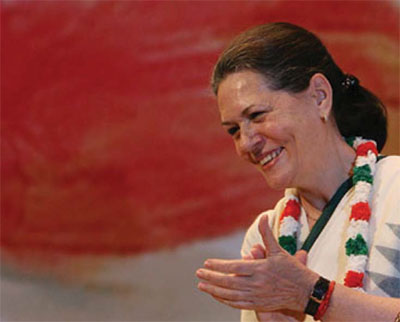
    NEW DELHI (TIP): Sonia Gandhi completed 15 years as Congress president on March 14 and thanked partymen for helping her accomplish the tough responsibly. As leaders lined up to felicitate her at 10, Janpath, she told them, “The real credit belongs to millions of Congress workers whose toil ensured that the faith of the poor and the vulnerable in Congress did not sap even when we were not in office.

    I congratulate the legions who are the most extraordinary cadre any party can hope for, and who have been our priceless asset.” The comment was seen to underplay her own achievement, with Sonia widely credited with reviving the party’s fortunes in the last 15 years after it had touched a low, the worst being the nine years out of power after the Narasimha Rao government. Already the longest serving Congress chief, Sonia’s 16th year coincides with the decisive step towards another transition in party leadership. Watching son Rahul ease into the job of No.2, meeting MPs and senior office-bearers daily, seems to be comforting Sonia who is known to have been all nerves when he was reluctant to move to the leadership position.

    The uncertainty has been rankling Congressmen as much in the wake of Sonia’s health problems. Rahul was elevated as vice-president at the Jaipur ‘chintan shivir’ in January. The settling of the succession conundrum has assured Congressmen who thanked Sonia for resurrecting the party after the barren years post-1995 when the party faced divisions and watched the ascendancy of rival BJP helplessly. Partymen underlined that Sonia’s toughest challenge since 2004 would be the coming Lok Sabha polls, with a sense of drift in UPA and charges of corruption and malgovernance dogging the government. That it would also be a comment on Rahul’s leadership adds to the challenge. The political wheel seems to be coming a full circle with Sonia having taken the plunge in 1998 to extricate the party from virtual oblivion.

    Congress then faced divisions and cut a sorry picture of rudderlessness under Sitaram Kesri. In 1998, faced with persistent requests from partymen, Sonia campaigned vigorously despite Atal Bihari Vajpayee’s soaring popularity that propelled the saffron alliance to power for the first time. The bad year saw Congress even lose the Gandhi stronghold of Amethi and Kesri paved way for Sonia to take charge officially as AICC president in March 1998. Despite a withering attack on her “foreign origin”, Sonia stayed the course, even contesting elections from Amethi and taking up the role of leader of opposition to pull Congressmen together.

    The 2004 elections turned the tide as a confident BJP was humbled by Sonia’s stewardship, an achievement that remains undefeated with the repeat victory in 2009. Her decision to decline the prime ministership in 2004 and instead put Manmohan Singh in the chair won her rare plaudits and helped defang the BJP attack about her ‘foreign origin”. While Congress has floundered recently, tripping on old weaknesses of corruption and infighting, AICC managers say Sonia is focused on reviving the party fortunes.

  • Gender equality in India among worst in world: UN

    Gender equality in India among worst in world: UN

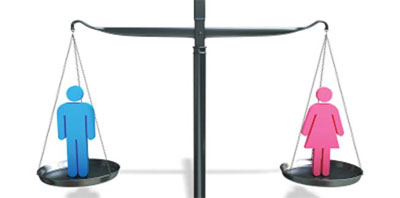
    NEW DELHI (TIP): When India’s Human Development Index is adjusted for gender inequality, it becomes south Asia’s worst performing country after Afghanistan, new numbers in the UNDP’s Human Development Report 2013 show. Pakistan, Nepal and Bangladesh, which are poorer than India and have lower HDIs, all do comparatively better than India when it comes to gender equality. The new UNDP report, released on March 14, ranks India 136th out of 186 countries, five ranks below postwar Iraq, on the HDI.

    The HDI is a composite indicator composed of three equally weighted measures for education, health and income. On the newly constituted Multidimensional Poverty Index (MPI), which identifies multiple deprivations in the same households in education, health and standard of living, only 29 countries do worse than India (though data-sets are from varying periods of time across nations). The MPI puts India’s poverty headcount ratio at 54%, higher than Bangladesh and Nepal.

    This was even as India did extremely well economically. India and China doubled output per capita in less than 20 years, at a scale the UNDP has said was “unprecedented in speed and scale”. “Never in history have the living conditions and prospects of so many people changed so dramatically and so fast,” the UNDP said; it took Britain 150 years to do the same after the Industrial Revolution and the United States, which industrialized later, took 50 years. On the whole, developing countries have been steadily improving their human development records, some faster than others.

    No country has done worse in 2012 than in 2000, while the same was not true for the preceding decade. India, Bangladesh and China are among 40 countries that have done better on the HDI than was predicted for them in 1990. By 2030, more than 80% of the world’s middle class is projected to be in the global South; within Asia, India and China will make up 75% of the middle class. The HDR identifies three drivers of human development transformation in the countries of the global South – proactive developmental states, tapping of global markets and determined social policy innovation.

  • Who coined the words VIP and VVIP? SC asks

    Who coined the words VIP and VVIP? SC asks

    NEW DELHI (TIP): The Supreme Court on Thursday stumped the Centre by asking it about the genesis of the oft-used terms “VIP” and “VVIP” in official circles and wanted to know the necessity of these words in a democratic country like India. “We would like to be enlightened about the origin of VIP and VVIP and its place in our democratic polity,” a bench of Justices G S Singhvi, Ranjana Desai and Kurien Joseph said. Intrigued by the commonly employed classification of public functionaries as VIPs and VVIPs (meant to connote very important persons and very, very important persons) for deciding the level of security cover, the bench asked amicus curiae Harish salve and additional solicitor general Siddharth Luthra to inform the rationale behind it in a democratic polity. It said, “The issue requires detailed debate on the use of red lights, hooters and sirens by private individuals and socalled VIPs.” It asked the Centre to respond by April 3, the next date of hearing.

    The court had sought details from states and Union Territories on the number of personnel deployed for security of VIPs and expenses incurred on providing security to private individuals and public functionaries other than the President, vice-president, prime minister, Lok Sabha Speaker and Chief Justice of India. The court said on April 3, it would also focus on the misuse of beacon lights issued to public functionaries. “People who have been permitted to use red beacon lights on official cars have altered rules and using it on their private vehicles too,” it said. The bench also frowned at the common sight of gunwielding security personnel accompanying VIPs to restaurants, malls, public functions and seminars, saying it had an intimidating effect on the common men.

  • NADA rubbishes boxer Vijender Singh’s claim

    NADA rubbishes boxer Vijender Singh’s claim

    Says boxer hasn’t given samples for test in the last 6 months
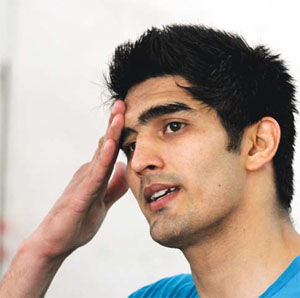
    CHANDIGARH (TIP): Troubles seem to be mounting for Olympic bronze medallist Vijender Singh , who has been accused by the Punjab Police of not cooperating in a heroin smuggling case . The National Anti-Doping Agency (NADA) on Wednesday rubbished the ace boxer’s claim that he had given samples to it for test in the last six months. In an interview to Headlines Today, NADA Director General Mukul Chatterjee said that Vijender had last given his sample in July 2012. He said heroin is a performance enhancing drug and if Punjab Police implicates the Olympian the agency would ban the boxer.

    “We last took his samples in July last year… Heroin not only relaxes you, but relieves your pain and enhances performance… Once Punjab Police implicates him, we can ban him,” Chatterjee said. “Vijender is reluctant because he knows that if he gives hair and blood samples to Punjab Police, he will be caught. He is denying them and playing the game. He knows hair sample can prove his innocence or otherwise,” the NADA chief said. Following a raid in Punjab’s Fatehgarh Sahib district, the police had found that the international boxer from Haryana was somehow linked to the drug peddling racket. Vijender’s friend and former sparring partner- national boxer Ram Singh, who was arrested by the police in the case after 26 kg heroin was recovered from an apartment recently- has admitted to consuming heroin with the Olympian.

  • Boxer Ram Singh expelled from national camp

    Boxer Ram Singh expelled from national camp

    PATIALA/ NEW DELHI (TIP): Indian boxing’s image continued to take a massive beating with the Sports Authority of India expelling Olympic medallist Vijender Singh’s roommate Ram Singh from the national camp here after he confessed to consuming drugs. Executive director of NIS LS Ranawat confirmed Ram Singh’s expulsion here after his questioning by the Punjab Police in connection with a case of drug haul in Fatehgarh Sahab district. “Ram will be relieved from the camp here from tomorrow,” said Ranawat adding that Vijender would continue to remain in the camp.

    The official communication regarding Ram’s expulsion from the camp has not yet been received but information for his expulsion has been received telephonically, he added. Asked about Ram Singh’s presence in the national camp he said initially he was not in the list and was inducted only after the recommendation of Vijender. Ram is being summoned daily for questioning by the Fatehgarh Sahab Police following the arrest of two persons with 26 kg of heroin from a flat in Zirakpur area of Mohali district.

  • Anti-rape bill gets Cabinet nod

    Anti-rape bill gets Cabinet nod

    Age for consensual sex lowered to 16 years
    NEW DELHI (TIP): The Cabinet on March 14 cleared the final draft of the Criminal Law (Amendment) Bill, which retained the word “rape” over the gender-neutral “sexual assault,” to define crime against women. It also dropped the provision to penalise complainants for filling false cases of harassment like stalking and voyeurism, besides lowering the age for consensual sex to 16 years. The Cabinet meeting, presided over by Prime Minister Manmohan Singh, gave its nod to the proposed legislation drafted after a Group of Ministers (GoM) sorted out differences among the home, law and women and child development ministries on certain issues.

    The United Progressive Alliance (UPA) government has convened an allparty meeting on Monday to seek diverse views on the proposed Bill that will replace the existing ordinance, so that Parliament can pass it without much hassle. The Samajwadi Party and the BJP have different opinions on some portions of the Bill, which they are likely to raise in the meeting.

    Sources said since the Cabinet has agreed to bring down the age for consensual sex from 18 to 16 years, the women and child development ministry will have to amend the Protection of Children from Sexual Offences Act of 2012 to introduce uniformity in both legislations. The Act differentiates a child from an adult. It defines a youngster as a person below 28 years of age. The Act also protects teenagers from crimes like sexual assault and harassment.

    Even consensual sex with a minor is considered rape. It was learnt that the Women and Child Development Minister Krishna Tirath had objected to reducing the age for consensual sex at the Cabinet meeting. Stalking, voyeurism and touching a woman without consent have been defined as criminal offences in the Bill.

    NBW offence
    Sustained stalking will be a nonbailable offence, while the provision for penalising complainants for falsely implicating people in harassment cases has been withdrawn from the final draft. It was debated that such a provision will deter women from registering sexual crime cases. The prime minister had constituted the GoM headed by Finance Minister P Chidambaram to evolve consensus among the warring ministries. The government wanted to introduce the Bill in the Budget session, which goes into recess on March 22. The Bill also proposes death penalty for the rape accused if the victim dies or is pushed to a vegetative stage. Besides, life term has been extended to ensure that the culprits spend their entire life behind the bars.

  • Govt acts tough, delays sending new envoy to Italy

    Govt acts tough, delays sending new envoy to Italy

    NEW DELHI (TIP): India on March 14 toughened its stand over Italy’s refusal to send back two marines accused of killing Kerala fishermen to face trial by stopping its new ambassador to Rome from joining duty. Highly placed government sources confirmed that senior diplomat Basant Gupta, who has been named ambassador to Italy, has been asked to stay put in India. Gupta was held back just a day ahead of his taking charge in Rome in what is effectively a retaliatory move by India. The move is seen as part of a review of bilateral ties in the wake of Prime Minister Manmohan Singh telling Parliament on Wednesday that Italy’s decision to renege on its commitment to the Supreme Court will have its consequences.

    In fact, Gupta had earlier been asked to expedite his departure to Rome because the government felt his presence there would help in coordinating with Italy in the Agusta Westland chopper kickbacks investigations. Sources said the development could be a precursor to serious action against Italian ambassador Daniele Mancini for breach of trust, as indicated by foreign minister Salman Khurshid after his meeting with the PM. Mancini had given the undertaking in Supreme Court assuring the marines’ return.

    New Delhi also took up the matter with EU as it briefed its ambassador here about the developments in a meeting. Earlier in the day, the foreign ministry said there was already a process underway to review ties with Italy. “We have initiated a study to review all aspects of our bilateral relations with Italy,” spokesperson Syed Akbaruddin said. “As far as we are concerned, we want Italy to accept that the commitment given before Supreme Court ought to be respected. Other things are secondary,” Akbaruddin said, maintaining the court’s decision to prevent Mancini from leaving the country did not violate any aspect of Vienna Convention.

    Late in the evening, the foreign ministry again summoned Mancini and informed him about the Supreme Court directive that he not be allowed to leave the country. “He was told that the Supreme Court is aware of Italy’s note verbale about the marines not coming back and that the court had issued a notice restraining him from leaving the country,” sources said.The envoy, who accepted the notice, is learnt to have conveyed to Indian officials the position taken by Italy that under the Vienna Convention, his movement can’t be restricted. In the morning, Khurshid discussed the issue with the PM who was apparently of the view that the government had to contemplate some sort of action if the Italian government did not keep its promise.

    Khurshid indicated after the meeting that some action may be taken against Mancini. Khurshid said after the meeting that everything would be done to maintain India’s “dignity and primacy”. Asked if the government would act against Mancini, Khurshid said, “We will. As we take steps, will let you know. We have to take steps and there is no question that we won’t take steps.”

  • India-Pakistan Hockey Series Called Off After Govt’s Objection

    India-Pakistan Hockey Series Called Off After Govt’s Objection

    NEW DELHI (TIP): The diplomatic tensions between India and Pakistan has yet spilled over to the sporting arena as the Indian government has refused permission for a home-and-away bilateral hockey series between the two countries on security grounds. A top source in Hockey India said that they have received a communication from the Ministry of External Affairs asking it call off the bilateral series. “The bilateral series between India and Pakistan has been cancelled as the Ministry of Exeternal Affairs did not give us permission. The MEA had sent a fax to us yesterday, asking us not to host Pakistan or travel to the country for the series,” said a source.

    The Pakistan’s hockey team was scheduled to tour India next month for five Test matches, which would have revived the bilateral hockey ties between the two traditional rivals in nearly seven years. Pakistan was expected to play matches in the cities of Ranchi, Lucknow, Delhi, Mohali and Jalandhar between April 5-15. After Pakistan’s visit, the Indian team was scheduled to pay a return visit and play five matches in Lahore, Faisalabad, Karachi and Sialkot from April 23. Pakistan and India last played a bilateral hockey series in 2006 — three matches in each country. Pakistan won three and lost one while the remaining two were drawn. The cancellation of the hockey rubber came close on the heels of an abandoned bilateral snooker series between India and Pakistan earlier this month following Government’s objection.

  • Day after Assembly chaos, 9 Cong MLAs suspended

    Day after Assembly chaos, 9 Cong MLAs suspended

    CHANDIGARH (TIP): Nine Congress legislators were on March 14 suspended from the Punjab Assembly for the remainder of the budget session. The House had witnessed acrimonious scenes yesterday with Congress legislators taking over the Speaker’s chair after leading a protest against a “raid” on the office of Congress Legislature Party leader Sunil Jakhar. The watch and ward staff led by police officers had entered the CLP leader’s office to check on the Tarn Taran police assault victim who had unauthorisedly been brought into the Assembly by Jakhar.

    Those suspended include former minister Jagmohan Singh Kang, who took over the Speaker’s chair, Charanjit Singh Channi, Amarinder Singh Raja Warring, Hardyal Singh Kamboj, Rana Gurjit Singh, Sukhwinder Singh Randhawa, Parminder Singh Pinky, Balbir Singh Sidhu and Kuljit Singh Nagra.

    Sources said Speaker Charanjit Singh Atwal first suspended the nine legislators for a day. But the SADBJP alliance hardened its stance on the issue over two things – One Jakhar tried to move a privilege motion against yesterday’s alleged trespass by the police on his office when the House reassembled this morning and second there was lack of “remorse” on part of the CLP leader and the legislators responsible for the unruly scenes yesterday.

    Senior leaders approached SAD president Sukhbir Singh Badal saying the party must take harder stance against those responsible for the “lawlessness. Subsequently, the Treasury Benches started the process of creating the ground for strict action by insisting in their addresses in the House that a day’s suspension was not commensurate with the “crime” committed by the Congress legislators. The Treasury Benches also made the manhandling of a policeman doing watch and ward staff duty a “Dalit” issue by alleging that the Congress legislators knew they were attacking a “Dalit’ but did not care less.

  • Fed Slaps Goldman, J.P. Morgan Over Dividends, Buybacks

    Fed Slaps Goldman, J.P. Morgan Over Dividends, Buybacks

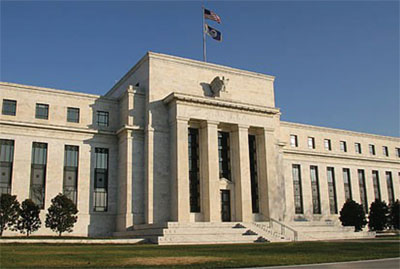
    NEW YORK (TIP): Nearly all of the nation’s largest banks won permission to return cash to shareholders Thursday, March 14 but the Federal Reserve imposed conditions on Goldman Sachs and JPMorgan Chase’s plans to raise dividends or buy back shares. Of the 18 big banks that the Fed reviewed, only auto lender Ally Financial and regional bank BB&T were denied permission to boost their payouts to shareholders.

    The 18 banks control 70% of the nation’s banking assets. BB&T said it would resubmit its plan, and noted that it has the strongest capital base of any traditional bank in the Fed’s stress tests. It raised its dividend 15% during this quarter. Goldman Sachs also said it would resubmit its plan.

    The Fed’s actions are a sign that the 2008 financial crisis is receding enough that banks can lend more freely and still return money to their shareholders, said Michael Rose, an analyst at brokerage firm Raymond James. “This not only signals that banks are healthier, but also that they are open for business,” Rose said. “The banks are highly capitalized, and earnings have rebounded.” Goldman and JPMorgan Chase, two of Wall Street’s biggest and most powerful banks, won approval subject to the requirement that they resubmit their plans by Sept 30. That condition is meant to force the banks to better demonstrate that they can forecast what will happen to them in the event of another severe recession, said a senior Fed official who would not allow his name to be used.

    Both banks appeared to have enough capital to meet the central bank’s standards, according to results released by the Fed. Shares of both banks dropped about 2.5% after the news was announced, but the dispute won’t prevent dividend increases, said Anthony Polini, another Raymond James analyst who follows JPMorgan. “The outcome shows that regulators overreacted, and shows what it’s like to be overregulated,” Polini said. “This isn’t going to slow them down.” Regulators want Goldman and Morgan to prove they can manage the risks posed by proprietary trading, or the buying and selling of securities the banks own themselves, rather than trading for clients, Polini said.

    The $6.2 billion loss that JPMorgan took last year on derivatives trades, which was the subject of a scathing Congressional staff report released Thursday, probably made the Fed more cautious, he said. The move immediately produced some signs of bigger returns to bank shareholders. Bank of America said it will buy back $5 billion of common stock and redeem $5.5 billion of preferred shares. JPMorgan will raise its quarterly dividend to 38 cents a share from 30 cents and buy back $6 billion of stock. Citigroup will buy back $1.2 billion of common stock. The Fed said banks have doubled their capital since late 2008, in part by slashing dividends. The banks paid 19% of their profits last year as dividends, about half of what they paid before the financial crisis.

  • Jigar Shah appointed Parsippany’s Indian-American community liaison

    Jigar Shah appointed Parsippany’s Indian-American community liaison

    PARSIPPANY, NJ (TIP): During a recent special meeting in Council chambers at town hall, Parsippany Mayor James Barberio appointed Jigar Shah as special liaison to the Mayor’s Office, Indian- American Community Outreach. According to the mayor, over three years ago during his 2009 mayoral campaign he promised the Indian-American community that the position of special liaison would be created. Now just days before Barberio, Council Vice President Vincent Ferrara and Shah’s nephew, Milin Shah, announced their plan to run for office in 2013, the mayor made the position a reality.

    In a statement released by the mayor’s office, Barberio explained, “The Indian- American community is one of the largest and fastest growing cultures in Parsippany. With places of worship, restaurants, dance studios, beauty salons, and an array of many more successful small businesses – Indian-Americans have become an essential part of Parsippany, and one of the reasons why Parsippany is ranked the number one township to live in New Jersey!” Shah came to Parsippany from Mumbai, India, in 1974, left for a brief time and returned in 1983 to open a wholesale food distribution business and Indian grocery stores. He has been an unofficial advocate and leader for the Indian-American in Parsippany for years and now as a liaison to the mayor’s office Shah will work on behalf of the community to ensure that they have access to the services and support they deserve.

    The position is an unpaid, volunteer post. Barberio concluded, “Jigar’s work ethic and love for our Parsippany community makes him the perfect person for this opportunity. I thank Jigar for accepting this opportunity and volunteering to be the direct connection between the mayor’s office and Indian-Americans throughout Parsippany.”

  • New Aia Executive Inaugurated

    New Aia Executive Inaugurated

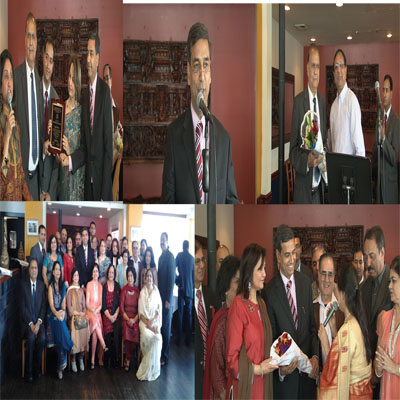
    NEW YORK (TIP): Association of Indians in America-NY Chapter’s new executive committee for the current term 2013-2014 was inaugurated in Long Island on Sunday, March 3rd . Outgoing president, Ranju Batra was felicitated for her great work and community service over the years and especially during her presidency spanning the past two years.

    She handed over the presidential duties for the 2013-14 term to incoming president, Sunil Modi. Ranju Batra, on the occasion, relived the joyous and historic event of her presidencythe silver jubilee Diwali last year. She also recalled fondly the support she had received from many. She said, “…. supporting me in this history making adventure were my committee and our sponsors like State Bank of India, Bank of Baroda, Bank of India, India Tourism, Star TV, Air India, McDonald’s, PepsiCo, Toyota, New York Life, Habib Bank and many others…”.

    Speaking of her resolve to hold timely elections, she said, ” Right after that emotional high, I acted in November 2012, 1 yr. and 5 months into my tenure, to start the election process, so my successor could take over in January – as this would better serve the interests of AIA as well as the community – happily putting community above self.”

    Ranju also mentioned her favorite project on hand- Diwali commemorative stamp. “I am equally committed to achieving my pet project of getting the Diwali Stamp issued, and I will continue to lead, pull and push until it is issued”, she said and mentioned gratefully the support she had got of some lawmakers in her effort. “I requested Congresswoman Carolyn Maloney, a dear family friend, and she introduced a House Resolution – HR47- and joining her were Congresswomen Grace Meng and Tulsi Gabbard, Congressmen Steve Israel and Ami Bara to name a few.” The new President Sunil Modi has been active at AIA for the past many years serving in the capacity of executive member, Vice-President as well as the Deepavali Festival chair. Prior to that he served on the Board of Directors at the largest YMCA in Queens, Cross Island YMCA, and served on the UN Committee of YMCA International. National President of AIA, Dr. Ghanshyam Pandey flew in from Chicago especially to attend this event. AIA is the oldest association of the Indians in America.

    The Association was founded on August 20, 1967. The New York Chapter of AIA was established in 1968 and is well known for its social, cultural and educational activities. AIA-NY Chapter is a non-profit organization which is involved in many community, charitable and social events that embody the spirit of its members and its motto, “Indian Heritage and American commitment”. The NY chapter has members from all over the tri-state region.

    It prides itself on being completely secular and open, with members representing all regions and religions of India, as well as of varied professions, backgrounds and occupations. For the last four decades, the mainstay event of the organization is the widely popular Deepavali Festival, held at the South Street Seaport in New York City, organized on the first Sunday of October (this year on October 6th, 2013).This Deepavali festival is the most prominent and one of the most well-known festivals of the Indian community across the country.

    The Vice-Presidents for the new executive board are Dr. Sunil Mehra, Harish Thakkar, Sham Gajwani & Divya Shah. The Secretary is Avinash Suri. The Treasurer position is handled by Dr. Bal Gilja. Members at Large is comprised of Asmita Bhatia, Abhijay Goenka, Gitanjali Anand, Neelam Modi, Dr. Pushpa Shah, Indu Gajwani, Swati Vaishnav, Neena Sahani, Divya Tandon, Beenu Sabharwal, Usha Kapoor, Govind Munjal, Jyoti Gupta, Dr. Urmila Shivram, Dr. Swarn Gupta, Sudeep Jay Modi, Dr. Tarun Wasil, Sumit Arora, Dr. Ami Bhagat, Dr. Neeta Jain, Rajiv Kedia & Dr. Bhagwati Mistry.

  • Indian American convicted of harboring illegal Indian maid

    Indian American convicted of harboring illegal Indian maid

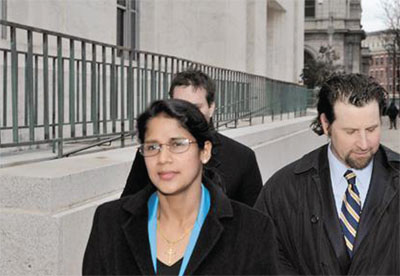
    NEW YORK (TIP): An Indian American widow charged with keeping an undocumented Indian maid as a slave has been convicted of harboring an illegal immigrant, but found not guilty of the stiffer charge of keeping her for financial gain. Annie George, 40, could possibly be sentenced to five years in prison, a $250,000 fine and forfeiture of her share of a mansion near Albany in upstate New York, according to the local newspaper The Saratogian. George is scheduled to be sentenced July 9 by Federal District Court Judge Gary Sharpe in Albany, about 140 miles north of New York City.

    George was arrested in February 2012 on charges of harboring illegal Indian immigrant Valsamma Mathai for five-and-a-half years at three different homes and using her as a servant for personal gain. George’s husband, Mathai Kolath George, and her eldest son were killed in a plane crash in 2009. The US Attorney’s Office said Valsamma Mathai was used as a domestic, cook and babysitter by the family for up to 17 hours a day, seven days a week, from October 2005 through May 2011. The prosecution claimed her agreed-upon salary was $1,000 per month.

    Early Friday, March 8 the jury asked to have portions of George’s testimony read back to them. Shortly after noon, the jury sent a note to Judge Sharpe asking for clarification on exactly when someone goes from being in the country legally to being an illegal alien. The judge, according to The Saratogian, explained what a US visa permits. “If they go beyond the limitations of that visa, they are illegal,” he said.

  • Punjabi Merchants’ Association, Richmond Hill Formed

    Punjabi Merchants’ Association, Richmond Hill Formed

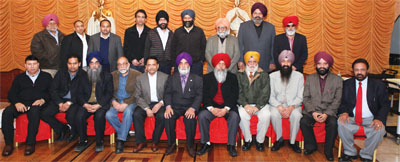
    NEW YORK (TIP): March 12 witnessed the fruition of a long time cherished desire of the business community of the Richmond Hill neighborhood to have an organization to promote their businesses and protect their interests. The neighborhood has a number of big and small business establishments, owned mostly by the Punjabi and Guyanese communities. With the coming in to being of this association, merchants hope to collectively work for a better business climate in the neighborhood.

    The association has been named as “Punjabi Merchants’ Association Richmond Hill”. Pritam Singh Gilzian, a well known businessman and a former President of Gurdwara Baba Makhan Shah Lobana has been elected President while Jaswinder Singh Johl of Apna Bazar has been elected Chairman. Jarnail Singh of Atlantic Farm, Himat Singh Sarpanch, a prominent businessman and a former President of Gurdwara Baba Makhan Shah Lobana, and Amrik Singh Sachdeva, another prominent businessman have been elected Vice Presidents. A number of other offices were also filled Pritam Singh Gilzian announced that soon the association will be got registered and a constitution framed.

  • Dr. C. Venkata S. Ram conferred prestigious Padma Award

    Dr. C. Venkata S. Ram conferred prestigious Padma Award

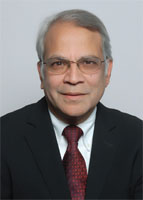
    NEW YORK (TIP): Dr.C.Venkata S.Ram, a well known expert in the treatment of hypertension has been conferred the prestigious “Padma Shri” award by the Government of India for his “distinguished” and “impactful” services in the field of medicine on the eve of Republic Day 2013. Indian government bestows civilian awards annually to people from various walks of life. Padma Shri is one of the highest civilian recognitions in India. Dr. Ram’s professional career in Dallas, Texas has established him as a recognized global expert in the treatment of hypertension. He worked for a long time at University of Texas Southwestern medical school, Dallas, Texas, where he earned a reputation as a master clinician, excellent teacher, and a careful researcher. Along with renowned Dr. Norman Kaplan, he has contributed immensely to our understanding of the patho-physiology and treatment of hypertension.

    Dr.Ram has published 310 articles and co-authored a book along with Dr. Kaplan. After his long tenure at UT Southwestern medical school , Dr. Ram joined Dallas Nephrology Associates as its director of blood pressure institute, medical education, and clinical research; and is now a consultant to DNA . Dr.Ram served the American Association of Physicians from India ( AAPI) in various capacities and served as its president in 1995-1996.

    He received numerous recognitions from various professional organizations for his expertise in hypertension, as a clinician, and as an educator and researcher At present, Dr.Ram is serving as the President and C.E.O of MediCiti Medical College, MediCiti Institute of Medical Sciences, and MediCiti group of hospitals, Hyderabad, INDIA; for over 30 years, he has passionately and consistently championed preventive cardiology in India by controlling cardiovascular disease risk factors in the community such as hypertension. Indian-American community is honored to have one of its own as a Padma Shri awardee by the government of India in 2013.