Year: 2013

  • Horse Meat Row Spreads To Asia

    Horse Meat Row Spreads To Asia

    PARIS (TIP): The fallout from Europe’s horse meatscandal has spread outside the continent, with animported lasagne brand pulled from the shelves in HongKong and a new row over the treatment of horsesfarmed in the Americas.A host of top players have been caught up in thespiralling scandal including Nestle, the world’s biggestfood company, top beef producer JBS of Brazil andBritish supermarket chain Tesco.

    Hong Kong authorities ordered ParknShop, one of thebiggest supermarket chains in the city, to removelasagne made by frozen food giant Findus, one of thefirms at the centre of the scandal. The product wasimported from Britain and made by French firmComigel.Hong Kong’s Centre for Food Safety said onWednesday that the item “might be adulterated withhorse meat which has not undergone tests for veterinarydrugs”.

  • Gaffe-Prone Philip Trips Again With Nurse Remark

    Gaffe-Prone Philip Trips Again With Nurse Remark

    LONDON: (TIP) Prince Philip, the gaffe-pronehusband of Queen Elizabeth II, has hit the headlinesonce again for his “jovial” remarks, this time inreference to Filipino nurses.The 91-year-old Prince told a nurse from thePhilippines that her country must be “half empty”because so many Filipinos have come to the UK to work.The Duke of Edinburgh made the comment during avisit to the Luton and Dunstable Hospital inBedfordshire to unveil a 5.5-million cardiac centreearlier this week.

    His mood on the day was described as”jovial”, as the royal referred to himself as the “world’smost experienced curtain puller”.A hospital spokesperson did not comment on theDuke’s conversation with the nurse during his “hugelymotivational” visit. “Staff greatly enjoyed theopportunity to meet the Duke of Edinburgh, and weregard all personal conversations he had with our staffand guests as private…”Around 87,000 of the 660,000 nurses working in theUK’s National Health Service are mainly from thePhilippines, India, Australia and South Africa.Buckingham Palace refused to comment on a ‘privateconversation’.

  • Bo goes on fast, refuses to help in investigation

    Bo goes on fast, refuses to help in investigation

    BEIJING (TIP): Disgraced former senior Chineseleader Bo Xilai is refusing to cooperate with agovernment investigation into him and has stagedhunger strikes in protest and at one point was treated inhospital, sources with knowledge of the matter said.Almost a year after Bo’s fall from grace under a cloudof lurid accusations about corruption, abuse of powerand murder, the government has given no definitivetime frame for when he will be tried or announcedformal charges against him.

    Bo was ousted from his post as Communist Partychief in the southwestern city of Chongqing last yearfollowing his wife’s murder of a British businessman,Neil Heywood. Before that, Bo, 63, had been widelytipped to be promoted to the party’s elite inner core.Two independent sources with ties to the family saidBo’s trial was likely to be delayed until after an annualfull session of parliament and its top advisory body inMarch because he was not physically fit.

    “He was on hunger strike twice and force fed,” onesource said. It was unclear how long the hunger strikelasted. “He was not tortured, but fell ill and was taken toa hospital in Beijing for treatment,” the source said.The stability-obsessed ruling party is determined toprevent anything, including Bo’s trial, from disruptingthe final steps of Vice President Xi Jinping’s ascent tobecoming top leader.

  • Sperms Dance To Calcium’s Tune

    Sperms Dance To Calcium’s Tune

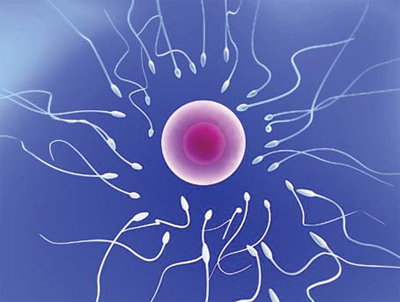
    In the journey up the female reproductive tract, sperm cells have to work through a range of viscous barriers and to do so they have to adapt their behaviour accordingly, researchers say.

    Broadly speaking, sperms are either activated, swimming forwards in a spiral, or hyperactivated, thrashing wildly – used to enter the egg, New Scientist reported.

    To find out how sperm switch from one stroke to the other, Stephen Publicover and his colleagues from the University of Birmingham, studied calcium signalling in human sperm cells.

    Sperm cells appeared to be triggered when calcium enters through ion channels in the tail. When calcium is released from organelles inside the neck of the cell into the surrounding cytoplasm, the sperm became hyperactivated.

    To verify the finding, the team used drugs like progesterone to artificially stimulate the movement of calcium within a sperm sample.

    When they triggered calcium uptake through the tail of the sperm, it stimulated activated movement and the sperm moved along a mucus-filled tube more easily than in a drug-free sample. Similarly, triggering the release of calcium within the neck made the sperm hyperactivated.

  • Joseph Dunford: ‘Fighting Joe’ To Lead Us Out Of Afghanistan

    Joseph Dunford: ‘Fighting Joe’ To Lead Us Out Of Afghanistan

    Gen Dunford, formerly theassistant commandant of theUS Marine Corps, haspromised to complete the transition ofsecurity duties to Afghan forces and to”set the conditions for an enduringpartnership with the Afghan people”.He replaces another Marine: GenJohn Allen, who was recently clearedof misconduct after an investigationinto “potentially inappropriate”communication with a Floridasocialite.Gen Allen this week said he wouldretire from the military instead ofaccepting President Barack Obama’sappointment as supreme Natocommander in Europe, citing familyhealth issues.

    While Gen Allen was busy finishinghis recommendations to the WhiteHouse on how quickly to withdrawtroops from Afghanistan next year,Gen Dunford was studying up andpreparing for deployment.As the second-ranking MarineCorps officer, Gen Dunford has visitedAfghanistan many times.Maren Leed, senior adviser at theCenter for Strategic and InternationalStudies, says Gen Allen’s departurewill not lead to a major revision in theUS exit plan from Afghanistan. As itstands now, the US is to finish itsmission in Afghanistan by the end of2014.”What you will see is [Dunford]spending time building and nurturingrelationships, trying to keep moraleup, and keep pressure on the Afghangovernment to make sure that theyare progressing and meeting theircommitments,” she says.

    While some Republicans suggestGen Dunford will be susceptible topolitical pressure from the WhiteHouse, Ms Lees says the generalrejects this notion.”Once he is in command, if heperceives that [withdrawal] deadlineto be counter-productive or to be tooearly, he absolutely would make thatvery clear to the White House,” shesays.Gen Dunford earned the nickname”Fighting Joe” in the Iraq war, whenhe led the initial attack into Iraq andon to Baghdad. Subsequently, GenDunford shot rapidly up the chain ofcommand, faster than almost anyonein recent Marine history.

    Afghanistan may prove GenDunford’s most challengingassignment yet. Ms Leedsummarised the tasks ahead:
    finish negotiations on legalframework governing how remainingUS forces are treated in Afghanistancontinue the military campaigndiscuss with Washington the paceand size of the troop withdrawalweigh in on the roles andresponsibilities of remaining USforceskeep morale high and troopscommitted to the missionThe arrival of the war-wise Marinegeneral as the new top Natocommander provides the US with anopportunity to reassure Afghans thatwhile America’s longest war is ending,the Americans are not leavingcompletely anytime soon.

  • Meet Nature’s Bizarre Bodyguards

    Meet Nature’s Bizarre Bodyguards

    From blushing to itching — quirky gifts Mother Nature granted us, and how they help. Turns out, the wrinkles that appear on our fingertips when we’re having a soak in the tub are nature’s answer to slippery fingers and help us grip better. Who knew? Newcastle University experts made the discovery, and many other researchers have questioned why our bodies do what they do too.With their constant leaking, creaking, throbbing and burping, our bodies often embarrass us. But while they do let us down from time to time, they are also the product of millions of years of evolution.

    So what other quirky gifts did Mother Nature grant us?
    GOOSEBUMPS:
    Like it or lump it, the funny little pimples we get when we’re cold are good for us. They heat us up as quickly as possible, and are a hangover from our days on all fours when we were covered in fur, the journal Scientific American says. Goose bumps are caused by muscles contracting, allowing hairier people to retain more heat.

    ITCHING:
    This mysterious sensation has baffled scientists for years but without it we would be lost. Dr Zhou- Feng Chen, a professor at the Washington University School of Medicine Pain Center, calls it a ‘perception’. For humans, for example, it is the equivalent to a cat’s whiskers. Nerves in the skin send signals to the brain ringing alarm bells that something is not quite right. The urgent desire to make it go away leads to our scratching. But while this sometimes brings intense pleasure, it can also be the worst thing you can do.

    BLUSHING:
    According to psychologists from Cambridge University, blushing has evolved as a product of the communication and social interaction with other human beings. It signals to others that we are upset or embarrassed and that they should perhaps leave us alone. Think about that the next time you are cheeky.

    ADRENALINE RUSH:
    There was a time when most people would have felt the rush of adrenaline through their bodies at the howl of a wolf pack. But these days we are more likely to feel it outside a kebab shop on a Friday night when the local bruiser kicks off. The heart races, limbs feel wobbly and there’s a heightened sense of everything around — do you fight, or take flight? This is nature’s high octane method of keeping us alive in threatening situations and without these rapid-fire changes, not many of us would have made it this far. The term fight or flight was first coined in 1932 by Harvard Medical School professor Walter Bradford Cannon.

    SWEATING:
    The opposite to goose bumps, sweating keeps us cool — and a little stinky too. Although it often makes us feel hotter, it is essential, otherwise we would suffer heatstroke and die on one of those rare hot days in the summer. According to the Journal of Applied Physiology, we have around two million sweat glands.
    SNOT:
    It’s not nice, of that there is no doubt. And millions of us will be producing bucket loads of the stuff at the moment. But researchers at the University of Waikato in New Zealand revealed how mucus is actually one of nature’s ingenious traps. It evolved to prevent nasty germs making it through our noses and into our lungs, where they could do a lot more damage. Now that’s not something to sneeze at, is it?

    SNEEZING:
    While mucus provides a barrier against viruses entering our bodies through our airways, its side-kick sneezing is evolution’s solution to getting rid of the germs for good. But people do not just sneeze when they have a cold. The body developed it as a way of combating allergens. Common pub mythology says our sneezes can hit 100mph but the Discovery Channel revealed the average is 40mph.

    CRYING:
    Try as you might to hold them in, sometimes the tears just have to come out. And according to Professor Randolph Cornelius, of Vassar College New York, not only do they moisten our eyeballs, tears also act as a signal to those closest to us. The theory is that, crying developed as discreet signal to convey that we were vulnerable, which predators could not pick up on.

  • Campaigners Speak Voters’ Language On Poll Eve

    Campaigners Speak Voters’ Language On Poll Eve

    SHILLONG (TIP): It’s International Mother LanguageDay and campaigning for Saturday’s assembly polls is atits peak with political parties reaching out to varioussections of the electorate in their respective mothertongues.Speeches are being delivered in Hindi, Bengali,Assamese, Nepalese, Khasi and, of course, English inthe cosmopolitan hill city, in keeping with the true spiritof the historical day, which is observed worldwide topromote awareness of linguistic and cultural diversityand multilingualism. It was on this day in 1952 that fourstudents achieved martyrdom in Dhaka, Bangladesh,while demanding declaration of Bangla as the officiallanguage of the then East Pakistan.

    “Shillong being a cosmopolitan urban centre, which ishome to several communities, it is important for us toreach out to the people with our plans and programmesin their own languages,” said a senior strategist of apolitical party.”In fact, candidates are using the services ofinterpreters while campaigning in different localities ofthe city,” he pointed out even as a prominent sittinglegislator’s Khasi speech was being translated in Bengalion the dais.Political parties are also trying to reach out to votersthrough catchy songs in different languages. Manyparties have brought out special music CDs solicitingvotes in the run-up to the election.

    Supporters singing these songs, punctuated by sloganshouting, drummed up a frenzy as they drove aroundthe city in vehicles, party flags fluttering.Almost a fortnight of campaigning through fieryspeeches, lilting music and blaring songs came to an endThursday evening with all sorts of politicking ceasingas mandated by the Election Commission of India.All wine stores and bars have downed shutters forfour days as per direction of the election department.With electioneering picking up steam with D Dayjust about 48 hours away, reports poured in ofheated encounters between supporters of candidatesin several constituencies in East Khasi Hillsdistrict.

    The deputy commissioner, who is also thedistrict election officer, imposed prohibitions underSection 144 CrPC in the entire district withimmediate effect.”There is likelihood of law and order problemsleading to danger to human life, health, safety anddisturbance to public tranquility,” justified a releaseissued by the DC.”Adequate security arrangements involving statepolice and paramilitary forces have been made allacross the state, especially along the interstateboundary with Assam and international border withBangladesh,” assured a top police official. “Vehiclesare being randomly checked all over,” he added.

  • Man Killed And Left For Dead On A Canarsie Street Corner

    Man Killed And Left For Dead On A Canarsie Street Corner

    NEW YORK (TIP): A man was killed execution-styleand left on a Brooklyn street corner Wednesday,February 20 morning, officials said.Police said the unidentified victim, who is believed tobe in his 20s, was found with a single gunshot wound tothe head at Flatlands Ave. and E. 108th St. in Canarsiejust after 6:15 a.m.

    Neighbors called police after finding the victimsprawled out on the ground, but did not recall hearingan argument or gunshots – an indication that a silencerwas used or the man was actually killed elsewhere andmerely dumped in Canarsie, sources said.Cops did not initially uncover a motive for the killing.Anyone with information regarding this incident isurged to contact NYPD CrimeStoppers at (800) 577-TIPS.All calls will be kept confidential.

  • New Heart Cells Keep Forming In Kids Too

    New Heart Cells Keep Forming In Kids Too

    After nearly a century of debate on whether heart muscle cells are generated after birth or they simply grow larger, researchers now say children and adolescents too generate these cells. The first ever finding refutes the long-held belief that the human heart grows only after birth and exclusively because existing cells grow larger, thus opening the way to growing new cells to repair injured hearts.

    Beginning in 2009, Bernhard Kuhn and his team from the Boston Children’s Hospital looked at specimens from healthy human hearts, aged between 0 to 59 years, the journal Proceedings of the National Academy of Sciences reported. Using several lab essays, they documented that cells in these hearts were still dividing after birth, significantly expanding the heart cell numbers, according to a Boston statement. The cells regenerated at their highest rates during infancy.

    Regeneration declined after infancy, rose during the adolescent growth spurt, and continued up until around age 20. The findings offer the strongest evidence to date that proliferation of cardiomyocytes (cells making up heart muscle) contributes to growth in healthy young human hearts. “For more than 100 years, people have been debating whether human heart muscle cells are generated after birth or whether they simply grow larger,” Kuhn said.

  • Navigating The Tricky Passage To India

    Navigating The Tricky Passage To India

    NEW DELHI (TIP):Underscoring India’simportance in Britain’sevolving foreign policypriorities, British PrimeMinister David Cameron wasin India this week for asecond time since assumingoffice in 2010.Though his visit toJallianwala Bagh has evokedmixed reactions in India, hebecame the first servingBritish Prime Minister topay his respects at the site,describing the massacre as “a deeplyshameful event in British history”. He maywell have done this for domestic politicalconsumption.

    Nonetheless, its symbolicimportance should not be underestimated.Cameron is trying to take U.K.-India ties toa new level of maturity and India would dowell to respond adequately.Economic relations were the focus of thisvisit. Accompanying the British PrimeMinister was a large business delegationfrom the U.K. Cameron emphasized thatboth New Delhi and London should removebarriers to cooperation and make it easierto invest in each other.Signaling to Indian investors hisgovernment’s seriousness about the U.K.-India ‘special relationship’, Cameron hasdecided to introduce a same-day visaservice for Indian businesses waiting toinvest in the U.K. He also suggested thatthere is no limit to the number of Indianstudents who can study at Britishuniversities, and to the number that couldstay on and work.

    Seeking partnerships
    Disenchanted with its specialrelationship with the U.S. and disillusionedwith the overly bureaucratic EU, Britain isnow looking to Asia to develop newpartnerships. The aim is to use Asia’seconomic dynamism to help Britain’s statusas a major global economy. The governmenthas decided to inject a “newcommercialism” into the work of theForeign Office. British Foreign SecretaryWilliam Hague has been explicit about theuse of Foreign Office to drum up businessfor Britain, using the country’s extensivediplomatic network to lift its economy.The Conservatives have been clear aboutIndia being a priority for the U.K. sinceCameron’s visit to India in 2006 as theleader of the opposition.

    Mr. Cameron hadwritten fondly of India before his visit:”India is the world’s largest democracy, arapidly growing economy, a huge potentialtrading partner, a diverse society with astrong culture of pluralism and a keyregional player – a force for stability in atroubled part of the world.” He hadsuggested that though Britain’srelationship with India “goes deep”, it”should go deeper”.India and Britain had forged a ‘strategicpartnership’ during former British PrimeMinister Tony Blair’s visit to India in 2005but it remained a partnership only in name.The Conservatives were keen on giving it anew momentum.

    The U.K. is the largestEuropean investor in India and India is thesecond largest investor in the U.K. Indianstudents are the second largest group inBritain. There are significant historical,linguistic and cultural ties that remainuntapped.But the Labor government’s India legacywas very complex and Mr. Cameron’sgovernment needed great diplomaticfinesse to manage the challenges. This wasparticularly true of the issue of Kashmirwhere the Labor government could not helpbut irritate New Delhi. As late as 2009,former Foreign Secretary David Milibandwas hectoring India that the resolution ofthe Kashmir dispute was essential toending extremism in South Asia.

    Traditional approach dropped
    Cameron’s government made a seriouseffort to jettison the traditional Britishapproach towards the subcontinent in sofar as it has decided to deal with India as arising power, not merely as a South Asianentity that needs to be seen through theprism of Pakistan. Cameron made all theright noises in India during his first trip in2010. He warned Pakistan againstpromoting any “export of terror”, whetherto India or elsewhere, and said it must notbe allowed to “look both ways”. He hasproposed a close security partnership withIndia and underlined that Britain, likeIndia, was determined that groups like theTaliban, the Haqqani network or Lashkar-e-Taiba should not be allowed to launchattacks on Indian and British citizens inIndia or in Britain.

    Despite causing adiplomatic row with Pakistan and DavidMiliband calling him “loudmouth”, Mr.Cameron stuck to his comments.More significantly, the British PrimeMinister also rejected any role for hiscountry in the India-Pakistan dispute.In this new phase of India-U.K. ties,economics and trade are likely to dominate.Mr. Cameron has managed to changeIndian perceptions about Britain to aconsiderable extent. If even after this theU.K.-India ties fail to take off, it won’t be forlack of trying by the British PrimeMinister.

  • Smallest Planet Discovered Orbiting Another Star

    Smallest Planet Discovered Orbiting Another Star

    NEW DELHI (TIP): NASA scientists have discovered the smallest planet yet found going around a star similar to our Sun. It is only one third the size of Earth, slightly larger than our Moon. Located 210 light years away in the constellation Lyra, this system has two more planets.

    The moon-size planet called Kepler- 37b, and its two companion planets were found by scientists with NASA’s Kepler mission, which is designed to find Earth-sized planets in or near the “habitable zone,” the region in a planetary system where liquid water might exist on the surface of an orbiting planet. However, while the star in Kepler-37 may be similar to our sun, the system appears quite unlike the solar system in which we live. Astronomers think Kepler-37b does not have an atmosphere and cannot support life as we know it.

    The tiny planet almost certainly is rocky in composition. Kepler-37c, the closer neighboring planet, is slightly smaller than Venus, measuring almost threequarters the size of Earth. Kepler-37d, the farther planet, is twice the size of Earth. The discovery of such a tiny planet highlights the great advances in technology. The first exoplanets found to orbit a normal star were giants. As technologies have advanced, smaller and smaller planets have been found, and Kepler has shown that even Earth-size exoplanets are common. “Even Kepler can only detect such a tiny world around the brightest stars it observes,” said Jack Lissauer, a planetary scientist at NASA’s Ames Research Center in a statement. “The fact we’ve discovered tiny Kepler-37b suggests such little planets are common, and more planetary wonders await as we continue to gather and analyze additional data.” Kepler-37’s host star belongs to the same class as our sun, although it is slightly cooler and smaller. All three planets orbit the star at less than the distance Mercury is to the sun, suggesting they are very hot, inhospitable worlds.

    Kepler-37b orbits every 13 days at less than one-third Mercury’s distance from the sun. The estimated surface temperature of this smoldering planet, at more than 800 degrees Fahrenheit (700 degrees Kelvin), would be hot enough to melt the zinc in a penny. Kepler-37c and Kepler-37d, orbit every 21 days and 40 days, respectively. “We uncovered a planet smaller than any in our solar system orbiting one of the few stars that is both bright and quiet, where signal detection was possible,” said Thomas Barclay, Kepler scientist at the Bay Area Environmental Research Institute in Sonoma, Calif., and lead author of the new study published in the journal Nature. “This discovery shows close-in planets can be smaller, as well as much larger, than planets orbiting our sun.” The research team used data from NASA’s Kepler space telescope, which simultaneously and continuously measures the brightness of more than 150,000 stars every 30 minutes. When a planet candidate transits, or passes, in front of the star from the spacecraft’s vantage point, a percentage of light from the star is blocked. This causes a dip in the brightness of the starlight that reveals the transiting planet’s size relative to its star.

    The size of the star must be known in order to measure the planet’s size accurately. To learn more about the properties of the star Kepler-37, scientists examined sound waves generated by the boiling motion beneath the surface of the star. They probed the interior structure of Kepler-37’s star just as geologists use seismic waves generated by earthquakes to probe the interior structure of Earth. The science is called asteroseismology.

    The sound waves travel into the star and bring information back up to the surface. The waves cause oscillations that Kepler observes as a rapid flickering of the star’s brightness. Like bells in a steeple, small stars ring at high tones while larger stars boom in lower tones. The barely discernible, high-frequency oscillations in the brightness of small stars are the most difficult to measure. This is why most objects previously subjected to asteroseismic analysis are larger than the sun.

  • President Pushes For Food, Land Bills

    President Pushes For Food, Land Bills

    NEW DELHI (TIP): President Pranab Mukherjee kickedoff the budget session of Parliament with a long list ofachievements of UPA-2 and reiterated its commitment tofood security and land acquisition, giving the first glimpseof the Congress’s 2014 election manifesto.Mukherjee’s first address to the joint sitting of the twoHouses was tailor-made to help the ruling party try andrecoup the recent drop in ratings while baiting key socialgroups like farmers, rural poor, women and the middleclasses in a poll-packed year.

    The listing of future promises and claimsof past work were, however, marred byvociferous sloganeering by Dravidianparties protesting Sri Lankan atrocitiesagainst Tamils. DMK and AIADMK heldplacards and demanded that India voteagainst the island nation at the UN. TheMPs from Telangana too raised their petstatehood issue, the invocation of emotiveissues pointing to in-house challenges forUPA in its bid to secure political turfs.Though the president underlined thetough economic situation, he painted a rosyscenario on food stocks and the agriculturefront. “My government is committed toenacting the National Food Security Bill,”he said.

    The other key UPA promise of landacquisition bill too figured prominently,with the president adding, “I am confidentthat the law will be enacted.”The mention of the bills that form part ofCongress chief Sonia Gandhi’s pro-poorfarmerbouquet reflects the time constraintfor the party to fulfill manifesto promises.It is believed that the budget session may bethe last window for Congress if it has tocarry the message of its initiatives to thepeople.While the monsoon session will beanother such opening, it carries the risk ofblockade by rivals to deprive Congress ofbragging rights ahead of polls.The very idea to have a peaceful budgetsession prompted Congress to drop the anteon home minister Sushilkumar Shinde’s”Hindu terror” remark.

    Importantly, Mukherjee also talked aboutthe clutch of anti-graft bills and the lawsand ordinance to make women safe, post-Nirbhaya. The mention of the plan forconcessional credit for handloom sector tobenefit 10 lakh handloom weavers flaggedthe Congress outreach to the minoritycommunity.Rivals as well as allies dismissed theaddress as not amounting to much. BJPspokesman Ravi Shankar Prasad said thepresident’s address was merely a “grocerylist” of what the government did for thewhole year and did not give any futurepicture. SP leader Ramgopal Yadav said,”The speech was hopeless, there wasnothing in it.”

  • Smart Robot That Can Learn Languages

    Smart Robot That Can Learn Languages

    LONDON (TIP): Scientists have incorporated an artificial brain in a humanoid robot, enabling it to understand what is being said and even anticipate the end of a sentences. The ‘simplified’ artificial brain system has allowed the robot to learn, and subsequently understand, new sentences containing a new grammatical structure. This technological prowess was made possible by the development of a “simplified artificial brain” that reproduces certain types of so-called “recurrent” connections observed in the human brain.

    The artificial brain system enables the robot to learn, and subsequently understand, new sentences containing a new grammatical structure. It can link two sentences together and even predict how a sentence will end before it is uttered, according to the research published in the journal PLoS One.

    Inserm and CNRS researchers and the Universite Claude Bernard Lyon 1 have succeeded in developing an “artificial neuronal network” constructed on the basis of a fundamental principle of the workings of the human brain. In a video demonstration, a researcher asked the iCub robot to point to a guitar then asking it to move a violin to the left.

    Before performing the task, the robot repeated the sentence and explained that it has fully understood what it has been asked to do. For researchers, the contribution that this makes to research into certain diseases is of major importance.

    This system can be used to understand better the way in which the brain processes language. “We know that when an unexpected word occurs in a sentence, the brain reacts in a particular way. These reactions could hitherto be recorded by sensors placed on the scalp,” explains researcher Peter Ford Dominey. The model developed by Dr Xavier Hinaut and Dr Peter Ford Dominey makes it possible to identify the source of these responses in the brain.

    If this model, based on the organization of the cerebral cortex, is accurate, it could contribute to possible linguistic malfunctions in Parkinson’s disease. This research has another important implication, that of contributing to the ability of robots to learn a language one day.

  • Guru Ravidass The Patron Saint Of Humanity

    Guru Ravidass The Patron Saint Of Humanity

    India is known worldwide as a country of saints, sacred people, gods and goddesses. They commanded the highest respect in society. Besides preaching, they were also instrumental in giving social order to society.

    Priesthood was mightier than the Kings and whatever religious or social commands they gave were abided by the then Kings and population. Social order was given to ancient Hindu society by the Rishi bn Muniswas responsible for introduction of Untouchability in society.

    Shri Guru Ravidass Ji was born in Varanasi in UP, India in the 14th century in a humble family, which was considered Untouchable as per the social order prevailing at that time in Hindu society. This social order called Chaturavarna was the outcome of religious sanctity attached to it through Hindu scriptures namely Rigveda and Manu Samriti.

    The early Aryans were not known to be practicing caste system strictly. They had divided the society into four classes on the basis of profession / duties they were supposed to perform. One could change one’s duties over to the other. But soon the division on the basis of work became rigid.

    The original principle of division of labour soon gave way to rigid division into caste classification according to which the three upper castes Brahmin, Kashatriya and Vaish were considered superior and the fourth cast, the Shudras were given an ignoble place.

    They were barred from acquiring knowledge i.e. education, have any kind of property and were considered Untouchables in the sense that not only physical contact with them, even their shadow was considered to pollute the bodies of people of higher castes.

    These conditions prevailed in the Hindu society for more than three thousand years. Guru Ravidass ji was born into a family condemned to such miserable conditions in Varanasi, then known as “Kanshi” in the year 1376 AD (Bikrami Samvat 1433, widely accepted by most of the scholars & institutions) to father Santhok Dass Ji and mother Kalsi Devi Ji. From childhood itself, Guru Ravidass Ji had spiritual traits and soon came to be known as a highly enlightened saint. He started propagating these spiritual ideas among the people.

    His popularity increased day by day and soon Kings and Queens of different princely states became his disciples. Raja Nager Mal of Banaras and Rani Jhalanbai and Miranbai of Chittaur were some of the well known disciples of Guru Ji. Guru Ravidass Ji devoted his attention to preach equality & brotherhood of mankind. “Every human being has equal rights including the right to worship his God”. His efforts were coupled by the contemporary saints. Prominent among them were Guru Nanak Dev Ji, Bhagat Kabir Ji, Rama Nand Ji and many others.

    They all preached the gospel of brotherhood of man and fatherhood of God to break the inhuman shackles of untouchability and discrimination. That was the time of Bhakti Movement, a period of renaissance which gave new light to the people. Shri Guru Ravidass Ji wrote Bani religious discourses, out of which forty shabads and one shaloka are enshrined in Shri Guru Granth Sahib, the Holy Sikh scripture.

    The Raja-Maharaja’s built many a temple devoted to Shri Guru Ravidass Ji. But in later years, the temples were owned by the Brahmnical preachers. No trace of any place accredited to the memory of Guru Ji was left. Despite the efforts of saints and social reformers the conditions of the Untouchables continued to remain the same i.e. of hatred, abhorrence, poverty, drudgery and squalor. Guru Ravidass Ji was an institution in himself.

    He wanted to make amends in the social and religious system. He set out for spreading his teachings to far off places. Guru Ji travelled to distant places to spread his message. Due to discrimination the spots built in his memory have been destroyed. Today there is no remnant showing his visit to any distant place. He not only wrote amritbani but also travelled all corners of the countries, as below, to make common man understand his philosophy of removing caste system, discrimination, ignorance, illiteracy, poverty, illusion.

    Satguru Ravidass Ji travelled to Arabs countries also. He held dialogues with chiefs of various religions and innumerable persons were blessed with the powers he had. We find mention of various places in Guru Ji’s bani. In shabad ‘Begumpura sehar ko naon’ there is mention of Abadaan . As per mahan kosh of Bhai Kahan Singh it is a famous place in Iran. It indicates that Guru Ji visited Arab country also. He visited Iran, Kuwait, Saudi Arab, Madina and Mecca and Afghanistan. In his journey to all these places large number of muslims became his disciples. Some monuments might have been erected in Guru Ji’s memory by his followers in these countries. But these could not have been maintained.

    Non-acceptance of Philosopher’s Stone

    Guru Ravidass Ji was a great saint of medieval Age who remained contented with his minimum belongings and resources of livelihood. He preferred to lead a poor man’s life. Many kings and queens and other rich people were his disciples but he never expected and accepted any wealthy offers. God deemed it proper to give him a philosopher’s stone. One day God, in the guise of a saint, visited Guru Ji’s hut and offered him a philosopher’s stone with whose touch iron would be converted into gold. The saint asked him to construct a palatial building with money earned with converted gold. Suitable boarding and lodging arrangements could also be made for visiting Sadhus.

    Guru Ji listened all this. After a pause he politely refused the offer with the plea that he prefers to be poor and that he would serve the visiting Sadhus with his available resources.

    Even the repeated offers of the philosopher’s stone by the Godly saint were not accepted by Guru Ji. At last the saint thought that he should leave the philosopher’s stone in his hut and he could utilize it later. He requested Guru Ji to keep it with him and he would collect it from him or return. Guru Ji told him to keep it in a particular place in the hut. The saint kept that stone there.

    The saint came back after 13 months. He asked for philosopher’s stone. Guru Ravidass Ji asked him to collect it from the place where he had kept. He had not utilized it. The saint wondered on his tenacity of non-involvement in worldly wealth. The saint was very happy and took away the philosopher’s stone, went out and disappeared. Guru Ji has taught us a lesson that one should not be greedy. One should work hard for earning livelihood. THE INDIAN PANOR

  • I’ve Made Mistakes, Have Learnt From Them: Harbhajan Singh

    I’ve Made Mistakes, Have Learnt From Them: Harbhajan Singh

    CHENNAI (TIP): The little Sardar whohad Greg Blewett’s off bail flying high 15years ago in Bangalore with a doosra hascome a long way.Harbhajan Singh still remembers hisfirst wicket in Test cricket, as if ithappened yesterday, but there’s no time forhim to delve into nostalgia. The Turbanatoris finally playing his 100th Test match andhe knows if he is not firing straight away,he might not be playing his 101st.

    When somebody asked whether he islooking to recreate the magic of 2001, Bhajjismiled. “There’s no point thinking about itanymore. It was a once-in-a-lifetime series.But yes, I will give my best, but whether Iget 32 wickets or 23, it’s another matter,”Harbhajan said.The off-spinner has seen quite a few upsand downs in his career and is now wiserfor that. “I had made a few mistakes in lifebut I learnt a lot from this roller-coasterride that I had. I have played with so manygreat players — Sachin, Ganguly, Dravid -and they taught me never to give up,” Bhajjisaid, talking about the journey.

    Kumble, too came up for discussionand the offie, with 408 Test wickets, said:”Obviously it was great to have Kumbleon the other side. One thing about himwhich really stood out was his intensity.Even if he was bowling the 30th over, heused to come with the same gusto andthat’s what pushed me as well.”The conversation veered back to his100th Test and the feisty sardar didn’t mindsaying that he would be a bit nervous tostart with.”But once it starts, I think I will befine and look to enjoy the occasion.”He is no longer an automatic choicein the team and does that bother him?Harbhajan smiled again. “Why third? Idon’t mind being the fourth spinnereither, as long as I am playing forIndia.”

    BCCI congrats offie, wants 2001 encore

    The BCCI wants Harbhajan to regain the form of the 2001 series when he bamboozled the Aussies with a bagful of wickets. “Congratulations @harbhajan_singh on playing his 100th Test tomorrow. Let this series be an encore of 2001. Good luck!” BCCI tweeted on February 22, confirming the news of his selection in the playing XI.

  • McIlroy, Woods out in first round at WGC Match Play

    McIlroy, Woods out in first round at WGC Match Play

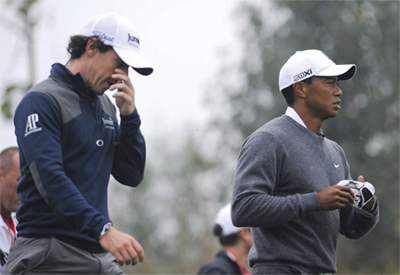
    MARANA (TIP): World number one Rory McIlroy and 14- time major champion Tiger Woods fell in the first round of the World Golf Championships Match Play Championship. Ireland’s Shane Lowry, ranked 68th in the world and the 64th-seed in the 64-man field, toppled Northern Ireland’s McIlroy 1-up, while Charles Howell defeated Woods 2 and 1 at the Ritz Carlton Golf Club course at Dove Mountain.

    Lowry, a friend of McIlroy’s from their days in the amateur ranks, made his run on the back nine, chipping in for birdie to win the 12th hole and winning the 13th with an eagle to gain a two-up advantage. McIlroy pulled one back at 14, but conceded the 15th after finding a series of bunkers.

    McIlroy then birdied the parthree 16th for a win, but they halved the last two holes with pars, and Lowry emerged victorious. “Obviously it was always going to be a tough match for me against Rory today, but playing against the world number one, I’m feeling quite good now,” said Lowry, who sank a four-foot par putt at 18 to seal the win.

    “But it’s important not to get too high now, because it’s only the first round, and I’ve got another match tomorrow and am really looking forward to playing that.” Neither Howell nor Woods made a bogey in their match, which ended with darkness closing in. “I knew I had to play my best to have a chance out there,” Howell said, adding that his mind-set throughout was that he had “nothing to lose”. Woods, winner of this event in 2003, 2004 and 2008, has now failed to get out of the first round three times in his career, but said he couldn’t complain about his game. “We both played well,” Woods said. “He made a couple of more birdies than I did. He played well and he’s advancing.” The round was continued from Wednesday, when a freak snowstorm in the Arizona desert cut short play, and Thursday’s start was delayed for several hours.

    Two matches were halted by darkness. Sweden’s Carl Pettersson was 1-up against Rickie Fowler through 17 holes with the winner to face Lowry. Gonzalo Fernandez-Castano and Francesco Molinari were all-square through 15, with the winner to face Howell. McIlroy, who missed the cut in his only other start of the year, the European Tour’s Abu Dhabi HSBC Golf Championship, is under extra scrutiny in the wake of his switch to Nike equipment.

    He said some ragged iron play cost him the match. “I drove the ball really well,” McIlroy said, but “couldn’t take advantage of that.” World number three Luke Donald, who won the title in 2011 to launch a stellar year that saw him gain the world number one spot and win the European and US money titles, advanced with a 1-up victory over Germany’s Marcel Siem.

  • Myanmar Protest: Probe Alleges Police Used White Phosphorus

    Myanmar Protest: Probe Alleges Police Used White Phosphorus

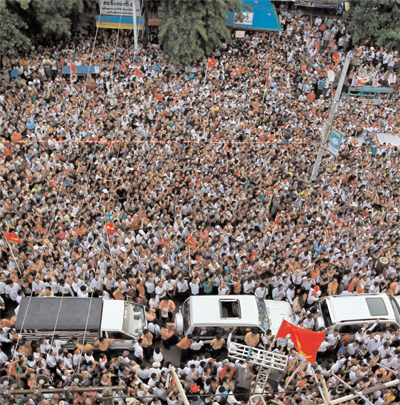
    YANGON (TIP): Anindependent investigationsays white phosphoruscaused the severe burnsmonks and other protesterssuffered when Myanmarpolice broke up theirprotest at a mine inNovember.Lawyer Aung Thein saida laboratory found traces ofthe chemical on canistersleft by police and recoveredafterward.He was not directlyinvolved in theinvestigation but signed thereport on the findings.

    Thereport has been forwardedto the governmentappointedpanel headed byopposition leader Aung SanSuu Kyi that isinvestigating the matter.White phosphorus is anincendiary agent generallyused in war to create smokescreens. Guidance on itsuse against people directlyis conflicting.Presidential spokesmanYe Htut declined tocomment on the findingstoday.Protesters occupied theLetpadaung mine project innorthwestern Myanmar for11 days.

  • Nine Killed In Terror Attacks In Northwest Pakistan

    Nine Killed In Terror Attacks In Northwest Pakistan

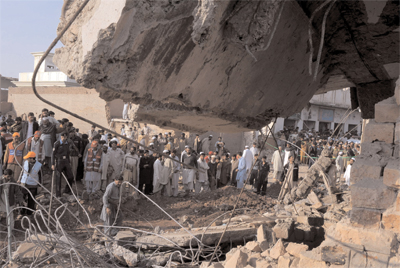
    ISLAMABAD (TIP): At least ninepeople, including six militants, werekilled and ten others injured in twoseparate terror attacks in Pakistan’srestive northwest today.The militants attacked Maryanpolice station in Bannu area ofKhyber-Pakhtunkhwa province at 6.30am, triggering a fierce gun battle thatcontinued for about 90 minutes,killing six militants and injuring apoliceman.

    The attack was successfullythwarted and six militants killed,District police chief Nisar Tanoli toldreporters.Reports said several of theattackers blew themselves up whileothers were shot dead. Tanoli said apoliceman was injured and the policestation was slightly damaged.He said the attackers appeared to beUzbeks.The banned Tehrik-e-TalibanPakistan claimed responsibility forthe attack.Taliban spokesman IhsanullahIhsan told reporters by phone thatsuicide bombers were involved in theattack, which was launched to avengethe killings of militants who were inthe custody of authorities.

    Officials said the Taliban militantsfired rockets before attempting tostorm the police station.Bannu, which lies between thesettled area of Khyber- Pakhtunkhwaand the restive North Waziristantribal region, has witnessed severalmilitant attacks in recent years.Meanwhile, three persons werekilled and nine others injured when avehicle was targeted with animprovised explosive device inOrkazai tribal region, officials said.The incident occurred at HasanzaiBazar in Orakzai Agency, one ofPakistan’s seven semi-autonomoustribal districts.The injured were taken to a nearbyhospital, where doctors described thecondition of some as critical.Personnel from the Khasadarmilitia cordoned off the area andlaunched a search operation.No group has claimed responsibilityfor the attack.

  • Backpacker Sam Woodhead Found In Australian Outback

    Backpacker Sam Woodhead Found In Australian Outback

    QUEENSLAND (TIP): A Britishbackpacker who went missing aftersetting out on a run in the Australianoutback has been found.Sam Woodhead had failed to returnto a cattle station in centralQueensland on Tuesday afternoon.Queensland Police said MrWoodhead was a little sunburnedwhen he was found but was hydratedand otherwise well.Mr Woodhead, 18, reportedly fromRichmond in south-west London, wasreported missing by the owner ofUpshot Station, where he wasworking.

    The teenager is being returned tothe cattle station for a medicalassessment, before being transferredto a hospital in the nearby town,Longreach.His sister Rebecca wrote onFacebook earlier: “We have been toldthat they have found sam!! We have noinformation on his condition or wherehe was found yet, so keep your fingerscrossed.”Mr Woodhead had been in Australiafor eight days when he disappeared.Temperatures have been around 37Cin the area this week.

  • Dog Attack Plans ‘Woefully Inadequate’ Say Mps

    Dog Attack Plans ‘Woefully Inadequate’ Say Mps

    LONDON (TIP): The law should be “urgently”amended to protect the public, the Environment,Food and Rural Affairs Committee said.In a report, the MPs said they were not convincedministers were giving “sufficient priority” to dogcontrol.The government said it was bringing incompulsory microchipping for all dogs and giving thepolice more powers to investigate dog attacks.

    The select committee, whose chair Anne McIntoshhas revealed she herself has been bitten by a dog,has been carrying out an investigation intogovernment plans to tackle recent rises in dogrelatedoffences and hospital admissions.Government officials estimate there are around210,000 people attacked by dogs in England everyyear.

    ‘Public concern’
    Five children and one adult have been killed bydogs on private property since 2007 and the NHSspends around £3m a year treating dog attackinjuries.The Department for Environment, Food and RuralAffairs (DEFRA) has set out plans to make itcompulsory for all dogs to be microchipped from 2016and extend laws governing dog attacks to coverincidents on private property.The Dangerous Dogs Act, which was introduced in1991 after a spate of fatal attacks, currently onlycovers the behaviour of dogs on public land.

  • Coronation Street’s Michael Le Vell Charged With Child Rape

    Coronation Street’s Michael Le Vell Charged With Child Rape

    MANCHESTER (TIP):Coronation Street actor Michael LeVell has been charged with astring of sex offences, includingraping a child.Greater Manchester Police saidhe is also accused of indecentlyassaulting a child and sexualactivity with a child.The actor, 48, who plays KevinWebster in the ITV1 soap, faces atotal of 19 charges relating tocrimes allegedly committedbetween 2001 and 2010.

    Mr Le Vell, whose real name isMichael Turner, is due beforemagistrates in Manchester on 27February.Alison Levitt QC, principal legaladviser to the Director of PublicProsecutions, said she hadreviewed a decision not toprosecute Mr Le Vell followingallegations made against him in2011.She said: “I have very carefullyreviewed the evidence in this caseand I have concluded that there issufficient evidence and it is in thepublic interest to charge MichaelRobert Turner with a number ofsexual offences.”I have authorised GreaterManchester Police to charge MrTurner with 19 offences, includingrape of a child.”Mr Turner has now beencharged with criminal offencesand has a right to a fair trial.”The actor, from Hale in GreaterManchester, has played the role ofgarage mechanic Kevin Websterfor 30 years, making him one ofthe longest-serving performers inCoronation Street.

  • Indian-American Lawmaker Welcomes Obama Plan

    Indian-American Lawmaker Welcomes Obama Plan

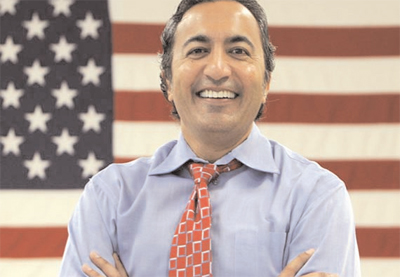
    WASHINGTON (TIP): Ami Bera, the only Indian-American member of the US Congress, has welcomedPresident Barack Obama’s plan “to restore an economythat works for middle class families by investing ininfrastructure, innovation, and education.””America is at its strongest when we have a strongmiddle class, and growing jobs and the economy for themiddle class should be our number one priority inCongress,” said Bera, the third Indian-American, afterDalip Singh Saund and Bobby Jindal, to be ever electedto the US House of Representatives.

  • Darjeeling walking along the memory lane

    Darjeeling walking along the memory lane

    Travelling in Darjeeling is like walking along the memory lanes during the time of the British Raj. Located in the cozy and inviting lap of the Kanchan Junga, Darjeeling the dramatic land is amazingly blessed with the superb beauty of the nature, fantastic sightseeing places, ornamental monasteries, mystic hill, alluring tea gardens, refreshing and healthy climatic condition and warm hospitality.

    Darjeeling is truly a gem in the crown of the Himalayas that invites the foot falls of thousands and thousands of tourists from across the globe. Darjeeling in true sense is a paradise on earth as the showers of blessing from the heaven in poured in Darjeeling in the form of the natural beauty, blissful ambiance and the cool weather conditions that keeps this scenic hill town pure and pristine all the year round.

    So due to the copious natural beauty, cool climatic condition, tempting culture and friendly hospitality, tourist throngs the year round to for holidays in Darjeeling. Darjeeling tourism has great potential the hill town supports varieties of tourism options including tea tourism, monsoon tourism, medical tourism, wildlife tourism, flowers tourism and culture tourism, which have their own resemblance, but different from rest of the world.

    So come and soak in the heavenly beauty of the nature as well as explore the fascinating charm of tourism in Darjeeling with much pleasure, fun and joy. Beside the inviting tourist places, the speciality of Darjeeling tourism lies in the tea gardens, which are not just the main tourist attraction but are the back bone of Darjeeling tourism.

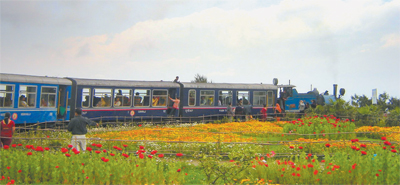
    The vast stretches of the emerald green tea gardens are the main source from where the world’s best tea leaves are obtained and are made ready for the international market supply. Darjeeling Himalayan railway is also the iconic attraction which is also the major tourist attraction and the iconic symbol of Darjeeling tourism.

    Talking more on Darjeeling tourism, the hill town has its own unique culture and festivals like Tihar, Dasai, Losar (Tibetan Festival), Makar Sankranti and Durga Puja is celebrate with great enthusiasm by all the local communities.

    More of all Darjeeling is the gastronomy paradise, where one can satisfy the appetite by enjoy the verities of delicious Himalayan cuisines and specialities including “Momos”, “Thukpas”, Sael Roti and mood making local wine called Chhaang and Tongba. So in short, Darjeeling tourism has everything that makes the vacation a complete package packed with fun delights, thrill, adventure and lots of happiness.
    PLACES TO VISIT
    Dhoom Gompa
    About 8 kms from Darjeeling is the Dhoom Gompa. Here a very beautiful statue of the Maitrayie Buddha is established. The Monastery has also preserved some of the rare handwritten Buddhist manuscripts.

    The Mall
    The Mall is Darjeeling’s popular commercial street. It is lined with Tibetans selling hand-knitted sweaters and souvenir shops chock-full of Himalayan artifacts and both real and imitation antiques. Photo shops carry turn-of-the-century photos as well as specialising in hand-painted black and white prints with glowing oil colours. The Mall leads to Chaurasta, a square, which doubles as a bandstand, a pony riding arena for children and a haven for lovers.

    Chowrasta

    The Chowrasta, meaning crossroad, is a hive of commercial activity. The Mall Road originates and culminates at the Chowrasta. This is the heart of Victorian Darjeeling. Here hotels, restaurants and shops brush against each other. The shops and stalls are a veritable paradise for souvenir collectors. The Bhutanese sellers display their wares. Woollen garments, tribal ornaments, Thankas, rosaries, brass statuettes and Gorkha daggers are kept on display for sale. Foreign goods are also available in some shops. Local handicrafts are much in demand.

    Obeservatory Hill
    The oldest site in Darjeeling is Observatory Hill, known locally as “Makal- Babu-Ko-Thaan”. According to legend, a Red Hat Buddhist Monastery called Dorje Ling, or ‘place of the Thunderbolt’, stood at this very spot. The Nepalis destroyed it in the 19th century. The Shivas and Buddhists share the temple that stands there today.

    Himalayan Mountaineering Institute
    A spot not to be missed is the Himalayan Mountaineering Institute created by the late Tenzing Norgay, the Sherpa who conquered Mt Everest with Sir Edmund Hillary on 29 May 1953. A display of equipment used on the climb is one of the highlights. A zoological garden nearby has an assortment of wildlife such as yaks, Siberian tigers and red pandas who call the region their home.

    Rangeet Valley Passenger Ropeway
    At North Point about 3-km from the town, this is the first passenger ropeway in India. For reservation of ropeway seats please contact – officer in-charge, Darjeeling Rangeet Valley Ropeway Station, North Point, Darjeeling. Regular share taxi service is available from Market Motor and Taxi Stand is to the Ropeway Station.
    Book This Now
    Nearby Attractions
    Tibetan Refuge Camp
    The area in and around Darjeeling is a treasure chest of interesting destinations. The Tibetan Refugee self-help scheme produces traditional artifacts, jewellery and carpets for tourist consumption.

    Lloyd’s Botanical Garden
    Lloyd’s Botanical Garden displays a fine collection of Himalayan fauna for those with an interest, and for punters there is horseracing at Lebong, the smallest and highest racecourse in the world.

    Tiger Hill
    Situated at an altitude of 2,590m (8,482 ft.) and 13-km from the town, this spot has earned international fame for the magnificent view of the sunrise over “Kanchenjunga” and the great Eastern Himalayan Mountains. Even Mount Everest, the world’s highest peak, is visible from here.

    Phalut & Sandakphu
    A week’s smallest-trip of Phalut and Sandakphu will get one within reach of the high peaks; for the onlooker it affords a more spectacular panorama than at Tiger Hill. Giant flowering Rhododendron trees, a pointillism of reds pinks and whites Dwarfs comprise of the en route trail. On attaining heights of over 3,048m, one is surrounded by skeletal trees devoid of leaves and branches, which are especially eerie when the clouds roll in and envelop the area.

    Pashupati

    Further afield, in Pashupati on the Nepal border, one can purchase foreign goods at reasonable prices, view wildlife such as the endangered one-horned Rhino, Deer, Gaur, and wild boar while seated atop an Elephant’s back at Jaldapara Game Park; learn of the Lepcha legend at the confluence of the Teesta and Ranjeet Rivers; relive Kalimpong’s past glory as a trading post by visiting the market filled with traditional Tibetan medicine, spices, musk, wool and silk; or for the truly adventurous-hire some ponies and a crew and take to the hills.

    Kurseong
    Kurseong is mid-way between Siliguri and Darjeeling. The way from Darjeeling to Kurseong is generally open through out the year. So, the toy train is not coming to Siliguri then one can come up to Kurseong. This place is equally beautiful and is full of natural splendour

  • Bobby Jindal’s Approval Rating Declines: Survey

    Bobby Jindal’s Approval Rating Declines: Survey

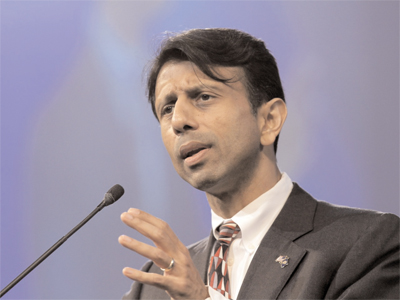
    WASHINGTON (TIP): The approval rating of Indian-American Louisiana Governor Bobby Jindal, consideredamong the frontrunners for the Republican party’spresidential nomination in the 2016 elections, has droppedsignificantly.According to a survey from Democratic firm PublicPolicy Polling, only 37 per cent of the people in Louisianasurveyed for this poll approved the performance of 41-yearoldinfluential Republican leader, while 57 per centdisapproved.In the last poll carried out by Public Policy Polling inAugust 2010, Jindal had a approval rating of 58 per cent,while only 34 per cent disapproved.

  • Indian-American Lottery Winner’s Death: Brother Raised Suspicion Over Death

    Indian-American Lottery Winner’s Death: Brother Raised Suspicion Over Death

    CHICAGO (TIP): The brother of aChicago man poisoned with cyanideshortly after winning the lotterysaid on Monday he is the familymember who asked authorities toreconsider the initial finding thathis sibling had died of naturalcauses.Imtiaz Khan said he hadnightmares about his brother beforehis death and that his suspicionsabout the death lead him to pushcoroner’s officials to conduct moretests.

    Urooj Khan, 46, an immigrantfrom India, died July 20 as he wasabout to collect his $425,000 inIllinois State Lottery winnings.Imtiaz Khan said Monday in atelephone interview that he begandemanding more tests be conductedimmediately after coroner’s officialssaid his brother had died of naturalcauses.Further tests revealed inNovember that Urooj Khan had beenpoisoned. His body was exhumed inJanuary for more testing.Khan’s widow, Shabana Ansari,and other relatives have denied anyrole in his death and expressed adesire to learn the truth.

    Urooj Khan had moved to the USfrom his home in Hyderabad, India,in 1989, setting up several drycleaning businesses and buying intosome real estate investments.Despite having foresworngambling after making the hajjpilgrimage to Mecca in 2010, Khanbought a lottery ticket in June. Hesaid winning the lottery meanteverything to him and that heplanned to use his winnings to payoff mortgages, expand his businessand donate to St. Jude’s Children’sResearch Hospital.

    He was just days from receivinghis winnings when he died beforedawn July 20.The night before, Khan ate dinnerwith his wife, daughter and fatherin-law at their house. Sometime thatnight, Khan awoke feeling ill. Hedied the next morning at a hospital.Khan died without a will, openingthe door to a court battle. Thebusinessman’s widow and siblingsfought for months over his estate,including the lottery check.