Year: 2013

  • Nadal Wins In Singles Debut At Brazil Open

    Nadal Wins In Singles Debut At Brazil Open

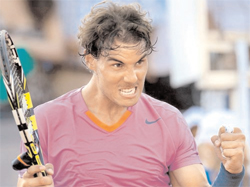
    SAO PAULO (TIP): Spain’s Rafael Nadal scored an easy two-set victory in his singles debut at the Brazil Open late Thursday.

    The former world number one needed only 78 minutes to prevail over Brazilian Joao Souza, ranked 101st in the world 6-3, 6-4. Nadal advanced to the quarterfinals which will be played Friday. “It was an important victory for me,” Nadal said. “the conditions are very difficult.

    The court is very fast, the ball too.” Asked about his injured left knee, he replied: “Today I think it was acceptable, normal. Let’s hope it will be the same tomorrow. The important things is that it (the knee) does not hurt.” The Spanish star withdrew from a scheduled doubles match he was to have played with Argentina’s David Nalbandian against Argentine Horacio Zeballos and Austrian Oliver Marach, citing “knee overuse”.

    Nadal, currently ranked number five in the world, only returned to the tour in Chile last week after a seven-month injury absence.

    The 11-time grand slam champion, who lost both the singles and doubles finals Sunday at his comeback event in Vina del Mar, Chile, is the top seed at this week’s event here.

    The $455,775 Brazil Open is part of the Latin American clay court circuit, along with the Vina del Mar and the Mexico Open in Acapulco where Nadal plans to play later this month.

  • Anand Jon Admits To Molesting Would-Be Model In NYC

    Anand Jon Admits To Molesting Would-Be Model In NYC

    NEW YORK (TIP): Indian-American celebrity fashiondesigner Anand Jon Alexander pleaded guilty in a NewYork City court Thursday, February 15 to one count of acriminal sexual act. He admitted to molesting a woman hebaited with the promise of modeling work.

    He wassentenced to five years in prison.Jon was arrested in March 2007 in Beverly Hills,California on rape and related charges. He pleaded notguilty to all charges. However, on August 31, 2009, he wassentenced to 59 years to life.Assistant District Attorney Maxine Rosenthal says he isalso facing new charges in Texas. She says the deal sparedvictims from testifying multiple times.

    The New York prison time amountsto time served, so his attorney says noyears will be tacked onto his Californiasentence. The designer was featured on”America’s Next Top Model” and hasworked with such celebrities as ParisHilton and Mary J Blige.

  • Obama State Of The Union Speech Demands Vote On Gun Control Bills

    Obama State Of The Union Speech Demands Vote On Gun Control Bills

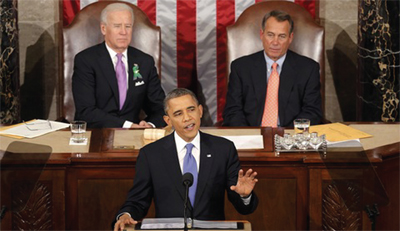
    WASHINGTON (TIP): President Barack Obama on February 12 called for Congress to vote on a variety of gun control proposals that are currently up for debate, and heoffered a heartfelt, but not sharply political, endorsement for the proposals. Towards the end of his State of the Union address, as the speech reached a crescendo, the president turned to the topic of gun violence: “What I’ve said tonight matters little if we don’t come together to protect our most precious resource — our children.” “This is not the first time this country has debated how to reduce gun violence,” Obama said.

    But two months after the shooting of20 children and six adults at anelementary school in Newtown, Conn.,he said, “This time is different.””Overwhelming majorities ofAmericans -– Americans who believe inthe 2nd Amendment — have cometogether around common-sense reform,like background checks that will makeit harder for criminals to get theirhands on a gun,” Obama continued.

    “Senators of both parties are workingtogether on tough new laws to preventanyone from buying guns for resale tocriminals. Police chiefs are asking ourhelp to get weapons of war and massiveammunition magazines off our streets,because they are tired of being outgunned.

    “Universal background checks, andthe tougher penalties for “strawpurchases” of guns, are some of themost popular gun-control proposalsamong voters, and both may eventuallywin bipartisan support. But a ban onmilitary-style weapons faces an uphillbattle in Congress, where Sen. DianneFeinstein (D-Calif.) has championed arenewal of the 1994 Assault WeaponsBan, which expired in 2004.The measures face opposition largelyfrom Republicans, but in an unexpectedmove, Obama did not single out any ofthe biggest obstacles to the bills, whichinclude the powerful National RifleAssociation. Instead, he asked onlythey be put to a vote.”Each of these proposals deserves avote in Congress,” he said.

    “If you wantto vote no, that’s your choice. But theseproposals deserve a vote. Because in thetwo months since Newtown, more thana thousand birthdays, graduations andanniversaries have been stolen fromour lives by a bullet from a gun.”The president’s take is similar to thatof Senate Majority Leader Harry Reid(D-Nev.), who enjoys a positive ratingfrom the NRA. Reid has so far beennoncommittal on specific gun-controlproposals, but said in a recentinterview that lawmakers should voteon each of them.To drive home his point on the needfor action on gun control, Obamainvoked a string of mass shootings thathave occurred during hisadministration. The State of the Unionaudience included dozens of peoplewhose lives had been affected by gunviolence, invited as guests ofcongressional Democrats and the WhiteHouse.Obama received one of the biggeststanding ovations of the night as hesaluted the parents of HadiyaPendleton, a young woman killed bygun violence, and demanded thatCongress vote on gun-control measures.”One of those we lost was a younggirl named Hadiya Pendleton. She was15 years old. She loved Fig Newtons andlip gloss. She was a majorette.

    She wasso good to her friends, they all thoughtthey were her best friend. Just threeweeks ago, she was here, inWashington, with her classmates,performing for her country at myinauguration. And a week later, she wasshot and killed in a Chicago park afterschool, just a mile away from myhouse,” he said.”Hadiya’s parents, Nate and Cleo, arein this chamber tonight, along withmore than two dozen Americans whoselives have been torn apart by gunviolence. They deserve a vote,” he said.”[Former Rep.] Gabby Giffords deservesa vote. The families of Newtowndeserve a vote. The families of Auroradeserve a vote. The families of OakCreek, and Tucson, and Blacksburg,and the countless other communitiesripped open by gun violence — theydeserve a simple vote.

    “As he prepared to finish the speech,the president acknowledged — and somemight say disarmed — the argumentfavored by many who oppose guncontrol laws that no law can eliminateall gun violence.”Our actions will not prevent everysenseless act of violence in thiscountry. Indeed, no laws, no initiatives,no administrative acts will perfectlysolve all the challenges I’ve outlinedtonight,” Obama said. “But we werenever sent here to be perfect. We weresent here to make what difference wecan, to secure this nation, expandopportunity, and uphold our idealsthrough the hard, often frustrating, butabsolutely necessary work of selfgovernment.”Two official responses are expectedafter Obama’s speech, one fromRepublican Sen. Marco Rubio (Fla.),and another from Tea Party favoriteSen. Rand Paul (R-Ky.). As two of themost conservative members of theSenate, both Paul and Rubio arestaunchly opposed to gun control.

  • Valentine’s Day

    Valentine’s Day

    Every February 14, across the United States and in other places around the world, candy, flowers and gifts are exchanged between loved ones, all in the name of St. Valentine. But who is this mysterious saint, and where did these traditions come from? Find out about the history of this centuriesold holiday, from ancient Roman rituals to the customs of Victorian England.

    The Legend of St.Valentine

    The history of Valentine’s Day– and the story of its patron saint–is shrouded in mystery. We do know that February has long been celebrated as a month of romance, and that St. Valentine’s Day, as we know it today, contains vestiges of both Christian and ancient Roman tradition.

    But who was Saint Valentine, and how did he become associated with this ancient rite? The Catholic Church recognizes at least three different saints named Valentine or Valentinus, all of whom were martyred. One legend contends that Valentine was a priest who served during the third century in Rome.

    When Emperor Claudius II decided that single men made better soldiers than those with wives and families, he outlawed marriage for young men. Valentine, realizing the injustice of the decree, defied Claudius and continued to perform marriages for young lovers in secret.

    When Valentine’s actions were discovered, Claudius ordered that he be put to death. Other stories suggest that Valentine may have been killed for attempting to help Christians escape harsh Roman prisons, where they were often beaten and tortured.

    According to one legend, an imprisoned Valentine actually sent the first “valentine” greeting himself after he fell in love with a young girl–possibly his jailor’s daughter–who visited him during his confinement.

    Before his death, it is alleged that he wrote her a letter signed “From your Valentine,” an expression that is still in use today. Although the truth behind the Valentine legends is murky, the stories all emphasize his appeal as a sympathetic, heroic and–most importantly–romantic figure.

    By the Middle Ages, perhaps thanks to this reputation, Valentine would become one of the most popular saints in England and France.

    Origins of Valentine’s Day: A Pagan Festival in February
    While some believe that Valentine’s Day is celebrated in the middle of February to commemorate the anniversary of Valentine’s death or burial–which probably occurred around A.D. 270–others claim that the Christian church may have decided to place St. Valentine’s feast day in the middle of February in an effort to “Christianize” the pagan celebration of Lupercalia. Celebrated at the ides of February, or February 15, Lupercalia was a fertility festival dedicated to Faunus, the Roman god of agriculture, as well as to the Roman founders Romulus and Remus.

    To begin the festival, members of the Luperci, an order of Roman priests, would gather at a sacred cave where the infants Romulus and Remus, the founders of Rome, were believed to have been cared for by a she-wolf or lupa. The priests would sacrifice a goat, for fertility, and a dog, for purification.

    They would then strip the goat’s hide into strips, dip them into the sacrificial blood and take to the streets, gently slapping both women and crop fields with the goat hide.

    Far from being fearful, Roman women welcomed the touch of the hides because it was believed to make them more fertile in the coming year. Later in the day, according to legend, all the young women in the city would place their names in a big urn. The city’s bachelors would each choose a name and become paired for the year with his chosen woman. These matches often ended in marriage.

    A Day of Romance
    Lupercalia survived the initial rise of Christianity and but was outlawed—as it was deemed “un- Christian”–at the end of the 5th century, when Pope Gelasius declared February 14 St. Valentine’s Day. It was not until much later, however, that the day became definitively associated with love.

    During the Middle Ages, it was commonly believed in France and England that February 14 was the beginning of birds’ mating season, which added to the idea that the middle of Valentine’s Day should be a day for romance. Valentine greetings were popular as far back as the Middle Ages, though written Valentine’s didn’t begin to appear until after 1400.

    The oldest known valentine still in existence today was a poem written in 1415 by Charles, Duke of Orleans, to his wife while he was imprisoned in the Tower of London following his capture at the Battle of Agincourt. (The greeting is now part of the manuscript collection of the British Library in London, England.) Several years later, it is believed that King Henry V hired a writer named John Lydgate to compose a valentine note to Catherine of Valois.

    Typical Valentine’s Day Greetings
    In addition to the United States, Valentine’s Day is celebrated in Canada, Mexico, the United Kingdom, France and Australia.

    In Great Britain, Valentine’s Day began to be popularly celebrated around the 17th century. By the middle of the 18th, it was common for friends and lovers of all social classes to exchange small tokens of affection or handwritten notes, and by 1900 printed cards began to replace written letters due to improvements in printing technology.

    Readymade cards were an easy way for people to express their emotions in a time when direct expression of one’s feelings was discouraged. Cheaper postage rates also contributed to an increase in the popularity of sending Valentine’s Day greetings.

    Americans probably began exchanging hand-made valentines in the early 1700s. In the 1840s, Esther A. Howland began selling the first mass-produced valentines in America.

    Howland, known as the “Mother of the Valentine,” made elaborate creations with real lace, ribbons and colorful pictures known as “scrap.” Today, according to the Greeting Card Association, an estimated 1 billion Valentine’s Day cards are sent each year, making Valentine’s Day the second largest card-sending holiday of the year. (An estimated 2.6 billion cards are sent for Christmas.) Women purchase approximately 85 percent of all valentines.

  • Movie Review- Special 26

    Movie Review- Special 26

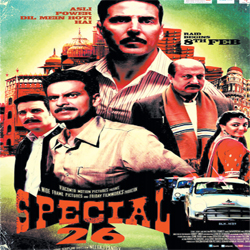
    Cast: Akshay Kumar, Anupam Kher, Manoj Bajpayee,Jimmy Sheirgill, Kajal Aggarwal, Divya Dutta
    Direction: Neeraj Pandey
    Genre: Thriller
    Duration: 2 hours 24 minutes

    STORY: Four feisty heroes posing as a CBI team, fifty heists and one real CBI officer on the prowl to nab them.

    MOVIE REVIEW:
    Ready for a fake ‘Foursome’, with some ‘real’ stuff. Here it goes. With cool conmen, cops, chases, mind, matter and maal. But first, meet the members of the con-club. The asli khiladi Ajay (Akshay), quickwitted, daring and strong-willed – he’s the masterplanner. Sharmaji (Kher), a wee-bit weak-hearted, but the real ‘loin of Punjab’ (with 8 bachchas and going strong).

    Add in, Iqbal (Kishore Kadam) and Joginder (Rajesh Sharma) – who add muscle to the master-mind. In the late 1980’s these conmen pose as CBI officers and raid malaamal matris, business magnates and jewellers.

    With no records or FIRs – they escape after every heist with a clean (white) conscience and loads of black money. A (real) CBI inspector, Waseem (Manoj) along with sub-inspector Ranveer (Jimmy) get on a deadly chase to nab them while they’re faking it. Well, if you want to figure out con-asli, con-nakli, go ahead, wear Sherlock’s (Holmes) suit and crack this one. With an ingeniously layered role and a brilliant act, Anupam Kher truly ‘steals’ the show. Akshay hits hard, with pure, unadulterated acting, minus action.

    Manoj is always in command, fiery and fantastic. Jimmy lends strong support; Kajal Aggarwal (Ajay’s love-interest) flashes smiles in interludes, and Divya Dutta throws in laughs. Inspired by a real incident, Neeraj Pandey cuts to the chor-police chase and weaves an intelligent, mind-racing thriller, keeping you tightly strapped to your seats. It captures the 80’s era beautifully; and the cinematography ( Bobby Singh) is a cut above (special mention: scenes in Connaught Place, Delhi, and Kolkata streets).

    The powerful background score enthuses the pace. The only place he loses momentum is the romantic track and dance number, kinda unwarranted, we must say. Interestingly, this con-job story is not superbly-stylish or stealthily serious. It doesn’t stun you with a social message like Pandey’s ‘A Wednesday’, but it grips, excites and ahh…climaxes too! And no … you can’t fake this one! Catch it for pure cinematic orgasm.

  • An Indian American’s Plea For Economic Partnership Between India And US

    An Indian American’s Plea For Economic Partnership Between India And US

    An Overview of the Economy in India
    I. Overview

    India is Asia’s third largest economy in nominal GDP. It hasa GDP of over $1.6 trillion, growing even during this globalrecession at approximately 6% per annum.

    II. India Economic Reforms
    How did India reach this point?In 1991, faced with a balance of payment crisis, India beganthe process of liberalizing its economy. While India has hadmany successive governments since 1991, with different rulingparties, the overall direction of liberalization has remainedthe same. Some may call it slow, plodding, reform, whichstudiously ignores contentious issues such as labor lawreforms. However, the fact is that India is today transformedfrom a socialist economy, with growth rates of 3 to 3.5%, to amarket economy, with an average growth rate of over 6%.

    Let’s put this into perspective:

  • Since 1991, India’s GDP has more than quadrupled;
  • Today, India is the third largest economy in the world inpurchasing power parity and tenth largest in nominal GDP;
  • Its foreign exchange reserves have grown from anegligible level to about $300 billion;
  • It has great strengths ininformation technology, auto components,telecommunications, chemicals, apparels andpharmaceuticals;
  • India has become one of the consumption and growthengines of the world;· IMF forecasts that India is expected to continue its growthmomentum for the next 20 years becoming five times itspresent size.
  • Poverty Reduction
    The best testimony to India’s economic reforms is the factthat, depending on how you define poverty, they helped 100 to300 million people to escape poverty. The history of economicreforms in India has proved that there is a direct correlationbetween the progress of economic reforms and elimination ofpoverty… more economic reforms in India have alwaystranslated into less poverty.

    III. What are the Key Drives of India’s Economy
    There are four key drivers of India’s economy:
    (i) Savings Rate

  • The first key driver is India’s high savings rate;
  • India has a savings rate of approximately 30%;
  • Which mean approximately $0.5 trillion dollars isavailable each year from domestic savings as investiblecapital;
  • India’s savings rate went up from 20% in 1991 to 30%today;
  • So as India’s GDP grows, India’s savings grow, both inactual numbers and percentage terms, and provide the criticalcapital require to finance its further growth;
  • At the same time, unlike China, India’s savings rate is notso high as to choke-off domestic demand.
  • (ii) Service Sector
    The second driver of India’s growth is its service sector which has:

  • Increased its share of the GDP from 41% in 1991 to over57%;
  • Creating an additional wealth of over $6.5 trillion;
  • This sector has grown at a rate of approximately 10%annually in the last decade;
  • It provides employment to 23% of the work force and isgrowing quickly; and
  • Accounts for approximately 33% of India’s total exports.
  • The biggest growth engines of this sector continue to be:

  • information technology and information technologyenabled services;
  • which have grown at a compound annual growth rate ofapproximately 20% over the last few years; and
  • generate a cumulative annual revenue of about $75 billion.
  • Cheap labor, low rents, tax incentives made India a hub for ITservices and outsourcing.While some of these advantages arebeing eroded, India’s service sector, nevertheless, continues togrow, with a low-end services moving to cheaper destinationslike Malaysia, Bangladesh, and Philippines and high-end valueadded services moving to India.

    (iii) Demographic Dividend
    The third key driver of the India’s economy is itsdemographic dividend.

  • India is an old country getting younger every day;
  • Half of India’s population is under 30 years old;
  • This will lead to an addition of 120 million people to theworking population in the next decade;
  • which already constitutes over 60% of the presentpopulation;
  • According to PricewaterhouseCoopers’ forecast, theworking age population growth rate in India will be thehighest among major economies in the world;
  • According to the United Nations, the median age of Indianpopulation is the lowest among the major economies and willcontinue to remain the lowest until 2020;
  • For instance, according to the United Nations, the medianage of population in India in 2020 will be 27.5 years, which willcompare very favorably to 37.5 years in China and the U.S., 42.5years in Europe and 47.5 years in Japan;
  • This will provide India with a requisite workforce, whichwhen properly educated and trained, would be a key driver forthis growth; and
  • It would also lead to a huge increase in the demand forgoods and services typically associated with the youngpopulation because a young wage earner starting life needseverything a house (and everything that goes withit), car, entertainment etc. and in his/her optimism isgenerally a liberal spender.
  • (iv) Urbanization
    The fourth key driver of India’s economy is increasingurbanization.

  • McKinzie forecasts that by 2030 the urbanized populationof India would increase by 70% to 590 million people;
  • The increasing urbanization is projected to requireinvestments in housing, education, healthcare, urbantransportation, telecommunications and sports facilities;
  • For example, increasing urbanization would require Indiato add 700 to 800 million square feet of residential andcommercial space every year. That is like building a brandnew Chicago every year.
  • IV. What are the Key Challenges to India’s Growth
    There are four key challenges to India’s growth:
    (i) Infrastructure

    One of the biggest challenges that India faces is the lack ofinfrastructure. Almost every statistic on India’s infrastructurespeaks of its inadequacy.The Indian government plans to counter the problem withan investment of $1 trillion during 2012-2017, half of whichwill be in the private sector, with significant public/privatepartnerships. A significant portion of this investment isplanned to be made in the construction of a high-speed roadnetwork, dedicated rail-freight corridor, intra-city connectivitythrough metros, power projects and telecommunicationnetworks. The road and metro rail capacities in India areexpected to increase by 20 times during the next two decades.All major airports are being modernized to internationalstandards. Therefore, once India gets its act together oninfrastructure, India’s infrastructure sector, with its massivecapital outlays and multiplier effect on growth, could be thebiggest driver of India’s growth and the biggest opportunityfor foreign investors.

    (ii) Massive Inefficient Public Sector
    The second key challenge for India is the massive inefficientpublic sector, a vestige of its socialist past. The Indiangovernment has made some progress towards privatization ofthe public sector. Generally, it has preferred to dribble downequity in the public sector companies, rather than sellstrategic stakes in government companies. However, the paceof privatization in India continues to be disappointing.

    (iii) Agriculture
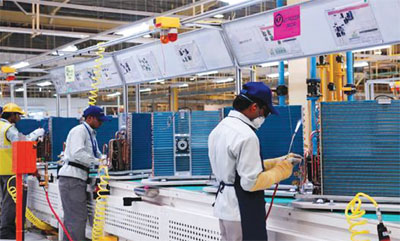
    The third key challenge for India is its agricultural sector.Agriculture which supports over 50% of India’s populationsaw a decline from 32% of the GDP to approximately 16% ofthe GDP during the last two decades, which has resulted inincreasing disparity between the rural population and theurban population. This is a challenge that the Indiangovernment needs to tackle head on with a quantum leap insupply chain management and agricultural technology. TheIndian government has increased its budgetary support foragriculture from $800 million in 2001 to $2.7 billion in 2011.For all its shortcomings, agriculture sector is India’s mostpromising sector. Today, 40% of the total agricultural producein India which leaves the farm gates does not reach theconsumers because of lack of roads, refrigeration facilities,storage facilities, cold storage facilities and other supply chainissues. Therefore, as India builds its infrastructure andstrengthens its supply chain, the agricultural sector wouldreceive a boost and could become a key driver of the Indianeconomy.(iv) Manufacturing Sector The fourth key challenge ofIndia’s economy is its manufacturing sector. India’smanufacturing sector also has not done as well as its servicesector and India’s share in the world manufacturing is stillrelatively modest. However, rising middle class and consumerdemand is boosting India’s manufacturing sector. The grosscapital formation in industry has grown at a compoundannual growth rate of 11.76% between 2005 and 2010.

    However, India’s manufacturing sector also has greatpromise:

  • First, the development of the Delhi-Mumbai IndustrialCorridor will give a great boost to India’s manufacturingsector.
  • Second, the key challenge to India’s manufacturing sectoris that more than half of manufacturing is done in theinefficient, public sector. Therefore, as India privatizes itspublic sector, it would add efficiency to the manufacturingsector which could give the manufacturing sector a quantumleap.
  • Third, Indian manufacturing sector has struggled againstan artificially low RNB. As China, under the U.S. pressure,allows RNB to appreciate, India’s manufacturing sector willbecome more competitive.
  • V. How can the U.S. and India Help Each Other?
    U.S. is a rich developed economy that needs stable newmarkets to fuel its growth. India is an emerging economy thatneeds large capital investments, know-how in critical areassuch as supply chain management and a market for its servicesector.

    VI. Conclusion
    The idea of the world’s two largest democracies, U.S. andIndia, working together in an economic partnership, so thateach becomes the growth engine of the other is “an idea whosetime has come” and as Victor Hugo said, “an invasion ofarmies can be resisted, but not an idea whose time has come.”

  • Kodaikanal Princess Of South-Indian Hill Stations

    Kodaikanal Princess Of South-Indian Hill Stations

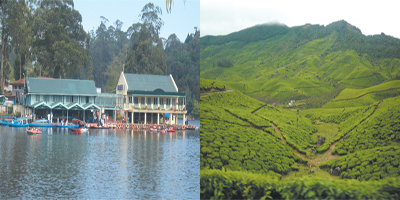
    Kodaikanal is the most beautiful and popular hill station in Tamil Nadu. It is located in the famous Palani Hills in Western Ghats and is known as the Princess of hill stations.

    Kodaikanal is situated about 7,200 feet above the sea level. Kodaikanal is the most sought after honeymoon destination in South India because of its scenic beauty and it has the attribute to leave any nature lover mesmerized by its charms. The word Kodaikanal means gift of the forest in local language.

    The dense forest with many varieties of trees, the huge rocks in the wilderness and the enchanting waterfalls, makes it a real gift for the tourists visiting this place. Kodaikanal is famous for eucalyptus oil, homemade chocolates, plums and pears.

    Kodaikanal is famous for the kurinji – flowers, which blossoms only once in twelve years. Woolen clothing is available at cheaper rates in the Tibetan refugee bazaar.

    There are many internationally renowned educational institutions like Kodaikanal International school, Kodaikanal Christian College etc, in and around Kodaikanal. Mother Theresa University, which is India’s one and only women’s university, is located in Kodaikanal.

    A tourist can indulge in various activities – one can go for cycling, horse riding, boating, trekking and many more adventurous activities. Kodaikanal is influenced with Christian culture and the sculptures in the churches of Kodaikanal are worth a visit.
    Tourist Attraction in Kodaikanal
    STAR SHAPED LAKE
    The star-shaped lake of Kodaikanal is one of the major attractions of this quaint little hill station. It is the legacy of former Collector, Sir Vere Levinge, who formed it by damming the valley where three streams flowed. The entire lake area is spread over an area of about 60 acres. Small horse rides can also make a good pastime in the early evenings.

    SOLAR OBSERVATORY
    Situated at a distance of just 3.2 kms from the Kodaikanal lake, it is one of the only three solar observatories in the world that is more than 75 years old. Built at an elevation of 2343 meters, the Solar Observatory was built at the highest point of the town.

    VIEW POINT
    Kodaikanal has some of the best view points from where you can have a thrilling view of the entire Kodai valley. The hills best view points are Pillar Rocks, Green Valley View point and the Dolphin’s Nose.

    ORCHIDORIUM
    Kodaikanal has a wonderful Orchidorium having 300 species of trees and flowers. The Orchidorium is open for visitors from 10 am to 12 noon and 3 pm to 5 pm on weekdays.

    COAKER WALK AND PRIEST’S WALK
    Kodaikanal is ideal for lazy walks and to add up to your satisfaction it has some of the picturesque walks too. The Coaker Walk and Priest’s Walk are the two of them.

    PERUMAL PEAK
    The Perumal Peak is another important tourist point in Kodaikanal. Situated at an altitude of 2,440 metres it lies at a distance of about 11.3 kms from the Kodaikanal town area.

    FAIRY FALLS
    It seems as if Mother Nature has bestowed all her treasures into this gifted forest area. Besides the lakes, the wonderful walks and the picturesque peaks, Kodaikanal also has two falls namely the Fairy Falls and Glen Falls that make a thrilling site.

    Kodaikanal Sight Seeing
    One of the main attractions for the tourists of Kodaikanal is the Kodai lake which is at a distance of 3kms from the bus stand. In 1863, Vera Levinge, a former District Collector of Madurai settled in Kodaikanal after his retirement. He was the man of resource and creative ideas for this lake.

    By spending his own money he converted the marshy land with several streams of lake by constructing a strong bund and brought boats from Tuticorin. It is reported that the foreign resident’s even used to swim in the lake.

    The lake is situated at 10 deg 14′ n latitude and 77 deg 28′ longitude at an elevation of 2285m above sea level and it looks magnificent with star shaped glittering water, in the midst of evergreen lush slopes. The hills receive the rainfall during North-East Monsoon months of October, November and December. The lake is spread over 60 acres and surrounded by fine tarred road of 5 kms length, the maximum depth in 1962 was 11.5m but it is now about 9m due to siltation.
    The average depth is 3.0m. The boat club provides boats for hire. There are luxury boats also. The famous Carlton hotel is facing the lake and the hotel is having their our boats for their customers.

    Today lakhs of tourists walk around, sail on, ride on horses & cycles and admire the lake. Fishing can also be done obtaining permission from Inspector of Fisheries. Ponyrides by children and adults walking around the lake are part of Kodai Holiday.

    The lake at Kodai is beautifully landscaped and it appears to be de rigueur for Indian families to get out on a boat. Both the Kodaikanal Boat and Rowing Club and Tamil Nadu Tourist Development Corporation hire similar boats for similar prices: Rs. 20 to 40 for a two-seater pedal boat to Rs. 125 (including boatman) for a kasmiri shikara (covered gondola – like boat) for 30 minutes.

  • Zeta-Jones Had No Issues With Husband’s Gay Kiss

    Zeta-Jones Had No Issues With Husband’s Gay Kiss

    Actress Catherine Zeta-Jones says she was not worried one bit when her husband Michael Douglas informed her that he was going to kiss co-actor Matt Damon in a new project. “I’m kissing Matt Damon,” Douglas told his wife.

    But Welsh star Zeta-Jones says she was “happy” about the two men snogging, reports thesun.co.uk. Douglas portrays the flamboyant Liberace in a movie about the late performer’s gay love affair with Scott Thorson, played by Damon. Zeta-Jones, 43, revealed that Damon was thinking of her while he was getting up, close and personal with Douglas.

    The film, “Liberace: Behind The Candelabra”, is a TV movie by “Ocean’s Eleven” director Steven Soderbergh. “I must say I have seen ‘Liberace: Behind The Candelabra’, and if my husband is going to kiss anybody else, I’m so happy it’s Matt Damon,” she said. “Supposedly, when Matt was kissing Michael, he said that he closed his eyes and pretended he was kissing me, rather than Michael, which is very flattering. Matt said that to Michael. Matt was closing his eyes, kissing Michael but pretending he was kissing me.

  • Moview Review- Parker

    Moview Review- Parker

    Cast: Jason Statham, Michael Chiklis, Jennifer Lopez
    Direction: Taylor Hackford
    Genre: Action
    Duration: 1 hour 58 minutes

    STORY: For a thief, Parker is quite a stickler for rules. He doesn’t kill, takes only what he needs and believes in clean getaways. After a somewhat successful caper, he’s double-crossed, shot at and left for dead. And like Bruce Willis, doesn’t die easy. He is rescued, taken to a hospital and heads to Florida to take on his former crew.

    MOVIE REVIEW:
    You come to expect a certain flair from a Statham film. It feels like Hackford (Academy Award nominee for Jamie Foxx-starrer ‘Ray’) and his writer John J McLaughlin (‘Hitchcock’ and ‘Black Swan’) let him down with this middling adaptation of a Donald E Westlake novel.

    His crew has connections is high places, Parker is warned and upon his return is even given hush money to stay away. His girlfriend is threatened and an assassin is sent to kill him. Parkers survives, follows them to Palm Beach, Florida in disguise, under an assumed identity and looks around with the help of a desperate real estate agent (JLo) looking for a way out of her deadbeat life.

    It’s stupid that there’s the hint at a love triangle when his character is deeply in love with his girlfriend Claire (something the first half takes goes to great lengths to establish). And moreover, it’s tiring to sit through the entirety of this film (two hours too long), annoying to have to put up with an uneven pace and a seriously imbalanced quality of cast.

    Also, why is a ‘serious’ filmmaker and his writer at the helm of something that’s being marketed as an action film? We’ve grown used to seeing Statham in the driver’s seat of a fast-paced action thriller.

    Something this film, despite pretensions, isn’t. No wonder, he’s taking a backseat here. Come to think of it, all of them are. It’s almost as if they couldn’t care less. Should you?

  • As I See It : When The Us Fails, Others Suffer

    As I See It : When The Us Fails, Others Suffer

    Nuclear’ Iran is getting to be a bigger botherfor the US and the rest of the world thanmany had assumed in the earlier stages. It isfallacious to argue that Tehran will become a stablepartner in global peace by having a nuclear arsenal.Iran will either get ‘the’ bomb or get bombed. Whatthis means regionally is anyone’s guess since thereare too many variables surrounding these twopossibilities.

    One thing that is invariable though, isAmerica’s dogged adherence to icons and dogmaswhich ensures that only the extremes are possible.As the situation stands, no one, not even theRussians and the Chinese, doubt in private that Iranis accelerating its efforts to build a bomb. In public,though, there are two narratives – the first is of thecrazy suicidal mullahcracy so rabidly obsessed withkilling Jews that another holocaust is on the horizon.The other, less printed, argument is that a nuclearIran would actually bring a greater level of stabilityto what is a highly volatile region. Both of course arehyperbolic, but they dominate print and broadcastopinions in one variant or the other.

    The former needs no serious refutation. The latteris true to a certain extent in that it alleviates Iran’sacute conventional inferiority vis-à-vis its neighbors,but this is only half the story. As the experience ofPakistan and North Korea has shown, nuclearweapons provide revisionist states with a shield for awhole new paradigm of provocations like Mumbai26/11 or the sinking of the South Korean warship,The Cheonan. Nuclear weapons, therefore, provide acertain strategic stability in that it prevents all-outwar, but then introduce great levels of subconventionalinstability either by covert actions or bynon/sub/quasi state actors.

    The problem here is, the proponents of the theorythat a nuclear Iran will bring stability have veryfrequently lost credibility either because theymisdirect their fire, obfuscate the nuance or engagein hyperbole – all aimed at exculpating the UnitedStates. Take for example Kenneth Waltz arguing thatIran is attempting to balance the 40-year-old Israeliarsenal. This ignores the fact that the prime ‘sabrerattler’and major nuclear power in the Middle Eastis, in fact, the United States that has already regimechangedtwo of Iran’s neighbors – Afghanistan andIraq, has Iran completely encircled and has skewedthe conventional balance by reckless arms sales toIran’s arch rivals.

    To blame Israel for the situation isas incredulous as Iranian President MahmoudAhmadinejad holding the Elders of Zion responsiblefor Iran’s travails.The prime mover of a nuclear Iran was in fact theUnited States spearheaded by arch neo-cons DonaldRumsfeld, Dick Cheney and Paul Wolfowitz in the 70s -ostensibly to buttress Iran’s position vis-à-vis theUSSR. Though suitably couched in terms of energy,the deal would have ensured that Tehran receivedboth enriched uranium and plutonium – all butproviding for the existence of a latent arsenal. Iran’s’policies’ in those days, of course, were directed in thepursuit of US policy.

    William Blum, for example, inhis book, Killing Hope: US Military and CIAInterventions since World War II, lists howAfghanistan was deliberately destabilized by Iran todrag the Soviets in. Today Iran’s ‘mischief’ is directed- largely by default – against the Unites States’interests.It is of course quite natural for any country toadopt double standards; no country on earth has adouble standard-free foreign policy. But what isworrying about the United States is how theinformation and the intelligence loops form a closedcircuit that filters out any divergent opinion – wherethe Government actually starts believing its ownspin, and sadly the academia tends to buttress this.Take for example Saddam Hussein’s use of nerveagents in Halabja in the 80s.

    Till the invasion ofKuwait, most US experts were keen to emphasize that”doubts existed” over who had resorted to usingmustard gas and in some form or another and it wasimplied that Iran had done it. Similarly, in spite ofoverwhelming evidence that Georgia had disruptedthe status quo in South Ossetia and Abkhazia, mostUS ‘experts’ on television went out of their way toeither claim that the evidence wasn’t clear.This pattern of self-delusion continues to buttressUnited States rigidity on Iran and revolve around fivemain points.

    First, the United States actually seems tothink the sanctions on Iran are smart and shouldhumanitarian concerns arise, they will be suitablymodified.

    Second, that sanctions are still an effectivetool that will achieve results.

    Third, no geopoliticalconcessions need to be made to Iran – or as Americansclaim “the world has moved on from spheres ofinfluence driven politics”.

    Fourth, the only ‘carrots’Iran needs to be offered are economic – likemembership of the World Trade Organization at somedistant point in the future.

    And fifth, Mr.Ahmadinejad’s statement on wiping Israel off the mapis proof of Iran’s diabolical designs.

    As far as one can remember, images of horriblydeformed Iraqi children did nothing to change the UShard line on the causative sanctions for 13 long yearsafter which the Washington, DC solution was toinvade. That sanctions can be effective has beendiscounted time after time. Anybody who bothersstudying Myanmar and Libya knows that the former’scompliance had more to do with a series of complexissues and the latter’s compliance with Gaddafi’ssuccession plans. The notion that somehow Iran willsit pretty and accept the fall of its allies like SyrianPresident Bashar al-Assad, the crushing of the Shiasand its conventional inferiority is laughable at best.As for the world moving on from spheres of influenceone would like to see how the United States reacts to aChinese announcement of setting up a nuclearmissile base in Venezuela or Cuba.

    The naïveté in believing that a country that hasendured severe sanctions and embargos for the betterpart of the last 30 years will be tempted by WTOaccession boggles the mind. Finally, it is curious thatthe United States does not accept at face value theabsence of homosexuality in Iran given that PresidentAhmadinejad claims just this, but his pronouncementson wiping out Israel are of course gospel truth.Between rigid dogma and iconoclastic hyperbole, theonly thing that gets reinforced is the United States’sense of infallibility and the consequences foreverybody else – paying the price for America’s failures.

  • Modi ‘A State Leader’ For Congress

    Modi ‘A State Leader’ For Congress

    RSS drops hints of backing him

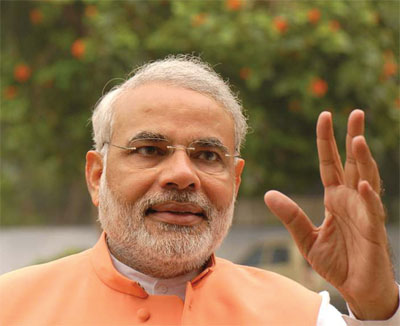
    NEW DELHI (TIP): Despite a section ofthe BJP seeing him as the PM candidate,the Congress has sought to project Gujaratchief minister Narendra Modi as a stateleader and dismissed suggestion that hehad hijacked Rahul Gandhi’s agenda ofconnecting with youth. It also steered clearof questions whether the next Lok Sabhapolls will be a Rahul Gandhi vs NarendraModi tussle.”Whom to project as the PM candidate isthe internal matter of the BJP and sinceModi is Gujarat chief minister, the GujaratPCC will appropriately respond to whateverhe has said,” was the response of partyspokesman Rashid Alvi to reporters onFebruary 7.

    He said that the Congress would like tosee Rahul, who is its leader, to become thenext Prime Minister.But, Alvi insisted that the party does notname its PM candidate before elections andthe leader is chosen by the high commandalong with the newly elected members ofParliament.The Congress spokesman dismissedsuggestions that Modi through his speechin New Delhi on Wednesday had hijackedRahul Gandhi’s agenda of connecting withyouth. However, in an oblique hint RSSchief Mohan Bhagwat on Thursdayappeared to back Narendra Modi as BJP’sprime ministerial candidate but said theparty will be responsible for theconsequences of its decision.

    Speaking at the VHP ‘dharma sansad’, agathering of religious leaders, he referred to the clamour for Modi as PM candidateat the meet and also elsewhere.Without referring to the Gujarat chiefminister by name, Bhagwat said, “Peopleknow what is in your heart. The wholecountry is echoing with the same voice.”And that is why we should not interferein what should be done. They (BJP) willhave to take a decision on what is to bedone….. Whatever we may say, those whoshould do it, it is their right.

    We shouldallow them to do it. If what they do comesout wrong, then we should let them eat thefruits as well.”Bhagwat was speaking after some santsspoke out in favour of BJP announcingModi as its prime ministerial candidate inthe last elections.At the same time, BJP chief RajnathSingh, in Chennai, parried questions on theissue, maintaining that the BJPParliamentary Board will decide the issueat an appropriate time.Earlier, when asked by reporters what hethought of Modi, Bhagwat said, “He is myfriend”.A section of BJP leaders have demandedthat Modi be declared as the party’s PrimeMinisterial candidate.

    VHP leader GirirajKishore also joined the Modi-for PM chorussaying like Gujarat the whole country canbenefit from his leadership as there hasbeen tremendous development in the stateunder his rule.The meeting on Thursday saw somepeople in the audience raising slogans insupport of Modi as religious leaders gavetheir speeches. Bhagwat and VHP leadersAshok Singhal and Parveen Togadia tried topacify them with the RSS chief saying thatthe Sangh Parivar was “well aware of thepeople’s wishes”.

    Togadia and Singhal requested that the’dharma sansad’ be allowed to remainfocused on its agenda.Raising the Ayodhya issue in his address,Bhagwat said that the RSS was fullycommitted to construction of Ram Templeat Ramjanmbhoomi.”It is the obligation of Parliament toremove hurdles in the way of constructionof Ram temple. Either Parliament shouldhonour the wishes of the people or thepeople should elect a Parliament that issensitive to the issue,” the RSS chief said.

  • India’s Economic Growth Seen At 5%: Is The Worst Over?

    India’s Economic Growth Seen At 5%: Is The Worst Over?

    New Delhi (TIP): In an unpleasant shock,India’s economy is projected to grow 5% inthe current fiscal year, the lowest in adecade and substantially lower than the5.7% projected earlier by the financeministry.Worse, the economy, presently estimatedat $1.89 trillion (around Rs.100 trillion),would see growth decelerating by almosthalf from 9.6% in 2006-07. The attendanteconomic shocks, such as a spurt in excesscapacities and retrenchment from theworkforce, would, say experts, make itdifficult for the economic agents to stage aquick recovery—especially given theinclement global conditions and uncertaindomestic polity that is slowing policyinitiatives.

    The new numbers—advance estimatesreleased on Thursday—show that it isprecisely the setback to consumption andinvestment that’s behind the steeper-thanexpectedshortfall in economic growth nowbeing projected in the current fiscal, whilealso pointing to a bottoming-out of theeconomy.In April-September, the economy grew5.4%, indicating it may grow 4.6% in thesecond half of the year. Per-capita incomeat current prices is estimated to rise 11.7%to Rs.68,747 in 2012-13 from Rs.61,564 in theprevious year.Finance minister P. Chidambaram, who isset to present the Union budget on 28February, faces the unenviable task ofbalancing the urgent need for fiscalconsolidation without killing the greenshoots of growth ahead of the 16th generalelection due in 2014.

    The finance ministry, in a statement, saidthe growth projection is based onextrapolation of numbers till November andthat the actual growth rate is yet to beknown.“Since then (November), leadingindicators have turned up, suggesting somehope that we will end the year on a betternote. Also, sectors such as trade andtransport, which are related to industry,would also tend to get revised upwards, ifgrowth outcomes are better,” it added. “Weare keeping a watch on the situation. Wehave taken and will continue to takeappropriate measures to revive growth.”Reserve Bank of India (RBI) governor D.Subbarao said the central bank will take thelatest growth estimates into account whileframing the monetary policy for its nextreview in March.

    Subbarao also said he islooking forward to the coming budget forthe 2013-14 fiscal year to get a better sense ofthe government’s fiscal consolidation plans.Last month, RBI cut its policy rate by 25basis points to boost growth. A basis pointis one-hundredth of a percentage point.During the current fiscal year, theagriculture sector is expected to grow at1.8% compared with 3.86% in the previousyear, due to poor monsoon rainfall inJune-July, while industrial growth isprojected to slow to 3.1% from 3.5% a yearago due to the manufacturing slowdown.The services sector, which constitutes59% of gross domestic product (GDP),surprised at the downside, with estimatedgrowth of 6.6% compared with 8.2% ayear ago, mostly due to the lower estimateof growth for trade, hotels andcommunications sector.

    Pronab Sen, a former chief statistician ofIndia, said he expects the overall GDPnumber to be revised upwards as more dataflows in. “The advance estimates data doesnot pick up turning points and it tends tomagnify current trends. This is the natureof such forecasts. We cannot do much aboutit,” he added.However, Sen said that seasonallyadjusted data shows growth has been flat forthe last three quarters. “Though it is quitecertain that the economy has bottomed out,we cannot say for sure that it will pick upfrom here onwards,” he added.D.K. Joshi, chief economist at Crisil Ltd,said the slowdown in growth from 9.3% to5% could have serious repercussions on jobcreation and investments in the economy.

    “What is happening now is the size of thecake is not growing,” Joshi said, referringto the limited opportunities being generatedfor a young nation where 12 million peopleare entering the job market every year.Growth in total consumption, includingprivate consumption, is projected to halvein 2012-13 to 4.1% from 8.1% a year ago.However, investment growth as measuredby gross fixed capital formation picked upto 5.1% from 4.4% a year ago.The consumption slowdown could be dueto the relatively higher interest rateenvironment and containment ofgovernment spending, Citibank Indiaeconomist Rohini Malkani said.On Wednesday, the InternationalMonetary Fund (IMF) said the Indianeconomy is expected to grow at 5.4% in theyear.

    Last week, India’s statisticsdepartment revised the economic growthdata for the year ended 31 March 2012 to6.2% from 6.5% estimated earlier. TheIndian economy faces the risk ofdecelerating further if the governmentdelays structural reforms in the economy,IMF said.The overall GDP growth number came asa shock mostly because of lower growthestimates in the services sector, accordingto Madan Sabnavis, chief economist atCARE Ratings. “Given that investment isnot yet picking up and consumption growthremains muted, economic growth in thenext fiscal will remain subdued, growing ataround 6%,” he said.The trade, hotels and communicationssector is estimated to grow at 5.2%,compared with 7% in the last fiscal, whilethe financing and insurance sector isprojected to slow to 8.6% against 11.7% ayear earlier. Community and social services,which measure government expenditure,has been estimated to accelerate to 6.8%from 6%.

  • U.S. Reps. Maloney And Meng, Leaders Of South Asian Communities Rally Support

    U.S. Reps. Maloney And Meng, Leaders Of South Asian Communities Rally Support

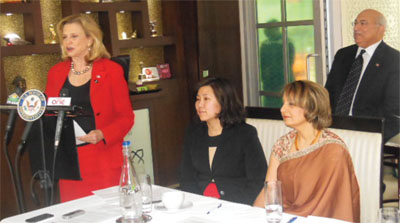
    NEW YORK, NY (TIP): CongresswomanCarolyn Maloney (D-Manhattan andQueens) joined Congresswoman GraceMeng (D-Queens) and South Asiancommunity leaders led by Ranju Batra,President of the Association of Indians in America-NY to rally grass-roots supportto press the Citizens Stamp AdvisoryCommission of the U.S. Postal Service toissue a postage stamp to honor Diwali, the”festival of lights” observed by Hindus,Sikhs, Christians, Jains, and Buddhists inIndia, the United States, and around theworld.

    “Diwali is an important spiritual andcultural festival along with other majorreligious holidays for which stamps areissued, such as Christmas, Kwanzaa,Hanukkah, and Eid, and it merits similarrecognition,” said CongresswomanMaloney.”Diwali – which literally translatedmeans ‘row of lights’ – is a festive andimportant Indian holiday that also signalsthe start of the Hindu New Year. As one ofthe world’s oldest religious holidays, itserves not only as a time for celebration,but also as an occasion for communitiesand families to convene in spiritual enlightenment.

    The practice of Diwali hassurvived political, economic and socialchanges throughout history, while alwayscarrying the universal symbolism of thevictory of light, goodness, knowledge andtruth.” Congresswoman Maloney said.Ranju Batra said “When I took over aspresident of AIA-NY, I set two goals: Tomake the 25th Silver Diwali celebrationshistory-making, and they were, and tolaser-focus on getting the Diwali Stampissued. I asked my dear friend Rep. CarolynMaloney to take the lead in Congress. I amso delighted to see Congresswoman GraceMeng here in person, and to have thesupport of Steve Israel, Ami Bera and Tulsi Gabbard.

    We need everyone who supportsreligious freedom and mutual respectamongst neighbors to sign on. We nowfinally have a strong core group to make ithappen.”Ravi Batra, attorney and chair ofNational Advisory Council on South AsianAffairs who emceed the meeting, added,”The target audience of the Diwali stampisn’t just 3 million Indian-Americans butover 1 billion in India alone. The sale of aDiwali Stamp would be a much-neededsource of revenue for the US Postal Servicein tough economic times. It may reduceUSPS’ need to raise first class rates for all.”

    “The Postal Service has issued stamps forseveral major religious holidays and nowit’s time for them to do the same forDiwali,” said U.S. Rep. Grace Meng. “Creating a Diwali stamp would be anoutstanding way to recognize and celebratethe vibrancy of the Hindu American andIndian American communities, and salutethe traditions and tremendouscontributions that they’ve made to ournation. Diwali deserves its own stamp, andI’m pleased to join my Congressionalcolleagues in urging the Postal Service tocreate one.”Congressman Steve Israel echoed thesentiments of his fellow New Yorkers,saying “I am proud to cosponsor thisresolution urging the Postal Service toissue a stamp that would recognize thefestival of Diwali, commonly known as the’festival of lights.’

    The holiday embodies theessential lessons of good triumphing overevil and embracing one’s inner light. Today,I join my colleagues to call on the Citizens’Stamp Advisory Committee to give Diwalithe recognition it deserves and issue acommemorative stamp.”India’s Permanent Representative to theUnited Nations, Ambassador HardeepSingh Puri and Ambassador LakshamiPuri, Deputy Secretary General, Women atthe United Nations also spoke.Others who addressed the gatheringincluded Mayor Ernie Davis, KamleshArya, a former President of AIA, NY andNew York City Council Member LetitiaJames.

    Indian-American Congressman AmiBera, in his statement, said “Diwali is oneof the world’s oldest religious holidays. Itcelebrates goodness and truth and isobserved by people from differentbackgrounds all across the United Statesand around the world. We should honor itsplace in our country’s tradition of religiousdiversity with a postage stamp, as we havedone for many other religious holidays. “Co-host of the lunch meeting SudhirVaishnav, President and CE of GlobosatEntertainment proposed a vote of thanks.

    Background:Diwali traditionally marks the lastharvest of the year before winter and overtime has come to also mark the first day of the new financial year in India. This”festival of lights” marks the triumph ofgood over evil, light above darkness, andinsight and knowledge over ignorance anddisregard. Diwali is celebrated byadherents of many faiths across the world.Congresswoman Carolyn Maloneyintroduced House Resolution 47 on January25th of this year to urge the Citizens’ StampAdvisory Committee, an entity of theUnited States Postal Service, to issue acommemorative stamp in honor of thefestival of Diwali.

    The bi-partisan and bicoastalresolution is co-sponsored byIndian-American Congressman Ami Bera(CA-07), Hindu-American Tulsi Gabbard,(HI-02), and by several members of the NewYork Congressional Delegation includingRep. Grace Meng (NY-06), Rep. Joe Crowley(NY-14), Rep. Steve Israel (NY-03) and Rep.Peter King (NY-02).Founded in 1967, the Association ofIndians in America is the oldestorganization of Indians in the country. TheNew York chapter is a microcosm of theextraordinary diversity of the Indiancommunity in the New York area, withmembers of all regions and religions ofIndia represented across the tri-stateregion.

    AIA prides itself on its tradition ofopenness and respect for persons of allreligious faiths, with members, as well as awide range of professions, backgroundsand occupations. AIA’s New York chapterperforms countless acts of public serviceand philanthropy, reflecting its motto,”Indian Heritage and Americancommitment.” Indeed, AIA-NY celebratedits history-making 25th Silver Diwali with adinner at the Pierre and the festival at theSouth Street Seaport, the largest suchcelebration in North America.

  • Kim Stressed, Worried

    Kim Stressed, Worried

    Socialite Kim Kardashian, who is expecting her first child in July with rapper boyfriend Kanye West, is under stress because of her divorce battle with estranged husband Kris Humphries.

    She is worried it could have a long-term effect on her baby. Kim split from Kris in November 2011 after 72 days of marriage. A source told tmz.com that Kim, 32, was treated for severe abdominal pains in recent days, after her doctor rushed to her home in the middle of the night to examine her and warned her to reduce her stress levels.

    She has been suffering from similar pains all week, including in the hours after her meeting with her divorce lawyer Laura Wasser Tuesday. Her friends insist the only significant stress is her life right now is her divorce. Kim’s mother and manager Kris Jenner confirmed she has been told to relax. “Kim has been going through this divorce for months. She has been under a lot of stress because of it and the doctors told her she had a really tough week and the stress could become a problem if she isn’t careful,” said Jenner.

  • Landmine Kills Four Malian Troops As France Mulls Exit

    Landmine Kills Four Malian Troops As France Mulls Exit

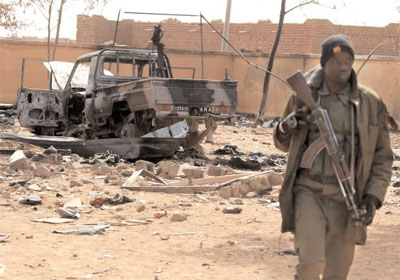
    GAO, MALI (TIP): Four Maliantroops were killed by a landmine interritory reclaimed from Islamistrebels, police said on Feb 8 as Francemulled handing over its four-week-oldintervention to UN peacekeepers.The deadly explosion Wednesdaybetween the northern towns ofDouentza and Gao came six days aftera similar blast in the same area killedtwo Malian soldiers, underlining thedanger the Islamist fighters still posedespite fleeing the towns under theircontrol.

    “A Malian army vehicle was blownup by a mine placed by the Islamistcriminals,” a paramilitary policeofficer said.The Movement for Oneness andJihad in West Africa (MUJAO), one ofthe Islamist groups that seized controlof northern Mali for 10 months, said ithad “created a new combat zone” andclaimed two recent attacks on the roadto Gao, the largest city in the north.”MUJAO is behind the explosion oftwo Malian army cars,” the group’sspokesman Abu Walid Sahraoui saidin a text message sent to a newsagency.He called on Malians to stay awayfrom main roads, which he said hadbeen heavily mined.”We urge infinite jihad and astruggle against infidel regimes andthe establishment of God’s sharia andfor Muslims to be freed,” he added.

    Nearly a month after it sent in thefirst fighter jets and attackhelicopters, France’s intervention haslargely driven the al-Qaida-linkedrebels into the remote mountains ofthe far northeast, stopping theirthreatened advance on the capital,Bamako.But French-led forces continue tocome under attack in reclaimedterritory, including rocket firedirected against them Feb 6 in Gao.With fears of a prolongedinsurgency, Paris is keen to hand overthe military burden of an operationthe defence ministry said has alreadycost France 70 million euros ($95million), with the figure rising by 2.7million euros per day.

    French defence minister Jean-YvesLe Drian said patrols in reclaimedtowns had encountered “residualjihadist groups who are still fighting”.In Gao, French-led forces havebeefed up security to prevent rebelsinfiltrating the city, according to aMalian army source. An AFPjournalist reported large patrols byFrench, Malian and Nigerien troops.French helicopters have beenpatrolling the road between Gao andDouentza, 400 kilometres (250 miles) tothe southwest.The area is littered with landminesand improvised explosive devices,according to security sources.After announcing plans to startwithdrawing its 4,000 troops from Maliin March, France called Wednesdayfor a United Nations peacekeepingforce to take over.Foreign Minister Laurent Fabiussaid a peacekeeping force could bein place by April, incorporatingtroops being deployed under thebanner of a West Africanintervention force, AFISMA, into aUN mission.

    The Economic Community of WestAfrican States (ECOWAS) is slowlydeploying some 6,000 troops in Mali,joined by another 2,000 from Chad.France’s ambassador to the UN,Gerard Araud, said it would take”several weeks” to make anassessment on deploying peacekeepersbut that the Security Council had “noobjections” to the plan.France now has as many soldiers inMali as it had at the peak of itsdeployment in Afghanistan in 2010.French fighter jets continue topound the area around the Adrar desIfoghas massif in the far northeast, acraggy mountain landscapehoneycombed with caves where theinsurgents are believed to have fledwith seven French hostages.France’s UN ambassador said apeacekeeping mission would also betasked with helping Mali, whose bowtie-shaped map circumscribes a vastsprawl of terrain and peoples, “reacha new national pact”.

    Mali’s descent into chaos beganwith a new rebellion launched inJanuary 2012 among the Tuareg, atraditionally nomadic northern peoplewho have long felt marginalised by thesouthern government.Le Drian said Tuesday the Frenchledoperation had so far killed “severalhundred” al-Qaida-linked militants.France’s sole fatality so far has beena helicopter pilot killed at the start ofthe operation. Mali said 11 of itstroops were killed and 60 wounded inearly fighting but has not sincereleased a new death toll.

  • Five Dead As 8.0 Quake Off Solomons Sparks Pacific Tsunami

    Five Dead As 8.0 Quake Off Solomons Sparks Pacific Tsunami

    HONIARA (TIP): A major 8.0magnitude earthquake jolted theSolomon Islands on feb 6 with smalltsunami waves buffeting Pacificcoastlines, leaving at least five peopledead and dozens of homes damagedor destroyed.A quake-generated wave of justunder one metre (three feet) reachedparts of the Solomons, and Vanuatuand New Caledonia also reportedrising sea levels, before a region-widetsunami alert was lifted.Sirens were heard in Fiji, localssaid. “Chaos in the streets of Suva aseveryone tries to avoid the tsunami!!”tweeted Ratu Nemani Tebana fromthe Fiji capital.Quake-prone Japan, which was hitby a huge tsunami in March 2011 thatkilled more than 19,000 people, wasalso on edge with the nationalweather agency warning that a smalltsunami could still come ashore.

    The Pacific Tsunami WarningCenter cancelled its regional alert forPacific-island nations at 0350 GMT,about two and a half hours after thepowerful quake struck at 0112 GMTnear the Santa Cruz Islands in theSolomons.”We can report five dead and threeinjured. One of the dead was a malechild, three were elderly women andone an elderly man,” Chris Rogers, anurse at Lata Hospital in the SantaCruz Islands, told AFP.Solomons Prime Minister GordonDarcy Lilo’s office said four villageson the Santa Cruz Islands had beenhit.”Latest reports suggest thatbetween 60 to 70 homes have beendamaged by waves crashing into atleast four villages on Santa CruzIslands,” Lilo’s spokesman GeorgeHerming told AFP.”At this stage, authorities are stilltrying to establish the exact numberand extent of damage.Communication to (the) Santa CruzIslands is difficult due to theremoteness of the islands.

    “It was not immediately apparentwhether the victims died in the quakeor tsunami.Solomon Islands Red Crosssecretary general Joanne Zolevekesaid she too had been told at leastthree villages were hit, with houseswashed away.”In the Solomon Islands when wetalk about villages there can beanything from 10 to 30 houses,” shesaid.The US Geological Survey said thequake struck the Santa Cruz Islands,which have been rocked by a series ofstrong tremors over the past week, ata depth of 28.7 kilometres (18 miles).The USGS first gave the depth at 5.8kilometres.Several powerful aftershocks werealso recorded.

    “Sea level readings indicate atsunami was generated,” the HawaiibasedPacific centre said after the 8.0quake, before lifting its tsunami alertfor several island nations.Australia’s earthquake monitoringagency and the Pacific centre said atsunami wave was measured at 91centimetres, at Lata, on the mainSanta Cruz island of Ndende.Locals in the Solomons capitalHoniara, 580 kilometres (360 miles)from the epicentre, said the quakewas not felt there.Lata Hospital director of nursingAugustine Bilve said some patientswere evacuated to higher ground toprepare for any injured from thevillages along the coast.

    “There was continuous shaking inLata but no damaged buildings here,”he said.”We were told that after theshaking, waves came to the villages.”In 2007 a tsunami following an 8.0-magnitude earthquake killed at least52 people in the Solomons and leftthousands homeless. The quake wasso powerful that it lifted an island andpushed out its shoreline by dozens ofmetres.The Solomons are part of the “Ringof Fire”, a zone of tectonic activityaround the Pacific Ocean that issubject to earthquakes and volcaniceruptions.Before it was lifted, the tsunamiwarning was in effect for the SolomonIslands, Vanuatu, Nauru, Papua NewGuinea, Tuvalu, New Caledonia,Kosrae, Fiji, Kiribati, and Wallis andFutuna.

  • Kerr Gets Half-Naked For Bridal Lingerie Shoot

    Kerr Gets Half-Naked For Bridal Lingerie Shoot

    Miranda Kerr stripped down to her undies as she posed for the new Victoria’s Secret bridal lingerie campaign. The mother-of-one poses in a variety of sheer, frilly and generally sexy underwear, showing of her lovely lean figure in the process, the Mirror reported.

    The Victoria’s Secret styling team worked all the usual wedding essentials into the shoot, with the supermodel’s accessories including a veil, tiara, bouquet of flowers and a garter. The snaps come hot on the heels of more shots of her wearing not very much, after she tweeted pictures of herself in a black bikini whilst on holiday in Mexico.

  • War Crimes: Bangla Jails Islamist For Life

    War Crimes: Bangla Jails Islamist For Life

    DHAKA (TIP): A top leader of Bangladesh’sfundamentalist Jamaat-e-Islami was on Feb 5 sentencedto life by a special tribunal here for “crime againsthumanity” committed during the 1971 independence waragainst Pakistan, sparking riots that claimed at leastone life.”He ( Abdul Kader Mollah) will serve life term,” saidchairman of the three-member International CrimesTribunal Justice Obaidul Hassan.

    Mollah, assistantsecretary general of the right-wing Jamaat-e-Islami, wasproduced before the court under heavy security escort.The tribunal said five of the six charges against himwere proved during the trial. Court officials said thatunder the Bangladeshi law 65-year-old Mollah wouldneed to serve 30 years in jail. Mollah jumped to his feetas soon as the verdict was pronounced and shoutedclaiming innocence. “This verdict is fabricated and I willfile a case (appeal) against it for sure,” he screamed asthe police took him away.

  • Blizzard Threatens Northeastern US, More Than 2,600 Flights Cancelled

    Blizzard Threatens Northeastern US, More Than 2,600 Flights Cancelled

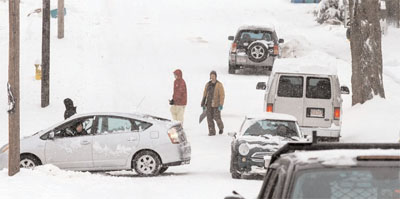
    BOSTON (TIP): A blizzard ofpotentially historic proportionsthreatened to strike the northeastwith a vengeance on Friday, with up to2 feet (0.6 meters) of snow forecastalong the densely populated corridorfrom the New York City area to Bostonand beyond.Halfway through what was lookinglike a merciful winter, people stockedup on food and other storm supplies,and road crews along the East Coastreadied salt and sand ahead of whatforecasters warned could be one forthe record books.Boston and Providence, RhodeIsland, called off school on Friday, andairlines cancelled more than 2,600flights and counting, with thedisruptions certain to ripple acrossthe US.

    “Everybody’s going to get plasteredwith snow,” said Massachusetts-basedNational Weather Servicemeteorologist Alan Dunham.The snow is expected to start Fridaymorning, with the heaviest amountsfalling at night and into Saturday.Wind gusts could reach 65 mph (105kph). Widespread power failures werefeared, along with flooding in coastalareas still recovering fromSuperstorm Sandy in October.New York City was expecting up to14 inches (355 millimeters) of snow.Mayor Michael Bloomberg said plowsand 250,000 tons of salt were being puton standby.

    “We hope forecasts are exaggeratingthe amount of snow, but you never cantell,” he said.Blizzard warnings were posted forparts of New Jersey and New York’sLong Island, as well as portions of theNew England region, includingMassachusetts, Rhode Island andConnecticut. The warnings extendedinto New Hampshire and Maine.In New England, it could prove to beamong the top 10 snowstorms inhistory, and perhaps even breakBoston’s record of 27.6 inches (700millimeters), set in 2003, forecasterssaid. The storm is arriving just afterthe 35th anniversary of the blizzard of1978, which paralyzed New Englandwith more than 2 feet (0.6 meters) ofsnow and hurricane-force winds fromFeb. 5-7.

    The last major snowfall insouthern New England was well over ayear ago – the Halloween storm of 2011.In New Hampshire, DartmouthCollege student Evan Diamond andother members of the ski team weregetting ready for races at the IvyLeague school’s winter carnival.”We’re pretty excited about itbecause this has been an unusualwinter for us,” he said. “We’ve beengoing back and forth between havingreally solid cold snaps and then therain washing everything away.”

  • Park’s National Security Chief To Face Tough Test With N. Korea

    Park’s National Security Chief To Face Tough Test With N. Korea

    SEOUL (TIP): Kim Jang-soo, the national securityoffice chief for incoming President Park Geun-hye, isexpected to face tough strategic challenges in copingwith North Korea as the belligerent neighbor threatensto stage a nuclear test despite repeated internationalwarnings.Kim, 65, the former defense minister under the RohMoo-hyun administration from 2004 to 2006, wasappointed to the major post in the top office afterleading the foreign policy and defense committee forPark’s transition team after the December election.

    He won conservative acclaim after he was shownstanding upright without bowing as he shook handswith then North Korean leader Kim Jong-il during the2007 inter-Korean summit. Since then the hardliner wasdubbed “Gen. Upright.”After stepping down from the defense chief post, Kimentered into politics on the proportional representationticket for the then ruling conservative Grand NationalParty, now known as the Saenuri Party, in the previousparliamentary session.Park, who replaces President Lee Myung-bak on Feb.25, campaigned on mending ties with Pyongyang inreturn for dismantling its nuclear program.

    Ahead of awidely expected third nuclear test, however, she hasrepeatedly urged the North to drop the plan and warnedthe test would further isolate the impoverished nation,which is already under heavy international sanctions.Under the Park administration, Kim is expected to takea greater role in overseeing foreign affairs, nationaldefense and inter-Korean affairs, as well as nationalcrisis management, which will be a newly added team tothe presidential office as part of Park’s governmentreorganization plan.

    The expanded national security team for the top officewas seen as underlining Park’s commitment to strongnational defense.Born in Gwangju in 1948, Kim graduated from theKorea Military Academy in 1971 and earned a master’sdegree in government administration from Seoul’sYonsei University in 1989. He served as deputycommander of the South Korea-U.S. combined forcescommand and Army chief.

  • Pakistani President Asif Ali Zardari’s Pvt Villa Is Blast-Proof, Has Runway

    Pakistani President Asif Ali Zardari’s Pvt Villa Is Blast-Proof, Has Runway

    LAHORE (TIP): A sprawling highsecurityprivate residence for PakistaniPresident Asif Ali Zardari, complete withbomb-proof structures and a landing stripfor small jets and helicopters, is nearingcompletion here.The compound in Bahria town, spreadover some 25 acres, is named Bilawal Houseafter Zardari’s son Bilawal Bhutto Zardari.According to a Pakistan Peoples Partyofficial from Punjab the residence has beengifted by property tycoon Malik RiazHussain.

    The bomb-proof home is surrounded bylawns that can accommodate up to 10,000people and has a runway for private jetsand helicopters. The compound issurrounded by 30-inch high walls fittedwith security gadgets. Once completed, theresidence will have a three-tier securitysystem.Zardari, who is due to arrive in Lahoreon Sunday, is expected to visit BilawalHouse with his son, the sources said.

    Theresidence in Lahore will serve as the mainbase in Punjab province for Bilawal duringcampaigning for the upcoming generalelection.Hussain, believed to be close to Zardari,was at the centre of a controversy last yearafter he alleged that he funded threeforeign trips by Arsalan Iftikhar, the son ofsupreme court chief justice IftikharChaudhry.

  • Kareena Keeping Tabs On Saif’s Movie

    Kareena Keeping Tabs On Saif’s Movie

    Kareena Kapoor Khan has added one more wifely duty to her list. She is now keeping tabs of her husband Saif Ali Khan’s movie collections.

    One heard that all through the last weekend, Bebo was asking friends and trade pundits what the exact box office figures of Saif’s last film were. Saifeena reportedly just got back from Goa from one of their brief breaks before Saif plunges headlong into the schedule of his next movie in Lucknow.

  • Mahatma Gandhi’s Punya Tithi Observed

    Mahatma Gandhi’s Punya Tithi Observed

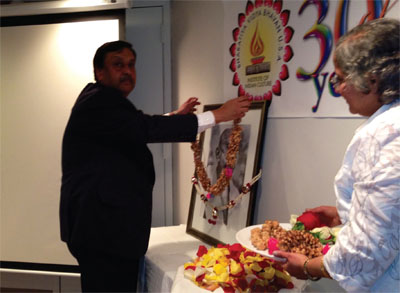
    NEW YORK (TIP): The ConsulateGeneral of India, New York, inassociation with Bharatiya Vidya Bhavan,USA observed the 65th Punya Tithi ofMahatma Gandhi on January 30, 2013.About 50 guests including teachers,students, journalists and office bearers ofthe Bhavan attended the event.

    Speaking on the occasion, ConsulGeneral of India, Prabhu Dayal, touchedupon various aspects of MahatmaGandhi’s philosophy and its continuingrelevance in the contemporary world.Floral tributes were paid to MahatmaGandhi by the Consul General, BharatiyaVidya Bhavan functionaries and a fewguests.Mrs. Sanjukta Sen and students of theBharatiya Vidya Bhavan sang Gandhiji’sfavorite Bhajans.

  • U.S. And States Prepare To Sue S&P Over Mortgage Ratings

    U.S. And States Prepare To Sue S&P Over Mortgage Ratings

    NEW YORK (TIP): The Justice Department, along withstate prosecutors, plans to file civil charges againstStandard & Poor’s Ratings Service, accusing the firm offraudulently rating mortgage bonds that led to thefinancial crisis, people briefed on the plan said February 4.A suit against S.&P. – expected to filed this week -would be the first the government has brought againstthe credit ratings agencies related to the financial crisis,despite continued questions about the agencies’ conflictsof interest and role in creating a housing bubble.

    Several state prosecutors are expected to join thefederal suit. The New York State attorney general isconducting a separate investigation, an official in thatoffice said. The official declined to say whether NewYork State’s action involved other ratings agenciesbesides Standard & Poor’s.Up until last week, the Justice Department had beenin settlement talks with S.&P., these people said.

    But thenegotiations broke down after the Justice Departmentsaid it would seek a settlement in excess of “10 figures,”or at least $1 billion, these people said. Such an amountwould wipe out the profits of S.&P.’s parent, theMcGraw-Hill Company, for an entire year. McGraw-Hillearned $911 million last year.During settlement negotiations, the JusticeDepartment held out the threat of a criminal caseagainst S.&P., the people said. Ultimately, thegovernment plans to bring a civil suit, which has alower burden of proof than a criminal case.The case is expected to be brought in California, thesepeople said.

    The state suffered disproportionatelyduring the housing bubble, and the government ishoping the venue will yield more sympathetic jurors.The case is focusing on about 30 collateralized debtobligations, an exotic type of mortgage security.According to S&P, the mortgage securities were createdin 2007 at the height of the housing boom.Prosecutors, according to the people, have uncoveredtroves emails by S&P, employees, which the governmentconsiders damaging. Portions of those emails are likelyto be disclosed in the government’s complaint againstS&P, these people said.

    In a statement on Monday, S.&P. said it had receivednotice from the Justice Department over a pendinglawsuit. The ratings agency argued any such legalaction would be baseless, since it downgraded plenty ofmortgage-backed investments, including in the twoyears leading up to the financial crisis. It also contendedthat other observers of the debt markets, includinggovernment officials, believed at the time that anyproblems within the housing sector could be contained.

    “A D.O.J. lawsuit would be entirely without factual orlegal merit,” the agency said in its statement. “With20/20 hindsight, these strong actions proved insufficient- but they demonstrate that the D.O.J. would be wrong incontending that S.&P. ratings were motivated bycommercial considerations and not issued in goodfaith.”Shares of McGraw-Hill closed down nearly 14 percenton February 4, at $50.30.

  • Us Postal Service Will End Saturday Mail Delivery?

    Us Postal Service Will End Saturday Mail Delivery?

    NEW YORK (TIP): To cut costs, the US Postal Service has announced that it will endSaturday delivery of first-class mail beginning in August. It will continue to deliverpackages, and post offices that are open now will remain open and mail will bedelivered to PO boxes.