Year: 2013

  • Feisty Malala Nominated For Nobel Peace Prize

    Feisty Malala Nominated For Nobel Peace Prize

    OSLO (TIP): Malala Yousafzai, theshot Pakistani schoolgirl-turned-iconof Taliban resistance, and ex-Easternbloc activists are among those knownto be nominated for this year’s NobelPeace Prize, as the deadline expiredon Friday.This year’s award will beannounced in October, butspeculation was already on as thedeadline for nominations ran out onFebruary 1.”A prize to Malala would not onlybe timely and fitting with a line ofawards to champions of human rightsand democracy, but also … would setboth children and education on thepeace and conflict agenda,” said thehead of the Peace Research Instituteof Oslo, Kristian Berg Harpviken.Others known to have beennominated are human rights activists,including Belarussian human rightsactivist Ales Belyatski – and Russia’sLyudmila Alexeyeva. “They have bothdefied authoritarian state structuresand the illegal and illegitimate abuseof power,” said Jan Tore Sanner, oneof the two Norwegian PMs whonominated them.

  • Indian Americans Show Their Class Ten Named Intel Science Contest Finalists

    Indian Americans Show Their Class Ten Named Intel Science Contest Finalists

    NEW YORK (TIP): Ten IndianAmerican high school students areamong the 40 finalists in the 2013Intel Science Talent Search.Students will compete March 7-13in Washington, D.C., for $630,000 inawards, with the top winnerreceiving $100,000 from the IntelFoundation.New York led all states with sevenIntel finalists this year, followed byCalifornia with six.Of the ten Indian Americanfinalists, three are from California:Paulomi Bhattacharya of Cupertino,a senior at The Harker School inSan Jose; Pavan Mehrotra, of SimiValley, who attends Sierra CanyonSchool in Chatsworth; and SahanaVasudevan of Palo Alto, a studentat the Gnyanam Academy. Two arefrom Portland, Ore: Naomi Shah ofSunset High School and RaghavTripathi of Westview High School.The other four finalists are fromGeorgia, Kentucky, Massachusettsand Tennessee.

    Mayuri’s project is titled”Computational Analysis of theDNA-Binding Mechanism of thep53 Tumor Suppressor and its Inactivationthrough the R249S Mutation”. MayuriSridhar, a 17-year-old senior at Kings ParkHigh School accepted to MassachusettsInstitute of Technology as an early actionapplicant, attended the Kings Park Board ofEducation meeting Tuesday night, shortlyafter receiving a phone call from Intel,alerting her to her finalist status.For her project, Sridhar studied thestructure of the p53 protein, a tumorsuppressor that helps prevent cancer.”Experimental research has shown that theloss of tumor suppressors, such as the p53protein, is highly correlated with thedevelopment of tumor cells,” Sridharexplained in a previous interview.

    “I wantedto create a better cancer diagnostictechnique.”Toward the end of her research, Sridharrealized she had possibly done that.”A week before submitting my entry, all myresults flipped around and I could not for thelife of me figure out why,” she said.”Eventually I realized my results wereproving the experiment wrong. I was reallyhappy because I was able to prove that I couldactually create better diagnostic techniquesthat hadn’t been done before. That was thebest moment.”At the Tuesday meeting, KPHS scienceresearch coordinator Mary Ellen Faycongratulated Sridhar.”This is the second time we are in thissituation, which is, I think, phenomenal,” shesaid. “Do you know the first time was hersister?”In 2008, Hamsa Sridhar became Kings ParkHigh School’s first student to be named anIntel finalist.”Genes, environment, whatever it is,they’re doing something really right in thathousehold,” Fay said.

    Paulomi Bhattacharya’s project is titled “A NovelAAA-ATPase p97/VCP Inhibitor Lead for MultipleMyeloma by Fragment-Based Drug Design: AComputational Binding Model and NMR/SPR-BasedValidation.”An 18-year-old senior at Harker, she has been doingscientific research in fields as diverse as bioengineeringand chemical engineering since the eighth grade, the SanJose Mercury News reported.”It’s unbelievable. It’s a dream come true,” she said. TheIndian American student did laboratory work to find adrug with the potential to shut off a protein responsible formultiple myeloma, a cancer that affects plasma cells.She identified and tested many drug candidates lastsummer before finding one that worked. “Research is somuch about failing over and over again, and finally whenyou succeed, it’s wonderful,” she told the Mercury News.

    Sahana Vasudevan made the finals with the project:”Minimizing the Number of Carries in the Set ofCoset Representatives of a Normal Subgroup.” Theresearch could improve the speed and efficiency ofcomputer algorithms.Pavan Mehrotra advanced with “Facile, Single StepConversion of Biomass to Electricity.”

    Two Indian American finalists are from Portland,Ore. Naomi Shah of Sunset High School advancedwith the project, “The Toxicological Effect ofAirborne Pollutants on Lung Health.”

    Raghav Tripathi of Westview High School inPortland submitted “Design and Synthesis of NovelFatty Acid Binding Protein Inhibitors for Analgesicand Anti-Inflammatory Effects through Increases inEndogenous Anandamide Concentrations.”Raghav Tripathi of Westview High School in Portlandsubmitted “Design and Synthesis of Novel Fatty Acid BindingProtein Inhibitors for Analgesic and Anti-InflammatoryEffects through Increases in Endogenous AnandamideConcentrations.”

    Raja Selvakumar, Milton High School, Alpharetta,Ga., “Gastro Microbial Fuel Cell: A NovelImplementation of a GMFC in CapsularNanorobotics”; Naethan Mundkur, duPont Manual HighSchool, Louisville, Kentucky, “Investigation into theThermal and Rheological Properties of CuO Nanofluids forHeat Transfer Applications”; Surya Bhupatiraju, LexingtonHigh School, Lexington, Mass., “On the Complexity of theMarginal Satisfiability Problem”, and AkshayPadmanabha, Houston High School, Collierville, Tenn.,”Predicting, Detecting, and Treating Seizures throughVagus Nerve Stimulation.”Finalists are rated on original scientific research,achievement, and leadership inside and outside theclassroom. Winners will be unveiled at an awardsceremony at the National Building Museum March 12.Society for Science and the Public, a nonprofit groupdedicated to public engagement in scientific research andeducation, has administered the competition since itsinception in 1942. The 40 finalists were narrowed downfrom 300 semifinalists and more than 1,700 entrants.

  • As I See It: Worry About Kerry

    As I See It: Worry About Kerry

    As the US president, Barack Obama embarks on his second term, New Delhi is once again feeling the chill of a new administration in Washington. Sections of the Indian foreign policy making community are once again doing what they do best – crying hoarse over a possible change in the tone and tenor of US foreign policy. Obama has a new cabinet line-up with John Kerry nominated for the post of secretary of state, Chuck Hagel for the secretary of defense and John Bremmer as the head of the CIA. The US foreign policy is in a state of flux and some very significant changes are likely over the course of the next few years under the second Obama presidency. The most important issue in the short to medium term will be withdrawal of around 66,000 US troops from Afghanistan after more than a decade battling al Qaeda and the Taliban.

    Like most nations around the world, New Delhi will also be impacted by the impending changes in the foreign policy priorities of Washington. But instead of debating the larger ramifications of these changes, the discussion in India today is reminiscent of the discussion in the country when Obama came to office for the first time in 2008. There were widespread concerns about Obama’s attitudes towards India after eight years of privileged position under George W Bush administration. George W Bush, deeply suspicious of communist China, was personally keen on building strong ties with India.

    Hence, he was willing to sacrifice long-held US non-proliferation concerns to embrace nuclear India and acknowledge it as the primary actor in South Asia, dehyphenated from Pakistan. The Obama administration’s concerns in its initial months with protecting the nonproliferation regime, dealing with the immediate challenge of the growing Taliban threat in Afghanistan and Pakistan, and solving the unprecedented economic challenge led it to a very different set of priorities and an agenda in which India seemed to have a marginal role. The only context in which Obama mentioned India in his early months was related to the need to resolve Kashmir so as to find a way out of the west’s troubles in Afghanistan.

    To many Indians, the new administration seemed intent on sidelining India. In a similar vein, discussion these days is centered around the appointment of John Kerry and his supposed ’tilt’ toward Pakistan. Kerry has been closely associated with Obama administration’s Pakistan policy.

    It was he who helped broker the release of the CIA contractor, Raymond Davis, arrested on suspicion of murder and later persuaded Islamabad to return parts of US stealth helicopter that crashed during the Abbottabad raid that killed Osama bin Laden. Kerry has already been termed by sections of the Indian media as a friend of Pakistan, implication being that he would be unfriendly towards India. Kerry’s strong support for strengthening the NPT and the Kerry-Lugar-Berman bill authorizing a five-year $7.5 billion financial aid package to Pakistan have been viewed as examples of Kerry’s pro-Pakistan worldview.

    Sympathetic ear
    Pakistan’s effusive praise for Kerry’s nomination may indeed underscore a sense in Islamabad and Rawalpindi that they have gained a sympathetic ear in the new US cabinet. It won’t be surprising if the recent adventurous behavior of Pakistan military at the Line of Control may have been inspired by this bravado.

    But just as Pakistan will be fooling itself, if it believes that Kerry is going to be Pakistan’s friend, India is being unnecessarily defeatist if it thinks that Kerry’s nomination will be a disaster for India. Kerry is neither going to be pro-India nor pro-Pakistan, he will be pro-US. And if Obama had to change his foreign policy worldview vis-à-vis India soon after coming into office, Kerry will have no choice but to build on Obama’s first term and strengthen ties with India.

    After all, it was Kerry who has described India-US ties as “without doubt one of the most significant partnerships in US foreign policy.” The US-India relationship has matured and reached a stage where changes in personnel will only have a limited impact on its trajectory. There is a growing perception that India is not yet ready for prime-time and that the political leadership in New Delhi remains perpetually preoccupied with domestic turmoil and lacks political will to claim India’s rightful place in the comity of nations.

    It is for India to pursue strategic partnerships with like-minded nations and advance its interests. The world will only take India seriously when India starts taking itself seriously and starts behaving like a serious power. There is a larger problem that underlies this perpetual hyperventilation in India about the ostensible tilt in Washington.

    It has become a regular feature of Indian diplomacy to press America toward securing its own regional security interests. The speed with which India has outsourced its regional foreign policy to Washington is astonishing.New Delhi is now reduced to pleading with Washington to tackle Pakistan and to rein in Pakistan army’s nefarious designs against India in Afghanistan, in Kashmir and elsewhere.

    For all the breast beating in recent years about India emerging as a major global power, Indian strategic and political elites display an insecurity that defies explanation. A powerful, self-confident nation should be able to articulate a coherent vision about its priorities and national interests.

    The brazen display of a lack of self-confidence by Indian elites in their nation’s abilities to leverage the international system to its advantage only weakens India.

    A diffident India will continue to crave for the attention of Washington but will find it difficult to get. A confident India that charts its own course in world politics based on its national imperatives will force the world to sit up and take notice.

  • Immigration Reform lit by Obama Electoral Landslide

    Immigration Reform lit by Obama Electoral Landslide

    Two paths to citizenship, based upon differing culpability, can open the door to 11 million new Americans while reforming our immigration regime to welcome talented highly skilled workers and agricultural workers to stimulate our economy. Arizona’s success in the Supreme Court in “show me your papers,” with its attendant dangers of disparate impact, an issue not yet decided by the Supreme Court, seems to have galvanized both of its senators, Republicans John McCain and Jeff Flake, to be part of the Bipartisan Eight who decided enough was enough.

    America must control its borders, and the law must be recalibrated. Joining with Lindsey Graham, Marco Rubio and Democratic heavyweights Chuck Schumer, Dick Durbin, Bob Menendez and Mike Bennet, America can now cure its weak enforcement regime, legalize the illegals who help America get stronger daily with their Puritan work ethic, attract highly skilled workers as well as folks willing to work on America’s farms to expand our economy, enforce sovereignty on the border including with high-tech drones, and hold employers liable for disobeying the law. The segregated pathway to citizenship, based upon an amount of culpability, speaks with compassion and proportionality and bodes well for all of us. Its was said a long time ago: the law must never be an ass.

    Our broken immigration system, from bad enforcement to silly exclusion of highly skilled workers who could stimulate our economy, cried out for reform. The electoral cry heard in the November 2012 presidential election was the trigger to both save the nation and our vital two party system. No one more than the Republicans need to enact immigration reforms if they are to re-attract the Hispanic vote block.

    America’s best is always ahead, as we have the ability to recalibrate and each one of us is a patriot – after all, isn’t that the ultimate joy of being an American – the ability to join patriots Thomas Jefferson and Nathan Hale. Incidentally, America’s fan club is not limited only to those already American, as our exceptionalism is felt the world over. We just need our foreign policy to be less temporal and more friendship-bedrock based. Also worth noting is that our domestic freedom and lawful process permits Marco Rubio to become a star and join those already in that league.

    This Plan will now have traction in both houses, as it is filibuster-proof in the senate. The President awaits a bill that moves 11 million illegals onto a path of 11 million future voters who will remember that America acted with compassion and proportionality. As a New Yorker, I take special pride in our senior senator, the very Honorable Chuck Schumer – from presiding over a great inauguration to a great immigration reform regime. You do us all proud, Senator Schumer!

  • Rethinking our China strategy

    Rethinking our China strategy

    Senate committees will soon be asked to vote on President Obama’s nominees to head the departments of State and Defense and the Central Intelligence Agency. Many, if not most, of the senators’ questions will be focused on the nominees’ views on the pressing security problems the United States faces in the greater Middle East and Afghanistan. But it would be a mistake for the committees to let the hearings pass without also examining the administration’s own stated policy priority – the “pivot” or “rebalance” to the Asia-Pacific region. A productive discussion of the pivot, however, will require a frank acknowledgment that the primary factor driving the change is increased nervousness in Washington and Asian capitals about China’s rise and, in turn, recognition that the U.S. policy of engagement with China has not been as effective in shaping that rise as successive administrations, Republican and Democratic, had hoped. On this point, it is particularly useful to reread then-Deputy Secretary of State Robert Zoellick’s 2005 speech in which he famously invited Beijing to become a “responsible stakeholder” in the international system. Since the late 1970s, the U.S. had been, as Zoellick put it, “opening doors to China’s membership into the international system” with the expectation that doing so would lead to change in Chinese behavior as it saw the security and economic benefits of that system. By no means a China “hawk,” Zoellick provided a reasonable set of benchmarks for judging just how successful engagement would be in moving China along the path of a benign rise to great-power status. So,what does the score card look like? To start, Zoellick noted that, although China had “gained much from its membership in an open, rules-based international economic system,” its mercantilist economic policies put in doubt its commitment to that system’s underlying principles. And little has changed on that front. China keeps its currency undervalued to promote its exports, limits foreign access to its markets and treats natural resources as exclusive national assets. The government has done little to rein in intellectual property piracy or commercial cyber-espionage. State-owned banks still dominate China’s financial sector, and Beijingdriven industrial policies have increased, not decreased, in recent years. Another point of contention Zoellick hoped the Chinese would address was the lack of transparency when it came to China’s military buildup. But despite repeated U.S. initiatives, military-to-military exchanges have produced little of substance, and American intelligence continues to be surprised as some new Chinese weapons system is rolled out of its hangar or deployed at sea. Even during some of the roughest patches of the Cold War, the White House had a direct hot line to the Kremlin, and we knew, by mutual agreement, how many strategic warheads and missiles the Soviets had.With China,we haven’t a clue. As a responsible stakeholder, Zoellick said, China could and should do more to address the problem of North Korea and weapons proliferation more generally. On North Korea, only Beijing has the ability to pressure or persuade Pyongyang to change behavior. Yet North Korea continues to stockpile nuclear weapons and is bent on perfecting missiles that threaten our allies and, soon enough, the United States. If there is any good news, China’s direct role in proliferating has lessened. And while the recent vote by Beijing in support of the U.N. Security Council resolution condemning North Korea’s last missile test is a small but positive step, Beijing has not used its considerable leverage with Pyongyang to stop North Korea’s proliferation, and has dragged its feet on helping the rest of the world deal with the destabilizing impact of Iran’s nuclear program.

    As Zoellick noted, “China’s actions on Iran’s nuclear program will reveal the seriousness of China’s commitment to nonproliferation” and, so far, its record falls short of that mark. And, finally, Zoellick said that “China’s choices about Taiwan will send an important message too…. It is important for China to resolve its differences with Taiwan peacefully.” However, despite the most conciliatory government in Taiwan since the establishment of the People’s Republic of China, Beijing’s military buildup across from the island democracy has not diminished.

    Since Zoellick’s speech, China has taken an even more aggressive posture toward its neighbors, with confrontations with Japan in the East China Sea and Vietnam and the Philippines in the South China Sea. So what does this assessment of Chinese behavior mean for U.S. policy in an Obama second term? First, it reinforces the administration’s rationale for upping America’s strategic game in the Asia-Pacific region.

    What the Senate should be looking to hear, however, is exactly how the new national security team will go about making that a reality, especially in an era of major cuts in defense spending. Second, it means that, to the extent engagement is pursued, it should be with an eye to what is mutually and concretely beneficial, not with the expectation that the process itself will lead to China’s transformation.

    Finding the right balance in U.S.-China policy is a complex task. But the first step for the new secretaries of State and Defense in getting it right must be to understand what engagement can and can’t do, and to realize it is unlikely that China will become a member in good standing of the liberal international order until its leaders have made the decision to become liberal at home.

  • Suicide Bomber Attacks Market In Pakistan; 21 Killed & 33 Wounded

    Suicide Bomber Attacks Market In Pakistan; 21 Killed & 33 Wounded

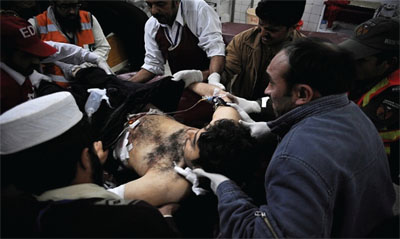
    PESHAWAR (TIP): An explosion in amarket in northwestern Pakistan on Friday,February 1, killed at least 21 people andwounded 33 in what the police described as asuicide bombing.The Pakistani Taliban claimedresponsibility for the attack in Hangu, about70 miles west of Peshawar, the capital ofKhyber-Pakhtunkhwa Province. Abu Omar, aTaliban commander in the neighboring tribalregion of North Waziristan, said in atelephone interview that the attack was inrevenge for the killing on Thursday of a Sunnicleric.

    The cleric, Mufti Abdul Majeed Deenpuri,60, was shot in the southern port city ofKarachi, setting off fears of reprisals againstShiites.Mr. Deenpuri was a senior teacher at JamiaBinoria, one of the largest seminaries inPakistan. A gunman opened fire on a vehiclecarrying the cleric and a colleague at a busyintersection and then fled.While the security situation is precariousacross Pakistan, Rehman Malik, the interiorminister, had warned of the potential for anattack in Karachi, a sprawling, violence-proneport city. Cellphone service was suspendedthere from noon to 3 p.m. during FridayPrayer.Sectarian violence has also occurred inHangu in the past, often forcing theauthorities to impose a curfew.

    The townborders the Orakzai tribal region, where thearmy and paramilitary forces are fightingTaliban militants.Friday’s explosion occurred just afterFriday Prayer as worshipers filed out ofnearby Sunni and Shiite mosques, policeofficials said. “People were coming out of themosque when the explosion occurred,” saidone officer in Hangu, speaking on thecondition of anonymity.Another police official in Hangu said asuicide bomber had detonated his explosives.While Shiites were the likely target, the deadincluded people from both Islamic sects, hesaid.

    Separately, a Pakistani intelligenceofficial, speaking on the condition ofanonymity, said 30 mortar shells fired fromAfghanistan on Friday morning killed sixresidents of Angoor Adda, a border village inSouth Waziristan. However, there was noofficial comment from the Pakistani military,and a local government official gave aconflicting number of casualties, saying threepeople were killed and six wounded.In recent years, Pakistan and Afghanistanhave traded barbs over accusations of crossborderrocket and artillery fire. The 1,510-milecraggy border between the two countries haslong posed a problem for both sides, eachaccusing the other of not manning the bordereffectively.

    Both sides maintain thatinsurgents easily cross over the porous border,but plans to fence the border have beenrejected as impractical.On Thursday, Human Rights Watchreleased its World Report 2013, which sharplycriticized the Pakistani government and itsmilitary and intelligence agencies for failingto reduce human rights abuses.”Pakistan’s human rights crisis worsenedmarkedly in 2012 with religious minoritiesbearing the brunt of killings and repression,”said Ali Dayan Hasan, the director in Pakistanfor Human Rights Watch. “While the militarycontinued to perpetrate abuses with impunityin Baluchistan and beyond, Sunni extremistskilled hundreds of Shia Muslims and theTaliban attacked schools, students andteachers.”

  • Tracking violence and terror Worrying communal tendencies

    Tracking violence and terror Worrying communal tendencies

    Justice Verma and his two colleagues on the commission set up to examine laws dealing with sexual abuse and terror have served the nation well in making a thorough examination of the subject in its widest amplitude and coming up with a range of pertinent observations and recommendations. This elaborate report was prepared in just 29 days with exemplary speed without falling short on data, analysis and findings. It now remains for the government and Parliament to match this dedication and legislate a new legal framework without the endless delays and side-interventions that have marked the working of the commissions headed by Liberhan and Nanavaty. The main recommendations have been widely discussed and one should now expect the Centre to take counsel with the states and introduce and pass a new framework law in one or more enactments that honors and protects the girl child and women of India from rape, molestation, neglect and patriarchal discrimination. The legislation should, hopefully, find backing from all parties and social groups and be enacted not later than in the monsoon session. Among the matters examined by the commission are police reforms which are fundamental to every aspect of law and order and criminal justice. Evidence of the police’s participation in the recent Dhule riot in which Muslims were targeted by them, shows how deep the rot has spread. Unfortunately, there has been limited progress in implementing police reform despite the Supreme Court’s directive on the subject. The opposition comes from across the political spectrum. All political parties are determined to retain the police and intelligence agencies as handmaids to serve their partisan agendas rather than as efficient and effective instruments for ensuring a safe and orderly society, and as the bedrock of the criminal justice system. This aspect of the Verma report should not be fobbed off yet another time as parties continue to play their dirty little games. One other matter merits emphasis. There are a plethora of laws on the statute book and many matters could be ameliorated or resolved if only they were strictly and promptly implemented. Delay leads to evasion, immunity and impunity. Influential and moneyed persons are differentially treated. A lecherous politician like Narayan Dutt Tiwari or a convicted criminal like O.P. Chautala have sought consideration on grounds of age and status. These demands are accepted only at the cost of the hallowed principle of equality before law. Unequal justice is an injustice and justifies criminality in angry young minds because of the outrage it breeds as some are placed above and beyond the rigors of the law. The Trinamool Congress is fast becoming addicted to violence and bluster against all dissidents, internal or external. A dehorsed Nitin Gadkari, charged with financial misconduct, has claimed that the income tax investigations against the Purthi group of companies with which he is associated was timed to sabotage his reelection as BJP president! Further, he has warned the officials who have merely done their duty to beware the wrath of the BJP when it is returned to power in 2014.This is taking resort to threats and blackmail. Meanwhile, the Home Minister, Sushilkumar Shinde, has stirred an avoidable controversy by charging the RSS and the BJP with training and unleashing Hindu terror. He was referring to bombing incidents in Malegaon, Ajmer, Hyderabad and elsewhere in 2007 when people like Swami Asseemanand, Sunil Joshi, Sandeep Dange and others bearing “Hindu” names were apprehended.

    The cases are pending and nothing has been conclusively proven though strong circumstantial evidence has surfaced. The RSS and the BJP have reacted strongly against the use of the phrase “Hindu terror”, arguing that terrorists cannot be labeled by faith.

    This is true, though “saffron” is more commonly used to denote Hindu right-wing connections. The BJP has threatened to prevent Parliament’s functioning unless Shinde apologizes or is sacked. The Congress has dissociated itself from the phrase “Hindu terror” but has otherwise defended Shinde.

    The fact is that it was the Parivar that first used the phrase “Muslim terror” with glee. Men like Narendra Modi openly spoke of “Miah” misdeeds and declared that while not all Muslims were not terrorists, all terrorists so far apprehended were Muslim. The RSS and the BJP, therefore, protest too much, though it is true that all sides should eschew associating terrorism with faith.

    Be that as it may, obstructing Parliament yet again would be irresponsibly to punish the nation for Shinde’s faux pas and once again stall important and urgent legislation and hold the country to ransom. The marked communal tendencies that are surfacing in the country are most worrying, The Sachar Committee’s recommendations have been tardily implemented and open discrimination against the community persists.

    After being given a state funeral out of fear of Shiv Sena hooliganism, permission to build a memorial to him in Shivaji Park in Mumbai is being mooted after a first refusal. Communal elements of all hues once again targeted the Jaipur Literary Festival on frivolous grounds while in Chennai, the release of Kamal Haasan’s new film, “Viswaroopam”, has been stayed on the ground of alleged anti-Muslim bias that could cause law and order problems. Once again, a film passed by the Film Censor Board is being censored by groups alleging hurt sentiment though it has been released elsewhere without disturbing the peace. Appeasement of communalism only encourages the same.

    Externally, the sentencing of David Coleman Headley, a US-Pakistan double agent, to only 35 years in prison in the US for his central role in staking the killing fields for the 26/11 attack in Mumbai in close collaboration with the Lashkar-e- Taiba and Hafiz Saeed has come as a grave disappointment. Even the trial judge stated that Headley deserved the death sentence but was saved from that only because of his plea bargain with the US authorities who milked him for some very damaging information of the sequence of events but not fully shared with India. Requests by Delhi for his further interrogation by Indian sleuths or extradition to India have been turned down by Washington. The US war on terror is obviously selective at the expense of Indian lives.

    And now comes another confession by a Pakistani Corps Commander, Lt-Gen Shahid Aziz, in 1998 that it was Musharraf who planned and pushed the utterly deceitful Kargil war that resulted in “total disaster”. No Mujahideen were involved but only Pakistani troops who crossed the LoC. This is no new revelation but only a further confirmation of the history of malicious lies and crass denials that Pakistan has repeatedly lived off since 1947.

    No wonder that President Mukherjee said in his Republic Day address that while India seeks friendship with Pakistan, Islamabad should not take this friendship for granted. Let the Pakistan government respond to this latest piece of “literature” as the Pakistan High Commissioner, Salman Bashir, would so elegantly phrase it.

  • Indian American Researcher’s Landmark Discovery In Cancer Treatment

    Indian American Researcher’s Landmark Discovery In Cancer Treatment

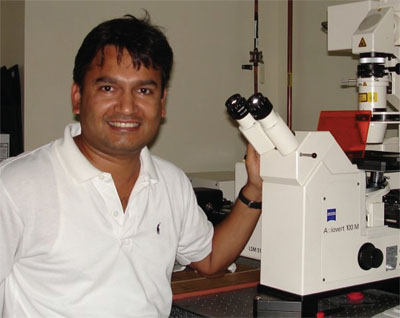
    SACRAMENTO (TIP): A recentstudy led by an Indian Americanresearcher Bikul Das, at theStanford University School ofMedicine proved that in times ofstress certain human embryonicstem cells produce molecules thatbenefit themselves along with thehelping the nearby cells to survive.”Altruism has been reportedamong bacterial populations andamong humans and other animals,like monkeys and elephants,” saidStanford postdoctoral scholar BikulDas, MBBS, PhD. “But inmammalian cells – at the cellularlevel – the idea of altruism has neverbeen described before.”

    Das has recently published aresearch paper documentingaltruistic behavior by humanembryonic stem cells, in aprominent international magazine’Stem Cells’.”Altruism in cells can mean it willbe possible to treat cancer withoutchemotherapy. In future, altruisticstem cells may be cultured andinjected into cancerous tissue fortreatment”, said Dr Chandan J Das,assistant professor in the radiodiagnosisdepartment at AIIMS,Delhi, about the study.

    Dr Purna Kurkure, seniorpediatric oncologist at TataMemorial Hospital says “thisresearch will have a bearing on notjust cancer research but in theoverall understanding of the repairand regeneration mechanism of thehuman body. Altruism has beenobserved in bacteria, which is whybacteria are great survivors. So far,we haven’t been able to beat cancerbecause there is a lack of completeunderstanding about it.Chemotherapy only targets the endcells, not the root. This research is,therefore, a major leap in the battleagainst cancer”, reports Times ofIndia.Das has been congratulated by UKscientist Dr Peter W Andrews, one ofthe two gurus of embryonic stemcell research, for his findings.

  • 55 % Indian-Americans Own House In US, Says Census Bureau Report

    55 % Indian-Americans Own House In US, Says Census Bureau Report

    WASHINGTON (TIP): Indian-Americansmay have the distinction of being thehighest-per capita income group amongethnic communities but they lag far behindtheir European counterparts when it comesto owning a house in the US.According to the ‘HomeownershipAmong the Foreign-Born Population: 2011’,released by the Census Bureau, 55 per centof the Indian-Americans own a house oftheir own while 45 live in rentedaccommodation.Foreign-born owned households with ahouseholder from Europe were the mostlikely to be owned free and clear (40 percent), while foreign-born owned householdswith a householder from Africa were theleast likely to be owned free and clear (14per cent), it said.

    Of the 20 country-of-birth groups withthe largest number of foreign-bornhouseholds in the US, several countriesfrom Europe along with Canada had thehighest homeownership rates.Over 70 per cent of foreign-bornhouseholds with a householder fromCanada (71 per cent), Germany (72 percent), Italy (79 per cent), and the UnitedKingdom (73 per cent) were owneroccupied.By comparison, less than one-third of theforeign-born households with ahouseholder born in the DominicanRepublic (25 per cent), Guatemala (30 percent), and Honduras (31 per cent), wereowner occupied. Italy and Germany werealso among the country-of-birth groupswith the highest percentage of ownedhomes that were owned free and clear.About half of foreign-born householdsthat were owned and had householdersfrom Italy and Germany owned their homesfree and clear (55 per cent and 51 per cent,respectively).

    “Homeownership is a goal shared bymany residents of the United States, bothnative- and foreign-born, citizen andnoncitizen,” said Elizabeth Grieco, chief ofthe Foreign-Born Population Branch at theCensus Bureau.”For immigrants in particular – whomaintain nearly one in seven households inthe US – making the transition from renterto homeowner represents a significantinvestment in the United States,” Griecosaid. This report found that foreign-bornnaturalized citizens were more likely to owntheir homes than foreign-born noncitizens.In naturalized citizen households, 66 percent were owner-occupied.

    That compareswith 34 per cent of noncitizen households.Rates of homeownership among foreignbornhouseholds also increased with timespent in the United States. Among foreignbornhouseholds with a householder whoentered the US before 1980, nearly threefourthswere owned rather than rented.Among households headed by someonewho entered the US since 2000, only onefourthwere owned.According to the brief, just 10metropolitan statistical areas accounted forabout half the nation’s foreign-bornhouseholds in 2011, led by New York andLos Angeles, each of which had more thanone million foreign-born households.Rounding out the top five were Miami,Chicago and Houston. Nearly half, or about45 per cent, of the metropolitan areas in theNortheast, particularly in New York andPennsylvania, exceeded the nationalhomeownership average for foreign-bornhouseholds of 52 per cent.

  • Movie Review-AkaashVani

    Movie Review-AkaashVani

    Cast: Nushrat Bharucha, Kartik Tiwari, Sunny Singh Nijjar
    Direction: Luv Ranjan
    Genre: Romance
    Duration: 2 hours 30 minutes

    STORY:
    Should you get married to someone you barely know, just to make your parents happy or should you rather marry the person you love?


    MOVIE REVIEW:
    The topic may sound archaic and something that has been addressed in Hindi films a billon times before, but director Luv Ranjan moulds the story in a contemporary setting, making it relevant, especially for women who succumb to societal pressures when it comes to marriage. Akaash (Kartik Tiwari) and Vani’s (Nushrat Bharucha) is a college romance. Like all campus love stories and films made in the 80’s and 90’s, they go to a snow-clad hill station on a college trip where love blossoms.

    The couple sings songs and dreams about their fairytale future together until parental and societal pressures force them to part ways. The bitter reality of life shatters dreams.

    Vani who has always looked at life through rose-tinted glasses, finds herself trapped in an obnoxious, loveless marriage. Given the situation of women in the country, the film rightly touches upon topics like psychological, sexual harassment post marriage.

    The characters, issues are realistic and sensible; except for the multiple irrelevant songs and scenes that drag the movie endlessly. Length is a major flaw. The film boasts of some solid performances. Lead actress Nushrat Bharucha is highly impressive.

    Sunny Singh Nijjar, who is seen in a supporting but crucial role as the chauvinistic husband Ravi, fits the bill. Kartik Tiwari is decent but needs to grin less and emote more.

    The film has an impactful background score, which helps in creating the somber mood required during the crucial confrontation scenes. Akaash Vani makes women realize that it’s more important to be happy and respected than being considered as righteous. It works strongly as social drama than a love story.

  • Rep. Tulsi Gabbard Cosponsors Commemorative Diwali Stamp Resolution

    Rep. Tulsi Gabbard Cosponsors Commemorative Diwali Stamp Resolution

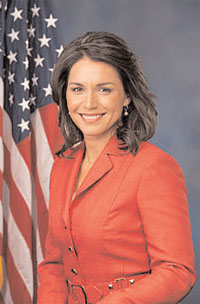
    WASHINGTON (TIP):Congresswoman Tulsi Gabbard (HI-02) this week cosponsored a HouseResolution calling for the U.S.Postal Service to establish a postagestamp to commemorate Diwali, the”festival of lights” marking theHindu New Year. Diwali is observedby Hindus, Christians, Jains, Sikhs,and Buddhists in the United States,India, and around the world.”The Diwali festival honors selfawareness,righteousness, andservice to others before ourselves,”said Congresswoman Tulsi Gabbard,who is the first Hindu-American toserve in the U.S. Congress.

    “Thisyearly festival is a time to celebratethe triumph of goodness and truth,and to reflect on the year. It is onlyappropriate that we commemoratethis widely observed holiday and itsplace in our nation’s rich tapestry ofreligious and cultural diversity.”Diwali, celebrated in October or November annually,originated as a celebration of the last harvest of the yearbefore winter. Indians around the world celebrate withfamily gatherings, glittering clay lamps, festive fireworks,strings of electric lights, bonfires, flowers, sharing ofsweets, and worship to the goddess Lakshmi.

    The resolution (H.Res.47) calls on the Citizens’ StampAdvisory Committee, an entity of the U.S. Postal Service, toissue a Diwali stamp, as it has done for other popularreligious celebrations in the United States such asChristmas, Eid, Kwanzaa, and Hanukkah.

  • Lara Dutta Nostalgic About ‘David’

    Lara Dutta Nostalgic About ‘David’

    Former beauty queen Lara Dutta, who is looking forward to ” David” release, recalls the time when she shot for the film. She says her daughter was just five months old at that time.

    The 34-year-old married ace tennis player Mahesh Bhupathi in 2011 and the couple became proud parents of daughter Saira in January last year.

    “(Director) Bejoy Nambiar’s ‘David’ is out on Feb 1. Have a ‘iity bitty’ (small) part in it. Filmed it when Saira was five months old. Fun to be part of it,” Lara tweeted. “David”, a movie transcending three different time zones, was simultaneously shot in Hindi and Telugu. It also features Neil Nitin Mukesh, Vinay Virmani, Monica Dogra, Isha Sharvani and southern star Vikram.

  • Indian-American Plans Run For Public Office In California

    Indian-American Plans Run For Public Office In California

    HOUSTON (TIP): An Indian American whoas a former US Treasury official oversawdepartment’s troubled Asset Relief Program atthe height of country’s financial crisis isconsidering a run for public office in Californiaas a Republican.Neel Kashkari, 39, announced that he isstepping down from his job as managementdirector for Pacific Investment Management Co(PIMCO), a Newport Beach investment firm.

    The former Goldman Sachs banker expressedan interest in entering public service in California in multiple interviews innewspapers and has launched a website toutinghis biography and leadership bona fides.Kashkari, whose parents Chaman and SheilaKashkari are Indian-Americans from Kashmir,said, “I’m not the typical California Republican.I’m the son of immigrants.

    “Kashkari told the Wall Street Journal. “Icome from modest upbringing. I have asuccessful track record. I’m an optimist. And Ithink something can be done if people worktogether.”Kashkari was a key figure in implementingthe USD 700 billion bank bailout effort, knownas the Troubled Asset Relief Program, duringPresident George W Bush’s second term.He stayed at the department for the start ofBarack Obama’s presidency before leaving tojoin PIMCO in 2009.

  • Deepika Happy That People Like My Performance

    Deepika Happy That People Like My Performance

    Deepika Padukone enthralled one and all with her intense acting in Cocktail and the awards season has become the talk of the town. However, Deepika is not bothered about the awards and takes people’s appreciation as the biggest compliment.

    On being asked about the competition as Vidya Balan and Sridevi top the list in the awards nominations, Deepika said, “It’s a good thing. I am happy that when it comes to awards I will be nominated with people like Vidya Balan and Sridevi.” “People addressed that I can perform and they like my performance is a big compliment and its big thing for me,” concluded Deepika.

  • Indian-American Community Signals Its Coming Of Age

    Indian-American Community Signals Its Coming Of Age

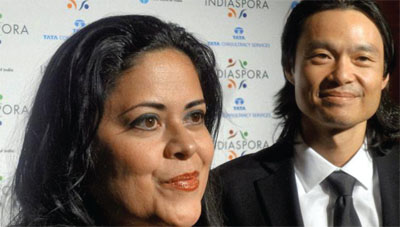
    WASHINGTON (TIP): The ‘Indiaspora 2013 InauguralBall’ organized by the Indian-American community washeld on Saturday, January 19, to celebrate the Secondinauguration of President Barack Hussein Obama. Thiswas the first of its kind event organized and heralded thecoming of age for the community which is estimated tonumber over 3 million strong in the US.”Indian-Americans are tremendously important and wehope they would be increasingly visible not only in thegovernment, but also in all parts of American life,” saidMaya Kassandra Soetoro-Ng,maternal half-sister of Mr.Obama, adding that the President was very proud of thecommunity.

    “It is certainly a reflection of how importantIndia is and how important Indian-Americans are to thefabric of the nation. I would just like to celebrate all of thecontribution artistic, political and so much more of thecommunity,” said Ms.Maya at the first-ever Indian-American inaugural ball.The event was organized by Indiaspora – a recentlyformed organization which aims to be a catalyst totransform the success of Indian-Americans into meaningfulimpact in India and on the global stage.

    “It is time we come to recognize fully the contribution ofthe Indian-American community here,” said Ms.Maya,reflecting the views of Mr. Obama who has the distinctionof appointing the largest number of Indian-Americans inany presidential administration ever.”It is very exciting to serve in an Administration that hasso many great Indian-Americans serving,” said Raj Shah,Administrator of USIAD, the highest ranking Indian-American in the Obama Administration.

    A whopping 84 per cent Indian-Americans voted for Mr.Obama in November’s elections.”I think it is wonderful for the Indian-Americancommunity. It is coming of age, politically for them. This isnot just a ball. This is a massive gala,” said CongressmanJoe Crowley, Co-Chair of the Congressional India Caucus,referring to the hundreds of Indian-Americans who hadgathered at the inaugural ball of the community.

  • Kajol Slimmer By 16 Kilos

    Kajol Slimmer By 16 Kilos

    Kajol looks terrific and confesses she has never felt more energetic. She has knocked off 16 kilos in the last couple of months, thanks to a strict diet and exercise regimen and running after her two-yearold son Yug.

    Kajol, in her now svelte avatar, can give any of the young girls in Bollywood a run for their money in the shape department. Not surprisingly, we heard a couple of big filmmakers were tailoring their scripts specifically with her in mind.

  • Indian-American Gets One Year Prison For Insider Trading

    Indian-American Gets One Year Prison For Insider Trading

    NEW YORK (TIP): A former Indian Americanemployee of Galleon Group, who played a key role inthe conviction of hedge fund billionaire RajRajaratnam for insider trading, has been sentenced toone year in prison.Federal district judge Jed S Rakoff on Thursday,January 31st, also ordered Roomy Khan, 54, to servethree years of probation and pay $1.525 million inrestitution, money she made by trading onconfidential information about Google and HiltonHotels among others.

    Despite the assistance that Khan, a DelhiUniversity graduate, had provided prosecutors in thecase against Rajaratnam, her actions-in particular,lying to federal investigators-were serious enough tomerit a prison term, Rakoff said.”You cannot have it both ways,” he was quoted assaying by the New York Times. “You cannot obstructjustice and then say, ‘Well, because I’ve done goodthings since, forget about it.’”The punishment, Rakoff added, sends a “veryimportant message” about the consequences ofhindering a government investigation.Khan, who had sought five years of probation,pleaded guilty in 2009 to conspiracy to commitsecurities fraud, a charge that carried a maximumprison sentence of 20 years.

    She also admitted to lying to Federal Bureau ofInvestigation (FBI) agents.The case was the second time Khan had beenconvicted of illegally passing information toRajaratnam, according to the Times.In a letter to Rakoff, Khan described how shereturned to illegal trading, saying she needed moneyand felt pressure to maintain appearances.In a separate case not directly related, JasonPflaum, a witness who gathered evidence about hisformer Indian-American boss, hedge fund managerSamir Barai, was sentenced to two years ofprobation.Pflaum, who pleaded guilty in 2010 to securitiesfraud and conspiracy to commit securities fraud, hadhelped prosecutors secure a guilty plea from Barai oninsider trading charges, Times said.

  • Republic Day Celebrated At Indian Consulate

    Republic Day Celebrated At Indian Consulate

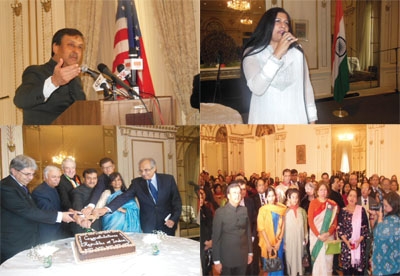
    NEW YORK, NY (TIP): Consul General ofIndia in New York Prabhu Dayal hosted areception to celebrate the 64th RepublicDay of India on January 26, 2013.The highlight of the reception was a readout of the address to the nation ofPresident of India, Mr. Pranab Mukherjeeon the eve of the nation’s Republic Day.This was Mr. Mukherjee’s first RepublicDay address to the nation after he took overas the 13th President of India July 25, 2012.Ambassador Dayal read out thePresident’s address to a gathering of about250 that included, besides the IndianAmerican community, a few consulsgeneral of friendly countries and otherdignitaries.The President said at the outset, “Indiahas changed more in last six decades thanin six previous centuries.

    This is neitheraccidental nor providential; history shiftsits pace when touched by vision. The greatdream of raising a new India from theashes of colonialism reached a historicdenouement in 1947; more important,independence became a turning point foran equally dramatic narrative, nationbuilding.The foundations were laidthrough our Constitution, adopted on 26January 1950, which we celebrate each yearas Republic Day. Its driving principle was acompact between state and citizen, apowerful public-private partnershipnourished by justice, liberty and equality.

    India did not win freedom from the Britishin order to deny freedom to Indians. TheConstitution represented a secondliberation, this time from the strangleholdof traditional inequity in gender, caste,community, along with other fetters thathad chained us for too long.”This inspired a Cultural Evolutionwhich put Indian society on the track tomodernity: society changed in a gradualevolution, for violent revolution is not theIndian way. Change across the knottedweaves of the social fabric remains a workin progress, impelled by periodic reform inlaw and the momentum of popular will.

    “In the last six decades there is muchthat we can be proud of.”. The Presidentthen went on to describe the nation’sachievements in the past six decades. Hespoke of social and legal reforms to ensuregender equality. He referred to the recentviolence against a woman in Delhi andsaid, ” I speak to you when a grave tragedyhas shattered complacency. The brutal rapeand murder of a young woman, a womanwho was symbol of all that new Indiastrives to be, has left our hearts empty andour minds in turmoil. We lost more than avaluable life; we lost a dream. If todayyoung Indians feel outraged, can we blameour youth?There is a law of the land. But there isalso a higher law. The sanctity of a womanis a directive principle of that larger edificecalled Indian civilization.

    The Vedas saythat there is more than one kind of mother:birth mother, a guru’s wife, a king’s wife, apriest’s wife, she who nurses us, and ourmotherland. Mother is our protection fromevil and oppression, our symbol of life andprosperity. When we brutalize a woman, wewound the soul of our civilization.It is time for the nation to reset its moralcompass. Nothing should be allowed to spurcynicism, as cynicism is blind to morality.We must look deep into our conscience andfind out where we have faltered. Thesolutions to problems have to be foundthrough discussion and conciliation ofviews.

    People must believe that governanceis an instrument for good and for that, wemust ensure good governance.”The other issues he spoke aboutincluded menace of corruption, nation’sgrowing economy, military power and theparticipation of Indians in theinternational theater. He noted India’sinherent strength and vitality and said,”India’s most impregnable asset is selfbelief.Each challenge becomes anopportunity to strengthen our resolve toachieve unprecedented economic growthand social stability.

    Such resolve must benourished by an avalanche of investment,particularly in better and greatereducation. Education is the ladder that canhelp those at the bottom to rise to thepinnacles of professional and social status.Education is the mantra that cantransform our economic fortunes andeliminate the gaps that have made oursociety unequal. So far education has notreached, to the extent desired, to thosemost in need of this ladder. India candouble its growth rate by turning today’sdisadvantaged into multiple engines ofeconomic development.”On our 64th Republic Day, there may besome reason for concern, but none fordespair.

    If India has changed more in sixdecades than six previous centuries, then Ipromise you that it will change more in thenext ten years than in the previous sixty.India’s enduring vitality is at work.”In his brief remarks, Dayal commendedthe Indian-American community for itscontribution to strengthening U.S.-Indiarelations. He extended his congratulationsto Indian Americans on the 64thanniversary of the nation.Ambassador Dayal and Chandini Dayal,with consul generals from friendlycountries and other dignitaries present, cuta cake to celebrate the occasion.Mrs. Varsha Joshi, a well-known singerfrom New Jersey sang patriotic songs to athundering applause from an appreciativeaudience.

  • Drew Barrymore Likes To Be A Dork At Home

    Drew Barrymore Likes To Be A Dork At Home

    Drew Barrymore, who has been voted one of the top 50 sexiest movie stars by Empire magazine, has revealed that she dresses up like a dork when she is at home.

    The 37-year-old actress says making her husband smile makes her feel pretty. “I feel most attractive when I make Will laugh.I am usually in sweatpants and a scrunchie, being a dork. But when I hear his funny laugh, I am like, ‘Damn, I feel pretty’,” the Daily Express quoted Barrymore as saying. Barrymore, who has a four-month-old daughter Olive, also said that she’ll be keeping her daughter away from make-up until she’s old enough.

  • Bank Of India Cmd Meets With Us Clients

    Bank Of India Cmd Meets With Us Clients

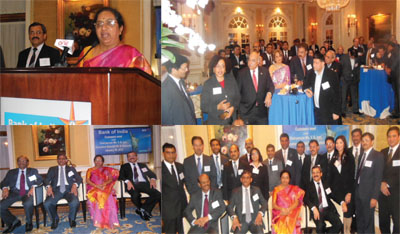
    NEW YORK, NY (TIP): Bank of India Chairperson & Managing Director Mrs. V.R. Iyer visited New York on Jan 30 and 31 and met US clients. She also attended an Investors’ Meet. She was accompanied by Executive Director N. Seshadri and General Manager(International)S.K. Datta. It was Mrs. Iyer’s first visit to NewYork after she took over as CMD ofBank of India on November 5, 2012.Speaking at the reception hosted by Bank of India US Operations Chief Executive B.B. Joshi, Mrs.Iyer appreciated the cooperation of US clients.

    She said the bank’s US operations were on a sound keeland that 31% of the bank’s international revenue came from US operations. She had a word of appreciation for Mr. Joshi and theUS team.Mrs. Iyer also spoke of plans tointroduce CORE banking technologyby the “end of the month” and thengo in for internet banking and retailbanking. The latter two needed tomeet some regulatory provisions ofthe US administration, she said.She also took a few questions.Mr. Seshadri also addressed thegathering and thanked the clientsfor reposing trust in the bank.

    He said the effort is to come up withservices to the maximumsatisfaction of the customers.The event was attended by bank’sclients, community leaders and themedia.Earlier in his brief welcomeaddress, Mr.Joshi extended welcometo visiting BOI officials Mrs.Iyer, Mr.Seshadri and Mr. Datta. He said thatthough Mrs. Iyer has visited USAearlier too, as BOI CMD it was herfirst visit and he was very happy towelcome her. He extended a word ofwelcome to the Executive DirectorMr. Seshadri and the GeneralManager Mr. Datta. He thankedguests for having come to thereception “despite inclementweather”.

  • Toyota Reclaims Global Auto Sales Crown

    Toyota Reclaims Global Auto Sales Crown

    Toyota officially recaptured the title ofworld’s largest automaker Monday, January28 as its final 2012 sales total toppedGeneral Motors, which held the lead in 2011.

    NEW YORK (TIP): Earlier in January, General Motors(GM, Fortune 500) announced global sales of 9.29 millionvehicles for the year. In late December, Toyota Motor(TM) said it expected that global sales for 2012 hit 9.7million vehicles, and it confirmed that Monday, January28 when it reported global sales of 9.75 million.Volkswagen Group (VLKAY), which includes the VW,Audi and Porsche brands, came in at No. 3 with 9.09 millionvehicles, the first time the company has topped 9 million.

    GM is the leading automaker in the world’s two largestmarkets, China and the United States. But Toyota is aclear leader in its home market of Japan, where non-Japanese automakers have had trouble competing due tolimited dealerships. And Toyota enjoyed a bounce-backyear in Japan, with sales rebounding 35% from 2011,when they were hurt by the earthquake and tsunami.Toyota’s sales totals also were helped by the fact thatit made more than 600,000 heavy-duty trucks and busesduring the year, a vehicle segment GM essentially shedin its home market.Toyota is No. 3 in terms of sales in the U.S., a keymarket where Ford Motor (F, Fortune 500) is No. 2.

    Fordtook back that ranking back from Toyota in 2010 whenthe Japanese automaker was hit with recall problemsthat forced it to stop selling its most popular models fora period of time.GM topped global sales for 77 years through 2007,when it finished just barely ahead of Toyota. Bothautomakers’ sales suffered in 2008 as the bottom fell outof the U.S. economy, but high gas prices and a loomingbankruptcy at GM ultimately nudged Toyota into thelead, where it stayed for the next two years.

    The federal bailout of GM in 2009, and the problems atToyota the next two years allowed the U.S. company torecapture the lead much quicker than most expected.Neither GM nor Toyota had a comment on therankings earlier this month when GM’s sales figuresessentially insured Toyota would move back into theglobal sales lead.Mike Wall, auto analyst for IHS Global Insight, saidit’s possible GM could come out on top in 2013. Aterritorial dispute between China and Japan couldadversely affect Toyota, while the recession in Europecould be a drag on Volkswagen’s sales growth.”In terms of GM returning to the lead, I certainlywouldn’t count them out, especially with the productthey’re set to introduce this year,” he said.

    “I actuallythink all three will be huddled close together for thenext few years.”Wall says GM is a much healthier company today atNo. 2 than when it held the sales lead but posted hugefinancial losses in the previous decade.”The sales lead makes for bragging rights, but GM is astronger company than it was then,” he said.

  • Kristen Bell Sues Hollywood Tequila Bar

    Kristen Bell Sues Hollywood Tequila Bar

    Kristen Bell has filed a lawsuit against Hollywood tequila bar L’Scorpion for unpaid profits after investing 20K dollars in it in July 2005. The 32-year-old actress, along with four other plaintiffs, has sued the owners of the restaurant and bar after they failed to pay the group their portion of its profits, the Contactmusic reported. According to E! News, the courts documents, which were filed in Los Angeles on Friday, states that the Meridian Restaurant group was supposed to give five percent of its profits to the group in return to their investment.

  • Sofia Vergara Credits Hooker Looks For Acting Break

    Sofia Vergara Credits Hooker Looks For Acting Break

    Sofia Vergara feels that her prostitute look helped her get into the show business. The ‘Modern Family’ star was among a handful of actors and actress’ who kicked off Screen Actors Guild Awards on Sunday with personal stories about how they got started in the business, People Magazine reported.

    The 40-year-old actress joked about her curvy figure saying that her father told her that if she ever did something artistic she would have had to look like a hooker, to which she said that she already looked like a prostitute due to the big breasts that she inherited from her grandmother.

  • Movie Review- Les Miserables

    Movie Review- Les Miserables

    Cast: Hugh Jackman, Anne Hathaway, Russell Crowe,Amanda Seyfried, Samantha Barks, Eddie Redmayne,Sacha Baron Cohen, Helena Bonham Carter
    Direction: Tom Hooper
    Genre: Drama
    Duration: 2 hours 38 minutes

    STORY: Jean Valjean is a man shackled to his past. A petty crime sees him a ‘slave of the law’ for 19 years. Out on parole, he tries making a stab at a new life but a piece of paper brands him a dangerous man forever. An act of kindness later, he finds himself paying it forward. However, not before buckets of tears are shed.

    MOVIE REVIEW: Set in the 19th century, this Tom Hooper adaptation of the Victor Hugo classic merits attention first and foremost for its stellar cast. Each song carries the power of the words the characters utter. When they’re angry, you feel the rage, when they’re joyous, it’s spring and when they’re in tears, everything turns a darker shade of dismal grey. As Valjean, Jackman plays a variety of parts exceedingly well. He’s a convict, he’s a factory owner, a mayor, a benefactor, a foster father and a hero.

    As a foil to the protagonist, Crowe as the persistent prison guard/inspector Javert is annoyingly good. While not as consistent in clarity of dialogue delivery as Jackman, he makes up by playing conflicted soul to the hilt.

    By contrast, Anne Hathaway doesn’t leave as much of an impact despite an impassioned (read: weepy) portrayal of the frail, fatalistic Fantine. Amanda Seyfried (as the older Cosette) and Eddie Redmayne (as her suitor, the rebellious Marius Pontmercy) are efficient.

    Sacha Baron Cohen and Helena Bonham Carter (the downright evil Thenardiers) bring their quirky brand of menace to the table yet again. Samantha Barks (as Eponine) is a revelation. Her rendition of ‘On My Own’ is actually more rivetting than Jackman’s ‘Suddenly’. Watch out for this one, she’s gonna go far!

    Top-notch music (Claude-Michel Schonberg), cinematography (Danny Cohen) and production design (Eve Stewart and Anna Lynch-Robinson) add to the experience. To truly enjoy this film, be patient (the length IS an issue), persevere (in spite of the sing-song dialogue) and prevail (the film’s actually not as tedious as you’d expect a period historical musical to be).

  • ‘Thank You, Hillary’, Says Gillibrand

    ‘Thank You, Hillary’, Says Gillibrand

    NEW YORK (TIP): Even as HillaryClinton stepped down as Secretary ofState, Senator Kirsten Gillibrand, aprotégé of Hillary Clinton, paid richtributes to her in a statement to TheIndian Panorama.Kirsten said, “Hillary Clinton has beena role model for me since she traveled toBeijing as first lady and announced that”human rights are women’s rights, andwomen’s rights are human rights.” In fact,it was that speech that inspired me to getoff the sidelines and pursue a career inpublic service.

    “Ever since, Hillary has continued toinspire me and so many others, first assenator from New York, then as a historymakingpresidential candidate, and, mostrecently, representing the United Statesaround the world as our secretary of state.”As Hillary steps down from the Obamaadministration this week, I hope you’lljoin me in thanking her and letting herknow how much she’s meant to us.”I can’t tell you what an honor it hasbeen to follow in her footsteps as senatorfrom New York. She’s not only been a rolemodel, but also a mentor and friend. I willalways be grateful to her.”But I know I’m not alone. She’stouched so many of you as well with herstrength, dignity and grace as she’snavigated the highest positions of powerin our nation.