Year: 2013

  • NY Mayoral Contest: It’s Bill de Blasio all the way

    NY Mayoral Contest: It’s Bill de Blasio all the way

    NEW YORK, NY (TIP): A Newsday report published October 23 gives Bill de Blasio a 3 to 1 ratio in New York City Mayoral election. It says New York City voters are poised to choose Bill de Blasio as their next mayor by a landslide ratio of almost 3 to 1 amid broad consensus that he is the best choice to improve schools, create affordable housing and give the middle class and poor a better break than they’ve had in the Bloomberg years. Democrat de Blasio leads Republican Joe Lhota 64 percent to 23 percent, with 4 percent choosing other candidates and 8 percent undecided. But not all voters siding with de Blasio give across-the-board support to his agenda, and many aren’t confident he can fulfill a key campaign vow, according to the survey conducted by polling firm Penn Schoen Berland. “New Yorkers’ expectations for de Blasio as a change agent are quite high. Despite the fact that New Yorkers like him so much, they have concerns that he won’t be able to get done what he has promised,” pollster Mike Berland said. By 65 percent to 30 percent, voters favor de Blasio’s proposal to hike taxes on New Yorkers earning more than $500,000 to fund universal prekindergarten and after-school programs over Lhota’s pledge not to raise taxes.

    But de Blasio’s plan would require approval in Albany, and by 49 percent to 38 percent, the poll respondents don’t believe he would win that fight. “I do support taxation, although whether it will be able to pass is a whole ‘nother question,” said poll respondent Leta Weintraub, 71, a retired Manhattan social worker. “It depends on how capable de Blasio is once he gets into that position.” De Blasio maintains the tax hike could pass by the legislature if public opinion supports it. According to the poll, de Blasio’s plan to limit the growth of charter schools is favored by only 47 percent, while 40 percent echo Lhota’s position that the city needs more charter schools. But New Yorkers like de Blasio. He enjoys a 71 percent to 23 percent favorability rating. Lhota’s unfavorable rating, 41 percent, exceeds his favorable rating of 39 percent. “De Blasio is smooth and articulate, which gives New Yorkers confidence,” Berland said. “He makes Lhota look, by contrast, small, mean and feisty, which is not what New Yorkers want right now.” The sample of 801 likely New York City voters conducted Oct. 15-19 had a margin of error of plus or minus 3.46 percentage points. Among its findings: Voters ranked the economy and jobs, public education and affordable housing as the top three issues. Among the voters with those priorities, large majorities favored de Blasio.

    Lhota was a closer second for those who cared most about the fourth-ranked issue, crime and safety. He argues de Blasio’s plans would cause crime to surge. A 58 percent majority of voters want the NYPD’s stop-and-frisk policy modified but kept as a tool — a stance de Blasio backs — while 19 percent would leave it as it is, as Lhota urges. 70 percent thought it was time for a change from Mayor Michael Bloomberg’s policies, even as 60 percent approved of the job he’s done. Among those who want a change from the Bloomberg agenda, de Blasio is preferred 74 percent to 13 percent. After 12 years under Bloomberg, majorities wanted city government to provide fewer incentives and favorable policies for corporations and developers while doing more for small business and workers. More than twothirds believed that under Bloomberg city government paid too much attention to the rich and not enough to the middle class and poor. “To some degree, they admire what Bloomberg has done, but at the same time, they’re tired of it,” said Alan Chartock, University at Albany professor emeritus of political science. For de Blasio, “it comes down to the assurance that ‘I can make your life better.’ ” Sean Johnsen, 39, a Staten Island Republican, said he voted three times for Bloomberg but now leans to de Blasio.

    “I think he’s more of a people person,” said Johnsen, an unemployed IT worker. “We definitely need a change in New York.” As for Lhota, Johnsen said, “I think he’s going to go for the rich.” De Blasio admits there are limits on what the city’s mayor can accomplish in combating the gap between rich and poor, even as he argued a significant dent can be made. Asked by the amNewYork editorial board Monday whether the mayor can affect income inequality, the candidate said, “Affect? Yes, they can. Solve every element of inequality? I never said we could, never said we could solve it all from the position of New York City mayor’s office.” A mayor can work, he said, to “foster job creation, to push up wages and benefits, to improve the education that will give people access to better incomes going forth.” Poll respondent David Lansner, 66, of Park Slope, supports de Blasio but is critical of him on some points, including what he called pandering to unions. But Lansner said there’s still reason to keep faith in much of de Blasio’s agenda and his tax plan. “Sometimes you do get unrealistic things through, so it’s worth pushing and talking about what some of our problems and the solutions are,” said Lanser, a Democrat and child welfare and civil rights attorney.

  • Sikhs For Justice to present 1984 Genocide Petition to UNHR Commission on November 1

    Sikhs For Justice to present 1984 Genocide Petition to UNHR Commission on November 1

    NEW YORK (TIP): The Sikhs For Justice, a Human Rights Organization based in New York has claimed that on the occasion of 29th anniversary of 1984 anti-Sikh riots in Delhi, a petition signed by around a million Sikhs throughout world, will be filed with the United Nations in Geneva on November 1 2013. The Sikh Genocide Petition will be handed to Navi Pillay, UN human rights chief by a delegation of rights group “Sikhs for Justice” (SFJ), All India Sikh Students Federation (AISSF) and Gurudwara representatives from Europe and North America. Titled “1984 Yes its Genocide”, the petition will be filed with UNHCR under 1503 procedure of the United Nations. SFJ legal adviser Gurpatwant Singh Pannun said, “Under 1503 procedure, UNHCR refers these petitions to the sub-commission on Promotion and Protection of Human Rights which examines complaints regarding gross human rights violations and impunity, as in the case of November 1984 Sikh genocide.”

    The petition requests the United Nations to investigate the systematic, intentional and deliberate killing of Sikhs carried out throughout India during the first week of November 1984 and recognize the killings as “genocide” under UN Convention on Genocide. The complaint invokes UN Convention against Genocide which declares any intentional and deliberate attack on any religious minority to be a “crime” liable to be prosecuted and punished. The evidence of November 1984 killing of Sikhs clearly shows that Sikhs were deliberately attacked in a planned manner throughout India on behest of ruling Congress party. Justifying the UN intervention on the issue of Sikh Genocide, All India Sikh Students Federation President Karnail Singh Peermohamd who spearheaded the campaign for getting signatures on the petition in India and managed to get a few lakh signatures from Punjab and other states, said that they were constrained to move the UN after failing to get justice in India. “The justice delivery system of our country has failed the hapless victims of largest massacre of people after 1947 and till date the perpetrators of the mass murders are roaming free and rather enjoying power,” he said.

    “We have been knocking at every door here to get justice but the establishment failed all attempts to allow justice to the victims,” he added. Meanwhile attorney Pannun said, “Rights group will present to the UN evidence and documents regarding use of local administration and government resources by the Congress leaders to organize genocidal attacks on Sikhs during November 1984.” “A Justice Rally will also be held outside UN in Geneva on November 1 to remind the world that even after 29 years, organizers and perpetrators of November 1984 have not been convicted by the Government of India. More than 10,000 Sikhs from across Europe and North America are expected to attend the Justice Rally in Geneva,” Pannun and Peermohammad said.

  • Manna Dey, legendary playback singer, passes away

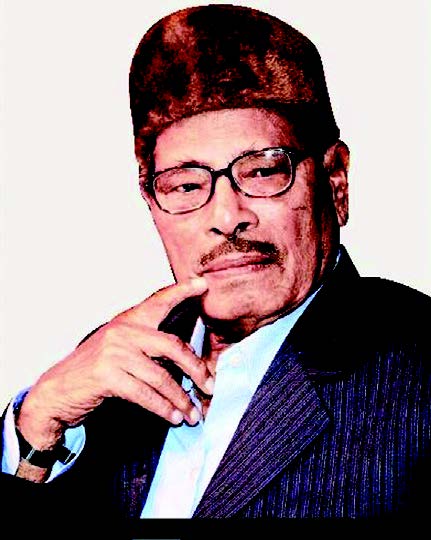
    Manna Dey, legendary playback singer, passes away

    BANGALORE (TIP): Legendary playback singer Manna Dey died at a city hospital early on October 23 morning, after prolonged illness. Dey, 94, who was admitted to Narayana Hrudayalaya five months ago for respiratory problems, died of cardiac arrest at 3.50am, a senior doctor at the hospital said. The Dadasaheb Phalke Award winner singer had given several hits songs during his several decades long career which include ‘Puchho na kaise maine rain bitayee’, ‘Ay mere pyare watan, ay mere bichhade chaman’ and ‘Laga chunari main daag’, to name a few. His daughter Shumita Deb and his sonin- law Jnanranjan Deb were by his bedside when the end came, his family said. Dey is survived by two daughters, one of whom is based in the US. “We are saddened by his loss, but he died peacefully. His last rites will be performed later in the day,” his son-inlaw said.

  • GERMANY SUMMONS US AMBASSADOR OVER CLAIM NSA BUGGED MERKEL’S PHONE

    GERMANY SUMMONS US AMBASSADOR OVER CLAIM NSA BUGGED MERKEL’S PHONE

    BERLIN (TIP): Germany’s foreign minister, Guido Westerwelle, has called the US ambassador to a personal meeting to discuss allegations that US secret services bugged Angela Merkel’s mobile phone, reports The Guardian. The decision to call in John B Emerson, who has only been the US representative in Berlin since mid- August, is an unusually drastic measure. During previous upheavals in relations, such as over the Syrian crisis, conversations have taken place between diplomats. Allegations that the US government’s spying had reached the highest level were met with outrage and disappointment in Germany on Thursday, October 24. The country’s defense minister, Thomas de Maiziere, told ARD television it would be bad if the reports turned out to be true. Washington and Berlin could not return to business as usual, he said. Informed sources in Germany said Merkel was livid about the reports that the NSA had bugged her phone and was convinced, on the basis of a German intelligence investigation, that the reports were utterly substantiated. The German news weekly, Der Spiegel, reported an investigation by German intelligence, prompted by research from the magazine, that produced plausible information that the chancellor’s mobile was targeted by the US eavesdropping agency.

    She found the evidence substantial enough to call the White House and demand clarification. The outrage in Berlin came days after the French president, François Hollande, called the White House to confront Barack Obama with reports that the NSA was targeting the private phone calls and text messages of millions of French people. While European leaders have generally been keen to play down the impact of the whistleblowing disclosures in recent months, events in the EU’s two biggest countries this week threatened an increasing lack of trust in transatlantic relations. On Wednesday Merkel’s spokesman, Steffen Seibert, made plain that the chancellor upbraided Obama unusually sharply and also voiced exasperation at the slowness of the Americans to respond to detailed questions about the NSA scandal since the Snowden revelations first appeared in the Guardian in June. Merkel told Obama that “she unmistakably disapproves of and views as completely unacceptable such practices, if the indications are authenticated”, Seifert said. “This would be a serious breach of confidence. Such practices have to be halted immediately.” The sharpness of the German complaint direct to a US president strongly suggested that Berlin had no doubt about the grounds for protest. Seibert voiced irritation that Berlin had waited for months for proper answers from Washington on the NSA operations.

    On Thursday Süddeutsche Zeitung conveyed a strong sense of the depth of disillusionment with the US president in Germany when it wrote that “Barack Obama is not a Nobel peace prize winner, he is a troublemaker”. In a comment piece in the German broadsheet, Robert Rossmann wrote that during his last visit to Germany, “the American president had flamboyantly promised more trusting collaboration between the countries. Even Merkel seems to have lost faith in that promise by now. One doesn’t dare imagine how Obama’s secret services deal with enemy states, when we see how they treat their closest allies.” Die Zeit wrote that Obama’s “half-hearted denial” of the allegations raised more questions than it answered. “Was Merkel’s mobile the target of NSA surveillance in the past? … It is time for Obama and the US Congress to be ruthlessly transparent about the macabre practices of the NSA and restrain them strongly. They promised it months ago, but until recently very little has happened. With each revelation trust is eroded further. If America wants to stop annoying its friends and allies, it only has one option. Get on the front foot and be open.” Criticism was not focused solely on Obama, but was extended to Merkel, whose chief of staff only recently declared that the NSA scandal was finished.

    Many feel Merkel failed to react appropriately to the Snowden revelations, and was only stepping up the rhetoric now that she had been personally affected. Germany’s data protection commissioner, Peter Schaar, said that the reports showed “the absurdity of politicians trying to draw to a close the debate about surveillance of everyday communication here”. He said it had been irresponsible of politicians not to be more upfront in calling for the US to clear up the matter. Anke Domscheit-Berg, of the German Pirate party, told the Guardian: “In the past few months, Chancellor Merkel did very little to make the US government answer all those questions that should have had highest political priority. Now she gets a taste of what it feels like when foreign secret services spy on all your communication. We have stopped trusting empty promises and so should Angela Merkel. It is about time to get all dirty secrets on the table.” The debate in the coming days is likely to focus on how the allegations will affect new data protection regulation at the European level, with some MEPs calling for a Europeonly data cloud. In Frankfurter Allgemeine Zeitung, Georg Mascolo and Ben Scott warned of the creation of a “digital Maginot line” between Europe and the US, and instead called for a “no-spy treaty” between European countries. “Storing data and surveillance would only be allowed for previously agreed goals – the fight against terrorism, the proliferation of weapons of mass destruction as well as grave acts of crime. All forms of political and economic espionage would be banned. The privacy of every EU citizen has to be respected by each EU secret service as if they were their own.”

  • Judge Cogan denies grant of mandatory Default Judgment against Sonia Gandhi

    Judge Cogan denies grant of mandatory Default Judgment against Sonia Gandhi

    NEW YORK, NY (TIP): Sonia Gandhi’s attorney Ravi Batra submitted to the court of Judge Brian M. Cogan, October 21 that Mrs. Gandhi was at a hospital for treatment of an undisclosed medical condition and was not served with summons and also contested that the court had no jurisdiction over the matter. However SFJ filed a service affidavit claiming alternate service to Mrs. Gandhi on September 9, 2013 through the staff of the Memorial Sloan-Kettering Cancer Center in New York, where she had gone for her treatment. The summons were issued by the US court on September 3. The SFJ affidavit also claimed that a security agent was also handed over the summons as the court had allowed service of summons through hospital staff or security agents including those of the US Secret Service and the FBI. While Judge Brian M Cogan did not allow plaintiffs’ request for issuance of certificate of default against Gandhi, which was sought on the ground that Gandhi, after being served, had failed to answer the allegations of human rights violation within the time allowed by the federal rules of civil procedure, the plaintiffs got four weeks time to submit an amended plaint.

    Sonia Gandhi’s counsel Ravi Batra said in a statement to The Indian Panorama, “October 22, 2013, at about 3 pm, plaintiffs filed a serviceaffidavit claiming alternate service on Mrs. Gandhi on 9/9/13 between 7-8pm, via Sloan receptionist, nurse supervisor and security employees. Plaintiffs also requested at 3 pm, the court clerk to issue a mandatory Default Judgment against Mrs. Gandhi. At 3:18 pm, Judge Cogan, aware of our denial of service contained in our notice of appearance, denied the grant of mandatory Default Judgment. “Later, at the Rule 16 court conference, which went overtime till almost 6pm, J. Cogan granted plaintiffs’ counsel 4 weeks to amend the complaint, given the legal infirmities pointed out by Supreme Court precedents on Alien Tort Statute and the Torture Victim Protection Act and relied upon by us to question the court’s subject matter jurisdiction. “We will then move to inter alia, dismiss the case with finality, seek an anti-suit injunction against SFJ, and other appropriate relief to remedy provable bad faith and/or vexatious litigation by plaintiff. “As always, the noble judiciary stands guard to provide a merit-based dispute resolution venue to society, but can never be used as mere fodder for publicity stunts.”

  • Indian American Couple Donates $ 12 Million to University of Dallas

    Indian American Couple Donates $ 12 Million to University of Dallas

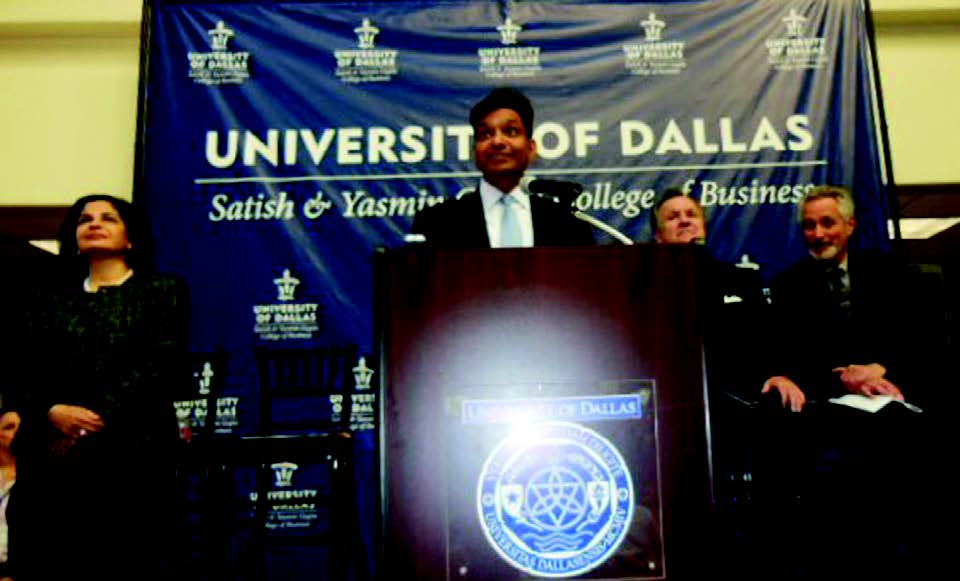
    DALLAS (TIP): Dallas based Indian American entrepreneurs Satish and Yasmin Gupta have made a $ 12 million donation to University of Dallas. The gift, the single largest in the 57 year old history of the University, will fund construction of a building that will house the Satish and Yasmin Gupta College of Business. The announcement of donation was made October 24, by the University of Dallas President Thomas W. Keefe in the presence of the donors, their relations and friends, faculty and students. Both, Satish and his wife Yasmin, are graduates of University’s MBA Program. Speaking on the occasion, Satish Gupta said, “The University of Dallas inspired not only our careers, but our lives, and we hope this new college of business will inspire business students who come to the University of Dallas from all over the world.” Yasmin Gupta, who shares with her husband a similar vision said, “Our dream is for the College of Business to become global meeting ground for diversity and understanding among all cultures. We hope it empowers students to become leaders who go forth into the world and build stronger communities”.

    University of Dallas President Thomas W. Keefe, in appreciation of the generous donors said, “The Guptas set a tremendous example for our business students both in the drive and ingenuity they personify as entrepreneurs, and in their commitment to philanthropy and social responsibility.” The new building, SB Hall, will be a 50,000-square foot, three storey structure atop the highest point in the UD campus from where Downtown will be clearly visible. According to information provided by Chat Ganesh, Vice President Business Development, SB International, Inc. and a close associate of Satish Gupta, the building is expected to be completed by the end of July 2015 and should be ready for the Fall 2015 Semester opening. Satish and Yasmin Gupta are philanthropists and civic leaders besides being business executives. The two serve Dallas/Fort Worth through various organizations related to cultural organization and outreach, including the Gupta Agarwal Charitable Foundation of which Satish Gupta is the Founder.

    They also support the Primary Care Clinic of North Texas and Greater Dallas Arya Samaj Cancer Clinic, a system of non-profit healthcare facilities providing medical care to local uninsured adults. Perhaps the most popular Indian American cultural event in Dallas is the Diwali Mela organized by Dallas Fort Worth Indian Cultural Society founded by Satish Gupta. Every year, in October/November, this popular event to celebrate “spirit of India” as Satish prefers to call the event, attracts 40,000 to 50,000 people who get glimpses of the rich Indian culture at play. Satish says he has combined Dussehra and Diwali and therefore, there is a Ram Lila and Ravan Dahan, signifying victory of good over evil, followed by fireworks to celebrate the victory. The mela provides a variety of entertainment for all age groups. There is a special kids corner. There are elephant and camel rides. There are the more modern laser shows. Community performances and Bollywood entertainment are integral parts of the mela And, of course, a variety of food in a specially carved out Food Court. The Diwali Mela 2013, the 8th in a row, is being held on November 2 at Cotton Bowl Stadium in Dallas where Bollywood artists Monali Thakur and Arijit Singh will enthrall the audiences.

  • Big endorsements in race for Nassau County Executive

    Big endorsements in race for Nassau County Executive

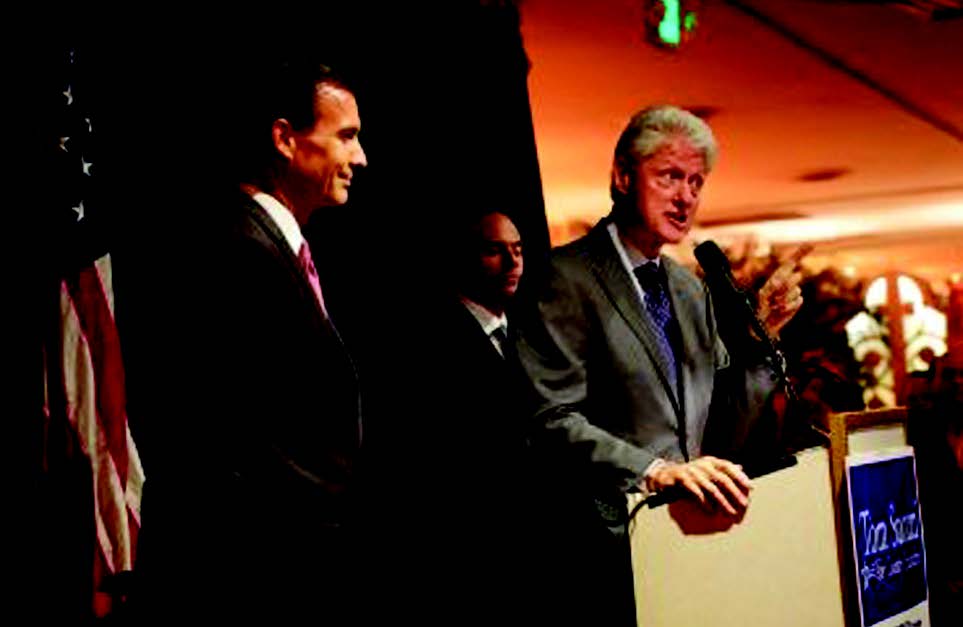
    Bill Clinton for Tom Suozzi: Rudy Giuliani for Mangano

    LONG ISLAND, NY (TIP): Nassau County Executive election has reached an all time high feverish pitch. Both Mangano and Suozzi are leaving nothing to chance. If Tom loses, it will mean not only an end to his political career but also beginning of end to any power that Democrats ever had in the County. To Mangano, on a personal level, loss of election may only mean being out of power but the Republican Party will certainly get a painful kick Tom Suozzi received the nod from former President Bill Clinton at a fundraiser in Great Neck October 23 night. Clinton told supporters, numbering around 500, the candidate has “the only credible plan to get young people back here and to get jobs back here.” Clinton stressed that he “likes, admires and personally supports Tom Suozzi,” and that Suozzi was able to straighten out Nassau County’s finances through bold decision making. In his remarks, Suozzi touted his record and said Mangano “drove the county into a ditch” with his fiscal policies.


    img7
    Rudy Giuliani endorses Mangano

    “We can make this the greatest place in the country — the model for a new suburbia,” Suozzi said. Suozzi has also been endorsed by New York’s two Democratic senators, Charles Schumer and Kirsten Gillibrand, and by Democrats in Long Island’s House delegation. While Gov. Andrew M. Cuomo has not endorsed Suozzi by name, on Sunday he told state Democratic leaders in Rye Brook that he is “supporting Democrats across the board statewide in county executive and mayoral races,” Cuomo spokesman Rich Azzopardi said Wednesday, October 23. Former New York City Mayor Rudy Giuliani endorsed Nassau County Executive Edward Mangano’s reelection bid at campaign events in Bethpage and Syosset on Thursday, October 24. Mangano, a Republican who is running against former two-term Democratic county executive Thomas Suozzi, has focused his campaign message on not having raised taxes. “I’m honored to receive the endorsement of America’s Mayor, Rudy Giuliani, for my record of freezing property taxes, creating jobs and reducing crime by 10% since 2010,” Mr. Mangano said.

  • VIRAT KOHLI & ROHIT SHARMA STAR IN INDIA’S RECORD-BREAKING ODI WIN

    VIRAT KOHLI & ROHIT SHARMA STAR IN INDIA’S RECORD-BREAKING ODI WIN

    JAIPUR (TIP): An inspired India pulled off an incredible nine-wicket victory over Australia in the second cricket onedayer on Wednesday, achieving the second highest ever run chase in ODI history. Chasing an mammoth victory target of 360 on a belter of a track at the Sawai Man Singh Stadium, India crossed the line with 40 balls to spare as records tumbled like nine pins. This is also India’s highest ever successful run chase as the hosts restored parity 1-1 in the seven-match series. Rohit Sharma (141 not out), Virat Kohli (100 not out) and Shikhar Dhawan (95) were the main contributors for India. This is his 16th ODI century in 115 matches. His innings had eight fours and seven sixes. Rohit Sharma (141 not out from 123 balls) got a well-deserved third ODI century while Shikhar Dhawan (95) again showed love for anything Australian but was unlucky to miss out on a ton. It was a match where the Australians created a world record with their five top batsmen scoring half-centuries but the Indian batsmen proved they were better on the night.


    img45

    The Australians now have the ignominy of ending second best in two highest run-chases having faced similar fate against Herschelle Gibbs’ South Africa seven years back, when they failed to defend a mammoth score of 434. Indian batting’s ‘Gen-Next’ troika showed why they are not afraid of any target and reasserted India’s supremacy in the 50-over format. While bowling continues to be a worrying factor for skipper Mahendra Singh Dhoni, he should at least feel happy that Kohli along with Rohit and Shikhar are ready to take the legacy of Indian batting forward in the next decade. The victory was built on two partnerships. An opening stand of 174 between Dhawan and Rohit followed by another 186 runs scored in only 17.2 overs between Rohit and Kohli. The duo put on 100 runs in only 62 balls. The chase practically started in the ninth over when Dhawan, in his bid to break the shackles, hit Shane Watson for three successive boundaries. In the next over from Clint McKay, Rohit got a couple of boundaries more as 26 runs came off these two overs. While Dhawan repeatedly charged out to the pacers piercing the off-side cordon, Rohit used field restrictions to good effect by lofting the deliveries over in-field.

    Rohit hit Glenn Maxwell for a six over deep mid-wicket to bring up the team’s 100 and then got his half century with a tickle down leg-side off Xavier Doherty. If Dhawan muscled the deliveries, Rohit found a way to caress them to the boundary. However, after reaching his 50, Dhawan upped the ante with some sizzling strokeplay before James Faulkner got him to edge one trying to hit one shot too many. His 86-ball stay had 14 sweetly timed boundaries as he missed out on what would have been a well-deserved hundred. Kohli did not take time to settle down as he raced to a half-century in only 27 balls with four huge sixes. Whether hitting Faulkner over long-off or smashing Watson over deep mid-wicket, each shot came out of the top drawer as India steadily inched towards victory with minimum fuss. Earlier, Australian batsmen yet again took the Indian bowling attack to the cleaners as they scored a massive 359 for five, equaling their highest ever total against India. Led from the front by their skipper George Bailey (92 not out), the Australian batsmen made merry of a listless Indian attack on a good track. This incidentally is Australia’s highest total on Indian soil surpassing their previous best of 350 for four in Hyderabad in 2009. This total also equalled their highest ever total of 359 for two against India made during 2003 World Cup final in South Africa as well as 359 for four in a VB Series match in Sydney back in 2004.

    Phil Hughes (83), Aaron Finch (50), Shane Watson (59) set up the platform for skipper Bailey and Glenn Maxwell (53) to finish the innings with a flourish. Indian bowlers conceded 122 runs in the last 10 overs of the innings as Bailey and Maxwell sent the Indian attack on a leather-hunt putting on a staggering 96 runs in only 8.3 overs for the fourth wicket. Bailey bludgeoned the Indian bowling as he faced only 50 balls in his unbeaten innings, hitting eight fours and five sixes. Both Ishant Sharma (0/70 in 9 overs) and Bhuvneshwar Kumar (0/54 in 10 overs) lacked penetration as both Finch and Hughes negotiated the duo with ease. The third seamer R Vinay Kumar was guilty of bowling either too short or only slower deliveries and it only added to skipper Mahendra Singh Dhoni’s woes. Vinay (2/73 in 9 overs) had the worst figures among the pacers. The worst among the Indian bowlers was though left-arm spinners Ravindra Jadeja (0/72 from 10 overs) and Yuvraj Singh (0/35 from four overs) and the duo gave away 107 runs in 11 overs between them. Ravichandran Ashwin (1/50 from eight overs) fared marginally better. While Finch, as usual, was at his attacking best, Hughes complemented him by playing the second fiddle to perfection. Any width outside the off-stump was dealt with severity by Finch, who also pulled a slow bouncer from Vinay Kumar for a six to complete his second successive halfcentury of the series.

  • ‘SCREEN X’ TECHNOLOGY OFFERS 3D EFFECT WITHOUT SPECIAL GLASSES

    ‘SCREEN X’ TECHNOLOGY OFFERS 3D EFFECT WITHOUT SPECIAL GLASSES

    BUSAN (TIP): A new format that gives movie-goers a panoramic 270 degree view will be rolled out by South Korea’s biggest cinema chain this month, using the walls of theatres as additional screens. Screen X, developed by cinema chain CJ CGV, was on show at the Busan International Film Festival last week in the premiere of a 30-minute spy thriller “The X” , directed by Kim Jee-Woon , a film commissioned to showcase the expanded three-screen format. Kim, who directed this year’s Arnold Schwarzenegger action adventure “The Last Stand” , said the technology brought a more immersive experience to the cinema. He likened it to a “horizontal” version of IMAX, a format that offers greater size and resolution than conventional film. Screen X requires filmmakers to use three cameras to shoot the same scene simultaneously from different angles to create the wider “surround” effect. “The space in front of you is filled up completely,” said Kim.

    “It provides a new depth for viewers.” “The X” showed off the capabilities of the format in a chase sequence and a dream sequence that seemed to envelop the cinema. Audiences at Busan watching “The X” seemed at first confused whether to look left, right or straight ahead before settling in to the experience. “It was really fun. I personally don’t like 3D or 4D films but this made me feel like I was inside the film,” 19- year-old student Jung Gwang-Soo said. CJ CGV, which also has interests in China, Hong Kong and the United States, has been testing the technology on advertisements, but has remained tight-lipped on installation costs — reportedly between $139,300 and $185,800 per screening room, according to Dow Jones Newswires. Installation will not be without logistical challenges, given that the effect is lessened in seats positioned to the sides of the cinema. By the end of October the system will be available in 31 cinemas around South Korea in readiness for a series of planned featurelength productions to be rolled out over the next 12 months.

    While Kim said he was excited to be able to explore the possibilities of the new technology — and freely admitted he was more concerned with effects than plot in his first production with it — other directors showcased technology they believe allows the audience to focus more on the stories they are telling. The Israeli-French production “Ana Arabia” , which looks at life in a Jewish-Arabic community, was one of a number of new films screening in Busan that used advanced steadycameras to enable directors to shoot in one single take. In “Ana Arabia’s” case, that was for 74 constant minutes while the Iranian film “Fish & Cat” managed to a single take of 134 minutes. “Ana Arabia’s” veteran director Amos Gitai said the technology helped filmmakers engage with their audiences through providing a sense of intimacy not available when using multiple cameras and edits.

  • LARGEST FRAGMENT OF METEORITE IN RUSSIA FOUND

    LARGEST FRAGMENT OF METEORITE IN RUSSIA FOUND

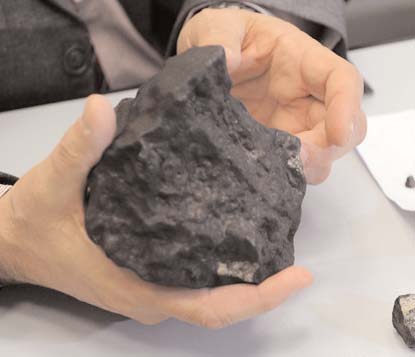
    MOSCOW (TIP): Divers have found the largest piece so far of a meteorite which hit Russia’s Chelyabinsk region in February this year, a scholar said. Xinhua quoted Sergei Zamozdra, an associate professor at South Urals State University, as saying that preliminary studies showed the 570-kg fragment came from the Chelyabinsk meteorite. It was recovered from a depth of 20 metres in the Chebarkul Lake, he said. It will be placed at a local museum after undergoing Xrays and other scientific tests. The meteorite exploded over the Chelyabinsk region in central Russia on February 15, injuring more than 1,600 people and damaging property worth about 1 billion roubles ($30 million).

  • AERIAL TECHNOLOGY USED TO FIND DRINKING WATER

    AERIAL TECHNOLOGY USED TO FIND DRINKING WATER

    NEW DELHI (TIP): Water scarcity is endemic in our country. With groundwater irrigation accounting for over 60% of the total area irrigated, it’s important to save this precious resource. Recognising this, the ministry of water resources has, for the first time, started a Rs 41cr pilot project to map aquifers. Expected to be completed by May 2014, it will use specialized choppers to find clean, drinking water. The mapping began recently in Dausa near Jaipur and will cover five more areas. This pilot project is part of a mega one — the National Project on Aquifer Management — to map aquifers all over India and will cover 21 million sq km. It has been taken up during the 12th and 13th Five Year Plans. The project is in conjunction with the Central Ground Water Board and National Geophysical Research Institute (NGRI), Hyderabad, and is funded by World Bank. While the country has enough water, its distribution is uneven, said an official of the ministry of water resources.

    “In order to assess ground water, we need a three-dimensional geometry of aquifers so that we know how much to extract. Eventually, the community and state governments will manage these,” he said. Aquifers, incidentally, are ground water deposits and can be found at a depth of 200-500m. The six areas covered under the pilot project have been selected on the basis of soil types and topography. Dausa, for example, has hard rock with alluvium. “The others places include Chandrabhaga in Nagpur (Deccan basaltic traps), Tumkur in Karnataka (granite), Cuddalore in Tamil Nadu (coastal area), Ramgadh in Jaisalmer (desert environment) and Patna (alluvial soil),” said Shakeel Ahmed, chief scientist at NGRI. The matrix that evolves from this pilot project will be used in the rest of the country. For the first time, aerial geophysical techniques are being used to cover a wide area and even inaccessible ones.

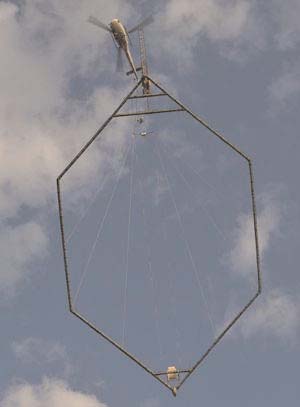
    Using a Danish technology called Skytem, a specialized Eurochopper is hooked below with a 30-m long probe which has a huge frame of 300 square metres. The chopper flies low — 3,500km high — and slowly at a speed of 60-80km per hour so that the frame doesn’t swing too much, said Ahmed. “Through the loop, which is made of fibre optics, electromagnetic currents are sent to the ground and the magnetic field thus generated is measured. This allows us to see the distribution of water, how much there is and at what depth,” says Ahmed. “It’s important to have a chopper which can carry half-a-ton weight under it. It’s especially useful in dry and coastal areas.” This technique, incidentally, has been used to map half of Denmark, informs Lars Jensen, senior field manager, SkyTEM, from Jaipur. “We have also used it in Australia, Malaysia, Antarctica, South Africa and America. We will finish mapping Jaipur within two weeks and cover an area of some 600 square kilometres,” he said.

  • NALDEHRA, A PARADISE IN THE HIMALAYAN HILLS

    NALDEHRA, A PARADISE IN THE HIMALAYAN HILLS

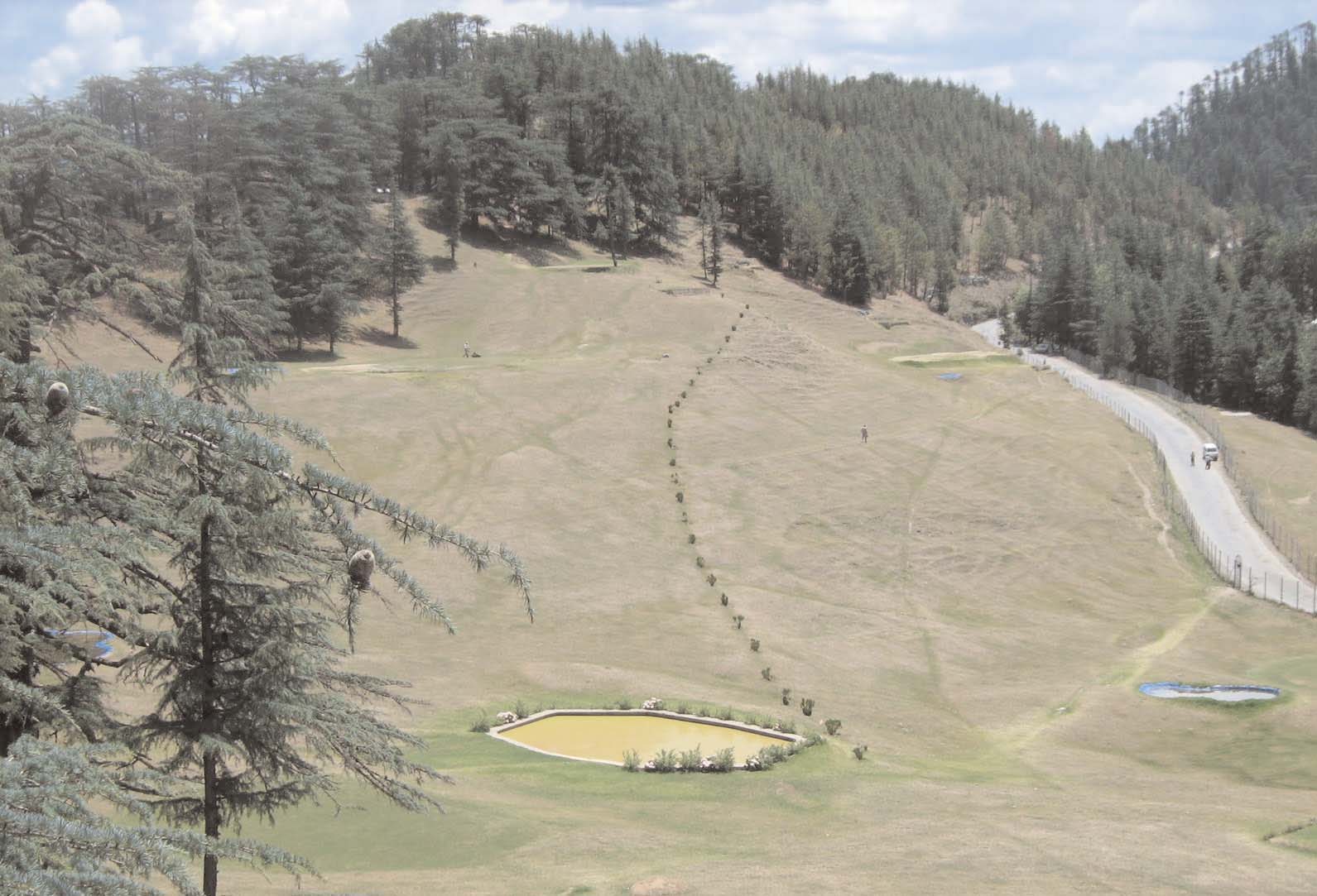
    Among the myriad hamlets of Himachal Pradesh is Naldehra, a town tucked just a little while away from the hustle-bustle of the well renowned hill station, Simla. About an hour’s drive from the main city, Naldehra is everything that Simla is not – serene, green and ever so fascinating. But since visiting offbeat destinations come with the onus of choosing a promising place to stay, I needed a place to stay that added its crucial bit to the experience. And so, my stop at the quaint settlement was The Chalets Naldehra, a one of a kind boutique mountain resort which was nothing less than a paradise perched on the hills. Inspired by the magnificent Swiss chalet architecture, The Chalets Naldehra is a home away from home, where every room overlooks independently spectacular views – the misty morning clouds, the patch of forest with imposing cedar trees, and the immaculately manicured lawns. The rooms are essentially designed like pine log homes, intricately done up with great precision and care. What sets it apart from the rest is the fact that it is built atop a mountain bend, keeping the natural landscape undisturbed. The property, owned and initiated by Yatish Sud back in 2001, is now being managed by his only son, Amish.


    img40

    Teeing off with lessons in golf
    It was under Lord Curzon’s watchful supervision, the Viceroy of India during the early 1900s, that a 9-hole golf course perched at an altitude of 2,200 meters took shape. What used to be his favourite camping site just outside the summer capital of British India (Simla), with thick manes of Himalayan cedar enveloping the pristine beauty, was soon transformed into an impressive golf course. Unfailingly, he named the course after this third daughter Alexandra Naldehra. Today, the Naldehra Golf Course is a grand 18-hole golf course, one of the oldest and most scenic in the country that resides right next to The Chalets Naldehra. Tourists can try their hand at the sport by paying a nominal daily green fee that ranges between Rs 250 to Rs 500. One could either trek their way up the ridge but since the climb is exceedingly steep it is advisable to hire a cab or pony. But it is only after you witness the breathtaking grandeur of the lush topographic glades that you realise why it is regarded at par with the reputable golf clubs of India. After a half-hour long session with the chief coach in learning how to reach the right posture for a perfect stroke, I was finally able to hit the ball hard enough to fly off the net. There was not a single soul to score my amateur swings and thank god for that. The sport may come across as easy on the eye but it requires a great deal of patience and precision to send the ball into a hole. Both father and son, Yatish and Amish are professional golfers and regular participants in intercity tournaments.

    A stroll in the apple orchards of Mashobra
    It is one thing to buy apples from your local fruit vendor, and it is another thing to pluck them off the branches and bite into its savoury, untouched sweetness. My second day at Naldehra began with a short 20-minutes drive to the apple orchards of Mashobra’s Regional Horticultural Research Station. The centre has about 170 varieties of apple trees, both red and golden, on board. Ideally, the apple harvest season in Himachal Pradesh begins in August and lasts till September. Luckily, my visit coincided with the time when golden apples are found hanging from the trees in their ripened best. But since I had already had honey pancakes for breakfast at the resort’s Garden Pavilion restaurant, I used my time for a leisurely walk in the fragrant orchards, blossoming with the forbidden fruit as the sun slowly came down heavily to call it a noon.

    Simla’s old world charm is still intact
    It is true that the number of inhabitants has gone a notch higher than it was fifteen years ago when I last visited. But the close-knit and content life that people in Simla lead will forever remain matchless. We drove further down to reach the majestic Viceregal Lodge where a guided tour of the building was about to begin. It is thrilling to revisit places of historical significance, especially when it recounts the days of the British-ruled India and India’s subsequent struggle for independence through its walls, furniture and walls. After a sumptuous lunch at a cafe, I proceeded to the famed Mall Road which was unusually crowded for a Monday afternoon. The street teemed with college students, young couples and office-goers who seemed to have gotten off work early. With some shopping in mind I headed to the Tibetan souvenir shop down the road where I picked up gifts for friends and family. Souvenirs are bought as a token that reminds us of all the beautiful places we visit. But that night, as I sat outside my log hut with a comforting cup of coffee in hand, I realised the greatest souvenir lies not in any materialistic memento. It is in fact the intangible experiences and collective memories that we encounter – of meeting new people, of loving an unfamiliar city, and of understanding life a little better.

  • Karwa Chauth

    Karwa Chauth

    The fast of Karwa Chauth is of particular importance to all Hindu married women in India. They believe that the festival ensures prosperity, longevity and well-being of their husbands. The origin of this festival was based on a very sweet and noble idea. Though this idea has lost its true sense as today the whole outlook of this festival has changed. In the ancient time, girls used to get married at a very early stage, and had to go and live with their in-laws in other villages. After marriage, if she faces any problem with her in-laws or her husband, she would have no one to talk to or seek support from. There used to be no telephones, buses and trains long ago. Her own parents and relatives would be quite far and unreachable. Thus the custom started that, at the time of marriage, when bride would reach her in-laws, she would befriend another woman there who would be her friend or sister for life. It would be like god-friends or god-sisters. Their friendship would be sanctified through a small Hindu ceremony right during the marriage. Once the bride and this woman had become god-friends or god-sisters, they would remain so all their lives and recognize the relation as such.


    img37

    img38

    They would also treat each other like real sisters. Later in life, if she faces any difficulty related to her husband or in-laws, she would be able to confidently talk or seek help from each other. Thus, Karwa Chauth was started to as a festival to celebrate this relationship between the once-brides and their god-friends (god-sisters). Fasting and praying for husband came later and is secondary. It was probably added, along with other mythical tales, to enhance the festival. The husband would always be associated with this festival, because the day of starting this holy friendship between two god-sisters was essentially the day of bride’s marriage to him. Thus, praying and fasting for him by his wife during a celebration of her relationship with the god-friend would be quite logical. Hence, the festival of Karwa Chauth was to renew and celebrate the relationship between god-friends (godsisters). It had a tremendous social and cultural significance when world was not having the way to communicate and move around easily.

    The Story of Queen Veeravati
    A long long time ago, there lived a beautiful girl by the name of Veeravati. She was the only sister of her seven loving brothers, who was married to a king. On the occasion of the first Karva Chauth after her marriage, she went to her parents’ house. After sunrise, she observed a strict fast. However, the queen couldn’t stand the rigors of fasting and was desperately waiting for the moon to rise. The seven brothers who loved her dearly, were very disturbed watching the distress of their sister and decided to end her fast by deceiving her. Then the brothers reflected a mirror through Pipal tree leaves. The sister, taken it as moon rise, broke the fast and took food. However, the moment the queen ate her dinner, she received the news that her husband, the king, was seriously ill. The queen rushed to her husband’s palace and on the way, she met Lord Shiva and his consort, Goddess Parvati. Parvati informed her that the king had died because the queen had broken her fast by watching a false moon. However, when the queen asked her for forgiveness, the goddess granted her the boon that the king would be revived. But to achieve this, she would have to undertake the Karva Chauth fast under strict rituals, then only her husband would come top life. Thus, by strictly following all the rituals of Karva chauth, queen Veeravati relivened her husband.

    The Legend of Mahabharata
    The belief in this fast and its associated rituals goes back to the pre-Mahabharata times. Draupadi, too, is said to have observed this fast. Once Arjun went to the Nilgiris for penance and the rest of the Pandavas faced many problems in his absence. Draupadi, out of desperation, remembered Lord Krishna and asked for help. Lord Krishna reminded her that on an earlier occasion, when Goddess Parvati had sought Lord Shivas guidance under similar circumstances, she had been advised to observe the fast of Karva Chauth. Draupadi followed the instructions and observed the fast with all its rituals. Consequently, the Pandavas were able to overcome their problems. On this day, fasting women listen to Karva Chauth legends with rapt attention. The Story of Satyavan and Savitri There is the story of the Satyavan and Savitri. When Lord Yama, came to procure Satyavan’s soul, Savitri begged him to grant him life. When he refused, she stopped eating and drinking and Yamraj finally relented. He granted her, her husband’s life. To this day, Karva Chauth is celebrated with great faith and belief.

    The Legend of Karva
    According to another legend, a woman named Karva was deeply devoted to her husband. One day while bathing, he was caught by a crocodile. Karva came running and bound the crocodile with a cotton yarn. She then went to Yama, the Lord of the death, and requested him to send the offending crocodile to hell. When Yama refused, she threatened to curse him. Afraid of the power of a devoted wife, Yama readily accepted and sent the crocodile to Yamalok or hell, and blessed Karva’s husband with long life. Karwa Chauth festival has an extraordinary observance rate among married women in Punjab, Uttar Pradesh, Rajasthan and Gujarat. This is a significant day for married women as they keep fast for the long-life and well-being of of their husbands. The way of celebrating Karwa Chauth vary from each other on regional basis. PUNJAB : The festival of Karwa chauth is one of the most important festival for married women in Punjab. Few days before this auspicious festival, all the markets in Punjab gets flooded with various accessories and decorative items including bangles, beautiful sarees, embroidered suits, stalls of sweets and eatables. Number of artists from different cities like Agra, Jaipur, Delhi, etc gather here with their special mehndis to decorate hands of women.

    In some parts of Punjab, young damsels too keep the fast in the hope of winning a loving husband. RAJASTHAN : Among the women of Rajasthan, the festival of Karwa Chauth has its own meaning. The women make the karwas with mud and fill them with rice and wheat. They wear their weddingday dress or chunris on this auspicious day. Karwa Chauth generally falls on the full moon day of the month Jyeshtha. This is also known as ‘Vata Purnima’. Interestingly, the woman who observes this fast is not only blessed with welfare of her husband but also wins the same husband for the next seven births. UTTAR PRADESH : In Uttar Pradesh, the married women keep the fast and pray for the long-life of their husband. They decorate the walls of their home with drawings of Gauri Ma, the moon and the sun. They also make the karwa with mud and perform the evening puja with earthen lamps. Before looking at the moon, the women pray to the figurines at their doorstep. OTHER STATES : Other Indian states also observes this fast. In Gujarat, many women observe this fast with great spirit. In Madhya Pradesh also, most of them follow the traditions of the women from Uttar Pradesh. In all these states the first ‘Karva Chauth’ of any new bride is a very important festival. New clothes, new jewelery and gifts from both mother and mother-in-law are received. The wedding day outfits are worn once again, mehndi is applied and the family gathers to celebrate it with them. There are many similar stories associated with this festival in different parts of India. In Maharashtra this particular fast is not very popular but a similar one called ‘Vaat Savitri’ is kept by married women.

    Celebrations
    The day of Karva Chauth is celebrated mostly amongst the entire North Indian community settled either in India and other parts of the world. The most important aspect of this day is that a dawn to dusk fast is undertaken by the North Indian ladies and seeing the moon they finally break the fast. The Karva Chauth fast is unique perhaps because nowhere in the world does a wife go without food or water just to pray for the longevity and well-being of her husband. In modern day, with all the trappings of commercialization attached, Karva Chauth, the big fasting day has turned into a full-fledged event. The event is growing bigger with each passing day. Karva Chauth celebrations promise to grow bigger with each passing year. The Halwais, the Mehendi and Churiwallis have traditionally been busy on this auspicious day. But joining the bandwagon in recent times are the beauty parlour owners, the event managers and the restaurant owners. Karva Chauth special eateries are gearing up for now. Cashing in on the popularity of ‘eating out’ most restaurants have special menus for this special day. No wonder almost every happening-eating joint around town is offering plenty of attractive options to choose from. Various clubs organize special events on this festive day with various stalls, bumper Tambola and even a dance competition. With so much feasting and fun added to it, fasting had never been so good before.

  • SRI GURU GRANTH SAHIB

    SRI GURU GRANTH SAHIB

    CONTD FROM Vol 7 ISSUE 40 He removes self-conceit from within, and instructs us in the Truth of Truths. || 4 || SHALOK, FIRST MEHL: All the hours are the milk-maids, and the quarters of the day are the Krishnas. The wind, water and fire are the ornaments; the sun and moon are the incarnations. All of the earth, property, wealth and articles are all entanglements. O Nanak, without divine knowledge, one is plundered, and devoured by the Messenger of Death. || 1 || FIRST MEHL: The disciples play the music, and the gurus dance. They move their feet and roll their heads. The dust flies and falls upon their hair. Beholding them, the people laugh, and then go home. They beat the drums for the sake of bread. They throw themselves upon the ground. They sing of the milk-maids, they sing of the Krishnas. They sing of Sitas, and Ramas and kings. The Lord is fearless and formless; His Name is True. The entire universe is His Creation. Those servants, whose destiny is awakened, serve the Lord. The night of their lives is cool with dew; their minds are filled with love for the Lord. Contemplating the Guru, I have been taught these teachings; granting His Grace, He carries His servants across.

    The oil-press, the spinning wheel, the grinding stones, the potter’s wheel, the numerous, countless whirlwinds in the desert, the spinning tops, the churning sticks, the threshers, the breathless tumblings of the birds, and the men moving round and round on spindles – O Nanak, the tumblers are countless and endless. The Lord binds us in bondage – so do we spin around. According to their actions, so do all people dance. Those who dance and dance and laugh, shall weep on their ultimate departure. They do not fly to the heavens, nor do they become Siddhas. They dance and jump around on the urgings of their minds. O Nanak, those whose minds are filled with the Fear of God, have the love of God in their minds as well. || 2 || PAUREE: Your Name is the Fearless Lord; chanting Your Name, one does not have to go to hell. Soul and body all belong to Him; asking Him to give us sustenance is a waste. If you yearn for goodness, then perform good deeds and feel humble. Even if you remove the signs of old age, old age shall still come in the guise of death. No one remains here when the count of the breaths is full. || 5 || SHALOK, FIRST MEHL: The Muslims praise the Islamic law; they read and reflect upon it.

    The Lord’s bound servants are those who bind themselves to see the Lord’s Vision. The Hindus praise the Praiseworthy Lord; the Blessed Vision of His Darshan, His form is incomparable. They bathe at sacred shrines of pilgrimage, making offerings of flowers, and burning incense before idols. The Yogis meditate on the absolute Lord there; they call the Creator the Unseen Lord. But to the subtle image of the Immaculate Name, they apply the form of a body. In the minds of the virtuous, contentment is produced, thinking about their giving. They give and give, but ask a thousand-fold more, and hope that the world will honor them. The thieves, adulterers, perjurers, evildoers and sinners – after using up what good karma they had, they depart; have they done any good deeds here at all? There are beings and creatures in the water and on the land, in the worlds and universes, form upon form. Whatever they say, You know; You care for them all. O Nanak, the hunger of the devotees is to praise You; the True Name is their only support. They live in eternal bliss, day and night; they are the dust of the feet of the virtuous. || 1 || FIRST MEHL: The clay of the Muslim’s grave becomes clay for the potter’s wheel. Pots and bricks are fashioned from it, and it cries out as it burns. The poor clay burns, burns and weeps, as the fiery coals fall upon it. O Nanak, the Creator created the creation; the Creator Lord alone knows.

    || 2 || PAUREE: Without the True Guru, no one has obtained the Lord; without the True Guru, no one has obtained the Lord. He has placed Himself within the True Guru; revealing Himself, He declares this openly. Meeting the True Guru, eternal liberation is obtained; He has banished attachment from within. This is the highest thought, that one’s consciousness is attached to the True Lord. Thus the Lord of the World, the Great Giver is obtained. || 6 || SHALOK, FIRST MEHL: In ego they come, and in ego they go. In ego they are born, and in ego they die. In ego they give, and in ego they take. In ego they earn, and in ego they lose. In ego they become truthful or false. In ego they go to heaven or hell. In ego they laugh, and in ego they weep. In ego they become dirty, and in ego they are washed clean. In ego they lose social status and class. In ego they are ignorant, and in ego they are wise. They do not know the value of salvation and liberation. In ego they love Maya, and in ego they are kept in darkness by it. Living in ego, mortal beings are created. When one understands ego, then the Lord’s gate is known. Without spiritual wisdom, they babble and argue. O Nanak, by the Lord’s Command, destiny is recorded. As the Lord sees us, so are we seen.

    || 1 || SECOND MEHL: This is the nature of ego, that people perform their actions in ego. This is the bondage of ego, that time and time again, they are reborn. Where does ego come from? How can it be removed? This ego exists by the Lord’s Order; people wander according to their past actions. Ego is a chronic disease, but it contains its own cure as well. If the Lord grants His Grace, one acts according to the Teachings of the Guru’s Shabad. Nanak says, listen, people: in this way, troubles depart. || 2 || PAUREE: Those who serve are content. They meditate on the Truest of the True. They do not place their feet in sin, but do good deeds and live righteously in Dharma. They burn away the bonds of the world, and eat a simple diet of grain and water. You are the Great Forgiver; You give continually, more and more each day. By His greatness, the Great Lord is obtained. || 7 || SHALOK, FIRST MEHL: Men, trees, sacred shrines of pilgrimage, banks of sacred rivers, clouds, fields, islands, continents, worlds, solar systems, and universes; the four sources of creation – born of eggs, born of the womb, born of the earth and born of sweat; oceans, mountains, and all beings – O Nanak, He alone knows their condition.

    O Nanak, having created the living beings, He cherishes them all. The Creator who created the creation, takes care of it as well. He, the Creator who formed the world, cares for it. Unto Him I bow and offer my reverence; His Royal Court is eternal. O Nanak, without the True Name, of what use is the frontal mark of the Hindus, or their sacred thread? || 1 || FIRST MEHL: Hundreds of thousands of virtues and good actions, and hundreds of thousands of blessed charities, hundreds of thousands of penances at sacred shrines, and the practice of Sehj Yoga in the wilderness, hundreds of thousands of courageous actions and giving up the breath of life on the field of battle, hundreds of thousands of divine understandings, hundreds of thousands of divine wisdoms and meditations and readings of the Vedas and the Puraanas – before the Creator who created the creation, and who ordained coming and going, O Nanak, all these things are false. True is the Insignia of His Grace. || 2 || PAUREE: You alone are the True Lord. The Truth of Truths is pervading everywhere. He alone receives the Truth, unto whom You give it; then, he practices Truth. Meeting the True Guru, Truth is found. In His Heart, Truth is abiding. The fools do not know the Truth. The self-willed manmukhs waste their lives away in vain. Why have they even come into the world? || 8 || SHALOK, FIRST MEHL: You may read and read loads of books; you may read and study vast multitudes of books.

    You may read and read boat-loads of books; you may read and read and fill pits with them. You may read them year after year; you may read them as many months are there are. You may read them all your life; you may read them with every breath. O Nanak, only one thing is of any account: everything else is useless babbling and idle talk in ego. || 1 || FIRST MEHL: The more one write and reads, the more one burns. The more one wanders at sacred shrines of pilgrimage, the more one talks uselessly. The more one wears religious robes, the more pain he causes his body. O my soul, you must endure the consequences of your own actions. One who does not eat the corn, misses out on the taste. One obtains great pain, in the love of duality. One who does not wear any clothes, suffers night and day. Through silence, he is ruined. How can the sleeping one be awakened without the Guru? One who goes barefoot suffers by his own actions. One who eats filth and throws ashes on his head – the blind fool loses his honor. Without the Name, nothing is of any use. One who lives in the wilderness, in cemetaries and cremation grounds – that blind man does not know the Lord; he regrets and repents in the end. One who meets the True Guru finds peace. He enshrines the Name of the Lord in his mind. O Nanak, when the Lord grants His Grace, He is obtained. He becomes free of hope and fear, and burns away his ego with the Word of the Shabad.

    || 2 || PAUREE: Your devotees are pleasing to Your Mind, Lord. They look beautiful at Your door, singing Your Praises. O Nanak, those who are denied Your Grace, find no shelter at Your Door; they continue wandering. Some do not understand their origins, and without cause, they display their self-conceit. I am the Lord’s minstrel, of low social status; others call themselves high caste. I seek those who meditate on You. || 9 || SHALOK, FIRST MEHL: False is the king, false are the subjects; false is the whole world. False is the mansion, false are the skyscrapers; false are those who live in them. False is gold, and false is silver; false are those who wear them. False is the body, false are the clothes; false is incomparable beauty. False is the husband, false is the wife; they mourn and waste away. The false ones love falsehood, and forget their Creator. With whom should I become friends, if all the world shall pass away? False is sweetness, false is honey; through falsehood, boat-loads of men have drowned. Nanak speaks this prayer: without You, Lord, everything is totally false. || 1 || FIRST MEHL: One knows the Truth only when the Truth is in his heart. The filth of falsehood departs, and the body is washed clean. One knows the Truth only when he bears love to the True Lord. Hearing the Name, the mind is enraptured; then, he attains the gate of salvation. One knows the Truth only when he knows the true way of life.

  • MANAGE HIGH BP WITHOUT PILLS

    MANAGE HIGH BP WITHOUT PILLS

    Hypertension on the high? Here are top 10 tips to get it down and keep it down. Seven in 10 adults are at a greater risk of stroke or heart attack because their blood pressure is too high. Desk jobs, lack of exercise and eating salty fast foods have contributed to the problem, even among the young. If your level is consistently at or above 140mmHg/ 90mmHg (referred to as 140 over 90). The 140 figure is the systolic pressure — the pressure reached when the heart forces the blood around the body — and 90 is the diastolic pressure — the lowest pressure that occurs between heartbeats when the heart relaxes. In India, experts say, the prevalence of hypertension ranges from 20-40 per cent in urban adults and 12-17 per cent among rural adults. But there’s no reason to worry. Simple measures will help to cut your risk.

    1. Go for a weekly jog
    Jogging for just an hour a week can increase your life expectancy by six years, according to a Copenhagen City Heart cardiovascular study of around 20,000 men and women aged from 20 to 93. Researchers believe jogging delivers multiple health benefits, improving oxygen uptake and lowering blood pressure, as well as many more benefits. However, any physical activity can help lower blood pressure by strengthening the heart so it can pump more blood with less effort, thereby decreasing the force on the arteries. Power walking can be just as effective as jogging.

    2. Enjoy yoghurt
    Just one small pot a day can reduce your chances of developing high blood pressure by a third, according to a study presented at the University of Minnesota in the US. Scientists think naturally occurring calcium can make blood vessels more supple, enabling them to expand slightly and keep pressure low. They found those who ate a 120g pot daily were 31 per cent less likely to develop high blood pressure over a 15-year period than those who did not.

    3. Go bananas
    Eating potassium-rich foods, such as bananas, and reducing salt intake could save thousands of lives every year, according to a new study published in the British Medical Journal online. Potassium is an important mineral that controls the balance of fluids in the body and helps to lower blood pressure. Making sure you eat five.

    4. Down with salt
    Salt draws in fluid, raising the volume and pressure of blood in your arteries. But it’s not just the salt cellar you have to worry about — processed foods such as biscuits, breakfast cereals, takeaways and ready meals contain 80 per cent of the salt we consume, says the Blood Pressure Association. Check labels: more than 1.5g salt per 100g is a lot, but less than 0.3mg per 100g is a little.

    5. Lose weight
    Research has shown that dropping just a few kilos can have a substantial impact on your blood pressure. Excess weight makes your heart work harder and this strain can lead to high blood pressure.

    6. Don’t smoke
    The nicotine in cigarettes stimulates your body to produce adrenaline, making your heart beat faster and raises your blood pressure, making your heart work harder.

    7. Work less
    Regularly putting in 40 hours per week at the office raises your risk of hypertension by 14 per cent, the University of California, US, found.The risk rises with overtime. Compared with those who worked fewer than 40 hours a week, workers who clocked up more than 51 hours were 29 per cent more likely to have high blood pressure. Overtime makes it hard to exercise and eat healthily, say researchers. So try to down tools with enough time to relax in the evening and eat a healthy supper. Set a message on your computer as a reminder to go home.

    8. Seek help for snoring
    Loud, incessant snoring is a symptom of obstructive sleep apnea. And more than half of those with this have blood pressure significantly higher than expected for their age and general health. Cutting out cigarettes and alcohol and losing weight will help.

    9. Switch to decaf
    Duke University Medical Center, North Carolina, US, found caffeine consumption of 500mg, roughly three cups, increased blood pressure by three points. Effects lasted until bedtime. Scientists say that caffeine can raise blood pressure by tightening blood vessels and magnifying the effects of stress.

    10. Think beetroot
    A study published in the journal Hypertension found drink ing a 250ml cup of the juice can cut blood pressure readings in those with high blood pressure by around seven per cent. It’s thought the effect is produced by beetroot’s naturally high levels of nitrate. Eating other-rich foods — cab bage and spinach — might also help.

  • HEALTH SYMPTOMS YOU CAN’T IGNORE

    HEALTH SYMPTOMS YOU CAN’T IGNORE

    While a few aches and pains are common, some symptoms might not just be what they seem like. Make sure you don’t ignore certain health symptoms…

    Recurring bloating
    While women tend to get bloated more often than men due to their menstrual cycle, if you discover that you’re bloated more often than not, it’s worth getting it investigated. Keep an eye out for gas, pain in the abdomen or difficulty while eating. It could be due to an underlying gynaecological problem, which may need to be checked. What to do: Visit your gynaecologist soon.

    Excruciating headaches
    A burst blood vessel in your brain could trigger sudden and extremely painful headaches. Called a ruptured aneurysm, this requires urgent attention. Additional symptoms include chest pain, exhaustion and deteriorating vision, which could indicate cardiac cephalgia or meningitis. What to do: Ask your GP whether you need to do any tests to diagnose the reason for the agonising headaches.

    Painful toothache
    A little bit of a sting or pain while having an icecream or a chilled drink is okay, shooting pain is not. If you feel like your teeth are feeling extra sensitive, it’s time you make a trip to the dentist. A bad toothache could mean that a nerve in the tooth has been damaged — a sign of rotting teeth. The more you keep postponing a visit to the dentist, the more the bacteria will spread in your mouth, leading to severe pain. What to do: Book an appointment with your dentist asap.

    Pain in the chest
    Certain foods cause heartburn or indigestion. You need to identify the difference between that and something that could be potentially more dangerous. Don’t let the thought of a heart problem deter you from visiting the doctor.When you feel like there is a load on your chest — quite literally — or pain, it may just be one of the many signs of a heart attack. What to do: Don’t wait — get yourself checked immediately to find out how serious the problem is.

    Unnatural hair growth
    While all of us have hair on our bodies, if you notice thick, dark hair on your face, chest, stomach or near your breasts, it could indicate a gynaecological problem Polycystic Ovary Syndrome (PCOS). This occurs when there is an imbalance of female hormones in the body. Other symptoms include irregular periods and trouble conceiving.What to do: Your gynaecologist may ask you to do tests to detemine the cause.

    Sudden weight loss
    Whether you’re dieting and exercising or not, losing a lot more weight than you should or losing weight suddenly for no apparent reason, is a cause for concern. Unexplained weight loss could be pointing out towards an underlying illness, a sign of diabetes or several other health problems. What to do: Don’t procrastinate. Get a check-up done immediately.

    Problem in the bedroom
    One of the most common problems, erectile dysfunction happens to all men at some point in their lives. But if it is a recurring problem, you need to get it checked. What to do: Visit a sexpert or a urologist who will ask you to do some tests.

  • SIGNS YOUR MAN IS CHEATING ON YOU

    SIGNS YOUR MAN IS CHEATING ON YOU

    Approximately 30 to 60 percent of men will cheat on their spouses, according to numerous studies. It has been revealed that for every six men who will cheat, there are four men who will be faithful, the Huffington Post reported. It should come as no surprise that some men cheat. Whether it’s the President of the United Sates, the top golfer in the world or a world class musician, it’s a proven fact that when it comes to cheating on their spouses, some men just can’t keep it in their pants. Guys who cheat are pretty transparent and predictable. In fact, there are three major signs that accurately predict if a guy will cheat on you. Firstly he’s secretive. Guys who cheat often lead double lives, and in order to do so, they have to cover their tracks. A guy who is secretive and doesn’t reveal much about himself or his life is a guy who is a prime candidate to be featured on an upcoming episode of ” Cheaters.”

    Communication and the willingness to be an open book are two of the most important indicators of a happy and successful relationship. And if a guy is keeping secrets in the beginning, look out because you are headed for trouble. Secondly if he’s selfish and selfindulgent. Guys who cheat do so because they are only focused on one thing — themselves. The good news is that guys like these are easy to spot. Guys who are selfish and self-indulgent tend to be like that in all aspects of their lives. If you want to get a good gauge of the moral character and integrity of the man you are dating, look at the way he lives his life and the way he treats others. If you start noticing that he is only out for himself, and he obviously doesn’t care about others (including you) aside from what they can do for him, there is only one thing you should do — run! Lastly if he has a sudden change in behavior. Cheating guys will suddenly change their behavior, and in numerous ways. He might make a sudden change in his appearance or grooming habits, or it could be a sudden change in his work schedule where all of a sudden he’s working late, has to travel and can’t be reached. But the most common sign is when your sex life decreases, and he shows less of an interest in you in the bedroom. There are some guys out there who can’t be trusted and some who can. The key is being able to recognize a potential cheater before the relationship begins.

  • Coalgate: Former top bureaucrats back ex-coal secretary’s accusation against PM

    Coalgate: Former top bureaucrats back ex-coal secretary’s accusation against PM

    NEW DELHI (TIP): Former top bureaucrats have come out in support of ex-Coal Secretary P C Parakh, who has been named by CBI in the coal blocks allocation scam, warning that harassment of honest officers will erode Government’s credibility and stop senior officers from taking decisions. “Parakh, as I have known him, is an honest, competent officer. While I do not wish to comment on the CBI investigation as such, as I do not have all the facts, I am at a loss to understand how an FIR has been filed only against him and no one in the PMO and no Minister,” said E A S Sarma, former Coal Secretary. If it is a case of conspiracy, all the conspirators should be taken into account. I hope there is no conspiracy!, said Sarma, a former IAS officer. “I feel that investigations in such cases should be objective and uninfluenced by extraneous pressures. A clear distinction must be made between decisions taken in good faith and malafide decisions. It is unfortunate that dishonest Ministers, politicians and officers should be let off and honest officers harassed.

    It will only erode the credibility of the government which has already been on the decline in the recent times,” he said. Sarma said he has written to CVC on June 15 last year requesting it to initiate an investigation into the role of the PMO in the coalgate affair and three other scams. “I reminded CVC at least two times after that. There has been no visible response from CVC on my letters,” Sarma said. Former Cabinet Secretary T S R Subramanian said such kind of action by CBI against Parakh will stop others from taking decisions. “There are all kind of bureaucrats, good, bad, honest… There has to be a reasonable basis for any action by the agency,” he said. “According to the FIR, it was said Parakh met Kumar Mangalam Birla. As Cabinet Secretary, I used to meet ten bureaucrats, ten politicians and ten businessmen daily. Should that mean that I be also made an accused?” he asked. Parakh wanted the system to be changed for good, rued Subramanian. The former Cabinet Secretary also felt that there was an “ulterior motive” behind the move to name Parakh as an accused. “If he has been made an accused, he could be crippled as a witness. There could be an ulterior motive,” he said.

    Nothing to hide on coal blocks, need no certificate: Government
    The government has nothing to hide on the coal block allocations, which were done on basis of recommendations of state governments, and it does not need certificates from anybody, senior ministers said Thursday. Minister of State in the Prime Minister’s Office V. Narayanasamy told reporters here it has been the government’s stand that allocations have been made to public sector undertakings and some private companies “on the recommendations of state governments where coal blocks were available”. “We have nothing to hide,” he said. Commerce and Industry Minister Anand Sharma, meanwhile, hit out at the Bharatiya Janata Party over its demand of the prime minister’s resignation, and said the government does not need certificates. Narayanasamy did not comment on former coal secretary P.C. Parakh’s claim that it was Prime Minister Manmohan Singh who decided on the allocation of two Odisha coal blocks in 2005, over which the Central Bureau of Investigation (CBI) filed a first information report (FIR) Tuesday. “The matter is sub judice.

    It is being investigated by the CBI,” the minister said. The FIR named Parakh and industrialist Kumar Mangalam Birla for alleged irregularities and criminal conspiracy in the allocation of the two blocks. Parakh said he did not know why the CBI thought Birla and he were in a conspiracy, when the person who took the decision was not part of it. “If a conspiracy is there, everyone is part of the conspiracy. If we are accused, the PM is as much a part of the conspiracy,” he contended. Asked about Parakh’s remarks, Sharma said the fundamental question was whether “everything be questioned” once a decision was taken. “Now who is going to give certificate to prime minister of India, who is globally respected, or to his ministers? I don’t think we need certificates,” Sharma told Times Now TV channel. The prime minister did nothing wrong by signing the coal allocation file, he said. An atmosphere where ministers or bureaucracy do not sign papers out of fear was a “recipe for disaster”, Sharma said, contending the economic environment has been vitiated over the past three years. “You cannot hold decision making to ransom so that nobody takes a decision, everybody is fearful,” he said. The BJP Wednesday said that the prime minister should take “final responsibility” for irregularities in the allocation of coal blocks, and resign.

  • India to finalise Rafale deal by March 2014

    India to finalise Rafale deal by March 2014

    NEW DELHI (TIP): India will finalise a $15 billion deal to buy 126 Rafale fighter jets from France’s Dassault Aviation by March 2014, an Indian air force official said onb October 17 , after the deal had been held up by differences over local manufacturing. New Delhi picked the Rafale for exclusive negotiations in January 2012 after a bidding contest against Eurofighter Typhoon aircraft, made by a consortium involving EADS, Finmeccanica and BAE Systems. But there were differences over the role of India’s state-run Hindustan Aeronautics Ltd in manufacturing the jets. Air Marshal S Sukumar, deputy chief of air staff, told an aerospace conference the deal would be signed within the current financial year, according to a statement issued by conference organiser, the Confederation of Indian Industry. Under the deal, Dassault is expected to send 18 ready-made jets and would manufacture the rest in India. Hindustan Aeronautics will be its lead partner. Dassault had earlier expressed doubts about the ability of the local partner to make such a sophisticated fighter. Hindustan Aeronautics has been developing a light combat aircraft since the early 1980s with no success so far. A spokesman for Dassault declined to comment.

    The French company is still hoping to finalise the deal by the end of the 2013. India’s government wants to encourage Indian companies to partner with foreign suppliers to reduce its reliance on imports and boost a domestic defence industry that is dominated by underperforming public sector companies. A separate tender to buy and build 56 military transport planes at an estimated cost of 119 billion rupees has been extended by two months, Sukumar also said. The Defence Ministry launched the tender in May to replace an ageing fleet of Avro jets. The ministry had originally said the transport planes deal must be struck between a foreign supplier and an Indian private company. However, Heavy Industries Minister Praful Patel said last week that public-sector firms already making products for the armed forces should have been allowed to take part in the bidding. The Defence Ministry has said it will look into Patel’s complaint, potentially delaying the tender. Many of India’s foreign arms purchases run into long delays because of accusations of corruption and bureaucratic complications.

  • Aarushi murdered by parents, CBI tells court

    Aarushi murdered by parents, CBI tells court

    NEW DELHI (TIP): The CBI on October 17 concluded its arguments in the Aarushi murder case and told the Special CBI court that Rajesh Talwar and wife Nupur had killed their daughter. The CBI told the court said the Talwars killed Aarushi and domestic help Hemraj, dressed up the crime scene and destroyed evidence. Trial in the Aarushi-Hemraj murder case began a year and three months ago at Ghaziabad in Uttar Pradesh. The crime was committed more than six years ago. Fourteen-year-old Aarushi was found murdered in her apartment in Noida on May 16, 2008. The next day, the body of Hemraj was discovered on the apartment’s terrace. The dentist couple, Rajesh and Nupur, were in the house on the night the crime was committed.

  • Indian firms best in BRICS, says corruption watchdog

    Indian firms best in BRICS, says corruption watchdog

    MUMBAI (TIP): The anti-corruption watchdog Transparency International has admonished Chinese companies for their opaque business practices while praising Indian firms’ relatively high standards, in a survey of emerging market multinationals released on October 17. China got the lowest rating of the BRICS economies (Brazil, Russia, India, China and South Africa), whose companies made up three quarters of the total sample in the survey of 100 of the fastest-growing multinationals in 16 emerging economies. Indian firms performed the best. Marked on how transparently they present measures to combat corruption, how they report on their organisations and how they disclose data like revenue, expenditure and taxes, three quarters of the companies scored less than five out of 10. “As emerging market companies expand their influence they should seize the opportunity to play a bigger role stopping corruption internationally,” said Huguette Labelle, head of the Berlin-based independent pressure group.

    Widespread shortcomings included the failure of about 60 percent of all the companies surveyed to disclose information about their political contributions. “Results show that companies from China lag behind in every dimension with an overall score of 20 percent,” Transparency said in the report. “Considering their growing influence in markets around the world, this poor performance is of concern.” Eight of the 10 worst-performing companies were Chinese, such as state-owned Chery Automobile Co Ltd, which along with Mexico’s privatelyowned consumer goods group Mabe scored zero points. Wang Wei, a spokesman for Chery, said that he had never heard of Transparency International and was never contacted by the organisation. “Chery is not publicly traded, so naturally it is not as transparent as those listed companies,” Wang said, noting that the automaker does publish quarterly and annual results to its bond investors. Pablo Moreno, Mabe’s corporate affairs director, said the report did not fairly reflect the company’s control and transparency mechanisms because it was based on information available on company websites. As a private company, Mabe is not obliged to publicly reveal information related to its business activities, but complies with strict ethics and accountability codes, he added.

    Transparency said Indian firms perform best in the BRICS with a result of 54 percent and several occupy the top positions in the overall index, attributing this to laws in India about how multinationals must report on subsidiaries. Top of the class overall came India’s Tata Communications Ltd (TATA.NS), which also topped the anti-corruption programmes category with 92 percent, followed by three more Tata companies. A Tata Communications representative was not immediately able to comment. Transparency International said public disclosure of anti-bribery measures “confirms a company’s commitment to ethical conduct” and made it easier for the public to monitor them. Emirates Airline, which is stateowned, came first in the category for organisational transparency, followed by Johnson Electric Holdings Ltd of China and Malaysian state energy company Petronas. Emirates, Johnson Electric and Petronas were not immediately available to comment. This category marked firms on their disclosure of data like majority and minority holdings, percentages owned by the parent company and the country of incorporation and operation – all of which is often made “deliberately opaque for the purpose of hiding the proceeds of corruption”, Transparency said. Eleven companies scored zero in this category, nine of them incorporated in China.

    In the third category measuring standards of country-by-country reporting of revenues, capital expenditure, income before tax, income tax and community contributions, the Chilean retailing group Falabella scored highest with 50 percent. Sandro Solari, Falabella’s chief executive officer, said transparency was “a central element in building trust” and it would continue strengthening its ability to deliver information. “Key financial data give citizens the possibility to understand the activities of a particular company in their country and to monitor the appropriateness of their payments to governments,” said Transparency. In a sub-index ranking just the BRICS nations, which the watchdog said account for 20 percent of global economic output and 15 percent of world trade, the companies from firstplaced India were followed by South Africa, Russia, Brazil, then China.

  • KHEMKA CHARGESHEET: HE HAS TO ANSWER FOR HIS ACTIONS, SAYS CONG

    KHEMKA CHARGESHEET: HE HAS TO ANSWER FOR HIS ACTIONS, SAYS CONG

    NEW DELHI (TIP): As second charge sheet is set to be served against Ashok Khemka, Congress has suggested that law is taking its own course against the Haryana IAS officer who had raised the issue of controversial land deals of Robert Vadra. Party spokesperson Renuka Chowdhary told reporters that administrative rules are same for everyone and every official has to adhere to them. “You have to answer for your actions,” she said. She was asked questions on the impending trouble for Khemka who is to receive a fresh charge sheet from the Congress government in Haryana. He is currently posted in Chandigarh as the Director General of Archives. After the controversy over Vadra’s land deals, Khemka has cried foul yet again as the state government gave a go ahead to file another charge sheet against him. Khemka will be chargesheeted for low sales of seeds when he was the Managing Director of Haryana Seed Development Corporation. The state government had earlier chargesheeted Khemka for overstepping his jurisdiction in the cancellation of Robert Vadra-DLF land deal.

  • Fodder scam: Lalu, 26 others move HC

    Fodder scam: Lalu, 26 others move HC

    RANCHI (TIP): RJD chief Lalu Prasad and 26 other people convicted in the multi-crore fodder scam moved the Jharkhand high court against the CBI court’s judgment on October 17. Their lawyers filed separate appeals against the CBI special court’s sentence in the fodder scam. Some of the petitioners including Lalu and former RJD MLA R K Rana also filed for bail. Lalu is serving a jail term of five years at Birsa Munda Central Jail after being convicted on October 3 in one of the cases related to the fodder scam. JD(U) MP Jagdish Sharma and former Bihar chief minister Jagannath Prasad have not yet filed an appeal with the court. Appearing before the court of Justice R R Prasad, senior advocate and former advocate general Anil Sinha made a special mention of the appeal but the court refused to take it up saying the process was not right. The appeal petition was then filed with the registrar office.

  • Tamil Nadu police arrest all 35 crew members of detained US ship

    Tamil Nadu police arrest all 35 crew members of detained US ship

    TUTICORIN (TIP): In an early morning operation, all the 35 members on board the US ship Seaman Guard Ohio, a floating armoury, were arrested by sleuths of Tamil Nadu’s Q branch, a state intelligence wing, on October 18 . A team of officials led by Q branch SP Bhavaneeswari and Tuticorin SP M Durai entered the vessel, docked in the V O Chidambaranar port since October 12, and arrested the ten crew members and 25 security guards. Thirty three of the men were taken to Muthayapuram police station in Tuticorin where they were interrogated while two of the arrested were left on board the ship to carry out maintenance work. As many as 31 assault rifles and more than 5000 rounds of ammunition in the ship were confiscated. The passports of the arrested men as well as one of their agents in Tuticorin were also confiscated. Sources in Q branch said measures were being taken to produce the arrested before a court and remand them. The arrest of the ten crew members and 25 security guards on the ship comes six days after the vessel was detained off Tuticorin coast by the Indian Coast Guard.

    The ship had strayed into Indian territorial waters off the Kanyakumari coast and later towed to the Tuticorin port. The crew comprise of two Ukrainians and eight Indians while the security guards included six British, 14 Estonians, one Ukrainian and four Indians. The men had been booked under two sections of the Indian Arms Act that prohibits possession of weapons without permission. A case under Passport Act and Essential Commodities Act was also registered for procuring fuel in Indian waters in an unauthorized manner. The vessel, owned by a US-based firm AdvanFort, a company that provides maritime security services to protect ships from pirate attacks, was registered in the West African country of Sierre Leone. The Indian Coast Guard intercepted the ship on suspicion. A preliminary inquiry by the Coast Guard revealed that the vessel was illegally carrying weapons. The crew must have obtained permission to possess weapons from the Indian authorities when they enter the exclusive economic zone of the country, said a coastal security group officer when the vessel was detained. After initial probe by the Tamil Nadu Coastal Security Group the case was transferred to the Q branch. However, several agencies including the Research and Analysis Wing and Intelligence Bureau too interrogated the crew. Sources said the men were reluctant to cooperate with the investigation and failed to produce proper documents for possession of the weapons. Meanwhile, the state government is preparing a detailed report on the episode to be sent to the Centre.

  • Seemandhra employees call off strike after 66 days

    Seemandhra employees call off strike after 66 days

    HYDERABAD (TIP): In a major development that could help restore normalcy in Seemandhra, the Andhra Pradesh government employees from the region on October 17 decided to call off their indefinite strike to oppose the central government’s decision to carve out a separate Telangana. Leaders of various associations of employees agreed to temporarily call off the 66-day-long strike after talks with Chief Minister N. Kiran Kumar Reddy. State ministers Anam Ramnarayana Reddy and P. Satyanarayana announced after the talks that the employees would attend their duties from Friday. They said the associations agreed to call off their strike following some assurances given by the chief minister to address their concerns. Kiran Reddy assured employees that he would write a letter to Prime Minister Manmohan Singh on referring the Telangana resolution to state assembly. The chief minister, in his letter, would urge the prime minister to follow the Constitutional process adopted while carving out Jharkhand, Chhattisgarh and Uttarakhand, said a statement issued from the chief minister’s office.

    The employees wanted an assurance that the resolution would come before the assembly so that it could be defeated. Ramnarayana Reddy said all Seemandhra Congress leaders including the chief minister and state Congress chief were committed to defeat the resolution in the assembly. He said they would all work with the employees to keep the state united. Over 400,000 government employees of Seemandhra (Rayalaseema and coastal Andhra) were on strike since Aug 12 to oppose the decision to bifurcate the state. The strike had crippled the state administration in all 13 districts of the two regions. Over 200,000 teachers and employees of state-owned Andhra Pradesh State Road Transport Corporation (APSRTC) last week called off their strike. The chief minister had appealed to all employees to call off the strike as it has paralysed the administration and all welfare and development programmes in Seemandhra. Kiran Reddy noted that the employees participated in the strike for 66 days and did not draw Rs.2,700 crore salaries despite the hardships faced by their families. Assuring the employees that there is no change in his stand that the state should not be divided, he promised to provide them an opportunity to place their concerns before the group of ministers constituted by the union cabinet. Andhra Pradesh Non-Gazetted Officers (APNGOs) Association president P. Ashok Babu said they withdrew the strike temporarily. He warned that if a bill is tabled in parliament for formation of Telangana state, they would again go on strike. He quoted the chief minister as saying that Telangana issue would come to the assembly twice. Ashok Babu also demanded that Article 371 D be protected as it provides some safeguards to Seemandhra in recruitment of government employees.