Year: 2013

  • PAKISTANI TROOPS VIOLATE CEASEFIRE FOR NINTH TIME IN 4 DAYS

    PAKISTANI TROOPS VIOLATE CEASEFIRE FOR NINTH TIME IN 4 DAYS

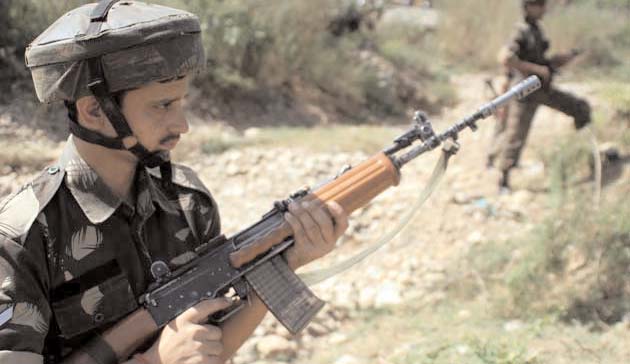
    JAMMU (TIP): Pakistani army pounded civilian areas along LoC by violating ceasefire for the ninth time in four days on October 17 resulting in injuries to four people, prompting retaliation from Indian troops. Police said Pakistani troops resorted to unprovoked firing on forward Indian posts including civilian areas along LoC in Najwal-Pargwal belt of Jammu district around 12.30pm. In the firing on civilian areas, four people including three children were injured in Najwal border hamlet, they said. They have been identified as Nisha Devi (45), Rama Kumari (12), Usha Devi (14) and Surjeet Kumar (10) — all children of a Sham Lal. They have been shifted to GMC Hospital for treatment, they said. Congress MP Madan Lal Shama, who along with divisional commissioner Jammu, Shant Manu and senior police officers, visited GMC hospital to inquire about the injured, said, “enough is enough — India should give a befitting reply to Pakistan.”

    BJP activists led by its legislature party leader Ashok Khajuria held protest demonstration and burnt Pakistan flag in protest against Pakistan firing in civilian areas of Jammu. “Give Pakistan a befitting reply. They are attacking us every time,” Khajuria said. This is the ninth ceasefire violation by Pakistani troops in the past four days. Earlier in the day, Pakistan violated ceasefire. “There was suspected movement of some persons along the international border close to Kharkola border out post in R S Pura border belt of Jammu district at 0930 hours today,” a BSF officer said. BSF troops guarding the borderline took positions and challenged them near Kharkola BoP, the officer said, adding during this period, Pakistan Rangers resorted to unprovoked firing on the forward area. Troops also retaliated resulting in exchanges, which are still going on when last reports came in. Pakistani troops have been repeatedly violating the ceasefire.

    On October 16, Pakistani troops had violated the ceasefire thrice in Kamalkote forward area of Uri belt, Krishnagati and Bhimbhergali subsectors of Poonch district and Mangu Chak and Khatav Border Out posts along international border in Samba district. Lance Naik MF Khan of 15 Bihar Regiment was killed on October 15 when Pakistani troops opened fire at Indian forward posts in Hamirpur-Balakote subsector in Poonch district. The same day, Pakistani army had shelled mortars and fired from small arms in forward areas along LoC in Hamirpur and Bhimbher Gali sub-sectors of Poonch district. On October 14, BSF Constable M Basu was injured when Pakistani troops resorted to firing on Katav border outpost along the international border in Samba district. In Islamabad, a military source claimed that a Pakistan Rangers’ jawan was killed in firing by BSF troops along the LoC. The incident took place in Chaprar sector. “Firing was carried out by BSF post Kharkola,” the source claimed.

  • Security intensified in Ayodhya, SMSes banned

    Security intensified in Ayodhya, SMSes banned

    AYODHYA (TIP): The Uttar Pradesh government has put a ban on short messaging services (SMS) in Ayodhya to clamp down on Vishwa Hindu Parishad’s (VHP) ‘Sankalp Sabha’ scheduled for October 18, an official said. More than 1200 people across the state have been placed under preventive arrest. Officials said strict vigil was being kept on movement of people to the temple town of Ayodhya and all borders to Faizabad were sealed Thursday. At least 42 people, including leaders associated with the Ram temple movement Mahant Nritya Gopaldas, Mahant Suresh Das, Brijmohan Das, Abhishek Mishra and Manmohan Das were placed under house arrest in Ayodhya. At least 366 people were arrested in the state capital. This included the state convener of the Bajrang Dal, Surendra Mishra and spokesman Sharad Sharma. Officials warned VHP and its affiliates not to try and move to Ayodhya.

    Director general of police (DGP) Devraj Nagar, principal secretary (Home) Anil Kumar Gupta are camping in Ayodhya to ensure fool proof security. Traffic between Lucknow-Gorakhpur has been diverted through Barabanki, Gonda-Basti and Sultanpur, officials said. Inspector General (IG) Law and Order, RK Vishwakarma said that while Ram Vilas Vedanti had gone underground, there was no information on senior VHP leader Ashok Singhal so far. Officials, however, fear the ageing leader could turn up disguised at Ayodhya and hence, strict checking at entry points to Faizabad was being carried out and raids were continuing at possible hide outs of VHP leaders. Meanwhile, principal secretary (Home) Anil Kumar Gupta warned the VHP leadership not to try and enter Ayodhya. DGP Devraj Nagar said the contents of the ‘Sankalp Patra’ preceding the ‘Sankalp Sabha’ were “very inflammatory and could result in communal flare up”. Gupta added that such moves will never be tolerated or allowed to vitiate communal harmony.

  • UNNAO GOLDEN TREASURE HUNT TAMASHA: ALL EYES ON ASI DIGGING UP OLD FORT IN UP

    UNNAO GOLDEN TREASURE HUNT TAMASHA: ALL EYES ON ASI DIGGING UP OLD FORT IN UP

    UNNAO (TIP): This dusty hamlet in the interior of Uttar Pradesh near the flowing Ganga river has suddenly become the centre of attraction for a battery of TV news channel reporters, Peepli Live style. Hordes of curious onlookers have flocked to this place in anticipation of the one thousand tonnes of gold, which a sadhu “saw in his dream”. Like the Bollywood potboiler film Peepli Live, shops selling trinkets and food items have sprung up near the fort, where people till last week hardly used to visit. The cynosure of all eyes is a shady sadhu named Shobhan Sarkar, who has dreamed up about a hanged 1857 martyr Raja telling him in sleep that 1,000 tonnes of gold lay hidden beneath the grounds of the fort. One of his disciples contact the Union minister from Chhatisgarh Charan Das Mahant, who, in turn, pressurized the Archaeological Survey of India to take up the matter. First, the Geological Survey of India experts came with equipment, and earmarked at least five places on the grounds indicating metal being present beneath the surface.

    On October 18, ASI experts begun digging in layers in search of the supposedly hidden golden treasure, in front of scores of TV cameras. TV news channels have stationed their outdoor broadcasting (OB) vans at the site in Daundia Kheda to relay live, the digging of the fort’s ground with excited reporters telling the world about minute-by-minute details of the digging. People from as faraway places as Lakhimpur Khiri, Kanpur, Kannuaj and Lucknow have flocked to the scene eager to see the elusive golden treasure that will surely warm the cockles of a government facing a severe CAD (current account deficit) conundrum. Draughtsmen, surveyors, photographers from ASI have been lined up alongwith the labourers for the digging. The ASI team itself has no idea from where to begin. The team has planned to dig up three places two metres deep and 10 metres apart for the treasure hunt. The initial digging will only be a trial, says P K Mishra, Lucknow circle head of ASI.

    The three holes two-metre deep will be square shaped, and ASI will be checking the soil with big sieves. When the digging will reach 20 feet deep, each layer of the soil will be checked. Initially the layer is expected to be dry, and the deeper it digs, the soil may be wet, given the Ganga flowing nearby. The third layer could be of rocks, followed by water. ASI experts feel, excavation work may hit a roadblock, if water seeps out. The labourers hired for excavation have been trained for ASI work – not digging indiscriminately but with infinite patience. The results are expected to come within two months, says ASI circle head P K Mishra. If the “first trial” fails, the ASI will take up the “second trial”. Meanwhile, from faraway Pune, Dr Arun Bapat, a geologist, says, ASI can located the golden treasure even without excavation. “On has to use gravity meter and ground penetrating radar to find out where the treasure lies”, says Dr Bapat. “The gravity meter will tell you at what depth the treasure lies”, says the geologist.

  • Sexual assault case: Asaram Bapu undergoes potency test, son still missing

    Sexual assault case: Asaram Bapu undergoes potency test, son still missing

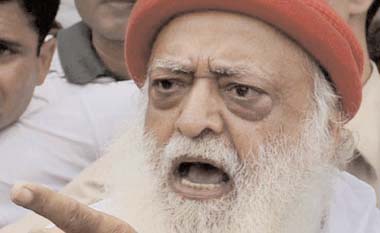
    AHMEDABAD (TIP): Asaram, 72, was brought to Ahmedabad on a transit remand from a court in Jodhpur where he was lodged in a jail since August in another sexual assault case involving minor daughter of one of his devotees. Controversial godman Asaram Bapu was on October 16 subjected to a potency test in connection with a sexual assault case lodged against him and his son Narayan Sai by two Surat-based sisters. “Asaram was taken to civil hospital for potency test in connection with the sexual assault case lodged against him,” a senior police official said. A magisterial court in Gandhinagar had remanded him in four-day police custody. Surat police recently registered two complaints – one against Asaram and another against his son Narayan Sai – of rape, sexual assault, illegal confinement and other charges as alleged by the two sisters. The elder of the sisters, in her complaint, had accused Asaram of repeated sexual assault between 1997 and 2006 when she had been living in his ashram on the outskirts of Ahmedabad city. The case against Asaram was transferred to Chandkheda police station as the incident took place in Ahmedabad. The younger of the two sisters had filed a complaint against Narayan Sai, whose whereabouts are still not known, accusing him of repeated sexual assault between 2002 and 2005 when she was living in their Surat ashram. Narayan Sai and Asaram had also filed petitions in the Gujarat High Court, seeking quashing of the complaints on the grounds of delay in filing them and that they are based on flimsy grounds.

    Asaram’s ashrams raided
    A team of the Gujarat Police assisted by the Delhi Police raided controversial selfstyled godman Asaram Bapu’s ashrams in the Capital on Thursday. They were in search of his son Narayan Sai, who is facing charges of sexual assault in a case registered in Surat. Sources in the Delhi Police said that while intercepting Sai’s cell phone locations, the investigating sleuths traced the phone number of one of his followers somewhere in Delhi and suspecting that the phone could have been used by Sai, a team from Gujarat was dispatched. Here, the team was joined by the Delhi Police’s Crime Branch and it raided Sai’s possible hideouts in Najafgarh, Rohini, Jaffarpur Kalan and Ridge Road. However, Sai could not be found and the phone, too, was found switched off later in the day. It is also learnt that there are strong possibilities that he may have slipped into Haryana from South-West Delhi.

    Asaram’s wife, daughter get anticipatory bail
    The Gandhinagar Sessions Court on October 17 granted anticipatory bail to wife and daughter of self-styled godman Asaram Bapu, Laxmi and Bharti respectively, in connection with the alleged rape of a Surendranagar woman in 2001 at Asaram’s farm near Motera in Ahmedabad. The court granted bail to the two while enforcing several conditions, including that they cannot leave Gujarat without the court’s permission. The court has also directed the two to remain present before the police on October 19 between 10 am and 2 pm. Apart from Asaram, seven others have been named as accused in the FIR registered with Chandkheda police station of Ahmedabad. Asaram has been arrested in the case and is currently on police custody remand of Ahmedabad police. Laxmi and Bharti have been accused of abetting the rape. Earlier this week, Laxmi, Bharti and one another woman accused, Dhruvben, had moved anticipatory bail petitions before the Gandhinagar District and Sessions Court, while claiming innocence in the case.

  • CHINA’S ECONOMIC GROWTH REBOUNDS TO 7.8%

    CHINA’S ECONOMIC GROWTH REBOUNDS TO 7.8%

    BEIJING (TIP): China’s economic growth rebounded to 7.8 per cent in the latest quarter after a boost in government spending to reverse a sharp downturn. The data reported on Friday should ease pressure on communist leaders for new stimulus measures to prevent politically dangerous job losses. That would allow them to focus on what they say is their priority of longerterm reforms aimed at making China’s economy more efficient and productive. Growth of the world’s secondlargest economy accelerated from the previous quarter’s two-decade low of 7.5 per cent, according to the National Bureau of Statistics. “In the third quarter, the economy has seen some positive signs,” said a bureau spokesman, Sheng Laiyun, at a news conference.

    Communist leaders want to steer China’s economy to a slower, more sustainable level based on domestic consumption instead of exports and investment. The unexpectedly abrupt decline in global demand for Chinese goods prompted Beijing to reverse course temporarily and take targeted steps to prop up growth and avoid job losses. Analysts have warned that the rebound might not last because growth is being supported by government spending. Global demand is weak and Chinese consumer spending is growing more slowly than Beijing wants. Factory output in the three months ended September rose 10.1 per cent from a year earlier, up 1 percentage point from the growth rate in the first half of the year, the bureau spokesman said. Growth in investment in factories and other fixed assets edged up, growing 20.2 percent in the first three quarters of the year, compared with 20.1 per cent for the first half, the data showed. Retail sales also accelerated but only marginally, rising by 12.9 per cent in the first three quarters.

  • Wockhardt recalls five drugs in the UK after regulator rap

    Wockhardt recalls five drugs in the UK after regulator rap

    MUMBAI (TIP): Drug maker Wockhardt made a precautionary recall of five over-the-counter (OTC) medicines in the UK following the withdrawal of good manufacturing practices (GMP) certificate for its Chikalthana, Aurangabad, unit last week. After this, the UKMHRA directed pharmacies, dispensing clinics and wholesalers to return five different prescription-only medicines manufactured by the pharma company. Among medicines recalled four are for pain relief – Amiloride HCl 5mg tablets, Clarithromycin 250 /500 mg tablets, Gliclazide 80mg tablets, Quinine Sulphate 300mg tablets and Tamsulosin Pinexel 400mcg capsules – while Gliclazide 80mg tablets is for Type 2 diabetes. According to the drug regulator, the products were tested on importation and Qualified Person (QP) released and that there is no evidence of a risk to patient safety from products currently in the UK market. “However, it is considered that the products have not been manufactured in line with GMP requirements. People do not need to return their medicines because there is no evidence that the medicines affected by the precautionary recall in the UK are defective.

    Therefore, it’s important that people continue to take their medicines as prescribed,” Gerald Heddell, MHRA’s director of inspection, enforcement and standards said in a statement. In a communication last week, UKMHRA had told Wockhardt that it was replacing its GMP certificate to the Chikalthana facility with a restricted GMP certificate, allowing it to manufacture only critical medicines. The new certification permits continued manufacturing and quality control testing of “critical” products in situations where it has been agreed by the national competent authority or European Medicines Agency that there is no feasible alternative in the market concerned, Wockhardt had said last week. Accordingly, 10 prescription-only medicines, UKMHRA said on Thursday, can continue to be made at the Chikalthana site and still be supplied to patients in the UK. “This is because due to concerns over the continuity of supply, the benefits to patients of continuing to take these medicines outweigh the risk from any quality concerns with the medicine,” the UK regulator said. The UKMHRA’s restricted GMP certification was seen as marginally positive for Wockhardt in terms of revenue and stock performances. However, the scrip has fallen 10% this week after withdrawal of the certification. During an inspection at Wockhardt’s Chikalthana unit in July, the UKMHRA had identified manufacturing deficiencies, including poor record keeping relating to the manufacture and testing of the medicines made at the site, and inadequate validation and production controls for medicines. Earlier in July, the UKMHRA had passed a similar stricture involving 16 medicines against Wockhardt’s Waluj, Aurangabad, site.

  • HCL TECH PULLS OFF EIGHTH STRAIGHT QUARTER OF MARGIN SURGE

    HCL TECH PULLS OFF EIGHTH STRAIGHT QUARTER OF MARGIN SURGE

    MUMBAI (TIP): HCL Technologies (HCLT), India’s fourth-largest software services provider, saw its net profit grow 18.7% sequentially to Rs1,416 crore in the July-September quarter, notching up its eighth straight quarter of operating margin expansion. Its revenues rose 14% qoq to Rs7,961 crore. The company, which follows a June-to-July cycle, reported a 63.8% jump in net profit and a 31.2% rise in revenues on an annual basis. In terms of dollar revenues, the figure was up 3.5% q-o-q at $1,270 million. Dhananjay Sinha, head, research and strategist at Emkay Global Financial Services, said, “HCL Tech result was above expectations. A decline in selling, general and administrative expenses (SG&A) by 80 bps to 12.7% as percentage of sales helped significant improvement in margins. Ebitda margin expanded 310 bps qoq at 26.3%. With this, HCLT margin has superseded margins of Infosys.” Shiv Nadar-led (pictured) HCLT lagged peers in terms of volume growth at 3.6%, which is half of TCS’s 7.3% and a tad below Infy’s 4%, and is also less than its own 3.9% recorded last quarter.

    This was mainly on account of a muted growth of its IT services revenues (1% in Q1), and its BPO revuenes that grew 3.5%. IMS vertical, however, continued to lead revenue growth with an 8.7% jump in the review quarter. Dipen Shah of Kotak Securities said, “The company will have to improve the growth rates in the IT services business to sustain and improve the growth rates in overall revenues, going ahead.” Despite staggered wage hikes of 8% for offshore and 2- 3% for onsite employees given out in the quarter, HCLT’s Ebitda margin gained 300 basis points, up 23.8% q-o-q. This was on account of a 250 bps gain due to the recent rupee depreciation and a 50 bps operational efficiency on account of 54% gains from the fixed price model followed by HCLT on managed services. According to CFO Anil Chanana, HCLT’s layered hedging policy is also helping. In terms of deal pipeline, Chanana said it was much stronger than the first half, and the company reported nine transformational deals in the quarter in excess of $1 billion. HCLT, which has Nokia as a major client, also said there would be no impact to signed contracts on account of its merger with Microsoft. The recent US shutdown is also not expected to impact HCLT, which has no projects from the federal government.

  • INDIA GAINS FROM US GOVT DEAL

    INDIA GAINS FROM US GOVT DEAL

    MUMBAI (TIP): An early resolution to the US debt ceiling crisis and an end to US government shutdown augurs well for the Indian economy. “The early resolution is positive for Indian exports and there will be gradual pick up in merchandise and services export to the US,” said Anis Chakravarty, senior director, Deloitte India. “It is a positive development for current account deficit (CAD) as well,” he said. At $40.5 billion, the US accounts for 12% of India’s merchandise exports. India’s IT companies earned $39.4 billion (or 58% of their total exports) from the US. Ending of shutdown has now cleared a major uncertainty and stock markets will take cues from domestic factors. “Had the shutdown been protracted, then the odds of a taper would have been lowered substantially, raising the case for flows to emerging markets,” said Tirthankar Patnaik, director, India strategist and chief economist, Religare Capital Markets. “This means that if the shutdown had been extended then the funds flow to India could have increased thus boosting the stock markets,” he said.

  • KIM K CREDITS ‘ATKINS DIET’ FOR HELPING SHED POST-BABY WEIGHT

    KIM K CREDITS ‘ATKINS DIET’ FOR HELPING SHED POST-BABY WEIGHT

    Kim Kardashian, who snapped back to her pre-baby body in just four months after the birth of her daughter North West in June, has revealed that she has been using the ‘Atkins diet’ for losing her post-pregnancy weight. The reality star took to her Twitter account to reveal the secret to her weight loss success, while praising the popular celebrity diet – which consists of a low carbohydrate intake, ABC News reported. In response to a fans query, the ‘Keeping Up With The Kardashians’ star tweeted that she has been actually doing the Atkins diet and she loves it. Colette Heimowitz, Vice President of Nutrition for Atkins Nutritionals, Inc., told the publication in a statement that Kardashian wanted a balanced and effective way to lose weight following her pregnancy and she chose Atkins. Heimowitz stated that Kardashian ate lots of lean proteins, veggies, fruits, and healthy fats like avocado and nuts.

  • AMANDA HOLDEN REVEALS BEING SEXUALLY ASSAULTED

    AMANDA HOLDEN REVEALS BEING SEXUALLY ASSAULTED

    Amanda Holden has revealed that a famous comedian had sexually assaulted her while she was married to Les Dennis. The 42-year-old actress wrote in her autobiography that she kept this incident a secret as she didn’t want her then husband to create a scene, the Daily Star reported. The ‘Britain’s Got Talent’ judge explained that she was cornered by the comedian while she was coming back from the loo, at a public event which she had attended with Dennis. She resisted as the unnamed celebrity tried to kiss her and put his hands in places that he shouldn’t have. When she caught the sight of their reflection on a mirror, her body went limp as he groped and nuzzled her. Holden and former husband Dennis separated in 2003 and now she is married to music producer Chris Hughes.

  • About Time

    About Time

    STORY: Tim (Gleeson) gets clued onto a family secret – all the gents in the house have the ability to travel through time! He then goes about using this power to sort out various wrongs in his life and win over his lady love. REVIEW: With a movie title that couldn’t possibly be more literal, About Time features an amalgamation of love and philosophy. From the director with a filmography including Notting Hill, Four Weddings and a Funeral, Love Actually and Bridget Jones’s Diary, you could safely come to the conclusion that Curtis could spin out another romcom blindfolded. He manages to move beyond flightiness and stops just short of being maudlin or mawkish. Tim’s dad (Nighy) reveals the time-travelling secret to junior one day. Forget about quantum physics and those lifelong labours of Stephen Hawking and his ilk; apparently, all it takes to time-travel is to close your eyes, clench your fists and focus really hard. Not one to waste such a phenomenal gift, Tim is certainly a man with his priorities in order.

    Forgetting about everything else, he decides to focus on romance in general, Mary (McAdams) in particular, and use his new time-travelling trick to set right certain wrongs. Mary is a bit airy. She has her faults but attempts to be endearing. Indeed, Tim and she share an easy chemistry. Gleeson is no Hugh Grant, but McAdams is a highlight in this film. The film is inexplicably long but the genuinely funny jokes that pepper the plot save the film from plodding into a sentimental soup. There is a strong idealistic streak running through About Time. After all, which one of us wouldn’t want to go back in the years and change certain things? What if we had said the right thing at the right time to him or her…or perhaps avoided that misunderstanding? Wouldn’t that relationship have worked out? Ultimately, the message is simple and visceral enough to have crossover appeal. Give it a shot if romantic comedies float your boat.

  • KAREENA CUTS SHORT MOVIE PROMOTION FOR KARVA CHAUTH

    KAREENA CUTS SHORT MOVIE PROMOTION FOR KARVA CHAUTH

    Kareena Kapoor Khan, who has been married for a year now, has fallen in line with other Bollywood superstar wives and made place for important personal commitments in her work calendar. The actress, who celebrated her first wedding anniversary recently in London has told the Gori Tere Pyaar Mein team that she will be available only for four hours on October 22. The reason: She is keeping the Karva Chauth fast and wants to partake in the pujas and rituals that mark the special occasion. Years ago, Hema Malini had told Yash Chopra, with whom she was shooting, that she would like to be let off early on Karva Chauth because the fasting always got to her by the evening. Besides which she would, of course, need to be home in time to break her fast. Sridevi, who is another follower of the tradition, is also said to be getting ready for the special fast this year. Aishwarya Rai Bachchan has been observing the Karva Chauth fast for the last six years. And it is said that the matriarch of the Bachchan family, Jaya Bachchan, encourages even Kajol, who is a neighbour, to come over to Jalsa and participate in the puja with her and her bahurani.

  • SHRADDHA KEEN TO MOVE BEYOND ROMANCE IN FILMS

    SHRADDHA KEEN TO MOVE BEYOND ROMANCE IN FILMS

    Actress Shraddha Kapoor, recently seen in successful love saga ‘Aashiqui 2’, says she wants to go beyond the genre of romance on screen, and try her luck at different roles, especially a grey character. “The fact that people liked Aashiqui 2 and my character (Aarohi) in it, they now want to see me in a lot more romantic films. I would like to do romantic films, but honestly I would like to do beyond that as well,” Shraddha told reporters at an event. “I would like to do other genres also and it will be interesting,” she added. Shraddha, daughter of actor Shakti Kapoor, made her Bollywood debut with Teen Patti in 2010. But she earned popularity only with Aashiqui 2. Asked about the kind of roles she wants to play, Shraddha said: “If I will get the opportunity to be a part of a very interesting character that has grey or white shades, then why not? I would love to play it.” Meanwhile, the actress will soon be seen in Mohit Suri’s next The Villain. Besides, she has also teamed up with director Rohit Shetty for his next project, which is expected to go on floors soon.

  • Boss

    Boss

    STORY: Satyakanth Shastri (Mithun) is the righteous father, who adores his ‘sanskari’ younger son but disowns the elder, as he resorts to violence to fight injustice. They part ways and the ethical but shorttempered son grows up to become Boss (Akshay Kumar) – a contract killer who learns to laugh in the face of adversity. Do they reunite? REVIEW: ‘Apne ko kya hai, apne ko toh bus paani nikalna hain’ is Boss Akshay’s punch line in the movie. If you rephrase it a little with ‘Apne ko toh bus Akshay Kumar ka stunts dekhna hai’, then Boss is a ‘kick-ass’ entertainer. After all, we all know who the Boss of action in Bollywood is. A remake of 2010 Malayalam film, Pokkiri Raja, Boss is a formulaic action comedy. There are truckloads of stunts throughout and whatever falls in between constitutes the plot so don’t expect logic. It seems the action was probably chalked out before and the 70’s-like melodramatic story was inserted later as filler, which explains why most characters end up being silent spectators, once Akshay makes an entry.

    The very vicious ACP Ayushman Thakur (Ronit Roy, brilliant) in particular gets easily outplayed by our Haryanvi hero. The romantic track between Shiv Pandit and Aditi Rao Hydari is terribly inconsequential. To cut a long story short, Boss solely relies on Akshay’s star power and he carries the film on his shoulders with aplomb. It’s his dialoguebazi and filmygiri that make you smile, no matter how corny the one-liners. He climbs the walls at a lightning speed like a Spiderman, jumps over rooftops, trucks and makes his way in a crowded place by walking over the heads of his enemies. He makes gravity-defying stunts look believable. We particularly liked this elaborate chase sequence which looks like it’s been shot in one-take. From cracking of bones to the crunching of chanas that the villain munches on, the sound effects add to the intensity of the slow-mo stunt scenes. Mithun Chakraborty goes overboard with his preachy Nirupa Roy-esque character and is thus unintentionally funny. Ronit Roy has a superb presence.

    Sadly, he gets meagre footage. Aditi Rao Hydari and Shiv Pandit are used as mere props. SHRADDHA KEEN TO MOVE BEYOND ROMANCE IN FILMS Actress Shraddha Kapoor, recently seen in successful love saga ‘Aashiqui 2’, says she wants to go beyond the genre of romance on screen, and try her luck at different roles, especially a grey character. “The fact that people liked Aashiqui 2 and my character (Aarohi) in it, they now want to see me in a lot more romantic films. I would like to do romantic films, but honestly I would like to do beyond that as well,” Shraddha told reporters at an event. “I would like to do other genres also and it will be interesting,” she added. Shraddha, daughter of actor Shakti Kapoor, made her Bollywood debut with Teen Patti in 2010. But she earned popularity only with Aashiqui 2. Asked about the kind of roles she wants to play, Shraddha said: “If I will get the opportunity to be a part of a very interesting character that has grey or white shades, then why not? I would love to play it.” Meanwhile, the actress will soon be seen in Mohit Suri’s next The Villain. Besides, she has also teamed up with director Rohit Shetty for his next project, which is expected to go on floors soon

  • Washington becomes the biggest risk to the US economy

    Washington becomes the biggest risk to the US economy

    WASHINGTON: Consensus may be hard to find in Washington these days, but many corporate executives and economists seem to agree on one point: the biggest risk to the world’s largest economy may be its own elected representatives. Down-to-the-wire budget and debt crises, indiscriminate spending cuts and a 16-day government shutdown may not be enough to push the US economy back into recession. But Washington’s policy blunders in recent years have significantly slowed economic growth and kept roughly 2 million people out of work, according to recent estimates. Steep spending cuts are a big reason. But the governance-by-crisis also may be prompting businesses to sit on their cash rather than building new factories, buying more equipment and hiring more workers, some economists say. “Increasingly I’m of the view that the reason why our economy can’t kick into a higher gear is because of the uncertainty created by Washington,” said Mark Zandi, chief economist of Moody’s Analytics. Congress on Wednesday voted to reopen the government and extend its borrowing authority through February of next year.

    But the deal did nothing to resolve the underlying disputes that led to the crisis in the first place – leading many to fear that the standoff may play out again in a few months. The plan sets up a forum to try to forge a more permanent budget deal, but few expect it to succeed. “We have crisis after crisis after crisis and it has a corrosive impact on the economy,” said Greg Valliere, an analyst with Potomac Research Group. “If you’re a business, how do you make plans in this environment?” Leading chief executives agree. “Most CEOs I speak to in the United States say they’re seeing a slowdown in business because of this,” said Laurence Fink, the CEO of giant asset manager BlackRock Inc, in an interview on Wednesday. “I was on a conference call with many of them, and I heard across the board, a slowdown from the American consumer because of this narrative, so it’s having an impact on our economy already – and it’s going to have an impact on job creation at a time when we need more job creation.” Not all economists agree that the political circus in Washington is hurting the economy in a measurable sense. While worries over the debt ceiling have pushed up the government’s borrowing costs over the past week, those increases are minimal, and the S&P 500 stock index remains near its all-time high.

    SLOW RECOVERY
    But the pace of recovery since the 2008-2009 recession has been unusually slow. While America’s total economic output is now higher than it was before the recession, the level of private investment remains lower than it was in 2007. Employers also continue to hire workers at a slower pace than before the recession. Since the financial crisis eased, Washington has sent out one jolt after another. Democrats passed sweeping reforms of the healthcare system and the financial sector in 2010 which, whatever their merits, imposed wrenching changes on two pillars of the United States’ post-industrial economy. Public unease with the healthcare law helped Republicans win control of the House of Representatives in 2010, ushering in an era of divided government that has led to repeated standoffs over taxes and spending. A near-shutdown in April 2011 led to the debt-ceiling impasse in July and August of that year, which took the country to the edge of default and prompted the country’s first-ever debt downgrade. Like this most recent crisis, Congress averted disaster at the last possible moment. But the brinkmanship pushed consumer confidence to rock-bottom levels, where it remained for months.

    The S&P 500 tumbled 17 percent and took more than six months to recover its gains. That debt-ceiling deal called for steep cuts to national defense, highway construction, scientific research and other forms of discretionary spending that Congress must approve annually. Another budget deal, reached in January of this year after another round of brinkmanship, included tax increases to help narrow budget deficits further. Neither of those deals addressed the health and retirement spending that poses the greatest threat to the country’s long-term fiscal health. A failure to cut back these programs or find savings elsewhere prompted a round of deliberately disruptive acrossthe- board spending cuts – the so-called “sequester” – to take effect in March. Along with an improving economy, those steps helped US budget deficits fall from 8.7 percent of GDP in the 2011 fiscal year to an anticipated 3.9 percent of GDP for the fiscal year that ended on September 30. But this has all come at a steep cost.

    JOBS NOT CREATED
    In a report released on Monday, Macroeconomic Advisers estimated that 1.2 million more Americans would be working today if Congress had kept discretionary spending at the levels that were in place in 2010. The forecasting firm estimated that Washington’s erratic behavior had also driven up unemployment by a further 900,000 jobs. Zandi estimates the fiscal austerity has cost 2.25 million jobs. Without those measures, the unemployment rate would stand at 6.3 percent now rather than 7.7 percent, he says. Even many of those who disagree with the notion that policy uncertainty has hurt the economy agree that the spending cuts and tax increases should have been phased in more gradually. “Fiscal consolidation has been a big drag on the economy,” said Paul Ashworth, an economist with Capital Economics. The International Monetary Fund called the United States’ deficitreduction efforts “excessively rapid and ill-designed” in June and said the sequester cuts would nearly halve US economic growth this year. Meanwhile, Congress has punted on other important legislation like immigration reform that could boost the economy. Construction firms have seen federal work plummet over the past several years.

    With the government shut down, they have been unable to use the federal E-Verify system to check workers’ immigration status or get permits to build in environmentally sensitive areas, said Ken Simonson, chief economist of the Associated General Contractors of America. The delays could be more than an inconvenience for builders trying to line up financing for a new project, he said. “You never know when the market’s going to turn and … for some reason you may have missed the boat,” he said. There’s more turbulence on the horizon. Simonson said lawmakers may not have the stomach to avoid further cuts on transportation spending when they take up the issue next year. Though Washington may be responsible for lackluster business on Main Street, it may not have much of an impact on Wall Street. Many economists had expected the Federal Reserve to begin scaling back its massive monetary stimulus program last month. The chaos in Congress means it now probably won’t begin pulling back its bond purchases until next year. “I think the markets are beginning to learn how to live with Washington dysfunction,” said Valliere.

  • Presidential polls in Maldives on October 19

    Presidential polls in Maldives on October 19

    MALE (TIP)s: The Maldives returns to the polls on October 19 for another attempt to choose a president after judges annulled last month’s election results, deepening concern about political stability in the fledgling democracy. Regional power India sent a top envoy for talks with presidential candidates october 15 as international pressure mounted on Maldivian authorities to stage a peaceful election. “They (the Indians) believe that there will be no further issues and a smooth elections will be held,” former president Mohamed Nasheed, who topped the September 7 ballot, told reporters after meeting India’s Foreign Secretary Sujatha Singh on Thursday. There was no immediate comment from Indian diplomats about Singh’s talks with candidates, but New Delhi had urged Male to ensure they have a new president by November 11, a constitutional requirement. Election officials were working overtime to ready the luxury tourist destination for Saturday’s polls, after the Supreme Court last week scrapped the first round of voting, citing irregularities, even though international observers said those polls were free and fair.

    Nasheed, a pro-democracy campaigner who claims he was ousted in a coup last year, won the September 7 election with 45.45 percent of the vote, and remains the frontrunner in the new contest. Britain urged the Maldives to hold fair and smooth elections, where political tensions have remained high ever since Nasheed was toppled following a mutiny by police in February 2012. “We are urging all the presidential candidates to act in line with the interest of the people of the Maldives and to respect the democratic process,” British High Commissioner to Sri Lanka and the Maldives, John Rankin, said. “We have made it clear that there must be no intimidation of the independent Elections Commission or of domestic NGOs monitoring the elections,” Rankin told reporters in Colombo on Wednesday. Rankin warned that further political instability in the Indian Ocean islands nation could undermine its tourism industry, which drew nearly a million holidaymakers last year. “So, it’s vital that the country gets this right,” he said. Elections Commission chief Fuwad Thowfeek said his staff were working hard to prepare for the vote, even though another legal challenge from one of Nasheed’s opponents could still stop it from going ahead.

    “We are very certain the election will be held as scheduled, but not everything is within our control,” Thowfeek told reporters in Male late on Wednesday, referring to a possible last-minute challenge. Nasheed’s party views Saturday’s election as a chance to capitalise on its win last time around, by garnering more than 50 percent of the vote from the nation’s 239,000 registered voters and avoiding a runoff. His main challenger is Abdullah Yameen, the half brother of former autocrat Maumoon Abdul Gayoom who ruled the islands under a oneparty system for 30 years till 2008 when the nation adopted multi-party democracy. Yameen garnered 25.35 percent of the vote in September, pushing resort tycoon and businessman Qasim Ibrahim to a close third place. Ibrahim lodged the initial court case alleging irregularities on the electoral list, which could have influenced the order of the second and third-placed candidates President Mohamed Waheed, a former UN diplomat who has antagonised foreign allies since taking office after Nasheed, has announced he will not run on Saturday and has promised to ensure a smooth transition of power. He was humiliated at the September 7 poll, winning just over five percent of the vote. Diplomats have urged candidates against derailing Saturday’s vote. “There is a lot of potential for trouble if there is another legal challenge to the elections,” a Colombo-based Western diplomat said. “If they fail to have a president elected soon, we will be getting into unchartered waters,” the diplomat said. The United States said last week that it was important the election process “(goes) forward unimpeded in a fair, inclusive and transparent way.”

  • Contemplate over degrading environment issues of Kashmir too: Pakistan thinktanks

    Contemplate over degrading environment issues of Kashmir too: Pakistan thinktanks

    ATTARI (TIP): While candidly admitting that the media was more or less towing the line of security establishments and their policies while reporting contentious issues of Kashmir, Pakistani thinktanks opined that there were more to reports beyond demographic and territorial issues especially those concerning with the fragile environment of valley that had always remained unnoticed but has now become a global issue. The views were expressed by a delegation of Pakistani political analysts and thinktanks who had arrived India via Attari land border on Wednesday to participate in an international seminar being held to mark the birth anniversary of noted Gandhian Didi Nirmla Deshpanday on October 17 at Patiala. During the seminar, the Pak thinktanks would also deliberate over the exit of Nato forces from Afghanistan and its impact on India-Pak relations. “I think, instead of towing the old notions of war wherein both nations stake claim on territories, the concentration should be more on Kashmir’s environmental degradation which has become an major issue for global community,” said senior advisor, policy advocacy and civil society interface Zulfiqar Halepto.

  • 86 stranded tourists rescued near Mt Everest

    86 stranded tourists rescued near Mt Everest

    BEIJING (TIP): Chinese rescuers have safely evacuated 86 tourists, including 13 foreigners, who were trapped in heavy snow at the north base camp of Mount Everest in central Tibet. The government of Tibet Autonomous Region said that 78 tourists, who had been stranded at the camp, were safely moved to a nearby hotel. A total of 86 tourists were initially trapped at the camp but Monday evening report said eight of them had left Rongbuk, the world’s highest monastery located at an altitude of 5,100 metres. The tourists included 13 foreigners mainly Australian and Dutch citizens, state-run Xinhua news agency reported. The tourists were about to go downhill after sightseeing at the base camp of the Mt Everest known in Tibet as Mout Qomolangma when a snowstorm blocked the roads. The local government said they had mobilized more than 40 rescuers and machinery to clear the way.

  • Musharraf denies any role in Lal Masjid operation

    Musharraf denies any role in Lal Masjid operation

    ISLAMABAD (TIP): Pakistan’s former military ruler Gen Pervez Musharraf has denied having ordered the Lal Masjid operation in 2007, even as a fresh petition was filed in a court seeking action against him under the blasphemy law. A three-member joint investigation team (JIT), whose two members had earlier refused to be part of it, interrogated 70-year-old Musharraf yesterday at his Chak Shahzad farmhouse which has been declared a sub-jail. He was interrogated in connection with a double-murder case registered by Aabpara police on a complaint of Haroon Rasheed, son of Abdul Rasheed Ghazi, deputy chief of Lal Masjid, who was killed in the 2007 operation at the mosque. Haroon has alleged that Musharraf issued the order for the operation in which his father and grandmother Sabiha Khatoon were killed. The former president told the JIT that the operation had been ordered by the then elected government and he had nothing to do with it, Dawn daily reported quoting sources.

    “I was wrongly implicated. I did not issue any written order regarding the operation,” Musharraf was quoted as saying by the sources. He said the then capital administration had called the army for help which led to the operation. He also denied other allegations levelled against him in the FIR. Over 100 people, including 10 army personnel and a Rangers man, were killed during the operation. Meanwhile, a Pakistani lawyer has filed a petition in the Islamabad High Court seeking action against the former president under the controversial blasphemy law for allegedly desecrating religious books during the Lal Masjid operation. In his petition, advocate Tariq Asad, who is the counsel for the newly-established Shuhada Foundation of Pakistan Trust, contended that Musharraf was responsible for launching the operation during which “not only a large number of civilians were killed but also copies of the holy Quran, religious books and research materials were destroyed.” The petition said the objective of the operation was “not only to commit murders of religious scholars, preachers and teachers but also to destroy the mission of the preaching of Islam, which prima facie was tantamount to the commission of the offence of blasphemy.”

  • Suicide bomber kills Pak minister, 7 others

    Suicide bomber kills Pak minister, 7 others

    PESHAWAR (TIP): A suicide bomb attack in northwestern Pakistan killed at least eight people, including a provincial law minister, and injured 28 others on the first day of Eid-ul-Zuha. The attack happened on Wednesday evening when law minister Israrullah Gandapur was exchanging Eid greetings with people at his residence in Kullachi town of Dera Ismail Khan, bordering the country’s volatile tribal regions. According to police officials, the attacker first killed the guard at the house and then blew himself up inside the guest room of the minister’s residence. “The suicide bomber was on foot and entered the hujrah (male guest house) of law minister for Eid greetings. Law minister Israrullah Gandapur and seven others were killed in the attack while 28 others were injured,” said Shah Farman, information minister of Khyber Pakhtunkhwa (KPK) province. Gandapur was a member of the ruling party in Khyber Pakhtunkhwa province, the Pakistan Tehreek-i- Insaf (PTI), a party led by former cricketer Imran Khan which favours peace talks with the Pakistani Taliban. He was the third PTI lawmaker from KPK to be killed in a suicide bombing since the elections. The attack was claimed by Ansar-ul-Mujahideen group of militants, associated with the Tehreek-i- Taliban Pakistan. While claiming responsibility of the attack, Abu Baseer, the group’s spokesman said: “We targeted the KPK law minister to avenge the killing of our friend by security forces a couple of days ago.”

  • RAGING AUSTRALIAN WILDFIRES DESTROY HOMES, KILL 1

    RAGING AUSTRALIAN WILDFIRES DESTROY HOMES, KILL 1

    SYDNEY (TIP): Nearly 100 wildfires raged across Australia’s most populous state on Friday, killing one person, destroying dozens of houses and forcing hundreds of evacuations as the nation’s annual fire season got off to an unusually early start. Milder conditions were helping firefighters after Thursday’s unseasonably hot temperatures and strong winds fanned flames across the parched landscape and threatened towns surrounding Sydney. Rural Fire Service spokeswoman Natalie Sanders said the number of fires in New South Wales state had dropped from more than 100 overnight to 94, burning across 86,000 hectares (330 square miles). But 28 continued to burn out of control, she said. Roads and schools in the worsthit areas were closed and fire assessment teams and police were moving into the destruction zones in search of survivors and victims. Officials were trying to determine how many homes were destroyed; Prime Minister Tony Abbott said it could be hundreds, but the exact number was not known. “I know some information that’s been passed to me that just in one street, there were 40 homes lost,” Rural Fire Service Deputy Commissioner Rob Rogers told Nine Network television.

    Rogers said interstate firefighters were on their way to help fight the blazes, including one burning near the town of Lithgow, west of the Blue Mountains, across a front 25 kilometers (16 miles) wide. Blue Mountains Mayor Mark Greenhill visited the devastated village of Winmalee, on Sydney’s western fringe, where some streets were almost entirely razed. “It’s been an awful 24 hours for the Blue Mountains” region, Greenhill told Nine. “We’ve lost possibly scores of homes – I can’t put the number closer than that.” The Fire Service said a 63-yearold man had a fatal heart attack while he was fighting a fire at his home at Lake Munmorah, north of Sydney, late Thursday. Two people suffering from smoke inhalation, including a 68-year-old man from Winmalee, were in intensive care at Sydney’s Concord Hospital on Friday, hospital spokeswoman Kate Benson said. She had no details on the second victim. Two injured firefighters were treated and released from a hospital, and another firefighter remained hospitalized Friday after undergoing surgery, Fire Service spokesman Matt Sun said. He had no information on the nature of their injuries. Wildfires are common in Australia, though they don’t tend to pop up in large numbers until the summer, which begins in December.

    This year’s unusually dry winter and hotter than average spring have led to perfect fire conditions. “We’re not called the land of droughts and flooding rains – the sunburnt country – for nothing,” the prime minister told reporters in Winmalee. In February 2009, wildfires killed 173 people and destroyed more than 2,000 homes in Victoria state. A plane carrying infrared imaging equipment flew over the fires Thursday night and recorded heat spots where maps showed homes were located, emergency services minister Mike Gallacher said. The red and orange spots indicated the homes were burning. “Sadly, where most of these little red dots were, that’s where yesterday morning there used to be houses,” Gallacher told Nine. The fire front was still visible from Winmalee on Friday, but had moved toward the neighboring village of Springwood where homes were evacuated. Hundreds of residents spent Thursday night in dozens of evacuation centers in the Blue Mountains and elsewhere in New South Wales. Most were unaware of the fate of their houses. Temperatures west of Sydney were expected to reach around 23 degrees Celsius (73 degrees Fahrenheit) on Friday – around 10 degrees Celsius (18 degrees Fahrenheit) cooler than on Thursday. Gentle breezes had replaced strong winds. “It’s calmed down a lot since yesterday, but make no mistake: We’ve got thousands of kilometers of fire front that we are faced with trying to deal with,” said Rogers, of the fire service. “This is absolutely far from being over,” he added.

  • Arvind Kejriwal to hold hangouts with US and Canadian supporters

    Arvind Kejriwal to hold hangouts with US and Canadian supporters

    WASHINGTON (TIP): Aam Aadmi Party (AAP) leader Arvind Kejriwal plans to hold hangouts with his supporters in the US and Canada later this month, seeking contribution from the Indian diaspora for nation building. Kejriwal would hold the hangouts on October 20, a statement issued through Bay Area chapter of AAP, USA said. “We see expatriate Indians as an integral part of India. They have plenty to contribute to the country in terms of knowhow and expertise in every possible field imaginable,” Kejriwal said in the statement. “Most importantly, they are eager to give back to their mother land. We will leave no stone unturned when it comes to tapping into this resource,” he said. “I am looking forward to hosting this special get together at my home with my friends and family. They are keen on hearing Arvind first hand. I am sure this will have a ripple effect as they carry AAP’s message to their respective circle of friends,” AAP volunteer in US, Mohan Thirumalai, said. We anticipate a significant turnout with thousands of attendees as volunteers reach out to their respective networks, a Chicagobased organization development consultant, Shalini Gupta said. Formally launched in November 2012, the party is contesting its first election – the assembly polls in Delhi — in December 2013.

  • First US Sikh soldier gets corporal rank

    First US Sikh soldier gets corporal rank

    CHANDIGARH (TIP): Twenty-nineyear- old Delhi-born Simranpreet Lamba, the US army’s only enlisted Sikh soldier, has also now become the first of the community to be promoted to the corporal rank in America in three decades. Corporal is the 5th rank in the US army, above specialist and directly below sergeant. Lamba, who went to the US in 2006 to finish his education, is thrilled. “I’m a proud US army soldier today. There’s nothing about my beard and hair that bars me from doing anything any other soldier would do,” Lamba told TOI over phone from the US. After his January 2009 graduation from New York University with a master’s degree in industrial engineering, Lamba had decided to stay in the US and started a career in a private sector. His enlistment in 2009, however, triggered a nine-month review in which army officials pondered over if he could serve while sporting a turban, uncut hair and a beard.

    Later that year, two Sikh officers, a doctor and a dentist, were allowed to serve in the Army while wearing a beard, unshorn hair and a turban, inspiring him to apply to a combative rank profile. US army policies since 1984 had effectively prevented Sikhs from enlisting in the soldier rank. But Lamba requested a waiver from the Army to allow him to keep his articles of faith. He was then recruited under the Military Accessions Vital to the National Interest recruiting program, which enlists legal non-citizens with language skills, such as his knowledge of Punjabi and Hindi. Throughout his training, Lamba wore a turban, that was patterned on army combat uniform, instead of the regular patrol cap, which fit underneath his Kevlar helmet. He used petroleum jelly to get a grip between his beard and gas mask, and was able to keep his hair clean under all conditions, meeting the military’s concerns about training and appearance. Lamba hopes his story will encourage other Sikhs to serve, even though the path to US military service might not be an easy one for them.

  • Indian-American arrested in high school friend’s killing

    Indian-American arrested in high school friend’s killing

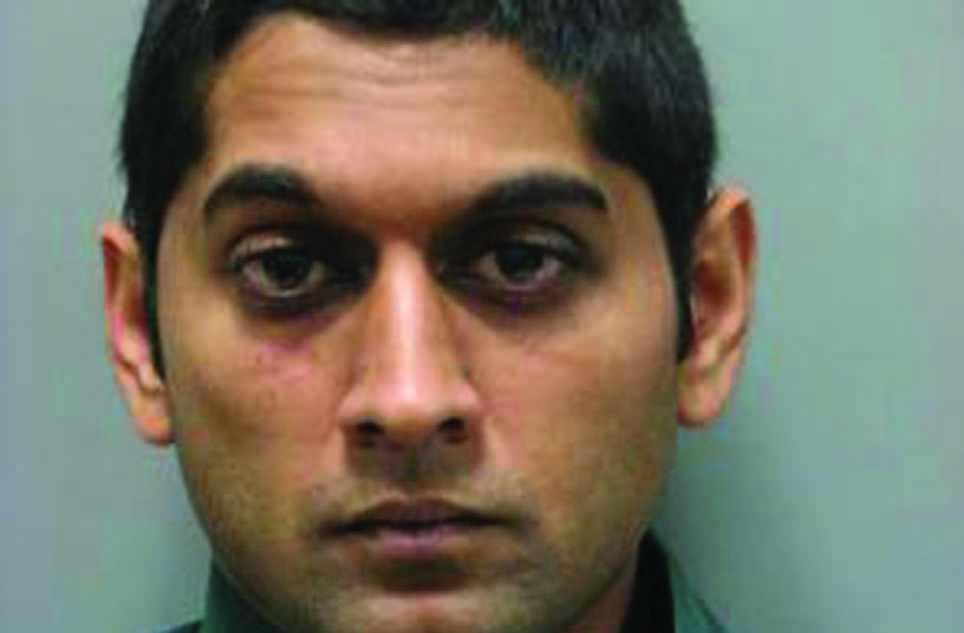
    WASHINGTON (TIP): Rahul Gupta, 24, is being held on $2 million bond after a night of drinking and birthday celebrating ended in a bloody stabbing of Mark Edward Waugh on Sunday, October 13 morning inside a high-rise apartment in Silver Spring, a Washington suburb in Maryland, the Washington Post reported. Gupta was pursuing a master’s degree in biomedical engineering at George Washington University. Waugh was in his first year of law school. According to police, a woman called 911 Sunday at 3.25am. When police arrived at the apartment, they found Waugh and Gupta inside. Police say they found Waugh suffering from cuts and he was unresponsive. It was later determined he was dead. Both Waugh and Gupta attended Langley High School in McLean, Virginia, where they took several advanced placement and honors classes together, the Post said. Waugh was in an afterschool robotics club. Gupta played on the varsity tennis team. Arrest records in the case paint a picture of several friends going out on Saturday to celebrate Gupta’s birthday, the newspaper said. But things later appear to have turned to alcohol-fuelled confusion and – at least based on the perception of one member of the party – a jealous rage, it said. “I walked in on my girlfriend cheating on me,” Gupta told the police, according to the charging papers cited by Post. “My girl and my buddy were cheating. My girl was cheating with my buddy. I walked in on them cheating and I killed my buddy,” Gupta said. Gupta later told a police officer he’d made a mistake and added that “he tried to kill me, though”, the arrest records cited by the newspaper recount him as saying.

  • Senate confirms Indian American to key arts position

    Senate confirms Indian American to key arts position

    WASHINGTON: An exponent of Bharatanatayam, Ranee Ramaswamy was confirmed on October 17, as a member of the prestigious National Council on the Arts. Ranee founded the Ragamala Music and Dance Theatre in 1992 at Minneapolis, Minnesota and started popularizing this classical Indian dance form in the US. The National Council on the Arts advises the Chairman of the National Endowment for the Arts, who also chairs the Council, on agency policies and programs. It reviews and makes recommendations to the Chairman on applications for grants, funding guidelines, and leadership initiatives. Renee has been confirmed for a term expiring September 3, 2018. According to her bio posted on her website she has been a disciple of Alarmel Valli, one of India’s greatest living masters since 1984. Ranee has worked with celebrated artists such as poet Robert Bly, jazz musician Howard Levy and legendary composer L Subramaniam, the Cudamani ensemble of Indonesia and Wadaiko Ensemble Tokara of Japan. Among her many grants and fellowships are 13 McKnight Artist Fellowships, a Bush Fellowship, and an Artist Exploration Fund grant from Arts International. Her work is supported by the National Endowment for the Arts, the National Dance Project, and the Japan Foundation. In 2011 she was chosen as the McKnight Foundation Distinguished Artist. Ranee and co-Artistic Director Aparna Ramaswamy were named the 2011 “Artist of the Year” by the Minneapolis Star Tribune.