Month: January 2014

  • AMANDA BYNES’ BONG-TOSS CASE TO BE DISMISSED

    AMANDA BYNES’ BONG-TOSS CASE TO BE DISMISSED

    Amanda Bynes’ bong-toss case will be dismissed if she manages to stay out of trouble for six months and goes for regular counseling. A Manhattan judge allowed an adjournment in contemplation of dismissal which means the 27-year-old actress does not have to admit guilt, CBS News reported. However, she does have to attend counseling twice a week for six months. The ‘Hairspray’ actress didn’t appear in court, but an affidavit was filed on her behalf by attorney Gerald Shargel saying that she understood the agreement.

    Bynes was charged last spring with reckless endangerment and marijuana possession after building managers called police because they said she was smoking pot in the lobby of her Manhattan apartment. When officers entered her 36th-floor apartment, they said they saw her heave a bong out the window.

  • Kids believe nicer people over meaner ones

    Kids believe nicer people over meaner ones

    TEXAS (TIP): A new study has found that children are less to believe a mean person than a nice person, even if the pleasant person was described as having no knowledge on the topic. Researchers from the University of Texas at Dallas examined how preschoolers decide whom to believe when provided with two conflicting pieces of information given by a nice or mean adult. Dr. Asheley Landrum, lead researcher of the study, said that past research have shown children recognize that different people know different things.

    However, less was known about how children decide between conflicting claims from alleged experts. Landrum and colleagues conducted a series of experiments to test how children decide who is a trustworthy source of information. A total of 164 children, ages 3 to 5, participated in the experiments by watching videos of people described as eagle or bicycle “experts.” The first experiment questioned if children understood that some people have more knowledge about topics depending on their expertise, that is, eagle experts know more about birds than bicycle experts.

    The second and third experiments examined how niceness and meanness affected assigning knowledge to an expert. “Even when an expert clearly should know an answer to a question, children tend to trust claims made by nice people with no expertise over mean people with clearly relevant expertise,” said Dr. Candice Mills, Landrum’s advisor and co-author on the paper. According to Mills, children may conclude that someone who appears pleasant is both trustworthy and competent, even if the friendly appearance is a carefully crafted act of manipulation. The study is published in Developmental Science.

  • JOLIE LIKELY TO PLAY NIGELLA LAWSON IN BIOPIC

    JOLIE LIKELY TO PLAY NIGELLA LAWSON IN BIOPIC

    Afilm on the life of international celebrity chef Nigella Lawson is being planned and actress Angelina Jolie is said to be completely gripped by the former’s life, might play the lead in it. Lawson has had a turbulent year. She was recently accused of taking cocaine. Jolie is said to think of Lawson as a “remarkable woman” and is reportedly totally gripped by the drama surrounding the latter’s life, reports contactmusic.com. “Angie had planned to take a lot of time off next year but this role is very tempting.

    She has been gripped like everyone else by all the drama surrounding Nigella these past few months and thinks she is a remarkable woman. The story has got it all – and she’s as intrigued as anyone else by it,” The Sun newspaper quoted a source as saying. The 38-year-old has been seen in films like “Mr. & Mrs. Smith”, “Wanted” and “Salt”.

  • Late nights can make you feel sick

    Late nights can make you feel sick

    TEXAS (TIP): Jet lag, shift work or any late night might be the reason behind you getting sick, a new study has revealed. That’s because the body’s internal clock is set for two 12-hour periods of light and darkness, and when this rhythm is thrown off, so is the immune system. According to the new study, one reason might be that the genes that set the body clock are intimately connected to certain immune cells, Stuff.co.nz reported.

    Lora Hooper, immunologist at the University of Texas Southwestern Medical Center in Dallas claimed that the discover happened when she and her colleagues were studying NFIL3, a protein that guides the development of certain immune cells and turns on the activity of others. The gene for this protein is mutated in some patients with inflammatory bowel disease, the study also found that the mice lacking the gene for NFIL3 had more so-called TH17 cells in their intestines. These cells are a type of immune cell known as a T cell, which get their name from a signal they produce, called interleukin 17, which tells other T cells to increase the immune response. The study is published online in the journal Science

  • The Wolf of Wall Street Cast

    The Wolf of Wall Street Cast

    Story: Middle-class Jordan Belfort makes millions selling dodgy stocks – how long can he fly high? Review: Straight up, The Wolf of Wall Street (TWOWS) is one of the most amusing and appalling films around. Martin Scorsese paints a compelling portrait of Wall Street, that metaphor for American ability and greed, sending your head spinning with its ferocity. Leonardo DiCaprio stands foreground, delivering fresh-faced-with-wicked-eyes with the kick of a cocktail. DiCaprio excels as Jordan, a middle-class boy dreaming dollar signs, landing on Wall Street in 1987, mentored by stock wiz Mark Hannah (McConaughey) in how to ‘move money from your client’s pocket into yours’. Jordan’s loving the buzz when a crash forces him into a penny-stock trading firm, offering postmen and plumbers modest buys.

    Here too, with his drive and desire, Jordan strikes it rich, launching his own firm with neighbour Donny (Hill) and ‘young, hungry, stupid’ guys who get super-rich. When they’re not ensuring the client ‘either buys or f***ing dies’, the brokers do drugs and sex like there’s no tomorrow. But the FBI’s watching their orgy. DiCaprio runs away with Jordan, magnetic as he trains his pack to hunt, brutally funny when high on drugs, he crawls to his low-slung Ferrari. You feel Jordan’s hunger for dough, his itching hands, his lips licked at the thought of his next billion. DiCaprio is compelling, quipping amidst carnality and cocaine, “This is obscene in the normal world – but who the f*** wants to live there?” Swinging from magnificent to meatloaf, DiCaprio nails over-the-top, yet fragile Jordan, unraveling after meeting Patrick Denham (Chandler), FBI.

    There are further ‘highs’ – Hill’s memorable as chubby, grotesque Donny, Jean Dujardin’s like a polished fondue as slick Swiss banker Saurel, veteran British actress Joanna Lumley’s in a nice cameo as Aunt Emma to Jordan’s bombshell wife Naomi (Robbie). The movie could have snipped 20 minutes off but the soundtrack’s peppy-bright against greed raw and stark, capturing the violence and vulgarity embellishing the victories of Wall Street. The ‘F’ word’s sprinkled generously, like salt on French fries, shocking your taste-buds more. Prepare your appetite. This Wolf makes you wince, think, laugh – and growl.

  • Decision not to make Rahul PM candidate is final: Sonia

    Decision not to make Rahul PM candidate is final: Sonia

    NEW DELHI (TIP): Decision not to make Rahul PM candidate is final: SoniaNEW DELHI: The decision of the Congress party not to project Rahul Gandhi as its prime ministerial candidate in the forthcoming general elections is final, Congress president Sonia Gandhi said in her speech at the AICC meet in New Delhi. “Whatever decision the Congress Working Committee (CWC) took on Thursday with regard to Rahul Gandhi is final,” Sonia said. Despite AICC delegates shouting slogans demanding Rahul as Congress’s PM candidate, Sonia said there was a need to send a message that the party was ready for the Lok Sabha elections and does need to name a PM nominee before polls. “The upcoming elections will witness a fight between ideologies and the Congress remains committed to its values,” she added.

    The Congress president also said the 2014 Lok Sabha election will be “a battle for India” and its secular traditions. “We assemble here as the 2014 Lok Sabha elections approach. We meet today to send a clear signal that the Congress is ready and prepared for the battle ahead,” she said in her address at the All India Congress Committee meeting here. “These elections will be a battle for India as it was conceived by our founding fathers. It will be a battle for our secular traditions,” she said. The UPA chairperson said: “The Congress has faced much difficult times in the past. Much harder than today.” “Our party is woven into the fabric of this nation from its very conception as a modern nation state,” she added.

    Highlights of Sonia Gandhi’s speech:
    1. We are the party that is responsible of the RTI Act
    2. I appeal all parties to pass the pending Anti-Corruption Bills in the Parliament
    3. We will do our utmost to get crucial anticorruption bills passed
    4. I had presented a 5-point action plan to combat corruption,2 years ago; since then Lokpal Act has been passed by Parliament

  • AAP REJECTS VINOD BINNY’S ALLEGATIONS, TO TAKE DISCIPLINARY ACTION

    AAP REJECTS VINOD BINNY’S ALLEGATIONS, TO TAKE DISCIPLINARY ACTION

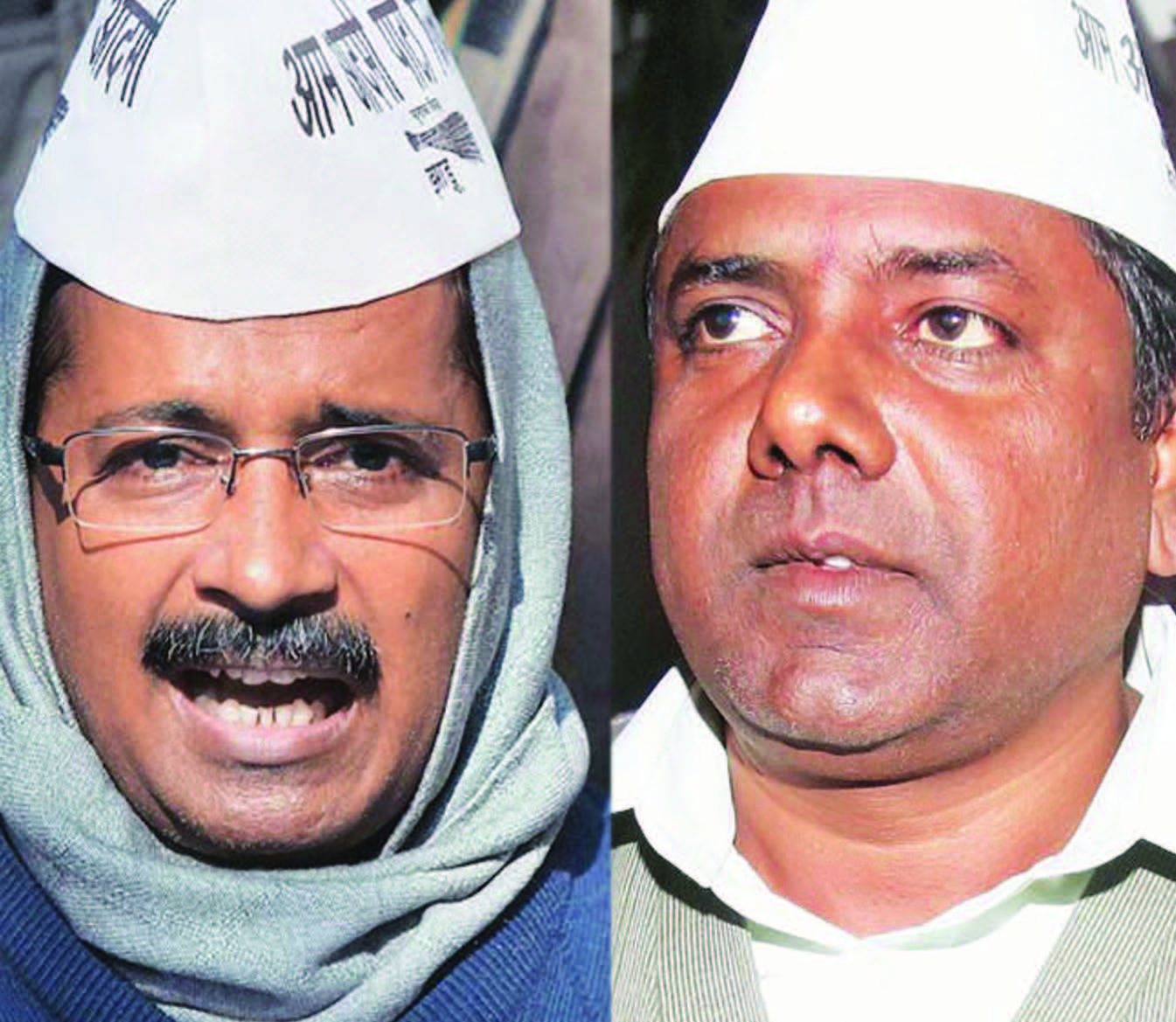
    GHAZIABAD (TIP): The Aam Aadmi Party on January 16 refuted the allegations levelled by its MLA Vinod Kumar Binny and said disciplinary action would be initiated against the legislator for “baseless accusations” against the party. Addressing the media at AAP office, senior leader Yogendra Yadav said the MLA was making “baseless accusations” against the party as he was denied a ticket for the Lok Sabha election. “The party’s political affairs committee will initiate disciplinary action against Binny and accordingly a show-cause notice will be issued to him,” Yadav told reporters, adding, that party members could have different opinion but AAP will not tolerate indiscipline. The sulking AAP MLA from Laxmi Nagar today accused the party of “cheating” people of Delhi by backtracking on its election promises and termed chief minister Arvind Kejriwal a “dictator”.

    Binny addressed a press conference where he slammed the AAP leadership on a range of issues and said taking support of Congress to form the government was a “compromise on the party’s principles”. “Today when Binny was speaking, it seemed that he was reading a script given to him by someone else. He has raised all those issue which the leader of the opposition Harsh Vardhan has been raising for the past few days. “If he had any grievances against the party or its leaders, there are ways of expressing it. He could have taken up the issues in the party, but never did he raise such issues during any of the party meetings. It’s very sad,” Yadav said, adding, that Binny should not put personal ambition before the people’s hopes and expectations.

    Yadav said the party MLAs had met on January 14 to discuss issues and during the meeting Binny did not raise a single point. “Binny was a member of the screening committee during Delhi assembly elections. He was present at all important meetings and if he had any problem he could have raised the issues on the party platform,” he said. The senior AAP leader said that Binny was interested in ministerial berth and was keen to fight the Lok Sabha election from East Delhi.

  • India offers DGMO-level talks with China

    India offers DGMO-level talks with China

    NEW DELHI (TIP): The largely unmarked 4,057-km Line of Actual Control (LAC) between India and China has peace at hand after both sides accused each other of scores of border transgressions last year.What could make it happen is India’s experience with Pakistan on keeping in touch at the Director General of Military Operations (DGMO) level to ensure border tranquility. Government sources confirm that New Delhi has invited Deputy Chief of General Staff (CGS) of China’s People’s Liberation Army for talks on setting up more border meeting points and hotlines between the top military leadership of the two countries. The Defence Ministry has cleared a formal invite, to be sent through the Ministry of External Affairs, to the PLA’s Deputy CGS, who deals with operational issues and day-to-day matters, sources said.

    The PLA has no such post as DGMO, so the invite is directed to a General who will talk to the Indian DGMO, Lt Gen Vinod Bhatia. A source said: “The process has just started, but the aim is to ensure peace. A direct contact between the top military brass will help in keeping either side in check”. This is in line with the Border Defence Cooperation Agreement (BDCA) inked on October 23 last year during Prime Minister Manmohan Singh’s visit to Beijing. India has similar DGMO-level arrangement with Pakistan. The DGMO’s communicate with each other every Tuesday over a special hotline. They met last month in December at the Wagah-Attari land crossing and vowed to maintain ceasefire. The BDCA proposes ‘mutual consultations’ to facilitate contacts and meetings between relevant organizations.

    It refers to establishing border personnel meeting sites in all sectors, as well as telephone contacts and telecommunication links at mutually agreed locations along the LAC. It points to setting up a hotline between the military headquarters of the two countries. At present there are three meeting points for Brigadier-level officers to meet at Spanngur Gap in eastern Ladakh, Nathu La in Sikkim and Bumla in Arunachal Pradesh. There is keenness to have two more meeting points – one at Kibithoo in eastern Arunachal and the one in Himachal Pradesh. As an interim measure for the first time Brigadier level officers met on January 1 at Bumla. Normally, the meetings take place on six-designated days in a year. Brigadiers on either side of the divide can also seek a flag meeting on any contentious issue.

  • SUCHITRA SEN: THE SUPERSTAR

    SUCHITRA SEN: THE SUPERSTAR

    Capturing the public’s imagination for three decades through her ethereal beauty and intense celluloid performance, Suchitra Sen symbolised the golden age of Bengali cinema with memorable films like ‘Agnipariksha’, ’Devdas’ and ‘Saat Paake Bandha’ The doe-eyed beauty turned a recluse after bidding adieu to the world of films in the late seventies and was often compared to Hollywood icon Greta Garbo, who shunned public contact. No other heroine in Bengal, since Kanan Devi, caught the public imagination as Sen did. In an era of black and white movies, her intense performances catapulted her to stardom. Such was the popularity of the Sen that during Durga Puja, idols of Lakshmi and Saraswati were known to have been modelled on her face.

    Sen on January 17 died at the age of 82 after suffering a heart attack. Beginning her career with Bengali film ‘Shesh Kothai’ in 1952, Sen went on to receive a National Award for her performance in Bimal Roy’s 1955 Hindi classic ‘Devdas’, playing the defiant ‘Paro’ to Dilip Kumar’s ‘Devdas’. She formed an unbeatable romantic pair with Bengali cinema legend Uttam Kumar. The duo gave a string of memorable hits such as ‘Harano Sur’ (1957), ‘Agnipariksha’ (1954),’Saptapadi’ (1961), ‘Grihadaha’ (1967), ‘Indrani’ (1958), ‘Sagarika’ (1956), ‘Bipasha’ (1962), ‘Kamal Lata’ (1969), ‘Alo Amar Alo’ (1972), ‘Har Mana Har’ (1972) and ’Priyo Bandhabi’ (1975). Sen acted in 52 Bengali and seven Hindi films. ’Champakali’, with Bharat Bhushan, ‘Sarhhaad’ and ‘Bommbai Ka Babu’ with Dev Anand and ‘Mamta’ were some of her other notable Hindi films.

    However, her most famous Hindi film after ‘Devdas’ was 1974’s ‘Aandhi’ by Gulzar. She earned wide acclaim for her role opposite Sanjeev Kumar in the film which landed in controversy due to similarities betwen her character and Indira Gandhi. After her 1978 movie ‘Pronoy Pasha’ with Soumitra Chatterjee flopped, Sen quietly left the limelight and even allegedly refused the Dadasaheb Phalke Award in 2005 preferring not to make a public appearance. As per her wishes, her family maintained secrecy even when she was hospitalised. The reason behind Sen’s withdrawal from public life remains a mystery.


    23

    A follower of the Ramakrishna Mission order, Sen spent her retired life in meditation and prayer. In 1989, when Bharat Maharaj of the mission passed away, she was seen publicly walking all the way to the crematorium from Belur Math near Kolkata. Her daughter Moon Moon, though a wellknown Bengali actress, could never overcome the large shadow that her mother’s beauty and acting prowess cast. Sen’s granddaughters Riya and Raima have also featured in some Bollywood flicks. In 1963, Sen became the first Indian actress to be honoured at an international film festival — best actress award for ‘Saat Paake Bandha’ at Moscow film festival. She was cast opposite matinee idol Uttam Kumar in 30 films from 1953 to 1975.

    She earned both national and international acclaim for her performances as the quintessential romantic heroine be it in the role of ‘Vishnupriya’ in the fifties, ‘Rina Brown’ in the sixties or ‘Bijaya’ in the seventies. The actress was born as Rama Dasgupta at Pabna (Bangladesh) in 1931 to Karunamoy and Indira Dasgupta. Suchitra married Dibanath Sen from an aristocratic family in 1947, before launching a successful acting career. There were rumours that the marriage suffered due to her successful acting career. Initially, Sen was more interested in singing than in acting. In 1951, she auditioned as a playback singer, but was instead offered a role by director Sukumar Dasgupta. Dasgupta’s assistant director Nitish Roy named her Suchitra by which name she went on to achieve celebrity status.


    22

    Her first film ‘Sesh Kothay’ (1952) remained unfinished and ‘Sat Number Kayedi’ with Samar Roy as the hero in 1953 was her first film to hit cinema houses. That year three other films of hers were also released — Niren Lahiri’s ‘Kajari’, ‘Bhagaban Sri Krishna Chaitanya’ and Nirmal Dey’s ‘Sade Chuttar’ opposite Uttam Kumar. In 1954, ‘Agnipariksha’ played to packed houses for a record 15 weeks and the Suchitra and Uttam were on their way to success. The pair then had a string of runway successes due to their on-screen chemistry. But Suchitra’s talent ensured the success of her films even without Uttam as her co-star. ’Uttar Phalguni’, ‘Sandhya Deeper Shikha’, ‘Deep Jeley Jai’, with Basanto Chowdhury and ‘Hospital’ with Ashok Kumar, were also hits.

  • Canada names park after first Sikh settler

    Canada names park after first Sikh settler

    AMRITSAR (TIP): To commemorate contribution of Sikhs in Canada’s development, the country has named a new park in the city of Calgary after the legendary farmer Harnam Singh Hari, the first Sikh to tame the harsh climes of frigid Alberta province in 1909. Alberta’s minister of human services Manmeet Singh Bhullar, who was in Amritsar on Tuesday, told TOI that the park was dedicated to Hari and his family, who identified fertile farmland and set the pace of agricultural progress in the province. Manmeet accompanied Alberta premier Alison Redford on an official visit to India to set up a trade office for his province in Delhi. With plans to enhance trade and investment opportunities between Alberta and Punjab, the two visited the Golden Temple on Monday to pay obeisance.

    Bhullar spoke about Sikhs’ selfless service in Canada. “We have wings named after Guru Nanak Dev in almost all major hospitals in the country. Sikhs are enjoying great prosperity because of principles learnt from their forefathers, teachings of Gurus and inspiration from the divine,” he said. In reply to a question about Canada’s province of Quebec where the Parti Quebecois government is likely to introduce a bill to regulate religious symbolism, Bhullar said, “Even if they introduce the bill, Canadian Charter will overrule it as it has always protected minority religious and equality rights.”

    Redford told TOI that she has signed two MoUs with Punjab government to boost cooperation and enhance trade and investment activities between the two states. “These agreements are focused on agriculture and animal genetics and would help increase trade in dairy production and piggery. Setting up of an agricultural working group is in the pipeline to encourage communication on projects of importance,” said the Alberta premier.

    Alberta Premier woos Punjabis
    Impressed with the institution of langar (community kitchen), Alison Redford served the devotees in the Golden Temple on Tuesday. “In Alberta, I have visited many temples but visiting Golden Temple, and to see the same spirit of service and worship was an honour,” Alison remarked. Referring to Redford’s keenness in langar, Bhullar, in a lighter vein, said, “Alberta is a major producer of lentils and she got to see where the lentils from Canada go – in feeding tens of thousands of people every day.”

    According to Redford, “India is not only a big market for lentils and other products, but there’s also a close commercial relationship between people in Punjab and Alberta.” She also said that Alberta’s large Sikh community contributes actively to political, social and business activities and thus, help making the province one of the best place to live, work and raise a family.

  • Obama nominates Indian- American to key post

    Obama nominates Indian- American to key post

    WASHINGTON (TIP): US President Barack Obama has nominated Indian-American businesswoman Shamina Singh to a key administration post. Singh has been nominated as the member of the board of directors of the Corporation for National and Community Service. Obama made the announcement on Thursday along with several other key posts including Matthew H Tueller, who has been nominated as the US ambassador to Yemen. “I am honoured that these talented individuals have decided to join this Administration and serve our country. I look forward to working with them in the months and years to come,” Obama said.

    A founding board member for Indian American Leadership Incubator (IALI), Singh currently is executive director of the MasterCard Center for Inclusive Growth, a position she has held since December 2013. Singh is also the global director of Government Social Programs in MasterCard’s Public Private Partnerships group, a position she has held since February 2013. From 2011 to 2013, she was Senior Advisor to MSLGROUP. Previously, she served as vicepresident of Government and Public Affairs at Nike, Inc from 2010 to 2011. Prior to that, Singh served as COO for Global Community Development at Citigroup, Inc. from 2005 to 2010. From 2004 to 2005, she was a deputy director for America Votes while in 2003, she served as a senior adviser to US house democratic leader Nancy Pelosi and in 2002 was the deputy campaign manager for the Ron Kirk for US Senate campaign. Singh was executive director for the President’s Advisory Commission on Asian Americans and Pacific Islanders and the White House Initiative on Asian Americans and Pacific Islanders from 1999 to 2001.

    She was Congressional Liaison for the Office of Congressional Affairs at the Department of Labour from 1998 to 1999, Senior Legislative Advocate for the Service Employees International Union from 1995 to 1998, and Campaign Associate for the Ann Richards for Governor Committee from 1993 to 1994. She is a young global leader with the World Economic Forum and a Henry Crown Fellow with the Aspen Institute. She received her Bachelor of Science from Old Dominion University and a Master of Public Administration from the Lyndon B Johnson School of Public Affairs at the University of Texas at Austin.

  • Chennai-born Indian- American elected to Chinese Academy of Sciences

    Chennai-born Indian- American elected to Chinese Academy of Sciences

    WASHINGTON (TIP): Subra Suresh, Chennaiborn Indian-American president of Carnegie Mellon University, has been elected a foreign member of the Chinese Academy of Sciences (CAS), a rare and highly coveted distinction within the academic fraternity. The head of the Pittsburgh, Pennsylvania based university, Suresh, 57, was chosen for his scientific contributions in materials science and engineering, including his work connecting nano-mechanical cell structure to disease states, according to the university. He was also honoured for his leadership in building the worldwide scientific and engineering research dialogue through the Global Research Council, which he helped to found while director of the US National Science Foundation. The council will have its annual meeting in May 2014 in Beijing.

  • City to pay $17.9 million to 2004 Republican Convention protestors

    City to pay $17.9 million to 2004 Republican Convention protestors

    NEW YORK, NY (TIP): New York City is to pay $17.9 million to rest the case of civil rights claims of those arrested during the Republican Convention protests of 2004 that nominated George W. Bush for a second stint as President. NYPD arrested more than 1500 protestors including bystanders and journalists during the event. Over 600 people filed a lawsuit against the city and the police after they were put into unhygienic, overcrowded and dirty rooms that were converted as temporary jails.

    Another 1,200 were included in a class-action lawsuit. According to the city law department, New York and the New York City Police Department defended itself against the lawsuits, maintaining that the conduct of the police had been constitutional and that its goal was to keep order and prevent the protests from spiraling.

  • HOT CHOCOLATE CAN KEEP BRAIN HEALTHY

    HOT CHOCOLATE CAN KEEP BRAIN HEALTHY

    AUS study has suggested drinking two cups of hot chocolate a day may help elderly people to keep their brains healthy. The study, published online in the American Academy of Neurology journal Neurology, involved 60 people with an average age of 73 who did not have dementia. The participants drank two cups of hot cocoa per day for a month and did not consume any other chocolate during that time. These people were also given tests of memory and thinking skills as well as ultrasounds tests to measure the amount of blood flow to the brain. “We’re learning more about blood flow in the brain and its effect on thinking skills,” said study author Farzaneh Sorond of the Harvard Medical School in Boston.

    “As different areas of the brain need more energy to complete their tasks, they also need greater blood flow.” “This relationship, called neurovascular coupling, may play an important role in diseases such as Alzheimer’s,” Sorond added. The researchers found that 18 of the 60 participants, having impaired blood flow at the start of the study, saw an 8.3-percent improvement by the end of the study. There was no improvement for those who started out with regular blood flow.

    The people with impaired blood flow also improved their times on a test of working memory, with scores dropping from 167 seconds at the beginning of the study to 116 seconds at the end, the researchers said. There was no change in times for people with regular blood flow. However, Paul Rosenberg, of the Johns Hopkins School of Medicine in Baltimore, who wrote an editorial accompanying the study, said: “More work is needed to prove a link between cocoa, blood flow problems and cognitive decline.” “But this is an important first step that could guide future studies.” Rosenberg added.

  • Meals for a big orgasm

    Meals for a big orgasm

    Cranberries
    Now cranberry is the go-to juice for women, who are careful to avoid a urinary track infection episode. But that doesn’t mean it’s the sole prerogative of women. The juice is full of vitamin B which is necessary for hormone balance and vitamin C, thought to help with healthy sperm function.

    Brussel sprouts
    They may not be the best foods your taste buds have been introduced to, but Brussels sprouts contain indole-3- carbinol — a compound that reduces oestrogen levels in the body — which gives men a great libido boost.

    Coffee with nutmeg
    Now you don’t need an excuse to down a cup of Joe, but if you are planning a great end to the day, add a pinch of nutmeg to your morning brew. Nutmeg is said to be an aphrodisiac, stimulating nerve cells and blood circulation, which boosts sexual desire.

    Oatmeal with flaxseed and nuts
    If last night didn’t go well, how about fixing it with breakfast? Oatmeal contains avenacoside, a nutrient that keeps a healthy supply of testosterone — a libido-booster — in the system. Flaxseeds also help maintain a good testosterone level. Besides, they also contain a rich supply of lignans which help combat vaginal dryness. Add walnuts, pine nuts and almonds in the breakfast bowl for an extra boost — they all contain l-arginine, an amino acid that increases blood flow to the genitals, enhancing arousal and orgasms.

    Pumpkin seeds
    Oysters might be the best edible aphrodisiacs but if you don’t happen to stock them in the fridge, pumpkin seeds will do the trick. Pumpkin seeds are full of zinc, which pumps up the female sex drive. They’re rich in omega 3 fatty acids, which, among a ton of other benefits, keep your libido healthy.

    Salmon and asparagus
    Like pumpkin seeds, salmon too is rich in omega-3 fatty acids. Because it is essential for good circulation of blood, it is must for maintaining erections and improving clitoral stimulation. And, taking a little asparagus on the side will help maintain levels of sexual hormones in your body such as, testosterone, oestrogen, and progesterone. All of these help stimulate sexual responses like vaginal lubrication and clitoral swelling.

    Pomegranate juice
    A glass per day of fresh juice from this super-food is not only good for the over all health of your body, but will also help battle erectile dysfunction. It is high in antioxidants and helps prevent free radical molecules from disrupting blood circulation to your genitals.

  • VITAMIN E SLOWS ALZHEIMER’S PROGRESSION

    VITAMIN E SLOWS ALZHEIMER’S PROGRESSION

    Adaily dosage of vitamin E can slow functional decline and reduce caregiver time in assisting Alzheimer’s patients. Researchers have found that alpha tocopherol – a fat-soluble vitamin (E) and antioxidant – in patients with moderately severe Alzheimer’s disease (AD) was shown to be effective in slowing clinical progression. “We examined the effectiveness and safety of vitamin E and memantine (a drug used for the treatment of moderate to severe dementia of the Alzheimer’s type) in patients who were taking an acetylcholinesterase inhibitor (a chemical that increases the level and duration of action of the neurotransmitter acetylcholine),” said Maurice W. Dysken of the Minneapolis VA Health Care System.

    The trial included 613 patients at 14 medical centres. Participants received either 2,000 IU/day of vitamin E, 20 mg/day of memantine, a combination of both vitamin E and memantine or placebo – a substance containing no medication and prescribed to reinforce a patient’s expectation to get well. They found that participants receiving vitamin E had slower functional decline than those receiving placebo. Neither memantine nor the combination of vitamin E and memantine showed clinical benefit in this trial, claimed the study published in Journal of the American Medical Association (JAMA). “Because vitamin E is inexpensive, it is likely these benefits are cost-effective as alpha tocopherol improves functional outcomes and decreases caregiver burden,” concluded the study.

  • RELY ON GARLIC TO FEND OFF COLD

    RELY ON GARLIC TO FEND OFF COLD

    Raw garlic is one of the most essential natural remedies to fend off these common ailments. Follow these tips to extract the best benefits from this wonder of nature: -After breakfast, swallow a small clove of garlic. Do not chew. The juice, once out in the mouth, will result in a stench that will stay for some time. Having a garlic daily during winter improves your immunity. -Chop some cloves and sprinkle it in your food. This boosts your digestion and helps you fight stomach ailments. -Heat some mustard oil and put a few cloves of garlic in it and boil. Rub the oil on your chest and under your feet when you have heavy cough or cold. It cures the cold overnight and relieves you from congestion due to cough.

    -Chop a clove and swallow it with a glass of orange juice just before retiring to bed. Your body ache will be gone overnight. -A cupful of garlic broth will help you in curing sore throat and it is really easy to make. Crush four or five cloves of garlic. In a bowl, boil a cupful of water. Add the crushed cloves to the boiling water and cook on seam for fifteen minutes. Strain the liquid and sip it. The warmth of the liquid will relax your sore throat and the antibacterial properties of garlic will help combat the infection. -If you are looking for a cure for your fever, try this grandma’s secret and trusted tip. Toss a few chopped cloves of garlic in your favourite soup just a minute before you take it off the gas. Remember, heat reduces the effectiveness of raw garlic.

  • ADD LIFE TO YOUR WALLS

    ADD LIFE TO YOUR WALLS

    Be a little creative and add more colour and vibrancy to your wall. Walls with a dash of colour and imagination can change the look of your room. And there are simple not so expensive ways to add more life to your walls. Just let your creative juices flow. And then see the change. ART POWER: Nothing brightens up the wall like a canvas. So, if you have an artwork then display it. Choose the perfect place to showcase it so that it becomes the centre of attraction. And if you don’t have the money to buy original art, don’t lose heart. You can always buy a print and with a stylish frame, it can change the look.

    COLOURS OF LIFE: Interestingly, fabrics add much colour to a wall. India is a country of great textile heritage. So, you can choose from the ikkats to mangalgiris for adding a completely different, vibrant look to your wall. If you have seen the Calico Textile Museum in Ahmedabad, you will definitely know the power of textile in adding a warm rich look. Learn to use saris, dupattas, rugs in adding more colour and texture to your decor. STRINGING MEMORY: Memories are great to have as company in your intimate space. Dig into your album for your favourite family photos and then arrange it to bring in a sense of personal touch to your space.

    How about being a little different and creative? Write your favourite poem on a nice handmade paper and then frame it. You can also make a collage out of your kids’ paintings and then frame it to hang on the wall. SHELVE IT: Do you think shelves are boring? Well, you couldn’t be more wrong. These days there are many colourful shelves in different shapes available in the market. Even you have an ordinary shelf, paint it in warm colours with different motifs and see the result yourself. Arrange your favourite books, DVDs and knickknacks on the shelf and see the transformation.

  • A SPACESUIT THAT SQUEEZES ASTRONAUTS INTO SHAPE

    A SPACESUIT THAT SQUEEZES ASTRONAUTS INTO SHAPE

    WASHINGTON (TIP): Researchers have developed a new spacesuit for astronauts which presses down on its wearer to keep their bones in good health. Researchers at the European Astronaut Centre (EAC) in Germany have designed the new type of suit, called Skinsuit, in order to keep astronauts’ posture in check. Simon Evetts, the lead of the Medical Projects and Technology Team at EAC, said that the Skinsuit exerts force on its wearer from the shoulders towards the feet. “It looks like a tight-fitting Lycra suit you might find at Olympic swimming pools,” he told ‘ABC News’.

    “They’re individually tailored, so that the right amount of force is provided to each astronaut,” he said. The technology simulates the force an astronaut feels on Earth to keep their skeletons healthy. “When we’re on Earth and we walk or run, we put weight on our bones that cause the different cellular processes to signal bone formation to occur,” said International Space Station engineer Mamta Nagaraja. “Without gravity, there’s an imbalance between (bone) formation and resorption, so astronauts lose up to 3% of their bone mass per month,” she said. “We see the greatest bone loss in the hip, wrist and spine. It’s worth trying these types of research-based efforts to counteract bone loss,” she said. Evetts said the suit could even be used for patients in longterm hospital care.

  • Scientist drafts urban nuclear shelter guide

    Scientist drafts urban nuclear shelter guide

    PARIS (TIP): A scientist published a guide to help authorities limit deaths from fallout after a city is hit by a nuclear bomb. Taking cover in existing buildings is widely accepted as a critical first action after a nuclear blast in a major city. But how long people should stay there before moving to better shelter is a more complex question. Buildings that are lightweight or lack a basement are more easily penetrated by radioactive dust. Writing in a British scientific journal, Michael Dillon of the Lawrence Livermore National Laboratory in California, has now come up with a mathematical model for the “optimal shelter exit time” to minimize radiation risk. Based on his calculations, if adequate shelter is 15 minutes away, individuals should remain in their initial, poor-quality shelter no longer than 30 minutes after detonation.

    If, however, the better shelter is only five minutes away, individuals should move there immediately and forego the closer but unsafe buildings altogether, he wrote. Reaching adequate shelter rapidly could save between 10,000 and 100,000 lives from fatal exposure in the event of a single, low-yield detonation, said the study. “These methods are intended to assist emergency planning officials in the development of an optimal low-yield nuclear detonation response strategy,” wrote Dillon. A low-yield blast is described as 0.1- 10 kilotons. One kiloton (kT) is an explosive force equivalent to that of 1,000 metric tonnes of TNT. The US bomb that killed over 200,000 people in Hiroshima was about 15 kT.

  • Human ancestor lived with dinosaurs

    Human ancestor lived with dinosaurs

    WASHINGTON (TIP): Scientists have found that the first placental mammal lived between 88.3 to 91.6 million years ago, suggesting that the ancestor of humans shared the planet with dinosaurs. The study challenges previous research, which on the basis of fossil evidence had theorized that the first placental mammal arose after the dinosaurs died out. Placental mammals today include humans and all other mammals except those that lay eggs or have pouches (marsupials).

    “When dinosaurs died out, many ecological niches became vacant, and placental mammals took over,” study lead author Mario dos Reis at University College London told Discovery News. “The placental ancestor diversified and evolved into the modern mammals we see today, such as rodents, deer, whales, horses, bats, carnivores, monkeys and ultimately humans. If dinosaurs had not died out, then placental mammals may not have had the opportunity to diversify the way they did, and our own species would not have evolved!” added dos Reis. Researchers analysed 36 complete mammal genomes together with information from the mammal fossil record. The results determined placental mammals originated in the Cretaceous period.

  • SOON, A COMPUTER MADE OF ‘INVISIBILITY CLOAK’ MATERIAL

    SOON, A COMPUTER MADE OF ‘INVISIBILITY CLOAK’ MATERIAL

    LONDON (TIP): Scientists have found that materials which make an invisibility cloak a real-life possibility can perform advanced mathematical calculations, paving way for development of a new kind of analogue computer. An international team of researchers has found that so-called metamaterials, which can alter the properties of light waves often to render an object invisible, could perform mathematical operations as well. Nader Engheta, at the University of Pennsylvania, and colleagues decided to explore a different use for metamaterials, one that adapts the old idea of analogue computing.

    Analogue computers were limited in precision by the materials available at the time — for example, anything requiring moving parts for computation was limited by how small those parts could be made. But metamaterials, which rely mainly on light, have no such constraints. Engheta’s team has simulated a metamaterial capable of calculus functions like differentiation and integration, and other fundamental mathematical tools, ‘New Scientist’ reported. The metamaterial computer works because light waves can draw mathematical curves in space, akin to a graph. In calculus, differentiation describes the slope of that curve at various points, while integration gives the area under the curve. The team’s metamaterial block can perform these calculations by modifying the light wave’s profile.

  • Moon’s dark side is turquoise in colour: Experts

    Moon’s dark side is turquoise in colour: Experts

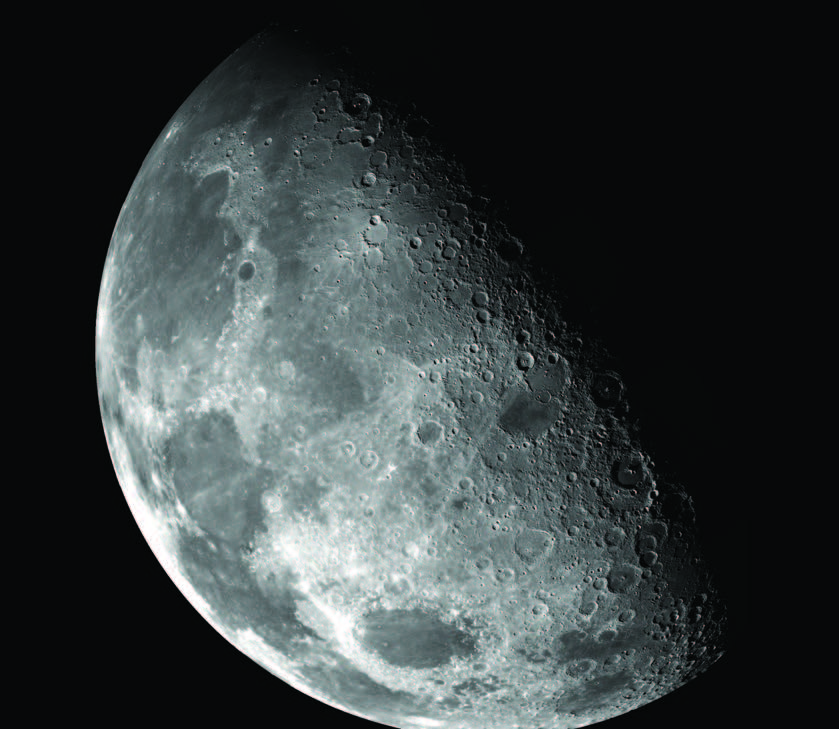
    LONDON (TIP): Astronomers using measurements from a telescope in Hawaii have found that the dark side of the Moon is actually turquoise in colour. Astronomers at the Mauna Loa Observatory in Hawaii discovered that blue light reflected from Earth turns turquoise when it bounces off the Moon. “This is the first accurate colour measurement of the dark side of the Moon,” said Peter Thejll, a senior scientist at the Danish Meteorological Institute in Copenhagen and first author on the study. Researchers installed a telescope and a sensitive camera at the observatory to take measurements of the Moon for two years. The dark side of the Moon is not the same as the far side, which gets as much sunlight as the side facing us.

    The dark side is not lit directly by sunlight, but by light reflected from Earth, ‘The Guardian’ reported. “This is sunshine that struck the Earth, was coloured by the Earth, was reflected up to the Moon, struck the Moon, and then came back to us,” Thejll said. Images of our planet from space show that the planet looks blue. But when this blue light strikes the Moon, the light that’s reflected back is turquoise. “Astronauts standing on the Moon and looking up at the Earth described it as a blue marble,” said Thejll. “Having not been into space myself, I don’t know what they meant exactly, but once that blue light strikes the Moon’s surface, it shifts to a blue-green colour.We can call it turquoise,” he said. To measure the colour of the dark side of the Moon, the researchers first screened out light from the bright side that had been scattered by Earth’s atmosphere.

    This scattered light produces a shifting halo around the Moon and disturbs measurements of the dark side. Astronomers snapped pictures of the Moon through the telescope using two different colour filters. Amid hundreds of images, they found a pair taken of the waning crescent Moon on January 18, 2012 that had exactly the same halo. When they subtracted one image from the other, the halo disappeared and they could measure the true colour of the Moon’s dark side.

  • Lab-made bone marrow may lead to leukaemia cure

    Lab-made bone marrow may lead to leukaemia cure

    LONDON (TIP): Researchers in Germany have created a prototype of human-like bone marrow that could be used to produce blood-producing stem cells to facilitate leukaemia therapy. The breakthrough , by scientists at the Max Planck Institute for Intelligent Systems in Stuttgart , could pave the way for producing artificial stem cells and treatment of leukaemia in 10 to 15 years. The lab-made bone marrow shows all major properties of natural marrow and could facilitate study of interaction between artificial materials and stem cells. This will help ascertain how the behaviour of stem cells is influenced by the artificial materials. Using synthetic polymers , the scientists fashioned a porous structure simulating the sponge-like make-up of bone.

    They added proteinbuilding blocks similar to those found in the bone marrow matrix to anchor cells. Hematopoietic (or bloodproducing ) stem cells, which had been isolated from cord blood, were introduced into the artificial bone marrow. After a few days, the cells were found to reproduce in the artificial bone marrow. Compared to standard cell cultivation methods, more stem cells were found to retain their properties in the lab-made marrow. Blood cells, such as red or white blood cells, are continuously replaced by new ones created by the bloodproducing stem cells found in a specialized niche of the marrow . This makes the stem cells ideal for treatment of blood diseases such as leukaemia . The affected cells of the patient are replaced by healthy hematopoietic stem cells from a donor.

  • THE BHAGAVAD GITA

    THE BHAGAVAD GITA

    Whenever there is a decline of Dharm (Righteousness) and a predominance of Adharm (Unrighteousness), O Arjun, then I manifest Myself. I appear from time to time for protecting the good, for transforming the wicked, and for establishing world order (Dharm). (4.07-08) The one who truly understands My transcendental appearance and activities (of creation, maintenance, and dissolution), attains My supreme abode and is not born again after leaving this body, O Arjun. (4.09) Many have become free from attachment, fear, anger, and attained salvation (Mukti) by taking refuge in Me, becoming fully absorbed in My thoughts, and becoming purified by the fire of Self-knowledge. (4.10)

    Path of worship and prayer
    With whatever motive people worship Me, I fulfill their desires accordingly. People worship Me with different motives. (4.11) Those who long for success in their work here on the earth worship the celestial controllers (Devas). Success in work comes quickly in this human world. (4.12) The four divisions — based on aptitude and vocation — of human society were created by Me. Though I am the author of this system of the division of labor, one should know that I do nothing (directly) and I am eternal. (See also 18.41) (4.13) Works do not bind Me, because I have no desire for the fruits of work. The one who fully understands and practices this truth is also not bound by Karm. (4.14) The ancient seekers of liberation also performed their duties with this understanding. Therefore, you should do your duty as the ancients did. (4.15)

    Attached, detached, and forbidden action
    Even the wise ones are confused about what is action and what is inaction. Therefore, I shall clearly explain what is action, knowing that one shall be liberated from the evil of birth and death. (4.16) The true nature of action is very difficult to understand. Therefore, one should know the nature of attached (or selfish) action, the nature of detached (or selfless) action, and also the nature of forbidden action. (4.17)

    A KarmaYogi is not subject to the Karmic laws
    The one who sees inaction in action, and action in inaction, is a wise person. Such a person is a yogi and has accomplished everything. (See also 3.05, 3.27, 5.08 and 13.29) (4.18) (To see inaction in action and vice versa is to understand that the Lord does all the work indirectly through His power by using us. He is the inactive actor. We are actively inactive, because we cannot do anything without the flow of His power. Therefore, we are not the doer, just an instrument in His hands.) A person, whose desires have become selfless by being roasted in the fire of Self-knowledge, is called a sage by the wise.

    (4.19) The one who has abandoned selfish attachment to the fruits of work, and remains ever content and dependent on no one but God, such a person — though engaged in activity — does nothing at all, and incurs no Karmic reaction, good or bad. (4.20) The one who is free from desires, whose mind and senses are under control, and who has renounced all proprietorship, does not incur sin — the Karmic reaction — by doing bodily action. (4.21) Content with whatever gain comes naturally by His will, unaffected by pairs of opposites, free from envy, calm in success and failure; though engaged in work, such a KarmaYogi is not bound by Karm. (4.22) The one who is free from attachment, whose mind is fixed in Self-knowledge, who does work as a service (Seva) to the Lord, all Karmic bonds of such a philanthropic person (KarmaYogi) dissolves away. (4.23) Brahm, the eternal Being, shall be realized by the one who considers everything as a manifestation or an act of Brahm. (Also see 9.16) (4.24)

    Different types of spiritual practices or sacrifices
    Some yogis perform the service of worship to celestial controllers (Devas, guardian angels), while others study scriptures for Self-knowledge. Some restrain their senses and give up their sensual pleasures. Others perform breathing and other yogic exercises. Some give charity and offer their wealth as a sacrifice. (4.25-28) Those who are engaged in yogic practices, reach the breathless state of trance (Samaadhi) by offering inhalation into exhalation and exhalation into inhalation as a sacrifice (by using short breathing Kriyaa techniques).

    (4.29) Others restrict their diet and offer their inhalations as sacrifice into their inhalations. All these people are the knowers of sacrifice, and are purified by their sacrifice. (4.30) Those who perform selfless service (Seva, Yajn, sacrifice) obtain the nectar of Self-knowledge as a result of their sacrifice and attain the Eternal Being (Brahm). O Arjun, even this world is not a happy place for the non-sacrificer, how can the other world be? (See also 4.38, and 5.06). (4.31) Many types of spiritual disciplines are described in the Vedas. Know them all to be born from Karm or the action of body, mind, and senses. Knowing this, you shall attain salvation (Moksh, Nirvan). (See also 3.14) (4.32)

    Acquiring transcendental knowledge is a superior spiritual practice
    The acquisition and propagation of Self-knowledge are superior to any material gain or gift, O Arjun. Because all actions in their entirety culminate in knowledge. (4.33) Acquire this transcendental knowledge from a Self-realized person by humble reverence, by sincere inquiry, and by service. The wise ones who have realized the Truth will teach you. (4.34) After knowing the Truth, O Arjun, you shall not again become deluded like this.

    By this knowledge you shall behold the entire creation (first) within Me, the Supreme Being (ParBrahm), then within your own higher Self (and then see Me alone in everything). (4.35) Even if one is the most sinful of all sinners, one shall yet cross over the ocean of sin by the raft of Self-knowledge (BrahmJnaan) alone. (4.36) As the blazing fire reduces wood to ashes; similarly, the fire of Self-knowledge (BrahmJnaan) reduces all bonds of Karm to ashes, O Arjun. (4.37)

    Transcendental knowledge is automatically revealed to a KarmaYogi
    In truth, there is no purifier in this world like Jnaan, the true knowledge of the Supreme Being (ParBrahm). One who becomes purified by KarmaYog discovers this knowledge within, naturally, in course of time. (See also 4.31, and 5.06, 18.78) (4.38) The one who has faith and is sincere in yogic practices, and has control over the senses, gains this transcendental knowledge. Having gained this knowledge, one at once attains supreme peace. (4.39) The irrational, the faithless, and the disbeliever (atheist) perishes. There is neither this world, nor the world beyond, nor happiness for the disbeliever. (4.40)

    Both transcendental knowledge and KarmaYog are needed for Nirvan
    Work (Karm) does not bind a person who has renounced work — by renouncing the fruits of work — through KarmaYog, and whose doubts about the Self are completely destroyed by Vivek, the application of Selfknowledge, O Arjun. (4.41) Therefore, cut the ignoranceborn doubt (about the Supreme Being) abiding in your mind by the sword of Self-knowledge, resort to KarmaYog, and get up for the war, O Arjun. (4.42)

    5. PATH OF RENUNCIATION
    Arjun said: O Krishn, You praise transcendental knowledge (Saamkhya, Karm-samnyaas) and also performance of selfless service (KarmaYog). Tell me, definitely, which one is the better of the two. (See also 5.05) (5.01) The Supreme Lord said: The path of Self-knowledge (Karm-samnyaas) and the path of selfless service (KarmaYog, Seva) both lead to the supreme goal. But, of the two, KarmaYog is superior to Karm-samnyaas. (5.02) A person should be considered a true Samnyaasi (Renunciant) who neither likes nor dislikes. One is easily liberated from Karmic bondage by becoming free from the pairs of opposites, O Arjun. (5.03)

    Both paths lead to the Supreme
    The ignorant — not the wise — consider the path of Selfknowledge (Karm-samnyaas) and the path of selfless service (KarmaYog) as different from each other. The person who has truly mastered one, gets the benefits of both. (5.04) Whatever goal a renunciant (Samnyaasi) reaches, a KarmaYogi also reaches the same goal. Therefore, the one who sees the path of renunciation and the path of unselfish work as the same, really sees. (See also 6.01 and 6.02) (5.05) But, true renunciation (Samnyaas), O Arjun, is difficult to attain without KarmaYog. A sage equipped with KarmaYog quickly attains Brahm. (See also 4.31, and 4.38) (5.06) A KarmaYogi whose mind is pure, whose mind and senses are under control, and who sees one and the same Eternal Being (Brahm) in all beings, is not bound by Karm though engaged in work. (5.07)

    A KarmaYogi works for God
    The wise (or Samnyaasi) who knows the truth thinks: “I do nothing at all”. In seeing, hearing, touching, smelling, eating, walking, sleeping, breathing; and speaking, giving, taking, as well as opening and closing the eyes, a Samnyaasi believes that only the senses are operating upon their objects. (See also 3.27, 13.29, and 14.19) (5.08-09). One who does all work as an offering to the Lord — abandoning selfish attachment to the results — remains untouched by Karmic reaction or sin as a lotus leaf never gets wet by water. (5.10) The KarmaYogis perform action — without selfish attachment — with their body, mind, intellect, and senses only for the sake of self-purification. (5.11) A KarmaYogi attains Supreme Bliss by abandoning attachment to the fruits of work; while others, who are attached to the fruits of work, become bound by selfish work. (5.12)