Month: January 2014

  • SRI GURU GRANTH SAHIB

    SRI GURU GRANTH SAHIB

    The Sikh Gurus never believed in the exclusivity of their teachings. The Gurus undertook travels to spread their message to peoples of different cultures in their own native languages. The Gurus did not believe in the ideas of any language being ‘sacred’ or ‘special’. It is in this spirit that various Sikh scholars have undertaken efforts to translate Sri Guru Granth Sahib into a number of languages in order to spread the teachings of the Gurus and to bring the Sikh religion to the people of the world as Guru Nanak wished.

    “Enshrine the Lord’s Name within your heart. The Word of the Guru’s Bani prevails throughout the world; through this Bani, the Lord’s Name is obtained.” (Guru Amar Das, Maru, pg. 1066)

    All Virtues are in our True Lord and Master; we are utterly without virtue. || 1 || O Creator Lord, all are in Your Power. I dwell upon the One Word of the Shabad. You are mine – what else do I need? || 1 || Pause || Go, and ask the happy soul-brides, “By what virtuous qualities do you enjoy your Husband Lord?” “We are adorned with intuitive ease, contentment and sweet words. We meet with our Beloved, the Source of Joy, when we listen to the Word of the Guru’s Shabad.” || 2 || You have so many Creative Powers, Lord; Your Bountiful Blessings are so Great. So many of Your beings and creatures praise You day and night. You have so many forms and colors, so many classes, high and low. || 3 || Meeting the True One, Truth wells up. The truthful are absorbed into the True Lord. Intuitive understanding is obtained and one is welcomed with honor, through the Guru’s Word, filled with the Fear of God. O Nanak, the True King absorbs us into Himself. || 4 || 10 || SIREE RAAG, FIRST MEHL: It all worked out – I was saved, and the egotism within my heart was subdued. The evil energies have been made to serve me, since I placed my faith in the True Guru.

    I have renounced my useless schemes, by the Grace of the True, Carefree Lord. || 1 || O mind, meeting with the True One, fear departs. Without the Fear of God, how can anyone become fearless? Become Gurmukh, and immerse yourself in the Shabad. || 1 || Pause || How can we describe Him with words? There is no end to the descriptions of Him. There are so many beggars, but He is the only Giver. He is the Giver of the soul, and the praanaa, the breath of life; when He dwells within the mind, there is peace. || 2 || The world is a drama, staged in a dream. In a moment, the play is played out. Some attain union with the Lord, while others depart in separation. Whatever pleases Him comes to pass; nothing else can be done. || 3 || The Gurmukhs purchase the Genuine Article. The True Merchandise is purchased with the True Capital. Those who purchase this True Merchandise through the Perfect Guru are blessed. O Nanak, one who stocks this True Merchandise shall recognize and realize the Genuine Article. || 4 || 11 || SIREE RAAG, FIRST MEHL: As metal merges with metal, those who chant the Praises of the Lord are absorbed into the Praiseworthy Lord. Like the poppies, they are dyed in the deep crimson color of Truthfulness. Those contented souls who meditate on the Lord with single-minded love, meet the True Lord.

    || 1 || O Siblings of Destiny, become the dust of the feet of the humble Saints. In the Society of the Saints, the Guru is found. He is the Treasure of Liberation, the Source of all good fortune. || 1 || Pause || Upon that Highest Plane of Sublime Beauty, stands the Mansion of the Lord. By true actions, this human body is obtained, and the door within ourselves which leads to the Mansion of the Beloved, is found. The Gurmukhs train their minds to contemplate the Lord, the Supreme Soul. || 2 || By actions committed under the influence of the three qualities, hope and anxiety are produced. Without the Guru, how can anyone be released from these three qualities? Through intuitive wisdom, we meet with Him and find peace. Within the home of the self, the Mansion of His Presence is realized when He bestows His Glance of Grace and washes away our pollution. || 3 || Without the Guru, this pollution is not removed. Without the Lord, how can there be any homecoming? Contemplate the One Word of the Shabad, and abandon other hopes. O Nanak, I am forever a sacrifice to the one who beholds, and inspires others to behold Him.

    || 4 || 12 || SIREE RAAG, FIRST MEHL: The life of the discarded bride is cursed. She is deceived by the love of duality. Like a wall of sand, day and night, she crumbles, and eventually, she breaks down altogether. Without the Word of the Shabad, peace does not come. Without her Husband Lord, her suffering does not end. || 1 || O soul-bride, without your Husband Lord, what good are your decorations? In this world, you shall not find any shelter; in the world hereafter, being false, you shall suffer. || 1 || Pause || The True Lord Himself knows all; He makes no mistakes. He is the Great Farmer of the Universe. First, He prepares the ground, and then He plants the Seed of the True Name. The nine treasures are produced from Name of the One Lord. By His Grace, we obtain His Banner and Insignia. || 2 || Some are very knowledgeable, but if they do not know the Guru, then what is the use of their lives? The blind have forgotten the Naam, the Name of the Lord. The self-willed manmukhs are in utter darkness. Their comings and goings in reincarnation do not end; through death and rebirth, they are wasting away.

    || 3 || The bride may buy sandalwood oil and perfumes, and apply them in great quantities to her hair; she may sweeten her breath with betel leaf and camphor, but if this bride is not pleasing to her Husband Lord, then all these trappings are false. || 4 || Her enjoyment of all pleasures is futile, and all her decorations are corrupt. Until she has been pierced through with the Shabad, how can she look beautiful at Guru’s Gate? O Nanak, blessed is that fortunate bride, who is in love with her Husband Lord. || 5 || 13 || SIREE RAAG, FIRST MEHL: The empty body is dreadful, when the soul goes out from within. The burning fire of life is extinguished, and the smoke of the breath no longer emerges. The five relatives (the senses) weep and wail painfully, and waste away through the love of duality. || 1 || You fool: chant the Name of the Lord, and preserve your virtue. Egotism and possessiveness are very enticing; egotistical pride has plundered everyone.

    || 1 || Pause || Those who have forgotten the Naam, the Name of the Lord, are attached to affairs of duality. Attached to duality, they putrefy and die; they are filled with the fire of desire within. Those who are protected by the Guru are saved; all others are cheated and plundered by deceitful worldly affairs. || 2 || Love dies, and affection vanishes. Hatred and alienation die. Entanglements end, and egotism dies, along with attachment to Maya, possessiveness and anger. Those who receive His Mercy obtain the True One. The Gurmukhs dwell forever in balanced restraint. || 3 || By true actions, the True Lord is met, and the Guru’s Teachings are found. Then, they are not subject to birth and death; they do not come and go in reincarnation. O Nanak, they are respected at the Lord’s Gate; they are robed in honor in the Court of the Lord. || 4 || 14 || SIREE RAAG, FIRST MEHL: The body is burnt to ashes; by its love of Maya, the mind is rusted through. Demerits become one’s enemies, and falsehood blows the bugle of attack. Without the Word of the Shabad, people wander lost in reincarnation. Through the love of duality, multitudes have been drowned.

    || 1 || O mind, swim across, by focusing your consciousness on the Shabad. Those who do not become Gurmukh do not understand the Naam; they die, and continue coming and going in reincarnation. || 1 || Pause || That body is said to be pure, in which the True Name abides. One whose body is imbued with the Fear of the True One, and whose tongue savors Truthfulness, is brought to ecstasy by the True Lord’s Glance of Grace. That person does not have to go through the fire of the womb again. || 2 || From the True Lord came the air, and from the air came water. From water, He created the three worlds; in each and every heart He has infused His Light. The Immaculate Lord does not become polluted. Attuned to the Shabad, honor is obtained. || 3 || One whose mind is contented with Truthfulness, is blessed with the Lord’s Glance of Grace. The body of the five elements is dyed in the Fear of the True One; the mind is filled with the True Light. O Nanak, your demerits shall be forgotten; the Guru shall preserve your honor.

    || 4 || 15 || SIREE RAAG, FIRST MEHL: O Nanak, the Boat of Truth will ferry you across; contemplate the Guru. Some come, and some go; they are totally filled with egotism. Through stubborn-mindedness, the intellect is drowned; one who becomes Gurmukh and truthful is saved. || 1 || Without the Guru, how can anyone swim across to find peace? As it pleases You, Lord, You save me. There is no other for me at all. || 1 || Pause || In front of me, I see the jungle burning; behind me, I see green plants sprouting. We shall merge into the One from whom we came. The True One is pervading each and every heart. He Himself unites us in Union with Himself; the True Mansion of His Presence is close at hand. || 2 || With each and every breath, I dwell upon You; I shall never forget You. The more the Lord and Master dwells within the mind, the more the Gurmukh drinks in the Ambrosial Nectar. Mind and body are Yours; You are my Master. Please rid me of my pride, and let me merge with You.

  • RBI ALLOWS NRIs TO OPERATE RESIDENT BANK A/C ON ‘EITHER OR SURVIVOR’ BASIS

    RBI ALLOWS NRIs TO OPERATE RESIDENT BANK A/C ON ‘EITHER OR SURVIVOR’ BASIS

    MUMBAI (TIP): The Reserve Bank of India (RBI) has allowed nonresident Indians (NRIs) to operate resident bank accounts on “either or survivor” basis. According to RBI, banks may include an NRI close relative in existing / new resident bank accounts as joint holder with the resident account holder on “either or survivor” basis, subject to fulfillment of a few conditions. Such accounts will be treated as resident bank accounts and will be subject to all the regulations applicable to a resident bank account. Cheques, instruments, remittances, cash, card or any other proceeds belonging to the NRI relative shall not be eligible for credit to this account.Besides, the NRI relative shall operate such account only for and on behalf of the resident for domestic payment and not for creating any beneficial interest for himself.

    An NRI can be a joint holder in more than one account, if s/he is a close relative of all the resident bank account holders. If due to any eventuality, the non-resident account holder becomes the survivor of such an account, it shall be categorised as Non-Resident Ordinary Rupee (NRO) account according to the extant regulations, RBI said. The onus will be on the non-resident account holder to keep the bank informed to get the account categorised as NRO account and all such regulations as applicable to NRO account shall be applicable. According to RBI, the joint account holder facility may be extended to all types of resident accounts including savings bank accounts. While extending this facility, the banks should satisfy itself about the actual need for such a facility and also obtain a declaration, duly signed by the non-resident account holder, said RBI.

  • FY14 marine product exports set to rise 23% to Rs 26,750 crore

    FY14 marine product exports set to rise 23% to Rs 26,750 crore

    CHENNAI (TIP): Export of marine products is expected to touch $4.3 billion (Rs 26,750 crore) in 2013-14, an increase of 23 per cent compared to a year ago. The increase comes despite the US, Canada and Japan’s stringent regulations in recent months. One major contributor to growth is new markets and another value-added products, said an officer at the Marine Products Export Development Authority, under the commerce ministry. After announcing the 19th edition of the Indian International Seafood Show, January 10-12, in Chennai, Chairman Leena Nair said the Indian seafood sector had grown 20-22 per cent in three years, despite major hurdles.

    In the last two years, the sector saw the countervailing and anti-dumping duty by the US, as well as quality regulation from Canada and Japan.N Ramesh, director, marketing, added the $4.3-billion goal during the current financial year was achievable. Value-added products are gaining momentum, said Nair. These were five per cent of the seafood exports three years ago, but now are 17 per cent. The target is to increase it to 30 per cent and then 50 per cent in three-five years, said Ramesh. Abraham J Tharakan, president, Seafood Exporters Association of India, said over the years the sector had added capacity to export value-added products. India has been exporting these to China and Thailand, where they are converted into ready-to-eat and ready-to-cook products.Ramesh said in two-three years the sector had entered markets such as Africa, Commonwealth of Independent States and southeast Asia. These form 16 per cent of the export turnover.

  • Capgemini signs major contract with Statoil Norway

    Capgemini signs major contract with Statoil Norway

    PUNE (TIP): Consulting, technology and outsourcing services provider Capgemini today announced that Capgemini Norge AS, has signed a major agreement with Statoil ASA, a Fortune 50 global energy company engaged in oil and gas production, headquartered in Norway. The relationship will see Capgemini managing and transforming Statoil’s IT general business applications portfolio to support its plans for international growth and promote a performance based culture.

    The new agreement, with a potential duration of 10 years, strengthens and supplements the existing partnership between Statoil and Capgemini. The contract intends to enable Statoil to introduce more innovative solutions for business support to upstream oil and gas processes leveraging Capgemini’s global sector capabilities. Capgemini will provide application development and maintenance services for solutions based on SAP software, as well as for collaboration and information management applications and maintenance of IT platforms.

  • RANBAXY INKS PACT WITH EPIRUS SWITZERLAND

    RANBAXY INKS PACT WITH EPIRUS SWITZERLAND

    NEW DELHI (TIP): Drug maker Ranbaxy Laboratories has entered into a licensing agreement with Epirus Switzerland GmbH, the Swiss arm of Boston-based Epirus Biopharmaceuticals Inc, for introducing a biosimilar version (BOW015) of infliximab, a drug currently sold by Johnson & Johnson under brand Remicade for treatment of rheumatoid arthritis. According to the agreement, the Swiss firm will develop and supply the product, and upon regulatory approval, Ranbaxy will market the same in India and other emerging markets, the Indian drug maker said in a statement on Thursday. Currently, no biosimilar of Infliximab approved in India. Biosimilar is the generic version of a biotechnology-based product. According to experts, once Ranbaxy gets an approval and launches the product in India, the drug’s price is expected to come down significantly.

    The medicine, available in the form of injection, is priced at Rs 82,000 for a single course, sources said. “We are pleased to partner with Epirus for biosimilar infliximab. We will utilise our strong frontend capabilities in making this product available in India and other parts of the world,” said Sanjeev I Dani, executive vice-president and head (global strategy) at Ranbaxy. While there have been some domestic companies such as Biocon dedicated towards biotechnology products, recently even pharmaceutical companies such as Cipla, Ranbaxy and Lupin have turned their attention towards the segment. Recently, Biocon secured approval in India for the first biosimilar version of Roche’s Herceptin, the world’s best-selling breast cancer drug.

    The biotech company had also jointly developed the product with US-based generic drug maker Mylan Inc. Experts say some of the recent regulatory developments may have prompted the move. In mid- 2012, the Department of Biotechnology along with the Drugs Controller General of India framed the guidelines for biotech products to be developed and marketed in the country. The norms outline data requirements for pre-clinical and clinical trials and also talk about pre-marketing and post-marketing data. Before this, there was no separate set of guidelines for biosimilars in India, and such drugs were approved on the basis of general guidelines.

  • HCL Tech, CSC join hands to tap application modernisation market

    HCL Tech, CSC join hands to tap application modernisation market

    NEW DELHI (TIP): IT services rivals HCL Technologies and CSC have formed a strategic alliance to tap the market created by the customers’ move to modernise or digitise their applications and shift them to the cloud. Both entities plan to create an application modernisation delivery network to help clients shift from their legacy applications to a cloud-enabled platform.

    Three pillars
    The first such delivery centre will be carved out of their respective facilities in Bangalore and Chennai. These delivery centres will lower the risks and costs for clients transitioning to the cloud, both companies claimed. “We have joined hands with CSC on three core pillars – application modernisation, enablement of cloud platform and other technologies,” HCL Technologies President and CEO Anant Gupta said. CSC’s strong technology portfolio and client base coupled with HCL’s robust system integration capabilities will be a formidable combination in the application modernisation market, Gupta said.

    The alliance will be targeting the addressable market of $8-12 billion. “We are sharing people, revenues and costs,” said Mike Lawrie, CSC President and CEO on the alliance’s joint go-tomarket and delivery strategy. Both partners will share dedicated employees and technologies as well as production and development work. “Our intent is to build delivery centre on global basis,” Lawrie added. The HCL Tech-CSC alliance will focus on enterprise customers in verticals such as banking and telecom and has already bagged a client – AT&T.

    Competency centre
    The alliance will also set up competency centre in banking to be housed in CSC’s facility in the US. The competency centre will help banks and financial institutions modernise their applications and make them much more visible in cloud environment, Lawrie said. Lawrie said his familiarity with HCL Tech’s capabilities helped CSC forge this alliance and that the Nasdaq-listed IT firm did not consider any other Indian IT services vendor for the partnership. Lawrie said he had worked with HCL for 15 years.

  • Marijuana: Frequently asked questions

    Marijuana: Frequently asked questions

    Twenty states plus the District of Columbia have enacted laws that allow people to use medical marijuana with a doctor’s recommendation. Two of those states – Colorado and Washington – have legalized marijuana for recreational use. Marijuana is still illegal under federal law, but the Justice Department said it will not challenge states’ marijuana laws as long as they do not run counter to certain federal enforcement priorities, such as selling pot to minors. The number of medical marijuana patients in the US is 1,029,315. Besides, there is a large number of people who use marijuana as addictive drug.

    We bring to our readers answers to some frequently asked questions on the drug.
    Marijuana is a dry, shredded green and brown mix of leaves, flowers, stems, and seeds from the hemp plant Cannabis sativa. In a more concentrated, resinous form, it is called hashish, and as a sticky black liquid, hash oil. The main psychoactive (mindaltering) chemical in marijuana is delta-9- tetrahydrocannabinol, or THC. Marijuana is the most common illicit drug used in the United States. After a period of decline in the last decade, its use has generally increased among young people since 2007, corresponding to a diminishing perception of the drug’s risks. More teenagers are now current (pastmonth) smokers of marijuana than of cigarettes, according to annual survey data.

    How is Marijuana Abused?
    Marijuana is usually smoked in handrolled cigarettes (joints) or in pipes or water pipes (bongs). It is also smoked in blunts-cigars that have been emptied of tobacco and refilled with a mixture of marijuana and tobacco. Marijuana smoke has a pungent and distinctive, usually sweet-and-sour, odor. Marijuana can also be mixed in food or brewed as a tea.

    How does marijuana work?
    Marijuana’s main active ingredient is delta-9-tetrahydrocannabinol, or THC, found in the leaves, stems, seeds and especially the flowers of the cannabis plant. It binds to the surface of nerve cells in high-density areas of the brain involved in memory, thinking, concentration, feelings of pleasure, coordination and movement, and sensory and time perception. THC stimulates this communication network, resulting in marijuana “high.”

    What are its medicinal uses?
    About 20 states and the District allow the use of marijuana for medical purposes. Most patients seek the drug for controlling pain from medical conditions including cancer, nervous system diseases, glaucoma and migraine. It is also being used to treat nausea and improve appetites of people with HIV or chronic illnesses.

    What’s the difference between smoking marijuana and consuming it in food, powders or liquid extracts?
    When marijuana is smoked, THC moves almost immediately from the lungs to the bloodstream and to the brain. The effects can last one to three hours. If it’s eaten, say in brownies or cookies, it can take 30 minutes to an hour to have an effect, but the high can last up to four hours.

    What are the health effects of marijuana use?
    In the short term, it can lead to a rapid heart rate, increased blood pressure, red eyes, dry mouth, increased appetite and slowed reaction time. Long-term use has been linked to impaired thinking, memory problems, panic attacks and other psychological issues. There have also been studies showing a weakened immune system and, for those who smoke the drug, impaired lung function.

    How much marijuana is safe to use? Can you overdose?
    There is no recorded case of someone dying from an overdose of marijuana, but it has been a factor in accidents or medical issues that can lead to death. The concentration of THC in seized samples of illegal marijuana has been increasing over the past 30 years, with the average potency more than doubling since 1998, leading to concern about the consequences for young users. But scientists don’t know much about the effects of higher concentrations on the body and brain.

    Is it addictive?
    It can be. Long-term use, especially by those who start at a young age, has been shown to lead to addiction, with an estimated one out of 11 people who use it becoming dependent on it. Marijuana was responsible for 4.5 million of the 7.1 million Americans dependent on or abusing illicit drugs, according to the 2010 National Survey on Drug Use and Health published by the Department of Health and Human Services. Withdrawal symptoms are similar to those of withdrawal from smoking and include irritability, sleep difficulties and anxiety.

    How does marijuana use affect the young?
    Last year, Canadian and American researchers reviewed more than 120 studies examining cannabis and its effects on the teenage brain. They found strong indications that early marijuana use can alter development and contribute to mental health problems later in life. “When you smoke marijuana, you cannot memorize or learn as you should,” Nora D. Volkow, director of the National Institute on Drug Abuse, said recently on NPR’s “The Diane Rehm Show.”

    “The other issue is that, the younger you start smoking marijuana, the higher the risk not only to becoming addicted to marijuana, but it also appears to increase the risk for addiction of other drugs in adulthood.” Volkow added: “What we know about the marijuana, as well as other drugs, is that the effects of drugs in the human brain are not the same when you take them as a child, adolescent or as an adult, and this is because there are significant changes in the brain as we go in the transition from childhood into adulthood.”

    How does marijuana use affect driving?
    One of the key questions Colorado lawmakers had to wrestle with in setting up a legal marijuana market: When is someone too stoned to drive? The answer isn’t simple. Prosecutors and some state lawmakers have long sought strict blood-level limits for THC. Many marijuana advocates argue that the drug affects people differently and that setting a hard limit could lead to wrongful DUI convictions. They also argue that, unlike with alcohol, traces of the drug remain in the bloodstream long after an individual has smoked pot.

    Officials in favor of blood-level limits say tests can pinpoint “active” THC in the bloodstream in the hours immediately after marijuana usage. Studies have shown that smoking marijuana tends to affect spatial perceptions. Drivers might swerve or follow other cars too closely. They can lose concentration and have slower reaction times. Such findings have led some researchers to conclude that driving while high greatly increases the chances for an accident, and that smoking pot and drinking before driving is a particularly dangerous mix. Every state forbids driving under the influence.

    But convictions in druggeddriving cases generally rely on the observations and testimony of police officers rather than blood tests. The White House, in a drug policy paper last year, called on states to adopt blood-limit laws in an effort to reduce drugged driving, but states continue to take different approaches. Last year, Colorado lawmakers approved a bill that creates a “permissive inference” that someone with a certain level of THC in their blood is impaired. Drivers suspected of driving while high generally would have to consent to have their blood drawn, and they could lose their license if they refuse.

    Should you use marijuana if you’re pregnant?
    A number of studies have shown that babies born to some women who regularly used marijuana had an increased risk of cognitive and attention deficits, memory and learning problems, low birth weight, pre-term delivery and other issues. But more research is needed to figure out to what extent environmental factors played a role in these studies.

  • India’s No. 1 rank at stake in ODI series against Kiwis

    India’s No. 1 rank at stake in ODI series against Kiwis

    DUBAI (TIP): India must win the upcoming five-match one-day series against New Zealand if they have to retain their number one status in the ICC team rankings. India are sitting atop the ICC team rankings table with 120 ratings points, and enter the series leading eighth-ranked New Zealand by 36 ratings points. If India lose the series, starting from January 19 in Napier, they will lose their numero uno status and as many as six ratings points. India have been the number-one ranked ODI side since January 2013, when it replaced England at the top. For New Zealand, a series win against India by any margin will mean that it will push up a place to seventh, ahead of West Indies.

    A series loss for New Zealand, however, will not make any difference to its position on the rankings table. If India do not manage to win the series against New Zealand, either Australia or England could stake a claim on the numberone rank. Australia and England are currently playing a five-match series, with the home team leading 1-0. Australia are currently in second position, six points behind India. For Australia to reclaim the number-one rank, they need to beat England in its ongoing series by a margin of 3-2 or better, and they also require New Zealand to beat India by a margin of 3-2 or better. On the other hand, England, who sit 10 points behind India in third spot, need to beat Australia by a margin of 4-1 or better, and also for New Zealand to win its series against India by a margin of 4-1 or better, to become the number-one ODI side again.

    India’s young batsman Virat Kohli will start the series in New Zealand as the highest-ranked batsman on either side. Kohli is currently in second position in the ICC Player Rankings for ODI batsmen with 859 ratings points, just 13 behind number-one ranked AB de Villiers. A good show with the bat for Kohli could see him reclaim the number-one rank he last held in November 2013. In all, India has three batsmen in the top 10, with Mahendra Singh Dhoni in sixth place and Shikhar Dhawan in 10th spot. Inside the top 20, Ross Taylor in 16th and Rohit Sharma in 18th place are the other batsmen likely to be seen in action.

    Outside the top 20, the batsmen likely to play the series are Suresh Raina (22nd), Brendon McCullum (23rd), Martin Guptill (24th) and Kane Williamson (31st). Meanwhile, Ravindra Jadeja in sixth position will be the highest ranked bowler on either side in the ICC Player Rankings for ODI bowlers. In fact, Jadeja is also the only player in the top 10 of the bowlers’ table who is likely to feature in the series. Among the top 20 bowlers, Ravichandran Ashwin (16th) and Kyle Mills (17th) are the others likely to feature in the series. Outside the top 20, the bowlers likely to play are Bhuvaneshwar Kumar (24th), Tim Southee (26th), Nathan McCullum (28th), Mitchell McClenaghan (29th), Amit Mishra (39th), Mohammed Shami (41st) and Ishant Sharma (50th).

  • Serena into fourth round after easy win over Hantuchova

    Serena into fourth round after easy win over Hantuchova

    MELBOURNE (TIP): World number one Serena Williams scorched past experienced Slovak Daniela Hantuchova in straight sets to reach the fourth round and set a new record of 61 Australian Open wins on Friday. The American top seed used her powerful serve to good effect as she raced through the match on another hot Melbourne day 6-3, 6-3 in 80 minutes. Williams, bidding for a sixth Australian Open crown, now faces either former world number one Ana Ivanovic or 2011 US Open champion Samantha Stosur for a place in the quarterfinals. “It was a tough match. Daniela is a great opponent so I’m really happy to come out with the win,” said Williams.

    “It was hot but you have to play, you have to be ready and prepare yourself mentally. I’m excited to get through.” Hantuchova, ranked 33, was never going to be an easy opponent and she had her chances with six break points. But Williams fired down aces at crucial times, with eight in the first set alone. The victory set a new landmark for the American veteran, who is gunning to match the achievement of Chris Evert and Martina Navratilova in winning her 18th Grand Slam. Beating Hantuchova was her 61st win at the Australian Open, surpassing the previous record set by Margaret Court. Williams, who made her Australian Open debut in 1998, also drew alongside Open-era record-holder Lindsay Davenport in playing 69 singles matches at Melbourne Park.

    The morning match got under away with the temperature already touching 36 Celsius (96.8 Fahrenheit), with Williams and Hantuchova both holding serve as they acclimatised on Rod Laver Arena. The Slovak had two break points on Williams’ next serve but the American delivered a net volley then blasted two aces to ensure she held. As she got into her stride, Williams’ ball-striking and placement was improving and she scored the break she wanted in the sixth game to take charge. Hantuchova had a break point in the seventh but again Williams’ powerful serve came to the rescue as she held for 5-2. The Slovak held serve with a sizzling backhand down the line and she kept applying the pressure to again have two break points as Williams was serving for the set.

    But the world’s top player saved both, hitting another two aces before forcing a backhand error from Hantuchova to take the set in 38 minutes. She was in control and Hantuchova was flagging, with a series of unforced errors handing Williams an early break in the second to go 1-0 in front. The Slovak rallied and a forehand down the line ensured she broke to love in the sixth game, only for the focused Williams to bounce straight back and win three games in a row to take the match

  • Mary Kom had faced molestation attempt

    Mary Kom had faced molestation attempt

    KOLKATA (TIP): Olympic medal-winning boxer MC Mary Kom on January 17 said she had also faced a sexual attack when she was 18, but managed to overpower the assaulter. The boxer expressed concern over women’s safety in India and urged them to go for physical training to fend off attackers. “I would urge them to have some kind of physical training to prevent sex attacks, because you need to be strong and fit to fight attackers. I would also tell them to fight sex offence without fear,” she said.

    “I was going to church on a Sunday. I was wearing a traditional wraparound dress and took a rickshaw as I was a bit late. Suddenly, the rickshaw puller caught my hand and tried to molest me,” she told a stunned audience at an interactive session organised by the FICCI Ladies Organisation. Mary Kom said she kicked and punched the man who fell flat. “I managed to flatten him because I was fit and strong. But that incident taught me a lesson that as a woman, I have to be very alert all the time and must have courage (to fight the odds),” she said.

  • JAISALMER

    JAISALMER

    The name Jaisalmer evokes utter magic and vibrancy of the desert. It’s straight out of an Arabian Nights fable. The hostile terrain notwithstanding the warmth and colour of people is simply overwhelming. One of the main draws is the daunting 12th century Jaisalmer Fort. The beautiful havelis which were built by wealthy merchants of Jaisalmer are yet another interesting aspect of the desert city. And you can let your eyes caress the sloping sand dunes while you ramble your way in a camel safari. The desert citadel is truly a golden fantasy in the Thar Desert. Bhati Rajput ruler Rawal Jaisal, after whom the city finds its name, founded Jaisalmer in 1156 AD. On advice of a local hermit Eesaal he chose the Tricut Hills as his new abode, abandoning his vulnerable old fort at Luderwa just 16 kilometres northwest.

    In Medieval times, its prosperity was due to its location on the main trade route linking India to Egypt and Arabia. The Bhati Rajput rulers lined their coffers with gains from traditional taxes levied on passing by caravans. They also amassed wealth through questionable means. Over the years the remote location of Jaisalmer kept it almost untouched by outside influences. In the 14th century AD. Ala-ud-din Khilji, the Sultan of Delhi besieged the fort for nine years in an effort to take back the treasure looted by the Bhatti Rajputs from his imperial caravan train. When the fall of the fort was imminent the women of the fort committed Jauhar, an act of mass self-immolation, while men donned saffron robes and rode to their certain death. Duda son of Jaitasimha, a Bhati hero also perished in the battle. Duda’s descendants continued to rule Jaisalmer.

    In 1541 AD they even fought Mughal Emperor Humayun, though their relations with the Mughals were not always hostile. Sabal Simha won the patronage of Mughal Emperor Shah Jahan for his distinctions in battlefield, in Peshawar and thus earned the right to rule Jaisalmer. In the days of the British rule, Jaisalmer was the last to sign the Instrument of Agreement with the British Government. Ages have gone by and the monuments of Jaisalmer have withstood the buffeting winds of the desert all through. Jaisalmer is a paragon of beautiful culture and harsh climatic conditions; these together leave a lasting impression on the visitors. The old city was completely encircled by a wall but much of it has crumbled sadly for want of building material in recent years. The massive golden fort, which is the essence of Jaisalmer, is entered through First Gate; is a burrow of narrow streets with Jain Temples and old palaces. The main market, the Sadar Bazar is right below the hill. The bank, offices and several shops are also located near the Amar Sagar Gate to the west.

    Jaisalmer Fort
    The Jaisalmer fort, known as Sonar Quila or the Golden fort, rises from the sand and merges with the golden hues of the desert ambience. The setting sun in its most colourful shades gives it a fairy tale appearance. It is simply magical – as the bastions envelop a whole township that consists of the palace complex, the intricately carved havelis of rich merchants, several temples and the residential complexes of the armies and traders placed strategically on the trade route. It was from this trade route that the ancient caravans passed, distributing the riches for the prosperity to an otherwise non resourceful kingdom.

    These merchants served and acquired a great deal of power and noble status in the royal courts of Bhatti Rajputs who founded the state in the 12th century AD and proceeded further. However, the rich merchants inspired by the classic style of the royals, constructed huge mansions (havelis) adjacent to each other in the nature of medieval culture and profusely decorated the walls and ceilings and intricately carved the outdoors and interiors. The colourful art forms had some how relegated the royal heritage to a position of secondary importance. The craftsmen were usually Muslims who were induced on their journey to exhibit their skills in art forms. The result was an architectural purity that cannot be seen elsewhere.

    Government Museum
    Established by the Department of Archeology and Museum. It is another prime attraction for the visitors to Jaisalmer. The trophy of the state bird Godawan – the great Indian bustard, is the most eye catching spot. Traditional house-hold items, rock-cut crockery and jewellery recreate the atmosphere of a by-gone era. A look at the statues of 7th-9th century AD creates a scenario of rich cultural heritage of the time.

    Deewan Nathmal Ji Ki Haveli
    Two architect brothers built it in the 19th century. Interestingly, while one concentrated on the right, the other concentrated on the left and the result is a symphony epitomizing the side-by-side symmetry during construction. Paintings in miniature style monopolize the walls in the interior. Mighty tuskers carved out of yellow sandstone stand guard to the haveli.

    Deewan Salim Singh Ki Haveli
    This haveli is actually worth seeing from outside only. It was built in the first half of the 18th century and a part of it is still occupied. Salim Singh was the prime minister of Jaisalmer a princely state in 19th century AD. The mansion has a beautifully arched roof with superb carved brackets in the form of peacocks. It is just below the hill near the fort. It is said that once it had two additional wooden storeys in an attempt to make it as high as the Maharaja’s palace, but the Maharaja had the upper storey demolished.


    6

    Patwon-Ki-Haveli
    A group of apartments, this is one of the largest and most elaborate of Havelis in Jaisalmer and stands in a narrow lane. It is five storeys high and is extensively carved. A part of this beautiful building is owned by the Department of Archaeology and Museum. There are remnants of some paintings on the walls inside as well as some mirror work. This has been the star attraction of Jaisalmer.

    Mandir Palace(Badal Mahal)
    The delicate pagoda like Tazia Tower rises from Badal Mahal (Cloud Palace). Rising in its five-tiered splendour, with each storey graced by a delicately carved balcony, the tower is of historical significance. Muslim craftsmen built it in the shape of a Tazia (A float taken in procession Muharram) as symbol of their religion in the town for royal patrons. Half portion of this palace is converted into a heritage hotel named Mandir Palace and another portion of the palace as Badal Vilas, the residence of the ex-ruler’s family.

    Desert National Park
    The Desert National Park is an excellent example of the eco-system of the Thar Desert and its rich fauna. The Sudashri forest post is the most ideal place for observing wildlife in the Desert National Park. Sand dunes form less than 20 per cent of the park, which consists of craggy rocks, pavements and compact salt lake bottoms, inter-medial areas and fixed dunes. Its inhabitants include the blackbuck, chinkara, wolf, Indian fox, desert fox, hare and desert cat. Flights of sand-grouse start coming to waterholes from sunrise onwards. One can also hear the morning call of the grey partridge. Blue tailed and green bee-eaters, common and bush quail and Indian rollers are birds, which are commonly found around waterholes. The park is also home to the great Indian bustard – the state bird of Rajasthan.

    Gadsisar Lake
    This is a rain water conservation lake built by Maharawal Gadsi in 14th century. It was once the main source of drinking water for the entire town of Jaisalmer. Now a tourist spot, there are many small temples and shrines around it. A wide variety of water birds can be seen here especially in winter. This is the most popular point to take photographs of Jaisalmer fort early in the morning when the fort looks golden with the first rays of the Sun. The beautiful gateway known as Tillon ki prol, which arches across the road down to the lake was built by a royal courtesan named Tillon at the end of 19th century. An idol of Lord Vishnu was installed in the year 1908 AD on the gate by a courtesan and declared Krishna Temple to save it from demolition by the then Maharawal.

  • DALLAS WILL DECIDE ON PLASTIC-BAG BAN IN MARCH

    DALLAS WILL DECIDE ON PLASTIC-BAG BAN IN MARCH

    DALLAS (TIP):
    Dallas City Council will finally decide in March, whether or not to ban single-use plastic (and paper) bags.For the first hour of the meeting at City Hall, January 14, it looked as though the issue would stagnate as council members retread the same tired ground they’ve been covering for the past 10 months: Caraway said the bags are an eyesore and environmental nuisance that have to go; Sheffie Kadane countered that businesses and consumers should be allowed to determine the best course; Scott Griggs chimed in with things like “we have a system in place where our externalities are not internalized.” But then, Mayor Mike Rawlings took charge. “We need to get something on paper, and we need to take action on it. We’ve talked about this enough,” he said.

    The discussion, he added, has been fueled by each council member’s philosophical beliefs, which none of them seems willing to change. He turned to Caraway. “Work with legal try to find something creative,” Rawlings said. “Whatever we find, put it on a piece of paper, put it in an ordinance, take it in [the council chambers], and vote it up or down.” So maybe it won’t be a ban. Maybe it’ll be a requirement that stores charge for bags. Maybe a mandate that groceries be carried in pockets. We’ll see. Whatever the specifics, there will be a vote. After a brief consultation with City Attorney Warren Ernst, Caraway announced it will be in March.

  • Dr. Jit Chandan – A Game Changer

    Dr. Jit Chandan – A Game Changer

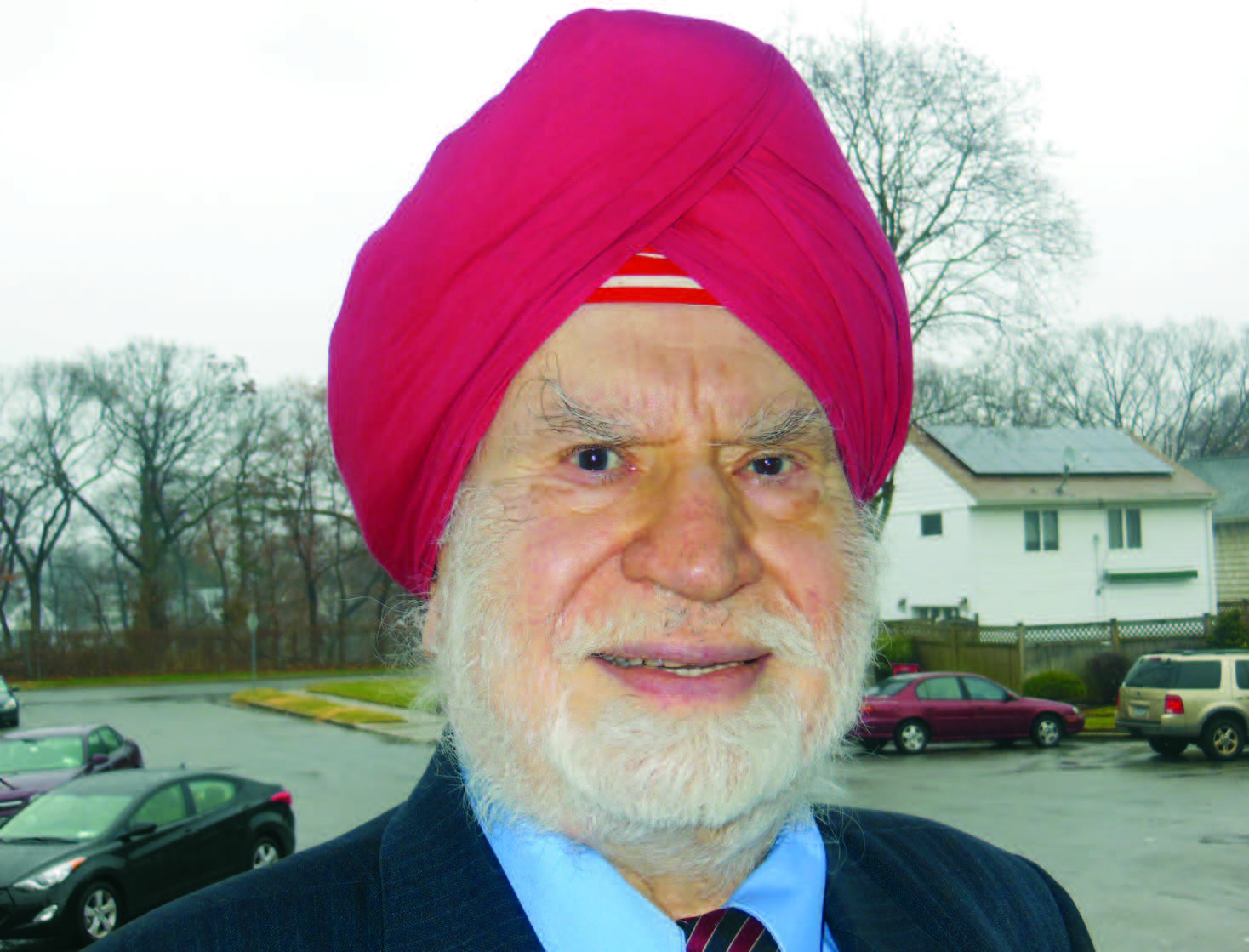
    Most people read history. Few people write history. Very few people make history. Extremely few people change the direction of history. Dr. Jit Chandan is one of those few people whose efforts at making change for the better are well recorded by history. His contributions in the service of community are deeply written in the sands of time, not to be erased by time or winds of change. By the time Dr. Chandan was about 20 years of age, and after completing his B. Sc. degree from Punjab University at Hoshiarpur, Punjab, he left for England in 1957 to pursue higher studies. In the 1950s, there were very few Indians in UK. There were just a few Indian students, a few businessmen and a few immigrants from Kenya. The only Gurudwara in the country was two floors in a 5-6 story building owned by Maharaja of Patiala, in the area of Shepherds Bush in London.

    There were other groups of Sikhs in various cities and especially in Birmingham, Leeds, Wolverhampton, Southall and perhaps at some other places where they celebrated Guru Nanak Dev Ji’s birthday and other religious functions such as Baisakhi in rented halls. Dr. Chandan was the main religious speaker at these functions. He spoke about the lives and teachings of our Gurus. He strongly felt that we should have our own Gurudwaras to promote our religious philosophies among ourselves and among locals. The local Sikh community enthusiastically responded to these dreams and suggestions. Sometime in early 1960, Dr. Chandan formed The Sikh Missionary Society (currently known as Sikh Cultural Society) and started a quarterly Sikh journal “The Sikh Courier”, along with Dr. Ajit Singh Battu (currently in Sudbery, Canada).


    20
    Among the many who are Dr. Chandan’s friends is the present Prime Minister of India, Dr. Manmohan Singh. (A file photo)

    It was a tough journey and it created many financial difficulties. However, with the grace of God and financial help from the Sikh community, the journal kept on going. Mrs. Pamela Wylam joined the editorial board and the journal grew in quantity and quality. Dr. Chandan delivered motivational speeches at Grupurab functions urging Sikhs to contribute one week’s wages to build Gurudwaras. With much effort a beautiful and spacious Gurdwara was built at Birmingham. That was a good beginning. Now Sikhs have over 250 Gurudwaras in the country. As destiny would have it. Dr. Chandan was awarded a coveted and meritorious King George VI Memorial Fellowship award to study at Columbia University in New York in 1963. This Fellowship was unique in the sense that it was the only scholarship awarded to students of Commonwealth countries studying in England and this year was India’s turn.

    When Dr. Chandan left England for America, the management of the Sikh Cultural Society and that of the journal The Sikh Courier was taken over by S. Amar Singh Chhatwal with S. Tirath Singh Lalvani being the President of the Society. Mr. Chhatwal served the interests of the journal and the Sikh community with great devotion for many years until his death a few years ago. When Dr. Chandan came to America to study at Columbia University in New York in 1963, there were very few Indian families and even fewer Sikh families and there was no Gurudwara in the city. Only two Sikh names come to mind, namely Mr. D. W. Singh and Mr. S. S. Sarna. Mr. Sarna was a well established business man with the company name being “Bells of Sarna”. Sikhs celebrated Guru Nanak’s birthday in Indian Consulate in 1963. A few Indian students formed an Indian Students Association at Columbia University and Indian movies were shown on Sundays at the campus.

    The year 1964 brought in a few more Sikhs at the World’s fair and a few more at the Indian Consulate. From that point onwards they started talking about founding their own Gurudwara. Some of the original Sikh thinkers in this regard were Dr. Harbans Singh, Mr. Kirat Singh Sethi. Mr. J. S. Premi, Dr. Jodh Arora, Mr. Bhalla, Mr. I. J. Singh, Mr. S. S. Sarna, Dr. Gurcharan Singh and Dr. Chandan, of course. They started to hold Sunday meetings in St. Michael’s church in Flushing and then at Knights of Columbus, also in Flushing. Sometime in late 60s or early 70s they negotiated and acquired a church on 118 Street in Richmond Hills and converted it into a Gurudwara. They also formed the Sikh Cultural Society with S. S. Sarna as President and Dr. Chandan as Secretary. They also started a journal “The Sikh Message” with Dr. Chandan as the editor. Dr. Chandan was instrumental in promoting the Sikh faith through the Gurudwara as well as through speaking at various churches.

    Dr. Chandan continues his endeavors in the service of Sikh community and the Sikh faith, and Indian community at large in America as well as in India. He has set himself a goal to serve the poor children of India in providing them with resources for quality education. In fact, his desire to serve the poor and the needy to have education dates back to the 80’s when he associated himself with Delhi based Relief Committee that supports the education of poor children. This committee, formed in the wake of anti-Sikh riots in Delhi and elsewhere, with the primary objective of supporting the families of those killed in the riots, is managed by Nishkam Seva Center, headed by Bhai Mohan Singh. In 2012, there were 350 such students from all religions, who were being educated by Niskam Seva Center. Speaking about the quality of being charitable, Dr. Chandan said, “I can relate charity to my faith- Sikhism. The primary principles of my faith are- Kirat karni, vand chhakna and naam japna.

    It is interesting to note that naam japna comes after honest living and sharing with others. “Another well known phrase in our social parlance is dasan nohan dee kirat kamayee karnawhich means following the highest work ethics. I follow my faith, to that extent. I am always ready to help the needy.” Dr. Chandan says, after he retires, he plans to get actively involved in India, particularly in Punjab and the neighboring states to providing primary education to poor children. Asked how he would achieve his objective, he said, “I have earmarked some financial resources for this purpose. I will seek the help of such institutions as Akal Academy, Nishkam Seva Center and others to assist me in utilizing these resources honestly and for the sole purpose of educating poor children.” To the question whether or not he was spiritual and how very important it was to be spiritual, Dr. Chandan said, “There is a lot more intended to look within to have the qualities of a spiritual person.

    I am spiritual, to an extent”. And he added,” With the current state that the world is in where materialistic comfort is considered to be supreme by any means, the sense of contentment is missing. It is a sense of spirituality that brings contentment which is the source of all other qualities that make a human being decent. We all want a peaceful world, and spirituality is the sine qua non for it”. Dr. Chandan is currently a full tenured professor of strategic management at Medgar Evers College, City university of New York and served as the chair of the Department of Business Administration at the college. He is known to be a very successful professor and is respected as a motivational lecturer. Dr. Chandan has authored and co-authored 12 books in the various areas of management. He also writes Punjabi poetry as a hobby and is an active member of such Punjabi organizations as Punjabi Sahit Academy and Punjabi Sahit Sabha. Both organizations hold monthly poetry recital meetings. He is highly community oriented and worked closely with Dr. Surinder Malhotra in Indian National oversees Congress (INOC) in the service of community and developing closer ties between India and America. Dr. Chandan was born in 1937 in Jahania Mandi in district Multan, which now forms part of Pakistan. His father, Gurdit Singh, a landlord, moved to Hoshiarpur in Punjab in India in the wake of partition of India in 1947. Chandan got his school and college education in Hoshiarpur. Having done his B.Sc. from Panjab University in 1956, he moved to England for higher education. Married in 1968 to Sandesh, the couple has a son and a daughter.

  • Personal Injury Lawyers Secure $8.8 Million Settlement For New York Pedestrian Accident Victim

    Personal Injury Lawyers Secure $8.8 Million Settlement For New York Pedestrian Accident Victim

    NEW YORK, NY (TIP) : In the case of Fata Krluc v. The City of New York, et. al (Supreme Court, Queens County, Index Number: 20275/11), New York injury lawyers Block O’Toole & Murphy, LLP have secured an Eight Million Eight Hundred Thousand ($8,800,000) Dollar settlement for a Queens woman who suffered a brain injury in an accident alleged to be caused, in part, by a stop sign that was partially covered by tree branches. The City of New York, a Defendant in the case, paid $7,500,000 toward the $8,800,000 result.

    The parties reached the settlement on January 7, 2014, two days before jury selection for the trial was scheduled to begin in Queens County, where the case was pending. According to the pleadings and deposition testimony of the parties, the accident occurred on June 3, 2011 at approximately 2:30pm, at the intersection of 103rd Avenue and 93rd Street in the Ozone Park neighborhood of Queens, New York. Plaintiff was a 51 year old woman, originally from Bosnia, who worked at a Manhattan hotel as a housekeeper and lived in a multi-family home with her two sons, two daughtersin- law and two grandsons. At the time of the accident, Plaintiff was walking along 103rd Avenue, on her way from her home to pick up her grandsons from their local elementary school.

    According to various documents, including Plaintiff’s Verified Complaint and the police accident report, a collision occurred within the intersection between a white van, approaching from 103rd Avenue, and a maroon mini-van, approaching from 93rd Street. While both vehicles faced stop signs at the intersection, discovery revealed that the white van did not stop or even slow down as it passed through its stop sign. This included the deposition testimony of the van driver himself, as well as multiple witness accounts and the conclusions reached by the investigating New York City police officers. The Plaintiff’s attorneys at Block O’Toole & Murphy, LLP commenced a lawsuit against the drivers and owners of the two vehicles, as well as The City of New York. Plaintiff’s claim against The City of New York involved, among other things, the aforementioned stop sign that was at least partially covered by the branches of an adjacent tree, as alleged in Plaintiff’s Complaint.

    Plaintiff claimed the reason the white van ran its stop sign was that the sign was not properly visible to its driver. There was much debate among the parties about whether the stop sign should have been observed by the white van driver. In this regard, it was argued by The City of New York that the stop was still visible, despite its partial obstruction by foliage, and there were other markings, such as the word “STOP” on the street that should have alerted the white van driver to its obligation to stop. According to the pleadings and medical records exchanged during discovery, Plaintiff suffered a forceful blow to her head and was rendered unconscious at the scene. She was rushed to Jamaica Hospital Medical Center, where she was diagnosed with multiple facial and skull fractures, as well as hemorrhaging and edema in the right frontal, temporal and parietal lobes of her brain.

    Plaintiff underwent a brain surgery on the date of the accident, consisting of craniectomy and debridement of fracture fragments. Plaintiff also suffered multiple rib fractures, right clavicle and scapular fractures, multiple transverse process fractures in her cervical and thoracic spine and a right brachial plexus injury. Plaintiff underwent a long course of inpatient rehabilitation, after which she was discharged back to her home and began outpatient cognitive and physical therapy treatments. At the time of settlement, Plaintiff claimed to have suffered permanent brain damage characterized by cognitive limitations, depression and episodic confusion and short-term memory loss. Plaintiff was able to communicate without difficulty, walk without assistance and tend to her own needs with the assistance of her family members.

    The Plaintiff’s attorneys made claims for various future medical costs they argued would result from her injuries, including the need for a home health aide. Noted handling Partner Stephen J. Murphy, “We are very pleased that we were able to reach a settlement which ensures that our client will never have a problem paying for any related future medical treatment or accommodation.” Mr. Murphy is a noted trial attorney who was a successful homicide prosecutor for the Kings County District Attorney’s office before joining the firm, where he now handles significant injury cases. Partner David L. Scher also worked on the case for the firm, and further explained why The City of New York was such a big contributor to the settlement: “Through discovery efforts, we learned that The City’s Department of Parks & Recreation had actually been on notice of a problem with obstructed stop signs at the intersection about ten (10) months earlier via a 311 call from a concerned resident in the area. The Parks Department did respond to that call, but we believe the evidence we collected would have proven at trial that they negligently failed to address the tree that caused this accident, despite having a clear opportunity to have done so.”

  • ITP Kicks off 4th Annual Women Entrepreneurs Festival, January 14-15

    ITP Kicks off 4th Annual Women Entrepreneurs Festival, January 14-15

    NEW YORK (TIP): The fourth Women Entrepreneurs Festival (WE4), a conference developed and produced by NYU’s Interactive Telecommunications Program (ITP) will take place on Tuesday, January 14 and Wednesday, January 15 at NYU. The festival’s mission is to celebrate and encourage women entrepreneurs to create a strong network of like-minded women for support, skills, connections and advice. The program will kick off with a keynote address on January 14 at 6 p.m. by Dr. Anne Marie Slaughter, President and CEO of the New America Foundation.

    Dr. Slaughter is a public policy expert and Professor of Political Science at Princeton University, who started a national conversation with her article in The Atlantic, “Why Women Still Can’t Have it All.” The following day consists of panels and break-out sessions designed to illuminate and demystify the process of starting a business for women at various stages in their careers, and to give attendees the opportunity meet and share ideas and experiences. ITP, run for decades by the late legendary IT pioneer and educator Red Burns, has garnered a global reputation for leverating technology to foster novel, counterintuitive and artistic cross-disciplinary creation, counting Dennis Crowley (Foursquare), Leo Villareal (LED Artist) and Tom Igoe (Arduino) as alumni. Unlike most prestigious technology-focused graduate programs, ITP regularly achieves a 50/50 gender balance among students in the 2- year graduate program. The goal of ITP, housed in NYU’s Tisch School of the Arts, is to explore the imaginative use of communications technologies – how they might augment, improve and bring delight and art into people’s lives.

    “It takes courage to start a business. You’ve got to be brave to raise money, to hire and fire people, to know when to let go, to know when to rev up,” said Nancy Hechinger, ITP faculty and co-founder of the Women Entrepreneurs Festival. “Women have always been brave within the societal roles set up for them; some women were bold enough to escape those boundaries. Today, we have more choices than any other time in history. And so, it takes even more courage to make the choices that are right for you.” Festival sessions will focus around such topics as raising capital, scaling a business, and effective networking techniques. Panelists include Kara Goldin (Hint, Inc.), and Kellee James (Mercaris), Crystal Hutter (Edomodo), and Tanyan Menendez (Maker’s Row). Geraldine Laybourne, President of Alloy Media and Kandu and founder of Oxygen Media, will give closing remarks.

    A full schedule of the day’s events can be found at itp.nyu.edu/we/2014. The Women Entrepreneurs Festival will be streamed Livestream. The Women Entrepreneurs Festival was cofounded by Joanne Wilson and produced by Midori Yasuda, and is made possible by the generous support of Silicon Valley Bank, L’Oreal Women in Digital, Cooley LLP, Union Square Ventures, Fast Company, Lifeworx, and Starvest Partners. The keynote address will be held on January 14-15 at the Paulson Auditorium at the NYU Stern School of Business, located at 40 West 4th St, New York, NY. Doors open at 5:30 p.m. Conference programming on January 15 will take place at the 10th Floor Rosenthal Pavilion at the NYU Kimmel Center for University Life, located at 60 Washington Square South, New York, NY. To receive a press pass, please contact Shonna Keogan at 212-998-6796 or email shonna.keogan@nyu.edu.

  • New Jersey Lane Closings: “I was misled”, says Christie

    New Jersey Lane Closings: “I was misled”, says Christie

    TRENTON, N.J. (TIP): An outraged New Jersey Governor Chris Christie on Thursday, January 9, fired a top aide who apparently helped orchestrate massive traffic jams at a busy commuter bridge to settle a score, saying he had been blindsided in the scandal that threatened to tarnish his political image. New Jersey Governor Chris Christie said he was “misled” by an aide who told an executive at the Port Authority of New York and New Jersey it was “time for some traffic problems” before lane closings that paralyzed a town whose Democratic mayor didn’t endorse him.

    As Christie apologized publicly for the abrupt lane closings seemingly ordered by some of his staff, and which he said he did not know about beforehand, the office of the U.S. Attorney in New Jersey said it was launching an investigation. Also on Thursday, January 9, a class-action lawsuit over the traffic jams was filed against Christie and other government officials by Fort Lee-area residents. Revelations that his staff may have had a hand in plotting the four-day lane closures at the George Washington Bridge in September, causing hourslong jams that stalled commuters, school buses and ambulances, come as Christie has emerged as a powerful figure in the Republican Party and a possible presidential contender.

    The controversy erupted with the release on Wednesday, January 8, of emails showing Christie’s aide and allies appearing to plan lane closings in what critics said was a bid to punish the Democratic mayor of Fort Lee, at the New Jersey end of the bridge, because he had declined to endorse Christie’s re-election effort. “I am embarrassed and humiliated by the conduct of some of the people on my team,” Christie said. “I am who I am, but I am not a bully.” As the head of the party’s governors association and a possible 2016 White House contender, the tough-talking governor has sought to present himself as a leader who can work with opponents and forge bipartisan alliances. Christie said at his news conference that he dismissed his deputy chief of staff, Bridget Anne Kelly, who in the most damning of the emails, wrote to a Port Authority executive in August, saying: “Time for some traffic problems in Fort Lee.” The executive, David Wildstein, replied: “Got it.” Wildstein later admitted ordering the lane closures and resigned his post. He supplied the emails to the media in response to a subpoena issued by a panel of state lawmakers.

  • HIGH-RISE BUILDING FIRE SAFETY

    HIGH-RISE BUILDING FIRE SAFETY

    NEW YORK , NY (TIP): On the outside of the high-rise Strand apartment building on 43 Street and 10th Avenue Monday, January 6, crews replaced soot-covered and broken windows from Sunday’s deadly 3- alarm fire. An electrical fire was contained on the 20th floor of the high rise but smoke permeated the building because the apartment door was left open and did not close on its own, the FDNY said. Daniel McClung and his husband, Michael Todd Cohen, lived on the 38th floor and walked down a stairwell to escape the fire.

    But they chose a stairwell opened by firefighters to fight the blaze and it was filled with smoke. The smoke killed McClung. Cohen was in critical condition but is expected to survive. Chief James Esposito of the FDNY said that had McClung stayed in his apartment he would have survived. He said that generally you are better off staying in your own apartment unless a major fire is sweeping through the high rise. That is because residential buildings seven stories and above in New York City are constructed with fireproof material. So if there is a fire you should stay in your apartment unless the fire is in your apartment.

    If you live in an older tenementstyle building with fire escapes you should try to leave any apartment during a fire because the building itself will burn and not just the contents of an apartment. Fire safety experts say that if a fire breaks out in any building you should touch the door to see if it’s hot before opening and put wet towels on the floor is smoke is seeping in. But first you should call the FDNY to say where you are and stay there, said Prof. Glenn Corbett of John Jay College. Firefighters will come get you when safe. Unless you have fire sprinklers in each room, the fire department recommends smoke detectors and staying put unless the fire is right next to you. Daniel McClung lived on the 38th floor. Families living on the 20th floor, the same floor as this fire, stayed in their apartment after calling 911 and survived unscathed.

  • Taxi driver dies in Richmond Hill accident

    Taxi driver dies in Richmond Hill accident

    RICHMOND HILL, NY (TIP): A Kew Gardens man was killed Friday, January 3 afternoon after crashing his yellow taxi into two parked cars, police said. Ved Wadhwa, 56, was driving down 118th Street near 95th Avenue about 3:40 p.m. when he veered to the left striking a parked vehicle, and then to the right, into another parked vehicle, according to the NYPD. He was taken to Jamaica Hospital where he was pronounced dead. There were no passengers in the taxi at the time of the accident, police said. There investigation is ongoing.

  • Four Years after the Devastating Earthquake, Haiti Still Needs Help

    Four Years after the Devastating Earthquake, Haiti Still Needs Help

    4th Anniversary of Haiti’s Devastating Earthquake
    MINEOLA, NY (TIP): On the 4th Anniversary of Haiti’s devastating earthquake, it is important not to forget the 316,000 victims that tragically lost their lives. Men, women and children’s lives were abruptly terminated due to this massive earthquake. Haitian families around the world were impacted as they mourned the loss of loved ones. An already fragile economy was brought to a standstill as the country fought for its very survival.

    “Four years later, the Haitian people continue to heal and are working to rebuild from this catastrophic event. In remembrance of the victims and Haiti’s postearthquake era, I encourage the world community to continue its efforts to mobilize support to address the economic, social and cultural needs of the Haitian community’, Nassau County legislator Carrie Solages appealed. For those who want to offer donations or support, there are a number of non-profit organizations currently providing humanitarian services. Please take a moment to select an organization you are willing to support. Haiti still needs help!

  • Bangladeshi Hindu, Budhist & Christian Unity Council, USA organizes Protest Rally against Pakistan

    Bangladeshi Hindu, Budhist & Christian Unity Council, USA organizes Protest Rally against Pakistan

    NEW YORK, NY (TIP): Bangladesh Hindu Buddhist & Christian Unity Council, USA organized a ‘Protest Rally’ in front of Pakistan Consulate in NY on Monday, 30th December 2013 from 2 to 4 PM. Despite chilling cold, a few dozen protesters gathered and raised slogans against Pakistan and Pakistani Taliban.

    The slogans included: who created Taliban? Pakistan, Pakistan; Go back Pakistani Taliban etc. They were supported by Indian American Hindus led by Narain Kataria and Arish Sahani, President and Vice President respectively of Indian American Intellectuals Forum. The protesters handed over a memorandum to the Pakistani Consulate during the rally, which was accepted by Mr. Mohammed Neyaz, Consul & Visa officer on behalf of the Consul General of Pakistan.

  • UK working on idea to sell visas to highest bidder

    UK working on idea to sell visas to highest bidder

    LONDON (TIP): Overseas millionaires may soon be able to buy or bid for UK visas in exchange of donations to hospitals and universities. The British government’s proposal in this regard says donors willing to help schools, universities or hospitals in the UK with much needed funds should be ‘let in’. Reported Migration Advisory Committee chairman Sir David Metcalf has told MPs to explore new innovative ways to attract wealthy investors to the country. “It may very well be that we should be auctioning some of these slots. There should be proper discussion about it. Equally it may very well be that we should be letting people in if they endow a Cambridge college, a major teaching hospital or the London School of Economics with £10 million.”

    British home secretary Theresa May has asked the committee to look at whether auctioning visas or making it available in exchange of donations can be a plausible option. Officials said though a screening process will ensure criminals aren’t let in through the process; it will also help reduce strain on public financing and funds. The Committee is expected to submit a report in February. Metcalf has spelled ways by which the new plan could be introduced. He said one option would see wealthy foreigners making investments in government bonds or UK businesses. In return, wealthy foreigners would be allowed to live and settle in the UK with their families indefinitely. Metcalf said the first preference would be to those, who donate for a noble cause like backing universities with funds or helping set up a hospital.

  • Chemical spill brings US city to standstil

    Chemical spill brings US city to standstil

    CHARLESTON, WEST VIRGINIA (TIP): A chemical spill left the water for 300,000 people in and around West Virginia’s capital city stained blue-green and smelling like licorice, with officials saying January 16 it was unclear when it might be safe again for even mundane activities like showers and laundry. Federal authorities began investigating how the foaming agent escaped a chemical plant and seeped into the Elk River. Just how much of the chemical leaked into the river was not yet known.

    Officials are working with the company that makes the chemical to determine how much can be in the water without it posing harm to residents, said West Virginia American Water president Jeff McIntyre. “We don’t know that the water’s not safe. But I can’t say that it is safe,” McIntyre said Friday. For now, there is no way to treat the tainted water aside from flushing the system until it’s in low enough concentrations to be safe, a process that could take days. Officials and experts said the chemical, even in its most concentrated form, isn’t deadly. However, people across nine counties were told not to so much as wash their clothes in water affected, as the compound can cause symptoms ranging from skin irritation and rashes to vomiting and diarrhea.

    No more than six people have been brought into emergency rooms with symptoms that may stem from the chemical, and none were in serious or critical condition, said State Department of Health & Human Resources Secretary Karen L. Bowling. The company where the leak occurred, Freedom Industries, discovered Thursday morning around 10:30 a.m. that the chemical was leaking from the bottom of a storage tank, said its president Gary Southern. Southern said the company worked all day and through the night to remove the chemical from the site and take it elsewhere. Vacuum trucks were used to remove the chemical from the ground at the site. The spill brought West Virginia’s most populous city and nearby areas to a virtual standstill, closing schools and offices and even forcing the Legislature to cancel its business for the day. Officials focused on getting water to people who needed it, particularly the elderly and disabled.

  • Night fire destroys ancient Tibetan town in China

    Night fire destroys ancient Tibetan town in China

    BEIJING (TIP): A 10-hour inferno has razed an ancient Tibetan town in China’s southwest Yunnan province that’s popular with tourists. There is no immediate report of casualties, and the cause of the fire is unclear. The Deqen prefecture government said the fire broke out at 1.27am on Saturday in the ancient Tibetan town of Dukezong.

    It says more than 1,000 firefighters responded to the blaze and brought it under control after 11am. The official Xinhua News Agency says more than 100 houses were destroyed. The state-run China Central Television says most structures in Dukezong are made of wood and the fire spread easily because of dry weather. Photos and video footage show the town engulfed in a sea of fire that turned the night sky red.

  • KEJRIWAL HOLDS ‘JANATA DARBAR’ AT DELHI SECRETARIAT

    KEJRIWAL HOLDS ‘JANATA DARBAR’ AT DELHI SECRETARIAT

    NEW DELHI (TIP): Chief minister Arvind Kejriwal along with his entire cabinet held a ‘janata darbar’ at the the Delhi Secretariat on January 11 to hear the complaints of the people and tried to redress them immediately. This is being termed as Kejriwal’s attempt at what many are terming ‘street governance’. According to TV reports, hundreds turned up at the meet as Delhi’s newest CM lend an ear to the complaints of the aam admi.

    The nature of complaints varied at the gathering, with some members of the civil society raising their voice against loss of jobs. As the crowd swelled, many tried to jostle their way in, in order to have a word with Delhi’s CM. The placards on display at the meeting hinted at the immediate problems that Kejriwal is faced with. On Friday, the chief minister had announced that the entire cabinet will sit in front of the Delhi Secretariat on Saturdays to receive grievances from people and efforts will be made to solve them immediately. On weekdays, one minister will receive grievances from the public. “Public grievance is another major issue. It is a major issue for any government. It is the duty of every government to resolve those grievances. Public grievance is just a symptom, the disease lies somewhere else,” said Kejriwal.

    Grievances will be segregated into five categories depending upon their urgencies. “The urgent cases related to school admission or admission to a hospital will be resolved on the spot. In the next category, ministers will mention the time frame to resolve the grievance. “Those related to policy matters will require time. They will be forwarded to the respective ministers for their considerations, he said. The next category will be for taking suggestions from the public. A team will be formed to look into them and regularly put up best of the suggestions to the chief minister. Another is miscellaneous category and the last is for those which are not related to the government, he added. Kejriwal had said that unlike previous governments, he will not go by the compliance reports filed by the officials but will ensure that the complainant is absolutely satisfied.

  • Vasundhara Raje’s austerity measures to give competition to AAP govt

    Vasundhara Raje’s austerity measures to give competition to AAP govt

    JAIPUR (TIP): Delhi’s Aam Aadmi Party government’s roadside public hearings, austerity drive and brushing aside VIP culture has some serious competition coming from neighbouring Rajasthan’s Vasundhara Raje government. After deciding to cut down her security detail by half, not moving to the designated chief minister’s house and stopping at traffic lights, Vasundhara Raje now wants ministers and officials to go down the same route. District collectors, SPs and ministers have been directed accordingly at the Collectors and SP’s conference in Jaipur.

    State Health Minister Rajendra Singh Rathore said, “Definitely these are the times of the ‘aam aadmi’ and he has contributed in a big way in getting the Rajasthan government such a huge majority which is why its an ‘aam aadmi’ government.” The officials have been asked not to use police escort, not to keep a second official car, not to use the services of office staff, cooks etc at their homes and stay away from hosting meals at five star hotels at government expense. Most importantly miniaters are asked to listen to the ‘aam aadmi’ and redress their issues on priority.

    Not just officials but two Cabinet ministers have been directed to hold public hearing at the BJP office on a daily basis. Even though the BJP government is working on the lines of AAP, they have dismissed the charge that its working under AAP’s pressure. State Food and Civil Supplies Minister Hem Singh Bhadana, who took oath two weeks before AAP government, said, “AAP is following us and its not the other way round.” The AAP factor’s effect in the Vasundhara government’s governance is only obvious in the run up to the Lok Sabha polls but the aam aadmi is asking is if this is just a seasonal symbolism or is the government genuinely looking to cleanse the system.