Month: January 2014

  • NC-CONGRESS ALLIANCE IN BIG TROUBLE IN J&K, OMAR MAY QUIT

    NC-CONGRESS ALLIANCE IN BIG TROUBLE IN J&K, OMAR MAY QUIT

    JAMMU (TIP): The ruling National Conference (NC)- Congress alliance in Jammu and Kashmir is in big trouble, with credible reports that Chief Minister Omar Abdullah may step down following sharp differences over the creation of new administrative units.

    The alliance may collapse like a house of cards, a big shift from the permanent alliance theory floated for the past over five years. “I don’t want to say anything,” is all Omar Abdullah persistently said, when contacted. Though he refused to comment on the situation that had arisen following the fierce stand taken by the Congress and the National Conference on the issue, a reliable source said “anything is possible”.

    “There is trouble (between the NC and the Congress over the creation of new administrative units),” a highly-placed source privy to behind-the-scene developments told The Tribune on Tuesday evening following hectic confabulations in Srinagar and New Delhi. “Anything can happen,” he said when asked whether or not the Chief Minister would step down. On January 24, Omar had made it abundantly clear to the Congress members of the Cabinet Sub Committee (CSC) on the setting up of new administrative units that he would not step back.

    “Either the Mushtaq Ganai Committee report will have to be adopted or the government will go,” Omar had said. The Ganai Committee had recommended the creation of over 900 new units, including 23 sub-divisions, 57 tehsils, 79 naibats and 773 patwar halqas, in a marked tilt in favour of the Valley. The report did not go down well with the Congress as it was hurting their bastion, the Jammu region. The Congress ministers alleged the report was biased and said a proper study must be done by interacting with the people of all districts.

    The Cabinet Sub Committee headed by Deputy Chief Minister Tara Chand was constituted last June and was first asked to give its report by January 15. It could not start its work in time because of the firing in Gool and the communal violence in Kishtwar and was given subsequent extensions till January 24 and then till January 31. Omar had warned he would wait till January 31 and then implement the Mushtaq Ganai report even if he had to exit the government.

    The Congress view is that an exercise of such a magnitude cannot be done in a hurry. The Congress wants nearly 3,000 new administrative units. The argument: it wants to strike a regional balance, which it alleged the report ignored. The National Conference wants the Congress to list out the loopholes in the report. If Omar resigns, he would be seen as a “political martyr” who sacrificed the chair for the sake of the people, since the new units were aimed at decentralising power centres and bringing the administration to the doorstep of the people.

    The Congress line would be “it did not allow injustice to prevail”. Both sides appear to be playing vote bank politics in election year. The government’s fall would lead to Governor’s Rule in the state and the Assembly elections would then be held alongside the Parliamentary polls in April. Having sensed a Valley-centric tilt in the Ganai Committee report, the NC is pitching for its implementation as it has strong pockets in the Valley. The Congress seems to have seen through the NC game and feels the Ganai report is a political poison for the party in the Jammu and Ladakh regions.

  • SC refuses to review verdict criminalising gay sex

    SC refuses to review verdict criminalising gay sex

    NEW DELHI (TIP): The Supreme Court reaffirmed the validity of Section 377 of the Indian Penal Code (IPC), under which sexual acts among LGBTs (lesbian, gay, bi-sexual and transgender population) are a criminal offence attracting a maximum punishment of life sentence.

    The Delhi High Court had diluted Section 377 of the IPC on July 2, 2009, holding that homosexual acts among consenting adults in privacy were no crime. However, the Supreme Court set aside that verdict on December 11, 2013, making such acts illegal once again. The Central Government and 34 others had come to the SC seeking a review of its ruling.

    The SC rejected their pleas today. “We have gone through the review petitions and the connected papers. We see no reason to interfere with the order impugned. The review petitions are, accordingly, dismissed,” a Bench comprising Justices HL Dattu and SJ Mukhopadhaya said in a brief order. The Bench also rejected the petitioners’ plea for oral hearing.

  • Mumbai Police Commissioner Satyapal Singh resigns

    Mumbai Police Commissioner Satyapal Singh resigns

    MUMBAI (TIP): Mumbai Police Commissioner Satyapal Singh has resigned from service and is said to be prepping to contest the general elections.

    The 1980-batch IPS officer, who was due to retire next year, is reportedly considering contesting the upcoming Lok Sabha polls either from Mumbai or Uttar Pradesh, his native state. “So far I worked for a limited jurisdiction, for Mumbai Police, for Mumbai city. Now I would like to expand my area of operation and I would like to devote my time and my energy for social harmony, national reconstruction and world peace,” Singh said.

    “I want to do something for the nation. I have not decided to join any party. You will get to know about this in a few days’ time,” he added. Singh has received several police awards, including a special service medal for extraordinary work in the Naxal-hit areas of Andhra Pradesh and Madhya Pradesh.

  • MURUDESHWAR: THE OFFBEAT BEACH GETAWAY

    MURUDESHWAR: THE OFFBEAT BEACH GETAWAY

    Asmall coastal town in Karnataka, it used to be highly unlikely that Murudeshwar was on the travel wish-list for any one other than the inhabitants of Karnataka state. But the times are a changing now. Coupled with accessibility and the increased desire of visiting off-beat destinations, people have started venturing further south of beach haven, Goa, to Murudeshwar. Scuba diving has been another reason for this destination becoming popular over the past couple of years.

    Climate
    The summers in Murudeshwar are hot and extend from March to May. The winters are quite pleasant and do get as chilly as it can possibly get on the Indian west coast.This makes the months of Oct to Mar the perfect time to visit Murudeshwar. Leaving aside the monsoon months of July to September, anytime is a great time to visit here.

    Food
    Being a religious town, it is not easy to come by non-vegetarian restaurants in Murudeshwar. The Sea Lounge at RNS Residency is a great place to sit and have a meal given its ambience and view but does not serve non-veg or alcohol. You can however come down here for a juice or milkshake in the morning or afternoon. Naveen Beach Resort is probably the only one in the main town where you get both alcohol as well as non-veg food and is therefore the one most popular amongst tourists. Definitely go here for seafood.Naveen Beach Restaurant is a great place to have breakfast with its traditional south indian fare. They have amazing dosa, upma, meduwada, etc.


    21

    Places of interest
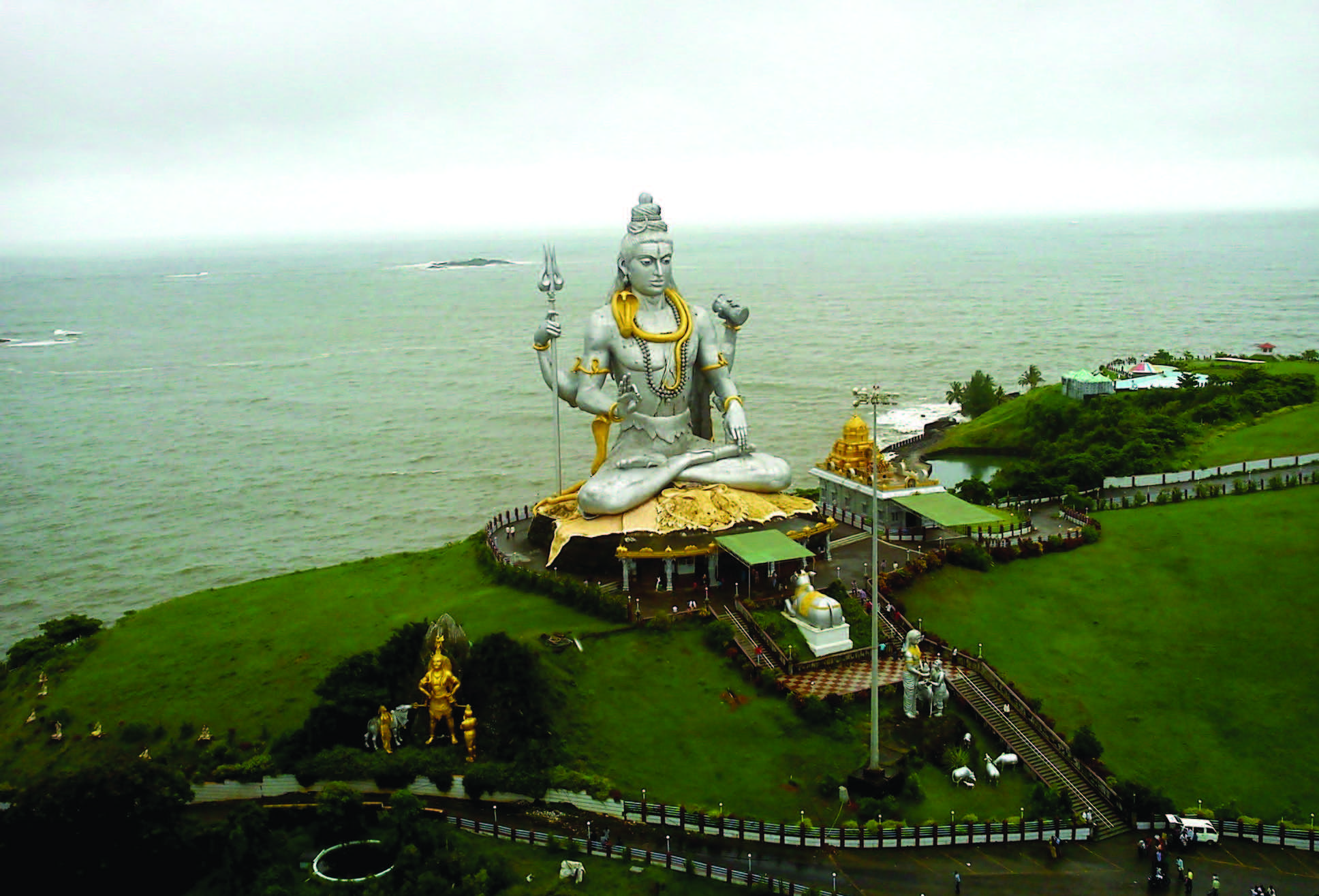
    Murudeshwar is a small little beautiful beach town with loads of tourists visiting to see the temples and to take a dip in the holy waters of this town. The town is in fact named after Lord Shiva.

    Shiva temple
    Murudeshwar is home to the second tallest Shiva statue in the world. Standing enormously tall at 123 ft, this statue is the main reason thousands of tourists throng to Murudeshwar.

    Raja Gopura
    At 18 to 20 storeys high, this tower was built by Mr R.N Shetty, a very well known businessman and philanthropist in Murudeshwar. To me it seemed like he practically owns the town. This Raja Gopura was built with a viewing gallery on the 18th floor so that everyone could witness the spectacular views from a height as well as get a great view of the statue of Lord Shiva.

    Murudeshwar beach
    While the beach is beautiful just as any other beach is to me, it is lined with small, cheap food stalls, crabs, garbage and locals who stare at you enough to make you uncomfortable. So Murudeshwar beach is preferably best scene from afar. However a trip to the beach really early in the morning might not be a bad idea.

    Netrani Island – Scuba diving & snorkelling
    A boat ride of around an hour and fifteen minutes from Murudeshwar beach gets you to Netrani Island. This is a small island, one that you don’t really need to get down on to. The boatmen will keep the boat parked close by to the island and you can jump in with a snorkel mask and have some fun. I’d recommend giving scuba diving a try. It is probably the next best thing to travelling into outer space as a lot of people say.

    How to get there
    By air
    The nearest airport is Mangalore at 165 kms away. It probably doesn’t make sense for people to fly in to Mangalore and then drive to Murudeshwar unless they’re coming from far up north and are really constrained on time.

    By rail
    Murudeshwar is well connected on the Konkan railway line with a few trains daily connecting it to Goa and onwards to Mumbai.

    By road
    The journey from Pune to Murudeshwar is over 600 kilometres. We left in a friend’s car at 7:45am, not bad considering our targeted time of departure was to be 6:30am. While getting out of Pune, head in the general direction that you would to go to Goa. You could go up till Goa and then drive southwards but it is a better idea to travel through the interiors of Karnataka via Hubli and reach Murudeshwar directly. The time taken for this journey was around 11 hours with enough leisurely tea and eats stops.

  • 40 Muslim rebels killed in Philippine offensive

    40 Muslim rebels killed in Philippine offensive

    MANILA (TIP): Philippine troops have killed at least 40 Islamic fighters and captured a rebel stronghold with a bomb-making facility in a two-day offensive against insurgents opposed to a new peace deal, military officials said Thursday.

    President Benigno Aquino III said the military launched the assault to protect villages after Bangsamoro Islamic Freedom Movement fighters staged attacks in southern Maguindanao province. Troops were aiming “to seriously degrade their abilities to again act as spoilers,” Aquino told reporters.

    The rebels involved in the fighting have opposed peace talks between the government and the larger Moro Islamic Liberation Front, which were concluded over the weekend in Malaysia. They have promised to continue their uprising because the Malaysian-brokered talks would not lead to a separate homeland for minority Muslims in the south. Regional military spokesman Col. Dickson Hermoso said 12 of the slain rebels have been identified with the help of village leaders, while others were found buried in graves in and near Ganta village in Maguindanao.

    The fighting left one soldier dead and 12 others wounded by bombs hidden around a mosque and by rebel mortar fire, Hermoso said. After two days of attacks, army troops captured a key rebel stronghold Wednesday that spanned two villages in a swampy mountain foothill in Maguindanao where the insurgents made bombs and carried out combat training. Several bombs and materials for making explosives were seized by troops, Hermoso said. “It’s like a bomb factory,” Hermoso said. “We don’t negotiate with groups like this who threaten innocent civilians. We run after them to enforce the law.”

    The offensive, which was supposed to end Wednesday, would be extended up to Saturday as troops pursue the retreating rebels, who have split into smaller groups, he said. Rebel spokesman Abu Misry disputed the military report, saying there have been no deaths and only seven insurgents had been wounded in army shelling and helicopter rocket fire. About 10,000 villagers have fled the fighting, which underscored the difficulty of ending violence in the country’s south.

    Aside from the main Moro rebel group that concluded negotiations Saturday with the government for a new Muslim autonomy deal in the south, at least four other smaller insurgent groups threaten the peace in the region. Those groups include the Bangsamoro Islamic Freedom Movement and the smaller but more brutal Abu Sayyaf, which is notorious for bombings, kidnappings for ransom and beheadings. Aquino said the new peace deal would bring the government and the 11,000-strong main Moro rebel group together to pursue outlaws who have long thrived in the conflict.

  • Justin Bieber charged with assault in Canada

    Justin Bieber charged with assault in Canada

    TORONTO (TIP): Canadian police charged Justin Bieber on January 29 with assaulting a limousine driver in Toronto in December, the latest in a string of legal troubles for the young pop star.

    The incident happened in the early hours of December 30, when the limousine picked up six people including Bieber, 19, outside a Toronto nightclub, police said in a statement. Bieber struck the limousine driver on the back of the head several times during an altercation on the way to a hotel, police said.

    The driver got out and called police, but Bieber left before they arrived, according to the statement. A Canadian lawyer for the pop star issued a statement that said Bieber is innocent and because the matter is before the courts, it would be inappropriate to address the specifics of the allegation. Bieber’s legal team expects the matter will be treated as a summary offence, the equivalent of a misdemeanor in the United States. The pop star is scheduled to appear in a Toronto courtroom on March 10.

    Bieber was charged after appearing at a Toronto police station on Wednesday evening. He arrived in a black SUV and was met by a crowd of journalists and screaming fans, who braved temperatures of minus 10 Celsius (14 Fahrenheit). Wearing a baseball cap on backwards and hooded black coat, Bieber was mobbed by photographers and fans pushing for a closer look as bodyguards and police officers cleared a path for him to enter the station.

    Facing florida charges

    Bieber has been in trouble with authorities in the United States this month. He was charged with driving under the influence in Miami after police say he was caught drag racing a rented Lamborghini. Police said Bieber told them he had taken prescription medicine, smoked marijuana and consumed alcohol.

    According to court records, he pleaded not guilty on Wednesday to those charges. If convicted, Bieber could face up to six months in prison, although experts say he is likely to receive a lighter sentence because it would be his first offence. Bieber is scheduled to make a court appearance on February 14 to formally answer those charges. He was also charged with driving on an expired license and resisting arrest.

    Also on Wednesday, an online petition asking the administration of President Barack Obama to deport Bieber from the United States following his Miami arrest passed the 100,000-signature threshold required for a White House response. Bieber is unlikely to be deported because federal law dictates that a visa can only be revoked or denied for a conviction of a violent crime with a minimum one-year prison sentence.

  • Raj links: British PM’s ancestry traced to Kolkata

    Raj links: British PM’s ancestry traced to Kolkata

    LONDON (TIP): British PM David Cameron’s ancestry has been traced to India, specifically Kolkata. This comes just months after Prince William was found to have Indian blood in him and a direct descendent of an Indian woman.

    An exhaustive analysis into the Cameron’s ancestry has revealed that he and comedian Al Murray are cousins connected through William Makepeace Thackeray, the author of Vanity Fair. William was born in Kolkata on 18 July 1811. He was sent to England in 1815 after the death of his father.

    Speaking exclusively to TOI, Myko Clelland, family historian said, “Documents from the British Raj that were made available online on Wednesday by the British Library shows that both Cameron and Murray’s family were very high up in the East India Company and for generations the two families administered India. Records then show that they inter married and the blood lines mixed making Murray and Cameron distant cousins.”

    Records published online by leading family history organization “Findmypast” shows that Cameron is William’s first cousin five times removed through his direct ancestor John Talbot Shakespear. Murray is William’s great great great grandson. Shakespear is Cameron’s great great great great grandfather and William’s uncle. He was a senior civil servant with the East India Company. William wrote about East Indian civil servants and colonial adventurers.

    “His characters may have been inspired by Cameron’s relatives,” the experts said. His father Richmond Thackeray was born in South Mimms, Hertfordshire and travelled to India in 1798 aged 16 to work as a writer (civil servant) with the East India Company. He later rose to the position of secretary to the Board of Revenue. His mother Anne Becher was the second daughter of John Harman Becher who was also a secretary (writer) for the East India Company.

  • Nurse wins Britain’s top literary award

    Nurse wins Britain’s top literary award

    The Shock of the Fall – the story of two brothers dealing with schizophrenia by first time author and mental health nurse Nathan Filer has edged past some of the established names in modern day storytelling to win the 2013 Costa Book of the Year – one of UK’s most prestigious literary prizes.

    Announced on Tuesday, Filer won against some well known writers including Kate Atkinson who was the bookmaker’s favourite for Life After Life. Filer (32) is a writer and lecturer in creative writing at Bath Spa University. He is a qualified mental health nurse and for many years worked for the mental health service in Bristol where he still lives. The Shock of the Fall was subject to an eleven-way auction and bought by HarperCollins for a substantial six figure sum.

    Filer said, “I wrote this book because I want to share it, I wasn’t writing it for myself. I always wanted people to read it and winning this means more and more people will read it so I’m absolutely delighted by that.” Filer beat biographer Lucy Hughes-Hallett for The Pike, poet Michael Symmons Roberts for Drysalter and author and political cartoonist Chris Riddell for Goth Girl and the Ghost of a Mouse to win the prize and a cheque for £30,000. Rose Tremain CBE, chair of the final judges, said, “This book stood out in a very good list.

    The voice in which the author has chosen to tell his story is perfectly aligned with the subject matter and was very well sustained to the end.” She added, “The book is exceptionally moving without being sentimental – we’re very much hoping there will be more from this writer.” The Shock of the Fall tells the story of Matthew and Simon, two brothers who are separated yet united by a tragic accident. Exploring themes of loss, grief and mental illness, the novel transports the reader directly into the mind of Matthew and his slow descent into madness as he confronts his role in the childhood death of his older brother 10 years ago.

  • OBAMA VOWS TO ACT ALONE ON ECONOMY

    OBAMA VOWS TO ACT ALONE ON ECONOMY

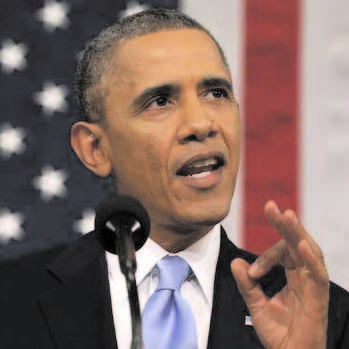
    WASHINGTON (TIP): Declaring that 2014 can be the “breakthrough year” for America and the US is “better-positioned for the 21st century than any other nation on Earth”, US President Barack Obama warned the country’s lawmakers on January 28 that he would use his executive powers to boost economic recovery and narrow the gap between rich and poor if they did not move on critical legislation.

    Obama used his fifth State of the Union address, the first in his second term, to challenge Republicans in a gridlocked Congress that he feels has thrown sand in his economic agenda, urging them to pass laws relating to minimum wage, immigration reform, and tax code, among other issues, to take advantage of the growing momentum in the US economy.

    “For the first time in over a decade, business leaders around the world have declared that China is no longer the world’s number one place to invest; America is… and over half of big manufacturers say they’re thinking of insourcing jobs from abroad,” Obama told lawmakers in a 70-minute address that contained an upbeat assessment of the US economy, even as he railed about stagnant wages — while the rich got richer — because of divisive politics in Washington.

    “So let’s make that decision easier for more companies. Let’s end incentives to ship jobs overseas, and lower tax rates for businesses that create jobs right here at home,” he added, warning that while he was eager to work with Congress on legislation, he would take executive steps whenever and wherever he could to expand opportunity for Americans. The president’s tone could result in a sharp uptick in Washington’s confrontational politics where legislators jealously guard their law-making privileges.

    Obama announced an executive order raising minimum wage for workers employed by federal contractors to $10.10/hour, and urged businesses across the country to follow suit without waiting for legislation. Many lawmakers are reluctant to back this move believing it will adversely affect businesses and their ability to add jobs. In an address that was light on foreign policy and did not contain any reference to India, Obama also outlined a new paradigm on overseas wars, saying he will not send US troops into harm’s way unless it is truly necessary, nor will he allow them to be mired in open-ended conflicts.

    “We must fight the battles that need to be fought, not those that terrorists prefer from us — large-scale deployments that drain our strength and may ultimately feed extremism,” he added, effectively signaling an end to the Bush-era policy of taking on terrorists on their home turf. Specifically on Afghanistan, he said a small force of Americans could remain in the country with Nato allies to carry out two narrow missions: training and assisting Afghan forces and counterterrorism operations to pursue any remnants of al-Qaida. According to a CNN/ORC International survey, only three in 10 Americans think Obama should make unilateral changes to deal with major issues. Forty-four per cent of respondents had a very positive reaction, with 32% saying they had a somewhat positive response and 22%with a negative response.

  • South Sudan to try rebel leaders, risking ceasefire

    South Sudan to try rebel leaders, risking ceasefire

    JUBA (TIP): South Sudan released seven rebel detainees January 30 but vowed to put on trial key leaders accused of launching weeks of fighting, a move likely to threaten a fragile ceasefire.

    The sides implemented the ceasefire last Friday, but combat has only eased, not ended, with reports of continuing clashes and a worsening humanitarian crisis that has left thousands dead and forced almost 800,000 to flee their homes. Four leaders remain in custody in South Sudan, facing trial for attempting to topple President Salva Kiir after fighting broke out in the capital Juba on December 15.

    Kiir accused his sacked deputy Riek Machar and other former officials of fomenting a coup against his government. Eleven ex-officials were arrested, while Machar — who denied any coup plot — fled. Fighting quickly spread across the country. Aid groups say up to 10,000 people have been killed in the conflict, although many fear more may have died. United Nations aid chief Valerie Amos wrapped up a three-day visit Wednesday to the war-torn country, where she saw the results of over six weeks of bloodshed, with horrific atrocities reported to have been committed by both sides.

    “The future of South Sudan rests on all the people being able to work together,” she said, after a tour in which she saw food stores looted of tonnes of food aid, in devastated towns where workers were still burying those recently killed in the fighting. The fighting has seen waves of brutal revenge attacks, as fighters and ethnic militia use the violence to loot and settle old scores. South Sudan’s Justice Minister Paulino Wanawila said Tuesday that the four men in detention will face trial while three others, including Machar, will face justice if caught.

    “If someone violates the law you don’t go and torture that person, you prosecute that person according to the law,” he said. ‘Things may get worse before they get better’ But the release of all the prisoners has been a key demand of the rebels, and Kenya’s foreign ministry said it was “still negotiating for the release of the remaining four.” The United States urged Juba to free the remaining detainees to help boost political reconciliation, as it welcomed the releases as an “important step towards an inclusive political dialogue”. John Luk Jok, a former justice minister, spoke on behalf of those released, who appeared in apparent good health.

    “We don’t feel bitter, we only feel sad that the crisis in our country is happening just after our independence,” he said. “We don’t see our president as our enemy.” Many fear the conflict has slid out of the control of political leaders, with ethnic violence and revenge attacks between the Dinka people of Kiir and the Nuer of Machar, the country’s two largest groups. Over 76,000 civilians are still sheltering inside UN peacekeeping bases. Government and opposition rebels are still fighting for control in key areas, with the United Nations calling the situation “fragile”.

  • Ukraine lawmakers offer protester amnesty

    Ukraine lawmakers offer protester amnesty

    KIEV, UKRAINE (TIP): Ukraine’s Parliament has passed a measure offering amnesty to arrested protesters, but only if demonstrators vacate most of the buildings they occupy.

    The measure, passed on January 29 after nearly 12 hours of negotiation, was not supported by the opposition parties driving the two months of protests that pushed the country into crisis. Protesters occupy at least three buildings in the Ukrainian capital which they use as dormitories and operation centers, and are key support facilities for the extensive protest tent camp on the city’s main square.

    With temperatures dropping as low as minus 20 Celsius (minus-4 Fahrenheit) during the night, continuing the protests without places to shelter would be virtually impossible. Along with the logistical issues, the amnesty offer is likely to offend protesters because they regard it as fundamentally illegitimate in the first place, and the authorities are showing no sign of addressing any of the issues at the heart of the protests. Viktor Chumak of the opposition party Udar said Wednesday that 328 people have been arrested in the course of the protests and “are hostages of the authorities,” the Interfax news agency reported.

  • Space tour? Chinese not allowed: UK firm

    Space tour? Chinese not allowed: UK firm

    Chinese nationals have been banned from flying on the commercial space flights operated by Virgin Galactic over fears that the rocket technology being implemented will be stolen.

    This is due to the fact that the British firm will be launching its craft from the US, where strict antiespionage regulations introduced during the Cold War still restrict the privileges of citizens from countries such as China, Iran and North Korea. Because Galactic’s craft are powered by rocket engines it is seen as a potential military technology and covered by the US’s International Traffic in Arms regulations.

    “We have had calls from people in China but we have to tell them we can’t accept them if they only have a Chinese passport,” said Hong Kong-based Virgin Galactic salesman. “We advise them on how they can make themselves eligible for a space tour. For example, they can get another nationality’s passport or they can apply for a (US) Green Card.” The news certainly deprives Virgin Galactic of access to a huge potential market of wealthy Chinese businessmen willing to pay the $250,000 ticket price for a space flight, but the company might also have more substantial problems. the independent

  • Libya interior minister escapes assassination bid: Report

    Libya interior minister escapes assassination bid: Report

    TRIPOLI (TIP): Libya’s interior minister escaped unscathed from an assassination attempt in Tripoli on January 29, the LANA news agency reported.

    Seddik Abdelkarim, who is also deputy prime minister, was in his car when “unknown gunmen fired a barrage of bullets” at the vehicle, the agency said, adding that no one was killed or wounded in the attack.

    Libya has grappled with widespread unrest since rebels overthrew and killed long-ruling dictator Moamer Kadhafi in a Nato-backed uprising in 2011.

  • London ‘Run for Unity’a Grand Success: Jolly

    London ‘Run for Unity’a Grand Success: Jolly

    Gujarat Leader Amit Thaker mandated for organizing ‘Run for Unity’ globally

    NEW DELHI (TIP): Encouraged by the success of London Run for Unity, OFBJP Convener Vijay Jolly announced January 29 that “Run for Unity” programs will be organized in various countries soon.

    Jolly mandated OFBJP Co-Convenor & Gujarat leader Amit Thaker to coordinate globally the “Run for Unity” programs. Thaker will plan, propose, organize & coordinate all such programs in close association with OFBJP units in USA, UK, Norway, Sweden, Denmark, Nepal, Mauritius, Canada, Kenya, Nigeria etc.

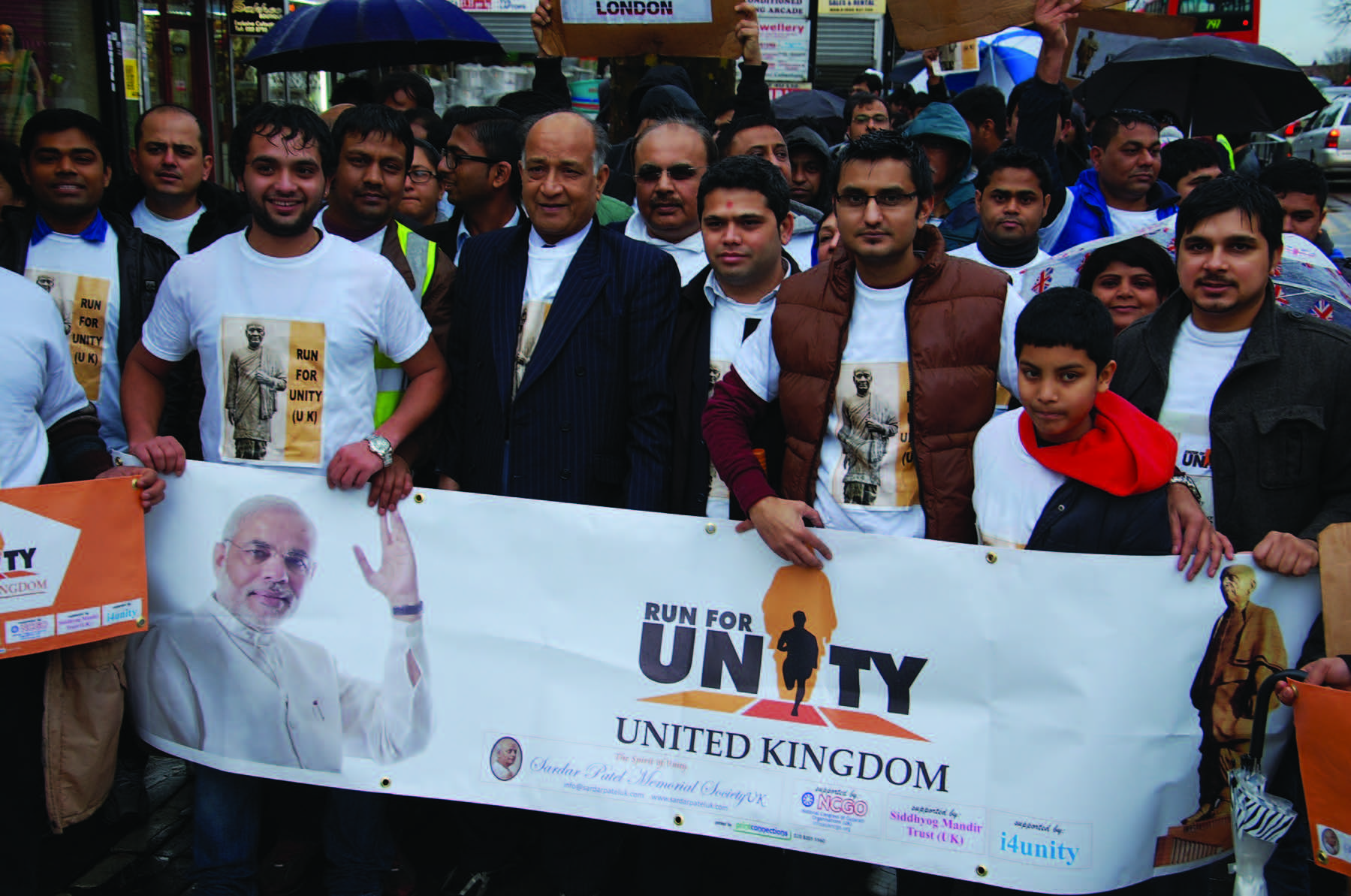
    Jolly claimed that “RUN FOR UNITY” recently organized in London attracted a large crowd of NRI’s. The UK program was organized by “14 – Unity” a young professional group in UK led by dynamic Nachiket Joshi, OFBJP Central Committee Member (Bharat) and permanently based in London. Gujarati, Punjabi and English British leaders participated along with young boys & girls.

    Over 1000 strong crowd and participants walked in pouring rain wearing raincoats & carrying umbrellas in severe cold London weather, stated OFBJP leader Vijay Jolly. Cheering for “Modi” and national unity, wearing T-shirt of Sardar Patel’s image, the ‘London Run for Unity’ was flagged off by Bob Blackman, British MP & Chairman of All Party Parliamentary Group for British Hindus.

    Bob, in his speech on the occasion pledged British support for Modi and hoped that trade between UK & India will increase “ten -times” in case Narendra Modi became PM of India. Muhammad Butt, leader of London Council, Lord Sardar Singh, Virendra Sharma South Hall MP, C.B. Patel Chairman Asian Voice & Gujarat Samachar, Lalu Bhai Parekh (OFBJP, UK President), Councilor Darshan Grewal (OFBJP-UK Vice President), P.G. Patel Chairman SPMS, UK, Mahendra Jadeja Sec. Gen. of NCGO, C.J. Robheru, Narendra Thakran, Vinod Halai, Dr. M. Ambekar etc. participated in the historic program in London.

  • JAYA TO STAND TRIAL IN INCOME TAX CASE

    JAYA TO STAND TRIAL IN INCOME TAX CASE

    NEW DELHI (TIP): In a major setback to Tamil Nadu chief minister J Jayalalithaa, the Supreme Court rejected her appeal against prosecution by the Income Tax department for not having filed tax returns between 1991 and 1994.

    The apex court verdict now paves the way for prosecution against Jayalalithaa who will now stand trial in Tamil Nadu. The court has also ordered the trial be completed within 4 months.

    In 1996-1997, Income Tax authorities had field criminal cases against Jayalalithaa and her associate N Sasikala for not having filed tax returns for the assessment year 1993-94. Jaya’s contention that she had not filed returns as she did not have any taxable income during that year and that there was no tax evasion was rejected by the Income Tax department, which argued that filing of tax returns was mandatory.

  • CONGRESS MLA DISRUPTS KEJRIWAL CONFERENCE, CALLS HIM A CHEAT

    CONGRESS MLA DISRUPTS KEJRIWAL CONFERENCE, CALLS HIM A CHEAT

    NEW DELHI: A Congress MLA Thursday today disrupted Delhi chief minister Arvind Kejriwal’s press conference saying that the Aam Aadmi Party government were biased against Muslims and called him a cheat.

    Demanding an SIT probe into the Batla House encounter, Asif Mohammad Khan lashed out at Arvind Kejriwal saying why was the Delhi government not demanding a probe in the controversial Batla House encounter. NDTV quoted the MLA saying: ‘Today they refused to take any action on the Batla House encounter.

    Why make promises when you will not take any action? In your (AAP’s) manifesto – the Batla House encounter was a point.’ The Congress MLA accused Kejriwal of not being concerned about Muslims and said that the AAP backtracked on their promise on a judicial probe into the Batla House encounters.

    “He (Kejriwal) had promised the people of Okhla that he will probe the Batla House encounter case, and had even distributed handbills saying the same,” said Khan, adding that Kejriwal is now backtracking from his promise. Arvind Kejriwal held a press conference in the capital to mark a month’s completion by his government in Delhi.

  • SUBSIDISED LPG CYLINDER HIKED TO 12

    SUBSIDISED LPG CYLINDER HIKED TO 12

    NEW DELHI (TIP): The Union Cabinet has approved raising the quota of subsidised LPG (cooking gas) to 12 cylinders per household in a year from current nine, Petroleum Minister Veerappa Moily announced at a press conference on January 30.

    The Cabinet Committee on Political Affairs decided to allow households to get one subsidised LPG cylinder a month from February. The government currently spends Rs 46,000 crore on LPG subsidy every year. This increase in subsidised LPG quota will cost the exchequer Rs 5,000 crore more in subsidy.

    The decision comes soon after Congress vice president Rahul Gandhi demanded an increase in the quota of subsidized cooking gas cylinders to 12 from 9 at the party’s conclave in New Delhi. “We cannot do with only nine cylinders, we need 12 cylinders per family,” he had said, addressing Prime Minister Manmohan Singh. The Cabinet also put on hold the Aadhaar-linked transfer of LPG subsidy to bank accounts, Moily said.

  • Andhra Pradesh legislature rejects Telangana bill

    Andhra Pradesh legislature rejects Telangana bill

    HYDERABAD (TIP): Both houses of the Andhra Pradesh legislature, by a voice vote on January 30, rejected the Andhra Pradesh Reorganisation Bill 2013 on creating a separate Telangana state but this may not deter the central government from tabling the bill in parliament next month.

    Congress general secretary Digvijaya Singh said the resolution would have no impact on the process for formation of Telangana state as the bill was sent to the state legislature only for its views. Digvijaya Singh, who is incharge of Congress party affairs in Andhra Pradesh, told reporters in New Delhi that the union cabinet would meet and incorporate in the bill any good suggestions made by the state legislature before tabling the bill in parliament.

    Amid protests by legislators from Telangana, the presiding officers in the legislative assembly and the council announced that official resolution for rejecting the bill were carried and adjourned the houses sine die. Speaker N. Manohar announced passing of a resolution moved by Chief Minister N. Kiran Kumar Reddy. In the council, Chairman A. Chakrapani declared that a resolution moved by Endowments Minister C. Ramachandraiah is carried.

    The chief minister, in his resolution, has urged President Pranab Mukherjee not to refer the bill to parliament as it seeks to bifurcate the state without any reason and consensus and in utter disregard to linguistic and cultural homogeneity and economic and administrative viability of both the regions. “Almost all the members have expressed their views in writing which will form part of official records.

    Proposals for amendments and expression of views in writing by the members on the clauses numbering 9,072 received from members will also form part of official records,” Manohar said amid slogans by members from both Telangana and Seemandhra. He declared that the official records would be submitted to president as views of the house. Chakrapani made a similar announcement in the council. However, no voting on the bill was conducted as was demanded many a times by the chief minister and other legislators from Seemandhra. Interestingly, leaders of both Telangana and Seemandhra interpreted Thursday’s developments as their victory.

    While Telangana leaders claimed that with the completion of the debate on the bill, a major milestone was achieved in the process for formation of new state, their counterparts from Seemandhra said with the passing of resolutions, the legislature has unanimously rejected the state’s bifurcation. Deputy Chief Minister Damodar Rajanarasimha Thursday said with the bill being sent back to the president, their goal was achieved. “The dream of the people of Telangana will soon become a reality,” he said. Telangana Rashtra Samithi (TRS) chief K. Chandrasekhara Rao exuded confidence that separate Telangana state will come into existence in 15 days.

  • Pervez Musharraf’s treason trial adjourned

    Pervez Musharraf’s treason trial adjourned

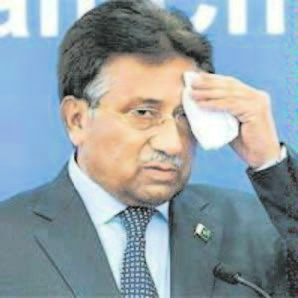
    ISLAMABAD (TIP): Former Pakistani dictator Pervez Musharraf’s treason trial was on January 29 adjourned for a day after his lawyers sought time to go through prosecution’s objections to his medical report.

    Musharraf’s counsel Anwar Mansoor said he is yet to go through the objections raised by prosecutor Akram Sheikh against the 70-year-old’s medical report issued by the Armed Forces Institute the of Cardiology (AFIC) and prepare himself for arguments. Mansoor also sought time from the special court conducting the trial as Musharraf’s legal team was busy at the Supreme Court with the hearing of a review petition filed by the former President against the apex court’s verdict relating to the emergency imposed in November 2007.

    He said that it was imperative for the legal team to appear in the Supreme Court on Wednesday and sought adjournment of the hearing in the treason trial until the apex court issued its verdict over the review petition. Justice Faisal Arab, heading the threemember bench, said court proceedings could not be halted until the apex court issued a stay order over the matter. Arab said that the defence team would also have to submit a request for the exemption of Musharraf’s appearance in the special court.

    He said adjournment and exemption from hearing were two separate matters. Chief prosecutor Sheikh told the court that the objections over Musharraf’s medical report had been timely submitted in writing and that a copy of the objections was given to the defence team. The court then issued a notice to the defence counsel over the prosecuting team’s request to summon Maj Gen Syed Imran Majeed, commandant of the AFIC, for cross-examination. In a plea submitted on Tuesday, the prosecution had sought crossexamination of the head of the AFIC, where Musharraf has been admitted since January 2.

    Shiekh reiterated his objections to the medical report, which he said should be disregarded outrightly as it was evasive and contrary to the established practice in the field of cardiology. “But if the court wishes to give any weight to this report, the prosecution requests for summoning at least the president of the medical board, Major General Syed Muhammad Imran Majeed, to cross examine him for the limited purpose of his findings…to evaluate his report,” Sheikh argued. Musharraf faces treason charges for abrogating the Constitution and imposing an emergency in 2007. There has been widespread speculation that his ill-health would be used to allow him to leave Pakistan for treatment.

  • Malala book launch scrapped at Pakistan university

    Malala book launch scrapped at Pakistan university

    ISLAMABAD (TIP): A ceremony to launch teenage rights activist Malala Yousufzai’s book at a Pakistan university has been scrapped on the Khyber-Pakhtunkhwa government’s intervention on the grounds that it could not provide security for the event.

    The book ‘I am Malala’ was to be launched on Tuesday at the University of Peshawar. The Bacha Khan Education Foundation (BKEF), Strengthening Participatory Organisation (SPO) and Area Study Centre had planned the ceremony. “It (cancellation of the launch) is against the spirit of freedom of expression and promotion of education because holding a ceremony in honour of Malala Yousufzai means to scale up awareness about child rights,” Dr Khadim Hussain, director of the BKEF was quoted as saying by the Dawn daily.

    He said they had been informed by police late Monday that they could not provide security for the programme. “I was stopped by many people, including ministers, the vice-chancellor, registrar and police, from holding the programme,” Area Study Centre’s director Sarfraz Khan said. The Pakistani Taliban, which had shot at Malala in 2012, had earlier warned shopkeepers in the region not to keep the book in their stores.

    The report of the government stopping the book launch was criticized by many on various social media networks. “Pathetic of gov to ban #Malala’s book. This is censorship ! Where is our freedom of speech and expression?,” Aseefa Bhutto Zardari tweeted. Adil Ansari, the head of cricketer-turned-politician Imran Khan’s party’s social media wing tweeted, “Launching of book ‘I Am Malala’ was being organized at Pak Area Study Center, Peshawar University which is violation of rules & regulations”.

  • Thousands protest against government in Sri Lanka

    Thousands protest against government in Sri Lanka

    COLOMBO: Thousands of protesters from opposition parties, human rights groups, trade unions and media groups marched on Monday in Sri Lanka’s capital in a rare show of dissent against the government.

    They held separate marches in Colombo, shouting slogans which accused authorities of corruption and mismanagement, and later came together for joint rally. Tissa Attanayake, an opposition lawmaker, said law and order has broken down in the country and the government has politicized judicial institutions.

    The demonstrators also protested attacks on journalists who have been critical of the government, holding banners that read “Stop Suppressing Media.” Government spokesman Keheliya Rambukwella rejected the accusations, saying, “This is a democratic country and everyone has the right to demonstrate and protest.” He said investigations of attacks on journalists were continuing. President Mahinda Rajapaksa has used his party’s overwhelming majority in Parliament and gained through the popularity of winning a civil war against ethnic Tamil rebels to expand his power.

    He abolished a two-term presidential limit, scrapped independent commissions and took over their power to appoint top judges and police. His party also voted last year to oust the country’s first female chief justice, and Rajapaksa appointed his own aide to that position. Sunil Jayasekara, convener of the Free Media Movement, said his group joined the protest to highlight high-profile attacks on media institutions and journalists that have occurred in January in recent years.

    During that month in the past five years, an outspoken editor was killed, a private television station was attacked, an online journalist went missing and his office was set on fire. Jayasekara said his group is not satisfied with the investigations of those attacks, in which no suspects have been arrested. More than 80 journalists have fled Sri Lanka since 2005. The government has been accused of failing to properly investigate a series of attacks on journalists who were viewed as critical of the administration.

  • Despite attacks, Pak PM for talks with Taliban

    Despite attacks, Pak PM for talks with Taliban

    ISLAMABAD (TIP): Despite a wave of deadly attacks unleashed by the Taliban across the country in recent months, Prime Minister Nawaz Sharif on January 29 announced the formation of a four-member committee to pursue peace talks with the militants.

    In a speech in the National Assembly, Sharif said terrorism must be defeated either by talks or force, but promised to give peace another chance. “I am sure the whole nation would stand behind the government if and when we launch a military operation against the terrorists, but I want to give peace a final chance,” he told lawmakers, adding that bitter experiences of the past had propelled the government to launch talks.

    “Acts of terror must stop. Terrorism and talks cannot continue simultaneously,” he said before announcing the formation of a four-member committee of nonparliamentarians to initiate the dialogue process between the government and militants.

  • Afghanistan to free 37 prisoners soon despite US protests

    Afghanistan to free 37 prisoners soon despite US protests

    KABUL (TIP): Afghanistan said on January 28 it expects to release within two weeks a first batch of alleged Taliban prisoners, who the US says are responsible for dozens of NATO and Afghan deaths.

    Kabul announced on January 9 that a total of 72 detainees held at Bagram jail near Kabul would be freed due to lack of evidence, and an official said today that 37 were to be released initially. The US military force in Afghanistan condemned the news of the releases, saying the prisoners were “dangerous insurgents” who had “Afghan blood on their hands”.

    The issue threatens further to strain US-Afghan relations, amid pressure for the two countries to sign a long-delayed security deal allowing some American soldiers to stay in the country after 2014. Abdul Shukur Dadras from the government body reviewing detainees at Bagram, which was previously run by US forces, said 37 prisoners would be released soon.

    “Their dossiers are reviewed, completed and we have ordered their release,” Dadras told AFP. “They will be released from the prison after the required technical and security procedures are completed. This will, I think, take more than one week and less than two weeks.” Dadras also said the review of the remaining prisoners was continuing.

    Amid resurgent Taliban violence, US-Afghan relations are strained over a number of issues including President Hamid Karzai’s refusal to sign a pact governing Washington’s future military role in Afghanistan. “The ARB ( Afghan Review Board) is releasing back to society dangerous insurgents who have Afghan blood on their hands,” the US military in Afghanistan said in a statement. It said 17 of those about to be freed were linked to improvised explosive device attacks, the deadliest of the Taliban’s weapons, while others were connected to the deaths or wounding of 11 Afghan and 42 US or coalition soldiers.

  • Sushil Koirala leads race to become Nepal’s new PM

    Sushil Koirala leads race to become Nepal’s new PM

    KATHMANDU: Nepali Congress president Sushil Koirala January 28 became the favourite to be Nepal’s new prime minister after he was elected the leader of the Nepali Congress parliamentary party defeating his competitor Sher Bahadur Deuba, a three-time former prime minister.

    Nepali Congress emerged the largest party in the November elections with 196 seats in the 601- member Constituent Assembly that also acts as the parliament. Nepal’s interim constitution mandates for a national consensus government failing which a majority government will be formed

  • Challenges in Indo-Pacific Region

    Challenges in Indo-Pacific Region

    INDIA MUST PLAY A PROACTIVE ROLE FOR LONG-TERM SECURITY AND STABILITY

    It would be in India’s interest to readily join cooperative efforts aimed at maintaining stability. India has acquired robust military intervention capabilities and is formulating a suitable doctrine for intervention”, says the author.

    The security environment in the Indo- Pacific region has been vitiated by territorial disputes on land in the South China Sea and the East China Sea as well as terrorism, the proliferation of small arms and piracy in the Malacca Strait. Freedom of navigation on the high seas is of critical importance for the economies of most Asian countries.

    Maintaining peace and stability and ensuring the unfettered flow of trade and energy supplies through the sea lanes of communications will pose major challenges for the Asian powers as well as the United States. Only cooperative security architecture can provide long-term stability and mutual reassurance. Through its forward military presence and its abiding military alliances, the US has played a key role in providing stability in the Indo-Pacific region through many decades of turbulence during and after the cold war.

    The US is now re-balancing or ‘pivoting’ from the Euro-Atlantic zone to the Indo-Pacific in tune with its changing geo-strategic priorities and the rise of emerging powers. It is also simultaneously downsizing its forces and will need new strategic partners to help it maintain order and stability. According to Rory Medcalf, Senior Fellow, Brookings Institution, Washington, “the choreography of this geopolitical interplay will depend on the quality of leadership and decisionmaking in Beijing, New Delhi and Washington.”

    As C Raja Mohan has averred in his book “Samudra Manthan: Sino-Indian Rivalry in the Indo-Pacific”, the major powers in the region, including Australia, China, India, Indonesia, Japan and the US, need to work creatively to frame acceptable rules for the commons in the Indo-Pacific. Unless such realization comes about, subterranean tensions will continue to hamper stability. China has so far been ambivalent in seeking to join a cooperative framework and has preferred to stand apart. It has failed to realize that its growing trade and massive dependence on energy imports through the Indian Ocean make it imperative for it to join the efforts being made to establish such a framework.

    It would be in India’s interest to readily join cooperative efforts aimed at maintaining stability. India has acquired robust military intervention capabilities and is formulating a suitable doctrine for intervention. Though India has a pacifist strategic culture rather than a proactive one that nips emerging challenges in the bud through pre-emption, it has not hesitated to intervene militarily when its national interests warranted intervention, both internally and beyond the shores. The Army was asked to forcibly integrate the states of Goa, Hyderabad and Junagadh into the Indian Union soon after Independence as part of the nation-building process. The Indian armed forces created the new nation of Bangladesh after the Pakistan army conducted genocide in East Pakistan in 1971.

    India intervened in the Maldives and Sri Lanka at the behest of the governments of these countries and was ready to do so in Mauritius in 1983 when the threat to the government there passed. India had airlifted 150,000 civilian workers from Iraq through Jordan during Gulf War I in what became known as the largest airlift after the Berlin airlift. Also, almost 5,000 civilian workers were evacuated by ship from Lebanon in 2006. After the 2004 South-East Asian tsunami, 72 naval ships had set sail within three days to join the international rescue and relief operations even though India’s eastern sea board had itself suffered extensive loss of life and damage. India’s limited military presence overseas has been mostly benign.

    According to Shyam Saran, a former Foreign Secretary, “…most South-East Asian countries and Japan welcome a larger presence of Indian naval assets in the region.” As part of the Indo-US defense cooperation, joint patrolling of the SLOCs in the Indian Ocean is already being undertaken up to the western mouth of the Malacca Strait as part of joint naval exercises. Other military exercises have led to a broad understanding of each other’s military capabilities and limitations and many interoperability challenges have been ironed out. The Indian Army has designated one infantry division as a rapid reaction division, with an amphibious brigade, an air assault brigade and an infantry brigade. The Army also has an independent parachute brigade that can be deployed at short notice.

    The Indian Navy now possesses the INS Jalashva (USS Trenton) that can carry one infantry battalion with full operational loads and is in the process of acquiring additional landing ships. Besides long-range fighter-bomber aircraft with air-to-air refueling capability like the SU-30MKI, the Indian Air Force has acquired fairly substantive strategic airlift capabilities, including six C-130 Super Hercules aircraft for the Special Forces. A permanent corps-level tri-Service planning HQ with all-weather reconnaissance and surveillance capabilities needs to be set up under the aegis of the HQ Integrated Defense Staff to monitor emerging situations on a regular basis and act as a control HQ for intervention operations.

    In future, India may undertake joint military operations in its area of strategic interest if the country’s major national interests are at stake. Such a campaign may take the form of an intervention under the UN flag – something that India would prefer – or even a “coalition of the willing” in a contingency in which India’s vital national interests are threatened. There will naturally be several caveats to such cooperation as India will not join any military alliance. It will also be necessary to work with other strategic partners and friendly countries in India’s extended neighborhood and with organizations like the Gulf Cooperation Council (GCC), the ASEAN Regional Forum (ARF) and, when possible, even the Shanghai Cooperation Organization (SCO). The aim should be to establish consultative mechanisms through diplomatic channels for the exchange of ideas, and conduct joint training and reconnaissance. Small-scale joint military exercises with likely coalition partners help eliminate interoperability and command and control challenges and enable strategic partners to operate together during crises.