Month: January 2014

  • SIT TO PROBE ANTI-SIKH RIOTS: DELHI GOVT

    SIT TO PROBE ANTI-SIKH RIOTS: DELHI GOVT

    NEW DELHI (TIP): The Delhi Government on January 29 decided on a probe by a Special Investigation Team into the 1984 anti- Sikh riots, two days after Congress vice-president Rahul Gandhi said some of the partymen were probably involved in the violence but were punished.

    The politically sensitive decision to form the SIT to investigate the riots which left around 3,000 Sikhs dead following the assassination of the then prime minister Indira Gandhi on October 31, 1984, may create trouble in the relationship between AAP and Congress which has been providing outside support to Kejriwal dispensation.

    But the move was welcomed by riot victims with one of their prominent lawyers saying it gave them a “ray of hope”. “Government is going to form a SIT to probe the 1984 riots. The modalities of the probe will be discussed at a cabinet meeting on Friday. Lt Governor Najeeb Jung has in-principle agreed to the proposal to appoint the SIT,” PWD Minister Manish Sisodia told reporters. Earlier in the day, Chief Minister Arvind Kejriwal discussed the issue with Jung.

    To a query on effectiveness of SIT as the riots had taken place nearly 30 years back, Sisodia said “honest efforts will definitely yield results”. Two days back, in an interview to a TV channel, Gandhi had admitted that “some Congress men were probably involved in 1984 anti-Sikh riots and they have been punished for it”. Gandhi had insisted that the Congress government in 1984 “was not aiding and abetting the riots” but had tried to stop the violence.

    Congress leaders Jagdish Tytler and Sajjan Kumar are facing allegations of involvement in riots after Indira Gandhi was assassinated on October 31, 1984. Claiming that effective investigation into the anti-Sikh riots was part of AAP’s agenda, Sisodia said the party had held a day-long fast atJantar Mantar to express solidarity with the victims. Senior lawyer HS Phoolka, who joined AAP recently, said, “The decision of government to form SIT has given a ray of hope to riot victims that justice would be done to them.”

    Phoolka has been taking up the causes of victims of anti-Sikh riots. Phoolka said SIT should be formed on the lines of the special team which probed Gujarat cases. “Police officers from other states should head the SIT while Delhi police should only assist them,” said Phulka. Delhi Police and CBI have investigated the riots cases so far.

  • Supreme Court of India stays Bhullar’s execution

    Supreme Court of India stays Bhullar’s execution

    NEW DELHI (TIP): The Supreme Court on Friday, January 31, stayed the execution of Khalistani terrorist Devinderpal Singh Bhullar and agreed to review its judgment by which it had rejected the 1993 Delhi bomb blast convict’s plea to commute his death sentence to life term.

    A four-judge bench headed by Chief Justice P. Sathasivam issued notice to the Centre and Delhi government on a curative petition filed by Bhullar’s wife Navneet Kaur. The bench also comprising justices R.M. Lodha, H.L. Dattu and S.J. Mukhopadhaya directed the Institute of Human Behaviour and Allied Sciences (IHBAS), where Bhullar is being treated, to file a medical report within a week on the condition of the death convict who is alleged to be suffering from a mental illness.

    “We would examine whether our judgment (pertaining to commutation of death sentence to life term on the ground of delay in deciding the mercy plea) is applicable or not in this case,” the bench said, adding “we also want to know his present condition”. “We direct Institute of Human Behaviour and Allied Sciences to send to us a report on condition of Devinderpal Singh Bhullar within a week,” the bench said.

    The plea of Bhullar’s wife for commutation of death sentence assumes significance in view of the apex court’s January 21 verdict holding that inordinate and inexplicable delay by government in deciding mercy plea of death row convicts can be a ground for commuting their sentence. Bhullar’s wife has filed the petition for relook against the apex court verdict which rejected her plea to commute his death sentence to life imprisonment on grounds of delay on the part of the government in deciding his mercy plea.

    Bhullar was convicted and awarded death penalty for triggering a bomb blast in New Delhi in September 1993, which killed nine persons and injured 25 others, including then Youth Congress president M.S. Bitta. The apex court had on March 26, 2002 dismissed Bhullar’s appeal against the death sentence awarded by a trial court in August 2001 and endorsed by the Delhi High Court in 2002. He had filed a review petition which was also dismissed on December 17, 2002.

    Bhullar had then moved a curative petition which too had been rejected by the apex court on March 12, 2003. Bhullar,meanwhile, had filed a mercy petition before the President on January 14, 2003. The President, after a lapse of over eight years, dismissed his mercy plea on May 14, 2011. Citing the delay, he had again moved the apex court for commutation of the death sentence but his plea was rejected.

    The apex court on January 21 had held inordinate delay by government in deciding mercy plea of death row convicts can be a ground for commuting their sentence and had granted life to 15 condemned prisoners including four aides of forest brigand Veerappan. In a landmark judgment, the court had held that prolonging execution of death sentence has a “dehumanizing effect” on condemned prisoners who have to face the “agony” of waiting for years under the shadow of death during the pendency of their mercy plea.

  • ‘Former Pak Taliban head among 50 killed in military operations’

    ‘Former Pak Taliban head among 50 killed in military operations’

    PESHAWAR/ISLAMABAD (TIP): The former interim chief of the Pakistani Taliban was among 50 militants, including 36 foreign fighters, killed in heavy air strikes in the lawless North Waziristan region, military sources said on January 24.

    The Pakistan Air Force jets had bombed suspected militant hideouts in North Waziristan — a key haven for Taliban and al-Qaida elements — on Monday night, which was backed by army gunship helicopters. At least 50 militants were killed in the attack. “Most of the terrorists killed in North Waziristan strikes on night of January 20/21 are foreign fighters which include 33 Uzbeks, three Germans and reportedly important terrorist commanders,” a Pakistani military source said.

    He named the militant commanders as “Wali Mohammad (predecessor of Qari Hussain), Asmat Shahin Bittani, Noor Badshah and Maulvi Farhad Uzbek”. Bhittani served as the acting TTP chief after the killing of Hakeemullah Mehsud and also headed the Taliban supreme shura (decision-making council). Wali, alias Toofan, earlier headed the ‘fidayeen squad’. Pakistani combat jets had pounded militant bases in the North Waziristan, including the home of Taliban commander Adnan Rashid in retaliation for a string of deadly attacks on security forces. The operation by air force jets took many by surprise.

    This was the first time the air force resorted to air strikes in North Waziristan since a ceasefire was finalised with local Taliban chiefs in 2007. Meanwhile, minister for defence production Rana Tanveer said no military operation is being carried out in North Waziristan. Talking to mediapersons in Wah Cantonment on Wednesday, he said political and military leadership have unanimity of views with regard to the strategy on Taliban. He said decision whether talks or the operation will be taken in the next few days. The minister said some groups have been contacted for the dialogue process.

    North Waziristan is one of seven regions in Pakistan’s Federally Administered Tribal Areas governed by tribal laws. An insurgency led by the banned Tehrik-e-Taliban Pakistan plagues the region. Local media reports said many civilians have started moving out from North Waziristan fearing impending full-scale military operations.

  • President Hamid Karzai again asks US to end air strikes in Afghanistan

    President Hamid Karzai again asks US to end air strikes in Afghanistan

    KABUL, AFGHANISTAN (TIP): Afghanistan’s president demanded on January 21 that the United States no longer carry out military operations or air strikes and must jump-start peace talks with the Taliban before his country signs a security deal to keep US troops in Afghanistan after 2014.

    President Hamid Karzai’s deepening anti-American rhetoric comes as the Taliban intensifies its assaults ahead of the planned withdrawal and after Friday’s militant raid on a popular Kabul restaurant, the deadliest single attack against foreign civilians in the course of the nearly 13-year US-led war. Although Karzai has made similar demands in the past, he has in recent weeks ratcheted up his condemnations of alleged US failures as Afghans look fearfully ahead to an uncertain future. Karzai made the statement after being presented with the findings of an investigation into a joint Afghan-US military operation last week that resulted in civilian casualties which he blamed on a US military air strike.

    The US-led international military coalition, however, provided a sharply different account Sunday of what happened during the two-day operation against insurgents in eastern Parwan province, saying it was an Afghan-led effort and carried out at the request of the government. Karzai convened his National Security Council on Sunday to discuss the Parwan attack. “Air strikes are a matter of concern for the Afghan people. The National Security Council said there should be an immediate end to all operations and airstrikes by foreign forces,” a statement said. Karzai sent a delegation to investigate the January 15 airstrike in the Ghorband district of Parwan province, which borders Kabul. The delegation blamed the US for ordering an operation it said killed 12 civilians and four Taliban fighters.

    It further said local authorities were not informed about the operation. The coalition, which is carrying out its own investigation, said the government was not only aware but had requested the operation ahead of the country’s April 5 presidential elections because the area had fallen under Taliban control. “The operation was requested by the governor in response to those conditions,” the coalition said in a statement. “The resulting plan, approved through the Ministry of Defense, was a deliberate clearing operation to disrupt insurgent activity, based on intelligence obtained primarily by Afghan forces.”

    The coalition said a team of more than 70 Afghan commandos with a few US Special Operations Forces carried out the operation. Senior US military officials, who requested anonymity as they weren’t allowed to brief journalists about an ongoing investigation, said the commandos came under heavy fire almost immediately. An Afghan commando and US soldier were killed, they said. Afghan National Security Forces had nine US advisers with them when they became trapped by withering fire from residential homes, they said.

  • 6 Pak cops die protecting Spaniard from jihadis

    6 Pak cops die protecting Spaniard from jihadis

    PESHAWAR (TIP): At least six Pakistani tribal policemen, escorting a Spanish cyclist, were on January 24 killed and the tourist critically injured as militants tried to abduct him in the highly volatile southwest Balochistan province.

    Militants tried to abduct a Spanish tourist, travelling on a bicycle from Dalbandin area of Balochistan, triggering an exchange of gunfire between the militants and Levies personnel, the local tribal police. At least six Levies men were killed during the clash while 10 others, including the Spanish national, were injured.

    The kidnapping bid that occurred in Koshak was foiled while the injured were shifted to a hospital in Mastung district. The Levies personnel were accompanying the Spaniard — said to be a cycling tourist who was coming through Iran into Pakistan — for security.

  • Nepal doctors’ strike continues despite SC order

    Nepal doctors’ strike continues despite SC order

    KATHMANDU (TIP): Strike by doctors in Nepal to push for reforms in medical education entered the third day on January 22 despite the Supreme Court ordering them to resume services in hospitals across the country.

    Tens of thousands of people had assess only to emergency services as doctors boycotted work in solidarity of a colleague on huger strike against the government appointment of a new dean at the state-run Tribhuvan University’s Institute of Medicine. Orthopaedic surgeon Govinda K C, who works at the Tribhuvan University Teaching Hospital, began a hunger strike 11 days ago to protest the alleged political appointment of the institution’s new dean.

    Doctors attending to him said his health is deteriorating. Dr KC said the appointment is part of a corruption conspiracy to give affiliation to new medical colleges which do not fulfill the basic standards to run medical courses and his protest is against the interference of a “medical mafia and politicians” in the Institute. On Monday, the Supreme Court had ordered doctors to resume services in hospitals but Nepal Medical Association (NMA) said only out-patient services have been suspended and patients have been provided services through emergency services. “Our protest will continue till Dr K C’s demands are met,” NMA senior vice president Dr Pashupati Regmi said.

  • After Little India riots, Singapore mulls booze control

    After Little India riots, Singapore mulls booze control

    SINGAPORE (TIP): Rattled by the December 8 riots in Little India, the Singapore government now plans a nationwide restriction on consumption of liquor in public places.

    Deputy PM Teo Chee Hean, who also handles home affairs, told the Singapore Parliament on Monday that the government is reviewing processes to tighten liquor control in areas where large number of foreign workers congregate. There are 1.2 million foreign workers in Singapore. Nearly three lakh Indian workers are employed in the construction industry alone.

    Post the riots, for which 25 migrant workers were charged and 57 deported, the police imposed a total ban on sale and public consumption of alcohol in public areas in Little India. While the government has allowed retail outlets (330 liquor licences issued in the 1.1sq km area of Little India) to sell alcohol up to 8pm, it cannot be consumed in public areas. Singapore officials said the riot had brought into focus the country’s lax liquor laws that allowed alcohol to be consumed in public places.

    “No other country allows such public consumption of alcohol. It is highly retrograde and we need to put a stop to it,” said J Devan, the government’s chief communicator. In Parliament, deputy PM Hean said the ministry of home affairs had in October begun consultations on proposals to restrict sale and public consumption of alcohol. “We will draw on the experience with measures taken in Little India and take in views of stakeholders as well as any findings and recommendations from the commission of inquiry. The full set of liquor control measures will be announced when they are ready,” Hean said.

  • Queens Borough President Katz receives spiffing welcome from ICCD

    Queens Borough President Katz receives spiffing welcome from ICCD

    NEW YORK (TIP): Interfaith Council for Community Development hosted a welcome party for Melinda Katz, the new Queens Borough President. The event was held at Richie Rich Palace hotel at Richmond Hill on Thursday, January 16 evening. Speaking at the event, Mr. Jarnail Singh Gilzian said, “We are extremely happy having Melinda Katz as President of Queens Borough.

    She grew up in Queens and only someone who is from this background can understand and solve the woes of our community. Queens has the most diverse languages spoken than any other city and with that comes problems in many ways. We are positive under her Presidentship Melinda Katz will be able to address our problems and work with us in promoting a better life in Queens.”

    Katz, who attended the welcome meeting on her 15th day at the office, said she was thrilled to be part of such a stimulating environment. “We are the borough of Queens. There are over 160 languages spoken here which is the largest number compared to any other city. This is a cause for much dismay and curiosity for other countries and cities. We do it because we all belong to a common value. We come here to build a better life for ourselves and give our children a wonderful education and nourished future.”

    On being asked about her immediate plans for the borough, she said, “There is an excitement in the city. It’s a new mayor, new council members. We all are here to strive to provide the best for our city. Our goal is to provide the best education for our kids, secure their future and provide multi-lingual and multi-cultural senior care for our elders.” The ceremony was attended by members of the Interfaith Council for Community Development and other distinguished personalities of the Indian American community.

  • Indian-American professor Rakesh Khurana named dean of prestigious Harvard College

    Indian-American professor Rakesh Khurana named dean of prestigious Harvard College

    NEW YORK (TIP): Indian-American professor Rakesh Khurana has been appointed dean of the prestigious Harvard College, becoming the latest addition to a long list of Indianorigin academicians assuming leadership roles at renowned global universities.

    Khurana, 46, is currently the ‘Marvin Bower’ professor of leadership development at Harvard Business School (HBS), professor of sociology in the Faculty of Arts and Sciences (FAS), and co-master of Cabot House at Harvard. He succeeds Evelynn Hammonds, professor of history of science and of African and African American studies at Harvard and will assume his new role on July 1. Harvard College is the school within Harvard University that grants undergraduate degrees.

    Khurana earned his PhD through a joint programme between HBS and Harvard’s Graduate School of Arts and Sciences in 1998. Harvard president Drew Faust described Khurana as a “faculty leader who embodies the interconnectedness” of Harvard. “His experiences as a graduate student, an award-winning teacher at HBS, and the master of an undergraduate house give him a unique perspective on the university, and his deep respect for the liberalarts model and the residential education will serve him well as he guides Harvard College,” Faust said in a statement issued on January 22.

  • Indian Consulate to Screen Frontier Gandhi: Badshah Khan, A Torch for Peace

    Indian Consulate to Screen Frontier Gandhi: Badshah Khan, A Torch for Peace

    NEW YORK, NY (TIP): As part of the Republic Day 2014 celebrations, the Consulate General of India in association with Bharatiya Vidya Bhavan, New York, is screening a film on Frontier Gandhi Badshah Khan on 27 January 2014 at 5.30 pm at Consulate General of India, 3 East 64th Street, between 5th and Madison Avenue, New York.

    Titled Frontier Gandhi: Badshah Khan, A Torch for Peace, the film is directed by Teri C McLuhan. All are welcome. Please bring your identity proof. Limited seating: on first-cum-firstserve basis.

  • Neel Kashkari, Indian-American of Kashmiri origin, to run for California governor’s post

    Neel Kashkari, Indian-American of Kashmiri origin, to run for California governor’s post

    WASHINGTON (TIP): When Neel Kashkari was drafted by the Bush administration in 2008 to oversee the massive bailout program following the mortgage meltdown, an online wiseacre quipped: “Seriously? The guy overseeing the $700 billion is named ‘CashCarry’?”

    On January 21, after declaring he will be running for governor of California, the 40-year old Indian-American whose parents emigrated from Kashmir will be hoping the name resonates with contributors and donors — not to speak of voters — whose help he will need to win America’s biggest gubernatorial prize.

  • Council Member Daniel Dromm elected Education Committee Chair

    Council Member Daniel Dromm elected Education Committee Chair

    Award-winning Educator Brings Classroom Experience to City Hall
    NEW YORK, NY (TIP): Council Member Daniel Dromm was elected as the NYC Council’s Education Committee chairperson at a meeting in City Hall on January 22. Daniel has a long career as a former New York City public school teacher and child day care center director prior to being elected to the Council. “I want to thank Speaker Melissa Mark-Viverito and my colleagues in the Council for this honor’, said Daniel.

    He said he had identified several areas of focus for this legislative session:

    • Providing universal prekindergarten to all New York City children
    • Improving teacher morale and ensuring teachers and parents have a role in the decision making process
    • Reducing class size in all grades
    • Child-centered curriculum, with reduced emphasis on testing, and expand whole-child efforts (including art, physical education, music, foreign language)
    • Establishing a safe and supportive environment for all students but especially for lesbian, gay, bisexual, transgender and questioning (LGBTQ) students

    Daniel graduated from Marist College in Poughkeepsie in 1977 with a degree in Spanish Language Studies and Communications. He originally wanted to be a Spanish teacher but was convinced by his mother, Audrey Gallagher, a long time elementary school teacher, to apply for a position at the Grant Day Care Center in Harlem. While there, he earned his master’s degree in education from City College and in 1984 accepted a position with the old NYC Board of Education as a fourth grade teacher at PS199Q in Sunnyside, Queens where he stayed for 25 years.

    In 1992, he came out as an openly gay teacher in response to my local school board’s (District 24) opposition to the inclusive “Children of the Rainbow” curriculum that sought to teach tolerance of all of New York’s diverse communities including lesbian and gay families. The curriculum, which contained three pages of optional material regarding the teaching of tolerance of LGBT families, was opposed by the religious right. The curriculum was written as part of an overall approach to ending hate crimes against African Americans, Latinos, gays and other minorities. Having known of the connection between politics and education, he resolved to change the devastatingly homophobic environment for lesbian, gay, bisexual and transgender (LGBT) students and teachers in the New York City public schools.

    At first, it required organizing the Queens LGBT communities by founding the first Queens LGBT Pride Parade and Festival. He went on to help found most of the existing LGBT organizations, such as Generation Q and SAGE Queens, in the borough. To develop political power within the community he also spearheaded the creation of the Lesbian and Gay Democratic Club of Queens. In 2009, he was elected as the NYC Council Member for the 25th District. He was appointed to the Education Committee and has been an active member ever since. In 2013, he ran unopposed for re-election. Daniel Dromm says, “I am proud to have been elected by my peers to this position and look forward to working with schools in my district and citywide to improve education”.

  • Two men were shot and killed on Staten Island on Monday, police said

    Two men were shot and killed on Staten Island on Monday, police said

    NEW YORK (TIP): Cops raced to a stretch of road along Park Hill Ave. in Clifton around 6:15 p.m. and found two men on the pavement with gunshot wounds, officials said.

    A 34-year-old man was shot in the head and rushed to Richmond University Medical Center, cops said. The other victim was a 42-year-old man who was shot in his chest and leg and rushed to Staten Island University Hospital, cops said.

    Both victims – whose names were not immediately released – died on their way to the hospital, cops said. A 35-year-old man is being questioned in connection to the shooting, sources said. So far no one has been arrested, cops said.

  • NYC Mayor Bill de Blasio admits snow removal mistakes in Upper Manhattan

    NYC Mayor Bill de Blasio admits snow removal mistakes in Upper Manhattan

    NEW YORK, NY (TIP): Mayor Bill de Blasio, facing one of the first flashpoints of his weeks-old tenure, initially defended what he called a “coordinated, intense, citywide response” to a storm he said caused a worse-than-expected headache when it ramped up at rush hour.

    And de Blasio, who campaigned on closing gaps between rich and poor city residents, at first rebuffed complaints that the effort had lagged on Manhattan’s posh Upper East Side, saying “no one was treated differently.” But he backtracked Wednesday, January 22 evening, saying he’d determined “more could have been done to serve the Upper East Side.”

    Thirty more vehicles and nearly 40 more sanitation workers were sent to the area to finish the cleanup, de Blasio said in a statement that noted he still felt the citywide response, overall, “was well-executed.” In a city where snow removal has proven a political hot potato, the flap was almost a mirror image of complaints about how de Blasio’s predecessor, Mayor Michael Bloomberg, handled a 2010 blizzard.

    Bloomberg, who lives on the Upper East Side, faced criticism that outer boroughs had gotten short shift from plows. Brooklyndwelling de Blasio, then the city’s public advocate, was among the critics. This time, de Blasio found himself being asked why some Upper East Side avenues still were covered in snow when a Brooklyn thoroughfare was plowed clear to the pavement. NBC weatherman Al Roker criticized de Blasio for his late response on the “Today” show Wednesday, January 22.

  • U.S. Attorney Issues Subpoena to Christie’s Reelection Campaign

    U.S. Attorney Issues Subpoena to Christie’s Reelection Campaign

    TRENTON, NJ (TIP): Federal prosecutors in New Jersey conducting a preliminary inquiry into accusations that aides to Gov. Chris Christie shut down access lanes to the George Washington Bridge as political retribution have issued grand jury subpoenas to Mr. Christie’s re-election campaign and to the state Republican Party, the lawyer for the campaign and the party said Thursday.

    A person briefed on the matter said the prosecutors had also issued grand jury subpoenas to a number of the 20 people and entities – including both potential witnesses and people who have come under scrutiny in the inquiry – that received subpoenas last week from a New Jersey legislative committee whose investigation largely parallels the federal inquiry.

    “We can confirm that the Christie for Governor reelection campaign and the New Jersey Republican State Committee received subpoenas for documents from the U.S. Attorney’s office, in addition to the subpoena the campaign previously received from the state legislative committee,” the lawyer, Mark D. Sheridan, said in an email. Mr. Sheridan is representing the campaign along with Robert D. Luskin; both men are partners at Patton Boggs. Mr. Sheridan said that all three subpoenas focus on the closing of lanes on the George Washington Bridge.

    “The campaign and the state party intend to cooperate with the U.S. attorney’s office and the state legislative committee and will respond to the subpoenas accordingly,” Mr. Sheridan said. The inquiry by the office of Paul Fishman, the United States attorney in Newark, was confirmed earlier this month. The office said at the time that it would seek to determine whether any federal laws had been broken. The subpoenas issued this week show that prosecutors have begun taking the necessary basic steps to answer that question.A spokeswoman for Mr. Fishman’s office said Thursday, January 22 afternoon that she could neither confirm nor deny whether any specific investigative steps had been taken.

  • Opinion poll predicts gains for BJP, losses for UPA

    Opinion poll predicts gains for BJP, losses for UPA

    NEW DELHI (TIP): Despite an apparent wave of Arvind Kejriwal-led Aam Aadmi Party (AAP) till recently, the National Democratic Alliance (NDA) would have won 200-odd seats if the general elections were held in January 2014, the findings of the latest India Today Group’s Mood of the Nation opinion poll suggest.

    The opinion poll gives the Congress-led United Progressive Alliance (UPA) only around 100 seats, down by over 150 seats in the current Lok Sabha. It also underlines the significance of a possible Third Front in the forthcoming Lok Sabha election as the non-UPA, non-NDA parties and Independents are expected to win 220-odd seats. The NDA thus crosses the 200-mark for the first time since 2010. Both, the NDA and the likely Third Front, gains substantially in numbers and vote share. The opinion poll suggests that the NDA’s vote share of 34 per cent will be significantly more than the UPA’s 23.

    However, the others will have the maximum vote share of 43 per cent. Under the leadership of Narendra Modi as its prime ministerial candidate, the Bharatiya Janata Party (BJP) looks all set to become the single largest party as it is also likely to emerge the biggest gainer in the Lok Sabha polls. Its 2009 tally of 116 is expected to rise to 188 in 2014, an increase of more than 60 per cent. Congress, under the leadership of its vice-president Rahul Gandhi, might win just 91 seats, as compared to its current tally of 206, a drop of about 55 per cent. The Congress ploy of propping AAP to counter Modi at the national level seems to have a limited impact, as Kejriwal’s gains are restricted to areas around Delhi and a few metro cities only.

    Modi consolidates his position
    Modi, who emerged as the strongest leader within his party after the BJP’s hat-trick in Gujarat in December 2012, cemented his position further through strong campaigning across the country. As the party’s lead campaigner in the recently held assembly elections in Madhya Pradesh, Chhattisgarh, Rajasthan and Delhi he consolidated his position further. In the latest India Today Mood of the Nation opinion poll, as many as 47 per cent people voted him as the best prime ministerial candidate against his previous best of 42 per cent polled in August 2013.

    The Gandhi scion was way behind Modi with just 15 per cent votes, followed by Kejriwal with 9 per cent votes and 6 per cent votes each to Prime Minister Manmohan Singh and Congress president Sonia Gandhi. During these five months Modi was also able to improve his image from being a communal leader to being pro-development. To a question “what does Modi represent”, the option “communalism” saw a drop of 11 per cent from 18 per cent in August 2013, while “economic development” increased by 6 per cent to 30 per cent. The number of people thinking Modi should apologize for the 2002 Gujarat riots also fell drastically during this period to 39 per cent from the previous figure of 51 per cent.

    Modi as a role model
    The Gujarat chief minister emerged as a role model for the highest 17 per cent respondents, a gain of as much percentage as nobody earlier saw him as one among the overall personalities of India. Modi was followed by Kejriwal with 14 per cent votes, up from 2 per cent. Bollywood superstar Salman Khan too saw a big jump in his popularity as 10 per cent people saw him as a role model, up from the previous 1 per cent, followed by legendary singer Lata Mangeshkar’s 9 per cent against 2 per cent in the earlier opinion poll.Veteran anti-corruption activist Anna Hazare’s position as a role model remained unchanged with 7 per cent votes.

  • Akkineni Nageswara Rao is dead: Condolences pour in from across the world

    Akkineni Nageswara Rao is dead: Condolences pour in from across the world

    HYDERABAD (TIP): Legendary Telugu actor and film producer Akkineni Nageswara Rao, also known as ANR, died January 22 in Hyderabad at the age of 90. Dada Saheb Phalke Award winner ANR, who is the father of famous Telugu actor Nagarjuna, had been battling cancer for several months.

    He had in October last year told media that he was diagnosed with cancer and that he would fight it till the end. Nageswara Rao, who recently underwent a surgery for intestinal cancer, is survived by three daughters and two sons. His funeral on January 23 was attended by thousands of grieving admirers. The Telugu film industry wants a monument to be constructed for Akkineni Nageswara Rao on the premises of Annapurna Studios which he founded.


    6
    Thousands of grieving admirers of Akkineni Nageswara Rao joined the funeral procession on January 23, 2014Photos/

    Paying respect to ANR, Movie Artistes Association (MAA) president M Murali Mohan said it would be appropriate to have a monument near ANR’s museum where his awards are located. “We have made a suggestion to the family about it,” he said. Meanwhile, as a mark of respect, the film industry cancelled all shootings for two days. Mohan said an appeal has also been made to theatre owners to stop screenings and cancel shows on Thursday, January 23. Throughout the day, condolences and praises flooded in for the late actor from his Tollywood and Bollywood colleagues and politicians.

    Dadasaheb Phalke award winner D Rama Naidu said ANR had always adopted a discipline towards his work and life. “It used to be a pleasure working with him,” he said. Union minister for tourism Chiranjeevi said he had met ANR only a couple of weeks ago and spent nearly an hour with him. “I want to hit a century with the best wishes of the people,” ANR reportedly told him. “It is sad that he is no more,” Chiranjeevi said. He also recalled how his mother was a big fan of ANR and how when she was pregnant she wanted to watch a film. “My father was concerned. However, she did go to watch the movie in which ANR had acted,” he said, adding that his mother gave birth to a boy a few days later.

    “That boy was me,” he reminisced. Filmmaker S S Rajamouli said he was “saddened by the news of the legendary Nageswararao garu.” “He stood as a towering father figure for the Telugu film industry. Irreparable loss,” he said. Tributes also poured in from other parts of the country. Veteran actor Amitabh Bachchan tweeted: “Another great iconic legend of cinema passes away this morning: Nageshwar Rao, of Telugu cinema, a most affable considerate human!” Actor Anupam Kher described ANR as “an actor, a gentleman and a cinematic phenomenon”. “Have learnt a lot from him,” he . “He was not just a great artist but a wonderful human being. I had the opportunity to meet him four years ago… I had received an award from him.

    May god bless his soul and I pray for his family,” 84-year-old singer Lata Mangeshkar tweeted. Several political leaders also joined in paying tributes. Gujarat chief minister Narendra Modi described ANR as “one of Indian cinema’s stalwarts who will be remembered for his rich contribution. Saddened by his demise. RIP.” Union minister of state for information and broadcasting Manish Tewari recalled that he had met Nageshwar Rao in Hyderabad last January, describing it as an “inspirational experience”. BJP leader Rajnath Singh said Nageshwar Rao’s contribution to Indian cinema would always be cherished. TDP president N Chandrababu Naidu also said he was grieved beyond words at the demise of ‘legend’ ANR. “An era comes to an end.

    Great actor & a great human being,” he said on a social networking site. Naidu also visited Annapurna Studios to pay tributes to actor. In New York, Rao Anumolu, President, CEO & Founder at ASR International Corporation, a close friend of late ANR, said he was deeply saddened to hear of ANR’s death and that whereas in his death, Telugus had lost a great actor and a fine human being, for him it was the loss of a close friend and end of an era.

  • Permanent Mission of India hosts Republic Day reception with GA President John Ashe

    Permanent Mission of India hosts Republic Day reception with GA President John Ashe

    NEW YORK, NY (TIP): The Permanent Mission of India to the United Nations hosted the traditional Republic Day reception on Thursday, January 23, with President of the General Assembly John Ashe.

    Permanent Representative Ambassador Asoke Mukerji, who was hosting his first Republic Day celebration, received with his wife Vanita Mukerji, over 100 guests, a mix of diplomats from the UN and Indian-American community. Ambassador Asoke Mukerji lovingly addressed Honorable President of the General Assembly John Ashe as the son-in-law of India and welcomed the couple warmly.

    John Ashe who arrived with his Indian wife Anilla Cherian expressed his best wishes to all Indians for the upcoming Republic Day “I am extremely pleased to be here to celebrate India’s 65th year of being Republic. I am married to an Indian so I have fair idea about India. Every time I get big for my shoes, my wife reminds me that I come from a country which is probably the size of a village in India,” he added.

    John W. Ashe comes from Antigua and Barbuda which has a population of 90,156 (July 2013). Mr. Mukerji stressed that on India’s 65th year at being a republic, cooperation is the key to making progress. “We all are participants in maintaining and developing modern international relations. This is the key to building a modern India. We must address all our issues with the agenda of development. We must rededicate ourselves in cooperating and collaborating with our international friends. Our issues can only be addressed if we all come together in a spirit of cooperation” said Mr. Mukerji. The Republic Day celebrations started with playing of the Indian national anthem.

  • Mayor de Blasio Picks Indian American Ram Raju as Commissioner of Health & Hospitals

    Mayor de Blasio Picks Indian American Ram Raju as Commissioner of Health & Hospitals

    NEW YORK, NY (TIP): Mayor Bill de Blasio named January 21, the new heads of the Department of Small Business Services and the Health and Hospitals Corporation, pledging to deepen each agency’s connections to neighborhoods across the five boroughs.

    Mayor de Blasio appointed Maria Torres-Springer as Commissioner of the Department of Small Business Services and Dr. Ramanathan Raju as Commissioner of Health and Hospitals Corporation. As public servants with deep expertise at their respective agencies, both Torres-Springer and Raju are poised to aggressively implement progressive, community-based reforms. “We sought out progressive, proven leaders who are committed to serving diverse communities across this city.

    And in Maria and Raju, we found them. Whether it’s deepening our outreach to immigrant entrepreneurs long overlooked by City Hall, or bringing new community health care clinics to low-income neighborhoods, our approach will be the same: We will lift up every community. This will be one city, where everyone rises together,” said Mayor Bill de Blasio. A former Executive Vice President and Chief of Staff at the New York City Economic Development Corporation, Maria Torres-Springer was a key leader in project teams that helped launch the Applied Sciences Initiative and the redevelopment of Coney Island.

    As Commissioner of Small Business Services, she will establish a new revolving loan fund to help local businesses grow, expand outreach to immigrant-owned businesses, and help launch new economic development hubs in underserved communities. “As the child of immigrants, I understand our city is strongest when every New Yorker has access to quality economic opportunities and good middle class jobs,” said Torres-Springer. “As Commissioner at the Department of Small Business Services, I look forward to ensuring that every small business owner-no matter where they are from, where they live, or what they look like-has access to the resources they need to succeed.”

    Currently CEO of the Chicago’s Cook County Health and Hospital System, Dr. Ramanathan Raju is a respected physician who has led some of the nation’s largest and most complex health care systems. As President of the New York City Health and Hospitals Corporationthe nation’s largest public hospital system-he will work to raise standards of care at HHC hospitals and deepen the agency’s approach to providing primary and preventative care at the neighborhood level. Dr. Ramanathan Raju’s appointment must be ratified by the HHC board. “I am excited to return to the Health and Hospitals Corporation,” said incoming HHC President Ramanathan Raju.

    “Under my leadership, the HHC will continue its mission of ensuring New Yorkers have access to quality health care optionsfrom major hospitals to neighborhood clinics-no matter where they live.” Dr. Ramanathan Raju brings more than 30 years of experience in public and not-for-profit hospital systems. Dr. Raju began his medical career at Lutheran Medical Center in Brooklyn, where he ascended to the positions of Director of Surgery, Director of Medical Education, and Senior Vice President. He went on to serve as the COO and Chief Medical Officer at Coney Island Hospital, and then as Chief Medical Officer, Corporate COO and Executive Vice President at the New York City Health and Hospitals Corporation.

    Most recently, he has served as CEO of Cook County Health and Hospitals System, the third largest health system in the US. He is credited with improving CCHHS’s quality of care, increasing revenues, and cutting costs by leveraging federal resources, restructuring the system’s operation, and utilizing technology to increase efficiency and make the health care system more accessible to patients. A native of Madras (now Chennai), India, Dr. Raju received his medical degree from the Madras Medical College and was a Fellow of the Royal College of Surgeons of England in the United Kingdom. He received his Masters in Business Administration from the University of Tennessee.

  • Ukraine opposition sets 24-hour deadline

    Ukraine opposition sets 24-hour deadline

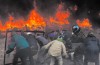
    KIEV (UKRAINE) (TIP): Ukrainian opposition leaders issued a stark ultimatum to President Viktor Yanukovych on January 22 to call early elections within 24 hours or face more popular rage, after at least two protesters were killed in confrontations with police in a grim escalation of a two-monthlong political crisis. The protesters’ deaths, the first since the largely peaceful protests started in November, fueled fears that the daily demonstrations aimed at bringing down the government over its decision to shun the European Union for closer ties to Moscow and over human rights violations could turn more violent.

    With a central Kiev street ablaze and covered with thick black smoke from burning tires and several thousand protesters continuing to clash with riot police, opposition leaders urged tens of thousands of demonstrators in a nearby square to refrain from violence and remain in the main protest camp for the next 24 hours. They demanded that Yanukovych dismiss the government, call early elections and scrap harsh anti-protest legislation. It was last week’s passage of the laws cracking down on protests that set off the violent clashes.

    “You, Mr. President, have the opportunity to resolve this issue. Early elections will change the situation without bloodshed and we will do everything to achieve that,” opposition leader Vitali Klitschko told some 40,000 people who braved freezing temperatures on Kiev’s Independence Square late Wednesday. If Yanukovych does not concede, “tomorrow we will go forward together. And if it’s a bullet in the forehead, then it’s a bullet in the forehead, but in an honest, fair and brave way,” declared another opposition leader, Arseniy Yatsenyuk Yanukovych has showed little willingness to compromise, however.

    A three-hour meeting with opposition leaders accomplished “nothing,” said Oleh Tyahbnybok, who attended the session. Meanwhile, the government handed security forces extra powers, including closing off streets and firing water cannon against protesters despite the freezing temperatures. Police have already used water cannon but insisted it was only to put out fires. The government also deployed an armored personnel carrier at the site of the clashes. During Wednesday’s confrontations, riot police violently beat and shot at protesters, volunteer medics and journalists. The Interior Ministry announced that 70 protesters had been arrested.

    Prime Minister Mykola Azarov said the police did not have live ammunition and that opposition leaders should be held responsible for the deaths. City health officials and police said that two people died of gunshot wounds during the clashes Wednesday morning, while the opposition contended as many as five people died. Oleh Musiy, coordinator of the protesters’ medical corps, told the Associated Press that four people died of gunshot wounds and the fifth died after falling from a colonnaded gate at a sports arena near the site of the clashes.

    Health officials contend that man survived and is in the hospital. Hundreds of others were injured in the clashes, Musiy said. Meanwhile, another protester, Yuri Verbitsky, was found dead in a forest outside Kiev on Wednesday, according to his niece Oksana Verbitska. His friends and supporters believe he was kidnapped. The United States responded by revoking the visas of Ukrainian officials linked to violence and threatened more sanctions. But it also condemned the extreme-right radical protesters for their aggressive actions.

    The EU condemned the violence and said it was also considering action against the Ukrainian government. One of the victims was identified as Sergei Nigoyan, a 20-year-old ethnic Armenian who joined the protests in December after traveling from his home in the eastern city of Dnipropetrovsk. A video shows Nigoyan reciting poetry in the protest camp in Kiev’s Independence Square, also known as the Maidan. He then clenched his fist in a victory sign as a yellow-and-blue Ukrainian flag flapped in the background. A Ukrainian journalist, Kristina Berdinskikh, who has been profiling protesters for several weeks, interviewed Nigoyan in early January.

    “I saw on TV what is happening on the Maidan, I didn’t sleep at night, I was following the news,” Nagoyan said, according to a transcript of the interview posted online. “Then I decided to come. This is also my future.” The mass protests erupted after Yanukovych spurned a pact with the European Union in favor of close ties with Russia, which offered him a $15 billion bailout. They swelled to hundreds of thousands after a small peaceful rally on Nov. 30 was violently broken up by police.

    Seeing the government ignore their demands and opposition leaders unable to present a coherent plan or select a single
    leader, radical protesters have clashed with riot police since Sunday, hurling fire bombs and stones as police fired back with tear gas, stun grenades and rubber bullets. The two victims’ bodies were found before police moved to tear down protesters’ barricades near official buildings in central Kiev and chase demonstrators away.

    Helmeted riot police moved in on hundreds of protesters, dismantling barricades, beating many with truncheons and firing shots at some. One man was attacked by over a dozen policemen, then forced to take off his winter jacket before being dragged away, where he was beaten again. The police drove demonstrators down a hill toward the main protest site on Independence Square, where protesters have set up an extensive tent camp and rallied around the clock since Nov. 21. But the protesters soon returned, building barricades from giant sacks of snow and hurling rocks and firebombs at police lines.

    There was no immediate police move on the main camp. Oleksandr Turchynov, one of the opposition leaders, called on Ukrainians to rush to the center of Kiev to defend their country. “Ukraine will not be a dictatorship, it will be an independent, European country,” he said. “Let us defend Ukraine!” The protests were the biggest since the peaceful 2004 Orange Revolution, which annulled Yanukovych’s fraud-tinged victory in a presidential election and forced a new vote that brought his pro-Western rival to power.

    Largely peaceful, the rallies turned violent after Yanukovych, elected in 2010, pushed through sweeping anti-protest legislation and ignored all the protesters’ demands. The deaths mark a turning point in the standoff that could lead to more violence. “Look, the deaths and the injuries speak to the actions of those in power. They’ve crossed the line,” said Andriy Kolosovich, a 20-yearold protester who was injured in the legs by a stun grenade and was being treated in a medical unit set up by the protesters.


  • Seven dead in tit-for-tat killings in Central African Republic

    Seven dead in tit-for-tat killings in Central African Republic

    BANGUI (TIP): Seven people died in inter-religious attacks and reprisal killings in Central African Republic’s capital Bangui on January 22, a human rights campaigner said, underlining the challenge the new interim president faces in restoring peace.

    The local Red Cross said it also found another 11 corpses, most burnt beyond recognition. Close to one million people, or a quarter of the population, have been displaced in the former French colony by clashes that began when mostly Muslim Seleka rebels seized power in a coup in March.

    Christian self-defence groups known as ” anti-balaka” (anti-machete) have since taken up arms against them, and the United Nations estimates that tit-for-tat violence has claimed more than 2,000 lives. Wednesday’s violence erupted after Seleka fighters left a military base looking for food and shot and killed two Christians, Human Rights Watch (HRW) said. In reprisal, “the youth from the neighbourhood went to the prison and took out five Seleka detainees and killed them,” Peter Bouckaert, an HRW researcher in Bangui, told Reuters.

    The other 11 bodies were found behind a military camp in another part of the city. Antoine Mbao Bogo, president of the Central African Red Cross Society, said nine of the bodies collected in the mostly Muslim northern neighbourhood of PK11 had been set on fire. “They were not buried, they were dumped on the ground,” he told Reuters by telephone. He added that the Red Cross had collected 87 bodies in the past five days across the country. The figure did not include the seven people killed on Wednesday.

    Out of control
    The arrival of a 1,600-strong French military mission and another 5,000 African Union peacekeepers has so far failed to stop the violence in Central African Republic. A source with the French force said on Wednesday its soldiers were involved in overnight clashes after coming under attack from unidentified gunmen. This week the European Union said it would send 500 soldiers to support international troops already on the ground. And the United States said on Wednesday it was giving an additional $30 million to help ease the country’s crippling humanitarian crisis.

    Interim President Catherine Samba-Panza, the mayor of Bangui, was appointed as leader on Monday and is due to formally take office on Thursday. She replaced former interim President Michel Djotodia, a former Seleka leader who stepped down on January 10 amid intense international pressure. Samba-Panza has pledged to meet with armed groups in an effort to restore order. However, ending the cycle of violence will not be easy. HRW researcher Bouckaert witnessed hundreds of Christians attack and embark on a looting spree in the mainly Muslim PK13 neighbourhood on Wednesday. Rwandan peacekeepers, newly arrived in the country, were forced to intervene to protect around 30 Muslim civilians surrounded by the mob until they were evacuated by French soldiers.

  • Permanent Mission of India hosts Republic Day reception with GA President John Ashe

    Permanent Mission of India hosts Republic Day reception with GA President John Ashe

    NEW YORK, NY (TIP): The Permanent Mission of India to the United Nations hosted the traditional Republic Day reception on Thursday, January 23, with President of the General Assembly John Ashe.

    Permanent Representative Ambassador Asoke Mukerji, who was hosting his first Republic Day celebration, received with his wife Vanita Mukerji, over 100 guests, a mix of diplomats from the UN and Indian-American community. Ambassador Asoke Mukerji lovingly addressed Honorable President of the General Assembly John Ashe as the sonin- law of India and welcomed the couple warmly.

    John Ashe who arrived with his Indian wife Anilla Cherian expressed his best wishes to all Indians for the upcoming Republic Day “I am extremely pleased to be here to celebrate India’s 65th year of being Republic. I am married to an Indian so I have fair idea about India. Every time I get big for my shoes, my wife reminds me that I come from a country which is probably the size of a village in India,” he added.

    John W. Ashe comes from Antigua and Barbuda which has a population of 90,156 (July 2013). Mr. Mukerji stressed that on India’s 65th year at being a republic, cooperation is the key to making progress. “We all are participants in maintaining and developing modern international relations. This is the key to building a modern India. We must address all our issues with the agenda of development. We must rededicate ourselves in cooperating and collaborating with our international friends. Our issues can only be addressed if we all come together in a spirit of cooperation” said Mr. Mukerji. The Republic Day celebrations started with playing of the Indian national anthem.

  • Syrian peace talks stuck over Assad’s future

    Syrian peace talks stuck over Assad’s future

    MONTREUX (SWITZERLAND) (TIP): Peace talks intended to carve a path out of Syria’s civil war got off to a rocky start on January 23 as a bitter clash over President Bashar Assad’s future threatened to collapse the negotiations even before they really begin. The dispute over Assad cast a pall over the start of an international peace conference that aims to map out a transitional government and ultimately a democratic election for the wartorn Middle East nation. While diplomats sparred against a pristine Alpine backdrop, Syrian forces and opposition fighters clashed across a wide area from Aleppo and Idlib in the north to Daraa in the south, where the uprising against Assad began three years ago, activists and state media said.

    The US and the Syrian opposition opened the conference by saying the Syrian leader lost his legitimacy when he crushed a once-peaceful protest movement. In a strong riposte, Syrian Foreign Minister Walid al-Moallem countered that terrorists and foreign meddling had ripped his country apart. He refused to give up the podium despite requests from the UN chief. “You live in New York. I live in Syria,” he angrily told UN chief Ban Ki-moon. “I have the right to give the Syrian version here in this forum.

    After three years of suffering, this is my right.” Less than three hours into the peace talks in the Swiss city of Montreux, the two sides seemed impossibly far apart. “We really need to deal with reality,” said US secretary of state John Kerry. “There is no way — no way possible in the imagination — that the man who has led the brutal response to his own people could regain the legitimacy to govern. One man and those who have supported him can no longer hold an entire nation and a region hostage.”

    The Syrian opposition leader, —Amhad al- Jarba of the Western-backed Syrian National Coalition — had wavered up to the last-minute on whether to attend peace talks that have been largely opposed by rebel brigades in Syria. He insisted Wednesday that the whole point of the peace conference was to create a transitional government without Assad. Al-Moallem insisted that no one except Syrians could remove Assad. He also accused the West and neighboring countries — notably Saudi Arabia, which he did not name — of funneling money, weapons and foreign fighters to the rebellion. “The West claims to fight terrorism publically while they feed it secretly,” he said.

    “Syrians here in this hall participated in all that has happened, they implemented, facilitated the bloodshed and all at the expense of the Syrian people they claim to represent.” State Department spokeswoman Jen Psaki later criticized the Syrian government’s rhetoric as “inflammatory” and al-Jarba’s chief of staff called it a false distraction. “All of what they say is lies,” Jarba’s chief of staff, Monzer Akbik, told The Associated Press.

    “The Syrian people are fighting al-Qaida in the North and it was the regime that brought al- Qaida in.” At least 130,000 people have been killing in the fighting that began with a peaceful uprising in March 2011 against Assad’s rule, according to activists, who are the only ones still keeping count after the UN abandoned its efforts. The fighting has forced millions of Syrians to flee their homes.

  • UK’s Cumbria is first public university to accept fees in bitcoin

    UK’s Cumbria is first public university to accept fees in bitcoin

    LONDON (TIP): A university in the UK has become the first public varsity in the world to allow students to pay their tuition fees with the digital currency bitcoin.

    Students at Cumbria University attending two courses examining the role of complementary currencies will be allowed to use the units. Last year the University of Nicosia, a private university in Cyprus, announced it would accept bitcoin, but the University of Cumbria is the first public university to do so, and for courses that are already accepting students.

    Cumbria’s system for accepting payments, via the bitpay system, is already operational, the university said. “We believe in learning by doing, and so to help inform our courses on complementary currencies, we are trialling the acceptance of them,” said professor Jem Bendell, the founder and director of the Institute for Leadership and Sustainability, which will run the two courses.

    “Some support bitcoin due to its speed and cost, others due the new era of financial freedom it could enable. Others are concerned about it and how it will affect economies and society. Others think that what comes next will be even more important. We think it is essential to become better informed, and analyse it from many different perspectives,” he said. agencies

  • Despite intel warning, UK to free terror suspects

    Despite intel warning, UK to free terror suspects

    LONDON (TIP): Five terror suspects, including the one who allegedly plotted a Mumbai style attack in London, are set to be freed within days. Restrictions on their movements under the Terrorism Prevention Investigation Measure (T-PIM) would be lifted despite intelligence warning against it.

    This would include removal of a tag and an end to strict curfew on them from Sunday under new rules introduced to protect human rights. The alleged Mumbai style attack plotter, referred to as CD, was put under T-PIM in January 2012. He had attended a terror camp with five attempted suicide bombers involved in London attacks on July 21, 2005.

    Britain’s security agencies have warned CD could revive his plans to undertake attacks in the UK to “cause mass casualty just like in Mumbai”. The five suspects are believed to still be inclined to travel to Syria, Somalia and Pakistan for terrorist-related activities. They were subjected to two-year T-PIMS restrictions, which are due to lapse on January 26. They cannot be renewed unless fresh evidence is produced.

    British home office said they have put in place “tailored plans” to keep the suspects under watch. Restrictions on seven of the eight suspects currently subjected to T-PIMS would be lifted this month. Shadow home secretary Yvette Cooper said the court papers showed at least five of them remained a threat. “The home secretary has said nothing at all about what she is doing about these men now T-PIMS are ending.”