Month: January 2014

  • THE BHAGAVAD GITA

    THE BHAGAVAD GITA

    The path of Self-knowledge
    A person who has completely renounced the fruits of all works, lives happily, neither performing nor directing any action. (5.13) The Lord neither creates the urge for action, nor the feeling of doership, nor the attachment to the results of action in people. All these are done by the powers (Gunas) of Nature. (5.14) The Lord does not take the responsibility for the good or evil deeds of anybody.

    Additional marks of an enlightened person
    An enlightened person (by perceiving the Lord in all) looks at a learned and humble priest, an outcast, even a cow, an elephant, or a dog with an equal eye. (See also 6.29) (5.18) Everything has been accomplished in this very life by the one whose mind is set in equality. Such a person has realized the Eternal Being (Brahm), because the Eternal Being is flawless and impartial. (See also 18.55) (5.19) One who neither rejoices on obtaining what is pleasant, nor grieves on obtaining the unpleasant, who has a steady mind, who is undeluded, and who is a knower of Eternal Being (Brahm), such a person eternally abides with Brahm. (5.20) Such a person who is in union with the Eternal Being (Brahm) becomes unattached to external sensual pleasures by discovering the joy of the Self through contemplation, and enjoys transcendental bliss.

    (5.21) Sensual pleasures are, in truth, the source of misery, and have a beginning and an end. Therefore the wise, O Arjun, does not rejoice in sensual pleasures. (See also 18.38) (5.22) One who is able to withstand the impulse of lust and anger before death is a yogi, and a happy person. (5.23) One who finds happiness with the Eternal Being (Brahm), who rejoices Brahm within, and who is illuminated by Self-knowledge; such a yogi attains BrahmNirvan, and goes to the Supreme Being (ParBrahm).

    (5.24) Seers whose sins (or imperfections) are destroyed, whose doubts have been dispelled by Self-knowledge (Jnaan), whose minds are disciplined, and who are engaged in the welfare of all beings, attain the Supreme Being (ParBrahm). (5.25) They who are free from lust and anger, who have subdued the mind and senses, and who have known the Self, easily attain BrahmNirvan. (5.26)

    The third path — the path of devotional meditation and contemplation
    A sage is, in truth, liberated by renouncing all sense enjoyments, fixing the eyes and the mind (at an imaginary black dot) between the eye brows, equalizing the breath moving through the nostrils (by Kriyaa techniques), keeping the senses, mind, and intellect under control, having salvation (Mukti) as the prime goal, and becoming free from lust, anger, and fear. (5.27-28) My devotee attains peace by knowing Me (or Krishn, the Supreme Being (ParBrahm)) as the enjoyer of sacrifices and austerities, as the great Lord of all the universe, and the friend of all beings. (5.29)

    PATH OF MEDITATION

    A KarmaYogi is a renunciant
    The Supreme Lord said: One who performs the prescribed duty without seeking its fruit (for personal enjoyment) is a renunciant (Samnyaasi) and a KarmaYogi. One does not become Samnyaasi merely by not lighting the fire, and one does not become a yogi merely by abstaining from work. (6.01) O Arjun, what they call renunciation (Samnyaas) is also known as KarmaYog. No one becomes a KarmaYogi who has not renounced the selfish motive behind an action. (See also 5.01, 5.05, 6.01, and 18.02) (6.02)

    A definition of yog and yogi
    For the wise who seeks to attain yog (of meditation, or the calmness of mind), KarmaYog is said to be the means. For the one who has attained yog, the calmness becomes the means (of Self-realization). A person is said to have attained yogic perfection when he or she has no desire for sensual pleasures, or attachment to the fruits of work, and has renounced all personal selfish motives. (6.03-04)

    The mind is the best friend as well as the worst enemy
    One must elevate — and do not degrade — oneself by one’s own mind. The mind alone is one’s friend as well as one’s enemy. The mind is the friend of those who have control over it, and the mind acts like an enemy for those who do not control it. (6.05-06) One who has control over the lower self — the mind and senses — is tranquil in heat and cold, in pleasure and pain, and in honor and dishonor, and remains ever steadfast with the supreme Self.

    (6.07) A person is called yogi who has both Self-knowledge and Self-realization, who is calm, who has control over the mind and senses, and to whom a clod, a stone, and gold are the same. (6.08) A person is considered superior who is impartial towards companions, friends, enemies, neutrals, arbiters, haters, relatives, saints, and sinners. (6.09)

    Techniques of meditation
    A yogi, seated in solitude and alone, should constantly try to contemplate on the Supreme Being after bringing the mind and senses under control, and becoming free from desires and proprietorship. (6.10) One should sit on his or her own firm seat that is neither too high nor too low, covered with sacred Kush grass, a deerskin, and a cloth, one over the other, in a clean spot. Sitting there (in a comfortable position) and concentrating the mind on God, controlling the thoughts and the activities of the senses, one should practice meditation for self-purification.

    (6.11-12) One should sit by holding the waist, spine, chest, neck, and head erect, motionless and steady; fix the eyes and the mind steadily in front of the nostrils, without looking around; make your mind serene and fearless, practice celibacy; have the mind under control, think of Me, and have Me as the supreme goal. (See also 4.29, 5.27, 8.10, and 8.12) (6.13- 14) Thus, by always practicing to keep the mind fixed on Me, the yogi whose mind is subdued attains peace of BrahmNirvan and comes to Me. (6.15) This yog is not possible, O Arjun, for the one who eats too much, or who does not eat at all; who sleeps too much, or who keeps awake.

    (6.16) But, for the one who is moderate in eating, recreation, working, sleeping, and waking, the yog of meditation destroys all sorrow. (6.17) A person is said to have achieved yog, the union with the Eternal Being (Brahm), when the perfectly disciplined mind becomes free from all desires, and gets completely united with Brahm in Samaadhi (Trance). (6.18) A lamp in a spot sheltered (by the Eternal Being) from the wind (of desires) does not flicker; this simile is used for the subdued mind of a yogi practicing meditation on the Eternal Being (Brahm). (6.19) When the mind disciplined by the practice of meditation becomes steady, one becomes content with the Eternal Being (Brahm) by beholding Him with purified intellect.

    (6.20) One feels infinite bliss that is perceivable only through the intellect, and is beyond the reach of the senses. After realizing the Eternal Being (Brahm), one is never separated from the Absolute Reality. (6.21) After Self-realization (SR), one does not regard any other gain superior to SR. Established in SR, one is not moved even by the greatest calamity. (6.22) The state of severance of union with sorrow is called yog.

    This yog should be practiced with firm determination, and without any mental reservation. (6.23) One gradually attains tranquillity of mind by totally abandoning all selfish desires, completely restraining the senses from the sense objects by the intellect, and keeping the mind fully absorbed in the Eternal Being (Brahm) by means of a well-trained and purified intellect; and thinking of nothing else. (6.24-25) Wheresoever this restless and unsteady mind wanders away during meditation, one should just witness it under the watchful eye (or supervision) of the Self. (6.26)

    Who is a yogi?
    Supreme bliss comes to a Self-realized yogi whose mind is tranquil, whose desires are under control, and who is free from sin (or faults). (6.27) Such a sinless yogi, who constantly engages his or her mind and intellect with the Eternal Being (Brahm), easily enjoys the infinite bliss of contact with Brahm. (6.28) Because of perceiving the omnipresent Eternal Being (Brahm) abiding in all beings, and all beings abiding in the Eternal Being; a yogi, who is in union with the Eternal Being, sees every being with an equal eye.

    (See also 4.35, 5.18) (6.29) Those who perceive Me in everything and behold everything in Me, are not separated from Me, and I am not separated from them. (6.30) The non-dualists, who adore Me as abiding in all beings, abide in Me irrespective of their mode of living. (6.31) One is considered the best yogi who regards every being like oneself, and who can feel the pain and pleasures of others as one’s own, O Arjun. (6.32)

    Two methods to subdue the restless mind
    Arjun said: O Krishn, You have said that the yog of meditation is characterized by the calmness of mind, but due to restlessness of mind I do not perceive the steady state of mind. Because the mind, indeed, is very unsteady, turbulent, powerful, and obstinate, O Krishn. I think restraining the mind is as difficult as restraining the wind.

    (6.33-34) The Supreme Lord said: Undoubtedly, O Arjun, the mind is restless and difficult to restrain, but it is subdued by constant vigorous spiritual practice with perseverance, and detachment, O Arjun. (6.35) In My opinion, yog is difficult for the one whose mind is not subdued. However, yog is attainable by the person of subdued mind by striving through proper means. (6.36)

  • SRI GURU GRANTH SAHIB

    SRI GURU GRANTH SAHIB

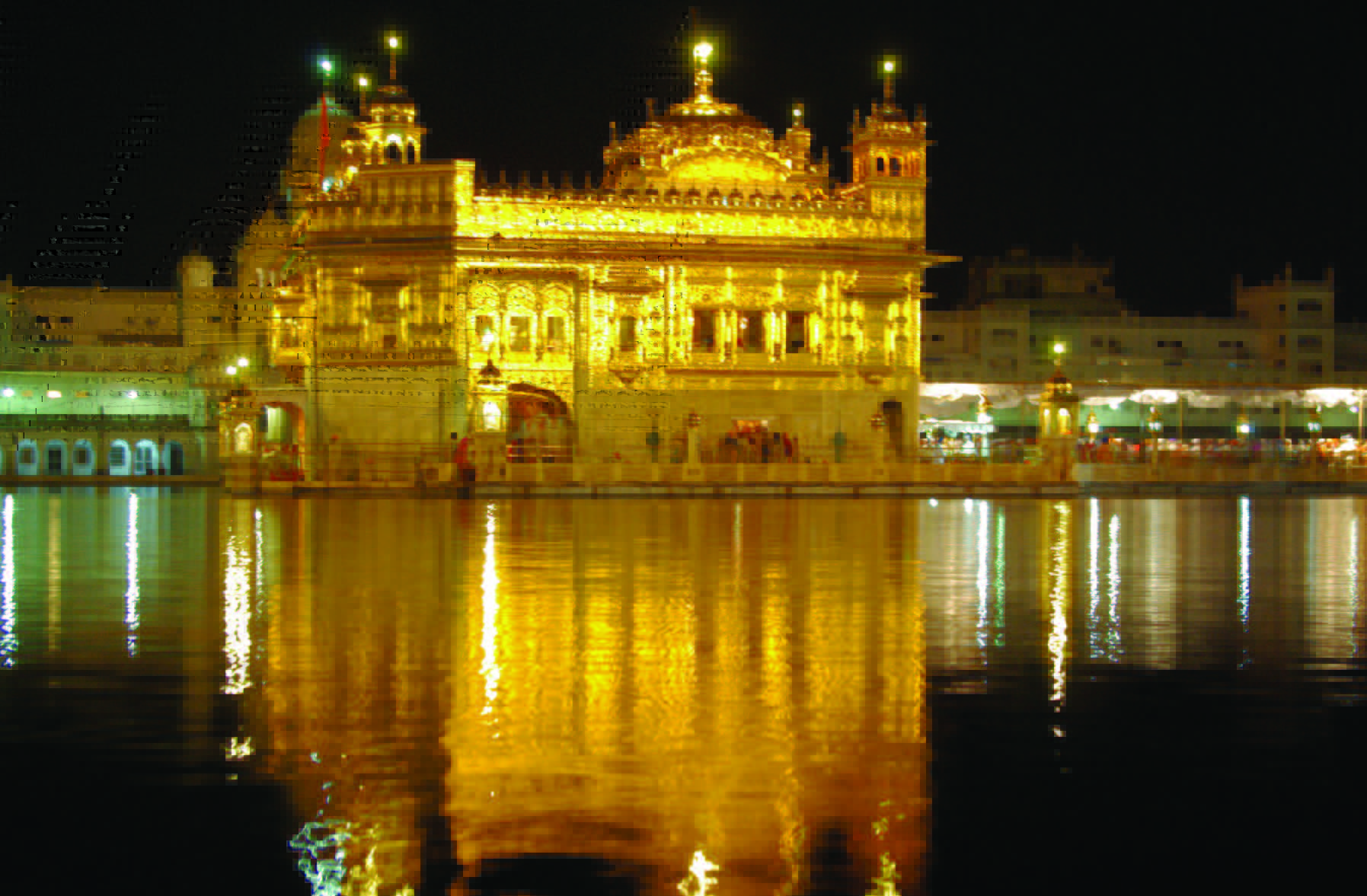
    The Sikh Gurus never believed in the exclusivity of their teachings. The Gurus undertook travels to spread their message to peoples of different cultures in their own native languages. The Gurus did not believe in the ideas of any language being ‘sacred’ or ‘special’. It is in this spirit that various Sikh scholars have undertaken efforts to translate Sri Guru Granth Sahib into a number of languages in order to spread the teachings of the Gurus and to bring the Sikh religion to the people of the world as Guru Nanak wished. “Enshrine the Lord’s Name within your heart. The Word of the Guru’s Bani prevails throughout the world; through this Bani, the Lord’s Name is obtained.” (Guru Amar Das, Maru, pg. 1066)

    || 3 || The One who formed this universe created the creation of the three worlds. The Gurmukh knows the Divine Light, while the foolish self-willed manmukh gropes around in the darkness. One who sees that Light within each and every heart understands the Essence of the Guru’s Teachings. || 4 || Those who understand are Gurmukh; recognize and applaud them. They meet and merge with the True One. They become the Radiant Manifestation of the Excellence of the True One. O Nanak, they are contented with the Naam, the Name of the Lord. They offer their bodies and souls to God.

    || 5 || 16 || SIREE RAAG, FIRST MEHL: Listen, O my mind, my friend, my darling: now is the time to meet the Lord. As long as there is youth and breath, give this body to Him. Without virtue, it is useless; the body shall crumble into a pile of dust. || 1 || O my mind, earn the profit, before you return home. The Gurmukh praises the Naam, and the fire of egotism is extinguished. || 1 || Pause || Again and again, we hear and tell stories; we read and write and understand loads of knowledge, but still, desires increase day and night, and the disease of egotism fills us with corruption. That Carefree Lord cannot be appraised; His Real Value is known only through the Wisdom of the Guru’s Teachings.

    || 2 || Even if someone has hundreds of thousands of clever mental tricks, and the love and company of hundreds of thousands of people – still, without the Saadh Sangat, the Company of the Holy, he will not feel satisfied. Without the Name, all suffer in sorrow. Chanting the Name of the Lord, O my soul, you shall be emancipated; as Gurmukh, you shall come to understand your own self. || 3 || I have sold my body and mind to the Guru, and I have given my mind and head as well. I was seeking and searching for Him throughout the three worlds; then, as Gurmukh, I sought and found Him. The True Guru has united me in Union, O Nanak, with that God. || 4 || 17 || SIREE RAAG, FIRST MEHL: I have no anxiety about dying, and no hope of living. You are the Cherisher of all beings; You keep the account of our breaths and morsels of food. You abide within the Gurmukh. As it pleases You, You decide our allotment. || 1 || O my soul, chant the Name of the Lord; the mind will be pleased and appeased. The raging fire within is extinguished; the Gurmukh obtains spiritual wisdom.

    || 1 || Pause || Know the state of your inner being; meet with the Guru and get rid of your skepticism. To reach your True Home after you die, you must conquer death while you are still alive. The beautiful, Unstruck Sound of the Shabad is obtained, contemplating the Guru. || 2 || The Unstruck Melody of Gurbani is obtained, and egotism is eliminated. I am forever a sacrifice to those who serve their True Guru. They are dressed in robes of honor in the Court of the Lord; the Name of the Lord is on their lips. || 3 || Wherever I look, I see the Lord pervading there, in the union of Shiva and Shakti, of consciousness and matter. The three qualities hold the body in bondage; whoever comes into the world is subject to their play. Those who separate themselves from the Lord wander lost in misery.

    The self-willed manmukhs do not attain union with Him. || 4 || If the mind becomes balanced and detached, and comes to dwell in its own true home, imbued with the Fear of God, then it enjoys the essence of supreme spiritual wisdom; it shall never feel hunger again. O Nanak, conquer and subdue this mind; meet with the Lord, and you shall never again suffer in pain. || 5 || 18 || SIREE RAAG, FIRST MEHL: This foolish mind is greedy; through greed, it becomes even more attached to greed. The evil-minded shaaktas, the faithless cynics, are not attuned to the Shabad; they come and go in reincarnation. One who meets with the Holy True Guru finds the Treasure of Excellence. || 1 || O mind, renounce your egotistical pride. Serve the Lord, the Guru, the Sacred Pool, and you shall be honored in the Court of the Lord.

    || 1 || Pause || Chant the Name of the Lord day and night; become Gurmukh, and know the Wealth of the Lord. All comforts and peace, and the Essence of the Lord, are enjoyed by acquiring spiritual wisdom in the Society of the Saints. Day and night, continually serve the Lord God; the True Guru has given the Naam. || 2 || Those who practice falsehood are dogs; those who slander the Guru shall burn in their own fire. They wander lost and confused, deceived by doubt, suffering in terrible pain. The Messenger of Death shall beat them to a pulp.

    The self-willed manmukhs find no peace, while the Gurmukhs are wondrously joyful. || 3 || In this world, people are engrossed in false pursuits, but in the world hereafter, only the account of your true actions is accepted. The Guru serves the Lord, His Intimate Friend. The Guru’s actions are supremely exalted. O Nanak, never forget the Naam, the Name of the Lord; the True Lord shall bless you with His Mark of Grace. || 4 || 19 || SIREE RAAG, FIRST MEHL: Forgetting the Beloved, even for a moment, the mind is afflicted with terrible diseases. How can honor be attained in His Court, if the Lord does not dwell in the mind? Meeting with the Guru, peace is found. The fire is extinguished in His Glorious Praises. || 1 || O mind, enshrine the Praises of the Lord, day and night.

    One who does not forget the Naam, for a moment or even an instant – how rare is such a person in this world! || 1 || Pause || When one’s light merges into the Light, and one’s intuitive consciousness is joined with the Intuitive Consciousness, then one’s cruel and violent instincts and egotism depart, and skepticism and sorrow are taken away. The Lord abides within the mind of the Gurmukh, who merges in the Lord’s Union, through the Guru. || 2 || If I surrender my body like a bride, the Enjoyer will enjoy me. Do not make love with one who is just a passing show.

    The Gurmukh is ravished like the pure and happy bride on the Bed of God, her Husband. || 3 || The Gurmukh puts out the four fires, with the Water of the Lord’s Name. The lotus blossoms deep within the heart, and filled with Ambrosial Nectar, one is satisfied. O Nanak, make the True Guru your friend; going to His Court, you shall obtain the True Lord. || 4 || 20 || SIREE RAAG, FIRST MEHL: Meditate on the Lord, Har, Har, O my beloved; follow the Guru’s Teachings, and speak of the Lord. Apply the Touchstone of Truth to your mind, and see if it comes up to its full weight. No one has found the worth of the ruby of the heart; its value cannot be estimated.

    || 1 || O Siblings of Destiny, the Diamond of the Lord is within the Guru. The True Guru is found in the Sat Sangat, the True Congregation. Day and night, praise the Word of His Shabad. || 1 || Pause || The True Merchandise, Wealth and Capital are obtained through the Radiant Light of the Guru. Just as fire is extinguished by pouring on water, desire becomes the slave of the Lord’s slaves. The Messenger of Death will not touch you; in this way, you shall cross over the terrifying world-ocean, carrying others across with you.

    || 2 || The Gurmukhs do not like falsehood. They are imbued with Truth; they love only Truth. The shaaktas, the faithless cynics, do not like the Truth; false are the foundations of the false. Imbued with Truth, you shall meet the Guru. The true ones are absorbed into the True Lord. || 3 || Within the mind are emeralds and rubies, the Jewel of the Naam, treasures and diamonds. The Naam is the True Merchandise and Wealth; in each and every heart, His Presence is deep and profound. O Nanak, the Gurmukh finds the Diamond of the Lord, by His Kindness and Compassion.

    || 4 || 21 || SIREE RAAG, FIRST MEHL: The fire of doubt is not extinguished, even by wandering through foreign lands and countries. If inner filth is not removed, one’s life is cursed, and one’s clothes are cursed. There is no other way to perform devotional worship, except through the Teachings of the True Guru. || 1 || O mind, become Gurmukh, and extinguish the fire within. Let the Words of the Guru abide within your mind; let egotism and desires die. || 1 || Pause || The jewel of the mind is priceless; through the Name of the Lord, honor is obtained. Join the Sat Sangat, the True Congregation, and find the Lord. The Gurmukh embraces love for the Lord. Give up your selfishness, and you shall find peace; like water mingling with water, you shall merge in absorption.

    || 2 || Those who have not contemplated the Name of the Lord, Har, Har, are unworthy; they come and go in reincarnation. One who has not met with the True Guru, the Primal Being, is bothered and bewildered in the terrifying world-ocean. This jewel of the soul is priceless, and yet it is being squandered like this, in exchange for a mere shell. || 3 || Those who joyfully meet with the True Guru are perfectly fulfilled and wise. Meeting with the Guru, they cross over the terrifying world-ocean. In the Court of the Lord, they are honored and approved.

  • YERCAUD: JEWEL OF THE SOUTH

    YERCAUD: JEWEL OF THE SOUTH

    If you are looking for a weekend getaway from Bangalore that will have you hobnob with nature and yet not be a very long drive, Yercaud is the perfect destination for you. The added bonus of driving down to this place is that a small detour on the way will bring you to Hogenakkal Falls.

    Places of interest
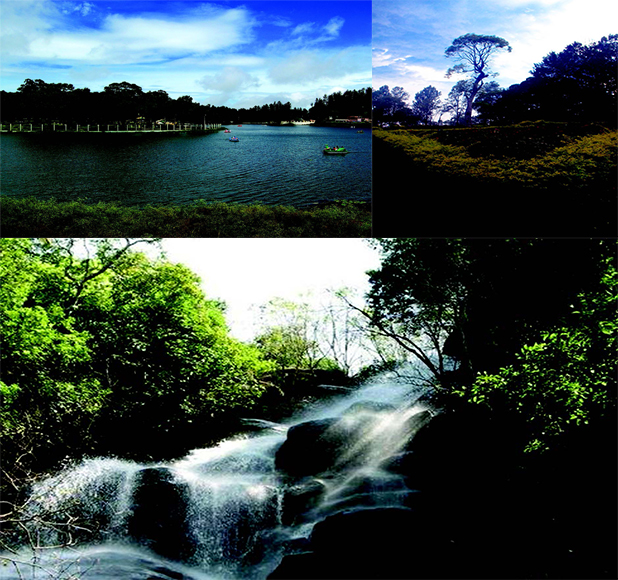
    Nestled in Shevaroys range of hills in the Eastern Ghats, near Salem, Tamilnadu is a quintessential hill station Yercaud. Yercaud in Tamil would mean Lake Forest (in Tamil “Yeri” means lake and “Kaadu means forest), a name that it rightfully owes to the presence of forests in the hills and the Big Lake in the middle of the town. The town is also full of coffee plantations and orange groves. If you are looking at rubbing shoulders with nature and taking a break from the humdrum life this is the place to be in. With nothing much to do you can rest assured you will get the break you deserve. The main attraction of this quaint hill station is the Big Lake situated right in the middle of the town.

    A picturesque and scenic view awaits you at this lake. If you are looking at reliving some childhood memories like boating, savouring cotton candy or bhajji/ pakoras this is the right place for this. You can choose either a pedal boat or a rowboat and enjoy a ride on the silent water. Close to the lake is a park with a mini zoo of sorts which is ideal to visit if you are travelling with kids. Drive down to Shevaroy temple situated atop Servaroyan Hill to see the highest point in Yercaud. This place is supposedly 5,326 feet above sea level. Since I am not much of a temple goer we did not visit the temple that is dedicated to God Servaran and Goddess Kaveri, who are the local deities of Shevaroy hills and Cauvery River.

    However the view of the hills from here was spellbinding. There are strategically located viewing points too that you can climb up to for a better view of the town. The other must-see places are Killiyur Falls, a 300 feet high waterfall and the Botanical Garden, which houses an orchidarium which unfortunately we did not visit as we wanted our holiday to move at a snail’s pace. Hogenakkal Falls, commonly referred to as Niagara Falls of India, are waterfalls on river Cauvery. It is not a single waterfall but a series of waterfalls offering an overwhelming view especially right after monsoons when the river is brimming. You will not be able to resist an exclamatory remark when you see them. The Falls are a short walk from the parking area to the river. Here you will need to hire a coracle boat to reach the foot of Hognekkal Falls.

    Given my fear of water it was bit of challenge for me to do this boat ride. But once I overcame the initial reservations, more so for the sake of my daughter (what all fears one can get over just to present a brave face in front of their children. Phew!), it was a smooth ride. In fact I’ll have to confess it was lot of fun as the boat rocked and tossed a little over the raging water. After a short ride the boatman will harbour at a point from where he will carry the boat and you will walk up few rocks to get your first view of these majestic falls. Oh! What a sight it was.

    The torrential water gushing down the rocks in full fury, the roaring sound of falling water, the breeze carrying mild showers of water; it was a moment to savour. You need to get into the boat again and the boatman will take you through the beautiful river, snuggled between gigantic rocks. He may also take you under the mini waterfalls on the way, where you can drench yourself if you wish to. Also be ready to take a spin in your coracle boat as your boatman may show you an antic or two without a warning. After a ride through these waters it is time again to climb a few rocks, walk a short distance, wade through water a bit to reach the other side of the falls.

    This side of the waterfalls too is majestic and you can imagine many movie songs being shot here. But this area may not offer you the serenity that you may be looking for, as here you may find a lot of people enjoying a picnic. When we were there some college goers were having a water splashing match, full desi style, boys versus girls. If you are not physically fit you may feel a bit tired at the end of this expedition as you need to walk back again before you can get some rest in the boat.

    HOW TO GET THERE
    BY ROAD Hogenekkal Falls are 180 km from Bangalore and only 46 km from Dharmapuri. You will see sign boards guiding you to reach the waterfalls from here.Yercaud is 227 km SE of Bangalore. It takes about 4 hours by road and makes for a perfect weekend getaway. Take NH7 to Omalur via Hosur, Krishnagiri and Dharmapuri and then SH to Yercaud.

    If doing nothing is your ruse then Yercaud is your perfect muse. If you have only a weekend to get away then spend some time in Yercaud amidst nature and check out Hogenakkal Falls to admire God’s beautiful creations. It’s a perfect place to unwind and get charged to return to routine life full-on.

  • INDIA: A RISING ECONOMIC POWERHOUSE

    INDIA: A RISING ECONOMIC POWERHOUSE

    The India economy, the third largest economy in the world in terms of purchasing power, is going to touch new heights in coming years. As predicted by Goldman Sachs, the Global Investment Bank, by 2035 India would be the third largest economy of the world just after US and China.

    It will grow to 60% of size of the US economy. This booming economy of today has to pass through many phases before it can achieve the current milestone of 9% GDP. The history of Indian economy can be broadly divided into three phases: Pre- Colonial, Colonial and Post Colonial. PRE COLONIAL: The economic history of India since Indus Valley Civilization to 1700 AD can be categorized under this phase. During Indus Valley Civilization Indian economy was very well developed.

    It had very good trade relations with other parts of world, which is evident from the coins of various civilizations found at the site of Indus valley. Before the advent of the East India Company, each village in India was a self sufficient entity and was economically independent as all the economic needs were fulfilled within the village COLONIAL INDIAN ECONOMY: The arrival of the East India Company in India caused a huge strain to the Indian economy and there was a two-way depletion of resources. The British would buy raw materials from India at cheaper rates and the finished goods were sold at higher than normal price in Indian markets.

    During this phase India’s share of world income declined from 22.3% in 1700 AD to 3.8% in 1952. POST COLONIAL INDIAN ECONOMY: After India got independence from colonial rule in 1947, the process of rebuilding the economy started. For this various policies and schemes were formulated. First five year plan for the development of Indian economy came into implementation in 1952. These Five Year Plans, started by Indian government, focused on the needs of the Indian economy. If on one hand agriculture received the immediate attention on the other hand the industrial sector was developed at a fast pace to provide employment opportunities to the growing population and to keep pace with the developments in the world. Since then the Indian economy has come a long way.

    The Gross Domestic Product (GDP) at factor cost, which was 2.3 % in 1951-52 reached 6.5 in the financial year 2011-2012 Trade liberalization, financial liberalization, tax reforms and opening up to foreign investments were some of the important steps, which helped Indian economy to gain momentum. The Economic Liberalization introduced by Man Mohan Singh in 1991, then Finance Minister in the government of P V Narsimha Rao, proved to be the stepping-stone for Indian economic reform movements. To maintain its current status and to achieve the target GDP of 10% for financial year 2006-07, the Indian economy has to overcome many challenges.

    Challenges before Indian economy:
    Population explosion:The rising population is eating into the success of India. According to 2011 census of India, the population of India has crossed one billion and isgrowing at a rate of 2.11% approx. Such a vast population puts lots of stress on economic infrastructure of the nation. Thus India has to control its burgeoning population. Poverty: As per records of National Planning Commission, 36 crore people are living below the poverty line in India in 2012. Unemployment:The increasing population is pressing hard on economic resources as well as job opportunities. Indian government has started various schemes such as Jawahar Rozgar Yojna, and Self Employment Scheme for Educated Unemployed Youth (SEEUY). But these are proving to be a drop in an ocean. Rural Urban Divide:It is said that India lies in villages, even today when there is lots of talk going about migration to cities, 70% of the Indian population still lives in villages. There is a very stark difference in pace of rural and urban growth. Unless there isn’t a balanced development Indian economy cannot grow.

    These challenges can be overcome by the sustained and planned economic reforms. These include:

    • Maintaining fiscal discipline
    • Orientation of public expenditure towards sectors in which India is faring badly such as health and education.
    • Introduction of reforms in labour laws to generate more employment opportunities for the growing population of India.
    • Reorganization of agricultural sector, introduction of new technology, reducing agriculture’s dependence on monsoon by developing means of irrigation.
    • Introduction of financial reforms including privatization of some public sector banks.

    A Global Economic Super Power by 2030
    India is poised to take over the developed countries to emerge at the top of the heap in the global economic superpower league by 2030, says a survey.More than half of the respondents (53 per cent) of a survey commissioned by London-based independent think-tank Legatum Institute said India is likely to be the world’s most important economic power by 2030.

    According to the respondents of the survey, India is now on course to outstrip developed nations such as — the United States, Japan, Germany and the fast-emerging economic giant China over the next two decades. The survey, which questioned nearly 2,400 Indian senior managers, entrepreneurs and aspiring entrepreneurs said the levels of confidence among the country’s wealth-creators is very high, with nearly nine in ten saying they expected India to be in a stronger economic position in the next five years. Only one in five said the world economic crisis had badly affected business in India, the survey said.

    India is already moving up the economic league tables as the 12th largest economy in the world, as per the World Bank. Besides, it also ranked 45th in the internationally respected 2009 Legatum Prosperity Index — which embraces social and political data to provide a wider measure of national success. About two-thirds of the respondents said Indians were more entrepreneurial than people from other countries and 84 per cent said their country was going in the right direction. Beyond making money, Indian entrepreneurs are also highly motivated by the broader social impact of their work. Over half (54 per cent) of respondents say the social effects of their business, such as improving the quality of life in their communities or developing people, are a main motivation for what they do, the survey said.

  • Dhoni wants his openers and bowlers to step up

    Dhoni wants his openers and bowlers to step up

    HAMILTON (TIP): Mahendra Singh Dhoni blamed the slow start for India’s second successive failure in chasing down a big target, despite coming so close in both the games. “If you are chasing 290-odd, and in the first 10 you are close to 30, (and then) 38 and two wickets down, it becomes very difficult for the middle-order, especially on a wicket which becomes two-paced due to a drizzle,” he said, shortly after the defeat here on Wednesday evening. “Even the fast bowlers’ deliveries were not coming on nicely. As the game progressed, it became more and more difficult. We got off to a good start in terms of not losing wickets, but the openers should have carried on a bit longer so that they could have played a few more shots, scored a few more runs,” he explained.

    The captain conceded that the bowlers’ poor show was putting more pressure on the batsmen. “That is always the case as we have always been a batting-heavy side, and the new rules have affected us (badly). Unless it is a very seamer-friendly wicket, we have gone for runs. The batsmen are getting starts but are not converting them. It is crucial outside India to turn those starts into big partnerships,” he said. Dhoni felt that the pacers are progressing slowly, adapting to the new rules: “Our death bowling has improved. There is scope for improvement but we must not give easy boundaries, especially off the first or the last ball of the over.”

    He said that the team morale remained good despite the two close defeats. “We have always emphasised that a victory or defeat should not affect the dressing room atmosphere. We will try to make it 1-2 at Auckland, but we will have to change a few things, how we play our cricket. A few things haven’t gone our way but it is very important that if you get the chance you win the game.” His counterpart Brendon McCullum was expectedly pleased with his team’s performance. “We constructed our innings very well, on the back of Kane and Ross’ partnerships.

    They gave us the platform to launch and we were in a nice position even though the game was shortened. We were under pressure against a good Indian batting lineup, but we delivered at key times.” He too felt that starting well with the ball was crucial. “We want to take wickets up front and that’s where we spend our resources. We weren’t able to do that tonight, but we did the next best thing: control the run rate.

    That put them under pressure and the wickets followed.” Man of the match Kane Williamson said that he was happy with his role as sheet-anchor. “With so many big boys is the middle to play the shots, I like to stay there, put up partnerships.”

  • INDIAN REPUBLIC DAY: ITS HISTORY AND ORIGIN

    INDIAN REPUBLIC DAY: ITS HISTORY AND ORIGIN

    Indian Republic Day is an event that commemorates the date, 26 January 1950, on which the “Constitution of India” came into existence by replacing Government of India Act, 1935. This day is very significant in Indian history as on this day India became republic from the ‘British Dominion’. Every year, this day is celebrated with much enthusiasm throughout India. A massive parade is organized to showcase the growth of the country in every field.

    Origin
    Though India had got its freedom from the hands of the British in 15th August 1947, but there was no permanent constitution. The laws were based on the modified colonial Government of India Act, 1935, and India was then a dominion. India was then headed by King George VI, until the adoption of the Indian Constitution in 1950. On 28 August, 1947, a Drafting Committee was appointed to draft a permanent constitution. This committee was headed by Dr. B.R. Ambedkar along with several other members. A draft constitution was prepared and submitted to the Assembly on 4th November 1947. After many considerations and some modifications the 308 members of the Assembly signed two hand-written copies of the document on 24th January 1950.


    21
    Two days later, the constitution came into effect throughout the nation that is on 26th January, 1950. The Indian Constitution included 395 Articles and 8 Schedules. After the withdrawal of British Rule in 1947 it took India 894 days to come up with its own constitution. For the first time election were held and Dr. Rajendra Prasad was elected as the first President of free India. He took the oath at the Durban Hall in the Government House, which was followed by the Presidential drive to the Irwin Stadium. He unfurled the National Flag at the stadium. This transition of India into a sovereign democratic republic nation is indeed a historical event. Today, the Indian Constitution is the longest in the world. The national holiday is celebrated with festivities and patriotic fervor across the country.

    Spirit of Indian Republic Day
    Indian Republic Day is one of the most awaited events of the year. On 26th January, 1950, India became republic and since then it is a joyous occasion for the Indians as it commemorates the sacrifices of those souls who fought for the freedom. Every year, this day is celebrated with great elegance and pomp and it is also a gazetted holiday.

    Celebrations
    A huge effort is laid upon organizing cultural events and celebration throughout India on this day. Large military parades are held in New Delhi and the state capitals of India. Indian Army, Navy and Air Force and other traditional dance group represent themselves in this parade. The parade in New Delhi is a grand affair. Several branches of the armed forces, the police, National Cadet Corps, and students from various schools and institution take part in it. Participants of various states showcase their cultural heritage in a very colorfl manner.

    Latest armaments that country has recently acquired are also on display during the parade. The parade starts from India Gate and proceeds through Rajpath. Children from various schools also get chance represent their cultural programmes in this parade. Republic Day is also the day for those people who have done an emblematic achievement. And it also is the time for them to get recognized for their achievements through rewards. Selected children are awarded the Children’s Bravery Awards on this day. Soldiers who have performed exceptionally are awarded the bravery medals, Param Veer Chakra, Veer Chakra and Maha Veer Chakra.

    Public Life
    Republic Day of India is a gazette holiday. Every National state and local government offices, post offices and banks are closed on this day. Organization or businesses other than this are closed or they have reduced their opening hours. Public transport is usually unaffected as many locals travel for celebrations. Republic Day parades cause significant disruption to traffic and there may be increased security on this date, particularly in areas such as New Delhi and state capitals. And last but not the least, this is the day when we come together and proudly identify ourselves as true Indians, and not with some particular religion or caste. This feeling for the country is what makes this day a special one from the rest of the days.

    Republic Day Parade
    The day commence with the offering of a floral wreath by the Indian Prime Minister to the Amar Jawan Jyoti. It commemorates those souls of the freedom fighters who fought for the freedom of their country. The Prime Minister is then escorted to the main dais at Rajpath, where he is joined by the President and the other dignitaries. The President unfurls the Indian flag. People show respect to the nation by playing the National Anthem.

    A 21-gun salute is then presented in honor of the guests. Next in the row is the bravery award, medals for the bravery such as Ashok Chakra and Kirti Chakra. These are presented to those who have shown exceptional skills in their respective fields. This marks the beginning of the parade by the three pillars of Indian Army (the Army, the Navy and the Air Force). Dressed in their finest attires and adorned with official decorations, the soldiers take part in the parade. While passing by the President as gesture of respect they bring down their weapons and salute the president.

    The winners of the gallantry awards move on the premise riding on open jeeps. Kids, who win National Bravery Awards, also participate riding on elephants. The parade continues in a grand manner with the Indian Military showcasing its their latest acquisitions (Missiles, radars, tanks etc). Different helicopters of the Indian Air Force showcase their skills and stunts while flying over the ceremonious ground. They also shower petals of rose on the audience who are present on the premise. Latest inventions and developments of the various government departments and ministries are also put on display during the parade.

    Cultural groups from different parts of the country also exhibit their cultural heritage through dance and other forms. Children from various schools get a chance to display their tableaus on patriotic songs. This is followed by displays of dangerous and exciting skilful motorcycle shows by the armed forces personnel. And last but not the least, the jets and the fighter planes show their dangerous skills and they symbolically salute the President. It then marks the conclusion of the Republic Day parade.

  • CREED GUIDING MATURE REPUBLIC

    CREED GUIDING MATURE REPUBLIC

    Modern societies emerge out of their primitive forms. As India enters its 65th year as a republic, it is not what it used to be for the past several centuries: ruled by kings and nawabs, brutalised by Hindu orthodoxies of caste and sati, or dependent on agriculture.

    “India has changed more in last six decades than in six previous centuries,” said president Pranab Mukherjee on the eve of the Republic Day last year, adding: “It will change more in the next ten years than in the previous sixty.” The motor of change is democracy, or the republic’s politics reaffirmed every five years through the conscious act of voting.

    Democracy refers to demokratia—a political system that began in 5th to 4th centuries BC when the people (demos) of Athens revolted against the dynasties of tyrants and established their own kratos (rule). Over past decades, democracy in India has emerged as a revolt against caste and other social inequalities, empowering millions of dalits, minorities and women.


    19

    India still subjugates its women, but it will change as more than a million women, elected to political nurseries of panchayati raj, are about to alter the balance of gender relations. The Indian republic is a Greek city state in microcosm, whose citizens interact with philosophical concepts every day, acquiring new understandings of liberty and rationality. As it matures, it inculcates egalitarian ideals in its citizens who in turn guard demokratia, the republic’s dharma, or creed. The egalitarian Indian defends the order, defeating Indira Gandhi after the Emergency when democracy appeared to be failing, or producing an Aam Aadmi Party when corruption of an industrial scale emerged.

    The republic is nurtured from below. It just gave Kashmiri secessionists a recurring opportunity to prove their worth through the ballot option of NOTA, none of the above. In primitive societies, consensus emanated from similarities of beliefs and identities; in modern India consensus is derived from differences and moderated by media, political parties, voters, and the judiciary. The voter is the sane oracle, inaugurating an era of coalition politics in 1989 and shifting the polity towards federalism, in tune with the diversity of India. From the post-Emergency rise of anti-Congress parties to the AAP, the republic births new parties. It secures the confidence of minorities.

    According to a BJP research, India has seen the emergence of “smaller Muslim parties” that are determining outcomes in states from Assam to Kerala. Indian polity is ripe where any new party could transform into a countrywide behemoth by practising simple politics: electing leaders through organisational polls. There is space for all, as no party has got 50 per cent votes. In some way, parties are dying, or being obscured, eclipsed and forgotten. The Congress is forgotten in UP, Bihar, West Bengal, Delhi and many states; the BJP was reduced to irrelevance as a national opposition until Narendra Modi rose from below; the Rashtriya Janata Dal was dumped; and demokratia caught up with communists in West Bengal in 2011. It happens due to parties’ failure to abide by the republic’s dharma: more politics, more democracy. Politics has its own independent dignity.

    More parties could thrive if their funds were audited and if they held polls to elect party leaders or used secret ballot to elect chief ministers or Prime Minister. If the Congress practised politics, US-style primaries to elect party leaders could herald a revolution. Among democracies, some are religious states such as Britain whose societies are overwhelmingly secular; some are secular states like the US and India whose societies are predominantly religious. Religious neutrality, established first by Akbar, characterises the Indian state. The founders—Gandhi, Nehru and Ambedkar— wrote an array of liberties into the Constitution: equality of rights, multi-party elections, free press, individual freedoms, rule of law, independent judiciary, etcetera. Speaking at Oxford in 2005, Prime Minister Manmohan Singh noted that the founders were “greatly influenced by the ideas associated with the age of Enlightenment in Europe.”

    The political and religious freedoms Indians enjoy would not be possible if the British hadn’t arrived in India. Democracy is defined as the majority rule, but the majority is of the people, not of communities. For those who feed pessimism among minorities, the day is not far when India will see a Muslim prime minister, as religion will become irrelevant. For now, a Muslim politician is yet to be born who could read the republic’s political mind, the way Barack Obama read the American mind. There are reasons: Muslims must shed the fear of the BJP; the politics of secularism and reservation must be defeated by effective policing and through job creation by people. Primitive societies were dependent on agriculture.

    In a modern nation, while the agricultural output grows, its share in the gross domestic product must decline, accompanied by growth in knowledge sectors like biotechnology and financial services. Once seen by the West as the land of snake charmers, India is transformed into an information technology destination today. However, it is an inward-looking mystical civilisation, failing to grasp notions of power. India contemplated sending troops to Iraq in 2003, but succumbed to a perennial weakness to comprehend its place in the international state system. There were military roles in Bangladesh, Sri Lanka and Maldives that indicate India could exercise hard power abroad. Amid problems, the republic is maturing, aided by the Supreme Court which forced candidates to declare assets and criminal antecedents, disqualified elected representatives upon conviction in criminal cases, and enshrined negative voting through NOTA.

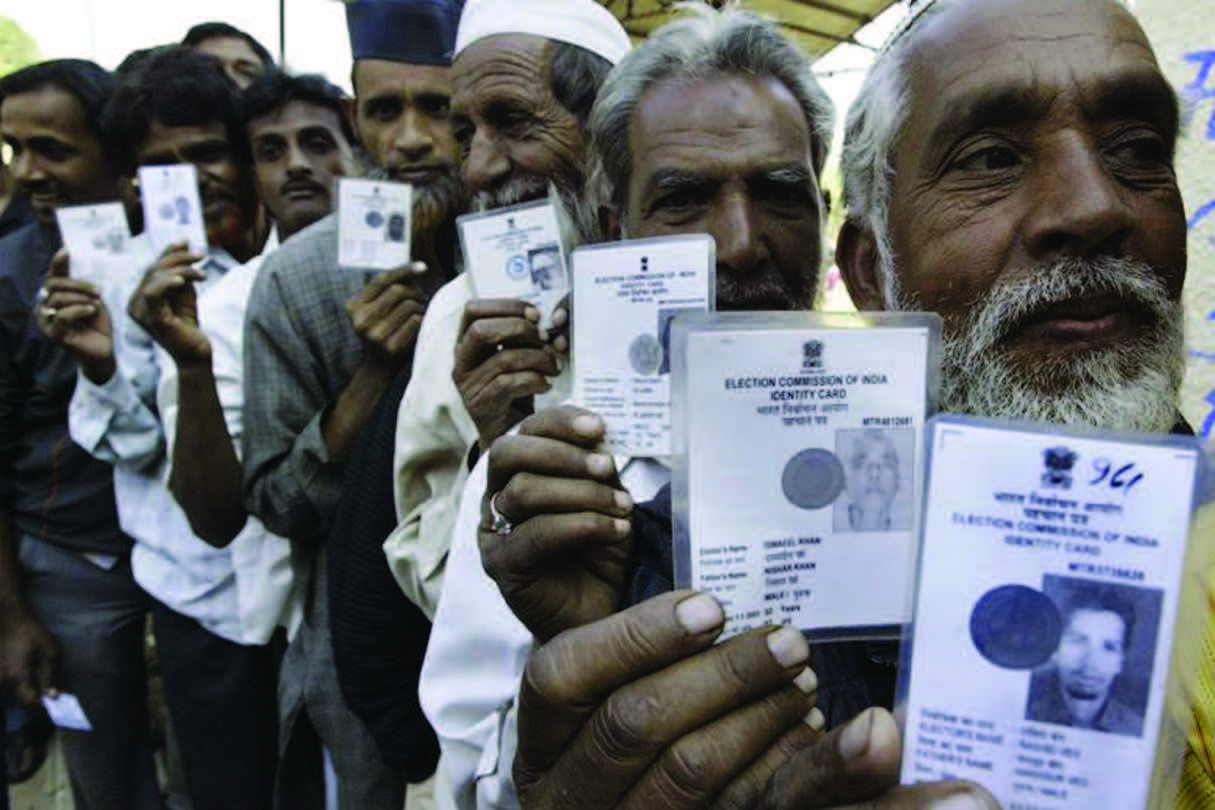
    If T N Seshan alone could retrieve autonomy of the election commission, it appears the Central Bureau of Investigation and other government institutions could cease being the ruling party’s mistress. At the heart of the country’s politics is the sane oracle, the voter: the elderly who walk to polling booths, tribesmen who defy Naxalites to vote, women who stand with men, youth who secure their aspirations in ballots. Of 790 million voters, 120 million are 18-23-yearolds, the first-time voters who must establish a relationship with people, not leaders, to secure the republic for their next generations. (The writer, Tufail Ahmad, is director of South Asia Studies Project at the Middle East Media Research Institute, Washington DC.)

  • A Panegyric for Arnab Goswami?

    A Panegyric for Arnab Goswami?

    B.V. Rao, editor of Governance Now, explains the name and the phenomenon – Time’s Now’s Arnab Goswami – to a childhood friend who lives in Canada. Readers will surely find the piece a refreshing reading.

    Dear Sharda
    Sometime ago during a Googlegroup discussion you innocently asked: “But who is Arnab?” In India not knowing Arnab is against national interest. You are lucky you live in Canada. But if you don’t want to be deported on arrival on your next visit, you better pay attention to this complimentary crash course on the subject.

    Arnab, as in Arnab Goswami, is India’s most-watched prime time news anchor and editor-in-chief of Times Now. But designations don’t even begin to describe him or what he is famous for. You must have heard about hurricanes Katrina and Sandy. Arnab is also a storm, a news-storm that hits India every night via his show, the “Newshour”.

    Nobody is quite sure how, but somehow Arnab gets to know the questions that the “whole nation” wants answers for, or the sinners the nation wants hanged before midnight that night. In effect then, Arnab speaks for a “billionplus people” each time he takes centre-stage. I can’t say for sure if he took this burden upon himself voluntarily or if his employers made it a contractual obligation. Whatever it is, the fact is that Arnab has come to relish asking the most “simple and direct” questions to the most dubious people demanding instant answers to complex problems because the “nation wants to know” and it wants to know “tonight” as in right now.

    That’s how impatient India has become while you’ve been away, Sharada. The Newshour airs on weekdays from 9 pm and continues till Arnab’s pleasure lasts. Often the show stretches up to 10.50 pm. That’s actually “News hour-and-threequarters- and-then-some” but I guess Arnab has not asked himself a “simple, direct” question: how many minutes make an hour? That, or his primary school maths teacher is not his viewer. In which case it is safe to say Arnab speaks for a billion-plus minus one Indians. You will see that at the altar of national interest it is not just the hour that is stretched.

    About two decades ago, Dileep Padgaonkar was the editor of the Times of India owned by the Jains of Bennett & Coleman who also own Times Now. Padgaonkar had pompously proclaimed that he held the second most important job in the country after the prime minister’s. Arnab hasn’t said it, but I think he disagrees with Padgaonkar on the pecking order: it’s now the prime minister who holds the second most important job in the country. Hence Arnab runs the show like he would run the country or like the prime minister should but doesn’t.

    You see, Sharada, there’s an awful lot of stuff the nation wants to know by nightfall but our prime minister isn’t much of a talker. Arnab fills the need gap. He opens his show with a passionate agenda-setting preamble that spells out all the problems of the day and how he wishes to solve them. We gratefully receive this wisdom and call it Arnab’s Address to the Nation, a prime ministerial duty that has fallen on his broad shoulders because the real guy has abdicated it. Let me tell you this, however. Arnab is a very reluctant power-grabber. It is not his intent to upstage the prime minister or make him look silly.

    He gives the prime minister an entire day to prove his worth and gets to work only at 9 pm when it is clear that the latter can’t handle stuff. He then solves all outstanding national issues of the day in just one 110 minute-hour of feverish debates where he grills the skin off the back of everybody who dares to stand in the way of India’s national interest. He is unrelenting in his pursuit of the truth and doesn’t give up unless everybody has agreed with him.

    “I am worried”, “I am concerned”, “I won’t let you politicize”, “I don’t agree”, “you can’t get away….” are some of the phrases he uses to suggest he is in complete control and that endears him to a nation starved of decisionmakers. Arnab hates home work. He wants to settle everything here and now, tonight. As a result, in Arnab country, there is no trace of the policy paralysis that has grounded the prime minister in the real country. Here you get resolutions, decisions, orders, diktats, judgments, justice and denouements all in one place, one show, by one man.

    The only people paralyzed are the subjects of his grilling and the bevy of experts he gathers around himself, not because he needs them, he doesn’t, but because it must feel awfully good to invite experts and out-talk them on national prime time. Like confused baboons trapped in little boxes, the experts, who are neatly arranged around Arnab’s own imposing self in the centre of the screen, keep staring into nothingness most of the time. Yes, you get the drift, Sharada, Arnab is the main dish here. The rest are just intellectual dips. For most of their airtime the experts keep putting up their hands or calling out “Arnab….Arnab….” to indicate they want to make a point. Arnab is too engrossed in disagreeing with what he has not allowed them to say to care too much. Some clever guests try to appeal to his Assamese roots by hailing “Ornob…Ornob”.

    He ignores them as well. Nationalism, after all, is above parochialism. The cleverer among them have cracked the code: they just agree with Arnab in exchange for a little extra air time. These are usually the people who have paid close attention to Arnab’s Address to the Nation and picked up the right cues on what to say that will get them his benefaction. It is tough to figure out why Arnab needs any experts at all because he knows the answers to all his questions. Times Now insiders say that more often than not he finds questions to the answers he already has. On his show, politicians can’t politicize, bureaucrats can’t beat around the bush, sportspersons can’t play games and lawyers can’t use legalese.

    In fact anybody who is good at something can’t do what they are known to do, to the extent that even civil society can’t be civil, especially if it wants to get a word in sideways. Everybody has to be direct, honest, blunt and keep things simple because that is what the (one-man) nation wants. Corruption, political expediency, opportunism, forked tongues, doublespeak, dishonesty and hypocrisy, are red rags to Arnab. He takes them head-on with the help of his reporters who keep throwing up “documentary” evidence ever so often to expose scamsters. Usually this is a thick sheaf of indistinguishable papers that Arnab holds up threateningly. It could be a bunch of used airline e-tickets for all we know, but since we don’t, he waves the sheaf confidently in the face of the enemies of the nation and it is generally assumed he’s got some incendiary stuff in there. Arnab’s problem-solving repertoire is not restricted to national boundaries.

    In fact, he is at his best when dealing with nations that have evil designs on India. The patriot in Arnab is best aroused when he is dealing with that evil, failed, rogue nation called Pakistan. He deals with Pakistan like no prime minister has ever been able to or decimates it like no Army has ever managed to. Each time a blade of grass bends to the breeze on the LoC, Arnab breathes fire at Pakistan for trying to sneak in terrorists into the country. He lines up a battery of serving and retired generals of Pakistan and conducts the verbal equivalent of a summary execution. Yet, the same generals keep resurfacing on Arnab’s show each time he feels the urge to have a Pakistani or two for dinner. This causes much wonderment among Newshour hounds on the masochist streak that makes the Pakistani generals offer themselves up as bait repeatedly.

    So, it is assumed the money must be good. But since Arnab insists that Pakistan is the way it is only because the generals have sold their country cheap, it is unlikely he is blowing his budget for this routine cross-border target practice. Of course, left to Arnab Pakistan would have existed only as the largest crater on earth since the meteors wiped out all life on the planet. Yes, he would have nuked it many times over by now. The Times of India, the country’s oldest English newspaper and the mother brand from the Times Now stable runs Aman Ki Aasha (Hope for Peace), the widely-acclaimed campaign for ending India-Pakistan hostilities. Just as Arnab doesn’t seem to know of this campaign, the Times of India seems quite oblivious of the fact that the last time there was absolute peace on the LoC was when Arnab took a two-week holiday in early September.

    It could be the marketing genius of the Times group to milk the issue from both ends or it could also be that their internal boundaries are not as porous as our LoC. Apart from conducting war exercises against Pakistan, Arnab land is eyeball-toeyeball with China, exposes the double standards of America in almost anything it does and highlights the hypocrisy of racist Australia which loves the education dollars from India but not the brown students who come along with. His blood boils so much when an old Sikh is roughed up by a bunch of racist women in the UK that he almost gets the whole of Punjab to rise in revolt against the Indian government’s inaction–even though there is nothing it can do as the gentleman is a citizen of the said country–or builds a tide of emotional revulsion against “inhuman” Norway for snatching an infant from his Indian mother’s custody for alleged physical abuse.

    I can go on and on, Sharada, but everything good must come to an end and so must my Arnab eulogy. So, in short and in conclusion, here’s what I have to say: Arnab is not just the editor-inchief of Times Now. He’s India’s protector-inchief. He is the guy who is keeping India safe while you are away on selfish pursuits. You are lucky you can get away by not knowing him.For a billion-plus Indians, minus of course his maths teacher, that is not even a distant option. Because, truth told, Arnab is the best we have got!

  • Roger Federer beats Andy Murray to set up Australian Open semifinal with Rafael Nadal

    Roger Federer beats Andy Murray to set up Australian Open semifinal with Rafael Nadal

    MELBOURNE (TIP): Roger Federer fought back from a mid-match stumble against Andy Murray Wednesday to set up a classic Australian Open semifinal with Rafael Nadal, as women’s champion Victoria Azarenka became the latest star to fall. After Nadal battled through an unexpectedly tough quarterfinal with Bulgaria’s Grigor Dimitrov, Federer showed both his vintage best and his fallibility in beating Murray 6-3, 6-4, 6-7 (6/8), 6-3. The Swiss great was electric in the first two sets but he tightened as he neared the finishing line, and was broken when serving for the win before passing up two match points in the third-set tiebreaker. However, he extended Murray in a 19- minute hold at the start of the fourth set, then got the crucial break for 5-3 and, after setting up a third match point, he grabbed the opportunity with an ace.

    “I thought Andy did well, he kept the ball in play and put the pressure on me and unfortunately I couldn’t get it done in the third set, with either the serve or the forehand missing. So I am happy to get the win in four,” Federer said. “I am much higher than I was last year and that’s very satisfying just because I have confidence in my movement.” Federer, in his 11th consecutive Australian Open semifinal, will face the man who has become his Grand Slam nemesis, winning their last five encounters at major tournaments. But a day after Novak Djokovic’s three-year Melbourne reign was halted by Stanislas Wawrinka, Nadal also flirted with disaster before getting out of jail against rising Bulgarian Grigor Dimitrov.

    The 13-time Grand Slam champion, troubled by a huge blister on his racquet hand, went a set down against the exciting young prospect and, facing set points in the third, he was tottering. But Dimitrov, 22, went just long on the first set point and Nadal saved another before the Bulgarian gave him a one-set lead when, gifted an easy winner off a net cord, he ballooned his forehand out. “I was so lucky,” admitted the Spaniard, who ran out a 3-6, 7-6 (7/3), 7-6 (9/7), 6-2 winner to set up a meeting with Federer in his 22nd Grand Slam semifinal. Djokovic’s defeat by Wawrinka, who will play Tomas Berdych in the other semi, ensures that one of them will be able to challenge either Nadal or Federer for their maiden Grand Slam title.

    “I’m a bit shattered,” said Dimitrov, after his title hopes slipped away. “It’s tough losing that match, my first (Grand Slam) quarterfinal. I came out expecting nothing less than to win.” The women’s contest has been even more up-ended and there was an air of resignation rather than shock when Azarenka tamely followed Serena Williams and Maria Sharapova out of the tournament. The Belarusian world number two was unbeaten in two years at Melbourne Park but she was comprehensively dismantled by an inspired Agnieszka Radwanska 6-1, 5-7, 6-0. “I’ll be fine tomorrow.

    I’ll be working tomorrow. It’s not the end of the world. But I’m not happy with what I did today,” said Azarenka. It ends a sometimes unhappy run of 18 wins at the tournament for Azarenka, whose loud grunting and perceived gamesmanship has earned her critics as well as fans in Melbourne. But it was a major scalp for Radwanska, who had lost all seven previous meetings with the Belarusian, and now goes into a semifinal with Slovak 20th seed Dominika Cibulkova.

    “It’s hard to play someone I lost (to) so many times before. I knew she’s a great player. Especially here, she was playing amazing tennis,” said Radwanska. The upset also ensures the tournament will have a new women’s champion with none of the semifinalists — Radwanska, Cibulkova, Li Na and Eugenie Bouchard — having won before. Cibulkova reached only her second Slam semifinal when she also won against a favoured opponent in fast-rising Romanian Simona Halep.

    Halep is set to break the top 10 in next week’s new rankings, but she froze in her first Grand Slam quarterfinal as the energetic Cibulkova dominated 6-3, 6-0 in one hour exactly.

  • Who betrayed Sardar Patel?

    Who betrayed Sardar Patel?

    “The abolition of Privy Purses will remain one of the most shameful events in our constitutional history. The nation saved Rs.4 crore annually but lost its honor. It is equally regrettable that neither the Janata Party in 1977 nor any subsequent non-Congress government did anything to redeem Patel’s pledge. What purpose will, then, be served by spending Rs.2,500 crore to build the tallest statue in his memory?”, asks the author.

    By Arvind P Datar
    Sardar Patel persuaded the Constituent Assembly to guarantee payment of Privy Purses and preserve the rights of the erstwhile rulers. But the Congress betrayed him. In the recent media coverage on Sardar Vallabhbhai Patel, there was not one word about the greatest insult to his memory: the abolition of the Privy Purses, first by a Presidential Order and, later, by a constitutional amendment.

    Article 1 of the Constitution states that India, that is, Bharat, shall be a Union of States. No person can claim greater credit for the creation of Bharat than Sardar Patel, ably assisted by V.P. Menon (Constitutional Adviser to Lord Mountbatten). In 1947, princely states numbering 555 covered 48 per cent of the area of pre-Independent India and constituted 28 per cent of its population. Legally, the princely states were not a part of British India and the people of these states were not treated as British subjects. But, in reality, they were completely subordinate to the British Crown.

    The Indian Independence Act, 1947, provided for the lapse of paramountcy of the British Crown over the Indian states. Each ruler had the option to accede to the dominion of India or to Pakistan, or continue as an independent sovereign ministate. The rulers were often seen, perhaps rightly, as lackeys and stooges of the British Empire. Even in the “mutiny” of 1857, many of them actively assisted the British. Lord Canning acknowledged their role as “breakwaters in the storm which would have swept over us in one great wave.” From the beginning, therefore, several members of the Congress were totally opposed to the payment of Privy Purses.

    Integration
    The tireless efforts of Sardar Patel and V.P. Menon resulted in the princes agreeing to the dissolution of their respective states. They surrendered several villages, thousands of acres of scattered jagir land, palaces,museums, buildings, aircraft, and cash balances and investments amounting to Rs.77 crore. In addition, there was the railway system of about 12,000 miles which the states surrendered to the Centre without receiving any compensation. In consideration of their agreeing to integrate with India, the princes were to be paid a Privy Purse, which was approximately 8.5 per cent of the annual revenue of each princely state.

    The amounts varied from Rs.43 lakh a year to the Nizam of Hyderabad to just Rs.192 a year to the ruler of Katodia. Of the 555 rulers, 398 were to get less than Rs.50,000 a year. The total cost to the Indian exchequer in 1947 was Rs.6 crore, which was to be progressively reduced. At the time of abolition in 1970, the total amount payable to all the erstwhile princes was just Rs.4 crore a year. On October 12, 1949, Sardar Patel persuaded the Constituent Assembly to include Articles 291 and 362 in the Constitution to guarantee the payment of Privy Purses and also preserve the personal rights, privileges and dignities of the rulers.

    His brilliant speech bears clear testimony to his statesmanship and deserves to be carefully read: “The privy purse settlements are, therefore, in the nature of consideration for the surrender by the rulers of all their ruling powers and also for the dissolution of the States as separate units … Need we cavil then at the small – I purposely use the word small – price we have paid for the bloodless revolution which has affected the destinies of millions of our people? … “The capacity for mischief and trouble on the part of the rulers if the settlement with them would not have been reached on a negotiated basis was far greater than could be imagined at this stage.

    Let us do justice to them; let us place ourselves in their position and then assess the value of their sacrifice. The rulers have now discharged their part of the obligations by transferring all ruling powers by agreeing to the integration of their States. The main part of our obligation under these agreements is to ensure that the guarantee given by us in respect of privy purses are fully implemented. Our failure to do so would be a breach of faith and seriously prejudice the stabilization of the new order.” He also informed the Assembly that if the cash received from the rulers of Madhya Bharat alone were invested, the interest would cover the payment of Privy Purses to all the princes.

    Nobody but Sardar Patel and V.P. Menon could have negotiated such a settlement with them. After Patel’s death, there were repeated demands to abolish the Privy Purses, but Pandit Jawaharlal Nehru refused to do so. Appalled at these demands, Menon remarked: “As an honorable party to an agreement, we cannot take the stand that we shall accept only that part of the settlement which confers rights on us, and repudiate or whittle down that part which defines our obligations. As a nation aspiring to give a moral lead to the world, let it not be said of us that we know the ‘price of everything, and the value of nothing’.”

    Privy Purses case
    In the 1967 election, several rulers had joined the Swatantra Party headed by C. Rajagopalachari, and many of them defeated Congress candidates. Indira Gandhi was, therefore, determined to abolish the Privy Purses. On June 25, 1967, the All India Congress passed a resolution to abolish them. The Constitution (Twentyfourth Amendment) Bill, 1970 was introduced and passed in the Lok Sabha by a majority of 332:154 votes, but it was defeated in the Rajya Sabha by 149:75. Having failed in Parliament, Indira Gandhi asked President V.V. Giri to derecognize all the rulers.

    This derecognition was successfully challenged by N.A. Palkhivala before the Supreme Court in the historic Privy Purses case. Indira Gandhi’s landslide victory in the 1971 election enabled her to amend the Constitution that abolished the Privy Purses and extinguished all rights and privileges of the rulers. In Parliament, Indira Gandhi stated that the concept of Privy Purses and special privileges were incompatible with an “egalitarian social order.” Thus, just 20 years later, the Congress Party, of which Sardar Patel was a member, betrayed the solemn constitutional guarantee given to the rulers by the Constituent Assembly.

    It was primarily on the assurance of Sardar Patel that the rulers signed the Instruments of Accession that created a united India. In the end, the abolition of Privy Purses will remain one of the most shameful events in our constitutional history. The nation saved Rs.4 crore annually but lost its honor. It is equally regrettable that neither the Janata Party in 1977 nor any subsequent non-Congress government did anything to redeem Patel’s pledge. What purpose will, then, be served by spending Rs.2,500 crore to build the tallest statue in his memory?

  • Winds of Change

    Winds of Change

    November, 2013 gave a clear idea of which way the political wind in India was blowing. The rout of Congress in Delhi and Rajasthan; and its rejection by the electorate in Madhya Pradesh and Chhattisgarh indicated the loss of popularity of the party.

    Without going in to details of causes for the decline in popularity of a party that had managed to rule the center for almost 10 years at a stretch, it can now be said that the grand old party is tottering. The latest India Today Group’s Mood of the Nation opinion poll indicates huge losses for the Congress led UPA.

    The BJP led National Democratic Alliance (NDA) has been found to make significant gains. The projections are it could win 200-odd seats if the general elections were held in January 2014, the findings of the poll say. The opinion poll gives the Congress-led United Progressive Alliance (UPA) only around 100 seats, down by over 150 seats in the current Lok Sabha.

    It also underlines the significance of a possible Third Front in the forthcoming Lok Sabha election as the non-UPA, non- NDA parties and Independents are expected to win 220- odd seats. The NDA thus crosses the 200-mark for the first time since 2010. Both, the NDA and the likely Third Front, gain substantially in numbers and vote share at the cost of the Congress led UPA. The opinion poll suggests that the NDA’s vote share of 34 per cent will be significantly more than the UPA’s 23.

    However, the others will have the maximum vote share of 43 per cent. The scenario is frightening. The BJP emerges as the single largest party and yet it will not be able to form a government on its own. With its alliance partners, Shiv Sena, SAD and a few others, too, that form NDA, a government led by BJP does not appear in sight. The “others” are disparate groups. They cannot be expected to cobble together a government even though they will together be the largest group, according to the results of the poll. What happens then? Horse trading and unholy alliances will prevail. What happens then? Another round of misrule. Another five years of suffering for the common man. The writing is on the wall.

  • 6.3 million eligible for Medicaid since Obamacare launch: US agency

    6.3 million eligible for Medicaid since Obamacare launch: US agency

    NEW YORK (TIP): More than 6.3 million Americans were deemed eligible for government healthcare plans for the poor since the October 1 launch of President Barack Obama’s healthcare law through December, federal officials reported on Wednesday.

    The swelling rolls for Medicaid and the Children’s Health Insurance Program (CHIP) reflect both an expansion of Medicaid under Obama’s Affordable Care Act (ACA) and what healthcare policy analysts call an “out-of-the-woodwork effect,” in which people who heard about Obamacare sought to obtain health insurance and discovered that they had qualified for Medicaid even before the law expanded eligibility.

    “We have people who for the first time will have some health security that they never had before,” Kathleen Sebelius, secretary of the Department of Health and Human Services, said of the Medicaid numbers at the winter meeting of the U.S. Conference of Mayors in Washington, D.C. It was not clear how much credit goes to the healthcare law, however.

    “What many people don’t read far enough to learn is that this number also can include people in some states who are eligible under pre-expansion — the woodwork effect — and whose Medicaid enrollment was simply renewed,” said Matt Salo, executive director of the National Association of Medicaid Directors. The 6.3 million people determined eligible for Medicaid or CHIP last fall swamps the 2.2 million people who had purchased private health insurance on the state-based Obamacare marketplaces that launched on Oct. 1.

    The ACA also raised the income threshold for Medicaid eligibility to 138 percent of the federal poverty level, or $15,856 for a single person. A Supreme Court decision in 2012 allowed each U.S. state to decide whether to accept the expansion. So far, 25 states have reached an agreement with the administration to do so. Prior to the ACA, just over 60 million Americans were covered by Medicaid. In December alone, 2.3 million individuals were determined eligible to enroll in Medicaid or CHIP, an increase of over 20 percent from November, according to the report from the Centers for Medicare & Medicaid Services (CMS), the lead Obamacare agency.

    About 1.2 million of these were in the 25 states (and the District of Columbia) already expanding Medicaid, and just over 1 million were in the 25 states that have not. The CMS figures refer to the number of people that meet Medicaid eligibility rather than actual enrollment in the program due to the troubled HealthCare.gov website, which is run by the federal government to serve Obamacare sign-ups in 36 states.

    For months, the website did not correctly transmit information that applicants are eligible for Medicaid to their state Medicaid program. The state offices do the actual enrollment, and have been scrambling to send out tens of thousands of letters to residents to actually enroll them, the Washington Post reported this month. At the same time, the national figures mirror what many of the Medicaid-expansion states have reported. In California, for instance, 625,000 individuals have gained coverage through private policies purchased on the state’s Obamacare exchange, Covered California, while 1.2 million enrolled in Medi-Cal, the state’s Medicaid program.

    The websites through which people can shop for insurance under Obamacare are required to have what the Obama administration calls a “no wrong door” policy, meaning that even if people went to their state’s exchange expecting to buy private insurance, the site would determine if they were instead eligible for Medicaid or CHIP, which generally charge zero premiums. Several states have gone beyond that, seeking out Medicaid-eligible people by contacting those who receive food stamps or other benefits that indicate they have very low incomes

  • Obama fails to persuade Americans on NSA reform: poll

    Obama fails to persuade Americans on NSA reform: poll

    WASHINGTON (TIOP: Reforms to US surveillance announced by President Barack Obama have failed to reassure most Americans, with three-quarters saying their privacy will not be better protected under the changes, according to a new poll.

    By a margin of 73-21%, Americans who followed Obama’s speech last week on the National Security Agency say his proposals will not make much difference when it comes to safeguarding privacy rights, said the Pew Research Center/USA Today poll published on January 22.

    The poll of 1,504 adults, carried out between Wednesday and Sunday, showed the speech was not widely followed by Americans and that skepticism of the NSA’s electronic spying is growing. The survey said half of those surveyed heard “nothing at all” about Obama’s proposed measures and another 41% said they heard “only a little bit.”

    And fully seven in 10 poll respondents said they should not have to give up privacy to stay safe from potential terror attacks, the poll said. A majority of 53% now disapprove of the NSA’s collection of telephone and internet data. In July, 50% approved and 44% disagreed with the surveillance program.

    The shift in public opinion follows the explosive leak last June of NSA documents by former intelligence contractor Edward Snowden, who has sparked a global uproar over the US government’s far-reaching surveillance. Nearly half of Americans, 48%, said there are insufficient limits on what telephone and internet data the government can collect, while 41% said there are adequate parameters on the government’s spying.

    The survey revealed a division over whether Snowden’s unprecedented disclosures of classified information have damaged the country, with 45% saying the leaks have served the public interest and 43% saying the leaks have harmed it. Snowden faces espionage charges from US authorities over his leaks and has obtained temporary asylum in Russia, where he has said he has been vindicated by the public reaction to the disclosures. However, 56% of Americans say the government should prosecute Snowden while 32% did not favor pursuing criminal charges.

    In his speech last Friday, Obama said a third party – not the government – should hold vast stores of phone metadata, and that the NSA would need a court order to search the data except in genuine emergencies. The US president also promised Washington would no longer eavesdrop on the leaders of friendly foreign governments and that a panel of independent lawyers should be allowed to argue in the interest of privacy rights before the secret court that oversees the NSA surveillance. The poll found 79% of Americans were not worried that Obama’s proposed reforms would undercut the government’s ability to fight terror groups.

  • ‘Russian spy’ tag absurd, I acted alone, Snowden says

    ‘Russian spy’ tag absurd, I acted alone, Snowden says

    WASHINGTON (TIP): Edward Snowden has rejected suggestions he was a Russian spy, saying in remarks published on January 22 that he acted alone in exposing US surveillance programmes.

    “This ‘Russian spy’ push is absurd,” the US fugitive told The New Yorker. In an interview, the magazine said was carried out by “encrypted means” from Moscow, Snowden said he “clearly and unambiguously acted alone, with no assistance from anyone, much less a government.”

    On Sunday two Republican lawmakers had hinted Snowden may’ve acted in concert with a foreign power, possibly Moscow. House Intelligence Committee chairman Mike Rogers, for one, said at a talk show that he didn’t think “it was a gee-whiz luck event that (Snowden) ended up in Moscow under the handling of the FSB” (Russian state security agency).

    Michael McCaul, chairman of House Homeland Security Committee, said he could not say “definitively” that Russia was involved, “but I believe he was cultivated.” Meanwhile, Snowden is standing as a candidate for rector of Glasgow University in Scotland after students nominated him for exposing US intelligence secrets, the university said. agencies

  • Putin, Obama discuss Syria conference over telephone: Kremlin

    Putin, Obama discuss Syria conference over telephone: Kremlin

    MOSCOW (TIP): US President Barack Obama spoke with his Russian counterpart Vladimir Putin by telephone on Tuesday, and the leaders discussed an internationally sponsored conference on Syria, the Kremlin said in a statement.

    The conference in Switzerland is due to start on January 22. The United States and Russia have found themselves taking opposing sides during the three-year conflict in Syria. The Kremlin said the tone of the conversation was “businesslike and constructive”.

  • The end of poverty? There will be ‘almost no poor countries by 2035,’ Bill Gates says

    The end of poverty? There will be ‘almost no poor countries by 2035,’ Bill Gates says

    LONDON (TIP): Bill Gates has said there will be “almost no poor countries by 2035”, and that child mortality rates in the poorest nations will plummet to the same levels as in the US and UK in 1980.

    The world’s richest man made the prediction in the Gates Foundation’s annual letter, in which he and his wife Melinda Gates sought to dispel three common “myths” surrounding the issues of world poverty. The foundation, which is expected to have given away the entire Gates fortune of around $67 billion (£40 billion) by the time the couple have been dead for 20 years, has published a letter for each of the last five years detailing global philanthropic progress.

    Speaking to Forbes Magazine’s editor Randall Lane, Gates said there will soon come a point where “you’ll have to give a reason why a country is poor.” He said that while it is difficult to make predictions for nations where politics hinders progress (naming North Korea as an example), for almost everyone else there are “good examples to learn from”.

  • Major snowstorm slams northeastern US, 3,000 flights cancelled

    Major snowstorm slams northeastern US, 3,000 flights cancelled

    WASHINGTON (TIP): The northeastern US shivered amid heavy snowfall and far below average temperatures on January 23 in a storm that grounded thousands of flights and triggered traffic chaos.

    The nasty weather with its bone-chilling gusts and heavy snow stretched from Washington to New England. The Midwest was hit hard, too. Taking into account the wind chill factor, the temperature in Chicago plummeted to minus 20 Fahrenheit (-28 Celsius), the Chicago Tribune said.

    In the nation’s largest city, the Tuesday evening commute home in New York was a mess and the city was expected to get as many as 14 inches (35 cm) of snow by Wednesday morning. “It’s horrible. Snow is cute for only a little bit,” Mary Catherine Hughes, standing by a subway stop with an umbrella rendered useless in fierce wind, told The New York Times. The city’s new mayor Bill de Blasio urged people to stay home say road crews could clear streets.


    14

    Downtown Washington fell eerily silent after the federal government, seeing the swift-moving storm approaching, closed its doors and told civil servants — who already had the day off on Monday for the Martin Luther King holiday — to stay home on Tuesday. On January 23, federal agencies were to open two hours late. Employees could also take unscheduled leave, and those that can were allowed to work from home. The nation’s capital is famous for cowering in the face of even a few flakes but Tuesday’s storm seemed to justify a shutdown.

    Many offices and schools followed suit, as 20 mile (32 kilometer) per hour winds whipped through the US capital’s unusually quiet streets. Most area schools, in the city and neighboring Maryland and Virginia, were to remain closed again on January 23. Washington’s Metro public transit system reported Tuesday half as many riders as on a typical weekday. Business was so slow that many restaurants used Twitter to woo customers with bargain-priced drinks while others offered customers 2-for-1 deals.

    In Philadelphia, as of early evening Tuesday, the official total at Philadelphia International Airport was 11 inches of snow, a record for the day January 21. The “storm system will strengthen overnight in the Atlantic waters off the East Coast, spreading heavy snow and strong wind into coastal sections of New England and the Northeast,” the National Weather Service said. Temperatures across the eastern part of the country Wednesday will be 10 to 25 degrees below average, amid bitter wind chills, it warned.

    Flight Aware, a website that monitors air traffic in real time, said nearly 3,000 flights into, out of or within the United States had been cancelled on Tuesday. The lion’s share of affected flights involved busy airports in the New York, Philadelphia and Washington areas. Seven inches (18 centimeters) of snow had fallen at Washington’s Dulles International Airport while some 11 inches were reported at the Philadelphia International Airport, according to AccuWeather, a private forecasting service. Accumulations of six to 12 inches were expected over the mid-Atlantic to southeastern New England, it said.

    National rail company Amtrak said it would operate “a modified schedule” Wednesday on its Northeast Corridor line between Washington and Boston, as well as on two other routes in the hard-hit region. States of emergency were declared there, as well as in New Jersey and Delaware, according to the media. More than 1,700 plows were to be mobilized in New York on January 22 night to clear up to 10 inches of snow, it reported. Across the Hudson River, New Jersey went ahead with its mid-day inauguration ceremony for re-elected governor Chris Christie, who is battling allegations he used his office to bully political foes.

    But an evening gala on historic Ellis Island in New York Harbor to mark the start of his new term in office was scrapped due to the storm. Schools across the Northeast either closed for the day or told parents to expect their youngsters to be dismissed from class earlier than usual. Closures in many areas were extended through on January 24. Meanwhile, courthouses called off proceedings in the afternoon. What the National Weather Service called a “fast moving but potent” snowstorm had earlier dumped seven inches of snow on airports in the Chicago area, before temperatures fell to the freezing level.

  • US vows stepped up support to oust Assad

    US vows stepped up support to oust Assad

    MONTREUX (SWITZERLAND) (TIP): The United States on January 22 led a fierce denunciation of the Syrian regime and vowed it would step up support for the opposition as it seeks to topple President Bashar al-Assad.

    The top US diplomat, John Kerry, set the tone when he stressed before 40 nations and international organizations gathered at a landmark peace conference in Switzerland that Assad could play no part in Syria’s future leadership. “There is no way — no way possible in the imagination — that the man who has led the brutal response to his own people could regain the legitimacy to govern,” Kerry insisted.

    “One man and those who have supported him can no longer hold an entire nation and a region hostage,” said the US secretary of state, who has led efforts with his Russian counterpart Sergei Lavrov to launch the peace talks and end the three-year war. At a later press conference in the Swiss city of Montreux, Kerry revealed that Washington and Moscow were also planning to work on other tracks to end the fighting which has left 130,000 people dead.

    “There will be parallel efforts being made, even while the talks are going on, to find different pressure points and find a solution,” he told reporters from the world’s media, refusing to go into detail. “I will just say to you that lots of different avenues will be pursued, including continued support, augmented support to the opposition.” Washington has provided more than $1.3 billion in humanitarian assistance to the Syrian people, and has been supplying non-lethal materiel such as body armour, communications equipment and night-vision googles to the armed rebels.

    But so far it has refused to directly supply weapons and machinery to the opposition forces — now fighting against both Assad and a wave of al-Qaida extremist groups flooding into the chaos. It remained unclear from Kerry’s remarks whether the Obama administration was now prepared to review its weapons ban. And he warned that even though President Barack Obama finally walked away from threatened military strikes against regime targets in September, the US leader “has never taken any option off the table”.

    As the Syrian sides are set now to start direct negotiations under the aegis of the UN later in the week, Kerry said: “I can tell you this, what you see in the direct talks between the opposition and the Assad regime will not be the full measure of effort being expended in order to try to find a solution here.” Syrian Foreign Minister Walid Muallem earlier dubbed the country’s opposition “traitors” and foreign “agents”. He hit back at Kerry’s comments, saying only the Syrian people could decide their president, and offered assurances that progress had been made on allowing aid organisations access to stricken populations.

    His comments were immediately dismissed by US officials. “Instead of laying out a positive vision for the future of Syria that is diverse, inclusive and respectful of the rights of all, the Syrian regime chose inflammatory rhetoric,” State Department spokeswoman Jen Psaki said in a statement. US officials said his claim of progress in humanitarian access was “laughable” and if Muallem was serious the regime should immediately open up safe corridors to aid convoys and lift restrictions for advance notice. Psaki also used her Twitter account @StateDeptspox to hammer away at the Syrian regime, suggesting the Syrian coalition led by Ahmad Jarba better represented the people. “At #Geneva2 Muallem stays at his del seat.

    Immovable. SOC has rotated: from Jarba to a Sunni, woman, Druze, Kurd, from all over Syria,” Psaki tweeted. “Which delegation represents Syrian society better?” she added. The conference marks the first time the regime has sat down at the negotiating table with the Syrian opposition since the uprising erupted in March 2011. US officials have worked hard behind the scenes for months to unite the divided Syrian opposition and bring them to the talks aimed at charting a path towards a transitional government.

  • Congress poll strategy: Rahul eyes ‘sandwiched class’

    Congress poll strategy: Rahul eyes ‘sandwiched class’

    NEW DELHI (TIP): Not rich, notmiddle class, not BPL, is quite a mouthful. But shrunk to NRMB, the acronym stands for 70 crore Indians tagged by Rahul Gandhi as a vibrant vote bank sandwiched between poverty and middle class status.

    Congress is busy devising poll hooks for this section that party strategists feel can be welded into a powerful support base that aspires to be middle class but is acutely vulnerable to economic and political shocks. Speaking at the Congress plenary last week, Rahul Gandhi pledged concrete measures for “daily wagers, painters, builders, carpenters, farm labour and street vendors”, a section above the poverty line but often only just.

    The number crunching leading to the 70 crore estimate rests on assuming Rs 1000 per person per month as the threshold for poverty, in line with the official poverty line – currently under review —at Rs 960 a month. Having coined the acronym NRMB, the Congress backroom calculates those earning between Rs 1000 to Rs 15,000 fit the bill for Rahul’s definition of incomes susceptible to even minor flux like illness of an earning member or economic change.

    Based on these benchmarks, the BPL population is pegged at 36 crore and the middle class, assuming Rs 1 lakh per person a month as a cut off, is around 16 crore. Of these, the rich, largely immune to inflation, are seen to number 50 lakh. Congress’s manifesto, currently in the works, is expected to flesh out Rahul’s lengthy reference to NRMBs, an acronym that has gained salience in the party back room.

    Congress sources argue that it is the in-between NRMBs who need most attention as the BPL have schemes like rural employment guarantee and food security while the middle class benefit most directly from liberalization. Rahul’s target is to mobilize the support of a section that the party sees as a vote that could be lured by BJP leader Narendra Modi’s promise of a “better tomorrow” comprising higher incomes, more jobs and housing. Interestingly, Modi has also spoken of a “neo middle class”, with stakes in the growth opportunities unleashed by liberalisation and pointedly thanked this section of voters after winning the 2012 Gujarat election.

    A 2012 paper by the center for global development looked at the National Council of Applied Economic Research definition of middle class as two subgroups : “seekers” with annual household income between Rs. 200,000 and Rs. 500,000, and “strivers” with incomes between Rs. 500,000 and Rs. 1 lakh. “Assuming an average household size of 5 people and converting into constant 2005 purchasing power parity (PPP) dollar, these numbers would be about $8 to $20 per capita per day for seekers, and $20 to $ 40 per capita per day for strivers,” the paper says.

    Congress strategists have accepted this premise in the context of the household survey conducted in 2004/2005 that concludes that India’s “middle class” doubled over the last decade, growing from 5.7% of all Indian households in 2001/02 to 12.8%. This corresponds to about 28.4 million households or 153 million people. The large slice of the population below this middle class and above BPL could be a deciding factor in the 2014 election, Congress feels. A conclusion that BJP might reach as well.

  • Crime branch to probe Sunanda Pushkar’s death

    Crime branch to probe Sunanda Pushkar’s death

    NEW DELHI (TIP): The mysterious death of Union HRD Minister Shashi Tharoor’s wife Sunanda Pushkar will now be probed by the crime branch, the Delhi Police declared on January 23.

    Sunanda Pushkar’s death is the third high-profile case to be referred to the specialised crime branch for investigation over the last year from the southeast range — which is being viewed as a worrying sign for the local police.

    The other cases include the Ponty Chadha murder case, the death of NRI Anmol Sarna and the alleged involvement of two police constables in setting ablaze an auto-rickshaw driver’s father when refused a bribe. Meanwhile, police sources said they had not been able to recover footage from CCTV cameras installed on the hotel floor on which Pushkar was staying, prior to the discovery of her body in room number 345 last Friday evening.

    “The only footage we have is of her from CCTV cameras installed in the lobby of Leela Palace hotel,” admitted an officer. “We have no other footage of her and have asked the hotel management to help us provide it,” the officer said. Senior police officials privy to the investigation said they were mulling questioning ‘several people’ whose names and contact details had figured on Pushkar’s contact list prior to her death. Pushkar is understood to have talked to more than three dozen people prior to her death on January 17; police sources said this was imperative to piecing together a plausible series of events leading to her death.

    “Many of these persons were industrialists, others were journalists from her friend circle whom she is expected to have told about her uncomfortable mental condition in the wake of her husband’s alleged affair with Pakistani journalist Mehr Tarar,” an officer said. Police sources said they would meet officials from the south district to exchange notes on the investigation so far on Friday – precisely a week since her body was recovered.

  • Pathribal case: Army’s clean chit to 5 officers

    Pathribal case: Army’s clean chit to 5 officers

    JAMMU (TIP): The Army on January 23 gave a clean chit to five of its officers allegedly involved in the Pathribal encounter that took place in Anantnag district of Kashmir in March 2000.

    Following the CBI investigation and the Supreme Court’s March 2012 order, the Army had taken over the Pathribal case from the court of the Srinagar Chief Judicial Magistrate (CJM) in June 2012. Jammu-based Defence spokesperson Lt Col Manish Mehta said the evidence recorded could not establish a prime facie case against the five accused officers.

    It, however, clearly established that what happened in Pathribal was a joint operation by the police and the Army based on specific intelligence. “The case has since been closed by the Army authorities. The court of the Srinagar Judicial Magistrate has been informed,” said Lt Col Mehta. “Forensic, documentary and other evidence was taken on record. For the convenience of the next of kin of the deceased and other civilian witnesses, the team recording evidence moved to the Valley,” he said.

    Five civilians were abducted in May 2000 from their houses, days after 36 Sikhs were killed by unknown gunmen dressed in Army fatigues in south Kashmir’s Chattisinghpora area. Following the killings, the Army had claimed to have gunned down five Lashkar-e-Toiba militants responsible for the killing of the Sikhs at Pathribal. Relatives, who had seen their men being abducted, however, grew suspicious of the Army’s claims and later identified the bodies of “militants” as their “abducted” men.

    They were: Mohammad Yousuf Malik (38) and Bashir Ahmad Bhat (26) of Peth Halan; Juma Khan (50) and Juma Khan (38) of Brari Angan and Zahoor Ahmad Dalal (22) of Mominabad. A case was registered in February 2003 and the CBI filed a chargesheet before the court of the Srinagar Chief Judicial Magistrate (CJM) in 2006 against five Army personnel — Brigadier Ajay Saxena, Brijendra Pratap Singh, Sourabh Sharma, Amit Saxena and Idress Khan, all of 7 Rashtriya Rifles.

    “A comprehensive and exhaustive effort was undertaken to record evidence against all the accused. Over 50 witnesses were examined, including a large number of civilian witnesses, state government and police officials,” Lt Col Mehta said. Last October, the Army had once again issued summons through the Anantnag CJM to the civilian witnesses, including relatives of the five persons killed in Pathribal, to appear before the General Court Martial (GCM) authorities at the Nagrota-based 16 Corps to attend the General Court Martial proceedings.

    The Srinagarbased 15 Corps had contested the case of the five accused Army officers up to the Supreme Court. The Army is very sensitive to allegations of human rights violations and ensures the due process of law is followed and action taken against the accused, Lt Col Mehta said. Earlier, the Army had court-martialled six of its personnel in the alleged Machhil encounter case and proceedings were currently in progress. It has also punished 123 of its men found guilty in 59 cases of human rights violations in the state.

  • Shinde gets tough, denies Kejriwal his cop of choice

    Shinde gets tough, denies Kejriwal his cop of choice

    NEW DELHI (TIP): AAP-Centre tensions seem to be escalating with the home ministry retracting its decision to appoint senior IPS officer Praveer Ranjan as chief of the Delhi government’s anti-corruption bureau, overturning a specific request by the CM.

    Ranjan’s appointment had been cleared on the request of Delhi chief minister Arvind Kejriwal and the move to revisit the decision comes in the wake of a vituperative confrontation between AAP and the Centre over the CM’s demand for the suspension of four police officials.


    9

    The Centre’s relations with the AAP government, never too robust to begin with, have taken a beating after Kejriwal repeatedly targeted home minister Sushil Kumar Shinde, even leveling allegations of corruption against the senior Congress leader. Responding to Kejriwal’s attacks, Shinde described Kejriwal as a “mad chief minister” at a function in Maharashtra. According to sources, the Centre’s decision on Ranjan also comes in the wake of the appointment of about a dozen other Delhi Police officers to the ACB running into rough weather.

    However, the home ministry’s latest move to refuse Kejriwal’s request for a new ACB chief could have other ramifications as it challenges conventions governing relations between states and centre, and the right of state chief ministers to seek appointment of preferred officers. After the street dharna led by Kejriwal against Delhi police and the Centre, AAP government is believed to be preparing to direct the ACB to begin a probe against former chief minister and senior Congress leader Shiela Dikshit and her cabinet colleagues in cases relating to the 2010 Commonwealth Games.

    The Centre may well be keeping a close watch on these developments ahead of the Lok Sabha poll. According to available indications, almost a dozen other Delhi police officers that Kejriwal sought for ACB too may not be appointed. Delhi police and other sources suggest that the police may have told Delhi lieutenant governor Naseeb Jung that almost none of them want to come to ACB. The stance of the home ministry on the ACB chief’s appointment is read as a clear sign that Congress doesn’t intend to de-escalate its political tensions with AAP. Sources said on Thursday, the home ministry asked Jung to immediately relieve Ranjan from the Delhi police, where he is presently heading the economic offences wing, and to send him to Pondicherry.

    The home ministry’s refusal to appoint Ranjan is the latest twist in AAP government’s efforts to beef up its anticorruption wing. On January 17, during the much publicised meeting between Kejriwal and home minister Sushil Kumar Shinde, when Delhi CM demanded control over the city police, the two had also discussed the appointment of Ranjan. When Kejriwal requested the posting of Ranjan, given his good reputation, as the chief of ACB, the home minister is believed to have said it was not a problem, and that whenever any chief minister asks for an officer of his preference the request is acceded to. Home secretary Anil Goswami, who was also present, assured that appropriate orders would be issued. But within a few hours the scenario changed.

    Kejriwal took to the streets against the home ministry’s refusal to take action against police officials whom Delhi government held responsible for various lapses in the city. The CM slept by the Rail Bhavan on the street, and ended it after a deal was struck. According to reports, the Congress party was not pleased with the deal offered to Kejriwal to end his agitation. In the run up to his latest street agitation, Kejriwal also gave several interviews where he revealed Delhi government’s immediate plans, that of investigating the alleged irregularities during Commonwealth Games and other major scandals of last Congress government.

    Sources said the Kejriwal government has already examining files from the PWD and other departments, of contracts in which several high profile officials and ministers including Dikshit were indicted by the CAG, Central Vigilance Commission and the Shunglu Commission. Kejriwal had publically announced that he would be ordering criminal investigations against Dikshit and her ministers in the alleged scandals.

  • Dwarka shankaracharya slaps reporter over query on Modi

    Dwarka shankaracharya slaps reporter over query on Modi

    JABALPUR (TIP): The 86-year-old Shankaracharya of Dwarka, Swaroopanand Saraswati, known for his antipathy for Narendra Modi and immediacy with the Gandhi family, leaned across and slapped a reporter before the latter had the time to react after he asked what he thought was an innocuous question: the prospects of Modi becoming PM.

    The slap reverberated through the day with the seer’s men smelling a saffron conspiracy. But fawning Congressmen said the journalist should consider himself lucky for being singled out for such unique attention. Swami Swaroopanand himself was frank enough to tell reporters on Thursday that he indeed hit the journalist because, “despite knowing my reservations, the man persistently quizzed me on political issues”.

    It’s the prerogative of MPs to choose the PM and he had nothing against Modi, the Shankaracharya said. However, later in the day, there was a volte face by the Shankaracharya’s office, with a spokesperson denying his slapping the reporter and reiterating a saffron conspiracy. Swami Shubuddhanand said, “The journalist was drunk and inched closer to Maharaj-ji while asking questions.

    He also tried to nudge him,” he said. Shubuddhanand said there might have been a conspiracy by a former BJP minister to malign the Jagadguru. “This man had sent the reporter to provoke Maharaj-ji,” she said. A BJP MP, not wanting to be named, said, “Swamiji has made his choice clear and his gesture shows how disturbed he is by the rise of Modi.” Madhya Pradesh BJP media cell chief Hitesh Vajpayee said, “The incident is shocking. We’re surprised by his reaction.”

    Congressmen played down the fracas. “The Jagadguru is the flagbearer of Hindu religion,” said NK Prajapati of Congress. “One should take his slap as a blessing. It will be a guiding light for the journalist,” he said. Last year in November, Swami Swaroopanand had hit the headlines after he presided over the unveiling ceremony of the Virat Ramayan temple by Bihar CM Nitish Kumar, who had been decrying Modi’s brand of Hindutva and had the seer at the inauguration of his ambitious “Hindu project”.

  • Tribal woman gang-raped on a platform for all to see

    Tribal woman gang-raped on a platform for all to see

    SURI (TIP): Cops in Bengal’s Birbhum district on January 23 arrested 14 men, including a village headman who had ordered the gang-rape of a 20-year-old tribal woman for alleged sexual relations with a man from outside her community.

    As tempers flared across the state and another anti-Mamata Banerjee wave over rising gender crime swelled, the chief minister replaced the district police chief C Sudhakar with Darjeeling SP S N Gupta. Even as the administration claimed it had acted promptly, more gruesome details emerged.

    Villagers said after the kangaroo court ordered her to be sexually savaged, the woman was placed on a raised bamboo platform so that the gang-rape was viewed by the entire village, children included. “If the family does not pay up, go and enjoy yourselves,” is what headman and now prime accused Boloi Murdy allegedly told the men.

    The woman’s family alleged she and her lover, a man from a nearby village, were tied up in Murdy’s courtyard, where a kangaroo court was held and handed down the punishment — a Rs 50,000 fine for the man and gang rape for the woman. Some villagers said the woman’s cries rent the air all night but no one stepped forward to help her. Even her family, who lives 50 metres away, could not rescue her. Doctors attending to the critically injured woman saidthey had “clinical evidence” of penetration by several men.

    The report has been sent to police, said Birbhum medical chief Dr Asit Biswas. The woman’s family was not given even a night’s time to arrange for the Rs 50,000. Once the headman ordered rape, it was a free for all. “Among those who raped her were teenagers and some old enough to be her father,” said a villager, who was willing to depose to escape arrest. “Almost the entire village — including children — had joined the kangaroo court. All of them hailed it as the correct move,” he said.

    The village, 60km from Shantiniketan, the cultural and academic hub created by Rabindranath Tagore, is populated by adivasis and has no electricity or school. The administration has always been wary of interfering with tribal traditions, leaving the adivasis to live by their own laws. It saw a horrific humiliation of a teenage girl in 2010 for having an affair outside the tribe. She was paraded naked through four villages and anyone was free to grope her.

    Although it triggered outrage across the country, the Bengal government wasn’t quite proactive. All the accused are out on bail. Even on January 23, a day after the gang-rape by up to 13 people, the village didn’t show any hint of repentance. The women, in fact, barracked police, insisting the men had done nothing wrong and that the woman had to be punished. The women tried to stop police from arresting the accused and additional SP Prasanta Kumar Chowdhury had to rush in reinforcements. Journalists were barricaded until Santhal outfits intervened. No less shocking is the attitude of the administration.

    Police didn’t seek custody of the accused—something unprecedented in gang-rape cases. The public prosecutor didn’t even turn up in court, apparently because it was a holiday. “We have arrested all the accused in quick time,” said Sudhakar by way of an explanation. Despite the prosecutor being missing, the court sent the accused to police custody for 14 days. No government official—from the BDO to the district magistrate—bothered to meet the survivor’s family or visit the scene of crime. Armed policemen milled about the village and some were seen cordoning off the shack in which the rape platform stood, barely 20 feet from the hut of Murdy, the headman.

    The villagers threatened to ostracize the woman’s family for cooperating with the authorities. “We will never allow the woman and her family to return,” cried out villagers. They accused the woman of framing the accused because she was ordered to leave the village if she continued her affair. “We know that she lived elsewhere with that mason. She made a lot of money. How can we allow the family back? Nothing happened. She made false allegations against our family members because we opposed her illicit relationship,” said Panmuni Tudu, a villager.

  • Texas executes Mexican man despite his nation’s objections

    Texas executes Mexican man despite his nation’s objections

    HUNTSVILLE (TIP) A Mexican national was executed January 22 night in Texas for killing a Houston police officer, despite pleas and diplomatic pressure from the Mexican government and the U.S. State Department to halt the punishment.

    Edgar Tamayo, 46, received a lethal injection for the January 1994 fatal shooting of Officer Guy Gaddis, 24. Asked by a warden if he had a final statement, he mumbled “no” and shook his head. As the lethal dose of pentobarbital began taking effect, he took a few breaths and then made one slightly audible snore before all movement stopped.

    He was pronounced dead 17 minutes after the drug was administered, at 9:32 p.m. CST. Tamayo never looked toward Gaddis’ mother, two brothers and two other relatives who watched through a window. He selected no witnesses of his own. There were several dozen police officers and supporters of the slain patrolman revving their motorcycles outside of the prison before witnesses were let inside the death chamber.

    The execution, the first this year in the nation’s most active death penalty state, came after the U.S. Supreme Court and lower federal courts rejected lastday appeals and Texas officials spurned arguments that Tamayo’s case was tainted because he wasn’t informed, under an international agreement, that he could get legal help from the Mexican consulate after his arrest for the officer’s slaying. Attorneys had also argued unsuccessfully that Tamayo was mentally impaired, making him ineligible for execution, and that the state’s clemency procedures were unfair.

    The Texas Board of Pardons and Paroles on Tuesday had rejected Tamayo’s request for clemency. “It doesn’t matter where you’re from,” Perry spokeswoman Lucy Nashed said. “If you commit a despicable crime like this in Texas, you are subject to our state laws, including a fair trial by jury and the ultimate penalty.” Gaddis, who had been on the force for two years, was driving Tamayo and another man from a robbery scene when evidence showed the officer was shot three times in the head and neck with a pistol Tamayo had concealed in his pants.

    The car crashed, and Tamayo fled on foot but was captured a few blocks away, still in handcuffs, carrying the robbery victim’s watch and wearing the victim’s necklace. Mexican officials and Tamayo’s attorneys contend he was protected under a provision of the 1963 Vienna Convention on Consular Relations. Legal assistance guaranteed under that treaty could have uncovered evidence to contest the capital murder charge or provide evidence to keep Tamayo off death row, they said. Records show the consulate became involved or aware of the case just as his trial was to begin.

    Secretary of State John Kerry previously asked Texas Attorney General Greg Abbott to delay Tamayo’s punishment, saying it “could impact the way American citizens are treated in other countries.” The State Department repeated that stance Wednesday. But Abbott’s office and the Harris County district attorney opposed any delays. At least two other inmates in circumstances similar to Tamayo’s were executed in Texas in recent years. The Mexican government said in a statement this week it “strongly opposed” the execution and said failure to review Tamayo’s case and reconsider his sentence would be “a clear violation by the United States of its international obligations.”

    Tamayo was in the U.S. illegally and had a criminal record in California, where he had served time for robbery and was paroled, according to prison records. Tamayo was among more than four dozen Mexican nationals awaiting execution in the U.S. when the International Court of Justice in The Hague, Netherlands, ruled in 2004 they hadn’t been advised properly of their consular rights. The Supreme Court subsequently said hearings urged by the international court in those inmates’ cases could be mandated only if Congress implemented legislation to do so. “Unfortunately, this legislation has not been adopted,” the Mexican foreign ministry acknowledged.