Month: February 2014

  • DESPITE BAN ON INDIAN PRODUCTS, FDA CHIEF CLAIMS US ‘NOT TARGETING’ INDIA

    DESPITE BAN ON INDIAN PRODUCTS, FDA CHIEF CLAIMS US ‘NOT TARGETING’ INDIA

    WASHINGTON (TIP): US regulators are not targeting India, despite a series of import restrictions on drugs from the major US trading partner, the Food and Drug Administration chief said Friday, February 23. FDA Commissioner Margaret Hamburg briefed reporters after her first official trip to India, where she met with government and industry leaders earlier this month.

    India is the second largest US supplier of prescription and over-the-counter drugs, and its big pharma companies Ranbaxy and Wockhardt have been hit with multiple US import suspensions due to safety concerns. “We are not targeting Indian countries. We are undertaking our required regulatory activities,” Hamburg said. “When products are sold in the United States for use by American citizens, then those products have to meet our standards.” Hamburg said the FDA has ramped up inspections at Indian drug plants as part of a global effort to improve safety.

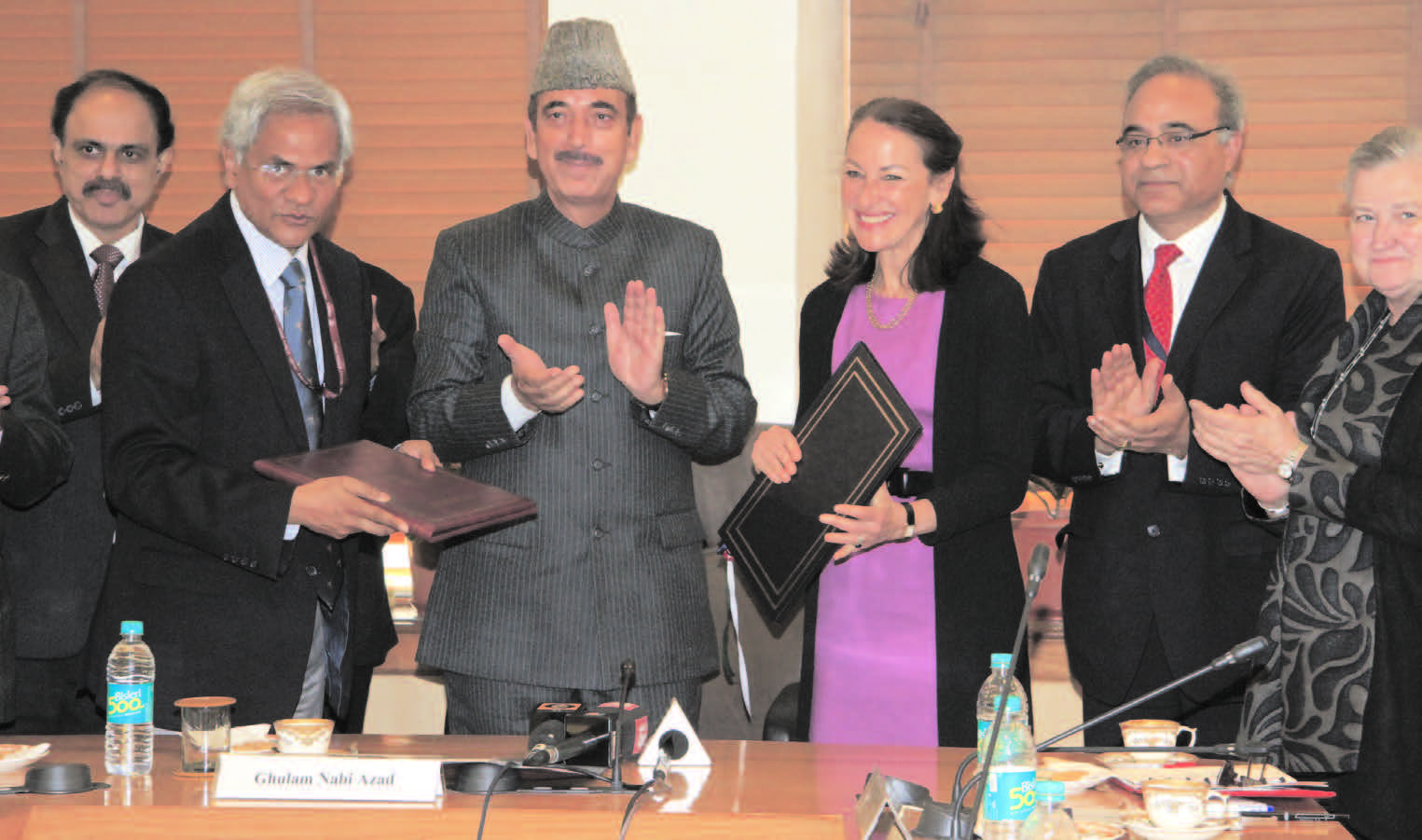
    The agency has 12 staff members in India, and plans to expand to 19, she added, describing the nation as “particularly important” to US food and drug trade. “The fact that we have increased our presence in India is true but it reflects the fact that India is a very significant and growing player in the US marketplace with respect to both pharmaceutical products and food.” While in New Delhi, Hamburg and Indian health secretary Keshav Desiraju signed their first statement of intent to cooperate in the field of medical products.

    Hamburg described as “encouraging” her conversations with senior representatives during her eight-day trip to India, the United States’ third largest trading partner. At the start of Hamburg’s visit, Health Minister Ghulam Nabi Azad said India’s lower-cost medicines should not be viewed as “cheap and spurious.” India’s generics industry is a major supplier of lifesaving drugs, including antiretrovirals for HIV, to the United States and over 200 other nations. Many lower-income countries rely on the generics produced by Indian plants as a key source for affordable medicine.

    But Ranbaxy, one of India’s biggest drugmakers, has been hit repeatedly with FDA import suspensions, most recently in January, when a fourth manufacturing plant was cited for violations from expected “good manufacturing practice.” Roger Bate, an expert at the American Enterprise Institute, said the problem lies with India’s national regulatory body for pharmaceuticals, the Central Drugs Standard Control Organization. “I believe the Indian generics companies can make the products well, but it is the lack of oversight,” Bate told AFP, describing CDSCO as “corrupt.” “India does not take drug regulatory matters seriously.”

    The FDA issued earlier its first-ever ban on tobacco products on four varieties of hand-rolled cigarettes called bidis by an Indian company headquartered in Illinois, Jash International. Just days after FDA commissioner Margaret Hamburg returned from India, agency officials announced that four bidi brands made by Jash International – Sutra Bidis Red, Sutra Bidis Menthol, Sutra Bidis Red Cone and Sutra Bidis Menthol Cone – may no longer be domestically sold, distributed or imported.

    The bidis were banned not because of any imminent danger – although it is well-known that all tobacco products are dangerous – but because Jash failed to provide ingredient information that is mandatory under new rules. In a conference call on Friday, not specifically related to the bidi issue, commissioner Hamburg denied the FDA was targeting Indian companies, but said the United States has a strict quality control regime for all products being imported into America.

    ”When products are sold in the United States for use by American citizens, then those products have to meet our regulatory standards and requirements and we inspect those facilities in other countries as well,” she told reporters after her first official trip to India, where FDA action against Indiabased pharmaceutical companies have been the focus of attention. But US efforts to stamp out bidi imports and smoking in America has a history going back some two decades when the Indian mini-cigarette started to become a fad among youth after hippies had first lit them up in the sixties. A 2002 survey showed close to 3% of American male high school students had tried bidis, which, because they were largely unregulated, were easier for the youth to access – particularly after the US cracked down on sale of cigarettes to the under-aged.

    Over the last decade, bidis also began to appear in various all-American, candy-like flavors: chocolate, vanilla and strawberry, adding newer flavors such as grape, cinnamon, watermelon, menthol, black licorice, wild cherry, and mandarin orange, as the craze caught on. No accurate figures are available about the extent of bidi imports from India but estimates by an international trade group in the 1990s put import from India at 448 million pieces valued at less than $5 million. The Clinton administration tried to ban import of beedis around that time after a CBS 60 Minutes program showed child labor in the industry that employs an estimated 3 million people in India. But it was never fully carried through.

    The health and economic cost of smoking is something that has seized developed countries even as developing countries continue to get sucked into western-inspired tobacco consumption that is far more lethal and pervasive than bidi imports to America. A 2010 WHO study estimated that smoking in developed countries will amount to 29% of world tobacco consumption (down from 34% in 1998), while developing countries’ share, now said to be growing at around 3% every year, will be 71%. Some six million people die every year from tobacco-related illness – 80% of them in low-income countries. Last year, the United States also raised concern about high rates of contaminants, including salmonella, in Indian spices.

  • Indian-American Pentagon official to join think-tank

    Indian-American Pentagon official to join think-tank

    WASHINGTON (TIP): Vikram Singh, the highest-ranking Indian-American at the Pentagon, is joining an eminent US thinktank after serving the Obama administration in various positions for over five years. Singh, the deputy assistant secretary of defense for South and Southeast Asia, is joining the Center for American Progress (CAP) as its vice-president for national security and international policy and will oversee its work on national security around the globe, while continuing his focus on Asia.

    He will officially join CAP in March. “Vikram is a leading foreign policy thinker of his generation and has tackled the country’s greatest foreign policy challenges during his time at the State Department and the Pentagon,” CAP president Neera Tanden said in a statement. “As we continue to shape a pragmatic foreign policy strategy over the next decade, Vikram’s insights, sharp strategic mind and experience will guide our work,” Tanden said.

    Before his current appointment at the Pentagon, Singh was the deputy special representative for Afghanistan and Pakistan at the Department of State, during which he played a key role in shaping the Af-Pak policy of the Obama administration. Singh has also served in the Department of Defense as a senior advisor, representing the department in National Security Council policy reviews of Pakistan and the war in Afghanistan and later leading the development of the department’s post-2014 strategic approach to South and Central Asia.

    Prior to his most recent assignments at the Pentagon, Singh served in the Department of Defense from 2003 through 2007 on a number of defense policy issues, including programs to train and equip foreign military forces, US military counterinsurgency and irregular warfare capabilities, stability operations, disaster response and humanitarian assistance, and the 2005 Quadrennial Defense Review.

    As a fellow at the Center for a New American Security from 2007 to 2009, Singh published widely on defense strategy, national security policy, and Asia. Singh lived and worked in Sri Lanka while running a Ford Foundation program on minority rights and conflict in Bangladesh, India, Nepal, Pakistan and Lanka. He also reported on the Lankan civil war for the Voice of America.

  • Mangano honors Nassau County Police Officer

    Mangano honors Nassau County Police Officer

    MINEOLA, NY (TIP): Nassau County Executive Edward P. Mangano honored Nassau County Police Officer Daniel Johannessen yesterday at the Theodore Roosevelt Executive & Legislative Building for his efforts in aiding in the apprehension of two robbery suspects while off-duty in Suffolk County earlier this month.

    Officer Johannessen was off-duty when he entered Cool Monkey Desserts in Stony Brook and was alerted by employees that someone had just displayed a weapon and tried to rob the store. Officer Johannessen followed the suspects in his car until Suffolk County officers responded.

    His heroic actions resulted in the arrests of the suspects in connection with six armed robberies that occurred in Suffolk over the previous week. County Executive Mangano honored and thanked Officer Johannessen for the bravery that he has exhibited both on and off-duty.

  • BRING IT ON! SEX DOES BOOST INTELLIGENCE

    BRING IT ON! SEX DOES BOOST INTELLIGENCE

    Sex not only helps decrease stress levels and burn away calories, but boosts your intelligence too! Love-making proved to greatly increase the creation of new neurons located within the hippocampus – an area of the brain that is responsible for the formation of long-term memory, say researchers.

    “We discovered that even though there had been the production of new neurons, the cognitive abilities acquired during the experiment decreased once the mice were subjected to long periods without sexual activity,” psychologists from the University of Maryland in the US were quoted as saying. Increased sexual activity floods an individual’s brain cells with oxygen, they noted. Another study by Konkuk University in Seoul, South Korea, provided further substantial evidence.

    According to the Korean study, sex increases intellectual functions. Sexual activity buffers the creation of neurons in the hippocampal region of the brain, which acts against detrimental functions caused by extreme stress. Older couples that are more sexually active have less odds of getting dementia which is due to a variation of complicated reasons, said a report.

  • NON-BEAUTY USES FOR NAIL POLISH

    NON-BEAUTY USES FOR NAIL POLISH

    They are commonly applied to beautify your talons, but nail varnish can serve other purposes as well. Take a look…

    Colour code your keys
    So, you have a ‘key’ concern. All your keys — those of your house, drawer and closet look similar. Just colour each key with a different-hued nail polish. Easy-peasy!

    Labelling your spices
    Powdered cumin seeds, coriander seeds and garam masala look the same to an amateur cook. Why not label your spice bottles? Waterproof those labels with a swipe of clear polish to protect them from dampness.

    Seal an envelope
    Just when you need to seal an envelope, did the glue stick decide to pull a vanishing act? Try dabbing some clear nail polish on the corners of the envelope.

    A thread-and-needle situation
    Don’t we all struggle to get the thread through the eye of the needle? Lightly dip the end of your thread in nail polish. This will make it harder and easier to pull through the needle.

    Safeguard jewellery
    Most of us love junk jewellery, but not everyone’s skin takes to it well. Have you observed how often your skin turns green after wearing that fancy ring or chunky necklace? Prevent it by painting a clear coat of polish on the side that comes into contact with your skin. Stone embellishments on dresses are delicate, so apply a coat of clear nail varnish to prevent them from falling. You can also do this for your costume jewellery.

    Stick shoe
    laces The ends of shoelaces have an uncanny knack of unraveling, rendering them useless in no time. You can either burn the ends or better still, coat them with nail polish. For a fun twist, give clear nail polish a miss and go for coloured ends.

    Tighten loose
    screws Remember that screw on the handle of your toolbox that loosens up all the time? Well, apply a coat of nail polish after tightening the screws. They won’t come off for a long time.

    Paint your
    shoe soles Give your plain, old soles a fresh lease of life by painting them in vibrant hues. Try turquoise blue and neon orange or go for red soles.

    Smooth splinters
    Sometimes, your clothes get stuck in those annoying bits of wood jutting out of furniture or wardrobe. Just smooth them down and apply a coat or two of clear nail polish. This should help until the handyman fixes the problem.

    Avoid tears
    You noticed a teeny-tiny hole in your leggings after you have left from home. Now, what do you do? Grab a bottle of clear nail varnish and apply a little on the edges of the tear. This will prevent the frayed edges from widening further.

    Prevent tarnish Apply a coat of clear nail polish to your belt buckles to prevent them from tarnishing.

    Secure buttons It is extremely embarrassing when buttons come off your blouse at unexpected moments. Here’s what to do — secure them with a coat of nail polish.

  • Queens Borough Annual budget hearing held

    Queens Borough Annual budget hearing held

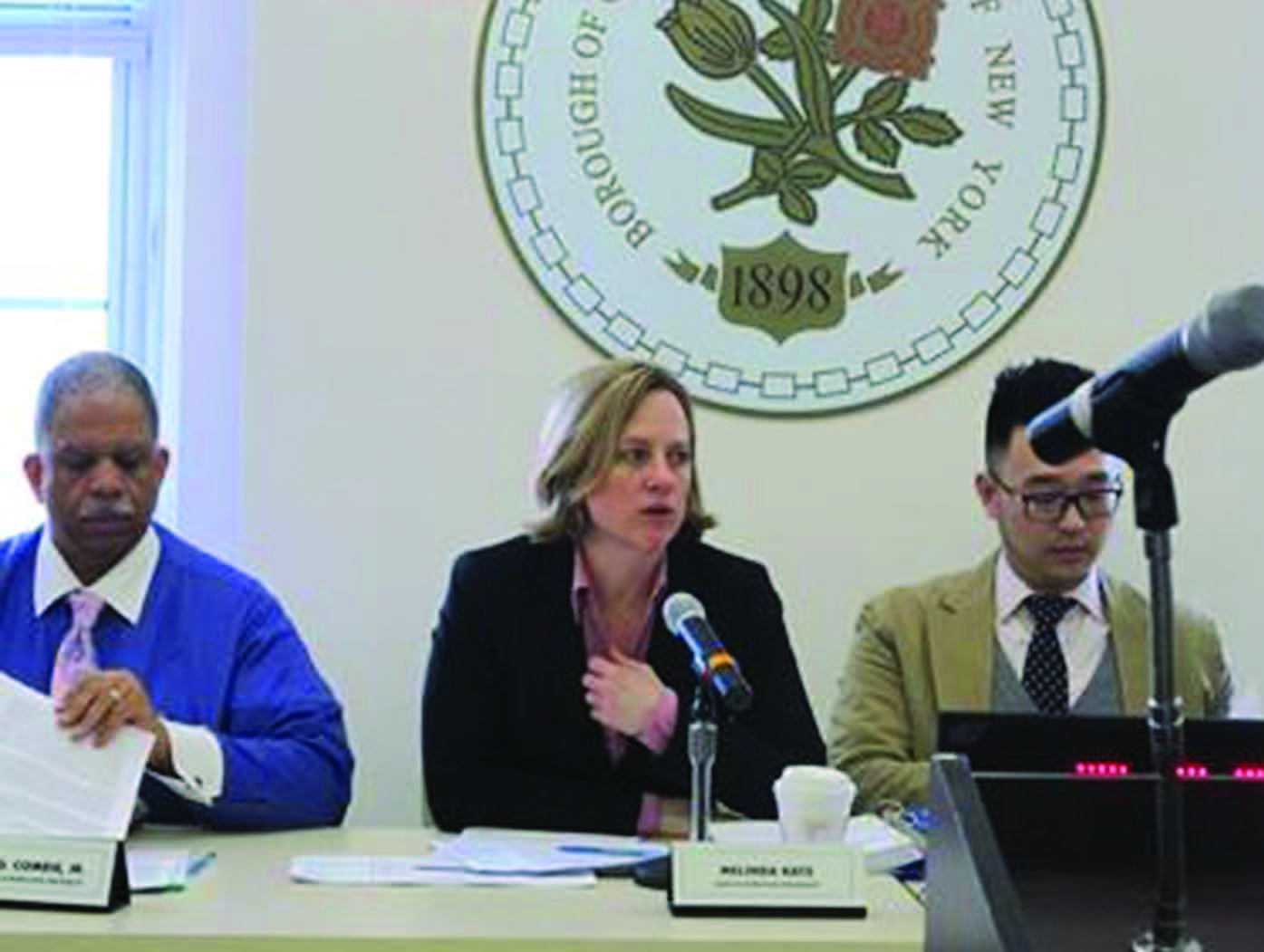
    QUEENS, NY (TIP): Queens Borough President Melinda Katz chaired the Queens Borough Board’s annual budget hearing on Thursday, February 20, at Queens Borough Hall. The hearing is an opportunity for local organizations to present their requests for City funding to the Borough Board.

    The Board is comprised Borough President Katz, the City Council members representing Queens and the chairs of the borough’s Community Boards. Representatives from nearly 180 community organizations presented their funding requests during the hearing, which lasted for about 11 hours. The district managers representing Queens’ 14 community boards also gave presentations on the budgetary needs of their communities.

    Everyone who testified at the hearing was able to supplement their remarks with written testimony. The Borough President will consider the input from the Borough Board members and all of the presentations made in order to issue a report of the borough’s budget priorities next month. The report will be referred to during budget negotiations leading up to the adoption of the City’s Fiscal Year 2015 budget, which must be adopted prior to July 1.

    “The Borough Board’s budget hearing allows us to get a great sense of what the top budgetary priorities should be for borough,” Katz said. “Also, being able to take in all this information will help me and the members of our City Council delegation speak with one voice during the upcoming budget talks, which I believe is important if Queens is to get is fair share of City funding.”

  • US issues warning to Russia over military drills near Ukrainian border

    US issues warning to Russia over military drills near Ukrainian border

    White House calls on Russia to refrain from ‘provocative actions’ amid concern Putin could be planning military intervention

    WASHINGTON (TIP): The United States on February 27 warned Russia that military exercises planned near the border of Ukraine could “lead to miscalculation”, hours after pro-Moscow gunmen seized government offices in the region of Crimea and raised a Russian flag.

    The secretary of state, John Kerry, said he had been reassured by his Russian counterpart, Sergei Lavrov, that Moscow was not behind the storming of Crimean government buildings and would “respect the territorial integrity of Ukraine”. In a brief appearance before reporters in Washington, Kerry said he had discussed the situation in Ukraine over the phone with Lavrov.

    “We believe that everybody now needs to step back and avoid any kind of provocations,” Kerry said. Late on Thursday the US vice-president, Joe Biden, spoke with Ukraine’s interim prime minister, Arseniy Yatsenyuk. Biden promised Ukraine’s new leadership the full support of the US, a White House statement said. Earlier, the White House called on Moscow to “avoid provocative actions” and said it would be closely monitoring four days of Russian military drills that are due to begin on Friday, amid concern that Russian president Vladimir Putin could be contemplating military intervention in Ukraine.

    “We strongly support Ukraine’s territorial integrity and sovereignty,” White House spokesman Jay Carney said. “We expect other nations to do the same. And so we are closely watching Russia’s military exercises along the Ukrainian border … We urge them not to take any steps that could be misinterpreted or lead to miscalculation during a very delicate time.” The remarks echoed the message delivered earlier in Brussels by the defence secretary, Chuck Hagel, who urged Russia to tread cautiously during what he said was “a time of great tension”.

    “We expect other nations to respect Ukraine’s sovereignty and avoid provocative actions,” Hagel told a press conference at a Nato defence meeting in Brussels. Pressure is mounting on Washington to do more to shore up Ukraine’s embryonic leadership, which has taken over from the former president Viktor Yanukovych, who has fled the country. The country is facing a potential financial crisis and nascent rebellion in the largely pro-Russian east and south. Earlier on Thursday heavily armed men, some holding rocket-propelled grenade launchers and sniper rifles, reportedly took over the local parliament in Crimea’s regional capital, Simferopol.

    A Russian flag was hoisted at the site, where previously there had been clashes between pro- and anti- Russian protesters, as well as a sign saying “Crimea is Russia”. The Obama administration has committed financial support to Ukraine and is working with the International Monetary Fund and European Union to draw up a package of loans and other financial support. It also strongly backed the protest movement which brought about the departure of Yanukovych.

    However, the administration is seeking high-level contact with Moscow over the crisis, and has been downplaying suggestions of a cold-war style confrontation with Russia. Carney emphasised the importance of Ukraine’s new government protecting Russian minorities in the country, and said that a desire to move Ukraine closer to Europe should not exclude the maintenance of “cultural and economic” ties to Moscow. Ukraine’s interim president, Oleksandr Turchynov, said on Thursday “all necessary measures” would be taken to seize back government buildings in Simferopol, according to the Interfax news agency.

    He also warned Russia against moving military personnel in a naval base in Crimea. “Any movements of troops, especially with troops outside that territory will be considered military aggression,” Turchynov said. Putin ordered the urgent four-day drill of armed forces in western Russia, which borders some parts of Ukraine – though not the Crimea region, to the south – on February 26. Moscow is insisting the exercises are routine drills, but they have been widely interpreted as sabre-rattling by Putin. Russia also reportedly put fighter jets near the border on alert as it warned of “a tough and uncompromised response to violations of compatriots’ rights”.

    Kerry said on Wednesday that a Russian intervention would be a “grave mistake”. “For a country that has spoken out so frequently … against foreign intervention in Libya, in Syria, and elsewhere, it would be important for them to heed those warnings as they think about options in the sovereign nation of Ukraine,” he said. Hagel adopted adopted a more conciliatory tone on Thursday, telling reporters the US wanted Moscow to be “transparent” about its intentions. Nato head Anders Fogh Rasmussen said he had no indication that Russia planned military intervention in Ukraine.

    “The Russians informed us about this and made clear that this exercise has nothing to do with events in Ukraine,” he said. Also on Thursday, the Crimean regional parliament voted to hold a referendum over independence from Kiev on 25 May. Ukraine’s presidential elections, when the country will elect a replacement for Yanukovych, are scheduled for the same day. Yanukovych is insisting he remains president of Ukraine, despite being in exiled in Russia. He will give a press conference in southern Russia on Friday. The White House dismissed Yanukovych’s claims to be the legitimate leader of Ukraine. “It is hard to claim you’re leading a country when you’ve abdicated responsibility and disappeared,” Carney said.

  • KEEP YOUR HEART FIT

    KEEP YOUR HEART FIT

    You’ve been told to cut down on junk fare and exercise regularly. But there are surprising ways to ensure your heart and blood vessels function fine So you’re aware of the standard ways of lowering your risk of heart disease and stroke: quit smoking, shed those extra kilos, exercise, lower your blood pressure and cholesterol. But recent studies suggest some possible preventive measures that are not quite common. Here are five surprising ways to keep your heart and blood vessels healthy.

    Have dark chocolate

    A number of studies suggest that eating dark chocolate decreases your risk of cardiovascular disease and stroke. Another study found that those who eat small amounts of dark chocolate, had lower levels of a protein in their blood that is associated with inflammation. Other research suggests chocolate consumption may lower blood pressure, help prevent formation of artery plaque and improve blood flow. The benefits from chocolate may come from flavonoids, compounds in chocolate thought to help protect cells against damage. They are present in higher amounts in dark chocolate. Another study found that dark chocolate helps to inhibit an enzyme known as ACE, which is involved in regulating blood flow.

    Stay away from traffic

    According to a recent study that found an association between traffic noise and risk of stroke, the sound of horns, and noisy trucks may take a toll on your blood vessels. Besides, the exposure to loud noise may increase the body’s stress hormone levels, and increase blood pressure, which might contribute to the uptick in stroke risk.

    Get enough sleep

    Getting too little or too much sleep may increase the risk of heart disease and stroke. The results showed that those who slept six or fewer hours per night had a 48 per cent higher risk of developing or dying from heart disease, and a 15 per cent higher risk of developing or dying from stroke, than those who slept seven or eight hours per night. Too little shut eye may increase blood pressure and cholesterol, and put people at risk for obesity and Type 2 diabetes. But the study showed getting too much sleep was bad for the heart as well. Those who slept nine or more hours had a 41 per cent higher risk of developing and dying of heart disease than those who slept seven or eight hours.

    Eat blueberries

    Anthocyanins, found in foods such as blueberries, orange juice and eggplant are antioxidants. In a study, those who ate at least one serving of blueberries per week were 10 per cent less likely than those who ate no blueberries to develop high blood pressure. The researchers analysed the diets of 134,000 women and 47,000 men over a 14-year period. They studied to see how much anthocyanin, the subjects consumed. The study participants who had the highest amount of anthocyanins in their diets had an eight per cent lower risk of high blood pressure than those who ate the least amount of anthocyanins. This does not mean you opt for blueberry cakes.

    Beware of

    the fizz A recent study found, consuming diet sodas may increase your risk of stroke. The study, found that those who drank diet soda every day had a 48 per cent higher risk of stroke and heart attack than those who did not drink any soda at all. The results held true even after the researchers accounted for factors that might influence heart disease and stroke risks, such as whether or not the patient had metabolic syndrome or a history of heart disease. However, the researchers cautioned, the study only showed an association, and not a cause-effect link.

  • INOC leaders lobby for a Juned Qazi candidacy on Congress ticket

    INOC leaders lobby for a Juned Qazi candidacy on Congress ticket

    NEW YORK (TIP): INOC leaders gave a full court press to the NRI candidacy of Mr. Juned Qazi who is making an attempt to run on a Congress ticket from the Aligarh Constituency in U.P.

    ‘ It is an uphill battle, the entrenched interests are quite powerful and wouldn’t like an NRI to take their place’ said Mr. Qazi. Despite the heavy odds against him. Mr. Qazi has been working diligently in Aligarh for the past one year meeting constituents and trying to convince the local leadership that he is committed to relocate to Aligarh from U.S. and work hard on their behalf for the betterment of all the people.

    Mr. Juned Qazi lives in New Jersey and owns a successful business in Construction. He is a committed Congressman who has been serving Indian National Overseas Congress in various capacities as an Executive Committee member and the President of the Madhya Pradesh Chapter for the past several years. A team comprising of George Abraham (Chairman), Mohinder Singh Gilzian (Vice-President), Harbachan Singh (General Secretary) and Sawaran Singh (EC Member) have visited number of Congress leaders and pressed the case for a Qazi candidacy.

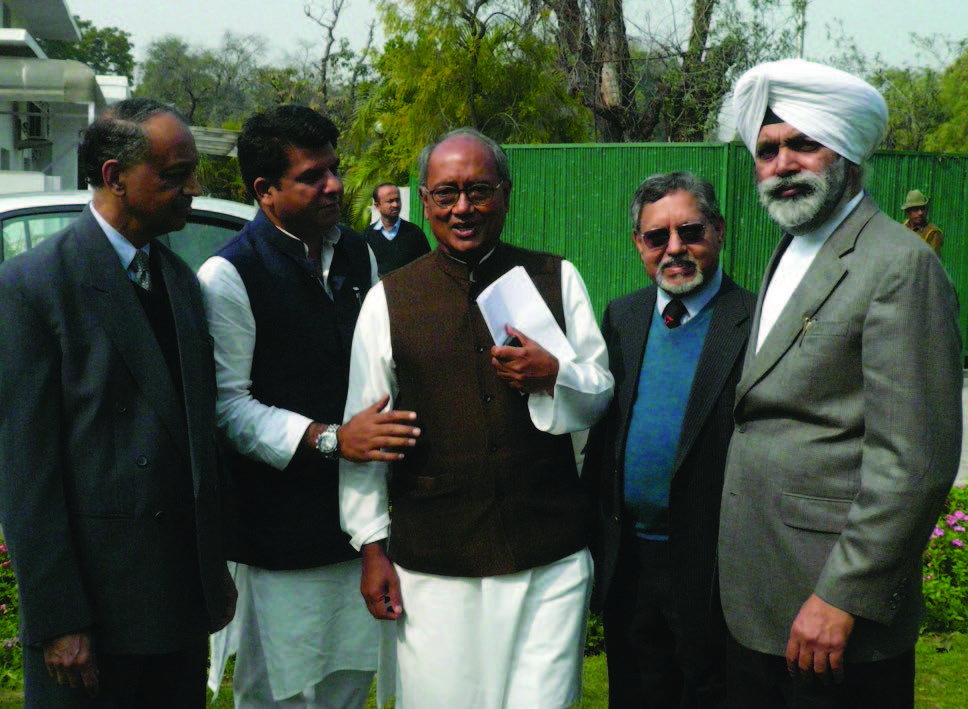
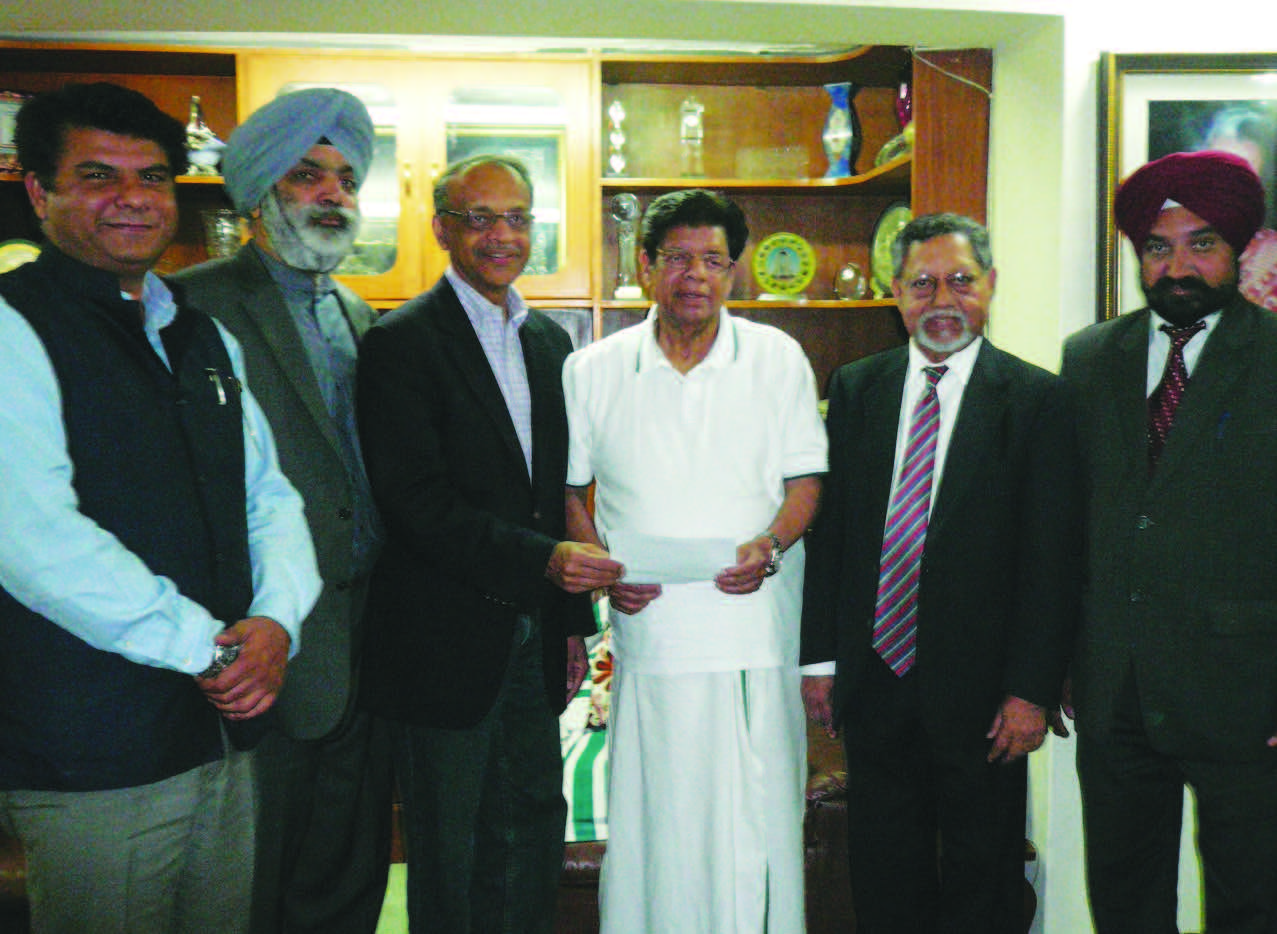
    6INOC leaders George Abraham, Mohinder Singh Gilzian, Sawaran Singh & Harbachan Singh lobbied with the senior Congress leaders in India for ticket for the Aligarh Parliamentary constituency to Juned Qazi, President Madhya Pradesh Chapter of INOC With AICC General Secretary Digvijay Singh

    ‘By issuing a ticket to Mr. Qazi, Congress party will be sending a very strong and positive signal to the NRI community that your voices will be heard in the Parliament’ said Harbachan Singh, General Secretary of INOC, a member of the team that visited number of the Congress leaders including Dr. Karan Singh, Chairman, Foreign Affairs Committee, Mr. Digvijay Singh, General Secretary, AICC, Vayalar Ravi, Minister of Overseas Indian Affairs, Shashi Tharoor, Minister of State for HRD, Mohinder Singh Kaypee, member of CWC, Oscar Fernandez, Minister for Road and Transport, Preneet Kaur Minister of State for External Affairs etc.

    Earlier, in a letter to Mr. Rahul Gandhi, Vice-President of the Congress party, Mr. George Abraham, Chairman of INOC praised Mr. Qazi ‘ as extremely competent and someone who understands the issues that people of India face in their daily lives. He is young and dynamic and has close rapport with people of all ages, regions and religions. I strongly feel that he would make a great parliamentarian given an opportunity and would serve the interests of the country and its people, especially those in Aligarh, with passion and tenacity’ the letter stated.

    ‘ Pravasis in general often feel neglected in the selection process though they have made tremendous contributions to the success of our great nation. By selecting Mr. Qazi, to run from Aligarh, you will be sending a strong signal that the hope and aspirations of the entire NRI community will remain as an integral part of the party agenda going forward’ the letter continued..

  • HEALTH BENEFITS OF TOMATOES

    HEALTH BENEFITS OF TOMATOES

    Do you cringe every time you are asked to have tomato soup? Well, tomatoes are filled with nutrients and antioxidants that help combat several diseases as well as keep your health in good shape.

    Improves vision

    Vitamin A, present in tomatoes, helps to improve your eyesight as well as prevent night-blindness and macular degeneration.

    Helps fight cancer

    According to studies, tomatoes contain large amounts of the antioxidant lycopene, that is effective in lowering the risk of cancer, especially lung, stomach and prostrate cancers.

    Maintaining blood health

    Research suggests that a single tomato can provide about 40% of the daily vitamin C requirement and also contains vitamin A, potassium, and iron that is essential for maintaining normal blood health. Vitamin K, which is controls bleeding and blood clotting, tomatoes help in blood circulation.

    Reduces risk of heart

    disease The lycopene in tomatoes can protect you against cardiovascular diseases. Consuming tomatoes regularly helps decrease the levels of cholesterol and triglyceride in the blood, reducing the deposition of fats in the blood vessels.

    Good for digestion

    Eating tomatoes daily can keep your digestive system healthy as it prevents both, constipation and diarrhoea. It also prevents jaundice and effectively removes toxins from the body.

  • Paswan, BJP seal deal, change Bihar equations

    Paswan, BJP seal deal, change Bihar equations

    NEW DELHI (TIP): BJP and LJP leader Ram Vilas Paswan sealed a seat-sharing pact in Bihar that will see Paswan’s group contesting seven Lok Sabha seats, a development that marks the much-travelled politician’s return to the NDA-fold. Paswan surfaced on February 26 after keeping Congress, RJD and BJP on tenterhooks for the last few days and announced that his options are open.

    “Opinion in LJP is not against going with BJP. In our party’s interests we need to take tough decisions,” he said. The nitty gritty of the pact saw Paswan agree to contest on seats that are not currently being held by the BJP. The decision is bound to cause heart burn among BJP hopefuls, but the party is pleased with the bargain. Paswan is seen to command the loyalty of a dalit community that is assertive and can add three-four per cent votes to BJP’s base that includes upper castes and some middle castes as well. Paswan prepared the ground for breaking with Congress and RJD by saying he was made a measly offer of a few seats.

    But his decision to make up with BJP after having quit the NDA cabinet over the Gujarat 2002 riots seems driven by the assessment that saffron PM hopefulNarendra Modi is gaining traction in Bihar. Paswan’s switch helps BJP counter criticism that Modi’s projection as PM has isolated the party as sources point to Asom Gana Parishad leader Prafulla Mahanta’s statement on February 26 that he does not rule in or rule out a tie-up with BJP.

    Mahanta along with BJD leader Naveen Patnaik stayed away from a third front inaugural on Tuesday and the Odisha CM’s posture is seen to reflect a convergence with BJP on seeing Congress as the common enemy. “There is no seat sharing with BJD, but we can work in our own ways to contain Congress,” said a BJP leader about the Odisha scene. BJP leaders feel the party has a satisfactory understanding with Paswan, and talks have centred around the need to select “clean” candidates.

    Though CBI is threatening to question Paswan in an appointments scam, the process will not be complete until the elections. In Tamil Nadu, BJP is striving to stitch up an alliance with smaller parties like PMK and DMDK besides MDMK leader Vaiko who is already in NDA. Paswan’s return is significant as he had quit the NDA over the Gujarat 2002 riots, although he was also unhappy over being removed from the telecom ministry when he was in the Vajpayee government.

    A party leader close to Paswan said, “We have reached an understanding but have had to cede the choice to BJP. It’s a last minute alliance and BJP has already finalised candidates for more seats. We did not have much room to negotiate on the choice of seats. But we are not disappointed, the allocation is respectable.” Sources, however, said there is an agreement on LJP contesting from Vaishali, Hajipur, Jamui, Samastipur and Khagaria.

    Paswan’s son Chirag who is also the chairman of party’s Parliamentary board, said, “LJP Parliamentary Board has passed a resolution that all steps, even if they are strong ones, should be taken in the interest of the party and if an alternative alliance is to be firmed up, party chief Ram Vilas Paswan should take the decision.” Party leaders harped on the fact that the BJP alliance has come about because of Congress and RJD not giving the respect LJP deserved.

    Ram Vilas Paswan said :”We had our grievances with RJD for a long time. I had even gone to meet Lalu Prasad in jail. But soon after he was out, RJD leaders started saying LJP should be given three seats. That is why we left to Congress to decide the seat sharing. I waited for months, but there was no decision. “They assumed that LJP is nothing, it is irrelevant. If one takes 25 seats (RJD) and the other 15 (Cong). It means they do not treat LJP as part of the alliance….

    That is why the party has authorised me to explore new alternative,” he said. With BJP also having tied up with a Kushwaha community leader Upendra Kushwaha, the party confirmed that it will give away three seats to them. The three likely seats are Jehanabad, Seohar and Sitamarhi Lok Sabha seats.

  • RUN BACKWARD TO LOSE MORE CALORIES

    RUN BACKWARD TO LOSE MORE CALORIES

    After standing up to lose weight it is now time to run backwards to burn calories. Yes, according to a latest trend, fitness enthusiasts are trying out a new workout wherein you run backwards instead of running the normal way and this helps in burning more calories. The viability and excitement for this new trend remains to be seen.

    Speaking on it, actor Gul Panag said, “Fitness is not about following trends and it’s certainly not about counting calories. For me fitness is about having a healthy heart and I won’t subscribe to this because the danger of me falling over and hitting my head is far greater than any other advantage I may get out of running backwards.” Sounding excited about the trend fitness expert Abhimanyu Sable added, “As this is a new motion for the body, more energy will be required.

    I would suggest trying it because anything new that you do changes your body as a response reflex. But there is no research that suggests that you burn more calories by doing this.” Physiotherapist Dr Savita Rairikar feels it can prove useful to some extent. She said, “Running backward requires more concentration than running forward and this might be a reason behind burning more calories. One can suggest this to a person only after fully understanding the limitations of this method. As there is very less literature available on this matter and research on it is ongoing we are yet to say how useful is it taking into account a person’s physical capacity.”

    Does running backward reduce the stress and impact faced by the knees and bones of the legs? Dr Shailesh Hadgaonkar, consulting orthopaedic spine surgeon, said, “If you are doing it to strengthen your spine or back, then you need to think again. Running backwards uphill is not advisable for anyone with a problem in their spine or lower back. Otherwise, there is no problem in trying it out. Also ensure that you are running in a safe area like a park to prevent injury and that the right erect posture is maintained while running. It is too early to say if it is going to be more useful than running forward.”

  • Is desk job making you fat?

    Is desk job making you fat?

    Don’t let your desk job make you unhealthy and fat. Here are a few exercises and diet tips to stay fit in spite of a sit-down job. Many people complain about this. Increasing stress and inactivity at work leads to weight gain. Here’s what to do…

    Exercise at your desk

    For a toned stomach: Sit tall and straighten the spine. Clench the abdominal muscles tightly pulling the naval into the spine. Hold for one to five seconds and repeat 20 times. Try doing this at least three times in a day. FOR GREAT THIGHS: Be seated with knees together. Keep them together in a way that no one can pull them apart even if they try their best. Squeeze your inner thigh muscles in one-second pulses. Do this at least three times daily. FOR A SHAPELY BUTT: Start to stand up and tighten your butt and thigh muscles; then pause for a beat. Sit back down and stand up as you normally would. Do this every time you get out of your chair.

    Nutrition chart

    EAT MORE OF NUTS AND SEEDS: The vital nutrients that your body requires – protein, magnesium, vitamin B and healthy monounsaturated fats are found in favorites like almonds, cashews, pumpkin seeds and sunflower seeds. They help keep blood sugar under control. Have them in the earliest part of the day – they will pack you with lot of energy. RAW VEGETABLES AND COLD CUTS: Consume foods that are high in fibre. Vegetables like broccoli and celery are rich in plant compounds that regulate blood sugar. Also, go for cold cuts like turkey and cheese slices that are high in protein. HAVE EGGS DAILY: Egg is the highest quality protein you can have. They increase nitrogen stores in muscles and make them firmer so they burn more calories even when your body is at rest. Moreover they are loaded with vitamin D and prevent fat from trapping.

  • Sahara chief Subrata Roy arrested in Lucknow

    Sahara chief Subrata Roy arrested in Lucknow

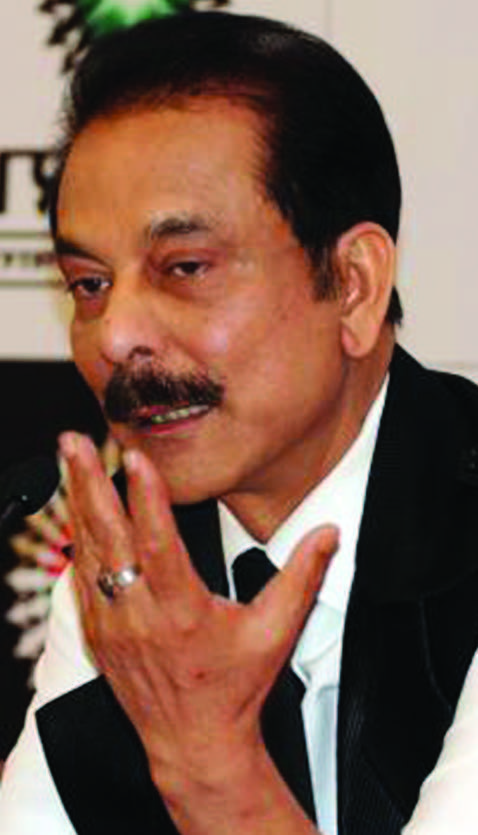
    LUCKNOW (TIP): Sahara Chief Subrata Roy was on February 28 arrested in Lucknow after he surrendered to police, two days after a non—bailable warrant was issued against him by the Supreme Court.

    Appearing for Roy in the Supreme Court, Ram Jethmalani told a bench headed by Justice K S Radhakrishnan that 65- year-old Roy is in police custody. Jethmalani also pleaded to the court for recalling of NBW issued by it on February 26. He submitted that the special bench, comprising Justices Radhakrishnan and J S Khehar, which heard the case be assembled today to hear his application.

    Justice Radhakrishnan, who sat with Justice Vikramajit Sen, however, said that it is not possible for the special bench to assemble on February 28. Earlier on Friday, in a dramatic turn of events, Sahara chief Subrata Roy said he is not absconding from arrest and is ready to “unconditionally follow” whatever direction the Supreme Court gives him.

    A day after the police visited his home in Lucknow to arrest him as per Supreme Court’s orders but failed to find him there, Mr. Roy said he is still in Lucknow and had gone out for sometime to consult “a panel of doctors”. Roy said he has “already informed police to do their duty“. Through a statement signed by him, Mr. Roy also appealed to the Supreme Court to allow him to be with his “ailing mother under house arrest till March 3, 2014”, while adding that he was ready to reach Delhi even on Friday, if court wants him to do so.

    Issuing a non-bailable warrant against Roy, the Supreme Court had asked the police to arrest him and present before the court on March 4. Raising an emotional pitch, Roy said he was a “law abiding citizen” and not one who will abscond. “Last evening I had gone out of Sahara Shahar, Lucknow, to consult with a panel of doctors with certain medical reports of my mother and then I had gone to a lawyer’s house also,” he said. High drama marked the police action as a team of Gomti Nagar police station reached there to execute the warrant and conducted searches inside the residence.

    Later, SHO Gomti Nagar Ajit Singh Chauhan said that Mr. Roy was not present inside the Sahara Shahar premises, while another police officer said he was not found at Sahara Hospital either. On February 27 , Roy also tendered an “unconditional apology” to the Supreme Court for his non-appearance in a contempt case and sought recall of the non-bailable warrant issued against him. Moving the apex court a day after it issued the non-bailable warrant to be executed by March 4, Roy had admitted that he had “erred” by his non-appearance under a bonafide belief that the court will permit him personal exemption from appearance for one day.

    In Friday’s statement, Roy claimed there was no direction against him by the Supreme Court in its orders dated August 31, 2012 and December 5, 2012, (with regard to depositing over Rs 24,000 crore with Sebi for refund to bondholders of two Sahara firms) and still he was “facing all this”. Roy, whose group claims to have net worth of over Rs 68,000 crore and which has been fighting a long battle with regulator Sebi over refund of investor money, said he is sending this letter to the judges. “A lot of people advised me to get admitted in some hospital and I can remain there as it is the general practice to avoid courts on medical grounds. However, I hate to do such drama,” he said. Roy also accused “some negative-minded emotionally-confined media people” for his “agony and humiliation,” claiming they were indulging in ”character assassination.”

  • Mighty Kohli powers India to 6-wicket victory over Bangladesh

    Mighty Kohli powers India to 6-wicket victory over Bangladesh

    NEW DELHI (TIP): Powered by skipper Virat Kohli’s stupendous 136-run innings, India registered a massive 6-wicket victory over Bangladesh in their Asia Cup match in Fatullah on february 26. Chasing solid 280-run target, India were boosted by an impeccable 213-run partnership between Kohli and Ajinkya Rahane that saw the former reach his 19th ODI century with the help of 16 smashing boundaries and two scintillating sixes. Rahane (73) too complimented Kohli’s dazzling century with a half-century of his own that took 64 balls and was comfortable to see India through to victory after the skipper was dismissed at the fag end. India earlier faced a major setback as they lost openers Shikhar Dhawan and Rohit Sharma in consecutive overs.

    Shikhar (28) was the first scalp when Abdur Razzak was successful in catching him plumb soon after he and Rohit Sharma helped India cross the 50-run mark in the 12th over. In the very next over, Ziaur Rahman got the better of Rohit’s (21) stumps. Shikhar and Rohit gave India a cautious start after Mushfiqur Rahim led from the front earlier with a sparkling century to propel Bangladesh to 279/7. Mushfiqur, who smashed 117 off 113 balls, was grounded after being hit on his ribs by a nasty beamer by Varun Aaron, but the diminutive captain showed enough resilience to complete his second ODI century, a first for Bangladesh against India since Alok Kapali’s ton in the 2008 Asia Cup.

    The 25-year-old started his innings patiently with Anamul going freely at the other end, but after the opener’s dismissal, the skipper came into his own, hitting two sixes and seven fours. The duo was involved in a 133-run third wicket partnership that came after Bangladesh were reduced to 49/2 in the 13th over. Despite the big partnership though, the lower order failed to fire against a side that boasts of a strong batting line-up. Mohammad Shami was the pick of Indian bowlers, scalping 4/50 from his quota while it was a flop show for Aaron, who gave away 74 runs before being barred after 7.5 overs for two waist high deliveries, with one of them hitting Mushfiqur.

    A less than seven thousand crowd in a 17,000 capacity stadium in Narayangonj district in the southern suburbs of Dhaka did not exactly give it a home-like feel for Bangladesh, as India opted for a run-chase. A disciplined Shami, who made the first breakthrough in the form of Shamsur Rahman (7) and Ashwin’s first-ball wicket after a brilliant stumping by Karthik, reduced the hosts to 49/2 in the 13th over and for a moment it seemed like Bangladesh were playing away from home with the stadium not even half-filled. But the young Anamul turned it around with his array of strokes in a sensible third-wicket partnership with Mushfiqur as the duo got past their individual half centuries.

    Some mindless bowling by India’s third pacer Aaron, who chose raw pace over disciplined length, did not help the side’s cause as Anamul danced down the track to smash the bowler over long-on for two sixes. Aaron was bowling well past the 140kph mark but his length was easily picked by up the promising 21-year-old. The listless India pacer conceded 39 runs from his first spell of five overs. To add to the woes, Aaron was barred from bowling from the fifth ball of his eighth over after a second waist-high beamer that floored the Bangla skipper after hitting on his left side ribs. Aaron leaked 74 from 7.5 overs in two spells, which incidentally was the second highest conceded by a bowler against Bangladesh after UAE’s Khurram Khan (78).

    The only bright spot in Aaron’s bowling is that he denied the impressive Anamul a second International century after the Bangla batsman played on. The innings then belonged to Mushfiqur, who showed resolute spirit despite being hit badly to complete the milestone century for Bangladesh. Earlier, a lovely display of line and length bowling by Shami greeted the hosts, and the first one hour was a testing time for both the openers. Persisting with an off-stump line, Shami found some outside edges that went in the vacant slip region as the Bangla duo looked tentative to start with. Shami got the desired result when his short ball was mistimed by Shamsur to be taken by the bowler.

  • RAFAEL NADAL SET TO EARN $1 MN A NIGHT IN BHUPATHI’S LEAGUE

    RAFAEL NADAL SET TO EARN $1 MN A NIGHT IN BHUPATHI’S LEAGUE

    LONDON: World No.1 Rafael Nadal is expected to earn $1 million a night in the International Tennis Premier League (ITPL) to be held later this year. The tournament, modelled on the lines of cricket’s Indian Premier League, is the brainchild of Indian tennis veteran Mahesh Bhupathi and its players’ auction will take place in Dubai over the weekend.

    The Telegraph has reported that Nadal is committed to play as a marquee player in the city-based ITPL scheduled from Nov 28 to Dec 20 across Bangkok, Kuala Lumpur, Mumbai, Singapore and Hong Kong. The other top players who have shown in interest are reigning Australian Open champion Stanislas Wawrinka, Tomas Berdych, Richard Gasquet, Agnieszka Radwanska, Victoria Azarenka, Caroline Wozniacki.

    The report added that Swiss great Roger Federer, 32, is not keen on taking part in the event in a already crammed calendar while Andy Murray is still in talks with Bhupathi, who was part of the Scot’s commercial team briefly. The report quoted a tennis insider as saying: “Although the players are still sceptical, nobody wants to miss out on a possible money spinner, so a lot of them are putting their names down for Friday’s reveal. When the money starts being paid into their accounts, that’s when they will start believing that this concept is for real.”

  • Tiger tees off near home but thinking of Masters

    Tiger tees off near home but thinking of Masters

    PALM BEACH GARDENS (United States) (TIP): World number one Tiger Woods makes his third start of the year on Thursday at the US PGA Tour Honda Classic near his home but his thoughts are already on the Masters.Woods, a 14-time major champion chasing the record 18 major wins of Jack Nicklaus, will be tested by an all-star lineup in the $6 million event at PGA National. Reigning Masters champion Adam Scott of Australia, reigning British Opwn champion Phil Mickelson and Northern Ireland stars Rory McIlroy and Graeme McDowell are also in the field at the first of four consecutive Florida stops on the US tour ahead of the year’s first major, the Masters, in early April at Augusta National.

    “Once we get to Florida, we’re all thinking about it, on our way to Augusta,” Woods said. “For most of the guys, this is like their prep to Augusta this week. The quality and the depth of the field has gotten so much better in recent years.” Woods is already pondering how the 17th hole at Augusta National will play now that the huge century-old pine nicknamed the Eisenhower Tree has been removed from the left side of the fairway following damage from an ice storm. “I’ve hit it a few times. It’s an iconic landmark,” Woods said. “I can’t say some of the guys are going to miss it, but there will be a difference, no doubt about it.

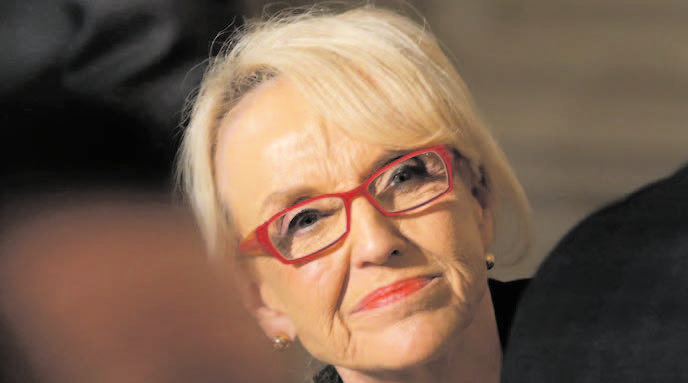
  • Arizona governor Jan Brewer vetoes religious freedom bill

    Arizona governor Jan Brewer vetoes religious freedom bill

    PHOENIX (TIP): Governor Jan Brewer on Wednesday vetoed a Republican bill that set off a national debate over gay rights, religion and discrimination and subjected Arizona to blistering criticism from major corporations and political leaders from both parties. Loud cheers erupted outside the Capitol building immediately after Brewer made her announcement. “My agenda is to sign into law legislation that advances Arizona,” Brewer said at a news conference. “I call them like I see them despite the tears or the boos from the crowd. After weighing all the arguments, I have vetoed Senate Bill 1062 moments ago.”

    The governor said she gave the legislation careful deliberation in talking to her lawyers, citizens and lawmakers on both sides of the debate. But Brewer said the bill “could divide Arizona in ways we could not even imagine and no one would ever want”. The bill was broadly worded and could result in unintended negative consequences, she added. The bill backed by Republicans in the legislature was designed to give added protection from lawsuits to people who assert their religious beliefs in refusing service to gays. But opponents called it an open attack on gays that invited discrimination.

    The bill thrust Arizona into the national spotlight last week after both chambers of the state legislature approved it. As the days passed, more and more groups, politicians and average citizens weighed in against Senate Bill 1062. Many took to social media to criticize the bill, calling it an attack on gay and lesbian rights. Prominent Phoenix business groups said it would be another black eye for the state that saw a national backlash over its 2010 immigration-crackdown law, SB1070, and warned that businesses looking to expand into the state may not do so if bill became law.

    Companies such as Apple Inc. and American Airlines and politicians including GOP Senator John McCain and former Republican presidential nominee were among those who urged Brewer to veto the legislation. Brewer was under intense pressure to veto the bill, including from three Republicans who had voted for the bill last week. They said in a letter to Brewer that while the intent of their vote “was to create a shield for all citizens’ religious liberties, the bill has been mischaracterized by its opponents as a sword for religious intolerance”. SB 1062 allows people to claim their religious beliefs as a defence against claims of discrimination.

    Backers cite a New Mexico Supreme Court decision that allowed a gay couple to sue a photographer who refused to document their wedding, even though the law that allowed that suit doesn’t exist in Arizona. Republican Senator Steve Yarbrough called his proposal a First Amendment issue during a Senate debate. “This bill is not about allowing discrimination,” Yarbrough said. “This bill is about preventing discrimination against people who are clearly living out their faith.”

    Democrats said it was a veiled attempt to legally discriminate against gay people and could allow people to break nearly any law and cite religious freedom as a defence. “The heart of this bill would allow for discrimination versus gays and lesbians,” said Senator Steve Gallardo, D-Phoenix. “You can’t argue the fact that bill will invite discrimination. That’s the point of this bill. It is.” The bill is similar to a proposal last year brought by Yarbrough but vetoed by Brewer, a Republican. That legislation also would have allowed people or religious groups to sue if they believed they might be subject to a government regulation that infringed on their religious rights.

    Yarbrough stripped that provision from the bill in the hopes Brewer will embrace the new version. Civil liberties and secular groups countered that Yarbrough and the Center for Arizona Policy, a powerful social conservative group that backs anti-abortion and conservative Christian legislation in the state and is opposed to gay marriage, had sought to minimize concerns that last year’s bill had far-reaching and hidden implications. Yarbrough called those worries “unrealistic and unsupported hypotheticals” and said criminal laws will continue to be prosecuted by the courts.

    The Center for Arizona Policy argues the law is needed to protect against increasingly activist federal courts and simply clarifies existing state law. “We see a growing hostility toward religion,” said Josh Kredit, legal counsel for the group. Similar religious-protection legislation has been introduced in Ohio, Mississippi, Idaho, South Dakota, Tennessee and Oklahoma, but Arizona’s plan is the only one that has been passed by a state legislature. The efforts are stalled in Idaho, Ohio and Kansas.

    The push in Arizona comes as an increasing number of conservative states grapple with ways to counter the growing legality of gay marriage. Arizona’s voters approved a ban on gay marriage as a state constitutional amendment in 2008. It is one of 29 states with such constitutional prohibitions, according to the National Conference of State Legislatures. Federal judges have recently struck down those bans in Utah, Oklahoma and Virginia, but those decisions are under appeal.

  • INOC leaders urge the External Affairs Ministry for transparency in selecting a BLS replacement

    INOC leaders urge the External Affairs Ministry for transparency in selecting a BLS replacement

    NEW YORK (TIP): INOC leaders met with Ministers of State for External Affairs E. Ahamed and Preneet Kaur and urged transparency and community input into selecting a replacement for BLS, the current vendor who has done a disservice to the community and the nation.

    The team comprised of George Abraham (Chairman), Mohinder Singh Gilzian (Vice- President), Harbachan Singh (General Secretary), Sawaran Singh ( EC Member) and Juned Qazi (EC Member & M.P. Chapter President) met with the ministers and submitted a memorandum detailing the grievances of the community in dealing with the BLS, the visa processing agency that replaced Travisa.

    The leaders also took the memorandum with media reports and submitted them to the External Affairs Ministry and to the attention of Salman Khurshid, the minister in charge who is said to have terminated the current contract with the BLS. ‘We have been candid to the ministers of the damage the agency has done to the reputation and credibility of India’ said George Abraham, Chairman of INOC.


    2INOC leaders George Abraham, Mohinder Singh Gilzian, Harbachan Singh, Juned Qazi and Sawaran Singh met with Ministers of State for External Affairs E. Ahamed and Preneet Kaur and urged transparency and community input into selecting a replacement for BLS, the current vendor who has done a disservice to the community and the nation. With Minister of State for External Affairs. (L to R): Mohinder Singh Gilzian, George Abraham, Preneet Kaur, Sawaran Singh and Harbachan Singh

    ‘We also cautioned the ministry about a re-packaged BLS under another name as this group seems to have quite a bit of political clout dealing with the Government’ Mr. Abraham added. The leaders also expressed their appreciation and support to the efforts of New York Consul General Ambassador D.M. Mulay to the Ministers and urged them to implement his recommendations.

    According to some reports, envelopes that are containing passports and visa applications are lying around the BLS office for many weeks unopened creating so much havoc for the tourists and businessmen in their planning of trips to India. The uncertainty it has created particularly for the business travelers may have such a long lasting negative impact as many of them might have been considering India as an investment destination.

    There are also allegations of corruption targeting the unsuspected visa seekers. The Ministry has not denied the reports that of the issuance of visas to people who may have received political asylum. In a letter addressed to the Minister of External Affairs, INOC leaders said the following: ‘We sincerely believe that an investigation is warranted upon the termination of this contract and a new Request for Proposals/Bids should be floated locally in New York and a contract awarded after a proper vetting by a Board which should perhaps have a representative from the local Indian Community as well’.

  • US JUDGE STRIKES DOWN TEXAS GAY MARRIAGE BAN

    US JUDGE STRIKES DOWN TEXAS GAY MARRIAGE BAN

    AUSTIN, TEXAS (TIP): A federal judge declared a same-sex marriage ban in deeply conservative Texas unconstitutional on February 26, but will allow the second-most populous US state to enforce the law pending an appeal that will likely go to the Supreme Court. The ruling is the latest in a series of victories for gay rights activists following similar decisions in Utah, Oklahoma and Virginia. Judge Orlando Garcia issued the preliminary injunction after two gay couples challenged a state constitutional amendment and a longstanding law. It is one of a tangled web of lawsuits across the US expected to end up in the Supreme Court next year.

    “Without a rational relation to a legitimate governmental purpose, state-imposed inequality can find no refuge in our United States Constitution,” Garcia wrote. “These Texas laws deny plaintiffs access to the institution of marriage and its numerous rights, privileges, and responsibilities for the sole reason that Plaintiffs wish to be married to a person of the same sex.” Garcia said the couples are likely to win their case and the ban should be lifted, but said he would not enforce his ruling pending a ruling by the 10th Circuit Court of Appeals, which already is hearing two other states’ cases.

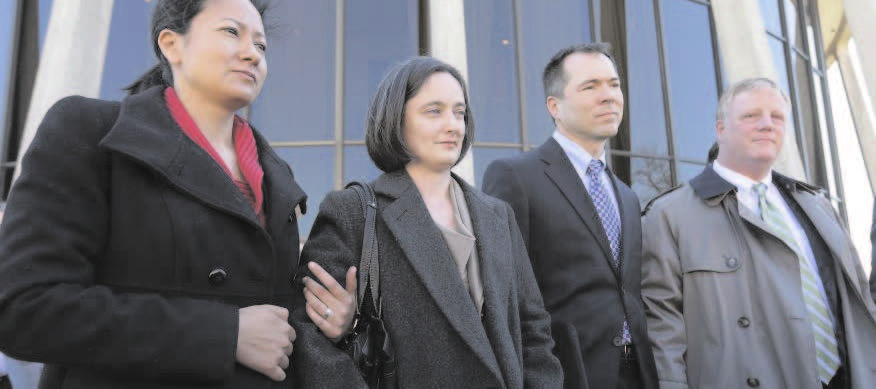
    He also will give Texas time to appeal to the 5th Circuit Court of Appeals in New Orleans. Garcia, appointed by President Bill Clinton, is the first judge in the conservative 5th Circuit to reach such a decision. Texas attorney general Greg Abbott was expected to file an expedited appeal. Mark Phariss and Victor Holmes filed their federal civil rights lawsuit saying Texas’ ban unconstitutionally denied them the fundamental right to marry because of their sexual orientation. Cleopatra De Leon and Nicole Dimetman filed a lawsuit saying Texas officials violated their rights by not recognizing their marriage conducted in a state where gay marriage is legal.

    Attorneys for the state argued that Texas voters had imposed the ban through a referendum and that Texas officials were within their rights to defend marriage traditions. Another gay couple has filed a separate lawsuit in federal court in Austin. In that case, two men argue that the ban discriminates against them based on their gender. That case is scheduled for a hearing later this year. “Today’s ruling by Judge Garcia is a huge victory that moves Texas one step closer to the freedom to marry,” said Chuck Smith, executive director of the gay rights group Equality Texas.

  • 22 Indians charged in Singapore for false salary information

    22 Indians charged in Singapore for false salary information

    SINGAPORE (TIP): Singapore has charged 22 Indians, including a woman, with providing false salary information to obtain their work permits, the manpower ministry said on Wednesday. The 10 people from a group of 22 Indian nationals faces up to seven weeks in jail after they pleaded guilty on Tuesday. They would also be permanently banned from working in the city state. For the remaining 12, one would go for pre-trial on February 28 while 11 others have sought an adjournment for their cases.

    The group of 21 males and 1 woman, aged between 24 and 39, had made false statements to the Controller of Work Passes between November 2010 and September 2013 in connection with the applications for 19 Employment Passes (EPs) and three S Passes (SPs). They were employed by four separate companies. The Ministry stressed that applicants for EPs or SPs must meet the minimum salary requirement. However, the accused persons knew that their employers would pay them less than the amounts declared, it said. The Ministry said it would separately take action against the employers and the employment agents involved. Offenders face fine up to 20,000 Singapore dollars and/or imprisoned up to two years for having made false declaration under the Employment of Foreign Manpower Act.

  • OBAMA SAYS UGANDA ANTI-GAY BILL WOULD BE ‘STEP BACKWARD’

    OBAMA SAYS UGANDA ANTI-GAY BILL WOULD BE ‘STEP BACKWARD’

    WASHINGTON (TIP): US President Barack Obama warned Ugandan leader Yoweri Museveni against enacting anti-gay legislation Sunday, calling it a “step backward” that would complicate ties with Kampala. Obama, who was in California for a holiday weekend of golf, issued a strong statement saying he was “deeply disappointed” in the Ugandan leader’s apparent plans to move forward with the bill. “We believe that people everywhere should be treated equally, with dignity and respect, and that they should have the opportunity to reach their fullest potential, no matter who they are or whom they love,” Obama said in a statement.

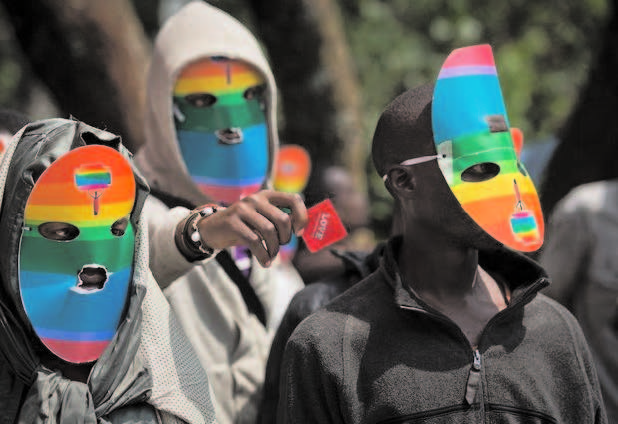
    “That is why I am so deeply disappointed that Uganda will shortly enact legislation that would criminalize homosexuality,” he added. “The Anti-Homosexuality Bill in Uganda, once law, will be more than an affront and a danger to the gay community in Uganda. It will be a step backward for all Ugandans and reflect poorly on Uganda’s commitment to protecting the human rights of its people.” The anti-gay legislation cruised through parliament in December after its architects dropped an extremely controversial death penalty clause. The measure, which has been greeted with international condemnation, would criminalize the promotion or recognition of homosexual relations. Obama suggested that the Ugandan president — a key regional ally for both the United States and the European Union — risks damaging his country’s ties with Washington if he signs the bill into law.

    “As we have conveyed to President Museveni, enacting this legislation will complicate our valued relationship with Uganda,” Obama said. Obama’s National Security Adviser Susan Rice wrote in a series of tweets that enacting the law “will put many at risk and stain Uganda’s reputation.” Rice added that she had urged Museveni to not sign the bill. Former president Bill Clinton, who has worked on health initiatives in the country through his Clinton Foundation, said he was “strongly opposed to its move to criminalize homosexuality.” “It is a setback for personal freedom and equal rights and a rebuke to Uganda’s own commitment to protecting the human rights of its people,” Clinton added.

    “I want to salute and encourage the brave Ugandans committed to the fundamental dignity of all people and urge the government to reverse this decision.” Museveni, a devout evangelical Christian, has expressed the view that gays are “sick” and “abnormal.” He suggested in a letter to parliament that homosexuality was caused by a genetic flaw, or a need to make money. Nevertheless, he refused to sign the antigay legislation last month. “He does not approve of homosexuality but he believes that these people have a right to exist,” presidential spokesman Tamale Mirudi told AFP at the time, explaining why the bill had been rejected. Homophobia is widespread in Uganda. Gay men and women face frequent harassment and threats of violence, and rights activists have reported cases of lesbians being subjected to “corrective” rapes.

  • VENEZUELA PROTESTS ESCALATE AS STUDENTS, SECURITY FORCES CLASH

    VENEZUELA PROTESTS ESCALATE AS STUDENTS, SECURITY FORCES CLASH

    CARACAS (TIP): Venezuelan security forces and demonstrators faced off in streets blocked by burning barricades in several provincial cities on February 20 as protests escalated against President Nicolas Maduro’s socialist government. At least five people have died since the unrest turned violent last week, with scores of injuries and arrests. The demonstrators, mostly students, blame the government for violent crime, high inflation, product shortages and alleged repression of opponents. They want Maduro to resign. In middle-class areas of Caracas overnight, security forces fired teargas and bullets, chasing youths who threw Molotov cocktails and blocked streets with burning trash.

    It was one of the worst bouts of violence the capital has seen in nearly three weeks of unrest across Venezuela, and trouble also flared in other urban centres. Many Caracas residents banged pots at windows in a traditional form of protest, and knots of demonstrators were out again early on Thursday. “I declare myself in civil disobedience,” read one banner held up by demonstrators spread across a Caracas road. The government said a funeral parade for deceased folk singer Simon Diaz, a beloved figure who died on Wednesday aged 85, was held up due to “violent groups” blocking roads. There was unrest too in the western Andean states of Tachira and Merida that have been especially volatile since hardline opposition leaders called supporters onto the streets in early February demanding Maduro’s departure.

    In the city of San Cristobal, which some residents are describing as a “war zone”, many businesses remained shut as students and police faced off in the streets again on February 20. Maduro said “special measures” would be taken to restore order in Tachira. “We won’t let them turn it into a Benghazi,” he said, referring to the violence-wracked Libyan city. Tensions have escalated since opposition leader Leopoldo Lopez, a 42-year-old Harvard-educated economist, turned himself in to troops this week. He is being held in Caracas’ Ramo Verde jail on charges of fomenting the violence.

    “Change depends on every one of us. Don’t give up!” Lopez’s wife Lilian Tintori said via Twitter on Thursday. Local TV channels are providing almost no live coverage of the unrest, so Venezuelans are turning to social media to swap information and images, though falsified photos are circulating. Both sides rolled out competing evidence of the latest violence on Thursday, with ruling Socialist Party governors showing photos and video of charred streets and torched vehicles, while the opposition posted footage of brutal behavior which they said was by national guard troops. Caracas was calmer by lunchtime on Thursday, though there was less traffic than normal and some businesses were closed, in a further drag on the already ailing economy.

    Coup allegations
    Maduro, narrowly elected last year to succeed socialist leader Hugo Chavez after his death from cancer, says Lopez and others are in league with the US government and want a coup. The latest direct victim of the unrest, college student and local beauty queen Genesis Carmona, 22, was shot in the head during a demonstration in the central city of Valencia. Maduro says “fascist groups” are trying to create a crisis to topple his administration. “There is an international campaign to justify a foreign intervention in Venezuela,” he said in a combative, nationally televised address late on Wednesday.

    Speaking in Mexico, US President Barack Obama criticized Maduro’s government for arresting protesters and urged it to focus on addressing the “legitimate grievances” of its people. Street protests were the backdrop to a short-lived coup against Chavez in 2002 before military loyalists and supporters helped bring him back. There is no evidence the military, which was the decisive factor in 2002, may turn on Maduro now. Detractors call Lopez a dangerous hothead. He has frequently squabbled with fellow opposition leaders and was involved in the 2002 coup, even helping arrest a minister.

    Though the majority of demonstrators have been peaceful, an increasingly prominent radical fringe has been attacking police, blocking roads and vandalizing buildings. Though the Caracas protests began and are still strongest in middle-class neighbourhoods, sporadic demonstrations have also spread to poorer areas of the city, residents say. Rights groups say the police response has been excessive, and some detainees say they were tortured. Venezuela’s main opposition leader, Henrique Capriles, who was narrowly beaten by Maduro in last year’s presidential election, disagrees with Lopez’s street tactics but backs protesters’ grievances and has condemned the government response. “How many more deaths do they want?” he told reporters on Thursday, urging opposition activists to avoid violence.

  • COLD WEATHER SINKS US HOME BUILDING IN JANUARY

    COLD WEATHER SINKS US HOME BUILDING IN JANUARY

    WASHINGTON (TIP): US housing starts recorded their biggest drop in almost three years in January as harsh weather disrupted activity, but the third month of declines in permits hinted at some weakness in the housing market. February 19 data was the latest suggestion that a brutally cold winter was putting a big dent in the economy. But severe weather cannot be blamed for all the slowdown in growth as the economy appears to have ended 2013 with less momentum.

    “The housing sector already slowed down in the fourth quarter and it’s not picking up,” said Thomas Costerg, a US economist at Standard Chartered Bank in New York. “There is more than the weather at play and the underlying dynamics are not as favorable as people thought they were.” Groundbreaking tumbled 16.0% to a seasonally adjusted annual rate of 880,000 units, the lowest level since September, the Commerce Department said. The%age drop was the largest since February 2011. Economists had expected starts to fall to only a 950,000-unit rate in January.

    Until recently, hopes were high for strong growth this year, but it now appears output in the fourth quarter was not as sturdy as initially thought, with downward revisions to November and December retail sales figures. In addition, export growth was weak in December. The slowdown in growth partly reflects some unwinding of inventories after a massive increase in the second half of 2013. Last month, groundbreaking for homes in the Midwest tumbled a record 67.7% and was down 12.5% in the South, indicating that the weather was the culprit.

    That gave some economists hope for a rebound, but starts could fall again in February as temperatures remained biting during the month. “To the extent that this plunge in home construction was due mostly to weather issues, we expect a strong rebound in activity in the coming months,” said Millan Mulraine, deputy chief economist at TD Securities in New York. But there are some holes in the weather theory. The Northeast, which bore the brunt of the frigid temperatures and snow storms, saw groundbreaking hitting its highest level since August 2008. In addition, starts in the West, where temperatures have been a bit warmer, also fell.

    Some economists said this suggested some weakening in housing market fundamentals, noting that home sales have been trending lower as higher mortgage rates and rising house prices sideline potential buyers. Demand for loans to purchase homes plunged last week and a report on Tuesday showed confidence among home builders tumbled in February, with some complaining about a shortage of labor, materials and building lots. Investment in home building fell in the fourth quarter for the first time since the third quarter of 2010.

    FIRST-QUARTER GROWTH ESTIMATES CUT
    Some economists lowered their firstquarter growth estimates on the back of the weak starts data. Goldman Sachs trimmed its forecast by a tenth of a%age point to a 1.8% annual rate. Barclays cut its estimate by 0.3%age point to a 1.9% rate. Freezing temperatures also chilled manufacturing output last month and were cited for the unexpected drop in retail sales in January. The weather was also largely blamed for the sharp slowdown in hiring in December. Economists expect officials at the Federal Reserve to look past the weather distortions as the central bank dials back its monetary stimulus, but caution a continued run of weak data could be a challenge. San Francisco Fed President John Williams told CNBC TV the economy was on a “really solid footing” for this year.

    “The economy is growing close to 3%, I think we’re in a good place to start pulling back on the gas somewhat,” said Williams. Minutes of the Fed’s January 28-29 policy meeting, released on Wednesday, showed several officials wanted to make it clear that the central bank’s asset-purchase program would be trimmed in predictable, $10-billion steps unless the economy surprised. A report on Wednesday from the Labor Department showed little sign of inflation at the factory gate in January. The seasonally adjusted producer price index for final demand rose 0.2% last month as the cost of goods increased.

    Prices received by the nation’s farms, factories and refineries had edged up 0.1% in December. The renamed index has been broadened to include services and construction. It was previously known as PPI for finished goods. The PPI for final demand excluding food and energy costs also rose 0.2% after being flat the prior month. “The Fed is going to be talking about inflation, or lack thereof, a lot more in the months to come, unless we see a major warming in both the weather and the economy this spring,” said Diane Swonk, chief economist at Mesirow Financial in Chicago. Groundbreaking for single-family homes, the largest segment of the market, fell 15.9% to a 573,000-unit pace in January. That was the lowest level since August 2012. Starts for the volatile multi-family homes segment dropped 16.3% to a 307,000-unit rate. Permits to build homes fell 5.4% in January, the largest drop since June, to a 937,000-unit pace. Permits for single-family homes slipped 1.3%. Multifamily sector permits declined 12.1%.

  • Youth Cricket Turns the Corner in the Central West Region

    Youth Cricket Turns the Corner in the Central West Region

    DALLAS (TIP): Cricket has been growing quietly in the Central West region of the USA over last several years. During the President’s day long weekend, February 15th and 16th, Youth Cricket showed its influence and potential at the Regional Youth Cricket Camp held at Lewisville, TX. Over 60 kids ages 7 to 15 with skill levels of Beginner to Advanced, from Dallas, Austin and Oklahoma came together for two days to continue to hone their skills in all aspects of the game.


    55
    Picked up young to train in to accomplished cricketers

    United Youth Cricket Club (https://www.facebook.com/ unitedyouthcricket) was established in 2010 to promote cricket within the community through a fun, familyoriented, professionally coached program for aspiring boys and girls from cricketing and non-cricketing backgrounds. It has three levels in its Cricket Program – “Colts”, the beginners, “Cubs”, intermediate level ages 12 and under, and “Tigers”, advanced ages 13 and over. The United Youth Program has partnered with Thiru Kumaran, a former international Cricket Player, who has brought his vast experience in coaching to the Club. Mr. Kumaran, known to the children as Coach Kenny, has put tremendous emphasis on technical correctness, fitness and teamwork.


    56
    Fielding is as important as batting or bowling. Players being trained in fielding

    During the two days, there was a cricket match for the Tigers, fitness and fielding sessions for the Tigers and Cubs, game simulations for the Cubs, and a training session as well as game for the Colts. Delicious Pizza and Vegetarian Biryani, along with dozens of doting parents, siblings and pets made the entire atmosphere look like a large picnic. The event was supported by many volunteer parents who are the core of the leading youth Cricket Program in the region. Earlier, United Youth launched its 2014 campaign by taking its message across the DFW Metroplex via Radio, flyers and personal outreach. United also extended the hand of partnership to Youth Cricket groups in Arkansas and Austin, creating what is expected to become a regional youth league. United Youth Cricket Club is a member of North Texas Cricket Association (NTCA).

    For further information, please contact Praful Mainker, NTCA Youth Coordinator, at
    Praful.Mainker@gmail.com (or)
    Rajesh CV, ICC Certified Coach,
    United Youth Cricket Volunteer:
    cricketforyouth@gmail.com