Month: February 2014

  • Submissions are open for the 2014 Long Beach International Film Festival

    Submissions are open for the 2014 Long Beach International Film Festival

    MINEOLA, NY (TIP): Nassau County Executive Edward P. Mangano announced February 18, that the Long Beach International Film Festival (LBIFF) will begin on July 31st 2014, and will extend into a four day long festival. The LBIFF is currently accepting online submissions in all categories for the “Shorts on the Beach” series, as well as features, live action, animation, drama, comedy, thriller, horror, sports, and documentaries.

    Sponsored in part by the City of Long Beach and Nassau County, “Shorts on the Beach” film series is a free screening of short films on the beach and under the stars. Blankets and chairs are welcome. County Executive Mangano stated, “Nassau County has quickly become the Hollywood East of the film industry and supports independent and studio films. It is our pleasure to bring entertainment and cultural opportunities to residents and this film festival will truly be a celebration of film in the City by the Sea.”

    Last year’s International Film Festival had a great outpouring of support from Joan Jett, Dee Snieder, Burt Young and UFC Champion Chris Weidman. As the LBIFF approaches their 3rd year, it will feature a drive in movie at Nickerson Beach. They will also be screening feature films at the Madison Theatre at Molloy College. This is a wonderful addition to the festival, and especially exciting due to the fact the Long Beach Theatre is still closed due to hurricane Sandy.

    County Executive Mangano has long been focused on bolstering the television and motion picture industry in Nassau County. The former United States Navy-Grumman Corporation property in Bethpage is now home to successful production studios that encompass three buildings and nine sound stages. Movies and television shows are now being filmed in Nassau County on a regular basis, resulting in $144 million in economic benefit to the local economy.

    To stay on this path and aid in our economic recovery, the Nassau County Film Commission hosted a Film Friendly Nassau County Location and Studio Tour for the past three years. This business-friendly model encourages the industry to work in the region and create jobs in Nassau County.

    “The Long Beach International Film Festival continues to provide an opportunity for filmmakers to come and see the types of filming locations Nassau County has to offer whether it be our beaches, mansions, suburban areas and, of course, Gold Coast Studios and Grumman Studios, which are all New York State-approved movie studios which qualify for the much sought after 30% tax credit,” said County Executive Mangano. The deadline for submissions is June 1st 2014. Films can be submitted online atwww.longbeachfilm.com. For additional information, please visit www.longbeachfilm.com or www.facebook.com/longbeachinternationa lfilmfestival.

  • Indian American convicted for sexually assaulting women

    Indian American convicted for sexually assaulting women

    NEW YORK (TIP): An Indian American man in New Jersey has been convicted of sexually assaulting or attempting to assault five women. Hiten Patel, 35, was arrested on Aug 2, 2012, after investigators linked him to at least 10 sexual assaults.

    Patel was acquitted on Februar 19 of sexually assaulting two of the victims, though he was found guilty of pulling an imitation firearm on one and attempting to rob the other, philly.com reported. Prosecutors said one of the remaining eight victims could not be located, therefore, she was removed from the trial.

    Two other cases connected to earlier attacks in 2011 were severed into a separate trial. “This guilty verdict should serve as a reminder and deterrent of the grave consequences in store for individuals who seek to take advantage of vulnerable victims, especially women,” assistant prosecutor John Flammer was quoted as saying in a statement.

    “Due to the brave women who came forward and faced their attacker, this defendant will now be unable to harm anyone else,” Flammer said. Seven women testified during the twoweek trial and many of them gave similar accounts of how Patel threatened them and sexually assaulted them at gunpoint.

    Some of the women said Patel choked them during the attacks. After his arrest, police seized from his van the firearm allegedly used in the crimes. Investigators said the weapon turned out to be a toy handgun. Patel, who took the stand on Monday, testified that the majority of his victims were prostitutes.

    He denied sexually assaulting or threatening any women with the toy gun. Patel claimed he had paid the women for consensual sex. He, however, denied having any sexual contact with two of the victims. Prosecutors agreed that some, though not all, of the victims were former prostitutes. “He chose prostitutes because he believed they were unlikely to go to the police,” Flammer said.

  • Creation of Telangana Celebrated

    Creation of Telangana Celebrated

    It has been a long and painful struggle for the votaries of Telangana who finally succeeded in getting the Parliament of India to create a separate state of Telangana, despite all opposition from many quarters, particularly from political leaders from Seemandhra region.

    Telangana becomes the 29th State of the Republic of India. Hyderabad, it has been decided, will be the common capital of both Telangana and Andhra for the next 10 years. During this period, Andhra will make its own capital and Hyderabad will remain with Telangana.


    4

    The news of the creation of Telangana sent waves of joy across the votaries of Telangana. Here are some pictures from our Photo journalist Mohammad Jaffer of SnapsIndia, expressing eloquently the unbounded joy of people at Osmania University and elsewhere in Hyderabad.

  • Indian American Muslim Council (NJ Chapter) Celebrates 65th Republic Day

    Indian American Muslim Council (NJ Chapter) Celebrates 65th Republic Day

    NEW JERSEY (TIP): The New Jersey Chapter of the Indian American Muslim Council (http://www.iamc.com) an advocacy group dedicated to safeguarding India’s pluralist and tolerant ethos, celebrated India’s 65th Republic Day on Saturday February 1, 2014 at Clarion Inn (Ballroom) in North Brunswick., NJ. Hon. Rep. Rush Holt (D-NJ) from Middlesex County 12th Congressional District was the keynote speaker at the event, attended by over 160 people including Indian Americans from different faith communities.

    “The Constitution of India is truly a remarkable document. Through its declaration of India as a sovereign, secular Republic and its objectives of liberty, justice and equality for all its citizens, the Constitution provides a framework where all people, irrespective of race, creed and ethnicity can live together as a single nation”, said Minhaj Khan, President of IAMC-NJ.

    “As Indian Americans who are appreciative of the US as well as the Indian Constitutions, we have a special responsibility to uphold the ideals of both,” added Mr. Khan Congressman Rush Holt, NJ, congratulated India on its 65th Republic Day celebrations and Indian American Muslim Council in particular for honoring the plurality and integrity of the Indian Constitution.

    His message was “India will be stronger over the years if it embraces its diversity and if it protects religious freedom and the political rights of the minorities of all the states within India and this is clearly central to its traditions.” IAMC-NJ has been successfully organizing the India Republic Day event for the tri-state Indian Community for the past several years. This year’s event included Indian American attendees who had traveled from Connecticut to participate in the celebrations.

    The four hour event included fun activities for children including a Drawing Competition, as well as Fancy Dress and Spot Quiz Contests based on Indian themes. The US national anthem was followed by a soulful rendition of the national anthem of India, by Col. Virandra Tavathia. Imam Ahmed Chebli of Islamic Society of Central Jersey urged the audience to uphold the true Indian cultural heritage and the values that we brought as immigrants to the great land of opportunities which is the US.

    Speaking on the topic “Celebrating India’s Diversity and Pluralism”, IAMC Ex-President Shaheen Khateeb said, “this must be an occasion when we rededicate ourselves to maintaining harmony, peace and brotherhood. Most of all it is a time to look back and say how we have fared so far, and in which direction are we moving.We should not go in the direction of hate and destruction but on the path of building bridges and unity. All efforts should be made to protect this constitution and leave it intact for our future generations.” The attendees enjoyed delicious Indian food, followed by a great networking session. New Jersey is home to 292,256 Asian Indians, according to the 2010 census figures. The Indian American Muslim Council, established in 2002, has fifteen chapters nationwide. The Council’s mission is to advocate for peace, pluralism and social justice.

  • New York police surveillance of Muslims is constitutional, rules federal judge

    New York police surveillance of Muslims is constitutional, rules federal judge

    NEW YORK (TIP): New York City’s secret police surveillance of mosques,Muslim businesses and a Muslim student group in New Jersey did not violate the U.S. Constitution, a federal judge ruled on Thursday, February 20.

    U.S. District Judge William Martini in Newark, New Jersey, threw out a lawsuit brought by several New Jersey Muslims who claimed the New York Police Department illegally targeted them for undercover monitoring solely because of their religion. The police department’s widespread program was first revealed in a series of articles by the Associated Press, which reported that officers had infiltrated Muslim organizations throughout the region following the World Trade Center attacks of September 11, 2001.

    The plaintiffs in the case, led by Syed Farhaj Hassan, a U.S. Army reservist, claimed the program impaired their freedom of expression, caused them to stop attending religious services and threatened their careers. In a 10-page ruling, Martini said the city had persuasively argued that its surveillance was intended as anti-terrorism, not an anti-Muslim, measure.

    “While this surveillance program may have had adverse effects upon the Muslim community after the Associated Press published its articles, the motive for the program was not solely to discriminate against Muslims, but rather to find Muslim terrorists hiding among ordinary, lawabiding Muslims,” Martini wrote. Baher Azmy of the Center for Constitutional Rights, which filed the lawsuit along with a group called Muslim Advocates on behalf of several Muslim individuals and groups, compared Martini’s decision to the U.S.

    Supreme Court’s ruling in 1944 that the internment of Japanese-Americans during World War II was constitutional. “The decision gives legal sanctions to broad, undifferentiated racial and religious profiling,” he said, calling it a “dangerous” finding. Azmy said the plaintiffs would appeal the decision. The New York Civil Liberties Union has filed a similar federal lawsuit against New York City in Brooklyn, which remains pending.

    In addition, a group of civil rights lawyers have filed court papers in Manhattan federal court claiming the city’s surveillance runs afoul of a longstanding court order governing how police can monitor certain political organizations. Former New York City Mayor Michael Bloomberg and police officials defended the program as vital to anti-terrorism efforts. It is unclear whether the new mayor, Bill de Blasio, will change the city’s legal approach to the surveillance issue.

  • Supreme Court halts release of Rajiv Gandhi’s killers

    Supreme Court halts release of Rajiv Gandhi’s killers

    NEW DELHI (TIP): Rajiv Gandhi’s killers cannot immediately walk free, the Supreme Court on Feb 20 told the Tamil Nadu government, acting on the Centre’s petition seeking a stay on chief minister J Jayalalithaa’s decision to release them. The union home ministry and Prime Minister Manmohan Singh also categorically told the state government not to free the seven convicts, saying the move would be legally untenable.

    “The assassination of Shri Rajiv Gandhi was an attack on the soul of India,” Singh said in a statement, adding that freeing his killers would be contrary to the principals of justice. A day after the top court commuted the death sentence of three convicts — Murugan, Santhan and Perarivalan — to life on grounds of inordinate delay, Jayalalithaa had on Wednesday announced she would release them as well as the other four serving life terms under the provisions of the criminal procedure code (CrPC).

    She had asked the Centre to give its views “within three days”, after which she’d set them free. But at an urgent hearing on Feb 20, the SC observed, “Commutation of death sentence into life cannot automatically lead to release.” It said the state would have to follow procedure. In its application, the UPA government said the state wasn’t authorized to release the convicts, and definitely not till the court had decided the Centre’s review plea against its February 18 verdict commuting the convicts’ death sentence to life.

    Since the Centre’s application did not mention the names of the remaining four prisoners, the court didn’t pass any order against them. But solicitor general Mohan Parasaran said the ruling applied to them as well. “The issue as to what is the appropriate government — state or Centre — to release the prisoners is being debated before SC. Release of the four not mentioned in the order would amount to violating the spirit of the SC order,” he said.

    Notices have been issued to the three convicts, the state, inspector general of prisons Chennai and superintendent of central prison Vellore Jail, seeking their response by March 6, the next date of hearing. Subramanium Prasad, counsel for the state, said they would contest the Centre’s claim and place their stand in court on March 6. The home ministry conveyed to the state that the seven were prosecuted by a central agency (CBI) under central laws like TADA (now repealed) and the arms act, and that section 435 of the CrPC says in such cases state governments can’t go ahead with remission or commutation of sentence without consulting the Centre. The state’s decision has been severely criticised. The BJP’s Arun Jaitley called it a case of misconceived compassion while the Congress’ Anand Sharma said terrorism and assassinations can’t be “politically legitimised”.

  • 29th STATE JUST A SIGNATURE AWAY

    29th STATE JUST A SIGNATURE AWAY

    Rajya Sabha approves Telangana bill amid din and chaos

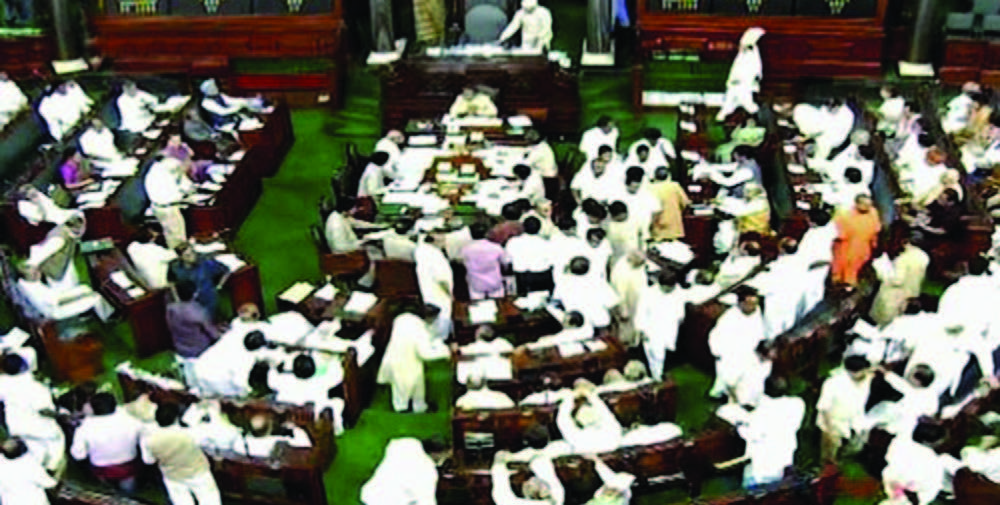
    NEW DELHI (TIP): With the Rajya Sabha putting its seal of approval on the Bill for creating Telangana amid bedlam, the birth of the 29th State of the Union is just a presidential signature away. The historic development was preceded by prolonged “labour pangs” beginning from July 30 last year, the day the Congress Working Committee (CWC) approved a resolution for bifurcation of Andhra Pradesh.

    On Feb 20, there was a great deal of anxiety about the fate of the State as the BJP, which had helped the government push through the Bill in the Lok Sabha on Tuesday, put a spanner in the works by insisting that without a Constitution amendment it faces the danger of being legally challenged. But, thanks to hectic backroom negotiations at the highest level of the government and the BJP, it was smooth sailing in the Upper House despite protests from Seemandhra MPs, who parked themselves in the Well of the House throughout the day with banners and placards.

    Prime Minister Manmohan Singh and his team of Ministers succeeded in persuading top BJP leaders not to press for a Constitution amendment, which would have complicated the process. Mr. Singh’s team convinced the BJP brass that the government was on sound legal footing on giving special powers to the Governor over safety and security of the residents of Hyderabad, which will be the joint capital for a maximum of 10 years. It was the understanding between the government and the BJP which prompted CPI(M) leader Sitaram Yechury and all others who opposed the Bill to describe it as a classic case of “match-fixing.”

    At the meeting, it was agreed that the Prime Minister would announce a package to address the concerns of the Seemandhra people as well as those in the backward regions of Telangana. Intervening in the debate in the Rajya Sabha, the Prime Minister announced that for the purposes of Central assistance, special category status would be extended to the successor state of Andhra Pradesh for five years. He said the Centre would take steps to offer tax incentives to promote industrialisation and economic growth in both States.

    In addition, a special development package for the backward regions of the successor state of Andhra Pradesh, in particular the districts of Rayalaseema and north-coastal Andhra Pradesh, will be given on the lines of the K-B-K (Koraput-Bolangir-Kalahandi) Special Plan in Odisha and the Bundelkhand special package in Madhya Pradesh and Uttar Pradesh. Speaking about the commitment of his party to creating Telangana, Leader of the Opposition Arun Jaitley expressed dismay over the manner in which the UPA had handled the entire issue. Initiating the debate, the BJP’s M. Venkaiah Naidu said: “Telangana and Andhra Pradesh are brothers and are Telugu-speaking. Telangana people want Telangana, we are saying yes…We are not dividing the country; we are only dividing a state for speedy development.” He blamed the Congress for delaying the creation of Telangana and playing “vote bank” and “opportunistic” politics.

  • Indian-Americans basis for transformation of India-US ties: Ambassador Jaishankar

    Indian-Americans basis for transformation of India-US ties: Ambassador Jaishankar

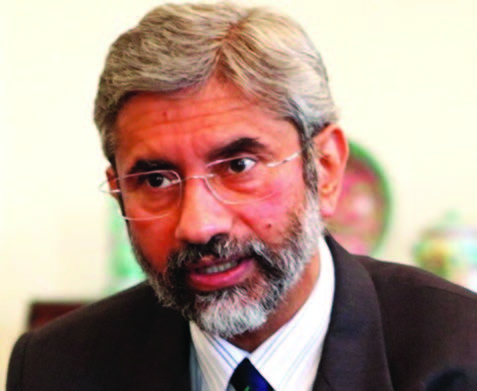
    WASHINGTON (TIP): “India-US relationship has changed dramatically. When one thinks about the transformation of our ties, it is natural to attribute it to some good diplomacy on both sides…but to me, the basis for transformation of this relationship is the Indian- American community,” S Jaishankar said.

    Addressing the Indian- American community from Greater Washington Area at a reception hosted in his honor by the National Council of Asian Indian Associations, Jaishankar praised this small ethnic community for carving a distinct space for itself in the US in almost all spheres of lives. “When an American thinks of India, the image that comes to peoples mind are Indian- American neighbors, their Indian American colleagues at workplace, the people who provide them services.

    This is the community, which is regarded as the best educated community, highest income community and extraordinary responsible community,” Jaishankar told the audience, representing some 130,000 strong Indian-American community in the Greater Washington Area. The Ambassador said even through difficult times, one of the commendable aspects of the community has been “to be good Indians, good Americans” and consequently, be good Indian- Americans. Observing that the relationship has grown enormously, Jaishankar said the “time has come to set new goals… ambitious goals for ourselves”. He identified energy and education as the two sectors where India and the United States can enhance their bilateral partnership, in addition to the strategic and defense relationship to ensure a safer, prosperous and peaceful world.

    In the next three years, the US would emerge as one of the major energy providers to New Delhi when it would start shipping natural gas to India, Jaishankar said. Coinciding with the new envoy’s public reception by the community, Maryland Governor Martin Joseph O’Malley proclaimed February 15 as ‘S Jaishankar Day’ in recognition of his role in strengthening India- US relationship. The citation in this regard was read and presented by Maryland Secretary of State Rajan Natarajan.

  • Urge NYC Schools Chancellor to Recognize Diwali as Official School Holiday

    Urge NYC Schools Chancellor to Recognize Diwali as Official School Holiday

    Crowley, Rangel, Meng, Meeks, Clarke and Maloney

    NEW YORK (TIP): Rep. Joe Crowley (D-Queens, the Bronx), co-chair of the Congressional Caucus on India and Indian Americans, along with Reps. Charles B. Rangel, Grace Meng, Gregory W. Meeks, Yvette D. Clarke, and Carolyn B. Maloney sent a letter, February 19, to NYC Schools Chancellor Carmen Fariña urging the Department of Education to include the festival of Diwali on the list of new public school holidays.

    “We appreciate your consideration of school holidays that reflect our diverse city and ensure that students aren’t forced to choose between attending school and observing important holidays with their families,” wrote the lawmakers in the letter. Diwali, which marks the beginning of the Hindu New Year, is a festival of great significance to millions of Indians and Indian Americans and is widely celebrated amongst the 3 million-plus Indian-American community, as well as others.

    Known as the festival of lights, Diwali is a time for thanksgiving and prayer for health, knowledge and prosperity. The festival is widely celebrated by Hindus, Sikhs and Jains, as well as others. Crowley led his colleagues in creating the first-ever Congressional Diwali celebration in October 2013. The event brought together hundreds of celebrants – including members of Congress, prominent Indian leaders, and members of the Indian American community – to build a greater understanding of differing cultural backgrounds and increase understanding and tolerance.
    In 2011, Crowley introduced a resolution to recognize Diwali and the strong and growing partnership between the U.S. and India. The full text of the letter to Chancellor Fariña is below: February 19, 2014 Carmen Fariña Chancellor, New York City Department of Education Tweed Courthouse 52 Chambers Street New York, NY 10007 Dear Chancellor Fariña, We understand that you are considering the designation of Eid al-Fitr, Eid al-Adha and Lunar New Year as New York City public school holidays. As members of Congress representing constituents in New York City, we support a potential move to recognize these holidays and urge you to include the festival of Diwali on the list of new public school holidays.

    For nearly a decade, Diwali has been gaining increased recognition throughout the United States. In fact, this year the Congressional Caucus on India and Indian-Americans celebrated the first-ever Congressional Diwali, and the White House has recognized the festival under successive administrations. In New York City, Diwali is celebrated by countless residents, including Hindus, Jains and Sikhs. The majority of New York’s Indian-Americans, which include not only those of direct South Asian origin but also those of Indian-Caribbean heritage, consider Diwali amongst their most significant holidays.

    Further, New York City is home to several dozen temples and gurdwaras, some of which are among the largest in our nation. The numerous Diwali celebrations in the city, such as the popular South Street Seaport event, is a testament to the recognition and popularity of Diwali, attracting thousands from in and around the area. We appreciate your consideration of school holidays that reflect our diverse city and ensure that students aren’t forced to choose between attending school and observing important holidays with their families.

    This is all the more important since members of the communities that celebrate Diwali not only contribute in countless ways to our great city, but their children also compose a sizeable and rapidly growing portion of our schools’ students.We hope to see them recognized by the designation of Diwali as a public school holiday. Sincerely, Joseph Crowley Charles B. Rangel Grace Meng Gregory W. Meeks Yvette D. Clarke Carolyn B. Maloney

  • Whither NDMF?

    Whither NDMF?

    All is not well with Nargis Dutt Memorial Foundation. Yes, there is no misprint here. You are reading it right. Reports are trickling in that there is a vertical split in the Board of Directors on the issue of the election of Dr. Prem Goel as President.

    It is being alleged by some that Dr. Goel was not eligible to seek election and, yet, he was allowed to contest. Dr. Goel’s supporters deny the allegation.

    The tussle is likely to continue and may even break the fine institution. Nargis Dutt Memorial Foundation has been doing a great service in the cause of fighting the dreaded disease of cancer. Over the last thirty plus years, the Foundation attracted the generosity of a number of good Samaritans and funded a number of projects to provide treatment to cancer patients in India.

    The Foundation has become a household name in the Indian American community of New York. It is viewed as an example of what good to community the good people can do together. One would wish the fine memorial to late Nargis Dutt would not be allowed to crumble in a fratricidal conflict for posts and positions.

  • Strong Indian American challenge in US Congressional election in Silicon Valley

    Strong Indian American challenge in US Congressional election in Silicon Valley

    SAN JOSE (TIP): US Congressional election in Silicon Valley this year was being seen as a two-person race between incumbent Congressman Mike Honda (Democrat) and his main challenger Rohit “Ro” Khanna (Democrat) until recently. It all changed when Dr. Vanilla Mathur Singh (Republican), a member of Hindu American Foundation (HAF), entered the race in December 2013.

    The HAF first made headlines in 2005 with its failed attempt in California state to “improve 6th grade textbooks so that these books actually reflect their (Hindu) beliefs and their religious practices.” Media reports indicate that Singh was recruited to run by Shalabh “Shalli” Kumar, a Chicago-based Indian-American businessman and Republican fundraiser.

    Kumar is the founder of a super PAC, Indian Americans for Freedom, with close ties to Hindu Nationalists. He has been lobbying members of US Congress to help rehabilitate his “idol” Narendra Modi of India’s Hindu Nationalist Bharatiya Janata Party (BJP). Modi has been denied US visa multiple times by the State Department because of his widely suspected role in the killing of thousands of Muslims in 2002 Gujarat riots.

    Singh said that she raised $100,000 in the five days after declaring her candidacy, including $25,000 of her own money. The rest, she said, came from about “20 family and friends.” Kumar’s super PAC could change the dynamics of the South Bay race if he chooses to back Singh financially. In 2002, his super PAC spent $500,000 in an unsuccessful attempt to defeat Rep. Tammy Duckworth, D-Ill., including producing an ad set to Middle Eastern music that showed the double amputee Iraq war veteran wearing a headscarf during a visit to a local Muslim community center.

    Ro Khanna, a Silicon Valley patent attorney of Indian origin, is backed by many of Silicon Valley’s top VCs and executives at Google, Facebook, Yahoo and other tech companies. Other Notables include Marc Andreessen, the Netscape co-founder; John Doerr, the venture capitalist; and Randi Zuckerberg, the chief executive of Zuckerberg Media and the sister of Mark Zuckerberg and Sean Parker, former President pf Facebook.

    Four months before the primary, Khanna has $1,975,000 in cash on hand, or more than triple the incumbent’s $623,000, according to campaign finance records filed last Friday as reported by the New York Times. Khanna supporters expect him to win to push legislation in Congress to liberalize US visas for foreign workers needed to fill Silicon Valley tech jobs. He supports raising the number of H1-B visas, keeping a lid on capital gains taxes and cracking down on patent trolls while charting a progressive agenda on most social issues.

    Faced with the surprise new challenge from the Hindu Right, Ro Khanna has refused to denounce Narendra Modi for fear of alienating a significant chunk of the substantial pro-BJP Indian-American voters in Silicon Valley. Mike Honda, the incumbent congressman from 17th district, is a Japanese-American who was put by the United States in an internment camp as a child during World War II. He has been a featured speaker at many Muslim- American events where he has spoken out for American Muslims’ civil rights since the terrorist attacks of September 11, 2001.

    During a 2009 keynote speech at Human Development Foundation fund-raiser that I attended, Congressman Honda said the US foreign policy should have the same goals that the HDF has in Pakistan. Drawing from his experience as a US peace corps volunteer to support education and infrastructure development in Central America in the 1960s, he proposed a similar effort in restoring US credibility in Pakistan and Afghanistan. Honda praised the US emphasis on economic aid and said he supports the 80/20 rule that General Petraeus had outlined, with 80% emphasis on the political/economic effort backed by 20% military component to fight the Taliban insurgency. Honda says he has been a strong advocate for the tech industry in Congress.

    As a member of the House Appropriations Committee, he helped get millions of dollars in funding for BART extension to San Jose, a top priority for Valley leaders, as well as federal investment in nanotechnology research. His strong backing from organized labor and veteran Democrats reflects the decades he’s spent in public service. Honda also supports an increase in H1-B visas, although he’s also expressed concerns about its potential harm to the local labor pool.

    A number of polls in 17th district so far show that Honda enjoys a healthy lead over his challenger Khanna. Honda’s lead could increase if Singh takes a significant chunk of Indian- American votes away from Khanna. In spite of a powerful tech industry funded challenge by Ro Khanna, Honda remains a favorite to win. Honda also enjoys the strong endorsement of President Obama and Democratic Party’s establishment. Singh’s entry in the race could further help Honda extend his lead and keep his seat in Congress. I intend to vote for Mike Honda based on the Congressman’s strong record of service to Silicon Valley and his unambiguous pro-civil rights stance.

  • AMARNATH YATRA

    AMARNATH YATRA

    Ekam sat means ‘there is one Being’. It is the popular verse of Rigveda. As per this verse, God has three deities to carry on the tasks of the entire world. This is called Holy Trinity: Brahma is the creator, Vishnu is the perpetuator of life and Shiva is the destroyer of evil, purifier and harbringer of good. In Rig Veda, Lord Shiva has also been mentioned as Rudra.

    According to Yajurveda, Lord Shiva has been described as an ascetic warrior who wears deer skin’s robe and carries a trishul in his hand. Lord Shiva is considered as a living God. He has three places of His residence – first and the foremost is Kailash Parvat, second one is Lohit Giri under which flows the Brahamputra and third one is Muzwan Parvat. Lord Shiva has been mentioned in the hymns of Rig Veda.

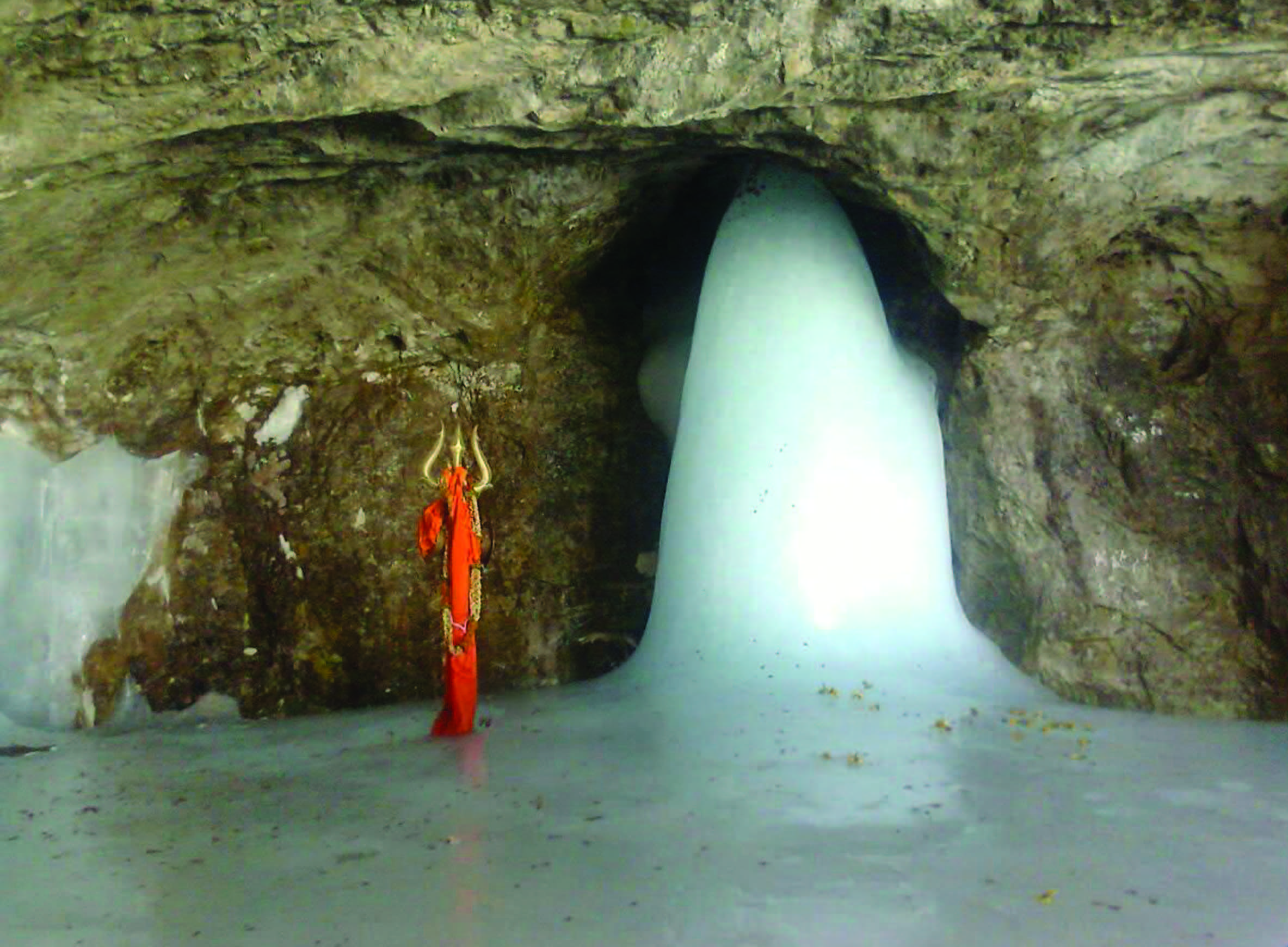
    Even in ancient India, Lord Shiva was worshiped and it is evident from the Mohinjodaro and Harappa findings. One of the prominent religious destinations dedicated to Lord Shiva is the holy Amarnath Cave that is located in Jammu and Kashmir. Each year, lakhs of Hindu devotees visit the cave to pay obeisance to the ice Shiv lingam, a form of Lord Shiva that is formed inside the cave.

    Shiv lingam is formed when the water drips from the roof gets accumulated and start to freeze on the floor. According to Hindu religious belief, the size of Shiva lingam at Amarnath Cave increases and decreases with the different phases of the moon. But there is no scientific evidence to support this belief. Along with Shiva lingam, two more ice formations exist in the cave that are believed to be of Maa Parvati and their son Ganesha. Amarnath Cave Story The Amarnath Cave has a special significance in the Hindu religion.


    13

    As per legend, Lord Shiva had chosen this cave to describe the secrets of immortality and formation of the universe to Maa Parvati. Once Maa Parvati asked Lord Shiva that when He started wearing the beads of heads. On this, Lord Shiva replied whenever you were born. Maa Parvati asked – why are you immortal and I keep on dying again and again? Lord Shiva said that this is due to the Amar Katha.

    Maa Parvati insisted to hear that Amar Katha and after convincing Lord for a long time, Lord Shiva decided to narrate that story to Maa Parvati. To narrate the story, Lord Shiva started looking for an absolutely lonely place so that no living being can hear that Amar Katha except for Maa Parvati. He finally found the Amarnath Cave. To reach there, He left all his belonging on the way like His bull Nandi at Pahalgam, His Moon at Chandanwari, His snakes at the banks of Lake Sheshnag, His son Ganesha at Mahagunas Parvat and at Panjtarni, He left his Five Elements (Earth, Fire, Water, Air and Sky).

    After this, Lord Shiva entered in this holy Amarnath Cave with Maa Parvati. Lord Shiva sat on the Deer Skin and took a samadhi. To further make sure that not even a single living being could hear the secret Amar Katha, He created a rudra named Kalagni and ordered him to set fire around the cave so that everything living around that place could be destroyed. He then started narrating the story of immortality to Maa Parvati. But in spite of all these efforts, one egg remained protected under the deer skin on which the Lord was sitting.

    But it was considered as non-living. A pair of pigeons was born out of that egg and supposedly became immortal. Pilgrims can still see the pigeon pair while going towards the Amarnath Cave. Amarnath Yatra Route Devotees visit Amarnath Cave close to the festival of Shravani Mela that is held between July-August. From Pahalgam – A traditional route To reach Amarnath Cave, one has to reach Pahalgam either from Jammu (315 Km) or from Srinagar (96km). Take a bus or taxi from Jammu to reach Pahalgam or reach Srinagar by air and from there take a car, bus or taxi. From Pahalgam, devotees have to reach Chandanwari (16 km)and this distance can also be covered by using road transport. Pilgrims can either camp at Pahalgam or Chandanwari.

    From Chandanwari, pilgrims climb the height to reach Pissu Top that is believed to be formed by the dead bodies of Rakshas who were killed by Lord Shiva. To reach at Sheshnag, pilgrims follow a steep incline. The entire route has untouched wild scenery with cascading stream on one side.

    The place got its name from the Seven Peaks. The shape of the peaks resemble that of the head of the mythical snake. From Sheshnag one has to cover the steep height of 4.6 km to reach Panchtarni. This is the last camp to the Holy Amarnath Cave. Cold winds might lead to cracks on skin. Also at such an altitude one feels short of oxygen. From Panchtarni, the Amarnath Cave is located at a distance of just 6 km.

    As there is no place to stay, so pilgrims have to start their journey early in the morning so that you can come back to the base camp on time. The entire route is very beautiful. From Baltal – A new route There is another route to Amarnath cave from Baltal that is located at 14 km from the Amarnath caves. The distance of Baltal from Jammu is 400 km that can be covered by taxi or bus.

    From there, pilgrims can either take ponies or travel by foot to cover the route from Baltal to Amarnath. Though this route is much narrower and steeper than from Pahalgam, it can be completed in one day with Baltal as base camp. If you want to complete the journey in one day then you can hire a helicopter from Pahalgam to Panchtarni. All in all, Amarnath Yatra is an experience in itself and one must visit this holy place at least once during his or her lifetime.

  • SPICY FOODS BOOST MEN’S SEX DRIVE

    SPICY FOODS BOOST MEN’S SEX DRIVE

    Serve your husband some spicy food if you want some real action between the sheets tonight.

    A French study has found that men who love to consume more spicy food have more testosterone and perform better during sex.

    For the study, scientists from University of Grenoble chose 114 men in the age group 18-44.

    They were given a meal of mashed potatoes with spicy pepper sauce and salt. The team observed who consumed more spicy pepper sauce. The men who poured a lot of sauce on their dish gave saliva samples, which was used to measure testosterone levels.

    Researchers found higher levels of male hormone in them, clearly making a correlation between higher hot sauce usage and testosterone.

    According to study co-author Laurent Begue, regular spicy-food consumption “contributes to increasing testosterone levels” but the mechanism is still not known, the Telegraph reported.

    Low testosterone levels are associated with lethargy or depressive mood.

  • HINDU SYMBOLS

    HINDU SYMBOLS

    Outward symbols are necessary and beneficial. When viewed from the right angle of vision, you will find that they play a very important part in your material as well as spiritual life. Though they may look very simple and unimportant, they are very scientific and effective.

    Tilaka—A Mark Of Auspiciousness

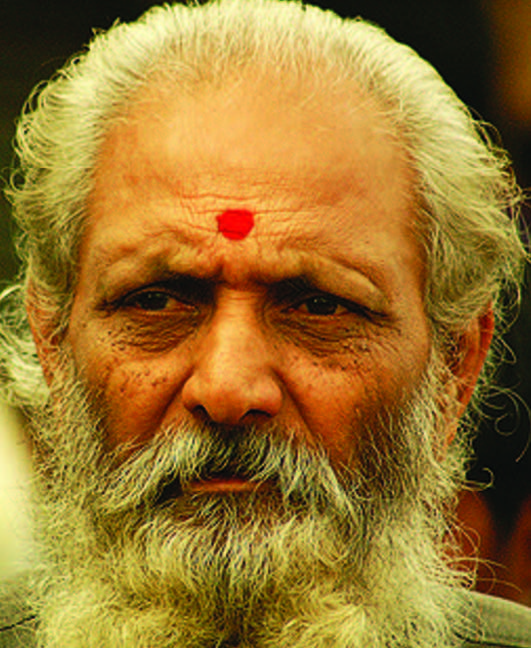
    Tilaka is a mark of auspiciousness. It is put on the forehead with sandal paste, sacred ashes or Kumkuma. The devotees of Siva apply sacred ashes (Bhasma) on the forehead, the devotees of Vishnu apply sandal paste (Chandana), and the worshippers of Devi or Sakti apply Kumkuma, a red turmeric powder.

    The scriptures say: “A forehead without a Tilaka, a woman without a husband, a Mantra the meaning of which is not known while doing Japa, the head that does not bend before holy personages, a heart without mercy, a house without a well, a village without a temple, a country without a river, a society without a leader, wealth that is not given away in charity, a preceptor without a disciple, a country without justice, a king without an able minister, a woman not obedient to her husband, a well without water, a flower without smell, a soul devoid of holiness, a field without rains, an intellect without clearness, a disciple who does not consider his preceptor as a form of God, a body devoid of health, a custom (Achara) without purity, austerity devoid of fellow-feeling, speech in which truth is not the basis, a country without good people, work without wages, Sannyasa without renunciation, legs which have not performed pilgrimages, a determination unaided by Viveka or discrimination, a knife which is blunt, a cow which does not give milk, a spear without a point—all these are worthy of condemnation. They exist for name’s sake only.” From this you can imagine the importance of Tilaka or the sacred mark. Tilaka is applied at the Ajna Chakra, the space between the two eyebrows. It has a very cooling effect.


    13

    Application of sandal paste has great medicinal value, apart from the spiritual influence. Application of sandal paste will nullify the heating effect when you concentrate and meditate at the Bhrumadhya. Tilaka indicates the point at which the spiritual eye opens. Lord Siva has a third eye at the Bhrumadhya. When He opens the third eye, the three worlds are destroyed. So also, when the third eve of the Jiva is opened, the three kinds of afflictions—Adhyatmika, Adhidaivika and Adhibhautika—are burnt to ashes. The three Karmas—Sanchita, Prarabdha and Agami— and also all the sins committed in the countless previous births, are burnt.

    When you apply the Tilaka, you mentally imagine: “I am the one non-dual Brahman free from all duality. May my eye of intuition open soon.” You should remember this every time you apply a Tilaka. There are various methods of applying Tilaka. Saivas apply three horizontal lines with the sacred ashes. The Vaishnavas apply three vertical lines (Tripundra) on the forehead. When they apply Tilaka, they say: “O Lord, protect me from the evil effects of the Trigunatmika Maya which has Sattva, Rajas and Tamas as its binding cords.” Some Vaishnavas apply only one vertical line. Only the method of application differs, but the significance is the same in both the Vaishnavas and the Saivas.

    The Tuft—Its Utility And Significance

    Brahmins (Brahmanas) as well as the other castes grow Choti or Sikha, a tuft of hair. This tuff of hair was not so small in olden days, as seen in the present day. It covered the whole brain. They allowed the hair to grow. They never cut the tuft. It protects the brain from any sudden stroke and keeps it cool. The heat of the sun does not affect the head directly.

    Lack of this tuff has necessitated the use of umbrellas, etc. The tuft is most scientific as well as religious. Any religious act should be performed after tying the tuft. Only the funeral and death anniversaries are performed with tuft untied or with dishevelled hair. It is very inauspicious to remain with dishevelled hair. It is done only in times of great sorrow or calamity. Draupadi took an oath in the assembly of the Kurus when she was molested by Dussasana that she would remain with dishevelled hair until the enemies were properly revenged. Kaikeyi remained with dishevelled hair in her apartment with the object of getting two boons from Dasaratha which were detrimental to the interests of Rama, the favourite of Dasaratha.

    Auspicious acts are never undertaken with tuft untied. Nowadays, very few people wear tuft, and even women are neglecting this vital point in their feverish anxiety to copy the West. The tuft of hair has a salutary effect on the essential parts of the brain and the central nervous system.

    Offering Food To God, Guests And The Pancha-Pranas

    Before sitting for food, the place is purified, a seat is put and in a leaf the articles of food are served. Before taking the food, a little water is sprinkled making a line all round the leaf repeating some Vedic Mantras. This repetition purifies the food. Then a little water is sipped. According to science as well as medicine, a little water, if drunk before the food is taken, is highly beneficial.

    Then the food is offered to the five Pranas and Brahman seated in the heart, by repeating Om Pranaya Svaha, Apanaya Svaha, Vyanaya Svaha, Udanaya Svaha, Samanaya Svaha, and lastly, Brahmane Svaha. Just mark the importance of this offering. The person who takes the food offers it to the deities who dwell in the body in the form of Prana, Apana, etc. He does not eat for himself. The physical body is not the eater. It is the Pancha Prana that takes the food. Thus, taking food also can be converted into an act of Yoga or sacrifice. One should daily offer to the Lord the food that he has prepared, before he partakes of it.

    He should say: “Tvadiyam Vastu Govinda Tubhyameva Samarpaye—I offer to Thee, O Govinda, this (food) which belongs to Thee only.” The custom of the Hindus is that they should feed the guest who comes to their house before they take food. The guest is a representative of the Lord. The Srutis say: “Athhi Devo Bhava.”

    Bells, Lights, Dhupa, Camphor And Sandal Paste

    Bells are rung in temples while doing Puja, to shut out the external sounds and to make the mind inward and concentrated. Lights are waved before the Deity. This denotes that the Lord is Jyotis-Svarupa. He is all-light. The devotee says: “O Lord! Thou art the self-effulgent Light of the universe. Thou art the light in the sun, moon and fire.

    Remove the darkness in me by bestowing your divine light. May my intellect be illumined.” This is the significance of waving lights. Dhupa or scented sticks are burnt before the Deity. The smoke spreads the whole room. It acts as a disinfectant. Burning of Dhupa denotes that the Lord is all-pervading and that He fills the whole universe by His living presence. It is to remind this fact that Dhupa is burnt. The devotee prays: “O Lord! Let the Vasanas and Samskaras dormant in me vanish like the smoke of this Dhupa and become ashes. Let me become stainless.” Burning of camphor denotes that the individual ego melts like the camphor and the Jivatman becomes one with the supreme Light of lights. The sandal paste reminds the devotee that he should, in his difficulties, be as patient as the sandal.

    Sandal emanates sweet odour when it is rubbed on a hard surface and made into a paste. So also the devotee should not murmur when difficulties arise, but on the other hand, remain cheerful and happy and emanate sweetness and gentleness like the sandal. He should not hate even his enemy. This is another precept we learn from this. Though the sandalwood is crushed and made into a paste, it silently wears out emanating only very sweet odour. One should not wish evil even to his enemy.

    Prasada—Its Sacredness And Glory

    Prasada is that which gives peace. Prasada is the sacred food offering of the Lord. During Kirtana, worship, Puja, Havan and Arati, the devotee offers sweet rice, fruits, jaggery, milk, coconut, plantain and such other articles to the Lord, according to his ability. After offering them to the Lord, they are shared between the members of the house or the Bhaktas in a temple. Water, flowers, rice, etc., are offered to the Lord in worship.

    This denotes that the Lord is pleased with even the smallest offering.What is wanted is the heart of the devotee. The Lord says in the Gita: “Patram Pushpam Phalam Toyam Yo Me Bhaktya Prayacchati; Tadaham Bhaktyupahritamasnami Prayatatmanah— Whoever offers a leaf, a flower, a fruit or even water, with devotion, that I accept, offered as it is with a loving heart.” It is not necessary that one should offer gold, silver and costly dress to the Lord. The devotee offers these according to his ability and position in life, thereby denoting that the whole wealth of the world belongs to the Lord.

    A rich man offers costly things to the Lord. He feeds the poor and serves the sick, seeing the Lord in his fellowbeings. Puja is done with Bael leaves, flowers, Tulasi, Vibhuti and these are given as Prasada from the Lord. Vibhuti is the Prasada of Lord Siva. It is to be applied on the forehead. A small portion can be taken in. Kumkuma is the Prasada of Sri Devi or Sakti. It is to be applied at the space between the eyebrows (Ajna or Bhrumadhya). Tulasi is the Prasada of Lord Vishnu, Rama or Krishna. It is to be taken in. They are charged with mysterious powers by the chanting of Mantras during Puja and Havan. The mental Bhava of the devotee offering Bhog to the Lord has a very great effect.

    If an ardent devotee of the Lord offers anything to the Lord, that Prasada, if taken, would bring very great change even in the minds of atheists. The Grace of the Lord descends through Prasada. Go through the life of Narada. You will realise the greatness of the sacred leavings of the Lord as well as those of advanced Sadhakas and saints. Namadeva offered rice, etc., to Panduranga Vitthala and He ate the food and shared it with Namadeva as well. If the food is offered with an yearning heart, sometimes, the Lord takes that food assuming a physical form. In other cases, the Lord enjoys the subtle essence of the food offered, and the food remains as it is in the shape of Prasada.

    While feeding Mahatmas and the poor people, that which is left behind is taken as Prasada. When a sacrifice is performed, the participants share the Prasada which bestows the blessings of the gods.When Dasaratha performed Putrakameshti (a sacrifice performed wishing for son), he got a vessel full of sweetened rice which he gave to his queens, by taking which they became pregnant. Prasada is the most sacred object for a devotee. One should consider himself lucky to take the Prasada, and there is no restriction of any kind in taking Prasada. Time and place, and the condition in which one is placed—all these do not affect him in any way. Prasada is all-purifying.

  • In Quest Of Real Love

    In Quest Of Real Love

    By His Divine Grace B.S. Tirtha Maharaj

    Everyone has a quest, a search. Mostly it becomes an intense craving to be loved by someone, in fact, everyone. But one cannot identify the one who will satisfy this longing. In this search for love, we keep on relating with many people and acquiring many objects for our satisfaction with great hopes. But we are always disappointed and frustrated.

    Baby – 1 to 5 years

    Love showers soon after birth when we experience our mother’s unqualified love. From time immemorial, every society has glorified a mother’s love as pure and unconditional. During the first months and the first years, a mother is supposed to be ‘child conscious’ round the clock. Breast feeding, affectionate caring, and singing lullabies are some major expressions of the mother’s love at this stage. Instinctively, she knows what her baby wants and caters to all its needs at any time and all the time. But today’s figure-conscious, working mother is different. She avoids breast feeding of her baby which is the most essential for the infant because, at this stage, mother’s milk is considered the most nutritious, wholesome food.

    Modern mothers deprive this nourishment to their babies. When the baby is a few months old, the working mother leaves her baby at a crèche without any guilt to go to work. At the crèche, the baby is looked after by paid attendants who are no substitute for the mother. These career-oriented mothers pick up their babies in the late evening on their way home. The whole day, the baby was deprived of the tender, motherly love. Back home, the work-stressed mothers have to attend to their household chores and so can hardly devote any meaningful time or attention to their babies and/or other children at home.

    What’s more, the baby sleeps at night in a cradle/cot away from the mother. Such neglect for the infant by the mother leaves an adverse impact on the child’s psyche and severely depletes its emotional stability. A sense of insecurity gets rooted in such babies when they grow up. Sometimes, this neglect causes a permanent starvation for love, mental imbalance or even a depression. In fact, during this stage, a mother is supposed to plant the seed of God consciousness in the mind of the infant which is very essential for the gradual spiritual pursuit, the goal of human life.

    Child – 5 to 12 Years

    During these formative years, if a boy or a girl does not receive a loving exposure to spiritual practices and a simple understanding of religious rituals, then it is difficult, rather impossible, for any spiritual dimension to develop in later life. Traditionally, during these years, a child listens to devotional songs, learns to chant mantras, visits temples and takes part and enjoys festivals, carefully guided by the parents, especially the mother. They enjoy these religious festivals and rituals. Despite indulging in childish frivolities, the child becomes rooted in religion as a way of life. This is most essential later to grow up as an ethical and morally upright person. Today, the children hardly get any religious inputs from their parents who are over stressed because of their deep involvement in their profession or business.

    The parents have little or no time for their children, do not shower love or care during these formative years. Their children are usually compensated with valuable presents and costly gifts regularly on birthdays and festivals. These gifts have become a mere formality, without true love. Avoiding parenthood responsibilities, these parents are constantly hankering after money and status. These overworked and tense parents deliberately encourage their small children to watch TV in their absence. Although the children begin by enjoying cartoon films; as they grow up, they gradually get addicted to watching horror, violent action and horror serials and films with plenty of bloody fighting and killing. Later, they start playing violent and negative video games. They get addicted to eating junk food as ‘couch potatoes’; gain weight as they have no chance to play outdoor games.

    Where has the love, caring and concern of the parents evaporated today? Where are the father’s company and the mother’s love? How can these neglected children of busy professional or wealthy parents grow up into balanced and god loving persons? Teenager – 13 to 19 Years We develop various relationships – an ever obliging father, an indulging mother, protective brothers and loving sisters – not just in our current life, but in life after life. No doubt, we feel joy in their company; get a feeling of security and a sense of belonging during childhood. But during adolescence, this delight fades away. A kind of boredom sets in.

    If children are lovingly groomed by their parents, they become keen about their studies, sports and happily take part in cultural and social activities during these years. When deprived of proper upbringing, without personal care and affection, and left alone to fend for themselves, these teenagers become addicted to smoking, alcohol and even drugs. The lack of close parental supervision and control, their unguarded natural attraction for the opposite sex starts causing a new unconventional problem – ‘teenage pregnancy’.

    In the West, this has already become a most appalling and distressing social problem as teenage girls, as young as thirteen years, have given birth and stop their education and face the dire consequences. Chain smoking, excessive drinking, heavy drugging, reckless driving and mindless violence are undesirable symptoms of this age group due to lack of affection, care and alienation from their parents. All these issues erupted in rampant burning and looting during the four nightmarish nights in London and other English cities during August 2011. Britain is still trying to look for the causes of this mass rioting and looting.

    After a great deal of public debate and discussion, the root causes were identified as a lack of moral values, irresponsible parenting, an apathetic education system and above all, lack of love, headlined as: ‘Sick Society’ and ‘Moral Collapse’. Where has real love gone? During the teenage years, the growing adults hanker after greater joy. They seek new avenues to satisfy their longing for friendship, and for relating with the opposite sex. Now they are happy and thrilled with their own group of friends. Very intimate talks, naughty jokes, teasing one another, yelling on the streets, bullying and calling names, fighting and making up again, dressing flamboyantly, visiting restaurants, careening in flashy cars, violating traffic laws, all night parties, all night drunken brawls at bars and discos, dare devil outdoor sports and frivolous indoor games … all these pastimes seem to give them tremendous pleasure, even a heavenly feeling.

    Yet a strange feeling persists of missing something; as they are unable to understand a secret longing that does not seem to diminish. Time passes by. When ushered into youth, this feeling becomes more intense as teenage boys and girls grow up. Something is lacking. They don’t know why this urge does not go away. They go all out in search of it. Yet, it remains an enigma. Indefinable. Intangible. The more they try, the more it evades them. Why? What is it that they really want? In this baffling situation, they look in all directions, try all methods to locate that thing, that person, that ideal to quench their ever increasing thirst – a thirst that wants to see its culmination and an end. When a teenager with a rising urge for sex watches a movie, every romantic scene rivets attention. Their mind identifies with the hero or the heroine.

    That singing, that dancing, that togetherness stimulates the deep rooted feeling of belonging to another. ‘This is it! This is what can pacify my hunger for satisfaction,’ they think. This drives him or her to frantically look out for a companion. They fancy this idea to subdue that persistent emotion. This is also the turning point of their lives of finishing high school and embarking on higher education or training. Choosing their career, getting admitted into a university or a technical institute and getting the financial support are all major challenges. They may also move away from their parents to live on their own. No wonder with all these pressures, the teenagers are so confused, stressed, tensed and restless.

    Our life is really a quest, a search. But do we really know what we are searching for – money, status or love? Time and again, we declare that we are living for love. But which love? Love has many forms at different stages of our lives – affection from our parents, companionship from our friends, physical attraction of the opposite sex, a commitment from our life partner and, finally, a bonding with our children and grand-children. We keep on hankering for love without knowing what real love is. And it always escapes us.

    Young Adult – 20 to 35

    After education and careers challenges have been faced by the age of 25, marriage becomes important as they want to settle down. According to the Vedic system of arranged marriages, the right age is age 25 years for the men and 18 years for the women. This meant regulated enjoyment of the senses within this period of life called Grihastha Ashram or householder’s life. In the Vedic system, the first quarter of life is spent as brahmachari or student life. In the second quarter, one goes through married life.

    The third phase constitutes Vanaprastha or retired life. The fourth or the final portion is devoted to Sannyasa or the order of renunciation to pursue the spiritual path. Such a scientific Vedic system of living ensured a disciplined, ethical and moral conduct during all phases of one’s existence. The married couples led a clean and responsible life, both the spouses serving each other with love and affection. The matches were made with the consent of family elders and on the advice of the clan’s spiritual master or a learned priest, keeping in mind the inherent nature, the lineage, the occupational group of both the bride and the bridegroom.

    Their horoscopes were matched to determine their compatibility at the physical, mental, emotional, and spiritual platforms for a happy union. The perfect match is pegged at 36 points but if they match for more than half, then it was considered auspicious. This horoscope matching is misunderstood and criticized by many so-called ‘modern’ people today but it has an important purpose and shows a deep understanding of human nature to preempt discord later. It ensures a sound foundation for the proper progeny and the stability of marriage.

    Money or social status was never a criterion. Today, during or after higher education and even before starting a career, the young man or woman starts looking around for a life partner. What is an ideal match that everyone desires? A well educated, good looking, reasonably rich, socially popular and well mannered life partner. After some hunting for a suitable partner, a marriage takes place. Apparently, this is supposed to satisfy the inordinate thirst tormenting all these years. The result: a pleasant relief, a piquant situation, a calm mind. After some of years of married life, one thinks, ‘At last, I got what I wanted.’

    This becomes a kind of relief, a desire fulfilled. If the youngsters get involved romantically merely on the basis of attraction for each others physical bodies and get married, their problems start early. Very soon after marriage, the physical attraction evaporates due to intolerance, lack of understanding and adjustment to one another’s viewpoints or temperament. This non-compatibility results in divorce. The futile attempts of modern couples to find real love with adultery usually lead to disasters. Do these give one the taste of true love? Many times, the stress of modern life with its unending demands for money and enjoyment, leads to conflicts among the husband and the wife. Even a casual expression of dissent over a trivial issue between the couple gradually develops into an irritating quarrel. A point comes when they cannot tolerate each other.

    The result? Mudslinging and character assassination. A long drawn court case and, finally, a formal separation. A divorce. The relationship ends. Back to square number one. The feeling of finding love that had temporarily subsided raises its (ugly or pleasant?) head again. Another marriage could provide the love he/she wants. Once again, the same cycle starts with impatience, misunderstanding and the torture begins. It becomes overwhelming. Or, it can work well to unite the couple in showering their love at their newborn.

    Adult – 36 to 55

    Now the focus shifts to showering their children with love and bringing them up. The child born after the second marriage gives joy to the depressed mind. Perhaps, this is the love that means giving without expecting anything they were searching for all their lives. Both are deeply involved in providing the best possible facilities and opportunities in bringing up their children in their education, holidays, sports and hobbies to enable the children to excel in every sphere. In this duty, they may neglect the most important inputs – their time, their concern and most of all, their love.

    The ups and downs of the struggle to survive in these years sometimes turn men and women to start moving towards God consciousness as they move towards middle age. This change can come around the age of 40 when they start to think about what they have really achieved and if it is of any real value. If a couple stays together bound by their mutual love and the love for their children, a subtle transformation sometimes happens in their concept of love. If they do not demand love but start giving love to one another and their family, they are moving unconsciously towards Godliness. Middle Aged and Seniors – 56 to 75+ The Vedic way of life requires that men must retire to forest by the time they reach fifty years of age, panchashordhwam vanam gacched.

    This is called vanaprastha, the retired life, a preparatory stage for the next phase, namely sannyasa that begins approximately at 75. After fifty, they withdraw from so called society, friendship and material affection and busy themselves to cultivate the love of God, the real love. But depraved men today claim or rather boast that ‘Life begins at fifty’ while chasing new pleasures of their depleting senses. Due to their irresponsible living, these modern men and women have led during their youth by not bothering about bringing up children in the proper manner, their grown up children desert them to live in distant countries leaving them alone in their sunset years. Sad, depressed and neglected by their children and grand-children, and without any inclination for spiritual pursuits, these old men and women are abandoned by their own family.

    Ultimately, when they cannot care for themselves, they end up in Old Age Care Homes to die alone and uncared for. In the Vedic system, the most important duty of the children is to care and love their parents and grand-parents to be blessed by them. But this is not the priority of the modern couples involved in running after money and prestige and looking after their children. Where has real love and respect for the elders gone? A few middle-aged couples are lucky to bask in the love of their children and grand-children. Now they have the time to cuddle them to sleep with them; feed them; enjoy their prattle; play with them; take them to school every day; rejoice at their pranks. They discover a new form of love of just giving.

    In many cases, the growing grandchildren do not enjoy the company of their grandparents because they find them unable to cope with new gadgets and technology like computers. A huge generation gap has always existed but today it has been further worsened by modern technology that tempts the youth to spend most of their time. As the seniors grow older, they become gradually isolated by both their children and grandchildren. The old search, forgotten with the love for the children and grandchildren, resurfaces. Subdued for so long, the quest surges up with renewed vigor. The mind becomes restless, dissatisfied.

    The result: discontentment, disappointment. The elders feel cheated, rejected, and unwanted. Again, the old ennui, the loneliness, the insecurity haunts them. The seniors ponder over the past events of their lives. Meandering through the nostalgic memory lanes is sometimes pleasant but detestable at other times. Recollections and reflections soothe no more, provide no solace. They experience the very old feeling of no real love in their lives resurfacing with greater intensity. Everyone responds to his or her interior stimuli. Each one acts according to the demands for survival. This is true. But then, the same question. What is it that I actually want? What have I been craving for – right from my childhood? That craving which has been the stimulus, the driving force that dominated my life so far, still appears to elude me. A strong emotion wells up in his heart. This emotion seeks an expression now almost driving him to tears. When will this perennial search end? When will that perpetual thirst meet its object? What am I really seeking?

    The Spark

    The real experience of life that gives maturity helps in introspection. Dispassionate deliberation leads to a divine revelation. It dawns on him that the impelling force behind the constant search, the relentless attempts and the never-ending thirst to achieve was nothing but a quest for love. This is what has been lingering since childhood. This quest for love was the spark for various relationships he entered into. Each relationship let him down badly. Every human link ultimately ended in bitterness. All family bonds were disappointing. Friends became exploiters. Colleagues became competitors. Social interactions were hypocritical. He always wanted to love someone with all his being, give his entire self.

    He wanted to taste sublime love from which he would never desire an exit. He expected in every relationship that the other should love him immensely. He wanted to float in the everlasting blissful experience, in love and love alone, nothing else. Why was my every love a disappointment? Why didn’t my blood relatives ever respond sincerely? Why even my mother’s love, often glorified as pure, had a tinge of partiality? Why was real love absent even in my married relationships? Why is it? Why is it? Why is it? He deliberated long.

    After a thorough heart searching, every sensitive person will realize that these questions are deep rooted in his/her heart. In fact, these questions always existed at the back of the mind – during innocent childhood, the carefree teenage years, the passionate youth and the frustrating middle age. The non-stop involvement in various illusory activities to enjoy physical senses afforded no scope to raise this question. It requires one to wake up from the false attractions of material life to understand why this question remains unanswered? Generally, it is only when one becomes quite old, rejected, humiliated and alone that this question arises like a giant. We like to love others because we have a natural tendency to love.

    But, in this phenomenal world, love gets misdirected. Hence, in the so called ‘loving relationships’ we are not satisfied and become dejected repeatedly. This despondency will continue in life after life until we direct our love towards God, in the divine form of the Supreme Lord Krishna. This is the inherent and therefore natural tendency of a living being as a spirit soul to love Krishna, the Supreme spirit soul. But this tendency becomes degraded and directed to the false and tempting aims and objects with our interaction and involvement with this world. In this material world, the love for God degenerates into lust; and service towards Him is transformed into sense gratification. It is just like the rain water which is pure as it pours down but becomes muddy immediately on contact with the earth.

    Lust or Love?

    Our major problem is we always think that lust is love. We often talk of love at first sight but it is actually lust at first sight. Lust arises from a physical attraction while love springs from a spiritual platform. Lust has a basic, animalistic motivation while love means dedication. While love is all consuming bliss, a magnificent obsession, its perverted version or lust, is intoxicating and is damaging. Love is satisfying and lust is depressing. Lust is selfish while love is selfless. Lust is seen when people relate for physical satisfaction. Love flowers in relationships for a spiritual understanding.

    Our real existence is spiritual. We are a fragment of God, Lord Krishna, the Supreme spirit soul. Therefore, when our senses are engaged in the service of Lord Krishna, it is pure love and hence it is so satisfying. If our physical senses are directed for our personal enjoyment, it is lust and ends in extreme frustration. When we are living in Lord Krishna’s service, we are perfect and when we are living for ourselves and other physical relationships, we are imperfect.

    Today, the whole world is engaged in satisfying the needs, comforts and luxuries for one’s family, community or country based on the physical conception of life. No wonder, lust and selfishness are paramount in all their transactions. Both a man and a woman marry each other for each others physical satisfaction. The physical charms and the pretense of love are considered as real love. Thus, even a slight shortcoming in their marital dealings that hurts their ego or does not satisfy their physical needs results in a quick divorce. So where is true love? Physical relationships only show different degrees of lust.

    Since true love belongs to the spiritual realm, one cannot realize it through physical relations. True love emerges naturally in transcendental relationships. True love is only possible between a genuine devotee and God. One who does not love God cannot love anyone. Even when we indulge in physical pleasures, what we are looking for all our lives is true or divine love. Our search for true love can only end successfully by loving God. One who does not love God cannot really love anyone.

  • Spain’s National Court issues ill-advised warrants against China’s former President Jiang Zemin and Prime Minister Li Peng

    Spain’s National Court issues ill-advised warrants against China’s former President Jiang Zemin and Prime Minister Li Peng

    Having been involved in cases dealing with Alien Tort Statute and Torture Victims Protection Act, I have a thought or two for consideration. Nations should be wary of passing laws that have extra-territorial reach as Chief Justice Roberts forcefully explained in the Kiobel case in April 2013.

    I would argue that the presumption against extra-territoriality is a ferocious watchdog of every nation’s sovereignty, no less than an army watching the border. After all, where one nation’s border ends, another’s begins (leaving aside the high seas and the poles). To allow otherwise, invites retaliatory reciprocity. While humanitarian concerns are touching to the soul and who doesn’t love the Buddhists, every nation must decide what’s more important that its sovereignty.

    Under law, if one nation can reach conduct in another country, what’s to stop that other country from doing likewise – the Achilles Heel of law – leading to chaos, not order. The Tibet issue is a matter for diplomacy or war. Squatters need to be evicted – perhaps when there is a court with binding jurisdiction on all countries, then law will suffice (but with such a court will come loss of sovereignty).

  • Kejriwal Back to the Streets

    Kejriwal Back to the Streets

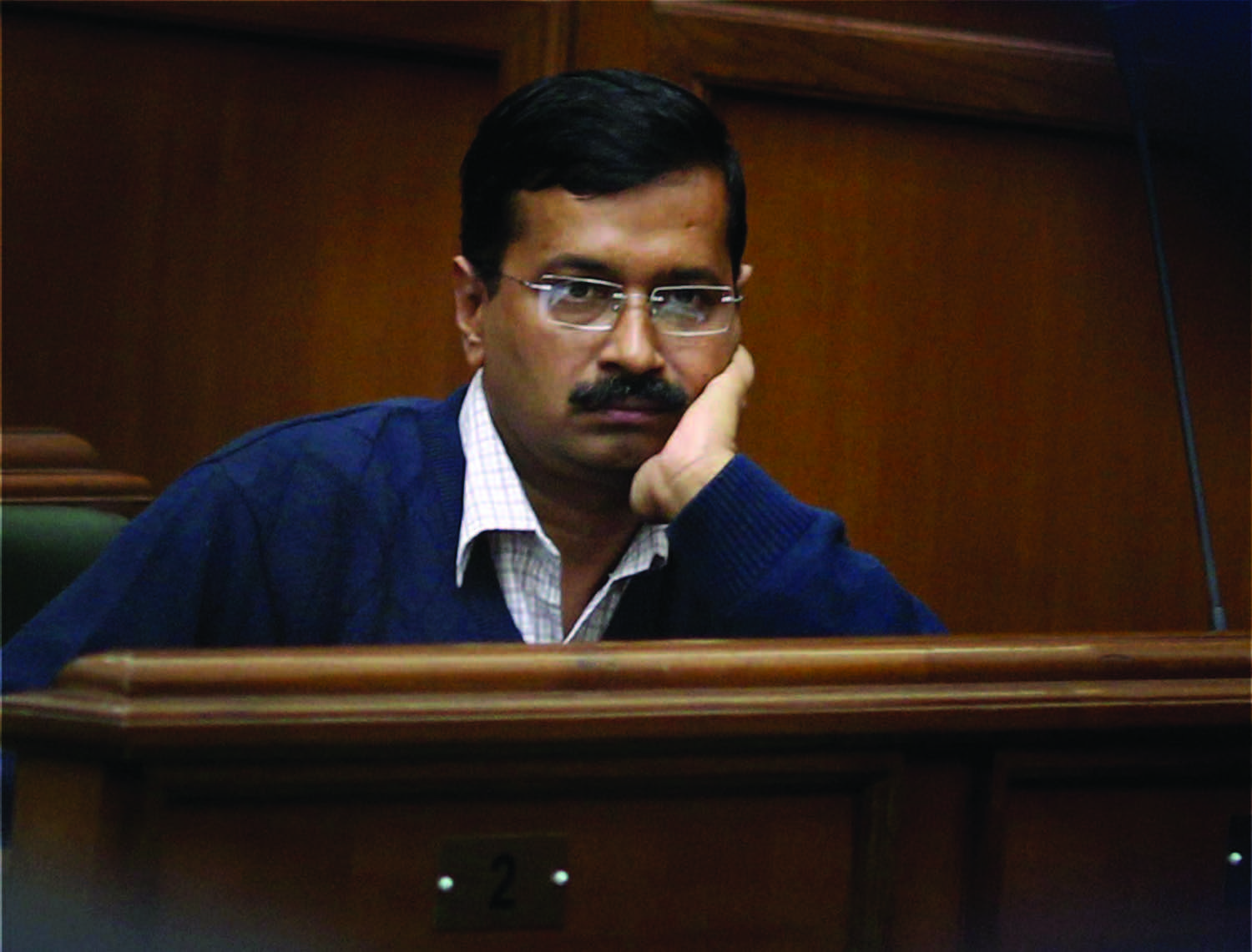
    Back to the streets. Aam Aadmi Party made cool calculations and decided that it was time to quit the government and get back to the streets. It is the familiar and favorite playground of Arvind Kejriwal. Immediately after submitting the resignation of his government, Kejriwal addressed his supporters at the party headquarters at Hanuman Road.

    The speech he made is quite revealing. He projected both the BJP and the Congress party as enemies of aam aadmi. He accused them of dancing to the tune of Mukesh Ambani, Chairman of Reliance Industries. He accused Modi indirectly of getting funds from Ambani. In short, he stamped them all as corrupt and as enemies of aam aadmi.

    What does he do now? He made it clear that a countrywide agitation for rooting out corruption and for the Jan Lokpal Bill will be launched. The mood and expectations of Aam Aadmi Party workers can be gauged from the comment of a volunteer who said, “Kejriwal can now go to people playing victim and also realize his – and the party’s — national ambitions.”

    Interestingly, supporters outside party headquarters at Hanuman Road in central Delhi were shouting: “Abhi toh Sheila haari hai, ab Modi ki baari hai (We have defeated Sheila, now its Modi’s turn).” By now Kejriwal and his advisers have understood well the politics of pressure. And they know pressure comes from people’s movement.

    They have known it because there is a history of JP movement before them. They have the most recent Anna Hazare movement of which Kejriwal himself was one of the key players, before them. They must certainly be encouraged to come out in the streets. My fear is the movement is not going to remain non violent.

    In fact, I am inclined to believe that given the utterances of many in AAP, it is more likely that the agitation will turn violent, compelling the law enforcement authorities to resort to harsher ways to quell the agitators and prevent loss of property. It is what AAP wants. Provoke authorities to take to harsher ways and blame the government for being harsh on innocent aam aadmi; project the government as enemy of am aadmi and get their support and vote for themselves. It is on the basis of such a calculation that Kejriwal has said AAP will come back to Delhi Assembly with absolute majority, bagging more than fifty seats. The coming weeks will be difficult for the people of Delhi and for the central government.

  • A Report Card of 49 day Kejriwal government

    A Report Card of 49 day Kejriwal government

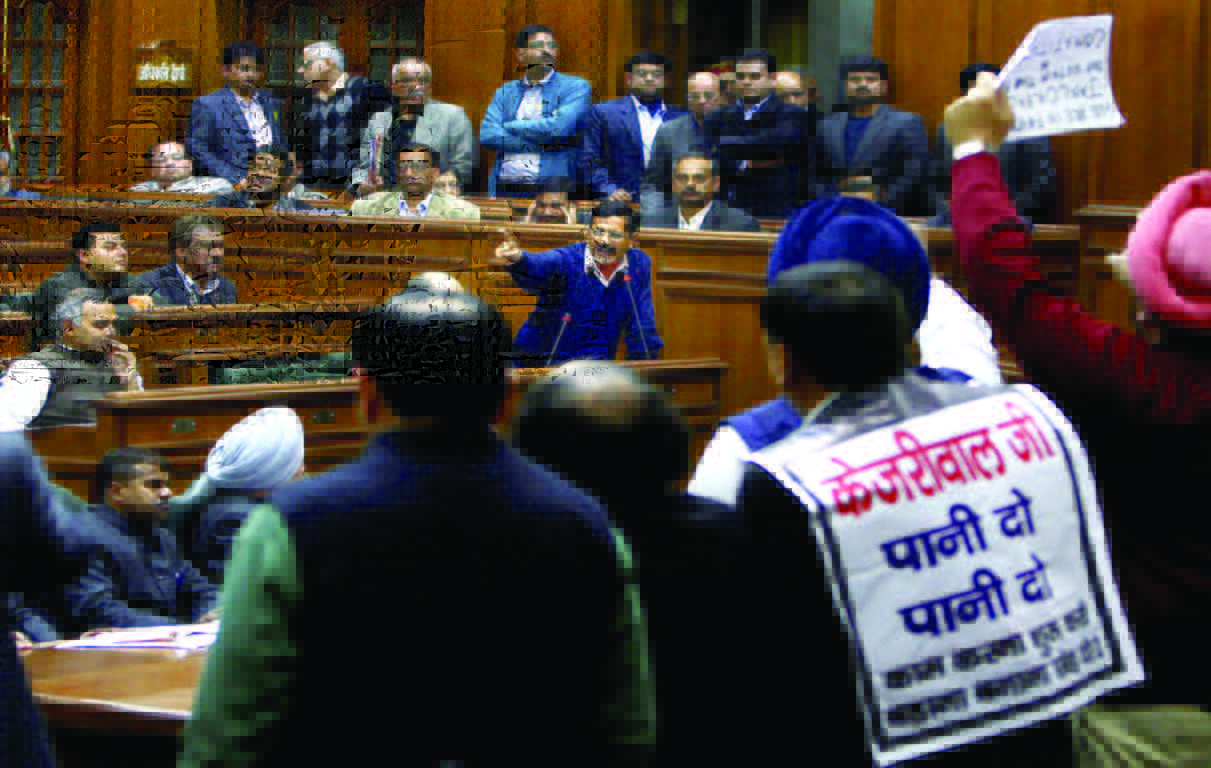
    In the seven weeks since its stunning victory in the assembly polls, the Kejriwal government has come in for heavy criticism over a series of stand-offs with the authorities — including its law minister’s ‘vigilante’ action against Africans and the CM’s own dharna demanding greater control over the police. Here is a detailed report card of the AAP government in Delhi — their actions and controversies.

    GOVERNMENT
    Dec 28: Arvind Kejriwal takes oath as chief minister with six ministers at Ramlila Maidan.
    Jan 2: AAP government wins trust vote.
    Jan 3: AAP MLA MS Dhir elected Assembly Speaker.
    Jan 5: Shoaib Iqbal threatens to withdraw support over Kumar Vishwas’ remarks against minority community.
    Jan 17: AAP puts rebel MLA Vinod Kumar Binny on notice.
    Jan 24: Cong to carry out referendum on pulling plug on AAP govt after LS polls.
    Jan 26: Binny expelled from AAP for anti-party activities.
    Jan 27: Binny wraps up dharna against AAP within four hours.
    Feb 2: Binny threatens to withdraw support.
    Feb 10: Independent MLA Rambir Shokeen withdraws support.


    11

    Kejriwal sleeping out in the street to demand action against police officials

    POWER AND WATER
    Dec 29: Delhi Jal Board chief transferred.
    Dec 30: 700 litres of free water announced for households with regular water connection.
    Dec 31: 50% power subsidy for those consuming up to 400 units.
    Jan 1: CAG audit of power discoms ordered.
    Jan 6: L-G backs CAG audit.
    Jan 10: Helpline to report power cuts.
    Jan 31: Govt threatens to cancel discom licences over outages.
    Feb 3: DERC asked to cancel licences of discoms.

    ANTI-CORRUPTION
    Jan 6: 800 DJB employees transferred.
    Jan 8: Anti-corruption help line announced, launched on Jan 13.
    Feb 6: Fresh probe in Commomwealth Games’ street light project.
    Feb 7: Probe into fi nancial irregularities in construction of Salimgarh Bypass.
    Feb 10: Probe in three DJB ‘scams’.


    12
    Kejriwal addressing his supporters after resigning.

    EDUCATION
    Jan 4: Quota for Delhi students in DU colleges promised.
    Jan 5: AAP volunteers take rounds of government hospitals to take stock of facilities.
    Jan 7: Nursery admission helpline announced.
    Jan 8: Infrastructure audit of government schools started.

    AUSTERITY DRIVE
    Jan 4: Kejriwal refuses to take Duplex house, refuses security.

    GOVERNANCE
    Dec 28: Nine officials transferred, red beacons banned.
    Jan 15: Govt says will remove Millennium Depot from Yamuna riverbed.
    Jan 18: CM requests L-G to replace fi ve senior ACB officials.
    Jan 23: Eight senior Delhi government officials transferred.
    Jan 28: CAG audit of DIMTS (it operates the BRT in Delhi) ordered.
    Jan 29: Govt seeks SIT probe into 1984 anti-Sikh riots.
    Feb 2: Govt plans to do away with MLA fund.
    Feb 3: Cabinet clears Delhi Lokpal Bill.
    Feb 4: Kejriwal promises to include Northeast history in school texts.
    Feb 9: Govt plans to scrap the Bhagidari scheme.
    Feb 12: Cabinet approves decision to hold special assembly session in a stadium.
    Feb 13: Govt fails to table Jan Lokpal Bill in assembly, blames BJP and Cong for disruption.

    CONTROVERSIES
    Jan 7: Law minister Somnath Bharti’s bid to summon HC judges sparks row.
    Jan 10: Bill waiver announced for those who took part in power tariff protest.
    Jan 11: Chaos at Kejriwal’s janata darbar; scrapped two days later.
    Jan 16: Somnath Bharti/ Rakhi Birla late night raids row surfaces.
    Jan 18: Kejriwal defends night vigils by ministers.
    Jan 19: Delhi police registers criminal case against Bharti and supporters for allegedly misbehaving with African women in Khirki.
    Jan 20: Kejriwal sits on a dharna at Rail Bhawan against the Centre, Delhi Police.
    Jan 24: Somnath Bharti skips DCW hearing, goes kite flying.
    Feb 8: Kejriwal reiterates that the Jan Lokpal Bill will not be sent to the Centre for its nod.
    Feb 11: Kejriwal orders FIRs against Mukesh Ambani, Veerappa Moily and Milind Deora for increasing the price of natural gas produced in India.

  • Indian-origin woman booked for killing son in Texas: Says she’s innocent

    Indian-origin woman booked for killing son in Texas: Says she’s innocent

    DALLAS (TIP): A Frisco woman, Pallavi Dhawan, charged with murder in the death of her 10-year-old son says she didn’t kill him. Arnav Dhawan was found dead in a bathtub Dec. 30 at his parents’ home.

    Pallavi’s attorney, David Finn, said Monday, February 10 that the toxicology reports on Arnav are back, but they are being reviewed by the medical examiner and likely will not be made public for about a week. Frisco Police said that Arnav’s mother, Pallavi Dhawan, confessed to killing her son — when asked by officers if she killed Arnav, they say she nodded her head, indicating yes.

    But Finn and Sumeet, Pallavi’s husband, say that never nodded her head. “I did nothing to cause his death,” Pallavi Dhawan said Monday in an exclusive interview with FOX 4. Pallavi says when she picked Arnav up from school the day before his death, she knew something was wrong. “He came, we went home, I offered him a snack,” said Pallavi. “He didn’t want to have a snack, which was a little bit unusual. So I offered him some grapes.

    He had a few bites of grapes and then he didn’t feel like eating. He said, ‘I don’t feel like eating. Can we go somewhere out?’” Pallavi says they went out to a movie, but Arnav said he was tired and wanted to go home, so she took him to Toys “R” Us and then their house. “I said, ‘Why don’t you just, you know, change and go to sleep?’” said Pallavi. “And he said, ‘You know, I don’t feel like changing.’ And he was still looking…he had to see if his Smurfs was recorded.

    That was important to him. So he checked if his Smurfs was recorded. He checked that, but then he was so tired, he didn’t feel like changing. And I could see that he was tired. He said, ‘I’m tired and I’m feeling little bit cold.’ So then I said, you know, ‘OK,’ and I touched him and he did seem a little bit cold, but there was no fever or anything.” Pallavi says she read Arnav a story and put him to bed, but he got up twice, complaining of being cold.

    “This time, I decided to stay with him, and I slept next to him,” she said. “…I woke up Saturday morning, I tried to wake him up, and he wouldn’t get up.” “And what did you think at first?” FOX 4’s Shaun Rabb asked. “At first I thought…he just didn’t want to wake up,” said Pallavi. “And then you realized that he was dead?” asked Rabb. “I think I knew, but I didn’t want to believe it,” said Pallavi.

    The mother says she picked up her son and realized he had relieved himself in his pants. “…I actually picked him up,” she said. “I picked him up, Shaun; I picked him up. I picked him up. I held on to him and I took him to the bathtub, because I didn’t want to believe he’s gone. I took him to the bathtub…’cause he was feeling a bit cold to me.”

    Pallavi says tried to save Arnav. “So I tried to push on his chest and just blow on his mouth, saying, ‘Get up!’” said Pallavi. “He wouldn’t open his eyes. He wouldn’t bend his arms. It took me a while to just tell myself, ‘He’s gone. He’s gone.’ And he was there, lying there, and I’m looking at him…he’s not there. What do I do next?’ Pallavi said she put shopping bags full of ice around Arnav to preserve his body for her husband, who was away on a business trip at the time.

  • West Texas mom gets 30 years in daughter’s death

    West Texas mom gets 30 years in daughter’s death

    ABILENE, TX (TIP): Tiffany Klapheke was sentenced to 30 years in prison Thursday, February 13 for the starvation death of her 22-month-old daughter, who was found dead in her crib inside a squalid home while her father was on an Air Force deployment.

    The woman could have got life in prison after being found guilty Wednesday of injury to a child by malnutrition and dehydration in the 2012 death of her daughter, Tamryn. The 23-year-old Klapheke did not testify at trial, but she has said her now ex-husband’s deployment left her too stressed to care for the couple’s three girls.

    “I really wasn’t a good mom the past few days,” she told an Abilene police detective on Aug. 26, 2012, the day police found Tamryn dead at the family home. “I’ve been honest even though it makes me look horrible.” A video of the interview was played at her trial. “I don’t want you to take them away because I was lazy,” Klapheke told the detective. Investigators told the jury about the stench of urine and feces that prevailed in the Klapheke home when they arrived.

    Prosecutors alleged that Klapheke’s two older daughters were not being fed. According to the Abilene Reporter-News, prosecutor Joel Wilks said in his closing argument that Klapheke “turned her back,” adding: “She shuts the door and she leaves. She leaves that child in pain.” Klapheke broke down in tears as the sentence was read, according to one of her attorneys, John Young. She will have to serve at least half of her sentence before she is eligible for parole.

    Her attorneys argued during the trial that Klapheke’s upbringing made her an unfit parent, and that she had suffered sexual abuse in foster care after her mother gave her up. They said she suffered from reactive attachment disorder, which is usually found in children who cannot form healthy attachments with parents or caregivers because of past neglect or abuse. “Tiffany never had a chance,” Young said after the sentence was handed down. “She was abused and abandoned and neglected from 5 years old. These things made it nearly impossible for her to ever function as an effective parent.”

  • Oil and gas company sues city of Dallas over right to drill on leases

    Oil and gas company sues city of Dallas over right to drill on leases

    DALLAS (TIP): Trinity East Energy sued the city of Dallas on Thursday, February 14 to recoup its investment in oil and gas leases because the City Council never permitted the company to drill on the property. Trinity East Energy paid the city $19 million for the leases years before the council decided not to permit drilling.

    The suit, which City Hall officials expected, was filed in Dallas County District Court. It alleges breach of contract, fraud and an unconstitutional taking, among other things. “This was a business transaction,” Trinity East president Steve Fort said in an interview on Thursday. “If the city had lived up to the deal that was made in our transaction, we wouldn’t be here today.”

    The city denied the allegations. Mayor Mike Rawlings, who opposes drilling in the city, voted in favor of the drilling permits last August. At the time, he said voting them down “could cost the city of Dallas millions of dollars of legal and other expenses.” On Thursday, he said of the lawsuit, “my prediction has come true.” “We need to think carefully when we vote on actions to not put ourselves in the courthouse,” the mayor said.

    “That being said, I feel great about our situation and our case.” Four months after the Trinity East permits were denied, in December, the City Council approved one of the nation’s most restrictive ordinances on natural gas drilling. It requires more than a quarter-mile between wells and protected uses such as homes. Industry executives, including Fort, insist it’s a virtual ban on drilling in Dallas. But years earlier, in 2008, Trinity East paid the city $19 million for the mineral rights to 3,600 acres in northwest Dallas, near the city’s Luna Vista Golf Course and the Elm Fork gun range.

    “In selling this real property interest to Trinity, the city knew that Trinity could only benefit from this contract if Trinity was actually allowed to drill a number of wells to produce gas,” the lawsuit said. “The city also knew that for drilling and production to occur, the city would be required to issue certain permits and other authorizations. Despite representations and promises by the city, as well as the city’s contractual obligation, that Trinity would be allowed to drill and produce minerals, the city refused to grant Trinity the necessary approvals to conduct drilling and production operations.”

    The company says it spent more than $30 million based on the city’s promises and lost “hundreds of millions more” in profits. The suit maintains that when it signed its deals with the city on Aug. 15, 2008, it received a letter from then-Dallas City Manager Mary Suhm saying she was “reasonably confident” Trinity East would be able to drill on a 22- acre tract of parkland on the west side of Luna Vista. “That was one of several representations and assurances we got from the city staff,” Fort said on Thursday. Suhm told the company she would help it win the right to drill on parkland, even as she publicly assured the City Council that she would not support drilling on city parkland.

    City spokesman Frank Librio said in a written statement that the lawsuit “lacks merit.” “After conducting public hearings, both the City Plan Commission and the City Council rejected Trinity East’s applications, finding that the proposed locations were inappropriate for drilling and production operations,” the statement said. “During the time Trinity East had the leases, gas prices became depressed and more became known about geological conditions in the area,” the statement said.

    “Although the city granted several zoning permits for drilling to other companies who requested to drill at more appropriate sites, none of those companies have followed through with actual drilling and production.” “The city will vigorously defend its right to exercise its regulatory powers to protect public health and safety as well as the environment.” Rawlings said he isn’t worried about the lawsuit hurting the perception of how Dallas does business. “We’ll win in the court and we’ll move on,” the mayor said. For Fort, the experience means “we would not do business with the city ever again.”

  • ‘Dallas Buyer Club’ Oscar Nominee Jared Leto Fears Homophobic Texas?

    ‘Dallas Buyer Club’ Oscar Nominee Jared Leto Fears Homophobic Texas?

    DALLAS, TX (TIP): Jared Leto gave everyone a welcomed break from acting for the last six years to focus on his hysterically hilarious music group, 30 Seconds to Mars, but decided to return to play the Oscar nominated role of Rayon in Jean-Marc Vallée’s Dallas Buyers Club.

    Leto, who was looking to broaden his range by playing yet another drug addict, admitted in an interview that he would have been scared to live as Rayon did in the homophobic Texas of the 1980s. Jared Leto until late hadn’t really been known for doing anything well other than looking pretty. So it was surprising to see a powerhouse performance by Leto in her return to celluloid Dallas Buyers Club.

    The singer, who was once described by Jimmy Kimmel as the worst celebrity he ever interviewed, said that not only was he drawn to the role because it was so well written, but the character was far braver than he ever would be (via Contact Music): “I read the script and immediately I was just blown away.

    I fell in love with the character and I felt that this was a real opportunity here to portray a real person, not a cliché or a stereotype.” Jared went on to explain that he could imagine herself having the courage to live, in a place that he feels was so close minded it was barely fit for habitation.”

    It’s Texas, it’s 1985, you’ve got this cowboy and this young man who’s chosen to live as a woman. A really brave choice; I couldn’t imagine how terrifying it must’ve been to walk through a grocery store at that time.” Regardless of his hateful views towards Texas, Leto still had enough sense to thank his mother, Constance, for her support at the 86th Oscar Nominees Luncheon earlier this week. Not only has she inspired him, but she is a joy to be around, unlike the residents of Texas in the eighties.”

    We were born very poor and into pretty humble surroundings. My mother always wanted to do something better with her life [and] for her children. She taught me to dream and then to do the work that it takes to make dreams become reality. It’s been fun to bring her around.”

  • Texas Gay Marriage Ban Challenged In Court

    Texas Gay Marriage Ban Challenged In Court

    SAN ANTONIO, TX (TIP): Two same-sex couples, including one from Plano, asked a federal judge Wednesday, February 12 to stay Texas’ constitutional ban on gay marriage so one can wed and the other can have their outof- state marriage recognized. U.S. District Judge Orlando Garcia didn’t immediately rule on plaintiffs’ request for a preliminary injunction.

    The case is one of three to challenge the Texas ban – and the furthest along. Nationally, similar battles are underway in federal courts in 23 states. Garcia, an appointee of former President Bill Clinton, acknowledged that his ruling will be far from the final say on the matter. “Any one of those cases,” he said, ticking off lawsuits in Oklahoma, Utah, Ohio and Virginia, “or a combination thereof will make its way to the Supreme Court,” he said.

    In June, the justices ruled, 5-4, that married same-sex couples are entitled to federal benefits. Quoting U.S. District Judge Sam Sparks of Austin, Garcia said: “Ultimately, a group of five people will decide this case, and I’m not one of those five.” Lawyer Mark Phariss and physician’s assistant Victor Holmes of Plano, who’ve been domestic partners for more than 16 years, brought the suit, along with Austin residents Cleopatra De Leon and Nicole Dimetman. De Leon and Dimetman got married in Massachusetts in 2009. They have a young son.

    Their lawyers, Barry Chasnoff and Neel Lane, argued it’s only a matter of time before the Supreme Court strikes down gaymarriage bans in Texas and 32 other states. Chasnoff said the states have violated the 14th Amendment to the U.S. Constitution by denying a privilege – the ability to marry – for reasons mostly of hostility or “animus” toward gay men and lesbians. Pointing to his wife of 43 years in the audience, Chasnoff said marriage confers many financial and emotional blessings.

    “What we want is for Vic and Mark, Nicole and Cleo to have the same opportunity in their life that I’ve been fortunate to have,” he said. “It should not be denied in law because of sexual orientation.” Assistant Texas Solicitor General Mike Murphy said that concern for children, and a belief they’re best brought up by a heterosexual couple, underlie the Texas constitutional amendment defining marriage as between a man and a woman. Calling the ballot measure an act of prejudice or ill will against gays and lesbians is “an unsupported claim,” he said.

    “The purpose of Texas marriage law is not to discriminate against same-sex couples but to promote responsible procreation,” Murphy said. Plaintiffs’ lawyers Chasnoff and Lane, though, were quick to point out that infertile and elderly heterosexuals marry all the time, with no interest in having children. Also, the two lawyers noted, many same-sex couples bring up youngsters, through adoption and assisted reproduction. “If marriage is good for children, then it’s irrational to prohibit same-sex couples who could have children from being married,” Lane said.

    The U.S. Constitution requires states to give “full faith and credit” to other states’ laws and judicial edicts. Murphy, who works for Attorney General Greg Abbott, the leading Republican candidate for governor, said the Texas ban doesn’t trample on other states’ decisions. “An out-of-state marriage is not terminated when they move to Texas,” he said of gay and lesbian couples. “It’s simply not recognized.” Federal courts haven’t enshrined same-sex marriage as a fundamental right of U.S. citizens, Murphy said. Massachusetts was the first state to legalize same-sex marriage, in 2004, he noted.

    “It is a more recent innovation than Facebook,” he said. Murphy said the plaintiffs want to yank the hot-button social issue from the Legislature and voters and hand it to federal judges. “This court should not do that,” he said. The argument irritated Phariss, the plaintiff who’s also a lawyer. He told reporters after the hearing that U.S. voters ratified the 14th Amendment, which provides for states to give equal protection of the laws to all citizens, in 1868.

    “The U.S. Constitution trumps anything that Texas does,” he said. “What stings is that they use a local action here to try to suggest that that would somehow or another trump our constitutional rights.” U.S. District Judge Orlando Garcia is expected to decide whether to temporarily block the law, approved by voters in 2005, until a trial can be held in the couples’ case. Similar lawsuits have been filed in 22 other states, but the Texas lawsuit is the first of its kind in the region covered by the southern and deeply conservative 5th U.S. Circuit Court of Appeals, where the case will likely end up.

  • KEJRIWAL RESIGNS AS CM OF DELHI

    KEJRIWAL RESIGNS AS CM OF DELHI

    Union Cabinet recommends President’s Rule: Assembly to remain in suspended animation

    New Delhi (TIP): Forty-nine days after he took charge of the Delhi government, Chief Minister Arvind Kejriwal on February 14 resigned following a tumultuous day in the state assembly where combined Congress and BJP legislators “defeated” his party’s attempts to introduce its signal Jan Lokpal bill, which the Aam Admi Pary (AAP) says was meant to curb corruption in high places.

    In political embarrassment for the Aam Aadmi Party (AAP) government, Kejriwal introduced the bill amid din in the assembly, but an aggressive Congress and the Bharatiya Janata Party (BJP) leaders became strange bedfellows to force Speaker M.S. Dhir to go for voting. In the voting, 42 members voted against the introduction of the bill, while only 27 MLAs – all AAP leaders – voted for it. Delhi assembly has a total strength of 70.

    As it became apparent that the Congress, BJP and Janata Dal-United legislator Shoiab Iqbal and lone independent Rambeer Shokeen will not allow the AAP government to introduce the bill, Kejriwal and his senior cabinet colleague Manish Sisodia presented two appropriation bills that would empower the government to access funds for expenditure. Kejriwal then stood up to speak, giving enough indication he was going to resign when he said that this “seems like our last (assembly) session”. He said it was more important to “fight corruption than to run a government”.

    “Today, they did not let the Jan Lokpal bill to be introduced. It has been defeated,” declared a defiant and gesticulating Kejriwal. “Whether our government remains in power or not is not important,” he said, trying to make himself heard above the din caused by sloganeering and heckling by Congress and BJP legislators. “We have come here to save the country. If we have to give up the chief minister’s post for the sake of the country, we will do it not a hundred times but a thousand times,” he said. Kejriwal took charge Dec 28 at the head of a minority government propped up by the Congress after an astonishing election victory. Both the BJP, Congress, Shokeen and Iqbal were demanding a discussion on Lt.

    Governor Najeeb Jung’s appeal to the government not to table the bill in the house without his approval. Jung had earlier in the day written to the speaker on the matter, which had become contentious over the past week with the lieutenant-governor saying that the union government’s nod is needed for introducing the bill – an issue on which opinion is divided among legal and constitutional experts. But the AAP government was firm and had decided to push for the bill, which was its poll promise. But much before the house could be adjourned, messages went out to AAP members to meet at its party headquarters at Hanuman Road.

    When the three-day session ended in just two days, Kejriwal, without interacting with media, left for the party office. It was here that he announced his resignation. The final decision was taken by the party’s Political Affairs Committee. On Feb 9, Kejriwal had threatened to resign if the bill was not allowed to be passed. It was an action-packed 49-day stint for the AAP government, which received both bouquets and brickbats for its actions and utterances in its brief and maiden stint in power in a politically-charged journey that began with the party’s formation on November 2012.

    The party was able to deliver some of its biggest poll promises, including cheap water, power, anti-corruption helpline, audit of power companies and acting on suspected corruption in the organisation of Commonwealth Games and in gas pricing in which he took on from former Delhi chief minister Sheila Dikshit to industrial Mukesh Ambani, chairman of Reliance Industries and India’s richest man. But the indiscretions of one of his ministers, especially Law Minister Somnath Bharti who went after African residents on suspicion of them being part of a drug-and-sex racket, and his nightlong blockade of the centre of the capital, days before the Republic Day Parade, got the party a lot of flak and adverse media attention.

    His resignation now sets him free to get back to the streets and do what he knows best – to emote with the problems of the aad admi, the common man, whose ranks have swelled in support for his party and on whom he is counting to translate his national ambitions. Political analysts expect Kejriwal and his AAP to make a strong bid for a substantial parliamentary presence in order to be player in the post-election scenario in three months’ time.

  • Ending boycott, US envoy Nancy Powell meets Narendra Modi

    Ending boycott, US envoy Nancy Powell meets Narendra Modi

    GANDHINAGAR (TIP): The United States ended a decade-long boycott on February 13 of Gujarat chief minister Narendra Modi over deadly religious riots as a top diplomat held talks with the man who could be the next prime minister.

    Nancy Powell, the US ambassador to India, shook hands with Modi at his official residence in Gujarat where he is the chief minister, before entering closed-door talks. Powell and her entourage arrived in four official cars at the residence in the state capital Gandhinagar, but she did not speak to waiting reporters.

    Modi, leader of the Bharatiya Janata Party ( BJP), is accused by rights groups of turning a blind eye to riots that killed up to 2,000 people in Guarajat in 2002. Most of the victims were Muslims. The United States in 2005 revoked a visa for Modi under a domestic law that bars entry by any foreign official seen as responsible for “severe violations of religious freedom”.

    Modi has denied any wrongdoing over the 2002 violence and investigations have cleared him of personal blame, although one of his former ministers was jailed for life for instigating the killing of 97 Muslims. Powell’s meeting with Modi puts the US in line with European nations and Australia, which have already restored ties with him. Opinion polls show Modi and his party are on course to topple the ruling Congress party at general elections expected in May.