Month: February 2014

  • President Obama signs debt ceiling measure into law

    President Obama signs debt ceiling measure into law

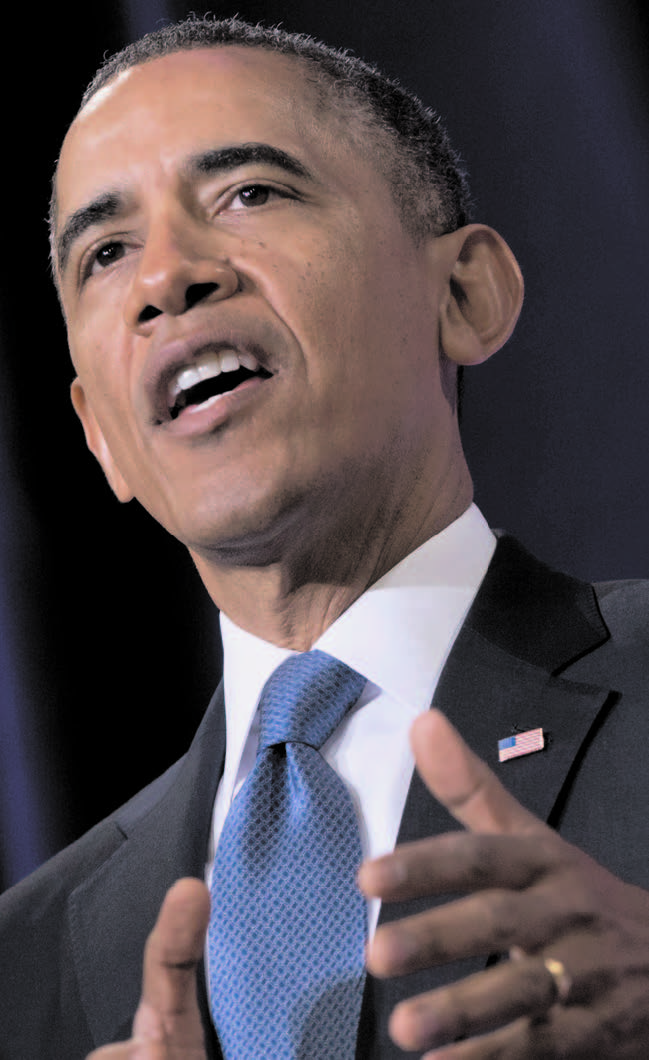
    FRESNO (TIP): President Barack Obama has signed separate measures lifting the federal debt limit and restoring full cost of living benefits for military retirees. Obama signed the bills into law Saturday, February 15 during a weekend golf vacation in Southern California.

    The debt limit measure frees the government to borrow the money it needs to pay bills, such as Social Security benefits. Earlier, the GOP-controlled House backed away from a battle over the government’s debt cap and passed a measure extending Treasury’s borrowing authority with overwhelming support from President Barack Obama’s Democratic allies.

    The 221-201 vote came hours after Speaker John Boehner announced that his fractured party would relent and not seek to add other items to the mustpass legislation. Twenty-eight Republicans voted yes. The bill permits Treasury to borrow normally for another 13 months and diffuses the chance of a debt crisis well past the November elections. Just Monday, February 10, Republicans had suggested pairing the debt measure with legislation to roll back a recent cut in the inflation adjustment of pension benefits for working age military retirees.

  • Body of missing world traveler Leanne Bearden found in Texas

    Body of missing world traveler Leanne Bearden found in Texas

    HOUSTON (TIP): After spending nearly two years criss-crossing the world, Leanne Hecht Bearden’s adventures — and life — ended abruptly in woods near a home in central Texas.

    Authorities announced Thursday, February 13 that a body believed to be the 33-year-old woman had been found in Garden Ridge, the same city where she was last seen January 17 heading out from her in-laws’ house for what was supposed to be a one-hour walk. Her family later confirmed her death, saying on a Facebook page dedicated to finding her that they were “understandably devastated.” “Leanne was a lovely and remarkable young woman,” the family said, “and we will all miss her greatly.”

    Just a few hours earlier Thursday, a post on the same page echoed the optimism and energy that had marked the family’s efforts to find Bearden. “DON’T LET UP!” they urged all those who had joined them in looking for Bearden. “We are still hopeful.” That hope was dashed after a phone call from a man to police around 12:15 p.m. (1:15 p.m. ET) saying there was a body “in a wooded area near his home in Garden Ridge,” city police Chief Donna O’Conner said. O’Conner said responding officers “located what we believe to be the body of Leanne Bearden.” “We will reserve any information regarding the cause of death until an autopsy has been performed,” the chief said.

    “Our thoughts are with the Bearden and Hecht families and (we) ask that you respect them in their time of grief.” Bearden and her husband, Josh Bearden, had climbed Mount Kilimanjaro, gone swimming in the Dead Sea and attended an Indian wedding, among many, many adventures. Leanne Bearden documented their epic 22-month trek in a blog. Then, in December, the couple returned to the United States, spending a short time in Georgia before heading to visit Josh’s family in Garden Ridge, just northeast of San Antonio, according to her brother Michael Hecht.

    Coming back to her native country wasn’t necessarily easy, her family suggested. “The pressure of transitioning from her two-year trip back into what we consider ‘normal’ life seems to have left her very anxious and stressed,” they said. After she went missing, relatives and friends worked intently to spread the word as the search for her — on the ground and from the air, using helicopters — expanded. One such search, on one day in January, covered 23 acres. Garden Ridge police noted their serious concern about Bearden that month, while adding “there is no indication at this time that (her disappearance) is criminal in nature.”

    Her family, meanwhile, acknowledged on Facebook that “there is evidence that Leanne may have voluntarily left the area.” Whether or not that was true, the family pleaded for the public’s help finding her given that — for all her travels — Bearden “is extremely vulnerable,” “is small in stature” and “her mental and physical status is uncertain.” “We fear for her greatly,” her family said.

  • Sikhs want justice, not compensation

    Sikhs want justice, not compensation

    It is too late and too little. The Sikh community, seething with anger at not being done justice is further enraged at the government grant of a paltry sum of INR 500,000 as compensation for the riot victims, 30 years after the mayhem. No amount of financial assistance can satisfy the families who lost their family members in the demonic violence against the innocent Sikhs in Delhi and elsewhere. In fact, some times I think the successive governments have only been making fun of the Sikh community by doling out paltry sums as compensation and denying them the satisfaction of seeing the persecutors being punished.

    Modi government, probably with an eye on Delhi elections, decided to give an additional compensation of INR 500,000 to the families of each of the 3,325 persons identified as killed in the riots against the Sikhs in the wake of Indira Gandhi’s assassination in 1984. Earlier, a compensation of INR 350,000 was given by the UPA government in 2006. But where is justice? Where is punishment for the perpetrators of violence? Citizens of the largest democracy of the world need ask themselves how democracy can flourish when democratic values are trampled under foot. Where is equality, a basic feature of democracy? Law has to be the same for all.

    Why the same law is not being applied to those who committed the worst and the most heinous crime of killing innocent citizens of India? Is it not the failure of our democracy? The worst part is the government of the time failed to do its duty. In stead of punishing the guilty, it protected them. And by now there is enough evidence, too, to prove without a shadow of doubt, complicity of some big wigs in the then ruling party who joined the guilty in protecting them.

    Will the Modi government go the way of its predecessor or uphold democracy and justice and punish the guilty-that is the question. If Modi government also fails to do justice to the Sikh community, it may well be concluded that minorities will never ever get justice in India. It is time for Modi government to clearly state in its actions whether or not minorities can expect to be treated as equals and given benefit of justice which in any way is their right. Prosecute those who committed violence. And remember justice delayed is justice denied. The ball is in Modi government’s court.

  • Congress lowest: Times Now poll

    Congress lowest: Times Now poll

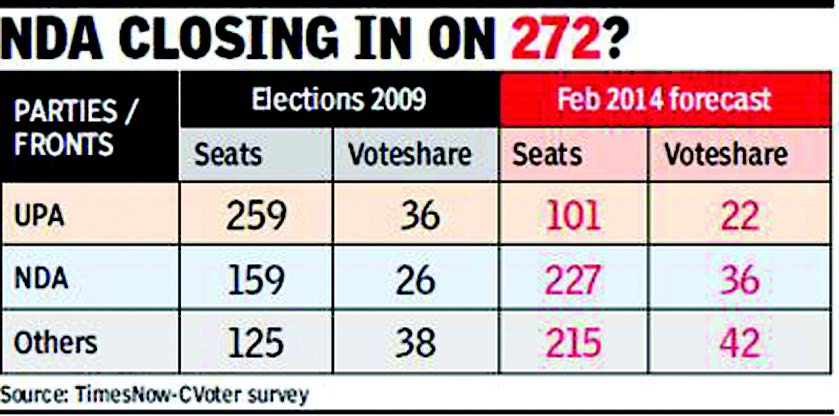
    NEW DELHI (TIP): The BJP could reach its highest tally ever and the Congress its lowest point, giving the NDA the best chance of forming the government after the Lok Sabha polls, though well short of a majority. That’s the big picture emerging from the Times Now-CVoter national projection poll released on February 13. The poll projected that the BJP would win 202 seats if the elections were held now and its allies another 25, giving the NDA 227 seats in the 543-member LS.

    The Congress, in sharp contrast, would sink to just 89 and even with 12 seats from its allies the UPA would barely cross the 100 mark, it predicted. With “others” likely to win 215 seats and many of them having joined hands with the BJP in the past, that would be very good news for those rooting for Narendra Modi as prime minister. In terms of vote shares, the NDA is estimated to win 36%, the UPA 22% and others 42%. AAP, whose performance in its first LS polls will be closely watched, is projected to win a total of seven seats, four of them from outside Delhi.

    It’s vote share, the poll suggests would be about 8%, which would be larger than the vote share of any party other than the Congress or BJP in any recent LS election. Among the parties currently not aligned to either the Congress or the BJP parties, the AIADMK and the Left – which are in an alliance — are projected to win 27 seats each, the Trinamool Congress 24, the BSP 21 and SP 20. The decline in the Congress tally from 206 in 2009 to just 89 in the latest poll is a result of a pan-India collapse, with few exceptions. In Andhra Pradesh, the state that gave the Congress its biggest chunk of MPs (33) last time, the party is projected to win a mere six seats.

    Similarly, Uttar Pradesh could see just four Congress MPs against 21 last time and Rajasthan four against 20. States that are seen as bucking this trend are Karnataka – 14 against six – Chhattisgarh (three against one) and Orissa (seven against six). In contrast, the BJP’s tally is seen to be rising in virtually all the states where it is a serious contender barring the three exceptions already mentioned. The saffron party’s biggest gains are projected to come from Uttar Pradesh – 34 against 10 – Rajasthan (21 against four) and Bihar (21 against 12).

    Combined with more modest gains in other states, including those where it did well even last time, these are expected to raise the BJP’s tally by 86 seats from the 116 it won in 2009. Among the others, significant gainers are the AIADMK, up from nine to 27; YSR Congress, from nil to 13; RJD, from four to 12; and TRS, from two to 10. The biggest losers, the poll predicts, are likely to be the JD(U), down from 20 to just five; DMK, from 18 to five; and NCP, from nine to five. AAP’s seven seats, according to the poll, will include three from Delhi and one each from Haryana, Maharashtra, Karnataka and the union territories.

    FOLLOWING IS THE STATE-WISE PREDICTION FOR THE LOK SABHA ELECTIONS
    ANDHRA PRADESH (42):
    Cong-6, BJP- 2, TDP-10, TRS-10, YSR-13, OTH- 1
    ARUNACHAL PRADESH (2): Cong-1, BJP-1
    ASSAM (14): Cong- 7, BJP-5, AUDP- 1, AGP- 0, BPF- 1, OTH-0
    BIHAR (40): Cong- 1, BJP-21, JD(U)- 5, RJD- 12, LJP- 1, OTH- 0
    CHHATISGARH (11): Cong- 3, BJP- 8, OTH- 0
    DELHI (7): Cong- 0, BJP- 4, AAP- 3, OTH-0 Goa (2); Cong- 1, BJP- 1, OTH- 0
    GUJARAT (26): Cong- 4, BJP- 22, OTH-0
    HARYANA (10): Cong- 1, BJP, 6, INLD- 1, AAP- 1, HJC- 1, OTH-O
    HIMACHAL PRADESH (4): Cong- 1, BJP- 3, OTH-0
    JAMMU AND KASHMIR (6): Cong- 1, BJP- 2, NC-1, PDP-2, OTH-0
    JHARKHAND (14): Cong- 1, BJP- 8, JMM-2, JVM- 2, OTH- 0
    KARNATAKA (28): Cong- 14, BJP- 11, JD(S)- 2, AAP- 1, OTH-0
    KERALA (20): Cong- 7, BJP- 1, LEFT- 9, IUMC- 2, KC (M)- 1, OTH-0
    MADHYA PRADESH (29): Cong-5, BJP- 24, BSP- 0, OTH-0
    MAHARASTRA (48): Cong-8, BJP- 15, NCP- 5, SS- 15, MNS-1, OTH-4
    MANIPUR (2): Cong-1, BJP-1
    MEGHALAYA (2): Cong- 1, NCP- 0 , NPP- 1, OTH-0
    MIZORAM (1): Cong- 1, OTH-0
    NAGALAND (1): Cong- 0, NPF- 1, OTH-0
    ODISHA (21): Cong- 7, BJP- 2, BJD- 12, CPI- 0, OTH-0
    PUNJAB (13): Cong- 6, BJP-2, SAD- 5, OTH-0
    RAJASTHAN (25): Cong-4, BJP- 21, OTH-0
    SIKKIM (1): Cong- 0, SDF- 1, OTH-0
    TAMIL NADU (39): Cong-1, DMK- 5, AIADMK- 27, LEFT-2, MDMK- 1, OTH-0
    TRIPURA (2): Cong- 0, CPI (M)- 2, OTH-0
    UTTAR PRADESH (80): Cong- 4, BJP- 34, SP- 20, BSP- 21, RLD- 1, OTH-0
    UTTARAKHAND (5): Cong-0, BJP-5
    WEST BENGAL (42): Cong- 2, BJP- 1, TMC- 24, LEFT- 14, SUCI-0, OTH-1

  • MAMATA AND ANNA TO CAMPAIGN TOGETHER FOR LOK SABHA ELECTIONS

    MAMATA AND ANNA TO CAMPAIGN TOGETHER FOR LOK SABHA ELECTIONS

    KOLKATA/PUNE (TIP): Mamata Banerjee’s ambition to play a key role in the national politics is taking shape after plans of sharing the dias with Anna Hazare in a joint campaign for the forthcoming Lok Sabha elections. A meeting between Banerjee and Hazare, scheduled to take place in New Delhi on February 18, is likely to give shape to an all-India campaign tentatively dubbed “Fight for India”.

    Mamata has reportedly agreed to give an affidavit “to people” that she would “resign” from the post (of Prime Minister) if she failed to implement Hazare’s 17-point charter. “We need a simple Prime Minister like Mamata Banerjee. I will campaign for her and appeal to voters to elect her,” Hazare said after an hour-long meeting with Trinamool Congress national general secretary Mukul Roy at Ralegan Siddhi on February 13.

    “Mamata stays in a 12X8 ft home. She still wears slippers and simple saris. She doesn’t avail an (official) car and takes no salary. She offers a ray of hope and if people stand by her, then the country will change in no time,” he said. “I had earlier sent a 17-point agenda to all parties. Only Mamataji replied. She agreed to give an affidavit to people. I will go to Delhi on February 18. We will have a detailed discussion and the path ahead will be decided then.”

    But earlier Hazare’s had said he would not support any political party. “We don’t want a Prime Minister who operates on a remote control, even if he has an unblemished character,” Hazare added. Roy said he has come to meet Hazare as a respected senior and elderly statesman and convey Banerjee’s highest regard for him. Hazare also praised Goa chief minister Manohar Parrikar and Tripura chief minister Manik Sarkar, saying he was happy with the way these chief ministers were running their governments and maintaining a “simple lifestyle” despite being in power.

    Sources said “Fight for India” campaign will be targeting the approximate 90-crore people with cellphones. It would be apolitical to allow Hazare and Banerjee to share same space and also to enable them to target young voters (65% of voters in India is below 35 years of age). The campaign is likely to kick-start soon. Trinamool was the first political party to accept Anna’s 17-point charter of demands. Roy on January 16 had written to Hazare that most of these have been incorporated and some even implemented by the party during the 2009 Lok Sabha polls and 2011 Assembly polls.

    “I would like to assure you that we are wholeheartedly working to incorporate many more such ideas in our party’s 2014 election manifesto as well. We accept your 17- point economic agenda and need your guidance,” Roy had said. Hazare had indicated that acceptance of his 17-point agenda isn’t enough and that he wanted Banerjee should also sign an affidavit that if she can’t implement them she should resign. Agencies quoted Hazare saying, “…For the people, we want an affidavit from her that she would resign from the post if the 17 issues are not implemented. Affidavit is very important.

    And if this affidavit happens then I will tell people to stand behind her in order to change the country.” Hazare also said that he recently sent the same agenda to Aam Adami Party leader and Delhi chief minister Arvind Kejriwal and was waiting for his response. “Arvind’s party did not exist when I had sent the letter. So I will give him some time to respond. If he accepts the agenda and gives an affidavit I will think about supporting him,” he said.

  • SENATOR RAND PAUL sues Obama over NSA surveillance

    SENATOR RAND PAUL sues Obama over NSA surveillance

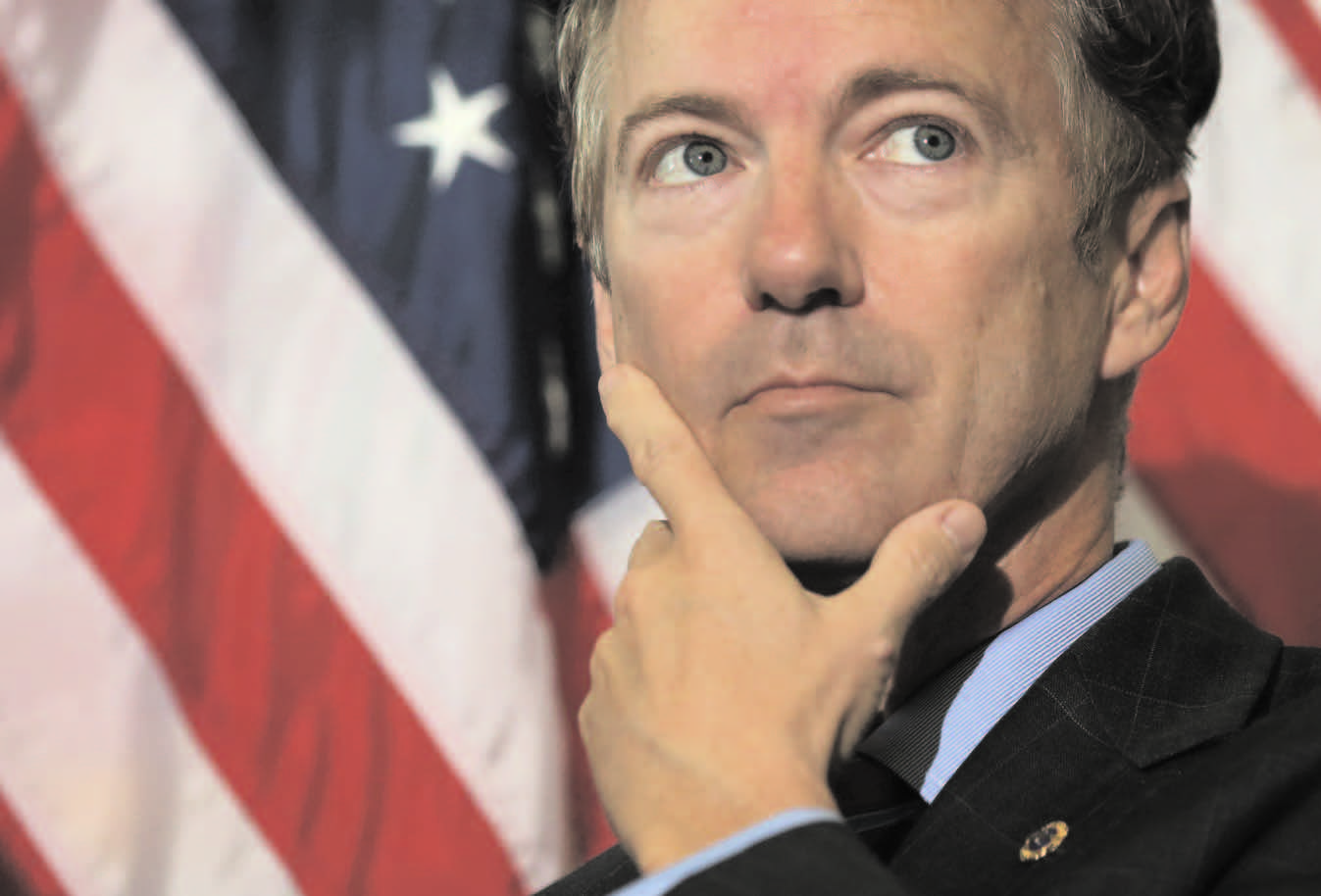
    WASHINGTON (TIP): Senator Rand Paul, a possible Republican presidential candidate, sued the Obama administration on February 12 over the National Security Agency’s mass collection of millions of Americans’ phone records. The senator said he and the conservative activist group FreedomWorks filed the suit for themselves and on behalf of “everyone in America that has a phone”.

    The lawsuit argues that the bulk collection program that’s been in existence since 2006 violates the US Constitution’s Fourth Amendment right against unreasonable searches. It calls for an end to the program, which was revealed by former National Security Agency analyst Edward Snowden. The Obama administration maintains that the program, begun under President George W Bush, is legal. Courts have largely sided with the government.

    President Barack Obama has called for reforms to the program in an effort to regain public trust. Others, like Paul, have called for the end of this kind of surveillance. Paul dodged a question about his presidential ambitions during a news conference on Wednesday. But his lawsuit is the latest effort to propel the debate over the once-secret surveillance program into the 2016 presidential campaign. The surveillance debate has exposed intra-party tensions for Republicans. The party split on this issue between its leadership, which backs the program on security grounds, and libertarianminded members who are more wary of government involvement in Americans’ private lives.

    The Republican National Committee, last month, approved a resolution to end the surveillance programs. While some Republicans played down its significance, the nonbinding vote was seen as a nod to Republicans like Paul. The White House and justice department did not comment on the lawsuit specifically, but said they believe the bulk collection of phone records is legal. “This, we believe, will be a historic lawsuit,” Paul said after filing the complaint in US district court in the District of Columbia.

    “We believe that this lawsuit could conceivably represent hundreds of millions of people who have phone lines in this country or cellphones.” Ken Cuccinelli, the former attorney general of Virginia, is the lead counsel for Paul and FreedomWorks on the suit. Paul appeared at campaign rallies last October to support Cuccinelli’s unsuccessful bid for Virginia governor. In December, Paul’s advisers approached Cuccinelli about participating in the lawsuit. “This is a constitutional challenge primarily,” Cuccinelli told The Associated Press.

    “We’re not debating national security policy.” Cuccinelli has sued the Obama administration before — he was the first state attorney general to mount a legal challenge to the constitutionality of the president’s signature health care overhaul. The bulk collection program, which is authorized in Section 215 of the USA Patriot Act, sweeps up what’s known as metadata for every phone call made in the US. It collects the number called, the number from which the call is made and the duration and time of the call. The intelligence community says having this data is key to preventing terrorism.

    While there is little evidence the program has been integral in preventing an attack, the Obama administration argues that being able to rule out a US connection is important because it provides “peace of mind”. Paul’s suit cites arguments made in another lawsuit filed last year by conservative lawyer Larry Klayman. In response to Klayman’s suit, US district court judge Richard Leon ruled that the bulk collection program was likely unconstitutional. It was the first time a judge did not side with the government on the issue. Paul’s lawsuit was filed against Obama; director of national intelligence James Clapper; NSA director Keith Alexander; and FBI director James Comey.

  • ITALY, US ARREST 24 IN MOB DRUG SMUGGLING CASE

    ITALY, US ARREST 24 IN MOB DRUG SMUGGLING CASE

    NEW YORK (TIP): Reputed mobsters in New York City and Italy joined forces in a failed conspiracy to smuggle large amounts of heroin and cocaine, with one suspect suggesting that the drugs could be concealed in frozen fish bound for an Italian port, authorities said.

    Law enforcement officials on both sides of the Atlantic Ocean said yesterday the scheme involved Italy’s powerful ‘ndrangheta organised crime syndicate and New York’s Gambino organised crime family. A sting operation resulted in 24 arrests, 17 in Italy and seven in New York. The investigation targeted a new cocaine trafficking route from South America to the southern Italian port of Gioia Tauro, Italian anti-Mafia police said.

    In exchange, the Italians were to provide heroin to the American market. Officials, using wiretaps and an undercover agent who infiltrated the Brooklyn-based mob, said they thwarted the delivery to Italy of about 500 kilogrammes of pure cocaine that was to have been hidden in shipments of canned coconuts, pineapples and frozen fish being shipped from Guyana to Gioia Tauro. The plot unfolded in 2012, when one of the ‘ndrangheta suspects visited his son-in-law, Franco Lupoi, in Brooklyn.

    The father-inlaw claimed he knew a corrupt customs agent in Italy who “would guarantee the safe arrival of container ships containing contraband,” court papers filed in New York said. In a recorded meeting with the undercover agent, Lupoi later explained that he could have cocaine packed into fish and frozen, saying “it takes a day to defrost and then it takes a day to take out,” the court papers said. The papers also accuse Lupoi of travelling to Italy, where he sold the undercover more than 1 kilogramme of heroin that he believed the undercover planned to smuggle back to the United States for resale, the papers said.

  • Congress extends US borrowing authority until 2015

    Congress extends US borrowing authority until 2015

    WASHINGTON: Lawmakers approved a 13-month extension of US borrowing authority with no strings attached on February 12, shelving a fractious political debate over the nation’s debt ceiling until after November’s mid-term elections. With last-minute help from Republican leaders to overcome a blocking effort, the Senate passed the legislation 55-43, marking a dramatic victory for President Barack Obama, who had demanded a debt ceiling hike with no political riders or other legislation attached.

    The measure, which cleared the House of Representatives Tuesday, now goes to the White House for Obama’s signature. An uncomplicated extension of borrowing authority without other conditions would mark a shift away from recent confrontations that brought the world’s largest economy to the brink of default, culminating in the US government being shuttered for 16 days in October. It could also avoid the turmoil that rocked US and international markets during the previous debt limit fights.

    But the bill was nearly torpedoed in a tense procedural vote minutes earlier, when the Senate’s Republican leaders struggled to help muster the 60 votes necessary to overcome a blocking tactic known as a filibuster from fiscal conservatives within their ranks. By the end of an unusually long vote that lasted a full hour, 12 Republicans joined all Democrats to advance the bill. However, no Republicans backed its final passage, which required a simple majority in the 100-seat chamber.

    “What needed to get done, got done,” said Senator Bob Corker, one of the dozen Republicans who helped move the bill forward. “At the end of the day there was no stated outcome by any way other than a clean debt ceiling.” US debt stands at $17.3 trillion, and the Treasury estimates it would exhaust borrowing capacity on February 27 without new authority. With Congress fleeing Washington early to avoid a looming snow storm, and a recess scheduled for next week, lawmakers had precious few legislative days to reach a solution before the deadline. Corker said he and other Republicans had to swallow the bitter pill of allowing a debt ceiling bill to move ahead without any federal spending cuts attached.

    In recent years, Republicans led by House Speaker John Boehner have sought to link debt ceiling hikes to measures that slashed spending. But with House conservatives recoiling from various sweeteners floated by Boehner in recent weeks, and party leadership loathe to be blamed for another fiscal crisis, the speaker capitulated Tuesday and moved to raise the debt ceiling with no spending cuts attached. Several Senate Republicans knew they would need to allow the bill’s passage or risk potential fiscal chaos. “We can put the country through two weeks of turmoil, or we can get this vote behind us,” Corker said.

    Focus back on Obamacare –
    Some Republicans, mindful of the bruising their party received when a majority of Americans blamed them for the government shutdown and other recent fiscal crises, said suspension of the debt ceiling allows them to focus on a more politically viable talking point during this year’s congressional campaigns: the disastrous rollout of the president’s health care reform law.”We think Obamacare is a very important issue,” Senator John McCain told reporters.Republicans stand united in their effort to repeal or defund the legislation that has become the president’s landmark domestic initiative. “We have an alternative, we want to push that alternative, and that’s what we want the conversation to be about.

  • US challenges India’s solar export restrictions

    US challenges India’s solar export restrictions

    WASHINGTON (TIP): The US on Tuesday, February 11 challenged the domestic content requirement of India’s solar mission, which it alleged is discriminatory and against international norms, including WTO laws, and badly affects the American domestic solar panel manufacturing industry.

    As the US trade representative, Mike Froman, announced his decision, officials argued that they have been forced to take a measure so as to protect some American 10,000 jobs in its solar industry and to have a significant pie in the second largest solar market of the world. Froman said the US has requested WTO dispute consultations with India concerning domestic content requirements in phase II of India’s Solar Mission.

    These domestic content requirements discriminate against US solar cells and modules by requiring solar power developers participating in phase II to use Indian-manufactured solar cells and modules instead of US or other imported equipment, Froman said. “These domestic content requirements discriminate against US exports by requiring solar power developers to use Indian-manufactured equipment instead of US equipment. These unfair requirements are against WTO rules, and we are standing up today for the rights of American workers and businesses,” Froman alleged.

    “We also take this action in support of the rapid global deployment of renewable energy. These types of ‘localization’ measures not only are an unfair barrier to US exports, but also raise the cost of solar energy, hindering deployment of solar energy around the world, including in India,” Froman told reporters at a news conference. He said in October 2013, India’s cabinet approved measures governing the implementation of phase II of its National Solar Mission (NSM).

    For solar projects under phase II, India is again imposing domestic content requirements, under which solar power developers must use Indianmanufactured solar cells and modules instead of US or other imported equipment. Moreover, the phase II domestic content requirements have been expanded to cover thin film technology, which was exempt from such requirements under phase I.

    As thin film currently comprises the majority of US solar product exports to India, these domestic content requirements are likely to cause even greater harm to US producers than under phase I, the top US official said. A request for consultations is the first step in the WTO dispute settlement process, and consultations are intended to help parties find a solution at this stage.

    Under WTO rules, if the matter is not resolved through consultations within 60 days of the request, the US may ask the WTO to establish a dispute settlement panel. Froman said before going public, the US has informed the Indian government officials in Delhi, Geneva and Washington. There was no initial response from India.

  • Parliament erupts in chaos, pepper spray used as MPs shame India

    Parliament erupts in chaos, pepper spray used as MPs shame India

    NEW DELHI (TIP):
    Parliament erupted in chaos on February 13 over a bill to create Telangana, with angry MPs coming to blows, pulling out a microphone and pepper spraying the chamber. Waving banners and shouting slogans, lawmakers disrupted the lower house of Parliament as the Congress-led government introduced the contentious bill to create the new state called Telangana from an area in the existing state of Andhra Pradesh.

    The chamber quickly descended into farce, as lawmakers opposed to the new state pulled out an official’s microphone and one unleashed a can of capsicum spray, prompting a rush for the exit, TV channels reported. Several lawmakers had to be taken to hospital suffering breathing problems. Small fights also took place between MPs opposed to the bill and several trying to stop the chaos and restore order, as the parliament, known for its disruptions, was adjourned, the news agency said. Parliamentary affairs minister Kamal Nath slammed the unrest as a “big blot on our parliamentary democracy”, and called for the “strongest possible” action against the offending MPs.

    “It is the most shameful day in our parliamentary history,” Nath told reporters outside the Parliament. Seventeen MPs were later suspended by the Speaker of the Lok Sabha over the unrest, which also saw several lawmakers ripping up official papers and one smashing a glass. Cabinet last week approved the controversial move to create Telangana from Andhra Pradesh, after a long and violent campaign.

    41

    Mainly tribal groups have demanded Telangana be carved out of a northern, impoverished and drought-prone part of Andhra Pradesh, which supporters say has long been neglected by succesisve state governments. But wealthier regions of Andhra Pradesh, home to IT giants including Google and Microsoft, have strongly opposed the split because they say it would create economic upheaval. Observers say plans for Telangana were made by the Congress government in hopes of winning much-needed votes in the region at the national elections in coming months.

    But they warn the move may backfire amid an intensifying political battle in Andhra Pradesh. Violent demonstrations have erupted there since Congress announced the move last July, while three federal ministers have resigned in protest. Outside the Parliament building on Thursday, ugly clashes broke out between supporters of the Telangana state and police, an AFP photographer at the scene said. Police officers were seen dragging away protesters and bundling them into buses. Congress has denied trying to seek any political advantage from splitting Andhra Pradesh, insisting it is trying to fulfil a long-standing pledge.

  • Obama to tour Japan, South Korea, Malaysia, Philippines in April

    Obama to tour Japan, South Korea, Malaysia, Philippines in April

    WASHINGTON (TIP): President Barack Obama will seek to ease questions over the staying power of his strategic shift to increasingly tense East Asia in April with stops in Japan, Malaysia, the Philippines and South Korea.

    Obama’s visits to Manila and Kuala Lumpur are intended to make up for his no-show when he cancelled a previous Asia tour in October amid domestic political strife in Washington. A subtext to his visit will be rising territorial tensions between several US allies and China, which deepened over Beijing’s recent declaration of an “air defense identification zone” in the East China Sea.

    Beijing was also angered last week when Washington stiffened its line on territorial disputes in the South China Sea, calling for it to adjust or clarify its claims. Obama’s stops in Japan and South Korea will also bolster close US alliances, at a time of aggravated political tensions between its two Northeast Asian friends. It was an open secret that Obama would call in Japan in April, to take up an invitation from Prime Minister Shinzo Abe, who took office in December 2012.

    But the decision to add South Korea to the trip came after rising pressure from Seoul and from the Asia policy community in Washington. The move also reflects a desire to signal to North Korean leader Kim Jong-Un that there are no gaps in US and South Korean resolve to counter Pyongyang’s nuclear program and belligerent rhetoric. It also indicates that Obama is keen to avoid dealing a political slight to South Korean President Park Geun-Hye that could result from a presidential visit to Tokyo and not one to Seoul.

    Relations between the two nations were severely rattled by Abe’s December visit to the Yasukuni Shrine, which honors war criminals among Japan’s war dead. Obama’s Asia itinerary also includes one noticeable exception — a stop in China. But he is expected to return to the region later in the year for regional summits in Australia, Beijing and Myanmar.

    The White House said in a statement that Obama’s April trip will highlight his “ongoing commitment to increase US diplomatic, economic and security engagement with countries in the Asia- Pacific region.” He is certain to try to push negotiations on a vast Trans-Pacific Partnership free trade pact that would include 12 nations, and is seen by some observers as an attempt to meet the economic challenge of a rising China.

  • India-US talks may resume in March

    India-US talks may resume in March

    WASHINGTON (TIP): The India-US dialogue, which was marred by the row over the arrest of diplomat Devyani Khobragade, is likely to get back on track by March. US energy secretary Ernest Moniz will be on a two-day visit to India for the energy security dialogue from March 10.

    The trip ran into rough weather in December last year in the aftermath of Khobrgade’s arrest. India is keen on US help in exploring shale gas in the country. New Delhi is keen getting on US technology in the shale gas resource assessments as well as sharing lessons on its exploitation, officials pointed out.

    The other ongoing cooperation in the energy sector between the two nations include in the areas of electrical grid cooperation, energy efficiency, expanding markets for renewable energy technologies and addressing barriers to clean energy deployment, clean coal technology development, and civil nuclear energy. Meanwhile, the US continues to have reservations about India’s nuclear liability law and the slow progress in beginning the nuclear commerce.

    Moniz’s visit will signal the bilateral calendar of events being back on track. The visit of the commissioner of the US food and drug administration, Margaret Hamburg, will be next on the agenda. “The two ministers reviewed recent developments in India-US relations. They agreed that the bilateral relationship was very important for both countries. Both sides looked forward to the early realization of the mutually-agreed calendar of bilateral exchanges,” a statement issued after the meeting between external affairs minister Salman Khurshid and US secretary of state John Kerry in Montreux, Switzerland in January had said.

  • WEAPONS OF HOUSE DISRUPTIONS

    WEAPONS OF HOUSE DISRUPTIONS

    NEW DELHI (TIP):
    The difference between the street and Parliament blurred on February 13 as pepper spray, shards of broken glass, uprooted microphones and brawls turned Lok Sabha into a battlefield between supporters and rivals of the state of Telangana.

    The vandalism saw four MPs being taken to hospital – three were later discharged – and resulted in the suspension of 16 MPs who will not be allowed to enter Lok Sabha when it meets on Monday. There were reports of “watch and ward” staff of Lok Sabha foiling what could have potentially been an incendiary protest by recovering and seizing a can of inflammable liquid from an unidentified MP.

  • US says 3.3 million have enrolled in private Obamacare coverage

    US says 3.3 million have enrolled in private Obamacare coverage

    WASHINGTON (TIP): About 3.3 million people enrolled in private Obamacare health coverage through new US healthcare marketplaces from October 1 to February 1, the Obama administration said on February 12.

    The nonpartisan Congressional Budget Office had estimated in its latest forecast last week that 6 million people would sign up for private coverage through the marketplaces by March 31, down from an earlier forecast of 7 million. But the report predicted that the program, which was delayed by early technical problems with the HealthCare.gov website last autumn, would eventually overcome the deficit, signing up 24 million people by 2017.

    Government data released on Wednesday also showed that the number of young adult enrollees aged 18 to 34 rose slightly to 25 percent of the total enrollment population. Participation among young adults could be crucial to the success of President Barack Obama’s signature healthcare law because they tend to compensate for higher risks from older or sicker policyholders who represent three-quarters of enrollees.

  • MAHARASHTRA CM AGREES TO SHUT 22 TOLL PLAZAS, RAJ THACKERAY KEEPS UP THREAT

    MAHARASHTRA CM AGREES TO SHUT 22 TOLL PLAZAS, RAJ THACKERAY KEEPS UP THREAT

    MUMBAI (TIP): MNS chief Raj Thackeray on February 13 wangled a promise from CM Prithviraj Chavan to shut down 22 toll plazas immediately and unveil a new policy before the poll model code of conduct starts in the first week of March. After several more assurances in a two-hour meeting, Thackeray said he was calling off his morcha scheduled for February 21, but kept up the heat on the government by exhorting citizens not to pay toll till the new policy. The CM admitted serious irregularities in toll collection and said a new policy awaits the cabinet’s nod.

    ST buses would be exempted from toll, he added, and offered the same hope for BEST, which could reduce fares. A comprehensive policy submitted to the government suggested several people-friendly measures like toll booths only beyond 5km from civic limits, time-bound projects, calculation of toll on road length, etc. After Feb 13 meeting, officials said other than withdrawal of 22 toll booths which are recovering less than Rs 10 crore by paying Rs 124 crore, the state is checking if it could eliminate 20-25 more toll booths by spending another Rs 350-400 crore. It would be discussed at a cabinet meeting soon. “The state can spend a maximum Rs 500-600 crore to buy back toll booths in the interest of the angry people. Around 80 major toll booths will have to be retained as buying them out would be an unaffordable burden on the state,” said a senior official.

    Thackeray offered his suggestion to the government to ease toll pain: divert the Rs 100 crore meant for a mammoth statue of Chhatrapati Shivaji in the Arabian Sea. The meeting on Thursday took place as the CM had invited Thackeray for talks at Sahyadri, the state-owned guest house at Malabar Hill, following which the MNS leader had called off a rasta roko in Mumbai on Wednesday. Thackeray was accompanied by party legislators and a battery of toll experts led by the fiesty Sanjay Shirodkar. PWD minister Chhagan Bhujbal and MSRDC minister Jaydutt Kshirsagar submitted their viewpoints on toll before Chavan spoke.

    The meeting drew disparaging comments from other parties. “This is Raj Thackeray’s face-saving exercise,” said a BJP functionary. Both the Shiv Sena and the BJP have described the entire sequence of events of the last four days as “match-fixing” between Chavan and Thackeray. Asked about the success of his party’s agitation, Thackeray said: “Anna Hazare had also written to the government against toll. But since our party’s first agitation, 65 toll booths have been shut. This means the government understands our language, and not that of Hazare’s.”

    At the meeting, Chavan unveiled some more measures to provide relief to travellers and to make toll collection more transparent. He announced exemption to ST buses from toll. “We have written to the Centre… We have fine-tuned a new formula under which the state will claim 75% share from additional toll collection, while the private contractor will get 25%. There is need for greater coordination between the public works department, the national highway authority and the Maharashtra State Road Development Corporation,” the CM said.

    The MNS delegation pointed out that the Khed-Shivapuri toll booth on the Pune-Kolhapur road had recovered toll from 19 lakh vehicles in three years and was supposed to be closed by January 26 this year. But it was still in operation. Chavan said an independent decision would be taken on booths where recovery has been completed following a heavy rise in the number of vehicles. The CM asked people to come up with evidence against toll posts recovering money beyond their mandate and assured action.

    He added that future toll projects would be mandatorily based on electronic vehicle count to help decide transparently when recovery should end. Also, private toll contractors will have to acquire land to set up user facilities along the state highways. Toll expert Shirodkar suggested measures like traffic sampling, internal audit and linking toll with the wholesale price index to streamline toll collection.

  • Afghanistan releases 65 ‘insurgents’ despite US protests: Officials

    Afghanistan releases 65 ‘insurgents’ despite US protests: Officials

    KABUL (TIP): Afghanistan released 65 alleged Taliban fighters from jail on Thursday despite condemnation from the United States, which says the men could return to the battlefield to launch strikes against NATO and Afghan forces.

    The release of detainees from Bagram prison is set to worsen the increasingly-bitter relationship between Kabul and Washington as USled troops prepare to withdraw after 13 years fighting the Islamist militants. “The 65 prisoners were freed and walked out of the Bagram prison compound this morning,” Abdul Shukor Dadras, a member of the Afghan government review body, told AFP.

    Ahead of the planned release, the US military said that the men were “dangerous individuals” directly linked to attacks killing or wounding 32 NATO personnel and 23 Afghans. But President Hamid Karzai has called the prison a “Taliban-producing factory” and alleged that some detainees were tortured into hating their country.

    Lieutenant general Ghulam Farouq, head of the military police that runs the Bagram prison, confirmed that the men had been released. “They walked out of the facility and got into cars and headed off to their homes,” he told AFP. “We freed them and it’s up to them how they left. We didn’t prepare transport for them.”

  • After floods, 160kmph gales lash Britain

    After floods, 160kmph gales lash Britain

    LONDON (TIP):
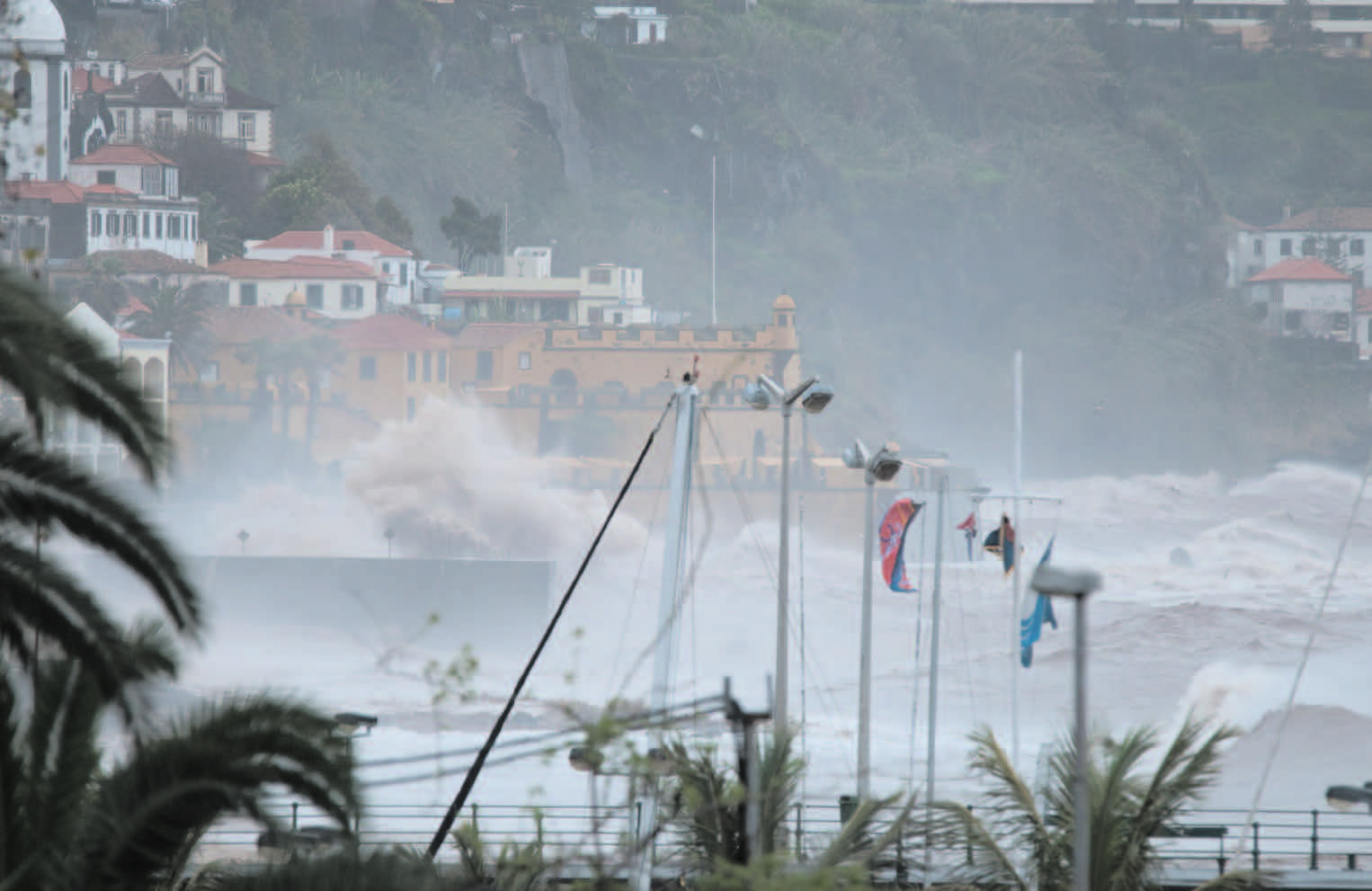
    Britain has announced a “red warning” – informing public and emergency responders of “severe or hazardous weather which has the potential to cause danger to life or widespread disruption”. Large sections of the country are flooded and the Met Office on Wednesday announced that winds to over 100mph have been recorded as a huge storm batters the UK. Over 16 fresh flood warnings have already been issued for Berkshire, Surrey and Somerset. The Met Office said a wind gust of 108mph was recorded at Aberdaron, North Wales – the strongest in recent storms. The Met Office said, “Winds of this strength can cause widespread structural damage, bringing down trees and also leading to loss of power supplies.”

    They advised people to change their travel plans during the storm-force winds. Strong winds have left 21,000 people without power. The Environment Agency warned that the Thames was set to rise in places to its highest levels in more than 60 years causing severe disruption to communities in Windsor, Maidenhead and Surrey. The Environment agency said, “Windsor, Maidenhead and communities in Surrey are warned to expect severe disruption as Thames is expected to rise in places to highest levels for over 60 years. With further rainfall forecast for today and on Friday and Saturday, the risk of flooding is likely to increase over the next few days.

    There are currently 14 severe flood warnings in force for the Thames Valley area.” “Around 50 homes along the Thames Valley were flooded overnight bringing the total number of homes flooded since Friday 29 January to 1,135. During this time over 181,000 homes have been protected and over 200,000 homes have been sent a flood warning following the wettest January since 1766,” it added. Prime Minister David Cameron announced a comprehensive package of new measures to help businesses and farmers hit hard by the deadly floods.

    The measures include £5,000 repair and renew grant for all affected homeowners and businesses, 100% business rate relief for 3 months for all businesses affected by the flooding, £10 million fund for farmers suffering water-logged fields to help restore it to farmable land as quickly as possible and a total commitment in excess of £750 million from the major banks to provide financial support to business and individual customers affected by the floods.

    The PM toured some areas most affected by floods and storm damage. British environment minister Eric Pickles said December saw the highest surge on the East Coast for 60 years while January has been the wettest since George III was on the throne. “There is damage to transport infrastructure and sea defences, including the railway line at Dawlish, as well as to power networks,” he said.

    John Curtin from the Environment Agency said, “Following the wettest January on record for England successive bands of heavy rain are forecast, lasting into the weekend. With further river and coastal flooding expected this week we have teams working around the clock to protect homes and communities and over 122,600 properties have been protected over the past three days.”

  • Nepalese party refuses to join ruling coalition

    Nepalese party refuses to join ruling coalition

    KATHMANDU (TIP): A day after Nepal got its new democratically elected prime minister, differences between two biggest political parties have surfaced over allocation of ministerial portfolios.

    The Communist Party of Nepal (Unified Marxist- Leninist), the main backer of Nepali Congress’s Sushil Koirala, 74, as prime minister, announced on Tuesday it would not join the government if it was not given powerful home ministry and deputy prime ministership. Following a meeting of the party’s standing committee, CPN-UML secretary Bishnu Poudel said his party would not join the government unless the portfolios were given to them as agreed earlier.

    There had been a seven-point agreement between the two parties on Sunday after which the CPN-UML agreed to support Koirala. With 196 seats in the 601- member parliament, Nepali Congress had to get the support of CPN-UML to form the government. In a parliamentary vote on Monday, Koirala got 405 votes. Although ministerial portfolio allocation was not one of the points of the agreement, the CPN-UML maintains there had been a verbal agreement over the home ministry.

    Nepali Congress general secretary Prakash Man Singh said there had been no such agreement. “The negotiating team from the two parties had given this responsibility to the top leaders.” He said talks will continue. “We will try to have them join the government.” Koirala was sworn in as prime minister on Tuesday with only Ram Sharan Mahat of Nepali Congress joining him in the cabinet without portfolio.

  • Cannibal restaurant ‘with roasted human heads on the menu’ shut down by police

    Cannibal restaurant ‘with roasted human heads on the menu’ shut down by police

    CANNIBAL (TIP): Police arrested 11 people and closed a restaurant after two human heads wrapped in cellophane were discovered at a hotel restaurant that had been serving human flesh. A tip-off led police to the macabre discovery in Anambra, Nigeria, with 11 people being arrested and AK- 47 guns and other weapons being seized. Human flesh was apparently being sold as an expensive treat at the restaurant, with authorities saying that roasted human head was even on the menu.

    “I went to the hotel early this year, after eating, I was told that a lump of meat was being sold at N700, I was surprised,” a pastor who had visited the eatery said. “So I did not know it was human meat that I ate at such expensive price. “What is this country turning into? Can you imagine people selling human flesh as meat,” he added.

    “Seriously I’m beginning to fear people in this part of the world. ” Another local added to the Osun Defender newspaper: “I always noticed funny movements in and out of the hotel; dirty people with dirty characters always come into the hotel. “So, I was not surprised when the police made this discovery in the early hours of yesterday.” The tabloid reported that two army caps, 40 rounds of live ammunition and ‘so many cell phones’ were also discovered by authorities.

  • Hamid Karzai will not sign security agreement: US spy chief

    Hamid Karzai will not sign security agreement: US spy chief

    WASHINGTON (TIP): The US intelligence chief said on February 11 he does not expect Afghan President Hamid Karzai to sign a security agreement with the United States that would allow American troops to stay after 2014.

    Washington has repeatedly appealed to Karzai to sign the bilateral security agreement (BSA) negotiated last year but James Clapper, director of national intelligence, said he had given up hope that the Afghan president would endorse the deal. “Well, obviously, it takes two to sign this,” Clapper told the Senate Armed Services Committee.

    “And it’s my own view, not necessarily company policy, …I don’t believe President Karzai is going to sign it,” he said. His comments were the most explicit yet by a senior US official acknowledging the bleak prospects of Karzai backing the agreement. Senator Carl Levin, chairman of the committee, asked Clapper if it would be better for the US government to wait for the next Afghan president to sign the deal after the country’s April elections.

    Clapper said that would be a policy decision and not up to him but he said such a move could “have a salutary effect.” The United States favors leaving about 10,000 troops in Afghanistan after this year to help train Afghan forces and counter al-Qaida militants and its allies.

    The delay in signing the security agreement, which would set up a legal framework for foreign troops to stay post-2014, has created uncertainty and undermined confidence among Afghans, Clapper said. “The effect already of the delay has been negative in terms of the impact on the economy, not to mention I think the psychological impact,” he said. Worries about whether NATO-led forces will remain in the country have triggered negative trends in the economy,

  • Spain migrant drowning toll rises to 11

    Spain migrant drowning toll rises to 11

    MADRID (TIP):
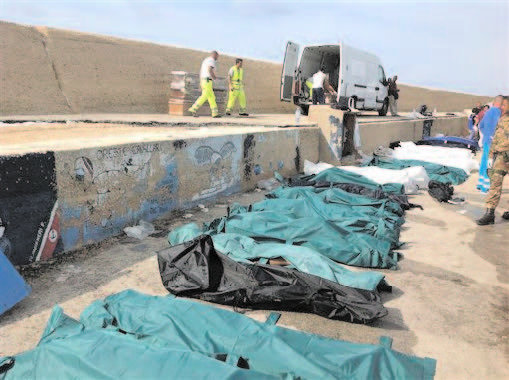
    Police found the body of a migrant on a beach in Ceuta on February 12, bringing to 11 the number of people who drowned trying to swim to the Spanish territory from Morocco, an official said. Officers discovered the body of a man in his twenties at Ceuta’s Tarajal beach, a spokesman for the Spanish government’s delegation in the territory said. He is one of hundreds of sub- Saharan African migrants who tried to enter Ceuta on Thursday by swimming from a beach in neighbouring Morocco, the spokesman added. “The body was found this afternoon, it was washed ashore by the currents.

    Police have been combing the beach since Thursday’s events,” the official said. Interior Minister Jorge Fernandez Diaz will appear before parliament on Thursday to discuss the deaths after rights groups and Spanish media cited migrants who alleged that police fired into the sea where they were swimming.Spanish authorities said civil guards in Ceuta used rubber bullets to ward off the migrants but that they fired them in the air and did not target anyone directly.

    The director general of the civil guards, Arsenio Fernandez de Mesa, defended the force during a visit to Ceuta, telling reporters that officers had acted “impeccably”.”I have asked them to continue the same way to maintain law and order, to contain the flood of people exploited by criminal gangs that try to defeat the rule of law, and to guarantee security inside national territory,” he added after meeting with civil guards in Ceuta. He said the civil guards would take legal action against anyone who “has insulted, slandered or made false allegations regarding the events of the last few days.

    “Hundreds of people demonstrated in Madrid and other Spanish cities on Wednesday evening in outrage at the deaths. In the capital, protesters held a banner reading: “No more deaths at the borders” and shouted: “They didn’t drown, they were murdered.” “The government should apologise because they did nothing to help” the migrants, one demonstrator, Paula Madinabeitia, an 18-year-old student, told mediapersons. The bodies of eight men and a woman were found on a beach in Morocco near Ceuta on Thursday. Spanish police found the body of another man on a beach in Ceuta on Saturday.Morocco, under pressure from Spain, is trying to stem a stream of sub- Saharan African migrants, who head to its northern shores in a desperate quest to reach mainland Europe.

  • Militants kill nine anti-Taliban militia in Pakistan

    Militants kill nine anti-Taliban militia in Pakistan

    PESHAWAR (TIP): Pakistani police have said that militants have killed nine members of an anti-Taliban militia in the northwestern city of Peshawar.

    Police official Jamal Khan said some 25 militants attacked the militia chief’s house on the city outskirts on Wednesday, killing him and eight of his relatives. He said that on February 1, the militants killed the chief’s son and two other people after they shot dead a militant commander.

    February 12 incident comes a day after assailants threw hand grenades inside a cinema in the city, killing 13 people. No one claimed responsibility for either attack. Pakistani Taliban have been waging a bloody war against the government in a bid to overthrow it and enforce their hard brand of Islamic Shariah.