Month: March 2014

  • Indian expats in Saudi Arabia demand online voting rights

    Indian expats in Saudi Arabia demand online voting rights

    DUBAI (TIP): Expatriate Indians in Saudi Arabia have demanded that the Indian authorities facilitate online voting for them through biometric system in the general elections due next month.

    Although non-resident Indians (NRIs) have been permitted to register online and granted the right to vote in the elections, the registered voters can only exercise their franchise by being present in their respective constituencies in India.However, millions of NRIs continue to demand online voting rights as most consider it impractical to travel and spend money just for voting.

    Zubair Siddique, a resident of Jeddah, a coast city in western Saudi Arabia, regrets not being able to participate in the elections for the last 15 years. “I am never able to travel back home due to my hectic work schedule. I was hoping that the government would at least consider online voting this year,” Arab News quoted Siddique as saying Wednesday.

    At 2.8 million, Indians account for the largest expatriate community in Saudi Arabia.At least 65 per cent of expatriate Indians in that Gulf nation come from the south Indian state of Kerala. The state boasts of near-full literacy and hence, awareness of general affairs among its expatriate community is broad. Faiz Ahmed Kidawi, India’s consul-general in the Saudi city of Jeddah, welcomed the idea of online voting.

    But he is of the view that such a facility should only be implemented after a proper system and precautions are put in place by the Indian government. Ahmed Naseem, an Indian expatriate based in Saudi Arabia’s capital Riyadh, observed that several countries have implemented online voting and that India was still lagging behind.Naseem wondered why the government was not able to solve the NRI voting issue, despite spending huge amounts of money on the Pravasi Bharatiya Divas, annual conclave of the Indian diaspora to keep overseas Indians connected to their home country.

  • Indian Americans ensure a full house at FICCI FRAMES 2014 in Mumbai

    Indian Americans ensure a full house at FICCI FRAMES 2014 in Mumbai

    The 15th Annual FICCI FRAMES conference on the Media & Entertainment (M&E) industry is back at the Rennaissance Hotel & Convention Centre situated on the picturesque Powai Lake in Mumbai. It’s Wednesday, March 12th 2014; Day 1 of the event, and the Indian American community is here again in full strength; veterans from the media business, aspirants in the field of entertainment, panelists, delegates, you name it, the conference has them all.

    About FICCI FRAMES 2014
    FICCI FRAMES is Asia’s largest global conference on the business of Media and Entertainment. Spanning three days, the conference covers the entire spectrum of the M&E industry, with back-to-back presentation sessions, panel discussions & master-classes focused on microspecializations such as film, television, radio, print, internet/digital media, animation and gaming among others. This highly-anticipated & most-respected industry event currently draws over 2,500 participants from all over the world, with India & USA together accounting for over 80% of the attendees.

    The list of known names at the conference reads like a virtual Who’s Who of the global M&E industry. Attendees get to rub shoulders and interact one-on-one with top achievers in the business; for 2014, the list of presenters & panelists boasts (in alphabetical order of first name) Abhay Deol, Abhishek Bachchan, Anupam Kher, Arnab Goswami, Ajit Pai, Andy Paterson, Collin Burrows, Farhan Akhtar, Guneet Monga, Hiromichi Masuda, Javed Akhtar, Jim Egan, Kajol, Kazutaka Akimoto, Kirron Kher, Lakshmi Praturi, Mark Eyers, Michael Best, Nancy Silberkleit, Priyanka Chopra, Punit Goenka, Rajeev Masand, Rakeysh Omprakash Mehra, Ramesh Sippy, Roger Fisk, Sanjay Gupta, Shanker Tucker, Siddharth Roy Kapur, Sonam Kapoor, Shaan, Sudhanshu Vats, Sudhir Mishra, Stuart Haskayne, Stuart Sender, Uday Shankar and Vikram Chandra, to name a few.

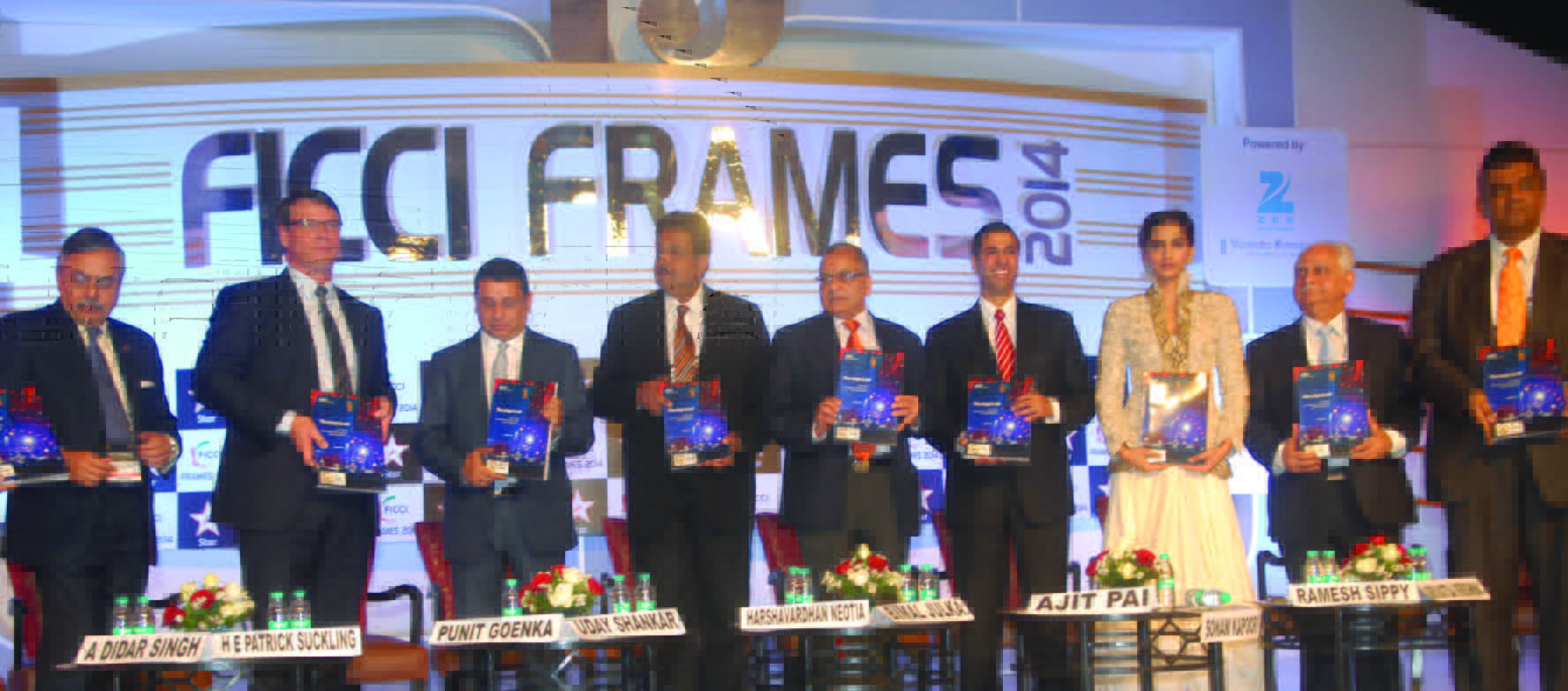
    Day 1 of the event saw the inauguration by actress Sonam Kapoor lighting the ceremonial lamp. This was followed by the welcome address from Harshavardhan Neotia, Vice President, FICCI. Harshvardhan highlighted critical developments within the M&E industry over the past 15 years. He spoke about the digitization of cable television, privatization of FM radio, clarifications in GST, introduction of a single window clearance system and future trends such as FDI in media, the mobile internet and simplification of policies. He ended his address by emphasizing the role of media in corporate governance and social responsibility. This was followed by opening remarks from Uday Shankar, Chairman, FICCI and also CEO, Star India.

    He discussed the role of government in the industry. Uday stated that government and the media needed to work together to sustain the vibrancy of the industry. He stressed that media’s role has evolved from mere reporting to seeking accountability & transparency from elected office-bearers of the nation. He also touched upon obstacles faced by the media when it published or broadcast coverage critical of the government of the day. He ended with the hope that the new government elected in May 2014 would look at media as a partner and not as an adversary. Punit Goenka, CEO, Zee Entertainment delivered the theme address next. He was followed by the vision statement from Bimal Julka, Secretary, Ministry of Information & Broadcasting.

    Bimal dwelt on the importance of censorship in the Indian media. Srivatsa Krishna, Secretary, Government of Karnataka (partner state for FRAMES 2014) was next; he emphasized the various initiatives being undertaken by his government in the field of media & entertainment. Finally, it was the turn of Ajit Pai, the dynamic young Commissioner of the FCC, USA (Federal Communications Commission). A second-generation Indian American, he shared insights about the role of FCC in America and the way in which the American government facilitates innovation within the M&E industry. He provided instances of successful partnerships between the government and key players from within the private sector in USA, which helps in enabling worldclass infrastructure for the industry. His address was very well-received by the audience.

    The FCC is an independent agency of the United States government, created by Congressional statute to regulate interstate and international communications by radio, television, wire, satellite, and cable in all 50 states, DC and US territories. The FICCI-KPMG 2014 report on the Indian Media & Entertainment industry was officially released after Ajit’s address; the highlight of this report is the growth registered by various disciplines within the industry. This inaugural session was followed by a series of presentations, panel discussions & master-classes. Detailed coverage of these sessions along with interviews of key presenters & panelists will be provided at the end of the conference.

    The list of media corporations at this year’s convention includes Archie Comics, BBC, Bloomberg, CNN IBN, Discovery Networks, Disney India, Fox Star Studios, Google, India Today, INK Salon, Microsoft, NBA, NDTV, Reliance Entertainment, Sony, Star India, Shochiku (Japan), Times Now, Turner International, TV France, Viacom18 and Zee Entertainment. The convention also features government bodies or political organizations such as the Australian High Commission (partner country for FRAMES 2014), BJP, CBFC, FCC (USA), INC, Ministry of Information & Broadcasting (India) and Obama’s Presidential Campaign Team for 2008 & 2012. Finally, there are a number of M&Ecentric corporations with booths at the event, looking to showcase a wide range of industry tools & accessories such as filmmaking & broadcasting equipment, studio apparatus, animation tools, software solutions & related technology.

    About FICCI
    Established in 1927, FICCI (Federation of Indian Chambers of Commerce & Industry) is the largest and oldest apex business organization in India. FICCI’s history is closely interwoven with India’s struggle for independence and subsequent emergence as one of the most rapidly growing economies globally. FICCI plays a leading role in policy debates that are at the forefront of social, economic and political change. A non-government, not-for-profit organization, FICCI is viewed as one of the major voices of India’s business and industry.

    It works closely with the government on policy issues, enhancing efficiency, competitiveness and expanding business opportunities for industry through a range of specialized services and global linkages. Partnerships with countries across the world carry forward it’s initiatives in inclusive development, which encompass critical issues such as health, education, livelihood, governance & skill development. Through its dedicated team of over 400 professionals, FICCI is active in 38 sectors of the global economy. FICCI’s stand on policy issues is sought out by think tanks, governments across the world and academia; it has joint business councils with 79 nations.

    Its publications are widely read for their in-depth research and policy prescriptions. FICCI’S Entertainment Division serves as the vital link between the Media & Entertainment industry, the Ministry for Information & Broadcasting (India) and global players. In addition to organizing FICCI FRAMES annually, this division conducts & releases pioneering studies related to the industry, assists in policy decisions and helps in scaling up the industry through various initiatives. The division is currently headed by Uday Shankar (Chairman) and Ramesh Sippy (Co-chairman).

  • NDA TO GAIN 61 SEATS IN 12 STATES: POLL

    NDA TO GAIN 61 SEATS IN 12 STATES: POLL

    NEW DELHI (TIP): The BJP and NDA will gain handsomely across several states in the north, west, east and south of India, while the Congress and UPA will face major losses in these states, according to an opinion poll done for a TV channel. NDTV released the findings of its poll, conducted by Hansa Research, from 12 states accounting for a total of 319 seats on March 13.

    It predicted that the NDA would win 166 seats, gaining 61 seats in these states in the 2014 polls. In contrast, the UPA will see its tally halved from 104 to 52. While most of the findings are in line with predictions by other polls, what could come as a rude shock for the Congress is the estimate that even in Karnataka, where the party was hoping to make some gains vis-a-vis 2009, it is the BJP that will gain a seat.

    The states for which the findings were released on Thursday were Maharashtra, West Bengal, Bihar, Tamil Nadu, Madhya Pradesh, Karnataka, Gujarat, Rajasthan, Jharkhand, Chhattisgarh, Haryana and Delhi. The BJP and NDA, according to the polls, would make the biggest gains in Rajasthan, where the party would win 19 seats and Congress a mere five, in a near-complete reversal of the 2009 position. In Maharashtra too, the Sena- BJP alliance is set to win 33 of the state’s 48 seats, gaining 13, while the Congress- NCP combine UPA would win just 12, a loss of 13. In Bihar, the BJP-LJP alliance would pick up 23 of the state’s 40 seats and the RJD-Congress combine 11, leaving the ruling JD(U) picking up the crumbs, according to the poll.


    27

    The BJP or NDA would make relatively more modest gains in Madhya Pradesh, Gujarat, Haryana, Delhi and Bihar, while the UPA would make some small gains in Bihar, Chhattisgarh and Jharkhand, the poll predicted. In West Bengal and Tamil Nadu, the battle predictably is likely to remain between parties that are part of neither of the two big coalitions. In West Bengal, the poll suggested that the Trinamool Congress would win 32 seats, a gain of 13 from 2009, and the Left 9 (a loss of six), leaving just one seat for the Congress, which had won 6 last time. In Tamil Nadu, AIADMK was predicted to win 27 seats, up 18 from 2009, and the DMK 10, down eight, leaving just two seats for “others” to win. In Delhi, the poll predicted that AAP would win four seats, BJP two and Congress one.

  • HOLI: FESTIVAL OF COLORS

    HOLI: FESTIVAL OF COLORS

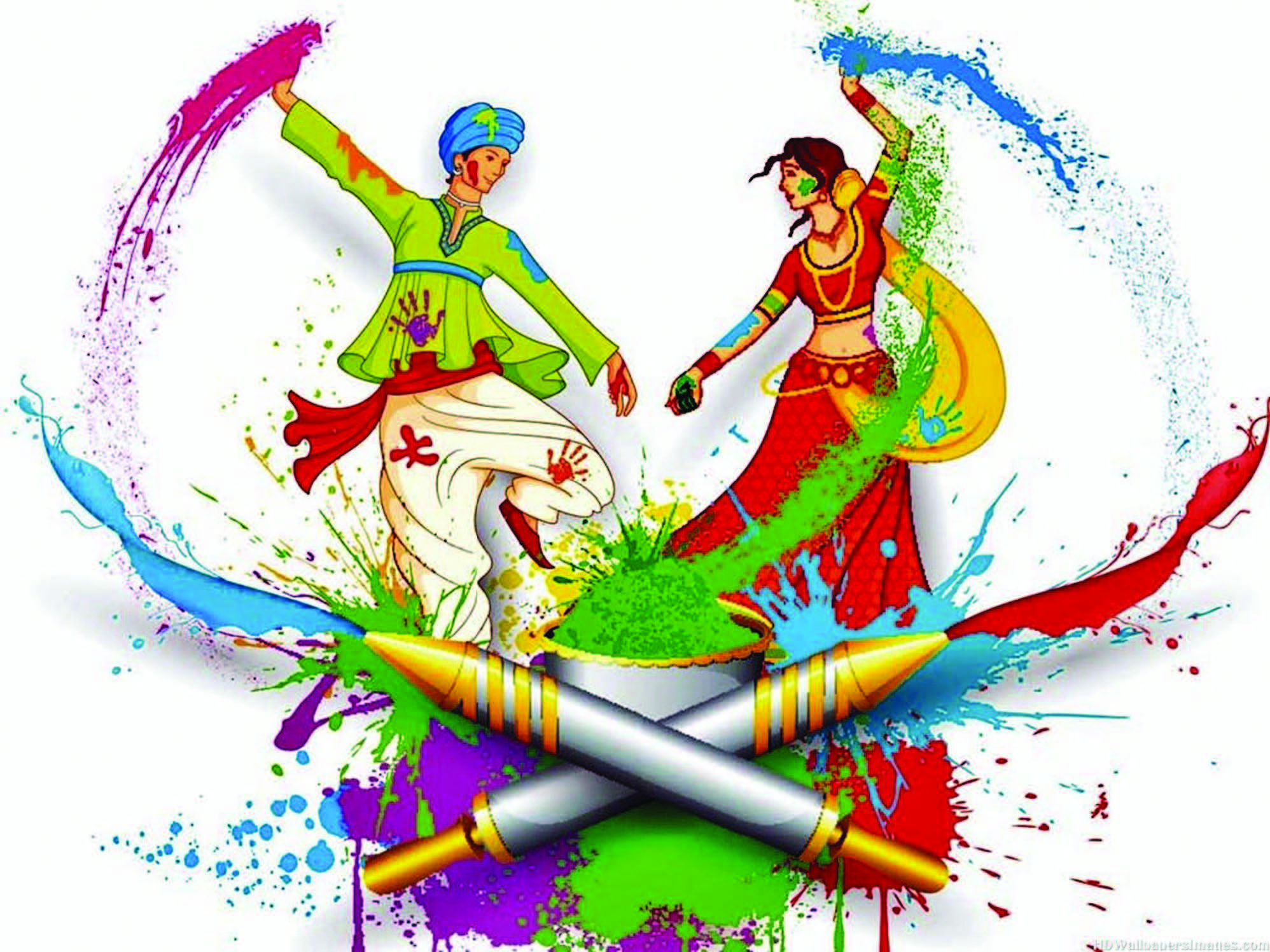
    As the brief spring warms the landscape, northern India cuts loose for a day of hijinx and general hilarity. The festival of Holi is celebrated on the day after the full moon in early March every year. Originally a festival to celebrate good harvests and fertility of the land, Holi is now a symbolic commemmoration of a legend from Hindu Mythology. The story centres around an arrogant king who resents his son Prahlada worshipping Lord Vishnu. He attempts to kill his son but fails each time. Finally, the king’s sister Holika who is said to be immune to burning, sits with the boy in a huge fire.

    However, the prince Prahlada emerges unscathed, while his aunt burns to death. Holi commemorates this event from mythology, and huge bonfires are burnt on the eve of Holi as its symbolic representation. This exuberant festival is also associated with the immortal love of Krishna and Radha, and hence, Holi is spread over 16 days in Vrindavan as well as Mathura – the two cities with which Lord Krishna shared a deep affiliation. Apart from the usual fun with coloured powder and water, Holi is marked by vibrant processions which are accompanied by folk songs, dances and a general sense of abandoned vitality. Today Holi is an excuse for Indians to shed inhibitions and caste differences for a day of spring fever and Big Fun.

    Teenagers spend the day flirting and misbehaving in the streets, adults extend the hand of peace, and everyone chases everyone else around, throwing brightly colored powder (gulal) and water over each other. The festival’s preamble begins on the night of the full moon. Bonfires are lit on street corners to cleanse the air of evil spirits and bad vibes, and to symbolize the destruction of the wicked Holika, for whom the festival was named. The following morning, the streets fill with people running, shouting, giggling and splashing. Marijuana-based bhang and thandai add to the uninhibited atmosphere.

    Promptly at noon, the craziness comes to an end and everyone heads to either the river or the bathtub, then inside to relax the day away and partake of candies. In the afternoon an exhausted and contented silence falls over India. Although Holi is observed all over the north, it’s celebrated with special joy and zest at Mathura, Vrindavan, Nandgaon, and Barsnar. These towns once housed the divine Krishna. Each area celebrates Holi differently; the Bhil tribesmen of western Madhya Pradesh, who’ve retained many of their pre-Hindu customs, celebrate holi in a unique way.

    In rural Maharashtra State, where the festival is known as Rangapanchami it is celebrated with dancing and singing. In the towns of Rajasthan, especially Jaisalmer, the music’s great, and clouds of pink, green, and turquoise powder fill the air. The grounds of Jaisalmer’s Mandir Palace are turned into chaos, with dances, folk songs, and coloredpowder confusion.

    History
    History of HoliHoli is an ancient festival of India and was originally known as ‘Holika’. The festivals finds a detailed description in early religious works such as Jaimini’s Purvamimamsa-Sutras and Kathaka-Grhya- Sutras. Historians also believe that Holi was celebrated by all Aryans but more so in the Eastern part of India. It is said that Holi existed several centuries before Christ. However, the meaning of the festival is believed to have changed over the years. Earlier it was a special rite performed by married women for the happiness and well-being of their families and the full moon (Raka) was worshiped.

    Calculating the Day of Holi
    There are two ways of reckoning a lunar month- ‘purnimanta’ and ‘amanta’. In the former, the first day starts after the full moon; and in the latter, after the new moon. Though the amanta reckoning is more common now, the purnimanta was very much in vogue in the earlier days. According to this purnimanta reckoning, Phalguna purnima was the last day of the year and the new year heralding the Vasantaritu (with spring starting from next day). Thus the full moon festival of Holika gradually became a festival of merrymaking, announcing the commencement of the spring season. This perhaps explains the other names of this festival – Vasanta-Mahotsava and Kama-Mahotsava.

    Reference in Ancient Texts and Inscriptions
    Besides having a detailed description in the Vedas and Puranas such as Narad Purana and Bhavishya Purana, the festival of Holi finds a mention in Jaimini Mimansa. A stone incription belonging to 300 BC found at Ramgarh in the province of Vindhya has mention of Holikotsav on it. King Harsha, too has mentioned about holikotsav in his work Ratnavali that was written during the 7th century. The famous Muslim tourist – Ulbaruni too has mentioned about holikotsav in his historical memories. Other Muslim writers of that period have mentioned, that holikotsav were not only celebrated by the Hindus but also by the Muslims.

    Reference in Ancient Paintings and Murals History of HoliThe festival of Holi also finds a reference in the sculptures on walls of old temples. A 16th century panel sculpted in a temple at Hampi, capital of Vijayanagar, shows a joyous scene of Holi. The painting depicts a Prince and his Princess standing amidst maids waiting with syringes or pichkaris to drench the Royal couple in coloured water. A 16th century Ahmednagar painting is on the theme of Vasanta Ragini – spring song or music. It shows a royal couple sitting on a grand swing, while maidens are playing music and spraying colors with pichkaris.

    There are a lot of other paintings and murals in the temples of medieval India which provide a pictoral description of Holi. For instance, a Mewar painting (circa 1755) shows the Maharana with his courtiers. While the ruler is bestowing gifts on some people, a merry dance is on, and in the center is a tank filled with colored water. Also, a Bundi miniature shows a king seated on a tusker and from a balcony above some damsels are showering gulal (colored powders) on him.

    Legends and Mythology
    In some parts of India, specially in Bengal and Orissa, Holi Purnima is also celebrated as the birthday of Shri Chaitanya Mahaprabhu (A.D. 1486-1533). However, the literal meaning of the word ‘Holi’ is ‘burning’. There are various legends to explain the meaning of this word, most prominent of all is the legend associated with demon king Hiranyakashyap. Hiranyakashyap wanted everybody in his kingdom to worship only him but to his great disappointment, his son, Prahlad became an ardent devotee of Lord Naarayana. Hiaranyakashyap commanded his sister, Holika to enter a blazing fire with Prahlad in her lap.

    Holika had a boon whereby she could enter fire without any damage on herself. However, she was not aware that the boon worked only when she enters the fire alone. As a result she paid a price for her sinister desires, while Prahlad was saved by the grace of the god for his extreme devotion. The festival, therefore, celebrates the victory of good over evil and also the triumph of devotion. Legend of Lord Krishna is also associated with play with colors as the Lord started the tradition of play with colours by applying colour on his beloved Radha and other gopis. Gradually, the play gained popularity with the people and became a tradition.

    Holi in Barsana
    Holi in Barsana Holi of Barsana, the birthplace of Radha, a village, 42 kms away from Mathura, is of particular interest. Here, men from Nandgaon, the land of Krishna come to play Holi with the girls of Barsana and hope of raising their flag over Shri Radhikaji’s temple. But, instead of colours they are greeted with sticks by the gopis. Hence, the Holi get its new name here- Lathmaar Holi. Smart enough, men come fully padded as they are fully aware what kind of welcome awaits them and also the fact that they are not allowed to retaliate on that day. In this mock battle of sorts, they try their best not to be captured.

    The unlucky one’s however, are forcefully led away and get a good thrashing from the women. Further, they are made to wear a female attire and dance in public. All in the spirit of Holi. Renowned poets like Surdas, Nand-das, Kumbhan-das and others have picturesquely described how Lord Krishna received similar treatment and was forced to don a sari and wear make-up and perform dance before being released by the gopies. The next day, it is the turn of men of Barsana. They reciprocate by invading Nandgaon and drench the womenfolk of Nandgaon in colours of kesudo, naturally occurring orange-red dye and palash. Today, the women of Nadagow beat the invaders from Barsana. It is a colourful site.

    However, in the interest of tourism and safety, the state tourist board has set up excellent vantage points for the public. A large open ground, on the outskirts of the town is specially set aside for the most magnificent display of the festivities. The week long Holi celebrations also continue in the various Krishna temples on different days. The celebrations are filled with clouds of colours and of course, much fun.

  • INDIA AND US TO HOLD TOP-LEVEL MEET TO BOLSTER MILITARY TIES

    INDIA AND US TO HOLD TOP-LEVEL MEET TO BOLSTER MILITARY TIES

    NEW DELHI (TIP): A 26-member delegation led by General Vincent K Brooks, commanding general of the US Army Pacific, will be in New Delhi on March 18-20 for the 18th meeting of the India-US executive steering group (ESG). The Indian delegation, in turn, will be led by director-general of military operations Lt-General P R Kumar during the talks.

    “The ESG will discuss measures to further crank up military-to-military ties through joint combat exercises, doctrinal and operational exchanges. The two armies are slated to conduct their annual Yudh Abhyas counterterrorism exercise at Chaubatia (Uttarakhand) in July- August this year,” said an official. The exercise, the last edition of which was held at Fort Bragg in the US last May, was to be held earlier this year but got delayed by a few months amid the diplomatic wrangling during the Devyani Khobragade episode.

    The expansive India-US defense cooperation over the last decade has seen the armed forces from the two countries conduct over 70 exercises, including the highend Malabar naval combat exercises. India has also invited Japan to join the Malabar war games in August- September this year, an offer which was extended during Japanese PM Shinzo Abe visit here in January. The US has already bagged defense deals close to $10 billion over the last decade in the lucrative Indian defense market, with the latest being the $1.01 billion one for six additional C-130J “Super Hercules” aircraft.

    The other deals on the anvil are the ones for 22 Apache attack helicopters, 15 Chinook heavy-lift helicopters, four P-8I maritime patrol aircraft and 145 M-777 ultra-light howitzers, together worth another $4 billion or so. Desperate to displace Russia as India’s largest defense supplier, the US is promising to treat India on par with its closest allies like the UK and Australia for providing cutting-edge military technology.

    Towards this end, the US has also managed to almost scuttle an almost-finalized over Rs 15,000 crore project with Israel to equip the over 380 infantry battalions of the Indian Army with third-generation, shoulder-fired antitank guided missiles (ATGMs). After the US initially created roadblocks in the transfer of technology (ToT) for its “Javelin” ATGMs, India had turned to the Israeli “Spike” ATGMs for the project. India is keen on an initial import of the tank-killing missiles followed by ToT to defense Public Sector Unit Bharat Dynamics for indigenous manufacture. But after the US recently offered a joint project to manufacture the next-generation of ATGMs, the Indian defense ministry says both the Israeli and American proposals are now being studied to select the better option.

  • Indian banks lost Rs 23,000 crore in fraud cases, reveals RTI

    Indian banks lost Rs 23,000 crore in fraud cases, reveals RTI

    NEW DELHI (TIP): India’s Public sector banks have cumulatively lost a massive sum of Rs. 22,743 crore due to cheating and forgery in the last three years. TIP obtained the information through Right to Information Act. Indian Overseas Bank is the worst hit with a loss of Rs. 3,200 cores as against State Bank of India (SBI) which lost Rs. 2,712 crore.

    Between April 2010 and September 2013, the number of bank fraud cases has shown a slight decrease yearly but the amount of money lost has been increasing year on year. The number of fraud cases, for instance, came down to 2996 in April 2012 to March 13, from 3748 in April 2010 to March 2011, but the amount shot up to Rs. 10179.42 crore from Rs. 3275 crore.

    The Reserve bank of India (RBI) issued detailed instructions to banks on July 2, 2012 containing details related to how banks should examine fraud cases and report them to CBI, the police and the special fraud investigation office (SFIO). Even after this, the money lost in fraud cases have increased. Interestingly, by way of comparison, Indian Overseas Bank lost more to fraud than it earned in profits. It registered a net profit of 2848 crore between 2010 and 2013 but leaked Rs. 3200 crore for the same period. For SBI, the blow was cushioned.

    It registered a profit of Rs. 39692 crore between April 2010 and September 2013. In the corresponding period, the bank lost Rs. 2712 crores to fraud. As per the documents available, more than 6000 employees of different banks are under the scanner for involvement in these cases. These are not just lower or midlevel employees, but in some cases, CMDs and directors of different banks. For Instance, in May 2013, a CBI special judge convicted M Gopalakrishnan, former Chairman-cum-Managing Director of Indian Bank, Chennai as he had sanctioned credit facilities of huge amounts to a company without sufficient securities and also by surpassing the rules of the bank.

    Analysis of cases investigated by the CBI reveal that bankers sometimes exceed their discretionary powers and give loans to unscrupulous borrowers on fake or forged documents. After getting the money, the borrower escapes causing huge loses to the banks. A senior official at SBI said the amount is a cumulative one. “In the last one year several stringent measures of checks and balances have been put in place and in the last one year the number of cases has substantially come down,” the official, who did not wish to be identified, said.

  • ‘My sons were babies when I left. Now they’re grown men with babies’: Innocent man released after 26 years on death row

    ‘My sons were babies when I left. Now they’re grown men with babies’: Innocent man released after 26 years on death row

    How do you eloquently illustrate the impact of losing nearly 30 years of your life?
    Glenn Ford, Louisiana’s longestserving death row prisoner, released today after spending nearly 30 years behind bars for a murder he did not commit, managed to neatly encapsulated his loss in a single quote: “My sons, when I left, was babies. Now they grown men with babies.”

    Interviewed by mediaperson directly after his release, dressed in a denim shirt, hat and dark-rimmed glasses, Ford, now 64, responds with remarkable good grace when asked by a reporter whether he harbors any resentment: “Yeah, because I was locked up almost 30 years for something I didn’t do.”

    “It’s resentment, not feeling bitter”.
    When asked by the same reporter what he’s lost he replies: “thirty years of my life, if not all of it. I can’t go back and do anything I should have been doing when I was 35, 38, 40 stuff like that.” Asked how it feels to be released: “My mind’s going all kinds of directions, but it feels good,” he says.

    Ford is now a free man after being on Louisiana’s death row since August 23, 1988 for the murder of Isadore Rozeman, a Shreveport jeweller and watchmaker for whom Ford did occasional yard work. Convicted by an all-white jury Ford has always denied killing Rozeman and always disputed the verdict. For decades Ford maintained his innocence and filed multiple appeals. State District Judge Ramona Emanuel on Monday took the step of voiding Ford’s conviction and sentence based on new information that corroborated his claim that he was not present or involved in Rozeman’s death, Ford’s attorneys said.

    “We are very pleased to see Glenn Ford finally exonerated, and we are particularly grateful that the prosecution and the court moved ahead so decisively to set Mr Ford free,” Gary Clements and Aaron Novod, attorneys for Ford from the Capital Post Conviction Project of Louisiana, said in a statement prior to his release. The attorneys said the trial had been “profoundly compromised by inexperienced counsel and by the unconstitutional suppression of evidence, including information from an informant.”

    Last Thursday, prosecutors filed a motion to void Ford’s conviction, saying that in late 2013 “credible evidence” came to their attention “supporting a finding that Ford was neither present at, nor a participant in, the robbery and murder of Isadore Rozeman.” There were also claims that a police report related to the time of the crime and evidence involving the murder weapon, had been suppressed. Under Louisiana law Mr Ford is now entitled to claim compensation for his time served. The state allows for an award of $25,000 (£15,000) for every year a wrongly convicted person spends in prison – up to a limit of $250,000 (£150,000), and $80,000 (£48,000) for ‘lost life opportunities’. In Mr Ford’s case this means he will receive around £7,600 for every year he spent in prison.

  • Number of Children without Health Insurance Declines, Census Bureau Reports

    Number of Children without Health Insurance Declines, Census Bureau Reports

    WASHINGTON (TIP): Between 2008 and 2012, the number of children under age 19 without health insurance declined in 1,171 counties and rose in 17, with 1,950 not having a statistically significant change, according to estimates released by the U.S. Census Bureau.

    The number of workingage adults without health insurance rose in 494 counties, declined in 269 counties and did not have a statistically significant change in 2,375 counties. These statistics come from the 2012 Small Area Health Insurance Estimates, the only source for single-year estimates of the number of people with health insurance for each of the nation’s roughly 3,140 counties.

    The statistics are provided by broad age and sex groups, and at income levels that reflect thresholds for state and federal assistance programs. Statewide estimates also break out the data by race and Hispanic origin. Nationally, according to the American Community Survey, an essential input to the health insurance estimates, the percentage of children under 19 without health insurance declined from 9.7 percent (7.5 million) in 2008 to 7.5 percent (5.8 million) in 2012, while the percentage for working-age adults rose from 19.4 percent (36.1 million) to 20.8 percent (39.8 million).

    The health insurance statistics are provided for two income categories that are relevant to recent changes in federal law. One category is families with incomes less than or equal to 138 percent of the poverty threshold. Eligibility for Medicaid was expanded earlier this year up to this threshold in participating states, i.e., those that allow Medicaid expansion. The second income category is new to the health insurance estimates this year: families with incomes between 138 percent and 400 percent of the poverty threshold. Under the law, these families can receive tax credits that will help them pay for health coverage contracted through the new health insurance exchanges. “These new statistics on health coverage by income can be used as a baseline for policymakers and researchers studying the impacts of health care policy changes at state and local levels in the future,” said Lucinda Dalzell, chief of the Census Bureau’s Small Area Estimates Branch.

    Other highlights:
    o 68.2 percent of counties in the Northeast and 36.1 percent of counties in the Midwest have uninsured rates below 12.5 percent. Compare this to the South and the West, where only 2.6 percent and 2.5 percent of counties, respectively, have an uninsured rate below 12.5 percent.
    o In every county, the uninsured rate for children under age 19 was lower than working-age adults, ages 18 to 64, except for four counties in Nevada, which saw no statistical difference.
    o For the population younger than 65 living at or below 138 percent of poverty, non-Hispanic blacks had a lower uninsured rate than non- Hispanic whites in 34 states. Hispanics had a higher uninsured rate than non-Hispanic whites for every state but Hawaii, which was not statistically different.

    The release includes a 2012 highlights document that describes demographic and economic differences in health insurance status across states and counties, as well as time trends in health insurance status. Also available is an interactive data and mapping tool. This tool allows users to create and download state and county custom tables and thematic maps for all concepts available annually for 2006 through 2012 and state health insurance coverage time trend charts. The tool is an easy way for states to evaluate their potential program participants.

    Background on the program
    The Small Area Health Insurance Estimates program models coverage by combining survey data with population estimates and administrative records. Specifically, it uses the American Community Survey, demographic population estimates, aggregated federal tax returns, participation records for the Supplemental Nutrition Assistance Program, County Business Patterns, Medicaid and the Children’s Health Insurance Program participation records, and the 2010 Census.

    American Community Survey data are essential to the production of Small Area Health Insurance Estimates. Later this year, the Census Bureau will release American Community Survey health insurance coverage estimates in three stages: first, 2013 data for counties and other areas with a population of 65,000 or more; next, similar estimates for areas with a population of 20,000 or more using data collected from 2011 to 2013; finally, statistics for all areas, regardless of size, based on American Community Survey data collected from 2009 to 2013.

  • HOLI AROUND THE WORLD

    HOLI AROUND THE WORLD

    Holi knows no bars, Holi knows no boundaries too. Across the world wherever Indians or people of Indian origin are present Holi is celebrated with gusto and bonhomie. People play with colours, light a bonfire called Holika and celebrate the victory of good over evil. Well, the essence of any festival is to take a break from the daily humdrum of life and make it interesting.

    The other major intention of celebrating festival is to bring people together and generate a feeling of brotherhood and spread harmony all around. Nobody realizes the importance of celebrating festivals than the Indians settled abroad away from their country and cultural roots. At times they are more eager to celebrate festivals than their Indian counterparts. For celebrating festivals is what binds the people of Indian origin together and also to their roots. Just as in India, people settled abroad meet their friends and exchange sweets and greetings. Of course, the revelry is no less when it comes to colours.

    Bangladesh
    Bengal region has a multifaceted culture due to the influence of Buddhist, Hindus and Muslim cultures. Though the country is Muslim dominated, Hindus too celebrate their festivals with gaiety. Of course, the pomp and show of Holi as witnessed in India is missing, nevertheless, celebrations do take place. Hindu community gather in temples and exchange greetings with each other and play with colours. Indian culture has influenced Bangladesh a lot as the country is nestled in the crook of the Bay of Bengal and is surrounded by India. It shares a border in the south-east with Myanmar and fronts onto the Bay of Bengal. The country is flat and dominated by the braided strands of the Ganges- Brahmaputra-Jamuna delta. Bangladesh’s Muslims and Hindus live in relative harmony.

    Guyana
    Located in the north-east coast of South America, Guyana celebrates Holi with great fan fair. Holi or Phagwa, as the Guyanese better know, is celebrated by the singing of special songs called Chowtaals and by the spraying of coloured powder (abrack) and water (abeer). Children take special delight in the festival and submerge any passerby with their colourful water jets called pichkaris. The season of Holi, starts a month before with the planting of the Holika, a castor oil plant.

    This plant is burnt one month later as Holika, commemorating Prahlad’s legendary devotion to Lord Shiva and also the triumph of good over evil. Holi happens to be a national holiday in Guyana as Hindus constitute about 33 per cent of the country’s population. Guyanese living overseas make special arrangement to be with the family at the time of Holi.


    11

    Mauritius
    Holi in MauritiusJust as the many other major Hindu festivals, the large Indian majority, (about 63 per cent) celebrate Holi with a lot of enthusiasm in the island of Mauritius. It is an official holiday in the country and therefore people get all the time to make merry and drench themselves in the spirit of Holi and of course, colour water. Hindus, here duly perform the tradition of Holika Dahan or lighting of bonfire on the eve of Holi and celebrate the victory of good over evil.

    Next day people revel and play with colours and drench everybody with water jets called pichkaris. While in the evening they greet each other with tilak and exchange sweets. Holi is also marked as a Spring Festival when the nature wears its best clothes and fields and flowers are in full bloom.

    Nepal
    Holi is celebrated with great pomp and show in Nepal. Celebrations lasts for a week in which the entire country gets drenched in the coloured water. Celebrations are of marked importance at Terai and also where Indian community mainly Marwaris have settled. Families and friends get together and celebrate the occasion with a lot of merry making. All over the streets people can be watched having fun, throwing colours and waterballoons, locally called ‘lolas’ on each other. Though play of colours takes place on the last day, a ceremonial pole called, ‘chir’ is installed on the first day.

    Chir is a bamboo pole fringed with strips of clothes representing good luck charms. As the pole is put up in the street at Basantapur, the festivities and worship commences for the week. At the end of the festivities chir is taken to a bonfire. There is a popular legend behind the installation of chir. The story is again about the mischievous nature of Krishna who just loved to pray pranks with the milkmaids or gopis. Playful as he was, it is said that once he seduced all the local girls with his dashing good looks. He then danced with them all and when they fully engrossed in him, then he thought they were ripe for a tease.

    He doused them in coloured water and stole all their clothes while they were bathing in the water of river Yamuna. Naughty Krishna then hung their clothes on a tree to bug them. Chir symbolizes that very tree. The other legends popular in India as that of Prahlad and his devilish father, Hiranyakashyap. Hiranyakashyap asked his sister, Holika to enter a blazing fire with Prahlad in her lap. However, Prahlad was saved for his extreme devotion by Lord Vishnu while Holika paid a price for her sinister desires.

    Every year just as in India people in Nepal light a bonfire- called Holika to mark the victory of good over evil. Also known is the legend of Pootana who tried to kill infant Krishna by feeding her poisonous milk on the direction of devil hearted uncle of Krishna called Kansa.

    Pakistan
    Hindus residing in Pakistan also celebrate holi, though, of course, in not as grand a fashion as seen in India. People celebrate the victory of good over evil forces by lighting bonfires called Holika. The tradition comes from the legend of Prahlad and Hiranyakashyap. In fact, people follow the same traditions and rituals as in India due to their roots in India. People clean their houses and prepare special delicacies like gujiyas, papri and dahi badas.

    They meet up with friends and play with the colours, dance and generally have good time. Hindus usually gather in temples and celebrate the Holi there. Much gaiety can be seen in temples located in cities which have a comparatively greater Hindu population. Such as in Lahore and Sindh region.

    United Kingdom
    Hindus settled in UK do not miss out the excitement of Holi celebrations and enjoy to the hilt. Zeal for the festival is particularly marked in this country as Indians constitute the second largest ethnic minority. Celebrating festivals help them to feel close to their families and cultural roots. The celebration of Holi is noticeable at places that witness a large congregation of Indians. The British city of Leicester is particularly known for its love for celebrating Indian festivals.

    Excitement reaches its peak when the occasion is that of celebrating a joyous festival like Holi. Children love to use their spray cans and colour each other. Holi parades are also carried and in the evening people visit their friends and relatives to exchange greetings and sweets. They hug each other and also apply the tilak as the meet Holi in a traditional manner.

    USA
    With a large population of Indians settled in the United States of America, Holi is celebrated with gaiety and lot of fanfare in this country. Different societies formed by the Indians and religious organisations help people to celebrate this joyous festival and feel close to their cultural roots. Music programmes and Holi Meets are also organised by them to mark the occasion. These meets help the new generation to identify with their cultural root.

    Children learn to understand the significance of celebrating festivals and know legends asociated with them. Great enthusiasm for the festival can be specially witnessed in cities where large number of Indians have settled. Holi celebrations are particularly marked in the city of New York.

  • Obama backs interim Ukraine PM, rebukes Putin

    Obama backs interim Ukraine PM, rebukes Putin

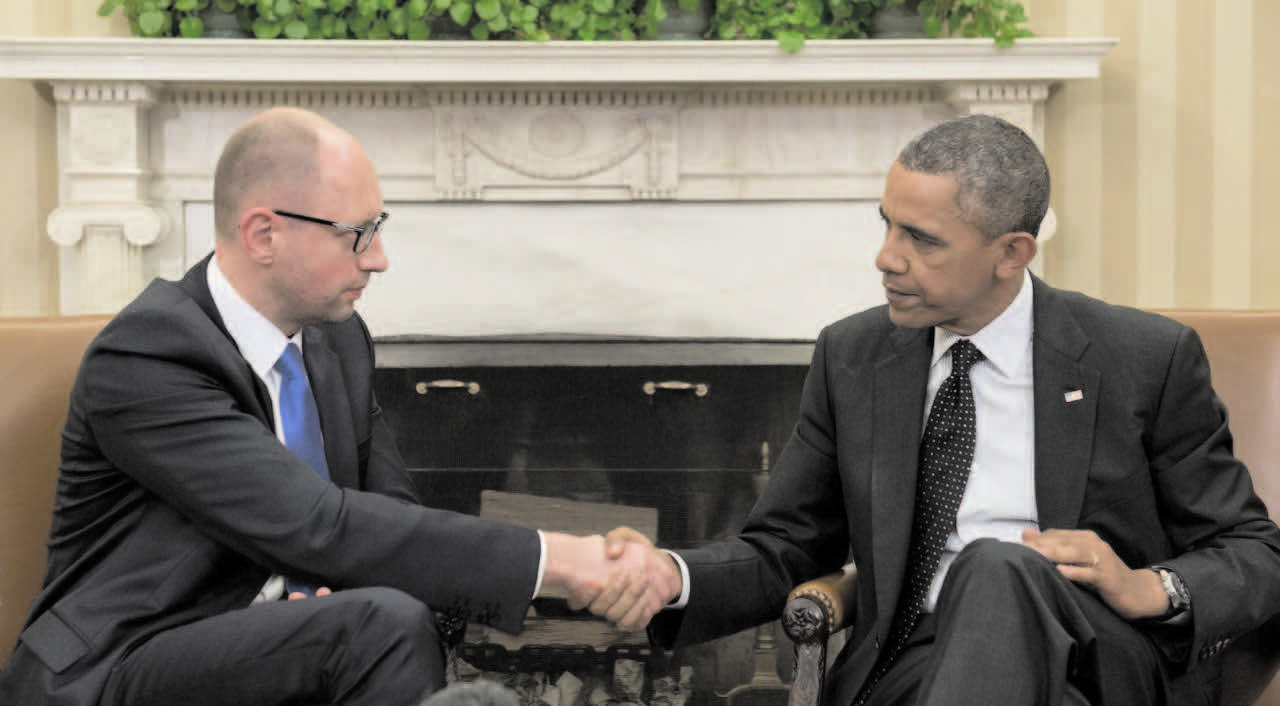
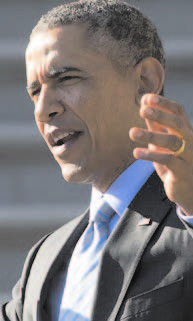
    WASHINGTON (TIP): President Barack Obama told Ukraine’s Prime Minister on March 12 that the United States would stand by his country’s defense of its sovereignty, conferring symbolic legitimacy on the Kiev government in a direct rebuke to Russia. Obama also said after meeting interim Prime Minister Arseniy Yatsenyuk that he hoped US diplomacy with Moscow over the next few days could cause a “rethinking” of plans for a secession referendum in Crimea on March 10.

    Obama said that Russia had infringed international law with its incursion into Ukraine and warned that if President Vladimir Putin did not change course, he would face “costs” from the United States and the international community, which has already threatened economic sanctions. Obama told Yatsenyuk in the Oval Office — in a visit intended to confer symbolic legitimacy on the Kiev government — that he had been impressed by the courage of the people of Ukraine during the ouster of president Viktor Yanukovych and the political turmoil that followed.

    “We have been very clear that we consider the Russian incursion into Crimea… to be a violation of international law,” Obama said. “We have been very firm in saying that we will stand with Ukraine and the Ukrainian people in ensuring that territorial integrity and sovereignty is maintained,” Obama said. Yatsenyuk told reporters in the Oval Office that Ukraine would “never surrender” in its fight for territorial integrity, but also that it wanted to be a good partner to Russia.

    Obama added that the United States would not recognize the results of the referendum in Crimea on joining Russia. He said the vote was a “patchedtogether” exercise but hinted that he hoped talks between Secretary of State John Kerry and his Russian counterpart Sergei Lavrov later this week in London could change the situation. “My hope is that as a consequence of diplomatic efforts over the next several days that there will be a rethinking of the process that has been put forward.”

  • US and India could accomplish a lot together: Obama

    US and India could accomplish a lot together: Obama

    WASHINGTON (TIP): India’s new ambassador to the United States, Dr S Jaishankar, presented his credentials to President Obama at the White House on Monday in a formal ceremony at which the American President essayed an anodyne ”the U.S and India could accomplish a lot together,” at a time New Delhi has largely fallen off Washington’s radar, in part because of India’s pre-occupation with the general elections.

    The credentialing process is a mostly ceremonial and familial occasion, but everyone watches for little signs that indicate the health of bilateral ties. From all accounts, Jaishankar, an old U.S hand, four generations of whose family has engaged Washington, got a warm welcome, with President Obama genially connecting with each member of the family and wishing them a good time in the US.

    Six other foreign envoys, including Pakistan’s new ambassador to Washington Jalil Abbas Jilani, who has also served in New Delhi, also presented their credentials. The Indian ambassador was accompanied by his wife Kyoko, and the children — daughter Medha, an executive with Reliance Entertainment, son Dhruva, a Senior Fellow with the German Marshall Fund, and his wife Cassandra, a PhD scholar at Brandeis Univeristy, and Arjun, 14.

    ”As you know, I presented my credentials to President Obama and he seems to have checked out the credentials and found it OK,” the ambassador joked to guests from the state department, Congress, and media he had invited for lunch at his home following the ceremony. ”He allowed us to have a nice photograph and we had great conversation and he mentioned that his administration looks forward to working with me.” ”This is really what makes for our relationship, and as I am formally signing on today.

    I thought the best thing to do would be to really call all the people I hope to work with for the rest of my tenure, and say, ‘I am counting on you to get my job done,” he added. On a more serious level, the ambassador’s energies in Washington, at a time when India is busy navelgazing due to elections at home, will be directed at averting punitive US trade sanctions that could welcome the new government in New Delhi.

    A powerful trade lobby in Washington led primarily by big pharma, is striving to designate India as a ”priority foreign country” under the Special 301review aimed at punishing India for inadequate intellectual property rights. The two sides are also still struggling with resolving the nitty-gritty details of the Devyani Khobragade case, while larger geo-political issues have taken a backseat. India has been conspicuously out of the loop on the Ukraine crisis, with the leadership in New Delhi not among those President Obama has phoned for discussions — a list that includes all other major powers.

  • US experts to decode baffling radar signals

    US experts to decode baffling radar signals

    SEPANG (MALAYSIA) (TIP): The authorities in Malaysia acknowledged on March 12 that they had detected radar signals showing what could be the country’s missing airliner veering sharply off course and hundreds of miles away from its last known position but failed to disclose the data for four days even as they struggled to interpret it.

    Officials said they had given the radar data to American investigators who would assist in helping to determine whether the radar blips were likely to have come from the missing Boeing 777, Malaysia Airlines Flight 370. “We are still not sure that it is the same aircraft ,” Hishammuddin Hussein, the country’s defence minister, told reporters .

    “That is why we are searching in two areas.” Malaysian officials had previously said that they had evidence that the plane had possibly attempted to “turn back,” but they had not detailed the extent of military radar records until March 12. A Malaysian newspaper article on Tuesday reported the existence of military radar data, but the air force had described that as “misreporting .”

    On Wednesday, the head of the air force, general Rodzali Daud, said the radar blips, of which there were several, had disappeared from screens at 2.15am, about 90 minutes after Flight 370 took off. The last radar return was 200 miles northwest of the Malaysian island of Penang, he said, putting the plane in the eastern approaches of the Indian Ocean.

  • ‘US, Indian agencies worst online spies’

    ‘US, Indian agencies worst online spies’

    WASHINGTON (TIP): US National Security Agency (NSA), India’s Centre for Development of Telematics, and the UK’s GCHQ have been named among the worst online spies by a non-profit group for implementing censorship and surveillance.

    Three of the government bodies designated by Reporters Without Borders as ‘Enemies of the Internet’ are located in democracies that have traditionally claimed to respect fundamental freedoms, a report by the Reporters Without Borders said.

    Besides these, the report names several government bodies including Pakistan’s Telecommunication Authority, North Korea’s Central Scientific and Technological Information Agency, Vietnam’s ministry of information and communications etc. “The NSA in the US, GCHQ in the UK and the Centre for Development of Telematics in India are no better than their counterparts,” it said.

  • Dating while gymming is the hot trend in New York

    Dating while gymming is the hot trend in New York

    NEW YORK (TIP): Would you ever say yes to a person who asks you out on a date to the gym? Well, it is the latest dating trend in New York, so you should really consider saying yes because you don’t want to be left behind.

    While one man who took his love interest, now-fiance, to a fitness class told the New York Post that working out together was a great way to make sure that they saw each other more, another said that it’s a great way to discover a woman’s true personality. Experts believe that couple’s workout is gaining popularity because we live in a fitness-crazed city where being physically fit is a huge turn-on.

    Thompson Plyler, a trainer and certified dating and relationship coach, explained that people want to date healthy people who take care of their bodies and push themselves, because it shows that they’re responsible, self-aware and can keep up with the fast-paced vibe of the city. And it’s easy to see if someone has those qualities when you’re next to him or her at a fitness class, he added.

  • FAMINE STALKS SINDH AREA IN PAK, 160 DEAD

    FAMINE STALKS SINDH AREA IN PAK, 160 DEAD

    ISLAMABAD (TIP): The death toll from famine in Pakistan’s Hindudominated Tharparkar district has mounted to 160. More deaths are feared as two to three children are reported dead daily due to malnutrition and related diseases. The region in Sindh, which forms part of the bigger Thar Desert spread across a vast area in Pakistan and India, has been reeling under drought since December.

    But the government failed to take notice of the situation until the media highlighted its gravity. The provincial government maintains around 70 people have died, but reliable independent sources contest the figure and put it at 160. “The deaths are mostly caused by pneumonia, diarrhea, meningitis, neonatal sepsis and pre-mature deliveries,” said district hospital medical superintendent Dr Jalil. He said his 76-bed hospital is treating around 300 famished people.

    The calamity has forced thousands to migrate to other parts of Sindh. It has further killed livestock and forced famine-stricken people to sell the surviving ones at throwaway prices to buy food. Prime Minister Nawaz Sharif rushed to Tharparkar last week along with Bilawal Bhutto Zardari whose Pakistan People’s Party (PPP) rules the province and has drawn flak for mishandling the situation. He announced Rs one billion package for the region and directed federal government officials to monitor the situation. Drought is a regular phenomenon in the desert area and occurs every two to three years.

    But this time it has been very severe. Officials said the government has to warn people about drought-like situation and provide wheat and fodder on subsidized rates if the region does not receive three spells of monsoon rains before August 16. But the situation worsened since the Sindh government did not take any timely action. Journalist Shakir Solangi described the situation as an administrative disaster. “The negligence of concerned authorities caused the grim situation and multiplied the woes of downtrodden masses of the deprived area,” he said.

    Chief Minister Syed Qaim Ali Shah, who has come under fire, has sacked a provincial minister and top officials for negligence after the Supreme Court took suo moto notice of the situation. Residents blame the provincial government for the tragedy. “While children were dying in large numbers in Thar, the provincial government, under the leadership of Bilawal Bhutto Zardari, was celebrating the Sindh cultural festival last month,” analyst Naz Sahito told TOI from Tharparkar’s main city of Mithi.

    “Over half a billion rupees were spent on the festival aiming to build a political image for Bilawal. If a slight portion of that amount was diverted to Thar, the situation could have been controlled.” Tharparkar is spread over 22,000 sq km and has a population of about 1.5 million, majority of whom (52%) are Hindu belonging to Meghwar scheduled caste.

  • Nepal mulls leasing Himalayan peaks to private tourism companies

    Nepal mulls leasing Himalayan peaks to private tourism companies

    KATHMANDU (TIP): Nepal is considering a plan to lease Himalayan peaks to private tourism companies, an official said on March 11, in a bid to ease traffic on Mount Everest and help jumpstart the economy.

    The proposal would involve hiring out some of the 326 Himalayan peaks that are currently open, in an attempt to lure climbers away from the main drawcard of Everest amid fears of congestion.It is one of several new measures, including lower mountaineering fees, designed to attract more climbers to the impoverished country, which counts tourism as a key revenue earner.

    “We have begun discussion on leasing unclimbed peaks to the private sector, to promote these mountains as new tourism products,” Mohan Krishna Sapkota, spokesman for the tourism ministry said. “We are open to both Nepalese and foreign private companies…we are confident that if the plan goes ahead, it will generate revenues for Nepal,” Sapkota told AFP. He declined to say when the government would implement the proposal, adding that the finance and tourism ministries were discussing the number of peaks that could be included and the length of leases.

  • Little-known group claims killing of Swedish journalist in Kabul

    Little-known group claims killing of Swedish journalist in Kabul

    KABUL (TIP): A little-known militant group on Wednesday claimed responsibility for killing a Swedish journalist in the Afghan capital, saying he was a spy for British intelligence. Nils Horner, 51, who worked for Swedish Radio and had dual British-Swedish nationality, was shot dead outside a restaurant one Kabul’s most heavily guarded districts on Tuesday, underscoring growing insecurity threatening next month’s elections.

    “Nils Horner was killed in this attack. He was not a journalist. He was a spy for ( MI6),” the group, Fedai Mahaz Tahrik Islami Afghanistan, said on its website. Fedai Mahaz, or “Suicide Front”, describes itself as a splinter group of the Afghan Taliban-led insurgency but the Taliban denied any connection.

    “This group is not part of the Islamic Emirates. They only try to defame us,” said a Taliban spokesman. Kabul’s police chief said he heard Fedai Mahaz had claimed responsibility, but did not have information about them because they were not active in the Afghan capital. Horner was working for a Swedish broadcaster and had only been in Afghanistan for a couple of days. Fedai Mahaz’s website contains material outlining the group’s opposition to the opening of an office for the Taliban in Qatar for peace talks in June last year.

    More recently, the same group claimed responsibility for assassinating the provincial governor of Logar province in October. The attack was subsequently condemned by the Taliban because it was carried out in a mosque. A Western embassy official said the group’s suggestion that Horner was a secret agent was “fanciful” but the episode could point to a sinister new trend in which militants were now seeking to pick off random Westerners from the street. “It kind of all points to being opportunistic, but we can’t be sure,” the diplomat said. “This whole claim on the website about him being in the Secret Intelligence Service (MI6) and not a journalist is just complete nonsense.”

  • 16 killed in rival gang clashes in Karachi

    16 killed in rival gang clashes in Karachi

    KARACHI (TIP): At least 16 people, including five women and two children, were killed and over 30 others injured on March 12 in clashes between rival gangs in Pakistan’s biggest city of Karachi. Shiraz Zikri, the brother of Ghaffar Zikri who is a key figure in the gang war, was killed during a joint operation conducted by police and Rangers’ personnel in the troubled Lyari area of Karachi.

    The situation became tense after the killing and rival gangs engaged in armed clashes in the Jhat Par market in Lyari using automatic weapons and hand grenades. At least 16 people, including five women and two children, were killed in three hand grenade attacks, officials said. Over 30 people were injured in the clashes, they said.

    The Lyari area has been plagued by an ongoing gang-war between two rival groups. The shops and business were shut down in the area and people remained confined to their homes. Karachi, a city of 18 million people and Pakistan’s economic hub, has been plagued by sectarian, ethnic and political violence for many years. The city is also frequently attacked by militants especially the Taliban who last month set off a bomb that killed 12 policemen.

  • India pledges to provide Rs 8.5 billion to Bhutan

    India pledges to provide Rs 8.5 billion to Bhutan

    THIMPHU (TIP): India has pledged to provide Rs 8.5 billion to Bhutan for its 11th Five-Year-Plan, helping the landlocked country to implement major projects that will improve the livelihood of its people.

    The decision in this regard was taken at the first meeting of the small development project committee (SDP) for the 11th Five-Year-Plan, comprising representatives from the Royal Government of Bhutan and two from the Embassy of lndia, held here last week.

    The committee reviewed the SDP activities of the 10th Plan and expressed satisfaction with their positive impact on the livelihoods of the people in rural Bhutan. During the meeting, the committee approved 59 projects amounting to over Rs 1.8 billion. 39 projects are to be implemented by local governments and 20 by central agencies.

    It also decided on the formats to be adopted for project formutation, implementation, reporting and assessment. The meeting was co-chaired by the Director of the department of bilateral affairs, ministry of foreign affairs and the deputy chief of mission of the Embassy of lndia, Thimphu. The next meeting of the committee will be held in September this year.

  • Swedish-British journalist gunned down in Kabul

    Swedish-British journalist gunned down in Kabul

    KABUL (TIP): A gunman shot dead a Swedish-British journalist in central Kabul on March 11, officials told AFP, a rare daylight murder of an expatriate in a city often hit by Taliban suicide attacks.

    The Taliban denied responsibility for the killing in an upmarket district close to a Lebanese restaurant in the Afghan capital, where the militants launched a suicide attack that killed 21 people, including 13 foreigners, in January. The Swedish ambassador to Afghanistan Peter Semneby identified the dead man as radio journalist Nils Horner.

    “Unfortunately we just have received confirmation that Nils Horner, who was correspondent for Swedish national radio, was shot and killed in Kabul this morning,” ambassador Peter Semneby said. “We understand he had British nationality in addition to his Swedish nationality. His family has been informed.” A witness at the scene described hearing a single gunshot before seeing the victim fall to the ground and a doctor at Kabul’s emergency hospital said he was dead on arrival.

  • Tensions mount in Ukraine: NATO expansion fuels Russian Nationalism

    Tensions mount in Ukraine: NATO expansion fuels Russian Nationalism

    In January 1954 the seemingly whimsical Soviet leader Nikita Khrushchev, who was born on Russia’s border with Ukraine and married to a Ukrainian, transferred Russia’s Crimean region located along the Russian- Ukrainian border to the then Ukrainian Soviet Republic. This was ostensibly to mark the occasion of 300th anniversary of its unification with Russia.

    Having been Party Secretary in Ukraine for a long time, Khrushchev felt that the Crimean region would benefit economically from the hydroelectric potential of the Dnieper river by becoming part of the Ukrainian Socialist Republic. Khrushchev obviously did not foresee the collapse of the “indestructible” Soviet Union, which had only two major Southern ports – Sevastopol and Odessa – for continuous access to the sea.

    When the Soviet Union did fall apart, the Supreme Council of the Russian Republic decided in 1992 that the Crimean region would be renamed as the autonomous Republic of Crimea. Both Sevastopol and Odessa became part of Ukraine. Not content with the breakup of the Soviet Union, the US and its NATO allies decided that Russian power had to be contained. The expectation was that Russia’s far-flung Muslim-dominated Caucasian Republics would wear out the Russians with armed struggle, and that its western, southern and Baltic neighbors would be gradually weaned and integrated with the European Union and NATO.

    The ultimate aim was clearly to “contain” a resource-rich and militarily capable Russia. This plan was seemingly proceeding successfully during the rule of the occasionally sober Boris Yeltsin, who oddly chose to treat a Chechen leader like a Head of State. The Muslim separatist armed rebellion was liberally funded by Saudi Arabia and Qatar, its leaders like Shamil Basayev and Zelmikhan Yandarbiyev were regarded “Kosher” in western capitals and operated periodically from bases as far away as Talibanruled Afghanistan. The hard-nosed Vladimir Putin soon emerged as the greatest obstacle to these grandiose western plans. Putin ruthlessly crushed the uprising in Chechnya, though sporadic unrest in the Caucasian region from Islamist insurgents and suicide bombings continue.

    This was evident from the bomb blasts in Volgograd on the eve of the winter Olympics in Sochi. The Saudi intelligence chief, Prince Bandar bin Sultan, is reported to have offered Saudi support in quelling the uprisings in the Caucasian region in return for Russia ending support to the Assad regime in Syria last year — a proposal reportedly rejected outright by Putin. Moreover, the West appears to have learnt no lessons from the swift Russian military intervention in South Ossetia and Georgia in 2008, following illadvised efforts to persuade an ever-willing Georgian President Mikheil Sakashvili to join NATO, thereby making Russia’s southern frontiers vulnerable. The present crisis in Ukraine has also arisen from efforts by the US and the EU to undermine a constitutionally elected government.

    The constitutionally elected Ukrainian President Viktor Yanukovich had been offered a partnership agreement with the EU to precede full membership. Support for a closer association was strong in the western parts of Ukraine. Those in Eastern Ukraine, where there is a huge Russian-speaking population, have had a much closer relationship with Russia and benefited from extensive trade, energy and commercial ties across the eastern borders of the country. More importantly, Yanukovich signed an agreement with Russia extending the lease of the Sevastopol Port for use by Russia’s Black Sea Fleet from 2017 to 2042, with the option of further extension till 2047. This could not have pleased those in Washington keen on “strategic containment” of Russia. When Yanukovich preferred Russian economic support to an association with the EU, a virtual siege was mounted on the Ukrainian capital Kiev by crowds largely drawn from western Ukraine with the muscle power being provided by extreme right-wing elements.

    The strident demand was for immediate resignation of the President. Eastern Ukraine, from where Yanukovich drew his political support, was largely quiet, or even hostile to what was happening in the capital. But the President’s ostentatious lifestyle and maladministration had not exactly endeared him to his countrymen. While European representatives were endeavoring to negotiate the establishment of a wider coalition in the government, it appears that the hawks in the State Department were prepared to settle for nothing less than the ouster of President Yanukovich. The recorded telephone conversation between Assistant Secretary of State Victoria Nuland and the US Ambassador in Kiev, Geoffrey Pyatt, clearly indicated that the State Department was not interested in constitutional niceties. It was bent on effecting an immediate regime change by more violence in Kiev and elsewhere.

    Moreover, the violence escalated despite an agreement being reached on February 21 for establishing a transitional set-up and early Presidential elections. Sensing that his life was in danger, Yanukovich fled to Russia. The Russian reaction to these developments was immediate and predictable. An already concerned Russian population in Eastern Ukraine was motivated to seize control of the headquarters of the Russian Black Sea Fleet in Sevastopol. The entire Crimean region, which Khrushchev handed over to Ukraine in 1954, came under the control of the Russianspeaking demonstrators backed by armed personnel, quite evidently from across the Russia-Ukraine border.

    The elected Regional Assembly voted 78 to 1 to hold a referendum on the future of the Crimean Autonomous Region on April 16. The people of the Crimean autonomous region will vote overwhelmingly for merger with Russia.While the Americans, the British and the smaller EU countries call for sanctions against Moscow, mature leaders like Germany’s Chancellor Angela Merkel realistically believe that, given the need for Moscow’s cooperation in energy supplies and its position as a Permanent Member of the Security Council, the only way forward is through a realistic dialogue. Not surprisingly, China has signaled that its interests lie in backing the Russians on these developments, averring: “Russian resistance to the West has global significance.

    Supporting Russia consolidates China’s major strategy”. Russian scholar Sergey Raraganov from the National Research University in Moscow recently noted: “The outlines of a compromise (on Ukraine) are clear. A federal structure for Ukrainian institutions — and a switch to a parliamentary system in place of a Presidential one — would enable the people of each region to make their own choices over language and cultural allegiance. The ownership and control of the gas transportation system should be shared between Ukraine and its neighbors. The country should be allowed to participate both in Russia’s Customs Union and the EU association deal”. As a federal parliamentary democracy, India will find this proposal reasonable and realistic.

  • Despite Kejriwal’s “illegal” tactics, Media refuses to discuss corporate corruption

    Despite Kejriwal’s “illegal” tactics, Media refuses to discuss corporate corruption

    “Having said that, what has amazed me most in recent days is the blanket refusal of the media to discuss the main agenda of Kejriwal’s latest outbursts: the Corporate Corruption”, says the author.

    The media says that Kejriwal is using “illegal” methods to attract attention. I have also been looking with some disbelief at some of his methods that appear to be illegal. But even if they are illegal, like many other methods of protest traditionally adopted in this country and elsewhere in the world, they remain legitimate methods in democracy.

    Seen from purely the legal point of view, almost all methods of “democratic” protests are illegal. These include fasting unto death (attempt to suicide), rail roko, raasta jaam, dharna disturbance of public order) and jail bharo, which again is achieved through defying the public order. All these protests are organized to attract attention. Those who organize them claim that they are aimed at attracting the attention towards their genuine demands.

    The opponents allege that the organizers are interested in their own publicity. If this is a common practice, then why so much hullabaloo on Kejriwal’s defying the “Model Code of Conduct” and an attempt to justify it and the protest at Delhi BJP office “without permission”? These should also be accepted as “legitimate” “democratic” “methods of protest”. Of course, violence cannot be condoned, and all those involved in violence should be adequately punished. But again the violence has unfortunately been an integral part of protests with buses, cars, and other objects often burnt, people beaten and lathi-charged and sometimes shot at.

    Unfortunately, all these acts of violence are justified for one reason or the other by the side that indulges in them, and more often than not, the culprits got Scot free. Having said that, what has amazed me most in recent days is the blanket refusal of the media to discuss the main agenda of Kejriwal’s latest outbursts: the Corporate Corruption. Till when he was labeling charges against the “corrupt” politicians, he was being hailed as a hero by the media. The Anna Movement in fact appeared to be a corporate driven movement. As soon as he shifted his attention to corruption in corporate world, he has rapidly been transformed into a villain. Not a single debate on TV channels has focused on the charges against Mukesh Ambani. No one is interested in debating the truth behind the charges against the richest man of the country.

    There is total boycott of the issue in the media except reporting what Kejriwal has uttered. And of course, there is absolutely no debate on the larger role of the forces of economics in influencing the political and socioeconomic scenario. I have been campaigning for more than 15 years against what I call “economic fundamentalism”, particularly the role of corporates in monopolizing the wealth, accentuation of economic disparity, influencing the governmental policies (corporatocracy), commercialization of human weaknesses and hijacking of all social institutions. Despite all attempts, I have failed to highlight the issues in the mainstream media. When my book “The Killer Sex” was released – Kuldeep Nayar did the honors – some of my friends in the media tried to get it reviewed in Times of India and Hindustan Times.

    I was later told that some very critical reviews were written but even those were not allowed to be published because even criticism could have given publicity to the book. I sent a copy of the book to Khushwant Singh. Interestingly, I got an instant reply saying “I am looking forward to reading the book. Hopefully it will make an exciting reading.” He was perhaps stimulated by the title and hoped that it would help the cause of his hormones. He did not write again to me because he might have found the book exactly opposite to what he had anticipated. Irrespective of his political fortunes and the impact on the future composition of Parliament, if Kejriwal can sustain pressure on the role of corporates and uses his strategies to that effect, he will have done a great service to the country.

    My only fear is that the more he hounds Ambanis, the more he will be hounded by their minions in politics and media. My advice to him would be that while targeting individual corporates may not be an unwelcome exercise in order to attract attention towards the issues, what he needs more is to understand the philosophy behind the dominance of the corporate lobbies in all the affairs of the country and their hugely destructive effects on the people. He has to understand that it is this philosophy which is largely if not wholly responsible for all the evils: Poverty, Crimes including crimes against women, corruption, social vices of all kinds and the fast degeneration of moral and family values.

  • Elections 2014 is a battle for India’s Soul

    Elections 2014 is a battle for India’s Soul

    The Indian idea is that a nation may endure differences of caste, creed, color, conviction, culture, cuisine, costume and custom, and still rally around a consensus. And that consensus is around the simple idea that in a democracy you don’t really need to agree – except on the ground rules of how you will disagree”, says the author

    India, I have long argued, is more than the sum of its contradictions. It is a country held together, in the words of Nehru, “by strong but invisible threads… a myth and an idea, a dream and a vision, and yet very real and present and pervasive”. The Idea of India – though the phrase is Tagore’s – is, in some form or another, arguably as old as antiquity itself.

    However, the Idea of India as a modern nation based on a certain conception of human rights and citizenship, vigorously backed by due process of law and equality before law, is a relatively recent and strikingly modern idea. Earlier conceptions of India drew their inspiration from mythology and theology.

    However, the modern idea of India, despite the mystical influence of Tagore, and the spiritual and moral influences of Gandhiji, is a robustly secular and legal construct based upon the vision and intellect of our founding fathers, notably Ambedkar, Nehru and Patel (in alphabetical order). The Preamble of the Constitution itself is the most eloquent enumeration of this vision. In its description of the defining traits of the Indian republic, in its conception of justice, of liberty, of equality and fraternity, it firmly proclaims that the law will be the bedrock of the Idea of India.

    How did India preserve and protect a viable idea of itself in the course of the last 63 years, while it grew from 370 million people to 1.2 billion, reorganized its state structures, and sought to defend itself from internal and external dangers, all the while remaining democratic? I have tried to answer this question at length in my books. Certainly the accomplishment is extraordinary, and worthy of celebration. Amid India’s myriad problems, it is democracy that has given Indians of every imaginable caste, creed, culture, and cause the chance to break free of their age-old subsistence level existence. There is social oppression and caste tyranny, particularly in rural India, but Indian democracy offers the victims a means of escape, and often – thanks to the determination with which the poor and oppressed exercise their franchise – of triumph.

    The various schemes established by the UPA government, for the betterment of the rural poor are a result of this connect between our citizens and the State. One does question: What makes India a nation? In a country notorious for identity politics, especially at election time, we may well ask: What is an Indian’s identity? When an Italian nation was created in the second half of the 19th century out of a mosaic of principalities and small states, one Italian nationalist wrote: “We have created Italy. Now all we need to do is to create Italians.” It is striking that, half a century later, no Indian nationalist succumbed to the temptation to express a similar thought. The prime exponent of modern Indian nationalism, Nehru, would never have spoken of “creating Indians,” because he believed that India and Indians had existed for millennia before he articulated their political aspirations in the 20th century.

    Nonetheless, the India that was born in 1947 was in a very real sense a new creation: a state that made fellow citizens of the Ladakhi and the Laccadivian, divided Punjabi from Punjabi and asked a Keralite peasant to feel allegiance to a Kashmiri Pandit ruling in Delhi, all for the first time. So Indian nationalism was not based on any of the conventional indices of national identity. Not language, since our constitution now recognizes 23 official languages, and as many as 35 languages spoken by more than a million people each. Not ethnicity, since the “Indian” accommodates a diversity of racial types in which many Indians (Punjabis and Bengalis, in particular) have more ethnically in common with foreigners than with their other compatriots.

    Not religion, since India is a secular pluralist state that is home to every religion known to mankind, with the possible exception of Shintoism. Not geography, since the natural geography of the subcontinent – framed by the mountains and the sea – was hacked by the partition of 1947. And not even territory, since, by law, anyone with one grandparent born in pre-partition India – outside the territorial boundaries of today’s state – is eligible for citizenship. Indian nationalism has therefore always been the nationalism of an idea. It is the idea of an ever-ever land – emerging from an ancient civilization, united by a shared history, sustained by pluralist democracy.

    India’s democracy imposes no narrow conformities on its citizens. The whole point of Indian pluralism is you can be many things and one thing: you can be a good Muslim, a good Keralite and a good Indian all at once. The Indian idea is the opposite of what Freudians call “the narcissism of minor differences”; in India, we celebrate the commonality of major differences. So the Idea of India is of one land embracing many. Geography helps, because it accustoms Indians to the idea of difference. The Indian idea is that a nation may endure differences of caste, creed, color, conviction, culture, cuisine, costume and custom, and still rally around a consensus.

    And that consensus is around the simple idea that in a democracy you don’t really need to agree – except on the ground rules of how you will disagree. This is the Idea of India that we must defend at all costs. As we go into General Elections 2014, the single most important issue is the threat posed by those aspirants for power who do not share this Idea of India – who believe in narrow sectarian definitions of Indianness and who are intolerant of diversity and difference. This is a battle for India’s soul. Regardless of who comes to power, we must all strive to ensure that the ultimate winner must be the Idea of India.

  • Indictment dismissed

    Indictment dismissed

    Court hands out a ‘diplomatic’ victory

    The dismissal of a case filed against the former acting Indian Counsel-General in New York by a federal judge in New York will be widely seen as the vindication of the Indian stand on the issue. The US judge said that Devyani Khobragade, whose arrest and stripsearch by the US authorities had triggered an India-US standoff, was covered by the provisions of diplomatic immunity and thus could not be prosecuted.

    India had consistently maintained that the diplomat enjoyed immunity. The US position that as a consular officer, she has limited immunity, has, however, not been overturned by the court, since the judgment is based on the immunity that the officer was granted as a member of the Indian mission to the United Nations.

    While the judge has dismissed the case, the federal prosecutors can still file another case against Khobragade, who they accuse of misstating facts on the application to request for a work visa for her maid and of lying about the amount of the pay she would get. Khobragade, however, maintains that the maid was trying to blackmail her.

    Others point out to how US officials helped the maid’s family in fleeing India. Even as they evaluate the case, the prosecutors are aware that the officer is no longer in the US, and the hamhanded way in which she was charged and arrested led to unprecedented damage to Indo-US relations. India and the US have worked hard in the interim to improve relations. Now that the court has removed a major irritant, the US may well consider not raising the issue again.

    Diplomatic relations are built on reciprocity, and the last few months have shown the negative side of this principle as the US Embassy found some protective concrete barriers removed, and its diplomats found themselves without a number of privileges that were previously accorded to them. It is time to move on, and to allow this incident to become a footnote in the continuing stream of Indo-US engagement.

  • HOW TO BEAT INVISIBLE GLAUCOMA

    HOW TO BEAT INVISIBLE GLAUCOMA

    Glaucoma is an emerging leading cause of blindness and it is referred as a thief of vision that steals the beam of life leaving it filled with profound darkness. In view of alarming rise in number of cases of Glaucoma, experts say that regular eye check can detect this deadly disease and early detection and diagnosis can only prevent. Experts say that Glaucoma is an extremely serious eye disorder which can cause blindness if not treated early.

    Dr. Sanjay Dhawan, Director, Ophthalmology, Fortis Healthcare says, “Glaucoma is a disease that damages the optic nerve, the essential part of eye that carries images to the brain. In healthy eyes, a clear liquid circulates in the front portion of the eye. To maintain a constant healthy eye pressure, the eye keeps producing a small amount of fluid. While in glaucoma condition, the fluid does not flow properly through the drainage system, which increases the pressure. This extra force presses on the optic nerve in the back of the eye, causing damage to the nerve fibres.

    There are mainly two types of Glaucoma condition
    CHRONIC GLAUCOMA: The most common is chronic glaucoma in which the aqueous fluid can get to the drainage channels (open angle) but they slowly become blocked over many years. The eye pressure rises very slowly and there is no pain to show there is a problem, but the field of vision gradually becomes impaired. ACUTE GLAUCOMA: Acute glaucoma is much less common, this happens when there is a sudden and more complete blockage to the flow of aqueous fluid to the eye.

    This is because a narrow “angle” closes to prevent fluid ever getting to the drainage channels. This is quite painful and can cause permanent damage to sight if not treated promptly. However, if adequate and appropriate measures are taken early in the course of disease, blindness from glaucoma can be prevented. So the key message to provide is that Glaucoma should be taken seriously. Early diagnosis and regular eye check up can only prevent you from lifelong blindness.

    As the symptoms of Glaucoma are not visible, the most efficient method for detection is regular eye examination. Therefore, as glaucoma becomes common over the age of 40 one should have regular eye tests at least every two years. The only way to protect one from vision loss due to glaucoma is by early detection.

    Treatment of glaucoma
    Glaucoma can be managed if detected early, and that with medical and surgical treatment. Eye drops, pills, laser surgery, traditional surgery or a combination of these methods are used for the treatment. TRABECULECTOMY: It’s a kind of Filteration surgery, a piece of tissue in the drainage angle of the eye is removed creating an opening.

    This new opening allows fluid to drain out of the eye, bypassing the clogged drainage. This is not a major surgery; patient doesn’t need to stay in hospital following surgery. GLAUCOMA DRAINAGE IMPLANT: Glaucoma drainage implants play an important role in the management of refractory glaucoma. It is not used to improve vision, but to preserve vision by lowering the intraocular pressure.