Month: March 2014

  • Texas Honors Student Fatally Shot In The Back By Police Was Legally Drunk: Autopsy

    Texas Honors Student Fatally Shot In The Back By Police Was Legally Drunk: Autopsy

    SAN ANTONIO (TIP): A San Antonio university student killed by a university police officer was shot five times, including a fatal wound to the upper back, during the altercation last year, according to an autopsy report released Thursday, March 20.

    The autopsy on University of Incarnate Word student Robert Cameron Redus also showed the 23-year-old had a blood-alcohol level of .155 percent, nearly twice the legal limit of .08 percent, and showed trace amounts of marijuana in his system, the Bexar County Medical Examiner’s Office reported. University police Cpl. Christopher Carter stopped Redus after seeing him drive erratically near campus, according to an offense report by police in Alamo Heights, near the San Antonio campus.

    A witness has said Redus was scuffling with Carter when he was shot Dec. 6. Carter told investigators that Redus resisted arrest repeatedly, grabbed his police baton and began hitting him until he retrieved it from Redus, Alamo Heights Police Chief Richard Pruitt said. Carter said he then drew his gun and warned Redus repeatedly to stop or be shot, but then he opened fire when Redus charged at him with arms raised, Pruitt said.

    Carter fired six times, hitting Redus in the left eye, upper chest, left elbow, right hip and upper back. The report does not indicate the sequence in which the wounds were inflicted, but the back wound was judged the most immediately lethal. Carter remains on administrative leave pending the results of an investigation by the Texas Rangers. Redus’ family members have said they understand Redus was resisting arrest, but they contend he was initially cooperative and question the justification in shooting an unarmed student. “We continue to wait on justice to be done,” a family statement issued Thursday concluded.

  • A Magical Experience of Colors at Radha Madhav Dham, Austin TX

    A Magical Experience of Colors at Radha Madhav Dham, Austin TX

    It was a beautiful day at Radha Madhav Dham, where over 4000 people gathered to celebrate the Indian festival of Holi despite weather forecasts of thunderstorms and tornadoes.

    Although the day started with showers in the morning, it stopped by 2 PM when the actual festivities began. The festival of Holi marks the onset of spring, and is celebrated in unique ‘Braj’ style at Radha Madhav Dham every year.

    People assembled on the grounds of the Ashram, and enjoyed the tastes, sights and sounds of India as they were greeted by peacocks, deer and singing birds. Throngs of people flocked around the food booths eager to taste the delectable Indian dishes like freshly made dosas, paav bhaji, chhole bhature, chaat, samose mango lassi and hot jalebis, not to mention delicately spiced hot chai for a cold rainy day.

  • Texas DPS launches crimes against children unit

    Texas DPS launches crimes against children unit

    AUSTIN (TIP): The youngest crime victims in Texas have another law enforcement unit ready to help. The Department of Public Safety has announced creation of the Texas Crimes Against Children Center within the Texas Rangers division.

    DPS on Tuesday, March 18 said the center will help protect children through the collection and dissemination of intelligence, investigative support and cooperation with victim-assistance counselors. Center staff will also help coordinate investigations related to missing and exploited children, trafficking, child abductions and other high-risk threats to young people.

    DPS already teaches law officers about indicators to identify and recover missing or exploited children during standard traffic stops. The agency, with help from that program, has initiated more than 30 criminal investigations and recovered 112 missing or endangered children since 2010.

  • SMU student found dead; 100 in the house; execution drug update

    SMU student found dead; 100 in the house; execution drug update

    HOUSTON ( TIP): A house overflowing with more than 100 people presumed to be in the U.S. illegally was uncovered just outside Houston on Wednesday, a police spokesman said.

    The suspected stash house was found during a search for a 24-yearold woman and her two children, a 7-year-old girl and a 5-year-old boy, that were reported missing by relatives late Tuesday after a man failed to meet them as planned at an undisclosed location on the city’s north side, said John Cannon, a spokesman for the Houston Police Department.

    Many of the people in home that authorities said appeared to be part of a human smuggling operation were dressed only in undergarments and they were sitting in in filthy conditions and surrounded by trash bags full of old clothing, Cannon said. When police opened the door to the home they found “a large, large group of people, some sitting on top of one another, very confined spaces,” Cannon said. “They yell out the woman’s name to see if she is in there, and she emerges with the two children.

    They’re OK.” The single-family home, in southern Harris County, is about 1,500- square-feet, Cannon said. At first, officers saw only a mattress on the floor and a refrigerator in an exterior room. It was when they went further into the house that they found the people – 94 men, all in their undergarments and shoeless, 15 women and the woman with her two children – lying in filth in several small rooms, all with access to one bathroom and no hot water.

    Many of the women said they had been in the house for three or four days, Cannon said. One woman said she had been there for 15 days. All of them said they were hungry, thirsty and tired. “It was just filth, very squalid-like conditions inside. Trash bags with clothing piled as high as you can see,” Cannon said. “They were very surprised at the numbers of people inside. Some were just sitting on top of one another because there was just no room.” Authorities said five men have been arrested. Houston police have handed the investigation over to U.S. Immigration and Customs Enforcement. ICE spokesman Greg Palmore said it has been five years since officials uncovered a house in the Houston area with this many people inside. In 2012, a house with 86 people was discovered, he said.

  • KARNATAKA

    KARNATAKA

    Karnataka holds its charm in the intriguing mix of tourist attractions which makes it favourite among tourists across the globe. The archaic monuments, temples and forts reminds about the glorious past and rich history of the state. Karnataka invites you to explore its lush green landscape, rich heritage, culture, wildlife, beaches and a variety of tourist places located all over the state.

    Bangalore
    The state capital is the hub of Information Technology in India. At the same time it is called the ‘Garden City’ because of its manicured gardens. There are a number of tourist attractions in and around the city, namely, Bangalore Palace and Fort, Lal Bagh, Cubbon Park, Vidhana Soudha and many religious sites.

    Mysore
    Well known as the ‘City of Palaces’, Mysore is a true reflection of the cultural heritage and traditional splendor of India’s history. It is one of the most popular city among the tourists. The royal Dravidian style of architecture is prominent reflected in the old buildings and palaces around the city. Chamundi hills and the Chamundeshwari Temple are famous as a pilgrimage destinations. Mysore Palace, Brindavan Gardens, Mysore Zoo, Folk Lore Museum are also most visited tourist spots.

    Sravanbelagola
    It is considered to be the most famous religious as well as tourist spot in Karnataka. It houses Asia’s tallest monolithic statue measuring 17.38 metres high – the statue of Gommateshwara. It a prime Jain pilgrimage destination.

    Srirangapatna
    It is an egg-shaped island surrounded by river Kaveri and has a cultural and religious relevance since ages. Legends reveal that Lord Buddha visited and stayed near this island. Also, it was the capital of Tipu Sultan, the famed King of Mysore. Ranganathaswamy temple in Srirangapatna is very famous. Other tourist places in and around the town include: Gumbaz, Ranganathittu Bird Sanctuary and Sri Rangapatnam Fort.


    3 copy

    Hampi
    Once the mighty capital of the Vijayanagar Empire is today listed in UNESCO’s World Heritage sites. Ruins of palaces, temples, forts and other ancient monuments makes the town of Hampi a perfect tourist spot as well as a religious place in Karnataka.

    Halebid
    Dwara Samudhra is an old lake in the town of Halebid. The Hoysaleshawara and Kedareshwara temples are the famous temples in the town that were built during Hoysala dynasty. The facades are filled with carvings of elephants, dancers and episodes from the epics. One must visit the archaeological museum in the Halebid temple complex.

    Belur
    At Belur, Chennakesava temple complex dedicated to Lord Vishnu and Kappe Chennigraya temple are a must visit. The architecture and the carvings of this temple also hold some historical significance. The carving of Darpana Sundari (beautiful lady with a mirror) is a must see.

    Aihole
    Once the capital of the Chalukya dynasty, Aihole is a village with some hundred temples around and is known as the cradle of Indian temple architecture. It is a place which hold historical significance and is therefore, a popular tourist spot in Karnataka. There are prominently two temple groups, namely, the Kontigudi group and the Galaganatha group of temples in Aihole. Among these, Lad Khan temple, Huchappayyagudi temple, Durga temple, Ravanaphadi temple and Suryanarayana temple are famous.

    Chikmagalur
    The picturesque destination has lofty peaks, racing rivers, sparkling streams and cascades. This one place has everything for everyone – adventure seekers, pilgrims, research enthusiasts. The popular ones are the waterfalls of Hebbe, Kalhatagiri, Manikyadhara, Sirimane and Shanti. The Muthodi and Bhadra forests are popular among tourists. Horanadu, Kalasa, Balehonnur and Sringeri are famous pilgrim destinations.

    Bandipur
    Nesting in the foothills of the Nilgiris, Bandipur National Park is home to tigers, elephants, gaurs, leopards, chital, sambar and a variety of birds. It is one of the best wildlife reserves in India. Tourists admire the beauty of this place as the climate here supports a wide variety of flora and fauna. The Waynad Sanctuary and the Mudumalai Sanctuary are nearby Bandipur and open for tourists. Gypsy rides are a must try.

    Mangalore
    Mangalore, the second largest cities in Karnataka is also among the famous tourist places in Karnataka. Mysore Palace is one of the most visited monuments in the city. Brindavan Gardens, Jagmohan Palace, Chamundi Hills, Jayalakshmi Vilas Mansion, and Folk Lore Museum are among the famous tourist places in Karnataka. Besides these, Karnataka has a number of scenic beaches in Karwar, Marwanthe and Murudeshwar. The rich tradition of music is also a strong pull for music lovers around the world.

  • SIKHS IN US ARMY

    SIKHS IN US ARMY

    India welcomes lawmakers’ backing

    WASHINGTON (TIP): Indian ambassador S. Jaishankar has welcomed US lawmakers plea to end US defence department’s presumptive ban on Sikh Americans serving in the US military with their beards and turbans. Over 100 members of Congress from both Democratic and Republican parties made the plea in a March 10 letter to the US defence secretary Chuck Hagel to promote inclusion of Sikhs in the US armed forces by updating their appearance regulations.

    The major bipartisan push for change was led by Joe Crowley, democratic vice chair of the Democratic Caucus in the house, and Rodney Frelinghuysen Republican chairman of the House Defence Appropriations Subcommittee. In a statement on the letter’s release, Jaishankar said: “The Congressional initiative is an important step towards upholding the cultural rights of the Sikh community in the United States.”

    “The large number of signatories to this letter testifies to the important role played by the Sikh community in the United States and its various walks of life.” “The Sikh community’s success in the United States is a source of pride for India and a pillar of the India-US partnership,” he said.

    Speaking of the contributions of the Sikh community in India, Jaishankar noted, “India takes pride in being the cradle of Sikhism. The Sikh community is an intrinsic part of India’s multi-religious and pluralistic fabric.” “Sikhs have made India proud with their sacrifices, achievements and leadership,” he said.

    “India’s Sikh sons and daughters have held the highest offices in the land and have served at the highest ranks including at four star ranks in the Indian military.” “The tremendous progress and prosperity they have achieved, and their enormous contribution to their motherland, speak volumes about their indefatigable spirit of enterprise and diligence,” Jaishankar said.

    In the last 30 years, only three Sikh Americans – Major Kamaljeet Singh Kalsi, Captain Tejdeep Singh Rattan and Corporal Simran Preet Singh Lamba – have been granted an accommodation, or permission, to serve in the US Army while maintaining their articles of faith. Such accommodations are neither permanent nor guaranteed, and must be renewed after virtually every assignment, the lawmakers noted.

    In their letter to Hagel, the lawmakers wrote: “Given the achievements of these soldiers and their demonstrated ability to comply with operational requirements while practicing their faith, we believe it is time for our military to make inclusion of practicing Sikh Americans the rule, not the exception.”

    Sikhs have served in the US army since World War I, and they are presumptively permitted to serve in the armed forces of America’s Nato allies Canada and the United Kingdom, as well as key partner India. Notably, the current chief of army staff of the Indian Army is a turbaned and bearded Sikh, the lawmaker noted.

  • Sikh children in US schools targets of hate: Report

    Sikh children in US schools targets of hate: Report

    WASHINGTON (TIP): More than half of Sikh children in US schools endure bullying with over two-thirds of turbaned Sikh children among its worst victims, according to a new national report. Sikh children have been punched kicked, and had their turbans ripped off by fellow students, it found.

    Focused on Seattle, Indianapolis, Boston, and Fresno, California metropolitan Areas, the report, entitled “Go Home Terrorist — A Report on Bullying Against Sikh American School Children”, was released last week on Capitol Hill, seat of US Congress. The bullying of Sikh children is often associated with post-9/11 bias, the report found with epithets such as “terrorist” or “Bin Laden” frequently accompanying verbal and physical abuse.

    According to the National Centre for Education Statistics, 32 per cent of all students ages 12 to 18 report that they are bullied in school. Turbaned Sikh children, therefore, likely experience bullying at more than double the national rate, the report said. Consistently Sikh children have called on educators and administrators to teach more about Sikhs and the Sikh religion in order to build understanding in school, it noted.

    The report cites lack of federal data on the bullying of Sikh school children as a systematic concern that should be addressed in order to better diagnose and target efforts to solve the issue. In addition, the absence of or negative representation of Sikhs in school textbooks nationwide was cited by the report as an opportunity to better combat or mitigate school bullying. The report is based on surveys and focus groups of over 700 Sikh school children and interviews of over 50 Sikh students in four metropolitan areas: Seattle, Indianapolis, Boston, and Fresno, California during 2012 and 2013.

  • 70 Indian passports stolen from San Francisco in US

    70 Indian passports stolen from San Francisco in US

    WASHINGTON (TIP): About 70 Indian passports have reportedly been stolen from a private company, to which the Indian Consulate in the US city of San Francisco has outsourced various visa and passport related services.

    The serious breach of security is being investigated by the San Francisco police department. Both the Indian Consulate and the local police have informed the state department and the relevant federal authorities so that these passports are not misused, a media report said.

    At least 70 Indian passports were stolen from BLS International’s San Francisco Office, in late November last year, an Indian-American publication India West reported. The San Francisco police department began investigating the case on December 2, 2013. According to the investigating officer, a BLS employee told the police that the passports, along with cash and checks, were taken from a locked safe.

  • US Senate confirms Indian-American Puneet Talwar for key state department post

    US Senate confirms Indian-American Puneet Talwar for key state department post

    WASHINGTON (TIP): Puneet Talwar has been confirmed by the US Senate to a key diplomatic position, becoming the second Indian-American to join the state department. Talwar, who was a key aide of President Barack Obama on the Middle East, would now serve as the assistant secretary of state for political-military affairs.

    He was confirmed on thursday by voice vote. In September last year Obama nominated Talwar, who played a key role on negotiations with Iran, to this top diplomatic position in the state department. After being sworn-in, Talwar would be the second Indian- American serving as assistant secretary in the state department after Nisha Desai Biswal, who is the assistant secretary of state for South and Central Asia.

    Talwar would provide policy direction in the areas of international security, security assistance, military operations, defence strategy and plans, and defence trade. The Bureau of Political-Military Affairs is the department of state’s principal link to the department of defence. Since 2009, Talwar has been a special assistant to the US President and senior director for Iran, Iraq, and the Gulf States on the White House National Security Staff.

    Prior to this, Talwar served as a senior professional staff member on the Committee on Foreign Relations of the US Senate (SFRC) from 2001 to 2009 and from 1997 to 1999, and was the chief adviser on the Middle East to then senator Joseph R Biden in his capacity as the chairman of the Senate Foreign Relations Committee. He served as a member of the department of state’s policy planning staff from 1999 to 2001. From 1992 to 1995, he served as a foreign policy adviser to Representative Thomas C Sawyer, and from 1990 to 1992 as an official with the United Nations. Talwar received a BS from Cornell University and an MA from Columbia University’s School of International and Public Affairs.

  • TOP SIDES TAKE CENTRESTAGE AT WORLD TWENTY20

    TOP SIDES TAKE CENTRESTAGE AT WORLD TWENTY20

    DHAKA (TIP): The World Twenty20 steps up a gear on Friday as cricket’s top eight sides enter the fray, with India looking to maintain their all-win record against Pakistan in the second round’s standout clash. Minnows of international cricket have been slogging it out in the expanded 16-nation tournament so far with two qualifying spots and a chance to join the big boys up for grabs from round one.

    In the Super-10 stage, Asian giants Pakistan and India will be joined in Group Two by the West Indies, Australia and one of the successful qualifiers. The other qualifier will join South Africa, Sri Lanka, England and New Zealand in Group One with two sides from each group advancing to the semifinals. The identity of the two qualifiers from round one will be known just hours before Pakistan bid to defeat archrivals India for the first time at the World Twenty20.

    “We beat India in the Asia Cup this month and this team looks good to make history,” a confident Pakistani coach Moin Khan said ahead of the round-two opener in Dhaka. “But they must express themselves freely on the field and not worry about the result,” he added. Despite having never beaten India in the competition, Pakistan enjoy a better World T20 record than their opponents, an anomaly that will give confidence to captain Mohammad Hafeez’s side. Pakistan have qualified for the semifinals in all four editions, winning the tournament in 2009 in England after being runners-up in the inaugural event.

    India, however, have not made the semifinals since taking the title in 2007, despite the popularity of the T20 Indian Premier League over the last six years. For India captain Mahendra Singh Dhoni, previous results will be irrelevant when the sides take to the field at the Sher-e-Bangla stadium in the Bangladeshi capital on Friday evening. “Nothing of the past matters in this game,” he said, reminding critics that India lost just one game at the 2012 edition and yet failed to make the knock-out rounds. “The matches to follow are as important as the one on Friday, but we are not looking beyond our first game yet.”

    True to the unpredictable nature of T20 cricket, there have been different champions each time. England won in 2010 and the West Indies triumphed in 2012, adding to the victories for India and Pakistan. Darren Sammy’s West Indies, who open the defence of their title on the back of a confidence-boosting series win against England, boast one of the most destructive batsmen in world cricket — opener Chris Gayle. Sri Lanka — the top-ranked T20 side — have prepared by spending more than six weeks in Bangladesh, winning the Asia Cup there earlier this month. Australia, hoping to add a first World T20 title to their packed trophy cabinet, have opted for experience, bringing in 39-year-old batsman Brad Hodge and 43-year-old spinner Brad Hogg.

    But the Aussies will miss fearsome fast bowler Mitchell Johnson due to an infected toe, while England will be without the injured Joe Root and Ben Stokes. England are also missing batsman Kevin Pietersen, who was the star of their lone title triumph four years ago. England’s all-time leading run-scorer across all formats was controversially axed following a 5-0 series loss Down Under even though he was their highest scorer. South Africa, starting a new era after the recent retirements of Graeme Smith and Jacques Kallis, and New Zealand will also be strong contenders in the wide open tournament. The final is on April 6.

  • Hot India beat England in World T20 warm-up

    Hot India beat England in World T20 warm-up

    DHAKA (TIP): Suresh Raina has a special bond with England. In 2006, when he was still in his teens, he played critical knocks in the middle-order (Faridabad and Indore) and stitched key partnerships with MS Dhoni and Yuvraj Singh to carve a name for himself. He batted well in 2011 in Old Blighty in the ODIs with MS Dhoni, despite India enduring a horror series.

    In 2013, when Alastair Cook led England to India post a Christmas break, he was hopeful of the team replicating its breakthrough Test performances in coloured clothing too. Raina though foiled those plans as he struck four successive half centuries to be crowned man of the series which India won 3-2. On March 18, with India tottering at 39 for 3 in their second and last warm-up match of the ICC World T20 against England at the Shere-E-Bangla National Stadium, Raina once again proved how the T20 format liberates him as a cricketer.

    The buccaneering southpaw struck an entertaining 54 (31balls, 6×4, 2×6) and added 81 runs with Virat Kohli after India’s top-order was polished off by the England pacers. Kohli too played a capital innings of 74 (48 balls, 8×4) as India posted 178 for 4 after being sent into bat by England captain Eoin Morgan. Raina (4-0-23-1) returned to haunt England with the ball too. He dismissed a rampaging Michael Lumb 36 (25b, 6×4, 1×6) stumped and his fastish round-arm offspin proved difficult to hit. Being a batsman himself, he thinks like one even when he bowls and that helps him outwit opponents. Spin proved to be England’s nemesis again as they scored just 158-6 and lost by 20 runs.

    India’s performance in the field was patchy with Varun Aaron proving a liability on the ground. The pacer misfielded regularly and dropped Moeen Ali twice in the deep off well-disguised Amit Mishra googlies. The match was all about Raina’s batting though. He essayed the swivelled pull well on Wednesday, a rarity for him. The good thing about the UP left-hander though is that whenever he gets bogged down, or is under pressure, he has two release shots, the lofted extra-cover drive and the wristy flick over mid-wicket. Both worked like a charm on Wednesday. Things though aren’t looking all rosy for the 2007 champs. While there are valid concerns about the bowling attack, right now the weak link appears to be the top-order.

    India wasted another opportunity to try out a new opening combination. It’s been a while that Shikhar Dhawan and Rohit Sharma have succeeded as an opening pair. This match should have been the ideal platform to try out someone new. At least the move would’ve enabled one to see if Rohit succeeds in the middle-order like he has in franchise-based T20 cricket. However, for that to happen, you need a flexible captain which MS Dhoni isn’t. He retained faith in the pair and his decision, not surprisingly, backfired as both Sharma and Dhawan perished quickly. India were two down in the powerplay. As Yuvraj fell quickly too, their best batsman, Kohli, was once again left to do the mopping up. But then Raina arrived and played a momentum-shifting innings to help him out.

  • IPL action set for May 1 return to India

    IPL action set for May 1 return to India

    CHENNAI (TIP): The seventh edition of the IPL will be flagged off in the UAE, which will host the first 20 matches, but the tournament is likely to come back to India from May 1.

    In March 18 IPL governing council meeting, six affiliated units – Karnataka, Gujarat, Kochi, Hyderabad, Orissa and Jharkhand – assured the BCCI that they have received clearances from the respective state governments to host IPL matches from May 1-15. “They have submitted letters to the BCCI stating they are ready to host IPL matches during this 15-day window.

    That’s why we’re planning to get the league back to India after the first 15 days in UAE,” a source told mediaperson. BCCI secretary Sanjay Patel, too, confirmed the development. “Pursuant to the initiative taken by the Union ministry of home affairs, many state governments have indicated that IPL matches can be conducted in their respective states,” Patel said in a statement after the meeting here.

    “Based on the responses received so far, the BCCI believes that the IPL can be conducted in India from the first week of May.” Bangladesh was kept on standby for this second phase of the tournament but it seems the need may not arise. IPL franchises, too, are happy with the development because they want the least number of matches to move out of India. “The franchises are relieved. But we’re still awaiting the final clearance, which will probably come very soon,” the source added.It is also learnt that the BCCI will bear the cost of acquiring the grounds for the UAE leg.

    “That amount will be paid to the UAE board by BCCI. The rest of the expenses will have to be shouldered by the franchises,” the source added.The BCCI will also restrict the number of persons in the dug-out following the spot-fixing saga last year. The board will also monitor the movements of players after the match. “We’re in constant touch with the Anti-Corruption Unit officials and every step will be taken to avoid any controversy,” the source added.There won’t be any home-away system either once the matches are back in India. “It is impossible to allot a specific number of home and away games for a certain franchise. It has to be according to the availability of the grounds.”

  • DETOX FOR OVERALL HEALTH

    DETOX FOR OVERALL HEALTH

    Detoxing the right way can help optimise body’s functions. It not only boosts energy levels and stamina, but also improves your skin and hair… Though detox literally means getting rid of toxins from your body, it is equally important for your skin and hair. There are too many environmental pollutants and chemicals around and most of the time, your body cannot handle them.

    You begin feeling listless and restless — and that is the time you need to go on a detox for a day or two. There are many ways to do it — fasting, being on a juice diet, or going off sweets/salt for a day are a few examples. If you stop overloading the body with food, the system gets some time to rejuvenate. Detoxing does lead to a little weightloss, but a detox should never be done with that in mind. If one wants to lose weight, the best option is to exercise and follow a regular balanced diet. Detoxing once a week or month helps your system to flush out toxins and here are some simple tips to detox the healthy way…

    Minimise all toxin load
    Stay away from refined sugar, saturated fats, alcohol, coffee and smoking. Also, avoid using too many chemical products on your face and body for a day.

    Have fruits and veggies
    When on a detox, include many fruits and vegetables in your diet. Take ones that are different in colour, because each colour family usually has a particular vitamin in it. You could have fresh juices — the canned and packaged ones have too much sugar and preservatives that may be harmful. If you are only on fruits and vegetables, you should aim for at least five-six portions a day. They usually have a wide range of essential vitamins and minerals and are also rich in antioxidants and fibre.

    Stay well hydrated
    Water is definitely the best option and so are all kinds of fruits and vegetable juices. Have green tea, camomile or rose tea. Avoiding caffeine, alcoholic and non-alcoholic fizzy drinks and aerated beverages are ideal.

    Eat less salt
    Avoiding salt for a day is a great idea. In your general meals also, you should not have excess salt.

    Have fibre-rich food
    This is important because the fibre helps cleanse your system thoroughly. It will prevent constipation and also keep your digestive system healthy.

    What does detoxing do for you…
    1. Your organs get a rest because you are not overloading it with all kinds of food.
    2. Stimulates your internal organs to remove toxins from the body and eliminate them.
    3. Toxins and free radicals affect mental functions also so, a detox programme can help you deal with fatigue, sleep problems, memory etc.
    4. Detoxing refuels the body.

  • Enjoy grapes for good health

    Enjoy grapes for good health

    Grapes contain nutrients, antioxidants, minerals and vitamins. Here are some of their health benefits… Studies say that grapes help relieve migraine. Either eat them naturally or as ripe grape juice as soon as you begin your day.

    Grapes are also great for brain health and delay the onset of neurodegenerative diseases. Applying grape seed extract on your skin protects it from ultraviolet radiation by acting as a sunscreen. It also helps heal sunburned skin. Grapes are also good for your eyes because they are rich in Lutein and Zeaxanthin – known for maintaining good eye sight.

    A compound called Pterostilbene, present in grapes, helps lower cholesterol levels. Asthmatics should consume grapes often because of the high assimilation power of the fruit, which helps to increase the level of moisture present in your lungs. Grapes help in treating constipation since they are rich in sugar, organic acid and polyose.

  • NUTRITIONAL BENEFITS OF BLUEBERRIES

    NUTRITIONAL BENEFITS OF BLUEBERRIES

    In terms of fruit consumption, blueberries rank only second to strawberries in popularity of berries. Blueberries are not only popular, but also repeatedly ranked as having one of the highest antioxidant capacities among all fruits, vegetables, spices and seasonings.

    Like other fruits, raw blueberries provide you with the best flavour and the greatest nutritional benefits. Here go few more benefits of blueberries:

    Eye
    High Vitamin A content is one of the many benefits that blueberries can offer. It’s particularly helpful for your eyesight and has been known to prevent vision loss in old age.

    Heart
    Blueberries are given their colour by anthocyanins— a flavonoid that counters the build up of plaque and improves cardiovascular health. Studies have shown that blueberries (and strawberries for that matter) may be particularly beneficial to the heart health of women.

    Digestion
    Blueberries are high in fiber, which is needed for proper digestion. It can help cure constipation. Also, copper, sodium and fructose in it aid your digestion.

    Brain and memory function
    Studies have shown that blueberries can be immensely beneficial to maintaining healthy brain and memory function, particularly in older adults.

    Weight loss
    Research has shown that those with a blueberry-rich diet tend to have less abdominal fat. In addition, the fruit contains carbohydrates, which helps to keep you feeling full and satisfied for longer.

  • TAKEAWAY FOOD DOUBLES OBESITY RISK

    TAKEAWAY FOOD DOUBLES OBESITY RISK

    Anew study has revealed that people exposed to takeaway food outlets around them are more to be obese, as they are more likely to consume more of these foods. The study conducted by University of Cambridge found that individuals were exposed to 48 percent more takeaway outlets at work than at home and the average exposure combining home, work neighborhoods and commuting routes was 32 outlets.

    According to the study, people who were most exposed to fast food options consumed on average 5.7 grams more takeaway food than those who were least exposed. The researchers also found that people most exposed to takeaway food outlets were estimated to have a BMI 1.21 greater and twice as likely to be obese than those least exposed to such food.

  • Keep your windows clean

    Keep your windows clean

    Want a better view of the outside world from your home? Then wipe off that grime from your window! Yes, a window provides a view to the world but a dirty window is sure to offer you a hazy picture. So, let’s learn how to get spotless and clear windows by cleaning it in the right way.

    Things you need
    Make sure that you have all the necessary things before you begin. Things like liquid soap, soft rags, rubbing alcohol, clean water, toothbrush or several cotton swabs, hose, scrub brushes, laundry detergent, bleach, ammonia or white vinegar, bucket, sponges, and black and white newspapers or cloth diapers.

    Window sills
    Wash the window sills thoroughly with warm soapy water (made with four cups of water and two to four sprays of liquid soap). Use a soft rag to clean the area. Rinse thoroughly with clean water. If you notice that any area is still dirty, use a mixture of alcohol and water. If you find that the inside corners are still dirty, you should use a toothbrush or several cotton swabs to clean any dirty corners.

    Window screens
    To clean your screens, rinse them with clean water and a hose. For really stubborn areas, you should use a scrub brush to get them clean.

    Window frames
    To clean window frames, you should use liquid soap and water and rub the area thoroughly. Then, rinse it out to have really clean window frames. If you have mildew on your frames, you can clean it with 1/2 cup of laundry detergent, 1/3 cup of household bleach and 2 cups of water.

  • KID NAMO SWIMS PAST CROCODILES IN ‘REAL LIFE’ COMIC

    KID NAMO SWIMS PAST CROCODILES IN ‘REAL LIFE’ COMIC

    AHMEDABAD (TIP): If you didn’t know what Narendra means, a soon-to-belaunched comic book on the early life of possibly the country’s next prime minister explains that it stands for ‘lord of men’. ‘Childhood Stories — Bal Narendra’ illustrates the early signs which Narendra Modi gave in Vadnagar, his birthplace, of the greatness that lay ahead.

    These include his playing with baby crocodiles and swimming through a crocodile-infested lake to hoist a flag atop a temple. The 43-page book has been published by Rannade Prakashan and designed by Blue Snail Animation (BSA). BSA director Jignesh Gandhi said the book is based on “real incidents in the early life of Narendra Modi” and was done after eight months of research. Priced Rs 150, it will be available in English, Hindi and Gujarati versions by March end.

    The book shows little NaMo, with his unmistakable lips, reading books on Swami Vivekanand and Chhatrapati Shivaji in the village library while his peer group played outside. His giant-killing abilities are illustrated through a kabaddi match where, by studying the style of the star player in the school’s senior side, he inspired the juniors score an unbelievable victory. A popular boy at school, he once sprayed ink on the shirts of four habitual bullies to enable the principal to identify the culprits. Among his various exploits as a student was a fund-raiser theatrical play ‘Jogidas Khumaan’ which helped repair the school building. The cartoons show him serving food to jawans headed for the border during the Indo-China war.

    His father, as is widely known now, used to run a tea stall at Mehsana railway station. He is also depicted as an NCC cadet, climbing up a tree with a razor between his teeth, to free a bird entangled in kite-strings. And if you were wondering why he always seems so well groomed, the habit apparently set in quite early despite such humble beginnings. He used to whiten the canvas shoes, which his uncle had gifted him, with pieces of chalk that teachers used to discard.

    He used to fold up his school uniform and put it under his pillow before going to sleep and iron them the next morning using a metal tumbler full of hot water. “Wow! Narendra’s shirt is so crisp,” exclaims a schoolmate in one visual. The book ends on a poignant note with scenes from ‘Pilu Ful’, a play he himself wrote as a kid to create awareness about the evil of untouchability.

  • Cong to announce candidate against Modi in Varanasi

    Cong to announce candidate against Modi in Varanasi

    NEW DELHI (TIP): Vowing to give Narendra Modi a tough fight in Varanasi, Congress on Tuesday said it will put up a formidable candidate against the BJP PM nominee and urged all like minded parties to support it in the “battle against communalism”.

    “Do not be surprised if Varanasi witnesses a similar spectacle as Ghaziabad from where BJP chief Rajnath Singh ran away after Congress fielded Raj Babbar,” party spokesman Randeep Surjewala said. Expressing Congress’ resolve to give a good fight to Modi, Surjewala said that the party is putting up its candidate with the belief that he will be winning the contest against the BJP PM candidate.

    Surjewala replied in the affirmative when asked whether the Congress will appeal to all like minded parties to support its candidate in Varanasi against Modi. He said that Congress candidate, whose announcement will be made “very soon”, needed to be supported by all like minded parties as it alone could carry forward the battle against communalism and divisive forces in a cohesive direction. He faced several questions on the possible candidate for the high-profile contest, but declined to hazard any guess.

    He claimed that the fact that Modi has started searching for a second seat in Gujarat a day after his candidature was declared from Varanasi showed that he has become “jittery and has developed cold feet”. The remarks of Surjewala came two days after party General Secretary Madhusudan Mistry had declared that the Congress will give a “good fight” to Modi on Varanasi seat and did not rule out fielding an ‘outsider’.

    “We will be giving a good fight but we are not decided whether the candidate against Modi will be a local or an outsider,” Mistry, a known detractor of the Gujarat Chief Minister, had said. Among the local candidates, the names of Rajesh Mishra and Ajay Rai are doing the rounds. A section in the Congress wants an influential leader pitched against Modi, while others want a celebrity to be fielded against him.

    Surjewala said that senior party leader Anil Shastri’s suggestion needed be seen from a wider angle of fighting communal forces. Shastri in a tweet had said “If BSP & SP are serious on defeating Modi from Varanasi, they alongwith Congress should put up a joint candidate against him”. AP leader Arvind Kejriwal has also declared that he was ready to take on Modi in Varanasi but linked his final call to the people’s approval there.

  • AFTER ADVANI, IT’S JASWANT SINGH SULKING NOW

    AFTER ADVANI, IT’S JASWANT SINGH SULKING NOW

    NEW DELHI (TIP): After L K Advani’s, a rebellion is brewing among BJP workers in Barmer, too. It is a seat that Advani loyalist Jaswant Singh wants to contest one last time but the recent induction of Col Sonaram, a former Congress legislator from the region, has posed a challenge to Jaswant’s prospects.

    Aides of Jaswant said he has made up his mind to contest from Barmer and is likely to file his nomination on March 24, be it on a BJP ticket or as an independent. Barmer is widely seen as a family seat with Jaswant’s son Manvendra Singh having contested it twice and winning it in 2004. The family’s village, Jasol, falls in the district. Since Col Sonaram joined, Vasundhara Raje has been lobbying for a ticket for the Jat leader on the argument that Barmer has a large Jat population. And Jaswant is said to have taken offence at this last-minute dithering.

    Party sources said Raje wants to keep Jaswant out of the state anticipating yet another power centre if he goes on to win and hold an important portfolio. If she is made to relent, she is likely to try accommodating Sonaram in Pali, again with a sizeable Jat population. RSS gives Advani illusion of choice Party workers in Barmer have protested against Sonaram’s possible candidature, saying they had been working against him for six elections and could not possibly go out seeking votes for him.

    Some workers threatened to resign if Sonaram is given a ticket while others have questioned the point of feedback meetings where they had proposed Jaswant’s name. It was Advani’s rebellion that prevented the BJP election committee from denying a ticket to Jaswant Singh outright Wednesday. Rajasthan leaders’ eyes will be on the next CEC meeting, with Advani having climbed down.

  • Election commission ‘likes’ Facebook to attract voters

    Election commission ‘likes’ Facebook to attract voters

    BHUBANESWAR (TIP): If you thought only candidates are logging on to various social networking sites, hold on. The election commission has logged on to social networking site Facebook to appeal to voters to cast their franchise in large numbers.

    The social network campaign is part of the Systematic Voters’ Education and Electoral Participation (SVEEP), for which the Election Commission of India sanctioned nearly Rs 70 lakh to Odisha, official sources said. “Know your right to vote” – the message is loud and clear on the newly created Facebook account of the chief electoral officer (CEO), Odisha. “Since Facebook is a widely circulated and vibrant medium, the forum will help us sensitize people about their voting rights.

    We have opened an account ‘Sveep Odisha’ on Facebook to spread awareness about the voting rights,” Odisha’s chief electoral officer Mona Sharma said. “The main purpose of the campaign is to inform, motivate and request every eligible voter to cast vote,” Sharma said. “Sveep Odisha” features the highlights of voter awareness drives initiated by the district administrations across the state. “We have uploaded a short video clipping, where an Odia actor appeals people to exercise their voting rights.We are planning to upload some new features on the Facebook account to attract voters,” Sharma said.

    The CEO’s office said it would install hoardings and paste posters in Odia, Hindi and English languages, requesting people to participate in the voting process. Posters would also be stuck at public places like bus stands and railway stations in the state. The election commission has asked the culture department to engage folk and traditional artists to spread awareness about voting right in rural areas. Recently, the election commission launched aggressive campaign on “voting rights” with the help of noted sand sculptor Sudarsan Pattnaik, actors Archita and Buddhaditya Mohanty and social activist Sruti Mohapatra.

    For the first time, National Service Scheme (NSS) volunteers would be mobilized outside polling stations to guide voters to their booths. Besides, the NSS volunteers would spread awareness on campuses of different colleges. In December last year, Odisha Election Watch (OEW), the state chapter of National Election Watch, launched a voters’ awareness initiative ahead of the forthcoming general elections. Audio and videos by some film stars, featured in the “My country my vote; My vote not for sale” campaign.

  • Running scared? Chidambaram opts out of Lok Sabha battle, Congress fields his son

    Running scared? Chidambaram opts out of Lok Sabha battle, Congress fields his son

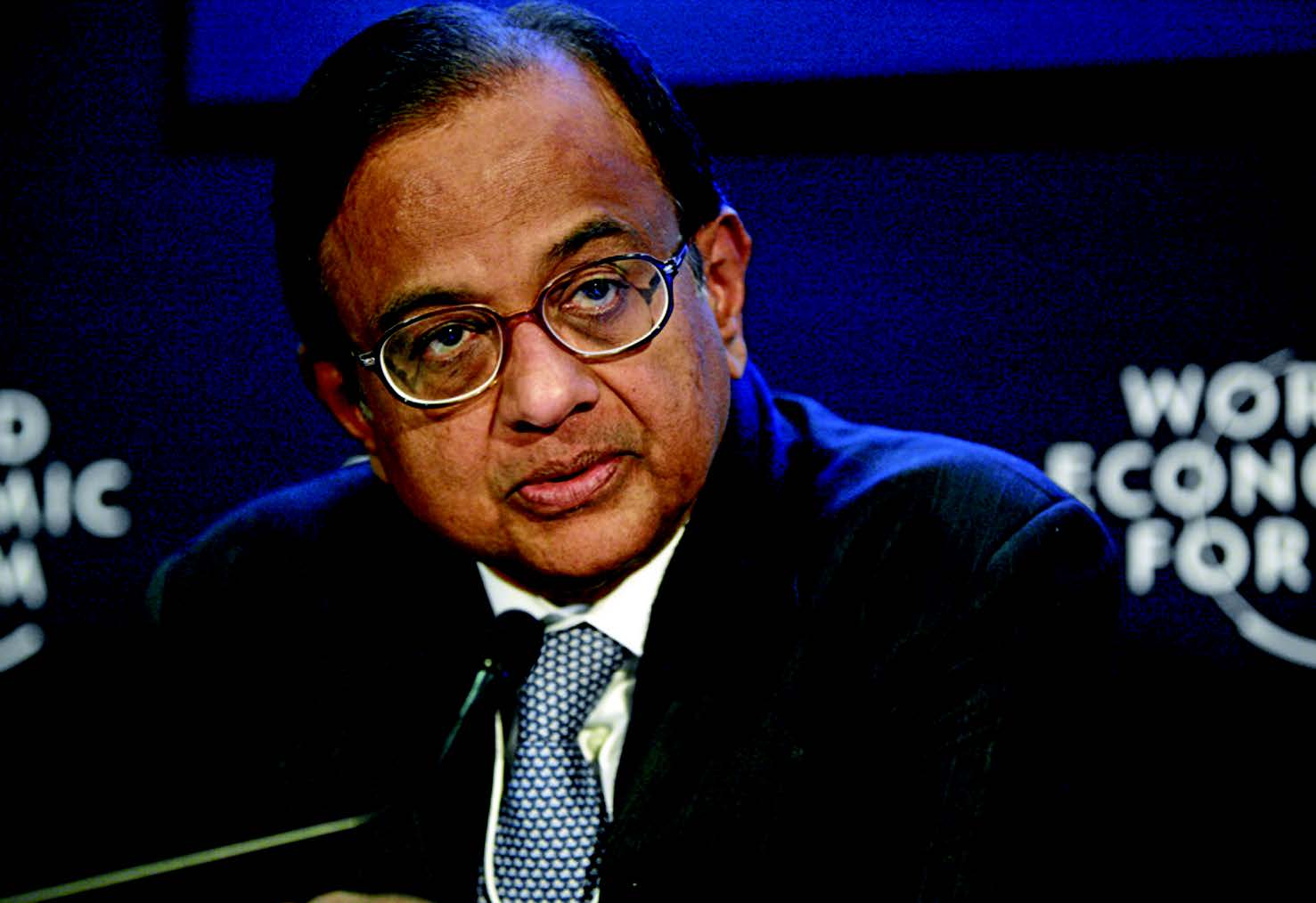
    NEW DELHI (TIP): Finance minister P Chidambaram has opted out of the Lok Sabha contest, with Congress announcing his son Karthi as the candidate from Sivaganga constituency in Tamil Nadu. Kirit Patel will take on BJP patriarch LK Advani in Gandhinagar in Gujarat.

    The passing of baton in Sivaganga caps the intense speculation on Chidambaram’s candidature in the wake of Congress’s bleak prospects in the state owing to its failure to find an ally. Congress fought the last two elections with DMK and reaped a rich tally, disproportionate to its weak organizational muscle in the state.

    The leg-up for the GenNext extends to another of the state’s political family. Mohan Kumaramangalam, son of former Union minister Rangarajan Kumaramangalam, is the rookie to contest from Salem. In what may have the making of an interesting contest, Laxman Singh has been named from Vidisha to take on leader of opposition in Lok Sabha Sushma Swaraj in Madhya Pradesh. Singh is a former MP and the brother of AICC general secretary Digvijay Singh.

    Congress announced sitting MPs Ramesh Kumar and Mahabal Mishra from South Delhi and West Delhi, a decision which means that all seven party MPs from the capital would be taking the field in the Lok Sabha polls. The names of Kumar and Mishra were held back in the earlier list which gave the go ahead to five other MPs, raising the possibility of their being replaced. However, the party leadership has settled for the status quo, finding that any attempt to change the candidate would skew the caste balance it wants in its representation in the apital.

    The reprieve for the two comes after Congress mulled possible options to sitting MPs. The Central Election Committee of the party had taken exception to the routine manner in which the MPs were recommended for renomination and had asked the Delhi managers to submit a panel of possible candidates. Union health minister and senior Congress leader Ghulam Nabi Azad would contest from Udhampur in Jammu and Kashmir. He replaces MP Lal Singh Chaudhary. Congress has also replaced Paranjayadityasinh Parmar from Panchmahals in Gujarat with Ramsingh Parmar.

    Paranjayaditya is the son-in-law of Congress general secretary Digvijay Singh and his nomination in the previous list of candidates had sparked unrest, leading to clarification from the state leadership that it was an oversight. Rajya Sabha MP and former union minister Mani Shankar Aiyer will contest from Mayiladuthurai that he represented in Lok Sabha before losing in 2009. Expelled JD(U) MP Purnmasi Ram will be the Congress candidate from Gopalganj reserved seat in Bihar. Also, Congress’s Tsering Samphel will contest from Ladakh seat in J&K.

  • CPM bats for gay rights in manifesto

    CPM bats for gay rights in manifesto

    NEW DELHI (TIP): The CPM on March 20 sought decriminalization of section 377 of Indian Penal Code — the only Indian political party to have taken such a stand so far — and scrapping of the Armed Forces (Special Powers) Act as it unveiled its manifesto for the Lok Sabha polls.

    In a break from the stand taken by other parties in the wake of the Supreme Court declaring gay sex illegal, overturning a Delhi high court ruling, the CPM had recently come out in support of the TOI manifesto to do away with archaic laws. In the backdrop of Telangana bill being passed by Parliament even though Andhra Pradesh assembly had returned it, the manifesto said the Constitution should be amended to make it mandatory to seek the state legislature’s consent in case of division.

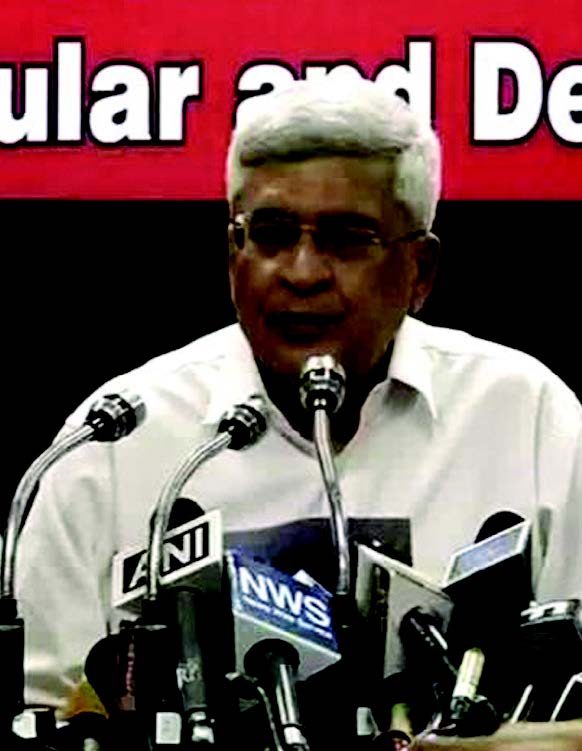
    Despite the desertion by key partners of Third Front, the CPM has not lost hope of cobbling up an alliance after the elections. Releasing the manifesto, party general secretary Prakash Karat said efforts would be made to form a non-Congress, non-BJP government after the results. “We (Left and regional parties) have decided to fight both Congress and BJP. We are going together…We are working to maximise our strengths and seats in respective states or areas of strength. A concrete shape will emerge after the elections,” Karat said.

    The CPM manifesto is high on a secular democratic alternative. Karat said, “We will pool in our resources and strengths after the elections…that is going to happen.” He also insisted that CPM or any constituent never called the 11-party alliance ‘Third Front. “Our coming together was not predicated on any alliance with each other,” he said. Karat also dismissed the viability of a federal front’, an idea floated by Mamata Banerjee. “Without Left no alternative is possible.” CPM general secretary said the left parties would contest about 100 seats across the country.

    He said there will be no impact on Left Front’s fortune in Kerala after the state unit of Revolutionary Socialist Party crossed over to Congress-led United Democratic Front. Taking on both Congress and BJP for turning the election into a personality battle, Karat said, “It is clear that the elections are being projected as a battle between certain leaders or personalities but devoid of major issues and policies afflicting the people.” While he criticized the Congress for its misrule, price rise, corruption and scams, BJP, Karat said, is “not only not an alternative to Congress, but a retrograde and reactionary alternative.”

    He said BJP is as corrupt as Congress. Party’s manifesto promises to reverse the deregulation of petroleum products, ban futures trade in agricultural commodities, enlarge resource base by taxing the rich and corporate profits; crackdown on tax evaders, black money and money laundering. Karat said party is not happy with the Food Security Act and promised to bring a new law which will be based on universal public distribution system. CPM manifesto also says there should be devolution of 50 per cent of the total collection of central taxes to states and transferring of centrally sponsored schemes under state subjects with funds to the Centre.

  • RIL takes YouTube route to refute AAP allegations

    RIL takes YouTube route to refute AAP allegations

    NEW DELHI: From deep sea to You Tube. After battling geographical bumps to keep its Andhra offshore field going, Reliance Industries Ltd is now engaged a bitter fight for eyeballs. India’s biggest private oil company on March 20 launched its counter-attack on You Tube to drill holes in allegations made by detractors such as AAP leader Arvind Kejriwal that was uploaded on the social media.

    The company sent out mailers with a link to a You Tube presentation that described allegations made at a media event earlier this month as “strange and irresponsible statement”. The mailer did not name Kejriwal or any other leader. “The statement is fraught with poor knowledge of the constitutional scheme and is aimed only to misinform… It is, therefore, incumbent upon us to place the record straight,” the company mailer said.

    The video clip shows an anchor giving point-by-point rebuttal in Hindi to allegations that the Narendra Modi government in Gujarat had extended undue benefit to the company and its gas project. The You Tube video clearly demonstrates that RIL is no longer willing to take, what it calls, “unfound allegations” lying down. The choice of language, Hindi, also displays the company broad-basing its public communication to the hinterland — ostensibly Kejriwal’s constituency. Earlier this month, the company had launched a mobile message campaign to counter AAP. Clearly, it’s a fight for eyeballs now.

  • THE BHAGAVAD GITA

    THE BHAGAVAD GITA

    CONTINUED FROM Vol 8 ISSUE 10

    One must follow the scriptural injunctions
    One who acts under the influence of his or her desires, disobeying scriptural injunctions, neither attains perfection nor happiness nor the supreme abode. (16.23) Therefore, let the scripture be your authority in determining what should be done and what should not be done. You should perform your duty following the scriptural injunction. (16.24)

    THREEFOLD FAITH
    Arjun said: What is the mode of devotion of those who perform spiritual practices with faith, but without following the scriptural injunctions, O Krishn? Is it in the mode of goodness (Saattvik), passion (Raajasik), or ignorance (Taamasik)? (17.01)

    Three types of faith
    The Supreme Lord said: The natural faith of embodied beings is of three kinds: Goodness, passion, and ignorance (Saattvik, Raajasik, and Taamasik). Now hear about these from Me. (17.02) O Arjun, the faith of each is in accordance with one’s own natural disposition (governed by Karmic impressions). One is known by one’s faith. One can become whatever one wants to be (if one constantly contemplates on the object of desire with faith). (17.03)

    Persons in the mode of goodness worship celestial controllers (Devas); those in the mode of passion worship supernatural rulers and demons; and those in the mode of ignorance worship ghosts and spirits. (17.04) Ignorant persons of demonic nature are those who practice severe austerities without following the prescription of the scriptures, who are full of hypocrisy and egotism, who are impelled by the force of desire and attachment, and who senselessly torture the elements in their body and also Me who dwells within the body. (17.05-06)

    Three types of food
    The food preferred by all of us is also of three types. So are the sacrifice, austerity, and charity. Now hear the distinction between them. (17.07) The foods that promote longevity, virtue, strength, health, happiness, and joy are juicy, smooth, substantial, and nutritious. Such foods are liked by persons in the mode of goodness. (17.08) People in the mode of passion like foods that are very bitter, sour, salty, hot, pungent, dry, and burning; and cause pain, grief, and disease. (17.09) People in the mode of ignorance like foods that are stale, tasteless, putrid, rotten, refuse, and impure (such as meat and alcohol). (17.10)

    Three types of sacrifices
    Selfless service (Seva, Yajn), enjoined by the scriptures and performed without the desire for the fruit, with a firm belief and conviction that it is a duty, is in the mode of goodness. (17.11) Selfless service (Seva, Yajn) that is performed only for show and aiming for fruit, is in the mode of passion, O Arjun. (17.12) Selfless service (Seva, Yajn) that is performed without following the scripture, in which no food is distributed, which is devoid of mantra, faith, and gift, is said to be in the mode of ignorance. (17.13)

    Austerity of thought, word, and deed
    The worship of celestial controllers (Devas), the priest, the guru, and the wise; purity, honesty, celibacy, and nonviolence – — these are said to be austerity of deed. (17.14) Speech that is non-offensive, truthful, pleasant, beneficial, and is used for the regular study of scriptures is called the austerity of word. (17.15) Serenity of mind, gentleness, calmness, selfcontrol, and purity of thought — these are called austerity of thought. (17.16)

    Three types of austerity
    The above mentioned threefold austerity (of thought, word, and deed), practiced by yogis with supreme faith, without a desire for the fruit, is said to be in the mode of goodness. (17.17) Austerity that is performed for gaining respect, honor, reverence, and for the sake of show, yielding an uncertain and temporary result, is said to be in the mode of passion. (17.18) Austerity performed with foolish stubbornness or with self-torture or for harming others, is said to be in the mode of ignorance. (17.19)

    Three types of charity
    Charity that is given at the right place and time as a matter of duty to a deserving candidate who does nothing in return, is considered to be in the mode of goodness. (17.20) Charity that is given unwillingly, or to get something in return, or to gain for some fruit, is said to be in the mode of passion. (17.21) Charity that is given at a wrong place and time to unworthy persons, or without paying respect to the receiver or with ridicule, is said to be in the mode of ignorance. (17.22

    Threefold name of God
    “OM TAT SAT” is said to be the threefold name of the Eternal Being (Brahm). Persons with good (Braahmanic) qualities, the Vedas, and the selfless service (Seva, Yajn) were created by and from Brahm in the ancient time. (17.23) Therefore, acts of sacrifice, charity, and austerity prescribed in the scriptures are always commenced by uttering “OM” by the knowers of the Supreme Being (ParBrahm). (17.24) Various types of sacrifice, charity, and austerity are performed by the seekers of salvation (Moksh) by uttering “TAT” (or He is all) without seeking a reward. (17.25)

    The word “SAT” is used in the sense of Reality and goodness. The word “SAT” is also used for an auspicious act, O Arjun. (17.26) Faith in sacrifice, charity, and austerity is also called “SAT”. Selfless service for the sake of the Supreme is, in truth, termed as “SAT”. (17.27) Whatever is done without faith — whether it is sacrifice, charity, austerity, or any other act — is called “ASAT”. It has no value here or hereafter, O Arjun. (17.28)

    LIBERATION THROUGH RENUNCIATION
    Arjun said: I wish to know the nature of Samnyaas and Tyaag and the difference between the two, O Lord Krishn. (18.01)

    Definition of renunciation and sacrifice
    The Supreme Lord said: The sages call Samnyaas (Renunciation) the complete renunciation of work for personal profit. The wise define Tyaag (Sacrifice) as the sacrifice of, and the freedom from, a selfish attachment to the fruits of all work. (See also 5.01, 5.05, and 6.01) (18.02) Some philosophers say that all work is full of faults and should be given up, while others say that acts of sacrifice, charity, and austerity should not be abandoned. (18.03) O Arjun, listen to My conclusion about sacrifice.

    Sacrifice is said to be of three types. (18.04) Acts of service, charity, and austerity should not be abandoned, but should be performed because service, charity, and austerity are the purifiers of the wise. (18.05) Even these obligatory works should be performed without attachment to the fruits. This is My definite supreme advice, O Arjun. (18.06)

    Three types of sacrifice
    Giving up one’s duty is not proper. The abandonment of obligatory work is due to delusion and is declared to be in the mode of ignorance. (18.07) One who abandons duty merely because it is difficult or because of fear of bodily affliction, does not get the benefits of sacrifice by performing such a sacrifice in the mode of passion. (18.08) Obligatory work performed as duty, renouncing selfish attachment to the fruit, is alone to be regarded as sacrifice in the mode of goodness, O Arjun. (18.09)

    One who neither hates a disagreeable work, nor is attached to an agreeable work, is considered a renunciant (Tyaagi), imbued with the mode of goodness, intelligent, and free from all doubts about the Supreme Being. (18.10) Human beings cannot completely abstain from work. Therefore, one who completely renounces selfish attachment to the fruits of all work is considered a renunciant. (18.11) The threefold fruit of works — desirable, undesirable, and mixed — accrues after death to the one who is not a Tyaagi (Renunciant), but never to a Tyaagi. (18.12)

    Five causes of an action
    Learn from Me, O Arjun, the five causes, as described in the Saamkhya doctrine, for the accomplishment of all actions. They are: The physical body, the seat of Karm; the modes (Gunas) of material Nature, the doer; the eleven organs of perception and action, the instruments; various Praanas (bioimpulses, life forces); and the fifth is presiding deities (of the eleven organs). (18.13-14) These are the five causes of whatever action, whether right or wrong, one performs by thought, word and deed. (18.15)

    Therefore, the ignorant, who consider one’s body or the soul as the sole agent, do not understand due to imperfect knowledge. (18.16) One who is free from the notion of doership and whose intellect is not polluted by the desire to reap the fruit — even after slaying all these people — neither slays nor is bound by the act of killing. (18.17)