Month: May 2014

  • Modi behaving as if he is PM, says Sonia Gandhi

    Modi behaving as if he is PM, says Sonia Gandhi

    FAIZABAD (TIP): Congress president Sonia Gandhi on May 1 dubbed Narendra Modi “powerhungry”, saying the Gujarat CM is behaving as if he is the Prime Minister of the country even before the election process is over. Addressing a rally in the district, Sonia said “Modi is giving the impression that results are out and he is sitting on the throne. ‘

    He wants all wealth in one hand. He is high on power and he has forgotten that people will decide the fate of the nation and not him.” She was campaigning for UP Congress president Nirmal Khatri, who is seeking re-election. The venue of Sonia’s rally was minoritydominated Raudauli area, tactically chosen by the party to woo the community.

    Sonia listed out the achievements of UPA I and II and dismissed as “hollow” Modi’s claims of a corruption-free Gujarat, saying several ministers of the state were facing graft charges. “Modi claims he will get rid of corrupt parliamentarians once he comes to power. I want to ask how many corrupt and criminal ministers has he removed from his own Gujarat cabinet?” she asked.

    “The Gujarat model is being sold across the country, but the reality is that children are dying of malnutrition since during his ten years in power, land owned by farmers were sold at throwaway prices,” she alleged. Sonia also accused BJP of indulging in divisive politics and claimed that Congress worked for the development of all sections.

  • Putin wants troops out of Ukraine’s east

    Putin wants troops out of Ukraine’s east

    DONETSK (UKRAINE) (TIP):
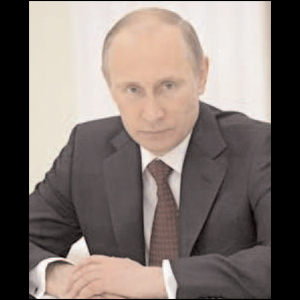
    Russian President Vladimir Putin said on May 1 that Ukraine should withdraw its military from the eastern and southern regions of the country, a statement that could bolster antigovernment insurgents who are seizing buildings. Hours later, Ukraine’s acting president ordered that the military draft be renewed, citing “threats of encroachment on the nation’s territorial integrity” and interference by Russia in its internal affairs.

    Moscow has consistently denounced Ukrainian security forces’ largely ineffectual operation against the eastern insurgents and warned they should not commit violence against civilians. In a telephone conversation with German Chancellor Angela Merkel, Putin said the removal of military units was the “main thing,” but it was unclear if that could be construed as an outright demand.

    Oleksandr Turchynov’s conscription order marked a turnaround for the country, which last year announced plans to end military conscription in favor of an all-volunteer force. His order did not specify where conscript-bolstered forces could be deployed. The renewal of military conscription affects only men 18 to 25 years old. Earlier in the week, the acting president said police and security forces had been effectively “helpless” against insurgents in the Donetsk and Luhansk regions, the heart of the unrest, and that efforts should be focused on preventing the instability from spreading to other parts of the country.

    In the regional capital city of Donetsk, anti-government demonstrators took over the regional prosecutor’s office Thursday. Several dozen riot police standing guard at the office fired stun grenades and tear gas when some at the front of the crowd of several hundred people attempted to force their way into the building. As the confrontation escalated, some in the crowd threw rocks and managed to wrest away shields from police.

    An Associated Press reporter saw a handful of officers being dragged away and beaten by members of the crowd. Hundreds of onlookers accompanying the protesters shouted slogans and hurled abuse. A car outside the building blared out patriotic World War II music. Inside, a passenger waved a flag bearing a doctored image of Soviet leader Josef Stalin in a black vest and holding a machine gun superimposed with the words: “Death to Fascism.”

    Upon occupying the building, protesters discarded the Ukrainian flag and replaced it with that of the Donetsk People’s Republic — a movement that seeks either greater autonomy from the central government, or independence and possible annexation by Russia. Donetsk is the heartland of support for Russia-friendly former President Viktor Yanukovych, who was ousted in February after months of protests in the capital.

    Opponents of the government that succeeded him have seized buildings in about a dozen cities and towns in eastern Ukraine. Local news website Novosti Donbassa reported that earlier in the day around 30 armed men arrived in six cars in the town of Amvrosiivka, which lies close to the Russian border, and took over the city council and forced the mayor to resign. On Wednesday, insurgents took control of the customs-service building in Donetsk and city hall in Alchevsk, an industrial center of about 110,000 people, adding to the scores of buildings taken by the separatists over the past month in the east, where a dozen cities are now in the hands of the separatists.

    There has also been a spate of reported kidnappings of pro-government politicians. The Svodoba nationalist party said a local party branch leader in Kostiantynivka, 65 kilometers (40 miles) north of Donetsk, initially managed to fight off attackers at his home but was taken away as he was phoning for help. Turchynov has twice proclaimed “antiterrorist” operations to regain control of the east, but to little effect.

    Unlike many recent seizures of the government offices, the assault on the prosecutor’s office appeared to have been spearheaded by people armed with little more than sticks. However, at least one young man was seen with a handgun tucked into his trousers, and at least one firebomb was thrown at the building. The armed element of the insurgency is focused on Slovyansk, a city 110 kilometers (70 miles) north of Donetsk in which seven European observers from the Organization for Security and Cooperation in Europe remain held by pro-Russia gunmen.

    Merkel on Thursday again called Putin and asked for his assistance in freeing the group, Merkel spokeswoman Christiane Wirtz said. Russia denies allegations from Kiev and the West that it is influencing or fomenting strife in eastern Ukraine. The Kremlin confirmed the conversation and said Putin stressed “the main thing was for Ukraine to withdraw its troops from southeastern Ukraine, stop the violence and quickly start a broad national dialogue on constitutional reform.” In Washington, the second-ranking official of the North Atlantic Treaty Organization said the alliance now feels compelled to start treating Moscow as an adversary.

    “In central Europe, clearly we have two different visions of what European security should be like,” Alexander Vershbow, the deputy secretary-general of NATO, said in a question-and-answer session with reporters. He said Russia’s annexation of Crimea and its apparent efforts to manipulate turmoil in eastern Ukraine have fundamentally changed the NATO-Russia relationship.

  • LOK SABHA POLLS: PHASE 7 SEES 66% VOTER TURNOUT

    LOK SABHA POLLS: PHASE 7 SEES 66% VOTER TURNOUT

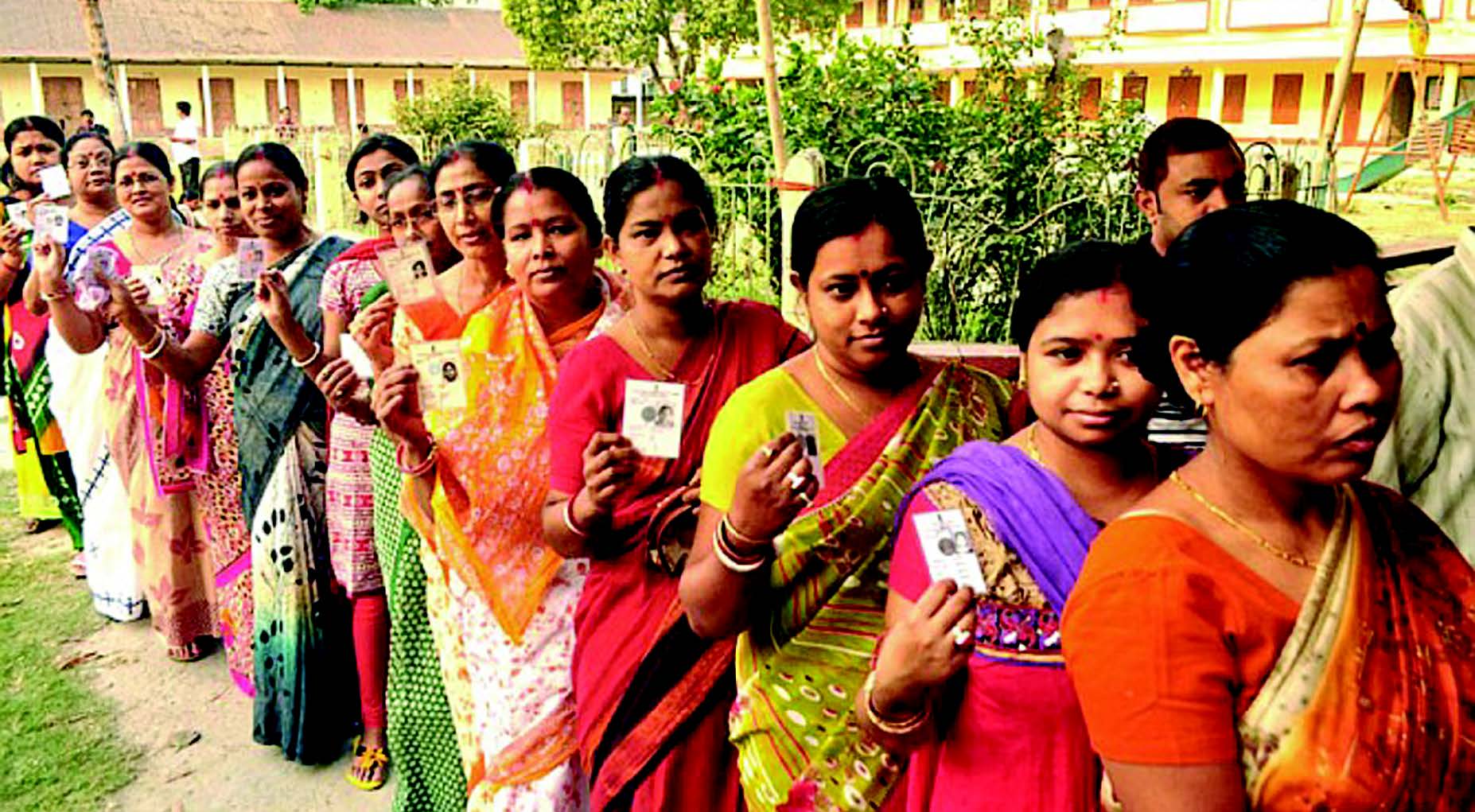
    NEW DELHI (TIP): Nearly 66% of the electorate exercised its franchise on Wednesday in the seventh phase of the 16th general election, in line with the heavy turnout that marked the earlier rounds of voting. More than 139 million people were eligible to cast their votes in the phase that decided the electoral fortunes of political heavyweights including the Bharatiya Janata Party’s (BJP) prime ministerial candidate Narendra Modi and his senior colleagues Rajnath Singh, L.K. Advani, M.M. Joshi and Arun Jaitley, besides Congress party president Sonia Gandhi.

    The day also marked what Modi claimed was the first police complaint registered against him in his life. The first-information report (FIR) was registered against him at the behest of the Election Commission. The BJP is eyeing at least 62 of the seats up for grabs in Wednesday’s voting, by the end of which elections were completed in 438 of the 543 Lok Sabha constituencies. Elections to the remaining 105 constituencies will he held on 7 May (64 seats) and 12 May (41). The results will be declared on 16 May.

    The 438 Lok Sabha constituencies where voting has taken place so far have witnessed a 66.2% voter turnout, compared with 57.6% in 2009. Some 62.4% polling was recorded in Gujarat, where all 26 Lok Sabha constituencies in the state went to the polls on Wednesday. Vadodara, where Modi is in the electoral fray, had witnessed a high turnout of 70% well before polling ended. “There is a phenomenal increase in the voter turnout in Gujarat…,” said Akshay Rout, director general of the Election Commission. “The voter turnout for the state in the 2009 general election was 47.8%.” In the last five Lok Sabha elections, the average voter turnout in Gujarat was less than 50%.

    The turnout is expected to be higher this time around following a voter awareness drive carried out by the Election Commission and with Modi being selected the BJP’s prime ministerial candidate, political experts said. After casting his vote in Gandhinagar constituency, Modi told reporters that this was the end of India’s “mother-son government”—a reference to Sonia Gandhi and her son, Congress vice-president Rahul Gandhi. Modi said the Congress appeared to have accepted defeat after signalling it may support a Third Front (non-Congress, non- BJP) government at the Centre to keep Modi out.

    “The Congress has accepted defeat as it is now saying that it will support the Third Front to keep me out of the race. The Prime Minister, the finance minister and other senior ministers are not in the contest. Tall leaders of the Congress are running away from the elections,” Modi said. “Now, some are trying to save their chairs, some are trying to save themselves and some are trying to save prestige of the Congress party,” he added. Modi suffered a setback, with the Election Commission asking the Gujarat state authorities to register two first FIRs against him for holding a media briefing outside a polling station in Gandhinagar and also holding the BJP’s symbol, the lotus, while talking to reporters.

    “Tone and tenor of the address made by Narendra Modi and the statements made by him, the manner in which the symbol lotus of the BJP was being displayed by him, it is evident that the address was in the nature of political speech intended and calculated to influence and affect the result of elections in the constituencies going to polls today, not only in Ahmedabad but also in all other constituencies in Gujarat and elsewhere in the country,” the poll watchdog said in a statement. Addressing a rally in Tirupati, Modi referred to the FIR. “I will never forget 30 April. Today was the first time an FIR was registered against me,” he said.


    28

    Modi claimed he had never violated the law hadn’t even got a parking ticket in his life. Gujarat is considered to be a bastion for the BJP and the party is looking to make a clean sweep in the state this time around. Modi is also contesting from Varanasi in Uttar Pradesh. In the 2009 Lok Sabha election, the BJP won 15 seats and the Congress 11. The BJP increased its tally in by-elections—in the outgoing Lok Sabha, the BJP has 17 seats while the Congress has nine. On Wednesday, Punjab also recorded its highest-ever turnout at 73%. The voter turnout was 76% in Daman and Diu, 81.35% in West Bengal, 73% in Punjab, 59% in Uttar Pradesh, 70% in the Telangana region of Andhra Pradesh, 60% in Bihar, 85% in Dadar and Nagar Haveli, and 25% in Jammu and Kashmir.

    Telangana vote
    Andhra Pradesh’s Telangana region, which will become India’s 29th and newest state on 2 June, also went to the polls on Wednesday. The region recorded a turnout of 59.3% as of 3pm. Medak (65%) had recorded the highest polling while Hyderabad district (51%) recorded the lowest, a bulletin by the state election commission showed. About 28.1 million voters in Telangana were registered to elect candidates to 17 Lok Sabha and 119 state assembly seats at 30,000 polling stations.While 265 candidates were in the fray for parliamentary constituencies, 1,669 candidates were in the race for the state assembly.

    Voters in Telangana are simultaneously electing representatives to the Lok Sabha and to what will become the Telangana state assembly. The other part of Andhra Pradesh will exercise its mandate a week later on 7 May. The 294-member Andhra Pradesh state assembly will be divided according to constituencies once Telangana becomes a state. The main parties and groupings in the race to form the first government of Telangana are the Telangana Rashtra Samithi (TRS), and two alliances—one between the Congress and the Communist Party of India and the other between the Telugu Desam Party (TDP) and the BJP. The winner in the 119-member Telangana assembly has to get a simple majority of at least 60 seats to form the new government in the would-be state.

    Polling was not devoid of incidents. Actorpolitician K. Chiranjeevi landed himself in an embarrassing position when a youngster objected to him skipping the queue at a polling booth. Chiranjeevi, who is chairman of the Andhra Pradesh Congress Committee, then beat a hasty retreat and stood at the end of the queue. TDP chief N. Chandrababu Naidu, too, landed himself in an embarrassing position when he revealed who he cast his ballot for. “Due to our pre-poll arrangement, I cast both my votes for lotus symbol (of the BJP),” Naidu told waiting media.

    The state election commission did not take kindly to this. “Secrecy of vote has to be maintained by every voter,” Andhra Pradesh chief electoral officer Bhanwar Lal said. As a result, the returning officer of the polling booth will declare Naidu’s vote ineligible. “He should act responsibly,” Lal said. “If we don’t delete that (ballot), action will be taken against us.”

  • UK seizes two large consignments of mangoes from India containing the deadly tobacco whitefly

    UK seizes two large consignments of mangoes from India containing the deadly tobacco whitefly

    LONDON (TIP): UK has seized two large consignments of mangoes from India in April containing the deadly tobacco whitefly which carries over 100 harmful viruses with it. In an exclusive interview to TOI, UK’s department for environment, food and rural affairs (Defra), which voted to put the ban on Indian mangoes into EU in place from Thursday, told TOI that the whitefly is at present alien in EU.

    EU has protected zone status against the tobacco whitefly – meaning the species don’t exist anywhere in the union. EU therefore faces serious threat of the fly being introduced through contaminated Indian mangoes. “The tobacco whitefly would be very damaging to UK salad crops if introduced. Tomato crops are particularly susceptible and 100% yield losses have been seen in some outbreaks in Israel.

    It also emerged that the two consignments confiscated did undergo vapour heat treatment to rid it off pests in India but it didn’t work,” DEFRA told TOI. The DEFRA official added “These temporary restrictions are important to protect our home-grown salad crops, an industry worth an annual £321 million, from potential pests and diseases. We are working closely with our Indian and European counterparts to resolve the issue and resume trade in these select products as soon as possible.”

    Meanwhile an official of the European Commission told TOI from Brussels that it has asked India to steam the mangoes before exporting it to EU. Frederic Vincent from the European Commission told TOI “Experts say steaming mangoes could rid them off the pests. India wasn’t keen to do so saying it would change the way the mangoes look. We have been involved in extensive discussions with India in 2013 about ways to de contaminate these mangoes. But the talks went nowhere. It was such a serious threat that not a single EU country opposed the ban”.

    Vincent added “India will have to correct the deficiencies as regards their official controls to ensure that commodities exported to the EU fulfill the EU phytosanitary import requirements. India will then send us guarantees on the correct implementation of the Indian measures. The EU’s Food and Veterinary Office will then verify the good implementation of these guarantees on-thespot at the end of 2014 through a team that will be sent to India. A decision on the lifting of the ban would depend on the outcome of the FVO audit.

    There is no precise timeline: it is up to Indian authorities to ensure that their products fulfill our food safety requirements”. DEFRA minister Owen Patterson is expected to talk to India’s high commissioner to UK Ranjan Mathai on how to resolve the impasse. The commission said the decision to ban mango import had to be taken due to a high number of such consignments being intercepted at arrival in the EU with quarantine pests, mainly insects, like non- European fruit flies.

  • How the lotus bloomed on this Congress turf

    How the lotus bloomed on this Congress turf

    AHMEDABAD (TIP): Ahmed Patel, Sonia Gandhi’s political secretary, enjoys tremendous goodwill in Bharuch which sent him to the Lok Sabha in 1977, 1980 and 1984. That he last won 30 years ago hasn’t stopped people from talking about his good deeds.

    The most interesting one relates to his helping trace the young son of a local businessman, Narendra Modi, who had been missing for three months. Known as ‘Babubhai’ locally, Patel, 65, was close to the late Sanjay Gandhi and has remained fiercely loyal to the family. He lost the elections in 1989 and 1991 and never contested after that, taking the Rajya Sabha route to the Parliament and becoming a powerful Congress leader from Gujarat.

    He was the last Muslim leader to be elected to the Lok Sabha from Gujarat which turned into a laboratory for Hindutva and paid rich dividends for the BJP. For the past year or so, after being sidelined by Rahul Gandhi in party affairs, Patel has been talking of retirement and spending more time in Piraman, his village. Notwithstanding Patel’s popularity, the Congress stands little chance of winning Bharuch.

    In 2012, Congress lost in all the seven assembly segments and has no control over any of the 11 taluk panchayats. The biggest electoral spoiler for Congress is the communal divide in a constituency which has 22% Muslims, next only to Ahmedabad (West) which has 23%. The key swing away from the Congress to the BJP has been that of tribals who match the Muslim population in Bharuch. The BJP’s candidate Mansukh Vasava is a tribal and seeking his fifth term in Parliament. It’s the only instance of any party giving the ticket to a tribal from a general seat in Gujarat. The tribal plus Hindu votes ensure his victory.

    The Congress, which has fi elded a Patel candidate, is happy with the absence of Janata Dal (U) leader Chhotu Vasava from the electoral arena. Dubbed as a tribal Robin Hood, Vasava has a lot of muscle and holds sway over tribals in the Valia-Jhagadia region. Cricketer Munaf Patel, called the Ikhar Express, is a prominent face of Bharuch and has inspired many young cricketers from the district. Interestingly, Muslims have become prosperous over the years.

    Like Mohammedbhai Gheewala, 69, whose packaged Sofey Tea is a huge hit in south Gujarat since 1996. A former Patel loyalist and now Modi admirer, Asifa Khan is confident that Muslims will vote for Modi in large numbers. “There is a positive socioeconomic change in the status of Muslims here,” she says. There’s been a spurt in investment and employment opportunities in the region.

  • EC ACTING LIKE GOD, SAYS AZAM

    EC ACTING LIKE GOD, SAYS AZAM

    LUCKNOW (TIP): Samajwadi Party leader Azam Khan, who has been banned by the Election Commission from campaigning in Uttar Pradesh for his allegedly controversial speeches made at the start of the elections, on Thursday said the poll panel could not behave like God and dared it to cancel his membership of the state assembly.

    Taking to reporters in Rampur, he said instead of behaving like God, the EC should adopt a line of action best suited for democracy and in the spirit of the Constitution. Khan said if he was wrong, then the poll body should exhibit courage and cancel his membership of the UP assembly. On April 23 the EC had issued a show-cause notice to Khan for reportedly making objectionable remarks against it and circumventing a ban imposed on him from campaigning in UP.

    The notice was issued days after the EC banned him from campaigning following his controversial remarks on the Kargil war. Alleging the EC behaved in a partial manner with him because he was a Muslim, Khan said: “I don’t need any person’s kindness or leniency since I’ve been acknowledged as a man of principles and high ideals from the beginning of my political career.”

    Without naming BJP general secretary and UP in-charge Amit Shah, Khan said: “A person who has widely been termed a hooligan or assassin of humanity by different political bodies as well as prominent social and religious outfits was allowed to campaign for BJP’s candidates, but the EC has taken action against me because I’m a Muslim.” Khan threatened to go on a fast if the EC ban on him was not lifted.

  • EC order to register FIR against Modi hasty: BJP

    EC order to register FIR against Modi hasty: BJP

    NEW DELHI (TIP): BJP on May 1 termed as “hasty” EC’s order to register an FIR against its PM nominee Narendra Modi, saying the poll watchdog appeared to have lost sight of the fact that its move marked an infringement of the right to free speech promised under the Constitution.

    BJP leader Arun Jaitley said EC erred in treating Modi’s comments to the media on Wednesday outside the polling station where he had cast his vote as a violation of the rule which bars public meetings in the polling area. Referring to EC’s order saying that media outlets which telecast Modi’s comment were also guilty of violating the Representation of People’s Act, Jaitley wrote on his blog, “A public meeting is a public meeting, the media bite is not a public meeting.

    If media is to be prosecuted for displaying comments of politicians on a voting day, such a provision will fall foul of constitutional guarantee of free speech since it is not covered by the prescribed restrictions under Article 19 (2).” He said the EC has explained its directive to take action against Modi and media by saying that they violated the law by holding and publicizing a “public meeting” in the ‘polling area. Jaitley said media runs the risk of attracting legal provisions if the entire country is treated as “polling area” as it cannot but report speeches treats the entire country as “polling area”.

    He also said politicians routinely give bites to media after casting vote and, hence, Modi did not do anything extraordinary. “Prof Amartya Sen spoke to the media after his vote yesterday. He gave his reasons why he does not favour Modi. The prime minister spoke to the media after casting his vote in Assam. So did most other political leaders. I am not pleading for their prosecution. I am only illustrating that an interpretation being given by the Election Commission may fall foul,” wrote Jaitley.

  • Like in Delhi, AAP pledges cheap power, clean river in Varanasi

    Like in Delhi, AAP pledges cheap power, clean river in Varanasi

    VARANASI (TIP): The Aam Admi Party will develop Varanasi as the spiritual capital of the world and accord it the status of a “Holy City,” the party’s manifesto for Varanasi constituency released on May 1, promises. The party’s Varanasi candidate, Arvind Kejriwal, skipped the manifesto release function and was in Amethi campaigning for Kumar Vishwas, the party nominee there.

    AAP leaders Manish Shisodia, Sanjay Singh, Yogendra Yadav, Ashutosh and Anand Kumar released the poll document. Efforts will be made to get Varanasi the status of a “world heritage” city, the manifesto pledged. Cleaning of the Ganga will be accorded top priority and arrangements made to stop discharge of sewage and municipal waste into the river. There will be a check on plastic and the use of earthen pots “kulhad” promoted in restaurants and tea vends. This will help generate jobs.

    The manifesto promises special fi nancial packages to develop infrastructure in Varanasi. Ghats will be cleaned and repaired. Religious and historical heritage cites preserved. Electricity and water supply improved both in rural and urban areas. Hoping voters would remember the party’s efforts at slashing power rates in Delhi here too it talks of making electricity cheaper. The party fi nds it shameful that Varanasi, a city of historic importance that tourists throng to, has erratic power supply.

    The party will also make efforts to restore the Varuna and Asi rivers. AAP will ensure that every paisa is spent honestly and transparently on sewage management and road building. Corruption will be eradicated. Banarasi sarees and fabrics are of world fame, but weavers live in penury. To address their problems the party will establish a yarn and finishing plant in the city for weavers. Weavers will be paid the minimum wage, raw material and power supply will be ensured for the artisans, and middlemen will be thrown out.

  • Modi woos Seemandhra with Polavaram promise

    Modi woos Seemandhra with Polavaram promise

    GUNTUR/BHIMAVARAM/NELLORE (TIP): In an attempt to woo Seemandhra farmers, BJP prime ministerial candidate Narendra Modi on Thursday said he would complete the Polavaram irrigation project without delay if voted to power. He also promised to interlink Ganga-Cauvery to provide water to the parched Rayalaseema region.

    Addressing large gatherings at Bhimavaram, Guntur, Nellore and Madanapalle, Modi tried to strike a chord with farmers by highlighting their sufferings in various districts. While he stressed changing the fortunes of cotton, turmeric and chilli farmers in Guntur, Modi also promised to address the grievances of Kolleru farmers in Bhimavaram. “The nation has already decided two things.

    One, to unseat the government headed by ‘mother and son’, and two, to bring NDA to power,” claimed Modi. He said he would put the imprint of farmers on exports of all agriproducts. “I am one among you. You are not alone. Do not get depressed with the bifurcation of the state. Congress has orphaned the state,” Modi told farmers. He said the UPA had ruined the country with “policy paralysis”. Guntur farmers produce world famous cotton, turmeric and chilli, he said, promising to set up processing plants in the region to help them.

    “We have hardworking people and talented youth in Seemandhra. The only thing we need is a government to take them forward,” said Modi, adding that backing N Chandrababu Naidu will help people build a new state. Alleging that Congress had never respected Telugu people, he promised to restore the Telugu pride if people backed the TDPBJP combine.

  • 25 candidates contesting from Seemandhra are millionaires

    25 candidates contesting from Seemandhra are millionaires

    HYDERABAD (TIP): Clearly our politicians representing poor citizens are not into social service anymore and are instead amassing huge wealth for themselves. And when it comes to candidates from the YSRCP, no one comes close to these millionaires.

    Yes, all 25 candidates contesting polls from various seats of Seemandhra are millionaires or crorepatis -at least that’s what examination of their declared assets show. Leading the pack of millionaires from YSRCP is Ayodhya Rami Reddy Alla, who is contesting from Narasaraopet with declared assets worth a whooping Rs 654 crore. There is also Kurnool candidate Butta Renuka (Rs 242 crore) and Rajendra Prasad (Rs 137 crore) from Vijaywada.

    In fact, its not just YSRCP leaders doubling or trebling their money since 2009, all the parties put together in Seemandhra have more millionaire candidates than their Telangana counterparts. The region has nine contestants having declared assets of more than Rs 100 crore as against just six from Telangana. Heading the millionaire club are three industrialists, including Jayadev Galla, the TDP candidate for Guntur with property worth an astounding Rs 683 crore, closely followed by YSRCP’s Rami Reddy in second place and Gokaraju Ganga Raju, who is contesting from Narsapuram on a BJP ticket with assets worth Rs 288 crore in third position.

    The richest candidate in Telangana is Konda Vishweshwar Reddy, TRS candidate from Chevella Lok Sabha constituency, with declared assets worth Rs 528 crore, much less than what Galla has declared. If all YSRCP candidates are millionaires, candidates fielded by others parties are also not far behind as 95% TDP candidates, 84% Congress candidates and 75 % BJP candidates happen to be millionaires. If the average assets per candidate contesting from Telangana is Rs 8.49 crore, that of Seemandhra is predictably on the higher side at Rs 11.61 crore.

    Activists from Association for Democratic Reforms (ADR) who analysed the 328 candidates for the LS elections said, as many as 112 (34%) of the contesting candidates from Seemandhra are crorepatis. “In the 2009 elections, 25% candidates from this region were crorepatis, but this time the percentage has sharply increased to 35%,” said D Rakesh Reddy, state coordinator, ADR. Worse, as many as 176 (54%) candidates out of 328 analysed have not declared I-T details and 79 (24%) their PAN details.

  • Ministers scramble for postal ballots

    Ministers scramble for postal ballots

    HYDERABAD (TIP): With several Lok Sabha and Assembly constituencies in both regions expected to see a photo finish, candidates of all parties are scrambling to increase their tally by buying the 4.75 lakh postal ballots issued by the Election Commission to government staff performing poll duty. Apart from defence personnel, securitymen on poll duty, teachers, drivers and all those enlisted for election work are eligible to vote through postal ballots.

    “For the first phase of election in Telangana, we drafted 1.80 lakh personnel and for the second phase of the polls scheduled to be held in the Seemandhra region on May 7, nearly 2.95 lakh government employees have been roped in for poll duties. For all these people, we have issued 4.75 lakh ballot papers,” chief electoral officer Bhanwarlal said. Employees who have been given postal ballots can cast their vote till 7 am on May 16, the day when the votes would be counted and the results declared.

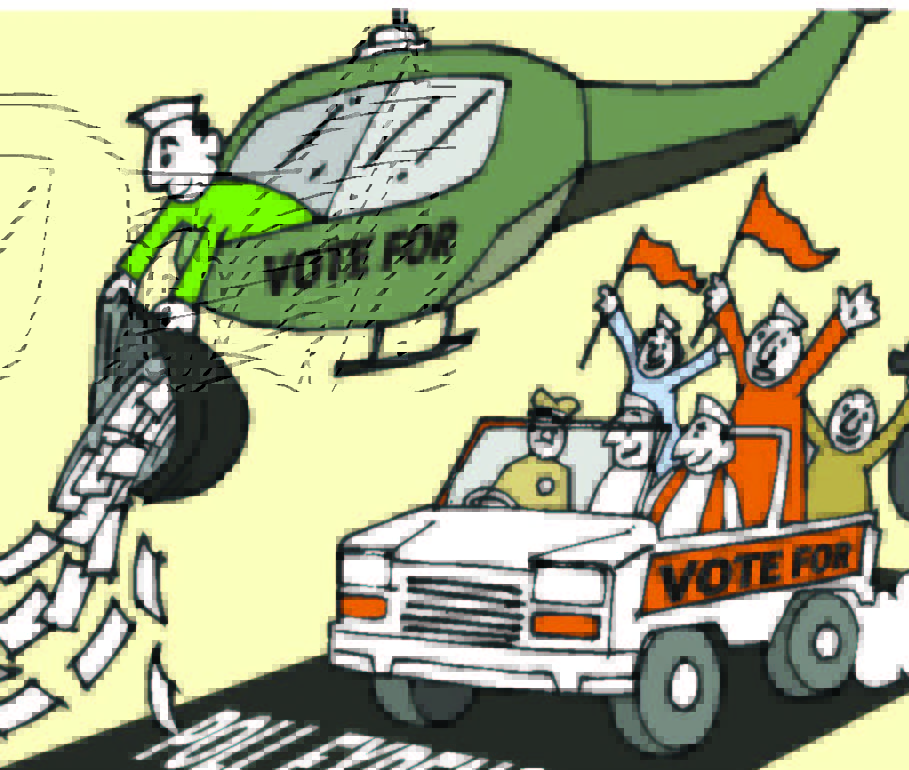
    When the votes polled in the EVMs are counted, the postal ballots would be added to the candidate’s tally. “In several key constituencies, the victory margins could be in hundreds. Therefore, every postal ballot can make a difference,” said a political analyst. Although election officials have warned the employees that abusing postal ballots would cost them their jobs, agents of main political parties are wooing them with dinners, lunches, gifts, promise of transfer and cash to secure the postal ballot paper, which is a guaranteed vote.

    All the candidates who apprehend that they may lose the election narrowly are on the buying spree of postal ballots from the government employees. Sources said the frenzy for pocketing the postal ballots is the most in Seemandhra, where the big two chief ministerial contenders, YSR Congress chief Jaganmohan Reddy and Telugu Desam Party president N Chandrababu Naidu are in the fray. But there is a huge demand in Telangana as well, where some candidates had lost by as little as 170 votes in the last elections.

    Thanks to multi-cornered contests in Telangana this time, the margin could drop further, the candidates fear. “Each postal ballot is fetching the employee between Rs 2,000 and Rs 5,000,” a revenue official on poll duty said. Unlike the regular vote, where there is no guarantee of a voter keeping his promise after accepting bribes, the postal ballot is a sure shot vote.

    Employees being lured with transfer bait
    “Once a voter agrees to vote for a certain consideration, he marks the ballot in my presence and hands it over to me. We then deposit it in the drop-boxes kept in the office of each returning officer or mail it directly to the EC,” said an agent of a candidate in Hyderabad. Human rights activist Pulla Rao has charged that the government employees on poll duty in Tadepalligudem division of West Godavari were handed over the postal ballots on April 25 and 26 and that candidates organized dinner for them and collected the ballots by paying the staff huge money.

    “I demand that these postal ballots be cancelled and fresh ones issued by the Election Commission,” he said. Rao said he had brought this to the notice of chief election commissioner V S Sampath and sought the cancellation of the ballots. “Poll observers who are supposed to keep watch on public events like dinners and meetings of political parties were nowhere to be seen. So, I had to ring up the chief election commissioner,” he said. Responding to the complaint that postal ballots are being sold, West Godavari collector Siddharth Jain told the media that he was probing the charge and that action would be taken if it was true.

    In Anantapur, Chittoor, Nellore, East and West Godavari and the north coastal districts, the price tag for each postal ballot is between Rs 2,000 and Rs 2,500. A former minister contesting from an Assembly constituency in Anantapur district is allegedly offering as much as Rs 5,000 per postal ballot. “Every vote counts. In the previous elections, some candidates lost by less than 150 votes,” said a candidate from Anantapur district. But rewards in kind are playing a role equally important as that of cash.

    “Many voters with postal ballots are being lured with the promise of transfer to the places of their choice,” said one teacher, who confessed that he gave away his postal ballot to a candidate on the promise of getting a transfer to the city of his choice. With the postal ballots being valid for another two weeks, the scramble for these precious and guaranteed votes is only expected to increase in the coming days.

  • Mayawati is like my aunt, says Akhilesh

    Mayawati is like my aunt, says Akhilesh

    LUCKNOW (TIP): Samajwadi Party state president and UP chief minister Akhilesh Yadav tried to dilute the ongoing war of words between his party and the BSP on May 1 by referring to Mayawati as his ‘bua’ (father’s sister). Addressing a public meeting in Azamgarh, where Akhilesh made an emotional pitch for his father, he said, “I am here as the son of one of the senior-most political leaders of the country and seek your support,” Akhilesh said.

    In an obvious reference to the controversy over Mulayam’s statement in which he referred to Mayawati as “Shrimati, Kumari or Behenji”, Akhilesh said, “I have always given full respect to all senior leaders. Because my seniors call someone Behenji, I have always called her my bua,” Akhilesh said. In response to Mulayam’s remark, Maywati had said he must get himself examined. However, other SP leaders launched vitriolic attack on the BSP chief.

    Talking to the media after addressing a public meeting in Allahabad, Akhilesh’s uncle and senior minister Shiv Pal said Mayawati needs medical help. “I demand this for her,” Shiv Pal said. Another minister Gayatri Prasad Prajapati said, “Humare Neta ko keh rahi hain lekin sach to yeh hai ki Mayawati to khud apna dimaagi ilaaj karwana chahiye” (she is talking about our leader, the fact is that she herself needs medical attention for her mental imbalance).

  • Obama, Merkel talks focus on Ukraine as rebellion spreads

    Obama, Merkel talks focus on Ukraine as rebellion spreads

    KIEV (TIP): US President Barack Obama and German chancellor Angela Merkel will discuss the escalating Ukraine crisis on May 2 after Kiev brought back military conscription and a pro-Russian rebellion in the east threatened the ex-Soviet republic with disintegration.

    The White House meeting between Obama and Merkel will be their first since the start of the unrest and Russia’s annexation of Crimea in March. Kiev’s decision to reinstate conscription, decreed by interim president Oleksandr Turchynov, came after insurgents tightened their grip over more than a dozen eastern cities and towns.

    Around 300 militants hurling petrol bombs and bricks stormed the sixstorey prosecutor’s building in Donetsk, beating up outnumbered riot police and stripping them of their shields and batons. Ukrainian media reported that a prosecutor’s office in the town of Horlivka and a police station in Krasnoarmiysk were also overrun. The violence took place as mass pro- Russia rallies were held in Donetsk and in annexed Crimea.

    Gunfire and heavy detonations were heard on Friday just to the north of Ukraine’s rebel-held town of Slavyansk, insurgents and AFP journalists said. A helicopter was earlier also seen circling low in what appeared to be part of an attack by Ukrainian forces, said the rebels, who had set a roadblock on fire to produce cloaking smoke. Kiev’s Western-backed government has admitted its security forces are helpless to halt the expanding rebellion it accuses Moscow of masterminding. Turchynov on Wednesday accused law enforcement units in the east of “inaction” or even working with the rebels in an act of “treachery”.

    He also put Ukraine’s current army of 130,000 on “full combat alert” because of fears an estimated 40,000 Russian troops massed on the border for the past two months could invade. In his conscription order Thursday for Ukrainian male reservists aged 18- 25, Turchynov said his government was trying to counter “the deteriorating situation in the east and the south”. The mounting insurgency and building seizures “threaten territorial integrity”, a statement from his office said. Russia’s foreign ministry said any effort by Kiev to intensify its military operation “against its own people” in the east could have “catastrophic consequences”. Amid the spiralling crisis, Germany stepped up its appeal to Russian President Vladimir Putin to help free seven OSCE inspectors held in Slavyansk by the rebels — four Germans, a Pole, a Dane and a Czech.

    In a phone call, Merkel “reminded President Putin of Russia’s responsibilities as an OSCE (Organisation for Security and Cooperation in Europe) member and called on him to use his influence”, her spokesman said. The Kremlin said both leaders emphasised the “mediating potential of the OSCE” in calming the crisis in Ukraine. German Foreign Minister Frank- Walter Steinmeier was to discuss the hostage crisis with his Swiss counterpart Didier Burkhalter, the current OSCE chief, in Bern on Friday. Putin reiterated his call for Kiev to end its military operation trying to counter the pro-Russian rebellion. That drew an incredulous reaction from the White House. A spokesman said: “That was a rather remarkable statement… (that) called on Ukraine to remove its forces from its country, which is preposterous, if you think about it.”

  • Kaanchi

    Kaanchi

    Story: A mountain girl crosses swords with marauders because they threaten her love, land and life. Can she singlehandedly bring down a bunch of corrupt men? REVIEW: Kaanchi (Mishti Mukherjee) is a virginal beauty from Koshampa in Uttaranchal who gets into brawls with the local bullies. And yet, there is an innocence about her that is alluring.

    We’re told that her late father, an army man, is whom she has got her spirited nature from. Of course, her homemaker ma admonishes her and tells her that girls shouldn’t behave like goondas. But Kaanchi, who is also called ‘Sigdi’ (a hot stove) doesn’t subscribe to her mom’s views. Her lover Binda (Karthik Aaryan) is the local fitness consultant who trains the neighbourhood in combat.

    Like Kaanchi, he too is obsessed with keeping his town in the hills safe. Patriotic intentions apart, a lame love story with limp kisses follow. Before Kaanchi and Binda embark on their journey of bliss, the antagonist Sanjeev Kakda (TV hottie, Rishab Sinha), who desperately needs a haircut and acting lessons, comes into the picture. Coming back to the plot, Kakda is infatuated with Kaanchi and when she resists, he recoils.

    From here the film descends into a mishmash. Hell hath no fury than a Subhash Ghai heroine scorned. Kaanchi goes from Koshampa to Mumbai to seek revenge. In what is the most childish plot ever, she masquerades as a domestic help in the Kakda household (comprising Rishi, Mithun and bad-hair boy). She conducts a sting operation, throws open a can of worms and blows the cover on this family, who have political leanings and havala earnings. And by the time she’s done with her Mother India act, you’re too tired to seek reason. Mishti looks a cross between Rani Mukherjee and Mandakini.

    Hoardings proclaim she is Kaanchi the unbreakable, but her voice is so shrill, it can cut glass. And Mr Ghai you’re the maker of Kaalicharan, Vishwanath, Karz, Hero, Ram Lakhan, Karma, Pardes and Taal. Permit us to just rewind to your past glory.

  • USIBC Calls for Constructive Dialogue on Issue of Intellectual Property

    USIBC Calls for Constructive Dialogue on Issue of Intellectual Property

    WASHINGTON, DC (TIP): The U.S.- India Business Council (USIBC), on April 30, called for constructive dialogue on the issue of intellectual property rights (IPR) between industry and the Governments of the United States and India.

    The call follows the release of the Office of the U.S. Trade Representative’s (USTR) 2014 Special 301 Report, an annual publication which examines the protection and enforcement of IPR worldwide. The Report announced further evaluation of India’s intellectual property regime during an “out-of-cycle” review. USIBC Acting President Diane Farrell said, “It is imperative that industry and the Governments of both countries come together to discuss this issue in a reasoned and respectful manner.

    Do we have concerns regarding IPR in India? Yes. Going forward, is acrimony the answer? Absolutely not. It is time to open up the lines of communication and address the challenges directly. USIBC looks forward to working with both the U.S. Government and the Government of India to facilitate a constructive and mutually beneficial dialogue.” While USIBC has concerns over IPR, the Council has made it clear that engagement with the Government of India to address problems is the best way forward.

    This approach that has led to a strong strategic partnership and $100 billion in two-way trade by growing bilateral investments, increasing cooperation in defense, and building a shared knowledge economy – all of which will continue to create much needed jobs in both countries for years to come. “Building an environment that rewards and protects intellectual property is in the interest of both countries. USIBC recognizes that a strong intellectual property regime, which contributes to predictability and transparency, will encourage and benefit innovators as well as attract R&D capital from within the country and abroad,” said Farrell.

    “Both sides have valid concerns on this issue but we are confident that these two great democracies have the will and the determination to find a compromise that looks beyond the short-term compulsions towards their long-term strategic objectives,” she added. Formed in 1975 at the request of the U.S. and Indian governments, the U.S.- India Business Council (USIBC) is the premier business advocacy organization advancing U.S.-India commercial ties. Today, USIBC is the largest bilateral trade association in the United States, with liaison presence in New York, Silicon Valley, and New Delhi, comprised of 300 of the top-tier U.S. and Indian companies. Ajay Bang, President & CEO of MasterCard, is USIBC’s Chairman.

  • PRIYANKA’S CHARACTER IN MADAMJI STARTS AS AN ITEM GIRL

    PRIYANKA’S CHARACTER IN MADAMJI STARTS AS AN ITEM GIRL

    Priyanka Chopra is scheduled to start shooting for Madhur Bhandarkar’s Madamji later this October. The actress, who will play a politician in the movie, has a different character graph. We hear that her Madamji starts off as an item girl, who soon forays into rajneeti.

    A source associated with the film tells us that Priyanka is gung-ho about the script and has committed in principle to act in the film. The filmmaker is known to make realistic films and it’s said that this too has parallels to real-life incidents.

    “While Madhur and Priyanka are finalising the dates and other terms, they’re both keen to start filming in October,” states our source.

  • US may have to reconsider attitude towards a Modiled India: Cohen

    US may have to reconsider attitude towards a Modiled India: Cohen

    WASHINGTON (TIP): Top US expert on South Asia Stephen Cohen believes that Washington may have to “reconsider its attitude” towards India if Narendra Modi goes on to become the country’s next Prime Minister. As Cohen sees the emerging situation, an India under Modi is going to be “squeaking aloud” and attracting much more attention than hitherto.

    So much so America will have to “adjust” to that – strategically, politically and economically. At an event at the Brookings Institution to launch the book, “Reimagining India: Unlocking the Potential of Asia’s Next Super Power”, Cohen noted that even as Modi sets about transforming India’s economy, he would be gaining more muscle to leverage the foreign policy. The thrust of Modi’s strategy, according to Cohen, will be to reorder India’s relationship with China, and use the latter’s influence over Pakistan, the United States and in general.

    He reckons Modi will be tougher towards China, yet more cooperative with it. “I think he is going to expand this into strategic advantage for India. That he is going to use the economic relationship with East Asia (China, Japan and South Korea), especially China, to enhance India’s power elsewhere,” he said, commenting he was unsure how Americans would be responding to the unfolding situation.

    Indian Ambassador S Jaishankar, speaking earlier, made the case for “reimagining” India-US relationship. “It is an important factor in the future development of India. And it awaits its next quantum leap patiently,” he said, without going into the current political dynamics in India. The India book, a collection of 62 essays by a host of distinguished specialists from India and the US, has been published by the top consulting firm, McKinsey. “The issues of this book are the very debates of India’s 16th general elections that are still unfolding. And if you look at what our political parties are doing, they are actually asking the voters to reimagine India, locally, regionally or nationally,” Jaishankar said.

  • SUNNY LEONE WILL BE LAILA LELE IN HER NEXT

    SUNNY LEONE WILL BE LAILA LELE IN HER NEXT

    After Ragini MMS 2 in which she played herself, Sunny Leone’s next outing will be a mad, naughty and sexy comedy titled Mastizaade. The actress will play Laila Lele in the film that will be produced by Pritish Nandy Communications. The movie is being directed by Milap Zaveri, a name associated with hits like Grand Masti, Main Tera Hero and Shootout At Wadala.

    Co-written by Milap and Mushtaq Shiekh (Om Shanti Om), it will go on floors this August. Shooting is expected to happen in India and overseas. Says Milap, “After writing Jhankaar Beats and Kaante, I wanted a hat-trick with PNC. Also, after penning adult comedies like Masti and Grand Masti, I wanted to write a script that has loads of laughter and sex.”

    Rangita Pritish Nandy, producer, adds, “We’ve had a successful run at the box office with comedies. We are now ready with a cheeky, wicked look at the mating game. Mastizaade is our tribute to Judd Apatow’s brand of massively successful cinema that has an instant connect with the youth.” Sunny agrees, saying, “Pritish, Milap and I want this to be my biggest outing. I’m happy about my character, who is racy, sexy and sharp.

  • GWYNETH PALTROW ‘FEELS CURSED’ POST CHRIS MARTIN SPLIT

    GWYNETH PALTROW ‘FEELS CURSED’ POST CHRIS MARTIN SPLIT

    Gwyneth Paltrow feels “cursed” since her split from rocker hubby Chris Martin, it has been revealed. A source told Closer Magazine that the 41-year-old actress, who had a scary encounter with her alleged stalker earlier in April, has told her pals that things seem to be going wrong ever since she and Martin announced their separation.

    Though she’s relieved to have a restraining order on her stalker, she’s still bothered of what he might do next, the insider asserted. The source also said that the mum-oftwo has even considered moving on from her lifestyle website Goop, which had suffered huge money loss. Paltrow has allegedly even asked the 37-year-old Coldplay frontman to avoid talking about their divorce as she worries he’ll “let something big slip” during his interviews.

  • COURTENEY COX GUSHES ABOUT MUSICIAN BEAU JOHNNY MCDAID

    COURTENEY COX GUSHES ABOUT MUSICIAN BEAU JOHNNY MCDAID

    Courteney Cox who has collaborated with musician boyfriend Johnny McDaid in new movie, ‘Just Before I Go’ revealed that she could not be happier than this. The ‘Friends’ star told People Magazine during the premiere of their movie that she had a lot more support from McDaid than him just being with her, adding that his band Snow Patrol wrote three original songs for the movie.

    The 49-year-old actress said that all the musical things that he brought to the movie had elevated the film in several ways.

  • US military sexual assault reports jumped 50% last year

    US military sexual assault reports jumped 50% last year

    WASHINGTON (TIP): Reported sexual assaults in the US military jumped 50 percent last year, the Pentagon said on Thursday, and officials welcomed the spike as a sign that a high-level crackdown has made victims more confident their attackers will be prosecuted.

    Defense secretary Chuck Hagel said the jump in reported sexual assaults to 5,061 in the 2013 fiscal year from 3,374 the previous year, was “unprecedented.” He announced six new directives to expand the fight, including an alcohol policy review and an effort to encourage reporting by male victims. Men are thought to represent about half of the victims of military sexual assault but made up only 14 percent of the reports that were investigated.

    “We believe victims are growing more confident in our system,” Hagel told a Pentagon news conference. “Because these crimes are underreported, we took steps to increase reporting and that’s what we’re seeing.” Despite increased focus on the issue over the past year, the military has continued to face embarrassing incidents in which officers have been accused of tolerating sexual misconduct and even encouraging it, rather than fighting the problem.

    Critics said the Pentagon’s numbers on increased reporting demonstrated little improvement in the proportion of cases going to trial or the percentage of convictions. A total 484 cases went to trial in the 2013 fiscal year that ended on Sept. 30 and 370 people were convicted of an offense, the report said. That compared with 302 trials the previous year and 238 convictions.

  • Brick Mansions

    Brick Mansions

    Story: Set in a dystopian Detroit, an undercover narcotics cop teams up with an ex-con to infiltrate a ghetto to diffuse a bomb and bring down the most wanted drug baron. Review: Brick Mansions, a remake of French film District B13 (2004), is special, for it happens to be the late Paul Walker’s final finished role. Sadly, it turns out to be one of his most forgettable films for he sleepwalks through the hastily-made generic action caper. Walker, who plays an undercover cop ‘yet again’, is not the only actor to look uninterested, rapper RZA looks least menacing as a drug lord as well.

    The film solely rests on the shoulders of French actor David Belle and his Parkour skills. You are bound to drool over the uncut opening sequence which sees Belle (also the founder of Parkour) use the technique to move through obstacles. He runs, climbs, swings, jumps, rolls and propels himself down stairs, through windows, across roofs, almost anything to make a way out of no way.

    It is his expertise that keeps you hooked, not Walker’s good looks or the emotional connect. However, it’s not just Walker’s fault either. The plot is insanely unimaginative. No time or thought is invested in establishing the characters or developing the story. As a result, you feel indifferent about the cops, villains, their henchmen, etc. With no buildup, back-story or logic, the whole battle of good guys v/s crime and corruption looks inconsequential.

    The film has a message at its core but the execution is way too simplistic with the actors acting as if they weren’t paid. Action buffs can still watch it for the Parkour-infused chase sequences. All you Paul Walker fans, stick to Fast & Furious instead.

  • US RULES OUT MEDIATION ON KASHMIR AS LONG AS INDIA REJECTS IT

    US RULES OUT MEDIATION ON KASHMIR AS LONG AS INDIA REJECTS IT

    WASHINGTON (TIP): The US has ruled out any mediation on the Kashmir issue as long as India rejects such a proposal and asked Pakistan to avoid employing militancy as an instrument of state policy. “As long as India rejects any actual medication there’s not much we can do in that regard specifically,” Special US Representative for Afghanistan and Pakistan James Dobbins told state-run Pakistani Television (PTV).

    “India has consistently rejected any third party mediation and argued that this is an issue that needs to be negotiated directly and without the participation of any third party. So they’ve rejected mediation,” said Dobbins, who was recently on a visit to Pakistan. “I think as long as they reject mediation, there is only a limited amount that the US or any other party can do.

    We certainly in our dialogue with Pakistan and India encourage improved relations, encourage improved trade relations, encourage improved dialogue on strategy and military issues, and we certainly encourage dialogue and negotiation on the territorial issues that separate the two countries,” he said. Echoing India’s concerns over cross-border terrorism, he said India certainly is concerned about crossborder militancy and terrorist attacks that have been conducted in India which they believe had their origin on Pakistani territory. “I think as is the case with Afghanistan, this is something that’s in everybody’s interest.

    I think all of the states of the region need to avoid employing militancy as an instrument of policy,” he said. “That this has been a longterm strategy which has created a cancer in societies and particularly in Pakistani society which is now threatening of the actual existence of the state and of its democratic institutions,” he said. “So it’s in the interest not just of Pakistan, but of Pakistan and all of its neighbors to move away from that approach to diplomacy and to geopolitical strategy, and to avoid employing these kinds of instruments and, as I’ve said, move toward the elimination of violent extremism in Pakistan and around Pakistan and all of the neighboring societies,” Dobbins said.

    Referring to the on-going Lok Sabha elections, Dobbins said India will have a new government soon. “It will be a new opportunity. Pakistan now has a government that still has a long life in it with a clear political mandate,” he said. “I think two governments with clear political mandates and a long future in each case offer an opportunity for both governments to take some of the risks and the political costs that are always inherent in any real opportunity to overcome differences.

  • Indian elections influenced US decision on Special 301 Review

    Indian elections influenced US decision on Special 301 Review

    WASHINGTON (TIP): The desire of the Obama Administration to start its relationship with the new Indian government after the general elections on a positive note is believed to have been one of the major reasons for the US Trade Representatives not putting India on its punitive Priority Foreign Country list, says PTI report. This was despite intense pressure and lobbying efforts in this regard by a section of the influential American businesses. By taking such a decision, it is understood that the long-term strategic relationship with India, which US President Barack Obama has described as the defining partnership of the 21st century, prevailed over the short-term goal of addressing the issues of alleged violation of intellectual property rights inside India and Indian policies with regard to pharma sector, which has angered the strong American pharma lobby and a section of the US lawmakers. For not naming India as a Foreign Priority Country, the Obama Administration is expected to receive a lot of flak from the pharma sector and also at the Hill. In a statement, the USTrade Representative said in the coming months, it will redouble its efforts to seek opportunities for meaningful, sustained, and effective engagement on IPrelated matters with the “new government”, including at senior levels, the report said. “India remains on the Priority Watch List in 2014. In making this determination, the US recognizes not only the concerns…, but also the critical role that meaningful, constructive, and effective engagement between India and the U S should play in resolving these concerns,” US Trade Representative said in the 2014 Special 301 report. It is learnt that Froman, on taking such a decision, argued that the Administration would like to make sure that whoever the new government is can be engaged in a constructive manner. Putting India at this point of time in the middle of elections, and weeks ahead of formation of the new government, would not serve any purpose and in fact would have an adverse impact on establishing a positive and constructive relationship with the new leadership in New Delhi, it was argued. From day one of the Obama Administration, Froman – in his previous capacity as the Deputy National Security Advisor – has been a strong advocate of India US strategic relationship and has played a key role in the shaping the economic ties between the two countries in the last five year, during which the bilateral trade has increased significantly. The USTrade Representative also clarified that the out of review cycle is not “revisiting” India as a Priority Foreign Country or a short-term arrangement, neither an effort to continue the pressure building tactics for the new government in India.

    This is to “evaluate the nature and depth” of the India US relationship, Froman is believed to have argued while taking such a decision. The out of cycle review is expected to be completed in the Fall. While the USTR report makes it clear that the American concerns about certain Indian policies remain, but its decision was driven by the consideration that it should not create difficulties for new government.

    Declaring India as a Priority Foreign Country, it was felt, would have a “negative and adverse” impact on the relationship with the new government, which is not the objective of the United States, it was argued. As the USTR was going through its motion of Special 301 Review, the Indian Embassy is understood to have conveyed to its counterparts in the US Government on the negative impact that such a decision would have on India-US ties. The Indian Ambassador of India, S Jaishankar, is believed to have met Froman several times in the past few months.

    In the past few months, Jaishankar is believed to have had a series of meetings with lawmakers, who had raised the issue in the past, and also with representatives of the American businesses, in particular those from the pharma sector and IPR. In all these meetings, the Indian diplomat is understood to have articulated that putting India on the list of Priority Foreign Country was not in the best interest.

    This might also result in retaliatory steps from India, he is understood to have cautioned. He is believed to have said that going public with its differences rather than attempting it to resolve quietly through sitting across the table, is not the best way to address differences with a strategic country like India.

  • US Senate confirms Indian- American Manish Shah as federal judge in Illinois

    US Senate confirms Indian- American Manish Shah as federal judge in Illinois

    WASHINGTON (TIP): Indian-American Manish Shah has been confirmed by the US Senate as a federal judge in Illinois, becoming the first South Asian federal judge in the 5th most populous state of America. Shah, 40, was confirmed by the Senate by 95-0 votes.

    “His experience as a prosecutor and in various leadership positions at Chicago’s US Attorney’s office will ensure Shah is a knowledgeable jurist who will provide a fair forum for the resolution of civil disputes and the prosecution of alleged crimes,” Illinois senator Mark Kirk said in a statement after the confirmation. An assistant US attorney in the northern district of Illinois since 2001, New York-born Shah currently serves as chief of the Criminal Division, having previously served as chief of criminal appeals from 2011 to 2012.

    Shah was also deputy chief of the Financial Crimes & Special Prosecutions Section from 2008 to 2011 and deputy chief of the General Crimes Section from 2007 to 2008. Speaking on the Senate floor, senator Dick Durbin, another Illinois senator, said Shah is an outstanding nominee. “He has the experience, qualifications and integrity to serve with distinction on the federal bench. Shah’s nomination is also a historic one. Upon confirmation, he will be the first Article III judge of South Asian descent to serve in the state of Illinois.

    In short, Shah is an excellent nominee and I hope my colleagues will join me in voting to confirm him,” Durbin said. Shah has won numerous awards and recognitions for his work in the US attorney’s office, including the FBI Director’s Award for outstanding criminal investigation. He is a graduate of Stanford University and the University of Chicago Law School. He clerked for two years for Judge James Zagel of the northern district of Illinois.

    Shah appeared before the Judiciary Committee last November. He was reported out of the Judiciary Committee on January 16 by a unanimous voice vote. “Shah’s confirmation as the first South Asian American federal judge in Illinois represents another significant milestone for our community.