Month: May 2014

  • GURU ARJAN DEV

    GURU ARJAN DEV

    The martyrdom day of the Fifth Master of the Sikhs falls on June 1

    Guru Arjan was the youngest son of Guru Ram Das and Mata Bhani. He was born at Goindwal on April 15, 1563. In 1579 Guru Arjan was eventually married to Ganga Devi daughter of Krishan Chand in 1579. Eventually Arjan was invested with the Guruship by his father Guru Ram Das in 1581 as narrated previously. Guru Arjan now left Goindwal for Ramdaspur (Amritsar) to complete the work started there by his father and to get away from his jealous older brother Prithi Chand. Guru Arjan completed the two tanks of Santoksar and Amritsar and undertook the expansion of Ramdaspur. The Guru laid the foundation of the Harmandir Sahib (Golden Temple) in the middle of the tank of Amritsar. All of the Sikhs desired that it should be the tallest building in the new town.

    Guru Arjan however felt otherwise. He reminded his followers that humility should be a great virtue. The temple was therefore built on as low an elevation as possible. To counter the Muslim belief that God’s House is in the west and the Hindu belief that it is in the east where the sun rises, the Harmandir Sahib had entrances on all four sides. Guru Arjan exclaimed; “My faith is for the people of all castes and all creeds from whichever direction they come and to whichever direction they bow.” To help raise money for these monumental public works projects, the Guru declared that all Sikhs should donate 1/10th of their earnings to charity.

    Around the year 1590 Guru Arjan decided to go on an extensive tour of Punjab accompanied by such trusted Sikhs as Bhai Gurdas and Bidhi Chand. He visited Khadur, Goindwal, Sarhali, Bhaini, Khanpur, Taran Taran, Lahore, Dera Baba Nanak, as well as Barath where he met the aged ascetic son of Guru Nanak, Baba Sri Chand. Guru Arjan also purchased some land near Jullundur and laid the foundations of a new township called Kartarpur as well as digging a well called Ganga Sagar.

    The Guru eventually returned to Amritsar to find his eldest brother Prithi Chand jealous as ever. With the Guru having no children as yet, Prithi Chand hoped that his own son Mehrban would be able to succeed Guru Arjan as the next Guru. Guru Arjan in his humility asked his wife Ganga Devi; “If you need a boon, ask not me but a pious Sikh like Baba Buddha, the aged seer and devout disciple of Guru Nanak”. She proceeded with a large entourage and much fanfare to Baba Buddha who lived in a jungle near Amritsar.

    There she presented him with many delicacies to eat. Baba Buddha resented this and refused to provide any blessings. Upon hearing what happened, Guru Arjan told his wife to return this time on foot, with a simple meal prepared by herself. This time Baba Buddha was delighted and partook of the simple food. He prophesied; “A son will be born to thee who will crush the enemies of Nanak’s house, just as I have crushed this piece of onion with my hand.” Soon thereafter Ganga Devi became pregnant. Prithi Chand meanwhile cultivated Sulhi Khan, a revenue officer of the Mughal court to raid Amritsar on the pretext of collecting a tribute. Guru Arjan along with his family left Amritsar and settled at Wadali a few miles away.

    It was here that on June 14, 1595 that the Guru was blessed with a son, Hargobind. The Meanwhile Sulhi Khan upon hearing that both Guru Arjan and his treasure were no longer in Amritsar put off his attack on the city. In Amritsar Prithi Chand tried to convince the Sikhs that he was the real Guru and not Arjan Dev. He only met with disappointment though, as the Sikhs continued to flock to see Guru Arjan Dev. Prithi Chand therefore concocted a plan to assassinate the Guru’s only child Hargobind.

    He sent a wet-nurse with poison, got a snake charmer to release a snake near Hargobind, and on another attempt sent a servant with poison milk. All of these attempts failed with the perpetrators all publicly confessing that Prithi Chand had sent them. “The poison had absolutely no harmful effect. But the wicked Brahmin died in pain. The Supreme Lord God Himself has saved His humble servant. The sinner died through the Power of the Guru.” (Guru Arjan Dev, Bhairon, pg. 1137) Eventually a large delegation of Sikhs were able to convince the Guru to return to Amritsar. Guru Arjan now started the training for his son Hargobind for the responsibilities which he would one day have to face.

    He had the young Hargobind not only trained in languages and religious philosophy, but also in riding, the use of weapons, astronomy, medicine, agriculture, public administration and the sciences. Baba Buddha was put in charge of the religious education of the young Hargobind, while a team of experts were employed for instruction in their areas of expertise. Guru Arjan meanwhile kept quite busy attending to the spiritual needs of the large masses of Sikhs who came to see him daily.

    He would daily perform devotional music from the Harmandir Sahib, being a great instrumentalist and vocal singer. A situation now arose which would require the Guru’s complete attention. Reports came to the Guru that Prithi Chand was composing his own hymns and was passing them to the visiting Sikhs as the compositions of Guru Nanak as well as other Guru’s. Others were also passing of their own compositions as the works of the Sikh Guru’s. Guru Arjan realized that if this situation was allowed to continue it would be the undermining of the Sikh religion. Having given the Sikhs a central place of worship, they now needed an authentic compilation of the hymns of their Guru’s.

    Thus Guru Amar Das started collection the original verses of all the Guru’s. He sent trusted Sikhs such as Bhai Piara, Bhai Gurdas and Baba Buddha across the country in search of original manuscripts. Guru Arjan made trips to Goindwal, Khadur and Kartarpur to visit the families of the previous Guru’s. Guru Arjan collected original manuscripts of the Guru’s from Mohan (son of Guru Amar Das), Datu (son of Guru Angad) as well as Sri Chand (son of Guru Nanak). Putting Baba Buddha in charge of the spiritual needs of the large number of pilgrims visiting Harmandir Sahib, Guru Arjan now pitched a tent by the side of Ramsar tank and started the arduous task of compiling the first edition of the Holy Guru Granth Sahib. Bhai Gurdas was entrusted as the Guru’s scribe for the master copy.

    Unlike any other religious book in history, Guru Arjan decided to also include the compositions of Hindu and Muslim saints which he considered consistent with the teachings of Sikhism and the Guru’s. Guru Arjan included the works of such Hindu Bhaktas as Kabir, Jaidev, Namdev, Dahnna, Ravidas, Pipa and Ramanand. The Guru also included the works of such Muslim divines as Farid, Mardana, Satta and Balwand, the Guru’s minstrels, as well as several bards (Bhatts). Bhai Gurdas was invited by the Guru to include his own verses, but declined out of modesty. The monumental task was finally completed.

    This first edition of the Guru Granth Sahib known at that time as Pothi Sahib was installed on a high pedestal within the Harmandir Sahib in August 1604. Guru Arjan seated himself at a lower level and instructed all Sikhs to bow before it, not as an idol, but as the book of divine inspiration which instructed living men in the ways of God and dedicated secular life. The revered Baba Buddha was appointed the first Granthi (custodian) of the book. Guru Arjan dictated that unlike the Hindu scriptures, the Pothi Sahib could be open to reading by anyone of any caste, creed or sex.

    This original copy is still in existence today. A rich arrogant Hindu banker of Delhi called Chandu Shah tried to marry his daughter to Hargobind. But due to his arrogance Guru Arjan refused the match. Prithi Chand knew that Chandu Shah welded some influence with the imperial court. He used Chandu Shah’s anger at being rejected to cause further trouble. Prithi Chand had Chandu Shah complain to the Emperor Akbar that the Guru had prepared a book which was derogatory in nature to Muslim’s and Hindu’s.

    Upon hearing this Akbar ordered the Guru to be brought before him along with the. Guru Arjan sent the revered Baba Buddha and Bhai Gurdas to the Mughal court along with a copy of the Holy Granth. Akbar was satisfied as he had always looked upon the Sikh Gurus as social reformers and believed in the unity of God and the brotherhood of man. However Chandu Shah accused Bhai Gurdas of not really read the text but recited a hymn from memory. Akbar therefor got one Sahib Dyal who could read Gurmukhi to appear before the court and opened a page at random for him to read, he read the following; “You don’t see God who dwells in your heart. And you carry about an idol around your neck. A nonbeliever, you wander about churning water, And you die harassed in delusion. The idol you call God will drown with you. The ungrateful sinner.

    The boat will not ferry you across. Says Nanak, I met the Guru who led me to God. He who lives in water, earth, nether region, and firmament. ” (Sulhi) The Emperor now exclaimed; “Excepting love and devotion to God, I so far find neither praise nor blame to anyone in this Granth. It is a volume worthy of reverence.” Not only this but Akbar wanted to offer Guru Arjan a suitable gift. Guru Arjan asked the Emperor to instead exempt the people of Punjab from the annual land revenue that year since their was a severe drought. Akbar graciously complied with the Guru’s wishes, this greatly increased the Guru’s popularity with the peasants.

    On October 17, 1605 Akbar died and was succeeded by Jahangir as Emperor. Jahangir was a person of lax morals, pleasure loving and fond of drinking. He left much of the administration duties of running his kingdom to others. Because of his lax morals Jahangir set out to please the orthodox Muslim clergy which he knew did not approve of his actions, or the tolerant attitude that his father Akbar had previously displayed to other religions. Jahangir wrote the following in his memoirs called Tuzak-i-Jehangiri; “At Goindwal on the banks of the river Beas, lived a Hindu, Arjan by name, in the garb of a Pir or Sheikh.

    Thus, many innocent Hindus and even foolish and ignorant Muslims he brought into his fold who beat the drum noisily of his self-appointed prophethood. He was called Guru. From all sides, worshippers came to offer their homage to him and put full trust in his word. For three or four generations, they had warmed up this shop. For a long time I had harbored the wish that I should set aside this shop of falsehood or I should bring him into the fold of Islam.” Jahangir further writes; “In these days, Khusro (Jahangir’s rebel son) passed through this way. The foolish person resolved to call on him.

    Khusro halted for a time at this place and this man came to see him and discoursed with him on many matters and also applied with saffron on his forehead what the Hindus call kashkeh (tilak) and consider a good omen. When I heard this account personally, I knew about his false pretenses. So I ordered that he be brought into my presence, that his property be confiscated and his sons and other possessions be made over to Murtaza Khan and he be dealt with in accordance with the political and common law of the land.”

    When Guru Arjan received the summons to appear before Jahangir, he knew that it was not a good sign. The Guru declared that his son Hargobind should be installed as the next Guru. Prominent Sikhs gathered and revered Baba Buddha applied the saffron mark on Hargobind’s forehead anointing him as Guru Hargobind. Upon reaching Lahore, Jahangir demanded that Guru Arjan revise the Holy Granth, removing all references to Islam and Hinduism. This of course the Guru refused to do.

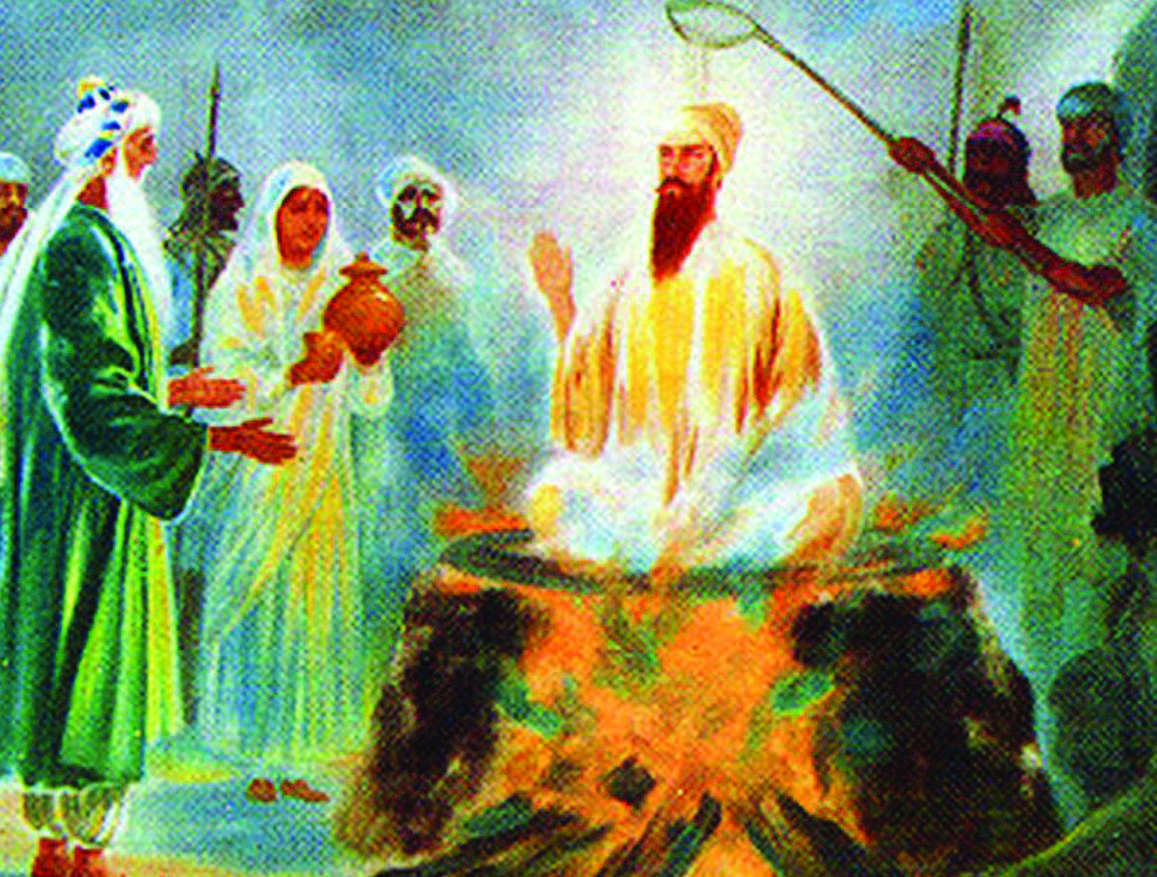
    Since Jahangir was on his way to Kashmir, he asked Murtaza Khan to deal with the Guru. Murtaza Khan immediately jailed the Guru, and ordered the Guru Arjan to be tortured to death if he did not agree to remove the alleged derogatory references in the Holy Granth. The Guru was cruelly tortured. He was made to sit on a red hot iron sheet. They poured burning hot sand on his body. The Guru was dipped in boiling water. The bore all of these brutalities with calm serenity, for five long days he was tortured. When the torturers found the Guru unresponsive to their torture they did not know what to do.

    On May 30, 1606 the Guru asked for a bath in the river Ravi by the side of the Mughal fort. Thousands of followers watched the Guru who could barely walk make his way to the river with tears in their eyes. His bare body was covered with blisters, Guru Arjan repeated over and over; “Sweet is Your will, O God; the gift of your Name alone I seek.” The Guru then calmly walked into the river bank, bidding his farewell to his followers and was gone forever, his body carried away by the currents. This act of brutality in ending such a saintly life with such cruelty was to forever change the course of Sikhism.

  • SRI GURU GRANTH SAHIB

    SRI GURU GRANTH SAHIB

    WADAHANS, FIFTH MEHL, SECOND HOUSE: ONE UNIVERSAL CREATOR GOD. BY THE GRACE OF THE TRUE GURU: Deep within my inner being, is the longing to meet my Beloved; how can I find the Perfect Guru? Even though a baby may play hundreds of games, he cannot survive without milk. The hunger deep within me is not satisfied, O my friend, even though I am served hundreds of dishes. My mind and body are filled with love for my Beloved; how can my mind be comforted, without the Blessed Vision of His Darshan?

    || 1 || Listen, O my dear friends and Siblings of Destiny – lead me to my True Friend, the Giver of peace. He knows all the troubles of my soul; every day, he tells me stories of the Lord. I cannot survive without Him, even for an instant. I cry out for Him, as the songbird cries for water.Which of Your Excellent Virtues should I contemplate? You save even worthless beings like me. || 2 || I have become sad and depressed, longing for my Husband Lord, O my friend; when will I see my Husband with my eyes? I have forgotten how to enjoy all pleasures; without my Husband Lord, they are of no use at all.

    These clothes do not bring my body any pleasure; I cannot dress myself. I bow to those friends of mine, who have enjoyed their Beloved Husband Lord. || 3 || I have adorned myself with all sorts of decorations, O my friend, but without my Husband Lord, they are of no use at all. When my Husband does not care for me, O my friend, then my youth passes away, totally useless. Blessed, blessed are the happy soul-brides, O my friend, who are immersed in their Husband Lord. I am a sacrifice to those happy soul-brides, O my friend; I wash their feet forever.

    || 4 || As long as I suffered from duality and doubt, O my friend, I thought that God was far away. But when I met the Perfect True Guru, O my friend, then all my hopes and desires were fulfilled. I have obtained all pleasures and comforts, O my friend; my Husband Lord is all-pervading everywhere. Servant Nanak enjoys the Lord’s Love, O my friend; I fall at the feet of the Guru, the True Guru.

    || 5 || 1 || 9 || WADAHANS, THIRD MEHL, ASHTAPADEES: ONE UNIVERSAL CREATOR GOD. BY THE GRACE OF THE TRUE GURU: True is the Bani of His Word, and True is the melody; True is contemplative meditation on the Word of the Shabad. Night and day, I praise the True Lord. Blessed, blessed is my great good fortune. || 1 || O my mind, be a sacrifice to the True Name. Become the slave of the Lord’s slaves, and you shall obtain the True Name. || 1 || Pause || True is the tongue which is imbued with Truth, and true are the mind and body. By praising any other than the True Lord, one’s whole life is wasted.

    || 2 || Let Truth be the farm, Truth the seed, and Truth the merchandise you trade. Night and day, earn the profit of the True Name; you shall have treasures overflowing with the wealth of devotional worship. || 3 || Let Truth be your food, and let Truth be your clothes; let your True Support be the Name of the Lord. One who is so blessed receives it, and obtains a seat in the Mansion of the Lord’s Presence. || 4 || In Truth we come, and in Truth we go, and then we are not consigned to reincarnation again. The Gurmukhs are recognized as True in the True Court; they merge in the True Lord.

    || 5 || Deep within they are True, and their minds are True; they sing the Glorious Praises of the True Lord. In the true place, they praise the True One; I am a sacrifice to the True Guru. || 6 || True is the time, and true is the moment, when one falls in love with the True Lord. Then, he sees Truth, and speaks the Truth; he realizes the True Lord throughout the entire Creation.

    || 7 || O Nanak, one merges with the True Lord, when He merges with Himself. As it pleases Him, He preserves us; He Himself ordains His Will. || 8 || 1 || WADAHANS, THIRD MEHL: The mind wanders in the ten directions – how can one sing the Glorious Praises of the Lord? It is totally engrossed in sensuality, constantly tormented by sexual desire and anger. || 1 || Waaho! Waaho! Hail! Hail! Chant His Glorious Praise. The Lord’s Name is so difficult to obtain in this age; under Guru’s Instruction, drink in the subtle essence of the Lord. || 1 || Pause || Remembering the Word of the Shabad, the mind becomes immaculate, and then one sings the Glorious Praises of the Lord. Under Guru’s Instruction, one comes to understand his own self, and then he comes to dwell in the home of his heart.

    || 2 || O my mind, be imbued forever with the Lord’s Love, and sing the Glorious Praises of the Lord forever. The Immaculate Lord is forever the Giver of peace; from Him, one receives the fruits of the mind’s desires. || 3 || I am lowly, but I have been exalted, entering the Sanctuary of the Lord. He has lifted up the sinking stone; True is His glorious greatness. || 4 || From poison, I have been transformed into Ambrosial Nectar; under Guru’s Instruction, I have obtained wisdom. From bitter herbs, I have been transformed into sandalwood; this fragrance permeates deep within my being.

    || 5 || This human birth is very precious; one must earn the right to come into the world. By perfect destiny, I met the True Guru; I meditate on the Name of the Lord. || 6 || The self-willed manmukhs are deluded; attached to corruption, they waste away their lives in vain. The Name of the Lord is forever an ocean of peace, but the manmukhs do not love the True Word of the Shabad. || 7 || Everyone can chant the Name of the Lord, Har, Har with their mouths, but only a few enshrine it within their hearts. O Nanak, those who enshrine the Lord within their hearts, attain liberation and emancipation.

    || 8 || 2 || WADAHANS, FIRST MEHL, CHHANT: ONE UNIVERSAL CREATOR GOD. BY THE GRACE OF THE TRUE GURU: Why bother to wash the body which is polluted by falsehood? One’s cleansing bath is only approved, if one practices Truth. When there is Truth deep within, then one becomes True, and obtains the True Lord.Without pre-ordained destiny, awareness is not attained; talking and babbling, one’s life is wasted away. Wherever you go and sit, speak well, and write the Word of the Shabad in your awareness.Why bother to wash the body which is polluted by falsehood? || 1 || When I spoke, I spoke as You made me speak.

    The Ambrosial Name of the Lord is pleasing to my mind. The Naam, the Name of the Lord, seems so sweet to my mind; it has destroyed the house of pain. Peace came to dwell in my mind, when You gave the Order. It is Yours to grant Your Grace, and it is mine to speak this prayer; You created Yourself.When I spoke, I spoke as You made me speak. || 2 || The Lord and Master gives us our turn, according to the deeds we have done. Don’t speak ill of others, or get involved in arguments. Don’t get into arguments with your Lord and Master – you shall only ruin yourself. If you challenge the One, with whom you must abide, you will only cry in the end.

    Accept and endure what God gives you; tell your mind not to complain in vain. The Lord and Master gives us our turn, according to the deeds we have done. || 3 || He Himself created all, and He blesses them with His Glance of Grace. No one asks for that which is bitter; everyone asks for sweets. Let everyone ask for sweets and see that it is as the Lord and Master wills. Giving donations to charity and performing various religious rituals are not equal to contemplation of the Naam. O Nanak, those who are blessed with the Naam have such karma preordained. He Himself created all, and He blesses them with His Glance of Grace.

    || 4 || 1 || WADAHANS, FIRST MEHL: Show mercy to me, that I may chant Your Name. You Yourself created all, and You are permeating all. You Yourself are permeating all, and You enjoin them to their tasks. Some, You have made kings, while others wander around begging. You have made greed and emotional attachment seem sweet; they are deluded by this delusion. Be forever merciful to me; only then can I chant Your Name. || 1 || Your Name is True, and forever pleasing to my mind. My pain is dispelled, and I am permeated with peace. The angels, the mortal beings, the wise and the enlightened sing of You.

    The angels, the mortal beings, the wise and the enlightened sing of You; they are pleasing to Your Mind. Enticed by Maya, they do not remember; they waste away their lives in vain. Some fools and idiots never remember; whoever has come, shall have to go. Your Name is forever True, and pleasing to my mind. || 2 || Beauteous and blessed is Your time; the Bani of Your Word is Ambrosial Nectar. Your servants serve You with love; these mortals are attached to Your taste. Those mortals are attached to Your taste, who are blessed with the Ambrosial Name. Those who are attuned to Your Name prosper more and more, day by day. Some do not practice good deeds or live righteously; they do not practice self-discipline, and they do not realize the One. Forever blessed and beauteous is Your time; the Bani of Your Word is Ambrosial Nectar.

    || 3 || I am a sacrifice to the True Name. Your rule shall never end. Your rule is eternal and unchanging; it shall never come to an end. He alone becomes Your servant, who contemplates You in peaceful ease. Enemies and pain shall never touch him, and sin shall never come close to him. I am forever a sacrifice to the One Lord, and Your Name. || 4 || Throughout the ages, Your devotees sing Your Praises, O Lord Master, at Your Door. They meditate on the One True Lord. They meditate on the True Lord, when they enshrine Him in their minds. Doubt and delusion are Your making; when these are dispelled, then, by Guru’s Grace, You grant Your Grace, and save them from the noose of Death. Throughout the ages, they are Your devotees.

    || 5 || O my Great Lord and Master, You are unknowable and infinite. How should I make and offer my prayer? I do not know what to say. If You bless me with Your Glance of Grace, then I realize the Truth. I come to realize the Truth, when You Yourself instruct me. The pain and hunger of the world are Your making; please eradicate this skepticism. Prays Nanak, skepticism is taken away, when one understands the Guru’s wisdom. The Great Lord and Master is unknowable and infinite.

    || 6 || Your eyes are beautiful, and Your teeth are delightful. Your nose is graceful, and Your hair is so long. Your body is precious, cast in gold. His body is cast in gold, and He wears Krishna’s mala; meditate on Him, O sisters. You shall not have to stand at Death’s door, O sisters, if you listen to these teachings. From a crane, you shall be transformed into a swan, and the filth of your mind shall be removed. Your eyes are beautiful, and Your teeth are delightful. || 7 || Your walk is graceful, and Your speech is sweet. You coo like a songbird, and your youthful beauty is alluring. Your youthful beauty is so alluring; it pleases You and fulfills the mind’s desires.

  • Diwali at Times Square on September 20th, 2014

    Diwali at Times Square on September 20th, 2014

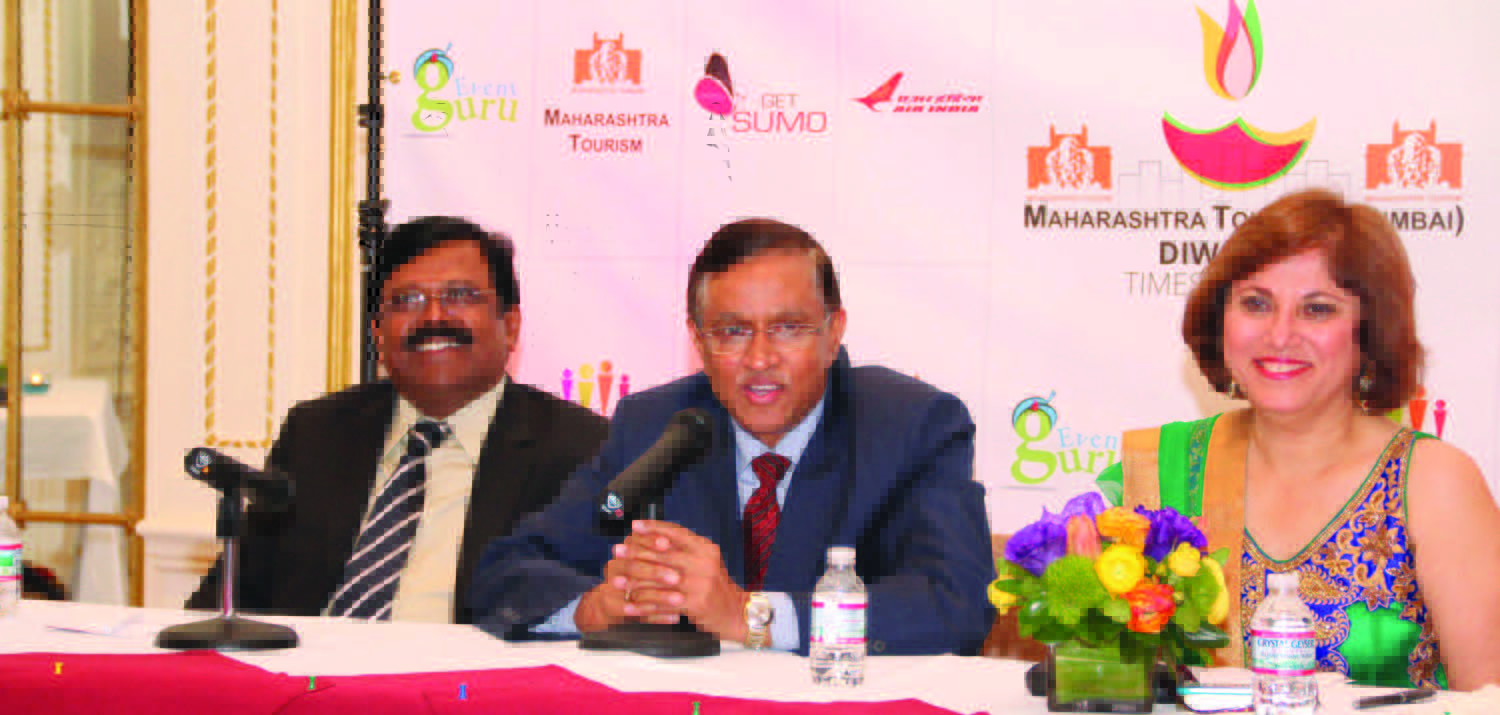
    NEW YORK (TIP): The Maharashtra Tourism sponsored Diwali will be celebrated at Times Square on September 20, 2014. This announcement was made at a press conference held at the Consulate General of India, May 22. Making the announcement, Consul General Mulay said, “It is wonderful to see this event come back to Times Square this year again.

    It’s a glimpse into India’s largest festival and we are going to celebrate it with the world right here in New York City!” Managing Director of Maharashtra Tourism Development Corporation (MTDC) Dr. Jagdish Patil stated “We are pleased to be back again to be part of this festival.


    11
    A view of the gathering

    This year Maharashtra Tourism Development Corporation will showcase to the world Maharashtra’s rich culture, cuisine, pristine beaches, historical and natural heritage preserved for thousands of years”. Mrs. Neeta Bhasin outlining the program said, “Diwali festivities will begin at noon and will include a wide variety of Indian food, dance classes, Indian arts and crafts, a fashion show, photo booths with ethnic outfits, celebrities and much more.

    In the evening, Event Guru will be bringing a “Light up Times Square” Concert”. Event Guru and ASB Communications, the masterminds behind “Diwali at Times Square”, are organizing and managing the event. Neeta Bhasin, President and CEO of Event Guru and ASB Communications, said “We want to show to the world how rich Indian culture and heritage are and how diversified India is.


    12
    Jackson Heights Indian Merchants’ Association Chairman Shiv Dass (extreme right), Mohinder Verma (second from right) and Subhash Kapadia (extreme left) presenting to Mrs. Neeta Bhasin a Congressional proclamation on behalf of Congressman Joseph Crowley.

    We couldn’t think of a better place than the center of the Universe – Times Square!” On the occasion, Mrs. Bhasin was honored with a Congressional proclamation from New York’s 14th Congressional District Congressman Joseph Crowley who also cochairs the Congressional Caucus on India and Indian-Americans.

    Neeta was recognized for her efforts and dedication to further the Asian Indian community in the United States as well as her invaluable contributions to the South Asian community in greater New York City.

    For more Information about Diwali at Times Square please visit:

    http://www.diwalitimessquare.com. For sponsorship or volunteer inquiries please email at info@diwalitimessquare.com (Based on a Press release)

  • DIAZ WANTS TO TAKE THINGS SLOW WITH NEW BOYFRIEND BENJI

    DIAZ WANTS TO TAKE THINGS SLOW WITH NEW BOYFRIEND BENJI

    Actress Cameron Diaz wants to take things slow with her new boyfriend and musician Benji Madden. The 41-year-old has been dating Madden, 35, for a few weeks. Nicole Richie, a close friend of the actress and wife of Madden’s twin brother introduced the duo, reports showbizspy.com. “Benji is madly in love with Cameron, but she wants to take it slow – he isn’t her usual type.

    He has dated a lot of Nicole’s friends in the past but Nicole really wants this one to work,” said a source. Diaz said that she is completely comfortable with her single status, even though it makes married people nervous. “I think that some married people have made the choice to get married, but when they see a person who is living a different way, it makes them stop and think, ‘Wait a second – you mean you don’t need to get married after all?, said Diaz. “I’m totally down for love. And I now know that what is most attractive in a man to me is authenticity? I am attracted to someone who knows who he is,” she added.

  • Eva Green’s raunchy movie poster banned

    Eva Green’s raunchy movie poster banned

    Araunchy film poster featuring actress Eva Green has been banned by America’s movie classification board. She appears on the advertisement for “Sin City” sequel “A Dame to Kill For”, brandishing a gun and wearing a sheer bathrobe which clearly shows her breast, reports contactmusic.com. Officials at the Motion Picture Association of America (MPAA) have disapproved of the image due to “nudity…visible through sheer gown”. A spokesperson for the thriller’s distributor Dimension Films declined to comment but it is thought executives will work with MPAA members to find a compromise.

  • Blended

    Blended

    Story: Jim (Sandler) and Lauren (Barrymore) can’t stand each other after a disastrous blind date. But when they end up in the same suite on an African safari, they have to try and get along. Review: Going about their everyday lives in a suburban American town are Jim and Lauren.

    Both have a brood of kids from their respective earlier marriages. Of Lauren’s two boys, one is on a permanent sugar rush while the other lasciviously leers at porn mags. Jim’s daughters are mostly angels, except for the eldest, Hillary (Thorne) who is frustrated by people constantly mistaking her for a ‘dude’ rather than a girl. Her Tudorstyle pageboy hairdo doesn’t help matters. Jim takes Lauren to a Hooters restaurant on a blind date where they are served by a giggling bevy of busty waitresses.

    The sleaziness of it all has Lauren wanting to bolt for the door, never to see Jim again. But fate (and a supremely predictable plot) has other plans. They would meet again in Africa, and even share the same resort suite, thanks to tickets purchased from mutual friends who planned to go there themselves, but cancelled out. After being greeted by an overly enthusiastic concierge Mfana (NGom) in Africa who mistakes them for a quarrelling couple with a lot of kids, the gags that follow range from somewhat funny to cheesy.

    The movie’s first scene that involves Barrymore flushing a toilet is indicative of the kind of humour you’ll find in here. The resort’s singing group ‘Thathoo’ are like a bunch of mad minstrels, but funny nonetheless. They pop into the frame at various points in the movie.

    In their unintentional quest for love, Jim and Lauren’s lives and dealing with loss, single parenthood and divorce, offers an interesting and unintentional insight into suburban middle class America. Sandler is firmly in his comfort zone and Barrymore is the cute person she is in most of her films. The movie is no doubt funny, but the genuinely good jokes are just by the handful.

  • Modi earns appreciation in US media for his SAARC outreach

    Modi earns appreciation in US media for his SAARC outreach

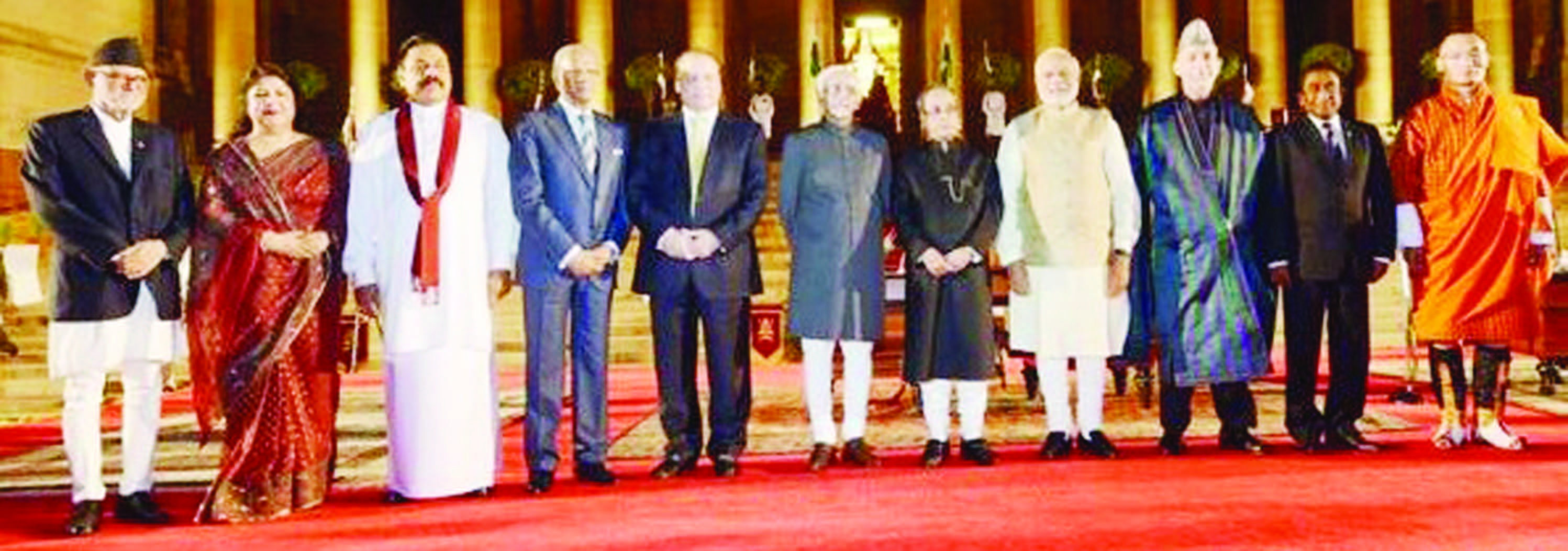
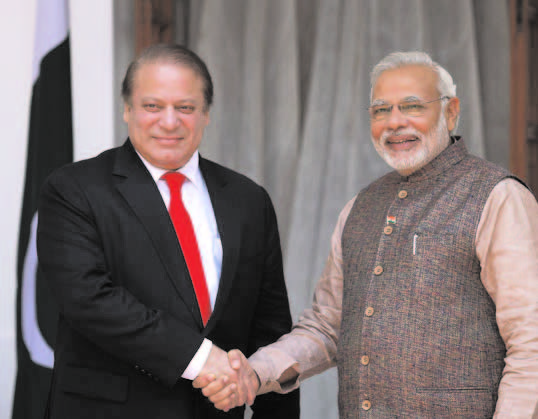
    NEW YORK (TIP): Prime Minister Narendra Modi has earned enormous appreciation in the American media for his out-of-the-box and successful diplomatic outreach that saw the leaders of South Asian nations, notably Pakistan, attend his swearingin ceremony, followed by bilateral talks with each one of them on his very first day in office.

    Noting that the attendance of Pakistan Prime Minister Nawaz Sharif and other SAARC leaders “signals an early effort by Modi to strengthen political and economic ties in the region”, Time magazine spoke of the belief among many observers that the Modi Government “may take on a more Asia-centric approach to foreign policy”, even if the US continues to be an important ally.

    Modi’s initiative in reaching out to Sharif after his “hard-line oratory on Pakistan” during the recent election campaign was seen by The New York Times as a move that offers “some hope that the two countries may resume a tentative peace process after a year and a half of frosty silence”.

    The paper, however, advanced the view that further steps towards dialogue may prove difficult, given the past experience when talks have “derailed repeatedly over security issues, finally coming to a halt after cross-border skirmishes in Kashmir early last year, when an Indian soldier was beheaded”.

    Participating in the Voice of America’s Encounter program, Lisa Curtis, South Asia expert from The Heritage Foundation, felt that despite the conciliatory gestures, there are hardline currents under the surface in both Pakistan and India.

    “If, God forbid, we have some kind of major attack in India, I think we’re going to see a tougher response from a BJP Government than we would have expected to see under Congress,” Curtis said. Modi isn’t looking to pick a fight with Pakistan, she said and noted that Sharif “will have to ensure that the military backs him in anything he does with India”.

    “He’s learned the hard way that he certainly (can’t) defy the Pakistan military. In terms of the Pakistan military calculations, it’s unclear if they’re interested in having Pakistan engage a BJP Government or not,” said Curtis. Writing in the Foreign Policy magazine, South Asia expert Neil Joeck from the University of California, Berkeley, notes that Modi’s victory could offer a new chance to the Obama administration to make good on its much-touted “Asia pivot” vision.

    “India has arguably been the least appreciated and attended to element of Obama’s foreign policy in Asia. The President started off on a good foot by inviting then- Prime Minister Manmohan Singh for a state visit in November of 2009 but little developed subsequently,” writes Joeck, blaming the Obama administration for looking at India “through the prism of Pakistan’s historic grievances, rather than in the context of a broader global strategy”.

  • KUKU MATHUR KI JHAND HO GAYI

    KUKU MATHUR KI JHAND HO GAYI

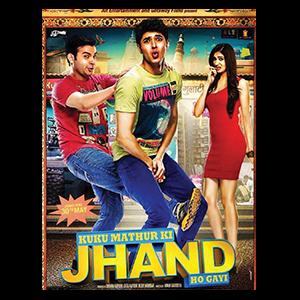
    Story: Kuku and Ronnie are childhood chaddibuddies. In their late teens, life takes a turn and they grow up and grow out of each other. But will their dosti be back after a short break? Review: Here’s a dosti-yaari story packaged and dished out in pure Dilli dhaaba-style – with local tadka (no extra toppings). With a young, fresh star-cast – minus frills and fanfare. No mundas baring bronzed six-pack bods or gori mundis dancing to disco bhangra, ‘Yo-Yo’ style (Hadippa!).

    It’s as simple as aloo paratha with lassi. Gettit? Meet Kuku Mathur (Siddharth) a naive, middle-class Delhi boy (a bin maa ka ladka) living with his strict father who has scholarly ambitions for him, but Kuku dreams of opening his own restaurant. Ronnie (Ashish), his dhai-baje-waala friend (desi 4 AM, eh!) is more easygoing and street-smart. Their only adolescent addiction is drinking fruit-beer in a sari ka godown. After 12th grade, Kuku lands a spot boy’s job in a shady film unit after much struggle. Meanwhile, Ronnie gets so busy in his family ‘blouse-piece’ business that he snubs his buddy.

    Soon, it leads to a bitter fight and Kuku’s life falls apart. Enter, smooth-talker, Kanpur ke Prabhakar bhaiyya (Amit) – a man who has a devious solution for every problem. A flutter of madness follows and good boy Kuku gets ‘cuckooed’. Simply put, Kuku ki jhand ho jaati hai! Sachdeva’s plot is straightforward. The story doesn’t offer much, but it’s the jhund of characters that make you chortle with their spontaneous lines and lingo. The warehouse guard’s mobiliya (telephonic) romance with his gharwali, a phony godman who sells spirituality (‘Mata ka Jagran – Season 2’) and digital divinity (he’s available on WhatsApp and FB!). An OTT director’s film called ‘Facebook Pe Pyaar’ (‘Like’ it?), and of course, Prabhakar (in a fine act) totally entertains.

    Funny situations and scenes with quirky characters provide clean humour but that can’t substitute for the lack of a good, engaging story. Debutants Siddharth and Ashish are decent; and colony ka tota (read: hottie) Simran, as Kuku’s love interest, doesn’t have much scope. Watch this one only if a ‘little birdie’ tells you to. We mean a ‘Kuku’, alright.

  • NYS’ largest Grocery Workers’ Union endorses John Liu for State Senate

    NYS’ largest Grocery Workers’ Union endorses John Liu for State Senate

    Following IUOE and HTC, The United Food and Commercial Workers Union Local 1500 Endorses Surging Liu Campaign

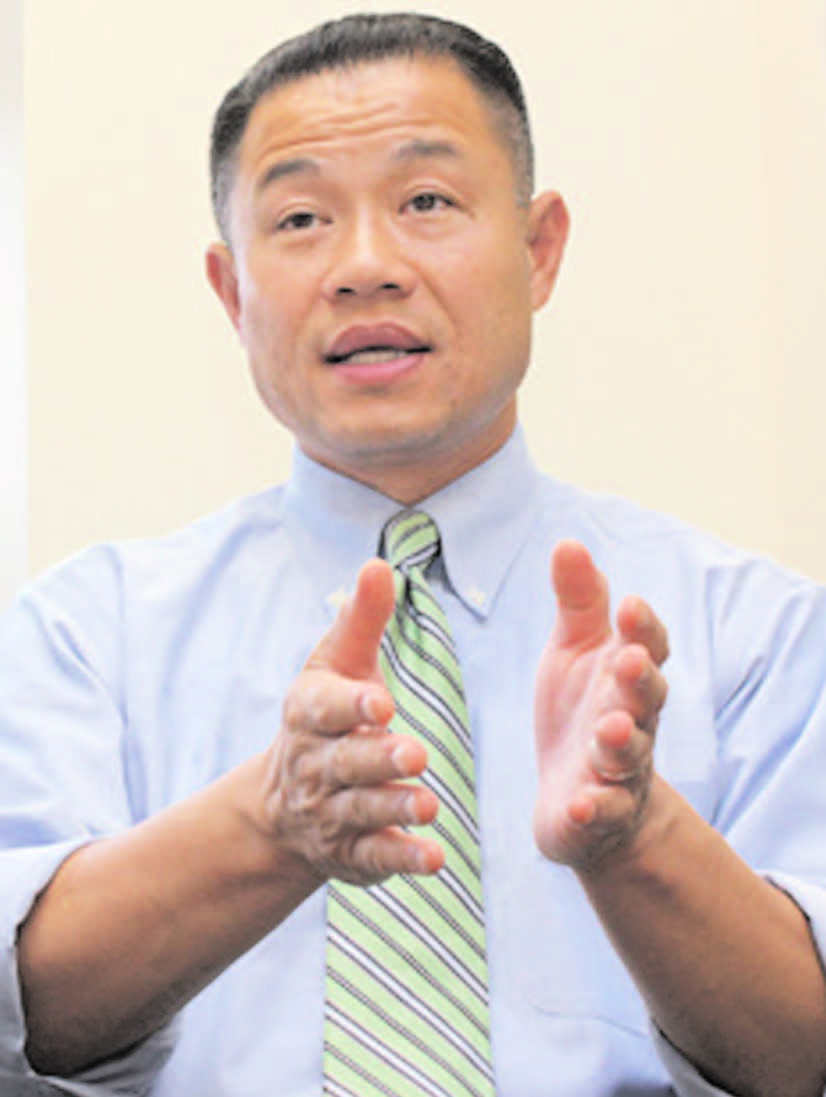
    QUEENS, NY (TIP): Citing Liu’s effective leadership as a true progressive Democrat, the United Food and Commercial Workers Union (UFCW) Local 1500, New York State’s largest grocery workers union with 23,000 members, today announced its endorsement of John Liu to be the next State Senator for the 11th District.

    “Working families in Northeast Queens need an honest, hardworking, and aggressive fighter for the community that is true to the Democratic Party and will stand up for a strong, progressive agenda in Albany. John Liu will fight against wage theft, work hard to keep Wal-Mart out of New York City, and stand alongside our members to raise the wage of the working class in the district,” said UFCW Local 1500 President Bruce W. Both.

    “As New York City Comptroller, John Liu fought hard for low-wage workers and the middle class.We are confident that John will be aggressive in defending the American Dream and the values of the Democratic Party,” said Anthony Speelman, Secretary Treasurer of UFCW Local 1500. “As we begin this campaign in earnest, I am humbled by the incredible support we are receiving from our brothers and sisters in the labor movement.

    It’s an honor to have the endorsement of the hardworking men and women of UFCW Local 1500,” said progressive Democrat John Liu. “UFCW has been a leader in the fight to bring better jobs to our city, raise the minimum wage and defend the hardworking families of our city. Together, we can finally bring real progressive change in Albany on behalf of the people of New York.”

    The UFCW endorsement comes days after progressive Democrat John Liu officially kicked off his campaign for State Senate. He has already picked up the endorsement of the New York City Coalition of Operating Engineers,

    which represents 18,000 crane and heavy equipment operators (Locals 14 and 15); stationary engineers (Locals 30 and 94); school custodians (Local 891); and New York City building inspectors (Local 211). Liu also earned the coveted endorsement of the New York Hotel and Motel Trades Council, AFL-CIO (HTC) with 50,000-plus workers and retirees, and is known for its highly sophisticated political operation.

    UFCW 1500 promotes progressive policies such as demanding Wal-Mart be held accountable for it’s unethical business practices, supporting the expansion of supermarkets into underserved communities, and creating good food, good jobs and good health for all New Yorkers. Other issues of importance to Local 1500 members include aggressive wage theft prosecution, demanding labor standards be attached to corporate subsidies and raising the federal minimum wage.

    The Local union represents over 23,000 members in New York City, Long Island, Westchester, Putnam, and Dutchess Counties and is based out of Westbury, NY. Members of Local 1500 are employed by Pathmark, King Kullen, Stop and Shop, Gristedes, Fairway, D’Agostinos, Key Food, and Shoprite.

  • WHY VIDYA DOESN’T SPY ON HER HUBBY

    WHY VIDYA DOESN’T SPY ON HER HUBBY

    Vidya Balan might be playing a detective in her forthcoming film, but the actress says she has no reason to do jasoosi on real-life husband, Siddharth Roy Kapur. With rumours afloat about trouble in their paradise, she had to face some uncomfortable questions during a promotional event of the film, recently. But the people’s person that she is, Vidya handled the queries with aplomb. When asked if she ever felt the need to spy on her hubby, she said, “He is a very boring and simple man, unki jasoosi mujhe nahin karni padti hai.”

  • MALLIKA SHERAWAT COURTS CONTROVERSY YET AGAIN

    MALLIKA SHERAWAT COURTS CONTROVERSY YET AGAIN

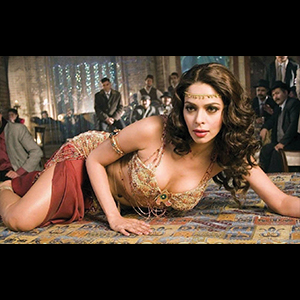
    Mallika Sherawat seems to have done it again – stepped right into a controversy, that is. And this time, she is all set to raise the political temperature this scorching summer with the first look poster of her upcoming flick, Dirty Politics. The poster shows Mallika draped in a tricolour, and has Rajasthan’s filmmaker KC Bokadia in trouble of the political kind. As he says, “workers of a political party from Rajasthan are putting pressure on me to change the tricolour into some other scrap of fabric.” Mallika, in the poster, is shown sitting on the top of an Ambassador with a beacon, right outside the State legislative Assembly of Rajasthan, holding a CD in her hand, but draped only in the tricolour.

    “The poster is provocative,” admits Bokadia, and since the film is said to be based on Jodhpur’s ANM Bhanwari Devi sex scandal, a political party got to know about it. And though tricolour dresses have always led to controversy for the wearer in the past, this time, Bokadia says it is not essentially an Indian flag since there is no Ashoka Chakra in the centre. But then again, resemblance to the colours of our flag is sure to raise eyebrows. But point this out and Bokadia maintains, “It has nothing to do with tricolour, nor is it any political party’s symbol. Also, there is no Ashoka Chakra, so essentially, it is just a piece of cloth in three different colours.” And regarding the “pressure” by a political party, he says, “Sincerely, I don’t want to earn the displeasure of any political party.

    I have always maintained that I can be an admirer of one party, but I do not belong to any party. I am just a filmmaker and using my creativity to put forth my point of view. As far as guidelines are concerned, the poster will be censored according Indian Motion Picture Producers Association guidelines. So, I don’t know why I am being asked by this political party to change it.” The film stars Om Puri, Naseeruddin Shah, Anupam Kher, Jackie Shroff, Govind Namdev, Ashutosh Rana and Rajpal Yadav with Mallika Sherawat (supposedly as Bhanwari Devi).

  • The Simmering Siachen and Indo-Pak Ties

    The Simmering Siachen and Indo-Pak Ties

    “Given the magnitude of what the Army has achieved over the last thirty years in securing not just the Glacier but also the Saltoro, we need to bury the issue once and for all. If for nothing else, we owe it to the blood, shed by our valiant soldiers to accomplish this. Let them at least be secure in the faith that while they guard the ‘final’ frontier, the gates to the country shall not be opened from within!”, says the author.

    In May 2005, as Indian and Pakistani Track I negotiators were reaching a ‘settlement deal’ on the forbidden Siachen Glacier, the then Chief of the Army Staff Joginder Jaswant Singh made an unexpected public statement.

    A deal would only work, he said, when Pakistan agreed to authenticate the 110-km Actual Ground Position Line dividing the two armies. The deal was about the ‘demilitarisation’ of the glacier, a euphemism for India vacating this strategic battle-ground to appease Pakistan and some common alien masters.

    Obviously it fell through. In his Book ‘The Accidental Prime Minister’ Sanjaya Baru accuses General JJ Singh of playing double game: “In closed-door briefings, the General would say that a deal with Pakistan was doable, but in public he would back (AK) Antony when the Defence Minister chose not to back the PM.” JJ Singh, vehemently denies this, but considering the past manipulations of this General including the obnoxious doctrine of ‘Line of Succession’ a jury need to be put out! While so, on this simple revelation, Delhi is simmering even as temperature in Siachen glacier is hovering around -15 degree Celsius! Heat is such that BJP’s highly-visible prime ministerial candidate, Narendra Modi, has taken up this as a grave national security issue and has asked the non-visible Prime Minister to come clean, saying that this matter is going viral on social media. What is going around in the social media is a brief on the subsequent developments on Siachen under UPA II, when Baru was not there.

    In September 2012, the Ottawa based Atlantic Council, alleged to have links with Pakistan’s ISI, announced the signing of an agreement to demilitarize Siachen as part of Confidence Building Measure between India and Pakistan. This agreement was negotiated by a 22-member India-Pakistan Track II team, headed on the Indian side by former Air Chief Marshall SP Tyagi.

    The Pakistani side was led by General Jehangir Karamat, a former Pakistan Army Chief. Meetings were held at Bangkok, Dubai, USA and finally at Lahore. This was despite the clear stand adopted by the Army, Defence Ministry and Ministry of External Affairs against ‘demilitarization’ of the glacier that has huge strategic value for India. There was something sinister in the whole thing because Prime Minister Manmohan Singh has been under pressure from the US to pull back from Siachen as a sop to the Pakistan Army who has been threatening to lease out Baltistan/Gilgit to China.

    It was also known that despite having no actual presence on Siachen, Pakistan continues to claim the territory. As soon as details of the ‘Agreement’ were put up on the internet all hell broke loose. It went ballistic on the military (serving and veteran) email circuit in which I was also a part. Lt. General PC Katoch, a former commander of the Siachen Brigade fired the first salvo: “For decades, India has always distrusted the Atlantic Council, which is perceived to be in bed with the Pakistani military.

    In this arrangement Pakistan has grabbed the strategic opportunity to attain all its key goals. It is surmised that the PM is aiming for a Nobel Peace Prize to recover the legitimacy his Government has lost after a succession of scandals.” This was followed up by an article by me and Kunal Verma (Author, ‘The Long Road to Siachen: The Question Why) in Gfiles in August 2012.

    Otherwise there was no whimper. The just retired General VK Singh’s take on the issue was nuanced and candid: “Let us first be very clear as to who is asking for this socalled demilitarization. The Pakistanis are not on the Siachen Glacier, but are west of the Saltoro Range. Contrary to what they want their own people to believe, they have a zero presence in Siachen.

    I wonder if demilitarization will also result in Pakistan withdrawing from Baltistan, pulling back to the west towards the Karakoram Highway. It is ludicrous that in such circumstances we are talking of demilitarization and withdrawal.

    Our troops are well established and administratively well off so what is the rationale to pull them out of the area?”

    A set of twelve questions were posed by me to the Track II team:

    (i) Who appointed the Team and what are their credentials and service record in the Siachen area?

    (ii) Who all in the Government briefed the Team?

    (iii) Did the Team visit Siachen before inking the agreement?

    (iv) Was the decision of the Team unanimous?

    (v) Decision to demilitarize Siachen has grave military consequences.Were the three Service Chiefs consulted on this?

    (vi) This issue has serious strategic, deployment, logistics, demographic, displacement, cost and time implications for the Army.Was the matter discussed with the Northern Army Commander?

    (vii) After ‘demilitarization’ what additional measures will be required to check terrorist infiltration in Kashmir Valley?

    (viii) Is it merely a Track II initiative? If so why were the members briefed by Government officials before the Lahore meet? Were they not told that this team is “as good as Track I”? Does it not make it official?

    (ix) NSA is stated to have briefed the leader of the Team and one/two members separately? If so why? To firm up a secret deal?

    (x) The whole process, particularly signing of the Agreement was kept under wraps. Why this secrecy?

    (xi) On whose orders did some select members of the Team justify the agreement?

    (xii) Why was such a major decision not discussed in Parliament and President kept informed? None of the Track-II participants answered even a single question, perhaps secure in the knowledge that their actions will be protected by those on behest of whom they had been acting.

    But faced with intense heat from several quarters, including charges of treachery, the Indian co-chair of Track II, a former Air Chief Marshall confessed that they only acted on orders and there were bigger players including the PMO behind this.

    However three of the key players of Track II participated in the email exchanges. It included retired Brigadier Gurmeet Kanwal who authored the original demilitarization plan in 2005 along with a Pakistani Army officer under the aegis of a US think-tank.

    This is what he said: “We have different views on the issue of the demilitarisation of the Siachen Conflict zone…. My views are consistent since the summer of 2005 when I did some research into the subject in a US think tank along with a Pakistani colleague and realised how both the nations were wrong in continuing to occupy their positions…..”

    This was followed-up by the co-chair ACM Tyagi who clarified: “Brig Gurmeet Kanwal has already sent an email…The press release by the Atlantic Council was approved by me and General J Karamat…. Before its release we in India informed the Service Chiefs and many Very Senior Offrs in the establishment dealing with Indo Pak issues…

    There was “No Conspiracy”….We were not appointed by any Government Agency nor do we have anything do with the Govt of India. While it is true that we did meet several Government functionaries to keep us up to date, we take full responsibility for what we say and do…We hold no official post, have no authority and we voice our individual opinions.

    We did not suggest that we should give up Siachen now. All that we agreed upon was that should the two sides ever agree to demilitarise then this could possibly be a way.” Col. (Retd) Ajay Shukla who was PMO’s key facilitator in Track II was pontificating: “The crucial thing to understand about the Siachen Proposal is: it spells out the modalities for the demilitarization of Siachen, but does not say anything about when this demilitarization should be done.

    That vital question-i.e. whether to demilitarize Siachen at all-is a political issue that the two governments continue to discuss in the Track I Siachen dialogue. The modalities of demilitarization, naturally have relevance only after a full-fledged Siachen Accord between the two governments…. It is important to note that the much-vilified Track II dialogue is entirely in line with the Track I official dialogue with Pakistan.

    In that, India insists upon the authentication of ground positions as a prerequisite for demilitarization. The Track II Siachen Proposal explicitly specifies that “The present ground positions would be jointly recorded and the records exchanged.”

    The no-nonsence General VK Singh could not take this crap and retorted: “Shuklaji, what are you defending? A jaunt given by the government to work out an informal agreement that can then be sold to the Public? Your defence is in itself an indictment of the stupidity of the group which attempted this.”

    Forced to the corner Col Shukla turned abusive. He called us all ‘communal scums’ and pointing to me wrote: “Amongst those with the most dubious credentials in this group is you. An IAS officer turned moralizer! What a combination, Sir-ji.” This impotent outburst did not work and for the second time PMO beat a hasty retreat and Siachen lived for another day. But the questions still remain unanswered! Finding the answers is the task cut out for the new Government.

    The Siachen issue has multiple ramifications and in light of Sanjaya Baru’s revelations, it is perhaps vital that a detailed investigation is done.While it is possible that most of the Track II members were acting in good faith, the role of the three key members-Tyagi, Kanwal and Shukla-looks suspect.

    It is also imperative that General JJ Singh’s role is also looked at, because it involves the Institutional Integrity of the Armed Forces that has been sliding down hill. Senior commanders are in the habit of compromising national interest and tell the political bosses what they want to hear.

    This is not acceptable. Given the magnitude of what the Army has achieved over the last thirty years in securing not just the Glacier but also the Saltoro, we need to bury the issue once and for all. If for nothing else, we owe it to the blood, shed by our valiant soldiers to accomplish this. Let them at least be secure in the faith that while they guard the ‘final’ frontier, the gates to the country shall not be opened from within!

  • UK’S INQUIRY ON IRAQ WAR “UNBLOCKED”

    UK’S INQUIRY ON IRAQ WAR “UNBLOCKED”

    LONDON (TIP): The long-delayed results of Britain’s inquiry into the Iraq war came a step closer to publication on May 29 after a deal was reached on how to use notes and phone call records between then Prime Minister Tony Blair and US President George W Bush. The investigation, called the Chilcot Inquiry, was set up by former Prime Minister Gordon Brown to learn lessons from the 2003 US-led invasion of Iraq and its aftermath. It started its work in 2009. The inquiry had hoped to deliver its verdict by the end of 2011 or in early 2012.

    However, five years after it was launched it has yet to report because of problems related to the release of confidential documents. On Thursday, the inquiry announced a deal had been reached between it and the British government on the disclosure of communications between Blair and Bush, previously cited as one of the big stumbling blocks to publication of its report.

    The inquiry’s interest in their communications focuses on how openended Blair’s support for Bush and the war was. Blair, who has repeatedly denied blocking the release of the communications, has said that he stands by his actions. “Agreement has been reached on the principles that will underpin disclosure of material from Cabinet-level discussions and communications between the UK prime minister and the president of the United States,” the inquiry said in a statement.

    “Detailed consideration of material requested by the inquiry from communications between the prime minister and the president of the United States has now begun. It is not yet clear how long that will take.” Gists and quotes The material that the inquiry has requested covers “gists and quotes” from 25 notes from Blair to Bush and more than 130 records of conversations.

    The inquiry is not seeking to use material that reflects Bush’s views, it said. As Britain comes closer to a national election in May 2015 contested by David Cameron’s Conservative party and the opposition Labour party — once led by Blair — the timing of the report’s release has become increasingly politically charged. Anticipating that it could be critical of Blair and hence taint the party he led to three election victories by association, some Labour supporters are uncomfortable about the prospect of it coming out before the election.

    The inquiry heard from senior politicians including Blair, who appeared twice, as well as former diplomats and military commanders. When it does report, much of the focus will be on its conclusions about Blair’s decision to commit 45,000 British troops to the invasion and on the legitimacy of a war in which 179 British soldiers were killed. Critics have long argued Blair deliberately misled the public over the reason he gave for war — former Iraqi President Saddam Hussein’s illegal weapons of mass destruction — which were never found.

  • 13 THEORIES OF WHAT HAPPENED TO FLIGHT MH370

    13 THEORIES OF WHAT HAPPENED TO FLIGHT MH370

    Officials on May 29 confirmed what we have feared for some time — that a relatively tiny search zone in the southern Indian Ocean is not the final resting place of Malaysia Airlines flight MH370. From an underwater mission covering 850 sq km (320 sq mile) where acoustic “pings” were heard, the area being searched has now been extended to around a 60,000 sq km (23,100 sq mile) zone based on satellite data which remains disputed in some quarters.

    The Australia-led search control team estimate it could be August — next year — before this region has been covered, and hopes of finding the Boeing 777’s flight recorders are becoming increasingly dim. With so much uncertainty surrounding the circumstances of MH370’s bizarre disappearance, it has become rich territory for aviation experts, bloggers and conspiracy theorists alike. Here we round up 13 of the most prominent theories as to where the plane ended up, and what went wrong in the first place.

    1. Shot down in a military training exercise
    2. Flown north and shot down deliberately, prompting cover-up
    3. Flown north in the ‘shadow’ of another plane
    4. Tried to land on a desert island beach
    5. Landed at a US military base
    6. Headed for a remote airport in Langkawi, Malaysia
    7. A fire throughout the plane
    8. An explosion in the cockpit
    9. A struggle at altitude
    10. A botched hijack attempt
    11. Pilot suicide
    12. Sabotage – for a life insurance scam or corporate attack
    13. A CIA cover-up

    Finally, the former prime minister of Malaysia Mahathir Mohamad has waded in with his own theory – suggesting that, one way or another, the CIA is definitely hiding something. In a blog entry posted on 18 May entitled ‘Boeing Technology – What goes up must come down’, Dr Mahathir Mohamad makes ten claims including that the plane was taken over remotely by officials working for Boeing and the CIA.

    “The plane is somewhere, maybe without MAS markings,” reads Dr Mohamad’s post on chedet. “Someone is hiding something. It is not fair that MAS and Malaysia should take the blame,” 88-year-old Dr Mahathir, who was Malaysia’s prime minister between 1981 and 2003, alleges. “Airplanes don’t just disappear,” he said, concluding: “For some reason the media will not print anything that involves Boeing or the CIA. I hope my readers will read this.” Boeing have denied Dr Mohamed’s theory.

  • London being ethnically cleansed of white people: UKIP branch chairman

    London being ethnically cleansed of white people: UKIP branch chairman

    LONDON (TIP): A senior politician from the UK Independence Party (UKIP) on Thursday claimed parts of London were being “ethnically cleansed” of white people. Raising an alarm over “disappearing diversity”, the party’s Harrow branch chairman Jeremy Zeid tweeted: “The almost absence of white faces in Ilford is worrying. Mike Gapes is so busy being ‘right on’ he is either blind to or deliberately complicit in the ethnic cleansing of Ilford which I’m sure will be called racist.”

    Ilford, in the London Borough of Redbridge, is one of the most ethnically diverse places in the UK. Just over 42% of residents are white and a third were born outside the UK. Gapes is the Labour MP for Ilford South. The UKIP had performed strongly in last weekend’s European Parliament vote, topping all rivals. Zeid’s comments came a day after one in every three Britons admitted to being racially prejudiced against people of other races.

    According to the British Social Attitudes Survey, published on Wednesday by the National Centre of Social Research (NatCen), 30% of more than 2,000 people surveyed said they were prejudiced against people of different races. The figures show 3% said they were “very” prejudiced against people of other races and 27% said they were “a little” prejudiced. The figures herald a return to previous levels of racial intolerance before an all-time low in 2001 (25%), NatCen said.

    “The findings are troubling,” said Penny Young, chief executive of NatCen Social Research. “Levels of racial prejudice declined steadily throughout the nineties, but have been on the rise again during the first decade of this century. This bucks the trend of a more socially liberal and tolerant Britain. Our local and national leaders need to understand and respond to increased levels of racial prejudice if we are to build strong local communities.”

    The area least likely to self-describe as racially prejudiced is Inner London (16%) and the area most likely, the West Midlands (35%). Levels of racial prejudice have also been shown to rise with age: 25% of 17-34 year olds, in comparison to 36% of over-55s. A recent report from the think tank Policy Exchange, A Portrait of Modern Britain, said almost one in three people in Britain would be from an ethnic minority by 2050. Non-white people would make up between 20% and 30% of the population by 2050, it said. The current share is around 14%.

  • A new beginning to the peace chapter

    A new beginning to the peace chapter

    Despite reservations in some circles, most Pakistanis welcomed Prime Minister (PM) Nawaz Sharif’s decision to attend Mr Narendra Modi’s swearing-in as the new PM of India at the latter’s invitation.

    Although similar invitations were extended to the heads of state and government of all the SAARC countries, all eyes were focused on the interaction between the PMs of traditional rivals Pakistan and India. And the warm welcome PM Modi extended to Nawaz Sharif raised the hopes of the hopeful, comprising most Pakistanis, while the sceptics, including the Kashmiris, seemed unconvinced. The body language and atmospherics at the first meeting between the two PMs seemed excellent. It could be claimed with confidence therefore, that a good beginning had been made.

    At the glittering swearing-in ceremony at Rashtrapati Bhavan (President’s House) in New Delhi, the SAARC leaders in attendance were joined by a large invited crowd, including political and business leaders and celebrities from all segments of Indian society, including Bollywood’s well known figures.

    Mr Modi’s vigorous welcoming handshake with Nawaz Sharif underlined the mutual desire of the two leaders to nudge their bilateral relationship towards normalisation. Apprehensions accompanying Modi’s rise to the apex office include the fears of the minorities in India, particularly Muslims, about the dark past of Mr Modi, especially in the Gujarat massacre of Muslims in 2002 when he was the chief minister.

    Perhaps aware of his polarising and divisive past, Mr Modi’s message after taking oath of office was to build an ‘inclusive’ India with a relatively lean cabinet, the latter reflecting his slogan: “Minimum Government, Maximum Governance”.

    This is intended to reinforce the election platform on which Mr Modi ran, emphasising good governance and economic development rather than the Hindutva agenda of the Bharatiya Janata Party (BJP) or the even more extreme stance of the BJP’s ‘mother’ movement, the Rashtriya Swayamsevak Sangh (RSS), which on the eve of the swearing-in ceremony and meeting with Nawaz Sharif, belligerently threatened that if Pakistan did not correct course vis-à-vis India, Mr Modi would be forced to press the nuclear button against it.

    On his part, PM Nawaz Sharif opened his innings in New Delhi with the statement that there existed a great chance to open a new chapter, starting from where he and former BJP PM Atal Bihari Vajpayee left off in 1999. He offered attractive investment opportunities to Indian businessmen, which no doubt went down well with the proven business-friendly Modi.

    It goes without saying that enhanced trade and business opportunities between Pakistan and India are to the mutual benefit of both despite the naysayers and sceptics in Pakistan. Trade between the two countries is officially at around $ 2.5 billion, with the balance heavily tilted towards India, whose exports account for $ 1.75 billion of the total.

    Around $ 3 billion trade is believed to be routed through Dubai, again tilted heavily in India’s favour and which deprives both countries of tax revenues. The issue of Most Favoured Nation (MFN) status, which India has long ago extended to Pakistan but has not been reciprocated, may now be revived under the new title of Non- Discriminatory Market Access (NDMA).

    While the positives of the warm welcome to PM Nawaz Sharif and the overwhelming run of opinion in Pakistan that it was the right decision to accept the invitation from Mr Modi are welcome, there are still many issues that remain to trouble relations between the two South Asian neighbours.

    Memories of 1999, when General Musharraf’s adventure in Kargil effectively sealed the fate of the Sharif- Vajpayee rapprochement, haunt the renewed process of normalisation. However, 2014 is a very changed scenario from 1999. Pakistan is beset with trouble on its western border, including a homegrown Taliban insurgency that has been described as an existential threat to Pakistan’s security rather than any external enemy.

    The military therefore appears, contrary to conspiracy theorists, to be on board regarding the critical need to normalise relations with India on the eastern border. That of course does not mean that long standing issues such as Kashmir and the Pakistan-India rivalry for influence in Afghanistan are about to disappear.

    They can cause tensions between Islamabad and New Delhi again as in the past. However, internally the fears of the minorities in India, particularly Muslims, at the rise to power of Modi have been underlined by a communal clash in his home province Gujarat on the very day he took oath. The underlying communal tensions lingering from 2002 burst forth into clashes between the Hindu and Muslim communities after an innocuous traffic accident.

    Reportedly, the first one-to-one meeting between PMs Nawaz Sharif and Narendra Modi yielded the expected positions of both sides. India raised the issue of terrorism and closure of the Mumbai attacks case. Pakistan seemed to agree on cooperation to overcome terrorism while emphasising the economic side of bilateral relations. Naturally, such summits are always followed up by experts and officials’ working out of the details of the vision of their leaders.

    Let us hope that that process will now proceed with dispatch, in contrast with the virtual halt during the Congress government’s later tenure. – The Daily Times

  • Ready for humanistic exchanges: Li Keqiang

    Ready for humanistic exchanges: Li Keqiang

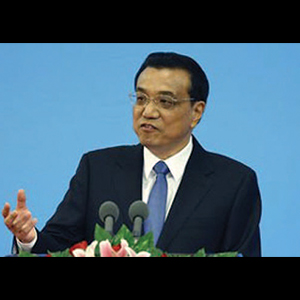
    BEIJING (TIP): Chinese Premier Li Keqiang told PM Modi that China was willing to enhance exchanges in the “humanistic field” and other areas, and look for “more converging points of interest” to jointly contribute to peace, stability and prosperity, according to the official Xinhua news agency. Neither leader specially mentioned the border dispute. But Modi said “outstanding issues” must be dealt from “the strategic perspective of our developmental goals and long-term benefits to our peoples”. He welcomed greater economic engagement between the two countries. Li urged Modi to push ahead construction of the Bangladesh-China-India-Myanmar economic corridor.

  • China sets target of 2 million extra babies annually

    China sets target of 2 million extra babies annually

    BEIJING (TIP): China has set a target of producing two million extra babies annually, health officials said on May 29. This will mean an 11% jump in the country’s birthrate. The target is part of the policy to reverse the one-child norm and encouraging couples to go for a second child to fight the specter of a seriously aging society. China practiced severe population control policy for three decades resulting in fewer young people than the aged.

    Economists predict China would fail to compete with a young nation like India with its vast youth population and face severe shortages of skilled manpower in years to come. “One of the ways being adopted to boost child births is dealing with shortage of maternity beds,” said National Health and Family Planning Commission deputy minister Wang Guoqing. Birth limits were introduced in 1980 to curb population growth and to deal with growing demand for water and other resources. Urban couples faced severe fines if they had more than one child. Women were often forced to abort fetuses or to be sterilized even though such measures are illegal.

  • UN security council renews mission in Somalia

    UN security council renews mission in Somalia

    UNITED NATION (TIP): The UN security council on May 29 extended a UN mission in Somalia for one more year to continue providing “good offices” in the country’s peace and reconciliation process. In an unanimously adopted resolution, the 15-member Council commended the United Nations Assistance Mission in Somalia (UNSOM) for its first 12 months of operation and decided to “extend UNSOM’ s mandate for a period of 12 months”, Xinhua reported.

    According to the resolution, the mandate of UNSOM includes providing United Nations “good offices” functions in support of peace and reconciliation; providing advice on peace- and state- building; coordination of international donor support; government capacity building on human rights; and human rights monitoring and reporting. It also condemned “in the strongest terms” recent terrorist attacks perpetrated by Al-Shabaab in Somalia and the region, underlined the importance of holding perpetrators to account.

    and reiterated that terrorist attacks will not lessen its resolve to support the peace and reconciliation process in Somalia. Expressing “deep concern” about the humanitarian situation as well as the reports of human rights violations in the country, the council members urged the Somali government to ensure that all perpetrators of serious violations of international humanitarian and human rights laws are held accountable. On May 2, 2013, the security council unanimously voted to establish a new UN Assistance Mission to be based in the national capital of Mogadishu. The mandate of this political mission began June 3. Somalia has been torn asunder by factional fighting since 1991 but has recently made progress towards stability

  • MAKING A FRESH START

    MAKING A FRESH START

    Photo caption: “We should remove fears and misgivings about each other……..We should rid the region of insecurity and instability”, said Nawaz Sharif .

    Nawaz Sharif’s India trip for the inauguration of Narendra Modi was in itself such a seismic event – the first time ever for a Pakistani leader – that it would have been unrealistic to expect any substantive breakthroughs. Instead, this was a battle for public relations and setting the ground for an improvement in relations further down the line.

    In this Nawaz excelled, particularly with the poignant touch of calling on former Indian prime minister Atal Behari Vajpayee at his residence. Vajpayee’s visit to Lahore to meet with Nawaz in 1997 is still fondly remembered as a rare high point in Pakistan-India relations and served as a reminder to Modi that there is a history of the BJP engaging Pakistan positively.

    The meeting between Nawaz and Modi hinted both at the prospects for peace and the likelihood of trouble in the months ahead. Nawaz focused, as he always has, on engagement but Modi spoke mostly of terrorism, particularly the Mumbai attacks of 2008.

    The way to work through these troubles, as Nawaz well understands, is by engaging in other issues first and broaching matters of disagreement once ties have improved. The Indian Foreign Secretary Sujatha Singh was more hopeful in her press briefing, expressing confidence that Pakistan would soon grant India Most Favoured Nation trading access, now rebranded as Non Discriminatory Market Access. She also said that Modi had accepted Nawaz’s offer of a return visit to Pakistan. In his own brief remarks to the press, Nawaz once again sung the song of peace.

    That the word “peace” can even be uttered with the hardline Modi in power is in itself a testament to the surprising developments of the past few days. A point to note was that the Indian side did bring up specific issues of concern but the Pakistani PM talked of our issues only in general diplomatic terms?

    While a measure of optimism is in order for this unexpected progress, we still need to be wary of likely challenges. Modi’s ideology remains what it is and any attack in India is still sure to be blamed on Pakistan, with the inevitable recriminations to follow. If Modi does indeed visit Pakistan, which could be a very distant prospect, we can also expect a lot of hostility stemming from his actions during the massacre of Muslims in Gujarat.

    The commitment of the military to peace with India is also in question. The two leaders have done what no one expected but the chances of reverting back to script still remain high. –

  • UN urges Lebanon election as soon as possible

    UN urges Lebanon election as soon as possible

    UNITED NATIONS (TIP): The UN security council is urging that Lebanon hold its presidential election “as soon as possible.” A statement issued May 29 by the council expresses disappointment that the election didn’t take place on time, and it calls on Parliament to “uphold Lebanon’s longstanding democratic tradition” and make sure the election occurs “without external interference.” Lebanon’s last president, Michel Suleiman, completed his six-year term on Sunday without a replacement, plunging the country into a political vacuum.

  • Ukraine military helicopter shot down, 14 dead

    Ukraine military helicopter shot down, 14 dead

    SLOVYANSK (UKRAINE) (TIP): Rebels in eastern Ukraine shot down a government military helicopter on May 29 amid heavy fighting around the eastern city of Slovyansk, killing 14 soldiers including a general, Ukraine’s leader said. Acting President Oleksandr Turchynov told the parliament in Kiev that rebels used a portable air defense missile on Thursday to down the helicopter and said Gen.

    Volodymyr Kulchitsky was among the dead. Slovyansk has become the epicenter of fighting between pro-Russia insurgents and government forces in recent weeks. Located 100 miles (160 kilometers) from the Russian border, it has seen constant clashes and its residential areas have regularly come under mortar shelling from government forces, causing civilian casualties and prompting some residents to flee. An Associated Press reporter saw the helicopter’s go down and the trail of black smoke it left before crashing.

    Gunshots were heard around Slovyansk near the crash site and a Ukrainian air force jet was seen circling above. It was too dangerous to visit the site itself. The city of 120,000 is in the Donetsk region, one of the two sprawling provinces in eastern Ukraine that have declared independence from the government in Kiev. The Kiev government condemns the insurgency roiling the east as the work of “terrorists” bent on destroying the country and blames Russia for fomenting it. Russia denies the accusations, saying it has no influence over rebels, who insist they are only protecting the interests of Russianspeakers in the east.

    Still, fighters from Russia, including from the battled-hardened region of Chechnya, have been appearing recently in the ranks of the separatists. Also on May 29, an insurgent leader confirmed that his fighters were holding four missing observers from the Organization for Security and Cooperation in Europe and promised that they would be released shortly. Vyacheslav Ponomarev, the selfproclaimed “people’s mayor” of Slovyansk, told the AP that the monitors — who are from Turkey, Switzerland, Estonia and Denmark — were safe.

    “I addressed the OSCE mission to warn them that their people should not over the coming week travel in areas under our control. And they decided to show up anyway,” Ponomarev said. “We will deal with this and then release them,” he said, without setting a specific timeframe. The OSCE had lost contact with the team in Donetsk on Monday evening. Their teams have been deployed to Ukraine to monitor security situation following Russia’s annexation of Crimea and the rise of the pro-Russia separatist insurgency in eastern Ukraine.

    They also observed Sunday’s presidential vote, won by billionaire candy magnate Petro Poroshenko. Poroshenko has promised to negotiate with people in the east but also vowed to uproot the armed rebels. In the most ferocious battle yet, rebels in Donetsk tried to take control of its airport Monday but were repelled by Ukrainian forces using combat jets and helicopter gunships. Dozens of men were killed — some insurgent leaders said up to 100 fighters may have been killed. The mood in Donetsk was calm Thursday, although many businesses have stopped opening due to fears of renewed fighting.

    The separatists in Ukraine have pleaded to join Russia, but President Vladimir Putin has ignored their appeal in an apparent bid to de-escalate tensions with the West and avoid a new round of Western sanctions. Putin has supported an OSCE peace plan that calls for ending hostilities and launching a political dialogue and has said Russia would work with new leader Poroshenko. But Russia has repeatedly urged the Ukrainian government to end its military operation against the separatists. Russian foreign minister Sergey Lavrov on Thursday called for quick international mediation to persuade Kiev to halt what he described as a “punitive operation” in the east.

  • TURKEY’S TOP COURT RULES YOUTUBE BAN VIOLATES RIGHTS

    TURKEY’S TOP COURT RULES YOUTUBE BAN VIOLATES RIGHTS

    ANKARA (TIP): Turkey’s top court, on May 29, ruled that a blanket ban on the popular video sharing site YouTube violated individual rights and freedoms, the prime minister’s office said. YouTube has been banned in Turkey since March 27 after the site was used to spread audio recordings in which the voices of senior government, military and intelligence officials can be heard weighing possible military action inside war-torn Syria.

    The decision was in response to individual complaints to the constitutional court on the grounds of a breach of rights, the PM’s office said. The court decision is “binding” and access to YouTube could be granted in the coming hours, the private NTV television channel reported. Last month, the government said it would keep its block on YouTube in place despite two separate courts ordering that the ban be lifted.

    In March, Turkey also blocked Twitter after it was used to spread a spate of anonymous leaks implicating Prime Minister Recep Tayyip Erdogan and his inner circle in corruption allegations. But the government had to comply with a constitutional court ruling that found the ban on the microblogging site violated free speech. Internet bans ahead of March 30 local elections — in which Erdogan’s ruling party scored a stunning victory — earned Turkey strong rebuke from rights groups deploring the curbs as a setback to freedom of expression in the country that hopes to join the EU.

  • PM Modi Asks Ministers to Fix 100-Day Agenda, Lists Top 10 Priorities

    PM Modi Asks Ministers to Fix 100-Day Agenda, Lists Top 10 Priorities

    NEW DELHI (TIP): At a meeting of his Cabinet on May 29 Prime Minister Narendra Modi asked his ministers to prepare a list of issues that they will take up in the first 100 days in office, with a focus on efficiency, delivery systems and implementation. The PM also has a list of top 10 priorities, sources said.

    HERE ARE THE TOP 10 PRIORITIES:

    • To remove hurdles in economic growth which includes containing inflation as a priority.
    • To prioritize education, energy and water. Modi has repeatedly during his campaigns said that the expectations of the education system remain to be fulfilled.
    • To bring in reforms in infrastructure. Industry experts have in fact called upon the new government to focus on attracting investments in key sectors, especially the infrastructure space, to revive growth and investor confidence. Modi has focused repeatedly in many election rallies to make India a global manufacturing hub.
    • To provide a people-oriented government and governance. Modi has often stressed that mere good governance is not enough, and that it has to be pro-people and pro-active. Good governance is putting people at the center of development process.
    • To ensure time-bound implementation of policy. The BJP has often criticized the UPA for policy paralysis and economic stagnation.
    • To maintain consistency in policy.
    • To promote e-auctioning in government tenders and other government work. The idea is to encourage transparency.
    • To improve inter-ministerial coordination. Modi has already informally asked secretaries of various departments to give their views on whether some ministries should be clubbed to ensure better coordination.
    • To build confidence in the bureaucracy.
    • To empower and provide freedom to the bureaucracy
  • CHINA PM LI KEQIANG RINGS NARENDRA MODI WITH OFFER OF ‘ROBUST PARTNERSHIP’

    CHINA PM LI KEQIANG RINGS NARENDRA MODI WITH OFFER OF ‘ROBUST PARTNERSHIP’

    NEW DELHI (TIP): Chinese Premier Li Keqiang on May 29 called up Prime Minister Narendra Modi and expressed his government’s desire to establish a “robust partnership” with India. Modi, on his part, expressed “keenness” to work closely with China on all “outstanding issues”. Li is the first foreign leader to call up Modi after he was sworn in. Chinese Foreign minister Wang Yi is coming to Delhi on June 8, and could become the first foreign minister to visit India after the new government took over.

    Modi, as chief minister of Gujarat, had visited China in November 2011, much before the West started engaging with him. Modi and Li spoke through interpreters for about 25 minutes. The Chinese leader “congratulated Modi on his victory in the recent general elections and conveyed the Chinese government’s desire to establish robust partnership with the new government of India for further development of relations between the two nations,” the Ministry of External Affairs said. Modi noted that China “was always a priority” in India’s foreign policy, and welcomed “greater economic engagement” between the two countries.

    He underlined his government’s resolve to utilise the full potential of “our strategic and cooperative partnership with China and his keenness to work closely with the Chinese leadership to deal with any outstanding issues in bilateral relations by proceeding from the strategic perspective of our developmental goals and long-term benefits to our peoples”, the MEA said.

    The two leaders agreed to keep up frequent high-level exchanges and communication. Modi also thanked Li for his earlier message of felicitation, and extended an invitation through him to President Xi Jinping to pay a visit to India later this year. China had formally greeted Modi, and sent a special message through Indian Ambassador to Beijing Ashok K Kantha during Kantha’s meetings with Wang and State Councillor and Special Representative for the border dispute, Yang Jiechi.

    Li had greeted Modi immediately after he was sworn in as Prime Minister, saying China viewed India as a “natural cooperative partner”, and was ready to work with the new Indian government to take their strategic cooperative partnership to a “new level”. Modi and Xi will have an opportunity to meet during the BRICS (Brazil, Russia, India, China and South Africa) summit, to be held in Brazil in July. Meanwhile, US Secretary of State John Kerry became the first leader to call up the new External Affairs Minister Sushma Swaraj. Kerry said the US looked forward to “re-energize ties” with India. Swaraj also got calls from her counterparts in the UK, Australia, Canada, Israel, South Africa and the UAE.