Month: May 2014

  • THAI MILITARY JUNTA SUMMONS LEADERS DEPOSED IN COUP

    THAI MILITARY JUNTA SUMMONS LEADERS DEPOSED IN COUP

    BANGKOK (TIP): Thailand’s military summoned the deposed cabinet and rulingparty leaders to report May 23 to a new junta that seized power a day earlier in a coup which has triggered US-led international censure. Claiming to act to halt months of deadly political turmoil, a new military regime under the tough-talking army chief declared a nationwide night-time curfew, curbs on civil liberties, and ordered masses of rival demonstrators off Bangkok’s suddenly hushed streets.

    The junta headed by General Prayut Chan- O-Cha suspended most of the constitution, drawing rebukes from Washington, Europe, and the UN Secretary-General, who all called for civilian control to be restored. Members of the now ousted Cabinet, along with leaders of the Puea Thai party that had been in power, were told to report to the military in central Bangkok at 10am (0300 GMT) Friday. Prayut had said Thursday the coup was staged “in order for the country to return to normal quickly.”

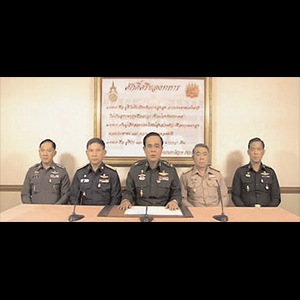
    “All Thais must remain calm and government officials must work as normal,” he said in a brief televised address announcing the takeover, flanked by top military and police officials. It remained unclear what awaited members of the ousted government if they turned up. But moments before the coup, leaders of Puea Thai and their Democrat Party foes along with each side’s rival protest leaders were taken away by the military from Bangkok talks called by Prayut to bridge their differences.

    Their whereabouts remained unknown early Friday. US Secretary of State John Kerry said there was “no justification” for a coup that would have “negative implications” for US relations. He called for “early elections that reflect the will of the people,” while the Pentagon said it was reviewing military cooperation with its Southeast Asian ally.

    Thailand has been locked in a nearly decade-long political crisis since a 2006 military coup that deposed controversial tycoon-turned-politician Thaksin Shinawatra as premier. Since then, a power bloc centred on Thaksin’s family has battled for primacy with a Bangkok-based royalist camp closely tied to the powerful military. Thailand’s democratic development has now been interrupted by 19 actual or attempted coups since 1932, interventions that traditionally require the monarchy’s approval.

    It was unclear whether the palace had blessed Prayut’s coup. Some observers see the crisis as a struggle to decide who will run the country when the more than six-decade reign of ailing, 86-year-old King Bhumibol Adulyadej eventually ends. Backers of the royalist elite have engaged in several months of escalating confrontation with the democratically elected government that saw Thaksin’s younger sister Yingluck dismissed as premier earlier this month by a controversial court ruling.

    Yingluck and three of Thaksin’s other relatives were among those told to report to military authorities Friday morning. Thaksin lives in exile after a corruption conviction, but his camp retains strong support particularly in rural northern Thailand, and has won every general election since 2001, to the dismay of its military-allied rivals. Experts at the Siam Intelligence Unit, a Bangkok-based think-tank, expect an interim premier to be named and the junta to rule for up to two years and draft a “draconian” new constitution.

    Some fear more turmoil. “The coup is not a solution at all to end the crisis. This will become the crisis,” said Pavin Chachavalpongpun of the Centre for Southeast Asian Studies at Japan’s Kyoto University. “It shows the military has never learned the lesson from 2006,” he said, referring to the cycle of instability stemming from Thaksin’s overthrow. Violence related to nearly seven months of anti-Thaksin protests have left at least 28 dead and hundreds wounded.

    Caretaker premier Niwattumrong Boonsongpaisan was among ministers ordered to report to the army. His whereabouts were unknown. But Chalerm Yubamrung, a Thaksin insider and labour minister until recently, was detained Thursday by the military, his son Doung Yubamrung said. Prayut declared martial law on Tuesday, giving the military draconian powers.

    With the coup, all television and radio stations including foreign broadcasters were ordered to air only a steady stream of army announcements and the junta warned it would block social media platforms that carry anti-coup content. UN Secretary-General Ban Ki-moon was “seriously concerned,” his spokesman said. He urged a return to “constitutional, civilian, democratic rule.” Prayut gave no indication how long the military would rule. It kept the reins for more than a year after the 2006 coup. Anti-Thaksin protesters had demanded the removal of the government and the his clan’s influence in politics, alleging deep corruption. It was not immediately clear how the pro- Thaksin “Red Shirt” protesters would respond.

    Its leaders had said a coup could trigger civil war, but there were no immediate reports of unrest. The coup — which sent commuters scurrying to get home before Thursday’s 10 pm curfew — elicited jubilation from opposition protesters and dismay from government supporters. “Our country has been chaotic and has had no solutions for a long time,” said office worker Arnusit Chenruk, 39, calling the coup a “good” thing.

  • US man falls 70ft into crevasse in Nepal, survives

    US man falls 70ft into crevasse in Nepal, survives

    KATMANDU: An American climber said he fell into a crevasse on a Himalayan mountain in Nepal but managed to crawl to his tent despite broken ribs and an arm before being rescued the next morning. John All of Western Kentucky University said on Thursday that he thought he was going to die after falling some 22 meters (70 feet) into the crevasse with no hope of rescue.

    It took him six hours to crawl out of the hole and another three hours to reach his tent and spent the night in pain before rescuers reached him the next morning, he said in an interview in a Katmandu hotel where he is recovering. All and his research team had moved to Mount Himlung in north central Nepal because the Mount Everest area was closed last month after the death of 16 Sherpa guides in an avalanche. One of those Sherpa guides was from All’s team.

    They were planning to climb Mount Lhotse, a sister peak of Everest. Climbers attempting to scale both the peaks share much of the route. “I thought I was going to die, there was no way out. I was alone,” All said describing his first thoughts after falling into the crevasse on Monday. “I landed on an ice ledge probably 3 feet wide which saved me from falling further into the crevasse.” He broke five ribs and an arm, dislocated his shoulders, suffered internal bleeding and bruised his face and knees.

    He crawled out of the hole using his ice axe but because of his broken ribs and right arm he could only move very slowly. His teammates were in lower camps and would take two days to get to him. Once he got out of the crevasse, he did not have a radio to call for help so he struggled his way back to the tent and barely made it inside. He texted for help on his satellite messenger. His friends responded and arranged for a helicopter rescue.

  • Sikh-Americans raise $3,30,000 for needy students in Punjab

    Sikh-Americans raise $3,30,000 for needy students in Punjab

    WASHINGTON (TIP): A US-based Sikh body has raised $3,30,000 to fund scholarships for bright but poor students to acquire higher education in Punjab. Sikh Human Development Foundation (SHDF) organized a fund raising programme which was attended by Sikh-Americans from across the US. The chief guest of the event, Surender Singh Kandhari, a Dubai-based business tycoon, announced a donation of $1,00,000.

    “Education is the most important treasure that any young man can possess and we are privileged to be in a position to help those in need in Punjab. It is our duty to do so. Good education helps in breaking the cycle of poverty. Giving is a virtue and it is a blessing that we are being asked to give,” he said. “This is also the largest donation ever received by the diaspora community for higher education for students in Punjab.

    In Indian rupees, this is a little over two crores. And this certainly will have a significant impact on the future of Punjab,” said Dr Rajwant Singh, outreach director of the Foundation. The foundation has so far provided 3,418 scholarships, including 537 for the current academic year.

    “More than 1,100 of these children have already graduated and become doctors, engineers, scientists, computer, experts and the like. Many are working in companies like IBM, Microsoft, Infosys, Indian Space Center and other good companies,” said foundation’s chairman Gajinder Singh Ahuja.

  • What does North Korea really look like?

    What does North Korea really look like?

    LONDON: The notoriously secretive North Korean regime has allowed a brief glimpse into what the Communist country actually looks like, after sanctioning a filmed city tour of Pyongyang captured by a cyclist on his bike. The footage, taken by Aram Pam, shows almost deserted roads, clean streets, a complete lack of advertising, simple architecture and few cars, buses or public transport on roads. The Singaporean photographer insists the footage is unedited and said he was granted permission to film — although he was accompanied by officials throughout the trip.

    His companions included a photographer, who he said was present throughout his trip to ensure “all representations of their leaders are photographed in full without cropping and in proper focus.” The video was produced for Pam’s DPRK 360 project, which aims to create a panoramic view of North Korea. But his film has received mixed reviews, with some suggesting Pam’s end product is deliberately benign and omits the problems and difficulties faced by those living within the country’s regime.

    On his Facebook page, he responded to criticism with: “For those asking why I am not photographing prisons and labor camps in North Korea, what makes you think I’ll be able to find them? If journalists who’ve dedicated their lives to uncovering such places already have such difficulty, will a regular Joe like me find them?” The video comes shortly after pictures taken by a Google Glass user Kenny Zhu during a recent trip to North Korea were published. “At the first sight they were able to tell it is a photography device.

    But without internet — [there is] no internet service available for temporary foreign visitors in North Korea — the glasses are just a wearable video camera,” Mr Zhu told CNN. “They were suspicious of the Google Glass at first though, asking me some questions about it — how it work, what does it do, etc… I let them played around with it and they seemed flattered and inquired no more.”

  • Russia seeks explanation from Britain over Prince Charles’ Putin remark

    Russia seeks explanation from Britain over Prince Charles’ Putin remark

    LONDON (TIP): Russia will seek an explanation from British officials on May 22 after reports that Prince Charles, the heir to the British throne, likened Russian President Vladimir Putin to Nazi leader Adolf Hitler for annexing part of Ukraine. During a tour of Canada, the 65-year-old prince told a Jewish woman who fled from Poland during World War Two that “Putin is doing just about the same as Hitler”, according to a report in the Daily Mail newspaper.

    Charles’s remarks, described by a royal source as “well-intentioned” and not meant to be public, stunned political leaders and diplomats in Britain because the royal family does not traditionally voice political views in public. Queen Elizabeth, Charles’s mother, has never aired any such emotive sentiments in public. A spokeswoman for Charles’s office said they did not comment on his private conversations. The Soviet Union lost more than 20 million people in World War Two and the victory over Nazi Germany is celebrated across Russia as a national triumph.

    A senior Russian diplomat from its London embassy is expected to meet a senior officer from Britain’s foreign office on Thursday, according to a source with knowledge of the situation. The source, who spoke on condition of anonymity, gave no further details about the meeting or whether Russia had yet complained about the reported remarks. Prime Minister David Cameron, who has scolded the Kremlin for annexing Crimea and supporting pro- Russian rebels in eastern Ukraine, declined to comment on Charles’s reported remarks. The Russian embassy in London could not be reached for immediate comment.

  • 11 Ukrainian troops dead, 33 wounded by rebels

    11 Ukrainian troops dead, 33 wounded by rebels

    BLAHODATNE, UKRAINE (TIP): Three days before Ukraine holds a presidential vote, pro-Russia insurgents attacked a military checkpoint on Thursday in eastern Ukraine, killing at least 11 troops and wounding at least 33 others in the deadliest raid yet in weeks of fighting. A rebel group who claimed responsibility for the attack said one of their own was also killed.

    AP journalists saw 11 dead Ukrainian soldiers scattered around a checkpoint near the village of Blahodatne, 30 kilometers (20 miles) south of the major city of Donetsk. Witnesses including a medical worker said 33 Ukrainian troops were wounded in the attack and that some of them were in grave condition. All the wounded were being treated at nearby medical facilities. The Ukrainian defense ministry confirmed the attack but wouldn’t comment on casualties. Ukraine’s acting Prime Minister Arseniy Yatsenyuk in televised comments blamed Russia for backing the rebels in the Donetsk and Luhansk regions, which have declared independence from the government in Kiev.

    Thursday’s carnage cast a shadow over Ukraine’s upcoming presidential vote on Sunday, which separatists in the east have pledged to derail. Authorities in Kiev see the vote as a chance to defuse tensions and stabilize the country. Even so, they have admitted it will be impossible to stage the vote in some eastern areas where election officials and voters have faced intimidation and sometimes death threats from the rebels.

    Three charred Ukrainian armored infantry vehicles, their turrets blown away, and several burned trucks were seen at the site in the Donetsk region. A military helicopter landed, carrying officials who inspected the area. Residents said attackers used an armored bank truck, which the unsuspecting Ukrainian soldiers waved through, and then mowed them down at point-blank range. Their account couldn’t be independently confirmed.

    In the town of Horlivka, a masked rebel commander claimed responsibility for the raid and showed an array of seized Ukrainian weapons. “We destroyed a checkpoint of the fascist Ukrainian army deployed on the land the Donetsk Republic,” said the commander, who wore a balaclava and identified himself by his nom de guerre, “Bes,” Russian for “demon.” He said one of his men also was killed.

    “The weapons you see here have been taken from the dead, they are trophies,” the rebel commander said, showing automatic and sniper rifles, rocket grenade launchers and bulletproof vests in the courtyard of the occupied Horlivka police headquarters. “People living in western Ukraine: Think about where you are sending your brothers, fathers and sons, and why you need any of this,” he added. Many in the east resent the government in Kiev, which came to power after a pro-Russian president fled in February following months of protests, seeing it as nationalists bent on repressing Russian-speakers.

    But many locals also have grown increasingly exasperated with the rebels, whom they blame for putting civilians in the crossfire. In the village of Semenovka on the outskirts of Slovyansk, artillery shelling badly damaged several houses on Thursday. Zinaida Patskan, 80, had her roof torn away by an explosion that also shattered a wall. She said she was hiding under a kitchen table with her cat, Timofey, when the shelling came.

    “Why they are hitting us?” she said, bursting into tears. “We are peaceful people!” About 100 Semenovka residents later vented their anger against the central government, demanding that Ukrainian forces cease their offensive against the separatists and withdraw from the region. Speakers at the rally also urged residents to boycott the presidential vote. While fighting raged in Ukraine, Russia’s Defense Ministry said Thursday its forces were leaving the regions near Ukraine as part of a massive military pullout ordered by President Vladimir Putin.

    It said four trainloads of weapons and 15 Il-76 heavy-lift transport planes had already left the Belgorod, Bryansk and Rostov regions. Nato had estimated Russia has 40,000 troops along the border with Ukraine. Gen. Philip Breedlove, Nato’s supreme commander in Europe, told reporters in Brussels that some Russian military movements had been detected but it was too early to assess their size or importance. He said a very large and capable Russian force still remained close to Ukraine.

  • Finance, fertilizers and petroleum ministries to seek subsidy cuts

    Finance, fertilizers and petroleum ministries to seek subsidy cuts

    NEW DELHI: A swathe of ministries — from finance to fertilizer and petroleum — are going to make a case for a reduction in subsidies before Narendra Modi, a move that will push up your monthly expenditure but is expected to help the government cut wasteful spending and revive investment. Sources said the three ministries are identifying subsidies as a key constraint in their presentations that secretaries will make before Modi, starting next week.

    The interaction with the new prime minister is also expected to help the ministries get a fix on the government’s stance on subsidies given that BJP, when in opposition, had repeatedly protested against increase in prices of cooking gas and diesel, while backing the Food Security Act that offers supply of subsidized grains. The petroleum ministry is backing an immediate increase of around Rs 250 a cylinder for subsidized cooking gas, even as the monthly diesel price hike has been resumed so that the gap of Rs 4.40 paise a litre is bridged.

    With the rupee appreciating against the dollar, the gap is expected to narrow to around Rs 3-3.50 a litre and the ministry is in favour of deregulating prices in one go. In addition, it has backed resumption of the direct transfer of cooking gas subsidy to bank accounts and reducing the number of subsidized cylinders given to households from the current level of 12. Although the fertilizer department is not stating a demand to reduce subsidies, it is going to make a pitch for a new urea pricing policy, which will automatically result in a reduction in doles.

    The UPA government had postponed the decision for months.Sources said the twin moves also enjoy the finance ministry’s backing as North Block believes that subsidy reduction will lower the government spending, and cut the level of market borrowings, freeing resources for the private sector to revive investment. “In India, the growth story has always been driven by private sector investment and the only way to do it this time is to reduce the subsidy bill by better targeting the payments to the poor and the needy,” said a source, who did not wish to be identified.

    Lower government borrowing is also expected to pave the way for Reserve Bank of India to cut interest rates, which will again help investment by the private sector. Although UPA ministers such as P Chidambaram were keen on lowering subsidies, the Congress leadership prevented them from initiating such measures. In fact, under pressure from Rahul Gandhi, Manmohan Singh had increased the annual cap on subsidized cylinders to 12 from nine earlier.

    Among all the ministries, the allocation for the petroleum ministry had seen the third highest growth between 2004-05, when UPA took charge, and 2013-14, thanks to the huge spurt in subsidies. An analysis of the latest numbers shows that subsidies as a percentage of total central government spending have increased from a little over 9% in 2004- 05 to almost 14% in the interim budget estimates for 2014-15.

    While fertilizer subsidy has risen four-fold to close to Rs 68,000 crore (interim budget estimate for this year), food subsidies have gone up four-and-a-half times to Rs 1.15 lakh crore. It is subsidies on cooking gas and diesel that have driven up fuel subsidy bill 18 times to almost Rs 63,500 crore. And, this does not include the liability that public sector oil companies — from ONGC to IndianOil — have borne, crippling their financial position.

    Overall, the subsidy bill on the three major items has growth over five-fold, while central government spending has increased three-and-a-half times, necessitating the demand for a change in spending pattern.

  • JITAN RAM MANJHI SWORN IN AS BIHAR CHIEF MINISTER

    JITAN RAM MANJHI SWORN IN AS BIHAR CHIEF MINISTER

    PATNA (TIP): Makhdumpur MLA Jitan Ram Manjhi was sworn in on May 20 as Bihar’s 23rd chief minister. Governor D Y Patil administered the oath of office and secrecy to Manjhi and 17 ministers, including the two new faces of Dulalchand Goswami and Vinay Bihari. Manjhi, 68, was SC/ST welfare minister under former CM Nitish Kumar who resigned owning responsibility for the poor performance of JD (U) in the parliamentary polls.

    He is the third dalit chief minister of Bihar after Bhola Paswan Shastri and Ram Sunder Das, but first from the Musahar caste. All the ministers of Nitish cabinet have been retained. Dulalchand and Vinay Bihari, the two independent MLAs who supported the JD (U) government in writing, have been inducted as cabinet ministers. The ministers who took oath are Vijay Kumar Chaudhary, Bijendra Prasad Yadav, Narendra Singh, Brishen Patel, Ramai Ram, Bhim Singh, Damodar Raut, Narendra Narayan Yadav, P K Shahi, Shahid Ali Khan, Shyam Rajak, Nitish Mishra, Awadhesh Prasad Kushwaha, Gautam Singh, Lesie Singh besides Goswami and Bihari. While Manjhi chaired his first cabinet meeting as CM after the swearing-in ceremony, former CM Nitish denied the opposition charges that the new CM would be remote controlled by him.

    “This government will run directly, and not through remote control,” he said. He said the new CM would work according to his wisdom and fulfill the targeted projects. “I will keep an eye on his working,” Nitish said and reiterated that he would now work among the people. Hitting out at BJP, he said the party was in rumour mongering business and was lying that 50 JD (U) MLAs were in their contact.

    Some BJP and RJD leaders were also present at the swearingin ceremony. The former CM said attempts would be made to create problems for the new government, but it would work with firm commitment. He took pains to explain that it was a big challenge for him to convince the legislators about the reasons behind his resignation.

  • THIS PM IS NOT ‘SAHEB’ FOR FRIENDS

    THIS PM IS NOT ‘SAHEB’ FOR FRIENDS

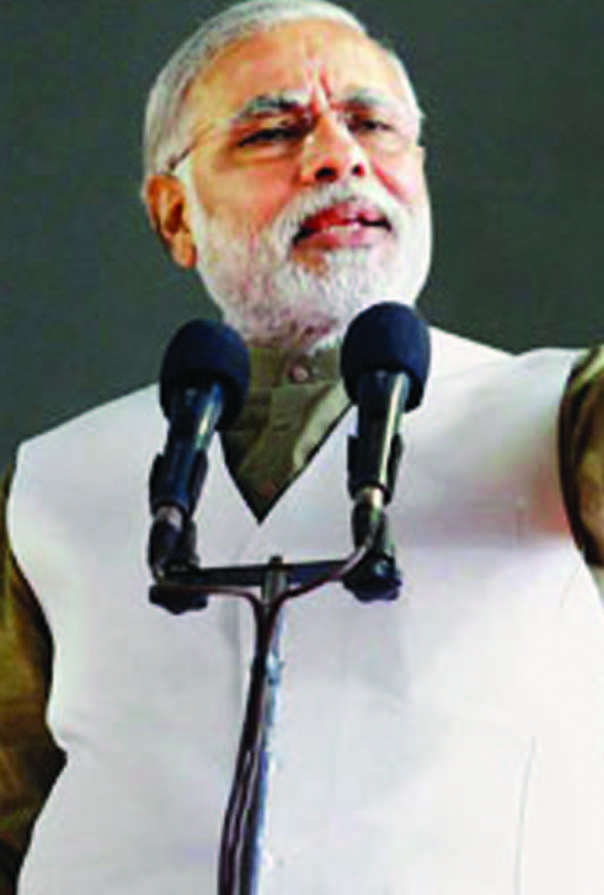
    AHMEDABAD (TIP): “For you, I will always be Narendrabhai, not PM,” PM-designate Narendra Modi told a sea of BJP leaders and supporters who had gathered at the Ahmedabad airport to welcome him after he was appointed prime minister by the President. Modi’s childhood friends say that this humility was not for show -Modi in fact never liked them calling him ‘saheb’; he rather insists on being called Narendra by his buddies. Sudhir Joshi, 64, who studied with Modi from class 5 to class 11, says that Modi has prohibited him from calling him ‘saheb’.

    “After he became the CM, I used to meet Narendrabhai for dinner at least once a year. Initially, I called him ‘saheb’ but he immediately corrected me: ‘Did you call me saheb when we were in school? Please call me Narendra’,” Joshi recalls. Joshi, who is the son of Modi’s family physician in Vadnagar, says that he is proud of his friend becoming the PM and that he had an inkling way back in 2010 that Modi would become the PM. “In 2010, Narendrabhai told me just like that, ‘Sudhir, your friend is marching towards Delhi.

    I will not stay in Gujarat for long’,” says Joshi. Another childhood friend, Shyamal Modi (63), says Modi has remained humble with them and never made them feel about his growing stature in national politics. Shyamal who lives in Vadnagar was a businessman until recently . “When he was elected CM, I told him, ‘You have become Krishna and I am mere Sudama’. Then Modi told me never to say this again and said: ‘A friend is always a friend. He does not become big or small’,” recalls Shyamal, who had caught baby crocodiles with Narendra Modi and took them to Modi’s mother.

    Nagji Desai, another childhood friend who studied with Modi in Vadnagar, recalls: “Once when I called him ‘saheb’, he asked, ‘Have you become so highly educated that you are addressing me as Sir?’” The childhood friends have remained close to Modi despite his meteoric rise in politics. They wish him well now that he has left for New Delhi. “We will go and meet Modi in New Delhi once a year, and keep our old ritual alive,” said Joshi.

  • BLACK MONEY CASE: SC TELLS CENTRE TO FORM SIT WITHIN A WEEK

    BLACK MONEY CASE: SC TELLS CENTRE TO FORM SIT WITHIN A WEEK

    NEW DELHI (TIP): The Supreme Court on May 23 gave the Centre a week’s time to notify a Special Investigation Team to probe black money stashed in foreign banks by Indians. The SIT will be supervised by two retired apex court judges. The top court also asked Centre to secure safely all documents and names of Indian account holders in LGT Bank, Liechtenstein, given to India by Germany.

    SC asked revenue secretary to keep these documents safe and secure. SC had directed the UPA government to duvulge details about LGT bank account holders to petitioner Ram Jethmalani. But the UPA government had filed an application seeking review of the order for divulging these information. On May 23, the government did not seek review and the court sarcastically said now there would be no review of black money related orders.

  • Jaitley, Shourie to be key players in Modi’s team

    Jaitley, Shourie to be key players in Modi’s team

    NEW DELHI (TIP): The Narendra Modi-led National Democratic Alliance (NDA) is all set to form the most stable government since 1984 after winning over 60 per cent of seats in the 16th Lok Sabha. The favourable electoral verdict has unleashed a strong rally in India’s stocks, bonds and currency.

    The Sensex hit the key 25,000 levels, while the Nifty scaled the 7,500 levels on May 16, when results were announced. The rupee is trading near an 11-month high. Overseas investors have intensified buying Indian stocks and bonds and the momentum in markets is expected to continue.

    The union budget, which is likely to be announced in early July, will be the next trigger for markets as it will provide an early glimpse of the new government’s policies, analysts say.

    However, even before the budget announcement, markets are focused on the likely composition of the new government. While political circles are abuzz with who will get the big four ministries of home, finance, defense and external affairs, market participants are firmly focused on the next finance minister.

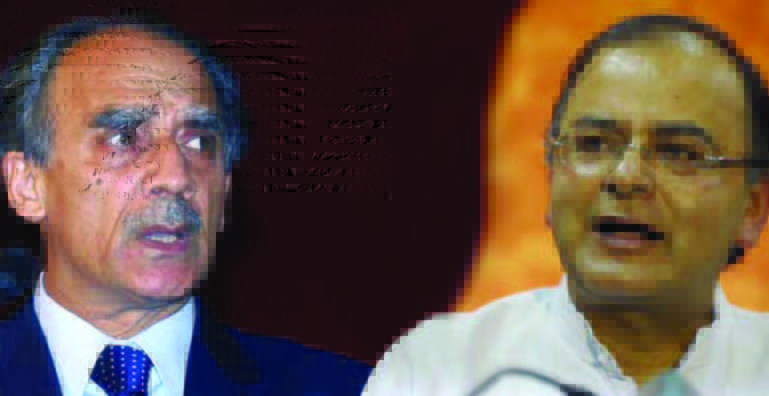
    Barclays analysts Siddhartha Sanyal and Rahul Bajoria see Arun Jaitley as a frontrunner for the finance minister’s job. Jaitley, who was the leader of the opposition in the Rajya Sabha, is one of Modi’s close associates. “A lawyer by profession, Jaitley, like his party, is right-winged and likely to pursue a pro-reform agenda.

    Thus, his appointment would likely be met with approval by markets,” Nomura’s Sonal Varma and Aman Mohunta say. Arun Shourie, a highly regarded technocrat and a former divestment minister in the previous NDA government, is the other competitor. “Shourie advocates focusing on executive announcements as a tool to restore confidence and favors fiscal consolidation,” Barclays noted. Nomura says former RBI Governor Bimal Jalan is a dark horse for the coveted post.

    Some other key economy facing industries such as commerce and industries are also in focus. Former BJP president Nitin Gadkari, who is widely recognized as the person behind many infrastructure projects in Maharashtra, may be given one of the infrastructure-related ministries, given his background, Barclays noted. Subramanian Swamy, a PhD from Harvard University and a former commerce minister, could have an economic portfolio in the new cabinet, the investment bank said.

    There’s also a buzz about the appointment of technocrats as junior ministers. Nomura says these technocrats will incorporate their subject matter expertise into the decision making process. “Piyush Goyal (ex-Investment Banker) and Jayant Sinha (ex-Partner, Omidyar Network) may be appointed as junior ministers in the ministry of finance,” Nomura analysts said.

    Goyal is also a treasurer of the BJP, while Sinha is son of former finance minister Yashwant Sinha. E Sreedharan, widely credited for overseeing the mass rapid transit project in Delhi and other cities, could join the cabinet as railways minister to oversee the upgrading of railways and the construction of a bullet train corridor across India, a cornerstone project outlined in the BJP manifesto, Barclays noted.

    Arvind Panagariya, a Columbia University professor, has openly advocated implementation on a national level of Gujarat’s best practices and could become a part of the next government or take up an advisory position. According to Nomura, he may be appointed as the chairman of the Prime Minister’s Economic Advisory Council. In the last government, this post was held by C Rangarajan.

    Deepak Parekh, chairman of HDFC, could be in the running to become a part of the cabinet. He has supported Raghuram Rajan, the current RBI governor, in undertaking financial reforms, Barclays noted. Modi may induct a smaller cabinet as compared to the outgoing UPA-led government, which had 71 ministers, including 28 cabinet ministers, analysts say. He is also expected to merge several ministries to improve coordination. “The ministries of power, petroleum, coal and non-renewable energy may be merged into a single ministry of energy,” Nomura said.

  • VETERANS MAY GET PLUM PORTFOLIOS IN MODI GOVT

    VETERANS MAY GET PLUM PORTFOLIOS IN MODI GOVT

    NEW DELHI: The lack of experienced players in NDA ranks seems to have opened up the prospect of BJP veterans landing important portfolios in the incoming Modi government. Sources said while there was uncertainty about the chances of former party president Murli Manohar and leader of opposition in the outgoing LS Sushma Swaraj getting ministries which are part of the Cabinet Committee on Security, the situation has perked up somewhat because of what is being referred to as BJP’s “poor bench strength”.

    Sources said while Swaraj could be considered for the ministry of external affairs, Joshi may be entrusted with the crucial defence portfolio. BJP chief Rajnath Singh and leader of opposition in Rajya Sabha Arun Jaitley continue to be seen as the frontrunners for the two other CCS ministries — home and finance, in that order. Party circles also expect former telecom and disinvestment minister Arun Shourie to get an important portfolio.


    24
    Rajnath Singh

    There are indications that in keeping with his thrust on “lean” government, Modi may begin with a mid-sized team. Party sources said a smaller team will be adequate, given the PM’s plan to reduce the size of the government by clubbing ministries with overlapping responsibilities and by even doing away with those which seen as edundancies. Even as odds seemed to have improved for Swaraj and Joshi to get important portfolios, uncertainty continued to hang over whether L K Advani, another veteran who opposed Modi’s anointment as PM candidate, will get to be Speaker.


    25
    Sushma Swaraj

    BJP sources said Advani had expressed interest in the constitutional post which is supposed to be autonomous of the political executive and, therefore, not a subordinate to the PM. However, the leadership is yet to make up its mind, with the experience of the resistance to Modi from Advani partisans only rendering the call that much more difficult.

  • WITH COOK, PERSONAL AIDES, NARENDRA MODI CHECKS IN TO DELHI

    WITH COOK, PERSONAL AIDES, NARENDRA MODI CHECKS IN TO DELHI

    AHMEDABAD (TIP): Narendra Modi, who is shifting to New Delhi as India’s next Prime Minister, on May 22 said “Aavjo (So Long) Gujarat” as he left the state he has ruled for 13 years. “Today I am leaving for Delhi and as they say in Gujarat, I would like to say ‘aavjo’ to 6.25 crore people,” Modi said at the airport in Ahmedabad.

    He is taking his cook, Badri, and his personal aides Dinesh Thakur and OP Singh, to his new home, the Prime Minister’s residence at 7, Race Course Road in Delhi. Badri has served as Modi’s cook and caretaker for over a decade. Modi’s close aide Amit Shah, who has been credited with the BJP’s spectacular haul of 71 seats in Uttar Pradesh, also accompanied him to Delhi.

    Before leaving Ahmedabad, the PM-designate stopped to meet his mother Hiraben, 95, for the second time since his victory in the national election. Modi later tweeted that he was moved when he learnt that his personal staff in Gujarat had set up a shrine in his official car and prayed daily for his security. The 63-year-old will be sworn in as Prime Minister on May 26.

  • FINALLY, SONIA CONGRATULATES MODI

    FINALLY, SONIA CONGRATULATES MODI

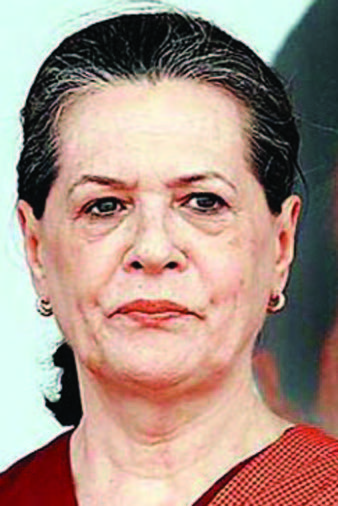
    NEW DELHI (TIP): Days before Narendra Modi’s swearing-in as Prime Minister, Congress president Sonia Gandhi has written a letter, congratulating him on BJP’s victory in the Lok Sabha elections. Congress sources said Gandhi sent the letter to Modi on May 20 after he was elected as leader of the BJP parliamentary party.

    The Congress chief and vice-president Rahul Gandhi had on May 23 refrained from mentioning Modi and his party when the poll results were announced. The Congress’s top brass was slammed by BJP for omitting any mention of Modi or BJP in their congratulatory massage to the “new government”. There has been criticism of Sonia and Rahul for not felicitating Modi by his name after the BJP’s landslide win.

  • TEAM RAHUL UNDER ATTACK AS CONGRESS LEADERS WANT ‘RUTHLESS INTROSPECTION’

    TEAM RAHUL UNDER ATTACK AS CONGRESS LEADERS WANT ‘RUTHLESS INTROSPECTION’

    NEW DELHI (TIP): Congress should opt for ‘ruthless introspection’ and only those experienced in field work should be given leadership roles, party leaders said on May 22.

    Congress leader Milind Deora, who had on May 21 said that Rahul Gandhi’s advisers did not have their “ears to the ground” and those with “no electoral experience” were “calling the shots”, today stuck to his guns, saying his comments are borne out of deep loyalty to the party and pain due to its performance in the polls.

    “My comments are out of emotions of deep loyalty to the party, pain of our performance and a sincere desire to see us bounce back. Nothing more,” Deora said on Twitter. In another tweet, he said, “Field party work & electoral battles are key to comprehend ground realities.

    This should form the basis for leadership posts in Congress.” His remarks are significant as there are murmurs in the party that a number of people having no electoral experience and novices in politics were given key roles in shaping up the decisions of the leadership on issues like campaigning and alliances. Field party work & electoral battles are key to comprehend ground realities.

    This should form the basis for leadership posts in Congress. AICC secretary Priya Dutt, who met Congress president Sonia Gandhi today, also talked of a “disconnect” of the party leaders with the people. Deora lost from South Mumbai to Shiv Sena’s Arvind Sawant while Dutt lost to BJP’s Poonam Mahajan. Senior party leader Satyavrat Chaturvedi appeared to be in agreement with the views expressed by Deora and hoped that an “honest and ruthless introspection” is carried out to rectify the problems.

    Chaturvedi said that while whatever Deora stated might not be fully correct but “large portion of what he said is correct” and called for “ruthless introspection”. “I wish an honest and ruthless introspection goes on … I sincerely hope that we are able to identify mistakes and we have to correct them. Responsibility must accompany accountability,” he said.

    On Deora’s remarks, Chaturvedi said that they were an attempt to introspect what went wrong and that the young leader had expressed his views as a Congress leader. After her meeting the Congress President, Dutt maintained that there was a “lot of criticism” and that “we have to look at where we have gone wrong in last ten years”.

    Holding that UPA had done very good work in last ten years, she said that it has not been able to project it and cash on it. “So obviously there have been a lot of faults,” she said. Both Deora and Dutt are considered to be part of Rahul Gandhi’s team. Deora’s assertions in the past on some issues were also followed up by action taken by the Congress vice president.

  • Suggestions for new govt

    Suggestions for new govt

    New Delhi (TIP): Coalition and patronage politics has led to a bloated administration that often works at crosspurposes. It’s time to shut redundant ministries and bring together related functions.

    • Place external affairs and commerce and industry under charge of one minister. This would be in keeping with Modi’s oft-stated intent to make commerce integral to foreign policy. Another possibility is to merge ministries of commerce & industry, textiles, heavy industry and micro, small and medium enterprises and form a mega ministry for trade & industry. This would bring inter-linked sectors under one roof.
    • Hive off internal security and intelligence functions from the sprawling home ministry.
    • Create an umbrella transport ministry comprising railways, roads, ports and shipping and civil aviation. Else, keep railways separate and merge the other three. These options are key to improving infrastructure and linked to Modi’s focus on tourism, a major job creating sector. A third option is to get back to the earlier surface transport, comprising roads and ports, and leave railways and civil aviation separate.
    • PMO may see induction of mission specialists dealing with infrastructure and job-related sectors.
    • A ministry of energy may be born, including oil & gas, power, coal and renewable energy. This will mean close linkages of natural resources and user industries. Alternatively, there could be a separate ministry for power, including coal, and a separate one for oil & gas, which may include chemicals and petrochemicals. The ministries of coal, mines and steel may also be merged into one (coal and mines used to be part of the same ministry at one point of time).
    • Combine culture and tourism; alternatively merge culture with HRD.
    • An omnibus ministry straddling agriculture, food, food processing, consumer affairs and civil supplies.
    • Consider a merger of rural development and panchayati raj ministries.
    • A Convergence or ICE ministry comprising telecommunications, information technology and information & broadcasting may be considered.
    • Planning Commission may be in for a radical overhaul as it is seen to have lost its relevance in a modern economy.
  • Economic Challenges for Modi’s New Government

    Economic Challenges for Modi’s New Government

    Goods and Services Tax (GST) India’s most ambitious indirect tax reform would replace existing state and central levies with a uniform tax, boosting revenue collection while cutting business transaction costs. GST, which could boost India’s economy by up to two percentage points, has so far faced resistance from various states, including those governed by the BJP who fear a loss of their fiscal powers.

    The BJP aims to address state concerns and implement GST in an “appropriate timeframe”. The Congress party would back the reform in opposition, a senior party member told Reuters earlier this month. The reform needs broad backing because it requires a change in the constitution.

    Central bank policies A Reserve Bank of India panel in January proposed key changes including targeting consumer price inflation and making a committee responsible for monetary policy, and not the RBI Governor alone.

    This would require changes to the RBI Act. The BJP top brass has not spoken widely on the issue, but it will likely be a tough sell for RBI Governor Raghuram Rajan. He has the backing of some global agencies like the International Monetary Fund. Modi’s government may also look to eventually separate the debt management function from the RBI, on the grounds that debt management sometimes conflicts with the central bank’s monetary policy stance.

    Privatisation The new government is likely to focus on selling its holdings in state-run firms that could raise much-needed revenues to trim India’s ballooning fiscal deficit and boost economic growth.

    The rising stock market helped New Delhi raise more than $3 billion (Rs. 18,000 crore at 60 rupees per dollar) via stake sales in the fiscal year to March 31 – but that was only a third of the government’s original target. The outgoing government announced plans to raise Rs. 56,900 crore through asset sales in 2014-15.

    This could help achieve a lower fiscal deficit target of 4.1 per cent of GDP. These estimates may be revised by the next government.

    Subsidies Modi’s government needs to examine how it subsidizes basic commodities if it is to contain the fiscal deficit and avoid a ratings downgrade. Subsidies cost an estimated 2.2 per cent of India’s GDP in 2013-14. The BJP in its manifesto said it will seek greater fiscal discipline without compromising on the availability of funds for development.

    Labor The BJP wants to reform labor laws to boost job-intensive manufacturing and create as many as 1 crore jobs a year for young Indians entering the workforce. Changing the law would be politically tricky, though, and Modi may seek to encourage competition between India’s states to boost job creation.

    Defense More foreign investment in defense would help India reduce imports, modernize weapons systems and speed up deliveries of hardware it needs for operations and training. India, the world’s biggest arms importer, now allows 26 per cent foreign ownership in defense, and proposals to exceed that limit are considered only for stateof- the-art technology. The BJP has said it would allow some greater foreign investment in defense industries.

    Insurance Attempts to raise the cap on foreign investment in India’s $45 billion (Rs. 2.70 lakh crore) insurance sector, to 49 per cent from 26 per cent, have met resistance from employees at statecontrolled insurers and their political backers. A BJP leader said in March the party had held talks with Congress to break the deadlock.

    Banking The next government will need to help staterun lenders battling rising bad loans caused by the slowing economy, rising interest rates and project delays. Stressed loans in India – either bad or restructured – total $100 billion (Rs. 6 lakh crore), or about 10 per cent of all loans. Fitch Ratings expects that ratio to reach 14 per cent by March 2015. Rising bad loans threaten to choke the gradual recovery in Asia’s third-largest economy, according to the OECD. The interim budget in February set aside Rs. 11,200 crore to help the sector meet key capital ratios, but analysts say more money is needed.

    Power A BJP-led government may implement the socalled Gujarat model of distributing electricity that has been widely praised for delivering reliable 24-hour power supplies in the state. Modi provided different power feeds to farmers, households, and companies instead of a uniform feed in his home state.

    Gas pricing In January, India notified the new gas pricing formula that could double the prices of locally produced gas from April 1, but the poll regulator stopped the government from raising the prices until the elections are over. Reliance Industries and its partners BP and Niko Resources last week issued a notice of arbitration to the government seeking implementation of higher gas prices. The BJP-led government may review the formula on the lines suggested by a senior party leader last year and announce the date of implementation of new prices.

    OTHER CHALLENGES

    A landslide election victory for Narendra Modi’s Bharatiya Janata Party (BJP) has created euphoria in India’s financial markets, driving shares to life-time highs and the rupee to its strongest level against the dollar in 11 months. After a decade in opposition, the BJP has promised to repair an economy growing at its weakest rate since the 1980s and tackle stubbornly high inflation. However, the most urgent challenges facing the government, from a large budget deficit to concerns that the El Nino could devastate agricultural output, have no easy solutions.

    DELIVERING A BUDGET THAT LIMITS THE DEFICIT

    Modi’s government will face its first credibility test with markets when it delivers a budget by July that will need to convince investors that India can realistically contain its fiscal deficit.

    To meet a deficit target of 4.6 percent of gross domestic product (GDP) for the year that ended in March, the outgoing government cut spending by $13 billion and pushed about $16 billion in subsidy costs into the New Year.

    That austerity could prove hard to sustain. Spending accounts for 11 percent of GDP, offering a critical growth lever. Continuing to defer payments to state-run companies that would compensate them for selling fuel, fertilizer and food below market prices can create havoc with their finances and make them rely on borrowing to fund operations.

    Meanwhile, tax revenues are unlikely to recover immediately in a weak economy. The government’s tax-to-GDP ratio has slipped to 10.2 percent from a peak of 12.5 percent in 2007/08.

    The interim budget of the outgoing government in February was greeted with widespread skepticism. It sought, for example, to contain the fiscal deficit at 4.1 percent of GDP in 2014/15, the lowest in seven years, while keeping spending growth at just 10.9 percent compared to a recent average of about 15 percent.

    Standard & Poor’s has a negative outlook on its “BBB-minus” rating for India, and has said the new government’s policy agenda will determine whether India can avert a downgrade to “junk” status.

    NARROWING THE CURRENT ACCOUNT DEFICIT

    A sharp narrowing of the current account deficit, to under 2 percent of GDP in 2013/14 from a record high of 4.8 percent the previous year, was helped by steps to curb gold imports.

    Higher duties and other restrictions almost halved gold imports, but the moves have been deeply unpopular. Gold smuggling surged after the measures, casting doubt on reported data.

    The BJP promised to review gold import duties within three months of coming to power. That may please gold buyers, but not investors, as concerns about the current account deficit sent the rupee to a record low last August.

    Fixing the structural challenges that keep the current account deficit wide, such as the weakness of manufacturing exports, could take years to reverse.

    DEALING WITH RBI AND EL NINO

    The new government may face a factor beyond its control: the El Nino weather pattern, typically associated with weak rains.

    Analysts say El Nino could batter India’s farm output. Citigroup estimates that below-average rainfall in the June-September monsoon could shave 0.50-0.90 percentage points off its economic growth forecast and lead to a spike in inflation.

    Surging prices could spark tension with the central bank, whose governor, Raghuram Rajan, has made containing inflation a priority. The Reserve Bank of India wants to bring down consumer price inflation to around 6 percent from the current 8.6 percent by January 2016, which would probably mean more interest rate increases. It has raised rates three times since September.

    REVIVING PRIVATE INVESTMENT

    Market expectations of Modi are based largely on perceptions of his track record as chief minister in Gujarat, where he is widely credited with attracting investment.

    However, analysts say replicating that nationwide will be difficult, given that states wield much of the power in approving projects. Credit Suisse estimates that only a quarter of pending projects depend on central government approval.

    Capital investment contributes nearly 35 percent to India’s economy, but it barely grew in the fiscal year that ended in March as delays in clearances and funding issues grounded many infrastructure projects.

    That is particularly the case with state electricity boards, which remain hobbled by losses caused in part by the high cost of fuel and their inability to raise prices correspondingly.

    Short of recapitalizing state utilities, the central government has few choices in pushing for a restructuring.

    RECAPITALISING STATE-RUN BANKS

    India needs to address a $100 billion pile of bad loans at its state-run lenders – about 10 percent of all loans. Fitch Ratings expects stressed assets to reach 14 percent of loans by March 2015.

    The bulk of these bad loans are related to infrastructure projects, which have made banks circumspect in lending.

    The interim budget set aside 112 billion Indian rupees ($1.89 billion) to help the sector meet the minimal capital ratios mandated by Basel III norms, but more will be needed.

  • SP dissolves all state units, Akhilesh spared

    SP dissolves all state units, Akhilesh spared

    LUCKNOW: Samajwadi Party (SP) national president Mulayam Singh Yadav on Thursday dissolved his party’s state unit. But his son and chief minister, Akhilesh Yadav, got way with it and would continue to be SP state chief. The fresh move has led to demands of similar action against other senior party leaders, who headed the Lok Sabha election campaign. Akhilesh had, on Wednesday, sacked 36 heads of corporations a day after Mulayam indicated he was in no mood to spare those responsible for the party’s humiliating defeat.

    A section of the party, particularly the younger lot, which has been at the receiving end of the dissolution of the state unit, has demanded action against senior leaders at the helm of affairs during the elections. “The senior leaders cannot escape their responsibility. They were the ones who selected the candidates. Why should not they be held responsible for the debacle?” asked a party leader.

    The party had given tickets about a year in advance. But at least 40 candidates were replaced and some of them as late as three months before the elections, said a youth leader. “This automatically created rebels within the party — something which was completely avoidable,” he said.

  • Arvind Kejriwal in custody: Protest off but AAP will target Nitin Gadkari

    Arvind Kejriwal in custody: Protest off but AAP will target Nitin Gadkari

    NEW DELHI (TIP): The Aam Aadmi Party suspended all forms of protest against the judicial custody of Arvind Kejriwal and said that it would instead start a door-to-door campaign against BJP leader Nitin Gadkari. Kejriwal on May 21 refused to furnish a bail bond of Rs 10,000 in a defamation case filed by Gadkari and chose to go to jail instead. The decision was taken after senior AAP members Sanjay Singh and Ashutosh met Kejriwal in Tihar on Thursday morning. By evening, to counter charges that it made the allegations without proof, the party put out documents and the video of Kejriwal’s press conference in 2012 where he made revelations about the irrigation scam in Maharashtra, linking Gadkari with it.

    A meeting of Delhi volunteers has been organized on May 23 evening where the party will decide on its next course of action, including a protest against the section of law under which Kejriwal has been imprisoned. AAP has also opposed the lower court ruling, claiming that asking for a bond or sending to prison were not the only options available to the magistrate.

    “Section 88 of the CrPC, under which the magistrate gave Kejriwal the two options, states that ‘when any person for whose appearance or arrest the officer presiding in any court is empowered to issue a summons or warrant, is present in such court, such officer may require such person to execute a bond, with or without sureties, for his appearance in such court, or any other court to which the case may be transferred for trial’.

    The operative word is ‘may’. Even the Supreme Court has said that there is no need for such bonds because of which thousands of people are languishing in jails unnecessarily,” said senior AAP leader and lawyer Prashant Bhushan.

  • Cong allowed Modi wave to sweep country: Jyotiraditya

    Cong allowed Modi wave to sweep country: Jyotiraditya

    BHOPAL (TIP): Day after former Union minister Milind Deora blamed AICC vicepresident Rahul Gandhi’s advisers for the party’s decimation in the Lok Sabha polls, former Union minister Jyotiraditya Scindia said on May 22 the “Congress Party is responsible for allowing the Modi wave to sweep the country”. Scindia was on a two-day trip to Gwalior, Guna and Ashoknagar to thank voters of his constituency for his victory.

    Speaking to reporters in Ashoknagar, Scindia said, “The space for Modi was created by Congress. In the past five years, there was lack of communication with the people. The government introduced welfare policies, but failed to convince voters about its intention. And this is where BJP stepped in.” Scindia argued there was also a huge communication gap between the government and the party.

    “To fill this gap, the party will have to introspect and project a new leadership at the Centre and in the states,” he said. Not just Scindia, former Congress MP from Dewas, Sajjan Singh Verma,who lost the poll, claimed UPA-Centre had introduced various welfare policies, but the gains were booked by BJP governments. Verma, a staunch follower of senior Congress leader Kamal Nath, said, “UPA was hit by scams, but governments in states are embroiled in bigger scams, but the party failed to communicate this to the people.”

    Verma also said Modi had mobilised a youth brigade to build his brand. But Congress leaders made no such effort for Rahul Gandhi. “Congress got wiped out because our leaders failed to realise that elections are won by propaganda and media management,” he said.Verma also said the first major blow to Congress came from Anna Hazare’s Lokpal movement against corruption.

    “Our party president Sonia Gandhi was extremely unwell and Rahul accompanied her to the US for treatment. But as soon as he returned, Rahul should have walked up to Anna Hazare and accepted his demand for Lokpal Bill. The people would have got the message,” Verma said.

  • MIDSUMMER MIDNIGHT MUMBAI

    MIDSUMMER MIDNIGHT MUMBAI

    Cast: Sara Khan, Paras Chhabra
    Direction: Braj Bhushan
    Genre: Mystery
    Duration: 2 hours 15 minutes

    Story: In the middle of the night, a man walks into a police station to report his own murder. The cops not only find the complainant’s dead body but also receive phone calls from him, checking on the investigation! Review: The film begins well. The events manage to keep you intrigued and seek truth just like ACP Ajay (unintentionally funny cop, who says ‘posisun’ for position and ‘investigasun’ for investigation).

    Just when you feel that M3 might turn out to be a decent ‘whodunit’, the film changes its genre and becomes an inconsequential love triangle. From cops interrogating suspects, we are suddenly transported to multiple songs (all dream sequences) and in no time, everyone forgets about the paranormal case. Worse is when the mystery unfolds. In order to make the climax unpredictable, the writer forgot to connect it with the initial build-up.

    Basically, all your questions remain unanswered in the end. The very petite Sara Khan looks too small in front of the muscled hero. The hero plays the role of a struggling singer but looks like an aspiring actor from Lokhandwala. Supporting actors try too hard to be funny. Songs sung by Udit Narayan are probably the only good thing about the film.

  • Indian American Akhil Rekulapelli wins National Geographic Bee: Beats 11 yearold Ameya Mujumdar for the title

    Indian American Akhil Rekulapelli wins National Geographic Bee: Beats 11 yearold Ameya Mujumdar for the title

    WASHINGTON, DC (TIP): Akhil Rekulapelli, a 13 year-old eighth grader from northern Virginia’s Loudoun County, is the winner of the 2014 National Geographic Bee. Rekulapelli emerged as the victor of the Bee’s 26th annual iteration on Wednesday, May 21, beating out competitors from each state and territory in the US. His win as the national Geographic Bee champion continues a streak of Bee dominance displayed by Indian American students, who have also regularly topped the Scripps National Spelling Bee in recent years, too.

    Last year, Indian-origin 12 year-old Sathwik Karnik, of Massachusetts, won the National Geographic Bee. Of the top 10 competitors in this year’s Geographic Bee, exactly half were Indian, including Rekulapelli. The others were Coloradao’s Pranit Nanda, Florida’s Ameya Mujumdar, South Carolina’s Krish Patel, and Wisconsin’s Asha Jain. All, like Rekulapelli, are in eighth grade except for Mujumdar, who is in fifth grade.

    All are also 14 except Mujumdar, who is 11. Despite being the youngest, Mujumdar ended up placing second, losing to Rekulapelli at the very end. Rekulapelli stumped his competition by correctly answering a question about oil drilling in the Neuquén province of a major South American country (it’s Argentina, by the way). Now that he’s the US champion, Rekulapelli will represent the nation at the International Geographic Bee, which will take place in Monaco later this year.

    Geographic Bee host Soledad O’Brien, alongside National Geographic Society President and CEO Gary E. Knell, presented Rekulapelli with a check for $50,000 to be used towards a college scholarship. According to National Geographic, Rekulapelli is already looking to attend either Stanford, or his state’s University of Virginia.

    Additionally, Rekulapelli has won a trip to the Galapagos Islands, which he will take with National Geographic’s Lindblad Expeditions. Mujumdar walked away with $25,000 for his second-place performance. The third place winner, Tuvya Bergson- Michelson of California, received $10,000.

  • PRIYANKA CHOPRA TO TURN PRODUCER WITH ‘MADAMJI’

    PRIYANKA CHOPRA TO TURN PRODUCER WITH ‘MADAMJI’

    Priyanka Chopra seems to be all set to turn producer with her next venture. The actress has already given a nod to Madhur Bhandarkar’s Madamji to play the leading lady and is now planning to produce the same.

    Piggy Chops had been toying with the idea of producing a film since a long time, but seems like the actress was waiting for just the right opportunity. And for her very first project as a producer, PeeCee has decided to collaborate with the National Award-winning director.

    It was Madhur Bhandarkar’s Fashion which got the actress a National Award, and Priyanka is being doubly sure with her maiden venture. According to a Mumbai Mirror report, “Priyanka and Madhur had a meeting before she left to shoot the on-going schedule of the Mary Kom biopic.

    She told Madhur that she was bowled over by the script and definitely wants to be a part of the project.” However at that time Priyanka Chopra was unable to give immediate dates, with her hands full of projects like Omung Kumar’s Mary Kom biopic and Zoya Akhtar’s Dil Dhadakne Do. Seems like Madhur Bhandarkar saw Priyanka’s eagerness to produce and act in the film.

    A co-operative Madhur has shifted dates, and the shooting schedule of Madamji will being only in October 2014. The story of Madamji will revolve around the life of an actressturned- politician and is reportedly inspired from real life politician – Jayalalithaa.

  • UN urges Security Council to consider steps on Syria aid access

    UN urges Security Council to consider steps on Syria aid access

    UNITED NATIONS (TIP): UN chief Ban Ki-moon on Thursday urged the Security Council to consider what action it should take to force compliance with its demands that millions of besieged Syrians who have been denied emergency relief get access to much-needed humanitarian aid.

    “Despite the clearly expressed will of the council and the best efforts of humanitarian actors, resolution 2139 has yet to make a meaningful difference to the lives of the millions of people in need in Syria,” Ban said in a report to the council.

    Three months after the council achieved rare unity to unanimously approve resolution 2139 demanding rapid, safe and unhindered aid access, including across borders, Ban said it was time for the 15-nation body to “to urgently consider what steps it will now take to secure compliance with its demands.”

  • FBI’S ‘WEED’ PROBLEM IN CYBERWAR

    FBI’S ‘WEED’ PROBLEM IN CYBERWAR

    The United States may have indicted a group of Chinese army officials for cyberespionage, but the FBI has a problem of its own: weed. The bureau is struggling to hire young hackers because its longstanding drug policy does not allow the use of marijuana. Unfortunately, hackers like their weed.

    “I have to hire a great work force to compete with those cyber criminals and some of those kids want to smoke weed on the way to the interview,” FBI director James B Comey told a White Collar Crime Institute conference on Monday. Theoretically, the bureau’s hiring policy states that applicants cannot use marijuana for at least three years before applying for a job.

    But with 2,000 positions to fill this year, the FBI may have to relax its no-drugs policy if it wants to win the cyberwar. Asked by a member of the audience if his stoner friend could apply for a job at the bureau, Comey suggested he “should go ahead and apply”. On May 21, the US laid criminal charges on five Chinese military officials accused of masterminding government-led cyberhacking to steal trade secrets from six major American companies.