Month: May 2014

  • Reps. Joe Crowley (D-NY) and Ami Bera (D-Calif.) commend elections in India

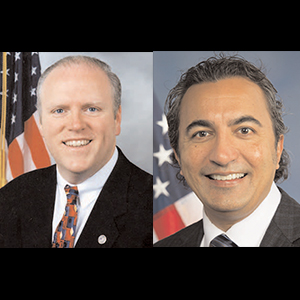
    Reps. Joe Crowley (D-NY) and Ami Bera (D-Calif.) commend elections in India

    NEW YORK (TIP): Rep. Joe Crowley (D-NY)who has represented New York City Congressional districts since 1999 and Rep.Ami Bera (D-Calif.) who has represented California’s 7th Congressional District since 2013, have commended elections in India. “At a time when democracy is under pressure in many corners of the globe, officials are currently tallying votes in the largest exercise of democracy in the world: the elections in India.

    “The numbers are staggering. In an election that took place over several weeks, nearly 815 million voters were eligible to vote at 930,000 polling locations. Indians cast their ballots for control of the Lok Sabha, Parliament’s lower house and the body that chooses the country’s prime minister. “To put this in perspective, the number of eligible voters in the Indian election surpasses the entire population of Europe.

    The number of new voters alone in India exceeds 100 million – just shy of one third of the entire population of the United States. It’s extraordinary to see a country of more than one billion people that could be the world’s most populous nation within a decade, carrying out another election. The world is truly watching history being made. “India’s commitment to democracy is something the United States, as well as other nations, should remember, acknowledge and respect.

    That respect is returned by the Indian people — our country’s common values are one reason why a clear majority of Indians, from all generations and educational levels, hold high opinions of the U.S., according to a recent Pew Research Center Survey. “This dynamic of respect and a desire for greater mutual support is especially visible to those of us who have traveled to India to help strengthen ties between our two countries.

    For all of our differences, we are struck by the many similarities in our political systems: the competing parties, the vigorous debates, the vibrant media and the independent judiciary are signs of democracy in action. “Our ties, however, go far beyond similarities and respect. We have many common underlying interests: we share goals in standing up against terrorism, ensuring stability in South Asia and globally, in growing our economies, and increasing development.

    Indians have also faced many problems similar to our own – after all, it was only weeks after 9/11 that the Indian Parliament was attacked. “If the United States and India can move our relationship further ahead, it could benefit our own constituents, as well as people throughout the world. Working on a path for India’s ascension to the United Nations Security Council is one important way to take concrete steps forward.

    Deepening our technological, security, educational and economic ties in a way that creates more high-paying American jobs is another. Beyond these priorities, India and the United States can collaborate on countless individual initiatives, in areas like research, transportation or development. “One thing is certain: moving closer together will do more good for our two countries than moving apart.

    In many ways, this is already happening organically. With more than 3 million Indian-Americans in the United States, many of whom remain close to families still in India, our people- to-people ties are stronger than ever and expanding by the day. Most Americans interact daily with Indian-American community members, who are visible and active in all aspects of our national life, whether it is business, entertainment, public service, medicine, religion, education and more.

    “The elections in India are a good reminder about the importance of democracy, our countries’ shared histories, and the potential for future growth. But they are also an opportunity to review, renew and reinvigorate our ties with a natural friend and partner”.

  • GM to pay $35 million US fine for delayed response to faulty ignitions

    GM to pay $35 million US fine for delayed response to faulty ignitions

    WASHINGTON (TIP): General Motors Co was slapped on May 16 with a $35 million US fine for its delayed response to an ignition switch defect in millions of vehicles, as federal regulators accused a long line of company officials of concealing a problem that is linked to at least 13 deaths.

    US transportation secretary Anthony Foxx announced the fine, which is the maximum the agency can impose. Other investigations into the automaker’s handling of the recall are being conducted by the federal government and could come with more severe punishments. It was unclear how those additional probes might be influenced by Friday’s actions by the Obama administration, especially after Foxx declared: “What GM did was break the law … They failed to meet their public safety obligations.”

    The ignition-switch defect was originally noticed by the largest US automaker more than a decade ago. But the first recalls began only in February of this year, despite years of consumer complaints. Furthermore, the acting chief of the National Highway Traffic Safety Administration (NHTSA), David Friedman, told reporters that GM employees ranging from engineers “all the way up through executives” were aware of the information years before the recall of 2.6 million vehicles.

    He did not name the executives, and said there was no information that Chief Executive Officer Mary Barra had earlier knowledge about the problems. Barra took over as CEO in mid-January, becoming the first female to head a major automaker. Friedman also slammed GM’s “corporate philosophy” and pointed to internal training documents that discouraged engineers from using the words “safety” and “defect” when identifying product risks.

    CLOSER SCRUTINY

    Besides announcing the $35 million fine, officials said that GM will come under closer scrutiny by federal regulators. The automaker will be required to hold regular meetings with NHTSA to report on efforts to catch safety problems and it also must give the agency monthly reports on any emerging defect issues.

    Democratic Senator Richard Blumenthal of Connecticut criticized NHTSA for failing to spot the defect earlier. “There is no question NHTSA bears part of the blame, a large part,” he said. The faulty ignition switches on Chevrolet Cobalts, Saturn Ions and other GM vehicles can cause their engines to stall, which in turn prevents air bags from deploying during crashes. Also, power steering and power brakes do not operate when the ignition switch unexpectedly moves from the “on” position to the “accessory” position.

    The fine is far from the end of GM’s problems. Congress, the department of justice, the US Securities and Exchange Commission and several states are conducting their own investigations, and GM’s internal probe is expected to be completed within the next two weeks. The company is also weighing whether and how to broadly compensate victims.

    Carl Tobias, who teaches tort and product liability law at the University of Richmond School of Law, said that while the NHTSA probe is separate from the ongoing criminal investigation, “I think it plays back on the DOJ investigation and I’m sure they will take it into account.” He added that GM’s admission that it failed to make a timely report of the ignition defect could increase the company’s exposure to civil lawsuits “principally because people could have gotten hurt in the interim when GM wasn’t making sufficient and timely reports to NHTSA.”

    The consumer group Center for Auto Safety called the $35 million fine a “slap on the wrist to a hundred billion dollar corporation.” It called on the justice department to impose a fine of at least $1 billion on GM.

    SHAKEUP GM

    in recent months has been trying to demonstrate that it is taking quality issues seriously, shaking up its internal safety team and taking other steps that it says will help protect consumers. But consumer advocates have accused GM of resisting moves such as urging owners of the recalled cars to park them immediately until they are repaired.

    Under the steps announced by the government on Friday, GM also agreed to take part in “unprecedented oversight requirements,” including providing full access to its internal investigation and notifying the government of any changes to GM’s effort to make repair parts, the government said.

    Transportation Secretary Foxx and NHTSA also used Friday’s announcement to push Congress to reset the maximum financial penalty to $300 million from $35 million. Prospects for passage of such legislation this year are uncertain. GM shares closed down slightly more than 1 percent at $34.00 on Friday, recovering somewhat from a drop of 2.5 percent earlier in the session.

  • Modi can revive ‘rudderless’ US-India relationship: US experts

    Modi can revive ‘rudderless’ US-India relationship: US experts

    WASHINGTON (TIP): : Two US foreign policy experts have suggested that Bharatiya Janata Party (BJP) leader Narendra Modi can “revive India’s sputtering economy and give new élan to a disillusioned and rudderless USIndia relationship.” Noting that since 1991, India-US “bilateral relationship has gone through many stop-and-go cycles,” James C. Clad and Brent Scowcroft wrote in Foreign Policy magazine that “With Modi in place, the boom part of the cycle is about to start again.”

    “A BJP-dominated central government, led by a proven Thatcher-like and market-oriented Hindu conservative, is likely to prompt another cascade of hype, aided by an enthusiastic new generation of Indian-Americans,” they wrote. “The Modi era may offer a chance to recast US-India ties in more realist mode,” wrote Clad, a former US deputy assistant secretary of defense for Asia, and Manning, a senior fellow of the Brent Scowcroft Centre for International Security at the Atlantic Council.

    “To the degree Modi succeeds in re-energizing India’s economy (as he has done impressively as chief minister of Gujarat), he will give substance, and not hot air, to a deeper US-India partnership,” they wrote. “Perhaps the foundering efforts at a bilateral investment treaty, or even the prospect that India may eventually join the trans-Pacific Partnership, could shape a realistic, forward-looking bilateral agenda,” the experts suggested.

    “Modi’s success will depend on how effectively he empowers the private sector and how he implements the next belated phase of market-centered reforms,” Clad and Manning wrote. The two experts suggested that the US “stay clear of ‘wish’-driven agendas, driven by the American desire for a ‘natural ally’ in South Asia. “Delhi has its own reasons to be wary of China, as Modi stressed during his campaign.

    But don’t expect allegiance to US views on China or major global issues,” they said. “A more modest, focused, and realistic agenda can put the US-India relationship on a more enduring foundation,” they wrote suggesting that while “the economic piece is critical,” the “second foundation remains security cooperation.”

    “As Modi goes, we suspect, so also will go a rejuvenated partnership with India, one based on bedrock interests, not romanticized wishes,” Clad and Manning wrote. “Both countries can and should build a solid, and necessarily more modest partnership, than has been wished since 1991,” they wrote.

  • US media hails ‘India’s moment’ in Modi’s historic win

    US media hails ‘India’s moment’ in Modi’s historic win

    WASHINGTON (TIP): The American media and foreign policy experts greeted the Narendra Modi-led BJP’s historic election victory as “India’s moment” and an opportunity to revitalize the economy and “shape the way India engages with the world”. BJP’s “landslide victory reflects a changing country more willing to extend governance to those outside the established elite”, the influential New York Times said in an editorial advising the Gandhi family to “hand over the leadership to others”.

    “That is the only chance for India to have a credible opposition,” it said The Bharatiya Janata Party’s victory gives Modi, the Times said, “The chance to revitalize the economy and shape the way India engages with the world”. “How he moves forward will matter to Indians clamoring for jobs and development, but also to others, including the US, which sees India as a vital economic and security partner in Asia,” it said.

    “The two countries will have to work hard to overcome the strain built up between them in recent years,” the Times said, suggesting “Modi needs to deliver on his vow to make progress, and he and Washington must confront differences on global trade issues”. The Washington Post wondered whether the “Narendra Modi era (would) be marked by an economic boom or derailed by nationalism. “A frequent visitor to China, he (Modi) clearly aspires to show that India can match Chinese dynamism,” it said in an editorial.

    “What remains to be seen is whether Modi will be the Deng Xiaopeng of India or its Vladimir Putin, a leader whose economic ambitions are derailed by nationalism and authoritarian temptations.” The US, which a decade ago was rapidly growing closer to India, may have difficulty influencing Modi’s course, the Post said, noting both the Obama and Bush administration shunned him “because of his behavior” during the 2002 Gujarat riots.

    “Indians already perceived the Obama administration as neglectful of their country; President Obama will have to play catch-up if there is to be a significant US-Indian partnership in the coming Modi era,” it said. Calling the election result “India’s Moment”, the Wall Street Journal said: “The world’s largest democracy makes a statement at the polls: No to corruption, bureaucracy and dynastic politics, and yes to Narendra Modi’s promise of a country ready to do business.” Modi, it said, “inherits a country that is now impatient with its leaders.

    It remains to be seen whether he and the BJP can refashion it in their own image. “But they are clearly determined to try …to change India for not just an election cycle but for years to come.” Ashley J. Tellis, senior associate at Carnegie Endowment for International Peace, called Modi’s win a “breathtaking landslide”. “A single party with an absolute majority gives Modi the opportunity to redefine Indian politics in a way that the Congress did for many decades before,” he said.

  • Houston to get Mahatma Gandhi statue

    Houston to get Mahatma Gandhi statue

    HOUSTON (TIP): A life-size bronze statue of Mahatma Gandhi would be installed at Irving in Texas State, fulfilling a long-cherished dream of Indian-Americans living in the city. A 7-foot tall and 30-inch wide bronze statue of Gandhi, which was cast in Andhra Pradesh, would be installed on a 6- foot tall pedestal. It would have a granite wall as a backdrop inscribed with Gandhi’s memorable words, as well as quotations from Martin Luther King Jr., Nelson Mandela, Albert Einstein, President Barack Obama and others. Irving has a sizeable population of Indians, and a majority is from Andhra.

  • Accused Boston bomber’s friend suspected guilt: Agent

    Accused Boston bomber’s friend suspected guilt: Agent

    BOSTON (TIP): A friend of the accused Boston Marathon bomber grew suspicious that Dzhokhar Tsarnaev had carried out the attack when he threw away a backpack and laptop he had removed from the suspect’s dorm room, a federal agent testified on May 15.

    Three of Tsarnaev’s college friends face charges of hampering the probe into the blast, which killed three people and injured more than 260. At hearings this week, lawyers for one student, Dias Kadyrbayev, sought to prove that the statements he made to law enforcement four days after the bombing were not voluntary and should not be admitted at trial.

    James Wiroll, a special agent with the US department of homeland security, recalled arresting Kadyrbayev and his roommate Azamat Tazhayakov, both Kazakh nationals, on immigration violations five days after the attack. Wiroll said Kadyrbayev told him he had thrown away the backpack, which contained empty fireworks cases, and a laptop, after coming to suspect that Tsarnaev had committed the bombing.

    “He suspected Tsarnaev was one of the Boston Marathon bombers and he threw the items away,” Wiroll said, reading from a report written shortly after the arrest. Prosecutors on Thursday released some 300 text messages that were sent or received by Kadyrbayev, including a series of messages from April 18 — shortly after the FBI released photos of the Tsarnaev brothers, the Boston Globe reported. In one message, Kadyrbayev writes to Tsarnaev: “u saw the news?” Tsarnaev responds: “Better not text me my friend,” adding, “Lol,” according to the report.

    “If yu want yu can go to my room and take what’s there,” Tsarnaev then wrote. Later that night, Kadyrbayev found Tsarnaev’s backpack, according to the indictment. Tsarnaev is awaiting trial. His older brother, Tamerlan, died in a gunbattle with police four days after the attack. A diplomatic representative from Kazakhstan was present and translated some documents when Wiroll interviewed Kadyrbayev. Kadyrbayev and Tazhayakov were first questioned by investigators four days after the bombing when heavily armed law enforcement agents arrived at their New Bedford, Massachusetts, apartment.

    The next day, they were arrested on charges of violating the terms of their student visas. A stream of federal agents had testified at three days of pre-trial hearings that Kadyrbayev’s interviews were voluntary. “He was relaxed, he was animated when he spoke, at times he would laugh,” said FBI special agent Steven Schiliro, who interviewed Kadyrbayev the night before his arrest.

    Kadyrbayev and Tazhayakov face conspiracy and obstruction of justice charges, which carry a penalty of up to 25 years in prison, while a third man, Robel Phillipos of Cambridge, Massachusetts, faces a less serious charge of lying to investigators, which could mean a possible 16-year sentence.

  • USIBC Congratulates India on Successful Elections: Looks forward to working with new NDA Government

    USIBC Congratulates India on Successful Elections: Looks forward to working with new NDA Government

    WASHINGTON, DC (TIP): The U.S.- India Business Council (USIBC), on May 16, 2014,congratulated India on concluding the world’s largest democratic elections. The industry body looks forward to partnering with the NDA Government to usher in an energetic era of development.

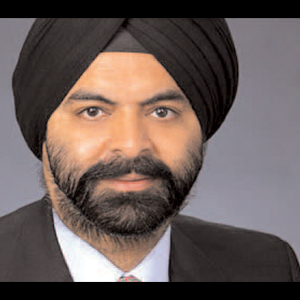
    “The successful conclusion of the largest elections in history calls for recognition and celebration. On behalf of USIBC’s member companies and its Board of Directors, our heartfelt congratulations go out to the people of India and to Mr. Narendra Modi and the NDA. USIBC member companies stand ready to roll up their sleeves and get to work with the new government to advance the U.S.-India partnership and deepen bilateral economic ties,” said USIBC Chairman Ajay Banga, President and CEO, MasterCard.

    “The keys to attracting much needed investment are predictability and transparency. When these fundamentals are consistently applied, particularly to areas like tax and intellectual property, business will boom for both countries,” said Banga. “Bilateral trade currently stands at $100 billion. Increasing trade five-fold is achievable if we work together as partners and avoid protectionist tendencies.

    We must allow for the free movement of skilled professionals, and lift FDI caps in important sectors like insurance and defense.” “Both the U.S. and India have deep pools of entrepreneurial talent and energy, and both countries need to stimulate economic growth and create new jobs. This requires a forwardlooking partnership between these two great democracies,” he added.

    Formed in 1975 at the request of the U.S. and Indian governments, the U.S.- India Business Council (USIBC) is the premier business advocacy organization advancing U.S.-India commercial ties. Today, USIBC is the largest bilateral trade association in the United States, with liaison presence in New York, Silicon Valley, and New Delhi, comprised of 300 of the top-tier U.S. and Indian companies.

  • Obamas list assets between $1.8 million and $7 million

    Obamas list assets between $1.8 million and $7 million

    WASHINGTON (TIP): President Barack Obama and first lady Michelle Obama reported assets worth between $1.8 million and $7 million for last year, little changed from their previous year’s holdings, according to financial disclosure forms released on May 15. The forms, required by law, permit public officials to list their assets in broad ranges.

    As a result, a precise net worth is difficult to ascertain. The forms show the largest jointly owned assets by the president and the first lady were Treasury notes worth between $1 million and $5 million. While the value of their assets is certainly higher than that of most Americans, their mix reflects the financial demands of a 50-something couple with two daughters. Their assets include Vanguard retirement funds and college savings plans.

  • THE BIGGER NEWS OF MODI WIN

    THE BIGGER NEWS OF MODI WIN

    The bigger news is that “India has won” as Modi has put it. An ordinary person has made it to the top, that is the sign of a true democracy, and it’s a positive motivation to the common Indian man – A chai wallah can make it so I one can make it too, if I have the dedication and commitment to do it. Congratulations to Mr. Modi – he worked hard for it and earned it. It reminds me of Obama – an ordinary son of an immigrant made it, and the world cried with him. As a Pluralist, I applaud Modi for the following statement in the interview.

    When asked specifically whether he would make an effort to reach out to every citizen, including Muslims, Mr. Modi replied: “I will never go by this terminology of yours. Even if you drag me, I will not. I will meet my countrymen. I understand only one language that they are my countrymen, they are my brothers”. You may see with whatever color you want, Modi will not go into that color. Good for him! Again, I hope he means it.

    If Mr. Modi fulfills the terms of “rajdharma” (good governance) and takes care of the items listed above, he will earn the trust of the people. Every Indian, with no exception, wants a leader who is just, fair, humble and righteous. It’s a fallacy and roguish to believe that Dalits, Muslims, Christians and others want handouts. On the contrary, all they want is fairness, justice, equal access and equal opportunity.

    If we can learn to respect the otherness of others and accept the Godgiven uniqueness of each one of the 1.25 billion of us, then conflicts will fade and solutions will emerge. Democracy and pluralism (i.e., respecting the otherness of others) runs in our veins, so let’s have faith in our system. If Mr. Modi fails us, we can dump him through ballot or a noconfidence vote, as we did with Indira Gandhi and Vajpayee. To attain greatness and a place in the annals of history, Mr. Modi has a lot more to prove than we can demand.

  • NARENDRA MODI From a tea vendor to prime minister of India

    NARENDRA MODI From a tea vendor to prime minister of India

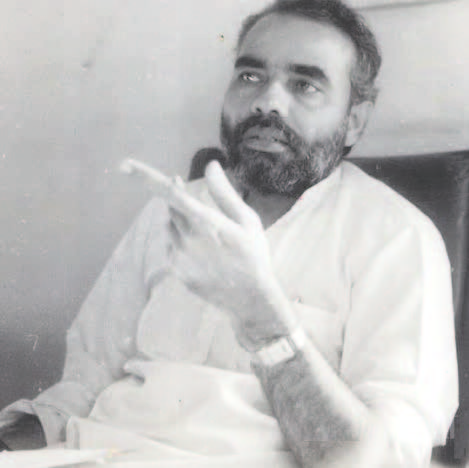
    From selling tea at a stall his father set up at a small village railway station and at a bus terminal at a tender age to the prime ministerial throne at 63, Narendra Modi’s rise is the stuff that fairytales are made of.

    Inspired by the lives and teachings of Gautama Buddha and Swami Vivekananda (whose real name was Narendra Dutta), Modi had left his Vadnagar home at the beginning of his youth, joined the RSS as a pracharak (preacher) and was loaned to its political front Bharatiya Janata Party (BJP) as a fulltime worker.

    Born in a socially backward family in Vadnagar town of Gujarat’s Mehsana district, Modi rose to the throne of India’s PM in such a way that would leave many in wonder. Back in 1990s, he was a familiar figure at the BJP headquarters on Ashoka Road in New Delhi as a low-profile general secretary of the party, always polite, calm and smiling, unruffled by even the most uncomfortable questions from the media.

    But ever since Modi was deputed by the party to his home state Gujarat in 2001 to rescue the BJP from existence-threatening internecine war to succeed chief minister Keshubhai Patel, he has acquired a stern look and an aggression typical of a battle-hardened politician, a battle that saw him rising steadily through the party ranks and striding up the echelons of the organisation, knocking out in the process veterans like LK Advani and Murli Manohar Joshi.

    If Modi was seen as the BJP’s saviour in Gujarat, he was brought in as the party’s prime ministerial candidate at a time when it was out of power for a decade and was struggling with internal squabbles among senior leaders jockeying for positions and prominence. The communal riots in Gujarat which left at least 1,000 people, mostly Muslims, dead in 2002, had made him a deeply polarising figure. Once a poster boy of hardline Hindutva, Modi struggled to shake off that perception by largely steering clear of Hindu nationalist rhetoric on his election campaign trail.

    He pledged to focus on development by generating investments, jobs and restoring business confidence. A Supreme Court-monitored probe found no case against Modi in the riots and he himself denied any wrongdoing. However, many still believe that his government in Gujarat did not do much to stop the riots. During campaigning, Modi has crafted an image for himself of a man who renounced worldly life to become an RSS pracharak and as a decisive leader with an alternative vision and governance for a country caught in a policy paralysis over the last few years.

    He made instant contacts with leading business houses, aspiring young voters, middle class people and those in rural areas yearning for a change in the backdrop of growing frustration over economic slowdown and corruption scandals. The starkly contrasting perceptions about Modi are best typified by a little-noticed war of words between the BJP and the Congress. As Modi surveyed the vast crowds at his poll rallies, one of his top aides proclaimed the wave of support to turn into a tsunami.

    The Congress quickly shot back saying tsunamis leave a trail of death and devastation. Married to Jasodhaben decades ago, a fact he made public only last month while filing his nomination for contesting parliamentary polls, Modi is tech-savvy, often posting his views on social networking site Twitter. DNA India reports: Modi during the phase of his sanyash (seclusion from family life) had just two pair of clothes. But he has been very particular about the way he looks in public.

    He wears wrinkle-free and ironed dresses. He has favourite cloth store Jade Blue of Ahmedabad which he prefers for his dresses. He might not have been provided with a visa in 2005 to the US but the irony is the BJP leader has done a three-month course on public relations and image management in that country. A workaholic, Modi sleeps only four hours. He reports to his office around 7:00am and works as late as 10:00pm or even later. He likes to keep a tab on every change and makes sure to keep all the clippings of what his opposition or critics have to say about him.

    NaMo Rises

    1950

    Narendra Damodardas Modi is born on September 17,1950, in Vadnagar village, Mehsana district. As a youth, he worked in his family’s tea stall. Modi joined the Akhil Bharatiya Vidyarthi Parishad, the student’s wing of the Rashtriya Swayasevak Sangh (RSS), and later joined the parent organisation.

    1987

    Modi joins the Bharatiya Janata Party (BJP) as the young party taps into Hindu nationalism that had engulfed the entire country. The BJP wins a majority in Gujarat in 1995 and Modi quickly rises up the ranks. Very soon, Modi is appointed the party’s general secretary in the state unit.

    1990

    Narendra Modi comes into the limelight as one of the key choreographers of BJP leader L.K. Advani’s Ram Rath Yatra from Somnath in Gujarat to Ayodhya.

    1995

    Modi is appointed as National Secretary of the BJP in charge of 5 states and later promoted to general secretary in 1998

    2001

    Modi gets his big break when he replaces Keshubhai Patel as Gujarat chief minister.

    2002

    In February that year, he faced widespread flak for failing to contain brutal riots following killing of 59 passengers in a train fire in Godhra. More than 1,000 people, mostly from the minority community, were killed in the subsequent riots. Modi is also accused of encouraging the rioters which he has strongly denied.

    2005

    US denies Modi a travel visa for ‘religious intolerance’, causing uproar among his followers.

    2007

    Narendra Modi is elected as Gujarat chief minister for the third time.

    2012

    Elected as Chief Minister for the fourth time, with BJP cornering 115 of the total 182 seats.

    2013

    On June 9, BJP appoints Modi as head of the party’s 2014 election campaign. Advani resigns from BJP posts in protest but backtracks later that week. On June 16, Nitish Kumar, head of the Janata Dal (United), pulls out of a 17-year-old alliance with the BJP, making their opposition to Modi’s elevation loud and clear. On September 13, the BJP announces Narendra Modi as the PM candidate for the 2014 elections.

    2014

    On May 16, the BJP recorded a thumping victory in the Lok Sabha elections under the leadership of Narendra Modi.

  • US Lawmakers congratulate Modi

    US Lawmakers congratulate Modi

    WASHINGTON (TIP): US lawmakers, including the only Hindu- American House member, have congratulated Narendra Modi and his BJP for its sweeping election win, calling it “an extraordinary achievement” for Indian voters. Rep. Tulsi Gabbard who represents Hawaii, congratulated Narendra Modi on his Party’s victory.

    She released the following statement from Honolulu on the results of the Indian election that concluded earlier this week. “I recently spoke with Narendra Modi by phone and congratulated him and the Bharatiya Janata party for winning a majority vote in India’s Lok Sabha. This election was an extraordinary achievement for the 550 million Indians who voted over the course of six weeks in some 930,000 polling locations.

    I look forward to working with Mr. Modi and other members of the Indian government toward our mutual goals of peace, stability, and economic growth in the Asia-Pacific region. A partnership between the world’s two largest and greatest democracies is necessary for us to successfully address the many global challenges we face, including economic growth, bilateral trade, the environment, terrorism, and security.”


    7
    Mark R. Warner, Democratic cochair of the bipartisan US Senate India Caucus, congratulated the BJP and Modi, and said he looked “forward to working with the new Indian government to move the USIndia relationship forward.

    Mark R. Warner, Democratic co-chair of the bipartisan US Senate India Caucus, congratulated the BJP and Modi said he looked “forward to working with the new Indian government to move the US-India relationship forward. “Once the new government is formed, both the US and India should commit to accomplish some specific actions in the first 100 days to demonstrate that we can work together to get things done.” Warner said he believed “opportunities exist in the areas of defense trade, energy, and foreign direct investment, as well as further efforts to advance the bilateral investment treaty”.

  • NARENDRA MODI The making of the political leader

    NARENDRA MODI The making of the political leader

    That Narendra Modi, the man who will be India’s next prime minister, enjoys a unique connection with the masses is evident to anyone who has attended one of the man’s election rallies. Modi seems to enjoy the attention—which probably dates back to his fondness for theatre when he was young.

    Back then, he often played the role of Jogidas Khuman, the Robin Hood-type character popular in Gujarati folklore. Modi’s childhood provides other interesting clues on how he grew up to be the man he is. Why, for instance, did Modi join the Rashtriya Swayamsevak Sangh (RSS) as a child? As an eight-year-old from a lowermiddle class, backward caste family, how much of politics did he really understand?


    9

    The RSS has always believed in catching them young. Modi once told me that he started going to bal shakhas, or assemblies for children, in the evenings. At the time he did not know what the beliefs of the organizations were, nor what its membership would eventually do for him. It was essentially an oldfashioned outdoor clubhouse for pre-teen children that he went to.

    The kids would play various games, but Modi also copied the rule book of the shakha into his own style sheet. He did so because he liked the fact that there was a supreme leader—insistent on discipline—and others obeyed him. The young Modi also appreciated the pyramidal hierarchical structure and found ritual invocations to gods and goddesses and the stylised drill very evocative. Above all, Modi liked the feeling of belonging to a larger community.


    10

    Modi, at 12, travelled frequently to nearby Mehsana city to meet soldiers heading for the battlefield on the Sino-Indian border. A few years later, he understood the meaning and impact of war a bit better during the 1965 conflict with Pakistan. Yet, he had little understanding of the socio-political stance of the RSS. At 17, when he was getting increasingly worried about the prospect of cohabiting with Jashodaben Chimanlal, the girl to whom he was betrothed when young, Modi considered several escape routes, but the RSS was not one of them.

    Modi then did what most rebels of that age do—he left home. Urban legend lends a dash of cinematic drama to this departure; his mother Hiraba reportedly cooked a favourite dish before the young lad went away. The story is as difficult to digest as those of a young Modi combating crocodiles in the lake in his overgrown village. Then, how many villages in India boast of being the launch pad of the man who believes that India awaits him? This is Vadnagar’s moment of glory.

    Modi liked regimentation, even attempted to enter a religious order after leaving home with just a shoulder bag. He pursued the romantic Hindu notion of becoming a sanyasi and expressed a desire to join the Ramakrishna Order after spending a few days in its headquarters in Belur, a suburb of Kolkata. But he was not a graduate and the order was rigid about admission norms that required at least a bachelor’s degree. In time, after wandering around the country, Modi returned to Gujarat, and eventually home.

    His family still wanted him to cohabit with the girl who was technically his wife. Modi skipped out again—this time for good. In Ahmedabad, he succeeded in gaining admission into an order which in time would get an infamous name tag: the Saffron Brotherhood. In the early 1970s, when Modi joined RSS as a pracharak, all he had by way of political understanding was a searing sentiment against the Congress party and a latent dislike of people from other religions.

    Over the next few years, Modi’s career received timely upward nudges from Laxmanrao Inamdar, popularly known as Vakil sahib. He was not just a political guru, but probably the only mentor who has been truly revered by Modi. The others were mere props, cast away when they had served their purpose. In his early years in the RSS, Modi grew through a combination of patron-client ties within the RSS, hard work and a sharp intellect. He did not have many friends because he liked to be held in awe by contemporaries.

    During the emergency (1975-77), Modi donned disguises, carried banned underground literature and arranged transport for underground leaders such as George Fernandes. The political world outside Gujarat got to see Modi’s organizational skills, manipulative abilities and his fine sartorial taste much before his understanding of politics. When he was inducted into the party’s national executive for the first time in 1991 during the national council meeting in Thiruvananthapuram, he got noticed for the huge telephone bills he ran up speaking to colleagues in Gujarat.

    He proudly communicated to associates that he had been appointed national coordinator for Murli Manohar Joshi’s ekta yatra. The yatra halted Joshi’s further rise but catapulted Modi to national prominence. Modi told me that he concentrated on becoming an “organizational man”. The transition from a backroom expert to a demagogue began in the summer of 2002 after Atal Bihari Vajpayee’s attempt to dislodge Modi failed.

    Modi began his campaign—the first of the many he has waged since then—with searing words, fuming intent and unabashed aggression. Modi revelled when people wanted his head and he grew more popular in his core constituency. In the 2014 campaign, Modi would have had reason to smile: calls to Muslims to vote as a collective serves his interest because it gives him an opportunity to polarize the electorate.

    Because personal aspiration and ambition were Modi’s primary drivers in the RSS, his goal is simply the acquisition of power. He is no religious crusader. Though he defines India and Indian nationhood in terms of cultural nationalism, Modi will make use of religious causes only until it is necessary to do so to acquire power. If its disuse becomes obligatory to retain political power, he has the ability to reinvent himself. Modi has a misplaced understanding of several political and social issues but none regarding his abilities.

    He knows that political power is unlikely to come his way by routes of persuasion but only through forms of subjugation of others. It makes securing a decisive mandate absolutely imperative. I once asked him how he would secure the numbers to come to power because the National Democratic Alliance was shrinking. He replied that parties would return to the Bharatiya Janata Party’s (BJP’s) flock if the party improved its winnability.

    Once parties perceive that they can be on the winning side by joining a BJP-led alliance, they would not hesitate, he implied. The Telugu Desam Party is the latest to think Modi will deliver. In a reflective statement, the sagacious but much-chastened L.K. Advani said that the outcome of no previous election has been influenced so overpoweringly by the announcement of a prime ministerial candidate. Like many times previously, Advani is again bang on target.

  • Congratulating BJP on election victory, Indo- Americans hope for India’s economic revival

    Congratulating BJP on election victory, Indo- Americans hope for India’s economic revival

    Indo-Americans have congratulated Bharatiya Janata Party (BJP) and its leader Narendra D. Modi on landslide victory in India’s parliamentary elections. Indo-American statesman Rajan Zed, in a statement in Nevada (USA) today, commended Modi’s statement that he would rule for all Indians. Zed, who is Chairperson of Indo-American Leadership Confederation, expressed hope that the new Indian government would take India to the next level, bring its past glory back, revive India’s stalled economy, and make it an economic powerhouse and major cultural influence.

    Rajan Zed further hoped that the new government would skillfully capitalize India’s many strengths to move India forward; end poverty and endemic corruption; bring development to rural areas; successfully handle economic, environmental and social issues; and strengthen India-US relations. Zed also congratulated multi-lingual India for successfully completing world’s biggest exercise in electoral democracy with about 814 million eligible voters.

  • INOC Chair congratulates Modi-led victory for NDA

    INOC Chair congratulates Modi-led victory for NDA

    The people of India have spoken and they have thrown in their lot with BJP-led NDA and their verdict ought to be respected by all. It is also a tribute to India that has proven beyond any doubt that it is a vibrant democracy that facilitates a peaceful transition of power looks rather easy. Congratulations are in order for Mr. Narendra Modi, the prime ministerial candidate who has led NDA to a great victory’ said George Abraham, Chairman of the Indian National Overseas Congress (I), USA.

    Despite the huge victory by the Narendra Modi-led BJP, it has been quite evident to any independent political observer that this campaign for the election 2014 has been very divisive and polarizing and often pitting its own citizens against each other. ‘I hope the incoming NDA Government will continue to safeguard the democratic and secular fabric of the nation and work towards unity and purpose where all its citizens are treated equally regardless of their caste, religion or region’ Mr. Abraham added.

    Indian National Congress led by Dr. Manmohan Singh has nothing to be ashamed of as it has performed well in the last 9 years despite some of the obvious challenges with corruption within the coalition and a slowing down of the economy. However, the party hasn’t done a better job communicating its achievements to the man on the street. Despite this severe setback in the election, Indian National Congress, the party that has won the independence for India, the party that has guided India to a new economy and the party that has championed an inclusive agenda to uplift the poor and to protect the minorities will undoubtedly remain resilient and bounce back quickly.

    It is quite apparent that many leaders of the Congress party have lost touch with the grassroots after they have gained the seats of power and often failed to recognize the committed cadre from those associated with vested interests. We hope that the next few months would be better spent as a time for introspection and refinement for the grand old party and wish Mrs.

    Sonia Gandhi and Mr. Rahul Gandhi all the success in their efforts to retool and revitalize the structure and the cadre and refocus on the issues that will further contribute to peace, prosperity and security to the nation while acting as a responsible opposition at the center.

  • Congratulations to Shri Narendra Modi, the man of destiny, for his phenomenal victory

    Congratulations to Shri Narendra Modi, the man of destiny, for his phenomenal victory

    On behalf of Indian American Intellectuals Forum, I congratulate Shri Narendra Modi, the icon of resurgent India, for scoring a resounding victory against anti- Hindu Congress government and its diabolical cronies and perverse minions led by corrupt-to-the core Nehru Gandhi Dynasty. I also congratulate the conscientious, patriotic and smart Indian electorate, the descendants of great Rishis and Munis for giving Shri Narendra Modi the requisite number of seats to form a stable government. At the moment, Nraendra Modi is the only unifying force in India.

    Narendra Modi is the leader India is waiting for a long time. He is the leader integrator. He is the only harbinger of hope for India. He is the panacea of most of the problems India is confronted with. In spite of the mean and mendacious media blitzkrieg launched against him by Congress Party in collusion with the deadly combination of fake-secularists, radical Islamists, jihadists, far left Communists, foreign-funded NGOs, paid media, Modi has not only stood strong, but also has made them eat the humble pie.

    Modi is indeed a man of destiny endowed with positive nationalism and vision of cosmic dimension. Under the dynamic leadership of Shri Narendra Modi our Puniya Bhoomi Bharat will achieve its pristine glory. Shri Modi believes in the unification and consolidation of India. Under his visionary leadership, anti-national forces and terrorists will be wiped out and a united and resurgent India will rise to new heights. Modi is an embodiment of courage and valor. He is a powerful orator, a consummate communicator and a forthright thinker.

    He is a fearless fighter, a legend who understands how to capture the collective imagination of the people he wants to lead. At the moment, Modi is the most popular and charismatic leader in India. 82% Hindus are the backbone of India. India is a secular nation because of Hindus. But for the last 10 years, one billion Hindus were unjustly denigrated, demonized and viciously ruled by minorities (Muslims and Christians).

    There was a simmering displeasure against UPA-II government at the manner in which almost all the top most and sensitive positions including the posts of Chief of Intelligence Bureau, Foreign Minister and Defense Minister were given to them. Hindus used their discontent to vote against UPA-II. “Secularism” in India has become a euphemism for Hindu bashing. Here are a few examples: Bangladeshi Muslims are given voters cards but Hindu refugees from Pakistan are not allowed to stay in India. Under the garb of secularism, 15,000 Rohingya Muslim infiltrators were allowed by Government of India to settle on the banks of Yamuna River.

    Imams of mosques are given monthly allowances but nothing to Hindu priests. No government aid to Hindu educational institutions. VIP treatment in jail to terrorist Abu Salim but torture to Sadhvi Pragya. Rs. 30,000 scholarship to Muslim girls but nothing to Hindu girls. Haj subsidy to Muslims but tax on Hindus for Amarnath yatra and so on. Modi transformed this discontent into votes.

    Modi’s campaign slogans – “main desh nahin jhukne dunga … main desh nahin mitne dunga (I will not let the nation bow down/be rubbed out)” and “Nation First – India First” touched the deep nerve in Hindu psyche and played an important role in his victory. Now it is incumbent on every patriotic Indian to join hands with Shri Narendra Modi to help him restore India’s dignity in the comity of nations and put Bharat Mata on the pedestal of glory.

  • Scotland may re-introduce post study work visa for Indian students

    Scotland may re-introduce post study work visa for Indian students

    EDINBURGH (SCOTLAND) (TIP): In a major announcement, Scotland has said that it will re-introduce post study work visa for Indian students if it gains independence from United Kingdom in the referendum scheduled for September. The referendum on September 18 will see Scotland vote on whether it should be an independent country.

    In an exclusive interview with TOI, Scotland’s minister for external affairs and international development Humza Yousaf said Scotland will allow Indian students to work at least for two years after they finish their education degree in Scotland.

    Yousaf told TOI that ever since UK changed its immigration policy and ended its post-study work route for international students, Scotland has seen a 51% dip in Indian students enrolling to Scottish universities. At present, over 2000 Indian students study across Scotland. By 2024, it is expected that there will be 3.85 million outbound mobile higher education students globally and India along with China will contribute 35% of global growth during this period.

    Indian students will be the second highest chunk with 3.76 lakh of them travelling to enrol in foreign universities. Yousaf told TOI “India’s relationship with Scotland goes back to 1870s and it’s a friendship we greatly value. Infact if the referendum sees a majority voting for Scotland’s independence, Delhi will be one of the first places we will open our embassy.

    We have named India as our strategic priority country. The embassy will work to strengthen India’s ties in promoting trade and culture”. He added “Education will be the key area of India and an independent Scotland’s relationship. We want an immigration policy which makes sense and hence will have a different system to UK. UK’s immigration laws have damaged its relationship with India. We will re-introduce post study work visa in Scotland for Indian students.

    Earlier before UK laws changed, it was for two years. We are presently talking to universities in Scotland on whether we stick with that or increase it further”. “Scotland has seen a massive fall in Indian students coming here to study just because of the new UK regulations. What is the point of attracting the best and brightest students to Scotland to study and not reap its benefits by asking them to leave immediately? We will allow Indian students to stay and work after getting their degree,” Yousaf added. Director of Universities Scotland said earlier, “It is deeply worrying to see such steep declines in students from India.

    These are important markets for Scottish higher education and countries with which we have long-standing academic relationships. It’s very important that the message gets out to these countries that international students are welcome in Scotland.

    This is not the perception given out by hardline rhetoric from parts of the UK government.” While students from the EU are entitled to free tuition at Scottish universities, those coming from further afield typically pay fees of between £10,000 and £20,000 a year, depending on their course. Those studying for medical degrees can pay around £30,000 a year. A study by Strathclyde University published in 2009 estimated that international students contribute £188 million to universities in Scotland directly with a further £321m to the wider Scottish economy.

  • Eight dead, more than 70 wounded in Nairobi blasts

    Eight dead, more than 70 wounded in Nairobi blasts

    NAIROBI (TIP): Eight people have been killed and over 70 wounded in two explosions in a busy market area in the Kenyan capital Nairobi, officials said on May 16.The National Disaster Operation Centre said the first blast occurred on a 14-seater matatu, or public minibus, and the second was inside Gikomba Market, situated to the east of Nairobi’s central business district.

    A spokesman at the Kenyatta National Hospital, Nairobi main hospital, said eight bodies had brought in and “more than 70” people admitted for treatment, many of them in a serious condition. “Many of the injured are bleeding profusely. We need a lot of blood,” the spokesman, Simon Ithae, told AFP. Kenyan media reports said bombs were thrown at the minibus and into a shop in the market. Images showed a red minibus with its windows blown out and the surrounding area strewn with debris.

    The attacks come amid a wave of bombings and attempted bombings in both Nairobi and the port city of Mombasa, and come days after several countries issued new warnings against travelling in Kenya. Yesterday and today, hundreds of British tourists were being evacuated from beach resorts near Mombasa because of the travel warnings.

    Earlier this month three people were killed and 86 wounded in twin bus blasts in Nairobi that were blamed on Islamic militant cells linked to Somalia’s al-Qaida-linked Shebab rebels. The previous day twin attacks left four dead in Mombasa. Kenya has been targeted by the Shebab since sending troops to war-torn Somalia in 2011. Kenyan soldiers are still posted in southern Somalia as part of an African Union force supporting the country’s fragile internationallybacked government.

    There was no immediate claim of responsibility for the latest attacks — although Kenyan authorities have been engaged in a major security crackdown on suspected Shebab supporters in Nairobi.The operation has focused on Nairobi’s main Somali district Eastleigh, and residents have accused police of indiscriminately arresting people of Somali origin. Gikomba Market is situated adjacent to Eastleigh.

  • BJP Victory- an Electorate Revolution

    BJP Victory- an Electorate Revolution

    Prakash Waghmare, Community Leader and “OFBJP” PR-Coordinator, in a statement to The Indian Panorama wrote, “This absolute victory of BJP is not only a new dawn in Democratic history of India , but more importantly, an electorate revolution for the entire country.

    There is no doubt in anybody’s mind that it was triggered by Modi’s personal charisma and his awe-inspiring developmental track record with uninterrupted peace and prosperity for his own state, Gujarat. He personified people’s aspirations, hopes and frustrations to have good governance and clean, scandal-free government. In every sense, this is a victory of the People, by the People for the People”

  • Soon, get HIV tests done at UK supermart

    Soon, get HIV tests done at UK supermart

    LONDON (TIP): Britons can now get a quick HIV test — in 60 seconds flat, when they visit a supermarket. A British sexual health charity has decided to offer HIV tests at a supermarket in Slough from May 19. The charity has teamed up with Tesco Express in central Slough to offer testing in their store. Testing will be held in a private room. “Our Time to Test project now offers the 60 second Insti HIV test, as well as the 20 minutes swab test. When you book you can choose which test you’d prefer,” the charity said. Slough has previously been named as an HIV hot spot by the department of health. The Time to Test project will run on a weekly basis for six weeks.

  • UK teen with cancer dies after raising $5m

    UK teen with cancer dies after raising $5m

    LONDON (TIP): A British teenage cancer sufferer who raised more than $5 million for charity after his fundraising campaign went viral on social media has died, his family said on May 14. Stephen Sutton, 19, died in his sleep on May 14 morning, his mother Jane said on Facebook. Sutton, who was first diagnosed with bowel cancer four years ago, raised the money for the Teenage Cancer Trust charity and won the support of numerous celebrities and politicians, including PM David Cameron. “My heart is bursting with pride for my courageous son who passed away peacefully in his sleep,” Jane Sutton wrote to her son’s 900,000 followers on Facebook.

  • China sentences 24 in baby trafficking case

    China sentences 24 in baby trafficking case

    BEIJING (TIP): A Chinese news agency says the leader of a baby trafficking gang that brought at least 23 boys or pregnant women from Vietnam to China has been sentenced to death. The official Xinhua News Agency said 23 other members of the gang were given sentences May 16 by a court in the southern region of Guangxi ranging up to life in prison. A Vietnamese woman who was among those sentenced also was ordered expelled to her home country. The report said the trafficking ring operated in 2010 and 2011 and sold the babies for adoption in China. Police broke up the ring in 2011.

  • Vietnam’s prime minister texts nation amid anti-China riots

    Vietnam’s prime minister texts nation amid anti-China riots

    HANOI, Vietnam: Vietnam’s prime minister has sent a text message to millions of Vietnamese urging them to boost their patriotism to “defend the fatherland’s sacred sovereignty” but not to engage in violence. The message that was sent late on Thursday and into Friday to subscribers of the country’s cellphone operators didn’t directly condemn the riots that have broken out this week following China’s decision to deploy an oil rig in disputed waters off Vietnam on May 1. It said that only that “bad elements should not be allowed to instigate extremist actions that harm the interests and image of the country”. Vietnamese patrol ships sent to the rig, are currently locked in a standoff with Chinese ships guarding it.

  • Austerity blame-game dominates EU candidates’ debate

    Austerity blame-game dominates EU candidates’ debate

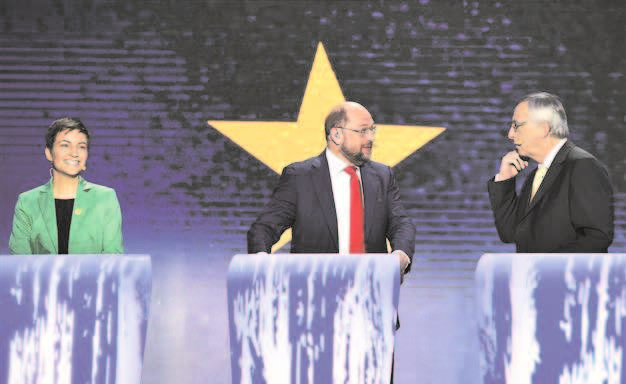
    BRUSSELS (TIP): The five top candidates to head the European Commission swapped accusations on Thursday over the impact of Europe’s austerity measures and the role played by banks in sparking the economic and financial crisis. In an often heated debate in Brussels, several candidates were forced onto the backfoot by Greek radical-left leader Alex Tsipras, who wasted no time in denouncing “catastrophic austerity policies” and demanding an exit from “debt paranoia”.

    Conservative leader Jean-Claude Juncker, the former prime minister of Luxembourg who headed the single-currency Eurogroup for eight years, pounced on Tsipras’s remarks, rejecting the suggestion he had not acted in the best interests of Greece. “I worked for years, day and night, to prevent Greece leaving the eurozone,” Juncker said, adding that he had done everything in his power to help the ailing country while endeavouring to get its public finances in order.

    Guy Verhofstadt, the candidate from the centre-right liberal grouping ALDE, mocked Tsipras’s suggestion that banks and EU banking policies were to blame for southern Europe’s economic woes. “In Greece, in Italy, it wasn’t a matter of banking, but bad policies on the part of your political parties,” Verhofstadt told Tsipras, defending the need for fiscal discipline in the EU as it struggles to move out of recession.

    “You need fiscal discipline, otherwise you cannot have growth… and that means making no new debt,” Verhofstadt said, adding that the best way forward was to make the most of the EU’s common market by removing economic barriers within the 28-member bloc. Greens leader Ska Keller, the only woman in the race to become the next president of the European Commission, said that more austerity in the EU would “worsen the situation”, but called on member states to do more to invest in “sustainable jobs” in renewable energy.

    Socialist leader Martin Schulz, the outgoing president of the European Parliament, agreed the EU had made a mistake in “unilaterally cutting” spending, but pointed to the fight against tax fraud and tax evasion as the best way of providing relief to state coffers. The debate was the first of its kind to include all five parties in the running for the Commission presidency, which is the highest executive position in the EU.

    In a break from earlier formats, three of the candidates spoke English, while Juncker chose French and Tsipras used Greek. The event, broadcast from the European Parliament building in Brussels by 50 TV stations and a variety of radio stations and websites across Europe, was moderated in English by an Italian journalist. With 10 days left in the European parliamentary election campaign, all eyes had been on Tsipras, the former communist who had previously eschewed public debates.

    – Call for a common immigration policy –

    One of the only two moments of policy agreement in the debate came when discussing the EU’s policy setting on asylumseekers, following another shipwreck off the coasts of Italy this week which claimed 17 lives. Verhofstadt, a former Belgian prime minister, said that part of the problem was the EU’s lack of a common legal immigration policy, which in turn exacerbated the problem of illegal arrivals.

    Tsipras argued it was “unacceptable… to allow the Mediterranean to turn into a graveyard”, saying Europe needed to become “synonymous with solidarity”. Keller called the absence of a coordinated immigration policy a “scandal”, while Juncker agreed that the time had come for “a European law dealing with migration”, urging EU members not to cut their aid budgets to better assist people before they undertook the perilous journey across the Mediterranean.

    The candidates also concurred on the responsibility on the part of EU member states to appoint one of them, as the leaders of political groupings in the European Parliament, to replace current Commission President Jose Manuel Barroso after the May 22-25 poll. Under new rules, member states are required to “take into account” the results of parliamentary elections in appointing the new Commission chief. However, it remains unclear whether that amounts to a legal obligation to appoint party leaders.

    “It is finished the idea that the Commission president would be the result of a backroom deal — this is finished,” Schulz said. “If they really dare to nominate another (candidate), the answer is quite clear: you will get no majority in the European Parliament.” Juncker agreed, saying that to not appoint a party leader would be a “denial of democracy” and would imply that European citizens no longer mattered in the EU.

  • Thailand: Military plane with defense chief crashes

    Thailand: Military plane with defense chief crashes

    BANGKOK (TIP): A Laos air force plane carrying about 20 people including the country’s defense minister and other senior officials crashed on May 17, Thailand’s Foreign Ministry said. There was no immediate word on casualties, said the Foreign Ministry spokesman, Sek Wannamethee.

    The plane took off from the capital, Vientiane, early Saturday morning and crashed in the northeastern province of Xiangkhoung, about 470 kilometers (290 miles) away. The aircraft was carrying Lao Defence Minister Douangchay Phichit, who is also a deputy prime minister, and several other high-ranking officials, including the governor of Vientiane.

    They were heading to an official ceremony for the Ministry of Defense, said Sek, who was informed of the crash by authorities in neighboring Laos. He did not immediately have any other details, and there was no official statement on the crash from authorities in Laos, which is ruled by a secretive Communist Party. In October, a Lao Airlines ATR-72 turboprop crashed during a heavy storm as it approached Pakse Airport in southern Laos, killing all 49 people on board.

  • Anti-China unrest spreads in Vietnam, 21 killed in clashes

    Anti-China unrest spreads in Vietnam, 21 killed in clashes

    BEIJING (TIP): At least 21 people are feared to have been killed and over 129 injured since anti-China demonstrations led to burning of factories in Vietnam since May 13. There was no confirmation that the violence had ceased on Thursday.

    Cambodian police said Chinese workers were fleeing Vietnam and entering Cambodia. China’s official Xinhua news agency said two Chinese nationals had been killed and 100 injured. It said 10 other Chinese workers were missing. Over half of the wounded worked for a Chinese company. Reports from Vietnam’s Ha Tinh province quoted a hospital putting the death toll at 21 and said a major steel mill was set ablaze there. Five of the dead were Vietnamese and 16 were Chinese.

    The number of injuries may be larger because one of the affected companies, Formosa Plastics, said its 90 workers were wounded during ire at its upcoming plant. Local authorities said at least 40 policemen were injured while trying to stop the rioters. Vietnamese workers went on a strike and later torched several factories amid anger over a Chinese company’s attempts to establish an oil rig in a disputed portion of the South China Sea.

    Both countries claim sovereignty over the area. This is the worst breakdown in cross-border relations since China and Vietnam fought a brief border war in 1979. The anti-China protests have spread to 22 Vietnamese provinces. In Beijing, officials said China’s vessels have been sent to the concerned area in the South China Sea to protect the rig and the country’s citizens.

    “There is no reason for Vietnam to object to it because the area rightfully belongs to China,” said Chinese foreign ministry spokeswoman Hua Chunying.