Month: June 2014

  • Patiala cops nab Abohar NRI in Rs 300 crore drug scam

    Patiala cops nab Abohar NRI in Rs 300 crore drug scam

    CHANDIGARH (TIP): Another mega synthetic drug racket, believed to be part of Rs 6,000 crore ring run by kingpin Jagdish Bhola, was busted on June 5 after the arrest of two masterminds, including an Abohar-based pharamaceutical businessman Varinder Sandhu, from Chandigarh. Sandhu’s aide Bikramjit Singh alias Pappi was arrested from Ropar by Patiala cops in a 72-hour operation that began on Tuesday.

    The two were sent to 5-day police custody by the judicial magistrate, RPS Cheema, at a Patiala court. TOI had reported on June 4 that Punjab cops were on the trail of Rs 200-crore synthetic drug racket. Sandhu’s factories in Baddi in Himachal Pradesh where precursor chemicals were manufactured were also raided and chemicals seized. Police did not disclose the amount of drugs seized from Sandhu’s factories., but it is estimated to be Rs 300 crore. According to the FIR, a copy of which is with TOI, Sandhu holds a Canadian passport.

    He, along with one Sandeep Singh Sidhu alias Soni and Nagendra Singh of Bathinda, were synthesising chemicals used to make party drug ICE, known as crystal meth or Speed. These drugs were being sent to Canada, Australia and England. “A hotel called Royal Castle on Bhawanigarh-Patiala road was used to collect drugs for delivery to different locations,” the FIR said. “Most of these people have passports of Canada, Australia, America, England to enable them to travel easily to other countries,” the FIR said.

  • Indian-American architect to pay thousands of dollars to settle lawsuit

    Indian-American architect to pay thousands of dollars to settle lawsuit

    NEW YORK (TIP): An Indian-American architect has been ordered to pay thousands of dollars in compensation and penalty to settle a civil rights lawsuit, which alleged that a rental building designed by him and his firm had apartments inaccessible for persons with disabilities. Avinash Malhotra and his firm Avinash Malhotra Architects settled the federal civil rights lawsuit filed in 2013 under which he and his firm would retain an accessibility expert. The expert will review and advise them on each of their new design projects, train employees on the requirements of the federal housing regulations and allocate $45,000 to compensate people who had been affected by the inaccessible features of the building.

    Malhotra would also pay a $35,000 civil penalty to the federal government. US attorney for the Southern District of New York Preet Bharara said that the lawsuit alleged that Malhotra and his firm designed a 650-unit rental building in Lower Manhattan that violated the accessible design and construction provisions of the federal Fair Housing Act, which require that new multi-family housing complexes include certain features accessible to persons with disabilities.

    The building had multiple inaccessible features, including insufficient space in bathrooms and kitchens for people in wheelchairs, high thresholds interfering with accessible routes, sinks, ranges, outlets and mailboxes not fully usable by people in wheelchairs and protruding objects not detectable by canes used by people with visual impairments. “As design professionals, architects have a clear obligation under the Fair Housing Act to ensure that residential buildings are accessible to people with disabilities,” Bharara said.

    “When architects disregard that obligation, our office will use all the legal tools available to us to hold them responsible for such failures and craft remedies to ensure that their designs will be accessible in the future,” he said.

  • Burglars targeting Indian families busted in US

    Burglars targeting Indian families busted in US

    LOS ANGELES: Five members of a “dangerous” street gang who allegedly targeted Indian families across US states of California and Nevada to steal gold and other valuables from them have been arrested. The gang members in Long Beach, a city in Los Angeles county in southern California, have been burglarising Indian families, often stealing gold, cash and other valuables since February 2013, CBS news reported.

    Police say the ring of thieves averaged two burglaries per week and netted approximately $2 million over the past year. Juan Guerrero, 22; Ivan Ramirez, 22; Albaro Miranda, 24; Salvador Ramirez, 24; and Teresa Ramirez, 57 have been arrested, authorities said adding 4 others are still at large. “They are known for murders, take-over robberies, extortions, drive-by shootings,” said Detective Abel Morales of the Long Beach Police Department.

  • Pakistan court orders FIR against ex-CIA station chief

    Pakistan court orders FIR against ex-CIA station chief

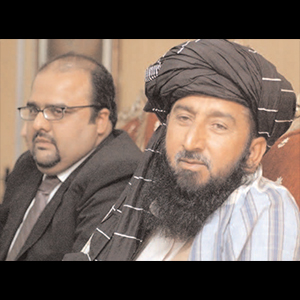
    ISLAMABAD (TIP): Pakistan court on June 05 ordered police to lodge an FIR against former CIA station chief for killing civilians in US drone strikes in the volatile northwestern tribal regions stretching along the border with Afghanistan. Justice Shaukat Aziz Siddiqui of Islamabad High Court issued the order on petition filed by Abdul Karim Khan, a native of Mir Ali town in North Waziristan in 2010. In the petition, Khan pleaded that drone strikes kill innocent civilians and added that his 18-year-old son Zaheenullah and brother Asif Iqbal were both killed in one of such attacks in 2009.

    Khan, also an anti-drone activist, said that the strikes in which his son and brother were killed were ordered by ex-CIA station chief, Jonathan Banks. While accepting the petition, the judge ordered station house officer of Islamabad’s secretariat police station to register an FIR against Banks. “Justice Shaukat Aziz Siddiqui of IHC ordered today registration of a criminal case for offences of murder, conspiracy, waging war against Pakistan and offences under the provisions of Terrorism Act 1997, against the ex-CIA chief, Jonathan Banks,” Mirza Shahzad Akbar, Khan’s counsel, said in a statement. “We are fighting this legal battle since 2010 and the police was reluctant to pursue our case but finally we succeeded,” he added.

    The legal assistance to Khan has been provided by the Foundation for Fundamental Rights, a charity associated with Britain’s Reprieve. Khan had earlier also sent a 500 million dollars claim for damages in drone attacks to the US Defence Secretary Robert Gates, CIA chief Leon Panetta and Banks. “Today is a V-day for all those people who lost their near and dear ones in drone attacks,” Khan vowed before reporters outside the court. Khan has been trying since 2010 to register a case against Banks but Islamabad police had refused to file an FIR on advice of its prosecution department which said the application was not maintainable as the site of the drone strike was out of its jurisdiction.

    The CIA had accused Pakistan’s spy agency ISI in 2010 of endangering its station chief’s life by releasing his name, a charge which ISI had denied. Following the incident, relations between the two agencies went sour and Banks was withdrawn from Pakistan. According to AFP, 2,155 people have been killed in drone attacks since August 2008, with critics charging that the strikes cause many civilian casualties while international think tanks, including The New American Foundation and UK-based Bureau of Investigative Journalists, reportedly claim that more than 3,000 people, 70% of whom were civilians, have been killed in drone attacks since 2004. The last drone took place in last December in North Waziristan.

  • Iran held Nawaz Sharif’s jet to get $5k dues

    Iran held Nawaz Sharif’s jet to get $5k dues

    LAHORE (TIP): Iranian authorities refused to fuel the aircraft of Pakistan PM Nawaz Sharif during his visit to Tehran last month to make the state-run PIA clear its dues amounting to just over $5,000. “The Iranian airport authorities had refused to fuel the Pakistan PM’s aircraft at the Tehran airport on May 12 and warned it would not release the plane until the PIA cleared the outstanding payment,” a Pakistan International Airlines official said. The outstanding amount is just over $5,000.

    “The Iran Air officials responsible for handling the VVIP flight showed their annoyance over the PIA failure in clearing the pending invoice of PK-788 despite the passage of four months,” the official said. The warning alerted the PIA bosses who directed its official in Tehran to clear the amount forthwith and save Pakistan from the embarrassment. The PIA managed to hide the issue from the foreign office and the prime minister.

    PIA spokesman Mashhood Tajwar denied the PM’s aircraft was held at Tehran airport over payment issue. According to details, the PK-788 (London to Karachi flight) had to make an emergency landing at the Tehran Airport on January 18, 2014 when a passenger reported some serious health problem and died later.

  • Sri Lanka reacts strongly to Jayalalithaa’s genocide remarks

    Sri Lanka reacts strongly to Jayalalithaa’s genocide remarks

    COLOMBO (TIP): Sri Lanka on Thursday reacted strongly against the genocide remarks made by Tamil Nadu chief minister J Jayalalithaa against the country over the Tamil issue and said it will make formal objections to India over her comments. “It is very much in keeping with the character of this politician to make wild allegations against Sri Lanka,” the government spokesman and minister of information Keheliya Rambukwella told reporters.

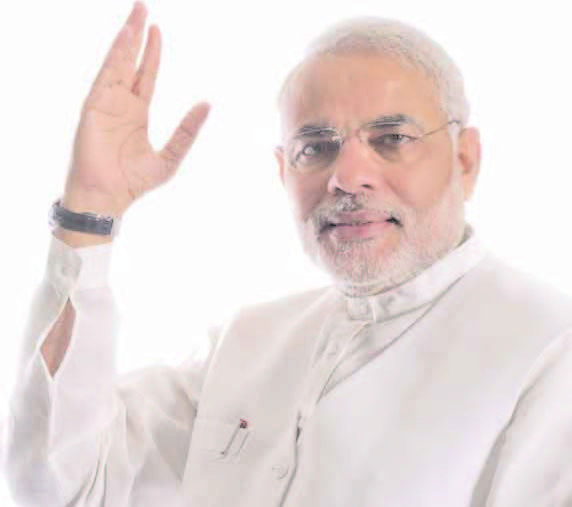
    He was reacting to the Tamil Nadu chief minister’s memorandum to Prime Minister Narendra Modi which carried word “genocide” on the Sri Lankan Tamil issue. She had demanded that India should sponsor a resolution in the United Nations condemning the genocide in Sri Lanka. “I request that India should sponsor a resolution in the United Nations condemning the genocide in Sri Lanka and to hold to account all those responsible for the genocide and thereby render justice to Tamils in Sri Lanka,” the Tamil Nadu chief minister had said in the memorandum submitted to the Prime Minister.

    “It is very wrong to use words like genocide to describe what happened in Sri Lanka,” he said. Rambukwella said Sri Lanka was to make formal objections to the Indian government over Jayalalithaa’s comments. Sri Lanka is happy that Modi won outright control of the Lok Sabha without having to rely on the support from Jayalalithaa. “We are happy that there is a very stable government in India.

    That is what I said even before the election, that a stable government in Delhi is good for Sri Lanka. Today Jayalalitha does not have the same influence over New Delhi as she would have had before. We are happy about that,” Rambukwella stressed. “We hope Prime Minister Modi will stand on the right side, that is Sri Lanka,” Rambukwella said.

  • 18 Indian pilgrims killed in Nepal

    18 Indian pilgrims killed in Nepal

    KATHMANDU (TIP): At least 18 Indian pilgrims were killed and 53 others injured when an overloaded bus carrying them veered off a mountain road and rolled about 100m before plunging into a river in Nepal, officials said on Tuesday. “All 18 people who died in the accident were Indian nationals, mostly from Uttar Pradesh,” chief district administrator Ram Bahadur Purumbang said. A total of 56 people were injured in the accident when the bus plunged into the Madi river in Pyuthan district, 750km west of Kathmandu on Monday night.

    There were 74 passengers and all except three people —the bus driver, his helper and a lady — were Indian nationals who were returning from a Hindu pilgrimage in Swargadwari, Purumbang said. Fifteen died on the spot and three breathed their last while undergoing treatment at a local hospital, he said.

  • Taliban release video showing handover of US soldier

    Taliban release video showing handover of US soldier

    KABUL (TIP): The Taliban on June 4 released a video showing the handover of Sgt Bowe Bergdahl to US forces in eastern Afghanistan, touting the swap of the American soldier for five Taliban detainees from Guantanamo as a significant achievement for the insurgents.

  • Tibetan govt to re-launch global drive for autonomy

    Tibetan govt to re-launch global drive for autonomy

    NEW DELHI (TIP): The Tibetan government in exile will relaunch their Middle Way Approach campaign — a global drive to create an international environment for autonomy in the next few years. Dalai Lama is expected to start the drive at a launch event in Dharamsala this week. According to sources, the awareness drive is intended to ensure that “after 65 years of occupation, with 130 Tibetans having self-immolated in the past 5 years and increased loss of culture and traditional ways as well as large-scale and irrevocable environmental destruction in the Tibetan regions, the Tibetan people are serious about achieving autonomy in the next few years.”

    The campaign includes a web outreach initiative, documentaries and a social media strategy to target young supporters for Tibetan autonomy, with the Middle Way. In recent months, international rights group, Human Rights Watch has highlighted the conditions of Tibetan refugees in countries like Nepal. In April, an HRW report asked the Nepal government to “make it clear to China that it will accept Tibetans who flee persecution as refugees and will not restrict basic rights of peaceful expression, assembly, and association.” HRW says Tibetan refugee communities in Nepal were “facing a de facto ban on political protests, sharp restrictions on public activities promoting Tibetan culture and religion, and routine abuses by Nepali security forces.”

  • ‘Am I not a citizen of India?’

    ‘Am I not a citizen of India?’

    An inner cry of a Dalit from the heartland of India

    Why I am asked about my caste when I go to the police? Am I not a citizen of India?” The father of one of the girls gang raped and brutally murdered asked the Samajawadi Party leader and Badaun Member of Parliament Dharmendra Yadav. It is time that this pertinent question needs to be answered not just by few politicians across the party lines but by the nation itself. What happened in Katra village in India’s northern state of Uttar Pradesh is a horrific crime of brutality against women.

    Millions of Indians everywhere must be feeling the shame of India in the news on the continuing assaults on women. However, it is more than just isolated incident of criminal wrong doings but rather emanating from an entrenched caste-driven mindset of these mad men who feel that they have the god-given right to them and are a privileged sect who can therefore get away with murder. According to press reports, in Badaun District, U.P, on the night of 28 May, two girls, cousins aged 14 and 15 years, stepped out of their house in Katra village to relieve themselves.

    When the father, a farm laborer went to police last week to report that his daughter and her cousin had gone missing, a constable slapped him in the face and sent him away. Hours later, he found the two girls hanging by their necks from a nearby mango tree. An autopsy revealed that they had been raped and strangled. The reaction from Akhilesh Yadav, the Chief Minister of the state while questioned on the brutality of this Taliban type of execution was nothing but a cold, callous and insensitive one as he chided the woman journalist who asked the question — ‘you aren’t in any danger are you?’.

    It is reminiscent of his father and the Samajawadi honcho Mulayam Singh Yadav’s statement in the past that ‘boys make mistakes, should we hang them for it? What is in it with these political leaders who have taken the oaths to uphold the law? Are they plain incompetent or willfully negligent in carrying out the responsibilities as elected representatives? His inaction during and after the Muzaffarnagar riots is on record that has already left a huge question mark on his leadership credentials as well as his impartiality in dealing with these human tragedies.

    This case has shocked the nation for a number of reasons; first and foremost, it once again shows the ugly truth about the age-old caste system which is not only thriving in India but exploited by various political parties. Mr. Shashi Tharoor, a former Congress Minister and Member of Parliament recently was quoted as saying ‘when India castes the votes in an election, it is voting the castes’.

    The family of the victims belongs to the Dalit community whereas the perpetrators of this heinous crime belonged to the higher caste Yadavs. If one looks at the history, the Dalits have been at the receiving end for centuries being discriminated against by the higher castes with impunity often being harassed and murdered without having a price to pay. Sadly, Uttar Pradesh is the epicenter of these crimes targeted at these helpless women who were taunted and raped at will, many times, just for the simple reason that they belong to the Dalit community.

    The recent election of Modi appeared to have given a boost to the upper caste majoritarian sentiment as evidenced in the current makeup of the Cabinet that consists two-thirds of the Ministers belonging to the RSS (Rashtriya Swayamsevak Samaj), a powerful ultranationalist grassroots movement raising serious doubt that whether an egalitarian shift would take place under this new Administration. At a rally in Muzaffarpur in March, BJP’s prime ministerial candidate Narendra Modi had stood beside Dalit leader Ram Vilas Paswan of the Lok Janshakti Party, and declared that the coming decade would be a “decade of dalits” and weaker sections of the country.

    Back in Gujarat however, over the last decade nearly Rs 3,689 crore of funds for targeted programs to uplift Dalits and economically and socially backward classes, went unutilized, according to Dalit group Navsarjan. The December 2012 gang rape in New Delhi, the country’s capital shook us all that prompted Congress-led UPA government to pass stricter laws. However, the rapes and abuse of women continue to occur unabated. Recent reports show that a rape is committed every 22 minutes though, the statistics and official records would never reveal the true picture as many of these cases go unreported.

    The social stigma attached to a rape often results in silencing the victim who might be ostracized or ridiculed publicly if they choose to go public. The law enforcement system is not geared to provide sympathetic ears, if anything, they impart fear. On that fateful night, the route these two girls took is familiar for the women of the village. It is probably the only time in the day when they step out alone, unaccompanied by the men of the family, in the dark. “Men go out in the day, so women can go only early in the morning or late at night” said one of the neighbors.

    This is a familiar, every day routine in rural India where the acute shortage of basic toilet facilities forces women and girls to venture out to open fields that makes them obvious targets for sexual violence. Nearly two months ago, four girls from Bhagna in Haryana who had stepped out to answer nature’s call were picked up from right outside their residence. They were raped and then dumped at the Bhatindia railway station in Punjab. It took the families an entire day to get the FIR registered and the medical examination took even longer. Five people were arrested in connection with that case, though the man alleged to be the main culprit, the village sarpanch continues to roam free.

    Most of that family fled the village fearing for their lives and they have been holding a protest at Jantar Mantar, for nearly two months. To those observers, the horrific crimes in both Badaun and Bhangana display the power politics as well as the prevalent caste and gender discrimination and there is no relief in sight with caste oriented policies of those who are in power. The National Campaign for Dalit Human Rights states that over one-sixth of India’s population, some 170 million people, live a precarious existence, shunned by much of Indian society because of their rank as “untouchables” or Dalits – literally meaning “broken” people – at the bottom pf India’s caste system.

    Dalits are discriminated against, denied access to land and basic resources, forced to work in degrading conditions, and routinely abused at the hands of police and dominant-caste groups that enjoy the state’s protection. Among the Dalit community and its supporters & sympathizers, Dr. Ambedkar’s statement resounds today more than ever; ‘My final words of advice to you are; educate, agitate and organize’ have faith in yourself. With justice on our side I do not see how we can lose our battle.

    The battle to me is a matter of joy. This battle is in the fullest sense spiritual. There is nothing material or social in it. For ours is a battle not for wealth or power. It is a battle for freedom. It is the battle of reclamation of human personality’. Are the NRIs only ashamed of the News itself or this entrenched system of enslavement? Will we ever show the courage to join this ‘ battle for freedom’ as Ambedkar called it for the sake of India?
    (The author is Chairman, Indian National Overseas Congress (I), USA)

  • TIRICHY: THE LAND OF TRADITION

    TIRICHY: THE LAND OF TRADITION

    Situated on the banks of the river Cauvery,Tiruchirappalli, the forth largest city in the state was a citadel of the early Cholas which later fell to the Pallavas. But the Pallavas never really managed to retain control of this strategic city and lost it to the Pandiyas several times.

    This tug of war finally ended when the Cholas reasserted themselves in the 10th century. The fort of Tiruchy continued to be in their possession until the decline of the empire after which it became a Vijayanagar stronghold. When this empire collapsed in 1565, Tiruchy came to be occupied in turn by the Nayaks of Madurai, the Marathas, the Navabs of Carnatic, the French and finally the British.

    But it was under Nayaks of Madurai that Tiruchy flourished and prospered in its own right and grew to be the city that it is today. Tiruchy is a fine blend of tradition and modernity built around the Rock Fort. Apart from the fort, there are several churches colleges and missions dating back to the 1760s.With its excellent infrastructure facilities, Tiruchy will serve as a good base to see central Tamilnadu.

    ROCKFORT The most famous land mark of this district is Rockfort Temple. This temple crowns a massive outcrop of rock, that soars 83 meters upwards, from the surrounding plains. It is reached by a step flight of 437 steps cut into the rock. Halway up is the Sri Thayumanaswamy Temple, dedicated to Lord Shiva. It has a 100 pillared hall, and a Vimana. From its summit we will get a fantastic view of the town plus its other main landmark, Srirangam, Cavery River, Coleroon River , Thiruvanaika Kovil

    SRIRANGAM Sanctity is accorded to a place on the basis of its threefold popularity of the presiding deity, the quality of the holy waters and its hoary past. The holy shrine of Srirangam has al l these attributes in rich measure.

    The township of Srirangam envelopping the shrine is situated on a tiny island formed by the bifurcation of the river Cavery at a place called Mukkombu (Upper anaicut). The southern distributary of the river retains the name Cavery, while the northern branch is called Coleroon. The abode of the Supreme Lord, Sri Ranganatha, the reclining form of Lord Vishnu is situated in Srirangam 8 kilometers from Trichy city.

    There are not less than 22 gopurams, one of which is the tallest in India. The 72m high 13-tiered Rajagopuram was built in 1987 while the remaining 21 gopurams were built between th 14th and 17th centuries.

    JAMBUKESWARA TEMPLE Thiruvanaikaval Jambukeswara Temple dedicated to Lord Shiva is situated 2 kms east of Srirangam, The temple is named after the elephant which is believed to have worshipped Lord Siva here. Installed under an ancient Jambu tree, the lingam is partially submerged by water and meant to represent God incarnate as water.

    ST. LOURDU’s CHURCH Built in 1812, this church has lovered doors, which when opened, turns the church into an airy pavilion. Its excellent setting and marvelous architecture, makes it a site worth visiting. It is in the heart of the Trichy city, surrounded by commercial markets.

    HAZRATH NATHERVALI It is ancient Durga more than 1000 years old. It is marvelous architecture , the doom is made up of shining marbles giving a great look to the Durga. It is also situated in the heart of Trichy City.

    MUKKOMBU A wonderful picnic spot,where the river Kollidam branches off from the river Cavery. It is 18 kilometer from Trichy City.

    Travel within city Travelling around Tiruchy is easy, as the city is well developed and has a good network of travel options.

    There are many buses and auto rickshaws available for travel in the city of Tiruchy, and a network of share auto rickshaws also ply through the city.

  • Sisi’s Challenge

    Sisi’s Challenge

    Egyptians seek better lives, more security

    Egypt’s new President is now firmly ensconced as the leader of the mostpopulated Arab nation in the world. He won the elections with a percentage of votes that would have been impressive, had it been supported by an equally imposing turnout. According to official figures, less than half of the voters turned up at polling stations. This has taken away some sheen from the victory of Abdel Fatah al-Sisi, the former Defence Minister who led the coup that ousted Muhammad Morsi, Egypt’s last elected President.

    The flux that followed the ouster of President Hosni Mubarak in February 2011, including the period during which Muslim Brotherhood’s Morsi was elected and later deposed as President, led to a worsening socio-economic situation in Egypt. The stability that the new regime promises may well have got it many votes. An unprecedented extending of the voting period by a day certainly helped, even as it chipped away at the credibility of the electoral processes in which the only opponent who stood against Sisi, the labor activist Hamdeen Sabahi, got barely 3.5 per cent of the votes.

    The military which he once headed is firmly behind him. However, Sisi now has to move on the economic front. Foreign direct investment has fallen. The number of tourists has plummeted, amidst security concerns, and foreign reserves have come down to their lowest level yet. Indeed, even staples like bread are in short supply. However, the support that Sisi enjoys from the establishment, especially the military, and his recent electoral success have attracted some institutions and nations that have shown an interest in investing in Egypt again.

    Sisi, like many others who assume the mantle of leadership in trying times, may well find that getting to be President was the easy part, the tough test is now to come. It remains to be seen if he can provide the stability that the country needs, and the security that Egyptians seek, even as he jumpstarts a stalled economy, and fulfils the aspirations of the millions who want better living standards.

  • Foreign ties will blossom under the new Modi government

    Foreign ties will blossom under the new Modi government

    For adversaries, habituated to passive and defensive responses to deliberate provocations, the likelihood of a less tolerant Indian response under a Modi-led government might induce rethinking on their part about the price they may have to pay for aggressive or assertive policies”, says the author.

    The BJP’s massive electoral victory brings us foreign policy gains. The prospect of a strong and stable government in India makes our external image more positive. Other countries could conclude that the new government will have a more self-confident foreign policy, and will defend the country’s interests with greater vigor. Since the BJP is widely characterized at home and abroad as a Hindu nationalist party, it will be assumed that the Modi-led government will be more “nationalistic” in its thinking and actions, and will pursue national goals more sturdily.

    Decisive

    Notwithstanding their rhetoric about India’s global role, big powers have for long seen us as a country too preoccupied by internal problems to be able to act on the international stage sufficiently energetically. Issues of poverty and managing our complex diversities apart, coalition politics in India has been seen by our external interlocutors as contributing to governmental delays in decision making and failures in implementation even in the foreign policy domain. Modi’s personality gives us cards to play externally with advantage. He is seen as a strong and decisive leader, committed to making India vibrant economically, and more secure. For those eyeing more economic engagement with India, Modi’s development agenda offers greater investment opportunities.

    For those seeking more engagement on security issues, Modi’s India will appear as a more confident partner. For adversaries, habituated to passive and defensive responses to deliberate provocations, the likelihood of a less tolerant Indian response under a Modi-led government might induce rethinking on their part about the price they may have to pay for aggressive or assertive policies. These real and psychological advantages that India obtains under Modi’s leadership should not be frittered away needlessly.

    Prudence and “responsible” conduct are often used as a cloak to cover diffidence and timidity. There will be those who would advise that having won such a massive mandate, with all the political strength that comes with it, a Modiled government, burdened by a negative ideological image that worries sections at home and abroad, should send re-assuring signals to all. There should be no requirement for this, as it is India that has been long sinned against. Sections of our political class, intellectuals and media personalities have done great disservice to the country by their incessant vilification and deionization of Modi, making untenable historical parallels with the rise of fascism in Europe and making egregious references to Hitler and abusively using words like “genocide” to castigate him.

    Initiatives
    That otherwise sensible people should have for so long lost all sense of proportion remains a puzzle.Maybe they felt their self-esteem rise in proportion to their revilement of Modi. This calumny of Modi has naturally colored outsiders’ views of him, which explains the negative commentaries on him in the liberal western press. Modi’s exceptional mandate, however, is derived from the masses of India, and they have chosen him for what he is and stands for, unbothered by the obloquy of his detractors. Questions are being asked as to what “initiatives” Modi could take on the foreign policy front now that he has got a strong mandate.

    This suggests it has become somehow incumbent on the new government to prove its credentials in some way to the international community. It also carries the nuance that India could not meet the expectations of select countries because his party hobbled the choices of the previous Prime Minister. A feeling also exists that the previous government missed opportunities and was too passive in its foreign policy, a situation that the new government should redress. The sub-text of most such criticism is that India failed to live up to US expectations and allowed the relationship to slip into a lower gear, besides not being able to push the then prime minister’s vision of peace with Pakistan.

    Assertiveness
    Not having engaged in any provocative act against either China or Pakistan, India would be right to wait for China and Pakistan to signal a change of thinking towards it. In reality, repeated provocations have come from their side, which the previous government preferred, in China’s case, either to downplay or not counter, or, in Pakistan’s case, avoid retaliation in order not to have to admit the failure of the policy of engagement despite terrorism and Pakistan’s enduring hostility towards us. China’s assertiveness on the border will have to be watched, especially because its conduct in the South China and East China Seas flashes red signals to us that at a time of its choosing its posture towards us can suddenly harden.

    The recent signals from Pakistan have been uniformly negative, whether on Kashmir, curbing anti-Indian religious extremists, trade and water, and these have been capped by the expulsion of two Indian journalists despite the much touted media role in improving relations as signified, for example, by the “Aman ki Asha” initiative. Nawaz Sharif’s congratulatory message to Modi should be taken as a routine diplomatic exercise, with the invitation to visit Pakistan as a way of making himself look good and win an easy diplomatic point. Our relationship with the US remains very important, but to reinvigorate it the US should not let short-term transactional considerations take precedence over the logic of the strategic relationship.

    Modi being the sole victim of the US legislation on religious freedom, the White House should be issuing an Executive Order to annul the State Department’s decision to blacklist Modi in the first place. While Obama’s gesture of telephoning Modi and alluding to a Washington visit by him can be appreciated, the fact that as Prime Minister he can now obtain an “A” category US visa does not erase the original insult.

  • IMF, World Bank urge China to reduce finance risk

    IMF, World Bank urge China to reduce finance risk

    BEIJING (TIP): The World Bank and the International Monetary Fund are urging China to focus on controlling risks from rapidly rising debt due to its reliance on credit-fuelled growth. The comments add to warnings by private sector analysts that China’s run-up in debt, especially since the 2008 global crisis, could lead to financial problems and disrupt economic growth that already is slowing.

    In a report, the World Bank said Beijing should pay close attention to rising credit, especially in its largely unregulated informal lending market, and reduce debts owed by local governments. “These policy measures will improve the quality of China’s growth, making it more balanced, inclusive and sustainable,” said Karlis Smits, the report’s chief author, in a statement.

    That came after an IMF official said Thursday that financial vulnerabilities have risen to a point where “containing them should be a priority.” Rising debts owed by local governments and uncertainty about informal lending have fuelled concerns China’s economic slowdown might cause a rise in defaults and hurt its financial system. Chinese regulators have taken steps to cool credit growth but still are allowing a relatively fast expansion to support economic growth that slowed to 7.4 percent in the three months ending in March.

    By the country’s broadest measure, total outstanding debt rose from the equivalent of 124 percent of gross domestic product in 2007 to more than 200 percent in 2013, according to the World Bank. Corporate debt, at the equivalent of 125 percent of GDP, is “among the highest in Asia,” the World Bank said in a regular report on China’s economy. Growth could be hurt by an abrupt change in local government debt or the price or availability of credit for industry, the bank said.

    A portion of China’s total debt was taken on as part of its multibilliondollar stimulus in response to the 2008 crisis. The government boosted spending on building highways and other public works and state-owned banks were ordered to lend more. Reforms to reduce financial risks might slow growth but the impact could be dampened by changes to open Chinese industries to more competition, the World Bank said.

    China’s economic growth should decline gradually, falling from last year’s 7.7 percent to 7.6 percent this year and 7.5 percent in 2015, the bank said. The IMF’s first deputy managing director, David Lipton, said Beijing should avoid adding to debt by launching more stimulus unless growth drops well below this year’s official target of 7.5 percent.

    Lipton said Beijing still has room to prevent an abrupt slowdown and needs to focus on reducing financial risk. “We welcome the efforts that have been made,” he told reporters after meeting Chinese officials. “Nonetheless, continuing reliance on credit-fuelled growth means that risks are still rising.”

  • RBI MOVES AWAY FROM SECTOR-SPECIFIC REFINANCE

    RBI MOVES AWAY FROM SECTOR-SPECIFIC REFINANCE

    MUMBAI (TIP)The Reserve Bank of India (RBI), decided to limit access to export credit refinance while compensating fully with a commensurate expansion of the market’s access to liquidity through a special term repo facility from the central bank (equivalent to 0.25 per cent).

    It reduced the liquidity provided under the export credit refinance (ECR) facility from 50 per cent of eligible export credit outstanding to 32 per cent with immediate effect, while introducing a special term repo facility of 0.25 per cent “to compensate fully for the reduction in access to liquidity under the ECR with immediate effect.’’

    The RBI said that this was “in pursuance of the Dr. Urjit R. Patel Committee’s recommendation to move away from sector-specific refinance towards a more generalised provision of system liquidity without preferential access to any particular sector or entity.” “This should improve access to liquidity from the Reserve Bank for the system as a whole without the procedural formalities relating to documentary evidence, authorisation and verification associated with the ECR.

    This should also improve the transmission of policy impulses across the interest rate spectrum and engender efficiency in cash/treasury management,” it added. The RBI also decided to continue to provide liquidity under 7-day and 14-day term repos of up to 0.75 per cent of the banking system. This measure will continue to provide liquidity in the banking system.

    With a view to improving the depth and liquidity in the domestic foreign exchange market, the RBI will now allow foreign portfolio investors to participate in the domestic exchange traded currency derivatives market to the extent of their underlying exposures plus an additional $10 million. Furthermore, it also decided to allow domestic entities similar access to the exchange traded currency derivatives market.

    Also, in view of the recent stability in the foreign exchange market, it was decided to enhance the eligible limit for foreign exchange remittances under the liberalised remittance scheme (LRS) to $125,000 without end use restrictions except for prohibited foreign exchange transactions such as margin trading, lottery and the like. Earlier, as a prudential measure, the RBI had reduced it to $75,000 last year.

    In order to facilitate travel requirements of non-residents visiting India, the RBI decided to allow all residents and non-residents except citizens of Pakistan and Bangladesh to take out Indian currency notes up to Rs.25,000 while leaving the country. At present, only Indian residents are allowed to take Indian currency notes up to Rs.10,000 out of the country and non-residents visiting India are not permitted to carry any Indian currency notes while leaving the country

  • ECB TAKES RAFT OF NEW STEPS TO AVOID DEFLATION

    ECB TAKES RAFT OF NEW STEPS TO AVOID DEFLATION

    LONDON (TIP): The European Central Bank (ECB) on Thursday cut interest rates and took a raft of unconventional steps to prevent the 18-country eurozone from sliding into a bout of deflation that could kill off a muted economic recovery.

    The ECB’s steps aimed to raise inflation and increase the flow of credit in an economy where lending is weak. They include cheap, long term loans to banks, tied to the understanding banks would loan the money to businesses, boosting growth. And for the first time ever, it took the untested step of imposing a negative interest rate on money that banks deposit with it, from zero to minus 0.1 per cent. That would push the banks to lend the money, not hoard it.

    It also cut its main interest rate, the refinancing rate, from 0.25 per cent to 0.15 per cent. The actions contributed to a rally in European stock markets and a further fall in the value of the euro. Announcing the new measures, ECB President Mario Draghi told a press conference that the central bank would: offer long-term loans to banks at cheap rates until 2018.

    The targeted loans would be charged a fixed rate, meaning that the rate could not rise, even if the ECB raises its benchmark. That gives banks confidence they have cheap funding out through 2018. The amounts they can borrow will be tied to the amounts banks lend to companies. Start doing “preparatory work” on a program to buy batches of loans to small businesses in the form of bonds, a step to funnel more credit to companies through financial markets.

    Stop collecting weekly deposits aimed at offsetting the monetary effects of earlier bond purchases. That would leave an additional 175 billion euros in the financial system that banks could in theory use to lend to each other or to companies. Draghi also did not close the door to a still more drastic step, large-scale purchases of bonds to inject newly created money into the economy.

    Many economists say that would be the most effective step the bank could take in boosting inflation. The U.S. Federal Reserve, Bank of Japan and Bank of England have all made such purchases. But the ECB has held off due to the legal and practice complexities of such purchases in a currency union with 18 different members. Draghi said ECB policymakers were in agreement about pursuing further unconventional measures to boost inflation if it stays too low.

    That’s important because it indicates that Germany’s influential Bundesbank, often skeptical of stimulus measures, is on board. Bundesbank head Jens Weidmann has only one vote, but outsized influence because of Germany’s role as the eurozone’s biggest economy. “In pursuing our price stability mandate, today we decided on a combination of measures to provide additional monetary policy accommodation and to support lending to the real economy,” he said. At last count measure, inflation was 0.5 per cent, far below the ECB target of 2 per cent.

    Mr. Draghi said inflation this year would be 0.7 per cent, down from the previous forecast of 1 per cent. However, he said inflation in 2015 would rise to 1.1 per cent and 1.4 per cent in 2016. Weak inflation has raised fears the eurozone may slide into outright deflation, a sustained drop in prices that can choke off growth as consumers and companies delay spending in hopes of bargains.

    The eurozone economy grew only 0.2 per cent in the first quarter, and unemployment remains high at 11.7 per cent. The new approach caused big movements in the markets. Stocks rose, with Germany’s DAX index trading above 10,000 for the first time. The euro fell to $1.3555 from about $1.3600. Looser monetary policy tends to weaken a currency. “I think it’s safe to say the markets fully approved of the measures announced by Mr. Draghi,” said Craig Erlam, market analyst at Alpari. “Moreover, I don’t think the sell-off is over yet,” he added, saying the euro is likely to touch $1.34 over the next week.

  • ROOF TILES TO HELP FIGHT AIR POLLUTION

    ROOF TILES TO HELP FIGHT AIR POLLUTION

    WASHINGTON (TIP): An innovative and inexpensive way to fight air pollution has been developed — a roof tile coating that removes up to 97% of smog-causing nitrogen oxides.

    A team of University of California, Riverside’s Bourns College of Engineering students created a new titanium dioxide roof tile coating that when applied to an average-sized residential roof breaks down the same amount of smog-causing nitrogen oxides per year as a car driven 17,703km. They calculated 21 tonnes of nitrogen oxides would be eliminated daily if tiles on one million roofs were coated with their titanium dioxide mixture.

    They also found it would cost only about $5 for enough titanium dioxide to coat an average-sized residential roof. Nitrogen oxides are formed when certain fuels are burned at high temperatures. Nitrogen oxides then react with volatile organic compounds in the presence of sunlight to create smog.

    Currently, there are other roofing tiles on the market that help reduce pollution from nitrogen oxides. However, there is little data about claims that they reduce smog. The students set out to change that. They coated two identical off-the-shelf clay tiles with different amounts of titanium dioxide, a common compound found in everything from paint to food to cosmetics.

    The tiles were then placed inside a miniature atmospheric chamber that the students built out of wood, Teflon and PVC piping. The chamber was connected to a source of nitrogen oxides and a device that reads concentrations of nitrogen oxides. They used ultraviolet light to simulate sunlight, which activates the titanium dioxide and allows it to break down the nitrogen oxides. They found the titanium dioxide coated tiles removed between 88% and 97% of the nitrogen oxides.

  • Nasa’s human spaceflight program doomed to fail: Study

    Nasa’s human spaceflight program doomed to fail: Study

    WASHINGTON (TIP): US space agency Nasa has been warned that its mission to send humans to Mars will fail unless its revamps its methods and draws up a clear, wellplanned strategy to conquer the red planet. The National Research Council, in a congressionallymandated report, said that Washington should use “stepping stones” to achieve its goal of a manned flight to Mars.

    This could involve exploring an asteroid, building a moon outpost or building more international cooperation with countries like China. “To continue on the present course … is to invite failure, disillusionment and the loss of the longstanding international perception that human spaceflight is something the United States does best,” said the NRC’s 286-page report.

    Nasa welcomed the report’s findings, saying it was consistent with the agency’s Mars plan approved by Congress and President Barack Obama’s administration. It promised to “thoroughly review the report and all of its recommendations” but insisted that it was worthwhile to set a goal of walking on Mars to set the bar high for other, parallel projects. “The horizon goal for human space exploration is Mars.

    All long-range space programs, by all potential partners, for human space exploration converge on this goal,” it said in a statement. “A sustainable program of human deep space exploration must have an ultimate, ‘horizon’ goal that provides a longterm focus that is less likely to be disrupted by major technological failures and accidents along the way and the vagaries of the political process and economic scene.”

    To date the world’s space agencies have only managed to send unmanned robotic rovers to Mars, the latest being Nasa’s $2.5 billion Curiosity rover, which touched down in August 2012. The US space agency’s older Opportunity rover has been in operation for more than 10 years. But advancing human exploration into the outer reaches of space will require decades of work, hundreds of billions of dollars of funding and “significant risk to human life,” according to the NRC report. That, the report said, makes it impossible for the United States to go to Mars within the current US space budget.

    Instead, it called for increased cooperation with other nations, including with space rival China, as well as funding from the private sector and other sources. Current federal law bars Nasa from participating in bilateral programs with China, which the National Research Council warned “reduces substantially the potential international capability that might be pooled to reach Mars”. “Given the rapid development of China’s capabilities in space, it is in the best interests of the United States to be open to future international partnerships.”

    The report’s authors said that returning to the moon would foster better international cooperation given the interest about the destination in other countries, and such a mission would help develop technology to land and eventually live on Mars. The Obama administration is opposed to another moon landing, saying such a mission would be too costly. It wants instead to focus on capturing an asteroid and placing it into the Moon’s orbit for future exploration.

    The NRC highlighted three potential pathways to Mars, two of which include a return to the moon. The third is along the lines of the Obama administration’s asteroid mission. “It’s probably the frankest assessment that there is no public demand for space exploration, that we really don’t have a goal clearly stated and that the program that is being carried out won’t get us anywhere,” said expert John Logsdon. However, the former director of George Washington University’s Space Policy Institute said: “I don’t think the report will change anything.”

  • Mangano and O’Connell honor Louis Palermo as Nassau County Senior Man of the Year

    Mangano and O’Connell honor Louis Palermo as Nassau County Senior Man of the Year

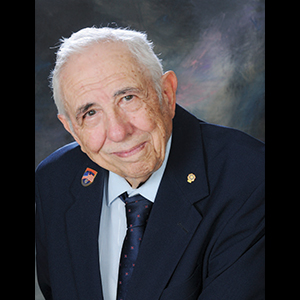
    MINEOLA, NY (TIP): Nassau County Executive Edward P. Mangano and Nassau County Clerk Maureen O’Connell honored Louis Palermo as Nassau County’s Senior Man of the Year for 2014. Mr. Louis Palermo was presented with the award at the 40th Annual May Luncheon/Conference in Observance of Older Americans Month. The Nassau County Office for the Aging had close to 400 people in attendance at the special event at the Garden City Hotel. Mr. Palermo is a native New Yorker. He lives in Valley Stream with his wife of 56 years, Norma.

    They have two children and four grandchildren. He worked for the United States Post Office and retired as Supervisor of the Seaford Post Office. He served in the Army and was wounded at the Battle of the Bulge. He received the Purple Heart, Bronze Star, and other medals. As a result of his war experience, he is very devoted to disabled veterans and is an active member of the American Legion, VFW, and Disabled American Veterans. He is Commander of the Franklin Square American Legion and raises funds for Disabled American Veterans.

    He has given many lectures to High School students about the reality of war. He has been active in the Knights of Columbus for over 50 years and was the Grand Knight at the Fr. Caroll Council. He organizes and raises funds for children with special needs. Mr. Palermo is Vice President of the Long Island Society of Italian Americans, and is a member of the Sons of San Paolino and Lynbrook Elks Lodge. He has been an usher at Holy Name of Mary Church in Valley Stream. Mr. Palermo enjoys being active and helping people. He feels the greatest reward is to brighten someone’s day. He feels it is important for veterans to know how much we appreciate them and tells them whenever he is able to through his actions.

  • Xoom Announces Instant Deposit Service to Punjab National Bank in India

    Xoom Announces Instant Deposit Service to Punjab National Bank in India

    Xoom’s revolutionary technology expands its instant deposit network to one of the largest banks in India

    NEW YORK/ SAN FRANCISCO, CA (TIP): Xoom Corporation (NASDAQ: XOOM), a leading digital money transfer provider, is offering instant deposits to Punjab National Bank accounts in India. This breakthrough service allows Xoom customers to instantly deposit money directly into their recipients’ Punjab National Bank accounts in India in less than a minute. Instant deposit is available 24 hours a day, seven days a week, 365 days a year, except during a maintenance window from 8 a.m. – 1 p.m. IST on Sundays. “Xoom is tirelessly working towards providing a fast service for our customers and we are thrilled to announce this expansion of our instant deposit bank network in India,” said Julian King, Senior Vice President of Marketing and Corporate Development for Xoom.

    “This is great news for people who send money to Punjab National Bank accounts, who otherwise typically have to wait five days or more to access their funds. Through our expanded instant service, NRIs can send money anytime, anywhere from their computer, mobile phone or tablet and their bank deposits reach their recipients’ Punjab National Bank accounts in less than a minute.” “This revolutionary service marks another milestone in our deep and long standing partnership with Xoom and its subsidiary buyindiaonline,” said Mr. K. Thyagarajan, General Manager, International Banking, Punjab National Bank.

    He further added, “We are pleased to offer instant deposit to Punjab National Bank accounts for customers who send money from the U.S. to India and look forward to bringing a whole new world of convenience and flexibility to our account holders.” Xoom provides great locked-in exchange rates for money transfers to India, and there is no fee when customers send more than $1,000 and pay with their U.S.-based bank account. Plus, Xoom continues to provide fast bank deposits within four hours to all other banks in India, including to NRE and NRO accounts, when sent during bank processing hours in India. Customers can also download the Xoom App for Android and iOS mobile devices for free. Visit https://www.xoom.com/india for more information.

    About Xoom
    Xoom is a leading digital money transfer provider that enables consumers to send money to 31 countries in a secure, fast and cost-effective way, using their mobile phone, tablet or computer. During the 12 months ended March 31, 2014, Xoom’s more than 1.1 million active customers sent more than $6.1 billion to family and friends. The company is headquartered in San Francisco and can be found online at www.xoom.com. About Punjab National Bank Punjab National Bank is a leading Public Sector Bank in India headquartered in New Delhi with over 6,200 branches and 7,000 ATMs spread across the country. It serves over 80 million customers. The Bank has developed an advanced computerized module for speedy payments of remittances received.

  • MassMutual Introduces Team of Financial Professionals to Serve South Asian Community in Metro New Jersey

    MassMutual Introduces Team of Financial Professionals to Serve South Asian Community in Metro New Jersey

    Kajol Bishnoi:

    FORDS, NJ (TIP): Underscoring its commitment to the financial needs of the vibrant South Asian community in Metro New Jersey, Massachusetts Mutual Life Insurance Company (MassMutual), along with general agency Emerald Financial Resources (Emerald Financial), introduced their local team of financial professionals during a Gala dinner event in Royal Albert Palace. Emerald Financial, a MassMutual general agency, has been serving the Bridgewater and surrounding area since 1998, helping more than 11,000 clients achieve their financial goals.

    The new members of the Emerald Financial team will be working with South Asian Clients, developing the combination of products and services that best meet their individual needs. The addition of the team marks the first time MassMutual has had a South Asian-only sales unit in the heart of this community. The new associates, who have nearly 75 years of combined industry experience, are Deepak Malhotra, Al Devji, Shamsha Devji, Hal Gandhi, Varsha Patel, Anil Sharma, Sanjeev Shah and Alpesh Shah.

    The Launch event started with the Press Conference where John Chandler, Michael Vesuvio and Nimesh Trivedi of MassMutual addressed the Tri-state Media. The main event took place in the grand ballroom of Royal Albert Palace and was attended by more than 200 Political, business and community leaders. Nisha Mathur (Asian Variety Show) served as the Emcee. Opening remarks were given by Edison Mayor Tom Lankey.

    About MassMutual:- Founded in 1851, MassMutual is a leading mutual life insurance company that is run for the benefit of its members and participating policy owners. The company has a long history of financial strength and strong performance. It’s a marketing name for Massachusetts Mutual Life Insurance Company and its affiliated companies and sales representatives. It’s headquartered in Springfield, MA.

    About Al Devji :- He is the founder of Devji Wealth Management Group. He has earned the Life Underwriter Training Counsel Fellow (LUTCF) industry designation, indicating his advanced knowledge of insurance products and applications, and is certified in Long Term Care (CLTC), with expertise on solving clients’ long term care planning needs. Mr. Devji is a Life and Qualifying Member of the industry’s prestigious Million Dollar Round Table, and a member of the National Association of Insurance and Financial Advisors. He is fluent in English, Gujarati, and Hindi and is a long-time resident of Edison, New Jersey.

  • Edison Chamber of Commerce awards for H.R. Shah and Mahesh Chitnis, among others

    Edison Chamber of Commerce awards for H.R. Shah and Mahesh Chitnis, among others

    Kajol Bishnoi:

    EDISON, NJ (TIP): The Edison Chamber of Commerce honored 15 outstanding businesses and individuals at its 15th annual awards ceremony on June 3 at the Pines Manor, Edison. Prominent Indian American leaders H R Shah and Mahesh Chitnis were among the award recipients. In his acceptance speech H R Shah (Entrepreneur of the Year) reiterated the contribution of Indian community in the growth of businesses and employment in United States. Shah is the president/CEO of TV Asia and Chairman/CEO of Krauszer Food stores.

    His successful entrepreneurship, outstanding philanthropic activities, glorious accomplishments in community service, dynamic leadership and exemplary support to South Asian community has been recognized by several organizations around the world. He is a role model for young entrepreneurs. Lion Mahesh Chitnis received Citizen of the Year award for volunteerism. He credited his success to the enthusiasm and dedicated service of members of Edison Visionary Lions Club.

    As incoming governor of central Jersey Lions he promised to continue to serve our communities. Lion Chitnis has volunteered for various causes and received several accolades including “President’s Medal”, second highest award in Lions International. He has successfully promoted volunteerism among the local community, especially among youth. Other award recipients were Chamber Member of the Year: Angela Holdren, Little Genius Academy; Outstanding Businesses of the Year: Affinity Federal Credit Union, La Bonbonniere Bake Shoppes, Geico; U.S. Veteran Business of the Year: Giulio Ferraro, Ferraro’s Restaurant; Young Entrepreneurs of the Year: Patankar, Kumar, Huang/Kardboard Environment; Citizen of the Year for Community Spirit: Master Tony Yu; Outstanding Organization of the Year: Kiwanis Club of Edison; Annamae Baerenbach Scholarship: Manuela Londono, Middlesex County College student; and Educator of the Year: Bohdanna Vitvitsky, J.P. Stevens High School.

    Leadership during the James Monroe Elementary School disaster recovery went to Lynda Zapoticzny, principal, James Monroe School; Joann La Perla- Morales, president, Middlesex County College; and Richard O’Malley, superintendent, Edison school district. All recipients also received a joint citation from State senate and general assembly and a proclamation by Edison Mayor Tom Lankey. Senator Peter Barnes and Assemblywoman Nancy Pinkin presented the citations. Several prominent community leaders and business owners graced the occasion.

    About Edison Chamber of Commerce:- The ECOC is your voice in the township of Edison. Your business in what makes our community grow by providing jobs and tax dollars, and thereby creating and improving our civic, educational and cultural facilities. This Chamber is the liaison in forwarding the interests of the entire Edison Business community (approximately 7,000 businesses) to various opinion leaders.

    Edison has a diverse population. ECOC is a non-profit organization with a leadership team of 27 officers and directors who meets monthly. The annual meeting is help in June when new officers and new directors are installed. The Chamber collaborates with many area business organizations.

  • INDIAN AMERICAN NIGHT DELIGHTS

    INDIAN AMERICAN NIGHT DELIGHTS

    LONG ISLAND, NY (TIP): Indian American Forum Inc. presented Indian American Night on Sunday June1, 2014 at Harry Chapin lakeside Theatre, Eisenhower Park, East Meadow. The delightful program included Yoga, kite flying, cultural presentation and awards presentation. Gobind Munjal was the event cochairperson for kite flying competitions while Jaya Bahadkar was Cultural chairperson. Students from local dance schools participated in the cultural presentation. Vocal performances were organized by Sunita Sadhnani of Glamorous event Planners the Melody Group from Tri state area consisting of 10-12 singers who entertained the audience with their melodious singing.


    9

    This program was a part of 2014 summer concert series sponsored by Nassau county Department of Parks, Recreation and Museums. Nassau County Executive Edward P Mangano, Nassau County Parks Commissioner Brian Nugent, Legislator Kevin Abrahms, Town of Hempstead Clerk Nasrin Ahmed, Councilwoman Dorothy Goosby and several other elected officials and community leaders graced the occasion. Edward P Mangano welcomed everyone and commended the Indian American Community for their outstanding achievements.


    11

    The members of Indian American community who were presented with Nassau County Awards included Dr. Surekha Patel, ARCH Foundation, Ajay Batra, IVS TV, Mrs. Bhupinder Kaur Thind, Noted Social worker in Punjab, Sonia Bawa, community worker and Occupational Therapist, Sunita Sadhnani, Glamorous Event Planners and Kirit Panchamia, Herricks Group. Indu Jaiswal chairperson of IAF thanked the gathering, the sponsors and the volunteers who together made the event a success.

  • NEW LIGHT ON OCEAN WARMING, RAINFALL

    NEW LIGHT ON OCEAN WARMING, RAINFALL

    NEW DELHI (TIP): For the past 30 years, it was believed that there is a threshold of temperature (29 degrees C) beyond which any increase in sea surface temperatures (SSTs) does not significantly affect the variability of rainfall over the Indian Ocean.

    Now, this classic hypothesis based on a study published in 1984, on the relationship between Indian Ocean and the monsoon has been challenged by a publication in the journal Climate Dynamics authored by Dr. Roxy Mathew Koll, a climate scientist at the Centre for Climate Change Research, Indian Institute of Tropical Meteorology, Pune.

    The study states that there is a direct, statistically linear relationship between SSTs and rainfall, and that rainfall increases along with increase in SSTs, over the entire range of possible SSTs over the Indian Ocean (26-32 degrees C). This helps in quantifying the relationship, with a rate of increase of up to 2 mm/day for an increase of one degree C in SST. This understanding is significant in a changing climate scenario, where the SSTs are increasing.

    The earlier belief was based on studies in which SSTs and rainfall were analysed simultaneously and it was found that beyond 29 degrees the rainfall showed no substantial variability. This method is inadequate as SSTs affect rainfall and vice versa and the two cannot be separated when analysed simultaneously, and result in a wrong perception. However, Dr. Roxy’s study using satellite data over the Arabian Sea, Bay of Bengal and South China Sea found that there is a time-lag between SST rise and rainfall increase. The lag is 5 days for Arabian Sea, and around 12 days for Bay of Bengal and South China Sea.

    The difference in the lag is attributed to the spatial variance in surface convergence and uplift over these regions. Surface convergence is the convergence of air/wind at a place over the sea surface due to low pressure formation or ascending branches of tropical air circulation.

    The converging warm moist air near the surface has to rise or uplift as it is less dense (lighter) than the air above. The uplift of the warm moist air results in the convective activity (cloud formation). “The winds and the convergence associated with the summer monsoon are stronger over the Arabian Sea, while they are relatively weaker over Bay of Bengal and the South China Sea.

    This probably leads to a faster uplift and cloud formation over the Arabian Sea while delaying the response over the Bay and the South China Sea”, Dr. Roxy pointed out, in an email. Climate model experiments were conducted to see the effect of greenhouse warming (carbon dioxide, CO) on the ocean-atmosphere interaction and the climate. The results of the experiments indicated that rainfall over the monsoon basins will continue to increase in a global warming scenario.

  • VOLUME OF ENCRYPTED EMAIL RISING AMID SPYING FEARS

    VOLUME OF ENCRYPTED EMAIL RISING AMID SPYING FEARS

    NEW DELHI (TIP): The volume of email cloaked in encryption technology is rapidly rising as Google, Yahoo, Facebook and other major Internet companies try to shield their users’ online communications from government spies and other snoops.

    Google and other companies are now automatically encrypting all emails, but that doesn’t ensure confidentiality, unless the recipients’ email provider also adopts the technology. In an analysis released on Tuesday, Google Inc. said that about 65 per cent of the messages sent by its Gmail users are encrypted while delivered, meaning the recipient’s email provider also supports the technology. That’s up from 39 per cent in December. Incoming communiques to Gmail are less secure.

    Only 50 per cent of them encrypted while in transit, up from 27 per cent in December. Encryption reduces the chances that email can be read by interlopers. The technology transforms the text into coding that looks like gibberish until it arrives at its destination. Google and other Internet services rely on a form of encryption known as Transport Layer Security, or TLS.

    Security experts say that encryption method isn’t as secure as other options. But encryption that is tougher to crack is also more complicated to use. Gmail, with more than 425 million accounts worldwide, was one of the first free email services to embrace TLS. Yahoo, Facebook and AOL also are encrypting their email services.

    Microsoft Corp., whose stable of email services includes the Outlook, MSN and Hotmail domains, has started encrypting many accounts as part of transition that won’t be completed until later this year. Less than half of the correspondence from Hotmail accounts to Gmail wasn’t encrypted as of late May, Google said.

    Security is even worse at Comcast.net and Verizon.net, where less than 1 per cent of the traffic coming to and from Gmail is encrypted, according to Google.Verizon didn’t have an immediate comment on Google’s statistics.a year after the first wave of media reports about the US government’s intrusive techniques to monitor online communications and other Internet activity.